EP1370013A1 - Mobile radio handset which adjusts DSP usage according to channel quality - Google Patents
Mobile radio handset which adjusts DSP usage according to channel quality Download PDFInfo
- Publication number
- EP1370013A1 EP1370013A1 EP03005483A EP03005483A EP1370013A1 EP 1370013 A1 EP1370013 A1 EP 1370013A1 EP 03005483 A EP03005483 A EP 03005483A EP 03005483 A EP03005483 A EP 03005483A EP 1370013 A1 EP1370013 A1 EP 1370013A1
- Authority
- EP
- European Patent Office
- Prior art keywords
- usage
- dsp
- value
- network
- reception quality
- Prior art date
- Legal status (The legal status is an assumption and is not a legal conclusion. Google has not performed a legal analysis and makes no representation as to the accuracy of the status listed.)
- Granted
Links
Images

Classifications
-
- H—ELECTRICITY
- H04—ELECTRIC COMMUNICATION TECHNIQUE
- H04W—WIRELESS COMMUNICATION NETWORKS
- H04W88/00—Devices specially adapted for wireless communication networks, e.g. terminals, base stations or access point devices
- H04W88/02—Terminal devices
-
- H—ELECTRICITY
- H04—ELECTRIC COMMUNICATION TECHNIQUE
- H04B—TRANSMISSION
- H04B1/00—Details of transmission systems, not covered by a single one of groups H04B3/00 - H04B13/00; Details of transmission systems not characterised by the medium used for transmission
- H04B1/0003—Software-defined radio [SDR] systems, i.e. systems wherein components typically implemented in hardware, e.g. filters or modulators/demodulators, are implented using software, e.g. by involving an AD or DA conversion stage such that at least part of the signal processing is performed in the digital domain
-
- H—ELECTRICITY
- H04—ELECTRIC COMMUNICATION TECHNIQUE
- H04B—TRANSMISSION
- H04B1/00—Details of transmission systems, not covered by a single one of groups H04B3/00 - H04B13/00; Details of transmission systems not characterised by the medium used for transmission
- H04B1/38—Transceivers, i.e. devices in which transmitter and receiver form a structural unit and in which at least one part is used for functions of transmitting and receiving
- H04B1/40—Circuits
-
- H—ELECTRICITY
- H04—ELECTRIC COMMUNICATION TECHNIQUE
- H04B—TRANSMISSION
- H04B1/00—Details of transmission systems, not covered by a single one of groups H04B3/00 - H04B13/00; Details of transmission systems not characterised by the medium used for transmission
- H04B1/38—Transceivers, i.e. devices in which transmitter and receiver form a structural unit and in which at least one part is used for functions of transmitting and receiving
- H04B1/40—Circuits
- H04B1/403—Circuits using the same oscillator for generating both the transmitter frequency and the receiver local oscillator frequency
- H04B1/406—Circuits using the same oscillator for generating both the transmitter frequency and the receiver local oscillator frequency with more than one transmission mode, e.g. analog and digital modes
Definitions
- the present invention relates to a handheld terminal and in particular to a method and an apparatus for optimizing usage of DSP (digital signal processing) relating to resources of a handheld terminal.
- DSP digital signal processing
- a basis value for using a resource is set.
- the performance of the terminal is limited by the range of the set basis value.
- handheld terminals communicate with a network to determine the network's capabilities. When a basis value of the handheld terminal is different from a capability supported by the network, the terminal adjusts the basis value through a negotiation process with the network.
- the handheld terminal can, for example, adjust a data transmission speed flexibly according to a protocol by checking whether the network environment is stable or unstable through the negotiation process. However, because the data transmission speed adjusting operation is performed based on the network capability, a method for using resources of the handheld terminal efficiently is not considered.
- the network checks a radio channel with reference to a measurement report and allocates the channel a. full rate or half rate to manage limited resources efficiently on the basis of the checking result. For example, when a transmission state of the network is unstable, the network allocates the half rate in order to receive more users. More specifically, in the conventional art although data speed is adjusted according to performance of the network, a process for using resources of the handheld terminal efficiently is not considered.
- the handheld terminal supports only the full rate and the network is in the unstable state, in a processing performance of the handheld terminal, only resources fixed to the existing algorithm are used. In that case; the handheld terminal allocates resources thereof based on usage of DSP (digital signal processing) in order to use the resources efficiently.
- DSP digital signal processing
- the handheld terminal in accordance with the conventional art, in a condition exceeding a processing capability of DSP, throughput of DSP is reduced. And, in the network unstable state, communication quality is lowered, a communication disable state occurs, or in the worst case the handheld terminal may be powered-off.
- a user In order to reduce throughput of the DSP, a user has to disable a DSP usage increasing factor or resource manually. However, because it is difficult for the general user to disable the factor or resource, the user may not use an interface appropriately.
- DTE data terminal equipment
- PDA personal digital assistant
- the handheld terminal sets a communication state with the network using fixed basis values for determining a memory, a FIFO (first-in first-out) size, a data frame size, and application of resources (factors) which influence DSP (data compression, DTX (discontinuous transmission usage), etc.,), to name a few.
- the user can use an interface such as an ITU (international telecommunication union) V.25ter, a GSM (Global System for Mobile Communication) 07.07, and a GSM 07.05 as occasion demands.
- ITU international telecommunication union
- GSM Global System for Mobile Communication
- GSM 07.05 Global System for Mobile Communication
- the present invention is also an apparatus for adjusting usage of DSP of a handheld terminal, which apparatus includes a storing unit for pre-storing first and second basis values about reception level data and reception quality data, a radio communication unit for receiving reception level data and reception quality data from a network, and a microcomputer for comparing the received reception level data and reception quality data with the pre-stored basis values and adjusting present usage of DSP about each resource on the basis of the comparison result.
- the method and apparatus of the present invention for adjusting usage of digital signal processing (DSP) of a handheld terminal optimizes the terminal automatically and provide a stable communication service to a user by receiving reception level data and reception communication data from a network.
- the received reception level data and the received reception quality data are then compared with a pre-stored reference value, and the present usage of a DSP is adjusted based on the comparison result.
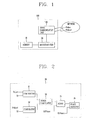
- FIG. 1 is a block diagram showing a DSP usage adjusting apparatus of a handheld terminal in accordance one embodiment of the present invention.
- the apparatus 100 includes a memory 10, a radio communication unit 20, and a microcomputer 30.
- the memory pre-stores a first basis value (S1) about a reception level, a second basis value (S2) about a reception quality, DSP usage information in a wait state (DSPbase) and maximum usage information of DSP (DSPmax).
- the radio communication unit periodically receives reception level data (RxLev) and reception quality data (RxQual) from a network.
- the microcomputer compares the reception level data value (RxLev) received from the radio communication unit with the first basis value (S1), and compares the reception quality data value (RxQual) with the second basis value (S2).
- the microcomputer also calculates present usage (X) of DSP about each resource when it is judged as a network unstable state in the comparison result, and adjusts the calculated present usage (X) of the DSP so as not to be greater than the pre-stored maximum usage (DSPmax) of the DSP.
- the present usage (X) of the DSP preferably corresponds to a value calculated by adding reference usage of the DSP about the n-number of resources sequentially.
- FIG. 2 is a block diagram showing one way the microcomputer may be constructed in accordance with the present invention.
- the microcomputer includes a comparator 31, a comparator 32, a usage calculator 33 an adder 34, and a usage adjuster 35.
- the comparator 31 compares the reception level data value (RxLev) with the first basis value (S1) and outputs a comparison result.
- Comparator 32 compares the reception quality data value (RxQual) with the second basis value (S2) arid outputs a comparison result.
- the usage calculator calculates usage (fi; 0 ⁇ i ⁇ n) of the DSP about resources based on the comparison results output from the comparators when the reception data Vaue (RxLev) is less than the first basis value (S1) or the reception quality data value (RxQual) is greater than the second basis value (S2).
- the adder calculates present usage (X) of the DSP by adding the pre-stored usage (DSPbase) of the DSP in the wait state to the usage (fi; 0 ⁇ i ⁇ n) of the DSP calculated by the usage calculator.
- the usage adjuster 35 adjusts the present usage (X) of the DSP calculated in the adder so as not to be greater than the maximum usage (DSPmax) of the pre-stored DSP.
- DSP digital signal processing
- the handheld terminal checks a state of a radio interface where itself belongs, judges whether the network environment is in a stable state or an unstable state, and when it is judged as the unstable state in the judging result, the handheld terminal adjusts usage of the DSP by performing a monitoring algorithm.
- FIG. 3 is a flow chart showing steps included in a DSP usage adjusting method of a handheld terminal in accordance with one embodiment of the present invention.
- This method includes as an additional step, pre-storing in memory the first basis value (S1) about the receptiorilevel, the second basis value about the reception quality (S2), usage of the DSP in the wait state (DSPbase) and maximum usage of the DSP (DSPmax).
- the first basis value (S 1 ) of the reception level, the second basis value of the reception quality (S2), usage of the DSP in the wait state (DSPbase), and maximum usage of the DSP (DSPmax) may be pre-calculated, for example, by a manufacturer.
- the reception level data (RxLev) and the reception quality data (RxQual) is received, for example in a radio communication unit for judging the network environment (stable state or unstable state) from a BTS (base station transceiver system).
- the received reception level data value (RxLev) and the reception quality data value (RxQual) is then output to a microcomputer as shown at step ST31.
- a first comparator preferably but not necessarily included in of microcomputer compares the reception level data value (Rx Lev) with the first basis value (S1) pre-stored in the memory and outputs a comparison result to a usage calculator.
- a second comparator preferably but not necessarily included in the microcomputer compares the reception quality data value (RxQual) with the second basis value (S2) pre-stored in the memory and outputs the comparison result to the usage calculator.
- the usage calculator determines that the network environment is in an unstable state, as shown at step ST32.
- the usage calculator calculates usage (fi ; 0 ⁇ i ⁇ n ) of the DSP about resources and outputs the calculated usage (fi) of the DSP to an adder, as shown at step ST33.
- the adder calculates present usage (X) of the DSP by adding the pre-stored usage (DSPbase) of the DSP in the wait state to the calculated usage (fi) of the DSP and outputs the present usage (X) of the DSP to a usage adjuster.
- the added usage (DSPbase + fi ; 0 ⁇ i ⁇ n) of the DSP may correspond to the present usage of the DSP (X).
- the present usage (X) of the DSP may be a value calculated by sequentially adding DSP reference usage (fi;0 ⁇ i ⁇ n) about the n-number of resources (Ri;0 ⁇ i ⁇ n) increasing usage of the DSP or adding the usage (DSPbase) of the DSP in the wait state to the sum (of the sequentially added DSP reference usage).
- the usage (fi;0 ⁇ i ⁇ n ) of the DSP about each resource is preferably stored in memory in order of function so as to not influence the basic performance of the handheld terminal, as shown at ST34 and ST35.
- throughput of the DSP and usage of the DSP can have the same meaning, but this is not necessarily so.
- the usage adjuster compares the present usage (X) of the DSP outputted from the adder with the maximum usage (DSPmax) of the DSP pre-stored in the memory as shown at step ST37.
- the usage adjuster adjusts the present usage (X) of the DSP so as not to be greater than the maximum DSP (DSPmax) of the DSP or adjusts the terminal environment by disabling the usage (fi; 0 ⁇ i ⁇ n ) of the DSP calculated from the usage calculator (disabling a certain resources (Ri ; 0 ⁇ i ⁇ n ) increasing usage of the DSP), as shown at step ST38.
- the maximum usage (DSPmax) of the DSP may be pre-stored by the terminal manufacturer, and the maximum usage (DSPmax) of the DSP may correspond to a maximum value for processing a digital signal appropriately in the terminal
- present usage (X) of the DSP is calculated based on the database (S1, S2, DSPbase, DSPmax) pre-stored in the memory 10.
- the calculated present usage (X) of the DSP exceeds the pre-stored maximum usage (DSPmax), insignificant resources are sequentially disabled while throughput of DSP is increased to the most or the present usage (X) of the DSP so as not to be greater than the maximum usage (DSPmax) of the DSP.
- the present invention by automatically adjusting usage of the DSP so as not to be greater than a maximum usage (DSPmax) of the DSP or disabling a certain resources (Ri ;0 ⁇ i ⁇ n) increasing usage of the DSP according to the network environment, it is possible to automatically set the handheld terminal in an optimum state.
- DSPmax a maximum usage of the DSP
- Ri ;0 ⁇ i ⁇ n a certain resources
Landscapes
- Engineering & Computer Science (AREA)
- Computer Networks & Wireless Communication (AREA)
- Signal Processing (AREA)
- Mobile Radio Communication Systems (AREA)
- Transceivers (AREA)
- Transmitters (AREA)
Abstract
Description
- The present invention relates to a handheld terminal and in particular to a method and an apparatus for optimizing usage of DSP (digital signal processing) relating to resources of a handheld terminal.
- In a handheld terminal, a basis value for using a resource is set. As a result, the performance of the terminal is limited by the range of the set basis value. Also, handheld terminals communicate with a network to determine the network's capabilities. When a basis value of the handheld terminal is different from a capability supported by the network, the terminal adjusts the basis value through a negotiation process with the network.
- The handheld terminal can, for example, adjust a data transmission speed flexibly according to a protocol by checking whether the network environment is stable or unstable through the negotiation process. However, because the data transmission speed adjusting operation is performed based on the network capability, a method for using resources of the handheld terminal efficiently is not considered.
- In general, the network checks a radio channel with reference to a measurement report and allocates the channel a. full rate or half rate to manage limited resources efficiently on the basis of the checking result. For example, when a transmission state of the network is unstable, the network allocates the half rate in order to receive more users. More specifically, in the conventional art although data speed is adjusted according to performance of the network, a process for using resources of the handheld terminal efficiently is not considered.
- Accordingly, in the conventional art although the handheld terminal supports only the full rate and the network is in the unstable state, in a processing performance of the handheld terminal, only resources fixed to the existing algorithm are used. In that case; the handheld terminal allocates resources thereof based on usage of DSP (digital signal processing) in order to use the resources efficiently.
- However, in the handheld terminal in accordance with the conventional art, in a condition exceeding a processing capability of DSP, throughput of DSP is reduced. And, in the network unstable state, communication quality is lowered, a communication disable state occurs, or in the worst case the handheld terminal may be powered-off. In order to reduce throughput of the DSP, a user has to disable a DSP usage increasing factor or resource manually. However, because it is difficult for the general user to disable the factor or resource, the user may not use an interface appropriately.
- In addition, in an application region interlocking with a DTE (data terminal equipment) such as a PC (personal computer) and a PDA (personal digital assistant), although the user knows well detailed contents of specification (V.25 ter, etc.) and sets a specification value using "at command", an application is impossible because a terminal initialization order (for example; factory reset) by a program therein is received. It is therefore impossible to actually reduce usage of DSP. More specifically, when the network environment is unstable, it is impossible to use resources efficiently because the handheld terminal sets a communication state with the network using fixed basis values for determining a memory, a FIFO (first-in first-out) size, a data frame size, and application of resources (factors) which influence DSP (data compression, DTX (discontinuous transmission usage), etc.,), to name a few.
- In addition, in application interlocking with the DTE (PC, PDA, additional terminal, etc.), the user can use an interface such as an ITU (international telecommunication union) V.25ter, a GSM (Global System for Mobile Communication) 07.07, and a GSM 07.05 as occasion demands. In that case, the user has to have a thorough understanding of the mechanical specification thereof and accurately apply the specification manually. Because it is impossible to apply the specification accurately, system performance is degraded.
- In addition, in interlocking with an application program of the DTE, a terminal basis value resetting phenomenon occurs irregularly due to characteristics of the application program. In that case, although the user knows well about contents of the specification, it is impossible for the user to apply the specification smoothly because the specification is automatically varied by the application program.
- As described above, in the conventional terminal because it is impossible for the user to use resources efficiently, usage of DSP cannot be reduced. In addition, in a condition exceeding the DSP processing capability, throughput of the DSP is lowered in a network unstable state, communication quality is lowered, a communication impossible state occurs, and in the worst case the handheld terminal is powered-off.
- It is an object of the present invention to provide a method and apparatus for adjusting the usage of DSP of a handheld terminal by automatically setting the terminal in an optimum state, and moreover by providing a stable communication service to a user by automatically adjusting usage (throughout) of the terminal based on a network state.
- These and other objects and advantages arc achieved by providing a method for adjusting usage of DSP of a handheld terminal by receiving reception level data and reception quality data from a network, and comparing the received reception level data value and reception quality data value with pre-stored basis values and adjusting present usage of DSP based on the comparison result.
- The present invention is also an apparatus for adjusting usage of DSP of a handheld terminal, which apparatus includes a storing unit for pre-storing first and second basis values about reception level data and reception quality data, a radio communication unit for receiving reception level data and reception quality data from a network, and a microcomputer for comparing the received reception level data and reception quality data with the pre-stored basis values and adjusting present usage of DSP about each resource on the basis of the comparison result.
- Additional advantages, objects, and features of the invention will be set forth in part in the description which follows and in part will become apparent to those having ordinary skill in the art upon examination of the following or may be learned from practice of the invention. The objects and advantages of the invention may be realized and attained as particularly pointed out in the appended claims.
-
- Figure 1 is a block diagram of a DSP usage adjusting apparatus of a handheld terminal in accordance with one embodiment of the present invention;
- Figure 2 is a block diagram of a microcomputer of the DSP usage adjusting apparatus of the handheld terminal in accordance with an embodiment of the present invention; and
- Figure 3 is a flow chart showing steps included in a DSP usage adjusting method of a handheld terminal in accordance with one embodiment of the present invention
-
- In accordance with a preferred embodiment, the method and apparatus of the present invention for adjusting usage of digital signal processing (DSP) of a handheld terminal optimizes the terminal automatically and provide a stable communication service to a user by receiving reception level data and reception communication data from a network. The received reception level data and the received reception quality data are then compared with a pre-stored reference value, and the present usage of a DSP is adjusted based on the comparison result.
- Figure 1 is a block diagram showing a DSP usage adjusting apparatus of a handheld terminal in accordance one embodiment of the present invention. The
apparatus 100 includes amemory 10, aradio communication unit 20, and amicrocomputer 30. The memory pre-stores a first basis value (S1) about a reception level, a second basis value (S2) about a reception quality, DSP usage information in a wait state (DSPbase) and maximum usage information of DSP (DSPmax). The radio communication unit periodically receives reception level data (RxLev) and reception quality data (RxQual) from a network. And, the microcomputer compares the reception level data value (RxLev) received from the radio communication unit with the first basis value (S1), and compares the reception quality data value (RxQual) with the second basis value (S2). The microcomputer also calculates present usage (X) of DSP about each resource when it is judged as a network unstable state in the comparison result, and adjusts the calculated present usage (X) of the DSP so as not to be greater than the pre-stored maximum usage (DSPmax) of the DSP. Herein, the present usage (X) of the DSP preferably corresponds to a value calculated by adding reference usage of the DSP about the n-number of resources sequentially. - Figure 2 is a block diagram showing one way the microcomputer may be constructed in accordance with the present invention. As shown, the microcomputer includes a
comparator 31, acomparator 32, a usage calculator 33 anadder 34, and a usage adjuster 35. Thecomparator 31 compares the reception level data value (RxLev) with the first basis value (S1) and outputs a comparison result.Comparator 32 compares the reception quality data value (RxQual) with the second basis value (S2) arid outputs a comparison result. The usage calculator calculates usage (fi; 0 < i ≤ n) of the DSP about resources based on the comparison results output from the comparators when the reception data Vaue (RxLev) is less than the first basis value (S1) or the reception quality data value (RxQual) is greater than the second basis value (S2). The adder calculates present usage (X) of the DSP by adding the pre-stored usage (DSPbase) of the DSP in the wait state to the usage (fi; 0 < i ≤ n) of the DSP calculated by the usage calculator. And, the usage adjuster 35 adjusts the present usage (X) of the DSP calculated in the adder so as not to be greater than the maximum usage (DSPmax) of the pre-stored DSP. - In accordance with the present invention, DSP (digital signal processing) means various digital signal processing techniques for improving the accuracy and reliability of communications. However, there are various factors influencing the DSP processing procedure. These factors include but are not limited to all digital data processing related to voice, hand-over, a kind of voice codec, data compression, DTX discontinuous transmission usage. Accordingly, in the present invention, the handheld terminal checks a state of a radio interface where itself belongs, judges whether the network environment is in a stable state or an unstable state, and when it is judged as the unstable state in the judging result, the handheld terminal adjusts usage of the DSP by performing a monitoring algorithm.
- Figure 3 is a flow chart showing steps included in a DSP usage adjusting method of a handheld terminal in accordance with one embodiment of the present invention. This method includes as an additional step, pre-storing in memory the first basis value (S1) about the receptiorilevel, the second basis value about the reception quality (S2), usage of the DSP in the wait state (DSPbase) and maximum usage of the DSP (DSPmax). The first basis value (S1) of the reception level, the second basis value of the reception quality (S2), usage of the DSP in the wait state (DSPbase), and maximum usage of the DSP (DSPmax) may be pre-calculated, for example, by a manufacturer.
- In a next step, the reception level data (RxLev) and the reception quality data (RxQual) is received, for example in a radio communication unit for judging the network environment (stable state or unstable state) from a BTS (base station transceiver system). The received reception level data value (RxLev) and the reception quality data value (RxQual) is then output to a microcomputer as shown at step ST31.
- In a next step, a first comparator preferably but not necessarily included in of microcomputer compares the reception level data value (Rx Lev) with the first basis value (S1) pre-stored in the memory and outputs a comparison result to a usage calculator. A second comparator preferably but not necessarily included in the microcomputer compares the reception quality data value (RxQual) with the second basis value (S2) pre-stored in the memory and outputs the comparison result to the usage calculator.
- When the reception level data value (Rx Lev) is less than the first basis value (S1) or the reception quality data value (RxQual) is greater than the second basis value (S2) in the comparison results output from the comparators, the usage calculator determines that the network environment is in an unstable state, as shown at step ST32. When the network environment is in an unstable state, the usage calculator calculates usage (fi ; 0 < i ≤ n) of the DSP about resources and outputs the calculated usage (fi) of the DSP to an adder, as shown at step ST33.
- The adder calculates present usage (X) of the DSP by adding the pre-stored usage (DSPbase) of the DSP in the wait state to the calculated usage (fi) of the DSP and outputs the present usage (X) of the DSP to a usage adjuster. Herein, the added usage (DSPbase + fi ; 0 < i ≤ n) of the DSP may correspond to the present usage of the DSP (X). For example, the present usage (X) of the DSP may be a value calculated by sequentially adding DSP reference usage (fi;0 < i ≤ n) about the n-number of resources (Ri;0 < i ≤ n) increasing usage of the DSP or adding the usage (DSPbase) of the DSP in the wait state to the sum (of the sequentially added DSP reference usage). The usage (fi;0 < i ≤ n) of the DSP about each resource is preferably stored in memory in order of function so as to not influence the basic performance of the handheld terminal, as shown at ST34 and ST35. When throughput of the DSP is increased or decreased, usage of the DSP is also increased or decreased. Thus, in accordance with one embodiment of the invention, throughput of the DSP and usage of the DSP can have the same meaning, but this is not necessarily so.
- In a next step, the usage adjuster compares the present usage (X) of the DSP outputted from the adder with the maximum usage (DSPmax) of the DSP pre-stored in the memory as shown at step ST37. When the present usage (X) of the DSP is not less than or same with the maximum usage (DSPmax) of the DSP, the usage adjuster adjusts the present usage (X) of the DSP so as not to be greater than the maximum DSP (DSPmax) of the DSP or adjusts the terminal environment by disabling the usage (fi; 0 < i ≤ n) of the DSP calculated from the usage calculator (disabling a certain resources (Ri ; 0 < i ≤ n ) increasing usage of the DSP), as shown at step ST38. Herein, the maximum usage (DSPmax) of the DSP may be pre-stored by the terminal manufacturer, and the maximum usage (DSPmax) of the DSP may correspond to a maximum value for processing a digital signal appropriately in the terminal.
- When the present usage (X) of the DSP is not greater than or when the step ST38 is finished, usage of the DSP by each resource is calculated and each calculated DSP usage is added through the process ST34 as shown at step ST36.
- Accordingly, in the present invention when data values (RxLev) (RxQual) about the network environment are compared with the basis values (S1)(S2) and the unstable state of the network environment is judged through the comparison, present usage (X) of the DSP is calculated based on the database (S1, S2, DSPbase, DSPmax) pre-stored in the
memory 10. Thus the calculated present usage (X) of the DSP exceeds the pre-stored maximum usage (DSPmax), insignificant resources are sequentially disabled while throughput of DSP is increased to the most or the present usage (X) of the DSP so as not to be greater than the maximum usage (DSPmax) of the DSP. - As described above, in the present invention, by automatically adjusting usage of the DSP so as not to be greater than a maximum usage (DSPmax) of the DSP or disabling a certain resources (Ri ;0 < i ≤ n) increasing usage of the DSP according to the network environment, it is possible to automatically set the handheld terminal in an optimum state.
- In addition, by automatically adjusting usage of the DSP so as not to be greater than a maximum usage (DSPmax) of the DSP or disabling a certain resources (Ri ; 0 < i ≤ n) increasing usage of the DSP according to the network environment, it is possible to provide a stable communication service to a user.
- In addition, by automatically adjusting usage of the DSP according to the network environment, there is no need to fix basis values for determining an application of resources or factors (data compression, DTX (discontinuous transmission usage), etc., Ri; 0 < i ≤ n ), and efficient resources (Ri; 0 < i ≤ n ) management of the terminal can be performed in other networks, it is possible to provide a stable communication service to a user.
- The foregoing embodiments and advantages are merely exemplary and are not to be construed as limiting the present invention. The present teaching can be readily applied to other types of apparatuses. The description of the present invention is intended to be illustrative, and not to limit the scope of the claims. Many alternatives, modifications, and variations will be apparent to those skilled in the art. In the claims, means-plus-function clauses are intended to cover the structures described herein as performing the recited function and not only structural equivalents but also equivalent structures.
Claims (27)
- A method for adjusting usage of digital signal processing (DSP) of a handheld terminal, comprising:receiving reception level data and reception quality data from a network;comparing the reception level data and reception quality data with pre-stored basis values; andadjusting present usage of DSP based on a result of the comparing steps
- The method of claim 1, wherein the present usage adjusting step includes:pre-storing a maximum usage information of DSP; andadjusting present usage of DSP so as not to be greater than the pre-stored maximum usage information of DSP.
- The method of claim 1, wherein the present usage adjusting step includes:adjusting present usage of DSP for at least one resource when it is judged the network environment is in an unstable state based on the comparison result.
- The method of claim 1, wherein the present usage adjusting step includes:calculating present usage of DSP for at least one resource when it is judged the network environment is in an unstable state based on the comparison result; andadjusting the calculated present usage of DSP so as not to be greater than the pre-stored maximum usage of DSP.
- The method of claim 1, wherein present usage of DSP is calculated by adding a value obtained by sequentially adding a reference usage of DSP about n-number of resources to usage of DSP in a wait state.
- The method of claim 1, wherein the present usage adjusting step includes:pre-storing a first basis value of a reception level, a second basis value of a reception quality, usage of DSP in a wait state, and maximum usage of DSP;calculating usage of DSP of at least one resource when a reception level data value is less than the first basis value or a reception quality data value is greater than the second basis value;calculating present usage of DSP by adding the calculated usage of DSP to the pre-stored usage of the DSP in the wait state; andadjusting the calculated present usage of DSP so as not to be greater than the pre-stored maximum usage of DSP.
- The method of claim 6, wherein present usage of the DSP is calculated by adding a value obtained by sequentially adding reference usage of the DSP about n-number of resources to usage of the DSP in the wait state.
- An apparatus for adjusting usage of digital signal processing (DSP) of a handheld terminal, comprising:a storing unit which pre-stores first and second basis values of reception level data and reception quality data respectively;a radio communication unit which receives reception level data and reception quality data from a network; anda processor which compares the received reception level data and reception quality data with the pre-stored basis values and adjusts present usage of DSP of at least one resource based on a comparison result.
- The apparatus of claim 8, wherein the processor adjusts present usage of the DSP for said resource when the processor determines that a network environment is in an unstable state based on the comparison result.
- The apparatus of claim 8, wherein the storing unit pre-stores usage of DSP in a wait state and maximum usage information of DSP.
- The apparatus of claim 10, wherein the processor calculates present usage of DSP by adding sequentially reference usage of DSP about n-number of resources and adjusting the calculated present usage of the DSP so as to not be greater than the pre-stored maximum usage of DSP, when the processor determines that a network environment is in an unstable state based on the comparison result.
- The apparatus of claim 10, wherein the processor calculates usage of the DSP for said resource when the reception level data value is less than the reception level basis value or the reception quality data value is greater than the reception quality basis value, calculates present usage of DSP by adding the calculated usage of the DSP to the pre-stored usage of the DSP in the wait state, and adjusts the calculated present usage of the DSP so as not to be greater than the pre-stored maximum usage of the DSP.
- The apparatus of claim 10, wherein the processor includes:a comparator which compares the reception level data value with the first basis value, compares the reception quality data value with the second basis value, and outputs comparison results;a usage calculator which calculates usage of DSP for said resource when the reception level data value is less than the first basis value or the reception quality data value is greater than the second basis value;an adder which calculates present usage of DSP by adding usage of the DSP in the wait state to the calculated usage of the DSP from the usage calculator; anda usage adjuster which adjusts the present usage of the DSP from the adder so as not to be greater than the pre-stored maximum usage of the DSP.
- The apparatus of claim 8, wherein the present usage of the DSP is a value calculated by adding reference usage of the DSP aboutn-number of resources sequentially.
- A method for controlling communications in a terminal, comprising:comparing reception state information from a network to reference information; andautomatically adjusting usage of a digital signal processor of the terminal based on a result of the comparing step.
- The method of ciaim 15, wherein the reception state information includes reception level information and reception quality information, and wherein the reference information includes a predetermined reception level value and a predetermined reception quality value.
- The method of claim 16, wherein the comparing step includes:comparing the reception level information from the network with the predetermined reference level value; andcomparing the reception quality information from the network with the predetermined reception quality value.
- The method of claim 15, further comprising:determining a stability state of the network based on the comparison result; andcalculating usage of the digital signal processor when the network is determined to be in an unstable state.
- The method of claim 18, wherein the calculating step includes:sequentially adding reference usage of the digital signal processor for a plurality of resources, said usage of the digital signal processor corresponding to a result of the adding step.
- The method of claim 18, wherein the adjusting step includes:adjusting the calculated usage of the digital signal processor so as not to be greater than a predetermined maximum usage level.
- The method of claim 18, wherein the determining step includes determining that the network is in an unstable state when at least one of the following conditions is satisfied:(a) when reception level information from the network is less than a reception level value included in the reference information, and(b) when reception quality information from the network is greater than a reception quality value included in the reference information.
- A communications terminal, comprising:a comparator which compares reception state information from a network to reference information; anda processor which automatically adjusts digital signal processing in the terminal based on an output of the comparator.
- The terminal of claim 22, wherein the reception state information includes reception level information and reception quality information, and wherein the reference information includes a predetermined reception level value and a predetermined reception quality value.
- The terminal of claim 23, wherein the comparator compares the reception level information from the network with the predetermined reference level value, and compares the reception quality information from the network with the predetermined reception quality value.
- The terminal of claim 22, wherein the processor determines a stability state of the network based on results of the comparators, and calculates usage of the digital signal processor when the network is determined to be in an unstable state.
- The terminal of claim 25, wherein the processor sequentially adds reference usage of the digital signal processing performed for a plurality of resources, said usage corresponding to a result of the addition.
- The terminal of claim 25, wherein the processor adjusts the calculated usage of the digital signal processing so as not to be greater than a predetermined maximum usage level.
Applications Claiming Priority (2)
| Application Number | Priority Date | Filing Date | Title |
|---|---|---|---|
| KR2002030358 | 2002-05-30 | ||
| KR10-2002-0030358A KR100474287B1 (en) | 2002-05-30 | 2002-05-30 | Resource optimum method and apparatus for hand-held terminal |
Publications (2)
| Publication Number | Publication Date |
|---|---|
| EP1370013A1 true EP1370013A1 (en) | 2003-12-10 |
| EP1370013B1 EP1370013B1 (en) | 2007-01-03 |
Family
ID=29546388
Family Applications (1)
| Application Number | Title | Priority Date | Filing Date |
|---|---|---|---|
| EP03005483A Expired - Lifetime EP1370013B1 (en) | 2002-05-30 | 2003-03-17 | Mobile radio handset which adjusts DSP usage according to channel quality |
Country Status (7)
| Country | Link |
|---|---|
| US (1) | US7228106B2 (en) |
| EP (1) | EP1370013B1 (en) |
| JP (1) | JP3875955B2 (en) |
| KR (1) | KR100474287B1 (en) |
| CN (1) | CN1310166C (en) |
| AT (1) | ATE350819T1 (en) |
| DE (1) | DE60310809T2 (en) |
Cited By (1)
| Publication number | Priority date | Publication date | Assignee | Title |
|---|---|---|---|---|
| US8897800B2 (en) | 2006-08-23 | 2014-11-25 | Cisco Technology, Inc. | Network acquisition for wireless clients |
Families Citing this family (6)
| Publication number | Priority date | Publication date | Assignee | Title |
|---|---|---|---|---|
| US7565655B2 (en) * | 2003-10-17 | 2009-07-21 | International Business Machines Corporation | Methods and systems for control discovery in computing systems |
| US20050107073A1 (en) * | 2003-11-13 | 2005-05-19 | Michael Cheiky | Multimedia data streaming in a single threaded mobile communication device operating environment |
| US7594128B2 (en) * | 2004-08-04 | 2009-09-22 | Hewlett-Packard Development Company, L.P. | Systems and methods to determine processor utilization |
| KR100912297B1 (en) * | 2007-11-20 | 2009-08-17 | 한국전자통신연구원 | Method and apparatus for measuring call quality of VoIP terminal |
| US8019873B2 (en) | 2008-09-30 | 2011-09-13 | Microsoft Corporation | Mesh platform utility computing portal |
| US8582540B2 (en) | 2010-12-29 | 2013-11-12 | General Dynamics C4 Systems, Inc. | Power management in a wireless ad hoc network |
Citations (1)
| Publication number | Priority date | Publication date | Assignee | Title |
|---|---|---|---|---|
| EP1179934A1 (en) * | 2000-08-11 | 2002-02-13 | Mitsubishi Electric Information Technology Centre Europe B.V. | Adaptive turbo-equalization |
Family Cites Families (11)
| Publication number | Priority date | Publication date | Assignee | Title |
|---|---|---|---|---|
| US5287556A (en) * | 1990-09-28 | 1994-02-15 | Motorola, Inc. | Interference reduction using an adaptive receiver filter, signal strength, and BER sensing |
| JP3368439B2 (en) * | 1994-03-17 | 2003-01-20 | 富士通株式会社 | Mobile communication system |
| US5873028A (en) * | 1994-10-24 | 1999-02-16 | Ntt Mobile Communications Network Inc. | Transmission power control apparatus and method in a mobile communication system |
| JP3055497B2 (en) | 1997-06-27 | 2000-06-26 | 日本電気株式会社 | Power consumption reduction device |
| US6539205B1 (en) * | 1998-03-23 | 2003-03-25 | Skyworks Solutions, Inc. | Traffic channel quality estimation from a digital control channel |
| KR100287333B1 (en) * | 1998-08-28 | 2001-04-16 | 박종섭 | Method for optimizing terminal execution in digital communication system |
| JP3358565B2 (en) * | 1998-11-02 | 2002-12-24 | 日本電気株式会社 | Transmission power control method, transmission power control device, mobile station, base station, and control station |
| WO2000027037A2 (en) * | 1998-11-05 | 2000-05-11 | Qualcomm Incorporated | Efficient iterative decoding |
| US6570861B1 (en) * | 1998-11-20 | 2003-05-27 | Motorola, Inc. | Method and apparatus for assigning use of a radio frequency communication resource |
| JP2001268637A (en) * | 2000-03-15 | 2001-09-28 | Nec Corp | Mobile machine and base station, and mobile communication system using the same |
| US6519462B1 (en) | 2000-05-11 | 2003-02-11 | Lucent Technologies Inc. | Method and apparatus for multi-user resource management in wireless communication systems |
-
2002
- 2002-05-30 KR KR10-2002-0030358A patent/KR100474287B1/en not_active Expired - Fee Related
-
2003
- 2003-01-24 JP JP2003016780A patent/JP3875955B2/en not_active Expired - Fee Related
- 2003-03-17 DE DE60310809T patent/DE60310809T2/en not_active Expired - Lifetime
- 2003-03-17 EP EP03005483A patent/EP1370013B1/en not_active Expired - Lifetime
- 2003-03-17 AT AT03005483T patent/ATE350819T1/en not_active IP Right Cessation
- 2003-04-01 US US10/403,026 patent/US7228106B2/en not_active Expired - Fee Related
- 2003-04-14 CN CNB031101577A patent/CN1310166C/en not_active Expired - Fee Related
Patent Citations (1)
| Publication number | Priority date | Publication date | Assignee | Title |
|---|---|---|---|---|
| EP1179934A1 (en) * | 2000-08-11 | 2002-02-13 | Mitsubishi Electric Information Technology Centre Europe B.V. | Adaptive turbo-equalization |
Cited By (1)
| Publication number | Priority date | Publication date | Assignee | Title |
|---|---|---|---|---|
| US8897800B2 (en) | 2006-08-23 | 2014-11-25 | Cisco Technology, Inc. | Network acquisition for wireless clients |
Also Published As
| Publication number | Publication date |
|---|---|
| CN1462956A (en) | 2003-12-24 |
| EP1370013B1 (en) | 2007-01-03 |
| US7228106B2 (en) | 2007-06-05 |
| JP2004007404A (en) | 2004-01-08 |
| CN1310166C (en) | 2007-04-11 |
| DE60310809T2 (en) | 2007-10-25 |
| KR20030092633A (en) | 2003-12-06 |
| JP3875955B2 (en) | 2007-01-31 |
| DE60310809D1 (en) | 2007-02-15 |
| US20040203449A1 (en) | 2004-10-14 |
| ATE350819T1 (en) | 2007-01-15 |
| KR100474287B1 (en) | 2005-03-10 |
Similar Documents
| Publication | Publication Date | Title |
|---|---|---|
| JP2968706B2 (en) | Mobile radio | |
| EP2137883B1 (en) | Method of transmitting data in a communication system | |
| US20180270769A1 (en) | Adjustment of transmit power parameter | |
| NZ304456A (en) | Setting of transmission power levels in cellular telecommunications | |
| KR20030003111A (en) | Transmission power control method and apparatus | |
| US20060246938A1 (en) | Power control in a communication network | |
| JP2002534027A (en) | Method and apparatus for handover decision in a cellular wireless communication system | |
| JP2002223239A (en) | Call admission control method, communication system, and base station device | |
| EP1450575A1 (en) | Mobile communication system, radio base station controller and transmitting and receiving power control method therefor | |
| US20100311423A1 (en) | Communication Terminal Out of Range Determination Method, Wireless Communication System Switching Method and Communication Terminal | |
| US7826843B2 (en) | Method for selecting communication network by wireless terminal | |
| EP1370013B1 (en) | Mobile radio handset which adjusts DSP usage according to channel quality | |
| US8918097B2 (en) | Managing service in an access network for wireless communication | |
| CN1454439A (en) | Method and device for changing communication channel transmission rate | |
| JP2001156869A (en) | Wireless communication device and transmission power control method | |
| US7684757B2 (en) | Wireless device and wireless network system | |
| US6347141B1 (en) | Method of and apparatus for adaptation of an echo canceller in a system with multitasking | |
| KR100782074B1 (en) | Receiving level compensation device and method of mobile communication terminal | |
| JP2959624B2 (en) | Random access control method | |
| JP2002368685A (en) | Electric telecommunication network, method for adjusting maximum downlink transmission power, base station, and radio telecommunication network controller | |
| JP4577501B2 (en) | Transmission power control method | |
| RU2364025C2 (en) | Method and device for virtual unidirectional channel | |
| RU2252486C2 (en) | Method and device for varying data transfer speed in communication channels | |
| US20070066336A1 (en) | Method and apparatus for reducing packet assistant channel power usage | |
| JPH11330995A (en) | Information processing device with wireless communication function |
Legal Events
| Date | Code | Title | Description |
|---|---|---|---|
| PUAI | Public reference made under article 153(3) epc to a published international application that has entered the european phase |
Free format text: ORIGINAL CODE: 0009012 |
|
| AK | Designated contracting states |
Kind code of ref document: A1 Designated state(s): AT BE BG CH CY CZ DE DK EE ES FI FR GB GR HU IE IT LI LU MC NL PT RO SE SI SK TR |
|
| AX | Request for extension of the european patent |
Extension state: AL LT LV MK |
|
| 17P | Request for examination filed |
Effective date: 20040518 |
|
| 17Q | First examination report despatched |
Effective date: 20040716 |
|
| AKX | Designation fees paid |
Designated state(s): AT BE BG CH CY CZ DE DK EE ES FI FR GB GR HU IE IT LI LU MC NL PT RO SE SI SK TR |
|
| GRAP | Despatch of communication of intention to grant a patent |
Free format text: ORIGINAL CODE: EPIDOSNIGR1 |
|
| GRAS | Grant fee paid |
Free format text: ORIGINAL CODE: EPIDOSNIGR3 |
|
| GRAA | (expected) grant |
Free format text: ORIGINAL CODE: 0009210 |
|
| AK | Designated contracting states |
Kind code of ref document: B1 Designated state(s): AT BE BG CH CY CZ DE DK EE ES FI FR GB GR HU IE IT LI LU MC NL PT RO SE SI SK TR |
|
| PG25 | Lapsed in a contracting state [announced via postgrant information from national office to epo] |
Ref country code: CH Free format text: LAPSE BECAUSE OF FAILURE TO SUBMIT A TRANSLATION OF THE DESCRIPTION OR TO PAY THE FEE WITHIN THE PRESCRIBED TIME-LIMIT Effective date: 20070103 Ref country code: SI Free format text: LAPSE BECAUSE OF FAILURE TO SUBMIT A TRANSLATION OF THE DESCRIPTION OR TO PAY THE FEE WITHIN THE PRESCRIBED TIME-LIMIT Effective date: 20070103 Ref country code: NL Free format text: LAPSE BECAUSE OF FAILURE TO SUBMIT A TRANSLATION OF THE DESCRIPTION OR TO PAY THE FEE WITHIN THE PRESCRIBED TIME-LIMIT Effective date: 20070103 Ref country code: LI Free format text: LAPSE BECAUSE OF FAILURE TO SUBMIT A TRANSLATION OF THE DESCRIPTION OR TO PAY THE FEE WITHIN THE PRESCRIBED TIME-LIMIT Effective date: 20070103 Ref country code: DK Free format text: LAPSE BECAUSE OF FAILURE TO SUBMIT A TRANSLATION OF THE DESCRIPTION OR TO PAY THE FEE WITHIN THE PRESCRIBED TIME-LIMIT Effective date: 20070103 Ref country code: AT Free format text: LAPSE BECAUSE OF FAILURE TO SUBMIT A TRANSLATION OF THE DESCRIPTION OR TO PAY THE FEE WITHIN THE PRESCRIBED TIME-LIMIT Effective date: 20070103 |
|
| REG | Reference to a national code |
Ref country code: GB Ref legal event code: FG4D |
|
| REF | Corresponds to: |
Ref document number: 60310809 Country of ref document: DE Date of ref document: 20070215 Kind code of ref document: P |
|
| REG | Reference to a national code |
Ref country code: IE Ref legal event code: FG4D |
|
| PG25 | Lapsed in a contracting state [announced via postgrant information from national office to epo] |
Ref country code: BG Free format text: LAPSE BECAUSE OF EXPIRATION OF PROTECTION Effective date: 20070404 |
|
| PG25 | Lapsed in a contracting state [announced via postgrant information from national office to epo] |
Ref country code: ES Free format text: LAPSE BECAUSE OF FAILURE TO SUBMIT A TRANSLATION OF THE DESCRIPTION OR TO PAY THE FEE WITHIN THE PRESCRIBED TIME-LIMIT Effective date: 20070414 |
|
| REG | Reference to a national code |
Ref country code: SE Ref legal event code: TRGR |
|
| PG25 | Lapsed in a contracting state [announced via postgrant information from national office to epo] |
Ref country code: PT Free format text: LAPSE BECAUSE OF FAILURE TO SUBMIT A TRANSLATION OF THE DESCRIPTION OR TO PAY THE FEE WITHIN THE PRESCRIBED TIME-LIMIT Effective date: 20070604 |
|
| NLV1 | Nl: lapsed or annulled due to failure to fulfill the requirements of art. 29p and 29m of the patents act | ||
| ET | Fr: translation filed | ||
| REG | Reference to a national code |
Ref country code: CH Ref legal event code: PL |
|
| PLBE | No opposition filed within time limit |
Free format text: ORIGINAL CODE: 0009261 |
|
| STAA | Information on the status of an ep patent application or granted ep patent |
Free format text: STATUS: NO OPPOSITION FILED WITHIN TIME LIMIT |
|
| PG25 | Lapsed in a contracting state [announced via postgrant information from national office to epo] |
Ref country code: SK Free format text: LAPSE BECAUSE OF FAILURE TO SUBMIT A TRANSLATION OF THE DESCRIPTION OR TO PAY THE FEE WITHIN THE PRESCRIBED TIME-LIMIT Effective date: 20070103 |
|
| 26N | No opposition filed |
Effective date: 20071005 |
|
| PG25 | Lapsed in a contracting state [announced via postgrant information from national office to epo] |
Ref country code: RO Free format text: LAPSE BECAUSE OF FAILURE TO SUBMIT A TRANSLATION OF THE DESCRIPTION OR TO PAY THE FEE WITHIN THE PRESCRIBED TIME-LIMIT Effective date: 20070103 Ref country code: BE Free format text: LAPSE BECAUSE OF FAILURE TO SUBMIT A TRANSLATION OF THE DESCRIPTION OR TO PAY THE FEE WITHIN THE PRESCRIBED TIME-LIMIT Effective date: 20070103 Ref country code: CZ Free format text: LAPSE BECAUSE OF FAILURE TO SUBMIT A TRANSLATION OF THE DESCRIPTION OR TO PAY THE FEE WITHIN THE PRESCRIBED TIME-LIMIT Effective date: 20070103 |
|
| PG25 | Lapsed in a contracting state [announced via postgrant information from national office to epo] |
Ref country code: MC Free format text: LAPSE BECAUSE OF NON-PAYMENT OF DUE FEES Effective date: 20070331 Ref country code: IE Free format text: LAPSE BECAUSE OF NON-PAYMENT OF DUE FEES Effective date: 20070320 |
|
| PG25 | Lapsed in a contracting state [announced via postgrant information from national office to epo] |
Ref country code: GR Free format text: LAPSE BECAUSE OF FAILURE TO SUBMIT A TRANSLATION OF THE DESCRIPTION OR TO PAY THE FEE WITHIN THE PRESCRIBED TIME-LIMIT Effective date: 20070404 |
|
| PG25 | Lapsed in a contracting state [announced via postgrant information from national office to epo] |
Ref country code: EE Free format text: LAPSE BECAUSE OF FAILURE TO SUBMIT A TRANSLATION OF THE DESCRIPTION OR TO PAY THE FEE WITHIN THE PRESCRIBED TIME-LIMIT Effective date: 20070103 |
|
| PG25 | Lapsed in a contracting state [announced via postgrant information from national office to epo] |
Ref country code: CY Free format text: LAPSE BECAUSE OF FAILURE TO SUBMIT A TRANSLATION OF THE DESCRIPTION OR TO PAY THE FEE WITHIN THE PRESCRIBED TIME-LIMIT Effective date: 20070103 |
|
| PG25 | Lapsed in a contracting state [announced via postgrant information from national office to epo] |
Ref country code: LU Free format text: LAPSE BECAUSE OF NON-PAYMENT OF DUE FEES Effective date: 20070317 |
|
| PG25 | Lapsed in a contracting state [announced via postgrant information from national office to epo] |
Ref country code: HU Free format text: LAPSE BECAUSE OF FAILURE TO SUBMIT A TRANSLATION OF THE DESCRIPTION OR TO PAY THE FEE WITHIN THE PRESCRIBED TIME-LIMIT Effective date: 20070704 Ref country code: TR Free format text: LAPSE BECAUSE OF FAILURE TO SUBMIT A TRANSLATION OF THE DESCRIPTION OR TO PAY THE FEE WITHIN THE PRESCRIBED TIME-LIMIT Effective date: 20070103 |
|
| PGFP | Annual fee paid to national office [announced via postgrant information from national office to epo] |
Ref country code: FI Payment date: 20140211 Year of fee payment: 12 Ref country code: SE Payment date: 20140211 Year of fee payment: 12 |
|
| PGFP | Annual fee paid to national office [announced via postgrant information from national office to epo] |
Ref country code: IT Payment date: 20140314 Year of fee payment: 12 |
|
| PG25 | Lapsed in a contracting state [announced via postgrant information from national office to epo] |
Ref country code: FI Free format text: LAPSE BECAUSE OF NON-PAYMENT OF DUE FEES Effective date: 20150317 |
|
| PG25 | Lapsed in a contracting state [announced via postgrant information from national office to epo] |
Ref country code: SE Free format text: LAPSE BECAUSE OF NON-PAYMENT OF DUE FEES Effective date: 20150318 |
|
| REG | Reference to a national code |
Ref country code: SE Ref legal event code: EUG |
|
| PG25 | Lapsed in a contracting state [announced via postgrant information from national office to epo] |
Ref country code: IT Free format text: LAPSE BECAUSE OF NON-PAYMENT OF DUE FEES Effective date: 20150317 |
|
| REG | Reference to a national code |
Ref country code: FR Ref legal event code: PLFP Year of fee payment: 14 |
|
| PGFP | Annual fee paid to national office [announced via postgrant information from national office to epo] |
Ref country code: DE Payment date: 20160212 Year of fee payment: 14 |
|
| PGFP | Annual fee paid to national office [announced via postgrant information from national office to epo] |
Ref country code: FR Payment date: 20160217 Year of fee payment: 14 Ref country code: GB Payment date: 20160216 Year of fee payment: 14 |
|
| REG | Reference to a national code |
Ref country code: DE Ref legal event code: R119 Ref document number: 60310809 Country of ref document: DE |
|
| GBPC | Gb: european patent ceased through non-payment of renewal fee |
Effective date: 20170317 |
|
| REG | Reference to a national code |
Ref country code: FR Ref legal event code: ST Effective date: 20171130 |
|
| PG25 | Lapsed in a contracting state [announced via postgrant information from national office to epo] |
Ref country code: DE Free format text: LAPSE BECAUSE OF NON-PAYMENT OF DUE FEES Effective date: 20171003 Ref country code: FR Free format text: LAPSE BECAUSE OF NON-PAYMENT OF DUE FEES Effective date: 20170331 |
|
| PG25 | Lapsed in a contracting state [announced via postgrant information from national office to epo] |
Ref country code: GB Free format text: LAPSE BECAUSE OF NON-PAYMENT OF DUE FEES Effective date: 20170317 |