EP1369038A1 - Personal care products - Google Patents
Personal care products Download PDFInfo
- Publication number
- EP1369038A1 EP1369038A1 EP02405451A EP02405451A EP1369038A1 EP 1369038 A1 EP1369038 A1 EP 1369038A1 EP 02405451 A EP02405451 A EP 02405451A EP 02405451 A EP02405451 A EP 02405451A EP 1369038 A1 EP1369038 A1 EP 1369038A1
- Authority
- EP
- European Patent Office
- Prior art keywords
- alkyl
- formula
- hydrogen
- compound
- phenyl
- Prior art date
- Legal status (The legal status is an assumption and is not a legal conclusion. Google has not performed a legal analysis and makes no representation as to the accuracy of the status listed.)
- Withdrawn
Links
- 150000001875 compounds Chemical class 0.000 claims abstract description 72
- 239000000344 soap Substances 0.000 claims abstract description 35
- 230000000845 anti-microbial effect Effects 0.000 claims abstract description 25
- 239000006096 absorbing agent Substances 0.000 claims abstract description 6
- 229910052739 hydrogen Inorganic materials 0.000 claims description 54
- 239000001257 hydrogen Substances 0.000 claims description 54
- UFHFLCQGNIYNRP-UHFFFAOYSA-N Hydrogen Chemical compound [H][H] UFHFLCQGNIYNRP-UHFFFAOYSA-N 0.000 claims description 44
- -1 polyoxyethylene Polymers 0.000 claims description 37
- 239000000203 mixture Substances 0.000 claims description 29
- 125000001997 phenyl group Chemical group [H]C1=C([H])C([H])=C(*)C([H])=C1[H] 0.000 claims description 24
- 125000002887 hydroxy group Chemical group [H]O* 0.000 claims description 14
- 239000003921 oil Substances 0.000 claims description 14
- 125000004916 (C1-C6) alkylcarbonyl group Chemical group 0.000 claims description 13
- 125000001424 substituent group Chemical group 0.000 claims description 11
- 239000002781 deodorant agent Substances 0.000 claims description 9
- 239000000843 powder Substances 0.000 claims description 9
- 125000004178 (C1-C4) alkyl group Chemical group 0.000 claims description 8
- 239000006210 lotion Substances 0.000 claims description 8
- 125000004435 hydrogen atom Chemical group [H]* 0.000 claims description 7
- 239000007788 liquid Substances 0.000 claims description 7
- 125000000229 (C1-C4)alkoxy group Chemical group 0.000 claims description 6
- QGZKDVFQNNGYKY-UHFFFAOYSA-O Ammonium Chemical compound [NH4+] QGZKDVFQNNGYKY-UHFFFAOYSA-O 0.000 claims description 6
- 229910052783 alkali metal Inorganic materials 0.000 claims description 6
- 150000001340 alkali metals Chemical class 0.000 claims description 6
- 125000003178 carboxy group Chemical group [H]OC(*)=O 0.000 claims description 6
- 239000003963 antioxidant agent Substances 0.000 claims description 5
- 239000002453 shampoo Substances 0.000 claims description 5
- 125000003860 C1-C20 alkoxy group Chemical group 0.000 claims description 4
- HCHKCACWOHOZIP-UHFFFAOYSA-N Zinc Chemical compound [Zn] HCHKCACWOHOZIP-UHFFFAOYSA-N 0.000 claims description 4
- 125000002490 anilino group Chemical group [H]N(*)C1=C([H])C([H])=C([H])C([H])=C1[H] 0.000 claims description 4
- 238000004140 cleaning Methods 0.000 claims description 4
- 150000002148 esters Chemical class 0.000 claims description 4
- 229910052736 halogen Inorganic materials 0.000 claims description 4
- 150000002367 halogens Chemical class 0.000 claims description 4
- 125000000951 phenoxy group Chemical group [H]C1=C([H])C([H])=C(O*)C([H])=C1[H] 0.000 claims description 4
- 229910052725 zinc Inorganic materials 0.000 claims description 4
- 239000011701 zinc Substances 0.000 claims description 4
- 125000003903 2-propenyl group Chemical group [H]C([*])([H])C([H])=C([H])[H] 0.000 claims description 3
- 230000003078 antioxidant effect Effects 0.000 claims description 3
- 239000000969 carrier Substances 0.000 claims description 3
- 150000002431 hydrogen Chemical class 0.000 claims description 3
- 150000003839 salts Chemical class 0.000 claims description 3
- 125000004400 (C1-C12) alkyl group Chemical group 0.000 claims description 2
- 125000006526 (C1-C2) alkyl group Chemical group 0.000 claims description 2
- 125000004209 (C1-C8) alkyl group Chemical group 0.000 claims description 2
- XWHIOJOWXZILNH-UHFFFAOYSA-N 4,7,7-trimethyl-2-methylidenebicyclo[2.2.1]heptan-3-one Chemical group C1CC2(C)C(=O)C(=C)C1C2(C)C XWHIOJOWXZILNH-UHFFFAOYSA-N 0.000 claims description 2
- 125000004172 4-methoxyphenyl group Chemical group [H]C1=C([H])C(OC([H])([H])[H])=C([H])C([H])=C1* 0.000 claims description 2
- 125000003358 C2-C20 alkenyl group Chemical group 0.000 claims description 2
- OYPRJOBELJOOCE-UHFFFAOYSA-N Calcium Chemical group [Ca] OYPRJOBELJOOCE-UHFFFAOYSA-N 0.000 claims description 2
- IAYPIBMASNFSPL-UHFFFAOYSA-N Ethylene oxide Chemical group C1CO1 IAYPIBMASNFSPL-UHFFFAOYSA-N 0.000 claims description 2
- DGAQECJNVWCQMB-PUAWFVPOSA-M Ilexoside XXIX Chemical group C[C@@H]1CC[C@@]2(CC[C@@]3(C(=CC[C@H]4[C@]3(CC[C@@H]5[C@@]4(CC[C@@H](C5(C)C)OS(=O)(=O)[O-])C)C)[C@@H]2[C@]1(C)O)C)C(=O)O[C@H]6[C@@H]([C@H]([C@@H]([C@H](O6)CO)O)O)O.[Na+] DGAQECJNVWCQMB-PUAWFVPOSA-M 0.000 claims description 2
- FYYHWMGAXLPEAU-UHFFFAOYSA-N Magnesium Chemical group [Mg] FYYHWMGAXLPEAU-UHFFFAOYSA-N 0.000 claims description 2
- 229920003171 Poly (ethylene oxide) Polymers 0.000 claims description 2
- 125000001539 acetonyl group Chemical group [H]C([H])([H])C(=O)C([H])([H])* 0.000 claims description 2
- 239000000654 additive Substances 0.000 claims description 2
- 239000003513 alkali Substances 0.000 claims description 2
- 229910052784 alkaline earth metal Inorganic materials 0.000 claims description 2
- 150000001342 alkaline earth metals Chemical class 0.000 claims description 2
- QVGXLLKOCUKJST-UHFFFAOYSA-N atomic oxygen Chemical group [O] QVGXLLKOCUKJST-UHFFFAOYSA-N 0.000 claims description 2
- 229910052791 calcium Inorganic materials 0.000 claims description 2
- 239000011575 calcium Chemical group 0.000 claims description 2
- 125000001301 ethoxy group Chemical group [H]C([H])([H])C([H])([H])O* 0.000 claims description 2
- 125000002485 formyl group Chemical group [H]C(*)=O 0.000 claims description 2
- 229910052749 magnesium Inorganic materials 0.000 claims description 2
- 239000011777 magnesium Chemical group 0.000 claims description 2
- 125000000956 methoxy group Chemical group [H]C([H])([H])O* 0.000 claims description 2
- 229910052760 oxygen Inorganic materials 0.000 claims description 2
- 239000001301 oxygen Substances 0.000 claims description 2
- 229910052708 sodium Inorganic materials 0.000 claims description 2
- 239000011734 sodium Chemical group 0.000 claims description 2
- VOPWNXZWBYDODV-UHFFFAOYSA-N Chlorodifluoromethane Chemical compound FC(F)Cl VOPWNXZWBYDODV-UHFFFAOYSA-N 0.000 claims 1
- 230000000996 additive effect Effects 0.000 claims 1
- 239000004599 antimicrobial Substances 0.000 abstract description 10
- 230000003467 diminishing effect Effects 0.000 abstract description 3
- 238000002845 discoloration Methods 0.000 abstract description 2
- PEDCQBHIVMGVHV-UHFFFAOYSA-N Glycerine Chemical compound OCC(O)CO PEDCQBHIVMGVHV-UHFFFAOYSA-N 0.000 description 14
- 239000006071 cream Substances 0.000 description 14
- 235000011187 glycerol Nutrition 0.000 description 8
- 239000002304 perfume Substances 0.000 description 8
- XLYOFNOQVPJJNP-UHFFFAOYSA-N water Substances O XLYOFNOQVPJJNP-UHFFFAOYSA-N 0.000 description 8
- 239000002537 cosmetic Substances 0.000 description 7
- 239000000499 gel Substances 0.000 description 7
- 150000003254 radicals Chemical class 0.000 description 7
- 239000007921 spray Substances 0.000 description 7
- 235000014113 dietary fatty acids Nutrition 0.000 description 6
- 239000000194 fatty acid Substances 0.000 description 6
- 229930195729 fatty acid Natural products 0.000 description 6
- 238000009472 formulation Methods 0.000 description 6
- 238000000034 method Methods 0.000 description 6
- KCXVZYZYPLLWCC-UHFFFAOYSA-N EDTA Chemical compound OC(=O)CN(CC(O)=O)CCN(CC(O)=O)CC(O)=O KCXVZYZYPLLWCC-UHFFFAOYSA-N 0.000 description 5
- LFQSCWFLJHTTHZ-UHFFFAOYSA-N Ethanol Chemical compound CCO LFQSCWFLJHTTHZ-UHFFFAOYSA-N 0.000 description 5
- 238000004061 bleaching Methods 0.000 description 5
- 230000002951 depilatory effect Effects 0.000 description 5
- 229960001484 edetic acid Drugs 0.000 description 5
- 150000004665 fatty acids Chemical class 0.000 description 5
- 239000006260 foam Substances 0.000 description 5
- GWEVSGVZZGPLCZ-UHFFFAOYSA-N Titan oxide Chemical compound O=[Ti]=O GWEVSGVZZGPLCZ-UHFFFAOYSA-N 0.000 description 4
- 239000000443 aerosol Substances 0.000 description 4
- 239000000839 emulsion Substances 0.000 description 4
- 239000000463 material Substances 0.000 description 4
- 239000000243 solution Substances 0.000 description 4
- CKVHXAPZCATURN-UHFFFAOYSA-N 4-(2-tert-butyl-5-methylphenoxy)phenol Chemical compound CC1=CC=C(C(C)(C)C)C(OC=2C=CC(O)=CC=2)=C1 CKVHXAPZCATURN-UHFFFAOYSA-N 0.000 description 3
- 0 CC(*)(C=C1)C=Cc2c1[n]c(-c1ccccc1)n2 Chemical compound CC(*)(C=C1)C=Cc2c1[n]c(-c1ccccc1)n2 0.000 description 3
- DNIAPMSPPWPWGF-UHFFFAOYSA-N Propylene glycol Chemical compound CC(O)CO DNIAPMSPPWPWGF-UHFFFAOYSA-N 0.000 description 3
- 230000001166 anti-perspirative effect Effects 0.000 description 3
- 239000003213 antiperspirant Substances 0.000 description 3
- 239000003795 chemical substances by application Substances 0.000 description 3
- 239000003995 emulsifying agent Substances 0.000 description 3
- 235000013336 milk Nutrition 0.000 description 3
- 210000004080 milk Anatomy 0.000 description 3
- 239000006072 paste Substances 0.000 description 3
- 239000007787 solid Substances 0.000 description 3
- 238000011282 treatment Methods 0.000 description 3
- 238000005406 washing Methods 0.000 description 3
- SVTBMSDMJJWYQN-UHFFFAOYSA-N 2-methylpentane-2,4-diol Chemical compound CC(O)CC(C)(C)O SVTBMSDMJJWYQN-UHFFFAOYSA-N 0.000 description 2
- 235000013162 Cocos nucifera Nutrition 0.000 description 2
- 244000060011 Cocos nucifera Species 0.000 description 2
- MHAJPDPJQMAIIY-UHFFFAOYSA-N Hydrogen peroxide Chemical compound OO MHAJPDPJQMAIIY-UHFFFAOYSA-N 0.000 description 2
- KFZMGEQAYNKOFK-UHFFFAOYSA-N Isopropanol Chemical compound CC(C)O KFZMGEQAYNKOFK-UHFFFAOYSA-N 0.000 description 2
- 206010034960 Photophobia Diseases 0.000 description 2
- 235000021355 Stearic acid Nutrition 0.000 description 2
- 239000002585 base Substances 0.000 description 2
- 125000002704 decyl group Chemical group [H]C([H])([H])C([H])([H])C([H])([H])C([H])([H])C([H])([H])C([H])([H])C([H])([H])C([H])([H])C([H])([H])C([H])([H])* 0.000 description 2
- 150000002191 fatty alcohols Chemical class 0.000 description 2
- 238000005187 foaming Methods 0.000 description 2
- 150000002314 glycerols Chemical class 0.000 description 2
- 239000003906 humectant Substances 0.000 description 2
- 238000010348 incorporation Methods 0.000 description 2
- 208000013469 light sensitivity Diseases 0.000 description 2
- 238000004519 manufacturing process Methods 0.000 description 2
- 239000002324 mouth wash Substances 0.000 description 2
- 239000007764 o/w emulsion Substances 0.000 description 2
- QIQXTHQIDYTFRH-UHFFFAOYSA-N octadecanoic acid Chemical compound CCCCCCCCCCCCCCCCCC(O)=O QIQXTHQIDYTFRH-UHFFFAOYSA-N 0.000 description 2
- OQCDKBAXFALNLD-UHFFFAOYSA-N octadecanoic acid Natural products CCCCCCCC(C)CCCCCCCCC(O)=O OQCDKBAXFALNLD-UHFFFAOYSA-N 0.000 description 2
- 229920005862 polyol Polymers 0.000 description 2
- 150000003077 polyols Chemical class 0.000 description 2
- 238000005201 scrubbing Methods 0.000 description 2
- 229920002545 silicone oil Polymers 0.000 description 2
- 159000000000 sodium salts Chemical class 0.000 description 2
- 239000008117 stearic acid Substances 0.000 description 2
- 239000004094 surface-active agent Substances 0.000 description 2
- 239000003760 tallow Substances 0.000 description 2
- 239000002562 thickening agent Substances 0.000 description 2
- 239000002966 varnish Substances 0.000 description 2
- 239000007762 w/o emulsion Substances 0.000 description 2
- 229920001285 xanthan gum Polymers 0.000 description 2
- 238000004383 yellowing Methods 0.000 description 2
- NAWXUBYGYWOOIX-SFHVURJKSA-N (2s)-2-[[4-[2-(2,4-diaminoquinazolin-6-yl)ethyl]benzoyl]amino]-4-methylidenepentanedioic acid Chemical compound C1=CC2=NC(N)=NC(N)=C2C=C1CCC1=CC=C(C(=O)N[C@@H](CC(=C)C(O)=O)C(O)=O)C=C1 NAWXUBYGYWOOIX-SFHVURJKSA-N 0.000 description 1
- DNIAPMSPPWPWGF-GSVOUGTGSA-N (R)-(-)-Propylene glycol Chemical compound C[C@@H](O)CO DNIAPMSPPWPWGF-GSVOUGTGSA-N 0.000 description 1
- YQTCQNIPQMJNTI-UHFFFAOYSA-N 2,2-dimethylpropan-1-one Chemical group CC(C)(C)[C]=O YQTCQNIPQMJNTI-UHFFFAOYSA-N 0.000 description 1
- TYRYZLMVZZMQDR-UHFFFAOYSA-N 2-[1,1-bis(2H-benzotriazol-4-yl)-2-methylidenebutyl]-3,4,5,6-tetramethylphenol Chemical compound C=C(C(C1=C(C(=C(C(=C1C)C)C)C)O)(C1=CC=CC=2NN=NC=21)C1=CC=CC=2NN=NC=21)CC TYRYZLMVZZMQDR-UHFFFAOYSA-N 0.000 description 1
- 125000004974 2-butenyl group Chemical group C(C=CC)* 0.000 description 1
- 125000004975 3-butenyl group Chemical group C(CC=C)* 0.000 description 1
- GJCOSYZMQJWQCA-UHFFFAOYSA-N 9H-xanthene Chemical compound C1=CC=C2CC3=CC=CC=C3OC2=C1 GJCOSYZMQJWQCA-UHFFFAOYSA-N 0.000 description 1
- 239000004910 After sun product Substances 0.000 description 1
- GAWIXWVDTYZWAW-UHFFFAOYSA-N C[CH]O Chemical group C[CH]O GAWIXWVDTYZWAW-UHFFFAOYSA-N 0.000 description 1
- OKTJSMMVPCPJKN-UHFFFAOYSA-N Carbon Chemical compound [C] OKTJSMMVPCPJKN-UHFFFAOYSA-N 0.000 description 1
- 239000004215 Carbon black (E152) Substances 0.000 description 1
- FBPFZTCFMRRESA-FSIIMWSLSA-N D-Glucitol Natural products OC[C@H](O)[C@H](O)[C@@H](O)[C@H](O)CO FBPFZTCFMRRESA-FSIIMWSLSA-N 0.000 description 1
- FBPFZTCFMRRESA-JGWLITMVSA-N D-glucitol Chemical compound OC[C@H](O)[C@@H](O)[C@H](O)[C@H](O)CO FBPFZTCFMRRESA-JGWLITMVSA-N 0.000 description 1
- SNRUBQQJIBEYMU-UHFFFAOYSA-N Dodecane Natural products CCCCCCCCCCCC SNRUBQQJIBEYMU-UHFFFAOYSA-N 0.000 description 1
- 241000238631 Hexapoda Species 0.000 description 1
- 244000208060 Lawsonia inermis Species 0.000 description 1
- 244000062730 Melissa officinalis Species 0.000 description 1
- 235000010654 Melissa officinalis Nutrition 0.000 description 1
- 206010067721 Oropharyngeal plaque Diseases 0.000 description 1
- BPQQTUXANYXVAA-UHFFFAOYSA-N Orthosilicate Chemical compound [O-][Si]([O-])([O-])[O-] BPQQTUXANYXVAA-UHFFFAOYSA-N 0.000 description 1
- 229920000388 Polyphosphate Polymers 0.000 description 1
- UIIMBOGNXHQVGW-DEQYMQKBSA-M Sodium bicarbonate-14C Chemical compound [Na+].O[14C]([O-])=O UIIMBOGNXHQVGW-DEQYMQKBSA-M 0.000 description 1
- 229910010445 TiO2 P25 Inorganic materials 0.000 description 1
- 125000002777 acetyl group Chemical group [H]C([H])([H])C(*)=O 0.000 description 1
- 230000001476 alcoholic effect Effects 0.000 description 1
- 125000004448 alkyl carbonyl group Chemical group 0.000 description 1
- 125000000129 anionic group Chemical group 0.000 description 1
- 230000000844 anti-bacterial effect Effects 0.000 description 1
- 230000002882 anti-plaque Effects 0.000 description 1
- 125000001204 arachidyl group Chemical group [H]C([*])([H])C([H])([H])C([H])([H])C([H])([H])C([H])([H])C([H])([H])C([H])([H])C([H])([H])C([H])([H])C([H])([H])C([H])([H])C([H])([H])C([H])([H])C([H])([H])C([H])([H])C([H])([H])C([H])([H])C([H])([H])C([H])([H])C([H])([H])[H] 0.000 description 1
- 125000001797 benzyl group Chemical group [H]C1=C([H])C([H])=C(C([H])=C1[H])C([H])([H])* 0.000 description 1
- 239000007844 bleaching agent Substances 0.000 description 1
- 125000004063 butyryl group Chemical group O=C([*])C([H])([H])C([H])([H])C([H])([H])[H] 0.000 description 1
- 239000004359 castor oil Substances 0.000 description 1
- 235000019438 castor oil Nutrition 0.000 description 1
- MRUAUOIMASANKQ-UHFFFAOYSA-N cocamidopropyl betaine Chemical compound CCCCCCCCCCCC(=O)NCCC[N+](C)(C)CC([O-])=O MRUAUOIMASANKQ-UHFFFAOYSA-N 0.000 description 1
- 229940073507 cocamidopropyl betaine Drugs 0.000 description 1
- 238000004737 colorimetric analysis Methods 0.000 description 1
- 238000004040 coloring Methods 0.000 description 1
- 239000012141 concentrate Substances 0.000 description 1
- 230000003750 conditioning effect Effects 0.000 description 1
- 239000000470 constituent Substances 0.000 description 1
- 125000000582 cycloheptyl group Chemical group [H]C1([H])C([H])([H])C([H])([H])C([H])([H])C([H])(*)C([H])([H])C1([H])[H] 0.000 description 1
- 125000000113 cyclohexyl group Chemical group [H]C1([H])C([H])([H])C([H])([H])C([H])(*)C([H])([H])C1([H])[H] 0.000 description 1
- 125000001511 cyclopentyl group Chemical group [H]C1([H])C([H])([H])C([H])([H])C([H])(*)C1([H])[H] 0.000 description 1
- 125000006612 decyloxy group Chemical group 0.000 description 1
- 230000000249 desinfective effect Effects 0.000 description 1
- 230000006866 deterioration Effects 0.000 description 1
- 239000006185 dispersion Substances 0.000 description 1
- 125000003438 dodecyl group Chemical group [H]C([H])([H])C([H])([H])C([H])([H])C([H])([H])C([H])([H])C([H])([H])C([H])([H])C([H])([H])C([H])([H])C([H])([H])C([H])([H])C([H])([H])* 0.000 description 1
- 239000000975 dye Substances 0.000 description 1
- 239000003974 emollient agent Substances 0.000 description 1
- 230000002708 enhancing effect Effects 0.000 description 1
- 150000002170 ethers Chemical class 0.000 description 1
- 125000001495 ethyl group Chemical group [H]C([H])([H])C([H])([H])* 0.000 description 1
- 239000000834 fixative Substances 0.000 description 1
- 235000013305 food Nutrition 0.000 description 1
- 125000005456 glyceride group Chemical group 0.000 description 1
- ZEMPKEQAKRGZGQ-XOQCFJPHSA-N glycerol triricinoleate Natural products CCCCCC[C@@H](O)CC=CCCCCCCCC(=O)OC[C@@H](COC(=O)CCCCCCCC=CC[C@@H](O)CCCCCC)OC(=O)CCCCCCCC=CC[C@H](O)CCCCCC ZEMPKEQAKRGZGQ-XOQCFJPHSA-N 0.000 description 1
- 239000000118 hair dye Substances 0.000 description 1
- 239000008266 hair spray Substances 0.000 description 1
- 125000003187 heptyl group Chemical group [H]C([*])([H])C([H])([H])C([H])([H])C([H])([H])C([H])([H])C([H])([H])C([H])([H])[H] 0.000 description 1
- 229940051250 hexylene glycol Drugs 0.000 description 1
- 229930195733 hydrocarbon Natural products 0.000 description 1
- 150000002430 hydrocarbons Chemical class 0.000 description 1
- 125000004029 hydroxymethyl group Chemical group [H]OC([H])([H])* 0.000 description 1
- 239000000077 insect repellent Substances 0.000 description 1
- JEIPFZHSYJVQDO-UHFFFAOYSA-N iron(III) oxide Inorganic materials O=[Fe]O[Fe]=O JEIPFZHSYJVQDO-UHFFFAOYSA-N 0.000 description 1
- 125000001972 isopentyl group Chemical group [H]C([H])([H])C([H])(C([H])([H])[H])C([H])([H])C([H])([H])* 0.000 description 1
- 125000000555 isopropenyl group Chemical group [H]\C([H])=C(\*)C([H])([H])[H] 0.000 description 1
- 125000001449 isopropyl group Chemical group [H]C([H])([H])C([H])(*)C([H])([H])[H] 0.000 description 1
- 239000004922 lacquer Substances 0.000 description 1
- 239000004611 light stabiliser Substances 0.000 description 1
- 239000000865 liniment Substances 0.000 description 1
- 150000002632 lipids Chemical class 0.000 description 1
- 239000012669 liquid formulation Substances 0.000 description 1
- 229910052943 magnesium sulfate Inorganic materials 0.000 description 1
- 235000019341 magnesium sulphate Nutrition 0.000 description 1
- 125000002960 margaryl group Chemical group [H]C([*])([H])C([H])([H])C([H])([H])C([H])([H])C([H])([H])C([H])([H])C([H])([H])C([H])([H])C([H])([H])C([H])([H])C([H])([H])C([H])([H])C([H])([H])C([H])([H])C([H])([H])C([H])([H])C([H])([H])[H] 0.000 description 1
- 238000005259 measurement Methods 0.000 description 1
- 125000005394 methallyl group Chemical group 0.000 description 1
- 125000002496 methyl group Chemical group [H]C([H])([H])* 0.000 description 1
- 239000008267 milk Substances 0.000 description 1
- 229940051866 mouthwash Drugs 0.000 description 1
- 125000001421 myristyl group Chemical group [H]C([*])([H])C([H])([H])C([H])([H])C([H])([H])C([H])([H])C([H])([H])C([H])([H])C([H])([H])C([H])([H])C([H])([H])C([H])([H])C([H])([H])C([H])([H])C([H])([H])[H] 0.000 description 1
- 125000004108 n-butyl group Chemical group [H]C([H])([H])C([H])([H])C([H])([H])C([H])([H])* 0.000 description 1
- 125000000740 n-pentyl group Chemical group [H]C([H])([H])C([H])([H])C([H])([H])C([H])([H])C([H])([H])* 0.000 description 1
- 125000004123 n-propyl group Chemical group [H]C([H])([H])C([H])([H])C([H])([H])* 0.000 description 1
- 125000001400 nonyl group Chemical group [H]C([*])([H])C([H])([H])C([H])([H])C([H])([H])C([H])([H])C([H])([H])C([H])([H])C([H])([H])C([H])([H])[H] 0.000 description 1
- 125000002347 octyl group Chemical group [H]C([*])([H])C([H])([H])C([H])([H])C([H])([H])C([H])([H])C([H])([H])C([H])([H])C([H])([H])[H] 0.000 description 1
- 125000000913 palmityl group Chemical group [H]C([*])([H])C([H])([H])C([H])([H])C([H])([H])C([H])([H])C([H])([H])C([H])([H])C([H])([H])C([H])([H])C([H])([H])C([H])([H])C([H])([H])C([H])([H])C([H])([H])C([H])([H])C([H])([H])[H] 0.000 description 1
- 235000011837 pasties Nutrition 0.000 description 1
- 239000011049 pearl Substances 0.000 description 1
- 239000008188 pellet Substances 0.000 description 1
- 125000002958 pentadecyl group Chemical group [H]C([*])([H])C([H])([H])C([H])([H])C([H])([H])C([H])([H])C([H])([H])C([H])([H])C([H])([H])C([H])([H])C([H])([H])C([H])([H])C([H])([H])C([H])([H])C([H])([H])C([H])([H])[H] 0.000 description 1
- 239000001024 permanent hair color Substances 0.000 description 1
- 125000000286 phenylethyl group Chemical group [H]C1=C([H])C([H])=C(C([H])=C1[H])C([H])([H])C([H])([H])* 0.000 description 1
- 125000004344 phenylpropyl group Chemical group 0.000 description 1
- 238000005498 polishing Methods 0.000 description 1
- 229920005646 polycarboxylate Polymers 0.000 description 1
- 239000004848 polyfunctional curative Substances 0.000 description 1
- 239000001205 polyphosphate Substances 0.000 description 1
- 235000011176 polyphosphates Nutrition 0.000 description 1
- 229920001296 polysiloxane Polymers 0.000 description 1
- 238000002360 preparation method Methods 0.000 description 1
- 239000003755 preservative agent Substances 0.000 description 1
- 239000000047 product Substances 0.000 description 1
- 239000003380 propellant Substances 0.000 description 1
- 125000001501 propionyl group Chemical group O=C([*])C([H])([H])C([H])([H])[H] 0.000 description 1
- 238000005086 pumping Methods 0.000 description 1
- 125000002914 sec-butyl group Chemical group [H]C([H])([H])C([H])([H])C([H])(*)C([H])([H])[H] 0.000 description 1
- 229940045990 sodium laureth-2 sulfate Drugs 0.000 description 1
- GUQPDKHHVFLXHS-UHFFFAOYSA-M sodium;2-(2-dodecoxyethoxy)ethyl sulfate Chemical compound [Na+].CCCCCCCCCCCCOCCOCCOS([O-])(=O)=O GUQPDKHHVFLXHS-UHFFFAOYSA-M 0.000 description 1
- 239000000600 sorbitol Substances 0.000 description 1
- 239000003381 stabilizer Substances 0.000 description 1
- 125000004079 stearyl group Chemical group [H]C([*])([H])C([H])([H])C([H])([H])C([H])([H])C([H])([H])C([H])([H])C([H])([H])C([H])([H])C([H])([H])C([H])([H])C([H])([H])C([H])([H])C([H])([H])C([H])([H])C([H])([H])C([H])([H])C([H])([H])C([H])([H])[H] 0.000 description 1
- 238000003756 stirring Methods 0.000 description 1
- 125000005480 straight-chain fatty acid group Chemical group 0.000 description 1
- 239000000126 substance Substances 0.000 description 1
- 230000000475 sunscreen effect Effects 0.000 description 1
- 239000000516 sunscreening agent Substances 0.000 description 1
- 125000000999 tert-butyl group Chemical group [H]C([H])([H])C(*)(C([H])([H])[H])C([H])([H])[H] 0.000 description 1
- 235000015961 tonic Nutrition 0.000 description 1
- 230000001256 tonic effect Effects 0.000 description 1
- 229960000716 tonics Drugs 0.000 description 1
- 239000000606 toothpaste Substances 0.000 description 1
- 125000002948 undecyl group Chemical group [H]C([*])([H])C([H])([H])C([H])([H])C([H])([H])C([H])([H])C([H])([H])C([H])([H])C([H])([H])C([H])([H])C([H])([H])C([H])([H])[H] 0.000 description 1
- 125000003774 valeryl group Chemical group O=C([*])C([H])([H])C([H])([H])C([H])([H])C([H])([H])[H] 0.000 description 1
- 239000003981 vehicle Substances 0.000 description 1
- 239000000230 xanthan gum Substances 0.000 description 1
- 229940082509 xanthan gum Drugs 0.000 description 1
- 235000010493 xanthan gum Nutrition 0.000 description 1
Classifications
-
- A—HUMAN NECESSITIES
- A61—MEDICAL OR VETERINARY SCIENCE; HYGIENE
- A61Q—SPECIFIC USE OF COSMETICS OR SIMILAR TOILETRY PREPARATIONS
- A61Q17/00—Barrier preparations; Preparations brought into direct contact with the skin for affording protection against external influences, e.g. sunlight, X-rays or other harmful rays, corrosive materials, bacteria or insect stings
- A61Q17/005—Antimicrobial preparations
-
- A—HUMAN NECESSITIES
- A01—AGRICULTURE; FORESTRY; ANIMAL HUSBANDRY; HUNTING; TRAPPING; FISHING
- A01N—PRESERVATION OF BODIES OF HUMANS OR ANIMALS OR PLANTS OR PARTS THEREOF; BIOCIDES, e.g. AS DISINFECTANTS, AS PESTICIDES OR AS HERBICIDES; PEST REPELLANTS OR ATTRACTANTS; PLANT GROWTH REGULATORS
- A01N31/00—Biocides, pest repellants or attractants, or plant growth regulators containing organic oxygen or sulfur compounds
- A01N31/08—Oxygen or sulfur directly attached to an aromatic ring system
- A01N31/16—Oxygen or sulfur directly attached to an aromatic ring system with two or more oxygen or sulfur atoms directly attached to the same aromatic ring system
-
- A—HUMAN NECESSITIES
- A61—MEDICAL OR VETERINARY SCIENCE; HYGIENE
- A61K—PREPARATIONS FOR MEDICAL, DENTAL OR TOILETRY PURPOSES
- A61K8/00—Cosmetics or similar toiletry preparations
- A61K8/18—Cosmetics or similar toiletry preparations characterised by the composition
- A61K8/30—Cosmetics or similar toiletry preparations characterised by the composition containing organic compounds
- A61K8/33—Cosmetics or similar toiletry preparations characterised by the composition containing organic compounds containing oxygen
- A61K8/34—Alcohols
- A61K8/347—Phenols
-
- A—HUMAN NECESSITIES
- A61—MEDICAL OR VETERINARY SCIENCE; HYGIENE
- A61K—PREPARATIONS FOR MEDICAL, DENTAL OR TOILETRY PURPOSES
- A61K8/00—Cosmetics or similar toiletry preparations
- A61K8/18—Cosmetics or similar toiletry preparations characterised by the composition
- A61K8/30—Cosmetics or similar toiletry preparations characterised by the composition containing organic compounds
- A61K8/33—Cosmetics or similar toiletry preparations characterised by the composition containing organic compounds containing oxygen
- A61K8/35—Ketones, e.g. benzophenone
-
- A—HUMAN NECESSITIES
- A61—MEDICAL OR VETERINARY SCIENCE; HYGIENE
- A61Q—SPECIFIC USE OF COSMETICS OR SIMILAR TOILETRY PREPARATIONS
- A61Q17/00—Barrier preparations; Preparations brought into direct contact with the skin for affording protection against external influences, e.g. sunlight, X-rays or other harmful rays, corrosive materials, bacteria or insect stings
- A61Q17/04—Topical preparations for affording protection against sunlight or other radiation; Topical sun tanning preparations
-
- A—HUMAN NECESSITIES
- A61—MEDICAL OR VETERINARY SCIENCE; HYGIENE
- A61K—PREPARATIONS FOR MEDICAL, DENTAL OR TOILETRY PURPOSES
- A61K2800/00—Properties of cosmetic compositions or active ingredients thereof or formulation aids used therein and process related aspects
- A61K2800/40—Chemical, physico-chemical or functional or structural properties of particular ingredients
- A61K2800/52—Stabilizers
Definitions
- the present invention relates to personal care products with antimicrobial action, which has improved properties against the diminishing of the discoloration of the personal care products caused by the antimicrobial agent.
- Hydroxydiphenylethers are known antimicrobial compounds, which can also be incorporated in soaps in order to impart to these e.g. a disinfecting action. Many of these compounds, e.g. halogenated hydroxydiphenyl ethers, which are excellent antimicrobial compounds and therefore also extremely effective in soaps (cf. for example British patent specification No. 1,024,022), have the disadvantage that they cause yellowing in bars of soap when these are exposed to light. The bars of soap thus assume an undesired unattractive appearance.
- N-acylsarcosine derivatives reduces the light sensitivity of soaps containing halogenated o-hydroxydiphenyl ethers and thus keeps the deterioration in aspect on exposure to light within bounds.
- the present invention provides a personal care product with antimicrobial action comprisingng,
- alkyl radical is straight-chained or branched.
- alkyl radicals are methyl, ethyl, n-propyl, isopropyl, n-butyl, sec-butyl, tert-butyl, amyl, isoamyl or tert-amyl, heptyl, octyl, isooctyl, nonyl, decyl, undecyl, dodecyl, tetradecyl, pentadecyl, hexadecyl, heptadecyl, octadecyl or eicosyl.
- alkenyl radicals are allyl, methallyl, isopropenyl, 2-butenyl, 3-butenyl, isobutenyl, n-penta-2,4-dienyl, 3-methyl-but-2-enyl, n-oct-2-enyl, n-dodec-2-enyl, isododecenyl, n-dodec-2-enyl or n-octadec-4-enyl.
- alkoxy radical is straight-chained or branched.
- alkoxy radicals are methoxy, ethoxy, n-propoxy, isopropoxy, n-butoxy, sec-butoxy, tert-butoxy, pentyloxy, iso-pentyloxy, tert-pentyloxy, heptyloxy, octyloxy, isooctyloxy, nonyloxy or decyloxy and the like.
- Each alkylcarbonyl is straight-chained or branched.
- Examples of carbonyl radicals are acetyl, propionyl, butyryl, isobutyryl, valeryl, isovaleryl or pivaloyl and the like.
- hydroxy-substituted C 1 -C 20 alkyl examples include hydroxymethyl, hydroxyethyl, hydroxypropyl, hydroxybutyl, hydroxypentyl, hydroxyhexyl, hydroxyheptyl, hydroxyoctyl, hydroxynonyl or hydroxydecyl and the like.
- C 5 -C 7 cycloalkyl is cyclopentyl, cycloheptyl or, preferably, cyclohexyl.
- C 7 -C 9 phenylalkyl is phenylpropyl, phenylethyl and, preferably, benzyl.
- the personal care product contains an antimicrobial of formula (1), wherein
- the personal care product contains as antimicrobial a compound of formula wherein
- the personal care product contains an antimicrobial of formula wherein
- the personal care product contains an antimicrobial of formula wherein
- the personal care product contains an antimicrobial of formula wherein
- the personal care product contains an antimicrobial of formula wherein
- Preferred personal care product of the present invention comprise as Uv absorber a compound of formula (2), wherein R 6 and R 7 independently from each other are C 1 -C 8 -alkyl; and/or a compound of formula (3), in which R 8 and R 9 , independently, are C 1 -C 4 alkyl or C 1 -C 4 alkoxy; and/or a compound of formula (4a) or a mixture of compounds of formula in which the individual radicals R 24 are the same or different and each is hydrogen; an alkali metal; an ammonium group N(R 25 ) 4 , in which R 25 is hydrogen or an organic radical; C 1 -C 20 alkyl; or a polyoxyethylene radical which contains from 1 to 10 ethylene oxide units and the terminal OH group of which may be etherified by a C 1 -C 3 alcohol; and/or a compound of formula (5), in which
- the method for producing compounds of formula (1 - (9) is for example disclosed in WO 0222941, EP-A2-1053989 and US 5980872.
- the personal care product comprises as a further component (c)at least one antioxidant of the following formulae and/or and/or wherein in formulae (10), (11) and (12)
- Preferred antioxidants can be found in Table 1 of EP 1135093 and of EP 1126811. The process for production of these antioxidants can also be found in these two patent applications.
- Personal care products are shampoos, bath- and shower additives, hair-care products, liquid and bar soaps, lotions and crèmes, deodorants, other aqueous or alcoholic solutions, for example cleaning solutions for the skin, moist cleaning sheets, oils and powders.
- Preferred personal care products are deodorants and bar soaps.
- the personal care composition according to the present invention comprises 0.01 to 15 wt-% (wt-%) of component (a); 0.05 to 15 wt-% of component (b); and 0 to 15 wt-% of component (c); and cosmetically tolerable carriers or auxiliaries.
- Preferred is a personal care composition according to the present invention comprises
- the personal care composition according to the invention can be formulated as a water-in-oil or oil-in-water emulsion, as an oil-in-alcohol lotion, as a vesicular dispersion of an ionic or non-ionic amphiphilic lipid, as a gel, solid stick, aerosol formulation or a surfactant based formulation, such as a soap or skin cleanser.
- the cosmetically compatible auxiliary preferably contains 5 to 50% of an oil phase, 5 to 20% of an emulsifier and 30 to 90% of water.
- the oil phase can in this case contain any oil suitable for cosmetic formulations, e.g. one or more hydrocarbon oils, a wax, a natural oil, a silicone oil, a fatty acid ester or a fatty alcohol.
- Preferred mono- or polyols are ethanol, isopropanol, propylene glycol, hexylene glycol, glycerol and sorbitol.
- any conventionally usable emulsifier can be used for the cosmetic composition according to the invention, for example one or more ethoxylated esters of natural derivatives, e.g. polyethoxylated esters of hydrogenated castor oil; or a silicone oil emulsifier, e.g. a silicone polyol; an optionally ethoxylated fatty acid soap; an ethoxylated fatty alcohol; an optionally ethoxylated sorbitan ester; an ethoxylated fatty acid; or an ethoxylated glyceride.
- ethoxylated esters of natural derivatives e.g. polyethoxylated esters of hydrogenated castor oil
- silicone oil emulsifier e.g. a silicone polyol
- an optionally ethoxylated fatty acid soap e.g. a ethoxylated fatty alcohol
- an optionally ethoxylated sorbitan ester an eth
- the cosmetic composition may also comprise further components, e.g. emollients, emulsion stabilisers, skin humectants, skin tanning accelerators, thickeners, such as xanthan, moisture-retention agents, such as glycerol, preservatives, perfumes and colourings.
- emollients e.g. emollients, emulsion stabilisers, skin humectants, skin tanning accelerators, thickeners, such as xanthan, moisture-retention agents, such as glycerol, preservatives, perfumes and colourings.
- the preparation of the cosmetic composition can be effected by physically mixing the anti-microbial(s) with the auxiliary by customary methods, for example by simply stirring the individual components together.
- Cosmetic formulations include a very wide range of cosmetic products. Suitable products are, for example, especially the following:
- the antioxidant(s) are optionally present in the novel body-care product in a concentration of 50 to 1000 ppm.
- An improved antimicrobial soap has, for example, the following composition: 0.01 to 5 wt-% of at least one compound of the formula (1) 0.2 to 1 % wt-% of a compound of formula (2) - (9) or a mixture thereof 1 to 10 wt-% of stearic acid to 100 wt% of soap base, for example the sodium salts of tallow fatty and coconut fatty acid or glycerols.
- a preferred improved antimicrobial soap has, for example, the following composition: 0.01 to 5 wt-% of at least one compound of the formula (HD-01) to (HD-66) of Table 1 0.2 to 1 % wt-% of at least compound of formula (2) 1 to 10 wt-% of stearic acid to 100 wt% of soap base, for example the sodium salts of tallow fatty and coconut fatty acid or glycerols.
- An improved shampoo has, for example, the following composition:
- An improved deodorant has, for example, the following composition:
- the oral hygiene composition may comprise an additional antibacterial enhancing agent, for example an anionic polymeric polycarboxylate, a dehydrated polyphosphate salt, a compound which provides a source of fluoride ions, a polishing material, including siliceous material or sodium bicarbonate, an orally acceptable vehicle, including a water-phase with humectant, thickeners, surface-active agents and a flavoring or sweetening material.
- an additional antibacterial enhancing agent for example an anionic polymeric polycarboxylate, a dehydrated polyphosphate salt, a compound which provides a source of fluoride ions, a polishing material, including siliceous material or sodium bicarbonate, an orally acceptable vehicle, including a water-phase with humectant, thickeners, surface-active agents and a flavoring or sweetening material.
- the bar soaps are exposured to light in a Suntest XLS apparatus.
- the exposure time has been between 2 and 8 hours.
- the light intensity has been 765 W/m 2 .
- the degree of whiteness (Method of Ganz) of the soap bars of each example are determined after the exposure.
- the whiteness values of the respective dried goods are measured with a DCl/SF 500 spectrophotometer according to the Ganz method.
- the soap of example 1 shows an improved degree of whiteness in comparison to the soap with only the antimicrobial agent (example 3) or to the soap with TiO 2 (example 4).
- TiO 2 is known as a compound, which usually protects bar soaps against discolouring (yellowing).
Landscapes
- Health & Medical Sciences (AREA)
- Life Sciences & Earth Sciences (AREA)
- General Health & Medical Sciences (AREA)
- Animal Behavior & Ethology (AREA)
- Public Health (AREA)
- Veterinary Medicine (AREA)
- Emergency Medicine (AREA)
- Dermatology (AREA)
- Epidemiology (AREA)
- Birds (AREA)
- Pest Control & Pesticides (AREA)
- Dentistry (AREA)
- Wood Science & Technology (AREA)
- Zoology (AREA)
- Environmental Sciences (AREA)
- Engineering & Computer Science (AREA)
- Plant Pathology (AREA)
- Agronomy & Crop Science (AREA)
- Cosmetics (AREA)
Abstract
The present invention provides a personal care product, in particar
a soap, with antimicrobial action containing, as antimicrobial compound,
a compound formula
 wherein the substituents are as defined in the claims; and a UV-absorber
which has improved properties by diminishing the discoloration of the personal care products caused by the antimicrobial agent.
which has improved properties by diminishing the discoloration of the personal care products caused by the antimicrobial agent.
Description
- The present invention relates to personal care products with antimicrobial action, which has improved properties against the diminishing of the discoloration of the personal care products caused by the antimicrobial agent.
- Hydroxydiphenylethers are known antimicrobial compounds, which can also be incorporated in soaps in order to impart to these e.g. a disinfecting action. Many of these compounds, e.g. halogenated hydroxydiphenyl ethers, which are excellent antimicrobial compounds and therefore also extremely effective in soaps (cf. for example British patent specification No. 1,024,022), have the disadvantage that they cause yellowing in bars of soap when these are exposed to light. The bars of soap thus assume an undesired unattractive appearance.
- Methods of diminishing and/or avoiding this disadvantage have already been proposed. For example, U.S. Pat. No. 3,284,362 teaches the incorporation of aromatic carboxylic acids as light stabilizers in soaps, whereby a certain improvement in quality of the soap is obtained.
- British patent specification No.1,175,408 postulates the incorporation of free straight-chain fatty acids in soaps containing halogenated o-hydroxydiphenyl ethers. A certain improvement in quality is thereby obtained, without at the same time providing a complete solution to the problem. Many of the fatty acids cited are often a regular constituent of finished bars of soap in so-called "superfatted soaps".
- It is known from U.S. Pat. No. 4,115,294 that the addition of N-acylsarcosine derivatives reduces the light sensitivity of soaps containing halogenated o-hydroxydiphenyl ethers and thus keeps the deterioration in aspect on exposure to light within bounds.
- Finally it is known from US 4,326,978 that the addition of water-insoluble colourless silicate reduces the light sensitivity.
- The present invention provides a personal care product with antimicrobial action comprisingng,
- (a) as antimicrobial a compound of formula
wherein
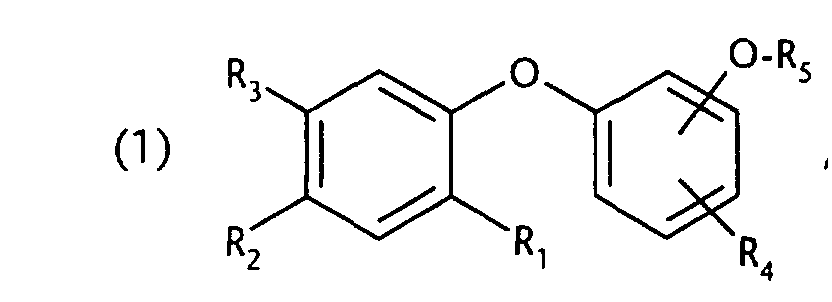
- R1, R2 and R3
- independently from each other are hydrogen; hydroxy; halogen; C1-C20alkyl; hydroxy-substituted C1C20alkyl; C5-C7cycloalkyl; C1-C20alkoxy; C1-C6alkylcarbonyl; phenyl; or phenyl-C1-C3alkyl;
- R4
- is hydrogen; halogen; C1-C20alkyl; hydroxy-substituted C1-C20alkyl; C5-C7cycloalkyl; hydroxy; formyl; acetonyl; allyl; carboxy; carboxy-C1-C3alkyl; carboxyallyl; C2-C20alkenyl; C1-C6-alkylcarbonyl; C1-C3alkylcarbonyl-C1-C3alkyl; phenyl; or phenyl-C1-C3alkyl; and
- R5
- is hydrogen; C1-C20alkoxy; or C1-C6alkylcarbonyl; and
- (b) a UV absorber selected from
- (b1) a compound of formula
wherein

- R6 and R7
- independently from each other signify C1-C12-alkyl;
- (b2) a compound of formula
in which R8 and R9, independently, are C1-C18alkyl or C1-C18alkoxy;

- (b3) a compound of formula
in which

- R10, R11 and R12,
- independently, are H; OH; C1-C18alkoxy; NH2; NH-R13 or N(R13)2in which R13 is
C1-C18alkyl; OR13; phenyl, phenoxy or anilino, or pyrrolo, in which the respective phenyl,
phenoxy or anilino, or pyrrolo moieties are optionally substituted by one, two or three
substitutents selected from OH, carboxy, CO-NH2, C1-C18alkyl or C1-C18alkoxy; C1-C18carboxyalkyl;
C5-C8cycloalkyl; a methylidenecamphor group; a group
-(CH=CH)mC(=O)-OR13 in which m is 0 or 1; or a group
or the corresponding alkali metal, ammonium, mono-, di- or tri-C1-C4alkylammonium, mono-, di- or tri-C2-C4alkanolammonium salts, or the C1-C18alkyl esters thereof;

- (b4) a compound of formula
in which
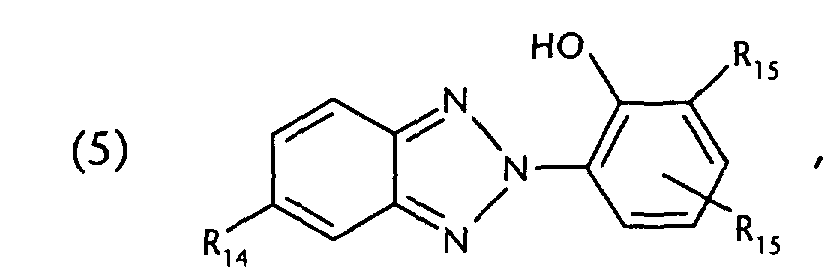
- R14
- is C1-C18alkyl or hydrogen; and
- R15
- is C1-C18alkyl, optionally substituted by phenyl,
- (b5) a compound of formula
in which R15 has its previous significance;
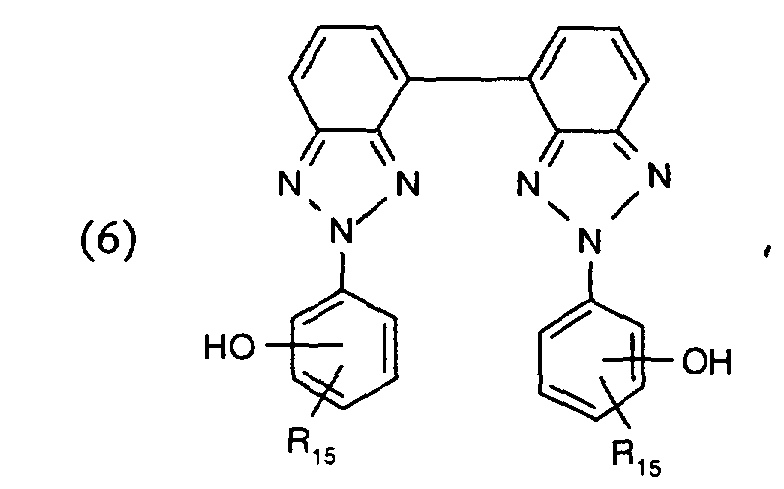
- (b6) a compound of formula
- R16
- is C1-C18alkyl or phenyl optionally substituted by one, two or three substituents selected from OH, C1-C18alkyl, C1-C18alkoxy or CO-OR13;
- R17, R18, R19 and R20
- are the same or different and each is C1-C18alkyl; or hydrogen;
- Y
- is N; or O; and
- m
- has its previous significance;
- (b7) a compound of formula
in which

- R21
- is hydroxy; or C1-C4alkoxy,
- R22
- is hydrogen; or C1-C4alkyl; and
- R23
- is -(CONH)m-phenyl in which m has its previous significance and the phenyl group is optionally substituted by one, two or three substituents selected from OH, C1-C18alkyl,. C1-C18alkoxy or CO-OR13; and
- (b8) a compound of formula
, in which

- M
- is hydrogen; an alkali metal; an alkaline earth metal; or zinc.
-
- Each alkyl radical is straight-chained or branched. Examples of alkyl radicals are methyl, ethyl, n-propyl, isopropyl, n-butyl, sec-butyl, tert-butyl, amyl, isoamyl or tert-amyl, heptyl, octyl, isooctyl, nonyl, decyl, undecyl, dodecyl, tetradecyl, pentadecyl, hexadecyl, heptadecyl, octadecyl or eicosyl.
- Examples of alkenyl radicals are allyl, methallyl, isopropenyl, 2-butenyl, 3-butenyl, isobutenyl, n-penta-2,4-dienyl, 3-methyl-but-2-enyl, n-oct-2-enyl, n-dodec-2-enyl, isododecenyl, n-dodec-2-enyl or n-octadec-4-enyl.
- Each alkoxy radical is straight-chained or branched. Examples of alkoxy radicals are methoxy, ethoxy, n-propoxy, isopropoxy, n-butoxy, sec-butoxy, tert-butoxy, pentyloxy, iso-pentyloxy, tert-pentyloxy, heptyloxy, octyloxy, isooctyloxy, nonyloxy or decyloxy and the like.
- Each alkylcarbonyl is straight-chained or branched. Examples of carbonyl radicals are acetyl, propionyl, butyryl, isobutyryl, valeryl, isovaleryl or pivaloyl and the like.
- Examples of hydroxy-substituted C1-C20alkyl are hydroxymethyl, hydroxyethyl, hydroxypropyl, hydroxybutyl, hydroxypentyl, hydroxyhexyl, hydroxyheptyl, hydroxyoctyl, hydroxynonyl or hydroxydecyl and the like.
- C5-C7cycloalkyl is cyclopentyl, cycloheptyl or, preferably, cyclohexyl.
- C7-C9phenylalkyl is phenylpropyl, phenylethyl and, preferably, benzyl.
- In a preferred embodiment of the invention the personal care product contains an antimicrobial of formula (1), wherein
- R1
- is C1-C16-Alkyl; and
- R2, R3 R4 and R5
- are hydrogen.
- In a further preferred embodiment of the invention the personal care product contains as antimicrobial a compound of formulawherein
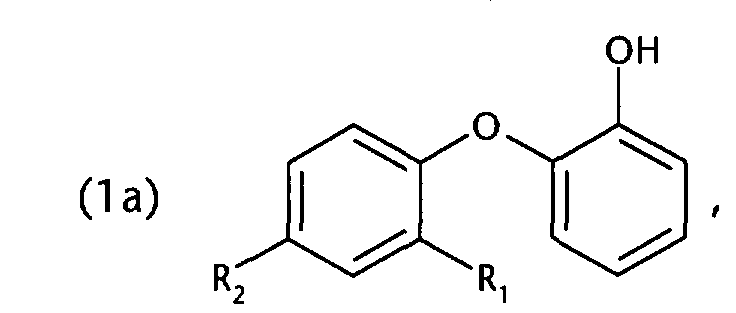
- R1 and R2
- independently of each other are hydrogen; C1-C20alkyl; or hydroxy-substituted C1-C20alkyl; wherein at least one of the substituents R1 and R2 is not hydrogen.
- In a more preferred embodiment of the invention the personal care product contains an antimicrobial of formulawherein

- R4
- is carboxy; carboxy-C1-C3alkyl; C1-C6alkylcarbonyl; or C1-C3alkylcarbonyl-C1-C3alkyl.
- In a further preferred embodiment of the present invention the personal care product contains an antimicrobial of formulawherein

- R1, R2 and R3
- independently from each other are hydrogen; hydroxy; C1-C20alkyl; or hydroxy-substituted C1C20alkyl; and
- R4
- is C1-C20alkyl; hydroxy substituted C1-C20alkyl; phenyl; phenyl-C1-C3alkyl; or C1-C6alkylcarbonyl; and most preferably compounds of formula (1c), wherein
- R1, R2 and R3
- are hydrogen; or C1-C20alkyl, or compounds of formula (1 c), wherein
- R1, R2 and R3
- are hydrogen; and
- R4
- is C1-C20alkyl; phenyl-C1-C5alkyl; or C1-C6alkylcarbonyl.
- Mostly preferred are compounds of formula (1c), wherein
- R1,R2 and R3
- are hydrogen; or C1-C20alkyl; or compounds of formula (1c), wherein
- R1, R2 and R3
- are hydrogen; and
- R4
- is C1-C20alkyl; phenyl-C1-C5alkyl; or C1-C6alkylcarbonyl.
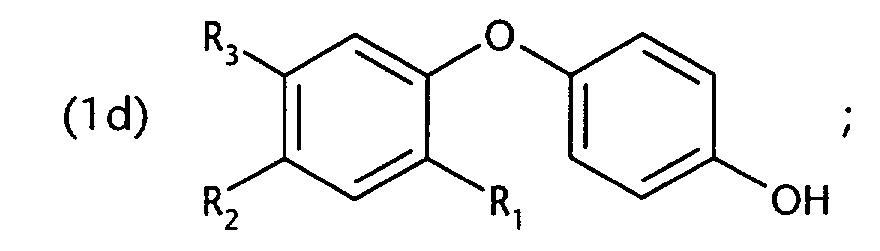
- In a further preferred embodiment of the present invention the personal care product contains an antimicrobial of formulawherein

- R1,R2 and R3
- independently from each other are hydrogen; C1-C20alkyl; hydroxy-substituted C1-C20akyl; cyclo-C5-C7alkyl; phenyl-C1-C3alkyl, wherein at least one of the substituents R1, R2 or R3 is not hydrogen.
- Most preferred are compounds of formula (1d), wherein
- R1 and R3
- independently of each other are C1-C20alkyl; and
- R2
- is hydrogen.
- In a further preferred embodiment of the present invention the personal care product contains an antimicrobial of formulawherein

- X
- is oxygen, or -CH2-,
- m
- 1 to 3, and
- n
- is 1 or 2; and most preferably compounds of formula
- Preferred personal care product of the present invention comprise as Uv absorber a compound of formula (2), wherein
R6 and R7 independently from each other are C1-C8-alkyl; and/or
a compound of formula (3), in which R8 and R9, independently, are C1-C4alkyl or C1-C4alkoxy; and/or
a compound of formula (4a) or a mixture of compounds of formulain which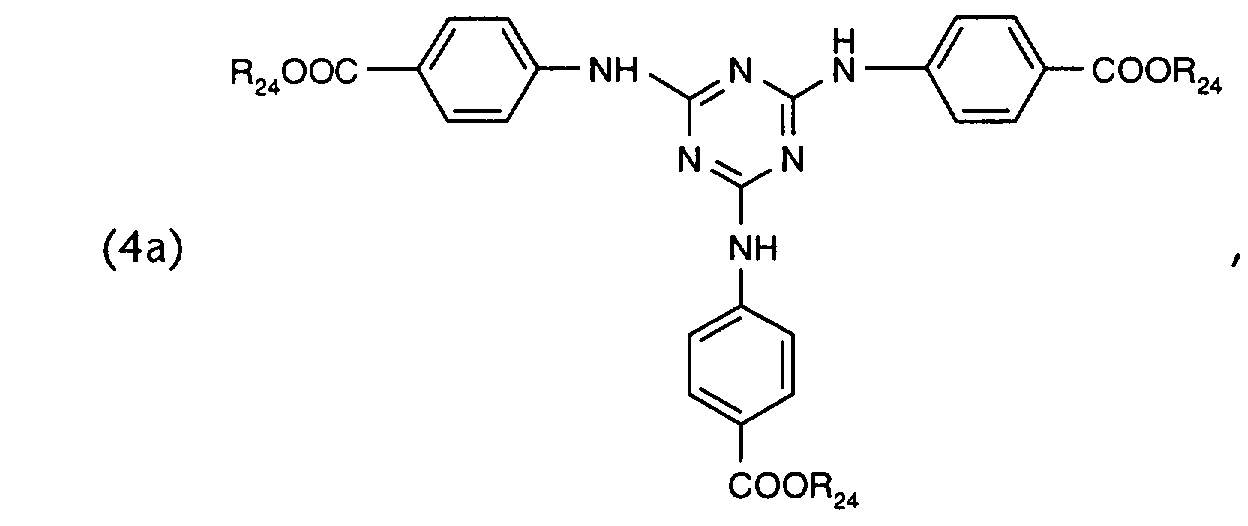
the individual radicals R24 are the same or different and each is hydrogen; an alkali metal; an ammonium group N(R25)4, in which R25 is hydrogen or an organic radical; C1-C20alkyl; or a polyoxyethylene radical which contains from 1 to 10 ethylene oxide units and the terminal OH group of which may be etherified by a C1-C3alcohol; and/or
a compound of formula (5), in which - R14
- is C1-C4alkyl or hydrogen; and
- R15
- is C1-2alkyl or α,α-dimethylbenzyl; and/or
- R15
- is C1-2alkyl or α,α-dimethylbenzyl; and/or
- R16
- is C1-C5alkyl or phenyl optionally substituted by one, two or three substituents selected from OH, C1-C4alkyl, C1-C4alkoxy or CO-OR12 in which R12 has its previous significance;
- R17, R18, R19 and R20
- are the same or different and each is C1-C5alkyl or hydrogen;
- Y
- is N or O; and
- m
- has its previous significance; and/or
- R21
- is hydroxy; methoxy; or ethoxy,
- R22
- is hydrogen; or C1-C2alkyl; and
- R23
- is phenyl; 4-methoxyphenyl; or the phenylaminocarbonyl group; and/or
- M
- is hydrogen, sodium, magnesium, calcium or zinc.
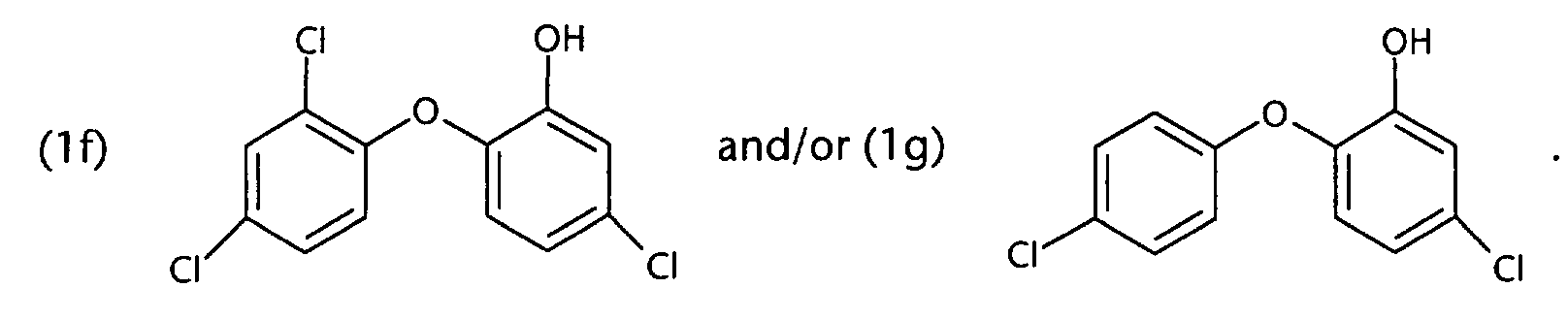
- Further hydroxydiphenylether compounds, which can be used in the present invention, are listed in the following Table 1:
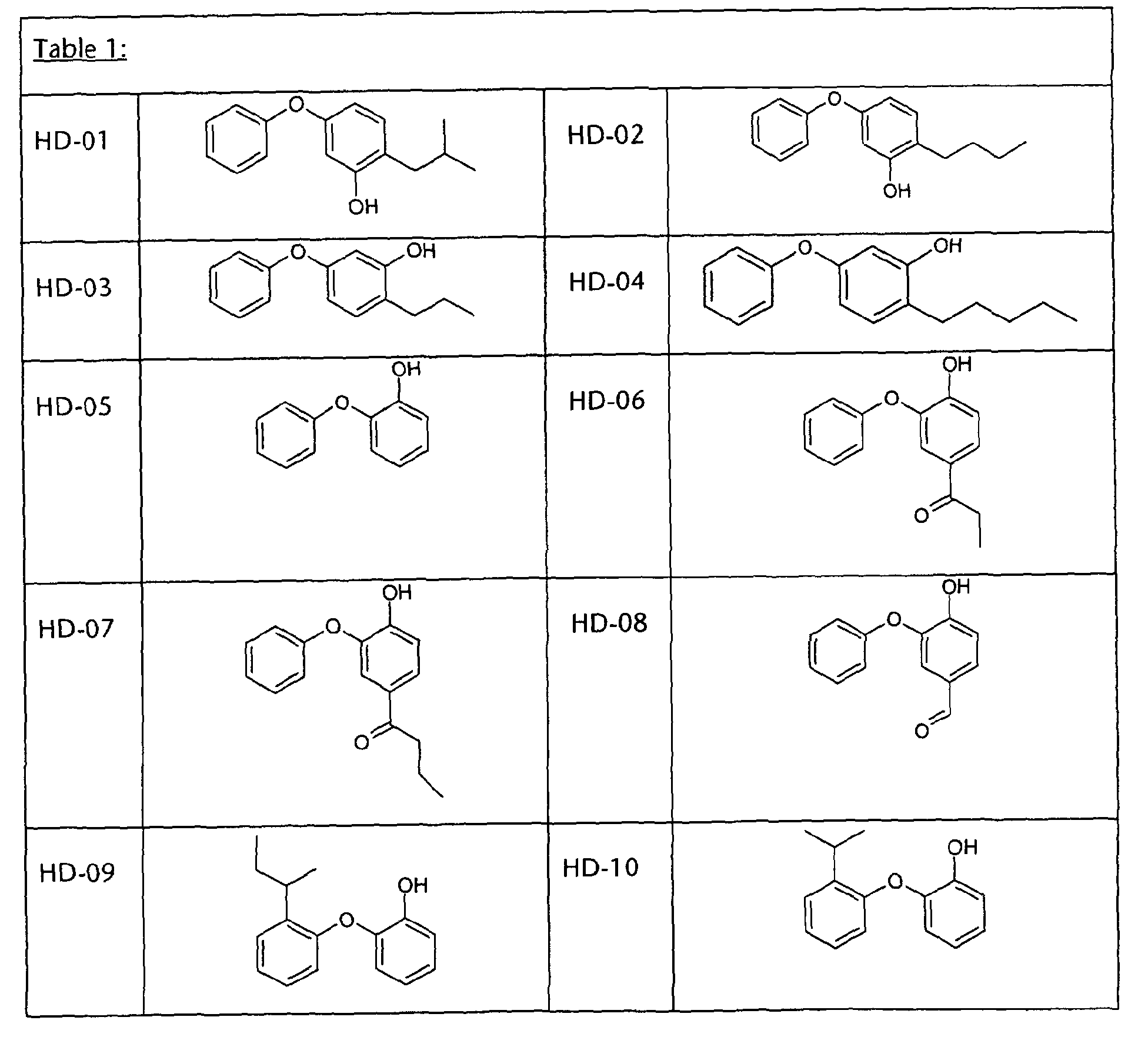
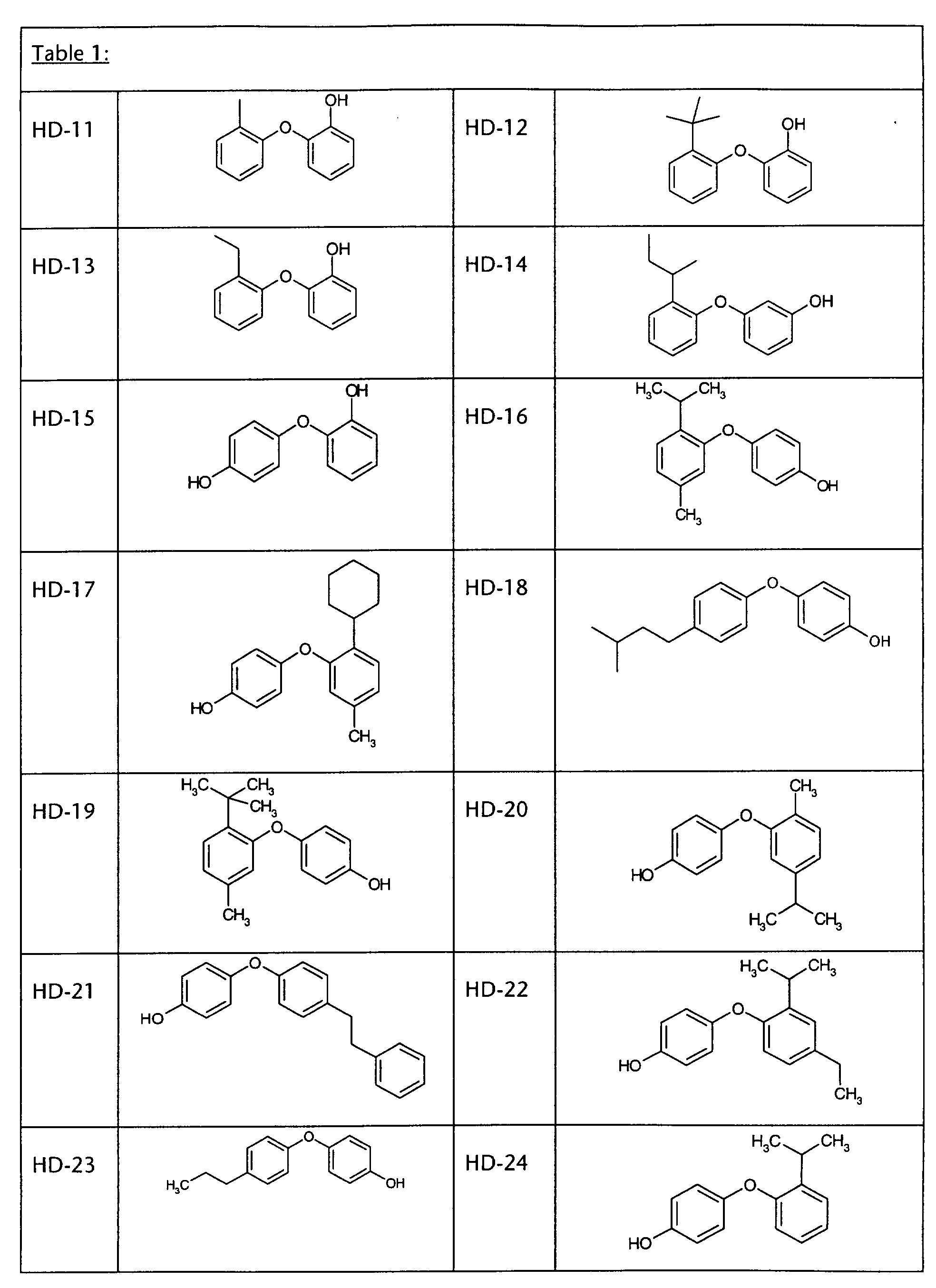

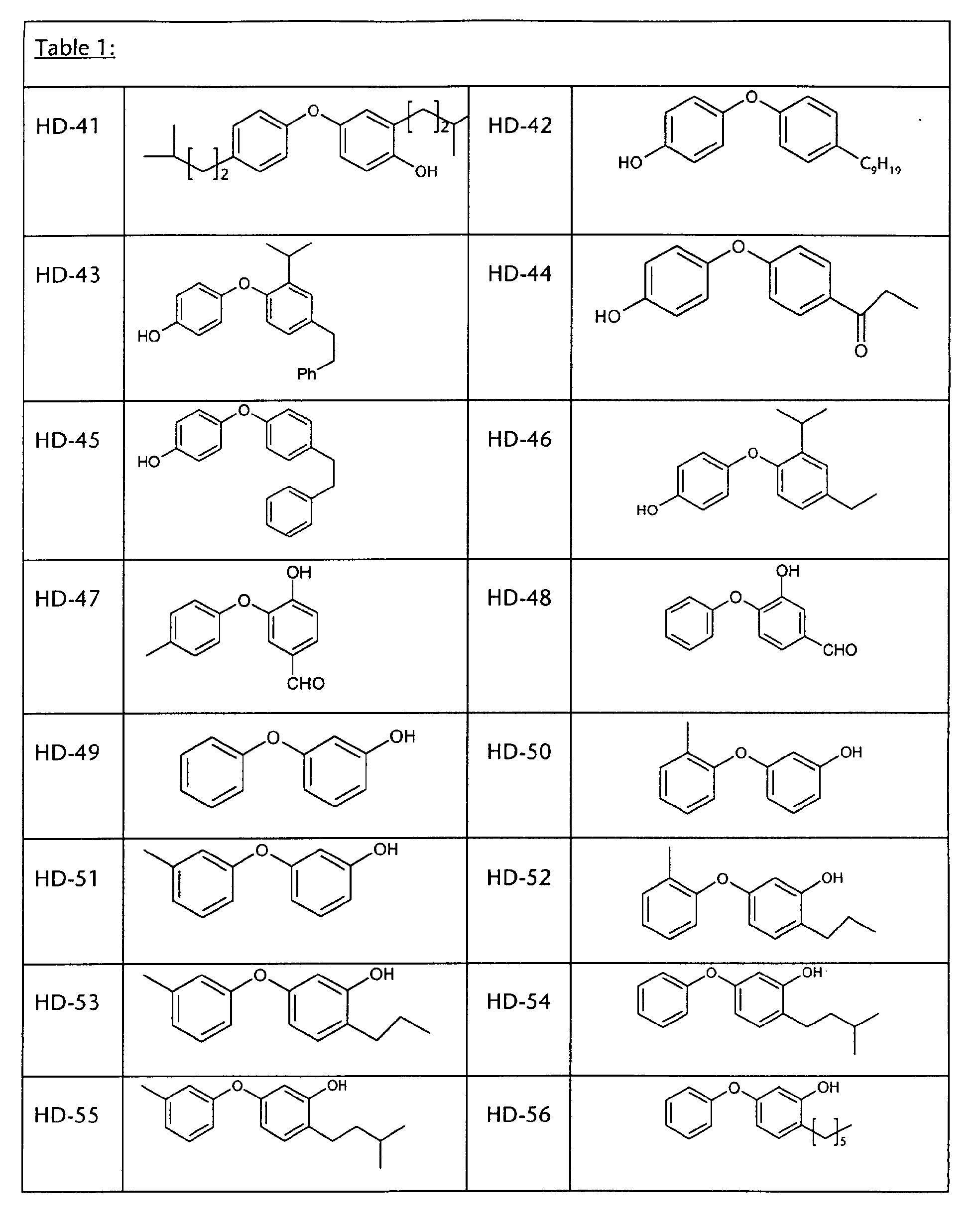

- The method for producing compounds of formula (1 - (9) is for example disclosed in WO 0222941, EP-A2-1053989 and US 5980872.
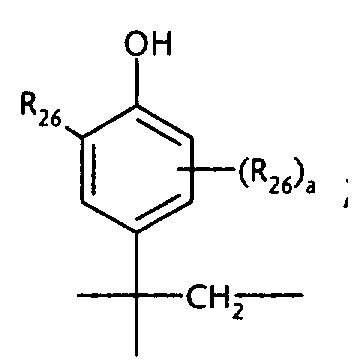
- In a further embodiment of the present invention the personal care product comprises as a further component (c)at least one antioxidant of the following formulaeand/or
 and/or
 wherein in formulae (10), (11) and (12)
- R26
- is hydrogen; C1-C22alkyl; C1-C22alkylthio; C5-C7cycloalkyl; phenyl; C7-C9phenylalkyl or SO3M,
- R27
- is C1-C22alkyl; C5-C7cycloalkyl; phenyl or C7-C9phenylalkyl,
- Q
- is -CmH2m-;
-CmH2m-NH; a radical of formula
 or
or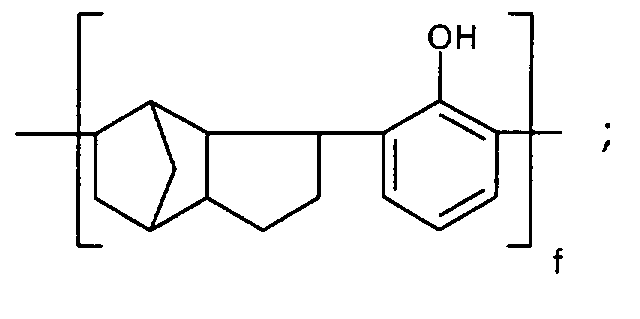
- T
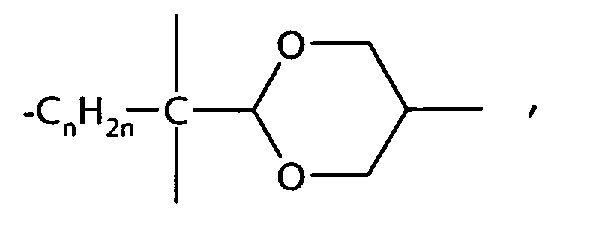
- is -CnH2n-; -(CH2)n-O-CH2-;
or a radical of formula (1c)

- V
- is -O- or -NH-,
- a
- is 0; 1; or 2,
- b, c and d
- are each independently of one another 0 or 1,
- e
- is an integer from 1 to 4,
- f
- is an integer from 1 to 3, and
- m, n and p
- are each independently of one another an integer from 1 to 3,
- R28
- is hydrogen; M; C1-C22alkyl; C5-C7cycloalkyl; C1-C22alkylthio; C2-C18alkenyl; C1-C18-phenylalkyl;
a radical of formula


- M
- is alkali; ammonium,
- R28
- is a direct bond; -CH2-;
- R28
- is the radical of formula
- R28
- is
or a direct bond and

- R29 and R30
- are each independently of the other hydrogen; or C1-C22alkyl.
- Preferred antioxidants can be found in Table 1 of EP 1135093 and of EP 1126811. The process for production of these antioxidants can also be found in these two patent applications.
- Personal care products are shampoos, bath- and shower additives, hair-care products, liquid and bar soaps, lotions and crèmes, deodorants, other aqueous or alcoholic solutions, for example cleaning solutions for the skin, moist cleaning sheets, oils and powders.
- Preferred personal care products are deodorants and bar soaps.
- The personal care composition according to the present invention comprises
0.01 to 15 wt-% (wt-%) of component (a); 0.05 to 15 wt-% of component (b); and 0 to 15 wt-% of component (c); - The above percentages are in each case percentages by weight, based on the total weight of the composition.
- Preferred is a personal care composition according to the present invention comprises
- (a) 0.01 to 15, more preferably 0.1 to 10 weight-% (wt-%) of at least one compound of formula (HD-01) to (HD-66) of Table 1;
- (b) 0.05 to 15 wt-%, more preferably 0.1 to 10 wt-% of a compound or a mixture of such compounds, and
- (c) 0 to 15 wt-% of a compound of formula (10); and cosmetically tolerable carriers or auxiliaries.
-
- The personal care composition according to the invention can be formulated as a water-in-oil or oil-in-water emulsion, as an oil-in-alcohol lotion, as a vesicular dispersion of an ionic or non-ionic amphiphilic lipid, as a gel, solid stick, aerosol formulation or a surfactant based formulation, such as a soap or skin cleanser.
- As a water-in-oil or oil-in-water emulsion, the cosmetically compatible auxiliary preferably contains 5 to 50% of an oil phase, 5 to 20% of an emulsifier and 30 to 90% of water. The oil phase can in this case contain any oil suitable for cosmetic formulations, e.g. one or more hydrocarbon oils, a wax, a natural oil, a silicone oil, a fatty acid ester or a fatty alcohol. Preferred mono- or polyols are ethanol, isopropanol, propylene glycol, hexylene glycol, glycerol and sorbitol.
- Any conventionally usable emulsifier can be used for the cosmetic composition according to the invention, for example one or more ethoxylated esters of natural derivatives, e.g. polyethoxylated esters of hydrogenated castor oil; or a silicone oil emulsifier, e.g. a silicone polyol; an optionally ethoxylated fatty acid soap; an ethoxylated fatty alcohol; an optionally ethoxylated sorbitan ester; an ethoxylated fatty acid; or an ethoxylated glyceride.
- The cosmetic composition may also comprise further components, e.g. emollients, emulsion stabilisers, skin humectants, skin tanning accelerators, thickeners, such as xanthan, moisture-retention agents, such as glycerol, preservatives, perfumes and colourings.
- The preparation of the cosmetic composition can be effected by physically mixing the anti-microbial(s) with the auxiliary by customary methods, for example by simply stirring the individual components together.
- Cosmetic formulations include a very wide range of cosmetic products. Suitable products are, for example, especially the following:
- skin-care products, for example skin washing and cleansing products in the form of bars of soap or liquid soaps, syndets or washing pastes,
- bath products, for example liquid (foam baths, milks, shower products) or solid bath products, such as bath pearls and bath salts;
- skin-care products, such as skin emulsions, multiple emulsions or skin oils;
- decorative body-care products, for example face make-ups in the form of day or powder creams, face powders (lose and compressed), rouge or cream make-ups, eye-care products, for example eye shadow products, mascara, eyeliners, eye creams or eye-fix creams; lip-care products, for example lipstick, lip gloss, lip liner, nail-care products, such as nail varnish, nail varnish remover, nail hardeners or cuticle removers;
- feminine hygiene products, such as feminine hygiene washing lotions or sprays;
- foot-care products, for example foot baths, foot powders, food creams or foot balms, special deodorants and antiperspirants or products for scrubbing off callouses;
- sunscreens, such as sun milks, lotions, creams, oils, sunblockers or tropicals, pre-sun products or after-sun products;
- suntanning products, for example self-tanning creams;
- depigmenting products, for example products for bleaching or lightening skin;
- insect repellents, for example insect oils, lotions, sprays or sticks;
- deodorants, for example deodorant sprays, non-aerosol sprays, deodorant gels, sticks or roll-ons;
- antiperspirants, for example antiperspirant sticks, creams or roll-ons;
- products for cleansing and treating impure skin, for example syndets (solid or liquid), peeling or scrubbing products or peeling masks;
- chemical depilatory products, for example depilatory powders, liquid depilatory products, creamy or pasty depilatory products, depilatory gels or aerosol foams;
- shaving products, for example shaving soap, foaming shaving creams, non-foaming shaving creams, shaving foams and gels, preshaving products for dry shaving, aftershaves or aftershave lotions;
- scents, for example perfumes (Eau de Cologne, Eau de Toilette, Eau de Parfum, Parfum de Toilette, perfume), perfume oils or perfume creams;
- products for oral and dental hygiene as well as for dentures, for example toothpastes, tooth gels, tooth powders, mouth-wash concentrates, anti-plaque mouth-washes, denture cleaning products or denture adhesion products;
- cosmetic formulations for hair treatment, for example hair washes in the form of shampoos, hair conditioners, hair-care products, for example pretreatment products, hair tonics, hair styling creams and gels, pomades, hair rinses, deep conditioning treatments, intensive hair care treatments, hair setting products, for example waving agents for perms (hot wave, mild wave, cold wave), hair straightening products, liquid hair fixatives, hair foams, hair sprays, bleaching agents, for example hydrogen peroxide solutions, bleaching shampoos, bleaching creams, bleaching powders, bleaching pastes or oils, temporary, semitemporary or permanent hair dyes, products containing self-oxidising dyes, or natural hair dyes, such as henna or camomile.
- The antioxidant(s) are optionally present in the novel body-care product in a concentration of 50 to 1000 ppm.
- An improved antimicrobial soap has, for example, the following composition:
0.01 to 5 wt-% of at least one compound of the formula (1) 0.2 to 1 % wt-% of a compound of formula (2) - (9) or a mixture thereof 1 to 10 wt-% of stearic acid to 100 wt% of soap base, for example the sodium salts of tallow fatty and coconut fatty acid or glycerols. - A preferred improved antimicrobial soap has, for example, the following composition:
0.01 to 5 wt-% of at least one compound of the formula (HD-01) to (HD-66) of Table 1 0.2 to 1 % wt-% of at least compound of formula (2) 1 to 10 wt-% of stearic acid to 100 wt% of soap base, for example the sodium salts of tallow fatty and coconut fatty acid or glycerols. - An improved shampoo has, for example, the following composition:
- 0.01 to 5 wt-% of at least one compound of the formula (1)
- 0.2 to 1 % wt-% of a compound of formula (2) - (9) or a mixture thereof
- 12.0 wt-% of sodium laureth-2-sulfate,
- 4.0 wt-% of cocamidopropylbetaine,
- 3.0 wt-% of NaCI and
- water to 100 wt-%.
-
- An improved deodorant has, for example, the following composition:
- 0.01 to 5 wt-% of at least one compound of the formula (1)
- 0.2 to 1 % wt-% of a compound of formula (2) to (9) or a mixture thereof
- 60 wt-% of ethanol,
- 0.3 wt-% of perfume oil and
- water to 100%.
-
- The personal care formulations listed above can be in a very wide range of forms of presentation, for example
- in the form of liquid formulations as an O/W emulsion,
- in the form of a gel,
- in the form of an oil, cream, milk or lotion,
- in the form of a powder, lacquer, pellets or make-up,
- in the form of a stick,
- in the form of a spray (spray with propellant or pumping spray) or an aerosol,
- in the form of a foam, or
- in the form of a paste.
- The oral hygiene composition may comprise an additional antibacterial enhancing agent, for example an anionic polymeric polycarboxylate, a dehydrated polyphosphate salt, a compound which provides a source of fluoride ions, a polishing material, including siliceous material or sodium bicarbonate, an orally acceptable vehicle, including a water-phase with humectant, thickeners, surface-active agents and a flavoring or sweetening material.
- The following examples illustrate the present invention. The percentages are weight percentages and the temperatures are given in degree Celsius.
- 496.75 g of a soap (Mettler-Grundseife 400010, which is a product of Mettler AG, Hornussen, Switzerland), 0.25 g of ethylenediamine tetra-acetic acid (EDTA) and 1 g of 4-(2-t-butyl-5-methylphenoxy)-phenol are placed in a mixer (i.e. a Z-blade mixer).
- 50 ml of a 1:1 mixture of glycerine and water, which additionally contains 2 g of a mixture consisting of
50 wt-% of methylene bis-benztriazolyl tetramethylbutylphenol, 7.5 wt-% of decyl glucosid 0.2 wt-% of xanthan gum 0.4 wt-% of propylenglycol and 41.9 wt-% of water - 499.75 g of a soap (Mettler-Grundseife 400010, which is a product of Mettler AG, Hornussen, Switzerland) and 0.25 g of EDTA are placed in a mixer (i.e. a Z-blade mixer). 50 ml of a 1:1 mixture of glycerine and water is added. The mass is mixed for about 20 minutes. The mass is then transferred to a three-roll mill, plodded into a billet, cut and finally stamped into bars.
- 498.75 g of a soap (Mettler-Grundseife 400010, which is a product of Mettler AG, Hornussen, Switzerland), 0.25 g of EDTA and 1 g of 4-(2-t-butyl-5-methylphenoxy)-phenol are placed in a mixer (i.e. a Z-blade mixer). 50 ml of a 1:1 mixture of glycerine and water is added. The mass is mixed for about 20 minutes. The mass was then transferred to a three roll mill, plodded into a billet, cut and finally stamped into bars.
- 497.75 g of a soap (Mettler-Grundseife 400010, which is a product of Mettler AG, Hornussen, Switzerland), 0.25 g of EDTA, 1 g of 4-(2-t-butyl-5-methylphenoxy)-phenol and 1 g of TiO2 P25 (a product of DEGUSSA) are placed in a mixer (i.e. a Z-blade mixer). 50 ml of a 1:1 mixture of glycerine and water is added. The mass is mixed for about 20 minutes. The mass is then transferred to a three roll mill, plodded into a billet, cut and finally stamped into bars.
- The bar soaps are exposured to light in a Suntest XLS apparatus. The exposure time has been between 2 and 8 hours. The light intensity has been 765 W/m2. The degree of whiteness (Method of Ganz) of the soap bars of each example are determined after the exposure. The whiteness values of the respective dried goods are measured with a DCl/SF 500 spectrophotometer according to the Ganz method.
- The Method of Ganz is described in detail in the Ciba-Geigy Review, 1973/1, and also in the article "Whiteness Measurement", ISCC Conference on Fluorescence and the Colorimetry of Fluorescent Materials, Williamsburg, February 1972, published in the journal of Color and Appearance, 1, No.5 (1972).
- The results are given in Table 2.
Example Degree of Whiteness 2h 4h 8h 1 59 69 79 2 64 79 94 3 28 37 42 4 48 17 2 - The soap of example 1 shows an improved degree of whiteness in comparison to the soap with only the antimicrobial agent (example 3) or to the soap with TiO2 (example 4). TiO2 is known as a compound, which usually protects bar soaps against discolouring (yellowing).
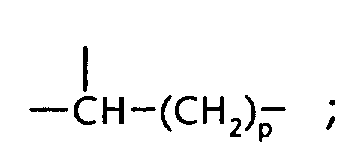
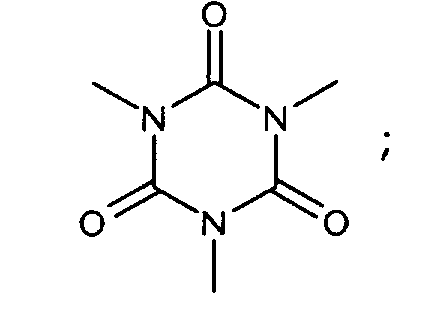
e = 3, then

Claims (17)
- Personal care product with antimicrobial action, comprising(a) as antimicrobial a compound of formulawherein
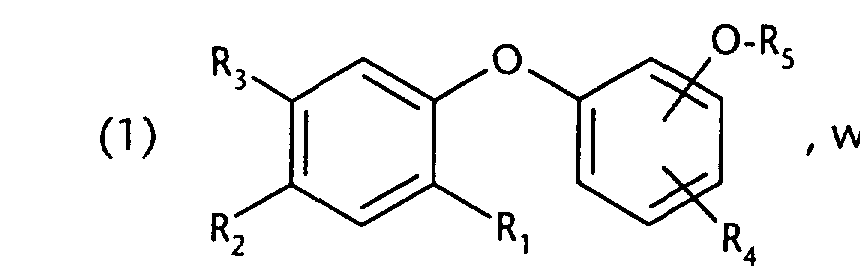
- R1, R2 and R3
- independently from each other are hydrogen; hydroxy; halogen; C1-C20alkyl; hydroxy-substituted C1C20alkyl; C5-C7cycloalkyl; C1-C20alkoxy; C1-C6alkylcarbonyl; phenyl; or phenyl-C1-C3alkyl;
- R4
- is hydrogen; halogen; C1-C20alkyl; hydroxy-substituted C1-C20alkyl; C5-C7cycloalkyl; hydroxy; formyl; acetonyl; allyl; carboxy; carboxy-C1-C3alkyl; carboxyallyl; C2-C20alkenyl; C1-C6-alkylcarbonyl; C1-C3alkylcarbonyl-C1-C3alkyl; phenyl; or phenyl-C1-C3alkyl; and
- R5
- is hydrogen; C1-C20alkoxy; or C1-C6alkylcarbonyl; and
(b) a UV absorber selected from(b1) a compound of formulawherein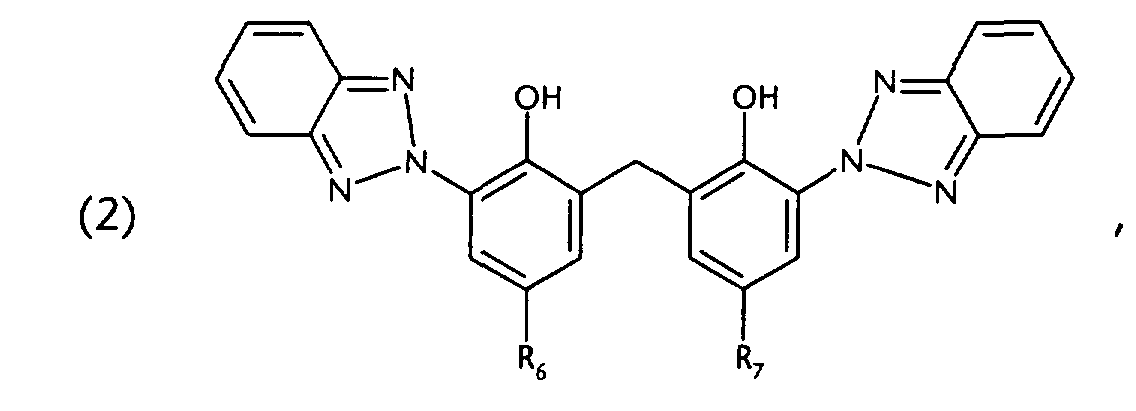
- R6 and R7
- independently from each other signify C1-C12-alkyl;
(b2) a compound of formulain which R8 and R9, independently, are C1-C18alkyl or C1-C18alkoxy; (b3) a compound of formulain which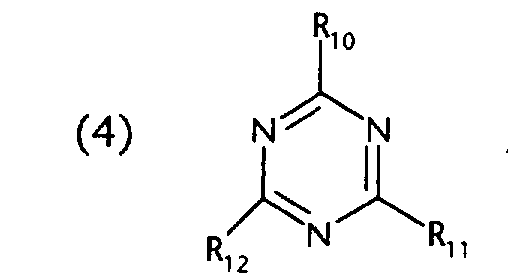
- R10, R11 and R12,
- independently, are H; OH; C1-C18alkoxy; NH2; NH-R13 or N(R13)2in which R13 is C1-C18alkyl; OR13; phenyl, phenoxy or anilino, or pyrrolo, in which the respective phenyl, phenoxy or anilino, or pyrrolo moieties are optionally substituted by one, two or three substitutents selected from OH, carboxy, CO-NH2, C1-C18alkyl or C1-C18alkoxy; C1-C18Carboxyalkyl; C5-C8cycloalkyl; a methylidenecamphor group; a group - (CH=CH)mC(=O)-OR13 in which m is 0 or 1; or a group
or the corresponding alkali metal, ammonium, mono-, di- or tri-C1-C4alkylammonium, mono-, di- or tri-C2-C4alkanolammonium salts, or the C1-C18alkyl esters thereof; (b4) a compound of formulain which
- R14
- is C1-C18alkyl or hydrogen; and
- R15
- is C1-C18alkyl, optionally substituted by phenyl,
(b5) a compound of formulain which R15 has its previous significance; (b6) a compound of formula
- R16
- is C1-C18alkyl or phenyl optionally substituted by one, two or three substituents selected from OH, C1-C18alkyl, C1-C18alkoxy or CO-OR13;
- R17, R18, R19 and R20
- are the same or different and each is C1-C18alkyl; or hydrogen;
- Y
- is N; or O; and
- m
- has its previous significance;
(b7) a compound of formulan which
- R21
- is hydroxy; or C1-C4alkoxy,
- R22
- is hydrogen; or C1-C4alkyl; and
- R23
- is -(CONH)m-phenyl in which m has its previous significance and the phenyl group is optionally substituted by one, two or three substituents selected from OH, C1-C18alkyl, C1-C18alkoxy or CO-OR13; and
(b8) a compound of formulain which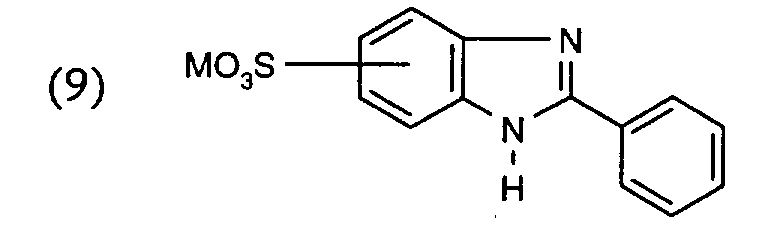
- M
- is hydrogen; an alkali metal; an alkaline earth metal; or zinc.
- A personal care product according to claim 1 comprising as antimicrobial (a) a compound of formula (1), wherein
- R1
- is C1-C16alkyl; and
- R2, R3 R4 and R5
- are hydrogen.
- A personal care product according to claim 1 comprising as antimicrobial (a) a compound of formulawherein
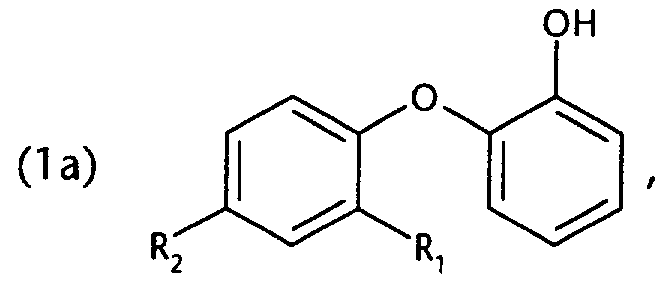
- R1 and R2
- independently of each other are hydrogen; C1-C20alkyl; or hydroxy-substituted C1-C20alkyl; wherein at least one of the substituents R1 and R2 is not hydrogen.
- A personal care product according to claim 1 comprising as antimicrobial (a) a compound of formulawherein

- R4
- is carboxy; carboxy-C1-C3alkyl; C1-C6alkylcarbonyl; or C1-C3alkylcarbonyl-C1-C3alkyl.
- A personal care product according to Claim 1 comprising as antimicrobial (a) a compound of formulawherein
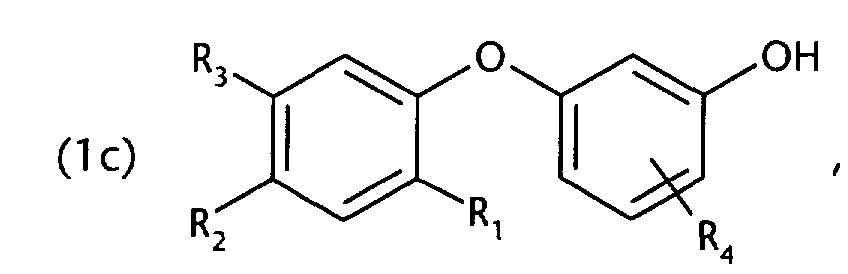
- R1, R2 and R3
- independently from each other are hydrogen; hydroxy; C1-C20alkyl; or hydroxy-substituted C1C20alkyl; and
- R4
- is C1-C20alkyl; hydroxy substituted C1-C20alkyl; phenyl; phenyl-C1-C3alkyl; or C1-C6alkylcarbonyl.
- A personal care product according to claim 5, wherein
- R1, R2 and R3
- are hydrogen; or C1-C20alkyl.
- A personal care product according to claim 5 or 6, wherein
- R1, R2 and R3
- are hydrogen; and
- R4
- is C1-C20alkyl; phenyl-C1 -C5alkyl; or C1-C6alkylcarbonyl.
- A personal care product according to claim 1 comprising as antimicrobial (a) a compound of formulawherein

- R1, R2 and R3
- independently from each other are hydrogen; C1-C20alkyl; hydroxy-substituted C1-C20akyl; cyclo-C5-C7alkyl; phenyl-C1-C3alkyl, wherein at least one of the substituents R1, R2 or R3 is not hydrogen.
- A personal care product according to claim 8, wherein
- R1 and R3
- independently of each other are C1-C20alkyl; and
- R2
- is hydrogen.
- A personal care product according to claim 1, comprising as antimicrobial (a) a compound of formulawherein

- X
- is oxygen, or -CH2-;
- m
- 1 to 3; and
- n
- is 1 or 2.
- A personal care product according to claim 1 or 10 comprising as antimicrobial (a) a compound of formula

- A personal care product according to anyone of claim 1 to 11 comprising as UV absorber (b) a compound of formula (2), wherein
- R6 and R7
- independently from each other are C1-C8-alkyl,
a compound of formula (3), in which R8 and R9, independently, are C1-C4alkyl or C1-C4alkoxy,
and/or
a compound of formula (4a) or a mixture of compounds of formulain which
the individual radicals R24 are the same or different and each is hydrogen; an alkali metal; an ammonium group N(R25)4 in which R25 is hydrogen or an organic radical; C1-C20alkyl; or a polyoxyethylene radical which contains from 1 to 10 ethylene oxide units and the terminal OH group of which may be etherified by a C1-C3alcohol,
and/or
a compound of formula (5), in which- R14
- is C1-C4alkyl or hydrogen; and
- R15
- is C1-2alkyl or α,α-dimethylbenzyl,
a compound of formula (6), in which- R15
- is C1-2alkyl or α,α-dimethylbenzyl,
a compound of formula (7), in which- R16
- is C1-C5alkyl or phenyl optionally substituted by one, two or three substituents selected from OH, C1-C4alkyl, C1-C4alkoxy or CO-OR12 in which R12 has its previous significance;
- R17, R18, R19 and R20
- are the same or different and each is C1-C5alkyl or hydrogen,
- Y
- is N or O; and
- m
- has its previous significance,
a compound of formula (8), in which- R21
- is hydroxy; methoxy or ethoxy,
- R22
- is hydrogen or C1-C2alkyl; and
- R23
- is phenyl, 4-methoxyphenyl or the phenylaminocarbonyl group,
a compound of formula (9), in which- M
- is hydrogen, sodium, magnesium, calcium or zinc.
- A personal care product according to anyone of Claim 1 to 12 comprising as a further component (c) at least one antioxidant of the following formulaeand/or
 and/or
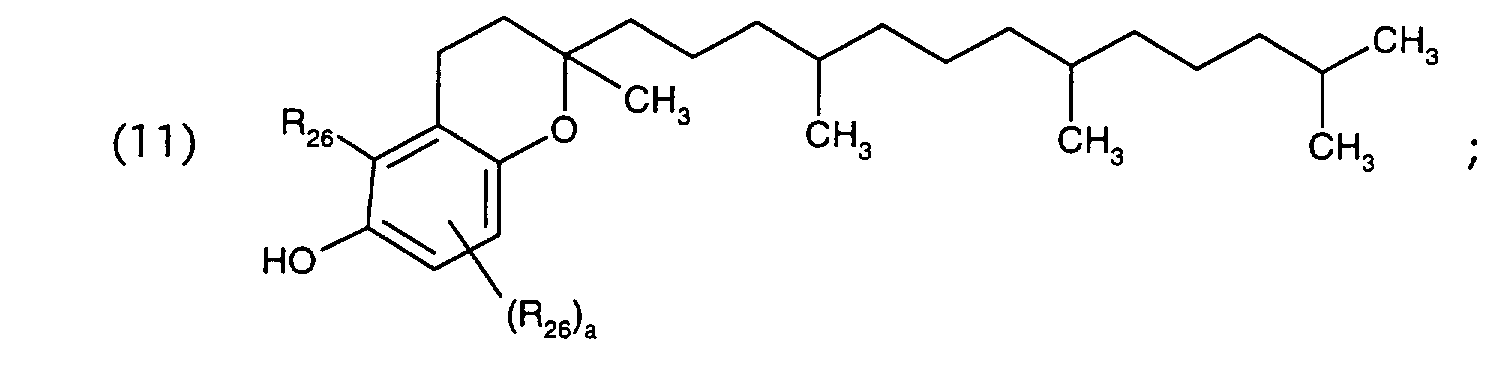 wherein in formulae (10), (11) and (12)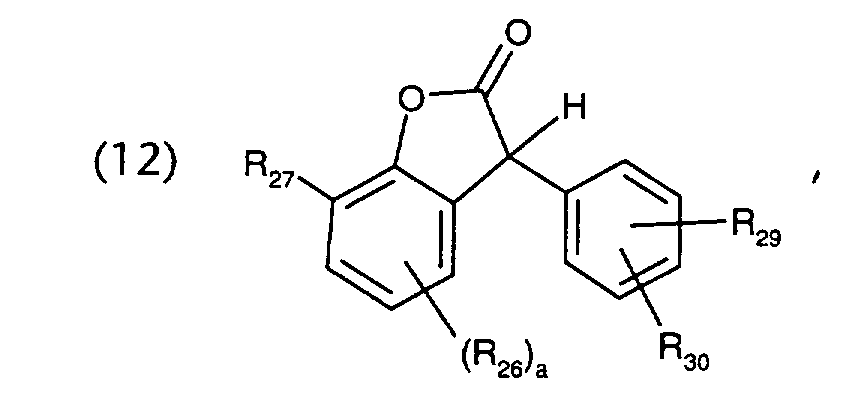
- R26
- is hydrogen; C1-C22alkyl; C1-C22alkylthio; C5-C7cycloalkyl; phenyl; C7-C9phenylalkyl or SO3M,
- R27
- is C1-C22alkyl; C5-C7cycloalkyl; phenyl or C7-C9phenylalkyl,
- Q
- is -CmH2m-;
-CmH2m-NH; a radical of formula
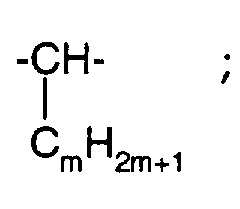 or
or

- T
- is -CnH2n-; -(CH2)n-O-CH2-;
or a radical of formula (1c)
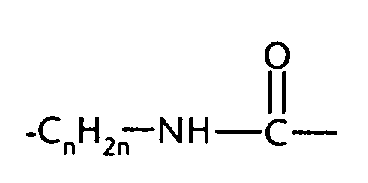
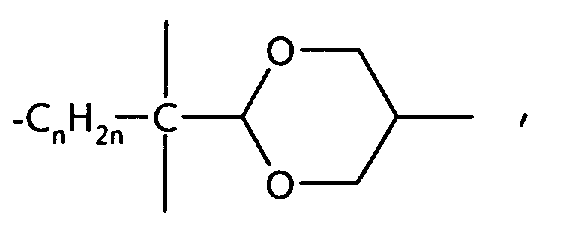
- V
- is -O- or -NH-,
- a
- is 0; 1; or 2,
- b, c and d
- are each independently of one another 0 or 1,
- e
- is an integer from 1 to 4,
- f
- is an integer from 1 to 3, and
- m, n and p
- are each independently of one another an integer from 1 to 3,
- R28
- is hydrogen; M; C1-C22alkyl; C5-C7cycloalkyl; C1-C22alkylthio; C2-C18alkenyl; C1-C18-phenylalkyl;
a radical of formula
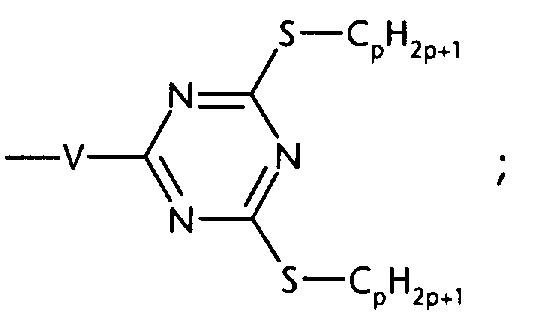

- M
- is alkali; ammonium,
- R28
- is a direct bond; -CH2-;
-O- or -S-, if e = 3, then
- R28
- is the radical of formula
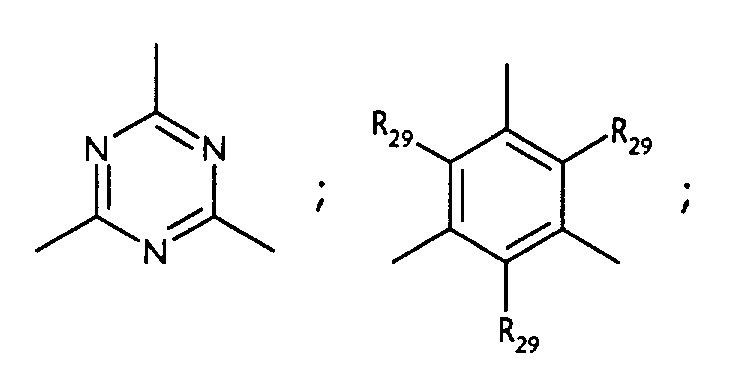 if e = 4, then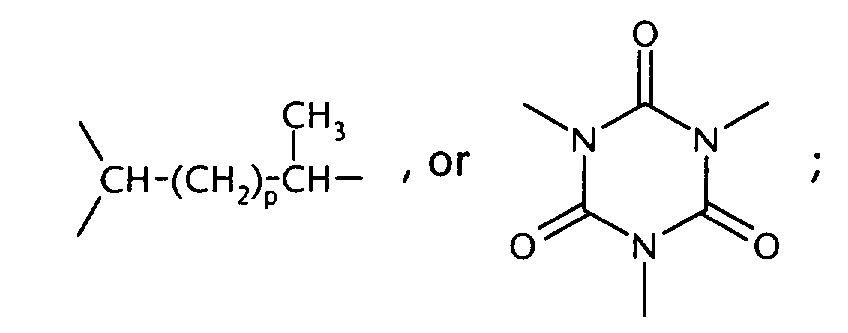
- R28
- is
or a direct bond and
- R29 and R30
- are each independently of the other hydrogen; or C1-C22alkyl.
- A personal care product according to claim 1 comprisingwherein(a) as antimicrobial a compound of formula
 (b) as UV absorber a compound of formula
- R1, R2 and R3
- independently from each other are hydrogen; C1-C20alkyl; hydroxy-substituted C1-C20akyl; cyclo-C5-C7alkyl; phenyl-C1-C3alkyl, wherein at least one of the substituents R1, R2 or R3 is not hydrogen; and
- R6 and R7
- independently from each other are C1-C12alkyl.
- A personal care product according to anyone of Claim 1 to 14, wherein the personal care product is a shampoo, a bath- and shower additive, a hair-care product, a liquid soap, a bar soap, a lotion, a crème, a deodorant, a solution for the skin, a moist cleaning sheet, an oil and a powder.
- A personal care product according to anyone of Claim 1 to 14, wherein the personal care product is a deodorant or a bar soap.
- A personal care product according to anyone of Claim 1 to 16 comprisingand cosmetically tolerable carriers or auxiliaries.0.01 to 15 wt-% of component (a);0.05 to 15 wt-% of component (b); and0 to 15 wt-% of component (c);
Priority Applications (1)
| Application Number | Priority Date | Filing Date | Title |
|---|---|---|---|
| EP02405451A EP1369038A1 (en) | 2002-06-05 | 2002-06-05 | Personal care products |
Applications Claiming Priority (1)
| Application Number | Priority Date | Filing Date | Title |
|---|---|---|---|
| EP02405451A EP1369038A1 (en) | 2002-06-05 | 2002-06-05 | Personal care products |
Publications (1)
| Publication Number | Publication Date |
|---|---|
| EP1369038A1 true EP1369038A1 (en) | 2003-12-10 |
Family
ID=29433235
Family Applications (1)
| Application Number | Title | Priority Date | Filing Date |
|---|---|---|---|
| EP02405451A Withdrawn EP1369038A1 (en) | 2002-06-05 | 2002-06-05 | Personal care products |
Country Status (1)
| Country | Link |
|---|---|
| EP (1) | EP1369038A1 (en) |
Citations (7)
| Publication number | Priority date | Publication date | Assignee | Title |
|---|---|---|---|---|
| US2921907A (en) * | 1955-01-07 | 1960-01-19 | Monsanto Chemicals | Soap stabilization |
| US4115294A (en) * | 1976-01-10 | 1978-09-19 | Ciba-Geigy Corporation | Bactericidal soap bar |
| GB2319523A (en) * | 1996-11-20 | 1998-05-27 | Ciba Geigy Ag | Hydroxyphenyltriazines as stabilisers for organic materials |
| WO1999005250A1 (en) * | 1997-07-22 | 1999-02-04 | Henkel Corporation | Aqueous antimicrobial cleaning composition comprising triclosan and tocopherol and processes for inhibiting color degradation of same |
| EP0964055A1 (en) * | 1998-06-01 | 1999-12-15 | JOHNSON & JOHNSON CONSUMER COMPANIES, INC. | Photostable compositions |
| WO2000020366A1 (en) * | 1998-10-06 | 2000-04-13 | Ciba Specialty Chemicals Holding Inc. | Process for the preparation of 4,4'-dihalogen-o-hydroxydiphenyl compounds |
| EP1053989A2 (en) * | 1999-05-20 | 2000-11-22 | Ciba SC Holding AG | Hydroxydiphenyl ether compounds |
-
2002
- 2002-06-05 EP EP02405451A patent/EP1369038A1/en not_active Withdrawn
Patent Citations (7)
| Publication number | Priority date | Publication date | Assignee | Title |
|---|---|---|---|---|
| US2921907A (en) * | 1955-01-07 | 1960-01-19 | Monsanto Chemicals | Soap stabilization |
| US4115294A (en) * | 1976-01-10 | 1978-09-19 | Ciba-Geigy Corporation | Bactericidal soap bar |
| GB2319523A (en) * | 1996-11-20 | 1998-05-27 | Ciba Geigy Ag | Hydroxyphenyltriazines as stabilisers for organic materials |
| WO1999005250A1 (en) * | 1997-07-22 | 1999-02-04 | Henkel Corporation | Aqueous antimicrobial cleaning composition comprising triclosan and tocopherol and processes for inhibiting color degradation of same |
| EP0964055A1 (en) * | 1998-06-01 | 1999-12-15 | JOHNSON & JOHNSON CONSUMER COMPANIES, INC. | Photostable compositions |
| WO2000020366A1 (en) * | 1998-10-06 | 2000-04-13 | Ciba Specialty Chemicals Holding Inc. | Process for the preparation of 4,4'-dihalogen-o-hydroxydiphenyl compounds |
| EP1053989A2 (en) * | 1999-05-20 | 2000-11-22 | Ciba SC Holding AG | Hydroxydiphenyl ether compounds |
Similar Documents
| Publication | Publication Date | Title |
|---|---|---|
| TWI484979B (en) | Stabilization of body-care and household products | |
| EP2207522B1 (en) | Personal care and household product compositions comprising specific sulfur containing stabiliser compounds | |
| CN105380810B (en) | Stabilization of cosmetic compositions | |
| KR101538527B1 (en) | Preparation of nanoscalar uv absorbers | |
| JP2013047265A (en) | Stabilization of body-care and household product | |
| JP2002528476A (en) | Stabilization of body care and household products | |
| ES2290007T3 (en) | HYDROXIDIFENIL ETER COMPOUNDS. | |
| EP2286908A2 (en) | Solubilizer for cosmetic preparations | |
| EP0390682B1 (en) | Cosmetic and pharmaceutical compositions containing hydrophilic derivatives of benzylidene camphor and sulfonated hydrophilic derivatives of benzylidene camphor | |
| JP7686650B2 (en) | Mycosporine-like amino acid analogs and their use as sunscreen agents - Patents.com | |
| KR20100096212A (en) | Grinding aids for micronized organic uv absorbers | |
| DE10330697A1 (en) | Secondary alcohols as antimicrobial agents | |
| KR100702814B1 (en) | Hydroxystilbene compound used as bactericidal active substance and preparation method thereof | |
| EP3501488B1 (en) | Aqueous silicone polymer compositions | |
| CN1642890A (en) | Benzyl alcohol derivatives | |
| FR2751536A1 (en) | NOVEL ANTI-RADICAL FREE MELATONIN DERIVATIVES AND COMPOSITIONS COMPRISING THE SAME | |
| EP0535195B1 (en) | Perfume bases | |
| EP1103180B1 (en) | Hydroxyphenylvinylthizoles | |
| KR100634215B1 (en) | Diphenyl compounds substituted with camphor or hydantoin derivatives as sunscreen components | |
| US6624182B1 (en) | Hydroxyphenylvinylthiazoles | |
| DE60219418T2 (en) | SILANOLLPHENOL AND NAPHTHOLE | |
| EP1191016B1 (en) | Diquaternary ammonium compounds | |
| EP1319006B1 (en) | Tetrahydrocarbazoles, a process for the preparation of those compounds, and the use thereof | |
| EP1108712B1 (en) | 3-Hydroxy-4,5-bis(morpholin-1-yl)pyridazine as UV absorber | |
| WO2026099270A1 (en) | Biodegradable uv absorbers and uses thereof ii |
Legal Events
| Date | Code | Title | Description |
|---|---|---|---|
| PUAI | Public reference made under article 153(3) epc to a published international application that has entered the european phase |
Free format text: ORIGINAL CODE: 0009012 |
|
| AK | Designated contracting states |
Kind code of ref document: A1 Designated state(s): AT BE CH CY DE DK ES FI FR GB GR IE IT LI LU MC NL PT SE TR |
|
| AX | Request for extension of the european patent |
Extension state: AL LT LV MK RO SI |
|
| STAA | Information on the status of an ep patent application or granted ep patent |
Free format text: STATUS: THE APPLICATION HAS BEEN WITHDRAWN |
|
| 18W | Application withdrawn |
Effective date: 20040112 |