The present disclosure relates to the subject matter
contained in Japanese Patent Application No. 2002-156624 filed
May 30, 2002, which is incorporated herein by reference in its
entirety.
The present invention relates to a reproduction display
apparatus configured by a display device that displays video
information, and a reproduction device that reproduces a
recording medium on which the video information is recorded.
For example, a conventional reproduction display apparatus
is mounted in the vicinity of a driver's seat of a vehicle
that is a mobile unit. The reproduction display apparatus
comprises a multimedia player that can reproduce a recording
medium on which video information is recorded (for example,
a DVD (Digital Versatile Disc)-Video or a Video-CD), and also
a recording medium on which only information other than video
information is recorded (for example, a CD-DA (Compact
Disc-Digital Audio)); and a monitor that displays video
information which is reproduced by the multimedia player.
As such a monitor, for example, an in-vehicle monitor
is known which is housed in a casing disposed in a dashboard
of a vehicle, and which is held so as to be movable and retractable
with respect to the casing. When the monitor is to be used,
the monitor is moved to the outside of the casing, and, when
the monitor is not to be used, the monitor is housed into the
casing.
In the above-described conventional reproduction display
apparatus, when a recording medium is loaded on the multimedia
player, the monitor housed in the casing is automatically moved
to the outside of the casing. Namely, an operation of inputting
a command to move the monitor to the outside of the casing
is omitted so as to improve convenience. In the conventional
reproduction display apparatus, the movement of the monitor
to the outside of the casing is performed simply by using the
loading of a recording medium as a trigger. Therefore, the
monitor is moved even when a recording medium on which video
information to be displayed on the monitor is not recorded
is loaded. Namely, even in the case where the user inserts
a recording medium such as a CD, i.e., a recording medium which
does not require the use of the monitor into the multimedia
player in order to reproduce it, the monitor housed in the
casing is automatically moved to the outside of the casing.
As a result, there arises a problem in that a cumbersome operation
of housing the monitor, which has been once moved to the outside
of the casing, into the casing must be performed.
The invention has been devised in order to solve at least
the above-described problem. It is an object of the invention
to provide a reproduction display apparatus and a reproduction
display method in which activation of a display device is
controlled in accordance with kinds of a recording medium loaded
on a reproduction device.
In order to attain the object, a first aspect of the invention
provides a reproduction display apparatus having: a display
device that displays video information; a reproduction device
that reproduces a recording medium on which at least video
information to be displayed on the display device is recorded;
and a control section which, when it is judged that a recording
medium loaded on the reproduction device is a recording medium
on which such video information is recorded, activates the
display device that is not in an activated state.
A second aspect of the invention provides a reproduction
display apparatus having: a display device that is disposed
to be movable inside and outside a case fixed to a vehicle;
a reproduction device that reproduces a recording medium on
which at least video information to be displayed on the display
device is recorded; a moving section which moves the display
device to inside and outside of the case; and a control section
which, when it is judged that a recording medium loaded on
the reproduction device is a recording medium on which such
video information is recorded, controls the moving section
to move the display device that is housed in the case to outside
of the case.
Another aspect of the invention provides a reproduction
display method for a reproduction display apparatus having
a display device that displays video information; and a
reproduction device that reproduces a recording medium on which
at least video information to be displayed on the display device
is recorded, the method including: judging whether or not a
recording medium loaded on the reproduction device is a recording
medium on which video information is recorded; activating the
display device that is not in an activated state, when it is
judged that the recording medium is a recording medium on which
video information is recorded; and displaying the video
information recorded on the recording medium, on the activated
display device.
A further aspect of the invention provides a reproduction
display method for a reproduction display apparatus having
a display device that is disposed to be movable inside and
outside a case fixed to a vehicle; and a reproduction device
that reproduces a recording medium on which at least video
information to be displayed on the display device is recorded,
the method including: judging whether or not a recording medium
loaded on the reproduction device is a recording medium on
which video information is recorded; moving the display device
that is housed in the case, to outside of the case, when it
is judged that the recording medium is a recording medium on
which video information is recorded; and displaying the video
information recorded on the recording medium, on the moved
display device.
Hereinafter, an embodiment of a reproduction display
apparatus of the invention will be described with reference
to the accompanying drawings. An in-vehicle reproduction
display apparatus having a reproduction device which can
reproduce recording media of a DVD and a CD, particularly a
reproduction device that can reproduce a DVD-Video, a DVD-Audio,
and a Video-CD as recording media on which video information
is recorded; and a display device that is held so as to be
movable and retractable with respect to a casing will be described
as one embodiment.
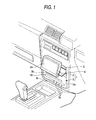
Fig. 1 is an external view showing the appearance of the
in-vehicle reproduction display apparatus of the embodiment.
The in-vehicle reproduction display apparatus 1 shown in Fig.
1 is configured by a monitor 2 that is a display device disposed
in a dashboard 4 which is positioned between a driver's seat
of a vehicle and a passenger's seat; and a multimedia player
3 that is a reproduction device. The monitor 2 has a display
screen 2a on which video information is to be displayed, and
is held so as to be movable and retractable in inward and outward
directions with respect to a casing 5 which is embedded into
the dashboard 4.
The monitor 2 is reciprocally moved by a moving mechanism
configured by a driving motor and the like which are disposed
in the casing 5. The monitor 2 is moved inside and outside
the casing 5 by the moving mechanism while the display screen
2a is downward directed. When the monitor 2 is to be moved
from the inside of the casing 5 to the outside thereof, the
monitor is moved while the display screen 2a is downward directed,
and then turned so that the display screen 2a is directed in
the movement direction. Fig. 1 shows a state where the monitor
2 is moved outside the casing and the display screen 2a is
then turned so as to be directed in the movement direction.
In the following description, this state is referred to as
"raised state".
The multimedia player 3 has an operation panel 3a. In
the operation panel 3a, disposed are an insertion slot 3b through
which a recording medium such as a DVD or a CD is to be inserted,
various operation buttons 3c such as an eject button for ejecting
a recording medium loaded on the multimedia player 3, to the
outside of the multimedia player 3 through the insertion slot
3b, and a display unit 3d which displays information that
indicating the progress of reproduction of the recording medium
and the like.
The multimedia player 3 is provided with a transport
mechanism which transports the recording medium inserted through
the insertion slot 3b to a predetermined reproduction position,
and which comprises a transport motor and the like; and a
reproduction mechanism onwhich the recordingmediumtransported
to the predetermined reproduction position by the transport
mechanism is to be loaded, and which reads and reproduces
information recorded on the recording medium.
The reproduction mechanism can reproduce many kinds of
media including a recording medium such as a DVD on which video
information is recorded, and a CD on which audio information
is recorded. The video information which is read by the
reproduction mechanism is displayed on the display screen 2a
of the monitor 2.
Next, the configuration of the in-vehicle reproduction
display apparatus 1 of the embodiment will be described in
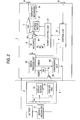
detail with reference to the block diagram of Fig. 2. First,
the configuration of the monitor 2 of the in-vehicle reproduction
display apparatus 1 will be described. The monitor 2 is roughly
divided into the display screen 2a, and a control unit 2b which
conducts the control of the whole monitor 2.
The display screen 2a is configured by a liquid crystal
display device and the like, and displays a video signal which
has been converted by the multimedia player 3 as video data
to be displayed on the display screen 2a. The control unit
2b performs a role of conducting the control of the whole monitor
2, and also performs a role of conducting the operation control
of the moving mechanism 6. For example, the control unit 2b
conducts processes such as switching over an image to be displayed
on the display screen 2a, and operating the moving mechanism
6 on the basis of a signal which is supplied from the multimedia
player 3 through a communication line 8.
The monitor 2 has a power switch 7. A power source voltage
is supplied from a battery of the vehicle through the power
switch 7, thereby setting the monitor 2 to an activated state.
The power switch 7 is turned on/off under the control of the
control unit 2b.
Next, the configuration of the multimedia player 3 of
the in-vehicle reproduction display apparatus 1 will be described.
The multimedia player 3 comprises the transport mechanism 3e
which is configured by transport rollers and the like, and
which transports a recording medium D inserted through the
insertion slot 3b; a detection unit for detecting that the
recording medium D transported by the transport mechanism 3e
is held by a clamper and a turntable which are not shown, and
which brings the recording medium D to the predetermined
reproduction position. The detection unit also detects that
the holding is cancelled. The detection unit is configured
by mechanical switches and the like. The multimedia player
3 further comprises a spindle motor 3F which rotates at a constant
linear velocity the recording medium D that is brought to the
predetermined reproduction position; and a pickup 3G which
reads information recorded on the recording medium D.
The pickup 3G has an LD (Laser Diode) (not shown) which
emits laser beams of different wavelengths in accordance with
the kind of the recording medium D brought to the predetermined
reproduction position; an objective lens (not shown) which
converges the laser beam emitted from the LD to irradiate an
information recording plane of the recording medium; and an
actuator (not shown) which drives the objective lens in tracking
and focusing directions. The pickup reads information recorded
on the recording medium D, by means of the laser beam emitted
from the LD.
The multimedia player 3 further comprises a carriage
mechanism having a carriage motor 3H which moves the pickup
3G in a radial direction of the recording medium D brought
to the predetermined reproduction position; a servo control
unit 3J having an RF amplifier 3I that amplifies a signal read
by the pickup 3G, the servo control unit 3J conducting various
servo controls such as a tracking servo control, a focus servo
control, a carriage servo control, and a spindle servo control,
in accordance with a tracking error signal TE, a focus error
signal FE, and a reproduction signal RF that are supplied from
the RF amplifier 3I; and a signal process unit 3K which applies
signal processes such as a predetermined error correction process
and a signal demodulation process (in the case of video
information, an MPEG demodulation process) on the reproduction
signal RF that is supplied from the RF amplifier 3I, and which
separates the reproduction signal RF into a video signal and
an audio signal.
The multimedia player 3 further comprises a D/A conversion
unit 3L which converts the audio signal that is separated by
the signal process unit 3K, into analog data; a loudspeaker
3N which amplifies the analog audio signal that is converted
by the D/A conversion unit 3L, and which outputs the amplified
audio signal; and a video conversion unit 3M which decodes
the video signal that is separated by the signal process unit
3K, and which converts the decoded signal into video data to
be displayed on the display screen 2a of the monitor 2.
The video data which have been converted by the video
conversion unit 3M are supplied to the display screen 2a through
the communication line 8 via the control unit 2b of the monitor
2, and then displayed as an image on the screen. A control
unit 3P plays a role of conducting the control of the whole
multimedia player 3 . The control unit controls the servo control
unit and the transport mechanism on the basis of an operation
signal which is supplied, for example, in response to an operation
of the operation buttons 3c disposed on the operation panel
3a.
The control unit 3P supplies a signal indicative of the
kind of the recording medium D brought to the predetermined
reproduction position, to the control unit 2b of the monitor
2 through the communication line 8. The control unit has an
internal memory that stores a signal when the signal is a signal
indicative of a recording medium on which at least video
information to be displayed on the display screen 2a of the
monitor 2 is recorded. Furthermore, the control unit comprises
a timer which measures a predetermined time elapsed after the
loading of the recording medium is cancelled (for example,
after the eject button is operated) . When the signal indicative
of a recording medium on which at least video information to
be displayed on the display screen 2a of the monitor 2 is recorded
is not again obtained during the measurement by the timer,
the signal stored in the internal memory is cleared after the
measurement of the predetermined time by the timer is ended.
The clamper, the turntable, the pickup 3G, the spindle motor
3F, the carriage mechanism, the servo control unit 3J, the
RF amplifier 3I, the signal process unit 3K, the control unit
3P, the video conversion unit 3M, the D/A conversion unit 3L,
and the loudspeaker 3N constitute the reproduction mechanism.
The operation and control of the multimedia player 3 which
is a reproduction device of the thus configured in-vehicle
reproduction display apparatus 1 will be described with reference
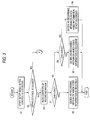
to the flowcharts shown in Figs. 3 and 4. First, the user
inserts a recording medium into the multimedia player 3 through
the insertion slot 3b, and the recording medium is then positioned
to the predetermined reproduction position by the transport
mechanism 3e so as to be held by the clamper and the turntable.
When the loading of the recording medium to the predetermined
reproduction position is completed, the control unit 3P first
assumes that the loaded recording medium is a DVD, and sets
the above-mentioned servo controls as those required for reading
information recorded on a DVD. Thereafter, a process of reading
information recorded on the recording medium is started by
the various servo controls performed by the servo control unit
(step S1).
Next, the control unit 3P judges whether information
recorded on the recording medium has been normally read by
the servo controls set in step S1 or not (step 32). At this
time, the LD emits a laser beam of a wavelength (a shorter
wavelength) necessary for reading information recorded on a
DVD. When the recording medium brought to the predetermined
reproduction position is a recording medium (for example, a
CD or the like) having an information recording density which
is different from that of a DVD, or when the information recording
plane of the recording medium is not opposed to the pickup
3G, a correct reflected light beam from the recording medium
cannot be obtained. Therefore, the various servo controls
cannot normally function and fail to be adequately closed.
In view of such circumstances, it is judged whether the various
servo controls are adequately closed or not. If the various
servo controls are not adequately closed (step S2: NO), it
is judged that the recording medium is a recording medium other
than a DVD, or that the recording medium is not loaded in a
normal state, and the control proceeds to step S11 shown in
Fig. 4. If the various servo controls are adequately closed,
or if information recorded on the recording medium is normally
read by the laser beam emitted from the LD of the pickup 3G
(step S2: YES), the kind of the loaded recording medium is
judged as a DVD, and predetermined information recorded on
the recording medium is read (step S3).
The predetermined information which is to be read in this
step is information recorded in "Volume and File structure"
zone in the volume pace of a DVD. In the case of a DVD-Video,
for example, a file of "VIDEO_TS. IFO" which stores information
of a VMG (Video Manager) and the like is recorded in the zone.
In the case of a DVD-Audio, a file of "AUDIO_TS. IFO" which
stores information of an AMG (Audio Manager) and the like is
recorded in the zone. In the case of a DVD-ROM (Read Only
Memory), both files of "VIDEO_TS.IFO" and "AUDIO_TS. IFO" are
not recorded in the zone.
The predetermined information which has been read in step
S3 is supplied to the signal process unit 3K through the RF
amplifier 3I to be subjected to the signal process in the signal
process unit 3K, and then supplied to the control unit 3P.
Thereafter, the control unit 3P judges the kind of the
recording medium which is brought to the predetermined
reproduction position in the multimedia player 3 (step S4).
If it is judged that the recording medium broutht to the
predetermined reproduction position is a DVD-Video, or if it
is affirmed that a file of "VIDEO_TS.IFO" is stored in "Volume
and File structure" zone in the volume space (step S4: YES),
it is decided that the recording medium loaded on the multimedia
player 3 is a recording medium on which at least video information
to be displayed on the display screen 2a of the monitor 2 is
recorded (step S5).
The control unit 3P supplies the signal indicative of
the kind of the recording medium to the control unit 2b of
the monitor 2 through the communication line 8, and stores
the signal into the internal memory. Thereafter, the video
information and the like recorded on the DVD-Video are reproduced.
Specifically, the reproduction signal RF which is read by
the pickup 3G is amplified by the RF amplifier 3I, a predetermined
signal process is applied to the amplified signal in the signal
process unit 3K, and the amplified signal is separated into
a video signal and an audio signal.
The video signal is supplied to the video conversion unit
3M to be converted into video data which are to be displayed
on the display screen 2a of the monitor 2, and then to the
control unit 2b of the monitor 2 through the communication
line 8 to be displayed as an image on the display screen 2a.
The audio signal is supplied to the D/A conversion unit 3L
to be converted into an analog audio signal, and then amplified
to be output as sound from the loudspeaker 3N.
If it is judged in step S4 that the recording medium brought
to the predetermined reproduction position is not a DVD-Video,
or if it is affirmed that a file of "VIDEO_TS.IFO" is not stored
in "Volume and File structure" zone in the volume space (step
S4: NO), it is further judged whether the recording medium
brought to the predetermined reproduction position is a DVD-Audio
or not (step S6).
If it is judged that the recording medium is a DVD-Audio,
or if it is affirmed that a file of "AUDIO_TS.IFO" is stored
in "Volume and File structure" zone in the volume space (step
S6: YES), it is decided that the recording medium loaded on
the multimedia player 3 is a recording medium on which at least
video information to be displayed on the display screen 2a
of the monitor 2 is recorded (step S7).
The control unit 3P supplies the signal indicative of
the kind of the recording medium to the control unit 2b of
the monitor 2 through the communication line 8, and stores
the signal into the internal memory. Thereafter, the video
information and the like recorded on the DVD-Audio is reproduced.
Specifically, the reproduction signal RF which is read
by the pickup 3G is amplified by the RF amplifier 3I, a
predetermined signal process is applied to the amplified signal
in the signal process unit 3K, and the amplified signal is
separated into a video signal and an audio signal.
The video signal is supplied to the video conversion unit
3M to be converted into video data which are to be displayed
on the display screen 2a of the monitor 2, and then supplied
through the communication line 8 to the control unit 2b of
the monitor 2 to be displayed as an image on the display screen
2a.
The audio signal is supplied to the D/A conversion unit
3L to be converted into an analog audio signal, and then amplified
to be output as sound from the loudspeaker 3N.
If it is judged in step S6 that the recording medium brought
to the predetermined reproduction position is not a DVD-Audio,
or if it is affirmed that a file of "AUDIO_TS.IFO" is not stored
in "Volume and File structure" zone in the volume space (step
S6: NO), the recording medium brought to the predetermined
reproduction position is neither a DVD-Video nor a DVD-Audio.
Therefore, it is determined that the recording medium is not
a recording medium on which at least video information to be
displayed on the display screen 2a of the monitor 2 is recorded
(for example, a DVD-ROM) (step S8).
The control unit 3P supplies the signal indicative of
the kind of the recording medium to the control unit 2b of
the monitor 2 through the communication line 8. Thereafter,
the recording medium brought to the predetermined reproduction
position is reproduced. In this case, since a video signal
is not contained in the reproduction signal RF which is read
by the pickup 3G and amplified by the RF amplifier 3I, the
separation process in the signal process unit 3K is not performed,
and the audio signal is converted into an analog audio signal
by the D/A conversion unit 3L and then output from the loudspeaker
3N.
In the case where the recording medium is a DVD-ROM, for
example, information to be output from the loudspeaker is not
recorded on the recording medium as well, and hence the recording
medium is compulsively ejected by the transport mechanism 3e.
If the various servo controls fail in step 32 to be adequately
closed (step S2: NO), the control proceeds to step S11 shown
in Fig. 4 in which the control unit 3P cancels the servo controls
that have been set in order to read information recorded on
a DVD, and sets servo controls required for reading information
recorded on a CD. Thereafter, a process of reading information
recorded on the recording medium is started by the various
servo controls performed by the servo control unit 3J.
Next, the control unit 3P judges whether or not information
recorded on the recording medium is normally read by the servo
controls set in step S11 (step S12). At this time, the LD
emits a laser beam of a wavelength necessary for reading
information recorded on a CD (namely, a wavelength which is
longer than that necessary for reading information recorded
on a DVD).
If the various servo controls are not adequately closed
(step S12: NO), it is judged that the recording medium is in
a state where it is not normally loaded, such as that where
the recording medium is not brought to the predetermined
reproduction position in the state where the information
recording plane of the recording medium is opposed to the pickup
3G. Then, processes such as those of displaying an error
indication on the display unit 3d of the operation panel 3a,
and compulsively ejecting the recording medium brought to the
predetermined reproduction position, by the transport mechanism
3e are performed (step S19).
If the various servo controls are adequately closed, or
if information recorded on the recording medium is normally
read by the laser beam emitted from the LD of the pickup 3G
(step S12: YES), the kind of the loaded recording medium is
judged as a CD, and predetermined information recorded on the
recording medium is read (step S13).
The predetermined information which is to be read in this
step is TOC information which is recorded in the lead-in area
of the CD. In the case of a CD-DA, the whole TOC information
consists of information related to recording tracks of audio
signals, and, in the case of another CD (for example, a CD-ROM
(Read Only Memory) or a Video-CD), the TOC information contains
both information related to recording tracks of audio signals
and that related to ROM data, or the whole TOC information
consists of information related to recording tracks of ROM
data. In the case of a Video-CD, information of track No.
1 contains information of one of "info.vcd" and "KARINFO.BIH".
The predetermined information which is read in step S13
is supplied to the signal process unit 3K through the RF amplifier
3I to be subjected to a signal process in the signal process
unit 3K, and then supplied to the control unit 3P. Thereafter,
the control unit 3P judges the kind of the recording medium
which is brought to the predetermined reproduction position
in the multimedia player 3 (step S14).
If it is judged that the recording medium brought to the
predetermined reproduction position is a CD-DA, or if it is
affirmed that the whole TOC information consists of information
related to recording tracks of audio signals (step S14: YES),
it is determined that the recording medium loaded on the
multimedia player 3 is a recording medium on which video
information to be displayed on the display screen 2a of the
monitor 2 is not recorded (step S15).
The control unit 3P supplies the signal indicative of
the kind of the recording medium to the control unit 2b of
the monitor 2 through the communication line 8. Thereafter,
information (audio signals) and the like which are recorded
on the CD-DA, and which are not video information are reproduced.
Specifically, the reproduction signal RF which is read by
the pickup 3G is amplifiedby the RF amplifier 3I, a predetermined
signal process is applied to the amplified signal in the signal
process unit 3K, the amplified signal is supplied to the D/A
conversion unit 3L to be converted into an analog audio signal,
and then amplified to be output as sound from the loudspeaker
3N.
If it is judged in step S14 that the recording medium
brought to the predetermined reproduction position is not a
CD-DA, or if it is affirmed that the TOC information contains
information related to recording tracks other than audio signals
(step S14: NO), it is further judged whether the recording
medium brought to the predetermined reproduction position is
a Video-CD or not (step S16) . If it is judged that the recording
medium is a Video-CD, or if it is affirmed that information
of track No. 1 contains information of one of "info.vcd" and
"KARINFO.BIH" (step S16: YES), it is determined that the
recording medium loaded on the multimedia player 3 is a recording
medium on which at least video information to be displayed
on the display screen 2a of the monitor 2 is recorded (step
S17).
The control unit 3P supplies the signal indicative of
the kind of the recording medium to the control unit 2b of
the monitor 2 through the communication line 8, and stores
the signal into the internal memory. Thereafter, the video
information and the like recorded on the Video-CD are reproduced.
Specifically, the reproduction signal RF which is read by
the pickup 3G is amplified by the RF amplifier 3I, a predetermined
signal process is applied to the amplified signal in the signal
process unit 3K, and the amplified signal is separated into
a video signal and an audio signal.
The video signal is supplied to the video conversion unit
3M to be converted into video data which are to be displayed
on the display screen 2a of the monitor 2, and then supplied
through the communication line 8 to the control unit 2b of
the monitor 2 to be displayed as an image on the display screen
2a. The audio signal is supplied to the D/A conversion unit
3L to be converted into an analog audio signal, and then amplified
to be output as sound from the loudspeaker 3N.
If it is judged in step S16 that the recording medium
brought to the predetermined reproduction position is not a
Video-CD, or if it is affirmed that the TOC information contains
information related to recording tracks other than audio signals
and information of track No. 1 contains no information of
"info.vcd" and "KARINFO . BIH" (step S16: NO), it is determined
that the recording medium brought to the predetermined
reproduction position is not a recording medium on which at
least video information to be displayed on the display screen
2a of the monitor 2 is recorded (for example, a CD-ROM) (step
S18).
The control unit 3P supplies the signal indicative of
the kind of the recording medium to the control unit 2b of
the monitor 2 through the communication line 8. Thereafter,
the recording medium brought to the predetermined reproduction
position is reproduced. In this case, since a video signal
to be displayed on the display screen 2a of the monitor 2 is
not contained in the reproduction signal RF which is read by
the pickup 3G and amplified by the RF amplifier 3I, a reproduction
process similar to that in the case of a CD-DA, namely the
separation process in the signal process unit 3K is not performed,
and the audio signal is converted into an analog audio signal
by the D/A conversion unit 3L and then output as sound from
the loudspeaker 3N.
In the case where the recording medium is a CD-ROM, for
example, even information to be output from the loudspeaker
3N is not recorded on the recording medium, and hence a process
similar to that in the case of a CD-DA is not performed and
the recording medium is compulsively ejected by the transport
mechanism 3e.
Next, a process of controlling reproduction display in
the in-vehicle reproduction display apparatus 1 of the embodiment
will be described with reference to the flowcharts shown in
Figs. 5A and 5B. Fig. 5A is a flowchart showing a display
control on the monitor 2 when a recording medium is loaded
on the multimedia player 3, and Fig. 5B is a flowchart showing
a control on the monitor 2 when the recording medium is ejected
from the multimedia player 3.
First, the display control on the monitor 2 when a recording
medium is loaded on the multimedia player 3 will be described
with reference to the flowchart shown in Fig. 5A. The control
unit 3P judges whether, with starting from the state where
the monitor 2 is housed in the casing 5 and a recording medium
is not loaded on the multimedia player 3, a recording medium
which is inserted through the insertion slot 3b of the multimedia
player 3 and carried to the predetermined reproduction position
by the transport mechanism 3e is held by the clamper and the
turntable or not (step S20).
If a recording medium is not brought to the predetermined
reproduction position (step S20: NO), the control does not
further proceed and waits for loading of a recording medium.
If it is judged that a recording medium is brought to the
predetermined reproduction position (step S20: YES),
predetermined information of the recording medium is read by
the pickup 3G. On the basis of the predetermined information,
it is judged whether or not the recording medium brought to
the predetermined reproduction position is a recording medium
on which at least video information to be displayed on the
display screen 2a of the monitor 2 is recorded (step S21).
If it is judged that the recording medium is not a recording
medium on which at least video information to be displayed
on the display screen 2a of the monitor 2 is recorded (step
S21: NO), a reproduction process is performed on the recording
medium brought to the predetermined reproduction position,
while not supplying the signal indicative of the kind of the
recording medium to the control unit 2b of the monitor 2.
If it is judged that the recording medium is a recording medium
on which at least video information to be displayed on the
display screen 2a of the monitor 2 is recorded (step S21: YES),
the signal indicative of the kind of the recording medium is
stored into the internal memory, and the signal is supplied
to the control unit 2b of the monitor 2 through the communication
line 8.
The control unit 2b of the monitor 2 which receives the
signal controls the moving mechanism 6 so as to move the monitor
2 housed in the casing 5 to the outside thereof, and turns
on the power switch 7 (step S22).
The video data supplied from the multimedia player 3 are
displayed on the display screen 2a, and the loudspeaker 3N
outputs the audio signal.
Next, the display control of the monitor 2 in the case
where the recording medium is ejected from the multimedia player
3 will be described with reference to the flowchart of Fig.
5B.
The control unit 3P of the multimedia player 3 judges
whether, in the state where the monitor 2 is moved to the outside
of the casing 5 and the video information of the recording
medium loaded on the multimedia player 3 is displayed on the
display screen 2a, the eject button of the operation panel
3a is operated by the user or not (step S30). If the eject
button of the operation panel 3a is not operated by the user
(step S30: NO) , the reproduction display operation is continued.
If the eject button of the operation panel 3a is operated
by the user (step S30: YES), the reproduction of the recording
medium which is in the predetermined reproduction position,
and on which at least video information to be displayed on
the display screen 2a of the monitor 2 is recorded is stopped,
and the loaded state is cancelled.
The control unit 3P starts the timer to measure the
predetermined time. The recording medium which has been
released from the loaded state is ejected from the predetermined
reproduction position by the transport mechanism 3e.
Next, it is judged whether the counting by the timer is
ended or not (step S31). If the counting by the timer is not
ended (step S31: NO), it is judged whether or not a recording
medium which is newly brought to the predetermined reproduction
position is a recording medium on which at least video information
to be displayed on the display screen 2a of the monitor 2 is
recorded (step S32).
If during the predetermined time it is failed to judge
that the recording medium which is newly brought to the
predetermined reproduction position is a recording medium on
which at least video information to be displayed on the display
screen 2a of the monitor 2 is recorded, or if it is judged
that the recording medium is not a recording medium on which
video information is recorded (step S32: NO), the counting
by the timer is ended, a signal indicative of the end is supplied
to the control unit 2b of the monitor 2 through the communication
line 8, and the signal stored in the internal memory is cleared.
If a new recording medium is not brought to the predetermined
reproduction position during the measurement of the
predetermined time and the measurement of the predetermined
time is ended (step S31: YES), the signal indicative of the
end is supplied to the control unit 2b of the monitor 2 through
the communication line 8, and the signal stored in the internal
memory is cleared.
The control unit 2b of the monitor 2 turns off the power
switch 7, and controls the moving mechanism 6 so as to house
the monitor 2 in the raised state, into the casing 5 (step
S33) .
By contrast, if during the predetermined time it is judged
in step S32 that the recording medium which is newly brought
to the predetermined reproduction position is a recording medium
on which at least video information to be displayed on the
display screen 2a of the monitor 2 is recorded (step S32: YES),
the counting by the timer is ended, and the signal stored in
the internal memory is again supplied to the control unit 2b
of the monitor 2.
The control unit 2b of the monitor 2 which receives the
signal maintains the on state of the power switch 7 of the
monitor 2, and holds the monitor 2 to the raised state. Namely,
during the period when the signal stored in the internal memory
is not cleared, the on state of the power switch 7 of the monitor
2, and the raised state are maintained as they are. Then,
the operation of reproducing the recording medium is started,
and video information is displayed on the display screen 2a
of the monitor 2.
As described above in detail, in the reproduction display
apparatus of the embodiment, it is judged whether or not the
recording medium loaded on the multimedia player 3 is a recording
medium on which video information to be displayed on the display
screen 2a of the monitor 2 is recorded, and, if it is judged
that the recording medium is a recording medium on which such
video information is recorded, the monitor that is not in an
activated state is activated. When a recording medium (for
example, a CD-DA) which does not require the use of the monitor
is loaded, the monitor that is not in an activated state is
not activated, and hence a cumbersome operation can be omitted.
As the reproduction display apparatus of the invention,
the embodiment which is an in-vehicle reproduction display
apparatus has been described. The invention is not restricted
to this. For example, the invention may be applied also to,
for example, a home reproduction display apparatus.
The reproduction display apparatus of the invention may
be applied not only to a monitor which is moved inside and
outside a case but also to a stationary monitor by controlling
the power switch described in the embodiment.
In the embodiment described above, the multimedia player
which is the reproduction device is a single player (in which
a recording medium inserted through the insertion slot is
transported as it is to the reproduction position and then
reproduced) . The multimedia player may be of the type in which
plural recording media are housed and a selected one of the
recording media is taken out to be reproduced (the magazine
type, or the type in which recording media are inserted one
by one through an insertion slot to be housed in a housing
unit in a player).
In the case where the multimedia player is a changer,
a selected recording medium is transported from a magazine
or a housing unit in which a plurality of recording media are
housed, to a predetermined reproduction position by a transport
mechanism of the changer, and a reproduction process is performed
on the selected recording medium. In the case where the
multimedia player is a changer, therefore, the recording medium
loaded on the reproduction device means the selected recording
medium, and the judgments such as that whether or not the recording
medium is a recording medium on which video information is
recorded are performed on the selected recording medium.