EP1367554A1 - Object detection for sudden illumination changes using order consistency - Google Patents
Object detection for sudden illumination changes using order consistency Download PDFInfo
- Publication number
- EP1367554A1 EP1367554A1 EP03011313A EP03011313A EP1367554A1 EP 1367554 A1 EP1367554 A1 EP 1367554A1 EP 03011313 A EP03011313 A EP 03011313A EP 03011313 A EP03011313 A EP 03011313A EP 1367554 A1 EP1367554 A1 EP 1367554A1
- Authority
- EP
- European Patent Office
- Prior art keywords
- image
- difference
- camera
- images
- pixels
- Prior art date
- Legal status (The legal status is an assumption and is not a legal conclusion. Google has not performed a legal analysis and makes no representation as to the accuracy of the status listed.)
- Granted
Links
Images


Classifications
-
- G—PHYSICS
- G08—SIGNALLING
- G08B—SIGNALLING SYSTEMS, e.g. PERSONAL CALLING SYSTEMS; ORDER TELEGRAPHS; ALARM SYSTEMS
- G08B13/00—Burglar, theft or intruder alarms
- G08B13/18—Actuation by interference with heat, light, or radiation of shorter wavelength; Actuation by intruding sources of heat, light, or radiation of shorter wavelength
- G08B13/189—Actuation by interference with heat, light, or radiation of shorter wavelength; Actuation by intruding sources of heat, light, or radiation of shorter wavelength using passive radiation detection systems
- G08B13/194—Actuation by interference with heat, light, or radiation of shorter wavelength; Actuation by intruding sources of heat, light, or radiation of shorter wavelength using passive radiation detection systems using image scanning and comparing systems
- G08B13/196—Actuation by interference with heat, light, or radiation of shorter wavelength; Actuation by intruding sources of heat, light, or radiation of shorter wavelength using passive radiation detection systems using image scanning and comparing systems using television cameras
- G08B13/19602—Image analysis to detect motion of the intruder, e.g. by frame subtraction
- G08B13/19604—Image analysis to detect motion of the intruder, e.g. by frame subtraction involving reference image or background adaptation with time to compensate for changing conditions, e.g. reference image update on detection of light level change
-
- G—PHYSICS
- G06—COMPUTING OR CALCULATING; COUNTING
- G06T—IMAGE DATA PROCESSING OR GENERATION, IN GENERAL
- G06T7/00—Image analysis
- G06T7/20—Analysis of motion
- G06T7/254—Analysis of motion involving subtraction of images
Definitions
- images indicative of the objects of interest are typically limited to constant and/or slowly varying illumination conditions. Detection of objects within an image is typically compromised by sudden changes in illumination.
- Object detection in video surveillance systems is typically achieved with background subtraction or by using temporal differences.
- Most change detection methods employ adaptive background models. These methods work well when there are no illumination changes, or only slow illumination changes. Unfortunately, when there is a sudden illumination change, such as might be caused by turning on a light, these methods generally fail.
- Dynamic illumination changes with varying degrees of change have also been handled with a multi-scale temporal statistical model.
- the choice of the statistical model is not motivated from a careful analysis of the sensor and illumination parameters.
- the camera employed generally has an adaptive gain and normally responds in a nonlinear fashion to sudden illumination effects. Thus, even areas in the image not directly influenced by external light sources may change significantly.
- a physically motivated approach to change detection has also been presented.
- a homomorphic filter was used to facilitate change detection under illumination changes.
- Another approach known as the wallflower system maintains several background models, which each represent different illumination conditions. When too many pixels are detected as changing, it checks all the background models, and the background that produces the least foreground pixels is chosen to be the current background.
- the system includes a camera model unit for computing a difference map between a first input image and a second input image, an illumination model unit in signal communication with the camera model unit for comparing the sign of the difference between two pixels in a first input image against the sign of the difference between two pixels in a second input image, and a CPU in signal communication with the camera model unit and the illumination model unit for detecting a changed object in accordance with said comparison when said sign of the difference is changed.
- the corresponding method includes steps for providing a first image having a number of pixels, receiving a second image subsequent to the first image, calculating a difference map between the first and second images, selecting a pair of pixel locations from the first or second images in accordance with the difference map, statistically modeling a camera noise level for the first and second images, computing the likelihood of order inconsistency between a pair of pixel values at the selected locations in the first image and a pair of pixel values at the selected locations in the second image in accordance with the camera noise level; and detecting a changed object in accordance with the computed likelihood.
- the present disclosure teaches a system and method of Object Detection For Sudden Illumination Changes Using Order Consistency for appearance-based object detection in accordance with the following exemplary figures, in which:
- Effective change detection under dynamic illumination conditions is an active research topic. Most research has concentrated on adaptive statistical representations for the appearance of the background scene. The present disclosure develops the statistical models for background representation by taking into account an explicit model for the camera response function and camera noise, as well as illumination parameters.
- the present disclosure shows that the sign of the difference between two pixel measurements is maintained across global illumination changes. This result is used along with a statistical model for the camera noise to develop a change detection algorithm that handles sudden changes in illumination. Performance evaluations of the algorithm have been performed through simulations and with real data.
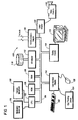
- FIG. 1 shows a block diagram of a system 100 for Object Detection For Sudden Illumination Changes Using Order Consistency according to an illustrative embodiment of the present disclosure.
- the system 100 includes at least one processor or central processing unit (“CPU”) 102 in signal communication with a system bus 104.
- CPU central processing unit
- ROM read only memory
- RAM random access memory
- display adapter 110 a display adapter 110
- l/O adapter 112 a user interface adapter 114
- communications adapter 128, and a video adapter 130 are also in signal communication with the system bus 104.
- a display unit 116 is in signal communication with the system bus 104 via the display adapter 110.
- a disk storage unit 118 such as, for example, a magnetic or optical disk storage unit, is in signal communication with the system bus 104 via the I/O adapter 112.
- a mouse 120, a keyboard 122, and an eye tracking device 124 are in signal communication with the system bus 104 via the user interface adapter 114.
- a video imaging device or camera 132 is in signal communication with the system bus 104 via the video adapter 130.
- An illumination model unit 170 and a camera model unit 180 are also included in the system 100 and in signal communication with the CPU 102 and the system bus 104. While the illumination model unit 170 and the camera model unit 180 are illustrated as coupled to the at least one processor or CPU 102, these components are preferably embodied in computer program code stored in at least one of the memories 106, 108 and 118, wherein the computer program code is executed by the CPU 102.
- a typical quasi-indoor video surveillance system performed well in normal settings, but typically failed under sudden change illumination settings. Therefore, a new sudden-change detection module is integrated into the present quasi-indoor video surveillance system.
- the new module is characterized in terms of its performance so that it can be fused with existing systems in a systematic manner.
- the algorithm is well motivated from physics as well as from the sensor statistical models, such that a clear understanding of the system's applicability can be attained by one of ordinary skill in the pertinent art.
- the presently disclosed method is able to identify whether a change in the image neighborhood values is due to an illumination change by using local information.
- the method may be combined with other background adaptation algorithms that have strong statistical justifications, as known in the art.
- the camera gain is generally nonlinear over the incident radiance. This makes it difficult to use a parametric model for change detection.
- h is a function of the scene, so it is a function of time.
- the monotonicity is maintained according to Equation (1) of Table A.
- the image is partitioned into two areas: one indirectly influenced by changes of light source, and the other directly influenced by the light source changes.
- this area is not directly illuminated by changing light sources but the camera response may change because of the light source changes.
- the sensed pixel values are z 1 (1) and z 2 (1) .
- z 1 (1) ⁇ z 2 (1) .
- the camera gain change does not influence the ordering of two measurements in the area of indirectly influenced pixels, even though the pixels may be distributed widely over space.
- Equation (2) the incident radiance of a pixel is given by Equation (2) of Table A, where r(x) is the distance between the camera and a surface point x ; K a (x), K d (x) and K s (x) are the ambient light reflection coefficient, diffuse light reflection coefficient and specular light reflection coefficient of the surface point x , respectively; l a is the ambient light intensity in the scene; i iterates over the light sources in the scene; l i (x) is the incident light intensity of light source i at point x ; • i (x) is the incident angle from light source i to point x ; i (x) is the angle between the specular reflection light ray and view angle; n(x) is a positive integer that defines how a point scatters specular lights; and k is a constant.
- Equation (5) of Table A shows that ordering of radiance values of nearby pixels is determined by the diffuse reflection coefficients, which are, in turn, determined by the surface material types. Under the assumption of locally constant illumination and smooth surface geometry, the ordering is quasi-invariant to an ambient or point light source intensity change. Since the ordering of the radiance values is preserved, Equation (1) shows that the pixel value ordering is also preserved in local neighborhoods where the pixels are directly influenced by sudden light source changes. Thus, the order of intensity measurements in a local neighborhood is preserved for all pixels in an image. It is very unlikely that this constraint is observed for object pixels in the scene. Therefore, this criterion may be used to discriminate between a change due to a light source effect or the appearance of an object.
- illumination invariant change detection via order consistency is achievable because the ranking of neighborhood pixel values after a sudden illumination change is consistent with the ranking before the illumination change.
- a check whether the order is inverted is performed to detect if there is a possible object pixel. Since the pixel measurements are generally noisy, the camera noise model needs to be examined.
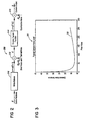
- a camera model block diagram is indicated generally by the reference numeral 200.
- the camera response function and noise model parameters can be photometrically calibrated as known in the art.
- the camera model 200 includes a White Balance module 210 with exposure time adjustment.
- the module 210 is coupled in signal communication with a non-inverting input of a first summing block 212, which, in turn, is coupled in signal communication with a camera transfer function 214.
- the transfer function 214 is coupled to a non-inverting input of a second summing block 216.
- the White Balance module 210 performs a linear stretching of the received radiance, resulting in a value e within [0, 1]. e is then corrupted by shot noise N s and Thermal Noise N c1 , where the variance of the shot noise is proportional to E .
- the corrupted White Balance output is denoted as ⁇ , and ⁇ is subject to the camera transfer function to obtain the internal camera output z . This value is digitized to get the observed pixel value of .
- Equation (9) is the unit variance term for shot noise
- ⁇ c1 2 is the variance of the thermal noise
- ⁇ c2 2 is the variance of the quantization noise.
- Equation (10) shows that the camera noise level can be seen as a function of the pixel value, instead of the incoming radiance. It is assumed that the noise in the pixel value is zero-mean Gaussian.
- a plot of camera noise variance versus pixel value is indicated generally by the reference numeral 300.
- a typical curve 310 illustrates the camera noise variance as a function of image measurements.
- f(e) 255e 5 / 6
- ⁇ s 0.015
- ⁇ c1 0.01
- ⁇ c2 1 .
- the true pixel value is approximated as a Gaussian distribution with mean equal to the observed value and variance ⁇ Nz 2 .
- N(.,.) denotes the normal distribution.
- P 1 and P 2 are parameters of two binomial distributed random variables, respectively. Order consistency is defined as a distance between the two distributions with parameters P 1 and P 2 .
- the Bhattacharya coefficient is used as the distance measure, as set forth in Equation (11) of Table A, because of its interesting theoretical properties relating it to the Bayes error.
- the reliability of D as a measure of concurrence in ordering is a function of the magnitude of d (1) and d (2) . If d (1) and d (2) are 0-mean Gaussian distributions, camera noise dominates and the ordering information is unreliable for reasonable inferences. Thus, to ensure reliability, high contrast pixels are used in order checking.
- the D -map contains local neighborhood order consistency information.
- Various alternate methods may be recognized by those of ordinary skill in the pertinent art to utilize the D -map to classify the regions into objects versus illumination changes.
- a simple thresholding is used to detect the object pixels. More sophisticated processing can additionally be performed. If the computed D is less than a certain threshold D t , the pixel is treated as an object pixel. Further grouping as known in the art may be used to detect objects using a higher-level criterion.
- a top-left frame 410 and a top-right frame 412 are two frames from an omni-video that have a sudden illumination change between them.
- a center-left map 414 is the D -map of the scene, where darker points 415 represent higher order inconsistency.
- a bottom image 418 is the detection result based on a single Gaussian model for each pixel. Because of the strong illumination change, the bottom image 418 shows that the applied method gives false alarms throughout the scene. The order consistency method can easily suppress the illumination change with some false alarms at the edges, which are due to out-of-model assumptions and require extra treatments.
- a top-left frame 510 and a top-right frame 512 are two frames from an omni-video.
- a center-left map 514 is the D -map of the scene, with darker points 515 representing higher order inconsistency.
- a bottom image 518 is the detection based on a single Gaussian model for each pixel. The weak illumination change in the right part of the scene is due to objects somewhat blocking the light source. From the bottom image 518 it can be seen that even minor sudden illumination changes can invalidate the simple method.
- the center-left and center-right maps 514 and 516 respectively, the presently disclosed method finds the objects while suppressing the sudden illumination change caused by the objects.
- the above examples show that the method is able to ignore significant illumination changes.
- the pixel-level miss detection rate can be quite significant where the detected objects are quite fragmented.
- Grouping methods such QCC, as known in the art, combined with other information, such as, for example, the scene geometry and object features, may be used to attain increased performance for such situations.
- the neighborhood patches are classified into two types: homogeneous and highly textured.
- homogeneous the neighboring pixels have identical ideal values in both frames.
- highly textured case assumes that the neighboring pixels have ideal values that are far apart.
- a Gaussian distribution is used to simulate either the background or the object, but with different means and variances.
- a Mixture of Gaussians (“MoG”) distribution is used to simulate the pixel values.
- the sudden illumination change is modeled as a multiplier to the pixels in the first frame.
- the multiplier is Laplacian-distributed with center 1.
- the two cases for the current frame are distinguished as follows: i) the case where the two pixel measurements being compared are in the interior of the object and are therefore samples from object distribution, and ii) the case where the two pixel measurements are in the boundary of the object with one sample from the object and the other from the background distribution.
- the perimeter to area ratio of an object (“edge ratio”) is the proportion of the number of edge pixels to the number of all pixels of an object.
- the edge ratio is an adjustable parameter in the simulation. A high edge ratio is used to simulate small objects, and a low edge ratio to simulate large objects.
- the camera noise is added and D is computed.
- the distributions of D for (1) and (2) provide a mechanism to estimate the pixel level false alarm probability P fa and miss detection probability P md .
- the distributions are used to select D t for the simple D -map thresholding method.
- the homogeneous background pixels have a Gaussian distribution N(50, 1) and the homogeneous object pixels have a Gaussian distribution N(70, 1).
- the highly textured background pixels have an MoG distribution: N(30, 10 2 ), N(80, 10 2 ), N(150, 10 2 ) and N(220, 10 2 ), with mixing proportions 0.2, 0.3, 0.4 and 0.1, respectively.
- the highly textured object pixels have an MoG distribution: N(50, 30 2 ), N(100, 50 2 ), N(170, 40 2 ) and N(220, 25 2 ), with mixing proportions 0.2, 0.3, 0.4 and 0.1, respectively.
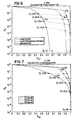
- a graph of false alarm probability versus miss detection probability is indicated generally by the reference numeral 600.
- the graph 600 includes three setting plots: a homogeneous plot 610, a highly textured plot 612, and mixture of the two plot 614.
- the plot 610 shows the performance of the method because there is no true underlying ordering preference in the ideal input (i.e. the signal to noise ratio is very low).
- the highly textured setting gives the plot 612 showing a lower P md for a comparable P fa .
- FIG. 7 another graph of false alarm probability versus miss detection probability is indicated generally by the reference numeral 700.
- the graph 700 includes three edge-ratio plots that show how edge ratio affects the performance in the homogeneous setting.
- a plot 710 corresponds to an edge ratio of 0.10.
- a plot 712 corresponds to an edge ratio of 0.20.
- a plot 714 corresponds to an edge ratio of 0.60.
- low false alarm probabilities can be easier to achieve than low miss detection probabilities.
- the described sudden change detection method is motivated from a statistical model derived from the physics of the imaging process.
- the approach concentrates on local neighborhood order checking to reduce computational complexity. While the assumptions are reasonable in most of the image, some neighborhoods may violate the smoothness conditions for local geometry and illumination.
- the algorithm is less reliable in homogeneous areas where the signal-to-noise ratio is low (i.e. where ordering information is absent).
- the presented method is usable with an existing surveillance system. By obtaining a quantitative measure of the reliability of the method, the results can be consistently fused with other measurements. Other possible embodiments could be based on exploiting multi-scale information, use of grouping methods, and/or exploiting further global information on illumination, as may be recognized by those of ordinary skill in the pertinent art. It is also worthwhile to incorporate other known knowledge of the scene, such as, for example, possible object orientation, shape, and/or size, to maximize the capabilities of the system or meet design criteria.
- image as used herein may also represent three-dimensional, four-dimensional, and higher dimensional datasets in alternate embodiments.
- the teachings of the present disclosure are implemented as a combination of hardware and software.
- the software is preferably implemented as an application program tangibly embodied on a program storage unit.
- the application program may be uploaded to, and executed by, a machine comprising any suitable architecture.
- the machine is implemented on a computer platform having hardware such as one or more central processing units (“CPU"), a random access memory (“RAM”), and input/output (“l/O") interfaces.
- CPU central processing units
- RAM random access memory
- l/O input/output
- the computer platform may also include an operating system and microinstruction code.
- the various processes and functions described herein may be either part of the microinstruction code or part of the application program, or any combination thereof, which may be executed by a CPU.
- various other peripheral units may be connected to the computer platform such as an additional data storage unit and a printing unit.
Landscapes
- Engineering & Computer Science (AREA)
- Computer Vision & Pattern Recognition (AREA)
- Physics & Mathematics (AREA)
- General Physics & Mathematics (AREA)
- Multimedia (AREA)
- Theoretical Computer Science (AREA)
- Image Analysis (AREA)
Abstract
Description


Claims (46)
- A method for object detection with sudden illumination changes, the method comprising:providing a first image having a plurality of pixels;receiving a second image corresponding to a time other than that of said first image;calculating a difference map between said first and second images;selecting a pair of pixel locations from at least one of said first and second images in accordance with said difference map;statistically modeling a camera noise level for at least one of said first and second images;computing the likelihood of order inconsistency between a pair of pixel values at said selected locations in said first image and a pair of pixel values at said selected locations in said second image in accordance with said camera noise level; anddetecting a changed object in accordance with said computed likelihood.
- A method as defined in Claim 1 wherein said second image is temporally consecutive with said first image.
- A method as defined in Claim 1, further comprising maintaining said first image as a reference for calculating a plurality of difference maps corresponding to a plurality of second images.
- A method as defined in Claim 1, further comprising mixing said first image with at least one past image.
- A method as defined in Claim 4 wherein mixing comprises pixel averaging.
- A method as defined in Claim 1 wherein said first image is a separately maintained background image.
- A method as defined in Claim 1, further comprising photometrically calibrating said statistical model for camera noise.
- A method as defined in Claim 1, further comprising applying a monotone but non-linear camera response function to at least one of said first and second images.
- A method as defined in Claim 8, further comprising photometrically calibrating said camera response function.
- A method as defined in Claim 1 wherein the sign of the difference between the incident radiances of a pair of pixels in said first image is the same as the sign of the difference between the sensed pixel values.
- A method as defined in Claim 10 wherein a change in at least one of camera gain and illumination level does not alter the difference between the incident radiances of said pair of pixels for an unchanged object, which remains the same as the sign of the difference between the sensed pixel values.
- A method as defined in Claim 10 wherein said comparing the sign comprises applying a Phong shading model for the surface material.
- A method as defined in Claim 1 wherein said detecting a changed object is responsive to local pixel information.
- A method as defined in Claim 1 wherein said detecting a changed object is not compromised by a sudden illumination change.
- A system (100) for object detection with sudden illumination changes, the system comprising:a camera model unit (180) for computing a difference map between a first input image and a second input image;an illumination model unit (170) in signal communication with the camera model unit for comparing the sign of the difference between two pixels in a first input image against the sign of the difference between two pixels in a second input image; anda CPU (102) in signal communication with said camera model unit and said illumination model unit for detecting a changed object in accordance with said comparison when said sign of the difference is changed.
- A system (100) as defined in Claim 15 wherein at least one of said first and second input images comprises a surveillance image.
- A system (100) as defined in Claim 15, further comprising:a display adapter (110) in signal communication with the CPU (102) for displaying at least one of said map and said first and second input images; andan l/O adapter (112) in signal communication with the CPU (102) for recalling the locations of the pixels from the displayed image to provide an indication of the location of a changed object within an input image.
- A system (100) as defined in Claim 15, further comprising:a user interface adapter (114) in signal communication with the CPU (102) for at least receiving a selection decision for at least one image from a user.
- A system for object detection with sudden illumination changes, the system comprising:providing means for providing a first image having a plurality of pixels;receiving means for receiving a second image corresponding to a time other than that of said first image;calculating means for calculating a difference map between said first and second images;selecting means for selecting a pair of pixel locations from at least one of said first and second images in accordance with said difference map;modeling means for statistically modeling a camera noise level for at least one of said first and second images;computing means for computing the likelihood of order inconsistency between a pair of pixel values at said selected locations in said first image and a pair of pixel values at said selected locations in said second image in accordance with said camera noise level; anddetecting means for detecting a changed object in accordance with said computed likelihood.
- A system as defined in Claim 19 wherein said second image is temporally consecutive with said first image.
- A system as defined in Claim 19, further comprising maintaining means for maintaining said first image as a reference for calculating a plurality of difference maps corresponding to a plurality of second images.
- A system as defined in Claim 19, further comprising mixing means for mixing said first image with at least one past image.
- A system as defined in Claim 22 wherein said mixing means comprises pixel averaging means.
- A system as defined in Claim 19 wherein said first image is a separately maintained background image.
- A system as defined in Claim 19, further comprising first calibrating means for photometrically calibrating said statistical model for camera noise.
- A system as defined in Claim 19, further comprising second modeling means for applying a monotone but non-linear camera response function to at least one of said first and second images.
- A system as defined in Claim 26, further comprising second calibration means for photometrically calibrating said camera response function.
- A system as defined in Claim 19 wherein the sign of the difference between the incident radiances of a pair of pixels in said first image is the same as the sign of the difference between the sensed pixel values.
- A system as defined in Claim 28 wherein a change in at least one of camera gain and illumination level does not alter the difference between the incident radiances of said pair of pixels for an unchanged object, which remains the same as the sign of the difference between the sensed pixel values.
- A system as defined in Claim 28 wherein said comparing the sign comprises applying a Phong shading model for the surface material.
- A system as defined in Claim 19 wherein said detecting a changed object is responsive to local pixel information.
- A system as defined in Claim 19 wherein said detecting a changed object is not compromised by a sudden illumination change.
- A program storage device readable by machine, tangibly embodying a program of instructions executable by the machine to perform method steps for object detection with sudden illumination changes, the method steps comprising:providing a first image having a plurality of pixels;receiving a second image corresponding to a time other than that of said first image;calculating a difference map between said first and second images;selecting a pair of pixel locations from at least one of said first and second images in accordance with said difference map;statistically modeling a camera noise level for at least one of said first and second images;computing the likelihood of order inconsistency between a pair of pixel values at said selected locations in said first image and a pair of pixel values at said selected locations in said second image in accordance with said camera noise level; anddetecting a changed object in accordance with said computed likelihood.
- A program storage device as defined in Claim 33 wherein said second image is temporally consecutive with said first image.
- A program storage device as defined in Claim 33, the method steps further comprising maintaining said first image as a reference for calculating a plurality of difference maps corresponding to a plurality of second images.
- A program storage device as defined in Claim 33, the method steps further comprising mixing said first image with at least one past image.
- A program storage device as defined in Claim 36 wherein the method step of mixing comprises pixel averaging.
- A program storage device as defined in Claim 33 wherein said first image is a separately maintained background image.
- A program storage device as defined in Claim 33, the method steps further comprising photometrically calibrating said statistical model for camera noise.
- A program storage device as defined in Claim 33, the method steps further comprising applying a monotone but non-linear camera response function to at least one of said first and second images.
- A program storage device as defined in Claim 40, the method steps further comprising photometrically calibrating said camera response function.
- A program storage device as defined in Claim 33 wherein the sign of the difference between the incident radiances of a pair of pixels in said first image is the same as the sign of the difference between the sensed pixel values.
- A program storage device as defined in Claim 42 wherein a change in at least one of camera gain and illumination level does not alter the difference between the incident radiances of said pair of pixels for an unchanged object, which remains the same as the sign of the difference between the sensed pixel values.
- A program storage device as defined in Claim 42 wherein said comparing the sign comprises applying a Phong shading model for the surface material.
- A program storage device as defined in Claim 33 wherein said detecting a changed object is responsive to local pixel information.
- A program storage device as defined in Claim 33 wherein said detecting a changed object is not compromised by a sudden illumination change.
Applications Claiming Priority (2)
| Application Number | Priority Date | Filing Date | Title |
|---|---|---|---|
| US158632 | 2002-05-30 | ||
| US10/158,632 US7006128B2 (en) | 2002-05-30 | 2002-05-30 | Object detection for sudden illumination changes using order consistency |
Publications (2)
| Publication Number | Publication Date |
|---|---|
| EP1367554A1 true EP1367554A1 (en) | 2003-12-03 |
| EP1367554B1 EP1367554B1 (en) | 2013-04-17 |
Family
ID=29419679
Family Applications (1)
| Application Number | Title | Priority Date | Filing Date |
|---|---|---|---|
| EP03011313.8A Expired - Lifetime EP1367554B1 (en) | 2002-05-30 | 2003-05-19 | Object detection for sudden illumination changes using order consistency |
Country Status (2)
| Country | Link |
|---|---|
| US (1) | US7006128B2 (en) |
| EP (1) | EP1367554B1 (en) |
Cited By (1)
| Publication number | Priority date | Publication date | Assignee | Title |
|---|---|---|---|---|
| EP1560161A3 (en) * | 2004-01-27 | 2011-05-04 | Siemens Schweiz AG | Method and system for searching for events in video surveillance |
Families Citing this family (32)
| Publication number | Priority date | Publication date | Assignee | Title |
|---|---|---|---|---|
| US7593593B2 (en) | 2004-06-16 | 2009-09-22 | Microsoft Corporation | Method and system for reducing effects of undesired signals in an infrared imaging system |
| US7911444B2 (en) | 2005-08-31 | 2011-03-22 | Microsoft Corporation | Input method for surface of interactive display |
| US7630002B2 (en) * | 2007-01-05 | 2009-12-08 | Microsoft Corporation | Specular reflection reduction using multiple cameras |
| US8212857B2 (en) * | 2007-01-26 | 2012-07-03 | Microsoft Corporation | Alternating light sources to reduce specular reflection |
| US8149300B2 (en) | 2008-04-28 | 2012-04-03 | Microsoft Corporation | Radiometric calibration from noise distributions |
| US9373055B2 (en) * | 2008-12-16 | 2016-06-21 | Behavioral Recognition Systems, Inc. | Hierarchical sudden illumination change detection using radiance consistency within a spatial neighborhood |
| US8285046B2 (en) * | 2009-02-18 | 2012-10-09 | Behavioral Recognition Systems, Inc. | Adaptive update of background pixel thresholds using sudden illumination change detection |
| US7965894B2 (en) * | 2009-06-30 | 2011-06-21 | Konica Minolta Systems Laboratory, Inc. | Method for detecting alterations in printed document using image comparison analyses |
| TWI389559B (en) * | 2009-08-14 | 2013-03-11 | Ind Tech Res Inst | Foreground image separation method |
| CN104303218A (en) | 2012-03-15 | 2015-01-21 | 行为识别系统公司 | Alert directives and focused alert directives in a behavioral recognition system |
| US9113143B2 (en) | 2012-06-29 | 2015-08-18 | Behavioral Recognition Systems, Inc. | Detecting and responding to an out-of-focus camera in a video analytics system |
| WO2014004901A1 (en) | 2012-06-29 | 2014-01-03 | Behavioral Recognition Systems, Inc. | Unsupervised learning of feature anomalies for a video surveillance system |
| US9111353B2 (en) | 2012-06-29 | 2015-08-18 | Behavioral Recognition Systems, Inc. | Adaptive illuminance filter in a video analysis system |
| US9911043B2 (en) | 2012-06-29 | 2018-03-06 | Omni Ai, Inc. | Anomalous object interaction detection and reporting |
| US9723271B2 (en) | 2012-06-29 | 2017-08-01 | Omni Ai, Inc. | Anomalous stationary object detection and reporting |
| US9317908B2 (en) | 2012-06-29 | 2016-04-19 | Behavioral Recognition System, Inc. | Automatic gain control filter in a video analysis system |
| EP2885766A4 (en) | 2012-08-20 | 2017-04-26 | Behavioral Recognition Systems, Inc. | Method and system for detecting sea-surface oil |
| US9213781B1 (en) | 2012-09-19 | 2015-12-15 | Placemeter LLC | System and method for processing image data |
| WO2014075022A1 (en) | 2012-11-12 | 2014-05-15 | Behavioral Recognition Systems, Inc. | Image stabilization techniques for video surveillance systems |
| US9265458B2 (en) | 2012-12-04 | 2016-02-23 | Sync-Think, Inc. | Application of smooth pursuit cognitive testing paradigms to clinical drug development |
| US9380976B2 (en) | 2013-03-11 | 2016-07-05 | Sync-Think, Inc. | Optical neuroinformatics |
| US9639521B2 (en) | 2013-08-09 | 2017-05-02 | Omni Ai, Inc. | Cognitive neuro-linguistic behavior recognition system for multi-sensor data fusion |
| JP2017525064A (en) | 2014-05-30 | 2017-08-31 | プレイスメーター インコーポレイテッドPlacemeter Inc. | System and method for activity monitoring using video data |
| US10409910B2 (en) | 2014-12-12 | 2019-09-10 | Omni Ai, Inc. | Perceptual associative memory for a neuro-linguistic behavior recognition system |
| US10409909B2 (en) | 2014-12-12 | 2019-09-10 | Omni Ai, Inc. | Lexical analyzer for a neuro-linguistic behavior recognition system |
| US10043078B2 (en) | 2015-04-21 | 2018-08-07 | Placemeter LLC | Virtual turnstile system and method |
| US10380431B2 (en) | 2015-06-01 | 2019-08-13 | Placemeter LLC | Systems and methods for processing video streams |
| CN106878668B (en) | 2015-12-10 | 2020-07-17 | 微软技术许可有限责任公司 | Movement detection of an object |
| US10255526B2 (en) | 2017-06-09 | 2019-04-09 | Uptake Technologies, Inc. | Computer system and method for classifying temporal patterns of change in images of an area |
| US11288820B2 (en) | 2018-06-09 | 2022-03-29 | Lot Spot Inc. | System and method for transforming video data into directional object count |
| JP2020060531A (en) * | 2018-10-12 | 2020-04-16 | 株式会社デンソーテン | Abnormal detector, abnormality detection system, and method for detecting abnormality |
| RU2734655C1 (en) * | 2020-03-17 | 2020-10-21 | федеральное государственное бюджетное образовательное учреждение высшего образования "Новгородский государственный университет имени Ярослава Мудрого" | Method of selecting image of object on non-homogeneous background |
Citations (2)
| Publication number | Priority date | Publication date | Assignee | Title |
|---|---|---|---|---|
| EP0913794A2 (en) | 1997-11-03 | 1999-05-06 | AT&T Corp. | A method for detecting moving cast shadows for object segmentation |
| US5909548A (en) * | 1996-10-31 | 1999-06-01 | Sensormatic Electronics Corporation | Apparatus for alerting human operator to status conditions of intelligent video information management system |
Family Cites Families (4)
| Publication number | Priority date | Publication date | Assignee | Title |
|---|---|---|---|---|
| US4805123B1 (en) * | 1986-07-14 | 1998-10-13 | Kla Instr Corp | Automatic photomask and reticle inspection method and apparatus including improved defect detector and alignment sub-systems |
| US5353061A (en) * | 1992-10-08 | 1994-10-04 | International Business Machines Corporation | System and method for frame-differencing video compression/decompression using perceptually-constant information and image analysis |
| EP0957367A1 (en) * | 1998-04-14 | 1999-11-17 | THOMSON multimedia | Method for estimating the noise level in a video sequence |
| EP0951181A1 (en) * | 1998-04-14 | 1999-10-20 | THOMSON multimedia | Method for detecting static areas in a sequence of video pictures |
-
2002
- 2002-05-30 US US10/158,632 patent/US7006128B2/en not_active Expired - Lifetime
-
2003
- 2003-05-19 EP EP03011313.8A patent/EP1367554B1/en not_active Expired - Lifetime
Patent Citations (2)
| Publication number | Priority date | Publication date | Assignee | Title |
|---|---|---|---|---|
| US5909548A (en) * | 1996-10-31 | 1999-06-01 | Sensormatic Electronics Corporation | Apparatus for alerting human operator to status conditions of intelligent video information management system |
| EP0913794A2 (en) | 1997-11-03 | 1999-05-06 | AT&T Corp. | A method for detecting moving cast shadows for object segmentation |
Cited By (1)
| Publication number | Priority date | Publication date | Assignee | Title |
|---|---|---|---|---|
| EP1560161A3 (en) * | 2004-01-27 | 2011-05-04 | Siemens Schweiz AG | Method and system for searching for events in video surveillance |
Also Published As
| Publication number | Publication date |
|---|---|
| US7006128B2 (en) | 2006-02-28 |
| EP1367554B1 (en) | 2013-04-17 |
| US20030228058A1 (en) | 2003-12-11 |
Similar Documents
| Publication | Publication Date | Title |
|---|---|---|
| EP1367554B1 (en) | Object detection for sudden illumination changes using order consistency | |
| Xie et al. | Sudden illumination change detection using order consistency | |
| Nadimi et al. | Physical models for moving shadow and object detection in video | |
| US6349113B1 (en) | Method for detecting moving cast shadows object segmentation | |
| US9258531B2 (en) | System and method for video-quality enhancement | |
| US6512846B1 (en) | Determining orientation of images containing blue sky | |
| CN110798592B (en) | Object movement detection method, device and equipment based on video image and storage medium | |
| CN109086718A (en) | Biopsy method, device, computer equipment and storage medium | |
| US7177445B2 (en) | Discriminating between changes in lighting and movement of objects in a series of images using different methods depending on optically detectable surface characteristics | |
| US8837857B2 (en) | Enhancing image data | |
| Moya-Alcover et al. | Modeling depth for nonparametric foreground segmentation using RGBD devices | |
| JP2009217835A (en) | Non-motion detection | |
| US20080056568A1 (en) | Object segmentation using visible and infrared images | |
| US10726532B2 (en) | Measurement of non-uniformity noise | |
| WO2017053037A1 (en) | Classifying images and videos | |
| CN111240612A (en) | Method and terminal for adjusting screen resolution | |
| US7203337B2 (en) | Adjusted filters | |
| CN107635099B (en) | Human body induction double-optical network camera and security monitoring system | |
| KR20120069539A (en) | Device for estimating light source and method thereof | |
| JP7092616B2 (en) | Object detection device, object detection method, and object detection program | |
| US20220061659A1 (en) | System and method for finding an area of an eye from a facial image | |
| Apewokin et al. | Embedded real-time surveillance using multimodal mean background modeling | |
| CN119107596A (en) | Intrusion detection and identification method, system and medium based on infrared and visible light fusion | |
| EP1161081A2 (en) | Automatic bright window detection | |
| KR101648562B1 (en) | Apparatus for detecting moving object |
Legal Events
| Date | Code | Title | Description |
|---|---|---|---|
| PUAI | Public reference made under article 153(3) epc to a published international application that has entered the european phase |
Free format text: ORIGINAL CODE: 0009012 |
|
| AK | Designated contracting states |
Kind code of ref document: A1 Designated state(s): AT BE BG CH CY CZ DE DK EE ES FI FR GB GR HU IE IT LI LU MC NL PT RO SE SI SK TR |
|
| AX | Request for extension of the european patent |
Extension state: AL LT LV MK |
|
| 17P | Request for examination filed |
Effective date: 20040601 |
|
| AKX | Designation fees paid |
Designated state(s): AT BE BG CH CY CZ DE DK EE ES FI FR GB GR HU IE IT LI LU MC NL PT RO SE SI SK TR |
|
| RAP1 | Party data changed (applicant data changed or rights of an application transferred) |
Owner name: SIEMENS CORPORATION |
|
| 17Q | First examination report despatched |
Effective date: 20100910 |
|
| GRAP | Despatch of communication of intention to grant a patent |
Free format text: ORIGINAL CODE: EPIDOSNIGR1 |
|
| GRAS | Grant fee paid |
Free format text: ORIGINAL CODE: EPIDOSNIGR3 |
|
| GRAA | (expected) grant |
Free format text: ORIGINAL CODE: 0009210 |
|
| AK | Designated contracting states |
Kind code of ref document: B1 Designated state(s): AT BE BG CH CY CZ DE DK EE ES FI FR GB GR HU IE IT LI LU MC NL PT RO SE SI SK TR |
|
| REG | Reference to a national code |
Ref country code: GB Ref legal event code: FG4D |
|
| REG | Reference to a national code |
Ref country code: CH Ref legal event code: EP |
|
| REG | Reference to a national code |
Ref country code: IE Ref legal event code: FG4D |
|
| REG | Reference to a national code |
Ref country code: AT Ref legal event code: REF Ref document number: 607729 Country of ref document: AT Kind code of ref document: T Effective date: 20130515 |
|
| REG | Reference to a national code |
Ref country code: DE Ref legal event code: R096 Ref document number: 60343783 Country of ref document: DE Effective date: 20130613 |
|
| PGFP | Annual fee paid to national office [announced via postgrant information from national office to epo] |
Ref country code: NL Payment date: 20130503 Year of fee payment: 11 |
|
| REG | Reference to a national code |
Ref country code: AT Ref legal event code: MK05 Ref document number: 607729 Country of ref document: AT Kind code of ref document: T Effective date: 20130417 |
|
| PGFP | Annual fee paid to national office [announced via postgrant information from national office to epo] |
Ref country code: BE Payment date: 20130619 Year of fee payment: 11 |
|
| REG | Reference to a national code |
Ref country code: NL Ref legal event code: VDEP Effective date: 20130417 |
|
| REG | Reference to a national code |
Ref country code: DE Ref legal event code: R082 Ref document number: 60343783 Country of ref document: DE Representative=s name: MAIER, DANIEL OLIVER, DIPL.-ING. UNIV., DE Effective date: 20130829 Ref country code: DE Ref legal event code: R081 Ref document number: 60343783 Country of ref document: DE Owner name: SIEMENS SCHWEIZ AG, CH Free format text: FORMER OWNER: SIEMENS CORP., ISELIN, US Effective date: 20130829 Ref country code: DE Ref legal event code: R081 Ref document number: 60343783 Country of ref document: DE Owner name: SIEMENS SCHWEIZ AG, CH Free format text: FORMER OWNER: SIEMENS CORPORATE RESEARCH, INC., PRINCETON, US Effective date: 20130423 Ref country code: DE Ref legal event code: R081 Ref document number: 60343783 Country of ref document: DE Owner name: SIEMENS SCHWEIZ AG, CH Free format text: FORMER OWNER: SIEMENS CORPORATE RESEARCH, INC., PRINCETON, N.J., US Effective date: 20130423 Ref country code: DE Ref legal event code: R081 Ref document number: 60343783 Country of ref document: DE Owner name: SIEMENS SCHWEIZ AG, CH Free format text: FORMER OWNER: SIEMENS CORP., ISELIN, N.J., US Effective date: 20130829 |
|
| PG25 | Lapsed in a contracting state [announced via postgrant information from national office to epo] |
Ref country code: BE Free format text: LAPSE BECAUSE OF FAILURE TO SUBMIT A TRANSLATION OF THE DESCRIPTION OR TO PAY THE FEE WITHIN THE PRESCRIBED TIME-LIMIT Effective date: 20130417 Ref country code: ES Free format text: LAPSE BECAUSE OF FAILURE TO SUBMIT A TRANSLATION OF THE DESCRIPTION OR TO PAY THE FEE WITHIN THE PRESCRIBED TIME-LIMIT Effective date: 20130728 Ref country code: GR Free format text: LAPSE BECAUSE OF FAILURE TO SUBMIT A TRANSLATION OF THE DESCRIPTION OR TO PAY THE FEE WITHIN THE PRESCRIBED TIME-LIMIT Effective date: 20130718 Ref country code: AT Free format text: LAPSE BECAUSE OF FAILURE TO SUBMIT A TRANSLATION OF THE DESCRIPTION OR TO PAY THE FEE WITHIN THE PRESCRIBED TIME-LIMIT Effective date: 20130417 Ref country code: FI Free format text: LAPSE BECAUSE OF FAILURE TO SUBMIT A TRANSLATION OF THE DESCRIPTION OR TO PAY THE FEE WITHIN THE PRESCRIBED TIME-LIMIT Effective date: 20130417 Ref country code: SE Free format text: LAPSE BECAUSE OF FAILURE TO SUBMIT A TRANSLATION OF THE DESCRIPTION OR TO PAY THE FEE WITHIN THE PRESCRIBED TIME-LIMIT Effective date: 20130417 Ref country code: PT Free format text: LAPSE BECAUSE OF FAILURE TO SUBMIT A TRANSLATION OF THE DESCRIPTION OR TO PAY THE FEE WITHIN THE PRESCRIBED TIME-LIMIT Effective date: 20130819 Ref country code: SI Free format text: LAPSE BECAUSE OF FAILURE TO SUBMIT A TRANSLATION OF THE DESCRIPTION OR TO PAY THE FEE WITHIN THE PRESCRIBED TIME-LIMIT Effective date: 20130417 |
|
| REG | Reference to a national code |
Ref country code: GB Ref legal event code: 732E Free format text: REGISTERED BETWEEN 20131010 AND 20131016 |
|
| PG25 | Lapsed in a contracting state [announced via postgrant information from national office to epo] |
Ref country code: BG Free format text: LAPSE BECAUSE OF FAILURE TO SUBMIT A TRANSLATION OF THE DESCRIPTION OR TO PAY THE FEE WITHIN THE PRESCRIBED TIME-LIMIT Effective date: 20130717 Ref country code: CY Free format text: LAPSE BECAUSE OF FAILURE TO SUBMIT A TRANSLATION OF THE DESCRIPTION OR TO PAY THE FEE WITHIN THE PRESCRIBED TIME-LIMIT Effective date: 20130417 |
|
| RAP2 | Party data changed (patent owner data changed or rights of a patent transferred) |
Owner name: SIEMENS SCHWEIZ AG |
|
| REG | Reference to a national code |
Ref country code: CH Ref legal event code: PL |
|
| PG25 | Lapsed in a contracting state [announced via postgrant information from national office to epo] |
Ref country code: CH Free format text: LAPSE BECAUSE OF NON-PAYMENT OF DUE FEES Effective date: 20130531 Ref country code: DK Free format text: LAPSE BECAUSE OF FAILURE TO SUBMIT A TRANSLATION OF THE DESCRIPTION OR TO PAY THE FEE WITHIN THE PRESCRIBED TIME-LIMIT Effective date: 20130417 Ref country code: CZ Free format text: LAPSE BECAUSE OF FAILURE TO SUBMIT A TRANSLATION OF THE DESCRIPTION OR TO PAY THE FEE WITHIN THE PRESCRIBED TIME-LIMIT Effective date: 20130417 Ref country code: SK Free format text: LAPSE BECAUSE OF FAILURE TO SUBMIT A TRANSLATION OF THE DESCRIPTION OR TO PAY THE FEE WITHIN THE PRESCRIBED TIME-LIMIT Effective date: 20130417 Ref country code: LI Free format text: LAPSE BECAUSE OF NON-PAYMENT OF DUE FEES Effective date: 20130531 Ref country code: EE Free format text: LAPSE BECAUSE OF FAILURE TO SUBMIT A TRANSLATION OF THE DESCRIPTION OR TO PAY THE FEE WITHIN THE PRESCRIBED TIME-LIMIT Effective date: 20130417 Ref country code: MC Free format text: LAPSE BECAUSE OF FAILURE TO SUBMIT A TRANSLATION OF THE DESCRIPTION OR TO PAY THE FEE WITHIN THE PRESCRIBED TIME-LIMIT Effective date: 20130417 |
|
| PLBE | No opposition filed within time limit |
Free format text: ORIGINAL CODE: 0009261 |
|
| STAA | Information on the status of an ep patent application or granted ep patent |
Free format text: STATUS: NO OPPOSITION FILED WITHIN TIME LIMIT |
|
| REG | Reference to a national code |
Ref country code: IE Ref legal event code: MM4A |
|
| PG25 | Lapsed in a contracting state [announced via postgrant information from national office to epo] |
Ref country code: IT Free format text: LAPSE BECAUSE OF FAILURE TO SUBMIT A TRANSLATION OF THE DESCRIPTION OR TO PAY THE FEE WITHIN THE PRESCRIBED TIME-LIMIT Effective date: 20130417 Ref country code: RO Free format text: LAPSE BECAUSE OF FAILURE TO SUBMIT A TRANSLATION OF THE DESCRIPTION OR TO PAY THE FEE WITHIN THE PRESCRIBED TIME-LIMIT Effective date: 20130417 Ref country code: NL Free format text: LAPSE BECAUSE OF FAILURE TO SUBMIT A TRANSLATION OF THE DESCRIPTION OR TO PAY THE FEE WITHIN THE PRESCRIBED TIME-LIMIT Effective date: 20130417 |
|
| 26N | No opposition filed |
Effective date: 20140120 |
|
| PG25 | Lapsed in a contracting state [announced via postgrant information from national office to epo] |
Ref country code: IE Free format text: LAPSE BECAUSE OF NON-PAYMENT OF DUE FEES Effective date: 20130519 |
|
| REG | Reference to a national code |
Ref country code: DE Ref legal event code: R097 Ref document number: 60343783 Country of ref document: DE Effective date: 20140120 |
|
| REG | Reference to a national code |
Ref country code: FR Ref legal event code: TP Owner name: SIEMENS SCHWEIZ AG, CH Effective date: 20140930 |
|
| PG25 | Lapsed in a contracting state [announced via postgrant information from national office to epo] |
Ref country code: TR Free format text: LAPSE BECAUSE OF FAILURE TO SUBMIT A TRANSLATION OF THE DESCRIPTION OR TO PAY THE FEE WITHIN THE PRESCRIBED TIME-LIMIT Effective date: 20130417 |
|
| PG25 | Lapsed in a contracting state [announced via postgrant information from national office to epo] |
Ref country code: HU Free format text: LAPSE BECAUSE OF FAILURE TO SUBMIT A TRANSLATION OF THE DESCRIPTION OR TO PAY THE FEE WITHIN THE PRESCRIBED TIME-LIMIT; INVALID AB INITIO Effective date: 20030519 Ref country code: LU Free format text: LAPSE BECAUSE OF NON-PAYMENT OF DUE FEES Effective date: 20130519 |
|
| REG | Reference to a national code |
Ref country code: FR Ref legal event code: PLFP Year of fee payment: 14 |
|
| PG25 | Lapsed in a contracting state [announced via postgrant information from national office to epo] |
Ref country code: BE Free format text: THE PATENT HAS BEEN ANNULLED BY A DECISION OF A NATIONAL AUTHORITY Effective date: 20130417 |
|
| REG | Reference to a national code |
Ref country code: FR Ref legal event code: PLFP Year of fee payment: 15 |
|
| PGFP | Annual fee paid to national office [announced via postgrant information from national office to epo] |
Ref country code: FR Payment date: 20170526 Year of fee payment: 15 Ref country code: GB Payment date: 20170508 Year of fee payment: 15 |
|
| PGFP | Annual fee paid to national office [announced via postgrant information from national office to epo] |
Ref country code: DE Payment date: 20170721 Year of fee payment: 15 |
|
| REG | Reference to a national code |
Ref country code: DE Ref legal event code: R119 Ref document number: 60343783 Country of ref document: DE |
|
| GBPC | Gb: european patent ceased through non-payment of renewal fee |
Effective date: 20180519 |
|
| PG25 | Lapsed in a contracting state [announced via postgrant information from national office to epo] |
Ref country code: FR Free format text: LAPSE BECAUSE OF NON-PAYMENT OF DUE FEES Effective date: 20180531 Ref country code: GB Free format text: LAPSE BECAUSE OF NON-PAYMENT OF DUE FEES Effective date: 20180519 Ref country code: DE Free format text: LAPSE BECAUSE OF NON-PAYMENT OF DUE FEES Effective date: 20181201 |