EP1366767A1 - Aqueous suspension eyedrops and process for producing the same - Google Patents
Aqueous suspension eyedrops and process for producing the same Download PDFInfo
- Publication number
- EP1366767A1 EP1366767A1 EP02712376A EP02712376A EP1366767A1 EP 1366767 A1 EP1366767 A1 EP 1366767A1 EP 02712376 A EP02712376 A EP 02712376A EP 02712376 A EP02712376 A EP 02712376A EP 1366767 A1 EP1366767 A1 EP 1366767A1
- Authority
- EP
- European Patent Office
- Prior art keywords
- acyclovir
- preparation
- crystals
- aqueous suspension
- suspension
- Prior art date
- Legal status (The legal status is an assumption and is not a legal conclusion. Google has not performed a legal analysis and makes no representation as to the accuracy of the status listed.)
- Withdrawn
Links
Images


Classifications
-
- A—HUMAN NECESSITIES
- A61—MEDICAL OR VETERINARY SCIENCE; HYGIENE
- A61K—PREPARATIONS FOR MEDICAL, DENTAL OR TOILETRY PURPOSES
- A61K31/00—Medicinal preparations containing organic active ingredients
- A61K31/33—Heterocyclic compounds
- A61K31/395—Heterocyclic compounds having nitrogen as a ring hetero atom, e.g. guanethidine or rifamycins
- A61K31/495—Heterocyclic compounds having nitrogen as a ring hetero atom, e.g. guanethidine or rifamycins having six-membered rings with two or more nitrogen atoms as the only ring heteroatoms, e.g. piperazine or tetrazines
- A61K31/505—Pyrimidines; Hydrogenated pyrimidines, e.g. trimethoprim
- A61K31/519—Pyrimidines; Hydrogenated pyrimidines, e.g. trimethoprim ortho- or peri-condensed with heterocyclic rings
- A61K31/52—Purines, e.g. adenine
- A61K31/522—Purines, e.g. adenine having oxo groups directly attached to the heterocyclic ring, e.g. hypoxanthine, guanine, acyclovir
-
- A—HUMAN NECESSITIES
- A61—MEDICAL OR VETERINARY SCIENCE; HYGIENE
- A61K—PREPARATIONS FOR MEDICAL, DENTAL OR TOILETRY PURPOSES
- A61K9/00—Medicinal preparations characterised by special physical form
- A61K9/0012—Galenical forms characterised by the site of application
- A61K9/0048—Eye, e.g. artificial tears
-
- A—HUMAN NECESSITIES
- A61—MEDICAL OR VETERINARY SCIENCE; HYGIENE
- A61P—SPECIFIC THERAPEUTIC ACTIVITY OF CHEMICAL COMPOUNDS OR MEDICINAL PREPARATIONS
- A61P27/00—Drugs for disorders of the senses
- A61P27/02—Ophthalmic agents
-
- A—HUMAN NECESSITIES
- A61—MEDICAL OR VETERINARY SCIENCE; HYGIENE
- A61P—SPECIFIC THERAPEUTIC ACTIVITY OF CHEMICAL COMPOUNDS OR MEDICINAL PREPARATIONS
- A61P31/00—Antiinfectives, i.e. antibiotics, antiseptics, chemotherapeutics
- A61P31/12—Antivirals
Definitions
- the present invention relates to an ophthalmic aqueous suspension preparation that contains as an active ingredient 9-[(2-hydroxyethoxy)methyl]guanine, a hardly water-soluble antiviral agent, or a pharmaceutically acceptable salt thereof.
- the present invention also relates to a method for producing such a preparation.
- JAN 9-[(2-hydroxyethoxy)methyl]guanine
- INN acyclovir
- Acyclovir has a very low solubility in water: it can dissolve in an acidic or basic aqueous solution but hardly dissolve in an aqueous solution of near neutral pH. Though acyclovir can dissolve to some extent in an aqueous solution under acidic or basic condition, these solutions tend to be unstable and readily form crystals. For this reason, it has been difficult to develop stable aqueous acyclovir preparations that can be stored for a long time. Thus, the only form of ophthalmic acyclovir preparations currently in clinical use against corneal herpes infection is ointment and no ophthalmic preparation has ever been provided in the form of aqueous solution.
- Japanese Patent Laid-Open Publication No. Hei 8-268892 describes an ophthalmic preparation provided in the form of an aqueous solution in which polyvinylpyrrolidone is blended with acyclovir.
- an antiviral composition containing acyclovir and a polyol is proposed in Japanese Patent Laid-Open Publication No. Hei 9-143096.
- Each of these preparations requires the use of some solubilizer, such as polyvinylpyrrolidone and polyol, in order to enhance solubility of otherwise hardly water-insoluble acyclovir. Though effective to some degree, these solubilizers must be added in limited amounts and the dissolved acyclovir still shows some tendency to crystallize. These preparations are therefore insufficient in terms of the stability, especially when the preparations need to be stored for a prolonged time.
- an ophthalmic preparation described in Japanese Patent Laid-Open Publication No. Hei 10-287552 is a sterile aqueous suspension of acyclovir, which is prepared by suspending acyclovir in water, heating and then filtering the suspension.
- Hei 11-228386 is prepared by dissolving a hardly water-soluble active ingredient, such as acyclovir, in an aqueous medium under basic condition, and subsequently adding an acid to allow crystals to form, at which time an ion-sensitive, hydrophilic polymer to serve as a thickener is added to form a suspension.
- Another suspension preparation disclosed in Japanese Patent Laid-Open Publication No. 2000-247887 is formed by first completely dissolving acyclovir in aqueous medium at a pH of 2 or below in the presence of hydrophilic polymer and subsequently adjusting the pH of the solution to a value of 6 to 9 to allow acyclovir to crystallize, thereby making the solution into a suspension.
- acyclovir is first completely dissolved in aqueous medium by heating or adjusting the pH and is subsequently recrystallized to form crystals with the size suitable for ophthalmic application.
- suspension preparations None of these suspension preparations, however, have succeeded in providing acyclovir crystals that remain stable when suspended in aqueous medium: though the suspensions are effective to some extent in that they can contain increased amounts of acyclovir to serve as the active ingredient, it is only at the time of the preparation of the suspension that the crystals of hardly water-soluble acyclovir exist in a properly small size and changes will eventually take place in the state of the crystals over the course of a long-term storage period. Specifically, the growth of the acyclovir crystals cannot be avoided in any of the above-described preparations. Accordingly, these suspension preparations are less than satisfactory for use as a pharmaceutical preparation.
- the present inventors have discovered that the growth of crystals can be effectively prevented without losing the bioavailability of acyclovir by suspending, rather than dissolving, crystals of acyclovir in aqueous medium in the pH range of 3 to 8 in the presence of both a partially saponified product of polyvinyl acetate and a nonionic surfactant, and subsequently adjusting the pH to a value of 6 to 8, the optimum pH range for ophthalmic preparations.
- the present inventors have found that in this manner, a pharmacologically stable ophthalmic preparation can be obtained in the form of aqueous suspension. This finding ultimately led the present inventors to devise the present invention.
- an objective of the present invention to provide an aqueous suspension preparation for ophthalmic use that contains as an active ingredient a therapeutically effective amount of acyclovir and has a high stability required of a pharmaceutical product. It is another objective of the present invention to provide a method for producing such a stable ophthalmic suspension preparation.
- one aspect of the present invention provides a method for producing an ophthalmic acyclovir preparation in the form of a stable aqueous suspension.
- the invention of claim 1 is a method for producing an ophthalmic aqueous suspension preparation comprising the steps of providing an aqueous solution that has a pH of 3 to 8 and contains 0.05 to 1% by weight of a partially saponified product of polyvinyl acetate and 0.01 to 1% by weight of a nonionic surfactant, suspending fine crystals of acyclovir or a pharmaceutically acceptable salt thereof in the aqueous solution in an amount of 0.2 to 5% by weight, and subsequently adjusting the pH of the suspension to a value of 6 to 8.
- the invention of claim 2 is a method for producing an ophthalmic aqueous suspension preparation comprising the steps of providing an aqueous solution that has a pH of 3 to 8 and contains 0.05 to 1% by weight of a partially saponified product of polyvinyl acetate, suspending fine crystals of acyclovir or a pharmaceutically acceptable salt thereof in the aqueous solution in an amount of 0.2 to 5% by weight, adjusting the pH of the suspension to a value of 6 to 8, adding 0.01 to 1% by weight of a nonionic surfactant, and subsequently stirring the suspension.
- acyclovir or a pharmaceutically acceptable salt thereof are suspended, but not completely dissolved, in aqueous medium in the presence of both a partially saponified product of polyvinyl acetate and a nonionic surfactant and in a predetermined pH range.
- the crystals of acyclovir or a pharmaceutical salt thereof can be effectively prevented from growing and, as a result, an ophthalmic preparation can be obtained in the form of a stable aqueous suspension.
- the invention of claim 3 is the method in accordance with claim 1 or 2, wherein the degree of saponification of the partially saponified product of polyvinyl acetate is in the range of 70 to 95mol%.
- the use of the partially saponified polyvinyl acetate having a degree of saponification in the specified range can help prevent the growth of the fine crystals of acyclovir or a pharmaceutically acceptable salt in the suspension.
- the invention of claim 4 is the method in accordance with claim 1 or 2, wherein the degree of polymerization of the partially saponified product of polyvinyl acetate is in the range from 300 to 2000.
- the use of the partially saponified polyvinyl acetate having a degree of polymerization in the specified range can more effectively help prevent the growth of the fine crystals of acyclovir or a pharmaceutically acceptable salt in the suspension.
- the invention of claim 5 is the method in accordance with claim 1 or 2, wherein the suspension further contains 0.01 to 1% by weight of polyvinylpyrrolidone.
- the addition of polyvinylpyrrolidone in the specified amount facilitates dispersion of acyclovir or a pharmaceutically acceptable salt thereof to serve as the active ingredient of the suspension preparation.
- Another aspect of the present invention provides an ophthalmic preparation containing acyclovir in the form of a stable aqueous suspension.
- the invention of claim 6 is an ophthalmic aqueous suspension preparation produced by one of the above-described methods for producing an ophthalmic aqueous suspension preparation.
- the fine crystals of acyclovir or a pharmaceutically acceptable salt thereof suspended in the ophthalmic aqueous suspension preparation of the present invention have a particle size that allows acyclovir to exert desired therapeutic effects but does not prevent the active ingredient from migrating to humor aqueous.
- the invention of claim 7 is the aqueous suspension preparation in accordance with claim 6, wherein the fine crystals of acyclovir or a pharmaceutically acceptable salt thereof suspended in the preparation has a short axis of 50 ⁇ m or less and a long axis of 70 ⁇ m or less in length.
- the ratio of the long axis to the short axis is preferably 10:1 or less.
- Ophthalmic preparation provided in the form of aqueous suspension in accordance with the present invention will now be described in further detail.
- An active ingredient for use in the ophthalmic aqueous suspension preparation of the present invention is acyclovir or a pharmaceutically acceptable salt thereof.
- the pharmaceutically acceptable salt of acyclovir include salts with an inorganic acid, such as hydrochloric acid, sulfuric acid, and phosphoric acid; salts with an organic acid, such as acetic acid, lactic acid, citric acid, fumaric acid, maleic acid, and succinic acid; and salts with an alkali metal or an alkali earth metal, such as sodium, potassium, and calcium.
- acyclovir refers to acyclovir itself and a pharmaceutically acceptable salt thereof.
- the term is meant to encompass, in addition to free acyclovir, any pharmaceutically acceptable salt of acyclovir.
- fine crystals of acyclovir to serve as the active ingredient in the preparation of the present invention have a particle size that allows the active ingredient to exert desirable therapeutic effects without impeding the migration of the suspended acyclovir crystals to humor aqueous since the aqueous suspension preparation is intended for ophthalmic use.
- fine crystals are preferred that are sized such that the short axis and the long axis of the crystal each have a length of 75 ⁇ m or less and the ratio of the long axis to the short axis is 10:1 or less.
- the fine crystals are preferred that have a short axis length of 50 ⁇ m or less and a long axis length of 70 ⁇ m or less and have a ratio of the long axis to the short axis of 10:1 or less. Fine crystals having such a particle size are stable over a prolonged time and can be used in preparing a desired aqueous suspension.
- the fine crystals of acyclovir are preferably contained in the suspension in an amount of 0.2 to 5% by weight and more preferably, in an amount of 0.5 to 3% by weight.
- the amount of the fine crystals that is less than 0.2% by weight cannot provide sufficient acyclovir in the preparation and may be too small an amount to ensure the desired pharmacological effects.
- the fine crystals of hardly water-soluble acyclovir when present in an amount exceeding 5% by weight, tend to form aggregates in the suspension. This can result in a decreased ability of the suspension to prevent the growth of the crystals and, thus, in a reduced stability of the final product of the suspension preparation.
- the partially saponified product of polyvinyl acetate for use in the aqueous suspension preparation of the present invention is a hydrophilic polymer obtained by polymerizing vinyl acetate and then saponifying some of the acetyl groups present in the polyvinyl acetate molecule.
- the compound may be referred to as a partially saponified polyvinyl alcohol.
- polyvinyl alcohol means a polyol in which most of the acetyl groups present in the polyvinyl acetate have been substituted for hydroxyl groups, and it turned out that, for the purpose of preparing the aqueous suspension preparation of the present invention, a partially saponified product of polyvinyl acetate with a degree of saponification of 70 to 95mol% is preferred.
- the degree of saponification is lower than 70mol%, then the desired effect of preventing the growth of crystals of acyclovir may not be achieved by the addition of the partially saponified product of polyvinyl acetate. Moreover, the polyvinyl acetate product becomes susceptible to hydrolysis to generate acetic acid. As a result, the stability of the final product of the aqueous suspension preparation may be reduced. Conversely, if the degree of saponification is higher than 95mol%, then the other ingredients added to the ophthalmic preparation (e.g., boric acid and sodium borate) may cause the preparation to undergo gelation.
- the other ingredients added to the ophthalmic preparation e.g., boric acid and sodium borate
- the partially saponified product of polyvinyl acetate for use in the present invention is typically added in an amount of 0.05 to 1% by weight and preferably, in an amount of 0.1 to 1% by weight.
- the amount that is less than 0.05% by weight may result in a decreased ability of the partially saponified product of polyvinyl acetate to suppress the growth of crystals and is thus unfavorable.
- the amount exceeding 1% by weight may cause excessively high viscosity of the aqueous suspension preparation.
- acyclovir to serve as the active ingredient tends to form aggregates, resulting in a decreased ability of the suspension preparation to suppress the growth of crystals.
- the ease at which user can apply the ophthalmic preparation is significantly affected.
- the partially saponified product of polyvinyl acetate for use in the present invention typically has a degree of polymerization of 300 to 2000, preferably 300 to 1700, and more preferably 300 to 1400. With the degree of polymerization of less than 300, the partially saponified product may not provide sufficient ability to prevent the growth of crystals. On the other hand, the degree of polymerization of greater than 2000 may result in an excessively high viscosity of the suspension preparation. As a result, acyclovir may form aggregates, which in turn may result in a decreased ability of the suspension preparation to suppress the growth of crystals. Furthermore, the ease at which user can apply the ophthalmic preparation is significantly affected.
- the degree of polymerization is measured by the viscosity of a 4% aqueous solution measured at 20°C.
- the partially saponified product of polyvinyl acetate for use in the present invention preferably has a degree of polymerization as measured the viscosity of 3 to 60mPa ⁇ s and more preferably, 3 to 40mPa ⁇ s.
- aqueous suspension preparation of the present invention which can be prepared by suspending fine crystals of acyclovir to serve as the active ingredient in aqueous medium, requires a nonionic surfactant as a dispersing agent to facilitate the dispersion of the fine crystals.
- the nonionic surfactants for use in the present invention may be those that are selected for its safety from conventional nonionic surfactants used in pharmaceutical products.
- examples include polysorbates (polyoxyethylenesorbitan mono-fatty acid esters), polyoxyethylene castor oil, polyoxyethylene hardened castor oil, polyoxyl stearates, and polyoxyethylene polyoxypropylene glycols.
- the nonionic surfactants that exhibit a relatively high hydrophilicity are preferred because of their high ability to enhance the dispersion of acyclovir crystals and in view of their use for ophthalmic application.
- those having an HLB (hydrophile-lipophile balance) of 10 or more, preferably 12 or more, are preferably used.
- nonionic surfactant examples include polysorbate 80, polyoxyethylene hardened castor oil 40, polyoxyethylene hardened castor oil 60, polyoxyl stearate 40, polyoxyethylene (160) polyoxypropylene (30) glycol, and, polyoxyethylene (200) polyoxypropylene (70) glycol.
- polysorbate 80 and polyoxyethylene hardened castor oil 60 are particularly preferred in view of their use for ophthalmic application.
- the nonionic surfactant is typically added in an amount of 0.01 to 1% by weight and, preferably, in an amount of 0.05 to 0.5% by weight. If the amount of the nonionic surfactant is less than 0.01% by weight, then acyclovir to serve as the active ingredient may not be stably suspended, which may result in a reduced stability of the final product of the suspension preparation. In contrast, the nonionic surfactant, when added in an amount exceeding 1% by weight, raises the concentration of the surfactant in the preparation, causing the fine crystals of acyclovir to form aggregates. As a result, the stability of the dispersion may be decreased.
- the aqueous suspension preparation of the present invention comprises fine crystals of acyclovir, the active ingredient, suspended in an aqueous solution that contains the partially saponified product of polyvinyl acetate and the nonionic surfactant.
- the preparation may be lightly shaken upon use to redisperse the acyclovir crystals. It has been found that the fine crystals of acyclovir, if precipitated, do not affect the quality of the product.
- the suspension preparation in accordance with the present invention further incorporates polyvinylpyrrolidone as a means to facilitate redispersion of the precipitated fine crystals of acyclovir to serve as the active ingredient.
- Polyvinylpyrrolidone to be added to enhance the redispersion of acyclovir crystals may be selected from those that are commonly in use in pharmaceutical applications and may have a molecular weight of about 20000 to about 50000.
- Polyvinylpyrrolidone is typically added to the suspension preparation in an amount of 0.01 to 1% by weight and, preferably, in an amount of 0.1 to 1% by weight. If the amount is less than 0.01% by weight, then the desired effect of enhancing re-dispersal of the fine crystals of acyclovir may not be achieved by the addition of polyvinylpyrrolidone. Conversely, the amount exceeding 1% by weight may cause excessively high viscosity of the final product of the suspension preparation. As a result, acyclovir may form aggregates, resulting in a decreased ability of the suspension preparation to suppress the growth of crystals. Too much polyvinylpyrrolidone also impedes the redispersion of the acyclovir crystals.
- the pH of the aqueous suspension preparation of the present invention is preferably adjusted to a range of 6 to 8 in consideration of the stability of the fine crystals of acyclovir to serve as the active ingredient.
- the suspension preparation has a pH of below 6 or above 8, the solubility of the fine crystals of acyclovir to serve as the active ingredient is subject to change, so that the growth of crystals is more likely to occur. Furthermore, the partially saponified product of polyvinyl acetate contained in the preparation becomes less stable, as does the nonionic surfactant. As a result, the stability of the suspension preparation may be reduced.
- the aqueous suspension preparation of the present invention may further contain various other components that are commonly used in ophthalmic preparations, including an isotonizing agent, a buffer, a preservative, and a pH adjuster.
- isotonizing agent examples include water-soluble polyols, such as glycerol, propylene glycol, sorbitol and mannitol; and electrolytes, such as sodium chloride and potassium chloride. Of these, glycerol is particularly preferred.
- examples of the buffer include a mixed system of sodium dihydrogenphosphate/disodium hydrogenphosphate, and a mixed system of potassium dihydrogenphosphate/disodium hydrogenphosphate.
- acids or alkalis other than the aforementioned boric acid (or a salt thereof) and phosphoric acid (or a salt thereof), such as hydrochloric acid and sodium hydroxide, may also be used to serve as the pH adjuster.
- the preservative examples include quaternary ammonium salts such as benzalkonium chloride and benzethonium chloride, chlorhexidine gluconate, alkyldiaminoethylglycine hydrochloride, parabens such as methyl p-hydroxybenzoate and propyl p-hydroxybenzoate, and chlorobutanol.
- quaternary ammonium salts such as benzalkonium chloride and benzethonium chloride
- chlorhexidine gluconate alkyldiaminoethylglycine hydrochloride
- parabens such as methyl p-hydroxybenzoate and propyl p-hydroxybenzoate
- chlorobutanol chlorobutanol.
- the amount of the preservative to be added is from about 0.003 to 0.02% by weight for quaternary ammonium salt, from about 0.05 to 0.1% by weight for paraben, and from about 0.25 to 0.
- fine crystals of acyclovir are suspended and dispersed, at a specific pH range, in a solution that contains a predetermined amount of a partially saponified product of polyvinyl acetate along with a predetermined amount of a nonionic surfactant.
- the fine crystals of acyclovir are suspended in the solution without being completely dissolved. In this manner, a stable ophthalmic suspension preparation containing acyclovir can be obtained.
- the following two-step method is preferably used to produce a stable aqueous suspension preparation containing fine crystals of acyclovir.
- the first step of the preferred method for producing aqueous ophthalmic suspension preparation of the present invention comprises suspending fine crystals of acyclovir in a solution that contains the partially saponified product of polyvinyl acetate and has a pH in the range of 3 to 8, preferably in the range of 4 to 7.5.
- the solubility of the fine crystals of acyclovir in water increases.
- the solubility of acyclovir drops significantly, so that the fine crystals of acyclovir become more likely to grow into a needle shape during the pH adjustment.
- the stability of the crystals in the final product of the aqueous suspension preparation may be undesirably decreased.
- the solubility of the fine crystals of acyclovir in water increases.
- the solubility of acyclovir drops significantly, so that the fine crystals of acyclovir become more likely to grow into a needle shape during the pH adjustment.
- the acetyl groups present in the partially saponified product of polyvinyl acetate become susceptible to saponification.
- the stability of the crystals in the final product of the aqueous suspension preparation may be undesirably decreased.
- the size of the fine crystals is reduced to 40 ⁇ m or less, preferably to 30 ⁇ m or less, when acyclovir having 75 ⁇ m or more of crystal size is used for the preparation. In this manner, the resulting suspension preparation can be made more suitable for ophthalmic application.
- Conditions for stirring for suspending acyclovir in the solution are properly selected depending on the particle size of acyclovir used.
- the second step of the method of the present invention comprises re-adjusting the pH of the suspension prepared in the first step to a pH range of 6 to 8, preferably to a pH range of 6.5 to 7.5, adding the nonionic surfactant and, if necessary, polyvinylpyrrolidone, and further stirring the suspension. In this manner, the final product of aqueous suspension preparation is obtained.
- the final product of the suspension preparation has a pH of below 6 or above 8, then the desired effect of suppressing the growth of crystals by the partially saponified product of polyvinyl acetate may not be obtained and the growth of the fine crystals of acyclovir may take place. Also, the preparation with such a pH can cause eye irritation upon application.
- the nonionic surfactant and optional polyvinylpyrrolidone may be added during the second step unless the desired stability of the aqueous suspension preparation is affected. Alternatively, they may be added, together with the partially saponified product of polyvinyl acetate, during the first step.
- an acid such as boric acid or sodium dihydrogenphosphate to prepare the solution with a pH of 3 to 8 used in the first step in which to suspend the fine crystals of acyclovir.
- a base commonly used in adjusting the pH of ophthalmic preparations may suitably be used.
- sodium hydroxide or sodium borate as well as disodium hydrogenphosphate, which can be used in combination with the aforementioned sodium dihydrogenphosphate to impart a buffering property to the aqueous suspension preparation.
- a buffer solution such as a phosphate buffer and a borate buffer, that has had its pH preadjusted by combining the above-described acid and base may be used in the first step.
- the additional components such as the preservative and the isotonizing agent may be added in a proper manner in either of the first and the second steps.
- the amount of the component is adjusted depending on the property of the selected preservative. Also, when it is desired to use the isotonizing agent, the amount of the component is adjusted so that the final preparation has an osmotic pressure of 250mOsm to 400mOsm with the total osmotic pressure brought about by the other components taken into account.
- the aqueous suspension preparation obtained by the method of the present invention which is designed for ophthalmic application, needs to be presterilized. This is done by using a proper technique selected from those that are generally applicable to sterilization of pharmaceutical products. Specifically, since the aqueous suspension preparation of the present invention is provided in the form of suspension in which acyclovir to serve as the active ingredient has been suspended, the final preparation cannot be sterilized by heating or filtration. For this reason, it is desirable to independently sterilize the fine crystals of acyclovir and other components by proper techniques prior to preparation of the suspension.
- stirring/dispersing instruments may be properly selected from those that are generally used in pharmaceutical application, including disperser, homomixer, and homogenizer. Of these, those instruments that can efficiently reduce the size of the solid (crystal) suspended in the solution to a desired crystal size are particularly preferred. Specific examples include rotary homogenizers, such as Clearmix (manufactured by Cleartech Co., Ltd.), wet type jet mills, and high-pressure jet stream emulsifiers.
- a highly stable aqueous suspension preparation in which the growth of fine crystals of acyclovir to serve as the active ingredient is significantly suppressed can be obtained by first suspending fine crystals of acyclovir in an aqueous solution that has a pH ranging from acidic to neutral and contains a partially saponified product of polyvinyl acetate and a nonionic surfactant; and subsequently adjusting the pH of the suspension to a pH of 6 to 8, at which acyclovir exhibits minimum solubility in water and which is close to the pH of lacrimal fluid.
- the aqueous suspension preparation prepared by the method of the present invention has an advantage that, in the event that the suspended fine crystals of acyclovir are precipitated during storage, the crystals can be readily resuspended by applying a light shake and, thus, the need to increase the viscosity of the preparation for the purpose of maintaining the stability of the preparation has been eliminated. Accordingly, the aqueous suspension preparation of the present invention can be applied just in the same manner as other common ophthalmic preparations without causing unpleasant feelings to eyes.
- aqueous suspension preparations containing acyclovir were prepared according to the formulations shown in Tables 1-1 through 1-5.
- Compositions of aqueous suspension preparations Preparation No. Examples Prep. 1 Prep. 2 Prep. 3 Prep. 4 Prep. 5 Prep. 6 Prep. 7 Prep.
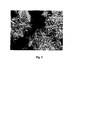
- FIG. 1 A phase contrast micrograph of the fine crystals of acyclovir used is shown in Fig. 1.
- the degree of saponification, the degree of polymerization, and the viscosity (4% aqueous solution, 20°C) were shown in Table 2 below for each of the partially saponified products of vinyl acetate used to prepare the suspension preparations.
- Degree of saponification and degree of polymerization of partially or completely saponified products of polyvinyl acetate Partially saponified products of polyvinyl acetate
- Degree of saponification mol%)
- Each of the partially saponified products of polyvinyl acetate was measured by the amount of dehydrated solid component.
- Polysorbate 80 (which meets the standard set by the Pharmacopoea of Japan) or polyoxyethylene hardened castor oil 60 (which meets the Standard for the Pharmaceutical Additives) was used to serve as the nonionic surfactant.
- a suspension preparation that did not contain the surfactant was also prepared to serve as Comparative Example.
- Each of the aqueous suspension preparations was prepared by using Clearmix CLM-0.8S (Product name: Manufactured by CREATECH Co., Ltd.), a rotary homogenizer.
- suspension preparations were prepared according to the following two methods.
- each of Preparations 1 through 8 was prepared in the following manner: First, to a 50mM phosphate buffer solution (pH 6.5) containing an effective amount of the preservative, one of the partially saponified products of polyvinyl acetate and the nonionic surfactant shown in Table 1-1 were added (in Preparations 2, 5, and 8, polyvinylpyrrolidone was further added). After the added ingredients were completely dissolved, the fine crystals of acyclovir were added and the mixture was isotonized with glycerol. Subsequently, the mixture was stirred for 10 minutes at 10,000rpm while being cooled with water to suspend acyclovir crystals and to thereby give an aqueous suspension preparation.
- each of Preparations 9 through 16 was prepared in the following manner: To a 50mM aqueous solution of sodium dihydrogenphosphate containing an effective amount of the preservative, one of the partially saponified products of polyvinyl acetate shown in Table 1-2 was added. After completely dissolving the added ingredients, the fine crystals of acyclovir were added and the mixture was stirred for 5 minutes at 10,000rpm while being cooled with water to suspend the acyclovir crystals. The pH of the suspension at this point was determined to be 4.0 to 4.2. Using a 1N aqueous solution of sodium hydroxide, the pH of the suspension was then adjusted to 6.5 to 7.5.
- the osmotic pressure was measured using Advanced Osmometer Model 3D3 (manufactured by ADVANCED INTRUMENTS Co., Ltd.).
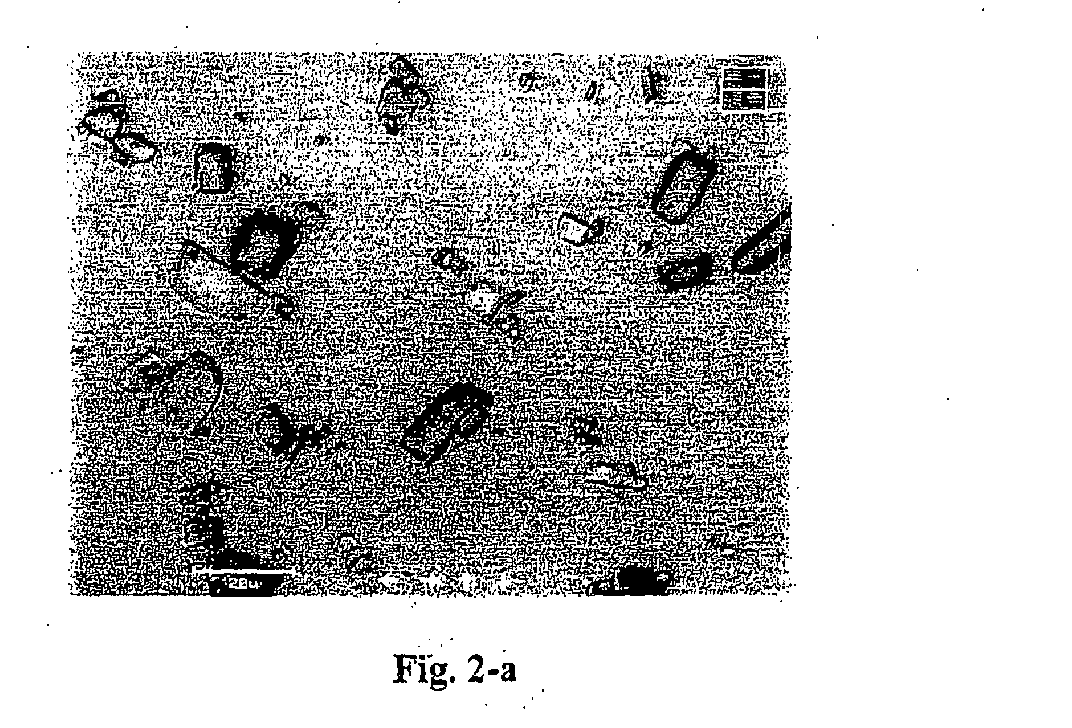
- aqueous suspension preparations were each sampled immediately after preparation of the suspensions and were observed for the conditions of the crystals through phase contrast microscopy or differential interference microscopy using a light microscope (BX50, manufactured by OLYMPUS Co., Ltd.). No growth of the suspended acyclovir crystals into needle crystals was observed in any of Preparations 1 through 24. In contrast, the formation of numerous needle crystals was observed immediately after preparation of the suspension in each of Preparations 25 through 32 (Comparative Examples), in which the fine crystals of acyclovir were first completely dissolved and later recrystallized through adjustment of pH. The state of the resultant crystals are shown in a differential interference micrograph or a phase contrast micrograph in Figs 2 through 5 for some of the representative Preparations.
- aqueous suspension preparations prepared in Examples/Comparative Examples above was evaluated in the following manner for the stability of the resultant crystals: Vials containing respective suspension preparations were stored in a thermostatic chamber at room temperature and at 40°C, respectively. The vials were taken out of the chamber at time intervals and were each time shaken by hands to make the suspension uniform. Any change that took place in the fine crystals of acyclovir in each preparation was then observed by a phase contrast light microscope and was rated. The ratings were given as follows:
- a double circle (o ⁇ ) indicates that the growth of fine crystals into needle crystals was not observed, nor was the aggregation of the crystals.
- a single circle ( ⁇ ) indicates that no needle crystals were found that have the ratio of the long axis to the short axis of more than 10:1, but the crystals aggregated to some degree.
- a triangle ( ⁇ ) indicates that formation of needle or plate crystals with the ratio of the long axis to the short axis of more than 10:1 was observed in some of the observed fields of view.
- a single cross ( ⁇ ) indicates that significant formation of needle or plate crystals with the ratio of the long axis to the short axis of more than 10:1 was observed in most of the observed fields of view.
- a double cross ( ⁇ ) indicates that substantially all of the crystals grew to needle crystals having a ratio of the long axis to the short axis of 10:1 or more.
- the degree of aggregation of the fine crystals of acyclovir was also rated as follows:
- a hollow square ( ⁇ ) indicates that significant aggregation of crystals was observed in most of the observed fields of view.
- a solid square ( ⁇ ) indicates that most of the crystals aggregated.
- aqueous suspension preparations prepared in Examples/Comparative Examples above were evaluated in the following manner for the stability of the preparation: Eyedrop vials containing respective suspension preparations were stored in a thermostatic chamber at room temperature and at 40°C, respectively. The vials were taken out of the chamber at time intervals and the pH of each preparation was measured each time. The results are shown in Table 4 for some of the representative preparations obtained in Examples and Comparative Examples above. pH of aqueous suspension preparations Prep. No pH after preparation 3 months at RT.
- each of the aqueous suspension preparations obtained in accordance with the method of the present invention has proven pharmaceutically stable.
- a significant decrease in pH was observed in the preparations of Comparative Examples (Preparations 25 and 30), indicating the lack of pharmaceutical stability.
- the amount and osmotic pressure of acyclovir contained in Preparations 1 to 17, each an aqueous suspension preparation of the present invention were also measured over time. No significant changes were observed in the amount or the osmotic pressure of the acyclovir during the observation period of the test. With all of the measurements taken of these factors falling within the permissive range, each of the preparations has proven stable.
- a double circle (o ⁇ ) indicates that the vial containing the preparation was inverted 10 times or less to redisperse the crystals.
- a single circle ( ⁇ ) indicates that the vial had to be inverted 10 to 20 times to redisperse the crystals.
- a triangle ( ⁇ ) indicates that the vial had to be inverted 20 to 30 times to redisperse the crystals.
- a cross ( ⁇ ) indicates that the vial had to be inverted 30 to 40 times to redisperse the crystals.
- a double cross ( ⁇ ) indicates that the vial had to be inverted over 40 times to redisperse the crystals.
- Preparations 2, 4, 8, 12, and 16 were examined for the migration of acyclovir to humor aqueous after application to eyes: 50 ⁇ L of each of the acyclovir-containing aqueous suspension preparations prepared in Examples were applied to eyes of 4 rabbits (New Zealand White rabbits, male, weighing 2.0kg to 3.0kg). After 1 hour, the animals were locally anesthetized with benoxyl and all of the humor aqueous was collected from each animal with a 26G needle.
- a standard solution was also prepared for each of the preparations applied to the rabbits. Using HPLC, the amount of acyclovir present in the humor aqueous was determined, as was the amount of acyclovir in the standard.
- the concentration of acyclovir in humor aqueous which is indicative of degree of migration of acyclovir to humor aqueous, was significantly higher than a value of approximately 0.03 ⁇ g/mL, the ID 50 (50% inhibition level) of acyclovir against herpes virus (Crumpaker, C. S. et al., Antimicrob. Agents Chemother., 15, 642 (1979)), for each of the aqueous suspension preparation.
- each preparation was determined to be effective as an ophthalmic preparation.
- the aqueous ophthalmic suspension preparation of the present invention which contains acyclovir, a hardly water-soluble antiviral agent, to serve as the active ingredient, is characterized in that it is formed by suspending a predetermined amount of fine crystals of acyclovir in an aqueous solution containing a partially saponified product of polyvinyl acetate and a nonionic surfactant. This process is carried out at a predetermined pH range so that the crystals remain undissolved in the solution. In this manner, an ophthalmic preparation can be obtained in the form of pharmaceutically stable aqueous suspension in which the growth of acyclovir crystals is substantially prevented without compromising the efficacy of the drug.
- This simple aqueous suspension of the present invention which contains a sufficient amount of acyclovir while being capable of remaining pharmaceutically stable for a prolonged time period, makes a significant contribution to the current state of field of medicine wherein no effective ophthalmic preparations for treating corneal herpes infection has ever existed.
Landscapes
- Health & Medical Sciences (AREA)
- Life Sciences & Earth Sciences (AREA)
- Veterinary Medicine (AREA)
- General Health & Medical Sciences (AREA)
- Public Health (AREA)
- Chemical & Material Sciences (AREA)
- Animal Behavior & Ethology (AREA)
- Pharmacology & Pharmacy (AREA)
- Medicinal Chemistry (AREA)
- Epidemiology (AREA)
- Ophthalmology & Optometry (AREA)
- Nuclear Medicine, Radiotherapy & Molecular Imaging (AREA)
- Organic Chemistry (AREA)
- General Chemical & Material Sciences (AREA)
- Chemical Kinetics & Catalysis (AREA)
- Virology (AREA)
- Oncology (AREA)
- Communicable Diseases (AREA)
- Engineering & Computer Science (AREA)
- Bioinformatics & Cheminformatics (AREA)
- Medicinal Preparation (AREA)
- Pharmaceuticals Containing Other Organic And Inorganic Compounds (AREA)
- Agricultural Chemicals And Associated Chemicals (AREA)
Abstract
An ophthalmic aqueous suspension preparation to serve as a
cure for corneal herpes infection contains 9-[(2-hydroxyethoxy)methyl]guanine
as an active ingredient and exhibits
an improved stability. Specifically, the ophthalmic aqueous
suspension preparation contains 0.2 to 5% by weight of 9-[(2-hydroxyethoxy)methyl]guanine
or a pharmaceutically acceptable
salt thereof, 0.05 to 1% by weight of a partially saponified
product of polyvinyl acetate, and 0.01 to 1% by weight of a
nonionic surfactant and has a pH of 6 to 8. Preferably, the fine
crystals have a short axis of 50µm or less and a long axis of
70µm or less in length and have a ratio of the long axis to the
short axis of 10:1 or less.
Description
The present invention relates to an ophthalmic aqueous
suspension preparation that contains as an active ingredient 9-[(2-hydroxyethoxy)methyl]guanine,
a hardly water-soluble
antiviral agent, or a pharmaceutically acceptable salt thereof.
The present invention also relates to a method for producing such
a preparation.
9-[(2-hydroxyethoxy)methyl]guanine, commonly known as
acyclovir (JAN; INN) (which may be referred to simply as
acyclovir, hereinafter), is an antiviral agent with a purine
skeleton that selectively acts against herpes viruses while
exhibiting little cytotoxicity against normal cells. It is one of
the most widely used clinical compounds for treating herpes
infections.
Acyclovir has a very low solubility in water: it can
dissolve in an acidic or basic aqueous solution but hardly
dissolve in an aqueous solution of near neutral pH. Though
acyclovir can dissolve to some extent in an aqueous solution
under acidic or basic condition, these solutions tend to be
unstable and readily form crystals. For this reason, it has been
difficult to develop stable aqueous acyclovir preparations that
can be stored for a long time. Thus, the only form of ophthalmic
acyclovir preparations currently in clinical use against corneal
herpes infection is ointment and no ophthalmic preparation has
ever been provided in the form of aqueous solution.
Several drawbacks exist for such ophthalmic acyclovir
ointments. Patients often have difficulty applying such an
ointment by themselves. Even if successfully applied, the
ointment impedes the vision of the patients immediately after
application and it usually takes several hours before they regain
normal vision. Thus, to respond to a need for ophthalmic
preparations that can be easily applied by patients, several
types of preparations have thus far been proposed.
For example, Japanese Patent Laid-Open Publication No. Hei
8-268892 describes an ophthalmic preparation provided in the form
of an aqueous solution in which polyvinylpyrrolidone is blended
with acyclovir. Also, an antiviral composition containing
acyclovir and a polyol is proposed in Japanese Patent Laid-Open
Publication No. Hei 9-143096. Each of these preparations, however,
requires the use of some solubilizer, such as polyvinylpyrrolidone
and polyol, in order to enhance solubility of
otherwise hardly water-insoluble acyclovir. Though effective to
some degree, these solubilizers must be added in limited amounts
and the dissolved acyclovir still shows some tendency to
crystallize. These preparations are therefore insufficient in
terms of the stability, especially when the preparations need to
be stored for a prolonged time.
Unlike the above-described ophthalmic preparations provided
in the form of aqueous solution, several ophthalmic preparations
have been provided in the form of suspension. For example, an
ophthalmic preparation described in Japanese Patent Laid-Open
Publication No. Hei 10-287552 is a sterile aqueous suspension of
acyclovir, which is prepared by suspending acyclovir in water,
heating and then filtering the suspension. A suspension disclosed
in Japanese Patent Laid-Open Publication No. Hei 11-228386 is
prepared by dissolving a hardly water-soluble active ingredient,
such as acyclovir, in an aqueous medium under basic condition,
and subsequently adding an acid to allow crystals to form, at
which time an ion-sensitive, hydrophilic polymer to serve as a
thickener is added to form a suspension. Another suspension
preparation disclosed in Japanese Patent Laid-Open Publication No.
2000-247887 is formed by first completely dissolving acyclovir in
aqueous medium at a pH of 2 or below in the presence of
hydrophilic polymer and subsequently adjusting the pH of the
solution to a value of 6 to 9 to allow acyclovir to crystallize,
thereby making the solution into a suspension.
The above-described preparations are each prepared in the
form of suspension in order to compensate for the low solubility
of acyclovir. In each case, acyclovir is first completely
dissolved in aqueous medium by heating or adjusting the pH and is
subsequently recrystallized to form crystals with the size
suitable for ophthalmic application.
None of these suspension preparations, however, have
succeeded in providing acyclovir crystals that remain stable when
suspended in aqueous medium: though the suspensions are effective
to some extent in that they can contain increased amounts of
acyclovir to serve as the active ingredient, it is only at the
time of the preparation of the suspension that the crystals of
hardly water-soluble acyclovir exist in a properly small size and
changes will eventually take place in the state of the crystals
over the course of a long-term storage period. Specifically, the
growth of the acyclovir crystals cannot be avoided in any of the
above-described preparations. Accordingly, these suspension
preparations are less than satisfactory for use as a
pharmaceutical preparation.
Despite the expectation that if successfully developed, a
simple anti-viral ophthalmic preparation containing acyclovir as
the active ingredient should serve as a highly effective cure for
the corneal herpes infection, no such preparation has ever been
put to practical use. Thus, a need exists for developing an
effective ophthalmic preparation that contains a sufficient
amount of acyclovir while maintaining stability required for
pharmaceutical products.
The study by the present inventors has revealed that it is
not only when a solution in which acyclovir has been dissolved is
cooled that the growth of crystals takes place, but also when the
hardly water-soluble compound is suspended in aqueous medium in
the form of fine crystals. When subjected to changes in
temperature or exposed to a dispersing agent present in the
suspension, the suspended crystals of acyclovir grow relatively
rapidly to form needle crystals or plate crystals that are
several tens to 100µm in length and have a ratio of the long axis
to the short axis of more than 10:1.
Since the growth of crystals is unfavorable in ophthalmic
aqueous suspension preparations, the present inventors have made
an effort to find a way to prevent this from taking place and to
thereby make a stable aqueous suspension preparation of acyclovir.
As a result, the present inventors have discovered that the
growth of crystals can be effectively prevented without losing
the bioavailability of acyclovir by suspending, rather than
dissolving, crystals of acyclovir in aqueous medium in the pH
range of 3 to 8 in the presence of both a partially saponified
product of polyvinyl acetate and a nonionic surfactant, and
subsequently adjusting the pH to a value of 6 to 8, the optimum
pH range for ophthalmic preparations. The present inventors have
found that in this manner, a pharmacologically stable ophthalmic
preparation can be obtained in the form of aqueous suspension.
This finding ultimately led the present inventors to devise the
present invention.
Accordingly, it is an objective of the present invention to
provide an aqueous suspension preparation for ophthalmic use that
contains as an active ingredient a therapeutically effective
amount of acyclovir and has a high stability required of a
pharmaceutical product. It is another objective of the present
invention to provide a method for producing such a stable
ophthalmic suspension preparation.
To this end, one aspect of the present invention provides a
method for producing an ophthalmic acyclovir preparation in the
form of a stable aqueous suspension. Specifically, the invention
of claim 1 is a method for producing an ophthalmic aqueous
suspension preparation comprising the steps of providing an
aqueous solution that has a pH of 3 to 8 and contains 0.05 to 1%
by weight of a partially saponified product of polyvinyl acetate
and 0.01 to 1% by weight of a nonionic surfactant, suspending
fine crystals of acyclovir or a pharmaceutically acceptable salt
thereof in the aqueous solution in an amount of 0.2 to 5% by
weight, and subsequently adjusting the pH of the suspension to a
value of 6 to 8.
The invention of claim 2 is a method for producing an
ophthalmic aqueous suspension preparation comprising the steps of
providing an aqueous solution that has a pH of 3 to 8 and
contains 0.05 to 1% by weight of a partially saponified product
of polyvinyl acetate, suspending fine crystals of acyclovir or a
pharmaceutically acceptable salt thereof in the aqueous solution
in an amount of 0.2 to 5% by weight, adjusting the pH of the
suspension to a value of 6 to 8, adding 0.01 to 1% by weight of a
nonionic surfactant, and subsequently stirring the suspension.
In essence, what is characteristic of the method of the
present invention is that fine crystals of acyclovir or a
pharmaceutically acceptable salt thereof are suspended, but not
completely dissolved, in aqueous medium in the presence of both a
partially saponified product of polyvinyl acetate and a nonionic
surfactant and in a predetermined pH range. In this manner, the
crystals of acyclovir or a pharmaceutical salt thereof can be
effectively prevented from growing and, as a result, an
ophthalmic preparation can be obtained in the form of a stable
aqueous suspension.
In this respect, the invention of claim 3 is the method in
accordance with claim 1 or 2, wherein the degree of
saponification of the partially saponified product of polyvinyl
acetate is in the range of 70 to 95mol%. The use of the partially
saponified polyvinyl acetate having a degree of saponification in
the specified range can help prevent the growth of the fine
crystals of acyclovir or a pharmaceutically acceptable salt in
the suspension.
The invention of claim 4 is the method in accordance with
claim 1 or 2, wherein the degree of polymerization of the
partially saponified product of polyvinyl acetate is in the range
from 300 to 2000. The use of the partially saponified polyvinyl
acetate having a degree of polymerization in the specified range
can more effectively help prevent the growth of the fine crystals
of acyclovir or a pharmaceutically acceptable salt in the
suspension.
The invention of claim 5 is the method in accordance with
claim 1 or 2, wherein the suspension further contains 0.01 to 1%
by weight of polyvinylpyrrolidone. The addition of polyvinylpyrrolidone
in the specified amount facilitates dispersion of
acyclovir or a pharmaceutically acceptable salt thereof to serve
as the active ingredient of the suspension preparation.
Another aspect of the present invention provides an
ophthalmic preparation containing acyclovir in the form of a
stable aqueous suspension. Specifically, the invention of claim 6
is an ophthalmic aqueous suspension preparation produced by one
of the above-described methods for producing an ophthalmic
aqueous suspension preparation.
Preferably, the fine crystals of acyclovir or a
pharmaceutically acceptable salt thereof suspended in the
ophthalmic aqueous suspension preparation of the present
invention have a particle size that allows acyclovir to exert
desired therapeutic effects but does not prevent the active
ingredient from migrating to humor aqueous.
The invention of claim 7 is the aqueous suspension
preparation in accordance with claim 6, wherein the fine crystals
of acyclovir or a pharmaceutically acceptable salt thereof
suspended in the preparation has a short axis of 50µm or less and
a long axis of 70µm or less in length. The ratio of the long axis
to the short axis is preferably 10:1 or less.
Ophthalmic preparation provided in the form of aqueous
suspension in accordance with the present invention will now be
described in further detail.
An active ingredient for use in the ophthalmic aqueous
suspension preparation of the present invention is acyclovir or a
pharmaceutically acceptable salt thereof. Examples of the
pharmaceutically acceptable salt of acyclovir include salts with
an inorganic acid, such as hydrochloric acid, sulfuric acid, and
phosphoric acid; salts with an organic acid, such as acetic acid,
lactic acid, citric acid, fumaric acid, maleic acid, and succinic
acid; and salts with an alkali metal or an alkali earth metal,
such as sodium, potassium, and calcium.
Hereinafter, the term "acyclovir" refers to acyclovir
itself and a pharmaceutically acceptable salt thereof. In other
words, the term is meant to encompass, in addition to free
acyclovir, any pharmaceutically acceptable salt of acyclovir.
Preferably, fine crystals of acyclovir to serve as the
active ingredient in the preparation of the present invention
have a particle size that allows the active ingredient to exert
desirable therapeutic effects without impeding the migration of
the suspended acyclovir crystals to humor aqueous since the
aqueous suspension preparation is intended for ophthalmic use.
For that purpose, fine crystals are preferred that are sized such
that the short axis and the long axis of the crystal each have a
length of 75µm or less and the ratio of the long axis to the
short axis is 10:1 or less. In particular, the fine crystals are
preferred that have a short axis length of 50µm or less and a
long axis length of 70µm or less and have a ratio of the long
axis to the short axis of 10:1 or less. Fine crystals having such
a particle size are stable over a prolonged time and can be used
in preparing a desired aqueous suspension.
The fine crystals of acyclovir are preferably contained in
the suspension in an amount of 0.2 to 5% by weight and more
preferably, in an amount of 0.5 to 3% by weight. The amount of
the fine crystals that is less than 0.2% by weight cannot provide
sufficient acyclovir in the preparation and may be too small an
amount to ensure the desired pharmacological effects. In contrast,
the fine crystals of hardly water-soluble acyclovir, when present
in an amount exceeding 5% by weight, tend to form aggregates in
the suspension. This can result in a decreased ability of the
suspension to prevent the growth of the crystals and, thus, in a
reduced stability of the final product of the suspension
preparation.
The partially saponified product of polyvinyl acetate for
use in the aqueous suspension preparation of the present
invention is a hydrophilic polymer obtained by polymerizing vinyl
acetate and then saponifying some of the acetyl groups present in
the polyvinyl acetate molecule. The compound may be referred to
as a partially saponified polyvinyl alcohol. In this case,
"polyvinyl alcohol" means a polyol in which most of the acetyl
groups present in the polyvinyl acetate have been substituted for
hydroxyl groups, and it turned out that, for the purpose of
preparing the aqueous suspension preparation of the present
invention, a partially saponified product of polyvinyl acetate
with a degree of saponification of 70 to 95mol% is preferred.
If the degree of saponification is lower than 70mol%, then
the desired effect of preventing the growth of crystals of
acyclovir may not be achieved by the addition of the partially
saponified product of polyvinyl acetate. Moreover, the polyvinyl
acetate product becomes susceptible to hydrolysis to generate
acetic acid. As a result, the stability of the final product of
the aqueous suspension preparation may be reduced. Conversely, if
the degree of saponification is higher than 95mol%, then the
other ingredients added to the ophthalmic preparation (e.g.,
boric acid and sodium borate) may cause the preparation to
undergo gelation.
The partially saponified product of polyvinyl acetate for
use in the present invention is typically added in an amount of
0.05 to 1% by weight and preferably, in an amount of 0.1 to 1% by
weight. The amount that is less than 0.05% by weight may result
in a decreased ability of the partially saponified product of
polyvinyl acetate to suppress the growth of crystals and is thus
unfavorable. On the other hand, the amount exceeding 1% by weight
may cause excessively high viscosity of the aqueous suspension
preparation. As a result, acyclovir to serve as the active
ingredient tends to form aggregates, resulting in a decreased
ability of the suspension preparation to suppress the growth of
crystals. Furthermore, the ease at which user can apply the
ophthalmic preparation is significantly affected.
The partially saponified product of polyvinyl acetate for
use in the present invention typically has a degree of
polymerization of 300 to 2000, preferably 300 to 1700, and more
preferably 300 to 1400. With the degree of polymerization of less
than 300, the partially saponified product may not provide
sufficient ability to prevent the growth of crystals. On the
other hand, the degree of polymerization of greater than 2000 may
result in an excessively high viscosity of the suspension
preparation. As a result, acyclovir may form aggregates, which in
turn may result in a decreased ability of the suspension
preparation to suppress the growth of crystals. Furthermore, the
ease at which user can apply the ophthalmic preparation is
significantly affected.
For typical partially saponified products of polyvinyl
acetate currently available in the marketplace, the degree of
polymerization (JIS K6726) is measured by the viscosity of a 4%
aqueous solution measured at 20°C. The partially saponified
product of polyvinyl acetate for use in the present invention
preferably has a degree of polymerization as measured the
viscosity of 3 to 60mPa·s and more preferably, 3 to 40mPa·s.
The aqueous suspension preparation of the present invention,
which can be prepared by suspending fine crystals of acyclovir to
serve as the active ingredient in aqueous medium, requires a
nonionic surfactant as a dispersing agent to facilitate the
dispersion of the fine crystals.
The nonionic surfactants for use in the present invention
may be those that are selected for its safety from conventional
nonionic surfactants used in pharmaceutical products. Examples
include polysorbates (polyoxyethylenesorbitan mono-fatty acid
esters), polyoxyethylene castor oil, polyoxyethylene hardened
castor oil, polyoxyl stearates, and polyoxyethylene
polyoxypropylene glycols.
In the present invention, the nonionic surfactants that
exhibit a relatively high hydrophilicity are preferred because of
their high ability to enhance the dispersion of acyclovir
crystals and in view of their use for ophthalmic application. For
example, those having an HLB (hydrophile-lipophile balance) of 10
or more, preferably 12 or more, are preferably used.
Examples of the nonionic surfactant include polysorbate 80,
polyoxyethylene hardened castor oil 40, polyoxyethylene hardened
castor oil 60, polyoxyl stearate 40, polyoxyethylene (160)
polyoxypropylene (30) glycol, and, polyoxyethylene (200)
polyoxypropylene (70) glycol. Of these, polysorbate 80 and
polyoxyethylene hardened castor oil 60 are particularly preferred
in view of their use for ophthalmic application.
The nonionic surfactant is typically added in an amount of
0.01 to 1% by weight and, preferably, in an amount of 0.05 to
0.5% by weight. If the amount of the nonionic surfactant is less
than 0.01% by weight, then acyclovir to serve as the active
ingredient may not be stably suspended, which may result in a
reduced stability of the final product of the suspension
preparation. In contrast, the nonionic surfactant, when added in
an amount exceeding 1% by weight, raises the concentration of the
surfactant in the preparation, causing the fine crystals of
acyclovir to form aggregates. As a result, the stability of the
dispersion may be decreased.
In essence, the aqueous suspension preparation of the
present invention comprises fine crystals of acyclovir, the
active ingredient, suspended in an aqueous solution that contains
the partially saponified product of polyvinyl acetate and the
nonionic surfactant. Thus, should the fine crystals of acyclovir
to serve as the active ingredient be precipitated, the
preparation may be lightly shaken upon use to redisperse the
acyclovir crystals. It has been found that the fine crystals of
acyclovir, if precipitated, do not affect the quality of the
product.
However, the suspension preparation in accordance with the
present invention further incorporates polyvinylpyrrolidone as a
means to facilitate redispersion of the precipitated fine
crystals of acyclovir to serve as the active ingredient.
Polyvinylpyrrolidone to be added to enhance the redispersion of
acyclovir crystals may be selected from those that are commonly
in use in pharmaceutical applications and may have a molecular
weight of about 20000 to about 50000.
Polyvinylpyrrolidone is typically added to the suspension
preparation in an amount of 0.01 to 1% by weight and, preferably,
in an amount of 0.1 to 1% by weight. If the amount is less than
0.01% by weight, then the desired effect of enhancing re-dispersal
of the fine crystals of acyclovir may not be achieved
by the addition of polyvinylpyrrolidone. Conversely, the amount
exceeding 1% by weight may cause excessively high viscosity of
the final product of the suspension preparation. As a result,
acyclovir may form aggregates, resulting in a decreased ability
of the suspension preparation to suppress the growth of crystals.
Too much polyvinylpyrrolidone also impedes the redispersion of
the acyclovir crystals.
While the generally accepted pH range of aqueous ophthalmic
preparations that does not cause eye irritation is from 4.8 to
8.5, the purpose of adjusting the pH of ophthalmic preparation is
mainly to ensure the stability of the drug preparations and to
enhance the efficacy of the drug, rather than to reduce eye
irritation (Guidelines for Drug Formulation, 10th ed., Japan
Pharmaceutical Association ed.,).
In the aqueous suspension preparation of the present
invention, it is also preferred to adjust the pH to a near
neutral range acceptable for ophthalmic preparations.
Specifically, the pH of the aqueous suspension preparation of the
present invention is preferably adjusted to a range of 6 to 8 in
consideration of the stability of the fine crystals of acyclovir
to serve as the active ingredient.
If the suspension preparation has a pH of below 6 or above
8, the solubility of the fine crystals of acyclovir to serve as
the active ingredient is subject to change, so that the growth of
crystals is more likely to occur. Furthermore, the partially
saponified product of polyvinyl acetate contained in the
preparation becomes less stable, as does the nonionic surfactant.
As a result, the stability of the suspension preparation may be
reduced.
As long as the stability of the pH is ensured, the aqueous
suspension preparation of the present invention may further
contain various other components that are commonly used in
ophthalmic preparations, including an isotonizing agent, a buffer,
a preservative, and a pH adjuster.
Examples of the isotonizing agent include water-soluble
polyols, such as glycerol, propylene glycol, sorbitol and
mannitol; and electrolytes, such as sodium chloride and potassium
chloride. Of these, glycerol is particularly preferred.
Aside from boric acid and a mixed system of boric
acid/sodium borate (sodium tetraborate) that are widely used in
ophthalmic preparations, examples of the buffer include a mixed
system of sodium dihydrogenphosphate/disodium hydrogenphosphate,
and a mixed system of potassium dihydrogenphosphate/disodium
hydrogenphosphate.
Other acids or alkalis other than the aforementioned boric
acid (or a salt thereof) and phosphoric acid (or a salt thereof),
such as hydrochloric acid and sodium hydroxide, may also be used
to serve as the pH adjuster.
Examples of the preservative include quaternary ammonium
salts such as benzalkonium chloride and benzethonium chloride,
chlorhexidine gluconate, alkyldiaminoethylglycine hydrochloride,
parabens such as methyl p-hydroxybenzoate and propyl p-hydroxybenzoate,
and chlorobutanol. One or more of these
compounds are properly selected for use. The amount of the
preservative to be added is from about 0.003 to 0.02% by weight
for quaternary ammonium salt, from about 0.05 to 0.1% by weight
for paraben, and from about 0.25 to 0.5% by weight for
chlorobutanol.
A specific method for producing the aqueous suspension
preparation of the present invention will now be described.
In producing the aqueous suspension preparation of the
present invention, fine crystals of acyclovir, a hardly water-soluble
antiviral agent, are suspended and dispersed, at a
specific pH range, in a solution that contains a predetermined
amount of a partially saponified product of polyvinyl acetate
along with a predetermined amount of a nonionic surfactant. The
fine crystals of acyclovir are suspended in the solution without
being completely dissolved. In this manner, a stable ophthalmic
suspension preparation containing acyclovir can be obtained.
As long as this method is applied, other conditions are not
limited. However, the following two-step method is preferably
used to produce a stable aqueous suspension preparation
containing fine crystals of acyclovir.
The first step of the preferred method for producing
aqueous ophthalmic suspension preparation of the present
invention comprises suspending fine crystals of acyclovir in a
solution that contains the partially saponified product of
polyvinyl acetate and has a pH in the range of 3 to 8, preferably
in the range of 4 to 7.5.
If the solution has a pH of below 3, the solubility of the
fine crystals of acyclovir in water increases. Thus, when the pH
is later adjusted to a near neutral range, the solubility of
acyclovir drops significantly, so that the fine crystals of
acyclovir become more likely to grow into a needle shape during
the pH adjustment. As a result, the stability of the crystals in
the final product of the aqueous suspension preparation may be
undesirably decreased.
Similarly, if the solution has a basic pH of above 8, the
solubility of the fine crystals of acyclovir in water increases.
Thus, when the pH is later adjusted to a near neutral range, the
solubility of acyclovir drops significantly, so that the fine
crystals of acyclovir become more likely to grow into a needle
shape during the pH adjustment. Moreover, the acetyl groups
present in the partially saponified product of polyvinyl acetate
become susceptible to saponification. Thus, again, the stability
of the crystals in the final product of the aqueous suspension
preparation may be undesirably decreased.
In the first step of suspending the fine crystals of
acyclovir, the size of the fine crystals is reduced to 40µm or
less, preferably to 30µm or less, when acyclovir having 75µm or
more of crystal size is used for the preparation. In this manner,
the resulting suspension preparation can be made more suitable
for ophthalmic application. Conditions for stirring for
suspending acyclovir in the solution are properly selected
depending on the particle size of acyclovir used.
The second step of the method of the present invention
comprises re-adjusting the pH of the suspension prepared in the
first step to a pH range of 6 to 8, preferably to a pH range of
6.5 to 7.5, adding the nonionic surfactant and, if necessary,
polyvinylpyrrolidone, and further stirring the suspension. In
this manner, the final product of aqueous suspension preparation
is obtained.
If the final product of the suspension preparation has a pH
of below 6 or above 8, then the desired effect of suppressing the
growth of crystals by the partially saponified product of
polyvinyl acetate may not be obtained and the growth of the fine
crystals of acyclovir may take place. Also, the preparation with
such a pH can cause eye irritation upon application.
In the above-described method of producing the aqueous
suspension preparation of the present invention, the nonionic
surfactant and optional polyvinylpyrrolidone may be added during
the second step unless the desired stability of the aqueous
suspension preparation is affected. Alternatively, they may be
added, together with the partially saponified product of
polyvinyl acetate, during the first step.
To ensure the pH stability of the final product of the
aqueous suspension preparation in the method of the present
invention, it is preferred to use an acid such as boric acid or
sodium dihydrogenphosphate to prepare the solution with a pH of 3
to 8 used in the first step in which to suspend the fine crystals
of acyclovir. When it is desired to adjust the pH of the
suspension to an acidic pH in the first step and then adjust the
pH to 6 to 8 in the second step, a base commonly used in
adjusting the pH of ophthalmic preparations may suitably be used.
By taking into account the pH stability of the final product of
the aqueous suspension preparation, it is desirable to use sodium
hydroxide or sodium borate, as well as disodium hydrogenphosphate,
which can be used in combination with the aforementioned sodium
dihydrogenphosphate to impart a buffering property to the aqueous
suspension preparation.
Alternatively, a buffer solution, such as a phosphate
buffer and a borate buffer, that has had its pH preadjusted by
combining the above-described acid and base may be used in the
first step.
In the method for producing the aqueous suspension
preparation of the present invention, the additional components
such as the preservative and the isotonizing agent may be added
in a proper manner in either of the first and the second steps.
For example, when it is desired to use the preservative,
the amount of the component is adjusted depending on the property
of the selected preservative. Also, when it is desired to use the
isotonizing agent, the amount of the component is adjusted so
that the final preparation has an osmotic pressure of 250mOsm to
400mOsm with the total osmotic pressure brought about by the
other components taken into account.
The aqueous suspension preparation obtained by the method
of the present invention, which is designed for ophthalmic
application, needs to be presterilized. This is done by using a
proper technique selected from those that are generally
applicable to sterilization of pharmaceutical products.
Specifically, since the aqueous suspension preparation of the
present invention is provided in the form of suspension in which
acyclovir to serve as the active ingredient has been suspended,
the final preparation cannot be sterilized by heating or
filtration. For this reason, it is desirable to independently
sterilize the fine crystals of acyclovir and other components by
proper techniques prior to preparation of the suspension.
In the event that heat is generated during the
stirring/dispersing step from a stirrer/disperser used in the
first or the second step, it is desirable to implement the
process while properly cooling these instruments. Such
stirring/dispersing instruments may be properly selected from
those that are generally used in pharmaceutical application,
including disperser, homomixer, and homogenizer. Of these, those
instruments that can efficiently reduce the size of the solid
(crystal) suspended in the solution to a desired crystal size are
particularly preferred. Specific examples include rotary
homogenizers, such as Clearmix (manufactured by Cleartech Co.,
Ltd.), wet type jet mills, and high-pressure jet stream
emulsifiers.
As set forth, according to the method for producing an
aqueous suspension preparation of the present invention, a highly
stable aqueous suspension preparation in which the growth of fine
crystals of acyclovir to serve as the active ingredient is
significantly suppressed can be obtained by first suspending fine
crystals of acyclovir in an aqueous solution that has a pH
ranging from acidic to neutral and contains a partially
saponified product of polyvinyl acetate and a nonionic
surfactant; and subsequently adjusting the pH of the suspension
to a pH of 6 to 8, at which acyclovir exhibits minimum solubility
in water and which is close to the pH of lacrimal fluid.
The aqueous suspension preparation prepared by the method
of the present invention has an advantage that, in the event that
the suspended fine crystals of acyclovir are precipitated during
storage, the crystals can be readily resuspended by applying a
light shake and, thus, the need to increase the viscosity of the
preparation for the purpose of maintaining the stability of the
preparation has been eliminated. Accordingly, the aqueous
suspension preparation of the present invention can be applied
just in the same manner as other common ophthalmic preparations
without causing unpleasant feelings to eyes.
The present invention will now be described in detail with
reference to Examples, which are not intended to limit the scope
of the invention in any way.
Different aqueous suspension preparations containing
acyclovir (Examples/Comparative Examples) were prepared according
to the formulations shown in Tables 1-1 through 1-5.
| Compositions of aqueous suspension preparations (w/v%) | ||||||||
| Preparation No. | Examples | |||||||
| Prep. 1 | Prep. 2 | Prep. 3 | Prep. 4 | Prep. 5 | Prep. 6 | Prep. 7 | Prep. 8 | |
| Acyclovir | 1.0 | 1.0 | 1.0 | 2.0 | 2.0 | 2.0 | 3.0 | 3.0 |
| [Partially saponified product of polyvinyl acetate] GOHSENOL GL-05 | 0.2 | 0.2 | - | - | - | - | 0.5 | 0.5 |
| GOHSENOL GM-14 | - | - | 0.1 | 0.5 | 0.5 | - | - | - |
| GOHSENOL GH-20 | - | - | - | - | - | 0.2 | - | - |
| [Disperser] Polyvinylpyrrolidone K-25 | - | 0.25 | - | - | 0.5 | - | - | 0.5 |
| [Nonioic surfactant] polysorbate 80 | 0.1 | 0.1 | - | 0.3 | 0.3 | - | 0.5 | 0.5 |
| polyoxyethylene hardened castor oil 60 | - | - | 0.1 | - | - | 0.3 | - | - |
| [Buffer] | 50mM phosphate buffer | |||||||
| [Isotonizing agent] | Glycerol | |||||||
| [Preservative] | Methylparaben/propylparaben | |||||||
| pH measured immediately after preparation | 6.47 | 6.40 | 6.51 | 6.42 | 6.38 | 6.46 | 6.35 | 6.32 |
| Osmotic pressure (mOsm) | 291 | 305 | 288 | 299 | 301 | 292 | 297 | 309 |
| Compositions of aqueous suspension preparations (w/v%) | ||||||||
| Preparation No. | Examples | |||||||
| Prep. 9 | Prep. 10 | Prep. 11 | Prep. 12 | Prep. 13 | Prep. 14 | Prep. 15 | Prep. 16 | |
| Acyclovir | 3.0 | 3.0 | 3.0 | 3.0 | 3.0 | 3.0 | 3.0 | 3.0 |
| [Partially saponified product of polyvinyl acetate] GOHSENOL KP-06 | 0.5 | - | - | - | - | - | - | - |
| GOHSENOL KL-05 | - | 0.5 | - | - | - | - | - | - |
| GOHSENOL KH-17 | - | - | 0.5 | - | - | - | - | - |
| GOHSENOL EG-05 | - | - | - | 0.5 | 1.0 | - | - | 1.0 |
| GOHSENOL EG-25 | - | - | - | - | - | 0.5 | - | - |
| GOHSENOL GL-05 | - | - | - | - | - | - | 0.5 | - |
| [pH adjuster 1] | 50mM aqueous solution of sodium dihydrogenphosphate | |||||||
| pH upon suspending | 4.0 | 4.0 | 4.2 | 4.1 | 4.2 | 4.0 | 4.2 | 4.2 |
| [pH adjuster 2] | 1N aqueous solution of sodium hydroxide | |||||||
| [Nonioic surfactant] Polysorbate 80 | 0.3 | 0.3 | 0.3 | 0.3 | 0.3 | 0.3 | 0.3 | 0.3 |
| [Isotonizing agent] | Glycerol | |||||||
| [Preservative] | Benzalkonium chloride | |||||||
| pH measured immediately after preparation | 6.72 | 6.92 | 7.22 | 6.85 | 6.97 | 6.67 | 6.82 | 7.36 |
| Osmotic pressure (mOsm) | 307 | 313 | 313 | 305 | 317 | 308 | 311 | 321 |
| Compositions of aqueous suspension preparations (w/v%) | ||||||||
| Preparation No. | Ex. | Comparative Examples | ||||||
| Prep. 17 | Prep. 18 | Prep. 19 | Prep. 20 | Prep. 21 | Prep. 22 | Prep. 23 | Prep. 24 | |
| Acyclovir | 2.0 | 2.0 | 2.0 | 2.0 | 2.0 | 2.0 | 2.0 | 2.0 |
| [Hydrophilic polymer] GOHSENOL GL-05 | 0.5 | - | - | - | - | - | - | - |
| GOHSENOL NH-26 | - | 0.5 | - | - | - | - | - | - |
| Hydroxypropyl methylcellulose | - | - | 0.3 | - | - | - | - | - |
| Polyvinyl pyrrolidone K-25 | - | - | - | -0.5 | 2.0 | - | - | - |
| Polyethyleneglycol 4000 | - | - | - | - | - | 1.0 | - | - |
| Carboxyvinylpolymer (Carbopole 941) | - | - | - | - | - | - | 0.03 | - |
| Carboxyvinylpolymer (Carbopole 971P) | - | - | - | - | - | - | - | 0.03 |
| [Nonionic surfactant] Polysorbate 80 | 0.3 | 0.3 | 0.3 | 0.3 | 0.3 | 0.3 | 0.3 | 0.3 |
| [Buffer/pH adjuster] | 50mM phosphate buffer | 50mM phosphate buffer | ||||||
| [Isotonizing agent] | Glycerol | |||||||
| [Preservative] | methylparaben/propylparaben | |||||||
| pH measured immediately after preparation | 6.96 | 6.93 | 6.97 | 6.97 | 6.88 | 6.92 | 6.71 | 6.76 |
| Osmotic pressure (mOsm) | 313 | 304 | 314 | 302 | 318 | 300 | 294 | 291 |
| Compositions of aqueous suspension preparations (w/v%) | ||||||||
| Preparation No | Comparative Examples | |||||||
| . | Prep. 25 | Prep. 26 | Prep. 27 | Prep. 28 | Prep. 29 | Prep. 30 | Prep. 31 | Prep. 32 |
| Acyclovir | 2.0 | 2.0 | 2.0 | 2.0 | 2.0 | 2.0 | 2.0 | 2.0 |
| [Hydrophilic polymer] GOHSENOL GL-05 | 0.5 | - | - | - | - | - | - | - |
| GOHSENOL NL-05 | - | 0.5 | - | - | - | 0.5 | - | - |
| Carboxyvinylpolymer (Carbopole 941) | - | - | 0.03 | - | - | - | 0.03 | - |
| Carboxyvinylpolymer (carbopole 971P) | - | - | - | 0.03 | - | - | - | 0.03 |
| [pH adjuster 1] | 1N hydrochloric acid | 1N aqueous solution of sodium hydroxide | ||||||
| pH upon dissolving | 1.33 | 1.36 | 1.68 | 1.62 | 10.78 | 10.82 | 10.82 | 10.84 |
| [pH adjuster 2] | 1N aqueous solution of sodium hydroxide | 1N hydrochloric acid | ||||||
| [Nonioic surfactant] Polysorbate 8011) | 0.3 | 0.3 | 0.3 | 0.3 | 0.3 | 0.3 | 0.3 | 0.3 |
| [Isotonizing agent] | Glycerol | |||||||
| [Preservative] | Benzalkonium chloride | |||||||
| pH measured immediately after preparation | 6.98 | 6.96 | 7.01 | 6.98 | 7.02 | 7.02 | 6.94 | 6.96 |
| Osmotic pressure (mOsm) | 298 | 297 | 292 | 290 | 293 | 291 | 297 | 298 |
| Compositions of aqueous suspension preparations (w/v%) | ||||||||
| Preparation No. | Comparative Examples | |||||||
| Prep. 33 | Prep. 34 | Prep. 35 | Prep. 36 | Prep. 37 | Prep. 38 | Prep. 39 | Prep. 40 | |
| Acyclovir | 2.0 | 2.0 | 10.0 | 0.2 | 3.0 | 3.0 | 2.0 | 2.0 |
| [Hydrophilic polymer] GOHSENOL GL-05 | 0.02 | 5.0 | 1.0 | - | - | - | - | 0.5 |
| [Nonionic surfactant] Polysorbate 80 | 0.3 | 0.3 | 0.3 | 0.3 | 0.3 | 1.5 | - | - |
| [Buffer/pH adjuster] | 50mM phosphate buffer | |||||||
| [Isotonizing agent] | Glycerol | |||||||
| [Preservative] | methylparaben/propylparaben | |||||||
| pH measured immediately after preparation | 6.94 | 6.92 | 6.96 | 6.99 | 6.94 | 6.95 | 7.02 | 6.96 |
| Osmotic pressure (mOsm) | 302 | - | 313 | 305 | 314 | 309 | 300 | 305 |
The following ingredients were used:
USP grade, sterilized acyclovir was used as fine crystals
of acyclovir without any processing. Through laser diffraction
particle size distribution analysis, the crystals were determined
to have an average particle size of 25.9µm. The observation with
a microscope revealed that no needle crystals were present that
had a ratio of the long axis to the short axis of more than 10:1.
A phase contrast micrograph of the fine crystals of
acyclovir used is shown in Fig. 1.
The degree of saponification, the degree of polymerization,
and the viscosity (4% aqueous solution, 20°C) were shown in Table
2 below for each of the partially saponified products of vinyl
acetate used to prepare the suspension preparations.
| Degree of saponification and degree of polymerization of partially or completely saponified products of polyvinyl acetate. | ||||
| Partially saponified products of polyvinyl acetate | Degree of saponification (mol%) | Degree of polymerization | Viscosity (mPa·s) | |
| GOHSENOL GL-05 | NIPPON SYNTHETIC CHEMICAL INDUSTRY CO., LTD. | 87.8 | 500 | 5.4 |
| GOHSENOL GM-14 | 87.7 | 1400 | 22.0 | |
| GOHSENOL GH-20 | 86.7 | 2000 | 42.0 | |
| GOHSENOL KP-06 | 72.4 | 600 | 6.5 | |
| GOHSENOL KL-05 | 79.9 | 500 | 4.4 | |
| GOHSENOL KH-17 | 79.3 | 1700 | 34.8 | |
| GOHSENOL EG-05 | 87.6 | 500 | 5.7 | |
| GOHSENOL EG-25 | 88.2 | 1400 | 22.5 | |
| GOHSENOL NL-05 | 99.1 | 500 | 5.0 | |
| GOHSENOL NH-26 | 99.4 | 2600 | 65.4 |
Additional two suspension preparations were prepared to
serve as Comparative Examples: one containing a different
hydrophilic polymer rather than the partially saponified product
of polyvinyl acetate and one containing neither the partially
saponified product of polyvinyl acetate nor hydrophilic polymer
were prepared.
Each of the partially saponified products of polyvinyl
acetate was measured by the amount of dehydrated solid component.
Polysorbate 80 (which meets the standard set by the
Pharmacopoea of Japan) or polyoxyethylene hardened castor oil 60
(which meets the Standard for the Pharmaceutical Additives) was
used to serve as the nonionic surfactant. For comparison, a
suspension preparation that did not contain the surfactant was
also prepared to serve as Comparative Example.
Other ingredients, namely, buffer, pH adjuster, isotonizing
agent and preservative, were as shown in Table 1.
Each of the aqueous suspension preparations was prepared by
using Clearmix CLM-0.8S (Product name: Manufactured by CREATECH
Co., Ltd.), a rotary homogenizer.
Specifically, the suspension preparations were prepared
according to the following two methods.
For example, each of Preparations 1 through 8 was prepared
in the following manner: First, to a 50mM phosphate buffer
solution (pH 6.5) containing an effective amount of the
preservative, one of the partially saponified products of
polyvinyl acetate and the nonionic surfactant shown in Table 1-1
were added (in Preparations 2, 5, and 8, polyvinylpyrrolidone was
further added). After the added ingredients were completely
dissolved, the fine crystals of acyclovir were added and the
mixture was isotonized with glycerol. Subsequently, the mixture
was stirred for 10 minutes at 10,000rpm while being cooled with
water to suspend acyclovir crystals and to thereby give an
aqueous suspension preparation.
For example, each of Preparations 9 through 16 was prepared
in the following manner: To a 50mM aqueous solution of sodium
dihydrogenphosphate containing an effective amount of the
preservative, one of the partially saponified products of
polyvinyl acetate shown in Table 1-2 was added. After completely
dissolving the added ingredients, the fine crystals of acyclovir
were added and the mixture was stirred for 5 minutes at 10,000rpm
while being cooled with water to suspend the acyclovir crystals.
The pH of the suspension at this point was determined to be 4.0
to 4.2. Using a 1N aqueous solution of sodium hydroxide, the pH
of the suspension was then adjusted to 6.5 to 7.5. Subsequently,
the nonionic surfactant shown in Table 1-2 was added and the
suspension was isotonized with glycerol. This was followed by
stirring for 5 minutes at 10,000rpm while the suspension was
cooled with water. This gave an aqueous suspension preparation.
The two methods were properly modified to prepare the
different aqueous suspension preparations that are formulated
according to the compositions shown in Tables 1-1 through 1-5
above (Examples/Comparative Examples). The pH and the osmotic
pressure of each of the aqueous suspension preparations were
measured immediately after preparation of the suspension and are
shown in respective Tables.
The osmotic pressure was measured using Advanced Osmometer
Model 3D3 (manufactured by ADVANCED INTRUMENTS Co., Ltd.).
5ml aliquots were collected from each of the aqueous
suspension preparations prepared above and were individually
placed in a 5ml 3-pieced polyethylene eye drop bottle for testing.
The aqueous suspension preparations were each sampled
immediately after preparation of the suspensions and were
observed for the conditions of the crystals through phase
contrast microscopy or differential interference microscopy using
a light microscope (BX50, manufactured by OLYMPUS Co., Ltd.). No
growth of the suspended acyclovir crystals into needle crystals
was observed in any of Preparations 1 through 24. In contrast,
the formation of numerous needle crystals was observed
immediately after preparation of the suspension in each of
Preparations 25 through 32 (Comparative Examples), in which the
fine crystals of acyclovir were first completely dissolved and
later recrystallized through adjustment of pH. The state of the
resultant crystals are shown in a differential interference
micrograph or a phase contrast micrograph in Figs 2 through 5 for
some of the representative Preparations.
Each of the aqueous suspension preparations prepared in
Examples/Comparative Examples above was evaluated in the
following manner for the stability of the resultant crystals:
Vials containing respective suspension preparations were stored
in a thermostatic chamber at room temperature and at 40°C,
respectively. The vials were taken out of the chamber at time
intervals and were each time shaken by hands to make the
suspension uniform. Any change that took place in the fine
crystals of acyclovir in each preparation was then observed by a
phase contrast light microscope and was rated. The ratings were
given as follows:
Each sample was observed in 20 fields of view and were
rated as follows:
A double circle (o ○) indicates that the growth of fine
crystals into needle crystals was not observed, nor was the
aggregation of the crystals.
A single circle (○) indicates that no needle crystals were
found that have the ratio of the long axis to the short axis of
more than 10:1, but the crystals aggregated to some degree.
A triangle (Δ) indicates that formation of needle or plate
crystals with the ratio of the long axis to the short axis of
more than 10:1 was observed in some of the observed fields of
view.
A single cross (×) indicates that significant formation of
needle or plate crystals with the ratio of the long axis to the
short axis of more than 10:1 was observed in most of the observed
fields of view.
A double cross (××) indicates that substantially all of
the crystals grew to needle crystals having a ratio of the long
axis to the short axis of 10:1 or more.
The degree of aggregation of the fine crystals of acyclovir
was also rated as follows:
A hollow square (□) indicates that significant aggregation
of crystals was observed in most of the observed fields of view.
A solid square (▪) indicates that most of the crystals
aggregated.
The lengths of the short axis and the long axis of the fine
crystals of acyclovir were measured by processing micrographs of
the crystals with an image processor (Model VM-30, manufactured
by OLYMPUS Co., Ltd.). The results are summarized in Table 3
below.
| Changes in the state of fine crystals of acyclovir in aqueous suspension preparation | ||||||
| Prep. No | Changes in the state of crystals | |||||
| Room | temperature | 40°C | ||||
| 1 month | 3 month | 6 month | 1 month | 3 month | 6 month | |
| 1 | o ○ | o ○ | o ○ | o ○ | o ○ | o ○ |
| 2 | o ○ | o ○ | o ○ | o ○ | o ○ | o ○ |
| 3 | o ○ | o ○ | o ○ | o ○ | o ○ | ○ |
| 4 | o ○ | o ○ | ○ | o ○ | o ○ | ○ |
| 5 | o ○ | o ○ | o ○ | o ○ | o ○ | ○ |
| 6 | o ○ | o ○ | ○ | o ○ | ○ | □ |
| 7 | o ○ | o ○ | o ○ | o ○ | o ○ | o ○ |
| 8 | o ○ | o ○ | o ○ | o ○ | o ○ | o ○ |
| 9 | o ○ | o ○ | o ○ | o ○ | o ○ | o ○ |
| 10 | o ○ | o ○ | o ○ | o ○ | o ○ | o ○ |
| 11 | o ○ | o ○ | ○ | o ○ | o ○ | ○ |
| 12 | o ○ | o ○ | o ○ | o ○ | o ○ | o ○ |
| 13 | o ○ | o ○ | o ○ | o ○ | o ○ | o ○ |
| 14 | o ○ | o ○ | o ○ | o ○ | o ○ | ○ |
| 15 | o ○ | o ○ | o ○ | o ○ | o ○ | o ○ |
| 16 | o ○ | o ○ | o ○ | o ○ | o ○ | o ○ |
| 17 | o ○ | o ○ | o ○ | o ○ | o ○ | o ○ |
| 18 | o ○ | ○ | Δ | o ○ | Δ | □ |
| 19 | ○ | Δ | Δ | ○ | Δ | Δ |
| 20 | o ○ | ○ | Δ | o ○ | ○ | Δ |
| 21 | ○ | Δ | □ | ○ | Δ | □ |
| 22 | Δ | Δ□ | ×▪ | Δ | ×▪ | ×▪ |
| 23 | × | ××□ | ××□ | ××□ | ××□ | ××□ |
| 24 | × | ××□ | ××□ | ××□ | ××□ | ××□ |
| 25 | ××□ | ××□ | ××□ | ××□ | ××□ | ××□ |
| 26 | ××□ | ××□ | ××□ | ××□ | ××□ | ××□ |
| 27 | ××□ | ××□ | ××□ | ××□ | ××□ | ××▪ |
| 28 | ××□ | ××□ | ××□ | ××□ | ××□ | ××▪ |
| 29 | ××□ | ××□ | ××□ | ××□ | ××□ | ××□ |
| 30 | ××□ | ××□ | ××□ | ××□ | ××□ | ××□ |
| 31 | ××□ | ××□ | ××□ | ××□ | ××□ | ××▪ |
| 32 | ××□ | ××□ | ××□ | ××□ | ××□ | ××▪ |
| 33 | Δ | × | × | Δ | × | × |
| 34 | ○ | □ | ▪ | ○ | ▪ | Δ▪ |
| 35 | Δ | Δ□ | Δ□ | Δ | Δ□ | ×□ |
| 36 | × | × | × | × | × | × |
| 37 | Δ | × | × | Δ | × | × |
| 38 | Δ | ×□ | ×□ | Δ | ×□ | ×□ |
| 39 | Δ | × | × | Δ | × | × |
| 40 | o ○ | ○ | Δ | ○ | Δ | Δ |
As can be seen from the results of Table 3, fine crystals
of acyclovir remained stable over time in the aqueous suspension
preparations produced in accordance with the method of the
present invention and the state of fine crystals present
immediately after preparation of the suspension was maintained.
Each of the aqueous suspension preparations prepared in
Examples/Comparative Examples above was evaluated in the
following manner for the stability of the preparation: Eyedrop
vials containing respective suspension preparations were stored
in a thermostatic chamber at room temperature and at 40°C,
respectively. The vials were taken out of the chamber at time
intervals and the pH of each preparation was measured each time.
The results are shown in Table 4 for some of the representative
preparations obtained in Examples and Comparative Examples above.
| pH of aqueous suspension preparations | |||
| Prep. No | pH | ||
| after preparation | 3 months at RT. | 3 months at 40°C | |
| 1 | 6.47 | 6.32 | 6.12 |
| 2 | 6.40 | 6.14 | 5.97 |
| 3 | 6.51 | 6.28 | 6.18 |
| 4 | 6.42 | 6.23 | 6.06 |
| 5 | 6.38 | 6.19 | 6.01 |
| 6 | 6.46 | 6.07 | 5.98 |
| 7 | 6.35 | 6.11 | 5.94 |
| 8 | 6.32 | 5.97 | 5.70 |
| 9 | 6.72 | 6.68 | 6.36 |
| 10 | 6.92 | 6.66 | 6.48 |
| 11 | 7.22 | 7.04 | 6.91 |
| 12 | 6.85 | 6.55 | 6.51 |
| 13 | 6.97 | 6.51 | 6.49 |
| 14 | 6.67 | 6.65 | 6.57 |
| 15 | 6.82 | 6.57 | 6.52 |
| 16 | 7.36 | 7.26 | 7.09 |
| 17 | 6.96 | 6.81 | 6.67 |
| 25 | 6.98 | 5.47 | 3.24 |
| 30 | 7.02 | 5.23 | 3.03 |
As can be seen from the results of Table 4, each of the
aqueous suspension preparations obtained in accordance with the
method of the present invention has proven pharmaceutically
stable. In contrast, a significant decrease in pH was observed in
the preparations of Comparative Examples (Preparations 25 and 30),
indicating the lack of pharmaceutical stability. The amount and
osmotic pressure of acyclovir contained in Preparations 1 to 17,
each an aqueous suspension preparation of the present invention,
were also measured over time. No significant changes were
observed in the amount or the osmotic pressure of the acyclovir
during the observation period of the test. With all of the
measurements taken of these factors falling within the permissive
range, each of the preparations has proven stable.
Of the different aqueous suspension preparations prepared
in Examples above, Preparations 1, 2, Preparations 4, 5, and
Preparations 7, 8, and 17 were examined for the redispersibility
of the precipitated fine crystals of acyclovir: Vials containing
respective suspension preparations were stored at room
temperature and were inverted multiple times at time intervals to
disperse the fine crystals uniformly. The number of times that a
vial had to be inverted before the crystals become uniform was
determined. The ratings were given as follows:
A double circle (o ○) indicates that the vial containing the
preparation was inverted 10 times or less to redisperse the
crystals.
A single circle (○) indicates that the vial had to be
inverted 10 to 20 times to redisperse the crystals.
A triangle (Δ) indicates that the vial had to be inverted
20 to 30 times to redisperse the crystals.
A cross (×) indicates that the vial had to be inverted 30
to 40 times to redisperse the crystals.
A double cross (××) indicates that the vial had to be
inverted over 40 times to redisperse the crystals.
The results are shown in Table 5.
| Dispersibility of aqueous suspension preparation | |||
| Prep.No | Dispersibility | ||
| 1 month later | 3 month later | 6 month later | |
| 1 | o ○ | o ○ | ○ |
| 2 | o ○ | o ○ | o ○ |
| 4 | ○ | ○ | ○ |
| 5 | o ○ | o ○ | ○ |
| 7 | ○ | ○ | ○ |
| 8 | o ○ | o ○ | o ○ |
| 17 | o ○ | ○ | ○ |
As can be seen from the results of Table 5, the addition of
polyvinylpyrrolidone according to the method of the present
invention significantly improved the redispersibility of the
precipitated fine crystals of acyclovir (Preparations 2, 5, and
8).
Of the different aqueous suspension preparations prepared
in Examples above, Preparations 2, 4, 8, 12, and 16 were examined
for the migration of acyclovir to humor aqueous after application
to eyes: 50µL of each of the acyclovir-containing aqueous
suspension preparations prepared in Examples were applied to eyes
of 4 rabbits (New Zealand White rabbits, male, weighing 2.0kg to
3.0kg). After 1 hour, the animals were locally anesthetized with
benoxyl and all of the humor aqueous was collected from each
animal with a 26G needle.
A standard solution was also prepared for each of the
preparations applied to the rabbits. Using HPLC, the amount of
acyclovir present in the humor aqueous was determined, as was the
amount of acyclovir in the standard.
The results of the test were shown for each preparation in
Table 6 below.
| Migration of acyclovir in the suspension preparation to humor aqueous | |
| Prep. No | Conc. of acyclovir in humor aqueous (µg/mL) (mean ± SD) |
| 2 | 0.11±0.05 |
| 4 | 0.22±0.08 |
| 8 | 0.28±0.07 |
| 12 | 0.19±0.02 |
| 16 | 0.25±0.06 |
As shown in Table 6, the concentration of acyclovir in
humor aqueous, which is indicative of degree of migration of
acyclovir to humor aqueous, was significantly higher than a value
of approximately 0.03µg/mL, the ID50 (50% inhibition level) of
acyclovir against herpes virus (Crumpaker, C. S. et al.,
Antimicrob. Agents Chemother., 15, 642 (1979)), for each of the
aqueous suspension preparation. Thus, each preparation was
determined to be effective as an ophthalmic preparation.
As set forth, the aqueous ophthalmic suspension preparation
of the present invention, which contains acyclovir, a hardly
water-soluble antiviral agent, to serve as the active ingredient,
is characterized in that it is formed by suspending a
predetermined amount of fine crystals of acyclovir in an aqueous
solution containing a partially saponified product of polyvinyl
acetate and a nonionic surfactant. This process is carried out at
a predetermined pH range so that the crystals remain undissolved
in the solution. In this manner, an ophthalmic preparation can be
obtained in the form of pharmaceutically stable aqueous
suspension in which the growth of acyclovir crystals is
substantially prevented without compromising the efficacy of the
drug.
This simple aqueous suspension of the present invention,
which contains a sufficient amount of acyclovir while being
capable of remaining pharmaceutically stable for a prolonged time
period, makes a significant contribution to the current state of
field of medicine wherein no effective ophthalmic preparations
for treating corneal herpes infection has ever existed.
Claims (7)
- A method for producing an ophthalmic aqueous suspension preparation, comprising the steps of providing an aqueous solution that has a pH of 3 to 8 and contains 0.05 to 1% by weight of a partially saponified product of polyvinyl acetate and 0.01 to 1% by weight of a nonionic surfactant, suspending fine crystals of acyclovir or a pharmaceutically acceptable salt thereof in the aqueous solution in an amount of 0.2 to 5% by weight, and subsequently adjusting the pH of the suspension to a value of 6 to 8.
- A method for producing an ophthalmic aqueous suspension preparation comprising the steps of providing an aqueous solution that has a pH of 3 to 8 and contains 0.05 to 1% by weight of a partially saponified product of polyvinyl acetate, suspending fine crystals of 9-[(2-hydroxyethoxy)methyl]guanine or a pharmaceutically acceptable salt thereof in the aqueous solution in an amount of 0.2 to 5% by weight, adjusting the pH of the suspension to a value of 6 to 8, adding 0.01 to 1% by weight of a nonionic surfactant, and subsequently stirring the suspension.
- The method according to claim 1 or 2, wherein a degree of saponification of the partially saponified product of polyvinyl acetate is in the range of 70 to 95mol%.
- The method according to claim 1 or 2, wherein a degree of polymerization of the partially saponified product of polyvinyl acetate is in the range of 300 to 2000.
- The method according to claim 1 or 2, wherein the suspension further contains 0.01 to 1% by weight of polyvinyl pyrrolidone.
- An ophthalmic aqueous suspension preparation obtained by the method of claim 1 or 2.
- The ophthalmic aqueous suspension preparation according to claim 6, wherein the suspended fine crystals of 9-[(2-hydroethoxy)methyl]guanine or the salt thereof have a short axis of 50µm or less and a long axis of 70µm or less in length and have a ratio of the long axis to the short axis of 10:1 or less.
Applications Claiming Priority (3)
| Application Number | Priority Date | Filing Date | Title |
|---|---|---|---|
| JP2001039437 | 2001-02-16 | ||
| JP2001039437A JP3805203B2 (en) | 2001-02-16 | 2001-02-16 | Aqueous suspension for eye drops and method for producing the same |
| PCT/JP2002/001285 WO2002064144A1 (en) | 2001-02-16 | 2002-02-15 | Aqueous suspension eyedrops and process for producing the same |
Publications (2)
| Publication Number | Publication Date |
|---|---|
| EP1366767A1 true EP1366767A1 (en) | 2003-12-03 |
| EP1366767A4 EP1366767A4 (en) | 2007-06-27 |
Family
ID=18902225
Family Applications (1)
| Application Number | Title | Priority Date | Filing Date |
|---|---|---|---|
| EP02712376A Withdrawn EP1366767A4 (en) | 2001-02-16 | 2002-02-15 | EYE DROPS OF AQUEOUS SUSPENSION AND PROCESS FOR PRODUCING THE SAME |
Country Status (4)
| Country | Link |
|---|---|
| US (1) | US20040109896A1 (en) |
| EP (1) | EP1366767A4 (en) |
| JP (1) | JP3805203B2 (en) |
| WO (1) | WO2002064144A1 (en) |
Families Citing this family (3)
| Publication number | Priority date | Publication date | Assignee | Title |
|---|---|---|---|---|
| JP4512700B2 (en) * | 2003-06-02 | 2010-07-28 | トーアエイヨー株式会社 | Acyclovir-containing aqueous preparation |
| JP2017109996A (en) * | 2015-12-11 | 2017-06-22 | 日本合成化学工業株式会社 | Crystal growth inhibitor |
| TW202133845A (en) * | 2019-11-21 | 2021-09-16 | 韓商三進製藥股份有限公司 | An ophthalmic composition for preventing or treating eye disease |
Family Cites Families (5)
| Publication number | Priority date | Publication date | Assignee | Title |
|---|---|---|---|---|
| US4744980A (en) * | 1986-04-28 | 1988-05-17 | Holly Frank J | Ophthalmic solution for treatment of dry eye syndrome |
| WO1998043643A1 (en) * | 1997-04-01 | 1998-10-08 | Toa Medicine Co., Ltd. | Aqueous acyclovir solution preparations |
| US6274634B1 (en) * | 1997-05-14 | 2001-08-14 | Senju Pharmaceutical Co., Ltd. | Aqueous suspension preparations with excellent redispersibility |
| JP2000247887A (en) * | 1999-03-01 | 2000-09-12 | Senju Pharmaceut Co Ltd | Aqueous suspension agent and its production |
| WO2001091553A1 (en) * | 2000-05-26 | 2001-12-06 | Demegen, Inc. | Composite wafer for controlled drug delivery |
-
2001
- 2001-02-16 JP JP2001039437A patent/JP3805203B2/en not_active Expired - Fee Related
-
2002
- 2002-02-15 WO PCT/JP2002/001285 patent/WO2002064144A1/en not_active Ceased
- 2002-02-15 EP EP02712376A patent/EP1366767A4/en not_active Withdrawn
- 2002-02-15 US US10/467,825 patent/US20040109896A1/en not_active Abandoned
Also Published As
| Publication number | Publication date |
|---|---|
| WO2002064144A1 (en) | 2002-08-22 |
| US20040109896A1 (en) | 2004-06-10 |
| EP1366767A4 (en) | 2007-06-27 |
| JP2002241265A (en) | 2002-08-28 |
| JP3805203B2 (en) | 2006-08-02 |
Similar Documents
| Publication | Publication Date | Title |
|---|---|---|
| KR100722502B1 (en) | Topical suspensions containing cyprofloxacin and dexamethasone | |
| US4425346A (en) | Pharmaceutical compositions | |
| US7402609B2 (en) | Olopatadine formulations for topical administration | |
| US20020037877A1 (en) | Pharmaceutical suspension compositions lacking a polymeric suspending agent | |
| KR101271959B1 (en) | Ophthalmic Crystalline Levamipid Aqueous Suspension | |
| EA034839B1 (en) | Ophthalmic solution | |
| EP2586426B1 (en) | Carboxyvinyl polymer-containing nanoparticle suspensions | |
| AU5302699A (en) | Aqueous liquid preparations | |
| MXPA03004241A (en) | A combination drug. | |
| EP2211835A1 (en) | Topical ophthalmic or otic solution formulations containing moxifloxacin hydrochloride and dexamethasone phosphate | |
| US20240307300A1 (en) | An improved process for the preparation of an aqueous ophthalmic solution of difluprednate | |
| US20040109896A1 (en) | Aqueous suspension eyedrops and process for producing the same | |
| CN120435283A (en) | Pharmaceutical composition in the form of eye drops containing enagliflozin | |
| KR20170039347A (en) | Novel opthalmic composition comprising rebamipide and method for preparing the same | |
| CA2412575C (en) | Improved process for manufacturing compositions containing ciprofloxacin and hydrocortisone | |
| JPH1192368A (en) | Aqueous liquids containing benzopyran derivatives as the main component | |
| EP2827838B1 (en) | Ophthalmic pharmaceutical composition containing a carbonic anhydrase inhibitor and method for the preparation thereof | |
| US20150119386A1 (en) | Process for preparing opthalmic suspension of brinzolamide | |
| JP4779382B2 (en) | Composition for eye drops | |
| US20120028947A1 (en) | Ophthalmic Compositions | |
| US11382901B2 (en) | Tropicamide-based ophthalmic formulations | |
| US20230364012A1 (en) | Stable ophthalmic composition of loteprednol | |
| WO2024071349A1 (en) | Combination preparation containing heterocyclidene acetamide derivative | |
| HK1178802B (en) | Carboxyvinyl polymer-containing nanoparticle suspensions |
Legal Events
| Date | Code | Title | Description |
|---|---|---|---|
| PUAI | Public reference made under article 153(3) epc to a published international application that has entered the european phase |
Free format text: ORIGINAL CODE: 0009012 |
|
| 17P | Request for examination filed |
Effective date: 20030805 |
|
| AK | Designated contracting states |
Kind code of ref document: A1 Designated state(s): AT BE CH CY DE DK ES FI FR GB GR IE IT LI LU MC NL PT SE TR |
|
| A4 | Supplementary search report drawn up and despatched |
Effective date: 20070525 |
|
| STAA | Information on the status of an ep patent application or granted ep patent |
Free format text: STATUS: THE APPLICATION HAS BEEN WITHDRAWN |
|
| 18W | Application withdrawn |
Effective date: 20090302 |