EP1365323A1 - Procédé d'échange d'informations entre systèmes d'exploitation cohabitant sur un même ordinateur - Google Patents
Procédé d'échange d'informations entre systèmes d'exploitation cohabitant sur un même ordinateur Download PDFInfo
- Publication number
- EP1365323A1 EP1365323A1 EP03291226A EP03291226A EP1365323A1 EP 1365323 A1 EP1365323 A1 EP 1365323A1 EP 03291226 A EP03291226 A EP 03291226A EP 03291226 A EP03291226 A EP 03291226A EP 1365323 A1 EP1365323 A1 EP 1365323A1
- Authority
- EP
- European Patent Office
- Prior art keywords
- exchange
- hsl
- memory
- client
- processes
- Prior art date
- Legal status (The legal status is an assumption and is not a legal conclusion. Google has not performed a legal analysis and makes no representation as to the accuracy of the status listed.)
- Granted
Links
Images

Classifications
-
- G—PHYSICS
- G06—COMPUTING OR CALCULATING; COUNTING
- G06F—ELECTRIC DIGITAL DATA PROCESSING
- G06F9/00—Arrangements for program control, e.g. control units
- G06F9/06—Arrangements for program control, e.g. control units using stored programs, i.e. using an internal store of processing equipment to receive or retain programs
- G06F9/46—Multiprogramming arrangements
- G06F9/54—Interprogram communication
- G06F9/544—Buffers; Shared memory; Pipes
-
- G—PHYSICS
- G06—COMPUTING OR CALCULATING; COUNTING
- G06F—ELECTRIC DIGITAL DATA PROCESSING
- G06F9/00—Arrangements for program control, e.g. control units
- G06F9/06—Arrangements for program control, e.g. control units using stored programs, i.e. using an internal store of processing equipment to receive or retain programs
- G06F9/44—Arrangements for executing specific programs
- G06F9/455—Emulation; Interpretation; Software simulation, e.g. virtualisation or emulation of application or operating system execution engines
- G06F9/45533—Hypervisors; Virtual machine monitors
- G06F9/45537—Provision of facilities of other operating environments, e.g. WINE
Definitions
- the present invention relates to a method of exchanging information between processes, tasks, or computer applications executed by different operating systems cohabiting on the same machine computer or the same hardware platform.
- An operating system can be described as a software entity intermediating between computer applications and resources material they use.
- the operating system is accessible from an application by a set of instructions, sometimes called "decor interior ", which operate according to a set of rules defining the use resources of a computer, the functionalities accessible to an operator or a programming language, and how to use these features.
- Such a computer can consist of a single machine independent, or of several cooperating machines or machine parts together to constitute a global hardware platform, for example to through a distributed architecture grouping multiple processors, or several computers working in cooperation and sharing or allocating among themselves some of their resources.
- Some applications may also be available only under a certain operating system, while the needs or the material they manage exist on computers that use another system operating.
- the "GCOS7" operating system of "Bull” registered) can be used as a software environment constituting a virtual machine, called “V7000" or “Diane”, operating itself on any material machine provided with the system "Windows NT” operating system (registered trademarks).
- V7000 virtual machine
- Dialog NT Windows NT
- applications developed for a computer using "GCOS7”, such as the "DPS7000" from Bull, can be used on any machine on which exists a version of "Windows NT”.
- the data or software objects to be communicated between one program and another, or between two of their processes must be processed by a communication protocol compatible with both systems, as a file exchange.
- a file exchange protocol can be for example by a protocol such as FTP ("File Transfer Protocol"), as well as illustrated in Figure 5.
- FTP File Transfer Protocol
- communication protocols go through a number of intermediate steps of increasing complexity. These steps are done first to organize in a common format the data to sent and then to decode this format and deliver these data in the form adequate once received. These different steps correspond for example different "layers of communication" as defined by OSI.
- this data may for example be serialized, then coded according to the TCP / IP protocol, and then transmitted according to the FTP protocol, before being decoded and memorized by the process recipient.
- the present invention therefore aims to overcome the disadvantages of the prior art by proposing a method allowing a great speed of communication between client processes running in systems not directly compatible.
- Another object of the present invention is to mitigate disadvantages of the prior art by providing a method for such a communication asynchronously.
- Another object of the present invention is to mitigate disadvantages of the prior art by providing a method for ensuring reliability and security of operation of at least one of the systems of operation against the behavior of unknown client processes.
- Another object of the present invention is to mitigate disadvantages of the prior art by providing a method for adding a communication mechanism in a heterogeneous architecture without make major changes to all operating systems existing.
- This goal is achieved by a communication process between at least two IT processes, called client processes, executed at the same time time in a computer system, called hardware platform, including a or more processors and storage means of which at least one part constitutes an addressable memory area that can be used as memory these client processes are each executed within at least one two different operating systems, managing the use of the resources of the system by their customer processes and not directly compatible between them, characterized in that these client processes write or read or modify information, called exchange data, in at least a part common, so-called exchange memory, addressable memory of the platform hardware.
- At least one of these client processes writes or reads or modifies exchange data in the exchange memory by accessing at one or more locations of this exchange memory by data, or addresses, consistently and unambiguously representing the position of these locations within at least a portion of the memory Addressable hardware platform.
- At least one of these client processes performs at least one exchange operation, by writing or reading or modifying exchange data in the exchange memory irrespective of the state or the availability of the other client process or operating system from this other client process.
- the management, carried out by at least one system operating, resource utilization through a customer process includes the issuance of command data, called primitive, since that same operating system to a proprietary software environment managing the hardware platform resources on behalf of this system operating system, the communication method comprising the execution, managed in this proprietary environment, of at least one process, says engine exchange, receiving requests for exchange transactions from less a customer process and managing the execution of these exchange transactions by a process running within that same proprietary environment.
- the exchange data is structured in one or several software objects, called exchange objects, stored in the memory of exchange, these exchange objects comprising one or more semaphores of which the structure comprises at least one datum (COUNT) representing the value current state of the semaphore, the state of these semaphores can be read or tested by customer processes and can be modified through one or more exchange operations.
- exchange objects stored in the memory of exchange
- these exchange objects comprising one or more semaphores of which the structure comprises at least one datum (COUNT) representing the value current state of the semaphore
- COUNT datum
- At least one operating system is a software environment compatible with the "GCOS7" operating system of "BULL", the computer system comprising at least one environment owner "DIANE” or “V7000” of "BULL", this proprietary environment operating either as a virtual machine executed by one or more computer systems or either directly on a hardware platform adapted to one of these operating systems.
- the virtual machine is executed by a operating system compatible with "Windows NT" from Microsoft.
- At least one client process is executed by one of the operating systems "GCOS”, “GCOS7”, “Windows”, “Windows NT, “or” Unix “or” Linux “(registered trademarks), or in any of their versions or variants.
- addressable memory is used here to denote a space memory provided by storage means, when the elements or subset of this memory space are accessible directly by data identifying their position within this memory space.
- address data can be used directly or through intermediates constituting indirect addressing, but the designated elements by this address keep a constant position for a period extended, so that a program or other agent or software object can access part of this memory space without worrying about rest.
- the addresses of a memory area assigned to a specific use can be assigned to an addressable physical memory space, for a such a prolonged duration, this operation can then be called “mapping" in English.
- the speed of access to a part of such a memory space addressable is thus little dependent on the amount of memory it contains, and the nature of the operations performed on other parts of that space addressable memory.
- Unitary "process” a sequence of instructions executed in the continuity of each other, according to the conditions defined by these same instructions. This corresponds to the unitary execution element within a program or application, and is generally referred to in English as “Thread”, which evokes the "thread” of chained instructions.
- process in English, is here used to designate one or more “threads” intended to operate by sharing a same memory space.
- working memory is used here to refer to one or multiple addressable memory spaces, structured and reserved to be used by the different processes performed as part of a single operating system or the same proprietary environment. This working memory most often includes memory called RAM (or RAM for Random Access Memory) which is very fast to access, but can also include temporary memory spaces or permanent on mass storage devices such as disks hard, slower but less expensive and non-volatile.
- RAM Random Access Memory
- the term "event” means here the occurrence of a simple action, implemented (or “signaled") by an agent software or process. Such action is reported as action atomic, or indivisible, and can be detected by other agents or processes without the need to designate a recipient. Such an event can identified in its nature, by name or identification code, without require other parameters. Whether it is repeated one or more times, a event can be detected by a process, inside an environment or a specific group of processes where this event is "visible”. Each process detecting an event can then decide whether it is concerned or not, depending on the nature of this event.
- lock A type of software mechanism known is used for this purpose, called lock or "lock”. Such a mechanism is usually done by temporarily modifying a given datum, that any agent will need to consult before performing an action on the software object as well protected.
- a "mutex" for "Mutual Exclusive "in English) is a type of lock provided by the system operating.
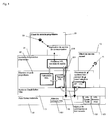
- the invention is used to port two client processes running each by a different operating system (21, respectively 11).
- one of these operating systems is a operating system (21) says “owner”, ie literally “who belongs specifically to a builder. Depending on the applications, it can be an operating system specifically dedicated to a few machines material, specific or simply not widespread. It can also be an operating system for which it is necessary to pay fees when marketing software that claims to be compatible or adapted to this environment.
- this proprietary system is the system “GCOS7”, developed and maintained by the company “BULL”.
- such a system operating system can be used on a specially designed hardware platform adapted for this, or on a hardware platform itself managed by a platform-specific software environment, says proprietary software ("Firmware" in English).
- the operating system uses the resources of the platform, on behalf of its customer process or processes, by sending commands to the proprietary software in the form instructions, for example called “primitives” for the "GCOS7" system.
- the operating system owner (21) is used to manage the resources of a platform that is itself software and non-hardware.
- This software platform called machine virtual (20)
- machine virtual (20) includes a set of software including software owner, the "CPU Firmware”, all of these software running for reproduce with respect to the proprietary operating system (21) the same behavior that a material machine, and using for that the same primitives (210).
- This virtual machine (20) itself operates on a hardware platform (10) through the operating system, says host operating system (11), this hardware platform.
- the virtual machine is a set of software called "V7000" or "DIANE", operating on a hardware platform under "Windows NT”.
- the method according to the invention allows a communication between a client process (23), said owner, working in the proprietary operating system (21) of the machine (20), and on the other hand an open client process (13), for example a "Windows NT” type process, working directly in the system host operating system (11) of the hardware platform (20), for example a platform with 64-bit architecture and one or more processors "ITANIUM” from the company INTEL (registered trademarks).
- the method according to the invention can be used to allow communication between a part of a client process executed by a proprietary operating system (for example, example "GCOS7") running directly on a hardware platform owner (for example a "DPS7000" computer), and on the other hand a client process of an open world (for example "Windows NT”) executed by an operating system running in a virtual machine or a emulator within the proprietary hardware platform (the "DPS7000").
- a proprietary operating system for example, example "GCOS7”
- a hardware platform owner for example a "DPS7000” computer
- the method according to the invention can be used to enable communication between client processes running under other operating systems, for example of the UNIX type.
- the method according to the invention can be used to enable communication between client processes executed by more than two different operating systems, running on the same platform hardware.
- process according to the invention can also be used to allow communication between client processes executed by several proprietary operating systems. These operating systems can also work in several different virtual machines together on the same hardware platform.
- the motor exchange is executed in the proprietary software of the hardware platform.
- the operating principle of the invention comprises the use of a method functioning as a software mechanism called HSL (for High Speed Link) Speed in English) in the example using the "GCOS7" system as proprietary operating system.
- HSL High Speed Link
- this HSL mechanism Rather than transmit data, such as values or states, between the two client processes (13, 23), this HSL mechanism allows one of these client processes to write directly into the working memory, through the memory bus of the platform, the data (24, 14) which must be forwarded to, or used or modified by, the other customer process.
- these data are then stored as exchange data (15), and are accessible in the same place by one or the other heterogeneous client processes (13, 23).
- this HSL mechanism includes in particular the common use to both client processes (23, 13) of one or more memory areas, said memory Shared HSL or Exchange Memory (101).
- the use of this memory of exchange is common, or shared, in the sense that the same areas or memory addresses are used by many of the client processes communicating according to the HSL mechanism.
- This exchange memory (101) contains in particular certain data or software objects to be transmitted from a client process (13, 23) to another, or to be able to be used by many of these processes clients.
- a sending client process wants to memorize or modify a software object to be read or tested by another client process recipient, ie an exchange object forming part of the data exchange (15), it will store this exchange object in the memory exchange (101). It is then these same data as the customer process recipient will read at the very place of this common exchange memory where the transmitter will have memorized them.
- each client process can modify or read each of these exchange objects independently of actions or status of other client processes that have access to it, ie asynchronously.
- the operation of each customer process can to be programmed with great freedom with respect to the elements external to this process.
- the asynchronous aspect of data transmissions allows also a great speed of operation of each of these processes customers, since it does not need to wait or check the availability of its corresponding during an exchange object transmission.
- This HSL mechanism also includes the use of a process said exchange engine (201), for example a unitary process (designated by the word "thread” in English) noted “CpuHsl thread”.
- This exchange engine (201) comprises a process that is executed in loop throughout the duration of activity or validity of the HSL mechanism. This exchange engine in particular for role of centralizing requests access to the exchange memory (101), thereby ensuring coherence and unit of treatments.
- This processing unit makes it possible in particular to ensure that each action of a client process in the exchange memory is done in a way complete and indivisible, or atomic, from the point of view of other processes customers who can access it.
- This HSL mechanism thus makes it possible to ensure a certain reliability and security in the use of memory, constituting an access path controlled and controlled by which must all the actions of each client process that wants to access part of the working memory involving other processes or programs.
- These reliability and security in particular to protect sensitive data or programs, in themselves or for the functioning of the system, with respect to risk that may come from a client process contained in a program malicious or whose functioning is not perfect or does not respect correctly the rules corresponding to one of the elements of the system.
- each client process can act on stored in the exchange memory (101) by different operations, called exchange operations. These operations perform a certain number of specific and codified actions, and can be implemented at using parameters that regulate their behavior.
- the management of this entire HSL mechanism includes the use of a process (25) interapplication manager, called HAM, for English "HSL Application Manager” in the example shown here.
- This interapplication manager (25) has in particular the role of coordinate the use of the HSL mechanism by different applications or involved customer processes. In particular, it means preventing these different applications of the activation of the HSL mechanism, or when it is going to be closed, to enable them to make their arrangements and react in a adequate.
- the exchange memory is structured into a suite of software objects, or exchange objects, or HSL objects, presenting one or more specific structures.
- Exchange objects present structures based on software objects as defined in the proprietary operating system "GCOS7" (21).
- the operating system "GCOS7" uses a working memory divided into portions denominated segments.
- the different segments of the working memory are listed in a software structure that includes a number of numbered tables, these tables themselves including a number of entries.
- each of these entries can then contain the address of a memory area which is attributed to one of these segments.
- GCOS7 Within the operating system "GCOS7” are defined a certain number of structured software objects, called semaphores, which are defined in the “GCOS7” system as part of its “interior design”. These Semaphores can be tested by processes running under “GCOS7”, and can be modified by them using operations specific also defined in this interior decor.
- semaphores contain, above all, a datum marked “SCT” used as a counter, accompanied by data marked “MaxCount” corresponding to its maximum value allowed in a given use.
- a semaphore can be of simple type, denoted "SN", or with message, noted “SM”.
- a message semaphore is a semaphore with which is associated data constituting a pointer indicating a memory area where can memorize a message comprising other data (of not more than 4 words of 4 bytes, for "GCOS7"). This message may contain, for example, a value transmit, or the address in memory of data or software objects to pass.
- a semaphore can be unambiguously designated across the segment descriptor (SD) designating the memory segment containing this semaphore, followed by a data item denoted "SRA" (Segment Relative Address) indicating the relative position of the beginning of the semaphore in the designated segment.
- SD segment descriptor
- SRA Segment Relative Address
- Basic operations that can be used to act on a semaphore include in particular reservation and release, as well as incrementation and decrementation of a semaphore, through GCOS7-specific instructions. These instructions are coded by an operation code and include the use of a memory register says general register for transmitting a parameter designating the semaphore to use.
- the reservation and release of a semaphore are carried out by instructions respectively "GETSEM” and "FREESEM".
- the reservation of a semaphore corresponds to the request for exclusive attribution from a semaphore to the requesting process. This exclusivity allows particular to guarantee that this semaphore will not be modified by another process during the time when the applicant will perform its operations on this semaphore.
- the release of a semaphore corresponds to the delivery of the semaphore available to the operating system and other processes wanting to access it.
- Semaphores can be used for multiple tasks within of one or more client processes under "GCOS7", and this type of software objects also exists in other operating systems not mentioned here. of the semaphores can be used for example to keep track of a number of operations performed on a software object by one or more processes not knowing each other directly.
- They can be used to synchronize multiple processes, for example example by keeping one of them waiting until the semaphore has reaches a certain value. It is then sufficient to increment the semaphore by the other process when it is ready for synchronization. They can be used to manage a queue of tasks or objects to be processed.
- the method according to the invention comprises the common use of an exchange memory (101).
- This memory is used by heterogeneous client processes (13, 23), across specific operations involving software objects, or objects exchange, belonging to this exchange.
- the exchange memory includes structured exchange objects according to system-specific formats “GCOS7". These exchange objects are in particular segments of memory format “GCOS7”, as well as semaphores type “GCOS7”, with or without messages.
- the HSL exchange memory is a part of the working memory of the "GCOS7" system, for example within the RAM or RAM of the hardware platform, assigned to the HSL mechanism. This assignment is made for example when starting the "GCOS7" system, by a noted process J0PD which is the one executed first in this case.
- This exchange memory is reserved by this J0PD process and organized into several groups of exchange objects, or “pools", which group of exchange objects of different types available for process using the HSL mechanism.
- Part of the exchange memory consists of HSL objects from semaphore type, with or without message, divided into one or more groups called semaphore pools (1011).
- HSL objects essentially comprising memory space divided into segments, distributed in groups called segment pools (1012).
- the method according to the invention comprises the implementation of commands and instructions added to the two operating systems concerned. he can These are also existing commands, including the operating mode is adapted by modifications of some software components owner (firmware) or the operating system to which they belong.
- These new or modified orders include, on the one hand, commands for handling the exchange objects in the exchange memory (101), these commands operate in a similar way to the commands existing in the "GCOS7" system to manipulate objects of types similar, in particular semaphores.
- These new or modified orders also include management commands of the HSL mechanism itself.
- the management commands of the HSL mechanism are implemented in inside the proprietary software of the virtual machine, "V7000" or "DIANE". These commands are initiated by an operator, human or software, through a set of internal instructions that are part of the machine's "interior décor" Virtual.
- This internal management of the HSL mechanism uses in particular a zone memory system "GCOS7", specific to the HSL mechanism, noted “HSLControlArea”.
- GCOS7 zone memory system
- HSLControlArea memory area contains in particular information concerning objects from the proprietary or native world (“GCOS7"), which are used by the HSL mechanism.
- APIs used by client processes in the "Windows NT" world are grouped into one or more dynamic link libraries of DLL type, for the English “Dynamic Link Library”.
- the APIs contained in these libraries are directly accessible through these processes, as long as the DLL files containing these libraries are present in the directories containing the "Windows NT" system.
- the exchange engine (201) is driven by a unitary process ("thread cpuhsl ”) executed within the virtual machine (20), so as to be able to detect events reported by both a client process (23) of the proprietary world (21) only through a customer process (13) of the world open (11), ie in the example the "Windows NT" environment.
- This unit process is controlled and parameterized by primitives or internal instructions of the operating system owner (21), for example of type public macros, interacting with the proprietary software environment that drives the virtual machine (20).
- the operating system owner for example of type public macros
- the proprietary software environment that drives the virtual machine (20).
- certain primitives of the "GCOS7" system are modified and some additional primitives are added and implemented as described above.
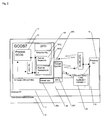
- HSLCommunicationTable (102) and "HSLFirmwareArea” (103), whose address is known from the processes that have need to access it.
- This communication table HSL located in the working memory of the hardware platform (10), comprises a table composed of a plurality of memory locations, said operating cells and denoted "HSLOpCell", identical structures and identified in the table (102) by an index or entry number.
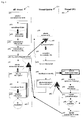
- a client process by example an NT process (13), ie operating under "Windows NT”, wants to request an exchange operation on a software object of memory exchange (101), this client process begins by internally defining the nature of and the parameters of this exchange operation.
- step p31 create (step p31) and prepare an event of alarm clock (e43), unique and new, represented for example by a code incremental, and obtain (p33) a free HSLOpCell operating cell in the communication table HSL (102), and store therein (p34) the references of this awakening event (e43), as well as data representing the requested exchange transaction and its parameters.
- this memorization in HSLOpCell is after locking (p32) of the HSL communication table (102) using a "Mutex" lock of the "Windows NT" operating system.
- the client process (13) will then go to sleep (p37) waiting to detect the signaling of the single wake-up event (e43) that he created and stored in the operating cell HSLOpCell.
- the exchange engine "thread cpuhsl" (201) is dormant or in a loop, in waiting (p30) for a new operation request, for example an operation exchange or deactivation.
- the exchange engine When it detects an EvRequestOpHsl event (e41) signaling a new exchange transaction request, the exchange engine extracts (p38) from the HSL queue the references of the operating cell HSLOpCell containing the data of this application.
- HSL proprietary control area (103) or "HSLfirmwarearea”
- the exchange engine reads (p39) from the table of communication HSL (102) the contents of the operative cell, and the interpreter to determine the nature and parameters of the exchange transaction requested.
- this initialization is done by modifying (p40) one or more determined bits, called “HSL bits”, within a register, denoted “event poller” mask, whose constitution adjusts the operation of the detection of events by the proprietary process "cpu thread” (202) or process cpu.
- the exchange engine (201) is put (p41) then dormant, waiting of a known event, noted “EvInternalHsICpu” (e42), meaning that the exchange transaction has been processed by the proprietary process (202).
- the realization (p43) of this operation includes in particular the reading, in the proprietary area (HSLfirmwarearea) references from the operating cell.
- the proprietary process can then read the nature and parameters of the requested exchange transaction, as well as that the references of the wake up event corresponding to this operation exchange.
- the process owner writes (p44) in a part of the operating cell HSLOpCell a code, called complementary code or condition code and noted “CC”, representing this result. It signals (p45) then an event EvInternalHsICpu (e42), thus waking up the exchange engine (201).
- the client process can then read in the operating cell the complementary code CC representing the result of the exchange transaction he had requested. He will then memorize (p48) the result of this operation in its internal operating parameters to be able to take this into account as a result of its operation.
- the client process can then release the (p50) operating cell from the HSL communication table (102) which has used for this exchange transaction.
- this release from the operative cell HSLOpCell is done after locking (p49) of the HSL communication table (102) using a "Mutex" lock of the "Windows NT" operating system.
- This exchange engine is therefore a buffer process, managed by the virtual machine and giving limited access from the outside, thus bringing good security and reliability while allowing quick access to data common memory of exchange.
- the interapplication manager (25) includes in particular a unitary process ("thread") operating in a loop, and illustrated in Figures 3a and 3b.
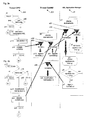
- this unit process or HAM thread, is waiting (p1) of one or more events, corresponding in particular to a request for activation or closure of the HSL mechanism within the system.
- the HAM thread exchange the corresponding information with different applications, say interop applications, using processes running in multiple operating systems and using the HSL mechanism.
- the HAM thread can report one or more events that report the completion of these exchanges and their results.
- HSL mechanism The elements of the HSL mechanism are initialized or prepared, to be made available to customer processes (13, 23), through the use of a command "HSLUP".
- a process unit of the proprietary software of the virtual machine begins by checking the operating status of this HSL mechanism. For this, the CPU thread checks (p10) in the HSL proprietary control box, or HSLFirmwareArea (103), the value of a datum denoted HslValidity, and deduces therefrom the current state of the HSL mechanism. If this data has a value other than 0, the CPU thread completes the HSLUP statement by returning (p11) a code complementary, denoted "CC" with a value of 3, which indicates that the HSL mechanism is not inactive.
- CC code complementary
- the CPU thread (202) performs (p12) the activation of this HSL mechanism and memorizes this activation in storing (p13) the value 1 in the field HsIValidity of the HSLFirmwareArea (103).
- the CPU thread performs this modification (13) of HslValidity under the protection of a software lock affixed to the HSLFirmwareArea (103).
- the CPU thread reports (p14) an EvHslUp event (e33) indicating this activation, and terminates the HSLUP statement by returning (p15) a code complement (CC) of a value of 0, corresponding to an execution correct statement.
- EvHslUp event e33
- the CPU thread (202) Upon receipt (p17) of an instruction "HSLDOWN" indicating to him to close the HSL mechanism, the CPU thread (202) begins by checking the state of operation of this HSL mechanism. For this, the CPU thread checks (p18) in the HSL proprietary control area, or HSLFirmwareArea (103), the value of the data HsIValidity, and deduces the current state of the HSL mechanism.
- the CPU thread (202) ends the HSLDOWN statement by returning (p19) a complementary code (CC) a value of 0, indicating that the HSL mechanism is already inactive.
- CC complementary code
- this HslValidity data has a value of 1, the CPU thread registers this closing request by memorizing (p21) the value 2 in the field HslValidity of the HSLFirmwareArea (103). In order to ensure the complete execution of this recording, without the risk of interaction with another instruction that could happen to him during processing, the CPU thread realizes this modification of HslValidity under the protection of a software lock affixed on the HSLFirmwareArea (103).
- the CPU thread indicates (p22) an event EvHslDown (e34) indicating this request for closing, and terminates the HSLDOWN statement by returning (p23) a code complement (CC) with a value of 1, indicating that the HSL mechanism was active and that the closing request has been registered.
- EvHslDown e34
- CC code complement
- the exchange engine (201), or CpuHsl thread detects the event EvHsIDown (e34) above, it signals (p24), or transmits, a EvHAMDown event (e32) indicating to interapplications manager (25), or HAM, that the HSL mechanism will be closed.
- the HAM (25) detects (p3) this EvHAMDown event (e34), it request (p5) to all interop applications using the HSL mechanism of complete their HSL exchange transactions, and expect (p6) that all of them have confirmed this termination.
- the HAM reports (p7) an event EvHslEnd (e35) indicating the exchange engine (201) that the HSL mechanism is no longer used.
- the exchange engine (201) When it detects this event EvHslEnd (e35), the exchange engine (201) records the actual closure of the HSL mechanism by storing (p25) a value of 0 for the HslValidity field of HSLFirmwareArea (103), and then is recovering (p0) waiting for an event concerning him.
- this manager interapplication or HSL Application Manager
- HSL mechanism allows you to manage the use of HSL mechanism by all applications that are concerned with a simple set of events ensuring a modularity of the process compared to the system configuration. These events are then enough specific to and outside the HSL mechanism and system software (21, 11) and the virtual (20) or hardware (10), for that the use of this mechanism in the different applications is simple To adapt.
- the method according to the invention thus makes it possible to minimize the risks of disruption or diversion of the operation of these operating systems, and therefore the machine, when accessing applications (13, 23) clients to software objects stored directly in the memory of job.
- the memory areas used to coordinate the operation of the HSL mechanism can present in particularly the structures described below.
- the communication table between the "Windows NT" APIs and the CpuHsl Thread has an array structure of 256 entries or records of identical structure, called operation and noted cells "HslOpCell”.
- the "HSLCommunicationTable” area is a structure included in the memory area allocated to the HSL mechanism, whose address is obtained within a "Windows NT" type client process, by using the API: "GetHSLInterfaceAreaAddress" of the DLLHSLInterfaces.
- the management mechanism of the HSL communication table uses an intermediate index table ensuring the reliability of the consideration in a "FIFO" mode (First In First Out) of all entries or HslOpCell containing a request or request exchange operation.
- the owner control area used by the HSL Cpu thread, or "HSLFirmwareArea" has a structure that includes the following data fields:
- HSLFirmwareArea contains 15 words of memory corresponding to the STN-STE and the GCOS absolute address of each segment of the semaphore pool allocated (or 0).
- the "firmware" area (103) can be sized to maximum needs: we will take 4 semaphore pool segments. But, in fact, the HSL mechanism usually requires only 5000 entries for SN semaphores and 256 for SM semaphores. It will not be necessary than 2 semaphore pool segments to contain all semaphores which HSL needs.
- the segment number for the next allocation indicates under the form of an integer from 0 to 3 in which segment will be performed the next application for allocation.
Landscapes
- Engineering & Computer Science (AREA)
- Software Systems (AREA)
- Theoretical Computer Science (AREA)
- Physics & Mathematics (AREA)
- General Engineering & Computer Science (AREA)
- General Physics & Mathematics (AREA)
- Multi Processors (AREA)
- Computer And Data Communications (AREA)
- Debugging And Monitoring (AREA)
- Stored Programmes (AREA)
Abstract
Description
- attente, par le moteur d'échange, d'un événement signalé par un processus client, dit processus demandeur et représentant une demande d'une opération d'échange ;
- réception, par le moteur d'échange en provenance du processus demandeur, de données (HslOpCell) représentant l'opération d'échange demandée ;
- échange, entre le moteur d'échange et au moins un processus de ce logiciel propriétaire, d'informations représentant l'opération d'échange demandée ;
- attente, par le moteur d'échange, d'un événement représentant la fin de traitement, par le logiciel propriétaire, de l'opération d'échange.
- envoi, par le processus demandeur, d'au moins une instruction demandant la réservation d'un objet d'échange au seul usage dudit processus demandeur ;
- envoi, par le processus demandeur, d'une ou plusieurs instructions demandant la modification dudit objet d'échange ;
- envoi, par le processus demandeur, d'au moins une instruction demandant la remise à disposition dudit objet d'échange à l'ensemble des autres processus clients.
- détection, par le processus gestionnaire interapplications, d'un événement indiquant que les composants mettant en oeuvre le procédé de communication sont disponibles ;
- envoi, par le processus gestionnaire interapplications à au moins un processus client apte à utiliser des données d'échange, d'informations indiquant que les composants mettant en oeuvre le procédé de communication sont disponibles ;
- détection, par le processus gestionnaire interapplications, d'un événement représentant la fin de disponibilité des composants mettant en oeuvre le procédé de communication ;
- envoi, par le processus gestionnaire interapplications à au moins un processus client apte à utiliser des données d'échange, que les composants mettant en oeuvre le procédé de communication ne doivent plus être utilisés.
- la figure 1 représente un schéma symbolique de fonctionnement de l'invention dans un mode de réalisation où l'un des processus client est exécuté par un système d'exploitation propriétaire, lui-même exécuté dans une machine virtuelle, elle-même fonctionnant dans le système d'exploitation de l'autre processus client ;
- la figure 2 représente un schéma de l'organisation des couches logicielles d'une plate-forme mettant en oeuvre l'invention, dans un mode de réalisation ou la machine virtuelle est du type Diane utilisant un système d'exploitation du type «GCOS7», et fonctionne dans une plate-forme matérielle fonctionnant sous «Windows NT » ;
- les figures 3a et 3b représentent un organigramme présentant en parallèle le fonctionnement: du processus propriétaire de la machine virtuelle, du processus moteur d'échange, et du gestionnaire d'échange d'applications, respectivement dans les cas d'activation du mécanisme d'échange et de désactivation du mécanisme d'échange ;
- la figure 4 représente un organigramme présentant en parallèle le fonctionnement : d'un processus client de type «Windows NT», du processus moteur d'échange, et du processus propriétaire de la machine virtuelle, dans un cas de demande d'une opération d'échange par le processus client « Windows NT » ;
- la figure 5 représente un schéma symbolique de fonctionnement d'un système selon l'art antérieur, utilisant une communication par protocole FTP et TCP/IP.
- STN (Segment Table Number) : numéro de la table contenant l'adresse du segment en question ;
- STE (Segment Table Entry) : numéro d'entrée dans la table définie par STN, cette entrée contenant l'adresse du segment en question dans la mémoire de la plate-forme matérielle.
- HSLUP
- HSLDOWN
- HSLGETSEM : permet la réservation, dans la mémoire d'échange (101) (ou mémoire partagée HSL), d'un sémaphore HSL, par un processus client en vue d'opérations d'échange à venir ;
- HSLFREESEM : permet la libération dans la mémoire d'échange (101) (ou mémoire partagée HSL), d'un sémaphore HSL, par un processus client, après opérations d'échange ;
- V-OP : est l'opération inchangée du système «GCOS7», utilisable également pour incrémenter un sémaphore réservé dans la mémoire HSL ;
- P-OP : est l'opération inchangée du système «GCOS7», utilisable également pour décrémenter un sémaphore réservé dans la mémoire HSL.
- Sim-HSLGETSEM : instruction accessible par les API et reproduisant ou simulant le fonctionnement de l'instruction HSLGETSEM ;
- Sim-HSLFREEMEM : instruction accessible par les API et reproduisant ou simulant le fonctionnement de l'instruction HSLFREESEM ;
- SimHSLV-OP : instruction accessible par les API et reproduisant ou simulant le fonctionnement de l'instruction V-OP ;
- SimHSLP-OP : instruction accessible par les API et reproduisant ou simulant le fonctionnement de l'instruction P-OP.
- H_VMM_HSL_INIT : nouvelle procédure ajoutée dans le noyau logiciel (« NUCLEUS ») du système d'exploitation. Cette procédure réalise une initialisation des éléments du mécanisme HSL, par exemple en effectuant la déclaration ou l'ouverture de la table (102) de communication HSL et de la zone de contrôle propriétaire (103). Elle permet également le verrouillage des opérations d'échange, en réservant pour cela le premier des sémaphores (SN) au sein de la mémoire d'échange (101). Elle prépare également, dans une structure logicielle notée « HSLUP_STRUCT », les paramètres qui seront utilisés par l'instruction HSLUP pour activer le mécanisme HSL.
- H_NIPS_EPRD : est une modification de la procédure « NIPS » de «GCOS7», permettant l'appel de la procédure H_VMM_HSL_INIT.
- $H_DCSBE et $H_TSTDECOR : sont des déclaratives du système «GCOS7», qui sont modifiées par l'ajout d'un bit spécifiquement utilisé par le mécanisme HSL, au sein d'un octet de capabilité (CAPB13). Cette modification de l'octet de capabilité permet de mémoriser le fait que le système est apte à utiliser le mécanisme HSL.
- H_SSMGET_HSL: nouvelle primitive du système «GCOS7», utilisée par l'instruction HSLGETSEM pour réserver un sémaphore dans la mémoire d'échange.
- H_SSMFREE_HSL: nouvelle primitive du système «GCOS7», utilisée par l'instruction HSLFREESEM pour libérer un sémaphore réservé auparavant dans la mémoire d'échange.
- H_TASKM_IGHSL et H_TASKM_IFHSL : nouveaux points d'entrée, ou syntaxes d'appel, des procédures H_TASKM_IGSM et H_TASKM_IFSM du système «GCOS7». Ces points d'entrée sont utilisés pour la réservation et la libération de sémaphores, dans le cas où ces sémaphores sont des données d'échange utilisées par le mécanisme HSL.
- H_VMM_JTAB : modification de cette procédure, incluse dans le module logiciel « VMM» du système «GCOS7», pour introduire la déclaration d'objets logiciels (« H_HSL_TABLE ») relatifs à la table de communication HSL.
- H_VMM_IISDCR : modification de cette procédure, incluse dans le module logiciel « VMM» du système «GCOS7», pour supprimer le contrôle « $H_ISDCR » qui devient inutile et risquerait de causer des interactions néfastes dans la gestion des segments de mémoire utilisés par le mécanisme HSL.
- $H_VMM_SICID : modification de cette primitive, incluse dans le module logiciel « VMM » du système «GCOS7», pour introduire l'identification (« SICID ») de la nouvelle procédure H_VMM_HSL_INIT.
- La fonction CreateHSLInterfaceArea crée l'espace de communication nécessaire au mécanisme HSL (c'est à dire, entre autres, la table de communication, la zone de contrôle, la table des pointeurs et les pointeurs associés) ainsi que les évènements (« event ») et verrous (« mutex » pour « mutual exclusive ») communs.
- La fonction OpenHSLlnterfaceArea ouvre cet espace de communication nécessaire au mécanisme HSL.
- La fonction CloseHSLInterfaceArea ferme cet espace de communication nécessaire au mécanisme HSL.
- La fonction GetHSLInterfaceAreaAddress retourne le pointeur sur l'espace de communication nécessaire au mécanisme HSL, et fournit ainsi l'adresse permettant l'accès à cet espace de communication.
- Les fonctions InComTable et OutComTable gèrent le verrouillage de la table de contrôle.
- La fonction GetSemaphoreHSL permet d'obtenir un sémaphore HSL de type sans message (HSL_SEM_TYPE_SN) ou avec message (HSL_SEM_TYPE_SM). La demande de sémaphore émane d'un process NT. Le thread CPU va devoir exécuter une instruction « Sim-HSLGETSEM », qui simule du côté NT l'instruction GETSEM native de « GCOS7 ».
- La fonction FreeSemaphoreHSL permet de libérer un sémaphore HSL. La demande de libération du sémaphore émane d'un process NT.
- La fonction POPonSemaphoreSN permet d'effectuer une opération de type P-OP sur un sémaphore HSL sans message.
- La fonction POpOnSemaphoreSM permet d'effectuer une opération de type P-OP, côté NT, sur un sémaphore HSL avec message. Cette API envoie une demande de P-OP vers le thread CpuHsl et attend sur l'événement passé en paramètre, d'être réveillé.
- La fonction VOpOnSemaphoreSN permet, côté NT, de faire une
VOP sur un sémaphore HSL sans message.
Cette API envoie une demande de V-OP sur un sémaphore HSL et attend sur l'événement passé en paramètre d'être réveillé quand l'opération est terminée. - La fonction VOpOnSemaphoreSM permet, côté NT, de poster un
message sur un sémaphore HSL avec message.
Cette API envoie une demande de V-OP sur un sémaphore HSL et attend sur l'événement passé en paramètre d'être réveillé quand l'opération est terminée.
- la fonction MapReadHSLSegment donne le pointeur sur une portion de mémoire «V7000» aux applications NT utilisatrices de HSL (portion qui correspond à un petit segment de «GCOS» soit 64 ko). Cette API est appelée par les processus NT pour les fonctions gérant les caractéristiques du mécanisme HSL relatives à l'allocation et libération d'espace mémoire.
- la fonction MapWriteHSLSegment donne le pointeur sur une portion de mémoire «V7000» aux applications NT utilisatrices de HSL (portion qui correspond à un petit segment de «GCOS» soit 64 ko). Cette API est appelée par les processus NT pour les fonctions gérant les caractéristiques du mécanisme HSL relatives à l'allocation et libération d'espace mémoire.
- la fonction UnmapHSLSegment enlève la vue sur une portion de mémoire «V7000» côté NT (portion qui correspondait à un segment de «GCOS7»).
- la fonction mapHSLTable donne le pointeur sur chacun des 2 segments de la Table HSL gardés dans la HSLFirmwareArea. Cette API est appelée par HSL à l'initialisation coté NT. Elle rend les pointeurs NT sur les 2 segments de type 0 contenant la table de contrôle logiciel de HSL : « HslTable ».
- la fonction UnmapHSLTable enlève la vue sur les 2 segments de la
HSL_Table, côté NT
Cette API est appelée par HSL à la terminaison de HSL (suite à HSLDOWN).
Elle détruit la visibilité des segments de la table de contrôle logiciel de HSL ( HslTable).
- d'une part la signalisation d'évènements par un émetteur dans l'environnement logiciel du destinataire ;
- d'autre part la mémorisation par l'émetteur, dans un emplacement connu du destinataire, de données ou paramètres à transférer.
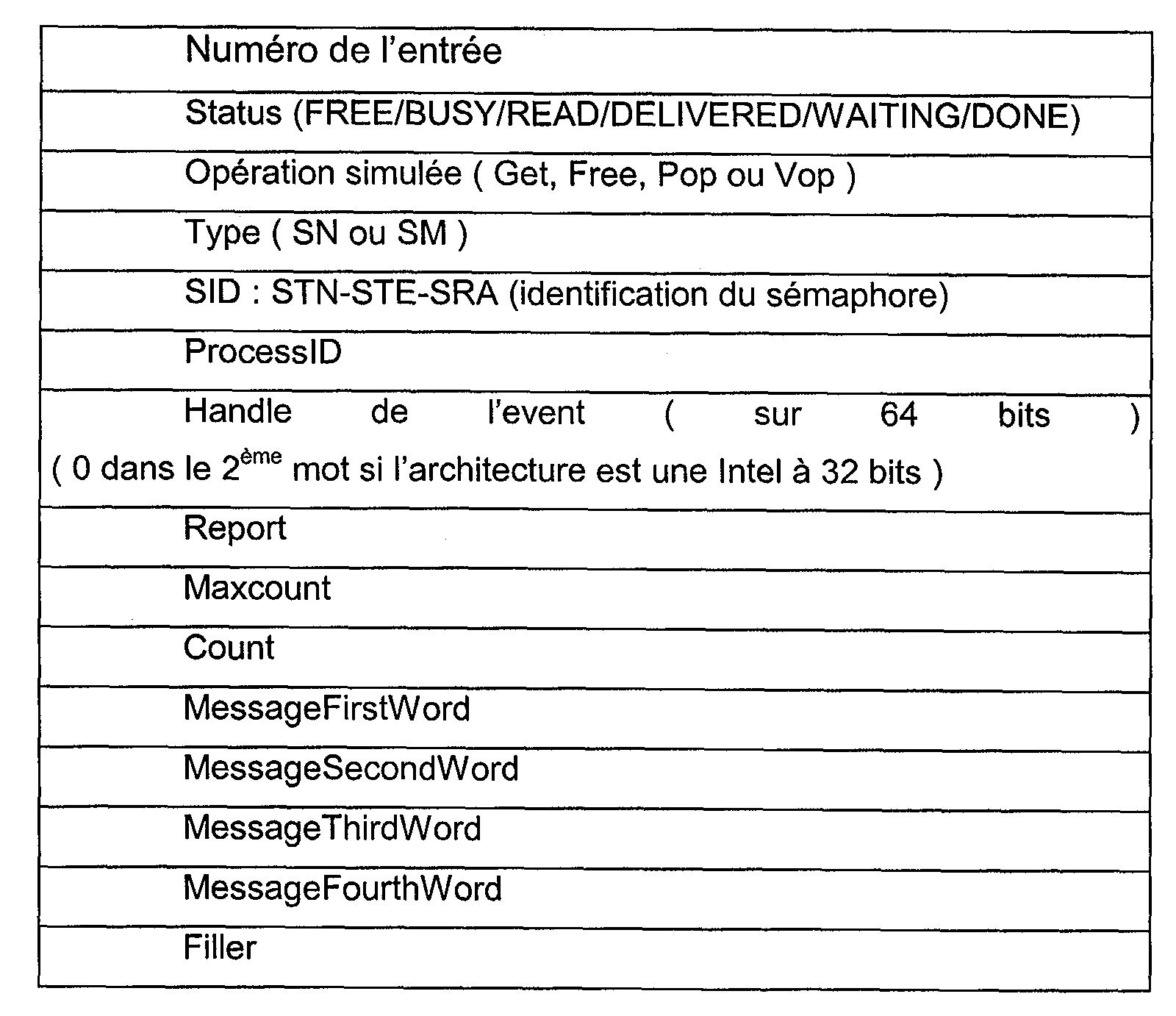
- Numéro de l'entrée : index ou position de l'entrée, c'est le numéro qui est transmis au « thread CpuHsl » (valeur comprise entre 1 et 256 bornes incluses) pour lui permettre de savoir où se trouvent les paramètres de l'opération d'échange demandée ;
- Opération = nature de la demande, correspondant à une opération d'échange simulée et codifiée comme suit: GETSEM :01, FRESEM :04, POP :02 ou VOP :03 ;
- Type : type de sémaphore concerné, codifié comme suit : sémaphore sans message (SN) : type=1, ou avec message (SM) : type=2 ;
- STN-STE-SRA: adresse basée sur l'identification de segments, identifiant le sémaphore (adresse du descripteur de sémaphore «GCOS»). Ce champ dans la table (HSLCommunicationTable) est un paramètre d'entrée utilisé lors de demandes d'opérations de type POP, V-OP ou FRESEM ;
- « Handle » : code d'identification, au sein de «Windows NT», de l'évènement sur lequel le processus client appelant ou demandeur veut être réveillé en fin de traitement. Si une opération de type P-OP est bloquante, c'est sur cet événement que le processus client de type «Windows NT» restera en attente ;
- Maxcount et Count : ces champs, qui ne sont significatifs que sur une opération de type GETSEM, servent à initialiser le sémaphore ;
- Statues: état de l'entrée. Il s'agit d'un champ réservé à la gestion interne du mécanisme, et reflétant l'état d'avancement d'une demande d'opération d'échange.
- MessageFirstWord à MessageFourthWord : 4 mots de mémoire servant à transmettre les données constituant le message associé au sémaphore concerné, dans le cas d'un sémaphore à message (SM).
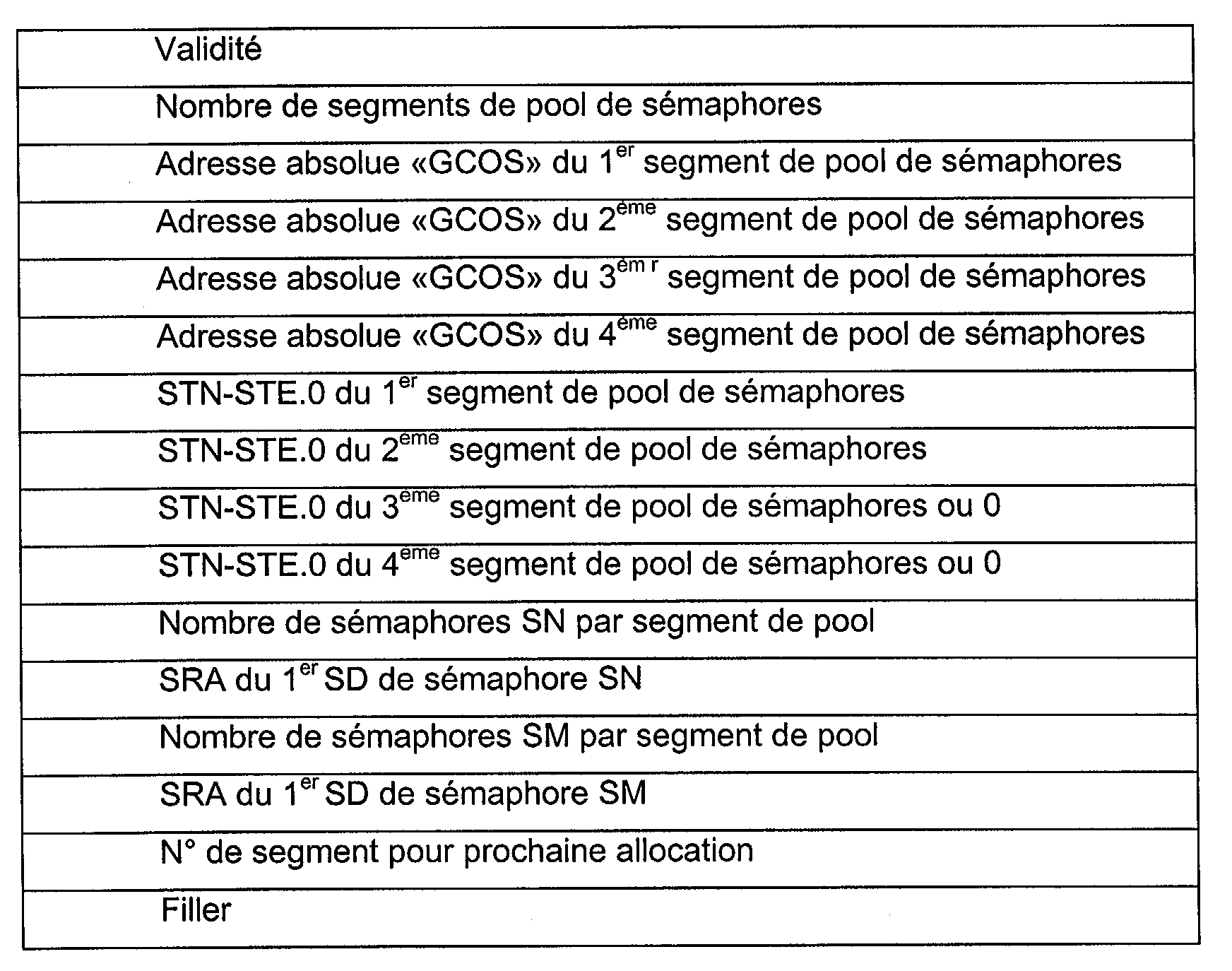
- valeur 0 quand le mécanisme HSL n'est pas opérationnel ;
- valeur 1 quand le mécanisme HSL est opérationnel ;
- valeur 2 pour indiquer que l'arrêt du mécanisme HSL est en cours.
Claims (11)
- Procédé de communication entre au moins deux processus informatiques, dits processus clients (13, 23), exécutés en même temps dans un système informatique, dit plate-forme matérielle (10), comprenant un ou plusieurs processeurs et des moyens de mémorisation dont au moins une partie constitue une zone de mémoire adressable, utilisable comme mémoire de travail, ces processus clients étant exécutés au sein de systèmes d'exploitation (11, respectivement 21) différents, gérant l'utilisation des ressources du système par leurs processus clients et n'étant pas directement compatibles entre eux, caractérisé en ce que ces processus clients écrivent ou lisent ou modifient des informations, dites données d'échange (15), dans au moins une partie commune, dite mémoire d'échange (101), de la mémoire adressable de la plate-forme matérielle.
- Procédé selon la revendication 1, caractérisé en ce qu'au moins un de ces processus clients (13, 23) écrit ou lit ou modifie des données (15) d'échange dans la mémoire d'échange (10) en accédant à un ou plusieurs emplacements de cette mémoire d'échange par des données, ou adresses, représentant de manière constante et non ambiguë la position de ces emplacements au sein d'au moins une partie de la mémoire adressable de la plate-forme matérielle.
- Procédé selon l'une des revendications 1 à 2, caractérisé en ce qu'au moins un de ces processus clients (13, 23) effectue au moins une opération d'échange, par écriture ou lecture ou modification de données (15) d'échange dans la mémoire d'échange (101) sans tenir compte de l'état ou de la disponibilité de l'autre processus client (23, respectivement 13) ou du système d'exploitation de cet autre processus client.
- Procédé selon l'une des revendications 1 à 3, caractérisé en ce que la gestion, réalisée par au moins un système (21) d'exploitation, de l'utilisation des ressources de l'utilisation des ressources par un processus client (23), comprend l'émission de données de commande, dites primitives, depuis ce même système d'exploitation vers un environnement logiciel propriétaire (20) gérant les ressources de la plate-forme matérielle pour le compte de ce système d'exploitation (21), le procédé de communication comportant l'exécution, gérée par ce logiciel propriétaire (20), d'au moins un processus, dit moteur d'échange (201), recevant les demandes d'opérations d'échange de la part d'au moins un processus client (13, 23) et gérant la réalisation de ces opérations d'échange par un processus exécuté au sein de ce même logiciel propriétaire (20).
- Procédé selon la revendication 4, caractérisé en ce que le processus moteur d'échange (201) reçoit des demandes d'opérations d'échange de la part des processus clients (13, 23) et les gère selon un procédé comportant une répétition récursive continue des étapes suivantes :attente, par le moteur d'échange (201), d'un événement (e41 ; figure 4) signalé par un processus client (13), dit processus demandeur et représentant une demande d'une opération d'échange ;réception, par le moteur d'échange (201) en provenance du processus (13) demandeur, de données (HslOpCell) représentant l'opération d'échange demandée ;échange, entre le moteur d'échange (201) et au moins un processus de ce logiciel propriétaire (20), d'informations représentant l'opération d'échange demandée ;attente, par le moteur d'échange (201), d'un événement (e42) représentant la fin de traitement, par le logiciel propriétaire (20), de l'opération d'échange.
- Procédé selon l'une des revendications 1 à 5, caractérisé en ce que les données d'échange (15) sont structurées en un ou plusieurs objets logiciels, dits objets d'échange, mémorisés dans la mémoire d'échange (101), ces objets d'échange comprenant un ou plusieurs sémaphores dont la structure comporte au moins une donnée (COUNT) représentant la valeur courante du sémaphore, l'état de ces sémaphores pouvant être lus ou testés par les processus clients (13, 23) et pouvant être modifiés à travers une ou plusieurs opérations d'échange.
- Procédé selon la revendication 6, caractérisé en ce que la modification d'un objet d'échange par un processus client (13, 23), dit processus demandeur, se fait par une ou plusieurs opérations d'échange comportant les étapes suivantes :envoi, par le processus demandeur (13, 23), d'au moins une instruction demandant la réservation d'un objet d'échange au seul usage dudit processus demandeur ;envoi, par le processus demandeur, d'une ou plusieurs instructions demandant la modification dudit objet d'échange ;envoi, par le processus demandeur, d'au moins une instruction demandant la remise à disposition dudit objet d'échange à l'ensemble des autres processus clients.
- Procédé selon l'une des revendications 1 à 7, caractérisé en ce qu'il comporte au moins un processus (25) gestionnaire interapplications, géré par le logiciel propriétaire (20), gérant la validité des demandes d'opérations d'échange selon un procédé comportant les étapes suivantes :détection, par le processus (25) gestionnaire interapplications, d'un événement (e31) indiquant que les composants mettant en oeuvre le procédé de communication sont disponibles ;envoi, par le processus (25) gestionnaire interapplications à au moins un processus (13, 23) client apte à utiliser des données (15) d'échange, d'informations indiquant que les composants mettant en oeuvre le procédé de communication sont disponibles ;détection, par le processus (25) gestionnaire interapplications, d'un événement (e32) représentant la fin de disponibilité des composants mettant en oeuvre le procédé de communication ;envoi, par le processus (25) gestionnaire interapplications à au moins un processus client (13, 23) apte à utiliser des données (15) d'échange, que les composants mettant en oeuvre le procédé de communication ne doivent plus être utilisés.
- Procédé selon l'une des revendications 1 à 8, caractérisé en ce qu'au moins un système d'exploitation (21) est un environnement logiciel compatible avec le système d'exploitation «GCOS7» de «BULL», le système informatique comprenant au moins un environnement propriétaire «DIANE» ou «V7000» de la société BULL, cet environnement propriétaire fonctionnant soit en tant qu'une machine virtuelle (20) exécutée par un ou plusieurs systèmes informatiques (10) ou soit directement sur une plate-forme matérielle adaptée à l'un de ces systèmes d'exploitation (21).
- Procédé selon l'une des revendications 1 à 9, caractérisé en ce que la machine virtuelle (20) est exécutée par un système d'exploitation (11) compatible avec «Windows NT» de la société Microsoft.
- Procédé selon l'une des revendications 1 à 10, caractérisé en ce qu'au moins un processus client (13, 23) est exécuté par l'un des systèmes d'exploitation «GCOS», «GCOS7», «Windows», «Windows NT», ou «Unix» ou «Linux», ou dans l'une de leurs versions ou variantes.
Applications Claiming Priority (2)
| Application Number | Priority Date | Filing Date | Title |
|---|---|---|---|
| FR0206364 | 2002-05-24 | ||
| FR0206364A FR2840082B1 (fr) | 2002-05-24 | 2002-05-24 | Procede d'echange d'informations entre systemes d'exploitation cohabitant sur un meme ordinateur |
Publications (2)
| Publication Number | Publication Date |
|---|---|
| EP1365323A1 true EP1365323A1 (fr) | 2003-11-26 |
| EP1365323B1 EP1365323B1 (fr) | 2013-09-18 |
Family
ID=29286641
Family Applications (1)
| Application Number | Title | Priority Date | Filing Date |
|---|---|---|---|
| EP03291226.3A Expired - Lifetime EP1365323B1 (fr) | 2002-05-24 | 2003-05-23 | Procédé d'échange d'informations entre systèmes d'exploitation cohabitant sur un même ordinateur |
Country Status (3)
| Country | Link |
|---|---|
| US (1) | US7299476B2 (fr) |
| EP (1) | EP1365323B1 (fr) |
| FR (1) | FR2840082B1 (fr) |
Families Citing this family (11)
| Publication number | Priority date | Publication date | Assignee | Title |
|---|---|---|---|---|
| US9098437B2 (en) | 2010-10-01 | 2015-08-04 | Z124 | Cross-environment communication framework |
| US7327731B1 (en) * | 2003-04-09 | 2008-02-05 | At&T Corp. | Point-to-multipoint connections for data delivery |
| US7221369B1 (en) * | 2004-07-29 | 2007-05-22 | Nvidia Corporation | Apparatus, system, and method for delivering data to multiple memory clients via a unitary buffer |
| US7937701B2 (en) * | 2005-06-30 | 2011-05-03 | Intel Corporation | ACPI communication between virtual machine monitor and policy virtual machine via mailbox |
| US8782779B2 (en) * | 2007-09-26 | 2014-07-15 | Hewlett-Packard Development Company, L.P. | System and method for achieving protected region within computer system |
| US7870443B2 (en) * | 2008-10-23 | 2011-01-11 | Dell Products L.P. | Method to isolate crash of an embedded multi-threaded application to a shared library call without core dump files or debugger |
| US8341643B2 (en) * | 2010-03-29 | 2012-12-25 | International Business Machines Corporation | Protecting shared resources using shared memory and sockets |
| WO2012044557A2 (fr) | 2010-10-01 | 2012-04-05 | Imerj, Llc | Auto-configuration d'un système raccordé à un environnement à plusieurs systèmes d'exploitation |
| JP5935806B2 (ja) * | 2011-09-26 | 2016-06-15 | 日本電気株式会社 | 情報処理システム、情報処理方法、情報処理装置およびその制御方法と制御プログラム |
| US11140455B1 (en) * | 2017-06-09 | 2021-10-05 | Amazon Technologies, Inc. | Video encoder network sandboxing |
| CA3107809A1 (fr) * | 2020-02-25 | 2021-08-25 | Next Pathway Inc. | Systeme et methode d`interpretation de code source proprietaire |
Citations (3)
| Publication number | Priority date | Publication date | Assignee | Title |
|---|---|---|---|---|
| US4993017A (en) * | 1988-03-15 | 1991-02-12 | Siemens Aktiengesellschaft | Modularly structured ISDN communication system |
| WO1997001944A1 (fr) * | 1995-06-27 | 1997-01-16 | Bull Hn Information Systems Inc. | Reseau local virtuel pour emulateurs multiples dans un environnement de systeme ouvert |
| EP1162536A1 (fr) | 2000-06-09 | 2001-12-12 | Hitachi, Ltd. | Procédé de commande de plusieurs systèmes d'exploitations |
Family Cites Families (7)
| Publication number | Priority date | Publication date | Assignee | Title |
|---|---|---|---|---|
| JP2945498B2 (ja) * | 1991-04-12 | 1999-09-06 | 富士通株式会社 | システム間通信方式 |
| US5680586A (en) * | 1995-04-18 | 1997-10-21 | International Business Machines Corporation | Method and system for storing and accessing user-defined attributes within a data processing system |
| US6519623B1 (en) * | 1996-10-31 | 2003-02-11 | International Business Machines Corporation | Generic semaphore for concurrent access by multiple operating systems |
| US6542926B2 (en) * | 1998-06-10 | 2003-04-01 | Compaq Information Technologies Group, L.P. | Software partitioned multi-processor system with flexible resource sharing levels |
| US6314501B1 (en) * | 1998-07-23 | 2001-11-06 | Unisys Corporation | Computer system and method for operating multiple operating systems in different partitions of the computer system and for allowing the different partitions to communicate with one another through shared memory |
| JP4402797B2 (ja) * | 2000-03-02 | 2010-01-20 | 株式会社日立製作所 | 情報処理装置 |
| WO2003040919A2 (fr) * | 2001-11-07 | 2003-05-15 | Sap Aktiengesellschaft | Isolement au moyen de machines virtuelles rattachables a un processus |
-
2002
- 2002-05-24 FR FR0206364A patent/FR2840082B1/fr not_active Expired - Fee Related
-
2003
- 2003-05-23 EP EP03291226.3A patent/EP1365323B1/fr not_active Expired - Lifetime
- 2003-05-27 US US10/445,325 patent/US7299476B2/en not_active Expired - Lifetime
Patent Citations (3)
| Publication number | Priority date | Publication date | Assignee | Title |
|---|---|---|---|---|
| US4993017A (en) * | 1988-03-15 | 1991-02-12 | Siemens Aktiengesellschaft | Modularly structured ISDN communication system |
| WO1997001944A1 (fr) * | 1995-06-27 | 1997-01-16 | Bull Hn Information Systems Inc. | Reseau local virtuel pour emulateurs multiples dans un environnement de systeme ouvert |
| EP1162536A1 (fr) | 2000-06-09 | 2001-12-12 | Hitachi, Ltd. | Procédé de commande de plusieurs systèmes d'exploitations |
Non-Patent Citations (4)
| Title |
|---|
| BOB BECK: "AAMP: A MULTIPROCESSOR APPROACH FOR OPERATING SYSTEM AND APPLICATION MIGRATION", OPERATING SYSTEMS REVIEW (SIGOPS), ACM HEADQUARTER. NEW YORK, US, vol. 24, no. 2, 1 April 1990 (1990-04-01), pages 41 - 55, XP000140419 * |
| EMMANUEL CHAILLOUX, SYSTÈMES À MÉMOIRE PARTAGÉE, 15 November 1998 (1998-11-15), Retrieved from the Internet <URL:http://www.pps.jussieu.fr/-emmanue!/Pub!ic/enseignement/POD_98_WWW/p w6/node1.html>> |
| EMMANUEL CHAILLOUX: "Systèmes à mémoire partagée", INTERNET DOCUMENT, 15 November 1998 (1998-11-15), XP002240830, Retrieved from the Internet <URL:http://www.pps.jussieu.fr/~emmanuel/Public/enseignement/POD_98_WWW/pw6/node1.html> [retrieved on 20030512] * |
| MARC SHAPIRO: "Soul: An Object-Oriented OS Framework for Object Support", INTERNET DOCUMENT: WORKSHOP ON OPERATING SYSTEMS FOR THE NINETIES AND BEYOND PUBLISHED BY SPRINGER-VERLAG, 1 May 1991 (1991-05-01), XP002240831, Retrieved from the Internet <URL:http://citeseer.nj.nec.com/rd/0%2C123278%2C1%2C0.25%2CDownload/http://citeseer.nj.nec.com/cache/papers/cs/5674/ftp:zSzzSzftp.eurecom.frzSzpubzSzoszSzSOUL-os90b.ps.gz/shapiro91soul.ps.gz> [retrieved on 20030509] * |
Also Published As
| Publication number | Publication date |
|---|---|
| US7299476B2 (en) | 2007-11-20 |
| FR2840082A1 (fr) | 2003-11-28 |
| EP1365323B1 (fr) | 2013-09-18 |
| FR2840082B1 (fr) | 2006-04-07 |
| US20040064521A1 (en) | 2004-04-01 |
Similar Documents
| Publication | Publication Date | Title |
|---|---|---|
| JP3095777B2 (ja) | オブジェクト指向オペレーティング・システム | |
| Fingler et al. | USETL: Unikernels for serverless extract transform and load why should you settle for less? | |
| JP3095776B2 (ja) | オブジェクト指向ホスト・システム | |
| JP5132852B2 (ja) | 小面積装置において入力点オブジェクトを使用してコンテキスト障壁を横断するアクセスを許可する技術 | |
| AU763958B2 (en) | Techniques for permitting access across a context barrier in a small footprint device using global data structures | |
| KR102255767B1 (ko) | 가상 머신 감사를 위한 시스템 및 방법들 | |
| US6295643B1 (en) | Method and apparatus for improving java virtual machine performance using persistent execution information | |
| US7975260B1 (en) | Method of direct access and manipulation of debuggee memory from debugger | |
| US7543301B2 (en) | Shared queues in shared object space | |
| EP1337919A1 (fr) | Procede de securisation rendant deterministe l'execution en temps reel d'applications multitaches du type controle-commande avec confinement d'erreur | |
| CA2675666A1 (fr) | Execution acceleree pour environnements emules | |
| CN102207886A (zh) | 虚拟机快速仿真辅助 | |
| EP1365323B1 (fr) | Procédé d'échange d'informations entre systèmes d'exploitation cohabitant sur un même ordinateur | |
| JP4996787B2 (ja) | 小面積装置においてコンテキスト障壁を用いたセキュリテイを施す技術 | |
| CN108475223A (zh) | 在硬件管理的堆栈架构中受调用者保护的堆栈返回地址 | |
| JP4981210B2 (ja) | 小型装置において共有オブジェクト・インターフエイスを使用してコンテキスト障壁を横断するアクセスを許可する技術 | |
| WO2012010419A1 (fr) | Fichier cache de chaînes pour optimiser l'utilisation de la mémoire dans une machine virtuelle java | |
| KR20010101622A (ko) | 런타임 환경 특권을 사용해서 소형 풋프린트 장치의콘텍스트 배리어를 넘어선 액세스를 허용하기 위한 기술 | |
| CN113076233A (zh) | 一种io性能检测方法、装置、设备及存储介质 | |
| US7689986B2 (en) | Shared listeners in shared object space | |
| KR20110013192A (ko) | 실행형 컨텐츠의 분리 실행이 가능한 저장 장치 및 그의 네이티브 실행 환경 구현 장치 | |
| US20150169869A1 (en) | Stack entry overwrite protection | |
| WO2009087165A2 (fr) | Collecte d'informations d'état pour une application et composants de noyau appelés par l'application | |
| CN120449150A (zh) | 一种面向云安全的透明虚拟机监控方法 | |
| US5694597A (en) | Method and system for optimizing access to a datastore |
Legal Events
| Date | Code | Title | Description |
|---|---|---|---|
| PUAI | Public reference made under article 153(3) epc to a published international application that has entered the european phase |
Free format text: ORIGINAL CODE: 0009012 |
|
| AK | Designated contracting states |
Kind code of ref document: A1 Designated state(s): AT BE BG CH CY CZ DE DK EE ES FI FR GB GR HU IE IT LI LU MC NL PT RO SE SI SK TR |
|
| AX | Request for extension of the european patent |
Extension state: AL LT LV MK |
|
| AKX | Designation fees paid |
Designated state(s): DE FR GB IT |
|
| 17P | Request for examination filed |
Effective date: 20040130 |
|
| 17Q | First examination report despatched |
Effective date: 20080111 |
|
| RAP1 | Party data changed (applicant data changed or rights of an application transferred) |
Owner name: BULL S.A.S. |
|
| APBK | Appeal reference recorded |
Free format text: ORIGINAL CODE: EPIDOSNREFNE |
|
| APBN | Date of receipt of notice of appeal recorded |
Free format text: ORIGINAL CODE: EPIDOSNNOA2E |
|
| APBR | Date of receipt of statement of grounds of appeal recorded |
Free format text: ORIGINAL CODE: EPIDOSNNOA3E |
|
| APBV | Interlocutory revision of appeal recorded |
Free format text: ORIGINAL CODE: EPIDOSNIRAPE |
|
| REG | Reference to a national code |
Ref country code: DE Ref legal event code: R079 Ref document number: 60344939 Country of ref document: DE Free format text: PREVIOUS MAIN CLASS: G06F0009460000 Ipc: G06F0009540000 |
|
| RIC1 | Information provided on ipc code assigned before grant |
Ipc: G06F 9/54 20060101AFI20130225BHEP Ipc: G06F 9/455 20060101ALI20130225BHEP |
|
| GRAP | Despatch of communication of intention to grant a patent |
Free format text: ORIGINAL CODE: EPIDOSNIGR1 |
|
| INTG | Intention to grant announced |
Effective date: 20130424 |
|
| GRAS | Grant fee paid |
Free format text: ORIGINAL CODE: EPIDOSNIGR3 |
|
| GRAA | (expected) grant |
Free format text: ORIGINAL CODE: 0009210 |
|
| AK | Designated contracting states |
Kind code of ref document: B1 Designated state(s): DE FR GB IT |
|
| REG | Reference to a national code |
Ref country code: GB Ref legal event code: FG4D Free format text: NOT ENGLISH |
|
| REG | Reference to a national code |
Ref country code: DE Ref legal event code: R096 Ref document number: 60344939 Country of ref document: DE Effective date: 20131114 |
|
| REG | Reference to a national code |
Ref country code: DE Ref legal event code: R097 Ref document number: 60344939 Country of ref document: DE |
|
| PLBE | No opposition filed within time limit |
Free format text: ORIGINAL CODE: 0009261 |
|
| STAA | Information on the status of an ep patent application or granted ep patent |
Free format text: STATUS: NO OPPOSITION FILED WITHIN TIME LIMIT |
|
| 26N | No opposition filed |
Effective date: 20140619 |
|
| REG | Reference to a national code |
Ref country code: DE Ref legal event code: R097 Ref document number: 60344939 Country of ref document: DE Effective date: 20140619 |
|
| REG | Reference to a national code |
Ref country code: FR Ref legal event code: PLFP Year of fee payment: 13 |
|
| REG | Reference to a national code |
Ref country code: FR Ref legal event code: PLFP Year of fee payment: 14 |
|
| REG | Reference to a national code |
Ref country code: FR Ref legal event code: PLFP Year of fee payment: 15 |
|
| REG | Reference to a national code |
Ref country code: FR Ref legal event code: PLFP Year of fee payment: 16 |
|
| PGFP | Annual fee paid to national office [announced via postgrant information from national office to epo] |
Ref country code: IT Payment date: 20200522 Year of fee payment: 18 |
|
| PGFP | Annual fee paid to national office [announced via postgrant information from national office to epo] |
Ref country code: GB Payment date: 20220523 Year of fee payment: 20 Ref country code: FR Payment date: 20220523 Year of fee payment: 20 Ref country code: DE Payment date: 20220519 Year of fee payment: 20 |
|
| REG | Reference to a national code |
Ref country code: DE Ref legal event code: R071 Ref document number: 60344939 Country of ref document: DE |
|
| PG25 | Lapsed in a contracting state [announced via postgrant information from national office to epo] |
Ref country code: IT Free format text: LAPSE BECAUSE OF NON-PAYMENT OF DUE FEES Effective date: 20200523 |
|
| P01 | Opt-out of the competence of the unified patent court (upc) registered |
Effective date: 20230330 |
|
| REG | Reference to a national code |
Ref country code: GB Ref legal event code: PE20 Expiry date: 20230522 |
|
| PG25 | Lapsed in a contracting state [announced via postgrant information from national office to epo] |
Ref country code: GB Free format text: LAPSE BECAUSE OF EXPIRATION OF PROTECTION Effective date: 20230522 |
|
| PG25 | Lapsed in a contracting state [announced via postgrant information from national office to epo] |
Ref country code: IT Free format text: LAPSE BECAUSE OF NON-PAYMENT OF DUE FEES Effective date: 20210523 |