EP1364959A1 - Crystal of pyrimidine nucleoside derivative - Google Patents
Crystal of pyrimidine nucleoside derivative Download PDFInfo
- Publication number
- EP1364959A1 EP1364959A1 EP02711347A EP02711347A EP1364959A1 EP 1364959 A1 EP1364959 A1 EP 1364959A1 EP 02711347 A EP02711347 A EP 02711347A EP 02711347 A EP02711347 A EP 02711347A EP 1364959 A1 EP1364959 A1 EP 1364959A1
- Authority
- EP
- European Patent Office
- Prior art keywords
- crystalline form
- compound
- angstrom
- ray
- crystal
- Prior art date
- Legal status (The legal status is an assumption and is not a legal conclusion. Google has not performed a legal analysis and makes no representation as to the accuracy of the status listed.)
- Granted
Links
Images

Classifications
-
- C—CHEMISTRY; METALLURGY
- C07—ORGANIC CHEMISTRY
- C07H—SUGARS; DERIVATIVES THEREOF; NUCLEOSIDES; NUCLEOTIDES; NUCLEIC ACIDS
- C07H19/00—Compounds containing a hetero ring sharing one ring hetero atom with a saccharide radical; Nucleosides; Mononucleotides; Anhydro-derivatives thereof
- C07H19/02—Compounds containing a hetero ring sharing one ring hetero atom with a saccharide radical; Nucleosides; Mononucleotides; Anhydro-derivatives thereof sharing nitrogen
- C07H19/04—Heterocyclic radicals containing only nitrogen atoms as ring hetero atom
- C07H19/06—Pyrimidine radicals
-
- A—HUMAN NECESSITIES
- A61—MEDICAL OR VETERINARY SCIENCE; HYGIENE
- A61P—SPECIFIC THERAPEUTIC ACTIVITY OF CHEMICAL COMPOUNDS OR MEDICINAL PREPARATIONS
- A61P35/00—Antineoplastic agents
Definitions
- the present invention relates to crystalline forms of a pyrimidine nucleoside derivative which exhibit excellent anti-tumour activity; to a pharmaceutical composition (preferably an anti-tumour agent) containing said crystalline form as an active ingredient; to the use of said crystalline form in the preparation of said pharmaceutical composition; and to a method for prevention or treatment of disease (preferably tumour) which comprises administering to a warm blooded animal (preferably a human) in need of such prevention or treatment a pharmacologically effective amount of said crystalline form.
- a pharmaceutical composition preferably an anti-tumour agent
- Compound (I) The pyrimidine nucleoside derivative of formula (I) (hereinafter referred to as Compound (I)) has been disclosed in the specification of Japanese Patent No. 2569251.
- Compound (I) exhibits excellent anti-tumour activity and is expected to become an agent for treatment or prevention of tumours.
- the inventors have studied the stability and the like of Compound (I) and have succeeded in obtaining crystals of Compound (I). These crystals have remarkably better storage stability and ease of handling than a powder of Compound (I) as obtained in example 1 disclosed in the specification of Japanese Patent No. 2569251. These crystals exhibit an excellent pharmacokinetic profile such as oral absorption and the like and are, therefore, practically useful medicaments.
- the crystalline form of Compound (I) in the present invention is a solid which has a regular repeated arrangement of atoms (or groups of atoms) in a three-dimensional structure.
- the crystal is different from an amorphous solid that has no regular arrangement of atoms in a three-dimensional structure.
- the present invention encompasses individual crystalline forms and mixtures of two or more of said crystalline forms.
- Crystalline forms of Compound (I) include, for example:
- the compound (I) can be prepared according to a similar procedure to that described in the specification of Japanese Patent No. 2569251.
- the crystalline forms of Compound (I) can be obtained from a supersaturated solution.
- the supersaturated solution can be prepared through dissolution of Compound (I) in an appropriate solvent, pH adjustment of said solution, concentration of said solution, cooling said solution, addition of a solvent in which Compound (I) is slightly soluble to a solution of Compound (I) in a solvent in which Compound (I) is readily soluble, or the like.
- a suspension of a crystal or amorphous solid of Compound (I) in an appropriate solvent is converted into a slurry and then is stirred to transform alternate crystal (solvent-mediated transformation).
- precipitation of the crystals takes place spontaneously in the reaction vessel or it can be started or accelerated by addition of a crystalline seed, by mechanical stimulation such as through use of ultrasonic waves or by stretching the inside of the reaction vessel.
- the temperature for crystallization of Compound (I) or a pharmacologically acceptable salt thereof is usually in the range between 0 and 60°C, preferably between 5 and 45°C.
- Precipitated crystals can be collected by filtration, centrifugation or decantation methods. Isolated crystals may be washed with an appropriate solvent.
- the washing solvent can include, for example, water; an alcohol such as ethanol, isopropanol; a ketone such as acetone; an ester such as methyl formate, ethyl formate, methyl acetate, ethyl acetate; an aromatic hydrocarbon such as toluene, xylene; a nitrile such as acetonitrile; an ether such as diethyl ether, tetrahydrofuran, or a mixture thereof.
- methyl acetate which contains water or is anhydrous is used.
- Isolated crystals can be dried between 10 and 100°C, preferably between 30 and 50°C until the weight of said crystals becomes constant, if necessary, in the presence of a drying agent such as silica gel or calcium chloride and under reduced pressure.
- a drying agent such as silica gel or calcium chloride and under reduced pressure.
- Dried crystals may absorb water under condition of 20 to 90% relative humidity and between 10 and 30°C, preferably 50 to 80% relative humidity and between 20 and 30°C until the weight of said crystals becomes constant.
- Crystals thus obtained can be further purified by recrystallization or slurry-purification.
- the recrystallization is accomplished by techniques known to those skilled in the art such as (1) cooling method : Compound (I) or a pharmacologically acceptable salt is dissolved in a hot solvent and then the resulting solution is cooled, (2) concentration method : a solution of Compound (I) or a pharmacologically acceptable salt thereof is concentrated, (3) precipitation method : a solvent in which Compound (I) or a pharmacologically acceptable salt thereof is slightly soluble is added to a solution of Compound (I) or a pharmacologically acceptable salt thereof in a solvent in which Compound (I) or a pharmacologically acceptable salt is readily soluble.
- the slurry-purification comprises collection of crystals which are obtained by stirring a suspension of a certain compound in an appropriate solvent.
- the solvent employed in slurry-purification of Compound (I) includes, for example, a ketone such as acetone, methyl ethyl ketone; an ester such as methyl acetate, ethyl acetate; a nitrile such as acetonitrile; a halogenated hydrocarbon such as methylene chloride, chloroform; an aromatic hydrocarbon such as toluene, xylene; an alcohol such as ethanol, isopropanol; an ether such as diethyl ether, tetrahydrofuran; an amide such as N,N-dimethylformamide; water; an aliphatic hydrocarbon such as hexane; an ether such as diisopropyl ether, diethyl ether; or the like and a mixture thereof.
- a ketone such as acetone, methyl ethyl ketone
- an ester such as methyl acetate, ethyl
- a ketone such as acetone, methyl ethyl ketone; an ester such as methyl formate, ethyl formate, methyl acetate, ethyl acetate; a nitrile such as acetonitrile; an alcohol such as ethanol, isopropanol and these solvents containing water is used, and more preferably methyl acetate which contains water or is anhydrous.
- Crystals obtained by recrystallization and slurry-purification are also isolated by similar techniques to those described hereinbefore.
- compositions according to the present invention can be in unit dosage form such as tablets, capsules, granules, powders, syrups, injections, ointments, solutions, suspensions, aerosols, troches or the like for oral or parenteral administration.
- compositions can be prepared in a known manner by using additives such as excipients, binding agents, disintegrating agents, lubricating agents, stabilizing agents, corrigents, suspending agents, diluents and solvents.
- additives such as excipients, binding agents, disintegrating agents, lubricating agents, stabilizing agents, corrigents, suspending agents, diluents and solvents.
- an excipient includes a sugar derivative such as lactose, sucrose, glucose, mannitol, or sorbitol; a starch derivative such as corn starch, potato starch, ⁇ -starch, dextrin, carboxy methylstarch; a cellulose derivative such as crystalline cellulose, low-substituted hydroxypropylcellulose, hydroxypropylmethylcellulose, carboxymethylcellulose, calcium carboxymethylcellulose, internal-cross-linked sodium carboxymethylcellulose; acacia; dextran; pullulan; a silicate derivative such as light silicic acid anhydride, synthetic aluminum silicate, magnesium aluminate metasilicate; a phosphate derivative such as calcium phosphate; a carbonate derivative such as calcium carbonate; a sulfate derivative such as calcium sulfate; or the like.
- a sugar derivative such as lactose, sucrose, glucose, mannitol, or sorbitol
- a starch derivative such as corn star
- An example of a binding agent includes an excipient described hereinbefore; gelatin; polyvinylpyrrolidone; macrogol; or the like.
- An example of a disintegrating agent includes an excipient described hereinbefore, a chemically modified starch or cellulose derivative such as sodium cross-carmellose, sodium carboxymethylstarch, cross-linked polyvinylpyrrolidone or the like.
- An example of a lubricating agent includes talc; stearic acid; a metal stearate derivative such as calcium stearate, magnesium stearate; colloidal silica; veegum; a wax such as beeswax or spermaceti; boric acid; a glycol; a carboxy acid derivative such as fumaric acid, adipic acid; a sodium carboxylate such as sodium benzoate; a sulfate such as sodium sulfate; leucine; a lauryl sulfate such as sodium lauryl sulfate, or magnesium lauryl sulfate; a silicic acid derivative such as silicic acid anhydride, silicic acid hydrate; a starch derivative described above as an excipient; or the like.
- An example of a stabilizing agent includes a para-hydroxybenzoic acid ester derivative such as methylparabene, propylparabene; an alcohol derivative such as chlorobutanol, benzyl alcohol, phenetyl alcohol; benzalkonium chloride; a phenol derivative such as phenol, cresol; thimerosal; acetic anhydride; sorbic acid; or the like.
- An example of a corrigent includes a sweetning, souring, and flavoring agents or the like all of which are ordinarily used.
- An example of a solvent includes water, ethanol, glycerin or the like.
- the dose of the crystalline form of compound (I) will depend on such factors as symptom, body weight and age of the patient.
- a suitable dosage level is 0.1 mg (preferably 1 mg) per day to 100 mg (preferably 50 mg) per day.
- the crystalline form of the compound of formula (I) can be administered as either a single unit dosage, or if desired, the dosage may be divided into convenient subunits administered at one to several times throughout the day depending on the symptoms of the patient.
- crystals B, C and D of the present invention prepared in Examples 1, 2 and 4, respectively and the amorphous powder (Amorphous A) of compound of general formula (I) described in Example 1 (1d) of the Japanese Patent No. 2569251 were used as reference. These compounds were placed in stoppered vessels separately and stored at 60°C under a nitrogen atmosphere for 17 days, and the content of these compounds was measured on 5, 10 and 17 days after the initiation of the storage.
- the content of these compounds was determined quantitatively with high performance liquid chromatography (HPLC), and the rate of the remaining compounds (%) was calculated by the content of Compound (I) determined at each sampling point based on the initial content (100%) determined immediately before the storage.
- a solution is prepared so that said solution contains the compound prepared in Example 1 (10%(W/W)), benzalkonium chloride (0.04%(W/W)), phenethyl alcohol (0.04%(W/W)) and purified water (89.56%(W/W)).
- a solution is prepared so that said solution contains the compound prepared in Example 1 (10%(W/W)), benzalkonium chloride (0.04%(W/W)), propylene glycol (30%(W/W)) and purified water (39.96%(W/W)).
- a powder is prepared so that said powder contains the compound prepared in Example 1 (40%(W/W)) and lactose (60%(W/W)).
- An aerosol is prepared so that said aerosol contains the compound prepared in Example 1 (10%(W/W)), lecithin (0.5% (W/W)), fulon 11 (34.5%(W/W)) and fulon 12 (55%(W/W)).
- the crystalline forms of this invention have remarkably better storage stability and ease of handling than the amorphous powder of Compound (I). Said crystalline forms exhibit excellent metabolic disposition such as oral absorption and the like and are, therefore, useful medicaments (preferably as agents for treatment or prevention of tumours).
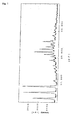
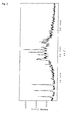
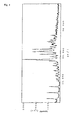
- each powder X ray diffraction pattern indicates the diffraction intensity in units of counts/second(cps) and the horizontal axis indicates the diffraction angle as the value 2 ⁇ .
Landscapes
- Chemical & Material Sciences (AREA)
- Organic Chemistry (AREA)
- Health & Medical Sciences (AREA)
- General Health & Medical Sciences (AREA)
- Life Sciences & Earth Sciences (AREA)
- Biotechnology (AREA)
- Engineering & Computer Science (AREA)
- Molecular Biology (AREA)
- Genetics & Genomics (AREA)
- Biochemistry (AREA)
- General Chemical & Material Sciences (AREA)
- Public Health (AREA)
- Veterinary Medicine (AREA)
- Nuclear Medicine, Radiotherapy & Molecular Imaging (AREA)
- Animal Behavior & Ethology (AREA)
- Chemical Kinetics & Catalysis (AREA)
- Medicinal Chemistry (AREA)
- Pharmacology & Pharmacy (AREA)
- Pharmaceuticals Containing Other Organic And Inorganic Compounds (AREA)
- Saccharide Compounds (AREA)
- Plural Heterocyclic Compounds (AREA)
- Enzymes And Modification Thereof (AREA)
- Medicines Containing Material From Animals Or Micro-Organisms (AREA)
Abstract
Description

(In addition, the lattice distance d can be calculated on the basis of the equation of 2dsin=nλ (n=1).)
| Column | L-column ODS (4.6 mm × 250 mm) (Chemicals Inspection and Testing Institute) |
| Mobile phase | Acetonitrile:water:acetic acid = 750:250:1 |
| Flow rate | 1.0 ml/min |
| Detection wavelength | 249 nm |
| Column temperature | 40°C |
| Stability of each compound at 60°C under a nitrogen atmosphere (Residual rate) | |||
| Compound | Days after the initiation of stability test | ||
| 5 | 10 days | 17 days | |
| Amorphous A | 92.7% | 78.6% | 62.5% |
| Crystal B prepared in Example 1 | 101.0% | 100.3% | 100.4% |
| Crystal C prepared in Example 2 | 101.0% | 100.4% | 100.1% |
| Crystal D prepared in Example 4 | 99.9% | 98.3% | 98.4% |
Claims (13)
- A crystalline form of a compound of formula (I).

- A crystalline form according to claim 1, wherein the compound of formula (I) is a hydrate.
- A crystalline form according to claim 1 or claim 2, wherein said crystalline form has main peaks at lattice distances of 19.53, 13.03, 9.75, 4.17, 4.00, 3.82, 3.68 and 3.41 angstrom determined by X-ray diffraction by the powder method using the copper Kα ray (wavelength λ=1.54 angstrom).
- A crystalline form according to claim 1 or claim 2, wherein said crystalline form has main peaks at lattice distances of 19.36, 12.87, 9.63, 4.70, 4.64, 4.28, 4.10, 3.92, 3.77 and 3.48 angstrom determined by X-ray diffraction by the powder method using the copper Kα ray (wavelength λ=1.54 angstrom).
- A crystalline form according to claim 1 or claim 2, wherein said crystalline form has main peaks at lattice distances of 19.62, 13.06, 9.82, 4.72, 4.63, 4.56, 4.15, 3.98, 3.93, 3.82, 3.45 and 3.40 angstrom determined by X-ray diffraction by the powder method using the copper Kα ray (wavelength λ=1.54 angstrom).
- A crystalline form according to claim 1 or claim 2, wherein said crystalline form has peaks at lattice distances of 22.52, 5.17, 4.60, 4.28, and 3.87 angstrom determined by X-ray diffraction by the powder method using the copper Kα ray (wavelength λ=1.54 angstrom).
- A pharmaceutical composition containing a crystalline form according to any one of claims 1 to 6 as an active ingredient.
- A pharmaceutical composition according to claim 7, for the prevention or treatment of tumours.
- The use of a crystalline form according to any one of claims 1 to 6 in the preparation of a pharmaceutical composition.
- The use according to claim 9 wherein the pharmaceutical composition is for the prevention or treatment of tumours.
- A method for the prevention or treatment of disease comprising administering a pharmacologically effective amount of a crystalline form according to any one of claims 1 to 6 to a warm blooded animal in need of such prevention or treatment.
- A method according to claim 11 wherein the disease is a tumourous condition.
- A method according to claim 11 or claim 12, wherein the warm blooded animal is a human.
Applications Claiming Priority (3)
| Application Number | Priority Date | Filing Date | Title |
|---|---|---|---|
| JP2001033128 | 2001-02-09 | ||
| JP2001033128 | 2001-02-09 | ||
| PCT/JP2002/000986 WO2002064609A1 (en) | 2001-02-09 | 2002-02-06 | Crystal of pyrimidine nucleoside derivative |
Publications (3)
| Publication Number | Publication Date |
|---|---|
| EP1364959A1 true EP1364959A1 (en) | 2003-11-26 |
| EP1364959A4 EP1364959A4 (en) | 2004-03-24 |
| EP1364959B1 EP1364959B1 (en) | 2007-05-09 |
Family
ID=18896929
Family Applications (1)
| Application Number | Title | Priority Date | Filing Date |
|---|---|---|---|
| EP02711347A Expired - Lifetime EP1364959B1 (en) | 2001-02-09 | 2002-02-06 | Crystal of pyrimidine nucleoside derivative |
Country Status (21)
| Country | Link |
|---|---|
| EP (1) | EP1364959B1 (en) |
| JP (2) | JP3748536B2 (en) |
| KR (1) | KR100679904B1 (en) |
| CN (1) | CN100408591C (en) |
| AT (1) | ATE361929T1 (en) |
| AU (1) | AU2002230164B2 (en) |
| BR (2) | BR0207102A (en) |
| CA (1) | CA2437994C (en) |
| CY (1) | CY1106685T1 (en) |
| CZ (1) | CZ303241B6 (en) |
| DE (1) | DE60220024T2 (en) |
| DK (1) | DK1364959T3 (en) |
| ES (1) | ES2286237T3 (en) |
| HU (1) | HU229294B1 (en) |
| IL (2) | IL157216A0 (en) |
| MX (1) | MXPA03007123A (en) |
| NZ (1) | NZ527393A (en) |
| PT (1) | PT1364959E (en) |
| RU (1) | RU2256666C2 (en) |
| WO (1) | WO2002064609A1 (en) |
| ZA (1) | ZA200306121B (en) |
Cited By (3)
| Publication number | Priority date | Publication date | Assignee | Title |
|---|---|---|---|---|
| WO2007072061A3 (en) * | 2005-12-23 | 2007-10-25 | Cyclacel Ltd | Crystalline pyrimidine nucleoside derivatives suspensions in capsules |
| US8124593B2 (en) | 2007-11-05 | 2012-02-28 | Cyclacel Limited | Methods of treatment using sapacitabine |
| EP2291193B1 (en) * | 2008-05-08 | 2018-08-08 | Cyclacel Limited | Preparation of intermediates useful in the synthesis of 2'-cyano-2'-deoxy-n4-palmitoyl-1-beta-d-arabinofuranosylcytosine |
Families Citing this family (9)
| Publication number | Priority date | Publication date | Assignee | Title |
|---|---|---|---|---|
| US6876554B1 (en) | 1999-09-02 | 2005-04-05 | Ibiden Co., Ltd. | Printing wiring board and method of producing the same and capacitor to be contained in printed wiring board |
| EP1139705B1 (en) | 1999-09-02 | 2006-11-22 | Ibiden Co., Ltd. | Printed wiring board and method of producing the same |
| GB0625283D0 (en) | 2006-12-19 | 2007-01-24 | Cyclacel Ltd | Combination |
| JP5066737B2 (en) * | 2007-04-06 | 2012-11-07 | 大鵬薬品工業株式会社 | Antitumor agent for continuous intravenous administration containing cytidine derivative |
| KR101667641B1 (en) | 2008-06-09 | 2016-10-20 | 싸이클라셀 리미티드 | Combinations of sapacitabine or cndac with dna methyltransferase inhibitors such as decitabine and procaine |
| HUE046177T2 (en) | 2011-04-14 | 2020-02-28 | Cyclacel Ltd | Dosage regimen for sapacitabine and decitabine in combination for treating acute myeloid leukemia |
| JP6317319B2 (en) | 2012-03-15 | 2018-04-25 | セルジーン シーエーアール エルエルシー | Solid forms of epidermal growth factor receptor kinase inhibitors |
| KR102629310B1 (en) * | 2015-03-09 | 2024-01-24 | 더블유.알. 그레이스 앤드 캄파니-콘. | Crystal form of nicotinamide riboside |
| CN112020363A (en) | 2017-12-22 | 2020-12-01 | 益力舒健康公司 | Crystalline forms of nicotinamide riboside chloride |
Family Cites Families (2)
| Publication number | Priority date | Publication date | Assignee | Title |
|---|---|---|---|---|
| JP2559917B2 (en) * | 1990-06-15 | 1996-12-04 | 三共株式会社 | Pyrimidine nucleoside derivative |
| RU2085557C1 (en) * | 1991-09-30 | 1997-07-27 | Санкио Компани Лимитед | Pyrimidine nucleoside derivatives or their pharmaceutically acceptable salts and method of their synthesis |
-
2002
- 2002-02-04 JP JP2002026232A patent/JP3748536B2/en not_active Expired - Lifetime
- 2002-02-06 DK DK02711347T patent/DK1364959T3/en active
- 2002-02-06 CN CNB028079337A patent/CN100408591C/en not_active Expired - Lifetime
- 2002-02-06 WO PCT/JP2002/000986 patent/WO2002064609A1/en not_active Ceased
- 2002-02-06 NZ NZ527393A patent/NZ527393A/en not_active IP Right Cessation
- 2002-02-06 IL IL15721602A patent/IL157216A0/en active IP Right Grant
- 2002-02-06 CA CA2437994A patent/CA2437994C/en not_active Expired - Lifetime
- 2002-02-06 AT AT02711347T patent/ATE361929T1/en active
- 2002-02-06 ES ES02711347T patent/ES2286237T3/en not_active Expired - Lifetime
- 2002-02-06 RU RU2003124648/04A patent/RU2256666C2/en active
- 2002-02-06 DE DE60220024T patent/DE60220024T2/en not_active Expired - Lifetime
- 2002-02-06 PT PT02711347T patent/PT1364959E/en unknown
- 2002-02-06 CZ CZ20032111A patent/CZ303241B6/en not_active IP Right Cessation
- 2002-02-06 EP EP02711347A patent/EP1364959B1/en not_active Expired - Lifetime
- 2002-02-06 MX MXPA03007123A patent/MXPA03007123A/en active IP Right Grant
- 2002-02-06 AU AU2002230164A patent/AU2002230164B2/en not_active Expired
- 2002-02-06 BR BR0207102-9A patent/BR0207102A/en not_active Application Discontinuation
- 2002-02-06 BR BRPI0207102A patent/BRPI0207102A8/en unknown
- 2002-02-06 KR KR1020037010308A patent/KR100679904B1/en not_active Expired - Lifetime
- 2002-02-06 HU HU0303159A patent/HU229294B1/en unknown
-
2003
- 2003-08-04 IL IL157216A patent/IL157216A/en unknown
- 2003-08-07 ZA ZA2003/06121A patent/ZA200306121B/en unknown
-
2005
- 2005-08-09 JP JP2005230800A patent/JP4356998B2/en not_active Expired - Lifetime
-
2007
- 2007-07-02 CY CY20071100860T patent/CY1106685T1/en unknown
Cited By (6)
| Publication number | Priority date | Publication date | Assignee | Title |
|---|---|---|---|---|
| WO2007072061A3 (en) * | 2005-12-23 | 2007-10-25 | Cyclacel Ltd | Crystalline pyrimidine nucleoside derivatives suspensions in capsules |
| RU2428972C2 (en) * | 2005-12-23 | 2011-09-20 | Сайкласел Лимитед | Suspensions of crystalline pyrimidine nucleoside derivatives in capsules |
| AU2006327951B2 (en) * | 2005-12-23 | 2012-09-06 | Cyclacel Limited | Crystalline pyrimidine nucleoside derivatives suspensions in capsules |
| US8497291B2 (en) | 2005-12-23 | 2013-07-30 | Cyclacel Limited | Crystalline pyrimidine nucleoside derivative suspensions in capsules |
| US8124593B2 (en) | 2007-11-05 | 2012-02-28 | Cyclacel Limited | Methods of treatment using sapacitabine |
| EP2291193B1 (en) * | 2008-05-08 | 2018-08-08 | Cyclacel Limited | Preparation of intermediates useful in the synthesis of 2'-cyano-2'-deoxy-n4-palmitoyl-1-beta-d-arabinofuranosylcytosine |
Also Published As
Similar Documents
| Publication | Publication Date | Title |
|---|---|---|
| CN114206878B (en) | Wu Pati Ni crystal form and preparation method and application thereof | |
| EP4328226A1 (en) | Tolebrutinib crystal form, amorphous form, preparation method therefor and use thereof | |
| US6908906B2 (en) | Crystalline forms of pyrimidine nucleoside derivative | |
| WO2023064519A1 (en) | Solid state forms of elacestrant and processes for preparation thereof | |
| EP1364959B1 (en) | Crystal of pyrimidine nucleoside derivative | |
| WO2022242740A1 (en) | Tolebrutinib salt and crystal form thereof, preparation method therefor, pharmaceutical composition thereof, and use thereof | |
| US20230167156A1 (en) | Solid state forms of voclosporin | |
| EP3160951B1 (en) | Crystalline forms of ferric maltol | |
| EP1277750B1 (en) | Hydrates and crystals of a neuraminic acid compound | |
| US8772488B2 (en) | Crystals of prasugrel hydrobromate | |
| JP4424644B2 (en) | Medicine containing neuraminic acid compound | |
| EP4594313A1 (en) | Solid state forms of denifanstat | |
| HK1233619A1 (en) | Crystalline forms of ferric maltol | |
| HK1233619B (en) | Crystalline forms of ferric maltol | |
| JP2007297332A (en) | Crystal of benzamidine derivative |
Legal Events
| Date | Code | Title | Description |
|---|---|---|---|
| PUAI | Public reference made under article 153(3) epc to a published international application that has entered the european phase |
Free format text: ORIGINAL CODE: 0009012 |
|
| 17P | Request for examination filed |
Effective date: 20030806 |
|
| AK | Designated contracting states |
Kind code of ref document: A1 Designated state(s): AT BE CH CY DE DK ES FI FR GB GR IE IT LI LU MC NL PT SE TR |
|
| A4 | Supplementary search report drawn up and despatched |
Effective date: 20040210 |
|
| RIC1 | Information provided on ipc code assigned before grant |
Ipc: 7C 07H 19/09 A Ipc: 7A 61K 31/712 B |
|
| 17Q | First examination report despatched |
Effective date: 20040405 |
|
| GRAP | Despatch of communication of intention to grant a patent |
Free format text: ORIGINAL CODE: EPIDOSNIGR1 |
|
| GRAS | Grant fee paid |
Free format text: ORIGINAL CODE: EPIDOSNIGR3 |
|
| GRAA | (expected) grant |
Free format text: ORIGINAL CODE: 0009210 |
|
| AK | Designated contracting states |
Kind code of ref document: B1 Designated state(s): AT BE CH CY DE DK ES FI FR GB GR IE IT LI LU MC NL PT SE TR |
|
| REG | Reference to a national code |
Ref country code: GB Ref legal event code: FG4D |
|
| REG | Reference to a national code |
Ref country code: CH Ref legal event code: EP Ref country code: CH Ref legal event code: NV Representative=s name: A. BRAUN, BRAUN, HERITIER, ESCHMANN AG PATENTANWAE |
|
| REG | Reference to a national code |
Ref country code: IE Ref legal event code: FG4D |
|
| REF | Corresponds to: |
Ref document number: 60220024 Country of ref document: DE Date of ref document: 20070621 Kind code of ref document: P |
|
| REG | Reference to a national code |
Ref country code: GR Ref legal event code: EP Ref document number: 20070401551 Country of ref document: GR |
|
| REG | Reference to a national code |
Ref country code: SE Ref legal event code: TRGR |
|
| REG | Reference to a national code |
Ref country code: PT Ref legal event code: SC4A Free format text: AVAILABILITY OF NATIONAL TRANSLATION Effective date: 20070710 |
|
| ET | Fr: translation filed | ||
| REG | Reference to a national code |
Ref country code: ES Ref legal event code: FG2A Ref document number: 2286237 Country of ref document: ES Kind code of ref document: T3 |
|
| PLBE | No opposition filed within time limit |
Free format text: ORIGINAL CODE: 0009261 |
|
| STAA | Information on the status of an ep patent application or granted ep patent |
Free format text: STATUS: NO OPPOSITION FILED WITHIN TIME LIMIT |
|
| 26N | No opposition filed |
Effective date: 20080212 |
|
| REG | Reference to a national code |
Ref country code: CH Ref legal event code: PFA Owner name: SANKYO COMPANY, LIMITED Free format text: SANKYO COMPANY, LIMITED#5-1, NIHONBASHI HONCHO 3-CHOME, CHUO-KU#TOKYO 103-8426 (JP) -TRANSFER TO- SANKYO COMPANY, LIMITED#5-1, NIHONBASHI HONCHO 3-CHOME, CHUO-KU#TOKYO 103-8426 (JP) |
|
| REG | Reference to a national code |
Ref country code: CH Ref legal event code: PCAR Free format text: NEW ADDRESS: HOLBEINSTRASSE 36-38, 4051 BASEL (CH) |
|
| REG | Reference to a national code |
Ref country code: FR Ref legal event code: PLFP Year of fee payment: 15 |
|
| REG | Reference to a national code |
Ref country code: FR Ref legal event code: PLFP Year of fee payment: 16 |
|
| REG | Reference to a national code |
Ref country code: FR Ref legal event code: PLFP Year of fee payment: 17 |
|
| PGFP | Annual fee paid to national office [announced via postgrant information from national office to epo] |
Ref country code: LU Payment date: 20210125 Year of fee payment: 20 |
|
| PGFP | Annual fee paid to national office [announced via postgrant information from national office to epo] |
Ref country code: NL Payment date: 20210113 Year of fee payment: 20 Ref country code: PT Payment date: 20210204 Year of fee payment: 20 Ref country code: MC Payment date: 20210126 Year of fee payment: 20 Ref country code: FI Payment date: 20210209 Year of fee payment: 20 Ref country code: CY Payment date: 20210105 Year of fee payment: 20 Ref country code: FR Payment date: 20210113 Year of fee payment: 20 Ref country code: CH Payment date: 20210217 Year of fee payment: 20 Ref country code: GR Payment date: 20210112 Year of fee payment: 20 Ref country code: IE Payment date: 20210209 Year of fee payment: 20 |
|
| PGFP | Annual fee paid to national office [announced via postgrant information from national office to epo] |
Ref country code: BE Payment date: 20210114 Year of fee payment: 20 Ref country code: AT Payment date: 20210125 Year of fee payment: 20 Ref country code: DE Payment date: 20210126 Year of fee payment: 20 Ref country code: SE Payment date: 20210210 Year of fee payment: 20 Ref country code: TR Payment date: 20210204 Year of fee payment: 20 Ref country code: ES Payment date: 20210308 Year of fee payment: 20 Ref country code: GB Payment date: 20210127 Year of fee payment: 20 Ref country code: DK Payment date: 20210210 Year of fee payment: 20 |
|
| PGFP | Annual fee paid to national office [announced via postgrant information from national office to epo] |
Ref country code: IT Payment date: 20210112 Year of fee payment: 20 |
|
| REG | Reference to a national code |
Ref country code: DK Ref legal event code: EUP Expiry date: 20220206 |
|
| REG | Reference to a national code |
Ref country code: NL Ref legal event code: MK Effective date: 20220205 |
|
| REG | Reference to a national code |
Ref country code: CH Ref legal event code: PL |
|
| REG | Reference to a national code |
Ref country code: GB Ref legal event code: PE20 Expiry date: 20220205 |
|
| REG | Reference to a national code |
Ref country code: BE Ref legal event code: MK Effective date: 20220206 |
|
| REG | Reference to a national code |
Ref country code: AT Ref legal event code: MK07 Ref document number: 361929 Country of ref document: AT Kind code of ref document: T Effective date: 20220206 |
|
| REG | Reference to a national code |
Ref country code: FI Ref legal event code: MAE |
|
| REG | Reference to a national code |
Ref country code: SE Ref legal event code: EUG |
|
| REG | Reference to a national code |
Ref country code: IE Ref legal event code: MK9A |
|
| PG25 | Lapsed in a contracting state [announced via postgrant information from national office to epo] |
Ref country code: IE Free format text: LAPSE BECAUSE OF EXPIRATION OF PROTECTION Effective date: 20220206 Ref country code: GB Free format text: LAPSE BECAUSE OF EXPIRATION OF PROTECTION Effective date: 20220205 |
|
| REG | Reference to a national code |
Ref country code: ES Ref legal event code: FD2A Effective date: 20220526 |
|
| PG25 | Lapsed in a contracting state [announced via postgrant information from national office to epo] |
Ref country code: PT Free format text: LAPSE BECAUSE OF EXPIRATION OF PROTECTION Effective date: 20220216 |
|
| PG25 | Lapsed in a contracting state [announced via postgrant information from national office to epo] |
Ref country code: ES Free format text: LAPSE BECAUSE OF EXPIRATION OF PROTECTION Effective date: 20220207 |