EP1362866A1 - Use of the repressor glxR for the synthesis of lysine in Corynebacterium glutamicum - Google Patents
Use of the repressor glxR for the synthesis of lysine in Corynebacterium glutamicum Download PDFInfo
- Publication number
- EP1362866A1 EP1362866A1 EP02010924A EP02010924A EP1362866A1 EP 1362866 A1 EP1362866 A1 EP 1362866A1 EP 02010924 A EP02010924 A EP 02010924A EP 02010924 A EP02010924 A EP 02010924A EP 1362866 A1 EP1362866 A1 EP 1362866A1
- Authority
- EP
- European Patent Office
- Prior art keywords
- glxr
- gene
- aceb
- expression
- protein
- Prior art date
- Legal status (The legal status is an assumption and is not a legal conclusion. Google has not performed a legal analysis and makes no representation as to the accuracy of the status listed.)
- Withdrawn
Links
- 241000186226 Corynebacterium glutamicum Species 0.000 title abstract description 28
- 101150075091 glxR gene Proteins 0.000 title description 58
- 230000015572 biosynthetic process Effects 0.000 title description 5
- KDXKERNSBIXSRK-UHFFFAOYSA-N Lysine Natural products NCCCCC(N)C(O)=O KDXKERNSBIXSRK-UHFFFAOYSA-N 0.000 title description 4
- 239000004472 Lysine Substances 0.000 title description 4
- 238000003786 synthesis reaction Methods 0.000 title description 4
- 101150036393 aceB gene Proteins 0.000 abstract description 34
- 230000014509 gene expression Effects 0.000 abstract description 33
- 150000001413 amino acids Chemical class 0.000 abstract description 21
- 229920001184 polypeptide Polymers 0.000 abstract description 6
- 108090000765 processed proteins & peptides Proteins 0.000 abstract description 6
- 102000004196 processed proteins & peptides Human genes 0.000 abstract description 6
- 108090000623 proteins and genes Proteins 0.000 description 53
- 101100069458 Mus musculus Grhpr gene Proteins 0.000 description 36
- 241000588724 Escherichia coli Species 0.000 description 33
- 102000004169 proteins and genes Human genes 0.000 description 30
- 235000018102 proteins Nutrition 0.000 description 29
- 239000013612 plasmid Substances 0.000 description 24
- 230000000694 effects Effects 0.000 description 18
- HHLFWLYXYJOTON-UHFFFAOYSA-N glyoxylic acid Chemical compound OC(=O)C=O HHLFWLYXYJOTON-UHFFFAOYSA-N 0.000 description 17
- 101100350224 Bacillus subtilis (strain 168) pdhB gene Proteins 0.000 description 15
- 101100236536 Corynebacterium glutamicum (strain ATCC 13032 / DSM 20300 / BCRC 11384 / JCM 1318 / LMG 3730 / NCIMB 10025) glcB gene Proteins 0.000 description 15
- 101100406344 Pseudomonas aeruginosa (strain ATCC 15692 / DSM 22644 / CIP 104116 / JCM 14847 / LMG 12228 / 1C / PRS 101 / PAO1) aceF gene Proteins 0.000 description 15
- 235000001014 amino acid Nutrition 0.000 description 15
- OKTJSMMVPCPJKN-UHFFFAOYSA-N Carbon Chemical compound [C] OKTJSMMVPCPJKN-UHFFFAOYSA-N 0.000 description 14
- 229910052799 carbon Inorganic materials 0.000 description 14
- 108020004414 DNA Proteins 0.000 description 13
- QTBSBXVTEAMEQO-UHFFFAOYSA-M Acetate Chemical compound CC([O-])=O QTBSBXVTEAMEQO-UHFFFAOYSA-M 0.000 description 12
- 101100408676 Caenorhabditis elegans pmt-1 gene Proteins 0.000 description 12
- 101710154303 Cyclic AMP receptor protein Proteins 0.000 description 12
- WQZGKKKJIJFFOK-GASJEMHNSA-N Glucose Natural products OC[C@H]1OC(O)[C@H](O)[C@@H](O)[C@@H]1O WQZGKKKJIJFFOK-GASJEMHNSA-N 0.000 description 12
- 210000004027 cell Anatomy 0.000 description 12
- 239000012634 fragment Substances 0.000 description 12
- 239000008103 glucose Substances 0.000 description 12
- 108020003285 Isocitrate lyase Proteins 0.000 description 11
- 239000013598 vector Substances 0.000 description 11
- 102000004190 Enzymes Human genes 0.000 description 10
- 108090000790 Enzymes Proteins 0.000 description 10
- 108020004687 Malate Synthase Proteins 0.000 description 10
- 238000009739 binding Methods 0.000 description 10
- 102100034229 Citramalyl-CoA lyase, mitochondrial Human genes 0.000 description 9
- 230000027455 binding Effects 0.000 description 9
- 230000012010 growth Effects 0.000 description 9
- 108091033319 polynucleotide Proteins 0.000 description 9
- 102000040430 polynucleotide Human genes 0.000 description 9
- 239000002157 polynucleotide Substances 0.000 description 9
- 241001655326 Corynebacteriales Species 0.000 description 8
- 108700039691 Genetic Promoter Regions Proteins 0.000 description 8
- 102000012011 Isocitrate Dehydrogenase Human genes 0.000 description 8
- 239000000499 gel Substances 0.000 description 8
- 230000004568 DNA-binding Effects 0.000 description 7
- 108010075869 Isocitrate Dehydrogenase Proteins 0.000 description 7
- 239000002609 medium Substances 0.000 description 7
- 108010092060 Acetate kinase Proteins 0.000 description 6
- 241000894006 Bacteria Species 0.000 description 6
- 101150094017 aceA gene Proteins 0.000 description 6
- ZSLZBFCDCINBPY-ZSJPKINUSA-N acetyl-CoA Chemical compound O[C@@H]1[C@H](OP(O)(O)=O)[C@@H](COP(O)(=O)OP(O)(=O)OCC(C)(C)[C@@H](O)C(=O)NCCC(=O)NCCSC(=O)C)O[C@H]1N1C2=NC=NC(N)=C2N=C1 ZSLZBFCDCINBPY-ZSJPKINUSA-N 0.000 description 6
- 102000005936 beta-Galactosidase Human genes 0.000 description 6
- 108010005774 beta-Galactosidase Proteins 0.000 description 6
- 238000000034 method Methods 0.000 description 6
- 230000001105 regulatory effect Effects 0.000 description 6
- 238000013518 transcription Methods 0.000 description 6
- 230000035897 transcription Effects 0.000 description 6
- 101100242035 Bacillus subtilis (strain 168) pdhA gene Proteins 0.000 description 5
- 241000186216 Corynebacterium Species 0.000 description 5
- 101100123255 Komagataeibacter xylinus aceC gene Proteins 0.000 description 5
- 101100134871 Pseudomonas aeruginosa (strain ATCC 15692 / DSM 22644 / CIP 104116 / JCM 14847 / LMG 12228 / 1C / PRS 101 / PAO1) aceE gene Proteins 0.000 description 5
- SCJNCDSAIRBRIA-DOFZRALJSA-N arachidonyl-2'-chloroethylamide Chemical compound CCCCC\C=C/C\C=C/C\C=C/C\C=C/CCCC(=O)NCCCl SCJNCDSAIRBRIA-DOFZRALJSA-N 0.000 description 5
- 238000003556 assay Methods 0.000 description 5
- 101150070136 axeA gene Proteins 0.000 description 5
- 230000033228 biological regulation Effects 0.000 description 5
- 238000004519 manufacturing process Methods 0.000 description 5
- 239000002773 nucleotide Substances 0.000 description 5
- 125000003729 nucleotide group Chemical group 0.000 description 5
- 239000000523 sample Substances 0.000 description 5
- OPIFSICVWOWJMJ-AEOCFKNESA-N 5-bromo-4-chloro-3-indolyl beta-D-galactoside Chemical compound O[C@@H]1[C@@H](O)[C@@H](O)[C@@H](CO)O[C@H]1OC1=CNC2=CC=C(Br)C(Cl)=C12 OPIFSICVWOWJMJ-AEOCFKNESA-N 0.000 description 4
- FAPWRFPIFSIZLT-UHFFFAOYSA-M Sodium chloride Chemical compound [Na+].[Cl-] FAPWRFPIFSIZLT-UHFFFAOYSA-M 0.000 description 4
- 238000010367 cloning Methods 0.000 description 4
- 108020001507 fusion proteins Proteins 0.000 description 4
- 102000037865 fusion proteins Human genes 0.000 description 4
- PSFDQSOCUJVVGF-UHFFFAOYSA-N harman Chemical compound C12=CC=CC=C2NC2=C1C=CN=C2C PSFDQSOCUJVVGF-UHFFFAOYSA-N 0.000 description 4
- 238000002415 sodium dodecyl sulfate polyacrylamide gel electrophoresis Methods 0.000 description 4
- IVOMOUWHDPKRLL-KQYNXXCUSA-N Cyclic adenosine monophosphate Chemical compound C([C@H]1O2)OP(O)(=O)O[C@H]1[C@@H](O)[C@@H]2N1C(N=CN=C2N)=C2N=C1 IVOMOUWHDPKRLL-KQYNXXCUSA-N 0.000 description 3
- 230000001276 controlling effect Effects 0.000 description 3
- 238000010586 diagram Methods 0.000 description 3
- 239000000543 intermediate Substances 0.000 description 3
- 238000002955 isolation Methods 0.000 description 3
- 239000000463 material Substances 0.000 description 3
- 230000004060 metabolic process Effects 0.000 description 3
- 239000000203 mixture Substances 0.000 description 3
- 238000002360 preparation method Methods 0.000 description 3
- 239000013615 primer Substances 0.000 description 3
- 238000000746 purification Methods 0.000 description 3
- 230000009467 reduction Effects 0.000 description 3
- 230000011664 signaling Effects 0.000 description 3
- 230000004102 tricarboxylic acid cycle Effects 0.000 description 3
- 238000011144 upstream manufacturing Methods 0.000 description 3
- LMDZBCPBFSXMTL-UHFFFAOYSA-N 1-ethyl-3-(3-dimethylaminopropyl)carbodiimide Chemical compound CCN=C=NCCCN(C)C LMDZBCPBFSXMTL-UHFFFAOYSA-N 0.000 description 2
- 108091003079 Bovine Serum Albumin Proteins 0.000 description 2
- 101000709520 Chlamydia trachomatis serovar L2 (strain 434/Bu / ATCC VR-902B) Atypical response regulator protein ChxR Proteins 0.000 description 2
- 108091026890 Coding region Proteins 0.000 description 2
- 108700020911 DNA-Binding Proteins Proteins 0.000 description 2
- 102000052510 DNA-Binding Proteins Human genes 0.000 description 2
- 101100364969 Dictyostelium discoideum scai gene Proteins 0.000 description 2
- WHUUTDBJXJRKMK-VKHMYHEASA-N L-glutamic acid Chemical compound OC(=O)[C@@H](N)CCC(O)=O WHUUTDBJXJRKMK-VKHMYHEASA-N 0.000 description 2
- 101100364971 Mus musculus Scai gene Proteins 0.000 description 2
- 108700023175 Phosphate acetyltransferases Proteins 0.000 description 2
- 101710193192 Putative transcriptional regulator Proteins 0.000 description 2
- 241000293869 Salmonella enterica subsp. enterica serovar Typhimurium Species 0.000 description 2
- 238000012300 Sequence Analysis Methods 0.000 description 2
- 108091081024 Start codon Proteins 0.000 description 2
- 241000187747 Streptomyces Species 0.000 description 2
- 241000187432 Streptomyces coelicolor Species 0.000 description 2
- 239000004098 Tetracycline Substances 0.000 description 2
- IVOMOUWHDPKRLL-UHFFFAOYSA-N UNPD107823 Natural products O1C2COP(O)(=O)OC2C(O)C1N1C(N=CN=C2N)=C2N=C1 IVOMOUWHDPKRLL-UHFFFAOYSA-N 0.000 description 2
- 241000607626 Vibrio cholerae Species 0.000 description 2
- 229960000723 ampicillin Drugs 0.000 description 2
- AVKUERGKIZMTKX-NJBDSQKTSA-N ampicillin Chemical compound C1([C@@H](N)C(=O)N[C@H]2[C@H]3SC([C@@H](N3C2=O)C(O)=O)(C)C)=CC=CC=C1 AVKUERGKIZMTKX-NJBDSQKTSA-N 0.000 description 2
- 238000004458 analytical method Methods 0.000 description 2
- 230000000692 anti-sense effect Effects 0.000 description 2
- 230000001580 bacterial effect Effects 0.000 description 2
- WQZGKKKJIJFFOK-VFUOTHLCSA-N beta-D-glucose Chemical compound OC[C@H]1O[C@@H](O)[C@H](O)[C@@H](O)[C@@H]1O WQZGKKKJIJFFOK-VFUOTHLCSA-N 0.000 description 2
- 229940098773 bovine serum albumin Drugs 0.000 description 2
- 230000010261 cell growth Effects 0.000 description 2
- 238000012512 characterization method Methods 0.000 description 2
- 239000013599 cloning vector Substances 0.000 description 2
- 238000004440 column chromatography Methods 0.000 description 2
- 238000010276 construction Methods 0.000 description 2
- 101150006779 crp gene Proteins 0.000 description 2
- 229940095074 cyclic amp Drugs 0.000 description 2
- 239000000539 dimer Substances 0.000 description 2
- 230000002255 enzymatic effect Effects 0.000 description 2
- 238000002474 experimental method Methods 0.000 description 2
- 230000004927 fusion Effects 0.000 description 2
- 229930195712 glutamate Natural products 0.000 description 2
- 101150067967 iclR gene Proteins 0.000 description 2
- 230000003834 intracellular effect Effects 0.000 description 2
- ODBLHEXUDAPZAU-UHFFFAOYSA-N isocitric acid Chemical compound OC(=O)C(O)C(C(O)=O)CC(O)=O ODBLHEXUDAPZAU-UHFFFAOYSA-N 0.000 description 2
- 101150066555 lacZ gene Proteins 0.000 description 2
- 229940049920 malate Drugs 0.000 description 2
- BJEPYKJPYRNKOW-UHFFFAOYSA-N malic acid Chemical compound OC(=O)C(O)CC(O)=O BJEPYKJPYRNKOW-UHFFFAOYSA-N 0.000 description 2
- 230000007246 mechanism Effects 0.000 description 2
- 230000002503 metabolic effect Effects 0.000 description 2
- 239000006151 minimal media Substances 0.000 description 2
- 238000010369 molecular cloning Methods 0.000 description 2
- 238000002887 multiple sequence alignment Methods 0.000 description 2
- 102000039446 nucleic acids Human genes 0.000 description 2
- 108020004707 nucleic acids Proteins 0.000 description 2
- 150000007523 nucleic acids Chemical class 0.000 description 2
- 230000008520 organization Effects 0.000 description 2
- KHPXUQMNIQBQEV-UHFFFAOYSA-N oxaloacetic acid Chemical compound OC(=O)CC(=O)C(O)=O KHPXUQMNIQBQEV-UHFFFAOYSA-N 0.000 description 2
- 238000002264 polyacrylamide gel electrophoresis Methods 0.000 description 2
- 230000022532 regulation of transcription, DNA-dependent Effects 0.000 description 2
- 230000008844 regulatory mechanism Effects 0.000 description 2
- 238000012552 review Methods 0.000 description 2
- 238000012216 screening Methods 0.000 description 2
- 230000035945 sensitivity Effects 0.000 description 2
- 238000012163 sequencing technique Methods 0.000 description 2
- 239000011780 sodium chloride Substances 0.000 description 2
- 229960002180 tetracycline Drugs 0.000 description 2
- 229930101283 tetracycline Natural products 0.000 description 2
- 235000019364 tetracycline Nutrition 0.000 description 2
- 150000003522 tetracyclines Chemical class 0.000 description 2
- 229940118696 vibrio cholerae Drugs 0.000 description 2
- 238000001262 western blot Methods 0.000 description 2
- 108010052418 (N-(2-((4-((2-((4-(9-acridinylamino)phenyl)amino)-2-oxoethyl)amino)-4-oxobutyl)amino)-1-(1H-imidazol-4-ylmethyl)-1-oxoethyl)-6-(((-2-aminoethyl)amino)methyl)-2-pyridinecarboxamidato) iron(1+) Proteins 0.000 description 1
- TYEYBOSBBBHJIV-UHFFFAOYSA-N 2-oxobutanoic acid Chemical compound CCC(=O)C(O)=O TYEYBOSBBBHJIV-UHFFFAOYSA-N 0.000 description 1
- GUBGYTABKSRVRQ-XLOQQCSPSA-N Alpha-Lactose Chemical compound O[C@@H]1[C@@H](O)[C@@H](O)[C@@H](CO)O[C@H]1O[C@@H]1[C@@H](CO)O[C@H](O)[C@H](O)[C@H]1O GUBGYTABKSRVRQ-XLOQQCSPSA-N 0.000 description 1
- 241000193830 Bacillus <bacterium> Species 0.000 description 1
- 241000194110 Bacillus sp. (in: Bacteria) Species 0.000 description 1
- 241000186146 Brevibacterium Species 0.000 description 1
- 108700010070 Codon Usage Proteins 0.000 description 1
- 206010010071 Coma Diseases 0.000 description 1
- 108091035707 Consensus sequence Proteins 0.000 description 1
- 241001134763 Corynebacterium flavescens Species 0.000 description 1
- 239000003155 DNA primer Substances 0.000 description 1
- 241001646716 Escherichia coli K-12 Species 0.000 description 1
- 241000701959 Escherichia virus Lambda Species 0.000 description 1
- 108010074860 Factor Xa Proteins 0.000 description 1
- 206010053759 Growth retardation Diseases 0.000 description 1
- SFBODOKJTYAUCM-UHFFFAOYSA-N Ipriflavone Chemical compound C=1C(OC(C)C)=CC=C(C2=O)C=1OC=C2C1=CC=CC=C1 SFBODOKJTYAUCM-UHFFFAOYSA-N 0.000 description 1
- 241000087799 Koma Species 0.000 description 1
- KDXKERNSBIXSRK-YFKPBYRVSA-N L-lysine Chemical compound NCCCC[C@H](N)C(O)=O KDXKERNSBIXSRK-YFKPBYRVSA-N 0.000 description 1
- FFEARJCKVFRZRR-BYPYZUCNSA-N L-methionine Chemical compound CSCC[C@H](N)C(O)=O FFEARJCKVFRZRR-BYPYZUCNSA-N 0.000 description 1
- GUBGYTABKSRVRQ-QKKXKWKRSA-N Lactose Natural products OC[C@H]1O[C@@H](O[C@H]2[C@H](O)[C@@H](O)C(O)O[C@@H]2CO)[C@H](O)[C@@H](O)[C@H]1O GUBGYTABKSRVRQ-QKKXKWKRSA-N 0.000 description 1
- 239000006137 Luria-Bertani broth Substances 0.000 description 1
- 101500006448 Mycobacterium bovis (strain ATCC BAA-935 / AF2122/97) Endonuclease PI-MboI Proteins 0.000 description 1
- 241000187479 Mycobacterium tuberculosis Species 0.000 description 1
- 241001646725 Mycobacterium tuberculosis H37Rv Species 0.000 description 1
- 108700035964 Mycobacterium tuberculosis HsaD Proteins 0.000 description 1
- 108091005804 Peptidases Proteins 0.000 description 1
- 108700001571 Phosphoenolpyruvate carboxykinase deficiency Proteins 0.000 description 1
- 108010021757 Polynucleotide 5'-Hydroxyl-Kinase Proteins 0.000 description 1
- 102000008422 Polynucleotide 5'-hydroxyl-kinase Human genes 0.000 description 1
- 239000004365 Protease Substances 0.000 description 1
- 102000013009 Pyruvate Kinase Human genes 0.000 description 1
- 108020005115 Pyruvate Kinase Proteins 0.000 description 1
- 239000012564 Q sepharose fast flow resin Substances 0.000 description 1
- 108700005075 Regulator Genes Proteins 0.000 description 1
- 102100037486 Reverse transcriptase/ribonuclease H Human genes 0.000 description 1
- 241001222752 Streptomyces granaticolor Species 0.000 description 1
- 241000192589 Synechococcus elongatus PCC 7942 Species 0.000 description 1
- 108090000631 Trypsin Proteins 0.000 description 1
- 102000004142 Trypsin Human genes 0.000 description 1
- NJIWVMGUAFXONX-UHFFFAOYSA-J [C+4].CC([O-])=O.CC([O-])=O.CC([O-])=O.CC([O-])=O Chemical compound [C+4].CC([O-])=O.CC([O-])=O.CC([O-])=O.CC([O-])=O NJIWVMGUAFXONX-UHFFFAOYSA-J 0.000 description 1
- 239000012190 activator Substances 0.000 description 1
- 108060000200 adenylate cyclase Proteins 0.000 description 1
- 102000030621 adenylate cyclase Human genes 0.000 description 1
- 239000003242 anti bacterial agent Substances 0.000 description 1
- 230000003466 anti-cipated effect Effects 0.000 description 1
- 229940088710 antibiotic agent Drugs 0.000 description 1
- PYMYPHUHKUWMLA-WDCZJNDASA-N arabinose Chemical compound OC[C@@H](O)[C@@H](O)[C@H](O)C=O PYMYPHUHKUWMLA-WDCZJNDASA-N 0.000 description 1
- PYMYPHUHKUWMLA-UHFFFAOYSA-N arabinose Natural products OCC(O)C(O)C(O)C=O PYMYPHUHKUWMLA-UHFFFAOYSA-N 0.000 description 1
- 238000002869 basic local alignment search tool Methods 0.000 description 1
- SRBFZHDQGSBBOR-UHFFFAOYSA-N beta-D-Pyranose-Lyxose Natural products OC1COC(O)C(O)C1O SRBFZHDQGSBBOR-UHFFFAOYSA-N 0.000 description 1
- 239000012148 binding buffer Substances 0.000 description 1
- 238000012742 biochemical analysis Methods 0.000 description 1
- 239000000872 buffer Substances 0.000 description 1
- 230000009015 carbon catabolite repression of transcription Effects 0.000 description 1
- 230000035425 carbon utilization Effects 0.000 description 1
- 125000003178 carboxy group Chemical group [H]OC(*)=O 0.000 description 1
- 230000006652 catabolic pathway Effects 0.000 description 1
- 230000003197 catalytic effect Effects 0.000 description 1
- 238000006243 chemical reaction Methods 0.000 description 1
- 239000013611 chromosomal DNA Substances 0.000 description 1
- 210000000349 chromosome Anatomy 0.000 description 1
- 238000003776 cleavage reaction Methods 0.000 description 1
- 230000000295 complement effect Effects 0.000 description 1
- 238000009833 condensation Methods 0.000 description 1
- 230000005494 condensation Effects 0.000 description 1
- 239000003431 cross linking reagent Substances 0.000 description 1
- 125000004122 cyclic group Chemical class 0.000 description 1
- SUYVUBYJARFZHO-RRKCRQDMSA-N dATP Chemical compound C1=NC=2C(N)=NC=NC=2N1[C@H]1C[C@H](O)[C@@H](COP(O)(=O)OP(O)(=O)OP(O)(O)=O)O1 SUYVUBYJARFZHO-RRKCRQDMSA-N 0.000 description 1
- SUYVUBYJARFZHO-UHFFFAOYSA-N dATP Natural products C1=NC=2C(N)=NC=NC=2N1C1CC(O)C(COP(O)(=O)OP(O)(=O)OP(O)(O)=O)O1 SUYVUBYJARFZHO-UHFFFAOYSA-N 0.000 description 1
- 230000007423 decrease Effects 0.000 description 1
- 230000003247 decreasing effect Effects 0.000 description 1
- 230000006735 deficit Effects 0.000 description 1
- 238000013461 design Methods 0.000 description 1
- 238000000502 dialysis Methods 0.000 description 1
- 230000029087 digestion Effects 0.000 description 1
- 230000003828 downregulation Effects 0.000 description 1
- 238000001962 electrophoresis Methods 0.000 description 1
- 238000004520 electroporation Methods 0.000 description 1
- 238000005516 engineering process Methods 0.000 description 1
- 239000000284 extract Substances 0.000 description 1
- 230000004129 fatty acid metabolism Effects 0.000 description 1
- 230000004907 flux Effects 0.000 description 1
- 238000010230 functional analysis Methods 0.000 description 1
- 238000002523 gelfiltration Methods 0.000 description 1
- 230000002068 genetic effect Effects 0.000 description 1
- 238000010353 genetic engineering Methods 0.000 description 1
- 231100000001 growth retardation Toxicity 0.000 description 1
- 235000003642 hunger Nutrition 0.000 description 1
- 238000001727 in vivo Methods 0.000 description 1
- 238000009776 industrial production Methods 0.000 description 1
- 230000003993 interaction Effects 0.000 description 1
- 229960005431 ipriflavone Drugs 0.000 description 1
- 108010015942 isocitrate dehydrogenase kinase Proteins 0.000 description 1
- BPHPUYQFMNQIOC-NXRLNHOXSA-N isopropyl beta-D-thiogalactopyranoside Chemical compound CC(C)S[C@@H]1O[C@H](CO)[C@H](O)[C@H](O)[C@H]1O BPHPUYQFMNQIOC-NXRLNHOXSA-N 0.000 description 1
- 229960000318 kanamycin Drugs 0.000 description 1
- 229930027917 kanamycin Natural products 0.000 description 1
- SBUJHOSQTJFQJX-NOAMYHISSA-N kanamycin Chemical compound O[C@@H]1[C@@H](O)[C@H](O)[C@@H](CN)O[C@@H]1O[C@H]1[C@H](O)[C@@H](O[C@@H]2[C@@H]([C@@H](N)[C@H](O)[C@@H](CO)O2)O)[C@H](N)C[C@@H]1N SBUJHOSQTJFQJX-NOAMYHISSA-N 0.000 description 1
- 229930182823 kanamycin A Natural products 0.000 description 1
- 239000008101 lactose Substances 0.000 description 1
- 239000011159 matrix material Substances 0.000 description 1
- 230000037353 metabolic pathway Effects 0.000 description 1
- 229930182817 methionine Natural products 0.000 description 1
- 238000006384 oligomerization reaction Methods 0.000 description 1
- 238000002888 pairwise sequence alignment Methods 0.000 description 1
- 230000037361 pathway Effects 0.000 description 1
- RGCLLPNLLBQHPF-HJWRWDBZSA-N phosphamidon Chemical compound CCN(CC)C(=O)C(\Cl)=C(/C)OP(=O)(OC)OC RGCLLPNLLBQHPF-HJWRWDBZSA-N 0.000 description 1
- 239000008363 phosphate buffer Substances 0.000 description 1
- 238000013492 plasmid preparation Methods 0.000 description 1
- 229920002401 polyacrylamide Polymers 0.000 description 1
- 230000000750 progressive effect Effects 0.000 description 1
- 108700022487 rRNA Genes Proteins 0.000 description 1
- 239000011541 reaction mixture Substances 0.000 description 1
- 230000014493 regulation of gene expression Effects 0.000 description 1
- 230000004679 regulation of glyoxylate cycle Effects 0.000 description 1
- 108091008146 restriction endonucleases Proteins 0.000 description 1
- 239000012146 running buffer Substances 0.000 description 1
- 230000007017 scission Effects 0.000 description 1
- 239000013605 shuttle vector Substances 0.000 description 1
- 238000002741 site-directed mutagenesis Methods 0.000 description 1
- 239000007787 solid Substances 0.000 description 1
- 230000037351 starvation Effects 0.000 description 1
- 238000012916 structural analysis Methods 0.000 description 1
- KDYFGRWQOYBRFD-UHFFFAOYSA-L succinate(2-) Chemical compound [O-]C(=O)CCC([O-])=O KDYFGRWQOYBRFD-UHFFFAOYSA-L 0.000 description 1
- 238000012360 testing method Methods 0.000 description 1
- 230000002103 transcriptional effect Effects 0.000 description 1
- 230000009466 transformation Effects 0.000 description 1
- 238000013519 translation Methods 0.000 description 1
- 239000012588 trypsin Substances 0.000 description 1
- 230000003827 upregulation Effects 0.000 description 1
Images


Classifications
-
- C—CHEMISTRY; METALLURGY
- C07—ORGANIC CHEMISTRY
- C07K—PEPTIDES
- C07K14/00—Peptides having more than 20 amino acids; Gastrins; Somatostatins; Melanotropins; Derivatives thereof
- C07K14/195—Peptides having more than 20 amino acids; Gastrins; Somatostatins; Melanotropins; Derivatives thereof from bacteria
- C07K14/34—Peptides having more than 20 amino acids; Gastrins; Somatostatins; Melanotropins; Derivatives thereof from bacteria from Corynebacterium (G)
-
- C—CHEMISTRY; METALLURGY
- C12—BIOCHEMISTRY; BEER; SPIRITS; WINE; VINEGAR; MICROBIOLOGY; ENZYMOLOGY; MUTATION OR GENETIC ENGINEERING
- C12N—MICROORGANISMS OR ENZYMES; COMPOSITIONS THEREOF; PROPAGATING, PRESERVING, OR MAINTAINING MICROORGANISMS; MUTATION OR GENETIC ENGINEERING; CULTURE MEDIA
- C12N15/00—Mutation or genetic engineering; DNA or RNA concerning genetic engineering, vectors, e.g. plasmids, or their isolation, preparation or purification; Use of hosts therefor
- C12N15/09—Recombinant DNA-technology
- C12N15/11—DNA or RNA fragments; Modified forms thereof; Non-coding nucleic acids having a biological activity
Definitions
- Corynebacterium glutamicum is a gram-positiv organism and has been well known as the host organism for the industrial production of amino acids, such as glutamate and lysine [Kinoshita, 1995]. Due to the role of the organism in amino acid production, the catabolic and anabolic pathways leading to the industrially important amino acids have been studied in detail during the past decades [for review see Sahm et al, 1995; Malumbres and Martin, 1996]. Although necessary for the in-depth understanding of the metabolic pathways, the information on the regulatory mechanism of gene expression in the organism is very limited. The glyoxylate bypass of C.
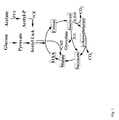
- glutamicum is a good candidate for studying the regulatory mechanism of gene expression, because the expression of the isocitrate lyase and malate synthase, which catalyze the bypass (Fig. 1), is tightly regulated by the availability of carbon sources [Wendisch et al , 1997].
- the isocitrate lyase encoded by the aceA gene catalyzes the conversion of the TCA intermediate, isocitrate, into glyoxylate and succinate [Reinscheid et al , 1994a].
- the malate synthase encoded by the aceB gene catalyzes subsequent condensation of glyoxylate with acetyl-CoA to produce malate, which in turn enters the TCA cycle [Lee and Sinskey, 1994; Reinscheid et al , 1994b].
- the aceA and aceB genes are derepressed by two-carbon compounds, such as acetate provided as the sole source of carbon, conserving the acetate carbon for the biosynthesis of cell material by bypassing the CO 2 -generating steps of the TCA cycle.
- Glucose supplied as a carbon source, represses the aceA and aceB genes.
- the expression of the glyoxylate bypass enzymes is regulated at the level of transcription by the available carbon sources [Wendisch et al , 1997], but the mechanism of transcriptional regulation is largely unknown, although Wendisch et al suggested the involvement of acetyl-CoA as the signaling molecule [Wendisch et al , 1997].
- the IclR repressor is known to be responsible for the regulation of the aceBAK operon [Chung et al , 1988; Sunnarborg et al , 1990].
- the expression of iclR is regulated by FadR which is known to regulate the expression of the genes involved in the fatty acid metabolism.
- FadR FadR which is known to regulate the expression of the genes involved in the fatty acid metabolism.
- the present invention provides novel polypeptide molecules which have the ability to repress the gene expression of at least the aceB gene of Corynebacterium glutamicum. These molecules are referred to as glxR molecules (glyoxylate bypass regulators). Another aspect of the invention relates to polynucleotide sequences which code for the above-mentioned glxR molecules. Another aspect of the invention relates to the use of glxR molecules for influencing the synthesis of amino acids in hosts such as Corynebacteria.
- the present invention provides novel polypeptide molecules which have the ability to repress the gene expression of at least the aceB gene of Corynebacterium glutamicum.
- the isolation of the glxR molecule having the polypeptide sequence depicted in SEQ ID NO:1 is described in the experimental section.
- Polynucleotide sequences encoding the glxR molecules and glxR muteins can be prepared by back-translation of the respective polypeptide sequences according to the genetic code and chemical synthesis of said polynucleotide sequences. The isolation of the polynucleotide sequence encoding the glxR molecule according to SEQ ID NO:1 is described in the experimental section.
- Another aspect of the invention is the use of the glxR molecules and the respective polynucleotide sequences for modulating at least the expression of the aceB gene of C.glutamicum.
- a polynucleotide sequence encoding a glxR molecule is recombinantly introduced in a host organism of the genus Corynebacterium which has a functional aceB gene. At least the gene expression of this aceB gene is modulated on the transcriptional level compared to the naturally occuring genome organization of Corynebacteria.
- an antisense molecule to the polynucleotide sequence encoding a glxR molecule is introduced to a host organism.
- This antisense molecule reduces the expression of the glxR gene and effects an amount of glxR molecules in the host which is lower than the naturally occuring amount. This results in a higher transcription rate of the aceB gene.
- polynucleotide sequence encoding a glxR molecule is deleted partially or completely in the host organism. This results in a higher transcription rate of the aceB gene.
- the glyoxylate bypass is influenced directly.
- the modulation can be in both directions i.e. up-regulation and down-regulation.
- the metabolic flux of amino acids and intermediates thereof can be influenced effectively in Corynebacterium.
- Corynebacterium is used as an organism for the production of amino acids, preferably of lysine, glutamate and methionine, the influence on the glyoxylate bypass via the glxR molecules can be used to shift the production of amino acids in Corynebacterium. In some cases it will be advantageous to shift production of the desired amino acid to higher amounts whereas in some other cases a shift in the opposite direction is desired, e.g. in order to block the synthesis of unwanted intermediates.
- the influence of the glyoxylate bypass by the glxR molecules is an effective way to design the metabolic capacity of Corynebacteria.
- the host cell carrying a clone whose protein product has regulatory effect on the promoter region of aceB , thus affecting the expression of lacZ was expected to form a white colony on the plate.
- 4 white colonies were identified.
- the cloned DNA turned out to contain overlapping inserts.
- plasmid pSL329 (Fig. 2), which carries a 7.8 kb insert, was chosen and analyzed further.
- the DNA region responsible for modulating the ⁇ -galactosidase activity was identified by patching cells carrying the subclones on LB media containing X-gal (Fig. 2). In accordance with the color test data, E.
- coli DH5 ⁇ F'-145 cells carrying plasmid pSL329 showed 2.5 mU of ⁇ -galactosidase activity, a 90% reduction compared to the parental strain which showed 27 mU of ⁇ -galactosidase activity (Table 3).
- the data suggest that the gene ( glxR , see below) carried in the cloned DNA expresses protein which may bind to the promoter region of the aceB gene to interfere with the expression of lacZ .
- the complete nucleotide sequence of the clone was determined using pSL329-5 as the sequencing template.
- An ORF consisted of 684 bp was found in the central region of the clone.
- the GTG was chosen as the start codon (Fig.3).
- a potential ribosome-binding site of AGGA was located 9 bp upstream from the GTG (Fig. 3).
- the GC content of the ORF was 59%, which is typical of C. glutamicum genes.
- the codon preference was also very similar to the previously reported Corynebacterial genes and, interestingly, it also indicated that the ORF could encode a protein that is expressed at a low level [Malumbres et al , 1993].
- the putative gene product consisted of 228 amino acids (SEQ ID NO:1) encoding a 24,957 Da protein with the predicted isoelectric point of 7.0.
- the translated amino-acid sequence of the ORF was compared with the sequences in the protein database.
- a putative transcriptional regulatory protein of Mycobacterium tuberculosis (E70790) and a putative transcriptional regulatory protein of Streptomyces coelicolor (T36556) gave the highest score with the amino acid identity of 78 and 53%, respectively.
- the proteins whose roles are known the cyclic AMP receptor protein (CRP) of Vibrio cholerae (NP232242), Salmonella typhimurium (A26049), and E.
- CRP cyclic AMP receptor protein
- coli J01598 gave the highest score with approximately 27% identity.
- Close analysis of the amino acid sequences revealed 2 conserved motifs that may be involved in the catalytic activity of the enzyme (Fig 3). Amino acids from 13 to 102 showed a pattern of conserved residues anticipated for a cAMP-binding domain, showing 31% identity with consensus sequences for cNMP-binding domains (Fig. 4).
- a helix-turn-helix DNA binding motif of CRP/FNR family was identified in the carboxy terminal region (from amino acid 170 to 218) of the encoded protein. It showed 41% identity with the helix-turn-helix motif of CRP (Fig. 4).
- the Corynebacterial gene we named the Corynebacterial gene as glxR ( gl yo x ylate bypass r egulator).
- plasmid pSL329-5 As the first step to study the role of glxR , plasmid pSL329-5, a glxR clone, was introduced into C. glutamicum AS019E12 and the effect was monitored. As shown in Fig. 6AB, the presence of a glxR clone in multicopy significantly affected the growth of the host cell grown on glucose or acetate as the carbon source. As shown in Table 2, the growth impairment observed in acetate minimal medium was apparently due to the decrease of the glyoxylate bypass enzymes, such as malate synthease and isocitrate lyase. The enzymatic activity of isocitrate dehydrogenase, a TCA cycle enzyme, was unaffected.
- glxR muteins Starting from the original glxR polypeptide sequence (SEQ ID NO:1) a lot of functional equivalent glxR muteins can be prepared by substituting, by inserting or by deleting one or more of the amino acids of SEQ ID NO:1.
- Functional equivalent muteins means that these muteins have still the ability to bind to cAMP and to repress the expression, specifically the transcription of the aceB gene of C. glutamicum in an order of magnitude which is the same as with glxR having the SEQ ID NO:1.
- the preparation of glxR muteins is preferably done by well known genetic engineering techniques such as site directed mutagenesis of the respective encoding polynucleotide sequences.
- the glxR muteins differ from the SEQ ID NO:1 sequence in up to 20%, preferred up to 15%, most preferred up to 10% and very most preferred up to 5% of the amino acid sequence.
- the glxR muteins possess an intact cAMP binding domain and an intact helix-turn-helix DNA binding motif as defined for example in figure 4.
- E. coli DH5 ⁇ F' was used for the construction and propagation of plasmids.
- E. coli JM105 was used to express GlxR from pKK- glxR .
- Operon fusion of P aceB -lacZ constructed on plasmid pRS415 was transferred to the chromosome of E. coli strains using ⁇ RS415 lambda phage as described by Simons et al . [Simons et al , 1987]. Otherwise stated, E. coli and C.
- glutamicum cells were cultured at 37°C in LB [Sambrook et al , 1989] and at 30°C in MB [Follettie et al, 1993], respectively.
- Minimal media for E. coli and C. glutamicum were M9 [Sambrook et al , 1989] and MCGC [von der Osten, 1989], respectively.
- Carbon sources were added to the minimal medium in following amounts: glucose, 1%; acetate, 2%.
- Antibiotics were added in following amounts: ampicillin, 50 ⁇ g/ml; tetracycline, 20 ⁇ g/ml; kanamycin, 20 ⁇ g/ml.
- X-gal and cAMP were added to medium at 40 ⁇ g/ml and 8 mM, respectively.
- IPTG was added to the final concentration of 1 mM or 0.3 mM.
- the genomic library of C. glutamicum AS019 was constructed as previously described [Lee and Sinskey, 1994]. It was made of 4 to 13 kb MboI fragments cloned into the E. coli-Corynebacterium shuttle vector pMT1. E. coli DH5 ⁇ F' cells were transformed with pSL145 [Kim et al , 2001], and the resulting E. coli DH5 ⁇ F'-145 strain was used as the host for screening the library. Plasmid pSL 145 carries lacZYA fused to the downstream of the aceB promoter region. For nucleotide sequence analysis of glxR, plasmids pSL329-5 was used as the template.
- the complete nucleotide sequence of glxR was determined commercially at the Korea Research Center for Basic Sciences (Taejon, Korea) using universal and synthetic oligonucleotide primers.
- a sequence similarity search of nucleotide and amino acid sequences was performed at the National Center for Biotechnology Information (http://www.ncbi.nlm.nih.gov/BLAST/) using BLAST [Altschul et al , 1990; Altschul et al , 1997].
- Pairwise sequence alignments were performed at the website of ExPASy Proteomics Tools (http://www.expasy.ch/tools/) using the ClustalW alignment method [Thompson et al , 1994].
- Plasmids pSL329-1, pSL329-2, pSL329-3 and pSL329-5 were made by ligating the 5.1 kb Eco RI- Xba I fragment, 5.2 kb Xho I fragment, 2.7 kb Sma I- Eco RI fragment, and 1.8 kb Kpn I fragment of pSL329 into the pMT1 vector digested with Sma I- Xba I, Xho I, and Kpn I, respectively.
- Plasmid pSL329-4 was made by deleting the 0.2 kb Sal I fragment of pSL329-3.
- Plasmid pSL08- glxR was constructed by inserting the 1.8 kb Kpn I- Bam HI frgment of pSL329-5 into pSL08 which was digested with Xba I and blunt-ended with Klenow enzymes. The direction of transcription of the cloned glxR gene was opposite to that of the aceB gene.
- Plasmid pKK- glxR was constructed by amplifying the 828 bp fragment of pSL329-5 with C1 and C2 primers and inserting the resulting fragment into the Eco RI site of pKK223-3. The 828 bp fragment carries the glxR gene and its ribosome-binding site.
- Plasmid pMAL- glxR was constructed as follows. The glxR coding region was amplified with primers of D1 and D2 using plasmid pSL329-5 as a template. The 0.89 kb PCR product was treated with Eco RI and Sal I, and ligated into the Eco RI- Sal I digested and dephosphorylated pMAL-c2.
- Plasmid pMAL- glxR was used to express GlxR.
- the vector carries glxR fused to malE and expresses MBP-GlxR fusion protein.
- the cleavage of the fusion protein with Factor Xa releases a free GlxR protein with a string of amino acids (Ile-Ser-Val-Phe) attatched to the N-terminus of the protein.
- the fusion protein was expressed and purified as suggested by the manufacturer of the vector pMAL-c2 (New England Biolabs, Beverly, USA).
- GlxR was separated from MBP by Q-Sepharose Fast Flow column chromatography (Amersham Pharmacia Biotech, 2.8 cm by 11 cm) using a linear NaCl gradient of 25-500 mM. Fractions containing the GlxR were pooled and the protein was concentrated by dialysis against PEG 8,000.
- the probe DNA was prepared as follows.
- the 200 bp DNA fragment which includes an upstream region of the aceB gene was amplified using E1 and E2 primers and subsequently labeled with [ ⁇ - 32 P]dATP using T4 polynucleotide kinase.
- a binding reaction mixture of 10 ⁇ l contained the labeled DNA fragments, various amount of purified GlxR, 10 mM phosphate buffer, 137 mM NaCl, 2.7 mM KCl, 3 ⁇ g of bovine serum albumin, and 1 ⁇ g of poly[dI-dC] ⁇ poly[dI-dC].
- the binding of GlxR to the probe DNA was performed at room temperature for 15 min and the mixture was analyzed in 6% native polyacrylamide gels as described [Sambrook et al , 1989]. When necessary, 0.2 mM cAMP was included in the binding buffer, gels, and the running buffer.
- Corynebacterial cell extracts were prepared as described [Follettie et al , 1993].
- the enzymatic activities of ⁇ -galactosidase, malate synthase, isocitrate lyase, isocitrate dehydrogenase, and acetate kinase were determined as previously described. [Miller, 1972; Gubler etal , 1993; Dixon and Kornberg, 1959; Garnak and Reeves, 1979; van Dyk and LaRossa, 1987] Protein was measured by the method of Bradford, with bovine serum albumin as the standard [Bradford, 1976]. SDS-PAGE and Western blot analysis were performed as previously described [Laemmli, 1970].
- the anti-GlxR antiserum was prepared commercially at Koma Biotech (Seoul, Korea) using a mouse as the host.
- glxR gene might be primarily involved in the regulation of glyoxylate bypass genes, such as aceA and aceB , we can not rule out the possibility that the gene may also be involved in the expression of other genes.
- the growth retardation by glxR in glucose minimal medium may suggest interaction of the GlxR protein with other promoters, although this could be due to the sequence-independent affinity for DNA as observed with CRP.
- failure to construct a glxR mutant strain using the cloned DNA may suggest essentiality of the gene (data not shown), suggesting the involvement of the glxR gene for the expression of other genes. In this respect, like CRP of E.
- the GlxR protein could function as an activator for other genes, making the gene essential. It is interesting to know that the encoded protein sequence of the glxR gene shows homology with CRP of enteric bacteria. CRP plays a role in carbon catabolite repression, which is governed by cAMP in enteric bacteria, such as E. coli .
- the major similarities between GlxR and CRP include, 1) amino acid sequence similarity, 2) the presence of cAMP-binding motif, 3) the involvement of cAMP for modulation of the DNA-binding activity, and 4) differential sensitivity of the protein to protease in the presence of cAMP. Despite these similarities, however, the role of GlxR appears to be distinct form that of CRP. For instance, the glxR gene could not complement the crp mutant of E. coli (data not shown).
- Cyclic AMP is an important signaling molecule controlling the expression of many genes. Involvement of cAMP has been reported in many bacteria, such as enteric bacteria, Bacillus species, and Streptomyces species [Botsford and Harman, 1992]. In E. coli , the molecule plays important roles for carbon catabolite genes, such as lactose and arabinose operons [Epstein et al , 1975]. Under conditions of carbon starvation, the intracellular concentration of cAMP is elevated. Although this is a general phenomenon, there are also exceptions. For example, Brevibacterium species apparently keep the concentration of cAMP low when grown on glucose minimal media [Peter et al , 1991]. This is similar to what we found with C. glutamicum.
- a pyruvate-stimulated adenylate cyclase has a sequence related to the fes / fps oncogenes and to eukaryotic cyclases. Mol. Microbiol . 5 :1175-1181.
Landscapes
- Chemical & Material Sciences (AREA)
- Health & Medical Sciences (AREA)
- Organic Chemistry (AREA)
- Genetics & Genomics (AREA)
- Life Sciences & Earth Sciences (AREA)
- Molecular Biology (AREA)
- Engineering & Computer Science (AREA)
- General Health & Medical Sciences (AREA)
- Biophysics (AREA)
- Biochemistry (AREA)
- Medicinal Chemistry (AREA)
- Proteomics, Peptides & Aminoacids (AREA)
- Gastroenterology & Hepatology (AREA)
- Biomedical Technology (AREA)
- Biotechnology (AREA)
- General Engineering & Computer Science (AREA)
- Bioinformatics & Cheminformatics (AREA)
- Wood Science & Technology (AREA)
- Zoology (AREA)
- Physics & Mathematics (AREA)
- Plant Pathology (AREA)
- Microbiology (AREA)
- Preparation Of Compounds By Using Micro-Organisms (AREA)
- Micro-Organisms Or Cultivation Processes Thereof (AREA)
- Peptides Or Proteins (AREA)
Abstract
Description
- Corynebacterium glutamicum is a gram-positiv organism and has been well known as the host organism for the industrial production of amino acids, such as glutamate and lysine [Kinoshita, 1995]. Due to the role of the organism in amino acid production, the catabolic and anabolic pathways leading to the industrially important amino acids have been studied in detail during the past decades [for review see Sahm et al, 1995; Malumbres and Martin, 1996]. Although necessary for the in-depth understanding of the metabolic pathways, the information on the regulatory mechanism of gene expression in the organism is very limited.
The glyoxylate bypass of C. glutamicum is a good candidate for studying the regulatory mechanism of gene expression, because the expression of the isocitrate lyase and malate synthase, which catalyze the bypass (Fig. 1), is tightly regulated by the availability of carbon sources [Wendisch et al, 1997].
The isocitrate lyase encoded by the aceA gene catalyzes the conversion of the TCA intermediate, isocitrate, into glyoxylate and succinate [Reinscheid et al, 1994a]. The malate synthase encoded by the aceB gene catalyzes subsequent condensation of glyoxylate with acetyl-CoA to produce malate, which in turn enters the TCA cycle [Lee and Sinskey, 1994; Reinscheid et al, 1994b]. The aceA and aceB genes are derepressed by two-carbon compounds, such as acetate provided as the sole source of carbon, conserving the acetate carbon for the biosynthesis of cell material by bypassing the CO2-generating steps of the TCA cycle. Glucose, supplied as a carbon source, represses the aceA and aceB genes. The expression of the glyoxylate bypass enzymes is regulated at the level of transcription by the available carbon sources [Wendisch et al, 1997], but the mechanism of transcriptional regulation is largely unknown, although Wendisch et al suggested the involvement of acetyl-CoA as the signaling molecule [Wendisch et al, 1997]. In Escherichia coli, the IclR repressor is known to be responsible for the regulation of the aceBAK operon [Chung et al, 1988; Sunnarborg et al, 1990].
The expression of iclR is regulated by FadR which is known to regulate the expression of the genes involved in the fatty acid metabolism. Although the structural organization of the aceA and aceB genes in C. glutamicum is different from that of E. coil, the regulation of gene expression by the available carbon sources appear to have common features. - The present invention provides novel polypeptide molecules which have the ability to repress the gene expression of at least the aceB gene of Corynebacterium glutamicum. These molecules are referred to as glxR molecules (glyoxylate bypass regulators). Another aspect of the invention relates to polynucleotide sequences which code for the above-mentioned glxR molecules. Another aspect of the invention relates to the use of glxR molecules for influencing the synthesis of amino acids in hosts such as Corynebacteria.
- The present invention provides novel polypeptide molecules which have the ability to repress the gene expression of at least the aceB gene of Corynebacterium glutamicum. The isolation of the glxR molecule having the polypeptide sequence depicted in SEQ ID NO:1 is described in the experimental section.
- The preparation of glxR muteins, having the ability to bind cAMP and repress the transcription of the aceB gene coding for malat synthase of C.glutamicum is described in the experimental section.
- Polynucleotide sequences encoding the glxR molecules and glxR muteins can be prepared by back-translation of the respective polypeptide sequences according to the genetic code and chemical synthesis of said polynucleotide sequences. The isolation of the polynucleotide sequence encoding the glxR molecule according to SEQ ID NO:1 is described in the experimental section.
- Another aspect of the invention is the use of the glxR molecules and the respective polynucleotide sequences for modulating at least the expression of the aceB gene of C.glutamicum. In one embodiment a polynucleotide sequence encoding a glxR molecule is recombinantly introduced in a host organism of the genus Corynebacterium which has a functional aceB gene. At least the gene expression of this aceB gene is modulated on the transcriptional level compared to the naturally occuring genome organization of Corynebacteria. By expressing the glxR molecules in an amount distinctly higher as the naturally occurring amount, a more effective gene repression of aceB is effected.
- In another embodiment of the invention an antisense molecule to the polynucleotide sequence encoding a glxR molecule is introduced to a host organism. This antisense molecule reduces the expression of the glxR gene and effects an amount of glxR molecules in the host which is lower than the naturally occuring amount. This results in a higher transcription rate of the aceB gene.
- In another embodiment of the invention the polynucleotide sequence encoding a glxR molecule is deleted partially or completely in the host organism. This results in a higher transcription rate of the aceB gene.
- By modulation of the aceB gene expression the glyoxylate bypass is influenced directly. The modulation can be in both directions i.e. up-regulation and down-regulation. By influencing the glyoxylate bypass the metabolic flux of amino acids and intermediates thereof can be influenced effectively in Corynebacterium.
- As Corynebacterium is used as an organism for the production of amino acids, preferably of lysine, glutamate and methionine, the influence on the glyoxylate bypass via the glxR molecules can be used to shift the production of amino acids in Corynebacterium. In some cases it will be advantageous to shift production of the desired amino acid to higher amounts whereas in some other cases a shift in the opposite direction is desired, e.g. in order to block the synthesis of unwanted intermediates.
- The influence of the glyoxylate bypass by the glxR molecules is an effective way to design the metabolic capacity of Corynebacteria.
- Isolation of glxR. To isolate genes whose protein products exert regulatory effect on the expression of the C. glutamicum aceB gene, we utilized pSL145 [Kim et al, 2001] carrying the enteric lac operon fused to the downstream of Corynebacterial aceB as the reporter plasmid. With the plasmid, modulation of aceB expression at the promoter region is reflected as changes in the β-galactosidase activity. E. coli DH5αF' cells carrying pSL145 (E. coli DH5αF'-145) formed blue colonies on LB plates containing X-gal and were used as the host for screening the Corynebacterial library. The host cell carrying a clone whose protein product has regulatory effect on the promoter region of aceB, thus affecting the expression of lacZ, was expected to form a white colony on the plate. Among a total of 20,000 colonies screened, 4 white colonies were identified. The cloned DNA turned out to contain overlapping inserts. Among the clones, plasmid pSL329 (Fig. 2), which carries a 7.8 kb insert, was chosen and analyzed further. The DNA region responsible for modulating the β-galactosidase activity was identified by patching cells carrying the subclones on LB media containing X-gal (Fig. 2). In accordance with the color test data, E. coli DH5αF'-145 cells carrying plasmid pSL329 showed 2.5 mU of β-galactosidase activity, a 90% reduction compared to the parental strain which showed 27 mU of β-galactosidase activity (Table 3). The data suggest that the gene (glxR, see below) carried in the cloned DNA expresses protein which may bind to the promoter region of the aceB gene to interfere with the expression of lacZ.
- The complete nucleotide sequence of the clone was determined using pSL329-5 as the sequencing template. An ORF consisted of 684 bp was found in the central region of the clone. As based on the similarities with other proteins (see below), the GTG was chosen as the start codon (Fig.3). A potential ribosome-binding site of AGGA was located 9 bp upstream from the GTG (Fig. 3). The GC content of the ORF was 59%, which is typical of C. glutamicum genes. The codon preference was also very similar to the previously reported Corynebacterial genes and, interestingly, it also indicated that the ORF could encode a protein that is expressed at a low level [Malumbres et al, 1993].
The putative gene product consisted of 228 amino acids (SEQ ID NO:1) encoding a 24,957 Da protein with the predicted isoelectric point of 7.0. The translated amino-acid sequence of the ORF was compared with the sequences in the protein database. Among the known proteins, a putative transcriptional regulatory protein of Mycobacterium tuberculosis (E70790) and a putative transcriptional regulatory protein of Streptomyces coelicolor (T36556) gave the highest score with the amino acid identity of 78 and 53%, respectively. Among the proteins whose roles are known, the cyclic AMP receptor protein (CRP) of Vibrio cholerae (NP232242), Salmonella typhimurium (A26049), and E. coli (J01598) gave the highest score with approximately 27% identity. Close analysis of the amino acid sequences revealed 2 conserved motifs that may be involved in the catalytic activity of the enzyme (Fig 3). Amino acids from 13 to 102 showed a pattern of conserved residues anticipated for a cAMP-binding domain, showing 31% identity with consensus sequences for cNMP-binding domains (Fig. 4). In addition, a helix-turn-helix DNA binding motif of CRP/FNR family was identified in the carboxy terminal region (fromamino acid 170 to 218) of the encoded protein. It showed 41% identity with the helix-turn-helix motif of CRP (Fig. 4). Based on the characteristics of the cloned gene (see below), we named the Corynebacterial gene as glxR ( gl yo x ylate bypass r egulator). - Cloning the glxR coding region including the RBS into the pKK223-3 vector and introducing the resulting vector into E. coli resulted in the expression of M r of 25,000 protein on SDS-PAGE (Fig. 5A). The observed molecular weight agreed with the predicted Mw of the protein. The GlxR protein was purified by utilizing the MBP fusion technique. As expected, the purified protein showed M r of 25,000 on SDS-PAGE (Fig. 5B). The native Mw of the purified protein was 44,000 Da as determined by gel-filtration column chromatography (data not shown). This suggests that the proteins are likely to form dimers like most other DNA-binding proteins.
- As the first step to study the role of glxR, plasmid pSL329-5, a glxR clone, was introduced into C. glutamicum AS019E12 and the effect was monitored. As shown in Fig. 6AB, the presence of a glxR clone in multicopy significantly affected the growth of the host cell grown on glucose or acetate as the carbon source. As shown in Table 2, the growth impairment observed in acetate minimal medium was apparently due to the decrease of the glyoxylate bypass enzymes, such as malate synthease and isocitrate lyase. The enzymatic activity of isocitrate dehydrogenase, a TCA cycle enzyme, was unaffected. The reduction in the activity was due to the reduction in the amount of expressed enzymes as judged by SDS-PAGE (data not shown). However, when the growth experiment was carried out in the presence of cAMP, an interesting result was observed. Unlike the growth in glucose minimal medium (Fig. 6A), growth of cells carrying the glxR clone in acetate minimal medium was severely affected by cAMP (Fig. 6B). Under both growth conditions with glucose or acetate as the carbon source, the amount of expressed GlxR was unaffected as evidenced by Western blot analysis (data not shown). In agreement with the data, as shown in Table 3, the modulating activity of a glxR clone at the Corynebacterial aceB promoter was not observed in the cya mutant strain of E. coli. In addition, the purified GlxR protein was more resistant to digestion by trypsin in the presence of cAMP (data not shown). These data suggest that cAMP is involved in modulating the GlxR activity. It also suggests that cAMP might be a signaling molecule for controlling the expression of genes involved in the utilization of various carbon sources.
- Knowing that GlxR is involved in controlling the expression of aceB, we tested binding of purified GlxR on the promoter region of the aceB gene. For the purpose a DNA fragment which carries the promoter region of the aceB gene was utilized (Fig. 7A). In the presence of cAMP, addition of increasing amounts of purified GlxR protein to the probe resulted in two differently shifted bands (Fig. 7C). The upper band appeared later than the lower band, suggesting that the upper bands might be due to the oligormerization of the GlxR proteins. Replacing cAMP with acetyl-CoA which has been suggested as a modulator for the glyoxylate bypass enzymes [Wendisch et al, 1997] did not result in any DNA shifts with the probe (data not shown). Knowing that GlxR protein may form oligomers as evidenced by gel mobility assay, we tested oligomerization of purified GlxR with EDAC, a crosslinking agent. Irrespective of the presence of cAMP, crosslinked structures of dimmers and tetramers were observed.
- Starting from the original glxR polypeptide sequence (SEQ ID NO:1) a lot of functional equivalent glxR muteins can be prepared by substituting, by inserting or by deleting one or more of the amino acids of SEQ ID NO:1. Functional equivalent muteins means that these muteins have still the ability to bind to cAMP and to repress the expression, specifically the transcription of the aceB gene of C. glutamicum in an order of magnitude which is the same as with glxR having the SEQ ID NO:1. The preparation of glxR muteins is preferably done by well known genetic engineering techniques such as site directed mutagenesis of the respective encoding polynucleotide sequences.
- The glxR muteins differ from the SEQ ID NO:1 sequence in up to 20%, preferred up to 15%, most preferred up to 10% and very most preferred up to 5% of the amino acid sequence.
- It is important, that the glxR muteins possess an intact cAMP binding domain and an intact helix-turn-helix DNA binding motif as defined for example in figure 4.
- Bacterial strains, plasmids, and growth conditions. All strains and plasmids used in this study are listed in Table 1. E. coli DH5αF' was used for the construction and propagation of plasmids. E. coli JM105 was used to express GlxR from pKK-glxR. Operon fusion of PaceB-lacZ constructed on plasmid pRS415 was transferred to the chromosome of E. coli strains using λRS415 lambda phage as described by Simons et al. [Simons et al, 1987]. Otherwise stated, E. coli and C. glutamicum cells were cultured at 37°C in LB [Sambrook et al, 1989] and at 30°C in MB [Follettie et al, 1993], respectively. Minimal media for E. coli and C. glutamicum were M9 [Sambrook et al, 1989] and MCGC [von der Osten, 1989], respectively. Carbon sources were added to the minimal medium in following amounts: glucose, 1%; acetate, 2%. Antibiotics were added in following amounts: ampicillin, 50 µg/ml; tetracycline, 20 µg/ml; kanamycin, 20 µg/ml. X-gal and cAMP were added to medium at 40 µg/ml and 8 mM, respectively. For the expression of proteins, IPTG was added to the final concentration of 1 mM or 0.3 mM.
- Standard molecular cloning, transformation, and electrophoresis procedures were used [Sambrook et al, 1989]. Plasmids were introduced into C. glutamicum cells by electroporation [Follettie et al, 1993]. Mini plasmid preparation for C. glutamicum cells was performed as described [Yoshihama et al, 1985]. Chromosomal DNA from C. glutamicum AS019 was prepared as described [Tomioka et al, 1981]. Restriction enzymes and DNA modifying enzymes were purchased from Takara Shuzo Co. (Shiga, Japan) and New England Biolabs (Beverly, USA) and used as recommended by the manufacturer.
- The genomic library of C. glutamicumAS019 was constructed as previously described [Lee and Sinskey, 1994]. It was made of 4 to 13 kb MboI fragments cloned into the E. coli-Corynebacterium shuttle vector pMT1. E. coli DH5αF' cells were transformed with pSL145 [Kim et al, 2001], and the resulting E. coli DH5αF'-145 strain was used as the host for screening the library. Plasmid pSL 145 carries lacZYA fused to the downstream of the aceB promoter region.
For nucleotide sequence analysis of glxR, plasmids pSL329-5 was used as the template. The complete nucleotide sequence of glxR was determined commercially at the Korea Research Center for Basic Sciences (Taejon, Korea) using universal and synthetic oligonucleotide primers. A sequence similarity search of nucleotide and amino acid sequences was performed at the National Center for Biotechnology Information (http://www.ncbi.nlm.nih.gov/BLAST/) using BLAST [Altschul et al, 1990; Altschul et al, 1997]. Pairwise sequence alignments were performed at the website of ExPASy Proteomics Tools (http://www.expasy.ch/tools/) using the ClustalW alignment method [Thompson et al, 1994]. - Plasmids pSL329-1, pSL329-2, pSL329-3 and pSL329-5 were made by ligating the 5.1 kb EcoRI-XbaI fragment, 5.2 kb XhoI fragment, 2.7 kb SmaI-EcoRI fragment, and 1.8 kb KpnI fragment of pSL329 into the pMT1 vector digested with SmaI-XbaI, XhoI, and KpnI, respectively. Plasmid pSL329-4 was made by deleting the 0.2 kb SalI fragment of pSL329-3. Plasmid pSL08-glxR was constructed by inserting the 1.8 kb KpnI-BamHI frgment of pSL329-5 into pSL08 which was digested with XbaI and blunt-ended with Klenow enzymes. The direction of transcription of the cloned glxR gene was opposite to that of the aceB gene. Plasmid pKK-glxR was constructed by amplifying the 828 bp fragment of pSL329-5 with C1 and C2 primers and inserting the resulting fragment into the EcoRI site of pKK223-3. The 828 bp fragment carries the glxR gene and its ribosome-binding site. Plasmid pMAL-glxR was constructed as follows. The glxR coding region was amplified with primers of D1 and D2 using plasmid pSL329-5 as a template. The 0.89 kb PCR product was treated with EcoRI and SalI, and ligated into the EcoRI-SalI digested and dephosphorylated pMAL-c2.
- Plasmid pMAL-glxR was used to express GlxR. The vector carries glxR fused to malE and expresses MBP-GlxR fusion protein. The cleavage of the fusion protein with Factor Xa releases a free GlxR protein with a string of amino acids (Ile-Ser-Val-Phe) attatched to the N-terminus of the protein. The fusion protein was expressed and purified as suggested by the manufacturer of the vector pMAL-c2 (New England Biolabs, Beverly, USA). GlxR was separated from MBP by Q-Sepharose Fast Flow column chromatography (Amersham Pharmacia Biotech, 2.8 cm by 11 cm) using a linear NaCl gradient of 25-500 mM. Fractions containing the GlxR were pooled and the protein was concentrated by dialysis against PEG 8,000.
- Gel mobility shift assay. The probe DNA was prepared as follows. The 200 bp DNA fragment which includes an upstream region of the aceB gene (from 120 to 320 bp upstream from the ATG start codon) was amplified using E1 and E2 primers and subsequently labeled with [γ-32P]dATP using T4 polynucleotide kinase. A binding reaction mixture of 10 µl contained the labeled DNA fragments, various amount of purified GlxR, 10 mM phosphate buffer, 137 mM NaCl, 2.7 mM KCl, 3 µg of bovine serum albumin, and 1 µg of poly[dI-dC] · poly[dI-dC]. The binding of GlxR to the probe DNA was performed at room temperature for 15 min and the mixture was analyzed in 6% native polyacrylamide gels as described [Sambrook et al, 1989]. When necessary, 0.2 mM cAMP was included in the binding buffer, gels, and the running buffer.
- Corynebacterial cell extracts were prepared as described [Follettie et al, 1993]. The enzymatic activities of β-galactosidase, malate synthase, isocitrate lyase, isocitrate dehydrogenase, and acetate kinase were determined as previously described. [Miller, 1972; Gubler etal, 1993; Dixon and Kornberg, 1959; Garnak and Reeves, 1979; van Dyk and LaRossa, 1987] Protein was measured by the method of Bradford, with bovine serum albumin as the standard [Bradford, 1976]. SDS-PAGE and Western blot analysis were performed as previously described [Laemmli, 1970]. The anti-GlxR antiserum was prepared commercially at Koma Biotech (Seoul, Korea) using a mouse as the host.
- The nucleotide sequence of glxR was deposited in GenBank under the accession number of AF293334. Discussion
- In this study, we showed involvement of GlxR in the regulation of the aceB gene which is involved in the utilization of acetate as a carbon source. The evidences were, 1) modulation of the β-galactosedase activity in the reporter-carrying E. coli, 2) presence of a putative DNA-binding domain in the encoded protein sequence, 3) decresed expression of glyoxylate bypass enzymes in the presence of introduced glxR clone, and 4) DNA binding of the purified GlxR on the aceB promoter region. In addition, like other DNA-binding proteins, the finding that the protein present as dimers with relatively basic pI also support regulatory role for the protein. Although our data suggest that the glxR gene might be primarily involved in the regulation of glyoxylate bypass genes, such as aceA and aceB, we can not rule out the possibility that the gene may also be involved in the expression of other genes. The growth retardation by glxR in glucose minimal medium may suggest interaction of the GlxR protein with other promoters, although this could be due to the sequence-independent affinity for DNA as observed with CRP. Despite numerous attempts, failure to construct a glxR mutant strain using the cloned DNA may suggest essentiality of the gene (data not shown), suggesting the involvement of the glxR gene for the expression of other genes. In this respect, like CRP of E. coli, the GlxR protein could function as an activator for other genes, making the gene essential.
It is interesting to know that the encoded protein sequence of the glxR gene shows homology with CRP of enteric bacteria.
CRP plays a role in carbon catabolite repression, which is governed by cAMP in enteric bacteria, such as E. coli. The major similarities between GlxR and CRP include, 1) amino acid sequence similarity, 2) the presence of cAMP-binding motif, 3) the involvement of cAMP for modulation of the DNA-binding activity, and 4) differential sensitivity of the protein to protease in the presence of cAMP. Despite these similarities, however, the role of GlxR appears to be distinct form that of CRP. For instance, the glxR gene could not complement the crp mutant of E. coli (data not shown). - Cyclic AMP is an important signaling molecule controlling the expression of many genes. Involvement of cAMP has been reported in many bacteria, such as enteric bacteria, Bacillus species, and Streptomyces species [Botsford and Harman, 1992]. In E. coli, the molecule plays important roles for carbon catabolite genes, such as lactose and arabinose operons [Epstein et al, 1975]. Under conditions of carbon starvation, the intracellular concentration of cAMP is elevated. Although this is a general phenomenon, there are also exceptions. For example, Brevibacterium species apparently keep the concentration of cAMP low when grown on glucose minimal media [Peter et al, 1991]. This is similar to what we found with C. glutamicum. As evidenced in the growth experiment (Fig. 6), the intracellular concentration of cAMP may be kept low when grown on acetate. Decreased growth of cells carrying the glxR clone in the presence of cAMP may support this hypothesis. This is further supported by the data obtained in the glucose minimal medium which showed no apparent effect with cAMP. Although, this is in contrast to the dogma established in E. coli, in Streptomyces species, it has been claimed that cAMP is present at highest levels during periods of rapid growth rather than glucose limited conditions and thus signals the availability rather than the lack of carbon sources [Dobrová et al., 1984]. Although cAMP-independent mechanism of catabolite repression in low GC content Gm+ bacteria, such as Bacillus sp. has been studied in detail, the information in high GC content Gm+ bacteria, such as Corynebacterium species, is wholly lacking (for reviews see Botsford and Harman, 1992; Saier Jr., 1996). In this respect, this study shows the first evidence for the involvement of cAMP in the expression of genes involved in carbon utilization. In conclusion, we successfully isolated a regulatory gene from C. glutamicum using a reporter plasmid carrying the Corynebacterial aceB promoter and enteric lac operon. Although the glxR gene appear to encode repressor-like proteins for the aceA and aceB genes, there is a possibility that the gene might be also involved in the expression of other genes.
- Altschul, S.F., W. Gish, W. Miller, E.W. Myers, and D.J. Lipman. 1990. Basic local alignment search tool. J. Mol. Biol. 215:403-410.
- Altschul, S.F., T.L. Madden, A.A. Schäffer, J. Zhang, Z. Zhang, W. Miller, and D.J. Lipman. 1997. Gapped BLAST and PSI-BLAST: a new generation of protein database search programs. Nucleic Acids Res. 25:3389-3402.
- Botsford, J.L. and J. G. Harman. 1992. Cyclic AMP in prokaryotes. Microbiol. Rev. 56:100-122.
- Bradford, M.M. 1976. A rapid and sensitive method for the quantification of microgram quantities of protein utilizing the principle of protein-dye binding. Anal. Biochem. 72:248-254.
- Chung, T., D.J. Klumpp, and D.C. LaPorte. 1988. Glyoxylate bypass operon of Escherichia coli: cloning and determination of the functional map. J. Bacteriol. 170:386-392.
- Cossart, P., and B. Gicquel-Sansey. 1985. Regulation of expression of the crp gene of E. coli K12: In vivo study. J. Bacteriol. 161:454-457.
- Dixon, G.H. and H.L. Kornberg. 1959. Assay methods for key enzymes of the glyoxylate cycle. Blochem. J. 72:3P.
- van Dyk, T.K. and R.A. LaRossa. 1987. Imvolvement of ack-pta operon products in a-ketobutyrate metabolism by Salmonella typhimurium. Mol. Gen. Genet. 207:435-440.
- Dobravá, Z., Naprstek, J., Jiresová, M. and J. Janecek. 1984. cAMP and adenylate cyclase in Streptomyces granaticolor. FEMS Microbiol. Lett. 11:197-200.
- Epstein, W., L.B. Rothman-Denes, and J. Hesse. 1975. Adenosine 3':5'-cyclic monophosphate as mediator of catabolite repression in Escherichia coli. Proc. Nat. Acad. Scl. USA 6:2300-2304.
- Follettie, M.T., O. Peoples, C. Agoropoulou, and A.J. Sinskey. 1993. Gene structure and expression of the Corynebacterium flavum N13 ask-asd operon. J. Bacteriol. 175:4096-4103.
- Garnak, M. and H. Reeves. 1979. Purification and properties of phosphorylated isocitrate dehydrogenase of Escherichia coli. J. Biol. Chem. 254:7915-7920.
- Gubler, M., S.M. Park, M. Jetten, G. Stephanopoulos, and A.J. Sinskey. 1993. Effects of phosphoenol pyruvate carboxylase deficiency on metabolism and lysine production in Corynebacterium glutamicum. Appl. Microbiol. Biotechnol. 40:857-863
- Jetten, M.S.M., M.E. Gubler, S.H. Lee, and A.J. Sinskey. 1994. Structural and functional analysis of pyruvate kinase from Corynebacterium glutamicum. Appl. Environ. Microbiol. 60:2501-2507
- Kim, H.-J., Y. Kim, M.-S. Lee, and H.-S. Lee. 2001. Gene lmrB of Corynebacterium glutamicum confers efflux-mediated resistance to lincomycin. Mol. Cells 12:112-116.
- Kinoshita, S. 1995. Glutamic acid bacteria, p. 115-142. In A.L. Demain, and N. A. Solomon (ed.), Biology of industrial microorganisms. Benzamin/Cummings Publishing Company, London.
- Laemmli, U. K. 1970. Cleavage of structural proteins during the assembly of the head of bacteriophage T4. Nature(London) 227:680-685.
- Lee, H.-S., and A.J. Sinskey. 1994. Molecular characterization of aceB, a gene encoding malate synthase in Corynebacterium glutamicum. J. Microbiol. Biotechnol. 4:256-263.
- Malumbres, M., J.A. Gil, and J. F. Martin. 1993. Codon preference in corynebacteria. Gene 134:15-24.
- Malumbres, M. and J.F. Martin. 1996. Molecular control mechanisms of lysine and Threonine biosynthesis in amino acid-producing corynebacteria: Redirecting carbon flow. FEMS Microbiol. Lett. 143:103-114.
- Miller, J.H. 1972. Experiments in molecular genetics. Cold Spring Harbor Laboratory Press, Cold Spring Harbor, N.Y.
- von der Osten, C. Gioannettie, and A.J. Sinskey. 1989. Design of a defined medium for growth of Corynebacterium glutamicum in which citrate facilitate iron uptake. Biotechnology Letters 11:11-16.
- Peters, E.P., A.F. Wilderspin, S.P. Wood, M.J., J.M. Zvelebil, O. Sezer, and A. Danchin. 1991. A pyruvate-stimulated adenylate cyclase has a sequence related to the fes/fps oncogenes and to eukaryotic cyclases. Mol. Microbiol. 5:1175-1181.
- Reinscheid, D.J., B.J. Eikmanns, and H. Sahm. 1994. Characterization of the isocitrate lyase gene from Corynebacterium glutamicum and biochemical analysis of the enzyme. J. Bacteriol. 176:3474-3483.
- Reinscheid, D.J., B.J. Eikmanns, and H. Sahm. 1994. Malate synthase from Corynebacterium glutamicum: sequence analysis of the gene and biochemical characterization of the enzyme. Microbiology 140:3099-3108.
- Sahm, H., L. Eggeling, B. Eikmanns, and R. Kramer. 1995. Metabolic design in amino acid producing bacterium Corynebacterium glutamicum. FEMS Microbiol. Rev. 16:243-252.
- Saier Jr., M.H. 1996. Cyclic AMP-independent catabolic repression in bacteria. FEMS Microbiol. Lett. 138:97-103.
- Sambrook, J., E.F. Fritsch, and T. Maniatis. 1989. Molecular cloning: a laboratory manual, 2nd ed. Cold Spring Harbor Laboratory, Cold Spring Harbor, N.Y.
- Sanger, F., A.R. Coulson, G.F. Hong, D.F. Hill, and G.B. Peterson. 1982. Nucleotide sequence of bacteriophage λ DNA. J. Mol. Biol. 162:729-773.
- Simons, R. W., F. Houman, and N. Kleckner. 1987. Improved single and multicopy lac-based cloning vectors for protein and operon fusions. Gene 53:85-96.
- Sunnarborg, A., D. Klumpp, T. Chung, and D. C. LaPorte. 1990. Regulation of the glyoxylate bypass operon: cloning and characterization of iclR. J. Bacterial. 172:2642-2649.
- Tomioka, N., K. Shinozaki, and M. Sugiura. 1981. Molecular cloning and characterization of ribosomal RNA genes from a blue-green alga, Anacystis nidulans. Mol. Gen. Genet. 184:359-363.
- Thompson, J.D., D.G. Higgins, and T. J. Gibson. 1994. CLUSTAL W: improving the sensitivity of progressive multiple sequence alignment through sequence weighting, position-specific gap penalties and weight matrix choice. Nucleic Acids Res. 22:4673-4680.
- Wendisch, V.F., M. Spies, D.J. Reinschied, S. Schnicke, H. Sahm, and B.J. Eikmanns. 1997. Regulation of acetate metabolism in Corynebacterium glutamicum: transcriptional control of the isocitrate lyase and malate synthase genes. Arch. Microbiol. 168:262-269.
- Yoshihama, M., K. Higashiro, E.A. Rao, M. Akedo, W.G. Shanabruch, M.T. Follettie, G.C. Walker, and A.J. Sinskey. 1995. Cloning vector system for Corynebacterium glutamicum. J. Bacteriol. 162:591-597.
-
- Figure 1. The glyoxylate bypass and associated pathways of Corynebacterium glutamicum. The glyoxylate bypass is carried out by isocitrate lyase and malate synthase. Abbreviations: ACK, acetate kinase; ICDH, isocitrate dehydrogenase; ICL, isocitrate lyase; MS, malate synthase; OAA, oxaloacetate; PTA, phosphotransacetylase. Dashed arrows indicate multiple steps.
- Figure 2. Schematic diagram of clones and subclones. Plasmids pSL329 was isolated from the Corynebacterial genomic library. The cloning vector pMT1 is not shown. The colony color (blue or white) of the E. coli DH5αF'-145 cells carrying each clone was tested on LB plates containing X-gal, tetracycline, and ampicillin. Abbreviations: B, BamHI; E, EcoRI; K, KpnI; Sa, SalI; Sc, ScaI; Sp, SphI; X, XhoI; Xb, XbaI.
- Figure 3. Schematic diagram of the GlxR protein (Panel A).
- Figure 4. Multiple sequence alignment of the GlxR protein of C. glutamicum with other homologous sequences. Conserved and functionally similar amino acids are marked with black and shaded boxes, respectively. Cyclic nucleotide-monophosphate binding motif and helix-turn-helix DNA binding motif are marked with solid bars. Abbreviations: CG, GlxR of C. glutamicum (AF220150); MT, putative transcriptional regulator Rv3676 of Mycobacterium tuberculosis H37RV (E70790); SC, putative transcriptional regulator of Streptomyces coelicolor (T36556); VC, CRP of Vibrio cholerae (NP232242); EC, CRP of Escherichia coli (J01598).
- Figure 5. Expression of GlxR in E. coli. (A) The GlxR protein was expressed from the pKK-glxR vector as described in the Materials and Methods. Lanes: 1, E. coli JM105/pKK223-3; 2, E. coli JM105/pKK-glxR (uninduced); 3, E. coli JM105/pKK-glxR (induced). (B) Purification of GlxR. The protein was expressed from pMAL-glxR. Lanes: 4, total protein; 5, soluble fraction; 6, purified MBP-GlxR fusion protein; 7, after FactorX treatment; 8, purified GlxR protein. M indicates molecular weight standard.
- Figure 6. Expression of glxR in C. glutamicum and the effect of cAMP on growth. Glucose (panel A) or acetate (panel B) was used as the sole carbon source. When necessary, cAMP was added to the final concentration of 8 mM. Symbols: , pMT1 (empty vector); ○, pMT1 and cAMP; ▪, pSL329-5 (glxR); □, pSL329-5 (glxR) and cAMP.
- Figure 7. Gel shift assay using purified GlxR. Purified GlxR
proteins were incubated with probe and the mixtures were analyzed
by 6% PAGE. Panels: A, schematic diagram of the aceB promoter
region; B, gel shift in the absence of cAMP; C, gel shift in the
presence of cAMP. Cyclic AMP was added (to 0.2 mM) to the assay
mixture, gels, and the PAGE buffer. Lanes: 1, no protein; 2,
0.03 µg; 3, 0.06 µg; 4, 0.13 µg; 5, 0.25 µg; 6, 0.5 µg; 7, 1.0 µg;
8, 2.0 µg of purified GlxR protein. Arrows indicate shifted
bands.

-
| Activities of isocitrate lyase (ICL), malate synthase (MS), acetate kinase (ACK), and isocitrate dehydrogenase (ICDH) | |||||||
| Media | C source | Plasmids | Description | Specific activity, nmol min-1 mg-1 | |||
| ICL | MS | ACK | ICDH | ||||
| MM | Glucose | pMT1 | Empty vector | 9 | 40 | 267 | 12 |
| pSL329-5 |
|
10 | 32 | 155 | 21 | ||
| Acetate | pMT1 | Empty vector | 971 | 460 | 478 | 26 | |
| pSL329-5 | glxR | 68 | 38 | 337 | 22 | ||
| MB | Glucose | pMT1 | Empty vector | 43 | 22 | 249 | 433 |
| pSL329-5 | glxR | 34 | 18 | 159 | 562 | ||
| Acetate | pMT1 | Empty vector | 528 | 567 | 198 | 1480 | |
| pSL329-5 | glxR | 21 | 62 | 133 | 960 |
| Expression of GlxR in E. coli cya mutant | |||
| Strains | Properties | Plasmids | β-galactosidase activity |
| E. coli DH5αF'-145 | - | pMT1 | 27 |
| - | pSL329-5 | 2.5 | |
| E. coli HL994 | - | pMT1 | 237 |
| - | pSL329-5 | 128 | |
| E. coli HL989 | cya mutant | pMT1 | 5940 |
| cya mutant | pSL329-5 | 5150 |
Claims (8)
- Isolated polypeptide sequence having the sequence of SEQ ID NO:1 or muteins thereof having the ability to bind CAMP and repress the expression of the aceB gene of C.glutamicum and which can be obtained from SEQ ID NO:1 by inserting, deleting or substituting up to 20% of the amino acids.
- Isolated polypeptide sequence according to claim 1 which possesses a cAMP binding domain and helix-turn-helix DNA binding motif.
- Isolated polynucleotide sequence coding for a polypeptide sequence according to claims 1 to 2.
- Use of a polynucleotide sequence according to claim 3 for modulating at least the expression of the aceB of Corynebacteria.
- Use according to claim 4 in order to influence the biosynthesis of amino acids.
- Use according to claim 5 in order to increase the biosynthesis of amino acids.
- Use according to claim 6 wherein the amino acid is lysine.
- Process of producing lysine in a host of genus Corynebacterium by influencing the gene expression of at least the aceB gene by expressing a polynucleotide sequence according to claim 3 in said host in a way which is different from the naturally occuring genome organization of Corynebacterium.
Priority Applications (10)
| Application Number | Priority Date | Filing Date | Title |
|---|---|---|---|
| EP02010924A EP1362866A1 (en) | 2002-05-16 | 2002-05-16 | Use of the repressor glxR for the synthesis of lysine in Corynebacterium glutamicum |
| JP2004506351A JP2005536194A (en) | 2002-05-16 | 2003-05-13 | Use of lysine synthesis repressor glxR in Corynebacterium glutamicum |
| CA002484955A CA2484955A1 (en) | 2002-05-16 | 2003-05-13 | Use of the repressor glxr for the synthesis of lysine in corynebacterium glutamicum |
| EP03752734A EP1506226A2 (en) | 2002-05-16 | 2003-05-13 | Use of the repressor glxr for the synthesis of lysine in corynebacterium glutamicum |
| PCT/EP2003/004969 WO2003097678A2 (en) | 2002-05-16 | 2003-05-13 | Use of the repressor glxr for the synthesis of lysine in corynebacterium glutamicum |
| CNA038111950A CN1656117A (en) | 2002-05-16 | 2003-05-13 | Use of the repressor glxR for the synthesis of lysine in corynebacterium glutamicum |
| US10/514,076 US7192749B2 (en) | 2002-05-16 | 2003-05-13 | Use of the repressor glxR for the synthesis of lysine in Corynebacterium glutamicum |
| KR1020047018447A KR20050026388A (en) | 2002-05-16 | 2003-05-13 | Use of the repressor glxr for the synthesis of lysine in corynebacterium glutamicum |
| AU2003242537A AU2003242537A1 (en) | 2002-05-16 | 2003-05-13 | Use of the repressor glxr for the synthesis of lysine in corynebacterium glutamicum |
| US11/704,160 US20080280333A1 (en) | 2002-05-16 | 2007-02-08 | Use of the repressor glxR for the synthesis of lysine in corynebacterium glutamicum |
Applications Claiming Priority (1)
| Application Number | Priority Date | Filing Date | Title |
|---|---|---|---|
| EP02010924A EP1362866A1 (en) | 2002-05-16 | 2002-05-16 | Use of the repressor glxR for the synthesis of lysine in Corynebacterium glutamicum |
Publications (1)
| Publication Number | Publication Date |
|---|---|
| EP1362866A1 true EP1362866A1 (en) | 2003-11-19 |
Family
ID=29265937
Family Applications (2)
| Application Number | Title | Priority Date | Filing Date |
|---|---|---|---|
| EP02010924A Withdrawn EP1362866A1 (en) | 2002-05-16 | 2002-05-16 | Use of the repressor glxR for the synthesis of lysine in Corynebacterium glutamicum |
| EP03752734A Withdrawn EP1506226A2 (en) | 2002-05-16 | 2003-05-13 | Use of the repressor glxr for the synthesis of lysine in corynebacterium glutamicum |
Family Applications After (1)
| Application Number | Title | Priority Date | Filing Date |
|---|---|---|---|
| EP03752734A Withdrawn EP1506226A2 (en) | 2002-05-16 | 2003-05-13 | Use of the repressor glxr for the synthesis of lysine in corynebacterium glutamicum |
Country Status (8)
| Country | Link |
|---|---|
| US (2) | US7192749B2 (en) |
| EP (2) | EP1362866A1 (en) |
| JP (1) | JP2005536194A (en) |
| KR (1) | KR20050026388A (en) |
| CN (1) | CN1656117A (en) |
| AU (1) | AU2003242537A1 (en) |
| CA (1) | CA2484955A1 (en) |
| WO (1) | WO2003097678A2 (en) |
Cited By (1)
| Publication number | Priority date | Publication date | Assignee | Title |
|---|---|---|---|---|
| WO2003097678A3 (en) * | 2002-05-16 | 2004-03-04 | Basf Ag | Use of the repressor glxr for the synthesis of lysine in corynebacterium glutamicum |
Families Citing this family (7)
| Publication number | Priority date | Publication date | Assignee | Title |
|---|---|---|---|---|
| WO2007017710A1 (en) | 2005-08-11 | 2007-02-15 | Metabolic Explorer | Process for the preparation of aspartate and derived amino acids like lysine, threonine, isoleucine, methionine, homoserine, or valine employing a microorganism with enhanced isocitrate lyase and/or malate synthase expression |
| JP5602982B2 (en) * | 2006-07-03 | 2014-10-08 | 三菱化学株式会社 | Method for producing succinic acid |
| KR100838035B1 (en) * | 2006-12-29 | 2008-06-12 | 씨제이제일제당 (주) | L-lysine production method using microorganisms of Corynebacterium with improved L-lysine production capacity |
| KR101640711B1 (en) | 2015-04-20 | 2016-07-19 | 씨제이제일제당 (주) | A gluconate repressor variant, a microorganism comprising the same and a method for producing L-lysine using the microorganism |
| KR102527895B1 (en) * | 2021-01-11 | 2023-04-28 | 씨제이제일제당 (주) | GlxR protein variant or threonine production method using the same |
| KR102817779B1 (en) * | 2022-05-18 | 2025-06-09 | 씨제이제일제당 주식회사 | Novel gluconate repressor variant and a method for producing L-arginine using the same |
| CN116926102A (en) * | 2023-07-19 | 2023-10-24 | 天津大学 | Method for producing 5-ALA by inhibiting the expression of global transcriptional regulator gene glxR in Corynebacterium glutamicum |
Citations (1)
| Publication number | Priority date | Publication date | Assignee | Title |
|---|---|---|---|---|
| US5965391A (en) * | 1994-11-11 | 1999-10-12 | Forschungszentrum Julich Gmbh | DNA which regulates gene expression in coryneform bacteria |
Family Cites Families (2)
| Publication number | Priority date | Publication date | Assignee | Title |
|---|---|---|---|---|
| JP4623825B2 (en) | 1999-12-16 | 2011-02-02 | 協和発酵バイオ株式会社 | Novel polynucleotide |
| EP1362866A1 (en) * | 2002-05-16 | 2003-11-19 | Basf Aktiengesellschaft | Use of the repressor glxR for the synthesis of lysine in Corynebacterium glutamicum |
-
2002
- 2002-05-16 EP EP02010924A patent/EP1362866A1/en not_active Withdrawn
-
2003
- 2003-05-13 CA CA002484955A patent/CA2484955A1/en not_active Abandoned
- 2003-05-13 US US10/514,076 patent/US7192749B2/en not_active Expired - Lifetime
- 2003-05-13 KR KR1020047018447A patent/KR20050026388A/en not_active Withdrawn
- 2003-05-13 JP JP2004506351A patent/JP2005536194A/en not_active Withdrawn
- 2003-05-13 AU AU2003242537A patent/AU2003242537A1/en not_active Abandoned
- 2003-05-13 CN CNA038111950A patent/CN1656117A/en active Pending
- 2003-05-13 WO PCT/EP2003/004969 patent/WO2003097678A2/en not_active Ceased
- 2003-05-13 EP EP03752734A patent/EP1506226A2/en not_active Withdrawn
-
2007
- 2007-02-08 US US11/704,160 patent/US20080280333A1/en not_active Abandoned
Patent Citations (1)
| Publication number | Priority date | Publication date | Assignee | Title |
|---|---|---|---|---|
| US5965391A (en) * | 1994-11-11 | 1999-10-12 | Forschungszentrum Julich Gmbh | DNA which regulates gene expression in coryneform bacteria |
Non-Patent Citations (9)
| Title |
|---|
| DATABASE EMBL [online] 8 June 2001 (2001-06-08), KIM H.-J. ET AL.: "Probable transcriptiona regulator", XP002228717, Database accession no. AF293334 * |
| DATABASE NCBI [online] 19 May 2004 (2004-05-19), KIM, H.J. ET AL.: "Corynebacterium glutamicum probable transcription regulator gene", Database accession no. AF293334 * |
| DATABASE NCBI [online] 19 May 2004 (2004-05-19), KIM, H.J. ET AL.: "probable transcription regulator (Corynebacterium glutamicum)", Database accession no. AAK58838 * |
| DATABASE SWALL [online] 1 December 2001 (2001-12-01), KIM, H.-J. ET AL.: "Probable transcription regulator", XP002228718, Database accession no. Q93PX6 * |
| DIETER J. REINSCHEID ET AL.: "Malate synthase from Corynebacterium glutamicum: sequence analysis of the gene and biochemical characterization of the enzyme", MICROBIOLOGY, vol. 140, 1994, pages 3099 - 3108, XP008012735 * |
| HYUNG-JOON KIM ET AL.: "Identification and characterization of glxR, a gene involved in regulation og glyoxate bypass in Corynebacterium glutamicum", JOURNAL OF BACTERIOLOGY, vol. 186, no. 11, June 2004 (2004-06-01), pages 3453 - 3460 * |
| KIM Y H ET AL: "SITE-SPECIFIC DISRUPTION OF GLYOXYLATE BYPASS AND ITS EFFECT IN LYSINE-PRODUCING CORYNEBACTERIUM LACTOFERMENTUM STRAIN", JOURNAL OF MICROBIOLOGY AND BIOTECHNOLOGY, KOREAN SOCIETY FOR APPLIED MICROBIOLOGY, SEOUL, KO, vol. 6, no. 5, 1996, pages 315 - 320, XP001062376, ISSN: 1017-7825 * |
| KIM, HYUNG-JOON ET AL.: "Utilization of lacZ to isolate regulatory genes from Corynebacterium glutamicum", JOURNAL OF MICROBIOLOGY AND BIOTECHNOLOGY, vol. 12, no. 2, April 2002 (2002-04-01), pages 336 - 339, XP008012740 * |
| VOLKER F. WENDISCH ET AL.: "Regulation of acetate metabolism in Corynebacterium glutamicum: transcriptional control of the isocitrate lyase and malate synthase genes", ARCHIVES OF MICROBIOLOGY, vol. 168, 1997, pages 262 - 269, XP002228716 * |
Cited By (2)
| Publication number | Priority date | Publication date | Assignee | Title |
|---|---|---|---|---|
| WO2003097678A3 (en) * | 2002-05-16 | 2004-03-04 | Basf Ag | Use of the repressor glxr for the synthesis of lysine in corynebacterium glutamicum |
| US7192749B2 (en) | 2002-05-16 | 2007-03-20 | Basf Aktiengesellschaft | Use of the repressor glxR for the synthesis of lysine in Corynebacterium glutamicum |
Also Published As
| Publication number | Publication date |
|---|---|
| CA2484955A1 (en) | 2003-11-27 |
| US20080280333A1 (en) | 2008-11-13 |
| AU2003242537A8 (en) | 2003-12-02 |
| AU2003242537A1 (en) | 2003-12-02 |
| EP1506226A2 (en) | 2005-02-16 |
| WO2003097678A3 (en) | 2004-03-04 |
| KR20050026388A (en) | 2005-03-15 |
| JP2005536194A (en) | 2005-12-02 |
| CN1656117A (en) | 2005-08-17 |
| WO2003097678A2 (en) | 2003-11-27 |
| US20050196847A1 (en) | 2005-09-08 |
| US7192749B2 (en) | 2007-03-20 |
Similar Documents
| Publication | Publication Date | Title |
|---|---|---|
| Kim et al. | Identification and characterization of glxR, a gene involved in regulation of glyoxylate bypass in Corynebacterium glutamicum | |
| Frunzke et al. | Co‐ordinated regulation of gluconate catabolism and glucose uptake in Corynebacterium glutamicum by two functionally equivalent transcriptional regulators, GntR1 and GntR2 | |
| Engels et al. | The DeoR-type regulator SugR represses expression of ptsG in Corynebacterium glutamicum | |
| US20080280333A1 (en) | Use of the repressor glxR for the synthesis of lysine in corynebacterium glutamicum | |
| Oscarsson et al. | Induction of haemolytic activity in Escherichia coli by the slyA gene product | |
| US7696315B2 (en) | Polynucleotides encoding useful polypeptides in Corynebacterium glutamicum ssp. lactofermentum | |
| Brocker et al. | Citrate utilization by Corynebacterium glutamicum is controlled by the CitAB two-component system through positive regulation of the citrate transport genes citH and tctCBA | |
| Itoh | Cloning and characterization of the aru genes encoding enzymes of the catabolic arginine succinyltransferase pathway in Pseudomonas aeruginosa | |
| Georgi et al. | Regulation of L-lactate utilization by the FadR-type regulator LldR of Corynebacterium glutamicum | |
| Dimri et al. | Cloning and sequence analysis of gyrA gene of Klebsiella pneumoniae | |
| KR101865998B1 (en) | Microorganism having l-threonine-producing capability and method of producing l-threonine using the same | |
| Bussmann et al. | Transcriptional control of the succinate dehydrogenase operon sdhCAB of Corynebacterium glutamicum by the cAMP-dependent regulator GlxR and the LuxR-type regulator RamA | |
| Tanaka et al. | Regulation of expression of general components of the phosphoenolpyruvate: carbohydrate phosphotransferase system (PTS) by the global regulator SugR in Corynebacterium glutamicum | |
| Mitsui et al. | A novel operon encoding formaldehyde fixation: the ribulose monophosphate pathway in the gram-positive facultative methylotrophic bacterium Mycobacterium gastri MB19 | |
| Mustakhimov et al. | Role of EctR as transcriptional regulator of ectoine biosynthesis genes in Methylophaga thalassica | |
| Sun et al. | Cloning and nucleotide sequence of the Bacillus subtilis ansR gene, which encodes a repressor of the ans operon coding for L-asparaginase and L-aspartase | |
| Ohta et al. | Hyperexpression and Analysis of choB Encoding Cholesterol Oxidase of Brevibacterium sterolicum in Escherichia coli and Streptomyces lividans. | |
| Pearson et al. | DNA sequence of the cut A, B and C genes, encoding the molybdenum containing hydroxylase carbon monoxide dehydrogenase, from Pseudomonas thermocarboxydovorans strain C2 | |
| Dietrich et al. | Regulation of ldh expression during biotin-limited growth of Corynebacterium glutamicum | |
| Wehrmann et al. | Analysis of different DNA fragments of Corynebacterium glutamicum complementing dapE of Escherichia coli | |
| Xie et al. | Cyclohexadienyl dehydrogenase from Pseudomonas stutzeri exemplifies a widespread type of tyrosine-pathway dehydrogenase in the TyrA protein family | |
| Welch et al. | Cloning, sequencing and overexpression of the gene encoding malate dehydrogenase from the deep-sea bacterium Photobacterium species strain SS9 | |
| Bott et al. | TCA cycle and glyoxylate shunt of Corynebacterium glutamicum | |
| Miller et al. | Cloning and nucleotide sequence of the anaerobically regulated pepT gene of Salmonella typhimurium | |
| KR101768391B1 (en) | A microorganism having enhanced L-lysine productivity and a method of producing L-lysine using the same |
Legal Events
| Date | Code | Title | Description |
|---|---|---|---|
| PUAI | Public reference made under article 153(3) epc to a published international application that has entered the european phase |
Free format text: ORIGINAL CODE: 0009012 |
|
| AK | Designated contracting states |
Kind code of ref document: A1 Designated state(s): AT BE CH CY DE DK ES FI FR GB GR IE IT LI LU MC NL PT SE TR |
|
| AX | Request for extension of the european patent |
Extension state: AL LT LV MK RO SI |
|
| 17P | Request for examination filed |
Effective date: 20040519 |
|
| AKX | Designation fees paid |
Designated state(s): AT BE CH CY DE DK ES FI FR GB GR IE IT LI LU MC NL PT SE TR |
|
| 17Q | First examination report despatched |
Effective date: 20070125 |
|
| RAP1 | Party data changed (applicant data changed or rights of an application transferred) |
Owner name: BASF SE |
|
| STAA | Information on the status of an ep patent application or granted ep patent |
Free format text: STATUS: THE APPLICATION IS DEEMED TO BE WITHDRAWN |
|
| 18D | Application deemed to be withdrawn |
Effective date: 20080503 |