EP1362865A1 - Cyclic peptide - Google Patents
Cyclic peptide Download PDFInfo
- Publication number
- EP1362865A1 EP1362865A1 EP02712337A EP02712337A EP1362865A1 EP 1362865 A1 EP1362865 A1 EP 1362865A1 EP 02712337 A EP02712337 A EP 02712337A EP 02712337 A EP02712337 A EP 02712337A EP 1362865 A1 EP1362865 A1 EP 1362865A1
- Authority
- EP
- European Patent Office
- Prior art keywords
- amino acid
- fmoc
- ser
- substituted
- gly
- Prior art date
- Legal status (The legal status is an assumption and is not a legal conclusion. Google has not performed a legal analysis and makes no representation as to the accuracy of the status listed.)
- Withdrawn
Links
Images

Classifications
-
- C—CHEMISTRY; METALLURGY
- C07—ORGANIC CHEMISTRY
- C07K—PEPTIDES
- C07K7/00—Peptides having 5 to 20 amino acids in a fully defined sequence; Derivatives thereof
- C07K7/04—Linear peptides containing only normal peptide links
- C07K7/06—Linear peptides containing only normal peptide links having 5 to 11 amino acids
-
- A—HUMAN NECESSITIES
- A61—MEDICAL OR VETERINARY SCIENCE; HYGIENE
- A61P—SPECIFIC THERAPEUTIC ACTIVITY OF CHEMICAL COMPOUNDS OR MEDICINAL PREPARATIONS
- A61P31/00—Antiinfectives, i.e. antibiotics, antiseptics, chemotherapeutics
- A61P31/10—Antimycotics
-
- C—CHEMISTRY; METALLURGY
- C07—ORGANIC CHEMISTRY
- C07K—PEPTIDES
- C07K7/00—Peptides having 5 to 20 amino acids in a fully defined sequence; Derivatives thereof
- C07K7/50—Cyclic peptides containing at least one abnormal peptide link
- C07K7/54—Cyclic peptides containing at least one abnormal peptide link with at least one abnormal peptide link in the ring
-
- A—HUMAN NECESSITIES
- A61—MEDICAL OR VETERINARY SCIENCE; HYGIENE
- A61K—PREPARATIONS FOR MEDICAL, DENTAL OR TOILETRY PURPOSES
- A61K38/00—Medicinal preparations containing peptides
Definitions
- the present invention relates to a novel cyclic peptide having an antifungal activity and a pharmacologically acceptable salt thereof as well as an antifungal pharmaceutical composition containing the same.
- fungi belonging to the genus Candida, the genus Cryptococcus, the genus Aspergillus and the like are known as the principal causative fungi of systemic mycoses.
- antifungal agents that can be used for treatment or prevention of fungal infections are only a very few.
- the therapeutic drugs available for systemic mycoses in man and animals are amphotericin B, flucytosine, miconazole and fluconazole.
- therapeutic activities of these agents are unsatisfactory, either in efficacies, toxicities, antimicrobial spectra and the like.
- the main object of the present invention is to provide a novel cyclic peptide having an excellent antifungal activity among cyclic lipopeptides having D-allo-threonine or various D- ⁇ -amino acids having ⁇ -hydroxy that can be obtained by chemical synthesis.
- the present invention relates to a cyclic peptide of general Formula (1) or a pharmacologically acceptable salt thereof: wherein m and n may be identical or different from each other, and are independently 0 or 1; X is O or NH; R 1 is hydrogen, C6-21 alkyl, substituted alkyl, alkenyl, substituted alkenyl, acylamino, aryl, substituted aryl, heterocyclic ring or substituted heterocyclic ring, wherein said substituted alkyl, substituted alkenyl, substituted aryl or substituted heterocyclic ring is substituted with at least one of hydroxyl group, C1-8 alkyl, C1-8 alkoxy, C2-8 alkenyl, C2-8 acyl, C2-8 acyloxy, C6-14 aryl, C6-14 aryloxy or C1-8 heterocyclic ring; AA 1 to AA 6 are independently an ⁇ - or ( ⁇ -amino acid; AA 7 is
- the present inventors have searched novel cyclic lipopeptides prepared by means of chemical synthesis for a compound having a strong activity on fungi that cause systemic mycoses in humans (e.g., Candida albicans, Cryptococcus neoformans and Aspergillus fumigatus).
- cyclic lipopeptides each consisting of eight ⁇ - or ⁇ -amino acid residues and one fatty acid residue having hydroxy group or amino group at the ⁇ - or ⁇ -position
- a cyclic lipopeptide compound containing at least one D- ⁇ -amino acid residue having ⁇ -hydroxy, preferably D- ⁇ -amino acid having erythro form ⁇ -hydroxy, or D-allo-threonine exhibits a strong activity on the above-mentioned fungi (including Aspergillus fumigatus) that cause systemic mycoses in humans for which few agents have been effective.
- the present invention has been completed.
- Figure 1 a figure illustrating a general protocols of solid phase synthesis according to the present invention.
- the compound of Formula (1) is a cyclic lipopeptide consisting of one hydroxy acid or amino acid residue having R 1 as a lipid portion as well as eight ⁇ - or ⁇ -amino acid residues, AA 1 to AA 8 , wherein m and n may be identical or different from each other, and are independently 0 or 1; and X is O or NH.
- R 1 is hydrogen, C6-21 alkyl, substituted alkyl, alkenyl, substituted alkenyl, acylamino, aryl, substituted aryl, heterocyclic ring or substituted heterocyclic ring.
- the substituted alkyl, substituted alkenyl, substituted aryl or substituted heterocyclic ring is substituted with at least one of hydroxyl group, C1-8 alkyl, C1-8 alkoxy, C2-8 alkenyl, C2-8 acyl, C2-8 acyloxy, C6-14 aryl, C6-14 aryloxy or C1-8 heterocyclic ring.
- Preferable alkyl for R 1 is exemplified by C6-21 linear or branched alkyl such as CH 3 (CH 2 ) 5 -, cycloC 6 H 11 CH 2 -, CH 3 (CH 2 ) 6 -, CH 3 (CH 2 ) 7 -, CH 3 (CH 2 ) 8 -, CH 3 (CH 2 ) 9 -, CH 3 (CH 2 ) 10 -, CH 3 (CH 2 ) 11 -, CH 3 (CH 2 ) 12 -, CH 3 (CH 2 ) 13 -, CH 3 (CH 2 ) 11 CH(CH 3 )-, CH 3 (CH 2 ) 14 -, CH 3 (CH 2 ) 15 -, CH 3 (CH 2 ) 16 -, CH 3 (CH 2 ) 17 -, CH 3 (CH 2 ) 18 -, CH 3 (CH 2 ) 19 - or CH 3 (CH 2 ) 20 -.
- C6-21 linear or branched alkyl such as CH 3 (CH 2
- CH 3 (CH 2 ) 12 - and CH 3 (CH 2 ) 11 CH(CH 3 )- are preferable.
- Hydroxy acids having the former and the latter (wherein m is 0 and n is 1) are 3-hydroxy-hexadecanoic acid and 3-hydroxy-4-methyl-hexadecanoic acid, respectively.
- acyl portion of acylamino for R 1 is exemplified by C6-21 linear or branched aliphatic acyl or aromatic acyl such as CH 3 (CH 2 ) 4 CO-, CH 3 (CH 3 ) CH (CH 2 ) 2 CO-, CH 3 (CH 2 ) 5 CO-, cycloC 6 H 11 CH 2 CO-, CH 3 (CH 2 ) 6 CO-, CH 3 (CH 2 ) 7 CO-, CH 3 (CH 2 ) 8 CO-, CH 3 (CH 2 ) 9 CO-, CH 3 (CH 2 ) 10 CO-, CH 3 (CH 2 ) 11 CO-, CH 3 (CH 2 ) 12 CO-, CH 3 (CH 2 ) 13 CO-, CH 3 (CH 2 ) 14 CO-, CH 3 (CH 2 ) 15 CO-, CH 3 (CH 2 ) 16 CO-, CH 3 (CH 2 ) 17 CO-, CH 3 (CH 2 ) 18 CO-, CH 3 (CH 2 ) 19 CO-, C 6 H 5 CO-,
- aryl for R 1 is exemplified by phenyl, mesityl, tolyl, naphtyl or anthryl.
- Preferable heterocyclic ring for R 1 is exemplified by a group such as furil, thienyl, pyrazolyl, imidazolyl, tetrazolyl, thiazolyl, thiadiazolyl or isooxazolyl.
- Preferable alkyl, or alkyl portion of alkoxy, as a substituent is exemplified by C1-8 linear or branched alkyl such as CH 3 -, CH 3 CH 2 -, CH 3 (CH 2 ) 2 -, CH 3 (CH 2 ) 3 -, CH 3 (CH 3 )CHCH 2 -, CH 3 (CH 2 ) 4 -, CH 3 (CH 3 ) CH(CH 2 ) 2 -, CH 3 (CH 2 ) 5 -, cycloC 6 H 11 CH 2 -, CH 3 (CH 2 ) 6 - or CH 3 (CH 2 ) 7 -.
- C1-8 linear or branched alkyl such as CH 3 -, CH 3 CH 2 -, CH 3 (CH 2 ) 2 -, CH 3 (CH 2 ) 3 -, CH 3 (CH 3 )CHCH 2 -, CH 3 (CH 2 ) 4 -, CH 3 (CH 3 ) CH(CH 2 ) 2 -, CH 3
- aryl or aryl portion of aryloxy, as a substituent is exemplified by C6-14 aryl such as phenyl, mesityl, tolyl, naphtyl or anthryl. These aryl may have at least one group selected from C1-8 linear or branched alkyl, halogen (e.g., fluoro, chloro, bromo or iodo), hydroxy or above-mentioned aryl.
- halogen e.g., fluoro, chloro, bromo or iodo
- acyl, or acyl portion of acyloxy, as a substituent is exemplified by C2-8 linear or branched aliphatic acyl or aromatic acyl such as CH 3 CO-, CH 3 CH 2 CO-, CH 3 (CH 2 ) 2 CO-, CH 3 (CH 2 ) 3 CO-, CH 3 (CH 3 )CHCH 2 CO-, CH 3 (CH 2 ) 4 CO-, CH 3 (CH 3 )CH(CH 2 ) 2 CO-, CH 3 (CH 2 ) 5 CO-, cycloC 6 H 11 CH 2 CO-, C 6 H 5 CO-, C 6 H 5 -C 6 H 4 CO- or C 12 H 7 CO-.
- C2-8 linear or branched aliphatic acyl or aromatic acyl such as CH 3 CO-, CH 3 CH 2 CO-, CH 3 (CH 2 ) 2 CO-, CH 3 (CH 2 ) 3 CO-, CH 3 (CH 3 )CHCH 2 CO-, CH 3 (CH 2 ) 4 CO
- heterocyclic ring as a substituent is exemplified by C1-8 heterocyclic ring such as a group selected from furil, thienyl, pyrazolyl, imidazolyl, tetrazolyl, thiazolyl, thiadiazolyl or isooxazolyl.
- Said AA 1 is an ⁇ - or ⁇ -amino acid having C1-7 linear or branched alkyl group in a side chain, preferably alanine (which has CH 3 -).
- Said AA 2 is an ⁇ - or ⁇ -amino acid having C1-7 linear or branched alkyl group substituted with amino group, preferably ornithine (which has H 2 N-(CH 2 ) 3 -) or lysine (which has H 2 N-(CH 2 ) 4 -).
- Said AA 3 is an amino acid having hydrogen or C1-7 linear or branched alkyl group, or an amino acid having H-or C1-7 linear or branched alkyl group having HO-, HOOC- or H 2 NOC-, preferably glycine (which has H-), alanine (which has CH 3 -), serine (which has HO-CH 2 -), threonine (which has CH 3 CH(OH)-), glutamic acid (which has HOOC-(CH 2 ) 2 -), aspartic acid (which has HOOC-CH 2 -), glutamine (which has H 2 NOC- (CH 2 ) 2 -) or asparagine (which has H 2 NOC-CH 2 -).
- AA 3 is ⁇ -alanine.
- Said AA 4 is an amino acid having C1-7 linear or branched alkyl group substituted with hydroxyl group, preferably serine (which has HO-CH 2 -) or threonine (which has CH 3 CH(OH)-).
- Said AA 5 is an amino acid having C1-7 linear or branched alkyl group substituted with hydroxyl group, preferably serine (which has HO-CH 2 -) or threonine (which has CH 3 CH(OH)-).
- Said AA 6 is an amino acid having C1-7 linear or branched alkyl group having H 2 NOC-, preferably glutamine (which has H 2 NOC-(CH 2 ) 2 - ) or asparagine (which has H 2 NOC-CH 2 -).
- Said AA 7 is a D-amino acid having C1-7 linear or branched alkyl group substituted with hydroxyl group, preferably D-allo-threonine (which has CH 3 CH(OH)-) or D- ⁇ -hydroxyvaline (which has CH 3 (CH 3 )C(OH) -) .
- Said AA B is an ⁇ - or ⁇ -amino acid having hydrogen or C1-7 linear or branched alkyl group, or an amino acid having C1-7 linear or branched alkyl group substituted with 'hydroxyl group, preferably glycine (which has H-), alanine (which has CH 3 -) or threonine (which has CH 3 CH(OH)-).
- Typical examples of the novel cyclic peptides represented by Formula (1') of the present invention include the compounds as shown in Table 1:
- a D- ⁇ -amino acid residue having ⁇ -hydroxy can be introduced into the compound of the present invention according to a method in which an amino acid having ⁇ -hydroxy which has been introduced beforehand is used as a material, or a method in which ⁇ -hydroxy is introduced into a cyclic peptide which has been synthesized such that ⁇ -hydroxy can be introduced thereafter.
- a compound of interest can be prepared, for example, using an aldol condensation reaction between one selected from various aldehydes or ketones and a glycine residue or the like.
- Boc-Gly-OBzl or Fmoc-Gly-OBzl can be used as a material, and one selected from various aldehydes or ketones (acetaldehyde, acetone, etc.) can be used as an electrophilic agent to be reacted with the material.
- a D- ⁇ -amino acid having ⁇ -hydroxy can be prepared according to a method in which Fmoc-Gly-OBzl is reacted with a strong base, lithium diisopropylamide (LDA), in an aprotonic solvent (e.g., THF) in the presence of a metal salt (e.g., lithium chloride) to convert Fmoc-Gly-OBzl into a lithium enolate form; or a method in which Fmoc-Gly-OBzl which has been converted into a silyl enol ether form using trimethylsilyl chloride is stirred with an excess amount of an aldehyde or a ketone as an electrophilic agent for several hours at a low temperature.
- a strong base lithium diisopropylamide (LDA)
- an aprotonic solvent e.g., THF
- a metal salt e.g., lithium chloride
- a cyclic peptide that has a residue such as glycine or ⁇ -alanine and in which functional groups of constituting amino acids side chain are protected can be prepared, and then glycine or ⁇ -alanine residue is converted into a desired ⁇ -hydroxy- ⁇ -amino acid residue by the reaction as described above.
- the preparation is carried out by conversion of glycine or ⁇ -alanine residue into the lithium enolate form using a strong base such as LDA followed by a reaction with an aldehyde or a ketone.
- Aprotonic solvents that can be used include dichloromethane and ethyl ether in addition to THF.
- Metal salts that can be used include magnesium chloride, cesium chloride, titanium chloride, aluminum chloride and a boride in addition to lithium chloride.
- the desired compound can be obtained as a single optically active substance or a mixture of diastereomers by purifying the reaction mixture using reverse phase high performance liquid chromatography or the like.
- the desired compound can be obtained by removal, according to a known method or application thereof, of protecting groups used for the functional groups of constituting amino acids side chain and the functional groups on the aldehyde or the ketone used as a material.
- the compound of the present invention can be prepared according to a total synthesis utilizing a liquid phase synthetic method or a solid phase synthetic method.
- a method for cyclizing a linear peptide (e.g., one represented by general formula (2)) can be preferably utilized.
- a method in which two or three peptide fragments are synthesized and then condensed each other is desirable in order to prepare such a linear peptide via a total synthesis utilizing a liquid phase synthetic method.
- Various linear peptides can be conveniently prepared also via a total synthesis utilizing a solid phase synthetic method.
- a fragment Fmoc-Gly-Hhd-OH which has been prepared beforehand and contains an ester bond is immobilized according to a known method on a resin bead commonly used for solid phase synthesis.
- a protected linear peptide represented by Formula (4) is then synthesized on a solid carrier such as a resin bead using a conventional automated peptide synthesizer.
- the protected linear peptide is cleaved from the resin using an appropriate known cleavage reagent, and then subjected to a cyclization reaction to obtain a protected cyclic peptide represented by Formula (5).
- the Compound 1 of interest which is represented by Formula (3) is finally obtained by deprotection of protecting groups of the amino acid side chain contained in the protected cyclic peptide, using an appropriate known deprotection reagent.
- Any commercially available resins used for peptide synthesis or combinatorial synthesis can be used as a resin for the solid phase synthetic method for a synthesis of the linear peptide of general Formula (2).
- 2-chlorotrityl-chloride resin (Cl-Trt (2-Cl)-Resin, 100-200 mesh, 1% divinylbenzene (DVB) crosslinkage) as described in Barlos et al. (Tetrahedron Letters, 30:3947, 1989) is used.
- Formation of an ester bond between Gly 9 and ( ⁇ )-Hhd 1 is carried out, for example, according to a method in which a coupling agent such as PyBroP or HATU is used, preferably, a method in which dicyclohexylcarbodiimide (DCC) is used in the presence of a catalyst such as dimethylaminopyridine or 4-pyrrolidinopyridine.
- a coupling agent such as PyBroP or HATU
- DCC dicyclohexylcarbodiimide
- a reaction for immobilization of a fragment such as Fmoc-Gly-(+)-Hhd-OH, containing an ester bond between Gly 9 and ( ⁇ )-Hhd 1 synthesized as described above, onto 2-chlorotrityl-chloride resin (Cl-Trt(2-Cl)-Resin) is carried out in an organic solvent (e.g., dimethylformamide, tetrahydrofuran or dichloromethane) in the presence of a base (e.g., triethylamine, N-methylmorphorine or diisopropylethylamine) at a temperature of 0°C to 50°C.
- an organic solvent e.g., dimethylformamide, tetrahydrofuran or dichloromethane
- a base e.g., triethylamine, N-methylmorphorine or diisopropylethylamine
- the reaction is carried out in dichloromethane using diisopropylethylamine as a base.
- the choice of the solvent used for the reaction gives serious influence to the immobilization yield.
- dichloromethane which is a solvent that results in a high swelling rate of a resin is preferably selected.
- Elongation of a peptide chain on a resin can be carried out according to the Fmoc method or the Boc method, which may be carried out manually or using an automated synthesizer.
- the elongation is carried out according to the Fmoc method using an automated synthesizer.
- An exemplary protocol of peptide synthesis according to the Fmoc method using an automated peptide synthesizer is shown in Figure 1.
- the water-soluble carbodiimide (WSCD; EDC)-HOBt method, the PyBOP-HOBt method, the HATU method or the like can be used as a method for coupling of amino acids in the presence of a base such as diisopropylethylamine or N-methylmorpholine.
- a base such as diisopropylethylamine or N-methylmorpholine.
- the coupling is carried out according to the PyBOP-HOBt method using N-methylmorpholine as a base.
- reaction of selective deprotection of N-Fmoc group proceeds using a wide range of bases, it is carried out using 10 to 100% piperidine, preferably a 30% piperidine/dimethylformamide solution.
- a cleavage reaction of the obtained peptide from a resin is usually carried out using a solution prepared by adding anisole, thioanisole, ethanedithiol or the like as a scavenger to trifluoroacetic acid, hydrochloric acid, trifluoromethanesulfonic acid or the like.
- the protecting groups of amino acid side chain are also removed at the same time. If a peptide having protected amino acid is to be cleaved from a resin, the cleavage is carried out preferably using a mixture of acetic acid - trifluoroethanol - methylene chloride.
- Both the amino group at the N terminus and the carboxyl group at the C terminus in the protected peptide cleaved from the resin are free groups.
- a cyclization between these free groups can be carried out by converting the peptide into a peptide having an activated carboxyl group at the C terminus, and then subjecting it to a reaction in the presence of a base.
- a temperature ranging from -30 to 60°C, preferably from -10 to 30°C is selected as a reaction temperature for the above-mentioned cyclization reaction although it varies depending on the selected activating group of carboxyl group.
- the reaction time for the cyclization is ranging from several minutes to several days, preferably from 30 minutes to four hours.
- a method of conversion into N-hydroxysuccinimide (ONSu) or a method of activation with PyBroP, HATU or DCC-HOAt can be used for activating the carboxyl group at the C terminus.
- DIEA, triethylamine, pyridine or the like can be used as a base.
- Tetrahydrofuran, methylene chloride, dimethylformamide, dimethyl sulfoxide or the like can be used as a solvent for cyclization.
- Dimethyl sulfoxide is preferably used in a cyclization of the linear peptide of Formula (4).
- the activated peptide can be obtained by reacting the peptide of Formula (4) (i.e., one having amino group in a free or salt form at the N terminus and free carboxyl group at the C terminus) with HATU in the presence of a base in a solvent (e.g., dimethyl sulfoxide) at a temperature ranging from -10 to 30°C.
- a base e.g., dimethyl sulfoxide
- the cyclization yield can be further increased, for example, by precise control of the concentrations of the respective reaction components in the reaction mixture or the reaction temperature, or by appropriate selection of the solvent.
- the compound of the present invention is prepared by cleaving a peptide having protected amino acid from a resin, carrying out a cyclization and then removing the protecting groups on the amino acid side chains using a mixture of an acid and a scavenger as described above.
- novel cyclic peptides whose minimum inhibitory concentrations (MICs, ⁇ g/ml) for Candida albicans, Cryptococcus neoformans and Aspergillus fumigatus are very low and having no toxicological effect can be obtained.
- the cyclic peptide of the present invention can be used for medicine as it is or as a pharmacologically acceptable salt thereof.
- the salt there is no specific limitation concerning the salt as long as it is pharmacologically acceptable. Examples thereof include salts with mineral acids (hydrochloric acid, sulfuric acid, nitric acid, phosphoric acid, hydrofluoric acid, hydrobromic acid, etc.); organic acids (formic acid, acetic acid, tartaric acid, lactic acid, citric acid, fumaric acid, maleic acid, succinic acid, methanesulfonic acid, ethanesulfonic acid, benzenesulfonic acid, toluenesulfonic acid, naphthalenesulfonic acid, camphorsulfonic acid, etc.); and alkaline metals or alkaline earth metals (sodium, potassium, calcium, etc.).
- the cyclic peptide or a pharmacologically acceptable salt thereof of the present invention is to be administered as a medicine, it is administered as it is or as formulated into a pharmaceutical composition containing the compound, for example, at a concentration of 0.1 to 99.5%, preferably, 0.5 to 90% in a. pharmaceutically acceptable, nontoxic and inert excipient to animals including humans.
- excipient examples include solid, semisolid or liquid diluents, fillers and other formulation auxiliaries. One or more of them can be used.
- the said pharmaceutical composition can be administered orally, interstitially, topically (e.g., transdermally) or transrectally.
- the pharmaceutical compositions should be administered in dosage forms suitable for the respective routes of administration.
- the dosage as an antifungal agent of the cyclic peptide or a pharmacologically acceptable salt thereof of the present invention to be administered as a medicine should be desirably adjusted according to the conditions of the patient (age, weight, etc.), the administration route, the nature and severity of the disease and the like.
- the amount of the active ingredient of the present invention to be administered to an adult human is 10 to 2000 mg/day. A dosage less than the above may be sufficient in some cases, while a dosage more than the above may be required in other cases. If a large amount is to be administered, the dosage may be preferably administered in portions several times a day.
- the oral administration can be carried out using a solid, powder or liquid unit dosage form such as epipastics, powders, tablets, sugar coated tablets, capsules, drops, sublingual tablets or other dosage forms.
- the interstitial administration can be carried out, for example, using a liquid unit dosage form (e.g., a solution or suspension) for subcutaneous, intramuscular or intravenous injection.
- a liquid unit dosage form e.g., a solution or suspension
- Such dosage forms can be prepared by suspending or dissolving a predetermined amount of the cyclic peptide or a pharmacologically acceptable salt thereof of the present invention in an injectable nontoxic liquid carrier such as an aqueous or oleaginous medium, and then sterilizing the resulting suspension or solution.
- the topical administration can be carried out using an external dosage form such as liquid, cream, powder, paste, gel or ointment.
- an external dosage form such as liquid, cream, powder, paste, gel or ointment.
- Such a dosage form can be prepared by mixing a predetermined amount of the cyclic peptide or a pharmacologically acceptable salt thereof of the present invention with one or more of flavor, coloring agent, filler, detergent, humectant, emollient, gelating agent, vehicle, preservative, stabilizer and the like which are acceptable for an external dosage form.
- the transrectal administration can be carried out, for example, using a suppository prepared by mixing a predetermined amount of the cyclic peptide or a pharmacologically acceptable salt thereof of the present invention with the solid having a low melting point such as higher esters (e.g., palmitic acid myristyl ester), polyethyleneglycol, cacao fat or a mixture thereof.
- a suppository prepared by mixing a predetermined amount of the cyclic peptide or a pharmacologically acceptable salt thereof of the present invention with the solid having a low melting point such as higher esters (e.g., palmitic acid myristyl ester), polyethyleneglycol, cacao fat or a mixture thereof.
- the cyclic peptide of the present invention exhibits high antifungal activities on Candida albicans, Cryptococcus neoformans and Aspergillus fumigatus which are fungi typically used for determining an antifungal activity.
- Compound 1 at a concentration of 12.5 ⁇ g/ml or less can inhibit the growth of Candida albicans and Cryptococcus neoformans.
- the resin obtained in 5) above was suspended in a mixture of acetic acid - trifluoroethanol - methylene chloride (1 : 1 : 8) (0.8 ml). The suspension was allowed to stand at room temperature for one hour. The resin was filtered off. The filtrate was concentrated under argon flow, and diethyl ether was then added thereto. The deposited crystals were collected by centrifugation (10,000 rpm, 5 minutes) to obtain 19.5 mg of the title compound.
- FAB-MS m/z 1429[MH]+.
- the antifungal activities of the compounds synthesized in Examples 1 and 3 to 7 were measured by a liquid medium dilution method.
- Candida albicans TIMM0136, Cryptococcus neoformans TIMM0354 or Aspergillus fumigatus TIMM1776 was inoculated into a medium containing one of the compounds diluted serially, and cultured at 30°C for two days.
- the concentration at which the growth of the fungus was almost completely inhibited was defined as a minimum inhibitory concentration (MIC, ⁇ g/ml).
- a medium containing 0.67% Yeast Nitrogen Base (Difco) and 1.0% glucose (YNBG medium) was used for the cultures of Candida albicans and Cryptococcus neoformans, and a medium containing 0.5% Brain Heart Infusion Bouillon (Nissui) (BHI medium) was used for the culture of Aspergillus fumigatus.
- YNBG medium a medium containing 0.67% Yeast Nitrogen Base (Difco) and 1.0% glucose
- YNBG medium a medium containing 0.5% Brain Heart Infusion Bouillon (Nissui) (BHI medium) was used for the culture of Aspergillus fumigatus.
- BHI medium Brain Heart Infusion Bouillon
- Example 9 Synthesis of analogs of Compound 1 having substitution of L-Thr or D-Thr for D-allo-Thr in AA 7 , cyclo(-L-Ala-L-Orn- ⁇ -Ala-L-Ser-L-Ser-D-Asn-AA 7 -Gly-( ⁇ )-Hhd-), and comparison of antifungal activities thereof
- a compound having substitution of L-Thr in AA 7 in the compound 1 (the AA 7 :L-Thr-substituted analog) was obtained according to the procedure as described in Example 1, 5) to 8) except that Fmoc-L-Thr(tBu)-OH was used in place of Fmoc-D-allo-Thr-OH in 5).
- FAB-MS m/z 957[MH]+.
- a compound having substitution of D-Thr in AA 7 in the compound 1 (the AA 7 :D-Thr-substituted analog) was obtained according to the procedure as described in Example 1, 5) to 8) except that Fmoc-D-Thr (t-Bu) -OH was used in place of Fmoc-D-allo-Thr-OH in 5).
- FAB-MS m/z 957[MH]+.
- the antifungal activities of the AA 7 :L-Thr-substituted analog and the AA 7 :D-Thr-substituted analog against Candida albicans, Cryptococcus neoformans and Aspergillus fumigatus were measured as described in Example 8.
- the compound having D-allo-Thr without substitution in AA 7 (Compound 1) showed antifungal activities against Candida albicans, Cryptococcus neoformans and Aspergillus fumigatus with MICs of 6.25 ⁇ g/ml, 12.5 ⁇ g/ml and 1.56 ⁇ g/ml, respectively.
- the AA 7 :L-Thr-substituted analog or the AA 7 :D-Thr-substituted analog did not show the activity against any of the fungi (MIC > 200 ⁇ g/ml).
- Example 10 Preparation of a mixture of AA 4 -substituted analogs, cyclo (-L-Ala-L-Orn- ⁇ -Ala-AA 4 -L-Ser-D-Asn-D-allo-Thr-Gly-( ⁇ )-Hhd-) .
- a synthetic protocol was carried out according to the procedure as described in Example 1, 5) to 8) except that a mixture of 1/20 amounts (moles) each of Fmoc-L-Ala-OH, Fmoc-L-Arg (Pmc) -OH, Fmoc-L-Asn(Trt)-OH, Fmoc-L-Asp (Ot-Bu) -OH, Fmoc-L-Cys (Trt) -OH, Fmoc-L-Gln (Trt) -OH, Fmoc-L-Glu (Ot-Bu) -OH, Fmoc-L-Gly-OH, Fmoc-L-His (Trt) -OH, Fmoc-L-Ile-OH, Fmoc-L-Leu-OH, Fmoc-L-Lys(Boc)-OH, Fmoc-L-Met-OH, Fmoc-L-Phe-OH,
- Example 11 Preparation of a mixture of AA 5 amino acid-substituted analogs, cyclo(-L-Ala-L-Orn- ⁇ -Ala-L-Ser-AA 5 -D-Asn-D-allo-Thr-Gly-( ⁇ )-Hhd-)
- a synthetic protocol was carried out according to the procedure as described in Example 1, 5) to 8) except that a mixture of 1/20 amounts (moles) each of Fmoc-L-Ala-OH, Fmoc-L-Arg(Pmc)-OH, Fmoc-L-Asn(Trt)-OH, Fmoc-L-Asp(Ot-Bu)-OH, Fmoc-L-Cys(Trt)-OH, Fmoc-L-Gln(Trt)-OH, Fmoc-L-Glu(Ot-Bu)-OH, Fmoc-L-Gly-OH, Fmoc-L-His(Trt)-OH, Fmoc-L-Ile-OH, Fmoc-L-Leu-OH, Fmoc-L-Lys(Boc)-OH, Fmoc-L-Met-OH, Fmoc-L-Phe-OH, Fmoc-L
- Example 12 Preparation of a mixture of AA 6 amino acid-substituted analogs, cyclo (-L-Ala-L-Orn- ⁇ -Ala-L-Ser-L-Ser-AA 6 -D-allo-Thr-Gly-( ⁇ )-Hhd-)
- a synthesis protocol was carried out according to the procedure as described in Example 1, 5) to 8) except that a mixture of 1/13 amounts (moles) of Fmoc-D-Ala-OH, Fmoc-D-Asn (Trt) -OH, Fmoc-D-Asp (Ot-Bu) -OH, Fmoc-D-Glu (Ot-Bu) -OH, Fmoc-D-His (Trt) -OH, Fmoc-D-Ile-OH, Fmoc-D-Leu-OH, Fmoc-D-Phe-OH, Fmoc-D-Ser (t-Bu) -OH, Fmoc-D-Thr (t-Bu) -OH, Fmoc-D-Trp-OH, Fmoc-D-Tyr(t-Bu)-OH and Fmoc-D-Val-OH was used in place of Fmoc-D-Asn(Tr
- Example 13 Antifungal activities of mixtures of AA 4 , AA 5 or AA 6 amino acid-substituted analogs of Compound 1
- the antifungal activities of the mixtures of AA 4 , AA 5 or AA 6 amino acid-substituted analogs obtained in Examples 10, 11 and 12 against Candida albicans, Cryptococcus neoformans and Aspergillus fumigatus were measured as described in Example 8.
- the mixture of AA 4 amino acid-substituted analogs exhibited activities on Cryptococcus neoformans and Aspergillus fumigatus with MICs of 100 ⁇ g/ml and 50 ⁇ g/ml, respectively.
- the mixture of AA 5 amino acid-substituted analogs exhibited antifungal activities on Candida albicans, Cryptococcus neoformans and Aspergillus fumigatus with MICs of 25 ⁇ g/ml, 50 ⁇ g/ml and 25 ⁇ g/ml, respectively.
- the mixture of AA 6 amino acid-substituted analogs exhibited antifungal activities on Candida albicans, Cryptococcus neoformans and Aspergillus fumigatus with MICs of 50 ⁇ g/ml, 50 ⁇ g/ml and 25 ⁇ g/ml, respectively.
Landscapes
- Chemical & Material Sciences (AREA)
- Organic Chemistry (AREA)
- Health & Medical Sciences (AREA)
- General Health & Medical Sciences (AREA)
- Medicinal Chemistry (AREA)
- Life Sciences & Earth Sciences (AREA)
- Biophysics (AREA)
- Biochemistry (AREA)
- Genetics & Genomics (AREA)
- Molecular Biology (AREA)
- Proteomics, Peptides & Aminoacids (AREA)
- Oncology (AREA)
- Communicable Diseases (AREA)
- Chemical Kinetics & Catalysis (AREA)
- General Chemical & Material Sciences (AREA)
- Nuclear Medicine, Radiotherapy & Molecular Imaging (AREA)
- Pharmacology & Pharmacy (AREA)
- Animal Behavior & Ethology (AREA)
- Public Health (AREA)
- Veterinary Medicine (AREA)
- Peptides Or Proteins (AREA)
- Medicines That Contain Protein Lipid Enzymes And Other Medicines (AREA)
Abstract
Description
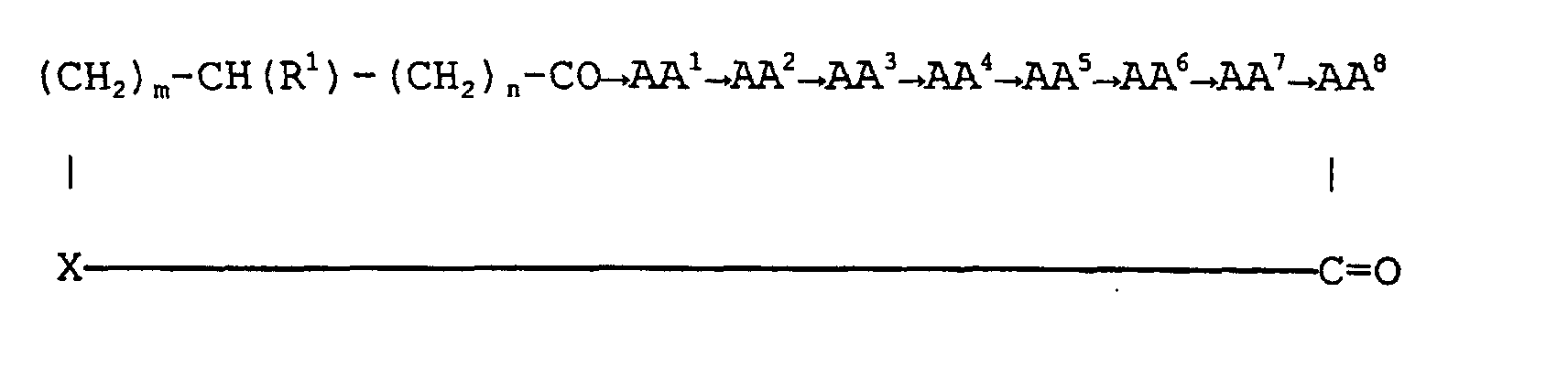
m and n may be identical or different from each other, and are independently 0 or 1;
X is O or NH;
R1 is hydrogen, C6-21 alkyl, substituted alkyl, alkenyl, substituted alkenyl, acylamino, aryl, substituted aryl, heterocyclic ring or substituted heterocyclic ring,
wherein said substituted alkyl, substituted alkenyl, substituted aryl or substituted heterocyclic ring is substituted with at least one of hydroxyl group, C1-8 alkyl, C1-8 alkoxy, C2-8 alkenyl, C2-8 acyl, C2-8 acyloxy, C6-14 aryl, C6-14 aryloxy or C1-8 heterocyclic ring;
AA1 to AA6 are independently an α- or (β-amino acid;
AA7 is a D-α-amino acid having HO- in a side chain; and
AA8 is an α- or (β-amino acid.
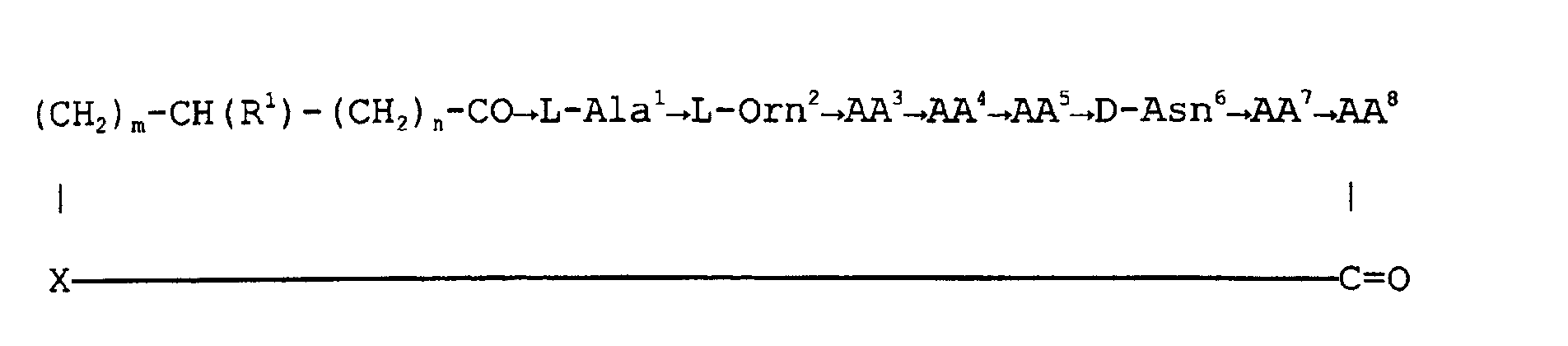
| R1 | X m,n | AA3 | AA4 | AA5 | AA7 | AA8 | ||
| 1 | CH3(CH2)12- | O 0,1 | βAla | L-Ser | L-Ser | D-alloThr | Gly | |
| 2 | CH3(CH2)12- | O 0,1 | L-Ala | L-Ser | L-Ser | D-alloThr | Gly | |
| 3 | CH3(CH2)12- | O 0,1 | L-Asn | L-Ser | L-Ser | D- | Gly | |
| 4 | CH3(CH2)12- | O 0,1 | L-Asp | L-Ser | L-Ser | D- | Gly | |
| 5 | CH3(CH2)12 | O 0,1 | L-Glu | L-Ser | L-Ser | D-alloThr | Gly | |
| 6 | CH3(CH2)12- | O 0,1 | Gly | L-Ser | L-Ser | D-alloThr | Gly | |
| 7 | CH3(CH2)12- | O 0,1 | L-Ser | L-Ser | L-Ser | D-alloThr | Gly | |
| 8 | CH3(CH2)12- | O 0,1 | βAla | L-Ser | L-Ser | D-alloThr | D-alloThr | |
| 9 | CH3(CH2)12- | O 0,1 | D-alloThr | L-Ser | L-Ser | D- | Gly | |
| 10 | CH3(CH2)12- | O 0,1 | D-alloThr | L-Ser | L-Ser | D-alloThr | D-alloThr | |
| 11 | CH3(CH2)12- | O 0,1 | βAla | D-alloThr | L-Ser | D-alloThr | Gly | |
| 12 | CH3(CH2)12- | O 0,1 | βAla | L-Ser | D-alloThr | D-alloThr | Gly | |
| 13 | CH3(CH2)12- | O 0,1 | βAla | L-Ser | L-Ser | D-βHoVal | Gly | |
| 14 | CH3(CH2)12- | O 0,1 | βAla | L-Ser | L-Ser | D-βHOPhe | Gly | |
| 15 | CH3(CH2)10CONH- | O 1,0 | βAla | L-Ser | L-Ser | D-alloThr | Gly | |
| 16 | CH3(CH2)10C2CH2- | NH 1,0 | βAla | L-Ser | L-Ser | D-alloThr | Gly |
| Compound no. | Molecular formula | FAB-MS |
| 1 | C43H76N10O14 | 957 |
| 2 | C43H76N10O14 | 957 |
| 3 | C44H77N11O15 | 1000 |
| 4 | C44H76N10O16 | 1001 |
| 5 | C45H78N10O16 | 1015 |
| 6 | C42H74N10O14 | 943 |
| 7 | C43H76N10O15 | 973 |
| MIC (µg/ml) | |||
| Compound | C.a. | A.f. | C.n. |
| 1 | 6.25 | 1.56 | 12.5 |
| 3 | 6.25 | 1.56 | 3.12 |
| 4 | 6.25 | - | 6.25 |
| 5 | 3.12 | 0.39 | 6.25 |
| 6 | 12.5 | - | 3.12 |
| 7 | 6.25 | 0.78 | 3.12 |
Claims (4)
- A cyclic peptide represented by general formula (I) or a pharmacologically acceptable salt thereof:wherein
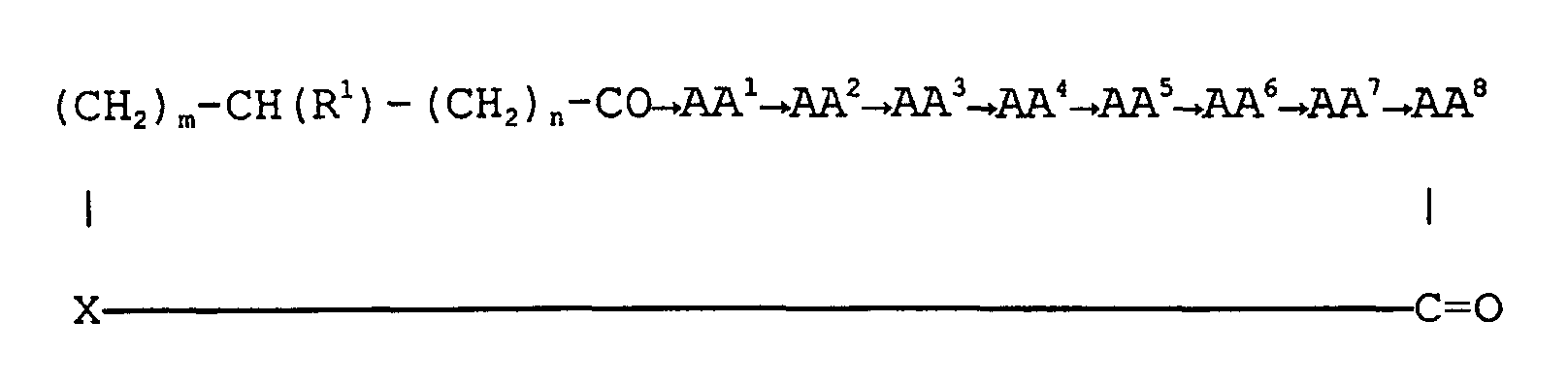
m and n may be identical or different from each other, and are independently 0 or 1;
X is O or NH;
R1 is hydrogen, C6-21 alkyl, substituted alkyl, alkenyl, substituted alkenyl, acylamino, aryl, substituted aryl, heterocyclic ring or substituted heterocyclic ring,
wherein said substituted alkyl, substituted alkenyl, substituted aryl or substituted heterocyclic ring is substituted with at least one of hydroxyl group, C1-8 alkyl, C1-8 alkoxy, C2-8 alkenyl, C2-8 acyl, C2-8 acyloxy, C6-14 aryl, C6-14 aryloxy or C1-8 heterocyclic ring;
AA1 to AA6 are independently an α- or a β-amino acid;
AA7 is a D-α-amino acid having HO- in a side chain; and
AA8 is an α- or a β-amino acid. - The cyclic peptide of general formula (I) or a pharmacologically acceptable salt thereof according to claim 1,
wherein
AA1 is a hydrophobic α- or β-amino acid;
AA2 is an α- or β-amino acid having amino group in a side chain;
AA3 is β-alanine, glycine, or an α- or β-amino acid having HO-, HOOC- or H2NOC- in a side chain;
AA4 is an α- or β-amino acid having HO- in a side chain;
AA5 is an α- or β-amino acid having HO- in a side chain;
AA6 is an α- or β-amino acid having H2NOC- in a side chain;
AA7 is a D-α-amino acid having HO- in a side chain; and
AA8 is glycine or an α- or β-amino acid having HO- in a side chain. - The cyclic peptide of general formula (I) or a pharmacologically acceptable salt thereof according to claim 1, wherein
AA1 is alanine, valine or leucine;
AA2 is lysine or ornithine;
AA3 is β-alanine, glycine, or an α- or β-amino acid having HO-, HOOC- or H2NOC- in a side chain;
AA4 is an α-amino acid having HO- in a side chain;
AA5 is an α-amino acid having HO- in a side chain;
AA6 is asparagine or glutamine;
AA7 is a D-α-amino acid having HO- in a side chain; and
AA8 is glycine or an α-amino acid having HO- in a side chain. - An antifungal pharmaceutical composition which contains the cyclic peptide or a pharmacologically acceptable salt thereof defined by claim 1.
Applications Claiming Priority (3)
| Application Number | Priority Date | Filing Date | Title |
|---|---|---|---|
| JP2001041615 | 2001-02-19 | ||
| JP2001041615 | 2001-02-19 | ||
| PCT/JP2002/001221 WO2002066499A1 (en) | 2001-02-19 | 2002-02-14 | Cyclic peptide |
Publications (2)
| Publication Number | Publication Date |
|---|---|
| EP1362865A1 true EP1362865A1 (en) | 2003-11-19 |
| EP1362865A4 EP1362865A4 (en) | 2004-05-06 |
Family
ID=18904025
Family Applications (1)
| Application Number | Title | Priority Date | Filing Date |
|---|---|---|---|
| EP02712337A Withdrawn EP1362865A4 (en) | 2001-02-19 | 2002-02-14 | Cyclic peptide |
Country Status (6)
| Country | Link |
|---|---|
| US (1) | US7442683B2 (en) |
| EP (1) | EP1362865A4 (en) |
| JP (1) | JP4028386B2 (en) |
| AU (1) | AU2002232176B2 (en) |
| CA (1) | CA2438663C (en) |
| WO (1) | WO2002066499A1 (en) |
Families Citing this family (1)
| Publication number | Priority date | Publication date | Assignee | Title |
|---|---|---|---|---|
| US11674136B2 (en) | 2018-02-09 | 2023-06-13 | President And Fellows Of Harvard College | DNA-templated macrocycle library |
Family Cites Families (10)
| Publication number | Priority date | Publication date | Assignee | Title |
|---|---|---|---|---|
| US4401656A (en) * | 1978-09-11 | 1983-08-30 | Ayerst, Mckenna & Harrison, Ltd. | N-Substituted dimeric cyclopeptide derivatives |
| US4409210A (en) | 1982-01-15 | 1983-10-11 | Bristol-Myers Company | Antibiotic compound |
| US4533631A (en) | 1982-01-15 | 1985-08-06 | Bristol-Myers Company | Fermentation process for preparation of antibiotic Bu-2517 |
| JP2863934B2 (en) * | 1989-07-24 | 1999-03-03 | 塩野義製薬株式会社 | Antibiotic plus basin |
| JPH03127798A (en) * | 1989-10-11 | 1991-05-30 | Kumiai Chem Ind Co Ltd | Physiologically active substance syringostatine and production thereof |
| JPH05279384A (en) * | 1992-02-28 | 1993-10-26 | Takara Shuzo Co Ltd | New antifungal antibiotic |
| US5739104A (en) * | 1994-05-04 | 1998-04-14 | Schering Corporation | Anti-fungal agents |
| US5830855A (en) * | 1996-09-12 | 1998-11-03 | Utah State University | Lipodepsipeptides as antifungal and fungicidal agents |
| DE19933173A1 (en) * | 1999-07-15 | 2001-01-18 | Merck Patent Gmbh | Cyclic peptide derivatives as inhibitors of the integrin alpha¶v¶beta¶6¶ |
| AU5310600A (en) | 1999-07-15 | 2001-02-05 | Eli Lilly And Company | Process for deacylation of lipodepsipeptides |
-
2002
- 2002-02-14 EP EP02712337A patent/EP1362865A4/en not_active Withdrawn
- 2002-02-14 AU AU2002232176A patent/AU2002232176B2/en not_active Ceased
- 2002-02-14 WO PCT/JP2002/001221 patent/WO2002066499A1/en not_active Ceased
- 2002-02-14 CA CA002438663A patent/CA2438663C/en not_active Expired - Fee Related
- 2002-02-14 US US10/470,918 patent/US7442683B2/en not_active Expired - Fee Related
- 2002-02-14 JP JP2002566212A patent/JP4028386B2/en not_active Expired - Fee Related
Also Published As
| Publication number | Publication date |
|---|---|
| US7442683B2 (en) | 2008-10-28 |
| CA2438663A1 (en) | 2002-08-29 |
| EP1362865A4 (en) | 2004-05-06 |
| CA2438663C (en) | 2009-09-15 |
| JP4028386B2 (en) | 2007-12-26 |
| US20040063625A1 (en) | 2004-04-01 |
| AU2002232176B2 (en) | 2006-06-15 |
| JPWO2002066499A1 (en) | 2004-06-17 |
| WO2002066499A1 (en) | 2002-08-29 |
Similar Documents
| Publication | Publication Date | Title |
|---|---|---|
| JP5188665B2 (en) | Kahalalide compounds | |
| EP0490667B1 (en) | HIV protease inhibitors | |
| TWI334872B (en) | Novel peptides as ns3-serine protease inhibitors of hepatitis c virus | |
| LU87495A1 (en) | NOVEL PEPTIDE DERIVATIVES, THEIR PREPARATION AND THEIR USE AS MEDICINAL PRODUCTS | |
| JP2540534B2 (en) | Oligopeptidyl nitrile derivative | |
| EP3160985B1 (en) | Process for the production of d-arginyl-2,6-dimethyl-l-tyrosyl-l-lysyl-l-phenylalaninamide | |
| JP4023554B2 (en) | Derivatives of aminosulfonic acid, use of the derivatives in the synthesis of pseudopeptides, and production methods thereof | |
| US7442683B2 (en) | Cyclic peptide | |
| JPH0570495A (en) | Cyclic hexapeptide compound | |
| AU2002251221B2 (en) | Process for producing trunkamide a compounds | |
| EP0687686B1 (en) | Aureobasidins | |
| JPWO1995018147A1 (en) | Aureobasidins | |
| JPH10114798A (en) | Peptide derivatives and antifungal agents | |
| US6649593B1 (en) | Modulators of SREBP processing | |
| JP3874372B2 (en) | Anticancer drug effect enhancer | |
| JPH08217794A (en) | Cyclic pentapeptide | |
| FR2654430A1 (en) | NOVEL PEPTIDE DERIVATIVES AS USE INHIBITORS OF BACTERIAL COLLAGENASES. |
Legal Events
| Date | Code | Title | Description |
|---|---|---|---|
| PUAI | Public reference made under article 153(3) epc to a published international application that has entered the european phase |
Free format text: ORIGINAL CODE: 0009012 |
|
| 17P | Request for examination filed |
Effective date: 20030807 |
|
| AK | Designated contracting states |
Kind code of ref document: A1 Designated state(s): AT BE CH CY DE DK ES FI FR GB GR IE IT LI LU MC NL PT SE TR |
|
| AX | Request for extension of the european patent |
Extension state: AL LT LV MK RO SI |
|
| A4 | Supplementary search report drawn up and despatched |
Effective date: 20040319 |
|
| RIC1 | Information provided on ipc code assigned before grant |
Ipc: 7C 07K 7/06 B Ipc: 7A 61K 38/12 B Ipc: 7C 07K 7/54 A |
|
| 17Q | First examination report despatched |
Effective date: 20080411 |
|
| STAA | Information on the status of an ep patent application or granted ep patent |
Free format text: STATUS: THE APPLICATION IS DEEMED TO BE WITHDRAWN |
|
| 18D | Application deemed to be withdrawn |
Effective date: 20100901 |