EP1361704A1 - Method and apparatus for checking sequence numbers when communicating messages in a UMTS network - Google Patents
Method and apparatus for checking sequence numbers when communicating messages in a UMTS network Download PDFInfo
- Publication number
- EP1361704A1 EP1361704A1 EP02253221A EP02253221A EP1361704A1 EP 1361704 A1 EP1361704 A1 EP 1361704A1 EP 02253221 A EP02253221 A EP 02253221A EP 02253221 A EP02253221 A EP 02253221A EP 1361704 A1 EP1361704 A1 EP 1361704A1
- Authority
- EP
- European Patent Office
- Prior art keywords
- sequence number
- message
- incremented
- stored
- receiver
- Prior art date
- Legal status (The legal status is an assumption and is not a legal conclusion. Google has not performed a legal analysis and makes no representation as to the accuracy of the status listed.)
- Withdrawn
Links
- 238000000034 method Methods 0.000 title claims abstract description 18
- 230000001419 dependent effect Effects 0.000 claims 1
- 238000013459 approach Methods 0.000 description 6
- 238000012545 processing Methods 0.000 description 5
- 230000011664 signaling Effects 0.000 description 4
- 230000004913 activation Effects 0.000 description 2
- 230000002159 abnormal effect Effects 0.000 description 1
- 230000010485 coping Effects 0.000 description 1
- 238000012360 testing method Methods 0.000 description 1
- 238000012795 verification Methods 0.000 description 1
Images

Classifications
-
- H—ELECTRICITY
- H04—ELECTRIC COMMUNICATION TECHNIQUE
- H04W—WIRELESS COMMUNICATION NETWORKS
- H04W12/00—Security arrangements; Authentication; Protecting privacy or anonymity
- H04W12/10—Integrity
-
- H—ELECTRICITY
- H04—ELECTRIC COMMUNICATION TECHNIQUE
- H04L—TRANSMISSION OF DIGITAL INFORMATION, e.g. TELEGRAPHIC COMMUNICATION
- H04L47/00—Traffic control in data switching networks
- H04L47/10—Flow control; Congestion control
-
- H—ELECTRICITY
- H04—ELECTRIC COMMUNICATION TECHNIQUE
- H04L—TRANSMISSION OF DIGITAL INFORMATION, e.g. TELEGRAPHIC COMMUNICATION
- H04L47/00—Traffic control in data switching networks
- H04L47/10—Flow control; Congestion control
- H04L47/34—Flow control; Congestion control ensuring sequence integrity, e.g. using sequence numbers
-
- H—ELECTRICITY
- H04—ELECTRIC COMMUNICATION TECHNIQUE
- H04W—WIRELESS COMMUNICATION NETWORKS
- H04W12/00—Security arrangements; Authentication; Protecting privacy or anonymity
- H04W12/03—Protecting confidentiality, e.g. by encryption
- H04W12/037—Protecting confidentiality, e.g. by encryption of the control plane, e.g. signalling traffic
-
- H—ELECTRICITY
- H04—ELECTRIC COMMUNICATION TECHNIQUE
- H04W—WIRELESS COMMUNICATION NETWORKS
- H04W28/00—Network traffic management; Network resource management
- H04W28/02—Traffic management, e.g. flow control or congestion control
- H04W28/10—Flow control between communication endpoints
-
- H—ELECTRICITY
- H04—ELECTRIC COMMUNICATION TECHNIQUE
- H04W—WIRELESS COMMUNICATION NETWORKS
- H04W8/00—Network data management
- H04W8/02—Processing of mobility data, e.g. registration information at HLR [Home Location Register] or VLR [Visitor Location Register]; Transfer of mobility data, e.g. between HLR, VLR or external networks
- H04W8/04—Registration at HLR or HSS [Home Subscriber Server]
-
- H—ELECTRICITY
- H04—ELECTRIC COMMUNICATION TECHNIQUE
- H04L—TRANSMISSION OF DIGITAL INFORMATION, e.g. TELEGRAPHIC COMMUNICATION
- H04L63/00—Network architectures or network communication protocols for network security
- H04L63/12—Applying verification of the received information
- H04L63/123—Applying verification of the received information received data contents, e.g. message integrity
-
- H—ELECTRICITY
- H04—ELECTRIC COMMUNICATION TECHNIQUE
- H04W—WIRELESS COMMUNICATION NETWORKS
- H04W84/00—Network topologies
- H04W84/02—Hierarchically pre-organised networks, e.g. paging networks, cellular networks, WLAN [Wireless Local Area Network] or WLL [Wireless Local Loop]
- H04W84/04—Large scale networks; Deep hierarchical networks
Definitions
- the present invention relates to a method of communicating messages between a transmitter and receiver in a Universal Mobile Telecommunications System UMTS network, a method of receiving messages at a receiver in a UMTS network, a UMTS network, and a UMTS receiver.
- a Universal Mobile Telecommunications System UMTS network which includes user terminals communicating with a UMTS terrestrial radio access network UTRAN
- security has two aspects. One is integrity protection, which is applied on signalling messages. The other is ciphering, which is applied to both signalling and user data. Integrity protection ensures that the received signalling message cannot have been altered by an unauthorised third party, whereas ciphering function ensures that the message data contents are not disclosed to any authorised party.
- both the user terminal (user equipment) UE and the UMTS terrestrial radio access network UTRAN perform a specific integrity algorithm in accordance with the Third Generation Partnership Project 3GPP standards, as described in particular 3GPP Technical Specification 33.102.
- This algorithm which is a KASUMI based algorithm, is known as the Integrity Protection f9 Algorithm.
- performing the f9 algorithm results in delay being introduced.
- Most received messages are subject to an integrity check using the f9 before further processing. Another consequence is high consumption of power needed to run the integrity checks. This has a significant impact on the limited battery life of a user terminal UE.
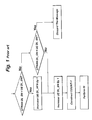
- Figure 1 shows the known 3GPP standards approach to downlink DL integrity checking by the user terminal UE, i.e. when the user terminal UE receives a signalling message from the UMTS terrestrial radio access network UTRAN.
- the following three parameters are used, as shown in Figure 1:
- the COUNT-I parameter is an integrity sequence number. As shown in Figure 2, COUNT-I is composed of two parts: a "short" sequence number and a "long” sequence.
- the "short” sequence number is the 4-bit radio resource control sequence number (RRC SN).
- the "long” sequence number is the 28-bit radio resource control hyper frame number (RRC HFN) which is incremented when the radio resource control sequence number RRC SN wraps around.
- RRC HFN radio resource control hyper frame number
- the radio resource control sequence number RRC SN is the 4 bit number UTRAN DL_SN included in each message from the transmitter. Each new message has the UTRAN DL_SN sequence number incremented by 1 from the UTRAN DL_SN sequence number in the previous (in sequence) message.
- the value of this sequence number is compared to the value for the related parameter UE DL_SN stored in the receiver as part of the verification of the message, and if the received sequence number is equal to the stored sequence number the message is discarded, else, the integrity protection algorithm f9 is performed, in the following cases:
- the present invention provides a method of communicating messages between a transmitter and receiver in a Universal Mobile Telecommunications System UMTS network, each message being sent in sequence and including a sequence number, an expected sequence number stored in the receiver being incremented upon receipt of a message, the received sequence number in the message being decoded and compared to the incremented expected sequence number and if the numbers match the message is further decoded.
- the present invention also provides a corresponding method of receiving messages at a receiver in a UMTS network, a corresponding UMTS network, and a corresponding UMTS receiver.
- the present invention provides improvements over the known approach defined in the UMTS standard.
- the present invention in its preferred embodiments advantageously avoids running the integrity check algorithm on known invalid messages.
- a simple mechanism is provided to determine whether to proceed to performing an f9 integrity check of the message without unnecessary activation of the f9 check.
- Preferred embodiments of the present invention advantageously provide that by increasing user terminal downlink sequence number UE DL_SN by 1 and perform a check for 'wrap around'check, followed by a check if user terminal downlink sequence number UE DL_SN is equal to UTRAN DL_SN, the f9 algorithm is only performed when user terminal UE COUNT-I is correct (i.e. would match a UTRAN COUNT-I), hence avoiding unnecessary running of f9.
- Advantages of preferred embodiments of the invention include reducing processing requirements, hence reducing processing delay and coping with less processing power; saving power, hence prolonging user terminal UE battery life; and providing a simpler approach requiring less complicated testing.
- the expected sequence number is incremented by plus one.
- the stored sequence number is such that after reaching a maximum value upon a further increment the stored sequence number reverts to or through zero, whereupon a stored secondary count is incremented.
- the stored sequence number is 4 bits, increments are by plus one such that the next incremented sequence number after a 1111 value is a 0000 value, and the stored secondary count is up to 28 bits.
- a value is determined of a COUNT-I parameter which depends upon the incremented stored sequence number, the COUNT-I parameter value being used in the so-called f9 integrity checking method.
- COUNT-I parameter value depends on the incremented stored sequence number and the secondary count.
- the present invention also provides a method of receiving messages at a receiver in a Universal Mobile Telecommunications System UMTS network, each message including a sequence number, an expected sequence number stored in the receiver being incremented upon receipt of a message, the received sequence number in the message being decoded and compared to the incremented expected sequence number and if the numbers match the message is further decoded.
- the present invention also provides a Universal Mobile Telecommunications System UMTS network comprising a base station and a plurality of user terminals, the base station being operative to send each message to a user terminal in sequence, each message including a sequence number, an expected sequence number stored in the user terminal being incremented upon receipt of a message, in the user terminal the received sequence number in the message being decoded and compared to the incremented expected sequence number and if the numbers match the message is further decoded.
- a Universal Mobile Telecommunications System UMTS network comprising a base station and a plurality of user terminals, the base station being operative to send each message to a user terminal in sequence, each message including a sequence number, an expected sequence number stored in the user terminal being incremented upon receipt of a message, in the user terminal the received sequence number in the message being decoded and compared to the incremented expected sequence number and if the numbers match the message is further decoded.
- the present invention also provides a Universal Mobile Telecommunications System UMTS receiver operative to receive messages each including a sequence number, the receiver including a data store which stores a sequence number, the stored sequence number being incremented upon receipt of a message (to form the expected sequence number), the receiver comprising a decoder and a comparitor, the decoder being operative to decode a received sequence number in the message, and the comparitor being operative to compare the received sequence number to the incremented stored sequence number (expected sequence number) and if the numbers match the message is further decoded.
- the receiver is a user terminal.
- the user terminal UE on reception of a new message can increment its stored sequence number UE DL_SN by 1, and compare it with the sequence number value sent by the UMTS terrestrial radio access network UTRAN to determine whether they match.
- This ensures a received sequence number and stored hyperframe number are not used by the user terminal UE to construct a COUNT-I which would definitely lead to the f9 algorithm check indicating a failure. This ensures that should the f9 check fail, that failure will be due to the value of some other input parameter into the f9 check algorithm being invalid, rather than the value of COUNT-I.
- UTRAN DL_SN is the sequence number added to the downlink message by the UMTS terrestrial radio access network UTRAN
- UE DL_SN is the sequence number variable stored in the user terminal UE (previously taken from the received message UTRAN DL_SN)
- UE DL_HFN is the variable stored in the user terminal UE and incremented when the UE DL_SN wraps around.
- the UE DL_HFN is used with the UTRAN DL_SN as illustrated in figure 2, where the UE DL_HFN makes up the 28 MSB and the UTRAN DL_SN (generically referred to as the RRC SN) makes up the 4 LSB of the COUNT-I parameter to input into the f9 algorithm.
- the user terminal's downlink sequence number UE DL_SN value is now increased by 1 which we will refer to as UE DL_SN 1 ,and a wrap-around check performed (shown as step a in Figure 3).
- the wrap-around check is to determine whether to increase the hyperframe number UE DL_HFN by 1 as well, which would be necessary to provide a correct COUNT-I value.
- the UTRAN downlink sequence number UTRAN DL_SN is incremented by 1 in each new message, which is sent from the transmitter (the UTRAN network). When incrementing the sequence number causes the four bit binary value '1111' to become the binary value '0000' it is said to wrap around.
- the value of the hyperframe number UE DL_HFN stored in the user terminal needs to be incremented by 1.
- step b in Figure 3 This is followed by determining whether newly incremented UE DL_SN 1 is equal to UTRAN DL_SN (shown as step b in Figure 3). If these two are equal the COUNT-I value is produced (shown as step c in Figure 3) and used in performing an f9 check (shown as step d in Figure 3)and the UE DL_SN 1 is stored in the UE as the UE DL_SN for the reception of the next UTRAN message.
- This check ensures that whenever the received sequence number does not match that expected i.e. UE DL_SN 1 ⁇ UTRAN DL_SN, the f9 check is not run. Instead, the message is discarded (shown as step e in Figure 3). This includes the cases where the received sequence number is greater than the UE expected sequence number i.e. UTRAN DL _SN > UE DL_SN 1 or the received sequence number is less than the UE expected sequence number i.e. UTRAN DL _SN ⁇ UE DL_SN 1 , the message is discarded without the resource demanding f9 algorithm being executed.
- a corresponding approach is used at the base station for communications on the uplink i.e. from a user terminal to a base station of a network.
- the approach is used at both ends (i.e base station of the UTRAN, and user terminal) for incoming communications, i.e. for both uplink and downlink communications.
Landscapes
- Engineering & Computer Science (AREA)
- Computer Security & Cryptography (AREA)
- Computer Networks & Wireless Communication (AREA)
- Signal Processing (AREA)
- Databases & Information Systems (AREA)
- Mobile Radio Communication Systems (AREA)
Abstract
In a method of communicating messages between a transmitter and
receiver in a Universal Mobile Telecommunications System UMTS network, each
message is sent in sequence and includes a sequence number. An expected sequence
number which is stored in the receiver is incremented upon receipt of a message. The
received sequence number in the message is decoded and compared to the incremented
expected sequence number. If the numbers match the message is further decoded.
Description
- The present invention relates to a method of communicating messages between a transmitter and receiver in a Universal Mobile Telecommunications System UMTS network, a method of receiving messages at a receiver in a UMTS network, a UMTS network, and a UMTS receiver.
- In a Universal Mobile Telecommunications System UMTS network, which includes user terminals communicating with a UMTS terrestrial radio access network UTRAN, security has two aspects. One is integrity protection, which is applied on signalling messages. The other is ciphering, which is applied to both signalling and user data. Integrity protection ensures that the received signalling message cannot have been altered by an unauthorised third party, whereas ciphering function ensures that the message data contents are not disclosed to any authorised party.
- As regards the integrity protection aspect, as that is specified for UMTS, both the user terminal (user equipment) UE and the UMTS terrestrial radio access network UTRAN perform a specific integrity algorithm in accordance with the Third Generation Partnership Project 3GPP standards, as described in particular 3GPP Technical Specification 33.102. This algorithm, which is a KASUMI based algorithm, is known as the Integrity Protection f9 Algorithm. Apart from the desired integrity checking, performing the f9 algorithm results in delay being introduced. Most received messages are subject to an integrity check using the f9 before further processing. Another consequence is high consumption of power needed to run the integrity checks. This has a significant impact on the limited battery life of a user terminal UE.
- Figure 1 shows the known 3GPP standards approach to downlink DL integrity checking by the user terminal UE, i.e. when the user terminal UE receives a signalling message from the UMTS terrestrial radio access network UTRAN. The following three parameters are used, as shown in Figure 1:
- UTRAN DL_SN : this is the UMTS terrestrial radio access network UTRAN downlink sequence number DL_SN added to the downlink message by the UTRAN network;
- UE DL_SN : this is the user terminal downlink sequence number UE DL_SN variable stored in and used by the user terminal UE control activation of the protection algorithm, f9. This is taken from the received message (UTRAN DL_SN).
- UE DL_HFN : this is the user terminal UE downlink hypertrame number DL_HFN stored in user terminal UE used together with the UTRAN downlink sequence number UTRAN DL_SN to produce a parameter known as the COUNT-I parameter required together with others as input into the f9 algorithm.
-
- The COUNT-I parameter is an integrity sequence number. As shown in Figure 2, COUNT-I is composed of two parts: a "short" sequence number and a "long" sequence. The "short" sequence number is the 4-bit radio resource control sequence number (RRC SN). The "long" sequence number is the 28-bit radio resource control hyper frame number (RRC HFN) which is incremented when the radio resource control sequence number RRC SN wraps around. For the downlink, the radio resource control sequence number RRC SN is the 4 bit number UTRAN DL_SN included in each message from the transmitter. Each new message has the UTRAN DL_SN sequence number incremented by 1 from the UTRAN DL_SN sequence number in the previous (in sequence) message.
- As shown in Figure 1, the value of this sequence number is compared to the value for the related parameter UE DL_SN stored in the receiver as part of the verification of the message, and if the received sequence number is equal to the stored sequence number the message is discarded, else, the integrity protection algorithm f9 is performed, in the following cases:
- 1) Normal case, i.e that case where COUNT-I is assumed correct i.e where received sequence number is one greater than the stored sequence number i.e. UTRAN DL_SN = UE DL_SN+1.
- 2) An abnormal case, where the received sequence number is more than one greater than the stored sequence number i.e. UTRAN DL_SN > UE DL_SN+ 1,
- 3) The case where the received sequence number is less than the stored sequence number i.e. UTRAN DL_SN< UE DL_SN.
-
- Only in case 1) (and case 3 when UTRAN DL_SN wraps around) does the message go on to be fully processed.
- In case 3) the stored hyperframe number UE DL_HFN is incremented, as shown in Figure 1. However, in case 3 when wrap around does not occur an increase in hyperframe number UE DL_HFN will then still lead to failure of the integrity check using the f9 algorithm, and so to unnecessary processing, following which the stored UE DL_HFN must be decremented.
- The present invention provides a method of communicating messages between a transmitter and receiver in a Universal Mobile Telecommunications System UMTS network, each message being sent in sequence and including a sequence number, an expected sequence number stored in the receiver being incremented upon receipt of a message, the received sequence number in the message being decoded and compared to the incremented expected sequence number and if the numbers match the message is further decoded. The present invention also provides a corresponding method of receiving messages at a receiver in a UMTS network, a corresponding UMTS network, and a corresponding UMTS receiver.
- The present invention provides improvements over the known approach defined in the UMTS standard. The present invention in its preferred embodiments advantageously avoids running the integrity check algorithm on known invalid messages. A simple mechanism is provided to determine whether to proceed to performing an f9 integrity check of the message without unnecessary activation of the f9 check. Preferred embodiments of the present invention advantageously provide that by increasing user terminal downlink sequence number UE DL_SN by 1 and perform a check for 'wrap around'check, followed by a check if user terminal downlink sequence number UE DL_SN is equal to UTRAN DL_SN, the f9 algorithm is only performed when user terminal UE COUNT-I is correct (i.e. would match a UTRAN COUNT-I), hence avoiding unnecessary running of f9. Advantages of preferred embodiments of the invention include reducing processing requirements, hence reducing processing delay and coping with less processing power; saving power, hence prolonging user terminal UE battery life; and providing a simpler approach requiring less complicated testing.
- Preferably upon receipt of a message, the expected sequence number is incremented by plus one.
- Preferably the stored sequence number is such that after reaching a maximum value upon a further increment the stored sequence number reverts to or through zero, whereupon a stored secondary count is incremented.
- Preferably the stored sequence number is 4 bits, increments are by plus one such that the next incremented sequence number after a 1111 value is a 0000 value, and the stored secondary count is up to 28 bits.
- Preferably upon the numbers matching, a value is determined of a COUNT-I parameter which depends upon the incremented stored sequence number, the COUNT-I parameter value being used in the so-called f9 integrity checking method.
- Preferably the COUNT-I parameter value depends on the incremented stored sequence number and the secondary count.
- The present invention also provides a method of receiving messages at a receiver in a Universal Mobile Telecommunications System UMTS network, each message including a sequence number, an expected sequence number stored in the receiver being incremented upon receipt of a message, the received sequence number in the message being decoded and compared to the incremented expected sequence number and if the numbers match the message is further decoded.
- The present invention also provides a Universal Mobile Telecommunications System UMTS network comprising a base station and a plurality of user terminals, the base station being operative to send each message to a user terminal in sequence, each message including a sequence number, an expected sequence number stored in the user terminal being incremented upon receipt of a message, in the user terminal the received sequence number in the message being decoded and compared to the incremented expected sequence number and if the numbers match the message is further decoded.
- The present invention also provides a Universal Mobile Telecommunications System UMTS receiver operative to receive messages each including a sequence number, the receiver including a data store which stores a sequence number, the stored sequence number being incremented upon receipt of a message (to form the expected sequence number), the receiver comprising a decoder and a comparitor, the decoder being operative to decode a received sequence number in the message, and the comparitor being operative to compare the received sequence number to the incremented stored sequence number (expected sequence number) and if the numbers match the message is further decoded. Preferably the receiver is a user terminal.
- A preferred embodiment of the present invention will now be described by way of example and with reference to the drawings, in which:
- Figure 1 is a flowchart illustration of a known integrity check procedure(prior art),
- Figure 2 shows the structure of the COUNT-I parameter (prior art), and
- Figure 3 is a diagrammatic illustration of an integrity check procedure according to the present invention.
-
- It was realised that as the UMTS terrestrial radio access network UTRAN is always expected to increase the sequence number UTRAN DL_SN of successive new messages by 1, the user terminal UE on reception of a new message can increment its stored sequence number UE DL_SN by 1, and compare it with the sequence number value sent by the UMTS terrestrial radio access network UTRAN to determine whether they match. This ensures a received sequence number and stored hyperframe number are not used by the user terminal UE to construct a COUNT-I which would definitely lead to the f9 algorithm check indicating a failure. This ensures that should the f9 check fail, that failure will be due to the value of some other input parameter into the f9 check algorithm being invalid, rather than the value of COUNT-I.
- The variables shown in Figure 3 as in Figure 1 represent the following parameters: UTRAN DL_SN is the sequence number added to the downlink message by the UMTS terrestrial radio access network UTRAN, UE DL_SN is the sequence number variable stored in the user terminal UE (previously taken from the received message UTRAN DL_SN), and UE DL_HFN is the variable stored in the user terminal UE and incremented when the UE DL_SN wraps around. The UE DL_HFN is used with the UTRAN DL_SN as illustrated in figure 2, where the UE DL_HFN makes up the 28 MSB and the UTRAN DL_SN (generically referred to as the RRC SN) makes up the 4 LSB of the COUNT-I parameter to input into the f9 algorithm.
- As shown in Figure 3, upon receipt of a message, the user terminal's downlink sequence number UE DL_SN value is now increased by 1 which we will refer to as UE DL_SN1,and a wrap-around check performed (shown as step a in Figure 3). The wrap-around check is to determine whether to increase the hyperframe number UE DL_HFN by 1 as well, which would be necessary to provide a correct COUNT-I value. The UTRAN downlink sequence number UTRAN DL_SN is incremented by 1 in each new message, which is sent from the transmitter (the UTRAN network). When incrementing the sequence number causes the four bit binary value '1111' to become the binary value '0000' it is said to wrap around. To keep note of this at the user terminal in the context of determining COUNT-I when this wrap around occurs, the value of the hyperframe number UE DL_HFN stored in the user terminal needs to be incremented by 1.
- This is followed by determining whether newly incremented UE DL_SN1 is equal to UTRAN DL_SN (shown as step b in Figure 3). If these two are equal the COUNT-I value is produced (shown as step c in Figure 3) and used in performing an f9 check (shown as step d in Figure 3)and the UE DL_SN1 is stored in the UE as the UE DL_SN for the reception of the next UTRAN message.
- This check ensures that whenever the received sequence number does not match that expected i.e. UE DL_SN1 ≠ UTRAN DL_SN, the f9 check is not run. Instead, the message is discarded (shown as step e in Figure 3).
This includes the cases where the received sequence number is greater than the UE expected sequence number i.e. UTRAN DL _SN > UE DL_SN1 or the received sequence number is less than the UE expected sequence number i.e. UTRAN DL _SN < UE DL_SN1, the message is discarded without the resource demanding f9 algorithm being executed. - This approach ensures that before performing the integrity check f9 algorithm, the UE COUNT-I is correct i.e. in line with the UTRAN COUNT-I, so integrity is possible. Unnecessary running of the f9 integrity check algorithm is thus avoided.
- In an alternative embodiment, a corresponding approach is used at the base station for communications on the uplink i.e. from a user terminal to a base station of a network. In a further embodiment the approach is used at both ends (i.e base station of the UTRAN, and user terminal) for incoming communications, i.e. for both uplink and downlink communications.
Claims (10)
- A method of communicating messages between a transmitter and receiver in a Universal Mobile Telecommunications System UMTS network,
each message being sent in sequence and including a sequence number,
an expected sequence number stored in the receiver being incremented upon receipt of a message.
the received sequence number in the message being decoded and compared to the incremented expected sequence number and if the numbers match the message is further decoded. - A method according to claim 1, in which upon receipt of a message, the expected sequence number is incremented by plus one.
- A method according to claim 1 or claim 2, in which the stored sequence number is such that after reaching a maximum value upon a further increment the stored sequence number reverts to or through zero, whereupon a stored secondary count is incremented.
- A method according to claim 3, in which the stored sequence number is 4 bits, increments are by plus one such that the next incremented sequence number after a 1111 value is a 0000 value, and the stored secondary count is up to 28 bits.
- A method according to any of claims 1 to 4, in which upon the numbers matching, a value is determined of a COUNT-I parameter which depends upon the incremented stored sequence number, the COUNT-I parameter value being used in the so-called f9 integrity checking method.
- A method according to claim 5 as dependent upon claim 3 or claim 4, in which the COUNT-I parameter value depends on the incremented stored sequence number and the secondary count.
- A method of receiving messages at a receiver in a Universal Mobile Telecommunications System UMTS network,
each message including a sequence number,
an expected sequence number stored in the receiver being incremented upon receipt of a message,
the received sequence number in the message being decoded and compared to the incremented expected sequence number and if the numbers match the message is further decoded. - A Universal Mobile Telecommunications System UMTS network comprising a base station and a plurality of user terminals,
the base station being operative to send each message to a user terminal in sequence, each message including a sequence number,
an expected sequence number stored in the user terminal being incremented upon receipt of a message,
in the user terminal the received sequence number in the message being decoded and compared to the incremented expected sequence number and if the numbers match the message is further decoded. - A Universal Mobile Telecommunications System UMTS receiver operative to receive messages each including a sequence number,
the receiver including a data store which stores an expected sequence number, the stored expected sequence number being incremented upon receipt of a message,
the receiver comprising a decoder and a comparitor, the decoder being operative to decode a received sequence number in the message, and the comparitor being operative to compare the received sequence number to the stored incremented expected sequence number and if the numbers match the message is further decoded. - A receiver according to claim 9, which is a user terminal.
Priority Applications (2)
| Application Number | Priority Date | Filing Date | Title |
|---|---|---|---|
| EP02253221A EP1361704A1 (en) | 2002-05-08 | 2002-05-08 | Method and apparatus for checking sequence numbers when communicating messages in a UMTS network |
| US10/430,136 US20030211857A1 (en) | 2002-05-08 | 2003-05-06 | Sequence number checking in communicating messages in a universal mobile telecommunications system (UMTS) network |
Applications Claiming Priority (1)
| Application Number | Priority Date | Filing Date | Title |
|---|---|---|---|
| EP02253221A EP1361704A1 (en) | 2002-05-08 | 2002-05-08 | Method and apparatus for checking sequence numbers when communicating messages in a UMTS network |
Publications (1)
| Publication Number | Publication Date |
|---|---|
| EP1361704A1 true EP1361704A1 (en) | 2003-11-12 |
Family
ID=29225728
Family Applications (1)
| Application Number | Title | Priority Date | Filing Date |
|---|---|---|---|
| EP02253221A Withdrawn EP1361704A1 (en) | 2002-05-08 | 2002-05-08 | Method and apparatus for checking sequence numbers when communicating messages in a UMTS network |
Country Status (2)
| Country | Link |
|---|---|
| US (1) | US20030211857A1 (en) |
| EP (1) | EP1361704A1 (en) |
Cited By (1)
| Publication number | Priority date | Publication date | Assignee | Title |
|---|---|---|---|---|
| DE102006034066A1 (en) * | 2006-07-20 | 2008-01-24 | Elv Elektronik Ag | Method for transmitting user data between subscribers in network with data messages, involves allocating each data counters for data messages, where data counters is individually defined for each data messages |
Families Citing this family (4)
| Publication number | Priority date | Publication date | Assignee | Title |
|---|---|---|---|---|
| US20060050679A1 (en) * | 2004-09-09 | 2006-03-09 | Sam Shiaw-Shiang Jiang | Method for On-Line Recovery of Parameter Synchronization for Ciphering Applications |
| US7869590B2 (en) * | 2005-04-12 | 2011-01-11 | Broadcom Corporation | Method and system for hardware accelerator for implementing f9 integrity algorithm in WCDMA compliant handsets |
| US20090070882A1 (en) * | 2007-09-10 | 2009-03-12 | Frank Grass | Method for transmitting user data between subscribers and subscriber devices therefor |
| US8666407B2 (en) * | 2011-08-15 | 2014-03-04 | Telefonaktiebolaget Lm Ericsson (Publ) | Femtocell base station, method, computer program and computer program product |
-
2002
- 2002-05-08 EP EP02253221A patent/EP1361704A1/en not_active Withdrawn
-
2003
- 2003-05-06 US US10/430,136 patent/US20030211857A1/en not_active Abandoned
Non-Patent Citations (4)
| Title |
|---|
| ETSI: "Universal Mobile Telecommunications System (UMTS); 3G Security; Security Architecture (3GPP TS 33.102 verson 3.10.0 Release 1999)", ETSI TS 133 102 VERSION 3.10.0, December 2001 (2001-12-01), pages 1 - 64, XP002225628 * |
| ETSI: "Universal Mobile Telecommunications System (UMTS); Radio Link Control (RLC) protocol specification (3GPP TS 25.322 version 3.10.0 Release 1999)", ETSI TS 125 322 VERSION 3.10.0, March 2002 (2002-03-01), pages 1 - 74, XP002225627 * |
| ETSI: "Universal Mobile Telecommunications System (UMTS); Radio Ressource Control (RRC) protocol specification (3GPP TS 25.331 version 5.0.0 Release 5) Chapter 8.5", ETSI TS 125 331 VERSION 5.0.0, March 2002 (2002-03-01), pages 199 - 215, XP002225629 * |
| W. RICHARD STEVENS: "TCP/IP Illustrated, Volume 1 The Protocols", July 1999, ADDISON-WESLEY PUBLISHING COMPANY, MASSACHUSETTS, USA, XP002225630 * |
Cited By (2)
| Publication number | Priority date | Publication date | Assignee | Title |
|---|---|---|---|---|
| DE102006034066A1 (en) * | 2006-07-20 | 2008-01-24 | Elv Elektronik Ag | Method for transmitting user data between subscribers in network with data messages, involves allocating each data counters for data messages, where data counters is individually defined for each data messages |
| DE102006034066B4 (en) * | 2006-07-20 | 2009-08-13 | Elv Elektronik Ag | Method for transmitting user data between subscribers and subscriber facilities therefor |
Also Published As
| Publication number | Publication date |
|---|---|
| US20030211857A1 (en) | 2003-11-13 |
Similar Documents
| Publication | Publication Date | Title |
|---|---|---|
| US9749298B2 (en) | Recovery from decryption errors in a sequence of communication packets | |
| JP3826079B2 (en) | Method for preventing short life of security key in wireless communication security system | |
| US8798667B2 (en) | Mobile communication method, mobile station and radio base station | |
| EP2071885A2 (en) | Method of handling security key change and related communication device | |
| US8543089B2 (en) | Method for performing an authentication of entities during establishment of wireless call connection | |
| US9301115B2 (en) | Apparatuses and methods for handling attach procedure in a mobile communication system | |
| US20050149734A1 (en) | Replay prevention mechanism for EAP/SIM authentication | |
| TWI729994B (en) | Dual sim dual standby device and method for providing integrity protection therein | |
| EP3346668B1 (en) | Encryption in wireless communication systems | |
| US20210385090A1 (en) | Integrity protection schemes in mobile communication | |
| US8429399B2 (en) | Method and arrangement for security activation detection in a telecommunication system | |
| US20030211857A1 (en) | Sequence number checking in communicating messages in a universal mobile telecommunications system (UMTS) network | |
| EP2840819B1 (en) | Methods and systems for slow associated control channel signaling | |
| EP1284581B1 (en) | Preventing excessive use of security keys in a wireless communications security system | |
| EP3886359B1 (en) | Method for integrity protection of system information in a cellular mobile network | |
| US6968200B2 (en) | Method of initializing hyper-frame numbers during an establishment of a new radio bearer in a wireless communication system | |
| US9356785B2 (en) | Method and system for security enhancement for mobile communications | |
| CA2672061C (en) | Apparatus and method of ciphering in wireless telecommunications user equipment operative with a plurality of radio access networks | |
| CN100341362C (en) | Security processing method for transmission and receive of mobile communication terminal | |
| EP4664958A1 (en) | Data processing method and apparatus, network side device and terminal device | |
| US20040116156A1 (en) | Coding of trau frames in a cellular radio telecommunication system | |
| EP4104383A1 (en) | Processing module for authenticating a communication device in a 3g capable network | |
| JP2006311394A (en) | Wireless communication device | |
| CN119255229A (en) | Communication data decryption method, device, electronic device and storage medium |
Legal Events
| Date | Code | Title | Description |
|---|---|---|---|
| PUAI | Public reference made under article 153(3) epc to a published international application that has entered the european phase |
Free format text: ORIGINAL CODE: 0009012 |
|
| AK | Designated contracting states |
Kind code of ref document: A1 Designated state(s): AT BE CH CY DE DK ES FI FR GB GR IE IT LI LU MC NL PT SE TR |
|
| AX | Request for extension of the european patent |
Extension state: AL LT LV MK RO SI |
|
| 17P | Request for examination filed |
Effective date: 20040504 |
|
| 17Q | First examination report despatched |
Effective date: 20040621 |
|
| AKX | Designation fees paid |
Designated state(s): DE ES FR GB IT |
|
| STAA | Information on the status of an ep patent application or granted ep patent |
Free format text: STATUS: THE APPLICATION IS DEEMED TO BE WITHDRAWN |
|
| 18D | Application deemed to be withdrawn |
Effective date: 20041103 |