EP1359776A1 - Procédé de contrôle d'échanges de trames entre une unité de contrôle et au moins une station radio, et unité de contrôle pour la mise en oeuvre du procédé - Google Patents
Procédé de contrôle d'échanges de trames entre une unité de contrôle et au moins une station radio, et unité de contrôle pour la mise en oeuvre du procédé Download PDFInfo
- Publication number
- EP1359776A1 EP1359776A1 EP03291006A EP03291006A EP1359776A1 EP 1359776 A1 EP1359776 A1 EP 1359776A1 EP 03291006 A EP03291006 A EP 03291006A EP 03291006 A EP03291006 A EP 03291006A EP 1359776 A1 EP1359776 A1 EP 1359776A1
- Authority
- EP
- European Patent Office
- Prior art keywords
- reception
- control unit
- frames
- radio station
- frame
- Prior art date
- Legal status (The legal status is an assumption and is not a legal conclusion. Google has not performed a legal analysis and makes no representation as to the accuracy of the status listed.)
- Withdrawn
Links
- 238000000034 method Methods 0.000 title claims abstract description 38
- 230000005540 biological transmission Effects 0.000 claims abstract description 52
- 230000011664 signaling Effects 0.000 claims abstract description 33
- 230000008569 process Effects 0.000 claims abstract description 7
- 238000012545 processing Methods 0.000 claims description 29
- 230000004044 response Effects 0.000 claims description 15
- 238000013519 translation Methods 0.000 claims description 6
- 238000012986 modification Methods 0.000 claims description 3
- 230000004048 modification Effects 0.000 claims description 3
- 230000000737 periodic effect Effects 0.000 claims description 3
- 230000001419 dependent effect Effects 0.000 claims 1
- 238000004891 communication Methods 0.000 description 13
- 239000000872 buffer Substances 0.000 description 6
- 238000010586 diagram Methods 0.000 description 5
- 230000006870 function Effects 0.000 description 5
- 230000007246 mechanism Effects 0.000 description 4
- 230000000630 rising effect Effects 0.000 description 4
- 238000007792 addition Methods 0.000 description 2
- 238000012217 deletion Methods 0.000 description 2
- 230000037430 deletion Effects 0.000 description 2
- 238000012546 transfer Methods 0.000 description 2
- 241001080024 Telles Species 0.000 description 1
- 240000008042 Zea mays Species 0.000 description 1
- 230000006978 adaptation Effects 0.000 description 1
- 238000013459 approach Methods 0.000 description 1
- 230000001413 cellular effect Effects 0.000 description 1
- 230000008859 change Effects 0.000 description 1
- 230000003247 decreasing effect Effects 0.000 description 1
- 230000000694 effects Effects 0.000 description 1
- 229940082150 encore Drugs 0.000 description 1
- 238000011156 evaluation Methods 0.000 description 1
- 230000008520 organization Effects 0.000 description 1
- 230000010355 oscillation Effects 0.000 description 1
- 230000000717 retained effect Effects 0.000 description 1
- 238000000926 separation method Methods 0.000 description 1
- 238000012163 sequencing technique Methods 0.000 description 1
- 230000001960 triggered effect Effects 0.000 description 1
- 238000011144 upstream manufacturing Methods 0.000 description 1
Images



Classifications
-
- H—ELECTRICITY
- H04—ELECTRIC COMMUNICATION TECHNIQUE
- H04W—WIRELESS COMMUNICATION NETWORKS
- H04W56/00—Synchronisation arrangements
- H04W56/001—Synchronization between nodes
- H04W56/002—Mutual synchronization
-
- H—ELECTRICITY
- H04—ELECTRIC COMMUNICATION TECHNIQUE
- H04B—TRANSMISSION
- H04B7/00—Radio transmission systems, i.e. using radiation field
- H04B7/24—Radio transmission systems, i.e. using radiation field for communication between two or more posts
- H04B7/26—Radio transmission systems, i.e. using radiation field for communication between two or more posts at least one of which is mobile
- H04B7/2662—Arrangements for Wireless System Synchronisation
- H04B7/2671—Arrangements for Wireless Time-Division Multiple Access [TDMA] System Synchronisation
- H04B7/2678—Time synchronisation
-
- H—ELECTRICITY
- H04—ELECTRIC COMMUNICATION TECHNIQUE
- H04W—WIRELESS COMMUNICATION NETWORKS
- H04W92/00—Interfaces specially adapted for wireless communication networks
- H04W92/04—Interfaces between hierarchically different network devices
- H04W92/10—Interfaces between hierarchically different network devices between terminal device and access point, i.e. wireless air interface
Definitions
- the present invention relates to exchange control techniques of frames in telecommunications systems and in particular the control of the instants of transmission and reception of these frames.
- the invention finds particular application in the synchronization of transport channels in third generation cellular networks of the UMTS ("Universal Mobile Telecommunication System") type standardized by the 3GPP organization ("3 rd Generation Partnership Project”).
- UMTS Universal Mobile Telecommunication System
- 3GPP organization 3 rd Generation Partnership Project
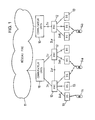
- the invention is described below in its application to a UMTS network in frequency duplex mode (FDD, "Frequency Division Duplex”), the Figure 1 shows the architecture.
- FDD Frequency Division Duplex
- the switches of the mobile service 10, belonging to a core network are connected on the one hand to one or more fixed networks 11 and on the other hand, by means of a so-called read interface , to control units 12, or RNC ("Radio Network Controller").
- RNC Radio Network Controller
- Each RNC 12 is connected to one or more radio radio stations 13 by means of a so-called lub interface .
- the radio stations 13, distributed over the network coverage territory, are capable of communicating by radio with the mobile terminals 14, 14a, 14b called UE ("User Equipment"). Radio stations can be grouped together to form nodes called "node B".
- Some RNCs 12 can also communicate with each other using a so-called lur interface.
- RNCs and radio stations form an access network called UTRAN ("UMTS Terrestrial Radio Access Network").
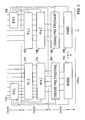
- the UTRAN comprises elements of layers 1 and 2 of the ISO model in order to provide the required links on the radio interface (called Uu ), and a stage 15A of radio resource control (RRC, "Radio Resource Control") belonging to layer 3, as described in the technical specification 3G TS 25.301, "Radio Interface Protocol Architecture", version 4.2.0 published in December 2001 by 3GPP. Seen from above, the UTRAN acts simply as a relay between the EU and CN.
- RRC radio Resource Control
- FIG. 2 shows the stages RRC 15A, 15B and the stages of the layers who belong to UTRAN and to an EU.
- the layer 2 is subdivided into a radio link control stage 16A, 16B (RLC, "Radio Link Control") and a medium access control stage 17A, 17B (MAC, "Medium Access Control”).
- Layer 1 comprises a stage 18A, 18B coding and multiplexing.
- a stage 19A, 19B radio transmits the radio signals from symbol trains provided by stage 18A, 18B, and the reception of signals in the other direction.
- Layers 1 and 2 are each controlled by the RRC sublayer, whose characteristics are described in the technical specification 3G TS 25: 331, "RRC Protocol Specification", version 4.1.0 published in June 2001 by 3GPP.
- the RRC stage 15A, 15B supervises the radio interface. He deals in in addition to flows to be transmitted to the remote station according to a "control plan", as opposed to the "user plan” which corresponds to data processing Layer 3 users.
- UMTS in FDD mode supports a macrodiversity technique, which consists in providing that an EU can simultaneously communicate with radio stations distinct from an active set so that, in the downward direction, the EU receives the same information several times and that, in the upstream direction, the radio signal emitted by the EU be received by the radio stations to form different estimates then combined into the UTRAN.
- Macrodiversity provides a gain in reception which improves system performance through the combination of different observations of the same information. It also allows for transfers smooth intercellular (SHO), when the EU is moving.
- SHO smooth intercellular
- the routing of transport channels for multiple transmission from UTRAN or the EU and the combination of these transport channels in reception are operations which are the responsibility of a selection and combination module belonging to layer 1
- This module is at the interface with the MAC sublayer, and it is located in the RNC serving the EU. If the radio stations involved depend on different RNCs communicating through the lur interface , one of these RNCs plays the role of SRNC and the other that of DRNC.
- SRNC Serving RNC
- Drift RNC RNC
- Appropriate protocols ensure exchanges between these RNCs on the lur interface, for example ATM ("Asynchronous Transfer Mode") and AAL2 (“ATM Adaptation Layer No. 2").
- a frame protocol (FP) is used in the user plane to make the SRNC communicate with the node or nodes B involved in a communication with a given UE.
- This FP protocol is described in the technical specifications 3G TS 25.427, "UTRAN lub / lur Interface User Plane Protocol for DCH Data Streams ", and 3G TS 25.435," UTRAN lub Interface User Plane Protocols for Common Transport Channel Data Streams ", versions 4.3.0, released in December 2001 by 3GPP. It provides in particular signaling frames allowing synchronization of the transport channels in the manner described in section 7 of technical specification 25.402, "Synchronization in UTRAN Stage 2 ", version 4.3.0, published in December 2001 by 3GPP.
- the purpose of this synchronization of the transport channels is to provide a common numbering of the layer 2 frames between the UTRAN and the UE, performed using a connection frame number (CFN, "Connection 8-bit Frame Number "), which layer 2 manages for each set of Transport blocks (TBS) exchanged with the EU in incrementing it by one every 10 ms.
- CFN connection frame number
- TBS Transport blocks
- This CFN is not transmitted on the air interface, but it is added to the frames exchanged on the lub interface.
- the physical layer transposes it on a frame numbering kept up to date for each cell, defined by a system frame number SFN ("System Frame Number") coded on 12 bits. Node B increments this SFN with each new radio frame by 10 ms and broadcasts it on the common control channels of the cell.
- SFN System Frame Number
- the offset between the CFN and the SFN is determined before establishing the radio link between node B and the UE concerned, in terms of an offset expressed by an integer number of frames ("Frame Offset").
- the CFN is initialized to the SFN (modulo 256) of the first frame used for the issue of TBS.
- the EU measures the offset between the current CFN and the SFN broadcast by the news cell and reports to SRNC. This deduces the "Frame" parameter Offset "relevant to the new cell and informs node B so that it take into account the offset between the CFN and SFN counters.
- node B When node B receives a data frame outside the corresponding window, it reports to the RNC in a TAD frame ("Timing Adjusment") of the FP protocol, which includes the CFN number of the data frame in question as well as the value of the TOA with which it has has been received (see sections 5.2 and 6.3.3.1 of the above-mentioned specification TS 25.427). This allows the RNC to correct the time at which it transmits the following frames to node B.
- TAD frame TAD frame
- the RNC sends to node B "DL SYNC" signaling frames containing each the CFN against which this frame should be received.
- the node B y responds immediately by returning a "UL SYNC” frame indicating this CFN and the value of TOA corresponding to the reception of this frame.
- This mechanism makes it possible to prevent the window from drifting without the RNC being informed by TAD frames (see section 7.2 of specification TS 25.402 above and sections 5.3, 6.3.3.2 and 6.3.3.3 of specification TS 25.427 supra).
- each FP frame of CFN given is only transmitted once by the SRNC.
- the differences in the speed of the lub or lur / lub links constrain the SRNC's determination of the right transmission time.
- the high values of TOA mean that the buffers of the B nodes may lack capacity.
- the low or negative values of TOA risk causing data loss.
- each node B transmits frames of data to its home SRNC.
- no time delay does not exist at Node B to delay or anticipate the transmission of frames so that they can be transmitted spaced in time.
- a combination of the frames received with an identical CFN number from the different B nodes is performed regularly after the expiration of a timer ("TTI timer" or "Transmission Time Interval timer "). If some of the uplink frames are received by the SRNC after expiration of this timer, they will be lost and not taken into account in the suit. Conversely, frames received too early by the SRNC, that is, beyond the maximum capacity of the SRNC buffers, do not cannot be kept in memory to be taken into account in the combination of frames.
- An object of the present invention is to propose a method allowing a control unit such as an RNC to define the times optimal for performing operations required for exchanged frames with one or more radio stations.
- Another goal is to reach a good compromise between a rate of minimum loss of transmitted frames and a minimum waiting time for the transmission of these frames.
- Yet another goal is to provide a mechanism for raising of information and analysis of this information to a control unit such than an RNC to improve the sequencing of operations to be carried out on frames whether in the downward direction or in the upward direction.
- the transmission of signaling frames can be periodic, from so as to regularly obtain synchronization information from the RNC. This regularity can also be variable. In particular, it may depend on the amount of information already available at the RNC, for example following a large number of TAD frame escalations.
- Processing the returned synchronization parameters can understand a comparison at predetermined times.
- the comparison can be done on estimators based on the parameters of synchronization returned as moving averages of the instants of reception of the last frames received at the RNC.
- an adjustment value can be calculated by the control unit. It will be used to increase or decrease the RNC transmission times for data frames following. It will preferably be calculated so that the following frames are received, with a high probability, in the associated reception window, without great risk of loss, and this for each radio station.
- the adjustment value can in particular be chosen to target a precise moment in the reception window. For example, this moment can be located at the end of the reception window for the radio station with the slowest link with the control unit.
- the control unit is able to adapt its times of reception of frames from different radio stations, so that their rate of loss be decreased. It can indeed modify the value of the aforementioned timer and, when it expires, combine all the data received from different radio stations. As long as the timer has not expired, it can receive numbered frames in order to then take them into account in its combination of frames of the same number.
- a timer expiration date adjustment value can be chosen to target a specific moment, inside the reception window suitable for the reception of frames by the control unit. For example, this instant can be located at the end of the reception window for the frames sent by the radio station having the slowest link with the control unit.
- the value can also preferably be assessed on the basis of a estimation, for example an average, of several indications of time of reception.
- control units for setting up implements the methods presented above.
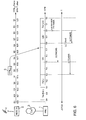
- Figure 4 shows, in a representation similar to that of the Figure 3, the main elements involved in the synchronization of the lub interface according to the invention.
- the different ranges of reception standardized by 3GPP are used.
- the range “Early” planned by 3GPP has been divided into two parts: “Too early” and “Early”, as was the case for standard "Late” and "Too late” windows.
- rising frames containing synchronization parameters representative of a time of reception of downlink frames received are sent to RNC 1, or to its request ("UL SYNC” signaling frames in response to "DL SYNC"), either after reception of a data frame by a node B 2 outside the reception window marked "OK".
- This feedback therefore gives relevant elements that the RNC can take into account as a basis for decision to enslave its transmission times for future frames.
- this feedback can be systematized, so that the RNC 1 has constantly updated information on the instants of reception, including during periods of silence.
- RNC 1 can send successive "DL SYNC" signaling frames, for example from periodically, at each node B 2.
- the nodes B 2 respond to each "DL SYNC" control frame by a "UL SYNC” signaling frame containing a synchronization parameter representative of an instant of reception (TOA) of the previous frame "DL SYNC”, with the number CFN that she inserted. So even in the absence of any TAD frame reception from from RNC 1, it has regularly updated information on the instants of reception of the frames which it transmits to the nodes B 2 and therefore on the transmission times of these frames.
- the period sending by RNC 1 of "DL SYNC" frames depends on the quantity information already available on the transmission times between RNC 1 and each node B 2.
- the period of sending "DL frames SYNC” can be reduced by RNC 1.
- the period for sending "DL SYNC” frames may vary during the time depending on particular conditions or events, such as presence or absence of macrodiversity, adding or removing a Node B generally active in communication with terminal 4, or the rate load on the transport layer of the lub interface.
- the RNC 1 stores the value received in a table.
- the parameter in question can for example be a value of TOA such as described above.
- this value is associated with the CFN number included in the corresponding "DL SYNC" frame and at node B considered. So, when several B 2 nodes are in communication with terminal 4 in macrodiversity mode, RNC 1 stores in its table the set of TOA values received for a given CFN and for each node B 2.
- the periodicity of the frames on the lub interface is 10 ms (it could also have a value upper, multiple of 10 ms).
- This enslavement of the transmission times for the frames following can be done by comparing the values stored in the table RNC 1, with predetermined reference values.
- RNCWS (“RNC Window Size"). It corresponds to the point of reception to be targeted by RNC 1 inside the "OK" reception window, to a node B 2.
- the RNCWS can have a fixed or variable value. He can by example depend on the type of service requested by the user of terminal 4. A weak or even negative RNCWS could thus be used for a time service real, i.e. requiring very fast transmission at the expense of potentially high loss rate.
- the RNCWS can also take into account the size of the buffers of the nodes B 2, so that its value is limited for very short queues.
- RNC 1 can store a table giving a correspondence between RNCWS and different values criteria (service requested, size of stamps, etc.), so as to initialize the RNCWS at an adequate value when establishing the link or service for example.
- Figure 5 presents a diagram proposing a value calculation adjustment according to an advantageous embodiment of the invention.
- the RNC stores successive values (i.e. for of successive CFNs) of TOA for each node B 2 in communication with the terminal 4. It then performs, for each node B, an estimate of times of receive, which is a function of at least one stored TOA value.
- the estimate may consist of a moving average of the last N stored TOA values, with N non-zero natural integer. He thus obtains a average of the TOAs for each node B 2, updated for example at each new reception by the RNC of a reception instant transmitted by said node B.
- the RNC 1 selects the values minimum TOAMIN and maximum TOAMAX among the estimates obtained.
- TOAMIN corresponds to the slowest lub interface (i.e. having the time longest transmission) and TOAMAX at the fastest lub interface.
- the terminal 4 is only in communication with a single node B 2, the TOAMAX and TOAMIN values would be equal and the succession of steps of calculation below could still apply.
- the RNCWS value can be chosen to be low compared to that of TOAWS, so that a frame received at the time corresponding to RNCWS is at the end of the "OK" reception window.
- TOAMAX-TOAMIN difference is less than or equal to TOAWS, we are interested in the value of TOAMIN. If this is greater than RNCWS or negative and that TOAMAX + (RNCWS-TOAMIN) is less than or equal to TOAWS, this means that TOAMAX would be less than TOAWS and therefore in the window of reception "OK” if we reduced TOAMIN to the value of RNCWS.
- TOAMAX-TOAMIN difference is less than or equal to TOAWS and TOAMIN is less than or equal to RNCWS while being positive (i.e. at the end window "OK")
- TOAMAX we are interested in the value of TOAMAX. If the latter is less than or equal to TOAWS, that is to say in the "OK" reception window, all lub interfaces including the slowest and fastest, based calculated averages, give rise to reception of frames in the area reserved for this purpose ("OK" window). In this case, no adjustment is necessary. Otherwise, it is necessary to make sure that TOAMAX enters the "OK” window, since this will not take TOAMIN out of this window. It is why, in this case, we choose an adjustment of TOAWS-TOAMAX, which returns TOAMAX to the start of the "OK" window.
- the TOA values returned by the nodes B 2 and stored by RNC 1 must be considered according to the different adjustments made so that they can be compared. Indeed, a anticipation of the transmission of a frame by RNC 1, for example, modifies all the moments of reception at each B 2 node. why it is advisable to update, in the RNC storage tables, the last moments of reception back, each time the anticipation is adjusted RNC, adding to them the calculated adjustment value.
- the TOAMIN and TOAMAX are then evaluated from homogeneous data, with a common time reference.
- RNC 1 compares the CFN sent by node B 2 in the control frame with the one for which the calculation of the value adjustment is in progress and, if the control frame results from reception of a frame prior to the calculation of the adjustment, the RNC stores all the same the instant of reception returned but by translating it from the adjustment value newly calculated.
- the information transmitted by node B is thus put in compliance with the new reference system, in conjunction with anticipation RNC. This same update before storage of the reception instant can apply to any node B of the active set considered.
- FIG. 6 presents a second aspect of the invention which applies to an uplink transmission, that is to say an uplink frame transmission, from B 2 nodes of an active set in communication with a terminal 4, to an RNC 1.
- each B 2 node maintains knowledge of the difference of the time axis that it manages (BFN) with that managed by the RNC 1 (CFN) and compensates for this difference (Frame Offset) to raise frames to the RNC inserting information from CFN corresponding to a date of issue frames.
- the RNC is content to read the values of CFN received in uplink data frames from the different B 2 nodes and to combine together the frames inserting the same CFN.
- the invention defines in uplink the same types of reception windows than downlink, with the difference that these are applied at RNC 1.
- the invention also introduces a parameter ULRNCWS (UpLink RNCWS) whose value is less than ULTOAWS and which constitutes an instant of reception at RNC 1 level well suited to the interface lub 3 by limiting the frame loss rate, especially in the case where nodes B are added or removed from the active set in communication with the terminal 4.
- ULRNCWS can be chosen at the start of communication, for example from a predefined table stored in RNC 1 and which takes into account different criteria such as the service requested.
- B 2 nodes do not control their transmission time but transmit uplink data frames, inserting a CFN time frame, to destination from the RNC as soon as these are available. It is therefore up to the RNC to modify its instants of combining the received frames to limit the rate of loss of frames. For that, it modifies the expiration dates of the TTI timer planned for the next combinations of frames, so that a maximum of frames received from nodes B 2 are received before the timer expires, preferably in the reception window "OK" and if possible at certain times close to ULRNCWS, at least for the slower lub 3 links, i.e. with the highest transmission times.
- This enslavement of the date expiration of the TTI timer therefore corresponds to an offset of this date by compared to the CFN scale. It is accompanied by a translation of the windows of time reception for the next frame reception periods rising data.
- the adjustment value obtained is then added, after combination frames, to that of the TTI timer in order to modify the expiration date of this last for the next frame reception period.
- This enslavement of the expiration date of the TTI timer allows you to anticipate or, at on the contrary, to delay the instants of reception at RNC 1, for the period of next reception, so that the RNC is able to receive a maximum of frames before the expiration of the TTI timer, without lengthening the delay too much combination of frames of the same CFN.
- RNC 1 translates its windows from reception accordingly, so that a maximum of frames are preferably received in the "OK" reception window during periods following reception of uplink frames.
Landscapes
- Engineering & Computer Science (AREA)
- Computer Networks & Wireless Communication (AREA)
- Signal Processing (AREA)
- Mobile Radio Communication Systems (AREA)
Abstract
Description
- Tproc égal au temps minimal, dépendant de l'équipement, nécessaire au traitement d'une trame par le node B avant qu'il puisse commencer à l'émettre sur l'interface air;
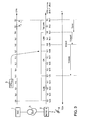
- TOAWS ("Time Of Arrival Window Startpoint") déterminant la largeur de la fenêtre de réception. Une trame reçue avec un TOA compris entre 0 et TOAWS est considérée comme normalement reçue ("OK" sur la figure 3 qui montre la fenêtre de réception pour la trame de CFN 152). Une trame reçue avec un TOA plus grand que TOAWS est considérée comme reçue en avance ("Early" sur la figure 3);
- TOAWE ("Time Of Arrival Window End") déterminant la position de la fenêtre de réception, c'est-à-dire celle du point de référence TOA = 0 qui est antérieur de Tproc + TOAWE à l'instant correspondant au début de la période de trame numérotée CFN (compte tenu du Frame Offset). Lorsqu'il est plus grand que 0, ce paramètre TOAWE permet de distinguer les trames reçues tardivement mais qui peuvent encore être traitées par le node B (-TOAWE < TOA < 0, "Late" sur la figure 3) et les trames reçues trop tardivement et détruites par le node B (TOA < - TOAWE, "Too Late" sur la figure 3).
- émettre des trames de signalisation vers chaque station radio;
- traiter les paramètres de synchronisation retournés; et
- asservir les instants d'émission des trames de données successives en fonction des paramètres traités.
- traiter les instants de réception déterminés ;
- asservir la date d'expiration du timer en fonction des instants de réception traités.
- la figure 1, déjà commentée, est un schéma d'architecture d'un système UMTS ;
- la figure 2 , déjà commentée, est un schéma représentant les couches protocolaires communes à l'UTRAN et l'UE ;
- la figure 3, déjà commentée, est une représentation schématique des fenêtres entrant en jeu dans la synchronisation de l'interface lub, telle que normalisée dans le système UMTS par le 3GPP ;
- la figure 4 est une représentation schématique d'un mécanisme de contrôle d'émission de trames descendantes selon l'invention, dans son application à l'interface lub ;
- la figure 5 est un diagramme montrant les étapes de calcul d'une valeur d'ajustement dans un exemple de réalisation en mode descendant ;
- la figure 6 est une représentation schématique d'un mécanisme de contrôle de réception de trames montantes selon l'invention, dans son application à l'interface lub ;
- la figure 7 est un diagramme montrant les étapes de calcul d'une valeur d'ajustement dans un exemple de réalisation en mode montant.
- si ULTOAMAX-ULTOAMIN est supérieur à ULTOAWS, la valeur d'ajustement est fixée à ULTOAWS-ULTOAMAX ;
- si ULTOAMAX-ULTOAMIN est inférieur ou égal à ULTOAWS,
- si ULTOAMIN est supérieur à ULRNCWS ou si ULTOAMIN est négatif,
- si ULTOAMAX+(ULRNCWS-ULTOAMIN) est inférieur ou égal à ULTOAWS, la valeur d'ajustement est fixée à ULRNCWS-ULTOAMIN,
- si ULTOAMAX+(ULRNCWS-ULTOAMIN) est supérieur à ULTOAWS, la valeur d'ajustement est fixée à ULTOAWS-ULTOAMAX ;
- si ULTOAMIN est positif ou nul et inférieur ou égal à ULRNCWS,
- si ULTOAMAX est inférieur ou égal à ULTOAWS, la valeur d'ajustement est nulle,
- si ULTOAMAX est supérieur à ULTOAWS, la valeur d'ajustement est fixée à ULTOAWS-ULTOAMAX.
- si ULTOAMIN est supérieur à ULRNCWS ou si ULTOAMIN est négatif,
Claims (39)
- Procédé de contrôle d'émission de trames depuis une unité de contrôle (1) vers au moins une station radio (2),
dans lequel chaque station radio a une fenêtre de réception respective associée à chaque trame, positionnée dans le temps en fonction d'un repère temporel inséré dans ladite trame par l'unité de contrôle,
dans lequel les trames incluent des trames de données (5), dans lesquelles le repère temporel est inséré par l'unité de contrôle pour la synchronisation avec un terminal radio (4) vers lequel chaque station radio émet des données desdites trames de données, et des trames de signalisation,
et dans lequel chaque station radio est agencée pour signaler à l'unité de contrôle une trame de données reçue en dehors de la fenêtre de réception associée, et pour répondre à une trame de signalisation en retournant à l'unité de contrôle un paramètre de synchronisation représentatif d'un instant de réception de ladite trame de signalisation par rapport à la fenêtre de réception associée,
le procédé comprenant les étapes suivantes exécutées par l'unité de contrôle dans une période d'émission de trames de données successives :émettre des trames de signalisation vers chaque station radio simultanément ;traiter les paramètres de synchronisation retournés ; etasservir les instants d'émission des trames de données successives en fonction des paramètres traités. - Procédé selon la revendication 1, dans lequel l'émission des trames de signalisation vers chaque station radio (2) est périodique.
- Procédé selon la revendication 2, dans lequel l'émission des trames de signalisation vers chaque station radio (2) a une périodicité variable dans le temps.
- Procédé selon la revendication 1, dans lequel les trames de signalisation sont émises vers chaque station radio (2) dans une proportion dépendant d'un nombre de trames retournées à l'unité de contrôle par certaines au moins des stations radio pour signaler une trame de données reçue en dehors de la fenêtre de réception associée sur une période d'émission de trames de données successives.
- Procédé selon l'une quelconque des revendications précédentes, dans lequel on détermine une défaillance d'un lien de transport entre l'unité de contrôle (1) et une station radio (2), lorsque ladite station radio ne retourne pas de paramètre de synchronisation représentatif d'un instant de réception à l'unité de contrôle en réponse à des trames de signalisation.
- Procédé selon l'une quelconque des revendications précédentes, dans lequel ledit traitement des paramètres de synchronisation retournés en réponse à une trame de signalisation comprend une comparaison desdits paramètres de synchronisation à des instants prédéterminés par rapport à une fin de la fenêtre de réception associée.
- Procédé selon la revendication 6, dans lequel lesdits instants prédéterminés sont des points de départ respectivement de la fenêtre de réception (TOAWS) et d'une sous-fenêtre de réception (RNCWS) positionnée en fin de la fenêtre de réception.
- Procédé selon la revendication 7, dans lequel RNCWS est préalablement fixé en fonction d'un type de service demandé par ledit terminal radio (4).
- Procédé selon la revendication 7 ou 8, dans lequel le traitement des paramètres de synchronisation retournés en réponse à une trame de signalisation comprend une détermination, à l'unité de contrôle (1), d'une estimation d'instants de réception, pour chaque station radio (2), sur la base de N derniers paramètres de synchronisation retournés, N étant un entier supérieur ou égal à 1, et une détermination parmi lesdites estimations d'une valeur maximum TOAMAX correspondant à une estimation d'instants la plus précoce et une valeur minimum TOAMIN correspondant à une estimation d'instants la plus tardive, les deux valeurs TOAMIN et TOAMAX pouvant être égales, dans lequel on détermine une valeur d'ajustement telle que :et dans lequel l'asservissement des instants d'émission des trames de données successives comprend une translation selon ladite valeur d'ajustement déterminée.si TOAMAX-TOAMIN est supérieur à TOAWS, la valeur d'ajustement est fixée à TOAWS-TOAMAX ;si TOAMAX-TOAMIN est inférieur ou égal à TOAWS,si TOAMIN est supérieur à RNCWS ou si TOAMIN est négatif,si TOAMAX+(RNCWS-TOAMIN) est inférieur ou égal à TOAWS, la valeur d'ajustement est fixée à RNCWS-TOAMIN,si TOAMAX+(RNCWS-TOAMIN) est supérieur à TOAWS, la valeur d'ajustement est fixée à TOAWS-TOAMAX ;si TOAMIN est positif ou nul et inférieur ou égal à RNCWS,si TOAMAX est inférieur ou égal à TOAWS, la valeur d'ajustement est nulle,si TOAMAX est supérieur à TOAWS, la valeur d'ajustement est fixée à TOAWS-TOAMAX ;
- Procédé selon la revendication 9, dans lequel l'estimation d'instants de réception pour chaque station radio (2) est une moyenne glissante effectuée sur les N derniers paramètres de synchronisation retournés par ladite station radio.
- Procédé selon l'une quelconque des revendications précédentes, dans lequel on modifie, après traitement, les paramètres de synchronisation retournés à l'unité de contrôle (1) selon le même asservissement que les instants d'émission des trames de données successives.
- Procédé selon l'une quelconque des revendications précédentes, dans lequel on ignore, après traitement des paramètres de synchronisation, un paramètre de synchronisation retourné à l'unité de contrôle (1) en réponse à une trame de signalisation transmise par l'unité de contrôle avant le traitement des paramètres de synchronisation.
- Procédé selon l'une quelconque des revendications 1 à 11, dans lequel on modifie, après traitement des paramètres de synchronisation retournés à l'unité de contrôle (1), un paramètre de synchronisation retourné à l'unité de contrôle en réponse à une trame de signalisation transmise par l'unité de contrôle avant traitement des paramètres de synchronisation, ladite modification comprenant le même asservissement que pour les instants d'émission des trames de données successives.
- Procédé de contrôle de réception et de combinaison de trames à une unité de contrôle (1), les trames étant émises depuis au moins une station radio (2),
dans lequel l'unité de contrôle a une fenêtre de réception associée à chaque trame, positionnée dans le temps en fonction d'un repère temporel inséré dans ladite trame par chaque station radio,
dans lequel les trames incluent des trames de données (5), dans lesquelles le repère temporel est inséré par chaque station radio pour la synchronisation avec un terminal radio (4) émettant des données desdites trames de données,
dans lequel l'unité de contrôle est agencée pour détecter une trame de données reçue en dehors de la fenêtre de réception associée, et pour déterminer un instant de réception d'une trame de données par rapport à la fenêtre de réception associée,
et dans lequel l'unité de contrôle est agencée pour effectuer une combinaison des trames de données reçues de certaines au moins des stations radio et insérant un même repère temporel, à une date d'expiration d'un timer respectif, positionnée dans le temps en fonction de la fenêtre de réception associée,
le procédé comprenant les étapes suivantes exécutées par l'unité de contrôle dans une période de réception de trames de données successives :traiter les instants de réception déterminés ;asservir la date d'expiration du timer en fonction des instants de réception traités. - Procédé selon la revendication 14, dans lequel ledit traitement des instants de réception déterminés comprend une comparaison desdits instants de réception déterminés d'une trame de données (5) à des instants prédéterminés par rapport à une fin de la fenêtre de réception associée.
- Procédé selon la revendication 15, dans lequel lesdits instants prédéterminés sont des points de départ respectivement de la fenêtre de réception (ULTOAWS) et d'une sous-fenêtre de réception (ULRNCWS) positionnée en fin de la fenêtre de réception.
- Procédé selon la revendication 16, dans lequel ULRNCWS est préalablement fixé en fonction d'un type de service demandé par ledit terminal radio (4).
- Procédé selon la revendication 16 ou 17, dans lequel le traitement des instants de réception déterminés pour une trame de données (5) comprend une détermination, à l'unité de contrôle (1), d'une estimation d'instants de réception, pour chaque station radio (2), de N derniers instants de réception déterminés, N étant un entier supérieur ou égal à 1, et une détermination, parmi lesdites estimations, d'une valeur maximum ULTOAMAX correspondant à une estimation d'instants la plus précoce et une valeur minimum ULTOAMIN correspondant à une estimation d'instants la plus tardive, les deux valeurs ULTOAMIN et ULTOAMAX pouvant être égales, dans lequel on détermine une valeur d'ajustement telle que :et dans lequel l'asservissement de la date d'expiration du timer en fonction des instants de réception traités comprend une translation selon ladite valeur d'ajustement déterminée.si ULTOAMAX-ULTOAMIN est supérieur à ULTOAWS, la valeur d'ajustement est fixée à ULTOAWS-ULTOAMAX ;si ULTOAMAX-ULTOAMIN est inférieur ou égal à ULTOAWS,si ULTOAMIN est supérieur à ULRNCWS ou si ULTOAMIN est négatif,si ULTOAMAX+(ULRNCWS-ULTOAMIN) est inférieur ou égal à ULTOAWS, la valeur d'ajustement est fixée à ULRNCWS-ULTOAMIN,si ULTOAMAX+(ULRNCWS-ULTOAMIN) est supérieur à ULTOAWS, la valeur d'ajustement est fixée à ULTOAWS-ULTOAMAX ;si ULTOAMIN est positif ou nul et inférieur ou égal à ULRNCWS,si ULTOAMAX est inférieur ou égal à ULTOAWS, la valeur d'ajustement est nulle,si ULTOAMAX est supérieur à ULTOAWS, la valeur d'ajustement est fixée à ULTOAWS-ULTOAMAX ;
- Procédé selon la revendication 18, dans lequel l'estimation d'instants de réception pour une station radio (2) est une moyenne glissante effectuée sur les N derniers instants de réception déterminés pour ladite station radio.
- Procédé selon l'une quelconque des revendications 14 à 19, dans lequel on modifie, après traitement, les instants de réception des trames de données reçues à l'unité de contrôle (1) avant traitement, selon le même asservissement que la date d'expiration du timer.
- Unité de contrôle (1) comprenant des moyens d'émission de trames vers au moins une station radio (2) et des moyens d'insertion d'un repère temporel dans chaque trame, chaque station radio ayant une fenêtre de réception respective associée à chaque trame, positionnée dans le temps en fonction dudit repère temporel, les trames émises incluant des trames de données (5), dans lesquelles le repère temporel est inséré pour la synchronisation avec un terminal radio (4) vers lequel chaque station radio émet des données desdites trames de données, et des trames de signalisation, l'unité de réception comprenant en outre des moyens pour recevoir de la part de chaque station radio une indication de réception d'une trame de données en dehors de la fenêtre de réception associée et des moyens de réception d'un paramètre de synchronisation retourné par une station radio en réponse à une trame de signalisation, ledit paramètre de synchronisation étant représentatif d'un instant de réception de ladite trame de signalisation par rapport à la fenêtre de réception associée,
l'unité de contrôle comprenant :des moyens pour émettre des trames de signalisation vers chaque station radio simultanément, dans une période d'émission de trames de données successives ;des moyens pour traiter les paramètres de synchronisation retournés ; etdes moyens pour asservir les instants d'émission des trames de données successives en fonction des paramètres traités. - Unité de contrôle selon la revendication 21, dans laquelle l'émission des trames de signalisation vers chaque station radio (2) est périodique.
- Unité de contrôle selon la revendication 22, dans laquelle l'émission des trames de signalisation vers chaque station radio (2) a une périodicité variable dans le temps.
- Unité de contrôle selon la revendication 21, dans laquelle l'émission des trames de signalisation vers chaque station radio (2) est dans une proportion dépendant d'un nombre de trames retournées à l'unité de contrôle par certaines au moins des stations radio pour signaler une trame de données reçue en dehors de la fenêtre de réception associée sur une période d'émission de trames de données successives.
- Unité de contrôle selon l'une quelconque des revendications 21 à 24, dans laquelle les moyens de traitement des paramètres de synchronisation retournés en réponse à une trame de signalisation comprennent une comparaison desdits paramètres de synchronisation à des instants prédéterminés par rapport à une fin de la fenêtre de réception associée.
- Unité de contrôle selon la revendication 25, dans laquelle lesdits instants prédéterminés sont des points de départ respectivement de la fenêtre de réception (TOAWS) et d'une sous-fenêtre de réception (RNCWS) positionnée en fin de la fenêtre de réception.
- Unité de contrôle selon la revendication 26, dans laquelle RNCWS est préalablement fixé en fonction d'un type de service demandé par ledit terminal radio (4).
- Unité de contrôle selon la revendication 26 ou 27, dans laquelle les moyens de traitement des paramètres de synchronisation retournés en réponse à une trame de signalisation comprennent une détermination d'une estimation d'instants de réception, pour chaque station radio (2), sur la base de N derniers paramètres de synchronisation retournés, N étant un entier supérieur ou égal à 1, et une détermination parmi lesdites estimations d'une valeur maximum TOAMAX correspondant à une estimation d'instants la plus précoce et une valeur minimum TOAMIN correspondant à une estimation d'instants la plus tardive, les deux valeurs TOAMIN et TOAMAX pouvant être égales, l'unité de contrôle ayant en outre des moyens pour déterminer une valeur d'ajustement telle que :et dans laquelle les moyens pour asservir les instants d'émission des trames de données successives comprennent une translation selon ladite valeur d'ajustement déterminée.si TOAMAX-TOAMIN est supérieur à TOAWS, la valeur d'ajustement est fixée à TOAWS-TOAMAX ;si TOAMAX-TOAMIN est inférieur ou égal à TOAWS,si TOAMIN est supérieur à RNCWS ou si TOAMIN est négatif,si TOAMAX+(RNCWS-TOAMIN) est inférieur ou égal à TOAWS, la valeur d'ajustement est fixée à RNCWS-TOAMIN,si TOAMAX+(RNCWS-TOAMIN) est supérieur à TOAWS, la valeur d'ajustement est fixée à TOAWS-TOAMAX ;si TOAMIN est positif ou nul et inférieur ou égal à RNCWS,si TOAMAX est inférieur ou égal à TOAWS, la valeur d'ajustement est nulle,si TOAMAX est supérieur à TOAWS, la valeur d'ajustement est fixée à TOAWS-TOAMAX ;
- Unité de contrôle selon la revendication 28, dans laquelle l'estimation d'instants de réception pour chaque station radio (2) est une moyenne glissante effectuée sur les N derniers paramètres de synchronisation retournés par ladite station radio.
- Unité de contrôle selon l'une quelconque des revendications 21 à 29, comprenant des moyens pour modifier, après traitement, les paramètres de synchronisation retournés selon le même asservissement que les instants d'émission des trames de données successives.
- Unité de contrôle selon l'une quelconque des revendications 21 à 30, comprenant des moyens pour ignorer, après traitement des paramètres de synchronisation, un paramètre de synchronisation retourné en réponse à une trame de signalisation transmise avant le traitement des paramètres de synchronisation.
- Unité de contrôle selon l'une quelconque des revendications 21 à 30, comprenant des moyens pour modifier, après traitement des paramètres de synchronisation retournés, un paramètre de synchronisation retourné à l'unité de contrôle en réponse à une trame de signalisation transmise par l'unité de contrôle avant traitement des paramètres de synchronisation, ladite modification comprenant le même asservissement que pour les instants d'émission des trames de données successives.
- Unité de contrôle (1) comprenant des moyens de réception et de combinaison de trames, les trames étant émises depuis au moins une station radio (2),
l'unité de contrôle ayant une fenêtre de réception associée à chaque trame, positionnée dans le temps en fonction d'un repère temporel inséré dans ladite trame par chaque station radio,
les trames incluant des trames de données (5), dans lesquelles le repère temporel est inséré par chaque station radio pour la synchronisation avec un terminal radio (4) émettant des données desdites trames de données,
l'unité de contrôle ayant des moyens pour détecter une trame de données reçue en dehors de la fenêtre de réception associée, et pour déterminer un instant de réception d'une trame de données par rapport à la fenêtre de réception associée,
l'unité de contrôle comprenant en outre des moyens pour effectuer une combinaison des trames de données reçues de certaines au moins des stations radio et insérant un même repère temporel, à une date d'expiration d'un timer respectif, positionnée dans le temps en fonction de la fenêtre de réception associée,
l'unité de contrôle comprenant encore :des moyens pour traiter les instants de réception déterminés, dans une période de réception de trames de données successives ;des moyens pour asservir la date d'expiration du timer en fonction des instants de réception traités. - Unité de contrôle selon la revendication 33, dans laquelle les moyens de traitement des instants de réception déterminés comprennent une comparaison desdits instants de réception déterminés d'une trame de données (5) à des instants prédéterminés par rapport à une fin de la fenêtre de réception associée.
- Unité de contrôle selon la revendication 34, dans laquelle lesdits instants prédéterminés sont des points de départ respectivement de la fenêtre de réception (ULTOAWS) et d'une sous-fenêtre de réception (ULRNCWS) positionnée en fin de la fenêtre de réception.
- Unité de contrôle selon la revendication 35, dans laquelle ULRNCWS est préalablement fixé en fonction d'un type de service demandé par ledit terminal radio (4).
- Unité de contrôle selon la revendication 35 ou 36, dans laquelle les moyens de traitement des instants de réception déterminés pour une trame de données (5) comprennent une détermination d'une estimation d'instants de réception, pour chaque station radio (2), de N derniers instants de réception déterminés, N étant un entier supérieur ou égal à 1, et une détermination, parmi lesdites estimations, d'une valeur maximum ULTOAMAX correspondant à une estimation d'instants la plus précoce et une valeur minimum ULTOAMIN correspondant à une estimation d'instants la plus tardive, les deux valeurs ULTOAMIN et ULTOAMAX pouvant être égales, l'unité de contrôle ayant en outre des moyens pour déterminer une valeur d'ajustement telle que :et dans laquelle les moyens pour asservir la date d'expiration du timer en fonction des instants de réception traités comprennent une translation selon ladite valeur d'ajustement déterminée.si ULTOAMAX-ULTOAMIN est supérieur à ULTOAWS, la valeur d'ajustement est fixée à ULTOAWS-ULTOAMAX ;si ULTOAMAX-ULTOAMIN est inférieur ou égal à ULTOAWS,si ULTOAMIN est supérieur à ULRNCWS ou si ULTOAMIN est négatif,si ULTOAMAX+(ULRNCWS-ULTOAMIN) est inférieur ou égal à ULTOAWS, la valeur d'ajustement est fixée à ULRNCWS-ULTOAMIN,si ULTOAMAX+(ULRNCWS-ULTOAMIN) est supérieur à ULTOAWS, la valeur d'ajustement est fixée à ULTOAWS-ULTOAMAX;si ULTOAMIN est positif ou nul et inférieur ou égal à ULRNCWS,si ULTOAMAX est inférieur ou égal à ULTOAWS, la valeur d'ajustement est nulle,si ULTOAMAX est supérieur à ULTOAWS, la valeur d'ajustement est fixée à ULTOAWS-ULTOAMAX ;
- Unité de contrôle selon la revendication 37, dans laquelle l'estimation d'instants de réception pour une station radio (2) est une moyenne glissante effectuée sur les N derniers instants de réception déterminés pour ladite station radio.
- Unité de contrôle selon l'une quelconque des revendications 33 à 38, comprenant des moyens pour modifier, après traitement, les instants de réception des trames de données (5) reçues à l'unité de contrôle avant traitement, selon le même asservissement que la date d'expiration du timer.
Applications Claiming Priority (2)
| Application Number | Priority Date | Filing Date | Title |
|---|---|---|---|
| FR0205454A FR2839234B1 (fr) | 2002-04-30 | 2002-04-30 | Procede de controle d'echanges de trames entre une unite de controle et au moins une station radio, et unite de controle pour la mise en oeuvre du procede |
| FR0205454 | 2002-04-30 |
Publications (1)
| Publication Number | Publication Date |
|---|---|
| EP1359776A1 true EP1359776A1 (fr) | 2003-11-05 |
Family
ID=28800088
Family Applications (1)
| Application Number | Title | Priority Date | Filing Date |
|---|---|---|---|
| EP03291006A Withdrawn EP1359776A1 (fr) | 2002-04-30 | 2003-04-24 | Procédé de contrôle d'échanges de trames entre une unité de contrôle et au moins une station radio, et unité de contrôle pour la mise en oeuvre du procédé |
Country Status (3)
| Country | Link |
|---|---|
| US (1) | US20030219005A1 (fr) |
| EP (1) | EP1359776A1 (fr) |
| FR (1) | FR2839234B1 (fr) |
Cited By (5)
| Publication number | Priority date | Publication date | Assignee | Title |
|---|---|---|---|---|
| WO2005055471A1 (fr) * | 2003-11-24 | 2005-06-16 | Telefonaktiebolaget Lm Ericsson (Publ) | Synchronisation de trames dans un reseau d'acces radio |
| CN100359989C (zh) * | 2004-07-19 | 2008-01-02 | 华为技术有限公司 | 一种设定用户设备激活时间偏移的方法 |
| CN100370842C (zh) * | 2004-12-09 | 2008-02-20 | 华为技术有限公司 | 一种时间调整帧流量控制方法 |
| CN100373819C (zh) * | 2004-10-29 | 2008-03-05 | 中兴通讯股份有限公司 | 一种Iub口传输承载的同步方法 |
| CN100428809C (zh) * | 2004-07-13 | 2008-10-22 | 华为技术有限公司 | 一种传输链路自适应方法 |
Families Citing this family (10)
| Publication number | Priority date | Publication date | Assignee | Title |
|---|---|---|---|---|
| MXPA05014177A (es) * | 2003-06-25 | 2006-02-24 | Interdigital Tech Corp | Metodo para la sincronizacion de la transmision de enlace de descendente. |
| DE60330069D1 (de) * | 2003-09-11 | 2009-12-24 | Ericsson Telefon Ab L M | Verfahren zum verwerfen aller dem selben paket entsprechenden segmente in einem puffer |
| US8099094B2 (en) * | 2004-07-12 | 2012-01-17 | Interdigital Technology Corporation | Neighbor scanning in wireless local area networks |
| US20080084822A1 (en) * | 2004-10-08 | 2008-04-10 | Telefonaktiebolaget Lm Ericsson (Publ) | Congestion Control Within A Radio Access Network |
| CN100441042C (zh) * | 2005-05-23 | 2008-12-03 | 中兴通讯股份有限公司 | 一种无线资源控制无线配置激活时间选取方法 |
| EP2012446A1 (fr) * | 2007-07-06 | 2009-01-07 | Nokia Corporation | Synchronisation entre stations de base au niveau des couches supérieures |
| US11418977B2 (en) | 2020-01-31 | 2022-08-16 | Trakpoint Solutions, Inc. | Optimization and failure detection of a wireless base station network |
| US11159962B2 (en) * | 2020-01-31 | 2021-10-26 | Trakpoint Solutions, Inc. | Optimization and failure detection of a wireless base station network |
| US12326494B2 (en) | 2020-01-31 | 2025-06-10 | Trakpoint Solutions, Inc. | Energy-efficient localization of wireless devices in contained environments |
| EP3982571B1 (fr) * | 2020-10-09 | 2025-10-22 | Nokia Technologies Oy | Transmission de données |
Citations (3)
| Publication number | Priority date | Publication date | Assignee | Title |
|---|---|---|---|---|
| DE19752945A1 (de) * | 1996-12-19 | 1998-06-25 | Samsung Electronics Co Ltd | Schaltung und Verfahren für das Steuern einer Zeitverzögerung eines Rahmensynchronsignals in einem digitalen Funkkommunikationssystem |
| WO1999050972A2 (fr) * | 1998-03-31 | 1999-10-07 | Nokia Networks Oy | Procede de controle de delais |
| FR2807244A1 (fr) * | 2000-03-03 | 2001-10-05 | Mitel Corp | Systeme de compensation de retard en boucle incorpore pour emetteur-recepteur a plusieurs canaux et procede associe |
Family Cites Families (5)
| Publication number | Priority date | Publication date | Assignee | Title |
|---|---|---|---|---|
| US6490454B1 (en) * | 1998-08-07 | 2002-12-03 | Telefonaktiebolaget Lm Ericsson (Publ) | Downlink observed time difference measurements |
| US6606501B1 (en) * | 1999-11-10 | 2003-08-12 | Ericsson, Inc. | TOA Positioning of GPRS mobiles within the BSS centric architecture of a GSM network |
| US6757245B1 (en) * | 2000-06-01 | 2004-06-29 | Nokia Corporation | Apparatus, and associated method, for communicating packet data in a network including a radio-link |
| WO2002021743A1 (fr) * | 2000-09-01 | 2002-03-14 | Sanyo Electric Co., Ltd. | Systeme radio fixe, procede de commande a fenetre de synchronisation et programme de commande de fenetre de synchronisation |
| KR100446498B1 (ko) * | 2001-04-27 | 2004-09-04 | 삼성전자주식회사 | 역방향 동기 전송 방식을 사용하는 부호분할다중접속 통신시스템에서 역방향 동기 방법 |
-
2002
- 2002-04-30 FR FR0205454A patent/FR2839234B1/fr not_active Expired - Fee Related
-
2003
- 2003-04-24 EP EP03291006A patent/EP1359776A1/fr not_active Withdrawn
- 2003-04-25 US US10/423,285 patent/US20030219005A1/en not_active Abandoned
Patent Citations (3)
| Publication number | Priority date | Publication date | Assignee | Title |
|---|---|---|---|---|
| DE19752945A1 (de) * | 1996-12-19 | 1998-06-25 | Samsung Electronics Co Ltd | Schaltung und Verfahren für das Steuern einer Zeitverzögerung eines Rahmensynchronsignals in einem digitalen Funkkommunikationssystem |
| WO1999050972A2 (fr) * | 1998-03-31 | 1999-10-07 | Nokia Networks Oy | Procede de controle de delais |
| FR2807244A1 (fr) * | 2000-03-03 | 2001-10-05 | Mitel Corp | Systeme de compensation de retard en boucle incorpore pour emetteur-recepteur a plusieurs canaux et procede associe |
Non-Patent Citations (2)
| Title |
|---|
| "3rd Generation Partnership Project; Technical Specification Group Radio Access Network; UTRAN Iub/Iur interface user plane protocol for DCH data streams (Release 5)", 3GPP STANDARD; 3GPP TS 25.427, 3RD GENERATION PARTNERSHIP PROJECT (3GPP), MOBILE COMPETENCE CENTRE ; 650, ROUTE DES LUCIOLES ; F-06921 SOPHIA-ANTIPOLIS CEDEX ; FRANCE, no. V5.0.0, 1 March 2002 (2002-03-01), pages 1 - 34, XP050368695 * |
| 3GPP: "Universal Mobile Telecommunications System (UMTS); Synchronization in UTRAN Stage 2 (3GPP TS 25.402 version 5.0.0 Release 5)", March 2002, ETSI TS 125 402 V5.0.0 (2002-03), PAGES 1-47, XP002251666 * |
Cited By (7)
| Publication number | Priority date | Publication date | Assignee | Title |
|---|---|---|---|---|
| WO2005055471A1 (fr) * | 2003-11-24 | 2005-06-16 | Telefonaktiebolaget Lm Ericsson (Publ) | Synchronisation de trames dans un reseau d'acces radio |
| US7626974B2 (en) | 2003-11-24 | 2009-12-01 | Telefonaktiebolaget Lm Ericsson (Publ) | Frame synchronisation in a radio access network |
| CN1879320B (zh) * | 2003-11-24 | 2011-09-14 | 艾利森电话股份有限公司 | 无线接入网中的帧同步 |
| CN100428809C (zh) * | 2004-07-13 | 2008-10-22 | 华为技术有限公司 | 一种传输链路自适应方法 |
| CN100359989C (zh) * | 2004-07-19 | 2008-01-02 | 华为技术有限公司 | 一种设定用户设备激活时间偏移的方法 |
| CN100373819C (zh) * | 2004-10-29 | 2008-03-05 | 中兴通讯股份有限公司 | 一种Iub口传输承载的同步方法 |
| CN100370842C (zh) * | 2004-12-09 | 2008-02-20 | 华为技术有限公司 | 一种时间调整帧流量控制方法 |
Also Published As
| Publication number | Publication date |
|---|---|
| FR2839234B1 (fr) | 2004-08-27 |
| FR2839234A1 (fr) | 2003-10-31 |
| US20030219005A1 (en) | 2003-11-27 |
Similar Documents
| Publication | Publication Date | Title |
|---|---|---|
| CA2408953C (fr) | Procede de controle de transfert d'un canal dans un reseau de radiocommunication cellulaire | |
| FR2839234A1 (fr) | Procede de controle d'echanges de trames entre une unite de controle et au moins une station radio, et unite de controle pour la mise en oeuvre du procede | |
| EP1264494B1 (fr) | Procede d'emission de signaux radio, reseau d'acces et terminal de radiocommunication appliquant le procede | |
| US20030103451A1 (en) | Method and apparatus for managing congestion in a data communication network | |
| FR2818844A1 (fr) | Procede de transmission de donnees entre au moins un emetteur et au moins un recepteur, emetteur, recepteur et systeme de transmission correspondants | |
| EP1158827A1 (fr) | Procédé de controle de transfert d'un canal dans une réseau de radiocommunication cellulaire | |
| EP1298865A2 (fr) | Procédé pour améliorer les performances d'un protocole de transmission utilisant un temporisateur de retransmission | |
| EP1418698A1 (fr) | Procédé de transmission de données en mode acquitté | |
| EP1164717A1 (fr) | Procédé pour le contrôle de puissance d'emission dans un système de radiocommunications mobiles | |
| FR2825857A1 (fr) | Procede d'ajustement de valeur cible de boucle interne de controle de puissance dans un systeme de radiocommunications mobiles | |
| US20120131378A1 (en) | Message synchronization method, apparatus and system | |
| FR2702111A1 (fr) | Procédé de gestion des erreurs de transmission entre une station de base et un transcodeur dans un système de radiocommunication numérique, station de base et transcodeur correspondants. | |
| JP2005528820A (ja) | 可変パケット長を使用するデータ送信の方法および装置 | |
| EP1370020A1 (fr) | Procédé et unité de contrôle d'adaptation de liens radio | |
| EP1411689B1 (fr) | Procédé de contrôle de retransmission de données et unité de contrôle pour mettre en oeuvre le procédé | |
| FR2821517A1 (fr) | Procede de communication, controleur de reseau radio et noeud de base pour mettre en oeuvre ce procede | |
| EP1372307B1 (fr) | Procédé de contrôle de transmission de données et unité de contrôle pour la mise en oeuvre du procédé | |
| US20070053339A1 (en) | Frame synchronisation in a radio access network | |
| EP1231742A1 (fr) | Procédé pour l'optimisation de transfert de données dans un système cellulaire de radiocommunications mobiles | |
| FR2884375A1 (fr) | Procede d'optimisation des echanges d'information d'accuse de reception dans une communication asynchrone entre un terminal et un reseau | |
| EP1526751A1 (fr) | Procédé de gestion de ressources de traitement dans un système de radiocommunications mobiles | |
| RU2711354C1 (ru) | Способ передачи данных по асинхронным сетям связи с возможностью восстановления данных при их потере из-за наличия ошибок соединения в сетях связи | |
| EP2039208B1 (fr) | Ordonnancement de terminaux pour l'émission de données vers un terminal sur un canal hsdpa par plusieurs stations de base | |
| EP1716670B1 (fr) | Passerelle et systeme de transmission de donnees pour reseau de diagnostic de vehicule automobile | |
| EP1223783B1 (fr) | Procédé de gestion de ressources de traitement dans un système de radiocommunications mobiles |
Legal Events
| Date | Code | Title | Description |
|---|---|---|---|
| PUAI | Public reference made under article 153(3) epc to a published international application that has entered the european phase |
Free format text: ORIGINAL CODE: 0009012 |
|
| AK | Designated contracting states |
Kind code of ref document: A1 Designated state(s): AT BE BG CH CY CZ DE DK EE ES FI FR GB GR HU IE IT LI LU MC NL PT RO SE SI SK TR |
|
| AX | Request for extension of the european patent |
Extension state: AL LT LV MK |
|
| 17P | Request for examination filed |
Effective date: 20031016 |
|
| AKX | Designation fees paid |
Designated state(s): AT BE BG CH CY CZ DE DK EE ES FI FR GB GR HU IE IT LI LU MC NL PT RO SE SI SK TR |
|
| 17Q | First examination report despatched |
Effective date: 20040816 |
|
| RAP1 | Party data changed (applicant data changed or rights of an application transferred) |
Owner name: ALCATEL LUCENT |
|
| RAP1 | Party data changed (applicant data changed or rights of an application transferred) |
Owner name: ALCATEL LUCENT |
|
| 111Z | Information provided on other rights and legal means of execution |
Free format text: AT BE BG CH CY CZ DE DK EE ES FI FR GB GR HU IE IT LI LU MC NL PT RO SE SI SK TR Effective date: 20130410 |
|
| RAP1 | Party data changed (applicant data changed or rights of an application transferred) |
Owner name: ALCATEL LUCENT |
|
| D11X | Information provided on other rights and legal means of execution (deleted) | ||
| STAA | Information on the status of an ep patent application or granted ep patent |
Free format text: STATUS: THE APPLICATION IS DEEMED TO BE WITHDRAWN |
|
| 18D | Application deemed to be withdrawn |
Effective date: 20161018 |