EP1358881A1 - Use of biogenic estriol diester prodrugs for the treatment of autoimmune diseases - Google Patents
Use of biogenic estriol diester prodrugs for the treatment of autoimmune diseases Download PDFInfo
- Publication number
- EP1358881A1 EP1358881A1 EP02090160A EP02090160A EP1358881A1 EP 1358881 A1 EP1358881 A1 EP 1358881A1 EP 02090160 A EP02090160 A EP 02090160A EP 02090160 A EP02090160 A EP 02090160A EP 1358881 A1 EP1358881 A1 EP 1358881A1
- Authority
- EP
- European Patent Office
- Prior art keywords
- estriol
- use according
- disease
- ester
- treatment
- Prior art date
- Legal status (The legal status is an assumption and is not a legal conclusion. Google has not performed a legal analysis and makes no representation as to the accuracy of the status listed.)
- Withdrawn
Links
- 229960001348 estriol Drugs 0.000 title claims abstract description 101
- PROQIPRRNZUXQM-UHFFFAOYSA-N (16alpha,17betaOH)-Estra-1,3,5(10)-triene-3,16,17-triol Natural products OC1=CC=C2C3CCC(C)(C(C(O)C4)O)C4C3CCC2=C1 PROQIPRRNZUXQM-UHFFFAOYSA-N 0.000 title claims abstract description 100
- 208000023275 Autoimmune disease Diseases 0.000 title claims abstract description 25
- 238000011282 treatment Methods 0.000 title claims abstract description 21
- -1 estriol diester Chemical class 0.000 title claims description 38
- 229940002612 prodrug Drugs 0.000 title description 25
- 239000000651 prodrug Substances 0.000 title description 25
- 230000000035 biogenic effect Effects 0.000 title 1
- PROQIPRRNZUXQM-ZXXIGWHRSA-N estriol Chemical compound OC1=CC=C2[C@H]3CC[C@](C)([C@H]([C@H](O)C4)O)[C@@H]4[C@@H]3CCC2=C1 PROQIPRRNZUXQM-ZXXIGWHRSA-N 0.000 claims abstract description 63
- 201000006417 multiple sclerosis Diseases 0.000 claims abstract description 29
- ZOVABFBGAYSQTL-AECPDVIXSA-N [(8r,9s,13s,14s,16r,17r)-3-hexanoyloxy-16-hydroxy-13-methyl-6,7,8,9,11,12,14,15,16,17-decahydrocyclopenta[a]phenanthren-17-yl] hexanoate Chemical compound C1CC2=CC(OC(=O)CCCCC)=CC=C2[C@@H]2[C@@H]1[C@@H]1C[C@@H](O)[C@H](OC(=O)CCCCC)[C@@]1(C)CC2 ZOVABFBGAYSQTL-AECPDVIXSA-N 0.000 claims abstract description 8
- 230000035935 pregnancy Effects 0.000 claims description 17
- 230000036765 blood level Effects 0.000 claims description 15
- 230000001404 mediated effect Effects 0.000 claims description 13
- 208000037265 diseases, disorders, signs and symptoms Diseases 0.000 claims description 12
- 239000003814 drug Substances 0.000 claims description 11
- 201000010099 disease Diseases 0.000 claims description 10
- 241000124008 Mammalia Species 0.000 claims description 6
- 238000004519 manufacturing process Methods 0.000 claims description 5
- 238000002347 injection Methods 0.000 claims description 4
- 239000007924 injection Substances 0.000 claims description 4
- 206010039073 rheumatoid arthritis Diseases 0.000 claims description 4
- 125000000217 alkyl group Chemical group 0.000 claims description 3
- 230000028993 immune response Effects 0.000 claims description 3
- 125000001997 phenyl group Chemical group [H]C1=C([H])C([H])=C(*)C([H])=C1[H] 0.000 claims description 3
- 208000026872 Addison Disease Diseases 0.000 claims description 2
- 208000011231 Crohn disease Diseases 0.000 claims description 2
- 208000030836 Hashimoto thyroiditis Diseases 0.000 claims description 2
- 208000022559 Inflammatory bowel disease Diseases 0.000 claims description 2
- 208000003456 Juvenile Arthritis Diseases 0.000 claims description 2
- 206010067584 Type 1 diabetes mellitus Diseases 0.000 claims description 2
- 208000025302 chronic primary adrenal insufficiency Diseases 0.000 claims description 2
- 230000001186 cumulative effect Effects 0.000 claims description 2
- 208000035475 disorder Diseases 0.000 claims description 2
- 206010025135 lupus erythematosus Diseases 0.000 claims description 2
- 125000000251 estriol group Chemical group 0.000 claims 2
- 208000024340 acute graft versus host disease Diseases 0.000 claims 1
- 229940124597 therapeutic agent Drugs 0.000 claims 1
- QKLDCEYHDKPVDK-PRIYMHJNSA-N [(8r,9s,13s,14s,16r,17r)-16-hydroxy-13-methyl-3-propanoyloxy-6,7,8,9,11,12,14,15,16,17-decahydrocyclopenta[a]phenanthren-17-yl] propanoate Chemical compound C1CC2=CC(OC(=O)CC)=CC=C2[C@@H]2[C@@H]1[C@@H]1C[C@@H](O)[C@H](OC(=O)CC)[C@@]1(C)CC2 QKLDCEYHDKPVDK-PRIYMHJNSA-N 0.000 abstract description 6
- 150000002148 esters Chemical class 0.000 abstract description 2
- 238000000034 method Methods 0.000 description 15
- 230000000694 effects Effects 0.000 description 10
- 239000000262 estrogen Substances 0.000 description 9
- 229940011871 estrogen Drugs 0.000 description 9
- 230000003110 anti-inflammatory effect Effects 0.000 description 8
- VOXZDWNPVJITMN-ZBRFXRBCSA-N 17β-estradiol Chemical compound OC1=CC=C2[C@H]3CC[C@](C)([C@H](CC4)O)[C@@H]4[C@@H]3CCC2=C1 VOXZDWNPVJITMN-ZBRFXRBCSA-N 0.000 description 7
- 229960005309 estradiol Drugs 0.000 description 7
- 229930182833 estradiol Natural products 0.000 description 7
- 210000002966 serum Anatomy 0.000 description 7
- 230000002459 sustained effect Effects 0.000 description 7
- RJKFOVLPORLFTN-LEKSSAKUSA-N Progesterone Chemical compound C1CC2=CC(=O)CC[C@]2(C)[C@@H]2[C@@H]1[C@@H]1CC[C@H](C(=O)C)[C@@]1(C)CC2 RJKFOVLPORLFTN-LEKSSAKUSA-N 0.000 description 6
- 238000002560 therapeutic procedure Methods 0.000 description 6
- 239000013543 active substance Substances 0.000 description 5
- 150000005690 diesters Chemical class 0.000 description 5
- 102000004127 Cytokines Human genes 0.000 description 4
- 108090000695 Cytokines Proteins 0.000 description 4
- MUMGGOZAMZWBJJ-DYKIIFRCSA-N Testostosterone Chemical compound O=C1CC[C@]2(C)[C@H]3CC[C@](C)([C@H](CC4)O)[C@@H]4[C@@H]3CCC2=C1 MUMGGOZAMZWBJJ-DYKIIFRCSA-N 0.000 description 4
- 150000001875 compounds Chemical class 0.000 description 4
- 239000003246 corticosteroid Substances 0.000 description 4
- 229960001334 corticosteroids Drugs 0.000 description 4
- 150000002166 estriols Chemical class 0.000 description 4
- 230000001076 estrogenic effect Effects 0.000 description 4
- 208000026278 immune system disease Diseases 0.000 description 4
- 239000008194 pharmaceutical composition Substances 0.000 description 4
- 108090000174 Interleukin-10 Proteins 0.000 description 3
- 239000005557 antagonist Substances 0.000 description 3
- 239000002955 immunomodulating agent Substances 0.000 description 3
- 210000004698 lymphocyte Anatomy 0.000 description 3
- 239000000186 progesterone Substances 0.000 description 3
- 229960003387 progesterone Drugs 0.000 description 3
- 230000000770 proinflammatory effect Effects 0.000 description 3
- 102000005962 receptors Human genes 0.000 description 3
- 108020003175 receptors Proteins 0.000 description 3
- 230000009885 systemic effect Effects 0.000 description 3
- 210000001519 tissue Anatomy 0.000 description 3
- DNXHEGUUPJUMQT-UHFFFAOYSA-N (+)-estrone Natural products OC1=CC=C2C3CCC(C)(C(CC4)=O)C4C3CCC2=C1 DNXHEGUUPJUMQT-UHFFFAOYSA-N 0.000 description 2
- 208000032116 Autoimmune Experimental Encephalomyelitis Diseases 0.000 description 2
- PMATZTZNYRCHOR-CGLBZJNRSA-N Cyclosporin A Chemical compound CC[C@@H]1NC(=O)[C@H]([C@H](O)[C@H](C)C\C=C\C)N(C)C(=O)[C@H](C(C)C)N(C)C(=O)[C@H](CC(C)C)N(C)C(=O)[C@H](CC(C)C)N(C)C(=O)[C@@H](C)NC(=O)[C@H](C)NC(=O)[C@H](CC(C)C)N(C)C(=O)[C@H](C(C)C)NC(=O)[C@H](CC(C)C)N(C)C(=O)CN(C)C1=O PMATZTZNYRCHOR-CGLBZJNRSA-N 0.000 description 2
- 108010036949 Cyclosporine Proteins 0.000 description 2
- 208000016192 Demyelinating disease Diseases 0.000 description 2
- 206010012305 Demyelination Diseases 0.000 description 2
- DNXHEGUUPJUMQT-CBZIJGRNSA-N Estrone Chemical compound OC1=CC=C2[C@H]3CC[C@](C)(C(CC4)=O)[C@@H]4[C@@H]3CCC2=C1 DNXHEGUUPJUMQT-CBZIJGRNSA-N 0.000 description 2
- 108010072051 Glatiramer Acetate Proteins 0.000 description 2
- 108090000978 Interleukin-4 Proteins 0.000 description 2
- 108010002616 Interleukin-5 Proteins 0.000 description 2
- FBOZXECLQNJBKD-ZDUSSCGKSA-N L-methotrexate Chemical compound C=1N=C2N=C(N)N=C(N)C2=NC=1CN(C)C1=CC=C(C(=O)N[C@@H](CCC(O)=O)C(O)=O)C=C1 FBOZXECLQNJBKD-ZDUSSCGKSA-N 0.000 description 2
- 102000006386 Myelin Proteins Human genes 0.000 description 2
- 108010083674 Myelin Proteins Proteins 0.000 description 2
- 206010028980 Neoplasm Diseases 0.000 description 2
- 210000001744 T-lymphocyte Anatomy 0.000 description 2
- 108060008682 Tumor Necrosis Factor Proteins 0.000 description 2
- 102000000852 Tumor Necrosis Factor-alpha Human genes 0.000 description 2
- FHEAIOHRHQGZPC-KIWGSFCNSA-N acetic acid;(2s)-2-amino-3-(4-hydroxyphenyl)propanoic acid;(2s)-2-aminopentanedioic acid;(2s)-2-aminopropanoic acid;(2s)-2,6-diaminohexanoic acid Chemical compound CC(O)=O.C[C@H](N)C(O)=O.NCCCC[C@H](N)C(O)=O.OC(=O)[C@@H](N)CCC(O)=O.OC(=O)[C@@H](N)CC1=CC=C(O)C=C1 FHEAIOHRHQGZPC-KIWGSFCNSA-N 0.000 description 2
- 230000001154 acute effect Effects 0.000 description 2
- 239000002671 adjuvant Substances 0.000 description 2
- 230000003042 antagnostic effect Effects 0.000 description 2
- 230000008901 benefit Effects 0.000 description 2
- 230000033228 biological regulation Effects 0.000 description 2
- 201000011510 cancer Diseases 0.000 description 2
- 239000000969 carrier Substances 0.000 description 2
- 210000003169 central nervous system Anatomy 0.000 description 2
- 229960001265 ciclosporin Drugs 0.000 description 2
- 229930182912 cyclosporin Natural products 0.000 description 2
- 239000003085 diluting agent Substances 0.000 description 2
- 238000010494 dissociation reaction Methods 0.000 description 2
- 230000005593 dissociations Effects 0.000 description 2
- 201000002491 encephalomyelitis Diseases 0.000 description 2
- 230000002357 endometrial effect Effects 0.000 description 2
- 229960003399 estrone Drugs 0.000 description 2
- 208000012997 experimental autoimmune encephalomyelitis Diseases 0.000 description 2
- 229960003776 glatiramer acetate Drugs 0.000 description 2
- 230000002440 hepatic effect Effects 0.000 description 2
- 230000002519 immonomodulatory effect Effects 0.000 description 2
- 239000003018 immunosuppressive agent Substances 0.000 description 2
- 229940125721 immunosuppressive agent Drugs 0.000 description 2
- 239000007943 implant Substances 0.000 description 2
- 230000003993 interaction Effects 0.000 description 2
- 210000004185 liver Anatomy 0.000 description 2
- 230000003908 liver function Effects 0.000 description 2
- 230000007774 longterm Effects 0.000 description 2
- 239000002207 metabolite Substances 0.000 description 2
- 229960000485 methotrexate Drugs 0.000 description 2
- 210000005012 myelin Anatomy 0.000 description 2
- 210000003007 myelin sheath Anatomy 0.000 description 2
- 230000000577 osteoprotective effect Effects 0.000 description 2
- 230000007170 pathology Effects 0.000 description 2
- 238000002360 preparation method Methods 0.000 description 2
- 239000000583 progesterone congener Substances 0.000 description 2
- 230000035755 proliferation Effects 0.000 description 2
- 230000001681 protective effect Effects 0.000 description 2
- 102000004169 proteins and genes Human genes 0.000 description 2
- 108090000623 proteins and genes Proteins 0.000 description 2
- 239000002464 receptor antagonist Substances 0.000 description 2
- 229940044551 receptor antagonist Drugs 0.000 description 2
- 239000000126 substance Substances 0.000 description 2
- 239000000725 suspension Substances 0.000 description 2
- 208000024891 symptom Diseases 0.000 description 2
- 229960003604 testosterone Drugs 0.000 description 2
- 230000001225 therapeutic effect Effects 0.000 description 2
- 238000011269 treatment regimen Methods 0.000 description 2
- WPOCIZJTELRQMF-UHFFFAOYSA-N 16alpha-Hydroxyestrone Natural products OC1=CC=C2C3CCC(C)(C(C(O)C4)=O)C4C3CCC2=C1 WPOCIZJTELRQMF-UHFFFAOYSA-N 0.000 description 1
- WPOCIZJTELRQMF-QFXBJFAPSA-N 16alpha-hydroxyestrone Chemical compound OC1=CC=C2[C@H]3CC[C@](C)(C([C@H](O)C4)=O)[C@@H]4[C@@H]3CCC2=C1 WPOCIZJTELRQMF-QFXBJFAPSA-N 0.000 description 1
- KISWVXRQTGLFGD-UHFFFAOYSA-N 2-[[2-[[6-amino-2-[[2-[[2-[[5-amino-2-[[2-[[1-[2-[[6-amino-2-[(2,5-diamino-5-oxopentanoyl)amino]hexanoyl]amino]-5-(diaminomethylideneamino)pentanoyl]pyrrolidine-2-carbonyl]amino]-3-hydroxypropanoyl]amino]-5-oxopentanoyl]amino]-5-(diaminomethylideneamino)p Chemical compound C1CCN(C(=O)C(CCCN=C(N)N)NC(=O)C(CCCCN)NC(=O)C(N)CCC(N)=O)C1C(=O)NC(CO)C(=O)NC(CCC(N)=O)C(=O)NC(CCCN=C(N)N)C(=O)NC(CO)C(=O)NC(CCCCN)C(=O)NC(C(=O)NC(CC(C)C)C(O)=O)CC1=CC=C(O)C=C1 KISWVXRQTGLFGD-UHFFFAOYSA-N 0.000 description 1
- 102000004881 Angiotensinogen Human genes 0.000 description 1
- 108090001067 Angiotensinogen Proteins 0.000 description 1
- 108020000948 Antisense Oligonucleotides Proteins 0.000 description 1
- 206010006187 Breast cancer Diseases 0.000 description 1
- 208000026310 Breast neoplasm Diseases 0.000 description 1
- 102000004500 CCR1 Receptors Human genes 0.000 description 1
- 108010017319 CCR1 Receptors Proteins 0.000 description 1
- 102000019034 Chemokines Human genes 0.000 description 1
- 108010012236 Chemokines Proteins 0.000 description 1
- CMSMOCZEIVJLDB-UHFFFAOYSA-N Cyclophosphamide Chemical compound ClCCN(CCCl)P1(=O)NCCCO1 CMSMOCZEIVJLDB-UHFFFAOYSA-N 0.000 description 1
- 206010014759 Endometrial neoplasm Diseases 0.000 description 1
- 208000009386 Experimental Arthritis Diseases 0.000 description 1
- 208000009329 Graft vs Host Disease Diseases 0.000 description 1
- 102100032818 Integrin alpha-4 Human genes 0.000 description 1
- 108010041012 Integrin alpha4 Proteins 0.000 description 1
- 108010005714 Interferon beta-1b Proteins 0.000 description 1
- 102000008070 Interferon-gamma Human genes 0.000 description 1
- 108010074328 Interferon-gamma Proteins 0.000 description 1
- 108010050904 Interferons Proteins 0.000 description 1
- 102000014150 Interferons Human genes 0.000 description 1
- 108010002352 Interleukin-1 Proteins 0.000 description 1
- 108010065805 Interleukin-12 Proteins 0.000 description 1
- 108010002350 Interleukin-2 Proteins 0.000 description 1
- 108010063738 Interleukins Proteins 0.000 description 1
- 102000015696 Interleukins Human genes 0.000 description 1
- 206010024870 Loss of libido Diseases 0.000 description 1
- 229940121912 Progesterone receptor agonist Drugs 0.000 description 1
- 102000016202 Proteolipids Human genes 0.000 description 1
- 108010010974 Proteolipids Proteins 0.000 description 1
- 230000029662 T-helper 1 type immune response Effects 0.000 description 1
- QJJXYPPXXYFBGM-LFZNUXCKSA-N Tacrolimus Chemical compound C1C[C@@H](O)[C@H](OC)C[C@@H]1\C=C(/C)[C@@H]1[C@H](C)[C@@H](O)CC(=O)[C@H](CC=C)/C=C(C)/C[C@H](C)C[C@H](OC)[C@H]([C@H](C[C@H]2C)OC)O[C@@]2(O)C(=O)C(=O)N2CCCC[C@H]2C(=O)O1 QJJXYPPXXYFBGM-LFZNUXCKSA-N 0.000 description 1
- 210000000447 Th1 cell Anatomy 0.000 description 1
- 102000009270 Tumour necrosis factor alpha Human genes 0.000 description 1
- 108050000101 Tumour necrosis factor alpha Proteins 0.000 description 1
- 208000002495 Uterine Neoplasms Diseases 0.000 description 1
- 208000036142 Viral infection Diseases 0.000 description 1
- 238000009825 accumulation Methods 0.000 description 1
- 239000003098 androgen Substances 0.000 description 1
- 229940030486 androgens Drugs 0.000 description 1
- 238000010171 animal model Methods 0.000 description 1
- 239000000074 antisense oligonucleotide Substances 0.000 description 1
- 238000012230 antisense oligonucleotides Methods 0.000 description 1
- 210000003050 axon Anatomy 0.000 description 1
- LMEKQMALGUDUQG-UHFFFAOYSA-N azathioprine Chemical compound CN1C=NC([N+]([O-])=O)=C1SC1=NC=NC2=C1NC=N2 LMEKQMALGUDUQG-UHFFFAOYSA-N 0.000 description 1
- 229960002170 azathioprine Drugs 0.000 description 1
- 239000000090 biomarker Substances 0.000 description 1
- 230000015572 biosynthetic process Effects 0.000 description 1
- 210000004369 blood Anatomy 0.000 description 1
- 239000008280 blood Substances 0.000 description 1
- 230000008499 blood brain barrier function Effects 0.000 description 1
- 230000023555 blood coagulation Effects 0.000 description 1
- 210000001218 blood-brain barrier Anatomy 0.000 description 1
- 230000000711 cancerogenic effect Effects 0.000 description 1
- 239000002775 capsule Substances 0.000 description 1
- BVKZGUZCCUSVTD-UHFFFAOYSA-N carbonic acid Chemical compound OC(O)=O BVKZGUZCCUSVTD-UHFFFAOYSA-N 0.000 description 1
- 210000004027 cell Anatomy 0.000 description 1
- 239000002537 cosmetic Substances 0.000 description 1
- 239000006071 cream Substances 0.000 description 1
- 229960004397 cyclophosphamide Drugs 0.000 description 1
- PCCPERGCFKIYIS-AWEZNQCLSA-N daxalipram Chemical compound C1=C(OC)C(OCCC)=CC([C@@]2(C)OC(=O)NC2)=C1 PCCPERGCFKIYIS-AWEZNQCLSA-N 0.000 description 1
- 230000003247 decreasing effect Effects 0.000 description 1
- 229920006237 degradable polymer Polymers 0.000 description 1
- 230000009266 disease activity Effects 0.000 description 1
- 239000008298 dragée Substances 0.000 description 1
- 239000000839 emulsion Substances 0.000 description 1
- 201000003914 endometrial carcinoma Diseases 0.000 description 1
- 230000007613 environmental effect Effects 0.000 description 1
- 239000000284 extract Substances 0.000 description 1
- 230000002349 favourable effect Effects 0.000 description 1
- 239000012530 fluid Substances 0.000 description 1
- 239000000499 gel Substances 0.000 description 1
- 239000003163 gonadal steroid hormone Substances 0.000 description 1
- 208000024908 graft versus host disease Diseases 0.000 description 1
- 239000008187 granular material Substances 0.000 description 1
- 229940088597 hormone Drugs 0.000 description 1
- 239000005556 hormone Substances 0.000 description 1
- 230000028996 humoral immune response Effects 0.000 description 1
- 230000001506 immunosuppresive effect Effects 0.000 description 1
- 230000006872 improvement Effects 0.000 description 1
- 229960003130 interferon gamma Drugs 0.000 description 1
- 229940047124 interferons Drugs 0.000 description 1
- 238000007918 intramuscular administration Methods 0.000 description 1
- 230000002045 lasting effect Effects 0.000 description 1
- 230000021633 leukocyte mediated immunity Effects 0.000 description 1
- 238000012153 long-term therapy Methods 0.000 description 1
- 239000003550 marker Substances 0.000 description 1
- 239000000463 material Substances 0.000 description 1
- 230000007246 mechanism Effects 0.000 description 1
- KKZJGLLVHKMTCM-UHFFFAOYSA-N mitoxantrone Chemical compound O=C1C2=C(O)C=CC(O)=C2C(=O)C2=C1C(NCCNCCO)=CC=C2NCCNCCO KKZJGLLVHKMTCM-UHFFFAOYSA-N 0.000 description 1
- 229960001156 mitoxantrone Drugs 0.000 description 1
- 210000002569 neuron Anatomy 0.000 description 1
- 230000016273 neuron death Effects 0.000 description 1
- 239000002674 ointment Substances 0.000 description 1
- 210000004248 oligodendroglia Anatomy 0.000 description 1
- 235000010603 pastilles Nutrition 0.000 description 1
- 239000006187 pill Substances 0.000 description 1
- 229920001296 polysiloxane Polymers 0.000 description 1
- 230000003389 potentiating effect Effects 0.000 description 1
- 239000000843 powder Substances 0.000 description 1
- 239000002243 precursor Substances 0.000 description 1
- 238000004393 prognosis Methods 0.000 description 1
- 230000001737 promoting effect Effects 0.000 description 1
- 230000000722 protumoral effect Effects 0.000 description 1
- 230000009467 reduction Effects 0.000 description 1
- 238000009877 rendering Methods 0.000 description 1
- 230000001850 reproductive effect Effects 0.000 description 1
- 201000008628 secondary progressive multiple sclerosis Diseases 0.000 description 1
- 230000003248 secreting effect Effects 0.000 description 1
- 230000028327 secretion Effects 0.000 description 1
- 229920002379 silicone rubber Polymers 0.000 description 1
- 239000004945 silicone rubber Substances 0.000 description 1
- 239000000243 solution Substances 0.000 description 1
- 238000011272 standard treatment Methods 0.000 description 1
- 150000003431 steroids Chemical class 0.000 description 1
- 238000007920 subcutaneous administration Methods 0.000 description 1
- 239000000829 suppository Substances 0.000 description 1
- 238000003786 synthesis reaction Methods 0.000 description 1
- 235000020357 syrup Nutrition 0.000 description 1
- 239000006188 syrup Substances 0.000 description 1
- 239000003826 tablet Substances 0.000 description 1
- 230000029069 type 2 immune response Effects 0.000 description 1
- 206010046766 uterine cancer Diseases 0.000 description 1
- 230000009385 viral infection Effects 0.000 description 1
Classifications
-
- A—HUMAN NECESSITIES
- A61—MEDICAL OR VETERINARY SCIENCE; HYGIENE
- A61K—PREPARATIONS FOR MEDICAL, DENTAL OR TOILETRY PURPOSES
- A61K45/00—Medicinal preparations containing active ingredients not provided for in groups A61K31/00 - A61K41/00
- A61K45/06—Mixtures of active ingredients without chemical characterisation, e.g. antiphlogistics and cardiaca
-
- A—HUMAN NECESSITIES
- A61—MEDICAL OR VETERINARY SCIENCE; HYGIENE
- A61K—PREPARATIONS FOR MEDICAL, DENTAL OR TOILETRY PURPOSES
- A61K31/00—Medicinal preparations containing organic active ingredients
- A61K31/56—Compounds containing cyclopenta[a]hydrophenanthrene ring systems; Derivatives thereof, e.g. steroids
- A61K31/565—Compounds containing cyclopenta[a]hydrophenanthrene ring systems; Derivatives thereof, e.g. steroids not substituted in position 17 beta by a carbon atom, e.g. estrane, estradiol
-
- A—HUMAN NECESSITIES
- A61—MEDICAL OR VETERINARY SCIENCE; HYGIENE
- A61P—SPECIFIC THERAPEUTIC ACTIVITY OF CHEMICAL COMPOUNDS OR MEDICINAL PREPARATIONS
- A61P1/00—Drugs for disorders of the alimentary tract or the digestive system
- A61P1/04—Drugs for disorders of the alimentary tract or the digestive system for ulcers, gastritis or reflux esophagitis, e.g. antacids, inhibitors of acid secretion, mucosal protectants
-
- A—HUMAN NECESSITIES
- A61—MEDICAL OR VETERINARY SCIENCE; HYGIENE
- A61P—SPECIFIC THERAPEUTIC ACTIVITY OF CHEMICAL COMPOUNDS OR MEDICINAL PREPARATIONS
- A61P19/00—Drugs for skeletal disorders
- A61P19/02—Drugs for skeletal disorders for joint disorders, e.g. arthritis, arthrosis
-
- A—HUMAN NECESSITIES
- A61—MEDICAL OR VETERINARY SCIENCE; HYGIENE
- A61P—SPECIFIC THERAPEUTIC ACTIVITY OF CHEMICAL COMPOUNDS OR MEDICINAL PREPARATIONS
- A61P21/00—Drugs for disorders of the muscular or neuromuscular system
-
- A—HUMAN NECESSITIES
- A61—MEDICAL OR VETERINARY SCIENCE; HYGIENE
- A61P—SPECIFIC THERAPEUTIC ACTIVITY OF CHEMICAL COMPOUNDS OR MEDICINAL PREPARATIONS
- A61P25/00—Drugs for disorders of the nervous system
-
- A—HUMAN NECESSITIES
- A61—MEDICAL OR VETERINARY SCIENCE; HYGIENE
- A61P—SPECIFIC THERAPEUTIC ACTIVITY OF CHEMICAL COMPOUNDS OR MEDICINAL PREPARATIONS
- A61P29/00—Non-central analgesic, antipyretic or antiinflammatory agents, e.g. antirheumatic agents; Non-steroidal antiinflammatory drugs [NSAID]
-
- A—HUMAN NECESSITIES
- A61—MEDICAL OR VETERINARY SCIENCE; HYGIENE
- A61P—SPECIFIC THERAPEUTIC ACTIVITY OF CHEMICAL COMPOUNDS OR MEDICINAL PREPARATIONS
- A61P3/00—Drugs for disorders of the metabolism
- A61P3/08—Drugs for disorders of the metabolism for glucose homeostasis
- A61P3/10—Drugs for disorders of the metabolism for glucose homeostasis for hyperglycaemia, e.g. antidiabetics
-
- A—HUMAN NECESSITIES
- A61—MEDICAL OR VETERINARY SCIENCE; HYGIENE
- A61P—SPECIFIC THERAPEUTIC ACTIVITY OF CHEMICAL COMPOUNDS OR MEDICINAL PREPARATIONS
- A61P37/00—Drugs for immunological or allergic disorders
-
- A—HUMAN NECESSITIES
- A61—MEDICAL OR VETERINARY SCIENCE; HYGIENE
- A61P—SPECIFIC THERAPEUTIC ACTIVITY OF CHEMICAL COMPOUNDS OR MEDICINAL PREPARATIONS
- A61P37/00—Drugs for immunological or allergic disorders
- A61P37/02—Immunomodulators
-
- A—HUMAN NECESSITIES
- A61—MEDICAL OR VETERINARY SCIENCE; HYGIENE
- A61P—SPECIFIC THERAPEUTIC ACTIVITY OF CHEMICAL COMPOUNDS OR MEDICINAL PREPARATIONS
- A61P37/00—Drugs for immunological or allergic disorders
- A61P37/02—Immunomodulators
- A61P37/06—Immunosuppressants, e.g. drugs for graft rejection
-
- A—HUMAN NECESSITIES
- A61—MEDICAL OR VETERINARY SCIENCE; HYGIENE
- A61P—SPECIFIC THERAPEUTIC ACTIVITY OF CHEMICAL COMPOUNDS OR MEDICINAL PREPARATIONS
- A61P43/00—Drugs for specific purposes, not provided for in groups A61P1/00-A61P41/00
-
- A—HUMAN NECESSITIES
- A61—MEDICAL OR VETERINARY SCIENCE; HYGIENE
- A61P—SPECIFIC THERAPEUTIC ACTIVITY OF CHEMICAL COMPOUNDS OR MEDICINAL PREPARATIONS
- A61P5/00—Drugs for disorders of the endocrine system
-
- A—HUMAN NECESSITIES
- A61—MEDICAL OR VETERINARY SCIENCE; HYGIENE
- A61P—SPECIFIC THERAPEUTIC ACTIVITY OF CHEMICAL COMPOUNDS OR MEDICINAL PREPARATIONS
- A61P5/00—Drugs for disorders of the endocrine system
- A61P5/14—Drugs for disorders of the endocrine system of the thyroid hormones, e.g. T3, T4
Definitions
- the present invention relates to the use of esters of estriol, for example, an estriol 3,17-dipropionate or an estriol 3,17-dihexanoate, for the treatment of autoimmune diseases, such as multiple sclerosis (MS).
- esters of estriol for example, an estriol 3,17-dipropionate or an estriol 3,17-dihexanoate
- MS multiple sclerosis
- Autoimmune diseases are a type of immune pathologies that result from an uncontrolled immune response against autoantigens.
- the susceptibility to autoimmune diseases is affected by gender.
- autoimmune disease such as multiple sclerosis (MS) or rheumatoid arthritis (RA).
- MS multiple sclerosis
- RA rheumatoid arthritis
- the female-to-male ratio to develop MS is 2:1 (Voskuhl et al., 2001; Neuroscientist 7 : 258-270; Whitacre et al., 1999; Science 283: 1277-1278).
- MS is an autoimmune disorder of the central nervous system affecting the myelin sheath of neurons and leading to demyelination and subsequent neuronal cell death.
- the disease is mediated by CD4+ T lymphocytes, which are specific for proteins in the myelin sheath like myelin basic protein (MBP), proteolipid protein (PLP), and myelin oligodendrocyte protein.
- MBP myelin basic protein
- PGP proteolipid protein
- myelin oligodendrocyte protein myelin oligodendrocyte protein.
- Demyelination of axons is in part caused by myelin-specific CD4+ lymphocytes secreting Th1 cytokines like interleukin(IL)-12, interferon gamma (IFN ⁇ ) and tumour necrosis factor alpha (TNF ⁇ ).
- Th1 cytokines like interleukin(IL)-12, interferon gamma (IFN ⁇ ) and tumour necrosis factor alpha (TNF ⁇ ).
- This pro-inflammatory cytokine pattern is characteristic for the cell-mediated immune response.
- Th1 immune response In healthy individuals the cell-mediated Th1 immune response is in balance with the humoral Th2 immune response.
- the humoral immune response is mediated by the anti-inflammatory Th2 cytokines IL-4, IL-5 and IL-10.
- the treatment strategies of MS are currently based on immunomodulatory treatment using interferons or glatiramer acetate. However, these treatments delay progress of disease only in some patients. Corticosteroids are used for acute treatment of relapses due to their antiinflammatory effects. Treatment with corticosteroids alleviates some acute symptoms of MS but fails to affect long-term prognosis. In addition to the known, numerous side-effects of corticosteroids, they also inhibit endogenous immunosuppressive mechanisms, rendering them unsuitable for long-term therapy. For therapy of highly active disease or of patients not responding to standard treatments including patients suffering from secondary progressive MS, immunosuppressive agents like methotrexate or cyclosporine are used. These substances are often poorly tolerated.
- Th1/Th2 balance In many autoimmune diseases, such as in MS, the Th1/Th2 balance is disturbed. Female sex hormones seem to have an influence on the regulation of this balance. During pregnancy, a shift toward a Th2 cytokine pattern has been demonstrated. An improvement of the clinical symptoms of Th1-mediated immune diseases (like MS) during pregnancy has also been observed. Especially in the third trimester of pregnancy, the rate of relapse declines in women with MS (Confavreux et al., 1998; N Engl J Med 339(5): 285-291). The decrease in disease activity appears to be due at least in part to high levels of estrogens such as estradiol and estriol, which are observed during the last trimester of pregnancy.
- estrogens such as estradiol and estriol
- WO 01/85154 discloses a method of treating immune pathologies with low dose estrogen raising the serum concentration above basal level, but below pregnancy levels.
- a potential therapy for patients suffering from a Th1-mediated immune disease is to administer estrogens, in particular estriols, preferably to achieve continuous serum concentrations typically found in pregnancy.
- estrogens are afflicted with several problems.
- One disadvantage of the use of estrogens in therapy is their potential ability to cause uterine cancer (endometrium carcinoma) or breast cancer.
- estradiol could lead to the metabolite 16alpha-hydroxyestrone, a metabolite with known tumor-promoting activity (Bradlow et al., 1985; Proc Natl Sci USA 82 : 6295-6299; Kabat et al., 1997; Cancer Epidemiol Biomarkers Prev 6 : 505-509).
- estriol as an active principle circumvents this problem. It is believed that estriol therapy is associated with small risks of cancer development in the human. Because of the much faster dissociation of estriol-estrogen receptor (ER) complexes than the dissociation of estradiol-ER complexes, estriol acts as a weaker and only short lasting estrogen. Therefore, estriol causes minimal endometrial proliferation. In addition, estriol displays antagonistic activity on the binding of estradiol to the receptor (Clark et al, 1984; J Steroid Biochem 20 : 1005-1013) and therefore estriol seems to have a protective role opposing carcinogenic effects of estradiol.
- ER estriol-estrogen receptor
- estriol The antagonistic effects of estriol are only observed if the ratio of estriol to estradiol and estrone is 10:1, below this ratio estradiol is only partially or minimally antagonized and acts as a potent estrogen (Melamed et al., 1997; Mol Endocrinol 11 : 1868-1878). This ratio is achieved in late pregnancy.
- estriol had to be orally administered in high doses, giving rise to possible side effects.
- Oral application of estriol leads to high estrogenicity in the liver. Hepatic effects include, for example, the increased synthesis of factors of the blood clotting system and angiotensinogen.
- EP 0163 596 discloses estra-1,3,5(10)-triene ester derivatives, methods of preparing such compounds and pharmaceutical compositions containing them.
- the object of the present invention to prevent or reduce the disadvantages of the prior art, i.e. to provide a new strategy for the treatment of autoimmune diseases, especially MS.
- the autoimmune disease is Th1-mediated.
- estriol specifically estriol diesters, preferably, estriol 3,17-dipropionate or 3,17-dihexanoate. Most preferred is the estriol ester 3,17 ⁇ -di-n-hexanoyloxy-1,3,5(10)-estratriene-16a-ol.
- the compound is a preferably parenterally administered prodrug and thereby liver-estriol interactions should be prevented.
- Estriol diester prodrugs such as 3,17 ⁇ -di-n-hexanoyloxy-1,3,5(10)-estratriene-16a-ol achieve a well-defined and sustained blood level of estriol.
- estriol diester prodrugs according to the invention such as 3,17 ⁇ -di-n-hexanoyloxy-1,3,5(10)-estratriene-16 ⁇ -ol, causes a shift toward an anti-inflammatory Th2-type of immune response, and therefore, provides a promising method and use for ameliorating autoimmune diseases like MS.
- estriol diester prodrugs for the preparation of a medicament for the treatment of an autoimmune disease such as MS in a mammal.
- an autoimmune disease such as MS in a mammal.
- estriol diester is an estriol 3,17-dipropionate or an estriol 3,17-di-n-hexanoate.
- the most preferred estriol diester is 3,17 ⁇ -di-n-hexanoyloxy-1,3,5(10)-estratriene-16 ⁇ -ol.
- estriol esters such as 3,17 ⁇ -di-n-hexanoyloxy-1,3,5(10)-estratriene-16 ⁇ -ol
- the present invention provides a method for the treatment of autoimmune diseases such as MS in a mammal in need of such treatment, said method comprising administering a pharmaceutically effective amount of an estriol diester to a mammal in need thereof.
- autoimmune diseases such as MS
- an estriol diester for the invention methods and uses, 3,17 ⁇ -di-n-hexanoyloxy-1,3,5(10)-estratriene-16 ⁇ -ol is the most preferred estriol diester prodrug.
- the invention relates to the methods and uses of estriol diester prodrugs, such as 3,17 ⁇ -di-n-hexanoyloxy-1,3,5(10)-estratriene-16 ⁇ -ol, for the treatment of autoimmune diseases, such as MS.
- estriol diester prodrugs such as 3,17 ⁇ -di-n-hexanoyloxy-1,3,5(10)-estratriene-16 ⁇ -ol
- Estriol diesters are represented by the general formula below: wherein R is a C 1-10 straight or branched alkyl group or phenyl.
- the estriol diester for use in the invention is preferably an estriol 3,17-dipropionate or an estriol 3,17 dihexanoate.
- the most preferred compound for use in the invention is 3,17 ⁇ -di-n-hexanoyloxy-1,3,5(10)-estratriene-16 ⁇ -ol.
- 3,17 ⁇ -di-n-hexanoyloxy-1,3,5(10)-estratriene-16 ⁇ -ol is the preferred estriol diester for the purpose of the present invention, this does not exclude the possibility to use other suitable estriol diesters as well.
- prodrug in the context of the present invention means a biologically inactive substance, which is metabolised to the active form in the organism.
- Estriol diester prodrugs suitable for use in the invention and methods for their manufacture are described in EP 0 163 596.
- the method for preparing 3,17 ⁇ -di-n-hexanoyloxy-1,3,5(10)-estratriene-16 ⁇ -ol is described in Example 6 of EP 0 163 596.
- the present invention provides a new therapy strategy for the treatment of autoimmune diseases, such as MS. It provides the possibility to achieve and to sustain blood levels of estriol as high as in the second or third trimester of pregnancy. This blood level is high enough to cause an immune shift in Th1-mediated immune diseases.
- estriol diester prodrugs of the invention are particulary suitable for use in large dosage intervals. Due to the slow release of estriol from the diester prodrug, high, well-defined and sustained blood levels of estriol may be reached after administration of relatively low dosages. Preliminary studies by Heithecker et al. 1991 (Horm Res 35 : 234-238) have shown that estriol diester derivatives increase estriol blood levels for much longer periods than estriol.
- estriol esters as a prodrug for the purpose of the present invention is that much reduced interactions with liver functions during the first-pass can be observed. This has the advantage that the released estriol is well tolerated.
- the present invention relates to the use of estriol esters (e.g., estriol 3,17-propionate or estriol 3,17-dihexanoate) for the manufacture of a medicament for the treatment of an autoimmune disease.
- the disease is a Th1-mediated autoimmune disease, most preferably, MS.
- the most preferred estriol diester prodrug is 3,17 ⁇ -di-n-hexanoyloxy-1,3,5(10)-estratriene-16 ⁇ -ol.
- the medicament is for the treatment in a human.
- the present invention relates to a method for the treatment of an autoimmune disease.
- the disease is a Th1-mediated autoimmune disease, most preferably, MS.
- the method comprises administering estriol diester to a mammal, preferably a human, in need of such treatment.
- the estriol diester is preferably an estriol 3,17- dipropionate or an estriol 3,17-dihexanoate, most preferably the diester 3,17 ⁇ -di-n-hexanoyloxy-1,3,5(10)-estratriene-16a-ol.
- Autoimmune diseases are caused in part by T cells, which recognize a host component (autoantigen) in a specific tissue (organspecific) or in various tissues as foreign and attack that tissue.
- Autoimmune diseases in the context of the present invention include, but are not limited to, e.g. multiple sclerosis (MS), experimental autoimmune encephalomyelitis (EAE), rheumatoid arthritis, juvenile oligoarthritis, collagen-induced arthritis, type I diabetes mellitus, inflammatory bowel disease, Hashimoto's thyroiditis, Crohn's disease, Graft-versus-host-disease, lupus disorders, Addison's disease, and the like.
- MS multiple sclerosis
- EAE experimental autoimmune encephalomyelitis
- rheumatoid arthritis juvenile oligoarthritis
- collagen-induced arthritis type I diabetes mellitus
- inflammatory bowel disease Hashimoto's thyroiditis
- Crohn's disease graft-versus-host-
- estriol is secreted in the order of 40 mg/24 h and circulates at a concentration of 1 - 100 ng/ml during late pregnancy in the blood (see: Katagiri et al, 1976, Am J Obstet Gynecol 272 - 280; Klopper et al, 1977, Obstet Gynecol, 459 - 461; Fischer-Rasmussen et al, 1981, Acta Obstet Gynecol Scand 417 - 420).
- a diester prodrug of estriol of the general formula permits the uptake and/or binding of estriol in a metabolically stabilized form. Accordingly, a high systemic estriol level may be achieved without hepatic estrogenicity side effects. Furthermore, because of the generated depot of estriol, a well-defined and sustained estriol blood level is obtained. The half-life of estriol in the organism is extended. Accordingly, the administration in large intervals is possible. Due to improved bioavailability, this can be achieved with relatively low dosages.
- estriol diester prodrugs such as the most preferred 3,17 ⁇ -di-n-hexanoyloxy-1,3,5(10)-estratriene-16 ⁇ -ol, are numerous, namely,:
- the prodrugs according to the invention may be administered at relatively low dosages with longer intervals between the doses. Furthermore, the individual variability among patients is decreased.
- the frequency of the application for the purposes of the invention could be reduced in comparison to the application of estriol.
- the duration of the depot effect depends on the chain length of the esterificated mono carbonic acid.
- estriol diesters such as 3,17 ⁇ -di-n-hexanoyloxy-1,3,5(10)-estratriene-16 ⁇ -ol
- estriol diesters such as 3,17 ⁇ -di-n-hexanoyloxy-1,3,5(10)-estratriene-16 ⁇ -ol
- the manufacture of the medicaments and pharmaceutical compositions for use in the invention may be performed according to methods known in the art.
- Commonly known and used adjuvants as well as further suitable carriers or diluents may be used.
- Suitable carriers and adjuvants may be such as recommended for pharmacy, cosmetics and related fields in: Ullmann's Encyclopedia of Technical Chemistry , Vol. 4, (1953), pp. 1-39; Journal of Pharmaceutical Sciences , Vol. 52 (1963), p. 918ff; H.v.Czetsch-Lindenwald, "Hilfsstoffe für Pharmazie und angrenzende füre”; Pharm. Ind . 2, 1961, p.72ff; Dr. H.P. Fiedler, Lexikon der Hilfsstoffe für Pharmazie, Kosmetik und angrenzende füre , Cantor KG, Aulendorf in beforehand.
- the administration of the estriol diester prodrugs of the invention may be oral, rectal, intrauterine, intravaginal, local, transdermal or parenteral.
- the oral application could be in the form of powder, granules, tablets, pills, pastilles, dragees, capsules, fluid extracts, tinctures and syrups.
- Rectal or intravaginal application could be in the form of suppositories or intrauterine devices.
- Local application could be in the form of suspensions or emulsions, ointments, creams or gels.
- Transdermal could be in form of a patch.
- injectible sterile aqueous or oily solutions or suspensions could be subcutaneous or intramuscular as well as percutaneous.
- the medicament according to the present invention may be administered via a depot injection or an implant preparation, optionally for sustained delivery of the active agent.
- the preferred mode of application is the administration via an injection.
- Implants can comprise as inert materials e.g. biologically degradable polymers or synthetic silicones such as e.g. silicone rubber.
- Suitable diluents for preparing a pharmaceutical composition are defined in EP 0 163 596.
- the dose of the estriol diester prodrug of the invention such as 3,17 ⁇ -di-n-hexanoyloxy-1,3,5(10)-estratriene-16 ⁇ -ol, which has to be administered, can raise the serum concentration of estriol to 0,1 - 100 ng/ml.
- a serum concentration of estriol in the range of 0,1 - 100 ng/ml is desirable, more preferably in the range of 0,1 - 10 ng/ml, most preferably in the range of 1 - 10 ng/ml. According to the invention, this is achieved by the application of the estriol diester prodrugs of the invention in a cumulative dose of 1 - 1000 mg, preferably 10 - 500 mg per month.
- the interval between applications may be between 1 to 60 days, preferably 5 - 50, most preferably 20 - 40 days.
- Methods of measuring the estriol serum concentration are known in the art, for example, a suitable radioimmunassay is disclosed in Heithecker et al 1991 (Horm Res 35 : 234-238).
- the pharmaceutical uses and methods according to the present invention further comprise other pharmaceutically active agents.
- the pharmaceutically active agent may be a hormone, e.g., progesterone (gestagen), or a progesterone precursor, analog, progesterone receptor agonist or mesoprogestin.
- progesterone e.g., progesterone
- the combination of the compounds of the invention with, e.g., progesterone (gestagen) may have a additional protective effect against endometrial proliferation and certain other risks, associated with the long term use of estriol.
- a combination with testosterone or other androgens may be needed to avoid the loss of libido due to a loss of testosterone secretation.
- the treatment of autoimmune diseases for example Th1-mediated diseases, such as MS, with the invention estriol diester prodrug may further comprise the administration of a conventional immunotherapeutic agent.
- immunotherapeutic agent in the context of the present invention includes, but is not limited to, immunomodulatory or immunosuppressive agents such as corticosteroids, cyclosporine, FK 506, methotrexate, azathioprine, Mitoxantrone, cyclophosphamid, glatiramer acetate copolymer-1, anti-inflammatory cytokines such as IL-4, IL-5, IL-10, IFN ⁇ , e.g.
- betaferon® cytokine-antagonists such as against IL-1, IL-2 and IL-12, TNF ⁇ , antiinflammatory PDE IV receptor antagonists e.g. mesopram, integrin ⁇ 4 antagonists and antiinflammatory chemokine antagonists such as CCR1 receptor antagonists, including antibodies, antisense oligonucleotides and soluble receptors.
- estriol diester prodrug according to the invention such as 3,17 ⁇ -di-n-hexanoyloxy-1,3,5(10)-estratriene-16 ⁇ -ol, and the pharmaceutically active immunotherapeutic agent may be administered either together or separately, at the same time and/or sequentially.
- the mode of administration may differ between the prodrugs of the invention and the second pharmaceutically active agent.
Landscapes
- Health & Medical Sciences (AREA)
- Veterinary Medicine (AREA)
- Medicinal Chemistry (AREA)
- General Health & Medical Sciences (AREA)
- Public Health (AREA)
- Chemical & Material Sciences (AREA)
- Animal Behavior & Ethology (AREA)
- Life Sciences & Earth Sciences (AREA)
- Pharmacology & Pharmacy (AREA)
- Nuclear Medicine, Radiotherapy & Molecular Imaging (AREA)
- Organic Chemistry (AREA)
- Bioinformatics & Cheminformatics (AREA)
- General Chemical & Material Sciences (AREA)
- Chemical Kinetics & Catalysis (AREA)
- Engineering & Computer Science (AREA)
- Immunology (AREA)
- Diabetes (AREA)
- Epidemiology (AREA)
- Endocrinology (AREA)
- Physical Education & Sports Medicine (AREA)
- Neurology (AREA)
- Rheumatology (AREA)
- Orthopedic Medicine & Surgery (AREA)
- Neurosurgery (AREA)
- Emergency Medicine (AREA)
- Hematology (AREA)
- Obesity (AREA)
- Pain & Pain Management (AREA)
- Transplantation (AREA)
- Biomedical Technology (AREA)
- Pharmaceuticals Containing Other Organic And Inorganic Compounds (AREA)
- Steroid Compounds (AREA)
Abstract
The invention relates to the use of esters of estriol, for example, an estriol 3,17-dipropionate
or an estriol 3,17-dihexanoate, for the treatment of autoimmune
diseases, such as multiple sclerosis (MS).
Description
- The present invention relates to the use of esters of estriol, for example, an estriol 3,17-dipropionate or an estriol 3,17-dihexanoate, for the treatment of autoimmune diseases, such as multiple sclerosis (MS).
- Autoimmune diseases are a type of immune pathologies that result from an uncontrolled immune response against autoantigens. The susceptibility to autoimmune diseases is affected by gender. During reproductive ages, there exists a prevalence among females to suffer from an autoimmune disease such as multiple sclerosis (MS) or rheumatoid arthritis (RA). For example, the female-to-male ratio to develop MS is 2:1 (Voskuhl et al., 2001; Neuroscientist 7: 258-270; Whitacre et al., 1999; Science 283: 1277-1278).
- MS is an autoimmune disorder of the central nervous system affecting the myelin sheath of neurons and leading to demyelination and subsequent neuronal cell death. The disease is mediated by CD4+ T lymphocytes, which are specific for proteins in the myelin sheath like myelin basic protein (MBP), proteolipid protein (PLP), and myelin oligodendrocyte protein. One hypothesis is that on the basis of a genetically determined predisposition, environmental factors such as viral infections trigger the outbreak of the disease which results in an imbalance in the Th1 and Th2 population of lymphocytes, thereby promoting the accumulation of activated Th1 cells that are able to penetrate the blood-brain barrier and exert proinflammatory actions in the CNS. Demyelination of axons is in part caused by myelin-specific CD4+ lymphocytes secreting Th1 cytokines like interleukin(IL)-12, interferon gamma (IFNγ) and tumour necrosis factor alpha (TNFα). This pro-inflammatory cytokine pattern is characteristic for the cell-mediated immune response. In healthy individuals the cell-mediated Th1 immune response is in balance with the humoral Th2 immune response. The humoral immune response is mediated by the anti-inflammatory Th2 cytokines IL-4, IL-5 and IL-10.
- The treatment strategies of MS are currently based on immunomodulatory treatment using interferons or glatiramer acetate. However, these treatments delay progress of disease only in some patients. Corticosteroids are used for acute treatment of relapses due to their antiinflammatory effects. Treatment with corticosteroids alleviates some acute symptoms of MS but fails to affect long-term prognosis. In addition to the known, numerous side-effects of corticosteroids, they also inhibit endogenous immunosuppressive mechanisms, rendering them unsuitable for long-term therapy. For therapy of highly active disease or of patients not responding to standard treatments including patients suffering from secondary progressive MS, immunosuppressive agents like methotrexate or cyclosporine are used. These substances are often poorly tolerated.
- Therefore, there exists a need for an additional treatment strategy of MS and other Th1-mediated immune diseases.
- In many autoimmune diseases, such as in MS, the Th1/Th2 balance is disturbed. Female sex hormones seem to have an influence on the regulation of this balance. During pregnancy, a shift toward a Th2 cytokine pattern has been demonstrated. An improvement of the clinical symptoms of Th1-mediated immune diseases (like MS) during pregnancy has also been observed. Especially in the third trimester of pregnancy, the rate of relapse declines in women with MS (Confavreux et al., 1998; N Engl J Med 339(5): 285-291). The decrease in disease activity appears to be due at least in part to high levels of estrogens such as estradiol and estriol, which are observed during the last trimester of pregnancy. In an animal model of MS, the Th1-mediated experimental autoimmune encephalomyelitis (EAE), it has been shown that administration of estriol at levels equal to those found in pregnancy were capable of ameliorating disease (Kim et al., 1999; Neurology 52: 1230-1238; Jansson et al., 1994; J Neuroimmunol 53: 203-207). Furthermore, it has been shown by Correale et al. (1998; J Immunol 161: 3365-3374) that the secretion of the anti-inflammatory cytokine IL-10 by CD4+ lymphocytes of MS patients is stimulated by estradiol, estrone and estriol at concentrations at a similar level as in pregnancy.
- WO 01/85154 discloses a method of treating immune pathologies with low dose estrogen raising the serum concentration above basal level, but below pregnancy levels.
- Because of the involvement of estrogens in the regulation of the balance between pro-inflammatory and anti-inflammatory conditions, a potential therapy for patients suffering from a Th1-mediated immune disease is to administer estrogens, in particular estriols, preferably to achieve continuous serum concentrations typically found in pregnancy.
- However, the therapeutic use of estrogens is afflicted with several problems. One disadvantage of the use of estrogens in therapy is their potential ability to cause uterine cancer (endometrium carcinoma) or breast cancer. For example, the use of estradiol could lead to the metabolite 16alpha-hydroxyestrone, a metabolite with known tumor-promoting activity (Bradlow et al., 1985; Proc Natl Sci USA 82: 6295-6299; Kabat et al., 1997; Cancer Epidemiol Biomarkers Prev 6: 505-509).
- Estriol as an active principle circumvents this problem. It is believed that estriol therapy is associated with small risks of cancer development in the human. Because of the much faster dissociation of estriol-estrogen receptor (ER) complexes than the dissociation of estradiol-ER complexes, estriol acts as a weaker and only short lasting estrogen. Therefore, estriol causes minimal endometrial proliferation. In addition, estriol displays antagonistic activity on the binding of estradiol to the receptor (Clark et al, 1984; J Steroid Biochem 20: 1005-1013) and therefore estriol seems to have a protective role opposing carcinogenic effects of estradiol. The antagonistic effects of estriol are only observed if the ratio of estriol to estradiol and estrone is 10:1, below this ratio estradiol is only partially or minimally antagonized and acts as a potent estrogen (Melamed et al., 1997; Mol Endocrinol 11: 1868-1878). This ratio is achieved in late pregnancy.
- One problem encountered in the prior art is the inability to achieve continuous pregnancy blood levels of estriol with a form of administration that is comfortable for the patient. When administered orally, the bioavailability of estriol is low. To achieve comparable serum levels of estriol as after intravaginal application, ten times more estriol had to be administered orally (Head et al., 1998; Altern Med Rev 3:101-113). Thus, estriol had to be orally administered in high doses, giving rise to possible side effects. Oral application of estriol leads to high estrogenicity in the liver. Hepatic effects include, for example, the increased synthesis of factors of the blood clotting system and angiotensinogen.
- Another problem known from the prior art for oral therapy with estriol is that blood levels of estriol vary widely from patient to patient, so that general recommendations of the doses are not possible.
- Problematic is also the very short half-life of estriol of about 1.5-5.3 h (Heithecker et al., 1991; Horm Res 35: 234-238). Thus, to achieve well-defined and sustained blood levels of estriol similar to those found in pregnancy, high doses of oral estriol would have to be administered at short time intervals which is not convenient for the patient, and several side effects have to be taken into account.
- Increase of the orally administered dose of estriol is not the way to increase the desired systemic estrogenicity. Osteoprotective properties of estriol are a quite good marker for the systemic estrogenicity of estriol. EP 0 630 248 teaches that if estriol is administered transdermally in a system which continuously releases estriol for at least 24 h and thereby a constant blood level of estriol is achieved, estriol exhibits anti-osteoporotical effects. The decisive factor for these effects is the constant estriol blood level. Although Lindsay et al. (1979; Maturitas 1: 279-285) administered orally estriol in very high doses (12 mg/day), they were not able to show the osteoprotective effects.
- EP 0163 596 discloses estra-1,3,5(10)-triene ester derivatives, methods of preparing such compounds and pharmaceutical compositions containing them.
- In view of the problems encountered by the prior art, a new therapeutic approach for the treatment of autoimmune diseases by achieving a well-defined and sustained blood level of estriol without the described disadvantages would be desirable.
- It is the object of the present invention to prevent or reduce the disadvantages of the prior art, i.e. to provide a new strategy for the treatment of autoimmune diseases, especially MS. In an aspect of the invention, the autoimmune disease is Th1-mediated.
- The object is achieved by prodrugs of estriol, specifically estriol diesters, preferably, estriol 3,17-dipropionate or 3,17-dihexanoate. Most preferred is the estriol ester 3,17β-di-n-hexanoyloxy-1,3,5(10)-estratriene-16a-ol. The compound is a preferably parenterally administered prodrug and thereby liver-estriol interactions should be prevented. Estriol diester prodrugs such as 3,17β-di-n-hexanoyloxy-1,3,5(10)-estratriene-16a-ol achieve a well-defined and sustained blood level of estriol. Administration of the estriol diester prodrugs according to the invention, such as 3,17β-di-n-hexanoyloxy-1,3,5(10)-estratriene-16α-ol, causes a shift toward an anti-inflammatory Th2-type of immune response, and therefore, provides a promising method and use for ameliorating autoimmune diseases like MS.
- The present invention relates to the use of estriol diester prodrugs for the preparation of a medicament for the treatment of an autoimmune disease such as MS in a mammal. Preferably, such estriol diester is an estriol 3,17-dipropionate or an estriol 3,17-di-n-hexanoate. The most preferred estriol diester is 3,17β-di-n-hexanoyloxy-1,3,5(10)-estratriene-16α-ol. In particular, the administration of low doses of the invention estriol esters, such as 3,17β-di-n-hexanoyloxy-1,3,5(10)-estratriene-16α-ol, results in such high and sustained estriol blood levels as observed in late pregnancy, such as the second or third trimester of pregnancy, preferably during the last trimester, without any effects on hepatic functions.
- In another aspect, the present invention provides a method for the treatment of autoimmune diseases such as MS in a mammal in need of such treatment, said method comprising administering a pharmaceutically effective amount of an estriol diester to a mammal in need thereof. For the invention methods and uses, 3,17β-di-n-hexanoyloxy-1,3,5(10)-estratriene-16α-ol is the most preferred estriol diester prodrug.
- The invention relates to the methods and uses of estriol diester prodrugs, such as 3,17β-di-n-hexanoyloxy-1,3,5(10)-estratriene-16α-ol, for the treatment of autoimmune diseases, such as MS.
- Estriol diesters are represented by the general formula below:wherein R is a C1-10 straight or branched alkyl group or phenyl.
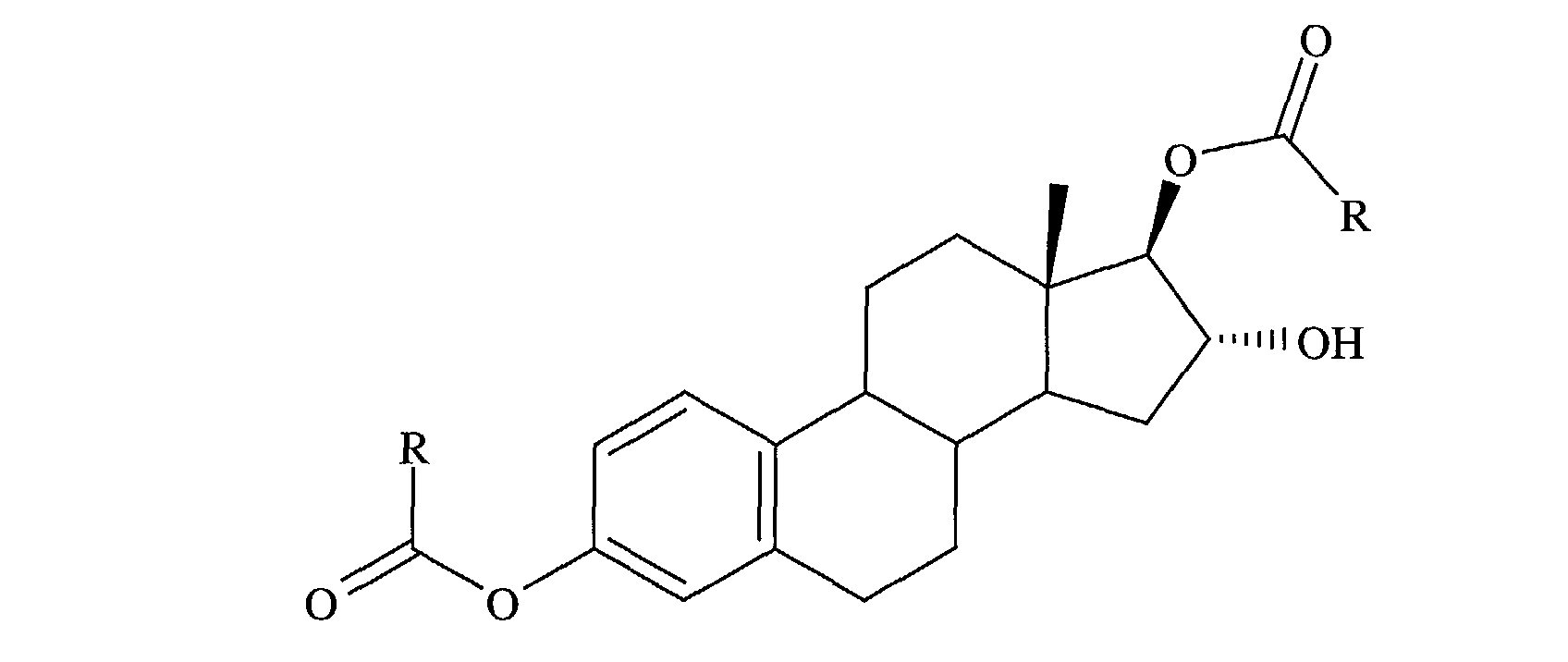
- The estriol diester for use in the invention is preferably an estriol 3,17-dipropionate or an estriol 3,17 dihexanoate. The most preferred compound for use in the invention is 3,17β-di-n-hexanoyloxy-1,3,5(10)-estratriene-16α-ol. Although 3,17β-di-n-hexanoyloxy-1,3,5(10)-estratriene-16α-ol is the preferred estriol diester for the purpose of the present invention, this does not exclude the possibility to use other suitable estriol diesters as well.
- The term "prodrug" in the context of the present invention means a biologically inactive substance, which is metabolised to the active form in the organism.
- Estriol diester prodrugs suitable for use in the invention and methods for their manufacture are described in EP 0 163 596. In particular, the method for preparing 3,17β-di-n-hexanoyloxy-1,3,5(10)-estratriene-16α-ol is described in Example 6 of EP 0 163 596.
- The present invention provides a new therapy strategy for the treatment of autoimmune diseases, such as MS. It provides the possibility to achieve and to sustain blood levels of estriol as high as in the second or third trimester of pregnancy. This blood level is high enough to cause an immune shift in Th1-mediated immune diseases.
- The superiority of the present invention over the prior art results from the high bioavailability of the estriol released from the diester prodrug compared to the conventionally used estriol (E3). The estriol diester prodrugs of the invention are particulary suitable for use in large dosage intervals. Due to the slow release of estriol from the diester prodrug, high, well-defined and sustained blood levels of estriol may be reached after administration of relatively low dosages. Preliminary studies by Heithecker et al. 1991 (Horm Res 35: 234-238) have shown that estriol diester derivatives increase estriol blood levels for much longer periods than estriol.
- A favourable consequence of the administration of estriol esters as a prodrug for the purpose of the present invention is that much reduced interactions with liver functions during the first-pass can be observed. This has the advantage that the released estriol is well tolerated.
- In a preferred aspect, the present invention relates to the use of estriol esters (e.g., estriol 3,17-propionate or estriol 3,17-dihexanoate) for the manufacture of a medicament for the treatment of an autoimmune disease. Preferably, the disease is a Th1-mediated autoimmune disease, most preferably, MS. The most preferred estriol diester prodrug is 3,17β-di-n-hexanoyloxy-1,3,5(10)-estratriene-16α-ol. Preferably, the medicament is for the treatment in a human.
- In a second preferred aspect, the present invention relates to a method for the treatment of an autoimmune disease. Preferably, the disease is a Th1-mediated autoimmune disease, most preferably, MS. The method comprises administering estriol diester to a mammal, preferably a human, in need of such treatment. The estriol diester is preferably an estriol 3,17- dipropionate or an estriol 3,17-dihexanoate, most preferably the diester 3,17β-di-n-hexanoyloxy-1,3,5(10)-estratriene-16a-ol.
- Autoimmune diseases are caused in part by T cells, which recognize a host component (autoantigen) in a specific tissue (organspecific) or in various tissues as foreign and attack that tissue. Autoimmune diseases in the context of the present invention include, but are not limited to, e.g. multiple sclerosis (MS), experimental autoimmune encephalomyelitis (EAE), rheumatoid arthritis, juvenile oligoarthritis, collagen-induced arthritis, type I diabetes mellitus, inflammatory bowel disease, Hashimoto's thyroiditis, Crohn's disease, Graft-versus-host-disease, lupus disorders, Addison's disease, and the like.
- It is desirable that the prodrugs of the invention are administered in an amount sufficient to raise the serum concentration of estriol equivalent to pregnancy levels. For example, it has been observed that estriol is secreted in the order of 40 mg/24 h and circulates at a concentration of 1 - 100 ng/ml during late pregnancy in the blood (see: Katagiri et al, 1976, Am J Obstet Gynecol 272 - 280; Klopper et al, 1977, Obstet Gynecol, 459 - 461; Fischer-Rasmussen et al, 1981, Acta Obstet Gynecol Scand 417 - 420).
- According to the invention, a diester prodrug of estriol of the general formula (see page 6) permits the uptake and/or binding of estriol in a metabolically stabilized form. Accordingly, a high systemic estriol level may be achieved without hepatic estrogenicity side effects. Furthermore, because of the generated depot of estriol, a well-defined and sustained estriol blood level is obtained. The half-life of estriol in the organism is extended. Accordingly, the administration in large intervals is possible. Due to improved bioavailability, this can be achieved with relatively low dosages.
- The advantages of the invention estriol diester prodrugs, such as the most preferred 3,17β-di-n-hexanoyloxy-1,3,5(10)-estratriene-16α-ol, are numerous, namely,:
- 1. reduction of side effects in the liver;
- 2. extension of the half-life of estriol in the organism; and
- 3. enhancement of the bioavailability.
-
- As a consequence, the prodrugs according to the invention may be administered at relatively low dosages with longer intervals between the doses. Furthermore, the individual variability among patients is decreased.
- Due to the depot effect of the diesters, the frequency of the application for the purposes of the invention could be reduced in comparison to the application of estriol. The duration of the depot effect depends on the chain length of the esterificated mono carbonic acid.
- The active agent suitable for the purposes of the present invention as defined above, e.g., estriol diesters such as 3,17β-di-n-hexanoyloxy-1,3,5(10)-estratriene-16α-ol, may be incorporated into pharmaceutical compositions according to known methods of preparing galenics.
- The manufacture of the medicaments and pharmaceutical compositions for use in the invention may be performed according to methods known in the art. Commonly known and used adjuvants as well as further suitable carriers or diluents may be used. Suitable carriers and adjuvants may be such as recommended for pharmacy, cosmetics and related fields in: Ullmann's Encyclopedia of Technical Chemistry, Vol. 4, (1953), pp. 1-39; Journal of Pharmaceutical Sciences, Vol. 52 (1963), p. 918ff; H.v.Czetsch-Lindenwald, "Hilfsstoffe für Pharmazie und angrenzende Gebiete"; Pharm. Ind. 2, 1961, p.72ff; Dr. H.P. Fiedler, Lexikon der Hilfsstoffe für Pharmazie, Kosmetik und angrenzende Gebiete, Cantor KG, Aulendorf in Württemberg, 1971.
- The administration of the estriol diester prodrugs of the invention, such as 3,17β-di-n-hexanoyloxy-1,3,5(10)-estratriene-16α-ol, as a medicament may be oral, rectal, intrauterine, intravaginal, local, transdermal or parenteral. The oral application could be in the form of powder, granules, tablets, pills, pastilles, dragees, capsules, fluid extracts, tinctures and syrups. Rectal or intravaginal application could be in the form of suppositories or intrauterine devices. Local application could be in the form of suspensions or emulsions, ointments, creams or gels. Transdermal could be in form of a patch. The parenteral application of injectible sterile aqueous or oily solutions or suspensions could be subcutaneous or intramuscular as well as percutaneous. The medicament according to the present invention may be administered via a depot injection or an implant preparation, optionally for sustained delivery of the active agent. The preferred mode of application is the administration via an injection.
- Implants can comprise as inert materials e.g. biologically degradable polymers or synthetic silicones such as e.g. silicone rubber.
- Suitable diluents for preparing a pharmaceutical composition are defined in EP 0 163 596.
- The dose of the estriol diester prodrug of the invention such as 3,17β-di-n-hexanoyloxy-1,3,5(10)-estratriene-16α-ol, which has to be administered, can raise the serum concentration of estriol to 0,1 - 100 ng/ml. A serum concentration of estriol in the range of 0,1 - 100 ng/ml is desirable, more preferably in the range of 0,1 - 10 ng/ml, most preferably in the range of 1 - 10 ng/ml. According to the invention, this is achieved by the application of the estriol diester prodrugs of the invention in a cumulative dose of 1 - 1000 mg, preferably 10 - 500 mg per month. The interval between applications may be between 1 to 60 days, preferably 5 - 50, most preferably 20 - 40 days. Methods of measuring the estriol serum concentration are known in the art, for example, a suitable radioimmunassay is disclosed in Heithecker et al 1991 (Horm Res 35: 234-238).
- Optionally, the pharmaceutical uses and methods according to the present invention further comprise other pharmaceutically active agents. For example, the pharmaceutically active agent may be a hormone, e.g., progesterone (gestagen), or a progesterone precursor, analog, progesterone receptor agonist or mesoprogestin. The combination of the compounds of the invention with, e.g., progesterone (gestagen) may have a additional protective effect against endometrial proliferation and certain other risks, associated with the long term use of estriol. A combination with testosterone or other androgens may be needed to avoid the loss of libido due to a loss of testosterone secretation.
- The treatment of autoimmune diseases, for example Th1-mediated diseases, such as MS, with the invention estriol diester prodrug may further comprise the administration of a conventional immunotherapeutic agent. The term "immunotherapeutic agent" in the context of the present invention includes, but is not limited to, immunomodulatory or immunosuppressive agents such as corticosteroids, cyclosporine, FK 506, methotrexate, azathioprine, Mitoxantrone, cyclophosphamid, glatiramer acetate copolymer-1, anti-inflammatory cytokines such as IL-4, IL-5, IL-10, IFNβ, e.g. betaferon®, cytokine-antagonists such as against IL-1, IL-2 and IL-12, TNFα, antiinflammatory PDE IV receptor antagonists e.g. mesopram, integrin α 4 antagonists and antiinflammatory chemokine antagonists such as CCR1 receptor antagonists, including antibodies, antisense oligonucleotides and soluble receptors.
- The estriol diester prodrug according to the invention such as 3,17β-di-n-hexanoyloxy-1,3,5(10)-estratriene-16α-ol, and the pharmaceutically active immunotherapeutic agent may be administered either together or separately, at the same time and/or sequentially. The mode of administration may differ between the prodrugs of the invention and the second pharmaceutically active agent.
Claims (15)
- Use of an estriol ester of the general formula,wherein R is a C1-10 straight or branched alkyl group or phenyl, for the manufacture of a medicament for the treatment of an autoimmune disease in a mammal.
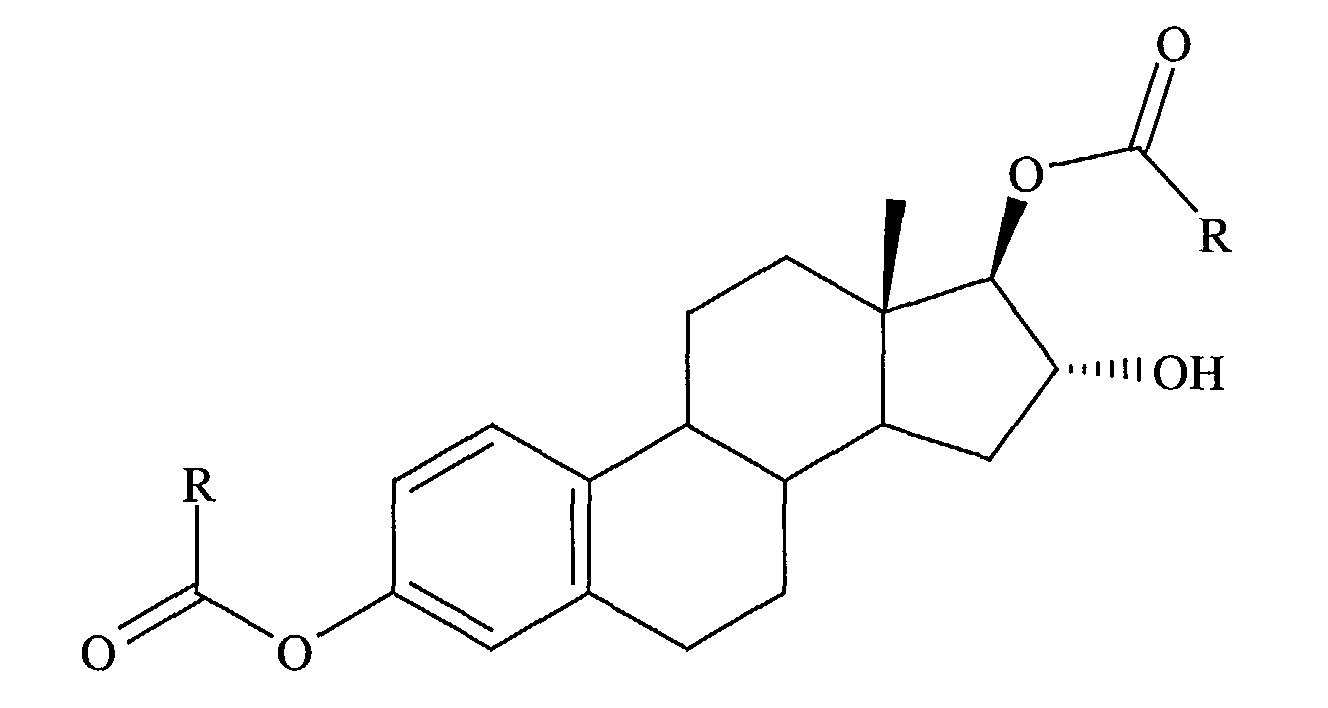
- Use according to claim 1, wherein the estriol ester is estriol 3,17-propionate or estriol 3,17-dihexanoate.
- Use according to claim 1, wherein the estriol ester is 3,17β-di-n-hexanoyloxy-1,3,5(10)-estratriene-16α-ol.
- Use according to any one of claims 1 to 3, wherein the mammal is a human.
- Use according to any one of claims 1 to 4, wherein the autoimmune disease involves a Th1-mediated immune response.
- Use according to any one of claims 1 to 5, wherein the disease is selected from the group consisting of multiple sclerosis, rheumatoid arthritis, juvenile oligoarthritis, type I diabetes mellitus, inflammatory bowel disease, Hashimoto's thyroiditis, Addison's disease, lupus disorders, acute graft-versus-host disease, Crohn's disease.
- Use according to any one of claims 1 to 6, wherein the disease is multiple sclerosis.
- Use according to any one of claims 1 to 7, wherein the estriol ester is administered in a cumulative dose of 1 - 1000 mg per month.
- Use according to any one of claims 1 to 8, wherein treatment further comprises the administration of a second therapeutic agent.
- Use according to any one of claims 1 to 9, wherein the medicament is to be administered subcutaneously or intramuscularly by injection.
- Use of an estriol ester of the general formula,wherein R is a C1-10 straight or branched alkyl group or phenyl, for the manufacture of a medicament for providing a blood level of estriol as observed during late pregnancy in a woman.

- Use according to claim 11, wherein the estriol ester is estriol 3,17-propionate or estriol 3,17-dihexanoate.
- Use according to claim 11, wherein the estriol ester is 3,17β-di-n-hexanoyloxy-1,3,5(10)-estratriene-16α-ol.
- Use according to any one of claims 11 to 13, wherein the estriol blood level is between 0,1 - 100 ng/ml.
- Use according to any one of claims 11 to 14, wherein the medicament is to be administered subcutaneously or intramuscularly by injection.
Priority Applications (6)
| Application Number | Priority Date | Filing Date | Title |
|---|---|---|---|
| EP02090160A EP1358881A1 (en) | 2002-04-30 | 2002-04-30 | Use of biogenic estriol diester prodrugs for the treatment of autoimmune diseases |
| US10/374,708 US6894038B2 (en) | 2002-02-27 | 2003-02-27 | Use of biogenic estriol diester prodrugs for the treatment of autoimmune diseases |
| EP03706591A EP1478369A1 (en) | 2002-02-27 | 2003-02-27 | Use of biogenic estriol diester prodrugs for the treatment of autoimmune diseases |
| PCT/EP2003/002047 WO2003072110A1 (en) | 2002-02-27 | 2003-02-27 | Use of biogenic estriol diester prodrugs for the treatment of autoimmune diseases |
| AU2003208776A AU2003208776A1 (en) | 2002-02-27 | 2003-02-27 | Use of biogenic estriol diester prodrugs for the treatment of autoimmune diseases |
| JP2003570856A JP2005518438A (en) | 2002-02-27 | 2003-02-27 | Use of biosynthetic estriol diester prodrugs to treat autoimmune diseases |
Applications Claiming Priority (1)
| Application Number | Priority Date | Filing Date | Title |
|---|---|---|---|
| EP02090160A EP1358881A1 (en) | 2002-04-30 | 2002-04-30 | Use of biogenic estriol diester prodrugs for the treatment of autoimmune diseases |
Publications (1)
| Publication Number | Publication Date |
|---|---|
| EP1358881A1 true EP1358881A1 (en) | 2003-11-05 |
Family
ID=28799720
Family Applications (2)
| Application Number | Title | Priority Date | Filing Date |
|---|---|---|---|
| EP02090160A Withdrawn EP1358881A1 (en) | 2002-02-27 | 2002-04-30 | Use of biogenic estriol diester prodrugs for the treatment of autoimmune diseases |
| EP03706591A Withdrawn EP1478369A1 (en) | 2002-02-27 | 2003-02-27 | Use of biogenic estriol diester prodrugs for the treatment of autoimmune diseases |
Family Applications After (1)
| Application Number | Title | Priority Date | Filing Date |
|---|---|---|---|
| EP03706591A Withdrawn EP1478369A1 (en) | 2002-02-27 | 2003-02-27 | Use of biogenic estriol diester prodrugs for the treatment of autoimmune diseases |
Country Status (5)
| Country | Link |
|---|---|
| US (1) | US6894038B2 (en) |
| EP (2) | EP1358881A1 (en) |
| JP (1) | JP2005518438A (en) |
| AU (1) | AU2003208776A1 (en) |
| WO (1) | WO2003072110A1 (en) |
Families Citing this family (6)
| Publication number | Priority date | Publication date | Assignee | Title |
|---|---|---|---|---|
| WO2008150547A1 (en) | 2007-06-04 | 2008-12-11 | The Regents Of The University Of California | Pregnancy hormone combination for treatment of autoimmune diseases |
| US20130203722A1 (en) * | 2006-09-26 | 2013-08-08 | Rhonda R. Voskuhl | Estriol therapy for autoimmune and neurodegenerative disease and disorders |
| US6936599B2 (en) * | 2001-04-25 | 2005-08-30 | The Regents Of The University Of California | Estriol therapy for multiple sclerosis and other autoimmune diseases |
| AU2005247948A1 (en) | 2004-05-27 | 2005-12-08 | Migenix Corp. | 2-substituted 17-imino estrogen compounds for cytoprotection |
| CA2623839C (en) * | 2005-09-26 | 2013-12-17 | The Regents Of The University Of California | Estriol therapy for autoimmune and neurodegenerataive diseases and disorders |
| WO2012129365A1 (en) | 2011-03-22 | 2012-09-27 | The Population Council, Inc. | Myelin regeneration with androgens |
Citations (2)
| Publication number | Priority date | Publication date | Assignee | Title |
|---|---|---|---|---|
| US4681875A (en) * | 1984-05-16 | 1987-07-21 | Schering Aktiengesellschaft | 3,17 β-estriol diesters, methods of their use, and pharmaceutical preparations containing them |
| WO2001085154A2 (en) * | 2000-05-12 | 2001-11-15 | Oregon Health Sciences University | Method of treating immune pathologies with low dose estrogen |
-
2002
- 2002-04-30 EP EP02090160A patent/EP1358881A1/en not_active Withdrawn
-
2003
- 2003-02-27 JP JP2003570856A patent/JP2005518438A/en active Pending
- 2003-02-27 US US10/374,708 patent/US6894038B2/en not_active Expired - Fee Related
- 2003-02-27 EP EP03706591A patent/EP1478369A1/en not_active Withdrawn
- 2003-02-27 AU AU2003208776A patent/AU2003208776A1/en not_active Abandoned
- 2003-02-27 WO PCT/EP2003/002047 patent/WO2003072110A1/en not_active Ceased
Patent Citations (2)
| Publication number | Priority date | Publication date | Assignee | Title |
|---|---|---|---|---|
| US4681875A (en) * | 1984-05-16 | 1987-07-21 | Schering Aktiengesellschaft | 3,17 β-estriol diesters, methods of their use, and pharmaceutical preparations containing them |
| WO2001085154A2 (en) * | 2000-05-12 | 2001-11-15 | Oregon Health Sciences University | Method of treating immune pathologies with low dose estrogen |
Non-Patent Citations (4)
| Title |
|---|
| HEITHECKER, R. ET AL: "Plasma estriol levels after intramuscular injection of estriol and two of its esters", HORM. RES. (1992), 35(6), 234-8, XP008008290 * |
| KIM S ET AL: "ESTRIOL AMELIORATES AUTOIMMUNE DEMYELINATING DISEASE IMPLICATIONS FOR MULTIPLE SCLEROSIS", NEUROLOGY, LIPPINCOTT WILLIAMS & WILKINS, PHILADELPHIA, US, vol. 52, no. 1, 12 April 1999 (1999-04-12), pages 1230 - 1238, XP001026663, ISSN: 0028-3878 * |
| KIM SOOKHYUN ET AL: "Mechanisms in the shift toward TH2 during pregnancy: A role for estriol treatment of TH1 mediated disease.", FASEB JOURNAL, vol. 12, no. 4, 17 March 1998 (1998-03-17), Annual Meeting of the Professional Research Scientists on Experimental Biology 98, Part 1;San Francisco, California, USA; April 18-22, 1998, pages A616, XP001108910, ISSN: 0892-6638 * |
| ZANG YING C Q ET AL: "Regulatory effects of estriol on T cell migration and cytokine profile: Inhibition of transcription factor NF-kappaB.", JOURNAL OF NEUROIMMUNOLOGY, vol. 124, no. 1-2, March 2002 (2002-03-01), March, 2002, pages 106 - 114, XP002213672, ISSN: 0165-5728 * |
Also Published As
| Publication number | Publication date |
|---|---|
| WO2003072110A1 (en) | 2003-09-04 |
| EP1478369A1 (en) | 2004-11-24 |
| US20040077614A1 (en) | 2004-04-22 |
| JP2005518438A (en) | 2005-06-23 |
| AU2003208776A1 (en) | 2003-09-09 |
| US6894038B2 (en) | 2005-05-17 |
Similar Documents
| Publication | Publication Date | Title |
|---|---|---|
| US8895539B2 (en) | Pregnancy hormone combination for treatment of autoimmune diseases | |
| US8372826B2 (en) | Estriol therapy for multiple sclerosis and other autoimmune diseases | |
| JP3441459B2 (en) | How to adjust drugs for hormone replacement | |
| EP1322336B1 (en) | Method of increasing testosterone and related steroid concentrations in women | |
| RU2340345C2 (en) | Scheme of estrogen replenishment | |
| US20050209208A1 (en) | Use of estriol and other estranes, estrogens and estrogen receptor active compositions in the treatment of psoriasis and other autoimmune disorders | |
| CN1178696C (en) | Preparations containing human growth hormone and cortisol synthesis inhibitors for the treatment of metabolic syndrome | |
| JP2005515964A (en) | Therapeutic composition for treating hormone deficiency | |
| CN1073422C (en) | Minimizing progestin associated breakthrough bleeding | |
| JP2013523683A5 (en) | ||
| Laron et al. | D-Trp6-analogue of luteinising hormone releasing hormone in combination with cyproterone acetate to treat precocious puberty | |
| US20110236350A1 (en) | Estrogen receptor ligand treatment for neurodegenerative diseases | |
| US20100204146A1 (en) | Treatment of Oestrogen Dependant Conditions in Pre-menopausal Women | |
| CN1652798A (en) | Continuous sulfatase inhibiting progestogen hormone replacement therapy | |
| US6894038B2 (en) | Use of biogenic estriol diester prodrugs for the treatment of autoimmune diseases | |
| KR20060011783A (en) | Compositions, formulations and kits for treating respiratory and lung diseases, in addition to dehydroepiandrosterone steroids and anti-muscarinic agents | |
| EP1358882A1 (en) | Use of estriol sulfamate prodrugs for the treatment of autoimmune diseases | |
| JP2002527380A (en) | Subcutaneous medroxyprogesterone acetate for treatment of menopause and endometriosis | |
| ES2208278T3 (en) | USE OF DIENOGEST IN A HIGH DOSAGE. | |
| TW200402298A (en) | Use of biogenic estriol diester prodrugs for the treatment of autoimmune diseases | |
| Chakravarty | Evaluation of different drugs in Luteal phase support |
Legal Events
| Date | Code | Title | Description |
|---|---|---|---|
| PUAI | Public reference made under article 153(3) epc to a published international application that has entered the european phase |
Free format text: ORIGINAL CODE: 0009012 |
|
| 17P | Request for examination filed |
Effective date: 20020430 |
|
| AK | Designated contracting states |
Kind code of ref document: A1 Designated state(s): AT BE CH CY DE DK ES FI FR GB GR IE IT LI LU MC NL PT SE TR |
|
| AX | Request for extension of the european patent |
Extension state: AL LT LV MK RO SI |
|
| AKX | Designation fees paid |
Designated state(s): AT BE CH CY DE DK ES FI FR GB GR IE IT LI LU MC NL PT SE TR |
|
| STAA | Information on the status of an ep patent application or granted ep patent |
Free format text: STATUS: THE APPLICATION IS DEEMED TO BE WITHDRAWN |
|
| 18D | Application deemed to be withdrawn |
Effective date: 20060930 |