EP1358761B1 - Apparatus and method for transmitting mpeg-4 data synchronized with mpeg-2 data - Google Patents
Apparatus and method for transmitting mpeg-4 data synchronized with mpeg-2 data Download PDFInfo
- Publication number
- EP1358761B1 EP1358761B1 EP01273354A EP01273354A EP1358761B1 EP 1358761 B1 EP1358761 B1 EP 1358761B1 EP 01273354 A EP01273354 A EP 01273354A EP 01273354 A EP01273354 A EP 01273354A EP 1358761 B1 EP1358761 B1 EP 1358761B1
- Authority
- EP
- European Patent Office
- Prior art keywords
- mpeg
- data
- packet
- information
- generating
- Prior art date
- Legal status (The legal status is an assumption and is not a legal conclusion. Google has not performed a legal analysis and makes no representation as to the accuracy of the status listed.)
- Expired - Lifetime
Links
Images


Classifications
-
- H—ELECTRICITY
- H04—ELECTRIC COMMUNICATION TECHNIQUE
- H04N—PICTORIAL COMMUNICATION, e.g. TELEVISION
- H04N7/00—Television systems
- H04N7/08—Systems for the simultaneous or sequential transmission of more than one television signal, e.g. additional information signals, the signals occupying wholly or partially the same frequency band, e.g. by time division
-
- H—ELECTRICITY
- H04—ELECTRIC COMMUNICATION TECHNIQUE
- H04N—PICTORIAL COMMUNICATION, e.g. TELEVISION
- H04N21/00—Selective content distribution, e.g. interactive television or video on demand [VOD]
- H04N21/20—Servers specifically adapted for the distribution of content, e.g. VOD servers; Operations thereof
- H04N21/23—Processing of content or additional data; Elementary server operations; Server middleware
- H04N21/234—Processing of video elementary streams, e.g. splicing of video streams or manipulating encoded video stream scene graphs
- H04N21/2343—Processing of video elementary streams, e.g. splicing of video streams or manipulating encoded video stream scene graphs involving reformatting operations of video signals for distribution or compliance with end-user requests or end-user device requirements
- H04N21/234318—Processing of video elementary streams, e.g. splicing of video streams or manipulating encoded video stream scene graphs involving reformatting operations of video signals for distribution or compliance with end-user requests or end-user device requirements by decomposing into objects, e.g. MPEG-4 objects
-
- H—ELECTRICITY
- H04—ELECTRIC COMMUNICATION TECHNIQUE
- H04N—PICTORIAL COMMUNICATION, e.g. TELEVISION
- H04N21/00—Selective content distribution, e.g. interactive television or video on demand [VOD]
- H04N21/20—Servers specifically adapted for the distribution of content, e.g. VOD servers; Operations thereof
- H04N21/23—Processing of content or additional data; Elementary server operations; Server middleware
- H04N21/234—Processing of video elementary streams, e.g. splicing of video streams or manipulating encoded video stream scene graphs
- H04N21/2343—Processing of video elementary streams, e.g. splicing of video streams or manipulating encoded video stream scene graphs involving reformatting operations of video signals for distribution or compliance with end-user requests or end-user device requirements
- H04N21/234309—Processing of video elementary streams, e.g. splicing of video streams or manipulating encoded video stream scene graphs involving reformatting operations of video signals for distribution or compliance with end-user requests or end-user device requirements by transcoding between formats or standards, e.g. from MPEG-2 to MPEG-4 or from Quicktime to Realvideo
-
- H—ELECTRICITY
- H04—ELECTRIC COMMUNICATION TECHNIQUE
- H04N—PICTORIAL COMMUNICATION, e.g. TELEVISION
- H04N21/00—Selective content distribution, e.g. interactive television or video on demand [VOD]
- H04N21/20—Servers specifically adapted for the distribution of content, e.g. VOD servers; Operations thereof
- H04N21/23—Processing of content or additional data; Elementary server operations; Server middleware
- H04N21/235—Processing of additional data, e.g. scrambling of additional data or processing content descriptors
- H04N21/2353—Processing of additional data, e.g. scrambling of additional data or processing content descriptors specifically adapted to content descriptors, e.g. coding, compressing or processing of metadata
-
- H—ELECTRICITY
- H04—ELECTRIC COMMUNICATION TECHNIQUE
- H04N—PICTORIAL COMMUNICATION, e.g. TELEVISION
- H04N21/00—Selective content distribution, e.g. interactive television or video on demand [VOD]
- H04N21/20—Servers specifically adapted for the distribution of content, e.g. VOD servers; Operations thereof
- H04N21/23—Processing of content or additional data; Elementary server operations; Server middleware
- H04N21/236—Assembling of a multiplex stream, e.g. transport stream, by combining a video stream with other content or additional data, e.g. inserting a URL [Uniform Resource Locator] into a video stream, multiplexing software data into a video stream; Remultiplexing of multiplex streams; Insertion of stuffing bits into the multiplex stream, e.g. to obtain a constant bit-rate; Assembling of a packetised elementary stream
- H04N21/23605—Creation or processing of packetized elementary streams [PES]
-
- H—ELECTRICITY
- H04—ELECTRIC COMMUNICATION TECHNIQUE
- H04N—PICTORIAL COMMUNICATION, e.g. TELEVISION
- H04N21/00—Selective content distribution, e.g. interactive television or video on demand [VOD]
- H04N21/20—Servers specifically adapted for the distribution of content, e.g. VOD servers; Operations thereof
- H04N21/23—Processing of content or additional data; Elementary server operations; Server middleware
- H04N21/236—Assembling of a multiplex stream, e.g. transport stream, by combining a video stream with other content or additional data, e.g. inserting a URL [Uniform Resource Locator] into a video stream, multiplexing software data into a video stream; Remultiplexing of multiplex streams; Insertion of stuffing bits into the multiplex stream, e.g. to obtain a constant bit-rate; Assembling of a packetised elementary stream
- H04N21/23608—Remultiplexing multiplex streams, e.g. involving modifying time stamps or remapping the packet identifiers
-
- H—ELECTRICITY
- H04—ELECTRIC COMMUNICATION TECHNIQUE
- H04N—PICTORIAL COMMUNICATION, e.g. TELEVISION
- H04N21/00—Selective content distribution, e.g. interactive television or video on demand [VOD]
- H04N21/20—Servers specifically adapted for the distribution of content, e.g. VOD servers; Operations thereof
- H04N21/23—Processing of content or additional data; Elementary server operations; Server middleware
- H04N21/236—Assembling of a multiplex stream, e.g. transport stream, by combining a video stream with other content or additional data, e.g. inserting a URL [Uniform Resource Locator] into a video stream, multiplexing software data into a video stream; Remultiplexing of multiplex streams; Insertion of stuffing bits into the multiplex stream, e.g. to obtain a constant bit-rate; Assembling of a packetised elementary stream
- H04N21/2362—Generation or processing of Service Information [SI]
-
- H—ELECTRICITY
- H04—ELECTRIC COMMUNICATION TECHNIQUE
- H04N—PICTORIAL COMMUNICATION, e.g. TELEVISION
- H04N21/00—Selective content distribution, e.g. interactive television or video on demand [VOD]
- H04N21/20—Servers specifically adapted for the distribution of content, e.g. VOD servers; Operations thereof
- H04N21/23—Processing of content or additional data; Elementary server operations; Server middleware
- H04N21/242—Synchronisation processes, e.g. processing of PCR [Programme Clock References]
-
- H—ELECTRICITY
- H04—ELECTRIC COMMUNICATION TECHNIQUE
- H04N—PICTORIAL COMMUNICATION, e.g. TELEVISION
- H04N21/00—Selective content distribution, e.g. interactive television or video on demand [VOD]
- H04N21/80—Generation or processing of content or additional data by content creator independently of the distribution process; Content per se
- H04N21/81—Monomedia components thereof
- H04N21/8166—Monomedia components thereof involving executable data, e.g. software
- H04N21/8193—Monomedia components thereof involving executable data, e.g. software dedicated tools, e.g. video decoder software or IPMP tool
Definitions
- the present invention relates to an apparatus and method for transmitting moving picture expert group-4 (MPEG-4) data, which can be used as supplemental data, synchronized with MPEG-2 audio/video data and to a computer readable recording medium storing instructions for executing the same method.
- MPEG-4 moving picture expert group-4
- a conceptual technique has been introduced for synchronizing a MPEG-2 data, which is audio and video data for broadcasting, communicating and storing media, with a MPEG-4 data, which is digital audio and video data having a 64kbps transmission rate.
- This conceptuel Technique is disclosed in "MPEG-4 Systems : overview" from O. Avero et al.
- an implementation method for synchronizing the MPEG-2 data with the MPEG-4 data and an implementation system for transmitting the MPEG-4 data synchronized with the MPEG-2 data has not been proposed. Therefore, a service of transmitting MPEG-4 data synchronized with MPEG-2 data also cannot be provided in a real world.
- an object of the present invention to provide an apparatus and method for synchronizing MPEG-2 data, which is audio/video data for broadcasting, communicating and storing media, with MPEG-4 data, which is digital audio/video data, and transmitting the MPEG-4 synchronized with the MPEG-2 data and a computer readable recording medium storing instructions for executing the same method.
- an apparatus for generating and transmitting moving picture expert group-4 (MPEG-4) data synchronized with a MPEG-2 data including: object separating and information generating unit for extracting MPEG-4 object data and meta information related to the MPEG-4 object data from mp4 data which is a storage type of the MPEG-4 data, for analyzing the meta information and for generating program information and synchronization information; packetizing unit for converting the MPEG-4 object data to a MPEG-4 transport stream (TS) packet having a data format of MPEG-2 data by using the meta information, the program information and the synchronization information in order to synchronize the MPEG-4 object data with the MPEG-2 data; and program multiplexing unit for multiplexing the MPEG-4 TS packet and the MPEG-2 data and for generating and outputting a transport stream packet.
- MPEG-4 moving picture expert group-4
- a method for generating and transmitting MPEG-4 data synchronized with MPEG-2 data including the steps of: a) extracting MPEG-4 object data and meta information related to the MPEG-4 object data from mp4 data, which is a storage type of the MPEG-4 data and analyzing the meta information; b) packetizing the MPEG-4 object data by using meta information, thereby generating a primary packetized MPEG-4 object data, a flexible multiple (FlexMux) packet; c) generating synchronization information and program information by using the meta information and header information of the FlexMux packet; d) packetizing the FlexMux packet by using the meta information, the synchronization information and the program information, thereby generating a secondary packetized MPEG-4 object data, a MPEG-4 transport stream (TS) packet; and e) multiplexing the MPEG-4 TS packet and MPEG-2 data and outputting a transport stream (TS) packet.
- mp4 data which is a storage type of the MPEG-4 data and analyzing the meta information
- a computer readable record medium storing instructions for executing a method for transmitting MPEG-4 data synchronized with MPEG-2 data, the method including the steps of: a) extracting MPEG-4 object data and meta information related to the MPEG-4 object data from mp4 data, which is a storage type of the MPEG-4 data and analyzing the meta information; b) packetizing the MPEG-4 object data by using meta information, thereby generating a primary packetized MPEG-4 object data, a flexible multiple (FlexMux) packet; c) generating synchronization information and program information by using the meta information and header information of the FlexMux packet; d) packetizing the FlexMux packet by using the meta information, the synchronization information and the program information, thereby generating a secondary packetized MPEG-4 object data, a MPEG-4 transport stream (TS) packet; and e) multiplexing the MPEG-4 TS packet and MPEG-2 data and outputting a transport stream (TS) packet.
- mp4 data which is a storage type of the
- Fig. 1 is a block diagram illustrating an apparatus for generating and transmitting MPEG-4 data synchronized with MPEG-2 data in accordance with the preferred embodiment of the present invention.
- the apparatus for generating and transmitting MPEG-4 data synchronized with MPEG-2 data includes an object separating and information generating unit 12, a packetizor 13 and a program multiplexor 14.
- the object separating and information generating unit 12 receives an mp4 file, which is a storing type of the MPEG-4 data, from a database 11, extracts MPEG-4 object data and meta information related to the MPEG-4 object data from the mp4 file and analyzing the meta information and generates program information and synchronization information.
- the packetizor 13 converts the MPEG-4 object data to a MPEG-2 type packet by using the program information and the synchronization information for synchronizing the extracted MPEG-4 object data with the MPEG-2 data.
- the program multiplexor 14 multiplexes the packetized MPEG-4 data inputted from the packetizor 13 and the MPEG-2 audio and video data.
- the object separating and information generating unit 12 includes an object separator 121, a synchronization information generator 122 and a program information generator 123.
- the object separator 121 receives an mp4 file, which is a storage type of the MPEG-4 data, from a database 11.
- the database 11 contains mp4 files each having MPEG-4 object data and meta information.
- the object separator 121 extracts the MPEG-4 object data from the received mp4 file and analyzes the meta information related to the MPEG-4 object data, for example, a class, a location, a characteristic and a size of or MPEG-4 object data.
- the object separator 121 outputs a MPEG-4 initial object descriptor (IOD) among the extracted MPEG-4 data to a program specific information (PSI) generator 134, outputs a composition time stamp (CTS) and decoding time stamp (DTS) to the synchronization information generator 122, outputs an elementary stream identifier (ES_ID) to the program information generator 123, and the other MPEG-4 object data and meta information outputs to a SL packetizor 131.
- IOD initial object descriptor
- PSI program specific information
- CTS composition time stamp
- DTS decoding time stamp
- ES_ID elementary stream identifier
- the synchronization information generator 122 receives the CTS/DTS meta information from the object separator 121 and converts it to a presentation time stamp (PTS)/DTS, which is a MPEG-2 time value.
- PTS presentation time stamp
- the synchronization information generator 122 generates synchronization information as shown in following Table 1 to packetizor 136 based the converted PTS/DTS time value and length information of a FlexMux packet inputted from the flexible multiplex (FlexMux) packetizor 132, and outputs the synchronization information to a packetized elementary stream (PES).
- PTS presentation time stamp
- the synchronization information generator 122 generates synchronization information as shown in following Table 1 to packetizor 136 based the converted PTS/DTS time value and length information of a FlexMux packet inputted from the flexible multiplex (FlexMux) packetizor 132, and outputs the synchronization information to a packetized elementary stream (PES).
- PES packetized elementary stream
- the program information generator 123 generates the program information as shown in following Table 2 by coupling the ES_ID meta information inputted from the object separator 121 with a FlexMuxchannel inputted from the FlexMux packetizor 132, and output the program information to the PSI generator 134.
- the packetizor 13 includes an SL packetizor 131, a FluxMux packetizor 132, a packetizing controller 133, a PSI generator 134, a 14496-section packetizor 135, a PES packetizor 136 and a TS packetizor 137.
- the SL packetizor 131 packetizes the MPEG-4 object data and the meta information inputted from the object separator 121 to a sync layer (SL) packet and outputs the SL packet to the FluxMux packetizor 132.
- the SL packet is defined by a MPEG-4 standard for synchronizing each object data of the MPEG-4 and includes a header and a payload.
- the header contains time and sequence information for expressing the MPEG-4 object data at a certain time.
- the payload contains the MPEG-4 object data an access unit by access unit basis.
- An IOD is a point for coupling an object descriptor (OD) and a binary format for scene (BIFS), therefore, it cannot be packetized as the SL packet.
- the FlexMux packetizor 132 packetizes the SL packet inputted from the SL packetizor 131 to generate a FlexMux packet, which has a format as shown in Fig. 3 and the FlexMux packet is outputted to the packetizing controller 133.
- the FlexMux packet is an option multiplexing type defined in a MPEG-4 system standard and is used for reducing overhead and supplementing a lack of logical channel when multiplexing a plurality of the SL packetized streams concurrently.
- the FlexMux packet is composed of a header and payload.
- the payload of FlexMux packet has to include the complete SL packet.
- the packetizing controller 133 analyzes the FlexMux packet inputted from the FlexMux packetizor 132 and outputs the MPEG-2 data, data necessary for synchronization such as BIFS-animation data, audio and video data to the PES packetizor 136 and outputs the data unnecessary for synchronization such as BIFS-command data and the OD data to the 14496-section packetizor 135.
- the PSI generator 134 generates a descriptor related to the MPEG-4 based on the program information inputted from the program information generator 123 and generates a program map table (PMT) which contains all the MPEG-2 data and the MPEG-4 data by using the descriptors and the IOD data inputted from the object separator 121.
- the PMT is outputted to the TS packetizor 137.
- the 14496-section packetizor 135 packetizes the FlexMux data inputted from the packetizing controller 133 and outputs the packetized FlexMux data to the TS packetizor 137.
- the PES packetizor 136 packetizes the FlexMux data, which is necessary to be synchronized and is inputted from the packetizing controller 133, to a PES packet by using the synchronization information inputted from the synchronization information generator 122 and outputs the PES packet to the TS packetizor 137.
- the TS packetizor 137 packetizes a program association table (PAT), which is a program specific information (PSI) inputted from the PSI generator 134, a program map table (PMT) packet and 14496-section packetized MPEG-4 data inputted from the 14496-section packetizor 135 to the TS packet.
- PAT program association table
- PMT program map table
- the TS packet is outputted to the program multiplexor 14.
- the program multiplexor 14 multiplexes the MPEG-4 TS packet inputted from the TS packetizor 137 and the MPEG-2 audio and video data inputted from the outside to generate one TS packet.
- the program multiplexor 14 receives a synchronization initial value (offset) and uses it as parameter value for multiplexing two TS packets to one TS packet.
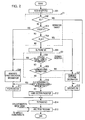
- Fig. 2 is a flowchart illustrating a method for generating and transmitting the MPEG-4 data synchronized with the MPEG-2 data in accordance with the preferred embodiment of the present invention.
- the mp4 file stored in the database is inputted to the object separator 121 at step 201.
- a MPEG-4 object data is separated from inputted mp4 file at step 21.
- meta information of each object data e.g., an IOD, an ES_ID and a CTS/DTS is extracted at steps 201 to 203.
- the extracted IOD is used for generating a PSI at step 213 and other meta information is used for packetizing an OD, a BIFS, audio and video data to generate a SL packetized data at step 205.
- the SL packetized data is FlexMux packetized at step 22.
- meta information is generated such as a FlexMux packet length at step 208 and FlexMux channel information at step 209.
- the CTS/DTS extracted at object separation step 203 and the FlexMux packet length information generated at the FlexMux packetizing step 208 are inputted as data for generating the synchronization information and the synchronization information is generated at step 206.
- the ES_ID extracted from the object separation step 203 and the FlexMuxChannel generated at the FlexMux packetizing step 209 is inputted as data for generating the program information and the program information is generated at step 207.
- FlexMux packetized data needs to be synchronized with the MPEG-2 data at step 210, then it is packetized to the PES packet at step 211. If it does not need to be synchronized, then it is 14496-section packetized at step 212.
- the PSI is generated at step 213 based on the IOD extracted at the object extracting step 21 and the program information generated at step 207 such as PAT and PMT.
- the PES data, 14496-section data and the PSI data are packetized as the TS packet and the TS packet is multiplexed with the MPEG-2 audio and video data by inputting the synchronization initial value (offset). Finally, the multiplexed TS packet is outputted at step 215.
- Fig. 3 is a block diagram of a FlexMux packetized MPEG-4 data transmitted between of a FlexMux packetizor and a packetizing controller in accordance with the preferred embodiment of the present invention.
- the MPEG-4 data is composed of objects such as an IOD, an OD, a Scene Description, audio and video contents data.
- the IOD data is separated at the object separator 121 shown in Fig. 1 and inputted to the PSI generator 134.
- Other objects except the IOD are packetized to the SL packet and the FlexMux packet.
- a transmission protocol between the FlexMux packetizor 132 and the packetizing controller 133 uses the FlexMux data type as shown in the Fig. 3.
- the FlexMux data structure is corresponding to the synchronization information structure and it makes synchronization of MPEG-2 data with MPEG-4 data possible and a file name extension of the FlexMux data type is defined as ".mpeg4".
- the synchronization information of which construction represents a PTS/DTS time value used for packetizing the MPEG-4 data to the PES packet in order to synchronize the MPEG-2 data with the MPEG-4 data in accordance with the preferred embodiment of the present invention.
- the synchronization information is generated at the synchronization information generator 122 in Fig. 1 and includes the PTS/DTS time value, which is converted from CTS/DTS meta information inputted from the object separator 121 by using Equations 1 and 2 and the length information of the FlexMux inputted form the FlexMux packetizor 132. [Table 1] Syntax No.
- N1 denotes a number of FlexMux packets having a time value existing in the FlexMux data.
- PTS_DTS_flags in Table 1 indicates whether the PTS and DTS information is existed and 2 bits are allocated to the PTS_DTS_flags.
- 0x10 means that PTS information is in the synchronization information file and "0x11” means that both PTS and DTS information are in the synchronization information file.
- 0x00 means that the PTS and DTS information are not existed in the synchronization information file and "0 ⁇ 01" is not used.
- DTS[32. . 30] "DTS[29.. 15]” and “DTS[14. . 0]” are values converted the MPEG-4 DTS information by using Equation 2.
- the object clock reference (OCR) resolution is an integer number thus "90/OCRResolution” will be either 45 kHz, 30 kHz or 22. 5 kHz. That is, for synchronizing the MPEG-4 data and MPEG-2 data, basically the time reference value of the MPEG-4 and the PCR of the MPEG-2 has to be matched, thus "90/OCRResoultion” is a value for correcting different time values between the MPEG-4 and MPEG-2.
- a time value for PES packetizing can be more easily inputted.
- the synchronization information is one of meta information of the FlexMux data.
- ".mpeg4hint" is allocated as a file extension of the synchronization information.
- the program information of which a format is described in a following Table 2 couples as an ES_ED of the MPEG-4 and a FlexMuxChannel for expressing the MPEG-4 data in program information of the MPEG-2 in accordance with the present invention.
- the program information in Table 2 is generated from the program information generator 123 in Fig. 1 and it is constructed by coupling the ES_ID of MPEG-4 object data, which is meta information inputted from the object separator 121, and the FlexMuxChannel inputted from the FlexMux packetizor 132.
- the PSI generator 134 constructs a FlexMuxChannel_Descriptor conveniently when generating PMT, which is one of the program information. In other words, the PSI generator 134 automatically allocates the ES_ID of MPEG-4 object data and FluxMuxChannel without analyzing the FluxMux data or without user's input by generating the program information at the program information generator 123.
- the program information has the file extension name as ".fmc”.
- N2 in Table 2 denotes a number of FlexMuxChannels which need to be defined.
- ES_ID to which 16 bits are allocated denotes a value (ID) recognizing the MPEG-4 object data in order to represent the program information.
- “FlexMuxChannel” to which 8 bits are allocated in Table 2 denotes a number of FlexMuxChannels used in each FlexMuxChannel packet having a FlexMux bit stream shown in Fig. 3. An index value of first 8 bits existed in a header of the FlexMux packet is a value of the FlexMuxChannel.
- a multiplexing method in accordance with the present invention is explained as follows. Since MPEG-4 data is synchronous data containing its own time information when it is packetized as an SL/FlexMux packet, the object clock reference (OCR), which is an initial time reference value, is set up as "0" in case the MPEG-4 data is stored as mp4 file type. However, due to the initial time reference value of the MPEG-2 data is an absolute value comparing to the MPEG-4 data, the initial time reference value needs to be corrected by inputting a multiplexing initial value and adding the multiplexing initial value to a PTS/DTS, which is time value of MPEG-4 for synchronizing the MPEG-2 data and the MPEG-4 data.
- OCR object clock reference
- the multiplexing initial value is used as an insertion point of the MPEG-4 data and it can be expressed as following equations.
- PTS t PTS MPEG ⁇ 4 t + Offset
- DTS t DTS MPEG ⁇ 4 t + Offset
- a left term of the equation 6 denotes DTS(t) of a MPEG-2 system standard and a right term denotes DTS(t) of a MPEG-4 system standard.
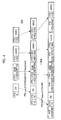
- Fig. 4 is a view illustrating an example of inputting a time value for synchronization of the MPEG-4 data by packetizing the MPEG-4 data to a packetized elementary stream (PES) in accordance with the present invention.
- PES packetized elementary stream
- the above-mentioned method of the present invention can be implemented as a program and it can be stored at computer readable recording medium such as a CD-ROM, a RAM, a ROM, a floppy disk, a hard disk and a magnetic optical disk.
- computer readable recording medium such as a CD-ROM, a RAM, a ROM, a floppy disk, a hard disk and a magnetic optical disk.
- the above mentioned present invention provides a concrete implementation method for transmitting MPEG-4 data, which is used as supplemental information in the digital broadcasting, synchronized with MPEG-2 data and it makes possible to real-time transmission of the MPEG-4 data having a two-way communication function and to allow a random access of a user and increases utilization of the MPEG-2 data and the MPEG-4 data.
Landscapes
- Engineering & Computer Science (AREA)
- Multimedia (AREA)
- Signal Processing (AREA)
- Library & Information Science (AREA)
- General Engineering & Computer Science (AREA)
- Software Systems (AREA)
- Television Systems (AREA)
- Compression Or Coding Systems Of Tv Signals (AREA)
- Two-Way Televisions, Distribution Of Moving Picture Or The Like (AREA)
- Synchronisation In Digital Transmission Systems (AREA)
- Mobile Radio Communication Systems (AREA)
- Reduction Or Emphasis Of Bandwidth Of Signals (AREA)
Abstract
Description
- The present invention relates to an apparatus and method for transmitting moving picture expert group-4 (MPEG-4) data, which can be used as supplemental data, synchronized with MPEG-2 audio/video data and to a computer readable recording medium storing instructions for executing the same method.
- A conceptual technique has been introduced for synchronizing a MPEG-2 data, which is audio and video data for broadcasting, communicating and storing media, with a MPEG-4 data, which is digital audio and video data having a 64kbps transmission rate. This conceptuel Technique is disclosed in "MPEG-4 Systems : overview" from O. Avero et al. However, an implementation method for synchronizing the MPEG-2 data with the MPEG-4 data and an implementation system for transmitting the MPEG-4 data synchronized with the MPEG-2 data has not been proposed. Therefore, a service of transmitting MPEG-4 data synchronized with MPEG-2 data also cannot be provided in a real world.
- It is, therefore, an object of the present invention to provide an apparatus and method for synchronizing MPEG-2 data, which is audio/video data for broadcasting, communicating and storing media, with MPEG-4 data, which is digital audio/video data, and transmitting the MPEG-4 synchronized with the MPEG-2 data and a computer readable recording medium storing instructions for executing the same method.
- In accordance with an aspect of the present invention, there is provided an apparatus for generating and transmitting moving picture expert group-4 (MPEG-4) data synchronized with a MPEG-2 data, including: object separating and information generating unit for extracting MPEG-4 object data and meta information related to the MPEG-4 object data from mp4 data which is a storage type of the MPEG-4 data, for analyzing the meta information and for generating program information and synchronization information; packetizing unit for converting the MPEG-4 object data to a MPEG-4 transport stream (TS) packet having a data format of MPEG-2 data by using the meta information, the program information and the synchronization information in order to synchronize the MPEG-4 object data with the MPEG-2 data; and program multiplexing unit for multiplexing the MPEG-4 TS packet and the MPEG-2 data and for generating and outputting a transport stream packet.
- In accordance with another aspect of the present invention, there is provided a method for generating and transmitting MPEG-4 data synchronized with MPEG-2 data, including the steps of: a) extracting MPEG-4 object data and meta information related to the MPEG-4 object data from mp4 data, which is a storage type of the MPEG-4 data and analyzing the meta information; b) packetizing the MPEG-4 object data by using meta information, thereby generating a primary packetized MPEG-4 object data, a flexible multiple (FlexMux) packet; c) generating synchronization information and program information by using the meta information and header information of the FlexMux packet; d) packetizing the FlexMux packet by using the meta information, the synchronization information and the program information, thereby generating a secondary packetized MPEG-4 object data, a MPEG-4 transport stream (TS) packet; and e) multiplexing the MPEG-4 TS packet and MPEG-2 data and outputting a transport stream (TS) packet.
- In accordance with still another aspect of the present invention, there is provided a computer readable record medium storing instructions for executing a method for transmitting MPEG-4 data synchronized with MPEG-2 data, the method including the steps of: a) extracting MPEG-4 object data and meta information related to the MPEG-4 object data from mp4 data, which is a storage type of the MPEG-4 data and analyzing the meta information; b) packetizing the MPEG-4 object data by using meta information, thereby generating a primary packetized MPEG-4 object data, a flexible multiple (FlexMux) packet; c) generating synchronization information and program information by using the meta information and header information of the FlexMux packet; d) packetizing the FlexMux packet by using the meta information, the synchronization information and the program information, thereby generating a secondary packetized MPEG-4 object data, a MPEG-4 transport stream (TS) packet; and e) multiplexing the MPEG-4 TS packet and MPEG-2 data and outputting a transport stream (TS) packet.
- The above and other objects and features of the present invention will become apparent from the following description of the preferred embodiments given in conjunction with the accompanying drawings, in which:
- Fig. 1 is a block diagram illustrating an apparatus for generating and transmitting MPEG-4 data synchronized with MPEG-2 data in accordance with a preferred embodiment of the present invention;
- Fig. 2 is a flowchart illustrating a method for generating and transmitting the MPEG-4 data synchronized with the MPEG-2 data in accordance with a preferred embodiment of the present invention;
- Fig. 3 is a diagram of a FlexMux packetized MPEG-4 data transmitted between a FlexMux packetizor and a packetizing controller in accordance with a preferred embodiment of the present invention; and
- Fig. 4 is a view illustrating an example of inputting a time value for synchronization of the MPEG-4 data by packetizing the MPEG-4 data to a packetized elementary stream (PES) in accordance with a preferred embodiment of the present invention.
- Other objects and aspects of the invention will become apparent from the following description of the embodiments with reference to the accompanying drawings, which is set forth hereinafter.
- Fig. 1 is a block diagram illustrating an apparatus for generating and transmitting MPEG-4 data synchronized with MPEG-2 data in accordance with the preferred embodiment of the present invention.
- Referring to Fig. 1, the apparatus for generating and transmitting MPEG-4 data synchronized with MPEG-2 data includes an object separating and
information generating unit 12, a packetizor 13 and aprogram multiplexor 14. The object separating andinformation generating unit 12 receives an mp4 file, which is a storing type of the MPEG-4 data, from a database 11, extracts MPEG-4 object data and meta information related to the MPEG-4 object data from the mp4 file and analyzing the meta information and generates program information and synchronization information. The packetizor 13 converts the MPEG-4 object data to a MPEG-2 type packet by using the program information and the synchronization information for synchronizing the extracted MPEG-4 object data with the MPEG-2 data. Theprogram multiplexor 14 multiplexes the packetized MPEG-4 data inputted from the packetizor 13 and the MPEG-2 audio and video data. - The object separating and
information generating unit 12 includes anobject separator 121, asynchronization information generator 122 and aprogram information generator 123. - The
object separator 121 receives an mp4 file, which is a storage type of the MPEG-4 data, from a database 11. The database 11 contains mp4 files each having MPEG-4 object data and meta information. Theobject separator 121 extracts the MPEG-4 object data from the received mp4 file and analyzes the meta information related to the MPEG-4 object data, for example, a class, a location, a characteristic and a size of or MPEG-4 object data. Theobject separator 121 outputs a MPEG-4 initial object descriptor (IOD) among the extracted MPEG-4 data to a program specific information (PSI)generator 134, outputs a composition time stamp (CTS) and decoding time stamp (DTS) to thesynchronization information generator 122, outputs an elementary stream identifier (ES_ID) to theprogram information generator 123, and the other MPEG-4 object data and meta information outputs to aSL packetizor 131. - The
synchronization information generator 122 receives the CTS/DTS meta information from theobject separator 121 and converts it to a presentation time stamp (PTS)/DTS, which is a MPEG-2 time value. Thesynchronization information generator 122 generates synchronization information as shown in following Table 1 topacketizor 136 based the converted PTS/DTS time value and length information of a FlexMux packet inputted from the flexible multiplex (FlexMux)packetizor 132, and outputs the synchronization information to a packetized elementary stream (PES). - However, the
program information generator 123 generates the program information as shown in following Table 2 by coupling the ES_ID meta information inputted from theobject separator 121 with a FlexMuxchannel inputted from the FlexMuxpacketizor 132, and output the program information to thePSI generator 134. - The packetizor 13 includes an
SL packetizor 131, a FluxMuxpacketizor 132, a packetizing controller 133, aPSI generator 134, a 14496-section packetizor 135, aPES packetizor 136 and aTS packetizor 137. - The
SL packetizor 131 packetizes the MPEG-4 object data and the meta information inputted from theobject separator 121 to a sync layer (SL) packet and outputs the SL packet to the FluxMuxpacketizor 132. The SL packet is defined by a MPEG-4 standard for synchronizing each object data of the MPEG-4 and includes a header and a payload. The header contains time and sequence information for expressing the MPEG-4 object data at a certain time. The payload contains the MPEG-4 object data an access unit by access unit basis. An IOD is a point for coupling an object descriptor (OD) and a binary format for scene (BIFS), therefore, it cannot be packetized as the SL packet. - The FlexMux
packetizor 132 packetizes the SL packet inputted from theSL packetizor 131 to generate a FlexMux packet, which has a format as shown in Fig. 3 and the FlexMux packet is outputted to the packetizing controller 133. The FlexMux packet is an option multiplexing type defined in a MPEG-4 system standard and is used for reducing overhead and supplementing a lack of logical channel when multiplexing a plurality of the SL packetized streams concurrently. The FlexMux packet is composed of a header and payload. The payload of FlexMux packet has to include the complete SL packet. There are two FlexMux packetizing modes. One is a Simple mode that the payload contains only one SL packet and other is a MuxCode mode that the payload contains a plurality of SL packets. - The packetizing controller 133 analyzes the FlexMux packet inputted from the FlexMux
packetizor 132 and outputs the MPEG-2 data, data necessary for synchronization such as BIFS-animation data, audio and video data to thePES packetizor 136 and outputs the data unnecessary for synchronization such as BIFS-command data and the OD data to the 14496-section packetizor 135. - The
PSI generator 134 generates a descriptor related to the MPEG-4 based on the program information inputted from theprogram information generator 123 and generates a program map table (PMT) which contains all the MPEG-2 data and the MPEG-4 data by using the descriptors and the IOD data inputted from theobject separator 121. The PMT is outputted to theTS packetizor 137. - The 14496-
section packetizor 135 packetizes the FlexMux data inputted from the packetizing controller 133 and outputs the packetized FlexMux data to theTS packetizor 137. - The
PES packetizor 136 packetizes the FlexMux data, which is necessary to be synchronized and is inputted from the packetizing controller 133, to a PES packet by using the synchronization information inputted from thesynchronization information generator 122 and outputs the PES packet to theTS packetizor 137. - The
TS packetizor 137 packetizes a program association table (PAT), which is a program specific information (PSI) inputted from thePSI generator 134, a program map table (PMT) packet and 14496-section packetized MPEG-4 data inputted from the 14496-section packetizor 135 to the TS packet. The TS packet is outputted to theprogram multiplexor 14. - The
program multiplexor 14 multiplexes the MPEG-4 TS packet inputted from theTS packetizor 137 and the MPEG-2 audio and video data inputted from the outside to generate one TS packet. Theprogram multiplexor 14 receives a synchronization initial value (offset) and uses it as parameter value for multiplexing two TS packets to one TS packet. - Fig. 2 is a flowchart illustrating a method for generating and transmitting the MPEG-4 data synchronized with the MPEG-2 data in accordance with the preferred embodiment of the present invention.
- At first, the mp4 file stored in the database is inputted to the
object separator 121 atstep 201. A MPEG-4 object data is separated from inputted mp4 file atstep 21. At thestep 21, meta information of each object data, e.g., an IOD, an ES_ID and a CTS/DTS is extracted atsteps 201 to 203. The extracted IOD is used for generating a PSI atstep 213 and other meta information is used for packetizing an OD, a BIFS, audio and video data to generate a SL packetized data atstep 205. - The SL packetized data is FlexMux packetized at
step 22. Instep 22, meta information is generated such as a FlexMux packet length atstep 208 and FlexMux channel information atstep 209. - The CTS/DTS extracted at
object separation step 203 and the FlexMux packet length information generated at the FlexMux packetizingstep 208 are inputted as data for generating the synchronization information and the synchronization information is generated atstep 206. The ES_ID extracted from theobject separation step 203 and the FlexMuxChannel generated at the FlexMux packetizingstep 209 is inputted as data for generating the program information and the program information is generated atstep 207. - If the FlexMux packetized data needs to be synchronized with the MPEG-2 data at
step 210, then it is packetized to the PES packet atstep 211. If it does not need to be synchronized, then it is 14496-section packetized atstep 212. - The PSI is generated at
step 213 based on the IOD extracted at theobject extracting step 21 and the program information generated atstep 207 such as PAT and PMT. - At
step 214, the PES data, 14496-section data and the PSI data are packetized as the TS packet and the TS packet is multiplexed with the MPEG-2 audio and video data by inputting the synchronization initial value (offset). Finally, the multiplexed TS packet is outputted atstep 215. - Fig. 3 is a block diagram of a FlexMux packetized MPEG-4 data transmitted between of a FlexMux packetizor and a packetizing controller in accordance with the preferred embodiment of the present invention.
- The MPEG-4 data is composed of objects such as an IOD, an OD, a Scene Description, audio and video contents data. The IOD data is separated at the
object separator 121 shown in Fig. 1 and inputted to thePSI generator 134. Other objects except the IOD are packetized to the SL packet and the FlexMux packet. A transmission protocol between the FlexMux packetizor 132 and the packetizing controller 133 uses the FlexMux data type as shown in the Fig. 3. - The FlexMux data structure is corresponding to the synchronization information structure and it makes synchronization of MPEG-2 data with MPEG-4 data possible and a file name extension of the FlexMux data type is defined as ".mpeg4".
- The synchronization information of which construction represents a PTS/DTS time value used for packetizing the MPEG-4 data to the PES packet in order to synchronize the MPEG-2 data with the MPEG-4 data in accordance with the preferred embodiment of the present invention.
- The synchronization information is generated at the
synchronization information generator 122 in Fig. 1 and includes the PTS/DTS time value, which is converted from CTS/DTS meta information inputted from theobject separator 121 by usingEquations 1 and 2 and the length information of the FlexMux inputted form theFlexMux packetizor 132.[Table 1] Syntax No. of bits Mpeg4hint{ For (I=0;i<N1; i++){ FlexMux_packet_length 8 PTS_DTS_flags 2 Reserved 6 If(PTS_DTS_flages = = 0x10) {"0010"} else if(PTS_DTS_flags = = 0x11){"0011"} 4 PTS[32.. 30] 3 marker_bit 1 PTS[29.. 15] 15 market_bit 1 PTS[14.. 0] 15 market_bit 1 "0001 4 DTS[32.. 30] 3 market_bit 1 DTS[29.. 15] 15 market_bit 1 DTS[14.. 0] 15 market_bit 1 reserved 8 reserved 8 reserved 8 reserved 8 } } - In Table 1, "N1" denotes a number of FlexMux packets having a time value existing in the FlexMux data.
- 8 bits are allocated to the FlexMux_packet_length in Table 1 and "No. of bits" shows a number of bits of each FlexMux packet composing the FlexMux bit array in the Fig. 3 for representing the synchronization information. A length of the FlexMux packet including the header of the FlexMux is greater than 255 bytes and it can be controlled in application.
- "PTS_DTS_flags" in Table 1 indicates whether the PTS and DTS information is existed and 2 bits are allocated to the PTS_DTS_flags. "0x10" means that PTS information is in the synchronization information file and "0x11" means that both PTS and DTS information are in the synchronization information file. Also "0x00" means that the PTS and DTS information are not existed in the synchronization information file and "0×01" is not used.
- 6 bits are allocated to "reserved" and "reserved" has a value "11. 1111" and 2 bits are allocated to "marker_bit" and "marker_bit" has a value "1". "PTS[32.. 30]", "DTS[29.. 15]" and "DTS[14.. 0]" are converted values by using MPEG-4 DTS information.
- "DTS[32. . 30]", "DTS[29.. 15]" and "DTS[14. . 0]" are values converted the MPEG-4 DTS information by using
Equation 2. - "reserved" to which 8bits are allocated has a value of "1111. 1111" and it is used as extra bits for expanding the PTS and DTS.


- In
Equations 1 and 2, the object clock reference (OCR) resolution is an integer number thus "90/OCRResolution" will be either 45 kHz, 30 kHz or 22. 5 kHz. That is, for synchronizing the MPEG-4 data and MPEG-2 data, basically the time reference value of the MPEG-4 and the PCR of the MPEG-2 has to be matched, thus "90/OCRResoultion" is a value for correcting different time values between the MPEG-4 and MPEG-2. - By using the synchronization information generated at the PES packetizor 136 in Fig. 1, a time value for PES packetizing can be more easily inputted. In other words, it is possible to omit a step of analyzing the FlexMux data for inputting a PES packetizing time value since the synchronization information is one of meta information of the FlexMux data. In here, ".mpeg4hint" is allocated as a file extension of the synchronization information.
- The program information of which a format is described in a following Table 2 couples as an ES_ED of the MPEG-4 and a FlexMuxChannel for expressing the MPEG-4 data in program information of the MPEG-2 in accordance with the present invention.
- The program information in Table 2 is generated from the
program information generator 123 in Fig. 1 and it is constructed by coupling the ES_ID of MPEG-4 object data, which is meta information inputted from theobject separator 121, and the FlexMuxChannel inputted from theFlexMux packetizor 132. By using the program information format in Table 2, thePSI generator 134 constructs a FlexMuxChannel_Descriptor conveniently when generating PMT, which is one of the program information. In other words, thePSI generator 134 automatically allocates the ES_ID of MPEG-4 object data and FluxMuxChannel without analyzing the FluxMux data or without user's input by generating the program information at theprogram information generator 123. The program information has the file extension name as ".fmc".[Table 2] Syntax No. of bits FMC( ) { For(i=0;i<N2; i++) { ES_ID 16 FlexMuxChannel 8 } } - "N2" in Table 2 denotes a number of FlexMuxChannels which need to be defined. "ES_ID" to which 16 bits are allocated denotes a value (ID) recognizing the MPEG-4 object data in order to represent the program information.
- "FlexMuxChannel" to which 8 bits are allocated in Table 2 denotes a number of FlexMuxChannels used in each FlexMuxChannel packet having a FlexMux bit stream shown in Fig. 3. An index value of first 8 bits existed in a header of the FlexMux packet is a value of the FlexMuxChannel.
- A multiplexing method in accordance with the present invention is explained as follows. Since MPEG-4 data is synchronous data containing its own time information when it is packetized as an SL/FlexMux packet, the object clock reference (OCR), which is an initial time reference value, is set up as "0" in case the MPEG-4 data is stored as mp4 file type. However, due to the initial time reference value of the MPEG-2 data is an absolute value comparing to the MPEG-4 data, the initial time reference value needs to be corrected by inputting a multiplexing initial value and adding the multiplexing initial value to a PTS/DTS, which is time value of MPEG-4 for synchronizing the MPEG-2 data and the MPEG-4 data. In other words, for synchronizing the MPEG-2 data having the absolute time value and the MPEG-4 data having a relative time value, the multiplexing initial value is used as an insertion point of the MPEG-4 data and it can be expressed as following equations.


- The equations 3 and 4 can be substituted with the
equations 1 and 2 and it can be expressed as follow equations.

- A left term of the equation 6 denotes DTS(t) of a MPEG-2 system standard and a right term denotes DTS(t) of a MPEG-4 system standard.
- Fig. 4 is a view illustrating an example of inputting a time value for synchronization of the MPEG-4 data by packetizing the MPEG-4 data to a packetized elementary stream (PES) in accordance with the present invention.
- In Fig. 4, the equations 1 to 6 are applied under an assumption that the PCR of the MPEG-2 data and the OCR of the MPEG-4 data has an identical resolution, which is 90kHz.
- By above-mentioned procedures of the present invention, it is possible to synchronize the MPEG-2 data and related the MPEG-4 data thus the MPEG-4 data, which is supplemental information, can be provided to a user at a desired time.
- The above-mentioned method of the present invention can be implemented as a program and it can be stored at computer readable recording medium such as a CD-ROM, a RAM, a ROM, a floppy disk, a hard disk and a magnetic optical disk.
- The above mentioned present invention provides a concrete implementation method for transmitting MPEG-4 data, which is used as supplemental information in the digital broadcasting, synchronized with MPEG-2 data and it makes possible to real-time transmission of the MPEG-4 data having a two-way communication function and to allow a random access of a user and increases utilization of the MPEG-2 data and the MPEG-4 data.
- While the present invention has been described with respect to certain preferred embodiments, it will be apparent to those skilled in the art that various changes and modifications may be made without departing from the scope of the invention as defined in the following claims.
Claims (13)
- An apparatus for generating and transmitting moving picture expert group-4 (MPEG-4) data synchronized with a MPEG-2 data, comprising:object separating and information generating means for extracting MPEG-4 object data and meta information related to the MPEG-4 object data from mp4 data which is a storage type of the MPEG-4 data, for analyzing the meta information and for generating program information and synchronization information;packetizing means for converting the MPEG-4 object data to a MPEG-4 transport stream (TS) packet having a data format of MPEG-2 data by using the meta information, the program information and the synchronization information in order to synchronize the MPEG-4 object data with the MPEG-2 data; andprogram multiplexing means for multiplexing the MPEG-4 TS packet and the MPEG-2 data and for generating and outputting a transport stream packet.
- The apparatus as recited in claim 1, wherein said object separating and information generating means includes:object separating means for extracting the MPEG-4 object data and the meta information related to the MPEG-4 object data from the mp4 data which is a storage type of the MPEG-4 data, and for analyzing the meta information;synchronization information generating means for generating the synchronization information by using a composition time stamp/decoding time stamp (CTS/DTS) which is meta information extracted in said object separating means, and a flexible multiplex (FlexMux) packet length information which is a FlexMux packet header information generated in said packetizing means; andprogram information generating means for generating the program information by using an elementary stream identifier (ES_ID) which is meta information extracted in said object separating means, and a FluxMuxChannel information which is the FluxMux packet header information generated in said packetizing means.
- The apparatus as recited in claim 1 or 2, wherein said packetizing means includes:SL packetizing means for packetizing the MPEG-4 object data and generating a sync layer (SL) packet by using the meta information;FlexMux packetizing means for packetizing the SL packet and generating a flexible multiplex (FlexMux) packet;packetizing controlling means for controlling the FlexMux packet to be converted into a packet having a different format from each other according to necessity of synchronization of the FlexMux packet;PES packetizing means for packetizing the FlexMux packet and generating a PES packet by using the synchronization information;14496-section packetizing means for packetizing the FlexMux packet and generating a 14496-section packet;PSI generating means for generating a program specific information (PSI) by using an initial object descriptor (IOS), which is meta information extracted in said object separating and information generating means, and the program information; andTS packetizing means for packetizing the PES packet, the 14496-section packet and the PSI and generating the MPEG-4 transport stream (TS) packet.
- A method for generating and transmitting moving picture expert group-4 (MPEG-4) data synchronized with MPEG-2 data, comprising the steps of:a) extracting MPEG-4 object data and meta information related to the MPEG-4 object data from mp4 data, which is a storage type of the MPEG-4 data and analyzing the meta information;b) packetizing the MPEG-4 object data by using meta information, thereby generating a primary packetized MPEG-4 object data, a flexible multiple (FlexMux) packet;c) generating synchronization information and program information by using the meta information and header information of the FlexMux packet;d) packetizing the FlexMux packet by using the meta information, the synchronization information and the program information, thereby generating a secondary packetized MPEG-4 object data, a MPEG-4 transport stream (TS) packet; ande) multiplexing the MPEG-4 TS packet and MPEG-2 data and outputting a transport stream (TS) packet.
- The method as recited in claim 4, wherein said step b) includes the steps of:b1) packetizing the MPEG-4 object data by using the meta information and generating a sync layer (SL) packet; andb2) packetizing the SL packet and generating the flexible multiplex (FlexMux) packet.
- The method as recited in claim 5, wherein the FlexMux packet includes a FlexMux header and a sync layer (SL) packet data unit (PDU).
- The method as recited in claim 4, wherein said step c) includes the steps of:c1) generating the synchronization information by using a composition time stamp/decoding time stamp(CTS/DTS), which is meta information extracted at said step a), and FlexMux length information included in the header information of the FlexMux packet; andc2) generating the program information by using an elementary stream identifier (ES_ID), which is meta information extracted at said step a), and a FlexMuxChannel information included in the header information of the FlexMux packet.
- The method as recited in claim 7, wherein in the step c1), the CTS/DTS is converted into a program time stamp/decoding time stamp (PTS/DTS).
- The method as recited in claim 7, wherein said step d) includes the steps of:d1) generating a control signal for controlling the FlexMux packet according to necessity of synchronization of the FlexMux packet;d2) generating program specific information (PSI) by using an initial object descriptor (IOD), which is meta information extracted at said step a), and the program information;d3) packetizing the FlexMux packet by using the synchronization information based on the control signal and generating a packetized elementary stream packet;d4) packetizing the FlexMux packet based on the control signal and generating a 14496-section packet; andd5) packetizing the PSI, the PES packet and the 14496-section packet and generating the MPEG-4 transport stream (TS) packet.
- The method as recited in claim 9, wherein said step d1) includes the step of generating a program map table (PMT), which is a part of program information, by inputting the program information to a FlexMux Channel descriptor (FMC_Descriptor).
- The method as recited in claim 7, wherein said step e) includes the steps of:e1) receiving MPEG-2 data and a synchronization initial value through an external interface; ande2) multiplexing the MPEG-4 TS packet and the MPEG-2 data based on the synchronization initial value and generating the transport stream (TS) packet.
- The method as recited in claim 11, wherein in said step e2), the MPEG-4 TS packet having a relative time value is synchronized with the MPEG-2 data having an absolute time value by using a multiplex initial value as an insertion point of the MPEG-4 data.
- A computer readable record medium storing instructions for executing a method for transmitting MPEG-4 data synchronized with MPEG-2 data, the method comprising the steps of:a) extracting MPEG-4 object data and meta information related to the MPEG-4 object data from mp4 data, which is a storage type of the MPEG-4 data and analyzing the meta information;b) packetizing the MPEG-4 object data by using meta information, thereby generating a primary packetized MPEG-4 object data, a flexible multiple (FlexMux) packet;c) generating synchronization information and program information by using the meta information and header information of the FlexMux packet;d) packetizing the FlexMux packet by using the meta information, the synchronization information and the program information, thereby generating a secondary packetized MPEG-4 object data, a MPEG-4 transport stream (TS) packet; ande) multiplexing the MPEG-4 TS packet and MPEG-2 data and outputting a transport stream (TS) packet.
Applications Claiming Priority (3)
| Application Number | Priority Date | Filing Date | Title |
|---|---|---|---|
| KR2001002055 | 2001-01-13 | ||
| KR10-2001-0002055A KR100392384B1 (en) | 2001-01-13 | 2001-01-13 | Apparatus and Method for delivery of MPEG-4 data synchronized to MPEG-2 data |
| PCT/KR2001/002234 WO2002058388A1 (en) | 2001-01-13 | 2001-12-21 | Apparatus and method for transmitting mpeg-4 data synchronized with mpeg-2 data |
Publications (3)
| Publication Number | Publication Date |
|---|---|
| EP1358761A1 EP1358761A1 (en) | 2003-11-05 |
| EP1358761A4 EP1358761A4 (en) | 2004-05-26 |
| EP1358761B1 true EP1358761B1 (en) | 2007-09-12 |
Family
ID=19704614
Family Applications (1)
| Application Number | Title | Priority Date | Filing Date |
|---|---|---|---|
| EP01273354A Expired - Lifetime EP1358761B1 (en) | 2001-01-13 | 2001-12-21 | Apparatus and method for transmitting mpeg-4 data synchronized with mpeg-2 data |
Country Status (7)
| Country | Link |
|---|---|
| US (1) | US7570692B2 (en) |
| EP (1) | EP1358761B1 (en) |
| JP (1) | JP3886906B2 (en) |
| KR (1) | KR100392384B1 (en) |
| AT (1) | ATE373388T1 (en) |
| DE (1) | DE60130492T2 (en) |
| WO (1) | WO2002058388A1 (en) |
Families Citing this family (43)
| Publication number | Priority date | Publication date | Assignee | Title |
|---|---|---|---|---|
| JP3821086B2 (en) * | 2002-11-01 | 2006-09-13 | ソニー株式会社 | Streaming system, streaming method, client terminal, data decoding method, and program |
| JP4845335B2 (en) * | 2003-05-21 | 2011-12-28 | キヤノン株式会社 | Data stream transmitting apparatus and data stream receiving apparatus |
| KR100585933B1 (en) * | 2003-08-20 | 2006-06-01 | 한국전자통신연구원 | Digital Multimedia Broadcasting System and Method |
| US7555009B2 (en) | 2003-11-14 | 2009-06-30 | Canon Kabushiki Kaisha | Data processing method and apparatus, and data distribution method and information processing apparatus |
| KR101029808B1 (en) * | 2004-01-27 | 2011-04-20 | 엘지전자 주식회사 | Packetization of Sink Layer Packets |
| US7162533B2 (en) * | 2004-04-30 | 2007-01-09 | Microsoft Corporation | Session description message extensions |
| KR100619034B1 (en) * | 2004-06-19 | 2006-08-31 | 삼성전자주식회사 | Method and apparatus for transmitting and receiving data in a digital multimedia data receiver |
| KR100658222B1 (en) * | 2004-08-09 | 2006-12-15 | 한국전자통신연구원 | 3D digital multimedia broadcasting system |
| KR100729224B1 (en) * | 2004-10-13 | 2007-06-19 | 한국전자통신연구원 | Exteneded Multimedia File Structure and Multimedia File Producting Method and Multimedia File Executing Method |
| KR100760260B1 (en) * | 2005-02-04 | 2007-09-19 | 한국전자통신연구원 | An apparatus and method for generating a transport stream for efficient transmission of timing information, and a DMB transmission system using the same |
| GB2425011A (en) * | 2005-04-07 | 2006-10-11 | Ely Jay Malkin | Encoding video data using a transformation function |
| EP1884115A4 (en) * | 2005-05-26 | 2008-08-06 | Korea Electronics Telecomm | METHOD AND APPARATUS FOR SYNCHRONIZING A DATA SERVICE WITH A VIDEO SERVICE IN DIGITAL MULTIMEDIA BROADCASTING |
| US8184691B1 (en) * | 2005-08-01 | 2012-05-22 | Kevin Martin Henson | Managing telemetry bandwidth and security |
| US20070038781A1 (en) * | 2005-08-12 | 2007-02-15 | Ye-Sun Joung | Apparatus and method for converting contents |
| KR101199369B1 (en) * | 2005-11-25 | 2012-11-09 | 엘지전자 주식회사 | Digital broadcasting system and processing method |
| US8548151B1 (en) * | 2006-04-13 | 2013-10-01 | Sprint Communications Company L.P. | Method for migrating from an old communication switch to a new communication switch |
| US7913157B1 (en) * | 2006-04-18 | 2011-03-22 | Overcast Media Incorporated | Method and system for the authoring and playback of independent, synchronized media through the use of a relative virtual time code |
| KR100813976B1 (en) * | 2006-05-19 | 2008-03-17 | 삼성전자주식회사 | Digital broadcast receiver and method for shortening the output time of broadcast contents, and computer readable recording medium recording program |
| KR101340762B1 (en) * | 2006-09-12 | 2013-12-12 | 삼성전자주식회사 | Internet protocol packet re-transporting method for digital multimedia broadcasting service |
| ES2378734T3 (en) | 2006-10-16 | 2012-04-17 | Dolby International Ab | Enhanced coding and representation of coding parameters of multichannel downstream mixing objects |
| AU2007312597B2 (en) * | 2006-10-16 | 2011-04-14 | Dolby International Ab | Apparatus and method for multi -channel parameter transformation |
| WO2008062979A1 (en) * | 2006-11-20 | 2008-05-29 | Sk Telecom Co., Ltd. | System, server and method for providing supplementary information service related to broadcast content |
| US9398346B2 (en) | 2007-05-04 | 2016-07-19 | Time Warner Cable Enterprises Llc | Methods and apparatus for predictive capacity allocation |
| KR101292893B1 (en) * | 2007-05-08 | 2013-09-02 | 한국전자통신연구원 | Scalable coding apparatus and method, scalable decoding apparatus and method |
| KR100841080B1 (en) * | 2007-05-14 | 2008-06-24 | 한국과학기술원 | Apparatus and method for transmitting and receiving an MB-4 object using an MB-2 transport stream |
| US9060208B2 (en) | 2008-01-30 | 2015-06-16 | Time Warner Cable Enterprises Llc | Methods and apparatus for predictive delivery of content over a network |
| JP5181840B2 (en) * | 2008-05-30 | 2013-04-10 | ソニー株式会社 | Solid-state imaging device, driving method of solid-state imaging device, and electronic apparatus |
| US8509315B1 (en) * | 2008-09-23 | 2013-08-13 | Viasat, Inc. | Maintaining synchronization of compressed data and associated metadata |
| US9215423B2 (en) | 2009-03-30 | 2015-12-15 | Time Warner Cable Enterprises Llc | Recommendation engine apparatus and methods |
| US11076189B2 (en) | 2009-03-30 | 2021-07-27 | Time Warner Cable Enterprises Llc | Personal media channel apparatus and methods |
| US8045582B1 (en) * | 2009-05-27 | 2011-10-25 | Lockheed Martin Corporation | Variable bandwidth communication system |
| US9027062B2 (en) * | 2009-10-20 | 2015-05-05 | Time Warner Cable Enterprises Llc | Gateway apparatus and methods for digital content delivery in a network |
| US8396055B2 (en) | 2009-10-20 | 2013-03-12 | Time Warner Cable Inc. | Methods and apparatus for enabling media functionality in a content-based network |
| US8997136B2 (en) | 2010-07-22 | 2015-03-31 | Time Warner Cable Enterprises Llc | Apparatus and methods for packetized content delivery over a bandwidth-efficient network |
| US9602414B2 (en) | 2011-02-09 | 2017-03-21 | Time Warner Cable Enterprises Llc | Apparatus and methods for controlled bandwidth reclamation |
| WO2012108210A1 (en) * | 2011-02-10 | 2012-08-16 | パナソニック株式会社 | Data creation device and playback device for video picture in video stream |
| US8978079B2 (en) | 2012-03-23 | 2015-03-10 | Time Warner Cable Enterprises Llc | Apparatus and methods for managing delivery of content in a network with limited bandwidth using pre-caching |
| US9467723B2 (en) | 2012-04-04 | 2016-10-11 | Time Warner Cable Enterprises Llc | Apparatus and methods for automated highlight reel creation in a content delivery network |
| KR101356890B1 (en) * | 2012-06-22 | 2014-02-03 | 한국방송공사 | Method and apparatus of inter-view video encoding and decoding in hybrid codecs for multi-view video coding |
| US20140082645A1 (en) | 2012-09-14 | 2014-03-20 | Peter Stern | Apparatus and methods for providing enhanced or interactive features |
| US10382512B2 (en) * | 2013-03-14 | 2019-08-13 | Microsoft Technology Licensing, Llc | Distributed fragment timestamp synchronization |
| KR102210509B1 (en) | 2013-06-24 | 2021-02-01 | 삼성전자주식회사 | Method and apparatus for converting a content in a multimedia system |
| US10116676B2 (en) | 2015-02-13 | 2018-10-30 | Time Warner Cable Enterprises Llc | Apparatus and methods for data collection, analysis and service modification based on online activity |
Family Cites Families (8)
| Publication number | Priority date | Publication date | Assignee | Title |
|---|---|---|---|---|
| US6079566A (en) * | 1997-04-07 | 2000-06-27 | At&T Corp | System and method for processing object-based audiovisual information |
| US6535530B1 (en) * | 1997-07-23 | 2003-03-18 | Matsushita Electric Industrial Co., Ltd. | Apparatus and method for demultiplexing multiplexed data |
| GB2327709A (en) * | 1997-07-25 | 1999-02-03 | Ykk Europ Ltd | Snap fitted bottom stop for zip fastener |
| KR100593581B1 (en) * | 1997-10-17 | 2006-06-28 | 코닌클리케 필립스 일렉트로닉스 엔.브이. | How to encapsulate data into transport packets of constant size |
| KR100245842B1 (en) | 1997-12-30 | 2000-03-02 | 김춘호 | High Definition TV Demultiplexer |
| KR100287868B1 (en) | 1998-06-17 | 2001-05-02 | 구자홍 | A signal recording and reproducing apparatus of a digital storage medium |
| JP2000209580A (en) * | 1999-01-13 | 2000-07-28 | Canon Inc | Image processing apparatus and method |
| KR200167767Y1 (en) * | 1999-07-27 | 2000-02-15 | 김영수 | A p/d gear and drum of one body type of clutch |
-
2001
- 2001-01-13 KR KR10-2001-0002055A patent/KR100392384B1/en not_active Expired - Fee Related
- 2001-12-21 US US10/466,163 patent/US7570692B2/en not_active Expired - Fee Related
- 2001-12-21 EP EP01273354A patent/EP1358761B1/en not_active Expired - Lifetime
- 2001-12-21 AT AT01273354T patent/ATE373388T1/en not_active IP Right Cessation
- 2001-12-21 JP JP2002558743A patent/JP3886906B2/en not_active Expired - Fee Related
- 2001-12-21 WO PCT/KR2001/002234 patent/WO2002058388A1/en not_active Ceased
- 2001-12-21 DE DE2001630492 patent/DE60130492T2/en not_active Expired - Lifetime
Non-Patent Citations (1)
| Title |
|---|
| None * |
Also Published As
| Publication number | Publication date |
|---|---|
| EP1358761A4 (en) | 2004-05-26 |
| DE60130492T2 (en) | 2008-06-12 |
| ATE373388T1 (en) | 2007-09-15 |
| JP2004523163A (en) | 2004-07-29 |
| US20040057457A1 (en) | 2004-03-25 |
| JP3886906B2 (en) | 2007-02-28 |
| EP1358761A1 (en) | 2003-11-05 |
| DE60130492D1 (en) | 2007-10-25 |
| KR20020060908A (en) | 2002-07-19 |
| US7570692B2 (en) | 2009-08-04 |
| WO2002058388A1 (en) | 2002-07-25 |
| KR100392384B1 (en) | 2003-07-22 |
Similar Documents
| Publication | Publication Date | Title |
|---|---|---|
| US7570692B2 (en) | Apparatus and method for transmitting MPEG-4 data synchronized with MPEG-2 data | |
| KR100398610B1 (en) | Method and apparatus for delivery of metadata synchronized to multimedia contents | |
| US5801781A (en) | Apparatus for converting moving picture stream of MPEG1 to transport stream of MPEG2 | |
| JP4437341B2 (en) | Target system decoder and data buffering system | |
| CN1085008C (en) | Decoder for compressed and multiplexed video and audio data | |
| JP4240545B2 (en) | System for digital data format conversion and bitstream generation | |
| MX2009001858A (en) | Data multiplexing/separating device. | |
| KR100439338B1 (en) | Data encoding apparatus and method for digital terrestrial data broadcasting | |
| KR100308034B1 (en) | Apparatus for format conversing | |
| RU2687065C2 (en) | Transmission device, transmission method, reception device and reception method | |
| WO2001039505A2 (en) | Method and apparatus of transmitting and receiving variable bit rate streams | |
| US7415014B2 (en) | Method and system for co-relating transport packets on different channels using a packet prioritization scheme | |
| JP3804099B2 (en) | Video material supply apparatus and method, video material insertion apparatus and method | |
| JPWO2000064161A1 (en) | Data transmission method and data transmission device | |
| EP0753954B1 (en) | Transmission of high rate isochronous data in MPEG-2 data streams | |
| JP3617177B2 (en) | Video material supply apparatus and method | |
| JP3400681B2 (en) | Data packet remultiplexing method and remultiplexing apparatus | |
| JP3536493B2 (en) | Authoring system, encoder and multiplexer used in the system, and method for generating multiple bit streams | |
| JP2000032416A (en) | Digital broadcasting system, data server, and broadcasting device | |
| KR0181081B1 (en) | Is-SR playback device of system decoder | |
| CN108702533A (en) | Sending device, sending method, reception device and method of reseptance | |
| JPH1070710A (en) | Multiplexing device and multiplexing method | |
| JP2002238048A (en) | Mpeg 2 transport stream transmission rate conversion method | |
| JP2000069438A (en) | Transmission method for audio signal in moving picture transmission system, its coder and its decoder |
Legal Events
| Date | Code | Title | Description |
|---|---|---|---|
| PUAI | Public reference made under article 153(3) epc to a published international application that has entered the european phase |
Free format text: ORIGINAL CODE: 0009012 |
|
| 17P | Request for examination filed |
Effective date: 20030805 |
|
| AK | Designated contracting states |
Kind code of ref document: A1 Designated state(s): AT BE CH CY DE DK ES FI FR GB GR IE IT LI LU MC NL PT SE TR |
|
| AX | Request for extension of the european patent |
Extension state: AL LT LV MK RO SI |
|
| REG | Reference to a national code |
Ref country code: HK Ref legal event code: DE Ref document number: 1058600 Country of ref document: HK |
|
| A4 | Supplementary search report drawn up and despatched |
Effective date: 20040416 |
|
| GRAP | Despatch of communication of intention to grant a patent |
Free format text: ORIGINAL CODE: EPIDOSNIGR1 |
|
| GRAS | Grant fee paid |
Free format text: ORIGINAL CODE: EPIDOSNIGR3 |
|
| GRAA | (expected) grant |
Free format text: ORIGINAL CODE: 0009210 |
|
| AK | Designated contracting states |
Kind code of ref document: B1 Designated state(s): AT BE CH CY DE DK ES FI FR GB GR IE IT LI LU MC NL PT SE TR |
|
| REG | Reference to a national code |
Ref country code: GB Ref legal event code: FG4D |
|
| REG | Reference to a national code |
Ref country code: CH Ref legal event code: EP |
|
| REF | Corresponds to: |
Ref document number: 60130492 Country of ref document: DE Date of ref document: 20071025 Kind code of ref document: P |
|
| REG | Reference to a national code |
Ref country code: IE Ref legal event code: FG4D |
|
| PG25 | Lapsed in a contracting state [announced via postgrant information from national office to epo] |
Ref country code: FI Free format text: LAPSE BECAUSE OF FAILURE TO SUBMIT A TRANSLATION OF THE DESCRIPTION OR TO PAY THE FEE WITHIN THE PRESCRIBED TIME-LIMIT Effective date: 20070912 |
|
| PG25 | Lapsed in a contracting state [announced via postgrant information from national office to epo] |
Ref country code: LI Free format text: LAPSE BECAUSE OF FAILURE TO SUBMIT A TRANSLATION OF THE DESCRIPTION OR TO PAY THE FEE WITHIN THE PRESCRIBED TIME-LIMIT Effective date: 20070912 Ref country code: AT Free format text: LAPSE BECAUSE OF FAILURE TO SUBMIT A TRANSLATION OF THE DESCRIPTION OR TO PAY THE FEE WITHIN THE PRESCRIBED TIME-LIMIT Effective date: 20070912 Ref country code: CH Free format text: LAPSE BECAUSE OF FAILURE TO SUBMIT A TRANSLATION OF THE DESCRIPTION OR TO PAY THE FEE WITHIN THE PRESCRIBED TIME-LIMIT Effective date: 20070912 |
|
| NLV1 | Nl: lapsed or annulled due to failure to fulfill the requirements of art. 29p and 29m of the patents act | ||
| ET | Fr: translation filed | ||
| PG25 | Lapsed in a contracting state [announced via postgrant information from national office to epo] |
Ref country code: BE Free format text: LAPSE BECAUSE OF FAILURE TO SUBMIT A TRANSLATION OF THE DESCRIPTION OR TO PAY THE FEE WITHIN THE PRESCRIBED TIME-LIMIT Effective date: 20070912 |
|
| REG | Reference to a national code |
Ref country code: CH Ref legal event code: PL |
|
| PG25 | Lapsed in a contracting state [announced via postgrant information from national office to epo] |
Ref country code: NL Free format text: LAPSE BECAUSE OF FAILURE TO SUBMIT A TRANSLATION OF THE DESCRIPTION OR TO PAY THE FEE WITHIN THE PRESCRIBED TIME-LIMIT Effective date: 20070912 Ref country code: GR Free format text: LAPSE BECAUSE OF FAILURE TO SUBMIT A TRANSLATION OF THE DESCRIPTION OR TO PAY THE FEE WITHIN THE PRESCRIBED TIME-LIMIT Effective date: 20071213 Ref country code: ES Free format text: LAPSE BECAUSE OF FAILURE TO SUBMIT A TRANSLATION OF THE DESCRIPTION OR TO PAY THE FEE WITHIN THE PRESCRIBED TIME-LIMIT Effective date: 20071223 |
|
| PG25 | Lapsed in a contracting state [announced via postgrant information from national office to epo] |
Ref country code: PT Free format text: LAPSE BECAUSE OF FAILURE TO SUBMIT A TRANSLATION OF THE DESCRIPTION OR TO PAY THE FEE WITHIN THE PRESCRIBED TIME-LIMIT Effective date: 20080212 |
|
| PG25 | Lapsed in a contracting state [announced via postgrant information from national office to epo] |
Ref country code: SE Free format text: LAPSE BECAUSE OF FAILURE TO SUBMIT A TRANSLATION OF THE DESCRIPTION OR TO PAY THE FEE WITHIN THE PRESCRIBED TIME-LIMIT Effective date: 20071212 |
|
| PLBE | No opposition filed within time limit |
Free format text: ORIGINAL CODE: 0009261 |
|
| STAA | Information on the status of an ep patent application or granted ep patent |
Free format text: STATUS: NO OPPOSITION FILED WITHIN TIME LIMIT |
|
| PG25 | Lapsed in a contracting state [announced via postgrant information from national office to epo] |
Ref country code: MC Free format text: LAPSE BECAUSE OF NON-PAYMENT OF DUE FEES Effective date: 20071231 Ref country code: DK Free format text: LAPSE BECAUSE OF FAILURE TO SUBMIT A TRANSLATION OF THE DESCRIPTION OR TO PAY THE FEE WITHIN THE PRESCRIBED TIME-LIMIT Effective date: 20070912 |
|
| 26N | No opposition filed |
Effective date: 20080613 |
|
| PG25 | Lapsed in a contracting state [announced via postgrant information from national office to epo] |
Ref country code: IE Free format text: LAPSE BECAUSE OF NON-PAYMENT OF DUE FEES Effective date: 20071221 |
|
| PG25 | Lapsed in a contracting state [announced via postgrant information from national office to epo] |
Ref country code: CY Free format text: LAPSE BECAUSE OF FAILURE TO SUBMIT A TRANSLATION OF THE DESCRIPTION OR TO PAY THE FEE WITHIN THE PRESCRIBED TIME-LIMIT Effective date: 20070912 |
|
| PG25 | Lapsed in a contracting state [announced via postgrant information from national office to epo] |
Ref country code: LU Free format text: LAPSE BECAUSE OF NON-PAYMENT OF DUE FEES Effective date: 20071221 |
|
| PG25 | Lapsed in a contracting state [announced via postgrant information from national office to epo] |
Ref country code: TR Free format text: LAPSE BECAUSE OF FAILURE TO SUBMIT A TRANSLATION OF THE DESCRIPTION OR TO PAY THE FEE WITHIN THE PRESCRIBED TIME-LIMIT Effective date: 20070912 |
|
| REG | Reference to a national code |
Ref country code: HK Ref legal event code: WD Ref document number: 1058600 Country of ref document: HK |
|
| PGFP | Annual fee paid to national office [announced via postgrant information from national office to epo] |
Ref country code: GB Payment date: 20131126 Year of fee payment: 13 Ref country code: DE Payment date: 20131121 Year of fee payment: 13 Ref country code: FR Payment date: 20131121 Year of fee payment: 13 |
|
| PGFP | Annual fee paid to national office [announced via postgrant information from national office to epo] |
Ref country code: IT Payment date: 20131121 Year of fee payment: 13 |
|
| REG | Reference to a national code |
Ref country code: DE Ref legal event code: R119 Ref document number: 60130492 Country of ref document: DE |
|
| GBPC | Gb: european patent ceased through non-payment of renewal fee |
Effective date: 20141221 |
|
| REG | Reference to a national code |
Ref country code: FR Ref legal event code: ST Effective date: 20150831 |
|
| PG25 | Lapsed in a contracting state [announced via postgrant information from national office to epo] |
Ref country code: DE Free format text: LAPSE BECAUSE OF NON-PAYMENT OF DUE FEES Effective date: 20150701 Ref country code: GB Free format text: LAPSE BECAUSE OF NON-PAYMENT OF DUE FEES Effective date: 20141221 |
|
| PG25 | Lapsed in a contracting state [announced via postgrant information from national office to epo] |
Ref country code: FR Free format text: LAPSE BECAUSE OF NON-PAYMENT OF DUE FEES Effective date: 20141231 |
|
| PG25 | Lapsed in a contracting state [announced via postgrant information from national office to epo] |
Ref country code: IT Free format text: LAPSE BECAUSE OF NON-PAYMENT OF DUE FEES Effective date: 20141221 |