EP1357699A1 - Method and apparatus to generate and transmit error codes in Agent X - Google Patents
Method and apparatus to generate and transmit error codes in Agent X Download PDFInfo
- Publication number
- EP1357699A1 EP1357699A1 EP03006855A EP03006855A EP1357699A1 EP 1357699 A1 EP1357699 A1 EP 1357699A1 EP 03006855 A EP03006855 A EP 03006855A EP 03006855 A EP03006855 A EP 03006855A EP 1357699 A1 EP1357699 A1 EP 1357699A1
- Authority
- EP
- European Patent Office
- Prior art keywords
- error
- bits
- error code
- database
- snmp
- Prior art date
- Legal status (The legal status is an assumption and is not a legal conclusion. Google has not performed a legal analysis and makes no representation as to the accuracy of the status listed.)
- Granted
Links
- 238000000034 method Methods 0.000 title claims description 27
- 230000006870 function Effects 0.000 claims description 11
- 238000012545 processing Methods 0.000 claims description 9
- 238000013507 mapping Methods 0.000 claims description 4
- 230000002093 peripheral effect Effects 0.000 description 11
- 230000004044 response Effects 0.000 description 11
- 230000008569 process Effects 0.000 description 3
- 230000009471 action Effects 0.000 description 1
- 238000010586 diagram Methods 0.000 description 1
- 230000000694 effects Effects 0.000 description 1
- 230000007246 mechanism Effects 0.000 description 1
- 238000012986 modification Methods 0.000 description 1
- 230000004048 modification Effects 0.000 description 1
- 238000012544 monitoring process Methods 0.000 description 1
- 238000007493 shaping process Methods 0.000 description 1
- 238000013519 translation Methods 0.000 description 1
Images



Classifications
-
- H—ELECTRICITY
- H04—ELECTRIC COMMUNICATION TECHNIQUE
- H04L—TRANSMISSION OF DIGITAL INFORMATION, e.g. TELEGRAPHIC COMMUNICATION
- H04L41/00—Arrangements for maintenance, administration or management of data switching networks, e.g. of packet switching networks
- H04L41/02—Standardisation; Integration
- H04L41/0213—Standardised network management protocols, e.g. simple network management protocol [SNMP]
-
- H—ELECTRICITY
- H04—ELECTRIC COMMUNICATION TECHNIQUE
- H04L—TRANSMISSION OF DIGITAL INFORMATION, e.g. TELEGRAPHIC COMMUNICATION
- H04L41/00—Arrangements for maintenance, administration or management of data switching networks, e.g. of packet switching networks
- H04L41/04—Network management architectures or arrangements
- H04L41/046—Network management architectures or arrangements comprising network management agents or mobile agents therefor
-
- H—ELECTRICITY
- H04—ELECTRIC COMMUNICATION TECHNIQUE
- H04L—TRANSMISSION OF DIGITAL INFORMATION, e.g. TELEGRAPHIC COMMUNICATION
- H04L41/00—Arrangements for maintenance, administration or management of data switching networks, e.g. of packet switching networks
- H04L41/06—Management of faults, events, alarms or notifications
- H04L41/0686—Additional information in the notification, e.g. enhancement of specific meta-data
Definitions
- the invention is related to the reporting of error information. More particularly, this invention relates to the reporting of very specific error information when using a management protocol.
- SNMP protocol When a configuration command fails, the SNMP protocol sends an error code back to the user. Examples of a configuration command include setting the line speed on a peripheral. An error will occur if that peripheral can't support the line speed.
- SNMP only permits a limited number of error codes. Consequently, many times there is not enough information contained in the code for the operator to know exactly what's wrong. More specifically, in the Agent X standard (RFC 2741) the error status field of a response message is limited to a few AgentX-specific error codes (not applicable to the 7770 RCP architecture), plus the 18 SNMP error status values defined in RFC 1905. This means that the applications may only report one of the 18 error codes defined by SNMP.
- the invention is a method of generating an error code, comprising the steps of placing additional information in an error status field by reserving lower bits for SNMP error codes and placing additional error information in upper bits.
- the error status field is a 32-bit field, wherein said lower bits are 5 bits and said upper bits are 27 bits.
- the error status field is a 16-bit field, wherein said lower bits are 5 bits and said upper bits are 11 bits.
- the error code comprises 3 sections, wherein the 3 sections comprise top bits to identify a group of error codes, middle bits to identify a code within a range of said group of error codes, and lower bits reserved for SNMP error code.
- the invention further comprises an apparatus to generate error codes, comprising a master agent comprising a processor, at least one subagent operably connected to the master agent, a handler operably connected to said master agent comprising an API stored in memory; and a database operably connected to the handler.
- the API is MapErrorCode look-up function
- the memory is RAM memory
- the handler is a Web handler or a CLI handler or a Web and CLI handler.
- the database is an error code lookup database, whereby said handler looks up an error code in said database.
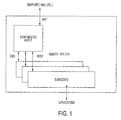
- Figure 1 illustrates an SNMP Master Agent-Subagent architecture.
- Figure 2 is a flowchart illustrating the steps taken when placing additional information in the AgentX error status field.
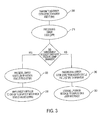
- Figure 3 is a flowchart illustrating the steps taken when the error codes in the AgentX error status field are transmitted and processed.
- Figure 4 is a logic block diagram illustrating a master agent passing a full error code from a AgentX error status field to the CLI or Web handler which then looks up an appropriate error message in an error look-up database.
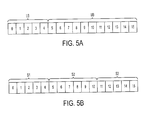
- Figure 5(a) is a drawing of a 16-bit number internally-defined error code with 5 lower bits reserved for SNMP-defined error codes and 11 upper bits used to store an internal portion of the additional error information.
- Figure 5(b) is a drawing of a 16-bit number internally defined error code with the 16-bit field can also be divided into 3 sections.
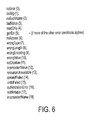
- Figure 6 illustrates values defined in RFC 1905 that are used for the SNMP-specific portion of the error code.
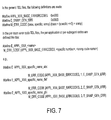
- Figure 7 illustrates the steps taken in the C language programming code to assign the additional error information, or bits 5-15, of the error codes.
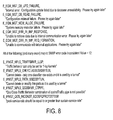
- Figure 8 contains examples of specific error messages.
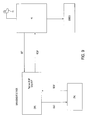
- Figure 9 illustrates how the Web and CLI interface component or handler sends commands in the master agent-subagent architecture.
- Figure 10 is a flowchart disclosing the steps taken when the Web and CLI interface component or handler sends commands in the master agent-subagent architecture.
- AgentX error status field of a response message is limited to a few AgentX-specific error codes (ERR), plus the 18 standard SNMP error status values (ERRS). This means that very little information is normally available to assist a human operator at a Web or CLI interface to recover from a problem such as a configuration error.
- ERP AgentX-specific error codes
- ERRS SNMP error status values
- the present invention comprises an extension to the AgentX protocol and the SNMP Master Agent (MA) processing for a multi-interface management architecture that is modeled using SNMP internally.
- the extension allows information to be reported back to CLI and WEB operators. In a preferred embodiment, this extension is used in a 7770 RCP router.
- the code used by the SNMP Master Agent (MA) to map messages between protocols is effectively a filter.
- An agent monitors and accumulates operational data and detects exceptional events for each network element.
- the master agent (MA) communicates with the subagents (SA) through a protocol called AgentX.
- SNMP Master Agent-Subagent (MA-SA) architecture internally for processing management operations.
- the Master Agent (MA) receives SNMP messages from external SNMP managers, and distributes them internally as AgentX messages to multiple subagents (SA) within the router (R1).
- the subagents (SA) route the messages to corresponding applications.
- the subagents (SA) return responses from the applications to the Master Agent (MA).
- Each management subagent (SA) may service multiple applications.
- a subagent services one type of application (e.g., IP forwarding) on all boards.
- IP forwarding e.g., IP forwarding
- the subagent can service up to 30 TLKs, although the present inventions can apply to systems where each subagent (SA) can service even greater numbers.
- Figure 1 discloses a SNMP Master Agent-Subagent (MA-SA) architecture.
- configuration commands CMD
- SA subagents
- REP AgentX response messages
- MA Master Agent
- PTT SNMP response packets
- ERRS SNMP-defined error status value
- the 7770 RCP Master Agent-Subagent (MA-SA) architecture of the present invention also includes a link to a Web Interface and a Command Line Interface (CLI).
- the Web commands and the CLI commands are translated into AgentX messages. They share the same internal processing as the equivalent SNMP commands.
- the solution involves placing additional information in the AgentX error status field (STSF). See figure 2.
- the Agent X error status field (STSF) is a 32-bit field.
- the lower 5 bits (LB) are reserved for the SNMP-defined error codes (ERR) which are very general in nature and, therefore, communicate limited information.
- Additional error information or specific error codes (ERR) are placed in the upper 27 bits (UB).
- ERR Error-defined error codes
- UB upper 27 bits
- Generic error codes (ERR) can be used by all subagents (SA) and applications.
- ERP Error code
- SA subagent
- SA subagent
- SA group of subagents
- the error codes (ERR) in the AgentX error status field (STSF) are transmitted to the Master Agent (MA) by the subagent (SA) (200). See figure 3.
- the Master Agent (MA) processes the error code (ERR) in the following manner (210).
- the master agent (MA) uses a processor (P1) to process the error code.
- the processor can be a microprocessor, a central processing unit or any of a number of processing means such including analog processing means). It inquires "Does the management request originate from an SNMP manager?
- the Master Agent passes the full error code (ERR) from the AgentX error status field (STSF) to the CLI or Web software or operator (240).
- the Web interface or CLI handler looks up an appropriate error message corresponding to this error message in a error code lookup database (ERRDB) to display on the user interface (250). (See figure 4).
- the Web handler (H1) or CLI handler (H1) uses a global library function, MapErrorCode, to locate an appropriate error message.
- MapErrorCode look-up function is an Application Programming Interface (API).
- An API is a specification which defines what procedures are followed by an application program when it invokes a defined set of services. It is stored in software (or firmware) located in memory (M1, M2) in the Web interface (Web i/f) or the CLI interface (CLI i/f).
- the memory can be RAM, ROM, PROM, EPROM.
- the handler inputs two parameters into MapErrorCode, the error code value and a pointer to the memory where the error text string will be returned by the library function.
- MapErrorCode retrieves the error text string corresponding to a given error code (ERR). In effect, it translates the error code (ERR) to an error string. MapErrorCode also adds the appropriate prefix, as necessary, and returns the complete error (or warning) string, ready for display to the operator. If the error string for a specified error code (ERR) is not defined in the generic error mapping TDL file, then the MapErrorCode API returns the error string defined for the "genError" code.
- ERP error code
- the internally-defined error code is a 16-bit number - the lower 5 bits (LB), bits 0-4, reserved for SNMP-defined error codes and the next 11 bits (UB), bits 5-15, used to store an internal portion of the additional error information. See figure 5(a).
- the lower 5 bits (LB) of the internally defined error code (ERR) is the code that will be seen by the SNMP manager. Therefore, it conforms to the SNMP protocol rules.
- the 16-bit field can also be divided into 3 sections (S1, S2, S3):
- the top 5 bits (S1) identify the group of error codes (groups are assigned to teams or to software modules).
- the middle 6 bits (S2) identify a unique code within that range.
- the lowest 5 bits (LB) are reserved for the SNMP error code (ERR). See figure 5(b). In other embodiments, 32 bits are available for the internally defined error code (ERR).
- CLI and Web interfaces will display the error code (ERR) as a number, plus the error text message.
- ERR error code
- SA subagents
- the upper bits (UB) may take on specific values corresponding to one of the 500 additional error messages or specific error messages.
- write operations such as Web or CLI configuration or action commands
- the values defined in RFC 1905 and shown in Figure 6 are used for the SNMP-specific portion of the code.
- FIG 7 shows the steps taken in the C language programming code to assign the additional error information, or bits 5-15, of the error codes (ERR). It illustrates the assignment of the proprietary portion of the error code.
- Figure 9 illustrates how the Web and CLI interface component or handler (H1) sends commands in the 7770 RCP Master Agent-Subagent (MA-SA) architecture.
- this component can be the Web interface (Web i/f) or the Command Line Interface (CLI i/f).
- the operator sends a command to a peripheral (e.g., an OC-3 line card) to set the line speed to 1.5 Mb/s (300). See figure 10.
- the operator does this by sending a Set function call (SET) to the Master Agent (MA) using the CLI interface (CLI i/f).
- the Master Agent (MA) sends an AgentX command (CMD) or message to a subagent (SA) handling the peripheral (310).
- CMD AgentX command
- SA subagent
- the subagent (SA) determines if the peripheral can support the desired line speed. Subagent asks the question, "Can peripheral support desired line speed?" (320). If it can't, then the command is inconsistent with the peripheral's configuration. If the peripheral can't support the desired line speed, then the subagent (SA) will send an error status or error code (ERR), along with its response (RESP), to the Master Agent (MA) (325). The next query is "Is the management protocol SNMP? (330). In the present example, the error code (ERR) is 0x5120C.
- the Master Agent (MA) knows that the response along with the error code (ERR) came from within, and passes it along to the Web and CLI interface component or handler (H1) (340).
- the Web and CLI interface component (H1) will look up the error code (ERR) in a error code lookup database (ERRDB) using the MapErrCode API (350).
- the error code lookup database (ERRDB) can be any of a variety of means for storing information such as RAM, ROM, PROM or EPROM, etc. In the database, 0x5120C means speed not valid for an OC-3 card.
- the Web or CLI interface handler (H1) software will pass the associated error message (ERM) along to the operator (360). In a preferred embodiment, the operator can access the command line interface (CMD i/f) using a terminal (T1).
- the peripheral can't support the desired line speed and the management protocol was SNMP
- the response (RESP) from the subagent (SA) would go to the Master Agent (MA) and then to the operator using one of the 18 standard SNMP error messages (ERM) (370).
- Non SNMP protocols such as the Web or the CLI management protocols support the extended error messages.
- SNMP doesn't have a look-up table or database (dB) to translate the commands.
- the command is passed along to the peripheral (380).
Landscapes
- Engineering & Computer Science (AREA)
- Computer Networks & Wireless Communication (AREA)
- Signal Processing (AREA)
- Computer And Data Communications (AREA)
- Communication Control (AREA)
- Detection And Correction Of Errors (AREA)
- Medicines Containing Antibodies Or Antigens For Use As Internal Diagnostic Agents (AREA)
- Debugging And Monitoring (AREA)
Abstract
Description
Claims (44)
- A method of generating an error code, comprising:placing additional information in an error status field.
- The method according to claim 1, wherein said step of placing additional information comprises:reserving lower bits for SNMP error codes; andplacing additional error information in upper bits.
- The method according to claim 1, wherein said error code comprises 3 sections.
- The method according to claim 2, wherein said error status field is a 32-bit field.
- The method according to claim 2, further comprising the step of mapping said lower bits to a SNMP defined error status value.
- The method according to claim 2, wherein said lower bits are 5 bits and said upper bits are 27 bits.
- The method according to claim 2, wherein said error code is a 16-bit number.
- The method according to claim 3, wherein said 3 sections comprise:said upper bits comprising top bits to identify a group of error codes and middle bits to identify a code within a range of said group of error codes; andsaid lower bits reserved for SNMP error code.
- The method according to claim 5, wherein said step of mapping further comprises mapping said lower bits to one of 18 SNMP defined error status values.
- The method according to claim 7, wherein said error code comprises a lower 5 bits reserved for SNMP error codes and an upper 11 bits to store additional error information.
- The method according to claim 7, wherein said error code comprises 3 sections.
- The method according to claim 8, further comprising the step of assigning said range to at least one subagent.
- The method according to claim 11, wherein said 3 sections comprise:a top 5 bits to identify a group of error codes;a middle 6 bits to identify a code within a range of said group of error codes; anda lowest 5 bits reserved for SNMP error code.
- The method according to claim 13, further comprising the step of assigning said range of values to at least one subagent.
- A method of transmitting error codes, comprising:transmitting error codes in an error status field; andprocessing said error codes.
- The method according to claim 15, wherein said step of processing said error codes comprises:processing only lower bits of said status field if a management request originated from a SNMP manager; andpassing a full error code from said error status field if said management request did not originate from said SNMP manager.
- The method according to claim 16, further comprising passing said full error code from said error status field to a CLI handler.
- The method according to claim 16, further comprising passing said full error code from said error status field to a Web handler.
- The method according to claim 16, further comprising the step of looking up an error message to display on a user interface.
- The method according to claim 17, further comprising the step of looking up an error message to display on a user interface.
- The method according to claim 18, further comprising the step of looking up an error message to display on a user interface.
- An apparatus to generate error codes, comprising:a master agent comprising a processor;at least one subagent operably connected to said master agent;a handler operably connected to said master agent, comprising:an API stored in memory; anda database operably connected to said handler.
- The apparatus according to claim 22, wherein said API is MapErrorCode look-up function.
- The apparatus according to claim 22, wherein said memory is RAM memory.
- The apparatus according to claim 22, wherein said handler is a CLI handler.
- The apparatus according to claim 22, wherein said handler is a Web handler.
- The apparatus according to claim 22, wherein said database is an error code lookup database, whereby said handler looks up an error code in said database.
- The apparatus according to claim 22, wherein said database comprises at least one error text string corresponding to an error code.
- The apparatus according to claim 23, wherein said wherein said database is an error code lookup database, whereby said handler looks up an error code in said database using said MapErrorCode look-up function.
- The apparatus according to claim 23, wherein said database is an error code lookup database; said handler is a CLI interface; and whereby said handler looks up an error code in said database using said MapErrorCode look-up function.
- The apparatus according to claim 23, wherein said wherein said database is an error code lookup database; said handler is a Web interface; and whereby said handler looks up an error code in said database using said MapErrorCode look-up function.
- The apparatus according to claim 23, wherein said database comprises at least one error text string corresponding to an error code.
- The apparatus according to claim 28, wherein said error code comprises lower bits for SNMP error codes and upper bits for additional error information.
- The apparatus according to claim 28, wherein said error code comprises 3 sections.
- The apparatus according to claim 32, wherein said error code comprises lower bits for SNMP error codes and upper bits for additional error information.
- The apparatus according to claim 32, wherein said error code comprises 3 sections.
- The apparatus according to claim 33, wherein said database is an error code lookup database; said handler is a CLI interface; and whereby said handler looks up an error code in said database using a MapErrorCode look-up function.
- The apparatus according to claim 34, wherein said 3 sections comprise:said upper bits comprising top bits to identify a group of error codes and middle bits to identify a code within a range of said group of error codes; andsaid lower bits reserved for SNMP error code.
- The apparatus according to claim 35, wherein said wherein said database is an error code lookup database; said handler is a Web interface; and whereby said handler looks up an error code in said database using a MapErrorCode look-up function.
- The apparatus according to claim 36, wherein said 3 sections comprise:said upper bits comprising top bits to identify a group of error codes and middle bits to identify a code within a range of said group of error codes; andsaid lower bits reserved for SNMP error code.
- The apparatus according to claim 37, wherein said apparatus is a router.
- The apparatus according to claim 38, wherein said apparatus is a router.
- The apparatus according to claim 39, wherein said apparatus is a router.
- The apparatus according to claim 40, wherein said apparatus is a router.
Applications Claiming Priority (2)
| Application Number | Priority Date | Filing Date | Title |
|---|---|---|---|
| US10/132,224 US7120833B2 (en) | 2002-04-26 | 2002-04-26 | Error codes in Agent X |
| US132224 | 2002-04-26 |
Publications (2)
| Publication Number | Publication Date |
|---|---|
| EP1357699A1 true EP1357699A1 (en) | 2003-10-29 |
| EP1357699B1 EP1357699B1 (en) | 2005-12-07 |
Family
ID=28791000
Family Applications (1)
| Application Number | Title | Priority Date | Filing Date |
|---|---|---|---|
| EP03006855A Expired - Lifetime EP1357699B1 (en) | 2002-04-26 | 2003-03-28 | Method and apparatus to generate and transmit error codes in Agent X |
Country Status (4)
| Country | Link |
|---|---|
| US (1) | US7120833B2 (en) |
| EP (1) | EP1357699B1 (en) |
| AT (1) | ATE312449T1 (en) |
| DE (1) | DE60302605T2 (en) |
Cited By (1)
| Publication number | Priority date | Publication date | Assignee | Title |
|---|---|---|---|---|
| CN101145874B (en) * | 2007-03-23 | 2011-09-21 | 中兴通讯股份有限公司 | Harmless information deletion method and system |
Families Citing this family (15)
| Publication number | Priority date | Publication date | Assignee | Title |
|---|---|---|---|---|
| US20050105513A1 (en) * | 2002-10-27 | 2005-05-19 | Alan Sullivan | Systems and methods for direction of communication traffic |
| US20050027882A1 (en) * | 2003-05-05 | 2005-02-03 | Sullivan Alan T. | Systems and methods for direction of communication traffic |
| US20060202186A1 (en) * | 2003-01-21 | 2006-09-14 | On The Fence Technologies, Llc. Corporation | Methods and apparatus for fencing and other outdoor structures |
| KR100489689B1 (en) * | 2003-02-14 | 2005-05-17 | 삼성전자주식회사 | Method for supporting error cause of SNMP and apparatus thereof |
| US20060140182A1 (en) * | 2004-12-23 | 2006-06-29 | Michael Sullivan | Systems and methods for monitoring and controlling communication traffic |
| US7861106B2 (en) * | 2005-08-19 | 2010-12-28 | A. Avizienis And Associates, Inc. | Hierarchical configurations in error-correcting computer systems |
| US20070162331A1 (en) * | 2006-01-10 | 2007-07-12 | Michael Sullivan | Systems and methods for providing information and conducting business using the internet |
| JP2009524355A (en) * | 2006-01-20 | 2009-06-25 | パックスファイアー インコーポレイテッド | System and method for determining and controlling communication traffic |
| US7954008B2 (en) * | 2007-01-15 | 2011-05-31 | Microsoft Corporation | Objective assessment of application crashes from a customer environment |
| US20110071997A1 (en) * | 2007-07-30 | 2011-03-24 | Sullivan Alan T | Systems and methods for direction of communication traffic |
| US8327324B1 (en) * | 2008-09-29 | 2012-12-04 | Emc Corporation | Message logging system |
| DE102011081202A1 (en) | 2010-08-20 | 2012-03-22 | Hirschmann Automation And Control Gmbh | Simple Network Management Protocol (SNMP) extension to get information about the status of SET PDUs |
| US9529947B1 (en) | 2014-10-28 | 2016-12-27 | Altera Corporation | Register retiming and verification of an integrated circuit design |
| US10162918B1 (en) | 2016-04-27 | 2018-12-25 | Altera Corporation | Integrated circuit retiming with selective modeling of flip-flop secondary signals |
| KR102944478B1 (en) * | 2024-03-27 | 2026-03-26 | 쿠팡 주식회사 | Electronic apparatus for identifying error information and its operation method |
Citations (1)
| Publication number | Priority date | Publication date | Assignee | Title |
|---|---|---|---|---|
| EP1154601A1 (en) * | 2000-05-12 | 2001-11-14 | Nortel Networks Limited | Modular routing system with Routing Application Programm Interface (API) |
Family Cites Families (20)
| Publication number | Priority date | Publication date | Assignee | Title |
|---|---|---|---|---|
| US5740368A (en) | 1995-06-30 | 1998-04-14 | Canon Kabushiki Kaisha | Method and apparatus for providing information on a managed peripheral device to plural agents |
| US6094529A (en) * | 1995-09-19 | 2000-07-25 | Jeffries; Robin | Method, apparatus and computer program product for linking stack messages to relevant information |
| US5974568A (en) * | 1995-11-17 | 1999-10-26 | Mci Communications Corporation | Hierarchical error reporting system |
| US5802146A (en) * | 1995-11-22 | 1998-09-01 | Bell Atlantic Network Services, Inc. | Maintenance operations console for an advanced intelligent network |
| SE506431C2 (en) | 1995-12-08 | 1997-12-15 | Ericsson Telefon Ab L M | Agent, system and procedure for object monitoring |
| FR2750517B1 (en) | 1996-06-27 | 1998-08-14 | Bull Sa | METHOD FOR MONITORING A PLURALITY OF OBJECT TYPES OF A PLURALITY OF NODES FROM A ADMINISTRATION NODE IN A COMPUTER SYSTEM |
| US6298386B1 (en) | 1996-08-14 | 2001-10-02 | Emc Corporation | Network file server having a message collector queue for connection and connectionless oriented protocols |
| US6182157B1 (en) | 1996-09-19 | 2001-01-30 | Compaq Computer Corporation | Flexible SNMP trap mechanism |
| US6263366B1 (en) | 1996-12-31 | 2001-07-17 | Mci Communications Corporation | System and method therefor of translating a message having a given format for usage in an operations system |
| US6000046A (en) | 1997-01-09 | 1999-12-07 | Hewlett-Packard Company | Common error handling system |
| GB2330430B (en) | 1997-10-16 | 2002-07-17 | Ibm | Error handler for a proxy server computer system |
| GB9725855D0 (en) | 1997-12-04 | 1998-02-04 | 3Com Ireland | Network management communication |
| JP3707233B2 (en) | 1998-02-26 | 2005-10-19 | ブラザー工業株式会社 | Network adapter and terminal system having the same |
| US6519635B1 (en) * | 1998-04-30 | 2003-02-11 | Cisco Technology, Inc. | SNMP master agent that translates messages to a sub-agent proprietary format using a translation table by the sub-agent |
| US6085237A (en) | 1998-05-01 | 2000-07-04 | Cisco Technology, Inc. | User-friendly interface for setting expressions on an SNMP agent |
| US6272131B1 (en) | 1998-06-11 | 2001-08-07 | Synchrodyne Networks, Inc. | Integrated data packet network using a common time reference |
| US6292829B1 (en) | 1998-07-15 | 2001-09-18 | Nortel Networks Limited | Method and device for network management |
| US6253243B1 (en) | 1998-12-04 | 2001-06-26 | Sun Microsystems, Inc. | Automated trap control for a distributed network management system |
| US6799198B1 (en) * | 2000-06-23 | 2004-09-28 | Nortel Networks Limited | Method and apparatus for providing user specific web-based help in a distributed system environment |
| US20030195922A1 (en) * | 2002-04-10 | 2003-10-16 | Alcatel | SNMP trap and inform shaping mechanism |
-
2002
- 2002-04-26 US US10/132,224 patent/US7120833B2/en not_active Expired - Lifetime
-
2003
- 2003-03-28 EP EP03006855A patent/EP1357699B1/en not_active Expired - Lifetime
- 2003-03-28 DE DE60302605T patent/DE60302605T2/en not_active Expired - Lifetime
- 2003-03-28 AT AT03006855T patent/ATE312449T1/en not_active IP Right Cessation
Patent Citations (1)
| Publication number | Priority date | Publication date | Assignee | Title |
|---|---|---|---|---|
| EP1154601A1 (en) * | 2000-05-12 | 2001-11-14 | Nortel Networks Limited | Modular routing system with Routing Application Programm Interface (API) |
Non-Patent Citations (2)
| Title |
|---|
| ANONYMOUS: "Error messages with unique identifiers", RESEARCH DISCLOSURE, no. 446, 1 June 2001 (2001-06-01), Havant, UK, article No. 446195, pages 1091, XP002247970 * |
| M. DANIELE ET ALL: "Agent Extensibility (AgentX) Protocol Version 1", IETF RFC, January 2000 (2000-01-01), pages 1 - 91, XP002247971 * |
Cited By (1)
| Publication number | Priority date | Publication date | Assignee | Title |
|---|---|---|---|---|
| CN101145874B (en) * | 2007-03-23 | 2011-09-21 | 中兴通讯股份有限公司 | Harmless information deletion method and system |
Also Published As
| Publication number | Publication date |
|---|---|
| DE60302605T2 (en) | 2006-08-17 |
| DE60302605D1 (en) | 2006-01-12 |
| ATE312449T1 (en) | 2005-12-15 |
| US7120833B2 (en) | 2006-10-10 |
| EP1357699B1 (en) | 2005-12-07 |
| US20030204785A1 (en) | 2003-10-30 |
Similar Documents
| Publication | Publication Date | Title |
|---|---|---|
| US7120833B2 (en) | Error codes in Agent X | |
| EP1052805B1 (en) | A network management system using a distributed namespace | |
| US6167448A (en) | Management event notification system using event notification messages written using a markup language | |
| US5978845A (en) | Network management relay mechanism | |
| US6275853B1 (en) | System and method for extending communications features using generic management information base objects | |
| US5561769A (en) | Method and apparatus for executing a distributed algorithm or service on a simple network management protocol based computer network | |
| US6330601B1 (en) | Management system for a multi-level communication network | |
| US7734756B2 (en) | Object oriented communication among platform independent systems over networks using soap | |
| EP0762281B1 (en) | Network management with acquisition of formatted dump data from remote process | |
| US20090204697A1 (en) | Methods and apparatus for extended error reporting in network management | |
| JP4509916B2 (en) | SNMP-based network management apparatus and method | |
| US6219705B1 (en) | System and method of collecting and maintaining historical top communicator information on a communication device | |
| US6119159A (en) | Distributed service subsystem protocol for distributed network management | |
| US20040006619A1 (en) | Structure for event reporting in SNMP systems | |
| US20060161519A1 (en) | Prioritizing network management traffic | |
| US7010795B2 (en) | Process for sending a notification in a data processing network with distributed applications | |
| JP4673532B2 (en) | Comprehensive alignment process in a multi-manager environment | |
| FI113824B (en) | Dissemination of data to network management systems | |
| US20030101252A1 (en) | System and method for supporting SNMP managed networks | |
| JP2885123B2 (en) | Name conversion method in network management system | |
| US8055746B2 (en) | Method and system for improved management of a communication network by extending the simple network management protocol | |
| JP4763227B2 (en) | SNMP agent device | |
| KR100263386B1 (en) | Method of parsing transaction language 1 in a regional monitor and control system | |
| KR100584824B1 (en) | Method of Transferring Control Message between Heterogeneous Boards in Mobile Communication System | |
| JPH07129482A (en) | Network monitoring equipment |
Legal Events
| Date | Code | Title | Description |
|---|---|---|---|
| PUAI | Public reference made under article 153(3) epc to a published international application that has entered the european phase |
Free format text: ORIGINAL CODE: 0009012 |
|
| AK | Designated contracting states |
Kind code of ref document: A1 Designated state(s): AT BE BG CH CY CZ DE DK EE ES FI FR GB GR HU IE IT LI LU MC NL PT RO SE SI SK TR |
|
| AX | Request for extension of the european patent |
Extension state: AL LT LV MK |
|
| 17P | Request for examination filed |
Effective date: 20040322 |
|
| 17Q | First examination report despatched |
Effective date: 20040421 |
|
| AKX | Designation fees paid |
Designated state(s): AT BE BG CH CY CZ DE DK EE ES FI FR GB GR HU IE IT LI LU MC NL PT RO SE SI SK TR |
|
| GRAP | Despatch of communication of intention to grant a patent |
Free format text: ORIGINAL CODE: EPIDOSNIGR1 |
|
| GRAS | Grant fee paid |
Free format text: ORIGINAL CODE: EPIDOSNIGR3 |
|
| GRAA | (expected) grant |
Free format text: ORIGINAL CODE: 0009210 |
|
| AK | Designated contracting states |
Kind code of ref document: B1 Designated state(s): AT BE BG CH CY CZ DE DK EE ES FI FR GB GR HU IE IT LI LU MC NL PT RO SE SI SK TR |
|
| PG25 | Lapsed in a contracting state [announced via postgrant information from national office to epo] |
Ref country code: AT Free format text: LAPSE BECAUSE OF FAILURE TO SUBMIT A TRANSLATION OF THE DESCRIPTION OR TO PAY THE FEE WITHIN THE PRESCRIBED TIME-LIMIT Effective date: 20051207 Ref country code: NL Free format text: LAPSE BECAUSE OF FAILURE TO SUBMIT A TRANSLATION OF THE DESCRIPTION OR TO PAY THE FEE WITHIN THE PRESCRIBED TIME-LIMIT Effective date: 20051207 Ref country code: FI Free format text: LAPSE BECAUSE OF FAILURE TO SUBMIT A TRANSLATION OF THE DESCRIPTION OR TO PAY THE FEE WITHIN THE PRESCRIBED TIME-LIMIT Effective date: 20051207 Ref country code: BE Free format text: LAPSE BECAUSE OF FAILURE TO SUBMIT A TRANSLATION OF THE DESCRIPTION OR TO PAY THE FEE WITHIN THE PRESCRIBED TIME-LIMIT Effective date: 20051207 Ref country code: CZ Free format text: LAPSE BECAUSE OF FAILURE TO SUBMIT A TRANSLATION OF THE DESCRIPTION OR TO PAY THE FEE WITHIN THE PRESCRIBED TIME-LIMIT Effective date: 20051207 Ref country code: RO Free format text: LAPSE BECAUSE OF FAILURE TO SUBMIT A TRANSLATION OF THE DESCRIPTION OR TO PAY THE FEE WITHIN THE PRESCRIBED TIME-LIMIT Effective date: 20051207 Ref country code: SK Free format text: LAPSE BECAUSE OF FAILURE TO SUBMIT A TRANSLATION OF THE DESCRIPTION OR TO PAY THE FEE WITHIN THE PRESCRIBED TIME-LIMIT Effective date: 20051207 Ref country code: SI Free format text: LAPSE BECAUSE OF FAILURE TO SUBMIT A TRANSLATION OF THE DESCRIPTION OR TO PAY THE FEE WITHIN THE PRESCRIBED TIME-LIMIT Effective date: 20051207 Ref country code: LI Free format text: LAPSE BECAUSE OF FAILURE TO SUBMIT A TRANSLATION OF THE DESCRIPTION OR TO PAY THE FEE WITHIN THE PRESCRIBED TIME-LIMIT Effective date: 20051207 Ref country code: CH Free format text: LAPSE BECAUSE OF FAILURE TO SUBMIT A TRANSLATION OF THE DESCRIPTION OR TO PAY THE FEE WITHIN THE PRESCRIBED TIME-LIMIT Effective date: 20051207 |
|
| REG | Reference to a national code |
Ref country code: GB Ref legal event code: FG4D |
|
| REG | Reference to a national code |
Ref country code: CH Ref legal event code: EP |
|
| REG | Reference to a national code |
Ref country code: IE Ref legal event code: FG4D |
|
| REF | Corresponds to: |
Ref document number: 60302605 Country of ref document: DE Date of ref document: 20060112 Kind code of ref document: P |
|
| PG25 | Lapsed in a contracting state [announced via postgrant information from national office to epo] |
Ref country code: SE Free format text: LAPSE BECAUSE OF FAILURE TO SUBMIT A TRANSLATION OF THE DESCRIPTION OR TO PAY THE FEE WITHIN THE PRESCRIBED TIME-LIMIT Effective date: 20060307 Ref country code: DK Free format text: LAPSE BECAUSE OF FAILURE TO SUBMIT A TRANSLATION OF THE DESCRIPTION OR TO PAY THE FEE WITHIN THE PRESCRIBED TIME-LIMIT Effective date: 20060307 Ref country code: BG Free format text: LAPSE BECAUSE OF FAILURE TO SUBMIT A TRANSLATION OF THE DESCRIPTION OR TO PAY THE FEE WITHIN THE PRESCRIBED TIME-LIMIT Effective date: 20060307 Ref country code: GR Free format text: LAPSE BECAUSE OF FAILURE TO SUBMIT A TRANSLATION OF THE DESCRIPTION OR TO PAY THE FEE WITHIN THE PRESCRIBED TIME-LIMIT Effective date: 20060307 |
|
| PG25 | Lapsed in a contracting state [announced via postgrant information from national office to epo] |
Ref country code: ES Free format text: LAPSE BECAUSE OF FAILURE TO SUBMIT A TRANSLATION OF THE DESCRIPTION OR TO PAY THE FEE WITHIN THE PRESCRIBED TIME-LIMIT Effective date: 20060318 |
|
| PG25 | Lapsed in a contracting state [announced via postgrant information from national office to epo] |
Ref country code: IE Free format text: LAPSE BECAUSE OF NON-PAYMENT OF DUE FEES Effective date: 20060328 |
|
| PG25 | Lapsed in a contracting state [announced via postgrant information from national office to epo] |
Ref country code: LU Free format text: LAPSE BECAUSE OF NON-PAYMENT OF DUE FEES Effective date: 20060331 Ref country code: MC Free format text: LAPSE BECAUSE OF NON-PAYMENT OF DUE FEES Effective date: 20060331 |
|
| PG25 | Lapsed in a contracting state [announced via postgrant information from national office to epo] |
Ref country code: PT Free format text: LAPSE BECAUSE OF FAILURE TO SUBMIT A TRANSLATION OF THE DESCRIPTION OR TO PAY THE FEE WITHIN THE PRESCRIBED TIME-LIMIT Effective date: 20060508 |
|
| NLV1 | Nl: lapsed or annulled due to failure to fulfill the requirements of art. 29p and 29m of the patents act | ||
| PG25 | Lapsed in a contracting state [announced via postgrant information from national office to epo] |
Ref country code: HU Free format text: LAPSE BECAUSE OF FAILURE TO SUBMIT A TRANSLATION OF THE DESCRIPTION OR TO PAY THE FEE WITHIN THE PRESCRIBED TIME-LIMIT Effective date: 20060608 |
|
| REG | Reference to a national code |
Ref country code: CH Ref legal event code: PL |
|
| ET | Fr: translation filed | ||
| PLBE | No opposition filed within time limit |
Free format text: ORIGINAL CODE: 0009261 |
|
| STAA | Information on the status of an ep patent application or granted ep patent |
Free format text: STATUS: NO OPPOSITION FILED WITHIN TIME LIMIT |
|
| 26N | No opposition filed |
Effective date: 20060908 |
|
| REG | Reference to a national code |
Ref country code: IE Ref legal event code: MM4A |
|
| PG25 | Lapsed in a contracting state [announced via postgrant information from national office to epo] |
Ref country code: EE Free format text: LAPSE BECAUSE OF FAILURE TO SUBMIT A TRANSLATION OF THE DESCRIPTION OR TO PAY THE FEE WITHIN THE PRESCRIBED TIME-LIMIT Effective date: 20051207 |
|
| PG25 | Lapsed in a contracting state [announced via postgrant information from national office to epo] |
Ref country code: TR Free format text: LAPSE BECAUSE OF FAILURE TO SUBMIT A TRANSLATION OF THE DESCRIPTION OR TO PAY THE FEE WITHIN THE PRESCRIBED TIME-LIMIT Effective date: 20051207 |
|
| PG25 | Lapsed in a contracting state [announced via postgrant information from national office to epo] |
Ref country code: CY Free format text: LAPSE BECAUSE OF FAILURE TO SUBMIT A TRANSLATION OF THE DESCRIPTION OR TO PAY THE FEE WITHIN THE PRESCRIBED TIME-LIMIT Effective date: 20051207 |
|
| REG | Reference to a national code |
Ref country code: GB Ref legal event code: 732E Free format text: REGISTERED BETWEEN 20131114 AND 20131120 |
|
| REG | Reference to a national code |
Ref country code: FR Ref legal event code: GC Effective date: 20140717 |
|
| REG | Reference to a national code |
Ref country code: FR Ref legal event code: RG Effective date: 20141016 |
|
| REG | Reference to a national code |
Ref country code: FR Ref legal event code: PLFP Year of fee payment: 13 |
|
| REG | Reference to a national code |
Ref country code: FR Ref legal event code: PLFP Year of fee payment: 14 |
|
| REG | Reference to a national code |
Ref country code: FR Ref legal event code: PLFP Year of fee payment: 15 |
|
| REG | Reference to a national code |
Ref country code: FR Ref legal event code: PLFP Year of fee payment: 16 |
|
| PGFP | Annual fee paid to national office [announced via postgrant information from national office to epo] |
Ref country code: GB Payment date: 20180321 Year of fee payment: 16 Ref country code: DE Payment date: 20180322 Year of fee payment: 16 |
|
| PGFP | Annual fee paid to national office [announced via postgrant information from national office to epo] |
Ref country code: FR Payment date: 20180323 Year of fee payment: 16 |
|
| PGFP | Annual fee paid to national office [announced via postgrant information from national office to epo] |
Ref country code: IT Payment date: 20180327 Year of fee payment: 16 |
|
| REG | Reference to a national code |
Ref country code: DE Ref legal event code: R119 Ref document number: 60302605 Country of ref document: DE |
|
| GBPC | Gb: european patent ceased through non-payment of renewal fee |
Effective date: 20190328 |
|
| PG25 | Lapsed in a contracting state [announced via postgrant information from national office to epo] |
Ref country code: GB Free format text: LAPSE BECAUSE OF NON-PAYMENT OF DUE FEES Effective date: 20190328 Ref country code: DE Free format text: LAPSE BECAUSE OF NON-PAYMENT OF DUE FEES Effective date: 20191001 |
|
| PG25 | Lapsed in a contracting state [announced via postgrant information from national office to epo] |
Ref country code: FR Free format text: LAPSE BECAUSE OF NON-PAYMENT OF DUE FEES Effective date: 20190331 Ref country code: IT Free format text: LAPSE BECAUSE OF NON-PAYMENT OF DUE FEES Effective date: 20190328 |