EP1355238A1 - Method and computer system for delta-handling in server-pages - Google Patents
Method and computer system for delta-handling in server-pages Download PDFInfo
- Publication number
- EP1355238A1 EP1355238A1 EP02008812A EP02008812A EP1355238A1 EP 1355238 A1 EP1355238 A1 EP 1355238A1 EP 02008812 A EP02008812 A EP 02008812A EP 02008812 A EP02008812 A EP 02008812A EP 1355238 A1 EP1355238 A1 EP 1355238A1
- Authority
- EP
- European Patent Office
- Prior art keywords
- browser
- component
- page
- buffer
- document
- Prior art date
- Legal status (The legal status is an assumption and is not a legal conclusion. Google has not performed a legal analysis and makes no representation as to the accuracy of the status listed.)
- Ceased
Links
Images




Classifications
-
- G—PHYSICS
- G06—COMPUTING OR CALCULATING; COUNTING
- G06F—ELECTRIC DIGITAL DATA PROCESSING
- G06F16/00—Information retrieval; Database structures therefor; File system structures therefor
- G06F16/90—Details of database functions independent of the retrieved data types
- G06F16/95—Retrieval from the web
- G06F16/957—Browsing optimisation, e.g. caching or content distillation
- G06F16/9574—Browsing optimisation, e.g. caching or content distillation of access to content, e.g. by caching
Definitions
- the present invention generally relates to electronic data processing, and more particularly, relates to method, computer program product and system for client-server communication.
- Server-pages such as pages hereinafter
- pages such as JAVA Server-pages (JSP)
- JSP JAVA Server-pages
- GUI graphical user interface
- the result is a browser-document that the server transmits to a client
- the browser-document is visualized for a user via a conventional browser, such as the Microsoft Internet Explorer.
- a conventional browser such as the Microsoft Internet Explorer.
- the user interacts with the client via the GUI to refresh the page, the whole process is repeated, although in some cases only a minor portion of the page is modified.
- This requires a high bandwidth of the computer network that connects the client to the server because the whole page (layout information and data) is re-generated on the server and the resulting browser-document is re-transmitted from the server to the client via the network.
- the user is confronted with undesired effects, such as waiting time and screen flicker, until the refreshed page is finally presented on the client.
- Some conventional browsers such as the Microsoft Internet Explorer IE 6.0, include a feature for flicker-free rendering.
- the browser identifies modified components of the page and only replaces these components instead of the whole page (for example, by dynamic HTML injection into the page's document object model DOM). This leads to a reduction of screen-flicker for the user but still requires bandwidth for transmission of the whole page from the server to the client.
- a server stores a page-document that includes a plurality of page-components.
- a component-buffer is allocated to each page-component.
- a corresponding browser-component is written into each component-buffer.
- the server identifies at least one browser-delta in at least one identified component-buffer and sends the at least one browser-delta to a client.
- the server allocates a page-buffer to the page-document and builds a buffer-hierarchy.
- the page-buffer is the root-node of the buffer-hierarchy and further is a parent-node of at least one component-buffer.
- Each component-buffer can be a parent-node of further component-buffers.
- the server 901 replaces the browser-component of a child-node in a corresponding parent-node of the buffer-hierarchy with a representation of the browser-component and sends the page-buffer and each component-buffer of the buffer-hierarchy to a client.
- a client stores a browser-document.
- the browser-document corresponds to a page-document that is stored on a server.
- the page-document includes a plurality of browser-components, wherein each browser-component refers to a corresponding page-component of the page-document.
- the client receives a browser-delta from the server.
- the browser-delta refers to a specific browser-component and is identified by the server via a component-buffer that is allocated to the corresponding page-component.
- the client updates the browser-document with the browser-delta.
- the required bandwidth for network communication is lower when compared to prior art systems where the whole browser-document is exchanged between the server and client instead of a browser-delta. Often only a minor portion of the browser-document is modified. In this case the browser-delta transmission requires significant less bandwidth than the whole browser-document transmission.
- the browser-delta is determined by a comparison of two versions of the browser-document. The differences between the two versions are detected at the level of browser-components.
- the granularity of the browser-delta is defined by the granularity of the corresponding browser-component.
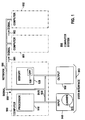
- FIG. 1 illustrates a simplified block diagram of an exemplary computer system, that implements embodiments of the present invention.
- Computer 900 can be connected to further computers 901, 902 via computer network 990.
- Computer 900 comprises processor 910, memory 920, bus 930, and, optionally, input device 940 and output device 950 (I/O devices, user interface 960).
- the invention is present by computer program product 100 (CPP), program carrier 970 and program signal 980, collectively "program”.
- computer 901/902 is sometimes referred to as "remote computer", computer 901/902 is, for example, a server, a router, a peer device or other common network node, and typically comprises many or all of the elements described relative to computer 900.
- Computer 900 is, for example, a conventional personal computer (PC), a desktop and hand-held device, a multiprocessor computer, a pen computer, a microprocessor-based or programmable consumer electronics, a minicomputer, a mainframe computer, a personal mobile computing device, a mobile phone, a portable or stationary personal computer, a palmtop computer or the like.
- PC personal computer
- desktop and hand-held device a multiprocessor computer
- pen computer a microprocessor-based or programmable consumer electronics
- minicomputer a mainframe computer
- a personal mobile computing device a mobile phone
- portable or stationary personal computer a palmtop computer or the like.
- Processor 910 is, for example, a central processing unit (CPU), a micro-controller unit (MCU), digital signal processor (DSP), or the like.
- CPU central processing unit
- MCU micro-controller unit
- DSP digital signal processor
- Memory 920 symbolizes elements that temporarily or permanently store data and instructions. Although memory 920 is conveniently illustrated as part of computer 900, memory function can also be implemented in network 990, in computers 901/902 and in processor 910 itself (e.g., cache, register), or elsewhere. Memory 920 can be a read only memory (ROM), a random access memory (RAM), or a memory with other access options.
- ROM read only memory
- RAM random access memory
- Memory 920 is physically implemented by computer-readable media, such as, for example: (a) magnetic media, such as a hard disk, a floppy disk, or other magnetic disk, a tape, a cassette tape; (b) optical media, such as optical disk (CD-ROM, digital versatile disk - DVD); (c) semiconductor media, such as DRAM, SRAM, EPROM, EEPROM, memory stick, or by any other media, such as paper.
- computer-readable media such as, for example: (a) magnetic media, such as a hard disk, a floppy disk, or other magnetic disk, a tape, a cassette tape; (b) optical media, such as optical disk (CD-ROM, digital versatile disk - DVD); (c) semiconductor media, such as DRAM, SRAM, EPROM, EEPROM, memory stick, or by any other media, such as paper.
- memory 920 is distributed across different media. Portions of memory 920 can be removable or non-removable.
- computer 900 uses devices well known in the art such as, for example, disk drives, tape drives.
- Memory 920 stores support modules such as, for example, a basic input output system (BIOS), an operating system (OS), a program library, a compiler, an interpreter, and a text- processing tool.
- support modules are commercially available and can be installed on computer 900 by those of skill in the art. For simplicity, these modules are not illustrated.
- CPP 100 comprises program instructions and - optionally - data that cause processor 910 to execute method steps of the present invention. Method steps are explained with more detail below.
- CPP 100 defines the operation of computer 900 and its interaction in network system 999.
- CPP 100 can be available as source code in any programming language, and as object code ("binary code") in a compiled form.
- Persons of skill in the art can use CPP 100 in connection with any of the above support modules (e.g., compiler, interpreter, operating system).
- CPP 100 can be located elsewhere.
- CPP 100 can also be embodied in carrier 970.
- Carrier 970 is illustrated outside computer 900. For communicating CPP 100 to computer 900, carrier 970 is conveniently inserted into input device 940. Carrier 970 is implemented as any computer readable medium, such as a medium largely explained above (cf. memory 920). Generally, carrier 970 is an article of manufacture comprising a computer readable medium having computer readable program code means embodied therein for executing the method of the present invention. Further, program signal 980 can also embody computer program 100. Signal 980 travels on network 990 to computer 900.
- program carrier 970 Having described CPP 100, program carrier 970, and program signal 980 in connection with computer 900 is convenient.
- program carrier 971/972 (not shown) and program signal 981/982 embody computer program product (CPP) 101/102 to be executed by processor 911/912 (not shown) in computers 901/902, respectively.
- processor 911/912 (not shown) in computers 901/902, respectively.
- Input device 940 symbolizes a device that provides data and instructions for processing by computer 900.
- device 940 is a keyboard, a pointing device (e.g., mouse, trackball, cursor direction keys), microphone, joystick, game pad, scanner, disk drive.
- a wireless receiver e.g., with satellite dish or terrestrial antenna
- a sensor e.g., a thermometer
- a counter e.g., goods counter in a factory.
- Input device 940 can serve to read carrier 970.
- Output device 950 symbolizes a device that presents instructions and data that have been processed.
- a monitor or a display (cathode ray tube (CRT), flat panel display, liquid crystal display (LCD), speaker, printer, plotter, vibration alert device.
- CTR cathode ray tube
- LCD liquid crystal display
- speaker printer
- vibration alert device Similar as above, output device 950 communicates with the user, but it can also communicate with further computers.
- Input device 940 and output device 950 can be combined to a single device; any device 940 and 950 can be provided optional.
- Bus 930 and network 990 provide logical and physical connections by conveying instruction and data signals. While connections inside computer 900 are conveniently referred to as “bus 930", connections between computers 900-902 are referred to as “network 990". Optionally, network 990 comprises gateways being computers that specialize in data transmission and protocol conversion.
- Devices 940 and 950 are coupled to computer 900 by bus 930 (as illustrated) or by network 990 (optional). While the signals inside computer 900 are mostly electrical signals, the signals in network are electrical, magnetic, optical or wireless (radio) signals.
- Networking environments are commonplace in offices, enterprise-wide computer networks, intranets and the internet (i.e. world wide web). The physical distance between a remote computer and computer 900 is not important.
- Network 990 can be a wired or a wireless network.
- network 990 is, for example, a local area network (LAN), a wide area network (WAN), a public switched telephone network (PSTN); a Integrated Services Digital Network (ISDN), an infra-red (IR) link, a radio link, such as Universal Mobile Telecommunications System (UMTS), Global System for Mobile Communication (GSM), Code Division Multiple Access (CDMA), or satellite link.
- LAN local area network
- WAN wide area network
- PSTN public switched telephone network
- ISDN Integrated Services Digital Network
- IR infra-red
- radio link such as Universal Mobile Telecommunications System (UMTS), Global System for Mobile Communication (GSM), Code Division Multiple Access (CDMA), or satellite link.
- UMTS Universal Mobile Telecommunications System
- GSM Global
- Transmission protocols and data formats are known, for example, as transmission control protocol/internet protocol (TCP/IP), hyper text transfer protocol (HTTP), secure HTTP, wireless application protocol, unique resource locator (URL), a unique resource identifier (URI), hyper text markup language HTML, extensible markup language (XML), extensible hyper text markup language (XHTML), wireless application markup language (WML), Standard Generalized Markup Language (SGML) etc.
- TCP/IP transmission control protocol/internet protocol
- HTTP hyper text transfer protocol
- HTTP secure HTTP
- wireless application protocol unique resource locator
- URL unique resource locator
- URI unique resource identifier
- hyper text markup language HTML extensible markup language
- XML extensible markup language
- XHTML extensible hyper text markup language
- WML wireless application markup language
- An interface can be, for example, a serial port interface, a parallel port interface, a game port, a universal serial bus (USB) interface, an internal or external modem, a video adapter, or a sound card.
- USB universal serial bus
- FIG. 2 illustrates an implementation of a graphical user interface 955 according to the present invention at three consecutive time points T1, T2 and T3.
- GUI 955 is presented to the user on output device 950 (cf. FIG. 1) and the user interacts with GUI 955 via input device 940.
- GUI 955 is a graphical user interface (form) that allows the user to retrieve a phone number 955-2 for a contact person 955-1 from a corresponding application database (not shown). The user is prompted with form-components 955-0, 955-1, 955-2, 955-3.
- Contact component 955-1 is an input field where the user can enter the name of the contact person.
- Submit component 955-3 can be implemented as a button that is pressed by the user to send a request for the contact person's phone number to the corresponding application.
- Phone component 955-2 is an output field where the search result (phone number of the contact person) is presented to the user.
- Frame-component 955-0 includes contact component 955-1 and phone-component 955-2 to visualize a contextual relationship between them.
- the user gets prompted with form 955, wherein contact component 955-1 and phone component 955-2 are empty.
- the user then enters the name (e.g. SMITH) of the contact person into contact component 955-1 and, at T2, uses submit component 955-3 (e.g. submit-button) to send a request for the contact person's phone number to the corresponding application.
- submit component 955-3 e.g. submit-button
- the application has identified the contact person's phone number (e.g. 98765-4321) and the result is visualized for the user in phone component 955-2.
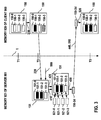
- FIG. 3 illustrates interaction of computer 900 and complementary computer 901 when operated according to an embodiment of the present invention.
- Time scale t (dashed arrow) is used to indicate the chronological order of events. However, time scale t does not increase linearly and, therefore, does not indicate the length of specific time intervals (e.g. (T1,T2)). Time points T1, T2, T3 (cf. FIG. 2) are shown as reference time points in the flow of events.
- time scale t shows objects that are stored in memory 921 of computer 901.
- computer 901 is a server computer that accesses application data, such as contact person or phone number.
- the right side of time scale t shows objects that are stored in memory 920 of computer 900.
- computer 900 is a client computer that presents application data to the user via GUI 955 (cf. FIG. 2).
- Page-document 151 includes information to generate form 955 (cf. FIG. 2).
- page-document 151 is a page, such as a Java Server-page (JSP), a Business Server-page (BSP) or an Active Server-page (ASP).
- Page-document 151 includes page-components 151-0, 151-1, 151-2, 151-3 that correspond to form-components 955-0, 955-1, 955-2, 955-3 in the example of FIG. 2, respectively.
- server 901 translates page-document 151 into browser-document 150.
- browser-document 150 is a markup language document, such as an HTML, XML, XHTML or WML document, which can be processed and visualized by a conventional browser.
- Browser-document 150 includes browser-components 150-0, 150-1, 150-2, 150-3 that correspond to page-components 151-0, 151-1, 151-2, 151-3, respectively.
- Server 901 then sends browser-document 150 to client 900 where it is stored in memory 920 and visualized 220 at T1 as form 955 via output device 950.
- browser-document 150 includes dynamic data and static data.
- dynamic data such as for example input/output fields, status indicators, user defined layout elements, etc.
- static data such as for example application defined layout elements, headers, background colours/patterns, etc., are defined in an application and, in general, are not changed through user interaction.
- FIGS. 4A to 4C give an example of an embodiment of the present invention that explains in detail the usage of dynamic data and static data.
- the user enters the name (e.g. SMITH) of the contact person into contact component 955-1.
- Client 900 fills 210 the corresponding browser-component 150-1 with the contact person name, accordingly (illustrated by dark fill colour).
- client 900 submits 220 request 989 for the contact person's phone number to server 901.
- the user presses submit-component 955-3 and client 900 sets a corresponding status (illustrated by a diagonal grid pattern) for the browser-component 150-3.
- request 989 can also be submitted automatically by an application or a computer in computer system 999 (cf. FIG. 1).
- Server 901 receives request 989.
- server 901 accesses an application (e.g. an address database), retrieves the requested phone number from the application and updates corresponding page-component 151-2 in page-document 151 accordingly (illustrated by dark fill colour).
- the phone number "98765-4321" corresponds to an application-delta. Further application-deltas for other page-components can be generated substantially simultaneously. It is assumed that request 989 received by server 901 results in page-document 151 still to be used for further processing. Only the content of page-document 151 changes.
- server 901 allocates 410 component-buffers 921-0, 921-1, 921-2, 921-3 (illustrated by dashed frames) to page-components 151-0 151-1, 151-2, 151-3, respectively and writes 420 a corresponding browser-component 150-0, 150-1, 150-2, 150-3 into each component-buffer 921-0, 921-1, 921-2, 921-3.
- the allocation of component-buffers to page-components and the writing of browser-components into component buffers is illustrated by double arrows between a component-buffer and the corresponding page-component.
- server 901 identifies 430 component-buffer 921-2 as a component-buffer that stores a browser-delta 150-2d.
- Other component-buffers can store further browser-deltas dependent on data changes that occurred due to request 989.
- Only component-buffer 921-2 includes a browser-delta. The allocating 410, writing 420 and identifying 430 steps are explained in detail in FIGS. 4A-4B.
- server 901 sends 440 browser-delta 150-2d to client 900.
- Browser-delta 151-2d is stored in memory 920 after being received 510 by client 900.
- Client 900 uses browser-delta 150-2d to update 520 corresponding browser-component 150-2 (illustrated by dark fill colour) in browser-document 150.
- An implementation example for updating 520 browser-document 150 is explained in detail under FIG. 5.
- the contact person's phone number (e.g. 98765-4321) is visualized for the user in phone component 955-2 that corresponds to updated browser-component 150-2.
- FIGS. 4A-4D illustrate details of generating browser-deltas in memory 921 of server 901.
- memory 921 stores page-document 151 including page-components 151-0, 151-2, 151-3.
- page-component 151-1 is not shown.
- Page-components 151-0, 151-2, 151-3 have identifiers (ID) ⁇ , ⁇ , ⁇ , respectively.
- component-buffers 921-0, 921-1, 921-2 are allocated 410 to corresponding page-components 151-0, 151-2, 151-3, respectively.
- a component-buffer is a memory-portion of memory 921.
- page-document 151 is a page, such as a Java Server-page or a Business Server-page
- a component-buffer can be a JSP-writer or a BSP-writer, respectively.
- component-buffers are organized in a memory stack.
- page-buffer 921-P is allocated 411 to page-document 151.
- the component-buffers are illustrated as child-nodes in a buffer-hierarchy, where page-buffer 921-P is the root-node.
- the buffer-hierarchy implies that component-buffer 921-3 is processed after both, component-buffer 921-0 and its child-node component-buffer 921-2, have been processed.
- server 901 writes 420 browser-components 150-0, 150-2, 150-3 into corresponding component-buffers 921-0, 921-2, 921-3.
- a browser-component is generated from the corresponding page-component.
- page-components are represented by tags, such as XML-tags (e.g. ⁇ t ⁇ > ⁇ /t ⁇ >).
- Server 901 translates the content of these tags into browser-compliant syntax including a content-portion (e.g. c ⁇ , c ⁇ , c ⁇ in Java Script language or/and a markup language, such as HTML).
- the result of the translation is referred to as browser-component (e.g. ( ⁇ > c ⁇ ⁇ / ⁇ >).
- a component-buffer copies its content, that is, the browser-component that is stored in the component-buffer, to its parent-node in the buffer-hierarchy.
- browser-component 150-0 when browser-component 150-0 is generated in component-buffer 921-0 it starts with its start-tag ⁇ > and content-portion c ⁇ . However, before closing browser-component 150-0 with end-tag ⁇ / ⁇ > child-node component-buffer 921-2 is processed.
- Browser-component 150-2 ( ⁇ > c ⁇ ⁇ / ⁇ >) is generated into component-buffer 921-2 and then copied to the corresponding location in browser-component 150-0 in parent-node component-buffer 921-0.
- component-buffer 921-0 copies its content (browser-component 150-0) to its parent-node page-buffer 921-P before the next browser-component (e.g. browser-component 150-3 ( ⁇ > c ⁇ ⁇ / ⁇ >) in component-buffer 921-3) is generated accordingly.
- Page-buffer 921-P and component-buffers 921-0, 921-2, 921-3 reflects the structure of browser-document 150.
- server 901 replaces the browser-component in the parent-node with a corresponding browser-component representation (referred to as representation hereinafter).
- representation referred to as representation hereinafter.
- the ⁇ span ...> ⁇ /span> syntax is an HTML-example of a representation.
- Other representations of the browser-components referring to the corresponding page-component's identification can be used by those skilled in the art.
- page-buffer 921-P and component-buffers 921-0, 921-2, 921-3 still include all information about the structure and content of browser-document 150 (cf. FIG. 3). Only redundant information is eliminated.
- FIG. 4D illustrates generating 441 output-stream 921-OS on server 901.
- server 901 when server 901 initially generates (not shown) browser-document 150 (cf. FIG. 3) , server 901 stores an initial version of browser-document 150 (referred to as initial version in the following description) in memory 921. Server 901 then sends the initial version to client 900 where it is visualized to the user at T1 (cf. FIG. 3).
- server 901 only when sending the initial version in the example, server 901 writes the content of page-buffer 921-P and the content of each component-buffer in the buffer-hierarchy to the output-stream.
- Output-stream 921-OS is a data structure that can be sent to client 900.
- output-stream 921-OS includes HTML code and/or JavaScript.
- output-stream 921-OS includes any other code or scripting language that can be used by a conventional browser on client 900.
- client 900 initially receives the content of output-stream 921-OS, the full browser-document 150 (structure and content) is included.
- server 901 clears output-stream 921-OS afterwards.
- server 901 When server 901 generates a further version of browser-document 150 (referred to as further version hereinafter) upon having received request 989 as described in FIG. 4C, server 901 compares the further version with the initial version to identify deltas between the two versions. Referring back to the example of FIG. 2, the differences between the initial and the further version are the contact name "SMITH” and the phone number value "98765-4321". For convenience of explanation, only the phone number value is considered in the following description.
- the comparison of the initial version with the further version identifies 430 browser-delta 150-2d in identified component-buffer 921-2. Server 901 writes browser-delta 150-2d to output-stream 921-OS and sends 440 it to client 900.
- server 901 replaces the initial version with the further version.
- the method described in FIGS. 3 to 4D can be repeated. Because the structure and static content-portions of browser-document 150 are known on client 900 from the initial version, client 900 can update browser-document 150 by using browser-delta 150-2d.
- Coding section 1 illustrates a portion of a tag-source of GUI 955 ( ⁇ htmlb:page>).
- server 901 To provide this tag-source (XML) to the browser used by client 900, server 901 generates the initial version of browser-document 150 illustrated by coding section 2:
- coding section 2 the portion from ⁇ html> to ⁇ /html> illustrates an HTML-example of content of page-buffer 921-P for the initial version.
- id HTMLb_form_1
- id ⁇ "
- Coding section 3 illustrates a JavaScript implementation example of browser-delta 150-2d (cf. FIG. 4D) stored in identified component-buffer (921-2.
- Browser-delta 150-2d is written to output-stream 921-OS.
- dom_of_visible_item.doc("phone”).outerHTML indicates to the client that in the document object model that corresponds to browser-document 150 the item("phone") has to be replaced with the output of the function.
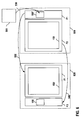
- FIG. 5 illustrates updating browser-document 150 with browser-delta 150-2d on client 900.
- Memory 920 of client 900 stores first frame F1 and second frame F2. For example, when client 900 sends 220 (cf. FIG. 3) request 989 to server 901, request 989 indicates to server 901 that any server response (e.g. output-stream 921-OS) has to be sent to first frame F1.
- server response e.g. output-stream 921-OS
- memory 920 stores browser-delta 150-2d in first frame F1.
- first frame F1 is not visualized on output device 950 (cf. FIG. 2).
- the width of first frame F1 can be limited to a single pixel.
- Client 900 then updates 520 browser-document 150, which is stored in visualized second frame F2. For example, by using the browser-document structure information of page-buffer 921-P from the initial version, client 900 replaces modified parts of browser-component 150-2 with corresponding browser-delta 150-2d (illustrated by dark fill colour) in the document object model (DOM) of browser-document 150. Equivalent techniques to inject browser-delta 150-2d into browser-document 150 known by those skilled in the art can be used as well.
- client 900 performs updating 520 without causing screen-flicker of form 955 (cf. FIG. 2) for the user.
- FIG. 6 illustrates a further effect of an embodiment of the invention where client 900 switches the roles of first frame F1 and second frame F2, when new browser-document 150' is received instead of a browser-delta.
- client 900 switches the roles of first frame F1 and second frame F2, when new browser-document 150' is received instead of a browser-delta.
- client 900 receives new browser-document 150' from server 901 in first frame F1. Then, client 900 recognizes new browser-document 150'.
- Substantially simultaneously client 900 reduces 540 the size of second frame F2 (so that it preferably becomes invisible for the user) and expands 550 the size of first frame F1, for example, to the previous size of second frame F2 or another size that is appropriate for new browser-document 150'.
- expanding 550 can also be performed after reducing 540. This procedure is faster than updating second frame F2 with new browser-document 150' received in first frame F1 and results in less screen flicker and waiting time for the user.
- Second frame F2 now has the role of a receiver frame for browser-deltas.
- a server computer program 101 executed by server 901 (cf. FIG 1) implements server method 400.
- a client computer program 100 executed by client 900 implements client method 500.
- Computer programs 100, 101 are stored on corresponding data carriers 970, 971 (cf. FIG. 1) or are carried by corresponding signals 980, 981 (cf. FIG. 1).
- FIG. 7A, 7B illustrate simplified flow charts of server method 400 and client method 500 for delta-handling.
- Mandatory method steps are illustrated by solid lines/frames.
- Optional method steps are illustrated by dashed lines/frames.
- FIG. 7A illustrates an implementation of server method 400 for delta-handling.
- Memory 921 of server 901 stores page-document 151 that includes a plurality of page-components 151-0, 151-1, 151-2, 151-3.
- Server method 400 includes the steps allocating 410 and writing 420. The steps are now explained in more detail:
- a component-buffer e.g. 921-0, 921-1, 921-2, 921-3 is allocated to each page-component (151-0 151-1, 151-2, 151-3).
- a corresponding browser-component (e.g. 150-0, 150-1, 150-2, 150-3) is written into each component-buffer (921-0, 921-1, 921-2, 921-3).
- server method 400 is not executed for the first time (INITIAL? ⁇ NO) for page-document 151, further optional steps identifying 430 and sending 440 are included. The optional steps are now explained in more detail:
- server 901 identifies at least one browser-delta 150-2d in at least one identified component-buffer (921-2).
- the at least one browser-delta 150-2d is sent from server 901 to client 900.
- browser-delta 150-2d is in a browser-compliant language selected from the group of HTML, XML, XHTML, WML, Java Script and Visual Basic Script.
- server method 400 is executed for the first time (INITIAL? ⁇ YES) for page-document 151, further optional steps building 421, replacing 422 and sending 423 are included.
- the optional steps are now explained in more detail:
- Server 901 allocates page-buffer 921-P to page-document 151.
- server 901 builds a buffer-hierarchy.
- Page-buffer 921-P is the root-node of the buffer-hierarchy and is a parent-node of at least one component-buffer (e.g. 921-0, 921-3).
- Each component-buffer e.g. 921-0
- server 901 replaces the browser-component (e.g. 150-0, 150-2, 150-3) of a child-node (e.g. 921-0, 921-2, 921-3, respectively) in a corresponding parent-node (e.g. 921-P, 921-0) of the buffer-hierarchy with a representation (e.g. ⁇ span ...> ⁇ /span>) of the browser-component (150-0, 150-2, 150-3).
- a child-node e.g. 921-0, 921-2, 921-3, respectively
- parent-node e.g. 921-P, 921-0
- a representation e.g. ⁇ span ...> ⁇ /span>
- server 901 sends page-buffer 921-P and each component-buffer 921-0, 921-1, 921-2, 921-3 of the buffer-hierarchy to client 900.
- page-document 151 is a page selected from the group of Java Server-page (JSP), Business Server-page (BSP) and Active Server-page (ASP).
- JSP Java Server-page
- BSP Business Server-page
- ASP Active Server-page
- each page-component e.g. 151-0, 151-1, 151-2, 151-3
- each component-buffer 921-0, 921-1, 921-2, 921-3 is stored in a memory stack of memory 921. It is possible to store component-buffers in another memory of computer system 999.
- FIG. 7B illustrates an implementation of client method 500 for delta-handling.
- Client 900 stores browser-document 150.
- Browser-document 150 corresponds to page-document 151 that is stored on server 901.
- Page-document 151 includes a plurality of browser-components (e.g. 150-0, 150-1, 150-2, 150-3), wherein each browser-component (150-0, 150-1, 150-2, 150-3) refers to a corresponding page-component (151-0, 151-1, 151-2, 151-3) of the page-document (151).
- Client method 500 includes the steps receiving 510 and updating 520. The steps are now explained in more detail.
- the client receives browser-delta 150-2d from server 901.
- Browser-delta 150-2d refers to a specific browser-component 150-2 and is identified by server 901 via a component-buffer 921-2 that is allocated to the corresponding page-component 151-2.
- client 900 updates browser-document 150 with browser-delta 151-2d.
- client 900 preferably injects browser-delta 151-2d into a document object model of the browser-document 150.
- the document object model is stored in the client's memory 920.
- client 900 receives browser-delta 151-2d in first frame F1 of client memory 920.
- Browser-document 150 is updated 520 with browser-delta 151-2d in second frame F2 of client memory 920.
- first frame F1 is invisible.
- client method 500 includes the optional steps:
- second frame F2 is invisible.
Landscapes
- Engineering & Computer Science (AREA)
- Databases & Information Systems (AREA)
- Theoretical Computer Science (AREA)
- Data Mining & Analysis (AREA)
- Physics & Mathematics (AREA)
- General Engineering & Computer Science (AREA)
- General Physics & Mathematics (AREA)
- Information Transfer Between Computers (AREA)
Abstract
Description
- The present invention generally relates to electronic data processing, and more particularly, relates to method, computer program product and system for client-server communication.
- Server-pages (referred to as pages hereinafter), such as JAVA Server-pages (JSP), that include relevant information for a graphical user interface (GUI) are typically generated on a server. The result is a browser-document that the server transmits to a client, At the client, the browser-document is visualized for a user via a conventional browser, such as the Microsoft Internet Explorer. When the user interacts with the client via the GUI to refresh the page, the whole process is repeated, although in some cases only a minor portion of the page is modified. This requires a high bandwidth of the computer network that connects the client to the server because the whole page (layout information and data) is re-generated on the server and the resulting browser-document is re-transmitted from the server to the client via the network. Further, the user is confronted with undesired effects, such as waiting time and screen flicker, until the refreshed page is finally presented on the client.
- Some conventional browsers, such as the Microsoft Internet Explorer IE 6.0, include a feature for flicker-free rendering. When the client receives a modified page, the browser identifies modified components of the page and only replaces these components instead of the whole page (for example, by dynamic HTML injection into the page's document object model DOM). This leads to a reduction of screen-flicker for the user but still requires bandwidth for transmission of the whole page from the server to the client.
- There is an ongoing need to reduce bandwidth requirements in client-server communication and reduce undesired effects for the user at the same time.
- Therefore, it is an objective of the present invention to provide methods, computer program products and computer systems to reduce bandwidth requirements in client-server communication when refreshing pages.
- To meet this objective, preferred embodiments of the present invention provide the following features.
- In a server-side embodiment of the present invention, a server stores a page-document that includes a plurality of page-components. A component-buffer is allocated to each page-component. A corresponding browser-component is written into each component-buffer.
- In an optional embodiment of the present invention The server identifies at least one browser-delta in at least one identified component-buffer and sends the at least one browser-delta to a client.
- In an alternative optional embodiment of the present invention the server allocates a page-buffer to the page-document and builds a buffer-hierarchy. The page-buffer is the root-node of the buffer-hierarchy and further is a parent-node of at least one component-buffer. Each component-buffer can be a parent-node of further component-buffers. The
server 901 replaces the browser-component of a child-node in a corresponding parent-node of the buffer-hierarchy with a representation of the browser-component and sends the page-buffer and each component-buffer of the buffer-hierarchy to a client. - In a client-side embodiment of the present invention, a client stores a browser-document. The browser-document corresponds to a page-document that is stored on a server. The page-document includes a plurality of browser-components, wherein each browser-component refers to a corresponding page-component of the page-document. The client receives a browser-delta from the server. The browser-delta refers to a specific browser-component and is identified by the server via a component-buffer that is allocated to the corresponding page-component. The client updates the browser-document with the browser-delta.
- It is an effect of the present invention that the required bandwidth for network communication is lower when compared to prior art systems where the whole browser-document is exchanged between the server and client instead of a browser-delta. Often only a minor portion of the browser-document is modified. In this case the browser-delta transmission requires significant less bandwidth than the whole browser-document transmission.
- It is a further effect of the present invention that the browser-delta is determined by a comparison of two versions of the browser-document. The differences between the two versions are detected at the level of browser-components. In other words, the granularity of the browser-delta is defined by the granularity of the corresponding browser-component.
- It is a further effect of the present invention that a user who interacts with the client experiences an eye pleasing effect because the update of the browser-document with the browser-delta results in a flicker-free change of the graphical user interface.
- The aspects of the invention will be realized and attained by means of the elements and combinations particularly pointed out in the appended claims. It is to be understood that both, the foregoing general description and the following detailed description are exemplary and explanatory only and are not restrictive of the invention as described.
-
- FIG. 1
- illustrates a simplified block diagram of a computer network system that can be used with one embodiment of the present invention;
- FIG. 2
- illustrates an implementation of a graphical user interface according to one embodiment of present invention at three consecutive time points;
- FIG. 3
- illustrates interaction of a server and a client that are operated according to one embodiment of the present invention;
- FIGS. 4A-4D
- illustrate details of generating a browser-delta on the server;
- FIG. 5
- illustrates updating a browser-document with the browser-delta on the client;
- FIG. 6
- illustrates a further effect of an embodiment of the invention where the client receives a new browser-document instead of a browser-delta; and
- FIGS. 7A-7B
- illustrate simplified flow charts of methods for delta-handling.
- Wherever possible, the same reference numbers will be used throughout the drawings to refer to the same or like parts. For convenience of explanation a list of references is provided prior to the claims.
- Definitions of terms, as used hereinafter:
- client:
client computer in a computer system. - server:
server computer in the computer system. - application data:
data relating to an application (e.g. customer number, address, phone number, etc.). - layout data:
data being used for configuration of a graphical user interface (GUI). - page-document:
a document including data, such as application data or layout data. For example, a page document can be a Java Server-page (JSP) or a Business Server-page (BSP). A page-document can include a plurality of page-components. - browser-document:
a document that can be processed and visualized by a conventional browser. A browser-document can include a plurality of browser-components, wherein, typically a browser-component corresponds to a page-component. - browser-delta:
a data structure that includes the difference (delta) of two different states of a browser-document (e.g. before and after a user interaction). - tag:
representation of a page-component in a page. For example, in Java server-pages (JSP) tags use XML notation and represent a Java class. - output-stream:
data structure to collect the output of page-components. - document object model:
according to the corresponding W3C definition, the Document Object Model (DOM) provides a mechanism to access and manipulate parsed HTML and XML content. - buffer:
memory area. -
- FIG. 1 illustrates a simplified block diagram of an exemplary computer system, that implements embodiments of the present invention.
Computer system 999 includescomputer 900 and has a plurality offurther computers 901, 902 (or 90q, with q=0...Q-1, Q any number). -
Computer 900 can be connected tofurther computers computer network 990.Computer 900 comprisesprocessor 910,memory 920,bus 930, and, optionally,input device 940 and output device 950 (I/O devices, user interface 960). As illustrated, the invention is present by computer program product 100 (CPP),program carrier 970 andprogram signal 980, collectively "program". - In respect to
computer 900,computer 901/902 is sometimes referred to as "remote computer",computer 901/902 is, for example, a server, a router, a peer device or other common network node, and typically comprises many or all of the elements described relative tocomputer 900. Hence,elements 100 and 910-980 incomputer 900 collectively illustrate also corresponding elements 10q and 91q-98q (shown for q=0) in computers 90q. -
Computer 900 is, for example, a conventional personal computer (PC), a desktop and hand-held device, a multiprocessor computer, a pen computer, a microprocessor-based or programmable consumer electronics, a minicomputer, a mainframe computer, a personal mobile computing device, a mobile phone, a portable or stationary personal computer, a palmtop computer or the like. -
Processor 910 is, for example, a central processing unit (CPU), a micro-controller unit (MCU), digital signal processor (DSP), or the like. -
Memory 920 symbolizes elements that temporarily or permanently store data and instructions. Althoughmemory 920 is conveniently illustrated as part ofcomputer 900, memory function can also be implemented innetwork 990, incomputers 901/902 and inprocessor 910 itself (e.g., cache, register), or elsewhere.Memory 920 can be a read only memory (ROM), a random access memory (RAM), or a memory with other access options.Memory 920 is physically implemented by computer-readable media, such as, for example: (a) magnetic media, such as a hard disk, a floppy disk, or other magnetic disk, a tape, a cassette tape; (b) optical media, such as optical disk (CD-ROM, digital versatile disk - DVD); (c) semiconductor media, such as DRAM, SRAM, EPROM, EEPROM, memory stick, or by any other media, such as paper. - Optionally,
memory 920 is distributed across different media. Portions ofmemory 920 can be removable or non-removable. For reading from media and for writing in media,computer 900 uses devices well known in the art such as, for example, disk drives, tape drives. -
Memory 920 stores support modules such as, for example, a basic input output system (BIOS), an operating system (OS), a program library, a compiler, an interpreter, and a text- processing tool. Support modules are commercially available and can be installed oncomputer 900 by those of skill in the art. For simplicity, these modules are not illustrated. -
CPP 100 comprises program instructions and - optionally - data that causeprocessor 910 to execute method steps of the present invention. Method steps are explained with more detail below. In other words,CPP 100 defines the operation ofcomputer 900 and its interaction innetwork system 999. For example and without the intention to be limiting,CPP 100 can be available as source code in any programming language, and as object code ("binary code") in a compiled form. Persons of skill in the art can useCPP 100 in connection with any of the above support modules (e.g., compiler, interpreter, operating system). - Although
CAP 100 is illustrated as being stored inmemory 920,CPP 100 can be located elsewhere.CPP 100 can also be embodied incarrier 970. -
Carrier 970 is illustrated outsidecomputer 900. For communicatingCPP 100 tocomputer 900,carrier 970 is conveniently inserted intoinput device 940.Carrier 970 is implemented as any computer readable medium, such as a medium largely explained above (cf. memory 920). Generally,carrier 970 is an article of manufacture comprising a computer readable medium having computer readable program code means embodied therein for executing the method of the present invention. Further,program signal 980 can also embodycomputer program 100.Signal 980 travels onnetwork 990 tocomputer 900. - Having described
CPP 100,program carrier 970, andprogram signal 980 in connection withcomputer 900 is convenient. Optionally, program carrier 971/972 (not shown) andprogram signal 981/982 embody computer program product (CPP) 101/102 to be executed by processor 911/912 (not shown) incomputers 901/902, respectively. -
Input device 940 symbolizes a device that provides data and instructions for processing bycomputer 900. For example,device 940 is a keyboard, a pointing device (e.g., mouse, trackball, cursor direction keys), microphone, joystick, game pad, scanner, disk drive. Although the examples are devices with human interaction,device 940 can also operate without human interaction, such as, a wireless receiver (e.g., with satellite dish or terrestrial antenna), a sensor (e.g., a thermometer), a counter (e.g., goods counter in a factory).Input device 940 can serve to readcarrier 970. -
Output device 950 symbolizes a device that presents instructions and data that have been processed. For example, a monitor or a display, (cathode ray tube (CRT), flat panel display, liquid crystal display (LCD), speaker, printer, plotter, vibration alert device. Similar as above,output device 950 communicates with the user, but it can also communicate with further computers. -
Input device 940 andoutput device 950 can be combined to a single device; anydevice -
Bus 930 andnetwork 990 provide logical and physical connections by conveying instruction and data signals. While connections insidecomputer 900 are conveniently referred to as "bus 930", connections between computers 900-902 are referred to as "network 990". Optionally,network 990 comprises gateways being computers that specialize in data transmission and protocol conversion. -
Devices computer 900 by bus 930 (as illustrated) or by network 990 (optional). While the signals insidecomputer 900 are mostly electrical signals, the signals in network are electrical, magnetic, optical or wireless (radio) signals. - Networking environments (as network 990) are commonplace in offices, enterprise-wide computer networks, intranets and the internet (i.e. world wide web). The physical distance between a remote computer and
computer 900 is not important.Network 990 can be a wired or a wireless network. To name a few network implementations,network 990 is, for example, a local area network (LAN), a wide area network (WAN), a public switched telephone network (PSTN); a Integrated Services Digital Network (ISDN), an infra-red (IR) link, a radio link, such as Universal Mobile Telecommunications System (UMTS), Global System for Mobile Communication (GSM), Code Division Multiple Access (CDMA), or satellite link. - Transmission protocols and data formats are known, for example, as transmission control protocol/internet protocol (TCP/IP), hyper text transfer protocol (HTTP), secure HTTP, wireless application protocol, unique resource locator (URL), a unique resource identifier (URI), hyper text markup language HTML, extensible markup language (XML), extensible hyper text markup language (XHTML), wireless application markup language (WML), Standard Generalized Markup Language (SGML) etc.
- Interfaces coupled between the elements are also well known in the art. For simplicity, interfaces are not illustrated. An interface can be, for example, a serial port interface, a parallel port interface, a game port, a universal serial bus (USB) interface, an internal or external modem, a video adapter, or a sound card.
- Computer and program are closely related. As used hereinafter, phrases, such as "the computer provides" and "the program provides", are convenient abbreviation to express actions by a computer that is controlled by a program.
- FIG. 2 illustrates an implementation of a
graphical user interface 955 according to the present invention at three consecutive time points T1, T2 and T3. - For convenience of explanation, the following example of a user's interaction with
graphical user interface 955 is used throughout the description to further explain the present invention. However, any graphical user interface can be implemented according to the present invention. Preferably,GUI 955 is presented to the user on output device 950 (cf. FIG. 1) and the user interacts withGUI 955 viainput device 940. -
GUI 955 is a graphical user interface (form) that allows the user to retrieve a phone number 955-2 for a contact person 955-1 from a corresponding application database (not shown). The user is prompted with form-components 955-0, 955-1, 955-2, 955-3. Contact component 955-1 is an input field where the user can enter the name of the contact person. Submit component 955-3 can be implemented as a button that is pressed by the user to send a request for the contact person's phone number to the corresponding application. Phone component 955-2 is an output field where the search result (phone number of the contact person) is presented to the user. Frame-component 955-0 includes contact component 955-1 and phone-component 955-2 to visualize a contextual relationship between them. - At T1, the user gets prompted with
form 955, wherein contact component 955-1 and phone component 955-2 are empty. - The user then enters the name (e.g. SMITH) of the contact person into contact component 955-1 and, at T2, uses submit component 955-3 (e.g. submit-button) to send a request for the contact person's phone number to the corresponding application.
- At T3, the application has identified the contact person's phone number (e.g. 98765-4321) and the result is visualized for the user in phone component 955-2.
- FIG. 3 illustrates interaction of
computer 900 andcomplementary computer 901 when operated according to an embodiment of the present invention. - Time scale t (dashed arrow) is used to indicate the chronological order of events. However, time scale t does not increase linearly and, therefore, does not indicate the length of specific time intervals (e.g. (T1,T2)). Time points T1, T2, T3 (cf. FIG. 2) are shown as reference time points in the flow of events.
- The left side of time scale t shows objects that are stored in
memory 921 ofcomputer 901. In the example,computer 901 is a server computer that accesses application data, such as contact person or phone number. - The right side of time scale t shows objects that are stored in
memory 920 ofcomputer 900. In the example,computer 900 is a client computer that presents application data to the user via GUI 955 (cf. FIG. 2). -
Memory 921 stores page-document 151. Page-document 151 includes information to generate form 955 (cf. FIG. 2). For example, page-document 151 is a page, such as a Java Server-page (JSP), a Business Server-page (BSP) or an Active Server-page (ASP). Page-document 151 includes page-components 151-0, 151-1, 151-2, 151-3 that correspond to form-components 955-0, 955-1, 955-2, 955-3 in the example of FIG. 2, respectively. - Initially (not shown),
server 901 translates page-document 151 into browser-document 150. For example, browser-document 150 is a markup language document, such as an HTML, XML, XHTML or WML document, which can be processed and visualized by a conventional browser. Browser-document 150 includes browser-components 150-0, 150-1, 150-2, 150-3 that correspond to page-components 151-0, 151-1, 151-2, 151-3, respectively. -
Server 901 then sends browser-document 150 toclient 900 where it is stored inmemory 920 and visualized 220 at T1 asform 955 viaoutput device 950. Preferably, browser-document 150 includes dynamic data and static data. As used hereinafter, dynamic data, such as for example input/output fields, status indicators, user defined layout elements, etc., can be changed through user interaction. As used hereinafter, static data, such as for example application defined layout elements, headers, background colours/patterns, etc., are defined in an application and, in general, are not changed through user interaction. FIGS. 4A to 4C give an example of an embodiment of the present invention that explains in detail the usage of dynamic data and static data. - As described under FIG. 2, the user enters the name (e.g. SMITH) of the contact person into contact component 955-1.
Client 900 fills 210 the corresponding browser-component 150-1 with the contact person name, accordingly (illustrated by dark fill colour). At T2,client 900 submits 220request 989 for the contact person's phone number toserver 901. For example, the user presses submit-component 955-3 andclient 900 sets a corresponding status (illustrated by a diagonal grid pattern) for the browser-component 150-3. Alternatively, request 989 can also be submitted automatically by an application or a computer in computer system 999 (cf. FIG. 1). -
Server 901 receivesrequest 989. For example,server 901 accesses an application (e.g. an address database), retrieves the requested phone number from the application and updates corresponding page-component 151-2 in page-document 151 accordingly (illustrated by dark fill colour). In the example, the phone number "98765-4321" corresponds to an application-delta. Further application-deltas for other page-components can be generated substantially simultaneously. It is assumed thatrequest 989 received byserver 901 results in page-document 151 still to be used for further processing. Only the content of page-document 151 changes. - Then,
server 901 allocates 410 component-buffers 921-0, 921-1, 921-2, 921-3 (illustrated by dashed frames) to page-components 151-0 151-1, 151-2, 151-3, respectively and writes 420 a corresponding browser-component 150-0, 150-1, 150-2, 150-3 into each component-buffer 921-0, 921-1, 921-2, 921-3. The allocation of component-buffers to page-components and the writing of browser-components into component buffers is illustrated by double arrows between a component-buffer and the corresponding page-component. - In the example,
server 901 identifies 430 component-buffer 921-2 as a component-buffer that stores a browser-delta 150-2d. Other component-buffers can store further browser-deltas dependent on data changes that occurred due to request 989. For convenience of explanation it is assumed in the following description that only component-buffer 921-2 includes a browser-delta. The allocating 410, writing 420 and identifying 430 steps are explained in detail in FIGS. 4A-4B. - Then,
server 901 sends 440 browser-delta 150-2d toclient 900. Browser-delta 151-2d is stored inmemory 920 after being received 510 byclient 900.Client 900 uses browser-delta 150-2d to update 520 corresponding browser-component 150-2 (illustrated by dark fill colour) in browser-document 150. An implementation example for updating 520 browser-document 150 is explained in detail under FIG. 5. - At T3, the contact person's phone number (e.g. 98765-4321) is visualized for the user in phone component 955-2 that corresponds to updated browser-component 150-2.
- FIGS. 4A-4D illustrate details of generating browser-deltas in
memory 921 ofserver 901. - In FIG. 4A,
memory 921 stores page-document 151 including page-components 151-0, 151-2, 151-3. For convenience of explanation, page-component 151-1 is not shown. Page-components 151-0, 151-2, 151-3 have identifiers (ID) α,β,γ, respectively. - When
server 901 processes page-document 151, component-buffers 921-0, 921-1, 921-2 are allocated 410 to corresponding page-components 151-0, 151-2, 151-3, respectively. A component-buffer is a memory-portion ofmemory 921. For example, if page-document 151 is a page, such as a Java Server-page or a Business Server-page, a component-buffer can be a JSP-writer or a BSP-writer, respectively. In a preferred implementation of the present invention, component-buffers are organized in a memory stack. Advantageously, page-buffer 921-P is allocated 411 to page-document 151. The component-buffers are illustrated as child-nodes in a buffer-hierarchy, where page-buffer 921-P is the root-node. The buffer-hierarchy implies that component-buffer 921-3 is processed after both, component-buffer 921-0 and its child-node component-buffer 921-2, have been processed. - As shown in FIG. 4B,
server 901 writes 420 browser-components 150-0, 150-2, 150-3 into corresponding component-buffers 921-0, 921-2, 921-3. A browser-component is generated from the corresponding page-component. For example, in a page, page-components are represented by tags, such as XML-tags (e.g. <tα> </tα>).Server 901 translates the content of these tags into browser-compliant syntax including a content-portion (e.g. cα, cβ, cγ in Java Script language or/and a markup language, such as HTML). The result of the translation is referred to as browser-component (e.g. (<α> cα </α>). In a preferred embodiment of the invention, a component-buffer copies its content, that is, the browser-component that is stored in the component-buffer, to its parent-node in the buffer-hierarchy. For example, when browser-component 150-0 is generated in component-buffer 921-0 it starts with its start-tag <α> and content-portion cα. However, before closing browser-component 150-0 with end-tag </α> child-node component-buffer 921-2 is processed. Browser-component 150-2 (<β> cβ </β>) is generated into component-buffer 921-2 and then copied to the corresponding location in browser-component 150-0 in parent-node component-buffer 921-0. Then, the generation of browser-component 150-0 in component-buffer 921-0 is finalized with end-tag </α>. Preferably, component-buffer 921-0 copies its content (browser-component 150-0) to its parent-node page-buffer 921-P before the next browser-component (e.g. browser-component 150-3 (<γ> cγ </γ>) in component-buffer 921-3) is generated accordingly. Page-buffer 921-P and component-buffers 921-0, 921-2, 921-3 reflects the structure of browser-document 150. - In FIG. 4C, for convenience of explanation, only component-buffers 921-0, 921-2, 921-3 and page-buffer 921-P are shown. In a preferred embodiment, in case a browser-component of a child-node is included in the child-nodes parent-node,
server 901 replaces the browser-component in the parent-node with a corresponding browser-component representation (referred to as representation hereinafter). For example, browser-component 150-0 (<α> cα <β> cβ </β> </α>) is replaced in page-buffer 921-P with representation <span id="α"> </span>. The <span ...> </span> syntax is an HTML-example of a representation. The id="..." -parameter in general refers to the identifiers α,β,γ of the corresponding page-components 151-0, 151-2, 151-3, respectively. Other representations of the browser-components referring to the corresponding page-component's identification can be used by those skilled in the art. In the example, browser-component 150-3 (<γ> cγ </γ>) is replaced in page-buffer 921-P with representation <span id="γ"> </span>. At the next lower level of the buffer-hierarchy, browser-component 150-2 (<β> cβ </β>) is replaced in component-buffer 921-0 with representation <span id="β"> </span>. - It is an effect of the present invention that in many cases memory space requested by a representation is much smaller than memory space requested by the content-portion of the corresponding browser-component. It is a further effect, that after replacing browser-components with representations as described above, page-buffer 921-P and component-buffers 921-0, 921-2, 921-3 still include all information about the structure and content of browser-document 150 (cf. FIG. 3). Only redundant information is eliminated.
- FIG. 4D illustrates generating 441 output-stream 921-OS on
server 901. - Preferably, when
server 901 initially generates (not shown) browser-document 150 (cf. FIG. 3) ,server 901 stores an initial version of browser-document 150 (referred to as initial version in the following description) inmemory 921.Server 901 then sends the initial version toclient 900 where it is visualized to the user at T1 (cf. FIG. 3). Advantageously, only when sending the initial version in the example,server 901 writes the content of page-buffer 921-P and the content of each component-buffer in the buffer-hierarchy to the output-stream. Output-stream 921-OS is a data structure that can be sent toclient 900. In one implementation, output-stream 921-OS includes HTML code and/or JavaScript. In another implementation, output-stream 921-OS includes any other code or scripting language that can be used by a conventional browser onclient 900. Whenclient 900 initially receives the content of output-stream 921-OS, the full browser-document 150 (structure and content) is included. Preferably,server 901 clears output-stream 921-OS afterwards. - When
server 901 generates a further version of browser-document 150 (referred to as further version hereinafter) upon having receivedrequest 989 as described in FIG. 4C,server 901 compares the further version with the initial version to identify deltas between the two versions. Referring back to the example of FIG. 2, the differences between the initial and the further version are the contact name "SMITH" and the phone number value "98765-4321". For convenience of explanation, only the phone number value is considered in the following description. The comparison of the initial version with the further version identifies 430 browser-delta 150-2d in identified component-buffer 921-2.Server 901 writes browser-delta 150-2d to output-stream 921-OS and sends 440 it toclient 900. Preferably,server 901 replaces the initial version with the further version. In this case the method described in FIGS. 3 to 4D can be repeated. Because the structure and static content-portions of browser-document 150 are known onclient 900 from the initial version,client 900 can update browser-document 150 by using browser-delta 150-2d. - Referring back now to FIG. 2, the following coding sections give specific simplified examples of data structures used by a preferred embodiment of the present invention according to the scenario in FIG. 2. Again, for convenience of explanation, the focus is on phone component 955-2 (cf. FIG. 2). In the coding sections "..." is used for coding blocks that can be inserted by those skilled in the art and who are familiar with the idea of the present invention.
- Coding section 1 illustrates a portion of a tag-source of GUI 955 (<htmlb:page>). Frame-component 955-0 (<htmlb:form>) includes phone-component 955-2 (<htmlb:inputField id = "phone" ...>).

- To provide this tag-source (XML) to the browser used by
client 900,server 901 generates the initial version of browser-document 150 illustrated by coding section 2:
- In coding section 2, the portion from <html> to </html> illustrates an HTML-example of content of page-buffer 921-P for the initial version. Referring to the example of FIG. 4D, id="htmlb_form_1" corresponds to id="α".
- In the JavaScript portion from <script language="JavaScript"> to </script>, the JavaScript functions
dom_of_visible_item.doc("htmlb_form_1").outerHTML and dom_of_visible_item.doc("phone").outerHTML correspond to JavaScript implementations of browser-components 150-0, 150-2, respectively. The phone number value is empty (... id=\"phone\" value=\"\" ...). Whenserver 901 sends the first version toclient 900, coding section 2 is included in output-stream 921-OS.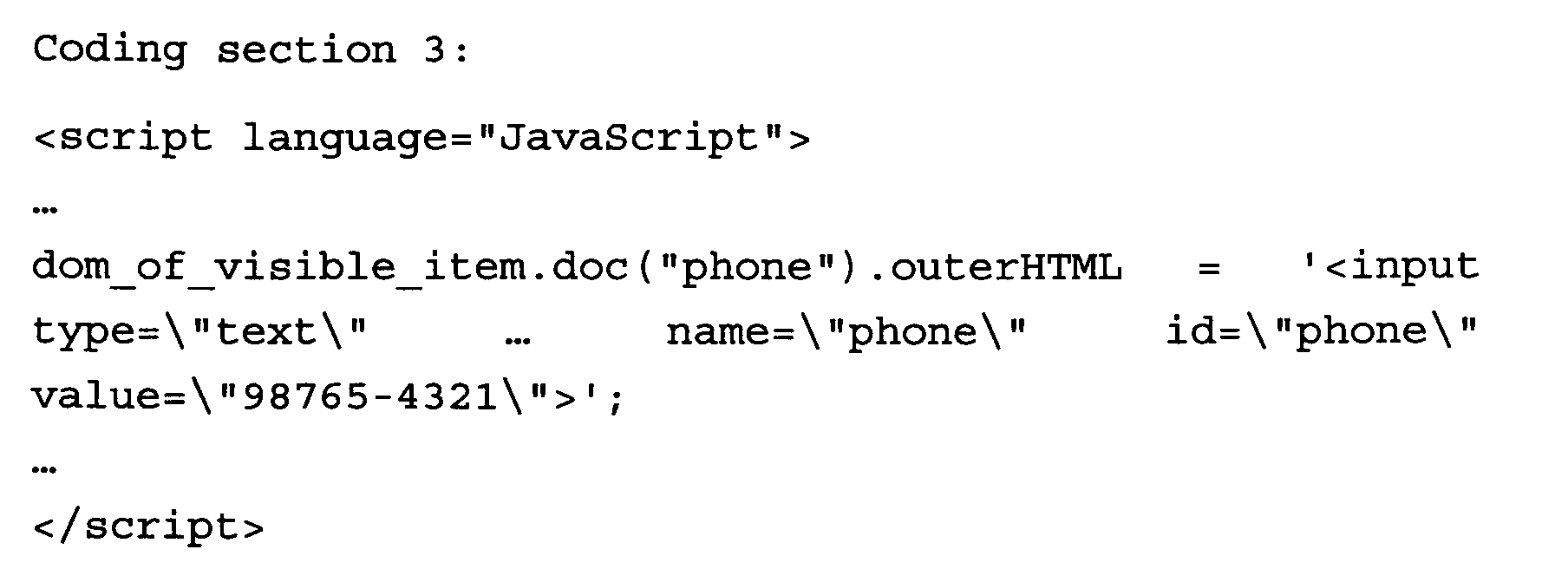
- Coding section 3, illustrates a JavaScript implementation example of browser-delta 150-2d (cf. FIG. 4D) stored in identified component-buffer (921-2. Browser-delta 150-2d is written to output-stream 921-OS. In the example, the JavaScript function dom_of_visible_item.doc("phone").outerHTML includes the retrieved phone number value (value=\"98765-4321\") of browser-component 150-2 (id=\"phone\"). Further, dom_of_visible_item.doc("phone").outerHTML indicates to the client that in the document object model that corresponds to browser-
document 150 the item("phone") has to be replaced with the output of the function. - FIG. 5 illustrates updating browser-
document 150 with browser-delta 150-2d onclient 900. -
Memory 920 ofclient 900 stores first frame F1 and second frame F2. For example, whenclient 900 sends 220 (cf. FIG. 3)request 989 toserver 901,request 989 indicates toserver 901 that any server response (e.g. output-stream 921-OS) has to be sent to first frame F1. When browser-delta 150-2d is received 510 fromserver 901 as part of output-stream 921-OS,memory 920 stores browser-delta 150-2d in first frame F1. Advantageously, first frame F1 is not visualized on output device 950 (cf. FIG. 2). For example, the width of first frame F1 can be limited to a single pixel. -
Client 900 then updates 520 browser-document 150, which is stored in visualized second frame F2. For example, by using the browser-document structure information of page-buffer 921-P from the initial version,client 900 replaces modified parts of browser-component 150-2 with corresponding browser-delta 150-2d (illustrated by dark fill colour) in the document object model (DOM) of browser-document 150. Equivalent techniques to inject browser-delta 150-2d into browser-document 150 known by those skilled in the art can be used as well. - It is an effect of the present invention that
client 900 performs updating 520 without causing screen-flicker of form 955 (cf. FIG. 2) for the user. - FIG. 6 illustrates a further effect of an embodiment of the invention where
client 900 switches the roles of first frame F1 and second frame F2, when new browser-document 150' is received instead of a browser-delta. In other words, when the user interacts with the client in a way that new browser-document 150' instead of a browser-delta for the current browser-document is requested fromserver 901,client 900 receives new browser-document 150' fromserver 901 in first frame F1. Then,client 900 recognizes new browser-document 150'. Substantially simultaneouslyclient 900 reduces 540 the size of second frame F2 (so that it preferably becomes invisible for the user) and expands 550 the size of first frame F1, for example, to the previous size of second frame F2 or another size that is appropriate for new browser-document 150'. Alternatively, expanding 550 can also be performed after reducing 540. This procedure is faster than updating second frame F2 with new browser-document 150' received in first frame F1 and results in less screen flicker and waiting time for the user. Second frame F2 now has the role of a receiver frame for browser-deltas. - After having described the present invention in detail, it is now summarized as two computer-implemented
methods server method 400. A client computer program 100 (cf. FIG. 1) executed byclient 900 implementsclient method 500.Computer programs 100, 101 are stored on correspondingdata carriers 970, 971 (cf. FIG. 1) or are carried by correspondingsignals 980, 981 (cf. FIG. 1). - FIG. 7A, 7B illustrate simplified flow charts of
server method 400 andclient method 500 for delta-handling. Mandatory method steps are illustrated by solid lines/frames. Optional method steps are illustrated by dashed lines/frames. - FIG. 7A illustrates an implementation of
server method 400 for delta-handling.Memory 921 ofserver 901 stores page-document 151 that includes a plurality of page-components 151-0, 151-1, 151-2, 151-3.Server method 400 includes the steps allocating 410 and writing 420. The steps are now explained in more detail: - In the allocating 410 step, a component-buffer (e.g. 921-0, 921-1, 921-2, 921-3) is allocated to each page-component (151-0 151-1, 151-2, 151-3).
- In the writing 420 step a corresponding browser-component (e.g. 150-0, 150-1, 150-2, 150-3) is written into each component-buffer (921-0, 921-1, 921-2, 921-3).
- In case,
server method 400 is not executed for the first time (INITIAL? → NO) for page-document 151, further optional steps identifying 430 and sending 440 are included. The optional steps are now explained in more detail: - In the identifying 430 step,
server 901 identifies at least one browser-delta 150-2d in at least one identified component-buffer (921-2). - In the sending 440 step the at least one browser-delta 150-2d is sent from
server 901 toclient 900. - Preferably, browser-delta 150-2d is in a browser-compliant language selected from the group of HTML, XML, XHTML, WML, Java Script and Visual Basic Script.
- In case,
server method 400 is executed for the first time (INITIAL? → YES) for page-document 151, further optional steps building 421, replacing 422 and sending 423 are included. The optional steps are now explained in more detail: -
Server 901 allocates page-buffer 921-P to page-document 151. In thebuilding 421 step,server 901 builds a buffer-hierarchy. Page-buffer 921-P is the root-node of the buffer-hierarchy and is a parent-node of at least one component-buffer (e.g. 921-0, 921-3). Each component-buffer (e.g. 921-0) can be a parent-node of further component-buffers (e.g. 921-1, 921-2). - In the replacing 422 step,
server 901 replaces the browser-component (e.g. 150-0, 150-2, 150-3) of a child-node (e.g. 921-0, 921-2, 921-3, respectively) in a corresponding parent-node (e.g. 921-P, 921-0) of the buffer-hierarchy with a representation (e.g. <span ...></span>) of the browser-component (150-0, 150-2, 150-3). - In the sending 423 step,
server 901 sends page-buffer 921-P and each component-buffer 921-0, 921-1, 921-2, 921-3 of the buffer-hierarchy toclient 900. - Preferably, page-
document 151 is a page selected from the group of Java Server-page (JSP), Business Server-page (BSP) and Active Server-page (ASP). For example, in a page, each page-component (e.g. 151-0, 151-1, 151-2, 151-3) can be represented by a tag within page-document 151. - Preferably, each component-buffer 921-0, 921-1, 921-2, 921-3 is stored in a memory stack of
memory 921. It is possible to store component-buffers in another memory ofcomputer system 999. - FIG. 7B illustrates an implementation of
client method 500 for delta-handling.Client 900 stores browser-document 150. Browser-document 150 corresponds to page-document 151 that is stored onserver 901. Page-document 151 includes a plurality of browser-components (e.g. 150-0, 150-1, 150-2, 150-3), wherein each browser-component (150-0, 150-1, 150-2, 150-3) refers to a corresponding page-component (151-0, 151-1, 151-2, 151-3) of the page-document (151).Client method 500 includes the steps receiving 510 and updating 520. The steps are now explained in more detail. - In the receiving 510 step, the client receives browser-delta 150-2d from
server 901. Browser-delta 150-2d refers to a specific browser-component 150-2 and is identified byserver 901 via a component-buffer 921-2 that is allocated to the corresponding page-component 151-2. - In the updating 520 step,
client 900 updates browser-document 150 with browser-delta 151-2d. To achieve this,client 900 preferably injects browser-delta 151-2d into a document object model of the browser-document 150. The document object model is stored in the client'smemory 920. - In one embodiment,
client 900 receives browser-delta 151-2d in first frame F1 ofclient memory 920. Browser-document 150 is updated 520 with browser-delta 151-2d in second frame F2 ofclient memory 920. Preferably, first frame F1 is invisible. - In an alternative embodiment,
client method 500 includes the optional steps: - receiving 530 a new browser-document 150' in the first frame F1;
- reducing 540 the size of second frame F2; and
- expanding 550 the size of first frame F1.
-
- In the alternative embodiment, preferably, second frame F2 is invisible.
Reference numbers Reference Description 100/101 Computer program product 150 Browser-document 150-x Browser-components 150-2d Browser- delta 151 Page-document 151-x Page- components 400, 500 Method 4xx, 5xx Method steps 999 computer network system 900, 901, 902 Computers 910, 911, 912 Processors 920, 921, 922 Memories 921-0 to 921-3 Component-buffers 921-P Page-buffer 921-0S Output- stream 940 Input device 950 Output device 955 Graphical user interface (GUI) 955-x Form components 960 User interface 970 Program carrier (computer readable device) 980 Program signal
Claims (23)
- A server method (400) for delta-handling on a server (901) storing a page-document (151) that comprises a plurality of page-components (151-0, 151-1, 151-2, 151-3); the method (400) comprising the following steps:allocating (410) a component-buffer (921-0, 921-1, 921-2, 921-3) to each page-component (151-0 151-1, 151-2, 151-3); andwriting (420) a corresponding browser-component (150-0, 150-1, 150-2, 150-3) into each component-buffer (921-0, 921-1, 921-2, 921-3).
- The server method (400) of claim 1 comprising the further steps:identifying (430) at least one browser-delta (150-2d) in at least one identified component-buffer (921-2); andsending (440) the at least one browser-delta (150-2d) to a client (900).
- The server method (400) of claim 2, wherein the browser-delta (150-2d) is in a browser-compliant language selected from the group of HTML, XML, XHTML, WML, Java Script and Visual Basic Script.
- The server method (400) of claim 1, wherein a page-buffer (921-P) is allocated to the page-document (151); the method (400) comprising the further steps:building (421) a buffer-hierarchy, wherein the page-buffer (921-P) is the root-node of the buffer-hierarchy and is a parent-node of at least one component-buffer (921-0, 921-3) and wherein each component-buffer (921-0) can be a parent-node of further component-buffers (921-1, 921-2);replacing (422) the browser-component (150-0, 150-2, 150-3) of a child-node (921-0, 921-2, 921-3) in a corresponding parent-node (921-P, 921-0) of the buffer-hierarchy with a representation of the browser-component (150-0, 150-2, 150-3); andsending (423) the page-buffer (921-P) and each component-buffer (921-0, 921-1, 921-2, 921-3) of the buffer-hierarchy to a client (900).
- The server method (400) of claim 1, wherein the page-document (151) is a page selected from the group of Java Server-page (JSP), Business Server-page (BSP) and Active Server-page (ASP).
- The server method (400) of claim 1, wherein each page- component (151-0, 151-1, 151-2, 151-3) is represented by a tag within the page-document (151).
- The server method (400) of claim 1, wherein each component-buffer (921-0, 921-1, 921-2, 921-3) is stored in a memory stack.
- A client method (500) for delta-handling on a client (900) storing a browser-document (150); the browser-document (150) corresponding to a page-document (151) stored on a server (901) and comprising a plurality of browser-components (150-0, 150-1, 150-2, 150-3), wherein each browser-component (150-0, 150-1, 150-2, 150-3) refers to a corresponding page-component (151-0, 151-1, 151-2, 151-3) of the page-document (151); the method (500) comprising the following steps:receiving (510) a browser-delta (150-2d) from the server (901), wherein the browser-delta (150-2d) refers to a specific browser-component (150-2) and is identified by the server (901) via a component-buffer (921-2) being allocated to the corresponding page-component (151-2);updating (520) the browser-document (150) with the browser-delta (151-2d).
- The client method (500) of claim 8, wherein the updating (520) injects the browser-delta (151-2d) into a document object model of the browser-document (150).
- The client method (500) of claim 8, wherein the browser-delta (151-2d) is received (510) by a first frame (F1) and the browser-document (150) is updated (520) with the browser-delta (151-2d) in a second frame (F2).
- The client method (500) of claim 10, wherein the first frame (F1) is invisible.
- The client method (500) of claim 10, comprising the further steps:receiving (530) a new browser-document (150') in the first frame (F1);reducing (540) the size of the second frame (F2); andexpanding (550) the size of the first frame (F1).
- The client method (500) of claim 12, wherein the second frame (F2) is invisible.
- A server (901) for delta-handling comprising:a memory (921) storing a page-document (151) that comprises a plurality of page-components (151-0, 151-1, 151-2, 151-3); the memory (921) providing a plurality of component-buffers (921-0, 921-1, 921-2, 921-3); anda processor (911) executing instructions to allocate (410) a component-buffer (921-0, 921-1, 921-2, 921-3) to each page-component (151-0 151-1, 151-2, 151-3) and to write (420) a corresponding browser-component (150-0, 150-1, 150-2, 150-3) into each component-buffer (921-0, 921-1, 921-2, 921-3).
- The server (901) of claim 14, wherein the processor (911) executes further instructions to identify (430) at least one browser-delta (150-2d) in at least one identified component-buffer (921-2) and to send (440) the at least one browser-delta (150-2d) to a client (900).
- The server (901) of claim 14, wherein the memory (921) further provides a page-buffer (921-P) and the processor (911) executes instructions to allocate the page-buffer (921-P) to the page-document (151); the processor (911) executing further instructions to:build (421) a buffer-hierarchy, wherein the page-buffer (921-P) is the root-node of the buffer-hierarchy and is a parent-node of at least one component-buffer (921-0, 921-3) and wherein each component-buffer (921-0) can be a parent-node of further component-buffers (921-1, 921-2);replace (422) the browser-component (150-0, 150-2, 150-3) of a child-node (921-0, 921-2, 921-3) in a corresponding parent-node (921-P, 921-0) of the buffer-hierarchy with a representation of the browser-component (150-0, 150-2, 150-3); andsend (423) the page-buffer (921-P) and each component-buffer (921-0, 921-1, 921-2, 921-3) of the buffer-hierarchy to a client (900).
- The server (901) of claim 14, wherein each component-buffer (921-0, 921-1, 921-2, 921-3) is stored in a stack of the memory (921).
- A client (900) for delta-handling comprising:a memory (920) storing a browser-document (150); the browser-document (150) corresponding to a page-document (151) stored on a server (901) and comprising a plurality of browser-components (150-0, 150-1, 150-2, 150-3), wherein each browser-component (150-0, 150-1, 150-2, 150-3) refers to a corresponding page-component (151-0, 151-1, 151-2, 151-3) of the page-document (151); the memory (920) receiving (510) a browser-delta (150-2d) from the server (901), wherein the browser-delta (150-2d) refers to a specific browser-component (150-2) and is identified by the server (901) via a component-buffer (921-2) being allocated to the corresponding page-component (151-2); anda processor (910) executing instructions to update (520) the browser-document (150) with the browser-delta (151-2d).
- The client (900) of claim 18, wherein for updating (520) the processor (910) executes instructions to inject the browser-delta (151-2d) into a document object model of the browser-document (150).
- The client (900) of claim 18, wherein the memory (920) provides a first frame (F1) to receive (510) the browser-delta (151-2d) and the processor (910) executes instructions to update (520) the browser-document (150) with the browser-delta (151-2d) in a second frame (F2) provided by the memory (920).
- The client (900) of claim 20, wherein the first frame (F1) receives (530) a new browser-document (150') and the processor (910) executes instructions to reduce (540) the size of the second frame (F2) and to expand (550) the size of the first frame (F1).
- A computer program product (101) for delta-handling on a server (901); the computer program product (101) stored on a data carrier (971) or carried by a signal (981) and comprising a plurality of instructions that cause a processor (911) of the server (901) to execute the steps of any of the claims 1 to 7.
- A computer program product (100) for delta-handling on a client (900); the computer program product (100) stored on a data carrier (970) or carried by a signal (980) and comprising a plurality of instructions that cause a processor (910) of the client (900) to execute the steps of any of the claims 8 to 13.
Priority Applications (2)
| Application Number | Priority Date | Filing Date | Title |
|---|---|---|---|
| EP02008812A EP1355238A1 (en) | 2002-04-19 | 2002-04-19 | Method and computer system for delta-handling in server-pages |
| US10/159,817 US7444585B2 (en) | 2002-04-19 | 2002-05-31 | Delta handling in server pages |
Applications Claiming Priority (2)
| Application Number | Priority Date | Filing Date | Title |
|---|---|---|---|
| EP02008812A EP1355238A1 (en) | 2002-04-19 | 2002-04-19 | Method and computer system for delta-handling in server-pages |
| US10/159,817 US7444585B2 (en) | 2002-04-19 | 2002-05-31 | Delta handling in server pages |
Publications (1)
| Publication Number | Publication Date |
|---|---|
| EP1355238A1 true EP1355238A1 (en) | 2003-10-22 |
Family
ID=32178663
Family Applications (1)
| Application Number | Title | Priority Date | Filing Date |
|---|---|---|---|
| EP02008812A Ceased EP1355238A1 (en) | 2002-04-19 | 2002-04-19 | Method and computer system for delta-handling in server-pages |
Country Status (2)
| Country | Link |
|---|---|
| US (1) | US7444585B2 (en) |
| EP (1) | EP1355238A1 (en) |
Families Citing this family (12)
| Publication number | Priority date | Publication date | Assignee | Title |
|---|---|---|---|---|
| US7703015B2 (en) | 2002-04-30 | 2010-04-20 | Sap Aktiengesellschaft | Delta-handling in server-pages |
| US7434163B2 (en) | 2002-05-31 | 2008-10-07 | Sap Aktiengesellschaft | Document structures for delta handling in server pages |
| US8589787B2 (en) | 2004-04-20 | 2013-11-19 | American Express Travel Related Services Company, Inc. | Centralized field rendering system and method |
| JP5114932B2 (en) * | 2006-11-30 | 2013-01-09 | 富士ゼロックス株式会社 | Document processing apparatus and document processing program |
| US8516590B1 (en) | 2009-04-25 | 2013-08-20 | Dasient, Inc. | Malicious advertisement detection and remediation |
| US8370938B1 (en) * | 2009-04-25 | 2013-02-05 | Dasient, Inc. | Mitigating malware |
| US9208244B2 (en) | 2011-12-16 | 2015-12-08 | Microsoft Technology Licensing, Llc | Referencing change(s) in data utilizing a network resource locator |
| US8768751B2 (en) | 2012-04-25 | 2014-07-01 | Sap Ag | Enterprise gamification system for awarding employee performance |
| US8924848B2 (en) * | 2012-07-16 | 2014-12-30 | Sap Se | Synchronizing a user interface area |
| US9015608B2 (en) * | 2012-07-16 | 2015-04-21 | Sap Se | Regenerating a user interface area |
| US9513885B2 (en) | 2013-08-22 | 2016-12-06 | Peter Warren | Web application development platform with relationship modeling |
| FR3105521B1 (en) * | 2019-12-20 | 2021-12-17 | Amadeus Sas | System and method for content sharing |
Citations (3)
| Publication number | Priority date | Publication date | Assignee | Title |
|---|---|---|---|---|
| US5946697A (en) * | 1997-04-22 | 1999-08-31 | Microsoft Corporation | Rapid transfer of HTML files |
| EP1016987A2 (en) * | 1998-12-29 | 2000-07-05 | Sun Microsystems, Inc. | Propagating updates efficiently in hierarchically structured data |
| US6239797B1 (en) * | 1998-04-02 | 2001-05-29 | Partnerware Technologies | Method and apparatus for remote database record scroll/update without refresh |
Family Cites Families (49)
| Publication number | Priority date | Publication date | Assignee | Title |
|---|---|---|---|---|
| US5701451A (en) * | 1995-06-07 | 1997-12-23 | International Business Machines Corporation | Method for fulfilling requests of a web browser |
| US5706507A (en) * | 1995-07-05 | 1998-01-06 | International Business Machines Corporation | System and method for controlling access to data located on a content server |
| US6249291B1 (en) * | 1995-09-22 | 2001-06-19 | Next Software, Inc. | Method and apparatus for managing internet transactions |
| US5754774A (en) * | 1996-02-15 | 1998-05-19 | International Business Machine Corp. | Client/server communication system |
| US5835712A (en) * | 1996-05-03 | 1998-11-10 | Webmate Technologies, Inc. | Client-server system using embedded hypertext tags for application and database development |
| US6112242A (en) * | 1996-07-10 | 2000-08-29 | Uln Corporation | System and method for dynamic data interaction in a hypertext data processing system |
| US6122657A (en) * | 1997-02-04 | 2000-09-19 | Networks Associates, Inc. | Internet computer system with methods for dynamic filtering of hypertext tags and content |
| CA2198189C (en) * | 1997-02-21 | 2001-05-29 | Ibm Canada Limited-Ibm Canada Limitee | Internet browser based data entry architecture |
| US6031989A (en) * | 1997-02-27 | 2000-02-29 | Microsoft Corporation | Method of formatting and displaying nested documents |
| US6073173A (en) * | 1997-03-17 | 2000-06-06 | International Business Machines Corporation | Method and apparatus for optimal rebasing of web page transmission |
| US6253228B1 (en) * | 1997-03-31 | 2001-06-26 | Apple Computer, Inc. | Method and apparatus for updating and synchronizing information between a client and a server |
| US6266681B1 (en) * | 1997-04-08 | 2001-07-24 | Network Commerce Inc. | Method and system for inserting code to conditionally incorporate a user interface component in an HTML document |
| US6262729B1 (en) * | 1997-04-14 | 2001-07-17 | Apple Computer, Inc. | Method and apparatus for binding user interface objects to application objects |
| US6397387B1 (en) * | 1997-06-02 | 2002-05-28 | Sony Corporation | Client and server system |
| US6006260A (en) * | 1997-06-03 | 1999-12-21 | Keynote Systems, Inc. | Method and apparatus for evalutating service to a user over the internet |
| US5983227A (en) * | 1997-06-12 | 1999-11-09 | Yahoo, Inc. | Dynamic page generator |
| US6161107A (en) * | 1997-10-31 | 2000-12-12 | Iota Industries Ltd. | Server for serving stored information to client web browser using text and raster images |
| US6167395A (en) | 1998-09-11 | 2000-12-26 | Genesys Telecommunications Laboratories, Inc | Method and apparatus for creating specialized multimedia threads in a multimedia communication center |
| US6209029B1 (en) * | 1998-05-12 | 2001-03-27 | Silverstream Software, Inc. | Method and apparatus for accessing data sources in a three tier environment |
| US6128655A (en) * | 1998-07-10 | 2000-10-03 | International Business Machines Corporation | Distribution mechanism for filtering, formatting and reuse of web based content |
| GB2341462B (en) * | 1998-09-12 | 2003-06-11 | Ibm | Method for deployment of incremental versions of applications |
| US6480865B1 (en) * | 1998-10-05 | 2002-11-12 | International Business Machines Corporation | Facility for adding dynamism to an extensible markup language |
| US6605120B1 (en) * | 1998-12-10 | 2003-08-12 | International Business Machines Corporation | Filter definition for distribution mechanism for filtering, formatting and reuse of web based content |
| US6311187B1 (en) * | 1998-12-29 | 2001-10-30 | Sun Microsystems, Inc. | Propogating updates efficiently in hierarchically structured data under a push model |
| US6397217B1 (en) | 1999-03-04 | 2002-05-28 | Futuretense, Inc. | Hierarchical caching techniques for efficient dynamic page generation |
| US6766351B1 (en) * | 1999-10-07 | 2004-07-20 | Cisco Technology, Inc. | Method and apparatus for communicating information between a browser and an application program |
| US8156074B1 (en) * | 2000-01-26 | 2012-04-10 | Synchronoss Technologies, Inc. | Data transfer and synchronization system |
| US6694336B1 (en) * | 2000-01-25 | 2004-02-17 | Fusionone, Inc. | Data transfer and synchronization system |
| US7509404B2 (en) * | 2000-03-08 | 2009-03-24 | Oracle International Corporation | Methods and systems for partial page caching of dynamically generated content |
| US6622168B1 (en) * | 2000-04-10 | 2003-09-16 | Chutney Technologies, Inc. | Dynamic page generation acceleration using component-level caching |
| US7007237B1 (en) | 2000-05-03 | 2006-02-28 | Microsoft Corporation | Method and system for accessing web pages in the background |
| US20020091736A1 (en) * | 2000-06-23 | 2002-07-11 | Decis E-Direct, Inc. | Component models |
| US7047281B1 (en) | 2000-08-08 | 2006-05-16 | Fineground Networks | Method and system for accelerating the delivery of content in a networked environment |
| US20020046240A1 (en) * | 2000-08-31 | 2002-04-18 | Scott Graham | Web server framework |
| US7861174B2 (en) | 2000-09-08 | 2010-12-28 | Oracle International Corporation | Method and system for assembling concurrently-generated content |
| US7051084B1 (en) * | 2000-11-02 | 2006-05-23 | Citrix Systems, Inc. | Methods and apparatus for regenerating and transmitting a partial page |
| US7181684B2 (en) * | 2000-12-12 | 2007-02-20 | Oracle International Corporation | Dynamic tree control system |
| US6807606B2 (en) * | 2000-12-18 | 2004-10-19 | International Business Machines Corp. | Distributed execution coordination for web caching with dynamic content |
| US20030212987A1 (en) * | 2001-02-28 | 2003-11-13 | Demuth Steven J. | Client container for building EJB-hosted java applications |
| US20020147849A1 (en) | 2001-04-05 | 2002-10-10 | Chung-Kei Wong | Delta encoding using canonical reference files |
| US20020156815A1 (en) * | 2001-04-19 | 2002-10-24 | International Business Machines Corporation | Method and apparatus for the separation of web layout, logic, and data when used in server-side scripting languages |
| US6554512B2 (en) * | 2001-04-26 | 2003-04-29 | Zih Corp. | Printer for printing deformable flat supports and its loader |
| US6862620B2 (en) * | 2001-06-07 | 2005-03-01 | International Business Machines Corporation | Web page monitoring system and methods therefor |
| US20040205558A1 (en) * | 2001-10-18 | 2004-10-14 | Ibm Corporation | Method and apparatus for enhancement of web searches |
| US8990832B2 (en) * | 2001-10-29 | 2015-03-24 | Oracle America, Inc. | Pattern using JSP-servlet-helper classes for an order mangement system |
| US7587515B2 (en) * | 2001-12-19 | 2009-09-08 | International Business Machines Corporation | Method and system for restrictive caching of user-specific fragments limited to a fragment cache closest to a user |
| EP1333387A1 (en) * | 2002-02-05 | 2003-08-06 | Siemens Aktiengesellschaft | A method of data refreshing of a mark-up language document |
| US7703015B2 (en) | 2002-04-30 | 2010-04-20 | Sap Aktiengesellschaft | Delta-handling in server-pages |
| US7434163B2 (en) | 2002-05-31 | 2008-10-07 | Sap Aktiengesellschaft | Document structures for delta handling in server pages |
-
2002
- 2002-04-19 EP EP02008812A patent/EP1355238A1/en not_active Ceased
- 2002-05-31 US US10/159,817 patent/US7444585B2/en not_active Expired - Fee Related
Patent Citations (3)
| Publication number | Priority date | Publication date | Assignee | Title |
|---|---|---|---|---|
| US5946697A (en) * | 1997-04-22 | 1999-08-31 | Microsoft Corporation | Rapid transfer of HTML files |
| US6239797B1 (en) * | 1998-04-02 | 2001-05-29 | Partnerware Technologies | Method and apparatus for remote database record scroll/update without refresh |
| EP1016987A2 (en) * | 1998-12-29 | 2000-07-05 | Sun Microsystems, Inc. | Propagating updates efficiently in hierarchically structured data |
Non-Patent Citations (4)
| Title |
|---|
| DOUGLIS F ET AL: "HPP: HTML macro-preprocessing to support dynamic document caching", PROCEEDINGS OF THE USENIX SYMPOSIUM ON INTERNET TECHNOLOGIES AND SYSTEMS, XX, XX, 8 December 1997 (1997-12-08), pages 83 - 94, XP002162124 * |
| EDWARDS P: "DIY INTRANETS WITH CFML/XML/HTML/CGI/ASP/JSP", VINE, XX, XX, no. 119, 2000, pages 53 - 60, XP000998751 * |
| HOUSEL C ET AL: "WebExpress: a System for Optimizing Web Browsing in a Wireless Environment", MOBICOM. PROCEEDINGS OF THE ANNUAL INTERNATIONAL CONFERENCE ON MOBILE COMPUTING AND NETWORKING, XX, XX, 11 November 1996 (1996-11-11), pages 108 - 116, XP002157547 * |
| WILLIAMS S: "HTTP: Delta-Encoding Notes", INTERNET, 17 January 1997 (1997-01-17), XP002157520 * |
Also Published As
| Publication number | Publication date |
|---|---|
| US7444585B2 (en) | 2008-10-28 |
| US20030225826A1 (en) | 2003-12-04 |
Similar Documents
| Publication | Publication Date | Title |
|---|---|---|
| US8103953B2 (en) | Document structures for delta handling in server pages | |
| US7890600B2 (en) | Data optimization system for decreasing data transmission volume from server to client | |
| AU2003266253B2 (en) | Method and computer system for handling incremental data in client-server communication | |
| US6574715B2 (en) | Method and apparatus for managing internal caches and external caches in a data processing system | |
| US6557076B1 (en) | Method and apparatus for aggressively rendering data in a data processing system | |
| US8136109B1 (en) | Delivery of data and formatting information to allow client-side manipulation | |
| US20030177175A1 (en) | Method and system for display of web pages | |
| US6807606B2 (en) | Distributed execution coordination for web caching with dynamic content | |
| US20040030758A1 (en) | Extended Web infrastructure for business applications | |
| US20030084115A1 (en) | Facilitating contextual help in a browser environment | |
| US20080282150A1 (en) | Finding important elements in pages that have changed | |
| US7703015B2 (en) | Delta-handling in server-pages | |
| EP1318461A1 (en) | Method and computer system for refreshing client-data | |
| US7444585B2 (en) | Delta handling in server pages | |
| EP1410259B1 (en) | Capturing data attribute of predefined type from user | |
| EP1280054A1 (en) | Method and computer system for separating and processing layout information and data of a document | |
| AU2002320843B2 (en) | Defining layout files by markup language documents | |
| US7200818B2 (en) | Systems and methods for messaging in a multi-frame Web application | |
| EP1355239A1 (en) | Method and system for providing a delta information output-stream | |
| AU2002320843A1 (en) | Defining layout files by markup language documents | |
| EP1353277A1 (en) | Method and computer system for delta-handling in server-pages | |
| EP2144160B1 (en) | Method and computer system for providing stateful favorites | |
| US7669118B2 (en) | Method, system and program for providing page with plurality of code portions in browser markup language | |
| EP1300775A1 (en) | Method, system and program for providing page with plurality of code portions in browser markup language | |
| EP1338980A1 (en) | Method and computer system for rendering of browser-compliant documents |
Legal Events
| Date | Code | Title | Description |
|---|---|---|---|
| PUAI | Public reference made under article 153(3) epc to a published international application that has entered the european phase |
Free format text: ORIGINAL CODE: 0009012 |
|
| AK | Designated contracting states |
Kind code of ref document: A1 Designated state(s): AT BE CH CY DE DK ES FI FR GB GR IE IT LI LU MC NL PT SE TR |
|
| AX | Request for extension of the european patent |
Extension state: AL LT LV MK RO SI |
|
| 17P | Request for examination filed |
Effective date: 20040422 |
|
| 17Q | First examination report despatched |
Effective date: 20040514 |
|
| AKX | Designation fees paid |
Designated state(s): AT BE CH CY DE DK ES FI FR GB GR IE IT LI LU MC NL PT SE TR |
|
| RAP1 | Party data changed (applicant data changed or rights of an application transferred) |
Owner name: SAP AG |
|
| STAA | Information on the status of an ep patent application or granted ep patent |
Free format text: STATUS: THE APPLICATION HAS BEEN REFUSED |
|
| 18R | Application refused |
Effective date: 20091006 |