EP1354957A1 - Process for producing coenzyme q 10 - Google Patents
Process for producing coenzyme q 10 Download PDFInfo
- Publication number
- EP1354957A1 EP1354957A1 EP01271890A EP01271890A EP1354957A1 EP 1354957 A1 EP1354957 A1 EP 1354957A1 EP 01271890 A EP01271890 A EP 01271890A EP 01271890 A EP01271890 A EP 01271890A EP 1354957 A1 EP1354957 A1 EP 1354957A1
- Authority
- EP
- European Patent Office
- Prior art keywords
- dna
- protein
- amino acid
- under seq
- diphosphate synthase
- Prior art date
- Legal status (The legal status is an assumption and is not a legal conclusion. Google has not performed a legal analysis and makes no representation as to the accuracy of the status listed.)
- Withdrawn
Links
Images


Classifications
-
- C—CHEMISTRY; METALLURGY
- C12—BIOCHEMISTRY; BEER; SPIRITS; WINE; VINEGAR; MICROBIOLOGY; ENZYMOLOGY; MUTATION OR GENETIC ENGINEERING
- C12N—MICROORGANISMS OR ENZYMES; COMPOSITIONS THEREOF; PROPAGATING, PRESERVING, OR MAINTAINING MICROORGANISMS; MUTATION OR GENETIC ENGINEERING; CULTURE MEDIA
- C12N9/00—Enzymes; Proenzymes; Compositions thereof; Processes for preparing, activating, inhibiting, separating or purifying enzymes
- C12N9/10—Transferases (2.)
- C12N9/1085—Transferases (2.) transferring alkyl or aryl groups other than methyl groups (2.5)
-
- C—CHEMISTRY; METALLURGY
- C12—BIOCHEMISTRY; BEER; SPIRITS; WINE; VINEGAR; MICROBIOLOGY; ENZYMOLOGY; MUTATION OR GENETIC ENGINEERING
- C12P—FERMENTATION OR ENZYME-USING PROCESSES TO SYNTHESISE A DESIRED CHEMICAL COMPOUND OR COMPOSITION OR TO SEPARATE OPTICAL ISOMERS FROM A RACEMIC MIXTURE
- C12P7/00—Preparation of oxygen-containing organic compounds
- C12P7/66—Preparation of oxygen-containing organic compounds containing the quinoid structure
-
- C—CHEMISTRY; METALLURGY
- C12—BIOCHEMISTRY; BEER; SPIRITS; WINE; VINEGAR; MICROBIOLOGY; ENZYMOLOGY; MUTATION OR GENETIC ENGINEERING
- C12Y—ENZYMES
- C12Y205/00—Transferases transferring alkyl or aryl groups, other than methyl groups (2.5)
- C12Y205/01—Transferases transferring alkyl or aryl groups, other than methyl groups (2.5) transferring alkyl or aryl groups, other than methyl groups (2.5.1)
- C12Y205/01031—Ditrans,polycis-undecaprenyl-diphosphate synthase [(2E,6E)-farnesyl-diphosphate specific] (2.5.1.31)
Definitions
- the present invention relates to a process for producing coenzyme Q 10 , which is in use as a drug or the like. More particularly, it relates to a process for causing formation of coenzyme Q 10 by introducing a gene coding for a coenzyme Q 10 side chain synthase, which serves as a key enzyme in the biosynthesis of coenzyme Q 10 , namely a decaprenyl diphosphate synthase into a microorganism.
- An industrial process for producing coenzyme Q 10 which is conventional in the art, comprises, for example, isolating coenzymes of plant origin, for example of tobacco origin, and adjusting the side chain length thereof by a synthetic method.
- coenzyme Q 10 is produced in a wide variety of organisms, from microorganisms, such as bacteria and yeasts, to higher animals and plants.
- microorganisms such as bacteria and yeasts
- the process comprising cultivating a microorganism and extracting this substance from cells thereof can be regarded as one of the most efficient process for producing coenzyme Q 10 and has actually been employed in commercial production thereof.
- productivity of such processes can hardly be said to be good, since the yield is low and the procedure is complicated, for instance.
- Coenzyme Q 10 is formed in vivo in a multistage process comprising complicated reactions in which a number of enzymes are involved. The route of biosynthesis thereof in prokaryotes partially differs from that in eukaryotes.
- each route comprises three fundamental steps, namely the step of synthesis of decaprenyl diphosphate, which is the source of the prenyl side chain of coenzyme Q 10 , the step of synthesis of para-hydroxybenzoic acid, which is the source of the quinone ring, and the step of completion of coenzyme Q 10 through coupling of these two compounds and successive substituent conversions.
- the reaction which determines the side chain length of coenzyme Q 10 namely the decaprenyl diphosphate synthase-involving reaction, which is said to be a rate-determining one in the whole biosynthetic reaction route, is considered to be the most important one.
- coenzyme Q 10 for efficient production of coenzyme Q 10 , it is considered effective to isolate a decaprenyl diphosphate synthase gene, which is the key gene in the biosynthesis of coenzyme Q 10 , and utilize the same for the purpose of increasing production.
- fungi in which coenzyme Q 10 is produced in relatively large amounts, are leading candidates.
- decaprenyl diphosphate synthase genes have been isolated from several microorganisms, such as Schizosaccharomyces pombe (JP-A-09-173076) and Gluconobacter suboxydans (JP-A-10-57072).
- JP-A-09-173076 Schizosaccharomyces pombe
- Gluconobacter suboxydans JP-A-10-57072.
- the productivity of coenzyme Q 10 in these microorganisms cannot be said to be satisfactory, and the cultivation of these microorganisms and the separation/purification of coenzyme Q 10 therefrom have not been efficient. It has thus been desired that a microorganism-derived gene for that enzyme, which enables high level production of coenzyme Q 10 , be isolated.
- the present invention provides a DNA of the following (a), (b) or (c):
- the invention further provides a DNA of the following (d), (e) or (f):
- the invention further provides a protein of the following (g) or (h):
- the invention further provides a protein of the following (i) or (j):
- the invention further provides DNAs respectively encoding the above proteins (g) to (j).
- the invention further provides expression vectors with the above DNAs inserted into vectors.
- the invention further provides transformants resulting from transformation of host microorganisms with the respective DNAs mentioned above or with the expression vectors mentioned above.
- the invention still further provides a process for producing coenzyme Q 10 , which comprises cultivating any of the above-mentioned transformants in a medium and recovering coenzyme Q 10 thus formed and accumulated in the medium.
- the present inventors made investigations to isolate a gene encoding the enzyme in question from fungi belonging to the genus Leucosporidium and genus Asperillus , in which coenzyme Q 10 is produced in relatively large amounts, and, as a result, succeeded in obtaining a fragment of the gene by the PCR method.
- sequence of a known gene encoding a decaprenyl diphosphate synthase was compared with that of a known gene encoding a polyprenyl diphosphate synthase which is an analogue of the enzyme in question and a long prenyl chain synthase of different chain length coenzyme Q, and various PCR primers were synthesized for regions showing high homology therebetween.
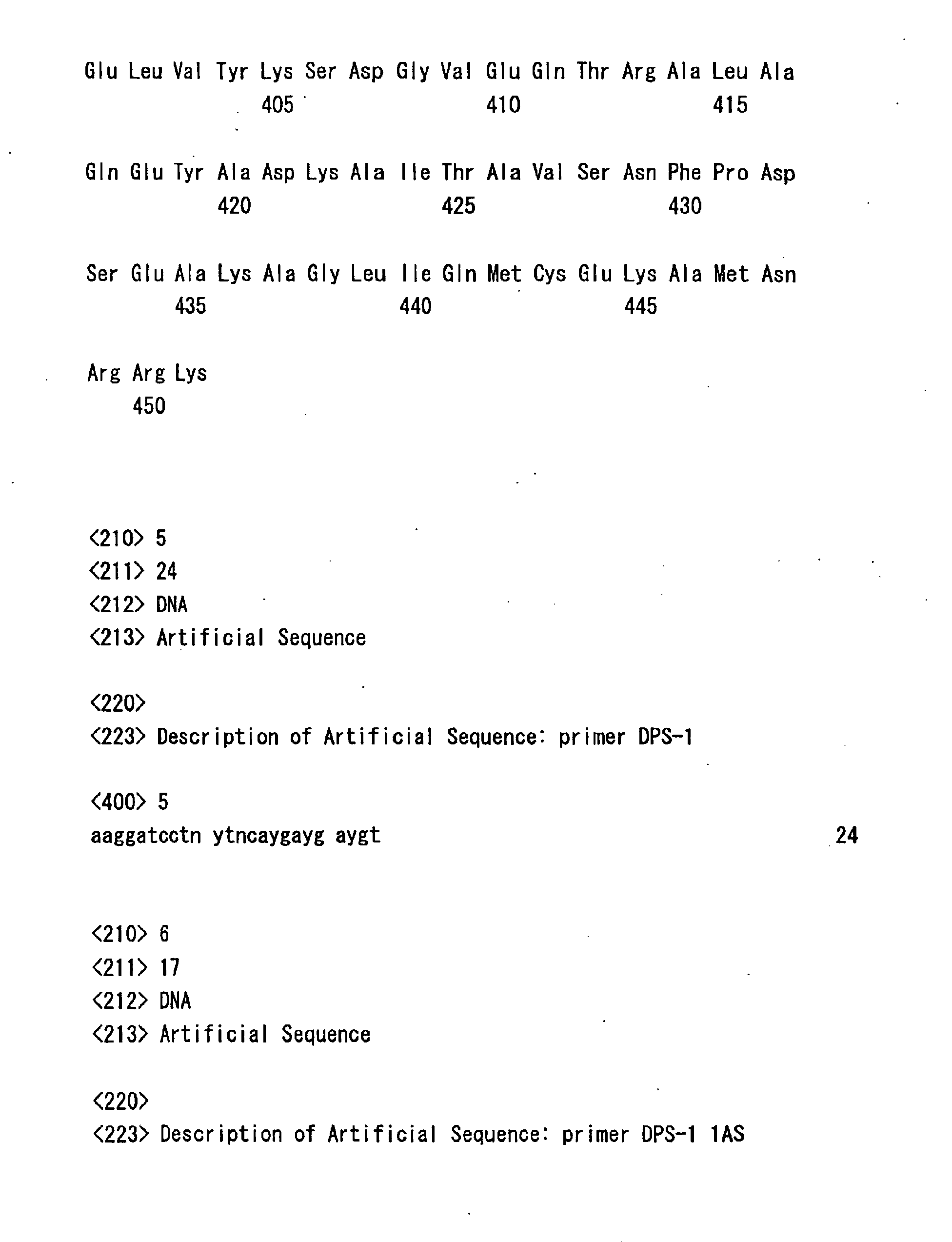
- PCR conditions were studied for various combinations of these primers and, as a result, it was revealed, by gene base sequence analysis, that when 40 PCR cycles, each comprising 94°C, 1 minute ⁇ 43°C, 2 minutes ⁇ 72°C, 2 minutes, are carried out after 3 minutes of heat treatment at 94°C, using the primers DPS-1 (SEQ ID NO:5 in the sequence listing) and DPS-1 1AS (SEQ ID NO:6 in the sequence listing), a fragment, about 220 bp in size, of the enzyme gene in question is amplified from the chromosomal gene of Leucosporidium scotti IFO 1212, which is a fungal species belonging to the genus Leucosporidium and Aspergillus clavatus JCM 1718, which is a fungal species belonging to the genus Aspergillus .
- mRNA is first prepared from a fungus body of Leucosporidium scotti IFO 1212 and Aspergillus clavatus JCM 1718 in order to respectively produce 5' terminal side sequence by 5'RACE method using a primer prepared based on the inner sequence obtained before and produce 3' terminal side sequence by conducting RT-PCR using oligo dT primer relative to a poly A sequence, which is specific for the mRNA.
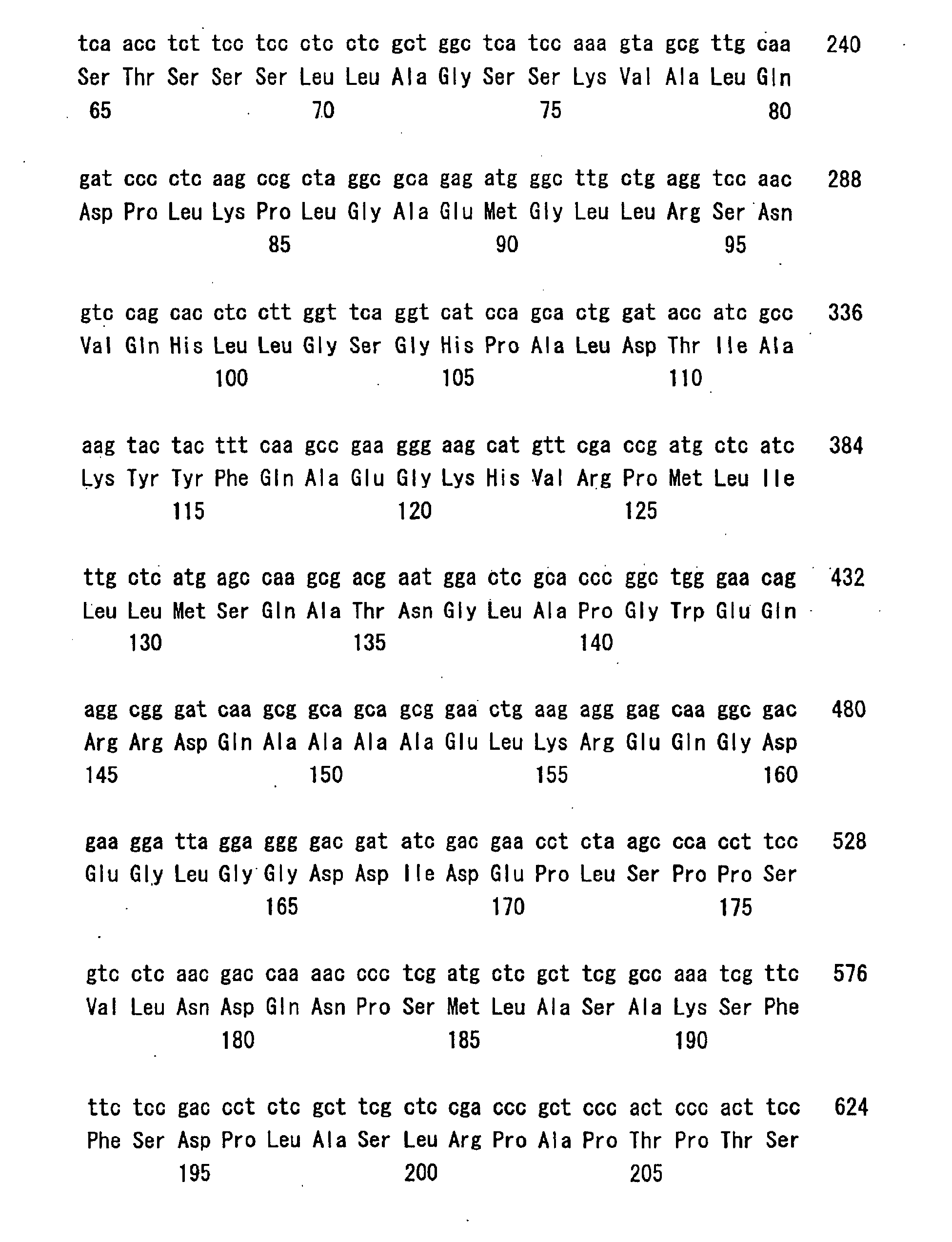
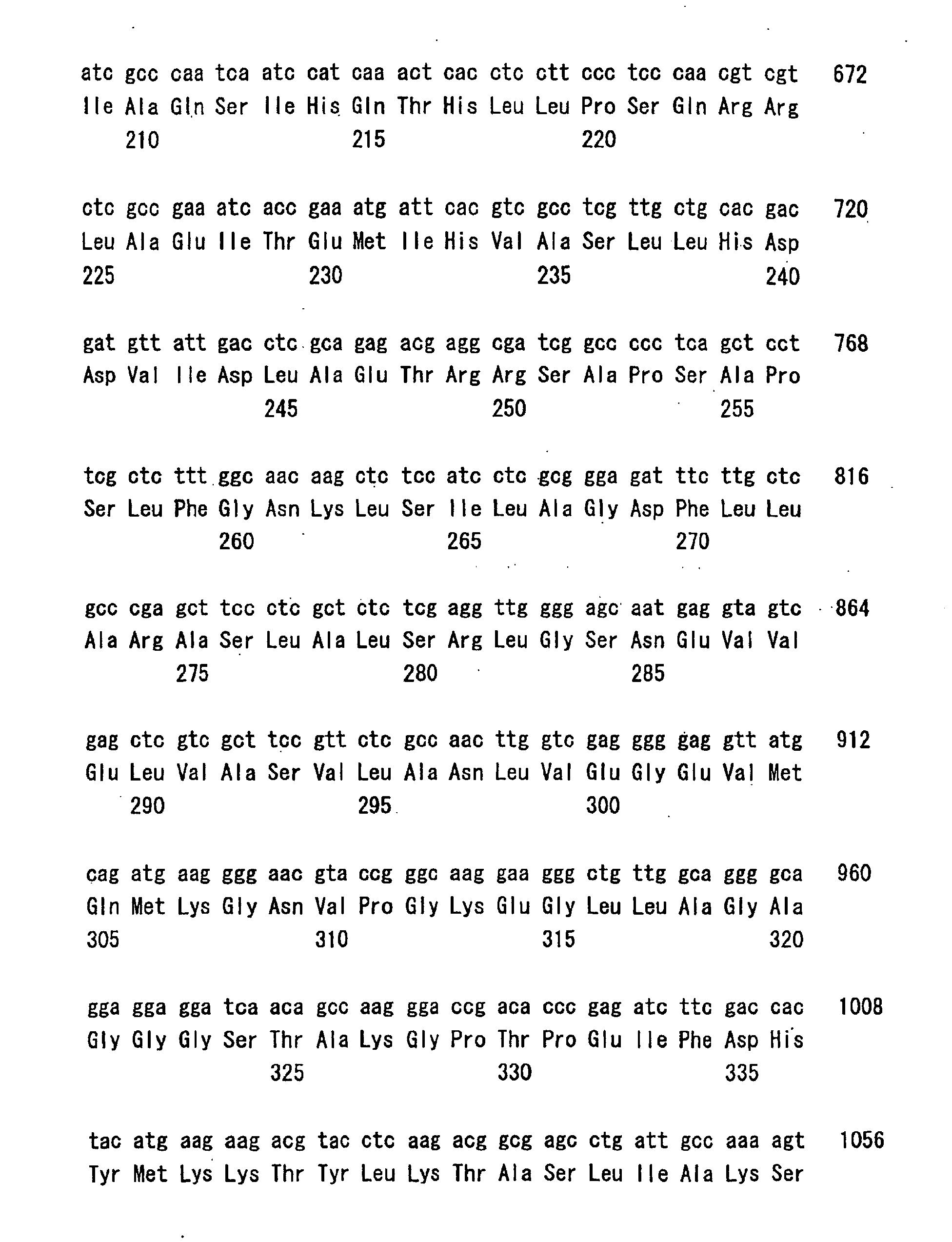
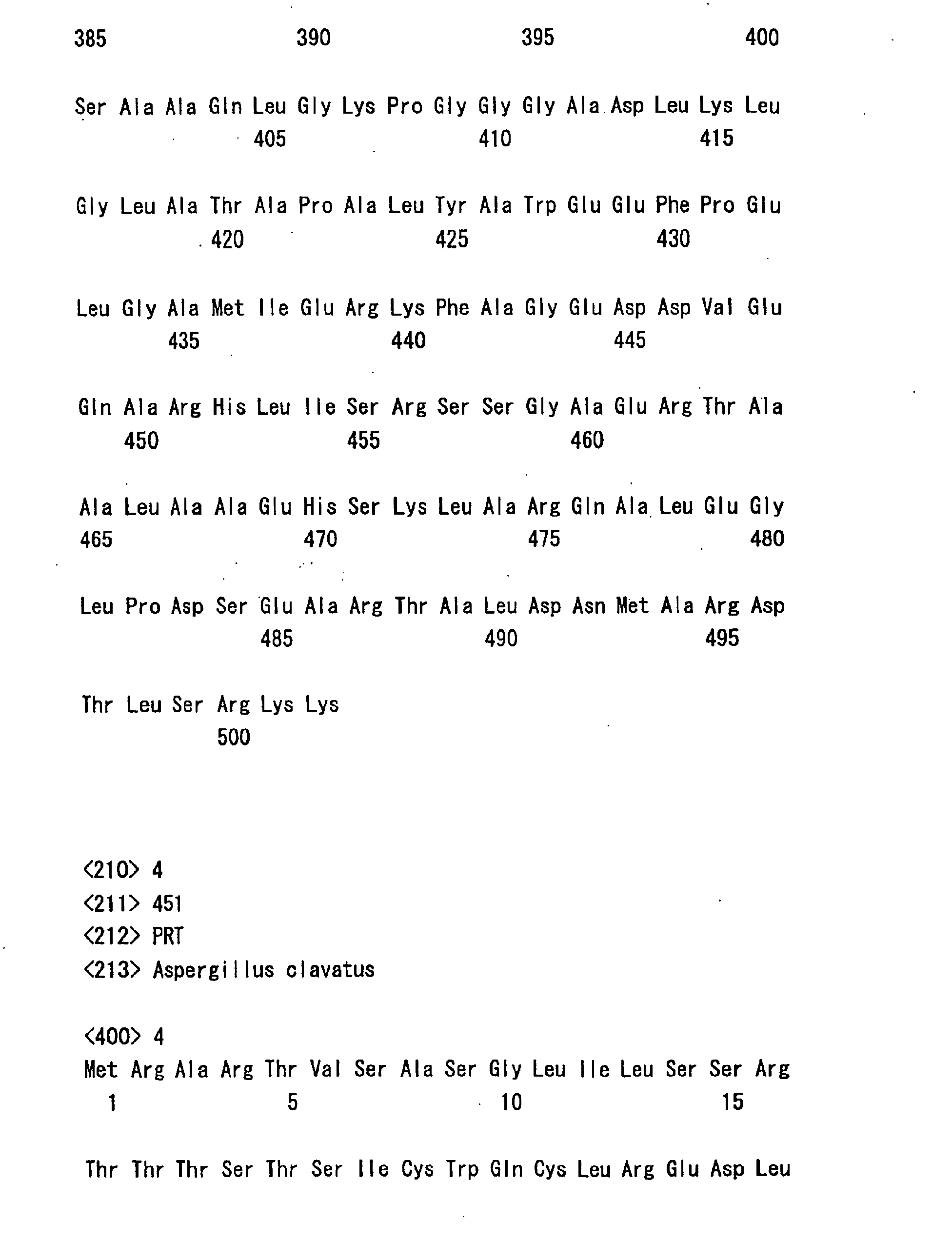
- the base sequence of the sequence obtained was determined, whereupon it was revealed that it has the sequence shown under SEQ ID NO:1 and NO:2 in the sequence listing.
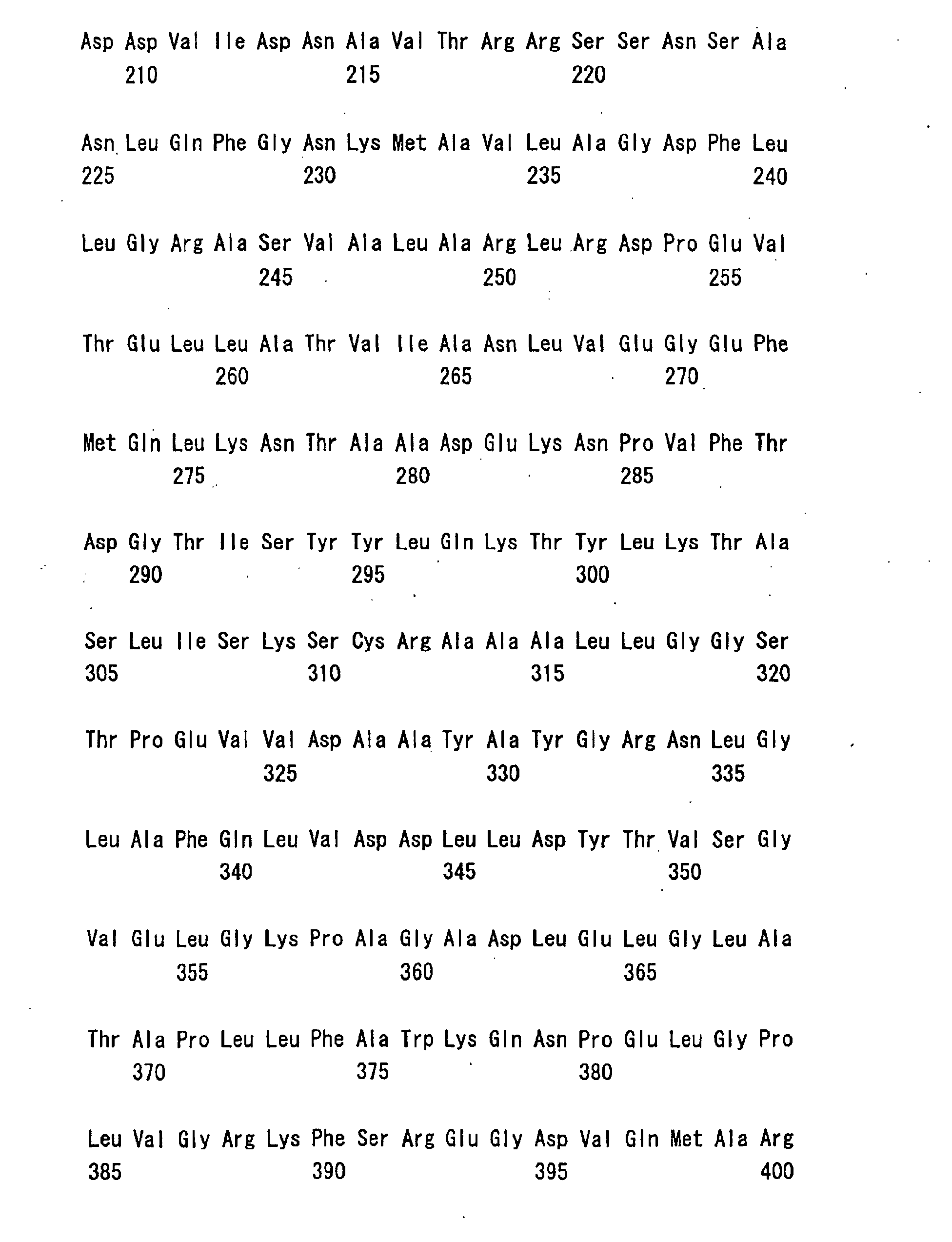
- amino acid sequence predicted from this base sequence there was found a sequence characteristic of decaprenyl diphosphate synthase.
- the DNA of the present invention may be a DNA whose base sequence is as described under SEQ ID NO : 1 or SEQ ID NO : 2, or a DNA having a base sequence derived from the base sequence shown under SEQ ID NO:1 or SEQ ID NO:2 by deletion, addition, insertion and/or substitution of one or several bases and encoding a protein having decaprenyl diphosphate synthase activity, or a DNA capable of hybridizing with a DNA comprising the base. sequence shown under SEQ ID NO:1 or SEQ ID NO:2 under stringent conditions and encoding a protein having decaprenyl diphosphate synthase activity.
- a number of amino acids each may be encoded by one or more codons (genetic code degeneracy), so that a number of DNAs other than the DNA having the base sequence shown under SEQ ID NO:1 or SEQ ID NO:2 can encode the protein having the amino acid sequence shown under SEQ ID NO:3 or SEQ ID NO:4. Therefore, the DNA of the invention includes such DNAs encoding the protein having the amino acid sequence shown under SEQ ID NO:3 or SEQ ID NO:4 as well.
- base sequence derived by deletion, addition, insertion and/or substitution of one or several bases means a base sequence resulting from deletion, addition, insertion and/or substitution of such a number of bases as can be deleted, added, inserted and/or substituted according to the methods well known to those skilled in the art, for example those described in Supplemental issue, Tanpakushitsu, Kakusan, Koso (Protein, Nucleic Acid and Enzyme), PCR Method for Gene Amplification, TAKKAJ, 35 (17), 2951-3178 (1990) or Henry A. Erlich (ed.), translated into Japanese under the supervision of Ikunoshin Kato: PCR Technology (1990).
- DNA capable of hybridizing with a DNA comprising the base sequence shown under SEQ ID NO:1 (or SEQ ID NO:2) under stringent conditions means a DNA obtainable by utilizing the technique of colony hybridization, plaque hybridization or southern hybridization, among others, using a DNA comprising the base sequence shown under SEQ ID NO:1 (or SEQ ID NO:2) as a probe.
- Those skilled in the art would be able to readily obtain the desired DNA by carrying out such hybridization according to the method described in Molecular Cloning, 2nd edition (Cold Spring Harbor Laboratry Press, 1989).
- protein having decaprenyl diphosphate synthase activity means a protein capable of synthesizing decaprenyl diphosphate in a yield of not less than 10%, preferably not less than 40%, more preferably not less than 60%, still more preferably not less than 80%, as compared with the case where a protein having the amino acid sequence shown under SEQ ID NO:3 or SEQ ID NO:4.
- Such capacity can be measured by reacting FPP (farnesyl diphosphate) with 14 C-IPP (radiolabeled isopentenyl diphosphate) in the presence of the enzyme in question, hydrolyzing the resulting 14 C-DPP (decaprenyl diphosphate) with phosphatase and, after separation by TLC, determining the incorporation in each spot for each chain length (Okada et al., Eur. J. Biochem., 255, 52-59).
- the protein of the invention may be a protein whose amino acid sequence is as described under SEQ ID NO:3 or SEQ ID NO:4, or a protein having an amino acid sequence derived from the amino acid sequence shown under SEQ ID NO:3 or SEQ ID NO:4 by deletion, addition, insertion and/or substitution of one or several amino acid residues and having decaprenyl diphosphate synthase activity.
- an expression vector for example, by excising a DNA fragment containing the gene using a restriction enzyme or amplifying an enzyme-encoding gene portion alone by PCR and then inserting the fragment or amplification product into a promoter-containing vector.
- the vector in which a DNA encoding a protein having decaprenyl diphosphate synthase activity is to be inserted to give an expression vector is not particularly restricted but may be one derived from an Escherichia coli -derived plasmid with an appropriate promoter inserted therein.
- the Escherichia coli -derived plasmid includes, among others, pBR322, pBR325, pUC19., pUC18 and pUC119, and the promoter includes, among others, the T7 promoter, trp promoter, tac promoter, lac promoter, and ⁇ PL promoter.
- pGEX-2T, pGEX-3T, pGEX-3X (the three being products of Pharmacia), pBluescriptII, pUC19, pUC18 (product of Toyobo Co., Ltd.), pMALC2, pET-3T, pUCNT (described in Publication WO 94/03613) and the like may also be used as vectors for expression.
- pUCNT and pUC18 are judiciously used.
- a decaprenyl diphosphate synthase gene expression vector pNTL1
- pUCA1 an expression vector of decaprenyl diphosphate synthase gene, pUCA1 can be constructed when a gene containing the DNA sequence shown under SEQ ID NO:2 is inserted into the vector for expression pUC18.
- the host microorganism is not particularly restricted but Escherichia coli is judiciously used.
- the Escherichia coli strain is not particularly restricted but includes XL1-Blue, BL-21, JM109, NM522, DH5 ⁇ , HB101, and DH5, among others. Among these, Escherichia coli DH5 ⁇ and JM109 are judiciously used.
- the decaprenyl diphosphate synthase gene expression vector pNTL1 when introduced into Escherichia coli , this can be transformed so that coenzyme Q 10 , which Escherichia coli originally does not produce, can be produced.
- the Escherichia coli strain E . coli DH5 ⁇ (pNTL1) has been deposited with the National Institute of Advanced Industrial Science and Technology International Patent Organism Depositary (zip code: 305-8566 Central 6, 1-1-1 Higashi, Tsukuba, Ibaraki, Japan) under the designation FERM BP-7353.
- the decaprenyl diphosphate synthase gene expression vector pUCA1 when introduced into Escherichia coli, this can be transformed so that coenzyme Q 10 , which Escherichia coli originally does not produce, can be produced.
- the Escherichia coli strain E. coli JM109 (pUCA1) has been deposited with the National Institute of Advanced Industrial Science and Technology International Patent Organism Depositary (zip code: 305-8566 Central 6, 1-1-1 Higashi, Tsukuba, Ibaraki, Japan) under the designation FERM BP-7352.
- Coenzyme Q 10 can be produced by cultivating the transformant obtained in the invention in the conventional manner and recovering coenzyme Q 10 from the cultivation product.
- the host microorganism is Escherichia coli
- LB medium, or M9 medium containing glucose and casamino acids can be used as the medium.
- an agent as isopropylthiogalactoside or indolyl-3-acrylic acid, for instance, may be added to the medium.
- the cultivation is carried out, for example, at 37°C for 17 to 24 hours, if necessary with aeration and/or agitation.
- the product coenzyme Q 10 obtained may be purified or used in the form of a crude product according to the selection duly made depending on the intended use thereof.
- Coenzyme Q 10 can be isolated from the cultivation product by an appropriate combination of per se known methods of separation and/or purification.
- the per se known methods of separation and/or purification include salting out, solvent precipitation and other methods utilizing the difference in solubility, dialysis, ultrafiltration, gel filtration, (SDS-)polyacrylamide gel electrophoresis and other methods mainly utilizing the difference in molecular weight, ion exchange chromatography and other methods utilizing the difference in charge, affinity chromatography and other methods utilizing specific affinity, reversed phase high-performance liquid chromatography and other methods utilizing the difference in hydrophobicity, isoelectric focusing and other methods utilizing the difference in isoelectric point, among others.
- the field of utilization of coenzyme Q 10 obtained in the present invention is not particularly restricted but it may be judiciously used as a drug, among others.
- the chromosomal DNAs of Leucosporidium scotti IFO 1212 and Aspergillus clavatus JCM 1718 were prepared by the method of C. S. Hoffman et al. (Gene, 57 (1987), 267-272). Based on the homology with the known long-chain prenyl diphosphate synthase gene, primers for use in PCR, namely DPS-1 (SEQ ID NO:5 in the sequence listing) and DPS-1 1AS (SEQ ID NO:6 in the sequence listing), were designed. Using these, a PCR cycle of 94°C, 1 minute ⁇ . 43°C, 2 minutes ⁇ 72°C, 2 minutes, were repeated 40 times after 3 minutes of heat treatment at 94°C, followed by 1.2% agarose gel electrophoresis.
- DPS-1 SEQ ID NO:5 in the sequence listing
- DPS-1 1AS SEQ ID NO:6 in the sequence listing
- the thus-obtained fragment was purified by excising the corresponding gel portion from the gel and then treating with a DNA extraction kit (Sephaglas (trademark) BrandPrep Kit, product of Amersham Pharmacia Biotech), and the purified fragment was cloned into a vector for expression in Escherichia coli using a PCR product direct cloning kit (pT7 BlueT-Vector Kit, product of NOVAGEN) to give pT7-L1DPS and pT7-A1DPS.
- a DNA extraction kit Sephaglas (trademark) BrandPrep Kit, product of Amersham Pharmacia Biotech
- pT7 BlueT-Vector Kit product of NOVAGEN
- the DNA base sequence was determined by carrying out the reaction on a DNA sequencer (model 377, product of PerkinElmer) using a DNA sequencing kit (product of PerkinElmer, ABI PRISM (trademark) BigDye (trademark) Terminator Cycle Sequence Ready Reaction Kit with AmptiTaq (registered trademark) DNA polymerase, FS) and according to the manual attached thereto.
- a DNA sequencing kit product of PerkinElmer, ABI PRISM (trademark) BigDye (trademark) Terminator Cycle Sequence Ready Reaction Kit with AmptiTaq (registered trademark) DNA polymerase, FS
- a DNA fragment having a base sequence covering the 709th to 915th bases of the base sequence shown under SEQ ID NO:1 in the sequence listing was obtained from Leucosporidium scotti IFO 1212, and a DNA fragment having a base sequence covering the 616th to 822nd bases of the base sequence shown under SEQ ID NO:2 in the sequence listing was obtained from Aspergillus clavatus JCM 1718, respectively.
- Leucosporidium scotti IFO 1212 and Aspergillus clavatus JCM 1718 were cultured in 50 mL of 703 medium (5g/L pepton, 3g/L yeast extract, 3g/L malt extract, and 1g/L glucose, pH 6.0) for 48 hours at 25°C. Then, the cells were harvested by centrifugation at 3,000 revolutions for 20 minutes and frozen immediately in liquid nitrogen.
- 703 medium 5g/L pepton, 3g/L yeast extract, 3g/L malt extract, and 1g/L glucose, pH 6.0
- the DNA fragment containing the region from the DNA obtained in Example 1 to the 3'-terminal region of the decaprenyl diphosphate synthase gene of Leucosporidium scotti IFO 1212 was obtained.
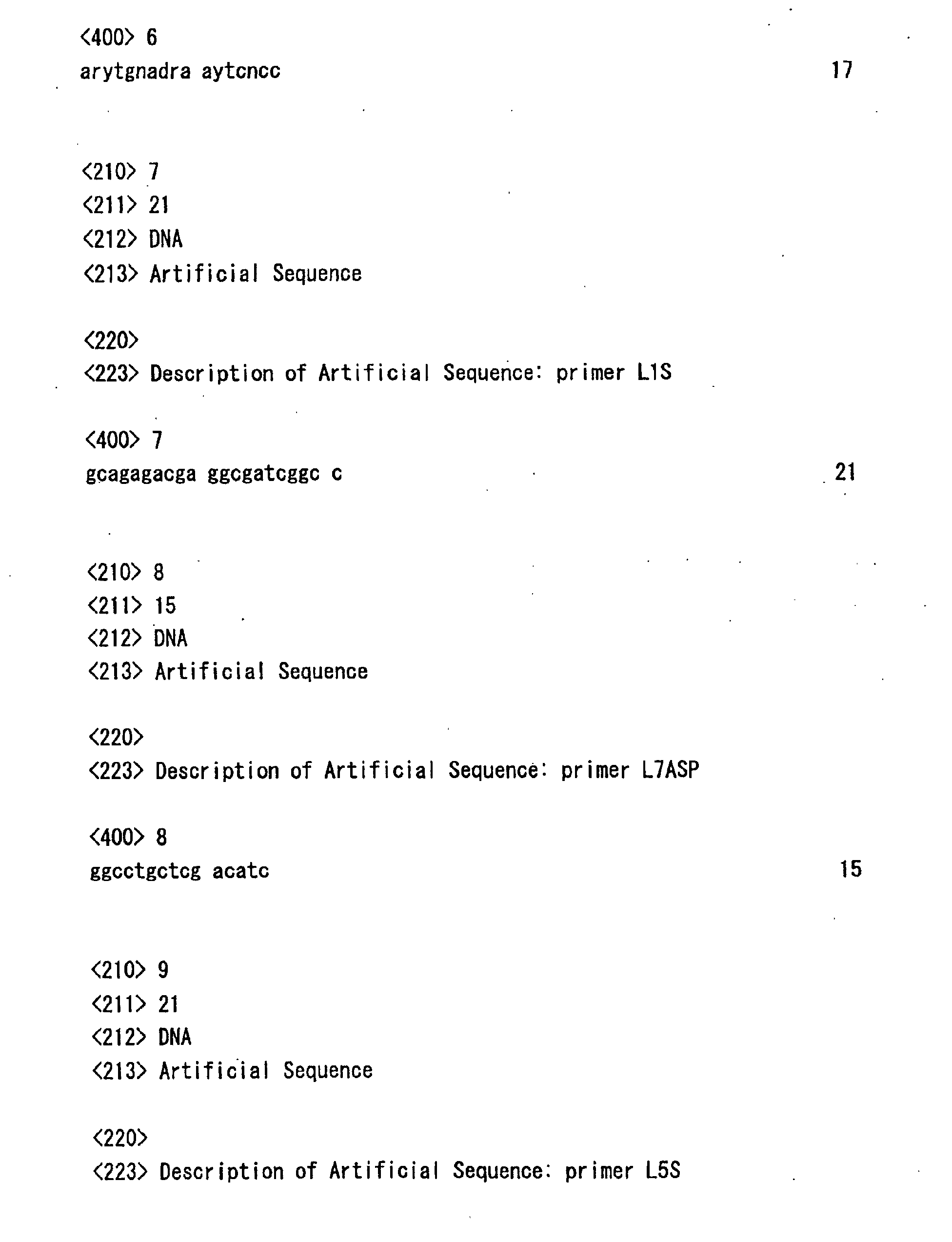
- RT-PCR was carried out using an RT-PCR kit (High fidelity RNA PCR Kit, product of Takara Shuzo Co., Ltd.) and primer L1S (SEQ ID NO:7 in the sequence listing), which was generated based on the internal sequence of the DNA fragment obtained in Example 1.
- the thus-obtained fragment was purified by excising the corresponding gel portion from the gel and then treating with a DNA extraction kit (Sephaglas (trademark) BrandPrep Kit, product of Amersham Pharmacia Biotech), and the purified fragment was cloned into a vector for expression in Escherlchia coli using a PCR product direct cloning kit (pT7 BlueT-Vector Kit, product of NOVAGEN) to give pT7-L2DPS.
- a DNA extraction kit Sephaglas (trademark) BrandPrep Kit, product of Amersham Pharmacia Biotech
- the DNA base sequence was determined by carrying out the reaction on a DNA sequencer (model 377, product of PerkinElmer) using a DNA sequencing kit (product of PerkinElmer, ABI PRISM (trademark) BigDye (trademark) Terminator Cycle Sequence Ready Reaction Kit With AmptiTaq (registered trademark) DNA polymerase, FS) and according to the manual attached thereto.
- a DNA sequencing kit product of PerkinElmer, ABI PRISM (trademark) BigDye (trademark) Terminator Cycle Sequence Ready Reaction Kit With AmptiTaq (registered trademark) DNA polymerase, FS
- the DNA fragment containing the region from the DNA obtained in Example 1 to the 5'-terminal region of the decaprenyl diphosphate synthase gene of Leucosporidium scotti IFO 1212 was obtained. Reverse transcription was carried out using a 5'-Full RACE Core Set (product of Takara Shuzo Co., Ltd.), the mRNA prepared in Example 2 as template, and primer L7ASP (SEQ ID NO:8 in the sequence listing, "5'-terminal region-phosphorylated”), which was generated based on the internal sequence of the DNA fragment obtained in Example 3, to synthesize a CDNA encoding the 5'-terminal region of the gene containing a part of the fragment obtained in Example 3. Then, the cDNA was circularized using the above kit.
- 5'-Full RACE Core Set product of Takara Shuzo Co., Ltd.
- primer L7ASP SEQ ID NO:8 in the sequence listing, "5'-terminal region-phosphorylated
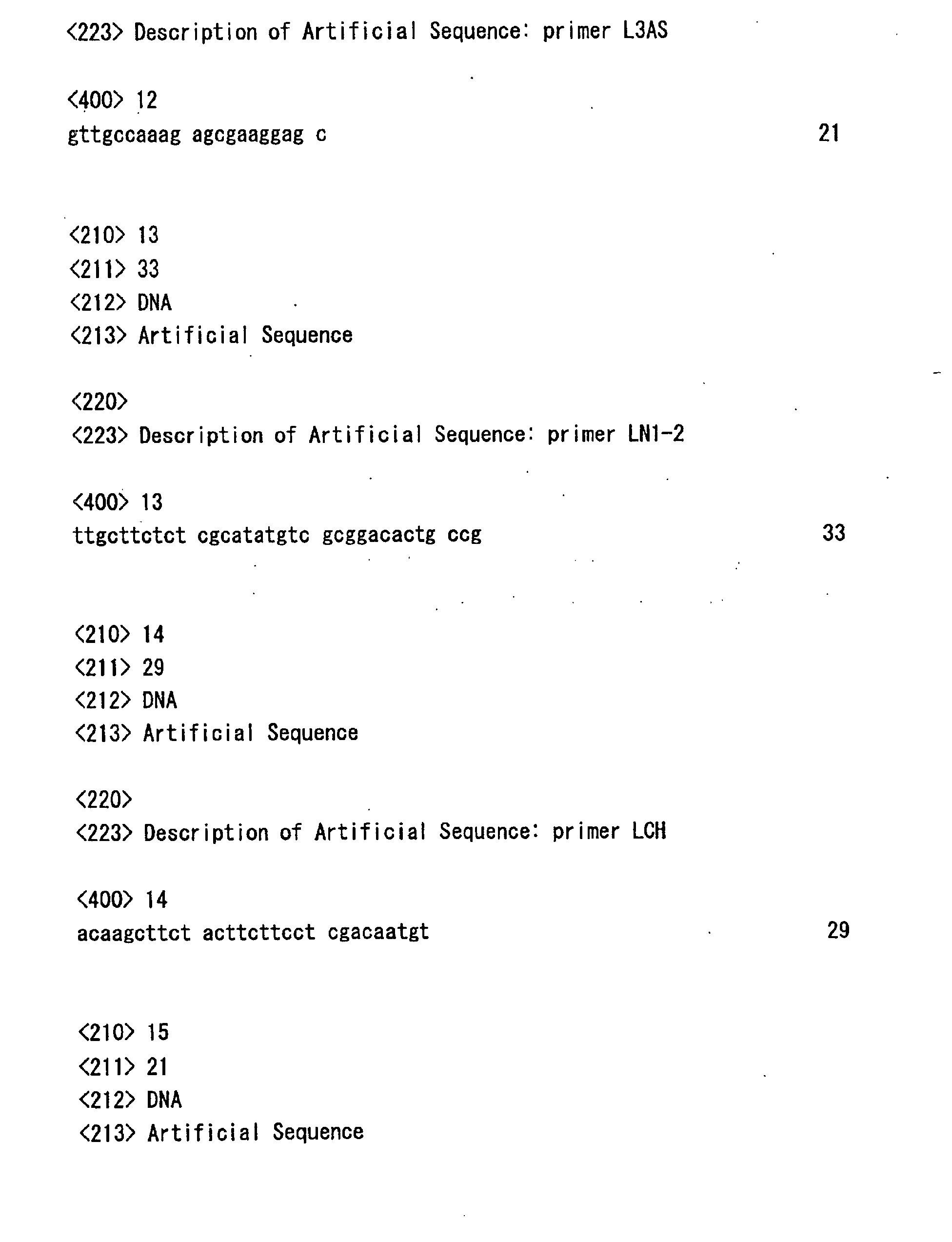
- PCR was carried out using this circularized cDNA as template, and primers L5S (SEQ ID NO:9 in the sequence listing) and L4AS (SEQ ID NO:10 in the sequence listing), which were generated based on the known part of the sequence obtained in Example 3. Furthermore, PCR was carried out to the PCR product using primers L6S (SEQ ID NO:11 in the sequence listing) and L3AS (SEQ ID NO:12 in the sequence listing) to obtain a fragment, about 950 bp in size.
- the thus-obtained fragment was purified by excising the corresponding gel portion from the gel and then treating with a DNA extraction kit (Sephaglas (trademark) BrandPrep Kit, product of Amersham Pharmacia Biotech), and the purified fragment was cloned into a vector for expression in Escherichia coli using a PCR product direct cloning kit (pT7 BlueT-Vector Kit, product of NOVAGEN) to give pT7-L3DPS.
- a DNA extraction kit Sephaglas (trademark) BrandPrep Kit, product of Amersham Pharmacia Biotech
- the DNA base sequence was determined by carrying out the reaction on a DNA sequencer (model 377, product of PerkinElmer) using a DNA sequencing kit (product of PerkinElmer, ABI PRISM (trademark) BigDye (trademark) Terminator Cycle Sequence Ready Reaction Kit With AmptiTaq (registered trademark) DNA polymerase, FS) and according to the manual attached thereto.
- a DNA sequencing kit product of PerkinElmer, ABI PRISM (trademark) BigDye (trademark) Terminator Cycle Sequence Ready Reaction Kit With AmptiTaq (registered trademark) DNA polymerase, FS
- PCR was carried out using pT7-L3DPS as template, primer LN1-2 (SEQ ID NO:13 in the sequence listing), which was generated based on the 5'-terminal sequence of the gene and primer L3AS (SEQ ID NO:12 in the sequence listing) described above to obtain the 5'-terminal region, about 700 bp in size.
- PCR was carried out using pT7-L2DPS as template, primer L1S (SEQ ID NO:7 in the sequence listing) described above and primer LCH (SEQ ID NO:14 in the sequence listing), which was generated based on the 3'-terminal sequence of the gene, to obtain the 3'-terminal region, about 770 bp in size.
- the two fragments were mixed and denatured, and then slowly cooled to allow annealing, followed by duplex synthesis using DNA polymerase. Subsequently, PCR was carried out using the double-stranded DNA as template, and primers LN1-2 and LCH to obtain DNA containing the full-length sequence of the gene.
- the base sequence was determined using a DNA sequencer (model 377, product of PerkinElmer, Inc.) and a DNA sequencing kit (product of PerkinElmer, Inc., ABI PRISM (trademark) BigDye (trademark) Terminator Cycle Sequence Ready Reaction Kit With AmptiTaq (registered trademark) DNA polymerase, FS) and according to the manual attached thereto.
- a DNA sequencer model 377, product of PerkinElmer, Inc.
- ABI PRISM trademark
- BigDye trademark
- Terminator Cycle Sequence Ready Reaction Kit With AmptiTaq registered trademark
- Base sequence was determined on the DNA, about 1.5 kbp in size, and the result is shown under SEQ ID NO:1 in the sequence listing.
- the amino acid sequence deduced from this base sequence is shown under SEQ ID NO:3.
- Example 5 The DNA obtained in Example 5 was cleaved with the restriction enzymes Nde I and Hind III, and the cleavage product was inserted into a vector for expression, pUCNT (described in WO 94/03613), to give a decaprenyl diphosphate synthase gene expression vector, pNTL1.
- the restriction enzyme map of the thus-obtained expression vector pNTL1 is shown in Fig. 1.
- the symbol DPS stands for the coding region of the decaprenyl diphosphate synthase gene.
- RT-PCR was carried out using an RT-PCR kit (High fidelity RNA PCR Kit, product of Takara Shuzo Co., Ltd.) and primer A1S (SEQ ID NO:15 in the sequence listing), which was generated based on the internal sequence of the DNA fragment obtained in Example 1.
- the thus-obtained fragment was purified by excising the corresponding gel portion from the gel and then treating with a DNA extraction kit (Sephaglas (trademark) BrandPrep Kit, product of Amersham Pharmacia Biotech), and the purified fragment was cloned into a vector for expression in Escherichia coli using a PCR product direct cloning kit (pT7 BlueT-Vector Kit, product of NOVAGEN) to give pT7-A2DPS.
- a DNA extraction kit Sephaglas (trademark) BrandPrep Kit, product of Amersham Pharmacia Biotech
- the DNA base sequence was determined by carrying out the reaction on a DNA sequencer (model 377, product of PerkinElmer) using a DNA sequencing kit (product of PerkinElmer, ABI PRISM (trademark) BigDye (trademark) Terminator Cycle Sequence Ready Reaction Kit With AmptiTaq (registered trademark) DNA polymerase, FS) and according to the manual attached thereto.
- a DNA sequencing kit product of PerkinElmer, ABI PRISM (trademark) BigDye (trademark) Terminator Cycle Sequence Ready Reaction Kit With AmptiTaq (registered trademark) DNA polymerase, FS
- the DNA fragment containing the region from the DNA fragment obtained in Example 1 to the 5'-terminal region of the decaprenyl diphosphate synthase gene of Aspergillus clavatus JCM 1718 was obtained. Reverse transcription was carried out using a 5'-Full RACE Core Set (product of Takara Shuzo Co., Ltd.), the mRNA prepared in Example 2 as template, and primer A7ASP (SEQ ID NO:16 in the sequence listing, "5'-terminal region-phosphorylated”), which was generated based on the internal sequence of the DNA fragment obtained in Example 7 to synthesize a cDNA encoding the 5'-terminal region of the gene containing a part of the fragment obtained in Example 7. Then, the CDNA was circularized using the above kit.
- 5'-Full RACE Core Set product of Takara Shuzo Co., Ltd.
- primer A7ASP SEQ ID NO:16 in the sequence listing, "5'-terminal region-phosphorylated
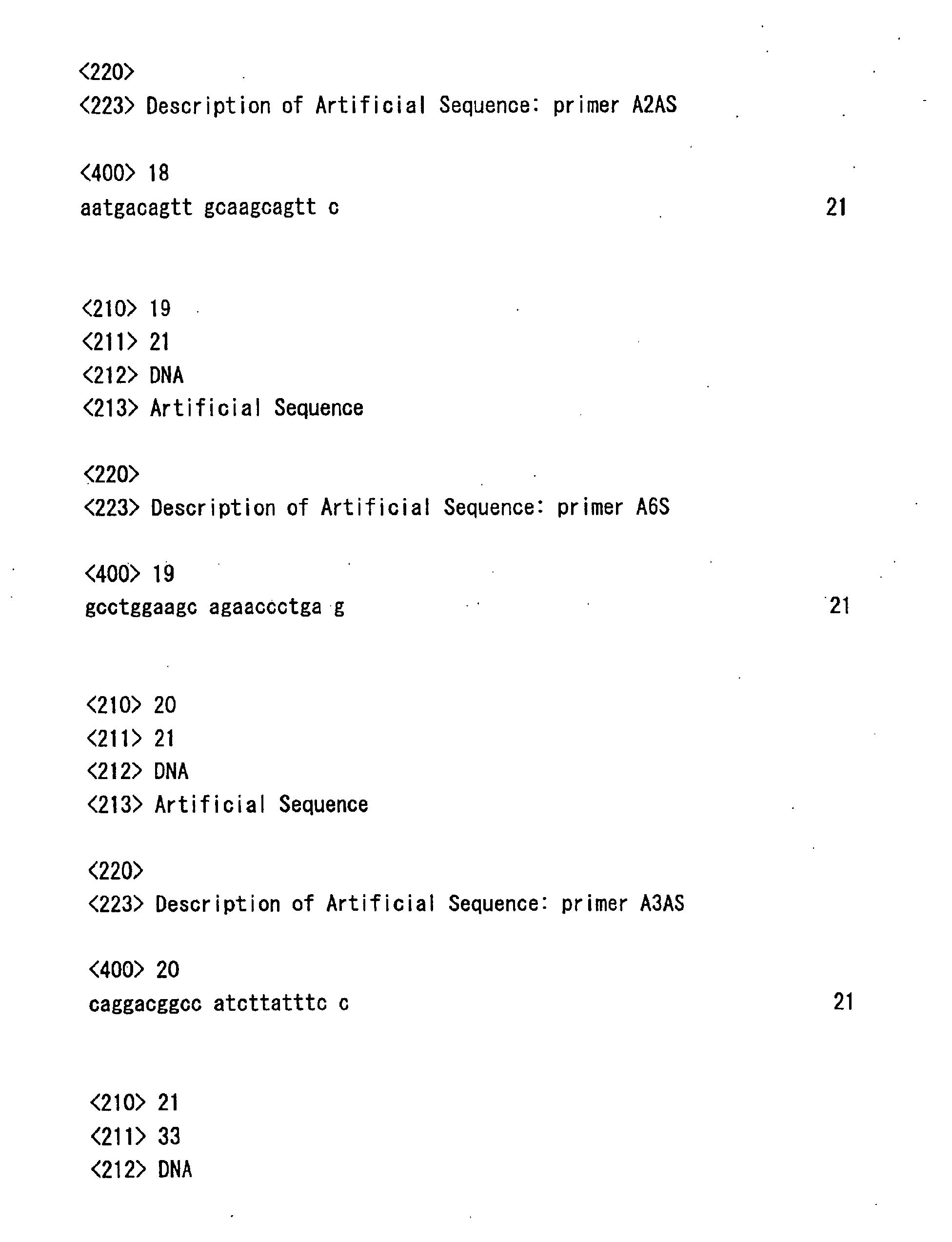
- PCR was carried out using this circularized CDNA as template, and primers A5S (SEQ ID NO:17 in the sequence listing) and A2AS (SEQ ID NO:18 in the sequence listing), which were generated based on the known part of the sequence obtained in Example 3. Furthermore, PCR was carried out to the PCR product using primers A6S (SEQ ID NO:19 in the sequence listing) and A3AS (SEQ ID NO:20 in the sequence listing) to obtain a fragment, about 850 bp in size.
- the thus-obtained fragment was purified by excising the corresponding gel portion from the gel and then treating with a DNA extraction kit (Sephaglas (trademark) BrandPrep Kit, product of Amersham Pharmacia Biotech), and the purified fragment was cloned into a vector for expression in Escherichia coli using a PCR product direct cloning kit (pT7 BlueT-Vector Kit, product of NOVAGEN) to give pT7-A3DPS.
- a DNA extraction kit Sephaglas (trademark) BrandPrep Kit, product of Amersham Pharmacia Biotech
- the DNA base sequence was determined by carrying out the reaction on a DNA sequencer (model 377, product of PerkinElmer) using a DNA sequencing kit (product of PerkinElmer, ABI PRISM (trademark) BigDye (trademark) Terminator Cycle Sequence Ready Reaction Kit With AmptiTaq (registered trademark) DNA polymerase, FS) and according to the manual attached thereto.
- a DNA sequencing kit product of PerkinElmer, ABI PRISM (trademark) BigDye (trademark) Terminator Cycle Sequence Ready Reaction Kit With AmptiTaq (registered trademark) DNA polymerase, FS
- PCR was carried out using pT7-A3DPS as template, primer AN2 (SEQ ID NO:21 in the sequence listing), which was generated based on the 5'-terminal sequence of the gene and primer A3AS (SEQ ID NO:20 in the sequence listing) described above to obtain the 5'-terminal region, about 700 bp in size.
- PCR was carried out using pT7-L2DPS as template, primer A1S (SEQ ID NO:15 in the sequence listing) described above and primer ACH (SEQ ID NO:22 in the sequence listing), which was generated based on the 3'-terminal sequence of the gene, to obtain the 3'-terminal region, about 770 bp in size.
- the two fragments were mixed and denatured, and then slowly cooled to allow annealing, followed by duplex synthesis using DNA polymerase. Subsequently, PCR was carried out using the double-stranded DNA as template, and primers AN2 and ACH to obtain DNA.
- the base sequence was determined by carrying out the reaction on a DNA sequencer (model 377, product of PerkinElmer, Inc.) using a DNA sequencing kit (product of PerkinElmer, Inc., ABI PRISM (trademark) BigDye (trademark) Terminator Cycle Sequence Ready Reaction Kit With AmptiTaq (registered trademark) DNA polymerase, FS) and according to the manual attached thereto.
- Example 9 The DNA obtained in Example 9 was cleaved with the restriction enzymes Bam HI and Hind III, and the cleavage product was inserted into a vector for expression, pUC18, to give a decaprenyl diphosphate synthase gene expression vector, pUCA1.
- the restriction enzyme map of the thus-obtained expression vector pUCA1 is shown in Fig. 2.
- the symbol DPS stands for the coding region of the decaprenyl diphosphate synthase gene.
- the decaprenyl diphosphate synthase gene expression vector pNTL1 was introduced into Escherichia coli DH5 ⁇ and pUCA1 was introduced into JM109, respectively, to produce recombinant Escherichia coli, E. coli DH5 ⁇ (pNTL1) and E. coli JM109 (pUCA1). Each recombinant Escherichia coli was shake-cultured overnight in 10 mL of LB medium at 37°C, and cells were harvested by centrifugation (3,000 revolutions, 20 minutes).
- the cells were suspended in 1 mL of a 3% aqueous solution of sulfuric acid and, after 30 minutes of heat treatment at 120°C, 2 mL of a 14% aqueous solution of sodium hydroxide was added, followed by further 15 minutes of heat treatment at 120°C.
- To the thus-treated suspension was added 3 mL of hexane-isopropanol (10:2) for effecting extraction. After centrifugation, 1.5 mL of the organic solvent layer was separated, and the solvent was evaporated to dryness under reduced pressure conditions. The residue was dissolved in 200 ⁇ L of ethanol, and 20 ⁇ L of the solution was analyzed by high-performance liquid chromatography (using LC-10A, product of Shimadzu Corp.).
- a reversed phase column (YMC-pack ODS-A, 250 x 4.6 mm, S-5 ⁇ m, 120A) was used, and the coenzyme Q 10 formed was detected based on the absorbance at the wavelength 275 nm.
- a gene encoding decaprenyl diphosphate synthase which is the key enzyme in the biosynthesis of coenzyme Q 10 , was isolated from a fungal species belonging to the genus Leucosporidium and genus Aspergillus and it was sequenced. This could successfully be introduced in Escherichia coli for expression thereof. Furthermore, improvements in gene sequence successfully resulted in production in significant amounts. By using the method of the invention, it becomes possible to efficiently produce coenzyme Q 10 , which is in use as a drug, among others.
Landscapes
- Chemical & Material Sciences (AREA)
- Organic Chemistry (AREA)
- Life Sciences & Earth Sciences (AREA)
- Engineering & Computer Science (AREA)
- Zoology (AREA)
- Health & Medical Sciences (AREA)
- Wood Science & Technology (AREA)
- Bioinformatics & Cheminformatics (AREA)
- Genetics & Genomics (AREA)
- General Health & Medical Sciences (AREA)
- General Engineering & Computer Science (AREA)
- Biochemistry (AREA)
- Biotechnology (AREA)
- Microbiology (AREA)
- General Chemical & Material Sciences (AREA)
- Chemical Kinetics & Catalysis (AREA)
- Medicinal Chemistry (AREA)
- Molecular Biology (AREA)
- Biomedical Technology (AREA)
- Micro-Organisms Or Cultivation Processes Thereof (AREA)
- Enzymes And Modification Thereof (AREA)
- Preparation Of Compounds By Using Micro-Organisms (AREA)
Abstract
Description
a DNA of the following (a), (b) or (c):
encoding a protein having decaprenyl diphosphate synthase activity;
encoding a protein having decaprenyl diphosphate synthase activity.
a DNA of the following (d), (e) or (f):
encoding a protein having decaprenyl diphosphate synthase activity;
encoding a protein having decaprenyl diphosphate synthase activity.
a protein of the following (g) or (h):
a protein of the following (i) or (j):
DNAs respectively encoding the above proteins (g) to (j).
expression vectors with the above DNAs inserted into vectors.
transformants resulting from transformation of host microorganisms with the respective DNAs mentioned above or with the expression vectors mentioned above.
a process for producing coenzyme Q10,
which comprises cultivating any of the above-mentioned transformants in a medium and recovering coenzyme Q10 thus formed and accumulated in the medium.







Claims (19)
- A DNA of the following (a), (b) or (c):(a) a DNA whose base sequence is as described under SEQ ID NO:1;(b) a DNA having a base sequence derived from the base sequence shown under SEQ ID NO : 1 by deletion, addition, insertion and/or substitution of one or several bases and
encoding a protein having decaprenyl diphosphate synthase activity;(c) a DNA capable of hybridizing with a DNA comprising the base sequence shown under SEQ ID NO:1 under stringent conditions and
encoding a protein having decaprenyl diphosphate synthase activity. - A DNA of the following (d), (e) or (f):(d) a DNA whose base sequence is as described under SEQ ID NO:2;(e) a DNA having a base sequence derived from the base sequence shown under SEQ ID NO:2 by deletion, addition, insertion and/or substitution of one or several bases and
encoding a protein having decaprenyl diphosphate synthase activity;(f) a DNA capable of hybridizing with a DNA comprising the base sequence shown under SEQ ID NO:2 under stringent conditions and
encoding a protein having decaprenyl diphosphate synthase activity. - A protein of the following (g) or (h):(g) a protein whose amino acid sequence is as described under SEQ ID NO:3;(h) a protein having an amino acid sequence derived from the amino acid sequence shown under SEQ ID NO:3 by deletion, addition, insertion and/or substitution of one or several amino acid residues and having decaprenyl diphosphate synthase activity.
- A protein of the following (i) or (j):(i) a protein whose amino acid sequence is as described under SEQ ID NO:4;(j) a protein having an amino acid sequence derived from the amino acid sequence shown under SEQ ID NO:4 by deletion, addition, insertion and/or substitution of one or several amino acid residues and having decaprenyl diphosphate synthase activity.
- A DNA encoding the protein according to Claim 3.
- A DNA encoding the protein according to Claim 4.
- An expression vector resulting from insertion of the DNA according to Claim 1 or 5 into a vector for expression.
- An expression vector resulting from insertion of the DNA according to Claim 2 or 6 into a vector for expression.
- The expression vector according to Claim 7, wherein the vector for expression is pUCNT.
- The expression vector according to Claim 8, wherein the vector for expression is pUC18.
- The expression vector according to Claim 9, which is pNTL1.
- The expression vector according to Claim 10, which is pUCA1.
- A transformant resulting from transformation of a host microorganism with the DNA according to Claim 1, 2, 5 or 6.
- A transformant resulting from transformation of a host microorganism with the expression vector according to Claim 7, 8, 9, 10, 11 or 12.
- The transformant according to Claim 13 or 14, wherein the host microorganism is a strain of Escherichia coli.
- The transformant according to Claim 15, wherein the strain of Escherichia coli is Escherichia coli DH5α or JM109.
- The transformant according to Claim 16, which is E. coli DH5α (pNTL1) (FRPM BP-7353).
- The transformant according to Claim 16, which is E. coli JM109(pUCA1) (FRPM BP-7352).
- A process for producing coenzyme Q10, which comprises cultivating the transformant according to Claim 13, 14, 15, 16, 17 or 18 in a medium and recovering coenzyme Q10 thus formed and accumulated in the medium.
Applications Claiming Priority (3)
| Application Number | Priority Date | Filing Date | Title |
|---|---|---|---|
| JP2000398658 | 2000-12-27 | ||
| JP2000398658A JP2002191367A (en) | 2000-12-27 | 2000-12-27 | Method for producing coenzyme Q10 |
| PCT/JP2001/011523 WO2002052017A1 (en) | 2000-12-27 | 2001-12-27 | Process for producing coenzyme q¿10? |
Publications (2)
| Publication Number | Publication Date |
|---|---|
| EP1354957A1 true EP1354957A1 (en) | 2003-10-22 |
| EP1354957A4 EP1354957A4 (en) | 2005-01-26 |
Family
ID=18863582
Family Applications (1)
| Application Number | Title | Priority Date | Filing Date |
|---|---|---|---|
| EP01271890A Withdrawn EP1354957A4 (en) | 2000-12-27 | 2001-12-27 | Process for producing coenzyme q 10 |
Country Status (5)
| Country | Link |
|---|---|
| US (1) | US7320883B2 (en) |
| EP (1) | EP1354957A4 (en) |
| JP (1) | JP2002191367A (en) |
| CA (1) | CA2432079A1 (en) |
| WO (1) | WO2002052017A1 (en) |
Cited By (3)
| Publication number | Priority date | Publication date | Assignee | Title |
|---|---|---|---|---|
| EP1386964A4 (en) * | 2001-05-11 | 2005-05-04 | Kaneka Corp | Method of expressing long-chain prenyl diphosphate synthase |
| EP1391515A4 (en) * | 2001-04-25 | 2005-05-04 | Kaneka Corp | Process for producing coenzyme q 10 |
| US7910340B2 (en) | 2001-12-27 | 2011-03-22 | Kaneka Corporation | Processes for producing coenzyme Q10 |
Families Citing this family (1)
| Publication number | Priority date | Publication date | Assignee | Title |
|---|---|---|---|---|
| US11471426B2 (en) | 2019-10-16 | 2022-10-18 | American River Nutrition, Llc | Compositions comprising quinone and/or quinol and methods of preparations and use thereof |
Family Cites Families (11)
| Publication number | Priority date | Publication date | Assignee | Title |
|---|---|---|---|---|
| JPS5292793A (en) * | 1976-01-30 | 1977-08-04 | Agency Of Ind Science & Technol | Quantitative analysis apparatus for metals by electrolysis |
| JPS5692793A (en) | 1979-12-27 | 1981-07-27 | Amano Pharmaceut Co Ltd | Preparation of coenzyme q10 by microorganism |
| JPH09173076A (en) | 1995-12-27 | 1997-07-08 | Alpha- Shokuhin Kk | Method for producing heterogeneous ubiquinone |
| JP3536594B2 (en) * | 1996-06-14 | 2004-06-14 | トヨタ自動車株式会社 | Prenyl diphosphate synthase gene |
| US6174715B1 (en) | 1996-06-14 | 2001-01-16 | Toyota Jidosha Kabushiki Kaisha | Prenyl diphosphate synthetase genes |
| JPH1057072A (en) * | 1996-08-22 | 1998-03-03 | Alpha- Shokuhin Kk | Method for producing ubiquinone-10 |
| JPH1156372A (en) | 1997-08-27 | 1999-03-02 | Alpha- Shokuhin Kk | Method for producing ubiquinone-10 |
| JPH11178590A (en) * | 1997-09-17 | 1999-07-06 | Toyota Motor Corp | Decaprenyl diphosphate synthase gene |
| JP3941998B2 (en) | 1999-08-24 | 2007-07-11 | 株式会社カネカ | Method for producing Coenzyme Q10 |
| JP4191482B2 (en) | 2000-11-20 | 2008-12-03 | 株式会社カネカ | Method for producing coenzyme Q10 |
| US7402413B2 (en) * | 2001-05-11 | 2008-07-22 | Kaneka Corporation | Method of expressing long-chain prenyl diphosphate synthase |
-
2000
- 2000-12-27 JP JP2000398658A patent/JP2002191367A/en active Pending
-
2001
- 2001-12-27 CA CA002432079A patent/CA2432079A1/en not_active Abandoned
- 2001-12-27 EP EP01271890A patent/EP1354957A4/en not_active Withdrawn
- 2001-12-27 US US10/450,681 patent/US7320883B2/en not_active Expired - Fee Related
- 2001-12-27 WO PCT/JP2001/011523 patent/WO2002052017A1/en not_active Ceased
Cited By (5)
| Publication number | Priority date | Publication date | Assignee | Title |
|---|---|---|---|---|
| EP1391515A4 (en) * | 2001-04-25 | 2005-05-04 | Kaneka Corp | Process for producing coenzyme q 10 |
| EP1386964A4 (en) * | 2001-05-11 | 2005-05-04 | Kaneka Corp | Method of expressing long-chain prenyl diphosphate synthase |
| US7910340B2 (en) | 2001-12-27 | 2011-03-22 | Kaneka Corporation | Processes for producing coenzyme Q10 |
| US9315839B2 (en) | 2001-12-27 | 2016-04-19 | Kaneka Corporation | Processes for producing coenzyme Q10 |
| US9926580B2 (en) | 2001-12-27 | 2018-03-27 | Kaneka Corporation | Process for producing coenzyme Q10 |
Also Published As
| Publication number | Publication date |
|---|---|
| CA2432079A1 (en) | 2002-07-04 |
| JP2002191367A (en) | 2002-07-09 |
| WO2002052017A1 (en) | 2002-07-04 |
| US20040157286A1 (en) | 2004-08-12 |
| EP1354957A4 (en) | 2005-01-26 |
| US7320883B2 (en) | 2008-01-22 |
Similar Documents
| Publication | Publication Date | Title |
|---|---|---|
| AU2003221082B2 (en) | Novel carbonyl reductase, gene encoding it and process for producing optically active alcohols using the same | |
| US8163525B2 (en) | Method of expressing long-chain prenyl diphosphate synthase | |
| Sauvageot et al. | Purification, characterization and subunits identification of the diol dehydratase of Lactobacillus collinoides | |
| US20080064074A1 (en) | Process for producing coenzyme q10 | |
| US7320883B2 (en) | Process for producing coenzyme Q10 | |
| EP1391515A1 (en) | Process for producing coenzyme q 10 | |
| JP4307609B2 (en) | Method for producing coenzyme Q10 | |
| US6762037B1 (en) | Process for producing coenzyme Q10 | |
| EP1306438B1 (en) | Novel carbonyl reductase, gene thereof and method of using the same | |
| JP2004267130A (en) | Novel carbonyl reductase, DNA encoding the same, and method for producing optically active alcohol using the same | |
| KR101153400B1 (en) | Method for producing alpha-lipoic acid using a novel lipoic acid synthetase and a novel lipoic acid protein ligase | |
| EP1762621A1 (en) | Novel glycerol dehydrogenase, gene therefor, and method of utilizing the same | |
| JP2005102511A (en) | New alcohol dehydrogenase and its gene | |
| JP2005528098A (en) | Nucleotide sequence encoding mannitol-2-dehydrogenase and method for producing D-mannitol | |
| JP3518501B2 (en) | Oxidoreductase gene, cloning of the gene and method for producing the enzyme | |
| KR101124617B1 (en) | Method for producing alpha-lipoic acid using a novel lipoic acid synthetase and a novel lipoic acid protein ligase | |
| JP2000125856A (en) | Novel L-α-glycerophosphate oxidase and method for producing the same |
Legal Events
| Date | Code | Title | Description |
|---|---|---|---|
| PUAI | Public reference made under article 153(3) epc to a published international application that has entered the european phase |
Free format text: ORIGINAL CODE: 0009012 |
|
| 17P | Request for examination filed |
Effective date: 20030704 |
|
| AK | Designated contracting states |
Kind code of ref document: A1 Designated state(s): AT BE CH CY DE DK ES FI FR GB GR IE IT LI LU MC NL PT SE TR |
|
| XX | Miscellaneous (additional remarks) |
Free format text: A REQUEST FOR CORRECTION OF THE DESCRIPTION UNDER RULE 88 HAS BEEN FILED. |
|
| A4 | Supplementary search report drawn up and despatched |
Effective date: 20041215 |
|
| 17Q | First examination report despatched |
Effective date: 20070504 |
|
| STAA | Information on the status of an ep patent application or granted ep patent |
Free format text: STATUS: THE APPLICATION IS DEEMED TO BE WITHDRAWN |
|
| 18D | Application deemed to be withdrawn |
Effective date: 20071201 |