EP1354894A2 - Fusion peptide of human type-1 collagen derived peptide and tat peptide, preparation thereof, and skin anti-aging cosmetic composition comprising the same - Google Patents
Fusion peptide of human type-1 collagen derived peptide and tat peptide, preparation thereof, and skin anti-aging cosmetic composition comprising the same Download PDFInfo
- Publication number
- EP1354894A2 EP1354894A2 EP02292293A EP02292293A EP1354894A2 EP 1354894 A2 EP1354894 A2 EP 1354894A2 EP 02292293 A EP02292293 A EP 02292293A EP 02292293 A EP02292293 A EP 02292293A EP 1354894 A2 EP1354894 A2 EP 1354894A2
- Authority
- EP
- European Patent Office
- Prior art keywords
- peptide
- collagen
- tat
- human type
- sequence
- Prior art date
- Legal status (The legal status is an assumption and is not a legal conclusion. Google has not performed a legal analysis and makes no representation as to the accuracy of the status listed.)
- Withdrawn
Links
Classifications
-
- C—CHEMISTRY; METALLURGY
- C07—ORGANIC CHEMISTRY
- C07K—PEPTIDES
- C07K19/00—Hybrid peptides, i.e. peptides covalently bound to nucleic acids, or non-covalently bound protein-protein complexes
-
- C—CHEMISTRY; METALLURGY
- C07—ORGANIC CHEMISTRY
- C07K—PEPTIDES
- C07K14/00—Peptides having more than 20 amino acids; Gastrins; Somatostatins; Melanotropins; Derivatives thereof
- C07K14/005—Peptides having more than 20 amino acids; Gastrins; Somatostatins; Melanotropins; Derivatives thereof from viruses
-
- A—HUMAN NECESSITIES
- A61—MEDICAL OR VETERINARY SCIENCE; HYGIENE
- A61K—PREPARATIONS FOR MEDICAL, DENTAL OR TOILETRY PURPOSES
- A61K8/00—Cosmetics or similar toiletry preparations
- A61K8/18—Cosmetics or similar toiletry preparations characterised by the composition
- A61K8/30—Cosmetics or similar toiletry preparations characterised by the composition containing organic compounds
- A61K8/64—Proteins; Peptides; Derivatives or degradation products thereof
- A61K8/65—Collagen; Gelatin; Keratin; Derivatives or degradation products thereof
-
- A—HUMAN NECESSITIES
- A61—MEDICAL OR VETERINARY SCIENCE; HYGIENE
- A61Q—SPECIFIC USE OF COSMETICS OR SIMILAR TOILETRY PREPARATIONS
- A61Q19/00—Preparations for care of the skin
- A61Q19/08—Anti-ageing preparations
-
- C—CHEMISTRY; METALLURGY
- C07—ORGANIC CHEMISTRY
- C07K—PEPTIDES
- C07K14/00—Peptides having more than 20 amino acids; Gastrins; Somatostatins; Melanotropins; Derivatives thereof
- C07K14/435—Peptides having more than 20 amino acids; Gastrins; Somatostatins; Melanotropins; Derivatives thereof from animals; from humans
- C07K14/78—Connective tissue peptides, e.g. collagen, elastin, laminin, fibronectin, vitronectin or cold insoluble globulin [CIG]
-
- A—HUMAN NECESSITIES
- A61—MEDICAL OR VETERINARY SCIENCE; HYGIENE
- A61K—PREPARATIONS FOR MEDICAL, DENTAL OR TOILETRY PURPOSES
- A61K2800/00—Properties of cosmetic compositions or active ingredients thereof or formulation aids used therein and process related aspects
- A61K2800/40—Chemical, physico-chemical or functional or structural properties of particular ingredients
- A61K2800/57—Compounds covalently linked to a(n inert) carrier molecule, e.g. conjugates, pro-fragrances
-
- C—CHEMISTRY; METALLURGY
- C07—ORGANIC CHEMISTRY
- C07K—PEPTIDES
- C07K2319/00—Fusion polypeptide
-
- C—CHEMISTRY; METALLURGY
- C12—BIOCHEMISTRY; BEER; SPIRITS; WINE; VINEGAR; MICROBIOLOGY; ENZYMOLOGY; MUTATION OR GENETIC ENGINEERING
- C12N—MICROORGANISMS OR ENZYMES; COMPOSITIONS THEREOF; PROPAGATING, PRESERVING, OR MAINTAINING MICROORGANISMS; MUTATION OR GENETIC ENGINEERING; CULTURE MEDIA
- C12N2740/00—Reverse transcribing RNA viruses
- C12N2740/00011—Details
- C12N2740/10011—Retroviridae
- C12N2740/16011—Human Immunodeficiency Virus, HIV
- C12N2740/16311—Human Immunodeficiency Virus, HIV concerning HIV regulatory proteins
- C12N2740/16322—New viral proteins or individual genes, new structural or functional aspects of known viral proteins or genes
Definitions
- the present invention relates to a fusion peptide, in which a self cell-penetrating Tat peptide (transactivator of transcription peptide) is bound to a human type- I collagen C-terminal derived peptide, and to a skin anti-aging cosmetic composition comprising the same.
- a self cell-penetrating Tat peptide transactivator of transcription peptide
- Collagen is an important structural ingredient of extra-cellular matrix accounting for 25 % of the total protein in mammals.
- the abnormal synthesis and analysis of collagen is closely related to skin aging, particularly the formation of wrinkles.
- a type- I collagen is an important structural ingredient of extra-cellular matrix in skin, bones, etc. in that it controls collagen synthesis inside cells in a cell synthesized collagen (Wiestner, M. et al. (1979) J. Biol. Chem. 254, 10482 ⁇ 10484, Paglia, L. M. et al. (1979) Biochemistry 18, 5030 ⁇ 5034).
- a fusion peptide in which a Tat peptide having a self cell-penetration property is bound to a human type- I collagen C-terminal derived peptide, the resulting peptide being such that it does not cause irritation, easily and safely penetrates into the integument and endothelium, does not cause skin disease, and has superior and continuous skin anti-aging effects by synthesis of collagen and hyaluronic acid.
- It is yet another object of the present invention to provide a skin anti-aging cosmetic composition comprising a fusion peptide, in which a self cell-penetrating Tat peptide is bound to a human type- I collagen C-terminal derived peptide, the cosmetic composition having superior cell-penetration properties and synthesis of collagen and hyaluronic acid, anti-aging effects, and is durable.
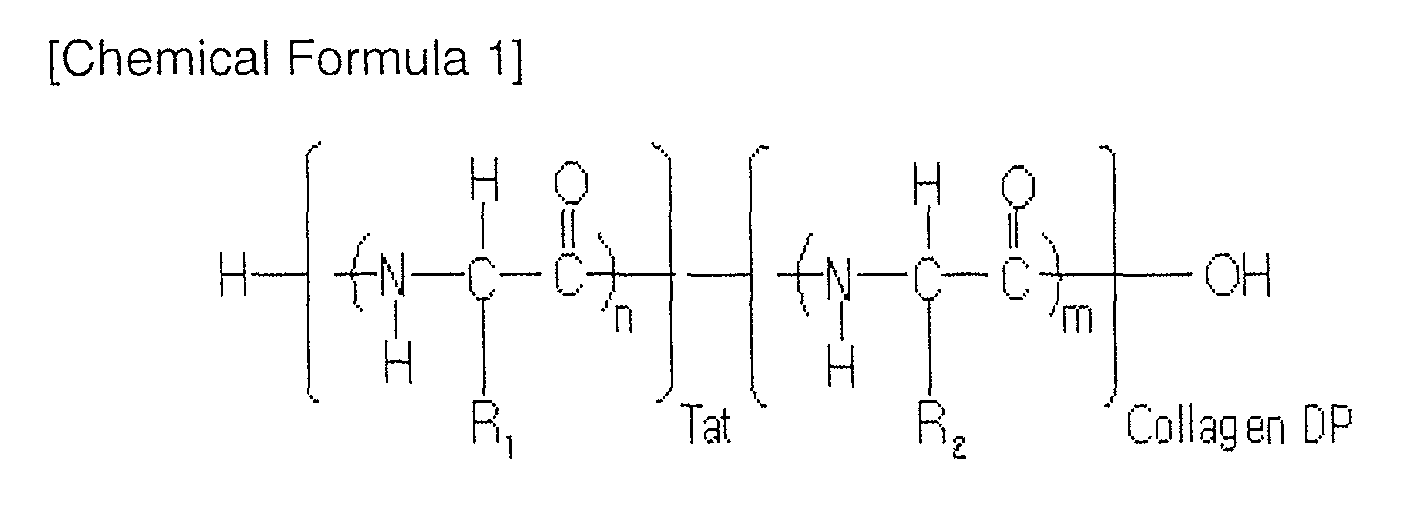
- the present invention provides a fusion peptide, in which a Tat peptide having a self cell-penetration property is bound to a human type- I collagen C-terminal derived peptide (Tat-human type- I collagen DP): where [ ] Tat is a Tat peptide having a self cell-penetration property; R 1 is one or more substituent selected from the group consisting of side chains of glutamine, lysine, arginine, and glycine; and n is an integer from 4 to 12; and [] collagen DP is a peptide of continuous 5 to 35 amino acids consisting of a peptide of amino acids 212 to 216 in a peptide of amino acids 182 to 246 of human type- I collagen shown in Sequence No. 1; R 2 is a side chain of amino acids comprising the peptide; and m is an integer from 5 to 35.
- Tat is a Tat peptide having a self cell-penetration property
- R 1 is one or more substituent
- the present invention provides a fusion peptide, in which a Tat peptide having a self cell-penetration property is bound to a peptide derived from human type- I collagen C-terminal, represented by the following Chemical Formula 1 (Tat-human type- I collagen DP):
- Tat is a Tat peptide having a self cell-penetration property
- Chemical Formula in () n represents an amino acid sequence
- R 1 is one or more substituent selected from the group consisting of side chains of glutamine, lysine, arginine, and glycine
- n is an integer from 4 to 12.
- R 2 is a side chain of an amino acid of the peptide; and m is an integer from 5 to 35.
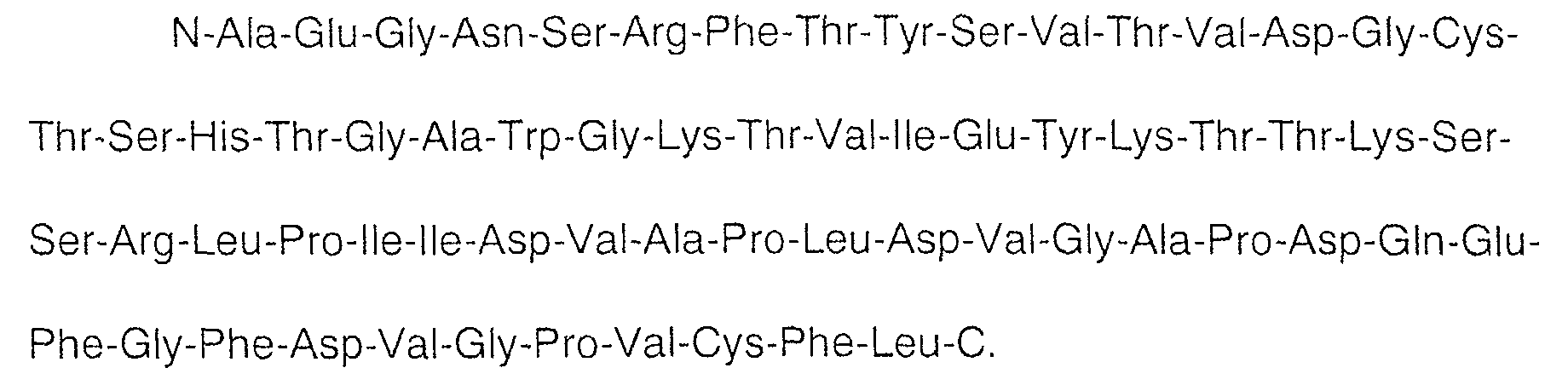
- sequence of amino acids 182 to 246 of the human type- I collagen is as follows, and it is also shown in Sequence No. 1:
- sequence of amino acids 212 to 216 of the human type- I collagen C-terminal is as follows, and is also shown in Sequence No. 2:
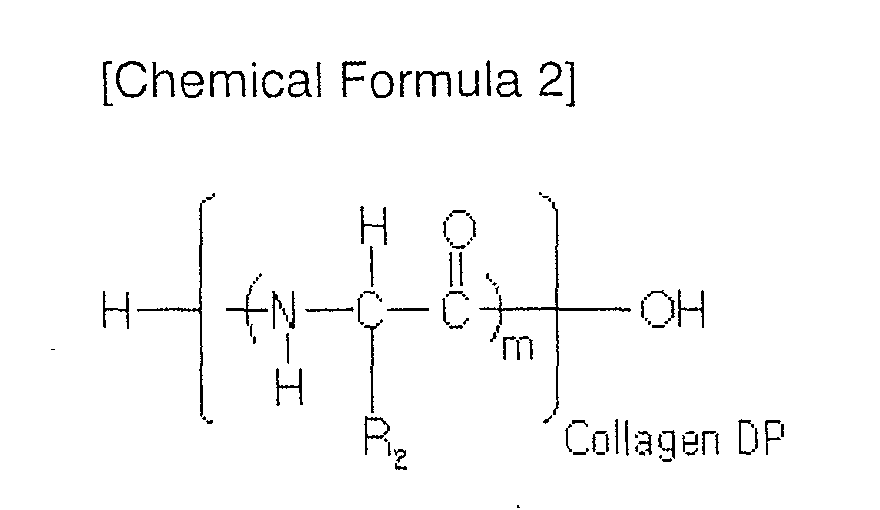
- a peptide derived from human type- I collagen C-terminal (human type- I collagen DP) used in the present invention is represented by the following Chemical Formula 2:
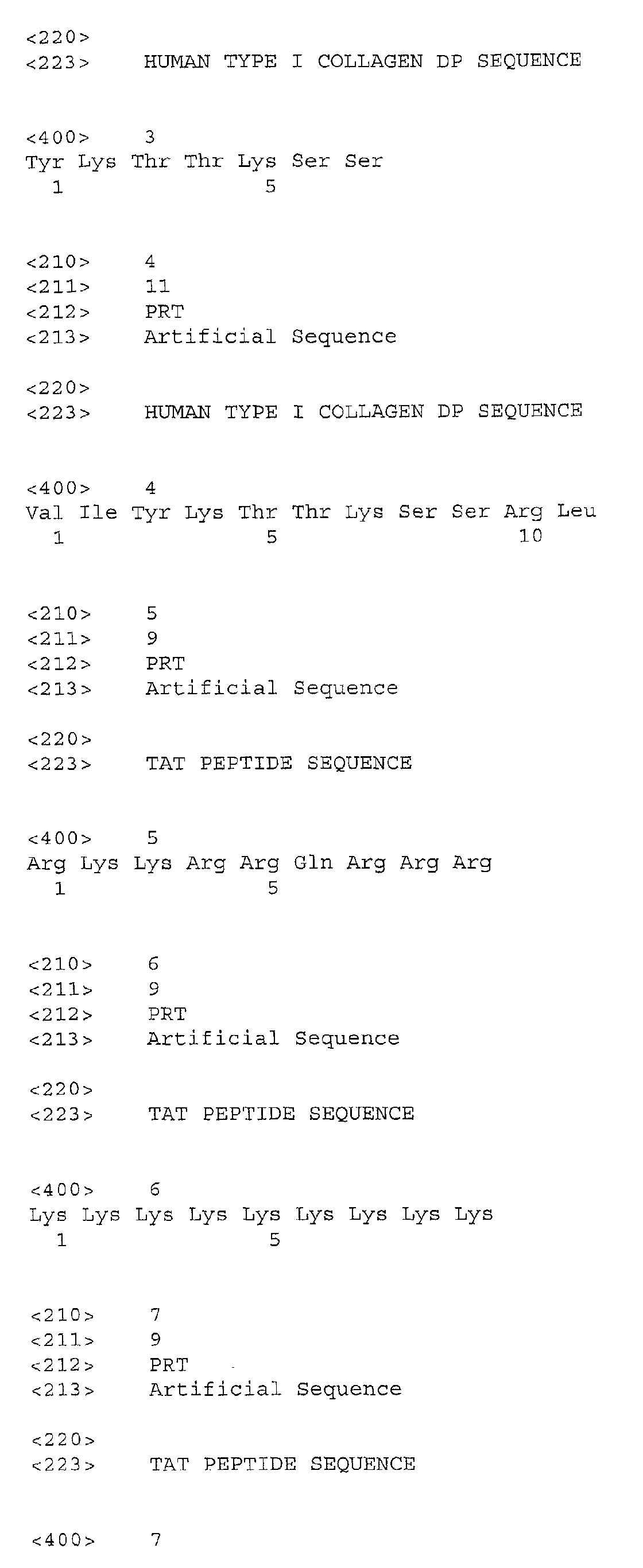
- the peptide derived from human Type- I collagen C-terminal comprises all of a peptide of Sequence No. 2; a peptide of amino acids 211 to 217, Sequence No. 3 (human Type- I collagen DP 211-217, Try-Lys-Thr-Thr-Lys-Ser-Ser); or a peptide of amino acids 210 to 219, Sequence No. 4 (human Type-I collagen DP 210-219, Val-Ile-Tyr-Lys-Thr-Thr-Lys-Ser-Ser-Arg-Leu.
- Typical protein penetration technology uses a property of the Tat peptide, which is a type of protein of the Human Immunodeficiency Virus (HIV) type-1 that is self-penetrating, in which the Tat peptide spontaneously passes through a cell membrane for easy penetration such that transportation into the cell is realized.
- HIV Human Immunodeficiency Virus
- Such a capability is present due to the property of the protein transduction domain that is a middle region of the Tat peptide sequence, the exact mechanism of which has not yet been determined (Frankel, A.D. and Pabo, C.O. (1998) Cell 55, 1189-1193.
- the present inventors following close observation of the cell-penetration property of the Tat peptide, covalently bonded skin-activating ingredients such as a human Type- I collagen C-terminal derived peptide to a Tat peptide having a self penetration signal. This resulted in the fusion peptide being directly and effectively penetrated into cutaneous cells.
- Self cell-penetrating Tat peptide refers to the Tat peptide itself or a peptide derived therefrom, and the Tat peptide or a peptide derived therefrom refers to a peptide having the cell-penetration property alone or in combination with a material bound thereto.
- Tat peptide of HIV human immunodeficiency virus
- Type-1 the Tat peptide of HIV (human immunodeficiency virus) Type-1 is that of possessing a signal for opening the lipid barrier to be penetrated by the peptide sequence region in the N-terminal of the total protein.
- the sequence is as follows, and is also shown in Sequence No. 5:
- the self cell-penetrating Tat peptide can be bound to a human Type- I collagen C-terminal derived peptide by esterification with a carboxylic group through reaction with alcohol.
- the self cell-penetrating Tat peptide is represented by the following Chemical Formula 3:
- R 1 is one or more substituent selected from the group consisting of side chains of glutamine (Gln), lysine (Lys), arginine (Arg), and glycine (Gly).
- the Tat peptide is a peptide consisting of 4 to 12 amino acids, and more preferably a peptide consisting of one or more amino acid selected from the group consisting of lysine and arginine.
- n is an integer from 4 to 12, preferably from 8 to 10, and most preferably n is 9.
- the present invention provides a method for preparing a fusion peptide, in which a self cell-penetrating Tat peptide is bound to a peptide derived from human Type- I collagen C-terminal (Tat- human Type- I collagen DP).
- the Tat- human Type- I collagen DP fusion peptide of the present invention can be prepared by the following methods.
- the first method is a biological method using a recombinant expression vector.
- This method for preparing a Tat-HPTDP fusion peptide includes the steps of (a) cloning a Tat gene of HIV-1 by PCR (polymer chain reaction) of the N-terminal with a self penetration signal region from pSVC21, which is an expression vector comprising the HIV-1 Tat gene, in a pET vector, which is a protein expression vector comprising a 6 His tag, to prepare a vector capable of expressing a fusion protein; and (b) mass-expressing recombinant His-Tat-human Type- I collagen DP peptide in E. coli using the pET-Tat expression vector, then performing separation and purification.
- the second method is a method for preparing a Tat-human Type-I collagen DP fusion peptide comprising the steps of integrating a target protein, for example catalase or superoxide dismutase (SOD), etc. into a pET-Tat- human Type- I collagen DP expression vector to mass-express His-Tat- human Type- I collagen DP fusion protein, then performing separation and purification.
- a target protein for example catalase or superoxide dismutase (SOD), etc.
- SOD superoxide dismutase
- the third method is a method for synthesizing a pure Tat-human Type-I collagen DP fusion peptide using an organosynthesizer for peptide synthesis. This method is referred to as Merrifield solid-phase peptide synthesis (J. Am. Chem. Soc.
- the Tat- human Type-I collagen DP fusion protein is synthesized by condensation of the (a) C-terminal of the amino acid of the Tat- human Type- I collagen DP fusion peptide, which includes a Tat peptide having one or more amino acid selected from the group consisting of Gln, Lys, Arg, and Gly, and (b) monomers with N-terminal reactivity using a peptide synthesizer (Model 431A from ABI Company).
- Solid phase synthesis starts by coupling an ⁇ -amino protected amino acid to an appropriate resin from an amino acid of a carboxy terminal.
- the ⁇ -amino protected amino acid is coupled to a hydroxy methyl resin or a chloro methylated resin through an ester bond.
- an ⁇ -amino protecting group Fmoc (9-fluorenyl methoxycarbonyl) or Boc (t-butyloxycarbonyl) is used.
- the Fmoc-protected amino acid is purchased from Pharmacia Company or Calbiochem Company.
- an amino acid having a reactive amino acid residue examples include an amino group of Arg residue or a reactive residue of Gly, Lys, or Gln, and Fmoc-amino acid protected with an appropriate group such as trityl (Trt), 4-methoxy-2,3-trimethylbenzene sulfunyl (MRT), tert-butyl (t-Bu).
- Peptide is synthesized by sequentially coupling an ⁇ -amino protected amino acid to an amino terminal of a peptide chain attached to a solid support resin after activation. After synthesis, the peptide is cut from the resin, and the protecting group is removed with a reagent such as trifluoroacetic acid (TFA). The peptide is separated from the TFA solution by filtration, centrifugation, or extraction with diethylether, and the peptide can be purified by high performance liquid chromatography (HPLC) or other methods.
- HPLC high performance liquid chromatography
- the Tat-human Type- I collagen DP fusion peptide represented by Chemical Formula 1 and prepared according to the present invention can be used as a skin anti-aging agent having superior chemical stability, that provides long-lasting anti-aging effects for the skin by the benefits obtained through synthesis of collagen and hyaluronic acid, and that is safe to use.
- a detailed activity evaluation of the anti-aging agent will be described in the Examples to follow.
- the present invention provides a skin anti-aging cosmetic composition
- a skin anti-aging cosmetic composition comprising a compound represented by Chemical Formula 1.
- composition of the present invention comprises 0.000001 to 5.0 wt% of the compound represented by Chemical Formula 1. If the amount of the compound is less than 0.000001 wt% of the total composition, substantial anti-aging effects cannot be expected, while if the amount of the compound exceeds 5.0 wt%, the compound negatively affects the stability of the product and the form of the preparation.
- composition of the present invention can be prepared in the form of an external ointment, toner, lotion, nutrition cream, massage cream, essence, pack, emulsion, or oil gel.
- the composition When prepared as an external ointment, the composition comprises 50.0 to 97.0 wt% of Vaseline and 0.1 to 5.0 wt% of polyoxyethyleneoleyl-ether phosphate in addition to the compound represented by Chemical Formula 1.
- the composition When prepared as a toner, the composition comprises 1.0 to 10.0 wt% of polyalcohol such as propylene glycol, glycerine, etc. and 0.05 to 2.0 wt% of a surfactant such as polyethyleneoleylether, polyoxyethylene hardened castor oil, etc.
- the composition when prepared as a lotion or nutrition cream, the composition comprises 5.0 to 20.0 wt% of oil such as squalene, Vaseline, and octyldodecanol, and 3.0 to 15.0 wt% of waxy ingredients such as cetanol, stearylalcohol, paraffin, etc., in addition to the active ingredient of the compound represented by Chemical Formula 1.
- the composition when prepared as an essence, the composition comprises 5.0 to 3.0 wt% of polyalcohol such as glycerine, propyleneglycol, etc.
- the composition comprises 30.0 to 70.0 wt% of oil such as flow paraffin, Vaseline, isononylisononanoate, etc., in addition to the active ingredient of the compound of Chemical Formula 1.
- the pack may be prepared in the form of a peel-off pack, in which case the composition comprises 5.0 to 20.0 wt% of polyvinylalcohol, or the pack may be prepared in the form of a wash-off pack, in which case the composition comprises common emulsifying cosmetics and 5.0 to 30.0 wt% of a pigment such as kaolin, talc, zinc oxide, or titan dioxide.
- the skin anti-aging cosmetic composition comprising the compound represented by Chemical Formula 1 of the present invention.
- a transdermal absorption test, a skin stimulation test, a synthesis of collagen and hyaluronic acid effects test, and an anti-aging effects test were carried out in order to confirm physical activities of the compound of the present invention.
- the results of the tests revealed that the compound of the present invention has superior transdermal absorbency, superior synthesis of collagen and hyaluronic acid, and exceptional anti-aging effects. Since the compound of the present invention does not cause irritation, and has superior activity and skin absorption to thereby provide superior anti-aging effects, it can be used in any form that cosmetics are normally found such as a cream, lotion, gel, etc.
- Example 1 Preparation of a Tat-human Type- I collagen DP fusion peptide (KKKKKKKKTKS)
- the Tat-human Type- I collagen DP fusion peptide used in the present invention is a peptide consisting of 14 amino acids having the sequence KKKKKKKKKKTKS, and it is synthesized by a solid phase peptide synthesis method using a peptide autosynthesizer (Applied Biosystems Model 431A). 0.25 mmol of a parahydroxy methylphenyloxymethyl polystyrene (HMP) resin was introduced in a reaction vessel (38 mL), and Fmoc-amino acid of a carboxy terminal of the peptide to be synthesized was introduced to start synthesis.
- HMP parahydroxy methylphenyloxymethyl polystyrene
- a cartridge containing 1 mmol of Fmoc-amino acid was arranged in a guideway in the sequence starting from the carboxy terminal amino acid and ending at the terminal amino acid. Next, metal openings of the cartridge were removed and empty cartridges were laid on the first and the last amino acids.
- Tat-human Type- I collagen DP fusion peptide was separated from the solid support using trifluoroacetic acid (TFA), as outlined in the ABI Company manual (Introduction to Cleavage Techniques, P6-19(1990)).
- TFA trifluoroacetic acid
- a peptide-attached resin was introduced into a round-bottomed flask and refrigerated, and then 0.75 g of crystal phenol, 0.25 mL of 1,2-ethandithiol (EDT), 0.5 mL of thioanisol, 0.5 mL of distilled water, and 10 mL of TFA were introduced in the flask and reacted at room temperature for 1 to 2 hours with openings of the flask closed. After reaction, the resin and reaction solution were filtered through a sintered glass funnel under low vacuum to separate the resin and peptide solution.
- EDT 1,2-ethandithiol
- the flask and glass funnel were washed with 5 ⁇ 10 mL of dichloromethane (DCM) to mix the solution with the peptide solution, and 50 mL or more of cool diethylether were added to obtain a peptide precipitate.
- the precipitate was filtered through a funnel under low vacuum, and precipitate gathered on the funnel was dried, dissolved in 30% acetic acid, and lyophilized.
- the peptide obtained in this manner was purified through HPLC (High Performance Liquid Chromatography).
- Example 1 In order to measure the usefulness of the Tat-human Type- I collagen DP prepared in Example 1 as a skin anti-aging agent, it was tested by comparing the preparation with ascorbic acid, which is known to be a material having an exceptional collagen synthesis effect.
- a human fibroblast of the same number was cultured on a 24-well plate for 24 hours, and the sample as a concentration of 10 -4 to 10 -7 was applied thereto. After 2 hours, proline introduced tridium was applied thereto and a resulting mixture was cultured for 24 hours. Next, an amount of collagen newly-synthesized and newly-secreted from fibroblast was measured a cpm (count per minute) of proline introduced tridium using a medium, and an amount of csp (collagenous sensitive protein) was calculated. A comparative measurement of the collagen synthesis effect was then performed (1 ⁇ David F. W.
- an O/W emulsion comprising the compound of Chemical Formula 1 of the present invention and a control were each applied to human subjects.
- the O/W emulsion and control were coated on wrinkles on the outer corners of the eyes (i.e., crow's-feet) of 29 women in their thirties.
- Application was performed for 3 months, one time each day.
- Visual observation of anti-aging effects, if any, was performed and ranked according to a scale of four possibilities- no improvement, little improvement, medium improvement, and significant improvement.
- transdermal absorption Penetration of a compound, agent, etc. into skin cells is commonly referred to as transdermal absorption, and this will be the term used herein.
- the transdermal absorption test was conducted using the fusion peptide prepared in Example 1 (Reference: Lehman PA, Slattery JT, Franz TJ. Percutaneous absorption of retinoids: Influence of vehicle, light exposure, and dose, J. Invest Dermatol., 91; 56-61. 1998).
- the lymph nodes were pulverized to a monocell state, and radioisotope [3H]-methylthymidine was added thereto, after which a resulting material was cultured for 24 hours. Subsequently, amplification of cells (dpm, disintegrations per minute) was measured using a ⁇ -scintillation counter (Beckman LS 6000 TA, USA). The results of the test indicate that the compound of Chemical Formula 1 of the present invention exhibits a lower possibility of allergy induction than the control.
- Example 6 Skin Irritation Test of a Tat-human Type- I collagen DP Fusion Peptide
- Example 7 Cytotoxicity test of a Tat-human Type- I collagen DP fusion peptide
- V79-4 cells Choinese hamster, continuous cell line of lung tissue fibroblast
- MTT test was conducted to test cytotoxicity for the compound [Reference: Mossaman T. (1983). Rapid colorimetric assay for cellular growth & survival: application to proliferation & cytotoxicity assays. Journal of Immunological Methods 65, 55-63].
- the test revealed that the compound of Chemical Formula 1 gradually showed very weak toxicity at a concentration of 0.1 (%, w.v) or more, and a negligent level of toxicity at a concentration of 0.01 or less.
- the present invention provides a Tat-human Type- I collagen DP fusion peptide, in which a self cell-penetrating Tat peptide having a self penetration signal is bound to a human Type- I collagen C-terminal derived peptide.
- the present invention also provides a skin anti-aging agent comprising the peptide.
- the anti-aging agent of the present invention exhibits superior skin absorption, does not cause irritation, and has superior synthesis of collagen and hyaluronic acid effects.
- the anti-aging agent has anti-aging effects and durability to the existing human Type- I collagen C-terminal derived peptide, due to the presence of the self cell-penetrating Tat peptide.
Landscapes
- Health & Medical Sciences (AREA)
- Life Sciences & Earth Sciences (AREA)
- Chemical & Material Sciences (AREA)
- Organic Chemistry (AREA)
- General Health & Medical Sciences (AREA)
- Biochemistry (AREA)
- Biophysics (AREA)
- Proteomics, Peptides & Aminoacids (AREA)
- Molecular Biology (AREA)
- Medicinal Chemistry (AREA)
- Genetics & Genomics (AREA)
- Animal Behavior & Ethology (AREA)
- Veterinary Medicine (AREA)
- Public Health (AREA)
- Gastroenterology & Hepatology (AREA)
- Gerontology & Geriatric Medicine (AREA)
- Toxicology (AREA)
- Zoology (AREA)
- Dermatology (AREA)
- Birds (AREA)
- Epidemiology (AREA)
- Virology (AREA)
- Peptides Or Proteins (AREA)
- Cosmetics (AREA)
- Preparation Of Compounds By Using Micro-Organisms (AREA)
- Medicines That Contain Protein Lipid Enzymes And Other Medicines (AREA)
Abstract
Description
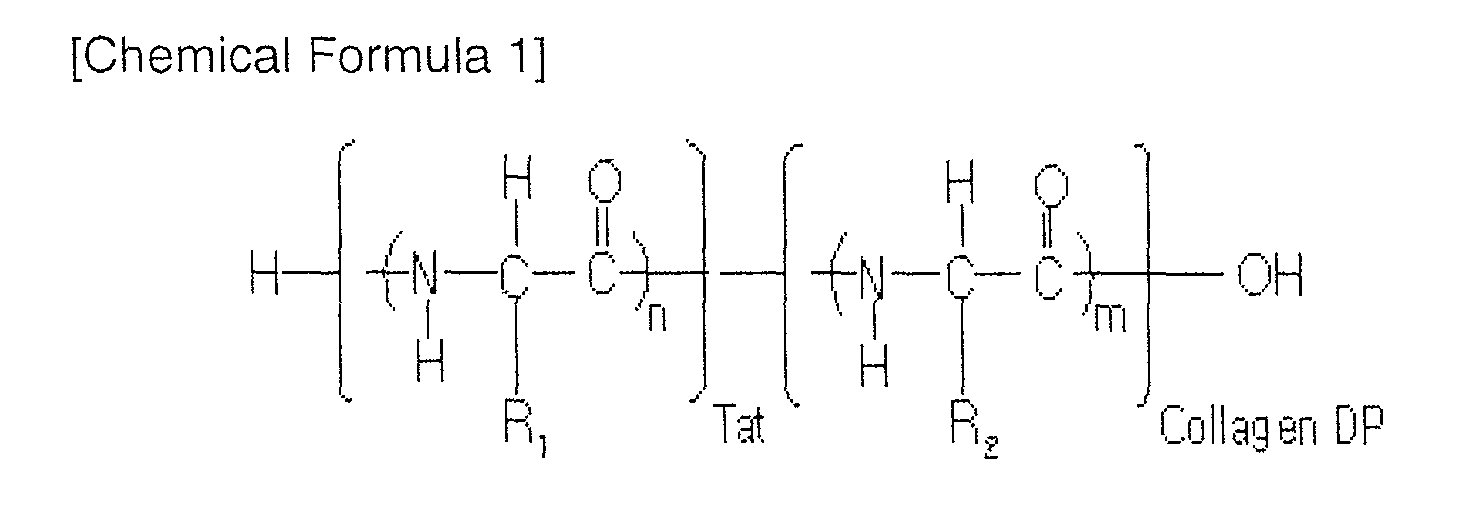
[] collagen DP is a peptide of continuous 5 to 35 amino acids consisting of a peptide of amino acids 212 to 216 in a peptide of amino acids 182 to 246 of human type- I collagen shown in Sequence No. 1; R2 is a side chain of amino acids comprising the peptide; and m is an integer from 5 to 35.



| Sample | Concentration (%) | Irritation Index (PII) | Irritation Degree |
| Control | - | 0.50 | Minute irritation |
| Compound represented by the Chemical Formula 1 | 0.01 | 0.52 | Minute irritation |
| 0.1 | 0.53 | Minute irritation | |
| 0.5 | 0.53 | Minute irritation |


Claims (9)
- A fusion peptide (Tat-human Type- I collagen DP), in which a self cell-penetrating Tat peptide is bound to a human Type- I collagen C-terminal derived peptide, represented by the following Chemical Formula 1:where []Tat is a Tat peptide having a self cell-penetration property; R1 is one or more substituent selected from the group consisting of side chains of glutamine, lysine, arginine, and glycine; and n is an integer from 4 to 12; and

[]collagen DP is a peptide of continuous 5 to 35 amino acids consisting of a peptide of amino acids 212 to 216 in a peptide of amino acids 182 to 246 of human type- I collagen shown in Sequence No. 1; R2 is a side chain of amino acids comprising the peptide; and m is an integer from 5 to 35. - The fusion peptide according to Claim 1, wherein n is an integer from 8 to 10.
- The fusion peptide according to Claim 1, wherein the self cell-penetrating Tat peptide is selected from the group consisting of a peptide of Sequence No. 5, a peptide of Sequence No. 6, and a peptide of Sequence No. 7.
- The fusion peptide according to Claim 1, wherein in Chemical Formula 1, []collagen DP is a peptide of continuous 8 to 15 amino acids consisting of a peptide of amino acids 212 to 216 in a peptide of amino acid shown in Sequence No. 1.
- The fusion peptide according to Claim 1, wherein in Chemical Formula 1, []collagen DP is selected from the group consisting of a peptide of Sequence No. 2, a peptide of Sequence No. 3, and a peptide of Sequence No. 4.
- A method for preparing the Tat-human Type- I collagen DP fusion peptide of Claim 1 by solid phase peptide synthesis.
- A method for preparing the Tat-human Type- I collagen DP fusion peptide of Claim 1 by a biological method using a gene recombination technique.
- A skin anti-aging cosmetic composition comprising the compound of Claim 1 as an active ingredient.
- The skin anti-aging cosmetic composition according to Claim 8, wherein the compound of Claim 1 is contained in an amount of 0.000001 to 5.0 wt%.
Applications Claiming Priority (2)
| Application Number | Priority Date | Filing Date | Title |
|---|---|---|---|
| KR1020020014063A KR100753472B1 (en) | 2002-03-15 | 2002-03-15 | A fusion peptide in which TA peptide is bound to a peptide derived from C-terminus of human collagen type I, a method for preparing the same, and a cosmetic composition for improving skin wrinkles comprising the same |
| KR2002014063 | 2002-03-15 |
Publications (2)
| Publication Number | Publication Date |
|---|---|
| EP1354894A2 true EP1354894A2 (en) | 2003-10-22 |
| EP1354894A3 EP1354894A3 (en) | 2003-10-29 |
Family
ID=28036072
Family Applications (1)
| Application Number | Title | Priority Date | Filing Date |
|---|---|---|---|
| EP02292293A Withdrawn EP1354894A3 (en) | 2002-03-15 | 2002-09-18 | Fusion peptide of human type-1 collagen derived peptide and tat peptide, preparation thereof, and skin anti-aging cosmetic composition comprising the same |
Country Status (6)
| Country | Link |
|---|---|
| US (1) | US7094407B2 (en) |
| EP (1) | EP1354894A3 (en) |
| JP (1) | JP4231674B2 (en) |
| KR (1) | KR100753472B1 (en) |
| AU (1) | AU2002343889A1 (en) |
| WO (1) | WO2003078470A1 (en) |
Cited By (1)
| Publication number | Priority date | Publication date | Assignee | Title |
|---|---|---|---|---|
| CN104402975A (en) * | 2014-12-11 | 2015-03-11 | 太原锦波生物医药科技有限公司 | Anti-aging short peptide and preparation method thereof |
Families Citing this family (26)
| Publication number | Priority date | Publication date | Assignee | Title |
|---|---|---|---|---|
| EP1724280A1 (en) * | 2004-03-08 | 2006-11-22 | Universidad De Barcelona | Use of peptides as penetrating cell carriers |
| US7342093B2 (en) * | 2004-07-23 | 2008-03-11 | University Of Massachusetts | Compounds that inhibit Hsp90 protein-protein interactions with IAP proteins |
| US20060251625A1 (en) * | 2005-05-05 | 2006-11-09 | Joanna Shisler | MCV MC160 compositions and methods |
| US20090130034A1 (en) * | 2005-09-27 | 2009-05-21 | Emory University | Re-engineered uv damage endonuclease, compositions and methods |
| JP4033877B2 (en) * | 2005-09-29 | 2008-01-16 | 株式会社ファンケル | Composition for promoting type I collagen production |
| EP1960421B1 (en) * | 2005-12-15 | 2013-03-13 | Sederma | New polypeptides and their use |
| WO2009012367A1 (en) * | 2007-07-18 | 2009-01-22 | Aesthetic Science | Composition and method of use for soft tissue augmentation/drug delivery |
| US8987212B2 (en) * | 2007-08-07 | 2015-03-24 | Muhammed Majeed | Oleanoyl peptide composition and method of treating skin aging |
| US20100322916A1 (en) * | 2008-01-30 | 2010-12-23 | Mccullough Amanda K | Dna repair polypeptides and methods of delivery and use |
| EP2153815A1 (en) | 2008-08-05 | 2010-02-17 | Isdin S.A. | Use of urea containing compositions |
| EP2153814A1 (en) | 2008-08-05 | 2010-02-17 | Isdin S.A. | Use of compositions comprising urea |
| EP2504357B1 (en) * | 2009-11-23 | 2017-08-02 | Research Development Foundation | Recombinant filaggrin polypeptides for cell importation |
| JP6441825B2 (en) * | 2013-02-28 | 2018-12-19 | アモーレパシフィック コーポレーションAmorepacific Corporation | Composition for maintaining efficacy of filler |
| WO2014209947A2 (en) * | 2013-06-24 | 2014-12-31 | Children's Medical Center Corporation | Methods and compositions for the inhibition of trpv4 |
| KR102607534B1 (en) * | 2015-12-28 | 2023-11-29 | 오비다트 주식회사 | COSMETIC COMPOSITION FOR SKIN WHITENING COMPRISING TATdMt PEPTIDES |
| JP7016117B2 (en) | 2016-01-18 | 2022-02-21 | コスメディ製薬株式会社 | Collagen cosmetics |
| CN112469432B (en) * | 2019-04-01 | 2025-07-25 | 格尔托公司 | Topical formulation of recombinant collagen |
| TW202104254A (en) | 2019-04-12 | 2021-02-01 | 美商格爾托公司 | Recombinant elastin and production thereof |
| KR20240004264A (en) * | 2021-03-04 | 2024-01-11 | 젤라텍, 인크. | Method for producing materials using collagen from cultured animal cells |
| CN114316029B (en) * | 2022-01-27 | 2023-06-27 | 西安巨子生物基因技术股份有限公司 | Transdermal absorptive peptide and recombinant collagen constructed by repetition of the same |
| CN114316030B (en) * | 2022-01-27 | 2023-06-30 | 西安巨子生物基因技术股份有限公司 | Transdermal absorptive type I recombinant collagen and application thereof |
| CN115581633B (en) * | 2022-10-14 | 2023-09-12 | 深圳市维琪科技股份有限公司 | New use of peptide compounds in preparation of composition for skin aging repair |
| KR102952820B1 (en) | 2022-11-11 | 2026-04-16 | 웰펩 주식회사 | A peptide having an excellent collagen proliferation effect and a composition for improving skin wrinkles comprising the same |
| CN116003577B (en) * | 2023-02-14 | 2023-10-31 | 广东丸美生物技术股份有限公司 | Recombinant collagen for skin soothing and repairing and application thereof |
| KR102663334B1 (en) | 2023-10-25 | 2024-06-11 | 주식회사 현대바이오랜드 | Peptide for strengthening skin elasticity and barrier, and cosmetic use thereof |
| CN118562017A (en) * | 2024-06-17 | 2024-08-30 | 宁波肽漾生物科技有限公司 | Collagen and production method thereof |
Family Cites Families (10)
| Publication number | Priority date | Publication date | Assignee | Title |
|---|---|---|---|---|
| JP2963505B2 (en) * | 1990-08-02 | 1999-10-18 | 株式会社資生堂 | Emulsion composition |
| CA2094658A1 (en) | 1992-04-23 | 1993-10-24 | Martin Sumner-Smith | Intracellular delivery of biochemical agents |
| FR2741075B1 (en) * | 1995-11-15 | 1998-01-30 | Rech De Pathologie Appliquee S | PEPTIDE CONJUGATES, THEIR USE AS MEDICAMENTS AND COMPOSITIONS CONTAINING THEM |
| JPH09295930A (en) * | 1996-05-07 | 1997-11-18 | Narisu Keshohin:Kk | Cosmetic |
| JPH10298196A (en) * | 1997-04-28 | 1998-11-10 | Nippon Fine Chem Co Ltd | Cosmetic |
| FR2783169B1 (en) * | 1998-09-15 | 2001-11-02 | Sederma Sa | COSMETIC OR DERMOPHARMACEUTICAL USE OF PEPTIDES FOR HEALING AND FOR IMPROVING THE SKIN APPEARANCE DURING NATURAL OR ACCELERATED AGING (HELIODERMIA, POLLUTION) |
| US6444647B1 (en) * | 1999-04-19 | 2002-09-03 | The Procter & Gamble Company | Skin care compositions containing combination of skin care actives |
| JP2001163758A (en) * | 1999-12-08 | 2001-06-19 | Lion Corp | External preparation for skin |
| KR100379578B1 (en) * | 2000-07-26 | 2003-04-08 | 최수영 | Cell-transducing HIV-1 Tat-C3 transferase fusion protein, expression vector of the fusion protein and the analysing method of Rho protein using the fusion protein |
| KR100379577B1 (en) * | 2000-07-26 | 2003-04-08 | 최수영 | Cell-transducing HIV-1 Tat-glutamate dehydrogenase fusion protein, polynucleotide coding the fusion protein, expression vector of the fusion protein and the transducing method of the fusion protein |
-
2002
- 2002-03-15 KR KR1020020014063A patent/KR100753472B1/en not_active Expired - Lifetime
- 2002-08-27 WO PCT/KR2002/001616 patent/WO2003078470A1/en not_active Ceased
- 2002-08-27 AU AU2002343889A patent/AU2002343889A1/en not_active Abandoned
- 2002-09-16 US US10/243,836 patent/US7094407B2/en not_active Expired - Lifetime
- 2002-09-18 EP EP02292293A patent/EP1354894A3/en not_active Withdrawn
- 2002-09-30 JP JP2002287008A patent/JP4231674B2/en not_active Expired - Lifetime
Cited By (1)
| Publication number | Priority date | Publication date | Assignee | Title |
|---|---|---|---|---|
| CN104402975A (en) * | 2014-12-11 | 2015-03-11 | 太原锦波生物医药科技有限公司 | Anti-aging short peptide and preparation method thereof |
Also Published As
| Publication number | Publication date |
|---|---|
| JP2003277399A (en) | 2003-10-02 |
| US20030185862A1 (en) | 2003-10-02 |
| KR100753472B1 (en) | 2007-08-31 |
| KR20030074999A (en) | 2003-09-22 |
| US7094407B2 (en) | 2006-08-22 |
| AU2002343889A1 (en) | 2003-09-29 |
| EP1354894A3 (en) | 2003-10-29 |
| JP4231674B2 (en) | 2009-03-04 |
| WO2003078470A1 (en) | 2003-09-25 |
Similar Documents
| Publication | Publication Date | Title |
|---|---|---|
| US7094407B2 (en) | Fusion peptide containing human type-1 collagen derived peptide, preparation thereof, and skin anti-aging cosmetic composition comprising the same | |
| ES2349972B1 (en) | USEFUL PEPTIDES IN THE TREATMENT AND / OR CARE OF SKIN, MUCOUSES AND / OR LEATHER LEATHER AND ITS USE IN COSMETIC OR PHARMACEUTICAL COMPOSITIONS. | |
| AU2008327932B2 (en) | Compositions for reducing oxidative stress and uses thereof | |
| RU2346949C2 (en) | Tripeptides and their derivatives for cosmetic application for skin structure benefication | |
| US20090022674A1 (en) | Cosmetic or dermatological preparations comprising oligopeptides for lightening the skin of age marks and/or for preventing tanning of the skin, in particular tanning of the skin caused by uv radiation | |
| JP2009512685A (en) | Peptide for promoting improvement of hair growth and skin wrinkle, and cosmetic composition containing the same | |
| JP2000309521A (en) | Skin lotion | |
| US7060673B2 (en) | Fusion peptide of human parathyroid hormone derived peptide and tat peptide, preparation thereof, and skin slimming cosmetic composition comprising the same | |
| US10874709B2 (en) | Conjugate of salicylic acid and peptide | |
| US6296857B1 (en) | Cosmetic or dermatological preparations comprising oligopeptides for lightening the skin of age marks and/or for preventing tanning of the skin, in particular tanning of the skin caused by UV radiation | |
| EP4279059A1 (en) | Novel skin-penetrating peptide, dermal and mucosal composition comprising same, and use thereof | |
| KR100769576B1 (en) | Fusion peptide comprising tat peptide and human parathyroid hormone derived peptide, its preparation method, and slimming cosmetic composition comprising the same | |
| KR102695401B1 (en) | Novel fusion peptide for wrinkle improvement and cosmetic composition for wrinkle improvement containing the same | |
| KR100891970B1 (en) | Hydroquinone derivatives bound to TA peptides, preparation methods thereof, and cosmetic composition for skin whitening comprising the same | |
| KR20030028232A (en) | Ascorbic acid derivatives grafted with tat peptide, its preparation method and costmetic composition for skin whitening comprising the same | |
| RU2833316C1 (en) | Peptides with protective activity against cell damage and liposomal formulations | |
| AU2283800A (en) | Peptidic product, process and composition | |
| KR20170086421A (en) | Peptide for accelerating delivery to nerve cells | |
| KR20180108988A (en) | Cosmetic composition containing a production method of peptide that promotes collagen synthesis in human fibroblasts and controls revitalization of collagen decomposing enzymes. | |
| EP1618125A1 (en) | Vitamin c derivatives with peptide, preparation method thereof and composition comprising the same | |
| HK40014079A (en) | Conjugate of salicylic acid and peptide | |
| HK40014079B (en) | Conjugate of salicylic acid and peptide | |
| EA041180B1 (en) | SALICYLIC ACID AND PEPTIDE CONJUGATE |
Legal Events
| Date | Code | Title | Description |
|---|---|---|---|
| PUAI | Public reference made under article 153(3) epc to a published international application that has entered the european phase |
Free format text: ORIGINAL CODE: 0009012 |
|
| PUAL | Search report despatched |
Free format text: ORIGINAL CODE: 0009013 |
|
| AK | Designated contracting states |
Kind code of ref document: A2 Designated state(s): AT BE BG CH CY CZ DE DK EE ES FI FR GB GR IE IT LI LU MC NL PT SE SK TR |
|
| AX | Request for extension of the european patent |
Extension state: AL LT LV MK RO SI |
|
| AK | Designated contracting states |
Kind code of ref document: A3 Designated state(s): AT BE BG CH CY CZ DE DK EE ES FI FR GB GR IE IT LI LU MC NL PT SE SK TR |
|
| AX | Request for extension of the european patent |
Extension state: AL LT LV MK RO SI |
|
| 17P | Request for examination filed |
Effective date: 20040414 |
|
| 17Q | First examination report despatched |
Effective date: 20040517 |
|
| AKX | Designation fees paid |
Designated state(s): AT BE BG CH CY CZ DE DK EE ES FI FR GB GR IE IT LI LU MC NL PT SE SK TR |
|
| GRAP | Despatch of communication of intention to grant a patent |
Free format text: ORIGINAL CODE: EPIDOSNIGR1 |
|
| STAA | Information on the status of an ep patent application or granted ep patent |
Free format text: STATUS: THE APPLICATION IS DEEMED TO BE WITHDRAWN |
|
| 18D | Application deemed to be withdrawn |
Effective date: 20081108 |