EP1354890A1 - Novel polypeptide and dna thereof - Google Patents
Novel polypeptide and dna thereof Download PDFInfo
- Publication number
- EP1354890A1 EP1354890A1 EP01272860A EP01272860A EP1354890A1 EP 1354890 A1 EP1354890 A1 EP 1354890A1 EP 01272860 A EP01272860 A EP 01272860A EP 01272860 A EP01272860 A EP 01272860A EP 1354890 A1 EP1354890 A1 EP 1354890A1
- Authority
- EP
- European Patent Office
- Prior art keywords
- polypeptide
- cancer
- agent
- polynucleotide
- present
- Prior art date
- Legal status (The legal status is an assumption and is not a legal conclusion. Google has not performed a legal analysis and makes no representation as to the accuracy of the status listed.)
- Granted
Links
Images



Classifications
-
- G—PHYSICS
- G01—MEASURING; TESTING
- G01N—INVESTIGATING OR ANALYSING MATERIALS BY DETERMINING THEIR CHEMICAL OR PHYSICAL PROPERTIES
- G01N33/00—Investigating or analysing materials by specific methods not covered by groups G01N1/00 - G01N31/00
- G01N33/48—Biological material, e.g. blood, urine; Haemocytometers
- G01N33/50—Chemical analysis of biological material, e.g. blood, urine; Testing involving biospecific ligand binding methods; Immunological testing
- G01N33/53—Immunoassay; Biospecific binding assay; Materials therefor
- G01N33/575—Immunoassay; Biospecific binding assay; Materials therefor for cancer
- G01N33/5758—Immunoassay; Biospecific binding assay; Materials therefor for cancer involving compounds serving as markers for tumours, cancers or neoplasias, e.g. cellular determinants, receptors, heat shock/stress proteins, A-protein, oligosaccharides or metabolites
-
- A—HUMAN NECESSITIES
- A61—MEDICAL OR VETERINARY SCIENCE; HYGIENE
- A61P—SPECIFIC THERAPEUTIC ACTIVITY OF CHEMICAL COMPOUNDS OR MEDICINAL PREPARATIONS
- A61P19/00—Drugs for skeletal disorders
-
- A—HUMAN NECESSITIES
- A61—MEDICAL OR VETERINARY SCIENCE; HYGIENE
- A61P—SPECIFIC THERAPEUTIC ACTIVITY OF CHEMICAL COMPOUNDS OR MEDICINAL PREPARATIONS
- A61P19/00—Drugs for skeletal disorders
- A61P19/02—Drugs for skeletal disorders for joint disorders, e.g. arthritis, arthrosis
-
- A—HUMAN NECESSITIES
- A61—MEDICAL OR VETERINARY SCIENCE; HYGIENE
- A61P—SPECIFIC THERAPEUTIC ACTIVITY OF CHEMICAL COMPOUNDS OR MEDICINAL PREPARATIONS
- A61P19/00—Drugs for skeletal disorders
- A61P19/08—Drugs for skeletal disorders for bone diseases, e.g. rachitism, Paget's disease
- A61P19/10—Drugs for skeletal disorders for bone diseases, e.g. rachitism, Paget's disease for osteoporosis
-
- A—HUMAN NECESSITIES
- A61—MEDICAL OR VETERINARY SCIENCE; HYGIENE
- A61P—SPECIFIC THERAPEUTIC ACTIVITY OF CHEMICAL COMPOUNDS OR MEDICINAL PREPARATIONS
- A61P29/00—Non-central analgesic, antipyretic or antiinflammatory agents, e.g. antirheumatic agents; Non-steroidal antiinflammatory drugs [NSAID]
-
- A—HUMAN NECESSITIES
- A61—MEDICAL OR VETERINARY SCIENCE; HYGIENE
- A61P—SPECIFIC THERAPEUTIC ACTIVITY OF CHEMICAL COMPOUNDS OR MEDICINAL PREPARATIONS
- A61P35/00—Antineoplastic agents
-
- A—HUMAN NECESSITIES
- A61—MEDICAL OR VETERINARY SCIENCE; HYGIENE
- A61P—SPECIFIC THERAPEUTIC ACTIVITY OF CHEMICAL COMPOUNDS OR MEDICINAL PREPARATIONS
- A61P35/00—Antineoplastic agents
- A61P35/02—Antineoplastic agents specific for leukemia
-
- A—HUMAN NECESSITIES
- A61—MEDICAL OR VETERINARY SCIENCE; HYGIENE
- A61P—SPECIFIC THERAPEUTIC ACTIVITY OF CHEMICAL COMPOUNDS OR MEDICINAL PREPARATIONS
- A61P35/00—Antineoplastic agents
- A61P35/04—Antineoplastic agents specific for metastasis
-
- A—HUMAN NECESSITIES
- A61—MEDICAL OR VETERINARY SCIENCE; HYGIENE
- A61P—SPECIFIC THERAPEUTIC ACTIVITY OF CHEMICAL COMPOUNDS OR MEDICINAL PREPARATIONS
- A61P43/00—Drugs for specific purposes, not provided for in groups A61P1/00-A61P41/00
-
- A—HUMAN NECESSITIES
- A61—MEDICAL OR VETERINARY SCIENCE; HYGIENE
- A61P—SPECIFIC THERAPEUTIC ACTIVITY OF CHEMICAL COMPOUNDS OR MEDICINAL PREPARATIONS
- A61P5/00—Drugs for disorders of the endocrine system
-
- C—CHEMISTRY; METALLURGY
- C07—ORGANIC CHEMISTRY
- C07K—PEPTIDES
- C07K14/00—Peptides having more than 20 amino acids; Gastrins; Somatostatins; Melanotropins; Derivatives thereof
- C07K14/435—Peptides having more than 20 amino acids; Gastrins; Somatostatins; Melanotropins; Derivatives thereof from animals; from humans
- C07K14/475—Growth factors; Growth regulators
-
- C—CHEMISTRY; METALLURGY
- C12—BIOCHEMISTRY; BEER; SPIRITS; WINE; VINEGAR; MICROBIOLOGY; ENZYMOLOGY; MUTATION OR GENETIC ENGINEERING
- C12Q—MEASURING OR TESTING PROCESSES INVOLVING ENZYMES, NUCLEIC ACIDS OR MICROORGANISMS; COMPOSITIONS OR TEST PAPERS THEREFOR; PROCESSES OF PREPARING SUCH COMPOSITIONS; CONDITION-RESPONSIVE CONTROL IN MICROBIOLOGICAL OR ENZYMOLOGICAL PROCESSES
- C12Q1/00—Measuring or testing processes involving enzymes, nucleic acids or microorganisms; Compositions therefor; Processes of preparing such compositions
- C12Q1/68—Measuring or testing processes involving enzymes, nucleic acids or microorganisms; Compositions therefor; Processes of preparing such compositions involving nucleic acids
- C12Q1/6876—Nucleic acid products used in the analysis of nucleic acids, e.g. primers or probes
- C12Q1/6883—Nucleic acid products used in the analysis of nucleic acids, e.g. primers or probes for diseases caused by alterations of genetic material
- C12Q1/6886—Nucleic acid products used in the analysis of nucleic acids, e.g. primers or probes for diseases caused by alterations of genetic material for cancer
-
- G—PHYSICS
- G01—MEASURING; TESTING
- G01N—INVESTIGATING OR ANALYSING MATERIALS BY DETERMINING THEIR CHEMICAL OR PHYSICAL PROPERTIES
- G01N33/00—Investigating or analysing materials by specific methods not covered by groups G01N1/00 - G01N31/00
- G01N33/48—Biological material, e.g. blood, urine; Haemocytometers
- G01N33/50—Chemical analysis of biological material, e.g. blood, urine; Testing involving biospecific ligand binding methods; Immunological testing
- G01N33/53—Immunoassay; Biospecific binding assay; Materials therefor
- G01N33/575—Immunoassay; Biospecific binding assay; Materials therefor for cancer
-
- A—HUMAN NECESSITIES
- A01—AGRICULTURE; FORESTRY; ANIMAL HUSBANDRY; HUNTING; TRAPPING; FISHING
- A01K—ANIMAL HUSBANDRY; AVICULTURE; APICULTURE; PISCICULTURE; FISHING; REARING OR BREEDING ANIMALS, NOT OTHERWISE PROVIDED FOR; NEW BREEDS OF ANIMALS
- A01K2217/00—Genetically modified animals
- A01K2217/05—Animals comprising random inserted nucleic acids (transgenic)
-
- A—HUMAN NECESSITIES
- A61—MEDICAL OR VETERINARY SCIENCE; HYGIENE
- A61K—PREPARATIONS FOR MEDICAL, DENTAL OR TOILETRY PURPOSES
- A61K38/00—Medicinal preparations containing peptides
-
- C—CHEMISTRY; METALLURGY
- C12—BIOCHEMISTRY; BEER; SPIRITS; WINE; VINEGAR; MICROBIOLOGY; ENZYMOLOGY; MUTATION OR GENETIC ENGINEERING
- C12Q—MEASURING OR TESTING PROCESSES INVOLVING ENZYMES, NUCLEIC ACIDS OR MICROORGANISMS; COMPOSITIONS OR TEST PAPERS THEREFOR; PROCESSES OF PREPARING SUCH COMPOSITIONS; CONDITION-RESPONSIVE CONTROL IN MICROBIOLOGICAL OR ENZYMOLOGICAL PROCESSES
- C12Q2600/00—Oligonucleotides characterized by their use
- C12Q2600/158—Expression markers
Definitions
- the present invention relates to a novel polypeptide having a structure similar to chordin which is involved in inhibition of bone cell differentiation, a polynucleotide encoding the polypeptide, a complementary polynucleotide to the polynucleotide, a vector including the polynucleotide, a transformer transformed by the vector, an antibody recognizing the polypeptide, a ligand recognizing the polypeptide, a screening method of a compound using the polypeptide, use as a marker of cancer and bone diseases of the polypeptide and the polynucleotide.
- Osteogenesis a phenomenon of bone regeneration by osteoblasts, is important in maintaining organisms of vertebrates.
- hormones such as estrogen, calcitonine and parathyroid hormone (PHT)
- growth factors such as an osteogenetic factor (BMP: Bone Morphogenetic Protein)
- BMP Bone Morphogenetic Protein
- medicines such as activated vitamin D, a calcium drug, and vitamin K.
- BMP a group of diffusible factors belonging to the TGF- ⁇ family, has been reported to include about 20 kinds of genes (Molecular Medicine, 37, 634 (2000)).
- BMP-2 and BMP-4 have numerously been reported to possess a modulatory activity of bone differentiation.
- BMP expected as a novel remedy for diseases related with bone
- BMP is the only cytokine possessing an activity as a signal of ectopic formation.
- BMP is thought to be useful for osteogenesis (endochondral ossification), which takes place in a repair reaction at bone fracture or bone defection, and which is caused by displacement of chondroid by neonatal bone (Developmental Biology, 174, 448 (1996). Journal of Bone and Mineral Research, 9(5), 651 (1994)).
- mesenchymal stem cells have pluripotentcy differentiate to adipocytes, cartilage cells or osteoblasts depending on the culture condition (Science, 284, 143 (1999)) and that the bone differentiation of mesenchymal stem cells is induced by BMP-2 (Journal of Cell Biology, 113, 681 (1991)).
- BMP-2 Journal of Cell Biology, 113, 681 (1991)
- osteogenesis-involved diseases such as rheumatoid arthritis, osteoarthritis or osteoporosis.
- gene therapy using BMP is now tried (Molecular Medicine, 37, 709 (2000)).
- the mechanisms of action of BMP in those diseases have not been analyzed in detail and the solution being desired.
- BMP has been found to induce a differentiation from fibroblast to osteoblast via the receptor, by using an alkaline phosphatase activity as an indication (Biochemical and Biophysical Research Communications, 172, 295 (1990)). Further found is that the activity of BMP is suppressed by chordin, a protein secreted by Spemann organizer tissue (Nature, 382, 595 (1996)) and that chordin dose not bind with the BMP receptor but directly binds with BMP to work as an antagonist (Cell, 86, 589 (1996)).
- chordin has been clarified to have four repeated structures (CR1 to CR4) which has a signal peptide at the amino terminal end and contains a lot of Sistine and to bind with BMP via the characteristic structure (motif) (Development, 127, 821 (2000)).
- Kielin has been reported to be a secrete protein having a high homology with chordin (Proceedings of the National Academy of Sciences, 97(10), 5291-5296 (2000)).
- chordin-like proteins other than Kielin are suggested to exist. But, the reality is not clear and the discovery of novel proteins have been desired for the analysis of the mechanism of action of BMP.
- cancer is a disease that comes out in most tissues of a body.
- oncogenes, target genes of canceration, and antioncogenes have been discovered, and mechanisms of human canceration are progressively being discovered on a specified gene level.
- mechanisms of carcinogenesis have not completely clarified, with a possibility of unknown genes being involved therein.
- causative genes have not yet been identified in parotid cancer, esophagus cancer, duodenal carcinoma, ureteral cancer, testicle cancer, ovarian cancer, uterine cancer, intestinal cancer, rectal cancer, biliary cancer and thyroid cancer. Under the above situations, an identification of novel genes concerning pathogenesis of cancer and diagnostic methods using the gene have been desired.
- cancer cells are characteristic of proliferating in dedifferentiation states, there are many trials that use factors and pharmaceutical compositions for modulating differentiation of carcinoma as anticancer agents. However, such trials can not suppress all cancers, thus novel factors and pharmaceutical compositions possessing activity of modulating differentiation are desired to be discovered.
- the present invention relates to provide a novel polypeptide and polynucleotide useful for diagnostics of cancer and bone diseases, as well as a remedy for cancer and bone diseases with the polypeptide and an inhibitory agent thereof.
- the present inventors have intensively studied to isolate a novel gene concerning the differential inhibition of bone cells, and found out a novel gene encoding chordin-like novel polypeptide (C0783).
- C0783 chordin-like novel polypeptide
- a further investigation found that the gene expression was increased or decreased in variety of organs of cancer, and as a result the polypeptide and polynucleotide were useful as a cancer marker.
- Further studies revealed that the expression of the gene raised, upon the differentiation from stem cells to bone, and that the protein bound with BMP to exhibit an activity as a control factor of bone differentiation, whereby the present invention has been achieved. That is to say, the present invention relates to:
- the polypeptide of this invention comprises "a polypeptide or salt thereof containing an amino acid sequence represented by #1 (Cys) to #655 (Arg) as described in the SEQ ID NO: 2" and "a polypeptide or salt as described in (1), comprising the amino acid sequence represented by #-30 (Met) to #655 (Arg) as described in the SEQ ID NO: 2".
- polypeptide comprises "a polypeptide or salt thereof containing an amino acid sequence represented by #1 (Cys) to #597 (Arg) is described in the SEQ ID NO: 4" and "a polypeptide or salt thereof comprising the amino acid sequence represented by #-30 (Met) to #597 (Arg) as described in the SEQ ID NO: 4", wherein 58 amino acid residues from #315 (Gly) to #372 (Gln) are deficient in the amino acid sequence as described in the SEQ ID NO: 2.
- salt herein used includes a physiologically acceptable salt of acid or base, preferably a physiologically acceptable acid-addition salt.
- the salt is exemplified by a salt with a mineral acid such as hydrochloric acid, phosphoric acid, hydrobromic acid, and sulfuric acid, or a salt with an organic acid such as acetic acid, formic acid, proprionic acid, fumaric acid, maleic acid, succinic acid, tartaric acid, citric acid, malic acid, oxalic acid, benzoic acid, methanesulfonic acid, and benzenesulfonic acid.
- a mineral acid such as hydrochloric acid, phosphoric acid, hydrobromic acid, and sulfuric acid
- organic acid such as acetic acid, formic acid, proprionic acid, fumaric acid, maleic acid, succinic acid, tartaric acid, citric acid, malic acid, oxalic acid, benzoic acid, methanesulfonic acid, and benz
- the polypeptide of the present invention comprises "a polypeptide or salt, which comprises an amino acid sequence having at least one mutation, selected from deletion, displacement and insertion of one or more amino acids in the amino acid sequence as described in (1) to (4) and which is a cancer marker andlor has an BMP-binding activity".
- the term "one or more amino acid” herein used means a number of amino acids which can be deleted, displaced and inserted by site-directed mutagenesis, and 50 or less residue. It is preferably 30 or less residue, more preferably 20 or less and most preferably 10 or less amino acid residue.
- the polypeptide of the present invention has biological activities even when having a mutation such as deletion, displacement or insertion and works as a cancer marker or has a BMP-binding activity.
- the polypeptide has 60% or more of homology with the amino acid sequence represented by the SEQ ID NO: 2 or 4, preferably 80% or more of homology and more preferably 95% or more of homology.
- cancer marker used in the present invention refers to an agent that can be used to detect cancer cells or cancer tissues, and useful when the expression of an mRNA or a protein increases or decreases in cancer diseases.
- Examlpes of "cancer” include Parotid cancer, lung cancer, esophagus cancer, gastric cancer, duodenal carcinoma, kidney cancer, liver cancer, liver cancer, bladder cancer, ureteral cancer, testicular cancer, ovarian cancer, uterine cancer, mammary cancer, leukemia, colon cancer, intestinal cancer, colon cancer, rectal cancer, biliary cancer and thyroid cancer.
- the cancer marker includes any substance capable of detecting cancer, such as polynucleotide, polypeptide or antibody of the present invention.
- cancer remedy used in the present invention refers to an agent for treating cancer diseases. Since the expression of the polypeptide of the present invention increases or decreases in various kinds of cancer cells or cancer tissues, polypeptide, polynucleotide or antibody of the present invention is useful for treating various kinds of cancers.
- BMP-binding activity used in the present invention refers to possessing a binding ability with various BMPs, preferably a binding ability with BMP-2 or BMP-4.
- the polypeptide of the present invention has a binding activity with BMP, and BMP has an inducing activity of bone differentiation. Therefore, the polypeptide, polynucleotide and antibody are thought to be useful as a bone disease marker or a remedy for bone diseases which are considered to be related to BMP, e.g. rheumatoid arthritis, osteoarthritis, and osteoporosis.
- the term "bone disease marker.” used herein refers to an agent for detecting bone diseases. When the expression of an mRNA or a protein increases or decreases, the agent may be useful as "a cancer marker".
- the "bone disease marker” includes any substance capable of detecting a bone disease, such as polypeptide, polynucleotide, antibody or the like in the present invention.
- the "remedy for bone diseases” is an agent for treating a bone disease. Since the polypeptide of the present invention has a binding activity with BMP, polypeptide, polynucleotide, antibody or the like of the present invention is useful for treating a bone disease which is considered to be related to BMP, e.g. rheumatoid arthritis, osteoarthritis, and osteoporosis, by modulating an induced activity of bone differentiation.
- BMP e.g. rheumatoid arthritis, osteoarthritis, and osteoporosis
- the polynucleotide of the present invention is a DNA encoding the polypeptide of the present invention and is exemplified with "a polynucleotide, comprising the nucleotide sequence represented by #91 (1)to #2055 (G) of the SEQ ID NO: I", "a polynucleotide, comprising the base sequence represented by #1 (A) to #2055 (G) of the SEQ ID NO: I", "a polynucleotide, comprising the base sequence represented by #91 (T) to #1881 (G) of the SEQ ID NO: 3” or "a polynucleotide, comprising the base sequence represented by #1 (A) to #1881 (G) of the SEQ ID NO: 3".
- the polynucleotide in the present invention comprises "a polynucleotide", which hybridizes with the polynucleotide in the present invention under a stringent condition and encodes the polypeptide which is a cancer marker and/or has a BMP-binding activity.
- the polynucleotide in the present invention is "a polynucleotide” comprising the nucleotide sequence represented by #91 (T) to #2055 (G) of the SEQ ID NO: 1" or "a polynucleotide, comprising the nucleotide sequence represented by #91 CT) to #1881 (G) of the SEQ ID NO: 3".
- polynucleotide hybridizing under a stringent condition refers to the polynucleotide obtainable by well known methods in this field, such as colony hybridization method, plaque hybridization method and southern blotting method, using an polypeptide as a probe which is selected from the polynucleotides in the present invention.
- it means the polynucleotide which can be identified by washing with a solution of 0.1 to 2 times concentrated SSC (Saline Sodium Citrate; 150mM NaCl 15mM sodium citrate) after the hybridization is carried out in 0.7 to 1.0 M of NaCl at 65 °C using an immobilized membrane of polynucleotide originated from colony or plaque.
- SSC Seline Sodium Citrate
- 150mM NaCl 15mM sodium citrate 150mM NaCl 15mM sodium citrate
- the hybridization can be carried out according to the method described Molecular Cloning: A Laboratory Manual, Second Edition (1989) (Cold Spring Harbor Laboratory Press), Current Protocols in Molecular Biology (1994) (Wiley-Interscience), DNA Cloning 1: Core Techniques, A Practical Approach, Second Edition (1995) (Oxford University Press).
- the sequence comprised from only adenine (A) or thymine (T) is excluded from the hybridizing sequence under a stringent condition.
- hybridizing polynucleotide refers to a polynucleotide which can be hybridized to another polynucleotide under the above hybridizing condition.
- a polynucleotide can be exemplified by one which has at least 60% of homology with the base sequence of the DNA encoding polypeptide having an amino acid sequence represented by the SEQ ID NO: 1 or 3, preferably 80% or more of homology and more preferably 95% or more of homology.
- the homology is shown by a score obtained by, for example, BLAST, a search program using an algorithm developed by Altschul et al (The Journal of Molecular Biology, 215, 403-410 (1990)).
- the polynucleotide of the present invention comprises "an oligonucleotide having a sequence identical to that of continuous 5 to 60 bases in the nucleotide sequence as described in the SEQ ID NO: 1 or 3".
- Such a polynucleotide is continuous bases in the nucleotide sequence as described in any one of SEQ ID NO: 1 or 3.
- the polynucleotide is an oligonucleotide having a sequence identical to the nucleotide sequence e.g. 5, 8, 10, 12, 15, 20, 25, 30, 40, 50, and 60 .
- the polynucleotide also comprises an oligonucleotide with the complementary sequence and their oligonucleotide derivatives.
- oligonucleotide derivatives refers to various oligonucleotide derivatives, wherein the phosphoric acid diester bond in the oligonucleotide is transformed to a phosphorothioate bond or an N3'-P5' phosphoamidate bond, the bond of ribose and phosphoric acid diester is transformed to a peptide bond, uracil in the oligonucleotide is replaced by C-5 propionyluracil or C-5 thiazole uracil, cytosine in the oligonucleotide is replaced by C-5 propionylcytosine or phenoxadinemodified cytosine, or ribose in DNA is replaced by 2'-O-propylribose and 2'-methoxyethoxyribose.
- a polynucleotide is, for example, useful as a genetic marker, a PCR primer, and a probe for hybridization
- the present invention comprises the vector inserted with the polynucleotide of the present invention, the transformer transformed by the vector and the preparation method of the polypeptide of the present invention using the transformer.
- Knockout animals and transgenic animals can be provided by the present invention. These modified animals are any mammals except for human, and are preferably exemplified by rodents such as mouse, rat, hamster, and guinea-pig.
- antibody is used in a usual meaning in the concerned field, including the whole or a fragment of the antibody, its derivative, its conjugation and its modulator.
- the antibody is preferably an antibody, which recognizes the polypeptide of the present invention, more preferably recognizes the polypeptide of the present invention specifically and most preferably recognizes the polypeptide only and specifically.
- Such an antibody may be a polyclonal or monoclonal antibody.
- the "detection or quantitative analysis" of the polypeptide of the present invention is carried out using an appropriate method including immunologic methods.
- a method is exemplified by ELISA (Enzyme Linked Immuno Sorbent Assay) method, RIA (Radio Immuno Assay) method, fluorescent antibody method, western blotting method, and immune structure dyeing method.
- Cancer and/or bone disease can be detected using the antibody of the present invention. Since the polypeptide of the present invention can be a cancer marker and/or a bone disease marker, the detection can be accomplished using appropriate immunologic measuring methods as well as the above mentioned detection or quantitative analysis of the polypeptide.
- the present invention relates to a kit comprising the antibody for diagnosis of cancer or bone diseases.
- This kit comprises at least the antibody of the present invention and polypeptide of the present invention as a standard reagent. Since the polypeptide of the present invention is a cancer marker and/or has a BMP-binding activity, the polypeptide of the present invention can be detected immunologically, based on the above mentioned detection method of cancer and bone diseases.
- the "detection or quantitative analysis" of mRNA of polypeptide of the present invention may be carried out using an appropriate mRNAdetecting method including molecular biology methods. Such methods are exemplified by Northern hybridization method, dot blotting method, and RT-PCR method.
- Cancer and/or bone disease can be detected by the method of measuring mRNA of the present invention. Since the polypeptide of the present invention can be a cancer marker and/or a bone disease marker, the detection can be accomplished using an appropriate method including molecular biology methods such as a mRNA detection method and/or a quantitative analysis described above.
- the present invention relates to a detection kit for cancer and/or bone diseases comprising a part or whole of a polynucleotide encoding the polypeptide of the present invention, a standard agent and a part or whole of the polynucleotide. Since the polynucleotide of the present invention can be a cancer marker or a bone disease marker, the polynucleotide can be detected by molecular biology methods based on the above mentioned detection method of cancer or bone diseases.
- a transcription of DNA or a translation of mRNA can be suppressed using the polynucleotide of the present invention.
- a suppression method of a transcription of DNA or a translation of mRNA of the polypeptide can be conducted by suitablly preparing a polynucleotide, which hasa complementary nucleotide sequence to the polynucleotide of the present invention or hybridizes with the polynucleotide of the present invention, an oligonucleotide having a complementary sequence to the oligonucleotide having a continuous 5 to 60 bases sequence in the nucleotide sequence of the polynucleotide of the present invention, an oligonucleotide derivative or the like, using well-known antisense RNAYDNA techniques in this field.
- the present invention relates to a binding agent with the polypeptide of the present invention.
- binding agent herein used refers to an arbitrary agent which can bind with the polypeptide or the polynucleotide of the present invention.
- a binding agent is exemplified by a low molecular weight compound, a polynucleotide, and a polypeptide .
- the "screening method of a binding agent” can be carried out by applying publicly known techniques in this field and can be exemplified by bio-assay, and binding-assay.
- the "kit for screening of a binding agent" of the present invention comprises at least the polypeptide or the polynucleotide of the present invention or apart thereof. Screening of the above mentioned binding agent of the present invention can be carried out by the biological method using the kit.
- the present invention relates to an "agent for modulating a binding activity".
- modulating a binding activity herein used means to increase or decrease of a binding activity between the polypeptide of the present invention and the binding agent of the present invention and the "binding activity” can be evaluated by Percent Maximum Binding (PMB).
- PMB Percent Maximum Binding
- the "agent for modulating a binding activity” is an agent which increases or decreases a binding activity between the polypeptide of the present invention and a binding agent of the present invention and such an agent is exemplified by a low molecular weight compound, a polynucleotide, and a polypeptide.
- the "screening method of an agent for modulating a binding activity" can be achieved by applying publicly known techniques in this field.
- An agent for modulating a binding activity of the present invention can be screened by the method, exemplified by bio-assay and binding-assay.
- a "kit for screening an agent for modulating a binding activity” includes at least the whole or a fragment of the polypeptide and the whole or a fragment of polynucleotide of the present invention. Screening of an agent for modulating a binding activity can be accomplished by biological techniques using the kit of the present invention based on the above mentioned screening method for an agent for modulating a binding activity.
- the present invention relates also to "an agent for modulating the expression".
- the expression herein used means a quantitative expression of the protein or mRNA of the present invention in the target cells.
- the expression can be evaluated using the antibody of the present invention by measuring the protein of the present invention using an appropriate method including immunoassays e.g. ELISA method, RIA method, fluorescent antibody method, and immune structure dyeing method, or by measuring the mRNA of the polypeptide of the present invention using an appropriate method including biological measuring methods e.g. Northern blot hybridization method, dot blotting method, and RT-PCR method.
- modulating the expression means to increase or decrease of the quantitative expression of the protein of the polypeptide or mRNA of the present invention which is evaluated with an appropriate method , including the above mentioned immunoassay, biological assay or the like.
- an agent for modulating of the expression means an agent which increases or decreases the quantitative expression of the protein of the polypeptide or mRNA of the present invention which is evaluated by an appropriate method, including the above mentioned immunoassay, biological assay or the like and such an agent is exemplified with low molecular weight compound, polynucleotide, or polypeptide.
- a "method for screening an agent for modulating a binding activity of expression" of the present invention can be accomplished by appropriately applying publicly well-known techniques in this field.
- An agent for modulating agent of a binding activity can be screened by the screening method, exemplified by bioassay and binding assay.
- kits for screening of an agent for modulating expression includes at least the whole or a fragment of the polypeptide, the whole or a fragment of the polynucleotide or the like of the present invention.
- An agent for modulating expression can be screened using the kit of the present invention by the biological screening method aforementioned.
- a "pharmatheutical composition” of the present invention may comprise a polypeptide, a polynucleotide, an antibody, a binding agent, an agent for modulating of the binding activity, or an agent for modulating of expression of the present invention and can be used as a prophylactic or a remedy for a specific disease such as cancer and bone diseases.
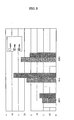
- Figure 1 indicates a scheme representing a structure of C0783 polypeptide.
- the amino acid sequence from #-30 to #-1 is an expected signal peptide region (SP).
- the amino acid sequence from #20 to #327 includes five regions, which have a homology with Cys rich domain of Chordin (CR; Cys-rich domain) and are represented by CR1, CR2, CR3, CR4 and CR5 in order from the amino terminal.
- the amino acid sequence from 331 to 655 represents a homologous region of von Willebrand factor (vWF-like domain; von Willebrand factor like region.
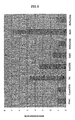
- Figure 2 indicates the expression level of mRNA of C0783 polypeptide in various cancer tissues and that in the correspondent normal tissues.
- Figure 3 indicates an alteration in the expression level of mRNA of C0783 polypeptide during bone differentiation.
- Figure 4 indicates a scheme of the structure of C0783 deficient type of polypeptide.
- the C0783 deficient type of polypeptide is a secretary protein composed of 627 amino acids. 58 amino acid residues from #315 to # 372 of the C0783 polypeptide of Fig.1 are deficient. A part of CR5, 5th Cys-rich region (Cys-rich domain 5) which is considered to be important for the function of C0783 polypeptide, and a part of von Willebrand factor-like region are deficient.
- Figure 5 indicates an inducing activity of bone differentiation of C0783 (alkaline phosphatase activity).
- alkaline phosphatase activity a maker of bone differentiation
- an inducing activity of bone differentiation in the case of treatment of C0783 with BMP-2, BMP-4 and retinoic acid (RA) is shown.
- the relative activity is shown, when the alkaline phosphatase activity is taken to be 1 in a control (intact group).
- preparation of the polynucleotide of the present invention preparation of the polypeptide of the present invention, the recombinant vector, the transformer, the preparation method, the antibody, the quantitative analytical method of the polypeptide of the present invention, the immunological detection method, the quantitative analytical method of the mRNA, the inhibiting method of the translation of mRNA, binding agent, the screening method of the binding agent, the agent for modulating the binding activity, the screening method of the agent for modulating the binding activity, the agent for modulating expression, the screening method of the agent for modulating expression, the kit for screening, knockout animals, transgenic animals, the detection method of cancer and/or bone diseases, the kit for gene diagnosis, the pharmatheutical composition.
- a publicly well-known technique such as a gene recombination technique, a production technique of the recombinant protein in an animal cell, insect cell, yeast, escherichia coli, or the like, an isolation and purification method of the expressed protein, an analytical method, and an immunological method.
- a cDNA library is produced by an usual method using human normal cells originated from human mesenchymal stem cells, brain, esophagus, stomach, lung, duodenum, ureter, intestinal cancer, colon, rectum, gallbladder thyroid, adrenal gland, bladder and prostate gland, or using human cancer cells originated from brain, bladder, prostate gland, parotoid, lung, esophagus, stomach, duodenum, kidney, adrenal gland, ureter, spermary, small intestine and colon.
- the preparation method can be exemplified by the method described in Molecular Cloning: A Laboratory Manual, Second Edition (1989) (Cold Spring Harbor Laboratory Press) or Current Protocols in Molecular Biology (1994) (Green Publishing Associates and Wiley-Interscience), DNA Cloning 1: Core Techniques, A Practical Approach, Second Edition (1995) (Oxford University Press) or by the commercially available kit, e.g. Super Script Plasmid System for cDNA Synthesis and Plasmid Cloning (Invitrogen Co. ) or ZAP-cDNA Synthesis Kits (STRATAGENE Co. ) .
- cDNA can be prepared using the mRNA prepared from COLO205 (ATCC:CCL-222; strain from colon glandular cancer) originated from a human cancer cell line by using a cDNA preparation kit of Super Script First-strand Synthesis System for RT-PCR (Invitrogen Co.) .
- EcoR I linker is inserted into a cloning vector such as e.g. pSport 1 (Invitrogen).
- a cDNA library is prepared by transformation of E. coli Electro MAX DH10B Invitrogene Co.) using the plasmid of the present invention.
- a clone containing an object DNA is selected from the prepared cDNA library by the following method.
- a plasmid is prepared from the above prepared cDNA library by an usual method or by using a commercially available kit, e.g. QIAGEN Plasmid Maxi Kit (Qiagen Co.)
- a plasmid which has a fragment of DNA encoding the homologous amino acid sequence with that of chordin is selected from the above prepared cDNA library.
- Such a fragment of DNA can be obtained by finding 2 or more regions, the amino acid sequence of chordin of which is reserved, by designing degenerated primer corresponding to the DNA sequence encoding the amino acid sequence of the region, and by proliferating using a Polymerase Chain Reaction (PCR) method.
- PCR Polymerase Chain Reaction
- a preparation method of the degenerated primer can be exemplified by the method described in PCR Primer: A Laboratory Manual (1995) (Cold Spring Harbor Laboratory Press), The protocol series "cDNA cloning" (Jyunichiro Inoue, Kentarou Senba; Youdo Co.) and Science, 241, 42 (1988).
- the PCR method is exemplified by the method described in Molecular Cloning: A Laboratory Manual, Second Edition (1989) (Cold Spring Harbor Laboratory Press) and PCR Protocols (1989) (
- the amplified fragment of DNA by a PCR method is inserted into an appropriate plasmid and then sub-cloning is accomplished.
- the sub-cloning can be carried out as usual by inserting the amplified DNA fragment itself or after treating it with a restriction enzyme or DNA polymerase.
- a vector is exemplified by pBluescript II SK+, pBluescript II SK-, pPCR-Script Amp (STRATAGENE Co.), pDIRECT (Nucreic Acids Research, 18, 6069 (1990)), pT7Blue ( Co.) , pCRII (Invitrogene Co.) , pCR-TRAP (Gene Hunter Co. ) and pNoTAT7 (Eppendorf 5 prime Co.).
- a DNA fragment encoding the amino acid sequence which is homologous but not identical with that of known chordin can be selected, by screening the sub-cloned base sequence of the PCR amplified fragment.
- the nucleotide sequence can be analyzed using an nucleotide sequence analyzer as usual such as a deoxy method (Proceedings of the National Academy of Sciences USA, 74, 5463 (1977)) by Sanger et al, or a 373A DNA sequencer (Applied Biosystems Co. ) .
- a cDNA encoding the polypeptide having a homology with known chordin can be obtained by hybridization analyses such as a colony hybridization, plaque hybridization or the like to the above established cDNA library.
- the DNA fragment labeled by a radioisotope such as 32 P, digoxigenin, an enzyme of a horseradish peroxidase or the like can be used as the probe.
- the hybridization can be accomplished according to the usual method described in Molecular Cloning: A Laboratory Manual, Second Edition (1989) (Cold Spring Harbor Laboratory Press).
- the cDNA fragment itself or after treated with a restriction enzyme is inserted into a plasmid vector by the usual method, and then an objective DNA can be obtained by analyzing the nucleoide sequence using nucleotide sequence analyses method e.g. the dideoxy method by Samger et al. (Proceedings of the National Academy of Sciences USA,74, 5463 (1977)) or an analyzer such as a 373A DNA sequencer (Applied Biosystems Co. ) .
- nucleotide sequence analyses method e.g. the dideoxy method by Samger et al. (Proceedings of the National Academy of Sciences USA,74, 5463 (1977)) or an analyzer such as a 373A DNA sequencer (Applied Biosystems Co. ) .
- the DNA encoding the polypeptide represented by the SEQ ID NO: 2 can be exemplified as an DNA obtained by this method and, the DNA having a nucleotide sequence represented by the SEQ ID NO: 1 can be exemplified.
- the plasmid described in an Example later can be exemplified as aplasmid containing the DNA of the SEQ ID NO: 1.
- An express plasmid is constructed by inserting the obtained DNA into an appropriate expression vector, the expression vector is inserted into a suitable host and then the transformer can be prepared.
- the expression vector may be a vector, which can be expressed in an animal cell by inserting the cDNA.
- Such a vector includes, e.g., pcDNA1.1, pcDNA1.1/Amp, pCDM8, pREP (Invitrogen Co.), pHM6, pHB6 (Roche Diagnostic Co.), pKK223-3, pGEX (Amersham Pharmacia Biotech Co.), pET-3, pET-11, pBluescriptII SK(+), pBluescriptII SK(-) (STRATAGENE Co.), pUC19, pTrxFus (Invitrogen), pUC118, pSTV28 (Takara Shuzo Co.), pMAL-c2X (New England BioLabs), pAGE107 (Cytotechnology, 3(2), 133-140 (1990), JA 03-22979 A), pAGE103 (The Journal of Biochemistry, 101(5), 1307-1310 (1987)), pAMo, pAMoA (The Journal of Biological Chemistry, 268(30), 22782-22787 (1993)
- Every insertion method of DNA may be used as the insertion method of the expression vector into a host.
- the host is an animal cell, a method described in electroporation method (Cytotechnology, 3(2), 133-140 (1990)), phosphoric acid calcium method (JP 02-227075 A), lipofection method (Proceedings of the National Academy of Sciences USA, 84, 7413 (1987). Vilology, 52, 456 (1973)) can be exemplified.
- the host may be an appropriate cell or tissue corresponding to the expression vector and animal cells can be exemplified.
- the animal cell for the host cell is cells originated from human such as Namalwa (Burkitt's lymphoma, ATCC:CRL-1432) and the sub-line Namalwa KJM-1 and HCT-15 (human colon cancer cell ATCC:CCL-225), cells originated from monky such as COS-1 (African green monkey nephrocyte (SV40 transformed cell), ATCC:CRL-1650) and COS-7 (African green monkey nephrocyte (SV40 transformed cell) and ATCC:CRL-1651) and cells originated from hamster such as CHO-K1 (Chinese hamster ovarian cell, TCC:CCL-61) and HBT5637 (JA 63-299 A), preferably is Namalwa cell, NamalwaKJM-1 cell and HCT-15 cell.
- human such as Namalwa (Burkitt's lymphoma, AT
- the transformer of the present invention is cultured by the publicly well-known method in this field.
- An appropriate culture medium for transformed host cell can be used and a liquid culture is suitable for the culture of the incubation.
- a MEM medium culture (Science, 130, 432 (1959)), a D-MEM medium culture (Virology, 8, 396 (1959).), a RPMI1640 medium culture (The Journal of the American Medical Association, 199, 519 (1967)), a YT medium culture and a BEM medium culture are used as medium cultures.
- the medium culture to cultivate the transformer of which the host cell is an animal cell the culture which contains an appropriate amount of fetal bovine serum in a MEM medium culture, a D-MEM medium culture and a RPIM medium culture are used.
- an agent to increase the transcription activity may contain and, for example, isopropyl-1-thio- ⁇ -D-galactopyranosine (IPTG) can be used.
- IPTG isopropyl-1-thio- ⁇ -
- the medium culture contains essential nutriments for growing of the transformer, e.g. glucose, amino acid, peptone, vitamins, hormones and serum, and preferably, FCS, Calcium Chloride and Magnesium Chloride.
- a culture medium can be used in any kinds of composition and a commercially available culture medium can also be used.
- the incubation is carried out under a condition of at pH 6.0 to 8.0, at 25 to 40°C and in the presence of 5% CO 2 .
- the desired DNA can be selected by screening the protein produced from the transformer using an inhibitory activity of the differentiation-induction of the bone cell of chordin as an indicator.
- inhibitory activity of the differentiation induction of the bone cell herein used refers to an activity which increases the proliferation rate of the bone cell and suppresses the transformation of the cell.
- the activity can be detected by the microscopic observation of morphology of the bone cell or by the measurement the differentiation marker of the bone cell e.g. alkaline phosphatase (Cancer Research, 43, 4308-4314 (1983), Science, 199, 542-544 (1978)), Osteocalcine and type I collagen.
- alkaline phosphatase which is a substrate of alkaline phosphatase is added, and the mixture is reacted for an appropriate time. Then alkaline phosphatase can be detected by the method of a quantitative measurement of p-nitrophenol e.g. using a spectrophotometer.
- the DNA can be supposed to code novel chordin which relates to differentiation-induction of bone cells.
- the DNA encoding the novel polypeptide having a chordin activity which relates to differentiation-induction of bone cells
- the human normal cell originated from mesenchymal stem cells, brain, esophagus, stomach, lung, duodenum, ureter, intestinal cancer, colon, rectum, gallbladder thyroid, adrenal gland, bladder, prostate gland or from the human cancer cell originated from brain, bladder, prostate gland, parotoid, lung, esophagus, stomach, duodenum, kidney, adrenal gland, ureter, spermary, small intestine, colon.
- the DNA encoding a polypeptide is composed of the amino acid sequence having an at least one mutation selected from deletion, displacement and insertion of one or a few amino acids by comparing with the amino acid sequence described in the SEQ ID NO: 2 by the selection of DNA that hybridizes with the DNA obtained above under a stringent condition. That is, the objective DNA can be obtained by selecting a DNA which hybridizes under a stringent condition with a cDNA library originated from a non-human animal such as mouse, rat, cattle and monkey.
- the objective DNA can also be prepared by a chemical synthesis of the DNA encoding the polypeptide on the bases of the amino acid sequence of the screened novel chordin polypeptide.
- the chemical synthesis can be accomplished by a phosphoric acid triester method, a phosphoroamidate method, a phosphonic acid ester method or the like and accomplished also using a commercially available synthetic apparatus such as ABI 392 (Applied Biosystems Co.) .
- the objective DNA can also be prepared by PCR using a cDNA as a template that is prepared from mRNA of cells which expresses the complementary mRNA with the DNA using an oligonucleotide mentioned later as a sense or an antisense primer.
- the polypeptide of the present invention can be prepared by expressing the polynucleotide of the present invention in a host cell using the method described in Molecular Cloning: A Laboratory Manual, Second Edition (1989) (Cold Spring Harbor Laboratory Press) or Current Protocols in Molecular Biology (1994) (Wiley-Interscience).
- An appropriate length of DNA fragment containing a part encoding the polypeptide is, if necessary, prepared on the base of the full length of DNA encoding the polypeptide of the present invention.
- the part of the nucleotide sequence encoding the polypeptide is prepared so as to be a suitable codon to the expression of the host.
- the DNA is useful to elevate a rate of the production of the polypeptide.
- the DNA fragment or the full length of DNA is inserted under a control of the promoter of an appropriate expression vector and the recombinant DNA (recombinant vector) is prepared.
- a transformer that produces polypeptide of the present invention can be obtained by inserting the recombinant vector into a suitable host.
- Expression cells of the objective gene e.g. prokaryotes such as Escherichia coli group, unicellular organisms such as yeast and multicellular eukaryotes such as animal cells, insect cells and plant cells may be used as the host. Animals itself or plants itself may be used.
- the expression vector may be used, that has an ability of autotrophic reproduction or of insertion into chromosome and contains a promoter at an appropriate site for the transcription of the gene of the novel chordin.
- the expression vector of the novel chordin gene has an autotrophic reproduction ability in a prokaryote and the same time is composed of promoter, binding sequence of ribosome, novel chordin gene, transcription termination sequence thereof.
- the gene may include genes controling the promoter.
- the expression vector is exemplified by pHM6, pHB6 (Roche Diagnostic Co.), pKK223-3, pGEX (Amersham Pharmacia Biotech Co.), pSE280, pTrx Fus pUC19 (Invitrogen Co.), pBluescript II SK(+), pBluescript II SK(-), pET Expression System (STRATAGEN Co.), pGEMEX-1 (Promega Co.
- the promoter may be any one that can be expressed in the host and exemplified by a promoter originated from Escherichia coli or phage such as trp promoter (Ptrp), lac promoter (Plac), P1 promoter, Pr promoter, PSE promoter, SPO1 promoter, SPO2 promoter and penP promoter. Promoters modified artificially such as Ptrpx2 promoter in which Ptrp binds serially, tac promoter, lacT7 and let promoter may also be used.
- a plasmid in which a distance between the Shine Dalgarno (SD) sequence, a binding sequence of ribosome, and the initiation codon is controlled appropriately e.g. 6 to 18 base.
- SD Shine Dalgarno
- the termination sequence of transcription is not always necessary for the expression of the polynucleotide of the present invention but the termination sequence of transcription preferably is located directly within the structural gene.
- the host is exemplified by a prokaryote such as Escherichia, Serratia, Bacillus, Brevibacterium, Corynebacterium, Microbacterium and Pseudomonas.
- Escherichia group is exemplified by XL1-Blue cell line of E.coli, XL2-Blue cell line, DH1 cell line, MC1000 cell line, KY3276 cell line, W1485 cell line, JM109 cell line, HB101 cell line, No.49 cell line, W3110 cell line, NY49 cell line, BL21 (DE3) cell line, BL21 (DE3) pLysS cell line, HMS 174 (DE3) cell line, HMS 174 (DE3) and pLysS cell line.
- a prokaryote such as Escherichia, Serratia, Bacillus, Brevibacterium, Corynebacterium, Microbacterium and Pseudomonas.
- Serratia group is exemplified by S. ficaria cell line, S. fonticola cell line, S. liquefaciens and S. marcescens cell line.
- Bacillus group is exemplified by B. subtilis cell line and B. amyloliquefaciens cell line.
- Brevibacterium group is exemplified by B. ammoniagenes cell line, B. Immariophilum (ATCC: 14068) cell line and B. saccharolyticum (ATCC: 14066) cell line.
- Corynebacterium group is exemplified by C. glutamicum (ATCC:13032) cell line, C. glutamicum (ATCC:14067) cell line, C.
- gulutamicum (ATCC:13869) cell line and C. acetoacidophilum (ATCC:13870) cell line.
- Microbacterium group is exemplified by M. ammoniaphilum (ATCC: 15354) cell line.
- Pseudomonas group is exemplified by S. mephitica cell line.
- Any insertion method of the recombinant vector may be used, provided that it is a insertion method of DNA into a host.
- the method is exemplified by an electroporation method (Nucleic Acids Research, 16, 6127 (1988)), a phosphoric acid calcium method, (Proceedings of the National Academy of Sciences USA, 69, 2110 (1972)), a Protoplast method (JP 63-2483942 A), Gene, 17, 107 (1982) and the method described in Molecular & General Genetics, 168, 111 (1979).
- the expression vector is exemplified by YEp13 (ATCC:37115), YEp24 (ATCC:37051), YCp50 (ATCC:37419), pHS19 and pHS15.
- Any promoter may be used which expresses in the yeast and exemplified by ADH1 (alcohol dehydrogenase) promoter, PHO5 (acidic phosphatase) promoter, PGK1 (phosphoglyceric acid kinase) promoter, GAPDH (glyceraldehyde-3-phosphoric acid dehydrogenase) promoter, GALL (galactose kinase) promoter, GAL10 (UDP galactose-4-epimerase) promoter, MF ⁇ 1 ( ⁇ pheromone) promoter and CUP1 (metallothionine) promoter.
- the host is exemplified by Saccharomyces group, S. cerevisiae, Schizosaccharomyces group, S. pombe, Kluyveromyces group, K. lactis, Trichosporon group, T. pullulans, Schwanniomyces group, S. alluvius, Pichia group, P. pastoris and the like.
- Any insertion method of recombinant vector. by which a DNA is inserted into a host, may be used and exemplified by an electroporation method (Methods in Enzymology, 194, 182 (1990)), a spheroplast method (Proceedings of the National Academy of Sciences USA, 84, 1929 (1978)), an acetic acid lithium method (Journal of Bacteriology, 153, 163 (1983)) and the method described in Proceedings of the National Academy of Sciences USA, 75, 1929 (1978)).
- the expression vector is exemplified by pcDNA1/Amp, pcDNA1, pCDM8, pREP4 (Invitrogen Co.), pAGE107 (Cytotechnology, 3, 133 (1990)), pAGE103 (The Journal of Biochemistry, 101, 1307 (1987)), pAMo, pAMoA (pAMoPRSA) (The Journal of Biological Chemistry, 268, 22782-22787 (1993)) and pAS3-3 (JA 2-22705 A).
- the promoter is exemplified by a promoter of the gene of IE (Imediate-early) of human cytomegalovirus (hCMV), early promoter of SV40, Long Terminal Repeat promoter of Moloney Murine Leulemia Virus, promoter of retrovirus, HSP promoter, SR ⁇ promoter and promoter of metallothionine.
- IE immediate-early
- hCMV human cytomegalovirus
- hCMV early promoter of SV40
- Long Terminal Repeat promoter of Moloney Murine Leulemia Virus promoter of retrovirus
- HSP promoter Long Terminal Repeat promoter of Moloney Murine Leulemia Virus
- SR ⁇ promoter promoter of metallothionine.
- An enhancer of IE gene of human CMV may be used with the promoter.
- the animal cell used as the host is exemplified by a cell originated from human such as HEK293 (human fetus origin nephrocyte ATCC:CRL-1573), Namalwa (Burkitt's lymphoma, ATCC: CRL-1432), Hela (uterine neck cancer cell line, ATCC:CCL-2), HBT5637 (leukemia cell line, JA 63-299 A), BALL-1 (leukemia cell line) and HCT-15 (colon cancer cell line), by a cell originated from mouse such as Sp2/0-Ag14 (mouse myeloma cell line, ATCC:CRL-1581) and NSO (mouse myeloma cell line), by a cell originated from monkey such as COS-1 (African green monkey nephrocyte (SV40 transformed cell line), ATCC:CRL-1650) and COS-7 (African green monkey nephrocyte (SV40 transformed cell line), ATCC:CRL-1651), by
- Any insertion method of a recombinant vector, by which a DNA can be introduced into the host may be used and exemplified by an electroporation method (Cytotechnology, 3(2), 133-140 (1990)), a phosphoric acid calcium method (JP 02-227075 A), a lipofection method (Proceedings of the National Academy of Sciences USA, 84, 7413 (1987). Vilology, 52, 456 (1973)).
- the transfer vector is exemplified by pVL1392, pVL1393 and pBlueBacIII (Invitrogen Co.).
- the virus to infection is exemplified by a Vaculovirus which infects a Mamestra insect such as Autographa california nuclear polyhedrosis virus (AcMNPV) and Bac-N-Blue DNA.
- the method of transformation is exemplified by a method described in Baculovirus Expression Vector: A Laboratory Manual (1992) (W. H. Freeman and Company), Molecular Cloning: A Laboratory Manual, Second Edition (1989) (Cold Spring Harbor Laboratory Press), Current Protocols in Molecular Biology (1994) (Wiley-Interscience), BioTechnology,6,47(1988) and thereof.
- a transfer vector including an objective gene and an infectious baculovirus DNA to an insect cell are added to a culture medium for the insect cell, and the polypeptide can be expressed by the infection of the virus expressing the objective gene prepared by recombinant to the insect cell:
- a polypeptide When a plant cell is used as the host, a polypeptide can be prepared by a publicly known procedure (Tissue Culture, 20 (1994), tissue culture, 21 (1995), Trends in Biotechnology, 15, 45 (1997)).
- the expression vector is exemplified by Ti plasmid and tabaco mosaic virus vector. Any promoter, which can express genes in plant cells, may be used and is exemplified by a 35S promoter of cauliflower mosaic virus (CaMV) and a rice actin 1 promoter.
- An efficiency of gene expression can be elevated by inserting an intron 1 of the gene of alcohol dehydrogenase of cone into a site between the promoter and the expression gene.
- the host may be exemplified by plant cells such as potato, tabaco, corn, rice, rape, soy bean, tomato, carrot, wheat, barley, rye, alfalfa and flax.
- Any insertion method of a recombinant vector, by which a DNA can be introduced into a host may be used and exemplified by a method using Agrobacterium (JP 59-140885 A, JP 60-70080 A, WO 94100977), an electroporation method, (JP 60-251887 A), a particle gun method (JP 2606856 C, JP 2517813 C).
- the transformers having a recombinant vector inserted with a DNA encoding the polypeptide of the present invention are cells such as Escherichia coli, yeast, animal cell, plant cell or the like, every host is cultured by a suitable incubation method and produces and accumulates the polypeptide.
- the polypeptide can be prepared by recovering the polypeptide from the transformer and/or its culture medium.
- the transformer is animal or plant itself, it grows under the suitable procedure for the host, and then it produces and accumulates the polypeptide.
- the polypeptide can be prepared by recovering the polypeptide from the animal and/or plant itself.
- the host is animal itself, e.g. non-human transgenic animals having the polynucleotide of the present invention are raised.
- the polypeptide encoded by the recombinant DNA having an activity of novel chordin is produced and accumulated in the animal.
- the polypeptide is recovered from the animal itself and then the polypeptide having an activity of novel chordin can be prepared.
- the places of the animal itself, in which the polypeptide is produced and accumulated, are exemplified by milk, saliva and egg of the animal.
- the host is plant itself, e.g. transgenic plants having the polynucleotide of the present invention are grown.
- the polypeptide encoded by the recombinant DNA having an activity of novel chordin is produced and accumulated in the plant.
- the polypeptide is recovered from the plant itself and then the polypeptide having an activity of novel chordin can be prepared.
- the hosts are prokaryotes such as Escherichia coli or eukaryotes such as yeast, e.g. the transformer having the polynucleotide of the present invention is incubated in a culture medium.
- the polypeptide encoded by the recombinant DNA having an activity of novel chordin is produced and accumulated in the culture medium.
- the polypeptide can be recovered from the culture medium and then the polypeptide having an activity of the novel chordin can be prepared.
- the method of incubation of the transformer of the present invention in a culture medium may be accomplished by an usual method for the incubation of the host.
- transformers are prokaryotes such as Escherichia coli or eukaryotes such as yeast
- the culture medium for incubation of the transformer includes carbon and nitrogen sources and mineral salts for host to assimilate, and that in the medium the incubation of the transformer can be accomplished effectively, any natural or synthetic culture medium may be used.
- the culture medium for the incubation of the transformer in which Escherichia coli is the host is preferably exemplified by a YT culture medium containing, Bacto Tryptone, yeast extracts and sodium chloride.
- the carbon source may be a compound which can be assimilated by the host and exemplified by glucose, fructose, sucrose, their molasses, carbohydrate such as starch and its hydrolyzate, organic acid such as acetic acid and propionic acid, and alcoholic compound such as ethanol and propanol.
- the nitrogen source may be ammonia or ammonium salt of various inorganic or organic acids such as ammonium chloride, ammonium sulfate, ammonium acetate and ammonium phosphate, another nitrogen-containing compound, corn steep liquor, hydrolyzate of casein, soybean cake, hydrolyzate of soybean cake, fermentative cell and their digest.
- various inorganic or organic acids such as ammonium chloride, ammonium sulfate, ammonium acetate and ammonium phosphate, another nitrogen-containing compound, corn steep liquor, hydrolyzate of casein, soybean cake, hydrolyzate of soybean cake, fermentative cell and their digest.
- the inorganic salt to be used is potassium phosphate monobasic, potassium phosphate dibasic, magnesium phosphate, magnesium sulfate, sodium chloride, iron sulfate, manganese sulfate, copper sulfate and calcium carbonate.
- the incubation is carried out under an aerobic condition such as shaking or stirring with air inflation in deep.
- the incubation temperature, the incubation time and the pH of the incubation medium are set up in a range suitable for the various hosts, ordinarily at 15 to 40°C, for 5h to 7days and in pH 3.0 to 9.0.
- the pH value can be controlled using inorganic or organic acid, alkaline solution, urea, calcium carbonate and ammonia.
- An antibiotics such as ampicillin and tetracycline may be added to the culture medium, if necessary.
- an inducer may be added to the culture medium.
- indoleacrylic acid may be added to the culture medium.
- the culture medium for incubation may be ordinarily used Murashige and Skoog culture medium (MS), White culture medium or that containing a plant hormone such as auxin and cytokinine.
- MS Murashige and Skoog culture medium
- White culture medium or that containing a plant hormone such as auxin and cytokinine.
- the culture medium for incubate may be an ordinarily used RPMI1640 culture medium (The Journal of the American Medical Association, 199, 519 (1967)), a MEM culture medium (Science, 130, 432 (1959)), a D-MEM culture medium (Virology, 8, 396 (1959)), a 199 culture medium (Proceedings of the Society for the Biological Medicine, 73, 1 (1950)) or that containing cattle embryo serum (FCS).
- RPMI1640 culture medium The Journal of the American Medical Association, 199, 519 (1967)
- MEM culture medium Science, 130, 432 (1959)
- a D-MEM culture medium Virology, 8, 396 (1959)
- a 199 culture medium Proceedings of the Society for the Biological Medicine, 73, 1 (1950)
- FCS cattle embryo serum
- the incubation is ordinarily carried out in pH 6 to 8, at 25 to 40°C and for 1 to 7 days in the presence of CO 2 .
- An antibiotics such as kanamycin, penicillin and streptomycin may be added to the culture medium, if necessary.
- the culture medium for incubation may be an ordinarily used TNM-FH culture medium (Pharmingen Co.), Sf-900II SFM culture medium (Invitrogen Co.), an ExCell400, an ExCell406 (JRH Biosciences Co.) and a Grace's Insect Medium (Nature, 195, 788 (1962)).
- the polypeptide of the present invention can be prepared by culturing the transformer, isolating and purifying the polypeptide from the culture solution.
- the method of the isolation and the purification of the polypeptide of the present invention may be a publicly well-known and exemplified by the isolation and the purification of the enzyme or the purification method of the transglucosylation enzyme by Sandler et al (Methods in Enzymology, 83, 458).
- the culture medium in which the transformer is incubated is, for example, separated to the cell or fungus body and the culture medium.
- the cell or fungus body is washed with an appropriate buffer such as STE solution, crushed by an ultrasonic wave, French press, homogenizer, mill, followed by centrifuging and filtration to give the polypeptide as a solution without the cell.
- An appropriate amount of surface active agent may be contained in the buffer used for the isolation and purification of the polypeptide of the present invention and for example sodium dodecyl sulfate (SDS) and sodium N-lauroylsarcosinate may be contained.
- SDS sodium dodecyl sulfate
- sodium N-lauroylsarcosinate may be contained.
- the isolation and the purification of the objective protein included in the obtained crude product can be carried out by a combination of various kinds of publicly known isolation and purification methods.
- the publicly known method is exemplified by extraction with a solvent, salting-out or dialysis using ammonium sulfate, precipitation with an organic solvent, ultrafiltration, gel filtration, various kinds of chromatography such as diethylaminoethyl (DEAE)-sepharose chromatography, anion chromatography using Lys such as DIAION HPA-75 (Mitsubishi Chemical Co.), ion exchange chromatography, cation chromatography using Lys such as S-Sepharose FF (Pharmacia Co.), hydrophobic chromatography using butyl sepharose, affinity chromatography thereof, an electrophoresis such as electrophoresis of SDS-polyacrylamide gel, electrofocusing method thereof.
- the affinity chromatography may be conducted using the antibody to the polypeptide of the present invention.
- the cell or fungus body is isolated by the above mentioned procedure, crushed and the fragment of the polypeptide is recovered.
- the recovered sample is solubilized by a solublizing agent such as sodium lauryl sulfate (SDS) and sodium N-lauroylsarcosinate.
- SDS sodium lauryl sulfate
- the solubilized solution is diluted or dialyzed to the extent the few or no solubilizing agent is contained.
- the purified specimen can be obtained according to the above isolation and purification method.
- the polypeptide of the present invention may be converted to a fused protein with another protein and purified by affinity chromatography using an agent having an affinity to the fused protein (Akio Hayakawa, Experimental Medicine, 13, 469-474 (1995)).
- the additive protein used for the fused protein is exemplified by protein A and FLAG (Proceedings of the National Academy of Sciences USA, 86, 8227 (1989). Genes Development, 4, 1288 (1990), JP 5-336963 A, JP 6-823021 A).
- protein A a fused protein of the polypeptide of the present invention with protein A is produced and the protein may be purified by affinity chromatography using immunoglobulin G.
- FLAG peptide a fused protein of the polypeptide of the present invention with FLAG is produced and the protein may be purified by affinity chromatography using an antibody of anti-FLAG.
- polypeptide of the present invention may be produced using an in vitro transcription-translation system according to the publicly known procedure (Journal of Biomolecular NMR, 6, 129-134 (1995), Science, 242, 1162-1164 (1988), The Journal of Biochemistry, 110, 166-168 (1991)).
- the polypeptide of the present invention may be prepared on the base of the amino acid sequence by a synthetic method such as a Fmoc method (fluorenylmethyloxycarbonyl method), a tBoc method (t-butyloxycarbonyl method) or using a commercially available peptide synthesis apparatus such as, APEX396 (Advanced Chem Tech Co.), 433A (Applied Biosystems Co.), PS3 (Protein Technology Co.), 9050 (Perceptive Co.) and PSSM-8 (Shimazu Co.).
- the structure analysis of the polypeptide of the present invention can be achieved by the usual method in the protein chemistry and is exemplified by the method described in "the structure analysis of the protein for the cloning of gene" (Ed. Hisashi Hirano, published by Tokyo Kagaku Dojin 1993).
- chordin-like activity of the polypeptide of the present invention may be determined according to the publicly known measuring procedure (The Journal of Biological Chemistry, 258, 9893-9898 (1983), The Journal of Biological Chemistry, 262, 15649-15658 (1987), The Journal of Biological Chemistry, 273, 58-65 (1998), The Journal of Biological Chemistry, 273, 433-440 (1998), The Journal of Biological Chemistry, 273, 12770-12778 (1998), Archives of Biochemistry and Biophysics, 270, 630-646 (1989), Archives of Biochemistry and Biophysics, 274, 14-25 (1989), JPH6-181759 A).
- the deletion, displacement or insertion of the amino acid of the polypeptide of the present invention may be accomplished by the site-directed mutagenesis, which is known before the patent application of the present invention.
- the deletion, displacement or insertion of one or more amino acids can be prepared according to a procedure described in Molecular Cloning: A Laboratory Manual, Second Edition (1989) (Cold Spring Harbor Laboratory Press), Current Protocols in Molecular Biology (1994) (Wiley-Interscience), Nucleic Acids Research, 10, 6487 (1982); Proceedings of the National Academy of Sciences USA, 79, 6409 (1982), Gene, 34, 315 (1985), Nucleic Acids research, 13, 4431 (1985), Proceedings of the National Academy of Sciences USA, 82, 488 (1985), Proceedings of the National Academy of Sciences USA, 81, 5662 (1984), Science, 224, 1431 (1984), WO 85/00817, Nature, 316, 601 (1985).
- the antibody can be prepared by administering to mammals the polypeptide as an antigen, which contains the entire, a part of the polypeptide or the polypeptide containing the fragment of the polypeptide.
- the antigen may be bound to an antibody such as bovine serum albumin (BSA), keyhole limpet hemocyanin; KLH and cattle thyroglobulin (BTG).
- BSA bovine serum albumin
- KLH keyhole limpet hemocyanin
- BGT cattle thyroglobulin
- CFA complete adjuvant
- IFA incomplete adjuvant
- the mammal for immune reactor is mouse, rat, rabbit, goat and hamster.
- the polyclonal antibody can be prepared according to the procedure by Rane et al (Antibodies: A Laboratory Manual, Second Edition (1989) (Cold Spring Harber Laboratory Press)).
- the antigen is preferably covalently bound to an appropriate antibody.
- the peptide of the antigen can be prepared by a genetic engineering method or by a peptide synthesis apparatus. Blood is collected from plexus venosus of ocular fundus at 3 to 7 day after every administration so as to confirm that the serum reacts with the used antigen by the enzyme immunity method of measurement (enzyme immunity method of measurement (ELISA method): published by Igakushoin (1976) and Antibodies: A Laboratory Manual, Second Edition (1989) (Cold Spring Harbor Laboratory Press).
- the blood is collected from immunized mammals and the antibody titer is measured.
- the blood is collected at the time when sufficient antibody titer is obtained and the serum is prepared and then the polyclonal antibody can be obtained.
- the isolation and the purification of the polyclonal antibody is carried out by one or more of methods such as centrifugal separation, salting out with ammonium sulfate, caprylic acid precipitation (Antibodies: A Laboratory Manual, Second Edition (1989) (Cold Spring Harbor Laboratory Press) or various kinds of chromatographies such as DEAE-sepharose column, anion exchange column, protein A column and G-column gel filtration column.
- step (i) After the sufficient antibody titer is obtained in step (i), spleen or lymph node is collected from the mammal. Then the antibody-producing cell obtained is fused with myeloma and the monoclonal antibody producing hybridoma can be obtained. Used myeloma is the cell line established from mouse or rat. The cell fusion is accomplished according to the publicly known procedure and may be carried out by the method of Kohler and Milstein (Nature, 256, 495-497 (1975)).
- the spleen is collected as antibody producing cells at 3 to 7 days after an antigenic substance is administrated to a rat in which the whole or fragment of the polypeptide of the present invention or a polypeptide containing the fragment is administrated to give sufficient antibody titer.
- the spleen is macerated in a MEM culture medium (Nissui Pharmaceuticals Co.), appeased with a dressing forcep and centrifuged at 1,200 rpm for 5 min.
- the obtained precipitate is treated with Tris-ammonium chloride buffer (pH 7.65) for 1 to 2 min, to remove erythrocyte, then washed with a MEM culture medium three times to give the spleen cell as an antibody-forming cell.
- the myeloma is a cell line originated from mouse or rat and exemplified by myeloma cell line of 8-azaguanine resistant mouse (originated from BALB/c), P3-X63Ag8-U1 cell line (abbreviated as P3-U1 later) (Current Topics Microbiological Immunology, 81, 1 (1978), Europian Journal of Immunology, 6, 511 (1976)), SP2/0-Ag14 cell line (abbreviated as SP-2 later) (Nature, 276, 269 (1978)), P3-X63-Ag8653 cell line (abbreviated as 653 later) (Journal of Immunology, 123, 1548 (1979)), P3-X63-Ag8 (abbreviated as X-63 later) (Nature, 256, 495 (1975)).
- 8-azaguanine culture medium a normal culture medium containing 15 ⁇ g/ml of 8-azaguanine (RPMI1640 culture medium containing 1.5mM glutamine, 5 ⁇ 10 -5 M 2-mercaptoethanol, 10 ⁇ g/ml, gentamicin and 10% FCS (CSL Co.)
- RPMI1640 culture medium containing 1.5mM glutamine, 5 ⁇ 10 -5 M 2-mercaptoethanol, 10 ⁇ g/ml, gentamicin and 10% FCS (CSL Co.)
- Both the antibody-producing cell line prepared in (a) and the myeloma cell line prepared in (b) are washed with a MEM culture medium or PBS (1.83g sodium phosphate dibasic, 0.21g potassium phosphate monobasic, 7.65g NaCl, pH7.2 per 1 litter), then mixed with myeloma cell so as to make the number of the antibody-producing cell 5 to 10 times to the myeloma cell and the mixture is centrifuged at 1,200 rpm for 5 min,to give a precipitate.
- MEM culture medium or PBS (1.83g sodium phosphate dibasic, 0.21g potassium phosphate monobasic, 7.65g NaCl, pH7.2 per 1 litter
- the precipitate obtained is loosened well and 0.2 to 1ml of a polyethyleneglycol solution (2g polyethyleneglycol-1000 (PEG-1000), 2ml MEM culture medium, 0.7ml dimethylsulfoxide (DMSO)) are added at 37°C with stirring per 10 8 of the antibody-producing cell. Then, 1 to 2ml of the MEM culture medium is added thereto a few times in every 1 to 2 min. The total volume is adjusted to be 50ml by adding the MEM culture medium. After the mixture was centrifuged at 900 rpm for 5 min, a precipitate is obtained.
- a polyethyleneglycol solution 2g polyethyleneglycol-1000 (PEG-1000), 2ml MEM culture medium, 0.7ml dimethylsulfoxide (DMSO)
- HAT culture medium normal culture medium containing 10 -4 M hypoxanthine, 5 ⁇ 10 -5 M thymidine and 4 ⁇ 10 -7 M aminopterin
- 100 ml of a HAT culture medium normal culture medium containing 10 -4 M hypoxanthine, 5 ⁇ 10 -5 M thymidine and 4 ⁇ 10 -7 M aminopterin
- An antibody-producing hybridoma which reacts specifically with the polypeptide of the present invention is selected from the antibody produced in the culture supernatant by an enzyme immunity method of measurement Antibodies: A Laboratory Manual, Second Edition (1989) (Cold Spring Harbor Laboratory Press)).
- An immunological detection method of the polypeptide of the present invention is exemplified by a method of measuring the polypeptide or the fragment using a marker in which the polypeptide or the fragment is directly or indirectly bound to an enzyme, a fluorescent material, a radioisotope, or a latex.
- the measuring method is exemplified by an ELISA method which is detected by an enzyme-labeling of the peroxidase of horseradish and alkaline phosphatase, a chemiluminescence method, a FITC method which detects fluorescent labeling such as luminol, GFP (Green Fluorescence Protein), a RIA method which detects a radioisotope labeling such as 125 I and a latex coagulating method which binds with latex.
- an enzyme-labeling of the peroxidase of horseradish and alkaline phosphatase a chemiluminescence method
- a FITC method which detects fluorescent labeling such as luminol, GFP (Green Fluorescence Protein)
- a RIA method which detects a radioisotope labeling such as 125 I
- a latex coagulating method which binds with latex.
- Such a measuring method is also exemplified by a Western blotting method and an immune structure dyeing method.
- the polypeptide or the fragment of the present invention can be detected quantitatively using the measurement.
- the expression level of the DNA encoding the polypeptide of the present invention can be detected quantitatively by detection of the mRNA using the oligonucleotide prepared from the polynucleotide of the present invention by Northern hybridization method and RT-PCR.
- a pharmaceutical composition such as anticancer is, if necessary, administrated and after an appropriate time, the internal organ such as blood, brain or stomach kidney or tissue is isolated, and then the cell is prepared.
- the mRNA is extracted from the cell by the publicly well-known method in this field and may be detected or analyzed by PT-PCR and Northern blot hybridization.
- the mRNA is extracted from the transformer by the publicly well-known method in this field and is detected or analyzed by PT-PCR and Northern blot hybridization.
- the human chromosomal gene encoding the polypeptide of the present invention may be identified to clarify the gene structure.
- screening structure of exon or intron of the promoter region of the chromosomal gene encoding the polypeptide of the present invention can be carried out by the comparison of the sequences between the cDNA and the chromosomal gene.
- the promoter region of the gene can be obtained using the polynucleotide of the present invention as a probe according to a publicly known and usual method (Ed. By Department of Cancer Suppression, Institute of Medical Science, The University of Tokyo, New cell technology experimental protocol, Shujyunsha (1993)).
- the promoter region is exemplified by all of the concerning region of the transform of the gene encoding the polypeptide of the present invention in mammalian cells.
- a detection of cancer or metastasis is exemplified by a sandwich ELISA method which uses two antibodies which recognize other epitope than that reacting with the polypeptide of the present invention and one of which is directly or indirectly enzyme-labeled and by a competitive RIA method which uses an antibody labeled by radioisotope such as 125 I, that recognizes the polypeptide of the present invention and the peptide.
- the expression of the polypeptide of the present invention increases in cancer cells of the cancer patient such as parotid cancer, lung cancer, esophagus cancer, gastric cancer, duodenal carcinoma, kidney cancer, ureteral cancer, testicular cancer, ovarian cancer, uterine cancer and leukemia and decreases in the cancer cell of the cancer patient such as intestinal cancer, rectal cancer, colon cancer, biliary cancer and thyroid cancer.
- the detection method can be used for the diagnosis of parotid cancer, lung cancer, esophagus cancer, gastric cancer, duodenal carcinoma, kidney cancer, ureteral cancer, testicular cancer, ovarian cancer, uterine cancer and leukemia.
- a search for the polymorphism of the gene of the present invention can be useful for the diagnosis and prediction of the prognosis of parotid cancer, lung cancer, esophagus cancer, gastric cancer, duodenal carcinoma, kidney cancer, ureteral cancer, testicular cancer, ovarian cancer, uterine cancer and leukemia.
- a search for the relation of the polymorphism of the present invention with the diseases in the internal organ in which the gene is expressed is useful for the diagnosis of other diseases.
- the analysis of the polymorphism of the present gene can be accomplished using the information of the gene arrangement of the present gene. Concretely, the analysis of the polymorphism is achieved by the method such as a Southern blotting method, a direct sequence method, a PCR method and a DNA chip method (Journal of Medical Technology, 42, 1507-1517 (1998), Journal of Medical Technology, 42, 1565-1570 (1998)).
- a detection of bone disease is exemplified by a sandwich ELISA method which uses one of the two antibodies which recognize other epitope than that reacting with the polypeptide of the present invention and one of which is directly or indirectly enzyme-labeled, and by a competitive RIA method which uses the antibody labeled by radioisotope such as 125 I, that recognizes the polypeptide of the present invention and the peptide.
- the polypeptide of the present invention can be used for diagnosis of bone diseases such as rheumatoid arthritis, arthritis deformans, osteoporosis.
- the polypeptide of the present invention increases when mesenchymal stem cells differentiate to bone cells
- the polypeptide can be used, based on the analysis of the polymorphisms, the diagnosis and prediction of the prognosis of bone diseases.
- the polynucleotide of the present invention can be used for the diagnosis of cancer and bone diseases using a Northern hybridization method and a PCR method.
- the diagnosis of cancer and bone diseases can also be achieved by the immunological method using the antibody of the present invention. Therefore, in the case of the diagnosis using the polynucleotide, the labeled polynucleotide of the present invention is included in the kit.
- the polypeptide of the present invention is included as a standard antigen.
- the kit may include a calibration curve.
- the production of the polypeptide of the present invention can be inhibited by administration of the polynucleotide of the present invention. It is possible to inhibit the transcription of the DNA encoding the polypeptide of the present invention and the translation of the mRNA encoding the polypeptide of the present invention.
- the polypeptide or the fragment of the present invention is useful as an agent for search or screening of a binding agent to the polypeptide of the present invention.
- the present invention provides a screening method of the binding agent to the polypeptide of the present invention by contacting the polypeptide, the salt, the fragment of peptide or the salt with a test agent.
- a test agent is exemplified by a protein belonging to the TGF (transform growth factor) family such as BMP, a tissue extract from mammals such as human, mouse, rat pig, cattle, sheep and monkey and a cell culture supernatant thereof. These test agents are added to the polypeptide of the present invention and divided by measuring a differentiation-inducing activity of osteoblast, to finally give a homogeneous ligand.
- the screening of a binding agent of the present invention is accomplished using the polypeptide or the fragment of the present invention or using binding assay system comprising the expression system of the recombinant type of the polypeptide.
- the screening is accomplished also by measuring a cell stimulation activity, exhibited through the binding to the polypeptide of the present invention, e.g., arachidonic acid release, acetylcholine release, intracellular Ca 2+ release, intracellular cAMP production, intracellular cGMP production, inositol phosphate production, cell membrane potentiodynamic, phosphorylation of intracellular protein, activation of c-fos, acceleration and suppression activity of pH-lowering, disinhibition activity to alkaline phosphatase activation increase by BMP-4.
- a cell stimulation activity exhibited through the binding to the polypeptide of the present invention, e.g., arachidonic acid release, acetylcholine release, intracellular Ca 2+ release, intracellular cAMP production, intracellular
- the polypeptide used for the screening of the binding agent may be any one which includes the polypeptide and the fragment of the present invention as described above, and the polypeptide which is expressed in large quantity using an animal cell is suitable.
- the above mentioned expression method is used for the production of the polypeptide of the present invention, and it is preferable to be carried out by the expression of the DNA encoding the polypeptide in mammalian or insect cell.
- a DNA fragment encoding the object polypeptide includes, not limited thereto, a complementary DNA, the gene segment or synthetic DNA.
- a DNA fragment encoding the polypeptide of the present invention in the host animal cell, it is preferable to insert the DNA fragment into a downstream of a polyhedrin promoter of nuclear polyhedrosis virus (NPV) belonging to baculovirus in which the insect is a host, a promoter originated from SV40, a retrovirus promoter, a metallothionine promoter, a human heat shock promoter, a cytomegalovirus promoter and a SR ⁇ promoter.
- NDV nuclear polyhedrosis virus
- the quantity and quality of examination of the expressed peptide can be accomplished by the publicly well known procedure and exemplified by the method described in The Journal of Biological Chemistry, 267, 19555 ⁇ 19559 (1992).
- the polypeptide or the material containing the fragment may be the polypeptide which is purified by a publicly well known method, the fragment, the cell or the cell sap which contains the polypeptide.
- the cell may be immobilized with glutaraldehyde and formalin. The mobilization is accomplished by a publicly well known method.
- the cell containing the polypeptide of the present invention means the host cell expressing by the polypeptide of the present invention and the host cell inculdes e.g., Escherichia coli, Bacillus subtilis, yeast, insect, cell and animal cell.
- the fraction of the cell sap means that containing the cell sap.
- polypeptide fragment For the screening of binding agent to the polypeptide or the salt of the present invention, an appropriate polypeptide fragment and a labeled agent are necessary.
- the polypeptide fraction is preferably that of a natural polypeptide fraction or the recombinant type having an activity.
- the same order of the activity includes e.g., the binding activity to ligand and signal transduction activity.
- the labeled agent is exemplified by the protein belonging to the TGF (transforming growth factor) family such as BMP which is labeled with 3 H, 125 I, 14 C or 35 S.
- a polypeptide sample is prepared by suspending the cell or the membrane preparation of the polypeptide of the present invention in a suitable buffer for the screening.
- a suitable buffer for the screening. Any buffer may be used, which does not inhibit the binding to the ligand such as a phosphate buffer of pH 4 to 10, preferably pH 6 to 8, Tris-HCl.
- a surfactant such as CHAPS, Tween-80 (Kao-Atlas Co.), digitonin or deoxycolate or various kinds of proteins such as cattle serum albumin and gelatin may also be added.
- the inhibitor of the protease such as PMSF, leupeptin, E-64 (Peptide Institute Co.) and pepstatin may be added.
- a test agent labeled with a certain quantity of, preferably, 5000 cpm to 500000 cpm of 3 H, 125 I, 14 C, 35 S is coexisted in 0.01 to 10 ml solution of the polypeptide.
- NBS non-specific binding
- the binding agent to the polypeptide or the salt of the present invention may be selected from the test agents which has more than 0 cpm in the value of the count (B-NSB) which is a deducted value of the non-specific binding quantity (NSB) from the total binding quantity (B).
- a cell stimulating activity via the polypeptide may be measured by publicly well-known methods or commercially available kits such as arachidonic acid release, acetylcholine release, Ca 2+ release in cell, cAMP production in cell, cGMP production in cell, inositol phosphate production, potentiodynamic of cell membrane, phosphorylation of the protein in cell, activation of c-fos, activity to decrease or increase the pH, disinhibition activity for increase of alkaline phosphatase by BMP-4.
- the cell containing the polypeptide is incubated in multi-well-plates.
- the buffer is exchanged to an appropriate buffer which is not toxic to the fresh culture medium or the cell before the screening of binding agents, test agents are added, and the mixture is incubated for a certain time.
- the cell is extracted or the digestive liquor is recovered and the products are detected quantitatively according to each method.
- the screening may be carried out by addition of the inhibitor to the catabolic enzyme.
- the inhibitory activity of cAMP production may be detected as an inhibitory activity of the production to the cell in which the basic quantity of the production of the cell has been raised by forskolin.
- the kit for the screening of binding agents of the polypeptide or the salt contains the polypeptide or the salt of the present invention, the fragment of the polypeptide or the salt of the present invention, the cell containing the polypeptide of the present invention, and the cell sap fraction containing the polypeptide of the present invention.
- the kit for the screening of binding agents is exemplified as follows.
- 0.05% of cattle serum albumin (Sigma Aldrich Co.) is added to Hank's Balanced Salt Solution (Invitrogen Co.).
- the solution is sterilized by filtration through a filter of 0.45 ⁇ m pore size and stored at 4°C or prepared when used.
- the same non-labeled agent as the labeled test agent is prepared in 100 to 1000 times concentration.
- the binding agents which can bind to the polypeptide or the salt of the present invention is exemplified by an agent which exists specifically in brain and lung.
- agents include angiotensin, bombesin, cannabinoid, cholecystokinin, glutamine, serotonin, melatonin, neuropeptide Y, opioid, purine, vasopressin, oxytocin, PACAP, secretin, glucagon, calcitonin, adrenomedulin, somatostatin, GHRH, CRF, ACTH, GRP, PTH, VIP (vasoactive intestinal and related polypeptide), somatostatin, dopamine, motilin, amylin, bradykinin, CGRP (calcitonin gene-related peptide), leukotriene, pancreatic statin, prostaglandin, thromboxane, adenosine, adrenalin, IL-8, GRO ⁇ , GRO ⁇ , GRO ⁇ ,
- the polypeptide or the fragment of the present invention is useful as the agent for search or screening of a modulating agent of a binding activity to the polypeptide of the present invention.
- the screening of a modulating agent of a binding activity of the polypeptide of the present invention with a binding agent such as BMP-2 and BMP-4 can be effectively carried out by using the bioassay systems or binding assay systems, which comprises an expression system of the polypeptide or the recombinant.
- agents include peptide, protein, agent of non-peptide, synthetic agent and fermentation product and are exemplified by (a) the agents of cell stimulating activity via a binding a binding agent with the polypeptide of the present invention, such as arachidonic acid release, acetylcholine release, Ca 2+ release in cell, cAMP production in cell, cGMP production in cell, inositol phosphate production, potentiodynamic of cell membrane, phosphorylation of the protein in cell, activation of c-fos, agents which increase or decrease the activity of promotion or inhibition of the pH lowering, and (b) agents which increase or decrease the binding force of the binding agent with the polypeptide of the present invention.
- the agents of cell stimulating activity via a binding a binding agent with the polypeptide of the present invention such as arachidonic acid release, acetylcholine release, Ca 2+ release in cell, cAMP production in cell, cGMP production in cell, inositol phosphate production,
- the present invention provides a screening method of a modulating agent of a binding activity of a binding agent to the polypeptide of the present invention, the fragment of the peptide or the salt, which comprises comparison of the binding level of binding agents between (i) the case of contacting the polypeptide, the fragment of the polypeptide or the salt with the binding agent and (ii) the case of contacting the polypeptide, the fragment of the polypeptide or the salt with the binding agent and the test agent.
- the screening method of a modulating agent of a binding activity of the present invention comprises comparing each binding level of the polypeptide of the binding agent cases (I) and (ii) by, for example, detecting a cell stimulation activity.
- the screening of a modulating agent of a binding activity that changes the binding properties of the binding agent with the polypeptide of the present invention of (a) measuring and comparing each binding level of the labeled binding agent to the polypeptide between the case of contacting the binding agent such as BMP-2 and BMP-4 with the polypeptide and the case of contacting the labeled binding agent with the test agent, (b) measuring and comparing each binding level of the labeled binding agent to the polypeptide in the cell or cell culture medium between the case of contacting the cell or cell culture medium containing the polypeptide with the labeled agent and the case of contacting the labeled binding agent with the test agent or (c) the measuring and comparing the binding level of the labeled binding agent to the polypeptide between the case of contacting the labeled binding agent with the polypeptide secreted in the cell culture medium by incubating the transformer containing the polynucleotide and the case of contacting the labeled binding agent with the test sample.
- the kit for screening of the modulating agent of a binding activity which changes the binding properties of the binding agent with the polypeptide of the present invention such as BMP-2 and BMP-4 includes the polypeptide of the present invention, the cell containing the polypeptide of the present invention and the cell culture medium containing the polypeptide of the present invention. Examples of the kit are as follows.
- CHO cell line in which the polypeptide of the present invention is expressed is subcultured in 12-well of tissue culture plates at 5X10 5 /well and is incubated at 37°C under 5% CO 2 for 2 days.
- test agent labeled with commercially available 3 H, 125 I, 14 C and 35 S is stored at 4°C or -20°C and diluted to 1 ⁇ M with a buffer solution for measurement when used.
- the slightly soluble test agent to water may be dissolved in dimethylformamide, DMSO and methanol.
- the same non-labeled agent as the labeled test agent is prepared in 100 to 1000 times concentration.
- the screening method of the modulating agent of expression of the polypeptide or the fragment of the present invention can be conducted using polynucleotide of the present invention or the antibody described in (4).
- the above screening can be accomplished by detecting the quantity of mRNA or protein of the polypeptide of the present invention or the fragment, contained in (i) blood of non-human mammals, specified organ, tissue or cell isolated from the organ and (ii) transformer.
- the kit for screening of the modulating agent of expression of polypeptide or the salt is that contains the polypeptide of the present invention, the cell containing the polypeptide of the present invention and the cell culture liquid containing the polypeptide of the present invention.
- Example of the kit for the screening of the present invention is as follows.
- the quantitative method of detection of the polypeptide of the present invention is exemplified by a sandwich ELISA method using two kinds of monoclonal antibodies having different epitopes of antibodies which react with the polypeptide of the present invention in a liquid phase, by a radioimuno assay using the polypeptide of the present invention labeled by a radioisotope such as 125 I and the antibody that specifically recognizes. Then in the case of diagnosis using the antibody, the polypeptide of the present invention is included as the standard antigen other than the antibody of the present invention.
- the kit may include a calibration curve.
- the expression level of DNA encoding the polypeptide of the present invention can be detected in the level of the mRNA by a Northern hybridyzation method, a PCR method or the like using the polynucleotide of the present invention or the oligonucleotide prepared from the polynucleotide.
- a pharmaceutical composition such as an anticancer agent is administrated into a normal or disease model of non-human mammals such as mouse, rat, rabbit, sheep, pig, cattle, cat; dog and monkey and, after a certain time, blood, specified organs such as brain, stomach and kidney, tissues, cells isolated from the organ are obtained.
- the mRNA of the polypeptide of the present invention and the fragment including in the obtained cells is, for example, extracted by the publicly well-known extraction procedure in this field, detected quantitatively by a TaqManPCR method and thereof or can be analyzed by the publicly well-known Northern blot technique.
- the transformer which expresses the polypeptide of the present invention or the fragment, is prepared according to the above method, and the mRNA of the polypeptide of the present invention or the fragment in the transformer can be detected quantitatively and analyzed.
- the kit contains also the labeled polynucleotide of the present invention.
- the DNA encoding the polypeptide of the present invention on the chromosome in embryonic stem cell of non-human mammals such as mouse, rat, rabbit, sheep, pig, cattle, cat, dog and monkey is recombinated by the procedure of the publicly well-known homologue recombinant technique as described in Nature, 326 (6110), 295 (1987), Cell, 51(3) ,503 (1987) and the transmutated clone can be prepared which is inactivated or displaced by optional sequences as described in Nature, 350 (6315), 243 (1991).
- a chimeric body composed of the embryonic stem cell clone and normal cell can be prepared by the procedure of the injection chimera method into blastcyst of a fertilized egg of non-human animals or the aggregated chimera method.
- a body having an optional transform in DNA encoding the polypeptide of the present invention of whole body cells and the crossbreed of the body may give a homo-body in which transmutation is introduced in both of the homologous chromosomes.
- the transformation can be the introduced into any site of the DNA encoding the polypeptide of the present invention on a chromosome.
- the transformation such as displacement, deletion or insertion of the nucleotide into a translation region of the DNA encoding the polypeptide of the present invention on the chromosome, the activity of the product can, for example, be changed.
- a non-human knock out or a non-human transgenic animal can be prepared, in which the DNA encoding the polypeptide of the present invention on the chromosome controls the expression in an optional time and tissue, or in which the optional deletion, displacement or insertion exists in a translation region or an expression control region.
- the non-human knock out or a non-human transgenic animal can induce various kinds of conditions of diseases caused from the polypeptide of the present invention at any time, any levels and any sites. Accordingly, the non-human knock out or a non-human transgenic animal of the present invention may be a very useful animal model in therapy or prevention of various kinds of diseases caused from the polypeptide of the present invention. Especially, they are useful as an evaluation model of the remedy, prophylactic pharmaceutical composition and thereof.
- the pharmaceutical composition containing the antibody, the binding agent, the modulating agent of the binding, the modulating agent of expression can be administrated alone as a remedy but it is preferable that the pharmaceutical composition is administrated as a form of pharmaceutical preparations, which can be prepared by mixing the pharmatheutical composition with one or more pharmacologically acceptable carriers by the publicly well-known procedure.
- a route of administration should be used which is most effective to the therapy and exemplified by an oral administration or a parenteral administration such as oral, respiratory tract, rectum, subcutis, intramuscular and intravenous.
- the dosage form is exemplified by aerosol, capsule, tablet, granule, syrup, emulsion, suppository, injection, unction and tapes.
- the dosage form suitable for the oral administration is exemplified by emulsion, syrup, capsule, tablet, powder and granule.
- a liquid dosage form such as emulsion and syrup is prepared using additive agents e.g. water, saccharide such as sucrose, sorbitol and fructose, glycols such as polyethyleneglycol and propyreneglycol, oil such as sesame oil, olive oil and soybean oil, antiseptics such as p-hydroxybenzoic acid, flavor such as strawberry flavor and peppermint.
- Addsule, tablet, powder and granule can be prepared using the additive agents e.g.
- filler such as lactose, glucose, sucrose, mannitol, disintegrator such as starch and sodium alginate, lubricant such as magnesium stearate and talc, binder such as polyvinyl alcohol, hydroxypropylcellulose and gelatin, surfactant such as fatty acid ester, plasticizers such as glycerin.
- a formulation suitable for the parenteral administration is injection, suppository and aerosol.
- Injection is, for example, prepared using carriers such as a salt solution, a glucose solution or their mixture.
- Suppository is, for example, prepared using carriers such as cocoa butter, hydrogenated lipid and carboxylic acids.
- Aerosol is prepared from the agent itself or using carriers which do not irritate the oral cavity and the respiratory tract mucosa of recipients and makes the absorption easy by dispersing the agent as fine particles.
- the carrier is exemplified by lactose and glycerin.
- a formulation such as an aerosol or a dry powder may be possible, by dependence of the properties of the agent and the carrier used.
- the exemplified carrier in the oral agent may be added.
- the agent or the salt obtained using the screening method or screening kit of the present invention means a binding agent, a control agent of binding activity and a control agent of expression and concretely, (a) arachidonic acid release, acetylcholine release, intracellular Ca 2+ release, intracellular cAMP production, intracellular cGMP production, inositol phosphate production, cell membrane potentiodynamic, phosphorylation of intracellular protein, activation of c-fos, agent which increases or decreases the activity of promotion or inhibition of the pH lowering, (b) agents which increase or decrease the binding force of the binding agent with the polypeptide of the present invention or (c) agents which increase or decrease of the quantity of the expression of the present invention.
- the agents are exemplified by a low molecular weight compound, a peptide, a protein, an agent of non-peptide and a synthetic agent fermentation product. These agents may be the novel or publicly known agents and may be natural or artificial agents. Since the agonist to the polypeptide of the present invention has the same kind of bioactivation as the binding agent to the polypeptide of the present invention, it is useful as a safe and low toxic agent, responding to the activity of the binding agent. Since the antagonist to the polypeptide of the present invention can suppress the bioactivation of the binding agent to the polypeptide of the present invention, the antagonist is useful as a safe and low toxic pharmaceutical composition, which suppresses the binding activity of the agent.
- the agent which increases the binding force of the binding agent with the polypeptide of the present invention, is useful as a safe and low toxic pharmaceutical composition to increase the bioactivation of the binding agent to the polypeptide of the present invention.
- the agent, which decreases the binding force of the binding agent with the polypeptide of the present invention, is useful as a safe and low toxic pharmaceutical composition to decrease the bioactivation of the binding agent to the polypeptide of the present invention.
- the polypeptide of the present invention is, for example, considered to play some important roles in the cell such as central function as mentioned above.
- the control agent of the expression which changes the level of the expression of the polypeptide of the present invention or the peptide fragment can be used as a prevention and/or remedy of the disease which is related to the insufficiency of the polypeptide of the present invention.
- the agent is formulated by the usual procedure.
- the agent may, for example, be used orally as a sugar-coated tablet at need, a capsule, an elixir and a microcapsule, or non-orally as an injection as the form of a germ free solution in water or another pharmaceutically acceptable liquid or suspension.
- the formulation is, for example, prepared in a generally acceptable dosage form which is needed for the formulation procedure by mixing with a publicly well-known and physiologically acceptable carrier, a flavour, a filler, a vehicle, a sterilizer, a stabilizer and a binder.
- a publicly well-known and physiologically acceptable carrier e
- the additive agent which can be mixed in a tablet and a capsule is a binder such as gelatin, corn starch, traganth and acacia, an excipient such as crystalline cellulose, a swelling agent such as corn starch, gelatin and alginic acid, a lubricant such as magnesium stearate, a sweetening agent such as saccharose, sucrose, lactose and saccharin, a flavour such as peppermint and cherry.
- a liquid carrier such as fat and oil can be included.
- a germ free composition for injection is prepared according to an ordinary procedure for the formulation, for example, dissolving or suspending the active agent in a vehicle such as injectable water and a naturally occured plant oil such as sesame oil and coconut oil.
- Injectable aqueous liquid is exemplified by an isotonic solution of D-sorbitol, D-mannitol and sodium chloride containing physiologic saline, dextrose or adjuvant and may be used together with an appropriate solubilizing agent such as alcohols e.g. ethanol, propyleneglycol and polyethyleneglycol and with the nonionic surfactant such as polysorbate 80 and HCO-50.
- Oily solution is, for example, sesame oil and soybean oil and a solubilizing agent such as benzyl benzoate benzyl alcohol may be used together.
- the above mentioned prophylactic and therapeutic agent may be mixed with a buffer such as a phosphate buffer and a sodium acetate buffer, a soothing agent such as benzalkonium chloride and procaine hydrochloride, a stabilizer such as human serum albumin and polyethyleneglycol, a preservative such as benzyl alcohol and phenol, an antioxidant, and thereof.
- a buffer such as a phosphate buffer and a sodium acetate buffer
- a soothing agent such as benzalkonium chloride and procaine hydrochloride
- a stabilizer such as human serum albumin and polyethyleneglycol
- a preservative such as benzyl alcohol and phenol
- an antioxidant an antioxidant
- the daily dose for a patient of hypertension of 60 kg body weight can generally be about 0.1 to 100 mg, preferably about 1.0 to 50 mg, more preferably about 1.0 to 20 mg.
- the daily dose for patient of hypertension of 60 kg body weight can generally be about 0.01 to 30 mg, preferably 0.1 to 20 mg, more preferably 0.1 to 10 mg which is administrated through an intravenous injection.
- the reduced dosage dependent on the body weight may be administrated.
- the applied dose or the frequency of the administration is dependent on the therapeutic effect of an object, an administration method, a therapeutic period, an age, a body weight, generally the daily dose for an adult is 10 ⁇ g to 8 mg / kg.
- RNA 500 ⁇ g was prepared from human mesenchymal stem cells (Bio Whittaker Co.) 5X10 7 by the use of TRIzol Reagent (Invitrogen Co.) according to the attached manual.
- Poly (A) RNA was prepared from the obtained total RNA by the use of QuickPrep Micro mRNA Purification Kit (Amersham Pharmacia Biotech Co.) according to the attached manual.
- a fragment of the cDNA for a cloning was prepared from poly (A) + RNA by the use of Superscript Choice System (Invitrogen Co.).
- the first strand cDNA was prepared from poly (A) + RNA 3 ⁇ g by the use of Oligo (dT) 12-18 primer and Super Script II RT and the second strand cDNA was prepared by the use of E.coli DNA polymerase and E.coli RNase H. After the cDNA having a flush end was prepared by treating the obtained cDNA with T4 DNA Polymerase, EcoR I (Not I) Adapter was added at both 5' and 3' ends by the use of T4 DNA ligase.
- the fragment of cDNA of more than about 500 bp was recovered by cDNA size fraction columns.
- vector plasmid pSport 1 (Invitrogen Co.) was treated with a restriction enzyme EcoR I (TakaraBio Inc.) and phosphorylated at the end of 5' by the use of T4 polynucleotide kinase, the fragment of the cDNA obtained by the use of T4 DNA Ligase was inserted.
- the obtained recombinant plasmid DNA is precipitated with ethanol and the precipitate was dissolved in TE buffer (10mM Tris-HCl, pH8.0, 1mM EDTA) 20 ⁇ l.
- TE buffer 10mM Tris-HCl, pH8.0, 1mM EDTA
- the transformer was prepared by insertion into Electro MAX DH10B (Invitrogen Co.) by the electroporation method (Nucleic Acid Research, 16, 6127 (1988)).
- the transformer was incubated in S.O.C. culture medium (Invitrogen Co.) 1 ml at 37°C for 1h and applied to a LB agar culture medium containing 100 ⁇ g/ml ampicillin. The mixture was incubated at 37°C overnight.
- S.O.C. culture medium Invitrogen Co.
- the obtained transformer was applied to another LB agar culture medium and the mixture was incubated at 37°C overnight.
- a plasmid was prepared from about 1,000 colonies by the use of QIA prep Spin Miniprep Kit (Qiagen Co.) according to the attached manual.
- the whole base sequence of the cDNA fragment was determined by a MegaBACE 500 DNA Analysis System (Amersham Pharmacia Biotech Co.) by the use of DYEnamic ET Dye Terminator Kit (Mega BACE) (Amersham Pharmacia Biotech Co.) according to the attached manual from the cloning cDNA library.
- An optimum alignment for the comparison of the amino acid sequence with chordin was accomplished by the use of a gene information processing software, GENETYX (Software Co.), by the procedure of Lipman-Pearson method (Science, 227, 1435-1441 (1985)).
- the plasmid containing cDNA fragment was digested with a restriction enzyme, EcoR I (TakaraBio Inc.) and treated with QIAquick Gel Extraction Kit (Qiagen Co.) according to an attached manual to give a cDNA fragment.
- the cDNA fragment 50 ng was labeled with 32 p with [ ⁇ - 32 P] dCTP (6000 Ci/mmol, 20mCi/ml) (NENCo.) by the use of Rediprimer II DNA Labelling System (Amersham Pharmacia Biotech Co.) according to an attached manual.
- a colony hybridization analysis was accomplished by using the 32 P labeled cDNA fragment as a probe .
- a human brain cDNA library Human Brain (Clontech Co.) was applied to LB plates so as to be about 1 ⁇ 10 4 colonies in every plate and incubated at 37°C overnight to form a colony.
- the colony obtained was transcribed to a DNA blotting nylon membrane, Hybond-N (Amersham Pharmacia Biotech Co.).
- the nylon membrane was washed successively with a dissolving solution (10% SDS), denaturation solution (0.5N NaOH 1.5M NaCl), neutralization solution (containing 0.5M Tris-HCl, pH 7.0 (1.5M NaCl)) and 2 ⁇ SSC and dried.
- the trascribed DNA was fixed on the nylon membrane by ultraviolet irradiation.
- the above prepared labeled probe was added to an ExpressHyb Hybridization Solution (BD Biosciences Clontech Co. ) .
- the nylon membrane fixed with the DNA was immersed into the solution and hybridization was accomplished at 65°C for 16h.
- the nylon membrane was washed with 2 ⁇ SSC (20 ⁇ SSC: 3M NaCl, 0.3M sodium citrate, pH 7.0) at room temperature for 5 min., with 1 ⁇ SSC at 50°C for 30 min and 0.5 ⁇ SSC at room temperature for 5 min and then dried.
- the nylon membrane was installed in an imaging plate cassette (Fuji Photo Film Co.) with an imaging plate (Fuji Photo Film Co.) and radioautography was carried out.
- Image analysis was accomplished by the use of an image analyzer FLA 3000 G. Colony hybridization was repeated to the colony in which the signal was detected, until the monoclone was obtained.
- a plasmid DNA was prepared from the monoclonal colony by the use of QIAprep Spin Miniprep Kit (Qiagen Co.) and the total base sequence was determined by the use of DYEnamic ET Dye Terminator Kit (MegaBACE) (Amersham Pharmacia Biotech Co.) by a MegaBACE 500 DNA Analysis System (Amersham Pharmacia Biotech Co.) according to an attached manual.
- a cDNA containing a cDNA fragment (the SEQ ID NO: 1) encoding the polypeptide (the SEQ ID NO: 2; on and after C0783) composed of 685 amino acids.
- the region from Met of the 1st to Asn of 30 of the amino terminal of C0783 was an expected Signal Peptide (SP) region and there were five regions (CR1, CR2, CR3, CR4 and CR5 from the amino terminal) which had a homology with the Cys-rich domain (CR) of chordin in the region from Cys of 50 to Cys of 357.
- C0783 had a 20 to 31% of homology with the CR region of human chordin ( Figure 1).
- the plasmid containing the cDNA encoding C0783 in the obtained cDNA library in Example 1 was digested by a restriction enzyme, EcoR I (TakaraBio Inc.) and treated with QIAquick Gel Extraction Kit (Qiagen Co.) according to the attached manual to give a cDNA fragment containing C0783.
- the obtained cDNA fragment 50 ng was labeled with 32 P with [ ⁇ - 32 P] dCTP (6000 Ci/mmol, 20mCi/ml) (NEN Co.) by the use of a Rediprimer II DNA Labelling System (Amersham Pharmacia Biotech Co.) according to an attached manual.
- a northern blotting analysis was performed by the use of the obtained 32 p labeled cDNA fragment as the probe.
- the labeled probe obtained above was added to an Express Hyb Hybridization Solution (Clonetech Co.), and Human Poly A+ RNA Blots 12 Major Tissue Northern Blot (Qiagen Co.) was soaked in the solution. The mixture was hybridized at 65°C for 16h. After the hybridization, the nylon membrane was washed with 2 ⁇ SSC (20 ⁇ SSC: 3M NaCl, 0.3M sodium citrate, pH 7.0) at room temperature for 5 min., with 1 ⁇ SSC at 50°C for 30 min and 0.5 ⁇ SSC at room temperature for 5 min and then dried.
- 2 ⁇ SSC 20 ⁇ SSC: 3M NaCl, 0.3M sodium citrate, pH 7.0
- the expression of the mRNA of C0783 is observed in size of about 3.8 kb in brain and lung.
- HATDt-I Tumor/Normal Tissue Total RNA Dot Blot
- the plasmid prepared by the same procedure as in Example 2 and containing the C0783 cDNA was digested with a restriction enzyme EcoR I (Takara Shuzo Co.) and the cDNA fragment 50 ng containing C0783 was labeled with 32 P with [ ⁇ - 32 P] dCTP (6000 Ci/mmol, 20mCi/ml) (NENCo.) by the use of a Rediprimer II DNA Labeling System (Amersham Pharmacia Biotech Co.) according to an attached manual, to give the labeled probe.
- the nylon membrane after the preliminary hybridization was soaked in the hybridization buffer containing the labeled probe. The mixture was hybridized at 65°C for 16h.
- the nylon membrane was washed with 2 ⁇ SSC (20 ⁇ SSC: 3M NaCl, 0.3M sodium citrate, pH 7.0) at room temperature for 5 min., with 1 ⁇ SSC, 0.2% SDS at 50°C for 30 min and 0.5 ⁇ SSC, 0.2% SDS at 50°C for 30 min and then dried. Then, after the nylon membrane was installed in an imaging plate cassette (Fuji Photo Film Co.) with an imaging plate (Fuji Photo Film Co.) and the image analysis was accomplished by the use of an image analyzer FLA 3000 G. The nylon membrane was dehybridized and reprobed with labeled control 18S ribosome cDNA fragment. Then the analysis was carried out as described above.
- Tissues showing more than 0.01 in the expression ratio of C0783 to 18S ribosome were regarded as strongly expressing tissues.
- Normal tissues which highly express C0783 gene, were brain, esophagus, stomach, lung, duodenum, ureter, intestine, colon, rectum, gallbladder, thyroid, adrenal gland, bladder and prostate.
- Cancer tissues which highly express C0783 gene, were brain, bladder, prostate, parotid, lung, esophagus, stomach, duodenum, kidney, adrenal gland, ureter, testis, small intestine and colon ( Figure 2).
- the intensity of each spot obtained with C0783 probe was standardized by 18S-control signal and the expression ratio of tumor tissue to normal tissue were calculated.
- the expression level of the C0783 gene was observed to be increased in a cancer tissue of parotid, kidney, stomach, lymph node, esophagus and ureter, and to be decreased in a cancer tissue of small intestine, rectum and colon.
- the test sample were prepared by adding human IL-1 ⁇ (R&D Systems Co.) so as to be 0.5 ng/ml of the final concentration, by adding human IGF-I (R&D Systems Co.) so as to be 10 ng/ml of the final concentration and by adding human FGF-basic (FGF-2) (R&D Systems Co.) so as to be 10 ng/ml of the final concentration to the cell culture medium.
- the control was prepared in additive-free condition. They were incubated at 37°C in 5% CO 2 for 1 to 4 days.
- RNA was extracted with a TRIZOL reagent (Invitrogen Co.) according to the procedure in the attached manual and all of the RNA was obtained.
- the total mRNA 10 ⁇ g obtained was fractionated by 1% agarose gel (containing 5.5% formalin) electrophoresis and was trasferred to nylon membranes, Hybond-N (Amersham Pharmacia Biotech Co.).
- the nylon membrane was soaked in a hybridization buffer (0.5M phosphate buffer, pH 7.2; 1% (w/V) BSA, 1m mol/L EDTA, 7% (w/v), containing SDS). The mixture was hybridized at 65°C for 1h preliminarily.
- the plasmid prepared by the same procedure as in Example 2 and containing the C0783 cDNA was digested by a restriction enzyme, EcoR I (Takara Shuzo Co.) and the cDNA fragment 50 ng containing C0783 was labeled with 32 P with [ ⁇ - 32 P] dCTP (6000 Ci/mmol, 20mCi/ml) (NENCo.) by the use of Rediprimer II DNA Labelling System (Amersham Pharmacia Biotech Co.) according to an attached manual to give the labeled probe.
- the nylon membrane after the preliminary hybridization was soaked in the hybridization buffer containing the labeled probe. The mixture was hybridized at 65°C for 16h.
- the nylon membrane was washed with 2 ⁇ SSC (20 ⁇ (SSC: 3M NaCl 0.3M sodium citrate, pH 7.0) at room temperature for 5 min, with 1 ⁇ SSC at 50°C for 30 min and 0.5 ⁇ SSC at 50°C for 30 min and then air-dried. Then, after the nylon membrane was installed in an imaging plate cassette (Fuji Photo Film Co.) with an imaging plate (Fuji Photo Film Co.) and radioautography was carried out, image analysis was accomplished by the use of an image analyzer FLA 3000 G.
- the cDNA fragment 50 ng, obtained in Experiment 1, containing a part of C0783 and shown by the sequence No. of the SEQ ID NO: 1 was labeled with 32 P with [ ⁇ - 32 P] dCTP (6000 Ci/mmol, 20mCi/ml) (NENCo.) by the use of a Rediprimer II DNA Labelling System (Amersham Pharmacia Biotech Co.) according to an attached manual, to give the labeled probe.
- the screening of the cDNA library was accomplished by using the labeled probe and the human brain cDNA library, Human Brain (Clontech Co.) by the colony hybridization method.
- a plasmid DNA was prepared from the obtained monoclonal colony by using QIAprep Spin Miniprep Kit (Quigen Co.). The entire base sequence was determined by the use of a DYEnamic ET Dye Terminator Kit (MegaBACE) (Amersham Pharmacia Biotech Co.) by a MegaBACE 500 DNA Analysis System (Amersham Pharmacia Biotech Co.) according to an attached manual.
- MegaBACE DYEnamic ET Dye Terminator Kit
- MegaBACE 500 DNA Analysis System Amersham Pharmacia Biotech Co.
- a base sequence encoding 3 ⁇ FLAG peptide was amplified from p3 ⁇ FLAG-CMV-14 (Sigma Aldrich Co.) by the PCR method and cloned into the vector, pCR2.1-TOPO (Invitrogen Co.) and so resultant plasmid, pCR-FLAG was constructed.
- the base sequence encoding C0783 shown by the sequence No. the SEQ ID NO: 1 was inserted between Sal I and Not I site of pCR-FLAG.
- we constructed the vector which containing C0783 cDNA and the base sequence encoding 3xFLAG polypeptide at the carboxy terminus was constructed.
- the plasmid was digested by the restriction enzyme, Xho I and was transferred to the Xho I site of the expression vector pLXSN (BD Biosciences Clontech Co.) and then the C0783 expression vector, pLXNS-C0783FLAG was constructed.
- HEK293 cell line human fetal nephrocyte, ATCC: CRL-1573
- HEK293 cell was seeded at the concentration of 1 ⁇ 10 5 cell/well to 35 mm 6well cluster containing D-MEM culture medium containing 10% (w/v) FCS and cultured at 37°C, 5% CO 2 for 16h.
- the procedure of transfection was performed as follows; 2 ⁇ g of pLXNS-C0783FLAG and 3 ⁇ l of Fugene (Roche Diagnostics) were added to the culture medium and cultured at 37°C, 5% CO 2 for 24h. After that, the culture medium was exchanged and the cells were cultured at 37°C, 5% CO 2 for another 24h.
- the 10 ⁇ l of culture supernatant from transformed HEK293 cell was separated by SDS-PAGE, and then electro-transfered to Immobilon-P membrane(Millipore Co.) .
- the nylon membrane was soaked in the blocking solution (PBS, pH 7.4; containing 5% (v/v) of skim milk) at room temperature for 1h. After the nylon membrane was incubated with a solution of PBS (pH 7.4;), containing 5% (v/v) skim milk and peroxidase(HRP) conjugated-anti-FLAG M2 monoclonal antibody (Sigma-Aldrich Co.) for 1h, the membrane was washed for 10 min, three times..
- the nylon membrane was reacted with ECL Plus Western Blotting Detection Reagents (Amersham Pharmacia Biotech Co.) at room temperature and immediately exposed to X-ray film, X-OMAT AR (Kodac Co.) in the X-OMAT cassette (Kodac Co.) for several min.
- the culture supernatant form HEK293 cell without transformation was treated by the same procedure as mentioned above, and used as negative control.
- the signal was detected at the expected size of 85 Kd and C0783 was confirmed to be a protein secreted in a culture supernatant.
- pFastBac-CO783FLAG was constructed by inserting the cDNA fragment encoding C0783 in which 3 ⁇ FLAG was added at the carboxy terminus, prepared in Example 6, into the Xho I site of pFastBacl plasmid.
- a recombinant bacmid DNA was generated by transforming the recombinant plasmid into Max Efficiency DH10Bac Competent Cells containing baculovirus genome (bacmid DNA).
- a recombinant bacmid DNA was transfected to Sf9 cell (ATCC: CRL-1711, ovarian cell) by the use of a Cell FECTIN Reagent and then the recombinant baculovirus was obtained.
- C0783 FLAG was confirmed by the same method of Western blotting as described in Example 6.
- the 10 ⁇ l of culture supernatant was separated by SDS-PAGE, and electro-transfered to Immobilon-P membrane(Millipore Co.) .
- the nylon membrane was soaked in the blocking solution (PBS, pH 7.4; containing 5% (v/v) of skim milk) at room temperature for 1h. After the nylon membrane was incubated with a solution of PBS (pH 7.4;), containing 5% (v/v) skim milk and peroxidase (HRP)-coniugated anti-FLAG M2 monoclonal antibody (Sigma-Aldrich Co.) for 1h the membrane was washed for 10 min, three times..
- the nylon membrane was reacted with ECL Plus Western Blotting Detection Reagents (Amersham Pharmacia Biotech Co.) at room temperature and immediately exposed to X-ray film, X-OMAT AR (Kodac Co.) in the X-OMAT cassette (Kodac Co.) for several min.
- the culture supernatant form SF-9 cells without infection was treated by the same procedure as mentioned above, and used as a negative control.
- the signal was detected at the expected size of 85 Kd and C0783 was confirmed to be a protein secreted in a culture supernatant.
- N-Terminal FLAG-BAP Protein Sigma-Aldrich Co.
- Each agarose gel incubated with BMP-2 was denatured with SDS, and then fractionated by a polyacrylamide gel electrophoresis. After electro-blotting to Immobilon-P membrane (Japan millipore Co.), the membrane was soaked in a blocking solution (PBS, pH7.4) containing 5% (v/v) skim milk. After the nylon membrane was incubated with a solution of PBS (pH 7.4), containing 5% (v/v) skim milk and anti-BMP-2 sheep polyclonal antibody (Santa Cruz Biotechnology Co.) for 1h, the membrane was washed for 10 min, three times.
- PBS pH7.4
- the membrane was reacted with 1ml of PBS solution containing HRP-conjugated antibodies against goat IgG (Cappel Co.),. After wash for 10 min x 3, the resultant nylon membrane was reacted with ECL Plus Western Blotting Detection Reagents (Amersham Pharmacia Biotech Co.) at room temperature and immediately exposed to X-ray film, X-OMAT AR (Kodac Co.) in the X-OMAT cassette (Kodac Co.) for several min.
- the agarose gel reacted with BMP-4 was treated with the same mannner, exept using anti-human BMP4 monoclonal antibody(R&D Systems Co.) as a 1 st antibody and HRP conjugated antibody against mouse IgG(Cappel Co.),and evaluated binding activity against BMP4.
- C0783 was confirmed to be a protein having a binding activity with BMP4 and BMP2.
- C0783 was confirmed to bind directly with BMP in Example 7, we examined effects of C0783 on bone differentiation.
- BMP-2, BMP-4, retinoic acid and C0783 were used in the experiment and the enzyme activity of alkaline phosphatase, which was a differentiation marker of osteoblast, was measured to detect the bone differentiation of the cell quantitatively.
- Mouse fetal cell line C3H/10T1/2 clone8 (ATCC:CCL-226) was incubated by using a Minimun Essential Medium (MEM) alpha Medium (1 ⁇ ) liquid (Invitrogen Co.) containing 10% of FCS and divided to 24 well dish (Corning C.) so as to be 4X10 4 cell/well. The mixture was incubated at 37°C for 16h. The culture medium of the cell culture medium was changed to a Minimun Essential Medium (MEM) alpha Medium (1 ⁇ ) liquid (Invitrogen Co.) and the mixture was incubated at 37°C for 6h.
- MEM Minimun Essential Medium
- the control segment was additive-free.
- the test segments were various kinds of combinations of an agent with C0783, retinoic acid, retinoic acid+C0783, BMP-2, BMP-2+C0783, BMP-4, BMP-4+C0783.
- BMP-2 R&D Systems Co.
- BMP-4 R&D Systems Co.
- retinoic acid Sigma-Aldrich Co.
- C0783 800 ng/ml in the final concentration.
- the mixture was incubated at 37°C for 3 days.
- the culture medium of the cell culture medium was changed to a Minimun Essential Medium (MEM) alpha Medium (1 ⁇ ) liquid of the same concentration of the same test sample and the mixture was incubated at 37°C for 3 days.
- MEM Minimun Essential Medium
- a fracture solution (2mM MgCl 2 , 0.2% NP-40 (Visys Co.) 200 ⁇ l and an Alkaline Phosphatase Substrate solution 200 ⁇ l prepared from an Alkaline Phosphatase Substrate Kit (Bio-Rad Laboratories Co. ) were added to the cell culture, according to the procedure of the attached manual. The mixture was incubated at 37°C for 30 min. A reaction stop solution (0.4N NaOH) 400 ⁇ l was added to the reaction mixture and the absorbance at 405 nm was measured by the use of plate reader Emax (Molecular Devices Co.).
- the present invention provides a novel chordin-like polypeptide for a cancer marker, a remedy for parotid cancer, lung cancer, esophagus cancer, gastric cancer, duodenal carcinoma, kidney cancer, ureteral cancer, testicular cancer, ovarian cancer, uterine cancer, leukemia, intestinal cancer, colon cancer, rectal cancer, biliary cancer and thyroid cancer, a bone disease marker, a remedy for bone diseases for rheumatoid arthritis, arthritis deformans and osteoporosis, a polynucleotide encoding the polypeptide, a recombinant vector inserted with the DNA, a transformer having the recombinant vector, a preparation method of the polypeptide, an antibody recognizing the polypeptide, a quantitative and immunological detection of the polypeptide using the antibody of the present invention, a diagnostic kit of cancer containing the antibody, a quantitative detection of mRNA of the polypeptide of the present invention, a screening for a ligand of
Landscapes
- Health & Medical Sciences (AREA)
- Life Sciences & Earth Sciences (AREA)
- Chemical & Material Sciences (AREA)
- Engineering & Computer Science (AREA)
- Organic Chemistry (AREA)
- General Health & Medical Sciences (AREA)
- Immunology (AREA)
- Medicinal Chemistry (AREA)
- Molecular Biology (AREA)
- Nuclear Medicine, Radiotherapy & Molecular Imaging (AREA)
- General Chemical & Material Sciences (AREA)
- Pharmacology & Pharmacy (AREA)
- Chemical Kinetics & Catalysis (AREA)
- Animal Behavior & Ethology (AREA)
- Public Health (AREA)
- Veterinary Medicine (AREA)
- Hematology (AREA)
- Analytical Chemistry (AREA)
- Urology & Nephrology (AREA)
- Biomedical Technology (AREA)
- Biochemistry (AREA)
- Pathology (AREA)
- Proteomics, Peptides & Aminoacids (AREA)
- Bioinformatics & Cheminformatics (AREA)
- Biotechnology (AREA)
- Zoology (AREA)
- Genetics & Genomics (AREA)
- Microbiology (AREA)
- Physics & Mathematics (AREA)
- Physical Education & Sports Medicine (AREA)
- Oncology (AREA)
- Rheumatology (AREA)
- General Physics & Mathematics (AREA)
- Food Science & Technology (AREA)
- Wood Science & Technology (AREA)
- Cell Biology (AREA)
- Biophysics (AREA)
- Orthopedic Medicine & Surgery (AREA)
- Hospice & Palliative Care (AREA)
- Gastroenterology & Hepatology (AREA)
Abstract
Description

Total RNA 500 µg was prepared from human mesenchymal stem cells (Bio Whittaker Co.) 5X10⁷ by the use of TRIzol Reagent (Invitrogen Co.) according to the attached manual. Poly (A) RNA was prepared from the obtained total RNA by the use of QuickPrep Micro mRNA Purification Kit (Amersham Pharmacia Biotech Co.) according to the attached manual. A fragment of the cDNA for a cloning was prepared from poly (A) + RNA by the use of Superscript Choice System (Invitrogen Co.).
The base sequence encoding C0783 shown by the sequence No. the SEQ ID NO: 1 was inserted between Sal I and Not I site of pCR-FLAG. Next, we constructed the vector which containing C0783 cDNA and the base sequence encoding 3xFLAG polypeptide at the carboxy terminus was constructed.
The plasmid was digested by the restriction enzyme, Xho I and was transferred to the Xho I site of the expression vector pLXSN (BD Biosciences Clontech Co.) and then the C0783 expression vector, pLXNS-C0783FLAG was constructed.


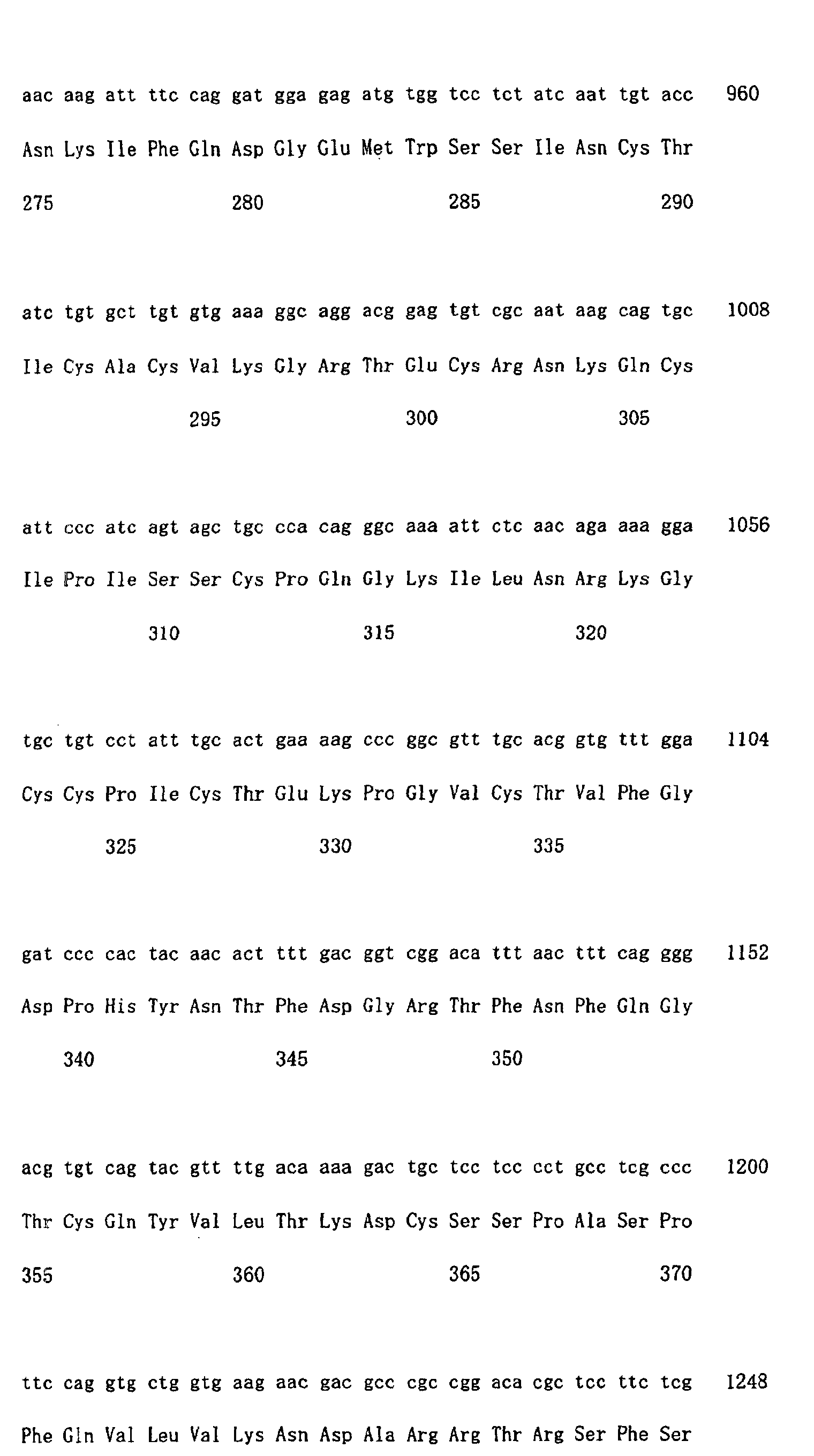
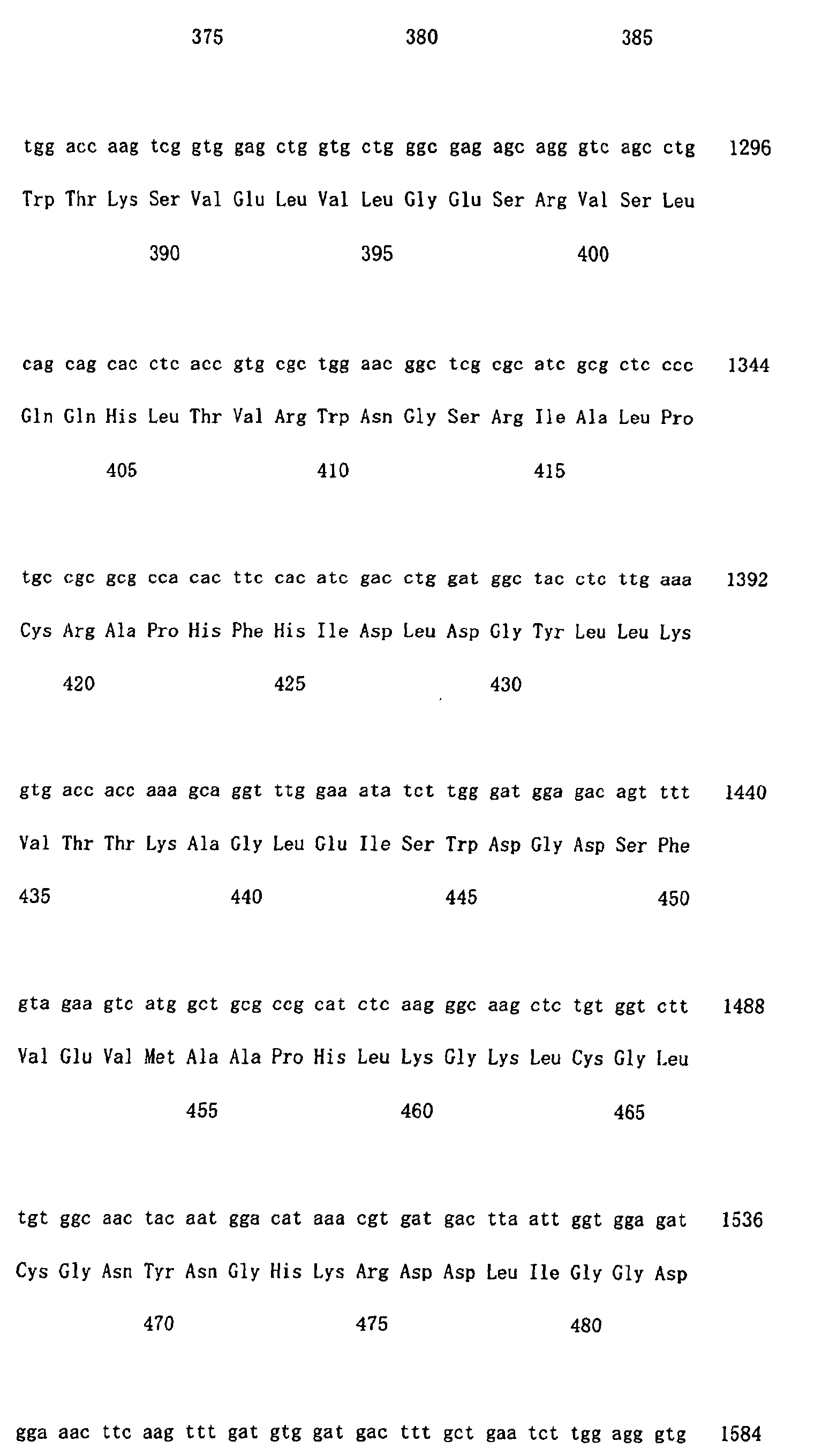


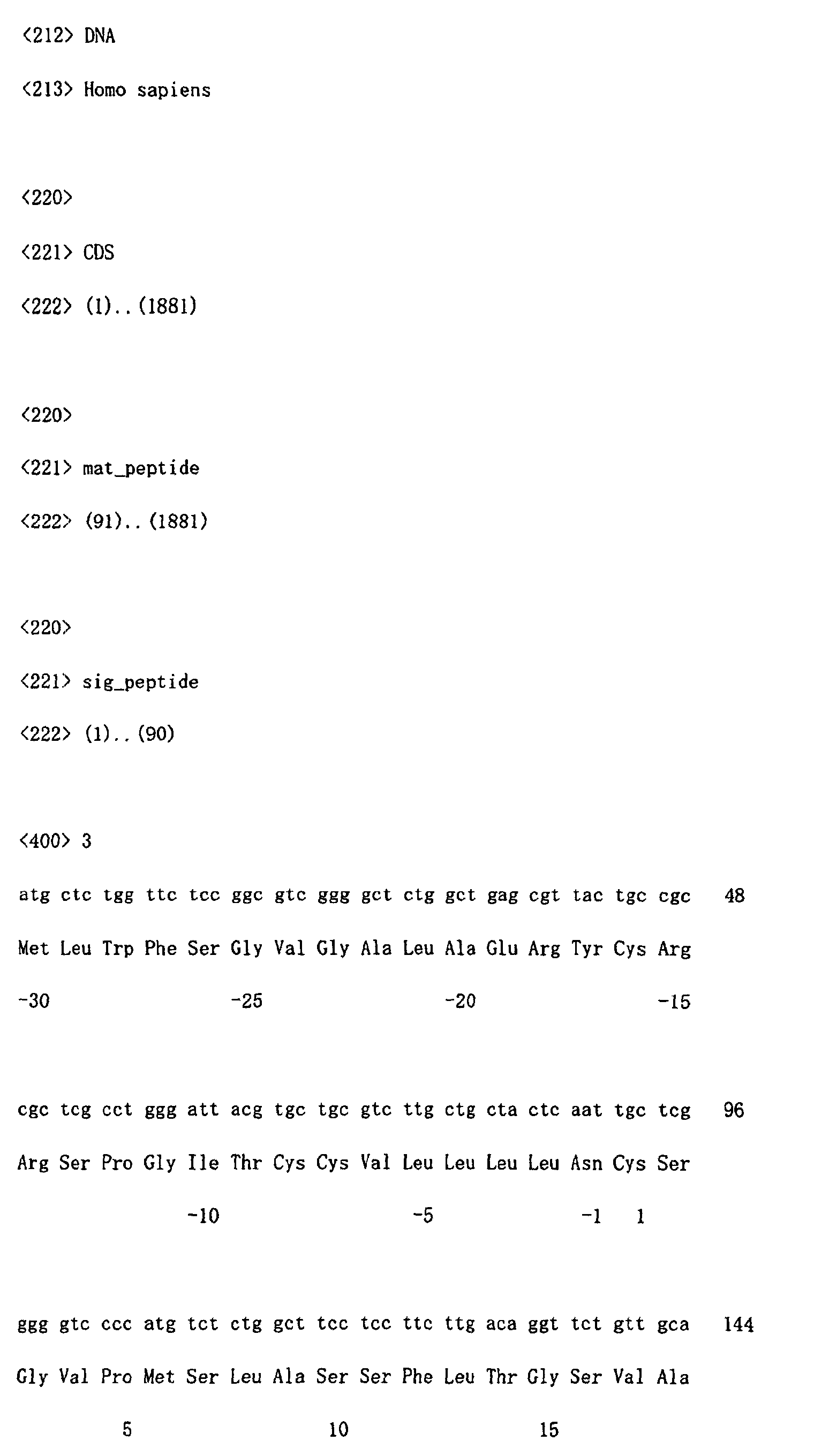
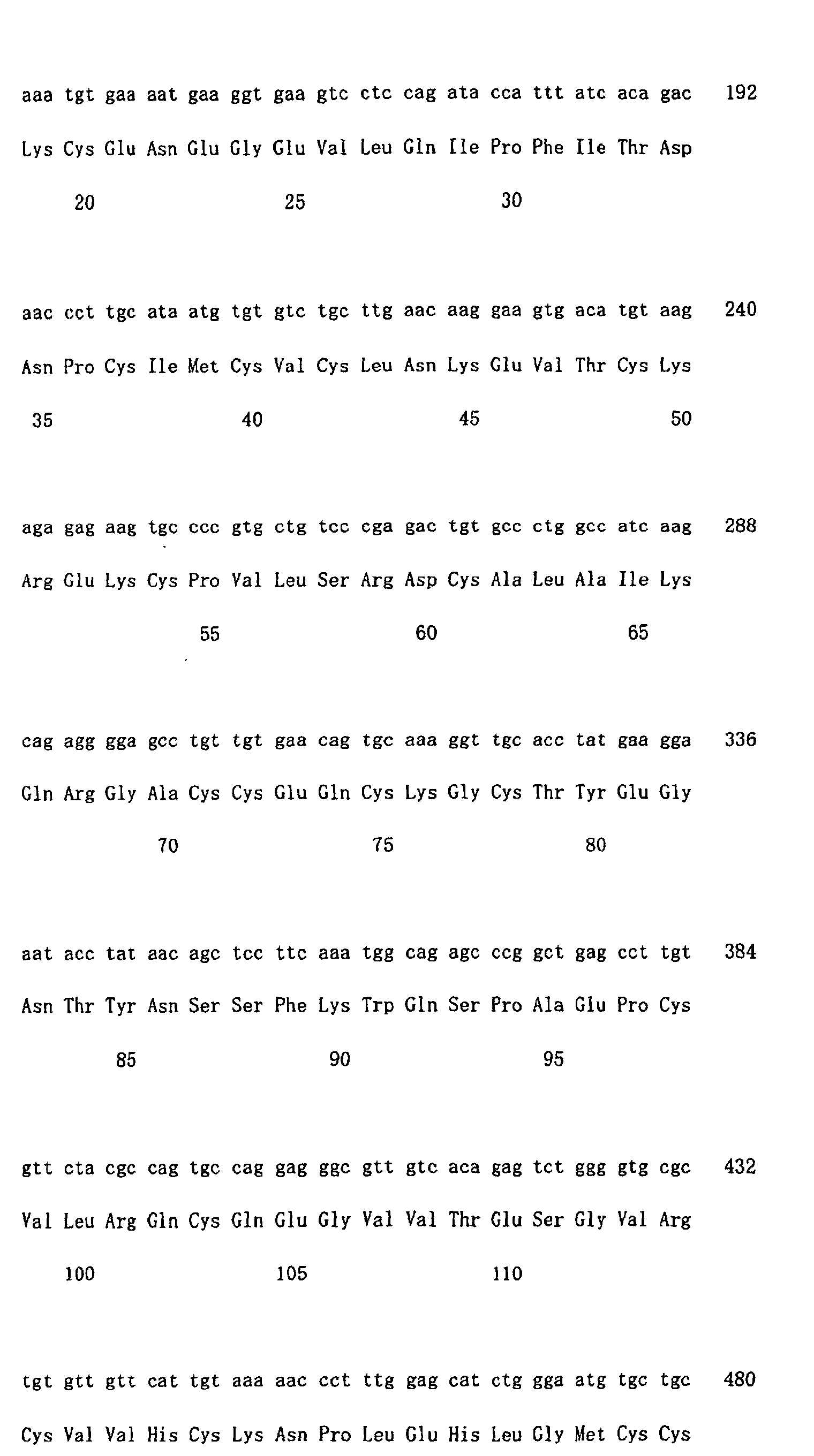
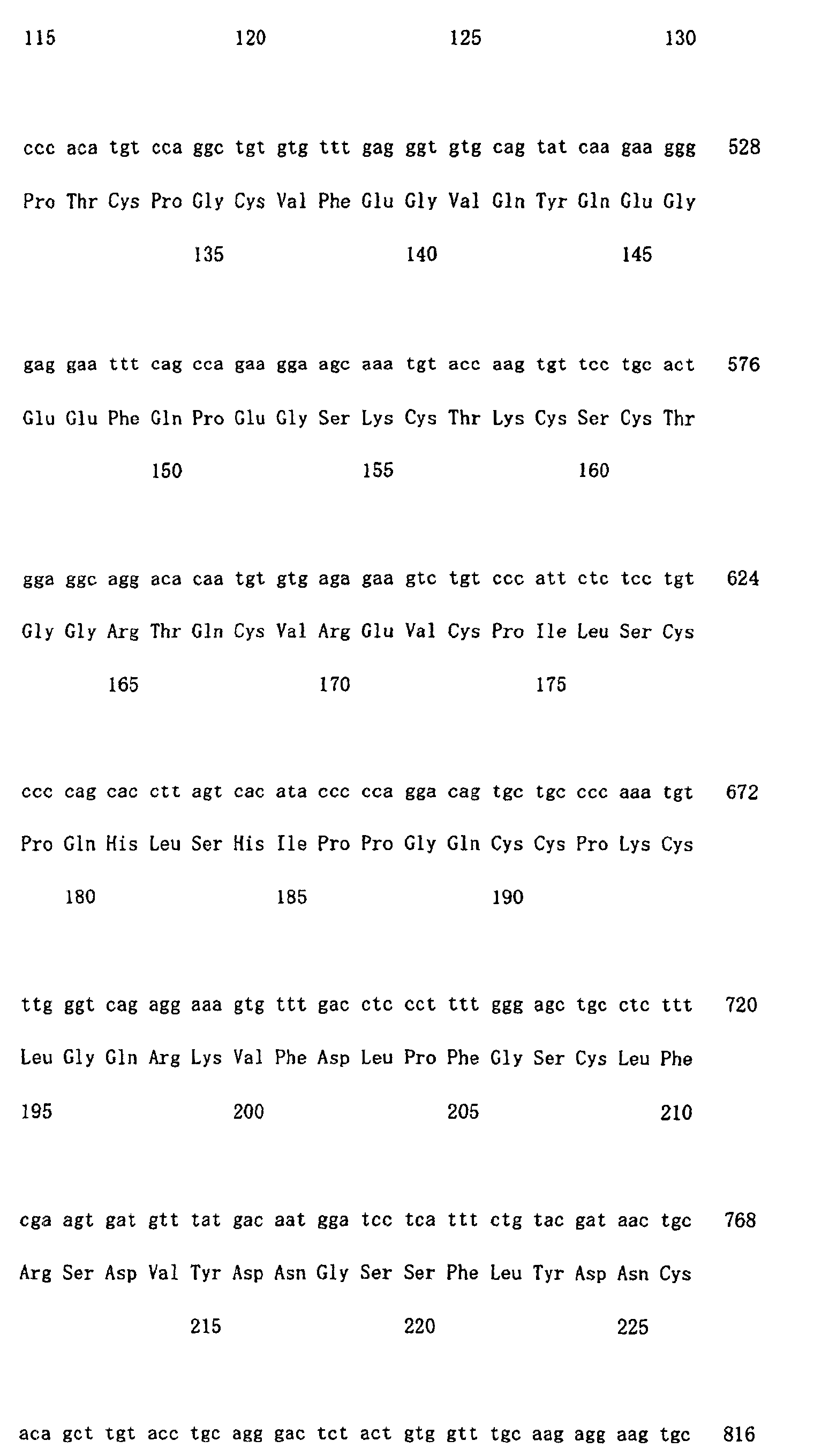


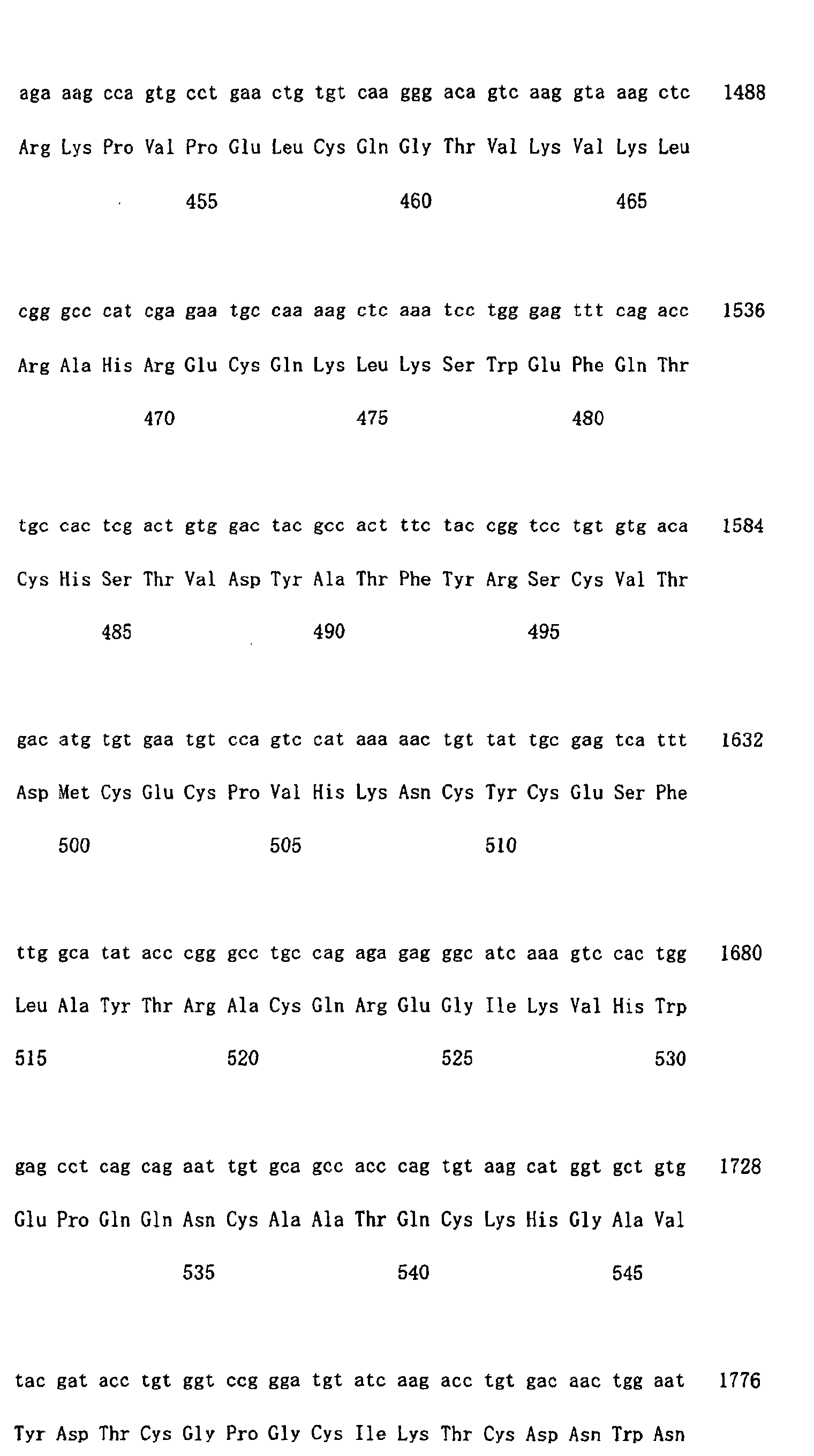
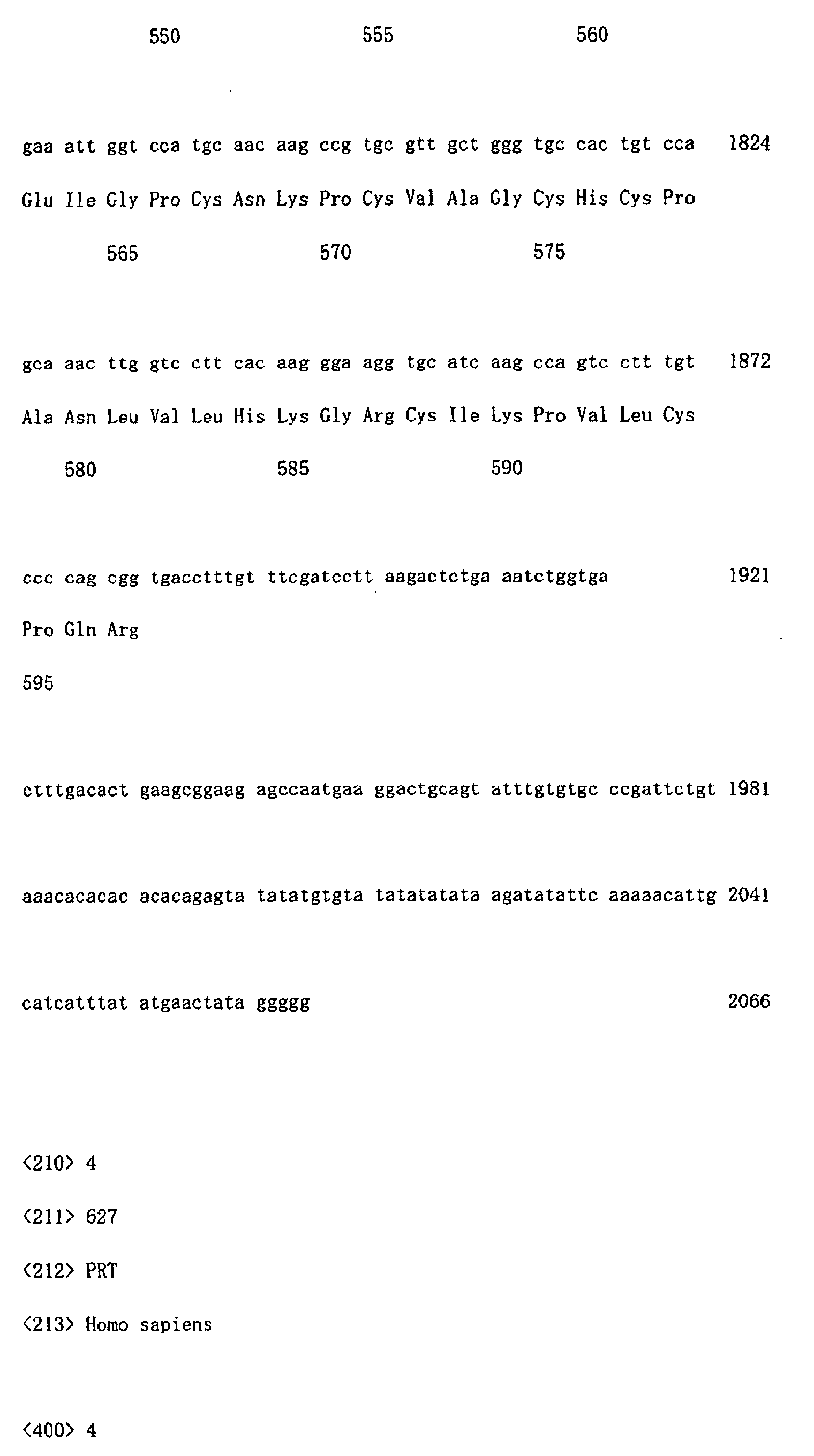

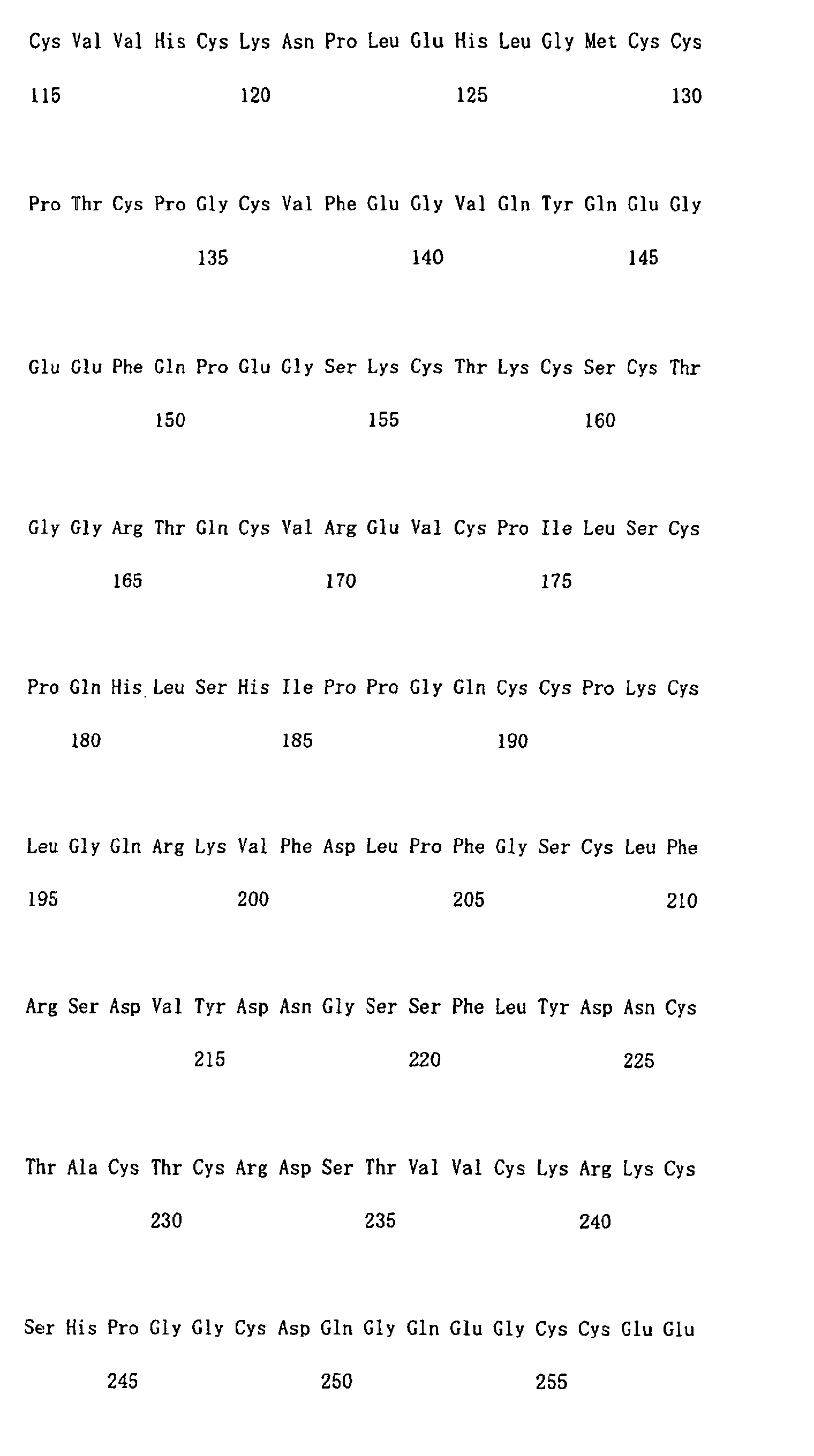


Claims (40)
- A polypeptide or the salt thereof comprising the amino acid sequence consisting of #1 (Cys) to #655 (Arg) of the SEQ ID NO: 2.
- A polypeptide or the salt as claimed in 1, comprising an amino acid sequence consisting of #-30 (Met) to #655 (Arg) of the SEQ ID NO: 2.
- A polypeptide or the salt comprising an amino acid sequence consisting of #1 (Cys) to #597 (Arg) of the SEQ ID NO: 4.
- A polypeptide or the salt comprising an amino acid sequence consisting of #-30 (Met) to #597 (Arg) of the SEQ ID NO: 4.
- Apolypeptide or salt, which comprises an amino acid sequence having at least one mutation selected from deletion, displacement and insertion of one or more amino acids in the amino acid sequence as claimed in any one of 1 to 4 and which is a cancer marker or has a BMPbinding activity.
- A polypeptide as claimed in any one of 1 to 5, which is used as a cancer marker, a bone diseases marker, a cancer remedy or a remedy for bone diseases.
- A polynucleotide comprising a nucleotide sequence encoding the polypeptide, claimed in any one of 1 to 6.
- A polynucleotide, as claimed in 7, comprising the nucleotide sequence consisting of #91 (T) to #2055 (G) of the SEQ ID NO: 1.
- A polynucleotide, as claimed in 7, comprising the nucleotide sequence consisting of #1 (A) to #2055 (G) of the SEQ ID NO: 1.
- A polynucleotide, as claimed in 7, comprising the nucleotide sequence consisting of #91 (T) to #1881 (G) of the SEQ ID NO: 3.
- A polynucleotide, as claimed in 7, comprising the nucleotide sequence consisting of #1 (A) to #1881 (G) of the SEQ ID NO: 3.
- A polynucleotide hybridizing with a polynucleotide as claimed in any one of 7 to 11 under a stringent condition and encoding a polypeptide which is a cancer marker or has a BMP-binding activity.
- A polynucleotide comprising a complementary nucleotide sequence to a polynucleotide as claimed in any one of 7 to 12.
- A polynucleotide as claimed in any one of 7 to 11 or 13, which is used as a cancer marker, a bone diseases marker, a cancer remedy or a remedy for bone diseases.
- A polynucleotide selected from the group consisting of oligonucleotide having a sequence identical to that of continuous 5 to 60 bases in the nucleotide sequence as described in the SEQ ID NO: 1 or 3, a complementary sequence to the oligonucleotide and their oligonucleotide derivatives.
- A recombinant vector comprising the polynucleotide, as claimed in any one of 7 to 13.
- A transformer, which is transformed by the recombinant vector as claimed in 16.
- A method of preparation of the polypeptide or the salt, including the process of culturing the transformer as claimed in 17 and a recovery process of the produced polypeptide as claimed in any one of 1 to 5 from the culture.
- An antibody which specifically recognizes the polypeptide as claimed in any one of 1 to 5.
- A method of detection or of a quantitative analysis of polypeptide as claimed in any one of 1 to 5 by using the antibody as claimed in (19) and including following processes(a) a process wherein the polypeptide contacts with the antibody,(b) a process detecting the bind between the polypeptide and the antibody.
- A method of detection of a cancer or a bone disease correlating with the polypeptide as claimed in any one of 1 to 5, which comprises using the antibody as claimed in 19.
- A kit for diagnosis of cancer or bone diseases, including the antibody as claimed in 19.
- A method of detection or of a quantitative analysis of the mRNA of the polypeptide as claimed in any one of 1 to 5, which comprises using the polynucleotide as claimed in any one of 7 to 13 or 15 and including following processes(a) a process of contacting a mRNA with the polypeptide,(b) a process of detecting the binding between the mRNA and the polypeptide.
- A method of detection of cancer or bone diseases relating to the polypeptide as claimed in any one of 1 to 5 using the method as claimed in 23.
- A method for measuring the quantity of the expression of gene encoding the polypeptide as claimed in any one of 1 to 5, using the method as claimed in 23.
- A method for inhibiting the transcription of DNA or the translation of mRNA encoding a polypeptide as claimed in any one of 1 to 5, which comprises using the polynucleotide as claimed in any one of 7 to 13 or 15.
- A kit for diagnosis of cancer or bone diseases, comprising the polynucleotide as claimed in any one of 7 to 13 or 15.
- A method for screening a binding agent to the polypeptide as claimed in any one of 1 to 5, comprising the following processes,(a) a process of contacting a test agent with the polypeptide as claimed in any one of 1 to 5,(b) a process detecting the binding between a test agent and the polypeptide.
- A kit for screening of a binding agent with the polypeptide, comprising the polypeptide as claimed in any one of 1 to 5.
- A binding agent which is obtained by using the method for the screening of a binding agent as claimed in 28.
- A binding agent as claimed in 30 which is BMP-2 and BMP-4.
- A method for screening of a modulating agent of a binding activity between a binding agent as claimed in any one of 30 or 31 and a polypeptide as claimed in any one of 1 to 5, comprising following processes,(a) A process, wherein the polypeptide as claimed in any one of 1 to 5 contacts with the binding agent as claimed in any one of 30 and 31 under existence or nonexistence of the test agent,(b) A process of comparing both of the binding activities of the polypeptide with the binding agent in the presence and absence of the test agent.
- A kit for screening a modulating agent of a binding activity, comprising the polypeptide as claimed in any one of 1 to 5 and the binding agent as claimed in any one of 30 and 31.
- A modulating agent of a binding activity which is obtained using the screening method as claimed in 32.
- A screening method for a modulating agent of expression of the polypeptide as claimed in any one of 1 to 5 and comprising following processes,(a) a process, wherein the cell which expresses the polypeptide as claimed in any one of 1 to 5 contacts with the test agent,(b) a process, wherein the change of expression of the polypeptide is detected using the method as claimed in any one of 20 or 23.
- A kit for screening a modulating agent of expression of the polypeptide as claimed in any one of 1 to 5 using the method as claimed in 35.
- A modulating agent of expression of the polypeptide, which is obtained using the screening method as claimed in 35.
- A non-human knock out animal, wherein the DNA encoding the polypeptide as claimed in any one of 1 to 5 is deficient or transformed.
- A non-human transgenic animal, wherein the DNA encoding the polypeptide as claimed in any one of 1 to 5 is deficient or transformed.
- A pharmaceutical composition containing the antibody as described in (19), the binding agent as claimed in 39, the modulating agent of a binding activity as described in (34) or the modulating agent of expression as claimed in 37.
Applications Claiming Priority (3)
| Application Number | Priority Date | Filing Date | Title |
|---|---|---|---|
| JP2000401584 | 2000-12-28 | ||
| JP2000401584 | 2000-12-28 | ||
| PCT/JP2001/011428 WO2002053592A1 (en) | 2000-12-28 | 2001-12-26 | Novel polypeptide and dna thereof |
Publications (3)
| Publication Number | Publication Date |
|---|---|
| EP1354890A1 true EP1354890A1 (en) | 2003-10-22 |
| EP1354890A4 EP1354890A4 (en) | 2004-05-19 |
| EP1354890B1 EP1354890B1 (en) | 2007-08-08 |
Family
ID=18865997
Family Applications (1)
| Application Number | Title | Priority Date | Filing Date |
|---|---|---|---|
| EP01272860A Expired - Lifetime EP1354890B1 (en) | 2000-12-28 | 2001-12-26 | Chordin-like polypeptides and dna thereof |
Country Status (6)
| Country | Link |
|---|---|
| US (1) | US7371818B2 (en) |
| EP (1) | EP1354890B1 (en) |
| JP (1) | JP3910536B2 (en) |
| AT (1) | ATE369563T1 (en) |
| DE (1) | DE60129848T2 (en) |
| WO (1) | WO2002053592A1 (en) |
Cited By (1)
| Publication number | Priority date | Publication date | Assignee | Title |
|---|---|---|---|---|
| WO2004020465A3 (en) * | 2002-09-02 | 2004-08-05 | Develogen Ag | Proteins involved in the regulation of energy homeostasis |
Families Citing this family (5)
| Publication number | Priority date | Publication date | Assignee | Title |
|---|---|---|---|---|
| JP2004344118A (en) * | 2003-05-26 | 2004-12-09 | Shionogi & Co Ltd | Antibody production method for secretory protein by DNA immunization |
| US20090232771A1 (en) * | 2004-07-13 | 2009-09-17 | Takeda Pharmaceutical Company Limited | Method of controlling cell functions |
| US20090258023A1 (en) * | 2008-04-10 | 2009-10-15 | University Of North Carolina At Chapel Hill | Tgf-beta superfamily binding proteins and modulation of bone formation and loss |
| FR2981946B1 (en) * | 2011-10-28 | 2015-02-20 | Lfb Biotechnologies | TRANSCRIPTION UNITS AND THEIR USE IN EXPRESSION VECTORS (YB2 / 0) |
| WO2017043679A1 (en) * | 2015-09-11 | 2017-03-16 | Aptamer Sciences Inc. | Protein biomarker panel for detecting non-small cell lung cancer and method for diagnosing a non-small cell lung cancer by the use thereof |
Family Cites Families (11)
| Publication number | Priority date | Publication date | Assignee | Title |
|---|---|---|---|---|
| IL83003A (en) | 1986-07-01 | 1995-07-31 | Genetics Inst | Osteoinductive factors |
| US5610054A (en) | 1992-05-14 | 1997-03-11 | Ribozyme Pharmaceuticals, Inc. | Enzymatic RNA molecule targeted against Hepatitis C virus |
| EP0641212A4 (en) * | 1992-05-14 | 1997-05-21 | Ribozyme Pharm Inc | Method and reagent for inhibiting cancer development. |
| US5679783A (en) * | 1994-11-22 | 1997-10-21 | The Regents Of The University Of California | DNA encoding a tissue differentiation affecting factor |
| US5846770A (en) | 1994-11-22 | 1998-12-08 | Genetics Institute, Inc. | DNA molecules encoding human chordin |
| WO2000009551A1 (en) | 1998-08-10 | 2000-02-24 | Genetics Institute, Inc. | Human chordin-related proteins and polynucleotides encoding them |
| US6790660B1 (en) * | 2001-09-18 | 2004-09-14 | Lexicon Genetics Incorporated | Human kielin-like proteins and polynucleotides encoding the same |
| EP1285084A1 (en) * | 2000-01-25 | 2003-02-26 | Hyseq, Inc. | Novel nucleic acids and polypeptides |
| CA2396719A1 (en) * | 2000-01-31 | 2001-08-02 | Human Genome Sciences, Inc. | 22 human secreted proteins |
| EP1266000A1 (en) * | 2000-03-02 | 2002-12-18 | Amgen Inc. | Chordin-like-2 molecules and uses thereof |
| EP1213352A1 (en) | 2000-12-07 | 2002-06-12 | Aventis Pharma S.A. | Nucleic acids of the human abca5, abca6, abca9, and abca10 genes, vectors containing such nucleic acids and uses thereof |
-
2001
- 2001-12-26 JP JP2002555114A patent/JP3910536B2/en not_active Expired - Fee Related
- 2001-12-26 WO PCT/JP2001/011428 patent/WO2002053592A1/en not_active Ceased
- 2001-12-26 US US10/451,417 patent/US7371818B2/en not_active Expired - Fee Related
- 2001-12-26 EP EP01272860A patent/EP1354890B1/en not_active Expired - Lifetime
- 2001-12-26 AT AT01272860T patent/ATE369563T1/en not_active IP Right Cessation
- 2001-12-26 DE DE2001629848 patent/DE60129848T2/en not_active Expired - Lifetime
Cited By (1)
| Publication number | Priority date | Publication date | Assignee | Title |
|---|---|---|---|---|
| WO2004020465A3 (en) * | 2002-09-02 | 2004-08-05 | Develogen Ag | Proteins involved in the regulation of energy homeostasis |
Also Published As
| Publication number | Publication date |
|---|---|
| DE60129848D1 (en) | 2007-09-20 |
| US7371818B2 (en) | 2008-05-13 |
| US20040110921A1 (en) | 2004-06-10 |
| EP1354890B1 (en) | 2007-08-08 |
| WO2002053592A1 (en) | 2002-07-11 |
| EP1354890A4 (en) | 2004-05-19 |
| JPWO2002053592A1 (en) | 2004-05-13 |
| ATE369563T1 (en) | 2007-08-15 |
| JP3910536B2 (en) | 2007-04-25 |
| DE60129848T2 (en) | 2008-04-24 |
Similar Documents
| Publication | Publication Date | Title |
|---|---|---|
| US7956036B2 (en) | Polypeptide and DNA thereof useful as a neovascular marker | |
| US8426376B2 (en) | Angiogenesis inhibitor | |
| WO2000049046A1 (en) | Novel g protein-coupled receptor protein and dna thereof | |
| EP1354890B1 (en) | Chordin-like polypeptides and dna thereof | |
| WO2000029441A1 (en) | Novel g protein-coupled receptor protein, its dna and ligand thereof | |
| EA013251B1 (en) | vWFA AND/OR ANT_IG DOMAINS CONTAINING PROTEINS | |
| JP2001211885A (en) | Novel polypeptide | |
| US20080044425A1 (en) | Polypeptides having phospholipase a2 activity | |
| US20090270314A1 (en) | Polypeptide having anti-angiogenic activity | |
| JPWO2004005510A1 (en) | Novel Nogo receptor-like polypeptide and its DNA | |
| JPWO2002064769A1 (en) | New disease markers | |
| WO2006006477A1 (en) | Polypeptide participating in bone disease or joint disease and dna thereof | |
| KR20130131342A (en) | Preparation of neutralizing antibody to human herpesvirus 6 glycoprotein q1 and analysis thereof | |
| WO2001066716A1 (en) | Polypeptide having phosphodiesterase activity | |
| JP2003164288A (en) | Novel ATPase-like polypeptide and its DNA | |
| JP2000279183A (en) | New g-protein conjugated receptor protein and dna of the protein | |
| WO2000063392A1 (en) | Novel tyrosine phosphatase | |
| JP2003093072A (en) | Novel protease inhibitor-like polypeptide and its DNA | |
| JP2004115394A (en) | Immunological disease-preventing and treating agent | |
| JPWO2001083705A1 (en) | Cardiomyocyte proliferation-related genes |
Legal Events
| Date | Code | Title | Description |
|---|---|---|---|
| PUAI | Public reference made under article 153(3) epc to a published international application that has entered the european phase |
Free format text: ORIGINAL CODE: 0009012 |
|
| 17P | Request for examination filed |
Effective date: 20030725 |
|
| AK | Designated contracting states |
Kind code of ref document: A1 Designated state(s): AT BE CH CY DE DK ES FI FR GB GR IE IT LI LU MC NL PT SE TR |
|
| AX | Request for extension of the european patent |
Extension state: AL LT LV MK RO SI |
|
| A4 | Supplementary search report drawn up and despatched |
Effective date: 20040406 |
|
| RIC1 | Information provided on ipc code assigned before grant |
Ipc: 7C 07K 14/475 B Ipc: 7G 01N 33/574 A |
|
| 17Q | First examination report despatched |
Effective date: 20040813 |
|
| 17Q | First examination report despatched |
Effective date: 20040813 |
|
| RTI1 | Title (correction) |
Free format text: CHORDIN-LIKE POLYPETIDES AND DNA THEREEOF |
|
| GRAP | Despatch of communication of intention to grant a patent |
Free format text: ORIGINAL CODE: EPIDOSNIGR1 |
|
| RTI1 | Title (correction) |
Free format text: CHORDIN-LIKE POLYPEPTIDES AND DNA THEREOF |
|
| GRAS | Grant fee paid |
Free format text: ORIGINAL CODE: EPIDOSNIGR3 |
|
| GRAA | (expected) grant |
Free format text: ORIGINAL CODE: 0009210 |
|
| AK | Designated contracting states |
Kind code of ref document: B1 Designated state(s): AT BE CH CY DE DK ES FI FR GB GR IE IT LI LU MC NL PT SE TR |
|
| REG | Reference to a national code |
Ref country code: GB Ref legal event code: FG4D |
|
| REG | Reference to a national code |
Ref country code: CH Ref legal event code: EP |
|
| REG | Reference to a national code |
Ref country code: IE Ref legal event code: FG4D |
|
| REF | Corresponds to: |
Ref document number: 60129848 Country of ref document: DE Date of ref document: 20070920 Kind code of ref document: P |
|
| PG25 | Lapsed in a contracting state [announced via postgrant information from national office to epo] |
Ref country code: FI Free format text: LAPSE BECAUSE OF FAILURE TO SUBMIT A TRANSLATION OF THE DESCRIPTION OR TO PAY THE FEE WITHIN THE PRESCRIBED TIME-LIMIT Effective date: 20070808 Ref country code: ES Free format text: LAPSE BECAUSE OF FAILURE TO SUBMIT A TRANSLATION OF THE DESCRIPTION OR TO PAY THE FEE WITHIN THE PRESCRIBED TIME-LIMIT Effective date: 20071119 Ref country code: NL Free format text: LAPSE BECAUSE OF FAILURE TO SUBMIT A TRANSLATION OF THE DESCRIPTION OR TO PAY THE FEE WITHIN THE PRESCRIBED TIME-LIMIT Effective date: 20070808 |
|
| NLV1 | Nl: lapsed or annulled due to failure to fulfill the requirements of art. 29p and 29m of the patents act | ||
| ET | Fr: translation filed | ||
| REG | Reference to a national code |
Ref country code: CH Ref legal event code: PL |
|
| PG25 | Lapsed in a contracting state [announced via postgrant information from national office to epo] |
Ref country code: AT Free format text: LAPSE BECAUSE OF FAILURE TO SUBMIT A TRANSLATION OF THE DESCRIPTION OR TO PAY THE FEE WITHIN THE PRESCRIBED TIME-LIMIT Effective date: 20070808 Ref country code: CH Free format text: LAPSE BECAUSE OF FAILURE TO SUBMIT A TRANSLATION OF THE DESCRIPTION OR TO PAY THE FEE WITHIN THE PRESCRIBED TIME-LIMIT Effective date: 20070808 Ref country code: LI Free format text: LAPSE BECAUSE OF FAILURE TO SUBMIT A TRANSLATION OF THE DESCRIPTION OR TO PAY THE FEE WITHIN THE PRESCRIBED TIME-LIMIT Effective date: 20070808 |
|
| PG25 | Lapsed in a contracting state [announced via postgrant information from national office to epo] |
Ref country code: BE Free format text: LAPSE BECAUSE OF FAILURE TO SUBMIT A TRANSLATION OF THE DESCRIPTION OR TO PAY THE FEE WITHIN THE PRESCRIBED TIME-LIMIT Effective date: 20070808 |
|
| PG25 | Lapsed in a contracting state [announced via postgrant information from national office to epo] |
Ref country code: GR Free format text: LAPSE BECAUSE OF FAILURE TO SUBMIT A TRANSLATION OF THE DESCRIPTION OR TO PAY THE FEE WITHIN THE PRESCRIBED TIME-LIMIT Effective date: 20071109 Ref country code: DK Free format text: LAPSE BECAUSE OF FAILURE TO SUBMIT A TRANSLATION OF THE DESCRIPTION OR TO PAY THE FEE WITHIN THE PRESCRIBED TIME-LIMIT Effective date: 20070808 |
|
| PG25 | Lapsed in a contracting state [announced via postgrant information from national office to epo] |
Ref country code: PT Free format text: LAPSE BECAUSE OF FAILURE TO SUBMIT A TRANSLATION OF THE DESCRIPTION OR TO PAY THE FEE WITHIN THE PRESCRIBED TIME-LIMIT Effective date: 20080108 |
|
| PLBE | No opposition filed within time limit |
Free format text: ORIGINAL CODE: 0009261 |
|
| STAA | Information on the status of an ep patent application or granted ep patent |
Free format text: STATUS: NO OPPOSITION FILED WITHIN TIME LIMIT |
|
| PG25 | Lapsed in a contracting state [announced via postgrant information from national office to epo] |
Ref country code: SE Free format text: LAPSE BECAUSE OF FAILURE TO SUBMIT A TRANSLATION OF THE DESCRIPTION OR TO PAY THE FEE WITHIN THE PRESCRIBED TIME-LIMIT Effective date: 20071108 |
|
| 26N | No opposition filed |
Effective date: 20080509 |
|
| PG25 | Lapsed in a contracting state [announced via postgrant information from national office to epo] |
Ref country code: MC Free format text: LAPSE BECAUSE OF NON-PAYMENT OF DUE FEES Effective date: 20071231 |
|
| PG25 | Lapsed in a contracting state [announced via postgrant information from national office to epo] |
Ref country code: IE Free format text: LAPSE BECAUSE OF NON-PAYMENT OF DUE FEES Effective date: 20071228 |
|
| PG25 | Lapsed in a contracting state [announced via postgrant information from national office to epo] |
Ref country code: CY Free format text: LAPSE BECAUSE OF FAILURE TO SUBMIT A TRANSLATION OF THE DESCRIPTION OR TO PAY THE FEE WITHIN THE PRESCRIBED TIME-LIMIT Effective date: 20070808 |
|
| PG25 | Lapsed in a contracting state [announced via postgrant information from national office to epo] |
Ref country code: LU Free format text: LAPSE BECAUSE OF NON-PAYMENT OF DUE FEES Effective date: 20071226 |
|
| PG25 | Lapsed in a contracting state [announced via postgrant information from national office to epo] |
Ref country code: TR Free format text: LAPSE BECAUSE OF FAILURE TO SUBMIT A TRANSLATION OF THE DESCRIPTION OR TO PAY THE FEE WITHIN THE PRESCRIBED TIME-LIMIT Effective date: 20070808 |
|
| PG25 | Lapsed in a contracting state [announced via postgrant information from national office to epo] |
Ref country code: IT Free format text: LAPSE BECAUSE OF NON-PAYMENT OF DUE FEES Effective date: 20071231 |
|
| PGFP | Annual fee paid to national office [announced via postgrant information from national office to epo] |
Ref country code: GB Payment date: 20121227 Year of fee payment: 12 |
|
| PGFP | Annual fee paid to national office [announced via postgrant information from national office to epo] |
Ref country code: FR Payment date: 20130107 Year of fee payment: 12 |
|
| PGFP | Annual fee paid to national office [announced via postgrant information from national office to epo] |
Ref country code: DE Payment date: 20121219 Year of fee payment: 12 |
|
| REG | Reference to a national code |
Ref country code: DE Ref legal event code: R119 Ref document number: 60129848 Country of ref document: DE |
|
| GBPC | Gb: european patent ceased through non-payment of renewal fee |
Effective date: 20131226 |
|
| REG | Reference to a national code |
Ref country code: DE Ref legal event code: R119 Ref document number: 60129848 Country of ref document: DE Effective date: 20140701 |
|
| REG | Reference to a national code |
Ref country code: FR Ref legal event code: ST Effective date: 20140829 |
|
| PG25 | Lapsed in a contracting state [announced via postgrant information from national office to epo] |
Ref country code: DE Free format text: LAPSE BECAUSE OF NON-PAYMENT OF DUE FEES Effective date: 20140701 |
|
| PG25 | Lapsed in a contracting state [announced via postgrant information from national office to epo] |
Ref country code: FR Free format text: LAPSE BECAUSE OF NON-PAYMENT OF DUE FEES Effective date: 20131231 Ref country code: GB Free format text: LAPSE BECAUSE OF NON-PAYMENT OF DUE FEES Effective date: 20131226 |