EP1354870A1 - Dihydroceramide desaturase inhibitors. - Google Patents
Dihydroceramide desaturase inhibitors. Download PDFInfo
- Publication number
- EP1354870A1 EP1354870A1 EP01271351A EP01271351A EP1354870A1 EP 1354870 A1 EP1354870 A1 EP 1354870A1 EP 01271351 A EP01271351 A EP 01271351A EP 01271351 A EP01271351 A EP 01271351A EP 1354870 A1 EP1354870 A1 EP 1354870A1
- Authority
- EP
- European Patent Office
- Prior art keywords
- ceramide
- biol
- chem
- inhibitors
- branched
- Prior art date
- Legal status (The legal status is an assumption and is not a legal conclusion. Google has not performed a legal analysis and makes no representation as to the accuracy of the status listed.)
- Withdrawn
Links
- 108010061814 dihydroceramide desaturase Proteins 0.000 title claims abstract description 12
- 239000003112 inhibitor Substances 0.000 title claims abstract description 12
- 125000000217 alkyl group Chemical group 0.000 claims abstract 4
- 125000003118 aryl group Chemical group 0.000 claims abstract 4
- 125000002252 acyl group Chemical group 0.000 claims abstract 2
- 125000003342 alkenyl group Chemical group 0.000 claims abstract 2
- 125000000304 alkynyl group Chemical group 0.000 claims abstract 2
- 125000001072 heteroaryl group Chemical group 0.000 claims abstract 2
- 125000000623 heterocyclic group Chemical group 0.000 claims abstract 2
- 238000006467 substitution reaction Methods 0.000 claims 2
- 229940106189 ceramide Drugs 0.000 abstract description 35
- YDNKGFDKKRUKPY-JHOUSYSJSA-N C16 ceramide Natural products CCCCCCCCCCCCCCCC(=O)N[C@@H](CO)[C@H](O)C=CCCCCCCCCCCCCC YDNKGFDKKRUKPY-JHOUSYSJSA-N 0.000 abstract description 34
- CRJGESKKUOMBCT-VQTJNVASSA-N N-acetylsphinganine Chemical compound CCCCCCCCCCCCCCC[C@@H](O)[C@H](CO)NC(C)=O CRJGESKKUOMBCT-VQTJNVASSA-N 0.000 abstract description 34
- ZVEQCJWYRWKARO-UHFFFAOYSA-N ceramide Natural products CCCCCCCCCCCCCCC(O)C(=O)NC(CO)C(O)C=CCCC=C(C)CCCCCCCCC ZVEQCJWYRWKARO-UHFFFAOYSA-N 0.000 abstract description 34
- VVGIYYKRAMHVLU-UHFFFAOYSA-N newbouldiamide Natural products CCCCCCCCCCCCCCCCCCCC(O)C(O)C(O)C(CO)NC(=O)CCCCCCCCCCCCCCCCC VVGIYYKRAMHVLU-UHFFFAOYSA-N 0.000 abstract description 34
- 230000015572 biosynthetic process Effects 0.000 abstract description 12
- 150000001875 compounds Chemical class 0.000 abstract description 12
- 230000000694 effects Effects 0.000 abstract description 12
- 230000003834 intracellular effect Effects 0.000 abstract description 5
- 230000001965 increasing effect Effects 0.000 abstract description 4
- 125000002887 hydroxy group Chemical group [H]O* 0.000 abstract 1
- HEDRZPFGACZZDS-UHFFFAOYSA-N Chloroform Chemical compound ClC(Cl)Cl HEDRZPFGACZZDS-UHFFFAOYSA-N 0.000 description 8
- 230000007062 hydrolysis Effects 0.000 description 6
- 238000006460 hydrolysis reaction Methods 0.000 description 6
- 150000002632 lipids Chemical class 0.000 description 6
- 238000000034 method Methods 0.000 description 6
- VLKZOEOYAKHREP-UHFFFAOYSA-N n-Hexane Chemical compound CCCCCC VLKZOEOYAKHREP-UHFFFAOYSA-N 0.000 description 6
- RTZKZFJDLAIYFH-UHFFFAOYSA-N Diethyl ether Chemical compound CCOCC RTZKZFJDLAIYFH-UHFFFAOYSA-N 0.000 description 5
- 241000238631 Hexapoda Species 0.000 description 5
- 238000009825 accumulation Methods 0.000 description 5
- 210000004027 cell Anatomy 0.000 description 5
- 239000000243 solution Substances 0.000 description 5
- 102000004190 Enzymes Human genes 0.000 description 4
- 108090000790 Enzymes Proteins 0.000 description 4
- LFQSCWFLJHTTHZ-UHFFFAOYSA-N EtOH Substances CCO LFQSCWFLJHTTHZ-UHFFFAOYSA-N 0.000 description 4
- MZRVEZGGRBJDDB-UHFFFAOYSA-N N-Butyllithium Chemical compound [Li]CCCC MZRVEZGGRBJDDB-UHFFFAOYSA-N 0.000 description 4
- WYURNTSHIVDZCO-UHFFFAOYSA-N Tetrahydrofuran Chemical compound C1CCOC1 WYURNTSHIVDZCO-UHFFFAOYSA-N 0.000 description 4
- HEDRZPFGACZZDS-MICDWDOJSA-N Trichloro(2H)methane Chemical compound [2H]C(Cl)(Cl)Cl HEDRZPFGACZZDS-MICDWDOJSA-N 0.000 description 4
- 150000001783 ceramides Chemical class 0.000 description 4
- 238000003786 synthesis reaction Methods 0.000 description 4
- OISVCGZHLKNMSJ-UHFFFAOYSA-N 2,6-dimethylpyridine Chemical compound CC1=CC=CC(C)=N1 OISVCGZHLKNMSJ-UHFFFAOYSA-N 0.000 description 3
- XEKOWRVHYACXOJ-UHFFFAOYSA-N Ethyl acetate Chemical compound CCOC(C)=O XEKOWRVHYACXOJ-UHFFFAOYSA-N 0.000 description 3
- OKKJLVBELUTLKV-UHFFFAOYSA-N Methanol Chemical compound OC OKKJLVBELUTLKV-UHFFFAOYSA-N 0.000 description 3
- HEMHJVSKTPXQMS-UHFFFAOYSA-M Sodium hydroxide Chemical compound [OH-].[Na+] HEMHJVSKTPXQMS-UHFFFAOYSA-M 0.000 description 3
- 230000009471 action Effects 0.000 description 3
- 230000010933 acylation Effects 0.000 description 3
- 238000005917 acylation reaction Methods 0.000 description 3
- 238000004458 analytical method Methods 0.000 description 3
- OTKJDMGTUTTYMP-UHFFFAOYSA-N dihydrosphingosine Natural products CCCCCCCCCCCCCCCC(O)C(N)CO OTKJDMGTUTTYMP-UHFFFAOYSA-N 0.000 description 3
- 150000002339 glycosphingolipids Chemical class 0.000 description 3
- OTKJDMGTUTTYMP-ZWKOTPCHSA-N sphinganine Chemical compound CCCCCCCCCCCCCCC[C@@H](O)[C@@H](N)CO OTKJDMGTUTTYMP-ZWKOTPCHSA-N 0.000 description 3
- DUYSYHSSBDVJSM-KRWOKUGFSA-N sphingosine 1-phosphate Chemical compound CCCCCCCCCCCCC\C=C\[C@@H](O)[C@@H](N)COP(O)(O)=O DUYSYHSSBDVJSM-KRWOKUGFSA-N 0.000 description 3
- PNJXYVJNOCLJLJ-QMMMGPOBSA-N tert-butyl (4r)-4-formyl-2,2-dimethyl-1,3-oxazolidine-3-carboxylate Chemical compound CC(C)(C)OC(=O)N1[C@@H](C=O)COC1(C)C PNJXYVJNOCLJLJ-QMMMGPOBSA-N 0.000 description 3
- OFDHZRSIASMSRS-UHFFFAOYSA-N 1,2,3-tribromocyclopropane Chemical compound BrC1C(Br)C1Br OFDHZRSIASMSRS-UHFFFAOYSA-N 0.000 description 2
- NLXLAEXVIDQMFP-UHFFFAOYSA-N Ammonia chloride Chemical compound [NH4+].[Cl-] NLXLAEXVIDQMFP-UHFFFAOYSA-N 0.000 description 2
- IJGRMHOSHXDMSA-UHFFFAOYSA-N Atomic nitrogen Chemical compound N#N IJGRMHOSHXDMSA-UHFFFAOYSA-N 0.000 description 2
- NPRJSFWNFTXXQC-QFWQFVLDSA-N N-(hexanoyl)sphing-4-enine Chemical compound CCCCCCCCCCCCC\C=C\[C@@H](O)[C@H](CO)NC(=O)CCCCC NPRJSFWNFTXXQC-QFWQFVLDSA-N 0.000 description 2
- BLTCBVOJNNKFKC-QUDYQQOWSA-N N-acetylsphingosine Chemical compound CCCCCCCCCCCCC\C=C\[C@@H](O)[C@H](CO)NC(C)=O BLTCBVOJNNKFKC-QUDYQQOWSA-N 0.000 description 2
- 208000008589 Obesity Diseases 0.000 description 2
- 102000045595 Phosphoprotein Phosphatases Human genes 0.000 description 2
- 108700019535 Phosphoprotein Phosphatases Proteins 0.000 description 2
- 102000011971 Sphingomyelin Phosphodiesterase Human genes 0.000 description 2
- 108010061312 Sphingomyelin Phosphodiesterase Proteins 0.000 description 2
- 230000006907 apoptotic process Effects 0.000 description 2
- DIKBFYAXUHHXCS-UHFFFAOYSA-N bromoform Chemical compound BrC(Br)Br DIKBFYAXUHHXCS-UHFFFAOYSA-N 0.000 description 2
- 238000006243 chemical reaction Methods 0.000 description 2
- 238000009833 condensation Methods 0.000 description 2
- 230000005494 condensation Effects 0.000 description 2
- 230000006378 damage Effects 0.000 description 2
- 206010012601 diabetes mellitus Diseases 0.000 description 2
- 239000000284 extract Substances 0.000 description 2
- 238000000605 extraction Methods 0.000 description 2
- 230000006882 induction of apoptosis Effects 0.000 description 2
- 230000002401 inhibitory effect Effects 0.000 description 2
- 230000005865 ionizing radiation Effects 0.000 description 2
- 238000004519 manufacturing process Methods 0.000 description 2
- 239000000203 mixture Substances 0.000 description 2
- 229930027945 nicotinamide-adenine dinucleotide Natural products 0.000 description 2
- BOPGDPNILDQYTO-NNYOXOHSSA-N nicotinamide-adenine dinucleotide Chemical compound C1=CCC(C(=O)N)=CN1[C@H]1[C@H](O)[C@H](O)[C@@H](COP(O)(=O)OP(O)(=O)OC[C@@H]2[C@H]([C@@H](O)[C@@H](O2)N2C3=NC=NC(N)=C3N=C2)O)O1 BOPGDPNILDQYTO-NNYOXOHSSA-N 0.000 description 2
- 235000020824 obesity Nutrition 0.000 description 2
- REEZZSHJLXOIHL-UHFFFAOYSA-N octanoyl chloride Chemical compound CCCCCCCC(Cl)=O REEZZSHJLXOIHL-UHFFFAOYSA-N 0.000 description 2
- 239000002831 pharmacologic agent Substances 0.000 description 2
- 229920006395 saturated elastomer Polymers 0.000 description 2
- 239000000758 substrate Substances 0.000 description 2
- 239000000725 suspension Substances 0.000 description 2
- FTVLMFQEYACZNP-UHFFFAOYSA-N trimethylsilyl trifluoromethanesulfonate Chemical compound C[Si](C)(C)OS(=O)(=O)C(F)(F)F FTVLMFQEYACZNP-UHFFFAOYSA-N 0.000 description 2
- WWUZIQQURGPMPG-UHFFFAOYSA-N (-)-D-erythro-Sphingosine Natural products CCCCCCCCCCCCCC=CC(O)C(N)CO WWUZIQQURGPMPG-UHFFFAOYSA-N 0.000 description 1
- LOGFVTREOLYCPF-KXNHARMFSA-N (2s,3r)-2-[[(2r)-1-[(2s)-2,6-diaminohexanoyl]pyrrolidine-2-carbonyl]amino]-3-hydroxybutanoic acid Chemical compound C[C@@H](O)[C@@H](C(O)=O)NC(=O)[C@H]1CCCN1C(=O)[C@@H](N)CCCCN LOGFVTREOLYCPF-KXNHARMFSA-N 0.000 description 1
- 238000001644 13C nuclear magnetic resonance spectroscopy Methods 0.000 description 1
- 238000005160 1H NMR spectroscopy Methods 0.000 description 1
- RZYHXKLKJRGJGP-UHFFFAOYSA-N 2,2,2-trifluoro-n,n-bis(trimethylsilyl)acetamide Chemical compound C[Si](C)(C)N([Si](C)(C)C)C(=O)C(F)(F)F RZYHXKLKJRGJGP-UHFFFAOYSA-N 0.000 description 1
- XWKFPIODWVPXLX-UHFFFAOYSA-N 2-methyl-5-methylpyridine Natural products CC1=CC=C(C)N=C1 XWKFPIODWVPXLX-UHFFFAOYSA-N 0.000 description 1
- KBUNOSOGGAARKZ-KRWDZBQOSA-N 3-dehydrosphinganine Chemical compound CCCCCCCCCCCCCCCC(=O)[C@@H](N)CO KBUNOSOGGAARKZ-KRWDZBQOSA-N 0.000 description 1
- XVMSFILGAMDHEY-UHFFFAOYSA-N 6-(4-aminophenyl)sulfonylpyridin-3-amine Chemical compound C1=CC(N)=CC=C1S(=O)(=O)C1=CC=C(N)C=N1 XVMSFILGAMDHEY-UHFFFAOYSA-N 0.000 description 1
- 210000002237 B-cell of pancreatic islet Anatomy 0.000 description 1
- CPELXLSAUQHCOX-UHFFFAOYSA-M Bromide Chemical compound [Br-] CPELXLSAUQHCOX-UHFFFAOYSA-M 0.000 description 1
- 102000004201 Ceramidases Human genes 0.000 description 1
- 108090000751 Ceramidases Proteins 0.000 description 1
- 241001295658 Fabria Species 0.000 description 1
- 102000009114 Fatty acid desaturases Human genes 0.000 description 1
- 108010087894 Fatty acid desaturases Proteins 0.000 description 1
- 229930186217 Glycolipid Natural products 0.000 description 1
- XCXKZBWAKKPFCJ-UHFFFAOYSA-N Hexadecan-2-one Chemical compound CCCCCCCCCCCCCCC(C)=O XCXKZBWAKKPFCJ-UHFFFAOYSA-N 0.000 description 1
- CPELXLSAUQHCOX-UHFFFAOYSA-N Hydrogen bromide Chemical compound Br CPELXLSAUQHCOX-UHFFFAOYSA-N 0.000 description 1
- 102000004157 Hydrolases Human genes 0.000 description 1
- 108090000604 Hydrolases Proteins 0.000 description 1
- 102000003777 Interleukin-1 beta Human genes 0.000 description 1
- 108090000193 Interleukin-1 beta Proteins 0.000 description 1
- 102000015696 Interleukins Human genes 0.000 description 1
- 108010063738 Interleukins Proteins 0.000 description 1
- 241001465754 Metazoa Species 0.000 description 1
- UYNCFCUHRNOSCN-FYYLOGMGSA-N N-[(1R,2R)-1-hydroxy-3-(4-morpholinyl)-1-phenylpropan-2-yl]decanamide Chemical compound C([C@@H](NC(=O)CCCCCCCCC)[C@H](O)C=1C=CC=CC=1)N1CCOCC1 UYNCFCUHRNOSCN-FYYLOGMGSA-N 0.000 description 1
- LGOFBZUQIUVJFS-LOSJGSFVSA-N N-octanoyldihydrosphingosine Chemical compound CCCCCCCCCCCCCCC[C@@H](O)[C@H](CO)NC(=O)CCCCCCC LGOFBZUQIUVJFS-LOSJGSFVSA-N 0.000 description 1
- 108010025020 Nerve Growth Factor Proteins 0.000 description 1
- 102000007072 Nerve Growth Factors Human genes 0.000 description 1
- SUHOOTKUPISOBE-UHFFFAOYSA-N O-phosphoethanolamine Chemical compound NCCOP(O)(O)=O SUHOOTKUPISOBE-UHFFFAOYSA-N 0.000 description 1
- 102000001253 Protein Kinase Human genes 0.000 description 1
- MTCFGRXMJLQNBG-UHFFFAOYSA-N Serine Natural products OCC(N)C(O)=O MTCFGRXMJLQNBG-UHFFFAOYSA-N 0.000 description 1
- 108700012920 TNF Proteins 0.000 description 1
- 108060008682 Tumor Necrosis Factor Proteins 0.000 description 1
- 102000000852 Tumor Necrosis Factor-alpha Human genes 0.000 description 1
- 102100031988 Tumor necrosis factor ligand superfamily member 6 Human genes 0.000 description 1
- 108050002568 Tumor necrosis factor ligand superfamily member 6 Proteins 0.000 description 1
- KLVAOTDZLHIYDC-UHFFFAOYSA-N [Li]C1=C(CCCCCCCCCCCCC)C1 Chemical compound [Li]C1=C(CCCCCCCCCCCCC)C1 KLVAOTDZLHIYDC-UHFFFAOYSA-N 0.000 description 1
- 230000002378 acidificating effect Effects 0.000 description 1
- 150000001298 alcohols Chemical class 0.000 description 1
- 150000001408 amides Chemical group 0.000 description 1
- 150000001412 amines Chemical class 0.000 description 1
- 125000003277 amino group Chemical group 0.000 description 1
- 235000019270 ammonium chloride Nutrition 0.000 description 1
- 230000001195 anabolic effect Effects 0.000 description 1
- 239000002246 antineoplastic agent Substances 0.000 description 1
- 238000013459 approach Methods 0.000 description 1
- 239000007864 aqueous solution Substances 0.000 description 1
- 230000001580 bacterial effect Effects 0.000 description 1
- 210000000227 basophil cell of anterior lobe of hypophysis Anatomy 0.000 description 1
- 230000033228 biological regulation Effects 0.000 description 1
- 230000000903 blocking effect Effects 0.000 description 1
- 229950005228 bromoform Drugs 0.000 description 1
- GZUXJHMPEANEGY-UHFFFAOYSA-N bromomethane Chemical compound BrC GZUXJHMPEANEGY-UHFFFAOYSA-N 0.000 description 1
- GMRQFYUYWCNGIN-NKMMMXOESA-N calcitriol Chemical compound C1(/[C@@H]2CC[C@@H]([C@]2(CCC1)C)[C@@H](CCCC(C)(C)O)C)=C\C=C1\C[C@@H](O)C[C@H](O)C1=C GMRQFYUYWCNGIN-NKMMMXOESA-N 0.000 description 1
- 239000011612 calcitriol Substances 0.000 description 1
- 230000006652 catabolic pathway Effects 0.000 description 1
- 230000024245 cell differentiation Effects 0.000 description 1
- 230000010261 cell growth Effects 0.000 description 1
- 230000036978 cell physiology Effects 0.000 description 1
- 230000005754 cellular signaling Effects 0.000 description 1
- 230000004637 cellular stress Effects 0.000 description 1
- 229930183167 cerebroside Natural products 0.000 description 1
- 150000001784 cerebrosides Chemical class 0.000 description 1
- 239000003795 chemical substances by application Substances 0.000 description 1
- 238000004440 column chromatography Methods 0.000 description 1
- 229940127089 cytotoxic agent Drugs 0.000 description 1
- 238000011161 development Methods 0.000 description 1
- 230000018109 developmental process Effects 0.000 description 1
- UREBDLICKHMUKA-CXSFZGCWSA-N dexamethasone Chemical compound C1CC2=CC(=O)C=C[C@]2(C)[C@]2(F)[C@@H]1[C@@H]1C[C@@H](C)[C@@](C(=O)CO)(O)[C@@]1(C)C[C@@H]2O UREBDLICKHMUKA-CXSFZGCWSA-N 0.000 description 1
- 229960003957 dexamethasone Drugs 0.000 description 1
- 150000001982 diacylglycerols Chemical class 0.000 description 1
- 235000014113 dietary fatty acids Nutrition 0.000 description 1
- XSDVOEIEBUGRQX-RBUKOAKNSA-N dihydroceramide Chemical compound CCCCCCCCCCCCCCC[C@@H](O)[C@H](CO)NC=O XSDVOEIEBUGRQX-RBUKOAKNSA-N 0.000 description 1
- 231100000673 dose–response relationship Toxicity 0.000 description 1
- 239000012636 effector Substances 0.000 description 1
- 238000011156 evaluation Methods 0.000 description 1
- 238000001704 evaporation Methods 0.000 description 1
- 230000008020 evaporation Effects 0.000 description 1
- 238000002474 experimental method Methods 0.000 description 1
- 239000000194 fatty acid Substances 0.000 description 1
- 229930195729 fatty acid Natural products 0.000 description 1
- 150000004665 fatty acids Chemical class 0.000 description 1
- 239000012467 final product Substances 0.000 description 1
- 235000013305 food Nutrition 0.000 description 1
- 150000002270 gangliosides Chemical class 0.000 description 1
- 239000007789 gas Substances 0.000 description 1
- 238000004817 gas chromatography Methods 0.000 description 1
- 238000005858 glycosidation reaction Methods 0.000 description 1
- CBOIHMRHGLHBPB-UHFFFAOYSA-N hydroxymethyl Chemical compound O[CH2] CBOIHMRHGLHBPB-UHFFFAOYSA-N 0.000 description 1
- 238000000338 in vitro Methods 0.000 description 1
- 238000011534 incubation Methods 0.000 description 1
- 230000001939 inductive effect Effects 0.000 description 1
- 230000005764 inhibitory process Effects 0.000 description 1
- 229940047122 interleukins Drugs 0.000 description 1
- 230000037041 intracellular level Effects 0.000 description 1
- 239000003446 ligand Substances 0.000 description 1
- 210000001853 liver microsome Anatomy 0.000 description 1
- 238000004949 mass spectrometry Methods 0.000 description 1
- 230000001404 mediated effect Effects 0.000 description 1
- 230000037353 metabolic pathway Effects 0.000 description 1
- 230000004060 metabolic process Effects 0.000 description 1
- 230000003228 microsomal effect Effects 0.000 description 1
- 210000001589 microsome Anatomy 0.000 description 1
- 230000004048 modification Effects 0.000 description 1
- 238000012986 modification Methods 0.000 description 1
- 230000007935 neutral effect Effects 0.000 description 1
- 229910052757 nitrogen Inorganic materials 0.000 description 1
- MNBKLUUYKPBKDU-BBECNAHFSA-N palmitoyl-CoA Chemical compound O[C@@H]1[C@H](OP(O)(O)=O)[C@@H](COP(O)(=O)OP(O)(=O)OCC(C)(C)[C@@H](O)C(=O)NCCC(=O)NCCSC(=O)CCCCCCCCCCCCCCC)O[C@H]1N1C2=NC=NC(N)=C2N=C1 MNBKLUUYKPBKDU-BBECNAHFSA-N 0.000 description 1
- 230000037361 pathway Effects 0.000 description 1
- DONJGKADZJEXRJ-UHFFFAOYSA-N pentadec-1-yne Chemical compound CCCCCCCCCCCCCC#C DONJGKADZJEXRJ-UHFFFAOYSA-N 0.000 description 1
- 239000008363 phosphate buffer Substances 0.000 description 1
- WTJKGGKOPKCXLL-RRHRGVEJSA-N phosphatidylcholine Chemical compound CCCCCCCCCCCCCCCC(=O)OC[C@H](COP([O-])(=O)OCC[N+](C)(C)C)OC(=O)CCCCCCCC=CCCCCCCCC WTJKGGKOPKCXLL-RRHRGVEJSA-N 0.000 description 1
- YHHSONZFOIEMCP-UHFFFAOYSA-O phosphocholine Chemical compound C[N+](C)(C)CCOP(O)(O)=O YHHSONZFOIEMCP-UHFFFAOYSA-O 0.000 description 1
- 229950004354 phosphorylcholine Drugs 0.000 description 1
- 238000011533 pre-incubation Methods 0.000 description 1
- 239000002243 precursor Substances 0.000 description 1
- 230000008569 process Effects 0.000 description 1
- 239000000047 product Substances 0.000 description 1
- 108060006633 protein kinase Proteins 0.000 description 1
- 238000011002 quantification Methods 0.000 description 1
- 230000004044 response Effects 0.000 description 1
- 238000012552 review Methods 0.000 description 1
- 150000004671 saturated fatty acids Chemical class 0.000 description 1
- 235000003441 saturated fatty acids Nutrition 0.000 description 1
- 239000012047 saturated solution Substances 0.000 description 1
- 238000010898 silica gel chromatography Methods 0.000 description 1
- 238000004611 spectroscopical analysis Methods 0.000 description 1
- 150000003408 sphingolipids Chemical class 0.000 description 1
- WWUZIQQURGPMPG-KRWOKUGFSA-N sphingosine Chemical compound CCCCCCCCCCCCC\C=C\[C@@H](O)[C@@H](N)CO WWUZIQQURGPMPG-KRWOKUGFSA-N 0.000 description 1
- 108010014501 sphingosine 1-phosphate lyase (aldolase) Proteins 0.000 description 1
- 238000003756 stirring Methods 0.000 description 1
- 230000035882 stress Effects 0.000 description 1
- 230000001629 suppression Effects 0.000 description 1
- HWCKGOZZJDHMNC-UHFFFAOYSA-M tetraethylammonium bromide Chemical compound [Br-].CC[N+](CC)(CC)CC HWCKGOZZJDHMNC-UHFFFAOYSA-M 0.000 description 1
- 238000012546 transfer Methods 0.000 description 1
- 230000009466 transformation Effects 0.000 description 1
Images
Classifications
-
- C—CHEMISTRY; METALLURGY
- C07—ORGANIC CHEMISTRY
- C07C—ACYCLIC OR CARBOCYCLIC COMPOUNDS
- C07C215/00—Compounds containing amino and hydroxy groups bound to the same carbon skeleton
- C07C215/02—Compounds containing amino and hydroxy groups bound to the same carbon skeleton having hydroxy groups and amino groups bound to acyclic carbon atoms of the same carbon skeleton
- C07C215/22—Compounds containing amino and hydroxy groups bound to the same carbon skeleton having hydroxy groups and amino groups bound to acyclic carbon atoms of the same carbon skeleton the carbon skeleton being unsaturated
- C07C215/26—Compounds containing amino and hydroxy groups bound to the same carbon skeleton having hydroxy groups and amino groups bound to acyclic carbon atoms of the same carbon skeleton the carbon skeleton being unsaturated and containing rings other than six-membered aromatic rings
-
- A—HUMAN NECESSITIES
- A61—MEDICAL OR VETERINARY SCIENCE; HYGIENE
- A61K—PREPARATIONS FOR MEDICAL, DENTAL OR TOILETRY PURPOSES
- A61K31/00—Medicinal preparations containing organic active ingredients
- A61K31/13—Amines
- A61K31/133—Amines having hydroxy groups, e.g. sphingosine
-
- A—HUMAN NECESSITIES
- A61—MEDICAL OR VETERINARY SCIENCE; HYGIENE
- A61K—PREPARATIONS FOR MEDICAL, DENTAL OR TOILETRY PURPOSES
- A61K31/00—Medicinal preparations containing organic active ingredients
- A61K31/16—Amides, e.g. hydroxamic acids
-
- A—HUMAN NECESSITIES
- A61—MEDICAL OR VETERINARY SCIENCE; HYGIENE
- A61P—SPECIFIC THERAPEUTIC ACTIVITY OF CHEMICAL COMPOUNDS OR MEDICINAL PREPARATIONS
- A61P3/00—Drugs for disorders of the metabolism
-
- C—CHEMISTRY; METALLURGY
- C07—ORGANIC CHEMISTRY
- C07C—ACYCLIC OR CARBOCYCLIC COMPOUNDS
- C07C233/00—Carboxylic acid amides
- C07C233/01—Carboxylic acid amides having carbon atoms of carboxamide groups bound to hydrogen atoms or to acyclic carbon atoms
- C07C233/16—Carboxylic acid amides having carbon atoms of carboxamide groups bound to hydrogen atoms or to acyclic carbon atoms having the nitrogen atom of at least one of the carboxamide groups bound to a carbon atom of a hydrocarbon radical substituted by singly-bound oxygen atoms
- C07C233/17—Carboxylic acid amides having carbon atoms of carboxamide groups bound to hydrogen atoms or to acyclic carbon atoms having the nitrogen atom of at least one of the carboxamide groups bound to a carbon atom of a hydrocarbon radical substituted by singly-bound oxygen atoms with the substituted hydrocarbon radical bound to the nitrogen atom of the carboxamide group by an acyclic carbon atom
- C07C233/18—Carboxylic acid amides having carbon atoms of carboxamide groups bound to hydrogen atoms or to acyclic carbon atoms having the nitrogen atom of at least one of the carboxamide groups bound to a carbon atom of a hydrocarbon radical substituted by singly-bound oxygen atoms with the substituted hydrocarbon radical bound to the nitrogen atom of the carboxamide group by an acyclic carbon atom having the carbon atom of the carboxamide group bound to a hydrogen atom or to a carbon atom of an acyclic saturated carbon skeleton
-
- C—CHEMISTRY; METALLURGY
- C07—ORGANIC CHEMISTRY
- C07C—ACYCLIC OR CARBOCYCLIC COMPOUNDS
- C07C2601/00—Systems containing only non-condensed rings
- C07C2601/02—Systems containing only non-condensed rings with a three-membered ring
Definitions
- the present invention is of interest for the pharmaceutical industry. It refers to a technique for reducing intracellular ceramide levels that involves inhibition of dihydroceramide desaturase.
- the compounds described can be useful for the treatment of clinical conditions associated with a rise in intracellular ceramide both in humans and animals.
- Ceramide is an important lipidic effector (Hannun, J. Biol.. 269:3125 (1994), Merril, Jr., Nutr. Rev. 50:78 (1992), Kolesnick and Fuks, J. Exp. Med. 181: 1949 (1995), Chao, Mol. Cell. Neurosci. 6:91 (1995), Liscovitch, Trends Biochem. Sci. 17:393 (1992)).
- There are several extracellular and stress-inducing agents such as tumor necrosis factor ⁇ , interleukin-1 ⁇ , the 1- ⁇ -25-dihydroxyvitamin D 3 , neurotrophins, the Fas ligand, dexamethasone, chemotherapeutic agents, ionizing radiation etc.
- Intracellular ceramide acts as a mediator in response to external stimuli, in important processes such as cellular differentiation, apoptosis, suppression of cell growth etc. It has also been shown that exogenous ceramide analogues can provoke these same effects in different cell types (Hannun, J. Biol. Chem. 269:3125 (1994), Okazaki et al. J. Biol.. Chem. 265: 15823 (1990), Bielawska et al. FEBS Lett. 307:211 (1992), Obeid et al., Science 259: 1769 (1993), Laulederkind et al., J. Exp. Med. 182:599 (1995), Goldkorn et al., J. Biol.. Chem. 266: 16092 (1991)).
- ceramide in cell physiology has also been demonstrated by studies that examine the specific activity of ceramide analogues. For example, it has been shown that D-erythro-N-acetylsphingosine presents similar activities to natural ceramide (Bielawaska et al. J. Biol.. Chem. 268: 26226 (1993), Fishbein et al, J. Biol. Chem. 268:9255 (1993)), while its saturated analogue (D-erythro-N-acetyldihydrosphingosine), without the double bond in positions 4,5 lacks the effects of ceramide (Bielawaski et al., J. Biol. Chem.
- Ceramide is the central molecule in sphingolipid and glycosphingolipid biosynthesis ( Figure 1). Ceramide is produced intracellularly via two metabolic pathways: the anabolic and the catabolic pathways. In the latter, ceramide is produced by hydrolysis of glycosphingolipids catalysed by hydrolases or hydrolysis of sphingomyelin ("sphingomyelin cycle"). The hydrolysis of sphingomyelin is mediated by sphingomyelinases (acidic or neutral), which are activated by a series of natural ligands (TNFa, interleukins etc.) and also by signals of cellular stress, such as ionizing radiations, pharmacological agents etc. On the other hand, the hydrolysis of sphingosine-1-phosphate by a phosphatase, followed by acylation of the amino group also leads to the production of a ceramide (salvage pathway).
- ceramide anabolic pathway
- the de novo biosynthesis of ceramide is initiated by condensation of serine with palmitoyl CoA to form 3-ketodihydrosphingosine, which is then reduced to dihydrosphingosine.
- the acylation of dihydrosphingosine generates dihydroceramide, which, by the action of a desaturase, is transformed into ceramide.
- Ceramide then serves as a precursor of more complex lipids, such as sphingomyelin and glycosphingolipids (cerebrosides, gangliosides etc.) (Hannun, J. Biol. Chem. 269: 3125 (1994), Wiegandt in glycolipids (Weigandt, ed) pp.
- ceramide into sphingomyelin involves the transfer of choline phosphate from a phosphatidylcholine molecule to the C1-OH of ceramide, generating diacylglycerol, which is another very important cell signalling mediator.
- ceramide can be transformed by hydrolysis of the amide function by the action of ceramidases into sphingosine, (Hannun, J. Biol. Chem. 269:3125 (1994), Spence et al. Biochem. Cell. Biol. 64:400 (19867), Slife et al., J. Biol. Chem. 264: 10371 (1989)) which, in turn, is phosphorylated at C1-OH by a kinase, giving rise to sphingosine-1-phosphate, which is also a very important lipidic mediator.
- sphingosine-1-phosphate By the action of sphingosine-1-phosphate lyase, the sphingosine-1-phosphate can be transformed into ethanolamine phosphate and 2-hexadecanal.
- dihydroceramide desaturase is the last enzyme in the de novo biosynthesis of ceramide, one could expect type I compounds to be useful in the treatment of conditions derived from an accumulation of intracellular ceramide by increasing the de novo biosynthesis of ceramide.
- One of these conditions is diabetes associated with obesity in which an accumulation of saturated fatty acids leads to an increase in the de novo synthesis of ceramide in the pancreatic beta cells with the subsequent induction of apoptosis and destruction of these beta cells.
- the world patent WO 9944598 describes the use of fumonisine, an inhibitor of the N-acyltransferase of the dihydrosphingosine and, therefore, an inhibitor of de novo ceramide biosynthesis, as a method to prevent destruction of beta pancreatic cells and for the treatment of obesity-associated diabetes.
- Other clinical conditions derived from increased apoptosis induced by an accumulation of ceramide can also be treated with type I compounds.
- the present invention has arisen from the knowledge that specific cyclopropenic fatty acids of a certain structure potently and selectively inhibit the fatty acid desaturases (Salaun J; Baird, M.S. Curr. Med. Chem.
- type I compounds would be expected to be inhibitors of dihydroceramide desaturase.
- the la compound is synthesized by condensation of tent-butyl (S)-(-)-4-formyl-2,2-dimethyl-3-oxazolidincarboxylate (Garner aldehyde) with 2-tridecyl-1-cyclopropenyl-lithium, obtained from 1-pentadecyne following the sequence of reactions described in Al Dulayami, J. R.; Baird, M. S.; Simpson, M.J.; Nyman, S. Tetrahedron 1996 , 52, 12509-12520.
- the inhibitory activity of the type I compounds that is claimed in this patent was tested on rat liver microsomes, prepared as described in [Michel, C. van Echten-Deckert, G.; Rother, J.; Sandhoff, K.; Wang, E.; Merrill, A. H. J . Biol. Chem. 1997, 272, 22432-22437].
- the dihydroceramide desaturase activity was determined according to the procedure described in Michel, C. van Echten-Deckert, G.; Rother, J.; Sandhoff, K.; Wang, E.; Merrill, A. H. J. Biol. Chem.
- the suspension was incubated at 37°C for 30 minutes and the reactions were stopped by adding 0.5 mL of chloroform containing 1 nmol of N-hexanoylsphingosine as an internal standard for quantification.
- lipid extractions with chloroform were carried out (2 x 250 ⁇ l) and the combined organic extracts were evaporated to dryness under a stream of Nitrogen.
- the resulting residue was treated with 50 ⁇ l of bis-trimethylsilyltrifluoroacetamide at 25°C for 60 minutes. After this time, 50 ⁇ l of chloroform was added and the samples were kept at -80°C until their analysis.
- the analyses consisted of gas chromatography coupled to electron impact mass spectrometry (70 eV), using a Fisons series 8000 chromatograph and a Fisons MD-800 selective mass detector.
- the system was equipped with a Hewlett Packard HP-1 (30 m x 0.2 mm) capillary column.
Landscapes
- Health & Medical Sciences (AREA)
- Chemical & Material Sciences (AREA)
- Organic Chemistry (AREA)
- Veterinary Medicine (AREA)
- Public Health (AREA)
- General Health & Medical Sciences (AREA)
- Animal Behavior & Ethology (AREA)
- Life Sciences & Earth Sciences (AREA)
- Medicinal Chemistry (AREA)
- Pharmacology & Pharmacy (AREA)
- Epidemiology (AREA)
- Obesity (AREA)
- Nuclear Medicine, Radiotherapy & Molecular Imaging (AREA)
- General Chemical & Material Sciences (AREA)
- Chemical Kinetics & Catalysis (AREA)
- Hematology (AREA)
- Diabetes (AREA)
- Bioinformatics & Cheminformatics (AREA)
- Engineering & Computer Science (AREA)
- Organic Low-Molecular-Weight Compounds And Preparation Thereof (AREA)
- Pharmaceuticals Containing Other Organic And Inorganic Compounds (AREA)
- Heterocyclic Carbon Compounds Containing A Hetero Ring Having Nitrogen And Oxygen As The Only Ring Hetero Atoms (AREA)
- Acyclic And Carbocyclic Compounds In Medicinal Compositions (AREA)
Abstract
Cyclopropenylceramide derivatives as inhibitors of desaturases characterized by the
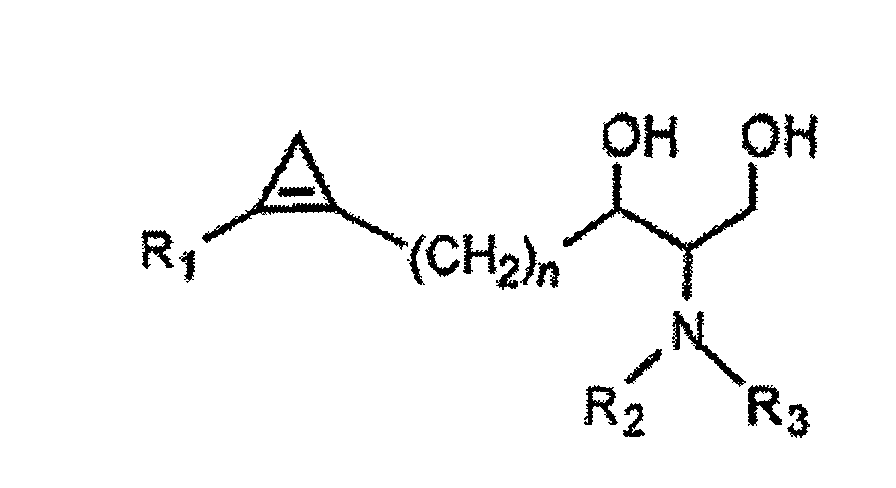
general formula I in which R1 can be an alkyl, alkenyl, alkynyl, aryl or any
heterocyclic group, n can have any value and it can be branched or straight chained
and can contain unsaturated carbons and R2 and R3 can have the same or different
values, and it can represent aryl, heteroaryl, alkyl or acyl groups with one or more
unsaturated carbons on the chain, that can be branched or straight and substituted
with OH groups. Members of this new class of compounds have shown an
extraordinary activity as inhibitors of the dihydroceramide desaturase and of
ceramide biosynthesis and are useful for the treatment of clinical conditions
associated with increased intracellular ceramide.
Description
- The present invention is of interest for the pharmaceutical industry. It refers to a technique for reducing intracellular ceramide levels that involves inhibition of dihydroceramide desaturase. The compounds described can be useful for the treatment of clinical conditions associated with a rise in intracellular ceramide both in humans and animals.
- Ceramide is an important lipidic effector (Hannun, J. Biol.. 269:3125 (1994), Merril, Jr., Nutr. Rev. 50:78 (1992), Kolesnick and Fuks, J. Exp. Med. 181: 1949 (1995), Chao, Mol. Cell. Neurosci. 6:91 (1995), Liscovitch, Trends Biochem. Sci. 17:393 (1992)). There are several extracellular and stress-inducing agents such as tumor necrosis factor α, interleukin-1 β, the 1-α-25-dihydroxyvitamin D3, neurotrophins, the Fas ligand, dexamethasone, chemotherapeutic agents, ionizing radiation etc. that can induce a rise in endogenous ceramide levels (Hannun, J. Biol. Chem. 269:3125 (1994), Hannun and Obeid, Trends Biochem. Sci. 20:73 (1995), Ballou et al., J. Biol. Chem. 267:20044 (1992), Quintans et al., Biochem. Biophys. Res. Commun. 202: 710 (1994), Dobrowsky et al., Science 265: 1596 (1994), Yanaga and Watson, FEBS Lett. 314:297 (1992), Dressler and Kolesnick, Science 255:1715 (1992)). Intracellular ceramide acts as a mediator in response to external stimuli, in important processes such as cellular differentiation, apoptosis, suppression of cell growth etc. It has also been shown that exogenous ceramide analogues can provoke these same effects in different cell types (Hannun, J. Biol. Chem. 269:3125 (1994), Okazaki et al. J. Biol.. Chem. 265: 15823 (1990), Bielawska et al. FEBS Lett. 307:211 (1992), Obeid et al., Science 259: 1769 (1993), Laulederkind et al., J. Exp. Med. 182:599 (1995), Goldkorn et al., J. Biol.. Chem. 266: 16092 (1991)).
- The relevance of ceramide in cell physiology has also been demonstrated by studies that examine the specific activity of ceramide analogues. For example, it has been shown that D-erythro-N-acetylsphingosine presents similar activities to natural ceramide (Bielawaska et al. J. Biol.. Chem. 268: 26226 (1993), Fishbein et al, J. Biol. Chem. 268:9255 (1993)), while its saturated analogue (D-erythro-N-acetyldihydrosphingosine), without the double bond in positions 4,5 lacks the effects of ceramide (Bielawaski et al., J. Biol. Chem. 268:26226 (1993), Tepper et al. Proc. Natl. Acad. Sci. U.S.A. 92: 8443 (1995)) although both compounds are incorporated and metabolized in an almost identical manner (Bielawska et al. J.Biol. Chem. 268: 26226 (1993)), that suggests that the lack of activity of the saturated derivative is due to its inability to interact with relevant targets. Indeed, D-erythro-N-acetylsphingosine, but not D-erythro-N-acetyldihydrosphingosine, activates the protein phosphatase CAPP in vitro (Fishbein et al. J. Biol. Chem. 268: 9255 (1993), Dobrowsky et al., J. Biol. Chem. 268: 15523 (1993)).
- On the other hand, some of the effects produced by the ceramide have been achieved by manipulating its own metabolism. For example, by adding bacterial sphingomyelinase, that catalyses the hydrolysis of sphingomyelin to ceramide, an accumulation of ceramide occurs and the same effects are achieved as with addition of permeable ceramides (Okazaki et al, J. Biol. Chem. 264:19076 (1989), Mathias et al., Science 259: 519 (1993)). In another example, the PDMP and related compounds which inhibit ceramide glycosidation (Abe et al., J. Biochem. (Tokyo), 111:191(1992)) also lead to rises in intracellular levels of this lipid, producing a series of similar effects to those achieved with ceramide analogues.
- These overall results strengthen the crucial role of ceramide in the regulation of different aspects of cell biology.
- Ceramide is the central molecule in sphingolipid and glycosphingolipid biosynthesis (Figure 1). Ceramide is produced intracellularly via two metabolic pathways: the anabolic and the catabolic pathways. In the latter, ceramide is produced by hydrolysis of glycosphingolipids catalysed by hydrolases or hydrolysis of sphingomyelin ("sphingomyelin cycle"). The hydrolysis of sphingomyelin is mediated by sphingomyelinases (acidic or neutral), which are activated by a series of natural ligands (TNFa, interleukins etc.) and also by signals of cellular stress, such as ionizing radiations, pharmacological agents etc. On the other hand, the hydrolysis of sphingosine-1-phosphate by a phosphatase, followed by acylation of the amino group also leads to the production of a ceramide (salvage pathway).
- The de novo biosynthesis of ceramide (anabolic pathway) is initiated by condensation of serine with palmitoyl CoA to form 3-ketodihydrosphingosine, which is then reduced to dihydrosphingosine. The acylation of dihydrosphingosine generates dihydroceramide, which, by the action of a desaturase, is transformed into ceramide. Ceramide then serves as a precursor of more complex lipids, such as sphingomyelin and glycosphingolipids (cerebrosides, gangliosides etc.) (Hannun, J. Biol. Chem. 269: 3125 (1994), Wiegandt in glycolipids (Weigandt, ed) pp. 199-259 , Elsevier, New York (1985), Merrill, Jr. and Jones Biochim. Biophys. Acta 1044:1 (1990), Van Echten and Sandhoff J. Biol. Chem. 268:53412 (1993), Hakomori, Annu. Rev. Biochem. 50: 733 (1981)). The transformation of ceramide into sphingomyelin involves the transfer of choline phosphate from a phosphatidylcholine molecule to the C1-OH of ceramide, generating diacylglycerol, which is another very important cell signalling mediator. Finally, ceramide can be transformed by hydrolysis of the amide function by the action of ceramidases into sphingosine, (Hannun, J. Biol. Chem. 269:3125 (1994), Spence et al. Biochem. Cell. Biol. 64:400 (19867), Slife et al., J. Biol. Chem. 264: 10371 (1989)) which, in turn, is phosphorylated at C1-OH by a kinase, giving rise to sphingosine-1-phosphate, which is also a very important lipidic mediator. By the action of sphingosine-1-phosphate lyase, the sphingosine-1-phosphate can be transformed into ethanolamine phosphate and 2-hexadecanal.
- There are several clinical conditions that are caused by or associated with an accumulation of ceramide and the subsequent induction of apoptosis. Therefore, the development of molecules capable of blocking the enzymes involved in the production of ceramide constitutes a novel approach to discovering new pharmacological agents. In this context, different inhibitors have been described, both in scientific publications and in patents, for several of the enzymes involved in ceramide biosynthesis and metabolization, and have been the focus of a recent review [Kolter and Sandhoff, Angew. Chem. Int. Ed. 1999, 38:1532]. However, no inhibitor of dihydroceramide desaturase has been described as yet in the literature.
- To date, no inhibitor of dihydroceramide desaturase has been reported in the literature. Since dihydroceramide desaturase is the last enzyme in the de novo biosynthesis of ceramide, one could expect type I compoundsto be useful in the treatment of conditions derived from an accumulation of intracellular ceramide by increasing the de novo biosynthesis of ceramide. One of these conditions is diabetes associated with obesity in which an accumulation of saturated fatty acids leads to an increase in the de novo synthesis of ceramide in the pancreatic beta cells with the subsequent induction of apoptosis and destruction of these beta cells. The world patent WO 9944598 describes the use of fumonisine, an inhibitor of the N-acyltransferase of the dihydrosphingosine and, therefore, an inhibitor of de novo ceramide biosynthesis, as a method to prevent destruction of beta pancreatic cells and for the treatment of obesity-associated diabetes. Other clinical conditions derived from increased apoptosis induced by an accumulation of ceramide can also be treated with type I compounds. The present invention has arisen from the knowledge that specific cyclopropenic fatty acids of a certain structure potently and selectively inhibit the fatty acid desaturases (Salaun J; Baird, M.S. Curr. Med. Chem. 1995, 2, 511-452, Johnson, A.R.; Pearson, J.A.; Shenstone, F.S.; Fogerty, A.C. Nature 1967, 214, 1244-1245, Johnson, A.R.; Fogerty A.C., Pearson, J.A.; Shenstone, F.S.; Bersten, A.M. Lipids 1968, 4, 265-269, Fogerty, A.C.; Johnson, A.R.; Pearson, J.A. Lipids 1972, 7, 335-338, Clark J.R. ; Kircher, H. W. Lipids 1972, 7, 769-772, Raju, P. K.; Reiser, R. J. Biol. Chem. 1967, 242, 379-384, Allen, E.; Johnson, A.R.; Fogerty, A.C.; Pearson, J. A. ; Shenstone, F.S. Lipids 1977, 2, 419-423, Jeffcoat, R.; Pollard, M.R. Lipids 1977, 12, 480-485, Ory, R.L.; Altschul, A.M. Biochem. Biophys.. Res. Commun. 1964, 17, 12-16, Pande, S.V.; Mead, J.F.J. Biol. Chem 1970, 245, 1856-1861, Arsequell, G.; Fabrias, G. Camps, F. Insect Biochem. 1989, 19, 623-627, Gosalbo, L; Fabrias, G.; Arsequell, G.; Camps, F. Insect Biochem. Molec. Biol.1992, 22, 687-690, Gosalbo, L; Fabrias, G.; Camps, F. Arch. Insect Biochem Physiol. 1994, 26, 279-286, Fabrias G.; Gosalbo, L; Quintana, J.; Camps, F.J. Lipid Res. 1996, 37, 1503-1509, Fabrias, G.; Barrot, M.; Camps, F. Insect Biochem Molec. Biol.. 1995, 25, 655-660, Ando, T.; Ikemoto, K, Ohno, R.; Yamamoto, M. Arch. Insect Biochem. Physiol. 1998, 37, 8-16, Ando, T.; Ohno, R.; Ikemoto, K.; Yamamoto, M. J. Agric. Food Chem. 1996, 44, 3350-3354). Therefore, by analogy, type I compounds would be expected to be inhibitors of dihydroceramide desaturase.
- Without limiting in any way the application of the present invention that is described in the claims specified in the following section, some aspects of this invention are described in detail in the following examples.
-
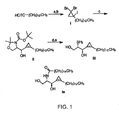
- Figure 1. Synthesis of type I compounds. The steps of the synthesis are: a/HBr gas, tetraethylammonium bromide, b/tribromomethane, cetyltribenzylammonium bromide, 50% aqueous solution of sodium hydroxide; c/1, n-Butyl-lithium in tetrahydrofurane, 2, Garner aldehyde in tetrahydrofurane; 3, Column chromatography; d/ 1, trimethylsilyl triflate, 2,6-lutidine in tetrahydrofurane, 2, octanoyl chloride/pyridine in methanol/chloroform.
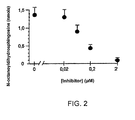
- Figure 2. The effect of compound la, where R1 is C13H27, R2 is C8H17 and R3 is H on the dihydroceramide desaturase. The experiments involved incubation of microsomes with the la inhibitor at the doses indicated, the enzyme substrate (N-octanoyldihydrosphingosine) and NADH. The amounts of desaturated product formed are calculated on the basis of an internal standard (N-hexanoylsphingosine).
-
- The la compound is synthesized by condensation of tent-butyl (S)-(-)-4-formyl-2,2-dimethyl-3-oxazolidincarboxylate (Garner aldehyde) with 2-tridecyl-1-cyclopropenyl-lithium, obtained from 1-pentadecyne following the sequence of reactions described in Al Dulayami, J. R.; Baird, M. S.; Simpson, M.J.; Nyman, S. Tetrahedron 1996, 52, 12509-12520. Two equivalents of n-butyl-lithium are added (1.5 M solution in hexane) to 1 equivalent of tribromocyclopropane (i) dissolved in anhydrous tetrahydrofurane maintaining the temperature below -50°C and then letting it rise gradually to 0°C. To the resulting solution, 1 equivalent of Garner aldehyde was added maintaining the temperature below -65°C. After stirring constantly for two hours a saturated solution of ammonium chloride was added and the extraction was carried out with diethyl ether. The evaporation of ether produces a mixture of diastereomeric alcohols erythro- and threo-ii (7:3), that are carefully separated by silica gel column chromatography eluting with a mixture of ethyl acetate/hexane at a ratio of 10:1. Each of the diastereomers is deprotected with trimethylsilyl triflate in accordance with the procedure described by Sakaitani, M.; Ohfune, Y. -. Org. Chem. 1990, 55, 870-876, thus obtaining the aminodiols iii. The final product is obtained by acylation of the amine with octanoyl chloride (figure 2).
Spectroscopic data of la.
IR (NaCI): 1550, 1644, 3010, 3287 cm-1
13C NMR (300 MHz, CDCl3): 8.37 (CH2), 14.04 (CH3), 14.10 (CH3), 22.59 (CH2), 22.67 (CH2), 25.71 (CH2), 25.84 (CH2), 27.29 (CH2), 29.99 (CH2), 29.20 (CH2), 29.34 (CH2), 29.44 (CH2), 29.57 (CH2), 29.64 (CH2), 31.66 (CH2), 31.90 (CH2), 36.7 (CH2), 53.70 (CHNH), 63.21 (CH2OH), 70.66 (CHOH), 107.53 (CH), 115.50 (CH), 173.98 (NHCOR).
1H NMR (200 MHz, CDCl3): 0.87 (t, 6H, J=6.2), 1.01 (s, 1H), 1.25 (s, 28H), 1.60 (m. 4H), 2.24 (t, 2H, J= 7.2), 2.45 (dt, 2H, J=7.6, J'=1.2), 3.71 (dd, 1 H, J = 11.4, J'=3.4), 3.87 (dd, 1 H, J=11.2, J'=4), 4.18(m, 1H), 6.37 (d, 1 H NH). - The inhibitory activity of the type I compounds that is claimed in this patent was tested on rat liver microsomes, prepared as described in [Michel, C. van Echten-Deckert, G.; Rother, J.; Sandhoff, K.; Wang, E.; Merrill, A. H. J. Biol. Chem. 1997, 272, 22432-22437]. The dihydroceramide desaturase activity was determined according to the procedure described in Michel, C. van Echten-Deckert, G.; Rother, J.; Sandhoff, K.; Wang, E.; Merrill, A. H. J. Biol. Chem. 1997, 272, 22432-22437, with the following modifications: compound la in increasing doses of 0, 0.6, 1.25, 2.5, 5 and 10 nmoles, was solubilized in BSA-ethanol 9:1 (100µl) and to the resulting solution 10 nmoles of substrate dissolved in 10µl of ethanol were added. To this solution was added a total of 0.3 mg of the microsomal suspension containing the desaturase, and 30 µl of a 1µM solution of NADH in 0.1M phosphate buffer, pH 7.5. The suspension was incubated at 37°C for 30 minutes and the reactions were stopped by adding 0.5 mL of chloroform containing 1 nmol of N-hexanoylsphingosine as an internal standard for quantification. Repeated lipid extractions with chloroform were carried out (2 x 250 µl) and the combined organic extracts were evaporated to dryness under a stream of Nitrogen. The resulting residue was treated with 50 µl of bis-trimethylsilyltrifluoroacetamide at 25°C for 60 minutes. After this time, 50 µl of chloroform was added and the samples were kept at -80°C until their analysis. The analyses consisted of gas chromatography coupled to electron impact mass spectrometry (70 eV), using a Fisons series 8000 chromatograph and a Fisons MD-800 selective mass detector. The system was equipped with a Hewlett Packard HP-1 (30 m x 0.2 mm) capillary column.
- Analysis of the lipidic extracts revealed that the effect of la on the dihydroceramide desaturase was dose-dependent with an IC50, without preincubation of 0.052 µM (Figure 2).
Claims (2)
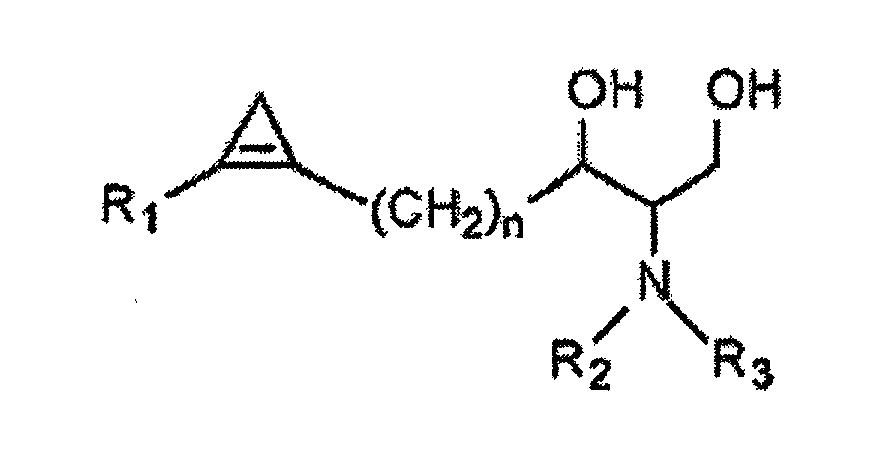
- Derivatives of cyclopropenylceramide as desaturase inhibitors characterised by the general formula I in which R1 can be an alkyl, alkenyl, alkynyl or aryl or any heterocyclic group, n can have any value and can be branched or straight, with or without substitutions, and contain unsaturated carbons on the chain and R2 and R3 that can have the same or different values, represent aryl, heteroaryl, alkyl or acyl groups with one or more unsaturations in the chain that can also be branched or straight and can have or not have substitutions.
- Use of derivatives of cyclopropenylceramide according to claim 1 as inhibitors of dihydroceramide desaturase.
Applications Claiming Priority (3)
| Application Number | Priority Date | Filing Date | Title |
|---|---|---|---|
| ES200003045 | 2000-12-19 | ||
| ES200003045A ES2170030B1 (en) | 2000-12-19 | 2000-12-19 | DIHYDROCERAMIDE DESATURASA INHIBITORS. |
| PCT/ES2001/000486 WO2002050018A1 (en) | 2000-12-19 | 2001-12-14 | Dihydroceramide desaturase inhibitors. |
Publications (1)
| Publication Number | Publication Date |
|---|---|
| EP1354870A1 true EP1354870A1 (en) | 2003-10-22 |
Family
ID=8496062
Family Applications (1)
| Application Number | Title | Priority Date | Filing Date |
|---|---|---|---|
| EP01271351A Withdrawn EP1354870A1 (en) | 2000-12-19 | 2001-12-14 | Dihydroceramide desaturase inhibitors. |
Country Status (4)
| Country | Link |
|---|---|
| EP (1) | EP1354870A1 (en) |
| AU (1) | AU2002221978A1 (en) |
| ES (1) | ES2170030B1 (en) |
| WO (1) | WO2002050018A1 (en) |
Cited By (2)
| Publication number | Priority date | Publication date | Assignee | Title |
|---|---|---|---|---|
| WO2006015622A1 (en) * | 2004-08-09 | 2006-02-16 | Cellzome Ag | Treatment of neurodegenerative diseases by the use of degs inhibitors |
| WO2012100835A1 (en) * | 2011-01-28 | 2012-08-02 | Laboratorios Del Dr. Esteve, S.A. | Methods and compositions for the treatment of aids |
Families Citing this family (3)
| Publication number | Priority date | Publication date | Assignee | Title |
|---|---|---|---|---|
| ES2233204B1 (en) * | 2003-11-25 | 2006-08-01 | Consejo Sup. Investig. Cientificas | USE OF CYCLOPROPENYLPHINGOSINE DERIVATIVES FOR THE ELABORATION OF A PHARMACEUTICAL COMPOSITION MODULATOR OF CERAMIDASE ACTIVITY, AND ITS APPLICATIONS. |
| ES2255425B1 (en) * | 2003-11-25 | 2007-08-16 | Consejo Superior Investig. Cientificas | PROCEDURE FOR OBTAINING COMPOUNDS DERIVED FROM CYCLOPROPENYLPHINGOSINE. |
| KR20250057925A (en) | 2018-01-11 | 2025-04-29 | 켄타우루스 테라퓨틱스 | Inhibitors of dihydroceramide desaturase for treating disease |
Family Cites Families (1)
| Publication number | Priority date | Publication date | Assignee | Title |
|---|---|---|---|---|
| US5395958A (en) * | 1992-09-30 | 1995-03-07 | Mitsubishi Kasei Corporation | Cyclopropene derivatives |
-
2000
- 2000-12-19 ES ES200003045A patent/ES2170030B1/en not_active Expired - Fee Related
-
2001
- 2001-12-14 EP EP01271351A patent/EP1354870A1/en not_active Withdrawn
- 2001-12-14 AU AU2002221978A patent/AU2002221978A1/en not_active Abandoned
- 2001-12-14 WO PCT/ES2001/000486 patent/WO2002050018A1/en not_active Ceased
Non-Patent Citations (1)
| Title |
|---|
| See references of WO0250018A1 * |
Cited By (2)
| Publication number | Priority date | Publication date | Assignee | Title |
|---|---|---|---|---|
| WO2006015622A1 (en) * | 2004-08-09 | 2006-02-16 | Cellzome Ag | Treatment of neurodegenerative diseases by the use of degs inhibitors |
| WO2012100835A1 (en) * | 2011-01-28 | 2012-08-02 | Laboratorios Del Dr. Esteve, S.A. | Methods and compositions for the treatment of aids |
Also Published As
| Publication number | Publication date |
|---|---|
| AU2002221978A1 (en) | 2002-07-01 |
| ES2170030B1 (en) | 2003-11-16 |
| WO2002050018A1 (en) | 2002-06-27 |
| ES2170030A1 (en) | 2002-07-16 |
Similar Documents
| Publication | Publication Date | Title |
|---|---|---|
| Chalfant et al. | The structural requirements for ceramide activation of serine-threonine protein phosphatases | |
| Menaldino et al. | Sphingoid bases and de novo ceramide synthesis: enzymes involved, pharmacology and mechanisms of action | |
| Mandon et al. | Sphingolipid biosynthesis in cultured neurons: Down‐regulation of serine palmitoyltransferase by sphingoid bases | |
| Ohta et al. | Induction of apoptosis by sphingosine in human leukemic HL-60 cells: a possible endogenous modulator of apoptotic DNA fragmentation occurring during phorbol ester-induced differentiation | |
| Inokuchi et al. | Preparation of the active isomer of 1-phenyl-2-decanoylamino-3-morpholino-1-propanol, inhibitor of murine glucocerebroside synthetase | |
| Morell et al. | Synthesis of cerebroside by brain from uridine diphosphate galactose and ceramide containing hydroxy fatty acid | |
| Bielawska et al. | Selectivity of ceramide-mediated biology. Lack of activity of erythro-dihydroceramide. | |
| Buehrer et al. | Protein kinase C-dependent regulation of human erythroleukemia (HEL) cell sphingosine kinase activity | |
| Qin et al. | Neurons and oligodendrocytes recycle sphingosine 1-phosphate to ceramide: significance for apoptosis and multiple sclerosis | |
| Hauser et al. | Role of ceramide in mitogenesis induced by exogenous sphingoid bases. | |
| Dagan et al. | Synthetic, non-natural sphingolipid analogs inhibit the biosynthesis of cellular sphingolipids, elevate ceramide and induce apoptotic cell death | |
| Usta et al. | Structural requirements of ceramide and sphingosine based inhibitors of mitochondrial ceramidase | |
| Triola et al. | Specificity of the dihydroceramide desaturase inhibitor N-[(1R, 2S)-2-hydroxy-1-hydroxymethyl-2-(2-tridecyl-1-cyclopropenyl) ethyl] octanamide (GT11) in primary cultured cerebellar neurons | |
| Delgado et al. | Chemical tools to investigate sphingolipid metabolism and functions | |
| WO1993002673A1 (en) | Method of altering sphingolipid metabolism and detecting fumonisin ingestion and contamination | |
| Vunnam et al. | Short chain ceramides as substrates for glucocerebroside synthetase. Differences between liver and brain enzymes | |
| Hwang et al. | Synthetic phytoceramides induce apoptosis with higher potency than ceramides | |
| Padrón | Sphingolipids in anticancer therapy | |
| Bedia et al. | Analogs of the dihydroceramide desaturase inhibitor GT11 modified at the amide function: synthesis and biological activities | |
| Radin et al. | Use of an inhibitor of glucosylceramide synthesis, D-1-phenyl-2-decanoylamino-3-morpholino-1-propanol | |
| Wang et al. | [3] Ceramide synthase | |
| van Echten-Deckert et al. | 1-Methylthiodihydroceramide, a novel analog of dihydroceramide, stimulates sphinganine degradation resulting in decreased de novo sphingolipid biosynthesis | |
| WO2002050018A1 (en) | Dihydroceramide desaturase inhibitors. | |
| S. Elkhayat et al. | Activity and structure elucidation of ceramides | |
| Vos et al. | Relationships between phosphatidylcholine, phosphatidylethanolamine, and sphingomyelin metabolism in cultured oligodendrocytes |
Legal Events
| Date | Code | Title | Description |
|---|---|---|---|
| PUAI | Public reference made under article 153(3) epc to a published international application that has entered the european phase |
Free format text: ORIGINAL CODE: 0009012 |
|
| 17P | Request for examination filed |
Effective date: 20030711 |
|
| AK | Designated contracting states |
Kind code of ref document: A1 Designated state(s): AT BE CH CY DE DK ES FI FR GB GR IE IT LI LU MC NL PT SE TR |
|
| AX | Request for extension of the european patent |
Extension state: AL LT LV MK RO SI |
|
| 17Q | First examination report despatched |
Effective date: 20040714 |
|
| STAA | Information on the status of an ep patent application or granted ep patent |
Free format text: STATUS: THE APPLICATION IS DEEMED TO BE WITHDRAWN |
|
| 18D | Application deemed to be withdrawn |
Effective date: 20041125 |