EP1354058B1 - Isolation and characterisation of an anther-specific promoter (cofs) in cotton - Google Patents
Isolation and characterisation of an anther-specific promoter (cofs) in cotton Download PDFInfo
- Publication number
- EP1354058B1 EP1354058B1 EP01908584A EP01908584A EP1354058B1 EP 1354058 B1 EP1354058 B1 EP 1354058B1 EP 01908584 A EP01908584 A EP 01908584A EP 01908584 A EP01908584 A EP 01908584A EP 1354058 B1 EP1354058 B1 EP 1354058B1
- Authority
- EP
- European Patent Office
- Prior art keywords
- cotton
- cofs
- gene
- promoter
- anther
- Prior art date
- Legal status (The legal status is an assumption and is not a legal conclusion. Google has not performed a legal analysis and makes no representation as to the accuracy of the status listed.)
- Expired - Lifetime
Links
- 229920000742 Cotton Polymers 0.000 title claims description 44
- 238000002955 isolation Methods 0.000 title description 4
- 238000012512 characterization method Methods 0.000 title description 2
- 108090000623 proteins and genes Proteins 0.000 claims description 37
- 230000009261 transgenic effect Effects 0.000 claims description 17
- 108700019146 Transgenes Proteins 0.000 claims description 4
- 108020004707 nucleic acids Proteins 0.000 claims description 4
- 102000039446 nucleic acids Human genes 0.000 claims description 4
- 150000007523 nucleic acids Chemical class 0.000 claims description 4
- FWMNVWWHGCHHJJ-SKKKGAJSSA-N 4-amino-1-[(2r)-6-amino-2-[[(2r)-2-[[(2r)-2-[[(2r)-2-amino-3-phenylpropanoyl]amino]-3-phenylpropanoyl]amino]-4-methylpentanoyl]amino]hexanoyl]piperidine-4-carboxylic acid Chemical compound C([C@H](C(=O)N[C@H](CC(C)C)C(=O)N[C@H](CCCCN)C(=O)N1CCC(N)(CC1)C(O)=O)NC(=O)[C@H](N)CC=1C=CC=CC=1)C1=CC=CC=C1 FWMNVWWHGCHHJJ-SKKKGAJSSA-N 0.000 claims 2
- 241000219146 Gossypium Species 0.000 description 40
- 241000196324 Embryophyta Species 0.000 description 39
- 108020004414 DNA Proteins 0.000 description 24
- 239000012634 fragment Substances 0.000 description 21
- 235000002637 Nicotiana tabacum Nutrition 0.000 description 19
- 230000014509 gene expression Effects 0.000 description 19
- 239000002299 complementary DNA Substances 0.000 description 18
- LFQSCWFLJHTTHZ-UHFFFAOYSA-N Ethanol Chemical compound CCO LFQSCWFLJHTTHZ-UHFFFAOYSA-N 0.000 description 10
- 241000208125 Nicotiana Species 0.000 description 10
- 239000013598 vector Substances 0.000 description 10
- 244000061176 Nicotiana tabacum Species 0.000 description 9
- 238000000636 Northern blotting Methods 0.000 description 9
- 238000004458 analytical method Methods 0.000 description 9
- 101150054900 gus gene Proteins 0.000 description 8
- 108091032973 (ribonucleotides)n+m Proteins 0.000 description 7
- HEDRZPFGACZZDS-UHFFFAOYSA-N Chloroform Chemical compound ClC(Cl)Cl HEDRZPFGACZZDS-UHFFFAOYSA-N 0.000 description 6
- 238000003556 assay Methods 0.000 description 6
- 210000004027 cell Anatomy 0.000 description 6
- 230000000694 effects Effects 0.000 description 6
- 238000009396 hybridization Methods 0.000 description 6
- 108020004635 Complementary DNA Proteins 0.000 description 5
- 238000002105 Southern blotting Methods 0.000 description 5
- 239000006870 ms-medium Substances 0.000 description 5
- 235000004341 Gossypium herbaceum Nutrition 0.000 description 4
- 108010011449 Long-chain-fatty-acid-CoA ligase Proteins 0.000 description 4
- 241000607479 Yersinia pestis Species 0.000 description 4
- 238000002372 labelling Methods 0.000 description 4
- 239000000463 material Substances 0.000 description 4
- 241001149092 Arabidopsis sp. Species 0.000 description 3
- 108700039691 Genetic Promoter Regions Proteins 0.000 description 3
- 240000002024 Gossypium herbaceum Species 0.000 description 3
- 241000238631 Hexapoda Species 0.000 description 3
- 239000004677 Nylon Substances 0.000 description 3
- 150000001413 amino acids Chemical class 0.000 description 3
- 230000004927 fusion Effects 0.000 description 3
- 229930027917 kanamycin Natural products 0.000 description 3
- SBUJHOSQTJFQJX-NOAMYHISSA-N kanamycin Chemical compound O[C@@H]1[C@@H](O)[C@H](O)[C@@H](CN)O[C@@H]1O[C@H]1[C@H](O)[C@@H](O[C@@H]2[C@@H]([C@@H](N)[C@H](O)[C@@H](CO)O2)O)[C@H](N)C[C@@H]1N SBUJHOSQTJFQJX-NOAMYHISSA-N 0.000 description 3
- 229960000318 kanamycin Drugs 0.000 description 3
- 229930182823 kanamycin A Natural products 0.000 description 3
- 239000012528 membrane Substances 0.000 description 3
- 238000000034 method Methods 0.000 description 3
- 229920001778 nylon Polymers 0.000 description 3
- 210000001672 ovary Anatomy 0.000 description 3
- 239000013612 plasmid Substances 0.000 description 3
- 239000000047 product Substances 0.000 description 3
- 239000000243 solution Substances 0.000 description 3
- 239000008223 sterile water Substances 0.000 description 3
- 239000006228 supernatant Substances 0.000 description 3
- XLYOFNOQVPJJNP-UHFFFAOYSA-N water Chemical compound O XLYOFNOQVPJJNP-UHFFFAOYSA-N 0.000 description 3
- JXCKZXHCJOVIAV-UHFFFAOYSA-N 6-[(5-bromo-4-chloro-1h-indol-3-yl)oxy]-3,4,5-trihydroxyoxane-2-carboxylic acid;cyclohexanamine Chemical compound [NH3+]C1CCCCC1.O1C(C([O-])=O)C(O)C(O)C(O)C1OC1=CNC2=CC=C(Br)C(Cl)=C12 JXCKZXHCJOVIAV-UHFFFAOYSA-N 0.000 description 2
- 240000002791 Brassica napus Species 0.000 description 2
- 235000011293 Brassica napus Nutrition 0.000 description 2
- 102000005870 Coenzyme A Ligases Human genes 0.000 description 2
- KCXVZYZYPLLWCC-UHFFFAOYSA-N EDTA Chemical compound OC(=O)CN(CC(O)=O)CCN(CC(O)=O)CC(O)=O KCXVZYZYPLLWCC-UHFFFAOYSA-N 0.000 description 2
- KFZMGEQAYNKOFK-UHFFFAOYSA-N Isopropanol Chemical compound CC(C)O KFZMGEQAYNKOFK-UHFFFAOYSA-N 0.000 description 2
- 241001465754 Metazoa Species 0.000 description 2
- 108700026244 Open Reading Frames Proteins 0.000 description 2
- 238000002123 RNA extraction Methods 0.000 description 2
- 239000002253 acid Substances 0.000 description 2
- 235000001014 amino acid Nutrition 0.000 description 2
- 229940024606 amino acid Drugs 0.000 description 2
- 230000007152 anther development Effects 0.000 description 2
- 238000009395 breeding Methods 0.000 description 2
- 230000001488 breeding effect Effects 0.000 description 2
- 238000006243 chemical reaction Methods 0.000 description 2
- 229960001484 edetic acid Drugs 0.000 description 2
- 239000013604 expression vector Substances 0.000 description 2
- 238000000605 extraction Methods 0.000 description 2
- 239000000835 fiber Substances 0.000 description 2
- 230000001744 histochemical effect Effects 0.000 description 2
- 230000035800 maturation Effects 0.000 description 2
- 239000002773 nucleotide Substances 0.000 description 2
- 125000003729 nucleotide group Chemical group 0.000 description 2
- 210000000056 organ Anatomy 0.000 description 2
- 108091008146 restriction endonucleases Proteins 0.000 description 2
- 239000000523 sample Substances 0.000 description 2
- 239000002689 soil Substances 0.000 description 2
- 230000002103 transcriptional effect Effects 0.000 description 2
- 230000009466 transformation Effects 0.000 description 2
- 238000005406 washing Methods 0.000 description 2
- 102000040650 (ribonucleotides)n+m Human genes 0.000 description 1
- NKDFYOWSKOHCCO-YPVLXUMRSA-N 20-hydroxyecdysone Chemical compound C1[C@@H](O)[C@@H](O)C[C@]2(C)[C@@H](CC[C@@]3([C@@H]([C@@](C)(O)[C@H](O)CCC(C)(O)C)CC[C@]33O)C)C3=CC(=O)[C@@H]21 NKDFYOWSKOHCCO-YPVLXUMRSA-N 0.000 description 1
- DHJFFLKPAYHPHU-BYNIDDHOSA-N 5-bromo-4-chloro-3-indolyl beta-D-glucuronide Chemical compound O1[C@H](C(O)=O)[C@@H](O)[C@H](O)[C@@H](O)[C@@H]1OC1=CNC2=CC=C(Br)C(Cl)=C12 DHJFFLKPAYHPHU-BYNIDDHOSA-N 0.000 description 1
- 241000589158 Agrobacterium Species 0.000 description 1
- 241000589155 Agrobacterium tumefaciens Species 0.000 description 1
- 241000219194 Arabidopsis Species 0.000 description 1
- 241000219195 Arabidopsis thaliana Species 0.000 description 1
- 241000701489 Cauliflower mosaic virus Species 0.000 description 1
- 108091026890 Coding region Proteins 0.000 description 1
- 238000007400 DNA extraction Methods 0.000 description 1
- 239000003298 DNA probe Substances 0.000 description 1
- 108700024394 Exon Proteins 0.000 description 1
- 108091092195 Intron Proteins 0.000 description 1
- 108090000364 Ligases Proteins 0.000 description 1
- 102000003960 Ligases Human genes 0.000 description 1
- 102100033995 Long-chain-fatty-acid-CoA ligase 1 Human genes 0.000 description 1
- 241000218922 Magnoliophyta Species 0.000 description 1
- 108091028043 Nucleic acid sequence Proteins 0.000 description 1
- 238000012408 PCR amplification Methods 0.000 description 1
- ISWSIDIOOBJBQZ-UHFFFAOYSA-N Phenol Chemical compound OC1=CC=CC=C1 ISWSIDIOOBJBQZ-UHFFFAOYSA-N 0.000 description 1
- 108091034057 RNA (poly(A)) Proteins 0.000 description 1
- 239000013614 RNA sample Substances 0.000 description 1
- 108700008625 Reporter Genes Proteins 0.000 description 1
- 240000008042 Zea mays Species 0.000 description 1
- 235000005824 Zea mays ssp. parviglumis Nutrition 0.000 description 1
- 235000002017 Zea mays subsp mays Nutrition 0.000 description 1
- 150000007513 acids Chemical class 0.000 description 1
- 239000011543 agarose gel Substances 0.000 description 1
- 238000000246 agarose gel electrophoresis Methods 0.000 description 1
- 238000013459 approach Methods 0.000 description 1
- 238000010805 cDNA synthesis kit Methods 0.000 description 1
- 229920002678 cellulose Polymers 0.000 description 1
- 239000001913 cellulose Substances 0.000 description 1
- 235000013339 cereals Nutrition 0.000 description 1
- 235000005822 corn Nutrition 0.000 description 1
- 230000000875 corresponding effect Effects 0.000 description 1
- 235000012343 cottonseed oil Nutrition 0.000 description 1
- 230000007850 degeneration Effects 0.000 description 1
- 230000023753 dehiscence Effects 0.000 description 1
- 238000011161 development Methods 0.000 description 1
- 230000018109 developmental process Effects 0.000 description 1
- 238000010586 diagram Methods 0.000 description 1
- 230000002708 enhancing effect Effects 0.000 description 1
- WSFSSNUMVMOOMR-UHFFFAOYSA-N formaldehyde Substances O=C WSFSSNUMVMOOMR-UHFFFAOYSA-N 0.000 description 1
- 238000010230 functional analysis Methods 0.000 description 1
- 108020001507 fusion proteins Proteins 0.000 description 1
- 102000037865 fusion proteins Human genes 0.000 description 1
- 239000000499 gel Substances 0.000 description 1
- 238000010353 genetic engineering Methods 0.000 description 1
- ZJYYHGLJYGJLLN-UHFFFAOYSA-N guanidinium thiocyanate Chemical compound SC#N.NC(N)=N ZJYYHGLJYGJLLN-UHFFFAOYSA-N 0.000 description 1
- 239000012135 ice-cold extraction buffer Substances 0.000 description 1
- 238000003780 insertion Methods 0.000 description 1
- 230000037431 insertion Effects 0.000 description 1
- 239000007788 liquid Substances 0.000 description 1
- 239000012139 lysis buffer Substances 0.000 description 1
- 238000004519 manufacturing process Methods 0.000 description 1
- 230000001404 mediated effect Effects 0.000 description 1
- 230000021121 meiosis Effects 0.000 description 1
- LWJROJCJINYWOX-UHFFFAOYSA-L mercury dichloride Chemical compound Cl[Hg]Cl LWJROJCJINYWOX-UHFFFAOYSA-L 0.000 description 1
- 108020004999 messenger RNA Proteins 0.000 description 1
- 230000002438 mitochondrial effect Effects 0.000 description 1
- 238000012986 modification Methods 0.000 description 1
- 230000004048 modification Effects 0.000 description 1
- 239000013642 negative control Substances 0.000 description 1
- 239000008188 pellet Substances 0.000 description 1
- 230000008119 pollen development Effects 0.000 description 1
- 238000003752 polymerase chain reaction Methods 0.000 description 1
- 229920001184 polypeptide Polymers 0.000 description 1
- 239000013641 positive control Substances 0.000 description 1
- 239000000276 potassium ferrocyanide Substances 0.000 description 1
- 238000001556 precipitation Methods 0.000 description 1
- 102000004196 processed proteins & peptides Human genes 0.000 description 1
- 108090000765 processed proteins & peptides Proteins 0.000 description 1
- 230000001681 protective effect Effects 0.000 description 1
- 238000000746 purification Methods 0.000 description 1
- 230000001105 regulatory effect Effects 0.000 description 1
- 230000001850 reproductive effect Effects 0.000 description 1
- 238000010839 reverse transcription Methods 0.000 description 1
- 230000001568 sexual effect Effects 0.000 description 1
- 239000001488 sodium phosphate Substances 0.000 description 1
- 229910000162 sodium phosphate Inorganic materials 0.000 description 1
- 241000894007 species Species 0.000 description 1
- 239000007858 starting material Substances 0.000 description 1
- 210000000130 stem cell Anatomy 0.000 description 1
- 239000000126 substance Substances 0.000 description 1
- 239000000725 suspension Substances 0.000 description 1
- 230000002123 temporal effect Effects 0.000 description 1
- XOGGUFAVLNCTRS-UHFFFAOYSA-N tetrapotassium;iron(2+);hexacyanide Chemical compound [K+].[K+].[K+].[K+].[Fe+2].N#[C-].N#[C-].N#[C-].N#[C-].N#[C-].N#[C-] XOGGUFAVLNCTRS-UHFFFAOYSA-N 0.000 description 1
- 239000004753 textile Substances 0.000 description 1
- 238000012546 transfer Methods 0.000 description 1
- 238000000844 transformation Methods 0.000 description 1
- RYFMWSXOAZQYPI-UHFFFAOYSA-K trisodium phosphate Chemical compound [Na+].[Na+].[Na+].[O-]P([O-])([O-])=O RYFMWSXOAZQYPI-UHFFFAOYSA-K 0.000 description 1
- 108700026220 vif Genes Proteins 0.000 description 1
Images



Classifications
-
- C—CHEMISTRY; METALLURGY
- C07—ORGANIC CHEMISTRY
- C07K—PEPTIDES
- C07K14/00—Peptides having more than 20 amino acids; Gastrins; Somatostatins; Melanotropins; Derivatives thereof
- C07K14/415—Peptides having more than 20 amino acids; Gastrins; Somatostatins; Melanotropins; Derivatives thereof from plants
-
- C—CHEMISTRY; METALLURGY
- C12—BIOCHEMISTRY; BEER; SPIRITS; WINE; VINEGAR; MICROBIOLOGY; ENZYMOLOGY; MUTATION OR GENETIC ENGINEERING
- C12N—MICROORGANISMS OR ENZYMES; COMPOSITIONS THEREOF; PROPAGATING, PRESERVING, OR MAINTAINING MICROORGANISMS; MUTATION OR GENETIC ENGINEERING; CULTURE MEDIA
- C12N15/00—Mutation or genetic engineering; DNA or RNA concerning genetic engineering, vectors, e.g. plasmids, or their isolation, preparation or purification; Use of hosts therefor
- C12N15/09—Recombinant DNA-technology
- C12N15/63—Introduction of foreign genetic material using vectors; Vectors; Use of hosts therefor; Regulation of expression
- C12N15/79—Vectors or expression systems specially adapted for eukaryotic hosts
- C12N15/82—Vectors or expression systems specially adapted for eukaryotic hosts for plant cells, e.g. plant artificial chromosomes (PACs)
- C12N15/8216—Methods for controlling, regulating or enhancing expression of transgenes in plant cells
- C12N15/8222—Developmentally regulated expression systems, tissue, organ specific, temporal or spatial regulation
- C12N15/823—Reproductive tissue-specific promoters
- C12N15/8231—Male-specific, e.g. anther, tapetum, pollen
Definitions
- the present invention relates to the field of plant molecular biology.
- the invention pertains to cotton promoters and their uses in creating transgenic plants, and more specifically to cotton anther-specific promoters.
- Cotton is the most extensively used natural fiber in the textile industry. Annual production of cotton worldwide is over 100 million bales valued at 45 billion U.S. dollars. Although significant improvements have been made in quality and yield by means of classical breeding in the past decades, the potential for further improving the properties of cotton through classical breeding is limited due to requirements for species compatibility and available traits. Genetic engineering provides novel approaches for further improving cotton by introducing genes to create new germplasms with highly desirable characteristics, for example, insect pest resistance.
- the anther is the male reproductive organ in flowering plants.
- Anther development can be divided into two general phases. During phase 1, most of specialized cells and tissues differentiate, microspore mother cells undergo meiosis and tetrads of microspores are formed. During phase 2, microspores are released from tetrads followed by pollen grain maturation, tissue degeneration, dehiscence and pollen release. Genes specifically expressed during anther and pollen development have been studied in a few plant species. Allen and Lonsdale, Plant J. 3:261-271, 1993; Bird, et al., Plant Mol. Biol. 11:651-662, 1988; Brown and Crouch, Plant Cell 2:263-274, 1990; Grierson et al., Nucl.
- a promoter is a DNA fragment which determines the temporal and spatial specificity of gene expression during plant and animal development. Many tissue-specific genes and their promoters have been identified and isolated from a wide variety of plants and animals over the past decade, including cotton tissue-specific genes and promoters. Loguerico et al., Mol. Gen. Genet. 261(4/5):660-671, 1999; Kawai et al., Plant Cell Physiol. 39(12):1380-1383, 1998; Song and Allen, Biochem. Biophys. Acta 1351(1):305-312, 1997; Ma et al, Biochim. Biophys. Acta 1344(2):111-114, 1997; John, Plant Mol. Biol.
- WO 92/13957 relates to corn anther-specific promoters.
- transgenic Bt cotton for example, Bt gene expression level is extremely low in the flower, including in the anther, resulting in little protection from pest insects in these tissues. To achieve better control of pest insects of cotton, it would be highly advantageous to identify anther-specific promoters which can produce higher levels of gene expression in these tissues.
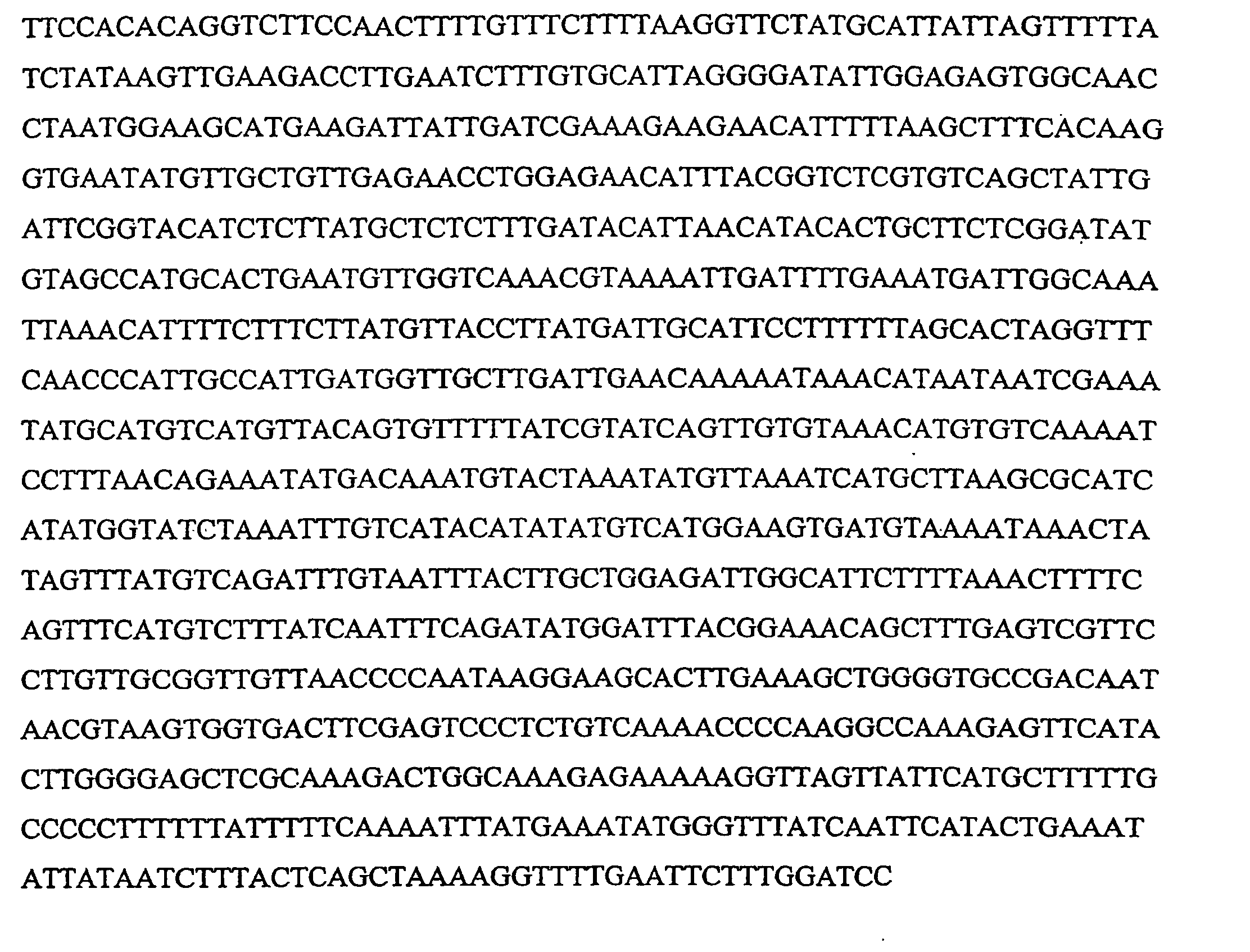
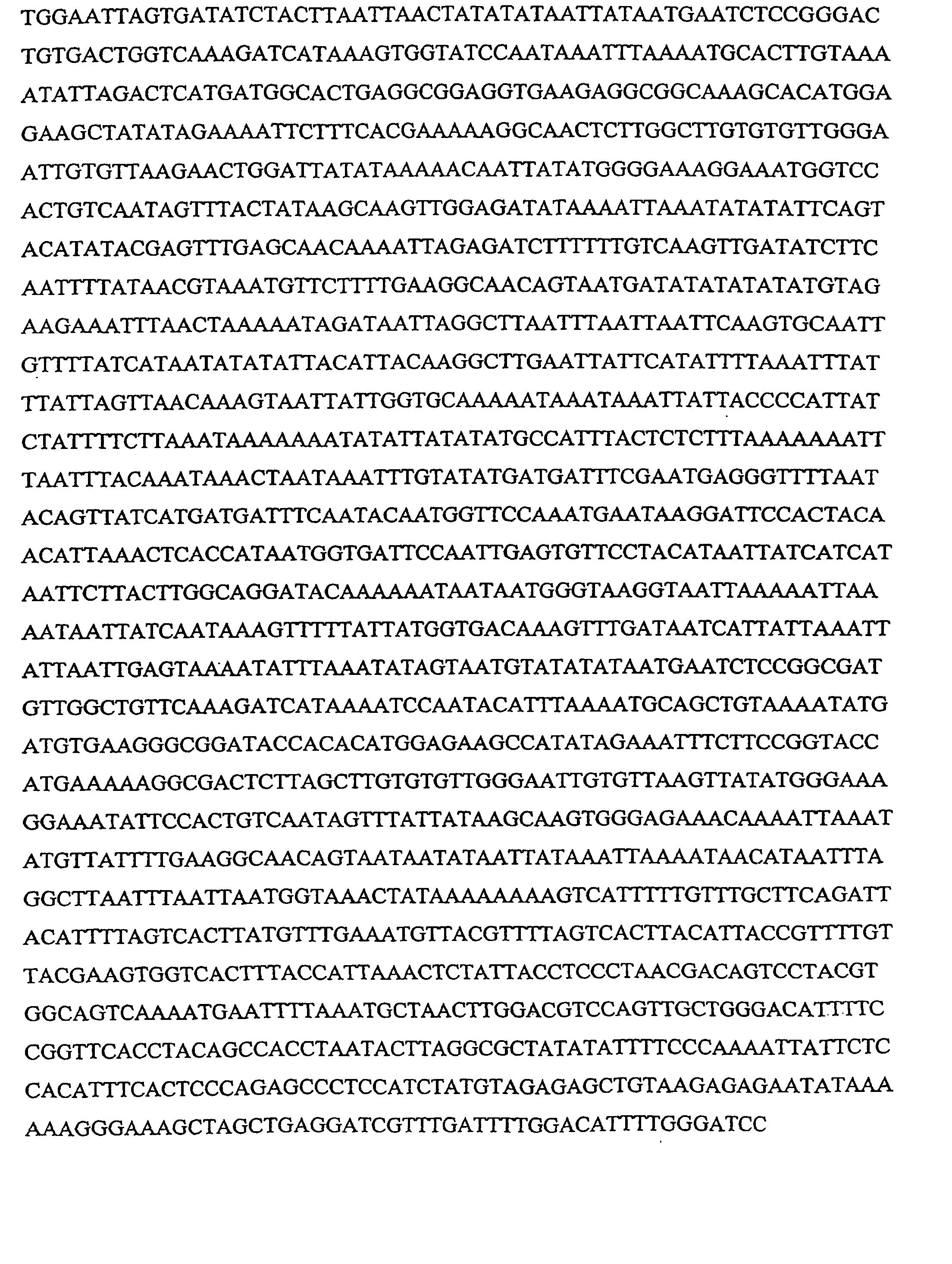
- the present invention provides an isolated nucleic acid molecule containing an anther-specific promoter comprising the promoter of the cotton CoFS gene, wherein said isolated nucleic acid molecule comprises SEQ ID NO:2.
- the invention provides a transgenic plant expressing a transgene under control of a cotton anther-specific promoter of the cotton CoFS gene as defined by SEQ ID NO:2.
- CoFS anther-specific gene
- CoFS CoFS promoter fragment
- Table II Comparing the nucleotide and predicted polypeptide sequences of the cotton CoFS gene with published sequences revealed that the gene was about 54-58% identical at the amino acid level with acyl-CoA synthetase (probable long-chain-acid cCoA ligase, EC 6.2.1.3) genes from some plants such as Brassica napus (X94624) and Arabidopsis (AL078468, AL161560).
- CoFS is a novel gene found in cotton. Analyzing the CoFS gene sequence revealed that it may contain 9-10 exons and 8-9 introns in its open reading frame, based on amino acid sequences of the known acyl-CoA synthetases.
- the CoFS promoter fragment was fused with the GUS gene to construct gene expression vectors for analyzing the function of the promoter.
- Transgenic tobacco plants with the CoFS promoter/ GUS fusion genes were identified by Southern blot hybridization. In the transgenic plants studied, GUS activity was detected in anther, and weakly in ovaries, styles and stigmas, but not in petals or other tissues. This result, together with Northern blot analysis, indicates that the CoFS promoter is anther-specific in cotton.
- the promoter controls specific gene expression at the transcriptional level in cotton anthers.
- the isolated promoter may be used in improving expression of desired genes in anther and related tissues of the plant sexual organs to create new plant varieties, thereby enhancing quality and yield of the plant by gene manipulation.
- the promoters of the present invention are useful in creating transgenic plants, especially including cotton, having improved expression of the transgene in anther tissue.
- Better expression of protective genes, such as the Bt gene, in anther tissue results in a plant with increased resistance to Bt-sensitive pests.
- Genes which may be expressed under the control of this promoter include any gene suitable for the purpose.
- Cotton seeds were surface-sterilised with 70% ethanol for 30-60 seconds and 10% H 2 O 2 for 30-60 minutes, followed by washing with sterile water. The seeds were germinated on 1 ⁇ 2 MS medium at 28 C with 16 hr lighting. Cotyledons and hypocotyls were cut from sterile seedlings as transformation explant material. Cotton plants were grown in pots for DNA and RNA extraction. Total RNA was extracted from young fibres, ovaries, anthers, petals, sepals, leaves and roots of cotton using the guanidinium thiocyanate method or SV Total RNA Isolation System (Promega).
- RNA was purified using oligo(dT)-cellulose spin columns from an mRNA purification kit (Pharmacia Biotech). Total RNAs from different tissues of cotton were used to reverse-transcribe first-strand cDNAs. These cDNAs were used as templates in differential display PCR.
- Differential display analysis was carried out with the Differential Display Kit (Clontech). First-strand cDNA was synthesised with 2 ⁇ g total RNA as starting materials of reverse transcription and oligo(dT) as primers at 42 C for 1 hour. Reactions of differential display PCR were carried out with an initial cycle consisting of 94 C for 5 minutes, 40 C for 5 minutes and 68 C for 5 minutes, followed by two cycles consisting of 94 C for 2 minutes and 40 C for 5 minutes and 68 C for 5 minutes, and then 25 cycles consisting of 94 C for 1 minute, 60 C for 1 minute and 68 C for 2 minutes, and a final extension at 68 C for 7 minutes. Target differential display bands were excised and re-amplified for further analysis.
- PCR fragments, DNA and cDNA fragments were subcloned into vectors, and plasmid DNA and phagemid DNA prepared with a Qiagen Plasmid Kit were used as templates in PCR reactions.
- the PCR products were sequenced by autosequencer.
- Cotton cDNA was synthesised using a cDNA synthesis kit (Stratagene). Cotton cDNA libraries were constructed by inserting the cDNA fragments into the ZAP express vector (Stratagene). Reproducible anther- and petal-specific differential display products (see Fig. 1) were targeted for further analysis. The cDNAs in each target band were harvested and regenerated by PCR amplification. The isolated cDNAs were subsequently subcloned into a vector and sequenced.
- cDNA expression patterns were analyzed by Northern blot hybridization with total RNA isolated from cotton fibers, ovules, anthers, petals, sepals, stems, leaves and roots, using probes from the cDNA clones.
- Northern blot analysis RNA samples from different cotton tissues were separated on agarose-formaldehyde gels, and transferred onto Hybond-N nylon membranes by capillary blotting. RNA Northern blots were hybridised in ExpressHyb solution (Clontech) at 68 C with 32 P-cDNA probes prepared by random labelling (Prime-a-Gene Labelling System, Promega). After hybridisation, the blots were washed at 68 C in 0.1 ⁇ SSC, 0.5% SDS for 30-60 minutes.
- CoFS cDNA expression is anther-specific in cotton.
- Plant materials from cotton were prepared as in Example 1. Tobacco seeds were surface-sterilized with 70% ethanol for 30-60 seconds and 0.1% HgCl 2 for 15 minutes, followed by washing with sterile water. The seeds were germinated on 1 ⁇ 2 MS medium in light at 28 C, and leaves cut from sterile seedlings were used as experimental materials.
- Total DNA was extracted and purified from leaves of cotton and tobacco plants according to the following method.
- Leaf tissues (z-4g) were thoroughly homogenised in liquid N 2 . The homogenized tissues were placed in a 50 ml tube with 20 ml ice-cold extraction buffer and sedimented at 2500 rpm for 15 minutes. After removing the supernatant, each pellet was resuspended in 10 ml lysis buffer and incubated at 65 C for 30 minutes. Ten milliliters chloroform was added to each tube and mixed with the samples. The samples then were sedimented at 3500 rpm for 10 minutes. The supernatant was transferred to a clean tube, and chloroform extraction was repeated once more.
- the supernatant was transferred to a clean tube, and 0.6 volume isopropanol was added to each tube for DNA precipitation. After centrifuging at 3500 rpm for 30 minutes, the DNA was washed with 70% ethanol. The isolated genomic DNA was then dissolved in sterile water for use.
- Cotton genomic DNA libraries were constructed from leaves of cotton plants. DNA was partially digested with BamH I, and the DNA fragments were cloned in the BamH I site of ZAP express vector (Stratagene). The cotton genomic DNA libraries were screened using CoFS gene fragments isolated by Genome Walk PCR as probes.
- Genome Walker libraries were constructed using the Universal Genome Walker Kit (Clontech). Genomic DNA from leaves of cotton plants was digested with five restriction enzymes respectively, purified by phenol/chloroform extraction and precipitated in ethanol. The digested DNA was ligated to Genome Walker adaptors.
- Genome Walker polymerase chain reactions were carried out successively: 1 ⁇ l of each Genome Walker DNA library was used as the templates in the primary PCR, and the primary PCR products were used as templates in the secondary PCR. The PCR was started at 95 C for 1 minute, followed by 35 cycles of 95 C for 15 seconds and 68 C for 4 minutes and a final extension at 68 C for 6 minutes. Target PCR bands were purified using a Geneclean Kit (Bio 101).
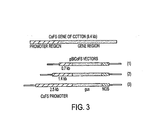
- a 0.7 kb fragment, a 1.4 kb fragment and a 2.5 kb fragment of the CoFS promoter were fused with the GUS coding sequence in the gene expression vector pBI121 (replacing the CaMV35S promoter), respectively. See Fig. 3.
- Vectors were constructed as follows. A Hind III site and a BamH I site were created by PCR at the 5'-end and 3'-end of the 0.7, 1.4 and 2.4 kb CoFS promoter fragments respectively. The Hind III/ BamH I fragment was initially subcloned into pGEM-T vector (Promega). Plasmid DNA containing the CoFS promoter fragments was digested with Hind III and BamH I, and the digested fragment was isolated by agarose gel electrophoresis. Three chimeric CoFS promoter/ GUS constructs were generated by insertion of the 0.7, 1.4 or 2.4 kb fragment, respectively, replacing the CaMV 35S promoter, into the Hind III/ BamH I sites of pBI121 vector.
- the CoFS promoter/ GUS fusion gene constructs were used to transform tobacco by Agrobacterium-mediated gene transfer, using the pBI121 vector containing a CaMV35S promoter/ GUS fusion protein as a positive control.
- the CaMV35S promoter is a constitutive promoter, active in all plant tissues. Odell et al., Nature 313:810-812, 1985; Ow et al., Proc. Natl. Acad. Sci. USA 84:4870-4874, 1987; McCabe and Martinell, Biotechnol. 11:596-598, 1993.
- the binary vectors containing CoFS promoter/ GUS fusion genes were transferred into Agrobacterium tumefaciens strain LBA 4404. Tobacco transformations were carried out using the leaf-disc method (Horsch, et al., 1985). Tobacco leaves were cut into pieces about 2 ⁇ 2 cm, and immersed in the Agrobacteria suspension for five minutes. The infected tobacco explants were cultivated on MS medium with 1 mg/L 6-BA for 48 hours at 28 C and transferred onto selection MS medium containing 100 mg/L kanamycin and 1 mg/L 6-BA for 20-30 days. Kanamycin-resistant (transformed) shoots were selected. The transformed shoots were cut from the calli and rooted on MS medium with 50-100 mg/L kanamycin. The transformed tobacco plants were transplanted to soil for growing to maturity.
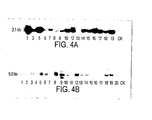
- Transgenic tobacco plants possessing the chimeric CoFS promoter/ GUS gene (or 35S/ GUS gene), and negative control, non-transformed plants were analyzed by DNA Southern blot hybridization and by GUS histochemical assay.
- DNA Southern blot analysis total genomic DNA from the transgenic tobacco leaves was digested with restriction enzymes, separated on agarose gels, and transferred onto Hybond-N nylon membranes by capillary blotting. DNA Southern blots were hybridized in ExpressHyb solution (Clontech) at 68 C with 32 P-DNA probes prepared by random labelling (Promega Prime-a-Gene Labelling System).
- the blots were washed at 68 C in 0.1 ⁇ SSC, 0.5% SDS for 30-60 minutes.
- the 32 P-labelled nylon membranes were exposed to X-ray film at -70 C for autoradiograph. See Fig. 4 for the results.
Landscapes
- Health & Medical Sciences (AREA)
- Life Sciences & Earth Sciences (AREA)
- Genetics & Genomics (AREA)
- Engineering & Computer Science (AREA)
- Chemical & Material Sciences (AREA)
- Biomedical Technology (AREA)
- Organic Chemistry (AREA)
- General Health & Medical Sciences (AREA)
- Biophysics (AREA)
- Zoology (AREA)
- Molecular Biology (AREA)
- Wood Science & Technology (AREA)
- Biochemistry (AREA)
- Bioinformatics & Cheminformatics (AREA)
- General Engineering & Computer Science (AREA)
- Biotechnology (AREA)
- Physics & Mathematics (AREA)
- Cell Biology (AREA)
- Reproductive Health (AREA)
- Pregnancy & Childbirth (AREA)
- Botany (AREA)
- Plant Pathology (AREA)
- Gastroenterology & Hepatology (AREA)
- Microbiology (AREA)
- Proteomics, Peptides & Aminoacids (AREA)
- Medicinal Chemistry (AREA)
- Breeding Of Plants And Reproduction By Means Of Culturing (AREA)
- Measuring Or Testing Involving Enzymes Or Micro-Organisms (AREA)
- Micro-Organisms Or Cultivation Processes Thereof (AREA)
Description




Li, Xuebao
Cai, Lin
Cheng, Ning H
<141>
<211> 8367
<212> DNA
<213> Arabidopsis sp.


<211> 2454
<212> DNA
<213> Arabidopsis sp.


<211> 275
<212> DNA
<213> Arabidopsis sp.

Claims (2)
- An isolated nucleic acid molecule containing an anther-specific promoter comprising the promoter of the cotton CoFS gene, wherein said isolated nucleic acid molecule comprises SEQ ID NO: 2.
- A transgenic plant expressing a transgene under control of an anther-specific promoter comprising the promoter of the cotton CoFS gene as defined by SEQ ID NO: 2.
Applications Claiming Priority (1)
| Application Number | Priority Date | Filing Date | Title |
|---|---|---|---|
| PCT/SG2001/000022 WO2002057470A1 (en) | 2001-01-17 | 2001-01-17 | Isolation and characterisation of an anther-specific promoter (cofs) in cotton |
Publications (2)
| Publication Number | Publication Date |
|---|---|
| EP1354058A1 EP1354058A1 (en) | 2003-10-22 |
| EP1354058B1 true EP1354058B1 (en) | 2005-10-26 |
Family
ID=20428904
Family Applications (1)
| Application Number | Title | Priority Date | Filing Date |
|---|---|---|---|
| EP01908584A Expired - Lifetime EP1354058B1 (en) | 2001-01-17 | 2001-01-17 | Isolation and characterisation of an anther-specific promoter (cofs) in cotton |
Country Status (9)
| Country | Link |
|---|---|
| US (1) | US7132526B2 (en) |
| EP (1) | EP1354058B1 (en) |
| CN (1) | CN1260362C (en) |
| AR (1) | AR035414A1 (en) |
| AT (1) | ATE307891T1 (en) |
| AU (1) | AU2001236326B2 (en) |
| DE (1) | DE60114462D1 (en) |
| ES (1) | ES2250358T3 (en) |
| WO (1) | WO2002057470A1 (en) |
Families Citing this family (7)
| Publication number | Priority date | Publication date | Assignee | Title |
|---|---|---|---|---|
| WO2005123920A1 (en) * | 2004-06-15 | 2005-12-29 | La Trobe University | Anther specific promoters and uses thereof |
| AU2005254583B2 (en) * | 2004-06-15 | 2011-04-21 | Grains Research And Development Corporation | Anther specific promoters and uses thereof |
| CN100415887C (en) * | 2006-07-05 | 2008-09-03 | 江苏省农业科学院 | A cotton tissue-specific and pathogen-inducible promoter and its application |
| CN101818148B (en) * | 2009-12-29 | 2012-02-29 | 华中师范大学 | Identification of cotton fiber specificity promoter GhFLA1 |
| CN102559674B (en) * | 2010-12-15 | 2014-10-15 | 中国科学院遗传与发育生物学研究所 | Specific expression promoter of solanaceae plant petunia pollen as well as gene sequence and application of special expression promoter |
| AU2013201287B2 (en) | 2012-03-06 | 2015-05-14 | Duke University | Synthetic regulation of gene expression |
| CA3147875A1 (en) | 2019-07-19 | 2021-01-28 | Flagship Pioneering Innovations Vi, Llc | Recombinase compositions and methods of use |
Family Cites Families (2)
| Publication number | Priority date | Publication date | Assignee | Title |
|---|---|---|---|---|
| US5589610A (en) | 1991-02-07 | 1996-12-31 | Plant Genetic Systems, N.V. | Stamen-specific promoters from corn |
| NZ322673A (en) | 1995-10-13 | 1999-09-29 | Purdue Research Foundation | Method for the production of hybrid plants |
-
2001
- 2001-01-17 US US10/466,521 patent/US7132526B2/en not_active Expired - Fee Related
- 2001-01-17 WO PCT/SG2001/000022 patent/WO2002057470A1/en not_active Ceased
- 2001-01-17 ES ES01908584T patent/ES2250358T3/en not_active Expired - Lifetime
- 2001-01-17 DE DE60114462T patent/DE60114462D1/en not_active Expired - Lifetime
- 2001-01-17 AU AU2001236326A patent/AU2001236326B2/en not_active Ceased
- 2001-01-17 AT AT01908584T patent/ATE307891T1/en not_active IP Right Cessation
- 2001-01-17 CN CNB018220843A patent/CN1260362C/en not_active Expired - Fee Related
- 2001-01-17 EP EP01908584A patent/EP1354058B1/en not_active Expired - Lifetime
-
2002
- 2002-01-03 AR ARP020100013A patent/AR035414A1/en active IP Right Grant
Also Published As
| Publication number | Publication date |
|---|---|
| ATE307891T1 (en) | 2005-11-15 |
| CN1486369A (en) | 2004-03-31 |
| AR035414A1 (en) | 2004-05-26 |
| US7132526B2 (en) | 2006-11-07 |
| WO2002057470A1 (en) | 2002-07-25 |
| US20040158892A1 (en) | 2004-08-12 |
| ES2250358T3 (en) | 2006-04-16 |
| EP1354058A1 (en) | 2003-10-22 |
| DE60114462D1 (en) | 2005-12-01 |
| CN1260362C (en) | 2006-06-21 |
| AU2001236326B2 (en) | 2006-07-13 |
Similar Documents
| Publication | Publication Date | Title |
|---|---|---|
| CN1377417B (en) | Isolation and characterization of a fiber-specific actin promoter from cotton | |
| US7700835B2 (en) | AGPase promoter from rice and uses thereof | |
| US20040123347A1 (en) | Water-deficit-inducible plant promoters | |
| JP2011101653A (en) | Method and composition for expression of transgene in plant | |
| EP1222263B1 (en) | ISOLATION AND CHARACTERIZATION OF A FIBER-SPECIFIC ß-TUBULIN PROMOTER FROM COTTON | |
| US7153953B2 (en) | Leaf specific gene promoter of coffee | |
| AU2001236326B2 (en) | Isolation and characterisation of an anther-specific promoter (COFS) in cotton | |
| AU2001236326A1 (en) | Isolation and characterisation of an anther-specific promoter (COFS) in cotton | |
| Kim et al. | Promoter sequences of two homologous pectin esterase genes from Chinese cabbage (Brassica campestris L. ssp. pekinensis) and pollen-specific expression of the GUS gene driven by a promoter in tobacco plants | |
| Holk et al. | A cell wall protein down-regulated by auxin suppresses cell expansion in Daucus carota (L.) | |
| US6541222B1 (en) | Plant promoter isolated from Douglas-fir 2S seed storage protein gene | |
| US6759529B1 (en) | Plant-gene promoter and methods of using the same | |
| US20040177404A1 (en) | Nucleotide sequences of 2S albumin gene and its promoter from grape and uses thereof | |
| AU2005253642B8 (en) | Nucleic acid molecules and their use in plant male sterility | |
| US20130091604A1 (en) | Aboveground organ specific promoters for transforming plants and uses thereof | |
| AU2007221926B2 (en) | Seed-specific gene promoters and uses thereof | |
| WO2003104464A1 (en) | Female gametophyte specific promoter (zmea1) | |
| LATA | vjschM ‚fIll Fkkfy; kuk esa dsUæh; ØksfMr ekbVksdksafMª; k dh NksVh jkbckslkse laca/kh mibdkbZ çksVhuksa ds thUl@ çkseksVlZ dk vfHky {k. ku |
Legal Events
| Date | Code | Title | Description |
|---|---|---|---|
| PUAI | Public reference made under article 153(3) epc to a published international application that has entered the european phase |
Free format text: ORIGINAL CODE: 0009012 |
|
| 17P | Request for examination filed |
Effective date: 20030818 |
|
| AK | Designated contracting states |
Kind code of ref document: A1 Designated state(s): AT BE CH CY DE DK ES FI FR GB GR IE IT LI LU MC NL PT SE TR |
|
| AX | Request for extension of the european patent |
Extension state: AL LT LV MK RO SI |
|
| RAP1 | Party data changed (applicant data changed or rights of an application transferred) |
Owner name: TEMASEK LIFE SCIENCES LABORATORY LIMITED |
|
| 17Q | First examination report despatched |
Effective date: 20041208 |
|
| GRAP | Despatch of communication of intention to grant a patent |
Free format text: ORIGINAL CODE: EPIDOSNIGR1 |
|
| RIN1 | Information on inventor provided before grant (corrected) |
Inventor name: CHENG, NINGHUI Inventor name: LI, XUEBAO Inventor name: LIU, JIAN-WEI Inventor name: CAI, LININSTITUTE OF MOLECULAR AGROBIOLOGY |
|
| GRAS | Grant fee paid |
Free format text: ORIGINAL CODE: EPIDOSNIGR3 |
|
| GRAA | (expected) grant |
Free format text: ORIGINAL CODE: 0009210 |
|
| AK | Designated contracting states |
Kind code of ref document: B1 Designated state(s): AT BE CH CY DE DK ES FI FR GB GR IE IT LI LU MC NL PT SE TR |
|
| PG25 | Lapsed in a contracting state [announced via postgrant information from national office to epo] |
Ref country code: IT Free format text: LAPSE BECAUSE OF FAILURE TO SUBMIT A TRANSLATION OF THE DESCRIPTION OR TO PAY THE FEE WITHIN THE PRE;WARNING: LAPSES OF ITALIAN PATENTS WITH EFFECTIVE DATE BEFORE 2007 MAY HAVE OCCURRED AT ANY TIME BEFORE 2007. THE CORRECT EFFECTIVE DATE MAY BE DIFFERENT FROM THE ONE RECORDED.SCRIBED TIME-LIMIT Effective date: 20051026 Ref country code: AT Free format text: LAPSE BECAUSE OF FAILURE TO SUBMIT A TRANSLATION OF THE DESCRIPTION OR TO PAY THE FEE WITHIN THE PRESCRIBED TIME-LIMIT Effective date: 20051026 Ref country code: FI Free format text: LAPSE BECAUSE OF FAILURE TO SUBMIT A TRANSLATION OF THE DESCRIPTION OR TO PAY THE FEE WITHIN THE PRESCRIBED TIME-LIMIT Effective date: 20051026 Ref country code: LI Free format text: LAPSE BECAUSE OF FAILURE TO SUBMIT A TRANSLATION OF THE DESCRIPTION OR TO PAY THE FEE WITHIN THE PRESCRIBED TIME-LIMIT Effective date: 20051026 Ref country code: BE Free format text: LAPSE BECAUSE OF FAILURE TO SUBMIT A TRANSLATION OF THE DESCRIPTION OR TO PAY THE FEE WITHIN THE PRESCRIBED TIME-LIMIT Effective date: 20051026 Ref country code: CH Free format text: LAPSE BECAUSE OF FAILURE TO SUBMIT A TRANSLATION OF THE DESCRIPTION OR TO PAY THE FEE WITHIN THE PRESCRIBED TIME-LIMIT Effective date: 20051026 Ref country code: NL Free format text: LAPSE BECAUSE OF FAILURE TO SUBMIT A TRANSLATION OF THE DESCRIPTION OR TO PAY THE FEE WITHIN THE PRESCRIBED TIME-LIMIT Effective date: 20051026 |
|
| REG | Reference to a national code |
Ref country code: GB Ref legal event code: FG4D |
|
| REG | Reference to a national code |
Ref country code: CH Ref legal event code: EP |
|
| REG | Reference to a national code |
Ref country code: IE Ref legal event code: FG4D |
|
| REF | Corresponds to: |
Ref document number: 60114462 Country of ref document: DE Date of ref document: 20051201 Kind code of ref document: P |
|
| PG25 | Lapsed in a contracting state [announced via postgrant information from national office to epo] |
Ref country code: IE Free format text: LAPSE BECAUSE OF NON-PAYMENT OF DUE FEES Effective date: 20060117 |
|
| PG25 | Lapsed in a contracting state [announced via postgrant information from national office to epo] |
Ref country code: DK Free format text: LAPSE BECAUSE OF FAILURE TO SUBMIT A TRANSLATION OF THE DESCRIPTION OR TO PAY THE FEE WITHIN THE PRESCRIBED TIME-LIMIT Effective date: 20060126 Ref country code: GB Free format text: LAPSE BECAUSE OF NON-PAYMENT OF DUE FEES Effective date: 20060126 Ref country code: SE Free format text: LAPSE BECAUSE OF FAILURE TO SUBMIT A TRANSLATION OF THE DESCRIPTION OR TO PAY THE FEE WITHIN THE PRESCRIBED TIME-LIMIT Effective date: 20060126 |
|
| PG25 | Lapsed in a contracting state [announced via postgrant information from national office to epo] |
Ref country code: DE Free format text: LAPSE BECAUSE OF FAILURE TO SUBMIT A TRANSLATION OF THE DESCRIPTION OR TO PAY THE FEE WITHIN THE PRESCRIBED TIME-LIMIT Effective date: 20060127 |
|
| PG25 | Lapsed in a contracting state [announced via postgrant information from national office to epo] |
Ref country code: LU Free format text: LAPSE BECAUSE OF NON-PAYMENT OF DUE FEES Effective date: 20060131 Ref country code: MC Free format text: LAPSE BECAUSE OF NON-PAYMENT OF DUE FEES Effective date: 20060131 |
|
| PG25 | Lapsed in a contracting state [announced via postgrant information from national office to epo] |
Ref country code: PT Free format text: LAPSE BECAUSE OF FAILURE TO SUBMIT A TRANSLATION OF THE DESCRIPTION OR TO PAY THE FEE WITHIN THE PRESCRIBED TIME-LIMIT Effective date: 20060327 |
|
| REG | Reference to a national code |
Ref country code: GR Ref legal event code: EP Ref document number: 20060400324 Country of ref document: GR |
|
| NLV1 | Nl: lapsed or annulled due to failure to fulfill the requirements of art. 29p and 29m of the patents act | ||
| REG | Reference to a national code |
Ref country code: ES Ref legal event code: FG2A Ref document number: 2250358 Country of ref document: ES Kind code of ref document: T3 |
|
| REG | Reference to a national code |
Ref country code: CH Ref legal event code: PL |
|
| PLBE | No opposition filed within time limit |
Free format text: ORIGINAL CODE: 0009261 |
|
| STAA | Information on the status of an ep patent application or granted ep patent |
Free format text: STATUS: NO OPPOSITION FILED WITHIN TIME LIMIT |
|
| GBPC | Gb: european patent ceased through non-payment of renewal fee |
Effective date: 20060126 |
|
| 26N | No opposition filed |
Effective date: 20060727 |
|
| REG | Reference to a national code |
Ref country code: IE Ref legal event code: MM4A |
|
| EN | Fr: translation not filed | ||
| PG25 | Lapsed in a contracting state [announced via postgrant information from national office to epo] |
Ref country code: FR Free format text: LAPSE BECAUSE OF FAILURE TO SUBMIT A TRANSLATION OF THE DESCRIPTION OR TO PAY THE FEE WITHIN THE PRESCRIBED TIME-LIMIT Effective date: 20061215 |
|
| PGFP | Annual fee paid to national office [announced via postgrant information from national office to epo] |
Ref country code: TR Payment date: 20070108 Year of fee payment: 7 |
|
| PG25 | Lapsed in a contracting state [announced via postgrant information from national office to epo] |
Ref country code: FR Free format text: LAPSE BECAUSE OF FAILURE TO SUBMIT A TRANSLATION OF THE DESCRIPTION OR TO PAY THE FEE WITHIN THE PRESCRIBED TIME-LIMIT Effective date: 20060131 |
|
| PG25 | Lapsed in a contracting state [announced via postgrant information from national office to epo] |
Ref country code: CY Free format text: LAPSE BECAUSE OF FAILURE TO SUBMIT A TRANSLATION OF THE DESCRIPTION OR TO PAY THE FEE WITHIN THE PRESCRIBED TIME-LIMIT Effective date: 20051026 Ref country code: FR Free format text: LAPSE BECAUSE OF FAILURE TO SUBMIT A TRANSLATION OF THE DESCRIPTION OR TO PAY THE FEE WITHIN THE PRESCRIBED TIME-LIMIT Effective date: 20051026 |
|
| PGFP | Annual fee paid to national office [announced via postgrant information from national office to epo] |
Ref country code: ES Payment date: 20100129 Year of fee payment: 10 |
|
| PGFP | Annual fee paid to national office [announced via postgrant information from national office to epo] |
Ref country code: GR Payment date: 20100129 Year of fee payment: 10 |
|
| PG25 | Lapsed in a contracting state [announced via postgrant information from national office to epo] |
Ref country code: TR Free format text: LAPSE BECAUSE OF NON-PAYMENT OF DUE FEES Effective date: 20100929 |
|
| PG25 | Lapsed in a contracting state [announced via postgrant information from national office to epo] |
Ref country code: GR Free format text: LAPSE BECAUSE OF NON-PAYMENT OF DUE FEES Effective date: 20110802 |
|
| REG | Reference to a national code |
Ref country code: ES Ref legal event code: FD2A Effective date: 20120220 |
|
| PG25 | Lapsed in a contracting state [announced via postgrant information from national office to epo] |
Ref country code: ES Free format text: LAPSE BECAUSE OF NON-PAYMENT OF DUE FEES Effective date: 20110118 |
|
| PG25 | Lapsed in a contracting state [announced via postgrant information from national office to epo] |
Ref country code: TR Free format text: LAPSE BECAUSE OF NON-PAYMENT OF DUE FEES Effective date: 20080117 |