EP1353478A1 - Virtual private network - Google Patents
Virtual private network Download PDFInfo
- Publication number
- EP1353478A1 EP1353478A1 EP01999236A EP01999236A EP1353478A1 EP 1353478 A1 EP1353478 A1 EP 1353478A1 EP 01999236 A EP01999236 A EP 01999236A EP 01999236 A EP01999236 A EP 01999236A EP 1353478 A1 EP1353478 A1 EP 1353478A1
- Authority
- EP
- European Patent Office
- Prior art keywords
- private network
- terminal
- data base
- access
- network
- Prior art date
- Legal status (The legal status is an assumption and is not a legal conclusion. Google has not performed a legal analysis and makes no representation as to the accuracy of the status listed.)
- Withdrawn
Links
- 238000004891 communication Methods 0.000 claims abstract description 97
- 239000002775 capsule Substances 0.000 claims abstract description 36
- 230000005540 biological transmission Effects 0.000 claims description 6
- 230000001360 synchronised effect Effects 0.000 claims 1
- 238000010586 diagram Methods 0.000 description 23
- 238000000034 method Methods 0.000 description 11
- 238000005538 encapsulation Methods 0.000 description 5
- 230000010365 information processing Effects 0.000 description 5
- 238000010295 mobile communication Methods 0.000 description 3
- 230000001413 cellular effect Effects 0.000 description 2
- 230000001419 dependent effect Effects 0.000 description 2
- 238000005516 engineering process Methods 0.000 description 2
- 230000009466 transformation Effects 0.000 description 2
- 230000009471 action Effects 0.000 description 1
- 230000008901 benefit Effects 0.000 description 1
- 230000008859 change Effects 0.000 description 1
- 230000008569 process Effects 0.000 description 1
- 230000001131 transforming effect Effects 0.000 description 1
Images








Classifications
-
- H—ELECTRICITY
- H04—ELECTRIC COMMUNICATION TECHNIQUE
- H04L—TRANSMISSION OF DIGITAL INFORMATION, e.g. TELEGRAPHIC COMMUNICATION
- H04L12/00—Data switching networks
- H04L12/50—Circuit switching systems, i.e. systems in which the path is physically permanent during the communication
-
- H—ELECTRICITY
- H04—ELECTRIC COMMUNICATION TECHNIQUE
- H04L—TRANSMISSION OF DIGITAL INFORMATION, e.g. TELEGRAPHIC COMMUNICATION
- H04L63/00—Network architectures or network communication protocols for network security
- H04L63/02—Network architectures or network communication protocols for network security for separating internal from external traffic, e.g. firewalls
- H04L63/0272—Virtual private networks
-
- H—ELECTRICITY
- H04—ELECTRIC COMMUNICATION TECHNIQUE
- H04L—TRANSMISSION OF DIGITAL INFORMATION, e.g. TELEGRAPHIC COMMUNICATION
- H04L12/00—Data switching networks
- H04L12/28—Data switching networks characterised by path configuration, e.g. LAN [Local Area Networks] or WAN [Wide Area Networks]
- H04L12/46—Interconnection of networks
- H04L12/4633—Interconnection of networks using encapsulation techniques, e.g. tunneling
-
- H—ELECTRICITY
- H04—ELECTRIC COMMUNICATION TECHNIQUE
- H04L—TRANSMISSION OF DIGITAL INFORMATION, e.g. TELEGRAPHIC COMMUNICATION
- H04L12/00—Data switching networks
- H04L12/28—Data switching networks characterised by path configuration, e.g. LAN [Local Area Networks] or WAN [Wide Area Networks]
- H04L12/46—Interconnection of networks
- H04L12/4641—Virtual LANs, VLANs, e.g. virtual private networks [VPN]
-
- H—ELECTRICITY
- H04—ELECTRIC COMMUNICATION TECHNIQUE
- H04L—TRANSMISSION OF DIGITAL INFORMATION, e.g. TELEGRAPHIC COMMUNICATION
- H04L63/00—Network architectures or network communication protocols for network security
- H04L63/04—Network architectures or network communication protocols for network security for providing a confidential data exchange among entities communicating through data packet networks
- H04L63/0428—Network architectures or network communication protocols for network security for providing a confidential data exchange among entities communicating through data packet networks wherein the data content is protected, e.g. by encrypting or encapsulating the payload
Definitions
- the present invention relates to a virtual private network (VPN: Virtual Private Network) and particularly, to a virtual private network in which a user accesses a data base from the external through the Internet or the like as in the case of an electronic mail access. Furthermore, the present invention relates to a virtual private network (VPN) in which even when any user accesses from any one of plural networks whose operators are different from one another, the access can be performed with keeping secrecy between both the terminal points, and also information can be unitarily managed, so that the user can always access the latest data base from any place and at any time.
- VPN Virtual Private Network
- a user who accesses networks from any place such as a mobile user, generally accesses a network provided by a service business entrepreneur, that is, a contract providers through a public network.
- a mobile user utilizes a business data base by accessing a private network such as an office LAN or the like as an access manner other than the access manner using the public network. Since network environments are independently operated, it is impossible to access a data base from any network easily and with keeping secrecy.
- a user uses the electronic mails by instructing such an action as mail-transfer or the like to his/her account of a contract provider in advance so as to fit the user's mobile environment.
- capsule communications are carried out between an access point of the contract provider and a VPN access server in the contract provider.
- the communications between a terminal and an access point of the contract provider are generally carried out through a public network, and thus the communications are not encapsulated.
- IP addresses of data bases and home IP addresses are not encrypted on public networks , and this causes disadvantage in secrecy and security.
- a contract provider manages IP addresses from which data bases can be accessed. Therefore, when a data base is out of the management of the contract provider, the number of accesses must be restricted because the number of IP addresses to be managed is limited. In addition, contract providers which users can access are specified, and this is inconvenient for the users.
- the IP capsule communication is not carried out between a VPN access server in a contract provider and an access server for managing the access to a data base, and thus it is required to physically shut off the communications between the VPN access server and the access server from the external by using a dedicated line or the like.
- addresses inherent to communication terminals are set in advance, and an identifier for determining.whether an access to a target network is allowed or not is allocated in a communication network in advance. Thereafter, authentication is carried out on an access to the target network on the basis of the identification and the terminal address or the like.
- the access authentication to the target network is carried out in the communication network, no access is allowed in communication networks other than the communication network concerned. Therefore, terminals which are dependent on the communication network concerned and function only in the communication network concerned are required, and this reduces the degree of freedom for users.
- Encryption on a communication network is dependent on the communication operator thereof, and the communications between the communication network concerned and the target network are normal IP communications, so that there is a secrecy disadvantage like the remote VPN services provided by the contact provider. Furthermore, since an IP address accessible to a target network or a terminal address which can be associated with the IP address is set in a terminal in advance or an identifier is allocated in advance, a communication operator must acquire these addresses from the operator of the target network and manage them. As a result, the number of accessible persons must be limited due to restriction to the number of addresses.
- a conventional file transfer technique such as mail transfer
- the mail transfer is merely a one-way transfer operation from a transfer source to a transfer destination, and a subsequent change is never reflected because the file transfer is an operation carried out in advance. Accordingly, this technique does not perform the unitary management in one data base.
- an object of the present invention is to provide VPN services based on a terminal having an IP capsule communication and encryption function with which a data base put in a company or the like and desired to be accessed by a mobile user can be accessed through a public network or the like by using an access point of a user's contract provider at a visiting place while keeping secrecy and security and using no special secrecy system in the public network or the communication network provided by the contract provider, and also that can access plural data communication infrastructures at relatively high speed.
- a virtual private network is equipped with plural mutually-connected independent networks; a terminal that is accessible to the networks and has an IP capsule communication and encryption function using a newly-achieved transmission source IP address; a data base connected to any one of the networks ; and an access server that manages and controls the access to the data base and has an IP capsule communication and encryption function, wherein the terminal accesses the data base from any one of the networks with keeping secrecy by the IP capsule encrypted communications.
- the virtual private network (VPN) of the present invention comprises the public network, a contract provider for connecting the public network and the private network concerned to each other, the private network in which the data base is set up, and the user terminal having the IP capsule encrypted communication function for accessing the public network.
- the VPN of the present invention comprises the public network, the contract provider in which the data base is set up, the private network in which the data base is setup, and the user terminal having the IP capsule encrypted communication function for accessing the public network.
- the VPN of the present invention comprises the public network, the contract provider for performing the operations and management of the data base, and a user terminal having the IP capsule encrypted communication function for accessing the public network.
- the VPN of the present invention comprises the private network, the target network in which the access-desired data base is set up, the user terminal having the IP capsule encrypted communication function and the Internet for connecting the private network and the target network.
- the user terminal used in VPN of the present invention may have means for setting the order of priority of the connection because it is based on the premise that the user terminal is connected to plural networks.
- the order of priority is (1) Wired Ethernet Connection, (2) Wireless LAN connection and (3) Public Network Connection.
- the user terminal may be equipped with means for connecting the user terminal to an access point accessible at the lowest expense on the basis of the above position information by using a table in which position information preset in the user terminal is associated with the dial numbers or addresses of the access points which are accessible at the lowest expense.
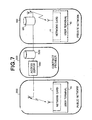
- Fig. 1 is a block diagram showing a virtual private network (VPN) according to a first embodiment.
- VPN contains private network 100, public network 200, contract provider 300 for mediating the connection between the private network 100 and the public network 200, and user terminal 10 which is usable under such an environment as to be directly accessible to the private network 100 and is connected to the public network 200 at a visiting place.
- the user terminal 10 comprises a portable information processing device such as a laptop computer or the like and network card 11 which can interface to the public network 200.
- the user terminal 10 has a function of accessing the public network 200 and an IP capsule encrypted communication function.
- the user terminal 10 has a function of preferentially accessing the private network 100 under the environment that the user terminal 10 can directly access the private network 100, and also accessing the public network 200 under the environment that the user terminal 10 cannot directly access the private network 100.
- This function is implemented on the basis of functional restriction of the network card 11 mounted, by incorporating a judgment function based on the mount or dismount of the network card 11 into the user terminal 10 or by incorporating a connection prioritizing function for the network connection into the user terminal 10.
- the order of priority is determined to give the highest priority to the wired Ethernet connection, the second highest priority to the wireless LAN connection and the lowest priority to public network connections such as public mobile communications, public line or the like.
- the private network 100 contains data base 120 to be accessed, an information processing device such as a workstation server or the like for managing and operating the data base 120, an access device to the user terminal, access server 130 that manages and controls the connection with the external and has a function of performing IP capsule encrypted communications with the external if necessary.
- the private network 100 has a function of performing the Internet communications with the contract provider 300.
- the public network 200 is a communication network containing wireless communications of cellular phones, wireless LAN or the like, and has a function of providing the Internet communications between the contract provider 300 and the user terminal 10.
- the contract provider 300 is used by a subscriber such as the user of the user terminal 10 or the like, and it comprises an information processing device such as a workstation server or the like.
- the contract provider 300 has a function of communicating with the user terminal 10 through the public network 200, a function of making the Internet communications with the private network 100 and a function of relaying the Internet communications between the user terminal 10 and the private network 100.
- Fig. 2 is a sequence diagram showing the operation of the virtual private network (VPN) according to a first embodiment.
- the sequence diagram shows a procedure of presetting necessary IDs, etc. so that the data base 120 can be accessed from the external by using the user terminal 10.
- step S1 the user terminal 10 attempts to connect to the private network 100 according to the predetermined connection priority order.
- the wired Ethernet connection or the wireless LAN connection is used for the connection. Therefore, if higher priorities are given to these connections, the direct connection to the private network 100 through either connection is preferentially carried out under an environment that the user terminal 10 can directly access the private network 100.
- the user terminal 10 requests the setting of parameters for authentication when obtaining permission from the manager of the private terminal 100 to access the private network 100 from the external. If the user terminal is a prescribed terminal, the processing goes to step 2. If it is not a prescribed terminal, the operation is interrupted.
- the parameters associated with the access server 130 are a user ID, a user password, a user connection start ID, a home IP address, an initial encryption key, etc.
- the parameters associated with the user terminal 10 or the network card 11 are a user connection start ID, a home IP address, an initial encryption key, etc.
- step S2 the user ID and the user password for the access server 130 are generated (created).
- the user ID and the user password thus generated are transmitted to the user and the access server 130.
- step S3 the access server 130, the user terminal 10 or the network card 11 generates the user connection start ID for initial recognition of the user.
- step S4 when a home IP address which can access the data base 120 can be set in advance, the IP address is generated as a parameter for the access server 130, the user terminal 10 or the network card 11.
- step S5 an encryption key is generated for the access server 130, the user terminal 10 or the network card 11.
- step S6 the access server 130 creates a user data table.
- the steps S3, S4 and S5 are carried out on the network card 11, however, they may be carried out on the user terminal 10.
- the steps from S3 to S5 are carried out on the user terminal 10, and then the parameters may be set offline in the network card 11.
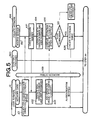
- Fig. 4 is a sequence diagram showing the operation of VPN when the user terminal cannot directly access the private network
- step A1 the user accesses the provider 300 through the public network 200 by using the user terminal 10.
- the user terminal 10 connects to the public network 200
- the user terminal attempts the connection according to the order of priority if the priority order of the connection is set in the user terminal 10 in advance even when the public network 200 has plural connection styles such as the wired Ethernet connection, the wireless LAN connection, the mobile communication network connection, etc. Therefore, the user can discard a user's undesirable connection, and thus the user can select the most desirable connection in the order of high connection speed.
- the user terminal is equipped with a means that uses the table to connect the user terminal to an access point which can be accessed at the lowest expense when the user terminal is connected to the access point.
- a telephone area code is used as the position information of the user terminal, by merely inputting the telephone area code into the user terminal 10, the user terminal can connect to an access point which can be accessed at the lowest expense.
- position information is achieved from the public network 200, the user terminal can be equipped with a means that uses it as the position information to automatically connect the user terminal to an access point which can be accessed at the lowest expense.
- step A2 the contract provider 300 carries out normal authentication of the user terminal 10, and then sends a remote IP address PPP managed by the contract provider 300 to the network card 11 of the user terminal 10.
- the user terminal 10 uses the remote IP address PPP as the network address.
- step A3 the user terminal 10 makes an authentication request to the access server 130 of the private network 100 through the contact provider 300. Accordingly, the user terminal 10 sends a packet containing the user connection start ID as data to the access server 130.
- step A31 the access server 130 generates (creates) a random number and sends it through the public network 200 to the user terminal 10.
- step A32 the user terminal 10 carries out an operation by using the random number thus sent and the user password.
- step S33 the operation result is added with the user ID, encrypted with the encryption key and then sent through the public network 200 to the access server 130.
- step A34 with the connection start ID as a clue, the access server 130 reads out the user password from the user data table created when the parameters are set, and the same operation as the user terminal 10 is carried out by using the user password and the random number.
- step A35 the operation result and the user ID sent from the user terminal 10 are decrypted, and then compared with the operation result achieved by the access server 130 and the user ID in the user data table.
- step A36 if as a comparison result, they are coincident between both the user terminal 10 and the access server 130, the authentication succeeds and a reference table for referring to the user data table from the remote IP address is created. On the other hand, if any one of the operation result and the user ID is not coincident, the authentication fails and thus a calling is broken.
- connection start ID and the encryption key may be renewed periodically or every time the user terminal is authenticated.
- step A4 after the authentication procedure shown in Fig. 5, after carrying out the authentication, the access server 130 encrypts, by using an encryption key, as internal IP address an IP address (IP1) which is used in the private network 100 and accessible to the data base 120, and then sends the IP address (IP1) to the user terminal 10 so that the user terminal 10 can access the data base 120 in the private network 100.
- IP1 IP address
- the user terminal 10 decrypts the IP address (IP1) and sets it as an internal IP address.
- step S4 When in step S4, manually or the like, the internal IP address of the user terminal 10 is beforehand set to an IP address which is used in the private network 100 and accessible to the data base 120, the step A4 may be omitted and thus the secrecy is further enhanced.
- step A5 IP communications based on IP encapsulation are carried out between the private network 100 and the user terminal 10 on the basis of the internal IP address.
- IP capsule communications will be described hereunder with reference to Fig. 6.
- IP packet data addressed from the internal IP address that is, the home IP address IP1 to the IP address IP2 of the data base 120 are created in the user software of the user terminal 10.
- the user terminal 10 or the network card 11 mounted in the user terminal 10 encrypts the IP packet data. Furthermore, it is added with a header for addressing from the network IP address, that is, the remote IP address PPP to the IP address IP0 of the access server 130 to encapsulate the IP packet data.
- the encapsulated IP packet is delivered through the contract provider 300 to the destination IPO, that is, the access server 130.
- the access server 130 refers to the reference table created after the authentication, picks up the encryption key in the user data table on the basis of the remote IP address PPP, removes the capsule from the IP packet data and then decrypts it. Accordingly, the packet is identified as packet data addressed from IP1 to IP2. Therefore, the access server 130 transfers the decrypted packet to the data base 120 through an office network.
- the packet is discarded because it is regarded as being impersonatedor interpolated, and if necessary, the communication is forcedly finished.
- the communication from the data base 120 to the user terminal 10 can be performed in the opposite way to the above procedure. That is, the data base 120 creates an IP packet from IP2 to IP1, and delivers it to the private network 100.
- the access server 130 Since the access server 130 recognizes that IP1 is out of the private network 100 at present, the access server 130 picks up and encrypts the IP packet, and then send the IP packet to the contract provider 300 while encapsulating the IP packet with an IP header addressed from IP0 to PPP.
- the contract provider 300 sends the IP packet to the network card 11 of the user terminal 10 whose IP address is PPP.
- the user terminal 10 or the network card 11 removes the capsule from the IP packet, decrypts the IP packet and then delivers the IP packet to the user software.
- IP capsule communications have been described above with reference to Fig. 6.
- step A6 serving as a communication finishing step subsequent to the IP capsule communication of step A5 will be described with reference to Fig. 4, again.
- step A4 of Fig. 4 when a disconnection request is output from the user terminal 10 or the access server 130, the access server 130 renews the communication log, deletes the reference table and finish the communications.
- the user can access the data base set up in the private network with safety even when the user stays at any place, and the data base can be unitarily managed and operated.
- the data base to be accessed is renewed to the latest one at any time.
- the IP encapsulation is carried out between both the terminal points of the private network 100 and the user terminal 10, and the inside of the capsule containing the internal IP address of the private network 100 is encrypted, so that the secrecy can be kept even through a public network or a general Internet provider.
- a communication packet between both the terminal points can be handled as a general IP packet for the public network and the contract provider, and thus neither a special device nor software is required for this communication in the public network and the contract provider.
- Fig. 7 is a block diagram showing a VPN according to a second embodiment of the present invention.
- a data base 320 having the same information as the data base 120 set-up in the private network 100 is set up in the contract provider 300.
- the user terminal 10 connected to the public network 200 accesses the data base 320, and this point is different from the first embodiment. Synchronization of information is established between the data base 120 in the private network 100 and the data base 320 periodically or as occasion demands.
- An access server 330 having the same function as the access server 130 setup in the private network 100 of the first embodiment is set up in the contract provider 300, and manages and controls the access from the external to the data base 320.
- the other points are the same as the first embodiment.
- Fig. 8 is a sequence diagram showing the operation of the VPN according to the second embodiment.
- the step of presetting necessary IDS, etc. so that the data base 320 can be accessed from the external by using the user terminal 10 is different from the first embodiment only in that the user data table is additionally created to the access server 330.
- the other initial setting is the same as the first embodiment.
- step B1 the user accesses the contract provider 300 through the public network 200 by using the user terminal 10.
- step B2 the contract provider 300 sends the IP address PPP to the user terminal 10.
- the steps B1, B2 are the same as the first embodiment.
- step B3 the user terminal 10 makes an authentication request to the access server 330.
- the details of the authentication process are the same as the first embodiment.
- step B4 after the access server 330 carries out the authentication, the home IP address IP1 is encrypted as an internal IP address of the user terminal 10 by using the encryption key as occasion demands, and then sent to the user terminal 10.
- the user terminal 10 decrypts the home IP address IP1 and sets it as the internal IP address thereof.
- the step B4 may be omitted and the secrecy can be further enhanced.
- step B5 the IP capsule encrypted communications are carried out between the access server 330 and the user terminal 10.
- step B6 the latest data or file is downloaded from the data base 120 of the private network 100 to the data base 320 of the contract provider 300 .
- the downloading is carried out until the user uses it or on the basis of a user's request.
- step B7 data or file which has been changed, added, deleted or the like by the user is uploaded from the data base 320 into the data base 120.
- the uploading is carried out at the time point where the user's access is finished or on the basis of a user's request.
- step B8 the communications are finished as in the case of the first embodiment.
- Fig. 9 is a block diagram showing a VPN according to a third embodiment of the present invention.
- the contract provider 300 is entrusted with the operation of the communications, the management, etc. of the private network 100. Accordingly, the data base 320 and the access server 330 accessing the data base 320 are set up in the contract provider 300.
- the third embodiment is the same as the second embodiment in that the network card 11 to be connected to the public network 200 is mounted in the user terminal 10 and the user terminal 10 accesses the data base 320.
- the VPN of the third embodiment is different from the second embodiment in that it has only one data base.
- Fig. 10 is a sequence diagram showing the operation of the VPN of the third embodiment.
- the access to the contract provider (step C1), the setting of the IP address PPP (step C2), the authentication request based on the connection start ID (step C3) and the setting of the internal IP address IP1 (step C4) are the same as the steps B1 , B2, B3, B4 of the second embodiment, respectively.
- the step C4 may be omitted, and the secrecy can be further enhanced.
- IP capsule communications (step C5) and the end of the communications (step C6) are the same as the steps A5, A6 of the second embodiment.
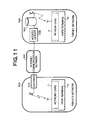
- Fig. 11 is a block diagram showing a VPN according to a fourth embodiment.
- the user terminal 10 connects to private network 400 such as LAN or the like in a branch office, and accesses data base 520 on target network 500 through Internet communication network 600.
- private network 400 such as LAN or the like in a branch office
- data base 520 on target network 500 through Internet communication network 600.
- this embodiment is different from the first to third embodiments in which the user first accesses the public network.
- the VPN of the fourth embodiment contains user terminal 10 in which network card 11 is mounted, private network 400 to which the user terminal 10 connects, the Internet communication network 600 to be connected through gateway 410 of the private network 400, access server 530 for managing an access from the Internet communication network 600 in the target network 500, and data base 520 to which the user is going to access.
- the user terminal 10 contains an information processing such as a laptop computer or the like, and the network card 11 serving as an interface to the private network 400.
- the user terminal 10 has a function of communicating with the private network 400, and an IP capsule encrypted communication function. Furthermore, the user terminal 10 can directly access the data base 520.
- the Internet communication network 600 has a function of communicating with the gateway 410 of the private network 400 and the access server 530 of the target network 500.
- the target network 500 contains the data base 520, an information processing device such as a workstation server or the like for managing and operating the data base 520, an access device to the user terminal, and the access server 530 having the function of managing and controlling the connection with the external and the function of performing the IP encapsule communications with the external.
- an information processing device such as a workstation server or the like for managing and operating the data base 520
- an access device to the user terminal and the access server 530 having the function of managing and controlling the connection with the external and the function of performing the IP encapsule communications with the external.
- Fig. 12 is a sequence diagram showing the operation of the virtual private network of the fourth embodiment.
- the step of presetting necessary IDs, etc. so that the data base 520 can be accessed from the external by using the user terminal 10 is substantially the same as the initial setting of the first embodiment.
- the necessary Ids, etc. are preset in the target network 500, and the user data table is created in the access server 530.
- step D1 a user to which an access right to the private network is given in advance uses the user terminal 10 to access the private network 400. Subsequently, in step D2, the private network 400 allocates an IP address IP3 managed by DHCP (dynamic host configuration protocol) server (not shown) or the like as an internal network address of the private network.
- IP3 managed by DHCP (dynamic host configuration protocol) server (not shown) or the like.
- DHCP dynamic host configuration protocol
- step D3 the user terminal 10 makes an access authentication request to the access server 530 through the gateway 410 of the private network 400 and the Internet communication network 600.
- the gateway 410 converts IP3 to an effective global address PPP in the Internet communication network 600 by NAT (Network Address Transforming function) or the like.
- NAT Network Address Transforming function
- the transmission source address of the access authentication request IP packet containing the connection start ID as data is equal to PPP or IP3.
- the authentication is carried out on the transmission source address as the remote IP address.
- step D4 the home IP address IP1 used in the target network 500 is set.
- the IP1 is also used as the internal IP address in the target network 500 by the user terminal 10. Accordingly, when any internal IP address has not yet been set, the home IP address is encrypted and sent to the user terminal, and the user terminal decrypts the encrypted home IP address and sets it as the internal IP address.
- step D5 the IP encrypted communications based on the IP encapsulation are carried out. Even when the mutual transformation between IP3 and PPP is carried out in the gateway 410, it is possible to perform the IP capsule encrypted communications insofar as the internal IP address is set.
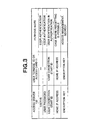
- Fig. 13 is a sequence diagram showing the address of the IP packet.
- IP packet data in which a transmission source is set to IP1 (the home address in the target network 500) and a destination is set to IP2 (the IP address of the data base 520).
- the user terminal 10 or the network card 11 mounted in the user terminal 10 encrypts the IP packet and then to the IP packet, a header which sets the transmission source to IP3 (the network address in the private network) and sets the destination to IPO (the IP address of the access server 530) is added, thereby encapsulating the IP packet, and sends the IP packet thus encapsulated to the gateway 410.
- IP3 the network address in the private network
- IPO the IP address of the access server 530
- the gateway 410 converts IP3 to PPP (which is a global address used in the Internet network and used as a clue to pick up a reference table for referring to user parameters set and created as the remote IP address by the access server 530), and sends the IP packet through the Internet work 600 to the access server 530.
- PPP which is a global address used in the Internet network and used as a clue to pick up a reference table for referring to user parameters set and created as the remote IP address by the access server 530
- the user's encryption key having the remote address PPP or IP3 is taken out on the basis of the reference table created after the authentication, that is, a table containing the definite values of the set parameters, removes the capsule from the IP packet and decrypts the IP packet, whereby it is confirmed that the packet is a packet addressed from IP1 out of the target network 500 to the data base 520 having IP2, and thus the packet is transferred to the data base 520.
- the reference table created after the authentication that is, a table containing the definite values of the set parameters
- the packet is discarded because it is regarded as being impersonated or interpolated, and the processing is forcedly finished if necessary.
- the encryption key is owned by only the user terminal 10 and the access serer 530.
- the IP capsule encrypted communication from the data base 520 to the user terminal 10 can be performed in the opposite way to the above procedure.
- step D6 when a disconnection request is output from the user terminal or the access server 530, the access server renews the communication log, deletes the reference table for referring to the user table on the basis of the remote IP address PPP or IP3, and finishes the communication.
- a terminal having a wireless access means may be used as the user terminal.
- the wireless access means may be used PHS (personal handyphone system), GPRS (general packet radio service), EDGE (enhanced data rates for GSM evolution), HDR (high data rate), WCDMA (wide band code division multiple access) , wireless LAN such as 2.4 GHz band wireless LAN, 5 GHZ band wireless LAN or the like, or Bluetooth which is a standard wireless communication technology for connecting mobile devices such as a personal computer, a cellular phone, etc. in a wireless mode.
- the wireless access means may be a high-speed wireless access means using a future mobile communication technology.
- the user terminal may have a means for connecting the lowest-expense access point on the basis of position information when connecting to a public network. Furthermore, the position information may be judged on the basis of information transmitted from a base station.
- communications having high secrecy between both terminal points can be provided in the VPN service. This is because the IP encapsulation is established between both the terminal points, and the IP addresses, etc. of both the terminal points in the capsules can be easily encrypted by unique encryption.
- the data base can be unitarily managed in the VPN service, so that users can access the latest data base at any time. This is because all the users are made to access the same data base even when they stay at any place.
- present Internet communication networks such as a public network, a contract provider, etc. can be directly used. This is because the IP encapsulation communication is carried out between both the terminal points.
Landscapes
- Engineering & Computer Science (AREA)
- Computer Networks & Wireless Communication (AREA)
- Signal Processing (AREA)
- Computer Security & Cryptography (AREA)
- Computer Hardware Design (AREA)
- Computing Systems (AREA)
- General Engineering & Computer Science (AREA)
- Data Exchanges In Wide-Area Networks (AREA)
- Small-Scale Networks (AREA)
- Mobile Radio Communication Systems (AREA)
Abstract
Description
Claims (17)
- A virtual private network, comprising:wherein said terminal accesses said data base from any one of the networks by IP capsule encrypted communications while keeping secrecy.plural mutually-connected independent networks;a terminal capable of accessing said networks and having an IP capsule communication and encryption function using a newly-achieved transmission source IP address;a data base connected to any one of said networks; andan access server that manages and controls an access to said data base and has an IP capsule communication and encryption function,
- The virtual private network according to claim 1, wherein the access from said terminal to said networks is performed by wireless access means.
- The virtual private network according to claim 1, wherein said terminal contains wireless access means and said wireless access means is PHS, GPRS, EDGE, HDR, WCDMA, wireless LAN or wireless access means using Bluetooth.
- The virtual private network according to claim 1, wherein said terminal or said access server encrypts the communications between said terminal and said data base.
- The virtual private network according to claim 1, wherein said terminal is equipped with a network card having a communication interface fitted to each of said networks.
- The virtual private network according to claim 5, wherein said network card has an IP capsule communication function.
- The virtual private network according to claim 1, wherein said terminal has control means for preferentially using an interface for directly accessing said network having said data base.
- The virtual private network according to claim 1, wherein said plural independent networks contain a private network and a public network, said data base being set up in said private network, when said terminal is connected to said public network to access said data base, said terminal and an access server of said private network are connected to each other after access authentication of said terminal, and said access server makes said terminal access said data base by IP capsule communications after the access authentication of said terminal has been carried out.
- The virtual private network according to claim 8, wherein said terminal has means for connecting the lowest-expense access point on the basis of position information of said terminal when said terminal connects to said public network.
- The virtual private network according to claim 9, wherein the position information is judged on the basis of information transmitted from a base station.
- The virtual private network according to claim 1, wherein said plural independent networks contain a private network and a public network; said data base is setup in said private network; a data base having the same information as said data base is owned by a communication operating business entrepreneur of said public network or a service business entrepreneur to be connected; when said terminal connects to said public network to make an access request to said data base owned by the communication operating business entrepreneur or the service business entrepreneur to be connected, after access authentication to said data base owned by the communication operating business entrepreneur or the service business entrepreneur, said terminal is made to access said data base by IP capsule communications, and information is synchronized between said data base owned by the communication operating business entrepreneur or service business entrepreneur and said data base of said private network.
- The virtual private network according to claim 11, wherein said terminal has means for connecting the lowest-expense access point on the basis of position information of said terminal when said terminal connects to said public network.
- The virtual private network according to claim 12, wherein the position information is judged on the basis of information transmitted from a base station.
- The virtual private network according to claim 1, wherein said plural independent networks contain a private network and a public network, said data base is set up in said private network; a communication operating business entrepreneur of said public network or a service business entrepreneur to be connected operates data communications/management of said private network or provides a private network service or data base service; and when said terminal connects to said public network to make a request for accessing said data base, said terminal is made to access the data base by IP capsule communications after the access to said data base has been authenticated.
- The virtual private network according to claim 14, wherein said terminal has means for connecting to the lowest-expense access point on the basis of position information of said terminal when said terminal connects to said public network.
- The virtual private network according to claim 15, wherein the position information is judged on the basis of information transmitted from a base station.
- The virtual private network according to claim 1, wherein when, in order to access said data base, said terminal makes an access through a private network in which said data base is not set up, an access server of a target network in which the access-desired data base is set up makes said terminal to access said data base by IP capsule communications after the access of said terminal has been authenticated.
Applications Claiming Priority (3)
| Application Number | Priority Date | Filing Date | Title |
|---|---|---|---|
| JP2000371841 | 2000-12-06 | ||
| JP2000371841 | 2000-12-06 | ||
| PCT/JP2001/010539 WO2002047336A1 (en) | 2000-12-06 | 2001-12-03 | Virtual private network |
Publications (2)
| Publication Number | Publication Date |
|---|---|
| EP1353478A1 true EP1353478A1 (en) | 2003-10-15 |
| EP1353478A4 EP1353478A4 (en) | 2008-07-02 |
Family
ID=18841497
Family Applications (1)
| Application Number | Title | Priority Date | Filing Date |
|---|---|---|---|
| EP01999236A Withdrawn EP1353478A4 (en) | 2000-12-06 | 2001-12-03 | Virtual private network |
Country Status (6)
| Country | Link |
|---|---|
| US (1) | US20040054902A1 (en) |
| EP (1) | EP1353478A4 (en) |
| KR (1) | KR100565157B1 (en) |
| CN (1) | CN1241368C (en) |
| TW (1) | TW573412B (en) |
| WO (1) | WO2002047336A1 (en) |
Families Citing this family (24)
| Publication number | Priority date | Publication date | Assignee | Title |
|---|---|---|---|---|
| US20020075844A1 (en) * | 2000-12-15 | 2002-06-20 | Hagen W. Alexander | Integrating public and private network resources for optimized broadband wireless access and method |
| US7120791B2 (en) * | 2002-01-25 | 2006-10-10 | Cranite Systems, Inc. | Bridged cryptographic VLAN |
| US7188364B2 (en) | 2001-12-20 | 2007-03-06 | Cranite Systems, Inc. | Personal virtual bridged local area networks |
| US7986937B2 (en) * | 2001-12-20 | 2011-07-26 | Microsoft Corporation | Public access point |
| US7421736B2 (en) * | 2002-07-02 | 2008-09-02 | Lucent Technologies Inc. | Method and apparatus for enabling peer-to-peer virtual private network (P2P-VPN) services in VPN-enabled network |
| GB0326160D0 (en) | 2003-11-08 | 2003-12-17 | Marconi Comm Ltd | Call set-up systems |
| CN100356756C (en) * | 2004-03-04 | 2007-12-19 | 上海交通大学 | Method for implementing large scals interactive virtual private network teaching experiment |
| KR100667348B1 (en) | 2004-05-07 | 2007-01-10 | 주식회사 케이티프리텔 | Method and apparatus for providing wireless Internet service using wireless LAN |
| KR100834270B1 (en) * | 2005-10-06 | 2008-05-30 | 주식회사 케이티프리텔 | Mobile communication based virtual private network service providing method and system and mobile terminal for it |
| JP4764737B2 (en) * | 2006-02-13 | 2011-09-07 | 富士通株式会社 | Network system, terminal and gateway device |
| KR100728750B1 (en) * | 2006-06-29 | 2007-06-19 | 대전보건대학 산학협력단 | Control Method of Internet Telephone Terminal Using Private Network |
| EP1914960B1 (en) * | 2006-10-16 | 2013-01-09 | Nokia Siemens Networks GmbH & Co. KG | Method for transmission of DHCP messages |
| US9177313B1 (en) * | 2007-10-18 | 2015-11-03 | Jpmorgan Chase Bank, N.A. | System and method for issuing, circulating and trading financial instruments with smart features |
| KR101000048B1 (en) | 2008-08-21 | 2010-12-09 | 서울통신기술 주식회사 | Method and apparatus for managing automatic toll collection system |
| JP2011158971A (en) * | 2010-01-29 | 2011-08-18 | Seiko Epson Corp | Information processing apparatus, communication device, wireless diagnostic method and program |
| JP5617260B2 (en) * | 2010-01-29 | 2014-11-05 | セイコーエプソン株式会社 | Information processing device |
| CN101841476A (en) * | 2010-04-22 | 2010-09-22 | 北京星网锐捷网络技术有限公司 | Message processing method, device and network equipment |
| KR101683292B1 (en) | 2010-06-18 | 2016-12-07 | 삼성전자주식회사 | Apparatus and method for composing personal network using pn routing table |
| JP5692367B2 (en) * | 2010-09-16 | 2015-04-01 | 日本電気株式会社 | Network system and frame communication method |
| JP5344382B2 (en) | 2010-11-02 | 2013-11-20 | 日本電気株式会社 | Network system and frame communication method |
| CN103748861B (en) | 2011-07-08 | 2017-07-11 | 威尔耐特斯公司 | System and method for dynamic VPN address allocation |
| WO2017170690A1 (en) * | 2016-04-01 | 2017-10-05 | 株式会社Nttドコモ | Slice management system and slice management method |
| US20180197501A1 (en) * | 2017-01-06 | 2018-07-12 | Intel Corporation | Display connection switching |
| US11736445B2 (en) | 2021-03-12 | 2023-08-22 | Journey.ai | Personalized secure communication session management |
Family Cites Families (20)
| Publication number | Priority date | Publication date | Assignee | Title |
|---|---|---|---|---|
| US6055575A (en) * | 1997-01-28 | 2000-04-25 | Ascend Communications, Inc. | Virtual private network system and method |
| JPH10224409A (en) * | 1997-02-07 | 1998-08-21 | Oki Electric Ind Co Ltd | Communication system |
| US6167438A (en) * | 1997-05-22 | 2000-12-26 | Trustees Of Boston University | Method and system for distributed caching, prefetching and replication |
| US6151628A (en) * | 1997-07-03 | 2000-11-21 | 3Com Corporation | Network access methods, including direct wireless to internet access |
| JPH1141643A (en) * | 1997-07-04 | 1999-02-12 | Internatl Business Mach Corp <Ibm> | Radio information processing terminal and control method therefor |
| JP3641112B2 (en) * | 1997-09-05 | 2005-04-20 | 株式会社東芝 | Packet relay device, mobile computer device, mobile computer management device, packet relay method, packet transmission method, and mobile computer location registration method |
| JPH11126209A (en) * | 1997-10-23 | 1999-05-11 | Toshiba Corp | Information processing apparatus and method, and recording medium recording information processing program |
| JPH11203316A (en) * | 1998-01-16 | 1999-07-30 | Hitachi Ltd | Line load reduction system using batch processing |
| US6079020A (en) * | 1998-01-27 | 2000-06-20 | Vpnet Technologies, Inc. | Method and apparatus for managing a virtual private network |
| JP3999360B2 (en) * | 1998-07-03 | 2007-10-31 | 株式会社東芝 | Mobile terminal and recording medium of mobile IP system |
| JP2000032047A (en) * | 1998-07-14 | 2000-01-28 | Hitachi Ltd | Internet provider access method |
| US6628671B1 (en) * | 1999-01-19 | 2003-09-30 | Vtstarcom, Inc. | Instant activation of point-to point protocol (PPP) connection using existing PPP state |
| US6430619B1 (en) * | 1999-05-06 | 2002-08-06 | Cisco Technology, Inc. | Virtual private data network session count limitation |
| US6694437B1 (en) * | 1999-06-22 | 2004-02-17 | Institute For Information Technology | System and method for on-demand access concentrator for virtual private networks |
| US6591103B1 (en) * | 1999-06-30 | 2003-07-08 | International Business Machine Corp. | Wireless telecommunications system and method of operation providing users′ carrier selection in overlapping hetergenous networks |
| US6931016B1 (en) * | 1999-10-13 | 2005-08-16 | Nortel Networks Limited | Virtual private network management system |
| EP1226697B1 (en) * | 1999-11-03 | 2010-09-22 | Wayport, Inc. | Distributed network communication system which enables multiple network providers to use a common distributed network infrastructure |
| US6563800B1 (en) * | 1999-11-10 | 2003-05-13 | Qualcomm, Inc. | Data center for providing subscriber access to data maintained on an enterprise network |
| US6977929B1 (en) * | 1999-12-10 | 2005-12-20 | Sun Microsystems, Inc. | Method and system for facilitating relocation of devices on a network |
| US6618584B1 (en) * | 2000-08-30 | 2003-09-09 | Telefonaktiebolaget Lm Ericsson (Publ) | Terminal authentication procedure timing for data calls |
-
2001
- 2001-12-03 CN CNB018202136A patent/CN1241368C/en not_active Expired - Fee Related
- 2001-12-03 WO PCT/JP2001/010539 patent/WO2002047336A1/en not_active Ceased
- 2001-12-03 US US10/433,602 patent/US20040054902A1/en not_active Abandoned
- 2001-12-03 KR KR1020037006535A patent/KR100565157B1/en not_active Expired - Fee Related
- 2001-12-03 EP EP01999236A patent/EP1353478A4/en not_active Withdrawn
- 2001-12-05 TW TW090130171A patent/TW573412B/en not_active IP Right Cessation
Also Published As
| Publication number | Publication date |
|---|---|
| CN1241368C (en) | 2006-02-08 |
| KR20030048145A (en) | 2003-06-18 |
| KR100565157B1 (en) | 2006-03-30 |
| TW573412B (en) | 2004-01-21 |
| EP1353478A4 (en) | 2008-07-02 |
| US20040054902A1 (en) | 2004-03-18 |
| CN1479987A (en) | 2004-03-03 |
| WO2002047336A1 (en) | 2002-06-13 |
Similar Documents
| Publication | Publication Date | Title |
|---|---|---|
| US20040054902A1 (en) | Virtual private network | |
| US7522907B2 (en) | Generic wlan architecture | |
| US7954141B2 (en) | Method and system for transparently authenticating a mobile user to access web services | |
| EP1017208B1 (en) | Method and system for providing wireless mobile server and peer-to-peer services with dynamic DNS update | |
| US6876644B1 (en) | Digital wireless telephone system for downloading software to a digital telephone using wireless data link protocol | |
| US7107341B2 (en) | System and method of managing information distribution to mobile stations | |
| CA2453069C (en) | Methods, apparatus, and systems for accessing mobile and voice over ip telephone networks with a mobile handset | |
| US7016334B2 (en) | Device, system, method and computer readable medium for fast recovery of IP address change | |
| JP2003531539A (en) | Secure dynamic link allocation system for mobile data communications | |
| WO2011124055A1 (en) | Method and terminal for access control of network service | |
| US20040179537A1 (en) | Method and apparatus providing a mobile server function in a wireless communications device | |
| GB2316841A (en) | Method for controlling a firewall | |
| US7286530B2 (en) | Method for connection of data terminal devices to a data network | |
| KR20020046668A (en) | Method and system for Direct Data Canmunication Between Wireless Telecommunication Devices | |
| JP3344421B2 (en) | Virtual private network | |
| EP1176760A1 (en) | Method of establishing access from a terminal to a server | |
| JP7173271B2 (en) | network communication system | |
| EP1813078A1 (en) | Method and system for transparently authenticating a mobile user to access web services | |
| HK1093824B (en) | Personal remote firewall | |
| HK1067472B (en) | System and method of managing information distribution to mobile stations | |
| KR20060107439A (en) | Bluetooth Access Point Device for MP3 Download Service |
Legal Events
| Date | Code | Title | Description |
|---|---|---|---|
| PUAI | Public reference made under article 153(3) epc to a published international application that has entered the european phase |
Free format text: ORIGINAL CODE: 0009012 |
|
| 17P | Request for examination filed |
Effective date: 20030707 |
|
| AK | Designated contracting states |
Kind code of ref document: A1 Designated state(s): AT BE CH CY DE DK ES FI FR GB GR IE IT LI LU MC NL PT SE TR |
|
| RBV | Designated contracting states (corrected) |
Designated state(s): DE FR GB IT SE |
|
| A4 | Supplementary search report drawn up and despatched |
Effective date: 20080602 |
|
| RIC1 | Information provided on ipc code assigned before grant |
Ipc: H04L 12/46 20060101AFI20080527BHEP |
|
| 17Q | First examination report despatched |
Effective date: 20080826 |
|
| STAA | Information on the status of an ep patent application or granted ep patent |
Free format text: STATUS: THE APPLICATION IS DEEMED TO BE WITHDRAWN |
|
| 18D | Application deemed to be withdrawn |
Effective date: 20090306 |