EP1352972A2 - Methods of identifying a pharmaceutically active compound for the treatment of a condition caused by altered expression of the insulin receptor - Google Patents
Methods of identifying a pharmaceutically active compound for the treatment of a condition caused by altered expression of the insulin receptor Download PDFInfo
- Publication number
- EP1352972A2 EP1352972A2 EP03006128A EP03006128A EP1352972A2 EP 1352972 A2 EP1352972 A2 EP 1352972A2 EP 03006128 A EP03006128 A EP 03006128A EP 03006128 A EP03006128 A EP 03006128A EP 1352972 A2 EP1352972 A2 EP 1352972A2
- Authority
- EP
- European Patent Office
- Prior art keywords
- insulin receptor
- splice variant
- amount
- variant
- mammal
- Prior art date
- Legal status (The legal status is an assumption and is not a legal conclusion. Google has not performed a legal analysis and makes no representation as to the accuracy of the status listed.)
- Withdrawn
Links
Images



Classifications
-
- C—CHEMISTRY; METALLURGY
- C12—BIOCHEMISTRY; BEER; SPIRITS; WINE; VINEGAR; MICROBIOLOGY; ENZYMOLOGY; MUTATION OR GENETIC ENGINEERING
- C12Q—MEASURING OR TESTING PROCESSES INVOLVING ENZYMES, NUCLEIC ACIDS OR MICROORGANISMS; COMPOSITIONS OR TEST PAPERS THEREFOR; PROCESSES OF PREPARING SUCH COMPOSITIONS; CONDITION-RESPONSIVE CONTROL IN MICROBIOLOGICAL OR ENZYMOLOGICAL PROCESSES
- C12Q1/00—Measuring or testing processes involving enzymes, nucleic acids or microorganisms; Compositions therefor; Processes of preparing such compositions
- C12Q1/68—Measuring or testing processes involving enzymes, nucleic acids or microorganisms; Compositions therefor; Processes of preparing such compositions involving nucleic acids
- C12Q1/6876—Nucleic acid products used in the analysis of nucleic acids, e.g. primers or probes
- C12Q1/6883—Nucleic acid products used in the analysis of nucleic acids, e.g. primers or probes for diseases caused by alterations of genetic material
-
- A—HUMAN NECESSITIES
- A61—MEDICAL OR VETERINARY SCIENCE; HYGIENE
- A61P—SPECIFIC THERAPEUTIC ACTIVITY OF CHEMICAL COMPOUNDS OR MEDICINAL PREPARATIONS
- A61P15/00—Drugs for genital or sexual disorders; Contraceptives
- A61P15/10—Drugs for genital or sexual disorders; Contraceptives for impotence
-
- A—HUMAN NECESSITIES
- A61—MEDICAL OR VETERINARY SCIENCE; HYGIENE
- A61P—SPECIFIC THERAPEUTIC ACTIVITY OF CHEMICAL COMPOUNDS OR MEDICINAL PREPARATIONS
- A61P43/00—Drugs for specific purposes, not provided for in groups A61P1/00-A61P41/00
-
- C—CHEMISTRY; METALLURGY
- C12—BIOCHEMISTRY; BEER; SPIRITS; WINE; VINEGAR; MICROBIOLOGY; ENZYMOLOGY; MUTATION OR GENETIC ENGINEERING
- C12Q—MEASURING OR TESTING PROCESSES INVOLVING ENZYMES, NUCLEIC ACIDS OR MICROORGANISMS; COMPOSITIONS OR TEST PAPERS THEREFOR; PROCESSES OF PREPARING SUCH COMPOSITIONS; CONDITION-RESPONSIVE CONTROL IN MICROBIOLOGICAL OR ENZYMOLOGICAL PROCESSES
- C12Q2600/00—Oligonucleotides characterized by their use
- C12Q2600/158—Expression markers
Definitions
- the present invention relates to a method of identifying a pharmaceutically active compound for the treatment of a condition caused by altered expression of the insulin receptor.
- the invention further relates to a method of diagnosing a condition in a mammal using an in-vitro assay.
- the invention also relates to a method for preparing a pharmaceutical composition for the treatment of a condition caused by altered expression of the insulin receptor.
- Erectile response of penis depends upon its ability to enlarge and reach a sufficient rigidity in response to sexual stimulation enabling a successful penetration and intercourse.
- the process occurs as a result of the relaxation of smooth muscle cells in the corpus cavernosum and penile arterioles in combination with a simultaneous venoocclusion that causes blood retention in the corpus sinosoides.
- Non-adrenergic non-cholinergic neurotransmitters and vasoactive substances mediate the local control of the smooth muscle tone.
- the active smooth muscle relaxation seems to be a pivotal step in a normal erection and it may also be a critical step involved in the erectile dysfunction present in most cases of vascular impotence (1,2,3).
- Erectile dysfunction is defined as a consistent inability to obtain or sustain an erection sufficient for intercourse in at least 50% of attempts (4).
- erectile dysfunction is determined via patient anamnesis or penile plethysmography.
- Age is one of the significant risk factors for erectile dysfunction, which in general is associated with a decreased libido (6).
- the problems usually found in this condition are a decrease in the duration and degree of penile tumescence.
- erectile dysfunction is often co-indicated with vascular disease such as arteriosclerosis and hypertension, degenerative ultrastructural cellular changes in the corporal tissue are also known to be associated with erectile failure (5,6).
- Androgens have long been known to have a major stimulatory effect on several aspects of male sexual behaviour, including penile erection. Androgen treatment of hypogonadal men has been shown to restore sexual interest and activity (7,8). In the past few years several studies have investigated the effects of castration and testosterone replacement on rat erectile response (7). In the penis, androgen depletion leads to smooth muscle apoptosis, a relative increase in connective tissue content and an impaired relaxation potential in the penis (9, 10, 11). In addition, it was shown that androgens are most important for the NO induced erectile activity in rat (12). The main androgen involved in the NO-mediated stimulation of erection is dihydrotestosterone (13,14). It is possible that ageing associated decline in circulatory androgen level may therefore contribute to ageing associated erectile dysfunction, although evidence is not yet available for this.
- insulin Another hormone having important relevance for erectile function is insulin which can induce vasodilation caused by a number of potential mechanisms involving either the vacular smooth muscle, vascular endothelium, or both (15-18). Insulin has been shown to have a direct relaxing effect on vascular smooth muscle by hyperpolarisation and decreased calcium influx. It is further suggested that insulin can increase the production of NO by regulating the expression of eNOS in cultured endothelial cells, indicating an activation of NOS via the insulin receptor (19,20). Thus, insulin may modulate vascular tone. Diabetes associated erectile dysfunction resulting mostly from vascular damages have been well investigated (21-23).
- the biological effects of insulin are mediated by a membrane glycoprotein that consists of two extracellular ⁇ -subunits, which bind insulin, and two membrane-spanning ⁇ -subunits bearing an intrinsic tyrosine kinase activity for transducing the insulin-induced signal inside the cell (24,25).
- the human insulin receptor is composed of 22 exons which encode the ⁇ -subunit (exon 1-11) and the ⁇ -subunit (exon 12-22) (26).
- the mature insulin receptor exists as two isoforms that differ by the presence or absence of 12 amino acids at the carboxy terminus of the ⁇ -subunit. These two receptor isoforms are generated by tissue-specific alternative splicing of the 36-basepair exon 11 (27-29).
- Ex11 + /Ex11 - The expression of these two spliced isoforms (Ex11 + /Ex11 - ) varies depending on tissue type in humans, rats and monkeys (27,28,30,31). Expressed in cultured cells the two insulin receptors exhibit different functional properties.
- the receptor variant lacking exon 11 (Ex11 - ) shows a higher affinity for insulin (32,33) and a higher internalization rate (34) than the variant comprising exon 11 (Ex11 + ).
- Ex11 + isoform has a higher insulin-stimulated tyrosine kinase activity (35).
- Ex11 + shows an enhanced receptor autophosphorylation and receptor substrate phosphorylation suggesting that this form signals more efficiently than Ex11 - (35).
- Ex11 - receptor proteins show a higher affinity for insulin and an increased rate of internalisation (32-34).
- exon 11 + -variant is used to refer to the splice variant of the insulin receptor which comprises exon 11 within its sequence.
- exon 11 defines the exon encoding the C-terminal part of the ⁇ -subunit of the insulin receptor protein.
- exon 11 embraces a 36 bp fragment encoding 12 amino acids.
- Ex11 - -variant is used according to the present invention to refer to a splice variant of the insulin receptor which lacks exon 11 within its sequence.
- the condition caused by altered expression of the insulin receptor is an erectile dysfunction.
- an erectile dysfunction can be an acute erectile dysfunction, a pathologic condition, ageing-dependent erectile dysfunction, or a predisposition of an erectile dysfunction.
- erectile dysfunction defines a disturbance of erection, i.e. an inability of the penis to enlarge and reach or sustain suffient rigidity for successful penetration in response to sexual stimulation.
- the dysfunction may be a primary, i.e. permanent, disfunction, or a secondary dysfunction, i.e. a dysfunction arising spontaneously in distinct situations.
- the erectile dysfunction may also be due to organic causes like insufficient blood supply of the tissue due to aterial abnormalities; insufficient insulation of the spongy body, for example by myocytes degeneration; neurogenic disorders, for example mechanical damage on nerves as a result from surgery; or hormone disorders like depletion of testosterone.
- an age-depending erectile dysfunction is an erectile dysfunction the developement of which is associated with the increasing age of a mammal.
- a predisposition for an erectile dysfunction as used in the present invention refers to a physiological and genetic condition of a mammal which indicates a risk of developing erectile dysfunction as described above or symptomes associated with erectile dysfunction.
- a sample such as a penile tissue sample, blood or serum is withdrawn from the mammal.
- the sample is withdrawn and the amount of the Ex11 + -splice variant and/or the Ex11 - -splice variant of the insulin receptor is subsequently analyzed.
- the cells of the sample can be lysed by means of methods known to a person skilled in the art. These methods include, for example, the addition of lytic enzymes or detergent like SDS to the cell sample as well as the disruption of the cells by sonication or freezing and subsequent thawing. It may also be possible to use blood or serum which directly surround the penile tissue as samples in accordance with the present invention.
- the amount of the Ex11 + - and/or the Ex11 - -splice variant of the insulin receptor to be analysed can be a relative or an absolute amount.
- the absolute amount of an insulin receptor splice variant refers to the number of the molecules or their weight as detected in a defined sample unit (for example per ⁇ g). The number of molecules can be inferred from quantitative detection methods like, for example, RT-PCR or spectrometric measurements known by a person skilled in the relevant art.
- the sample unit can be defined by standard IUPAC units of measurements like mg or ml.
- the relative amount of an insulin receptor splice variant can be determined by analyzing the amount of molecules relative to the amount of a second molecule from the same or a different sample, which is used as an internal control.
- co-detection can be performed under the same conditions as employed for detection of insulin receptor splice variant.
- co-detection can relate to a reference molecule constitutively expressed in the cell.
- Molecules suitable for co-detection are well-known in the art and comprise, inter alia, the globulin encoding mRNAs.
- the relative amount of the Ex11 + - and/or the Ex11 - -splice variant of the insulin receptor is determined by comparison of the amount of the Ex11 - -splice variant with the amount of the Ex11 + -splice variant of the insulin receptor or with the amount of the enzyme glycerinealdehyde-3-phosphate-dehydrogenase (GAPDH). Preferably both are detected using the same method as used for the insulin splice variant.
- GPDH glycerinealdehyde-3-phosphate-dehydrogenase
- in-vitro analysing the amount of the Ex11 + -splice variant and/or the Ex11 - -splice variant of the insulin receptor can comprise the analysis of an Ex11 + -splice variant and/or the Ex11 - -splice variant encoding nucleic acid.
- analysing comprises the determination of the amount of Ex11 + -splice variant and/or the Ex11 - -splice variant encoding mRNA.
- analysing comprises the determination of the amount of the Ex11 + -splice variant and/or the Ex11 - -splice variant proteins.
- analysing can comprise nucleic acid amplification like PCR or RT-PCR, or Blot methods like Southern-, Western- or Northern-Blots employing probes capable of specifically detecting the different splice variants.
- Analysing can further comprise immuno-binding assays which are known to the skilled person. For example, monoclonal antibodies against the 12 amino acid fragment encoded by exon 11 can be generated and linked to a dye like fluorescein-isothiocyanat to specifically detect the Ex11 + -variant. Numerous methods for coupling an antibody to a substance suitable for detection are available in the art.
- an insulin receptor splice variant by a procedure allowing isolation of the splice variant and analyzing the relative or absolute amount of the variant by chromatographical or spectroscopical measurements, for instance, by NMR-spectroscopy or HPLC. Methods suitable for such detections are well-known to a person ordinary skilled in the art.
- the mammal the potential pharmaceutically active compound is administered to can be a rodent, e.g. a mouse, a rat, a rabbit, or a guinea pig.
- the rodent is a rat.
- the method for identifying a pharmaceutically active compound further comprises the step of comparing the amount of the Ex11 + -splice variant and/or the Ex11 - splice variant of the insulin receptor with the amount of the same insulin receptor splice variant determined in the same mammal before administration of the potential pharmaceutically active compound. Comparison of the amounts of a specific insulin receptor splice variant before and after administration of the potentially active compound allows direct evaluation as to whether the compound is capable of increasing and/or decreasing the amount of said splice variant in the affected mammal.
- the invention further relates to a method for preparing a pharmaceutical composition for treatment of a condition which is caused by altered expression of the insulin receptor, comprising:
- the term "pharmaceutically acceptable carrier” includes, for example, solvents, dispersion media, coatings and absorption delaying agents being compatible with pharmaceutical administration.
- solvents for example, solvents, dispersion media, coatings and absorption delaying agents being compatible with pharmaceutical administration.
- water, saline, propylene glycol, glycerine, Ringer's solution, dextrose solution, solutions containing human serum albumin, as well as fixed oils can be employed as suitable carriers.
- suitable carriers can be employed as suitable carriers.
- the use of these carriers is well-known to a person skilled in the art.
- the pharmaceutical composition is formulated for parenteral administration.
- the composition can be formulated for administration by injection.
- Compositions suitable for injectable use commonly comprise sterile aqueous solutions or dispersions.
- suitable carriers include bacteriostatic water, or phosphate buffered saline.
- the composition can further comprise agents for preventing microbial growth.
- the pharmaceutical composition can be formulated for topical administration.
- These compositions usally comprise penetrants like detergents or other substances which are useful for enabling the active compound to permeate through the barrier to be passed, e.g. the transdermal barrier of the skin.
- the pharmaceutical compositions can be formulated in form of ointments, salves, gels or creams according to standard methods.
- compositions can be formulated for oral administration.
- These compositions generally comprise an inert or an edible carrier.
- the compositions for oral administration can be provided, for example, in the form of tablets, pills, or capsules.
- the pharmaceutical composition is formulated in dosage unit form.
- dosage unit form relates to a physically discrete unit suited as unitary dosage for the mammal to be treated.
- a unit contains a predetermined quantity of the pharmaceutical composition which is sufficient for generating the desired therapeutic effect.
- the exact amount of a given active compound which contributes to a unit dosage form clearly depends on the specific compound as well as on the carrier employed.
- the invention further relates to method of diagnosing of a condition which is caused by altered expression of the insulin receptor in a mammal comprising in-vitro analysing the amount of an insulin receptor splice variant in the penile tissue of said mammal.
- the insulin receptor splice variant to be determined in the penile tissue is the Ex11 - -variant and/or the Ex11 + -variant.
- the condition to be diagnosed can be an erectile dysfunction.
- it is an acute, ageing-dependent, or a predisposition for an erectile dysfunction.
- the diagnostic method can further comprise withdrawing a sample, such as penile tissue, a blood or serum sample from the mammal and analysing the amount of the insulin receptor splice variant within the sample.
- a sample such as penile tissue, a blood or serum sample from the mammal and analysing the amount of the insulin receptor splice variant within the sample.
- the amount of an insulin receptor splice variant to be analysed can be a relative or an absolute amount. According to a preferred embodiment, the amount of the insulin receptor splice variant to be analysed is a relative amount determined by comparison of the amount of the Ex11 - -splice variant to the amount of the Ex11 + -splice variant or to the amount of GAPDH in the sample.
- analysis can comprise the analysis of a nucleic acid encoding an insulin receptor variant, e.g. an mRNA encoding an insulin receptor variant, as well as the analysis of an insulin receptor protein by means of PCR, RT-PCR, Southern-, Western- or Northern blot, or immuno-binding assays.
- an insulin receptor variant e.g. an mRNA encoding an insulin receptor variant
- analysis of an insulin receptor protein by means of PCR, RT-PCR, Southern-, Western- or Northern blot, or immuno-binding assays.
- the mammal to which diagnosis is applied to can be a mammal, and, more preferably, a human.
- the amount of insulin receptor splice variant determined in a mammal is compared with the amount of the insulin receptor splice variant of a control mammal which does not suffer from erectile dysfunction.
- a control mammal is advantageously used, which is younger than the mammal which is to be diagnosed.
- the control mammal should be of an age at which substantially a maximum of sexual activity can be predicted with respect to its biological species.
- diagnosis should be applied to a human, the control mammal should preferably be between 18-25 years old.
- the shift in the relative distribution of splicing variants resulting from ageing and castration is a penis-specific effect, the shift accounts for a lowered insulin sensitivity of penile tissue leading to a local insulin resistance and thereby affecting erectile function.
- the specific pattern of the insulin receptor mRNA splicing offers the possibility to diagnose erectile dysfunction in a mammal using an in-vitro assay capable of detecting one or both of the splice variants and to identify pharmaceutically active compounds for the treatment of a conditions caused by altered expression of the insulin receptor.
- the rats were divided into three groups each containing four animals.
- Group A consisted of 3 months old
- group B consisted of 14 months old
- group C included 23 months old rats.
- Tissue pieces of penis, heart, liver, brain and muscle were collected immediately after the animals were sacrificed. A portion of these tissues were eiter fixed in Bouin's solution for histological evaluation and another portion was frozen in liquid nitrogen for RNA-preparation later on. Blood was collected for the determination of total and free testosterone using radioimmunoassay. The assay was performed according to the instructions of the manufacturer (Testosterone 125 I RIA Kit, ICN Biomedicalls Inc., USA).
- RNA samples (100-200 mg) were pulverized in liquid nitrogen.
- Total RNA was isolated using guanidium thocyanate, phenol-chloroform extraction (pecLab, Er Weg, Germany). The RNA was precipitated with isopropanol at -20°C for 2h, washed with 75% ethanol, dissolved in diethylpyrocarbonate water and quantified spectrometrically at 260 nm. The ratio of absorption of all preparations was between 1.8 and 2.0. To ensure that concentration was identical in each sample, the intensity of 28 sRNA was compared on an 1% agarose gelectrophoresis after ethidium bromide staining. Total RNA was stored at -80°C until further use.
- First strand cDNA synthesis was carried out using a commercially available kit (Gibco BRL). Briefly, 4 ⁇ g of total RNA was primed with 0,5 ⁇ g of oligo (dT) 12-18 and incubated 10min at 70°C. For each sample lx first strand puffer, 0,2M DTT, 10mM dNTP's and 200U of Superscript II reverse transcriptase were added. Reverse transcription was performed at 42°C for 50min and stopped by heating for 15 min. at 70°C. The resulting cDNA templates were stored at -20°C or directly used for PCR.
- PCR reaction was followed by 35 cycles of 95°C for 60 sec., 60°C for 60 sec. and 72°C for 60 sec.
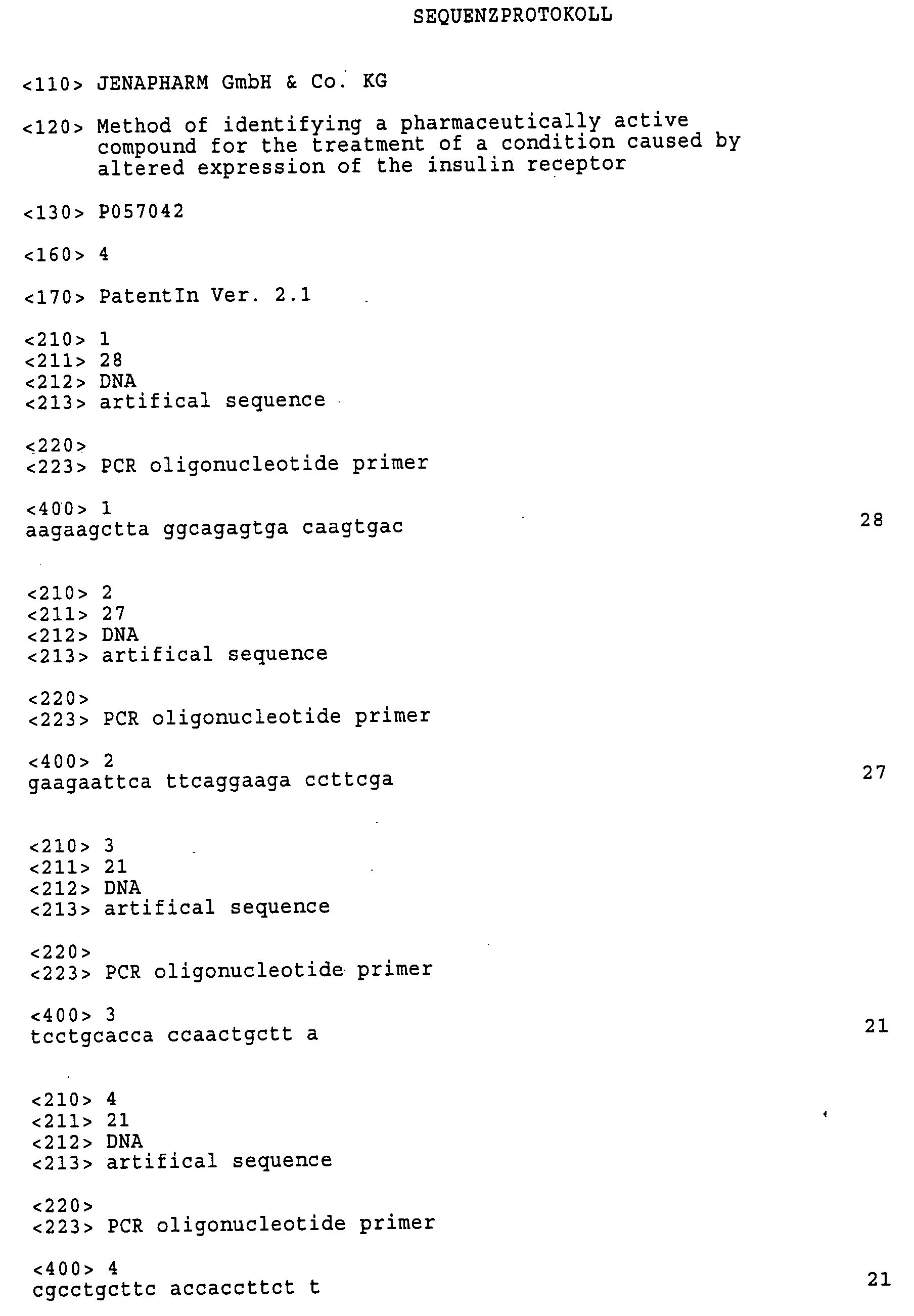
- PCR was performed with 6 ⁇ l cDNA, 10 mM of each dNTP, 5U Taq-Polymerase (Biotherm) and 50 pmol of both sense and antisense primers in PCR buffer. The final volume of each reaction was 50 ⁇ l. Reaction products (15 ⁇ l) were run on a 2.5% agarose gel. Primers used for PCR were:
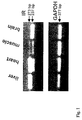
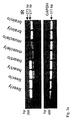
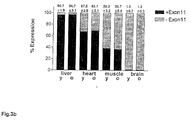
- RT-PCR analysis using total RNA from different tissues of rats to determine the relative amounds of alternatively spliced insulin receptor mRNA variants in diverse tissues of young (3 months old) rats was performed according to examples 1-3.
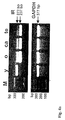
- Oligonucleotide primers were chosen to flank the corresponding domain of exon 11 splice site of rat insulin receptor representing isoform Ex11 + (273 bp) and isoform Ex11 - (237 bp). Modifications in the splicing mechanisms were verified by quantitative analysis employing densitometric evaluation.
- Glycerin aldehyde 3-phosphate-dehydrogenase (GAPDH) mRNA was used as an internal control.
- PCR-Oligonucleotide primers used for amplification of GAPDH were as follows: and
- An ageing-dependent alteration in insultin receptor expression may lead to a situation where signalling mechanisms coupled to insulin rceptors do not funtion optimally, leading to a pathophysiology situation similar to that described for insulin resistance syndrome.
- a diabetes like condition develops although tehre is enough or even increased amaounts of insulin in circulation. Diabetes is associated with an increased incidence of impotence, which is also observed in ageing.
- altered expression pattern of insulin receptor splice variants in ageing leads to a local condition similar to insulin resistance syndrom,e in the penis. Insulin resistance syndrome has not yet been effectively treated so far.
- compounds like thiazolidinedione insulin sensitisers see reports by Goldstein BJ, Diabetes Technol.
Landscapes
- Health & Medical Sciences (AREA)
- Chemical & Material Sciences (AREA)
- Life Sciences & Earth Sciences (AREA)
- Organic Chemistry (AREA)
- Engineering & Computer Science (AREA)
- Bioinformatics & Cheminformatics (AREA)
- Proteomics, Peptides & Aminoacids (AREA)
- General Health & Medical Sciences (AREA)
- Pharmacology & Pharmacy (AREA)
- Nuclear Medicine, Radiotherapy & Molecular Imaging (AREA)
- Medicinal Chemistry (AREA)
- Animal Behavior & Ethology (AREA)
- General Chemical & Material Sciences (AREA)
- Public Health (AREA)
- Veterinary Medicine (AREA)
- Genetics & Genomics (AREA)
- Zoology (AREA)
- Analytical Chemistry (AREA)
- Chemical Kinetics & Catalysis (AREA)
- Wood Science & Technology (AREA)
- Biotechnology (AREA)
- Biochemistry (AREA)
- Immunology (AREA)
- Microbiology (AREA)
- Molecular Biology (AREA)
- Physics & Mathematics (AREA)
- Pathology (AREA)
- Biophysics (AREA)
- General Engineering & Computer Science (AREA)
- Gynecology & Obstetrics (AREA)
- Endocrinology (AREA)
- Reproductive Health (AREA)
- Medicines That Contain Protein Lipid Enzymes And Other Medicines (AREA)
- Investigating Or Analysing Biological Materials (AREA)
- Measuring Or Testing Involving Enzymes Or Micro-Organisms (AREA)
- Pharmaceuticals Containing Other Organic And Inorganic Compounds (AREA)
Abstract
Description


| Organ weights (mg/100g body weight) of young controle (CON), young castrated (CASTR) and young castrated but testosterone-replaced (TESTO) rats in relation to the body weight. | |||
| CON (mg/100g body weight) | CASTR(mg/100g body weight | TESTO(mg/100g body weight) | |
| Penis | 77.3 ± 7.3 | 46.8 ± 4.3 | 78.55 ± 5.54 |
| Prostate | 96.7 ± 30.4 | 7.4 ± 2.4 | 92.37 ± 33.89 |
Claims (32)
- A method for identifying a pharmaceutically active compound for the treatment of a condition caused by altered expression of the insulin receptor, comprising the steps ofa) administering a potential pharmaceutically active compound to a mammal; andb) subsequently in-vitro analysing the amount of the Ex11+-splice variant and/or the Ex11--splice variant of the insulin receptor in the penile tissue of said mammal; andc) selecting a compound which leads to an increase of the amount of the Ex11+-splice variant and/or a decrease of the amount of the Ex11--variant of the insulin receptor.
- A method according to claim 1, wherein said condition is an erectile dysfunction.
- A method according to claim 2, wherein said erectile dysfunction is acute, a pathologic condition, ageing-dependent, or a predisposition for an erectile dysfunction.
- A method according to one of the claims 1 to 3, further comprising withdrawing a sample, such as penile tissue, a blood or serum sample from said mammal and analysing the amount of the Ex11+-splice variant and/or the Ex11--splice variant within the sample.
- A method according to one of the claims 1 to 4, wherein said amount of the Ex11+-splice variant and/or the Ex11--splice variant of the insulin receptor is a relative or an absolute amount.
- A method according to claim 5, wherein said amount of the Ex11+-splice variant and/or the Ex11--splice variant of the insulin receptor is a relative amount determined by comparison of the amount of the Ex11--variant to the amount of the Ex11+-variant or to the amount of GAPDH in the sample.
- A method according to one of the claims 1 to 6, wherein in-vitro analysing comprises the analysis of a nucleic acid encoding the Ex11+-splice variant and/or the Ex11--splice variant of the insulin receptor.
- A method according to claim 7, wherein in-vitro analysing comprises the analysis of a mRNA encoding the Ex11+-splice variant and/or the Ex11--splice variant of the insulin receptor.
- A method according to one of claims 1 to 8, wherein in-vitro analysing comprises the analysis of an Ex11+-splice variant and/or the Ex11--splice variant protein.
- A method according to one of claims 7 to 9, wherein said analysis is performed via PCR, RT-PCR, Southern-, Western- or Northern blot, or immuno-binding assays.
- A method according to one of claims 1 to 10, wherein said mammal is a rodent.
- A method according to claims 11, wherein said rodent is a rat.
- A method according to one of the claims 1 to 12, further comprising comparing the amount of the Ex11+-splice variant and/or the Ex11--splice variant of the insulin receptor with the amount of the same splice variant as determined in the same mammal before administration of the potential pharmaceutical compound.
- A method for preparing a pharmaceutical composition for the treatment of a condition caused by altered expression of the insulin receptor, comprising:a) identifying a pharmaceutically active compound according to one of the claims 1 to 13; andb) formulating said compound with a pharmaceutically acceptable carrier.
- A method according to claim 14, wherein said pharmaceutical composition is formulated for parenteral administration.
- A method according to claim 15, wherein said pharmaceutical composition is formulated for administration by injection.
- A method according to claim 15, wherein said pharmaceutical composition is formulated for topical administration.
- A method according to claim 14, wherein said pharmaceutical composition is formulated for oral administration.
- A method according to one of claims 14 to 18, wherein said pharmaceutical composition is formulated in dosage unit form.
- A method of diagnosing of a condition caused by altered expression of the insulin receptor in a mammal comprising in-vitro analysing the amount of an insulin receptor splice variant in the penile tissue of said mammal.
- A method according to claim 20, wherein said insulin receptor splice variant is the Ex11--variant and/or the Ex11+-variant.
- A method according to one of the claims 20 to 21, wherein said condition is an erectile dysfunction.
- A method according to claim 22, wherein said erectile dysfunction is acute, ageing-dependent, or a predisposition for an erectile dysfunction.
- A method according to claim 20 to 23, further comprising withdrawing a sample, such as penile tissue, a blood or serum sample from the mammal and analysing the amount of an insulin receptor splice variant within the sample.
- A method according to one of claims 20 to 24, wherein said amount of an insulin receptor splice variant to be analysed is a relative or an absolute amount.
- A method according to claim 25, wherein said amount of an insulin receptor splice variant to be analysed is a relative amount determined by comparison of the amount of the Ex11--splice variant to the amount of the Ex11+-splice variant or to the amount of GAPDH in the sample.
- A method according to one of the claims 20 to 26, wherein in-vitro analysing comprises the analysis of a nucleic acid encoding an insulin receptor variant.
- A method according to claim 27, wherein in-vitro analysing comprises the analysis of an mRNA encoding an insulin receptor variant.
- A method according to one of claims 20 to 28, wherein in-vitro analysing comprises the analysis of an insulin receptor protein.
- A method according to one of claims 27 to 29, wherein said analysis is performed via PCR, RT-PCR, Southern-, Western- or Northern blot, or immuno-binding assays.
- A method according to claim 30, wherein said mammal is a human.
- A method according to one of the claims 20 to 31, further comprising comparing the amount of the insulin receptor splice variant with the amount of insulin receptor splice variant of a control mammal not suffering from said condition.
Applications Claiming Priority (4)
| Application Number | Priority Date | Filing Date | Title |
|---|---|---|---|
| US36537102P | 2002-03-18 | 2002-03-18 | |
| DE10211915 | 2002-03-18 | ||
| DE2002111915 DE10211915A1 (en) | 2002-03-18 | 2002-03-18 | Identifying agents for treating conditions caused by altered expression of insulin receptors, specifically erectile dysfunction, by detecting splice variants of the receptor, also for diagnosis |
| US365371P | 2002-03-18 |
Publications (2)
| Publication Number | Publication Date |
|---|---|
| EP1352972A2 true EP1352972A2 (en) | 2003-10-15 |
| EP1352972A3 EP1352972A3 (en) | 2004-01-07 |
Family
ID=26011074
Family Applications (1)
| Application Number | Title | Priority Date | Filing Date |
|---|---|---|---|
| EP03006128A Withdrawn EP1352972A3 (en) | 2002-03-18 | 2003-03-18 | Methods of identifying a pharmaceutically active compound for the treatment of a condition caused by altered expression of the insulin receptor |
Country Status (3)
| Country | Link |
|---|---|
| EP (1) | EP1352972A3 (en) |
| JP (2) | JP3621401B2 (en) |
| NO (1) | NO20031157L (en) |
Families Citing this family (1)
| Publication number | Priority date | Publication date | Assignee | Title |
|---|---|---|---|---|
| WO2004097414A1 (en) * | 2003-04-25 | 2004-11-11 | Medical And Biological Laboratories Co., Ltd. | METHOD OF MEASURING INSULIN RECEPTOR α SUBUNIT |
Family Cites Families (2)
| Publication number | Priority date | Publication date | Assignee | Title |
|---|---|---|---|---|
| WO2001028539A2 (en) * | 1999-10-19 | 2001-04-26 | Glaxo Group Limited | Agent for treating cephalic pain |
| GB0021487D0 (en) * | 2000-09-01 | 2000-10-18 | Pfizer Ltd | Pharmaceutical |
-
2003
- 2003-03-13 NO NO20031157A patent/NO20031157L/en not_active Application Discontinuation
- 2003-03-18 EP EP03006128A patent/EP1352972A3/en not_active Withdrawn
- 2003-03-18 JP JP2003074464A patent/JP3621401B2/en not_active Expired - Fee Related
-
2004
- 2004-08-25 JP JP2004246014A patent/JP2005021165A/en active Pending
Also Published As
| Publication number | Publication date |
|---|---|
| JP3621401B2 (en) | 2005-02-16 |
| EP1352972A3 (en) | 2004-01-07 |
| NO20031157D0 (en) | 2003-03-13 |
| JP2005021165A (en) | 2005-01-27 |
| JP2003337131A (en) | 2003-11-28 |
| NO20031157L (en) | 2003-09-19 |
Similar Documents
| Publication | Publication Date | Title |
|---|---|---|
| Balen | The pathophysiology of polycystic ovary syndrome: trying to understand PCOS and its endocrinology | |
| Barden et al. | Endocrine profile and neuroendocrine challenge tests in transgenic mice expressing antisense RNA against the glucocorticoid receptor | |
| Chen et al. | Hippocampal corticotropin releasing hormone: pre-and postsynaptic location and release by stress | |
| Akabayashi et al. | Hypothalamic neuropeptide Y and its gene expression: relation to light/dark cycle and circulating corticosterone | |
| Stener-Victorin et al. | Rats with steroid-induced polycystic ovaries develop hypertension and increased sympathetic nervous system activity | |
| Leibowitz | Brain peptides and obesity: pharmacologic treatment | |
| Murray et al. | Central and peripheral actions of somatostatin on the growth hormone–IGF-I axis | |
| Sahu et al. | Insulin and insulin-like growth factor II suppress neuropeptide Y release from the nerve terminals in the paraventricular nucleus: a putative hypothalamic site for energy homeostasis | |
| Moult et al. | Hormonal regulation of hippocampal dendritic morphology and synaptic plasticity | |
| Aroda et al. | Metabolic and hormonal changes induced by pioglitazone in polycystic ovary syndrome: a randomized, placebo-controlled clinical trial | |
| Hanyu et al. | Brain‐derived neurotrophic factor modulates glucagon secretion from pancreatic alpha cells: its contribution to glucose metabolism | |
| Läck et al. | Chronic ethanol ingestion modulates proanxiety factors expressed in rat central amygdala | |
| White et al. | Overload‐induced skeletal muscle extracellular matrix remodelling and myofibre growth in mice lacking IL‐6 | |
| Figlewicz et al. | The effect of insulin on norepinephrine uptake by PC12 cells | |
| Premoli et al. | Growth hormone secretion and insulin-like growth factor-1 are related to hyperandrogenism in nonobese patients with polycystic ovary syndrome | |
| Li et al. | Expression of adiponectin receptors in mouse adrenal glands and the adrenocortical Y-1 cell line: adiponectin regulates steroidogenesis | |
| Vicentic et al. | CART peptide diurnal rhythm in brain and effect of fasting | |
| Gibbs et al. | Neuropeptide Y modulates effects of bradykinin and prostaglandin E2 on trigeminal nociceptors via activation of the Y1 and Y2 receptors | |
| Kakui et al. | Pharmacological characterization and feeding-suppressive property of FMS586 [3-(5, 6, 7, 8-tetrahydro-9-isopropyl-carbazol-3-yl)-1-methyl-1-(2-pyridin-4-yl-ethyl)-urea hydrochloride], a novel, selective, and orally active antagonist for neuropeptide Y Y5 receptor | |
| Bing et al. | The effect of moxonidine on feeding and body fat in obese Zucker rats: role of hypothalamic NPY neurones | |
| Amodei et al. | The GnRH antagonist degarelix suppresses gonadotropin secretion and pituitary sensitivity in midgestation sheep fetuses | |
| Miyoshi et al. | Effect of cabergoline treatment on Cushing’s disease caused by aberrant adrenocorticotropin-secreting macroadenoma | |
| Nanayakkara et al. | PPARγ Activation Improves the Molecular and Functional Components of Ito Remodeling by Angiotensin II | |
| Tani et al. | Enhancement of estrogen receptor gene expression in the mediobasal hypothalamus during anestrus in the beagle bitch | |
| Johansen et al. | Reduction of adiposity with prolonged growth hormone treatment in old obese rats: effects on glucose handling and early insulin signaling |
Legal Events
| Date | Code | Title | Description |
|---|---|---|---|
| PUAI | Public reference made under article 153(3) epc to a published international application that has entered the european phase |
Free format text: ORIGINAL CODE: 0009012 |
|
| AK | Designated contracting states |
Kind code of ref document: A2 Designated state(s): AT BE BG CH CY CZ DE DK EE ES FI FR GB GR HU IE IT LI LU MC NL PT RO SE SI SK TR |
|
| AX | Request for extension of the european patent |
Extension state: AL LT LV MK |
|
| PUAL | Search report despatched |
Free format text: ORIGINAL CODE: 0009013 |
|
| AK | Designated contracting states |
Kind code of ref document: A3 Designated state(s): AT BE BG CH CY CZ DE DK EE ES FI FR GB GR HU IE IT LI LU MC NL PT RO SE SI SK TR |
|
| AX | Request for extension of the european patent |
Extension state: AL LT LV MK |
|
| 17P | Request for examination filed |
Effective date: 20040421 |
|
| RAP1 | Party data changed (applicant data changed or rights of an application transferred) |
Owner name: SCHERING AKTIENGESELLSCHAFT |
|
| 17Q | First examination report despatched |
Effective date: 20040818 |
|
| AKX | Designation fees paid |
Designated state(s): AT BE BG CH CY CZ DE DK EE ES FI FR GB GR HU IE IT LI LU MC NL PT RO SE SI SK TR |
|
| STAA | Information on the status of an ep patent application or granted ep patent |
Free format text: STATUS: THE APPLICATION IS DEEMED TO BE WITHDRAWN |
|
| 18D | Application deemed to be withdrawn |
Effective date: 20060112 |