EP1352905A1 - Flavanol and cysteamine conjugates - Google Patents
Flavanol and cysteamine conjugates Download PDFInfo
- Publication number
- EP1352905A1 EP1352905A1 EP01272044A EP01272044A EP1352905A1 EP 1352905 A1 EP1352905 A1 EP 1352905A1 EP 01272044 A EP01272044 A EP 01272044A EP 01272044 A EP01272044 A EP 01272044A EP 1352905 A1 EP1352905 A1 EP 1352905A1
- Authority
- EP
- European Patent Office
- Prior art keywords
- compounds
- compound
- new
- pair
- aminoethylthio
- Prior art date
- Legal status (The legal status is an assumption and is not a legal conclusion. Google has not performed a legal analysis and makes no representation as to the accuracy of the status listed.)
- Withdrawn
Links
- 0 **CC(C(*)(*)C(c(cc1*)cc(*)c1O)Oc1cc(O)c2)c1c2O Chemical compound **CC(C(*)(*)C(c(cc1*)cc(*)c1O)Oc1cc(O)c2)c1c2O 0.000 description 1
Images


Classifications
-
- A—HUMAN NECESSITIES
- A61—MEDICAL OR VETERINARY SCIENCE; HYGIENE
- A61K—PREPARATIONS FOR MEDICAL, DENTAL OR TOILETRY PURPOSES
- A61K8/00—Cosmetics or similar toiletry preparations
- A61K8/18—Cosmetics or similar toiletry preparations characterised by the composition
- A61K8/30—Cosmetics or similar toiletry preparations characterised by the composition containing organic compounds
- A61K8/46—Cosmetics or similar toiletry preparations characterised by the composition containing organic compounds containing sulfur
-
- A—HUMAN NECESSITIES
- A61—MEDICAL OR VETERINARY SCIENCE; HYGIENE
- A61K—PREPARATIONS FOR MEDICAL, DENTAL OR TOILETRY PURPOSES
- A61K8/00—Cosmetics or similar toiletry preparations
- A61K8/18—Cosmetics or similar toiletry preparations characterised by the composition
- A61K8/30—Cosmetics or similar toiletry preparations characterised by the composition containing organic compounds
- A61K8/49—Cosmetics or similar toiletry preparations characterised by the composition containing organic compounds containing heterocyclic compounds
- A61K8/4906—Cosmetics or similar toiletry preparations characterised by the composition containing organic compounds containing heterocyclic compounds with one nitrogen as the only hetero atom
- A61K8/4926—Cosmetics or similar toiletry preparations characterised by the composition containing organic compounds containing heterocyclic compounds with one nitrogen as the only hetero atom having six membered rings
-
- A—HUMAN NECESSITIES
- A61—MEDICAL OR VETERINARY SCIENCE; HYGIENE
- A61Q—SPECIFIC USE OF COSMETICS OR SIMILAR TOILETRY PREPARATIONS
- A61Q19/00—Preparations for care of the skin
- A61Q19/08—Anti-ageing preparations
-
- C—CHEMISTRY; METALLURGY
- C07—ORGANIC CHEMISTRY
- C07D—HETEROCYCLIC COMPOUNDS
- C07D311/00—Heterocyclic compounds containing six-membered rings having one oxygen atom as the only hetero atom, condensed with other rings
- C07D311/02—Heterocyclic compounds containing six-membered rings having one oxygen atom as the only hetero atom, condensed with other rings ortho- or peri-condensed with carbocyclic rings or ring systems
- C07D311/04—Benzo[b]pyrans, not hydrogenated in the carbocyclic ring
- C07D311/22—Benzo[b]pyrans, not hydrogenated in the carbocyclic ring with oxygen or sulfur atoms directly attached in position 4
- C07D311/26—Benzo[b]pyrans, not hydrogenated in the carbocyclic ring with oxygen or sulfur atoms directly attached in position 4 with aromatic rings attached in position 2 or 3
- C07D311/28—Benzo[b]pyrans, not hydrogenated in the carbocyclic ring with oxygen or sulfur atoms directly attached in position 4 with aromatic rings attached in position 2 or 3 with aromatic rings attached in position 2 only
- C07D311/32—2,3-Dihydro derivatives, e.g. flavanones
-
- A—HUMAN NECESSITIES
- A61—MEDICAL OR VETERINARY SCIENCE; HYGIENE
- A61K—PREPARATIONS FOR MEDICAL, DENTAL OR TOILETRY PURPOSES
- A61K2800/00—Properties of cosmetic compositions or active ingredients thereof or formulation aids used therein and process related aspects
- A61K2800/40—Chemical, physico-chemical or functional or structural properties of particular ingredients
- A61K2800/52—Stabilizers
- A61K2800/522—Antioxidants; Radical scavengers
Definitions
- This invention concerns new products that result from the conjugation of flavenols with molecules that contain the thiol group.
- the new molecules are obtained from polyphenolic plant extracts rich in oligomeric and polymeric procyanidines and prodelfinidins. In this way, new products are generated with antioxidant properties and application as protective agents for the organism against disorders such as cancer, cardiovascular diseases and premature aging.
- the invention also refers to obtaining these new agents from waste materials from the agroalimentary industry. These waste materials are very complex mixtures and a simple and effective method of isolation and purification is described based on the physico-chemical characteristics of the new molecules.
- Flavanols are members of a larger family of compounds called polyphenols. These contain more than one hydroxyl group (OH) bonded to the corresponding benzene ring. Oligomeric flavenols include procyanidines and prodelfinidines depending on whether these present two or three hydroxyl groups in the B ring of the flavenolic structure, respectively.
- Figure 1 shows the general structure of procyanidines and prodelfinidins.
- Polyphenols and, more specifically, flavenols are present in all aerial parts of plants and are found in high concentrations in skin, bark and seeds. Sources rich in polyphenols are leaves of the tea plant, grape skin/pips and pine bark.
- ROS reactive oxidant species
- H 2 O 2 hydrogen peroxide
- O 2 .- superoxide anion
- OH' hydroxyl radical
- ROO' peroxide radicals
- ROS are produced during ordinary biological processes and the organism avoids these harmful effects using its own defense mechanisms (e.g. superoxide dysmutase, catalase and glutathione peroxidase against superoxide anion, hydrogen peroxide and organic peroxides, respectively).
- defense systems are not perfect and some of the reactive oxidant species can evade these.
- some diseases, aging or external factors such as environmental pollution, tobacco and ultraviolet radiation can produce ROS levels that exceed the defense mechanisms' capacity.
- an additional preventive action is required using exogenous antioxidants.
- oxidative damage, defense mechanisms and the function of polyphenols and other antioxidants see Diplock, A. T., Charleux, J.
- polyphenols also present other interesting activities, some of which are related with their adhesive/antiadhesive properties.
- polyphenols and especially oligomeric flavenols and glycosylated flavenols present antimicrobial activity at least partially due to inhibition of bacterial adhesion Walker, E. B., Mickelsen, R. A., Mickelsen, J., US5646178; Walker, E. B., Mickelsen, R.
- Thioacidolysis of procyanidines and prodelfinidines is used to establish the degree of polymerization of oligomeric mixtures [Rigaud, J., Pérez-lizarbe, J., Ricardo da Silva, J. M., Cheynier, V., J. Chromatogr., 540 , 401-405 (1991); Prieur, C., Rigaud, J., Cheynier, V., Moutounet, M., Phytochemistry, 36 (3), 781-784 (1994); Souquet, J.-M., Cheynier, V., Brossaud, F., Moutounet, M., Phytochemistry, 43 (2), 509-512 (1996), Souquet, J.
- Toluene- ⁇ -thiol is used as a source of thiols. Terminal flavan-3-ols are released as such while the internal polymer units are released as benzylthioethers in position 4 of the flavanolic system.
- the mixtures are studied by reverse phase high performance liquid chromatography, RP-HPLC). This method is useful from an analytical perspective. Applications have not been described for the resulting derivatives and also the breakdown product, toluene- ⁇ -thiol, is toxic, irritant and lacrimogenous.
- the purification procedure only consists of reverse phase chromatography.
- cysteamine conjugates with an antioxidant molecule (tocopherol) [Pelle, E., Maes, D. H., US5811083]. Cysteamine is joined to tocopherol by an amide bond thus eliminating the amino function. Moreover, tocopherol is a different type of compound to flavan-3-ols. There are also examples of antioxidant compounds obtained by adding mercaptoethanol and alkylic chains to flavanols [Tanaka, T., Kusano, R., Kouno, I., Bioorg. Medicinal Chem. Letter, 8 (14), 1801-1806 (1998)]. These are derivatives that do not contain the amino group and have an amphyphylic character.
- the present invention describes a new combination of a species that contains a thiol group and an amino group with species that include the flavan-3-ol system. It also describes a method to obtain and purify new products.
- the thiol is cysteamine and the polyphenolic part consists of different monomers derived from polymeric procyanidines and prodelfinidins.
- Figure 2 shows the structures of the new conjugates.
- the polyphenol source can be any plant material that contains procyanadins and/or prodelfinidines regardless of their degree of polymerization.
- One aspect of the invention uses a byproduct of grape pressing as a source of polymeric polyphenols.
- the present invention describes the conjugation of polymeric polyphenols with cysteamine to produce products I-VI.
- the first source of oligomeric and polymeric flavenols is treated with water/ethanol to obtain the crude polyphenolic fraction. It is not necessary to carry out subsequent fractioninations since thioacidolysis works with the first extract. This does not exclude the use of other fractions of variable purity obtained from the first extract or during any other similar process.
- aminoethyl derivatives I-VI have been generated from fractions of the first extract. After eliminating water and extraction solvents, the residue is suspended in methanol in the presence of hydrochloric acid and a suitable amount of cysteamine. The mixture is heated to 65°C and after 15 min, is cooled and diluted with water.
- This diluted solution is directly loaded onto a cation-exhange column equilibrated at a slightly acid pH.
- the flavan-3-ols conjugated with cysteamine are retained by the resin while the rest of the material, i.e. monomeric flavan-3-ols, other polyphenols such as flavonols and phenolic acids, and other species such as sugars, are eliminated in the washing process.
- the derived products are recovered from the column in the presence of a suitable amount of salt (sodium chloride) and organic solvent by an efficient and simple procedure.
- the resulting mixture which contains a much smaller amount of products than the crude reaction mixture, is submitted to another purification by reverse phase liquid chromatography followed by lyophilization to obtain each of the new molecules with a purity of over 99.5% by analytical HPLC.
- the new molecules are potent antioxidants with an excellent capacity to capture free radicals.
- the conjugates are more efficient than Trolox (water-soluble analogue of Vitamin E) in the DPPH assay (1,1-diphenyl-2-picrylhydracil) [Brand-Williams, W., Cuvelier, M. E., Berset, C., Lebensm.-Wiss. u.-Technol., 28 , 25-30 (1995)].
- the conjugates are also more efficient than the corresponding non-derived species.
- the method of the present invention includes a number of phases that are presented below separately to clarify the explanation.
- the first step in the preparation of the new conjugates is extraction of polyphenols from the first plant source.
- polyphenols are extracted from the grape-pressing residue (skin, pips and lees) with water/ethanol (3:7) to give a crude C extract.
- water/ethanol 3:7
- Other extraction solvents miscible with water such as methanol and acetone can be used.
- the first crude extract (C) is fractionated by liquid/liquid distribution using ethyl acetate and water acidified with acetic acid.
- the mixture was separated into two layers, the organic layer (O, mainly ethyl acetate) and the aqueous layer (A, mainly water).
- the organic fraction O mainly contains monomeric flavan-3-ols ((+)-catechine, (-)-epicatechine, (-)-epicatechine-3- O -galate), oligomeric procyanidines and prodelfinidines and glycosylated flavonols.
- the aqueous fraction A mainly contains procyanidines and prodelfinidines with a high degree of polymerization and flavonols and other non-falvonolic species such as sugars. All the crude products and fractions are analyzed by reverse phase HPLC with elution by water mixtures and acetonitrile in the presence of 0.1% trifluoroacetic acid with detection at 214, 280 and 320 nm.
- the second step is thioacidolysis of the first extract and the fractions depending on the case.
- Several of the mixtures have been used for this purpose to i.e. the crude ethanolic extract C, the ethyl acetate fraction O and the aqueous fraction A obtained in the previous phase. It is of special interest for the present invention that the final products can be obtained efficiently regardless of the purity of the sources of procyanidins/prodelfinidins. All the starting mixtures in this phase are lyophilized before the hydrolysis treatment.
- the thiolysis reaction has been described to be complete in 10-15 min at 65°C in the presence of 0.2 M hydrochloric acid in methanol and a surplus of thio, of approximately 1:50 (weight/weight).
- a crucial aspect of the present invention is isolation of the flavanol derivatives from the complex reaction mixtures.
- This stage it is an important advantage to have introduced an amine group during formation of the conjugates.
- the new derivatives are retained electrostatically to a cationic exchange resin while the rest of the material is eliminated in the resin washing.
- This operation is important because it permits one to work with first extracts without requiring later fractionating. It is to little avail that these are useful in the previous phase if the following purification is ineffective. Isolation of the new products can be done in the presence of a wide range of materials of different physico-chemical nature, which, while they are not retained in the resin by a positive charge, are easily eliminated in the washing process.
- the resins preferentially include a sulphonic group incorporated in a polmeric support.
- a sulphonic group incorporated in a polmeric support.
- support There are several types of support that can be used in this stage of the invention. These include agarose, co-polymers of styrene-divinylbenzene, polyether and methacrylate. All the resins mentioned are strong exchangers (the anion is a strong acid). However, the possibilities are not limited to these supports or to the anion exchanger, which can also be, for example, a carboxyl group (weak acid) incorporated to an insoluble support.
- the conjugates are isolated on strong exchangers SP Sepharose®, supplied by Amersham-Pharmacia Biotech and MacroPrep HighS®, supplied by BioRad.
- the resins, column packed, are equilibrated with sodium acetate buffer at pH 4.75 in the presence of a quantity of water-soluble solvent, selected from methanol, ethanol, acetonitrile and tetrahydrofurane.
- the crude products of thiolysis are loaded in the column after diluting the reaction mixture with water (dilution factor 1/5). After, the resin is washed with 10 column volumes of the buffer eluent/equilibrium solvent system.
- the conjugates with cysteine are eluted from the resin sequentially using acetate buffers that contain appropriate quantities of solvent and salt (NaCI).
- NaCI solvent and salt
- Each of the individual chemical species is purified extensively by preparative reverse phase HPLC, preferably in a 25 x 5 cm column packed with stationary phase VYDAC® C18 provided by The Separations Group.
- the solutions obtained after washing/isolation are diluted with water (dilution factor 1/3) and separately loaded in the column, previously equilibrated with triethylamine phosphate buffer pH 2.25.
- Each component is eluted from the column using the appropriate amount of acetonitrile in the equilibrated buffer.
- the pure products are desalinated by packing them in the same column and eluting with water/acetonitrile in the presence of 0.1% trifluoroacetic acid.
- the final preparations are obtained by lyophilization.
- FIG. 1 presents the results of the DPPH test (1,1-diphenyl-2-pycrylhydracil).
- the values of EC 50 (effective concentration 50) are calculated from the curves.
- EC 50 is the amount of antioxidant required to reduce the initial concentration to half (around 60 ⁇ M) of DPPH•. This amount is expressed as micromoles antioxidant/micromoles initial DPPH•.
- the EC 50 values for compounds relevant to the present invention are: Trolox (water-soluble analogue of Vitamin E), 0.26; (-)-epicatechine, 0.19, 4 ⁇ -(2-aminoethylthio)epicatechine 1, 0.11; 4 ⁇ -(2-aminoethylthio)epicatechinegalate III, 0.11. According to the definition of EC 50 , the most effective compounds are those with the lowest effective concentration.
- compound I 4 ⁇ -(2-aminoethylthio)epicatechine is obtained by thioacidolysis of a water-soluble fraction (A).
- Fraction A contains a polyphenol concentration of 10 g/L, measured by the Folin-Ciocalteu method and expressed as equivalents in gallic acid.
- An aliquot of fraction A 80 mL, 0.8 g equivalents gallic acid is evaporated under vacuum and suspended in methanol (80 mL).
- hydrochloric acid 37% (1.72 mL) and cysteamine (4 g) in methanol (80 mL) and the mixture (160 mL) is maintained at 65°C for 20 minutes and occasionally stirred.
- water is added (640 mL) and the mixture is kept at 5°C.
- Compound I is eluted with a salt gradient (NaCI) (0 to 1 M) and a simultaneous gradient of CH 3 CN (10 to 20%) in 20 bed volumes (400 mL). The chromatographic process is repeated six times until all the thiolysis mixture has been exhausted. The fractions are analyzed by reverse phase HPLC in a C18 column and the eluents are mixtures of water/CH 3 CN in the presence of 0.1% trifluoroacetic acid. The fractions containing compound I are combined (650 mL for all the six loads) and diluted to 2.2 L with triethylamine phosphate buffer pH 2.25.
- NaCI salt gradient
- CH 3 CN 10 to 20%
- the solution is loaded in a column prepacked with VYDAC® C18 (reverse phase) and compound I is eluted with a gradient of CH 3 CN (0 to 12%) in phosphate buffer of triethylamine pH 2.25 for 60 min.
- the compound 4 ⁇ (2-aminoethylthio)epicatechine I elutes at a value of 5-6% CH 3 CN.
- the fractions that contain I are combined, diluted with water and desalinated using a fast gradient of CH 3 CN in 0.1% trifluoroacetic acid.
- the remaining solution 300 mL
- the remaining solution is lyophilized to achieve a white solid (203 mg).
- the purity of the final product is higher than 99.5% by analytical HPLC with detection at 215 nm.
Landscapes
- Health & Medical Sciences (AREA)
- Life Sciences & Earth Sciences (AREA)
- Public Health (AREA)
- Animal Behavior & Ethology (AREA)
- General Health & Medical Sciences (AREA)
- Veterinary Medicine (AREA)
- Chemical & Material Sciences (AREA)
- Organic Chemistry (AREA)
- Birds (AREA)
- Epidemiology (AREA)
- Dermatology (AREA)
- Gerontology & Geriatric Medicine (AREA)
- Pharmaceuticals Containing Other Organic And Inorganic Compounds (AREA)
- Medicines Containing Plant Substances (AREA)
- Coloring Foods And Improving Nutritive Qualities (AREA)
Abstract
The present invention refers to new products generated by the conjugation of
flavanols with molecules that contain the thiol group. New molecules are obtained
from polyphenolic plant extracts rich in oligomeric and polymeric procyanidines and
prodelfinidins. In this way, new products are generated with antioxidant properties
for application as protective agents for the organism against disorders such as
cancer, cardiovascular diseases and premature aging. The invention also refers to
obtaining these new agents from waste material generated by the agroalimentary
industry. Since these waste materials are highly complex mixtures a simple and
effective method is described to isolate and purify these, based on the physico-chemical
characteristics of the new molecules.
Description
- This invention concerns new products that result from the conjugation of flavenols with molecules that contain the thiol group. The new molecules are obtained from polyphenolic plant extracts rich in oligomeric and polymeric procyanidines and prodelfinidins. In this way, new products are generated with antioxidant properties and application as protective agents for the organism against disorders such as cancer, cardiovascular diseases and premature aging. The invention also refers to obtaining these new agents from waste materials from the agroalimentary industry. These waste materials are very complex mixtures and a simple and effective method of isolation and purification is described based on the physico-chemical characteristics of the new molecules.
- Flavanols are members of a larger family of compounds called polyphenols. These contain more than one hydroxyl group (OH) bonded to the corresponding benzene ring. Oligomeric flavenols include procyanidines and prodelfinidines depending on whether these present two or three hydroxyl groups in the B ring of the flavenolic structure, respectively. Figure 1 shows the general structure of procyanidines and prodelfinidins. Polyphenols and, more specifically, flavenols are present in all aerial parts of plants and are found in high concentrations in skin, bark and seeds. Sources rich in polyphenols are leaves of the tea plant, grape skin/pips and pine bark. The antioxidant/antitiradical action of polyphenols makes them useful as products for the prevention of diseases and health promotion. Body cells are constantly exposed to so-called reactive oxidant species (ROS) such as hydrogen peroxide (H2O2), superoxide anion (O2 .-), hydroxyl radical (OH') and peroxide radicals (ROO'), which have the potential to cause cellular damage. For example, damage of genetic material (DNA) can cause mutations and cancer, and alterations in blood proteins (low-density lipoproteins, LDL) can lead to lipid accumulation and consequent blockage of arteries. In the skin, lipidic oxidation of the cell wall is related to changes in permeability which cause dryness and premature aging. Most ROS are produced during ordinary biological processes and the organism avoids these harmful effects using its own defense mechanisms (e.g. superoxide dysmutase, catalase and glutathione peroxidase against superoxide anion, hydrogen peroxide and organic peroxides, respectively). However, defense systems are not perfect and some of the reactive oxidant species can evade these. Moreover, some diseases, aging or external factors such as environmental pollution, tobacco and ultraviolet radiation can produce ROS levels that exceed the defense mechanisms' capacity. In these cases, an additional preventive action is required using exogenous antioxidants. For information about ROS, oxidative damage, defense mechanisms and the function of polyphenols and other antioxidants, see Diplock, A. T., Charleux, J. L., Crozier-Willi, G., Kok, F. J., Rice-Evans, C., Roberfroid, M., Stahl, W., Vina-Ribes, J., Br. J. Nutr., 80 Suppl 1, 77-112 (1998). Natural extracts of procyanidine have been described with antioxidant activity [Pietta, P., Simonetti, P., Mauri, P., J. Agr. Food Chem., 46 (11), 4487-4490 (1998); Masquellier, J., US4698360; Frangi, E., Bertani, M., Mustich, G., Tuccini, G., US5484594; Nafisi-Movaghar, K., Seroy, W. A., Svanoe, T. T., US5912363] and some of these are currently on the market.
- Polyphenols also present other interesting activities, some of which are related with their adhesive/antiadhesive properties. Hence, polyphenols and especially oligomeric flavenols and glycosylated flavenols present antimicrobial activity at least partially due to inhibition of bacterial adhesion Walker, E. B., Mickelsen, R. A., Mickelsen, J., US5646178; Walker, E. B., Mickelsen, R. A., Mickelsen, J., US5650432; Hamada, S., Kontani, M., Hosono, H., Ono, H., Tanaka, T., Ooshima, T., Mitsunaga, T., Abe, I., FEMS Microbiol Lett., 143 (1), 35-40 (1996)]. Polyphenols and their derivatives are also used in the food industry as preservatives.
- A large proportion of polyphenolic extracts on the market are mixtures of many species with different degrees of polymerization. It is not known for most products how the different components of mixtures are absorbed and distributed in the different systems and biological tissues. Often, some of the active molecules are lost due to their tendency to aggregate among themselves or with proteins, processes that cause their deactivation for example in the skin or the digestive system. Moreover, researchers found that not only polyphenols, especially oligomeric ones, have a general biological activity but also different fractions or individual species of oligomeres have differentiated biological potentials. Owing to the similarity of their physico-chemical properties, the individual compounds are difficult to purify. Moreover, normally the amount of a selected oligomeric compound in a complex mixture is small.
- Thioacidolysis of procyanidines and prodelfinidines is used to establish the degree of polymerization of oligomeric mixtures [Rigaud, J., Pérez-lizarbe, J., Ricardo da Silva, J. M., Cheynier, V., J. Chromatogr., 540, 401-405 (1991); Prieur, C., Rigaud, J., Cheynier, V., Moutounet, M., Phytochemistry, 36 (3), 781-784 (1994); Souquet, J.-M., Cheynier, V., Brossaud, F., Moutounet, M., Phytochemistry, 43 (2), 509-512 (1996), Souquet, J. M., Labarbe, B., LeGuerneve, C., Cheynier, V., Moutounet, M., J Agr. Food Chem., 48 (4), 1076-1080 (2000)]. Toluene-α-thiol is used as a source of thiols. Terminal flavan-3-ols are released as such while the internal polymer units are released as benzylthioethers in position 4 of the flavanolic system. The mixtures are studied by reverse phase high performance liquid chromatography, RP-HPLC). This method is useful from an analytical perspective. Applications have not been described for the resulting derivatives and also the breakdown product, toluene-α-thiol, is toxic, irritant and lacrimogenous. The purification procedure only consists of reverse phase chromatography.
- There is one example of cysteamine conjugates with an antioxidant molecule (tocopherol) [Pelle, E., Maes, D. H., US5811083]. Cysteamine is joined to tocopherol by an amide bond thus eliminating the amino function. Moreover, tocopherol is a different type of compound to flavan-3-ols. There are also examples of antioxidant compounds obtained by adding mercaptoethanol and alkylic chains to flavanols [Tanaka, T., Kusano, R., Kouno, I., Bioorg. Medicinal Chem. Letter, 8 (14), 1801-1806 (1998)]. These are derivatives that do not contain the amino group and have an amphyphylic character.
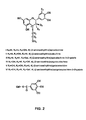
- The present invention describes a new combination of a species that contains a thiol group and an amino group with species that include the flavan-3-ol system. It also describes a method to obtain and purify new products. The thiol is cysteamine and the polyphenolic part consists of different monomers derived from polymeric procyanidines and prodelfinidins. Figure 2 shows the structures of the new conjugates. The polyphenol source can be any plant material that contains procyanadins and/or prodelfinidines regardless of their degree of polymerization. One aspect of the invention uses a byproduct of grape pressing as a source of polymeric polyphenols. After a simple thioacidolysis step, the new molecules are effectively isolated from the mixture by a process of cationic exchange, thanks to the amino group introduced with the cysteamine. Ulterior purification by reverse phase chromatography produces each of the active compounds. Flavanolic conjugates are dried at low pressure.
-
- Fig. 1. Monomeric and polymeric flavan-3-ol structures. A: Monomeric flavan-3-ols. B: Oligomeric and polymeric procyanidines and prodelfinidins. The arrows indicate possible polymerization positions. The bonded molecules can be monomeric or oligomeric flavanols. The bonds are established between the central type C ring and either of the two positions available in the A type rings.
- Fig. 2. Structures of new aminoethyl derivatives of flavan-3-ols.
- Fig. 3. Antioxidant efficacy of phenolic compounds in the DPPH assay. The absorbance (A) at 517 nm is a measure of the amount of free radical remaining in solution. (1-A/A0)x100 represents the percentage of DPPH that has reacted with the antioxidant. The amount of antioxidant expressed as micromoles per micromole of initial DPPH• to correct the possible day to day variation in the amount of initial DPPH•. The initial concentration of DPPH• is calculated from the absorbance (A) and a calibration line. Each point represents the mean of three determinations. □ Trolox
-
- The present invention describes the conjugation of polymeric polyphenols with cysteamine to produce products I-VI. The first source of oligomeric and polymeric flavenols is treated with water/ethanol to obtain the crude polyphenolic fraction. It is not necessary to carry out subsequent fractioninations since thioacidolysis works with the first extract. This does not exclude the use of other fractions of variable purity obtained from the first extract or during any other similar process. In the course of the present invention, aminoethyl derivatives I-VI have been generated from fractions of the first extract. After eliminating water and extraction solvents, the residue is suspended in methanol in the presence of hydrochloric acid and a suitable amount of cysteamine. The mixture is heated to 65°C and after 15 min, is cooled and diluted with water. This diluted solution is directly loaded onto a cation-exhange column equilibrated at a slightly acid pH. The flavan-3-ols conjugated with cysteamine are retained by the resin while the rest of the material, i.e. monomeric flavan-3-ols, other polyphenols such as flavonols and phenolic acids, and other species such as sugars, are eliminated in the washing process. After, the derived products are recovered from the column in the presence of a suitable amount of salt (sodium chloride) and organic solvent by an efficient and simple procedure. The resulting mixture, which contains a much smaller amount of products than the crude reaction mixture, is submitted to another purification by reverse phase liquid chromatography followed by lyophilization to obtain each of the new molecules with a purity of over 99.5% by analytical HPLC.
- The new molecules are potent antioxidants with an excellent capacity to capture free radicals. The conjugates are more efficient than Trolox (water-soluble analogue of Vitamin E) in the DPPH assay (1,1-diphenyl-2-picrylhydracil) [Brand-Williams, W., Cuvelier, M. E., Berset, C., Lebensm.-Wiss. u.-Technol., 28, 25-30 (1995)]. The conjugates are also more efficient than the corresponding non-derived species.
- The method of the present invention includes a number of phases that are presented below separately to clarify the explanation.
- The first step in the preparation of the new conjugates is extraction of polyphenols from the first plant source. In one of the applications of the invention, polyphenols are extracted from the grape-pressing residue (skin, pips and lees) with water/ethanol (3:7) to give a crude C extract. The same procedure can be used with other sources such as the pods, skins/seeds of other species and leaves. Other extraction solvents miscible with water such as methanol and acetone can be used. In another application of the invention, the first crude extract (C) is fractionated by liquid/liquid distribution using ethyl acetate and water acidified with acetic acid. The mixture was separated into two layers, the organic layer (O, mainly ethyl acetate) and the aqueous layer (A, mainly water). The organic fraction O mainly contains monomeric flavan-3-ols ((+)-catechine, (-)-epicatechine, (-)-epicatechine-3-O-galate), oligomeric procyanidines and prodelfinidines and glycosylated flavonols. The aqueous fraction A mainly contains procyanidines and prodelfinidines with a high degree of polymerization and flavonols and other non-falvonolic species such as sugars. All the crude products and fractions are analyzed by reverse phase HPLC with elution by water mixtures and acetonitrile in the presence of 0.1% trifluoroacetic acid with detection at 214, 280 and 320 nm.
- The second step is thioacidolysis of the first extract and the fractions depending on the case. Several of the mixtures have been used for this purpose to i.e. the crude ethanolic extract C, the ethyl acetate fraction O and the aqueous fraction A obtained in the previous phase. It is of special interest for the present invention that the final products can be obtained efficiently regardless of the purity of the sources of procyanidins/prodelfinidins. All the starting mixtures in this phase are lyophilized before the hydrolysis treatment. The thiolysis reaction has been described to be complete in 10-15 min at 65°C in the presence of 0.2 M hydrochloric acid in methanol and a surplus of thio, of approximately 1:50 (weight/weight). In the present invention, a ratio of reagents of only 1:5 has been used and the initial polymers were consumed in only 15 minutes. Formation of anthocyanines has not been detected, as revealed by the absence of signals in the analytical chromatogram register of HPLC at 525 nm. Majority conjugates in the mixture resulting from thiolysis are epicatechine thioethers (I), epicatechinegalate (III) y catechine (II), in order of abundance. Other minority products are derivatives of epigalocatechine (IV), epigalocatechinegalate (VI) and galocatechine (V). The configuration of compounds in position 4 of the C ring could correspond to either of two possibilities (4α, 4β). In Figure 2, the configuration in this carbon is expressed as 4ξ.
- A crucial aspect of the present invention is isolation of the flavanol derivatives from the complex reaction mixtures. In this stage it is an important advantage to have introduced an amine group during formation of the conjugates. The new derivatives are retained electrostatically to a cationic exchange resin while the rest of the material is eliminated in the resin washing. This operation is important because it permits one to work with first extracts without requiring later fractionating. It is to little avail that these are useful in the previous phase if the following purification is ineffective. Isolation of the new products can be done in the presence of a wide range of materials of different physico-chemical nature, which, while they are not retained in the resin by a positive charge, are easily eliminated in the washing process. It must be emphasized that most potential compounds for use as crude mixtures are of a non-ionic or anionic nature (negative charge in the working pH). The purification of individual compounds from the thiolysis mixture is greatly facilitated with this step. This washing process using resin presents a high efficacy that is independent of the extract or fraction used in previous stages. The composition of the thiolysis mixtures presents some variations depending on the starting material used and the majority products are essentially the same in all cases.
- Different cationic exchange resins can be used in this isolation or washing stage. The resins preferentially include a sulphonic group incorporated in a polmeric support. There are several types of support that can be used in this stage of the invention. These include agarose, co-polymers of styrene-divinylbenzene, polyether and methacrylate. All the resins mentioned are strong exchangers (the anion is a strong acid). However, the possibilities are not limited to these supports or to the anion exchanger, which can also be, for example, a carboxyl group (weak acid) incorporated to an insoluble support. Preferentially, the conjugates are isolated on strong exchangers SP Sepharose®, supplied by Amersham-Pharmacia Biotech and MacroPrep HighS®, supplied by BioRad. The resins, column packed, are equilibrated with sodium acetate buffer at pH 4.75 in the presence of a quantity of water-soluble solvent, selected from methanol, ethanol, acetonitrile and tetrahydrofurane. The crude products of thiolysis are loaded in the column after diluting the reaction mixture with water (dilution factor 1/5). After, the resin is washed with 10 column volumes of the buffer eluent/equilibrium solvent system. The conjugates with cysteine are eluted from the resin sequentially using acetate buffers that contain appropriate quantities of solvent and salt (NaCI). The procedure not only allows the conjugates to be isolated but also provides separation between some of them, facilitating the subsequent purification operations even more.
- Each of the individual chemical species is purified extensively by preparative reverse phase HPLC, preferably in a 25 x 5 cm column packed with stationary phase VYDAC® C18 provided by The Separations Group. The solutions obtained after washing/isolation are diluted with water (dilution factor 1/3) and separately loaded in the column, previously equilibrated with triethylamine phosphate buffer pH 2.25. Each component is eluted from the column using the appropriate amount of acetonitrile in the equilibrated buffer. After, the pure products are desalinated by packing them in the same column and eluting with water/acetonitrile in the presence of 0.1% trifluoroacetic acid. The final preparations are obtained by lyophilization.
- The new pure products are strong antioxidants/capturers of free radicals. Figure 3 presents the results of the DPPH test (1,1-diphenyl-2-pycrylhydracil). The values of EC50 (effective concentration 50) are calculated from the curves. EC50 is the amount of antioxidant required to reduce the initial concentration to half (around 60 µM) of DPPH•. This amount is expressed as micromoles antioxidant/micromoles initial DPPH•. The EC50 values for compounds relevant to the present invention are: Trolox (water-soluble analogue of Vitamin E), 0.26; (-)-epicatechine, 0.19, 4ξ-(2-aminoethylthio)epicatechine 1, 0.11; 4ξ-(2-aminoethylthio)epicatechinegalate III, 0.11. According to the definition of EC50, the most effective compounds are those with the lowest effective concentration.
- In one application of this invention, compound I, 4ξ-(2-aminoethylthio)epicatechine is obtained by thioacidolysis of a water-soluble fraction (A). Fraction A contains a polyphenol concentration of 10 g/L, measured by the Folin-Ciocalteu method and expressed as equivalents in gallic acid. An aliquot of fraction A (80 mL, 0.8 g equivalents gallic acid) is evaporated under vacuum and suspended in methanol (80 mL). After, a solution of hydrochloric acid is added (HCI) 37% (1.72 mL) and cysteamine (4 g) in methanol (80 mL) and the mixture (160 mL) is maintained at 65°C for 20 minutes and occasionally stirred. At the end of the reaction, water is added (640 mL) and the mixture is kept at 5°C.
- Isolation of the aminoethylthioethers of the 3-flavanols is achieved by column cation exchange. The chromatographic column (1.6 x 10 cm, 20 mL bed volume), packed with HighLoad SP Sepharose® is equilibrated with 20 mM sodium acetate buffer, pH 4.75/acetonitrile(CH3CN) (9:1). The mixture (in aliquots of 120 mL) is loaded in the column and the underived material that does not contain the amino group is eluted with 10 bed volumes (200 mL) of equilibrated buffer. Compound I is eluted with a salt gradient (NaCI) (0 to 1 M) and a simultaneous gradient of CH3CN (10 to 20%) in 20 bed volumes (400 mL). The chromatographic process is repeated six times until all the thiolysis mixture has been exhausted. The fractions are analyzed by reverse phase HPLC in a C18 column and the eluents are mixtures of water/CH3CN in the presence of 0.1% trifluoroacetic acid. The fractions containing compound I are combined (650 mL for all the six loads) and diluted to 2.2 L with triethylamine phosphate buffer pH 2.25. The solution is loaded in a column prepacked with VYDAC® C18 (reverse phase) and compound I is eluted with a gradient of CH3CN (0 to 12%) in phosphate buffer of triethylamine pH 2.25 for 60 min. The compound 4ξ(2-aminoethylthio)epicatechine I elutes at a value of 5-6% CH3CN. The fractions that contain I are combined, diluted with water and desalinated using a fast gradient of CH3CN in 0.1% trifluoroacetic acid. The remaining solution (300 mL) is lyophilized to achieve a white solid (203 mg). The purity of the final product is higher than 99.5% by analytical HPLC with detection at 215 nm. Using mass spectroscopy with electrospray ionization, a molecular ion with 366.3 mass units is detected., when the theoretical ion for this structure is 366.1. The structure of I is confirmed by desulphuration with Raney nickel and comparison with a standard of (-)-epicatechine. The final product is also characterized by proton Nuclear Magnetic Resonance (1H-NMR). Assignations (δH) to 300 MHz in (CD3)2CO: 2.9-3.8 (4H, m, S-CH2 -CH2 -N); 4.02-4.07 (1H, 2m, 3-H); 4.08-4.18 (2H, m, S-CH2-CH2-NH2 ); 4.10-4.22 (1H, m,d J=2.1 Hz, 4-H); 5.12-5.23 (1H, 2s, 2-H); 5.89 (1H, d J=2.4 Hz, 6-H); 6.07-6.09 (1H, 2d, J=2.4 Hz each, 8-H); 6.83 (2H, m, 5'-H, 6'-H); 7.10 (1H, d J=2.1 Hz, 2'-H). Assignations (δH) to 300 MHz en D2O: 2.64-3.26 (4H, 3m, S-CH2 -CH2 -N); 3.77 (1H, s width, 3-H); 3.91 (1H, s width, 4-H); 5.11 (1H, s width, 2-H); 5.84 (1H, d width, 6-H); 5.89 (1H, d width, 8-H); 6.72 (2H, s width, 5'-H, 6'-H); 6.82 (1H, s width, 2'-H). Some multiplicities detected could be due to the existence of two products with 4α, 4β configuration.
⋄ Epicatechinee
○ Aminoethylthioepicatechinee I
Δ Aminoethylthioepicatechinee I O-galate III
Claims (9)
- A compound or pair of compounds (4α, 4β) or any of their salts characterized by structure I,where R1=H, R2=H, R3=OH, 4ξ-(2-aminoethylthio)epicatechine.
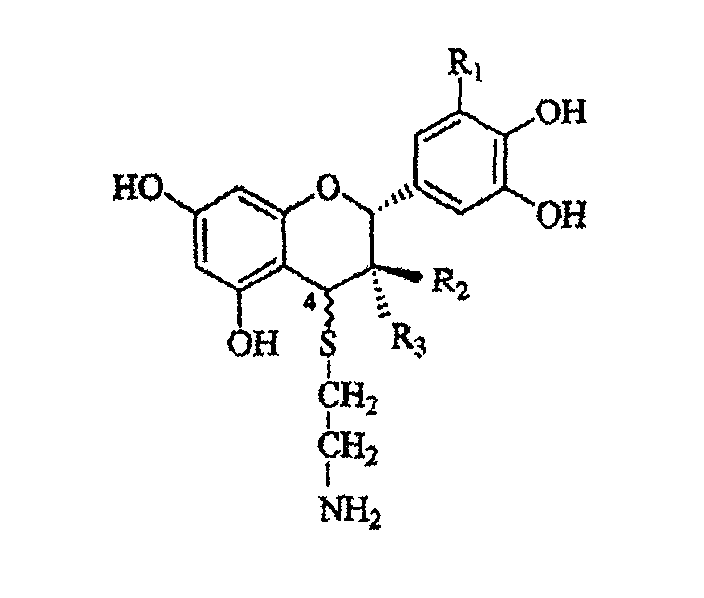
- A compound or pair of compounds (4α, 4β) or any of their salts characterized by structure IIwhere R1=H, R2=OH, R3=H, 4ξ-(2-aminoethylthio)catechine.

- A compound or pair of compounds (4α, 4β) or any of its salts characterized by structure IIIwhere R1=H, R2=H, R3=Gal, 4ξ-(2-aminoethylthio)epicatechine-3-O-galate,

- A compound or a pair of compounds (4α, 4β) or any of its salts characterized by structure IVwhere R1=OH, R2=H, R3=OH, 4ξ-(2-aminoetiltio)epigalocatechine.

- A compound or pair of compounds (4α, 4β) or any of its salts characterized by structure V.where R1=OH, R2=OH, R3=H, 4ξ-(2-aminoethylthio)galocatechine.

- A compound or pair of compounds (4α, 4β) or any of its salts characterized by structure VI.where R1=OH, R2=H, R3=Gal, 4ξ-(2-aminoethylthio)epigalocatechine-3-O-galate.

- Procedure to prepare the compounds according to Claims 1 to 6 characterized because it includes washing and isolating the active compounds using a cationic exchange resin.
- Procedure according to Claim 7 characterized because it uses elution mixtures of water/salt/solvent with the solvent selected from methanol, ethanol, acetonitrile and tetrahydrofurane.
- Application of compounds of structure I-VI that present antioxidant/free radical capture activity for cosmetics and/or pharmacy as agents for the protection and prevention of diseases related with oxidation processes (cancer, cardiovascular diseases) and premature aging.
Applications Claiming Priority (3)
| Application Number | Priority Date | Filing Date | Title |
|---|---|---|---|
| ES200003093 | 2000-12-22 | ||
| ES200003093A ES2171142B1 (en) | 2000-12-22 | 2000-12-22 | CONJUGATES OF FLAVANOLES AND CISTEAMINE. |
| PCT/ES2001/000485 WO2002051829A1 (en) | 2000-12-22 | 2001-12-14 | Flavanol and cysteamine conjugates |
Publications (1)
| Publication Number | Publication Date |
|---|---|
| EP1352905A1 true EP1352905A1 (en) | 2003-10-15 |
Family
ID=8496128
Family Applications (1)
| Application Number | Title | Priority Date | Filing Date |
|---|---|---|---|
| EP01272044A Withdrawn EP1352905A1 (en) | 2000-12-22 | 2001-12-14 | Flavanol and cysteamine conjugates |
Country Status (4)
| Country | Link |
|---|---|
| US (1) | US6936726B2 (en) |
| EP (1) | EP1352905A1 (en) |
| ES (1) | ES2171142B1 (en) |
| WO (1) | WO2002051829A1 (en) |
Cited By (3)
| Publication number | Priority date | Publication date | Assignee | Title |
|---|---|---|---|---|
| EP1627565A1 (en) * | 2004-08-10 | 2006-02-22 | Consejo Superior de Investigaciones Cientificas (CSIC) | Use of flavanol derivatives for the cryopreservation of living cells |
| WO2007046125A3 (en) * | 2005-10-20 | 2007-09-20 | Annalisa Romani | Use of extracts of myrtle and other mediterranean plant species, as antimycotic agent towards yeast and yeast-like microorganisms |
| WO2015034436A1 (en) * | 2013-09-03 | 2015-03-12 | Agency For Science, Technology And Research | Polymer-flavonoid conjugates and hydrogels for biomedical applications |
Families Citing this family (3)
| Publication number | Priority date | Publication date | Assignee | Title |
|---|---|---|---|---|
| CN1837169A (en) * | 2006-03-14 | 2006-09-27 | 房学迅 | Compound capable of inhibiting zinc ion metalloproteinases |
| ES2311403B1 (en) | 2007-06-12 | 2010-01-12 | Consejo Superior De Investigaciones Cientificas | PHENOLIC EXTRACTS OF ALMOND SKIN CONTAINING PROCIANIDINS, PROPELARGONIDINS AND PRODELFINIDINS, AND THEIR PROCEDURE FOR OBTAINING. |
| CN121108117A (en) * | 2025-10-28 | 2025-12-12 | 沈阳药科大学 | Millstone persimmon polyphenol series mercaptoflavanol derivatives, their preparation methods and uses |
Family Cites Families (1)
| Publication number | Priority date | Publication date | Assignee | Title |
|---|---|---|---|---|
| JPS6425726A (en) * | 1987-04-24 | 1989-01-27 | Yuutoku Yakuhin Kogyo Kk | Agent for eliminating active oxygen free radical |
-
2000
- 2000-12-22 ES ES200003093A patent/ES2171142B1/en not_active Expired - Fee Related
-
2001
- 2001-12-14 US US10/451,475 patent/US6936726B2/en not_active Expired - Fee Related
- 2001-12-14 WO PCT/ES2001/000485 patent/WO2002051829A1/en not_active Ceased
- 2001-12-14 EP EP01272044A patent/EP1352905A1/en not_active Withdrawn
Non-Patent Citations (1)
| Title |
|---|
| See references of WO02051829A1 * |
Cited By (5)
| Publication number | Priority date | Publication date | Assignee | Title |
|---|---|---|---|---|
| EP1627565A1 (en) * | 2004-08-10 | 2006-02-22 | Consejo Superior de Investigaciones Cientificas (CSIC) | Use of flavanol derivatives for the cryopreservation of living cells |
| WO2006032572A1 (en) * | 2004-08-10 | 2006-03-30 | Consejo Superior De Investigaciones Científicas | Use of flavanol derivatives for the cryopreservation of living cells |
| WO2007046125A3 (en) * | 2005-10-20 | 2007-09-20 | Annalisa Romani | Use of extracts of myrtle and other mediterranean plant species, as antimycotic agent towards yeast and yeast-like microorganisms |
| WO2015034436A1 (en) * | 2013-09-03 | 2015-03-12 | Agency For Science, Technology And Research | Polymer-flavonoid conjugates and hydrogels for biomedical applications |
| US10716959B2 (en) | 2013-09-03 | 2020-07-21 | Agency For Science, Technology And Research | Polymer-flavonoid conjugates and hydrogels for biomedical applications |
Also Published As
| Publication number | Publication date |
|---|---|
| ES2171142A1 (en) | 2002-08-16 |
| WO2002051829A1 (en) | 2002-07-04 |
| ES2171142B1 (en) | 2003-12-16 |
| US20040077711A1 (en) | 2004-04-22 |
| US6936726B2 (en) | 2005-08-30 |
Similar Documents
| Publication | Publication Date | Title |
|---|---|---|
| JP6905021B2 (en) | New applications for rose pigment compounds | |
| KR102214939B1 (en) | Cosmetic, pharmaceutical or food composition including an extract of arthrobacter agilis rich in carotenoids | |
| KR102006947B1 (en) | Cosmetics Compositions for antioxidant | |
| KR101992336B1 (en) | A cosmetic composition for skin improvement comprising red cabbage fermented extract | |
| Cavada et al. | Purification and partial characterization of a new lectin from Parkia panurensis Benth. ex HC Hopkins seeds (Leguminosae family; Mimosoideae subfamily) and evaluation of its biological effects | |
| KR101138312B1 (en) | Peptide Derivatives and Cosmetic Composition Comprising the Same | |
| US6936726B2 (en) | Flavanol and cysteamine conjugates | |
| CN116390713A (en) | Tocotrienol derivatives, methods and uses thereof | |
| KR101361848B1 (en) | Method for Preparing Mucin from Dioscorea opposita and Cosmetic Composition Containing the Same | |
| KR102112806B1 (en) | A use of Pistacia weinmannifolia for skin whitening and wrinkle improvement | |
| KR101142044B1 (en) | 4-Hydroxycinnamoyl Peptide Derivatives and Cosmetic Composition Comprising the Same | |
| WO2003024951A1 (en) | Flavonol and cysteine conjugates | |
| KR100642681B1 (en) | Bio Placenta skin coating composition containing placenta extract and its manufacturing method | |
| KR100427556B1 (en) | Makeup composition containing rucinol | |
| KR101195970B1 (en) | Isoflavone Aminoacid Derivatives For Anti-Oxidation And Anti-Wrinkle And The Manufacturing Method Thereof And Cosmetic Composition Thereof | |
| KR20160114982A (en) | Protein polysaccharide extracted from ocimum basilicum seed, skin external composition comprising the same and method for preparing the same | |
| KR102579725B1 (en) | Cosmetic composition comprising insect extracts | |
| KR102194318B1 (en) | Composition for anti-inflammation, anti-wrinkle and skin regeneration containing subcritical water-treated persimmon tannin as effective component | |
| KR100561362B1 (en) | Cosmetic composition containing the extract of Shiitake | |
| JP2026017654A (en) | Anti-aging composition containing persulfides and polyphenols | |
| KR20220063959A (en) | Antioxidant effect on flavonoids and polyphenols of Ceratopteris thalictroides extract, and cosmetic composition for preventing skin aging, or for preventing or improving skin wrinkles | |
| HK40099804A (en) | Glycosylated bacterioruberins and industrial applications thereof | |
| KR20230099796A (en) | Cosmetic composition for protecting photo-damaged skin comprising a fraction of Ginseng Berry extract | |
| HK1231387B (en) | Use of rose dye compound | |
| KR20050075495A (en) | Cosmetic composition for protecting skin against uv light comprising persicae folium |
Legal Events
| Date | Code | Title | Description |
|---|---|---|---|
| PUAI | Public reference made under article 153(3) epc to a published international application that has entered the european phase |
Free format text: ORIGINAL CODE: 0009012 |
|
| 17P | Request for examination filed |
Effective date: 20030623 |
|
| AK | Designated contracting states |
Kind code of ref document: A1 Designated state(s): AT BE CH CY DE DK ES FI FR GB GR IE IT LI LU MC NL PT SE TR |
|
| AX | Request for extension of the european patent |
Extension state: AL LT LV MK RO SI |
|
| 17Q | First examination report despatched |
Effective date: 20040518 |
|
| GRAP | Despatch of communication of intention to grant a patent |
Free format text: ORIGINAL CODE: EPIDOSNIGR1 |
|
| STAA | Information on the status of an ep patent application or granted ep patent |
Free format text: STATUS: THE APPLICATION IS DEEMED TO BE WITHDRAWN |
|
| 18D | Application deemed to be withdrawn |
Effective date: 20060404 |