EP1349102A2 - Image acquiring display apparatus, method and apparatus for editing photographing conditions, and program for arranging photographing conditions - Google Patents
Image acquiring display apparatus, method and apparatus for editing photographing conditions, and program for arranging photographing conditions Download PDFInfo
- Publication number
- EP1349102A2 EP1349102A2 EP03250454A EP03250454A EP1349102A2 EP 1349102 A2 EP1349102 A2 EP 1349102A2 EP 03250454 A EP03250454 A EP 03250454A EP 03250454 A EP03250454 A EP 03250454A EP 1349102 A2 EP1349102 A2 EP 1349102A2
- Authority
- EP
- European Patent Office
- Prior art keywords
- photographing conditions
- photographing
- editing
- screen
- condition
- Prior art date
- Legal status (The legal status is an assumption and is not a legal conclusion. Google has not performed a legal analysis and makes no representation as to the accuracy of the status listed.)
- Withdrawn
Links
Images









Classifications
-
- G—PHYSICS
- G16—INFORMATION AND COMMUNICATION TECHNOLOGY [ICT] SPECIALLY ADAPTED FOR SPECIFIC APPLICATION FIELDS
- G16H—HEALTHCARE INFORMATICS, i.e. INFORMATION AND COMMUNICATION TECHNOLOGY [ICT] SPECIALLY ADAPTED FOR THE HANDLING OR PROCESSING OF MEDICAL OR HEALTHCARE DATA
- G16H40/00—ICT specially adapted for the management or administration of healthcare resources or facilities; ICT specially adapted for the management or operation of medical equipment or devices
- G16H40/60—ICT specially adapted for the management or administration of healthcare resources or facilities; ICT specially adapted for the management or operation of medical equipment or devices for the operation of medical equipment or devices
- G16H40/63—ICT specially adapted for the management or administration of healthcare resources or facilities; ICT specially adapted for the management or operation of medical equipment or devices for the operation of medical equipment or devices for local operation
-
- G—PHYSICS
- G16—INFORMATION AND COMMUNICATION TECHNOLOGY [ICT] SPECIALLY ADAPTED FOR SPECIFIC APPLICATION FIELDS
- G16H—HEALTHCARE INFORMATICS, i.e. INFORMATION AND COMMUNICATION TECHNOLOGY [ICT] SPECIALLY ADAPTED FOR THE HANDLING OR PROCESSING OF MEDICAL OR HEALTHCARE DATA
- G16H30/00—ICT specially adapted for the handling or processing of medical images
- G16H30/20—ICT specially adapted for the handling or processing of medical images for handling medical images, e.g. DICOM, HL7 or PACS
Definitions
- the invention relates to an apparatus and a method for editing data, and in particular to a system for editing photographing conditions for an image acquiring display apparatus used for diagnosing medical image data, a method for editing photographing conditions by using the image acquiring display apparatus, and a program for arranging photographing conditions.
- a radiographic image acquired by using radiation such as X-ray or the like has been used widely as a medical image for diagnosing diseases.
- so-called radiograph which is developed by irradiating X-ray which has transmitted through an object to a phosphor layer (a phosphor screen), and irradiating visible rays generated on the phosphor layer to a film using a silver salt as the same as an usual photograph, has been used as a medical image, in earlier development.
- a radiographic image converting method has been used, the method for directly extracting the radiographic image as a digital signal by using a radiation detector such as a stimulable phosphor substance, a FPD (Flat Panel Detector) or the like, instead of the film coated with the silver salt.
- a radiation detector such as a stimulable phosphor substance, a FPD (Flat Panel Detector) or the like.
- various image processing has been performed to the radiographic image.
- each of United State Patent No. 3,859,527 and Japanese Patent Application Publication (Unexamined) No. Tokukai-sho 55-12144 discloses a radiographic image converting method which uses a stimulable phosphor substance, and uses visible rays or infrared rays as the stimulative excitation light.
- the radiographic image converting method uses a radiographic image converting panel wherein a stimulable phosphor layer is formed on a support material.
- the radiographic image converting method radiation which has transmitted through an object is irradiated to the stimulable phosphor layer, a radiation energy corresponding to a quantity of radiation transmitting through each part of the object is stored in the stimulable phosphor layer, and thereby a latent image is formed on the stimulable phosphor layer. Thereafter, when the stimulable phosphor layer is scanned by the stimulative excitation light such as a predetermined wavelength laser light or the like, the radiation energy stored is emitted as the stimulative light. Therefore, the stimulative light is electrically converted by using a photoelectric conversion element such as a photo-multiplier or the like, and taken out as an electric signal.
- a photoelectric conversion element such as a photo-multiplier or the like
- the radiographic image diagnostic system which uses the stimulable phosphor substance is commonly called a computed radiographer (CR).
- the radiographic image diagnostic system can be roughly classified into an erect/supine exclusive type system in which the stimulable phosphor substance is incorporated in a reading apparatus, and a cassette type system using a cassette in which the stimulable phosphor substance is incorporated therein and which can be carried and a reading apparatus for reading the phosphor substance out from the cassette.
- the radiographic image In case of photographing the radiographic image by any one of the above-described type radiographic image diagnostic systems, it is necessary to select a suitable photographing condition among a large number of photographing conditions regarding a body part, a photographing direction or the like.
- the photographing condition is selected by a controller which usually inputs a patient information thereby or displays photographed image data thereon.
- the large number of photographing conditions are classified into a plurality of pages, and displayed for every page on a display of the controller. Then, when the page including a desired photographing condition is searched by going to a previous page or a next page in order, with a "previous page” button or a "next page” button, a photographing condition suitable for the photographing of the patient is selected among the photographing conditions included in the searched page and displayed on the display. Further, in case there are an extremely large number of photographing conditions, there is a case the photographing conditions has a hierarchical structure in order to arrange the photographing conditions. In the case, it is possible to find the desired photographing condition by selecting the choices for every hierarchy.
- the number of hierarchies increases, and the number of key operations to find the desired photographing condition increases, as the number of photographing conditions increases.
- the predetermined number of key operations are required to select the desired photographing condition, regardless of the frequency of selecting the photographing conditions. Therefore, there is a problem it takes the same time to select the photographing condition which is selected frequently, as the time to select the photographing condition which is not almost selected.
- radiographic image diagnostic system is used in a medical field such as a hospital or the like, there is a demand for diagnosing just after photographing, and the rapidity is required of the whole system. Further, because there is a case the radiographic image diagnostic system is used in a group medical checkup, the more rapidity is required of the whole system. Furthermore, because the radiation is injurious to the human body, it is necessary to avoid taking a rephotograph caused by an error in photographing, as possible.
- the present invention was developed in view of the above-described problems.
- It is an object of the present invention to provide an image acquiring display apparatus comprising an editing system for photographing conditions, a method of editing photographing conditions by using the apparatus, and a program for arranging photographing conditions, in order to select any of photographing conditions rapidly and certainly.
- an image acquiring display apparatus comprises: a display for displaying at least a selection screen for selecting a photographing condition required for a patient from a plurality of photographing conditions, and a display screen for displaying image data read out of a radiographic image conversion medium having a radiographic image of the patient, recorded thereon; and an editing section for editing a plurality of photographing conditions to be displayed on the selection screen, of predetermined master data including a plurality of photographing conditions.
- a serial number is attached to each of the plurality of photographing conditions included in the master data, the serial number comprising a plurality of classified codes classifiable of each of the plurality of photographing conditions.
- a combination of at least two selected of at least a body part to be photographed, a modality, a photographing technique, a photographing direction and a print format, is used as the plurality of classified codes.
- the editing section generates a first editing screen for extracting a plurality of photographing conditions required for a user, from the plurality of photographing conditions included in the master data, and generating user data peculiar to the user, a second editing screen for modifying or editing a classification of the user data generated, and a third editing screen for modifying or editing each of the plurality of photographing conditions included in the user data, and changes the first editing screen, the second editing screen and the third editing screen, with switches provided for the first editing screen, the second editing screen and the third editing screen, respectively.
- an original data display area on which the master data or the user data generated are displayed and a copy data display area on which the user data to be generated are displayed are contrasted with each other and formed on the first editing screen
- each of the original data display area and the copy data display area is provided with an extracting section for extracting the photographing conditions on the basis of each of the classified codes, a searching section for searching the photographing conditions by using the serial number or the photographing conditions, and a rearranging section for rearranging the photographing conditions by using the serial number or the body part of each of the photographing conditions, and the user data are generated by dragging, moving and dropping a predetermined photographing condition from the original data display area to the copy data display area.
- a data display area on which the user data to be generated are displayed a modality classifying area for specifying the modality of each of the photographing conditions, a body part classifying area for specifying the body part of each of the photographing conditions, and an individual display area on which a photographing condition to which the serial number comprising classified codes of the modality specified and the body part specified is attached, is displayed, are formed on the second editing screen, the data display area is provided with an extracting section for extracting the photographing conditions on the basis of each of the classified codes, and a searching section for searching the photographing conditions by using the serial number or the photographing conditions, and the classification of the user data is modified by dragging, moving and dropping a predetermined photographing condition from the data display area to the individual display area.
- a plurality of photographing conditions selected on the data display area are moved to the individual display area, together, and registered in the user data, as a set of conditions.
- an input condition area on which a type of an apparatus for reading the image data, a reading condition and a read image are displayed, and an output condition area on which a type of an apparatus for outputting the image data, an output condition, an image processing condition and an output image are displayed, are formed on the third editing screen, and a photographing condition selected, is edited on the input condition area or the output condition area.
- the apparatus of the first aspect of the present invention further comprises: an extracting section for extracting a predetermined classified code from the plurality of classified codes of the serial number, with reference to the serial number; a code determining section for determining a value of the predetermined classified code of each of the plurality of photographing conditions to be displayed on the selection screen, according to a frequency or a date of selecting each of the plurality of photographing conditions; an order determining section for determining an order of displaying the plurality of photographing conditions, with reference to the value of the predetermined classified code of each of the plurality of photographing conditions; and a position determining section for determining a position of displaying each of the plurality of photographing conditions on the selection screen, on the basis of the order.
- an apparatus for editing photographing conditions comprises: an editing section for editing a plurality of photographing conditions required for a user, of predetermined master data including a plurality of photographing conditions required for a patient.
- a method for editing photographing conditions comprises: displaying an editing screen for editing a plurality of photographing conditions required for a user, of predetermined master data including a plurality of photographing conditions required for a patient; and editing the plurality of photographing conditions required for the user, of the predetermined master data, on the editing screen.
- a method for editing photographing conditions for an image acquiring display apparatus which displays at least a selection screen for selecting a photographing condition required for a patient from a plurality of photographing conditions, and a display screen for displaying image data read out of a radiographic image conversion medium having a radiographic image of the patient, recorded thereon, comprises: displaying an editing screen for editing a plurality of photographing conditions to be displayed on the selection screen, of predetermined master data including a plurality of photographing conditions; and editing a plurality of photographing conditions required for a user, of the predetermined master data, on the editing screen.
- a program for arranging photographing conditions makes an image acquiring display apparatus perform processing, the image acquiring display apparatus comprising: a display for displaying at least a selection screen for selecting a photographing condition required for a patient from a plurality of photographing conditions, and a display screen for displaying image data read out of a radiographic image conversion medium having a radiographic image of the patient, recorded thereon; and an editing section for editing a plurality of photographing conditions to be displayed on the selection screen, of predetermined master data including a plurality of photographing conditions, the processing comprising: extracting a predetermined classified code from a plurality of classified codes of a serial number attached to each of the plurality of photographing conditions included in the master data, with reference to the serial number; determining a value of the predetermined classified code of each of the plurality of photographing conditions to be displayed on the selection screen, according to a frequency or a date of selecting each of the plurality of photographing conditions; determining an order of displaying the
- the serial number comprising a plurality of classified codes determined in consideration of the characteristic of the radiation diagnosis
- the first editing screen for generating the group of photographing conditions peculiar to the user from the photographing conditions included in the master data including all the photographing conditions, the second editing screen for reviewing or modifying the classification of the group of photographing conditions peculiar to the user, or the third editing screen for reviewing or modifying each of the photographing conditions, is used as the editing screen, and the photographing conditions are edited by being dragged and dropped on the editing screen, it is possible that the user edits the group of photographing conditions easily, by himself.
- the value of the predetermined classified code is determined according to the frequency of selecting the photographing condition, and the order of displaying the photographing conditions is rearranged with reference to the determined value of the predetermined classified code when generating the editing screen, according to the program for arranging photographing conditions, it is possible that the user always selects the photographing conditions on the screen suitable for the used state.
- An image acquiring display apparatus of the present invention has a screen for specifying an information of a patient as an object of a radiographic image diagnosis, a screen for selecting photographing conditions to be used for photographing the patient from a plurality of photographing conditions, and a screen for displaying image data read out of a radiographic image conversion medium having a radiographic image of the patient, recorded thereon.
- the serial number comprising a plurality of classified codes such as a body part to be photographed, a modality, a photographing technique, a photographing direction, a print format or the like, which is determined in consideration of a characteristic of the radiation diagnosis, is attached to each of the photographing conditions.
- a master editing screen on which the user arbitrarily extracts photographing conditions from master data including a plurality of photographing conditions, determined by a maker, and generates user data, a condition key editing screen for modifying or editing a classification of the user data generated, and a condition editing screen for modifying or editing each of the photographing conditions included in the user data, are provided as an editing screen for the photographing conditions. Accordingly, because the photographing conditions are copied by being dragged and dropped, or a set of photographing conditions is determined, on the editing screen, it is possible that the user generates the user data easily, by himself. Further, because the editing screen for the photographing conditions is optimized and displayed, it is possible that the user selects the photographing conditions smoothly.
- FIG. 1 is a diagram showing a whole structure of a radiographic image diagnostic system 1.
- FIG. 2 is a block diagram showing a structure of an image acquiring display apparatus 6 composing the radiographic image diagnostic system 1.
- FIGS. 3 to 8 are views showing exemplary structures of screens which are displayed on a controller 8 of the image acquiring display apparatus 6.
- an editing system of photographing conditions which is characteristic of the present invention is provided for a controller of a cassette type of image acquiring display apparatus.
- the above-described editing system can be provided for a controller of any apparatus for displaying a medical image, such as a system which uses a radiographic image conversion medium other than a cassette, an erect/supine exclusive type system which uses fixed radiographic image conversion medium, a system which directly extracts a radiographic image as a digital image by using such a radiation detector as a FPD, or the like.
- the editing system can be provided for an editing apparatus which is connected to the apparatus for displaying a medical image through a network, and operates.
- the radiographic image diagnostic system 1 comprises a X-ray photographing apparatus 2 which photographs the object with X-ray, and an image acquiring display apparatus 6 which reads and displays the X-ray image photographed by the X-ray photographing apparatus 2.
- a radiographic image conversion medium such as a radiographic image conversion panel 5a or the like, which is incorporated in a cassette 5.
- the radiographic image conversion panel 5a has a stimulable phosphor layer.
- the cassette 5 incorporating the radiographic image conversion panel 5a in which the latent image is formed is thrown in an image reading apparatus (a reader 7) of the image acquiring display apparatus 6, the reader 7 takes the radiographic image conversion panel 5a out of the cassette 5. Then, when an excitation light irradiation section 7a of the reader 7 irradiates the excitation light such as visible rays, infrared rays or the like, to the radiographic image conversion panel 5a, the radiographic image conversion panel 5a emits the stimulative light according to the energy quantity of the X-ray which is stored in the stimulable phosphor substance.
- an excitation light irradiation section 7a of the reader 7 irradiates the excitation light such as visible rays, infrared rays or the like
- the radiographic image conversion panel 5a emits the stimulative light according to the energy quantity of the X-ray which is stored in the stimulable phosphor substance.
- the photoelectric converter 7c converts the stimulative light to a voltage signal in proportion to the intensity of the stimulative light, and outputs the voltage signal to an A/D converter 7d. Then, the A/D converter 7d converts the voltage signal to digital image signal data, and outputs the digital image signal data to a controller 8.
- the controller 8 comprises a display 8d such as a CRT or the like, and an operating section 8e such as a key board, a touch panel or the like.
- the controller 8 makes a storage 8c store the digital image signal data outputted from the A/D converter 7d, outputs it to the display 8d such as the CRT or the like, and sends and outputs it as a film to a laser imager 9 which is connected thereto through the DICOM network.
- the controller 8 comprises a control section 8a for controlling the reader 7 on the basis of the reading condition determined, an operation processor 8b for performing various image processing (a correcting processing, a gradation converting processing, a trimming, a reverse/rotation, a parameter change, a masking or the like) to the image read by the reader 7, a screen generator 8h for generating various screens such as a waiting list screen, a search screen, a photographed body part selection screen, a photographing routine screen or the like, an identification label detector 8f for reading a plate ID of the cassette 5, and a photographing condition editing section 8g for editing the photographing conditions which is characteristic of the present invention.
- image processing a correcting processing, a gradation converting processing, a trimming, a reverse/rotation, a parameter change, a masking or the like
- a screen generator 8h for generating various screens such as a waiting list screen, a search screen, a photographed body part selection screen, a photographing routine screen or the like
- the reader 7 and the controller 8 are shown in a state they are separated from each other, in figures, they may be as one, and compose the image acquiring display apparatus 6. Further, the controller 8 can be connected to the terminal 10 of the HIS (hospital information system), the RIS (radioactive information system) or the like, for inputting or outputting remote patient information through the network, or a data base 11 for storing photographing history information or the like. Furthermore, the controller 8 can be provided with an editing apparatus 12 which is separated from the editing system of the present invention.
- the above-described cassette type radiographic image diagnostic system 1 adopts any one of a method (pre-registration) for photographing after previously registering the relationship between the cassette 5 and reservation information which are the patient information, the photographing conditions, the reading conditions or the like, in order to define the relation ship, and a method (post-registration) for relating the order of inputting the cassette and the order of inputting the reservation information without registering the cassette 5 before photographing by radiation. Therefore, the radiographic image diagnostic system 1 reads the image data.
- the pre-registration and the post-registration have characteristic effects, respectively.
- a hospital or the like wherein a large number of readers 7 and controllers 8 are provided for various positions, and a large number of radiologists photograph, it is possible to diagnose radiographic images of a large number of patients, accurately, according to the pre-registration.
- a hospital of a general practitioner or the like wherein a small number of readers 7 and controllers 8 are provided, and a small number of radiologists photograph, it is possible to photograph the object by the X-ray, rapidly and efficiently, according to the post-registration.
- the editing system of photographing conditions which is characteristic of the present embodiment, can be applied to an apparatus which adopts any one of the registration methods.
- an operator such as a radiologist or the like inputs patient information with the display 8d and the operating section 8e of the controller 8.
- a search screen 13 shown in FIG. 3 is set as an initial screen.
- the operator enters a predetermined search key with a keyboard displayed on an input area 13b, and touches or clicks a "Search" button, the patient information is searched with reference to an external information terminal such as the HIS, the RIS or the like, the data base or the like, and displayed on a display area 13a.
- the patient information can be acquired with a waiting list screen 14.
- the waiting list screen 14 shown in FIG. 4 is displayed.
- the patient information such as a patient ID, a patient name, a sex, an age, a department, a location, a photographing condition, sheets (total) of images to be photographed, or the like are displayed as a list, on a display area 14a of the waiting list screen 14.
- the operator selects a patient information of a predetermined patient to be photographed, from the patient information of the list displayed.
- the waiting list screen 14 is changed to the search screen 13 with a "OK" button.
- a photographing condition selection screen 15 is displayed.
- the photographing condition is a condition which should be considered when photographing a patient by radiation rays. It is possible to acquiring a suitable radiographic image by photographing a patient on the basis of the selected photographing conditions.
- the photographing condition is the body part of the human body to be photographed (the head, the chest, the abdomen, the neck, the hips, the spine, the lungs, the arm, the leg, or the like), a posture when photographing the body part of the human body (the erect, the supine or the like), a photographing direction (the frontal, the side or the like), a characteristic of a patient (the sex, the age, the physique or the like), a name of a disease, or the like.
- the large number of photographing conditions are provided as data (maker master data) including all conditions, by a maker providing the system. Therefore, in order to display all several hundred photographing conditions on the screen, the screens are required down to several pages. Accordingly, it is difficult to rapidly select the suitable photographing conditions for the patient from the photographing conditions displayed on a large number of pages. As a result, the maker usually extracts only the photographing conditions which are used by a user, from all the photographing conditions, generates the screen wherein the extracted photographing conditions are classified so that the operator can select easily, and provides the screen to the user.
- the photographing condition selection screen 15 As the screen wherein the photographing conditions are classified, the photographing condition selection screen 15 as shown in FIG. 5A is displayed. For example, a determined condition display area 15a on which the photographing conditions which are used specially frequently among the extracted photographing conditions, are displayed, and a classified condition display area 15b on which the photographing conditions which are classified for every photographing state such as the posture when photographing the body part, the body part to be photographed or the like, are displayed, are provided for the photographing condition selection screen 15. For example, the erect photographing condition which is used frequently, is displayed with an erect icon 15c, on the determined condition display area 15a.
- the operator selects any photographing conditions from the photographing conditions displayed on the determined condition display area 15a, or selects any classification from the erect, the supine, the cassette and so on displayed on the classified condition display area 15b, the operator touches a "Previous Page” button, a "Next Page” button or the like.
- the operator selects the desired photographing conditions from those displayed on the screen, as the occasion may demand.
- the screen is displayed as shown in FIG. 5B, so as to include the photographing conditions classified into the erect, as suitable photographing conditions for the photograph at the erect state.
- the photographing conditions displayed on the screen may be classified for every body part to be photographed so that the operator selects the desired photographing condition easily in consideration of the erect photographing posture, and displayed on the screen.
- the photographing conditions may be displayed so that the operator can select the photographing conditions classified into those easily.
- the screen is displayed as shown in FIG. 5C or 5D, so as to include the photographing conditions classified into the supine or the cassette, as suitable photographing conditions for the photograph at the supine state or with the cassette.
- the photographing conditions displayed on each screen may be classified for every body part to be photographed so that the operator selects the desired photographing condition easily in consideration of the supine or the cassette, and displayed on the screen.
- the photographing conditions may be classified in order from the head, following the structure of the human body, so that any body part of the patient can be easily photographed as it is, and displayed on the screen.
- the above-described photographing condition selection screen 15 is generated in consideration of the operation of the operator, it is easy to select the desired photographing condition on the arranged screen.
- the kind or number of photographing conditions desired to be extracted from the maker master data differs according to the user, there occurs a difference in the frequencies of selecting the photographing conditions as the photographing conditions have been used continuously, or new photographing condition is used. Accordingly, there is a case the user requires to review the photographing conditions, or to modify the screen structure.
- the background that it is difficult to edit the photographing conditions is that serial numbers which are attached to the photographing conditions respectively are consecutive numbers which are provided for the photographing conditions in order, or that the photographing conditions cannot be searched or rearranged efficiently because the structure of the classifiable codes which are provided for the photographing conditions coincides with the characteristic of the radiation diagnosis.
- the consecutive members are attached to the photographing conditions of the head as a top body part to be photographed to the leg as a bottom body part, in order.
- the embodiment it is possible to classify the photographing conditions variously by attaching the serial number which is composed of a plurality of classified codes determined in consideration of the characteristic of the radiation diagnosis, to each photographing condition. Further, it is possible to solve the above-described problems by providing the edition screen wherein a user inexperienced in a mechanical operation can easily search or extract the desired photographing condition.
- the specific structure will be explained according to the following embodiment.
- the photographing method will be explained.
- the identification label information plate ID which the identification label detector 8f of the controller 8 has read out of the cassette 5 is related to the photographing conditions and the reading conditions.
- the radiographic image photographing apparatus such as the X-ray photographing apparatus 2 or the like, photographs the selected patient, the X-ray transmitted image of the patient is stored in the radiographic image conversion panel 5a of the cassette 5, as the latent image.
- the reader 7 reads the plate ID, searches the data base on the basis of the plate ID as the search key, and extracts the reading condition corresponding to the plate ID, in case of the pre-registration.
- the reader 7 extracts the reading condition corresponding to the cassette 5 on the basis of the relationship between the cassette insertion queue and the reservation selection queue in case of the post-registration. Thereafter, the reader 7 reads the latent image of the radiographic image conversion panel 5a, according to the determined reading condition.
- the carrier speed of the plate carrier system or the sampling pitch of the A/D converter 7d is determined, according to the reading sensitivity or the reading resolution determined as the reading condition. Then, when the radiographic image conversion panel 5a is taken out of the cassette 5, the scanning system reads the image data stored and kept in the radiographic image conversion panel 5a, by scanning the radiographic image conversion panel 5a.
- the logarithmic converter converts the electric signal to the logarithmic signal (thereby, the electric signal which is linear to the optical sensitivity of the stimulative light is converted to the electrical signal which is logarithmically linear to the optical sensitivity of the stimulative light, that is the electric signal which is linear to the density.). Further, the A/D converter 7d converts the logarithmic signal to the digital signal.
- the operation processor 8b processes the correcting processing (the shading correcting, the unevenness correcting caused by the stimulative light generator, the sensitive unevenness correcting of the radiographic image conversion panel, or the like), the gradation converting processing or the like, which is specific to the image acquiring display apparatus 6 or the radiographic image conversion panel 5a, to the image data outputted from the A/D converter 7d.
- the correcting processing the shading correcting, the unevenness correcting caused by the stimulative light generator, the sensitive unevenness correcting of the radiographic image conversion panel, or the like
- the gradation converting processing or the like which is specific to the image acquiring display apparatus 6 or the radiographic image conversion panel 5a, to the image data outputted from the A/D converter 7d.
- FIG. 6 shows one image view format of photographing routine screen 16 comprising a main display area 16a on which representative image data are displayed, sub display areas 16b on which image data photographed in connection with the representative image data are reduced in the thumbnail format and displayed, a patient information display area 16c on which the inputted patient information is displayed.
- FIG. 7 is a package image view format of photographing routine screen 17 comprising image display areas 17a on which a plurality of same size of images (four images in case shown in FIG. 7) are displayed.
- FIG. 8 is a package image view format of photographing routine screen 18 comprising image display areas 18a on which two same size of images are displayed.
- buttons may be provided so as to modify the photographing conditions for every classification such as the erect, the supine, the cassette or the like, for each photographing routine screen.
- an erect icon 16d, a supine icon 16e, a cassette icon 16f and so on, are provided for the photographing routine screen 16.
- a series of operations as described above are done continuously, and thereby the patient's case is diagnosed.
- it is required to display the necessary and sufficient photographing conditions according to the state used by the user on the photographing condition selection screen.
- the photographing condition editing system will be explained that a user himself extracts desired photographing conditions from the maker master data, and acquires the desired photographing condition selection screen.
- the image acquiring display apparatus comprising the editing system of the photographing conditions according to the first embodiment of the present invention, and the method for editing the photographing conditions by using the image acquiring display apparatus, will be explained with reference to FIGS. 9 to 12.
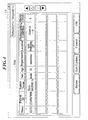
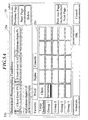
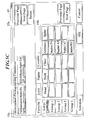
- FIGS. 9 to 11 are views showing exemplary structures of screens displayed on the controller 8 when editing the photographing conditions according to the first embodiment.
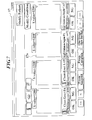
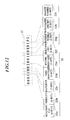
- FIG. 12 is a view showing a structure of classified codes which are attached to the photographing conditions.
- the maker master data which are predetermined by the maker is required to include all the photographing conditions.
- the photographing conditions are divided into a large number of pages, it is necessary to select the desired photographing condition from those included in the large number of pages. Therefore, the much time is required to select the desired photographing condition. Accordingly, in order to smoothly select the desired photographing conditions, there is a method of reducing the unnecessary photographing conditions, and reducing the number of photographing conditions.
- the user by himself must determine which photographing condition is necessary, and which photographing condition is unnecessary, it is preferable that the user by himself generates the user own master data.
- the consecutive number but the serial number which is composed of a plurality of classified codes determined in consideration with the characteristic of the radiation diagnosis is attached to each photographing condition.
- the editing operation of the photographing conditions such as the extracting operation, the searching operation, the rearranging operation or the like, by using the classified codes.
- the serial number 23 composed of a plurality of classified codes 22 such as a management flag 22a, a modality 22b, a reserve 22c, first and second body parts 22d and 22e, right and left 22f, a photographing technique 22g, a photographing direction 22h, a branch number 22i or the like, is provide for each photographing condition. Therefore, it is possible to classify the photographing conditions so as to coincide with the characteristic of the radiation diagnosis.
- the management flag 22a comprises a flag for indicating the version of the master code own or distinguishing the original from the copy, or the like.
- the modality 22b indicates the reading type including the erect, the supine, the cassette and so on.
- the first body part 22d and the second body part 22e are codes for classifying each photographing condition for every body part (the head, the chest, the abdomen, the neck, the hips, the spine, the lungs, the arm, the leg, or the like).
- the right and left 22f indicates the type such as a hand, a leg, a jaw, a left (L), a right (R) or the like.
- the photographing technique 22g is a code for indicating a photographing method such as a simple, a shading, a stress, a forward bending, a backward bending, or the like.
- the photographing direction 22h is a code for indicating a photographing direction including the AP, the PA, the frontal, the side, the RAO, the LAO, the RL, the LR and so on.
- the branch number 22i is a code for indicating a print format (1X1, 2X1, 1X2, or the like).
- the conventional photographing conditions are provided with the consecutive numbers respectively, or classified for every body part and provided with numbers, it is impossible to extract or search the photographing conditions according to the detailed photographing condition, or the photographing condition proper to the photographing, such as right and left, the photographing technique, the photographing direction or the like. As a result, it has been difficult to extract the desired photographing conditions from a large quantity of data.
- the photographing conditions are classified finely, according to the classified codes proper to the photographing conditions, it is possible to extract and search the photographing conditions variously, and to improve the convenience of the user extremely. Further, because the reserve other than the above-described classified codes is provided, it is possible to classify the photographing conditions according to the conditions proper to the user, and it is possible to meet the case a new photographing condition is added in the future.
- the classified codes 22 of the photographing conditions are not limited to the above-described structure.
- the classified codes 22 may have the structure including at least one classified code indicating the photographing conditions proper to the photographing, reflecting the characteristic of the radiation diagnosis, other than the body part to be photographed.
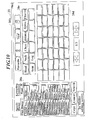
- FIG. 9 is a view showing an exemplary screen structure of a master editing screen 19 for generating a new master data for the user, by extracting the desired photographing conditions from the original master data or the master data generated by the user.
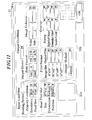
- FIG. 10 is a view showing an exemplary screen structure of a condition key editing screen 20 for editing the condition key by reviewing the content or the classification of the user master data generated on the master editing screen 19.
- FIG. 11 is a view showing an exemplary screen structure of a condition editing screen 21 for displaying and editing the detailed content of each photographing condition.
- the editing system for the photographing conditions consists of at least the above-described three types of screens.
- the master editing screen 19 shown in FIG. 9 is a screen for generating the photographing condition data (hereinafter, they will be called user master data.) which the user extracts from the original photographing condition data (hereinafter, they will be called maker master data.) provided by the maker.
- the master editing screen 19 includes an original data display area 19a for displaying the maker master data or the user master data which have been generated, to be copied, and a copy data display area 19b for displaying new user master data to be generated newly.
- Each of the original data display area 19a and the copy data display area 19b is provided with a scroll function, an extraction function (an extracting condition input area 19c), a search function (a "Search” button 19d), and a rearrangement function (a "Rearrange” button 19e), for displaying the desired photographing conditions.
- the image acquiring display apparatus extracts the desired photographing conditions from the maker master data, on the basis of the chest as the extracting condition. Then, when the photographing condition data are searched so that the first body part 22d of the classified codes 22 is a corresponding value (for example, "1") to the chest, the searched photographing condition is displayed on the original data display area 19a.
- the photographing conditions are classified finely, according to not only the body part (head/neck/chest/abdomen/spine/hips/arm/leg or the like), but also the modality 22b, the right and left 22f, the photographing technique 22g, the photographing direction 22h, the branch 22i or the like, in consideration of the characteristic of the radiation diagnosis, it is possible to extract the desired photographing conditions by using them as the extracting condition.
- the photographing conditions which meet the needs of the user such as photographing conditions used for the specific modality, photographing conditions for photographing according to the specific photographing technique, photographing conditions for photographing in the specific direction, photographing conditions for printing at the specific print format, or the like, according to the classifications inputted as the extracting condition, and further to select the desired photographing conditions easily.
- the user when the user makes the display 8d display the desired photographing conditions, by using the scroll function, the extraction function, the search function, or the rearrangement function, the user selects the photographing conditions by clicking with the mouse or moving the cursor, and moves the data from the original data display area 19a to the copy data display area 19b by dragging and dropping the selected photographing conditions. Therefore, the selected photographing conditions are displayed on the copy data display area 19b.
- the "Select All” button 19f it is possible to specify all the photographing condition data, specify the photographing condition data of the specific body part (head/neck/chest/abdomen/spine/hips/arm/leg or the like), or specify the range of the serial numbers of the photographing conditions.
- the "Copy All” button 19g it is possible to copy the specified photographing condition data at once. Therefore, it is possible to extract the desired photographing conditions by performing the above-described operations continuously.
- the photographing conditions are extracted by selecting the predetermined extracting condition in the extracting condition input area 19c of the copy data display area 19b, rearranged with the "Rearrange” button 19e, or the like. Accordingly, it is possible to confirm the selected photographing conditions. Thereafter, when the user touches the "Copy" button after finishing editing the photographing conditions, the user master data are stored in the storage 8c.
- the original data display are 19a and the copy data display area 19b are contrasted with each other and displayed, and each of them is provided with the scroll function, the extraction function, the search function, and the rearrangement function. Therefore, it is possible to edit the photographing conditions by dragging and dropping them. As a result, it is possible to extract the desired photographing conditions from many photographing conditions easily, and to generate the user master data peculiar to the user.
- the operator can review and modify the detailed content of each photographing condition displayed on the original data display area 19a or the copy data display area 19b.
- the operator selects and clicks each section of the photographing conditions.
- the condition editing screen 21 shown in FIG. 11 is displayed.
- the condition editing screen 21 includes an input condition area 21a and an output condition area 21b.
- the input condition area 21a is provided with areas displaying the type of the apparatus for reading image data, the primacy condition including the resolution (Low/Standard/High), the pixel size (Standard/Fine) and so on, the read pixel size including the size (8"X10"/10"X12"/11"X14"/14"X17"), the orientation (Portrait/Landscape), the position (Upper/Middle/Lower/Right/Left) and so on, and the read image.
- the output condition area 21b is provided with areas for determining the type of the printer to which the data are outputted, the print format (1on1/2on1/2on2), the output method (Actual/Part), various types of image enhance, the overlay display and so on.
- the photographing conditions of the registered user master data are displayed on the photographing condition selection screen 15. Therefore, because only the necessary and sufficient photographing conditions are displayed on the display, it becomes easy to select the photographing conditions.
- the number of photographing conditions of the user master data is smaller than the number of those of the maker master data, if the photographing conditions are only listed, it takes long time to select the photographing conditions. Further, some photographing conditions are used individually, and others are combined with each other and used as a set.
- the condition key editing screen 20 includes a master data display area 20a as well as the copy data display area 19b of the master editing screen 19, a modality classifying area 20b for selecting the modality, a body part classifying area 20c for selecting the body part such as the head, the neck, the chest, the abdomen, the spine, the hips, the arm, the leg or the like, and a condition display area 20d on which the photographing conditions of the selected classification are displayed.
- the specified master data are displayed on the master data display area 20a.
- the photographing conditions which meet the selected condition are displayed on the master data display area 20a.
- the photographing conditions corresponding to the classification are displayed on the condition display area 20d with reference to the classified codes 22.
- the user selects the photographing condition individually on the condition display area 20d and deletes the selected photographing condition from the classification, or drags and drops the desired photographing condition from the master data display area 20a to the condition display area 20d and registers it in the classification newly. Further, when the user selects a plurality of photographing conditions on the master data display area 20a and moves them to the condition display area 20b, it is possible to register the plurality of photographing conditions in the classification as a set condition.
- the user reviews and edits the detailed content of each photographing condition on the condition key editing screen 20.
- the user clicks each photographing condition on the master data display area 20a or the condition display area 20d. Thereby, because the condition editing screen 21 is displayed, it is possible to review and edit the detailed content of the photographing condition.
- a new user master data are generated from the maker master data or the user master data which have been generated, the classifications of the new user master data are modified, or the set of photographing conditions is registered in the new user master data, on the master editing screen 19, the condition key editing screen 20 or the condition editing screen 21.
- the photographing conditions classified so as to reflect the content of the user master data are displayed on the classified condition display area 15b of the photographing condition selection screen 15. As a result, it is possible to improve the convenience of the user.
- the serial number consisting a plurality of classified codes determined in consideration of the characteristic of the radiation diagnosis is attached to the photographing condition, it is possible to extract or search the photographing condition more highly and variously than the conventional.
- the editing screens shown in FIGS. 9 to 11 are provided, it is possible that the user who is inexperienced in the mechanical operation extracts the desired photographing conditions from a large number of photographing conditions, modifies the classifications of the photographing conditions, or registers a plurality of photographing conditions as a set of photographing conditions.
- the image acquiring display apparatus comprising the editing system for the photographing conditions, the method for editing the photographing conditions by using the apparatus, and a program for arranging the photographing conditions, according to the second embodiment of the present invention, will be explained with reference to FIGS. 13 and 14.
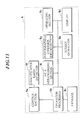
- FIG. 13 is a block diagram showing the structure of the controller 8 comprising the editing system for the photographing conditions according to the second embodiment.
- FIG. 14 is a view showing the structure of the classified codes 22 attached to each photographing condition.
- the second embodiment is characterized by the learning function provided for the photographing condition editing section 8g and the order of displaying photographing conditions, which is rearranged automatically.
- the structure and the operation of another part are the same as the first embodiment.
- the user generates the user master data by using the master editing screen 19, the condition key editing screen 20, the condition editing screen 21 or the like, by himself.
- some photographing conditions become used frequently, and others photographing conditions become hardly used, as the user photographs continuously, regardless of the user master data generated by the user.
- the controller 8 adjusts the structure or the displaying order of the photographing conditions automatically, with reference to the frequencies of selecting the photographing conditions.
- the controller 8 is provided with the controller 8a, the operation processor 8b, the storage 8c, the display 8d, the operating section 8e, the identification label detector 8f, the photographing condition editing section 8g, and the screen generator 8h, and further a data arrangement section 8i for rearranging the user master data with reference to the frequency of selecting each photographing section. Therefore, it is possible to renew the displaying order of the photographing conditions according to the frequency of selecting each photographing condition, as the occasion may demand, when generating the photographing condition selection screen 15.
- a frequency area 22j in which the numeral value corresponding to the frequency of selecting each photographing condition is written is provided for the reserve area of the classified codes 22 attached to each photographing condition.
- the date of selecting each photographing condition instead of the frequency of selecting the photographing condition, may be stored in a predetermined area of the classified codes 22. Thereby, it is possible to display the photographing conditions in new order of the date. Further, it is possible to display the body part which is frequently required to be photographed in an emergency, at the previous position, or to display the body part which is related to a plurality of doctors, radiologists or departments, at the previous position. In the case, the maker or the user may enters the numeral value in a predetermined area of the classified codes 22 of each photographing condition. Then, the order of displaying the photographing conditions may be determined with reference to the numeral value of each photographing condition when generating the photographing condition selection screen 15.
- a program for arranging the photographing conditions is loaded in and executed by the controller 8, the program for performing a processing of extracting the value of the predetermined classified code 22 from the serial number 23 of each photographing condition, a processing of adding the value of the predetermined code 22 of the photographing condition selected on the photographing condition selection screen 15, a processing of ordering a plurality of photographing conditions with reference to the predetermined classified codes 22, and a processing of determining the position of each photographing condition on the basis of the order.
- the present invention is not limited to the above-described embodiment.
- the present invention can be applied to an editing system, an editing method and an editing apparatus, for extracting suitable data for the state used by the user from an arbitrary data sequence, and generating a new data sequence.
- the image acquiring display apparatus comprising the editing system for photographing conditions, of the present invention, the method for editing photographing conditions by using the apparatus, and the program for arranging photographing conditions, the following effects will be indicated.
- a first effect of the present invention is that a user can edit user master data easily and certainly, by himself.
- photographing conditions can be extracted or searched by using not only the body part but also the photographing technique, the photographing direction or the like, because the serial number comprising a plurality of classified codes determined in consideration of the characteristic of the radiation diagnosis, is attached to each of the photographing conditions.
- desired photographing conditions can be displayed and edited by being dragged and dropped, because the master editing screen for generating the user master data from the maker master data, the condition key editing screen for reviewing or editing the classification of the user master data, or the condition editing screen for reviewing or editing each of the photographing conditions, is used as the editing screen, and each editing screen is provided with the extraction function, the search function and the rearrangement function.
- a second effect of the present invention is that the order of displaying the photographing conditions is automatically renewed according to the frequency of selecting each of the photographing conditions.
- the controller can perform the processing of extracting the value of the predetermined classified code of each photographing condition, the processing of rewriting the value of the classified code of the photographing condition selected, the processing of determining the order of displaying the photographing conditions on the basis of the value of the classified code of each photographing condition, and the processing of determining the position of displaying each photographing condition on the basis of the order, because the program for arranging photographing conditions is loaded in the controller comprising the editing system.
Landscapes
- Health & Medical Sciences (AREA)
- Engineering & Computer Science (AREA)
- Medical Informatics (AREA)
- Epidemiology (AREA)
- General Health & Medical Sciences (AREA)
- Primary Health Care (AREA)
- Public Health (AREA)
- Biomedical Technology (AREA)
- Radiology & Medical Imaging (AREA)
- Nuclear Medicine, Radiotherapy & Molecular Imaging (AREA)
- Business, Economics & Management (AREA)
- General Business, Economics & Management (AREA)
- Apparatus For Radiation Diagnosis (AREA)
- Medical Treatment And Welfare Office Work (AREA)
Abstract
Description
Claims (23)
- An image acquiring display apparatus comprising:a display for displaying at least a selection screen for selecting a photographing condition required for a patient from a plurality of photographing conditions, and a display screen for displaying image data read out of a radiographic image conversion medium having a radiographic image of the patient, recorded thereon; andan editing section for editing a plurality of photographing conditions to be displayed on the selection screen, of predetermined master data including a plurality of photographing conditions.
- The apparatus as claimed in claim 1, wherein a serial number is attached to each of the plurality of photographing conditions included in the master data, the serial number comprising a plurality of classified codes classifiable of each of the plurality of photographing conditions.
- The apparatus as claimed in claim 2, wherein a combination of at least two selected of at least a body part to be photographed, a modality, a photographing technique, a photographing direction and a print format, is used as the plurality of classified codes.
- The apparatus as claimed in any one of claims 1 and 2, wherein the editing section generates a first editing screen for extracting a plurality of photographing conditions required for a user, from the plurality of photographing conditions included in the master data, and generating user data peculiar to the user, a second editing screen for modifying or editing a classification of the user data generated, and a third editing screen for modifying or editing each of the plurality of photographing conditions included in the user data, and changes the first editing screen, the second editing screen and the third editing screen, with switches provided for the first editing screen, the second editing screen and the third editing screen, respectively.
- The apparatus as claimed in claim 3, wherein the editing section generates a first editing screen for extracting a plurality of photographing conditions required for a user, from the plurality of photographing conditions included in the master data, and generating user data peculiar to the user, a second editing screen for modifying or editing a classification of the user data generated, and a third editing screen for modifying or editing each of the plurality of photographing conditions included in the user data, and changes the first editing screen, the second editing screen and the third editing screen, with switches provided for the first editing screen, the second editing screen and the third editing screen, respectively.
- The apparatus as claimed in claim 5, wherein an original data display area on which the master data or the user data generated are displayed and a copy data display area on which the user data to be generated are displayed, are contrasted with each other and formed on the first editing screen,
each of the original data display area and the copy data display area is provided with an extracting section for extracting the photographing conditions on the basis of each of the classified codes, a searching section for searching the photographing conditions by using the serial number or the photographing conditions, and a rearranging section for rearranging the photographing conditions by using the serial number or the body part of each of the photographing conditions, and
the user data are generated by dragging, moving and dropping a predetermined photographing condition from the original data display area to the copy data display area. - The apparatus as claimed in claim 5, wherein a data display area on which the user data to be generated are displayed, a modality classifying area for specifying the modality of each of the photographing conditions, a body part classifying area for specifying the body part of each of the photographing conditions, and an individual display area on which a photographing condition to which the serial number comprising classified codes of the modality specified and the body part specified is attached, is displayed, are formed on the second editing screen,
the data display area is provided with an extracting section for extracting the photographing conditions on the basis of each of the classified codes, and a searching section for searching the photographing conditions by using the serial number or the photographing conditions, and
the classification of the user data is modified by dragging, moving and dropping a predetermined photographing condition from the data display area to the individual display area. - The apparatus as claimed in claim 7, wherein a plurality of photographing conditions selected on the data display area are moved to the individual display area, together, and registered in the user data, as a set of conditions.
- The apparatus as claimed in claim 5, wherein an input condition area on which a type of an apparatus for reading the image data, a reading condition and a read image are displayed, and an output condition area on which a type of an apparatus for outputting the image data, an output condition, an image processing condition and an output image are displayed, are formed on the third editing screen, and a photographing condition selected, is edited on the input condition area or the output condition area.
- The apparatus as claimed in claim 2, further comprising:an extracting section for extracting a predetermined classified code from the plurality of classified codes of the serial number, with reference to the serial number;a code determining section for determining a value of the predetermined classified code of each of the plurality of photographing conditions to be displayed on the selection screen, according to a frequency or a date of selecting each of the plurality of photographing conditions;an order determining section for determining an order of displaying the plurality of photographing conditions, with reference to the value of the predetermined classified code of each of the plurality of photographing conditions; anda position determining section for determining a position of displaying each of the plurality of photographing conditions on the selection screen, on the basis of the order.
- An apparatus for editing photographing conditions, comprising:an editing section for editing a plurality of photographing conditions required for a user, of predetermined master data including a plurality of photographing conditions required for a patient.
- A method for editing photographing conditions, comprising:displaying an editing screen for editing a plurality of photographing conditions required for a user, of predetermined master data including a plurality of photographing conditions required for a patient; andediting the plurality of photographing conditions required for the user, of the predetermined master data, on the editing screen.
- A method for editing photographing conditions, for an image acquiring display apparatus which displays at least a selection screen for selecting a photographing condition required for a patient from a plurality of photographing conditions, and a display screen for displaying image data read out of a radiographic image conversion medium having a radiographic image of the patient, recorded thereon, the method comprising:displaying an editing screen for editing a plurality of photographing conditions to be displayed on the selection screen, of predetermined master data including a plurality of photographing conditions; andediting a plurality of photographing conditions required for a user, of the predetermined master data, on the editing screen.
- The method as claimed in any one of claims 12 and 13, further comprising:attaching a serial number comprising a plurality of classified codes classifiable of each of the plurality of photographing conditions included in the master data, according to a characteristic of each of the plurality of photographing conditions, to each of the plurality of photographing conditions; andclassifying each of the plurality of photographing conditions according to the serial number.
- The method as claimed in claim 14, further comprising: using a combination of at least two selected of at least a body part to be photographed, a modality, a photographing technique, a photographing direction and a print format, as the plurality of classified codes.
- The method as claimed in any one of claims 12 to 14, further comprising:generating a first editing screen for extracting a plurality of photographing conditions required for the user, from the plurality of photographing conditions included in the master data, and generating user data peculiar to the user, a second editing screen for modifying or editing a classification of the user data generated, and a third editing screen for modifying or editing each of the plurality of photographing conditions included in the user data; andchanging the first editing screen, the second editing screen and the third editing screen, with switches provided for the first editing screen, the second editing screen and the third editing screen, respectively.
- The method as claimed in claim 15, further comprising:generating a first editing screen for extracting a plurality of photographing conditions required for the user, from the plurality of photographing conditions included in the master data, and generating user data peculiar to the user, a second editing screen for modifying or editing a classification of the user data generated, and a third editing screen for modifying or editing each of the plurality of photographing conditions included in the user data; andchanging the first editing screen, the second editing screen and the third editing screen, with switches provided for the first editing screen, the second editing screen and the third editing screen, respectively.
- The method as claimed in claim 17, further comprising:displaying an original data display area on which the master data or the user data generated are displayed and a copy data display area on which the user data to be generated are displayed, so as to be contrasted with each other, on the first editing screen;providing an extracting section for extracting the photographing conditions on the basis of each of the classified codes, a searching section for searching the photographing conditions by using the serial number or the photographing conditions, and a rearranging section for rearranging the photographing conditions by using the serial number or the body part of each of the photographing conditions, for each of the original data display area and the copy data display area; andgenerating the user data by dragging, moving and dropping a predetermined photographing condition from the original data display area to the copy data display area.
- The method as claimed in claim 17, further comprising:displaying a data display area on which the user data to be generated are displayed, a modality classifying area for specifying the modality of each of the photographing conditions, a body part classifying area for specifying the body part of each of the photographing conditions, and an individual display area on which a photographing condition to which the serial number comprising classified codes of the modality specified and the body part specified is attached, is displayed, on the second editing screen;providing an extracting section for extracting the photographing conditions on the basis of each of the classified codes, and a searching section for searching the photographing conditions by using the serial number or the photographing conditions, for the data display area; andmodifying the classification of the user data by dragging, moving and dropping a predetermined photographing condition from the data display area to the individual display area.
- The method as claimed in claim 19, further comprising: moving a plurality of photographing conditions selected on the data display area to the individual display area, together, and registering them in the user data, as a set of conditions.
- The method as claimed in claim 17, further comprising:displaying an input condition area on which a type of an apparatus for reading the image data, a reading condition and a read image are displayed, and an output condition area on which a type of an apparatus for outputting the image data, an output condition, an image processing condition and an output image are displayed, on the third editing screen; andediting a photographing condition selected, on the input condition area or the output condition area.
- A program for arranging photographing conditions, the program which makes an image acquiring display apparatus perform processing,
the image acquiring display apparatus comprising: a display for displaying at least a selection screen for selecting a photographing condition required for a patient from a plurality of photographing conditions, and a display screen for displaying image data read out of a radiographic image conversion medium having a radiographic image of the patient, recorded thereon; and an editing section for editing a plurality of photographing conditions to be displayed on the selection screen, of predetermined master data including a plurality of photographing conditions,
the processing comprising:extracting a predetermined classified code from a plurality of classified codes of a serial number attached to each of the plurality of photographing conditions included in the master data, with reference to the serial number;determining a value of the predetermined classified code of each of the plurality of photographing conditions to be displayed on the selection screen, according to a frequency or a date of selecting each of the plurality of photographing conditions;determining an order of displaying the plurality of photographing conditions, with reference to the value of the predetermined classified code of each of the plurality of photographing conditions; anddetermining a position of displaying each of the plurality of photographing conditions on the selection screen, on the basis of the order. - The program as claimed in claim 22, wherein a combination of at least two selected of at least a body part to be photographed, a modality, a photographing technique, a photographing direction and a print format, is used as the plurality of classified codes.
Applications Claiming Priority (2)
| Application Number | Priority Date | Filing Date | Title |
|---|---|---|---|
| JP2002018404 | 2002-01-28 | ||
| JP2002018404 | 2002-01-28 |
Publications (2)
| Publication Number | Publication Date |
|---|---|
| EP1349102A2 true EP1349102A2 (en) | 2003-10-01 |
| EP1349102A3 EP1349102A3 (en) | 2005-11-23 |
Family
ID=27606202
Family Applications (1)
| Application Number | Title | Priority Date | Filing Date |
|---|---|---|---|
| EP03250454A Withdrawn EP1349102A3 (en) | 2002-01-28 | 2003-01-24 | Image acquiring display apparatus, method and apparatus for editing photographing conditions, and program for arranging photographing conditions |
Country Status (3)
| Country | Link |
|---|---|
| US (1) | US7245749B2 (en) |
| EP (1) | EP1349102A3 (en) |
| JP (1) | JP4706941B2 (en) |
Families Citing this family (16)
| Publication number | Priority date | Publication date | Assignee | Title |
|---|---|---|---|---|
| DE10211950B4 (en) * | 2002-03-18 | 2006-01-26 | Siemens Ag | A medical planning facility that can be subdivided into a planning medical system and a medical planable medical system |
| DE10342015A1 (en) * | 2003-09-11 | 2005-04-28 | Siemens Ag | Method for postprocessing a medical image data record |
| US20060004283A1 (en) * | 2004-07-05 | 2006-01-05 | Naoto Moriyama | Medical image generating system and medical image generating method |
| EP1617344A1 (en) * | 2004-07-07 | 2006-01-18 | Canon Kabushiki Kaisha | Image management device and method for managing a plurality of images |
| DE102005036515B4 (en) * | 2005-08-03 | 2015-07-09 | Siemens Aktiengesellschaft | Method for planning a study in a magnetic resonance system |
| FR2903211B1 (en) * | 2006-06-30 | 2009-03-06 | Gen Electric | METHODS AND DEVICES FOR CORRECTING IMPLANT MAMMOGRAPHY AND SEGMENTING AN IMPLANT |
| JP5507221B2 (en) * | 2008-12-24 | 2014-05-28 | 富士フイルム株式会社 | Radiographic imaging system, processing apparatus, and radiographic imaging method |
| CN102292734B (en) | 2009-01-22 | 2015-11-25 | 皇家飞利浦电子股份有限公司 | Predict user interaction during image processing |
| JP2012011057A (en) * | 2010-07-02 | 2012-01-19 | Konica Minolta Medical & Graphic Inc | Radiation imaging system |
| CN102596027B (en) * | 2010-11-01 | 2014-08-27 | 株式会社东芝 | Magnetic Resonance Imaging Device And Magnetic Resonance Image Pickup Method |
| JP5573688B2 (en) * | 2011-01-13 | 2014-08-20 | 株式会社島津製作所 | Radiography equipment |
| JP5738000B2 (en) * | 2011-02-28 | 2015-06-17 | キヤノン株式会社 | Radiation imaging system, control method therefor, and program |
| JP6355317B2 (en) | 2013-10-30 | 2018-07-11 | キヤノン株式会社 | Imaging control apparatus, X-ray imaging apparatus, imaging control method, and program |
| EP3539476B1 (en) | 2014-10-17 | 2022-04-27 | Samsung Electronics Co., Ltd. | X-ray device for controlling an x-ray irradiation area using the same |
| JP6558916B2 (en) * | 2015-02-26 | 2019-08-14 | キヤノン株式会社 | Control device, control method and program |
| JP6651275B1 (en) * | 2019-08-01 | 2020-02-19 | 株式会社ディスコ | Processing equipment |
Family Cites Families (15)
| Publication number | Priority date | Publication date | Assignee | Title |
|---|---|---|---|---|
| US3859527A (en) | 1973-01-02 | 1975-01-07 | Eastman Kodak Co | Apparatus and method for producing images corresponding to patterns of high energy radiation |
| JPS5944339B2 (en) | 1978-07-12 | 1984-10-29 | 富士写真フイルム株式会社 | Radiographic image conversion method |
| JPS6266599A (en) * | 1985-09-18 | 1987-03-26 | Hitachi Medical Corp | Radioscopic photographing apparatus |
| JPH0823664B2 (en) * | 1988-03-31 | 1996-03-06 | 富士写真フイルム株式会社 | Radiation image reader |
| JPH04156671A (en) * | 1990-10-20 | 1992-05-29 | Fuji Photo Film Co Ltd | Id information registration device |
| JP3195612B2 (en) * | 1991-05-23 | 2001-08-06 | 三菱電機株式会社 | User interface system and user interface method |
| US5270530A (en) | 1992-11-24 | 1993-12-14 | Eastman Kodak Company | Digital radiographic image quality control workstation operable in manual or pass-through modes |
| JPH07275230A (en) * | 1994-04-04 | 1995-10-24 | G Ii Tanaka Medical Syst Kk | Anatomical program operation and device therefor |
| US5636259A (en) | 1995-05-18 | 1997-06-03 | Continental X-Ray Corporation | Universal radiographic/fluoroscopic digital room |
| JP3728019B2 (en) * | 1996-07-02 | 2005-12-21 | 株式会社日立メディコ | Medical diagnostic imaging equipment |
| JP3726406B2 (en) * | 1997-03-19 | 2005-12-14 | コニカミノルタホールディングス株式会社 | Radiation imaging system |
| JPH10277021A (en) * | 1997-04-10 | 1998-10-20 | Hitachi Medical Corp | X-ray radiographing managing system |
| US6275562B1 (en) | 1998-04-28 | 2001-08-14 | General Electric Company | Apparatus and methods for performing scalable multislice computed tomography scan |
| US6714623B2 (en) * | 1998-08-31 | 2004-03-30 | Canon Kabushiki Kaisha | Image collecting system |
| US6603494B1 (en) * | 1998-11-25 | 2003-08-05 | Ge Medical Systems Global Technology Company, Llc | Multiple modality interface for imaging systems including remote services over a network |
-
2003
- 2003-01-24 US US10/349,911 patent/US7245749B2/en not_active Expired - Lifetime
- 2003-01-24 EP EP03250454A patent/EP1349102A3/en not_active Withdrawn
-
2009
- 2009-07-09 JP JP2009163197A patent/JP4706941B2/en not_active Expired - Fee Related
Also Published As
| Publication number | Publication date |
|---|---|
| JP2009219935A (en) | 2009-10-01 |
| US7245749B2 (en) | 2007-07-17 |
| EP1349102A3 (en) | 2005-11-23 |
| JP4706941B2 (en) | 2011-06-22 |
| US20030142859A1 (en) | 2003-07-31 |
Similar Documents
| Publication | Publication Date | Title |
|---|---|---|
| JP4706941B2 (en) | Image acquisition / display apparatus and method for editing photographing conditions using the apparatus | |
| US7162068B2 (en) | Medical image displaying device, image obtaining and displaying device, method for displaying image in displaying device, and program for selecting display format | |
| US7505634B2 (en) | Radiographic image processing apparatus, radiographic image processing method, computer program, and recording medium therefor | |
| US9406120B2 (en) | Output device and method, suitable for use in diagnosis | |
| EP2008578A1 (en) | Medical image display device and program | |
| JP2004283325A (en) | Medical image processor, medical network system and program for medical image processor | |
| US20090175417A1 (en) | Medical information processing device | |
| JP2005296065A (en) | Medical image creating system and method, and display control program | |
| JP3788510B2 (en) | Medical image apparatus, display screen transition method and screen transition program in the apparatus | |
| JP4379569B2 (en) | Image acquisition / display apparatus and method for editing photographing conditions using the apparatus | |
| US20050227154A1 (en) | Image output controlling method and image output controlling program | |
| JP4744926B2 (en) | Medical image display device and medical image display method | |
| JP2008220482A (en) | Diagnosis support system | |
| JP2010264266A (en) | Medical image generation system and control device | |
| JP2002263088A (en) | Radiation imaging apparatus, imaging system, imaging processing method, and storage medium | |
| JP4032286B2 (en) | Medical image apparatus, display screen transition method and screen transition program in the apparatus | |
| JP2004305272A (en) | Medical image displaying method and medical image displaying system | |
| JP2002345800A (en) | Medical image processing device and medical network system | |
| JP2002281210A (en) | Medical image processor and medical network system | |
| JP2004290225A (en) | Medical image processor, medical network system and program for medical image processor | |
| JP2005296064A (en) | Control unit and display controlling program | |
| JPWO2009107644A1 (en) | MEDICAL IMAGE MANAGEMENT DEVICE, PRINT SCREEN DISPLAY METHOD, AND PROGRAM | |
| JP2004305387A (en) | Displaying method and medical image displaying device | |
| JP2004113444A (en) | Medical image processor | |
| JP2009207508A (en) | Medical image management device, output image display method and program |
Legal Events
| Date | Code | Title | Description |
|---|---|---|---|
| PUAI | Public reference made under article 153(3) epc to a published international application that has entered the european phase |
Free format text: ORIGINAL CODE: 0009012 |
|
| AK | Designated contracting states |
Kind code of ref document: A2 Designated state(s): AT BE BG CH CY CZ DE DK EE ES FI FR GB GR HU IE IT LI LU MC NL PT SE SI SK TR |
|
| AX | Request for extension of the european patent |
Extension state: AL LT LV MK RO |
|
| PUAL | Search report despatched |
Free format text: ORIGINAL CODE: 0009013 |
|
| AK | Designated contracting states |
Kind code of ref document: A3 Designated state(s): AT BE BG CH CY CZ DE DK EE ES FI FR GB GR HU IE IT LI LU MC NL PT SE SI SK TR |
|
| AX | Request for extension of the european patent |
Extension state: AL LT LV MK RO |
|
| RIC1 | Information provided on ipc code assigned before grant |
Ipc: 7G 06F 19/00 B Ipc: 7G 06T 11/00 A |
|
| 17P | Request for examination filed |
Effective date: 20060109 |
|
| AKX | Designation fees paid |
Designated state(s): DE FR GB |
|
| STAA | Information on the status of an ep patent application or granted ep patent |
Free format text: STATUS: THE APPLICATION HAS BEEN WITHDRAWN |
|
| 18W | Application withdrawn |
Effective date: 20070919 |