EP1349065A2 - Symmetrical multiprocessing in multiprocessor systems - Google Patents
Symmetrical multiprocessing in multiprocessor systems Download PDFInfo
- Publication number
- EP1349065A2 EP1349065A2 EP03006144A EP03006144A EP1349065A2 EP 1349065 A2 EP1349065 A2 EP 1349065A2 EP 03006144 A EP03006144 A EP 03006144A EP 03006144 A EP03006144 A EP 03006144A EP 1349065 A2 EP1349065 A2 EP 1349065A2
- Authority
- EP
- European Patent Office
- Prior art keywords
- processor
- data packet
- network interface
- scheduling
- step comprises
- Prior art date
- Legal status (The legal status is an assumption and is not a legal conclusion. Google has not performed a legal analysis and makes no representation as to the accuracy of the status listed.)
- Ceased
Links
Images





Classifications
-
- H—ELECTRICITY
- H04—ELECTRIC COMMUNICATION TECHNIQUE
- H04L—TRANSMISSION OF DIGITAL INFORMATION, e.g. TELEGRAPHIC COMMUNICATION
- H04L67/00—Network arrangements or protocols for supporting network services or applications
- H04L67/01—Protocols
- H04L67/10—Protocols in which an application is distributed across nodes in the network
- H04L67/1001—Protocols in which an application is distributed across nodes in the network for accessing one among a plurality of replicated servers
-
- H—ELECTRICITY
- H04—ELECTRIC COMMUNICATION TECHNIQUE
- H04L—TRANSMISSION OF DIGITAL INFORMATION, e.g. TELEGRAPHIC COMMUNICATION
- H04L67/00—Network arrangements or protocols for supporting network services or applications
- H04L67/01—Protocols
- H04L67/10—Protocols in which an application is distributed across nodes in the network
- H04L67/1001—Protocols in which an application is distributed across nodes in the network for accessing one among a plurality of replicated servers
- H04L67/10015—Access to distributed or replicated servers, e.g. using brokers
Definitions
- the present invention generally relates to the area of computer networks and implementation of symmetrical multiprocessing in multiprocessor systems. More particularly, the present invention is directed to systematically partitioning I/O tasks for network connections across processors in a multiprocessor system (and vice-versa).
- Today's traditional computer architectures enlist computer systems with multiple processors to perform receive-side processing of requests received across a network from remote clients.
- the requests are in the form of I/O tasks that are partitioned across multiple processors working in concert to execute the I/O tasks. Allowing multiple processors to simultaneously perform incoming I/O tasks provides an overall faster performance time for the computer system.
- One of the more challenging aspects of utilizing multiple processors is "scalability," that is, partitioning the I/O tasks for connections across processors in a way that optimizes each processor individually and collectively.
- a well-known computer hardware system for achieving scalability is a "symmetric multiprocessor" (SMP) system.
- An SMP system uses two or more identical processors that appear to the executing software to be a single processing unit.
- multiple processors in one system share a global memory and I/O subsystem including a network interface card commonly referred to as a "NIC.”
- NIC network interface card
- the NIC enables communication between a host computer and remote computers located on a network such as the Internet.
- NICs communicate with remote computers through the use of a network communications protocol, for example, TCP ("Transmission Control Protocol").
- TCP like other protocols, allows two computers to establish a connection and exchange streams of data. In particular, TCP guarantees lossless delivery of data packets sent by the remote computer to the host computer (and vice-versa).
- the remote computer After a network connection is established between a host computer and a remote computer, the remote computer sends a data stream to the host computer.
- the data stream itself may comprise multiple data packets and ultimately entail sending more than one data packet from the remote computer to the host computer.
- the NIC on the host computer receives a first data packet, the first data packet is stored in memory along with a packet descriptor that includes pointer information identifying the location of the data in memory. Thereafter, an interrupt is issued to one of the processors in the SMP system. As the interrupt service routine (ISR) runs, all further interrupts from the NIC are disabled and a deferred procedure call (DPC) is requested to run on the selected processor. Meanwhile, as more data packets are received by the NIC, the data packets are also stored in memory along with packet descriptors. No interrupts are generated, however, until the DPC for the first interrupt runs to completion.
- ISR interrupt service routine
- DPC deferred procedure call
- the data packet descriptors and associated data packets are pulled from memory to build an array of received packets.
- protocol receive-processing is invoked indirectly via calls to a device driver interface within the DPC routine.
- An exemplary interface is the Network Driver Interface Specification (NDIS), a Microsoft Windows device driver interface that enables a single NIC to support multiple network protocols.
- NDIS Network Driver Interface Specification
- NIC generates an interrupt to one of the processors in the multiprocessor system. Because only one DPC runs for any given NIC at any given time, when the scheduling processor is running a receive DPC other processors in the system are not conducting receive processing. This serialization problem limits scalabilty in the SMP system and degrades performance of the multiprocessor system.
- receive-side processing of data packets may occur on different processors under the above-described scheme.
- a processor processes data packets belonging to a particular network connection, the state for that network connection is modified. If data packets associated with this network connection were previously processed by a first processor, the network connection state resides in the first processor's cache. In order for a second processor to process packets related to a request previously processed by the first processor, the state is pulled from the first processor's cache to main memory, and the first processor's cache is invalidated. This process of copying the state and invalidating the cache results in performance degradation of the multiprocessor system.
- send and receive processing for the same network connection can occur simultaneously on different processors leading to contention and spinning that also causes performance degradation.
- the present invention comprises a new method and framework for implementing symmetrical multiprocessing in a multiprocessor system and increasing performance of the multiprocessor system. More particularly, the present invention systematically partitions I/O tasks for network connections across processors in the multiprocessor system so that each connection state lives on a single processor for its lifetime. This method and framework ensure that I/O tasks associated with a particular connection are processed by the same processor. In different embodiments of the invention, the new method is implemented in software and/or hardware of the multiprocessor system.
- a receive-side scheduling framework embodying the present invention includes a network interface card, memory and two or more processors, communicably coupled to each other to handle network connections and I/O tasks associated with the network connections.
- An example of such an I/O task is a data stream associated with the Transmission Control Protocol (also referred to as "TCP").
- TCP Transmission Control Protocol
- the data packets received by a NIC in the multiprocessor system are stored, along with a data packet descriptor, in memory.
- a scheduling processor in the multiprocessor system selected by a load-balancing algorithm, reads each data packet and applies a mapping algorithm to portions of the data packet yielding a map value.
- the map value determines which "selected processor" in the multiprocessor is scheduled to manage the data stream.
- the mapping algorithm is any acceptable algorithm, such as a hashing function, adopted by the system that ensures data packets received from the same network connection are routinely scheduled for processing by the same selected processor in the multiprocessor system.
- the scheduling processor then processes the data requests assigned to the scheduling processor itself. Thereafter, each of the other selected processors is requested to execute the data requests scheduled to that selected processor.
- data packets received by the NIC from a network connection are individually hashed, with the use of a hashing function, by the NIC.
- the hashing function yields a hash value that identifies which processor is selected to process the data packet.
- the hashing function is chosen such that the load is distributed optimally across the processors.
- the hash value is then stored along with a data packet descriptor and the data packet in memory.
- a scheduling processor selected by a load-balancing algorithm, then reads each data packet descriptor to ascertain the hashing value. With the use of a processor selection policy, each data packet is queued for processing by the selected processor.
- the data packets received by the NIC in the multiprocessor system are individually hashed by the NIC to determine the hash value identifying the selected processor scheduled to process the data packet.
- the hashing function is selected such that the load is distributed optimally across the processors.
- the NIC which maintains a processor queue for each processor in the system, then queues the packet descriptor to the appropriate processor queue based on the hash value. For those processors with non-empty processor queues, the NIC issues a request to the selected processor to process the contents of the processor queue.
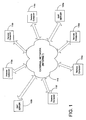
- a receive-side processing technique comprises communication system software executed within an SMP system computer operating environment such as the one depicted in FIG. 1 , and in particular one that is configured to support potentially hundreds of thousands of concurrent network connections and data streams.
- SMP system computer operating environment such as the one depicted in FIG. 1
- FIG. 1 illustratively depicts an example of a suitable operating environment within which the invention is implemented.
- the example network includes several remote computers 110a-f communicating with multiprocessor systems 100a-b over a network 115, represented as a cloud.
- Network 115 includes any of many well-known components, such as routers, gateways, hubs, etc. and allows remote computers 110a-f to communicate via wired and/or wireless media.
- the operating environment is only one example of a suitable operating environment and is not intended to suggest any limitation as to the scope of use or functionality of the invention.
- Examples of well known computing systems, environments, and/or configurations that are suitable for use with the invention include, but are not limited to, personal computers, server computers, hand-held or laptop devices, multiprocessor systems, microprocessor-based systems, set top boxes, programmable consumer electronics, network PCs, minicomputers, mainframe computers, distributed computing environments that include any of the above systems or devices, and the like, either alone or in combination.
- program modules include routines, programs, objects, components, data structures, etc. that perform particular tasks or implement particular abstract data types.
- the invention may also be practiced in distributed computing environments where tasks are performed by remote processing devices that are linked through a communications network.
- program modules may be located in both local and remote computer storage media including memory storage devices.
- Multiprocessor systems 100a-b comprise any appropriate multiprocessor computer or server capable of achieving scalability beyond a single processor.
- a suitable hardware structure for achieving scalability beyond a single processor is a "symmetric multiprocessor" (SMP) system.
- SMP symmetric multiprocessor
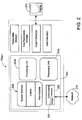
- SMP systems 100a-b include two or more processing units 250a-b, communication device(s) 225 and memory 240.
- the memory 240 may be volatile (such as RAM), non-volatile (such as ROM or flash memory) or some combination of the two.
- SMP systems 100a-b also contain communication device(s) 225 that allows the SMP systems 100a-b to communicate with other computers in the network.
- the communication device(s) include a network interface, such as a network interface card (NIC) 220, coupled to a network 215.
- NIC network interface card
- NICs are employed in alternative embodiments of the invention including, but not limited to, cards that support Ethernet (802.3), Token Ring (802.5), ARCNET 878.2, Wireless and ATM.
- Communication device(s) and media typically embody computer readable instructions, data structures, program modules or other data in a modulated data signal such as a carrier wave or other transport mechanism and includes any information delivery media.
- communication media includes wired media such as a wired network or direct-wired connection, and wireless media such as acoustic, RF, infrared and other wireless media.
- the term computer readable media as used herein includes both storage media and communication media. This most basic configuration is illustrated in FIG. 2 by dashed line 205.
- SMP systems 100a-b may also have additional features/functionality.
- SMP systems 100a-b may also include additional storage (removable and/or non-removable) including, but not limited to, magnetic or optical disks or tape.
- Computer storage media includes volatile and non-volatile, removable and non-removable media implemented in any method or technology for storage of information such as computer readable instructions, data structures, program modules, or other data.
- Computer storage media includes, but is not limited to, RAM, ROM, EEPROM, flash memory or other memory technology, CD-ROM, digital versatile disk (DVD) or other optical storage, magnetic cassettes, magnetic tape, magnetic disk storage or other magnetic storage devices, or any other medium which can be used to stored the desired information and which can be accessed by the SMP systems 100a-b. Any such computer storage media may be part of the SMP systems 100a-b. SMP systems 100a-b may also have input devices such as a keyboard, mouse, pen, voice input device, touch input device, etc. Output devices such as a display 270, speakers, a printer, etc. may also be included. All these devices are well known in the art and need not be discussed at length here.
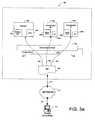
- FIG. 3a depicts an exemplary networked multiprocessor environment within which the present invention is practiced.
- a multiprocessor system 300 includes a network interface card (NIC) 320 connected via data links 312, 317 and network 315 to remote computer(s) 310.
- the NIC 320 connected to main memory 340 via data link 321 and to processors 350a, 350b via data links 322, 323. Communication between the NIC 320 and the main memory 340 and processors 350a, 350b is facilitated by an operating system 330.
- NIC network interface card
- NDIS Network Driver Interface Specification
- a device driver interface As is known in the art, NDIS 325 includes a miniport driver 327, a software module that manages the NIC 320 hardware interface including such operations as initializing the NIC 320, allocating memory and sending and receiving data through the NIC 320.
- TCP Transmission Control Protocol
- IPX/SPX IPX/SPX
- NetBEUI AppleTalk
- FIG. 3a after a network connection is established between the remote computer 310 and the multiprocessor system 300, packets of data are sent serially through the network 315 and received by the NIC 320.
- the data stream may entail the transmission of numerous data packets received by the NIC 320 at different intervals.
- the data packet contains information relating to the data stream such as the source port number, destination port number and specific data request.
- DMA Direct memory access
- a data packet descriptor including pointer information identifying the location of the data packet in memory pool 343, is stored in a memory array 345.
- an interrupt request is sent from the NIC 320 to a "scheduling processor," one of the processors 350a, 350b in the multiprocessor system 300 chosen through the use of a load-balancing algorithm for the purpose of handling original requests.
- the scheduling processor chosen by the load-balancing algorithm is the least busy processor in the multiprocessor system 300.
- the interrupt request rotates between the available processors on a round-robin basis or the NIC 320 could be affinitized to a certain processor in the system such that all interrupt requests from a certain network connection routinely proceed to the same processor.
- the load-balancing algorithm determines that processor 350a will be the scheduling processor.
- interrupt servicing typically consists of two driver-provided components: an "interrupt service routine” (ISR) and a “deferred procedure call” (DPC). Both the ISR and DPC use costly processor cycles that degrade performance of the system if not used economically. ISRs and DPCs are well known in the art and need not be discussed at length here.
- ISR interrupt service routine
- DPC deferred procedure call
- processor 350a As the DPC runs on processor 350a, both the packet descriptors from memory array 345 and the data packet from the memory pool 343 are read.
- Processor 350a by way of the miniport driver 327, then runs a mapping algorithm to determine which processor in the multiprocessor system 300 will process the data packet.
- the mapping algorithm is any acceptable algorithm, such as a hashing function, adopted by the system that ensures data packets received from the same network connection are routinely scheduled for processing by the same selected processor in the multiprocessor system.
- the hashing function 356a uses any part of the communication header, alone or in combination, as a method for determining a hash value.
- the hash value in conjunction with a processor selection policy, identifies which processor 350a or 350b (as shown in FIG. 3a ) in the multiprocessor system 300 is assigned the task of processing the data packet. Because each processor 350a, 350b in the multiprocessor system 300 uses the identical hashing function 356a, 356b, data packets associated with the same network connection are destined to be processed on the same selected processor given that the header information, upon which the hashing function operates, produces an identical hash value.
- This method of systematically partitioning data streams for connections across processors enables a connection state to live on a single processor for the lifetime of the connection which, in turn, enhances performance of the multiprocessor system.
- the scheduling processor 350a After determining the selected processor, the scheduling processor 350a builds an NDIS packet using the information in the data packet and data packet descriptor. The NDIS packet is then queued up on the selected processor by way of placing the NDIS packet in the selected processor's receive queue.
- each of the processors 350a, 350b has a receive queue 355a, 355b.
- all the packet descriptors and data packets are read respectively from the memory array 345 and the memory pool 343. As described above, the data is used to build NDIS packets that are queued individually to the selected processor as determined by the hashing function.
- the scheduling processor Upon completion of queuing the NDIS packets, the scheduling processor processes any NDIS packets that were queued for processing to the scheduling processor. This is intended to assist in interrupt moderation. Thereafter, the scheduling processor requests a DPC for each of the other processors in the system that have non-empty receive queues. With reference to FIG. 3a, processor 350a processes all NDIS packets in the receive queue 355a. Processor 350a then requests a DPC on processor 350b if the receive queue 355b is non-empty.
- the process of applying the hashing function to the data packets to determine a hash value is performed at different steps in the method and by different framework components according to the various embodiments of the invention.
- the NIC 320 includes a hashing function 328 that is applied to the protocol headers of the data packet yielding a hash value.
- the hash value 345b is stored in the memory array 345 as part of the packet descriptor 345a. This embodiment of the invention enhances performance by enabling the scheduling processor running the DPC to build the NDIS packet by reading only the packet descriptor 345a that includes the hash value 345b and not the actual data packet.
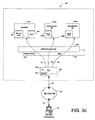
- the NIC 320 maintains descriptor queues 329 for each processor in the multiprocessor system 300. After applying the hashing function 328 to the data packet to determine the hash value, the NIC 320 populates the appropriate descriptor queue 329 with NDIS packets. After hashing of the data packets is complete, the NIC generates an interrupt. As the ISR runs, a DPC request is issued to each selected processor for which the associated descriptor queue is non-empty. This embodiment further enhances performance of the system by providing selected processors with necessary information by way of the receive queue, skipping the steps of writing and reading the packet descriptors to and from memory.
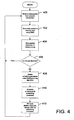
- FIG. 4 depicts a set of steps performed by the network interface card to schedule receive-side processing of data packets in the multiprocessor system.
- the steps described herein below are exemplary. As those skilled in the art will readily appreciate, the present invention can be carried out in a variety of manners and the steps described herein below can be rearranged and modified in accordance with alternative embodiments of the present invention.
- the procedure begins at step 400 where the NIC 320 receives a data packet from a remote computer 310.
- the data packet includes data such as a source port address, a destination port address and other data related specifically to the request.
- the data packet is stored using DMA in the pre-allocated memory pool 343 depicted in FIG. 3a .
- a packet descriptor is stored in the memory array 345.
- a determination is made whether to generate an interrupt. If the interrupt is disabled, the method returns to step 400 to receive additional data packets and begin the process of storing them. If the interrupt is not disabled, at step 408 a load-balancing algorithm selects a scheduling processor to handle the original requests.
- the load-balancing algorithm is any acceptable load-balancing algorithm adopted by the network interface card.
- the scheduling processor selected is the least busy processor in the multiprocessor system 300.
- the scheduling processor rotates between the available processors on a round-robin basis.
- an interrupt is generated by the NIC 320 to the scheduling processor.
- an ISR runs disabling all further interrupts from the NIC 320 and requesting a DPC on the scheduling processor.
- the procedure returns to step 400 where the NIC 320 continues to receive data packets from the network 315.
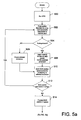
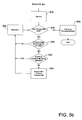
- FIGS. 5a-b depict a set of steps performed by the scheduling processor after the NIC 320 requests a DPC.
- the steps described herein below are exemplary.
- the procedure begins at step 500 in FIG. 5a wherein the scheduling processor runs the DPC previously requested in step 412.
- the scheduling processor reads both the packet descriptor from the memory array 345 and the data packet from the memory pool 343.
- the procedure determines whether the data packet is of the type that should be scaled across the processors 350a, 350b. If the data packet should be scaled, in step 506, a hashing function is applied to the protocol headers of the data packet yielding a hash value.
- the hash value identifies a selected processor in the system.
- An exemplary processor selection policy includes any acceptable manner of cross-referencing the hash value to a processor in the multiprocessor system, including a processor identification table.
- step 508 the selected processor is chosen based on other load-balancing criteria.
- step 510 the procedure builds an NDIS packet using information in the data packet descriptor, and the NDIS packet is then queued up on the selected processor previously identified in either step 506 or 508. Queuing up an NDIS packet entails placing the NDIS packet in the receive queue associated with the selected processor. Thereafter, in step 512, the procedure determines whether any additional packet descriptors remain in the memory array 345. If yes, the procedure returns to step 502 where the process of reading the packet descriptor and data packet continues.
- step 514 the scheduling processor processes all NDIS packets queued to the scheduling processor in the previous steps.
- the procedure next begins the process of requesting DPCs on all other selected processors in the multiprocessor system 300 that have non-empty receive queues.
- step 516 a counter N is set to zero.
- step 518 a determination is made whether processor #N exists in the multiprocessor system 330. If no, indicating that all processors have been evaluated by the procedure, the procedure continues to step 528 where the DPC for the scheduling processor concludes and interrupts on the NIC 320 are re-enabled.
- step 520 a determination is made whether the receive queue for processor #N is non-empty. If the receive queue is empty, the procedure continues to step 526 where counter N is incremented by 1, and then on to step 518 again. If the receive queue is non-empty, indicating that NDIS packet(s) have been queued to processor #N, at step 522 a determination is made whether the DPC for processor #N has already been requested to run. If yes, the procedure continues to step 526 where counter N is incremented by 1, and then on to step 518 again. If the DPC for processor #N has not already been requested, the procedure at step 524 requests the DPC to run on processor #N and then continues to step 526 where counter N is incremented. The procedure continues incrementing N until all processors in the multiprocessor system 330 are evaluated.
- FIG. 6 depicts a set of steps performed by each of the selected processors having the DPC request.
- the steps described herein below are exemplary.
- the procedure begins at step 600 in FIG. 6, wherein the procedure runs the DPC at the selected processor.
- the procedure reads the NDIS packets from the receive queue.
- the NDIS packets are processed by the selected processor.
- the DPC ends.
- FIG. 7 depicts an alternative set of steps performed by the network interface card to schedule receive-side processing of data packets in the multiprocessor system.
- the steps described herein below are exemplary.
- the procedure begins at step 700 where the NIC 320 receives a data packet from a remote computer 310.
- a hashing function is applied to the protocol headers of the data packet yielding a hash value that identifies the selected processor.
- the data packet is stored using DMA in the pre-allocated memory pool 343 depicted in FIG. 3b.
- a packet descriptor including the hash value is stored in the memory array 345.
- a determination is made whether to generate an interrupt.
- a load-balancing algorithm selects a scheduling processor that will schedule processing of the data packets.
- the load-balancing algorithm is any acceptable load-balancing algorithm adopted by the network interface card.
- the scheduling processor selected is the least busy processor in the multiprocessor system 300.
- the scheduling processor is selected in a round-robin method from amongst the available processors.
- step 714 the ISR runs disabling all further interrupts from the NIC 320 and requesting a DPC on the scheduling processor. Thereafter, the procedure returns to step 700 where the NIC 320 continues to receive data packets from the network 315.
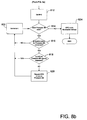
- FIGS. 8a-b depict a set of steps performed by the scheduling processor after the NIC 320 requests a DPC in step 714.
- the steps described herein below are exemplary.
- the procedure begins at step 800 in FIG. 8a wherein the scheduling processor runs the DPC previously requested in step 714.
- the scheduling processor reads the packet descriptor from the memory array 345.
- the procedure identifies the hash value stored previously as part of the retrieved packet descriptor. Because the hash value is readily available, there is no need for the procedure to retrieve the actual data packet from the memory pool 343, thus, decreasing processor cycles and improving processor cache locality resulting in overall increased performance of the system.
- step 806 the procedure builds the NDIS packet using the information from the data packet descriptor, and the NDIS packet is then queued up on the selected processor identified by the hash value and the processor selection policy. Queuing up an NDIS packet entails placing the NDIS packet in the receive queue belonging to the selected processor. Thereafter, in step 808, the procedure determines whether any additional packet descriptors remain in the memory array 345. If yes, the procedure returns to step 802 where the process of reading the packet descriptors continues.
- step 810 the scheduling processor processes all NDIS packets queued to the scheduling processor in the previous steps.
- the procedure next begins the process of requesting DPCs on all other selected processors in the multiprocessor system 300 that have non-empty receive queues.
- step 812 a counter N is set to zero.
- step 814 a determination is made whether processor #N exists in the multiprocessor system 330. If processor #N does not exist, indicating that all processors have been evaluated, the procedure continues to step 824 where the DPC for the scheduling processor concludes and interrupts on the NIC 320 are re-enabled.
- step 816 a determination is made whether the receive queue for processor #N is non-empty. If the receive queue is empty, the procedure continues to step 822 where counter N is incremented by 1, and then on to step 814 again. If the receive queue is non-empty, indicating that NDIS packet(s) have been queued to processor #N, at step 818 a determination is made whether the DPC for processor #N has already been requested. If yes, the procedure continues to step 822 where counter N is incremented by 1, and then on to step 814 again. If the DPC for processor #N has not already be requested, the procedure at step 820 requests the DPC to run on processor #N and then continues to step 822 where counter N is incremented. The procedure continues incrementing N until all processors in the multiprocessor system 330 are evaluated.
- the selected processors in the alternative embodiment of the present invention depicted in FIGS. 7, 8a and 8b follow the same steps outlined in and described above in conjunction with FIG. 6.
- the steps described therein are exemplary.
- the procedure begins at step 600 in FIG. 6, wherein the procedure runs the DPC at the selected processor.
- the procedure reads the NDIS packets from the receive queue.
- the NDIS packets are processed by the selected processor. After all NDIS packets are processed, at step 606 the DPC ends.
- FIG. 9 depicts another alternative set of steps performed by the network interface card to schedule receive-side processing of data packets in the multiprocessor system.
- the steps described herein below are exemplary.
- the procedure begins at step 900 where the NIC 320 receives a data packet from a remote computer 310.
- a hashing function is applied to the protocol headers of the data packet yielding a hash value that, in conjunction with the processor selection policy, identifies the selected processor.
- the data packet is stored using DMA in the pre-allocated memory pool 343 depicted in FIG. 3c .
- a packet descriptor including the hash value is stored in a descriptor queue 329 located at the NIC 320.
- the NIC 320 maintains a descriptor queue for each of the processors in the multiprocessor system 300. Each descriptor queue holds all packet descriptors scheduled to be processed by the selected processor.
- step 908 a determination is made whether the end of the data stream has occurred. If the data stream has not ended, the procedure returns to step 900 to receive additional data packets and begin the process of hashing and storing the data packets. If the data stream has ended, at step 910 a counter N is set to zero. At step 912, a determination is made whether processor #N exists in the multiprocessor system 330. If no, indicating that all processors have been evaluated by the procedure, the procedure returns to step 900 where additional data packets are received by the NIC 320. If processor #N does exist, the procedure continues to step 914 where a determination is made whether the descriptor queue for processor #N is non-empty.
- step 920 counter N is incremented by 1, and then on to step 912 again. If the descriptor queue is non-empty, indicating that packet descriptors have been scheduled for processor #N, at step 916 a determination is made whether the DPC for processor #N has already been requested to run. If yes, the procedure continues to step 920 where counter N is incremented by 1, and then on to step 518 again. If the DPC for processor #N has not already be requested, the procedure at step 918 queues the contents of the descriptor queue to the receive queue and requests a DPC to run on processor #N. Next, the procedure continues to step 920 where counter N is incremented. The procedure continues incrementing N until all descriptor queues maintained by the NIC 320 are evaluated.
- FIG. 10 depicts a set of steps performed by each of the selected processors requested to run the DPC in step 918 depicted in FIG. 9.
- the steps described herein below are exemplary.
- the procedure begins at step 1000 in FIG. 10, wherein the procedure runs the DPC at the selected processor.
- the procedure reads the packet descriptors from the receive queue.
- the procedure builds the NDIS packets using the packet descriptors queued by the NIC 320.
- the NDIS packets are processed by the selected processor. After all NDIS packets are processed by the selected processor, at step 1008 the DPC ends.
Landscapes
- Engineering & Computer Science (AREA)
- Computer Networks & Wireless Communication (AREA)
- Signal Processing (AREA)
- Data Exchanges In Wide-Area Networks (AREA)
- Multi Processors (AREA)
Abstract
Description
Claims (32)
- A method for scheduling receive-side processing of data packets in a multiprocessor computer system comprising a network interface communicably coupled to a network to receive data streams, memory and at least two local processors, the method comprising the steps of:establishing a network connection between a remote requesting client and the multiprocessor computer system;receiving a data packet from the remote requesting client over the network connection;first applying a mapping algorithm to the data packet, the mapping algorithm yielding a map value;second applying the map value to a processor selection policy to identify the local processor as a selected processor to perform receive-side processing of the data packet;directing the received data packet to the selected processor; andprocessing the data packet.
- The method of claim 1 wherein the receiving step comprises receiving, by the network interface, the data packet from the network and storing the data packet and a data packet descriptor in memory.
- The method of claim 2 wherein the receiving step further comprises selecting, by the network interface, a scheduling processor and sending a message to the scheduling processor requesting handling of the data packet.
- The method of claim 3 wherein the selecting step comprises utilizing, by the network interface, a load-balancing algorithm to select the scheduling processor.
- The method of claim 4 wherein the load-balancing algorithm determines the least active processor in the multiprocessor system.
- The method of claim 3 wherein the first applying step comprises reading, by the scheduling processor, the data packet descriptor and the data packet from memory and applying the mapping algorithm to the data packet yielding the map value.
- The method of claim 6 wherein the second applying step comprises utilizing, by the scheduling processor, a map table to resolve the selected processor.
- The method of claim 6 wherein the directing step comprises:queuing, by the scheduling processor, the data packet to run on the selected processor; andsending, by the scheduling processor, a message to the selected processor requesting processing of the data packet.
- The method of claim 8 wherein the queuing step comprises building an NDIS data packet and placing the NDIS data packet in a receive queue belonging to the selected processor.
- The method of claim 8 wherein the processing step comprises:processing, by the selected processor, the data packet queued to the selected processor.
- The method of claim 1 wherein the first applying step comprises:applying, by the network interface, the mapping algorithm to the data packet yielding a map value; andstoring, by the network interface, the data packet in memory.
- The method of claim 11 wherein the second applying step comprises:utilizing, by the network interface, a map table to resolve the selected processor; andstoring a data packet descriptor including the map value in memory.
- The method of claim 12 wherein the directing step comprises:selecting, by the network interface, a scheduling processor; andsending, by the network interface, a message to the scheduling processor requesting handling of the data packet.
- The method of claim 13 wherein the selecting step comprises utilizing, by the network interface, a load-balancing algorithm to select the scheduling processor.
- The method of claim 13 wherein the directing step comprises:reading, by the scheduling processor, the data packet descriptor from memory;queuing, by the scheduling processor, the data packet to run on the selected processor; andsending, by the scheduling processor, a message to the selected processor requesting processing of the data packet.
- The method of claim 15 wherein the reading step comprises reading the map value from the data packet descriptor.
- The method of claim 15 wherein the queuing step comprises building an NDIS data packet and placing the NDIS data packet in a receive queue belonging to the selected processor.
- The method of claim 15 wherein the processing step comprises processing, by the selected processor, the data packet queued to the selected processor.
- The method of claim 1 wherein the network interface further comprises a processor queue for each processor in the multiprocessor computer system, wherein the first applying step comprises:applying, by the network interface, the mapping algorithm to the data packet yielding a map value that identifies the selected processor; andstoring, by the network interface, the data packet in memory.
- The method of claim 19 wherein the second applying step comprises utilizing, by the network interface, a map table to resolve the selected processor and the selected processor queue.
- The method of claim 20 wherein the second applying step further comprises storing, by the network interface, a data packet descriptor in the selected processor queue.
- The method of claim 21 wherein the directing step comprises:queuing, by the network interface, contents of the selected processor queue to run on the selected processor; andsending, by the network interface, a message to the selected processor requesting handling of the contents of the selected processor queue.
- The method of claim 22 wherein the processing step comprises processing, by the selected processor, the contents of the selected processor queue.
- The method of claim 1 wherein the establishing step comprises identifying a type of network connection initiated by the remote requesting client.
- The method of claim 24 wherein the network connection is a TCP connection.
- The method of claim 1 wherein the mapping algorithm is a hashing function.
- The method of claim 26 wherein the map value is a hash value.
- A computer-readable medium having computer-executable instructions for facilitating scheduling receive-side processing of data packets in a multiprocessor system computer comprising a network interface communicably coupled to a network to receive data streams, memory and at least two local processors, the computer-readable medium having computer-executable instructions facilitating performing the steps of:establishing a network connection between a remote requesting client and the multiprocessor computer system;receiving a data packet from the network;first applying a mapping algorithm to the data packet, the mapping algorithm yielding a map value;second applying the map value to a processor selection policy to identify the local processor as a selected processor to perform receive-side processing of the data packet;directing the received data packet to the selected processor; andprocessing the data packet.
- A framework for scheduling receive-side processing of data packets in a multiprocessor system computer comprising a network interface communicably coupled to a network to receive data streams, memory and at least two processors, the framework comprising:a connection manager that manages a network connection between a remote requesting client and the multiprocessor computer system;a data stream handler that manages a data packet received by the network interface;a mapping algorithm;a local processor selection policy including policy rules for utilizing the results of applying the mapping algorithm to a portion of the data packet to identify a local processor; anda procedure call for invoking processing of the data packet by the local processor identified by the local processor selection policy.
- The framework of claim 29 wherein the mapping algorithm is a hashing function.
- A method for scheduling receive-side processing of data packets in a multiprocessor system computer comprising a network interface communicably coupled to a network to receive data streams, memory and at least two local processors, the method comprising the steps of:issuing, by the network interface, a select local processor request call having a plurality of call parameters comprising a data packet header and a local processor selection policy; andreceiving, by the network interface, a select local processor request response having a plurality of response parameters comprising a local processor ID.
- The method of claim 31 wherein the step of issuing the select local processor request call the call parameters further comprise a hashing function.
Applications Claiming Priority (2)
| Application Number | Priority Date | Filing Date | Title |
|---|---|---|---|
| US10/112,812 US7219121B2 (en) | 2002-03-29 | 2002-03-29 | Symmetrical multiprocessing in multiprocessor systems |
| US112812 | 2002-03-29 |
Publications (2)
| Publication Number | Publication Date |
|---|---|
| EP1349065A2 true EP1349065A2 (en) | 2003-10-01 |
| EP1349065A3 EP1349065A3 (en) | 2007-01-03 |
Family
ID=27804438
Family Applications (1)
| Application Number | Title | Priority Date | Filing Date |
|---|---|---|---|
| EP03006144A Ceased EP1349065A3 (en) | 2002-03-29 | 2003-03-18 | Symmetrical multiprocessing in multiprocessor systems |
Country Status (2)
| Country | Link |
|---|---|
| US (1) | US7219121B2 (en) |
| EP (1) | EP1349065A3 (en) |
Cited By (1)
| Publication number | Priority date | Publication date | Assignee | Title |
|---|---|---|---|---|
| WO2006117013A1 (en) * | 2005-05-04 | 2006-11-09 | Telecom Italia S.P.A. | Method and system for processing packet flows, and computer program product therefor |
Families Citing this family (45)
| Publication number | Priority date | Publication date | Assignee | Title |
|---|---|---|---|---|
| US6537993B2 (en) * | 2000-03-30 | 2003-03-25 | Penn State Research Foundation | Compounds for enhancing chemotherapy |
| EP1518368B1 (en) * | 2002-06-28 | 2009-07-29 | Nokia Corporation | Load balancing device and method therefor |
| KR100489685B1 (en) * | 2003-02-20 | 2005-05-17 | 삼성전자주식회사 | Apparatus for transmitting packet between packet controller and network processor and method thereof |
| US7543306B2 (en) * | 2003-07-02 | 2009-06-02 | Intel Corporation | Method, system, and program for handling device interrupts in a multi-processor environment |
| US20050100042A1 (en) * | 2003-11-12 | 2005-05-12 | Illikkal Rameshkumar G. | Method and system to pre-fetch a protocol control block for network packet processing |
| US7340547B1 (en) * | 2003-12-02 | 2008-03-04 | Nvidia Corporation | Servicing of multiple interrupts using a deferred procedure call in a multiprocessor system |
| US7590743B2 (en) * | 2003-12-23 | 2009-09-15 | Softricity, Inc. | Method and system for associating a process on a multi-user device with a host address unique to a user session associated with the process |
| WO2005074397A2 (en) * | 2004-02-05 | 2005-08-18 | Kings Information & Network | Computer security apparatus and method using security input device driver |
| GB0404696D0 (en) | 2004-03-02 | 2004-04-07 | Level 5 Networks Ltd | Dual driver interface |
| US20050228851A1 (en) * | 2004-03-29 | 2005-10-13 | Intel Corporation | Configuration of redirection tables |
| US7764709B2 (en) * | 2004-07-07 | 2010-07-27 | Tran Hieu T | Prioritization of network traffic |
| US7937499B1 (en) * | 2004-07-09 | 2011-05-03 | Oracle America, Inc. | Methods and apparatus for dynamically switching between polling and interrupt mode for a ring buffer of a network interface card |
| US8353003B2 (en) * | 2004-10-01 | 2013-01-08 | Exelis Inc. | System and method for controlling a flow of data a network interface controller to a host processor |
| US20060174343A1 (en) * | 2004-11-30 | 2006-08-03 | Sensory Networks, Inc. | Apparatus and method for acceleration of security applications through pre-filtering |
| US7765405B2 (en) * | 2005-02-25 | 2010-07-27 | Microsoft Corporation | Receive side scaling with cryptographically secure hashing |
| US20060227788A1 (en) * | 2005-03-29 | 2006-10-12 | Avigdor Eldar | Managing queues of packets |
| US8631483B2 (en) * | 2005-06-14 | 2014-01-14 | Texas Instruments Incorporated | Packet processors and packet filter processes, circuits, devices, and systems |
| US20070005742A1 (en) * | 2005-06-30 | 2007-01-04 | Avigdor Eldar | Efficient network communications via directed processor interrupts |
| US8660137B2 (en) * | 2005-09-29 | 2014-02-25 | Broadcom Israel Research, Ltd. | Method and system for quality of service and congestion management for converged network interface devices |
| US20070121662A1 (en) * | 2005-11-30 | 2007-05-31 | Christopher Leech | Network performance scaling |
| US7610330B1 (en) * | 2006-03-30 | 2009-10-27 | Packeteer, Inc. | Multi-dimensional computation distribution in a packet processing device having multiple processing architecture |
| US7787453B2 (en) * | 2006-08-03 | 2010-08-31 | Broadcom Corporation | Network interface controller with receive side scaling and quality of service |
| US20080086575A1 (en) * | 2006-10-06 | 2008-04-10 | Annie Foong | Network interface techniques |
| US8402172B2 (en) * | 2006-12-22 | 2013-03-19 | Hewlett-Packard Development Company, L.P. | Processing an input/output request on a multiprocessor system |
| WO2008098070A1 (en) | 2007-02-06 | 2008-08-14 | Mba Sciences, Inc. | A resource tracking method and apparatus |
| WO2008118522A1 (en) * | 2007-03-23 | 2008-10-02 | Bigfoot Networks, Inc. | Distributed processing system and method |
| US20090006521A1 (en) * | 2007-06-29 | 2009-01-01 | Veal Bryan E | Adaptive receive side scaling |
| US8321579B2 (en) * | 2007-07-26 | 2012-11-27 | International Business Machines Corporation | System and method for analyzing streams and counting stream items on multi-core processors |
| GB0723422D0 (en) | 2007-11-29 | 2008-01-09 | Level 5 Networks Inc | Virtualised receive side scaling |
| GB0802126D0 (en) * | 2008-02-05 | 2008-03-12 | Level 5 Networks Inc | Scalable sockets |
| US7996548B2 (en) | 2008-12-30 | 2011-08-09 | Intel Corporation | Message communication techniques |
| US8645596B2 (en) * | 2008-12-30 | 2014-02-04 | Intel Corporation | Interrupt techniques |
| US20110113218A1 (en) * | 2009-11-09 | 2011-05-12 | Electronics And Telecommunications Research Institute | Cross flow parallel processing method and system |
| US9411647B2 (en) * | 2010-01-22 | 2016-08-09 | Qualcomm Incorporated | Hierarchical routing and interface selection for multi-processor multimode network devices |
| US8984526B2 (en) | 2012-03-09 | 2015-03-17 | Microsoft Technology Licensing, Llc | Dynamic processor mapping for virtual machine network traffic queues |
| US9299434B2 (en) * | 2014-01-09 | 2016-03-29 | Netronome Systems, Inc. | Dedicated egress fast path for non-matching packets in an OpenFlow switch |
| KR20160054850A (en) * | 2014-11-07 | 2016-05-17 | 삼성전자주식회사 | Apparatus and method for operating processors |
| US10078576B2 (en) | 2016-03-29 | 2018-09-18 | International Business Machines Corporation | Remotely debugging an operating system |
| US10394679B2 (en) * | 2016-04-29 | 2019-08-27 | Nicira, Inc. | Locality-aware scheduling for NIC teaming |
| US12323750B2 (en) | 2019-11-05 | 2025-06-03 | Mellanox Technologies, Ltd | Distributed optical circuit allocation in optical data-center networks (ODCN) |
| US11368768B2 (en) * | 2019-12-05 | 2022-06-21 | Mellanox Technologies, Ltd. | Optical network system |
| CN111176851A (en) * | 2020-01-09 | 2020-05-19 | 国网福建省电力有限公司 | A method and system for analyzing user data on the electricity sales side |
| US11928502B2 (en) | 2021-04-29 | 2024-03-12 | VMware LLC | Optimized networking thread assignment |
| US20240078185A1 (en) * | 2022-09-07 | 2024-03-07 | Mellanox Technologies, Ltd. | Using parallel processor(s) to process packets in real-time |
| CN120342852B (en) * | 2025-06-19 | 2025-09-05 | 济南浪潮数据技术有限公司 | Network card fault switching method and device, electronic equipment, storage medium and product |
Family Cites Families (32)
| Publication number | Priority date | Publication date | Assignee | Title |
|---|---|---|---|---|
| US5655103A (en) | 1995-02-13 | 1997-08-05 | International Business Machines Corporation | System and method for handling stale data in a multiprocessor system |
| US6179489B1 (en) * | 1997-04-04 | 2001-01-30 | Texas Instruments Incorporated | Devices, methods, systems and software products for coordination of computer main microprocessor and second microprocessor coupled thereto |
| US5872972A (en) * | 1996-07-05 | 1999-02-16 | Ncr Corporation | Method for load balancing a per processor affinity scheduler wherein processes are strictly affinitized to processors and the migration of a process from an affinitized processor to another available processor is limited |
| US6470389B1 (en) * | 1997-03-14 | 2002-10-22 | Lucent Technologies Inc. | Hosting a network service on a cluster of servers using a single-address image |
| US6052733A (en) * | 1997-05-13 | 2000-04-18 | 3Com Corporation | Method of detecting errors in a network |
| US5966543A (en) | 1997-06-26 | 1999-10-12 | International Business Machines Corporation | Method of using collaborative spinlocks to provide exclusive access to a resource in a multiprocessor computer system |
| US6687758B2 (en) * | 2001-03-07 | 2004-02-03 | Alacritech, Inc. | Port aggregation for network connections that are offloaded to network interface devices |
| US6038651A (en) | 1998-03-23 | 2000-03-14 | International Business Machines Corporation | SMP clusters with remote resource managers for distributing work to other clusters while reducing bus traffic to a minimum |
| US6230151B1 (en) * | 1998-04-16 | 2001-05-08 | International Business Machines Corporation | Parallel classification for data mining in a shared-memory multiprocessor system |
| US6480876B2 (en) * | 1998-05-28 | 2002-11-12 | Compaq Information Technologies Group, L.P. | System for integrating task and data parallelism in dynamic applications |
| US6675189B2 (en) * | 1998-05-28 | 2004-01-06 | Hewlett-Packard Development Company, L.P. | System for learning and applying integrated task and data parallel strategies in dynamic applications |
| US6141705A (en) * | 1998-06-12 | 2000-10-31 | Microsoft Corporation | System for querying a peripheral device to determine its processing capabilities and then offloading specific processing tasks from a host to the peripheral device when needed |
| US6314501B1 (en) * | 1998-07-23 | 2001-11-06 | Unisys Corporation | Computer system and method for operating multiple operating systems in different partitions of the computer system and for allowing the different partitions to communicate with one another through shared memory |
| US6249845B1 (en) | 1998-08-19 | 2001-06-19 | International Business Machines Corporation | Method for supporting cache control instructions within a coherency granule |
| US6356951B1 (en) * | 1999-03-01 | 2002-03-12 | Sun Microsystems, Inc. | System for parsing a packet for conformity with a predetermined protocol using mask and comparison values included in a parsing instruction |
| US6618386B1 (en) * | 1999-03-04 | 2003-09-09 | Webtv Networks, Inc. | Hosting a cable modem in a computer using a virtual bridge |
| US6763519B1 (en) * | 1999-05-05 | 2004-07-13 | Sychron Inc. | Multiprogrammed multiprocessor system with lobally controlled communication and signature controlled scheduling |
| US6888797B1 (en) * | 1999-05-05 | 2005-05-03 | Lucent Technologies Inc. | Hashing-based network load balancing |
| US6772333B1 (en) * | 1999-09-01 | 2004-08-03 | Dickens Coal Llc | Atomic session-start operation combining clear-text and encrypted sessions to provide id visibility to middleware such as load-balancers |
| US6516429B1 (en) | 1999-11-04 | 2003-02-04 | International Business Machines Corporation | Method and apparatus for run-time deconfiguration of a processor in a symmetrical multi-processing system |
| US6502141B1 (en) | 1999-12-14 | 2002-12-31 | International Business Machines Corporation | Method and system for approximate, monotonic time synchronization for a multiple node NUMA system |
| US20020112076A1 (en) * | 2000-01-31 | 2002-08-15 | Rueda Jose Alejandro | Internet protocol-based computer network service |
| US7266079B2 (en) * | 2000-09-18 | 2007-09-04 | Broadcom Corporation | Dynamic network load balancing over heterogeneous link speed |
| US7003574B1 (en) * | 2000-11-01 | 2006-02-21 | Microsoft Corporation | Session load balancing and use of VIP as source address for inter-cluster traffic through the use of a session identifier |
| US20020124104A1 (en) * | 2001-03-01 | 2002-09-05 | Yigal Rappaport | Network element and a method for preventing a disorder of a sequence of data packets traversing the network |
| US6643636B1 (en) * | 2001-06-05 | 2003-11-04 | Ncr Corporation | Optimizing a query using a non-covering join index |
| US6654859B2 (en) | 2001-07-26 | 2003-11-25 | International Business Machines Corporation | NUMA page selection using coloring |
| US7409542B2 (en) * | 2001-09-26 | 2008-08-05 | Intel Corporation | Security association management through the use of lookup tables |
| US7190695B2 (en) * | 2001-09-28 | 2007-03-13 | Lucent Technologies Inc. | Flexible application of mapping algorithms within a packet distributor |
| US6904040B2 (en) * | 2001-10-05 | 2005-06-07 | International Business Machines Corporaiton | Packet preprocessing interface for multiprocessor network handler |
| CA2365729A1 (en) * | 2001-12-20 | 2003-06-20 | Platform Computing (Barbados) Inc. | Topology aware scheduling for a multiprocessor system |
| US7212526B2 (en) * | 2002-01-18 | 2007-05-01 | Hitachi, Ltd. | Method and apparatus for composing virtual links in a label switched network |
-
2002
- 2002-03-29 US US10/112,812 patent/US7219121B2/en not_active Expired - Lifetime
-
2003
- 2003-03-18 EP EP03006144A patent/EP1349065A3/en not_active Ceased
Cited By (1)
| Publication number | Priority date | Publication date | Assignee | Title |
|---|---|---|---|---|
| WO2006117013A1 (en) * | 2005-05-04 | 2006-11-09 | Telecom Italia S.P.A. | Method and system for processing packet flows, and computer program product therefor |
Also Published As
| Publication number | Publication date |
|---|---|
| US7219121B2 (en) | 2007-05-15 |
| EP1349065A3 (en) | 2007-01-03 |
| US20030187914A1 (en) | 2003-10-02 |
Similar Documents
| Publication | Publication Date | Title |
|---|---|---|
| US7219121B2 (en) | Symmetrical multiprocessing in multiprocessor systems | |
| US7765405B2 (en) | Receive side scaling with cryptographically secure hashing | |
| US5887168A (en) | Computer program product for a shared queue structure for data integrity | |
| US7269179B2 (en) | Control mechanisms for enqueue and dequeue operations in a pipelined network processor | |
| US7715428B2 (en) | Multicore communication processing | |
| KR102226014B1 (en) | A data processing engine and a method for managing resources thereof | |
| US7292593B1 (en) | Arrangement in a channel adapter for segregating transmit packet data in transmit buffers based on respective virtual lanes | |
| KR101006260B1 (en) | Apparatus and method for supporting memory management in offloading network protocol processing | |
| US8090790B2 (en) | Method and system for splicing remote direct memory access (RDMA) transactions in an RDMA-aware system | |
| US7149226B2 (en) | Processing data packets | |
| US5961606A (en) | System and method for remote buffer allocation in exported memory segments and message passing between network nodes | |
| CN113064742B (en) | Message processing method, device, equipment and storage medium | |
| US11025564B2 (en) | RDMA transport with hardware integration and out of order placement | |
| US10129332B2 (en) | Load balancing of distributed services | |
| US11068412B2 (en) | RDMA transport with hardware integration | |
| US20070168525A1 (en) | Method for improved virtual adapter performance using multiple virtual interrupts | |
| US20030067930A1 (en) | Packet preprocessing interface for multiprocessor network handler | |
| CN108829512B (en) | A method, system and cloud center for allocating computing power for cloud center hardware acceleration | |
| US7433364B2 (en) | Method for optimizing queuing performance | |
| US6742075B1 (en) | Arrangement for instigating work in a channel adapter based on received address information and stored context information | |
| US20030187969A1 (en) | Most eligible server in a common work queue environment | |
| CN117076133A (en) | Cloud game platform heterogeneous resource allocation method, computer device and storage medium | |
| CN111724262B (en) | Subsequent package query system of application server and working method thereof | |
| US10142245B2 (en) | Apparatus and method for parallel processing | |
| CN115499512B (en) | Efficient resource allocation method and system based on super-fusion cloud virtualization |
Legal Events
| Date | Code | Title | Description |
|---|---|---|---|
| PUAI | Public reference made under article 153(3) epc to a published international application that has entered the european phase |
Free format text: ORIGINAL CODE: 0009012 |
|
| AK | Designated contracting states |
Kind code of ref document: A2 Designated state(s): AT BE BG CH CY CZ DE DK EE ES FI FR GB GR HU IE IT LI LU MC NL PT RO SE SI SK TR |
|
| AX | Request for extension of the european patent |
Extension state: AL LT LV MK |
|
| PUAL | Search report despatched |
Free format text: ORIGINAL CODE: 0009013 |
|
| AK | Designated contracting states |
Kind code of ref document: A3 Designated state(s): AT BE BG CH CY CZ DE DK EE ES FI FR GB GR HU IE IT LI LU MC NL PT RO SE SI SK TR |
|
| AX | Request for extension of the european patent |
Extension state: AL LT LV MK |
|
| 17P | Request for examination filed |
Effective date: 20070628 |
|
| AKX | Designation fees paid |
Designated state(s): AT BE BG CH CY CZ DE DK EE ES FI FR GB GR HU IE IT LI LU MC NL PT RO SE SI SK TR |
|
| 17Q | First examination report despatched |
Effective date: 20080125 |
|
| RAP1 | Party data changed (applicant data changed or rights of an application transferred) |
Owner name: MICROSOFT TECHNOLOGY LICENSING, LLC |
|
| APBK | Appeal reference recorded |
Free format text: ORIGINAL CODE: EPIDOSNREFNE |
|
| APBN | Date of receipt of notice of appeal recorded |
Free format text: ORIGINAL CODE: EPIDOSNNOA2E |
|
| APBR | Date of receipt of statement of grounds of appeal recorded |
Free format text: ORIGINAL CODE: EPIDOSNNOA3E |
|
| APAF | Appeal reference modified |
Free format text: ORIGINAL CODE: EPIDOSCREFNE |
|
| APBT | Appeal procedure closed |
Free format text: ORIGINAL CODE: EPIDOSNNOA9E |
|
| STAA | Information on the status of an ep patent application or granted ep patent |
Free format text: STATUS: THE APPLICATION HAS BEEN REFUSED |
|
| 18R | Application refused |
Effective date: 20191122 |