EP1348762A1 - Method of analyzing gene expression - Google Patents
Method of analyzing gene expression Download PDFInfo
- Publication number
- EP1348762A1 EP1348762A1 EP01270606A EP01270606A EP1348762A1 EP 1348762 A1 EP1348762 A1 EP 1348762A1 EP 01270606 A EP01270606 A EP 01270606A EP 01270606 A EP01270606 A EP 01270606A EP 1348762 A1 EP1348762 A1 EP 1348762A1
- Authority
- EP
- European Patent Office
- Prior art keywords
- sequence
- fragment
- restriction enzyme
- adaptor
- gene expression
- Prior art date
- Legal status (The legal status is an assumption and is not a legal conclusion. Google has not performed a legal analysis and makes no representation as to the accuracy of the status listed.)
- Granted
Links
Images






Classifications
-
- C—CHEMISTRY; METALLURGY
- C12—BIOCHEMISTRY; BEER; SPIRITS; WINE; VINEGAR; MICROBIOLOGY; ENZYMOLOGY; MUTATION OR GENETIC ENGINEERING
- C12Q—MEASURING OR TESTING PROCESSES INVOLVING ENZYMES, NUCLEIC ACIDS OR MICROORGANISMS; COMPOSITIONS OR TEST PAPERS THEREFOR; PROCESSES OF PREPARING SUCH COMPOSITIONS; CONDITION-RESPONSIVE CONTROL IN MICROBIOLOGICAL OR ENZYMOLOGICAL PROCESSES
- C12Q1/00—Measuring or testing processes involving enzymes, nucleic acids or microorganisms; Compositions therefor; Processes of preparing such compositions
- C12Q1/68—Measuring or testing processes involving enzymes, nucleic acids or microorganisms; Compositions therefor; Processes of preparing such compositions involving nucleic acids
- C12Q1/6809—Methods for determination or identification of nucleic acids involving differential detection
-
- C—CHEMISTRY; METALLURGY
- C12—BIOCHEMISTRY; BEER; SPIRITS; WINE; VINEGAR; MICROBIOLOGY; ENZYMOLOGY; MUTATION OR GENETIC ENGINEERING
- C12Q—MEASURING OR TESTING PROCESSES INVOLVING ENZYMES, NUCLEIC ACIDS OR MICROORGANISMS; COMPOSITIONS OR TEST PAPERS THEREFOR; PROCESSES OF PREPARING SUCH COMPOSITIONS; CONDITION-RESPONSIVE CONTROL IN MICROBIOLOGICAL OR ENZYMOLOGICAL PROCESSES
- C12Q1/00—Measuring or testing processes involving enzymes, nucleic acids or microorganisms; Compositions therefor; Processes of preparing such compositions
- C12Q1/68—Measuring or testing processes involving enzymes, nucleic acids or microorganisms; Compositions therefor; Processes of preparing such compositions involving nucleic acids
- C12Q1/6844—Nucleic acid amplification reactions
- C12Q1/6851—Quantitative amplification
Definitions
- the present invention is based on Japanese Patent Application No. 2000-377887 filed on December 12, 2000 and claims the priority thereof.
- the content of Jpn. Pat. Appln. No. 2000-377887 is incorporated into the present specification by reference.
- the present invention relates to a method of producing an expression profile of gene and a method of analyzing expression frequency of gene.
- Examples of the method employed as a means for analyzing such a network include: the differential display method disclosed in USP 5,262,311 and, USP 5,599,672; the serial analysis of gene expression (which will be referred to as "SAGE” hereinafter) disclosed in PCT National Publication No. 10-511002; and the method of using a micro-array and a DNA chip disclosed in USP 5,807,522, USP 5,700,637 and USP 5,744,305.
- the differential display method is a method in which cDNA prepared from a cell is used as a substrate.
- cDNA prepared from a cell By carrying out PCR for the cDNA prepared from a cell, by using a plurality of types of anchor primer and an optional primer, various types of gene expression in a cell can optionally be analyzed.
- this method only a portion of the whole genes can be analyzed. Further, use of an anchor primer and an optional primer results in poor reproducibility, which is problematic.
- SAGE is a method which enables obtaining an expression profile for all of the genes expressed in a cell.
- analysis is carried out by using cDNA which has been prepared by using mRNA prepared from a cell.
- the method includes: a step of treating the prepared cDNA with a restriction enzyme; a step of cutting out fragments of approximately 9 to 11 base pairs; a step of ligating the fragments derived from the obtained cDNA of various types; and effecting sequencing.
- sequencing has to be carried out approximately 100,000 times in order to obtain the information on approximately 50% of all the types of the expressed genes.
- SAGE is very costly.
- the fragments derived from cDNA are generally short. In actual practice, separation of genes in the form of such short fragments is often impossible.
- the micro-array of USP 5,807,522 and the DNA chip of USP 5,700,637 and USP 5,744,305 are produced by fixing a probe of a known gene on a solid phase.
- an expression profile of a gene is obtained by hybridizing a sample with the probe.
- the sequence of the gene to be detected must be already known.
- a first object of the present invention is to provide a method which enables producing a wide-range gene expression profile (i.e., an expression profile of variety of types of genes).
- a second object of the present invention is to provide a method of analyzing expression frequency of genes of a variety of types.
- the above-mentioned first object is achieved by a method of producing a gene expression profile, comprising:
- the second object is achieved by a method of analyzing frequency of gene expression, comprising:
- the inventors of the present invention have discovered that the degree of complexity of an operation related to the production of a gene expression profile, as well as the cost performance, significantly varies depending on the manner in which a gene expressed in a specific cell is classified. As a result of careful study on the basis of this discovery, the inventors have achieved the present invention.
- a method which enables producing, at a time and in a simple and easy manner, a gene expression profile covering such a wide range as including substantially all of the genes expressed in a specific cell. As substantially all of the expressed genes can be identified, a remarkably large number of expressed genes can be identified, as compared with the conventional method.
- the one embodiment of the present invention relates to a gene expression profiling method, which has been developed on the basis of the length of the DNA fragment cut with a restriction enzyme and an application of the polymerase chain reaction (i.e., PCR).
- a gene expression profiling method By using such a gene expression profiling method, almost all of the expressed genes, in other words, both the known and unknown genes, can similarly be identified. Further, this method enables detecting all of the respective genes, without fail, while identifying each of the genes. Further, it is possible to determine the expression frequency of the respective genes.
- One essential aspect of the method of producing gene expression profile according to the present invention lies in classifying the genes expressed in a specific cell, as described below. It is assumed that approximately 20,000 types of mRNA are expressed in a specific cell. First, cDNA is synthesized from each of the expressed mRNA preparations. The obtained double-strand cDNA is cut with two appropriate types of restriction enzymes, whereby a fragment of the cDNA having identifiable length is produced for each of the expressed genes. Thereafter, the genes are classified into 256 fractions by identifying the sequence at a portion of the fragments thereof obtained as described above. This classification process is carried out by using the 256 types of primer sets which have been designed in advance.
- the aforementioned fragments are amplified for each primer set or several primer sets, and then the fragments are classified.
- Each of the fractions e.g., 256 fractions obtained as a result of classification, is subjected to electrophoresis, and the components of each fraction are separated.
- the information of the expressed genes obtained from a cell is subjected to classification to the analyzable level.
- a gene expression profile which enables accurately grasping, without fail, the magnitude of expression of each gene for substantially all of the expressed genes, can be produced in a simple and easy manner.
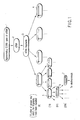
- the cDNA group 2 is synthesized from the group 1 consisting of the expressed mRNA preparations. Each of the cDNA is cut with two appropriate types of restriction enzymes, and thereby the cDNA fragment group 3 is obtained. Each cDNA fragment is classified according to the sequence of the two bases at each end (i.e., totally four bases) thereof.
- each cDNA fragment is classified according to the type of the two bases at each end thereof, the type including adenine (which will be referred to as “A” hereinafter), guanine (which will be referred to as “G” hereinafter), cytosine (which will be referred to as “C” hereinafter) and thymine (which will be referred to as “T” hereinafter).
- A adenine
- G guanine
- C cytosine
- T thymine
- FIG. 3 shows one example of a chart contained in such a profile.
- the chart of FIG. 3 is a chart showing the components contained in a fraction, which fraction has been obtained as a result of the fragment-classification, subsequent PCR amplification and electrophoresis of the reaction product of each fraction.
- Another aspect of the present invention lies in appropriate cutting of cDNA obtained from the expressed mRNA with two appropriate types of restriction enzymes, which are preferably MspI and MseI. Such appropriate cutting result in successfully carrying out the above-mentioned classification.
- the present invention will be described in more detain hereinafter.
- the method of producing a gene expression profile of the present invention basically includes:
- the 5' side of double strand DNA generally represents the 5' side of a sense strand (a sequence homologous with the mRNA as a template) and "the 3' side of double strand DNA” generally represents the 3' side of such a sense strand.
- each alphabet letter represents a base which constitutes a nucleotide sequence.
- A represents adenine (in other words, adenine will be referred to as “A” hereinafter)
- G represents guanine (in other words, guanine will be referred to as “G” hereinafter)
- C represents cytosine (in other words, cytosine will be referred to as “C” hereinafter)
- T represents thymine (in other words, thymine will be referred to as "T” hereinafter).
- N each represents any suitable or optional base.
- X and Y complementarily bind to each other, and W and Z complementarily bind to each other.
- steps (a) to (h) each correspond to steps (a) to (h) of FIG. 2, respectively, exactly in the alphabetical order.
- mRNA 11 is extracted from a specific cell as the test subject.
- An oligo dt primer which is complementary to the poly(A) tail at the 3' terminal of the mRNA 11 extracted as described above, is marked with biotin 13.
- a cDNA is synthesized by using the marked mRNA as a primer, and thereby a double strand 12 is obtained (FIG. 2, step (a)).
- biotin is used as the tag substance.
- the double strand 12 is cut by using MspI, which is a four-base-identifying restriction enzyme, as a first restriction enzyme X (FIG. 2, step (b)).
- MspI which is a four-base-identifying restriction enzyme
- FIG. 2, step (b) an example in which MspI is used as the first restriction enzyme is shown.
- step (c) an example, in which streptoavidin is used as a substance having high affinity with respect to the tag substance, is shown.
- an "X" adaptor 15 having a sequence complementary to the identification-incision site of the cDNA at which site the incision with the first restriction enzyme X i.e., MspI, has been effected, is connected (FIG. 2, step (d)).
- the resulting product is cut by using a restriction enzyme MseI as a second restriction enzyme Y (FIG. 2, step (e)).
- MseI a restriction enzyme used as the second restriction enzyme
- double strand sequence 17 including known sequences at both ends thereof is constructed.
- a PCR reaction is carried out by using the double strand sequence 17 as a template, and using a PCR primer 18 at the 5' side of the double strand cDNA marked with a fluorescent colorant (for the antisense strand) and a primer 19 at the 3' side of the double strand cDNA without fluorescent marking (for the sense strand) (FIG. 2, step (g)).
- the "X" primer 18 and the "Y” primer 19 for the PCR have and utilize sequences which are scomplementary to the sequences of X adaptor and Y adaptor another sequence including two bases located next to the one sequence in the direction of amplification thereof.
- each pair of two bases at the 5' side/the 3' side i.e., the totally four bases derived from both terminals
- each of the four bases can be any, of the four types of bases A, G, C and T
- totally 256 types of primer set can be obtained. Accordingly, by carrying out PCR for all of the thus prepared double strand cDNA preparations, it is possible to classify all of the existing cDNA preparations into 256 groups and carrying out PCR amplification therefor without fluorescent marking.
- FIG. 4 shows the combinations of the four bases, in which the sequence of the four bases are optionally decided, of the primer set.
- FIG. 4 discloses the combinations ranging from AA-AA to TA-GA.
- step (h) of FIG. 1 the PCR products obtained as 256 types of fractions are subjected to electrophoresis and peaks of each case or fraction are measured, whereby a gene expression profile is obtained (FIG. 1, step (h)).
- FIG. 3 shows a chart which is an example of the result obtained by subjecting one of the 256 fractions prepared as described above to electrophoresis.
- the Y-axis of the graph indicates the magnitude of expression, with fluorescent strength being used as the index
- the X-axis of the graph indicates the molecular weight, with the migration distance at electrophoresis being used as the index.
- step (d) may be carried out prior to step (c).
- one restriction enzyme which is used as the first restriction enzyme may be used as the second restriction enzyme, while another restriction enzyme which is used as the second restriction enzyme is used as the first restriction enzyme.
- the double strand 12 obtained in step (a) is divided into two groups i.e., cDNA mix A and cDNA mix B. It is acceptable that the cDNA mix A is subjected to the treatment of steps (b) to (h) as described above, and simultaneous with or after the treatment of the cDNA mix A, the cDNA mix B is subjected to the following treatment. Specifically, the cDNA mix B is treated in a manner similar to that of the above-mentioned method, except that the restriction enzyme MseI is used as the first restriction enzyme and the restriction enzyme MspI is used as the second restriction enzyme. By using the first restriction enzyme and the second restriction enzyme in the exchanged manner, the genes which would not be detected had the restriction enzymes not been exchanged can also be detected.
- the double strand 12 contained in the cDNA mix B is cut with MseI, which is a four-base-identifying restriction enzyme. Thereafter, to the identification-incision site of the cDNA at which site the incision with the restriction enzyme MseI has been effected, the MseI adaptor having a sequence complementary to the identification-incision site is connected or bound. Then, biotin is captured by using streptoavidin, and thereby the 3'-side portion of the cut double strand 12 is collected. Next, the collected 3'-side portion of the double strand 12 is cut with the restriction enzyme MspI.
- MseI is a four-base-identifying restriction enzyme.
- the MspI adaptor having a sequence complementary to the identification-incision site is bound.
- a sequence including the double strand 12 with known sequences connected to both terminals thereof is constructed.
- a PCR reaction for cDNA is carried out by using an X primer 18 marked with a fluorescent colorant and a Y primer 19 without fluorescent marking.
- the primer 18 and the primer 19 having sequences complementary to the X adaptor and the Y adaptor another sequences of two bases located next to the sequences in the direction of amplification thereof, is used.
- each pair of two bases at the 5' side/the 3' side is designed so that each of the four bases can be any of the four types of bases A, G, C and T, totally 256 types (combinations) of primer,set can be obtained (Refer to the steps (a) to (f) of FIG. 2.
- the 256 types of the NN-NN nucleotide sequence are specifically shown in FIG. 4). Accordingly, by carrying out PCR for all of the cDNA preparations by using these primer sets, it is possible to classify all the existing types of cDNA preparations into 256 groups.
- the PCR products obtained as 256 types of fractions are subjected to electrophoresis and migration distance and peaks of each case or fraction are measured, whereby a gene expression profile is obtained.
- the expressed genes which are classified according to the method of the present invention in the case of mouse, for example, approximately 85% of 100 genes of mouse selected at random can be identified and detected, as shown in FIG. 5. Specifically, when MspI is used as the first restriction enzyme and MseI is used as the second restriction enzyme, approximately 66% of the expressed genes goes through incision. When MseI is used as the first restriction enzyme and MspI is used as the second restriction enzyme, approximately 19% of the expressed genes goes through incision. Accordingly, by exchanging the first restriction enzyme and the second restriction enzyme in the order in use thereof, approximately 85% of the expressed genes can be identified and detected, as a whole. Due to this, a gene profile can be produced more accurately than in the conventional method.
- the proportion of genes which can be identified by the conventional method is generally 20 to 30%, and 50% at most. Therefore, the proportion of genes which can be identified by the gene expression profile produced by the method of the present invention is remarkably higher than the proportion achieved by the conventional method. It is concluded that the method of the present invention enables identifying substantially all of the genes contained in a cell.
- gene expression profile used in the present specification represents information including an expression pattern of genes in a specific cell in a given condition, absence/presence of expression of known and unknown genes, the magnitude of expression of all the expressed genes, and the like.
- the gene expression profile produced by the method of the present invention can be used as a means for analyzing expression of genes.
- poly(A) tail used in the present specification represents a sequence at the 3' terminal of mRNA, which is, in general, also referred to as "poly(A)".
- cDNA can be synthesized from mRNA having the aforementioned poly(A) tail by using the "oligo dT primer” having a sequence complementary to the poly(A) tail.
- the "oligo dT primer” used in the present invention is, in general, also, referred to as "oligo(dT) primer".
- the synthesis of cDNA by using the oligo dT primer can be achieved in any suitable conditions which are generally applied to the conventional method.
- the "tag substance” and the “substance having high affinity with respect to the tag substance” used in the present invention are substances which can specifically bind to each another with high affinity, thereby forming a binding pair.
- biotin is used as the tag substance
- streptoavidin is used as the substance having high affinity with respect to the tag substance in the example described in the aforementioned item "(1) Gene expression profile”
- the types of the tag substance and the substance having high affinity with respect to the tag substance are not limited to these specific examples. Any binding pair can be used as long as the pair exhibits specific binding with high affinity therebetween.
- Examples of the combination of the tag substance and the substance having high affinity with respect to the tag substance which can be employed in the present invention, include: biotin and streptoavidin; biotin and avidin; FITC and FITC antibody; DIG and anti-DIG; protein A and mouse IgG; latex particles; and the like.
- the types of the tag substance and the substance having high affinity with respect to the tag substance are not limited to the aforementioned examples.
- each of the two substances can be used as either the tag substance or the substance having high affinity with respect to the tag substance.
- the "restriction enzyme” used in the present invention is an enzyme which is, in general, also referred to as “restriction endonuclease” and effects hydrolysis and incision of double strand DNA at a specific sequence.
- restriction enzymes X and Y are used in combination, in order to obtain appropriate fragments.
- an enzyme capable of cutting the double strand, constituted of cDNA which has been synthesized from mRNA as the expressed gene, to a fragment having identifiable length is preferable.
- the enzyme is capable of cutting as many of the obtained double strands as possible, and it is more preferable that the enzyme is capable of cutting substantially all of the obtained double strands.
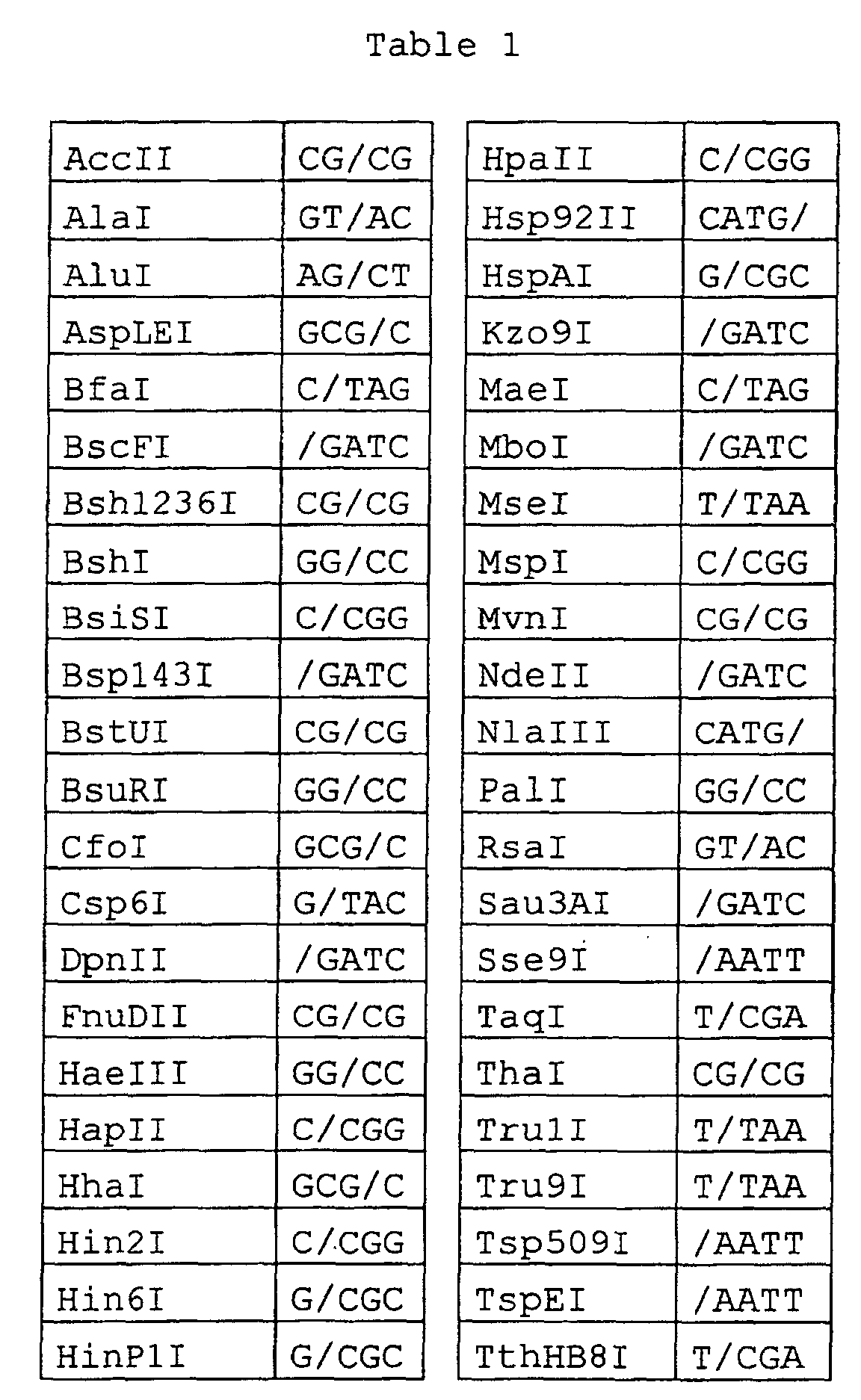
- Table 1 shows examples of such enzymes. It is acceptable to select any two enzymes from Table 1 and use these enzymes in combination. All of the enzymes shown in Table 1 are four-base-identifying enzymes. Alternatively, four-base-identifying enzymes of the types other than those of Table 1 or six-base-identifying enzymes may be used. In the method according to the present invention, it is preferable that four-base-identifying enzymes are used, and it is more preferable that MspI and MseI are used in combination. In the aforementioned example, MspI (or MseI) is used as the restriction enzyme X, and MseI (or MspI) is used as the restriction enzyme Y.
- the "adaptor” employed in the present invention is used for effecting connection of the primers which work in the final PCR amplification.
- the adaptor used in the present invention is designed in accordance with the restriction enzymes to be used.
- the "X" adaptor to be connected to the identification-incision site at which the incision with the restriction enzyme X has been effected may include a sequence complementary to the identification-incision site (at which the incision with the restriction enzyme X has been effected) and another optional sequence.
- the type of another optional sequence and the base-length thereof can be designed in consideration of the factors such as the efficiency of PCR. It is preferable that the "X" adaptor is designed such that the "X” adaptor has approximately 15 bases.
- the "Y” adaptor to be connected to the identification-incision site at which the incision with the restriction enzyme Y has been effected may include a sequence complementary to the identification-incision site (at which the incision with the restriction enzyme Y has been effected) and another optional sequence.
- the type of another optional sequence and the base-length thereof can be designed in consideration of the factors such as the efficiency of PCR. It is preferable that the "Y" adaptor is designed such that the "Y” adaptor has approximately 15 bases. Such, a structure of the "Y” adaptor results in the stable performance of PCR.
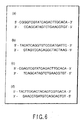
- FIG. 6(a) A preferable example of the sequence of the "X" adaptor in the case in which MspI is used as the restriction enzyme X is shown in FIG. 6(a).
- FIG. 6(b) A preferable example of the sequence of the "X” adaptor in the case in which MseI is used as the restriction enzyme X is shown in FIG. 6(b).
- FIG. 6(c) a preferable example of the sequence of the "Y" adaptor in the case in which MspI is used as the restriction enzyme Y is shown in FIG. 6(c)
- FIG. 6(d) a preferable example of the sequence of the "Y” adaptor in the case in which MseI is used as the restriction enzyme Y is shown in FIG. 6(d).
- the sequence of the "X" adaptor and that of the "Y” adaptor are not limited to the examples shown in FIGS. 6(a) to 6(d).
- the “primer set” used in step (g) includes a pair of primers, primer “X” and primer “Y”, which primers are used for amplifying by PCR the double strand cDNA obtained in step (f).
- the details of the primer set are as described above.
- the “optional two nucleotide-sequence (NN)” used in the present invention is a sequence optionally selected from adenine, thymine, guanine and cytosine.
- a chart obtained as result of PCR of one sample includes approximately 80 to 100 peaks.
- each "optional sequence" at each side is designed as a two-nucleotide sequence, in consideration of the convenience in operation and precision in analysis in the method. Accordingly, in the method according to the present invention, the "optional sequence” at each side is preferably a two-nucleotide sequence (NN) and the number of the primer set is preferably 256.
- the type of the "optional sequence” and the number of the primer set are not limited to the above-mentioned examples. It is acceptable that the optional two-nucleotide sequence NN of at least one of the two primers (i.e., the "X” primer and/or the "Y” primer) is replaced with a sequence including no less than three bases.
- the number of the bases included in the "optional sequence” is increased, the number of types of primers included in the primer set is also increased.
- the optional two-nucleotide sequence NN of one of the two primers is replaced with a three-nucleotide sequence, 1024 or 4096 fractions will be obtained.
- a fluorescent material is bound to one terminal of one of the primers of each primer set so that the detection thereof after PCR can be facilitated.
- a fluorescent material is bound to the 5' terminal of the "X" primer having a sequence complementary to the "X" adaptor.
- fluorescent material examples include 6-carboxyfluorescein (which will be referred to as “FAM” hereinafter), 4,7,2',4',5',7'-hexachloro-6-carboxyfluorescein (which will be referred to as “HEX” hereinafter), NED (manufactured by Applied Biosystems Japan Co., Ltd.), 6-carboxy-X-rhodamine (which will be referred to as “Rox” hereinafter) and the like.
- FAM 6-carboxyfluorescein
- HEX 4,7,2',4',5',7'-hexachloro-6-carboxyfluorescein
- NED manufactured by Applied Biosystems Japan Co., Ltd.
- 6-carboxy-X-rhodamine which will be referred to as "Rox” hereinafter
- the PCR reaction carried out according to the invention may be carried out in a condition generally applied to the conventional method.
- the PCR reaction can be carried out in the condition of 95°C for 1 minute, (95°C for 20 seconds, 68°C for 30 seconds, 72°C for 1 minute) ⁇ 28 times, and 60°C for 30 minutes.
- the means for conducting electrophoresis which can be used in the present invention may be any means for electrophoresis, in general, as long as the means enables separation of reagents according to the molecular weight thereof.
- Commonly used devices for electrophoresis can be used, whose examples include a sequencer, ABI PRISM 3100 (manufactured by Applied Biosystems Japan Co., Ltd.), ABI PRISM 3700 (manufactured by Applied Biosystems Japan Co., Ltd.), and MegaBACE 1000 (manufactured by Amersham Pharmacia Co., Ltd).
- the present invention it is possible to identify the gene represented by each peak of the chart obtained as described above. Due to identifying the peak, it is possible to identify the gene(s) which is/are expressed or whose expression magnitude is increased/decreased in a specific environment.
- Identification of the gene can be carried out by collecting the molecule or gene exhibiting a particular peak in the chart, and determining the sequence thereof by a laboratory operation including the common method such as sequencing.
- the length of the fragment observed when a gene sequence optionally selected from the database is cut with a specific restriction enzyme, as well as the details of the identification site of the restriction enzyme, can easily be determined on a display of a computer.
- the length of the fragment observed after the incision with the restriction enzymes used in the method of the present invention, is clearly known from the result of electrophoresis. Accordingly, by further considering the adaptor sequence in use, it is possible to determine from which gene the fragment is derived, without necessitating any laborious analysis by experients in a laboratory.
- One example of the method conducting such theoretical identification by using a computer will be described in example 1 below.
- a computer for common use can be used in the present invention.
- a computer device equipped with an input section including a keyboard, a mouse and the like, an output section including a printer, a display and the like, and a computing section such as CPU, can be used.
- Examples of the database from which useful data can be obtained include public data banks such as GenBank, EMBL and DDBJ, commercial databases and the like, with no restriction to these examples.
- the magnitude of expression of each gene expressed in the subject cell is reflected on the magnitude of the peak corresponding to the gene shown in the chart. Accordingly, by observing the change in the magnitude of the peaks, the expression frequency of each gene can be analyzed.
- a gene which expresses itself or whose expression magnitude is changed as result of a specific stimulus is identified by the method of the present invention in advance, it suffices, in the tests thereafter, to use only the primers corresponding to the specific gene and produce the gene expression profile resulted from the primer.
- the expression frequency of the targeted gene can be analyzed on the basis of the gene expression profile obtained in such a manner.
- a gene expression profile was produced by using mRNA obtained from a mice mammary cancer cell stock SR-1 which had been subjected to radioactive ray irradiation.
- Another gene expression profile was produced by using mRNA obtained from a mice mammary cancer cell stock SR-1 which had not been subjected to radioactive ray irradiation. The two gene expression profiles were compared with each other.
- mice mammary cancer cell stock SR-1 (donated by Professor Koyama, Yokohama City University) was cultured in an ⁇ MEM culture medium set in a 75 cm 3 flask (manufactured by Falcon Co., Ltd.). Radioactive rays of 7 Gy were irradiated on the cells, from above, by using a "Pantac", manufactured by Shimadzu Corporation, Ltd. The irradiation time was 3 hours. Mice mammary cancer cell stock SR-1 which had not been subjected to such irradiation was also prepared as a control at the same time. 20 ⁇ g of mRNA as the whole weight was extracted from each cell by using a FastTrack 2.0 kit (manufactured by Invitrogen Co., Ltd.).
- Each mRNA (20 ⁇ g) extracted as described above was mixed with 5'-biotinated oligo dT primer (100 pmole/0.8 ⁇ L) (manufactured by BRL Co., Ltd.), and the mixture was incubated at 65°C for 5 minutes. The mixture was then cooled with ice. Thereafter, the mixture was incubated with MgCl 2 (the final concentration thereof was 5 mM), 0.5 mM of dNTP Mix (manufactured by BRL Co., Ltd.) and 10 mM of DTT (manufactured by BRL Co., Ltd.), in 20.0 ⁇ L of a reverse transcription buffer, at 42°C for 60 minutes.
- the resulting product was then incubated with dNTP Mix (manufactured by BRL Co., Ltd., the final concentration thereof was 0.27 mM), 1.33 mM of DTT (manufactured by BRL Co., Ltd.), 20.0 units of E. coli ligase (manufactured by BRL Co., Ltd.), 40.0 units of E. coli DNA polymerase (manufactured by BRL Co., Ltd.) and 2.0 units of RNaseH (manufactured by BRL Co., Ltd.), in 150.0 ⁇ L of a double strand synthesizing buffer, at first at 16°C for 120 minutes and then 70°C for 15 minutes. Then, the reaction was stopped. The obtained reaction product was equally divided into two portions (the reaction product mixture A and the reaction product mixture B).
- the reaction product mixture A was treated, as described below.
- MspI was used as the first restriction enzyme and MseI was used as the second restriction enzyme.
- the restriction enzyme MspI (manufactured by Takara Co., Ltd., the final concentration thereof being 20 units in 100 ⁇ L) was reacted with the reaction product mixture A containing 10 ⁇ g of mRNA, at 37°C for 360 minutes. After the reaction, the product was purified with ethanol (500 ⁇ L ⁇ 3 times).
- the product was subjected to ligation with 5.0 ⁇ g of the "X" adaptor having a sequence of GC (i.e., a sequence complementary to the incision fragment site at which site the incision with the restriction enzyme MspI had been effected) (manufactured by BRL Co., Ltd.) and 10 units of T4 DNA ligase (manufactured by NEB Co., Ltd.), in 15 ⁇ L of the T4 DNA ligase buffer. Then, magnetic beads having streptoavidin (manufactured by Dinal Co., Ltd.) fixed thereto were added to the reaction solution. The biotin included in the double strand in the reaction solution was bound to streptoavidin fixed to the magnetic beads, whereby a ligation product was obtained.
- the "X" adaptor having a sequence of GC (i.e., a sequence complementary to the incision fragment site at which site the incision with the restriction enzyme MspI had been effected) (manufacture
- the ligation product was reacted with the restriction enzyme MseI (manufactured by NEB Co., Ltd., the final concentration thereof was 50 units in 200 ⁇ L), at 37°C for 360 minutes. After the reaction, the supernatant thereof was transferred to another tube and was subjected to purification with ethanol (1000 ⁇ L ⁇ 3 times).
- the product was subjected to ligation with 10 pmole of the "Y" adaptor having a sequence of AT (i.e., a sequence complementary to the incision fragment site at which site the incision with the restriction enzyme MseI had been effected) (manufactured by BRL Co., Ltd.) and 10 units of T4 DNA ligase (manufactured by NEB Co., Ltd.), in 10 ⁇ L of the T4 DNA ligase buffer.
- AT i.e., a sequence complementary to the incision fragment site at which site the incision with the restriction enzyme MseI had been effected
- T4 DNA ligase manufactured by NEB Co., Ltd.
- PCR was carried out with respect to the ligation product obtained as described above.
- one of the three types of fluorescent colorants FAM, HEX and NED was bound to the 5' side of the "X" primer having a sequence complementary to the "X” adaptor.
- the "X” primer further includes an optional two-nucleotide sequence (NN), at the 3' side thereof, next to the sequence complementary to the "X” adaptor.
- the "Y" primer having a sequence complementary to the "Y” adaptor further includes an optional two-nucleotide sequence (NN), at the 3' side thereof.
- the combinations of each fluorescent colorant and each NN are shown in FIG. 4. In FIG. 4, the combinations are classified according to the substance used for marking.
- sequences marked with FAM are shown in row (a)
- sequences marked with HEX are shown in the row b
- sequences marked with NED are shown in row (c).
- the optional two-nucleotide sequences are expressed as "(NN) of the X primer"-"(NN) of the Y primer".
- three types of fluorescent probes were used in order to enhance the work efficiency.
- the method of the present invention can be implemented with a single fluorescent probe being used, in a manner similar to that of the case in which three types of fluorescent probes are used.
- the reaction solution was diluted to 612 ⁇ L with Tris-HCl buffer (which buffer will be referred to as "TE” hereinafter).
- TE Tris-HCl buffer
- the reaction product mixture B was subjected to a treatment in a manner similar to that in the treatment of the reaction product mixture A, except that the MseI was used as the first restriction enzyme and MspI was used as the second restriction enzyme. Thereafter, 96 samples obtained from the reaction product mixture B were subjected to electrophoresis in a manner similar to that in the reaction product mixture A, to obtain charts.
- the gene expression profile was obtained as the charts representing the results of the electrophoresis.
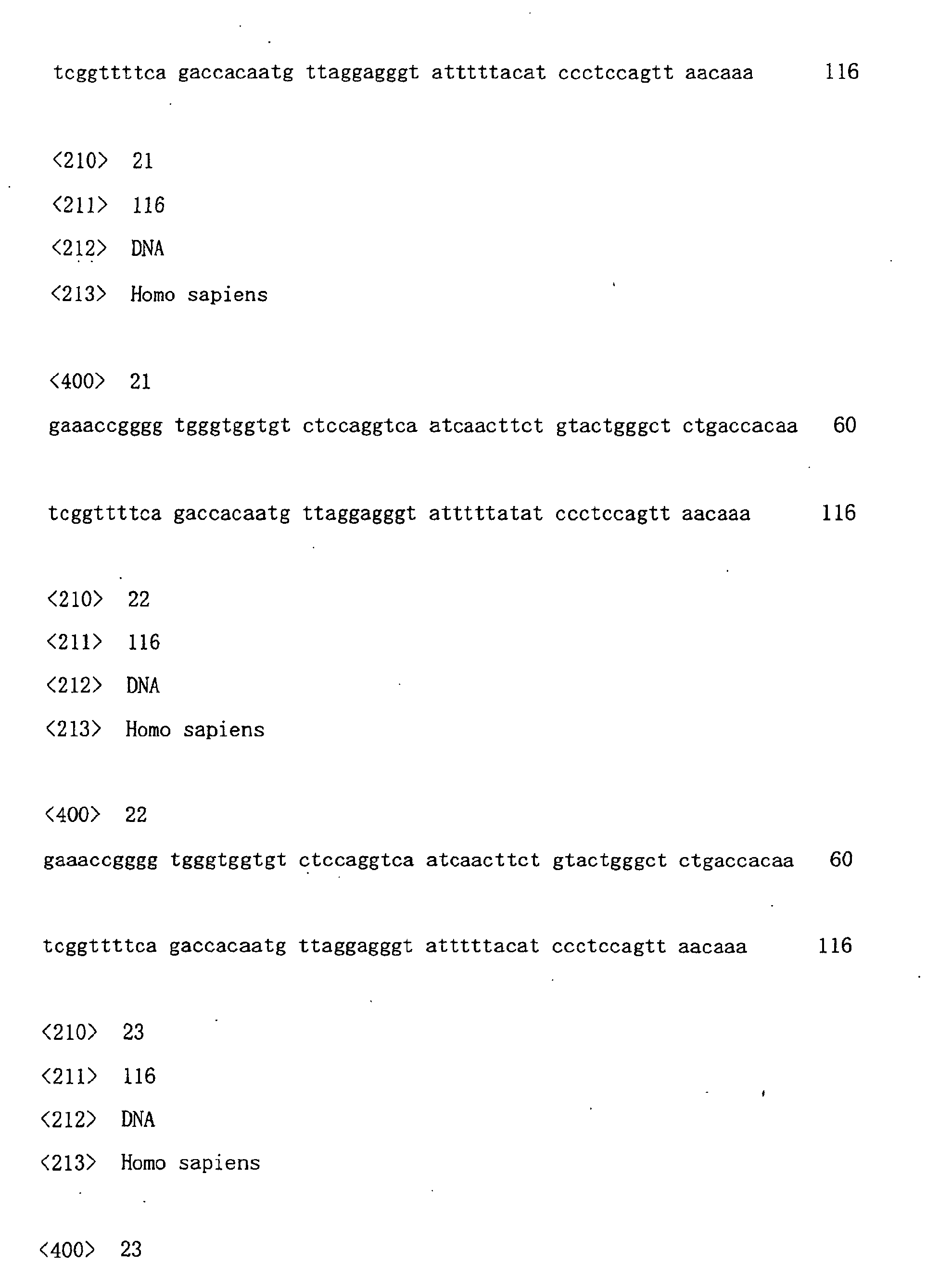
- FIG. 7 shows the consensus sequence and a portion of the sequence used for arranging the consensus sequence (refer to FIG. 7).
- the sequence indicated at the top of FIG. 7 is the consensus sequence.
- the term "consensus sequence" used in the present specification represents a sequence of one type of gene, obtained by determining for each portion of the sequence a base which appears at the highest rate among all of the plural sequences which have been determined with regards to the gene.
- FIG. 6 shows, as one example, a portion of gene sequence of human arylamine N-acetyl transferase.
- the identification sequence of the restriction enzyme X located closest to the 3' terminal was detected.
- the identification sequence of the restriction enzyme Y located closest, in the 3' direction, to the identification site of the restriction enzyme X was detected.
- the identification sequence of MspI is C/CGG, and the incision is effected at the site of "/".
- the identification sequence of MseI is T/TAA.
- the number of the bases of DNA which can be assumed on the basis of the incision fragments of the restriction enzyme X and the restriction enzyme Y obtained as described above, was theoretically calculated.
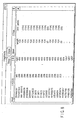
- FIG. 8 One example of the data obtained as described above is shown in FIG. 8 (refer to FIG. 8).
- FIG. 8 it is understood from the data from the database of GenBank and a number of registered data of EST that an incision fragment of 104 bp is obtained (refer to the "length" column of FIG. 8). However, the data of FIG. 8 also indicates a possibility that some data include mutation or errors in sequence reading, and thereby an incision fragment of 23 bp is also obtained (refer to the "length" column of FIG. 8).
- the length of DNA detected in a manner similar to that described above, was revealed.
- a peak corresponding to the molecular weight matching the revealed DNA length was separated from the peaks representing the molecules separated by the electrophoresis.
- the nucleotide sequence of the DNA represented by the peak separated as described above was analyzed by sequencing, whereby it was confirmed that the genes were the targeted genes, i.e., p21, mdm2, cyclicG and gadd45. 1-6. Influence of radioactive ray irradiation on the expression magnitude of p21, mdm2, cyclicG and gadd45
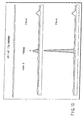
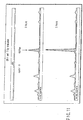
- FIGS. 9, 10 and 11 The peaks of the respective genes of p21, mdm2 and cyclicG, obtained according to the method described above, are shown in FIGS. 9, 10 and 11.
- the upper chart of each of FIGS. 9, 10 and 11 shows a portion of the gene expression profile derived from mRNA obtained from a cell which was not subjected to radioactive ray irradiation.
- the lower chart of each of FIGS. 9, 10 and 11 shows a portion of the gene expression profile derived from mRNA obtained from a cell which was subjected to 7 Gy radioactive-ray irradiation for 3 hours.
- the peak of the targeted gene is shown with an arrow.
- Fission yeast which will be referred to as "S. p.” hereinafter
- budding yeast which will be referred to as "S. c.” hereinafter
- mRNA was extracted in a manner similar to that of example 1.
- the extracted mRNA of each type of cell was mixed with each other such that the whole amount of mRNA derived from S. p. was varied in a range of 0, 0.02, 0.2, 1, 2 and 2 ( ⁇ g), while the whole amount of mRNA derived from S. c. was varied in a range of 2, 2, 2, 2, 2 and 0 ( ⁇ g), as shown in FIG. 12.
- FIG. 13 shows charts representing a portion of the gene expression profile obtained as described above.
- the composition of the mRNA preparations from which each chart is derived is shown at the left-hand side of each chart.
- the uppermost chart shows a portion of the gene expression profile of S. p.
- the lowermost chart indicates a portion of the gene expression profile of S. c.
- FIG. 14 is a view in which the peaks derived from S. p. in the charts of FIG. 13 are linked with vertical dotted lines. As shown in FIG. 14, the magnitude of the peaks is changed depending on the amount of mRNA of S. p. contained in the mRNA preparations.
- a gene expression profile regarding genes expressed in a wide range can be produced in a simple and easy manner. Further, by using such a gene expression profile, it is possible to identity a far more number of expressed genes, i.e., substantially all of the expressed genes, as compared with the conventional method. Yet further, in the gene expression profile according to the present invention, identification of genes can be carried out for each gene. Yet further, as the gene expression profile of the present invention reflects the expression magnitude of genes, the frequency of gene expression can also be analyzed. Specifically, the expression frequency of an unknown gene can also be analyzed as is the case with the expression frequency of known genes.
Landscapes
- Chemical & Material Sciences (AREA)
- Organic Chemistry (AREA)
- Life Sciences & Earth Sciences (AREA)
- Zoology (AREA)
- Wood Science & Technology (AREA)
- Proteomics, Peptides & Aminoacids (AREA)
- Health & Medical Sciences (AREA)
- Engineering & Computer Science (AREA)
- Analytical Chemistry (AREA)
- Biophysics (AREA)
- Immunology (AREA)
- Microbiology (AREA)
- Molecular Biology (AREA)
- Biotechnology (AREA)
- Physics & Mathematics (AREA)
- Biochemistry (AREA)
- Bioinformatics & Cheminformatics (AREA)
- General Engineering & Computer Science (AREA)
- General Health & Medical Sciences (AREA)
- Genetics & Genomics (AREA)
- Chemical Kinetics & Catalysis (AREA)
- Measuring Or Testing Involving Enzymes Or Micro-Organisms (AREA)
Abstract
Description



Claims (18)
- A method of producing a gene expression profile, comprising:(a) a step of synthesizing cDNA to mRNA extracted from a cell, such that a tag substance is added to the 3' terminal of the cDNA;(b) a step of cutting the product obtained as a result of the reaction in step (a) with a first restriction enzyme X;(c) a step of connecting, to a fragment obtained in step (b), an "X" adaptor having a sequence complementary to a sequence of a site of the fragment at which site incision with the first restriction enzyme X has been effected;(d) a step of connecting the fragment obtained in step (c) to a substance having high affinity with respect to the tag substance, thereby collecting the fragment;(e) a step of cutting the fragment collected in step (d) with a second restriction enzyme Y and removing a fragment connected to the tag substance, thereby obtaining a fragment including the 5' side-portion of the cut cDNA;(f) a step of adding, to a fragment obtained in step (e), a "Y" adaptor having a sequence complementary to a sequence of a site of the fragment at which site incision with the second restriction enzyme Y has been effected;(g) a step of carrying out a PCR reaction, for the fragment obtained in step (f), by using a primer which has a sequence complementary to the sequence of the "X" adaptor and an optional two-nucleotide sequence (NN) at the 3' terminal thereof, and a primer which has a sequence complementary to the sequence of the "Y" adaptor and an optional two-nucleotide sequence (NN) at the 3' terminal thereof; and(h) a step of subjecting the obtained PCR product to electrophoresis and detecting a migration distance and a peak, thereby producing a gene expression profile.
- A method of producing a gene expression profile according to claim 1, wherein the primer, which has a sequence complementary to the sequence of the "X" adaptor and a two-nucleotide sequence (NN) at the 3' terminal thereof, further includes a fluorescent substance added to the 5' terminal thereof, and the result of the electrophoresis of the PCR product is analyzed by detecting a magnitude of fluorescence of the fluorescence substance.
- A method of producing a gene expression profile according to claim 1, wherein the restriction enzyme X and the restriction enzyme Y are selected, respectively, from the group consisting of the following enzymes: AccII, AfaI, AluI, AspLEI, BfaI, BscFI, Bsh1236I, BshI, BsiSI, Bsp143I BstUI, BsuRI, CfoI, Csp6I, DpnII, FnuDII, HaeIII, HapII, HhaI, Hin2I, Hin6I, HinP1I HpaII, Hsp92II, HspAI, Kzo9I, MaeI, MboI, MseI, MspI, MvnI, NdeII, NIaIII, Pall, RsaI, Sau3AI, Sse9I, TaqI, ThaI, Tru1I Tru9I, Tsp509I, TspEI and TthHB8I.
- A method of producing a gene expression profile according to claim 1, wherein the restriction enzyme X is MspI and the restriction enzyme Y is MseI.
- A method of producing a gene expression profile according to claim 1, wherein the NN included in the "X" adaptor and the NN included in the "Y" adaptor are designed as a combination of adenine, thymine, guanine and cytosine, and thus totally 256 types of the "X" adaptor and the "Y" adaptor are used.
- A method of producing a gene expression profile according to claim 1, wherein examples of combination of the tag substance and the substance having high affinity with respect to the tag substance include: biotin and streptoavidin; biotin and avidin; FITC and FITC antibody; DIG and anti-DIG; protein A and mouse IgG; latex particles; and the like.
- A method of producing a gene expression profile according to claim 1, further comprising, after step (h) of subjecting the obtained PCR product to electrophoresis and detecting a migration distance and a peak, thereby producing a gene expression profile, the step of:collecting a molecule separated by electrophoresis and corresponding to the detected peak, and determining by sequencing the sequence of the PCR product contained therein, thereby identifying the expressed gene.
- A method of producing a gene expression profile according to claim 1, further comprising the step of:identifying the expressed gene, by comparing the identification sequence of the restriction enzyme X and the restriction enzyme Y, the length of the fragments produced as a result of the incision of the reaction product obtained in step (a) with the restriction enzyme X and the restriction enzyme Y, and data from any suitable data banks, with each other.
- A method of producing a gene expression profile, comprising:(a) a step of synthesizing cDNA from mRNA extracted from a cell, such that a tag substance is added to the 3' terminal of the cDNA, and dividing the product obtained as a result of the synthesis into two fractions;(b) a step of cutting the first fraction of the synthesis product obtained at step (a) with a first restriction enzyme X;(c) a step of connecting, to a fragment obtained in step (b), an "X" adaptor having a sequence complementary to a sequence of a site of the fragment at which site incision with the first restriction enzyme X has been effected;(d) a step of connecting the fragment obtained in step (c) to a substance having high affinity with respect to the tag substance, thereby collecting the fragment;(e) a step of cutting the fragment collected in step (d) with a second restriction enzyme Y and removing a fragment connected to the tag substance, thereby obtaining a fragment including the 5' side-portion of the cut cDNA;(f) a step of adding, to a fragment obtained in step (e), a "Y" adaptor having a sequence complementary to a sequence of a site of the fragment at which site incision with the second restriction enzyme Y has been effected;(g) a step of carrying out a PCR reaction, for the fragment obtained in step (f), by using a primer which has a sequence complementary to the sequence of the "X" adaptor and a two-nucleotide sequence (NN) at the 3' terminal thereof, and a primer which has a sequence complementary to the sequence of the "Y" adaptor and a two-nucleotide sequence (NN) at the 3' terminal thereof;(h) a step of cutting the second fraction of the synthesis product obtained in step (a) with the restriction enzyme Y;(i) a step of connecting, to a fragment obtained in step (h), a "Y'" adaptor having a sequence complementary to a sequence of a site of the fragment at which site incision with the restriction enzyme Y has been effected;(j) a step of connecting the fragment obtained in step (i) to a substance having high affinity with respect to the tag substance, thereby collecting the fragment;(k) a step of cutting the fragment collected in step (j) with the restriction enzyme X and removing a fragment connected to the tag substance, thereby obtaining a fragment including the 5' side-portion of the cut cDNA;(l) a step of adding, to a fragment obtained in step (k), an "X'" adaptor having a sequence complementary to a sequence of a site of the fragment at which site incision with the restriction enzyme X has been effected;(m) a step of carrying out a PCR reaction, for the fragment obtained in step (l), by using a set including a primer which has a sequence complementary to the sequence of the "Y'" adaptor and an optional two-nucleotide sequence (NN) at the 3' terminal thereof, and a set including a primer which has a sequence complementary to the sequence of the "X'" adaptor and an optional two-nucleotide sequence (NN) at the 3' terminal thereof; and(n) a step of subjecting the PCR product obtained in steps (g) and (m) to electrophoresis and detecting a migration distance and a peak, thereby producing a gene expression profile.
- A method of producing a gene expression profile according to claim 9, wherein the primer which has a sequence complementary to the sequence of the "X" adaptor and an optional two-nucleotide sequence (NN) at the 3' terminal thereof, used in step (g), further includes a fluorescent substance added to the 5' terminal thereof, and
the primer which has a sequence complementary to the sequence of the "Y'" adaptor and an optional two-nucleotide sequence (NN) at the 3' terminal thereof, used in step (m), further includes a fluorescent substance added to the 5' terminal thereof, and the result of the electrophoresis of the PCR product is analyzed by detecting a magnitude of fluorescence of the fluorescence substance. - A method of producing a gene expression profile according to claim 9, wherein the restriction enzyme X and the restriction enzyme Y are selected, respectively, from the group consisting of the following enzymes: AccII, AfaI, AluI, AspLEI, BfaI, BscFI, Bsh1236I, BshI, BsiSI, Bsp 143I, BstUI, BsuRI, CfoI, Csp6I, DpnII, FnuDII, HaeIII, HapII, HhaI, Hin2I, Hin6I, HinP1I, HpaII, Hsp92II, HspAI, Kzo9I, MaeI, MboI, MseI, MspI, MvnI, NdeII, N1aIII, Pall, RsaI, Sau3AI, Sse9I, TaqI, ThaI, Tru1I Tru9I, Tsp509I, TspEI and TthHBSI.
- A method of producing a gene expression profile according to claim 9, wherein the restriction enzyme X is MspI and the restriction enzyme Y is MseI.
- A method of producing a gene expression profile according to claim 9, wherein the NN included in the "X" adaptor and the NN included in the "Y" adaptor are designed as a combination of adenine, thymine, guanine and cytosine, and thus totally 256 types of the "X" adaptor and the "Y" adaptor are used.
- A method of producing a gene expression profile according to claim 9, wherein examples of combination of the tag substance and the substance having high affinity with respect to the tag substance include: biotin and streptoavidin; biotin and avidin; FITC and FITC antibody; DIG and anti-DIG; protein A and mouse IgG; latex particles; and the like.
- A method of producing a gene expression profile according to claim 9, further comprising, after step (n) of subjecting the obtained PCR product to electrophoresis and detecting a migration distance and a peak, thereby producing a gene expression profile, the step of:collecting a molecule separated by electrophoresis and corresponding to the detected peak, and determining by sequencing the sequence of the PCR product contained therein, thereby identifying the expressed gene.
- A method of producing a gene expression profile according to claim 9, further comprising the step of:identifying the expressed gene, by comparing the identification sequence of the restriction enzyme X and the restriction enzyme Y, the length of the fragments produced as a result of the incision of the reaction product obtained in step (a) with the restriction enzyme X and the restriction enzyme Y, and data from any suitable data banks, with each other.
- A method of analyzing frequency of gene expression, comprising:wherein the method of producing a gene expression profile includes:(1) a step of carrying out a method of producing a gene expression profile, for each of a control cell and a subject cell, thereby producing two sets of gene expression profiles; and(2) a step of analyzing a change in frequency of gene expression at the subject cell, by comparing the two gene expression profiles obtained in step (1),(a) a step of synthesizing cDNA to mRNA extracted from a cell, such that a tag substance is added to the 3' terminal of the cDNA;(b) a step of cutting the product obtained as a result of the reaction in step (a) with a first restriction enzyme X;(c) a step of connecting, to a fragment obtained in step (b), an "X" adaptor having a sequence complementary to a sequence of a site of the fragment at which site incision with the first restriction enzyme X has been effected;(d) a step of connecting the fragment obtained in step (c) to a substance having high affinity with respect to the tag substance, thereby collecting the fragment;(e) a step of cutting the fragment collected in step (d) with a second restriction enzyme Y and removing a fragment connected to the tag substance, thereby obtaining a fragment including the 5' side-portion of the cut cDNA;(f) a step of adding, to a fragment obtained in step (e), a "Y" adaptor having a sequence complementary to a sequence of a site of the fragment at which site incision with the second restriction enzyme Y has been effected;(g) a step of carrying out a PCR reaction, for the fragment obtained in step (f), by using a primer which has a sequence complementary to the sequence of the "X" adaptor and an optional two-nucleotide sequence (NN) at the 3' terminal thereof, and a primer which has a sequence complementary to the sequence of the "Y" adaptor and an optional two-nucleotide sequence (NN) at the 3' terminal thereof; and(h) a step of subjecting the obtained PCR product to electrophoresis and detecting a migration distance and a peak, thereby producing a gene expression profile.
- A method of analyzing frequency of gene expression, comprising:wherein the method of producing a gene expression profile includes:(1) a step of carrying out a method of producing a gene expression profile, for each of a control cell and a subject cell, thereby producing two sets of gene expression profiles; and(2) a step of analyzing a change in frequency of gene expression at the subject cell, by comparing the two gene expression profiles obtained in step (1),(a) a step of synthesizing cDNA from mRNA extracted from a cell, such that a tag substance is added to the 3' terminal of the cDNA, and dividing the product obtained as a result of the synthesis into two fractions;(b) a step of cutting the first fraction of the synthesis product obtained in step (a) with a first restriction enzyme X;(c) a step of connecting, to a fragment obtained in step (b), an "X" adaptor having a sequence complementary to a sequence of a site of the fragment at which site incision with the first restriction enzyme X has been effected;(d) a step of connecting the fragment obtained in step (c) to a substance having high affinity with respect to the tag substance, thereby collecting the fragment;(e) a step of cutting the fragment collected in step (d) with a second restriction enzyme Y and removing a fragment connected to the tag substance, thereby obtaining a fragment including the 5' side-portion of the cut cDNA;(f) a step of adding, to a fragment obtained in step (e), a "Y" adaptor having a sequence complementary to a sequence of a site of the fragment at which site incision with the second restriction enzyme Y has been effected;(g) a step of carrying out a PCR reaction, for the fragment obtained in step (f), by using a primer which has a sequence complementary to the sequence of the "X" adaptor and a two-nucleotide sequence (NN) at the 3' terminal thereof, and a primer which has a sequence complementary to the sequence of the "Y" adaptor and a two-nucleotide sequence (NN) at the 3' terminal thereof;(h) a step of cutting the second fraction of the synthesis product obtained in step (a) with the restriction enzyme Y;(i) a step of connecting, to a fragment obtained in step (h), a "Y'" adaptor having a sequence complementary to a sequence of a site of the fragment at which site incision with the restriction enzyme Y has been effected;(j) a step of connecting the fragment obtained in step (i) to a substance having high affinity with respect to the tag substance, thereby collecting the fragment;(k) a step of cutting the fragment collected in step (j) with the restriction enzyme X and removing a fragment connected to the tag substance, thereby obtaining a fragment including the 5' side-portion of the cut cDNA;(l) a step of adding, to a fragment obtained in step (k), an "X' " adaptor having a sequence complementary to a sequence of a site of the fragment at which site incision with the restriction enzyme X has been effected;(m) a step of carrying out a PCR reaction, for the fragment obtained in step (l), by using a set including a primer which has a sequence complementary to the sequence of the "Y'" adaptor and an optional two-nucleotide sequence (NN) at the 3' terminal thereof, and a set including a primer which has a sequence complementary to the sequence of the "X'" adaptor and an optional two-nucleotide sequence (NN) at the 3' terminal thereof; and(n) a step of subjecting the PCR product obtained in steps (g) and (m) to electrophoresis and detecting a migration distance and a peak, thereby producing a gene expression profile.
Applications Claiming Priority (3)
| Application Number | Priority Date | Filing Date | Title |
|---|---|---|---|
| JP2000377887 | 2000-12-12 | ||
| JP2000377887 | 2000-12-12 | ||
| PCT/JP2001/010898 WO2002048352A1 (en) | 2000-12-12 | 2001-12-12 | Method of analyzing gene expression |
Publications (3)
| Publication Number | Publication Date |
|---|---|
| EP1348762A1 true EP1348762A1 (en) | 2003-10-01 |
| EP1348762A4 EP1348762A4 (en) | 2005-08-10 |
| EP1348762B1 EP1348762B1 (en) | 2010-01-27 |
Family
ID=18846547
Family Applications (1)
| Application Number | Title | Priority Date | Filing Date |
|---|---|---|---|
| EP01270606A Expired - Lifetime EP1348762B1 (en) | 2000-12-12 | 2001-12-12 | Method of analyzing gene expression |
Country Status (8)
| Country | Link |
|---|---|
| US (2) | US20040005625A1 (en) |
| EP (1) | EP1348762B1 (en) |
| JP (1) | JP4437171B2 (en) |
| AU (2) | AU2002222618B2 (en) |
| CA (1) | CA2431170C (en) |
| DE (1) | DE60141221D1 (en) |
| TW (1) | TWI237663B (en) |
| WO (1) | WO2002048352A1 (en) |
Cited By (3)
| Publication number | Priority date | Publication date | Assignee | Title |
|---|---|---|---|---|
| EP1767620A4 (en) * | 2004-06-03 | 2008-05-28 | Nat Inst Radiolog | ANALYSIS OF PROFILING THE EXHAUSTIVE EXPRESSION OF A GENE USING A MICRO-SAMPLE |
| US7498135B2 (en) | 2003-06-19 | 2009-03-03 | National Institute Of Radiological Sciences | Method for preparing gene expression profile |
| JPWO2008111453A1 (en) * | 2007-03-07 | 2010-06-24 | 国立大学法人 東京大学 | DNA fragment amplification method |
Families Citing this family (8)
| Publication number | Priority date | Publication date | Assignee | Title |
|---|---|---|---|---|
| JP4217780B2 (en) * | 2003-06-19 | 2009-02-04 | 独立行政法人放射線医学総合研究所 | Gene expression profile creation method |
| US7192824B2 (en) * | 2003-06-24 | 2007-03-20 | Micron Technology, Inc. | Lanthanide oxide / hafnium oxide dielectric layers |
| JP5253703B2 (en) * | 2004-03-12 | 2013-07-31 | アイシン精機株式会社 | Gene fragment acquisition method |
| US7542854B2 (en) | 2004-07-22 | 2009-06-02 | International Business Machines Corporation | Method for discovering gene regulatory models and genetic networks using relational fuzzy models |
| WO2006038416A1 (en) * | 2004-10-06 | 2006-04-13 | National Institute Of Radiological Sciences | Method of exhaustive analysis of transcriptionally-active domain (non-methylated domain) on genome |
| JP5213009B2 (en) * | 2007-03-15 | 2013-06-19 | 独立行政法人放射線医学総合研究所 | Gene expression variation analysis method and system, and program |
| JP5344670B2 (en) * | 2008-02-13 | 2013-11-20 | 独立行政法人放射線医学総合研究所 | Gene expression analysis method, gene expression analysis apparatus, and gene expression analysis program |
| US10593886B2 (en) * | 2013-08-25 | 2020-03-17 | Molecular Glasses, Inc. | OLED devices with improved lifetime using non-crystallizable molecular glass mixture hosts |
Family Cites Families (20)
| Publication number | Priority date | Publication date | Assignee | Title |
|---|---|---|---|---|
| US5700637A (en) * | 1988-05-03 | 1997-12-23 | Isis Innovation Limited | Apparatus and method for analyzing polynucleotide sequences and method of generating oligonucleotide arrays |
| US5744101A (en) * | 1989-06-07 | 1998-04-28 | Affymax Technologies N.V. | Photolabile nucleoside protecting groups |
| US5262311A (en) * | 1992-03-11 | 1993-11-16 | Dana-Farber Cancer Institute, Inc. | Methods to clone polyA mRNA |
| JP2843675B2 (en) * | 1992-03-11 | 1999-01-06 | ダナ−ファーバー・キャンサー・インスチチュート・インコーポレーテッド | Identification, isolation and cloning of messenger RNA |
| US5876978A (en) * | 1993-04-06 | 1999-03-02 | Medical College Of Ohio | Method for quantitative measurement of gene expression using multiplex competitive reverse transcriptase-polymerase chain reaction |
| US5807522A (en) * | 1994-06-17 | 1998-09-15 | The Board Of Trustees Of The Leland Stanford Junior University | Methods for fabricating microarrays of biological samples |
| DE69621507T2 (en) * | 1995-03-28 | 2003-01-09 | Japan Science And Technology Corp., Kawaguchi | Method for molecular indexing of genes using restriction enzymes |
| US5871697A (en) * | 1995-10-24 | 1999-02-16 | Curagen Corporation | Method and apparatus for identifying, classifying, or quantifying DNA sequences in a sample without sequencing |
| CA2188713A1 (en) * | 1995-10-27 | 1997-04-28 | Robert Collu | Internal standards for quantitative competitive pcr |
| US5948615A (en) * | 1996-04-16 | 1999-09-07 | Hitachi, Ltd. | Method for analysis of nucleic acid and DNA primer sets for use therein |
| US5981733A (en) * | 1996-09-16 | 1999-11-09 | Incyte Pharmaceuticals, Inc. | Apparatus for the chemical synthesis of molecular arrays |
| WO1998035058A2 (en) * | 1997-02-07 | 1998-08-13 | Ribozyme Pharmaceuticals, Inc. | Improved process for detection and quantification of nucleic acid molecules |
| ES2163271T3 (en) * | 1997-05-13 | 2002-01-16 | Azign Bioscience As | PROCEDURE FOR CLONING ARNM AND VISUALIZING DIFFERENTIALLY EXPRESSED TRANSCRIPTORS (DODETS). |
| JP3784162B2 (en) * | 1998-01-14 | 2006-06-07 | 株式会社日立製作所 | DNA fragment analysis |
| GB9817055D0 (en) * | 1998-08-05 | 1998-09-30 | Medical Res Council | Reverse transcription and amplification processes and primers therefore |
| JP3414679B2 (en) * | 1999-05-25 | 2003-06-09 | 菊也 加藤 | RNA detection method |
| US6248534B1 (en) * | 1999-05-25 | 2001-06-19 | Kikuya Kato | Method for determining the detection value of a target RNA |
| US6221600B1 (en) * | 1999-10-08 | 2001-04-24 | Board Of Regents, The University Of Texas System | Combinatorial oligonucleotide PCR: a method for rapid, global expression analysis |
| JP2001299394A (en) * | 2000-04-26 | 2001-10-30 | Unitech Kk | Comparative detection method of RNA amount |
| US7498135B2 (en) * | 2003-06-19 | 2009-03-03 | National Institute Of Radiological Sciences | Method for preparing gene expression profile |
-
2001
- 2001-12-12 CA CA2431170A patent/CA2431170C/en not_active Expired - Fee Related
- 2001-12-12 AU AU2002222618A patent/AU2002222618B2/en not_active Ceased
- 2001-12-12 TW TW090130806A patent/TWI237663B/en not_active IP Right Cessation
- 2001-12-12 WO PCT/JP2001/010898 patent/WO2002048352A1/en not_active Ceased
- 2001-12-12 DE DE60141221T patent/DE60141221D1/en not_active Expired - Lifetime
- 2001-12-12 EP EP01270606A patent/EP1348762B1/en not_active Expired - Lifetime
- 2001-12-12 JP JP2002550069A patent/JP4437171B2/en not_active Expired - Lifetime
- 2001-12-12 AU AU2261802A patent/AU2261802A/en active Pending
-
2003
- 2003-06-12 US US10/460,784 patent/US20040005625A1/en not_active Abandoned
-
2009
- 2009-08-18 US US12/583,348 patent/US20090325185A1/en not_active Abandoned
Cited By (4)
| Publication number | Priority date | Publication date | Assignee | Title |
|---|---|---|---|---|
| US7498135B2 (en) | 2003-06-19 | 2009-03-03 | National Institute Of Radiological Sciences | Method for preparing gene expression profile |
| EP1767620A4 (en) * | 2004-06-03 | 2008-05-28 | Nat Inst Radiolog | ANALYSIS OF PROFILING THE EXHAUSTIVE EXPRESSION OF A GENE USING A MICRO-SAMPLE |
| JPWO2008111453A1 (en) * | 2007-03-07 | 2010-06-24 | 国立大学法人 東京大学 | DNA fragment amplification method |
| EP2130927A4 (en) * | 2007-03-07 | 2010-08-04 | Univ Tokyo | METHOD FOR AMPLIFYING A DNA FRAGMENT |
Also Published As
| Publication number | Publication date |
|---|---|
| TWI237663B (en) | 2005-08-11 |
| JP4437171B2 (en) | 2010-03-24 |
| CA2431170C (en) | 2011-07-26 |
| EP1348762B1 (en) | 2010-01-27 |
| DE60141221D1 (en) | 2010-03-18 |
| AU2261802A (en) | 2002-06-24 |
| JPWO2002048352A1 (en) | 2004-11-04 |
| CA2431170A1 (en) | 2002-06-20 |
| US20040005625A1 (en) | 2004-01-08 |
| WO2002048352A1 (en) | 2002-06-20 |
| AU2002222618B2 (en) | 2005-06-30 |
| US20090325185A1 (en) | 2009-12-31 |
| EP1348762A4 (en) | 2005-08-10 |
Similar Documents
| Publication | Publication Date | Title |
|---|---|---|
| US20090325185A1 (en) | Method of analyzing expression of gene | |
| EP0777747B1 (en) | Nucleotide sequencing method | |
| CN103937899B (en) | Method for the high flux polymorphic detection based on AFLP | |
| Lee et al. | DNA typing in forensic science | |
| JP2000508539A (en) | Multiplex amplification of STR loci | |
| CN102925561A (en) | Strategies for high throughput identification and detection of polymorphisms | |
| JP2007535928A (en) | Detection of chromosomal abnormalities | |
| WO1995015400A1 (en) | Genotyping by simultaneous analysis of multiple microsatellite loci | |
| EP1975254A1 (en) | Method of detecting nucleotide sequence with an intramolecular probe | |
| US10407720B2 (en) | Methods for full-length amplification of double-stranded linear nucleic acids of unknown sequences | |
| Liehr | Cytogenetics and molecular cytogenetics | |
| WO2024106109A1 (en) | Gene detection using modified substrate that modifies mobility of electrophoresis | |
| JPWO2016159111A1 (en) | How to determine the genetic status of a fetus | |
| WO2017145738A1 (en) | Chromosome number quantification method | |
| WO2017145739A1 (en) | Chromosome number quantification method | |
| Myllykangas et al. | Targeted deep resequencing of the human cancer genome using next-generation technologies | |
| US20250043362A1 (en) | Selective digital multiplexing | |
| US20030190609A1 (en) | Address/capture tags for flow-cytometery based minisequencing | |
| US5948615A (en) | Method for analysis of nucleic acid and DNA primer sets for use therein | |
| US20070161032A1 (en) | Methods and compositions for assaying mutations and/or large scale alterations in nucleic acids and their uses in diagnosis of genetic diseases and cancers | |
| JP3783315B2 (en) | Nucleic acid analysis method | |
| CN110343757A (en) | A kind of short tandem repeat general probe and its design method and application | |
| Smith | CDNA Fingerpinting of Breast Cancer Tumor Cells. | |
| CN117925806A (en) | ABO blood group genotyping method based on CRISPR/Cas13a and composition used by same | |
| US20050176007A1 (en) | Discriminative analysis of clone signature |
Legal Events
| Date | Code | Title | Description |
|---|---|---|---|
| PUAI | Public reference made under article 153(3) epc to a published international application that has entered the european phase |
Free format text: ORIGINAL CODE: 0009012 |
|
| 17P | Request for examination filed |
Effective date: 20030624 |
|
| AK | Designated contracting states |
Kind code of ref document: A1 Designated state(s): AT BE CH CY DE DK ES FI FR GB GR IE IT LI LU MC NL PT SE TR |
|
| AX | Request for extension of the european patent |
Extension state: AL LT LV MK RO SI |
|
| RBV | Designated contracting states (corrected) |
Designated state(s): DE FR GB |
|
| A4 | Supplementary search report drawn up and despatched |
Effective date: 20050627 |
|
| RIC1 | Information provided on ipc code assigned before grant |
Ipc: 7C 12Q 1/68 A |
|
| GRAP | Despatch of communication of intention to grant a patent |
Free format text: ORIGINAL CODE: EPIDOSNIGR1 |
|
| RAP1 | Party data changed (applicant data changed or rights of an application transferred) |
Owner name: MESSENGERSCAPE CO. LTD. Owner name: MAZE, INC Owner name: ABE, MASUMI Owner name: NATIONAL INSTITUTE OF RADIOLOGICAL SCIENCES |
|
| GRAS | Grant fee paid |
Free format text: ORIGINAL CODE: EPIDOSNIGR3 |
|
| GRAA | (expected) grant |
Free format text: ORIGINAL CODE: 0009210 |
|
| AK | Designated contracting states |
Kind code of ref document: B1 Designated state(s): DE FR GB |
|
| REG | Reference to a national code |
Ref country code: GB Ref legal event code: FG4D |
|
| REF | Corresponds to: |
Ref document number: 60141221 Country of ref document: DE Date of ref document: 20100318 Kind code of ref document: P |
|
| PLBE | No opposition filed within time limit |
Free format text: ORIGINAL CODE: 0009261 |
|
| STAA | Information on the status of an ep patent application or granted ep patent |
Free format text: STATUS: NO OPPOSITION FILED WITHIN TIME LIMIT |
|
| 26N | No opposition filed |
Effective date: 20101028 |
|
| REG | Reference to a national code |
Ref country code: FR Ref legal event code: PLFP Year of fee payment: 15 |
|
| PGFP | Annual fee paid to national office [announced via postgrant information from national office to epo] |
Ref country code: GB Payment date: 20151216 Year of fee payment: 15 |
|
| PGFP | Annual fee paid to national office [announced via postgrant information from national office to epo] |
Ref country code: DE Payment date: 20151219 Year of fee payment: 15 |
|
| PGFP | Annual fee paid to national office [announced via postgrant information from national office to epo] |
Ref country code: FR Payment date: 20151231 Year of fee payment: 15 |
|
| REG | Reference to a national code |
Ref country code: DE Ref legal event code: R119 Ref document number: 60141221 Country of ref document: DE |
|
| GBPC | Gb: european patent ceased through non-payment of renewal fee |
Effective date: 20161212 |
|
| REG | Reference to a national code |
Ref country code: FR Ref legal event code: ST Effective date: 20170831 |
|
| PG25 | Lapsed in a contracting state [announced via postgrant information from national office to epo] |
Ref country code: FR Free format text: LAPSE BECAUSE OF NON-PAYMENT OF DUE FEES Effective date: 20170102 |
|
| PG25 | Lapsed in a contracting state [announced via postgrant information from national office to epo] |
Ref country code: DE Free format text: LAPSE BECAUSE OF NON-PAYMENT OF DUE FEES Effective date: 20170701 Ref country code: GB Free format text: LAPSE BECAUSE OF NON-PAYMENT OF DUE FEES Effective date: 20161212 |