This invention relates to a composition for colouring dye-susceptible material,
containing at least one pro-dye and at least one enzyme capable of reacting,
cleaving, or modifying the enzymatically-labile functionality in the pro-dye to
form a dye substance or direct dye. This invention further relates to a method
for dyeing a dye-susceptible material with a dye substance or a direct dye, in
which a dye substance or a direct dye is prepared as a pro-dye, and the pro-dye
is converted into a dye substance or a direct dye by an enzyme-catalyzed
reaction. The method for dyeing described herein can be used to color any
dye-susceptible material, including natural and synthetic textiles and
keratinous fibers such as hair.
Background of the Invention
Methods for dyeing of materials, including natural and synthetic textiles, fibers
for carpets, and keratinous fibers such as hair have been widely sought. For
dyeing keratin fibers, and in particular the hair, it is known to use oxidation
dyes (oxidation bases and couplers) which are compounds that are initially
colorless or weakly colored and give rise, by the action of an oxidizing agent,
to colored compounds by a process of oxidative condensation or so-called
direct dyes, which do not need the action of an oxidation agent.
However, problems are encountered. Some dye substances are unstable
towards components in the dyeing formulation (e.g. oxidants or alkaline
additives), others are insoluble in the dye formulations. Problems also arise if
the dye substance has an insufficient temperature stability to be stored for
extended periods of time. In such cases, practical application of such a dye
substance is difficult, even if the coloration properties are otherwise highly
desirable.
The inventors have now discovered, surprisingly and unexpectedly that a
derivative of a dye substance or a direct dye with an enzymatically-labile
functionality, referred to herein as a pro-dye, when combined with a suitable
enzyme is able to dye dye-susceptible material like keratineous material
without the shortcomings of existing dyeing methods. The enzyme cleaves the
enzymatically-labile functionality, liberating the dye substance or a direct dye,
which then colors the dye-susceptible material. The pro-dyes are very stable
towards oxygen or oxidants and alkaline conditions.
Detailed Description of the Invention
As used herein, "dye-susceptible material" means any tangible object,
including but not limited to natural and synthetic fibers, textiles, paper,
plastics, polymers, skins, leathers, and the like, including particularly
keratinous fibers such as hair. As used herein, "dye substance " means any
chemical composition that is capable of dyeing or coloring a dye-susceptible
material, including chemical compositions that undergo combination or
chemical modification prior to dyeing, including oxydative dye precursors that
-alone or in combination with other oxidative dye precursors- are capable of
dyeing or coloring a dye-susceptible material, after mixing with an oxidizing
agent (e.g. hydrogen peroxide or atmospheric oxygen). As used herein, "direct
dye" means a chemical composition that is capable of dyeing or coloring a
dye-susceptible material without further chemical modification. As used herein,
"pro-dye" means a precursor or derivative of a dye substance or a direct dye
with an enzymatically-labile functionality, and which is converted into a dye
substance or a direct dye in the presence of a suitable enzyme that can
catalyze a reaction with said enzymatically-labile functionality. As used herein,
"enzymatically-labile functionality" means a chemical functional group that can
be reacted, cleaved, or modified in the presence of a suitable enzyme.
Advantages of the method of this invention include the following:
In the practice of this invention, examples of dye substances and direct dyes
that are useful as the basis for the preparation of a pro-dye include nitro
benzenes, nitroanilines and various substituted nitroanilines, azo dyes,
anthraquinone dyes, phenylenediamines and ring-substituted derivatives,
nitrophenols, catechols, aminocatechols, and the like. Pro-dyes are designed
so that the enzymatically-labile functionality will, in the presence of a suitable
enzyme, cause release or formation of the desired dye substance or direct
dye. In a particularly preferred embodiment, the dye substance or direct dye is
converted into a pro-dye derivative that, upon enzyme-catalyzed hydrolysis,
will release the desired dye substance or direct dye.
It is also possible to prepare and use pro-dyes based on known oxidative dye
precursors, e.g. o-, m- or p-diaminobenzes and their derivatives, resorcinol
and its derivatives, 4,5-diaminopyrazoles, or m- or p-aminophenols and their
derivatives.
Suitable pro-dyes that can serve as precursors for dye substance or direct dye
containing one or more amine functional groups include any amide derivatives
in which the amide can be hydrolyzed by an amidase, protease, peptidase, or
other amide-hydrolyzing enzyme. Suitable pro-dyes include amide derivatives
such as acetamides, propionamides, butyramides, benzamides,
phenylacetamides, substituted phenylacetamides, succinamides,
glutaramides, adipic acid amides, phthalamides, and the like. Other amides
derivatives useful as pro-dyes in the practice of this invention include amides
formed from amino acids that can be cleaved with a suitable protease,
amidase, or peptidase. Amino acids from which pro-dye amides can be
formed include both natural amino acids, such as those used as the building
blocks of most proteins and non-naturally occurring amino acids. Examples of
amino acids useful in the preparation of pro-dye amides with amine-containing
dye substances and direct dyes include, but are not limited to leucine
(cleaved, for example by leucine aminopeptidase); phenylalanine, tyrosine, or
tryptophan (cleaved, for example, by chymostrypsin); lysine, arginine, or
ornithine, cleaved, for example, by trypsin); aspartic acid, glutamic acid, or
methionine (cleaved, for example by papain); alanine, valine, homoserine, and
serine (cleaved, for example by subtlisin); proline and hydroxyproline (cleaved,
for example by proline aminopeptidase); and many other examples. Non-naturally
occurring amino acids that may be used and cleaved with suitable
proteases and amidases include, but are not limited to phenylglycine,
p-hydroxy-phenylglycine, 2- aminobutyric acid , 2-aminoadipic acid, and the
like.
Suitable pro-dyes that can serve as precursors for dye substance or direct dye
containing one or more hydroxy functional groups include any ester
derivatives in which the ester can be hydrolyzed by an esterase, lipase,
protease, peptidase, amidase, or other ester-hydrolyzing enzyme. Suitable
pro-dyes include ester derivatives such as acetates, propionates, butyrates,
benzoates, substituted benzoates, phenylacetates, substituted
phenylacetates, succinates, glutarates, adipates, phthalates, palmitates,
oleates, stearates, glycerates, gluconates, and the like. Ester derivatives of
amino acids can also be used. In general, the same or similar enzymes used
to hydrolyze amino acid amide derivatives can also be used to hydrolyze
amino acid ester derivatives. Thus, phenylalanine, tyrosine, or tryptophan
esters can be used and cleaved with, for example, chymostrypsin; lysine,
arginine, or ornithine esters can be used and cleaved, for example, by trypsin;
aspartic acid, glutamic acid, or methionine esters can be used and cleaved,
for example by papain; alanine, valine, homoserine, and serine esters can be
used and cleaved, for example by subtlisin; proline and hydroxyproline esters
can be used and cleaved, for example by proline aminopeptidase. It will be
evident to those skilled in the art that many other pro-dye derivatives with
enzyme-cleavable groups and suitable enzymes exist, and that as the enzyme
can be used a single enzyme or an enzyme mixture, and such broad
application is explicitly contemplated as a part of this invention.
In a preferred embodiment, pro-dyes of oxidative dye precursors are formed,
which are more resistant to oxidation than the oxidative dye precursor itself,
facilitating the formulation and improving the shelf life of the formulation. As a
specific example, the di-glutaramide of p-phenylenediamine can be used as a
pro-dye. When dyeing is desired, the di-glutaramide pro-dye is contacted with
the enzyme glutaryl acylase, which releases the p-phenylenediamine by
hydrolysis of the glutaryl amide bonds. Similarly, the mono-or di-glutaryl
derivative of p-aminophenol can be prepared as a pro-dye and hydrolyzed
with glutaryl acylase to release the desired p-aminophenol as an oxidative dye
precursor. As an alternative, the phenylacetamide derivative of p-phenylene-diamine
can be prepared as a pro-dye. When dyeing is desired, contacting the
pro-dye with the enzyme penicillin amidase hydrolyzes the amide bond,
releasing the oxidative dye precursor for participation in a dyeing step.
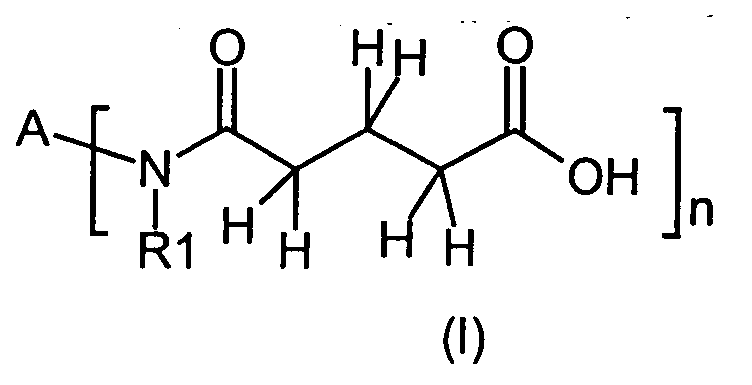
A further object of the invention therefore are glutaramide derivatives of
formula (I) or their physiologically acceptable salts
in which
R1 denotes a hydrogen atom, a C1-C4-alkyl radical or a C1-C4-hydroxyalkyl
radical;
A denotes the aromatic or heteroaromatic moiety of a mono or diamino dye
precursor
and
n is 1 or 2;
and cosmetic compositions for dyeing keratin fibers, particularly human hairs,
containing the above glutaramide derivatives of formula (I).
Examples for suitable compounds of formula (I) are mono-glutaramide or
di-glutaramide pro-dyes of 1,4-Diamino-2-methyl-benzene (p-Toluylene
diamine), 1,4-Diamino-2,6-dimethyl-benzene, 1,4-Diamino-3,5-diethyl-benzene,
1,4-Diamino-2,5-dimethyl-benzene, 1,4-Diamino-2,3-dimethyl-benzene,
2-Chlor-1,4-diaminobenzene, 1,4-Diamino-2-(thiophen-2-yl)benzene,
1,4-Diamino-2-(thiophen-3-yl)benzene, 1,4-Diamino-2-(pyridin-3-yl)benzene,
2,5-Diaminobiphenyl, 1,4-Diamino-2-methoxymethyl-benzene,
1,4-Diamino-2-aminomethyl-benzene, 1,4-Diamino-2-hydroxymethyl-benzene,
1,4-Diamino-2-(2-hydroxyethoxy)-benzene, 2-(2-(Acetylamino)ethoxy)-1,4-diamino-benzene,
4-Phenylamino-anilin, 4-Dimethylamino-anilin,
4-Diethylamino-anilin, 4-Dipropylamino-anilin, 4-[Ethyl(2-hydroxyethyl)amino]-anilin,
4-[Di(2-hydroxyethyl)amino]-anilin, 4-[Di(2-hydroxyethyl)amino]-2-methyl-anilin,
4-[(2-Methoxyethyl)amino]-anilin, 4-[(3-Hydroxypropyl)amino]-anilin,
4-[(2,3-Dihydroxypropyl)amino]-anilin, 1,4-Diamino-2-(1-hydroxyethyl)benzene,
1,4-Diamino-2-(2-hydroxyethyl)-benzene, 1,4-Diamino-2-(1-methylethyl)-benzene,
1,3-Bis[(4-aminophenyl)(2-hydroxyethyl)amino]-2-propanol,
1,4-Bis[(4-Aminophenyl)amino]-butane, 1,8-Bis(2,5-diamino-phenoxy)-3,6-dioxaoctane,
4-Amino-phenol, 4-Amino-3-methyl-phenol,
4-Amino-3-(hydroxymethyl)-phenol, 4-Amino-3-fluor-phenol,
4-Methylamino-phenol, 4-Amino-2-(aminomethyl)-phenol, 4-Amino-2-(hydroxymethyl)-phenol,
4-Amino-2-fluor-phenol, 4-Amino-2-[(2-hydroxyethyl)amino]methyl-phenol,
4-Amino-2-methyl-phenol, 4-Amino-2-(methoxymethyl)phenol,
4-Amino-2-(2-hydroxyethyl)-phenol, 5-Amino-salicylic acid,
2,5-Diamino-pyridin, 2,4,5,6-Tetraamino-pyrimidin, 2,5,6-Triamino-4-(1H)-pyrimidone,
4,5-Diamino-1-(2-hydroxyethyl)-1H-pyrazol, 4,5-Diamino-1-(1-methylethyl)-1H-pyrazol,
4,5-Diamino-1-[(4-methylphenyl)methyl]-1H-pyrazol,
1-[(4-Chlorphenyl)methyl]-4,5-diamino-1H-pyrazol, 4,5-Diamino-1-methyl-1H-pyrazol,
2-Amino-phenol, 2-Amino-6-methyl-phenol or 2-Amino-5-methyl-phenol.
Preferred compounds of formula (I) are those in which A denotes a benzene
ring or a pyrazol ring; e.g. 4-(4-amino-phenylcarbamoyl)-butyric acid,
4-[4-(4-carboxy-butyrylamino)-phenylcarbamoyl]-butyric acid,
4-(4-hydroxy-phenylcarbamoyl)-butyric acid, 4-[5-Amino-1-(2-hydroxy-ethyl)-1H-pyrazol-4-ylcarbamoyl]-butyric
acid, 4-(2-aminomethyl-4-amino-phenylcarbamoyl)-butyric
acid, 4-(2-chloro-4-amino-phenylcarbamoyl)-butyric
acid, 4-(2-methyl-4-amino-phenylcarbamoyl)-butyric acid, 4-(2-phenyl-4-amino-phenylcarbamoyl)-butyric
acid, 4-(2-pyridyl-4-amino-phenylcarbamoyl)-butyric
acid, 4-(2-thienyl-4-amino-phenylcarbamoyl)-butyric acid,
4-(3-2-hydroxyethyl-4-amino-phenylcarbamoyl)-butyric acid,
4-(3-aminomethyl-4-amino-phenylcarbamoyl)-butyric acid, 4-(3-chloro-4-amino-phenylcarbamoyl)-butyric
acid, 4-(3-methyl-4-amino-phenylcarbamoyl)-butyric
acid, 4-(3-phenyl-4-amino-phenylcarbamoyl)-butyric acid, 4-(3-pyridyl-4-amino-phenylcarbamoyl)-butyric
acid, 4-(3-thienyl-4-amino-phenylcarbamoyl)-butyric
acid, 4-(2-methyl-4-(4-Carboxy-butyrylamino)-phenylcarbamoyl)-butyric
acid, 4-(2-phenyl-4-(4-carboxy-butyrylamino)-phenylcarbamoyl)-butyric
acid, 4-(2-pyridyl-4-(4-carboxy-butyrylamino)-phenylcarbamoyl)-butyric
acid, 4-(2-thienyl-4-(4-carboxy-butyrylamino)-phenylcarbamoyl)-butyric
acid, 4-(3-(2-hydroxyethyl)-4-(4-carboxy-butyrylamino)-phenylcarbamoyl)-butyric
acid, 4-(3-aminomethyl-4-(4-carboxy-butyrylamino)-phenylcarbamoyl)-butyric
acid, 4-(3-chloro-4-(4-carboxy-butyrylamino)-phenylcarbamoyl)-butyric
acid, 4-(3-methyl-4-(4-carboxy-butyrylamino)-phenylcarbamoyl)-butyric
acid, 4-(3-phenyl-4-(4-carboxy-butyrylamino)-phenylcarbamoyl)-butyric
acid, 4-(3-pyridyl-4-(4-carboxy-butyrylamino)-phenylcarbamoyl)-butyric
acid, 4-(3-thienyl-4-(4-carboxy-butyrylamino)-phenylcarbamoyl)-butyric
acid, 4-(2-methyl-4-hydroxy-phenylcarbamoyl)-butyric
acid, 4-(3-methyl-4-hydroxy-phenylcarbamoyl)-butyric
acid, 4-[5-Amino-1-(isopropyl)-1H-pyrazol-4-ylcarbamoyl]-butyric acid,
4-[5-Amino-1-(phenyl)-1H-pyrazol-4-ylcarbamoyl]-butyric acid, 4-[5-Amino-1-(benzyl)-1
H-pyrazol-4-ylcarbamoyl]-butyric acid, 4-[5-(4-Carboxy-butyrylamino)-1-(isopropyl)-1H-pyrazol-4-ylcarbamoyl]-butyric
acid,
4-[5-(4-Carboxy-butyrylamino)-1-(phenyl)-1H-pyrazol-4-ylcarbamoyl]-butyric
acid and 4-[5-(4-Carboxy-butyrylamino)-1-(benzyl)-1H-pyrazol-4-ylcarbamoyl]-butyric
acid.
Particularly preferred compounds of formula (I) are 4-[4-(4-carboxy-butyrylamino)-phenylcarbamoyl]-butyric
acid, 4-[5-Amino-1-(2-hydroxy-ethyl)-1H-pyrazol-4-ylcarbamoyl]-butyric
acid, 4-(2-methyl-4-amino-phenylcarbamoyl)-butyric
acid, 4-[5-Amino-1-(isopropyl)-1H-pyrazol-4-ylcarbamoyl]-butyric
acid, 4-(3-(2-hydroxyethyl)-4-(4-carboxy-butyrylamino)-phenylcarbamoyl)-butyric
acid.
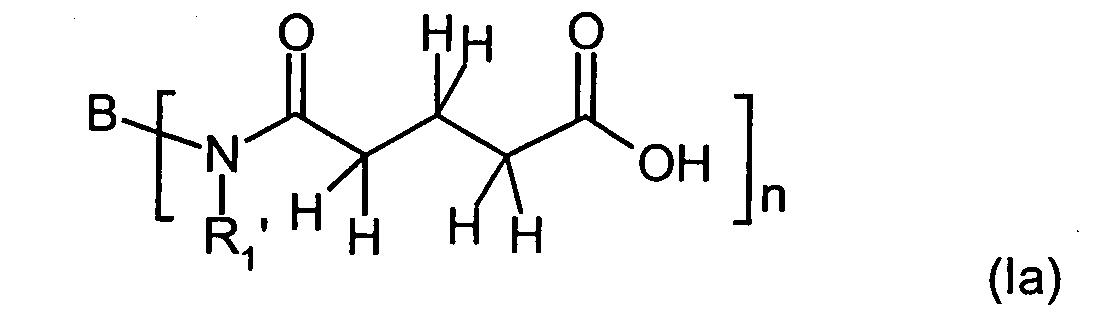
A further object of the present invention are glutaramide derivatives of direct
dyes of formula (la) or their physiologically acceptable salts,
in which
R1' denotes hydrogen, a C1-C4-alkyl radical or a C1-C4-hydroxyalkyl radical,
n is 1 or 2,
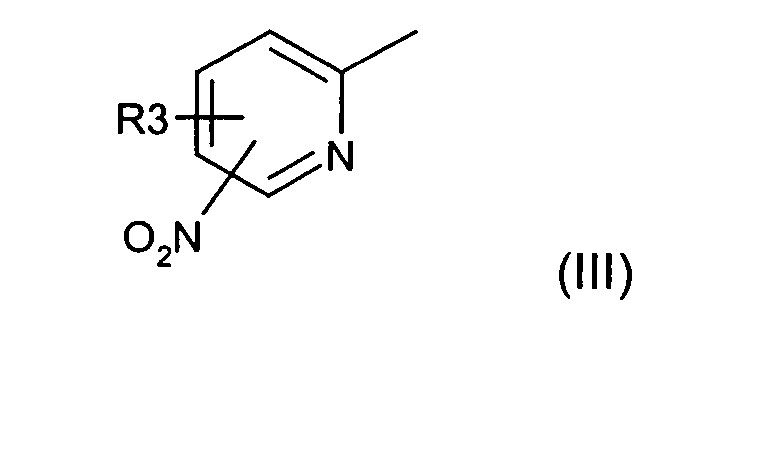
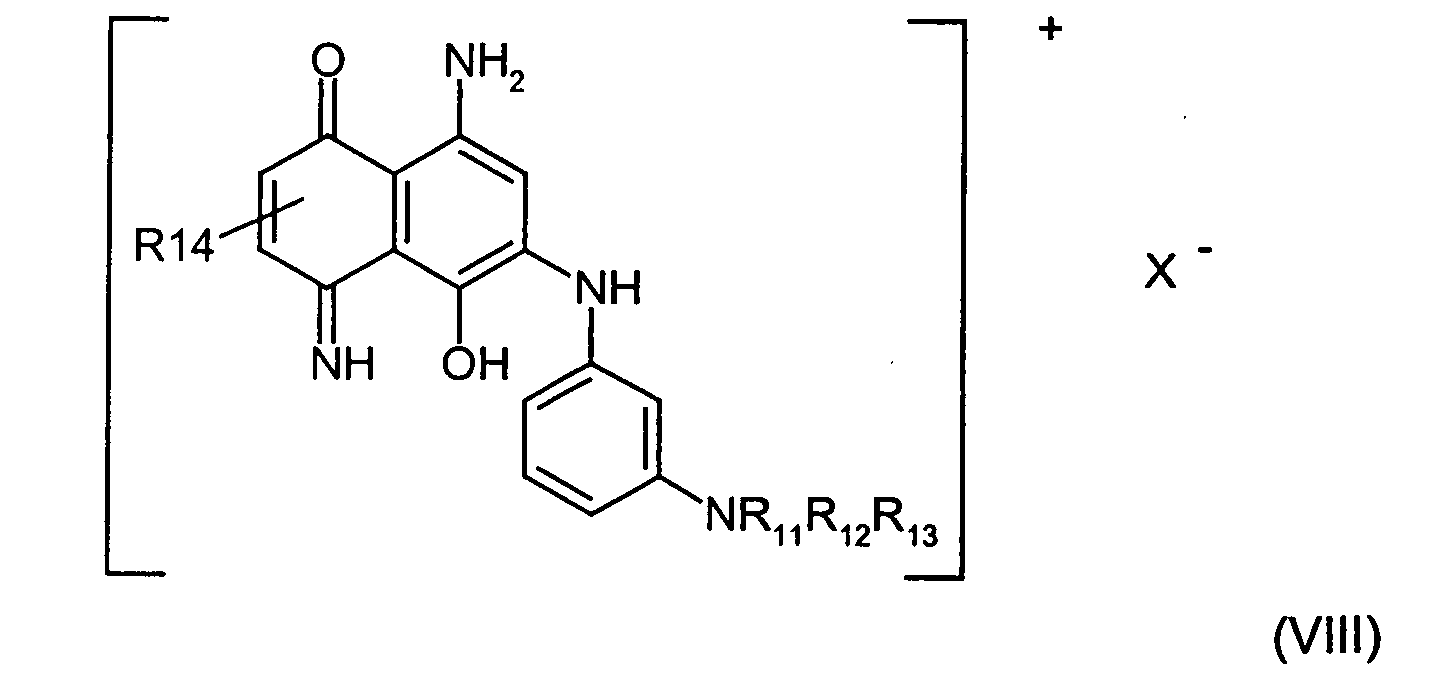
B denotes a residue selected from the group consisting of
According to this invention, amine-containing direct dyes that are useful as the
basis for the preparation of a pro-dye according to formula (la) especially
include nitroanilines, amino-nitrophenols, amino-nitropyridines, aminoanthraquinones,
amino-azodyes and the like.
Examples for suitable pro-dyes of formula (la) are mono-glutaramide or di-glutaramide
derivatives of the following direct dyes:
1-Amino-3-methyl-4-[(2-hydroxyethyl)amino]-6-nitrobenzene (HC Violet No. 1),
2-((4-Amino-2-nitrophenyl)amino)-5-dimethylamino-benzoic acid (HC Blue No.
13), 1-Amino-4-[(2-hydroxyethyl)amino]-2-nitrobenzene (HC Red No. 7), 2-Amino-4,6-dinitro-phenol,
1,4-Diamino-2-nitrobenzene (CI76070),
4-Amino-2-nitro-diphenylamine (HC Red No. 1), 1-Amino-4-[di(2-hydroxyethyl)amino]-2-nitrobenzene-hydrochloride
(HC Red No. 13),
1-Amino-5-chloro-4-[(2-hydroxyethyl)amino]-2-nitrobenzene,
4-Amino-1-[(2-hydroxyethyl)amino]-2-nitrobenzene (HC Red No. 3),
1-Amino-4-((2,3-dihydroxypropyl)amino)-5-methyl-2-nitrobenzene,
1-Amino-4-(methylamino)-2-nitrobenzene, 4-Amino-2-nitro-1-((prop-2-en-1-yl)amino)-benzene,
4-Amino-3-nitrophenol, 1-Amino-5-chloro-4-[(2,3-dihydroxypropyl)amino]-2-nitrobenzene
(HC Red No. 10), 2-[(4-Amino-2-nitrophenyl)amino]-benzoic
acid, 2-Amino-6-chloro-4-nitrophenol-hydrochloride,
2,5-diamino-6-nitropyridine, 6-Amino-3-((2-hydroxy-ethyl)amino)-2-nitropyridine,
3-Amino-6-((2-hydroxyethyl)amino)-2-nitro-pyridine,
3-Amino-6-(ethylamino)-2-nitropyridine, 3-Amino-6-(methylamino)-2-nitropyridine,
7-Amino-3,4-dihydro-6-nitro-2H-1,4-benzoxazine (HC Red No.
14) 1,2-Diamino-4-nitrobenzene (CI76020),
1-Amino-2-[(2-hydroxyethyl)-amino]-5-nitrobenzene (HC Yellow No. 5),
2-Amino-3-nitrophenol, 1-Amino-2-methyl-6-nitrobenzene, 1-Amino-4-((2-aminoethyl)amino)-5-methyl-2-nitro-benzene,
1-Amino-4-hydroxy-9,10-anthraquinone
(CI60710, Disperse Red 15), 1-[(3-Aminopropyl)amino]-4-methylamino-9,10-
anthraquinone (HC Blue No. 8), 1-[(3-Aminopropyl)-amino]-9,10-
anthraquinone (HC Red No. 8), 1,4-Diamino-2-methoxy-9,10-anthraquinone
(CI62015, Disperse Red No. 11), 1,4-Diamino-9,10-anthraquinone
(CI61100, Disperse Violet No. 1), 1-Amino-4-(methylamino)-9,10-
anthraquinone (CI61105, Disperse Violet No. 4), Basic Blue 22,
8-Amino-2-bromo-5-hydroxy-4-imino-6-[(3-(trimethylammonio)phenyl)-amino]-1(4H)-naphthalinone-chloride
(CI56059; Basic Blue No. 99),
Tri(4-amino-3-methylphenyl)carbenium-chloride (CI42520; Basic Violet No.
2), Di(4-aminophenyl)(4-amino-3-methylphenyl)carbenium-chloride
(CI42510; Basic Violet No. 14), 1,3-Bis[(2,4-diamino-5-methylphenyl)azo]-3-methylbenzol
(CI21010;Basic Brown No. 4), 1-[(4-Amino-phenyl)azo]-7-(trimethylammonio)-2-naphthol-chloride
(CI12250; Basic Brown No. 16), 3-[(4-Amino-2,5-dimethoxyphenyl)azo]-N,N,N-trimethyl-benzeneaminium-chloride
(CI112605, Basic Orange No. 69), 1-[(4-Amino-2-nitrophenyl)-azo]-7-(trimethylammonio)-2-naphthol-chloride
(Basic Brown No. 17),
1-[(4-Amino-3-nitrophenyl)azo]-7-(trimethylammonio)-2-naphthol-chloride
(CI12251; Basic Brown No. 17), 3,7-Diamino-2,8-dimethyl-5-phenyl-phenazinium-chloride
(CI50240; Basic Red No. 2), 1-[Di(2-hydroxyethyl)-amino]-4-[(4-nitrophenyl)azo]-benzene
(Disperse Black No. 9),
4-[(4-Amino-phenyl)azo]-1-[di(2-hydroxyethyl)amino]-3-methylbenzene (HC
Yellow No. 7) and 2,6-Diamino-3-((pyridin-3-yl)azo)pyridine.
Particularly preferred compounds of formula (la) are 5-[5-amino-6-nitro-2-(pyridinyl)amino]-5-oxopentanoic
acid and 5-[(6-amino-5-(3-pyridinyl-diazenyl)-2-pyridinyl)amino]-5-oxopentanoic
acid.
Pro-dye derivatives of reactive dyes can also be prepared. For example, the
glutaramide derivative of p-aminobenzaldehyde, or a substituted analog
thereof, can be used as a stable pro-dye precursor. The pro-dye is stable and
unreactive until contacted with the enzyme glutaryl acylase, whereupon the
reactive p-aminobenzaldehyde, or substituted analog thereof, is released.
A further object of the present invention are cosmetic compositions for dyeing
keratin fibers, particularly human hairs, containing pro-dyes, especially the
above glutaramide derivatives of formula (I) and (la).
The ready-to-use dyeing composition contains from about 0.01 to about 25
percent by weight of said pro-dye, especially of said compound of formula (I)
and/or (la); a concentration of from about 0.02 to 4 percent by weight being
particularly preferred.
The pro-dyes of formula (I) usually are used in combination with other
couplers or developpers. As coupler substance preferably can be used
resorcinol, 4-chlororesorcinol, 4,6-dichlororesorcinol, 2-methylresorcinol,
2-amino-4-(2'-hydroxyethyl)-aminoanisole, m-phenylenediamine, 5-amino-2-methylphenol,
2,4-diamino-phenoxyethanol, 4-amino-2-hydroxy-phenoxyethanol,
1-naphthol, 3-aminophenol, 3-amino-2-methylphenol, 4-hydroxy-1,2-methylenedioxy-benzene,
4-amino-1,2-methylenedioxybenzene, 2,4-diamino-5-methyl-phenetole,
4-hydroxyindole and 3,5-diamino-2,6-dimethoxypyridine.
The coupler and developer substances can be contained in the dye
compostions according to the invention either alone or as mixtures which each
other. The total amount of coupler substances and developer substances in
the dye composition according to the invention (relative to the total amount of
the dye composition) is from about 0.01 to 28 percent by weight respectively,
preferably from about 0.02 to 8.0 by weight and especially from 0.2 to 6.0
percent by weight.
For optimizing the coloring result and achieving specific color effects,
additional compounds from the group of direct-acting dyestuffs, for example
acid dyes, basic dyes, aromatic nitro dyestuffs, azo dyestuffs, anthraquinone
dyestuffs or triphenylmethane dyestuffs may be added, either alone or as a
mixture thereof, to the coloring preparation according to the invention.
Suitable nitro dyestuffs are, for example, picramic acid, 4-(2',3'-dihydroxy-propyl)-amino-3-nitro-trifluoro-methyl
benzene, 4,N-ethyl-N-(2'-hydroxyethyl)-amino-1-(2'-hydroxyethyl)-amino-2-nitrobenzene,
2-chloro-6-ethylamino-4-nitrophenol,
1-hydroxy-2-β-hydroxyethylamino-4,6-dinitrobenzene, 4-(2'-hydroxyethyl)-amino-3-nitro-chlorobenzene,
2-amino-6-chloro-4-nitrophenol
and 4-(2'-hydroxyethyl)-amino-3-nitro-methyl benzene.
Suitable azo dyestuffs are, for example, 1-(2'-methoxyphenylazo)-2-hydroxy-7-trimethyl-ammonium-naphthalene
(Basic Red 76), 4-(4'-sulfo-1-phenylazo)-1-(4"-sulfophenyl)-3-carboxy-5-hydroxypyrazolon
(Acid Yellow 23), 4-amino-4'-bis[2"-hydroxyethyl]-amino-azobenzene
(Disperse Black 9) and 1-(4'-aminophenylazo)-2-hydroxy-7-trimethyl-ammonium-naphthalene
(Basic Braun 16).
Suitable anthraquinone dyestuffs are, for example, 1-methylamino-4-(2'-hydroxyethyl)amino-anthraquinone
(Disperse Blue 3), 1-amino-4-hydroxy-anthraquinone
(Disperse Red 15), 2-methoxy-1,4-diamino-anthraquinone
(Disperse Red 11), 1,4-diamino-anthraquinone (Disperse Violet 1), 1-amino-4-methylamino-anthraquinone
(Disperse Violet 4), 1,4-bis(2',3'-dihydroxypropyl)amino-anthraquinone,
1-methylamino-4-(amino-n-propyltrimethylammonium)-anthraquinone
(Basic Blue 22), 1,4-bis-(2-hydroxyethyl)amino-5,8-dihydroxy-anthraquinone
(Disperse Blue 7) and 1-methylamino-4-aminopropylamino-anthraquinone
(HC Blue 8).
Examples for triphenylmethane dyestuffs are [4-[[4-diethylamino]-phenyl][4-(ethylamino)-1-naphthyl]methylene]-2,5-cyclohexadiene-1-ylidene]-N-ethyl-ethaneamine
(Basic Blue 7) and 4',4',4"-triamino-3-methyl triphenylcarbenium
chloride (Basic Violet 14, Fuchsin AN).
The preferred amount of additional direct-acting dyestuffs to be used is from
about 0.01% to about 5% by weight of the total dyeing composition. An
especially preferred amount of additional direct-acting dyestuffs to be used is
from about 0.1% to about 4% by weight of the total dyeing composition.
The dyeing composition may be prepared in various physical forms. For
example, a solution, preferably an aqueous or aqueous alcoholic solution can
be used. Alternatively, the dyeing composition may be prepared as a cream,
gel, emulsion, powder or solid with a granular consistency. The composition
consists of a mixture of the dye components with, optionally, other cosmetic
additives usual for such preparations.
Usual cosmetic additives are, for example, solvents, such as water, low
aliphatic monohydroxy or polyhydroxy alcohols, their esters and ethers, for
example alkanols, particularly with an alkyl chain comprising 1 to 4 carbon
atoms, such as ethanol, n-propanol or isopropanol, butanol, isobutanol;
bivalent or trivalent alcohols, particularly of the type having 2 to 6 carbon
atoms, such as ethylene glycol, propylene glycol, 1,3-propanediol,
1,4-butanediol, 1,5-pentanediol, 1,6-hexanediol, 1,2,6-hexanetriol, glycerine,
diethylene glycol, dipropylene glycol, polyalkylene glycols, such as triethylene
glycol, polyethylene glycol, tripropylene glycol and polypropylene glycol; low
alkyl ethers of multivalent alcohols, such as ethylene glycol monomethyl ether,
ethylene glycol monoethyl ether, ethylene glycol monopropyl ether or ethylene
glycol monobutyl ether, diethylene glycol monomethyl ether or diethylene
glycol mono ethyl ether, triethylene glycol monomethyl ether or triethylene
glycol mono ethyl ether; ketones and keto alcohols, especially such with 3 to 7
carbon atoms in their molecules, such as acetone, methyl ethyl ketone,
diethyl ketone, methyl isobutyl ketone, methyl phenyl ketone, cyclopentanone,
cyclohexanone and diacetone alcohol; ethers such as dibutyl ether,
tetrahydrofurane, dioxane or diisopropyl ether; esters such as ethyl formate,
methyl formate, methyl acetate, ethyl acetate, propyl acetate, butyl acetate,
phenyl acetate, ethylene glycol monoethyl ether acetate or acetic acid hydroxy
ethyl ester; amids such as dimethyl formamide, dimethyl acetamide or
N-methyl-pyrrolidone; as well as urea, tetramethyl urea and thiodiglycol;
moreover, wetting agents or emulsifyers from the group of anionic, cationic,
non-ionogenic, amphoteric or zwitterionic surface-active substances, such as
fatty aclohol sulfates, alkyl-sulfonates, alkylbenzene sulfonates, alkyltrimethyl
ammonium salts, alkylbetaines, α-olefin sulfonates, oxethylated fatty alcohols,
oxethylated nonylphenoles, fatty acid alkanolamines, oxethylated fatty acid
esters, fatty alcohol polyglycol ether sulfates, alkylpolyglucosides; thickening
agents, such as high fatty alcohols, starch, cellulose derivatives, vaseline,
paraffin oil, fatty acids and other fatty components in emulsified form, water-soluble
polymeric thickening agents, for instance natural rubbers, guar gum,
xanthan gum, carob flour, pectine, dextrane, agar-agar, amylose,
amylopectine, dextrine, clays or synthetic hydrocolloides, such as polyvinyl
alcohol; also conditioning agents, such as lanolin derivatives, cholesterol,
pantothenic acid, water-soluble cationic polymers, protein derivatives,
provitamins, vitamins, plant extracts, sugar and betaine; auxiliary agents, such
as electrolytes, antioxidants, fatty amides, sequestrants, film-forming agents
and preservatives.
The aforementioned compounds are used in the amounts usual for such
purposes, for example, wetting agents and emulsifying agents in
concentrations of about 0.5 to 30 % by weight, thickening agents of about 0.1
to 25 % by weight, conditioning agents in concentrations of about 0.1 to 5.0 %
by weight.
In a further embodiment, this invention is directed toward dyeing compositions
for coloring dye-susceptible materials, including but not limited to natural and
synthetic fibers, textiles, paper, plastics, polymers, skins, leathers, and the
like. In a particularly preferred embodiment, compositions in accord with this
invention can be used to dye keratinous fibers such as hair.
Compositions in accord with this invention contain a pro-dye -especially a
compound of formula (I) or (la)- and an enzyme capable of reacting, cleaving,
or modifying the enzymatically-labile functionality in the pro-dye to form a dye
substance or direct dye.
The content of pro-dye in these compositions preferably varies from 0.01 to 20
percent by weight, relative to the amount of dyestuff in the pro-dye.
The aforesaid pro-dye and enzyme components of the dyeing composition of
this invention may be prepared, for example, as a solution, emulsion, a
suspension or similar. In a preferred embodiment, the solution is an aqueous
or aqueous alcoholic solution. In other embodiments, the composition may be
prepared as a cream, gel, emulsion, powder or as a solid of granular
consistency. The composition consists of, at a minimum, a mixture of the
pro-dye and enzyme.
As already described, for optimizing the coloring result and achieving specific
color effects, further compounds from the group of direct-acting dyestuffs, for
example acid dyes, basic dyes, aromatic nitro dyestuffs, azo dyestuffs,
anthraquinone dyestuffs or triphenylmethane dyestuffs may be added, either
alone or as a mixture thereof, to the coloring composition according to the
invention. Compositions useful in the practice of this invention may therefore
contain additional compounds in addition to the pro-dye and suitable enzyme.
Suitable nitro dyestuffs that may be added are, for example, picramic acid,
4-(2',3'-dihydroxypropyl)-amino-3-nitro-trifluoro-methyl benzene, 4,N-ethyl-N-(2'-hydroxyethyl)-amino-1-(2'-hydroxyethyl)-amino-2-nitrobenzene,
2-chloro-6-ethylamino-4-nitrophenol,
1-hydroxy-2-β-hydroxyethylamino-4,6-dinitrobenzene,
4-(2'-hydroxyethyl)-amino-3-nitro-chlorobenzene, 2-amino-6-chloro-4-nitrophenol
and 4-(2'-hydroxyethyl)-amino-3-nitro-methyl benzene.
Suitable azo dyestuffs are, for example, 1-(2'-methoxyphenylazo)-2-hydroxy-7-trimethyl-ammonium-naphthalene
(Basic Red 76), 4-(4'-sulfo-1-phenylazo)-1-(4"-sulfophenyl)-3-carboxy-5-hydroxypyrazolon
(Acid Yellow 23), 4-amino-4'-bis[2"-hydroxyethyl]-amino-azobenzene
(Disperse Black 9) and 1-(4'-amino-phenylazo)-2-hydroxy-7-trimethyl-ammonium-naphthalene
(Basic Brown 16).
Suitable anthraquinone dyestuffs are, for example, 1-methylamino-4-(2'-hydroxyethyl)amino-anthraquinone
(Disperse Blue 3), 1-amino-4-hydroxy-anthraquinone
(Disperse Red 15), 2-methoxy-1,4-diamino-anthraquinone
(Disperse Red 11), 1,4-diamino-anthraquinone (Disperse Violet 1), 1-amino-4-methylamino-anthraquinone
(Disperse Violet 4), 1,4-bis(2',3'-dihydroxy-propyl)amino-anthraquinone,
1-methylamino-4-(amino-n-propyltrimethyl-ammonium)-anthraquinone
(Basic Blue 22), 1,4-bis-(2-hydroxyethyl)amino-5,8-dihydroxy-anthraquinone
(Disperse Blue 7) and 1-methylamino-4-aminopropylamino-anthraquinone
(HC Blue 8).
Examples for triphenylmethane dyestuffs are [4-[[4-diethylamino]-phenyl][4-(ethylamino)-1-naphthyl]methylene]-2,5-cyclohexadiene-1-ylidene]-N-ethyl-ethaneamine
(Basic Blue 7) and 4',4',4"-triamino-3-methyl triphenylcarbenium
chloride (Basic Violet 14, Fuchsin AN).
It is also possible to add known oxidative dye precursors, e.g. o-diaminobenzes,
m-diaminobenzes or p-diaminobenzes and their derivatives,
resorcinol and its derivatives, 4,5-diaminopyrazoles or m-aminophenols or
p-aminophenols and their derivatives.
The preferred amount of additional direct-acting dyestuffs and/or oxidative dye
precursors to be used is from about 0.01% to about 5% by weight. An
especially preferred amount of additional direct-acting dyestuffs and/or
oxidative dye precursors to be used is from about 0.1 % to about 4% by
weight.
The additional components of the dyeing composition may be, for example, a
solution, preferably an aqueous or aqueous alcoholic solution, or may be of
cream, gel, emulsion, powder or granular consistency.
Optionally, the composition may contain additional components or cosmetic
additives usual for such preparations. In the case of a composition for the
coloration of hair, for example, usual cosmetic additives such as water, low
aliphatic monohydroxy or polyhydroxy alcohols, their esters and ethers, for
example alkanols, particularly with an alkyl chain comprising 1 to 4 carbon
atoms, such as ethanol, n-propanol or isopropanol, butanol, isobutanol;
bivalent or trivalent alcohols, particularly of the type having 2 to 6 carbon
atoms, such as ethylene glycol, propylene glycol, 1,3-propanediol,
1,4-butanediol, 1,5-pentanediol, 1,6-hexanediol, 1,2,6-hexanetriol, glycerine,
diethylene glycol, dipropylene glycol, polyalkylene glycols, such as triethylene
glycol, polyethylene glycol, tripropylene glycol and polypropylene glycol; low
alkyl ethers of multivalent alcohols, such as ethylene glycol monomethyl ether,
ethylene glycol monoethyl ether, ethylene glycol monopropyl ether or ethylene
glycol monobutyl ether, diethylene glycol monomethyl ether or diethylene
glycol mono ethyl ether, triethylene glycol monomethyl ether or triethylene
glycol mono ethyl ether; ketones and keto alcohols, especially such with 3 to 7
carbon atoms in their molecules, such as acetone, methyl ethyl ketone,
diethyl ketone, methyl isobutyl ketone, methyl phenyl ketone, cyclopentanone,
cyclohexanone and diacetone alcohol; ethers such as dibutyl ether, tetrahydrofurane,
dioxane or diisopropyl ether; esters such as ethyl formate,
methyl formate, methyl acetate, ethyl acetate, propyl acetate, butyl acetate,
phenyl acetate, ethylene glycol monoethyl ether acetate or acetic acid hydroxy
ethyl ester; amids such as dimethyl formamide, dimethyl acetamide or
N-methyl-pyrrolidone; as well as urea, tetramethyl urea and thiodiglycol;
moreover, wetting agents or emulsifyers from the group of anionic, cationic,
non-ionogenic, amphoteric or zwitterionic surface-active substances, such as
fatty aclohol sulfates, alkyl-sulfonates, alkylbenzene sulfonates, alkyltrimethyl
ammonium salts, alkylbetaines, α-olefin sulfonates, oxethylated fatty alcohols,
oxethylated nonylphenoles, fatty acid alkanolamines, oxethylated fatty acid
esters, fatty alcohol polyglycol ether sulfates, alkylpolyglucosides; thickening
agents, such as high fatty alcohols, starch, cellulose derivatives, vaseline,
paraffin oil, fatty acids and other fatty components in emulsified form, water-soluble
polymeric thickening agents, for instance natural rubbers, guar gum,
xanthan gum, carob flour, pectine, dextrane, agar-agar, amylose,
amylopectine, dextrine, clays or synthetic hydrocolloides, such as polyvinyl
alcohol; also conditioning agents, such as lanolin derivatives, cholesterol,
pantothenic acid, water-soluble cationic polymers, protein derivatives,
provitamins, vitamins, plant extracts, sugar and betaine; auxiliary agents, such
as electrolytes, antioxidants, fatty amides, sequestrants, film-forming agents
and preservatives.
The aforementioned compounds are used in the amounts usual for such
purposes, for example, wetting agents and emulsifying agents in
concentrations of about 0.5% to about 30% by weight, thickening agents of
from about 0.1% to about 25% by weight, conditioning agents in
concentrations of form about 0.1% to about 5.0 % by weight.
In a particularly preferred embodiment, the pro-dye and enzyme are prepared
as separate components (A) and (B), and the two components are combined
just before use to form the ready-to-apply dyeing composition.
In another embodiment, the pro-dye and enzyme are combined and stored in
an aqueous solution at a pH at which the enzyme and pro-dye are stable but
at which the enzyme-catalyzed reaction does not take place. The pH is then
adjusted into the range at which the enzyme is catalytically active at the time
dyeing is desired.
The dyeing compositions according to this invention may be applied in various
ways.
If the pro-dye is used without oxidizing agents, the components (A) and (B)
may be mixed prior to the application and be spread on the material to be
colored either immediately or after an incubation time of 15 to 45 minutes. The
mixture is left on the material to be colored, such as hair, at about 15 to 50 °C,
preferably 25 to 45 °C, for a time period of from about 1 minute to about 75
minutes, and more preferably of from about 25 minutes to about 40 minutes.
The material is then rinsed with water and dried. In the case of hair coloring,
after rinsing, the hair may be washed with a shampoo and/or subsequently be
rinsed with a weak organic acid, such as citric acid, glycolic acid, lactic acid,
malic acid, ascorbic acid or tartaric acid.
If pro-dyes of oxidative dye precursors are used or an additional lightening of
the material (e.g. hair) is intended, it is also possible to mix the components
(A) and (B) with an oxidizing agent (e.g. a 1 to 12 percent hydrogen peroxide
or its addition complexes containing aqueous solution) prior to use and to
apply the mixture afterwards. In this case the mixture is left on the material to
be colored, such as hair, at about 15 to 50 °C, preferably 25 to 45 °C, for a
time period of 10 to 45 minutes, preferably of 25 to 40 minutes. The dyed
material is then rinsed with water and dried. In the case of hair coloring, after
rinsing, the hair may be washed with shampoo and/or subsequently be rinsed
with a weak organic acid, such as citric acid, glycolic acid, lactic acid, malic
acid, ascorbic acid or tartaric acid.
The dyeing preparation is applied at a pH of from about 4 to about 10.5, more
preferably of from about 6.0 to about 10, most preferably of from about 7.0 to
about 9.5.
It is also possible, if desired, to add to the component (A) of the dyeing
composition a thio compound having a reducing action, such as
β-mercaptoethanol, sodium thioglycolate or dithiothreitol. In the case of hair
dyeing, such thiol compounds are particularly useful.
The dyeing composition/dyeing method according to the present invention
achieves (especially on hair) color results with excellent fastness properties,
especially with regard to light, shampooing and friction. Depending on the type
and concentration of the compounds of the general formula (I), a variety of
different color shades can be obtained with the coloring preparation according
to this invention. The high intensity and purity of the colors obtained with the
preparation according to the invention are particularly noteworthy. In addition,
the described coloring preparation also permits coloring grey and chemically
undamaged hair without problems and obtaining a very good covering effect.
The color results thus achieved are, irrespective of different hair structures,
uniform and highly reproducible.
The invention is now described in more detail with the following examples,
which are for illustrative purposes and are not intended to limit the scope of
the invention.
Examples
A. Preparation of pro-dyes
Example 1: Preparation of di-glutaramide of p-phenylenediamine
To a mixture of 0.9 g (5 mmol) of p-phenylenediamine dihydrochloride and 2.0
ml of triethylamine in 30 ml of chloroform, a solution of 1.14 g (10 mmol) of
glutaric anhydride in 20 ml of chloroform was added dropwise at 0°C. The
mixture was allowed to warm up to room temperature and stirred for 3 h, and
then was poured into 50 ml of 5% aqueous HCI. A white precipitate was
formed, and filtration yielded a colorless solid. The colorless solid so obtained
was washed with water and dichloromethane. After drying, the product di-glutaramide
of p-phenylenediamine weighed 1.37 grams (91% yield).
Example 2: Preparation of di-phenylacetamide of p-phenylenediamine
To a mixture of 0.9 g (5 mmol) of p-phenylenediamine dihydrochloride and 2.0
ml of triethylamine in 30 ml of chloroform, a solution of 1.45 g (10 mmol) of
phenylacetic chloride in 20 ml of chloroform was added dropwise at 0°C. The
mixture was allowed to warm up to room temperature, and then was poured
into 50 ml of 5% aqueous HCI. The organic layer was separated, and the
aqueous layer was extracted twice with 30 ml of chloroform. The combined
organic extracts were washed twice with H2O and dried over anhydrous
Na2SO4. The solvent was removed to give the product di-phenylacetamide of
p-phenylenediamine as a colorless solid (1.47 g, 90% yield).
Example 3: Preparation of glutaramide pro-dye for p-aminobenzaldehyde
To a solution of 0.61 grams (5.0 mmol) of p-aminobenzaldehyde in 10 ml of
chloroform containing two drops of triethylamine, a solution of 0.57 g (5 mmol)
of glutaric anhydride in 10 ml of chloroform was added dropwise at 0°C. The
mixture was allowed to warm up to room temperature and then stirred for 3
hours, and then the reaction mixture was poured into 30 ml of 5% aqueous
HCI. The organic layer was separated in a separatory funnel, and the aqueous
layer was extracted with 20 ml of chloroform. The combined organic extracts
were washed twice with H2O and dried over anhydrous Na2SO4. The solvent
was removed by evaporation to give the product glutaramide of
p-aminobenzaldehyde as a colorless solid (0.9 g, 82% yield).
Example 4: Preparation of the phenylacetamide of p-aminobenzylalcohol
To a solution of 0.61 grams (5.0 mmol) of aminobenzylalcohol in 10 ml of
chloroform and two drops of triethylamine, a solution of 0.72 g (5 mmol) of
phenylacetic chloride in 10 ml of chloroform was added dropwise at 0°C. The
mixture was allowed to warm up to room temperature slowly, and then was
poured into 30 ml of 5% aqueous HCI. The organic layer was separated, and
the aqueous layer was extracted with 20 ml of chloroform. The combined
organic extracts were washed twice with H2O and dried over anhydrous
Na2SO4. The solvent was removed to give a pale yellow solid, which was
recrystallized in toluene to give the phenylacetamide of aminobenzylalcokol as
a colorless solid (1.02 g, 88% yield).
Example 5: Preparation of glutaramide pro-dye for p-aminophenol
To a solution of 0.55 grams (5.0 mmol) of p-aminophenol in 10 ml of
chloroform containing two drops of triethylamine, a solution of 0.57 g (5 mmol)
of glutaric anhydride in 10 ml of chloroform is added dropwise at 0°C. The
mixture is allowed to warm up to room temperature and then stirred for 3
hours, and then the reaction mixture is poured into 30 ml of 5% aqueous HCI.
The organic layer is separated in a separatory funnel, and the aqueous layer
is extracted with 20 ml of chloroform. The combined organic extracts are
washed twice with H2O and dried over anhydrous Na2SO4. The solvent is
removed by evaporation to give the product glutaramide as a colorless solid
(0.85 g, 82% yield).
Example 6: Preparation of phenylacetamide pro-dye for p-aminophenol
To a solution of 0.55 grams (5.0 mmol) of p-aminophenol in 10 ml of
chloroform and two drops of triethylamine, a solution of 0.72 g (5 mmol) of
phenylacetic chloride in 10 ml of chloroform was added dropwise at 0°C. The
mixture was allowed to warm up to room temperature slowly, and then was
poured into 30 ml of 5% aqueous HCI. The organic layer was separated, and
the aqueous layer was extracted with 20 ml of chloroform. The combined
organic extracts were washed twice with H2O and dried over anhydrous
Na2SO4. The solvent was removed to give a pale yellow solid, which was
recrystallized in toluene to give the phenylacetamide as a colorless solid.
Example 7: Preparation of glutaramide pro-dye for o-phenylenediamine
To a mixture of 0.9 g (5 mmol) of o-phenylenediamine dihydrochloride and 2.0
ml of triethylamine in 30 ml of chloroform, a solution of 1.14 g (10 mmol) of
glutaric anhydride in 20 ml of chloroform is added dropwise at 0°C. The
mixture is allowed to warm up to room temperature and stirred for 3 h, and
then is poured into 50 ml of 5% aqueous HCI. A white precipitate is formed,
and filtration yielded a colorless solid. The colorless solid so obtained is
washed with water and dichloromethane. After drying, the product is obtained
as a colorless solid.
Example 8: Preparation of phenylacetamide pro-dye for o-phenylenediamine
To a mixture of 0.9 g (5 mmol) of o-phenylenediamine dihydrochloride and 2.0
ml of triethylamine in 30 ml of chloroform, a solution of 1.45 g (10 mmol) of
phenylacetic chloride in 20 ml of chloroform is added dropwise at 0°C. The
mixture is allowed to warm up to room temperature, and then is poured into 50
ml of 5% aqueous HCI. The organic layer was separated, and the aqueous
layer is extracted twice with 30 ml of chloroform. The combined organic
extracts are washed twice with H2O and dried over anhydrous Na2SO4. The
solvent is removed to give the product phenylacetamide (mixture of the mono-
and di-phenylacetamide) of p-phenylenediamine as a colorless solid.
Example 9: Preparation of L-phenylalanine amide pro-dye for
p-phenylenediamine
To a mixture of 0.9 g (5 mmol) of p-phenylenediamine dihydrochloride and 2.0
ml of triethylamine in 30 ml of chloroform, a solution of 2 g (5.5 mmol) of
N-t-BOC-L-phenylalanine N-hydroxysuccinimidyl ester (Sigma Chemical
Company, St. Louis, MO; product number B1880) in 20 ml of chloroform is
added dropwise at 0°C. The mixture is allowed to warm up to room
temperature, and then is poured into 50 ml of 5% aqueous HCI. After stirring
the aqueous mixture for 4 hours at room temperature, the organic layer is
separated and discarded, and the aqueous layer is extracted twice with 30 ml
of chloroform. The aqueous layer is evaporated to dryness under vacuum to
leave the product L-phenylalanine amide of p-phenylenediamine hydrochloride
salt as a residue.
Example 10: Preparation of L-phenylalanine amide pro-dye for p-aminobenzyl-alcohol
To a mixture of 0.55 g (5 mmol) of p-aminobenzylalcohol and 2.0 ml of
triethylamine in 30 ml of chloroform, a solution of 2 g (5.5 mmol) of
N-t-BOC-L-phenylalanine N-hydroxysuccinimidyl ester (Sigma Chemical
Company, St. Louis, MO; product number B1880) in 20 ml of chloroform is
added dropwise at 0°C. The mixture is allowed to warm up to room
temperature, and then is poured into 50 ml of 5% aqueous HCI. After stirring
the aqueous mixture for 4 hours at room temperature, the organic layer is
separated and discarded, and the aqueous layer is extracted twice with 30 ml
of chloroform. The aqueous layer is evaporated to dryness under vacuum to
leave the product L-phenylalanine amide of p-aminobenzylalcohol
hydrochloride salt as a residue.
Example 11: Preparation of 5-[5-amino-6-nitro-2-(pyridinyl)amino]-5-oxopentanoic
acid (=glutaramide of 2,5-diamino-6-nitropyridine)
To a mixture of 3.08g (20 mmol) of 2,5-diamino-6-nitropyridine and 0.36g
(3mmol) of N,N-dimethylamino-pyridine in 120 ml of tetrahydrofurane, 5.7 g (50
mmol) of glutaric anhydride were added at room temperature. The mixture was
stirred for 3 hours at room temperature and then refluxed for additional 3
hours. The mixture was then filtered, the solvent was evaporated and the crude
product was dissolved in ethylacetate and extracted three times with a 1N
sodium hydroxide solution. The combined aqueous extracts were acidified with
conc. HCI at 0 °C. A precipitate was formed, and filtration yielded an orange
solid. The solid so obtained was washed with water. After drying 4,33 g (81%
yield) of 5-[5-amino-6-nitro-2-pyridinyl)amino]-5-oxopentanoic acid were
obtained.
Example 12: Preparation of 5-[(6-amino-5-(3-pyridinyldiazenyl)-2-pyridinyl)amino]-5-oxopentanoic
acid (=glutaramide of 2,6-diamino-3-((pyridin-3-yl)azo)pyridine)
To a mixture of 3.21g (15 mmol) of 2,6-diamino-3-((pyridin-3-yl)azo)pyridine
and 0.27g (2.2 mmol) of N,N-dimethylamino-pyridine in 100 ml of
tetrahydrofurane, 4.27 g (37.5 mmol) of glutaric anhydride was added at room
temperature. The mixture was refluxed for 16 hours. The mixture was then
filtered, the solvent was evaporated and the crude product was dissolved in
ethylacetate and extracted three times with a 1N sodium hydroxide solution.
The combined aqueous extracts were acidified with conc. HCI at 0 °C. A
precipitate was formed, and filtration yielded an orange solid. The solid so
obtained was washed with water. After drying the product was recristallised in
methanol/water mixture and 1.9 g (40 % yield) of 5-[(6-amino-5-(3-pyridinyldiazenyl)-2-pyridinyl)amino]-5-oxopentanoic
acid were obtained.
Examples 13-59: Preparation of glutaramides of alternative amine-containing
direct dyes to produce pro-dyes
Procedures analogous to those used in Example 11 or Example 12 can be
repeated with minor modifications to produce mono-glutaramide or
di-glutaramide pro-dyes from the following 47 amine-containing direct dyes:
Examples 60-114: Preparation of glutaramides of alternative amine-containing
oxidative dyes to produce pro-dyes for use in oxidative
dyeing conditions
Procedures analogous to those used in Example 1 or Example 5 can be
repeated with minor modifications to produce mono-glutaramide or
di-glutaramide pro-dyes from the following 55 amine-containing oxidative
dyes:
Example 115: Preparation of L-lysine amide of p-phenylenediamine
To a mixture of 0.9 g (5 mmol) of p-phenylenediamine dihydrochloride and 2.0
ml of triethylamine in 30 ml of chloroform, a solution of 2.4 g (5.5 mmol) of
N,N-alpha,epsilon-di-t-BOC-L-lysine N-hydroxysuccinimidyl ester (Sigma
Chemical Company, St. Louis, MO; product number B7019) in 20 ml of
chloroform is added dropwise at 0°C. The mixture is allowed to warm up to
room temperature, and then is poured into 50 ml of 5% aqueous HCI. After
stirring the aqueous mixture for 4 hours at room temperature, the organic layer
is separated and discarded, and the aqueous layer is extracted twice with 30
ml of chloroform. The aqueous layer is evaporated to dryness under vacuum
to leave the product L-lysine amide of p-phenylenediamine hydrochloride salt
as a residue.
Example 116: Preparation of L-lysine amide of p-aminobenzylalcohol
To a mixture of 0.55 g (5 mmol) of p-aminobenzylalcohol and 2.0 ml of
triethylamine in 30 ml of chloroform, a solution of 2.4 g (5.5 mmol) of
N,N-alpha,epsilon-di-t-BOC-L-lysine N-hydroxysuccinimidyl ester (Sigma
Chemical Company, St. Louis, MO; product number B7019) in 20 ml of
chloroform is added dropwise at 0°C. The mixture is allowed to warm up to
room temperature, and then is poured into 50 ml of 5% aqueous HCI. After
stirring the aqueous mixture for 4 hours at room temperature, the organic layer
is separated and discarded, and the aqueous layer is extracted twice with 30
ml of chloroform. The aqueous layer is evaporated to dryness under vacuum
to leave the product L-lysine amide of p-aminobenzylalcohol hydrochloride salt
as a residue.
Examples 117-154: Preparation of L-lysine amides of alternative amine-containing
direct dyes to produce pro-dyes
Procedures analogous to those used in Example 115 or Example 116 can be
repeated with minor modifications to produce L-lysine amide pro-dyes from the
following 38 amine-containing direct dyes:
Examples 155-209: Preparation of L-lysine amides of alternative amine-containing
oxidative dyes to produce pro-dyes for use in oxidative
dyeing conditions
Procedures analogous to those used in Example 115 or Example 116 can be
repeated with minor modifications to produce L-lysine amide pro-dyes from the
following 55 amine-containing oxidative dyes:
B. Enzymatic generation of a dye substance or direct-dye from a pro-dye
Example 210: Enzymatic generation of oxidative dye precursor
p-phenylenediamine from a pro-dye
A solution of the di-glutaramide of p-phenylenediamine was prepared at a
concentration of 100 mM in aqueous 200 mM potassium phosphate buffer,
and the pH was adjusted to 7.5 by the addition of 6 M sodium hydroxide
solution. The pH-adjusted di-glutaramide solution was diluted 1:10 (final
concnetration of 10 mM) into a 200 mM potassium phosphate buffer solution,
pH 7.5, containing a suspension of immobilized glutaryl acylase (BioCatalytics,
Inc., Pasadena, CA USA; Product Number 1464213) added to achieve a
catalytic activity of 104 units per milliliter. As a negative control, an identical
reaction mixture was prepared except that the immobilized glutaryl acylase
was replaced with penicillin amidase (BioCatalytics, Inc., Pasadena, CA USA;
Product Number 1290959) added to achieve a catalytic activity of 400 units
per milliliter. The reaction mixtures were mixed gently and the progress of the
reaction was followed by thin layer chromatography (silica gel plates, eluent of
methanol:methylene chloride 1:10; visualization by UV light). Complete
conversion of the di-glutaramide of p-phenylenediamine to phenylenediamine
was achieved within 1 hour. In the case of the control reaction with penicillin
amidase, no conversion of the di-glutaramide of p-phenylenediamine was
detected over a 24 hour period.
Example 211: Alternative enzymatic generation of oxidative dye
precursor p-phenylenediamine from a pro-dye
A suspension of the di-phenylacetamide of p-phenylenediamine was prepared
by the addition of 3.44 milligrams per milliliter in aqueous 200 mM potassium
phosphate buffer, pH 7.5. Penicillin amidase (BioCatalytics, Inc., Pasadena,
CA USA; Product Number 1290959) was added to achieve a final
concentration of 200 units per milliliter. As a negative control, an identical
reaction mixture was prepared except that the penicillin amidase was replaced
with immobilized glutaryl acylase (BioCatalytics, Inc., Pasadena, CA USA;
Product Number 1464213) added to achieve a catalytic activity of 104 units
per milliliter. The reaction mixtures were mixed gently and the progress of the
reaction was followed by thin layer chromatography (silica gel plates, eluent of
methanol:methylene chloride 1:10; visualization by UV light). Complete
conversion of the di-phenylacetamide of p-phenylenediamine to
phenylenediamine was achieved within 1 hour. In the case of the control
reaction with glutaryl acylase, no conversion of the di-phenylacetamide of
p-phenylenediamine was detected over a 24 hour period.
Example 212: Enzymatic generation of oxidative dye precursor
p-phenylenediamine from a pro-dye in the presence of a co-solvent
A suspension of the di-phenylacetamide of p-phenylenediamine was prepared
by the addition of 3.44 milligrams per milliliter in aqueous 200 mM potassium
phosphate buffer, pH 7.5 containing 20% v/v dimethylsulfoxide. Penicillin
amidase (BioCatalytics, Inc., Pasadena, CA USA; Product Number 1290959)
was added to achieve a final concentration of 200 units per milliliter. As a
negative control, an identical reaction mixture was prepared except that the
penicillin amidase was replaced with immobilized glutaryl acylase
(BioCatalytics, Inc., Pasadena, CA USA; Product Number 1464213) added to
achieve a catalytic activity of 104 units per milliliter. The reaction mixtures
were mixed gently and the progress of the reaction was followed by thin layer
chromatography (silica gel plates, eluent of methanol:methylene chloride 1:10;
visualization by UV light). Complete conversion of the di-phenylacetamide of
p-phenylenediamine to phenylenediamine was achieved within 24 hours. In
the case of the control reaction with glutaryl acylase, no conversion of the
di-phenylacetamide of p-phenylenediamine was detected over a 24 hour
period.
Example 213: Alternative enzymatic generation of oxidative dye
precursor p-phenylenediamine from a mono-phenylacetamide pro-dye
A suspension of the mono-phenylacetamide of p-phenylenediamine was
prepared by the addition of 2.6 milligrams per milliliter in aqueous 200 mM
potassium phosphate buffer, pH 7.5. Penicillin amidase (BioCatalytics, Inc.,
Pasadena, CA USA; Product Number 1290959) was added to achieve a final
concentration of 200 units per milliliter. As a negative control, an identical
reaction mixture was prepared except that the penicillin amidase was replaced
with immobilized glutaryl acylase (BioCatalytics, Inc., Pasadena, CA USA;
Product Number 1464213) added to achieve a catalytic activity of 104 units
per milliliter. The reaction mixtures were mixed gently and the progress of the
reaction was followed by thin layer chromatography (silica gel plates, eluent of
methanol:methylene chloride 1:10; visualization by UV light). Complete
conversion of the mono-phenylacetamide of p-phenylenediamine to
phenylenediamine was achieved within 1 hour. In the case of the control
reaction with glutaryl acylase, no conversion of the mono-phenylacetamide of
p-phenylenediamine was detected over a 24 hour period.
Example 214: Enzymatic generation of oxidative dye precursor
p-phenylenediamine from a mono-phenylacetamide pro-dye in the
presence of a co-solvent
A suspension of the mono-phenylacetamide of p-phenylenediamine was
prepared by the addition of 2.6 milligrams per milliliter in aqueous 200 mM
potassium phosphate buffer, pH 7.5 containing 20% v/v dimethylsulfoxide.
Penicillin amidase (BioCatalytics, Inc., Pasadena, CA USA; Product Number
1290959) was added to achieve a final concentration of 200 units per milliliter.
As a negative control, an identical reaction mixture was prepared except that
the penicillin amidase was replaced with immobilized glutaryl acylase
(BioCatalytics, Inc., Pasadena, CA USA; Product Number 1464213) added to
achieve a catalytic activity of 104 units per milliliter. The reaction mixtures
were mixed gently and the progress of the reaction was followed by thin layer
chromatography (silica gel plates, eluent of methanol:methylene chloride 1:10;
visualization by UV light). Complete conversion of the mono-phenylacetamide
of p-phenylenediamine to phenylenediamine was achieved within 1 hour. In
the case of the control reaction with glutaryl acylase, no conversion of the
mono-phenylacetamide of p-phenylenediamine was detected over a 24 hour
period.
Example 215: Enzymatic generation of oxidative dye precursor
p-aminobenzyl-alcohol from a phenylacetamide pro-dye
A suspension of the phenylacetamide of p-aminobenzylalcohol was prepared
by the addition of 2.4 milligrams per milliliter in aqueous 200 mM potassium
phosphate buffer, pH 7:5. Penicillin amidase (BioCatalytics, Inc., Pasadena,
CA USA; Product Number 1290959) was added to achieve a final
concentration of 200 units per milliliter. As a negative control, an identical
reaction mixture was prepared except that the penicillin amidase was replaced
with immobilized glutaryl acylase (BioCatalytics, Inc., Pasadena, CA USA;
Product Number 1464213) added to achieve a catalytic activity of 104 units
per milliliter. The reaction mixtures were mixed gently and the progress of the
reaction was followed by thin layer chromatography (silica gel plates, eluent of
methanol:methylene chloride 1:10; visualization by UV light). Complete
conversion of the phenylacetamide of p-aminobenzylalcohol to form
p-aminobenzylalcohol was achieved within 1 hour. In the case of the control
reaction with glutaryl acylase, no conversion of the phenylacetamide of
p-aminobenzylalcohol was detected over a 24 hour period.
Example 216: Enzymatic generation of oxidative dye precursor
p-aminobenzyl-alcohol from a phenylacetamide pro-dye in the presence
of a co-solvent
A suspension of the phenylacetamide of p-aminobenzylalcohol was prepared
by the addition of 2.4 milligrams per milliliter in aqueous 200 mM potassium
phosphate buffer, pH 7.5 containing 20% v/v dimethylsulfoxide. Penicillin
amidase (BioCatalytics, Inc., Pasadena, CA USA; Product Number 1290959)
was added to achieve a final concentration of 200 units per milliliter. As a
negative control, an identical reaction mixture was prepared except that the
penicillin amidase was replaced with immobilized glutaryl acylase
(BioCatalytics, Inc., Pasadena, CA USA; Product Number 1464213) added to
achieve a catalytic activity of 104 units per milliliter. The reaction mixtures
were mixed gently and the progress of the reaction was followed by thin layer
chromatography (silica gel plates, eluent of methanol:methylene chloride 1:10;
visualization by UV light). Complete conversion of the phenylacetamide of
p-aminobenzylalcohol to p-aminobenzylalcohol was achieved within 1 hour. In
the case of the control reaction with glutaryl acylase, no conversion of the
phenylacetamide of p-aminobenzylalcohol was detected over a 24 hour
period.
Example 217: Enzymatic generation of oxidative dye precursor
p-aminobenzyl-alcohol from a pro-dye
A solution of the glutaramide of p- aminobenzylalcohol was prepared at a
concentration of 100 mM in aqueous 200 mM potassium phosphate buffer,
and the pH was adjusted to 7.5 by the addition of 6 M sodium hydroxide
solution. The pH-adjusted glutaramide solution was diluted 1:10 (final
concentration of 10 mM) into a 200 mM potassium phosphate buffer solution,
pH 7.5, containing a suspension of immobilized glutaryl acylase (BioCatalytics,
Inc., Pasadena, CA USA; Product Number 1464213) added to achieve a
catalytic activity of 104 units per milliliter. As a negative control, an identical
reaction mixture was prepared except that the immobilized glutaryl acylase
was replaced with penicillin amidase (BioCatalytics, Inc., Pasadena, CA USA;
Product Number 1290959) added to achieve a catalytic activity of 400 units
per milliliter. The reaction mixtures were mixed gently and the progress of the
reaction was followed by thin layer chromatography (silica gel plates, eluent of
methanol:methylene chloride 1:10; visualization by UV light). Complete
conversion of the glutaramide of p- aminobenzylalcohol to p- aminobenzylalcohol
was achieved within 1 hour. In the case of the control reaction with
penicillin amidase, no conversion of the glutaramide of p-aminobenzylalcohol
was detected over a 24 hour period.
Example 218: Enzymatic generation of oxidative dye precursor
p-phenylenediamine from the L-phenylalanine amide pro-dye of
p-phenylenediamine
A solution of the L-phenylalanine amide of p-phenylenediamine is prepared at
a concentration of 5 milligrams per milliliter in aqueous 200 mM potassium
phosphate buffer, pH 8. Chymotrypsin (Sigma Chemical Company, St. Louis,
MO USA; Product Number C4129) was added to achieve a final concentration
of 200 units per milliliter. As a negative chymotrypsin is replaced with penicillin
amidase (BioCatalytics, Inc., Pasadena, CA USA; Product Number 1290959)
added to achieve a catalytic activity of 200 units per milliliter. The reaction
mixtures are mixed gently and the progress of the reaction is followed by thin
layer chromatography (silica gel plates, eluent of methanol:methylene chloride
1:10; visualization by UV light). Complete conversion of the L-phenylalanine
amide of p-phenylenediamine to p-phenylenediamine is achieved within 1
hour. In the case of the control reaction with penicillin amidase, no conversion
of the L-phenylalanine amide of p-phenylenediamine is detected over a 12
hour period.
Example 219: Enzymatic generation of oxidative dye precursor
p-phenylene-diamine from the L-alanine amide pro-dye of
p-phenylenediamine
A solution of the L-alanine amide of p-phenylenediamine is prepared at a
concentration of 5 milligrams per milliliter in aqueous 200 mM potassium
phosphate buffer, pH 8. Subtilisin (Sigma Chemical Company, St. Louis, MO
USA; Product Number P5380) was added to achieve a final concentration of
200 units per milliliter. As a negative subtilisin is replaced with penicillin
amidase (BioCatalytics, Inc., Pasadena, CA USA; Product Number 1290959)
added to achieve a catalytic activity of 200 units per milliliter. The reaction
mixtures are mixed gently and the progress of the reaction is followed by thin
layer chromatography (silica gel plates, eluent of methanol:methylene chloride
1:10; visualization by UV light). Complete conversion of the L-phenylalanine
amide of p-phenylenediamine to p-phenylenediamine is achieved within 1
hour. In the case of the control reaction with penicillin amidase, no conversion
of the L-alanine amide of p-phenylenediamine is detected over a 12 hour
period.
Example 220: Enzymatic generation of oxidative dye precursor
p-phenylene-diamine from the L-aspartic acid amide pro-dye of
p-phenylenediamine
A solution of the L- aspartic acid β-amide of p-phenylenediamine is prepared
at a concentration of 10 milligrams per milliliter in aqueous 200 mM potassium
phosphate buffer, pH 8. Papain (Sigma Chemical Company, St. Louis, MO
USA; Product Number P3125) was added to achieve a final concentration of
200 units per milliliter. As a negative subtilisin is replaced with penicillin
amidase (BioCatalytics, Inc., Pasadena, CA USA; Product Number 1290959)
added to achieve a catalytic activity of 200 units per milliliter. The reaction
mixtures are mixed gently and the progress of the reaction is followed by thin
layer chromatography (silica gel plates, eluent of methanol:methylene chloride
1:10; visualization by UV light). Complete conversion of the L- aspartic acid
β-amide of p-phenylenediamine to p-phenylenediamine is achieved within 1
hour. In the case of the control reaction with penicillin amidase, no conversion
of the L- aspartic acid β-amide of p-phenylenediamine is detected over a 12
hour period.
Example 221: Enzymatic generation of oxidative dye precursor
p-phenylenediamine from the L-tyrosine amide pro-dye of
p-phenylenediamine
A solution of the L- tyrosine amide of p-phenylenediamine is prepared at a
concentration of 5 milligrams per milliliter in aqueous 200 mM potassium
phosphate buffer, pH 8. Chymotrypsin (Sigma Chemical Company, St. Louis,
MO USA; Product Number C4129) was added to achieve a final concentration
of 200 units per milliliter. As a negative chymotrypsin is replaced with penicillin
amidase (BioCatalytics, Inc., Pasadena, CA USA; Product Number 1290959)
added to achieve a catalytic activity of 200 units per milliliter. The reaction
mixtures are mixed gently and the progress of the reaction is followed by thin
layer chromatography (silica gel plates, eluent of methanol:methylene chloride
1:10; visualization by UV light). Complete conversion of the L- tyrosine amide
of p-phenylenediamine to p-phenylenediamine is achieved within 1 hour. In
the case of the control reaction with penicillin amidase, no conversion of the
L- tyrosine amide of p-phenylenediamine is detected over a 12 hour period.
Example 222: Enzymatic generation of oxidative dye precursor p- aminobenzylalcohol
from the L-phenylalanine amide pro-dye of p-aminobenzyl-alcohol
A solution of the L-phenylalanine amide of p- aminobenzylalcohol is prepared
at a concentration of 5 milligrams per milliliter in aqueous 200 mM potassium
phosphate buffer, pH 8. Chymotrypsin (Sigma Chemical Company, St. Louis,
MO USA; Product Number C4129) was added to achieve a final concentration
of 200 units per milliliter. As a negative chymotrypsin is replaced with penicillin
amidase (BioCatalytics, Inc., Pasadena, CA USA; Product Number 1290959)
added to achieve a catalytic activity of 200 units per milliliter. The reaction
mixtures are mixed gently and the progress of the reaction is followed by thin
layer chromatography (silica gel plates, eluent of methanol:methylene chloride
1:10; visualization by UV light). Complete conversion of the L-phenylalanine
amide of p- aminobenzylalcohol to p- aminobenzylalcohol is achieved within 1
hour. In the case of the aminobenzylalcohol reaction with penicillin amidase,
no conversion of the L-phenylalanine amide of p- aminobenzylalcohol is
detected over a 12 hour period.
Example 223: Enzymatic generation of oxidative dye precursor p- aminobenzylalcohol
from the L-alanine amide pro-dye of p-aminobenzylalcohol
A solution of the L-alanine amide of p- aminobenzylalcohol is prepared at a
concentration of 5 milligrams per milliliter in aqueous 200 mM potassium
phosphate buffer, pH 8. Subtilisin (Sigma Chemical Company, St. Louis, MO
USA; Product Number P5380) was added to achieve a final concentration of
200 units per milliliter. As a negative subtilisin is replaced with penicillin
amidase (BioCatalytics, Inc., Pasadena, CA USA; Product Number 1290959)
added to achieve a catalytic activity of 200 units per milliliter. The reaction
mixtures are mixed gently and the progress of the reaction is followed by thin
layer chromatography (silica gel plates, eluent of methanol:methylene chloride
1:10; visualization by UV light). Complete conversion of the L-phenylalanine
amide of p- aminobenzylalcohol to p- aminobenzylalcohol is achieved within 1
hour. In the case of the control reaction with penicillin amidase, no conversion
of the L-alanine amide of p- aminobenzylalcohol is detected over a 12 hour
period.
Example 224: Enzymatic generation of oxidative dye precursor p-aminobenzylalcohol
from the L-aspartic acid amide pro-dye of p-aminobenzylalcohol
A solution of the L- aspartic acid β-amide of p- aminobenzylalcohol is
prepared at a concentration of 10 milligrams per milliliter in aqueous 200 mM
potassium phosphate buffer, pH 8. Papain (Sigma Chemical Company, St.
Louis, MO USA; Product Number P3125) was added to achieve a final
concentration of 200 units per milliliter. As a negative subtilisin is replaced with
penicillin amidase (BioCatalytics, Inc., Pasadena, CA USA; Product Number
1290959) added to achieve a catalytic activity of 200 units per milliliter. The
reaction mixtures are mixed gently and the progress of the reaction is followed
by thin layer chromatography (silica gel plates, eluent of methanol:methylene
chloride 1:10; visualization by UV light). Complete conversion of the
L- aspartic acid β-amide of p- aminobenzylalcohol to p- aminobenzylalcohol is
achieved within 1 hour. In the case of the control reaction with penicillin
amidase, no conversion of the L- aspartic acid β-amide of p- aminobenzylalcohol
is detected over a 12 hour period.
Example 225: Enzymatic generation of oxidative dye precursor p- aminobenzylalcohol
from the L-tyrosine amide pro-dye of p- aminobenzylalcohol
A solution of the L- tyrosine amide of p- aminobenzylalcohol is prepared at a
concentration of 5 milligrams per milliliter in aqueous 200 mM potassium
phosphate buffer, pH 8. Chymotrypsin (Sigma Chemical Company, St. Louis,
MO USA; Product Number C4129) was added to achieve a final concentration
of 200 units per milliliter. As a negative chymotrypsin is replaced with penicillin
amidase (BioCatalytics, Inc., Pasadena, CA USA; Product Number 1290959)
added to achieve a catalytic activity of 200 units per milliliter. The reaction
mixtures are mixed gently and the progress of the reaction is followed by thin
layer chromatography (silica gel plates, eluent of methanol:methylene chloride
1:10; visualization by UV light). Complete conversion of the L- tyrosine amide
of p- aminobenzylalcohol to p- aminobenzylalcohol is achieved within 1 hour.
In the case of the control reaction with penicillin amidase, no conversion of the
L- tyrosine amide of p- aminobenzylalcohol is detected over a 12 hour period.
Example 226: Enzymatic generation of oxidative dye precursor
p-hydroquinone from a pro-dye
A solution of the di-glutarate ester of p-hydroquinone was prepared at a
concentration of 100 mM in aqueous 200 mM potassium phosphate buffer,
and the pH was adjusted to 7.5 by the addition of 6 M sodium hydroxide
solution. The pH-adjusted di-glutarate solution was diluted 1:10 (final
concentration of 10 mM) into a 200 mM potassium phosphate buffer solution,
pH 7.5, containing a suspension of immobilized glutaryl acylase (BioCatalytics,
Inc., Pasadena, CA USA; Product Number 1464213) added to achieve a
catalytic activity of 104 units per milliliter. As a negative control, an identical
reaction mixture was prepared except that the immobilized glutaryl acylase
was replaced with penicillin amidase (BioCatalytics, Inc., Pasadena, CA USA;
Product Number 1290959) added to achieve a catalytic activity of 400 units
per milliliter. The reaction mixtures were mixed gently and the progress of the
reaction was followed by thin layer chromatography (silica gel plates, eluent of
methanol:methylene chloride 1:10; visualization by UV light). Complete
conversion of the di-glutarate of p-hydroquinone to hydroquinone was
achieved within 1 hour. In the case of the control reaction with penicillin
amidase, no conversion of the di-glutarate of p-hydroquinone was detected
over a 6 hour period.
Example 227: Alternative enzymatic generation of oxidative dye
precursor p-hydroquinone from a pro-dye
A suspension of the mono-phenylacetate ester of p-hydroquinone was
prepared by the addition of 4 milligrams per milliliter in aqueous 200 mM
potassium phosphate buffer, pH 7.5. Penicillin amidase (BioCatalytics, Inc.,
Pasadena, CA USA; Product Number 1290959) was added to achieve a final
concentration of 200 units per milliliter. As a negative control, an identical
reaction mixture was prepared except that the penicillin amidase was replaced
with immobilized glutaryl acylase (BioCatalytics, Inc., Pasadena, CA USA;
Product Number 1464213) added to achieve a catalytic activity of 104 units
per milliliter. The reaction mixtures were mixed gently and the progress of the
reaction was followed by thin layer chromatography (silica gel plates, eluent of
methanol:methylene chloride 1:10; visualization by UV light). Complete
conversion of the mono-phenylacetate of p-hydroquinone to hydroquinone
was achieved within 1 hour. In the case of the control reaction with glutaryl
acylase, no conversion of the mono-phenylacetate of p-hydroquinone was
detected over a 4 hour period.
Example 228: Enzymatic generation of oxidative dye precursor
p-hydroquinone from a pro-dye in the presence of a co-solvent
A suspension of the mono-phenylacetate of p-hydroquinone was prepared by
the addition of 4 milligrams per milliliter in aqueous 200 mM potassium
phosphate buffer, pH 7.5 containing 20% v/v dimethylsulfoxide. Penicillin
amidase (BioCatalytics, Inc., Pasadena, CA USA; Product Number 1290959)
was added to achieve a final concentration of 200 units per milliliter. As a
negative control, an identical reaction mixture was prepared except that the
penicillin amidase was replaced with immobilized glutaryl acylase
(BioCatalytics, Inc., Pasadena, CA USA; Product Number 1464213) added to
achieve a catalytic activity of 104 units per milliliter. The reaction mixtures
were mixed gently and the progress of the reaction was followed by thin layer
chromatography (silica gel plates, eluent of methanol:methylene chloride 1:10;
visualization by UV light). Complete conversion of the mono-phenylacetate of
p-hydroquinone to hydroquinone was achieved within 24 hours. In the case of
the control reaction with glutaryl acylase, no conversion of the mono-phenylacetate
of p-hydroquinone was detected over a 4 hour period.
Example 229: Enzymatic generation of oxidative dye precursor
p-hydroquinone from a mono-phenylacetate pro-dye in the presence of a
co-solvent
A suspension of the mono-phenylacetate of p-hydroquinone was prepared by
the addition of 2.6 milligrams per milliliter in aqueous 200 mM potassium
phosphate buffer, pH 7.5 containing 20% v/v dimethylsulfoxide. Penicillin
amidase (BioCatalytics, Inc., Pasadena, CA USA; Product Number 1290959)
was added to achieve a final concentration of 200 units per milliliter. As a
negative control, an identical reaction mixture was prepared except that the
penicillin amidase was replaced with immobilized glutaryl acylase
(BioCatalytics, Inc., Pasadena, CA USA; Product Number 1464213) added to
achieve a catalytic activity of 104 units per milliliter. The reaction mixtures
were mixed gently and the progress of the reaction was followed by thin layer
chromatography (silica gel plates, eluent of methanol:methylene chloride 1:10;
visualization by UV light). Complete conversion of the mono-phenylacetate of
p-hydroquinone to hydroquinone was achieved within 1 hour. In the case of
the control reaction with glutaryl acylase, no conversion of the mono-phenylacetate
of p-hydroquinone was detected over a 4 hour period.
Example 230: Enzymatic generation of direct nitro-dye from a pro-dye
with an immobilized enzyme
A solution of 5-[5-amino-6-nitro-2-(pyridinyl)amino]-5-oxopentanoic acid
(according to example 1) was prepared at a concentration of 100 mM in
aqueous 200 mM potassium phosphate buffer, and the pH was adjusted to
7.5 by the addition of 6 M sodium hydroxide solution. The pH-adjusted
glutaramide solution was diluted 1:10 (final concentration of 10 mM) into a 200
mM potassium phosphate buffer solution, pH 7.5, containing a suspension of
immobilized glutaryl acylase (BioCatalytics, Inc., Pasadena, CA USA; Product
Number 1464213) added to achieve a catalytic activity of 104 units per
milliliter. As a negative control, an identical reaction mixture was prepared
without the immobilized glutaryl acylase. The reaction mixtures were mixed
gently at 37 °C and the progress of the reaction was followed by thin layer
chromatography (silica gel plates, eluted with ethylacetate; visualization by
UV-light). Complete conversion of the
5-[5-amino-6-nitro-2-(pyridinyl)amino]-5-oxopentanoic acid to 2,5-diamino-6-nitropyridine
was achieved within 24 hours. In the case of the control reaction
without enzyme, no conversion of the mono-glutaramide of
2,5-diamino-6-nitropyridine was detected over a 24 hour period.
Example 231: Enzymatic generation of direct nitro-dye from a pro-dye
with a non-immobilized enzyme
A solution of 5-[5-amino-6-nitro-2-(pyridinyl)amino]-5-oxopentanoic acid
(according to example 1) was prepared at a concentration of 100 mM in
aqueous 200 mM potassium phosphate buffer, and the pH was adjusted to
7.5 by the addition of 6 M sodium hydroxide solution. The pH-adjusted
glutaramide solution was diluted 1:10 (final concentration of 10 mM) into a 200
mM potassium phosphate buffer solution, pH 7.5, containing the non-immobilized
glutaryl acylase (BioCatalytics, Inc., Pasadena, CA USA; Product
Number 1479725) added to achieve a catalytic activity of 104 units per
milliliter. As a negative control, an identical reaction mixture was prepared
without the non-immobilized glutaryl acylase. The reaction mixtures were
mixed gently at 37 °C and the progress of the reaction was followed by thin
layer chromatography (silica gel plates, eluted with ethylacetate; visualization
by UV-light). Complete conversion of the
5-[5-amino-6-nitro-2-(pyridinyl)amino]-5-oxopentanoic acid to 2,5-diamino-6-nitropyridine
was achieved within 30 minutes. In the case of the control
reaction without enzyme, no conversion of the mono-glutaramide of
2,5-diamino-6-nitropyridine was detected over a 24 hour period.
Example 232: Enzymatic generation of a direct azo-dye from a pro-dye
with an immobilized enzyme
A suspension of 5-[(6-amino-5-(3-pyridinyldiazenyl)-2-pyridinyl)amino]-5-oxopentanoic
acid (according to example 2) was prepared at a concentration of
100 mM in aqueous 200 mM potassium phosphate buffer, and the pH was
adjusted to 7.5 by the addition of 6 M sodium hydroxide solution. The pH-adjusted
glutaramide solution was diluted 1:10 (final concentration of 10 mM)
into a 200 mM potassium phosphate buffer solution, pH 7.5, containing a
suspension of immobilized glutaryl acylase (BioCatalytics, Inc., Pasadena, CA
USA; Product Number 1464213) added to achieve a catalytic activity of 104
units per milliliter. As a negative control, an identical reaction mixture was
prepared without the immobilized glutaryl acylase. The reaction mixtures were
mixed gently at 37 °C and the progress of the reaction was followed by thin
layer chromatography (silica gel plates, eluted with ethylacetate; visualization
by UV-light). Complete conversion of the 5-[(6-amino-5-(3-pyridinyldiazenyl)-2-pyridinyl)amino]-5-oxopentanoic
acid to 2,6-diamino-3-((pyridin-3-yl)azo)pyridine
was achieved within 24 hours. In the case of the control
reaction without enzyme, no conversion of the mono-glutaramide of 2,6-diamino-3-((pyridin-3-yl)azo)pyridine
was detected over a 24 hour period.
Example 233: Enzymatic generation of a direct azo-dye from a pro-dye
with an immobilized enzyme in the presence of a co-solvent
A suspension of 5-[(6-amino-5-(3-pyridinyldiazenyl)-2-pyridinyl)amino]-5-oxopentanoic
acid (according to example 2) was prepared by the addition of
3.28 mg per milliliter in aqueous 200 mM potassium phosphate buffer, pH 7.5 ,
containing 20 vol% dimethylsulfoxide. Immobilized glutaryl acylase
(BioCatalytics, Inc., Pasadena, CA USA; Product Number 1464213) was added
to achieve a catalytic activity of 104 units per milliliter. As a negative control, an
identical reaction mixture was prepared without the immobilized glutaryl
acylase. The reaction mixtures were mixed gently at 37 °C and the progress of
the reaction was followed by thin layer chromatography (silica gel plates, eluted
with ethylacetate; visualization by UV-light). Complete conversion of the 5-[(6-amino-5-(3-pyridinyldiazenyl)-2-pyridinyl)amino]-5-oxopentanoic
acid to 2,6-diamino-3-((pyridin-3-yl)azo)pyridine
was achieved within 24 hours. In the case
of the control reaction without enzyme, no conversion of the mono-glutaramide
of 2,6-diamino-3-((pyridin-3-yl)azo)pyridine was detected over a 24 hour
period.
Example 234: Enzymatic generation of a direct azo-dye from a pro-dye
with a non-immobilized enzyme
A suspension of 5-[(6-amino-5-(3-pyridinyldiazenyl)-2-pyridinyl)amino]-5-oxopentanoic
acid (according to example 2) was prepared at a concentration
of 100 mM in aqueous 200 mM potassium phosphate buffer, and the pH was
adjusted to 7.5 by the addition of 6 M sodium hydroxide solution. The pH-adjusted
glutaramide solution was diluted 1:10 (final concentration of 10 mM)
into a 200 mM potassium phosphate buffer solution, pH 7.5, containing the
non-immobilized glutaryl acylase (BioCatalytics, Inc., Pasadena, CA USA;
Product Number 1479725) added to achieve a catalytic activity of 104 units
per milliliter. As a negative control, an identical reaction mixture was prepared
without the non-immobilized glutaryl acylase. The reaction mixtures were
mixed gently at 37 °C and the progress of the reaction was followed by thin
layer chromatography (silica gel plates, eluted with ethylacetate; visualization
by UV light). Complete conversion of the 5-[5-amino-6-nitro-2-(pyridinyl)-amino]-5-oxopentanoic
acid to 2,5-diamino-6-nitropyridine was achieved within
30 minutes. In the case of the control reaction without enzyme, no conversion
of the mono-glutaramide of 2,5-diamino-6-nitropyridine was detected over a
24 hour period.
C. Methods and compositions for dyeing
Example 235: Dyeing using a pro-dye of a nitrobenzene direct dye
Composition (A):
| 10 mmoles |
glutaramide of 1-amino-3-methyl-4-[(2-hydroxyethyl)- |
| |
amino]-6-nitrobenzene (HC Violet No. 1) |
| 100 ml |
1 M potassium phosphate, pH = 7.0 |
| 900 ml |
water |
Composition (B):
| 1 g |
glutaryl acylase (BioCatalytics, Inc., Pasadena, CA USA; |
| |
Product number 1479725) |
To fifty milliliters of composition (A) is added 50 milligrams (= approximately
250 units) of composition (B), and the ingredients are mixed to form a dyeing
solution. A shock of bleached hair (10 grams) is submerged in the dyeing
solution. The dyeing solution containing the submerged hair is agitated slowly
by orbital shaking at 37 °C for 30 minutes. At the end of this time, the hair is
removed, rinsed under cold running tap water, and dried in air by placement
on an absorbent paper towel. The hair is dyed a deep violet color.
Example 236: Dyeing using a pro-dye of a nitrobenzene direct dye
Composition (A):
| 10 mmoles |
glutaramide of 1-amino-4-[(2-hydroxyethyl)amino]-2- |
| |
nitrobenzene (HC Red No. 7) |
| 100 ml |
1 M potassium phosphate, pH = 7.0 |
| 900 ml |
water |
Composition (B):
| 1 g |
glutaryl acylase (BioCatalytics, Inc., Pasadena, CA USA; |
| |
Product number 1479725) |
To fifty milliliters of composition (A) is added 50 milligrams (= approximately
250 units) of composition (B), and the ingredients are mixed to form a dyeing
solution. The dyeing is carried out as in Example 235.
The hair is dyed a deep red color.
Example 237: Dyeing using a pro-dye of a nitro direct dye
Composition (A):
| 10 mmoles |
glutaramide of 4-amino-2-nitro-diphenylamine (HC Red No. 1) |
| 100 ml |
1 M potassium phosphate, pH = 7.0 |
| 900 ml |
water |
Composition (B):
| 1 g |
glutaryl acylase (BioCatalytics, Inc., Pasadena, CA USA; |
| |
Product number 1479725) |
To fifty milliliters of composition (A) is added 50 milligrams (= approximately
250 units) of composition (B), and the ingredients are mixed to form a dyeing
solution. The dyeing is carried out as in Example 235.
The hair is dyed a deep red color.
Example 238: Dyeing using a pro-dye of a nitrobenzene direct dye
Composition (A):
| 10 mmoles |
glutaramide of 1-amino-2-methyl-6-nitrobenzene |
| 100 ml |
1 M potassium phosphate, pH = 7.0 |
| 900 ml |
water |
Composition (B):
| 1 g |
glutaryl acylase (BioCatalytics, Inc., Pasadena, CA USA; |
| |
Product number 1479725) |
To fifty milliliters of composition (A) is added 50 milligrams (= approximately
250 units) of composition (B), and the ingredients are mixed to form a dyeing
solution. The dyeing is carried out as in Example 235.
The hair is dyed a deep yellow color.
Example 239: Dyeing using a pro-dye of a quinone direct dye
Composition (A):
| 10 mmoles |
glutaramide of 1-amino-4-hydroxy-9,10-anthraquinone |
| |
(CI60710, Disperse Red 15) |
| 100 ml |
1 M potassium phosphate, pH = 7.0 |
| 900 ml |
water |
Composition (B):
| 1 g |
glutaryl acylase (BioCatalytics, Inc., Pasadena, CA USA; |
| |
Product number 1479725) |
To fifty milliliters of composition (A) is added 50 milligrams (= approximately
250 units) of composition (B), and the ingredients are mixed to form a dyeing
solution. The dyeing is carried out as in Example 235.
The hair is dyed a deep red color.
Example 240: Dyeing using a phenylacetamide pro-dye of a nitrobenzene direct dye
Composition (A):
| 10 mmoles |
phenylacetamide of 1-amino-3-methyl-4-[(2-hydroxyethyl)- |
| |
amino]-6-nitrobenzene (HC Violet No. 1) |
| 100 ml |
1 M potassium phosphate, pH = 7.0 |
| 900 ml |
water |
Composition (B):
| 1 g |
penicillin amidase (BioCatalytics, Inc., Pasadena, CA USA; |
| |
Product number 1290959) |
To fifty milliliters of composition (A) is added 50 milligrams (= approximately
500-1000 units) of composition (B), and the ingredients are mixed to form a
dyeing solution. The dyeing is carried out as in Example 235.
The hair is dyed a deep violet color.
Example 241: Dyeing using a phenylacetamide pro-dye of a nitrobenzene
direct dye
Composition (A):
| 10 mmoles |
phenylacetamide of 1-amino-4-[(2-hydroxyethyl)amino]-2- |
| |
nitrobenzene (HC Red No. 7) |
| 100 ml |
1 M potassium phosphate, pH = 7.0 |
| 900 ml |
water |
Composition (B):
| 1 g |
penicillin amidase (BioCatalytics, Inc., Pasadena, CA USA; |
| |
Product number 1290959) |
To fifty milliliters of composition (A) is added 50 milligrams (= approximately
500-1000 units) of composition (B), and the ingredients are mixed to form a
dyeing solution. The dyeing is carried out as in Example 235.
The hair is dyed a deep red color.
Example 242: Dyeing using a phenylacetamide pro-dye of a nitro direct
dye
Composition (A):
| 10 mmoles |
phenylacetamide of 4-amino-2-nitro-diphenylamine (HC Red |
| |
No. 1) |
| 100 ml |
1 M potassium phosphate, pH = 7.0 |
| 900 ml |
water |
Composition (B):
| 1 g |
penicillin amidase (BioCatalytics, Inc., Pasadena, CA USA; |
| |
Product number 1290959) |
To fifty milliliters of composition (A) is added 50 milligrams (= approximately
500-1000 units) of composition (B), and the ingredients are mixed to form a
dyeing solution. The dyeing is carried out as in Example 235.
The hair is dyed a deep red color.
Example 243: Dyeing using a phenylacetamide pro-dye of a
nitrobenzene direct dye
Composition (A):
| 10 mmoles |
phenylacetamide of 1-amino-2-methyl-6-nitrobenzene |
| 100 ml |
1 M potassium phosphate, pH = 7.0 |
| 900 ml |
water |
Composition (B):
| 1 g |
penicillin amidase (BioCatalytics, Inc., Pasadena, CA USA; Product number 1290959) |
To fifty milliliters of composition (A) is added 50 milligrams (= approximately
500-1000 units) of composition (B), and the ingredients are mixed to form a
dyeing solution. The dyeing is carried out as in Example 235.
The hair is dyed a deep yellow color.
Example 244: Dyeing using a phenylacetamide pro-dye of a quinone
direct dye
Composition (A):
| 10 mmoles |
phenylacetamide of 1-amino-4-hydroxy-9,10-anthraquinone |
| |
(CI60710, Disperse Red 15) |
| 100 ml |
1 M potassium phosphate, pH = 7.0 |
| 900 ml |
water |
Composition (B):
| 1 g |
penicillin amidase (BioCatalytics, Inc., Pasadena, CA USA; |
| |
Product number 1290959) |
To fifty milliliters of composition (A) is added 50 milligrams (= approximately
500-1000 units) of composition (B), and the ingredients are mixed to form a
dyeing solution. The dyeing is carried out as in Example 235.
The hair is dyed a deep red color.
Example 245: Dyeing using a leucine amide pro-dye of a quinone direct
dye
Composition (A):
| 10 mmoles |
L-leucinamide of 1-amino-4-hydroxy-9,10-anthraquinone |
| |
(CI60710, Disperse Red 15)100 ml |
| 1 M |
potassium phosphate, pH = 7.0 |
| 900 ml |
water |
Composition (B):
| 1 g |
L-leucine amidase (BioCatalytics, Inc., Pasadena, CA USA; |
| |
Product number 1290959) |
To fifty milliliters of composition (A) is added 50 milligrams (= approximately
500-1000 units) of composition (B), and the ingredients are mixed to form a
dyeing solution. The dyeing is carried out as in Example 235.
The hair is dyed a deep red color.
Example 246: Dyeing using an aspartic acid amide pro-dye of a quinone
direct dye
Composition (A):
| 10 mmoles |
L-aspartic acid β-amide of 1-amino-4-hydroxy-9,10- |
| |
anthraquinone (CI60710, Disperse Red 15) |
| 100 ml |
1 M potassium phosphate, pH = 7.0 |
| 900 ml |
water |
Composition (B):
| 1 g |
papain (Sigma Chemical Co., St. Louis, MO USA) |
To fifty milliliters of composition (A) is added 50 milligrams (= approximately
250 units) of composition (B), and the ingredients are mixed to form a dyeing
solution. The dyeing is carried out as in Example 235.
The hair is dyed a deep red color.
Example 247: Dyeing using a phenylacetamide pro-dye of an oxidative
dye
Composition (A):
| 10 mmoles |
phenylacetamide of p-phenylenediamine |
| 100 ml |
1 M potassium phosphate, pH = 7.0 |
| 900 ml |
water |
Composition (B):
| 10 mmoles |
3-amino-2-chloro-6-methyl-phenol |
| 100 g |
laurylethersulfate (28 % aqueous solution) |
| 90 g |
ammonia (22 % aqueous solution) |
| 78 g |
ethanol |
| 3 g |
ascorbic acid |
| ad 1000 g |
water |
To fifty milliliters of composition (A) is added 50 milliliters of composition (B),
50 millilters of 6% hydrogen peroxide, and 50 milligrams (approximately 500-1000
units) penicillin amidase (BioCatalytics, Inc., Pasadena, CA USA;
Product number 1290959), and the ingredients are mixed to form a dyeing
solution. Bleached hair was treated with the aforementioned dyeing solution
at 37 °C for 30 minutes. At the end of this time, the hair is rinsed under
lukewarm water, and dried. The hair is dyed a deep color.
Example 248: Dyeing using a glutaramide pro-dye of an oxidative dye
Composition (A):
| 10 mmoles |
glutaramide of p-phenylenediamine |
| 100 ml |
1 M potassium phosphate, pH = 7.0 |
| 900 ml |
water |
Composition (B):
| 10 mmoles |
2-methyl-1,3-dihydroxy-benzene |
| 100 g |
laurylethersulfate (28 % aqueous solution) |
| 90 g |
ammonia (22 % aqueous solution) |
| 78 g |
ethanol |
| 3 g |
ascorbic acid |
| ad 1000 g |
water |
To fifty milliliters of composition (A) is added 10 milliliters of composition (B),
10 millilters of 30% hydrogen peroxide, and 50 milligrams (approximately 250
units) glutaryl acylase (BioCatalytics, Inc., Pasadena, CA USA; Product
number 1479725), and the ingredients are mixed to form a dyeing solution.
Bleached hair was treated with the aforementioned dyeing solution at 37 °C
for 30 minutes. At the end of this time, the hair is rinsed under lukewarm
water, and dried. The hair is dyed a deep color.
Unless stated otherwise, all percentages in the present application are
percentages by weight.