EP1347625A2 - System and method for a home network telephone universal phone book - Google Patents
System and method for a home network telephone universal phone book Download PDFInfo
- Publication number
- EP1347625A2 EP1347625A2 EP03250836A EP03250836A EP1347625A2 EP 1347625 A2 EP1347625 A2 EP 1347625A2 EP 03250836 A EP03250836 A EP 03250836A EP 03250836 A EP03250836 A EP 03250836A EP 1347625 A2 EP1347625 A2 EP 1347625A2
- Authority
- EP
- European Patent Office
- Prior art keywords
- phone book
- endpoint
- gateway
- entries
- universal
- Prior art date
- Legal status (The legal status is an assumption and is not a legal conclusion. Google has not performed a legal analysis and makes no representation as to the accuracy of the status listed.)
- Withdrawn
Links
Images





Classifications
-
- H—ELECTRICITY
- H04—ELECTRIC COMMUNICATION TECHNIQUE
- H04M—TELEPHONIC COMMUNICATION
- H04M7/00—Arrangements for interconnection between switching centres
- H04M7/006—Networks other than PSTN/ISDN providing telephone service, e.g. Voice over Internet Protocol (VoIP), including next generation networks with a packet-switched transport layer
- H04M7/0066—Details of access arrangements to the networks
- H04M7/0069—Details of access arrangements to the networks comprising a residential gateway, e.g. those which provide an adapter for POTS or ISDN terminals
-
- H—ELECTRICITY
- H04—ELECTRIC COMMUNICATION TECHNIQUE
- H04M—TELEPHONIC COMMUNICATION
- H04M1/00—Substation equipment, e.g. for use by subscribers
- H04M1/26—Devices for calling a subscriber
- H04M1/27—Devices whereby a plurality of signals may be stored simultaneously
- H04M1/274—Devices whereby a plurality of signals may be stored simultaneously with provision for storing more than one subscriber number at a time, e.g. using toothed disc
- H04M1/2745—Devices whereby a plurality of signals may be stored simultaneously with provision for storing more than one subscriber number at a time, e.g. using toothed disc using static electronic memories, e.g. chips
- H04M1/27453—Directories allowing storage of additional subscriber data, e.g. metadata
- H04M1/2746—Sorting, e.g. according to history or frequency of use
-
- H—ELECTRICITY
- H04—ELECTRIC COMMUNICATION TECHNIQUE
- H04M—TELEPHONIC COMMUNICATION
- H04M1/00—Substation equipment, e.g. for use by subscribers
- H04M1/26—Devices for calling a subscriber
- H04M1/27—Devices whereby a plurality of signals may be stored simultaneously
- H04M1/274—Devices whereby a plurality of signals may be stored simultaneously with provision for storing more than one subscriber number at a time, e.g. using toothed disc
- H04M1/2745—Devices whereby a plurality of signals may be stored simultaneously with provision for storing more than one subscriber number at a time, e.g. using toothed disc using static electronic memories, e.g. chips
- H04M1/27467—Methods of retrieving data
- H04M1/2748—Methods of retrieving data by matching character strings
-
- H—ELECTRICITY
- H04—ELECTRIC COMMUNICATION TECHNIQUE
- H04M—TELEPHONIC COMMUNICATION
- H04M1/00—Substation equipment, e.g. for use by subscribers
- H04M1/26—Devices for calling a subscriber
- H04M1/27—Devices whereby a plurality of signals may be stored simultaneously
- H04M1/274—Devices whereby a plurality of signals may be stored simultaneously with provision for storing more than one subscriber number at a time, e.g. using toothed disc
- H04M1/2745—Devices whereby a plurality of signals may be stored simultaneously with provision for storing more than one subscriber number at a time, e.g. using toothed disc using static electronic memories, e.g. chips
- H04M1/2753—Devices whereby a plurality of signals may be stored simultaneously with provision for storing more than one subscriber number at a time, e.g. using toothed disc using static electronic memories, e.g. chips providing data content
- H04M1/2757—Devices whereby a plurality of signals may be stored simultaneously with provision for storing more than one subscriber number at a time, e.g. using toothed disc using static electronic memories, e.g. chips providing data content by data transmission, e.g. downloading
-
- H—ELECTRICITY
- H04—ELECTRIC COMMUNICATION TECHNIQUE
- H04M—TELEPHONIC COMMUNICATION
- H04M1/00—Substation equipment, e.g. for use by subscribers
- H04M1/57—Arrangements for indicating or recording the number of the calling subscriber at the called subscriber's set
- H04M1/575—Means for retrieving and displaying personal data about calling party
-
- H—ELECTRICITY
- H04—ELECTRIC COMMUNICATION TECHNIQUE
- H04M—TELEPHONIC COMMUNICATION
- H04M1/00—Substation equipment, e.g. for use by subscribers
- H04M1/71—Substation extension arrangements
- H04M1/715—Substation extension arrangements using two or more extensions per line
-
- H—ELECTRICITY
- H04—ELECTRIC COMMUNICATION TECHNIQUE
- H04M—TELEPHONIC COMMUNICATION
- H04M3/00—Automatic or semi-automatic exchanges
- H04M3/42—Systems providing special services or facilities to subscribers
- H04M3/42025—Calling or Called party identification service
- H04M3/42034—Calling party identification service
- H04M3/42042—Notifying the called party of information on the calling party
-
- H—ELECTRICITY
- H04—ELECTRIC COMMUNICATION TECHNIQUE
- H04M—TELEPHONIC COMMUNICATION
- H04M3/00—Automatic or semi-automatic exchanges
- H04M3/42—Systems providing special services or facilities to subscribers
- H04M3/44—Additional connecting arrangements for providing access to frequently-wanted subscribers, e.g. abbreviated dialling
-
- H—ELECTRICITY
- H04—ELECTRIC COMMUNICATION TECHNIQUE
- H04M—TELEPHONIC COMMUNICATION
- H04M1/00—Substation equipment, e.g. for use by subscribers
- H04M1/26—Devices for calling a subscriber
- H04M1/27—Devices whereby a plurality of signals may be stored simultaneously
- H04M1/274—Devices whereby a plurality of signals may be stored simultaneously with provision for storing more than one subscriber number at a time, e.g. using toothed disc
- H04M1/2745—Devices whereby a plurality of signals may be stored simultaneously with provision for storing more than one subscriber number at a time, e.g. using toothed disc using static electronic memories, e.g. chips
- H04M1/27453—Directories allowing storage of additional subscriber data, e.g. metadata
- H04M1/27457—Management thereof, e.g. manual editing of data
-
- H—ELECTRICITY
- H04—ELECTRIC COMMUNICATION TECHNIQUE
- H04M—TELEPHONIC COMMUNICATION
- H04M3/00—Automatic or semi-automatic exchanges
- H04M3/42—Systems providing special services or facilities to subscribers
- H04M3/487—Arrangements for providing information services, e.g. recorded voice services or time announcements
- H04M3/493—Interactive information services, e.g. directory enquiries ; Arrangements therefor, e.g. interactive voice response [IVR] systems or voice portals
- H04M3/4931—Directory assistance systems
-
- H—ELECTRICITY
- H04—ELECTRIC COMMUNICATION TECHNIQUE
- H04M—TELEPHONIC COMMUNICATION
- H04M7/00—Arrangements for interconnection between switching centres
- H04M7/12—Arrangements for interconnection between switching centres for working between exchanges having different types of switching equipment, e.g. power-driven and step by step or decimal and non-decimal
- H04M7/1205—Arrangements for interconnection between switching centres for working between exchanges having different types of switching equipment, e.g. power-driven and step by step or decimal and non-decimal where the types of switching equipement comprises PSTN/ISDN equipment and switching equipment of networks other than PSTN/ISDN, e.g. Internet Protocol networks
- H04M7/1225—Details of core network interconnection arrangements
- H04M7/1235—Details of core network interconnection arrangements where one of the core networks is a wireless network
-
- H—ELECTRICITY
- H04—ELECTRIC COMMUNICATION TECHNIQUE
- H04M—TELEPHONIC COMMUNICATION
- H04M7/00—Arrangements for interconnection between switching centres
- H04M7/12—Arrangements for interconnection between switching centres for working between exchanges having different types of switching equipment, e.g. power-driven and step by step or decimal and non-decimal
- H04M7/1205—Arrangements for interconnection between switching centres for working between exchanges having different types of switching equipment, e.g. power-driven and step by step or decimal and non-decimal where the types of switching equipement comprises PSTN/ISDN equipment and switching equipment of networks other than PSTN/ISDN, e.g. Internet Protocol networks
- H04M7/125—Details of gateway equipment
Definitions
- the invention generally relates to Home Network telephone systems and, more particularly, to a system and method for maintaining a universal phone book for a Home Network telephone system.
- This phone book function allows the user to enter a small number of frequently-used telephone numbers, and associate a meaningful text string, called a descriptor, with the number.
- a descriptor is the caller's name.
- the phone book serves two main purposes: (1) it can be accessed via a suitable user interface, allowing easy selection of stored numbers for dialing without the need to manually dial or remember the number; (2) When Calling Line ID (CLID) signaling is supported, the phone book can be used to match a dialer's number to his name, allowing the phone to display the more meaningful name of the caller, rather than just their number.
- CLID Calling Line ID
- This disclosure is related to a Home Network telephony system, in which a broadband gateway is used to access broadband service such as DSL, cable modem, fixed wireless access (FWA), or fibre to the home (FTTH) that provides digital derived voice services, in addition to broadband data services. These voice services are then distributed inside the customer premises using a digital Home Network technology.
- a Voice over Home Network (VoHN) protocol is used to support the telephony service over the Home Network system.
- the present invention is a single, universal phone book for the home, which can be accessed by any of the telephony devices on the network.
- a novel VoHN protocol is presented to support the necessary out-of-band signaling needed to implement the universal phone book.
- the functionality enhancements provided over conventional systems include expanded phone book memory and easy editing of phone book entries. For example, using a personal computer (PC) keyboard rather than the numeric keypad of a telephone.
- PC personal computer
- This system differs from conventional multiple handset cordless telephones in that the present invention universal phone book is stored in a residential gateway, not in the base unit of the cordless phone. Further, the present invention system is designed to operate with any potential Home Network technology, not just cordless telephone interfaces. While conventional cordless telephones are limited to a maximum of about 100 numbers, and more typically only 30 numbers, the present invention system can readily store thousands of numbers.
- the universal phone book system comprises a gateway to transceive calls via external communication medium and to act as a bridge between the external communication medium and a plurality of endpoint communications devices, which are typically telephones but can also be fax machines, video-phones, modems, or the like.
- the gateway also maintains a universal phone book that is accessible to all of the plurality of endpoints.
- the gateway establishes an out-of-band control channel between the gateway and each endpoint accessing the universal phone book.
- the gateway transceives calls on external communication medium that communicate call information in a format such as voice over cable modem (VoCM), voice over DSL (VoDSL), voice over ATM (VoATM), voice over Internet Protocol (VoIP), collectively referred to herein as voice over broadband (VoBB).
- VoIP voice over cable modem
- VoIP voice over DSL
- VoIP voice over ATM
- VoIP voice over Internet Protocol
- the gateway can transceive calls on legacy external telecom systems such as integrated service digital network (ISDN) or plain old telephone service (POTS).
- ISDN integrated service digital network
- POTS plain old telephone service
- the endpoints are connected with the gateway with connection interfaces such as wireless, conventional telephone line, AC power line, or dedicated hard line connections.
- an input/output (I/O) device such as a PC
- I/O input/output
- a PC is connected to the gateway and used to edit (add, modify, and delete) phone book entries.
- an endpoint can be used to view the phone book.
- a printer connected to the browser I/O device can be used to create a hard copy of the phone book.
- the universal phone book stores entries as a number/descriptor pair.
- the descriptor is an ASCII string with a "who" associated with a number in a way that is meaningful to the user.
- a descriptor can be a full name, a nickname, an abbreviated name, or a business associated with the number.
- the descriptors can be retrieved from the UPB and presented to the user by the use of user-defined option categories. Examples of optional categories include friends, colleagues, business, and personal. Once the user selects a category, only the entries from that category are presented.
- each endpoint includes a local phone book of telephone numbers that is accessed in response to losing access to the universal phone book. If the endpoint's local phone book is large enough, the entries can be organized in a variety of option categories.
- Fig. 1 is a schematic block diagram of the present invention system for maintaining a universal phone book in a Home Network telephone system.
- the universal phone book system 100 comprises a gateway (GW), or broadband gateway 102 having an input to transceive calls on external communication medium.
- the gateway 102 transceives calls on external communication medium that communicate call information in a first format that generally includes voice over broadband (VoBB) and legacy services.
- VoBB is defined herein to be voice over cable modem (VoCM), voice over DSL (VoDSL), voice over Internet protocol (VoIP), fixed wireless access (FWA), or fibre to the home (FTTH), and voice over ATM (VoATM).
- the legacy services are the integrated service digital network (ISDN) and plain old telephone service (POTS).
- the external line 104 is for POTS and ISDN service and line 106 is for VoBB.
- the present invention is not limited to any particular number of lines or specific telephone services.
- the gateway 102 supplies a communications bridge 108 between the external lines 104 and 106, and a Home Network port on line 110.
- Line 110 represents transmission medium such as wireless, convention telephone line, AC power line, and dedicated hard line connections.
- the home network transmission medium will be referred to hereafter as line 110.
- the system 100 permits a fallback to basic line-powered, legacy analog POTS operation.
- This support for "lifeline" telephony provides access to telephone service in the case of power failure, or broadband service failure.
- the gateway 102 integrates DSL as the broadband access, the POTS service can enter the gateway 102 via the same physical connector as the VoBB service, in which case lines 104 and 106 are the same. Otherwise, an additional jack for incoming POTS is required (as shown). Likewise, an additional jack for ISDN services may be supported.
- the gateway 102 can implement an analog POTS client and voice over broadband clients. This allows the gateway 102 to answer an analog call or broadband network call, and bridge this to voice over Home Network (VoHN) service inside the home.
- VoIP Voice over Home Network
- the gateway 102 acts as a router/firewall between the broadband access connection to the ISP and Internet and in-home data devices on the Home Network.
- the Home Network technology is also capable of transmitting high-quality voice traffic.
- the system 100 uses protocol enhancement on top of the basic Home Network technology, which is referred to herein as VoHN protocol.
- VoHN protocol For example, the home phone line network alliance (HomePNA) system uses Voice over HomePNA (VoHPNA) to support voice traffic.
- HomePNA home phone line network alliance
- VoIP Voice over HomePNA
- the gateway 102 is able to bridge telephony between the VoBB service on the access system and the VoHN transport in the Home Network. This allows the endpoint communication devices, typically referred to as endpoints, to access the VoBB services to make and receive VoBB telephone calls, even though they do not implement a VoBB client directly.
- the gateway 102 also maintains an accessible universal phone book (UPB).
- UPB universal phone book
- the universal phone book 112 is stored in nonvolatile memory.
- the universal phone book 112 is typically comprised of a table that stores entries. Entries are pairs of a "Phone Number" and a "descriptor".
- a descriptor is a name, nickname, or the like, that provides the user with a meaningful business or person associated with the telephone number. They are stored in a way that simplifies indexing and alphabetical retrieval. See Table 1. Number Descriptor Option Categories User Endpoint General 555.324- 0934 Joe Smith Mom Friends 555-745- 9934 Dad Office Phone Family 555-834- 9934 AM Pluming Office Phone Service 555.934- 2313 Dr. Jones (Fax) Dad Work; Fax 555-934- 2388 Dr. Jones Dad Work 555-634- 9343 Jenny Smith Tina Tina's room
- the system 100 further comprises a plurality of endpoints. where each endpoint has a port connected to the gateway 102 for accessing the universal phone book 112. Shown are a first device 114, a second device 116, a third device 118, and a fourth device 120.
- the system 100 is not limited to any particular number of endpoints. Typically the endpoints are telephones, but they can also be fax machines, multifunction peripherals (MFPs), video-telephones, or computers. Generally, wireless or hardwired devices, regardless of their function, can be connected in the system 100.
- the universal phone book 112 is accessible to all of the plurality of endpoints 114-120 via line 110.
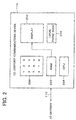
- Fig. 2 is a schematic block diagram of the first endpoint 114, which is representative of the other endpoints.
- each endpoint includes a local input interface 200 that can be used with the present invention system 100 for accessing universal phone book entries.
- the local input interface 200 can be a keypad (as shown), voice recognition system, touch pad, or any equivalent.
- the first endpoint communications device 114 also comprises a volatile memory 203 available for temporary storage of a subset of UPB entries, such as RAM (as shown) with a memory capacity.
- a volatile memory 203 available for temporary storage of a subset of UPB entries, such as RAM (as shown) with a memory capacity.
- UPB universal phone book
- the gateway When the endpoint 114 transmits an out-of-band message to the gateway requesting universal phone book (UPB) entries, information is also sent related to the endpoint's memory capacity, and the gateway returns a list of entries constrained it fit in the endpoint's memory capacity. That is, the returned list is tailored to "fit" in the volatile memory 203.
- the endpoint may communicate memory capacity information, prior to a request to access the UPB, using a separate out-of-band message.
- the endpoint 114 receives entries provided by the GW, stores these entries in the volatile memory 203, and presents the entries to the user on the endpoints display 202.
- the volatile memory 203 is capable of holding more entries than can be displayed simultaneously on the display 202.
- the user can control which of the entries stored in the volatile memory 203, are displayed using the input interface 200, and software running on an endpoint CPU 204 controls the display 202 accordingly.
- the endpoint 114 is designed such that the volatile memory 203, is sized to be able to handle the same number of UPB entries as the display 202, and can simultaneously present the entries to the user.
- the UPB driver display software. running on the endpoint CPU 204 is simpler.
- the gateway 102 transceives calls on external communication medium 104/106 that communicate call information in a first format, as described above.
- the gateway 102 converts between the first format and a digital Home Network format and establishes traffic channels to communicate information to the endpoints in the Home Network format.
- the gateway 102 establishes an out-of-band control channel for accessing the universal phone book 112 from the endpoints.
- the control channel may be used for other functions besides access to the universal phone book 112.
- the gateway 102 has an input/output (I/O) interface on line 122.
- the system 100 further comprises an input/output (I/O) device 124 having an output connected to the gateway I/O interface on line 122 for editing universal phone book entries.
- the I/O device is a personal computer (PC) loaded with software to enable the editing of the universal phone book, and the line 122 can be an Ethernet (registered trademark) or USB interface for example.
- the I/O device 124 can use a web browser and the gateway 102 can act as a web server in communications with the I/O device 124.
- the PC endpoint 120 might also access the gateway web server via Home Network transmission media 110 for editing functions.
- the gateway 102 establishes a security protocol for enabling access to the universal phone book 112, and the I/O device 124 communicates using the security protocol, prior to editing the universal phone book 112.
- the term editing as used herein includes the functions of adding, deleting, and modifying existing entries and UPB configuration preferences. For example, the user of the I/O device 124 is prompted to enter a password. Then, the gateway 102 permits the universal phone book 112 to be edited after the proper password is entered.
- Other well-known security protocols can be used.
- classes of access can also be defined. For example, a password may be required to modify or delete entries, but not required to add entries.
- Some aspects of the system 100 further comprise a printer 126 having an input connected to the I/O device 124 on line 128.
- the I/O device 124 enables the printer 126 to print a hardcopy of the universal phone book 112 in response to communications with the gateway 102.
- a printer (not shown) attached to the PC endpoint 120, or a fax device endpoint can also be used to print out hard copies of the UPB or UPB entries via Home Network transmission media 110 communications.
- any PC attached to the system 100 can be used to browse to the internal web server inside the gateway 102.
- This internal web server has, possibly on a separate HTML page, the complete universal phone book (UPB) list. From this page, using their PC and the web browser interface, the user can do the following:
- the universal phone book may also be edited by using the endpoint devices themselves. Then, the endpoints 114-120 use the control channel established by the gateway 102 for editing universal phone book entries. As above, the gateway 102 can establish a control channel security protocol for editing the universal phone book 112 from an endpoint, and an endpoint must use the control channel security protocol (i.e., a password) prior to editing universal phone book entries. Different classes of access may be required for different endpoints in the system. Further, different classes of access may be required for endpoints than for the I/O device 124.
- the user can also use any endpoint in the system to perform some basic UPB management functions. They can scroll the UPB 112 and delete or edit entries that they find using the endpoint's function key and numeric keypad to enter alphabetic characters. They can also add a new phone number/name to the UPB 112 by entering the number and name from scratch.
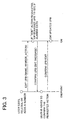
- Fig. 3 illustrates the out-of-band signaling used to manage the universal phone book. Although endpoint out-of-band signaling is depicted, the I/O device communications are similar. Communication occurs as follows:
- the data stored inside the GW can be easily synchronized with another Personal Information Management applications on any desktop PC attached to the Home Network, such as the fourth endpoint 120 or I/O device 124, see Fig. 1.
- Example applications include Microsoft (registered trademark) Outlook (registered trademark) and Palm desktop.
- the data inside the GW can be directly synchronized with data stored inside a PDA or personal organizer.
- a PDA/organizer 129 (see Fig. 1) can connect to the GW 102 via a Home Network PC 120, or even directly if the PDA/organizer 129 has a port 110 on the Home Network that provides connectivity to the gateway 102.
- One additional benefit of this feature is that a catastrophic failure of the GW 102 does not result in the loss of all the stored UPB, since it has copies stored on the PC 120 and/or PDA 129 and/or another endpoint, from where the data is easily recovered.
- Fig. 4 is a detailed depiction of the UPB configuration 130 of Fig. 1.
- the UPB configuration 130 is typically stored in non-volatile GW memory.
- the UPB preferences table includes global parameters that define how the UPB behaves for the whole network. For example, if endpoint interface parameters are all set to "NOT ALLOWED" except for "add entry to UPB” which is set to "ALLOWED: SECURITY PROTOCOL DISABLED", this means that none of the endpoints can perform editing or deleting of entries or categories. However, every endpoint can add a UPB entry unless the "Endpoint configuration: interface parameters" for that endpoint are set to "NO AUTHORITY". If this case, nothing can be done from that endpoint (add, edit, delete) regardless of the global settings for endpoint editing in the network.
- the gateway 102 in response to communications with the I/O device 124, and/or an endpoint communications device 114-120, permits access to the UPB entries.
- the entries are telephone numbers paired to descriptors. Further, the entries are cross-referenced to option categories such as user-defined groups, groups defined by the endpoint accessing the universal phone book, most recent calls, most frequent calls, general groups, pre-defined groups, or categories defined by the external communication media selected.
- the endpoint specifies a search parameter, typically a "name descriptor. For example, if the user was looking for "Dave Jones", the user could type “Jones” and select search UPB form the user interface of the endpoint to search for all entries where "Jones" is part of the descriptor. Entries with the descriptor "Jones" would be retrieved from the UPB. In the most general case, the UPB returns all name-descriptor pairs that match, regardless of any consideration of option categories. However, the endpoint can also specify search for a number-descriptor pair that matches this name, but only from among number-descriptor pairs that are associated with a "FAMILY" option category.
- a search parameter typically a "name descriptor. For example, if the user was looking for "Dave Jones", the user could type “Jones" and select search UPB form the user interface of the endpoint to search for all entries where "Jones" is part of the descriptor. Entries with the descriptor "Jone
- endpoints can be used as an option category. It is possible, for example, to assign some entries to a specific endpoint.
- One example of this use is a home where a teenage daughter has her own Home Network telephone. Here, she can enter her friends into the UPB and associate them only with the phone located in her bedroom. In this case, the UPB entries of her friends are only visible to the phone in her bedroom and her younger brother cannot see them on his phone in his room.
- a default condition can be established to make all entries accessible to all the endpoints. If an entry has no endpoint associated with it, it can either be made accessible to all of the endpoints, or none of the endpoints.
- a particular individual identifies themselves when opening the UPB at a phone in the Home Network. That is, the user would select an "individual" option category. For example, when the Mother of the home opens the UPB, the endpoint would prompt her to select a user from a list of the family members. After selecting "Mom' from the list, she will only see UPB entries in the "Mom" option category. Alternatively, the user can select a different or more a general option category when a more complete list of UPB entries is required.
- option categories When opening the UPB, the user can be prompted to select from a list of option categories. Users can define and sort option entries in option categories such as "work”, “home”, “Family”, or "VIPs".
- option categories associated with a user or a user preference another extension that can be implemented is a form of simple password, so that the user is required to confirm their identity before gaining access a certain option category of UPB entries.
- the password could be a simple numeric password, for example.
- each endpoint of which the first endpoint 114 is representative, includes a local phone book (LPB) 205 of entries.
- LPB local phone book
- an entry is defined as a telephone number paired to a descriptor.
- the local phone book 205 typically has a much smaller number of entries than the universal phone book.
- the first endpoint 114 might access its corresponding local phone book 205 in response to losing access to the universal phone book 112. This situation may occur, for example, if the gateway loses power, but service is still available over the POTS line 104.
- the user may be permitted to manually search through either the LPB 205 or the UPB, when, both are available.
- the endpoint includes a large enough number of entries to justify organization by option category.
- the option categories can be names, user-defined groups, most recently called numbers, and most frequently called numbers, as the UPB is organized.
- the first endpoint 114 stores its corresponding local phone book 205 in nonvolatile memory.
- Certain system endpoints may be expected to support lifeline telephone service.
- Lifeline service is Analog POTS, with the telephone line powered by current passed down the copper pairs from the telephone exchange. If a telephone (endpoint) supports this capability, the telephone can still be used to dial using the lifeline service when the broadband access or broadband GW fail, or if there is a power outage.
- the UPB Whenever the power fails, or the GW fails, the UPB is no longer available to the telephone, even though it can potentially make and receive calls using the lifeline POTS service.
- the endpoint can only access numbers from its local phone book, which stores a smaller number of telephone number/descriptor pairs (perhaps about 30). Similarly, any incoming call will only recognize and display the descriptor related to an incoming calling telephone number if the number is stored in the local phone book of the called endpoint. Of course, a user can still dial a number directly using the numeric keypad of the endpoint, without resort to a number stored in electronic memory.
- the LPB is managed at each endpoint independently of the UPB, using the endpoint's input device and keyboard. This mode is referred to as "independent LPB".
- the LPB can be configured to automatically store the subset of number-descriptor pairs from the UPB that are the most recently used, or most frequently used. This approach requires no interaction on the part of the user to maintain the LPB. This mode is referred to as "automatic LPB".
- the gateway integrates the UPB and LPB functions.
- This final mode is referred to as "user-defined LPB".
- the gateway 102 contains a multiplicity of LPB entities 132, which are stored in non-volatile memory in the gateway.
- each corresponding one of these LPB entities 132a-132d stores a copy of the number-descriptor pairs that are stored in the LPB at the corresponding endpoint.
- the user can view and edit the LPB entries for each endpoint.
- the management of the LPB's is thus much more simple since the user can simply select, or copy and paste, or drag and drop numbers from the UPB to assign them to any one of the LPB's.
- a user can select between the independent LPB, automatic LPB, and user-defined LPB. This selection can be made from the endpoint itself or from the I/O device 124. Again, security protocol can be implemented to control the selection process based upon the endpoint making the selections, or identification of the user. In one aspect of the system, the selection is based upon the capabilities of the endpoint, not explicitly selectable by a user. For example, if an endpoint cannot support the user-defined LPB option, the independent LPB may be selected by default.
- Fig. 5 is a more detailed depiction of the LBP entity 132 for the first endpoint, which is representative of the other LBP entities.
- the LPB entity stores a flag indicating the mode in which the LPB is set. Further, if the LPB is set to USER DEFINED LPB mode, the LPB entity also stores the necessary information to identify which of the UPB entities are stored in this particular LPB. This can be done either in the form of a complete copy of the UPB entry in the LPB, or a pointer to the related UPB entry.
- the first endpoint 114 uses the control channel to edit the local phone book 132a maintained by the gateway 102.
- the local phone book 132a is edited in communications between the gateway 102 and I/O device 124.
- a control channel security protocol can be established for editing the local phone book 132a from the endpoint.
- the gateway 102 can establish a security protocol for editing the local phone book from the I/O device 124.
- the endpoint and gateway exchange out-of-band VoHN signaling messages to ensure that two copies of the LPB remain fully synchronized.
- the local phone book 205 (see Fig. 2) in the endpoint, and the local phone book 132 in the gateway, store entries that are a fixed subset of the UPB 112.
- the user can select which entries from the UPB 112 are used in each LPB by either: (1) selecting them from the endpoint's local interface, for example by scrolling the UPB and selecting an option "add to local PB" when the desired number is found; or (2) using the I/O device 124.
- a VoHN control channel is used to exchange cut-of-band signaling messages between the GW and endpoint to synchronize (make common) the LPB's Stored in both locations.
- the user will browse the GW's internal web server from a PC 124 or 120.
- the web page embedded in the GW includes the local phone list of the desired phone.
- the LPB list that is shown is stored locally in the GW, but is a synchronized copy of the LPB stored at the desired endpoint.
- Fig. 6 is a diagram illustrating the control channel communications between the gateway and an endpoint accessing the universal phone book.
- the gateway accepts out-of-band messages from an endpoint specifying universal phone book search parameters, and transmits out-of-band messages to the endpoint returning the results of the universal phone book search.
- the first endpoint makes an entry that may be a descriptor, a descriptor fragment, a telephone number, or a telephone number fragment.
- the search parameters may include an option category to filter the returned entries.
- the gateway communicates an out-of-band message to the first endpoint returning one or more descriptors paired to a telephone number. If no matching entries are found in the UPB, the gateway communicates an out-of-band message to the first endpoint indicating that no matching records have been found.
- the gateway receives an option category from the first endpoint, such as "work”.
- the first endpoint also transmits a descriptor, entered using the local interface, such as "Bob”.
- the gateway 102 searches the universal phone book option category of "work” for the "Bob" descriptor, and returns at least one descriptor cross-referenced to a telephone number. If the user sends Search UPB ("Bob", work) the UPB will only return entries where "Bob" was in the descriptor and the option category included "work". Note that there may be no matching entries in the universal phone book, or several entries under the name "Bob".
- a telephone number can also be used as search criteria. For example, if a user enters Search UPB ("360834", ""), all UPB entries where the number contains "360834" are returned. As described above, the number of entries, and the presentation of the returned entries may be constrained by the memory capacity of the endpoint.
- Figs. 7 and 8 illustrate the use of control channel communications between the gateway and an endpoint to enable a UPB search.
- a user will select a telephone number from the universal phone book from the endpoint communications device itself, in order to dial an outgoing call. There are two ways of doing this; search by name (Fig. 7) and a scrolling search (Fig. 8).
- the user enters the name of the person (descriptor) they are seeking, using the alphabetic entry capabilities of the numeric keypad on the endpoint.
- the user can enter the whole name, only the first few characters, or a subset of the name related to the sought telephone number.
- a user can search for Dave Smith but only entering "Smi”.
- the endpoint communications device determines that enough characters have been entered (the device can be set to automatically send the string after 3 or 4 characters are entered, to speed the process)
- the device sends an out-of-band message to the gateway requesting a search of the universal phone book.
- the search string and the maximum number of phone book entries (“Max”) to retrieve are returned.
- the parameter "Max" is needed to avoid the endpoint communications device memory capacity limitations, as described above.
- the gateway searches the database to find all the descriptors that match.
- the gateway searches in an intelligent way that allows Dave Smith's number to be located even if it were stored as "Smith, Dave", or "Dave Smith", or any other logical combination.
- the GW returns the found descriptor and number pairs in another out-of-band message to the endpoint. This message shows the number of matches and lists then all as descriptor and number pairs.
- the GW finds more matching entries than the endpoint can accept, it will not be able to return all of the matching entries. In such a case, the GW can select which of the entries to return in some arbitrary manner, and may also indicate to the endpoint that more entries exist than could be returned. This information may be indicated to the user on the display of the endpoint so that they are not surprised if an expected entry is not found. In such a case, the user would need to re-enter their search with more specific search string, or resort to scrolling the UPB.
- the retrieved descriptor/number pairs are displayed to the user on the endpoint.
- the user can easily scroll through the retrieved list and select the desired entry, dialing the call to the proper number with a single key-press, when the correct entry is found, as shown at the bottom of Fig. 7.
- the first endpoint communications device transmits one entry character per out-of-band message and the gateway refines the full descriptor search results in response to the number of characters in the search parameter. For example, in response to entering the character "S”, the gateway returns descriptors (and corresponding telephone numbers) beginning with “S”, in response to entering the second character “m”, the gateway returns names beginning with “Sm”, in response to entering the third character "i”, the gateway returns names beginning with "Smi”.
- the user may open the UPB for remote scrolling.
- the user simply opens the UPB from an endpoint for scrolling, and manually scrolls through the entire list in alphabetic name order, until the user reaches the desired number, which they can dial with one-touch.
- the gateway transfers portions of the UPB to the endpoint in one or more out-of-band signaling messages for display on the user interface of the endpoint device.
- the user may select an option category prior to opening the UPB for scrolling.
- only entries which belong to the selected option category are provided to the endpoint a displayed as part of the scrolling UPB list.
- the scrolling mechanism operates as follows:
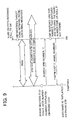
- Fig. 9 illustrates the use of control channel communications between the gateway and an endpoint to support calling line ID functions.
- an endpoint that supports Calling line ID (CLID) will typically be able to display the callers name, assuming the calling number is stored in the endpoint's phone book, and therefore recognized by the endpoint. It is desirable to support this feature with the universal phone book, so that CLID can display the name of any one of the potentially hundreds of name/number pairs stored.
- a call with a destination of the first endpoint for example, can cause the display (202, see Fig. 2) to depict a descriptor referenced to the caller's number in the phone book.
- the gateway receives calling line ID (CLID) information for incoming calls on the external communication medium, uses the universal phone book to cross-reference an identified telephone number to a descriptor, and communicates the cross-referenced descriptor to the endpoint communication device in an out-of-band VoHN message.
- CLID calling line ID
- the gateway is not capable of decoding incoming CLID tones. The second method performs as follows:
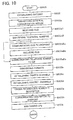
- Figs. 10, 11, and 12 are flowcharts illustrating the present invention method for maintaining a universal phone book in a Home Network telephone system. Although the method has been depicted as a sequence of steps for clarity, no ordered should be inferred from the numbering unless explicitly stated.
- the method begins at Step 900.
- Step 902 establishes a gateway to serve a plurality of Home Network endpoints. Establishing a gateway to serve a plurality Home Network endpoints includes serving the endpoints through connection interfaces selected from the group including wireless, convention telephone line, AC power line, Ethernet transmission media, and dedicated hard line connections such as USB lines.
- Step 904 maintains a universal phone book accessible to the endpoints.
- Maintaining a universal phone book accessible to the endpoints includes using the gateway to maintain a centralized phone book. Further, the universal phone book is accessible to all of the plurality of endpoints. In some aspects of the method, the universal phone book is maintained in nonvolatile memory. Step 906 accesses the universal phone book from an endpoint. Step 907 displays at least a portion of the universal phone book at an endpoint.
- Step 902a transceives calls on external communication medium that communicate call information in a first format selected from the group including voice over broadband (VoBB), as defined above, ISDN, and plain old telephone service (POTS).
- Step 902b converts between the first format and a digital Home Network format.
- Step 902c establishes traffic channels (in-band channels) to communicate information to the endpoints in the Home Network format.
- Step 902d establishes a control channel for communications with the universal phone book.
- Establishing a controi channel for communications with the universal phone book in Step 902d includes establishing an out-of-band control channel between the gateway and each endpoint accessing the universal phone book.
- Step 908 establishes a connection between an input/output (I/O) device and the gateway.
- Step 910 using the I/O device, edits universal phone book entries.
- the gateway establishes a control channel for communications between an endpoint and the universal phone book for the purpose of editing universal phone book entries from the endpoint.
- Step 912 using a printer associated with the I/O device, prints the universal phone book.
- Step 909a establishes a security protocol for protecting the universal phone book editing function.
- Step 909b prior to using the I/O device to edit universal phone book entries, passes the security protocol.
- Step 909a establishes a control channel security protocol for protecting the universal phone book editing function, and Step 909b, prior to using the endpoint to edit universal phone book entries, passes the control channel security protocol.
- maintaining a universal phone book accessible to the endpoints in Step 904 includes maintaining entries with telephone numbers paired to descriptors. Further, Step 904 maintains a universal phone book with entries cross-referenced to option categories. Then, accessing the universal phone book from the endpoint in Step 906 includes selecting an option category for the endpoint from a group of possible categories, as described above. Displaying entries in the universal phone book at the endpoint in Step 907 includes returning universal phone book entries cross-referenced to the selected option category.
- accessing the universal phone book from the endpoint includes accessing the universal phone book from a first endpoint and automatically selecting an option category associated with the first endpoint. In other aspects, accessing the universal phone book from an endpoint includes selecting an option category, and selecting an entry. Then, displaying entries in the universal phone book at the endpoint includes locating the selected entry in the selected option category, and returning telephone number/descriptor pairs associated with the selected entry.
- Step 918 stores a local phone book of entries, with telephone number/descriptor pairs, at each endpoint.
- Step 920 accesses the local phone book.
- the local phone book is accessed in response to losing access to the universal phone book from an endpoint.
- the user may manually select the LPB even if the UPB is available.
- storing a local phone book of entries in Step 918 can include storing entries cross-referenced to option categories such as full names, nicknames, user-defined groups, most recently called numbers, or most frequently called numbers.
- accessing the endpoint local phone book in Step 920 includes selecting an option category.
- a further step, Step 922 displays entries in the endpoint local phone book cross-referenced to the selected option category.
- Step 918a maintains a copy of each endpoint local phone book at the gateway.
- Step 918b upon initialization of an endpoint, accesses the local phone book at the gateway.
- Step 918c downloads the local phone book to the endpoint and stores the downloaded local phone book at the endpoint.
- Step 924 uses the I/O device to edit a local phone book stored at the gateway.
- Step 924 edits the local phone book stored at the gateway in response to commands selected from an endpoint user interface.
- Step 923a establishes a security protocol for editing the local phone book stored at the gateway.
- Step 923b prior to editing the local phone book stored at the gateway, passes the security protocol.
- Step 926 stores a backup copy of the universal phone book at an endpoint, or the gateway.
- establishing a control channel for communications with the universal phone book in Step 902d includes communicating an out-of-band message, from an endpoint to the gateway, with an entry, and communicating an out-of-band message, from the gateway to the endpoint, returning telephone numbers paired to descriptors.
- communicating an out-of-band message, from an endpoint to the gateway includes communicating an entry fragment.
- communicating an out-of-band message, from the gateway to the endpoint includes selecting all entries including the entry fragment, andreturning telephone number/descriptor pairs associated with each selected entry.
- communicating an out-of-band message, from the endpoint to the gateway includes entering one entry character per out-of-band message. Then, communicating an out-of-band message, from the gateway to the first endpoint, includes refining the list of entries in response to each subsequently received character, and returning the refined list of telephone numbers paired to descriptors in every out-of-band message.
- communicating an out-of-band message, from the endpoint to the gateway includes specifying the endpoint memory capacity. Then, communicating an out-of-band message, from the gateway to the endpoint, includes returning a list telephone number/descriptor pairs whose size is responsive to the endpoint memory capacity.
- transceiving calls on external communication medium that communicate call information in a first format in Step 902a includes sub steps.
- Step 902a1 receives calling line ID (CLID) information for incoming calls.
- Step 902a2 identifies a telephone number for an incoming call, using the calling line ID information.
- Step 903a uses the universal phone book to cross-reference the identified telephone number to a descriptor.
- Step 903b communicates the cross-referenced descriptor to the endpoint.
- CLID calling line ID
- identifying a telephone number for an incoming call, using the calling line ID information in Step 902a2 includes the gateway decoding the calling line ID information.
- identifying a telephone number for an incoming call, using the calling line ID information includes additional sub steps.
- Step 902a2a communicates the calling line ID information to an endpoint using an in-band message.
- Step 902a2b at the endpoint, decodes the calling line ID information into an identified telephone number.
- Step 902a2c communicates the identified telephone number to the gateway in an out-of-band message. Then, using the universal phone book to cross-reference the identified telephone number to a descriptor in Step 903a includes using the telephone number identified by the endpoint.
- a system and method for maintaining a Home Network universal phone book have been provided.
- a few examples have been given of how the phone book can be organized by entry and option category. Examples have also been given for the out-of-band signaling and VoHN protocol that could support such a phone book.
- other variations and embodiments of the invention will occur to those skilled in the art.
Landscapes
- Engineering & Computer Science (AREA)
- Signal Processing (AREA)
- Computer Networks & Wireless Communication (AREA)
- Library & Information Science (AREA)
- Telephonic Communication Services (AREA)
- Telephone Function (AREA)
Abstract
Description
- Typical phones have a somewhat limited memory space for phone book entries, typically about 30 numbers;
- If the user has many phones in the home, they must separately program the phone book of each telephone, possibly with duplicate descriptors and numbers;
- If the user has many phones in the home, some numbers may not have been programmed into every phone, which leads to frustration since an entry expected to be available often cannot be found;
- Entering ASCII text into a telephone using a numeric keypad is inconvenient; and,
- It is typically impossible to print the phone book (hard copy), unless the telephone has an integrated Fax device.
| Number | Descriptor | Option Categories | ||
| User | Endpoint | General | ||
| 555.324- 0934 | Joe Smith | Mom | Friends | |
| 555-745- 9934 | Dad | Office Phone | Family | |
| 555-834- 9934 | AM Pluming | Office Phone | Service | |
| 555.934- 2313 | Dr. Jones (Fax) | Dad | Work; Fax | |
| 555-934- 2388 | Dr. Jones | Dad | Work | |
| 555-634- 9343 | Jenny Smith | Tina | Tina's room |
Claims (70)
- In a Home Network telephone system, a method for maintaining a universal phone book, the method comprising:establishing a gateway to serve a plurality Home Network endpoints; and,maintaining a universal phone book accessible to the endpoints.
- The method of claim 1 wherein establishing a gateway to serve a plurality Home Network endpoints includes serving the endpoints through connection interfaces selected from the group including wireless, convention telephone line, AC power line, Ethernet transmission media, and dedicated hard line connections.
- The method of claim 2 further comprising:accessing the universal phone book from an endpoint; and,displaying entries from the universal phone book at the endpoint.
- The method of claim 3 wherein establishing a gateway includes:transceiving calls on external communication media that communicate call information in a first format;converting between the first format and a digital Home Network format;establishing traffic channels to communicate information to the endpoints in the Home Network format; and,establishing a control channel for communications with the universal phone book.
- The method of claim 4 wherein establishing a control channel for communications with the universal phone book includes establishing an out-of-band control channel between the gateway and each endpoint accessing the universal phone book.
- The method of claim 5 wherein transceiving calls on external communication medium that communicate call information in a first format includes a first format selected from the group including voice over cable modem (VoCM), voice over DSL (VoDSL), voice over ATM (VoATM), voice over Internet Protocol (VoIP), fixed wireless access (FWA), or fibre to the home (FTTH), integrated services digital network (ISDN), and plain old telephone service (POTS).
- The method of claim 5 wherein maintaining a universal phone book accessible to the endpoints includes using the gateway to maintain a centralized phone book.
- The method of claim 7 wherein maintaining a universal phone book accessible to the endpoints includes maintaining a universal phone book accessible to all of the plurality of endpoints.
- The method of claim 8 further comprising:establishing a connection between an input/output (I/O) device and the gateway; and,using the I/O device, editing universal phone book entries.
- The method of claim 9 further comprising:establishing a security protocol for protecting the universal phone book editing function; and,prior to using the I/O device to edit universal phone book entries, passing the security protocol.
- The method of claim 9 further comprising:using a printer associated with the I/O device, printing the universal phone book.
- The method of claim 8 wherein establishing a control channel for communications between an endpoint and the universal phone book includes editing universal phone book entries from the endpoint.
- The method of claim 12 further comprising:establishing a control channel security protocol for protecting the universal phone book editing function; and,prior to using the endpoint to edit universal phone book entries, passing the control channel security protocol.
- The method of claim 8 wherein maintaining a universal phone book accessible to the endpoints includes maintaining the universal phone book in nonvolatile memory.
- The method of claim 8 wherein maintaining a universal phone book accessible to the endpoints includes maintaining entries with telephone numbers paired to descriptors.
- The method of claim 15 wherein maintaining a universal phone book accessible to the endpoints includes maintaining a universal phone book with entries cross-referenced to option categories.
- The method of claim 16 wherein accessing the universal phone book from the endpoint includes selecting an option category from the endpoint; and,
wherein displaying entries in the universal phone book at the endpoint includes returning universal phone book entries cross-referenced to the selected option category. - The method of claim 17 wherein selecting an option category includes selecting an option category selected from the group including user, endpoint, general, pre-defined, and user-dcfined.
- The method of claim 18 wherein accessing the universal phone book from the endpoint includes:accessing the universal phone book from a first endpoint; and,automatically selecting an option category associated with the first endpoint.
- The method of claim 18 wherein accessing the universal phone book from an endpoint includes:wherein displaying entries in the universal phone book at the endpoint includes:selecting an option category;selecting an entry;locating the selected entry in the selected option category; and,returning telephone number/descriptor pairs associated with the selected entry.
- The method of claim 8 further comprising:storing a local phone book of entries, with telephone number/descriptor pairs, at each endpoint; and,in response to losing access to the universal phone book from an endpoint, accessing the endpoint local phone book.
- The method of claim 21 wherein storing a local phone book of entries includes storing entries cross-referenced to option categories.
- The method of claim 21 wherein accessing the endpoint local phone book includes selecting an option category; and,
the method further comprising:displaying entries in the endpoint local phone book cross-referenced to the selected option category. - The method of claim 23 wherein selecting an endpoint local phone book option category includes selecting a category from the group including user, endpoint, general, pre-defined, and user-defined.
- The method of claim 21 further comprising:maintaining a copy of each endpoint local phone book at the gateway.
- The method of claim 25 further comprising:upon initialization of an endpoint, accessing the local phone book at the gateway;downloading the local phone book to the endpoint; andstoring the downloaded local phone book at the endpoint.
- The method of claim 26 further comprising:establishing a connection between an input/output (I/O) device and the gateway; and,using the I/O device, editing a local phone book stored at the gateway.
- The method of claim 27 further comprising:editing the local phone book stored at the gateway in response to commands selected from an endpoint user interface.
- The method of claim 28 further comprising:establishing a security protocol for editing the local phone book stored at the gateway; and,prior to editing the local phone book stored at the gateway, passing the security protocol.
- The method of claim 15 wherein establishing a control channel for communications with the universal phone book includes:communicating an out-of-band message, from an endpoint to the gateway, with an entry; and,communicating an out-of-band message, from the gateway to the endpoint, returning telephone numbers paired to descriptors.
- The method of claim 30 wherein communicating an out-of-band message, from an endpoint to the gateway, with a entry includes communicating an entry fragment;
wherein communicating an out-of-band message, from the gateway to the endpoint, returning telephone numbers paired to descriptors includes:selecting all entries including the entry fragment; and,returning telephone number/descriptor pairs associated with each selected entry. - The method of claim 30 wherein communicating an out-of-band message, from the endpoint to the gateway, with a entry includes entering one entry character per out-of-band message; and,
wherein communicating an out-of-band message, from the gateway to the endpoint, returning telephone numbers paired to descriptors includes:relining the list of entries in response to each received character; and,returning the refined list of telephone numbers paired to descriptors in every out-of-band message. - The method of claim 30 wherein communicating an out-of-band message, from the endpoint to the gateway, with an entry includes specifying the endpoint memory capacity; and,
wherein communicating an out-of-band message, from the gateway to the endpoint, returning telephone numbers paired to descriptors includes returning a list telephone number/descriptor pairs whose size is responsive to the endpoint memory capacity. - The method of claim 8 wherein transceiving calls on external communication medium that communicate call information in a first format includes:receiving calling line ID (CLID) information for incoming calls;identifying a telephone number for an incoming call, using the calling line ID information;the method further comprising:using the universal phone book to cross-reference the identified telephone number to a descriptor; and,communicating the cross-referenced descriptor to the endpoint.
- The method of claim 34 wherein identifying a telephone number for an incoming call, using the calling line ID information, includes the gateway decoding the calling line ID information.
- The method of claim 34 wherein identifying a telephone number for on incoming call, using the calling line ID information, includes:wherein using the universal phone book to cross-reference the identified telephone number to a descriptor includes using the telephone number identified by the endpoint.communicating the calling line ID information to an endpoint using in-band signalling;at the endpoint, decoding the calling line ID information into an identified telephone number;communicating the identified telephone number to the gateway in an out-of-band message; and
- The method of claim 1 further comprising:storing a backup copy of the universal phone book at a first endpoint.
- In a Home Network telephone system, a system for maintaining a universal phone book, the universal phone book system comprising:a gateway having an input to transceive calls on external communication medium, the gateway maintaining an accessible universal phone book and supplying a communications bridge to an output; and,a plurality of endpoints, each endpoint having a port connected to the gateway output for accessing the universal phone book.
- The system of claim 38 wherein the endpoints are connected with the gateway using connection interfaces selected from the group including wireless, convention communication media, AC power line, Ethernet transmission media, and dedicated hard line connections.
- The system of claim 39 wherein each endpoint includes a local interface for making universal phone book access entries and a display to depict entries from the universal phone book, in response to accessing the universal phone book.
- The system of claim 40 wherein the gateway transceives calls on external communication medium that communicate call information in a first format, converts between the first format and a digital Home Network format, establishes traffic channels to communicate information to the endpoint communication devices in the Home Network format, and establishes a control channel for accessing the universal phone book from the endpoint communication devices.
- The system of claim 41 wherein the gateway establishes an out-of-band control channel between the gateway and each endpoint communication device accessing the universal phone book.
- The system of claim 42 wherein the gateway transceives calls on external communication medium that communicate call information in a first format selected from the group including voice over ATM (VoATM), voice over cable modem (VoCM), voice over DSL (VoDSL), voice over Internet protocol (VoIP), fixed wireless access (FWA), or fibre to the home (FTTH), integrated service digital network (ISDN), and plain old telephone service (POTS).
- The system of claim 42 wherein the gateway maintains a universal phone book accessible to all of the plurality of endpoints.
- The system of claim 44 wherein the gateway universal phone book stores each entry as a telephone number paired with a descriptor.
- The system of claim 44 wherein the gateway includes a nonvolatile memory for storing the universal phone book.
- The system of claim 44 wherein the gateway universal phone book cross-references a plurality of option categories to entries;
wherein an endpoint selects an option category; and,
wherein the gateway universal phone book provides access to the entries in the selected option category. - The system of claim 47 wherein the gateway universal phone book includes option categories being selected from the group including user, endpoint, general, pre-defined, and user-defined.
- The system of claim 48 wherein a first endpoint requests access to the universal phone book; and,
wherein the gateway automatically provides access to entries in an option category associated from the first endpoint. - The system of claim 48 wherein a first endpoint selects an option category associated with a first user; and,
wherein the gateway provides access to entries in an option category associated with the first user. - The system of claim 44 w herein each endpoint includes a local phone book of entries.
- The system of claim 51 wherein an endpoint accesses its local phone book in response to losing access to the gateway universal phone book.
- The system of claim 51 wherein the endpoint local phone book stores each entry as a telephone number paired with a descriptor.
- The system of claim 53 wherein the endpoint local phone book cross-references a plurality of option categories to entries, wherein the endpoint selects an option category and the local phone book provides access to the entries in the selected option category.
- The system of claim 54 wherein the endpoint local phone book includes option categories being selected from the group including full names, nicknames, user-defined groups, groups defined by the endpoint accessing the universal phone book, most recent calls, most frequent calls, and categories defined by the external communication media selected.
- The system of claim 51 wherein the gateway universal phone book includes a local phone book entity section;
wherein each endpoint transmits a copy of its local phone book to the gateway local phone book entity section; and,
wherein the gateway supplies the corresponding copy of the local phone book in response to a request from an endpoint. - The system of claim 51 wherein the gateway has an input/output (I/O) interface;
the system further comprising:an input/output (I/O) device having an output connected to the gateway I/O interface for editing universal phone book entries. - The system of claim 57 wherein the gateway establishes a security protocol for enabling access to the universal phone book; and,
wherein the I/O device passes the gateway security protocol, prior to editing the universal phone book. - The system of claim 57 further comprising:wherein the I/O device enables the printer to print universal phone book entries in response to communications with the gateway.a printer having an input connected to the I/O device; and,
- The system of claim 51 wherein an endpoint uses the control channel established by the gateway for editing universal phone book entries.
- The system of claim 60 wherein the gateway establishes a control channel security protocol for editing the universal phone book; and,
wherein an endpoint passes the gateway security protocol prior to editing universal phone book entries. - The system of claim 44 wherein an endpoint communicates an out-of-band message to the gateway requesting access to an entry; and,
wherein the gateway communicates an out-of-band message returning entries having a telephone number paired to a descriptor. - The system of claim 62 wherein the endpoint communicates an entry fragment in an out-of-band message; and,
wherein the gateway selects all entries including the communicated entry fragment and returns telephone number/descriptor pairs associated with the selected entries in an out-of-band message. - The system of claim 62 wherein, the endpoint enters one entry character per out-of-band message; and,
wherein the gateway refines the list of entries in response to each received character and returns the refined list of telephone numbers paired to descriptors in every out-of-band message. - The system of claim 62 wherein the endpoint communicating an out-of-band message to the gateway specifying the endpoint memory capacity; and,
wherein the gateway communicating an out-of-band message with a list telephone number/descriptor pairs whose size is responsive to the endpoint memory capacity. - The system of claim 44 wherein the gateway receives calling line ID (CLID) information for incoming calls on the external communication medium, uses the universal phone book to cross-reference an identified telephone number to a descriptor, and communicates the cross-referenced descriptor to the endpoint communication device to which the incoming call is addressed.
- The system of claim 66 wherein the gateway identifies a telephone number for an incoming call by decoding the calling line ID information.
- The system of claim 66 wherein the gateway communicates the calling line ID information to an endpoint using in-band signaling;
wherein the endpoint decodes the calling line ID information into an identified telephone number and communicates the identified telephone number to the gateway; and,
wherein the gateway uses the universal phone book to cross-reference the identified telephone number to a descriptor and communicates the identified descriptor back to the endpoint. - The system of claim 44 wherein the plurality of endpoints are selected from the group including telephones, fax machines, multifunction peripherals (MFPs), video-telephones, computers, wireless devices, and hardwired devices.
- The system of claim 44 wherein an endpoint includes a backup memory for saving an emergency copy of the universal phone book; and,
wherein the gateway transmits a copy of the universal phone book to the endpoint backup memory.
Applications Claiming Priority (2)
| Application Number | Priority Date | Filing Date | Title |
|---|---|---|---|
| US10/102,245 US20030041030A1 (en) | 2001-08-14 | 2002-03-20 | System and method for a home network telephone universal phonebook |
| US102245 | 2002-03-20 |
Publications (2)
| Publication Number | Publication Date |
|---|---|
| EP1347625A2 true EP1347625A2 (en) | 2003-09-24 |
| EP1347625A3 EP1347625A3 (en) | 2003-11-19 |
Family
ID=27788356
Family Applications (1)
| Application Number | Title | Priority Date | Filing Date |
|---|---|---|---|
| EP03250836A Withdrawn EP1347625A3 (en) | 2002-03-20 | 2003-02-11 | System and method for a home network telephone universal phone book |
Country Status (3)
| Country | Link |
|---|---|
| US (1) | US20030041030A1 (en) |
| EP (1) | EP1347625A3 (en) |
| JP (1) | JP2003298717A (en) |
Cited By (8)
| Publication number | Priority date | Publication date | Assignee | Title |
|---|---|---|---|---|
| EP1587292A3 (en) * | 2004-04-16 | 2007-01-31 | Broadcom Corporation | Remote configuration and control of local devices via a broadband access gateway |
| CN100452785C (en) * | 2004-04-16 | 2009-01-14 | 美国博通公司 | Remote configuration and control of local devices via broadband access gateways |
| US7522549B2 (en) | 2004-04-16 | 2009-04-21 | Broadcom Corporation | Registering access device multimedia content via a broadband access gateway |
| US7536177B2 (en) | 2004-04-16 | 2009-05-19 | Broadcom Corporation | Enhanced caller ID information based on access device information via a broadband access gateway |
| EP2067344A4 (en) * | 2006-09-27 | 2010-05-05 | Elisa Oyj | NUMBER SERVICE |
| CN102710875A (en) * | 2011-03-28 | 2012-10-03 | 京润科技股份有限公司 | Method for using network telephone service system by traditional telephone and its device |
| EP2515515A1 (en) * | 2011-04-18 | 2012-10-24 | 5V Technologies, Taiwan Ltd | Method of connecting a conventional telephone to the internet via a gateway |
| EP2424173B1 (en) * | 2010-08-28 | 2013-05-22 | Samsung Electronics Co., Ltd. | Method and system for providing advanced address book functionality in a universal plug and play home network environment |
Families Citing this family (40)
| Publication number | Priority date | Publication date | Assignee | Title |
|---|---|---|---|---|
| US6647117B1 (en) * | 1999-08-16 | 2003-11-11 | Nortel Networks Limited | Continuity of voice carried over DSL during power failure |
| US6882714B2 (en) * | 2002-03-27 | 2005-04-19 | Sharp Laboratories Of America, Inc. | Universal call-log system and method for a home network telephone |
| US7106851B2 (en) * | 2003-01-21 | 2006-09-12 | Sun Microsystems, Inc. | System and method for connecting pending and preset telephone calls to facilitate transitioning to a phone call |
| US7729913B1 (en) | 2003-03-18 | 2010-06-01 | A9.Com, Inc. | Generation and selection of voice recognition grammars for conducting database searches |
| JP4337027B2 (en) * | 2003-05-08 | 2009-09-30 | 日本電気株式会社 | Mobile phone |
| JP2005057477A (en) * | 2003-08-04 | 2005-03-03 | Nec Access Technica Ltd | Portable telephone terminal, method of backing up telephone directory information and telephone directory information back up system |
| US7478152B2 (en) * | 2004-06-29 | 2009-01-13 | Avocent Fremont Corp. | System and method for consolidating, securing and automating out-of-band access to nodes in a data network |
| US20060075062A1 (en) * | 2004-09-28 | 2006-04-06 | Bloebaum L S | Initiating Internet Protocol (IP) communications in an IP communication system based on databases of contact information |
| US7466713B2 (en) * | 2004-10-29 | 2008-12-16 | Avocent Fremont Corp. | Service processor gateway system and appliance |
| KR20060089805A (en) * | 2005-02-04 | 2006-08-09 | 삼성전자주식회사 | Portable phone book storage device, calling method using the same and mobile phone |
| US20070058657A1 (en) * | 2005-08-22 | 2007-03-15 | Graham Holt | System for consolidating and securing access to all out-of-band interfaces in computer, telecommunication, and networking equipment, regardless of the interface type |
| TW200714008A (en) * | 2005-09-28 | 2007-04-01 | Yin-Kai Huang | Method for integrating network phone with conventional phone and the system thereof |
| US20070120970A1 (en) * | 2005-11-15 | 2007-05-31 | Goffin Glen P | Video telephony device having automatic user detection and recognition capabilities to provide user-specific information |
| US20070135103A1 (en) * | 2005-12-13 | 2007-06-14 | Middleton David D | Phonebook rating system for electronic equipment |
| US20080242293A1 (en) * | 2007-04-02 | 2008-10-02 | Cequint, Inc. | System and method for providing caller id name display in wireless communications system |
| US20080313319A1 (en) * | 2007-06-18 | 2008-12-18 | Avocent Huntsville Corporation | System and method for providing multi-protocol access to remote computers |
| US9298783B2 (en) | 2007-07-25 | 2016-03-29 | Yahoo! Inc. | Display of attachment based information within a messaging system |
| US9584343B2 (en) | 2008-01-03 | 2017-02-28 | Yahoo! Inc. | Presentation of organized personal and public data using communication mediums |
| US8644470B2 (en) | 2008-04-15 | 2014-02-04 | Cequint, Inc. | Methods and systems for improved caller name identification on a telephone network |
| US8983540B2 (en) * | 2008-09-22 | 2015-03-17 | Cequint, Inc. | Delivery of caller identification data to a mobile device using application directed short messaging service |
| US8093748B2 (en) * | 2008-10-08 | 2012-01-10 | Avocent Huntsville Corporation | Universal power inlet system for power distribution units |
| US8620281B2 (en) * | 2009-04-13 | 2013-12-31 | Cequint, Inc. | System and method for determination and display of “in-network caller” notification on a mobile device |
| US8160556B2 (en) * | 2009-04-13 | 2012-04-17 | Cequint, Inc. | System and method for local handset check of the NXX local exchange to determine carrier |
| US8160554B2 (en) * | 2009-04-13 | 2012-04-17 | Cequint, Inc. | System and method for enhanced display of in-network caller information on a mobile device |
| US8160555B2 (en) | 2009-04-13 | 2012-04-17 | Cequint, Inc. | System and method for determination of network and conditional execution of applications and promotions |
| US20100303219A1 (en) * | 2009-05-28 | 2010-12-02 | Avaya Inc. | Method for including caller-provided subject information in the caller-id display of enterprise telephones |
| EP2438571A4 (en) | 2009-06-02 | 2014-04-30 | Yahoo Inc | Self populating address book |
| US8943437B2 (en) * | 2009-06-15 | 2015-01-27 | Nuance Communications, Inc. | Disambiguation of USSD codes in text-based applications |
| US8984074B2 (en) | 2009-07-08 | 2015-03-17 | Yahoo! Inc. | Sender-based ranking of person profiles and multi-person automatic suggestions |
| US8990323B2 (en) | 2009-07-08 | 2015-03-24 | Yahoo! Inc. | Defining a social network model implied by communications data |
| US9721228B2 (en) | 2009-07-08 | 2017-08-01 | Yahoo! Inc. | Locally hosting a social network using social data stored on a user's computer |
| US7930430B2 (en) | 2009-07-08 | 2011-04-19 | Xobni Corporation | Systems and methods to provide assistance during address input |
| US9087323B2 (en) | 2009-10-14 | 2015-07-21 | Yahoo! Inc. | Systems and methods to automatically generate a signature block |
| US8423545B2 (en) | 2010-02-03 | 2013-04-16 | Xobni Corporation | Providing user input suggestions for conflicting data using rank determinations |
| CN102238259A (en) * | 2010-04-29 | 2011-11-09 | 比亚迪股份有限公司 | Mobile phone contact list file setting method, generation method and importing method |
| US8972257B2 (en) | 2010-06-02 | 2015-03-03 | Yahoo! Inc. | Systems and methods to present voice message information to a user of a computing device |
| US8620935B2 (en) | 2011-06-24 | 2013-12-31 | Yahoo! Inc. | Personalizing an online service based on data collected for a user of a computing device |
| US10078819B2 (en) * | 2011-06-21 | 2018-09-18 | Oath Inc. | Presenting favorite contacts information to a user of a computing device |
| US9747583B2 (en) | 2011-06-30 | 2017-08-29 | Yahoo Holdings, Inc. | Presenting entity profile information to a user of a computing device |
| US10192200B2 (en) | 2012-12-04 | 2019-01-29 | Oath Inc. | Classifying a portion of user contact data into local contacts |
Family Cites Families (10)
| Publication number | Priority date | Publication date | Assignee | Title |
|---|---|---|---|---|
| US5689641A (en) * | 1993-10-01 | 1997-11-18 | Vicor, Inc. | Multimedia collaboration system arrangement for routing compressed AV signal through a participant site without decompressing the AV signal |
| US5550968A (en) * | 1994-04-12 | 1996-08-27 | International Business Machines Corporation | Method and system for providing access security to controls in a graphical user interface |
| US6829231B1 (en) * | 1996-12-31 | 2004-12-07 | Mci Communications Corporation | Internet phone system and directory search engine using same |
| AU6629998A (en) * | 1997-03-13 | 1998-09-29 | International Business Machines Corporation | Kiosk and server connected to computer network |
| JPH11194987A (en) * | 1998-01-05 | 1999-07-21 | Toshiba Corp | Communication device |
| WO1999060767A1 (en) * | 1998-05-20 | 1999-11-25 | British Telecommunications Public Limited Company | Dialler |
| US6952578B1 (en) * | 1999-06-07 | 2005-10-04 | Nokia Corporation | Cellular communication terminal, a method and a system for accessing servers |
| US6757823B1 (en) * | 1999-07-27 | 2004-06-29 | Nortel Networks Limited | System and method for enabling secure connections for H.323 VoIP calls |
| US7085257B1 (en) * | 2000-04-06 | 2006-08-01 | Nokia Corporation | Method and system for making accessible wirelessly a network phonebook and journal database |
| US6882714B2 (en) * | 2002-03-27 | 2005-04-19 | Sharp Laboratories Of America, Inc. | Universal call-log system and method for a home network telephone |
-
2002
- 2002-03-20 US US10/102,245 patent/US20030041030A1/en not_active Abandoned
-
2003
- 2003-02-10 JP JP2003032909A patent/JP2003298717A/en not_active Withdrawn
- 2003-02-11 EP EP03250836A patent/EP1347625A3/en not_active Withdrawn
Cited By (12)
| Publication number | Priority date | Publication date | Assignee | Title |
|---|---|---|---|---|
| EP1587292A3 (en) * | 2004-04-16 | 2007-01-31 | Broadcom Corporation | Remote configuration and control of local devices via a broadband access gateway |
| EP1587291A3 (en) * | 2004-04-16 | 2007-02-28 | Broadcom Corporation | Enhanced caller ID information based on access device information via a broadband access gateway |
| EP1599026A3 (en) * | 2004-04-16 | 2007-02-28 | Broadcom Corporation | Registering access device multimedia content via a broadband access gateway |
| CN100452785C (en) * | 2004-04-16 | 2009-01-14 | 美国博通公司 | Remote configuration and control of local devices via broadband access gateways |
| US7522549B2 (en) | 2004-04-16 | 2009-04-21 | Broadcom Corporation | Registering access device multimedia content via a broadband access gateway |
| US7536177B2 (en) | 2004-04-16 | 2009-05-19 | Broadcom Corporation | Enhanced caller ID information based on access device information via a broadband access gateway |
| US7904074B2 (en) | 2004-04-16 | 2011-03-08 | Broadcom Corporation | Remote configuration and control of local devices via a broadband access gateway |
| US8149848B2 (en) | 2004-04-16 | 2012-04-03 | Broadcom Corporation | Enhanced caller ID information based on access device information via a broadband access gateway |
| EP2067344A4 (en) * | 2006-09-27 | 2010-05-05 | Elisa Oyj | NUMBER SERVICE |
| EP2424173B1 (en) * | 2010-08-28 | 2013-05-22 | Samsung Electronics Co., Ltd. | Method and system for providing advanced address book functionality in a universal plug and play home network environment |
| CN102710875A (en) * | 2011-03-28 | 2012-10-03 | 京润科技股份有限公司 | Method for using network telephone service system by traditional telephone and its device |
| EP2515515A1 (en) * | 2011-04-18 | 2012-10-24 | 5V Technologies, Taiwan Ltd | Method of connecting a conventional telephone to the internet via a gateway |
Also Published As
| Publication number | Publication date |
|---|---|
| JP2003298717A (en) | 2003-10-17 |
| EP1347625A3 (en) | 2003-11-19 |
| US20030041030A1 (en) | 2003-02-27 |
Similar Documents
| Publication | Publication Date | Title |
|---|---|---|
| US20030041030A1 (en) | System and method for a home network telephone universal phonebook | |
| US7236579B2 (en) | Universal call-log system and method for a home network telephone | |
| US5483586A (en) | Electronic on-line subscriber telephone directory | |
| US7836074B2 (en) | Method for linking call log information to address book entries and replying using medium of choice | |
| US6233452B1 (en) | Wireless information processing terminal and controlling method thereof | |
| US5768362A (en) | Multiple field entry telephone directory for a cellular telephone | |
| US6883023B1 (en) | Method apparatus and communications system for companion information and network appliances | |
| US6363140B1 (en) | Dialable screening profile | |
| US7558824B2 (en) | Electronic mail (Email) Internet appliance methods and systems | |
| US7085257B1 (en) | Method and system for making accessible wirelessly a network phonebook and journal database | |
| CA2299387C (en) | Automatic synchronization of address directories for unified messaging | |
| JP2001502505A (en) | Method and apparatus for providing telephone call control and telephone call information | |
| US7463909B1 (en) | Method, device, and database for providing communication addresses for communication devices | |
| KR20000054371A (en) | IMS using PDAs mobile telephone pagers wire and wireless internet and DBMS | |
| EP2022242B1 (en) | Dynamic speed dial number mapping | |
| EP1780642A1 (en) | Mobile telephone, and mobile information terminal | |
| JP4672246B2 (en) | Mobile terminal and telephone directory management system | |
| JP2005515717A (en) | Telephone number transmission system and method for digital subscriber line modems | |
| US6490349B1 (en) | System and method for scan-dialing telephone numbers and classifying equipment connected to telephone lines associated therewith | |
| WO2002039422A2 (en) | Voice telephone book service system using voice recognition and method thereof | |
| EP1076979A1 (en) | Personalized information system | |
| US20060172777A1 (en) | Domain-driven abbreviated dialing | |
| JP3729655B2 (en) | Call partner information management device | |
| US7233650B1 (en) | Managing caller identifiers at a communication device | |
| JPH05300206A (en) | Touch panel telephone set |
Legal Events
| Date | Code | Title | Description |
|---|---|---|---|
| PUAI | Public reference made under article 153(3) epc to a published international application that has entered the european phase |
Free format text: ORIGINAL CODE: 0009012 |
|
| AK | Designated contracting states |
Kind code of ref document: A2 Designated state(s): AT BE BG CH CY CZ DE DK EE ES FI FR GB GR HU IE IT LI LU MC NL PT SE SI SK TR |
|
| AX | Request for extension of the european patent |
Extension state: AL LT LV MK RO |
|
| PUAL | Search report despatched |
Free format text: ORIGINAL CODE: 0009013 |
|
| RIC1 | Information provided on ipc code assigned before grant |
Ipc: 7H 04L 12/28 B Ipc: 7H 04M 1/27 B Ipc: 7H 04M 3/493 A |
|
| AK | Designated contracting states |
Kind code of ref document: A3 Designated state(s): AT BE BG CH CY CZ DE DK EE ES FI FR GB GR HU IE IT LI LU MC NL PT SE SI SK TR |
|
| AX | Request for extension of the european patent |
Extension state: AL LT LV MK RO |
|
| 17P | Request for examination filed |
Effective date: 20040127 |
|
| AKX | Designation fees paid |
Designated state(s): DE GB |
|
| 17Q | First examination report despatched |
Effective date: 20071017 |
|
| STAA | Information on the status of an ep patent application or granted ep patent |
Free format text: STATUS: THE APPLICATION IS DEEMED TO BE WITHDRAWN |
|
| 18D | Application deemed to be withdrawn |
Effective date: 20080228 |