EP1347463B1 - Novel electrically conductive polymer, sensor using the same, and method for detecting target molecule using the sensor - Google Patents
Novel electrically conductive polymer, sensor using the same, and method for detecting target molecule using the sensor Download PDFInfo
- Publication number
- EP1347463B1 EP1347463B1 EP03004957.1A EP03004957A EP1347463B1 EP 1347463 B1 EP1347463 B1 EP 1347463B1 EP 03004957 A EP03004957 A EP 03004957A EP 1347463 B1 EP1347463 B1 EP 1347463B1
- Authority
- EP
- European Patent Office
- Prior art keywords
- electrically conductive
- conductive polymer
- probe
- present
- dna
- Prior art date
- Legal status (The legal status is an assumption and is not a legal conclusion. Google has not performed a legal analysis and makes no representation as to the accuracy of the status listed.)
- Expired - Lifetime
Links
Images



Classifications
-
- G—PHYSICS
- G01—MEASURING; TESTING
- G01N—INVESTIGATING OR ANALYSING MATERIALS BY DETERMINING THEIR CHEMICAL OR PHYSICAL PROPERTIES
- G01N33/00—Investigating or analysing materials by specific methods not covered by groups G01N1/00 - G01N31/00
- G01N33/48—Biological material, e.g. blood, urine; Haemocytometers
- G01N33/50—Chemical analysis of biological material, e.g. blood, urine; Testing involving biospecific ligand binding methods; Immunological testing
- G01N33/53—Immunoassay; Biospecific binding assay; Materials therefor
- G01N33/543—Immunoassay; Biospecific binding assay; Materials therefor with an insoluble carrier for immobilising immunochemicals
- G01N33/544—Immunoassay; Biospecific binding assay; Materials therefor with an insoluble carrier for immobilising immunochemicals the carrier being organic
- G01N33/545—Synthetic resin
-
- C—CHEMISTRY; METALLURGY
- C08—ORGANIC MACROMOLECULAR COMPOUNDS; THEIR PREPARATION OR CHEMICAL WORKING-UP; COMPOSITIONS BASED THEREON
- C08G—MACROMOLECULAR COMPOUNDS OBTAINED OTHERWISE THAN BY REACTIONS ONLY INVOLVING UNSATURATED CARBON-TO-CARBON BONDS
- C08G61/00—Macromolecular compounds obtained by reactions forming a carbon-to-carbon link in the main chain of the macromolecule
- C08G61/12—Macromolecular compounds containing atoms other than carbon in the main chain of the macromolecule
- C08G61/122—Macromolecular compounds containing atoms other than carbon in the main chain of the macromolecule derived from five- or six-membered heterocyclic compounds, other than imides
- C08G61/123—Macromolecular compounds containing atoms other than carbon in the main chain of the macromolecule derived from five- or six-membered heterocyclic compounds, other than imides derived from five-membered heterocyclic compounds
- C08G61/126—Macromolecular compounds containing atoms other than carbon in the main chain of the macromolecule derived from five- or six-membered heterocyclic compounds, other than imides derived from five-membered heterocyclic compounds with a five-membered ring containing one sulfur atom in the ring
-
- G—PHYSICS
- G01—MEASURING; TESTING
- G01N—INVESTIGATING OR ANALYSING MATERIALS BY DETERMINING THEIR CHEMICAL OR PHYSICAL PROPERTIES
- G01N33/00—Investigating or analysing materials by specific methods not covered by groups G01N1/00 - G01N31/00
- G01N33/48—Biological material, e.g. blood, urine; Haemocytometers
- G01N33/50—Chemical analysis of biological material, e.g. blood, urine; Testing involving biospecific ligand binding methods; Immunological testing
- G01N33/53—Immunoassay; Biospecific binding assay; Materials therefor
- G01N33/543—Immunoassay; Biospecific binding assay; Materials therefor with an insoluble carrier for immobilising immunochemicals
- G01N33/54366—Apparatus specially adapted for solid-phase testing
- G01N33/54373—Apparatus specially adapted for solid-phase testing involving physiochemical end-point determination, e.g. wave-guides, FETS, gratings
- G01N33/5438—Electrodes
-
- H—ELECTRICITY
- H01—ELECTRIC ELEMENTS
- H01B—CABLES; CONDUCTORS; INSULATORS; SELECTION OF MATERIALS FOR THEIR CONDUCTIVE, INSULATING OR DIELECTRIC PROPERTIES
- H01B1/00—Conductors or conductive bodies characterised by the conductive materials; Selection of materials as conductors
- H01B1/06—Conductors or conductive bodies characterised by the conductive materials; Selection of materials as conductors mainly consisting of other non-metallic substances
- H01B1/12—Conductors or conductive bodies characterised by the conductive materials; Selection of materials as conductors mainly consisting of other non-metallic substances organic substances
- H01B1/124—Intrinsically conductive polymers
- H01B1/127—Intrinsically conductive polymers comprising five-membered aromatic rings in the main chain, e.g. polypyrroles, polythiophenes
Definitions
- the present invention relates to a novel electrically conductive polymer, a sensor having an electrode coated with the electrically conductive polymer, and a method for detecting a target molecule using the sensor.
- conductive polymer sensors In conductive polymer sensors, only a few representative monomers capable of being polymerized on electrodes are available, and it is difficult to control the physical properties of polymers. As a result, research thereon has been relatively slow.
- Representative materials for conductive polymer sensors include pyrroles, thiophenes, anilines, and the like. However, because of a limitation that anilines are effective only in acidic conditions, pyrroles and thiophenes have been the main focus of research.
- pyrroles cannot be used for a long duration due to their small redox potential ( U.S. Patent No. 6,201,086 ).
- Thiophenes have a higher redox potential but are more hydrophobic than pyrroles, so they are unsuitable for biomolecule dispersion systems in water ( Bauerle P. and Emge A., Adv. Materi., 3:324 (1998 )).
- the present invention provides a novel electrically conductive polymer.
- G. Li et al describe electroconductive polymers in " Reactive groups on polymer coated electrodes, 8. Novel conducting polymer interfaces produced by electrochemical copolymerization of functionalized thiophene activated esters with 3-methylthiophene", Macromolecular Chemistry and Physics 199 (1998), pages 2255-2266 .
- the present invention also provides novel monomer compounds capable of being polymerized into the electrically conductive polymer.
- the present invention also provides an electrode coated with the electrically conductive polymer.
- the present invention also provides a sensor having an electrode coated with the electrically conductive polymer.
- the present invention also provides a method for detecting a target molecule using the sensor.
- an electrically conductive polymer having formula (I) below: where m is 1, 2, or 3; R is a hydroxyphthalimidyl group, and n is zero or an integer.
- a monomer used for the synthesis of any electrically conductive polymer according to the present invention described above being N-hydroxyphthalimidyl 3-thiophenlyl acetate.
- a method for detecting a target molecule comprising: (a) providing the electrically conductive polymer having formula (I) above on a substrate through electrical polymerization; (b) immobilizing a probe to the surface of the electrically conductive polymer; (c) contacting a sample containing a target molecule, which is capable of specifically reacting with the probe, to hybridize with the probe; and (d) detecting the target molecule by measuring a voltage or current variation in the electrically conductive polymer.
- An electrically conductive polymer according to the present invention has formula (I) below: where m is 1, 2, or 3; R is a hydroxyphthalimidyl group; and n is zero or an integer.
- probe used throughout the specification means a molecule capable of specifically binding to a target material.
- a probe includes a nucleic acid and a protein, in which a deoxyribonucleic acid (DNA), a ribonucleic acid (RNA), a peptide nucleic acid (PNA), an antibody, an antigen, an enzyme, a cofactor, and a substrate are preferred as the probe.
- Electrically conductive polymers according to the present invention may be synthesized from monomers through polymerization by cyclic votammetry, chronopotentiometry, chronoamperometry, and the lime.
- the electrically conductive polymers according to the present invention have a high redox potential.
- the present invention provides monomers capable of forming, through polymerization, an electrically conductive polymer according to the present invention.
- An example of such a monomer is N-hydroxyphthalimidyl 3-thiophenlyl acetate having formula (III) below.
- the present invention provides an electrode coated with an electrically conductive polymer according to the present invention.
- Any material commonly used in forming electrodes, for example, platinum, may be used for the electrode according to the present invention.
- the present invention provides a sensor employing an electrode coated with an electrically conductive polymer according to the present invention.
- the sensor according to the present invention includes common sensor constituent elements except for an electrode coated with an electrically conductive polymer according to the present invention.
- the sensor according to the present invention may include a working electrode, a counter electrode, and a reference electrode, which are commonly used.
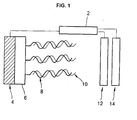
- FIG. 1 illustrates an embodiment of a sensor employing an electrode coated with an electrically conductive polymer according to the present invention.
- a sensor according to the present invention includes a working electrode 4 coated with an electrically conductive polymer 6 according to the present invention that is covalently bonded with a probe 8, a counter electrode 12, and a reference electrode 14, and a potentiostat 2 for measuring potential.
- the working electrode 4 coated with the electrically conductive polymer 6 according to the present invention may be manufactured as follows. Initially, a monomer, a kind of thiophene compound having an amine group capable of binding to a probe, is synthesized. Thiophene monomers capable of being electrically polymerized are preferred. The synthesized monomer is subject to polymerization over a substrate and bound with a probe, for example, DNA, thereby resulting in an electrode according to the present invention that is coated with an electrically conductive polymer according to the present invention covalently bonded with a probe.
- the thiophene monomer with the probe 8 may be subject to polymerization over a substrate, thereby resulting in an electrode according to the present invention that is coated with an electrically conductive polymer according to the present invention covalently bonded with a probe.
- the electrode manufactured through the above processes is used as the working electrode 4.
- a target molecule 10 of interest in samples can be detected using the above sensor according to the present invention.
- the target molecule 10 hybridizes to the probe 8, as illustrated in FIG. 1 , a voltage or current variation from the hybridization reaction is read, so that the target molecule 10 in the sample can be identified.
- the electrical current at a particular redox potential depends on the delocalization in the electrically conductive polymer on the substrate.
- the degree of delocalization in the electrically conductive polymer after a target molecule hybridizes to the probe that is covalently bonded to the electrically conductive polymer according to the present invention is smaller than before the hybridization. Accordingly, when a target metal hybridizes to a probe, the electrical current decreases. In other words, when a double stranded DNA is formed as a result of the hybridization of a DNA probe and a target DNA, the electrical current becomes small. Therefore, a target molecule in a sample can be detected by measuring a decrease in the amount of redox potential that occurs when the target molecule hybridizes to a probe or an increase when not.
- FIG. 2 shows another embodiment of a sensor using an electrically conductive polymer according to the present invention.
- the sensor of FIG. 2 includes a working electrode 4, a counter electrode 12, and a reference electrode 14.
- the working electrode 4 is coated with an electrically conductive polymer according to the present invention.
- the present invention provides a method for detecting a target molecule, the method including:
- the conductive substrate be a gold or platinum electrode.
- a probe include, preferably, a DNA, an RNA, a PNA, an antibody, an antigen, an enzyme, a substrate, and a cofactor.
- a target molecule may include any material capable of specifically binding to the probe, preferably, a nucleic acid or a protein.
- N-hydroxyphthalimidyl 3-thiophenlyl acetate as a monomer to be used in the synthesis of an electrically conductive polymer according to the present invention was synthesized as follows.
- One equivalent of 3-thiophenyl acetic acid and 1 equivalent of 3-hydroxyl phthalimide were reacted in chloroform at room temperature in the presence of N,N'-dicyclohexyl carbodiimide (DCC), as shown in a reaction scheme below.
- the reaction product was purified through recrystallization.
- the resulting purified compound was confirmed to be N-hydroxyphthalimidyl 3-thiophenlyl acetate having formula (III) above by NMR.
- 3-pentafluorophenolyl 3-thiophenylyl acetate as a monomer to be used in the synthesis of an electrically conductive polymer according to the present invention was synthesized as follows.
- One equivalent of 3-thiophenyl acetic acid and 1 equivalent of pentafluorophenol were reacted in chloroform at room temperature in the presence of DCC.
- the reaction product was purified through column chromatography on silica gels.
- the resulting purified compound was confirmed to be 3-pentafluorophenolyl 3-thiophenylyl acetate having formula (IV) above by NMR.
- 1 H NMR(CDCl 3 ) 7.82 (2H), 7.72 (2H), 7.28 (1H), 7.26 (1H), 7.07 (1H), 4.0 (2H)
- 0.1M of the N-hydroxyphthalimidyl 3-thiophenlyl acetate having formula (III) above synthesized in Example 1 was dissolved in a solution of 0.1M of tetrabutylamine hexafluorophosphate (TBAHFP) as a dopant in acetonitrile, and polymerization of the monomer was induced over a platinum electrode using chronopotentrometry, as illustrated in FIG. 3 .
- TBAHFP tetrabutylamine hexafluorophosphate
- a platinum electrode was placed on a 0.5-mm-thick glass substrate, and polymerization of the monomer was induced at a current of 0.4 mA for 40 seconds to uniformly form an electrically conductive polymer layer on the platinum electrode.
- This electrically conductive polymer layer of poly(N-hydroxyphthalimidyl 3-thiophenlyl acetate) was observed using a scanning electron microscope. The result is shown in FIG. 4 .
- FIG. 6A is a graph of correlation between scanning rate versus and peak current, which was obtained based on the cyclic voltammogram of FIG. 6A .
- the peak current of the polymer layer according to the present invention has a positive linear correlation with the scanning rate, which is indicative of good electrical conductivity of the polymer layer.
- Example 4 Immobilization of a DNA probe and confirmation of its hybridization with a target DNA
- a DNA probe was immobilized on the electrically conductive polymer layer polymerized in Example 3. 100 ⁇ M of probe DNA (5' - NH 2 -GTTCTTCTCATCATC-3'; SEQUENCE NO.1) with an amine group at the 5'-terminal was applied to the electrically conductive layer and reacted for about 12 hours. Immobilization of the DNA probe is achieved by the substitution of the 5'-terminal amine group of the DNA probe for a hydroxyphtalimide group of the electrically conductive polymer. Immobilization of a protein probe can be achieved by the substitution of the amine group of lysine residue for the hydroxyphtalimide group of the electrically conductive polymer.
- FIG. 7 illustrates the hybridization of a complementary target DNA to an immobilized probe DNA.
- the single stranded DNA probe was reacted without the complementary target DNA under the same conditions.
- a peak current was measured using cyclic potentiometry to confirm hybridization. The result is shown in FIG. 8 .
- FIG. 8 is a cyclic voltammogram for two spots on an electrode coated with the electrically conductive polymer according to the present invention, one spot for the non-hybridized probe DNA (single stranded; ss) and the other spot for the probe DNA hybridized with the target DNA (double stranded; ds), which was measured to check whether hybridization has taken place or not.
- ss single stranded
- ds double stranded
- the calculated sensitivity of the electrode was 0.62 ⁇ A/nmole. This result indicates that a sensor employing the electrode coated with the electrically conductive polymer according to the present invention can detect a target DNA in a sample at a limit of about 1 nmole.
- target DNAs of different sequences were hybridized to the immobilized DNA of the electrodes.
- the target DNAs used were one perfect match ("PM") DNA, 5'-GATGATGAGAAGAAC-3', (SEQUENCE NO. 2), which perfectly matches the DNA probe, and two single base mismatch DNAs, 5'-GATGATGGGAAGAAC-3' (SEQUENCE NO.
- the ratio of lp(ds)/lp(ss) was 52% for the perfect match target DNA, 29.3% for the single base mismatch TG, and 24.3% for the single base mismatch TC.
- the ratio of lp(ds)/lp(ss) was much smaller for the single base mismatch target DNAs than for the perfect match target DNA.
- Monomers according to the present invention can be used to synthesize highly electrically conductive polymers. Electrically conductive polymers according to the present invention can be effectively used in a sensor for detecting the hybridization of a target molecule to a probe.
- a sensor having an electrode coated with an electrically conductive polymer according to the present invention having a high redox potential according to the present invention can detect the hybridization of a target molecule to a probe, with high selectivity.
- a target molecule can be rapidly detected with high sensitivity using the method according to the present invention.
Landscapes
- Health & Medical Sciences (AREA)
- Immunology (AREA)
- Life Sciences & Earth Sciences (AREA)
- Engineering & Computer Science (AREA)
- Chemical & Material Sciences (AREA)
- Molecular Biology (AREA)
- Biomedical Technology (AREA)
- Hematology (AREA)
- Urology & Nephrology (AREA)
- Physics & Mathematics (AREA)
- Medicinal Chemistry (AREA)
- Microbiology (AREA)
- Cell Biology (AREA)
- Food Science & Technology (AREA)
- Biotechnology (AREA)
- Analytical Chemistry (AREA)
- Biochemistry (AREA)
- General Health & Medical Sciences (AREA)
- General Physics & Mathematics (AREA)
- Pathology (AREA)
- Spectroscopy & Molecular Physics (AREA)
- Chemical Kinetics & Catalysis (AREA)
- Polymers & Plastics (AREA)
- Organic Chemistry (AREA)
- Measuring Or Testing Involving Enzymes Or Micro-Organisms (AREA)
- Polyoxymethylene Polymers And Polymers With Carbon-To-Carbon Bonds (AREA)
- Investigating Or Analyzing Materials By The Use Of Fluid Adsorption Or Reactions (AREA)
- Plural Heterocyclic Compounds (AREA)
- Other Resins Obtained By Reactions Not Involving Carbon-To-Carbon Unsaturated Bonds (AREA)
- Polyethers (AREA)
- Apparatus Associated With Microorganisms And Enzymes (AREA)
Description
- The present invention relates to a novel electrically conductive polymer, a sensor having an electrode coated with the electrically conductive polymer, and a method for detecting a target molecule using the sensor.
- There have been many studies on the development of biomolecule detecting sensors based on the electrochemical principles. One advantage of using the electrochemical principles lies in that sensors can be miniaturized. Accordingly, there have been great advances in research on electrochemical sensors, such as ionic sensors, gas sensors, biosensors, etc. In the fields of genomics and proteomics, it is very important to monitor information on the hybridization of DNA, among other biological molecules, and to monitor conformational changes of proteins. To this end, there have been developed sensors using organic materials, such as intercalators having electrochemical activities, and using electrically conductive polymers. In particular, intercalator-based sensors are ready to be released on the market as a result of extensive research thereon.
- In conductive polymer sensors, only a few representative monomers capable of being polymerized on electrodes are available, and it is difficult to control the physical properties of polymers. As a result, research thereon has been relatively slow. Representative materials for conductive polymer sensors include pyrroles, thiophenes, anilines, and the like. However, because of a limitation that anilines are effective only in acidic conditions, pyrroles and thiophenes have been the main focus of research.
- However, pyrroles cannot be used for a long duration due to their small redox potential (
U.S. Patent No. 6,201,086 ). Thiophenes have a higher redox potential but are more hydrophobic than pyrroles, so they are unsuitable for biomolecule dispersion systems in water (Bauerle P. and Emge A., Adv. Materi., 3:324 (1998)). - The present invention provides a novel electrically conductive polymer. G. Li et al describe electroconductive polymers in "Reactive groups on polymer coated electrodes, 8. Novel conducting polymer interfaces produced by electrochemical copolymerization of functionalized thiophene activated esters with 3-methylthiophene", Macromolecular Chemistry and Physics 199 (1998), pages 2255-2266.
- The present invention also provides novel monomer compounds capable of being polymerized into the electrically conductive polymer.
- The present invention also provides an electrode coated with the electrically conductive polymer.
- The present invention also provides a sensor having an electrode coated with the electrically conductive polymer.
- The present invention also provides a method for detecting a target molecule using the sensor.
- According to an aspect of the present invention, there is provided an electrically conductive polymer having formula (I) below:

- According to another aspect of the present invention, there is provided a monomer used for the synthesis of any electrically conductive polymer according to the present invention described above, being N-hydroxyphthalimidyl 3-thiophenlyl acetate.
- According to another aspect of the present invention, there is provided a method for detecting a target molecule, comprising: (a) providing the electrically conductive polymer having formula (I) above on a substrate through electrical polymerization; (b) immobilizing a probe to the surface of the electrically conductive polymer; (c) contacting a sample containing a target molecule, which is capable of specifically reacting with the probe, to hybridize with the probe; and (d) detecting the target molecule by measuring a voltage or current variation in the electrically conductive polymer.
- The above and other features and advantages of the present invention will become more apparent by describing in detail exemplary embodiments thereof with reference to the attached drawings in which:
-
FIG. 1 illustrates an embodiment of a sensor employing an electrode coated with an electrically conductive polymer according to the present invention; -
FIG. 2 shows another embodiment of a sensor using an electrically conductive polymer according to the present invention; -
FIG. 3 is a graph illustrating an example of polymerization using chronopotentiometry for an electrically conductive polymer according to the present invention; -
FIG. 4 is a scanning electron microscopic photograph of an electrically conductive polymer layer according to the present invention polymerized by chronopotentiometry; -
FIG. 5 is a cyclic voltammogram of an electrically conductive polymer layer according to the present invention polymerized by chronopotentiometry; -
FIG. 6A is a cyclic voltammogram at three different scanning rates for an electrically conductive polymer layer according to the present invention polymerized by chronopotentiometry, andFIG. 6B is a graph of correlation between scanning rate versus and peak current, which was obtained based on the cyclic voltammogram ofFIG. 6A ; -
FIG. 7 illustrates the hybridization of an immobilized probe DNA and a complementary target DNA; -
FIG. 8 is a cyclic voltammogram for two spots on an electrode coated with an electrically conductive polymer according to the present invention, one spot for a probe DNA immobilized on the electrode and the other spot for a target DNA hybridized to the probe DNA; -
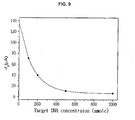
FIG. 9 is a graph of correlation between target DNA concentration and peak current, which is measured from a cyclic voltamogram of target DNA hybridized at different concentrations to probe DNA immobilized on an electrode coated with an electrically conductive polymer according to the present invention; and -
FIG. 10 is a graph showing the difference in peak current between a perfect match target DNA and single base mismatch target DNAs after hybridization to a probe DNA. - An electrically conductive polymer according to the present invention has formula (I) below:

- The term "probe" used throughout the specification means a molecule capable of specifically binding to a target material. Examples of such a probe includes a nucleic acid and a protein, in which a deoxyribonucleic acid (DNA), a ribonucleic acid (RNA), a peptide nucleic acid (PNA), an antibody, an antigen, an enzyme, a cofactor, and a substrate are preferred as the probe.
- Electrically conductive polymers according to the present invention may be synthesized from monomers through polymerization by cyclic votammetry, chronopotentiometry, chronoamperometry, and the lime. The electrically conductive polymers according to the present invention have a high redox potential.
- The present invention provides monomers capable of forming, through polymerization, an electrically conductive polymer according to the present invention. An example of such a monomer is N-hydroxyphthalimidyl 3-thiophenlyl acetate having formula (III) below.

- The present invention provides an electrode coated with an electrically conductive polymer according to the present invention. Any material commonly used in forming electrodes, for example, platinum, may be used for the electrode according to the present invention.
- The present invention provides a sensor employing an electrode coated with an electrically conductive polymer according to the present invention. The sensor according to the present invention includes common sensor constituent elements except for an electrode coated with an electrically conductive polymer according to the present invention. The sensor according to the present invention may include a working electrode, a counter electrode, and a reference electrode, which are commonly used.
-
FIG. 1 illustrates an embodiment of a sensor employing an electrode coated with an electrically conductive polymer according to the present invention. Referring toFIG. 1 , a sensor according to the present invention includes a workingelectrode 4 coated with an electricallyconductive polymer 6 according to the present invention that is covalently bonded with aprobe 8, acounter electrode 12, and areference electrode 14, and apotentiostat 2 for measuring potential. - The working
electrode 4 coated with the electricallyconductive polymer 6 according to the present invention may be manufactured as follows. Initially, a monomer, a kind of thiophene compound having an amine group capable of binding to a probe, is synthesized. Thiophene monomers capable of being electrically polymerized are preferred. The synthesized monomer is subject to polymerization over a substrate and bound with a probe, for example, DNA, thereby resulting in an electrode according to the present invention that is coated with an electrically conductive polymer according to the present invention covalently bonded with a probe. Alternatively, after covalently bonding theprobe 8 to a thiophene monomer, the thiophene monomer with theprobe 8 may be subject to polymerization over a substrate, thereby resulting in an electrode according to the present invention that is coated with an electrically conductive polymer according to the present invention covalently bonded with a probe. The electrode manufactured through the above processes is used as the workingelectrode 4. - A
target molecule 10 of interest in samples can be detected using the above sensor according to the present invention. When a sample containing thetarget molecule 10 is brought to contact theprobe 8 that is immobilized on the workingelectrode 4 of the sensor, thetarget molecule 10 hybridizes to theprobe 8, as illustrated inFIG. 1 , a voltage or current variation from the hybridization reaction is read, so that thetarget molecule 10 in the sample can be identified. - Voltage or current variations occurring from hybridization are thought to follow, though not absolutely, the mechanism described below. The electrical current at a particular redox potential depends on the delocalization in the electrically conductive polymer on the substrate. The degree of delocalization in the electrically conductive polymer after a target molecule hybridizes to the probe that is covalently bonded to the electrically conductive polymer according to the present invention is smaller than before the hybridization. Accordingly, when a target metal hybridizes to a probe, the electrical current decreases. In other words, when a double stranded DNA is formed as a result of the hybridization of a DNA probe and a target DNA, the electrical current becomes small. Therefore, a target molecule in a sample can be detected by measuring a decrease in the amount of redox potential that occurs when the target molecule hybridizes to a probe or an increase when not.
-
FIG. 2 shows another embodiment of a sensor using an electrically conductive polymer according to the present invention. The sensor ofFIG. 2 includes a workingelectrode 4, acounter electrode 12, and areference electrode 14. The workingelectrode 4 is coated with an electrically conductive polymer according to the present invention. - The present invention provides a method for detecting a target molecule, the method including:
- having formula (I)
- (a) providing an electrically conductive polymer, a kind of polythiophene, on a substrate through electrical polymerization;
- (b) immobilizing a probe to the surface of the electrically conductive polymer;
- (c) contacting a sample containing a target molecule, which is capable of specifically reacting with the probe, to hybridize with the probe; and
- (d) detecting the target molecule by measuring a voltage or current variation in the electrically conductive polymer.
- It is preferable that the conductive substrate be a gold or platinum electrode. Examples of such a probe include, preferably, a DNA, an RNA, a PNA, an antibody, an antigen, an enzyme, a substrate, and a cofactor. Such a target molecule may include any material capable of specifically binding to the probe, preferably, a nucleic acid or a protein.
- Hereinafter, the present invention will be described in greater detail with reference to the following examples. The following examples are for illustrative purposes and are not intended to limit the scope of the invention.
- N-hydroxyphthalimidyl 3-thiophenlyl acetate as a monomer to be used in the synthesis of an electrically conductive polymer according to the present invention was synthesized as follows. One equivalent of 3-thiophenyl acetic acid and 1 equivalent of 3-hydroxyl phthalimide were reacted in chloroform at room temperature in the presence of N,N'-dicyclohexyl carbodiimide (DCC), as shown in a reaction scheme below. The reaction product was purified through recrystallization. The resulting purified compound was confirmed to be N-hydroxyphthalimidyl 3-thiophenlyl acetate having formula (III) above by NMR.
- 1H NMR(CDCl3) : 7.87(m, C6H4, 4H), 7.31(m, C4H3SCH2, 1H), 7.24(s, C4H3SCH2, 1H), 7.11 (m, C4H3SCH2, 1H), 4.01 (s, C4H3SCH2, 2H).

- 3-pentafluorophenolyl 3-thiophenylyl acetate as a monomer to be used in the synthesis of an electrically conductive polymer according to the present invention was synthesized as follows. One equivalent of 3-thiophenyl acetic acid and 1 equivalent of pentafluorophenol were reacted in chloroform at room temperature in the presence of DCC. The reaction product was purified through column chromatography on silica gels. The resulting purified compound was confirmed to be 3-pentafluorophenolyl 3-thiophenylyl acetate having formula (IV) above by NMR.
1H NMR(CDCl3) : 7.82 (2H), 7.72 (2H), 7.28 (1H), 7.26 (1H), 7.07 (1H), 4.0 (2H) - 0.1M of the N-hydroxyphthalimidyl 3-thiophenlyl acetate having formula (III) above synthesized in Example 1 was dissolved in a solution of 0.1M of tetrabutylamine hexafluorophosphate (TBAHFP) as a dopant in acetonitrile, and polymerization of the monomer was induced over a platinum electrode using chronopotentrometry, as illustrated in
FIG. 3 . In particular, a platinum electrode was placed on a 0.5-mm-thick glass substrate, and polymerization of the monomer was induced at a current of 0.4 mA for 40 seconds to uniformly form an electrically conductive polymer layer on the platinum electrode. - This electrically conductive polymer layer of poly(N-hydroxyphthalimidyl 3-thiophenlyl acetate) was observed using a scanning electron microscope. The result is shown in
FIG. 4 . - To measure the reproducibility of the electrically conductive polymer layer of poly(N-hydroxyphthalimidyl 3-thiophenlyl acetate), a cyclic voltammogram was measured five times at a constant scanning rate by applying voltages across the platinum electrode in acetonitrile/TBAHFP. The result is shown in
FIG. 5 . As shown inFIG. 5 , the poly(N-hydroxyphthalimidyl 3-thiophenlyl acetate) layer according to the present invention has a nearly reversible oxidation peak at 1.0V, confirming a high electroactivity of the polymer layer. Apparently, the polymerization reaction over the electrode is highly reproducible. - To measure the electrical conductivity of the poly(N-hydroxyphthalimidyl 3-thiophenlyl acetate) layer, a cyclic voltammogram was measured at three different scanning rates by applying voltages across the platinum electrode. The result is shown in
FIG. 6A .FIG. 6B is a graph of correlation between scanning rate versus and peak current, which was obtained based on the cyclic voltammogram ofFIG. 6A . As shown inFIG. 6B , the peak current of the polymer layer according to the present invention has a positive linear correlation with the scanning rate, which is indicative of good electrical conductivity of the polymer layer. - A DNA probe was immobilized on the electrically conductive polymer layer polymerized in Example 3. 100 µM of probe DNA (5' - NH2-GTTCTTCTCATCATC-3'; SEQUENCE NO.1) with an amine group at the 5'-terminal was applied to the electrically conductive layer and reacted for about 12 hours. Immobilization of the DNA probe is achieved by the substitution of the 5'-terminal amine group of the DNA probe for a hydroxyphtalimide group of the electrically conductive polymer. Immobilization of a protein probe can be achieved by the substitution of the amine group of lysine residue for the hydroxyphtalimide group of the electrically conductive polymer.
- 100 µM of complementary target DNA (5'-NH2-GATGATGAGAAGAAC-3'; SEQUENCE NO. 2) was applied to the single stranded DNA probe immobilized on the electrically conductive polymer according to the present invention and reacted for hybridization at 40°C for 3 hours.
FIG. 7 illustrates the hybridization of a complementary target DNA to an immobilized probe DNA. As a control group, the single stranded DNA probe was reacted without the complementary target DNA under the same conditions. After the hybridization reaction, a peak current was measured using cyclic potentiometry to confirm hybridization. The result is shown inFIG. 8 . -
FIG. 8 is a cyclic voltammogram for two spots on an electrode coated with the electrically conductive polymer according to the present invention, one spot for the non-hybridized probe DNA (single stranded; ss) and the other spot for the probe DNA hybridized with the target DNA (double stranded; ds), which was measured to check whether hybridization has taken place or not. As shown inFIG. 8 , when DNA hybridization (ds DNA) occurs, a current level at the same voltage greatly decreases. This reduction in current level of the electrically conductive polymer is attributed to a large functional group grafted thereon as a result of the hybridization. - To measure the sensitivity of an electrode coated with the electrically conductive polymer according to the present invention, after hybridization of the probe DNA with different concentrations of the complementary target DNA, a cylic voltammogram was measured. Based on this cyclic voltammogram, a correlation between target DNA concentration and peak current was calculated. The result is shown in
FIG. 9 . - The sensitivity of the electrode coated with the electrically conductive polymer according to the present invention was calculated from the slope at x = 0 of the graph of
FIG. 9 . The calculated sensitivity of the electrode was 0.62 µ A/nmole. This result indicates that a sensor employing the electrode coated with the electrically conductive polymer according to the present invention can detect a target DNA in a sample at a limit of about 1 nmole. - For comparison of the hybridization of a probe DNA with a perfect match target DNA and a single base mismatch target DNA, after the immobilization of DNA probe (5'-NH2-GTTCTTCTCATCATC-3'; SEQUECE NO. 1) on electrodes coated with the electrically conductive polymer synthesized in Example 3, target DNAs of different sequences were hybridized to the immobilized DNA of the electrodes. The target DNAs used were one perfect match ("PM") DNA, 5'-GATGATGAGAAGAAC-3', (SEQUENCE NO. 2), which perfectly matches the DNA probe, and two single base mismatch DNAs, 5'-GATGATGGGAAGAAC-3' (SEQUENCE NO. 3, "TG") and 5'-GATGATGCGAAGAAC-3' (SEQUENCE NO. 4, "TC"), which-have a single non-complementary base to the sequence of the DNA probe. How sensitively and selectively the electrode according to the present invention can detect a single base mismatch was measured from the cyclic voltammograms of the samples. As a control group, a cyclic voltammmogram for the non-hybridized DNA probe was measured. The ratio of peak current of each of the samples to the control group, lp(ds)/lp(ss), was calculated based on the cyclic voltammograms. The results are shown in
FIG. 10 . - As shown in
FIG. 10 , the ratio of lp(ds)/lp(ss) was 52% for the perfect match target DNA, 29.3% for the single base mismatch TG, and 24.3% for the single base mismatch TC. The ratio of lp(ds)/lp(ss) was much smaller for the single base mismatch target DNAs than for the perfect match target DNA. This result supports that an electrode coated with the electrically conductive polymer according to the present invention can accurately detect a single base mismatch target DNA as well as a perfect match target DNA which are hybridized to a probe DNA immobilized on the electrically conductive polymer. - Monomers according to the present invention can be used to synthesize highly electrically conductive polymers. Electrically conductive polymers according to the present invention can be effectively used in a sensor for detecting the hybridization of a target molecule to a probe. A sensor having an electrode coated with an electrically conductive polymer according to the present invention having a high redox potential according to the present invention can detect the hybridization of a target molecule to a probe, with high selectivity. A target molecule can be rapidly detected with high sensitivity using the method according to the present invention.
Claims (7)
- An electrically conductive polymer having formula (I) below:
 where m is 1, 2, or 3; R is a hydroxyphthalimidyl group;and n is zero or an integer.
 - N-hydroxyphthalimidyl 3-thiophenlyl acetate.
- An electrode coated with the electrically conductive polymer of claim 1.
- A sensor employing an electrode coated with the electrically conductive polymer of claim 1.
- A method for detecting a target molecule, comprising:(a) providing the electrically conductive polymer of claim 1 on a substrate through electrical polymerization;(b) immobilizing a probe to the surface of the electrically conductive polymer, wherein the probe group is selected from the group consisting of a DNA, a RNA, a PNA, an antibody, an antigen, an enzyme, a substrate, and a cofactor;(c) contacting a sample containing a target molecule, which is capable of specifically reacting with the probe, to hybridize with the probe; and(d) detecting the target molecule by measuring a voltage or current variation in the electrically conductive polymer.
- The method of claim 5, wherein the conductive substrate is a gold electrode or a platinum electrode.
- The method of claim 5, wherein the target molecule is a nucleic acid or a protein.
Applications Claiming Priority (4)
| Application Number | Priority Date | Filing Date | Title |
|---|---|---|---|
| KR2002012729 | 2002-03-09 | ||
| KR20020012729 | 2002-03-09 | ||
| KR2003007757 | 2003-02-07 | ||
| KR1020030007757A KR100580620B1 (en) | 2002-03-09 | 2003-02-07 | Novel electrically conductive polymer, sensor using the same and a method for detecting a target molecule using the same |
Publications (3)
| Publication Number | Publication Date |
|---|---|
| EP1347463A2 EP1347463A2 (en) | 2003-09-24 |
| EP1347463A3 EP1347463A3 (en) | 2004-05-12 |
| EP1347463B1 true EP1347463B1 (en) | 2013-05-29 |
Family
ID=27791072
Family Applications (1)
| Application Number | Title | Priority Date | Filing Date |
|---|---|---|---|
| EP03004957.1A Expired - Lifetime EP1347463B1 (en) | 2002-03-09 | 2003-03-10 | Novel electrically conductive polymer, sensor using the same, and method for detecting target molecule using the sensor |
Country Status (4)
| Country | Link |
|---|---|
| US (2) | US6987164B2 (en) |
| EP (1) | EP1347463B1 (en) |
| JP (1) | JP3760158B2 (en) |
| CN (1) | CN1318460C (en) |
Families Citing this family (12)
| Publication number | Priority date | Publication date | Assignee | Title |
|---|---|---|---|---|
| US8294552B2 (en) * | 2001-07-10 | 2012-10-23 | Xatra Fund Mx, Llc | Facial scan biometrics on a payment device |
| KR100580621B1 (en) | 2003-03-07 | 2006-05-16 | 삼성전자주식회사 | Electroconductive compounds, electrodes and sensors containing the same, and method for detecting a target substance using the sensor |
| JP2006133137A (en) * | 2004-11-08 | 2006-05-25 | Eiichi Tamiya | Method for detecting material to be inspected |
| JP4744910B2 (en) * | 2004-11-11 | 2011-08-10 | 株式会社堀場製作所 | Biosensor, multibiosensor, and multicomponent measurement system using the same |
| KR20060081441A (en) * | 2005-01-07 | 2006-07-13 | 삼성전자주식회사 | Novel thiophene-thiazole derivatives and organic thin film transistors using the same |
| CN101776637B (en) * | 2009-01-13 | 2013-11-06 | 国家纳米科学中心 | Photoelectrochemistry biosensor and preparation method thereof |
| JP5480546B2 (en) * | 2009-07-03 | 2014-04-23 | 日本航空電子工業株式会社 | Substrate with conductive thin film |
| US8877022B2 (en) | 2011-06-21 | 2014-11-04 | National Taiwan University | Biosensor |
| CN105353015B (en) * | 2015-12-02 | 2019-04-12 | 厦门大学 | A kind of preparation method and application of poly- dioxyethylene thiophene composite membrane |
| AU2017323604A1 (en) * | 2016-09-09 | 2019-04-18 | Auckland Uniservices Limited | Conducting polymers and uses thereof |
| US12496612B2 (en) | 2021-01-08 | 2025-12-16 | Surmodics, Inc. | Coating application system and methods for coating rotatable medical devices |
| WO2025178845A1 (en) * | 2024-02-21 | 2025-08-28 | The Penn State Research Foundation | Rapid point-of-site multiplexed detection of salivary micro rna in mild tbi using amplification-free electrochemical test |
Family Cites Families (3)
| Publication number | Priority date | Publication date | Assignee | Title |
|---|---|---|---|---|
| FR2720832A1 (en) * | 1994-04-22 | 1995-12-08 | Francis Garnier | Electroactive electrodes and membranes based on bioactive peptides, for the recognition, extraction or release of biologically active species. |
| RU2161653C2 (en) * | 1998-08-24 | 2001-01-10 | ФАРМАКОВСКИЙ Дмитрий Александрович | Method of quantitative electrochemical analysis of biological molecules |
| JP2002530519A (en) | 1998-11-19 | 2002-09-17 | ベーイーオー・メリュー | Conductive electroactive functionalized binding polymers and uses thereof |
-
2003
- 2003-03-06 US US10/383,809 patent/US6987164B2/en not_active Expired - Lifetime
- 2003-03-07 JP JP2003061268A patent/JP3760158B2/en not_active Expired - Fee Related
- 2003-03-09 CN CNB03130785XA patent/CN1318460C/en not_active Expired - Fee Related
- 2003-03-10 EP EP03004957.1A patent/EP1347463B1/en not_active Expired - Lifetime
-
2005
- 2005-05-23 US US11/134,984 patent/US7341759B2/en not_active Expired - Fee Related
Also Published As
| Publication number | Publication date |
|---|---|
| CN1454908A (en) | 2003-11-12 |
| US7341759B2 (en) | 2008-03-11 |
| JP3760158B2 (en) | 2006-03-29 |
| JP2003335846A (en) | 2003-11-28 |
| EP1347463A3 (en) | 2004-05-12 |
| CN1318460C (en) | 2007-05-30 |
| US20050208579A1 (en) | 2005-09-22 |
| EP1347463A2 (en) | 2003-09-24 |
| US20030187182A1 (en) | 2003-10-02 |
| US6987164B2 (en) | 2006-01-17 |
Similar Documents
| Publication | Publication Date | Title |
|---|---|---|
| Wang et al. | New label-free DNA recognition based on doping nucleic-acid probes within conducting polymer films | |
| US12135323B1 (en) | Serially deposited biomolecules | |
| US20070029195A1 (en) | Polymer/nanoparticle composites, film and molecular detection device | |
| US20020028441A1 (en) | Detection of molecules and molecule complexes | |
| AU776997B2 (en) | Biosensors which utilize charge neutral conjugated polymers | |
| US6987164B2 (en) | Electrically conductive polymer, sensor using the same, and method for detecting target molecule using the sensor | |
| CA2394126A1 (en) | Method and device for detecting and quantifying biomolecules | |
| CN101126734B (en) | Biosensor based on aptamer modified conducting polymer and its preparation method and uses | |
| Bognár et al. | Novel functional monomer for the electrochemical synthesis of highly affine epitope‐imprinted polymers | |
| EP1604042A2 (en) | Method and device for detecting biomolecules | |
| Yilmaz et al. | Synthesis and application of a novel poly-L-phenylalanine electroactive macromonomer as matrix for the biosensing of ‘Abused Drug’model | |
| JP2008201782A (en) | Novel terthiophene-3-carboxylic acid compound and production method thereof, functional conductive terthiophene polymer using the compound as a monomer, DNA hybridization detection method using the polymer, and probe DNA production method | |
| US7129363B2 (en) | Conductive compound, electrode and sensor containing the same, and target molecule detection method using the sensor | |
| KR100601999B1 (en) | Target material detection method using novel conductive polymer | |
| KR100580620B1 (en) | Novel electrically conductive polymer, sensor using the same and a method for detecting a target molecule using the same | |
| CN101796029A (en) | Method for Electrochemical Detection of Nucleic Acid Sequence | |
| Ramanaviciene et al. | Towards the hybrid biosensors based on biocompatible conducting polymers | |
| Kjällman et al. | DNA-sensors based on functionalized conducting polymers and quantum dots |
Legal Events
| Date | Code | Title | Description |
|---|---|---|---|
| PUAI | Public reference made under article 153(3) epc to a published international application that has entered the european phase |
Free format text: ORIGINAL CODE: 0009012 |
|
| 17P | Request for examination filed |
Effective date: 20030310 |
|
| AK | Designated contracting states |
Kind code of ref document: A2 Designated state(s): AT BE BG CH CY CZ DE DK EE ES FI FR GB GR HU IE IT LI LU MC NL PT RO SE SI SK TR |
|
| AX | Request for extension of the european patent |
Extension state: AL LT LV MK RO |
|
| PUAL | Search report despatched |
Free format text: ORIGINAL CODE: 0009013 |
|
| AK | Designated contracting states |
Kind code of ref document: A3 Designated state(s): AT BE BG CH CY CZ DE DK EE ES FI FR GB GR HU IE IT LI LU MC NL PT RO SE SI SK TR |
|
| AX | Request for extension of the european patent |
Extension state: AL LT LV MK RO |
|
| AKX | Designation fees paid |
Designated state(s): DE FR GB |
|
| RAP1 | Party data changed (applicant data changed or rights of an application transferred) |
Owner name: SAMSUNG ELECTRONICS CO., LTD. |
|
| REG | Reference to a national code |
Ref country code: DE Ref legal event code: R079 Ref document number: 60344156 Country of ref document: DE Free format text: PREVIOUS MAIN CLASS: H01B0001120000 Ipc: C08G0061120000 |
|
| GRAP | Despatch of communication of intention to grant a patent |
Free format text: ORIGINAL CODE: EPIDOSNIGR1 |
|
| RIC1 | Information provided on ipc code assigned before grant |
Ipc: H01B 1/12 20060101ALI20121129BHEP Ipc: C08G 61/12 20060101AFI20121129BHEP Ipc: C12Q 1/68 20060101ALI20121129BHEP Ipc: G01N 33/53 20060101ALI20121129BHEP |
|
| RIN1 | Information on inventor provided before grant (corrected) |
Inventor name: LIM, GEUN-BAE, Inventor name: CHA, JUN-HOE Inventor name: CHOI, YOUNG Inventor name: HAN, JUNG-IM |
|
| GRAS | Grant fee paid |
Free format text: ORIGINAL CODE: EPIDOSNIGR3 |
|
| GRAA | (expected) grant |
Free format text: ORIGINAL CODE: 0009210 |
|
| AK | Designated contracting states |
Kind code of ref document: B1 Designated state(s): DE FR GB |
|
| REG | Reference to a national code |
Ref country code: GB Ref legal event code: FG4D |
|
| REG | Reference to a national code |
Ref country code: DE Ref legal event code: R096 Ref document number: 60344156 Country of ref document: DE Effective date: 20130725 |
|
| PLBE | No opposition filed within time limit |
Free format text: ORIGINAL CODE: 0009261 |
|
| STAA | Information on the status of an ep patent application or granted ep patent |
Free format text: STATUS: NO OPPOSITION FILED WITHIN TIME LIMIT |
|
| 26N | No opposition filed |
Effective date: 20140303 |
|
| REG | Reference to a national code |
Ref country code: DE Ref legal event code: R097 Ref document number: 60344156 Country of ref document: DE Effective date: 20140303 |
|
| REG | Reference to a national code |
Ref country code: DE Ref legal event code: R119 Ref document number: 60344156 Country of ref document: DE |
|
| REG | Reference to a national code |
Ref country code: DE Ref legal event code: R119 Ref document number: 60344156 Country of ref document: DE Effective date: 20141001 |
|
| PG25 | Lapsed in a contracting state [announced via postgrant information from national office to epo] |
Ref country code: DE Free format text: LAPSE BECAUSE OF NON-PAYMENT OF DUE FEES Effective date: 20141001 |
|
| REG | Reference to a national code |
Ref country code: FR Ref legal event code: PLFP Year of fee payment: 13 |
|
| PGFP | Annual fee paid to national office [announced via postgrant information from national office to epo] |
Ref country code: GB Payment date: 20150216 Year of fee payment: 13 Ref country code: FR Payment date: 20150216 Year of fee payment: 13 |
|
| GBPC | Gb: european patent ceased through non-payment of renewal fee |
Effective date: 20160310 |
|
| REG | Reference to a national code |
Ref country code: FR Ref legal event code: ST Effective date: 20161130 |
|
| PG25 | Lapsed in a contracting state [announced via postgrant information from national office to epo] |
Ref country code: GB Free format text: LAPSE BECAUSE OF NON-PAYMENT OF DUE FEES Effective date: 20160310 Ref country code: FR Free format text: LAPSE BECAUSE OF NON-PAYMENT OF DUE FEES Effective date: 20160331 |
|
| P01 | Opt-out of the competence of the unified patent court (upc) registered |
Effective date: 20230520 |