EP1347400A2 - System for returning rates back to content providers, gateway used for the system, and method of doing the same - Google Patents
System for returning rates back to content providers, gateway used for the system, and method of doing the same Download PDFInfo
- Publication number
- EP1347400A2 EP1347400A2 EP03005006A EP03005006A EP1347400A2 EP 1347400 A2 EP1347400 A2 EP 1347400A2 EP 03005006 A EP03005006 A EP 03005006A EP 03005006 A EP03005006 A EP 03005006A EP 1347400 A2 EP1347400 A2 EP 1347400A2
- Authority
- EP
- European Patent Office
- Prior art keywords
- content provider
- user terminal
- packet
- gateway
- set forth
- Prior art date
- Legal status (The legal status is an assumption and is not a legal conclusion. Google has not performed a legal analysis and makes no representation as to the accuracy of the status listed.)
- Withdrawn
Links
Images


Classifications
-
- G—PHYSICS
- G06—COMPUTING OR CALCULATING; COUNTING
- G06Q—INFORMATION AND COMMUNICATION TECHNOLOGY [ICT] SPECIALLY ADAPTED FOR ADMINISTRATIVE, COMMERCIAL, FINANCIAL, MANAGERIAL OR SUPERVISORY PURPOSES; SYSTEMS OR METHODS SPECIALLY ADAPTED FOR ADMINISTRATIVE, COMMERCIAL, FINANCIAL, MANAGERIAL OR SUPERVISORY PURPOSES, NOT OTHERWISE PROVIDED FOR
- G06Q30/00—Commerce
- G06Q30/04—Billing or invoicing
Definitions
- the invention relates to a system for returning rates back to a small-sized content provider which distributes contents through an internet.
- the invention relates further to a gateway used in such a system, and a method of doing the same.
- a charging system in packet communication includes, for instance, a system in which a rate is determined in accordance with the numbers of packets a packet communication user receives, a system in which a communication administrator charges a user for packet communication in place of a content provider, and a system in which a content provider carries out authentication for charging a user packet communication rate. These systems are carried out by a communication administrator or a content provider which can receive communication rates in an end-to-end manner.
- a communication administrator newly presents service in which a cellular phone such as an "i-mode" type cellular phone can make access to an internet.
- a cellular phone such as an "i-mode" type cellular phone can make access to an internet.
- access is made in the greater number to an internet from cellular phones in packet communication.
- One of reasons why the number of access is increased is that a lot of small-sized voluntary content providers present various contents to cellular phones through an internet. Such various contents satisfy various demands of a lot of cellular phone users.
- Such various contents are presented for the purpose of reducing costs necessary for maintaining shops in which a content provider makes direct contact with users, for instance.
- a content provider earns an income as running costs for providing contents, in accordance with the following ways.
- a content provider can earn an income by inserting an advertisement in his/her content.
- a content provider can earn an income by running a toll site for presenting music or games to a cellular phone, in which case, a communication administrator charges a cellular phone user a rate for communication in place of the content provider.
- a content provider can have a server which is capable of authenticating a packet communication network user for charging the user a communication rate in an end-to-end manner.
- Japanese Patent Application Publication No. 10-334145 has suggested a server which is capable of charging a user a communication rate on behalf of a content provider.
- the suggested server just charges a packet network user a communication rate for purchasing contents on a network, and is not designed to have a function of returning a part of a communication rate back to a voluntary content provider which cannot earn an income.
- a system for returning a rate back to a provider including (a) at least one user terminal receiving and transmitting packets, (b) a plurality of content providers each of which provides contents through an internet, and (c) a packet network connected to both the user terminal and the internet through radio signals, the packet network allowing packets to pass therethrough between the user terminal and the content providers, and charging the user terminal making access to the providers, for packet rates, wherein when the user terminal receives packets provided from a provider to which at least a part of the packet rates is to be returned back, the part of the packet rates is returned back to the provider.
- a user terminal when a user terminal receives packets provided from a content provider to which at least a part of a packet rate is to be returned back, the part of the packet rate is returned back to the content provider.
- a communication administrator can assist voluntary content providers to construct attractive contents. If voluntary content providers can present a lot of attractive contents, the number of accesses made to such voluntary content providers is increased, ensuring that a communication administrator which presents a packet communication network can earn an increased income.
- a method of returning a rate back to a content provider in a system including (a) at least one user terminal receiving and transmitting packets, (b) a plurality of content providers each of which provides contents through an internet, and (c) a packet network connected to both the user terminal and the internet through radio signals, the packet network allowing packets to pass therethrough between the user terminal and the content providers, and charging the user terminal making access to the content providers, for packet rates, the method including the step of, when the user terminal receives packets provided from a content provider to which at least a part of the packet rates is to be returned back, returning the part of the packet rates back to the content provider.
- a gateway arranged in a packet network through which a plurality of content providers each of which provides contents through an internet transmits packets to and receives packets from a user terminal, the gateway acting as an interface through which the packet network makes communication with the internet, the packet network charging the user terminal making access to the content providers, for packet rates, wherein the gateway, when the user terminal receives packets provided from a certain content provider, judges whether the certain content provider is a content provider to which at least a part of the packet rates is to be returned back, and if the certain content provider is judged by the gateway to be a content provider to which at least a part of the packet rates is to be returned back, the part of the packet rates is returned back to the certain content provider.
- a user terminal when a user terminal receives packets provided from a certain content provider, it is judged as to whether the certain content provider is a content provider to which at least a part of the packet rates is to be returned back. If the certain content provider is such a content provider, the part of the packet rate is returned back to the certain content provider.
- a communication administrator can assist voluntary content providers to construct attractive contents. If voluntary content providers can present a lot of attractive contents, the number of accesses made to such voluntary content providers is increased, ensuring that a communication administrator which presents a packet communication network can earn an increased income.
- FIG. 1 is a block diagram illustrating a system 100 for returning a packet communication rate back to a voluntary content provider, in accordance with the first embodiment of the present invention.
- the system 100 in accordance with the first embodiment is comprised of a user terminal 10, a packet communication network 80, and a plurality of content providers 60 each of which provides contents through an internet network 90.
- the packet communication network 80 connects the user terminal 10 to the internet network 90, and is provided by a communication administrator.
- the packet communication network 80 is comprised of an exchange 20, an interface 30, and a charger 70.
- the exchange 20 and the interface 30 are designed to make communication to each other.
- the exchange 20 acts as an interface through which the packet communication network 80 makes communication with the user terminal 10 through radio signals, and the interface 30 allows the packet communication network 80 to make communication with the internet network 90.
- the user terminal 10 transmits packets to the content providers 60 through the exchange 20 and the interface 30, and the content providers 60 transmit packets to the user terminal 10 through the interface 30 and the exchange 20.
- the charger 70 is connected to the exchange 20.
- the user terminal 10 is comprised of a data processor which is capable of making packet communication to receive various services, such as a cellular phone or a personal computer.
- Each of the content providers 60 is comprised of a data processor arranged in the internet network 90, such as a workstation server, and provides contents through the internet network 90.
- the user terminal 10 is designed to be able to make access to the content providers 60 through the packet communication network 80, and have a display screen in which contents having been received from the content providers 60 can be displayed.
- the exchange 20 receives a request of making access to the content providers 60, from the user terminal 10, and receives packets transmitted from the content providers 60 in response to the request and transmits the packets to the user terminal 10.
- the charger 70 is arranged by a communication administrator providing the packet communication network 80.
- the charger 70 calculates an amount of packets to be transmitted to the user terminal 10 in response to the above-mentioned request, and charges a user of the user terminal 10 a packet communication rate in accordance with the calculated amount of packets.
- the interface 30 is comprised of a data processor such as a workstation server.
- the interface 30 charges a user a communication rate on behalf of a toll content provider. It is assumed that a content provider 60A among the content providers 60 is a voluntary content provider to which a part of a packet communication rate which a communication administrator charges a user of the user terminal 10 is to be returned back. If the user terminal 10 receives packets provided from the voluntary content provider 60A, the interface 30 transmits an instruction to the charger 70 through the exchange 20 to pay a part of a packet communication rate to the voluntary content provider 60A.
- FIG. 2 is a flow-chart showing an operation of the system 100 in accordance with the first embodiment. Hereinbelow is explained the operation of the system 100 with reference to FIG. 2.
- the terminal user 10 transmits a request of presenting contents thereto, to the exchange 20, in step S110.
- the exchange 20 On receipt of the request from the user terminal 10, the exchange 20 retrieves the content providers 60 to find a content provider which provides the contents requested by the user terminal 10, in step S120. It is assumed that the thus found content provider is a voluntary content provider 60A to which a part of a packet communication rate which a communication administrator charges a user of the user terminal 10 is to be returned back.
- the exchange 20 transmits an instruction to the voluntary content provider 60A through the interface 30 to provide contents to the exchange 20, in step S130.
- the voluntary content provider 60A transmits contents to the exchange 20 through the interface 30, in step S140.
- the interface 30 Since the contents or packets passing through the interface 30 are transmitted from the voluntary content provider 60A, the interface 30 transmits an instruction to the charger 70 through the exchange 20 that the packets are transmitted from the voluntary content provider 60A, and (hence, a part of a packet communication rate should be paid to the voluntary content provider 60A, in step S150.
- the user terminal 10 receives the contents transmitted from the voluntary content provider 60A through the interface 30 and the exchange 20, in step S160.
- the charger 70 charges a user of the user terminal 10 a packet communication rate, in step S170.
- the charger 70 pays a part of the thus charged packet communication rate to the voluntary content provider 60A, in step S180.
- FIG. 3 is a block diagram illustrating a system 200 for returning a packet communication rate back to a voluntary content provider, in accordance with the second embodiment of the present invention.
- the system 200 in accordance with the second embodiment is comprised of a user terminal 10, a packet communication network 80A, and a plurality of content providers 60 each of which provides contents through an internet network 90.
- the packet communication network 80A connects the user terminal 10 to the internet network 90, and is provided by a communication administrator.
- the packet communication network 80A is comprised of an exchange 20, a gateway 30A, and a charger 70.
- the exchange 20 and the gateway 30A are designed to make communication to each other.
- the exchange 20 acts as an interface through which the packet communication network 80A makes communication with the user terminal 10 through radio signals
- the gateway 30A acts as an interface through which the packet communication network 80A makes communication with the internet network 90.
- the user terminal 10 transmits packets to the' content providers 60 through the exchange 20 and the gateway 30A, and the content providers 60 transmit packets to the user terminal 10 through the gateway 30A and the exchange 20.
- the charger 70 is connected to the exchange 20.
- the gateway 30A includes a database 40 and a log file 50.
- the user terminal 10, the content providers 60, the exchange 20 and the charger 70 have the same structure as the structure of them in the first embodiment, and operate in the same manner as the corresponding parts in the first embodiment.
- the gateway 30A is comprised of a data processor such as a workstation server.
- the gateway 30A charges a user a communication rate on behalf of a toll content provider.
- a content identifier means an identifier which identifies only one content provider.
- a content identifier is comprised of a host in a hyper text transfer protocol (HTTP) in the request transmitted from the user terminal 10.
- HTTP hyper text transfer protocol
- a content identifier is comprised of "www.xxx.co.jp" which is a host of the request. That is, a content identifier is comprised of a universal resource locator (URL).
- URL universal resource locator
- a content identifier of a content provider to which a part of a packet communication rate which a communication administrator charges a user of the user terminal 10 is to be returned back is stored in the database 40. For instance, if it is assumed that a content provider 60A among the content providers 60 is a voluntary content provider to which a part of a packet communication rate which a communication administrator charges a user of the user terminal 10 is to be returned back, a content identifier of the voluntary content provider 60A is in advance stored in the database 40.
- the gateway 30A judges that a content identifier indicated in the request transmitted from the user terminal 10 is identical with a content identifier of the voluntary content provider 60A, stored in the database 40, the gateway 30A transmits access data to the log file 50.
- the access data includes the content identifier and an amount of packets which the voluntary content provider 60A transmitted to the user terminal 10 through the gateway 30A.
- the log file 50 stores the received access data therein.
- the access data including the content identifier and an amount of the packets may be displayed in a display screen of the user terminal 10.
- the access data is transmitted to the log file 50 each time a request to make access to the content providers 60 is transmitted from the user terminal 10.
- An amount of packets stored in the log file 50 is used for detecting an amount of packets transmitted each of the content providers 60.
- a communication administrator providing the packet communication network 80A returns a part of a packet communication rate back to the voluntary content provider 60A in accordance with the access data stored in the log file 50, for instance, in accordance with a ratio of packets transmitted from the voluntary content provider 60A to packets transmitted from all of the content providers 60.
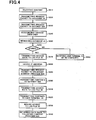
- FIG. 4 is a flow-chart showing an operation of the system 200 in accordance with the second embodiment. Hereinbelow is explained the operation of the system 200 with reference to FIG. 4.
- a user of the user terminal 10 selects a content which the user desired to have, in a menu displayed in a display screen of the user terminal 10, in step S210. Then, the user terminal 10 transmits a request packet which requests to provide the selected content thereto, to the exchange 20, in step S220. Specifically, the user terminal 10 transmits a packet to the exchange 20 which packet has an argument to which a universal resource locator (URL) of the selected content is applied in accordance with "GET method” presenting a hyper text transfer protocol (HTTP) request defined by RFC (Request For Comments) in IETF (Internet Engineering Task Force).
- HTTP hyper text transfer protocol
- the exchange 20 On receipt of the request packet, the exchange 20 establishes session with the gateway 30A, and transmitting the request packet to the gateway 30A, in step S230.
- the gateway 30A On receipt of the request packet, the gateway 30A recognizes the universal resource locator (the above-mentioned "www.xxx.co.jp") included in the received request packet, as a content identifier, in step S240.
- the universal resource locator the above-mentioned "www.xxx.co.jp”
- the gateway 30A retrieves the database 40 to check whether a content identifier identical with the thus recognized content identifier is stored in the database 40, in step S250.
- the gateway 30A notifies the user terminal 10 through the exchange 20 that contents which a user of the user terminal 10 requested to have cannot be obtained, in step S350.
- the gateway 30A transmits access data to the log file 50, in step S270.
- the access data includes the universal resource locator and an amount of packets of the contents.
- the gateway 30A retrieves the universal resource locator in a domain name server (DNS) (not illustrated) in order to have an internet protocol (IP) address of the voluntary content provider 60A to which the user terminal 10 requested to provide contents thereto, in step S280.
- DNS domain name server
- IP internet protocol
- the gateway 30A establishes a connection with the voluntary content provider 60A by virtue of the internet protocol address, and transmits the request packet to the voluntary content provider 60A through the internet network 90, in step S290.
- the voluntary content provider 60A transmits contents to the gateway 30A through the session having been already established, in step S300.
- the gateway 30A transmits an amount of packets of the contents received from the voluntary content provider 60A, to the log file 50 as access data, in step S310.
- the contents provided from the voluntary content provider 60A are transmitted to the user terminal 10 through the gateway 30A and the exchange 20, in step S320.
- a user of the user terminal 10 can watch, listen to or download the contents which he/she requested to have.
- a communication administrator presenting the packet communication network 80A periodically makes access to the log file 50 to collect the access data stored in the log file 50, in step S330.
- a communication administrator returns a part of a packet communication rate which a communication administrator charged a user of the user terminal 10 through the charge 70, back to the voluntary content provider 60A in accordance with an amount of packets indicated in the access data, in step S340.
- a packet communication rate is returned back to the voluntary content provider 60A in accordance with an amount of packets of the contents transmitted from the voluntary content provider 60A.
- the number of accesses or hits made to the voluntary content provider 60A or a period of time during which the user terminal 10 makes communication with the voluntary content provider 60A may be used in place of an amount of packets of the contents.
- the gateway 30A judges whether the certain content provider is the voluntary content provider 30A. If the certain content provider is the voluntary content provider 30A, a part of a packet communication rate is returned back to the voluntary content provider 60A in accordance with an amount of packets of the contents which the voluntary content provider 60A transmitted. As a result, a lot of small-sized voluntary content providers can earn an income, and hence, a communication administrator can assist voluntary content providers to construct attractive contents. If voluntary content providers can present a lot of attractive contents, the number of accesses made to such voluntary content providers is increased, ensuring that a communication administrator which presents the packet communication network 80A can earn an increased income.
Landscapes
- Business, Economics & Management (AREA)
- Development Economics (AREA)
- Accounting & Taxation (AREA)
- Economics (AREA)
- Finance (AREA)
- Marketing (AREA)
- Strategic Management (AREA)
- Physics & Mathematics (AREA)
- General Business, Economics & Management (AREA)
- General Physics & Mathematics (AREA)
- Engineering & Computer Science (AREA)
- Theoretical Computer Science (AREA)
- Data Exchanges In Wide-Area Networks (AREA)
- Management, Administration, Business Operations System, And Electronic Commerce (AREA)
Abstract
Description
- The invention relates to a system for returning rates back to a small-sized content provider which distributes contents through an internet. The invention relates further to a gateway used in such a system, and a method of doing the same.
- A charging system in packet communication includes, for instance, a system in which a rate is determined in accordance with the numbers of packets a packet communication user receives, a system in which a communication administrator charges a user for packet communication in place of a content provider, and a system in which a content provider carries out authentication for charging a user packet communication rate. These systems are carried out by a communication administrator or a content provider which can receive communication rates in an end-to-end manner.
- Recently, a communication administrator newly presents service in which a cellular phone such as an "i-mode" type cellular phone can make access to an internet. As a result, as a greater number of users have a cellular phone, access is made in the greater number to an internet from cellular phones in packet communication. One of reasons why the number of access is increased is that a lot of small-sized voluntary content providers present various contents to cellular phones through an internet. Such various contents satisfy various demands of a lot of cellular phone users.
- Such various contents are presented for the purpose of reducing costs necessary for maintaining shops in which a content provider makes direct contact with users, for instance. In general, a content provider earns an income as running costs for providing contents, in accordance with the following ways.
- First, a content provider can earn an income by inserting an advertisement in his/her content.
- Second, a content provider can earn an income by running a toll site for presenting music or games to a cellular phone, in which case, a communication administrator charges a cellular phone user a rate for communication in place of the content provider.
- Third, a content provider can have a server which is capable of authenticating a packet communication network user for charging the user a communication rate in an end-to-end manner.
- However, some content providers among a lot of content providers do not charge users a rate for presenting contents to him/her. Such content providers are called voluntary content providers. If such voluntary content providers are not able to earn running costs in accordance with the above-mentioned ways, they cannot earn an income for newly constructing or running their sites.
- In order for a communication administrator to earn a packet communication rate much, it would be necessary that content providers including the above-mentioned voluntary content providers present attractive contents to users, and resultingly, users make much access to the contents. Hence, if a communication administrator returns a part of a packet communication rate back to voluntary content providers for assistance of their growth, it would be a significant merit for a communication administrator.
- For instance, Japanese Patent Application Publication No. 10-334145 has suggested a server which is capable of charging a user a communication rate on behalf of a content provider.
- However, the suggested server just charges a packet network user a communication rate for purchasing contents on a network, and is not designed to have a function of returning a part of a communication rate back to a voluntary content provider which cannot earn an income.
- In view of the above-mentioned problems in the prior systems, it is an object of the present invention to provide a system which enables a communication administrator to return a part of a packet communication rate back to a voluntary content provider.
- It is also an object of the present invention to provide a method of enabling a communication administrator to return a part of a packet communication rate back to a voluntary content provider.
- It is further an object of the present invention to provide a gateway used in the above-mentioned system and method.
- In one aspect of the present invention, there is provided a system for returning a rate back to a provider, including (a) at least one user terminal receiving and transmitting packets, (b) a plurality of content providers each of which provides contents through an internet, and (c) a packet network connected to both the user terminal and the internet through radio signals, the packet network allowing packets to pass therethrough between the user terminal and the content providers, and charging the user terminal making access to the providers, for packet rates, wherein when the user terminal receives packets provided from a provider to which at least a part of the packet rates is to be returned back, the part of the packet rates is returned back to the provider.
- In accordance with the above-mentioned system, when a user terminal receives packets provided from a content provider to which at least a part of a packet rate is to be returned back, the part of the packet rate is returned back to the content provider. As a result, a lot of small-sized voluntary content providers can earn an income, and hence, a communication administrator can assist voluntary content providers to construct attractive contents. If voluntary content providers can present a lot of attractive contents, the number of accesses made to such voluntary content providers is increased, ensuring that a communication administrator which presents a packet communication network can earn an increased income.
- In another aspect of the present invention, there is provided a method of returning a rate back to a content provider in a system including (a) at least one user terminal receiving and transmitting packets, (b) a plurality of content providers each of which provides contents through an internet, and (c) a packet network connected to both the user terminal and the internet through radio signals, the packet network allowing packets to pass therethrough between the user terminal and the content providers, and charging the user terminal making access to the content providers, for packet rates, the method including the step of, when the user terminal receives packets provided from a content provider to which at least a part of the packet rates is to be returned back, returning the part of the packet rates back to the content provider.
- In still another aspect of the present invention, there is provided a gateway arranged in a packet network through which a plurality of content providers each of which provides contents through an internet transmits packets to and receives packets from a user terminal, the gateway acting as an interface through which the packet network makes communication with the internet, the packet network charging the user terminal making access to the content providers, for packet rates, wherein the gateway, when the user terminal receives packets provided from a certain content provider, judges whether the certain content provider is a content provider to which at least a part of the packet rates is to be returned back, and if the certain content provider is judged by the gateway to be a content provider to which at least a part of the packet rates is to be returned back, the part of the packet rates is returned back to the certain content provider.
- The advantages obtained by the aforementioned present invention will be described hereinbelow.
- In accordance with the present invention, when a user terminal receives packets provided from a certain content provider, it is judged as to whether the certain content provider is a content provider to which at least a part of the packet rates is to be returned back. If the certain content provider is such a content provider, the part of the packet rate is returned back to the certain content provider. As a result, a lot of small-sized voluntary content providers can earn an income, and hence, a communication administrator can assist voluntary content providers to construct attractive contents. If voluntary content providers can present a lot of attractive contents, the number of accesses made to such voluntary content providers is increased, ensuring that a communication administrator which presents a packet communication network can earn an increased income.
-
- FIG. 1 is a block diagram illustrating a system for returning a packet communication rate back to a voluntary content provider, in accordance with the first embodiment of the present invention.
- FIG. 2 is a flow-chart showing an operation of the system in accordance with the first embodiment.
- FIG. 3 is a block diagram illustrating a system for returning a packet communication rate back to a voluntary content provider, in accordance with the second embodiment of the present invention.
- FIG. 4 is a flow-chart showing an operation of the system in accordance with the second embodiment.
-
- FIG. 1 is a block diagram illustrating a
system 100 for returning a packet communication rate back to a voluntary content provider, in accordance with the first embodiment of the present invention. - The
system 100 in accordance with the first embodiment is comprised of auser terminal 10, apacket communication network 80, and a plurality ofcontent providers 60 each of which provides contents through aninternet network 90. - The
packet communication network 80 connects theuser terminal 10 to theinternet network 90, and is provided by a communication administrator. Thepacket communication network 80 is comprised of anexchange 20, aninterface 30, and acharger 70. - The
exchange 20 and theinterface 30 are designed to make communication to each other. Theexchange 20 acts as an interface through which thepacket communication network 80 makes communication with theuser terminal 10 through radio signals, and theinterface 30 allows thepacket communication network 80 to make communication with theinternet network 90. - The
user terminal 10 transmits packets to thecontent providers 60 through theexchange 20 and theinterface 30, and thecontent providers 60 transmit packets to theuser terminal 10 through theinterface 30 and theexchange 20. Thecharger 70 is connected to theexchange 20. - The
user terminal 10 is comprised of a data processor which is capable of making packet communication to receive various services, such as a cellular phone or a personal computer. Each of thecontent providers 60 is comprised of a data processor arranged in theinternet network 90, such as a workstation server, and provides contents through theinternet network 90. - The
user terminal 10 is designed to be able to make access to thecontent providers 60 through thepacket communication network 80, and have a display screen in which contents having been received from thecontent providers 60 can be displayed. - The
exchange 20 receives a request of making access to thecontent providers 60, from theuser terminal 10, and receives packets transmitted from thecontent providers 60 in response to the request and transmits the packets to theuser terminal 10. - The
charger 70 is arranged by a communication administrator providing thepacket communication network 80. Thecharger 70 calculates an amount of packets to be transmitted to theuser terminal 10 in response to the above-mentioned request, and charges a user of the user terminal 10 a packet communication rate in accordance with the calculated amount of packets. - The
interface 30 is comprised of a data processor such as a workstation server. Theinterface 30 charges a user a communication rate on behalf of a toll content provider. It is assumed that acontent provider 60A among thecontent providers 60 is a voluntary content provider to which a part of a packet communication rate which a communication administrator charges a user of theuser terminal 10 is to be returned back. If theuser terminal 10 receives packets provided from thevoluntary content provider 60A, theinterface 30 transmits an instruction to thecharger 70 through theexchange 20 to pay a part of a packet communication rate to thevoluntary content provider 60A. - FIG. 2 is a flow-chart showing an operation of the
system 100 in accordance with the first embodiment. Hereinbelow is explained the operation of thesystem 100 with reference to FIG. 2. - First, the
terminal user 10 transmits a request of presenting contents thereto, to theexchange 20, in step S110. - On receipt of the request from the
user terminal 10, theexchange 20 retrieves thecontent providers 60 to find a content provider which provides the contents requested by theuser terminal 10, in step S120. It is assumed that the thus found content provider is avoluntary content provider 60A to which a part of a packet communication rate which a communication administrator charges a user of theuser terminal 10 is to be returned back. - Then, the
exchange 20 transmits an instruction to thevoluntary content provider 60A through theinterface 30 to provide contents to theexchange 20, in step S130. - On receipt of the instruction from the
exchange 20, thevoluntary content provider 60A transmits contents to theexchange 20 through theinterface 30, in step S140. - Since the contents or packets passing through the
interface 30 are transmitted from thevoluntary content provider 60A, theinterface 30 transmits an instruction to thecharger 70 through theexchange 20 that the packets are transmitted from thevoluntary content provider 60A, and (hence, a part of a packet communication rate should be paid to thevoluntary content provider 60A, in step S150. - The
user terminal 10 receives the contents transmitted from thevoluntary content provider 60A through theinterface 30 and theexchange 20, in step S160. - The
charger 70 charges a user of the user terminal 10 a packet communication rate, in step S170. In accordance with the instruction transmitted from theinterface 30, thecharger 70 pays a part of the thus charged packet communication rate to thevoluntary content provider 60A, in step S180. - FIG. 3 is a block diagram illustrating a
system 200 for returning a packet communication rate back to a voluntary content provider, in accordance with the second embodiment of the present invention. - The
system 200 in accordance with the second embodiment is comprised of auser terminal 10, apacket communication network 80A, and a plurality ofcontent providers 60 each of which provides contents through aninternet network 90. - The
packet communication network 80A connects theuser terminal 10 to theinternet network 90, and is provided by a communication administrator. Thepacket communication network 80A is comprised of anexchange 20, agateway 30A, and acharger 70. - The
exchange 20 and thegateway 30A are designed to make communication to each other. Theexchange 20 acts as an interface through which thepacket communication network 80A makes communication with theuser terminal 10 through radio signals, and thegateway 30A acts as an interface through which thepacket communication network 80A makes communication with theinternet network 90. - The
user terminal 10 transmits packets to the'content providers 60 through theexchange 20 and thegateway 30A, and thecontent providers 60 transmit packets to theuser terminal 10 through thegateway 30A and theexchange 20. Thecharger 70 is connected to theexchange 20. Thegateway 30A includes adatabase 40 and alog file 50. - The
user terminal 10, thecontent providers 60, theexchange 20 and thecharger 70 have the same structure as the structure of them in the first embodiment, and operate in the same manner as the corresponding parts in the first embodiment. - The
gateway 30A is comprised of a data processor such as a workstation server. Thegateway 30A charges a user a communication rate on behalf of a toll content provider. - In addition, the
gateway 30A compares a content identifier stored in thedatabase 40 to a content identifier indicated in a packet transmitted from theuser terminal 10 as a request to provide contents to theuser terminal 10. Herein, a content identifier means an identifier which identifies only one content provider. In the second embodiment, a content identifier is comprised of a host in a hyper text transfer protocol (HTTP) in the request transmitted from theuser terminal 10. For instance, it is assumed that the request is comprised of a phrase "GET "http ://www.xxx.co.jp/index.html HTTP//1.0" made in accordance with the hyper text transfer protocol, a content identifier is comprised of "www.xxx.co.jp" which is a host of the request. That is, a content identifier is comprised of a universal resource locator (URL). - A content identifier of a content provider to which a part of a packet communication rate which a communication administrator charges a user of the
user terminal 10 is to be returned back is stored in thedatabase 40. For instance, if it is assumed that acontent provider 60A among thecontent providers 60 is a voluntary content provider to which a part of a packet communication rate which a communication administrator charges a user of theuser terminal 10 is to be returned back, a content identifier of thevoluntary content provider 60A is in advance stored in thedatabase 40. - If the
gateway 30A judges that a content identifier indicated in the request transmitted from theuser terminal 10 is identical with a content identifier of thevoluntary content provider 60A, stored in thedatabase 40, thegateway 30A transmits access data to thelog file 50. The access data includes the content identifier and an amount of packets which thevoluntary content provider 60A transmitted to theuser terminal 10 through thegateway 30A. Thelog file 50 stores the received access data therein. - The access data including the content identifier and an amount of the packets may be displayed in a display screen of the
user terminal 10. - If packets passing through the
gateway 30A are to be received by theuser terminal 10, only access data of packets having a content identifier compared to a content identifier of packets having been transmitted from theuser terminal 10 in the past is transmitted to thelog file 50. - The access data is transmitted to the
log file 50 each time a request to make access to thecontent providers 60 is transmitted from theuser terminal 10. An amount of packets stored in thelog file 50 is used for detecting an amount of packets transmitted each of thecontent providers 60. - A communication administrator providing the
packet communication network 80A returns a part of a packet communication rate back to thevoluntary content provider 60A in accordance with the access data stored in thelog file 50, for instance, in accordance with a ratio of packets transmitted from thevoluntary content provider 60A to packets transmitted from all of thecontent providers 60. - FIG. 4 is a flow-chart showing an operation of the
system 200 in accordance with the second embodiment. Hereinbelow is explained the operation of thesystem 200 with reference to FIG. 4. - First, a user of the
user terminal 10 selects a content which the user desired to have, in a menu displayed in a display screen of theuser terminal 10, in step S210. Then, theuser terminal 10 transmits a request packet which requests to provide the selected content thereto, to theexchange 20, in step S220. Specifically, theuser terminal 10 transmits a packet to theexchange 20 which packet has an argument to which a universal resource locator (URL) of the selected content is applied in accordance with "GET method" presenting a hyper text transfer protocol (HTTP) request defined by RFC (Request For Comments) in IETF (Internet Engineering Task Force). - On receipt of the request packet, the
exchange 20 establishes session with thegateway 30A, and transmitting the request packet to thegateway 30A, in step S230. - On receipt of the request packet, the
gateway 30A recognizes the universal resource locator (the above-mentioned "www.xxx.co.jp") included in the received request packet, as a content identifier, in step S240. - Then, the
gateway 30A retrieves thedatabase 40 to check whether a content identifier identical with the thus recognized content identifier is stored in thedatabase 40, in step S250. - If a universal resource locator of contents provided from the
voluntary content provider 60A is not stored in the database 40 (NO in step S260), thegateway 30A notifies theuser terminal 10 through theexchange 20 that contents which a user of theuser terminal 10 requested to have cannot be obtained, in step S350. - If a universal resource locator of contents provided from the
voluntary content provider 60A is stored in thedatabase 40 as a content identifier (YES in step S260), thegateway 30A transmits access data to thelog file 50, in step S270. The access data includes the universal resource locator and an amount of packets of the contents. - Then, the
gateway 30A retrieves the universal resource locator in a domain name server (DNS) (not illustrated) in order to have an internet protocol (IP) address of thevoluntary content provider 60A to which theuser terminal 10 requested to provide contents thereto, in step S280. - Thereafter, the
gateway 30A establishes a connection with thevoluntary content provider 60A by virtue of the internet protocol address, and transmits the request packet to thevoluntary content provider 60A through theinternet network 90, in step S290. - In response to the request transmitted from the
user terminal 10, thevoluntary content provider 60A transmits contents to thegateway 30A through the session having been already established, in step S300. Thegateway 30A transmits an amount of packets of the contents received from thevoluntary content provider 60A, to thelog file 50 as access data, in step S310. The contents provided from thevoluntary content provider 60A are transmitted to theuser terminal 10 through thegateway 30A and theexchange 20, in step S320. - Thus, a user of the
user terminal 10 can watch, listen to or download the contents which he/she requested to have. - A communication administrator presenting the
packet communication network 80A periodically makes access to thelog file 50 to collect the access data stored in thelog file 50, in step S330. - Then, a communication administrator returns a part of a packet communication rate which a communication administrator charged a user of the
user terminal 10 through thecharge 70, back to thevoluntary content provider 60A in accordance with an amount of packets indicated in the access data, in step S340. - In the
system 200 in accordance with the second embodiment, a packet communication rate is returned back to thevoluntary content provider 60A in accordance with an amount of packets of the contents transmitted from thevoluntary content provider 60A. However, it should be noted that the number of accesses or hits made to thevoluntary content provider 60A or a period of time during which theuser terminal 10 makes communication with thevoluntary content provider 60A may be used in place of an amount of packets of the contents. - In accordance with the above-mentioned
system 200, when theuser terminal 10 receives packets provided from a certain content provider, thegateway 30A judges whether the certain content provider is thevoluntary content provider 30A. If the certain content provider is thevoluntary content provider 30A, a part of a packet communication rate is returned back to thevoluntary content provider 60A in accordance with an amount of packets of the contents which thevoluntary content provider 60A transmitted. As a result, a lot of small-sized voluntary content providers can earn an income, and hence, a communication administrator can assist voluntary content providers to construct attractive contents. If voluntary content providers can present a lot of attractive contents, the number of accesses made to such voluntary content providers is increased, ensuring that a communication administrator which presents thepacket communication network 80A can earn an increased income.
Claims (26)
- A system for returning a rate back to a content provider, comprising:characterized in that when the user terminal (10) receives packets provided from a content provider (60A) to which at least a part of the packet rates is to be returned back, the part of the packet rates is returned back to the content provider (60A).(a) at least one user terminal (10) receiving and transmitting packets;(b) a plurality of content providers (60) each of which provides contents through an internet (90); and(c) a packet communication network (80, 80A) connected to both the user terminal (10) and the internet (90) through radio signals, the packet communication network (80, 80A) allowing packets to pass therethrough between the user terminal (10) and the content providers (60), and charging the user terminal (10) making access to the content providers (60), for packet rates,
- The system as set forth in claim 1, wherein the packet communication network (80, 80A) includes a gateway (30A) through which the packet communication network (80, 80A) is connected to the internet (90), the gateway (30A), when the user terminal (10) receives packets provided from a certain content provider, judges whether the certain content provider is a content provider (60A) to which at least a part of the packet rates is to be returned back, and if the certain content provider is a content provider (60A) to which at least a part of the packet rates is to be returned back, the part of the packet rates is returned back to the certain content provider (60A).
- The system as set forth in claim 2, wherein the gateway (30A) compares a content identifier applied to the certain content provider (60A) to a content identifier included in packets transmitted from the user terminal (10), for judging whether the user terminal (10) receives packets provided from a content provider (60A) to which at least a part of the packet rates is to be returned back.
- The system as set forth in claim 3, wherein the packet communication network (80, 80A) includes a database (40) in which the content identifier applied to the certain content provider (60A) is stored.
- The system as set forth in claim 3 or 4, wherein the packet communication network (80, 80A) includes a log file (50) to which the gateway (30A) transmits access data when the content identifier applied to the certain content provider (60A) is identical with the content identifier included in packets transmitted from the user terminal (10), and wherein the part of the packet rates is returned back to the certain content provider (60A) in accordance with the access data.
- The system as set forth in claim 3 or 4, wherein the content identifier is comprised of a universal resource locator (URL).
- The system as set forth in claim 5, wherein the access data includes an amount of packets transmitted to the user terminal (10).
- The system as set forth in claim 5, wherein the access data includes the number of access made to each of the content providers (60).
- The system as set forth in claim 5, wherein the access data includes a period of time in which the user terminal (10) makes communication with the certain content provider (60A).
- A method of returning a rate back to a content provider in a system including (a) at least one user terminal (10) receiving and transmitting packets,(b) a plurality of content providers (60) each of which provides contents through an internet (90), and (c) a packet communication network (80, 80A) connected to both the user terminal (10) and the internet (90) through radio signals, the packet communication network (80, 80A) allowing packets to pass therethrough between the user terminal (10) and the content providers (60), and charging the user terminal (10) making access to the content providers (60), for packet rates,the method comprising the step (A) of, when the user terminal (10) receives packets provided from a content provider (60A) to which at least a part of the packet rates is to be returned back, returning the part of the packet rates back to the content provider (60A).
- The method as set forth in claim 10, wherein the step (A) includes the steps of:(a) when the user terminal (10) receives packets provided from a certain content provider, judging whether the certain content provider is a content provider (60A) to which at least a part of the packet rates is to be returned back; and(b) if the certain content provider is a content provider (60A) to which at least a part of the packet rates is to be returned back, returning the part of the packet rates back to the certain content provider (60A).
- The method as set forth in claim 11, wherein the step (a) includes a sub-step of comparing a content identifier applied to the certain content provider (60A) to a content identifier included in packets transmitted from the user terminal (10), for judging whether the user terminal (10) receives packets provided from a content provider (60A) to which at least a part of the packet rates is to be returned back.
- The method as set forth in claim 12, further comprising the steps of:storing the content identifier applied to the certain content provider (60A), into a database (40); andreading the content identifier out of the database (40), when the sub-step is carried out.
- The method as set forth in claim 12, further comprising the step of transmitting access data to a log file (50), when the content identifier applied to the certain content provider (60A) is identical with the content identifier included in packets transmitted from the user terminal (10), and wherein the part of the packet rates is returned back to the certain content provider (60A) in the step (b) in accordance with the access data.
- The method as set forth in claim 12, wherein the content identifier is comprised of a universal resource locator (URL).
- The method as set forth in claim 14, wherein the access data includes an amount of packets transmitted to the user terminal (10).
- The method as set forth in claim 14, wherein the access data includes the number of access made to each of the content providers (60).
- The method as set forth in claim 14, wherein the access data includes a period of time in which the user terminal (10) makes communication with the certain content provider (60A).
- A gateway (30A) arranged in a packet communication network (80, 80A) through which a plurality of content providers (60) each of which provides contents through an internet (90) transmits packets to and receives packets from a user terminal (10), the gateway (30A) acting as an interface through which the packet communication network (80, 80A) makes communication with the internet (90), the packet communication network (80, 80A) charging the user terminal (10) making access to the content providers (60), for packet rates,
wherein the gateway (30A), when the user terminal (10) receives packets provided from a certain content provider, judges whether the certain content provider is a content provider (60A) to which at least a part of the packet rates is to be returned back, and
if the certain content provider is judged by the gateway (30A) to be a content provider (60A) to which at least a part of the packet rates is to be returned back, the part of the packet rates is returned back to the certain content provider (60A). - The gateway (30A) as set forth in claim 19, wherein the gateway (30A) compares a content identifier applied to the certain content provider (60A) to a content identifier included in packets transmitted from the user terminal (10), for judging whether the user terminal (10) receives packets provided from a content provider (60A) to which at least a part of the packet rates is to be returned back.
- The gateway (30A) as set forth in claim 20, wherein the gateway (30A) reads the content identifier applied to the certain content provider (60A), out of a database (40) arranged in the packet communication network (80, 80A).
- The gateway (30A) as set forth in claim 20, wherein the gateway (30A) transmits access data to a log file (50) arranged in the packet communication network (80, 80A), when the content identifier applied to the certain content provider (60A) is identical with the content identifier included in packets transmitted from the user terminal (10), and wherein the part of the packet rates is returned back to the certain content provider (60A) in accordance with the access data.
- The gateway (30A) as set forth in claim 20, wherein the content identifier is comprised of a universal resource locator (URL).
- The gateway (30A) as set forth in claim 22, wherein the access data includes an amount of packets transmitted to the user terminal (10).
- The gateway (30A) as set forth in claim 22, wherein the access data includes the number of access made to each of the content providers (60).
- The gateway (30A) as set forth in claim 22, wherein the access data includes a period of time in which the user terminal (10) makes communication with the certain content provider (60A).
Applications Claiming Priority (2)
| Application Number | Priority Date | Filing Date | Title |
|---|---|---|---|
| JP2002060450A JP2003258841A (en) | 2002-03-06 | 2002-03-06 | Charge reduction system and method, gateway device |
| JP2002060450 | 2002-03-06 |
Publications (2)
| Publication Number | Publication Date |
|---|---|
| EP1347400A2 true EP1347400A2 (en) | 2003-09-24 |
| EP1347400A3 EP1347400A3 (en) | 2004-07-14 |
Family
ID=27784798
Family Applications (1)
| Application Number | Title | Priority Date | Filing Date |
|---|---|---|---|
| EP03005006A Withdrawn EP1347400A3 (en) | 2002-03-06 | 2003-03-05 | System for returning rates back to content providers, gateway used for the system, and method of doing the same |
Country Status (7)
| Country | Link |
|---|---|
| US (1) | US20030169718A1 (en) |
| EP (1) | EP1347400A3 (en) |
| JP (1) | JP2003258841A (en) |
| KR (1) | KR20030074199A (en) |
| CN (1) | CN1442817A (en) |
| SG (1) | SG115525A1 (en) |
| TW (1) | TWI222289B (en) |
Families Citing this family (8)
| Publication number | Priority date | Publication date | Assignee | Title |
|---|---|---|---|---|
| US7801171B2 (en) * | 2002-12-02 | 2010-09-21 | Redknee Inc. | Method for implementing an Open Charging (OC) middleware platform and gateway system |
| US7457865B2 (en) * | 2003-01-23 | 2008-11-25 | Redknee Inc. | Method for implementing an internet protocol (IP) charging and rating middleware platform and gateway system |
| US7440441B2 (en) | 2003-06-16 | 2008-10-21 | Redknee Inc. | Method and system for Multimedia Messaging Service (MMS) rating and billing |
| US7702311B2 (en) * | 2003-06-30 | 2010-04-20 | Nortel Networks Limited | Method for extending content aware accounting to a serving GPRS node |
| US7792086B2 (en) * | 2003-12-23 | 2010-09-07 | Redknee Inc. | Method for implementing an intelligent content rating middleware platform and gateway system |
| JP2005351994A (en) * | 2004-06-08 | 2005-12-22 | Sony Corp | Content distribution server, content distribution method, program |
| US9444766B2 (en) * | 2013-08-02 | 2016-09-13 | International Business Machines Corporation | Identifying a port associated with a network node to which a selected network link is connected |
| KR101508859B1 (en) * | 2013-12-30 | 2015-04-07 | 삼성에스디에스 주식회사 | Method and apparatus for establishing secure session between client and server |
Family Cites Families (14)
| Publication number | Priority date | Publication date | Assignee | Title |
|---|---|---|---|---|
| TW273661B (en) * | 1992-12-10 | 1996-04-01 | Rikosu Co Ltd | |
| US6775519B1 (en) * | 1995-06-07 | 2004-08-10 | Globalstar L.P. | Method and apparatus for accounting for user terminal session-based connection to a satellite communication system |
| EP0913789B1 (en) * | 1997-10-31 | 2003-12-10 | Sun Microsystems, Inc. | Pre-paid links to networks servers |
| US7606355B2 (en) * | 1998-04-22 | 2009-10-20 | Echarge Corporation | Method and apparatus for ordering goods, services and content over an internetwork |
| JP3142821B2 (en) * | 1998-08-27 | 2001-03-07 | 株式会社エヌ・ティ・ティ・ドコモ | Information communication network billing method |
| US6405251B1 (en) * | 1999-03-25 | 2002-06-11 | Nortel Networks Limited | Enhancement of network accounting records |
| TWI221383B (en) * | 2000-03-30 | 2004-09-21 | Sony Corp | Profit feedback device, method and system thereof, contents providing device, method and system and program storage media |
| FI109386B (en) * | 2000-06-21 | 2002-07-15 | Elisa Comm Oyj | Procedure for charging for charged Internet content or service |
| FR2813732B1 (en) * | 2000-09-07 | 2002-11-08 | Vivendi Net | METHOD AND SYSTEM FOR ADAPTING THE CONTENT AND / OR THE COST OF TRANSMISSION AND / OR SERVICE OPERATIONS CARRIED OUT WITHIN A PACKET DATA TRANSMISSION NETWORK |
| US20020046135A1 (en) * | 2000-10-17 | 2002-04-18 | Lage Mark C. | Marketing arrangement for goods and services |
| US20020069176A1 (en) * | 2000-12-06 | 2002-06-06 | Daniel Newman | System for obtaining fee-based data and services |
| US20020099616A1 (en) * | 2001-01-23 | 2002-07-25 | Wim Sweldens | System and method for distributing web content on a network |
| US20020176377A1 (en) * | 2001-05-22 | 2002-11-28 | Hamilton Thomas E. | Service platform on wireless network |
| US6965883B2 (en) * | 2002-02-20 | 2005-11-15 | Nokia Corporation | Charging mechanism for multicasting |
-
2002
- 2002-03-06 JP JP2002060450A patent/JP2003258841A/en active Pending
-
2003
- 2003-03-03 TW TW092104386A patent/TWI222289B/en not_active IP Right Cessation
- 2003-03-04 KR KR10-2003-0013468A patent/KR20030074199A/en not_active Ceased
- 2003-03-05 US US10/378,824 patent/US20030169718A1/en not_active Abandoned
- 2003-03-05 EP EP03005006A patent/EP1347400A3/en not_active Withdrawn
- 2003-03-06 SG SG200301193A patent/SG115525A1/en unknown
- 2003-03-06 CN CN03110768A patent/CN1442817A/en active Pending
Non-Patent Citations (1)
| Title |
|---|
| No Search * |
Also Published As
| Publication number | Publication date |
|---|---|
| TWI222289B (en) | 2004-10-11 |
| TW200304294A (en) | 2003-09-16 |
| EP1347400A3 (en) | 2004-07-14 |
| KR20030074199A (en) | 2003-09-19 |
| CN1442817A (en) | 2003-09-17 |
| JP2003258841A (en) | 2003-09-12 |
| SG115525A1 (en) | 2005-10-28 |
| US20030169718A1 (en) | 2003-09-11 |
Similar Documents
| Publication | Publication Date | Title |
|---|---|---|
| KR100394470B1 (en) | Push information delivery method and its repeater | |
| EP1312006B1 (en) | System and method for providing contents on a network | |
| US7933596B2 (en) | Providing and charging for data services in roaming network environments | |
| US20050102205A1 (en) | Communication network | |
| KR20010086595A (en) | One click VoIP service system based on web contents and the method thereof | |
| JP2000244639A (en) | Method and system for making charged telephone call during internet browsing session | |
| KR20030019180A (en) | Content delivery system using a proxy content sever | |
| RU2357298C1 (en) | Method of delivering target advertisement and/or information and system for said method realisation | |
| KR20050051785A (en) | Method and system for providing various contents in wireless internet service | |
| EP1347400A2 (en) | System for returning rates back to content providers, gateway used for the system, and method of doing the same | |
| KR100420668B1 (en) | System and method for imposing a differential rate according to utilization a wireless network | |
| US20040103192A1 (en) | Method of generating charging data in a data network, and a data network | |
| US20030037013A1 (en) | Web site access service providing system | |
| JP2005070884A (en) | Charging policy generation device, metadata distribution server, pay information distribution server, pay information distribution system, charging policy generation method, and pay information charging method | |
| US7406541B2 (en) | Accounting method and system in a packet communication network | |
| JP3274455B2 (en) | Information communication network billing method | |
| KR100798951B1 (en) | Mobile access broker | |
| KR100563679B1 (en) | Method for providing additional information to communications equipment | |
| KR20050029097A (en) | Method and system for sharing information based on network | |
| KR100596396B1 (en) | Prepaid card account management system using open API based on web service | |
| KR100550071B1 (en) | Differential charging method and system of up-link and down-link for wireless internet service | |
| EP1561321A1 (en) | Method for collect call service based on voip technology and system thereof | |
| KR100355614B1 (en) | Phone service providing system having function of advertizing on Internet and method thereof | |
| KR100616297B1 (en) | Instant messenger system capable of personal web service and its service method | |
| JP2003229852A (en) | Method and system for displaying charging information |
Legal Events
| Date | Code | Title | Description |
|---|---|---|---|
| PUAI | Public reference made under article 153(3) epc to a published international application that has entered the european phase |
Free format text: ORIGINAL CODE: 0009012 |
|
| AK | Designated contracting states |
Kind code of ref document: A2 Designated state(s): AT BE BG CH CY CZ DE DK EE ES FI FR GB GR HU IE IT LI LU MC NL PT RO SE SI SK TR |
|
| AX | Request for extension of the european patent |
Extension state: AL LT LV MK |
|
| PUAL | Search report despatched |
Free format text: ORIGINAL CODE: 0009013 |
|
| AK | Designated contracting states |
Kind code of ref document: A3 Designated state(s): AT BE BG CH CY CZ DE DK EE ES FI FR GB GR HU IE IT LI LU MC NL PT RO SE SI SK TR |
|
| AX | Request for extension of the european patent |
Extension state: AL LT LV MK |
|
| 17P | Request for examination filed |
Effective date: 20040602 |
|
| AKX | Designation fees paid |
Designated state(s): DE GB NL |
|
| STAA | Information on the status of an ep patent application or granted ep patent |
Free format text: STATUS: THE APPLICATION HAS BEEN WITHDRAWN |
|
| 18W | Application withdrawn |
Effective date: 20080710 |