EP1347300A1 - Method of measuring binding activity of ligand-binding protein having poor chemical stability to first ligand - Google Patents
Method of measuring binding activity of ligand-binding protein having poor chemical stability to first ligand Download PDFInfo
- Publication number
- EP1347300A1 EP1347300A1 EP01998196A EP01998196A EP1347300A1 EP 1347300 A1 EP1347300 A1 EP 1347300A1 EP 01998196 A EP01998196 A EP 01998196A EP 01998196 A EP01998196 A EP 01998196A EP 1347300 A1 EP1347300 A1 EP 1347300A1
- Authority
- EP
- European Patent Office
- Prior art keywords
- ligand
- binding
- protein
- antibody
- binding protein
- Prior art date
- Legal status (The legal status is an assumption and is not a legal conclusion. Google has not performed a legal analysis and makes no representation as to the accuracy of the status listed.)
- Granted
Links
Images
Classifications
-
- G—PHYSICS
- G01—MEASURING; TESTING
- G01N—INVESTIGATING OR ANALYSING MATERIALS BY DETERMINING THEIR CHEMICAL OR PHYSICAL PROPERTIES
- G01N33/00—Investigating or analysing materials by specific methods not covered by groups G01N1/00 - G01N31/00
- G01N33/48—Biological material, e.g. blood, urine; Haemocytometers
- G01N33/50—Chemical analysis of biological material, e.g. blood, urine; Testing involving biospecific ligand binding methods; Immunological testing
- G01N33/53—Immunoassay; Biospecific binding assay; Materials therefor
- G01N33/543—Immunoassay; Biospecific binding assay; Materials therefor with an insoluble carrier for immobilising immunochemicals
- G01N33/54306—Solid-phase reaction mechanisms
Definitions
- the present invention relates to methods for assaying the binding activity of a ligand to a chemically less stable ligand-binding protein.
- biological reactions are induced and controlled by specific interactions between molecules constituting living bodies.
- biological reactions are controlled by specific association/dissociation reactions between biomolecules such as enzyme-substrate reactions, antigen-antibody reactions, binding of a receptor to its ligand or formation of a transcription factor-DNA complex.
- association/dissociation reactions between biomolecules such as enzyme-substrate reactions, antigen-antibody reactions, binding of a receptor to its ligand or formation of a transcription factor-DNA complex.
- conventional assays include radioimmunoassays (RIA) and enzyme-linked immunosorbent assays (ELISA) for interactions between antibodies and antigens; filter binding assays for binding between receptors and their ligands; and gel shift assays for binding between transcription factors and DNAs. All of these assays comprise labeling one molecule with a radioisotope or a fluorescent dye and measuring the amount of the complex once the binding reaction reaches equilibrium.
- RIA radioimmunoassays
- ELISA enzyme-linked immunosorbent assays
- SPR surface plasmon resonance
- equipment for analyzing molecular interactions using a surface plasmon resonance sensor is commercially available under the trade name BIACORE (from Pharmacia Biotech, currently BIACORE).
- BIACORE from Pharmacia Biotech, currently BIACORE
- Molecular interactions can also be monitored without labeling by applying an optical phenomenon called mirror resonance using equipments commercially available under the trade name IAsys (Affinity sensors).
- BIACORE systems basically consist of a light source, a prism, a detector and a microflow channel.
- one of interactant molecules is immobilized on a cassette-type sensor chip and a sample containing a molecule acting on it is injected via a cassette-type microflow channel system to optically detect minor mass changes on the surface of the sensor chip due to the association or dissociation between the two molecules.
- the principle of such detection systems is based on a phenomenon called surface plasmon resonance. That is, the light incident to be totally reflected on the interface between glass and a metal thin film is partially used to excite surface plasmons and attenuated at a certain angle of incidence. This angle varies with the concentration of the solvent in contact with the metal thin film (sensor). SPR detects this variation.
- this variation is called resonance signal (SPR signal) and expressed in RU (resonance units).
- SPR signal resonance signal
- a response of 1,000 RU corresponds to a variation of 0.1 degree, or a variation when about 1 ng of proteins binds on a thin metal sensor having a surface area of 1 mm 2 .
- These systems can sufficiently detect changes of about 50 RU (50 pg) of proteins.
- the detected signal is converted into a binding curve called a sensorgram by a computer contained in SPR systems and plotted in real time on a computer display (Natsume, T. et al., (1995) Experimental Medicine 13, pp. 563-569.) (Karlsson, R. et al., (1991) J. Immunol. Methods 145, pp. 229-240.).
- Interactions between an antibody and an antigen are determined by SPR as follows.
- a sample containing an antibody recognizing an antigen is injected onto a sensor chip on which the antigen is immobilized, for example, the mass of the surface of the sensor chip increases by a specific antigen-antibody reaction and the refractive index on the surface of the sensor chip also increases.
- Association and dissociation between the antigen and the antibody can be detected by measuring the angle at which the reflected light disappears by changes in refractive index (SPR angle).
- SPR angle refractive index
- the antibody bound is normally washed off after a measurement and the antigen immobilized on the sensor chip is reused.
- the antigen immobilized on the sensor chip is a chemically less stable protein, however, it cannot be reused because it is deactivated by washing.
- Such chemically less stable proteins include IL-6 receptors that are antigens recognized by anti-IL-6 receptor antibodies.
- Anti-IL-6 receptor antibodies have been found to show a therapeutic effect, by blocking IL-6 signal transduction in immature myeloma cells to inhibit biological activity of IL-6, for various diseases in which IL-6 is involved such as immunopathies, inflammatory diseases and lymphoma (Tsunenari, T. et al., Blood, 90: 2437, 1997; Tsunenari, T. et al., Anticancer Res. 16: 2537, 1996).
- Biological activity tests of anti-IL-6 receptor antibodies have been performed by applying ELISA based on the binding of an anti-IL-6 receptor antibody to its antigen IL-6 receptor but with an accuracy of 10-20% in CV value (Coefficient of variation).
- a problem here was that IL-6 receptors are chemically less stable proteins that cannot be reused on the sensor chip surface as described above.
- the present invention aims to provide a simple and accurate biological activity assay for ligands (especially antibodies).
- the present invention provides a method for assaying the binding activity of a first ligand to a chemically less stable ligand-binding protein, comprising immobilizing a second ligand that binds to the ligand-binding protein at a binding site distinct from the binding site of the first ligand to the ligand-binding protein, binding the protein to the second ligand, and then measuring the binding activity of the first ligand to the protein via surface plasmon resonance.
- the present invention also provides a method for assaying the biological activity of a first ligand that binds to a chemically less stable ligand-binding protein, comprising immobilizing a second ligand that binds to the ligand-binding protein at a binding site distinct from the binding site of the first ligand to the ligand-binding protein, binding the protein to the second ligand, and then determining the biological activity of the first ligand by measuring the binding activity of the first ligand to the protein via surface plasmon resonance.
- the present invention also provides a kit for assaying the biological activity of a first ligand that binds to a chemically less stable ligand-binding protein via surface plasmon resonance, comprising (1) the ligand-binding protein and (2) a second ligand that binds to the ligand-binding protein at a binding site distinct from the binding site of the first ligand to the ligand-binding protein.
- the chemically less stable ligand-binding protein means a protein that specifically binds to its ligands and that has less chemical stability. Specifically, it means a protein having a ligand-binding activity reduced to 80% or less, particularly 50% or less after one cycle of washing (for example, washing with an acidic solution such as 10 mM Gly-HCl (pH 2) or 10-100 mM HCl, an alkaline solution such as 10 mM Gly-NaOH (pH 11) or 10-100 mM NaOH, a high-salt solution such as 1-5 M NaCl, or a protein denaturant such as 0.5% SDS or 8 M Guanidine-HCl) on a sensor chip to which it is immobilized.
- an acidic solution such as 10 mM Gly-HCl (pH 2) or 10-100 mM HCl
- an alkaline solution such as 10 mM Gly-NaOH (pH 11) or 10-100 mM NaOH
- the chemically less stable ligand-binding protein may be, for example, a chemically less stable antigenic protein, receptor protein, enzyme or transcription factor.
- the chemically less stable ligand-binding protein is an antigenic protein.
- the methods of the present invention are suitably applied to determine the ligand-binding activity of proteins solubilized, such as soluble receptors, that normally bind to cell membranes or the like and that have a relatively high molecular weight and complicated structure, because the binding sites of the proteins to their ligands such as antibodies are less stable.
- the soluble receptors may be receptors for peptide hormones or cytokines, particularly cytokine receptors.
- cytokine receptors examples include receptors for growth factors, lymphokines, monokines, interleukins, interferons, chemokines, colony-stimulating factors, hematopoietic factors, neurotrophic factors and differentiation-inhibiting factors.
- EPO erythropoietin
- TPO thrombopoietin
- G-CSF granulocyte colony-stimulating factor
- M-CSF macrophage colony-stimulating factor
- GM-CSF granulocyte macrophage colony-stimulating factor receptors
- TNF tumor necrosis factor
- IL-1 interleukin-1
- IL-2 interleukin-2
- IL-3 interleukin-3
- IL-4 interleukin-4
- IL-5 interleukin-5
- IL-6 interleukin-6
- IL-7 interleukin-7
- IL-9 IL-9 receptors
- interleukin-10 (IL-10) receptors interleukin-11 (IL-11) receptors
- IL-12 interleukin-12 receptors
- IL-13 interleukin-13
- IL-6 receptors especially preferred are IL-6 receptors. Accordingly, especially preferred chemically less stable ligand-binding proteins are soluble IL-6 receptors (Taga, Cell 58: 573-581, 1989; Yasukawa, J. Biochem. 108: 673-679, 1990).
- the first ligand is a ligand that specifically binds to the chemically less stable ligand-binding protein.
- the chemically less stable ligand-binding protein is e.g. an antigenic protein
- the first ligand may be an antibody, an antibody fragment such as Fab or F(ab) 2 , or a single-chain antibody Fv either of which recognizes the protein.
- the chemically less stable ligand-binding protein is a soluble IL-6 receptor
- the first ligand is preferably an anti-IL-6 receptor antibody, especially a humanized anti-IL-6 receptor antibody.
- the first ligand when the chemically less stable ligand-binding protein is a receptor protein, the first ligand may be a ligand for the receptor protein.
- the ligand-binding protein is e.g. an IL-6 receptor (IL-6R)
- the first ligand is IL-6.
- the methods of the present invention can be applied to evaluate the quality of IL-6 or to determine IL-6 levels in blood by measuring the binding activity of IL-6 to IL-6R.
- the chemically less stable ligand-binding protein is an enzyme
- the first ligand may be a substrate for the enzyme
- the chemically less stable ligand-binding protein when the chemically less stable ligand-binding protein is a transcription factor, the first ligand may be a DNA that interacts with the transcription factor.
- the first ligand may be a synthetic compound or peptide having an agonistic or antagonistic effect on the ligand-binding protein.
- the second ligand is a ligand that binds to the chemically less stable ligand-binding protein at the binding site distinct from the binding site of the first ligand to the ligand-binding protein.
- the chemically less stable ligand-binding protein is an antigenic protein
- the second ligand may be an antibody that recognizes a different epitope from that of the first ligand, i.e. another antibody against the antigenic protein.
- the chemically less stable ligand-binding protein is an IL-6 receptor
- a mouse anti-human IL-6 receptor antibody or the like can be used as the second ligand.
- MT-18 Hirata et al., J. Immunol. 143: 2900-2906, 1989
- the antibody used as the first or second ligand may be a polyclonal antibody or a monoclonal antibody, particularly a monoclonal antibody.
- the class of the antibody may be any of IgM, IgD, IgG, IgA or IgE.
- Antibody fragments such as Fab and (Fab') 2 , and reshaped antibodies such as monovalent or multivalent single-chain antibodies (scFv) are also included. Desirably, the antibody forms no oligomeres such as a dimer, or the antibody forms little oligomers (preferably 5% or less).
- antibodies against a protein can be prepared by, for example, purifying the protein from cells or culture media expressing the protein or a recombinant thereof and immunizing a rabbit or the like with the purified protein combined with a suitable adjuvant to obtain an antibody fraction from the serum according to standard methods.
- monoclonal antibodies can be prepared using mice or rats, or humanized antibodies or single-chain antibodies can be prepared using gene recombination techniques or transgenic animals, though the present invention is not limited to these specific methods.
- the chemically less stable ligand-binding protein is an antigenic protein
- the first ligand is a first antibody recognizing the antigenic protein
- the second ligand is a second antibody recognizing an epitope distinct from that of the first antibody
- the chemically less stable ligand-binding protein is an IL-6 receptor
- the first ligand is a humanized anti-IL-6 receptor antibody
- the second ligand is a mouse anti-human IL-6 receptor antibody.
- the anti-IL-6 receptor antibody used as the first ligand can be obtained by using the nucleotide sequence of human IL-6R disclosed in e.g. European Patent Application Publication No. EP325474 as a sensitizing antigen. That is, the antibody can be obtained by the following known method.
- the nucleotide sequence of human IL-6R is inserted into a known expression vector system to transform a suitable host cell, and then the desired IL-6R protein is purified from the host cell or culture supernatant thereof and this purified IL-6R protein is used as a sensitizing antigen.
- reshaped humanized antibodies can be used.
- Such antibodies are obtained by replacing the complementarity determining regions of a human antibody by the complementarity determining regions of a non-human mammalian antibody such as a mouse antibody by general gene recombination techniques which are also known.
- reshaped humanized antibodies useful for the present invention can be obtained.
- reshaped humanized antibodies may have some amino acid substitutions in the framework regions (FRs) of the variable regions so that the complementarity determining regions form an appropriate antigen-binding site (Sato et al., Cancer Res. 53: 1-6, 1993).
- Such reshaped humanized antibodies are preferably exemplified by humanized PM-1 antibodies (hPM-1) (see International Publication No. W092/19759).
- a second ligand is prepared in a suitable buffer (for example, Na-acetate buffer) and injected and immobilized on a sensor chip.
- a suitable buffer for example, Na-acetate buffer
- the type, pH and flow rate of the buffer in which the ligand is concentrated on the sensor chip are appropriately chosen.
- the ligand is preferably immobilized in large quantities (about several thousands to ten thousands of RU) (Kazuhiro Nagata et al. ed. "Experimental Procedures for Real-Time Analysis of Biomolecular interaction", Springer-Verlag Tokyo, 1998, p.42).
- the ligand-binding protein prepared in a suitable buffer is injected so that the ligand-binding protein binds to the second ligand.
- the first ligand prepared in a suitable buffer is also injected to measure the binding activity between the ligand-binding protein and the first ligand.
- the binding activity can be measured and evaluated by plotting a sensorgram using an SPR system such as BIACORE 2000 (BIACORE) and calculating the activity from the sensorgram using commercially available software (for example, BIAevaluation Ver. 3.0: BIACORE).
- SPR system such as BIACORE 2000 (BIACORE)
- BIACORE BIACORE 2000
- a regeneration solution is injected to dissociate the ligand and the protein and the sensor chip is washed.
- a solution with varying salt concentrations or pHs for example, an acidic solution such as 10 mM Gly-HCl (pH 2) or 10-100 mM HCl, an alkaline solution such as 10 mM Gly-NaOH (pH 11) or 10-100 mM NaOH, a high-salt solution such as 1-5 M NaCl, or a protein denaturant such as 0.5% SDS or 8 M Guanidine-HCl
- the regeneration solution is used as the regeneration solution. If regeneration is insufficient, the performance of the sensor chip is lowered because the protein is not completely dissociated from the ligand.
- the sensor chip should be sufficiently washed by appropriately selecting regeneration conditions such as the type and flow rate of the regeneration solution and the amount to be injected.
- the present invention also provides a method for assaying the biological activity of a first ligand that binds to a chemically less stable ligand-binding protein, comprising immobilizing a second ligand that binds to the ligand-binding protein at a binding site distinct from the binding site of the first ligand to the ligand-binding protein, binding the protein to the second ligand, and then determining the biological activity of the first ligand by measuring the binding activity of the first ligand to the protein via surface plasmon resonance.
- the biological activity of the first ligand can be obtained with high efficiency and high accuracy.
- the present invention also provides a kit for assaying the biological activity of a first ligand that binds to a chemically less stable ligand-binding protein via surface plasmon resonance, comprising (1) the ligand-binding protein and (2) a second ligand that binds to the ligand-binding protein at a binding site distinct from the binding site of the first ligand to the ligand-binding protein.
- Surface plasmon resonance-based assays of the present invention are convenient because interactions between biomolecules, e.g. interactions between an antibody and an antigen can be monitored in real time without labeling. Once the second ligand is immobilized on the sensor chip, the ligand can be repetitively reused to test a number of samples. As shown in Examples below, surface plasmon resonance-based assays of the present invention showed higher accuracy than ELISA-based assays.
- the method for assaying binding activity and the method and kit for assaying the biological activity of a first ligand (for example, an antibody) according to the present invention allow the relative binding activity of the ligand (for example, antibody) molecules to be evaluated without adding any purification step even if foreign proteins exist as impurities or culture media or stabilizers in sample solutions.
- the methods and kit of the present invention can be applied to quality control or in-process control of antibodies in the preparation process or as purified stocks, or to formulation design studies.
- the methods and kit of the present invention can also be applied as methods for screening a ligand, such as an antibody or a variant of a natural ligand, having a high binding activity for a ligand-binding protein such as a receptor.
- a ligand such as an antibody or a variant of a natural ligand
- the methods and kit of the present invention are useful for selecting a monoclonal antibody, an antibody fragment, a single-chain antibody or the like each of which has a high binding activity for an antigenic protein.
- kits of the present invention are also useful as methods for screening a synthetic compound or a peptide each of which has an agonistic or antagonistic effect on a ligand-binding protein such as a receptor.
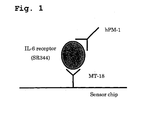
- an SPR-based system for evaluating the binding activity of an hPM-1 antibody (humanized anti-IL-6R antibody) to sIL-6R (soluble human IL-6R) by binding the sIL-6R to MT-18 (mouse anti-human IL-6R antibody) immobilized as a ligand on a sensor chip and then allowing the hPM-1 antibody to bind to the sIL-6R is explained below.
- a schematic view of this system is shown in Fig. 1.
- a method for assaying the binding activity of even a chemically less stable protein to a ligand and a method for assaying the biological activity of a ligand were provided.
- the methods of the present invention are convenient and highly accurate.
- a means for efficiently immobilizing a ligand on a sensor chip is to find suitable conditions under which the ligand is concentrated on the sensor chip.
- the ligand is concentrated on the sensor chip via an electrostatic interaction between negative charges of carboxymethyl dextran on the sensor chip and positive charges of the ligand to be immobilized. This step is called "preconcentration of the ligand".
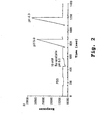
- MT-18 was prepared in buffers with varying pHs (PBS, 10 mM Na-acetate buffer, pH 6.0, 5.0 or 4.0) and injected onto the sensor chip on which no ligand has been immobilized.
- MT-18 was concentrated in the matrix slightly at pH 6.0, and efficiently at pH 5.0 and 4.0.
- structural stability of the protein 10 mM Na-acetate buffer, pH 5.0 was chosen as a solution for immobilizing MT-18.
- MT-18 was prepared at 100 ⁇ g/mL in 10 mM Na-acetate buffer, pH 5.0 and immobilized on a sensor chip under the following conditions.
- MT-18 was prepared at 100 ⁇ g/mL in 10 mM Na-acetate, pH 5.0 and immobilized on a sensor chip by injecting 50 ⁇ L after the sensor chip was activated with NHS+EDC.
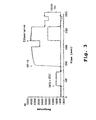
- An example of a sensorgram in which MT-18 is immobilized is shown in Fig. 3. As can be seen in Fig. 3, MT-18 corresponding to about 18,000 resonance units (RU) can be immobilized on the sensor chip. This indicates that MT-18 can be immobilized in a sufficient amount for accurate concentration assays under these immobilization conditions.
- Example 3 Verification of the association between soluble human IL-6 receptor and hPM-1 antibody
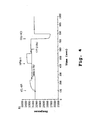
- Soluble human IL-6 receptor (hereinafter referred to as sIL-6R) and hPM-1 antibody were respectively injected onto the MT-18 immobilized chip (using HBS-EP buffer) to detect their interactions.
- a sensor chip activated with EDC+NHS and blocked with ethanolamine but having no ligand immobilized (hereinafter referred to as reference chip) was prepared by the procedure below to show that SIL-6R and hPM-1 are not non-specifically adsorbed to the sensor chip.
- sIL-6R and hPM-1 were injected on the reference chip to examine their interactions with the sensor chip, showing that the amounts of sIL-6R culture medium and hPM-1 bound to the reference chip were about 40 RU and 30 RU, respectively.
- the amounts of sIL-6R and hPM-1 bound to MT-18 were about 40 RU and 30 RU, respectively.
- non-specific binding to the dextran matrix seemed to be negligible.
- coexistent proteins in the sIL-6R culture medium have little influence.
- sIL-6R was used as a cell culture solution containing human IL-6R without any special purification operation.
- the sIL-6R sample contains various proteins (e.g. bovine serum albumin) used for culture in addition to IL-6R.
- Na-citrate, pH 5.0 and 4.0 showed a low capacity to dissociate sIL-6R from MT-18.
- Na-citrate, pH 3.0 and Gly-HCl, pH 2.5 could dissociate sIL-6R bound to MT-18.
- Gly-HCl, pH 2.0 was found to be unsuitable as a regeneration solution because it greatly reduced the amount of bound sIL-6R while the base line rose modestly.
- the remaining Gly-HCl, pH 2.5 and Na-citrate, pH 3.0 were compared to show that Gly-HCl, pH 2.5 caused a small variation in base line while Na-citrate, pH 3.0 caused a small variation in the amount of bound sIL-6R.
- Gly-HCl, pH 2.5 showing a small variation in base line was chosen as a regeneration solution because the performance of the sensor chip seems to be degraded by incomplete dissociation of the analyte from the ligand if regeneration is insufficient.
- regeneration conditions involved 2 x 5 ⁇ L at 5 ⁇ L/min or 1 x 10 ⁇ L at 10 ⁇ L/min. As a result, it was shown that the variation of the binding activity of hPM-1 to sIL-6R was smaller when 10 ⁇ L was injected at a flow rate of 10 ⁇ L/min. Thus, regeneration conditions were chosen to involve 1 x 10 ⁇ L at 10 ⁇ L/min.
- the SPR-based assay as defined in the present study was compared with the current quality test method based on ELISA for evaluating the biological activity of hPM-1.
- the standard hPM-1. sample and test samples (untreated and accelerated at 60°C for 2 weeks) used in the assays are shown below.
- MT-18 was immobilized on a sensor chip. Preparation procedures of the standard sample and test samples and SPR-based assay conditions are shown below.
- a calibration curve was generated from the amount of bound hPM-1 in the standard sample.
- the 4-parameter fit algorithm available from the analytical software was used.
- the amounts of bound hPM-1 in the test samples were converted into hPM-1 concentrations using the calibration curve as generated.
- sIL-6R To the MT-18-immobilized plate was bound sIL-6R.
- the hPM-1 antibody was added to this plate and bound to sIL-6R on the plate. After unreacted hPM-1 antibody was washed off, enzyme-labeled anti-human IgG antibody was added. After the plate was washed, enzymatic activity was assayed to calculate the amount of the hPM-1 antibody bound to IL-6R on the basis of the enzymatic activity of the standard solution.
- the binding activities of hPM-1 99L01 to IL-6R at the initial stage and after 2 weeks at 60°C were converted into hPM-1 concentrations which were calculated at 49.7 mg/mL and 40.7 mg/mL in SPR, and 70.5 mg/mL and 48.5 mg/mL in ELISA.
- the residual rate of the binding activity after 2 weeks at 60°C relative to that at the initial stage was 81.9% (SPR) and 68.7% (ELISA).
- the precision of each assay for the binding activity to antigen was 5.5% in SPR or 24.3% in ELISA expressed in CV. This result showed that the SPR-based assay is a method for evaluating the binding activity of hPM-1 to IL-6R with high precision.
Landscapes
- Health & Medical Sciences (AREA)
- Immunology (AREA)
- Life Sciences & Earth Sciences (AREA)
- Engineering & Computer Science (AREA)
- Chemical & Material Sciences (AREA)
- Urology & Nephrology (AREA)
- Hematology (AREA)
- Biomedical Technology (AREA)
- Molecular Biology (AREA)
- Medicinal Chemistry (AREA)
- Analytical Chemistry (AREA)
- Cell Biology (AREA)
- Chemical Kinetics & Catalysis (AREA)
- Food Science & Technology (AREA)
- Biotechnology (AREA)
- Physics & Mathematics (AREA)
- Microbiology (AREA)
- Biochemistry (AREA)
- General Health & Medical Sciences (AREA)
- General Physics & Mathematics (AREA)
- Pathology (AREA)
- Peptides Or Proteins (AREA)
- Measuring Or Testing Involving Enzymes Or Micro-Organisms (AREA)
- Medicines That Contain Protein Lipid Enzymes And Other Medicines (AREA)
Abstract
Description
- hPM-1 antibody (humanized anti-IL-6R antibody) stock
- Amine-coupling kit (BIACORE)
N-Ethyl-N'-(3-dimethyl-amino-propyl)-carbodiimide hydrochloride (EDC)
N-Hydrosuccinimide (NHS)
1 M Ethanolamine-HCl pH 8.5 - HBS-EP buffer (BIACORE) (0.01 M HEPES pH 7.4, 0.15 M Sodium chloride, 3 mM EDTA, 0.005% Surfactant P20)
- MT-18 (mouse anti-human IL-6 receptor antibody) (prepared according to the literature of Hirata et al., supra.)
- Soluble human IL-6 receptor (prepared according to the literature of Yasukawa, supra.)
- Alkaline phosphatase-labeled anti-human IgG antibody (BIOSOURCE)
- SIGMA 104 (SIGMA)
- BIACORE 2000 (BIACORE)
- SPECTRA max (Molecular Devices)
- Microplate Washer EW-812 (Molecular Devices)
- SOFT max (Molecular Devices)
- Sensor chip CM5 Research grade (BIACORE)
- F96 Cert. maxisorp NUNC-ImmunoPlate (Intermed)
- BIAevaluation Ver. 3.0 (BIACORE)
- Flow rate: 5 µL/min
- Test sample: 10 µL (for concentrating MT-18 in a matrix)
- Flow rate: 5 µL/min
- Dilute NHS+EDC: 50% (as a 1:1 mixture of NHS and EDC)
- NHS+EDC: 3,5 µL (for activating the matrix)
- 100 µg/mL MT-18: 50 µL (covalently coupled to the matrix)
- 1 M Ethanolamine: 35 µL (for blocking unreacted sites)
- Flow rate: 5 µL/min
- SIL-6R: 10 µL (to be bound to MT-18)
- 10 µg/mL hPM-1: 10 µL (to be bound to sIL-6R)
- 10 mM Gly-HCl, pH 2.0: 5 µL (for regeneration)
- Flow rate: 5 µL/min
- Dilute NHS+EDC: 50% (as a 1:1 mixture of NHS and EDC)
- NHS+EDC: 35 µL (for activating the matrix)
- 1 M Ethanolamine: 35 µL (for blocking unreacted sites)
- 10 mM Gly-HCl, pH 2.0, 2.5
- 0.15 M Na-citrate, pH 5.0, 4.0, 3.0
- Standard sample: hPM-1 Lot No. 96D01, 4.48 mg/mL (UV)
- Test samples: hPM-1 Lot No. 99L01, Initial, 58.1 mg/mL
(UV)
hPM-1 Lot No. 99L01, 60°C-2W
- Flow rate: 10 µL/min
- SIL-6R: 20 µL (to be bound to MT-18)
- hPM-1: 40 µL (to be bound to sIL-6R)
- 10 mM Gly-HCl, pH 2.5: 10 µL (for regeneration)
| Results of SPR-based assay for binding activity to IL-6 receptor | ||||
| Sample | hPM-1 (mg/mL) | Average | CV (%) | % Initial |
| hPM-1 99L01 Initial | 51.81 | |||
| 50.63 | 49.68 | 5.50 | - | |
| 46.60 | ||||
| hPM-1 99L01 60-2W | 43.17 | |||
| 39.68 | 40.67 | 5.35 | 81.9 | |
| 39.17 |
| Results of ELISA-based assay for binding activity to IL-6 receptor | ||||
| Sample | hPM-1 (mg/mL) | Average | CV (%) | % Initial |
| hPM-1 99L01 Initial | 90.08 | |||
| 58.70 | 70.47 | 24.26 | - | |
| 62.64 | ||||
| hPM-1 99L01 60-2W | 56.22 | |||
| 37.66 | 48.41 | 19.88 | 68.7 | |
| 51.36 |
Claims (11)
- A method for assaying the binding activity of a first ligand to a chemically less stable ligand-binding protein, comprising:immobilizing a second ligand that binds to the ligand-binding protein at a binding site distinct from the binding site of the first ligand to the ligand-binding protein;binding the protein to the second ligand; andthen measuring the binding activity of the first ligand to the protein via surface plasmon resonance.
- The method of claim 1 wherein the chemically less stable ligand-binding protein is an antigenic protein.
- The method of claim 1 wherein the chemically less stable ligand-binding protein is a soluble receptor.
- The method of claim 3 wherein the soluble receptor is a cytokine receptor.
- The method of claim 4 wherein the cytokine receptor is an IL-6 receptor.
- The method of any one of claims 1 to 5 wherein the first ligand is an antibody.
- The method of claim 6 wherein the antibody is an anti-IL-6 receptor antibody.
- The method of claim 6 or 7 wherein the antibody is a humanized antibody.
- The method of any one of claims 1 to 8 wherein the second ligand is an antibody.
- A method for assaying the biological activity of a first ligand that binds to a chemically less stable ligand-binding protein, comprising:immobilizing a second ligand that binds to the ligand-binding protein at a binding site distinct from the binding site of the first ligand to the ligand-binding protein;binding the protein to the second ligand; andthen determining the biological activity of the first ligand by measuring the binding activity of the first ligand to the protein via surface plasmon resonance.
- A kit for assaying the biological activity of a first ligand that binds to a chemically less stable ligand-binding protein via surface plasmon resonance, comprising (1) the ligand-binding protein and (2) a second ligand that binds to the ligand-binding protein at a binding site distinct from the binding site of the first ligand to the ligand-binding protein.
Applications Claiming Priority (3)
| Application Number | Priority Date | Filing Date | Title |
|---|---|---|---|
| JP2000364593 | 2000-11-30 | ||
| JP2000364593 | 2000-11-30 | ||
| PCT/JP2001/010494 WO2002044727A1 (en) | 2000-11-30 | 2001-11-30 | Method of measuring binding activity of ligand-binding protein having poor chemical stability to first ligand |
Publications (3)
| Publication Number | Publication Date |
|---|---|
| EP1347300A1 true EP1347300A1 (en) | 2003-09-24 |
| EP1347300A4 EP1347300A4 (en) | 2005-06-29 |
| EP1347300B1 EP1347300B1 (en) | 2007-04-18 |
Family
ID=18835504
Family Applications (1)
| Application Number | Title | Priority Date | Filing Date |
|---|---|---|---|
| EP01998196A Expired - Lifetime EP1347300B1 (en) | 2000-11-30 | 2001-11-30 | Method of measuring binding activity of ligand-binding protein having poor chemical stability to first ligand |
Country Status (7)
| Country | Link |
|---|---|
| US (1) | US20040028679A1 (en) |
| EP (1) | EP1347300B1 (en) |
| JP (1) | JP4143408B2 (en) |
| AT (1) | ATE360208T1 (en) |
| AU (1) | AU2002218513A1 (en) |
| DE (1) | DE60127999T2 (en) |
| WO (1) | WO2002044727A1 (en) |
Cited By (2)
| Publication number | Priority date | Publication date | Assignee | Title |
|---|---|---|---|---|
| WO2012055606A1 (en) * | 2010-10-29 | 2012-05-03 | Endress+Hauser Conducta Gesellschaft Für Mess- Und Regeltechnik Mbh+Co. Kg | Method for determining an analyte content of a liquid sample by means of a bioanalyzer |
| WO2020214795A1 (en) * | 2019-04-16 | 2020-10-22 | Laboratory Corporation Of America Holdings | Methods and systems for detecting antibodies by surface plasmon resonance |
Families Citing this family (3)
| Publication number | Priority date | Publication date | Assignee | Title |
|---|---|---|---|---|
| JP4527388B2 (en) * | 2003-12-11 | 2010-08-18 | 東洋鋼鈑株式会社 | Method for detecting interaction between polypeptide and receptor, method for screening for ligand or ligand variant using the method for detection, and diagnostic method for using the method for detection |
| DE102016123700B4 (en) * | 2016-12-07 | 2025-06-05 | Endress+Hauser Conducta Gmbh+Co. Kg | Sensor for determining a measured value dependent on a concentration of reactive oxygen species |
| CN111351932B (en) * | 2020-03-03 | 2023-05-23 | 江苏华泰疫苗工程技术研究有限公司 | A method for detecting antibody biological activity based on surface plasmon resonance technology |
Family Cites Families (12)
| Publication number | Priority date | Publication date | Assignee | Title |
|---|---|---|---|---|
| US4849353A (en) * | 1980-09-30 | 1989-07-18 | Cornell Research Foundation, Inc. | Immunocapture of enzyme inhibitor, enzyme complexes and uses thereof |
| IL85137A (en) * | 1987-01-21 | 1992-02-16 | Ares Serono Res & Dev Ltd | Method of assaying for a ligand using surface plasmon resonance effect |
| SE8804074D0 (en) * | 1988-11-10 | 1988-11-10 | Pharmacia Ab | SENSOR UNIT AND ITS USE IN BIOSENSOR SYSTEM |
| GB8906776D0 (en) * | 1989-03-23 | 1989-05-10 | Amersham Int Plc | Assay method using surface plasmon resonance spectrometry |
| JP3362192B2 (en) * | 1994-12-06 | 2003-01-07 | 味の素株式会社 | Test methods and test drugs |
| US6261560B1 (en) * | 1995-02-13 | 2001-07-17 | Chugai Seiyaku Kabushiki Kaisha | Method for inhibiting muscle protein proteolysis with antibodies to interleukin-6 receptor |
| US7078493B1 (en) * | 1995-03-15 | 2006-07-18 | Human Genome Sciences, Inc. | Antibodies to human tumor necrosis factor receptor-like genes |
| JP3139957B2 (en) * | 1995-03-17 | 2001-03-05 | 財団法人神奈川科学技術アカデミー | Lectin immobilization method and substrate for cells using the same |
| DE69628026T2 (en) * | 1995-09-07 | 2004-04-08 | Novozymes A/S | DETECTION OF THE ACTIVITY OF ENZYMES FOR DETERGENTS BY PHAGE. |
| GB9518429D0 (en) * | 1995-09-08 | 1995-11-08 | Pharmacia Biosensor | A rapid method for providing kinetic and structural data in molecular interaction analysis |
| US5776785A (en) * | 1996-12-30 | 1998-07-07 | Diagnostic Products Corporation | Method and apparatus for immunoassay using fluorescent induced surface plasma emission |
| JP3515101B2 (en) * | 2000-06-27 | 2004-04-05 | 中外製薬株式会社 | Method for evaluating binding activity between ligand and ligand binding protein |
-
2001
- 2001-11-30 DE DE60127999T patent/DE60127999T2/en not_active Expired - Lifetime
- 2001-11-30 AT AT01998196T patent/ATE360208T1/en not_active IP Right Cessation
- 2001-11-30 EP EP01998196A patent/EP1347300B1/en not_active Expired - Lifetime
- 2001-11-30 AU AU2002218513A patent/AU2002218513A1/en not_active Abandoned
- 2001-11-30 US US10/433,093 patent/US20040028679A1/en not_active Abandoned
- 2001-11-30 JP JP2002546218A patent/JP4143408B2/en not_active Expired - Fee Related
- 2001-11-30 WO PCT/JP2001/010494 patent/WO2002044727A1/en not_active Ceased
Cited By (10)
| Publication number | Priority date | Publication date | Assignee | Title |
|---|---|---|---|---|
| WO2012055606A1 (en) * | 2010-10-29 | 2012-05-03 | Endress+Hauser Conducta Gesellschaft Für Mess- Und Regeltechnik Mbh+Co. Kg | Method for determining an analyte content of a liquid sample by means of a bioanalyzer |
| WO2012055607A1 (en) * | 2010-10-29 | 2012-05-03 | Endress+Hauser Conducta Gesellschaft Für Mess- Und Regeltechnik Mbh+Co. Kg | Method for determining an analyte content of a liquid sample by means of a bioanalyzer |
| CN103189746A (en) * | 2010-10-29 | 2013-07-03 | 恩德莱斯和豪瑟尔测量及调节技术分析仪表两合公司 | Method for determining analyte content of a liquid sample using a bioanalyzer |
| CN103201630A (en) * | 2010-10-29 | 2013-07-10 | 恩德莱斯和豪瑟尔测量及调节技术分析仪表两合公司 | Method for determining an analyte content of a liquid sample by means of a bioanalyzer |
| CN103189746B (en) * | 2010-10-29 | 2016-03-02 | 恩德莱斯和豪瑟尔测量及调节技术分析仪表两合公司 | Method for determining analyte content of a liquid sample using a bioanalyzer |
| CN103201630B (en) * | 2010-10-29 | 2016-08-10 | 恩德莱斯和豪瑟尔测量及调节技术分析仪表两合公司 | The method utilizing the analyte content of biological analyser mensuration fluid sample |
| US10036098B2 (en) | 2010-10-29 | 2018-07-31 | Endress+Hauser Conducta Gmbh+Co. Kg | Method for determining an analyte content of a liquid sample by means of a bioanalyzer |
| WO2020214795A1 (en) * | 2019-04-16 | 2020-10-22 | Laboratory Corporation Of America Holdings | Methods and systems for detecting antibodies by surface plasmon resonance |
| CN114556099A (en) * | 2019-04-16 | 2022-05-27 | 美国控股实验室公司 | Method and system for detecting antibodies by surface plasmon resonance |
| US12105083B2 (en) | 2019-04-16 | 2024-10-01 | Laboratory Corporation Of America Holdings | Methods for detecting antibodies by surface plasmon resonance |
Also Published As
| Publication number | Publication date |
|---|---|
| EP1347300B1 (en) | 2007-04-18 |
| JPWO2002044727A1 (en) | 2004-04-02 |
| AU2002218513A1 (en) | 2002-06-11 |
| US20040028679A1 (en) | 2004-02-12 |
| EP1347300A4 (en) | 2005-06-29 |
| JP4143408B2 (en) | 2008-09-03 |
| WO2002044727A1 (en) | 2002-06-06 |
| DE60127999T2 (en) | 2008-01-17 |
| ATE360208T1 (en) | 2007-05-15 |
| DE60127999D1 (en) | 2007-05-31 |
Similar Documents
| Publication | Publication Date | Title |
|---|---|---|
| Nice et al. | Instrumental biosensors: new perspectives for the analysis of biomolecular interactions | |
| Vignali | Multiplexed particle-based flow cytometric assays | |
| JP5240945B2 (en) | Assay membranes and methods of use | |
| US5965456A (en) | Analyte detection | |
| EP1347300B1 (en) | Method of measuring binding activity of ligand-binding protein having poor chemical stability to first ligand | |
| CN112390890B (en) | Enzyme-linked immunoassay method for quantitatively detecting content of anti-human interleukin 17 monoclonal antibody in serum | |
| Bennett et al. | Kinetic characterization of the interaction of biotinylated human interleukin 5 with an Fc chimera of its receptor α subunit and development of an ELISA screening assay using real‐time interaction biosensor analysis | |
| CN115947844A (en) | Novel anti-human IL-33 monoclonal antibody, kit containing same and detection method thereof | |
| Deckert et al. | Development and validation of an IL-6 immuno-receptor assay based on surface plasmon resonance | |
| US20250237609A1 (en) | Charge-sensitive optical detection of binding kinetics between phage displayed peptide ligands and protein targets | |
| US20230110651A1 (en) | Assays to quantitate drug and target concentrations | |
| CN116514981B (en) | Novel anti-human IL-23 monoclonal antibody, kit containing same and detection method thereof | |
| US20030166303A1 (en) | Novel screening method for molecular antagonist using flow-cytometry | |
| CN115960236B (en) | ELISA analysis method for quantitatively detecting content of anti-human interleukin 4 receptor alpha monoclonal antibody in serum | |
| CN119529103B (en) | Monoclonal antibodies against anti-TSLP, kits containing them, and detection methods using them. | |
| CN120129836A (en) | Antibody Characterization Methods | |
| CN120842393A (en) | Antibodies and antibody pairs against mouse interleukin-1β and their applications | |
| CN119101659A (en) | A reporter gene cell line and its application | |
| Gunnarsson | Affinity‐Based Biosensors for Biomolecular Interaction Analysis | |
| CN114720693A (en) | Method for evaluating affinity of thrombopoietin receptor agonist receptor | |
| Winheim et al. | Development and qualification of a generic IgG quantification assay using surface plasmon resonance | |
| WO2021254926A1 (en) | Method for determining the free antigen of an antibody in a sample | |
| Urbanowska | Development of a protein microarray platform for the multiplex analysis of biomarkers associated with Rheumatoid arthritis | |
| Pharmingen | Purified Hamster Anti-Mouse MCP-1 | |
| Pharmingen | Purified NA/LE Rat Anti-Mouse IL-18 Receptor β |
Legal Events
| Date | Code | Title | Description |
|---|---|---|---|
| PUAI | Public reference made under article 153(3) epc to a published international application that has entered the european phase |
Free format text: ORIGINAL CODE: 0009012 |
|
| 17P | Request for examination filed |
Effective date: 20030630 |
|
| AK | Designated contracting states |
Kind code of ref document: A1 Designated state(s): AT BE CH CY DE DK ES FI FR GB GR IE IT LI LU MC NL PT SE TR |
|
| AX | Request for extension of the european patent |
Extension state: AL LT LV MK RO SI |
|
| A4 | Supplementary search report drawn up and despatched |
Effective date: 20050518 |
|
| RIC1 | Information provided on ipc code assigned before grant |
Ipc: 7G 01N 33/68 B Ipc: 7G 01N 33/557 B Ipc: 7G 01N 33/543 A |
|
| GRAP | Despatch of communication of intention to grant a patent |
Free format text: ORIGINAL CODE: EPIDOSNIGR1 |
|
| GRAS | Grant fee paid |
Free format text: ORIGINAL CODE: EPIDOSNIGR3 |
|
| GRAA | (expected) grant |
Free format text: ORIGINAL CODE: 0009210 |
|
| AK | Designated contracting states |
Kind code of ref document: B1 Designated state(s): AT BE CH CY DE DK ES FI FR GB GR IE IT LI LU MC NL PT SE TR |
|
| PG25 | Lapsed in a contracting state [announced via postgrant information from national office to epo] |
Ref country code: FI Free format text: LAPSE BECAUSE OF FAILURE TO SUBMIT A TRANSLATION OF THE DESCRIPTION OR TO PAY THE FEE WITHIN THE PRESCRIBED TIME-LIMIT Effective date: 20070418 |
|
| REG | Reference to a national code |
Ref country code: CH Ref legal event code: EP |
|
| REG | Reference to a national code |
Ref country code: IE Ref legal event code: FG4D |
|
| REF | Corresponds to: |
Ref document number: 60127999 Country of ref document: DE Date of ref document: 20070531 Kind code of ref document: P |
|
| PG25 | Lapsed in a contracting state [announced via postgrant information from national office to epo] |
Ref country code: SE Free format text: LAPSE BECAUSE OF FAILURE TO SUBMIT A TRANSLATION OF THE DESCRIPTION OR TO PAY THE FEE WITHIN THE PRESCRIBED TIME-LIMIT Effective date: 20070718 |
|
| PG25 | Lapsed in a contracting state [announced via postgrant information from national office to epo] |
Ref country code: ES Free format text: LAPSE BECAUSE OF FAILURE TO SUBMIT A TRANSLATION OF THE DESCRIPTION OR TO PAY THE FEE WITHIN THE PRESCRIBED TIME-LIMIT Effective date: 20070729 |
|
| REG | Reference to a national code |
Ref country code: CH Ref legal event code: NV Representative=s name: E. BLUM & CO. AG PATENT- UND MARKENANWAELTE VSP |
|
| ET | Fr: translation filed | ||
| PG25 | Lapsed in a contracting state [announced via postgrant information from national office to epo] |
Ref country code: PT Free format text: LAPSE BECAUSE OF FAILURE TO SUBMIT A TRANSLATION OF THE DESCRIPTION OR TO PAY THE FEE WITHIN THE PRESCRIBED TIME-LIMIT Effective date: 20070918 |
|
| NLV1 | Nl: lapsed or annulled due to failure to fulfill the requirements of art. 29p and 29m of the patents act | ||
| PG25 | Lapsed in a contracting state [announced via postgrant information from national office to epo] |
Ref country code: AT Free format text: LAPSE BECAUSE OF FAILURE TO SUBMIT A TRANSLATION OF THE DESCRIPTION OR TO PAY THE FEE WITHIN THE PRESCRIBED TIME-LIMIT Effective date: 20070418 |
|
| PG25 | Lapsed in a contracting state [announced via postgrant information from national office to epo] |
Ref country code: BE Free format text: LAPSE BECAUSE OF FAILURE TO SUBMIT A TRANSLATION OF THE DESCRIPTION OR TO PAY THE FEE WITHIN THE PRESCRIBED TIME-LIMIT Effective date: 20070418 |
|
| PG25 | Lapsed in a contracting state [announced via postgrant information from national office to epo] |
Ref country code: NL Free format text: LAPSE BECAUSE OF FAILURE TO SUBMIT A TRANSLATION OF THE DESCRIPTION OR TO PAY THE FEE WITHIN THE PRESCRIBED TIME-LIMIT Effective date: 20070418 Ref country code: DK Free format text: LAPSE BECAUSE OF FAILURE TO SUBMIT A TRANSLATION OF THE DESCRIPTION OR TO PAY THE FEE WITHIN THE PRESCRIBED TIME-LIMIT Effective date: 20070418 |
|
| PLBE | No opposition filed within time limit |
Free format text: ORIGINAL CODE: 0009261 |
|
| STAA | Information on the status of an ep patent application or granted ep patent |
Free format text: STATUS: NO OPPOSITION FILED WITHIN TIME LIMIT |
|
| 26N | No opposition filed |
Effective date: 20080121 |
|
| PG25 | Lapsed in a contracting state [announced via postgrant information from national office to epo] |
Ref country code: IT Free format text: LAPSE BECAUSE OF FAILURE TO SUBMIT A TRANSLATION OF THE DESCRIPTION OR TO PAY THE FEE WITHIN THE PRESCRIBED TIME-LIMIT Effective date: 20070418 Ref country code: GR Free format text: LAPSE BECAUSE OF FAILURE TO SUBMIT A TRANSLATION OF THE DESCRIPTION OR TO PAY THE FEE WITHIN THE PRESCRIBED TIME-LIMIT Effective date: 20070719 |
|
| PG25 | Lapsed in a contracting state [announced via postgrant information from national office to epo] |
Ref country code: MC Free format text: LAPSE BECAUSE OF NON-PAYMENT OF DUE FEES Effective date: 20071130 |
|
| PG25 | Lapsed in a contracting state [announced via postgrant information from national office to epo] |
Ref country code: IE Free format text: LAPSE BECAUSE OF NON-PAYMENT OF DUE FEES Effective date: 20071130 |
|
| PG25 | Lapsed in a contracting state [announced via postgrant information from national office to epo] |
Ref country code: CY Free format text: LAPSE BECAUSE OF FAILURE TO SUBMIT A TRANSLATION OF THE DESCRIPTION OR TO PAY THE FEE WITHIN THE PRESCRIBED TIME-LIMIT Effective date: 20070418 |
|
| PG25 | Lapsed in a contracting state [announced via postgrant information from national office to epo] |
Ref country code: LU Free format text: LAPSE BECAUSE OF NON-PAYMENT OF DUE FEES Effective date: 20071130 |
|
| PG25 | Lapsed in a contracting state [announced via postgrant information from national office to epo] |
Ref country code: TR Free format text: LAPSE BECAUSE OF FAILURE TO SUBMIT A TRANSLATION OF THE DESCRIPTION OR TO PAY THE FEE WITHIN THE PRESCRIBED TIME-LIMIT Effective date: 20070418 |
|
| REG | Reference to a national code |
Ref country code: FR Ref legal event code: PLFP Year of fee payment: 15 |
|
| REG | Reference to a national code |
Ref country code: FR Ref legal event code: PLFP Year of fee payment: 16 |
|
| REG | Reference to a national code |
Ref country code: FR Ref legal event code: PLFP Year of fee payment: 17 |
|
| PGFP | Annual fee paid to national office [announced via postgrant information from national office to epo] |
Ref country code: DE Payment date: 20171121 Year of fee payment: 17 Ref country code: FR Payment date: 20171012 Year of fee payment: 17 |
|
| PGFP | Annual fee paid to national office [announced via postgrant information from national office to epo] |
Ref country code: CH Payment date: 20171114 Year of fee payment: 17 Ref country code: GB Payment date: 20171129 Year of fee payment: 17 |
|
| REG | Reference to a national code |
Ref country code: DE Ref legal event code: R119 Ref document number: 60127999 Country of ref document: DE |
|
| REG | Reference to a national code |
Ref country code: CH Ref legal event code: PL |
|
| GBPC | Gb: european patent ceased through non-payment of renewal fee |
Effective date: 20181130 |
|
| PG25 | Lapsed in a contracting state [announced via postgrant information from national office to epo] |
Ref country code: LI Free format text: LAPSE BECAUSE OF NON-PAYMENT OF DUE FEES Effective date: 20181130 Ref country code: CH Free format text: LAPSE BECAUSE OF NON-PAYMENT OF DUE FEES Effective date: 20181130 |
|
| PG25 | Lapsed in a contracting state [announced via postgrant information from national office to epo] |
Ref country code: DE Free format text: LAPSE BECAUSE OF NON-PAYMENT OF DUE FEES Effective date: 20190601 Ref country code: FR Free format text: LAPSE BECAUSE OF NON-PAYMENT OF DUE FEES Effective date: 20181130 |
|
| PG25 | Lapsed in a contracting state [announced via postgrant information from national office to epo] |
Ref country code: GB Free format text: LAPSE BECAUSE OF NON-PAYMENT OF DUE FEES Effective date: 20181130 |