EP1346724A1 - Remedies for hepatitis c - Google Patents
Remedies for hepatitis c Download PDFInfo
- Publication number
- EP1346724A1 EP1346724A1 EP01271879A EP01271879A EP1346724A1 EP 1346724 A1 EP1346724 A1 EP 1346724A1 EP 01271879 A EP01271879 A EP 01271879A EP 01271879 A EP01271879 A EP 01271879A EP 1346724 A1 EP1346724 A1 EP 1346724A1
- Authority
- EP
- European Patent Office
- Prior art keywords
- deoxy
- fluoro
- triphosphate
- ribofuranosyl
- group
- Prior art date
- Legal status (The legal status is an assumption and is not a legal conclusion. Google has not performed a legal analysis and makes no representation as to the accuracy of the status listed.)
- Withdrawn
Links
- 0 *C[C@@](C(C1O)F)O[C@]1N(C(N1)=*)*(*)=C(*)C1=* Chemical compound *C[C@@](C(C1O)F)O[C@]1N(C(N1)=*)*(*)=C(*)C1=* 0.000 description 1
Images

Classifications
-
- C—CHEMISTRY; METALLURGY
- C07—ORGANIC CHEMISTRY
- C07H—SUGARS; DERIVATIVES THEREOF; NUCLEOSIDES; NUCLEOTIDES; NUCLEIC ACIDS
- C07H19/00—Compounds containing a hetero ring sharing one ring hetero atom with a saccharide radical; Nucleosides; Mononucleotides; Anhydro-derivatives thereof
- C07H19/02—Compounds containing a hetero ring sharing one ring hetero atom with a saccharide radical; Nucleosides; Mononucleotides; Anhydro-derivatives thereof sharing nitrogen
- C07H19/04—Heterocyclic radicals containing only nitrogen atoms as ring hetero atom
- C07H19/06—Pyrimidine radicals
-
- A—HUMAN NECESSITIES
- A61—MEDICAL OR VETERINARY SCIENCE; HYGIENE
- A61K—PREPARATIONS FOR MEDICAL, DENTAL OR TOILETRY PURPOSES
- A61K31/00—Medicinal preparations containing organic active ingredients
- A61K31/70—Carbohydrates; Sugars; Derivatives thereof
- A61K31/7042—Compounds having saccharide radicals and heterocyclic rings
- A61K31/7052—Compounds having saccharide radicals and heterocyclic rings having nitrogen as a ring hetero atom, e.g. nucleosides, nucleotides
- A61K31/706—Compounds having saccharide radicals and heterocyclic rings having nitrogen as a ring hetero atom, e.g. nucleosides, nucleotides containing six-membered rings with nitrogen as a ring hetero atom
-
- A—HUMAN NECESSITIES
- A61—MEDICAL OR VETERINARY SCIENCE; HYGIENE
- A61K—PREPARATIONS FOR MEDICAL, DENTAL OR TOILETRY PURPOSES
- A61K31/00—Medicinal preparations containing organic active ingredients
- A61K31/70—Carbohydrates; Sugars; Derivatives thereof
- A61K31/7042—Compounds having saccharide radicals and heterocyclic rings
- A61K31/7052—Compounds having saccharide radicals and heterocyclic rings having nitrogen as a ring hetero atom, e.g. nucleosides, nucleotides
- A61K31/706—Compounds having saccharide radicals and heterocyclic rings having nitrogen as a ring hetero atom, e.g. nucleosides, nucleotides containing six-membered rings with nitrogen as a ring hetero atom
- A61K31/7064—Compounds having saccharide radicals and heterocyclic rings having nitrogen as a ring hetero atom, e.g. nucleosides, nucleotides containing six-membered rings with nitrogen as a ring hetero atom containing condensed or non-condensed pyrimidines
- A61K31/7068—Compounds having saccharide radicals and heterocyclic rings having nitrogen as a ring hetero atom, e.g. nucleosides, nucleotides containing six-membered rings with nitrogen as a ring hetero atom containing condensed or non-condensed pyrimidines having oxo groups directly attached to the pyrimidine ring, e.g. cytidine, cytidylic acid
-
- A—HUMAN NECESSITIES
- A61—MEDICAL OR VETERINARY SCIENCE; HYGIENE
- A61K—PREPARATIONS FOR MEDICAL, DENTAL OR TOILETRY PURPOSES
- A61K31/00—Medicinal preparations containing organic active ingredients
- A61K31/70—Carbohydrates; Sugars; Derivatives thereof
- A61K31/7042—Compounds having saccharide radicals and heterocyclic rings
- A61K31/7052—Compounds having saccharide radicals and heterocyclic rings having nitrogen as a ring hetero atom, e.g. nucleosides, nucleotides
- A61K31/706—Compounds having saccharide radicals and heterocyclic rings having nitrogen as a ring hetero atom, e.g. nucleosides, nucleotides containing six-membered rings with nitrogen as a ring hetero atom
- A61K31/7064—Compounds having saccharide radicals and heterocyclic rings having nitrogen as a ring hetero atom, e.g. nucleosides, nucleotides containing six-membered rings with nitrogen as a ring hetero atom containing condensed or non-condensed pyrimidines
- A61K31/7068—Compounds having saccharide radicals and heterocyclic rings having nitrogen as a ring hetero atom, e.g. nucleosides, nucleotides containing six-membered rings with nitrogen as a ring hetero atom containing condensed or non-condensed pyrimidines having oxo groups directly attached to the pyrimidine ring, e.g. cytidine, cytidylic acid
- A61K31/7072—Compounds having saccharide radicals and heterocyclic rings having nitrogen as a ring hetero atom, e.g. nucleosides, nucleotides containing six-membered rings with nitrogen as a ring hetero atom containing condensed or non-condensed pyrimidines having oxo groups directly attached to the pyrimidine ring, e.g. cytidine, cytidylic acid having two oxo groups directly attached to the pyrimidine ring, e.g. uridine, uridylic acid, thymidine, zidovudine
-
- A—HUMAN NECESSITIES
- A61—MEDICAL OR VETERINARY SCIENCE; HYGIENE
- A61P—SPECIFIC THERAPEUTIC ACTIVITY OF CHEMICAL COMPOUNDS OR MEDICINAL PREPARATIONS
- A61P1/00—Drugs for disorders of the alimentary tract or the digestive system
- A61P1/16—Drugs for disorders of the alimentary tract or the digestive system for liver or gallbladder disorders, e.g. hepatoprotective agents, cholagogues, litholytics
-
- A—HUMAN NECESSITIES
- A61—MEDICAL OR VETERINARY SCIENCE; HYGIENE
- A61P—SPECIFIC THERAPEUTIC ACTIVITY OF CHEMICAL COMPOUNDS OR MEDICINAL PREPARATIONS
- A61P31/00—Antiinfectives, i.e. antibiotics, antiseptics, chemotherapeutics
- A61P31/12—Antivirals
- A61P31/14—Antivirals for RNA viruses
-
- C—CHEMISTRY; METALLURGY
- C07—ORGANIC CHEMISTRY
- C07H—SUGARS; DERIVATIVES THEREOF; NUCLEOSIDES; NUCLEOTIDES; NUCLEIC ACIDS
- C07H19/00—Compounds containing a hetero ring sharing one ring hetero atom with a saccharide radical; Nucleosides; Mononucleotides; Anhydro-derivatives thereof
- C07H19/02—Compounds containing a hetero ring sharing one ring hetero atom with a saccharide radical; Nucleosides; Mononucleotides; Anhydro-derivatives thereof sharing nitrogen
- C07H19/04—Heterocyclic radicals containing only nitrogen atoms as ring hetero atom
- C07H19/06—Pyrimidine radicals
- C07H19/10—Pyrimidine radicals with the saccharide radical esterified by phosphoric or polyphosphoric acids
Definitions
- the present invention relates to therapeutic agents for hepatitis C, and more particularly, relates to therapeutic agents for hepatitis C including a 3'-deoxy-3'-fluorouridine derivative and a 1-(3'-deoxy-3'-fluoro- ⁇ -L-ribofuranosyl)uracil derivative having a specified structure as active ingredients.
- liver diseases which have been recognized as non-A, non-Boralcohol-induced hepatitis so far were revealed to be hepatitis C which is caused by an HCV infection. Accordingly, substantial entities thereof have been elucidated one after another. In addition, it has also beenclarified that hepatitis Chardly exhibits serious symptoms, however on the contrary, the majority are chronic and steadily progress, and hepatic cancer develops after a long duration at a high rate.
- HCV hepatitis C virus
- HCV is a flavivirus having (+)-chain single stranded RNA in its genome, which proliferates by RNA dependent RNA polymerase. It is believed that the proliferation of HCV can be suppressed by specifically inhibiting this RNA dependent RNA polymerase of HCV without inhibiting human RNA polymerase, which may pave the way for effective therapeutic methods of hepatitis C. However, such an effective inhibitor has not been found yet.
- Japanese Unexamined Patent Publication No.Sho-62-81397 and Japanese Unexamined Patent Publication No. Sho-62-242624 disclose its synthetic method, however, these do not provide any information from which an anti-HCV activity is expected.
- the present inventors have carried out a thorough investigation in order to provide excellent therapeutic agents for hepatitis C with little side effects, and consequently found that 3'-deoxy-3'-fluorouridine derivatives and 1-(3'-deoxy-3'-fluoro- ⁇ -L-ribofuranosyl)uracil derivatives have an enzyme inhibitory activity which is selective to RNA dependent RNA polymerase of HCV, without inhibiting human RNA polymerase.
- the present invention was thus accomplished.
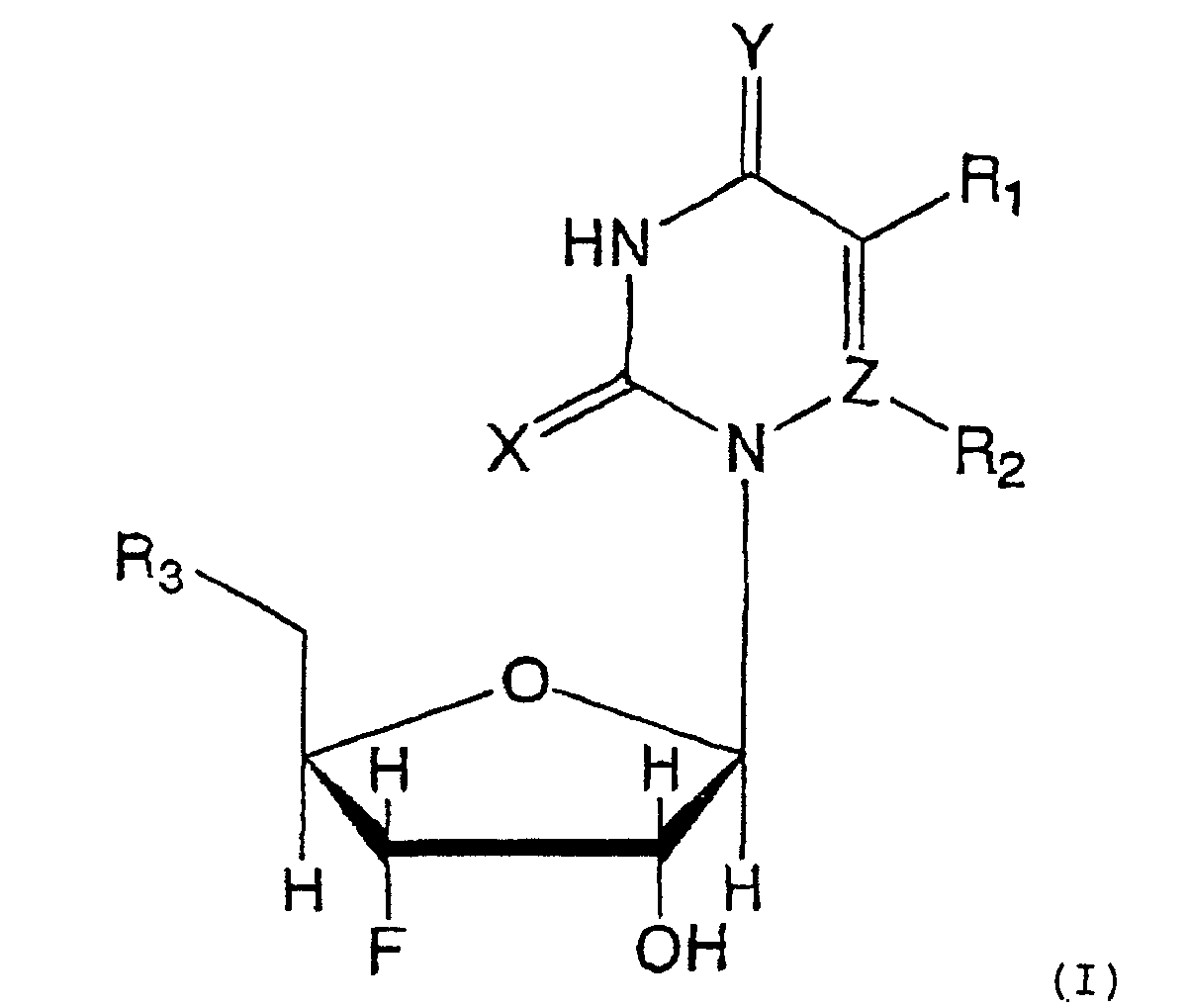
- the present invention provides a therapeutic agent for hepatitis C which comprises a compound selected from a 3'-deoxy-3'-fluorouridine derivative represented by the following general formula (I): wherein R 1 represents a hydrogen atom, a halogen atom, an alkyl group, an alkyl group substituted by halogen atoms, a hydroxyalkyl group, an aminoalkyl group, an amino group, a formyl group, a cyano group or an unsubstituted or modified benzyl group.
- R 1 represents a hydrogen atom, a halogen atom, an alkyl group, an alkyl group substituted by halogen atoms, a hydroxyalkyl group, an aminoalkyl group, an amino group, a formyl group, a cyano group or an unsubstituted or modified benzyl group.
- Z represents a carbon atom or a nitrogen atom, and when Z represents a carbon atom, R 2 represents a hydrogen atom, a halogen atom, a formyl group or a cyano group. R 3 represents a hydroxyl group or the following formula: (wherein n represents 1, 2 or 3).
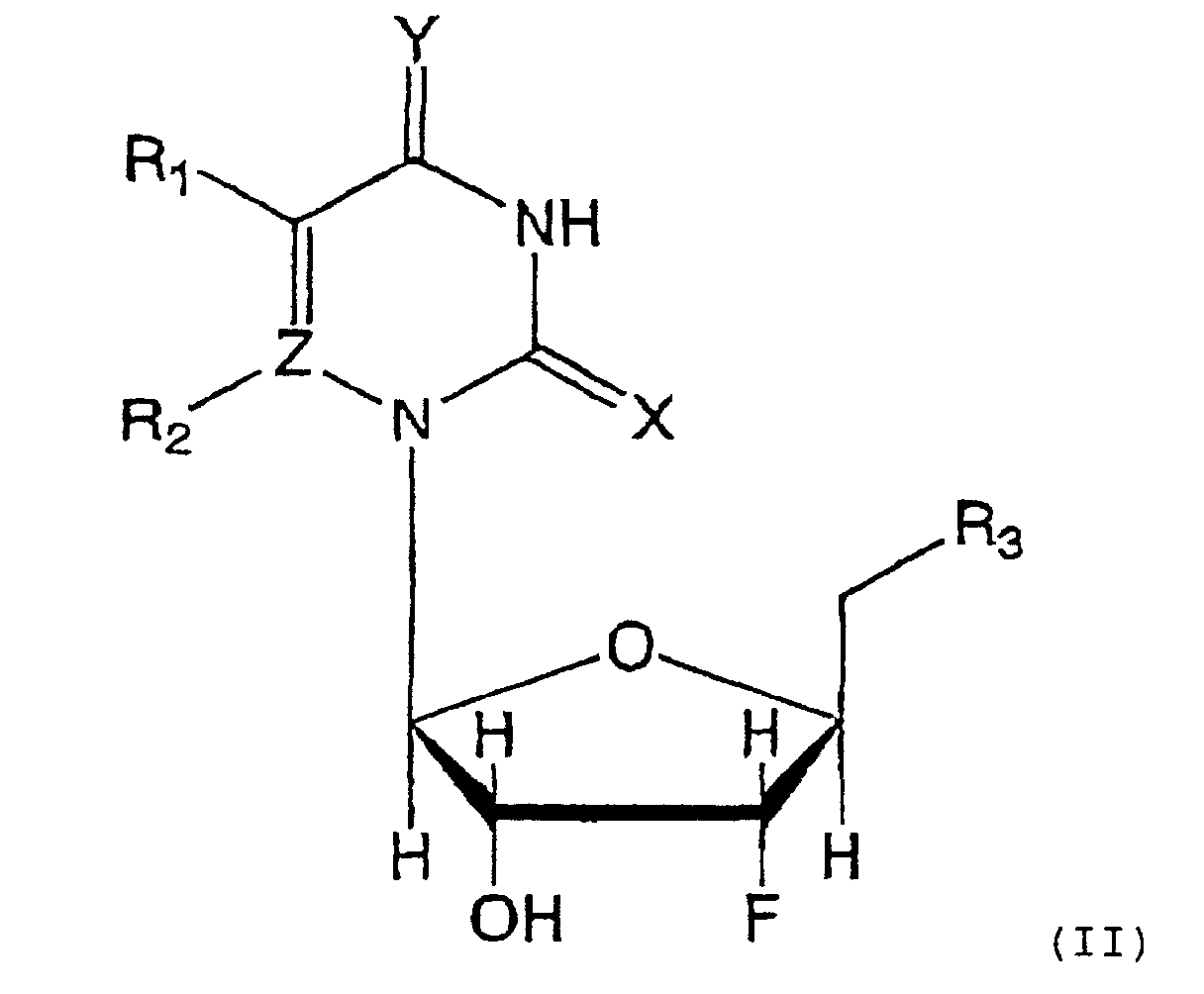
- X and Y each independently represent an oxygen atom or a sulfur atom, salts thereof and hydrates or solvates of the same as an active ingredient; a compound selected from a 1-(3'-deoxy-3'-fluoro- ⁇ -L-ribofuranocyl)uracil derivative represented by the following formula (II): wherein R 1 represents a hydrogen atom, a halogen atom, an alkyl group, an alkyl group substituted by halogen atoms, a hydroxyalkyl group, an aminoalkyl group, an amino group, a formyl group, a cyano group or an unsubstituted or modified benzyl group.
- Z represents a carbon atom or a nitrogen atom, and when Z represents a carbon atom, R 2 represents a hydrogen atom, a halogen atom, a formyl group or a cyano group.
- R 3 represents a hydroxyl group or the following formula: (wherein n represents 1, 2 or 3).
- X and Y represent an oxygen atom or a sulfur atom, salts thereof and hydrates or solvates of the same; and a therapeutic agent for hepatitis C which comprises the compound as an active ingredient.
- the compound according to the present invention may include compounds represented by the following general formula (I) and the following general formula (II).
- R 1 represents a hydrogen atom, a halogen atom, an alkyl group, an alkyl group substituted by halogen atoms, a hydroxyalkyl group, an aminoalkyl group, an amino group, a formyl group, a cyano group or an unsubstituted or modified benzyl group.
- Z represents a carbon atom or a nitrogen atom, and when Z represents a carbon atom, R 2 represents a hydrogen atom, a halogen atom, a formyl group or a cyano group.
- examples of the halogen atom include a fluorine atom, a chlorine atom, a bromine atom or an iodine atom or the like
- examples of the alkyl group include an alkyl group having 1 to 6 carbon atoms, and preferably an alkyl group having 1 to 3 carbon atoms such as a methyl group, an ethyl group, a normal-propyl group, an isopropyl group or the like
- examples of the aminoalkyl group include a 4-aminobutyl group, a 3-aminopropyl group, a 2-aminoethyl group, an aminomethyl group or the like.
- examples of the group to modify the benzyl group include a halogen atom, an alkyl group, an alkyl group substituted by halogen atoms, a hydroxyalkyl group, an aminoalkyl group, an amino group, a formyl group, a cyano group and the like. Specific examples of these are as described above.
- R 3 represents a hydroxyl group or the following formula: (wherein n represents 1, 2 or 3).
- X and Y each independently represent an oxygen atom or a sulfur atom.
- 3'-deoxy-3'-fluorouridine derivative represented by the above general formula (I) and the 1-(3'-deoxy-3'-fluoro- ⁇ -L-ribofuranosyl)uracil derivative represented by the above general formula (II) include the compounds below.
- the 3'-deoxy-3'-fluorouridine derivative represented by the above general formula (I) include
- Preferable compounds include
- Particularly preferable compounds include
- the most preferable compounds include
- the 1-(3'-deoxy-3'-fluoro- ⁇ -L-ribofuranosyl)uracil derivative represented by the above general formula (II) include
- Preferable compounds include
- Particularly preferable compounds include
- 3'-deoxy-3'-fluorouridine, 3'-deoxy-5,3'-difluorouridine and 3'-deoxy-3'-fluoro-5-methyluridine are known compounds which are described in Hemant K. Misra et al., J. Heterocyclic Chem., 21, 773 (1984); Noyori et al., Japanese Unexamined Patent Publication No. Sho-62-81397; L. Alder et al., Biochemical and Environmental Mass Spectrometry, Vol. 13, 217-221 (1986); A.
- the 3'-deoxy-3'-fluorouridine derivatives represented by the above general formula (I) other than these compounds can be similarly produced on the basis of the disclosure of the same.
- the 1-(3'-deoxy-3'-fluoro- ⁇ -L-ribofuranosyl)uracil derivatives represented by the above general formula (II) are L-form enantiomers of the above known compounds in the D-form. Thus they can also be produced pursuant to the disclosure of these documents by changing the sugar raw material into L-xylose.
- the 3'-deoxy-3'-fluorouridine derivative represented by the above general formula (I) and the 1- (3'-deoxy-3'-fluoro- ⁇ -L-ribofuranosyl)uracil derivative represented by the above general formula (II) can be formed into physiologically acceptable salts.
- the salt include alkaline metal salts, alkaline earth metal salts, ammonium salts, alkylammonium salts or the like.
- the 3'-deoxy-3'-fluorouridine derivative represented by the above general formula (I) and the 1-(3'-deoxy-3'-fluoro- ⁇ -L-ribofuranosyl)uracil derivative represented by the above general formula (II) and salts thereof can be optionally formed into hydrates or solvates of the same.
- the solvate include methanol, ethanol, isopropanol, acetone, ethyl acetate, methylene chloride and the like.
- the 3' -deoxy-3' -fluorouridine derivatives represented by the above general formula (I) and the 1-(3'-deoxy-3'-fluoro- ⁇ -L-ribofuranosyl)uracil derivatives represented by the above general formula (II) are compounds having an antiviral activity, anti-RNA virus activity, anti-hepatitis C virus activity, and thus they can be used as a therapeutic agent for hepatitis C.
- a pharmaceutical composition comprising the above-described active ingredient is preferred which is produced through using generalized additives for formulations.
- dosage form of the pharmaceutical composition include tablets, capsules, subtle granules, pills, lozenges, liquids, injections, suppositories, ointments, patches or the like. These can be orally (including sublingual administration) or parenterally administered.
- compositions for use in oral administration can be produced by any conventional frequently-used method such as mixing, filling or tablet making or the like. Furthermore, the active ingredient maybe distributed within a pharmaceutical composition in which a large amount of filler is used through employing a repeated blending manipulation.
- a tablet or a capsule which is used for oral administration is provided as a unit dosage form, which may contain a typically employed carrier for a formulation such as a binder, a filler, a diluent, an agent for tablet making, a lubricant, a disintegrant, a colorant, a flavoring agent, a wetting agent and the like.
- the tablet may be formed to give a coating tablet according to any known method in the art, for example, using a coating agent.
- preferable filler examples include cellulose, mannitol, lactose or the like.
- a disintegrant such as starch derivatives e.g., starch, polyvinylpyrrolidone, sodium starch glycolate or the like, lubricants such as sodium lauryl sulfate or the like.
- Examples of the pharmaceutical composition in the form of a liquid formulation for use in oral administration include water based or oil based suspensions, solutions, emulsions, syrups, elixirs, dry pharmaceutical compositions which can be redissolved in water or a suitable medium prior to use, or the like.
- Such a liquid formulation may include usual additives, for example, a suspending agent such as sorbitol, a syrup, methylose, an aluminum stearate gel, hydrogenated edible fat or the like; an emulsifying agent such as lecithin, sorbitan monooleate, gum arabic or the like; an oily ester such as almond oil, rectified coconut oil, a glycerin ester or the like; non water based medium such as propylene glycol, ethyl alcohol or the like (may also involve edible oil); a preservative such as methyl ester, ethyl ester or propyl ester of p-hydroxybenzoic acid, sorbic acid or the like; and furthermore, general flavoring agents or colorants, or the like as needed.
- a suspending agent such as sorbitol, a syrup, methylose, an aluminum stearate gel, hydrogenated edible fat or the like
- an emulsifying agent such as lec
- compositions in liquid form, suppositories, patches andthe like which comprise the active ingredient as described above and a sterilized medium.
- the active ingredient can be suspended, dissolved or emulsified depending on the medium or the concentration, and for example, the composition in a liquid form for use in parenteral administration can be produced preferably by dissolving the active ingredient in a medium followed by sterilization and filtration, and then filling in an appropriate vial or ampule and sealing.
- moisture may be eliminated by freeze-drying after preparing the composition in an aqueous solution form.
- the suspension for use in parenteral administration can be produced by a method which is substantially similar to the method for composition in a solution form for use in parenteral administration.
- it can be produced by suspending the active ingredient in a medium, sterilizing with ethylene oxide or the like, followed by additional suspension in a sterilized medium.
- a surfactant or a wetting agent may be added as needed so that the active ingredient is uniformly distributed in the formulation.
- Pharmaceutical compositions in another form can also be produced by any method known to persons skilled in the art. Accordingly, the form and the process for producing the pharmaceutical composition in one embodiment of the medicine of the present invention are not limited to those as described above.
- the pharmaceutical composition for use in oral administration (for example, in cases of tablets, capsules, subtle granules and the like) generally includes 5 to 95% by weight, and preferably 25 to 90% by weight of the active ingredient.
- the pharmaceutical composition for use in parenteral administration (for example, in cases of injections) generally includes 0.5 to 20% by weight, and preferably 1 to 10% by weight of the active ingredient.
- the therapeutic agent of the present invention is useful in the medical treatment of hepatitis caused by HCV.
- the dose of the therapeutic agent of the present invention may be determined adequately depending on age, health conditions, body weight, severity of disease of the patient, type and frequency of the medical treatment or procedure which is concurrently performed, properties of the desired effect and the like.
- the dosage for an adult per dose shall be 0.01 to 50 mg/kg body weight, preferably 1 to 30 mg/kg body weight as an amount of the active ingredient, and administered once to several times per day.
- reaction mixture was poured into cold water, extracted with ethyl acetate, dried over magnesium sulfate, followed by filtration and concentration to yield 80 mg of residue. This residue was dissolved in 1 M ammonia in methanol, followed by stirring at room temperature for 120 hours. The reaction mixture was concentrated and washed with diethyl ether to yield the title compound (21 mg).
- 1-(3'-Deoxy-3'-fluoro- ⁇ -L-ribofuranosyl)uracil was produced according to the Synthetic Example in Japanese Unexamined Patent Publication No. Sho-62-81397 and J. Med. Chem. 34, 2195 (1991) using L-xylose (Tokyo Kasei) as a raw material.
- Example 2 1-(3'-Deoxy-5,3'-difluoro- ⁇ -L-ribofuranosyl)uracil used in the following Example 2 was produced according to the Synthetic Example in Japanese Unexamined Patent Publication No. Sho-62-81397 and J. Med. Chem. 34, 2195 (1991) using L-xylose (Tokyo Kasei) as a raw material.
- the reaction mixture was poured into cold water, extracted with ethyl acetate, dried over magnesium sulfate, followed by filtration and concentration to yield 159 mg of a residue.
- the residue was purified on a silica gel chromatography to yield a product of 119 mg. This product was dissolved in 1 M ammonia in methanol, followed by stirring at room temperature for 15 hours. The reaction mixture was concentrated and washed with diethyl ether to yield the title compound (16 mg).
- uridine derivatives involving the compounds according to Synthetic Example 1 through Synthetic Example 11 are referred to as being triphosphorylated via monophosphate and diphosphate in a living body. Therefore, triphosphates of uridine derivatives and L-uridine derivatives. were produced as follows.
- HCV RNA polymerase Expression and purification of HCV RNA polymerase were performed in accordance with known processes (V. Lohman et al., VIROLOGY, 249, 108-118, 1998).
- the purified HCV RNA polymerase in an amount of 200 ng was mixed with 100 ng/mL poly(A)RNA (polyadenine RNA) as a template RNAand 25 ng/mL 15-meroligo (U) RNA (oligouridine having 15 bases, TAKARA Shuzo) as a primer RNA in 50 ⁇ L of an aqueous solution containing 20 mM Tris-Cl (pH 7.5), 5 mM MgCl 2 25 mM KCl, 10 uM UTP (Uridine-triphosphate), 0.25 Ci/mL [ ⁇ - 32 P]UTP (Amersham, PB10203). Then, thereto was added the compound of Synthetic Example 12, Synthetic Example 13, Synthetic Example 19, Synthetic Example 21 or Synthetic Example 22, followed by an RNA synthetic reaction at 30°C for 30 minutes.
- RNA in the solution was absorbed on DE81 paper (Whattman). Then, [ ⁇ - 32 P]UTP which was not incorporated into the synthesized RNA was washed out with 0.5 M phosphate buffer, and the quantity of [ ⁇ - 32 P]UTP which was incorporated into the synthesized RNA on the DE81 paper was determined on a liquid scintillation counter.
- Inhibitory potency of the compounds of Synthetic Example 12, Synthetic Example 13, Synthetic Example 19, Synthetic Example 21 and Synthetic Example 22 was represented by 50% inhibitory concentration when the negative control without HCV RNA polymerase was assumed as 0% while the positive control without the compound was assumed as 100%.
- MT-2C cells that are cells derived from human T cells (Kato, N. et. al., Biochem. Biophs. Res. Commun. 206, 863-869, 1995) were cultured in an RPMI 1640 medium (Gibco-BRL 11875-101) supplemented with FBS (Foetal Bovine Serum,Gibco-BRL10082-147) at 10%.
- RPMI 1640 medium Gibco-BRL 11875-101
- FBS Fetal Bovine Serum,Gibco-BRL10082-147
- cultured MT-2C cells (1 x 10 6 cells) were suspended in 200 uL of an F-12 medium (Gibco-BRL 11059-029) added with EDTA (ethylenediamine tetraacetic acid) to yield final concentration of 5 mM.
- F-12 medium Gibco-BRL 11059-029
- EDTA ethylenediamine tetraacetic acid
- Synthetic Example 1 Thereto was added the compound of Synthetic Example 1, Synthetic Example 2, Synthetic Example 10 or Synthetic Example 11 dissolved in DMSO (Dimethyl Sulfoxide) in an amount of thousandths of the medium, and the mixture was cultured for 3 days. A medium adjusted to have the same concentration of the identical compound was added to each well in a two-fold volume, followed by an additional culture for 4 days. Cells were harvested for each of the samples, and total cellular RNA was purified. For the RNA purification, ISOGEN (NIPPON GENE, 311-02501) was used. In order to quantitatively determine an HCV RNA genome in the purified RNA, the following operation was carried out.
- DMSO Dimethyl Sulfoxide
- RNA reverse transcription reaction was performed in a total volume of 20 uL at 37°C for 1 hour. Subsequently, an inactivation treatment of the reverse transcriptase was carried out at 100°C for 30 minutes.
- SuperscriptTM II Gibco BRL 18064-014 was used as a reverse transcriptase, and an oligoDNA (Gibco BRL) having 20 bases which are complementary to the sequence of base position 317 through base position 336 of HCV-J strain (Kato, N. et. al. Proc. Natl. Acad. Sci. USA 87, 9524-9528, 1990) was used as a primer.
- Product of the reverse transcription reaction was diluted to 3-fold, 10-fold, 30-fold and 100-fold with sterilized and distilled water.
- First PCR Polymerase Chain Reaction
- 34 cycles of: at 94°C for 1 minute, at 58°C for 45 seconds and at 72°C for 1 minute; and 1 cycle of: at 94°C for 1 minute, at 58°C for 1 minute and 40 seconds and at 72°C for 8 minutes was performed in a total volume of 50 ⁇ L using 3 ⁇ L of the diluted product of the reverse transcription reaction.
- EX-Taq (TAKARA RR001A) was used as a DNA synthetase, while an oligoDNA (Gibco BRL) having 20 bases which correspond to the sequence of base position 71 through base position 90 and an oligoDNA (Gibco BRL) having 20 bases which are complementary to the sequence of base position 317 through base position 336 of HCV-J strain were used as primers.
- Second PCR reaction (34 cycles of: at 94°C for 1 minute, at 58°C for 45 seconds and at 72°C for 1 minute; and 1 cycle of: at 94°C for 1 minute, at 58°C for 1 minute and 40 seconds and at 72°C for 8 minutes) was performed in a total volume of 50 ⁇ L using 2 ⁇ L of the reaction product of the first PCR.
- EX-Taq (TAKARA) was used as a DNA synthetase, while an oligoDNA (Gibco BRL) having 20 bases which correspond to the sequence of base position 122 through base position 141 and an oligoDNA (Gibco BRL) having 20 bases which are complementary to the sequence of base position 246 through base position 265 of HCV-J strain were used as primers.
- the reaction product of the second PCR in an amount of 5 ⁇ L was electrophoresed on a 3% agarose gel, followed by ethidium bromide staining to detect a DNA fragment.
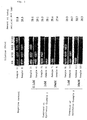
- an HCV genome could be detected in the negative control - samples 1) and 2), without including any compound, up to 30-fold or 100-fold dilution, as shown in Fig. 1.
- the HCV genome could not be detected: in 0.1 ⁇ M added -samples 3) and 4) up to 10-fold or 30-fold; in 1.0 ⁇ M added -samples 5) and 6) up to 3-fold or 10-fold; and in 10 ⁇ M added -samples 7) and 8) up to 3-fold or at 3-fold, also as shown in Fig. 1. Accordingly, it was revealed that detection limit dilution of the HCV genome decreased depending on the concentration of the compound.
- the HCV genome could not be detected: in 1.0 ⁇ M added -samples 9) and 10) up to 10-fold or 30-fold; and in 10 ⁇ M added -samples 11) and 12) up to 3-fold or at 3-fold, revealing that detection limit dilution of the HCV genome decreased depending on the concentration of the compound. On this occasion, yield of total RNA for each of the samples showed little or no alteration. Thus, it was believed that these compounds inhibited the proliferation of HCV within cells without inflicting injury on the cells.
- the HCV genome could be detected in the negative control - samples 1), 2), 3) and 4), without including any compound, up to 10-fold or 30-fold dilution, however, to the contrary, in the case of the samples added with the compound of Synthetic Example 10, in 1 ⁇ M added -samples 5) and 6); and 10 ⁇ M added -samples 7) and 8), as well as to the samples added with the compound of Synthetic Example 11, in 1 ⁇ M added -samples 9) and 10); and 10 ⁇ M added -samples 11) and 12), the HCV genome could not be detected, except for one sample diluted to 10-fold, respectively. On this occasion, yield of total RNA for each of the samples showed little or no alteration. Thus, it was believed that these compounds inhibited the proliferation of HCV within cells without inflicting injury on the cells.
- the present invention was filed Claiming priority of Japanese Patent Application Nos. 2000-394620, 2001-23542, and 2001-105585.
Landscapes
- Health & Medical Sciences (AREA)
- Chemical & Material Sciences (AREA)
- Life Sciences & Earth Sciences (AREA)
- General Health & Medical Sciences (AREA)
- Molecular Biology (AREA)
- Organic Chemistry (AREA)
- Pharmacology & Pharmacy (AREA)
- Animal Behavior & Ethology (AREA)
- Medicinal Chemistry (AREA)
- Veterinary Medicine (AREA)
- Public Health (AREA)
- Epidemiology (AREA)
- Engineering & Computer Science (AREA)
- Biochemistry (AREA)
- Genetics & Genomics (AREA)
- Biotechnology (AREA)
- Nuclear Medicine, Radiotherapy & Molecular Imaging (AREA)
- General Chemical & Material Sciences (AREA)
- Chemical Kinetics & Catalysis (AREA)
- Virology (AREA)
- Gastroenterology & Hepatology (AREA)
- Bioinformatics & Cheminformatics (AREA)
- Communicable Diseases (AREA)
- Oncology (AREA)
- Pharmaceuticals Containing Other Organic And Inorganic Compounds (AREA)
- Saccharide Compounds (AREA)
Abstract
Excellent remedies for hepatitis C which contain as the active
ingredients a 3'-deoxy-3'-fluorouridine derivatives and a
1-(3'-deoxy-fluoro-β-L-ribofuranosyl)uracil derivative and
show little side effects.
Description
The present invention relates to therapeutic agents for
hepatitis C, and more particularly, relates to therapeutic agents
for hepatitis C including a 3'-deoxy-3'-fluorouridine
derivative and a
1-(3'-deoxy-3'-fluoro-β-L-ribofuranosyl)uracil derivative having a specified structure as active ingredients.
1-(3'-deoxy-3'-fluoro-β-L-ribofuranosyl)uracil derivative having a specified structure as active ingredients.
Since 1989 when the hepatitis C virus (HCV) was discovered
by Chiron Corporation, U.S., understanding of chronic liver
diseases have drastically changed. Many liver diseases which
have been recognized as non-A, non-Boralcohol-induced hepatitis
so far were revealed to be hepatitis C which is caused by an
HCV infection. Accordingly, substantial entities thereof have
been elucidated one after another. In addition, it has also
beenclarified that hepatitis Chardly exhibits serious symptoms,
however on the contrary, the majority are chronic and steadily
progress, and hepatic cancer develops after a long duration at
a high rate.
As clinical achievements, screening upon blood transfusion
with an HCV antibody was immediately initiated, which drastically
decreased posttransfusion hepatitis. Moreover, the efficacy
of interferon has been indicated, and thus medical treatment
has been partly expected. However, the efficacy is not more
than about 30%, and side effects such as severe depression
symptoms etc., have been reported. Recently, efficacy has been
indicated through use in combination with ribavirin which is
an anti-viral agent, however, it is not recognized to be a
sufficiently satisfactory therapeutic method.
Additionally, HCV is a flavivirus having (+)-chain single
stranded RNA in its genome, which proliferates by RNA dependent
RNA polymerase. It is believed that the proliferation of HCV
can be suppressed by specifically inhibiting this RNA dependent
RNA polymerase of HCV without inhibiting human RNA polymerase,
which may pave the way for effective therapeutic methods of
hepatitis C. However, such an effective inhibitor has not been
found yet.
On the other hand, 3'-deoxy-3'-fluorouridine was first
reported of its synthesis in 1975 by G. Kowolliketal. (G. Kowollik
etal., J. Carbohydrate, Nucleosides, Nucleotides, 2(3) 191-195
(1975). Thereafter, a variety of synthetic methods have been
reported (Hemant K. Misra et al., J. Heterocyclic Chem. 21, 773
(1984); Japanese Unexamined Patent Publication No.
Sho-62-81397; L. Alder et al., Biochemical and Environmental
Mass Spectrometry, Vol. 13, 217-221 (1986); A. Van Aerschot et
al., Antiviral Research, 12, 133 (1989); Igor A. Mikhailopulo,
et al., FEBS. Vol. 250, No. 2, 139 (1989); and J. Med. Chem.
34, 2195 (1991)).
Further, a variety of reports have also been made with
respect to pharmacological actions of this compound. A. Van
Aerschot et al., Antiviral Research, 12, 133 (1989); Igor A.
Mikhailopulo, et al., FEBS. Vol. 250, No. 2, 139 (1989); and
J. Med. Chem. 34, 2195 (1991) also disclose that
3' -deoxy-3' -fluorouridine that is one of the active ingredients
of the therapeutic agent according to the present invention
exhibits antiviral activity, however, it has only a low
inhibitory activity on proximate viruses of the hepatitis C virus
(i.e., viruses having (+)-chain single stranded RNA in their
genome). Thus, an anti-HCV activity has not been suggested.
Moreover, in connection with
3'-deoxy-5,3'-difluorouridine that is one of the active
ingredients of the therapeutic agent according to the present
invention, Japanese Unexamined Patent Publication
No.Sho-62-81397 and Japanese Unexamined Patent Publication No.
Sho-62-242624 disclose its synthetic method, however, these do
not provide any information from which an anti-HCV activity is
expected.
The present inventors have carried out a thorough
investigation in order to provide excellent therapeutic agents
for hepatitis C with little side effects, and consequently found
that 3'-deoxy-3'-fluorouridine derivatives and
1-(3'-deoxy-3'-fluoro-β-L-ribofuranosyl)uracil derivatives
have an enzyme inhibitory activity which is selective to RNA
dependent RNA polymerase of HCV, without inhibiting human RNA
polymerase. The present invention was thus accomplished.
Accordingly, the present invention provides a therapeutic
agent for hepatitis C which comprises a compound selected from
a 3'-deoxy-3'-fluorouridine derivative represented by the
following general formula (I):
 wherein R1 represents a hydrogen atom, a halogen atom, an alkyl
group, an alkyl group substituted by halogen atoms, a
hydroxyalkyl group, an aminoalkyl group, an amino group, a formyl
group, a cyano group or an unsubstituted or modified benzyl group.
Z represents a carbon atom or a nitrogen atom, and when Z represents
a carbon atom, R2 represents a hydrogen atom, a halogen atom,
a formyl group or a cyano group. R3 represents a hydroxyl group
or the following formula:
wherein R1 represents a hydrogen atom, a halogen atom, an alkyl
group, an alkyl group substituted by halogen atoms, a
hydroxyalkyl group, an aminoalkyl group, an amino group, a formyl
group, a cyano group or an unsubstituted or modified benzyl group.
Z represents a carbon atom or a nitrogen atom, and when Z represents
a carbon atom, R2 represents a hydrogen atom, a halogen atom,
a formyl group or a cyano group. R3 represents a hydroxyl group
or the following formula:
 (wherein n represents 1, 2 or 3). X and Y each independently
represent an oxygen atom or a sulfur atom,
(wherein n represents 1, 2 or 3). X and Y each independently
represent an oxygen atom or a sulfur atom,
salts thereof and hydrates or solvates of the same as an active ingredient;
a compound selected from a 1-(3'-deoxy-3'-fluoro-β-L-ribofuranocyl)uracil derivative represented by the following formula (II): wherein R1 represents a hydrogen atom, a halogen atom, an alkyl
group, an alkyl group substituted by halogen atoms, a
hydroxyalkyl group, an aminoalkyl group, an amino group, a formyl
group, a cyano group or an unsubstituted or modified benzyl group.
Z represents a carbon atom or a nitrogen atom, and when Z represents
a carbon atom, R2 represents a hydrogen atom, a halogen atom,
a formyl group or a cyano group. R3 represents a hydroxyl group
or the following formula:
wherein R1 represents a hydrogen atom, a halogen atom, an alkyl
group, an alkyl group substituted by halogen atoms, a
hydroxyalkyl group, an aminoalkyl group, an amino group, a formyl
group, a cyano group or an unsubstituted or modified benzyl group.
Z represents a carbon atom or a nitrogen atom, and when Z represents
a carbon atom, R2 represents a hydrogen atom, a halogen atom,
a formyl group or a cyano group. R3 represents a hydroxyl group
or the following formula:
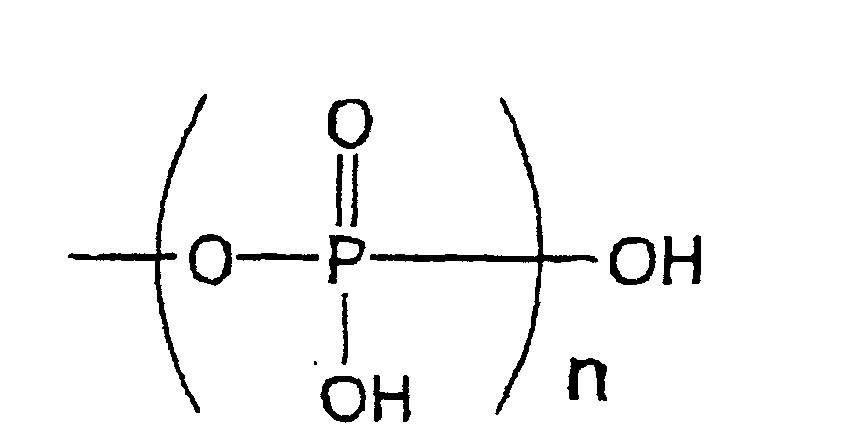 (wherein n represents 1, 2 or 3). X and Y represent an oxygen
atom or a sulfur atom,
(wherein n represents 1, 2 or 3). X and Y represent an oxygen
atom or a sulfur atom,
salts thereof and hydrates or solvates of the same; and
a therapeutic agent for hepatitis C which comprises the compound as an active ingredient.
salts thereof and hydrates or solvates of the same as an active ingredient;
a compound selected from a 1-(3'-deoxy-3'-fluoro-β-L-ribofuranocyl)uracil derivative represented by the following formula (II):
salts thereof and hydrates or solvates of the same; and
a therapeutic agent for hepatitis C which comprises the compound as an active ingredient.
The compound according to the present invention may include
compounds represented by the following general formula (I) and
the following general formula (II).
In the above general formula (I) and the above general
formula (II), R1 represents a hydrogen atom, a halogen atom,
an alkyl group, an alkyl group substituted by halogen atoms,
a hydroxyalkyl group, an aminoalkyl group, an amino group, a
formyl group, a cyano group or an unsubstituted or modified benzyl
group. Z represents a carbon atom or a nitrogen atom, and when
Z represents a carbon atom, R2 represents a hydrogen atom, a
halogen atom, a formyl group or a cyano group. In the definitions
of substituents of R1 and R2, examples of the halogen atom include
a fluorine atom, a chlorine atom, a bromine atom or an iodine
atom or the like; examples of the alkyl group include an alkyl
group having 1 to 6 carbon atoms, and preferably an alkyl group
having 1 to 3 carbon atoms such as a methyl group, an ethyl group,
a normal-propyl group, an isopropyl group or the like; examples
of the aminoalkyl group include a 4-aminobutyl group, a
3-aminopropyl group, a 2-aminoethyl group, an aminomethyl group
or the like. Furthermore, examples of the group to modify the
benzyl group include a halogen atom, an alkyl group, an alkyl
group substituted by halogen atoms, a hydroxyalkyl group, an
aminoalkyl group, an amino group, a formyl group, a cyano group
and the like. Specific examples of these are as described above.
R3 represents a hydroxyl group or the following formula:
 (wherein n represents 1, 2 or 3). X and Y each independently
represent an oxygen atom or a sulfur atom.
(wherein n represents 1, 2 or 3). X and Y each independently
represent an oxygen atom or a sulfur atom.
Specific examples of the 3'-deoxy-3'-fluorouridine
derivative represented by the above general formula (I) and the
1-(3'-deoxy-3'-fluoro-β-L-ribofuranosyl)uracil derivative
represented by the above general formula (II) include the
compounds below.
The 3'-deoxy-3'-fluorouridine derivative represented by
the above general formula (I) include
Preferable compounds include
Particularly preferable compounds include
The most preferable compounds include
The 1-(3'-deoxy-3'-fluoro-β-L-ribofuranosyl)uracil
derivative represented by the above general formula (II)
include
Preferable compounds include
Particularly preferable compounds include
Among the 3'-deoxy-3'-fluorouridine derivatives
represented by the above general formula (I) which may be an
active ingredient according to the present invention,
3'-deoxy-3'-fluorouridine, 3'-deoxy-5,3'-difluorouridine and
3'-deoxy-3'-fluoro-5-methyluridine are known compounds which
are described in Hemant K. Misra et al., J. Heterocyclic Chem.,
21, 773 (1984); Noyori et al., Japanese Unexamined Patent
Publication No. Sho-62-81397; L. Alder et al., Biochemical and
Environmental Mass Spectrometry, Vol. 13, 217-221 (1986); A.
Van Aerschot et al., Antiviral Research, 12, 133 (1989); Igor
A. Mikhailopulo, et al., J. Med. Chem. 34, 2195 (1991), and thus
they can be produced according to the disclosure therein. Also,
the 3'-deoxy-3'-fluorouridine derivatives represented by the
above general formula (I) other than these compounds can be
similarly produced on the basis of the disclosure of the same.
In addition, the
1-(3'-deoxy-3'-fluoro-β-L-ribofuranosyl)uracil derivatives
represented by the above general formula (II) are L-form
enantiomers of the above known compounds in the D-form. Thus
they can also be produced pursuant to the disclosure of these
documents by changing the sugar raw material into L-xylose.
The 3'-deoxy-3'-fluorouridine derivative represented by
the above general formula (I) and the
1- (3'-deoxy-3'-fluoro-β-L-ribofuranosyl)uracil derivative
represented by the above general formula (II) can be formed into
physiologically acceptable salts. Examples of the salt include
alkaline metal salts, alkaline earth metal salts, ammonium salts,
alkylammonium salts or the like.
Further, the 3'-deoxy-3'-fluorouridine derivative
represented by the above general formula (I) and the
1-(3'-deoxy-3'-fluoro-β-L-ribofuranosyl)uracil derivative
represented by the above general formula (II) and salts thereof
can be optionally formed into hydrates or solvates of the same.
Examples of the solvate include methanol, ethanol, isopropanol,
acetone, ethyl acetate, methylene chloride and the like.
The aforementioned salts and hydrates or solvate of the
same are also included in the scope of the active ingredient
according to the present invention.
The 3' -deoxy-3' -fluorouridine derivatives represented by
the above general formula (I) and the
1-(3'-deoxy-3'-fluoro-β-L-ribofuranosyl)uracil derivatives
represented by the above general formula (II) are compounds
having an antiviral activity, anti-RNA virus activity,
anti-hepatitis C virus activity, and thus they can be used as
a therapeutic agent for hepatitis C.
Although the above-described active ingredient itself may
be used in its unmodified form as the therapeutic agent for
hepatitis C of the present invention, to use a pharmaceutical
composition comprising the above-described active ingredient
is preferred which is produced through using generalized
additives for formulations. Examples of dosage form of the
pharmaceutical composition include tablets, capsules, subtle
granules, pills, lozenges, liquids, injections, suppositories,
ointments, patches or the like. These can be orally (including
sublingual administration) or parenterally administered.
Pharmaceutical compositions for use in oral administration
can be produced by any conventional frequently-used method such
as mixing, filling or tablet making or the like. Furthermore,
the active ingredient maybe distributed within a pharmaceutical
composition in which a large amount of filler is used through
employing a repeated blending manipulation.
For example, it is preferable that a tablet or a capsule
which is used for oral administration is provided as a unit dosage
form, which may contain a typically employed carrier for a
formulation such as a binder, a filler, a diluent, an agent for
tablet making, a lubricant, a disintegrant, a colorant, a
flavoring agent, a wetting agent and the like. The tablet may
be formed to give a coating tablet according to any known method
in the art, for example, using a coating agent.
Examples of preferable filler include cellulose, mannitol,
lactose or the like. Moreover, as further additives for a
formulation, a disintegrant such as starch derivatives e.g.,
starch, polyvinylpyrrolidone, sodium starch glycolate or the
like, lubricants such as sodium lauryl sulfate or the like.
Examples of the pharmaceutical composition in the form
of a liquid formulation for use in oral administration include
water based or oil based suspensions, solutions, emulsions,
syrups, elixirs, dry pharmaceutical compositions which can be
redissolved in water or a suitable medium prior to use, or the
like.
Such a liquid formulation may include usual additives,
for example, a suspending agent such as sorbitol, a syrup,
methylose, an aluminum stearate gel, hydrogenated edible fat
or the like; an emulsifying agent such as lecithin, sorbitan
monooleate, gum arabic or the like; an oily ester such as almond
oil, rectified coconut oil, a glycerin ester or the like; non
water based medium such as propylene glycol, ethyl alcohol or
the like (may also involve edible oil); a preservative such as
methyl ester, ethyl ester or propyl ester of p-hydroxybenzoic
acid, sorbic acid or the like; and furthermore, general flavoring
agents or colorants, or the like as needed.
Examples of the pharmaceutical composition which are
suitable for parenteral administration include pharmaceutical
compositions in liquid form, suppositories, patches andthe like,
which comprise the active ingredient as described above and a
sterilized medium. For example, the active ingredient can be
suspended, dissolved or emulsified depending on the medium or
the concentration, and for example, the composition in a liquid
form for use in parenteral administration can be produced
preferably by dissolving the active ingredient in a medium
followed by sterilization and filtration, and then filling in
an appropriate vial or ampule and sealing. In order to improve
stability, moisture may be eliminated by freeze-drying after
preparing the composition in an aqueous solution form.
The suspension for use in parenteral administration can
be produced by a method which is substantially similar to the
method for composition in a solution form for use in parenteral
administration. For example, it can be produced by suspending
the active ingredient in a medium, sterilizing with ethylene
oxide or the like, followed by additional suspension in a
sterilized medium. Upon production of the suspension or the
like, a surfactant or a wetting agent may be added as needed
so that the active ingredient is uniformly distributed in the
formulation. Pharmaceutical compositions in another form can
also be produced by any method known to persons skilled in the
art. Accordingly, the form and the process for producing the
pharmaceutical composition in one embodiment of the medicine
of the present invention are not limited to those as described
above.
The pharmaceutical composition for use in oral
administration (for example, in cases of tablets, capsules,
subtle granules and the like) generally includes 5 to 95% by
weight, and preferably 25 to 90% by weight of the active ingredient.
The pharmaceutical composition for use in parenteral
administration (for example, in cases of injections) generally
includes 0.5 to 20% by weight, and preferably 1 to 10% by weight
of the active ingredient.
The therapeutic agent of the present invention is useful
in the medical treatment of hepatitis caused by HCV. The dose
of the therapeutic agent of the present invention may be
determined adequately depending on age, health conditions, body
weight, severity of disease of the patient, type and frequency
of the medical treatment or procedure which is concurrently
performed, properties of the desired effect and the like. In
general, the dosage for an adult per dose shall be 0.01 to 50
mg/kg body weight, preferably 1 to 30 mg/kg body weight as an
amount of the active ingredient, and administered once to several
times per day.
The present invention is more specifically explained below
with reference to Synthetic Examples and Examples, however, the
following Synthetic Example s and Examples should be construed
as merely an aid in specific understanding in connection with
the present invention. Accordingly, the scope of the present
invention is not in any way limited by the following Synthetic
Example s and Examples.
3'-Deoxy-3'-fluorouridine used in the following Example
2 was produced according to the Synthetic Example in J. Med.
Chem. 34, 2195 (1991).
1H-NMR(DMSO-d6): δ 3.5-3.7(m,2H,H-5') 4.05-4.25(m,1H,H-4') 4.1-4.3(m,1H,H-2') 4.93(dd,j=4.2Hz,54.9Rz,1H,H-3') 5.26(t,J=5.1Hz, 1H, 5' 0H) 5.70(d,J=8.1Hz, 1H, H-5) 5.83(d,J=6.3Hz, 1H,2' 0H) 5.87(d,J=7. 8Hz, 1H, H-1') 7.81(d,1H,H-6) 11.35(br-s,NH)
1H-NMR(DMSO-d6): δ 3.5-3.7(m,2H,H-5') 4.05-4.25(m,1H,H-4') 4.1-4.3(m,1H,H-2') 4.93(dd,j=4.2Hz,54.9Rz,1H,H-3') 5.26(t,J=5.1Hz, 1H, 5' 0H) 5.70(d,J=8.1Hz, 1H, H-5) 5.83(d,J=6.3Hz, 1H,2' 0H) 5.87(d,J=7. 8Hz, 1H, H-1') 7.81(d,1H,H-6) 11.35(br-s,NH)
3'-Deoxy-5,3'-difluorouridine used in the following
Example 2 was produced according to the Synthetic Example in
J. Med. Chem. 34, 2195 (1991).
To an acetonitrile solution (0.6mL)of 5-fluorouracil (29
mg) was added bistrimethylsilyl acetamide (135 µL) followed by
stirring for 1 hour. After the reaction mixture became
transparent, thereto was added a solution of
1-O-acetyl-2,5-di-O-benzoyl-3-deoxy-3-fluoro-α,β-D-ribofura
nosyl (89 mg) in acetonitrile (1 mL). Under ice-cooling of the
reaction mixture, thereto was added tin (IV) chloride (34 µL)
followed by heating under reflux for 8 hours. The reaction
mixture was poured into cold water, extracted with ethyl acetate,
dried over magnesium sulfate, followed by filtration and
concentration to yield 80 mg of residue. This residue was
dissolved in 1 M ammonia in methanol, followed by stirring at
room temperature for 120 hours. The reaction mixture was
concentrated and washed with diethyl ether to yield the title
compound (21 mg).
1H-NMR(DMSO-d6) : δ 3.5-3.7(m,2H,H-5') 4.05-4.25(m,1H,H-4') 4.1-4.3(m,1H,H-2') 4.94(dd,j=4.1Rz,54.5Hz,1H,R-3') 5.40(br-s, 1H, 2' 0H) 5.85(d,J=7.5Hz,1R,H-1') 7.94(d,J=8.0Rz,1H,H-6)
1H-NMR(DMSO-d6) : δ 3.5-3.7(m,2H,H-5') 4.05-4.25(m,1H,H-4') 4.1-4.3(m,1H,H-2') 4.94(dd,j=4.1Rz,54.5Hz,1H,R-3') 5.40(br-s, 1H, 2' 0H) 5.85(d,J=7.5Hz,1R,H-1') 7.94(d,J=8.0Rz,1H,H-6)
Similar to Synthetic Example 2 except that 5-methyluracil
was used instead of 5-florouracil, the title compound was
obtained.
1H-NMR 270MHz(DMSO- d6): δ ppml.77(s,3H,CH3) 3.50-3.70(m,2H,H-5') 4.05-4.25(m,1H.H-4') 4.10-4.30(m,1H.H-2') 4.93(dd,J=4.3Hz, 54.8Hz,1H,H-3') 5.28(t,J=5.1Hz,1H,5' 0H) 5.79(d,J=6.3Hz,1H,2' 0H) 5.87(d,J--8. 1Hz, 1H,H-1') 7.67(s,1H,H-6) 11.37(br-s,1H,NH)
1H-NMR 270MHz(DMSO- d6): δ ppml.77(s,3H,CH3) 3.50-3.70(m,2H,H-5') 4.05-4.25(m,1H.H-4') 4.10-4.30(m,1H.H-2') 4.93(dd,J=4.3Hz, 54.8Hz,1H,H-3') 5.28(t,J=5.1Hz,1H,5' 0H) 5.79(d,J=6.3Hz,1H,2' 0H) 5.87(d,J--8. 1Hz, 1H,H-1') 7.67(s,1H,H-6) 11.37(br-s,1H,NH)
Similar to Synthetic Example 2 except that 5-cyanouracil
was used instead of 5-florouracil, the title compound was
obtained.
1H-NMR 270MHz(DMSO-d6): δ ppm3.50-3.70(m,2H,H-5') 4.05-4.25(m,1H,H-4') 4.10-4.30(m,1H,H-2') 4.99(d,J=56.1Hz,1H,H-3') 5.49(t,J=4.4Hz,1H,5'0H) 5.84(d,J=6.4Rz,1R,1'-H) 5.91(d,J=5.4Hz,1H,2'H) 8.78(s,1H,H-6) 12.15(br-s,1H,NH). IR: 2238cm-1 (C=N)
1H-NMR 270MHz(DMSO-d6): δ ppm3.50-3.70(m,2H,H-5') 4.05-4.25(m,1H,H-4') 4.10-4.30(m,1H,H-2') 4.99(d,J=56.1Hz,1H,H-3') 5.49(t,J=4.4Hz,1H,5'0H) 5.84(d,J=6.4Rz,1R,1'-H) 5.91(d,J=5.4Hz,1H,2'H) 8.78(s,1H,H-6) 12.15(br-s,1H,NH). IR: 2238cm-1 (C=N)
Similar to Synthetic Example 2 except that
5-trifloromethyluracil was used instead of 5-florouracil, the
title compound was obtained.
1H-NMR 270MHz(DMSO-d6): δ ppm3.50-3.70(m,2H,H-5') 4.05-4.25(m,1H,H-4') 4.10-4.30(m,1H,H-2') 4.99(dd,J=2.8Hz,53.8Hz,1H,H-3') 5.50(br-s,1H,5'0H) 5.84(br-s,1H,2'0H) 5.90(d,J=6.8Hz,1H,1'-R) 8.68(s,1H,H-6) 10.95(br-s,1H,NH)
1H-NMR 270MHz(DMSO-d6): δ ppm3.50-3.70(m,2H,H-5') 4.05-4.25(m,1H,H-4') 4.10-4.30(m,1H,H-2') 4.99(dd,J=2.8Hz,53.8Hz,1H,H-3') 5.50(br-s,1H,5'0H) 5.84(br-s,1H,2'0H) 5.90(d,J=6.8Hz,1H,1'-R) 8.68(s,1H,H-6) 10.95(br-s,1H,NH)
Similar to Synthetic Example 2 except that 5-bromouracil
was used instead of 5-florouracil, the title compound was
obtained.
1H-NMR 270MHz(DMSO-d6): δ ppm3.50-3.70(m,2H,H-5') 4.10-4.25(m,1H,H-4') 4.10-4.30(m,1H,H-2') 4.96(dd,J=3.6Hz,54.1Hz,1H,H-3') 5.42(br-s,1H,5'0H) 5.86(br-s, 1H,2' 0H) 5.88(d,J=6. 8Hz,1H, 1'-H) 8.34(s,1H,H-6)
1H-NMR 270MHz(DMSO-d6): δ ppm3.50-3.70(m,2H,H-5') 4.10-4.25(m,1H,H-4') 4.10-4.30(m,1H,H-2') 4.96(dd,J=3.6Hz,54.1Hz,1H,H-3') 5.42(br-s,1H,5'0H) 5.86(br-s, 1H,2' 0H) 5.88(d,J=6. 8Hz,1H, 1'-H) 8.34(s,1H,H-6)
Similar to Synthetic Example 2 except that 6-azamouracil
was used instead of 5-florouracil, the title compound was
obtained.
1H-NMR 270MHz(DMSO-d6): δ ppm3.28-3.50(m,2H,H-5') 4.00-4.16(m,1R,R-4') 4.40-4.62(m,1H,H-2') 4.89(t,J=5.1Hz,1H,5'0H) 5.00(dd,J=4.3Hz,54.1Hz,1H,H-3') 5.77(d,J=6.1Hz,1H,2'0H) 5.91(d,J=6.8Hz,1H,1'-H) 7.61(s,1H,H-6) 12.33(br-s,1H,NH)
1H-NMR 270MHz(DMSO-d6): δ ppm3.28-3.50(m,2H,H-5') 4.00-4.16(m,1R,R-4') 4.40-4.62(m,1H,H-2') 4.89(t,J=5.1Hz,1H,5'0H) 5.00(dd,J=4.3Hz,54.1Hz,1H,H-3') 5.77(d,J=6.1Hz,1H,2'0H) 5.91(d,J=6.8Hz,1H,1'-H) 7.61(s,1H,H-6) 12.33(br-s,1H,NH)
Similar to Synthetic Example 2 except that 2-thiouracil
was used instead of 5-florouracil, the title compound was
obtained.
1H-NMR 270MHz(DMSO-d6): δ ppm3.50-3.70(m,2H,H-5') 4.15-4.25(m,1H,H-4') 4.20-4.30(m,1H,H-2') 4.96(dd,J=4.5Hz,53.6Hz,1H,H-3') 5.38(t,J=4.9Hz,1H,5'0H) 5.86(d,J=6.1Hz,1H,2'0H) 6.06(d,J=8.1Hz,1H,5-H) 6.89(d,7.3Hz,1H,1'-H) 8.01(d,J=8,1Hz,1H,H-6) 12.69(br-s,1H,NH). UV: Λmax278nm
1H-NMR 270MHz(DMSO-d6): δ ppm3.50-3.70(m,2H,H-5') 4.15-4.25(m,1H,H-4') 4.20-4.30(m,1H,H-2') 4.96(dd,J=4.5Hz,53.6Hz,1H,H-3') 5.38(t,J=4.9Hz,1H,5'0H) 5.86(d,J=6.1Hz,1H,2'0H) 6.06(d,J=8.1Hz,1H,5-H) 6.89(d,7.3Hz,1H,1'-H) 8.01(d,J=8,1Hz,1H,H-6) 12.69(br-s,1H,NH). UV: Λmax278nm
Similar to Synthetic Example 2 except that 4-thiouracil
was used instead of 5-florouracil, the title compound was
obtained.
1H-NMR 300MHz(DMSO-d6): δ ppm3.5-3.7(m,2H,H-5') 4.17-4.2+(m,1N,H-4') 4.20-4.30(m,1H,H-2') 5.00(dd,J=4.1Hz,58.5Hz,1H,H-3') 5.31(br,1H,5'0H) 5.86(d,J=6.1Hz,1H,2'0H) 5.89(d,7.7Hz,1H,1'-H) 6.40(d,J=7.5Hz,1H,5-H) 7.75(d,J=7.5Hz,1H,H-6) 12.79(br,1H,NH). UV: Λmax 327nm
1H-NMR 300MHz(DMSO-d6): δ ppm3.5-3.7(m,2H,H-5') 4.17-4.2+(m,1N,H-4') 4.20-4.30(m,1H,H-2') 5.00(dd,J=4.1Hz,58.5Hz,1H,H-3') 5.31(br,1H,5'0H) 5.86(d,J=6.1Hz,1H,2'0H) 5.89(d,7.7Hz,1H,1'-H) 6.40(d,J=7.5Hz,1H,5-H) 7.75(d,J=7.5Hz,1H,H-6) 12.79(br,1H,NH). UV: Λmax 327nm
1-(3'-Deoxy-3'-fluoro-β-L-ribofuranosyl)uracil was
produced according to the Synthetic Example in Japanese
Unexamined Patent Publication No. Sho-62-81397 and J. Med. Chem.
34, 2195 (1991) using L-xylose (Tokyo Kasei) as a raw material.
1H-NMR(DMSO-d6): δ ppm3.5-3.7(m,2H,H-5') 4.05-4.25(m,1H,H-4') 4.1-4.3(m,1H,H-2') 4.93(dd,J=4.2Hz,54.9Hz,1H,H-3') 5.26(t,J=5.1Hz,1H,5'0H) 5.70(d,J=8.1Hz,1H,H-5) 5.83(d,J=6.3Hz,1H,2'0H) 5.87(d,J=7.8Hz,1H,H-1') 7.81(d, 1H,H-6) 11.25(br-s,NH)
Specific rotation: [α]0 26=+42.70(C=0.3,DMSO)
1H-NMR(DMSO-d6): δ ppm3.5-3.7(m,2H,H-5') 4.05-4.25(m,1H,H-4') 4.1-4.3(m,1H,H-2') 4.93(dd,J=4.2Hz,54.9Hz,1H,H-3') 5.26(t,J=5.1Hz,1H,5'0H) 5.70(d,J=8.1Hz,1H,H-5) 5.83(d,J=6.3Hz,1H,2'0H) 5.87(d,J=7.8Hz,1H,H-1') 7.81(d, 1H,H-6) 11.25(br-s,NH)
Specific rotation: [α]0 26=+42.70(C=0.3,DMSO)
1-(3'-Deoxy-5,3'-difluoro-β-L-ribofuranosyl)uracil
used in the following Example 2 was produced according to the
Synthetic Example in Japanese Unexamined Patent Publication No.
Sho-62-81397 and J. Med. Chem. 34, 2195 (1991) using L-xylose
(Tokyo Kasei) as a raw material.
To an acetonitrile solution (1.0 mL)of 5-fluorouracil (37
mg) was added bis(trimethylsilyl)acetamide (172 µL) followed
by stirring for 1 hour. After the reaction mixture became
transparent, thereto was added a solution of
1-O-acetyl-2, 5-di-O-benzoyl-3-deoxy-3-fluoro-α,β-L-ribofuranosyl
(113 mg) in acetonitrile (1 mL). Under
ice-cooling of the reaction mixture, thereto was added tin
chloride (43 µL) followed by heating under reflux for 8 hours.
The reaction mixture was poured into cold water, extracted with
ethyl acetate, dried over magnesium sulfate, followed by
filtration and concentration to yield 159 mg of a residue. The
residue was purified on a silica gel chromatography to yield
a product of 119 mg. This product was dissolved in 1 M ammonia
in methanol, followed by stirring at room temperature for 15
hours. The reaction mixture was concentrated and washed with
diethyl ether to yield the title compound (16 mg).
1H-NMR(DMSO-d6): δ 3.5-3.7(m,2H,H-5') 4.05-4.25(m,1H,H-4') 4.1-4.3(m,1H,H-2') 4.94(dd,J=4.1Hz,54.5Hz,1H,H-3') 5.40(br-s,1H,2'0H) 5.85(d,J=7.5Hz,1H, H-1') 7.94(d,J=8.0Hz,1R,H-6)
1H-NMR(DMSO-d6): δ 3.5-3.7(m,2H,H-5') 4.05-4.25(m,1H,H-4') 4.1-4.3(m,1H,H-2') 4.94(dd,J=4.1Hz,54.5Hz,1H,H-3') 5.40(br-s,1H,2'0H) 5.85(d,J=7.5Hz,1H, H-1') 7.94(d,J=8.0Hz,1R,H-6)
Furthermore, the uridine derivatives involving the
compounds according to Synthetic Example 1 through Synthetic
Example 11 are referred to as being triphosphorylated via
monophosphate and diphosphate in a living body. Therefore,
triphosphates of uridine derivatives and L-uridine derivatives.
were produced as follows.
Synthesis was performed according to the method by D. Broom
et al., (J. Chem. Soc., Chem. Commun., 1276-1277 (1991). In
130 µL of triethyl phosphate was dissolved 4 mg of
3'-deoxy-3'-fluorouridine, and thereto were added 22µL of tri
n-butylamine and 7.3 µL of phosphorous oxychloride under an
ice-cold condition followed by stirring for 1 hour. The reaction
was confirmed by ion exchange based HPLC, and the addition of
tri n-butylamine and phosphorous oxychloride in an appropriate
amount was repeated until the monophosphate was present as a
principal ingredient. To this reaction mixture were added a
solution of tri n-butylammonium pyrophosphate (260 µmol) in DMF
(390 µL) and 78 µL of tri n-butylamine followed by additional
stirring for 1 hour under an ice-cold condition. Thereto was
added a 0.1 M aqueous triethylammonium bicarbonate solution (2.6
mL) to terminate the reaction. The product was separated on
a DEAE cellulose column. After subjecting to freeze-drying,
the product was dissolved in water to yield a predetermined
concentration.
31P-NMR(standard: H2P04, D20) δ -8.96(dd), -21.92(t)
31P-NMR(standard: H2P04, D20) δ -8.96(dd), -21.92(t)
Title compound was synthesized in a similar manner as
Synthetic Example 12.
31P-NMR(standard: H2P04, D20) δ -10.34(dd), -20.17(t)
31P-NMR(standard: H2P04, D20) δ -10.34(dd), -20.17(t)
Title compound was synthesized in a similar manner as
Synthetic Example 12.
31P-NMR(standard: H2P04, D20) δ ppm-9.41(dd), -22.27(t)
31P-NMR(standard: H2P04, D20) δ ppm-9.41(dd), -22.27(t)
Title compound was synthesized in a similar manner as
Synthetic Example 12.
31P-NMR(standard: H2P04, D20) δ ppm-7.74(d), -10.71(d),
-21.38(t)
Title compound was synthesized in a similar manner as
Synthetic Example 12.
31P-NMR(standard: H2P04, D20) δ ppm-6.99(d), -11.04(d), -19.98(t)
31P-NMR(standard: H2P04, D20) δ ppm-6.99(d), -11.04(d), -19.98(t)
Title compound was synthesized in a similar manner as
Synthetic Example 12.
31P-NMR(standard: H2P04, D20) δ ppm-9.23(d), -10.94(d), -21.95(t)
31P-NMR(standard: H2P04, D20) δ ppm-9.23(d), -10.94(d), -21.95(t)
Title compound was synthesized in a similar manner as
Synthetic Example 12.
31P-NMR(standard: H2P04, D20) δ ppm-9.71(d), -10.75(d), -22.24(t)
31P-NMR(standard: H2P04, D20) δ ppm-9.71(d), -10.75(d), -22.24(t)
Title compound was synthesized in a similar manner as
Synthetic Example 12.
31P-NMR(standard: H2P04, D20) δ ppm-9.44(d), -10.79(d), -21.96(t)
31P-NMR(standard: H2P04, D20) δ ppm-9.44(d), -10.79(d), -21.96(t)
Title compound was synthesized in a similar manner as
Synthetic Example 12.
31P-NMR(standard: H2P04, D20) δ ppm-7.91(d), -10.60(d), -21.20(t)
31P-NMR(standard: H2P04, D20) δ ppm-7.91(d), -10.60(d), -21.20(t)
Title compound was synthesized in a similar manner as
Synthetic Example 12.
31P-NMR(standard: H2P04, D20) δ -7.46(dd), -21.76(t)
31P-NMR(standard: H2P04, D20) δ -7.46(dd), -21.76(t)
Title compound was synthesized in a similar manner as
Synthetic Example 12.
31P-NMR(standard: H2P04, D20) δ -9.49(dd), -20.62(t)
31P-NMR(standard: H2P04, D20) δ -9.49(dd), -20.62(t)
Inhibitory effect on an HCV RNA polymerase activity of
the compounds of Synthetic Example 12, Synthetic Example 13,
Synthetic Example 19, Synthetic Example 21 and Synthetic Example
22 described above was measured by the following process.
Expression and purification of HCV RNA polymerase were
performed in accordance with known processes (V. Lohman et al.,
VIROLOGY, 249, 108-118, 1998).
The purified HCV RNA polymerase in an amount of 200 ng
was mixed with 100 ng/mL poly(A)RNA (polyadenine RNA) as a
template RNAand 25 ng/mL 15-meroligo (U) RNA (oligouridine having
15 bases, TAKARA Shuzo) as a primer RNA in 50 µL of an aqueous
solution containing 20 mM Tris-Cl (pH 7.5), 5 mM MgCl2 25 mM
KCl, 10 uM UTP (Uridine-triphosphate), 0.25 Ci/mL [α-32P]UTP
(Amersham, PB10203). Then, thereto was added the compound of
Synthetic Example 12, Synthetic Example 13, Synthetic Example
19, Synthetic Example 21 or Synthetic Example 22, followed by
an RNA synthetic reaction at 30°C for 30 minutes.
After completing the reaction, RNA in the solution was
absorbed on DE81 paper (Whattman). Then, [α-32P]UTP which was
not incorporated into the synthesized RNA was washed out with
0.5 M phosphate buffer, and the quantity of [α-32P]UTP which
was incorporated into the synthesized RNA on the DE81 paper was
determined on a liquid scintillation counter.
Inhibitory potency of the compounds of Synthetic Example
12, Synthetic Example 13, Synthetic Example 19, Synthetic Example
21 and Synthetic Example 22 was represented by 50% inhibitory
concentration when the negative control without HCV RNA
polymerase was assumed as 0% while the positive control without
the compound was assumed as 100%.
| 50% inhibitory concentration for HCV RNA polymerase | (µM) |
| 3'-deoxy-3'-fluorouridine 5'-triphosphate (compound of Synthetic Example 12) | 0.3 |
| 3'-deoxy-5,3'-difluorouridine 5'-triphosphate (compound of Synthetic Example 13) | 1.0 |
| 3'-deoxy-3'-fluoro-2-thiouridine 5'-triphosphate (compound of Synthetic Example 19) | 3.0 |
| 1-(3'-deoxy-3'-fluoro-β-L-ribofuranosyl)uracil 5'-triphosphate (compound of Synthetic Example 21) | 3.0 |
| 1-(3'-deoxy-5,3'-difluoro-β-L-ribofuranosyl)uracil 5'-triphosphate (compound of Synthetic Example 22) | 10 |
Inhibitory effect on HCV proliferation of the compounds
of Synthetic Example 1, Synthetic Example 2, Synthetic Example
10 and Synthetic Example 11 described above was measured by the
following process.
Measurement of anti HCV proliferation inhibitory activity
was performed in accordance with a known process
(Kato, N. et. al., Biochem. Biophs. Res. Commun. 206, 863-869,
1995).
MT-2C cells that are cells derived from human T cells (Kato,
N. et. al., Biochem. Biophs. Res. Commun. 206, 863-869, 1995)
were cultured in an RPMI 1640 medium (Gibco-BRL 11875-101)
supplemented with FBS (Foetal Bovine Serum,Gibco-BRL10082-147)
at 10%. Thus cultured MT-2C cells (1 x 10⁶ cells) were suspended
in 200 uL of an F-12 medium (Gibco-BRL 11059-029) added with
EDTA (ethylenediamine tetraacetic acid) to yield final
concentration of 5 mM. Thereto was added 20 µL of a serum derived
from a hepatitis C patient, followed by infection at 37°C for
2 hours. After the infection, the cells were washed three times
with 1 mL of PBS (Phosphate buffered saline), suspended in 6
mL of an RPMI medium added with FBS at 10%. The suspended cells
were seeded on a 48 well culture plate, and incubated in a CO2
incubator at 32°C for 3 days.
Thereto was added the compound of Synthetic Example 1,
Synthetic Example 2, Synthetic Example 10 or Synthetic Example
11 dissolved in DMSO (Dimethyl Sulfoxide) in an amount of
thousandths of the medium, and the mixture was cultured for 3
days. A medium adjusted to have the same concentration of the
identical compound was added to each well in a two-fold volume,
followed by an additional culture for 4 days. Cells were
harvested for each of the samples, and total cellular RNA was
purified. For the RNA purification, ISOGEN (NIPPON GENE,
311-02501) was used. In order to quantitatively determine an
HCV RNA genome in the purified RNA, the following operation was
carried out.
Using 1 µg of the purified RNA, a reverse transcription
reaction was performed in a total volume of 20 uL at 37°C for
1 hour. Subsequently, an inactivation treatment of the reverse
transcriptase was carried out at 100°C for 30 minutes.
Superscript™ II (Gibco BRL 18064-014) was used as a reverse
transcriptase, and an oligoDNA (Gibco BRL) having 20 bases which
are complementary to the sequence of base position 317 through
base position 336 of HCV-J strain (Kato, N. et. al. Proc. Natl.
Acad. Sci. USA 87, 9524-9528, 1990) was used as a primer.
Product of the reverse transcription reaction was diluted
to 3-fold, 10-fold, 30-fold and 100-fold with sterilized and
distilled water. First PCR (Polymerase Chain Reaction), (34
cycles of: at 94°C for 1 minute, at 58°C for 45 seconds and at
72°C for 1 minute; and 1 cycle of: at 94°C for 1 minute, at 58°C
for 1 minute and 40 seconds and at 72°C for 8 minutes) was performed
in a total volume of 50 µL using 3 µL of the diluted product
of the reverse transcription reaction. EX-Taq (TAKARA RR001A)
was used as a DNA synthetase, while an oligoDNA (Gibco BRL) having
20 bases which correspond to the sequence of base position 71
through base position 90 and an oligoDNA (Gibco BRL) having 20
bases which are complementary to the sequence of base position
317 through base position 336 of HCV-J strain were used as primers.
Second PCR reaction (34 cycles of: at 94°C for 1 minute,
at 58°C for 45 seconds and at 72°C for 1 minute; and 1 cycle
of: at 94°C for 1 minute, at 58°C for 1 minute and 40 seconds
and at 72°C for 8 minutes) was performed in a total volume of
50 µL using 2 µL of the reaction product of the first PCR. EX-Taq
(TAKARA) was used as a DNA synthetase, while an oligoDNA (Gibco
BRL) having 20 bases which correspond to the sequence of base
position 122 through base position 141 and an oligoDNA (Gibco
BRL) having 20 bases which are complementary to the sequence
of base position 246 through base position 265 of HCV-J strain
were used as primers.
The reaction product of the second PCR in an amount of
5 µL was electrophoresed on a 3% agarose gel, followed by ethidium
bromide staining to detect a DNA fragment.
As a result, an HCV genome could be detected in the negative
control - samples 1) and 2), without including any compound,
up to 30-fold or 100-fold dilution, as shown in Fig. 1. To the
contrary, in the case of the samples added with the compound
of Synthetic Example 1, the HCV genome could not be detected:
in 0.1 µM added -samples 3) and 4) up to 10-fold or 30-fold;
in 1.0 µM added -samples 5) and 6) up to 3-fold or 10-fold; and
in 10 µM added -samples 7) and 8) up to 3-fold or at 3-fold,
also as shown in Fig. 1. Accordingly, it was revealed that
detection limit dilution of the HCV genome decreased depending
on the concentration of the compound. In addition, also in the
case of the samples added with the compound of Synthetic Example
2, the HCV genome could not be detected: in 1.0 µM added -samples
9) and 10) up to 10-fold or 30-fold; and in 10 µM added -samples
11) and 12) up to 3-fold or at 3-fold, revealing that detection
limit dilution of the HCV genome decreased depending on the
concentration of the compound. On this occasion, yield of total
RNA for each of the samples showed little or no alteration. Thus,
it was believed that these compounds inhibited the proliferation
of HCV within cells without inflicting injury on the cells.
Moreover, as shown in Fig. 2, the HCV genome could be
detected in the negative control - samples 1), 2), 3) and 4),
without including any compound, up to 10-fold or 30-fold dilution,
however, to the contrary, in the case of the samples added with
the compound of Synthetic Example 10, in 1 µM added -samples
5) and 6); and 10 µM added -samples 7) and 8), as well as to
the samples added with the compound of Synthetic Example 11,
in 1 µM added -samples 9) and 10); and 10 µM added -samples 11)
and 12), the HCV genome could not be detected, except for one
sample diluted to 10-fold, respectively. On this occasion,
yield of total RNA for each of the samples showed little or no
alteration. Thus, it was believed that these compounds
inhibited the proliferation of HCV within cells without
inflicting injury on the cells.
According to the present invention, excellent therapeutic
agents for hepatitis C with little side effects are provided
aiming at a medical treatment for hepatitis C caused by HCV.
The present invention was filed Claiming priority of
Japanese Patent Application Nos. 2000-394620, 2001-23542, and
2001-105585.
Claims (10)
- A therapeutic agent for hepatitis C which comprises a compound selected from a 3'-deoxy-3'-fluorouridine derivative represented by the following general formula (I):wherein R1 represents a hydrogen atom, a halogen atom, an alkyl group, an alkyl group substituted by halogen atoms, a hydroxyalkyl group, an aminoalkyl group, an amino group, a formyl group, a cyano group, or an unsubstituted or modified benzyl group. Z represents a carbon atom or a nitrogen atom, and when Z represents a carbon atom, R2 represents a hydrogen atom, a halogen atom, a formyl group or a cyano group. R3 represents a hydroxyl group or the following formula:
 (whereinnrepresents 1, 2 or 3). X and Y each independently represent an oxygen atom or a sulfur atom,
salts thereof and hydrates or solvates of the same as an active ingredient. - The therapeutic agent for hepatitis C according to Claim 1 wherein said 3'-deoxy-3'-fluorouridine derivative is any one of 3'-deoxy-3'-fluorouridine,
3'-deoxy-5, 3'-difluorouridine,
3'-deoxy-3'-fluoro-5-methyluridine,
3'-deoxy-3'-fluoro-5-cyanouridine,
3'-deoxy-3'-fluoro-5-trifloromethyluridine,
3'-deoxy-3'-fluoro-5-bromouridine,
3'-deoxy-3'-fluoro-6-azauridine,
3'-deoxy-3'-fluoro-2-thiouridine,
3'-deoxy-3'-fluoro-4-thiouridine, 3'-deoxy-3'-fluorouridine 5'-triphosphate, 3'-deoxy-5,3'-difluorouridine
5'-triphosphate, 3'-deoxy-3'-fluoro-5-methyluridine
5'-triphosphate, 3'-deoxy-3'-fluoro-5-cyanouridine
5'-triphosphate, 3'-deoxy-3'-fluoro-5-trifloromethyluridine 5'-triphosphate, 3'-deoxy-3'-fluoro-5-bromouridine
5'-triphosphate, 3'-deoxy-3'-fluoro-6-azauridine
5'-triphosphate, 3'-deoxy-3'-fluoro-2-thiouridine
5'-triphosphate or 3'-deoxy-3'-fluoro-4-thiouridine
5'-triphosphate. - The therapeutic agent for hepatitis C according to Claim 1 wherein said 3'-deoxy-3'-fluorouridine derivative is any one of 3'-deoxy-3'-fluorouridine,
3'-deoxy-5,3'-difluorouridine,
3'-deoxy-3'-fluoro-5-methyluridine,
3'-deoxy-3'-fluorouridine 5'-triphosphate,
3'-deoxy-5,3'-difluorouridine 5'-triphosphate or
3'-deoxy-3'-fluoro-5-methyluridine 5'-triphosphate. - The therapeutic agent for hepatitis C according to Claim 1 wherein said 3'-deoxy-3'-fluorouridine derivative is any one of 3'-deoxy-3'-fluorouridine,
3'-deoxy-5,3'-difluorouridine or
3'-deoxy-3'-fluoro-5-methyluridine. - The therapeutic agent for hepatitis C according to Claim 1 wherein said 3'-deoxy-3'-fluorouridine derivative is 3'-deoxy-3'-fluorouridine.
- A compound selected from a
1-(3'-deoxy-3'-fluoro-β-L-ribofuranosyl)uracil derivative represented by the following formula (II):wherein R1 represents a hydrogen atom, a halogen atom, an alkyl group, an alkyl group substituted by halogen atoms, a hydroxyalkyl group, an aminoalkyl group, an amino group, a formyl group, a cyano group, or an unsubstituted or modified benzyl group. Z represents a carbon atom or a nitrogen atom, and when Z represents a carbon atom, R2 represents a hydrogen atom, a halogen atom, a formyl group or a cyano group. R3 represents a hydroxyl group or the following formula: (wherein n represents 1, 2 or 3). X and Y each independently represent an oxygen atom or a sulfur atom,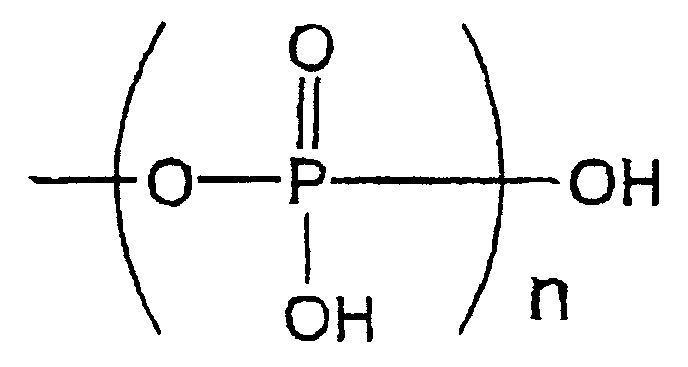
salts thereof and hydrates or solvates of the same. - The compound according to Claim 6 wherein said
1-(3'-deoxy-3'-fluoro-β-L-ribofuranosyl)uracil derivative is any one of 1-(3'-deoxy-3'-fluoro-β-L-ribofuranosyl) uracil,
1-(3'-deoxy-5,3'-difluoro-β-L-ribofuranosyl)uracil,
1-(3'-deoxy-3'-fluoro-5-methyl-β-L-ribofuranosyl)uracil,
1-(3'-deoxy-3'-fluoro-β-L-ribofuranosyl)uracil
5'-triphosphate,
1-(3'-deoxy-5,3'-difluoro-β-L-ribofuranosyl) uracil
5'-triphosphate or
1-(3'-deoxy-3'-fluoro-5-methyl-β-L-ribofuranosyl)uracil
5'-triphosphate. - The compound according to Claim 6 wherein said
1-(3'-deoxy-3'-fluoro-β-L-ribofuranosyl)uracil derivative is any one of 1-(3'-deoxy-3'-fluoro-β-L-ribofuranosyl)uracil,
1-(3'-deoxy-5,3'-difluoro-β-L-ribofuranosyl)uracyl,
1-(3'-deoxy-3'-fluoro-5-methyl-β-L-ribofuranosyl)uracil. - The compound according to Claim 6 wherein said 1-(3'-deoxy-3'-fluoro-β-L-ribofuranosyl)uracil derivative is 1-(3'-deoxy-3'-fluoro-β-L-ribofuranosyl)uracil.
- A therapeutic agent for hepatitis C which comprises the compound according to any one of Claims 6 through 9 as an active ingredient.
Applications Claiming Priority (7)
| Application Number | Priority Date | Filing Date | Title |
|---|---|---|---|
| JP2000394620 | 2000-12-26 | ||
| JP2000394620 | 2000-12-26 | ||
| JP2001023542 | 2001-01-31 | ||
| JP2001023542 | 2001-01-31 | ||
| JP2001105585 | 2001-04-04 | ||
| JP2001105585 | 2001-04-04 | ||
| PCT/JP2001/011365 WO2002051425A1 (en) | 2000-12-26 | 2001-12-25 | Remedies for hepatitis c |
Publications (2)
| Publication Number | Publication Date |
|---|---|
| EP1346724A1 true EP1346724A1 (en) | 2003-09-24 |
| EP1346724A4 EP1346724A4 (en) | 2004-11-17 |
Family
ID=27345541
Family Applications (1)
| Application Number | Title | Priority Date | Filing Date |
|---|---|---|---|
| EP01271879A Withdrawn EP1346724A4 (en) | 2000-12-26 | 2001-12-25 | REMEDIES FOR HEPATITIS C |
Country Status (6)
| Country | Link |
|---|---|
| US (1) | US20040063651A1 (en) |
| EP (1) | EP1346724A4 (en) |
| JP (1) | JPWO2002051425A1 (en) |
| CN (1) | CN1482914A (en) |
| CA (1) | CA2437209A1 (en) |
| WO (1) | WO2002051425A1 (en) |
Cited By (1)
| Publication number | Priority date | Publication date | Assignee | Title |
|---|---|---|---|---|
| EP2996696A4 (en) * | 2013-05-16 | 2016-12-21 | Riboscience Llc | NUCLEOSIDE DERIVATIVES SUBSTITUTED 4'-AZIDO, 3'-DEOXY-3'-FLUORO |
Families Citing this family (37)
| Publication number | Priority date | Publication date | Assignee | Title |
|---|---|---|---|---|
| US20050182252A1 (en) | 2004-02-13 | 2005-08-18 | Reddy K. R. | Novel 2'-C-methyl nucleoside derivatives |
| UY28758A1 (en) | 2004-02-20 | 2005-09-30 | Boehringer Ingelheim Int | VIRAL POLYMERASE INHIBITORS |
| US7534767B2 (en) | 2004-06-15 | 2009-05-19 | Merck & Co., Inc. | C-purine nucleoside analogs as inhibitors of RNA-dependent RNA viral polymerase |
| CA2571079A1 (en) | 2004-06-24 | 2006-02-02 | Merck & Co., Inc. | Nucleoside aryl phosphoramidates for the treatment of rna-dependent rna viral infection |
| WO2006119061A2 (en) | 2005-05-02 | 2006-11-09 | Merck & Co., Inc. | Hcv ns3 protease inhibitors |
| TWI387603B (en) | 2005-07-20 | 2013-03-01 | Merck Sharp & Dohme | Hcv ns3 protease inhibitors |
| KR20080036598A (en) | 2005-08-01 | 2008-04-28 | 머크 앤드 캄파니 인코포레이티드 | Macrocyclic Peptides as HCV NS3 Protease Inhibitors |
| GB0609492D0 (en) | 2006-05-15 | 2006-06-21 | Angeletti P Ist Richerche Bio | Therapeutic agents |
| GB0612423D0 (en) | 2006-06-23 | 2006-08-02 | Angeletti P Ist Richerche Bio | Therapeutic agents |
| AU2007309488B2 (en) | 2006-10-24 | 2012-10-11 | Merck Sharp & Dohme Corp. | HCV NS3 protease inhibitors |
| AU2007309546A1 (en) | 2006-10-24 | 2008-05-02 | Istituto Di Ricerche Di Biologia Molecolare P. Angeletti S.P.A. | HCV NS3 protease inhibitors |
| EP2079479B1 (en) | 2006-10-24 | 2014-11-26 | Merck Sharp & Dohme Corp. | Hcv ns3 protease inhibitors |
| CN101568346B (en) | 2006-10-27 | 2015-11-25 | 默沙东公司 | HCV NS3 protease inhibitor |
| CA2667031C (en) | 2006-10-27 | 2013-01-22 | Merck & Co., Inc. | Hcv ns3 protease inhibitors |
| GB0625349D0 (en) | 2006-12-20 | 2007-01-31 | Angeletti P Ist Richerche Bio | Therapeutic compounds |
| CA2672250C (en) | 2006-12-20 | 2013-04-30 | Ian Stansfield | Antiviral indoles |
| GB0625345D0 (en) | 2006-12-20 | 2007-01-31 | Angeletti P Ist Richerche Bio | Therapeutic compounds |
| US8071568B2 (en) | 2007-01-05 | 2011-12-06 | Merck Sharp & Dohme Corp. | Nucleoside aryl phosphoramidates for the treatment of RNA-dependent RNA viral infection |
| JP2010533699A (en) | 2007-07-17 | 2010-10-28 | イステイチユート・デイ・リチエルケ・デイ・ビオロジア・モレコラーレ・ピ・アンジエレツテイ・エツセ・ピー・アー | Macrocyclic indole derivatives for the treatment of hepatitis C infection |
| AU2008277377B2 (en) | 2007-07-19 | 2013-08-01 | Msd Italia S.R.L. | Macrocyclic compounds as antiviral agents |
| EP2271345B1 (en) | 2008-04-28 | 2015-05-20 | Merck Sharp & Dohme Corp. | Hcv ns3 protease inhibitors |
| ME02024B (en) | 2008-07-22 | 2015-05-20 | Merck Sharp & Dohme | Macrocyclic quinoxaline compounds as hcv ns3 protease inhibitors |
| WO2010082050A1 (en) | 2009-01-16 | 2010-07-22 | Istituto Di Ricerche Di Biologia Molecolare P. Angeletti S.P.A. | Macrocyclic and 7-aminoalkyl-substituted benzoxazocines for treatment of hepatitis c infections |
| GB0900914D0 (en) | 2009-01-20 | 2009-03-04 | Angeletti P Ist Richerche Bio | Antiviral agents |
| WO2011014487A1 (en) | 2009-07-30 | 2011-02-03 | Merck Sharp & Dohme Corp. | Hepatitis c virus ns3 protease inhibitors |
| US20110027229A1 (en) | 2009-07-31 | 2011-02-03 | Medtronic, Inc. | Continuous subcutaneous administration of interferon-alpha to hepatitis c infected patients |
| WO2013074386A2 (en) | 2011-11-15 | 2013-05-23 | Merck Sharp & Dohme Corp. | Hcv ns3 protease inhibitors |
| US20140356325A1 (en) | 2012-01-12 | 2014-12-04 | Ligand Pharmaceuticals Incorporated | Novel 2'-c-methyl nucleoside derivative compounds |
| WO2014121418A1 (en) | 2013-02-07 | 2014-08-14 | Merck Sharp & Dohme Corp. | Tetracyclic heterocycle compounds and methods of use thereof for the treatment of hepatitis c |
| WO2014121417A1 (en) | 2013-02-07 | 2014-08-14 | Merck Sharp & Dohme Corp. | Tetracyclic heterocycle compounds and methods of use thereof for the treatment of hepatitis c |
| DK3043803T3 (en) | 2013-09-11 | 2022-08-01 | Univ Emory | Nucleotide and nucleoside compounds and their applications |
| US10449210B2 (en) | 2014-02-13 | 2019-10-22 | Ligand Pharmaceuticals Inc. | Prodrug compounds and their uses |
| CN106687118A (en) | 2014-07-02 | 2017-05-17 | 配体药物公司 | Prodrug compounds and uses thereof |
| WO2016145142A1 (en) * | 2015-03-10 | 2016-09-15 | Emory University | Nucleotide and nucleoside therapeutics compositions and uses related thereto |
| WO2017106710A1 (en) * | 2015-12-17 | 2017-06-22 | Emory University | Nucleotide and nucleoside therapeutic compositions and uses related thereto |
| CN111788196A (en) | 2018-01-09 | 2020-10-16 | 配体药物公司 | Acetal compounds and their therapeutic uses |
| US12274700B1 (en) | 2020-10-30 | 2025-04-15 | Accencio LLC | Methods of treating symptoms of coronavirus infection with RNA polymerase inhibitors |
Family Cites Families (5)
| Publication number | Priority date | Publication date | Assignee | Title |
|---|---|---|---|---|
| JPH0780897B2 (en) * | 1985-10-04 | 1995-08-30 | 旭硝子株式会社 | Method for producing ribofuranoside derivative |
| JPS62242624A (en) * | 1986-04-15 | 1987-10-23 | Asahi Glass Co Ltd | Antitumor agent |
| JPH0296590A (en) * | 1988-09-30 | 1990-04-09 | Asahi Glass Co Ltd | Novel nucleic acids |
| CN1427722A (en) * | 2000-02-18 | 2003-07-02 | 希拉生物化学股份有限公司 | Method for treatment or prevention of flavivirus infections using nucleoside analogues |
| US20030008841A1 (en) * | 2000-08-30 | 2003-01-09 | Rene Devos | Anti-HCV nucleoside derivatives |
-
2001
- 2001-12-25 CN CNA018213839A patent/CN1482914A/en active Pending
- 2001-12-25 EP EP01271879A patent/EP1346724A4/en not_active Withdrawn
- 2001-12-25 JP JP2002552568A patent/JPWO2002051425A1/en active Pending
- 2001-12-25 CA CA002437209A patent/CA2437209A1/en not_active Abandoned
- 2001-12-25 US US10/465,931 patent/US20040063651A1/en not_active Abandoned
- 2001-12-25 WO PCT/JP2001/011365 patent/WO2002051425A1/en not_active Ceased
Cited By (2)
| Publication number | Priority date | Publication date | Assignee | Title |
|---|---|---|---|---|
| EP2996696A4 (en) * | 2013-05-16 | 2016-12-21 | Riboscience Llc | NUCLEOSIDE DERIVATIVES SUBSTITUTED 4'-AZIDO, 3'-DEOXY-3'-FLUORO |
| US9694028B2 (en) | 2013-05-16 | 2017-07-04 | Riboscience Llc | 4′-azido, 3′-deoxy-3′-fluoro substituted nucleoside derivatives as inhibitors of HCV RNA replication |
Also Published As
| Publication number | Publication date |
|---|---|
| EP1346724A4 (en) | 2004-11-17 |
| JPWO2002051425A1 (en) | 2004-04-22 |
| WO2002051425A1 (en) | 2002-07-04 |
| CN1482914A (en) | 2004-03-17 |
| CA2437209A1 (en) | 2002-07-04 |
| US20040063651A1 (en) | 2004-04-01 |
Similar Documents
| Publication | Publication Date | Title |
|---|---|---|
| US20040063651A1 (en) | Remedies for hepatitis c | |
| EP2399588B1 (en) | Nucleoside derivatives as inhibitors of rna-dependent rna viral polymerase | |
| EP2227482B1 (en) | 2',4'-substituted nucleosides as antiviral agents | |
| AU2011336632B2 (en) | Compounds | |
| US20040229840A1 (en) | Nucleoside derivatives as inhibitors of RNA-dependent RNA viral polymerase | |
| IL201239A (en) | (s)-2-{[(2r,3r,4r,5r)-5-(2,4-dioxo-3,4-dihydro-2h-pyrimidin-1-yl)-4-fluoro-3-hydroxy-4-methyl-tetrahydrofuran-2-ylmethoxy]-phenoxy-phosphorylamino}-propionic acid isopropyl ester or a stereoisomer thereof, (s)-isopropyl 2-(((s)-((2r,3r,4r,5r)-5-(2,4-dioxo-3,4-dihydropyrimidin-yl)methoxy)(phenoxy)phosphoryl)amino)propanoate, a method of synthesizing the nucleotides and uses thereof | |
| JP2005533108A (en) | Nucleoside derivatives as inhibitors of RNA-dependent RNA viral polymerase | |
| SK11922002A3 (en) | Method for the treatment or prevention of flavivirus infections using nucleoside analogues | |
| ZA200506630B (en) | Anti-viral nucleoside analogs and methods for treating viral infections, especially HIV infections | |
| SG172361A1 (en) | Nucleoside analogs | |
| JP2010513484A (en) | Nucleoside cyclic phosphoramidates for the treatment of RNA-dependent RNA viral infections | |
| HK1149017B (en) | 2',4'-substituted nucleosides as antiviral agents | |
| HK1208468B (en) | 2',4'-substituted nucleosides as antiviral agents |
Legal Events
| Date | Code | Title | Description |
|---|---|---|---|
| PUAI | Public reference made under article 153(3) epc to a published international application that has entered the european phase |
Free format text: ORIGINAL CODE: 0009012 |
|
| 17P | Request for examination filed |
Effective date: 20030618 |
|
| AK | Designated contracting states |
Kind code of ref document: A1 Designated state(s): AT BE CH CY DE DK ES FI FR GB GR IE IT LI LU MC NL PT SE TR |
|
| AX | Request for extension of the european patent |
Extension state: AL LT LV MK RO SI |
|
| A4 | Supplementary search report drawn up and despatched |
Effective date: 20041006 |
|
| STAA | Information on the status of an ep patent application or granted ep patent |
Free format text: STATUS: THE APPLICATION IS DEEMED TO BE WITHDRAWN |
|
| 18D | Application deemed to be withdrawn |
Effective date: 20050406 |