Technical Field
The present invention relates to a playback apparatus
for audio data, and more particularly, to an apparatus
capable of playing back an audio data storage medium having
a mixture of non-compressed audio data and compressed audio
data.
Background Art
Presently, the most popular standard or medium for
storing audio data is CD-DA (CD-Digital Audio). In CD-DA, a
74-minute digital signal can be recorded on a disk having a
diameter of 12 cm. Recently, however, audio data
compression techniques such as MP3 (MPEG-1 Audio Layer-III),
ATRAC3 (Adaptive Transform Acoustic Coding 3), and WMA
(Windows Media Audio) have been developed, and more and more
users have enjoyed music on their computers using audio data
which has been compressed by such compression techniques.
Such compression techniques have features to compress the
capacity of CD-DA audio data to, for example, about 1/10,
and to provide low degradation in sound quality. In terms
of the recording time of music, CD-DA non-compressed audio
data is limited to a capacity of about 74 minutes per disk,
while compressed audio data can have a capacity of over 700
minutes per disk. The compressed audio data can be written
to, for example, a Recordable CD (Recordable Compact Disc),
and audio devices capable of playing back Recordable CDs
having compressed audio data written thereto have been
marketed.
As described above, when users enjoy music, she/he can
use non-compressed audio data and compressed audio data. it
is an object of the present invention to provide an audio
device capable of making more effective use of non-compressed
audio data and compressed audio data.
Disclosure of Invention
It is possible to write both CD-DA audio data files and
data files in another format. In disks of this type, two
formats, namely, Mixed-mode CD and Enhanced CD (also called
CD-Extra) are currently available.
The Mixed-mode CD refers to a CD (Compact Disc) having
a data track and an audio track stored on a single medium.
More specifically, as shown in Fig. 6, a data track and a
CD-DA track are written, in this order, in a single session.
As used herein, data track refers to a track region having
data in a computer-processible format (computer data) stored
thereon, and CD-DA track refers to a track region having CD-DA
non-compressed audio data stored thereon. The Mixed-mode
CD is often used for software games, etc. In this case, a
game program is written on the data track, and background
music for the game is written on the CD-DA track. Basically,
the Mixed-mode CD is a standard for personal computers.
Thus, if the disk is played back on an audio CD player, no
sound or loud noise sound is produced from the data track
portion. If it is to be played back on a CD-ROM player for
a personal computer, on the other hand, the CD-ROM player
only recognizes the data track, but does not read the data
on the CD-DA track.
The Enhanced CD includes first and second, that is, two,
sessions; the first session has a CD-DA track written
therein and the second session has a data track written
therein. The second session is stored in a mode capable of
recording moving pictures, images, and programs. In most
cases, video clips, picture albums, mini-games, screen
savers, etc., are recorded in the second session. If this
disk is played back on a music CD player, the music CD
player can only recognize the CD-DA track in the first
session, thus causing only the CD-DA track on the inner
circumference to be played back as a CD-DA disk. Therefore,
the problem of producing noise does not occur. When it is
to be played back on a CD-ROM player for a personal computer,
on the other hand, the CD-ROM player recognizes and
processes only the data track in the second session.
It would be more beneficial to users to write two kinds
of data, namely, CD-DA non-compressed audio data and
compressed audio data, on a single disk and to play back
this disk on a single audio device. As described above, in
the conventional art, disks capable of having both CD-DA
audio data files and data files in other formats written
thereon are available, and it is possible to write CD-DA
audio data and compressed audio data to a single disk, such
as a Recordable CD. By doing so, a novel music medium
having music sensitive to sound quality written as CD-DA
audio data and music otherwise written as compressed audio
data can be achieved.
Audio devices capable of playing back compressed audio
data have been available heretofore. When a disk is
inserted therein, the audio device can recognize that the
disk is either a CD-DA disk or a compressed audio data, for
example, MP3, disk and can play back the disk. However, the
audio device does not assume that a mixture of CD-DA audio
data and compressed audio data is written on a single disk.
That is, the audio device cannot play back a disk having a
mixture of CD-DA audio data and compressed audio data
written thereon to play back both the CD-DA audio data and
the compressed audio data. Accordingly, the present
invention provides a medium having a mixture of non-compressed
audio data such as CD-DA and compressed audio
data as computer data, and also provides a playback
apparatus capable of playing back both the non-compressed
audio data and the compressed audio data on such a medium.
Specifically, the present invention provides a playback
apparatus for playing back a medium having audio data stored
thereon, including: a determining unit for determining if a
predetermined medium received therein contains a mixture of
compressed audio data and non-compressed audio data; and a
playback mechanism for playing back the compressed audio
data and the non-compressed audio data, which are stored in
the medium, based on the determination result of the
determining unit.
In the playback apparatus according to the present
invention, the compressed audio data can have a computer
data format.
The playback apparatus according to the present
invention can determine if it contains a mixture of
compressed audio data and non-compressed audio data, and can
play back the audio data according to that determination
result, thereby allowing a medium having a mixture of
compressed audio data and non-compressed audio data to be
played back without changing the medium.
Whereas, an audio device in the conventional art does
not presume that compressed audio data and non-compressed
audio data are mixed in a single disk, and cannot determine
the mixture.
In the playback apparatus according to the present
invention, if the predetermined medium received in the
playback apparatus includes a session formed of a lead-in, a
data storage area, and a lead-out, the determining unit
should determine if compressed audio data and non-compressed
audio data are mixed in the data storage area in the session.
In a Mixed-mode CD in the state of the art, a data track and
a CD-DA track are written, in this order, in a single
session. Thus, by recognizing that the predetermined medium
is a Mixed-mode CD, and that compressed audio data is
present in the data track, it is possible to determine that
compressed audio data and non-compressed audio data are
mixed in the data storage medium in the session.
In the playback apparatus according to the present
invention, if the predetermined medium received in the
playback apparatus includes at least two sessions each
formed of a lead-in, a data storage area, and a lead-out,
the determining unit should determine if compressed audio
data is stored in the data storage area in one session of
the two sessions and if non-compressed audio data is stored
in the data storage area in the other session. In an
Enhanced CD in the state of the art, as described above, a
CD-DA track is written in a first session, and a data track
is written in a second session. Thus, by recognizing that
the predetermined medium has two sessions, and that
compressed audio data is present in the second session, it
is possible to determine that it is a medium having a
mixture of compressed audio data and non-compressed audio
data.
Furthermore, the playback apparatus according to the
present invention can play back a medium having only CD-DA
data stored thereon or a medium having only compressed audio
data stored thereon if the determining unit determines
whether only either compressed audio data or non-compressed
audio data is stored in the data storage area in the session.
As known in the art, session as used herein refers to a
unit of a region having a group of three storage portions
consisting of a lead-in, a data storage area, and a lead-out,
in which the lead-in at least includes information on the
storage position of data, and the lead-out includes
information indicating the end portion of the session. The
concept of the session, the lead-in, and the lead-out in the
present invention takes after the concept known in the art.
The present invention further provides a playback
apparatus for playing back a medium having audio data stored
thereon, including: a playback mechanism including a
compressed audio data playback mode and a non-compressed
audio data playback mode; a determining unit for determining
whether one or both of non-compressed audio data and
compressed audio data are stored in a predetermined medium
received therein; and a control unit for selecting a
playback mode in the playback mechanism based on the
determination result of the determining unit, wherein the
control unit selects the non-compressed audio data playback
mode if the determining unit determines that only non-compressed
audio data is stored as audio data in the
predetermined medium, selects the compressed audio data
playback mode if the determining unit determines that only
compressed audio data is stored as audio data in the
predetermined medium, and selects both the compressed audio
data playback mode and the non-compressed audio data
playback mode if the determining unit determines that both
non-compressed audio data and compressed audio data are
stored in the predetermined medium.
This playback apparatus determines what audio data is
stored in the medium, and selects the playback mode
according to the determination result, thereby allowing a
user to enjoy music without worrying about the format of the
medium. In addition, a medium having both compressed audio
data and non-compressed audio data stored thereon can be
played back without changing the medium.
In the playback apparatus according to the present
invention, if the predetermined medium received in the
playback apparatus includes a session formed of a lead-in, a
data storage area, and a lead-out, the determining unit may
recognize that non-compressed audio data and data in another
format are stored in the data storage area in the session,
and may recognize that compressed audio data is contained in
the data in another format, thereby determining that both
non-compressed audio data and compressed audio data are
stored in the predetermined medium.
In the playback apparatus according to the present
invention, the determining unit may recognize whether or not
a plurality of sessions are included in the predetermined
medium, and may recognize that compressed audio data is
contained in at least one session of the plurality of
sessions, thereby determining that both non-compressed audio
data and compressed audio data are stored in the
predetermined medium.
The present invention further provides a method for
playing back, on a playback apparatus, a medium having audio
data stored thereon, wherein it is determined whether a
medium received by the playback apparatus stores one or both
of non-compressed audio data and compressed audio data; and
the audio data stored on the received medium is played back
according to the determination result. In the playback
method according to the present invention, if it is
determined that the received medium stores both non-compressed
audio data and compressed audio data, one data of
the non-compressed audio data and the compressed audio data
is played back, and the other data is subsequently played
back in a sequential manner.
Brief Description of the Drawings
Fig. 1 is a block diagram showing the configuration of
an audio device according the present embodiment.
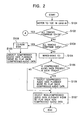
Fig. 2 is a flowchart showing a playback routine for
the audio device according to the present embodiment.
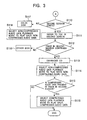
Fig. 3 is a flowchart showing a playback routine for
the audio device according to the present embodiment.
Fig. 4 is a diagram showing the file structure of a CD-DA.
Fig. 5 is a diagram showing the file structure of a CD-ROM.
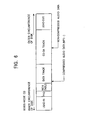
Fig. 6 is a diagram showing the file structure of a
Mixed-mode CD.
Fig. 7 is a diagram showing the file structure of an
Enhanced CD.
Best Mode for Carrying Out the Invention
The present invention is described hereinbelow with
respect to an embodiment.
Fig. 1 is a block diagram showing the system
configuration of an audio device 10 according to the present
embodiment.
The audio device 10 is formed of a mecha-deck unit 11,
a main microcomputer 12, a display unit 13, an operation key
14, a power supply 15, an amp 16, and a speaker 17.
The mecha-deck unit 11 is formed of a spindle motor 2
which drives a disk 1 to rotate, a pickup 3 for reading data
on the disk 1, an RF (Radio Frequency) amp 4, a motor driver
5, a CD DSP (Digital Signal Processor) & servo 6, a
microcomputer 7, a decoder 8 comprising a CD-ROM decoder
unit and a compressed audio data decoder unit, and a DAC
(D/A converter) 9.
The main microcomputer 12 supervises the overall
control of the audio device 10. The display unit 13 and the
operation key 14 are connected to the main microcomputer 12.
When the operation key 14 corresponding to the operation
desired by a user is operated, the main microcomputer 12
instructs the microcomputer 7 of the mecha-deck unit 11 to
perform that operation. The display unit 13 displays the
operation state of the audio device 10, and others.
The operation to play back audio data recorded on the
disk 1 on the thus constructed audio device 10 is now
described. The audio device 10 has two modes, as selections
for audio data playback modes, namely, a mode for playing
back CD-DA non-compressed audio data, and a mode for playing
back MP3 etc. compressed audio data, and may select one of
them. It is noted that what is simply called audio data
collectively refers to compressed audio data and non-compressed
audio data. Although MP3 is described as
compressed audio data by way of example in the present
embodiment, it goes without saying that other formats of
compressed audio data, such as ATRAC3 and WMA described
above, may also be used.
First, a playback mode for CD-DA non-compressed audio
data is described. This playback mode can function if the
disk 1 is one of a CD-DA disk, a Mixed-mode CD, and an
Enhanced CD.
The motor driver 5 causes the spindle motor 2 having
the disk 1 loaded thereon to rotate. The pickup 3 reads CD-DA
audio data from the disk 1 which is rotating. The CD-DA
audio data read from the pickup 3 is amplified by the RF amp
4, and is demodulated by the CD DSP & servo 6. The signal
demodulated by the CD DSP & servo 6 is applied to the DAC 9
through the decoder 8. That signal merely passes through
the decoder 8. The DAC 9 which has received the signal
demodulated by the CD DSP & servo 6 converts that signal
into an audio signal, and outputs the result to the amp 16.
The audio signal amplified by the amp 16 is played back
through the speaker 17. The above-described series of
processes is controlled by the microcomputer 7 according to
instructions from the main microcomputer 12.
Then, a playback mode for MP3 etc. compressed audio
data is described. This playback mode can function if the
disk 1 is one of a CD-ROM disk, a Mixed-mode CD, and an
Enhanced CD.
The motor driver 5 causes the spindle motor 2 having
the disk 1 loaded thereon to rotate. The pickup 3 reads
audio data in the CD-ROM format, that is, as computer data,
from the disk 1 which is rotating. The audio data read from
the pickup 3 is amplified by the RF amp 4, and is
demodulated by the CD DSP & servo 6. The operation up to
now is the same as that for playback of CD-DA non-compressed
audio data. The signal demodulated by the CD DSP & servo 6
is passed to the CD-ROM decoder unit in the decoder 8, where
the data is demodulated into CD-ROM format, from which MP3
etc. audio data, that is compressed audio data, is
extracted. The extracted compressed audio data is
demodulated into CD-DA audio data by the compressed audio
decoder unit in the decoder 8. The CD-DA audio data is
converted into an audio signal by the DAC 9, and the result
is output to the amp 16. The audio signal amplified by the
amp 16 is played back through the speaker 17. The above-described
series of processes is controlled by the
microcomputer 7 according to instructions from the main
microcomputer 12.
While a playback mode for CD-DA non-compressed audio
data and a playback mode for MP3 etc. compressed audio data
have been separately described, the audio device 10
according to the present embodiment can analyze the format
of the disk 1 to select a playback mode according to the
analysis result. This analysis is based on recognizing
whether the disk 1 is of the CD-DA, CD-ROM, Mixed-mode CD,
or Enhanced CD format, or any other format CD.
The file structure of the disk 1 in various formats is
now described. Fig. 4 shows the file structure of the disk
1 in the CD-DA format. In CD-DA, a lead-in, a CD-DA track,
and a lead-out are sequentially arranged from the inner
circumference of the disk 1. One unit starting with the
lead-in and ending with the lead-out is referred herein to
as a session. The published standards for CD-DA, the "Red
Book," specifies that a CD-DA has only one session. A CD-DA
track contains a single or a plurality of songs. The songs
are written as non-compressed audio data. The lead-in
contains a TOC (Table Of Contents). The TOC contains
information in the CD-DA track, that is, information about
the start time of each track (each song) and information
indicating that the data in the data storage area (the CD-DA
track in this case) is CD-DA audio data. The TOC also
contains information indicating a single or a plurality of
sessions. A TOC in disks of other formats contains the same
information.
Next, Fig. 5 shows the file structure of the disk 1 in
the CD-ROM format. The specification of the CD-ROM is
defined in the "Yellow Book" as a medium which is an
extension of the CD-DA developed for music and which stores
computer-manipulated data. In CD-ROM, a lead-in, a PVD
(Primary Volume Descriptor), a path table, a data track, and
a lead-out are sequentially arranged from the inner
circumference of the disk 1. Similarly to CD-DA, a session
represents one unit starting with the lead-in and ending
with the lead-out. The lead-in contains a TOC, and the TOC
is referred to, thereby recognizing if computer data is
stored in the data track. The data track contains a single
or a plurality of songs. The songs are written as
compressed audio data, for example, MP3. The compressed
audio data has a computer data format. By referring to the
PVD and the path table, the presence of compressed audio
data can be checked. For example, if an extension "mp3" is
added to the file name of MP3 compressed audio data, the
information about that extension can be confirmed by
referring to the PVD and the path table. Computer data
other than compressed audio data may also be written on the
data track.
Fig. 6 shows the file structure of a Mixed-mode CD. As
previously described, the Mixed-mode CD stores a data track
and an audio track in a single medium. That is, in the
Mixed-mode CD, a lead-in, a PVD, a path table, a data track,
a CD-DA track, and a lead-out are sequentially arranged from
the inner circumference of the disk 1. The data track
contains a single or a plurality of songs. These songs are
written as compressed audio data, for example, MP3. The CD-DA
track contains a single or a plurality of songs. The
songs are written as non-compressed audio data. Therefore,
the Mixed-mode CD serves as a music medium having a mixture
of compressed audio data and non-compressed audio data.
Similarly to the CD-ROM format, computer data other than
compressed audio data can be written on the data track.
Fig. 7 shows the file structure of an Enhanced CD. As
described above, the Enhanced CD has two sessions in a
single medium, and the specification thereof is defined in
the "Blue Book''. In the Enhanced CD, a first lead-in, a CD-DA
track, a first lead-out, a second lead-in, a PVD, a path
table, a data track, and a second lead-out are sequentially
arranged from the inner circumference of the disk 1.
Similarly to the Mixed-mode CD, compressed audio data can be
written on the data track, and non-compressed audio data can
be written on the CD-DA track. Therefore, the Enhanced CD
serves as a music medium having a mixture of compressed
audio data and non-compressed audio data. The difference
between the Enhanced CD and the Mixed-mode CD is that the
Mixed-mode CD has only one session, whilst the Enhanced CD
has two sessions, namely, the first session and the second
session. In addition, the Mixed-mode CD has the data track
and the CD-DA track, which exist in a single session, whilst
the Enhanced CD has only either the data track or the CD-DA
track, which exists in a single session.
Since a CD-DA, a CD-ROM, a Mixed-mode CD, and an
Enhanced CD are different in file structure as described
above, by referring to the file structure the format of the
predetermined disk 1 can be determined.
In the following description, a routine for analyzing
the disk format of the disk 1 which is loaded on the audio
device 10 and for playing back audio data based on the
analysis result is described with reference to the
flowcharts shown in Figs. 2 and 3. The routine in the
flowcharts shown in Figs. 2 and 3 is executed by a program
installed in the microcomputer 7 in the mecha-deck unit 11.
Figs. 2 and 3 show a series of processes in the audio
device 10, in which Fig. 2 shows a routine when the disk 1
is of the CD-ROM format or Mixed-mode CD, and Fig. 3 shows a
routine when the disk 1 is of the CD-DA format, the Enhanced
CD format, or other formats.
When a user uses the operation key 14 to request to
play back the disk 1, the TOC (Table Of Contents) in the
lead-in is referred to through the pickup 3 (S101). In the
storage disk of this type, it is defined that the lead-in on
the inner circumference of the disk be accessed first.
Therefore, in the case of an Enhanced CD including two
sessions, the TOC in the first session should be referred to.
By referring to the TOC, it is determined whether or
not all the tracks in the disk 1 are in the CD-DA format
(S102). If all the tracks comprise CD-DA data, the routine
proceeds to S110 shown in Fig. 3. The routine subsequent to
S110 is described later.
If it is determined in S102 that all the tracks are not
in the CD-DA format, then, in S103, it is determined whether
or not all the tracks comprise data. The data as referred
to herein means computer data, and does not include CD-DA
audio data. If all the tracks comprise data, it is
recognized that the disk 1 is a disk of the CD-ROM format
(S108). In other words, it is determined that it is a
medium having only compressed audio data stored thereon as
audio data. Then, the audio device 10 selects a compressed
audio data playback mode to play back the compressed audio
data in the data track (S109).
If it is determined in S103 that all the tracks do not
comprise data, it can be recognized that the disk 1 is a
medium having a mixture of the data track and the CD-DA
track in a single session since it is determined in S102
that all the tracks do not comprise CD-DA. That is, it is
determined that the disk 1 is a Mixed-mode CD (S104).
Even if the disk 1 is a Mixed-mode CD, compressed audio
data is not necessarily present in its data track. Then, it
is determined whether or not compressed audio data is
present in the data track (S105). This determination can be
performed by referring to the PVD and the path table to find
the presence or absence of an extension indicating
compressed audio data. As described above, if an MP3
extension is, for example, "mp3", by finding the extension
"mp3," it can be recognized if compressed audio data is
present in the data track. Consequently, it should be
determined that the disk 1 is a medium having a mixture of
compressed audio data and non-compressed audio data.
If compressed audio data is present, the audio device
10 selects a compressed audio data playback mode to play
back the compressed audio data in the data track (S106).
After playing back the compressed audio data in the data
track, the audio device 10 selects a non-compressed audio
data playback mode to play back the non-compressed audio
data in the CD-DA track (S107).
If, on the other hand, it is determined in S105 that
compressed audio data is not present in the data track, the
audio device 10 selects a non-compressed audio data playback
mode to play back the non-compressed audio data in the CD-DA
track (S107).
Next, the routine subsequent to S110 is described with
reference to Fig. 3. The routine subsequent to S110
corresponds to a routine when it is determined in S102 that
all the tracks have CD-DA audio data stored therein.
If it is determined in S102 that all the tracks have
CD-DA audio data stored therein, it is determined whether or
not a second session exists in the disk 1 (S110). The
presence or absence of the second session can be determined
based on the information in the TOC. If it is determined
that no second session exists, it should be determined that
the disk 1 is a disk of the CD-DA format (S117) since the
disk 1 has a single session and it is determined in S102
that CD-DA audio data is stored in all the tracks in the
session. If it is determined that it is a disk of the CD-DA
format, the audio device 10 selects a non-compressed audio
data playback mode to play back the non-compressed audio
data in the CD-DA track (S118).
If it is determined in S110 that a second session
exists, a second lead-in is read (S111). The TOC in the
second lead-in is referred to to determine whether or not
the track in the second session is a data track (S112). If
it is determined that the track in the second session is a
data track, it is then determined that the disk 1 is an
Enhanced CD (S113) since a CD-DA track is present in the
first session. If, on the other hand, the track in the
second session is not a data track, it is determined that it
is a disk in another format (S119).
If it is determined in S113 that it is an Enhanced CD,
the audio device 10 selects a non-compressed audio data
playback mode to play back the non-compressed audio data in
the CD-DA track (the first session) (S114). Then, after
playback of the non-compressed audio data in the CD-DA track
is completed, it is determined whether or not compressed
audio data is present in the data track in the second
session (S115). The technique to determine whether or not
compressed audio data is present is the same as in S105. If
compressed audio data is present, the audio device 10
selects a compressed audio data playback mode to play back
the compressed audio data in the data track (the second
session) (S116). After playback of the compressed audio
data in the data track is completed, or if compressed audio
data is not present, the routine ends.
As described above, the audio device 10 according to
the present embodiment can play back the disk 1 having a
mixture of CD-DA non-compressed audio data and compressed
audio data. While non-compressed audio data has a large
storage volume and superior sound quality, compressed audio
data has slightly poorer sound quality, but has a small
storage volume. A user should store songs sensitive to
sound quality as CD-DA non-compressed audio data, and store
songs insensitive to sound quality, such as background music,
as MP3 etc. compressed audio data. When such a disk 1 is
played back on the audio device 10, the user does not have
to be nervous about a mixture of non-compressed audio data
and compressed audio data.
The above-described embodiment is merely one form of
the present invention. For example, after a Mixed-mode CD
is determined in S104, the compressed audio data is played
back after which the CD-DA non-compressed audio data is
played back; however, the playback may be reordered so that
the non-compressed audio data is played back after which the
compressed audio data is played back. Also after an
Enhanced CD is determined in S113, the CD-DA non-compressed
audio data is played back after which the compressed audio
data is played back; however, after the determination in
S115, that is, after it is determined whether or not
compressed audio data is present in the track in the second
session, the series of playback processes may be performed.
In the foregoing embodiment, after a Mixed-mode CD is
determined, and playback for all compressed audio data is
completed, non-compressed audio data is played back; however,
compressed audio data and non-compressed audio data may be
alternately played back. Moreover, after a Mixed-mode CD is
determined, song names corresponding to the data stored in
the data track and the CD-DA track may be presented on the
display 13 to play a user selected song. The same as the
playback technique is true for an Enhanced CD.
A variety of other modifications may be made without
departing from the spirit and scope of the present invention,
in which the format of the disk 1 is analyzed and compressed
audio data and non-compressed audio data, which are mixed in
the single disk 1, are played back according to this
analysis result.
As described above, according to the present invention,
an audio data storage medium having a mixture of compressed
audio data and non-compressed audio data is provided, thus
allowing a user to enjoy music on a single disk having many
songs sensitive to sound quality and songs insensitive to
sound quality stored thereon. According to the present
invention, furthermore, without having to change a disk, a
user can enjoy music on an audio data storage medium having
a mixture of compressed audio data and non-compressed audio
data.