EP1345201A2 - Apparatus for detecting average picture level of a plasma display - Google Patents
Apparatus for detecting average picture level of a plasma display Download PDFInfo
- Publication number
- EP1345201A2 EP1345201A2 EP03004515A EP03004515A EP1345201A2 EP 1345201 A2 EP1345201 A2 EP 1345201A2 EP 03004515 A EP03004515 A EP 03004515A EP 03004515 A EP03004515 A EP 03004515A EP 1345201 A2 EP1345201 A2 EP 1345201A2
- Authority
- EP
- European Patent Office
- Prior art keywords
- value
- average
- gain
- apl
- calculating unit
- Prior art date
- Legal status (The legal status is an assumption and is not a legal conclusion. Google has not performed a legal analysis and makes no representation as to the accuracy of the status listed.)
- Withdrawn
Links
Images


Classifications
-
- H—ELECTRICITY
- H04—ELECTRIC COMMUNICATION TECHNIQUE
- H04N—PICTORIAL COMMUNICATION, e.g. TELEVISION
- H04N5/00—Details of television systems
- H04N5/66—Transforming electric information into light information
-
- H—ELECTRICITY
- H04—ELECTRIC COMMUNICATION TECHNIQUE
- H04N—PICTORIAL COMMUNICATION, e.g. TELEVISION
- H04N5/00—Details of television systems
- H04N5/14—Picture signal circuitry for video frequency region
- H04N5/20—Circuitry for controlling amplitude response
-
- G—PHYSICS
- G09—EDUCATION; CRYPTOGRAPHY; DISPLAY; ADVERTISING; SEALS
- G09G—ARRANGEMENTS OR CIRCUITS FOR CONTROL OF INDICATING DEVICES USING STATIC MEANS TO PRESENT VARIABLE INFORMATION
- G09G3/00—Control arrangements or circuits, of interest only in connection with visual indicators other than cathode-ray tubes
- G09G3/20—Control arrangements or circuits, of interest only in connection with visual indicators other than cathode-ray tubes for presentation of an assembly of a number of characters, e.g. a page, by composing the assembly by combination of individual elements arranged in a matrix no fixed position being assigned to or needed to be assigned to the individual characters or partial characters
- G09G3/2003—Display of colours
-
- G—PHYSICS
- G09—EDUCATION; CRYPTOGRAPHY; DISPLAY; ADVERTISING; SEALS
- G09G—ARRANGEMENTS OR CIRCUITS FOR CONTROL OF INDICATING DEVICES USING STATIC MEANS TO PRESENT VARIABLE INFORMATION
- G09G2320/00—Control of display operating conditions
- G09G2320/02—Improving the quality of display appearance
- G09G2320/0247—Flicker reduction other than flicker reduction circuits used for single beam cathode-ray tubes
-
- G—PHYSICS
- G09—EDUCATION; CRYPTOGRAPHY; DISPLAY; ADVERTISING; SEALS
- G09G—ARRANGEMENTS OR CIRCUITS FOR CONTROL OF INDICATING DEVICES USING STATIC MEANS TO PRESENT VARIABLE INFORMATION
- G09G2360/00—Aspects of the architecture of display systems
- G09G2360/16—Calculation or use of calculated indices related to luminance levels in display data
-
- G—PHYSICS
- G09—EDUCATION; CRYPTOGRAPHY; DISPLAY; ADVERTISING; SEALS
- G09G—ARRANGEMENTS OR CIRCUITS FOR CONTROL OF INDICATING DEVICES USING STATIC MEANS TO PRESENT VARIABLE INFORMATION
- G09G3/00—Control arrangements or circuits, of interest only in connection with visual indicators other than cathode-ray tubes
- G09G3/20—Control arrangements or circuits, of interest only in connection with visual indicators other than cathode-ray tubes for presentation of an assembly of a number of characters, e.g. a page, by composing the assembly by combination of individual elements arranged in a matrix no fixed position being assigned to or needed to be assigned to the individual characters or partial characters
- G09G3/22—Control arrangements or circuits, of interest only in connection with visual indicators other than cathode-ray tubes for presentation of an assembly of a number of characters, e.g. a page, by composing the assembly by combination of individual elements arranged in a matrix no fixed position being assigned to or needed to be assigned to the individual characters or partial characters using controlled light sources
- G09G3/28—Control arrangements or circuits, of interest only in connection with visual indicators other than cathode-ray tubes for presentation of an assembly of a number of characters, e.g. a page, by composing the assembly by combination of individual elements arranged in a matrix no fixed position being assigned to or needed to be assigned to the individual characters or partial characters using controlled light sources using luminous gas-discharge panels, e.g. plasma panels
Definitions
- the present invention relates to a plasma display panel (PDP) system (for example, plasma display), and particularly, to an apparatus for detecting average picture level applied to the PDP system.
- PDP plasma display panel
- an apparatus for detecting average picture level is mainly used for realizing a picture of high quality using Human's sight.
- Weber-Fechner principle shows that the human sight has higher brightness judgement, but has lower brightness judgement in dark area.
- the above APL is a method for realizing gradation display visually at every frames as considering relation of data, which will be displayed on a screen, with neighboring pixels regardless of that the data is dark image data or bright image data, and aims to maintain power consumption constantly at every frames when the image is displayed on the screen.
- the APL is defined as a numerical value obtained by averaging gradation levels of cells. For example, if black color is displayed on a full screen, then the APL is 0%, and if white highest gradation level (255) is displayed on the full screen, the APL is 100%.
- the APL of typical images is about 30 ⁇ 40% in average.
- Figure 1 is a block diagram showing a structure of an APL detecting apparatus according to the conventional art.
- the APL detecting apparatus comprises: a red color data summing unit 11 for summing red color data corresponding to red colors among image data of one frame; a green color data summing unit 12 for summing green color data corresponding to green color among the image data; a blue color data summing unit 13 for summing blue color data corresponding to blue color among the image data; a multiplying unit 14 for multiplying summed red color data value by weight corresponding to size of red color pixel; a multiplying unit 15 for multiplying summed green color data value by weight corresponding to size of green color pixel; a multiplying unit 16 for multiplying summed blue color data value by weight corresponding to size of blue color pixel; a summing unit 17 for summing up the red, green and blue data values multiplied by the weight, averaging the summed red, green and blue color data values, and outputting the averaged data values; and an APL outputting unit 18 for outputting an APL value by multiplying
- the image data of one frame corresponding to an input video signal comprises data corresponding to red, green and blue colors, and pixels of the PDP are controlled by the three colors data to display the image on the screen.
- the three-color data have maximum 255 gradation value.
- the summing units 11 ⁇ 13 sum the respective data corresponding to the red, green and blue color pixels among the image data of one frame, and output the summed red, green and blue color data to the multiplying units 14 ⁇ 16.
- the multiplying units 14 ⁇ 16 multiply the sums of red, green and blue color data of video format (for example, 640 x 480 resolution) by weights corresponding to the sizes of red, green and blue color pixels in order to reflect affects according to the pixel sizes, and output the multiplied values to the summing unit 17.
- the size of respective pixel may be changed in order to compensate the brightness and power consumption of the pixel.
- the summing unit 17 sums the red, green and blue color data values multiplied by the weights, averages the summed data values, and outputs the averaged value to the APL outputting unit 18 as an average value.
- the APL outputting unit 18 multiplies the average value outputted from the summing unit 17 by gain value, which is set in advance for compensating error generated during calculating binary average value, to make the APL value maximum (100%) in case that the input data is the data representing only white color.
- the gain is a value which is set in advance in order to make the average value 255 gradation value.
- the average value outputted from the summing unit 17 is changed by characteristics of red, green and blue color pixels, sizes of the pixels and illuminating property of the pixel according to that the input video format (for example, resolution) is changed variously, and thereby the gain value should be controlled according to the change.
- the gain value which is set in advance. That is, according to the PDP system of the conventional art, a panel having a structure suitable for the video format is fabricated, and sizes and color temperatures of respective red, green and blue color pixels are different from each other. Therefore, in calculating the APL value, the weights multiplied with the red, green and blue color data are different, and accordingly, the average value is also changed. Thus, a lot of gain values suitable for the average values are needed in one video format.
- the screen can be flickered. For example, when error value of 1 bit is generated during the input video signal is converted into pixel-by-pixel digital image data, and flickering of PDP screen is shown remarkably.
- an object of the present invention is to provide an apparatus for detecting average picture level (APL) which is able to prevent non-linear property of average picture level used for controlling image and power consumption in a plasma display panel (PDP) system, to calculate linear APL value, and to calculate gain value automatically.
- APL average picture level
- Another object of the present invention is to provide an apparatus for detecting APL which is able to prevent flickering phenomenon of PDP screen by calculating linear APL value and gain value automatically.
- an apparatus for detecting APL comprising: a pre-processing unit for summing image data of one frame, multiplying the summed value by weight corresponding to a size of pixel, and outputting the data multiplied by the weight; an average calculating unit for summing upper bits of the data outputted from the pre-processing unit and outputting the summed value as an average value; a gain calculating unit for calculating gain for obtaining maximum APL value based on the average value outputted from the average calculating unit; and an APL outputting unit for multiplying the gain obtained from the gain calculating unit by the average value outputted from the average calculating unit, and outputting the multiplied value as a final APL value.
- FIG. 2 is a block diagram showing a structure of a linear average picture level (APL) detecting apparatus according to the present invention.
- APL linear average picture level
- the linear APL detecting apparatus comprises: a pre-processing unit 100 for summing image data of one frame, multiplying the summed value by weight corresponding to size of red, green and blue pixels, and outputting the data multiplied by the weight; an average calculating unit 200 for summing upper bits of the data outputted from the pre-processing unit and outputting the summed value as an average value; a gain calculating unit 300 for calculating gain to obtain maximum APL value for linear and white input based on the average value outputted from the average calculating unit 200; and an APL outputting unit 400 for multiplying the gain obtained from the gain calculating unit 300 by the average value outputted from the average calculating unit 200, and outputting the multiplied value as a final APL value.
- the image data of one frame corresponding to the input video signal comprise data corresponding to red, green and blue colors, and the data of three colors control the pixels of PDP to display an image, and the data of three colors have maximum 255 gradation value.
- Figure 3 is a block diagram showing the structures of the pre-processing unit and the average calculating unit shown in Figure 2 in detail.
- the pre-processing unit 100 comprises: a red data summing unit 110 for summing red color data (data driving red color pixels) corresponding to the red color among the image data of the one frame; a green data summing unit 120 for summing green color data (data driving green color pixels) corresponding to the green color among the image data of the one frame; a blue data summing unit 130 for summing blue color data (data driving blue color pixels) corresponding to the blue color among the image data of the one frame; a multiplying unit 140 for multiplying the summed red data value by weight corresponding to the size of red color pixel; a multiplying unit 150 for multiplying the summed green data value by weight corresponding to the size of green color pixel; and a multiplying unit 160 for multiplying the summed blue data value by weight corresponding to the size of blue color pixel.
- the pre-processing unit 100 comprises: summing units 110, 120 and 130 for summing red, green and blue data of the respective pixels making an image of one frame; and multiplying units 140, 150 and 160 for multiplying the values summed in the summing units 110, 120 and 130 by the weights corresponding to the sizes of red, green and blue color pixels.
- the respective pixel making the image of one frame is made by red, green and blue gradation.
- the average calculating unit 200 comprises: an upper bit calculating unit 210 for outputting effective upper bit (8+1+L) among bits corresponding to the red data values multiplied by the weight in the multiplying unit 140; an upper bit calculating unit 220 for outputting effective upper bit (8+1+L) among bits corresponding to the green data values multiplied by the weight in the multiplying unit 150; an upper bit calculating unit 230 for outputting effective upper bit (8+1+L) among bits corresponding to the blue data values multiplied by the weight in the multiplying unit 160;and a summing unit 240 for summing the effective upper bits (8+1+L) of the red, green and blue color data values and outputting the summed value (11+L) into the gain calculating unit 300 as an average value.
- the average calculating unit 200 comprises: upper bit calculating units 210, 220 and 230 for outputting effective upper bits (8+1+L) among the bits corresponding to the red, green and blue color data values multiplied by the weights in the multiplying units 140, 150 and 160; and a summing unit 240 for summing up the effective upper bits (8+1+L) of the red, green and blue data values and outputting the summed value (11+L) as an average value.
- the summing units 110, 120 and 130 of the pre-processing unit 100 sum the red, green and blue data corresponding to the image data of one frame, and output the summed data to the multiplying units 140, 150 and 160.
- the multiplying units 140, 150 and 160 multiplies the values summed in the summing units 110, 120 and 130 by the weights corresponding to the sizes of red, green and blue colors, and output the multiplied values to the average calculating unit 200.
- the weights of the three colors can be varied from the characteristic of the PDP. That is, the weights of the three colors are changed according to the sizes of red, green and blue color pixels.
- the upper bit calculating units 210, 220 and 230 of the average calculating unit 200 output effective upper bits (8+1+L) among the bits corresponding to the red, green and blue color data values multiplied by the weights in the multiplying units 140, 150 and 160. That is, the upper bit calculating units 210, 220 and 230 of the average calculating unit 200 output the values same as values obtained by dividing the red, green and blue data values multiplied by the weights by input image format (N x N), that is, the above data (8+1+L bit).
- the input image format (N x N) is inputted from the outer side.
- the weights of the red, green and blue color pixels (0.5 ⁇ 1.5) as binary numbers
- the weight of blue color is 1.25 and the user inputs 1.25 in binary numbers
- "L" is 2 bits since the L is decimal number.
- the weights of the red and green color pixels can be represented in same way as that of the blue color pixel, and if the weights of the red and green color pixels have more decimal digit in binary number than that of the weight of blue color pixel, the decimal digit is decided as the L value.
- the effective upper bit (8+1+L) is decided according to the format of input image, and can be changed according to the weights of the three color pixels.
- the format of input image is N ⁇ N resolution (for example, 640 x 480) and 255 gradation (8 bits)
- the binary digits as much as log2 (N ⁇ M ⁇ 255) are needed, and then, 27 bits is outputted as the final value when calculating the 640 x 480 x 255 gradation.
- the weight of the pixel is the value between 0.5 ⁇ 1.5 generally, the binary number of above value can be represented integer 1 bit and decimal L bit.
- the weight is increased as the size of pixel is increased.
- the upper bit calculating units 210, 220 and 230 of the average calculating unit 200 output only the effective upper bits (8+1+L) among the log2 (N ⁇ M ⁇ 255) bits without an additional calculating process for obtaining the average value (11+L bit), which is the input value of the APL outputting unit 400 for calculating the final APL value. That is, the upper bit calculating units 210, 220 and 230 output the effective upper bit (8+1+L) among the bits corresponding to the red, green and blue color data values multiplied by the weights in the multiplying units 140, 150 and 160 to the summing unit 240.
- the summing unit 240 of the average calculating unit 200 sums the effective upper bits (8+1+L) outputted respectively from the upper bit calculating units 210, 220 and 230, and outputs the summed value (11+L) to the gain calculating unit 300 as an average value.
- the data for representing the sum of red, green and blue color data for the (8+1+L) bit is (11+L) bit as increasing 2 bits.
- the average value can not be estimated according to the changing weights (format is one of changeable element with the weight since the input video signal format can affect to the average value) according to the conventional art, and also, it is difficult to calculate the gain which makes the APL value, which will be outputted, maximum APL value when the white color image is inputted.
- the gain calculating unit 300 according to the present invention is able to calculate the maximum APL value precisely by back-tracking the gain according to the maximum APL value which is decided in advance.
- the gain calculating unit 300 calculates the gain for making 255 value corresponding to 100% APL value outputted from the APL outputting unit 400 when the input image is white color, since the average value outputted from the average calculating unit 200 is not 255 value when the input image is white color, and the APL outputting unit 400 outputs 255 value corresponding to 100% APL based on the gain and the average value outputted from the average calculating unit 200 when the input image is white color.
- the gain value which is changed automatically according to the changes of average value is obtained in the gain calculating unit 300, and the gain value is outputted to the APL outputting unit 400.
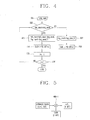
- Figure 4 is a flow chart illustrating automatic gain detecting method performed in the gain calculating unit in Figure 2.
- the gain calculating unit 300 is applied by the automatic gain calculating method. That is, the automatic gain calculating method comprises: a step of comparing average value (Avg_med) (11+L) outputted from the average calculating unit 200 to the maximum APL value (Apl_max) which is set in advance (S31 and S32); a step of updating the pre-set maximum APL value by subtracting the average value (Avg_med) (11+L) from the maximum APL value (Apl_max) when the maximum APL value is larger than the average value (Avg_med) (11+L), and updating the average value by dividing the average value (Avg_med)(11+L) by 2 (S33); a step of setting J-th bit of the gain (highest bit) as 1; a step of updating the average value by dividing the average value (Avg_med) (11+L) by 2 when the maximum APL value (Apl_max) is smaller than the average value (Avg_
- the average value is Avg_med and 11+L bits, even though the average value (Avg_med) is smaller than the maximum APL value (Apl_max), the binary digit (11+L) is larger than N value.
- the number of bits of the gain which will be calculated is J bit.
- J bit uses 8 bits.
- J representing the parameter and digit is decreased one by one from 8 to 1 during the gain value calculating process, and when the J becomes 1, the calculating process is ended.
- the Apl_max value is used as 255 gradation level, and therefore, N bit becomes 8 bits.
- the gain calculating unit 300 updates the pre-set maximum APL value by subtracting the average value from the pre-set maximum APL value when the pre-set maximum APL value is larger than the average value by comparing the average value outputted from the average calculating unit 200 to the pre-set maximum APL value. Also, the gain calculating unit 300 updates the average value by dividing the average value by 2 when the pre-set maximum APL value is larger than the average value by comparing the average value outputted from the average calculating unit 200 to the pre-set maximum APL value.
- the gain calculating unit 300 sets the J-th bit of the gain as 1, decreases parameter (J) representing entire bit number of the gain as much as 1, and suspends the calculating process when the J is 1 by deciding whether or not the J is 1. That is, when the bits from the highest (J) to the lowest are "1", the gain calculating unit 300 suspends the gain calculating process. Also, the gain calculating unit 300 divides the average value by 2 and sets the J-th bit of the gain to be 0 when the pre-set maximum APL value is smaller than the average value, and after that, performs steps S32 ⁇ S36 repeatedly.
- the APL outputting unit 400 will be described in detail with reference to Figure 5.
- FIG. 5 is a block diagram showing the structure of the APL outputting unit shown in Figure 2 in detail.
- the APL outputting unit 400 comprises a multiplying unit 400-1 for multiplying the gain value calculated from the gain calculating unit 300 by the average value calculated in the average calculating unit 200 and outputting the multiplied value as a final APL value. That is, when the gain value calculated in the gain calculating unit 300 is multiplied by the average value calculated in the average calculating unit 200, the APL value having linear delivery property between input value and output value is obtained.
- the input picture is divided by resolutions to obtain average value, and the APL value and the gain value are found and processed automatically.
- the input gradation which is wanted to be realized can be represented by the linear delivery characteristic, and the brightness of entire screen can be represented without noise.
- the APL detecting apparatus according to the present invention is applied to the PDP system, the flickering phenomenon of the screen can be prevented, and therefore, the power consumption can be reduced.
Landscapes
- Engineering & Computer Science (AREA)
- Multimedia (AREA)
- Signal Processing (AREA)
- Physics & Mathematics (AREA)
- Computer Hardware Design (AREA)
- General Physics & Mathematics (AREA)
- Theoretical Computer Science (AREA)
- Control Of Indicators Other Than Cathode Ray Tubes (AREA)
- Control Of Gas Discharge Display Tubes (AREA)
Abstract
Description
Claims (4)
- An apparatus for detecting average picture level (APL) comprising:a pre-processing unit for summing image data of one frame, multiplying the summed value by weight corresponding to a size of pixel, and outputting the data multiplied by the weight;an average calculating unit for summing upper bits of the data outputted from the pre-processing unit and outputting the summed value as an average value;a gain calculating unit for calculating gain for obtaining maximum APL value based on the average value outputted from the average calculating unit; andan APL outputting unit for multiplying the gain obtained from the gain calculating unit by the average value outputted from the average calculating unit, and outputting the multiplied value as a final APL value.
- The apparatus of claim 1, wherein the pre-processing unit comprises:a summing unit for summing red, green and blue color data of respective pixels making an image of one frame; anda multiplying unit for multiplying the value summed in the summing unit by weights corresponding to sizes of red, green and blue color pixels.
- The apparatus of claim 1 or 2, wherein the average calculating unit sums effective upper bits among the bits corresponding to the red, green and blue data values, and outputs the summed value to the gain calculating unit as an average value.
- The apparatus of at least one of the preceding claims, wherein the gain calculating unit compares average value outputted from the average calculating unit to maximum APL value which is set in advance (a); updates the pre-set maximum APL value by subtracting the average value from the maximum APL value when the maximum APL value is larger than the average value, updates the average value by dividing the average value by 2, and sets J-th bit of the gain (highest bit) as 1 (b); updates the average value by dividing the average value by 2 when the maximum APL value is smaller than the average value and sets the J-th bit of the gain (highest bit) as 0 (c); decreases parameter, which represents the entire number of bits in the gain, as much as 1 after performing (b) or (c), returns to (a) step if the parameter is not same as 1, and suspends the gain detecting process if the parameter is same as 1 (d).
Applications Claiming Priority (2)
| Application Number | Priority Date | Filing Date | Title |
|---|---|---|---|
| KR2002011410 | 2002-03-04 | ||
| KR1020020011410A KR20030072534A (en) | 2002-03-04 | 2002-03-04 | Linear average picture level detecting apparatus and automatic normalizing gain embodying method |
Publications (2)
| Publication Number | Publication Date |
|---|---|
| EP1345201A2 true EP1345201A2 (en) | 2003-09-17 |
| EP1345201A3 EP1345201A3 (en) | 2006-01-25 |
Family
ID=27764632
Family Applications (1)
| Application Number | Title | Priority Date | Filing Date |
|---|---|---|---|
| EP03004515A Withdrawn EP1345201A3 (en) | 2002-03-04 | 2003-02-28 | Apparatus for detecting average picture level of a plasma display |
Country Status (3)
| Country | Link |
|---|---|
| US (1) | US7095888B2 (en) |
| EP (1) | EP1345201A3 (en) |
| KR (1) | KR20030072534A (en) |
Cited By (4)
| Publication number | Priority date | Publication date | Assignee | Title |
|---|---|---|---|---|
| WO2004010409A1 (en) * | 2002-07-18 | 2004-01-29 | Koninklijke Philips Electronics N.V. | Display apparatus |
| EP1887797A3 (en) * | 2006-08-09 | 2008-12-03 | Samsung Electronics Co, Ltd | Image display apparatus and high quality image providing method thereof |
| EP1870921A3 (en) * | 2006-06-21 | 2010-01-20 | Samsung SDI Co., Ltd. | Plasma display panel |
| CN108447449A (en) * | 2018-01-12 | 2018-08-24 | 友达光电股份有限公司 | Signal processing method and display device |
Families Citing this family (17)
| Publication number | Priority date | Publication date | Assignee | Title |
|---|---|---|---|---|
| KR20040083188A (en) * | 2003-03-21 | 2004-10-01 | 엘지전자 주식회사 | Method and apparatus for calculating an average picture level being based on asymmetric cell |
| KR100570609B1 (en) * | 2003-10-16 | 2006-04-12 | 삼성에스디아이 주식회사 | Plasma display panel, color coordinate control device and control method |
| KR100573124B1 (en) * | 2003-11-22 | 2006-04-24 | 삼성에스디아이 주식회사 | Plasma display panel driving method and apparatus |
| KR20050052193A (en) * | 2003-11-29 | 2005-06-02 | 삼성에스디아이 주식회사 | Panel driving device |
| KR100577764B1 (en) * | 2004-09-08 | 2006-05-10 | 엘지전자 주식회사 | Method and device for improving error diffusion pattern using multi-level noise |
| US20070085785A1 (en) * | 2005-10-13 | 2007-04-19 | Tohoku Pioneer Corporation | Drive apparatus and drive method for light emitting display panel |
| EP1796064A1 (en) * | 2005-12-12 | 2007-06-13 | Deutsche Thomson-Brandt Gmbh | Apparatus for driving a plasma display panel with APL pre-measurement and corresponding method |
| TWI308255B (en) * | 2006-04-25 | 2009-04-01 | Asia Optical Co Inc | Image extraction apparatus and method of auto exposure control for same |
| TWI349827B (en) * | 2007-07-17 | 2011-10-01 | Asia Optical Co Inc | Exposure adjustment methods and systems |
| JPWO2009054223A1 (en) * | 2007-10-25 | 2011-03-03 | シャープ株式会社 | Image display device |
| TWI387319B (en) * | 2009-06-02 | 2013-02-21 | Novatek Microelectronics Corp | Circuit and method for image processing |
| KR102090705B1 (en) * | 2012-09-07 | 2020-03-19 | 삼성디스플레이 주식회사 | Display Device including RGBW Sub-Pixel and Method of Driving thereof |
| KR102048925B1 (en) * | 2012-12-28 | 2019-11-27 | 삼성디스플레이 주식회사 | Display Device including RGBW Sub-Pixel and Method of Driving thereof |
| KR102083297B1 (en) * | 2013-09-02 | 2020-03-03 | 엘지전자 주식회사 | Display device and luminance control method thereof |
| KR102665516B1 (en) * | 2019-12-04 | 2024-05-14 | 엘지디스플레이 주식회사 | Display device |
| WO2021194266A1 (en) * | 2020-03-26 | 2021-09-30 | Samsung Electronics Co., Ltd. | Electronic apparatus and control method thereof |
| US12093514B1 (en) * | 2021-12-01 | 2024-09-17 | Jpmorgan Chase Bank, N.A. | Systems and methods of determining contrast for accessibility |
Family Cites Families (3)
| Publication number | Priority date | Publication date | Assignee | Title |
|---|---|---|---|---|
| DE69942890D1 (en) * | 1998-09-18 | 2010-12-09 | Panasonic Corp | COLOR DISPLAY DEVICE |
| TWI285872B (en) * | 1999-05-10 | 2007-08-21 | Matsushita Electric Industrial Co Ltd | Image display device and method for displaying image |
| JP2004021181A (en) * | 2002-06-20 | 2004-01-22 | Nec Corp | Driving method for plasma display panel |
-
2002
- 2002-03-04 KR KR1020020011410A patent/KR20030072534A/en not_active Withdrawn
-
2003
- 2003-02-28 EP EP03004515A patent/EP1345201A3/en not_active Withdrawn
- 2003-03-04 US US10/379,128 patent/US7095888B2/en not_active Expired - Fee Related
Cited By (6)
| Publication number | Priority date | Publication date | Assignee | Title |
|---|---|---|---|---|
| WO2004010409A1 (en) * | 2002-07-18 | 2004-01-29 | Koninklijke Philips Electronics N.V. | Display apparatus |
| EP1870921A3 (en) * | 2006-06-21 | 2010-01-20 | Samsung SDI Co., Ltd. | Plasma display panel |
| EP1887797A3 (en) * | 2006-08-09 | 2008-12-03 | Samsung Electronics Co, Ltd | Image display apparatus and high quality image providing method thereof |
| US8044978B2 (en) | 2006-08-09 | 2011-10-25 | Samsung Electronics Co., Ltd. | Image display apparatus and high quality image providing method thereof |
| CN108447449A (en) * | 2018-01-12 | 2018-08-24 | 友达光电股份有限公司 | Signal processing method and display device |
| CN108447449B (en) * | 2018-01-12 | 2020-01-24 | 友达光电股份有限公司 | Signal processing method and display device |
Also Published As
| Publication number | Publication date |
|---|---|
| KR20030072534A (en) | 2003-09-15 |
| US7095888B2 (en) | 2006-08-22 |
| US20030164810A1 (en) | 2003-09-04 |
| EP1345201A3 (en) | 2006-01-25 |
Similar Documents
| Publication | Publication Date | Title |
|---|---|---|
| US7095888B2 (en) | Apparatus for detecting average picture level | |
| US8625894B2 (en) | Image display device capable of supporting brightness enhancement and power control and method thereof | |
| US7825942B2 (en) | Image processing method and apparatus adjusting image data in accordance with image data sub-pixels | |
| JP4447035B2 (en) | Image processing device | |
| JP4475268B2 (en) | Image display device, image display method, image display program, recording medium storing image display program, and electronic apparatus | |
| US6965389B1 (en) | Image displaying with multi-gradation processing | |
| US7432897B2 (en) | Liquid crystal display device for displaying video data | |
| US8593391B2 (en) | Liquid crystal display device control circuit and liquid crystal display system, which adjust brightness of display image by using height distribution of gradations of input image | |
| US20050163372A1 (en) | Video signal processor and method of processing video signal | |
| TW201413693A (en) | Display, image processing unit, and display method | |
| JP2001343957A (en) | Liquid crystal display | |
| WO2008036551A2 (en) | Display uniformity correction | |
| US20090002298A1 (en) | Display Apparatus | |
| WO2008036689A2 (en) | Frame rate control method and system | |
| WO2008036610A2 (en) | Gamma uniformity correction method and system | |
| WO2007069478A1 (en) | Image processing device and image display device | |
| US7034896B2 (en) | Gradation correction apparatus | |
| JPH08251515A (en) | Preventing seizure of display | |
| US7515119B2 (en) | Method and apparatus for calculating an average picture level and plasma display using the same | |
| JP4624934B2 (en) | Brightness adjustment apparatus and method | |
| JP2001109452A (en) | Image display device | |
| US7042524B2 (en) | Video data correction device and video data correction method | |
| JPH06350943A (en) | Picture processing circuit | |
| JP2008258925A (en) | Gamma correction circuit and gamma correction method | |
| JP2004325565A (en) | EL color display correction device |
Legal Events
| Date | Code | Title | Description |
|---|---|---|---|
| PUAI | Public reference made under article 153(3) epc to a published international application that has entered the european phase |
Free format text: ORIGINAL CODE: 0009012 |
|
| AK | Designated contracting states |
Kind code of ref document: A2 Designated state(s): AT BE BG CH CY CZ DE DK EE ES FI FR GB GR HU IE IT LI LU MC NL PT SE SI SK TR |
|
| AX | Request for extension of the european patent |
Extension state: AL LT LV MK RO |
|
| PUAL | Search report despatched |
Free format text: ORIGINAL CODE: 0009013 |
|
| AK | Designated contracting states |
Kind code of ref document: A3 Designated state(s): AT BE BG CH CY CZ DE DK EE ES FI FR GB GR HU IE IT LI LU MC NL PT SE SI SK TR |
|
| AX | Request for extension of the european patent |
Extension state: AL LT LV MK RO |
|
| 17P | Request for examination filed |
Effective date: 20060610 |
|
| AKX | Designation fees paid |
Designated state(s): DE FR GB NL |
|
| 17Q | First examination report despatched |
Effective date: 20080618 |
|
| STAA | Information on the status of an ep patent application or granted ep patent |
Free format text: STATUS: THE APPLICATION IS DEEMED TO BE WITHDRAWN |
|
| 18D | Application deemed to be withdrawn |
Effective date: 20081030 |