EP1344526A1 - Preventives/ermedies for inflammatory airway diseases - Google Patents
Preventives/ermedies for inflammatory airway diseases Download PDFInfo
- Publication number
- EP1344526A1 EP1344526A1 EP01271858A EP01271858A EP1344526A1 EP 1344526 A1 EP1344526 A1 EP 1344526A1 EP 01271858 A EP01271858 A EP 01271858A EP 01271858 A EP01271858 A EP 01271858A EP 1344526 A1 EP1344526 A1 EP 1344526A1
- Authority
- EP
- European Patent Office
- Prior art keywords
- respiratory tract
- preventive
- therapeutic agent
- tract diseases
- inflammatory
- Prior art date
- Legal status (The legal status is an assumption and is not a legal conclusion. Google has not performed a legal analysis and makes no representation as to the accuracy of the status listed.)
- Granted
Links
Images
Classifications
-
- C—CHEMISTRY; METALLURGY
- C07—ORGANIC CHEMISTRY
- C07J—STEROIDS
- C07J5/00—Normal steroids containing carbon, hydrogen, halogen or oxygen, substituted in position 17 beta by a chain of two carbon atoms, e.g. pregnane and substituted in position 21 by only one singly bound oxygen atom, i.e. only one oxygen bound to position 21 by a single bond
-
- A—HUMAN NECESSITIES
- A61—MEDICAL OR VETERINARY SCIENCE; HYGIENE
- A61K—PREPARATIONS FOR MEDICAL, DENTAL OR TOILETRY PURPOSES
- A61K31/00—Medicinal preparations containing organic active ingredients
- A61K31/56—Compounds containing cyclopenta[a]hydrophenanthrene ring systems; Derivatives thereof, e.g. steroids
- A61K31/57—Compounds containing cyclopenta[a]hydrophenanthrene ring systems; Derivatives thereof, e.g. steroids substituted in position 17 beta by a chain of two carbon atoms, e.g. pregnane or progesterone
-
- A—HUMAN NECESSITIES
- A61—MEDICAL OR VETERINARY SCIENCE; HYGIENE
- A61K—PREPARATIONS FOR MEDICAL, DENTAL OR TOILETRY PURPOSES
- A61K31/00—Medicinal preparations containing organic active ingredients
- A61K31/56—Compounds containing cyclopenta[a]hydrophenanthrene ring systems; Derivatives thereof, e.g. steroids
- A61K31/57—Compounds containing cyclopenta[a]hydrophenanthrene ring systems; Derivatives thereof, e.g. steroids substituted in position 17 beta by a chain of two carbon atoms, e.g. pregnane or progesterone
- A61K31/573—Compounds containing cyclopenta[a]hydrophenanthrene ring systems; Derivatives thereof, e.g. steroids substituted in position 17 beta by a chain of two carbon atoms, e.g. pregnane or progesterone substituted in position 21, e.g. cortisone, dexamethasone, prednisone or aldosterone
-
- A—HUMAN NECESSITIES
- A61—MEDICAL OR VETERINARY SCIENCE; HYGIENE
- A61P—SPECIFIC THERAPEUTIC ACTIVITY OF CHEMICAL COMPOUNDS OR MEDICINAL PREPARATIONS
- A61P11/00—Drugs for disorders of the respiratory system
-
- A—HUMAN NECESSITIES
- A61—MEDICAL OR VETERINARY SCIENCE; HYGIENE
- A61P—SPECIFIC THERAPEUTIC ACTIVITY OF CHEMICAL COMPOUNDS OR MEDICINAL PREPARATIONS
- A61P11/00—Drugs for disorders of the respiratory system
- A61P11/02—Nasal agents, e.g. decongestants
-
- A—HUMAN NECESSITIES
- A61—MEDICAL OR VETERINARY SCIENCE; HYGIENE
- A61P—SPECIFIC THERAPEUTIC ACTIVITY OF CHEMICAL COMPOUNDS OR MEDICINAL PREPARATIONS
- A61P11/00—Drugs for disorders of the respiratory system
- A61P11/04—Drugs for disorders of the respiratory system for throat disorders
-
- A—HUMAN NECESSITIES
- A61—MEDICAL OR VETERINARY SCIENCE; HYGIENE
- A61P—SPECIFIC THERAPEUTIC ACTIVITY OF CHEMICAL COMPOUNDS OR MEDICINAL PREPARATIONS
- A61P11/00—Drugs for disorders of the respiratory system
- A61P11/06—Antiasthmatics
-
- A—HUMAN NECESSITIES
- A61—MEDICAL OR VETERINARY SCIENCE; HYGIENE
- A61P—SPECIFIC THERAPEUTIC ACTIVITY OF CHEMICAL COMPOUNDS OR MEDICINAL PREPARATIONS
- A61P25/00—Drugs for disorders of the nervous system
-
- A—HUMAN NECESSITIES
- A61—MEDICAL OR VETERINARY SCIENCE; HYGIENE
- A61P—SPECIFIC THERAPEUTIC ACTIVITY OF CHEMICAL COMPOUNDS OR MEDICINAL PREPARATIONS
- A61P25/00—Drugs for disorders of the nervous system
- A61P25/06—Antimigraine agents
-
- A—HUMAN NECESSITIES
- A61—MEDICAL OR VETERINARY SCIENCE; HYGIENE
- A61P—SPECIFIC THERAPEUTIC ACTIVITY OF CHEMICAL COMPOUNDS OR MEDICINAL PREPARATIONS
- A61P27/00—Drugs for disorders of the senses
- A61P27/16—Otologicals
-
- A—HUMAN NECESSITIES
- A61—MEDICAL OR VETERINARY SCIENCE; HYGIENE
- A61P—SPECIFIC THERAPEUTIC ACTIVITY OF CHEMICAL COMPOUNDS OR MEDICINAL PREPARATIONS
- A61P29/00—Non-central analgesic, antipyretic or antiinflammatory agents, e.g. antirheumatic agents; Non-steroidal antiinflammatory drugs [NSAID]
-
- A—HUMAN NECESSITIES
- A61—MEDICAL OR VETERINARY SCIENCE; HYGIENE
- A61P—SPECIFIC THERAPEUTIC ACTIVITY OF CHEMICAL COMPOUNDS OR MEDICINAL PREPARATIONS
- A61P37/00—Drugs for immunological or allergic disorders
- A61P37/08—Antiallergic agents
-
- C—CHEMISTRY; METALLURGY
- C07—ORGANIC CHEMISTRY
- C07J—STEROIDS
- C07J7/00—Normal steroids containing carbon, hydrogen, halogen or oxygen substituted in position 17 beta by a chain of two carbon atoms
Definitions
- the present invention relates to a preventive and/or therapeutic agent for inflammatory respiratory tract diseases such as bronchial asthma and nasal hypersensitivity.
- respiratory tract diseases including bronchial asthma and nasal hypersensitivity conditions (e.g., allergic rhinitis and vasomotor rhinitis) should be considered to be inflammatory diseases characterized by chronic inflammation of the respiratory tract mucosa in which a variety of phagocytes such as mast cells, eosinophils, and lymphocytes are involved, and also by sthenia in respiratory tract hypersensitivity induced by the inflammation.
- bronchial asthma and nasal hypersensitivity conditions e.g., allergic rhinitis and vasomotor rhinitis
- phagocytes such as mast cells, eosinophils, and lymphocytes are involved
- therapeutic agents for the respiratory tract diseases have gradually shifted from those containing bronchodilators, antiallergic agents, or anti-histamines to those containing anti-inflammatory agents, which reduce basophils and eosinophils present in the mucosal epithelium of the respiratory tract and lymphocytes and which inhibit release of cytokines from lymphocytes; release of mediators from basophils; secretion from glandular cells; vascular permeability; etc.
- anti-inflammatory agents steroid compounds exerting great therapeutic effects and less side effects have become of interest in terms of topical therapy, and heretofore, several steroid drugs that can be administered to the respiratory tract through inhalation have been developed.
- An object of the present invention is to provide a preventive and/or therapeutic agent for inflammatory respiratory tract diseases which exerts excellent anti-allergy and anti-inflammatory effects; exhibits high site selectivity to the respiratory tract; and exerts low systemic side effects.
- steroid derivatives represented by the following formula (1) exert excellent anti-allergy and anti-inflammatory effects and, when administered directly to the respiratory tract, exhibit high site selectivity and can prevent and/or treat inflammatory respiratory tract diseases without exhibiting substantial systemic side effects.
- the present invention has been accomplished on the basis of this finding.
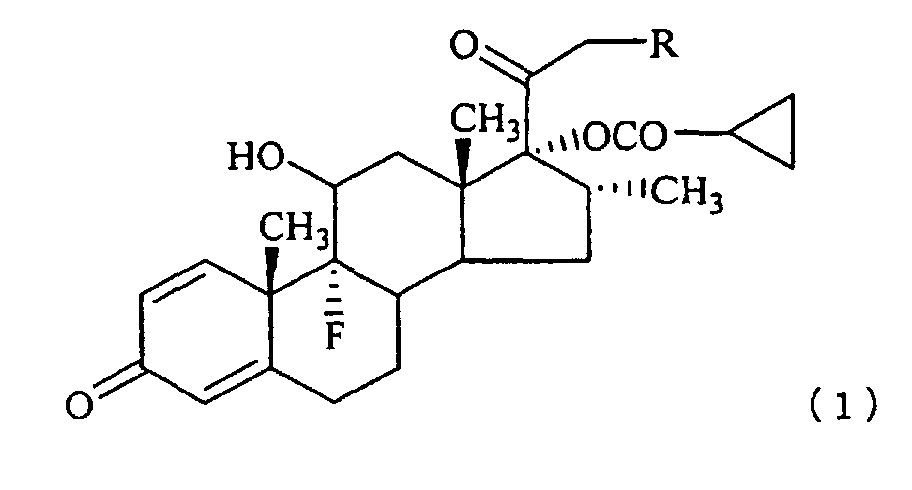
- the present invention provides a preventive and/or therapeutic agent for inflammatory respiratory tract diseases containing, as an active ingredient, a steroid derivative represented by the following formula (1): (wherein R represents a hydrogen atom, a halogen atom, a hydroxy group, or -OCOR 1 (wherein R 1 represents a linear or branched alkyl group which may be substituted by a halogen atom or a cycloalkyl group; a cycloalkyl group; or an aryl group)).
- R represents a hydrogen atom, a halogen atom, a hydroxy group, or -OCOR 1 (wherein R 1 represents a linear or branched alkyl group which may be substituted by a halogen atom or a cycloalkyl group; a cycloalkyl group; or an aryl group)).
- the present invention also provides use of the steroid derivative for producing a preventive and/or therapeutic agent for inflammatory respiratory tract diseases.
- the present invention also provides a method for treating an inflammatory respiratory tract disease, characterized by administering the steroid derivative through peroral inhalation or to the nasal cavity.
- the halogen atom represented by R in formula (1) is preferably fluorine, chlorine, bromine, or iodine. Of these, chlorine and bromine are particularly preferred.
- the linear or branched alkyl group represented by R 1 is preferably a C1-C23 alkyl group. Of these, a C1-C15 alkyl group is particularly preferred.
- the halogen atom which may substitute the alkyl group is preferably fluorine, chlorine, bromine, or iodine, with chlorine or bromine being particularly preferred.
- the cycloalkyl group which may substitute the alkyl group is preferably a C3-C6 cycloalkyl group.
- Examples of preferred linear alkyl groups represented by R 1 include methyl, ethyl, n-propyl, n-butyl, n-nonyl, n-undecanyl, n-tridecanyl, and n-pentadecanyl.
- Examples of preferred branched alkyl groups include isopropyl, isobutyl, sec-butyl, t-butyl, isopentyl, neopentyl, t-pentyl, and isohexyl.
- Examples of the preferred halogenoalkyl group include 3-chloropropyl, 3-bromopropyl, 3-fluoropropyl, 4-chlorobutyl, 4-bromobutyl, 4-fluorobutyl, 5-chloropentyl, 5-bromopentyl, 5-fluoropentyl, 6-chlorohexyl, 6-bromohexyl, and 6-fluorohexyl.
- cycloalkylalkyl groups include 2-cyclohexylethyl, 2-cyclopropylethyl, 2-cyclopentylethyl, 3-cyclopropylpropyl, 3-cyclopentylpropyl, 3-cyclohexylpropyl, 4-cyclopropylbutyl, 4-cyclopentylbutyl, 4-cyclohexylbutyl, 5-cyclopropylpentyl, 5-cyclopentylpentyl, 5-cyclohexylpentyl, and 6-cyclopentylhexyl.
- Examples of preferred cycloalkyl groups include cyclopropyl, cyclobutyl, cyclopentyl, and cyclohexyl.
- Examples of preferred aryl groups include phenyl, naphthyl, 2-methylphenyl, 4-methylphenyl, 2-ethylphenyl, 4-ethylphenyl, 2-methoxyphenyl, 4-methoxyphenyl, 2-ethoxyphenyl, 4-ethoxyphenyl, 2-aminophenyl, 4-aminophenyl, 4-dimethylaminophenyl, 2-hydroxyphenyl, 4-hydroxyphenyl, 2-nitrophenyl, 4-nitrophenyl, 2-chlorophenyl, 4-chlorophenyl, 2-bromophenyl, 4-bromophenyl, 2-fluorophenyl, 4-fluorophenyl, 2,6-dichlorophenyl, 2,6-dibromophenyl, and biphenyl.
- a steroid derivative in which R is, among others, a hydroxy group or -OCOR 1 (R 1 is a cyclohexyl group) is particularly preferred from the viewpoint of effectiveness.
- the steroid derivatives represented by formula (1) are known compounds which exert an excellent anti-inflammatory effect and are useful for treating chronic rheumatoid diseases or similar diseases. Any of the steroid derivatives can be produced through any known method (Japanese Patent Publication (kokoku) No. 7-116215).
- the above steroid derivatives are known to exhibit high percutaneous absorption and site selectivity, and thus to be useful as a steroid for external application.
- the steroid derivatives have excellent characteristics; i.e., when administered to the respiratory tract, the derivatives exhibit high site selectivity and no substantial systemic effects.
- the target inflammatory respiratory tract diseases of the therapeutic agent of the present invention include upper respiratory tract inflammatory diseases and lower respiratory tract inflammatory diseases as well as pharyngeal allergy, chronic obstructive pulmonary diseases, interstitial pneumonia, and similar diseases.
- the upper respiratory tract inflammatory diseases include nasal hypersensitivity such as allergic rhinitis or vasomotor (essential) rhinitis and sinusitis
- examples of the lower respiratory tract inflammatory diseases include bronchitis, bronchial asthma, and infantile asthma.
- allergic rhinitis refers to any allergic response of the nasal mucosa, including pollinosis (seasonal allergic rhinitis) and perennial allergic rhinitis, which are characterized by sneezing, pituita, blockage, itch, eye itch, congestion, or lacrimation.
- Bronchial asthma is classified into immediate asthma response, later-onset asthma response, or post later-onset asthma response (allergic asthma), in chronological order, from the viewpoint of the pathological response of the respiratory tract.
- the preventive and/or therapeutic agent of the present invention can be applied to any of these asthma responses, and are particularly effective to later-onset asthma response, which onsets several hours after exposure of an antigen and whose predominant pathological condition is inflammatory response in the respiratory tract.
- the preventive and/or therapeutic agent for inflammatory respiratory tract diseases of the present invention is administered directly to the respiratory tract mucosa, for example, to the nasal cavity or orally administered via inhalation.
- a drug preparation for administration to the nasal cavity of the preventive and/or therapeutic agent of the present invention may be prepared in the form of a liquid or powder composition and administered by use of a pressurized dose sprayer, a dry powder sprayer, an instillation container, or a similar device.
- a drug preparation for oral inhalation of the preventive and/or therapeutic agent of the present invention may be prepared in the form of a liquid or powder composition and administered by use of a pressurized dose inhaler, a dry powder inhaler, a jet-nebulizer, a supersonic nebulizer, or a similar device.
- Such a liquid or powder composition containing the preventive and/or therapeutic agent is produced in the following manner.
- Compound (1) active ingredient
- an excipient which imparts a shape to the liquid or powder composition
- a coadjuvant which has a function to aid to keep the shape of the liquid or powder composition, such as a dissolution aid, a solubilizer, a buffer, an isotonicity agent, an emulsifier, a surfactant, a stabilizer, a suspending agent, a dispersing agent, a thickener, a lubricant, a binder, an adhesion-resistant agent, or a nebula
- additives which are added for the purpose of improving properties of the composition upon use, such as a preservative, a bacteriocide, an antiseptic, a sweetening agent, a
- the dose of the active ingredient of the present invention that is effective for prevention and/or therapy varies depending on the route of administration and the age, sex, and severity of conditions of the patient.
- the daily dose of the active ingredient is typically approximately 50 to 2000 ⁇ g, preferably approximately 100 to 800 ⁇ g.
- the dose is typically administered once a day or several times a day in a divided manner. Therefore, drugs are preferably prepared so as to be adapted to the above conditions.
- the thus-prepared preventive and/or therapeutic agents for inflammatory respiratory tract diseases according to the present invention exhibit significant inhibitory effects on increase in airway resistance and nasal cavity resistance and substantially no systemic effects, as will be described in Examples described hereinbelow.
- these agents were administered via inhalation, and also, in a guinea pig allergic rhinitis model, these agents were administered via inhalation or through nasal dropping. Therefore, the preventive and/or therapeutic agents for inflammatory respiratory tract diseases of the present invention are clinically useful, since the agents exert substantially no side effects and are highly safe.
- dexamethasone was reacted with a trialkyl ortho cyclopropanecarboxylate in the presence of an acid, to thereby yield an intramolecular ortho ester. Subsequently, the ortho ester was subjected to acid hydrolysis, to thereby yield Compound 1. Further, Compound 1 was reacted with a reactive derivative of cyclohexanecarboxylic acid, whereby Compound 2 was obtained.
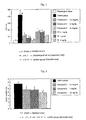
- a 1% ovalbumin solution was administered to male guinea pigs (8 animals per group) via inhalation for 10 minutes per day for consecutive 8 days.
- a 2% ovalbumin solution was administered to each of the guinea pigs via inhalation for 5 minutes (challenging).
- metyrapon (10 mg/kg) had been intravenously administered to the guinea pig, and, 30 minutes before challenging, pyrilamine (10 mg/kg) had been intraperitoneally administered.
- Airway resistance (sRaw) of the guinea pig was measured by use of a comprehensive respiratory function analysis system (Pulmos-I, M.I.P.S.).
- the preventive and/or therapeutic agent of the present invention exhibits an enhanced inhibitory effect on later-onset asthma response (LAR), which is a type of guinea pig allergic asthma response.
- LAR later-onset asthma response
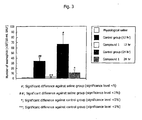
- a 20 ⁇ g/mL ovalbumin solution was mixed with the equivalent amount of a 20 mg/mL aluminum hydroxide gel solution, and the mixture was intraperitoneally administered to male guinea pigs (9 animals per group) in a volume of 1 mL/animal.
- One week after the administration the same procedure was repeated. From one week after the final sensitization, induction of rhinitis was repeated once a week.
- Two days, one day, and one hour before the fifth induction (three times in total) Compound 2 of the present invention suspended in 0.2% HCO-60 physiological saline was administered to each nasal cavity of the guinea pigs in a volume of 20 ⁇ L (total 40 ⁇ L per animal).
- Rhinitis was induced by administering 0.1 mg/mL ovalbumin solution to each nasal cavity of the guinea pigs in a volume of 20 ⁇ L (total 40 ⁇ L per animal).
- Nasal cavity resistance (sRaw) was measured by use of a comprehensive respiratory function analysis system (Pulmos-I, M.I.P.S.). The area under the curve of sRaw increase rate from 3 to 7 hours after challenging was determined, and the resultant value was employed as an index of later-onset asthma response. The results are shown in Fig. 2.
- the preventive and/or therapeutic agent of the present invention was found to exhibit an inhibitory effect on later-onset asthma response (LAR), which is a type of guinea pig allergic asthma response.
- LAR later-onset asthma response
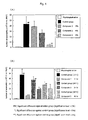
- An equivolume mixture of a 20 ⁇ g/mL ovalbumin solution and a 5 mg/mL aluminum hydroxide gel solution was intraperioneally administered to rats (7 animals per group) at a volume of 1 mL per animal for sensitization. For additional sensitization, one day and two days after the administration, the same procedure was repeated. Thirteen days after the sensitization, an antigen (a 2% ovalbumin solution) was administered to each rat via inhalation for 25 minutes (challenging). Twenty-four hours after the challenging, the respiratory tract was washed with physiological saline, and the number of inflammatory cells (eosinophils) floating in the wash saline was counted for use as an index of asthma response.
- an antigen a 2% ovalbumin solution
- test results indicate that the anti-asthma effect of the preventive and/or therapeutic agents of the present invention continues for 24 hours or longer when administered in a powder form.
- Compound 1 or 2 of the present invention was administered to rats only once, and the lethal dose thereof was determined. The results are shown in Table 1. Compounds 1 and 2 of the present invention were confirmed to exhibit low toxicity. Animal species (sex) Route of administration Lethal dose (In general) Rat(male, female) Oral 2,000 mg/kg or more Rat(male, female) Subcutaneous 2,000 mg/kg or more
- Powder for inhalation was prepared according to the following formulation through a routine process.
- Compound 1 or 2 0.8 mg Lactose 19.2 mg Total 20.0 mg
- a solution for nasal drop were prepared according to the following formulation through a routine process.
- Compound 1 or 2 0.01%w/w Sodium carboxymethylcellulose 1.0%w/w Sodium chloride 0.9%w/w Purified water is used to balance (total 100%).
- the steroid derivative of the present invention represented by formula (1) can continuously suppress respiratory tract inflammation and respiratory tract hyperreaction and shows high site selectivity and little systemic effect when administered directly to the respiratory tract. Therefore, the steroid derivative of the present invention is remarkably useful in clinical medicine as a highly safe preventive and/or therapeutic agent for inflammatory respiratory tract diseases which can be administered for a long period of time.
Landscapes
- Health & Medical Sciences (AREA)
- Chemical & Material Sciences (AREA)
- General Health & Medical Sciences (AREA)
- Organic Chemistry (AREA)
- Veterinary Medicine (AREA)
- Public Health (AREA)
- Animal Behavior & Ethology (AREA)
- Life Sciences & Earth Sciences (AREA)
- Medicinal Chemistry (AREA)
- Pharmacology & Pharmacy (AREA)
- General Chemical & Material Sciences (AREA)
- Chemical Kinetics & Catalysis (AREA)
- Nuclear Medicine, Radiotherapy & Molecular Imaging (AREA)
- Bioinformatics & Cheminformatics (AREA)
- Engineering & Computer Science (AREA)
- Pulmonology (AREA)
- Epidemiology (AREA)
- Pain & Pain Management (AREA)
- Biomedical Technology (AREA)
- Neurology (AREA)
- Neurosurgery (AREA)
- Otolaryngology (AREA)
- Rheumatology (AREA)
- Immunology (AREA)
- Pharmaceuticals Containing Other Organic And Inorganic Compounds (AREA)
- Steroid Compounds (AREA)
- Medicinal Preparation (AREA)
- Acyclic And Carbocyclic Compounds In Medicinal Compositions (AREA)
Abstract
Description

| Animal species (sex) | Route of administration | Lethal dose (In general) |
| Rat(male, female) | Oral | 2,000 mg/kg or more |
| Rat(male, female) | Subcutaneous | 2,000 mg/kg or more |
| | 0.8 mg |
| Lactose | 19.2 mg |
| Total | 20.0 mg |
| | 0.01%w/w |
| Sodium carboxymethylcellulose | 1.0%w/w |
| Sodium chloride | 0.9%w/w |
| Purified water is used to balance (total 100%). |
Claims (6)
- A preventive and/or therapeutic agent for inflammatory respiratory tract diseases containing, as an active ingredient, a steroid derivative represented by the following formula (1):(wherein R represents a hydrogen atom, a halogen atom, a hydroxy group, or -OCOR1 (wherein R1 represents a linear or branched alkyl group which may be substituted by a halogen atom or a cycloalkyl group; a cycloalkyl group; or an aryl group)).

- A preventive and/or therapeutic agent for inflammatory respiratory tract diseases as described in claim 1, wherein the steroid derivative is 9-fluoro-11β,17,21-trihydroxy-16α-methyl-1,4-pregnadiene-3,20-dione 17-cyclopropanecarboxylate or 9-fluoro-11β, 17, 21-trihydroxy-16α-methyl-1,4-pregnadiene-3,20-dione 21-cyclohexanecarboxylate 17-cyclopropanecarboxylate.
- A preventive and/or therapeutic agent for inflammatory respiratory tract diseases as described in claim 1 or 2, wherein the inflammatory respiratory tract diseases are selected from among bronchial asthma, nasal hypersensitivity, pharyngeal allergy, and sinusitis.
- A preventive and/or therapeutic agent for inflammatory respiratory tract diseases as described in any one of claims 1 to 3, which is a preparation for peroral inhalation or intranasal administration.
- Use of a steroid derivative as recited in claim 1 or 2 for producing a preventive and/or therapeutic agent for inflammatory respiratory tract diseases.
- A method for treating inflammatory respiratory tract diseases, characterized by administering a steroid derivative as recited in claim 1 or 2 through peroral inhalation or intranasally.
Applications Claiming Priority (3)
| Application Number | Priority Date | Filing Date | Title |
|---|---|---|---|
| JP2000390941 | 2000-12-22 | ||
| JP2000003909 | 2000-12-22 | ||
| PCT/JP2001/011264 WO2002051422A1 (en) | 2000-12-22 | 2001-12-21 | Preventives/ermedies for inflammatory airway diseases |
Publications (3)
| Publication Number | Publication Date |
|---|---|
| EP1344526A1 true EP1344526A1 (en) | 2003-09-17 |
| EP1344526A4 EP1344526A4 (en) | 2005-03-16 |
| EP1344526B1 EP1344526B1 (en) | 2008-05-28 |
Family
ID=18857198
Family Applications (1)
| Application Number | Title | Priority Date | Filing Date |
|---|---|---|---|
| EP01271858A Expired - Lifetime EP1344526B1 (en) | 2000-12-22 | 2001-12-21 | Preventives/remedies for inflammatory airway diseases |
Country Status (16)
| Country | Link |
|---|---|
| US (1) | US7214672B2 (en) |
| EP (1) | EP1344526B1 (en) |
| JP (1) | JP3691487B2 (en) |
| KR (1) | KR100833157B1 (en) |
| CN (2) | CN101518537A (en) |
| AR (2) | AR031969A1 (en) |
| AT (1) | ATE396733T1 (en) |
| CA (1) | CA2438799C (en) |
| DE (1) | DE60134267D1 (en) |
| DK (1) | DK1344526T3 (en) |
| ES (1) | ES2305029T3 (en) |
| MX (1) | MXPA03005660A (en) |
| PE (1) | PE20020793A1 (en) |
| PT (1) | PT1344526E (en) |
| TW (1) | TWI290145B (en) |
| WO (1) | WO2002051422A1 (en) |
Cited By (3)
| Publication number | Priority date | Publication date | Assignee | Title |
|---|---|---|---|---|
| EP1645266A1 (en) * | 2004-10-08 | 2006-04-12 | Hisamitsu Medical Co., Ltd. | Aqueous suspension for nasal drops |
| EP2111861A1 (en) | 2008-04-21 | 2009-10-28 | Ranbaxy Laboratories Limited | Compositions of phosphodiesterase type IV inhibitors |
| EP1514549A4 (en) * | 2002-06-14 | 2011-06-08 | Nippon Shinyaku Co Ltd | Powdery respiratory tonic composition |
Families Citing this family (12)
| Publication number | Priority date | Publication date | Assignee | Title |
|---|---|---|---|---|
| US6858596B2 (en) * | 2000-08-05 | 2005-02-22 | Smithkline Beecham Corporation | Formulation containing anti-inflammatory androstane derivative |
| GB0019172D0 (en) * | 2000-08-05 | 2000-09-27 | Glaxo Group Ltd | Novel compounds |
| US6759398B2 (en) * | 2000-08-05 | 2004-07-06 | Smithkline Beecham Corporation | Anti-inflammatory androstane derivative |
| SI1775305T1 (en) * | 2000-08-05 | 2015-01-30 | Glaxo Group Limited | 6.Alpha.,9.alpha.-difluoro-17.alpha.-'(2-furanylcarboxyl) oxyĆ-11.beta.-hydroxy-16.alpha.-methyl-3-oxo-androst-1,4,-diene-17-carbothiotic acid s-fluoromethyl ester as an anti-inflammatory agent |
| US6777399B2 (en) * | 2000-08-05 | 2004-08-17 | Smithkline Beecham Corporation | Anti-inflammatory androstane derivative compositions |
| KR100831534B1 (en) * | 2001-04-30 | 2008-05-22 | 글락소 그룹 리미티드 | 17.beta.-carbothioate ester derivatives of anti-inflammatory androstanes with cyclic ester groups in the alpha position |
| ES2307751T3 (en) * | 2001-06-12 | 2008-12-01 | Glaxo Group Limited | NEW CENTI-INFLAMMATORY HETEROCICLICAL ESTERS 17 ALPHA DERIVATIVES 17 ANDROSTANO CARBOTIOATE BETA. |
| US20050175545A1 (en) * | 2002-02-04 | 2005-08-11 | Keith Biggadike | Formulation for inhalation comprising a glucocorticoid and a beta 2-adrenoreceptor agonist |
| GB0202635D0 (en) * | 2002-02-05 | 2002-03-20 | Glaxo Wellcome Mfg Pte Ltd | Formulation containing novel anti-inflammatory androstane derivative |
| GB2389530B (en) * | 2002-06-14 | 2007-01-10 | Cipla Ltd | Pharmaceutical compositions |
| GB0507165D0 (en) * | 2005-04-08 | 2005-05-18 | Glaxo Group Ltd | Novel crystalline pharmaceutical product |
| GB0615108D0 (en) * | 2006-07-28 | 2006-09-06 | Glaxo Group Ltd | Novel formulations |
Family Cites Families (6)
| Publication number | Priority date | Publication date | Assignee | Title |
|---|---|---|---|---|
| US3639434A (en) | 1967-02-02 | 1972-02-01 | Boots Pure Drug Co Ltd | 17-acyloxysteroids and their manufacture |
| SE418294B (en) | 1974-03-27 | 1981-05-18 | Plurichemie Anstalt | SET TO MAKE A 16ALFA- OR 16BETA-9ALFA-CHLORINE OR FLUOROSTEROID ESTER |
| US4933168A (en) * | 1975-05-27 | 1990-06-12 | Syntex Pharmaceuticals International Limited | Stable, crystalline flunisolide |
| IL66432A0 (en) | 1981-08-04 | 1982-12-31 | Plurichemie Anstalt | Process for the preparation of steroidal esters |
| JPH07116215B2 (en) | 1989-04-19 | 1995-12-13 | エスエス製薬株式会社 | Novel steroid compound |
| PE44995A1 (en) | 1994-01-27 | 1995-12-18 | Schering Corp | MOMETASONE FUROATE FOR THE TREATMENT OF LUNG DISEASES AND RESPIRATORY TRACT |
-
2001
- 2001-12-21 JP JP2002552566A patent/JP3691487B2/en not_active Expired - Lifetime
- 2001-12-21 CA CA002438799A patent/CA2438799C/en not_active Expired - Lifetime
- 2001-12-21 PT PT01271858T patent/PT1344526E/en unknown
- 2001-12-21 EP EP01271858A patent/EP1344526B1/en not_active Expired - Lifetime
- 2001-12-21 TW TW090131849A patent/TWI290145B/en not_active IP Right Cessation
- 2001-12-21 CN CNA2009100064252A patent/CN101518537A/en active Pending
- 2001-12-21 DE DE60134267T patent/DE60134267D1/en not_active Expired - Lifetime
- 2001-12-21 KR KR1020037007282A patent/KR100833157B1/en not_active Expired - Lifetime
- 2001-12-21 MX MXPA03005660A patent/MXPA03005660A/en active IP Right Grant
- 2001-12-21 WO PCT/JP2001/011264 patent/WO2002051422A1/en not_active Ceased
- 2001-12-21 DK DK01271858T patent/DK1344526T3/en active
- 2001-12-21 ES ES01271858T patent/ES2305029T3/en not_active Expired - Lifetime
- 2001-12-21 US US10/451,061 patent/US7214672B2/en not_active Expired - Lifetime
- 2001-12-21 AT AT01271858T patent/ATE396733T1/en active
- 2001-12-21 CN CNA018210422A patent/CN1481246A/en active Pending
- 2001-12-26 AR ARP010106024A patent/AR031969A1/en not_active Application Discontinuation
- 2001-12-26 PE PE2001001303A patent/PE20020793A1/en not_active Application Discontinuation
-
2014
- 2014-09-23 AR ARP140103518A patent/AR097737A2/en unknown
Cited By (3)
| Publication number | Priority date | Publication date | Assignee | Title |
|---|---|---|---|---|
| EP1514549A4 (en) * | 2002-06-14 | 2011-06-08 | Nippon Shinyaku Co Ltd | Powdery respiratory tonic composition |
| EP1645266A1 (en) * | 2004-10-08 | 2006-04-12 | Hisamitsu Medical Co., Ltd. | Aqueous suspension for nasal drops |
| EP2111861A1 (en) | 2008-04-21 | 2009-10-28 | Ranbaxy Laboratories Limited | Compositions of phosphodiesterase type IV inhibitors |
Also Published As
| Publication number | Publication date |
|---|---|
| CN101518537A (en) | 2009-09-02 |
| AR031969A1 (en) | 2003-10-08 |
| TWI290145B (en) | 2007-11-21 |
| CN1481246A (en) | 2004-03-10 |
| DE60134267D1 (en) | 2008-07-10 |
| KR100833157B1 (en) | 2008-05-28 |
| PE20020793A1 (en) | 2002-09-06 |
| US20040053904A1 (en) | 2004-03-18 |
| CA2438799C (en) | 2009-09-01 |
| ATE396733T1 (en) | 2008-06-15 |
| US7214672B2 (en) | 2007-05-08 |
| EP1344526A4 (en) | 2005-03-16 |
| WO2002051422A1 (en) | 2002-07-04 |
| ES2305029T3 (en) | 2008-11-01 |
| DK1344526T3 (en) | 2008-09-15 |
| MXPA03005660A (en) | 2004-12-03 |
| EP1344526B1 (en) | 2008-05-28 |
| CA2438799A1 (en) | 2002-07-04 |
| JP3691487B2 (en) | 2005-09-07 |
| PT1344526E (en) | 2008-06-18 |
| KR20030064414A (en) | 2003-07-31 |
| JPWO2002051422A1 (en) | 2004-04-22 |
| AR097737A2 (en) | 2016-04-13 |
Similar Documents
| Publication | Publication Date | Title |
|---|---|---|
| US7214672B2 (en) | Preventives/remedies for inflammatory airway diseases | |
| US7923441B2 (en) | Enhancement of activity and/or duration of action of soft anti-inflammatory steroids for topical or other local application | |
| JP5097129B2 (en) | Novel 11β-hydroxyandrost-4-en-3-one | |
| EP1514549A1 (en) | Powdery respiratory tonic composition | |
| JP2650756B2 (en) | 4-Quinolinecarboxylic acid derivatives for the treatment of skin and mucosal epithelial disorders | |
| TWI309164B (en) | Novel crystal form b of a known thiophenecarboxylic acid dodecahydrocyclopenta[a]phenanthrenyl ester,pharmaceutical composition comprising the same,use thereof, and method of preparing it | |
| US9458187B2 (en) | Methods for treatment of inflammatory conditions using S-[4-(3-fleuro-3-methylbutyryloxy)but-2-ynyl]6α, 9α-difluoro-17α-(furan-2-yl) carbonyloxy-11β-hydroxy-16α-methyl-3-oxoandrosta-1,4-diene-17β-carbothioate | |
| HK1132449A (en) | Preventive/therapeutic agent for inflammatory respiratory tract diseases | |
| HK1062143A (en) | Preventive/therapeutic for inflammatory airway diseases | |
| GB1594852A (en) | Derivatives of 9-chloroprednisolone | |
| CS202591B2 (en) | Process for preparing derivatives of 9-fluorprednisolone | |
| HK1165724A1 (en) | Albumin and/or mannitol for the treatment of nasal polyposis |
Legal Events
| Date | Code | Title | Description |
|---|---|---|---|
| PUAI | Public reference made under article 153(3) epc to a published international application that has entered the european phase |
Free format text: ORIGINAL CODE: 0009012 |
|
| 17P | Request for examination filed |
Effective date: 20030618 |
|
| AK | Designated contracting states |
Kind code of ref document: A1 Designated state(s): AT BE CH CY DE DK ES FI FR GB GR IE IT LI LU MC NL PT SE TR |
|
| AX | Request for extension of the european patent |
Extension state: AL LT LV MK RO SI |
|
| A4 | Supplementary search report drawn up and despatched |
Effective date: 20050131 |
|
| RIC1 | Information provided on ipc code assigned before grant |
Ipc: 7C 07J 7/00 B Ipc: 7A 61P 27/16 B Ipc: 7A 61P 11/06 B Ipc: 7A 61K 31/573 B Ipc: 7A 61K 31/57 A Ipc: 7C 07J 5/00 B |
|
| RA4 | Supplementary search report drawn up and despatched (corrected) |
Effective date: 20050208 |
|
| RAP1 | Party data changed (applicant data changed or rights of an application transferred) |
Owner name: BIOMEDIX CO., LTD |
|
| RAP1 | Party data changed (applicant data changed or rights of an application transferred) |
Owner name: HISAMITSU MEDICAL CO., LTD. |
|
| 17Q | First examination report despatched |
Effective date: 20050720 |
|
| RTI1 | Title (correction) |
Free format text: PREVENTIVES/REMEDIES FOR INFLAMMATORY AIRWAY DISEASES |
|
| 17Q | First examination report despatched |
Effective date: 20050720 |
|
| RAP1 | Party data changed (applicant data changed or rights of an application transferred) |
Owner name: NIPPON SHINYAKU CO., LTD. |
|
| GRAP | Despatch of communication of intention to grant a patent |
Free format text: ORIGINAL CODE: EPIDOSNIGR1 |
|
| GRAS | Grant fee paid |
Free format text: ORIGINAL CODE: EPIDOSNIGR3 |
|
| GRAA | (expected) grant |
Free format text: ORIGINAL CODE: 0009210 |
|
| AK | Designated contracting states |
Kind code of ref document: B1 Designated state(s): AT BE CH CY DE DK ES FI FR GB GR IE IT LI LU MC NL PT SE TR |
|
| REG | Reference to a national code |
Ref country code: GB Ref legal event code: FG4D |
|
| REG | Reference to a national code |
Ref country code: PT Ref legal event code: SC4A Free format text: AVAILABILITY OF NATIONAL TRANSLATION Effective date: 20080604 |
|
| REG | Reference to a national code |
Ref country code: CH Ref legal event code: EP Ref country code: CH Ref legal event code: NV Representative=s name: BOVARD AG PATENTANWAELTE |
|
| REF | Corresponds to: |
Ref document number: 60134267 Country of ref document: DE Date of ref document: 20080710 Kind code of ref document: P |
|
| REG | Reference to a national code |
Ref country code: SE Ref legal event code: TRGR |
|
| REG | Reference to a national code |
Ref country code: IE Ref legal event code: FG4D |
|
| REG | Reference to a national code |
Ref country code: DK Ref legal event code: T3 |
|
| REG | Reference to a national code |
Ref country code: ES Ref legal event code: FG2A Ref document number: 2305029 Country of ref document: ES Kind code of ref document: T3 |
|
| PLBE | No opposition filed within time limit |
Free format text: ORIGINAL CODE: 0009261 |
|
| STAA | Information on the status of an ep patent application or granted ep patent |
Free format text: STATUS: NO OPPOSITION FILED WITHIN TIME LIMIT |
|
| 26N | No opposition filed |
Effective date: 20090303 |
|
| PG25 | Lapsed in a contracting state [announced via postgrant information from national office to epo] |
Ref country code: MC Free format text: LAPSE BECAUSE OF NON-PAYMENT OF DUE FEES Effective date: 20081231 |
|
| REG | Reference to a national code |
Ref country code: IE Ref legal event code: MM4A |
|
| PG25 | Lapsed in a contracting state [announced via postgrant information from national office to epo] |
Ref country code: IE Free format text: LAPSE BECAUSE OF NON-PAYMENT OF DUE FEES Effective date: 20081221 |
|
| PG25 | Lapsed in a contracting state [announced via postgrant information from national office to epo] |
Ref country code: CY Free format text: LAPSE BECAUSE OF FAILURE TO SUBMIT A TRANSLATION OF THE DESCRIPTION OR TO PAY THE FEE WITHIN THE PRESCRIBED TIME-LIMIT Effective date: 20080528 Ref country code: LU Free format text: LAPSE BECAUSE OF NON-PAYMENT OF DUE FEES Effective date: 20081221 |
|
| PG25 | Lapsed in a contracting state [announced via postgrant information from national office to epo] |
Ref country code: TR Free format text: LAPSE BECAUSE OF FAILURE TO SUBMIT A TRANSLATION OF THE DESCRIPTION OR TO PAY THE FEE WITHIN THE PRESCRIBED TIME-LIMIT Effective date: 20080528 |
|
| PG25 | Lapsed in a contracting state [announced via postgrant information from national office to epo] |
Ref country code: GR Free format text: LAPSE BECAUSE OF FAILURE TO SUBMIT A TRANSLATION OF THE DESCRIPTION OR TO PAY THE FEE WITHIN THE PRESCRIBED TIME-LIMIT Effective date: 20080829 |
|
| REG | Reference to a national code |
Ref country code: CH Ref legal event code: PFA Owner name: NIPPON SHINYAKU CO., LTD. Free format text: NIPPON SHINYAKU CO., LTD.#14, KISSHOIN NISHINOSHO MONGUCHICHO, MINAMI-KU#KYOTO-SHI, KYOTO 601-8550 (JP) -TRANSFER TO- NIPPON SHINYAKU CO., LTD.#14, KISSHOIN NISHINOSHO MONGUCHICHO, MINAMI-KU#KYOTO-SHI, KYOTO 601-8550 (JP) |
|
| REG | Reference to a national code |
Ref country code: FR Ref legal event code: PLFP Year of fee payment: 15 |
|
| REG | Reference to a national code |
Ref country code: FR Ref legal event code: PLFP Year of fee payment: 16 |
|
| REG | Reference to a national code |
Ref country code: FR Ref legal event code: PLFP Year of fee payment: 17 |
|
| PGFP | Annual fee paid to national office [announced via postgrant information from national office to epo] |
Ref country code: NL Payment date: 20201113 Year of fee payment: 20 |
|
| PGFP | Annual fee paid to national office [announced via postgrant information from national office to epo] |
Ref country code: FR Payment date: 20201112 Year of fee payment: 20 Ref country code: SE Payment date: 20201211 Year of fee payment: 20 Ref country code: DE Payment date: 20201208 Year of fee payment: 20 Ref country code: AT Payment date: 20201125 Year of fee payment: 20 Ref country code: GB Payment date: 20201210 Year of fee payment: 20 Ref country code: DK Payment date: 20201210 Year of fee payment: 20 Ref country code: CH Payment date: 20201215 Year of fee payment: 20 Ref country code: PT Payment date: 20201221 Year of fee payment: 20 Ref country code: FI Payment date: 20201209 Year of fee payment: 20 Ref country code: IT Payment date: 20201110 Year of fee payment: 20 |
|
| PGFP | Annual fee paid to national office [announced via postgrant information from national office to epo] |
Ref country code: BE Payment date: 20201116 Year of fee payment: 20 |
|
| PGFP | Annual fee paid to national office [announced via postgrant information from national office to epo] |
Ref country code: ES Payment date: 20210119 Year of fee payment: 20 |
|
| REG | Reference to a national code |
Ref country code: DE Ref legal event code: R071 Ref document number: 60134267 Country of ref document: DE |
|
| REG | Reference to a national code |
Ref country code: NL Ref legal event code: MK Effective date: 20211220 |
|
| REG | Reference to a national code |
Ref country code: CH Ref legal event code: PL |
|
| REG | Reference to a national code |
Ref country code: DK Ref legal event code: EUP Expiry date: 20211221 |
|
| REG | Reference to a national code |
Ref country code: GB Ref legal event code: PE20 Expiry date: 20211220 |
|
| REG | Reference to a national code |
Ref country code: FI Ref legal event code: MAE |
|
| REG | Reference to a national code |
Ref country code: SE Ref legal event code: EUG |
|
| PG25 | Lapsed in a contracting state [announced via postgrant information from national office to epo] |
Ref country code: PT Free format text: LAPSE BECAUSE OF EXPIRATION OF PROTECTION Effective date: 20211230 Ref country code: GB Free format text: LAPSE BECAUSE OF EXPIRATION OF PROTECTION Effective date: 20211220 |
|
| REG | Reference to a national code |
Ref country code: BE Ref legal event code: MK Effective date: 20211221 |
|
| REG | Reference to a national code |
Ref country code: AT Ref legal event code: MK07 Ref document number: 396733 Country of ref document: AT Kind code of ref document: T Effective date: 20211221 |
|
| REG | Reference to a national code |
Ref country code: ES Ref legal event code: FD2A Effective date: 20220405 |
|
| PG25 | Lapsed in a contracting state [announced via postgrant information from national office to epo] |
Ref country code: ES Free format text: LAPSE BECAUSE OF EXPIRATION OF PROTECTION Effective date: 20211222 |