EP1343760B1 - Muscarinic antagonists - Google Patents
Muscarinic antagonists Download PDFInfo
- Publication number
- EP1343760B1 EP1343760B1 EP01985584A EP01985584A EP1343760B1 EP 1343760 B1 EP1343760 B1 EP 1343760B1 EP 01985584 A EP01985584 A EP 01985584A EP 01985584 A EP01985584 A EP 01985584A EP 1343760 B1 EP1343760 B1 EP 1343760B1
- Authority
- EP
- European Patent Office
- Prior art keywords
- alkyl
- compound
- cycloalkyl
- refers
- term
- Prior art date
- Legal status (The legal status is an assumption and is not a legal conclusion. Google has not performed a legal analysis and makes no representation as to the accuracy of the status listed.)
- Expired - Lifetime
Links
- 0 *C(*)N(*)C(c1ccc(CC2CCN(*)CC2)cc1)=O Chemical compound *C(*)N(*)C(c1ccc(CC2CCN(*)CC2)cc1)=O 0.000 description 8
- XZISOEPNTDOUEA-UHFFFAOYSA-N CC(C)c(cc1)ccc1F Chemical compound CC(C)c(cc1)ccc1F XZISOEPNTDOUEA-UHFFFAOYSA-N 0.000 description 3
- ZJMWRROPUADPEA-UHFFFAOYSA-N CCC(C)c1ccccc1 Chemical compound CCC(C)c1ccccc1 ZJMWRROPUADPEA-UHFFFAOYSA-N 0.000 description 2
- XUMPTWBUBXQORM-UHFFFAOYSA-N CC1CC(C2)N(C)C2C1 Chemical compound CC1CC(C2)N(C)C2C1 XUMPTWBUBXQORM-UHFFFAOYSA-N 0.000 description 1
- CDYSMCBRQOYVAZ-UHFFFAOYSA-N CCC(CCNC)N Chemical compound CCC(CCNC)N CDYSMCBRQOYVAZ-UHFFFAOYSA-N 0.000 description 1
- LTHAIAJHDPJXLG-UHFFFAOYSA-N CCCC(C)c1ccccc1 Chemical compound CCCC(C)c1ccccc1 LTHAIAJHDPJXLG-UHFFFAOYSA-N 0.000 description 1
- KOYOKLVUHGYEQX-QHELBMECSA-N C[C@@H](c(cc1)ccc1F)NC(C1C=CC(CC(CC2)CCN2C2CCCCC2)=CC1)=O Chemical compound C[C@@H](c(cc1)ccc1F)NC(C1C=CC(CC(CC2)CCN2C2CCCCC2)=CC1)=O KOYOKLVUHGYEQX-QHELBMECSA-N 0.000 description 1
- FNIXJFVXPZXATQ-QBMQIYCRSA-N C[C@@H](c(cc1)ccc1F)NC(c1ccc(CC(CC2)CCN2[C@H]2C[C@@H](C)C[C@@H](C)C2)cc1)=O Chemical compound C[C@@H](c(cc1)ccc1F)NC(c1ccc(CC(CC2)CCN2[C@H]2C[C@@H](C)C[C@@H](C)C2)cc1)=O FNIXJFVXPZXATQ-QBMQIYCRSA-N 0.000 description 1
Classifications
-
- C—CHEMISTRY; METALLURGY
- C07—ORGANIC CHEMISTRY
- C07D—HETEROCYCLIC COMPOUNDS
- C07D451/00—Heterocyclic compounds containing 8-azabicyclo [3.2.1] octane, 9-azabicyclo [3.3.1] nonane, or 3-oxa-9-azatricyclo [3.3.1.0<2,4>] nonane ring systems, e.g. tropane or granatane alkaloids, scopolamine; Cyclic acetals thereof
- C07D451/02—Heterocyclic compounds containing 8-azabicyclo [3.2.1] octane, 9-azabicyclo [3.3.1] nonane, or 3-oxa-9-azatricyclo [3.3.1.0<2,4>] nonane ring systems, e.g. tropane or granatane alkaloids, scopolamine; Cyclic acetals thereof containing not further condensed 8-azabicyclo [3.2.1] octane or 3-oxa-9-azatricyclo [3.3.1.0<2,4>] nonane ring systems, e.g. tropane; Cyclic acetals thereof
- C07D451/04—Heterocyclic compounds containing 8-azabicyclo [3.2.1] octane, 9-azabicyclo [3.3.1] nonane, or 3-oxa-9-azatricyclo [3.3.1.0<2,4>] nonane ring systems, e.g. tropane or granatane alkaloids, scopolamine; Cyclic acetals thereof containing not further condensed 8-azabicyclo [3.2.1] octane or 3-oxa-9-azatricyclo [3.3.1.0<2,4>] nonane ring systems, e.g. tropane; Cyclic acetals thereof with hetero atoms directly attached in position 3 of the 8-azabicyclo [3.2.1] octane or in position 7 of the 3-oxa-9-azatricyclo [3.3.1.0<2,4>] nonane ring system
-
- A—HUMAN NECESSITIES
- A61—MEDICAL OR VETERINARY SCIENCE; HYGIENE
- A61P—SPECIFIC THERAPEUTIC ACTIVITY OF CHEMICAL COMPOUNDS OR MEDICINAL PREPARATIONS
- A61P25/00—Drugs for disorders of the nervous system
-
- A—HUMAN NECESSITIES
- A61—MEDICAL OR VETERINARY SCIENCE; HYGIENE
- A61P—SPECIFIC THERAPEUTIC ACTIVITY OF CHEMICAL COMPOUNDS OR MEDICINAL PREPARATIONS
- A61P25/00—Drugs for disorders of the nervous system
- A61P25/28—Drugs for disorders of the nervous system for treating neurodegenerative disorders of the central nervous system, e.g. nootropic agents, cognition enhancers, drugs for treating Alzheimer's disease or other forms of dementia
-
- A—HUMAN NECESSITIES
- A61—MEDICAL OR VETERINARY SCIENCE; HYGIENE
- A61P—SPECIFIC THERAPEUTIC ACTIVITY OF CHEMICAL COMPOUNDS OR MEDICINAL PREPARATIONS
- A61P43/00—Drugs for specific purposes, not provided for in groups A61P1/00-A61P41/00
-
- C—CHEMISTRY; METALLURGY
- C07—ORGANIC CHEMISTRY
- C07D—HETEROCYCLIC COMPOUNDS
- C07D211/00—Heterocyclic compounds containing hydrogenated pyridine rings, not condensed with other rings
- C07D211/04—Heterocyclic compounds containing hydrogenated pyridine rings, not condensed with other rings with only hydrogen or carbon atoms directly attached to the ring nitrogen atom
- C07D211/06—Heterocyclic compounds containing hydrogenated pyridine rings, not condensed with other rings with only hydrogen or carbon atoms directly attached to the ring nitrogen atom having no double bonds between ring members or between ring members and non-ring members
- C07D211/08—Heterocyclic compounds containing hydrogenated pyridine rings, not condensed with other rings with only hydrogen or carbon atoms directly attached to the ring nitrogen atom having no double bonds between ring members or between ring members and non-ring members with hydrocarbon or substituted hydrocarbon radicals directly attached to ring carbon atoms
- C07D211/18—Heterocyclic compounds containing hydrogenated pyridine rings, not condensed with other rings with only hydrogen or carbon atoms directly attached to the ring nitrogen atom having no double bonds between ring members or between ring members and non-ring members with hydrocarbon or substituted hydrocarbon radicals directly attached to ring carbon atoms with substituted hydrocarbon radicals attached to ring carbon atoms
- C07D211/34—Heterocyclic compounds containing hydrogenated pyridine rings, not condensed with other rings with only hydrogen or carbon atoms directly attached to the ring nitrogen atom having no double bonds between ring members or between ring members and non-ring members with hydrocarbon or substituted hydrocarbon radicals directly attached to ring carbon atoms with substituted hydrocarbon radicals attached to ring carbon atoms with hydrocarbon radicals, substituted by carbon atoms having three bonds to hetero atoms with at the most one bond to halogen, e.g. ester or nitrile radicals
-
- C—CHEMISTRY; METALLURGY
- C07—ORGANIC CHEMISTRY
- C07D—HETEROCYCLIC COMPOUNDS
- C07D405/00—Heterocyclic compounds containing both one or more hetero rings having oxygen atoms as the only ring hetero atoms, and one or more rings having nitrogen as the only ring hetero atom
- C07D405/02—Heterocyclic compounds containing both one or more hetero rings having oxygen atoms as the only ring hetero atoms, and one or more rings having nitrogen as the only ring hetero atom containing two hetero rings
- C07D405/04—Heterocyclic compounds containing both one or more hetero rings having oxygen atoms as the only ring hetero atoms, and one or more rings having nitrogen as the only ring hetero atom containing two hetero rings directly linked by a ring-member-to-ring-member bond
Definitions
- the present invention relates to amide derivatives of 1,4-di-substituted piperidines useful in the treatment of cognitive disorders, pharmaceutical compositions containing the compounds, and to the use of said compounds for the preparation of a medicament, optionally in combination with acetylcholinesterase inhibitors.
- Piperidine-derivative muscarinic antagonists useful in the treatment of cognitive disorders such as Alzheimer's disease are disclosed in US 6,037,352 .
- US 6,037,352 discloses compounds of the generic formula wherein, inter alia, Y is CH; Z is N; X is -NHCO -; R is substituted benzyl; R 1 and R 21 are each H; R 3 , R 4 , R 27 and R 28 are hydrogen; and R 2 is cycloalkyl.
- Similar compounds wherein the benzene ring is replaced by a pyridinyl ring are disclosed in US 6,066,636 .
- Compounds of the present invention represent a selection invention over US 6,037,352 and 6,066,636 .
- the present invention relates to compounds of the structural formula I or a pharmaceutically acceptable salt, ester or solvate thereof, wherein
- the invention in another aspect, relates to a pharmaceutical composition comprising a therapeutically effective amount of a compound of formula I in a pharmaceutically acceptable carrier.
- the disclosure also relates to a method of using a compound of formula I or a pharmaceutical composition comprising a compound of formula I in the treatment of a cognitive disease or neurodegenerative disease comprising administering an effective amount of a compound or composition of this invention to a mammal in need of such treatment.
- the disclosure relates to a method for treating a cognitive disease or neurodegenerative disease comprising administering to a mammal in need of such treatment an effective amount of a combination of a compound of formula I an an acetylcholinesterase inhibitor.
- the invention relates to a kit for treating a cognitive disease or neurodegenerative disease comprising in separate containers in a single package pharmaceutical compositions for use in combination, in one container a compound of formula I in a pharmaceutically acceptable carrier and in a second container, an acetylcholinesterase inhibitor in a pharmaceutically acceptable carrier, the combined quantities being an effective amount.
- R 1 is R 5 -phenyl or R 5 -cyclohexyl.
- R 5 is preferably H, halogen or C 1 -C 6 alkyl, more preferably H, F or -CH 3 .
- R 2 is R 6 -C 3 -C 8 cycloalkyl, especially R 6 -C 5 -C 7 cycloalkyl.
- R 6 is preferably H or C 1 -C 6 alkyl.
- R 3 is preferably -CH 3
- R 4 is preferably H.
- alkyl represents a straight or branched saturated hydrocarbon chain having the designated number of carbon atoms. If the number of carbon atoms is not specified, e.g., if the term lower alkyl is used, chain lengths of 1 to 6 carbons are intended.
- “Cycloalkyl” represents a saturated carbocyclic ring having 3 to 8 carbon atoms.
- Bridged cycloalkyl refers to cycloalkyl rings wherein two non-adjacent ring members are joined by a C 1 -C 2 alkyl chain.
- heterocycloalkyl refers to 4- to 7-membered saturated rings comprising 1 to 3 heteroatoms independently selected from the group consisting of -O-, -S- and -NR 7 -, wherein R 7 is H or C 1 -C 6 alkyl, and wherein the remaining ring members are carbon. Where a heterocyclic ring comprises more than one heteroatom, no rings are formed where there are adjacent oxygen atoms, adjacent sulfur atoms, or three consecutive heteroatoms. Examples of heterocyclic rings are tetrahydrofuranyl, pyrrolidinyl, tetrahydropyranyl, piperidinyl, morpholinyl, thiomorpholinyl and piperazinyl.
- Bridged heterocycloalkyl refers to heterocycloalkyl rings wherein two non-adjacent carbon ring members are joined by a C 1 -C 2 alkyl chain.
- Halogen represents fluoro, chloro, bromo or iodo.
- Aryl represents phenyl or naphthyl.
- heteroaryl groups are pyridyl, isoxazolyl, oxadiazolyl, furanyl, pyrrolyl, thienyl, imidazolyl, pyrazolyl, tetrazolyl, thiazolyl, thiadiazolyl, pyrazinyl, pyrimidinyl, pyridazinyl and triazolyl. All positional isomers are contemplated, e.g., 2-pyridyl, 3-pyridyl and 4-pyridyl.
- each variable appearing more than once may be independently selected from the definition for that variable.
- Compounds of the invention have at least one asymmetrical carbon atom, i.e., the carbon to which R 3 is attached. All isomers, including diastereomers, enantiomers and rotational isomers are contemplated as being part of this invention.
- the invention includes d and I isomers in both pure form and in admixture, including racemic mixtures. Isomers can be prepared using conventional techniques, either by reacting optically pure or optically enriched starting materials or by separating isomers of a compound of formula I.
- the preferred stereochemistry of compounds of the invention is shown in formula IA:
- a compound of formula I may form pharmaceutically acceptable salts with organic and inorganic acids.
- suitable acids for salt formation are hydrochloric, sulfuric, phosphoric, acetic, citric, malonic, salicylic, malic, fumaric, succinic, ascorbic, maleic, methanesulfonic and other mineral and carboxylic acids well known to those skilled in the art.
- the salts are prepared by contacting the free base forms with a sufficient amount of the desired acid to produce a salt in the conventional manner.
- the free base forms may be regenerated by treating the salt with a suitable dilute aqueous base solution such as dilute aqueous sodium hydroxide, potassium carbonate, ammonia or sodium bicarbonate.
- the free base forms differ from their respective salt forms somewhat in certain physical properties, such as solubility in polar solvents, but the salts are otherwise equivalent to their respective free base forms for purposes of the invention.
- the amine (R 1 CHR 3 NH 2 ) is reacted with a resin bound aldehyde such as Argopore-MB-CHO resin (Argonaut Corporation, San Carlos, CA) by reductive alkylation with sodium triacetoxyborohydride. Subsequent acylation of the resin bound amine (resin 1) with activated acids such as acid chlorides 7, gives resin 2.
- a resin bound aldehyde such as Argopore-MB-CHO resin (Argonaut Corporation, San Carlos, CA)
- activated acids such as acid chlorides 7
- amides of type 10 Reaction of amines such as 8 with activated carboxylic acids such as the acid chloride 9 in the presence of a base such as pyridine or triethylamine yields amides of type 10. Treatment of these with an acid such as TFA or HCl gives compounds 11.
- the piperidine nitrogen of compounds 11 is derivatized to give compounds of type Ia by reductive alkylation with either aldehydes or ketones in the presence of a reducing agent such as sodium triacetoxyborohydride, or alternatively by reaction with an aldehyde followed by treatment with a Grignard reagent.
- Yet another method involves reaction of the amine 11 with the appropriate mesylate or alkyl halide in the presence of base.
- the above reaction may be followed if necessary or desired by one or more of the following steps; (a) removing any protective groups from the compound so produced; (b) converting the compound so-produced to a pharmaceutically acceptable salt, ester and/or solvate; (c) converting a compound in accordance with formula I so produced to another compound in accordance with formula I, and (d) isolating a compound of formula I, including separating stereoisomers of formula I.
- the compounds of formula I exhibit selective m2 muscarinic antagonist activity, which has been correlated with pharmaceutical activity for treating cognitive disorders and/or symptoms thereof.
- cognitive disorders are Alzheimers disease and senile dementia, with treatment resulting in improvement in memory and learning.
- the compounds of formula I display pharmacological activity in test procedures designated to indicate m1 and m2 muscarinic antagonist activity. Following are descriptions of the test procedures.
- the compound of interest is tested for its ability to inhibit binding to the cloned human m1, m2, m3, m4 and m5 muscarinic receptor subtypes.
- the sources of receptors in these studies were membranes from stably transfected CHO cell lines which were expressing each of the receptor subtypes. Following growth, the cells were pelleted and subsequently homogenized using a Polytron in 50 volumes cold 10 mM Na/K phosphate buffer, pH 7.4 (Buffer B). The homogenates were centrifuged at 40,000 x g for 20 minutes at 4°C. The resulting supernatants were discarded and the pellets were resuspended in Buffer B at a final concentration of 20 mg wet tissue/ml. These membranes were stored at -80°C until utilized in the binding assays described below.
- Binding to the cloned human muscarinic receptors was performed using 3 H-quinuclidinyl benzilate (QNB) (Watson et al., 1986). Briefly, membranes (approximately 8, 20, and 14 ⁇ g of protein assay for the m1, m2, and m4 containing membranes, respectively) were incubated with 3 H-QNB (final concentration of 100-200 pM) and increasing concentrations of unlabeled drug in a final volume of 2 ml at 25°C for 90 minutes. Non-specific binding was assayed in the presence of 1 ⁇ M atropine.
- QNB 3 H-quinuclidinyl benzilate
- the incubations were terminated by vacuum filtration over GF/B glass fiber filters using a Skatron filtration apparatus and the filters were washed with cold 10mM Na/K phosphate butter, pH 7.4. Scintillation cocktail was added to the filters and the vials were incubated overnight. The bound radioligand was quantified in a liquid scintillation counter (50% efficiency). The resulting data were analyzed for IC 50 values (i.e. the concentration of compound required to inhibit binding by 50%) using the EBDA computer program (McPherson, 1985).
- the K i value for m1 receptors was divided by the K i value for m2 receptors. A higher ratio indicates a greater selectivity for binding the m2 muscarinic receptor.
- Microdialysis All of the equipment and instrumentation used to conduct in vivo microdialysis was obtained from Bioanalytical Systems, Inc. (BAS). The microdialysis procedure involved the insertion through the guide cannula of a thin, needle-like perfusable probe (CMA/12,3 mm x 0.5 mm) to a depth of 3 mm in striatum beyond the end of the guide. The probe was connected beforehand with tubing to a microinjection pump (CMA/ 100).
- CMA/12,3 mm x 0.5 mm a thin, needle-like perfusable probe
- Rats were collared, tethered, and, following probe insertion, were placed in a large, clear, plexiglass bowl with litter material and access to food and water.
- the probe was perfused at 2 ⁇ l/min with Ringer's buffer (NaCl 147 mM; KCI 3.0 mM; CaCl 2 1.2 mM; MgCl 2 1.0 mM) containing 5.5 mM glucose, 0.2 mM L-ascorbate, and 1 ⁇ M neostigmine bromide at pH 7.4).
- Ringer's buffer NaCl 147 mM; KCI 3.0 mM; CaCl 2 1.2 mM; MgCl 2 1.0 mM
- Kathon CG reagent (0.005%) (BAS) was included in the mobile phase.
- the reactor contained both acetylcholinesterase and choline oxidase covalently bound to a polymeric backbone.
- the action of these enzymes on ACh and choline resulted in stoichiometric yields of hydrogen peroxide, which was electrochemically detected using a Waters 460 detector equipped with a platinum electrode at a working potential of 500 mvolts.
- Data acquisition was carried out using an IBM Model 70 computer equipped with a microchannel IEEE board.
- a solution of a compound of formula I at a final substrate concentration of 0.5 mg/ml and human, cynomolgus monkey or rat liver microsomes at final P450 concentrations of 0.18, 0.175 and 0.25 nmol/ml, respectively, is incubated in 0.1 M potassium phosphate buffer at pH 7.4 in 96-well micro-titre plates at 37°C for 3 min in a shaking water bath.
- a cofactor solution containing MgCl 2 , Glucose-6-phosphate, NADPH, and Glucose-6-phosphate dehydrogenase is added to each sample (half the total incubation volume/sample) and the total incubation mixture is incubated for 0 and 30 min.
- LCMS Liquid Chromatography Mass Spectrometry
- Example 2 In the microsomal stability assay, the compound of Example 2 gave the following results (% remaining after 30 min.): rat - 79%; monkey - 80%; human - 80%.
- acetylcholinesterase inhibitors are donepezil, heptylphysostigmine, tacrine, rivastigmine and galantamine.
- inert, pharmaceutically acceptable carriers can be either solid or liquid.
- Solid form preparations include powders, tablets, dispersible granules, capsules, cachets and suppositories.
- the powders and tablets may be comprised of from about 5 to about 95 percent active ingredient.
- Suitable solid carriers are known in the art, e.g. magnesium carbonate, magnesium stearate, talc, sugar or lactose. Tablets, powders, cachets and capsules can be used as solid dosage forms suitable for oral administration. Examples of pharmaceutically acceptable carriers and methods of manufacture for various compositions may be found in A. Gennaro (ed.), Remington's Pharmaceutical Sciences, 18th Edition, (1990), Mack Publishing Co., Easton, PA .
- Liquid form preparations include solutions, suspensions and emulsions. As an example may be mentioned water or water-propylene glycol solutions for parenteral injection or addition of sweeteners and opacifiers for oral solutions, suspensions and emulsions. Liquid form preparations may also include solutions for intranasal administration.
- Aerosol preparations suitable for inhalation may include solutions and solids in powder form, which may be in combination with a pharmaceutically acceptable carrier, such as an inert compressed gas, e.g. nitrogen.
- a pharmaceutically acceptable carrier such as an inert compressed gas, e.g. nitrogen.
- solid form preparations which are intended to be converted, shortly before use, to liquid form preparations for either oral or parenteral administration.
- liquid forms include solutions, suspensions and emulsions.
- the compounds of the invention may also be deliverable transdermally.
- the transdermal compositions can take the form of creams, lotions, aerosols and/or emulsions and can be included in a transdermal patch of the matrix or reservoir type as are conventional in the art for this purpose.
- the compound is administered orally.
- the pharmaceutical preparation is in a unit dosage form.
- the preparation is subdivided into suitably sized unit doses containing appropriate quantities of the active component, e.g., an effective amount to achieve the desired purpose.
- the quantity of active compound in a unit dose of preparation may be varied or adjusted from about 1 mg to about 100 mg, preferably from about 1 mg to about 50 mg, more preferably from about 1 mg to about 25 mg, according to the particular application.
- the actual dosage employed may be varied depending upon the requirements of the patient and the severity of the condition being treated. Determination of the proper dosage regimen for a particular situation is within the skill of the art. For convenience, the total daily dosage may be divided and administered in portions during the day as required.
- a typical recommended daily dosage regimen for oral administration can range from about 1 mg/day to about 300 mg/day, preferably 1 mg/day to 50 mg/day, in two to four divided doses.
- a compound of formula I When a compound of formula I is used in combination with an acetylcholinesterase inhibitor to treat cognitive disorders these two active components may be co-administered simultaneously or sequentially, or a single pharmaceutical composition comprising a compound of formula I and an acetylcholinesterase inhibitor in a pharmaceutically acceptable carrier can be administered.
- the components of the combination can be administered individually or together in any conventional oral or parenteral dosage form such as capsule, tablet, powder, cachet, suspension, solution, suppository, nasal spray, etc.
- the dosage of the acetylcholinesterase inhibitor may range from 0.001 to 100 mg/kg body weight.
- Dissolve compound (3) (1.1 g) in CH 3 OH (20 ml) and add LiOH (0.2g) and water (7.5 ml). After heating to reflux for 1 h, cool the reaction mix, remove the CH 3 OH under vacuum and acidify the mixture with HCl. Collect the solid by filtration and dry in vacuo to yield compound (4). Dissolve (4) in 4 M HCl in dioxane (35 ml) and stir for 1.5 h. Add ether and collect compound (5) (0.67 g) by filtration.
- the compounds prepared have the formula wherein -CH(R 1 )(R 3 ) and R 2 are as defined in the following Table 1: Ex. R 2 - LCMS R t Obs. Mass 1-1 5.91 407.1 1-2 4.26 420.1 1-3 5.51 405.1 1-4 5.71 419.1 1-5 5.61 393.1 1-6 5.01 365.1 1-7 5.11 379.1 1-8 5.91 473.1 1-9 5.41 393.1 1-10 5.86 419.1 1-11 4.76 407.1 1-12 6.41 481.1 1-13 5.31 475.1 1-14 5.86 467.1 1-15 5.36 475.1 1-16 5.26 479.1 1-17 5.71 511.1 1-18 3.76 365.1 1-19 3.76 357.1 1-20 3.71 365.1 1-21 4.11 377.1 1-22 2.5 420.1 1-23 2.65 412.1 1-24 2.45 420.1 1-25 2.4 424.1 1-26 2.75 456.1 1-27 2.3 406.1 1-28 4.56 433.1 1-29 5.01 425.1 1-30 4.46 433.1 1-31 5.16 531.1 1-32 4.31 437.1 1-33 4.96 469
- Step 4 N-[1-(S)-p-fluorophenethyl]-4-(4'-piperidinylmethyl)benzamide
- Step 5
- Step 2
- Step 4 To a solution of the product of Example 2, Step 4 (2.46 g, 7.2 mmol) in DCE (75 ml) was added bicyclo[3,3,1]nonan-9-one (1.0 g, 7.2 mmol) and sodium triacetoxyborohydride (3.24 g, 14 mmol). After the final mixture was stirred overnight, the solvent was evaporated and the residue chromatographed to give 0.640 g of the title compound.
Landscapes
- Organic Chemistry (AREA)
- Chemical & Material Sciences (AREA)
- Health & Medical Sciences (AREA)
- Bioinformatics & Cheminformatics (AREA)
- Engineering & Computer Science (AREA)
- General Health & Medical Sciences (AREA)
- Neurosurgery (AREA)
- Nuclear Medicine, Radiotherapy & Molecular Imaging (AREA)
- General Chemical & Material Sciences (AREA)
- Pharmacology & Pharmacy (AREA)
- Life Sciences & Earth Sciences (AREA)
- Animal Behavior & Ethology (AREA)
- Chemical Kinetics & Catalysis (AREA)
- Public Health (AREA)
- Veterinary Medicine (AREA)
- Biomedical Technology (AREA)
- Medicinal Chemistry (AREA)
- Neurology (AREA)
- Hospice & Palliative Care (AREA)
- Psychiatry (AREA)
- Pharmaceuticals Containing Other Organic And Inorganic Compounds (AREA)
- Hydrogenated Pyridines (AREA)
- Plural Heterocyclic Compounds (AREA)
- Nitrogen Condensed Heterocyclic Rings (AREA)
- Medicines That Contain Protein Lipid Enzymes And Other Medicines (AREA)
- Acyclic And Carbocyclic Compounds In Medicinal Compositions (AREA)
Abstract
Description
- The present invention relates to amide derivatives of 1,4-di-substituted piperidines useful in the treatment of cognitive disorders, pharmaceutical compositions containing the compounds, and to the use of said compounds for the preparation of a medicament, optionally in combination with acetylcholinesterase inhibitors.
- Piperidine-derivative muscarinic antagonists useful in the treatment of cognitive disorders such as Alzheimer's disease are disclosed in
US 6,037,352 . In particular,US 6,037,352 discloses compounds of the generic formula
US 6,066,636 . Compounds of the present invention represent a selection invention overUS 6,037,352 and6,066,636 . - The present invention relates to compounds of the structural formula I

- R1 is R5-(C3-C8)cycloalkyl, R5-(C3-C8)cycloalkyl(C1-C6)alkyl, R5-aryl, R5-aryl-(C1-C6)alkyl or R5-heteroaryl;
- R2 is H, (C1-C6)alkyl, R6-(C3-C8)cycloalkyl, R6-(C3-C8)cycloalkyl-(C1-C6)alkyl, R6-heterocycloalkyl, R6-(C6-C10)bridged cycloalkyl, or R6-bridged heterocycloalkyl;
- R3 is C1-C6 alkyl or -CH2OH;
- R4 is H or C1-C6 alkyl;
- R5 is 1-4 substituents independently selected from the group consisting of H, C1-C6 alkyl, halogen, -OH, C1-C6 alkoxy, CF3, -CN, -CO2R4, -CONHR4, -SO2NHR4, -NHSO2R4 and -NHC(O)R4; and
- R6 is 1-4 substituents independently selected from the group consisting of H, C1-C6 alkyl, halogen, -OH, C1-C6 alkoxy, CF3, -NH2, (C1-C6)alkylamino, phenyl, C1-C2 alkylenedioxy, and (C1-C6)alkoxycarbonyl.
- In another aspect, the invention relates to a pharmaceutical composition comprising a therapeutically effective amount of a compound of formula I in a pharmaceutically acceptable carrier. The disclosure also relates to a method of using a compound of formula I or a pharmaceutical composition comprising a compound of formula I in the treatment of a cognitive disease or neurodegenerative disease comprising administering an effective amount of a compound or composition of this invention to a mammal in need of such treatment.
- In still another instance, the disclosure relates to a method for treating a cognitive disease or neurodegenerative disease comprising administering to a mammal in need of such treatment an effective amount of a combination of a compound of formula I an an acetylcholinesterase inhibitor.
- In a final aspect, the invention relates to a kit for treating a cognitive disease or neurodegenerative disease comprising in separate containers in a single package pharmaceutical compositions for use in combination, in one container a compound of formula I in a pharmaceutically acceptable carrier and in a second container, an acetylcholinesterase inhibitor in a pharmaceutically acceptable carrier, the combined quantities being an effective amount.
- Referring to formula I, above, one group of preferred compounds is that wherein R1 is R5-phenyl or R5-cyclohexyl. R5 is preferably H, halogen or C1-C6 alkyl, more preferably H, F or -CH3.
- Another group of preferred compounds is that wherein R2 is R6-C3-C8 cycloalkyl, especially R6-C5-C7 cycloalkyl. R6 is preferably H or C1-C6 alkyl.
- R3 is preferably -CH3, and R4 is preferably H.
- Compared to the compounds specifically disclosed in
US 6,037,352 orUS 6,066,636 , none of which contain the R3 moiety, compounds of the present invention show greater m2 selectivity. - As used herein, the term "alkyl" represents a straight or branched saturated hydrocarbon chain having the designated number of carbon atoms. If the number of carbon atoms is not specified, e.g., if the term lower alkyl is used, chain lengths of 1 to 6 carbons are intended.
- "Cycloalkyl" represents a saturated carbocyclic ring having 3 to 8 carbon atoms. Bridged cycloalkyl refers to cycloalkyl rings wherein two non-adjacent ring members are joined by a C1-C2 alkyl chain.
- The term "heterocycloalkyl " refers to 4- to 7-membered saturated rings comprising 1 to 3 heteroatoms independently selected from the group consisting of -O-, -S- and -NR7-, wherein R7 is H or C1-C6 alkyl, and wherein the remaining ring members are carbon. Where a heterocyclic ring comprises more than one heteroatom, no rings are formed where there are adjacent oxygen atoms, adjacent sulfur atoms, or three consecutive heteroatoms. Examples of heterocyclic rings are tetrahydrofuranyl, pyrrolidinyl, tetrahydropyranyl, piperidinyl, morpholinyl, thiomorpholinyl and piperazinyl. Bridged heterocycloalkyl refers to heterocycloalkyl rings wherein two non-adjacent carbon ring members are joined by a C1-C2 alkyl chain.
- Halogen represents fluoro, chloro, bromo or iodo.
- Aryl represents phenyl or naphthyl.
- Heteroaryl means a 5 or 6-membered aromatic ring comprising 1 to 3 heteroatoms independently selected from the group consisting of -O-, -S- and -N=, provided that the rings do not include adjacent oxygen and/or sulfur atoms. Examples of heteroaryl groups are pyridyl, isoxazolyl, oxadiazolyl, furanyl, pyrrolyl, thienyl, imidazolyl, pyrazolyl, tetrazolyl, thiazolyl, thiadiazolyl, pyrazinyl, pyrimidinyl, pyridazinyl and triazolyl. All positional isomers are contemplated, e.g., 2-pyridyl, 3-pyridyl and 4-pyridyl.
- When a variable appears more than once in the structural formula, for example R5, the identity of each variable appearing more than once may be independently selected from the definition for that variable.
- Compounds of the invention have at least one asymmetrical carbon atom, i.e., the carbon to which R3 is attached. All isomers, including diastereomers, enantiomers and rotational isomers are contemplated as being part of this invention. The invention includes d and I isomers in both pure form and in admixture, including racemic mixtures. Isomers can be prepared using conventional techniques, either by reacting optically pure or optically enriched starting materials or by separating isomers of a compound of formula I. The preferred stereochemistry of compounds of the invention is shown in formula IA:

- Compounds of formula I can exist in unsolvated as well as solvated forms, including hydrated forms. In general, the solvated forms, with pharmaceutically acceptable solvents such as water, ethanol and the like, are equivalent to the unsolvated forms for purposes of this invention.
- A compound of formula I may form pharmaceutically acceptable salts with organic and inorganic acids. Examples of suitable acids for salt formation are hydrochloric, sulfuric, phosphoric, acetic, citric, malonic, salicylic, malic, fumaric, succinic, ascorbic, maleic, methanesulfonic and other mineral and carboxylic acids well known to those skilled in the art. The salts are prepared by contacting the free base forms with a sufficient amount of the desired acid to produce a salt in the conventional manner. The free base forms may be regenerated by treating the salt with a suitable dilute aqueous base solution such as dilute aqueous sodium hydroxide, potassium carbonate, ammonia or sodium bicarbonate. The free base forms differ from their respective salt forms somewhat in certain physical properties, such as solubility in polar solvents, but the salts are otherwise equivalent to their respective free base forms for purposes of the invention.
- Compounds of formula I can be prepared using methods well known to those skilled in the art, for example by procedures disclosed in
US 6,037,352 , or by parallel synthesis or combinatorial chemistry. The skilled artisan will recognize that other procedures may be applicable, and that the procedures may be suitably modified to prepare other compounds within the scope of formula I. - Compounds of formula I as defined above are prepared using a solid phase synthetic procedure as shown in the following Scheme 1, wherein Me is methyl and FMOC is 9-fluorenylmethoxycarbonyl.

- The synthesis in Scheme 1 can be accomplished by the reaction of 9-BBN with an olefin such as 2 followed by the Suzuki coupling with an aryl halide such as 1 to afford compounds 3. Hydrolysis of ester 3 and subsequent removal of the N-Boc provides the amino acid intermediate 5 which is protected by treatment with FmocOSU. This product is then converted into the acid chloride 6 upon treatment with reagents such as POCl3 or oxalyl chloride.
- The amine (R1CHR3NH2) is reacted with a resin bound aldehyde such as Argopore-MB-CHO resin (Argonaut Corporation, San Carlos, CA) by reductive alkylation with sodium triacetoxyborohydride. Subsequent acylation of the resin bound amine (resin 1) with activated acids such as acid chlorides 7, gives resin 2. Deprotection of the N-Fmoc group, followed by reductive alkylation with aldehydes or ketones, or by reaction with an aldehyde followed by treatment with a Grignard reagent, or by reaction with the appropriate mesylate or alkyl halide, provides a resin bound intermediate which, on treatment with TFA, produces compounds of formula I.
- Compounds of formula I are also prepared by conventional synthetic chemistry. For example, compounds of formula Ia, wherein R1 is R5-phenyl, R3 is -CH3 and R4 is hydrogen are prepared as shown in Scheme 2:

- Reaction of amines such as 8 with activated carboxylic acids such as the acid chloride 9 in the presence of a base such as pyridine or triethylamine yields amides of type 10. Treatment of these with an acid such as TFA or HCl gives compounds 11. The piperidine nitrogen of compounds 11 is derivatized to give compounds of type Ia by reductive alkylation with either aldehydes or ketones in the presence of a reducing agent such as sodium triacetoxyborohydride, or alternatively by reaction with an aldehyde followed by treatment with a Grignard reagent. Yet another method involves reaction of the amine 11 with the appropriate mesylate or alkyl halide in the presence of base.
- Starting materials of formula 7, 8 and 9 are known in the art, or are prepared by method well known in the art, as are the ketones and aldehydes used to introduce R2 via reductive alkylation or alkylation with alkyl halide or tosylates.
- The above reaction may be followed if necessary or desired by one or more of the following steps; (a) removing any protective groups from the compound so produced; (b) converting the compound so-produced to a pharmaceutically acceptable salt, ester and/or solvate; (c) converting a compound in accordance with formula I so produced to another compound in accordance with formula I, and (d) isolating a compound of formula I, including separating stereoisomers of formula I.
- Based on the foregoing reaction sequence, those skilled in the art will be able to select starting materials needed to produce any compound in accordance with formula I.
- The compounds of formula I exhibit selective m2 muscarinic antagonist activity, which has been correlated with pharmaceutical activity for treating cognitive disorders and/or symptoms thereof. Examples of cognitive disorders are Alzheimers disease and senile dementia, with treatment resulting in improvement in memory and learning.
- The compounds of formula I display pharmacological activity in test procedures designated to indicate m1 and m2 muscarinic antagonist activity. Following are descriptions of the test procedures.
- The compound of interest is tested for its ability to inhibit binding to the cloned human m1, m2, m3, m4 and m5 muscarinic receptor subtypes. The sources of receptors in these studies were membranes from stably transfected CHO cell lines which were expressing each of the receptor subtypes. Following growth, the cells were pelleted and subsequently homogenized using a Polytron in 50 volumes cold 10 mM Na/K phosphate buffer, pH 7.4 (Buffer B). The homogenates were centrifuged at 40,000 x g for 20 minutes at 4°C. The resulting supernatants were discarded and the pellets were resuspended in Buffer B at a final concentration of 20 mg wet tissue/ml. These membranes were stored at -80°C until utilized in the binding assays described below.
- Binding to the cloned human muscarinic receptors was performed using 3H-quinuclidinyl benzilate (QNB) (Watson et al., 1986). Briefly, membranes (approximately 8, 20, and 14 µg of protein assay for the m1, m2, and m4 containing membranes, respectively) were incubated with 3H-QNB (final concentration of 100-200 pM) and increasing concentrations of unlabeled drug in a final volume of 2 ml at 25°C for 90 minutes. Non-specific binding was assayed in the presence of 1 µM atropine. The incubations were terminated by vacuum filtration over GF/B glass fiber filters using a Skatron filtration apparatus and the filters were washed with cold 10mM Na/K phosphate butter, pH 7.4. Scintillation cocktail was added to the filters and the vials were incubated overnight. The bound radioligand was quantified in a liquid scintillation counter (50% efficiency). The resulting data were analyzed for IC50 values (i.e. the concentration of compound required to inhibit binding by 50%) using the EBDA computer program (McPherson, 1985). Affinity values (Ki) were then determined using the following formula (Cheng and Prusoff, 1973);

- To determine the degree of selectivity of a compound for binding the m2 receptor, the Ki value for m1 receptors was divided by the Ki value for m2 receptors. A higher ratio indicates a greater selectivity for binding the m2 muscarinic receptor.
- The following procedure is used to show that a compound functions as an m2 antagonist.
Surgery: For these studies, male Sprague-Dawley Rats (250-350 g) were anesthetized with sodium pentobarbital (54 mg/kg, ip) and placed on a Kopf sterotaxic apparatus. The skull was exposed and drilled through to the dura at a point 0.2 mm anterior and 3.0 mm lateral to the bregma. At these coordinates, a guide cannula was positioned at the outer edge of the dura through the drilled opening, lowered perpendicularly to a depth of 2.5 mm, and permanently secured with dental cement to bone screws. Following the surgery, rats were given ampicillin (40 mg/kg, ip) and individually housed in modified cages. A recovery period of approximately 3 to 7 days was allowed before the microdialysis procedure was undertaken.
Microdialysis: All of the equipment and instrumentation used to conduct in vivo microdialysis was obtained from Bioanalytical Systems, Inc. (BAS). The microdialysis procedure involved the insertion through the guide cannula of a thin, needle-like perfusable probe (CMA/12,3 mm x 0.5 mm) to a depth of 3 mm in striatum beyond the end of the guide. The probe was connected beforehand with tubing to a microinjection pump (CMA/ 100). Rats were collared, tethered, and, following probe insertion, were placed in a large, clear, plexiglass bowl with litter material and access to food and water. The probe was perfused at 2 µl/min with Ringer's buffer (NaCl 147 mM; KCI 3.0 mM; CaCl2 1.2 mM; MgCl2 1.0 mM) containing 5.5 mM glucose, 0.2 mM L-ascorbate, and 1 µM neostigmine bromide at pH 7.4). To achieve stable baseline readings, microdialysis was allowed to proceed for 90 minutes prior to the collection of fractions. Fractions (20 µl) were obtained at 10 minute intervals over a 3 hour period using a refrigerated collector (CMA/170 or 200). Four to five baseline fractions were collected, following which the drug or combination of drugs to be tested was administered to the animal. Upon completion of the collection, each rat was autopsied to determine accuracy of probe placement.
Acetylcholine (ACh) analysis: The concentration of ACh in collected samples of microdialysate was determined using HPLC/electrochemical detection. Samples were auto-injected (Waters 712 Refrigerated Sample Processor) onto a polymeric analytical HPLC column (BAS, MF-6150) and eluted with 50 mM Na2HPO4, pH 8.5. To prevent bacterial growth, Kathon CG reagent (0.005%) (BAS) was included in the mobile phase. Eluent from the analytical column, containing separated ACh and choline, was then immediately passed through an immobilized enzyme reactor cartridge (BAS, MF-6151) coupled to the column outlet. The reactor contained both acetylcholinesterase and choline oxidase covalently bound to a polymeric backbone. The action of these enzymes on ACh and choline resulted in stoichiometric yields of hydrogen peroxide, which was electrochemically detected using a Waters 460 detector equipped with a platinum electrode at a working potential of 500 mvolts. Data acquisition was carried out using an IBM Model 70 computer equipped with a microchannel IEEE board. Integration and quantification of peaks were accomplished using "Maxima" chromatography software (Waters Corporation). Total run time per sample was 11 minutes at a flow rate of 1 ml/min. Retention times for acetylcholine and choline were 6.5 and 7.8 minutes, respectively. To monitor and correct for possible changes in detector sensitivity during chromatography, ACh standards were included at the beginning, middle and end of each sample queue. - Increases in ACh levels are consistent with presynaptic m2 receptor antagonism.
- A solution of a compound of formula I at a final substrate concentration of 0.5 mg/ml and human, cynomolgus monkey or rat liver microsomes at final P450 concentrations of 0.18, 0.175 and 0.25 nmol/ml, respectively, is incubated in 0.1 M potassium phosphate buffer at pH 7.4 in 96-well micro-titre plates at 37°C for 3 min in a shaking water bath. A cofactor solution containing MgCl2, Glucose-6-phosphate, NADPH, and Glucose-6-phosphate dehydrogenase is added to each sample (half the total incubation volume/sample) and the total incubation mixture is incubated for 0 and 30 min. (An n = 3 samples is incubated for each compound). After each time point, an equal volume of CH3CN is added. The samples are mixed by vortexing and the plates are centrifuged at 3000 rpm for 20 min. The supernatant is analyzed by Liquid Chromatography Mass Spectrometry (LCMS) for parent drug and/or metabolites using an appropriate analytical method.
- For the compounds of this invention, the following ranges of muscarinic antagonistic activity were observed:
- m1: 20 to 2000nM, with preferred compounds being between 200-1000nM
- m2: 1 to 500nM, with preferred compounds being < 50nM, more preferably < 10nM.
- In the microsomal stability assay, the compound of Example 2 gave the following results (% remaining after 30 min.): rat - 79%; monkey - 80%; human - 80%.
- In the aspect of the invention relating to a combination of a compound of formula I with an acetylcholinesterase inhibitor, examples of acetylcholinesterase inhibitors are donepezil, heptylphysostigmine, tacrine, rivastigmine and galantamine.
- For preparing pharmaceutical compositions from the compounds described by this invention, inert, pharmaceutically acceptable carriers can be either solid or liquid. Solid form preparations include powders, tablets, dispersible granules, capsules, cachets and suppositories. The powders and tablets may be comprised of from about 5 to about 95 percent active ingredient. Suitable solid carriers are known in the art, e.g. magnesium carbonate, magnesium stearate, talc, sugar or lactose. Tablets, powders, cachets and capsules can be used as solid dosage forms suitable for oral administration. Examples of pharmaceutically acceptable carriers and methods of manufacture for various compositions may be found in A. Gennaro (ed.), Remington's Pharmaceutical Sciences, 18th Edition, (1990), Mack Publishing Co., Easton, PA.
- Liquid form preparations include solutions, suspensions and emulsions. As an example may be mentioned water or water-propylene glycol solutions for parenteral injection or addition of sweeteners and opacifiers for oral solutions, suspensions and emulsions. Liquid form preparations may also include solutions for intranasal administration.
- Aerosol preparations suitable for inhalation may include solutions and solids in powder form, which may be in combination with a pharmaceutically acceptable carrier, such as an inert compressed gas, e.g. nitrogen.
- Also included are solid form preparations which are intended to be converted, shortly before use, to liquid form preparations for either oral or parenteral administration. Such liquid forms include solutions, suspensions and emulsions.
- The compounds of the invention may also be deliverable transdermally. The transdermal compositions can take the form of creams, lotions, aerosols and/or emulsions and can be included in a transdermal patch of the matrix or reservoir type as are conventional in the art for this purpose.
- Preferably the compound is administered orally.
- Preferably, the pharmaceutical preparation is in a unit dosage form. In such form, the preparation is subdivided into suitably sized unit doses containing appropriate quantities of the active component, e.g., an effective amount to achieve the desired purpose.
- The quantity of active compound in a unit dose of preparation may be varied or adjusted from about 1 mg to about 100 mg, preferably from about 1 mg to about 50 mg, more preferably from about 1 mg to about 25 mg, according to the particular application.
- The actual dosage employed may be varied depending upon the requirements of the patient and the severity of the condition being treated. Determination of the proper dosage regimen for a particular situation is within the skill of the art. For convenience, the total daily dosage may be divided and administered in portions during the day as required.
- The amount and frequency of administration of the compounds of the invention and/or the pharmaceutically acceptable salts thereof will be regulated according to the judgment of the attending clinician considering such factors as age, condition and size of the patient as well as severity of the symptoms being treated. A typical recommended daily dosage regimen for oral administration can range from about 1 mg/day to about 300 mg/day, preferably 1 mg/day to 50 mg/day, in two to four divided doses.
- When a compound of formula I is used in combination with an acetylcholinesterase inhibitor to treat cognitive disorders these two active components may be co-administered simultaneously or sequentially, or a single pharmaceutical composition comprising a compound of formula I and an acetylcholinesterase inhibitor in a pharmaceutically acceptable carrier can be administered. The components of the combination can be administered individually or together in any conventional oral or parenteral dosage form such as capsule, tablet, powder, cachet, suspension, solution, suppository, nasal spray, etc. The dosage of the acetylcholinesterase inhibitor may range from 0.001 to 100 mg/kg body weight.
- The invention disclosed herein is exemplified by the following preparation and examples. Alternative mechanistic pathways and analogous structures may be apparent to those skilled in the art. The following terms are abbreviated: room temperature (rt); 9-borabicyclo[3.3.1]nonane (9-BBN); ethyl acetate (EtOAc); trifluoroacetic acid (TFA); tetrahydrofuran (THF); dimethylformamide (DMF); N-(9-fluorenylmethoxycarbonyl)-oxysuccinimide (FMOC-OSuc); 1-(3-dimethylaminopropyl)-3-ethylcarbodiimide hydroch;loride (EDCI); 4-dimethylaminopyridine (DMAP); diethyl azodicarboxylate (DEAD); and dichloroethane (EDC).

- See Scheme 1, above.
- Mix starting material (2) (1 g) with 9-BBN (10.2 ml of a 0.5 M THF solution), place under a N2 atmosphere and heat to reflux for 1 h. To the cooled solution add methyl 4- bromobenzoate (1.09 g), K2CO3 (0.84 g), PdCl2(dppf) (0.21 g), Ph3As (0.155gm), DMF (7 ml) and water (1.1 ml) and heat at 65 °C for 3 h. Pour the reaction mixture into ice water, extract into EtOAc and purify the organic layer by flash chromatography (Hex: EtOAc (90:10) to yield compound (3) (1.1 g). Dissolve compound (3) (1.1 g) in CH3OH (20 ml) and add LiOH (0.2g) and water (7.5 ml). After heating to reflux for 1 h, cool the reaction mix, remove the CH3OH under vacuum and acidify the mixture with HCl. Collect the solid by filtration and dry in vacuo to yield compound (4). Dissolve (4) in 4 M HCl in dioxane (35 ml) and stir for 1.5 h. Add ether and collect compound (5) (0.67 g) by filtration. Add compound (5) (0.66 g) to a solution of Na2CO3 (0.6g) in water (120 ml) and dioxane (40 ml) followed by dropwise addition at 0 °C of a solution prepared from FMOC-OSuc (0.87g) and dioxane (10 ml). After 2 h at rt, remove the dioxane under vacuum and acidify the mixture with HCl. Collect the solid by filtration and dry in vacuo to yield compound (6) (0.93 g, LCMS 442.1 [M+H]).
- See Scheme 1, above
- Combine Argopore-MB-CHO resin (Argonaut Technologies, San Carlos, CA 94070) (10g, 8.1 mmoles) and EDC (45 ml), shake for 5 min, then add 4-fluoro-α-methylbenzylamine (5 g). After shaking for 15 min, add NaBH(OAc)3 (7.5 g) and continue shaking at rt for 20 h. Transfer the reaction mixture to a 250 ml flask and carefully add CH3OH (50 ml). After the gas evolution ceases, decant the solvent and sequentially wash the resin with 2N NH4OH in CH3OH (50 ml), CH2Cl2 (100 ml), CH3OH (100 ml) and CH2Cl2 (2 X100 ml). Collect the resin by filtration and dry in a vacuum oven at 40 °C.
- Suspend resin 1 from step 1 (2 g) in CH2Cl2 (10 ml) add DIPEA (1.5 ml) and a CH2Cl2 solution of acid chloride (7) (10 ml, 0.27 M, prepared from the corresponding acid (6) by reaction with oxalyl chloride in CH2Cl2 at rt). Shake at rt for 24 h, then filter and wash with CH2Cl2, CH3OH, THF, CH3OH, and CH2Cl2 before drying in a vacuum oven at 40 °C overnight.
- Treat resin 2 from step 2 with 20% piperidine in DMF for 20 min. Filter the reaction mixture and repeat this procedure 2 more times, then filter and sequentially wash the resin with THF, CH2Cl2, CH3OH, and CH2Cl2, then re-suspend the resin in CH2Cl2, followed by addition of cyclohexanone (20 eq.) and NaBH(OAc)3 (5 eq.). Shake at rt for 48 h, then filter and wash sequentially with CH3OH, CH2Cl2, CH3OH, THF, and CH2Cl2 to provide resin 3.
- Treat resin 3 from Preparation 2, step 3 with 10% TFA in CH2Cl2 for 1 h. Filter and repeat this procedure. Combine organic layers and concentrate to yield a compound of formula I.
- Using this procedure with the appropriate R1-CH(R3)-NHR4 amines and R2-containing aldehydes, ketones, alkyl halides or alkyl tosylates, compounds shown in Table 1 are prepared. The compounds in Table 1 were characterized by Liquid Chromatography-Mass Spectrometry using a Sciex 100 instrument. The flow rate was 1ml/min. using a C18 column (3.3cm x 4.6mm id, 3 micron from Supelco) and a gradient of 5% to 95 % CH3CN in water (containing 0.05% TFA) over 10 min. The retention times (Rt) and the observed mass (which corresponds to M+H ) are listed in Table 1.
- The compounds prepared have the formula

Ex. 
R2- LCMS Rt Obs. Mass 1-1 

5.91 407.1 1-2 

4.26 420.1 1-3 

5.51 405.1 1-4 

5.71 419.1 1-5 

5.61 393.1 1-6 

5.01 365.1 1-7 
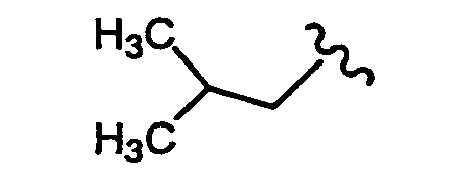
5.11 379.1 1-8 

5.91 473.1 1-9 

5.41 393.1 1-10 

5.86 419.1 1-11 

4.76 407.1 1-12 

6.41 481.1 1-13 
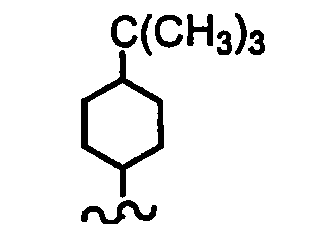
5.31 475.1 1-14 
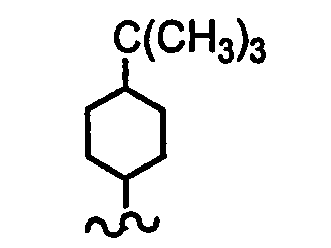
5.86 467.1 1-15 

5.36 475.1 1-16 

5.26 479.1 1-17 

5.71 511.1 1-18 
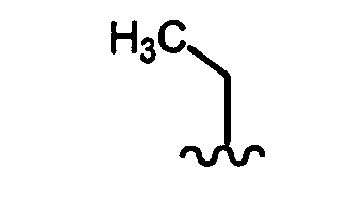
3.76 365.1 1-19 

3.76 357.1 1-20 

3.71 365.1 1-21 

4.11 377.1 1-22 

2.5 420.1 1-23 

2.65 412.1 1-24 

2.45 420.1 1-25 

2.4 424.1 1-26 

2.75 456.1 1-27 
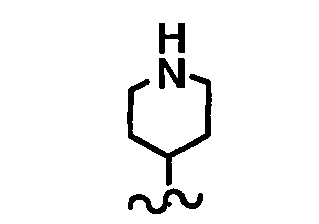
2.3 406.1 1-28 

4.56 433.1 1-29 

5.01 425.1 1-30 

4.46 433.1 1-31 

5.16 531.1 1-32 

4.31 437.1 1-33 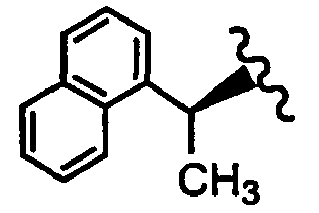

4.96 469.1 1-34 

4.21 419.1 1-35 

4.61 433.1 1-36 
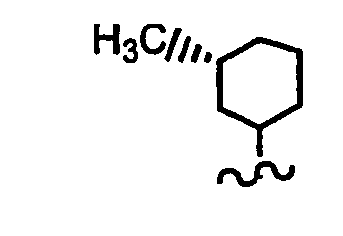
5.01 425.1 1-37 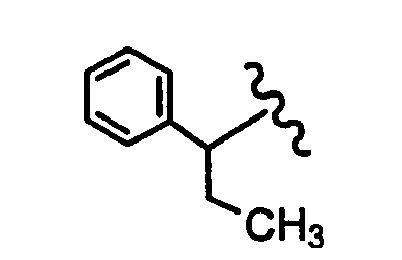

4.56 433.1 1-38 

3.76 435.1 1-39 

4.36 437.1 1-40 
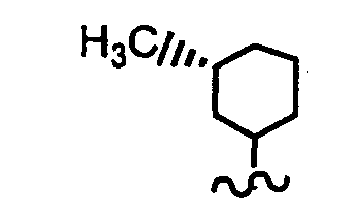
4.86 469.1 1-41 

4.26 419.1 1-42 

3.56 421.1 1-43 

3.36 413.1 1-44 

3.1 421.1 1-45 

4.21 519.1 1-46 

2.9 425.1 1-47 

4.16 457.1 1-48 

2.85 407.1 1-49 

4.36 419.1 1-50 

4.61 411.1 1-51 

4.21 419.1 1-52 

3.96 423.1 1-53 

4.81 455.1 1-54 

4.41 405.1 1-55 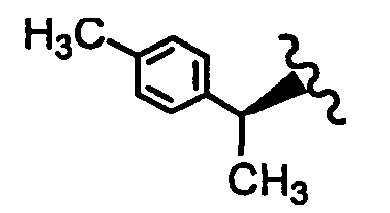

4.11 405.1 1-56 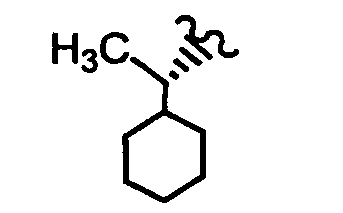

4.46 397.1 1-57 

4.01 405.1 1-58 

4.76 503.1 1-59 

5.56 409.1 1-60 

6.26 441.1 1-61 

5.36 391.1 1-62 
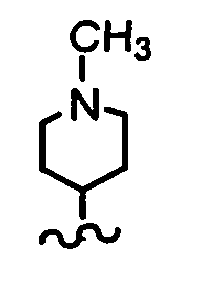
4.91 426.1 1-63 
H 5.21 337.1 1-64 
H 5.51 329.1 1-65 
H 5.11 337.1 1-66 
H 4.86 341.1 1-67 
H 5.66 373.1 1-68 
H 4.51 323.1 1-69 

6.91 451.1 1-70 

5.66 369.1 1-71 

6.61 437.1 1-72 

5.06 439.1 1-73 

5.06 482.1 1-74 

5.16 437.1 1-75 

6.11 439.1 1-76 

5.91 439.1 1-77 

5.66 441.1 1-78 
H 5.06 437.1 1-79 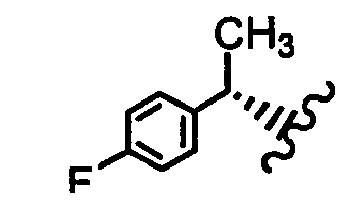

5.16 383.1 1-80 

7.16 479.1 1-81 

6.06 449.1 1-82 

6.16 411.1 1-83 

4.71 464.1 1-84 

4.01 491.1 -

- To a cooled solution (0 °C) of p-fluoroacetophenone (13.8 g, 0.1 mol) and (S)-3,3-diphenyl-1-methyltetrahydro-3H-pyrrolo-[1,2-c][1,3,2]oxazaborole (30 ml of a 2M solution in toluene) in anhydrous THF (400 ml) under N2 was added borane dimethylsulfide (14 ml, 0.14 mol). The solution was stirred at 0 °C for 30 min, then CH3OH (50 ml) was added, followed by washing with 1 M HCl, water, saturated NaHCO3 and drying over anhydrous Na2SO4. The solvent was evaporated to give 13.5 g (R)-p-fluroro-α-methylbenzylalcohol.
Anal Data: 1H NMR (CDCl3), δ7.35(d, 2H), δ7.1 (t, 2H), δ4.9(q, 1 H), δ1.45(d, 3H). HPLC: (Chiralpak AS column, 10% isopropanol in hexane, flow rate 1 ml/min) 5.68 min R isomer 98%; 6.10 min, S isomer 2%. - To a cooled solution (-15 °C) of the product of Step 1 (23.5 g, 0.168 mol) in toluene (300 ml) was added diphenylphosporyl azide (55.4 g, 0.395 mol) followed by DBU (30.4 ml, 0.2 mol). After stirring overnight, the resulting biphasic solution was poured into 500 ml 1 N HCl. The aqueous layer was extracted with toluene and the combined organic layers were washed with water, 1 N HCl and dried over Na2SO4. After removal of solvent, 25 g of crude product was obtained and was carried on to next step without further purification.
- A mixture of the crude product of Step 2 (1.2 g, 7.3 mmol), conc. HCl (1 ml in 50 ml CH3OH) and Pd/C (10% w/w) (140 mg) was hydrogenated at 60 psi for 4 hr. After removal of the solvent, the residue was redissolved in 20 ml water and washed with ether. The aqueous layer was then basified to pH 11 and extracted with ether. The ether solution was dried and solvent evaporated to give 1.1 gram of (S)-p-fluoro-α-methylbenzylamine.
Anal Data: 1H NMR(CDCl3), δ7.3(dd 2H), δ7.05(t, 2H), δ4.8(q, 1 H), δ1.5(d, 3H). HPLC: (Chiralpak CR(+) column, perchloric acid in water pH 1.5, flow rate 1 ml/min) 31.8 min S isomer 97.5%; 43.2 min, R isomer 2.5%. - To a solution of the product of Step 3 (4.8 g, 34.5 mmol), 4-(N-Boc-piperidinylmethyl)-benzoic acid (10 g, 31.3 mmol) and DMAP (0.38 g, 3.1 mmol) in CH2Cl2 was added EDCI hydrochloride (6.1 g, 34.4 mmol) and the final solution was stirred for 2 h before being quenched with 0.5 N HCl. The mixture was extracted with CH2Cl2 and washed with water. After removal of solvent, the residue was dissolved in TFA (10 ml) for 30 min. After removal of the acid, the residue was chromatographed to give 10.2 gram of desired product.
Anal Data: 1H NMR (CD3OD), δ7.76(d, 2H), δ7.40(dd, 2H), δ7.25(dd, 2H), δ7.05(t, 2H), δ5.2(q, 1H), δ2.95(m, 2H), δ2.59(m, 2H), δ2.5(m, 2H), δ1.65(m, 1 H), δ1.6(m, 2H), δ1.55(d, 3H), δ1.95(m, 2H). - To a solution of the product of Step 4 (7.5 grams, 22 mmol) in DCE (250 ml) was added cyclohexanone (3.24 g, 33 mmol) and sodium triacetoxyborohydride (7.01 g, 33 mmol). After the final mixture was stirred overnight, it was poured into 1N HCl and the solution washed with ether. The aqueous layer was basified with NaOH to pH 11 and extracted with CH2Cl2. The organic layer was dried, the solvent evaporated and the residue chromatographed to give 8.5 g of the title compound.
Anal Data: 1H NMR (CD3OD): δ7.668(d,2H), δ7.354(q,2H), δ7.186(d,2H), δ7.028(t,2H), δ5.309(m,1H), δ2.858(d,2H), δ2.565(d,2H), δ2.231 (m,1H), δ2.105(td,2H), δ1.86-1.75(m,4H), δ1.614(m,2H), δ1.58(d,3H), δ1.56-1.42(m,3H), δ1.32-1.02(m,6H).
[α]D/20 19.8 in MeOH.
C13(CDCl3) δ 167.4, 164.2, 161.7, 145.9, 140.0, 132.9, 130.3, 128.9, 128.8, 127.8, 116.6, 116.4, 65.1, 50.4, 49.7, 44.4, 39.5, 33.9, 30.1, 27.6, 27.4, 23.1
ES-LCMS, 6.36 min, LC area 100%, M+1, 423.
Melting Point (HCl Salt): 234-235 °C. -

- To a solution of t,t-3,5-dimethylcyclohexyl-p-toluenesulfonate (1.35 g, 4.61 mmol) in 4-methyl-2-pentanone (5 ml) was added the product of Example 2, Step 4 (0.522 g, 1.537 mmol) and Na2CO3 (3.26 g, 30.74 mmol) and the mixture was refluxed overnight. The final reaction mixture was filtered and the solid washed with CH2Cl2 The combined organic layer was concentrated and the residue was chromatographed using a mixture of 5%v/v 2M NH3 in CH3OH with CH2Cl2 to give 420 mg of the title compound.
Anal Data: 1H NMR(CDCl3): δ7.75(d,2H), δ7.40(q,2H), δ7.248(d,2H), δ7.046(t,2H), δ5.217(q,1H), δ2.918(d,2H),2.597(d,2H), δ2.408(tt,1 H), δ2.241(t,2H), δ1.835(d,2H), δ1.7-1.57(m,3H), δ1.542(d,3H), δ1.5-1.22(m,6H), δ0.92(d,6H), δ0.835(q,1H),
δ0.498(q,1H). -

-

- Following the same procedure for Example 3, and using the tosylate from step 1, the title compound was prepared.
H1 NMR(CDCl3): δ7.65 (d, 2 H), δ7.35 (m, 2H), δ7.2 (d, 2H), δ7.0 (m, 2H), δ5.3 (m, 1H), δ2.8 (m, 2 H), δ2.6 (d, 2H), δ2.45 (m, 1H), δ2.05-2.25 (m, 6 H), δ1.45-1.8 (m, 4H), δ1.6 (d, 3H), δ1.2-1.4 (m, 5H). ES-LCMS, Rt 6.11 min., observed mass, 559 (M+H). -

- To a solution of the product of Example 2, Step 4 (2.46 g, 7.2 mmol) in DCE (75 ml) was added bicyclo[3,3,1]nonan-9-one (1.0 g, 7.2 mmol) and sodium triacetoxyborohydride (3.24 g, 14 mmol). After the final mixture was stirred overnight, the solvent was evaporated and the residue chromatographed to give 0.640 g of the title compound.
Anal Data: 1H NMR(CD3OD): δ7.675(d,2H), δ7.360(q,2H), δ7.194(d,2H), δ7.027(t,2H), δ5.309(m,1H), δ3.07(d,2H), δ2.56(d,2H), δ2.00-1.66(m,11H), δ1.58(d,3H), δ1.54-1.43(m,7H), δ1.33-1.23(m,4H). -

-

- To a solution of 12 (0.91 mmol) in a mixture of 1:1 H2O/sat. Na2CO3 (10 ml) was added 13 (2mmol) in CH2Cl2 (2ml) solution under vigorous stirring. After 1 h, the organic layer was separated and the aqueous layer washed with CH2Cl2 3 times. The combined organic solution was washed with sat. Na2CO3 and brine, then dried with Na2SO4. After removal of solvent, the residue was purified through a semi-preparative HPLC column eluting with 2% (v/v) 7N NH3 in CH3OH in CH2Cl2 to give 140 mg of the desired product.
H1 NMR (CDCl3) δ 8.55, d, 2 H, δ 7.7, d 2H, δ 7.26 d, 2 H, δ 7.20 d, 2H; δ 6.45 d, 1 H; δ 5.3, m, 1 H; δ 2.85, m 2H; δ 2.58, d, 2H; δ 2.25, m, 1 H; δ 2.1, m, 2 H; v 1.7-1.9, m, 4H; δ 1.4-1.65, m, 7H; δ 1.0-1.35, m; 6H.
LCMS: C18 reverse phase column, 5%-95% gradient of CH3CN/water in 10 min. Ret. Time 3.58 min, obs. M+1 406.
Claims (10)
- A compound having the structural formula
 R1 is R5-(C3-C8)cycloalkyl, R5-(C3-C8)cycloalkyl(C1-C6)alkyl, R5-aryl, R5-aryl-(C1-C6)alkyl or R5-heteroaryl;R2 is H, (C1-C6)alkyl, R6-(C3-C8)cycloalkyl, R6-(C3-C8)cycloarkyl-(C1-C6)alkyl, R6-heterocycloalkyl, R6-(C6-C10)bridged cycloalkyl, or R6-bridged heterocycloalkyl;R3 is C1-C6 alkyl or -CH2OH;R4 is H or C1-C6 alkyl;R5 is 1-4 substituents independently selected from the group consisting of H, C1-C6 alkyl, halogen, -OH, C1-C6 alkoxy, CF3, -CN, -CO2R4, -CONHR4, -SO2NHR4, -NHSO2R4 and -NHC(O)R4; andR6 is 1-4 substituents independently selected from the group consisting of H, C1-C6 alkyl, halogen, -OH, C1-C6 alkoxy, CF3, -NH2, (C1-C6)alkylamino, phenyl, C1-C2 alkylenedioxy, and (C1-C6)alkoxycarbonyl;wherein:the term "alkyl" refers to a straight or branched saturated hydrocarbon chain having the designated number of carbon atoms;the term "cycloalkyl" refers to a saturated carbocyclic ring having 3 to 8 carbon atoms;the term "bridged cycloalkyl refers to cycloalkyl rings wherein two non-adjacent ring members are joined by a C1-C2 alkyl chain;the term "heterocycloalkyl" refers to 4- to 7-membered saturated rings comprising 1 to 3 heteroatoms independently selected from -O-, -S- and -NR7-, wherein R7 is H or C1-C6 alkyl, and wherein the remaining ring members are carbon, and where a heterocyclic ring comprises more than one heteroatom, no rings are formed where there are adjacent oxygen atoms, adjacent sulphur atoms, or three consecutive heteroatoms;the term "bridged heterocycloalkyl" refers to heterocycloalkyl rings wherein two non-adjacent carbon ring members are joined by a C1-C2 alkyl chain;the term "halogen" refers to fluoro, chloro, bromo or iodo;the term "aryl" refers to phenyl or naphthyl;the term "heteroaryl" refers to a 5 or 6-membered aromatic ring comprising 1 to 3 heteroatoms independently selected from the group consisting of -O-, -S- and -N=, provided that the rings do not include adjacent oxygen and/or sulphur atoms; andwhen a variable appears more than once in the structural formula, for example R5, the identify of each variable appearing more than once may be independently selected from the definition for that variable.
 - A compound of claim 1 wherein R1 is R5-phenyl or R5-cyclohexyl.
- A compound of claim 2 wherein R5 is H, halogen or C1-C6 alkyl
- A compound of claim 1 wherein R2 is R6-C3-C8 cycloalkyl.
- A compound of claim 5 wherein R6 is H or C1-C6 alkyl.
- A compound of claim 1 selected from the group consisting of


- A pharmaceutical composition comprising a therapeutically effective amount of a compound of claim 1 in combination with a pharmaceutically acceptable carrier.
- The use of a compound of claim 1 for the preparation of a medicament for treating a cognitive or neurodegenerative disease.
- The use of a compound of claim 1 in combination with an acetylcholinesterase inhibitor for the preparation of a medicament for treating a cognitive or neurodegenerative disease.
- A kit for use in treating a cognitive or neurodegenerative disease comprising, in separate containers in a single package, pharmaceutical compounds for use in combination, in one container a compound in accordance with claim 1 and in a separate container an acetylcholinesterase inhibitor, said compound and inhibitor each being in a pharmaceutically acceptable carrier and their combined quantities being an effective amount.
Applications Claiming Priority (3)
| Application Number | Priority Date | Filing Date | Title |
|---|---|---|---|
| US25785300P | 2000-12-22 | 2000-12-22 | |
| US257853P | 2000-12-22 | ||
| PCT/US2001/049063 WO2002051808A2 (en) | 2000-12-22 | 2001-12-17 | Muscarinic antagonists |
Publications (2)
| Publication Number | Publication Date |
|---|---|
| EP1343760A2 EP1343760A2 (en) | 2003-09-17 |
| EP1343760B1 true EP1343760B1 (en) | 2009-08-12 |
Family
ID=22978046
Family Applications (1)
| Application Number | Title | Priority Date | Filing Date |
|---|---|---|---|
| EP01985584A Expired - Lifetime EP1343760B1 (en) | 2000-12-22 | 2001-12-17 | Muscarinic antagonists |
Country Status (15)
| Country | Link |
|---|---|
| US (1) | US6458812B1 (en) |
| EP (1) | EP1343760B1 (en) |
| JP (2) | JP4012068B2 (en) |
| CN (1) | CN1481360A (en) |
| AR (1) | AR035612A1 (en) |
| AT (1) | ATE439344T1 (en) |
| AU (1) | AU2002235224A1 (en) |
| CA (1) | CA2431952C (en) |
| DE (1) | DE60139571D1 (en) |
| ES (1) | ES2329975T3 (en) |
| HK (1) | HK1054391A1 (en) |
| MX (1) | MXPA03005743A (en) |
| MY (1) | MY133992A (en) |
| PE (1) | PE20020657A1 (en) |
| WO (1) | WO2002051808A2 (en) |
Families Citing this family (29)
| Publication number | Priority date | Publication date | Assignee | Title |
|---|---|---|---|---|
| US7763609B2 (en) | 2003-12-15 | 2010-07-27 | Schering Corporation | Heterocyclic aspartyl protease inhibitors |
| US7700603B2 (en) * | 2003-12-15 | 2010-04-20 | Schering Corporation | Heterocyclic aspartyl protease inhibitors |
| US7592348B2 (en) | 2003-12-15 | 2009-09-22 | Schering Corporation | Heterocyclic aspartyl protease inhibitors |
| CN101044200A (en) * | 2004-09-24 | 2007-09-26 | 巴尔的摩马里兰大学 | How to treat organophosphate poisoning |
| US9132135B2 (en) * | 2004-09-24 | 2015-09-15 | University Of Maryland, Baltimore | Method of treating organophosphorous poisoning |
| US7678116B2 (en) | 2004-12-06 | 2010-03-16 | Dfine, Inc. | Bone treatment systems and methods |
| US7559932B2 (en) * | 2004-12-06 | 2009-07-14 | Dfine, Inc. | Bone treatment systems and methods |
| US7722620B2 (en) | 2004-12-06 | 2010-05-25 | Dfine, Inc. | Bone treatment systems and methods |
| CN101228163A (en) | 2005-06-14 | 2008-07-23 | 先灵公司 | Aspartyl protease inhibitors |
| CA2610828A1 (en) | 2005-06-14 | 2006-12-28 | Schering Corporation | Heterocyclic aspartyl protease inhibitors, preparation and use thereof |
| AR054510A1 (en) | 2005-06-14 | 2007-06-27 | Schering Corp | HETEROCICLICAL COMPOUNDS AS INHIBITORS OF ASPARTIL PROTEASAS AND PHARMACEUTICAL COMPOSITIONS THAT UNDERSTAND THEM. |
| JP2008543844A (en) * | 2005-06-14 | 2008-12-04 | シェーリング コーポレイション | Aspartyl protease inhibitor |
| MX2007016185A (en) * | 2005-06-14 | 2008-03-07 | Schering Corp | Macrocyclic heterocyclic aspartyl protease inhibitors. |
| US20080027456A1 (en) * | 2006-07-19 | 2008-01-31 | Csaba Truckai | Bone treatment systems and methods |
| US8696679B2 (en) | 2006-12-08 | 2014-04-15 | Dfine, Inc. | Bone treatment systems and methods |
| JP2010512389A (en) | 2006-12-12 | 2010-04-22 | シェーリング コーポレイション | Aspartyl protease inhibitor |
| KR20090090364A (en) * | 2006-12-12 | 2009-08-25 | 쉐링 코포레이션 | Aspartyl Protease Inhibitor Containing Tricyclic Ring System |
| WO2008137428A2 (en) | 2007-04-30 | 2008-11-13 | Dfine, Inc. | Bone treatment systems and methods |
| JP2010538068A (en) | 2007-09-06 | 2010-12-09 | シェーリング コーポレイション | Gamma secretase modulator |
| EP2217604A1 (en) | 2007-11-05 | 2010-08-18 | Schering Corporation | Gamma secretase modulators |
| US8426595B2 (en) * | 2007-12-11 | 2013-04-23 | Xianhai Huang | Gamma secretase modulators |
| US8673900B2 (en) | 2008-11-13 | 2014-03-18 | Merck Sharp & Dohme Corp. | Gamma secretase modulators |
| EP2379566A2 (en) | 2008-12-22 | 2011-10-26 | Schering Corporation | Gamma secretase modulators |
| CA2747744A1 (en) | 2008-12-22 | 2010-07-01 | Theodros Asberom | Gamma secretase modulators |
| CA2754416A1 (en) * | 2009-03-26 | 2010-09-30 | Dainippon Sumitomo Pharma Co., Ltd. | Novel medicament for treating cognitive impairment |
| WO2010147975A1 (en) | 2009-06-16 | 2010-12-23 | Schering Corporation | Gamma secretase modulators |
| US20120232108A1 (en) | 2009-06-16 | 2012-09-13 | Xianhai Huang | Gamma secretase modulators |
| WO2010147969A2 (en) | 2009-06-16 | 2010-12-23 | Schering Corporation | Gamma secretase modulators |
| WO2011143457A2 (en) | 2010-05-12 | 2011-11-17 | Northwestern University | Compositions and methods for treating or preventing atrial fibrillation |
Family Cites Families (4)
| Publication number | Priority date | Publication date | Assignee | Title |
|---|---|---|---|---|
| JPH04312572A (en) * | 1991-04-12 | 1992-11-04 | Takeda Chem Ind Ltd | Cyclic amine compound |
| IL117149A0 (en) | 1995-02-23 | 1996-06-18 | Schering Corp | Muscarinic antagonists |
| TW542822B (en) * | 1997-01-17 | 2003-07-21 | Ajinomoto Kk | Benzamidine derivatives |
| US6066636A (en) | 1998-06-30 | 2000-05-23 | Schering Corporation | Muscarinic antagonists |
-
2001
- 2001-12-17 ES ES01985584T patent/ES2329975T3/en not_active Expired - Lifetime
- 2001-12-17 WO PCT/US2001/049063 patent/WO2002051808A2/en not_active Ceased
- 2001-12-17 AR ARP010105838A patent/AR035612A1/en unknown
- 2001-12-17 CA CA002431952A patent/CA2431952C/en not_active Expired - Fee Related
- 2001-12-17 HK HK03106691.6A patent/HK1054391A1/en unknown
- 2001-12-17 US US10/023,277 patent/US6458812B1/en not_active Expired - Fee Related
- 2001-12-17 JP JP2002552905A patent/JP4012068B2/en not_active Expired - Fee Related
- 2001-12-17 DE DE60139571T patent/DE60139571D1/en not_active Expired - Lifetime
- 2001-12-17 MX MXPA03005743A patent/MXPA03005743A/en active IP Right Grant
- 2001-12-17 AT AT01985584T patent/ATE439344T1/en not_active IP Right Cessation
- 2001-12-17 CN CNA018209718A patent/CN1481360A/en active Pending
- 2001-12-17 EP EP01985584A patent/EP1343760B1/en not_active Expired - Lifetime
- 2001-12-17 AU AU2002235224A patent/AU2002235224A1/en not_active Abandoned
- 2001-12-18 PE PE2001001266A patent/PE20020657A1/en not_active Application Discontinuation
- 2001-12-19 MY MYPI20015743A patent/MY133992A/en unknown
-
2007
- 2007-08-03 JP JP2007203608A patent/JP2007297410A/en active Pending
Also Published As
| Publication number | Publication date |
|---|---|
| HK1054391A1 (en) | 2003-11-28 |
| WO2002051808A2 (en) | 2002-07-04 |
| ATE439344T1 (en) | 2009-08-15 |
| JP2004516313A (en) | 2004-06-03 |
| CA2431952A1 (en) | 2002-07-04 |
| DE60139571D1 (en) | 2009-09-24 |
| WO2002051808A3 (en) | 2003-01-23 |
| EP1343760A2 (en) | 2003-09-17 |
| AR035612A1 (en) | 2004-06-16 |
| MXPA03005743A (en) | 2003-09-05 |
| PE20020657A1 (en) | 2002-07-23 |
| JP4012068B2 (en) | 2007-11-21 |
| MY133992A (en) | 2007-11-30 |
| ES2329975T3 (en) | 2009-12-03 |
| JP2007297410A (en) | 2007-11-15 |
| US6458812B1 (en) | 2002-10-01 |
| AU2002235224A1 (en) | 2002-07-08 |
| CN1481360A (en) | 2004-03-10 |
| CA2431952C (en) | 2010-03-09 |
Similar Documents
| Publication | Publication Date | Title |
|---|---|---|
| US6458812B1 (en) | Muscarinic antagonists | |
| US6294554B1 (en) | Muscarinic antagonists | |
| CA2263167C (en) | Ether muscarinic antagonists | |
| US6288068B1 (en) | Muscarinic antagonists | |
| US6451797B1 (en) | Muscarinic antagonists | |
| CA2259655C (en) | 1,4-di-sustituted piperidines as muscarinic antagonists | |
| CA2360360C (en) | Piperidyl benzamide compounds, composition containing same and their use thereof | |
| HK1054390B (en) | Piperidine mch antagonists and their use in the treatment of obesity | |
| US6936611B2 (en) | Serine protease inhibitors | |
| AU747815B2 (en) | Cyclic amide compounds | |
| EP1214299B1 (en) | Muscarinic antagonists | |
| CA2182101C (en) | Neuroprotective compounds | |
| NZ589934A (en) | Piperidine biphenyl carbamic acid compounds active as muscarinic receptor antagonists | |
| US6395753B1 (en) | Cyclic amine compounds and pharmaceutical composition containing the same | |
| Sato et al. | Synthesis and structure–activity relationships of N-{1-[(6-fluoro-2-naphthyl) methyl] piperidin-4-yl} benzamide derivatives as novel CCR3 antagonists | |
| MXPA99001500A (en) | Ether muscarinic antagonists | |
| AU1890400A (en) | Amide compounds |
Legal Events
| Date | Code | Title | Description |
|---|---|---|---|
| PUAI | Public reference made under article 153(3) epc to a published international application that has entered the european phase |
Free format text: ORIGINAL CODE: 0009012 |
|
| 17P | Request for examination filed |
Effective date: 20030526 |
|
| AK | Designated contracting states |
Kind code of ref document: A2 Designated state(s): AT BE CH CY DE DK ES FI FR GB GR IE IT LI LU MC NL PT SE TR |
|
| AX | Request for extension of the european patent |
Extension state: AL LT LV MK RO SI |
|
| 17Q | First examination report despatched |
Effective date: 20080331 |
|
| GRAP | Despatch of communication of intention to grant a patent |
Free format text: ORIGINAL CODE: EPIDOSNIGR1 |
|
| GRAS | Grant fee paid |
Free format text: ORIGINAL CODE: EPIDOSNIGR3 |
|
| GRAA | (expected) grant |
Free format text: ORIGINAL CODE: 0009210 |
|
| RIN1 | Information on inventor provided before grant (corrected) |
Inventor name: GUO, GUIHUA Inventor name: YE, YUANZAN Inventor name: ZHU, ZHAONING Inventor name: MCKITTRICK, BRIAN, A. |
|
| REG | Reference to a national code |
Ref country code: HK Ref legal event code: WD Ref document number: 1054391 Country of ref document: HK |
|
| AK | Designated contracting states |
Kind code of ref document: B1 Designated state(s): AT BE CH CY DE DK ES FI FR GB GR IE IT LI LU MC NL PT SE TR |
|
| AX | Request for extension of the european patent |
Extension state: RO SI |
|
| REG | Reference to a national code |
Ref country code: GB Ref legal event code: FG4D |
|
| REG | Reference to a national code |
Ref country code: CH Ref legal event code: EP |
|
| REG | Reference to a national code |
Ref country code: IE Ref legal event code: FG4D |
|
| REF | Corresponds to: |
Ref document number: 60139571 Country of ref document: DE Date of ref document: 20090924 Kind code of ref document: P |
|
| REG | Reference to a national code |
Ref country code: ES Ref legal event code: FG2A Ref document number: 2329975 Country of ref document: ES Kind code of ref document: T3 |
|
| PG25 | Lapsed in a contracting state [announced via postgrant information from national office to epo] |
Ref country code: AT Free format text: LAPSE BECAUSE OF FAILURE TO SUBMIT A TRANSLATION OF THE DESCRIPTION OR TO PAY THE FEE WITHIN THE PRESCRIBED TIME-LIMIT Effective date: 20090812 Ref country code: SE Free format text: LAPSE BECAUSE OF FAILURE TO SUBMIT A TRANSLATION OF THE DESCRIPTION OR TO PAY THE FEE WITHIN THE PRESCRIBED TIME-LIMIT Effective date: 20090812 Ref country code: FI Free format text: LAPSE BECAUSE OF FAILURE TO SUBMIT A TRANSLATION OF THE DESCRIPTION OR TO PAY THE FEE WITHIN THE PRESCRIBED TIME-LIMIT Effective date: 20090812 |
|
| PG25 | Lapsed in a contracting state [announced via postgrant information from national office to epo] |
Ref country code: PT Free format text: LAPSE BECAUSE OF FAILURE TO SUBMIT A TRANSLATION OF THE DESCRIPTION OR TO PAY THE FEE WITHIN THE PRESCRIBED TIME-LIMIT Effective date: 20091212 |
|
| PG25 | Lapsed in a contracting state [announced via postgrant information from national office to epo] |
Ref country code: DK Free format text: LAPSE BECAUSE OF FAILURE TO SUBMIT A TRANSLATION OF THE DESCRIPTION OR TO PAY THE FEE WITHIN THE PRESCRIBED TIME-LIMIT Effective date: 20090812 |
|
| PLBE | No opposition filed within time limit |
Free format text: ORIGINAL CODE: 0009261 |
|
| STAA | Information on the status of an ep patent application or granted ep patent |
Free format text: STATUS: NO OPPOSITION FILED WITHIN TIME LIMIT |
|
| PG25 | Lapsed in a contracting state [announced via postgrant information from national office to epo] |
Ref country code: BE Free format text: LAPSE BECAUSE OF FAILURE TO SUBMIT A TRANSLATION OF THE DESCRIPTION OR TO PAY THE FEE WITHIN THE PRESCRIBED TIME-LIMIT Effective date: 20090812 |
|
| 26N | No opposition filed |
Effective date: 20100517 |
|
| PG25 | Lapsed in a contracting state [announced via postgrant information from national office to epo] |
Ref country code: MC Free format text: LAPSE BECAUSE OF NON-PAYMENT OF DUE FEES Effective date: 20100701 |
|
| REG | Reference to a national code |
Ref country code: CH Ref legal event code: PL |
|
| PG25 | Lapsed in a contracting state [announced via postgrant information from national office to epo] |
Ref country code: GR Free format text: LAPSE BECAUSE OF FAILURE TO SUBMIT A TRANSLATION OF THE DESCRIPTION OR TO PAY THE FEE WITHIN THE PRESCRIBED TIME-LIMIT Effective date: 20091113 Ref country code: IE Free format text: LAPSE BECAUSE OF NON-PAYMENT OF DUE FEES Effective date: 20091217 Ref country code: CH Free format text: LAPSE BECAUSE OF NON-PAYMENT OF DUE FEES Effective date: 20091231 Ref country code: LI Free format text: LAPSE BECAUSE OF NON-PAYMENT OF DUE FEES Effective date: 20091231 |
|
| PGFP | Annual fee paid to national office [announced via postgrant information from national office to epo] |
Ref country code: IT Payment date: 20101211 Year of fee payment: 10 |
|
| PG25 | Lapsed in a contracting state [announced via postgrant information from national office to epo] |
Ref country code: LU Free format text: LAPSE BECAUSE OF NON-PAYMENT OF DUE FEES Effective date: 20091217 |
|
| PGFP | Annual fee paid to national office [announced via postgrant information from national office to epo] |
Ref country code: ES Payment date: 20101215 Year of fee payment: 10 |
|
| PG25 | Lapsed in a contracting state [announced via postgrant information from national office to epo] |
Ref country code: TR Free format text: LAPSE BECAUSE OF FAILURE TO SUBMIT A TRANSLATION OF THE DESCRIPTION OR TO PAY THE FEE WITHIN THE PRESCRIBED TIME-LIMIT Effective date: 20090812 |
|
| PG25 | Lapsed in a contracting state [announced via postgrant information from national office to epo] |
Ref country code: CY Free format text: LAPSE BECAUSE OF FAILURE TO SUBMIT A TRANSLATION OF THE DESCRIPTION OR TO PAY THE FEE WITHIN THE PRESCRIBED TIME-LIMIT Effective date: 20090812 |
|
| REG | Reference to a national code |
Ref country code: NL Ref legal event code: TD Effective date: 20120924 |
|
| PG25 | Lapsed in a contracting state [announced via postgrant information from national office to epo] |
Ref country code: IT Free format text: LAPSE BECAUSE OF NON-PAYMENT OF DUE FEES Effective date: 20111217 |
|
| PGFP | Annual fee paid to national office [announced via postgrant information from national office to epo] |
Ref country code: GB Payment date: 20121128 Year of fee payment: 12 |
|
| PGFP | Annual fee paid to national office [announced via postgrant information from national office to epo] |
Ref country code: FR Payment date: 20121219 Year of fee payment: 12 Ref country code: NL Payment date: 20121212 Year of fee payment: 12 |
|
| REG | Reference to a national code |
Ref country code: FR Ref legal event code: CD Owner name: SCHERING CORPORATION, US Effective date: 20130319 |
|
| PGFP | Annual fee paid to national office [announced via postgrant information from national office to epo] |
Ref country code: DE Payment date: 20121221 Year of fee payment: 12 |
|
| REG | Reference to a national code |
Ref country code: ES Ref legal event code: FD2A Effective date: 20130704 |
|
| REG | Reference to a national code |
Ref country code: DE Ref legal event code: R082 Ref document number: 60139571 Country of ref document: DE Representative=s name: WUESTHOFF & WUESTHOFF PATENT- UND RECHTSANWAEL, DE Effective date: 20130516 Ref country code: DE Ref legal event code: R081 Ref document number: 60139571 Country of ref document: DE Owner name: MERCK SHARP & DOHME CORP., US Free format text: FORMER OWNER: SCHERING CORP., 07033-0530 KENILWORTH, US Effective date: 20130516 Ref country code: DE Ref legal event code: R081 Ref document number: 60139571 Country of ref document: DE Owner name: MERCK SHARP & DOHME CORP., RAHWAY, US Free format text: FORMER OWNER: SCHERING CORP., 07033-0530 KENILWORTH, NEW JERSEY, US Effective date: 20130516 |
|
| PG25 | Lapsed in a contracting state [announced via postgrant information from national office to epo] |
Ref country code: ES Free format text: LAPSE BECAUSE OF NON-PAYMENT OF DUE FEES Effective date: 20111218 |
|
| REG | Reference to a national code |
Ref country code: DE Ref legal event code: R119 Ref document number: 60139571 Country of ref document: DE |
|
| REG | Reference to a national code |
Ref country code: NL Ref legal event code: V1 Effective date: 20140701 |
|
| GBPC | Gb: european patent ceased through non-payment of renewal fee |
Effective date: 20131217 |
|
| REG | Reference to a national code |
Ref country code: FR Ref legal event code: ST Effective date: 20140829 |
|
| REG | Reference to a national code |
Ref country code: DE Ref legal event code: R119 Ref document number: 60139571 Country of ref document: DE Effective date: 20140701 |
|
| PG25 | Lapsed in a contracting state [announced via postgrant information from national office to epo] |
Ref country code: NL Free format text: LAPSE BECAUSE OF NON-PAYMENT OF DUE FEES Effective date: 20140701 Ref country code: DE Free format text: LAPSE BECAUSE OF NON-PAYMENT OF DUE FEES Effective date: 20140701 |
|
| PG25 | Lapsed in a contracting state [announced via postgrant information from national office to epo] |
Ref country code: GB Free format text: LAPSE BECAUSE OF NON-PAYMENT OF DUE FEES Effective date: 20131217 Ref country code: FR Free format text: LAPSE BECAUSE OF NON-PAYMENT OF DUE FEES Effective date: 20131231 |