EP1343503B1 - Heteroaryl urea neuropeptide y y5 receptor antagonists - Google Patents
Heteroaryl urea neuropeptide y y5 receptor antagonists Download PDFInfo
- Publication number
- EP1343503B1 EP1343503B1 EP01985069A EP01985069A EP1343503B1 EP 1343503 B1 EP1343503 B1 EP 1343503B1 EP 01985069 A EP01985069 A EP 01985069A EP 01985069 A EP01985069 A EP 01985069A EP 1343503 B1 EP1343503 B1 EP 1343503B1
- Authority
- EP
- European Patent Office
- Prior art keywords
- compound
- alkyl
- cycloalkyl
- cdcl
- pharmaceutically acceptable
- Prior art date
- Legal status (The legal status is an assumption and is not a legal conclusion. Google has not performed a legal analysis and makes no representation as to the accuracy of the status listed.)
- Expired - Lifetime
Links
- 0 CC(C)c1c(*)c(*)c(C(C)*)c(*)n1 Chemical compound CC(C)c1c(*)c(*)c(C(C)*)c(*)n1 0.000 description 37
- YISYUYYETHYYMD-UHFFFAOYSA-N Cc1cc(F)cc(F)c1 Chemical compound Cc1cc(F)cc(F)c1 YISYUYYETHYYMD-UHFFFAOYSA-N 0.000 description 8
- VJYXZJGDFJJDGF-UHFFFAOYSA-N Cc1cc(C(F)(F)F)ccc1 Chemical compound Cc1cc(C(F)(F)F)ccc1 VJYXZJGDFJJDGF-UHFFFAOYSA-N 0.000 description 2
- VZWOXDYRBDIHMA-UHFFFAOYSA-N Cc1ncc[s]1 Chemical compound Cc1ncc[s]1 VZWOXDYRBDIHMA-UHFFFAOYSA-N 0.000 description 2
- GQEMBHCLQKJPPO-UHFFFAOYSA-N CC(C1)=CC=CC1C(F)(F)F Chemical compound CC(C1)=CC=CC1C(F)(F)F GQEMBHCLQKJPPO-UHFFFAOYSA-N 0.000 description 1
- GGHHEQHMDYAWLG-UHFFFAOYSA-N CC(C1=CN=CC1)=O Chemical compound CC(C1=CN=CC1)=O GGHHEQHMDYAWLG-UHFFFAOYSA-N 0.000 description 1
- RKIRQSVYPLZQLD-UHFFFAOYSA-N CC(CC=C1)C=C1OC Chemical compound CC(CC=C1)C=C1OC RKIRQSVYPLZQLD-UHFFFAOYSA-N 0.000 description 1
- SBKCLEPTNVMMAD-UHFFFAOYSA-N CC(N(CC1)CCC1N(C)C(Nc1ccc(C2=CC(F)=CCC2)nn1)=O)=O Chemical compound CC(N(CC1)CCC1N(C)C(Nc1ccc(C2=CC(F)=CCC2)nn1)=O)=O SBKCLEPTNVMMAD-UHFFFAOYSA-N 0.000 description 1
- FHWYIHCFDVWRRC-UHFFFAOYSA-N CC(N(CC1)CCC1N(C)C(Nc1ncc(-c2cc(F)cc(F)c2)nc1)=O)=O Chemical compound CC(N(CC1)CCC1N(C)C(Nc1ncc(-c2cc(F)cc(F)c2)nc1)=O)=O FHWYIHCFDVWRRC-UHFFFAOYSA-N 0.000 description 1
- WMQUKDQWMMOHSA-UHFFFAOYSA-N CC(c1ccncc1)=O Chemical compound CC(c1ccncc1)=O WMQUKDQWMMOHSA-UHFFFAOYSA-N 0.000 description 1
- WEGYGNROSJDEIW-UHFFFAOYSA-N CC(c1cnccc1)=O Chemical compound CC(c1cnccc1)=O WEGYGNROSJDEIW-UHFFFAOYSA-N 0.000 description 1
- ZKFUDUZKZQZZPV-UHFFFAOYSA-N CC1C(C)=CC=CC1C(F)(F)F Chemical compound CC1C(C)=CC=CC1C(F)(F)F ZKFUDUZKZQZZPV-UHFFFAOYSA-N 0.000 description 1
- KKELFADYGLNXAS-UHFFFAOYSA-N CCC(N(CC1)CCC1N(C)C(Nc(nc1)ncc1-c1cc(F)cc(F)c1)=O)=O Chemical compound CCC(N(CC1)CCC1N(C)C(Nc(nc1)ncc1-c1cc(F)cc(F)c1)=O)=O KKELFADYGLNXAS-UHFFFAOYSA-N 0.000 description 1
- QPMPQWRPBYTLJW-YVMONPNESA-N CCC/C=N\OCC(C)=O Chemical compound CCC/C=N\OCC(C)=O QPMPQWRPBYTLJW-YVMONPNESA-N 0.000 description 1
- AJFDBNQQDYLMJN-UHFFFAOYSA-N CCN(CC)C(C)=O Chemical compound CCN(CC)C(C)=O AJFDBNQQDYLMJN-UHFFFAOYSA-N 0.000 description 1
- RGGAAZPFNRYYJD-UHFFFAOYSA-N CCc1cc(-c(nc2)ccc2NC[N+](C)(C2CCNCC2)[O-])cc(F)c1 Chemical compound CCc1cc(-c(nc2)ccc2NC[N+](C)(C2CCNCC2)[O-])cc(F)c1 RGGAAZPFNRYYJD-UHFFFAOYSA-N 0.000 description 1
- VZCAXGWGBMBQFG-UHFFFAOYSA-N CCc1cc(-c2ccc(NC(N(C)C(CC3)CCN3S(C)(=O)=O)=O)[s]2)ccc1 Chemical compound CCc1cc(-c2ccc(NC(N(C)C(CC3)CCN3S(C)(=O)=O)=O)[s]2)ccc1 VZCAXGWGBMBQFG-UHFFFAOYSA-N 0.000 description 1
- RXVCNHYPDVOIEN-UHFFFAOYSA-N CN(C(CC1)CCC1=O)C(Nc1ccc(-c2cc(F)cc(F)c2)nc1)=O Chemical compound CN(C(CC1)CCC1=O)C(Nc1ccc(-c2cc(F)cc(F)c2)nc1)=O RXVCNHYPDVOIEN-UHFFFAOYSA-N 0.000 description 1
- GBYACDYXZYZNRG-UHFFFAOYSA-N CN(C(CC1)CCN1C(C1CC1)=O)C(Nc1ncc(-c2cc(F)cc(F)c2)nc1)=O Chemical compound CN(C(CC1)CCN1C(C1CC1)=O)C(Nc1ncc(-c2cc(F)cc(F)c2)nc1)=O GBYACDYXZYZNRG-UHFFFAOYSA-N 0.000 description 1
- KLFWEWNUQLEPEQ-UHFFFAOYSA-N CN(C(CC1)CCN1C(C1CCC1)=O)C(Nc1ncc(-c2cc(F)cc(F)c2)nc1)=O Chemical compound CN(C(CC1)CCN1C(C1CCC1)=O)C(Nc1ncc(-c2cc(F)cc(F)c2)nc1)=O KLFWEWNUQLEPEQ-UHFFFAOYSA-N 0.000 description 1
- GFXJHONWFUJJHV-UHFFFAOYSA-N CN(C(CC1)CCN1C(C1CCCC1)=O)C(Nc1cnc(-c2cc(F)cc(F)c2)[s]1)=O Chemical compound CN(C(CC1)CCN1C(C1CCCC1)=O)C(Nc1cnc(-c2cc(F)cc(F)c2)[s]1)=O GFXJHONWFUJJHV-UHFFFAOYSA-N 0.000 description 1
- NUAIGSFCVRDEJF-UHFFFAOYSA-N CN(C(CC1)CCN1C(c(c(Cl)ccc1)c1[O]=C)=O)C(Nc1ccc(-c2cc(F)cc(F)c2)nc1)=O Chemical compound CN(C(CC1)CCN1C(c(c(Cl)ccc1)c1[O]=C)=O)C(Nc1ccc(-c2cc(F)cc(F)c2)nc1)=O NUAIGSFCVRDEJF-UHFFFAOYSA-N 0.000 description 1
- VZJFLKVKLCDVMR-UHFFFAOYSA-N CN(C(CC1)CCN1C(c1ccc[s]1)=O)C(Nc1ncc(-c2cc(F)cc(F)c2)nc1)=O Chemical compound CN(C(CC1)CCN1C(c1ccc[s]1)=O)C(Nc1ncc(-c2cc(F)cc(F)c2)nc1)=O VZJFLKVKLCDVMR-UHFFFAOYSA-N 0.000 description 1
- RSZMMXUIWLILFN-UHFFFAOYSA-N CN(C(CC1)CCN1C(c1ccncc1)=O)C(Nc(cc1)cnc1-c1cc(F)cc(F)c1)=O Chemical compound CN(C(CC1)CCN1C(c1ccncc1)=O)C(Nc(cc1)cnc1-c1cc(F)cc(F)c1)=O RSZMMXUIWLILFN-UHFFFAOYSA-N 0.000 description 1
- QWBAIXMVNJFRKG-UHFFFAOYSA-N CN(C(CC1)CCN1C(c1cnccc1)=O)C(Nc1cnc(-c2cc(F)cc(F)c2)nc1)=O Chemical compound CN(C(CC1)CCN1C(c1cnccc1)=O)C(Nc1cnc(-c2cc(F)cc(F)c2)nc1)=O QWBAIXMVNJFRKG-UHFFFAOYSA-N 0.000 description 1
- TWLLLFPWYKSOTE-UHFFFAOYSA-O CN(C(CC1)CCN1[S+](=O)=O)C(Nc(nc1)ccc1-c1cccc(F)c1)=O Chemical compound CN(C(CC1)CCN1[S+](=O)=O)C(Nc(nc1)ccc1-c1cccc(F)c1)=O TWLLLFPWYKSOTE-UHFFFAOYSA-O 0.000 description 1
- GZMCDTQFSQXDRZ-UHFFFAOYSA-N CN(C(CC1)CN1C(CC1CC1)=O)C(Nc1ncc(-c2cc(F)cc(F)c2)nc1)=O Chemical compound CN(C(CC1)CN1C(CC1CC1)=O)C(Nc1ncc(-c2cc(F)cc(F)c2)nc1)=O GZMCDTQFSQXDRZ-UHFFFAOYSA-N 0.000 description 1
- OZILACRKXNYLPU-UHFFFAOYSA-O NC(N)=CC=C(c1cccc(F)c1)[NH3+] Chemical compound NC(N)=CC=C(c1cccc(F)c1)[NH3+] OZILACRKXNYLPU-UHFFFAOYSA-O 0.000 description 1
Classifications
-
- C—CHEMISTRY; METALLURGY
- C07—ORGANIC CHEMISTRY
- C07D—HETEROCYCLIC COMPOUNDS
- C07D401/00—Heterocyclic compounds containing two or more hetero rings, having nitrogen atoms as the only ring hetero atoms, at least one ring being a six-membered ring with only one nitrogen atom
- C07D401/02—Heterocyclic compounds containing two or more hetero rings, having nitrogen atoms as the only ring hetero atoms, at least one ring being a six-membered ring with only one nitrogen atom containing two hetero rings
- C07D401/12—Heterocyclic compounds containing two or more hetero rings, having nitrogen atoms as the only ring hetero atoms, at least one ring being a six-membered ring with only one nitrogen atom containing two hetero rings linked by a chain containing hetero atoms as chain links
-
- A—HUMAN NECESSITIES
- A61—MEDICAL OR VETERINARY SCIENCE; HYGIENE
- A61K—PREPARATIONS FOR MEDICAL, DENTAL OR TOILETRY PURPOSES
- A61K31/00—Medicinal preparations containing organic active ingredients
- A61K31/33—Heterocyclic compounds
- A61K31/395—Heterocyclic compounds having nitrogen as a ring hetero atom, e.g. guanethidine or rifamycins
- A61K31/435—Heterocyclic compounds having nitrogen as a ring hetero atom, e.g. guanethidine or rifamycins having six-membered rings with one nitrogen as the only ring hetero atom
- A61K31/44—Non condensed pyridines; Hydrogenated derivatives thereof
- A61K31/445—Non condensed piperidines, e.g. piperocaine
- A61K31/4523—Non condensed piperidines, e.g. piperocaine containing further heterocyclic ring systems
-
- A—HUMAN NECESSITIES
- A61—MEDICAL OR VETERINARY SCIENCE; HYGIENE
- A61K—PREPARATIONS FOR MEDICAL, DENTAL OR TOILETRY PURPOSES
- A61K31/00—Medicinal preparations containing organic active ingredients
- A61K31/33—Heterocyclic compounds
- A61K31/395—Heterocyclic compounds having nitrogen as a ring hetero atom, e.g. guanethidine or rifamycins
- A61K31/435—Heterocyclic compounds having nitrogen as a ring hetero atom, e.g. guanethidine or rifamycins having six-membered rings with one nitrogen as the only ring hetero atom
- A61K31/44—Non condensed pyridines; Hydrogenated derivatives thereof
- A61K31/445—Non condensed piperidines, e.g. piperocaine
- A61K31/4523—Non condensed piperidines, e.g. piperocaine containing further heterocyclic ring systems
- A61K31/4535—Non condensed piperidines, e.g. piperocaine containing further heterocyclic ring systems containing a heterocyclic ring having sulfur as a ring hetero atom, e.g. pizotifen
-
- A—HUMAN NECESSITIES
- A61—MEDICAL OR VETERINARY SCIENCE; HYGIENE
- A61K—PREPARATIONS FOR MEDICAL, DENTAL OR TOILETRY PURPOSES
- A61K31/00—Medicinal preparations containing organic active ingredients
- A61K31/33—Heterocyclic compounds
- A61K31/395—Heterocyclic compounds having nitrogen as a ring hetero atom, e.g. guanethidine or rifamycins
- A61K31/435—Heterocyclic compounds having nitrogen as a ring hetero atom, e.g. guanethidine or rifamycins having six-membered rings with one nitrogen as the only ring hetero atom
- A61K31/44—Non condensed pyridines; Hydrogenated derivatives thereof
- A61K31/445—Non condensed piperidines, e.g. piperocaine
- A61K31/4523—Non condensed piperidines, e.g. piperocaine containing further heterocyclic ring systems
- A61K31/4545—Non condensed piperidines, e.g. piperocaine containing further heterocyclic ring systems containing a six-membered ring with nitrogen as a ring hetero atom, e.g. pipamperone, anabasine
-
- A—HUMAN NECESSITIES
- A61—MEDICAL OR VETERINARY SCIENCE; HYGIENE
- A61K—PREPARATIONS FOR MEDICAL, DENTAL OR TOILETRY PURPOSES
- A61K31/00—Medicinal preparations containing organic active ingredients
- A61K31/33—Heterocyclic compounds
- A61K31/395—Heterocyclic compounds having nitrogen as a ring hetero atom, e.g. guanethidine or rifamycins
- A61K31/495—Heterocyclic compounds having nitrogen as a ring hetero atom, e.g. guanethidine or rifamycins having six-membered rings with two or more nitrogen atoms as the only ring heteroatoms, e.g. piperazine or tetrazines
- A61K31/4965—Non-condensed pyrazines
- A61K31/497—Non-condensed pyrazines containing further heterocyclic rings
-
- A—HUMAN NECESSITIES
- A61—MEDICAL OR VETERINARY SCIENCE; HYGIENE
- A61K—PREPARATIONS FOR MEDICAL, DENTAL OR TOILETRY PURPOSES
- A61K31/00—Medicinal preparations containing organic active ingredients
- A61K31/33—Heterocyclic compounds
- A61K31/395—Heterocyclic compounds having nitrogen as a ring hetero atom, e.g. guanethidine or rifamycins
- A61K31/495—Heterocyclic compounds having nitrogen as a ring hetero atom, e.g. guanethidine or rifamycins having six-membered rings with two or more nitrogen atoms as the only ring heteroatoms, e.g. piperazine or tetrazines
- A61K31/50—Pyridazines; Hydrogenated pyridazines
- A61K31/501—Pyridazines; Hydrogenated pyridazines not condensed and containing further heterocyclic rings
-
- A—HUMAN NECESSITIES
- A61—MEDICAL OR VETERINARY SCIENCE; HYGIENE
- A61K—PREPARATIONS FOR MEDICAL, DENTAL OR TOILETRY PURPOSES
- A61K31/00—Medicinal preparations containing organic active ingredients
- A61K31/33—Heterocyclic compounds
- A61K31/395—Heterocyclic compounds having nitrogen as a ring hetero atom, e.g. guanethidine or rifamycins
- A61K31/495—Heterocyclic compounds having nitrogen as a ring hetero atom, e.g. guanethidine or rifamycins having six-membered rings with two or more nitrogen atoms as the only ring heteroatoms, e.g. piperazine or tetrazines
- A61K31/505—Pyrimidines; Hydrogenated pyrimidines, e.g. trimethoprim
- A61K31/506—Pyrimidines; Hydrogenated pyrimidines, e.g. trimethoprim not condensed and containing further heterocyclic rings
-
- A—HUMAN NECESSITIES
- A61—MEDICAL OR VETERINARY SCIENCE; HYGIENE
- A61K—PREPARATIONS FOR MEDICAL, DENTAL OR TOILETRY PURPOSES
- A61K45/00—Medicinal preparations containing active ingredients not provided for in groups A61K31/00 - A61K41/00
- A61K45/06—Mixtures of active ingredients without chemical characterisation, e.g. antiphlogistics and cardiaca
-
- A—HUMAN NECESSITIES
- A61—MEDICAL OR VETERINARY SCIENCE; HYGIENE
- A61P—SPECIFIC THERAPEUTIC ACTIVITY OF CHEMICAL COMPOUNDS OR MEDICINAL PREPARATIONS
- A61P3/00—Drugs for disorders of the metabolism
-
- A—HUMAN NECESSITIES
- A61—MEDICAL OR VETERINARY SCIENCE; HYGIENE
- A61P—SPECIFIC THERAPEUTIC ACTIVITY OF CHEMICAL COMPOUNDS OR MEDICINAL PREPARATIONS
- A61P3/00—Drugs for disorders of the metabolism
- A61P3/04—Anorexiants; Antiobesity agents
-
- A—HUMAN NECESSITIES
- A61—MEDICAL OR VETERINARY SCIENCE; HYGIENE
- A61P—SPECIFIC THERAPEUTIC ACTIVITY OF CHEMICAL COMPOUNDS OR MEDICINAL PREPARATIONS
- A61P3/00—Drugs for disorders of the metabolism
- A61P3/06—Antihyperlipidemics
-
- A—HUMAN NECESSITIES
- A61—MEDICAL OR VETERINARY SCIENCE; HYGIENE
- A61P—SPECIFIC THERAPEUTIC ACTIVITY OF CHEMICAL COMPOUNDS OR MEDICINAL PREPARATIONS
- A61P3/00—Drugs for disorders of the metabolism
- A61P3/08—Drugs for disorders of the metabolism for glucose homeostasis
- A61P3/10—Drugs for disorders of the metabolism for glucose homeostasis for hyperglycaemia, e.g. antidiabetics
-
- A—HUMAN NECESSITIES
- A61—MEDICAL OR VETERINARY SCIENCE; HYGIENE
- A61P—SPECIFIC THERAPEUTIC ACTIVITY OF CHEMICAL COMPOUNDS OR MEDICINAL PREPARATIONS
- A61P9/00—Drugs for disorders of the cardiovascular system
- A61P9/12—Antihypertensives
-
- C—CHEMISTRY; METALLURGY
- C07—ORGANIC CHEMISTRY
- C07D—HETEROCYCLIC COMPOUNDS
- C07D401/00—Heterocyclic compounds containing two or more hetero rings, having nitrogen atoms as the only ring hetero atoms, at least one ring being a six-membered ring with only one nitrogen atom
- C07D401/14—Heterocyclic compounds containing two or more hetero rings, having nitrogen atoms as the only ring hetero atoms, at least one ring being a six-membered ring with only one nitrogen atom containing three or more hetero rings
-
- C—CHEMISTRY; METALLURGY
- C07—ORGANIC CHEMISTRY
- C07D—HETEROCYCLIC COMPOUNDS
- C07D403/00—Heterocyclic compounds containing two or more hetero rings, having nitrogen atoms as the only ring hetero atoms, not provided for by group C07D401/00
- C07D403/02—Heterocyclic compounds containing two or more hetero rings, having nitrogen atoms as the only ring hetero atoms, not provided for by group C07D401/00 containing two hetero rings
- C07D403/12—Heterocyclic compounds containing two or more hetero rings, having nitrogen atoms as the only ring hetero atoms, not provided for by group C07D401/00 containing two hetero rings linked by a chain containing hetero atoms as chain links
-
- C—CHEMISTRY; METALLURGY
- C07—ORGANIC CHEMISTRY
- C07D—HETEROCYCLIC COMPOUNDS
- C07D409/00—Heterocyclic compounds containing two or more hetero rings, at least one ring having sulfur atoms as the only ring hetero atoms
- C07D409/02—Heterocyclic compounds containing two or more hetero rings, at least one ring having sulfur atoms as the only ring hetero atoms containing two hetero rings
- C07D409/12—Heterocyclic compounds containing two or more hetero rings, at least one ring having sulfur atoms as the only ring hetero atoms containing two hetero rings linked by a chain containing hetero atoms as chain links
-
- C—CHEMISTRY; METALLURGY
- C07—ORGANIC CHEMISTRY
- C07D—HETEROCYCLIC COMPOUNDS
- C07D409/00—Heterocyclic compounds containing two or more hetero rings, at least one ring having sulfur atoms as the only ring hetero atoms
- C07D409/14—Heterocyclic compounds containing two or more hetero rings, at least one ring having sulfur atoms as the only ring hetero atoms containing three or more hetero rings
-
- C—CHEMISTRY; METALLURGY
- C07—ORGANIC CHEMISTRY
- C07D—HETEROCYCLIC COMPOUNDS
- C07D417/00—Heterocyclic compounds containing two or more hetero rings, at least one ring having nitrogen and sulfur atoms as the only ring hetero atoms, not provided for by group C07D415/00
- C07D417/02—Heterocyclic compounds containing two or more hetero rings, at least one ring having nitrogen and sulfur atoms as the only ring hetero atoms, not provided for by group C07D415/00 containing two hetero rings
- C07D417/12—Heterocyclic compounds containing two or more hetero rings, at least one ring having nitrogen and sulfur atoms as the only ring hetero atoms, not provided for by group C07D415/00 containing two hetero rings linked by a chain containing hetero atoms as chain links
-
- C—CHEMISTRY; METALLURGY
- C07—ORGANIC CHEMISTRY
- C07D—HETEROCYCLIC COMPOUNDS
- C07D417/00—Heterocyclic compounds containing two or more hetero rings, at least one ring having nitrogen and sulfur atoms as the only ring hetero atoms, not provided for by group C07D415/00
- C07D417/14—Heterocyclic compounds containing two or more hetero rings, at least one ring having nitrogen and sulfur atoms as the only ring hetero atoms, not provided for by group C07D415/00 containing three or more hetero rings
Definitions
- This invention relates to heteroaryl urea neuropeptide Y Y5 receptor antagonists useful in the treatment of eating disorders, pharmaceutical compositions containing the compounds, and methods of treatment using the compounds.
- Neuropeptide Y is a 36 amino acid neuropeptide that is widely distributed in the central and peripheral nervous systems.
- NPY is a member of the pancreatic polypeptide family that also includes peptide YY and pancreatic polypeptide ( Wahlestedt, C., and Reis, D., Ann. Rev. Toxicol., 32, 309, 1993 ).
- NPY elicits its physiological effects by activation of at least six receptor subtypes designated Y1, Y2, Y3, Y4, Y5 and Y6 ( Gehlert, D., Proc. Soc. Exp. Biol. Med., 218, 7, 1998 ; Michel, M. et al., Pharmacol. Rev., 50, 143, 1998 ).
- NPY Y5 receptor subtype The isolation and characterization of the NPY Y5 receptor subtype has been reported ( Gerald, C. et al., Nature, 1996, 382, 168 ; Gerald, C. et al. WO 96/16542 ).
- WO 99/09024 describes phenyl urea and thiourea derivatives stated to have activity as HFGAN72 antagonists.
- EP 0 955 293 describes urea derivatives for the treatment of bulimia, obesity or diabetes.
- WO 00/63171 describes indole derivatives that have an affinity for the NPY5 receptor.
- the invention also relates to pharmaceutical compositions containing the compounds of the invention, as well as the use of the compounds alone or in combination with other therapeutic agents in treating eating and metabolic disorders
- Alkyl represents a straight or branched saturated hydrocarbon chain having the designated number of carbon atoms. Where the number of carbon atoms is not specified, 1 to 6 carbons are intended.
- Halo represents fluoro, chloro, bromo or iodo.
- Aryl refers to a mono- or bicyclic ring system having one or two aromatic rings including, but not limited to, phenyl, naphthyl, tetrahydronaphthyl, indanyl, and the like.
- the aryl group can be unsubstituted or substituted with one, two, or three substituents independently selected from lower alkyl, halo, cyano, nitro, haloalkyl, hydroxy, alkoxy, carboxy, carboxamide, mercapto, sulfhydryl, amino, alkylamino and dialkylamino.
- the heteroaryl group can be unsubstituted or substituted with one, two, or three substituents independently selected from lower alkyl, halo, cyano, nitro, haloalkyl, hydroxy, alkoxy, carboxy, carboxamide, mercapto, sulfhydryl, amino, alkylamino, dialkylamino.
- each variable appearing more than once may be independently selected from the definition for that variable.
- prodrug refers to compounds that are drug precursors which following administration, release the drug in vivo via some chemical or physiological process (e.g., a prodrug on being brought to the physiological pH or through enzyme action is converted to the desired drug form).
- chemically stable compound is defined as a compound that can be isolated, characterized, and tested for biological activity.
- all isomers including diastereomers, enantiomers and rotational isomers are contemplated as being part of this invention.
- the invention includes d and I isomers in both pure form and in admixture, including racemic mixtures. Isomers can be prepared using conventional techniques, either by reacting optically enricheo or optically pure starting materials or by separating isomers of a compound of Formula I.
- Compounds of Formula I can exist in unsolvated and solvated forms, including hydrated forms.
- the solvated forms with pharmaceutically acceptable solvents such as water, ethanol and the like, are equivalent to the unsolvated forms for purposes of this invention.
- a compound of Formula I may form pharmaceutically acceptable salts with organic and inorganic acids.
- suitable acids for salt formation are hydrochloric, sulfuric, phosphoric, acetic, citric, malonic, salicylic, malic, fumaric, succinic, ascorbic, maleic, methanesulfonic and other mineral and carboxylic acids well known to those skilled in the art.
- the salts are prepared by contacting the free base forms with a sufficient amount of the desired acid to produce a salt in the conventional manner.
- the free base forms may be regenerated by treating the salt with a suitable dilute aqueous base solution, such as dilute aqueous sodium hydroxide, potassium carbonate, ammonia or sodium bicarbonate.
- the free base forms differ from their respective salt forms somewhat in certain physical properties, such as solubility in polar solvents, but the salts are otherwise equivalent to their respective free base forms for purposes of the invention.
- the preferred group includes the above compounds wherein R 1 is hydrogen, R 2 is hydrogen or -(C 1 -C 6 )alkyl, R 4 , R 5 , R 6 and R 7 are independently hydrogen or halogen, R 8 is 1-3 substitutents independently selected from the group consisting of H, halogen, -O(C 1 -C 6 )alkyl, -OH, polyhaloalkyl and polyhaloalkoxy, R 9 is -SO 2 (C 1 -C 6 )alkyl, -SO 2 (C 3 -C 7 )cycloalkyl, -SO 2 (C 1 -C 6 )alkyl(C 3 -C 7 )cycloalkyl, -SO 2 aryl, - SO 2 heteroaryl, -SO 2 NR 13 R 14 , -CO(C 1 -C 6 )alkyl, -CO(C 3 -C 7 )cycloalkyl, -CO(C 1 -C 1
- the compounds of the invention may be used in a method of treating a patient having a disease or condition mediated by NPY by administering a therapeutically effective amount of a compound of Formula I, or a pharmaceutically acceptable salt of said compound or to the mammal. It is preferred that the receptor is the NPY-5 receptor.
- the compounds of the invention may also be used in a method of treating obesity comprising administering to a patient in need of such treatment a therapeutically effective amount of a compound of Formula I, or a pharmaceutically acceptable salt of said compound.
- the compounds of the invention may also be used in a method for treating eating and metabolic disorders such as bulimia and anorexia comprising administering to a patient a therapeutically effective amount of a compound of Formula I, or a pharmaceutically acceptable salt of said compound.
- the compounds of the invention may also be used in a method for treating hyperlipidemia comprising administering to a patient a therapeutically effective amount of a compound of Formula I, or a pharmaceutically acceptable salt of said compound.
- the compounds of the invention may also be used in a method for treating cellulite and fat accumulation comprising administering to a patient a therapeutically effective amount of a compound of Formula I, or a pharmaceutically acceptable salt of said compound.
- the compounds of the invention may also be used in a method for treating type II diabetes comprising administering to a patient a therapeutically effective amount of a compound of Formula I. a prodrug thereof, or a pharmaceutically acceptable salt of said compound.
- the compounds of the invention may also have utility in the treatment of central nervous system disorders such as seizures, depression, anxiety, alcoholism, pain; metabolic disorders such as hormone abnormalities; bone diseases such as osteoporosis, osteopenia, and Paget's disease; cardiovascular and renal disorders such hypertension, cardiac hypertrophy, vasopspasm and nephropathy; sexual and reproductive disorders; gastrointestinal disorders such as Crohn's disease; and respiratory diseases such as asthma.
- central nervous system disorders such as seizures, depression, anxiety, alcoholism, pain
- metabolic disorders such as hormone abnormalities
- bone diseases such as osteoporosis, osteopenia, and Paget's disease
- cardiovascular and renal disorders such hypertension, cardiac hypertrophy, vasopspasm and nephropathy
- sexual and reproductive disorders gastrointestinal disorders such as Crohn's disease
- respiratory diseases such as asthma.
- compositions which comprise an amount of a compound of the invention and a pharmaceutically acceptable carrier therefor.
- This invention is also directed to pharmaceutical compositions for the treatment of obesity which comprise an obesity treating amount of a compound of the invention and a pharmaceutically acceptable carrier therefor.
- a nitro heteroaryl halide is coupled to an aryl boronic acid to give a nitro-substituted biaryl derivative. Reduction of the nitro group gives a biaryl amine derivative.
- an amino heteroaryl halide derivative is coupled to an aryl boronic acid derivative to directly give an amino biaryl derivative.
- Cleavage of the protecting group provides an amine that can be derivatized by treatment with, for example, acyl chlorides, sulfonyl chlorides, and isocyanates.
- an amino substituted cyclic amine derivative wherein the ring nitrogen is derivatized with an R 9 substituent can be used (path B).
- Path B is the preferred method when R 9 is aryl or heteroaryl.
- a biaryl amine derivative is treated with triphosgene and a base followed by treatment with 4-(methylamino)cyclohexanone ethylene ketal to give a urea derivative.
- Deprotection of the ketal for example, by treatment with a strong acid, gives a ketone derivative.
- the ketone can then be derivatized by treatment with QNH 2 .
- an acid chloride is condensed with thiosemicarbazide to give an N-acyl thiosemicarbazide derivative.
- Treatment of the N-acyl thiosemicarbazide with a strong acid results in the formation of an aminothiadiazole derivative.
- the aminothiadiazole is converted to a substituted urea derivative as described earlier.
- a 5-halo-2-nitrothiazole derivative is coupled to an arylzinc halide under palladium catalysis to give a 2-aryl-5-nitrothiazole derivative.
- the 5-nitrothiazole derivative is then converted to a substituted urea derivative as described in earlier Schemes.
- the compounds of Formula I exhibit selective neuropeptide Y Y5 receptor antagonizing activity, which has been correlated with pharmaceutical activity for treating eating disorders, such as obesity and hyperphagia, and diabetes.
- the compounds of Formula I display pharmacological activity in test procedures designed to demonstrate neuropeptide Y Y5 receptor antagonist activity.
- the compounds are non-toxic at pharmaceutically therapeutic doses. Following are descriptions of the test procedures.
- HEK-293 cells expressing the Y5 receptor subtype were maintained in Dulbecco's modified Eagles' media (Gico-BRL) supplemented with 10% FCS (ICN), 1% penicillin-streptomycin and 200 ⁇ g/ml Geneticin®(GibcoBRL #11811-031) under a humidified 5% CO 2 atmosphere. Two days prior to assay, cells were released from T-175 tissue culture flasks using cell dissociation solution (1X; non-enzymatic [Sigma #C-5914]) and seeded into 96-well, flat-bottom tissue culture plates at a density of 15,000 to 20,000 cells per well.
- HBSS Hank's balanced salt solution
- assay buffer HBSS supplemented with 4 mM MgCl 2 , 10 mM HEPES, 0.2% BSA [HH]
- IBMX 3-isobutyl-1-methylxanthine
- the amount of cAMP in each well was quantified using the [ 125 I]-cAMP FlashPlate® kit (NEN #SMP-001) and according to the protocol provided by the manufacturer. Data were expressed as either pmol cAMP/ml or as percent of control. All data points were determined in triplicate and EC 50 's (nM) were calculated using a nonlinear (sigmoidal) regression equation (GraphPad PrismTM).
- K B [ B ⁇ / 1 - A ⁇ / [ A ]
- [A] is the EC 50 of the agonist (NPY) in the absence of antagonist
- [A'] is the EC 50 of the agonist (NPY) in the presence of antagonist
- [B] is the concentration of the antagonist.
- Human NPY Y5 receptors were expressed in CHO cells. Binding assays were performed in 50 mM HEPES, pH 7.2, 2.5 mM CaCl 2 , 1 mM MgCl 2 and 0.1 % BSA containing 5-10 ⁇ g of membrane protein and 0.1 nM 125 L-peptide YY in a total volume of 200 ⁇ l. Non-specific binding was determined in the presence of 1 ⁇ M NPY. The reaction mixtures were incubated for 90 minutes at room temperature then filtered through Millipore MAFC glass fiber filter plates which had been pre-soaked in 0.5% polyethleneimine. The filters were washed with phosphate-buffered saline, and radioactivity was measured in a Packard TopCount scintillation counter.
- a range of neuropeptide Y5 receptor binding activity of from about 0.3nM to about 1000nM was observed.
- Compounds of this invention preferably have a binding activity in the range of from about 0.3nM to about 500nM, more preferably from about 0.3nM to about 100nM, and most preferably from about 0.3nM to about 10nM.
- Yet another aspect of this invention is combinations of a compound of Formula I, or a pharmaceutically acceptable salt of said compound or and other compounds as described below.
- another aspect of this invention is a compound of the invention for use in treating obesity by a treatment comprising administering to a patient
- This invention is also directed to a pharmaceutical combination composition
- a pharmaceutical combination composition comprising: a therapeutically effective amount of a composition comprising a first compound, said first compound being a Formula I compound, or a pharmaceutically acceptable salt of said compound a second compound, said second compound being a ⁇ 3 agonist, a thyromimetic agent, an eating behavior modifying agent, or an NPY antagonist; and/or optionally a pharmaceutical carrier, vehicle or diluent.
- Another aspect of this invention is a kit comprising:
- Preferred antiobesity agents taken singly or in any combination thereof in the above combination methods, combination compositions and combination kits are described below.
- anorectic and/or antiobesity agents are anorectic and/or antiobesity agents:
- Another aspect of this invention is a compound of the invention for use in treating diabetes by a treatment comprising administering to a patient
- Another aspect of this invention is a kit comprising:
- compositions containing the active ingredient may be in a form suitable for oral use, for example, as tablets, troches, lozenges, aqueous or oily suspensions, dispersible powders or granules, emulsions, hard or soft capsules, or syrups or elixirs.
- Compositions intended for oral use may be prepared according to any method known to the art for the manufacture of pharmaceutical compositions and such compositions may contain one or more agents selected from the group consisting of sweetening agents, flavoring agents, coloring agents and preserving agents in order to provide pharmaceutically elegant and palatable preparations. Tablets contain the active ingredient in admixture with non-toxic pharmaceutically acceptable excipients which are suitable for the manufacture of tablets.
- excipients may be for example, inert diluents, such as calcium carbonate, sodium carbonate, lactose, calcium phosphate or sodium phosphate; granulating and disintegrating agents, for example, corn starch, or alginic acid; binding agents, for example starch, gelatin or acacia, and lubricating agents, for example magnesium stearate, stearic acid or talc.
- the tablets may be uncoated or they may be coated by known techniques to delay disintegration and absorption in the gastrointestinal tract and thereby provide a sustained action over a longer period.
- a time delay material such as glyceryl monostearate or glyceryl distearate may be employed. They may also be coated by the technique described in the U.S. Pat. Nos. 4,256,108 ; 4,166,452 ; and 4,265,874 to form osmotic therapeutic tablets for controlled release.
- Formulations for oral use may also be presented as hard gelatin capsules wherein the active ingredients is mixed with an inert solid diluent, for example, calcium carbonate, calcium phosphate or kaolin, or a soft gelatin capsules where in the active ingredient is mixed with water or an oil medium, for example peanut oil, liquid paraffin or olive oil.
- an inert solid diluent for example, calcium carbonate, calcium phosphate or kaolin
- an oil medium for example peanut oil, liquid paraffin or olive oil.
- Aqueous suspensions contain the active material in admixture with excipients suitable for the manufacture of aqueous suspensions.
- excipients are suspending agents, for example, sodium carboxymethylcellulose, methylcellulose, hydroxypropylmethyl-cellulose, sodium alginate, polyvinyl-pyrrolidone, gum tragacanth and gum acacia; dispersing or wetting agents may be a naturally-occurring phosphatide, for example, lecithin, or condensation products of an alkylene oxide with fatty acids, for example polyoxyethylene stearate, or condensation products of ethylene oxide with long chain aliphatic alcohols, for example, heptadecaethylene-oxycetanol, or condensation products of ethylene oxide with partial esters derived from fatty acids and a hexitol such as polyoxyethylene sorbitol monooleate, or condensation products of ethylene oxide with partial esters derived from fatty acids and hexitol anhydrides, for example, polyethylene
- the aqueous suspensions may also contain one or more preservatives, for example, ethyl or n-propyl, p-hydroxybenzoate, one or more coloring agents, one or more flavoring agents, and one or more sweetening agents, such as sucrose, saccharin or aspartame.
- preservatives for example, ethyl or n-propyl, p-hydroxybenzoate, one or more coloring agents, one or more flavoring agents, and one or more sweetening agents, such as sucrose, saccharin or aspartame.
- Oily suspensions may be formulated by suspending the active ingredient in a vegetable oil, for example, arachis oil, olive oil, sesame oil or coconut oil, or in mineral oil such as liquid paraffin.
- the oily suspensions may contain a thickening agent, for example, beeswax, hard paraffin or cetyl alcohol. Sweetening agents such as those set forth above, and flavoring agents may be added to provide a palatable oral preparation. These compositions may be preserved by the addition of an anti-oxidant such as ascorbic acid.
- Dispersible powders and granules suitable for preparation of an aqueous suspension by the addition of water provide the active ingredient in admixture with a dispersing or wetting agent, suspending agent and one or more preservatives.
- a dispersing or wetting agent e.g., sodium EDTA
- suspending agent e.g., sodium EDTA
- preservatives e.g., sodium EDTA, sodium sulfate, sodium bicarbonate
- the pharmaceutical compositions of the invention may also be in the form of an oil-in-water emulsions.
- the oily phase may be a vegetable oil, e.g., olive oil or arachis oil, or a mineral oil, e.g., liquid paraffin or mixtures of these.
- Suitable emulsifying agents may be naturally-occurring phosphatides, e.g., soy beans, lecithin, and esters or partial esters derived from fatty acids and hexitol anhydrides, for example, sorbitan monooleate, and condensation products of the said partial esters with ethylene oxide, e.g.,polyoxyethylene sorbitan monooleate.
- the emulsions may also contain sweetening and flavouring agents.
- Syrups and elixirs may be formulated with sweetening agents, for example, glycerol, propylene glycol, sorbitol or sucrose. Such formulations may also contain a demulcent, a preservative and flavoring and coloring agents.
- sweetening agents for example, glycerol, propylene glycol, sorbitol or sucrose.
- Such formulations may also contain a demulcent, a preservative and flavoring and coloring agents.
- the pharmaceutical compositions may be in the form of a sterile injectable aqueous or oleagenous suspension.
- This suspension may be formulated according to the known art using those suitable dispersing or wetting agents and suspending agents which have been mentioned above.
- the sterile injectable preparation may also be a sterile injectable solution or suspension in a non-toxic parenterally-acceptable diluent or solvent, e.g.,as a solution in 1,3-butane diol.
- a non-toxic parenterally-acceptable diluent or solvent e.g.,as a solution in 1,3-butane diol.
- the acceptable vehicles and solvents that may be employed are water, Ringer's solution and isotonic sodium chloride solution.
- sterile fixed oils are conventionally employed as a solvent or suspending medium.
- any bland fixed oil may be employed including synthetic mono- or diglycerides.
- fatty acids such as oleic acid find use in the preparation
- compositions can be prepared by mixing the drug with a suitable non-irritating excipient which is solid at ordinary temperatures but liquid at the rectal temperature and will therefore melt in the rectum to release the drug.
- suitable non-irritating excipient which is solid at ordinary temperatures but liquid at the rectal temperature and will therefore melt in the rectum to release the drug.
- Such materials are cocoa butter and polyethylene glycols.
- topical application For topical use, creams, ointments, jellies, solutions or suspensions, etc., containing the compound of the invention are employed. (For purposes of this application, topical application shall include mouthwashes and gargles.)
- the compounds for the present invention can be administered in the intranasal form via topical use of suitable intranasal vehicles, or via transdermal routes, using those forms of transdermal skin patches well known to those of ordinary skill in the art.
- the dosage administration will, of course, be continuous rather than intermittent throughout the dosage regimen.
- Compounds of the present invention may also be delivered as a suppository employing bases such as cocoa butter, glycerinated gelatin, hydrogenated vegetable oils, mixtures of polyethyleme glycols of various molecular weights and fatty acid esters of polyethylene glycol.
- the dosage regimen utilizing the compounds of the present invention is selected in accordance with a variety of factors including type, species, weight, sex and medical condition of the patient; the severity of the condition to be treated; the route of administration; the renal and hepatic function of the patient; and the particular compound thereof employed.
- a physician or veterinarian of ordinary skill can readily determine and prescribe the effective amount of the drug required to prevent, counter, arrest or reverse the progress of the condition.
- Optimal precision in achieving concentration of drug within the range that yields efficacy without toxicity requires a regimen based on the kinetics of the drug's availability to target sites. This involves a consideration of the distribution, equilibrium, and elimination of a drug.
- doses of the compound of structural The invention useful in the method of the present invention range from 0.01 to 1000 mg per adult human per day. Most preferably, dosages range from 0.1 to 500 mg/day.
- the compositions are preferably provided in the form of tablets containing 0.01 to 1000 milligrams of the active ingredient, particularly 0.01, 0.05, 0.1, 0.5, 1.0, 2.5, 5.0, 10.0, 15.0, 25.0, 50.0, 100 and 500 milligrams of the active ingredient for the symptomatic adjustment of the dosage to the patient to be treated.
- An effective amount of the drug is ordinarily supplied at a dosage level of from about 0.0002 mg/kg to about 50 mg/kg of body weight per day. The range is more particularly from about 0.001 mg/kg to 1 mg/kg of body weight per day.
- the active agent of the present invention may be administered in a single daily dose, or the total daily dosage may be administered in dividend doses of two, three or four time daily.
- the amount of active ingredient that may be combined with the carrier materials to produce single dosage form will vary depending upon the host treated and the particular mode of administration.
- the filter pad was washed with CH 2 Cl 2 /water, and the organic layer was washed with sat'd NaCl, dried (MgSO 4 ), filtered and concentrated. The residue was subjected to flash chromatography (gradient; CH 2 Cl 2 to 1:99 MeOH/CH 2 Cl 2 ) to give the product (1.15 g, 80%). MS m/e 394 (M+H) + .
- Example 6B A mixture of Example 6B (0.030 g, 0.071 mmol), CH 2 Cl 2 (5 ml) and m CPBA (57-80%, 0.032 g) was stirred at R.T. for 1.5 hr, then poured into H 2 O (10 ml). The whole was extracted with CH 2 Cl 2 (3x20 ml), dried (Na 2 SO 4 ), filtered and concentrated. Subjection of the residue to PTLC (1:20 CH 30 H/CH 2 Cl 2 ) gave the product (0.0194 mg, 62%) as a solid.
- Step 2 Reaction of the product of Step 1 with NiCl 2 •6H 2 O and NaBH 4 by essentially the procedure of Example 2, Step 2 gave the product.
- Step 2 Reaction of the product of Step 3 with HCl by essentially the procedure of Example 3, Step 2 gave the product.
- Step 4 (13-4) (25 mg, 0.074 mmol) in DMF (5 ml) was added methyl isocyanate (1 drop). The reaction mixture was allowed to warm to R.T., stirred for 3 days, then diluted with CH 2 Cl 2 and washed with water, 1N NaOH, and sat'd NaCl. The organic layer was dried (Na 2 SO 4 ), filtered and evaporated. The residue was subjected to PTLC (10:90 MeOH/CH 2 Cl 2 ) to give the product (9 mg, 31%).
- Step 2 (250 mg, 1.21 mmol) in toluene (8 ml) was added iPr 2 NEt (1.1 ml, 6.0 mmol) and triphosgene (145 mg, 0.49 mmol).
- iPr 2 NEt 1.1 ml, 6.0 mmol
- triphosgene 145 mg, 0.49 mmol
- the reaction mixture was heated to 110 °C for 4 hr, cooled, and Preparation 13 (250 mg, 1.47 mmol) was added.
- the reaction mixture was stirred for 16 hr, then partitioned between CH 2 Cl 2 (100 ml) and 1N NaOH (25 ml). The organic layer was washed with sat.
Landscapes
- Chemical & Material Sciences (AREA)
- Health & Medical Sciences (AREA)
- Organic Chemistry (AREA)
- Pharmacology & Pharmacy (AREA)
- Veterinary Medicine (AREA)
- Public Health (AREA)
- General Health & Medical Sciences (AREA)
- Animal Behavior & Ethology (AREA)
- Medicinal Chemistry (AREA)
- Life Sciences & Earth Sciences (AREA)
- Epidemiology (AREA)
- Diabetes (AREA)
- Chemical Kinetics & Catalysis (AREA)
- Nuclear Medicine, Radiotherapy & Molecular Imaging (AREA)
- General Chemical & Material Sciences (AREA)
- Bioinformatics & Cheminformatics (AREA)
- Engineering & Computer Science (AREA)
- Obesity (AREA)
- Hematology (AREA)
- Heart & Thoracic Surgery (AREA)
- Cardiology (AREA)
- Endocrinology (AREA)
- Child & Adolescent Psychology (AREA)
- Emergency Medicine (AREA)
- Pharmaceuticals Containing Other Organic And Inorganic Compounds (AREA)
- Medicines That Contain Protein Lipid Enzymes And Other Medicines (AREA)
- Peptides Or Proteins (AREA)
- Pyridine Compounds (AREA)
- Plural Heterocyclic Compounds (AREA)
- Acyclic And Carbocyclic Compounds In Medicinal Compositions (AREA)
Abstract
Description
- This invention relates to heteroaryl urea neuropeptide Y Y5 receptor antagonists useful in the treatment of eating disorders, pharmaceutical compositions containing the compounds, and methods of treatment using the compounds.
- Neuropeptide Y (NPY) is a 36 amino acid neuropeptide that is widely distributed in the central and peripheral nervous systems. NPY is a member of the pancreatic polypeptide family that also includes peptide YY and pancreatic polypeptide (Wahlestedt, C., and Reis, D., Ann. Rev. Toxicol., 32, 309, 1993). NPY elicits its physiological effects by activation of at least six receptor subtypes designated Y1, Y2, Y3, Y4, Y5 and Y6 (Gehlert, D., Proc. Soc. Exp. Biol. Med., 218, 7, 1998; Michel, M. et al., Pharmacol. Rev., 50, 143, 1998). Central administration of NPY to animals causes dramatically increased food intake and decreased energy expenditure (Stanley, B. and Leibowitz, S., Proc. Natl. Acad. Sci. USA 82: 3940, 1985; Billington et al., Am J. Physiol., 260, R321, 1991). These effects are believed to be mediated at least in part by activation of the NPY Y5 receptor subtype. The isolation and characterization of the NPY Y5 receptor subtype has been reported (Gerald, C. et al., Nature, 1996, 382, 168;
Gerald, C. et al. WO 96/16542 - Published
PCT patent application WO 00/27845 U.S. Patent Nos. 4,623,662 (antiatherosclerotic agents) and4,405,644 (treatment of lipometabolism). -
WO 99/09024 -
EP 0 955 293 describes urea derivatives for the treatment of bulimia, obesity or diabetes. -
WO 00/63171 -
US 4 405 644 describes phenylurea derivatives stated to be useful for combating lipometabolic diseases. - Provisional application,
U.S. Serial No. 60/232,255 - This invention relates to compounds of Formula I:

wherein
=A-B= is =C(R4)-C(R5)= and -X=Y- is -C(R6)=N-, -N=C(R7)-, -N=N- or -S-, or
=A-B= is =N-C(R5)= and -X=Y- is -N=C(R7)-, -C(R6)=N-, -S- or -O-, or
=A-B = is =C(R4)-N= and -X=Y- is -C(R6)=N-, -S- or -O-, or
=A-B= is =N-N= and -X=Y- is -S- or -O-, or
=A-B= is =C(R4)- and -X=Y- is -S-N=, -N(R10)-N=, or
=A-B= is -C(R4)= and -X=Y- is =N-S-, or =N-N(R10)-;
Z is
R2 is H, -(C1-C6)alkyl, -(C3-C7)cycloalkyl or -(C1-C6)alkyl(C3-C7)cycloalkyl;
R3 is


j is 1 or 2;
k is 0, 1 or 2;
I is 0, 1 or 2;
m is 0, 1 or 2;
R4, R5, R6 and R7 may be the same or different, and are independently selected from the group consisting of H, -OH, halogen, polyhaloalkyl, -(C1-C6)alkyl, -(C3-C7)cycloalkyl, -(C1-C6)alkyl(C3-C7)cycloalkyl, -CN, NR10R11, NR13R14, -O(C1-C6)alkyl, -O(C3-C7)cycloalkyl, -O(C1-C6)alkyl(C3-C7)cycolalkyl, -S(C1-C6)alkyl, -S(C3-C7)cycloalkyl or -S(C1-C6)alkyl(C3-C7)cycloalkyl;
R8 is 1 to 3 substituents, which may be the same or different, and are independently selected from the group consisting of H, halogen, -OH, polyhaloalkyl, polyhaloalkoxy, -CN, -NO2, -(C1-C6)alkyl, -(C3-C7)cycloalkyl, -(C1-C6)alkyl(C3-C7)cycloalkyl, NR10R11, NR13R14, -O(C1-C6)alkyl, -O(C3-C7)cycloalkyl, -O(C1-C6)alkyl(C3-C7)cycloalkyl or-CONR13R14;
R9 is -SO2(C1-C6)alkyl, -SO2(C3-C7)cycloalkyl, -SO2(C1-C6)alkyl(C3-C7)cycloalkyl, -SO2(C1-C6)polyhaloalkyl, -SO2[hydroxy(C2-C6)alkyl], -SO2[amino(C2-C6)alkyl], -SO2[alkoxy(C2-C6)alkyl], -SO2[alkylamino(C2-C6)alkyl],-SO2[dialkylamino(C2-C6)alkyl], -SO2(aryl), -SO2(heteroaryl), -SO2[aryl(C1-C6)alkyl], -SO2NR13R14, -CO(C1-C6)alkyl, -CO(C3-C7)cycloalkyl, -CO(C1-C6)alkyl(C3-C7)cycloalkyl, CO(C1-C6)polyhaloalkyl, -C(O)aryl, -C(O)heteroaryl, -CONR13R14,-C(S)NR13R14, aryl, heteroaryl, -(CH2)CONR13R14, -C(=NCN)alkylthio,-C(=NCN)NR13R14, -(C1-C6)alkyl, -(C3-C7)cycloalkyl, -(C1-C6)alkyl(C3-C7)cycloalkyl, -(C1-C6)alkylaryl, -(C1-C6)alkylheteroaryl or -COOR12;
R10 is H or alkyl;
R11 is H, -(C1-C6)alkyl, -(C3-C7)cycloalkyl, -(C1-C6)alkyl(C3-C7)cycloalkyl, aryl, heteroaryl, -SO2(C1-C6)alkyl, -SO2(C3-C7)cycloalkyl, -SO2(C1-C6)alkyl(C3-C7)cycloalkyl, -SO2(C1-C6)polyhaloalkyl, -SO2(aryl), -SO2(heteroaryl), -CO(C1-C6)alkyl, -CO(C3-C7)cycloalkyl -CO(C1-C6)alkyl(C3-C7)cycloalkyl, -C(O)aryl, -C(O)heteroaryl, -CONR13R14 or -COOR12;
R12 is (C1-C6)alkyl, (C3-C7)cycloalkyl, (C1-C6)alkyl(C3-C7)cycloalkyl, -(C1-C6)alkylaryl, -(C1-C6)alkylheteroaryl, aryl or heteroaryl;
R13 and R14 may be the same or different and are independently selected from H, -(C1-C6)alkyl, -(C3-C7)cycloalkyl, -(C1-C6)alkyl(C3-C7)cycloalkyl, -(C1-C6)alkylaryl, aryl or heteroaryl; and,
R15 is one or two substituents which may be the same or different and are independently selected from H, -(C1-C6)alkyl, -(C3-C7)cycloalkyl, -(C1-C6)alkyl(C3-C7)cycloalkyl, aryl, heteroaryl, -CN, -CONR13R14, -COOR13,-OH, -O(C1-C6)alkyl, -O(C3-C7)cycloalkyl, -O(C1-C6)alkyl(C3-C7)cycloalkyl, -NR10R11, -NR13R14, or a -(C1-C6)alkyl group substituted by an aryl, heteroaryl, hydroxy, alkoxy, -NR10R11, -NR13R14,-CONR13R14, or-COOR13 group, provided that a chemically stable compound results from substitution by R15. - The invention also relates to pharmaceutical compositions containing the compounds of the invention, as well as the use of the compounds alone or in combination with other therapeutic agents in treating eating and metabolic disorders
- The present invention relates to compounds of Formula I:

wherein
=A-B= is =C(R4)-C(R5)= and -X=Y- is -C(R6)=N-, -N=C(R7)-, -N=N- or -S-, or
=A-B= is =N-C(R5)= and -X=Y- is -N=C(R7)-, -C(R5)=N-, -S- or -O-, or
=A-B = is =C(R4)-N= and -X=Y- is -C(R6)=N-, -S- or -O-, or
=A-B= is =N-N= and -X=Y- is -S- or -O-, or
=A-B= is =C(R4)- and -X=Y- is -S-N=, -N(R10)-N=, or
=A-B= is -C(R4)= and -X=Y- is =N-S-, or =N-N(R10)-;
Z is
R2 is H, -(C1-C6)alkyl, -(C3-C7)cycloalkyl or -(C1-C6)alkyl(C3-C7)cycloalkyl;
R3 is

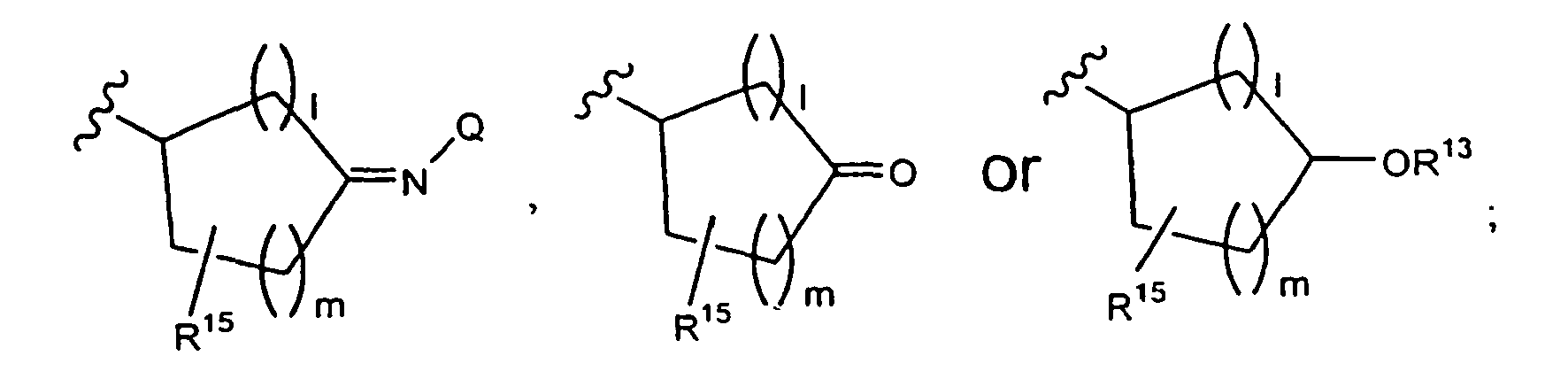
j is 1 or 2;
k is 0, 1 or 2;
l is 0, 1 or 2;
m is 0, 1 or 2;
R4, R5, R6 and R7 may be the same or different, and are independently selected from the group consisting of H, -OH, halogen, polyhaloalkyl, -(C1-C6)alkyl, -(C3-C7)cycloalkyl, -(C1-C6)alkyl(C3-C7)cycloalkyl, -CN, NR10R11, NR13R14, -O(C1-C6)alkyl, -O(C3-C7)cycloalkyl, -O(C1-C6)alkyl(C3-C7)cycolalkyl, -S(C1-C6)alkyl, -S(C3-C7)cycloalkyl or -S(C1-C6)alkyl(C3-C7)cycloalkyl;
R8 is 1 to 3 substituents, which may be the same or different, and are independently selected from the group consisting of H, halogen, -OH, polyhaloalkyl, polyhaloalkoxy, -CN, -NO2, -(C1-C6)alkyl, -(C3-C7)cycloalkyl,-(C1-C6)alkyl(C3-C7)cycloalkyl, NR10R11, NR13R14, -O(C1-C6)alkyl, -O(C3-C7)cycloalkyl, -O(C1-C6)alkyl(C3-C7)cycloalkyl or-CONR13R14;
R9 is -SO2(C1-C6)alkyl, -SO2(C3-C7)cycloalkyl, -SO2(C1-C6)alkyl(C3-C7)cycloalkyl, -SO2(C1-C6)polyhaloalkyl, -SO2[hydroxy(C2-C6)alkyl], -SO2[amino(C2-C6)alkyl], -SO2[alkoxy(C2-C6)alkyl], -SO2[alkylamino(C2-C6)alkyl],-SO2[dialkylamino(C2-C6)alkyl], -SO2(aryl), -SO2(heteroaryl), -SO2[aryl(C1-C6)alkyl], -SO2NR13R14, -CO(C1-C6)alkyl, -CO(C3-C7)cycloalkyl, -CO(C1-C6)alkyl(C3-C7)cycloalkyl, CO(C1-C6)polyhaloalkyl, -C(O)aryl, -C(O)heteroaryl, -CONR13R14,-C(S)NR13R14, aryl, heteroaryl, -(CH2)CONR13R14, -C(=NCN)alkylthio,-C(=NCN)NR13R14, -(C1-C6)alkyl, -(C3-C7)cycloalkyl, -(C1-C6)alkyl(C3-C7)cycloalkyl, -(C1-C6)alkylaryl, -(C1-C6)alkylheteroaryl or -COOR12;
R10 is H or alkyl;
R11 is H, -(C1-C6)alkyl, -(C3-C7)cycloalkyl, -(C1-C6)alkyl(C3-C7)cycloalkyl, aryl, heteroaryl, -SO2(C1-C6)alkyl, -SO2(C3-C7)cycloalkyl, -SO2(C1-C6)alkyl(C3-C7)cycloalkyl, -SO2(C1-C6)polyhaloalkyl, -SO2(aryl), -SO2(heteroaryl), -CO(C1-C6)alkyl, -CO(C3-C7)cycloalkyl, -CO(C1-C6)alkyl(C3-C7)cycloalkyl, -C(O)aryl, -C(O)heteroaryl, -CONR13R14 or -COOR12;
R12 is -(C1-C6)alkyl, (C3-C7)cycloalkyl, (C1-C6)alkyl(C3-C7)cycloalkyl, -(C1-C6)alkylaryl, -(C1-C6)alkylheteroaryl, aryl or heteroaryl;
R13 and R14 may be the same or different and are independently selected from H, -(C1-C6)alkyl, -(C3-C7)cycloalkyl, -(C1-C6)alkyl(C3-C7)cycloalkyl, -(C1-C6)alkylaryl, aryl or heteroaryl; and,
R15 is one or two substituents which may be the same or different and are independently selected from H, -(C1-C6)alkyl, -(C3-C7)cycloalkyl, -(C1-C6)alkyl(C3-C7)cycloalkyl, aryl, heteroaryl, -CN, -CONR13R14, -COOR13,-OH, -O(C1-C6)alkyl, -O(C3-C7)cycloalkyl, -O(C1-C6)alkyl(C3-C7)cycloalkyl, -NR10R11, -NR13R14, or a -(C1-C6)alkyl group substituted by an aryl, heteroaryl, hydroxy, alkoxy, -NR10R11, -NR13R14, -CONR13R14, or-COOR13 group, provided that a chemically stable compound results from substitution by R15. - Except where stated otherwise, the following definitions apply throughout the present specification and claims. Additionally, all technical and scientific terms used herein have the same meaning as is commonly understood by one of skill in the art to which this invention belongs. These definitions apply regardless of whether a term is used by itself or in combination with other terms. Hence the definition of "alkyl" applies to "alkyl" as well as to the "alkyl" portions of "alkoxy", etc.
- Alkyl represents a straight or branched saturated hydrocarbon chain having the designated number of carbon atoms. Where the number of carbon atoms is not specified, 1 to 6 carbons are intended.
- Halo represents fluoro, chloro, bromo or iodo.
- Aryl refers to a mono- or bicyclic ring system having one or two aromatic rings including, but not limited to, phenyl, naphthyl, tetrahydronaphthyl, indanyl, and the like. The aryl group can be unsubstituted or substituted with one, two, or three substituents independently selected from lower alkyl, halo, cyano, nitro, haloalkyl, hydroxy, alkoxy, carboxy, carboxamide, mercapto, sulfhydryl, amino, alkylamino and dialkylamino.
- Heteroaryl refers to 5- to 10-membered single or benzofused aromatic rings consisting of 1 to 3 heteroatoms independently selected from the group consisting of -O-, -S-, and -N=, provided that the rings do not possess adjacent oxygen and sulfur atoms. The heteroaryl group can be unsubstituted or substituted with one, two, or three substituents independently selected from lower alkyl, halo, cyano, nitro, haloalkyl, hydroxy, alkoxy, carboxy, carboxamide, mercapto, sulfhydryl, amino, alkylamino, dialkylamino.
- When a variable appears more than once in the structural formula, the identity of each variable appearing more than once may be independently selected from the definition for that variable.
- N-oxides can form on a tertiary nitrogen present in an R substituent, or on =N-in a heteroaryl ring substituent and are included in the compounds of Formula I.
- The expression "prodrug" refers to compounds that are drug precursors which following administration, release the drug in vivo via some chemical or physiological process (e.g., a prodrug on being brought to the physiological pH or through enzyme action is converted to the desired drug form).
- The term "chemically stable compound" is defined as a compound that can be isolated, characterized, and tested for biological activity.
- For compounds of the invention having at least one asymmetrical carbon atom, all isomers, including diastereomers, enantiomers and rotational isomers are contemplated as being part of this invention. The invention includes d and I isomers in both pure form and in admixture, including racemic mixtures. Isomers can be prepared using conventional techniques, either by reacting optically enricheo or optically pure starting materials or by separating isomers of a compound of Formula I.
- Compounds of Formula I can exist in unsolvated and solvated forms, including hydrated forms. In general, the solvated forms, with pharmaceutically acceptable solvents such as water, ethanol and the like, are equivalent to the unsolvated forms for purposes of this invention.
- A compound of Formula I may form pharmaceutically acceptable salts with organic and inorganic acids. Examples of suitable acids for salt formation are hydrochloric, sulfuric, phosphoric, acetic, citric, malonic, salicylic, malic, fumaric, succinic, ascorbic, maleic, methanesulfonic and other mineral and carboxylic acids well known to those skilled in the art. The salts are prepared by contacting the free base forms with a sufficient amount of the desired acid to produce a salt in the conventional manner. The free base forms may be regenerated by treating the salt with a suitable dilute aqueous base solution, such as dilute aqueous sodium hydroxide, potassium carbonate, ammonia or sodium bicarbonate. The free base forms differ from their respective salt forms somewhat in certain physical properties, such as solubility in polar solvents, but the salts are otherwise equivalent to their respective free base forms for purposes of the invention.
- In a preferred group of compounds of Formula I, the heterocyclic group attached to Z is


- In particular, the preferred group includes the above compounds wherein R1 is hydrogen, R2 is hydrogen or -(C1-C6)alkyl, R4, R5, R6 and R7 are independently hydrogen or halogen, R8 is 1-3 substitutents independently selected from the group consisting of H, halogen, -O(C1-C6)alkyl, -OH, polyhaloalkyl and polyhaloalkoxy, R9 is -SO2(C1-C6)alkyl, -SO2(C3-C7)cycloalkyl, -SO2(C1-C6)alkyl(C3-C7)cycloalkyl, -SO2aryl, - SO2heteroaryl, -SO2NR13R14, -CO(C1-C6)alkyl, -CO(C3-C7)cycloalkyl, -CO(C1-C6)alkyl(C3-C7)cycloalkyl, -C(O)aryl, -C(O)heteroaryl, aryl or heteroaryl, R10 is H or alkyl, R11 is -SO2(C1-C6)alkyl, Q is -OR13 or -NR13R14, R13 and R14 are independently selected from H or -(C1-C6)alkyl, the sum of j and k is 2 or 3 and the sum of I and m is 2 or 3.
- The compounds of the invention may be used in a method of treating a patient having a disease or condition mediated by NPY by administering a therapeutically effective amount of a compound of Formula I, or a pharmaceutically acceptable salt of said compound or to the mammal. It is preferred that the receptor is the NPY-5 receptor.
- The compounds of the invention may also be used in a method of treating obesity comprising administering to a patient in need of such treatment a therapeutically effective amount of a compound of Formula I, or a pharmaceutically acceptable salt of said compound.
- The compounds of the invention may also be used in a method for treating eating and metabolic disorders such as bulimia and anorexia comprising administering to a patient a therapeutically effective amount of a compound of Formula I, or a pharmaceutically acceptable salt of said compound.
- The compounds of the invention may also be used in a method for treating hyperlipidemia comprising administering to a patient a therapeutically effective amount of a compound of Formula I, or a pharmaceutically acceptable salt of said compound.
- The compounds of the invention may also be used in a method for treating cellulite and fat accumulation comprising administering to a patient a therapeutically effective amount of a compound of Formula I, or a pharmaceutically acceptable salt of said compound.
- The compounds of the invention may also be used in a method for treating type II diabetes comprising administering to a patient a therapeutically effective amount of a compound of Formula I. a prodrug thereof, or a pharmaceutically acceptable salt of said compound.
- In addition to the "direct" effect of the compounds of this invention on the NPY5 subtype, there are diseases and conditions that will benefit from the weight loss such as insulin resistance, impaired glucose tolerance, Type II Diabetes, hypertension, hyperlipidemia, cardiovascular disease, gall stones, certain cancers, and sleep apnea.
- The compounds of the invention may also have utility in the treatment of central nervous system disorders such as seizures, depression, anxiety, alcoholism, pain; metabolic disorders such as hormone abnormalities; bone diseases such as osteoporosis, osteopenia, and Paget's disease; cardiovascular and renal disorders such hypertension, cardiac hypertrophy, vasopspasm and nephropathy; sexual and reproductive disorders; gastrointestinal disorders such as Crohn's disease; and respiratory diseases such as asthma.
- This invention is also directed to pharmaceutical compositions which comprise an amount of a compound of the invention and a pharmaceutically acceptable carrier therefor.
- This invention is also directed to pharmaceutical compositions for the treatment of obesity which comprise an obesity treating amount of a compound of the invention and a pharmaceutically acceptable carrier therefor.
- Compounds of Formula I may be produced by processes known to those skilled in the art and as shown in the following reaction schemes and in the preparations and examples below.

- In Scheme 1, a nitro heteroaryl halide is coupled to an aryl boronic acid to give a nitro-substituted biaryl derivative. Reduction of the nitro group gives a biaryl amine derivative. Alternatively, an amino heteroaryl halide derivative is coupled to an aryl boronic acid derivative to directly give an amino biaryl derivative. Treatment of the biaryl amine with a reagent such as phenyl chloroformate, 4-nitrophenyl chloroformate, triphosgene, or N,N'-disuccinimidyl carbonate and an organic base, followed by an amino substituted cyclic amine derivative with the ring nitrogen protected, gives a urea derivative (path A). Cleavage of the protecting group provides an amine that can be derivatized by treatment with, for example, acyl chlorides, sulfonyl chlorides, and isocyanates. Alternatively, in the urea-forming step an amino substituted cyclic amine derivative wherein the ring nitrogen is derivatized with an R9 substituent can be used (path B). Path B is the preferred method when R9 is aryl or heteroaryl. Compounds of Formula I where


- In Scheme 2, a biaryl amine derivative is treated with triphosgene and a base followed by treatment with 4-(methylamino)cyclohexanone ethylene ketal to give a urea derivative. Deprotection of the ketal, for example, by treatment with a strong acid, gives a ketone derivative. The ketone can then be derivatized by treatment with QNH2.

- In Scheme 3, an acid chloride is condensed with thiosemicarbazide to give an N-acyl thiosemicarbazide derivative. Treatment of the N-acyl thiosemicarbazide with a strong acid results in the formation of an aminothiadiazole derivative. The aminothiadiazole is converted to a substituted urea derivative as described earlier.

- In Scheme 4 an alpha bromo acetal is condensed with thiourea to form a 5-substituted 2-aminothiazole derivative. The 2-aminothiazole derivative is converted to a substituted urea derivative as described in earlier schemes.


- In Scheme 5, a 5-halo-2-nitrothiazole derivative is coupled to an arylzinc halide under palladium catalysis to give a 2-aryl-5-nitrothiazole derivative. The 5-nitrothiazole derivative is then converted to a substituted urea derivative as described in earlier Schemes.
- The compounds of Formula I exhibit selective neuropeptide Y Y5 receptor antagonizing activity, which has been correlated with pharmaceutical activity for treating eating disorders, such as obesity and hyperphagia, and diabetes.
- The compounds of Formula I display pharmacological activity in test procedures designed to demonstrate neuropeptide Y Y5 receptor antagonist activity. The compounds are non-toxic at pharmaceutically therapeutic doses. Following are descriptions of the test procedures.
- HEK-293 cells expressing the Y5 receptor subtype were maintained in Dulbecco's modified Eagles' media (Gico-BRL) supplemented with 10% FCS (ICN), 1% penicillin-streptomycin and 200 µg/ml Geneticin®(GibcoBRL #11811-031) under a humidified 5% CO2 atmosphere. Two days prior to assay, cells were released from T-175 tissue culture flasks using cell dissociation solution (1X; non-enzymatic [Sigma #C-5914]) and seeded into 96-well, flat-bottom tissue culture plates at a density of 15,000 to 20,000 cells per well. After approximately 48 hours, the cell monolayers were rinsed with Hank's balanced salt solution (HBSS) then preincubated with approximately 150 µl/well of assay buffer (HBSS supplemented with 4 mM MgCl2, 10 mM HEPES, 0.2% BSA [HH]) containing 1 mM 3-isobutyl-1-methylxanthine ([IBMX] Sigma #1-587) with or without the antagonist compound of interest at 37°C. After 20 minutes the 1 mM IBMX-HH assay buffer (± antagonist compound) was removed and replaced with assay buffer containing 1.5 µM (CHO cells) or 5 µM (HEK-293 cells) forskolin (Sigma #F-6886) and various concentrations of NPY in the presence or absence of one concentration of the antagonist compound of interest. At the end of 10 minutes, the media were removed and the cell monolayers treated with 75 µl ethanol. The tissue culture plates were agitated on a platform shaker for 15 minutes, after which the plates were transferred to a warm bath in order to evaporate the ethanol. Upon bringing all wells to dryness, the cell residues were resolubilized with 250 I FlashPlate® assay buffer. The amount of cAMP in each well was quantified using the [125I]-cAMP FlashPlate® kit (NEN #SMP-001) and according to the protocol provided by the manufacturer. Data were expressed as either pmol cAMP/ml or as percent of control. All data points were determined in triplicate and EC50's (nM) were calculated using a nonlinear (sigmoidal) regression equation (GraphPad Prism™). The KB of the antagonist compound was estimated using the following formula:

where [A] is the EC50 of the agonist (NPY) in the absence of antagonist,
[A'] is the EC50 of the agonist (NPY) in the presence of antagonist,
and [B] is the concentration of the antagonist. - Human NPY Y5 receptors were expressed in CHO cells. Binding assays were performed in 50 mM HEPES, pH 7.2, 2.5 mM CaCl2, 1 mM MgCl2 and 0.1 % BSA containing 5-10 µg of membrane protein and 0.1 nM 125L-peptide YY in a total volume of 200 µl. Non-specific binding was determined in the presence of 1 µM NPY. The reaction mixtures were incubated for 90 minutes at room temperature then filtered through Millipore MAFC glass fiber filter plates which had been pre-soaked in 0.5% polyethleneimine. The filters were washed with phosphate-buffered saline, and radioactivity was measured in a Packard TopCount scintillation counter.
- For the compounds of this invention, a range of neuropeptide Y5 receptor binding activity of from about 0.3nM to about 1000nM was observed. Compounds of this invention preferably have a binding activity in the range of from about 0.3nM to about 500nM, more preferably from about 0.3nM to about 100nM, and most preferably from about 0.3nM to about 10nM.
- Yet another aspect of this invention is combinations of a compound of Formula I, or a pharmaceutically acceptable salt of said compound or and other compounds as described below.
- Accordingly, another aspect of this invention is a compound of the invention for use in treating obesity by a treatment comprising administering to a patient
- a. an amount of a first compound, said first compound being a Formula I compound, or a pharmaceutically acceptable salt of said compound ; and
- b. an amount of a second compound, said second compound being a β3 agonist, a thyromimetic agent, an eating behavior modifying agent, or an NPY antagonist wherein the amounts of the first and second compounds result in a therapeutic effect.
- This invention is also directed to a pharmaceutical combination composition comprising: a therapeutically effective amount of a composition comprising
a first compound, said first compound being a Formula I compound, or a pharmaceutically acceptable salt of said compound
a second compound, said second compound being a β3 agonist, a thyromimetic agent, an eating behavior modifying agent, or an NPY antagonist; and/or optionally
a pharmaceutical carrier, vehicle or diluent. - Another aspect of this invention is a kit comprising:
- a. an amount of a Formula I compound, or a pharmaceutically acceptable salt of said compound and a pharmaceutically acceptable carrier, vehicle or diluent in a first unit dosage form;
- b. an amount of a β3 agonist, a thyromimetic agent, an eating behavior modifying agent, or an NPY antagonist and a pharmaceutically acceptable carrier, vehicle or diluent in a second unit dosage form; and
- c. means for containing said first and second dosage forms wherein the amounts of the first and second compounds result in a therapeutic effect.
- Preferred antiobesity agents (taken singly or in any combination thereof) in the above combination methods, combination compositions and combination kits are described below.
- The following are anorectic and/or antiobesity agents:
- phenylpropanolamine, ephedrine, pseudoephedrine, phentermine, a cholecystokinin-A (hereinafter referred to as CCK-A) agonist, a monoamine reuptake inhibitor (such as sibutramine), a sympathomimetic agent, a serotoninergic agent (such as dexfenfluramine or fenfluramine), a dopamine agonist (such as bromocriptine), a melanocyte-stimulating hormone receptor agonist or mimetic, a melanocyte-stimulating hormone analog, a cannabinoid receptor antagonist, a melanin concentrating hormone antagonist, the OB protein (hereinafter referred to as "leptin"), a leptin analog, a leptin receptor agonist, a galanin antagonist or a Gl lipase inhibitor or decreaser (such as orlistat). Other anorectic agents include bombesin agonists, dehydroepiandrosterone or analogs thereof, glucocorticoid receptor agonists and antagonists, orexin receptor antagonists, urocortin binding protein antagonists, agonists of the glycagon-like peptide-1 receptor and ciliary neurotrophic factors such as Axokine.
- Another aspect of this invention is a compound of the invention for use in treating diabetes by a treatment comprising administering to a patient
- a. an amount of a first compound, said first compound being a Formula I compound, or a pharmaceutically acceptable salt of said compound ; and
- b. an amount of a second compound, said second compound being an aldose reductase inhibitor, a glycogen phosphorylase inhibitor, a sorbitol dehydrogenase inhibitor, insulin, metformin, acarbose, a thiazolidinedione such as troglitazone or rezulin, a glitazone such as rosaglitazone or pioglitazone, a sulfonylurea, glipazide, glyburide, or chlorpropamide wherein the amounts of the first and second compounds result in a therapeutic effect.
This invention is also directed to a pharmaceutical combination composition comprising: a therapeutically effective amount of a composition comprising
a first compound, said first compound being a Formula I compound, or a pharmaceutically acceptable salt of said compound;
a second compound, said second compound being an aldose reductase inhibitor, a glycogen phosphorylase inhibitor, a sorbitol dehydrogenase inhibitor, insulin, metformin, acarbose, a thiazolidinedione such as troglitazone, rezulin, a glitazone such as rosaglitazone or pioglitazone, a sulfonyluree, glipazide, glyburide, or chlorpropamide; and optionally
a pharmaceutical carrier, vehicle or diluent. - Another aspect of this invention is a kit comprising:
- a. an amount of a Formula I compound, or a pharmaceutically acceptable salt of said compound and a pharmaceutically acceptable carrier, vehicle or diluent in a first unit dosage form;
- b. an amount of an aldose reductase inhibitor, a glycogen phosphorylase inhibitor, a sorbitol dehydrogenase inhibitor, insulin, metformin, acarbose, a thiazolidinedione such as troglitazone, rezulin, a glitazone such as rosaglitazone or pioglitazone, a sulfonylurea, glipazide, glyburide, or chlorpropamide and a pharmaceutically acceptable carrier, vehicle or diluent in a second unit dosage form; and
- c. means for containing said first and second dosage forms wherein the amounts of the first and second compounds result in a therapeutic effect.
- The pharmaceutical compositions containing the active ingredient may be in a form suitable for oral use, for example, as tablets, troches, lozenges, aqueous or oily suspensions, dispersible powders or granules, emulsions, hard or soft capsules, or syrups or elixirs. Compositions intended for oral use may be prepared according to any method known to the art for the manufacture of pharmaceutical compositions and such compositions may contain one or more agents selected from the group consisting of sweetening agents, flavoring agents, coloring agents and preserving agents in order to provide pharmaceutically elegant and palatable preparations. Tablets contain the active ingredient in admixture with non-toxic pharmaceutically acceptable excipients which are suitable for the manufacture of tablets. These excipients may be for example, inert diluents, such as calcium carbonate, sodium carbonate, lactose, calcium phosphate or sodium phosphate; granulating and disintegrating agents, for example, corn starch, or alginic acid; binding agents, for example starch, gelatin or acacia, and lubricating agents, for example magnesium stearate, stearic acid or talc. The tablets may be uncoated or they may be coated by known techniques to delay disintegration and absorption in the gastrointestinal tract and thereby provide a sustained action over a longer period. For example, a time delay material such as glyceryl monostearate or glyceryl distearate may be employed. They may also be coated by the technique described in the
U.S. Pat. Nos. 4,256,108 ;4,166,452 ; and4,265,874 to form osmotic therapeutic tablets for controlled release. - Formulations for oral use may also be presented as hard gelatin capsules wherein the active ingredients is mixed with an inert solid diluent, for example, calcium carbonate, calcium phosphate or kaolin, or a soft gelatin capsules where in the active ingredient is mixed with water or an oil medium, for example peanut oil, liquid paraffin or olive oil.
- Aqueous suspensions contain the active material in admixture with excipients suitable for the manufacture of aqueous suspensions. Such excipients are suspending agents, for example, sodium carboxymethylcellulose, methylcellulose, hydroxypropylmethyl-cellulose, sodium alginate, polyvinyl-pyrrolidone, gum tragacanth and gum acacia; dispersing or wetting agents may be a naturally-occurring phosphatide, for example, lecithin, or condensation products of an alkylene oxide with fatty acids, for example polyoxyethylene stearate, or condensation products of ethylene oxide with long chain aliphatic alcohols, for example, heptadecaethylene-oxycetanol, or condensation products of ethylene oxide with partial esters derived from fatty acids and a hexitol such as polyoxyethylene sorbitol monooleate, or condensation products of ethylene oxide with partial esters derived from fatty acids and hexitol anhydrides, for example, polyethylene sorbitan monooleate. The aqueous suspensions may also contain one or more preservatives, for example, ethyl or n-propyl, p-hydroxybenzoate, one or more coloring agents, one or more flavoring agents, and one or more sweetening agents, such as sucrose, saccharin or aspartame.
- Oily suspensions may be formulated by suspending the active ingredient in a vegetable oil, for example, arachis oil, olive oil, sesame oil or coconut oil, or in mineral oil such as liquid paraffin. The oily suspensions may contain a thickening agent, for example, beeswax, hard paraffin or cetyl alcohol. Sweetening agents such as those set forth above, and flavoring agents may be added to provide a palatable oral preparation. These compositions may be preserved by the addition of an anti-oxidant such as ascorbic acid.
- Dispersible powders and granules suitable for preparation of an aqueous suspension by the addition of water provide the active ingredient in admixture with a dispersing or wetting agent, suspending agent and one or more preservatives. Suitable dispersing or wetting agents and suspending agents are exemplified by those already mentioned above. Additional excipients, e.g., sweetening, flavoring and coloring agents, may also be present.
- The pharmaceutical compositions of the invention may also be in the form of an oil-in-water emulsions. The oily phase may be a vegetable oil, e.g., olive oil or arachis oil, or a mineral oil, e.g., liquid paraffin or mixtures of these. Suitable emulsifying agents may be naturally-occurring phosphatides, e.g., soy beans, lecithin, and esters or partial esters derived from fatty acids and hexitol anhydrides, for example, sorbitan monooleate, and condensation products of the said partial esters with ethylene oxide, e.g.,polyoxyethylene sorbitan monooleate. The emulsions may also contain sweetening and flavouring agents.
- Syrups and elixirs may be formulated with sweetening agents, for example, glycerol, propylene glycol, sorbitol or sucrose. Such formulations may also contain a demulcent, a preservative and flavoring and coloring agents.
- The pharmaceutical compositions may be in the form of a sterile injectable aqueous or oleagenous suspension. This suspension may be formulated according to the known art using those suitable dispersing or wetting agents and suspending agents which have been mentioned above. The sterile injectable preparation may also be a sterile injectable solution or suspension in a non-toxic parenterally-acceptable diluent or solvent, e.g.,as a solution in 1,3-butane diol. Among the acceptable vehicles and solvents that may be employed are water, Ringer's solution and isotonic sodium chloride solution. In addition, sterile fixed oils are conventionally employed as a solvent or suspending medium. For this purpose any bland fixed oil may be employed including synthetic mono- or diglycerides. In addition, fatty acids such as oleic acid find use in the preparation of injectables.
- Compounds of the invention may also be administered in the form of suppositories for rectal administration of the drug. The compositions can be prepared by mixing the drug with a suitable non-irritating excipient which is solid at ordinary temperatures but liquid at the rectal temperature and will therefore melt in the rectum to release the drug. Such materials are cocoa butter and polyethylene glycols.
- For topical use, creams, ointments, jellies, solutions or suspensions, etc., containing the compound of the invention are employed. (For purposes of this application, topical application shall include mouthwashes and gargles.)
- The compounds for the present invention can be administered in the intranasal form via topical use of suitable intranasal vehicles, or via transdermal routes, using those forms of transdermal skin patches well known to those of ordinary skill in the art. To be administered in the form of a transdermal delivery system, the dosage administration will, of course, be continuous rather than intermittent throughout the dosage regimen. Compounds of the present invention may also be delivered as a suppository employing bases such as cocoa butter, glycerinated gelatin, hydrogenated vegetable oils, mixtures of polyethyleme glycols of various molecular weights and fatty acid esters of polyethylene glycol.
- The dosage regimen utilizing the compounds of the present invention is selected in accordance with a variety of factors including type, species, weight, sex and medical condition of the patient; the severity of the condition to be treated; the route of administration; the renal and hepatic function of the patient; and the particular compound thereof employed. A physician or veterinarian of ordinary skill can readily determine and prescribe the effective amount of the drug required to prevent, counter, arrest or reverse the progress of the condition. Optimal precision in achieving concentration of drug within the range that yields efficacy without toxicity requires a regimen based on the kinetics of the drug's availability to target sites. This involves a consideration of the distribution, equilibrium, and elimination of a drug. Preferably, doses of the compound of structural The invention useful in the method of the present invention range from 0.01 to 1000 mg per adult human per day. Most preferably, dosages range from 0.1 to 500 mg/day. For oral administration, the compositions are preferably provided in the form of tablets containing 0.01 to 1000 milligrams of the active ingredient, particularly 0.01, 0.05, 0.1, 0.5, 1.0, 2.5, 5.0, 10.0, 15.0, 25.0, 50.0, 100 and 500 milligrams of the active ingredient for the symptomatic adjustment of the dosage to the patient to be treated. An effective amount of the drug is ordinarily supplied at a dosage level of from about 0.0002 mg/kg to about 50 mg/kg of body weight per day. The range is more particularly from about 0.001 mg/kg to 1 mg/kg of body weight per day.
- Advantageously, the active agent of the present invention may be administered in a single daily dose, or the total daily dosage may be administered in dividend doses of two, three or four time daily.
- The amount of active ingredient that may be combined with the carrier materials to produce single dosage form will vary depending upon the host treated and the particular mode of administration.
- It will be understood, however, that the specific dose level for any particular patient will depend upon a variety of factors including the age, body weight, general health, sex, diet, time of administration, route or administration, rate of excretion, drug combination and the severity of the particular disease undergoing therapy.
- The invention disclosed herein is exemplified by the following preparations and examples which should not be construed to limit the scope of the disclosure. Alternative mechanistic pathways and analogous structures may be apparent to those skilled in the art.
- In the preparations and examples, the following abbreviations are used: room temperature (R.T.), phenyl (Ph), -t-butyloxycarbonyl (-Boc), methylamine (MeNH2), sodium triacetoxyborohydride (NaBH(OAc)3), ethyl acetate (EtOAc), methanol (MeOH), triethylamine (Et3N), ether (Et2O), tetrahydrofuran (THF), diisopropylethylamine (iPr2NEt), 1,2 dimethoxyethane (DME), ethanol (EtOH), 1,1'-bis(diphenylphosphino)ferrocene (dppf) and preparative thin layer chromatography (PTLC), b (broad), bs (broad singlet).
-

- To a mixture of N-t-butoxycarbonyl-4-piperidone (10g, 50 mmol) and aqueous methylamine (40% w/w, 10 ml) in 1,2-dichloroethane (125 ml) was added NaBH(OAc)3 (16.0 g, 75 mmol). The reaction mixture was stirred overnight, then 1M NaOH (250 ml) was added and the whole was extracted with ether (700 ml). The organic layer was washed with sat'd NaCl, dried (MgSO4), filtered, and concentrated to give the product (10.5 g, 97%) as an oil. 1H NMR (CDCl3, 400 MHz) δ 4.09 (2H, m), 2.86 (2H, m), 2.55 (1 H, m), 2.50 (3H, s), 1.90 (2H, m), 1.51 (9H, s), 1.30 (2H, m).
-

- To a stirred solution of Preparation 1 (21.0 g, 83.7 mmol) and Et3N (35 ml, 252 mmol) in CH2Cl2 (300 ml) was added benzyl chloroformate (18 ml, 126 mmol) dropwise. After 5 hr, sat'd NH4Cl (200 ml) was added, and the organic layer was washed with H2O (150 ml) and sat'd NaCl (150 ml), dried (MgSO4), filtered and concentrated. To the residue (32 g) was added 4N HCl in 1,4-dioxane (300 ml), and the mixture was stirred for 4 hr. The reaction mixture was concentrated, acetone was added, and the reaction mixture was again concentrated. The solid residue was dissolved in MeOH (40 ml) and Et2O was added. The resultant precipitate was collected, washed with Et2O, and dried to give the product as a solid (20.2 g, 85%). MS m/e 249 (M+H+, free base).
-

-

- An N2-purged mixture of Preparation 2 (1.03 g, 3.68 mmol), 2-bromo-3-trifluoromethylpyridine (1.60 g, 7.08 mmol), Pd(OAc)2 (48 mg, 0.21 mmol), 1,3-bis-(diphenylphosphino)propane (0.82 g, 0.20 mmol), and sodium-t-butoxide (1.42 g, 14.8 mmol,) in toluene (10ml) was heated at 100 °C for 3 hr. The reaction mixture was allowed to cooi and filtered through celite. The filter pad was washed with CH2Cl2/water, and the organic layer was washed with sat'd NaCl, dried (MgSO4), filtered and concentrated. The residue was subjected to flash chromatography (gradient; CH2Cl2 to 1:99 MeOH/CH2Cl2) to give the product (1.15 g, 80%). MS m/e 394 (M+H)+.
- A mixture of the product of Step 1 (1.08 g, 2.75 mmol) in EtOH was stirred with 10% Pd/C (0.13 g) under an H2 atmosphere. After one day, the catalyst was removed by filtration through Celite and the volatiles were evaporated to give the product (0.67 g, 94%). MS m/e 260 (M+H)+.
- The following compounds were made using essentially the same procedure and the appropriate starting materials:
-

- 1H NMR (CDCl3, 400 MHz) δ 8.24 (1 H, m), 6.8 (1 H, s), 6.7 (1 H, d), 4.3 (2H, m), 3.0 (2H, m), 2.7 (1 H, m), 2.5 (3H, s), 2.0 (2H, m), 1.6 (1 H, b), 1.4 (2H, m).
-

- 1H NMR (CDCl3, 400 MHz) δ 8.16 (1H, m), 7.43 (1H, m), 6.64 (1 H, d, J = 8.6 Hz), 6.56 (1H, m), 4.24 (2H, m), 2.90 (2H, m), 2.63 (1 H, m), 2.47 (3H, s), 2.39 (1H, b), 2.00 (2H, m), 1.41 (1H, m). MS m/e 192 (M+H)+.
-

- MS m/e 221 (M+H)+.
-

-
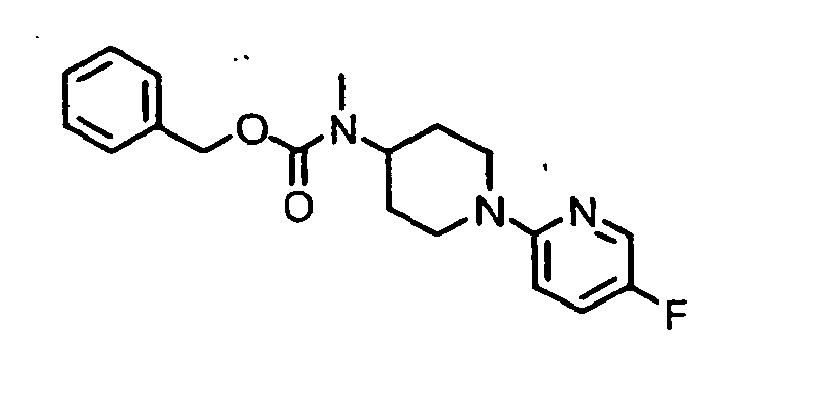
- An N2-purged mixture of Preparation 2 (0.94 g, 11 mmol), 2-chloro-5-fluoropyridine (0.94 g, 7.2 mmol; Synthesis, 1989, 905 - 908), Pd(OAc)2 (64 mg, 0.29 mmol), (di-t-butylphosphino)biphenyl (0.16 mmol 49 mg), sodium-t-butoxide (22.2 mmol, 2.13 g) and toluene (40 ml) was heated at 100 °C for 3 hr. The reaction mixture was allowed to cool then filtered through celite, and the filter pad was washed with EtOAc. The combined filtrate and washings were washed with sat'd NaHCO3, water and sat'd NaCl, then dried (MgSO4), filtered and concentrated. The residue was subjected to flash chromatography (gradient; CH2Cl2 to 0.5:99.5 MeOH/CH2Cl2) to give the product (0.69 g, 28%). MS m/e 344 (M+H)+.
- A mixture of the product of Step 1 (0.69 g, 2.0 mmol) and 10% Pd/C (80 mg) in EtOH (20 ml) was stirred under H2 for 3 days. The reaction mixture was filtered through celite and the volatiles evaporated to yield the product (0.49 g, 100%) as a solid. 1H NMR (CDCl3, 400 MHz) δ 8.0 (1H, m), 7.2 (1H, m), 6.6 (1H, m), 4.2 (2H, m), 2.9 (2H, m), 2.6 (1 H, m), 2.5 (3H, s), 2.0 (2H, m), 1.4 (2H, m).
- The following compounds were prepared using the appropriate starting materials and essentially the same procedure.
-

- 1H NMR (CDCl3, 400 MHz) δ 8.2 (1 H, m), 7.35 (1 H, m), 7.15 (1H, m), 4.25 (2H, m), 2.85 (2H, m), 2.65 (3H, s), 2.6 (1 H, m), 2.5 (3H, s), 2.0 (2H, m), 1.9 (1 H, b), 1.4 (2H, m).
- Preparation 9

- 1H NMR (CDCl3, 400 MHz) δ 8.29 (1H, s), 8.07 (1H, b), 7.17 (2H, m), 4.2 (1H, b), 3.74 (2H, m), 2.82 (2H, m), 2.74 (3H, s), 1.70 (4H, m). MS m/e 192 (M+H)+.
-

-
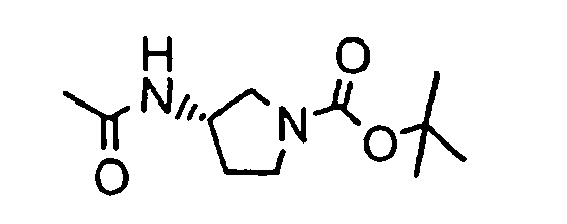
- A mixture of (3S)-(-)-3-acetamidopyrrolidine (3.04 g, 23.7 mmol), anhydrous CH2Cl2 (50 ml), di-tert-butyl dicarbonate (5.17 g, 23.7 mmol) and Et3N (0.66 ml, 4.74 mmol) was stirred for 40 min., then partitioned between CH2Cl2 (200 ml) and H2O. The organic layer was dried (Na2SO4), filtered and concentrated to give the product (5.17 g, 96%). 1HNMR (CDCl3) δ 6.10 - 5.90 (d, b, 1 H), 4.41 (m, 1 H), 3.57 (s, b, 1 H), 3.38 (m, b., 2H), 3.18 (m, b., 1H), 2.10 (m, 1 H), 1.96 (s, 3H), 1.92 (s, b., 1 H), 1.44 (s, 9H).
-

- To a solution of the product of Step 1 (5.01 g, 21.9 mmol) in anhydrous THF (100 ml) was added NaH (95%, 0.665 g, 26.3 mmol) and CH3I (4.1 ml, 66 mmol). The reaction mixture was stirred at R.T. for 16 hr. Additional NaH (60% in mineral oil, 0.263 g, 6.58 mmol) and CH3I (4.1 ml, 65.8 mmol) were added. The reaction mixture was stirred for an additional 8 hr, quenched with CH3OH (∼5 ml) and poured into H2O (100 ml). The whole was extracted with CH2Cl2 (3x200 ml) and the combined organic layers were dried (Na2SO4), filtered and evaporated. Subjection of the residue to flash chromatography (1:1 then 2:1 EtOAc/hexane, then 2:98 CH3OH/CH2Cl2) gave the product (5.15 g, 97%). 1HNMR (CDCl3) (mixture of rotamers) δ 5.10 (s, b., C-3 H), 4.40 (s, b., C-3 H), 3.60-3.00 (m, b., 4H), 2.89 (s) & 2.83 (s) (CH3CO, 3H), 2.14 (s) & 2.09 (s) (CH3N, 3H), 2.10-2.80 (m, b., 2H), 1.42 (d, 9H). MS m/e 243 (M+H)+.
- A mixture of the product of Step 2 (2.00 g, 8.26 mmol), CH3OH (50 ml) and aq. 5N NaOH (6.7 ml) was refluxed for 2.5 days. The reaction mixture was allowed to cool then poured into H2O (50 ml). The whole was extracted with CH2Cl2 (5x50 ml), and the combined organic layers were dried (Na2SO4), filtered and evaporated to give the product (1.40 g, 85%). 1HNMR (CDCl3) δ 3.60 - 3.00 (m, 6H), 2.43 (s, 3H), 2.04 (m, 1 H), 1.71 (m, 1 H), 1.45 (d, 9H). MS m/e 201 (M+H)+.
-

-

- To a stirred solution of 4-piperidone hydrate hydrochloride (40.00 g, 0.260 mol) in THF (320 ml) was added CH3SO2Cl (31.0 ml, 0.402 mol) and 15% aq. NaOH (156 ml) such that the reaction temperature was maintained between 26-32 °C. After the addition was complete, the reaction was stirred at R.T. for 2 hr and transferred to a separatory funnel. The organic layer was collected and the aqueous layer was extracted with THF (2x250 ml). The combined organic layers were dried (Na2SO4). After filtration, the concentrated residue was washed with hexane to give the product (46.00 g, 100%) as a solid. 1H NMR (CDCl3) δ 3.59 (t, J = 6.00 Hz, 4H), 2.89 (s, 3H), 2.59 (t, J = 5.6 Hz, 4H).
- A mixture of the product of Step 1 (40.00 g, 0.226 mol), CH3CN (240 ml), and 40% CH3NH2 (20.4 ml, 0.263 mol) was stirred at R.T. for 1 hr. The mixture was slowly added to a -10 °C solution of NaBH(OAC)3 (60.00 g, 0.283 mol) in CH3CN (120 ml). After the addition was complete, the reaction was allowed to attain R.T.. After 16 hr the reaction mixture was evaporated to a small volume, and 1 N aq. NaOH (282 ml) was added. The resulting solution was extracted with CH2Cl2 (3x500 ml), then with toluene. The combined organic layers were dried (Na2SO4), filtered and evaporated to give the product (29.00 g, 63%) as a solid. 1H NMR (CDCl3) δ 3.66 (m, 2H), 2.84 (m, 2H), 2.76 (s, 3H), 2.52 (m, 1H), 2.42 (s, 3H), 1.96 (m, 2H), 1.45 (m, 2H). MS m/e 193 (M+H)+
-

-

- A mixture of 4-piperidone ethylene ketal (0.64 ml, 5.0 mmol) and sulfamide (0.53 g, 5.5 mmol) in DME (20 ml) was refluxed for 16 hr. The mixture was concentrated to ca. 3 ml, dissolved in EtOAc (175 ml), washed with sat'd NH4Cl (2x25 ml), water (2x25 ml), and brine (25 ml). The organic portion was dried, filtered, and evaporated to give the product (0.58 g, 52%). MS (ES) m/e 223 (M+H)+.
-

- A mixture of the product of Step 1 (560 mg, 2.52 mmol) and pyridinium 4-toluenesulfonate (190 mg, 0.756 mmol) in acetone (25 ml) and water (0.5 ml) was refluxed for 64 hr. The mixture was evaporated to dryness and the residue was partitioned between CH2Cl2 (75 ml) and aq. NaHCO3 (2x20 ml). The aqueous layer was extracted with CH2Cl2 and EtOAc sequentially. The EtOAc layer was evaporated to give the product (140 mg). 1H NMR (CD3OD, 400 MHz) δ 3.47 (1 H, t, J = 6.4 Hz), 3.15 (3H, m), 2.54 (1 H, t, J = 6.4 Hz), 1.81 (3H, m).
- A mixture of the product of Step 2 (135 mg, 0.757 mmol), 40% aqueous methylamine (0.3 ml, 2.4 mmol), and NaBH(OAc)3 (375 mg, 1.77 mmol) in 1,2-dichloroethane (5 ml) was stirred at R.T. for 19 hr. The mixture was partitioned between 3N NaOH (5 ml) and EtOAc (3x50 ml). The organic layer was concentrated to give the crude product (40 mg). The aqueous layer was evaporated to dryness and the residue was suspended in EtOAc. The suspension was filtered and the filtrate concentrated to give another batch of the product (70 mg). MS (FAB) m/e 194 (M+H)+.
-

- To a stirred mixture of 1,4-cyclohexanedione monoethylene ketal (4.68 g, 30 mmol) and 40% aq. methylamine (6.0 ml) in 1,2-dichloroethane (75 ml), was added NaBH(OAc)3 (9.6 g, 45 mmol) in portions. The reaction mixture was vigorously stirred for 16 hr, then 1N NaOH (75 ml) was added. The organic layer was washed with sat'd NaCl, dried (MgSO4), filtered, and evaporated to give an oil (4.60 g, 90%) that was used without further purification. 1H NMR (CDCl3, 400 MHz) δ 3.97 (4H, s), 2.47 (1H, m), 2.46 (3H, s), 1.91 (2H, m), 1.80 (2H, m), 1.59 (2H, m), 1.45 (2H, m).
-

-

- An N2-purged mixture of 3,5-difluorophenylboronic acid (7.76 g, 24 mmol), 2-bromo-5-nitropyridine (2.46 g, 12 mmol), Pd(dppf)C)2•CH2Cl2 (0.40 g, 0.48 mmol), potassium phosphate (5.06 g, 23.9 mmol) and 1,2-dimethoxyethane (40 ml) was heated in a sealed tube at 80 °C for 5 hr. The reaction mixture was allowed to cool, filtered through celite, and the filtrate was concentrated. The residue was partitioned between sat'd Na2CO3 and EtOAc, and the organic layer was washed with water and sat'd NaCl, dried (MgSO4), filtered and concentrated. Flash chromatography of the residue (1:99 EtOAc/hexane) to gave the product (2.16 g, 76%). MS m/e 237 (M+H)+.
-

- The product of Step 1 (240 mg, 1.0 mmol). 10% Pd/C (38 mg), and EtOH (25 ml) were stirred under an H2 atmosphere for 3 days. The reaction mixture was filtered through celite and the volatiles were evaporated to give the product (171 mg, 83%). MS m/e 207 (M+H)+.
- A mixture of the product of Step 2 (145 mg, 0.70 mmol), triphosgene (70 mg, 0.24 mmol), and iPr2NEt (0.61 ml, 3.5 mmol) in toluene (5 ml) was heated at 110 °C for 2 hr. The reaction mixture was allowed to cool and Preparation 5 (140 mg, 0.73 mmol) was added. After 16 hr, the reaction mixture was concentrated, and partitioned between CH2Cl2 (40 ml) and H2O (20 ml). The organic layer was dried (MgSO4), filtered and evaporated. The residue was subjected to PTLC (5:95 MeOH/CH2Cl2) to give the product (148 mg, 50%). 1H NMR (CDCl3, 400 MHz) δ 8.51 (1 H, d, J = 2.8 Hz), 8.18 (2H, m), 7.64 (1 H, d, J = 8.8 Hz), 7.50 (3H, m), 6.80 (1H, m), 6.70 (1 H, d, J = 8.8 Hz), 6.63 (1 H, dd, J = 7.1, 4.9 Hz), 6.54 (1 H, s), 4.54 (1 H, m), 4.45 (2H, m), 2.94 (2H, m), 2.93 (3H, s), 1.80 - 1.73 (4H, m). MS (m/e) 424 (M+H)+.
-

-

- Reaction of 5-chlorothiophene-2-boronic acid with 2-chloro-5-nitropyridine by essentially the procedure of Example 1, Step 1 gave the product. MS m/e 241 (M+H)+.
-

- To an ice-cold suspension of the product of Step 1 (400 mg, 1.66 mmol) and NiCl2•6H2O (790 mg, 3.3 mmol) in MeOH (20 ml) was added NaBH4 (252 mg, 6.67 mmol) in portions. After 20 min., H2O (10 ml) and CH2Cl2 (20 ml) were added, and the whole was filtered through celite. The organic layer was dried (Na2SO4), filtered and concentrated to give a solid (286 mg, 82%). 1H NMR (CDCl3, 400 MHz) δ 8.02 (1 H, d, J = 2.9 Hz), 7.38 (1 H, d, J = 8.4 Hz), 7.12 (1 H, dd, J = 3.8, 0.4 Hz), 6.98 (1 H, dd, J = 8.7, 2.7 Hz), 6.85 (1H, dd, J = 3.8, 0.4 Hz), 3.76 (2H, b).
- To an ice-cold solution of the product of Step 2 (50 mg, 0.24 mmol) and pyridine (0.06 ml, 0.7 mmol) in THF (5 ml) was added N,N'-disuccinimidyl carbonate (60 mg, 0.24 mmol) and the reaction mixture was allowed to warm to R.T. After 1 hr, Preparation 5 (52 mg, 0.26 mmol) was added and the reaction mixture was stirred for 2 hr. The reaction mixture was poured into H2O (20 ml) and extracted with CH2Cl2. The organic layer was dried (MgSO4), filtered and evaporated. The residue was subjected to PTLC (5:95 MeOH/CH2Cl2) to give the product (84 mg, 82%). 1H NMR (CDCl3, 400 MHz) δ 8.32 (1 H, d, J = 2.6 Hz), 8.16 (1H, m), 8.03 (1H, dd, J = 8.6, 2.1 Hz), 7.46 (1 H, d, J = 8.6 Hz), 7.19 (1 H, dd, J = 4.0, 0.6 Hz), 6.91 (1 H, s), 6.86 (1 H, dd, J = 8.7, 2.7 Hz), 6.85 (1H, dd, J = 4.0, 0.6 Hz), 6.65 (1 H, d, J = 8.1 Hz), 6.60 (1 H, m), 4.45 (1 H, m), 4.38 (2H, m), 2.87 (2H, m), 2.84 (3H, s), 1.74 -1.66 (4H, m).
-

-
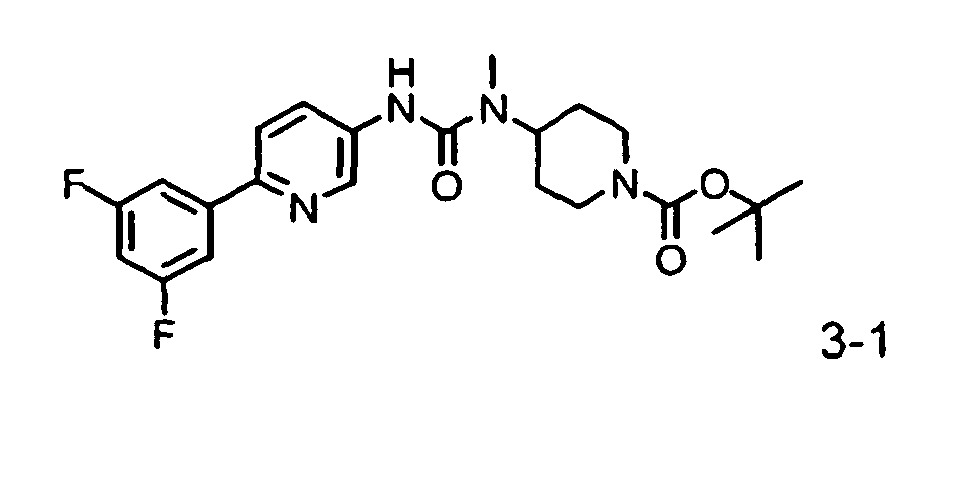
- A mixture of the product from Example 1, Step 2 (1-2) (500 mg, 2.43 mmol), triphosgene (240 mg, 0.81 mmol) and iPr2NEt (2.1 ml, 12 mmol) in toluene (15 ml) was heated at reflux for 2 hr. The reaction mixture was allowed to cool to R.T. and Preparation 1 (880 mg, 4.1 mmol) was added. The reaction mixture was stirred for 24 hr, diluted with CH2Cl2, and washed with sat'd NaHCO3, H2O, and sat'd NaCl. The organic layer was dried (Na2SO4), filtered and concentrated. Flash chromatography of the residue (gradient; CH2Cl2 to 1.5:98.5 MeOH/CH2Cl2) gave the product (650 mg, 60%). 1H NMR (CDCl3) δ 8.49 (d, J = 2.5 Hz, 1H), 8.12 (m, 1 H), 7.60 (d, J = 8.8 Hz, 1H), 7.46 (m, 2H), 6.78 (m, 1H), 6.74 (s, 1H), 4.40 (m, 1H), 4.20 (m, 2H), 2.90 (s, 3H), 2.78 (m, 2H), 1.67 - 1.55 (m, 4H), 1.45 (s, 9H). MS m/e 447 (M+H)+.
-

- To a solution of the product of Step 1, 3-1, (510 mg, 1.14 mmol) in THF (15 ml) was added 2N HCl (10 ml). After 6 hr, the volatiles were evaporated and the residue was washed with ether (3x10 ml) to give the product (480 mg, 100%). 1H NMR (CD3OD) δ 9.28 (s, 1H), 8.69 (d, J = 8.8 Hz, 1 H), 8.29 (d, J = 8.6 Hz, 1H), 7.60 (d, J = 5.8 Hz, 2H), 7.30 (t, 1 H), 4.49 (m, 1H), 3.52 (d, 2H), 3.18 (t, 2H), 3.04 (s, 3H), 2.12 (m, 2H), 1.97 (m, 2H). MS m/e 347 (M+H)+.
- To the product from Step 2 (0.19 mmol, 80mg) in CH2Cl2 (2 ml) was added Et3N (0.7 mmol, 0.1 ml) and methanesulfonyl chloride (0.44 mmol, 50 mg). The reaction was stirred at R.T. for 1 hr, concentrated, and the residue was subjected to PTLC (5:95 MeOH/CH2Cl2) to give the product (70 mg, 87%). 1 H NMR (CDCl3, 400 MHz) δ 8.50 (1 H, d), 8.15 (1H, m), 7.7 (1H, d), 7.5 (2H, m), 6.8 (1 H, m), 6.65 (1 H, b), 4.5 (1 H, m), 3.95 (2H, m), 3.0 (3H, s), 2.8 (5H, m), 1.8 (4H, m). MS m/e 425 (M+H)+.
-

- T a' solution of the amine 3-2 (51 mg, 0.12 mmol) in CH2Cl2 (2 ml) was added Et5N (0.1 ml 0.7 mmol) and cyclopropylcarbonyl chloride (0.02 ml, 0.2 mmol). The reaction mixture was stirred at R.T. for 40 min. then subjected directly to PTLC (5.95 MeOH/CH2Cl2) to give the product (49 mg, 99%). 1H NMR (CDCl3, 400 MHz) δ 8.50 (1H, m), 8.16 (1H, m), 7.65 (1H, m), 7.49 (2H, m), 6.82 (1H, m), 6.57 (1H, b), 4.75 (1 H, m), 4.56 (1 H, m), 4.32 (1 H, b), 3.21 (1 H, m), 2.93 (3H, s), 2.66 (1 H, m), 1.80 (5H, m), 0.99 (2H, m), 0.77 (2H, m). MS m/e 415 (M+H)+.
- Using the appropriate reagents and Preparations the following Examples were prepared by essentially the same procedures:
STRUCTURE 1H NMR MS (M+H)+ 
(CDCl3) δ 8.52 (d, J = 2.5 Hz, 1H), 8.43 (m, 1 H), 8.17 (m, 1 H), 7.94 (m, 2H), 7.86 (m, 1 H), 7.69 (d, J = 8.6 Hz, 1 H), 7.45 (t, 2H), 7.39 (t, 1H), 7.01 (m, 1H), 6.60 (s, 1 H), 4.47 (m, 1 H), 3.68 (d, b, 2H), 3.04 (t, 2H), 2.98 (s, 3H), 1.87 (m, 2H), 1.78 (m, 2H). 456 
(CDCl3) δ 8.57 (d, J = 2.5 Hz, 1H), 8.30 (m, 1H), 8.18 (m, 1 H), 7.93 (d, 2H), 7.70 (d, 1H), 7.43 (t, 2H), 7.39 (m, 1H), 6.82 (s, 1 H), 6.77 (m, 1 H), 6.58 (s, 1 H), 4.59 (m, 1 H), 4.48 (m, 2H), 3.01 (m, 2H), 2.96 (s, 3H), 1.83 (m, 2H), 1.70 (m, 2H). 456 
(CDCl3) δ 8.50 (d, J = 2.6 Hz, 1H), 8.17 (s, 2H), 8.14 (m, 1H), 7.94 (m, 2H), 7.68 (d, J = 8.8 Hz, 1 H), 7.44 (t, 2H), 7.38 (m, 1H), 6.59 (s, 1 H), 4.86 (m, 2H), 4.54 (m, 1H), 2:93 (m, 2H), 2.89 (s, 3H), 2.45 (q, 2H), 1.76 (m, 2H), 1.64 (m, 2H), 1.19 (t, 3H). 417 

(CDCl3) δ 8.50 (d, J = 2.7 Hz, 1H), 8.10 (m, 1H), 7.91 (d, J = 7.3Hz, 2H), 7.65 (d, J = 8.6 Hz, 1 H), 7.43 (t, 2H), 7.37 (m, 1 H), 6.63 (s, 1H), 4.24 (m, 1H), 2.94-2.90 (m. 5H), 2.28 (s, 3H), 2.05 (m, 2H), 1.82-1.64 (m, 4H). 325 
(CDCl3) δ 8.51 (d, J = 2.7 Hz, 1 H), 8.32 (d, J = 1.8 Hz, 1H), 8.11 (m, 2H), 7.93 (d, J = 8.4 Hz, 2H), 7.64 (d, J = 8.8 Hz, 1H), 7.45 (t, 2H), 7.38 (m, 1H), 7.18 (m, 2H), 6.72 (s, 1 H), 4.46 (m, 1 H), 3.77 (m, 2H), 2.94 (s, 3H), 2.89 (m, 2H), 1.81 (m, 4H). 388 
(CDCl3) δ 8.51 (d, J = 2.2 Hz, 1 H), 8.19 (m, 1H), 8.15 (m, 1 H), 7.95 (d, J = 8.4 Hz, 2H), 7.69 (d, J = 8.4 Hz, 1 H), 7.50-7.37 (m, 4H), 6.70-6.56 (m, 3H), 4.53 (m, 1H), 4.43 (m, 2H), 2.98-2.90 (m, 5H), 1.78-1.71 (m, 4H). 388 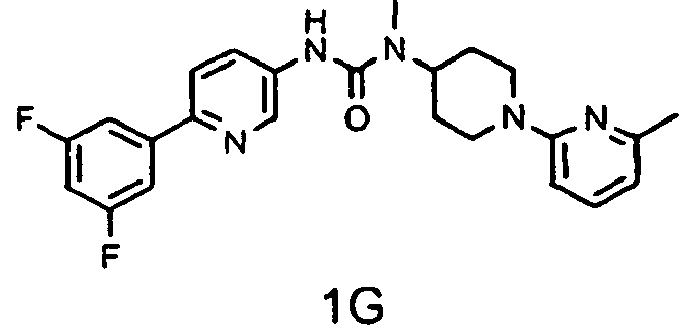
(CDCl3) δ 8.51 (m, 1H), 8.17 (m, 1H), 7.66 (d, 1H), 7.50 (m, 2H), 7.38 (t, 1H), 6.80 (m, 1 H), 6.49 (m, 3H), 4.45 (m, 3H), 2.91 (m, 5H), 2.40 (s, 3H), 1.83-1.70 (m, 4H). 438 
(CDCl3) δ 8.53 (m, 1H), 8.18 (m, 1 H), 8.04 (d, 1H), 7.66 (d, 1H), 7.50 (m, 2H), 7.26 (m, 1 H), 6.80 (m, 1 H), 6.65 (m, 1 H), 6.53 (s, 1 H), 4.50 (m, 1H), 4.29 (m, 2H), 2.91 (m, 5H), 1.83-1.67 (m, 4H). 442 
(CDCl3) δ 8.51 (m, 1H), 8.14 (m, 1 H), 7.64 (m, 1H), 7.48 (m, 2H), 7.19 (m, 1 H), 6.80 (m, 1H), 6.58 (m, 1H), 6.53 (s, 1H), 4.54 (m, 1H), 4.13 (m, 2H), 3.13 (m, 2H), 2.94 (s, 3H), 1.82 (m, 4H). 430 
(CDCl3) δ 8.32 (d, J = 2.2 Hz, 1 H), 8.08 (m, 1H), 7.50 (d, J = 8.7 Hz, 1H), 7.23 (d, J = 4.1 Hz, 1 H), 6.88 (d, J = 4.0 Hz, 1 H), 6.58 (s, 1H), 4.40 (m, 1 H), 4.32 (m, 2H), 2.90 (s, 3H), 2.78 (m, 2H), 1.68-1.50 (m, 4H), 1.46 (s, 9H). 451 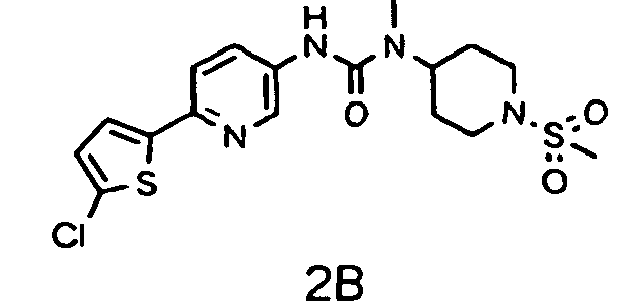
(CDCl3) δ 8.39 (d, J = 2.4 Hz, 1H), 8.07 (m, 1H), 7.52 (d, J = 8.8 Hz, 1H), 7.26 (m, 1 H), 6.90 (d, J = 4.0 Hz 1 H), 6.60 (s, 1 H), 4.42 (m, 1H), 3.92 (m, 2H), 2.94 (s, 3H), 2.80 (m, 5H), 1.84-1.79 (m, 4H). 429 
(CDCl3) δ 8.38 (s, 1 H), 8.08 (m, 1 H), 7.52 (d, J = 8.8 Hz, 1H), 7.27 (m, 1 H), 6.90 (d, J = 3.8 Hz, 1H), 6.55 (bs, 1H), 4.45 (m, 1 H), 3.92 (m, 2H), 2.94 (m, 7H), 1.84-1.76 (m, 4H), 1.37 (t, 3H). 443 
(CDCl3) δ 8.58 (s, b, 1 H), 8.10 (m, 1H), 7.95 (m, 2H), 7.70 (m, 1 H), 7.43 (t, 2H), 7.39 (m, 1H), 6.57 (s, b, 1H), 4.42 (m, 1 H), 3.83 (m, 2H), 2.94 (s, 3H), 2.82 (m, 5H), 1.82 (m, 4H). 389 
(CDCl3) δ 8.60 (s, 1H), 8.15 (m, 1H), 7.93 (m, 2H), 7.70 (d, J = 8.8 Hz, 1H), 7.46 (t, 2H), 7.39 (m, 1H), 6.64 (s, b, 1H), 4.47 (m, 1 H), 3.93 (m, 2H), 2.96 (m, 7H), 1.80 (m, 4H), 1.37 (t, 3H). 403 
(CDCl3) δ 8.52 (d, J = 2.6 Hz, 1 H), 8.10 (m, 1 H), 7.93 (m, 2H), 7.68 (d, J = 8.8 Hz, 1 H), 7.49- 7.35 (m, 3H), 6.58 (s, 1 H), 4.46 (m, 1 H), 3.95 (m, 2H), 3.18 (m, 1 H), 3.03-2.85 (m, 5H), 1.76 (m, 4H), 1.33 (d, 6H). 417 
(CDCl3) δ 8.55 (d, J = 2.4 Hz, 1 H), 8.10 (m, 1H), 7.93 (m, 2H), 7.68 (d, J = 8.8 Hz, 1 H), 7.46-7.36 (m, 3H), 6.64 (s, 1 H), 4.44 (m, 1H), 3.91 (m, 2H), 2.93-2.82 (m, 7H), 1.86-1.76 (m, 6H), 1.06 (t, 3H). 417 
(CD3OD) δ 9.20 (d, J = 2.4 Hz, 1H), 8.53 (m, 1H), 8.25 (d, J = 9.2 Hz, 1 H), 7.58 (m, 2H), 7.29 (m, 1 H), 4.30 (m, 1 H), 3.86 (m, 2H), 3.00 (m, 5H), 2.50 (m, 1 H), 1.95-1.78 (m, 4H), 1.05 (m, 4H). 451 
(CDCl3) δ 8.52 (d, J = 2.4 Hz, 1 H), 8.12 (m, 1H), 7.63 (d, J = 8.8 Hz, 1H), 7.49 (m, 2H), 6.80 (m, 1 H), 6.59 (s, 1 H), 4.45 (m, 1 H), 3.93 (m, 2H), 2.93 (m, 7H), 1.79 (m, 4H), 1.36 (t, 3H). 439 
(CD3OD) δ 9.21 (d, J = 2.4 Hz, 1 H), 8.55 (m, 1H), 8.25 (d, J = 9.2 Hz, 1 H), 7.59 (m, 2H), 7.28 (m, 1 H), 4.30 (m, 1 H), 3.85 (m, 2H), 2.95 (m, 7H), 1.81 (m, 6H), 1.07 (t, 3H). 453 
(CDCl3) δ 8.52 (d, J = 2.4 Hz, 1 H), 8.13 (m, 1 H), 7.63 (d, J = 8.8 Hz, 1 H), 7.49 (m, 2H), 6.81 (m, 1 H), 6.57 (s, 1 H), 4.47 (m, 1 H), 3.93 (m, 2H), 3.18 (m, 1H), 2.99 (m, 2H), 2.95 (s, 3H), 1.78 (m, 4H), 1.33 (d, 6H). 453 
(CDCl3) δ 8.59 (d, J = 2.4 Hz, 1H), 8.07 (m, 1 H), 7.78 (m, 1 H), 7.71 (m, 1H), 7.28 (m, 2H), 6.53 (s, 1H), 4.44 (m, 1H), 3.91 (m, 2H), 2.96 (s, 3H), 2.79 (m, 5H), 1.82 (m, 4H). 425 
(CDCl3) δ 8.59 (d, J = 2.4 Hz, 1 H), 8.06 (m, 1 H), 7.78 (m, 1 H), 7.71 (m, 1 H), 7.07 (m, 1 H), 7.02 (m, 1 H), 6.54 (s, 1 H), 4.46 (m, 1 H), 3.93 (d, J = 11.2 Hz, 2H), 2.94 (m, 7H), 1.80 (m, 4H), 1.37 (t, 3H). 439 
(CDCl3) δ 8.60 (s, 1 H), 8.06 (m, 1H), 7.77 (d, J = 7.2 Hz, 1 H), 7.68 (m, 1 H), 7.07 (m, 1 H), 7.01 (m, 1 H), 6.66 (s, 1 H), 4.43 (s, 1H), 3.90 (d, 2H), 2.91 (m, 5H), 2.60 (m, 1H), 1.78 (m, 4H), 1.15 (m, 2H), 1.00 (m, 2H). 451 
(CDCl3) δ 8.61 (s, 1H), 8.06 (m, 1H), 7.78 (d, J = 6.8 Hz, 1 H), 7.71 (m, 1H), 7.07 (m, 1 H), 7.01 (m, 1 H), 6.64 (s, 1 H), 4.44 (m, 1H), 3.91 (d, J = 12.4 Hz, 2H), 2.93 (s, 3H), 2.86 (m, 4H), 1.82 (m, 6H), 1.06 (t, 3H). 453 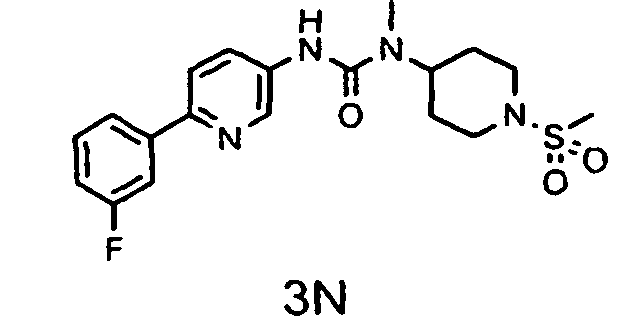
(CD3OD) δ 9.20 (m, 1H), 8.55 (m, 1H), 8.25 (m, 1H), 7.71 (m, 3H), 7.41 (m, 1H), 4.29 (m, 1 H), 3.85 (m, 2H), 3.01 (s, 3H), 2.87 (m, 5H), 1.94-1.76 (m, 4H). 407 
(CDCl3) δ 8.52 (d, J = 2.5 Hz, 1 H), 8.12 (m, 1H), 7.71 (m, 3H), 7.38 (m, 1H), 7.07 (m, 1H), 6.47 (m, 1 H), 4.43 (s, 1 H), 3.92 (d, 2H), 2.96 (m, 5H), 2.28 (m, 1H), 1.81 (m, 4H), 1.17 (m, 2H), 1.00 (m, 2H). 433 
(CDCl3) δ 8.51 (d, J = 2.6 Hz, 1 H), 8.13 (m, 1 H), 7.93 (d, J = 7.3 Hz, 2H), 7.68 (d, J = 8.6 Hz, 1 H), 7.45 (t, 2H), 7.38 (m, 1 H), 6.61 (s, 1H), 4.42 (m, 1H), 4.20 (m, 2H), 2.91 (s, 3H), 2.79 (m, 2H), 1.76-1.55 (m, 4H), 1.45 (s, 9H). 411 
(CDCl3) δ 8.69 (d, J = 5.3 Hz, 2H), 8.55 (d, J = 2.7 Hz, 1 H), 8.14 (m, 1H), 7.62 (d, J = 8.6 Hz, 1 H), 7.47 (m, 2H), 7.28 (m, 2H), 6.95 (s, 1 H), 6.79 (m, 1H), 4.82 (m, 1H), 4.56 (m, 1H), 3.68 (m, 1 H), 3.17 (m, 1H), 2.94 (s, 3H), 2.85 (m, 1H), 1.90-1.45 (m, 4H). 452 
(CDCl3) δ 8.68 (m, 2H), 8.55 (m, 1 H), 8.12 (m, 1 H), 7.78 (m, 1 H), 7.64 (d, J = 8.6 Hz, 1 H), 7.47 (m, 2H), 7.37 (m, 1H), 6.82 (m, 1 H), 6.65 (s, 1 H), 4.86 (m, 1H), 4.59 (m, 1H), 3.82 (m, 1 H), 3.22 (m, 1H), 2.96 (s, 3H), 2.85 (m, 1 H), 1.90-1.45 (m, 4H). 452 
(CDCl3) δ 8.50 (d, J = 2.8 Hz, 1H), 8.12 (m, 1 H), 7.62 (d, J = 8.8 Hz, 1 H), 7.45 (m, 2H), 6.80 (m, 2H), 4.75 (m, 1 H), 4.50 (m, 1H), 3.90 (m, 1H), 3.18 (m, 1H), 2.90 (s, 3H), 2.59 (m, 1H), 2.11 (s, 3H), 1.80-1.56 (m, 4H). 389 
(CDCl3) δ 8.50 (d, J = 2.0 Hz, 1H), 8.13 (m, 1H), 7.62 (d, J = 8.8 Hz, 1 H), 7.46 (m, 2H), 6.78 (m, 2H), 4.76 (m, 1 H), 4.51 (m, 1H), 3.92 (m, 1H), 3.11 (m, 1H), 2.90 (s, 403 3H), 2.59 (m, 1H), 2.35 (q, 2H), 1.76-1.54 (m, 4H), 1.15 (m, 3H). 403 
(CD3OD) δ 9.26 (d, J = 2.4 Hz, 1 H), 8.59 (m, 1H), 8.29 (d, J = 8.8 Hz, 1 H), 7.60 (m, 2H), 7.32 (m, 1 H), 4.70 (m, 1 H), 4.39 (m, 1 H), 4.10 (m, 1 H), 3.21 (m, 1H), 2.98 (s, 417 3H), 2.71 (m, 1 H), 2.42 (m, 2H), 1.79-1.62 (m, 6H), 0.99 (m, 3H). 417 
(CDCl3) δ 8.50 (d, J = 2.4 Hz, 1H), 8.15 (m, 1 H), 7.61 (d, J = 8.4 Hz, 1 H), 7.47 (m, 2H), 6.87 (s, 1 H), 6.78 (m, 1 H), 4.76 (m, 1 H), 4.50 (m, 1H), 4.05 (m, 1H), 3.11 (m, 1 H), 2.90 (s, 3H), 2.80 (m, 1H), 2.59 (m, 1H), 1.82-1.54 (m, 4H), 1.13 (m, 6H). 417 
(CDCl3) δ 8.50 (d, J = 2.4 Hz, 1H), 8.14 (m, 1H), 7.66 (d, J = 6.4 Hz, 1H), 7.49 (m, 2H), 6.81 (m, 1H), 6.49 (s, 1H), 4.76 (m, 2H), 4.12 (m, 1 H), 3.25 (m, 1H), 2.95 (s, 3H), 2.86 (m, 1H), 1.89-1.60 (m, 4H). 443 
(CDCl3) δ 8.50 (d, J = 2.0 Hz, 1H), 8.13 (m, 1 H), 7.62 (d, J = 8.4 Hz, 1 H), 7.46 (m, 2H), 6.80 (m, 2H), 4.70 (m, 1 H), 4.52 (m, 1H), 4.10 (q, 2H), 3.94 (m, 1H), 3.42 (s, 3H), 3.10 (m, 1H), 2.90 (s, 3H), 2.64 (m, 1H), 1.79-1.57 (m, 4H). 419 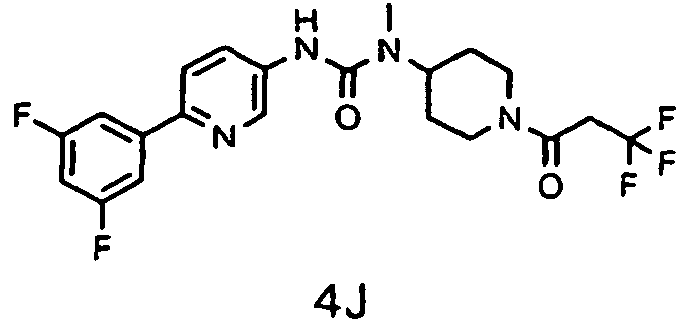
(CDCl3) δ 8.50 (d, J = 2.4 Hz, 1 H), 8.12 (m, 1 H), 7.64 (d, J = 8.8 Hz, 1 H), 7.47 (m, 2H), 6.80 (m, 1 H), 6.67 (s, 1 H), 4.79 (m, 1 H), 4.56 (m, 1H), 3.86 (m, 1H), 3.24 (m, 3H), 2.96 (s, 3H), 2.67 (m, 1H), 1.85-1.59 (m, 4H). 457 
(CDCl3) δ 8.50 (d, J = 2.4 Hz, 1H), 8.15 (m, 1H), 7.63 (d, J = 8.8 Hz, 1H), 7.46 (m, 3H), 7.30 (d, 1H), 7.03 (m, 1H), 6.80 (m, 2H), 4.59 (m, 3H), 3.06 (m, 2H), 2.93 (s, 3H), 1.81-1.64 (m, 4H). 457 
(CDCl3) δ 8.49 (d, J = 2.0 Hz, 1 H), 8.15 (m, 1H), 7.62 (d, J = 8.8 Hz, 1 H), 7.47 (m, 2H), 6.80 (m, 1H), 6.69 (s, 1H), 4.42 (m, 1 H), 3.77 (m, 2H), 2.92-2.83 (m, 11 H), 1.68 (m, 4H). 418 
(CDCl3) δ 8.50 (d, J = 2.4 Hz, 1 H), 8.14 (m, 1 H), 7.61 (d, J = 8.0 Hz, 1H), 7.45 (m, 2H), 6.80 (m, 2H), 4.40 (m, 1H), 3.72 (m, 2H), 3.20 (m, 4H), 2.90 (s, 3H), 2.84 (m, 2H), 1.70 (m, 4H), 1.11 (m, 6H). 446 
(CDCl3) δ 8.50 (d, J = 2.4 Hz, 1 H), 8.15 (m, 1 H), 7.62 (d, J = 8.8 Hz, 1 H), 7.45 (m, 2H), 6.79 (m, 2H), 4.76 (m, 1H), 4.50 (m, 1 H), 3.78 (m, 1 H), 3.26 (m, 1 H), 3.04 (m, 1 H), 2.90 (s, 3H), 2.60 (m, 1H), 2.35-2.13 (m, 4H), 1.99-1.42 (m, 6H). 429 
(CDCl3) δ 8.50 (d, J = 2.8 Hz, 1 H), 8.15 (m, 1 H), 7.64 (d, J = 8.8 Hz, 1 H), 7.49 (m, 2H), 6.80 (m, 1H), 6.54 (s, 1H), 4.80 (m, 1H), 4.54 (m, 1 H), 4.06 (m, 1H), 3.13 (m, 1 H), 2.90 (m, 4H), 2.61 (m, 1H), 1.82-1.55 (m, 12H). 443 
(CDCl3) δ 8.50 (d, J = 2.8 Hz, 1 H), 8.15 (m, 1 H), 7.63 (d, J = 8.8 Hz, 1H), 7.46 (m, 2H), 6.79 (m, 2H), 4.74 (m, 1 H), 4.52 (m, 1H), 4.00 (m, 1H), 3.11 (m, 1H), 2.91 (s, 3H), 2.52 (m, 2H), 1.79-1.24 (m, 14H). 457 
(CDCl3) δ 8.50 (m, 1 H), 8.15 (m, 1 H), 7.64 (d, J = 8.8 Hz, 1H), 7.49 (m, 3H), 7.33-7.19 (m, 2H), 6.80 (m, 1H), 6.50 (s, 1H), 4.91 (m, 1 H), 4.58 (m, 1H), 3.50 (m, 1 H), 3.21 (m, 1H), 2.94 (s, 3H), 2.86 (m, 1H), 1.87-1.67 (m, 4H). 519 
(CDCl3) δ 8.50 (m, 1H), 8.15 (m, 1 H), 7.83 (m, 1H), 7.65 (d, J = 8.8 Hz, 1H), 7.50 (m, 2H), 7.41 (m, 1H), 7.24 (m, 1 H), 7.10 (m, 1 H), 6.80 (m, 1 H), 6.48 (s, 1 H), 4.92 (m, 1 H), 4.60 (m, 1H), 3.50 (m, 1 H), 3.21 (m, 1H), 2.96 (s, 3H), 2.85 (m, 1 H), 1.98-1.50 (m, 4H). 577 
(CDCl3) δ 8.74 (d, J = 2.4 Hz, 1H), 8.58 (m, 1 H), 8.50 (d, J = 2.0 Hz, 1H), 8.15 (m, 1H), 7.92 (m, 1 H), 7.66 (d, J = 8.4 Hz, 1 H), 7.50 (m, 2H), 6.80 (m, 1 H), 6.50 (s, 1 H), 4.86 (m, 1 H), 4.62 (m, 1 H), 3.80 (m, 1 H), 3.21 (m, 1 H), 2.97 (s, 3H), 2.88 (m, 1H), 1.94-1.70 (m, 4H). 530
532
(CDCl3) δ 8.50 (d, J = 2.4 Hz, 1H), 8.14 (m, 1 H), 7.64 (d, J = 8.8 Hz, 1H), 7.50 (m, 2H), 7.35 (d, 1H), 6.99 (d, 1H), 6.80 (m, 1 H), 6.60 (s, 1 H), 4.80 (m, 1 H), 4.60 (m, 1 H), 3.80 (m, 1 H), 3.21 (m, 2H), 2.94 (s, 3H), 1.77 (m, 4H). 535
537
(CDCl3) δ 8.51 (m, 1H), 8.10 (m, 1 H), 7.62 (d, J = 8.4 Hz, 1 H), 7.47 (m, 2H), 7.33 (m, 2H), 7.25 (m, 1H), 6.84 (s, 1H), 6.77 (m, 1 H), 4.92 (m, 1H), 4.56 (m, 1 H), 3.41 (m, 1 H), 3.20 (m, 1H), 2.90 (s, 3H), 2.87 (m, 1H), 1.83-1.67 (m, 4H). 519 
(CDCl3) δ 8.50 (d, J = 2.4 Hz, 1H), 8.13 (m, 1 H), 7.62 (d, J = 8.4 Hz, 1H), 7.46 (m, 2H), 6.83 (s, 1 H), 6.78 (m, 1H), 4.64 (m, 2H), 4.52 (m, 1 H), 2.89 (s, 3H), 2.84 (m, 2H), 2.04-1.54 (m, 19H). 509 
(CDCl3) δ 8.52 (m, 1 H), 8.15 (m, 1 H), 7.63 (d, J = 8.8 Hz, 1 H), 7.48 (m, 2H), 6.80 (m, 1H), 6.69 (s, 1H), 6.63 (m, 2H), 4.82 (m, 1 H), 4.56 (m, 1H), 3.86 (m, 10H), 3.15 (m, 1 H), 2.94 (m, 4H), 1.76 (m, 4H). 541 
(CDCl3) δ 8.51 (m, 2H), 8.15 (m, 1 H), 7.92 (m, 3H), 7.65 (m, 2H), 7.50 (m, 4H), 6.80 (m, 1H), 6.51 (s, 1 H), 4.92 (m, 1H), 4.60 (m, 1H), 3.98 (m, 1H), 3.21 (m, 1H), 2.97 (m, 4H), 1.88-1.50 (m, 4H). 501 
(CDCl3) δ 8.57 (d, J = 2.8 Hz, 1 H), 8.11 (m, 1H), 7.80 (m, 1H), 7.74 (m, 1H), 7.08 (m, 1 H), 7.01 (m, 1 H), 6.50 (s, 1 H), 4.44 (m, 1H), 4.22 (m, 2H), 2.92 (s, 3H), 2.81 (m, 2H), 1.71-1.57 (m, 4H), 1.47 (s, 9H). 447 
(CD3OD) δ 9.30 (d, J = 2.4 Hz, 1 H), 9.09 (s, 1H), 8.97 (d, J = 5.6 Hz, 1H), 8.74 (d, J = 8.4 Hz, 1 H), 8.65 (m, 1H), 8.19 (m, 2H), 7.62 (m, 1 H), 7.45 (m, 2H), 4.80 (m, 1 H), 4.50 (m, 1 H), 3.76 (m, 1H), 4.46 (m, 1 H), 3.38 (m, 1 H), 3.04 (s, 4H), 2.00-1.65 (m, 4H). 452 
(CDCl3) δ 8.57 (m, 1H), 8.10 (m, 1 H), 7.79 (d, J = 7.6 Hz, 1H), 7.71 (m, 1H), 7.08 (m, 1 H), 7.01 (m, 1H), 6.52 (s, 1 H), 4.75 (m, 1 H), 4.56 (m, 1H), 4.33 (m, 1 H), 3.21 (m, 1 H), 2.91 (s, 3H), 2.66 (m, 1 H), 1.82-1.62 (m, 5H), 0.99 (m, 2H), 0.78 (m, 2H). 415 
(CDCl3) δ 8.57 (d, J = 2.8 Hz, 1H), 8.09 (m, 1 H), 7.78 (d, J = 8.0 Hz, 1 H), 7.69 (m, 1 H), 7.07 (m, 1 H), 7.01 (m, 1H), 6.64 (s, 1 H), 4.47 (m, 1H), 4.53 (m, 1H), 3.94 (m, 1 H), 3.13 (t, 1H), 2.91 (s, 3H), 2.60 (t, 1H), 2.33 (t, 2H), 1.78-1.54 (m, 6H), 0.96 (t, 3H). 417 
(CD3OD) δ 8.29 (d, J = 2.0 Hz, 1 H), 8.60 (m, 1H), 8.19 (d, J = 9.2 Hz, 1 H), 7.61 (m, 1H), 7.45 (m, 2H), 4.70 (m, 1H), 4.41 (m, 1 H), 4.18 (m, 1 H), 3.21 (m, 1 H), 2.93 (s, 4H), 2.69 (m, 1 H), 1.77 (m, 4H), 1.14-1.09 (m, 6H). 417 
(CDCl3) δ 8.57 (s, 1H), 8.08 (m, 1H), 7.76 (d, J = 6.8 Hz, 1 H), 7.68 (m, 1H), 7.10 (m, 1 H), 7.02 (m, 1 H), 6.80 (s, 1 H), 4.75 (d, 1 H), 4.51 (m, 1 H), 3.88 (d, 1 H), 3.16 (t, 1 H), 2.90 (s, 3H), 2.59 (t, 1H), 2.11 (s, 3H), 1.80-1.56 (m, 4H). 389 
(CDCl3) δ 8.56 (s, 1H), 8.08 (d, J = 8.8 Hz, 1H), 7.77 (d, J = 7.2 Hz, 1H), 7.68 (m, 1 H), 7.08 (m, 1 H), 7.01 (m, 1 H), 6.72 (s, 1 H), 4.77 (d, 1 H), 4.51 (m, 1 H), 3.94 (d, 1H), 3.11 (t, 1H), 2.90 (s, 3H), 2.60 (t, 1H), 2.34 (q, 2H), 1.80-1.54 (m, 4H), 1.15 (t, 3H). 403 
(CDCl3) δ 8.89 (s, 1 H), 8.62 (s, 1 H), 8.12 (m, 1 H), 8.07 (s, 1 H), 7.80 (d, J = 6.4 Hz, 1H), 7.70 (m, 1H), 7.11 (m, 1H), 7.01 (m, 1 H), 6.64 (bs, 1H), 4.80-4.20 (m, 3H), 3.35-2.80 (m, 5H), 1.86-1.69 (m, 4H). 459 -

-

- A solution of 2-hydroxy-5-nitropyridine (11.2 g, 79.9 mmol) in conc. HCl (57 ml) was warmed to 50 °C and KClO3 (3.4 g, 27.7 mmol) in water (50 ml) was added dropwise at such a rate that the temperature was kept below 60 °C. During the addition the product began to separate. After TLC monitoring indicated complete consumption of starting material the mixture was cooled to 0 °C and the product was isolated by vacuum filtration. The solid was washed with water and dried at 50 °C under vacuum to give the product (12.3g, 88%) as a solid. 1HNMR (DMSO-d6) δ 8.68 (d, J = 3.2 Hz, 1H), 8.40 (d, J = 3.2 Hz, 1H). MS m/e 175 (M+H)+.
-

- To phosphoryl chloride (10.5 g, 68.7 mmol) was added successively, with cooling at 5 °C, quinoline (4.4 g, 34.1 mmol) and the product of Step 1 (12.0 g, 68.7 mmol). The resultant mixture was heated for 2 hr at 120 °C under N2. After the reaction was complete as indicated by TLC monitoring, the reaction mixture was allowed to cool to 100 °C, and water (26 ml) was added. The solution was then cooled in an ice bath and the product was isolated by vacuum filtration. The solid was washed with water and dried at 40 °C under vacuum to give the product (12.5g, 94%). 1HNMR (DMSO-d6) δ 9.19 (d, J = 2.4 Hz, 1 H), 8.97 (d, J = 2.4 Hz, 1 H).
-

- A flask charged with 3-fluorophenylboronic acid (1.63 g, 11.65 mmol), the product of Step 2 (1.50g, 7.77mmol), ethylene glycol dimethyl ether (18 ml) and potassium phosphate (4.95 g, 23.3 mmol) was purged with N2. PdCl2(dppf)2·CH2Cl2 (0.26 g, 0.32 mmol) was added. The reaction mixture was heated at 80°C under N2 for 2 hr, allowed to cool, and filtered through celite. The filtrate was extracted with EtOAc (60 ml) was then washed with saturated sodium carbonate (40ml), water (40ml), brine (30 ml), dried (Na2SO4), filtered and concentrated. The residue was subjected to flash chromatography (1:5 CH2Cl2/hexane) to give the product (1.96g, 100%). 1HNMR (CDCl3) δ 9.39 (d, J = 2.4 Hz, 1H), 8.62 (d, J = 2.4 Hz, 1H), 7.62 (m, 1H), 7.54 (m, 2H), 7.22 (m, 1H). MS m/e 253 (M+H)+.
-

- To an ice-cold solution of the product of Step 3 (2.25 g, 8.9 mmol) and nickel chloride hexahydrate (4.23 g, 17.8 mmol) in MeOH (100 ml) was added sodium borohydride (1.11 g, 29.5 mmol) in portions. The resulting mixture was stirred at 0-5 °C for 30 min., water (5ml) was added and the whole was concentrated. The residue was treated with EtOAc (100ml) and filtered through celite. The filtrate was dried (MgSO4), filtered and concentrated to give the product (2.3 g). 1HNMR (CDCl3) δ 7.53 (s, 1H), 6.97 (m, 1H), 6.84 (m, 2H), 6.63 (s, 1H), 6.53 (m, 1H), 3.90 (s, b, 2H).
-

- To a solution of the product of Step 4 (500 mg, 2.25 mmol) in anhydrous pyridine (6 ml) was added phenyl chloroformate (390 mg, 2.49 mmol) dropwise. The reaction mixture was stirred for 16 hr then evaporated in vacuo. The residue was taken up in chloroform (10 ml), and Et3N (1 ml) and Preparation 1 (722 mg, 3.37 mmol) was added. The mixture was heated at 65 °C for 3 hr. The residue was allowed to cool, diluted with CH2Cl2 (50 ml) and washed with sat'd NaHCO3 (30 ml), water (30 ml), and NaCl (30 ml). The organic layer was dried (MgSO4), filtered and evaporated. The residue was subjected to flash chromatography (2:98 CH3OH/CH2Cl2) to give the product (530 mg, 51%). 1H NMR (CDCl3) δ 8.41 (d, J = 2.4 Hz, 1H), 8.28 (d, J = 2.4 Hz, 1 H), 7.50 (m, 1 H), 7.42 (m, 2H), 7.10 (m, 1H), 6.61 (s, 1H), 4.41 (m, 1 H), 4.22 (m, 2H), 2.92 (s, 3H), 2.80 (m, 2H), 1.70-1.57 (m, 4H), 1.45 (s, 9H).
-

- The product of Step 5 (90 mg, 0.194 mmol) was treated with 4N HCl/1,4-dioxane (4 ml) for 16 hr. The reaction mixture was concentrated and the residue was triturated with Et2O and dried to give the product (85 mg) as a solid. 1HNMR (CD3OD) δ 8.92 (d, J = 2.4 Hz, 1H), 8.50 (d, J = 2.4 Hz, 1H), 7.58 (m, 1 H), 7.51 (m, 2H), 7.30 (m, 1 H), 4.45 (m, 1 H), 3.50 (m, 2H), 3.16 (m, 2H), 3.02 (s, 3H), 2.10-1.90 (m, 4H).
- To a solution of the product of Step 6 (42 mg, 0.096 mmol) and Et3N (0.2 ml) in CH2Cl2 (2 ml) was slowly added acetic anhydride (112 mg, 1.10 mmol). The reaction mixture was stirred at R.T. for 2 hr. The concentrated residue was separated by PTLC (1:20 CH3OH/CH2Cl2) to give the product (31 mg, 80%). 1HNMR (CDCl3) δ 8.44 (d, J = 2.4 Hz, 1H), 8.27 (d, J = 2.4 Hz, 1 H), 7.50 (m, 1 H), 7.42 (m, 2H), 7.10 (m, 1 H), 6.92 (s, 1 H), 4.75 (m, 1 H), 4.50(m, 1 H), 3.92 (m, 1 H), 3.17 (t, 1H), 2.90 (s, 3H), 2.60 (m, 1H), 2.11 (s, 3H), 1.81-1.60 (m, 4H). MS m/e 405 (M+H)+.
- Use of the appropriate reagents and procedures afforded the following compounds:
STRUCTURE 1H NMR MS (M+H)+ 
(CDCl3) δ 8.44 (d, J = 2.4 Hz, 1H), 8.24 (d, J = 2.4 Hz, 1 H), 7.49 (m, 1 H), 7.43 (m, 2H), 7.10 (m, 1H), 6.65 (s, 1H), 4.43 (m, 1 H), 3.92 (m, 2H), 2.93 (s, 3H), 2.78 (m, 5H), 1.81 (m, 4H). 441 
(CDCl3) δ 8.44 (d, J = 2.4 Hz, 1H), 8.25 (d, J = 2.4 Hz, 1H), 7.50 (m, 1H), 7.41 (m, 2H), 7.10 (m, 1 H), 6.61 (s, 1 H), 4.44 (m, 1H), 3.93 (m, 2H), 2.93 (m, 7H), 1.81 (m, 4H), 1.36 (t, 3H). 455 
(CDCl3) δ 8.44 (d, J = 2.0 Hz, 1 H), 8.24 (d, J = 2.4 Hz, 1 H), 7.50 (m, 1H), 7.41 (m, 2H), 7.10 (m, 1 H), 6.67 (s, 1 H), 4.44 (m, 1 H), 3.93 (m, 2H), 2.90 (m, 7H), 1.81 (m, 6H), 1.06 (t, 3H). 469 
(CDCl3) δ 8.43 (d, J = 2.4 Hz, 1 H), 8.26 (d, J = 2.4 Hz, 1H), 7.51 (m, 1H), 7.43 (m, 2H), 7.10 (m, 1 H), 6.60 (s, 1H), 4.46 (m, 1 H), 3.96 (m, 2H), 3.19 (m, 1H), 3.01 (m, 2H), 2.93 (s, 3H), 1.79 (m, 4H), 1.34 (d, 6H). 469 
(CDCl3) δ 8.43 (d, J = 2.4 Hz, 1 H), 8.26 (d, J = 2.4 Hz, 1 H), 7.51 (m, 1 H), 7.43 (m, 2H), 7.10 (m, 1H), 6.64 (s, 1H), 4.43 (m, 1 H), 3.92 (m, 2H), 2.93 (m, 5H), 2.27 (m, 1 H), 1.81 (m, 4H), 1.16 (m, 2H), 1.00 (m, 2H). 467 
(CDCl3) δ 8.44 (d, J = 2.0 Hz, 1 H), 8.26 (d, J = 2.4 Hz, 1 H), 7.48 (m, 1H), 7.40 (m, 2H), 7.10 (m, 1H), 6.92 (s, 1H), 4.76 (m, 1H), 4.50 (m, 1H), 3.94 (m, 1H), 3.12 (t, 1H), 2.90 (s, 3H), 2.60 (m, 1 H), 2.36 (q, 2H), 1.80-1.55 (m, 4H), 1.15 (t, 3H). 419 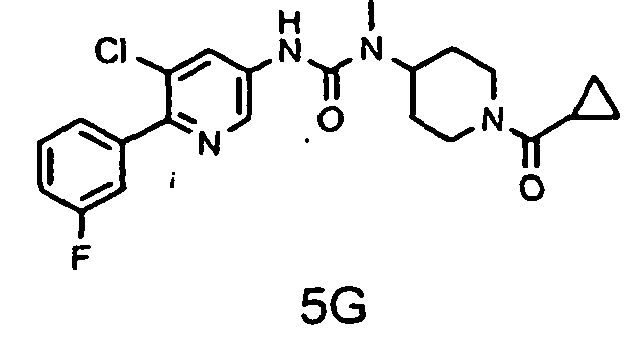
(CDCl3) δ 8.43 (d, J = 2.4 Hz, 1 H), 8.26 (d, J = 2.4 Hz, 1 H), 7.50 (m, 1 H), 7.40 (m, 2H), 7.10 (m, 1H), 6.89 (s, 1H), 4.76 (m, 1H), 4.51 (m, 1H), 3.32 (m, 1 H), 3.12 (m, 1 H), 2.90 (s, 3H), 2.64 (m, 1H), 1.89-1.55 (m, 5H), 0.98 (m, 2H), 0.77 (m, 2H). 431 
(CDCl3) δ 8.43 (d, J = 2.4 Hz, 1H), 8.27 (d, J = 2.4 Hz, 1H), 7.50 (m, 1H), 7.40 (m, 2H), 7.10 (m, 1H), 6.78 (s, 1H), 4.79 (m, 1H), 4.50 (m, 1 H), 3.96 (m, 1 H), 3.13 (t, 1H), 2.91 (s, 3H), 2.60 (m, 1 H), 2.33 (q, 2H), 1.81-1.55 (m, 6H), 0.97 (t, 3H). 433 
(CDCl3) δ 8.43 (d, J = 2.4 Hz, 1H), 8.25 (d, J = 2.4 Hz, 1H), 7.48 (m, 1 H), 7.38 (m, 2H), 7.08 (m, 1 H), 7.02 (s, 1 H), 4.39 (m, 1H), 3.75 (m, 2H), 2.90-2.80 (m, 11 H), 1.67 (m, 4H). 434 
(CDCl3) δ 8.43 (d, J = 2.4 Hz, 1 H), 8.30 (d, J = 2.4 Hz, 1 H), 7.50 (m, 1 H), 7.43 (m, 2H), 7.08 (m, 1 H), 6.69 (s, 1 H), 4.41 (m, 1H), 3.75 (m, 2H), 3.20 (q, 4H), 2.90 (s, 3H), 2.85 (m, 2H), 1.69 (m, 4H), 1.27 (t, 6H). 462 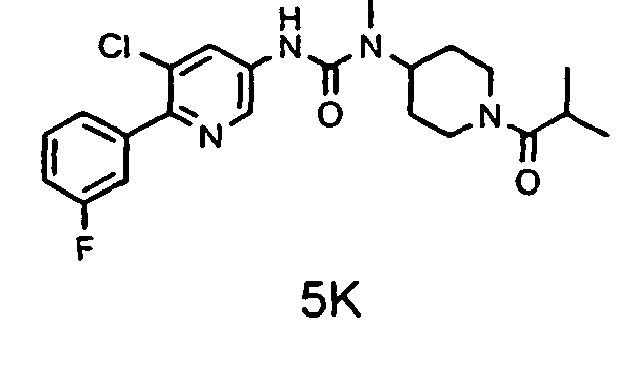
(CDCl3) δ 8.43 (d, J = 2.0 Hz, 1 H), 8.27 (d, J = 2.4 Hz, 1 H), 7.49 (m, 1 H), 7.40 (m, 2H), 7.09 (m, 1 H), 6.87 (s, 1 H), 4.80 (m, 1H), 4.51 (m, 1H), 4.05 (m, 1H), 3.14 (m, 1H), 2.90 (s, 3H), 2.80 (m, 1 H), 2.59 (m, 1 H), 1.82-1.56 (m, 4H), 1.13 (m, 6H). 433 
(CDCl3) δ 8.40 (d, J = 2.0 Hz, 1 H), 8.32 (d, J = 2.4 Hz, 1H), 7.29 (m, 2H), 6.85 (m, 1H), 6.49 (m, 1H), 4.42 (m, 1H), 4.23 (m, 2H), 2.93 (s, 3H), 2.81 (m, 2H), 1.70-1.57 (m, 4H), 1.45 (m, 9H). 481 
(CDCl3) δ 8.44 (d, J = 2.0 Hz, 1 H), 8.24 (d, J = 2.0 Hz, 1H), 7.27 (m, 2H), 6.84 (m, 1H), 6.73 (s, 1H), 4.41 (m, 1H), 3.92 (m, 2H), 2.93 (s, 3H), 2.78 (m, 5H), 1.81 (m, 4H). 459 
(CDCl3) δ 8.43 (m, 1 H), 8.28 (m, 1 H), 7.28 (m, 2H), 6.84 (m, 1H), 6.54 (s, 1H), 4.45 (m, 1H), 3.94 (m, 2H), 2.95 (m, 7H), 1.81 (m, 4H), 1.36 (t, 3H). 473 
(CDCl3) δ 8.42 (d, J = 2.0 Hz, 1H), 8.28 (d, J = 2.0 Hz, 1H), 7.27 (m, 2H), 6.84 (m, 1 H), 6.52 (s, 1 H), 4.45 (m, 1 H), 3.94 (m, 2H), 2.95 (s, 3H), 2.88 (m, 4H), 1.85 (m, 6H), 1.07 (t, 3H). 487 
(CDCl3) δ 8.43 (d, J = 2.4 Hz, 1H), 8.27 (d, J = 2.4 Hz, 1H), 7.27 (m, 2H), 6.84 (m, 1 H), 6.58 (s, 1 H), 4.45 (m, 1 H), 3.94 (m, 2H), 3.19 (m, 1 H), 3.00 (m, 2H), 2.95 (s, 3H), 1.75 (m, 4H), 1.35 (d, 6H). 487 
(CDCl3) δ 8.44 (d, J = 2.0 Hz, 1 H), 8.27 (d, J = 2.4 Hz, 1 H), 7.27 (m, 2H), 6.84 (m, 1 H), 6.60 (s, 1 H), 4.41 (m, 1 H), 3.92 (m, 2H), 2.95 (m, 5H), 2.28 (m, 1H), 1.81 (m, 4H), 1.17 (m, 2H), 1.00 (m, 2H). 485 -

-

- A round bottom flask charged with 3,5-difluorophenylboronic acid (6.60 g, 41.8 mmol), 2-amino-5-bromo pyridine (6.00 g, 34.7 mmol), benzene (80 ml), and 2M aq. Na2CO3 (40 ml) was purged with N2 for 5 min. Pd(PPh3)4 (1.20 g, 1.04 mmol) was added and the reaction mixture was heated to 100 °C for 16 hr. After cooling, the reaction mixture was poured into cold water (100 ml). The whole was extracted with CH2Cl2 (3x150ml), dried (Na2SO4), and filtered. The concentrated residue was subjected to flash column chromatography (1:10 acetone/hexane) to give the product (4.90 g, 69%). 1H NMR (CDCl3) δ 8.28 (d, J = 2.4 Hz, 1 H), 7.63 (dd, J = 8.8, 2.4 Hz, 1 H), 7.01 (m, 2H), 6.76 (m, 1H), 6.58 (d, J = 8.4 Hz, 1 H), 4.65 (s, b, 2H). MS m/e 207 (M+H)+.
-

- To a solution of the product of Step 1 (0.300 g, 1.45 mmol) in anhydrous pyridine (5 ml) was added phenyl chloroformate (0.20 ml, 1.60 mmol) dropwise under argon. The reaction mixture was stirred at R.T. for 16 hr and evaporated in vacuo to give crude the product (0.388 g). 1H NMR (CDCl3) δ 8.53 (m, 1H), 8.42 (t, 2H), 8.15 (d, 1H), 7.41 (t, 2H), 7.24 (m, 3H), 7.07 (m, 2H), 6.83 (m, 1 H) MS m/e 327 (M+H)+.
-

- To a solution of the product of Step 2 (0.200 g, 0.613 mmol) in chloroform (10 ml) was added Preparation 1 (HCl salt) (0.230 g, 0.919 mmol) and Et3N (0.43 ml, 3.06 mmol). The reaction mixture was refluxed for 16 hr, then allowed to cool and concentrated. Subjection of the residue to PTLC (1:2 EtOAc/hexane) gave the product (0.062 g, 23%) as a solid. 1HNMR (CDCl3) δ 8.40 (s, 1 H), 8.16 (d, 1H), 7.85 (m, 1 H), 7.27 (s, 1H), 7.07 (m, 2H), 6.69 (m, 1 H), 4.42 (m, 1H), 4.25 (s, b, 2H), 2.92 (s, 3H), 2.82 (m, 2H), 1.67 (m, 4H), 1.47 (s, 9H). MS m/e 447 (M+H)+.
-

- A mixture of the product of Step 3 (0.205 g, 0.460 mmol) and 4N HCl/1,4-dioxane (5 ml) was stirred at R.T. for 1 hr, then evaporated to give the product (0.137 g, 100%) as a solid. MS m/e 347 (M+H)+.
- To a solution of the product of Step 4 (0.042 g, 0.11 mmol) and iPr2NEt (0.057 ml, 0.33 mmol) in CH2Cl2 (2.0 ml) was slowly added acetyl chloride (7.0 µl, 0.1 mmol). The reaction mixture was stirred at R.T. for 16 hr, then concentrated. Subjection of the residue to PTLC (1:10 MeOH/CH2Cl2) gave the product (0.030 g, 78%) as a solid. 1HNMR (CDCl3) δ 8.39 (m, 1 H), 8.15 (m, 1H), 7.83 (dd, J = 8.8,2.4 Hz, 1 H), 7.28 (s, 1 H), 7.06 (m, 2H), 6.79 (m, 1 H), 4.78 (m, 1H), 4.51 (m, 1H), 3.92 (m, 1 H), 3.18 (m, 1H), 2.91 (s, 3H), 2.62 (m, 1 H), 2.12 (s, 3H), 1.78 (m, 2H), 1.60 (m, 2H). MS m/e 389 (M+H)+.
STRUCTURE 1H NMR MS (M+H)+ 
1H NMR (DMSO-d6) δ 8.44 (1H, s), 8.11 (1H, m), 7.88 (1 H, m), 7.55 (2H, m), 7.45 (2H, m), 7.35 (1 H, m), 4.39 (1 H, m), 3.20 (2H, m), 2.97 (3H, s), 2.49 (3H, s), 2.40 (2H, m), 2.13 (2H, m), 1.76 (2H, m). 325 
(CDCl3) δ 8.40 (d, J = 2.0 Hz, 1H), 8.14 (d, J = 8.8 Hz, 1H), 7.84 (dd, J=8.8, 2.4 Hz, 1H), 7.29 (s, 1H), 7.07 (m, 2H), 6.80 (m, 1 H), 4.44 (m, 1H), 3.93 (m, 2H), 2.96 (s, 3H), 2.81 (s, 3H), 2.80 (m, 2H), 1.84 (m, 4H) 425 
(CDCl3) δ 8.39 (d, J = 2.4 Hz, 1H), 8.15 (d, J = 8.8 Hz, 1H), 7.83 (dd, J=8.8, 2.4 Hz, 1 H), 7.30 (s, 1H), 7.06 (m, 2H), 6.79 (m, 1H), 4.79 (m, 1H), 4.51 (m, 1H), 3.94 (d, b, 1 H), 3.13 (m, 1 H), 2.91 (s, 3H), 2.61 (m, 1H), 2.37 (q, J = 7.6 Hz, 2H), 1.78 (m, 2H), 1.60 (m, 2H), 1.16 (t, J = 7.6 Hz, 3H) 403 
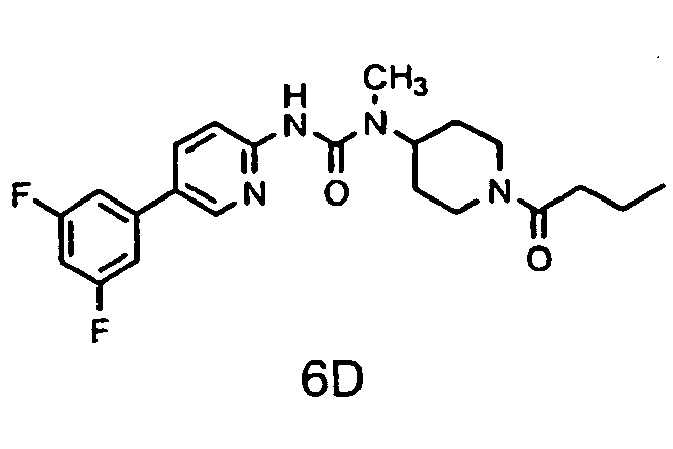
(CDCl3) δ 8.40 (d, J = 2.0 Hz, 1H), 8.15 (d, J = 8.8 Hz, 1 H), 7.83 (dd, J=8.8, 2.4 Hz, 1 H), 7.27 (s, 1 H), 7.06 (m, 2H), 6.79 (m, 1 H), 4.82 (m, 1 H), 4.51 (m, 1 H), 3.97 (d, b, 1 H), 3.14 (m, 1 H), 2.91 (s, 3H), 2.61 (m, 1H), 2.33 (t, J = 6.8 Hz, 2H), 1.90-1.50 (m, 6H), 0.98 (t, J = 7.6 Hz, 3H) 417 -

-

- To a solution of 2-amino-5-bromopyridine (5.00 g, 28.9 mmol) in anhydrous pyridine (50 ml) was added phenyl chloroformate (4.0 ml, 31.8 mmol) dropwise under argon. The reaction mixture was stirred for 22 hr, then poured into EtOAc (200 ml). The resultant precipitate was collected, washed with EtOAc, and dried in vacuo.
- To a solution of the crude product was added Preparation 1 (6.19 g, 28.9 mmol), Et3N (12.0 ml, 86.7 mmol) and CHCl3 (100 ml). The reaction mixture was refluxed for 24 hr, allowed to cool and poured into cold H2O (∼200 ml). The whole was extracted with CH2Cl2 (3x200 ml), dried (Na2SO4), filtered and evaporated. The residue was subjected to flash chromatography (1:4 then 1:2 EtOAc/hexane) to give the product as a solid (7.20 g, 60%). 1H NMR (CDCl3) δ 8.17 (m, 1H), 7.94 (m, 1H), 7.68 (m, 1H), 7.22 (s, 1H), 4.32 (m, 1H), 4.18 (s, b, 2H), 2.83 (s, 3H), 2.74 (m, 2H), 1.58 (m, 4H), 1.41 (s, 9H). MS m/e 413 (M+H)+.
-

- A flask charged with 3-fluorophenyl boronic acid (0.537 g, 3.87 mmol), the product of Step 1 (7-1), (0.800 g, 1.94 mmol), Cs2CO3 (0.695 g, 2.13 mmol), toluene (30 ml) and H2O (1 ml) was purged with N2. PdCl2(dppf)2·CH2Cl2 (0.317 g, 0.387 mmol) was added, and the reaction mixture was refluxed for 1.5 hr, allowed to cool, then poured into cold water (100 ml). The whole was extracted with CH2Cl2 (3x100ml) and dried (Na2SO4). The concentrated residue was subjected to PTLC (1:2 acetone/hexane) to give the product (0.382 g, 46%) as a film. 1H NMR (CDCl3) δ 8.41 (d, 1H), 8.15 (d, 1H), 7.86 (dd, 1H), 7.42-7.20 (m, 4H), 7.05 (m, 1H), 4.42 (m, 1H), 4.33 (s, b, 2H), 2.92 (s, 3H), 2.82 (m, 2H), 1.78-1.50 (m, 4H), 1.46 (m, 9H). MS m/e 429 (M+H)+.
-

- Reaction of the product of Step 2 by the method of Example 6, Step 4 gave the product. MS m/e 329 (M+H)+.
- Using essentially the same procedure as Example 4, reaction of the product of Step 3 with CH3COCl and Et3N gave the product. 1H NMR (CDCl3) δ 8.42 (d, 1H), 8.13 (m, 1H), 7.87 (m, 1H), 7.45 - 7.20 (m, 4H), 7.05 (m, 1H), 4.78 (m, 1H), 4.51 (m, 1H), 3.92 (m, 1H), 3.18 (m, 1H), 2.91 (s, 3H), 2.63 (m, 1H), 2.12 (s, 3H), 1.78 (m, 2H), 1.60 (m, 2H). MS m/e 371 (M+H)+.
- Using appropriate procedures, the following Examples were prepared.
STRUCTURE 1H NMR MS (M+H)+ 
(CDCl3) δ 8.37 (s, 1H), 8.15 (d, 1H), 7.83 (m, 1H), 7.28 (s, 1H), 7.13 (m, 2H), 7.01 (m, 1H), 4.41 (m, 1H), 4.22 (s, b, 2H), 2.91 (s, 3H), 2.80 (m, 2H), 1.75-1.50 (m, 4H), 1.46 (s, 9H) 447 
(CDCl3) δ 8.39 (s, 1H), 8.15 (d, 1 H), 7.85 (d, 1H), 7.32 (s, b, 1H), 7.14 (m, 2H), 7.03 (m, 1H), 4.43 (m, 1H), 3.94 (d, b, 2H), 2.95 (s, 3H), 2.81 (s, 3H), 2.78 (m, 2H), 1.84 (m, 4H) 425 
(CDCl3) δ 8.39 (s, 1H), 8.14 (d, 1H), 7.84 (d, 1H), 7.26 (s, 1H), 7.14 (m, 2H), 7.00 (m, 1H), 4.78 (d, b, 1H), 4.51 (m, 1H), 3.91 (d, b, 1H), 3.18 (m, 1H), 2.91 (s, 3H), 2.62 (m, 1H), 2.12 (s, 3H), 1.78 (m, 2H), 1.61 (m, 2H) 389 
(CDCl3) δ 8.39 (s, 1H), 8.15 (d, 1H), 7.85 (m, 1H), 7.27 (s, 1H), 7.14 (m, 2H), 7.02 (m, 1 H), 4.81 (d, b, 1H), 4.51 (m, 1H), 3.95 (d, b, 1H), 3.14 (m, 1H), 2.91 (s, 3H), 2.62 (m, 1H), 2.37 (q, 2H), 1.77 (m, 2H), 1.61 (m, 2H), 1.16 (t, 3H) 403 
(CDCl3) δ 8.39 (s, 1H), 8.14 (dd, 1H), 7.85 (m, 1H), 7.26 (s, 1H), 7.12 (m, 2H), 7.02 (m, 1H), 4.81 (m, 1H), 4.51 (m, 1H), 3.97 (d, b, 1H), 3.14 (m, 1H), 2.91 (s, 3H), 2.61 (m, 1H), 2.33 (t, 2H), 1.90-1.50 (m, 6H), 0.98 (t, 3H) 417 
(CDCl3) δ 8.42 (d, 1 H), 8.13 (d, 1H), 7.87 (dd, 1H), 7.45-7.20 (m, 4H), 7.06 (m, 1H), 4.45 (m, 1H), 3.93 (m, 2H), 3.05 (s, 3H), 2.81 (s, 3H), 2.80 (m, 2H), 1.83 (m, 4H) 407 
(CDCl3) δ 8.41 (d, 1H), 8.13 (d, 1H), 7.86 (dd, 1H), 7.45-7.20 (m, 4H), 7.05 (m, 1H), 4.81 (m, 1H), 4.52 (m, 1H), 3.95 (m, 1H), 3.13 (m, 1H), 2.91 (s, 3H), 2.62 (m, 1H), 2.36 (q, 2H), 1.75 (m, 2H), 1.58 (m, 2H), 1.16 (t, 3H) 385 
-

-

- Reaction of 6-2 with Preparation 10 using the procedure of Example 6, Step 3, gave the product. 1HNMR (CDCl3) δ 8.38 (d, J = 2.0 Hz, 1H), 8.13 (d, J = 8.8 Hz, 1H), 7.82 (dd, J=8.8, 2.4 Hz, 1H), 7.36 (s, 1H), 7.06 (m, 2H), 6.78 (m, 1H), 5.04 (m, 1H), 3.70-3.10 (m, 4H), 2.98 (s, 3H), 2.10 (m, 1H), 1.97 (m, 1H), 1.45 (s, 9H). MS m/e 433 (M+H)+.
-

- The product of Step 1 was treated with HCl by the procedure of Example 6, Step 4, to give the product. 1H NMR (CD3OD) δ 8.63 (m, 2H), 7.85 (d, 1H), 7.42 (m, 2H), 7.13 (m, 1H), 4.82 (m, 1H), 4.80-4.40 (m, 4H), 3.22 (s, 3H), 2.43 (m, 1H), 2.32 (m, 1H). MS m/e 333 (M+H)+.
- Using the procedure of Example 3, Step 3, the product was synthesized in 56% yield as a solid. 1H NMR (CDCl3) δ 8.38 (d, 1H), 8.22 (d, 1 H), 7.90 (m, 1H), 7.26 (s, 1H), 7.06 (m, 2H), 6.83 (m, 1H), 5.15 (m, 1H), 3.67 (m, 1H), 3.52 (m, 1H), 3.35 (m, 1H), 3.25 (m, 1H), 3.07 (s, 3H), 2.90 (s, 3H), 2.25 (m, 1H), 2.08 (m, 1H). MS m/e 411 (M+H)+.
-

- A mixture of Example 6B (0.030 g, 0.071 mmol), CH2Cl2 (5 ml) and mCPBA (57-80%, 0.032 g) was stirred at R.T. for 1.5 hr, then poured into H2O (10 ml). The whole was extracted with CH2Cl2 (3x20 ml), dried (Na2SO4), filtered and concentrated. Subjection of the residue to PTLC (1:20 CH30H/CH2Cl2) gave the product (0.0194 mg, 62%) as a solid. 1H NMR (CDCl3) δ 9.81 (s, 1H), 8.46 (d, J = 2.0 Hz, 1H), 8.37 (d, J = 9.2 Hz, 1H), 7.49 (dd, J=8.8, 2.0 Hz, 1H), 7.04 (m, 2H), 6.86 (m, 1H), 4.39 (s, b, 1H), 3.95 (d, b, 2H), 3.02 (s, 3H), 2.83 (m, 5H), 1.88 (m, 4H). MS m/e 441 (M+H)+.
-
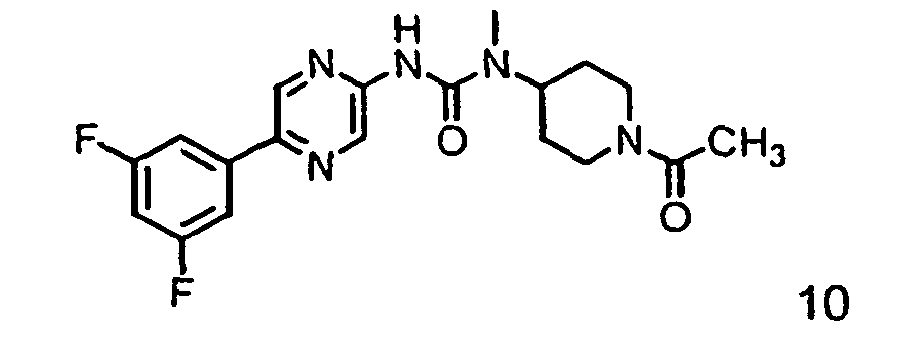
-

- A flask charged with 2-amino-5-bromopyrazine (4.00 g, 23.0 mmol), 3,5-difluorophenylboronic acid (5.44 g, 34.5 mmol), toluene (150 ml), water (5 ml) and cesium carbonate (8.24 g, 25.3 mmol) was purged with N2. PdCl2(dppf)·CH2Cl2 (0.93 g, 1.15 mmol) was added and the mixture was refluxed 2 hr, allowed to cool, then poured into cold water (100 ml). The whole was extracted with CH2Cl2 (3x200 ml), dried (Na2SO4), and filtered. The concentrated residue was subjected to flash column chromatography (1:4 then 1:2 acetone/hexane) to give the product (4.42 g, 93%). 1HNMR (CDCl3) δ 8.42 (d, J = 1.6 Hz, 1H), 8.05 (d, J = 1.2 Hz, 1H), 7.42 (m, 2H), 6.79 (m, 1H), 4.75 (s, 2H). MS m/e 208 (M+H)+.
-

- To a sclution of the product of Step 1 (2.00 g, 9.65 mmol) in anhydrous pyridine (40 ml) was added phenyl chloroformate dropwise under argon. The reaction mixture was stirred for 16 hr, then concentrated. To the residue was added chloroform (50 ml), followed by Preparation 1 (3.10 g, 14.5 mmol) and Et3N (4.0 ml, 28.9 mmol). The reaction mixture was refluxed for 4 hr, then allowed to cool and poured into water. The whole was extracted with CH2Cl2 (3x200 ml) and dried (Na2SO4), filtered and concentrated. Crystallization of the residue (acetone/hexane) gave the product (2.52 g, 58%). The mother liquor was concentrated and subjected to flash chromatography (1:5 acetone/hexane) to afford additional product (0.943 g, total 80%). 1H NMR (CDCl3) δ 9.45 (d, J = 1.6 Hz, 1H), 8.55 (d, J = 1.2 Hz, 1H), 7.51 (m, 2H), 7.17 (s, 1H), 6.85 (m, 1H), 4.43 (m, 1H), 4.24 (m, 2H), 2.95 (s, 3H), 2.82 (m, 2H), 1.63 (m, 4H), 1.47 (s, 9H). MS m/e 448 (M+H)+.
-

- The product of Step 2 (2.50 g, 5.59 mmol) was treated with 4M HCl/1,4-dioxane (30 ml) by the procedure of Example 6, Step 4 to afford the product. 1H NMR (CD3OD) δ 9.19 (s, b, 1H), 8.79 (s, b, 1H), 7.66 (m, 2H), 7.03 (m, 1H), 4.42 - 3.49 (m, 5H), 3.16 (m, 2H), 3.04 (s, 3H), 2.20-1.95 (m, 4H). MS m/e 348 (M+H)+.
- To a mixture of the product of Step 3 (2.15 g, 5.59 mmol), and Et3N (3.9 ml, 28.0 mmol) in CH2Cl2 (50 ml) was added acetic anhydride (0.58 ml, 6.15 mmol). The reaction mixture was stirred for 16 hr, then poured into water (100 ml). The whole was extracted with CH2Cl2 (3x200 ml), dried (Na2SO4), filtered, and evaporated. The residue was subjected to flash chromatography (gradient 1:100 - 5:95 MeOH/CH2Cl2) to give the product (1.71 g, 78%). 1H NMR (CDCl3) δ 9.44 (d, J = 1.2 Hz, 1H), 8.55 (d, J = 1.6 Hz, 1H), 7.51 (m, 2H), 7.23 (s, 1H), 6.84 (m, 1H), 4.79 (m, 1H), 4.53 (m, 1H), 3.91 (m, 1H), 3.20 (m, 1H), 2.94 (s, 3H), 2.63 (m, 1H), 2.12 (s, 3H), 1.86-1.55 (m, 4H). MS m/e 390 (M+H)+.
- Use of the appropriate procedures afforded the following compounds:
STRUCTURE 1H NMR MS (M+H)+ 
(CDCl3) δ 9.44 (bs, 1H), 8.55 (bs, 1H), 7.52 (m, 2H), 7.22 (s, 1H), 6.85 (m, 1H), 4.79 (m, 1H), 4.53 (m, 1H), 3.91 (m, 1H), 3.20 (m, 1H), 2.94 (s, 3H), 2.63 (m, 1H), 2.37 (m, 2H), 1.86-1.55 (m, 4H), 1.16 (m, 3H). 404 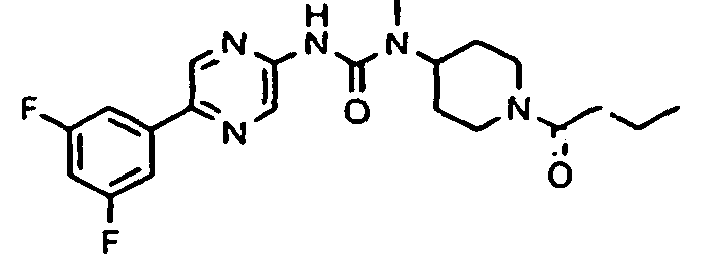
(CDCl3) δ 9.45 (bs, 1H), 8.56 (bs, 1H), 7.52 (m, 2H), 7.19 (s, 1H), 6.85 (m, 1H), 4.81 (m, 1H), 4.53 (m, 1H), 3.98 (m, 1H), 3.15 (m, 1H), 2.94 (s, 3H), 2.62 (m, 1H), 2.33 (m, 2H), 1.83-1.56 (m, 6H), 0.98 (m, 3H). 418 

(CDCl3) δ 9.45 (bs, 1H), 8.56 (bs, 1H), 7.52 (m, 2H), 7.26 (s, 1H), 6.85 (t, 1H), 4.82 (b, 1H), 4.53 (m, 1H), 4.10 (b, 1H), 3.15 (t, 1H), 2.93 (m, 4H), 2.62 (t, 1H), 1.90-1.50 (m, 12H). 444 
(CDCl3) δ 9.45 (d, J = 1.2 Hz, 1H), 8.56 (d, J = 1.2 Hz, 1H), 7.51 (m, 2H), 7.21 (s, 1H), 6.84 (m, 1H), 4.83 (m, 1H), 4.54 (m, 1H), 4.05 (m, 1H), 3.16 (m, 1H), 2.94 (s, 3H), 2.84 (m, 1H), 2.62 (m, 1H), 1.82 (m, 2H), 1.58 (m, 2H), 1.14 (m, 6H) 418 
(CDCl3) δ 9.45 (d, J = 1.2 Hz, 1H), 8.56 (d, J = 1.2 Hz, 1H), 7.51 (m, 2H), 7.22 (s, 1H), 6.84 (m, 1H), 4.77 (m, 1H), 4.56 (m, 1H), 4.38 (m, 1H), 3.22 (m, 1H), 2.94 (s, 3H), 2.67 (m, 1H), 1.90-1.55 (m, 5H), 1.00 (m, 2H), 0.78 (m, 2H) 416 
(CDCl3) δ 9.43 (d, J = 1.6 Hz, 1H), 8.55 (d, J = 1.6 Hz, 1H), 7.51 (m, 2H), 7.28 (s, 1H), 6.84 (m, 1H), 4.76 (m, 1H), 4.56 (m, 1H), 4.11 (q, 2H), 4.02 (m, 1H), 3.43 (s, 3H), 3.17 (m, 1H), 2.93 (s, 3H), 2.68 (m, 1H), 1.95-1.57 (m, 4H) 420 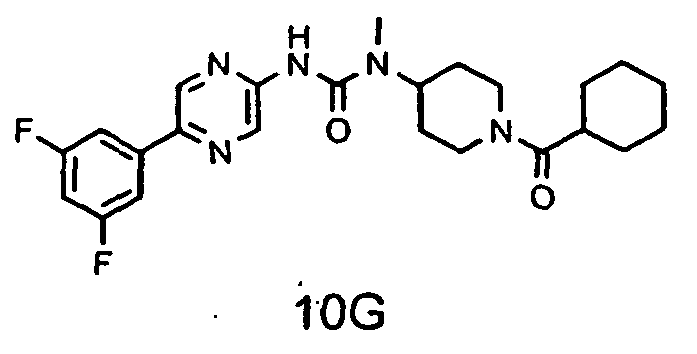
(CDCl3) δ 9.45 (d, J = 1.6 Hz, 1H), 8.55 (d, J = 1.2 Hz, 1H), 7.51 (m, 2H), 7.24 (s, 1H), 6.84 (m, 1H), 4.82 (m, 1H), 4.53 (m, 1H), 4.03 (m, 1H), 3.15 (m, 1H), 2.93 (s, 3H), 2.61 (m, 1H), 2.49 (m, 1H), 1.95-1.20 (m, 14 H) 458 
(CDCl3) δ 9.44 (d, J = 1.6 Hz, 1H), 8.55 (d, J = 1.6 Hz, 1H), 7.51 (m, 2H), 7.23 (s, 1H), 6..84 (m, 1H), 4.82 (m, 1H), 4.53 (m, 1H), 4.00 (m, 1H), 3.15 (m, 1H), 2.93 (s, 3H), 2.61 (m, 1H), 2.23 (m, 2H), 2.14 (m, 1H), 1.90-1.50 (m, 4H), 0.98 (m, 6H) 432 
(CDCl3) δ 9.44 (s, H), 8.55 (s, 1H), 7.51 (m, 2H), 7.25 (s, 1H), 6.84 (m, 1H), 4.85 (m, 1H), 4.53 (m, 1H), 4.05 (m, 1H), 3.17 (m, 1H), 2.93 (s, 3H), 2.61 (m, 1H), 2.28 (q, 2H), 1.90-1.50 (m, 4H), 1.04 (m, 9H) 446 
(CDCl3) δ 9.42 (d, J = 1.6 Hz, 1H), 8.53 (d, J = 1.6 Hz, 1H), 7.49 (m, 2H), 7.32 (s, 1H), 6.83 (m, 1H), 4.82 (m, 1H), 4.57 (m, 1H), 3.97 (m, 1H), 3.18 (m, 1H), 2.93 (s, 3H), 2.62 (m, 1H), 2.30 (m, 2H), 1.85-1.50 (m, 4H), 1.03 (m, 1H), 0.57 (m, 2H), 0.17 (m, 2H) 430 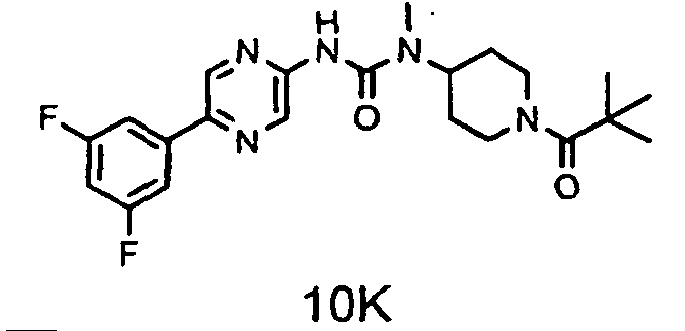
(CDCl3) δ 9.45 (s, 1H), 8.55 (s, 1H), 7.51 (m, 2H), 7.24 (s, 1H), 6.83 (m, 1H), 4.55 (m, 3H), 2.93 (m, 3H), 2.84 (m, 2H), 1.90-1.50 (m, 4H), 1.29 (s, 9H) 432 
(CDCl3) δ 9.44 (d, J = 1.6 Hz, 1H), 8.55 (d, J = 1.6 Hz, 1H), 7.49 (m, 2H), 7.45 (m, 1H), 7.31 (m, 1H), 7.28 (s, 1H), 7.05 (m, 1H), 6.84 (m, 1H), 4.62 (m, 3H), 3.08 (m, 2H), 2.97 (s, 3H), 1.90-1.60 (m, 4H) 458 
(CDCl3) δ 9.44 (d, J = 1.6 Hz, 1H), 8.55 (d, J = 1.6 Hz, 1H), 7.52 (m, 2H), 7.42 (m, 5H), 7.26 (s, 1H), 6.85 (m, 1H), 4.90 (bs, 1H), 4.78 (m, 1H), 3.90 (bs, 1H), 3.15 (m, b, 1H), 2.97 (s, 3H), 2.87 (bs, 1H), 2.90-1.50 (m, b, 4H) 452 
(CDCl3) δ 9.45 (d, J = 1.6 Hz, 1H), 8.55 (d, J = 1.2 Hz, 1H), 7.51 (m, 2H), 7.22 (s, 1H), 6.85 (m, 1H), 4.82 (b, 1H), 4.58 (m, 1H), 4.07 (b, 1H), 3.17 (m, 1H), 2.94 (s, 3H), 2.75 (m, 1H), 2.61 (m, 1H), 1.90-1.50 (m, 5H), 1.38 (m, 3H), 1.12 (m, 3H), 0.92 (m, 3H) 446 
(CDCl3) δ 9.44 (d, J = 1.2 Hz, 1H), 8.55 (s, 1H), 7.51 (m, 2H), 7.22 (s, 1H), 6.85 (m, 1H), 4.78 (m, 1H), 4.52 (m, 1H), 3.81 (m, 1H), 3.27 (m, 1H), 3.08 (m, 1H), 2.92 (s, 3H), 2.65 (m, 1H), 2.34 (m, 2H), 2.16 (m, 2H), 2.10-1.40 (m, 6H) 430 
(CDCl3) δ 9.44 (s, 1H), 8.55 (s, 1H), 7.51 (m, 2H), 7.28 (s, 1H), 6.83 (m, 1H), 4.92 (b, 1H), 4.55 (m, 1H), 4.15 (b, 1H), 3.17 (m, 1H), 2.92 (s, 3H), 2.62.(m, 1H), 2.54 (m, 1H), 1.90-1.40 (m, 8H), 0.87 (m, 6H) 446 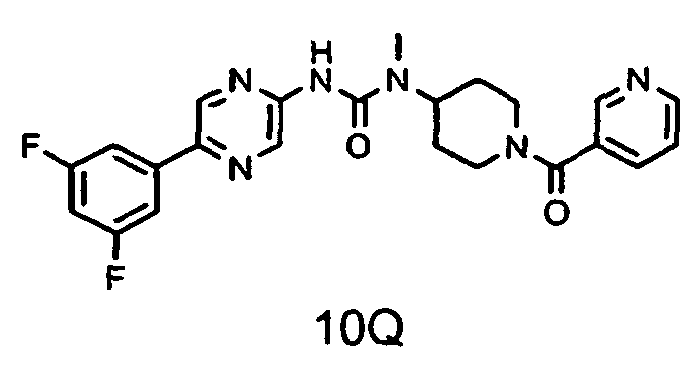
(CDCl3) δ 9.42 (d, J = 1.6 Hz, 1H), 8.68 (bs, 2H), 8.55 (d, J = 1.6 Hz, 1H), 7.76 (m, 1 H), 7.51 (m, 2H), 7.38 (m, 1H), 7.28 (s, 1H), 6.83 (m, 1H), 4.90 (bs, 1H), 4.80 (m, 1H), 3.85 (bs, 1 H), 3.25 (bs, 1H), 2.97 (s, 3H), 2.90 (bs, 1H), 2.00-1.50 (m, b, 4H) 453 
1HNMR (CDCl3) δ 9.44 (d, 1H), 8.62 (bs., 1H), 8.55 (d, 1H), 7.51 (m, 2H), 6.84 (m, 1H), 5.06 (m, 1H), 3.70-3.10 (m, 4H), 3.01 (s, 3H), 2.12 (m, 1H), 1.98 (m, 1H), 1.47 (s, 9H). 434 
(CDCl3) δ 9.42 (s, 1H), 8.58 (s, 1H), 7.52 (m, 2H), 7.24 (s, 1H), 6.85 (m, 1H), 5.16 (m, 1H), 3.67 (m, 1H), 3.51 (m, 1H), 3.37 (m, 1H), 3.25 (m, 1H), 3.09 (s, 3H), 2.89 (s, 3H), 2.26 (m, 1H), 2.10 (m, 1H) 412 
(CDCl3) δ 9.42 (s, 1H), 8.56 (m, 1H), 7.50 (m, 2H), 7.32 (d, 1H), 6.84 (m, 1H), 5.11 (m, 1H), 3.82- 3.28 (m, 4H), 3.01 (d, 3H), 2.32-1.90 (m, 5H) 376 
(CDCl3) δ 9.42 (s, 1H), 8.56 (m, 1H), 7.50 (m, 2H), 7.27 (d, 1H), 6.84 (m, 1H), 5.11 (m, 1H), 4.87- 3.25 (m, 4H), 3.02 (d, 3H), 2.40-1.90 (m, 4H), 1.15 (m, 3H) 390 
(CDCl3) δ 9.43 (s, 1H), 8.57 (bs, 1H), 7.51 (m, 2H), 2.27 (s, 1H), 6.83 (m, 1H), 5.09 (m, 1H), 3.90-3.30 (m, 4H), 3.03 (d, 3H), 2.65 (m, 1H), 2.30-1.90 (m, 2H), 1.14 (m, 6H) 404 
(CDCl3) 5 9.44 (s, 1H), 8.56 (s, 1H), 7.52 (m, 2H), 7.25 (s, 1H), 6.85 (m, 1H), 4.43 (m, 1H), 3.94 (b, 2H), 2.98 (s, 3H), 2.81 (m, 5H), 1.84 (m, 4H) 426 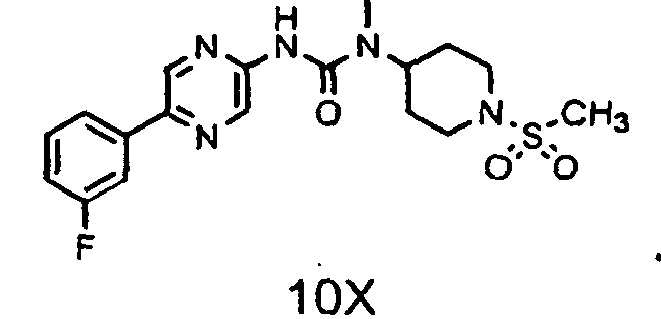
(CDCl3) δ 9.42 (s, 1H), 8.58 (s, 1H), 7.71 (m, 2H), 7.42 (m, 1H), 7.19 (s, 1H), 7.10 (m, 1H), 4.42 (m, 1H), 3.92 (m, 2H), 2.97 (s, 3H), 2.80 (s, 5H), 1.83 (m, 4H). 408 
(CDCl3) δ 9.42 (d, J = 1.6 Hz, 1H), 8.57 (s, 1H), 7.72 (m, 2H), 7.42 (m, 1H), 7.24 (s, 1H), 7.08 (m, 1H), 4.79 (m, 1H), 4.53 (m, 1H), 3.91 (m, 1H), 3.19 (m, 1H), 2.93 (s, 3H), 2.62 (m, 1H), 2.12 (s, 3H), 1.90-1.50 (M, 4H) 372 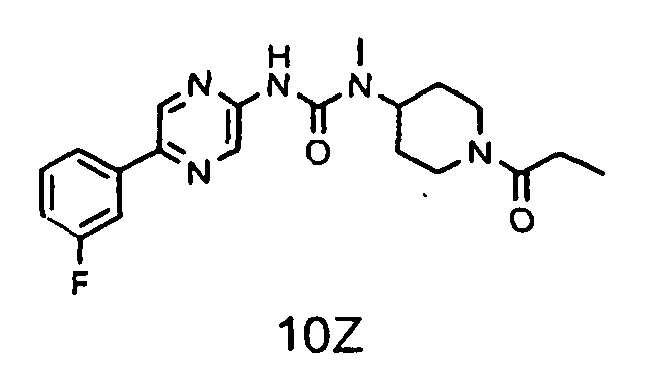
(CDCl3) δ 9.44 (d, J = 1.6 Hz, 1H), 8.57 (d, J = 1.6 Hz, 1H), 7.71 (m, 2H), 7.46 (m, 1H), 7.25 (s, 1H), 7.10 (m, 1H), 4.90 (b, 1H), 4.53 (m, 1H), 3.95 (b, 1H), 3.14 (m, 1H), 2.93 (s, 3H), 2.61 (m, 1H), 2.37 (q, 2H), 1.90-1.50 (m, 4H), 1.16 (t, 3H) 386 
(CDCl3) δ 9.44 (d, J = 1.6 Hz, 1H), 8.58 (d, J = 1.2 Hz, 1H), 7.71 (m, 2H), 7.43 (m, 1H), 7.19 (s, 1H), 7.11 (m, 1H), 4.93 (b, 1H), 4.58 (m, 1 H), 4.08 (b, 1H), 3.18 (m, 1H), 2.94 (s, 3H), 2.82 (m, 1H), 2.63 (m, 1H), 1.90-1.50 (m, 4H), 1.14 (m, 6H) 400 
(CDCl3) δ 9.45 (s, 1H), 8.59 (s, 1H), 7.72 (m, 2H), 7.45 (m, 1H), 7.20 (s, 1H), 7.11 (m, 1H), 4.78 (m, 1H), 4.58 (m, 1 H), 4.37 (b, 1H), 3.24 (m, 1H), 2.95 (s, 3H), 2.88 (m, 1H), 1.90-1.50 (m, 5H), 0.99 (m, 2H), 0.78 (m, 2H) 398 
(CDCl3) δ 9.48 (d, J = 1.6 Hz, 1H), 8.72 (d, J = 1.6 Hz, 1H), 7.79 (m, 1H), 7.21 (s, 1H), 7.15 (m, 1H), 7.07 (m, 1H), 4.81 (b, 1H), 4.57 (m, 1H), 3.93 (b, 1H), 3.21 (t, 1H), 2.94 (s, 3H), 2.63 (t, 1H), 2.12 (s, 3H), 1.90-1.50 (m, 4H) 390 
(CDCl3) δ 9.47 (d, J = 1.6 Hz, 1H), 8.71 (m, 1H), 7.78 (m, 1H), 7.27 (s, 1H), 7.15 (m, 1H), 7.07 (m, 1H), 4.81 (b, 1H), 4.57 (m, 1H), 3.95 (b, 1H), 3.15 (t, 1H), 2.93 (s, 3H), 2.63 (t, 1H), 2.37 (q, 2H), 1.90-1.50 (m, 4H), 1.16 (t, 3H) 404 
(CDCl3) δ 9.48 (d, J = 1.6 Hz, 1H), 8.72 (m, 1H), 7.78 (m, 1H), 7.23 (s, 1H), 7.15 (m, 1H), 7.07 (m, 1H), 4.82 (b, 1H), 4.55 (m, 1H), 4.04 (b, 1H), 3.17 (b, 1H), 2.94 (s, 3H), 2.82 (m, 1H), 2.62 (b, 1H), 1.90-1.50 (m, 4H), 1.15 (m, 6H) 418 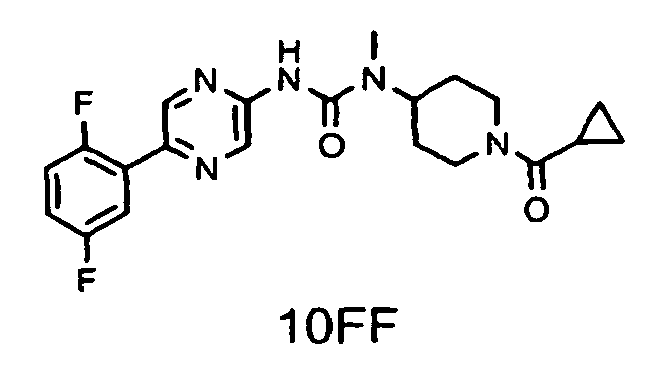
(CDCl3) δ 9.48 (d, J = 1.6 Hz, 1H), 8.71 (m, 1H), 7.78 (m, 1H), 7.31 (s, 1H), 7.15 (m, 1H), 7.07 (m, 1H), 4.78 (b, 1H), 4.55 (m, 1H), 4.35 (b, 1H), 3.15 (b, 1H), 2.94 (s, 3H), 2.65 (b, 1H), 1.90-1.50 (m, 5H), 0.98 (m, 2H), 0.77 (m, 2H) 416 
(CDCl3) δ 9.48 (d, J = 1.2 Hz, 1H), 8.70 (m, 1H), 7.78 (m, 1H), 7.31 (s, 1H), 7.15 (m, 1H), 7.07 (m, 1H), 4.81 (b, 1H), 4.55 (m, 1H), 4.09 (b, 1H), 3.15 (b, 1H), 2.93 (s, 3H), 2.87 (m, 1H), 2.63 (b, 1H), 1.90-1.50 (m, 12H). 444 
(CDCl3) δ 9.43 (d, J = 1.2 Hz, 1H), 8.57 (d, J = 1.2Hz, 1H), 7.97 (d, J = 1.6 Hz, 1H), 7.83 (m, 1H), 7.40 (m, 2H), 7.22 (s, 1H), 4:78 (m, 1H), 4.53 (m, 1 H), 3.90 (m, 1H), 3.19 (m, 1H), 2.93 (s, 3H), 2.62 (m, 1H), 2.12 (s, 3H), 1.79 (m, 2H), 1.59 (m, 2H) 388 
(CDCl3) δ 9.43 (d, J = 1.6 Hz, 1H), 8.57 (d, J = 1.6 Hz, 1H), 7.97 (m, 1H), 7.85 (m, 1H), 7.40 (m, 2H), 7.23 (s, 1 H), 4.81 (m, 1H), 4.55 (m, 1H), 3.97 (b, 1H), 3.15 (b, 1H), 2.93 (s, 3H), 2.64 (b, 1H), 2.37 (q, 2H), 1.90-1.50 (m, 4H), 1.16 (t, 3H) 402 
(CDCl3) δ 9.42 (d, J = 1.6 Hz, 1H), 8.56 (d, J = 2.0 Hz, 1H), 7.95 (m, 1H), 7.81 (m, 1H), 7.39 (m, 2H), 7.21 (s, 1H), 4.81 (b, 1H), 4.55 (m, 1H), 4.05 (b, 1H), 3.17 (b, 1H), 2.92 (s, 3H), 2.81 (m, 1H), 2.61 (b, 1H), 1.78 (m, 2H), 1.59 (m, 2H), 1.12 (m, 6H) 416 
(CDCl3) δ 9.44 (d, J = 1.2 Hz, 1H), 8.57 (d, J = 1.2 Hz, 1H), 7.97 (m, 1H), 7.82 (m, 1H), 7.39 (m, 2H), 7.22 (s, 1H), 4.78 (m, 1H), 4.55 (m, 1H), 4.35 (m, 1H), 3.23 (m, 1H), 2.94 (s, 3H), 2.86 (m, 1H), 1.90-1.50 (m, 5H), 0.99 (m, 2H), 0.78 (m, 2H) 414 
(CDCl3) δ 9.46 (s, 1H), 8.64 (s, 1H), 8.24 (s, 1H), 8.14 (d, 1H), 7.63 (m, 2H), 7.20 (s, 1H), 4.48 (m, 1H), 3.97 (b, 2H), 2.98 (m, 7H), 1.81 (m, 4H), 1.37 (t, 3H) 458 
(CDCl3) δ 9.46 (s, 1H), 8.64 (s, 1H), 8.24 (s, 1H), 8.14 (d, 1H), 7.61 (m, 2H), 7.21 (s, 1H), 4.45 (m, 1H), 3.93 (b, 2H), 2.98 (m, 5H), 2.28 (m, 1H), 1.82 (m, 4H), 1.19 (m, 2H), 0.99 (m, 2H) 484 
(CDCl3) δ 9.48 (s, 1H), 8.63 (s, 1H), 8.24 (s, 1H), 8.17 (d, 1H), 7.63 (m, 2H), 7.24 (s, 1H), 4.79 (b, 1H), 4.57 (m, 1H), 3.92 (b, 1H), 3.12 (t, 1H), 2.95 (s, 3H), 2.63 (t, 1H), 2.13 (s, 3H), 1.90 (m, 2H), 1.82 (m, 2H) 422 
(CDCl3) δ 9.47 (s, 1H), 8.63 (s, 1H), 8.24 (s, 1H), 8.17 (d, 1H), 7.63 (m, 2H), 7.21 (s, 1 H), 4.83 (b, 1H), 4.55 (m, 1H), 3.98 (b, 1H), 3.18 (t, 1H), 2.94 (s, 3H), 2.63 (t, 1H), 2.38 (q, 2H), 1.90-1.50 (m, 4H), 1.16 (t, 3H) 436 
(CDCl3) δ 9.47 (s, 1H), 8.63 (s, 1H), 8.24 (s, 1H), 8.15 (d, 1H), 7.62 (m, 2H), 7.22 (s, 1H), 4.83 (b, 1H), 4.58 (m, 1H), 4.05 (b, 1H), 3.19 (t, 1H), 2.94 (s, 3H), 2.82 (m, 1H) 2.63 (b, 1H), 1.90-1.50 (m, 4H), 1.14 (m, 6H) 450 
(CDCl3) δ 9.48 (s, 1H), 8.63 (s, 1H), 8.24 (s, 1H), 8.15 (d, 1H), 7.62 (m, 2H), 7.22 (s, 1H), 4.79 (b, 1H), 4.58 (m, 1H), 4.37 (b, 1H), 3.22 (b, 1H), 2.95 (s, 3H), 2.67 (b, 1H), 2.90-1.50 (m, 5H), 0.99 (m, 2H), 0.78 (m, 2H) 448 
(CDCl3) δ 9.46 (d, J = 1.2 Hz, 1H), 8.71 (bs, 2H), 8.63 (d, J = 1.2 Hz, 1H), 8.24 (s, 1H), 8.15 (d, J = 8.0 Hz, 1H), 7.78 (d, J = 7.6 Hz, 1H), 7.67 (d, J = 8.4 Hz, 1H), 7.60 (t, J = 8.0 Hz, 1H), 7.39 (m, b, 1H), 7.29 (s, 1H), 4.90 (bs, 1H), 4.62 (m, 1H), 3.83 (bs, 1H), 3.23 (bs, 1H), 2.99 (s, 3H), 2.90 (bs, 1H), 1.90-1.50 (m, 4H) 485 -

-

- Reaction of 2-amino-5-bromopyrazine and Preparation 11 by the procedure of Example 10, Step 2 gave the product. 1HNMR (CDCl3) δ 9.18 (d, J = 1.2 Hz, 1H), 8.26 (d, J = 1.2 Hz, 1H), 7.11 (s, 1H), 4.42 (m, 1 H), 3.93 (m, 2H), 2.95 (s, 3H), 2.79 (m, 5H), 1.81 (m, 4H). MS m/e 394 (M+H)+.
- A flask charged with 11-1 (0.090 g, 0.23 mmol), 2,5-difluorophenylboronic acid (0.044 g, 0.28 mmol), toluene (10 ml), water (0.3 ml) and cesium carbonate (0.082 g, 0.25 mmol) was purged with N2. PdCl2(dppf)2CH2Cl2 (0.015 g, 0.019 mmol) was added and the reaction mixture was refluxed for 3 hr, allowed to cool, and filtered. The concentrated filtrate was subjected to PTLC (1:1 acetone/hexane) to give the product (0.046 g, 47%). 1H NMR (CDCl3) δ 9.47 (d, J = 1.6 Hz, 1H), 8.72 (m, 1H), 7.78 (m, 1H), 7.22 (s, 1H), 7.15 (m, 1H), 7.06 (m, 1H), 4.48 (m, 1H), 3.95 (m, 2H), 2.98 (s, 3H), 2.83 (m, 5H), 1.86 (m, 4H). MS m/e 426 (M+H)+.
- Use of the appropriate boronic acid and essentially the same procedure afforded the following compounds:
STRUCTURE 1H NMR MS (M+H)+ 
(CDCl3) δ 9.46 (s, 1H), 8.62 (s, 1H), 8.29 (s, 1H), 8.20 (m, 1H), 7.69 (m, 1H), 7.60 (m, 1H), 7.22 (m, 1H), 4.44 (m, 1H), 3.95 (m, 2H), 2.98 (s, 3H), 2.81 (m, 5H), 1.83 (m, 4H). 415 
(CDCl3) δ 9.43 (s, 1H), 8.59 (s, 1H), 7.80 (s, 1H), 7.75 (d, 1H), 7.37 (t, 1H) 7.25 (d, 1H), 7.16 (s, 1H), 4.50 (m, 1H), 3.95 (b, 2H), 2.97 (s, 3H), 2.82 (m, 5H), 2.44 (s, 3H), 1.84 (m, 4H) 404 
(CDCl3) δ 9.42 (d, J = 1.6 Hz, 1H), 8.59 (s, 1H), 7.52 (m, 2H), 7.39 (t, 1H), 7.16 (s, 1H), 6.97 (m, 1H), 4.48 (m, 1H), 3.94 (b, 2H), 3.89 (s, 3H), 2.97 (s, 3H), 2.81 (m, 5H), 1.84 (m, 4H) 420 
(CDCl3) δ 9.47 (s, 1H), 8.64 (s, 1H), 8.24 (s, 1H), 8.14 (d, 1H), 7.63 (m, 2H), 7.26 (s, 1H), 4.49 (bs, 1H), 3.94 (b, 2H), 2.98 (s, 3H), 2.81 (bs, 5H), 1.85 (bs, 4H) 458 
(CDCl3) δ 9.42 (s, 1H), 8.60 (s, 1H), 7.98 (s, 1H), 7.84 (m, 1H), 7.40 (m, 2H), 7.19 (s, 1H), 4.42 (m, 1H), 3.90 (m, 2H), 2.97 (s, 3H), 2.81 (m, 5H), 1.84 (m, 4H). 424 -

-

- Reaction of 3-fluorophenylboronic acid with 2-bromo-5-nitrothiophene by essentially the procedure of Example 1, Step 1 gave the product. 1H NMR (CDCl3, 400 MHz) δ 7.91 (1H, m), 7.42 (2H, m), 7.32 (1H, m), 7.25 (1H, m), 7.14 (1H, m).
-

- Reaction of the product of Step 1 with NiCl2•6H2O and NaBH4 by essentially the procedure of Example 2, Step 2 gave the product. 1H NMR (CDCl3, 400 MHz) δ 7.25 (2H, m), 7.14 (1H, m), 6.48 (1H, d, J = 2 Hz), 6.85 (1H, m), 6.15 (1H, d, J = 2 Hz), 3.87 (2H, b).
-

- Reaction of the product of Step 2 with N,N'-disuccinimidyl carbonate and Preparation 1 by the procedure of Example 2, Step 3 gave the product. 1H NMR (CDCl3, 400 MHz) δ 7.25 (3H, m), 7.06 (1H, m), 7.05 (1H, d, J = 4 Hz), 6.89 (1H, m), 6.50 (1H, d, J = 4 Hz), 4.44 (1H, m), 4.22 (2H, m), 2.86 (3H, s), 2.79 (2H, m), 1.60 (4H, m) 1.47 (9H, s). MS m/e 434 (M+H)+.
-

- Reaction of the product of Step 3 with HCl by essentially the procedure of Example 6, Step 4 gave the product. 1H NMR (CD3OD, 400 MHz) δ 7.36 - 7.24 (4H, m), 6.90 (1H, m), 6.73 (1H, m), 4.37 (1H, m), 3.50 (2H, m), 3.13 (2H, m), 2.96 (3H, s), 2.09 - 1.91 (4H, m).
- Reaction of the product of Step 4 with methanesulfonyl chloride by essentially the procedure of Example 3, Step 3 gave the product. 1H NMR (CDCl3, 400 MHz) δ 7.45 (1H, s), 7.29 (3H, m), 7.05 (1H, d, J = 4 Hz), 6.88 (1H, m), 6.54 (1H, d, J = 4 Hz), 4.40 (1H, m), 3.86 (2H, m), 2.87 (3H, s), 2.74 (3H, s), 2.68 (2H, m), 1.76 (4H, m). MS m/e 412 (M+H)+.
- Use of the appropriate reagents and procedures afforded the following compounds.
STRUCTURE 1H NMR MS (M+H)+ 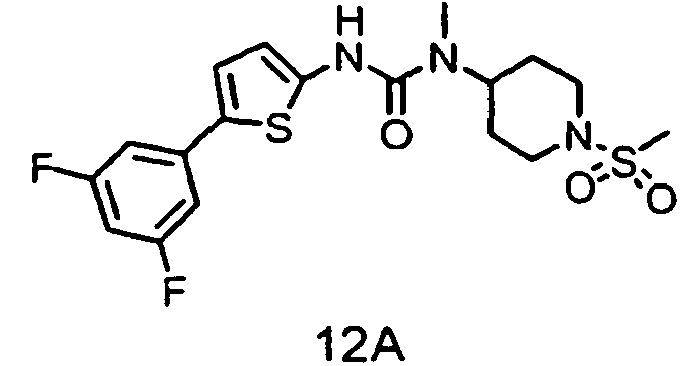
430 
444 
484 
(CDCl3) δ 7.46 (1H, s), 7.28 (3H, m), 7.03 (1H, s), 6.86 (1H, m), 6.51 (1H, s), 4.74 (1 H, m), 4.53 (1H, m), 3.85 (1H, m), 3.14 (1H, m), 2.86 (3H, s), 2.58 (1H, m), 2.10 (3H, s), 1.78 (2H, m), 1.58 (2H, m) 376 
(CDCl3) δ 7.63 (1H, s), 7.29 (3H, m), 7.03 (1H, d, J = 4 Hz), 6.87 (1H, m), 6.49 (1 H, d, J = 4 Hz), 4.70 (1H, m), 4.52 (1H, m), 4.30 (1H, m), 3.15 (1H, m), 2.85 (3H, s), 2.61 (1H, m), 1.72 (3H, m), 1.58 (2H, m), 0.95 (2H, m), 0.74 (2H, m). 402 
(CDCl3) δ 8.66 (2H, m), 7.75 (1 H, d, J = 7.6 Hz), 7.56 (1H, s), 7.38 (1H, m), 7.28 (3H, m), 7.07 (1H, d, J = 4 Hz), 6.87 (1H, m), 6.49 (1H, d, J = 4 Hz), 4.87 (1H, m), 4.57 (1H, m), 3.78 (1H, m), 3.17 (1H, m), 2.88 (3H, s), 2.84 (1H, m), 1.81 - 1.56 (4H, m). 439 
(CDCl3) δ 7.68 (s, 1H), 7.03 (m, 3H), 6.61 (m, 1H), 6.50 (m, 1H), 4.75 (m, 1H), 4.50 (m, 1H), 3.89 (m, 1H), 3.15 (m, 1H), 2.87 (s, 3H), 2.59 (m, 1H), 2.10 (s, 3H), 1.75 (m, 2H), 1.58 (m, 2H). 394 

(CDCl3) δ 7.46 (s, 1H), 7.04 (m, 3H), 6.62 (m, 1H), 6.50 (m, 1H), 4.77 (m, 1H), 4.51 (m, 1H), 3.94 (m, 1H), 3.09 (m, 1H), 2.87 (s, 3H), 2.59 (m, 1H), 2.36 (q, J = 7.6 Hz, 2H), 1.75 (m, 2H), 1.57 (m, 2H), 1.15 (t, J = 7.6 Hz, 3H). 408 
(CDCl3) δ 7.33 (s, 1H), 7.03 (m, 3H), 6.63 (m, 1H), 6.50 (m, 1H), 4.78 (m, 1H), 4.52 (m, 1H), 3.95 (m, 1H), 3.11 (m, 1H), 2.87 (s, 3H), 2.58 (m, 1H), 2.33 (m, 2H), 1.4-1.8 (m, 6H), 0.97 (t, J = 7.6 Hz, 3H). 422 
(CDCl3) δ 7.27 (s, 1H), 7.04 (m, 3H), 6.63 (m, 1H), 6.50 (m, 1H), 4.79 (m, 1H), 4.54 (m, 1H), 4.02 (m, 1H), 3.13 (m, 1H), 2.88 (s, 3H), 2.82 (m, 1H), 2.58 (m, 1H), 1.75 (m, 2H), 1.56 (m, 2H), 1.14 (m, 6H). 422 
(CDCl3) δ 7.44 (b, 1H), 7.05 (m, 3H), 6.63 (m, 1H), 6.49 (m, 1H), 4.74 (m, 1H), 4.54 (m, 1H), 4.32 (m, 1H), 3.18 (m, 1H), 2.87 (s, 3H), 2.63 (m, 1H), 1.5-1.9 (m, 5H), 0.97 (m, 2H), 0.78 (m, 2H). 420 
(CDCl3) δ 7.26 (s, 1H), 7.04 (m, 3H), 6.63 (m, 1H), 6.50 (m, 1H), 4.73 (m, 1H), 4.54 (m, 1H), 4.11 (m, 2H), 3.97 (m, 1H), 3.43 (s, 3H), 3.10 (m, 1H), 2.88 (s, 3H), 2.64 (m, 1H), 1.77 (m, 2H), 1.60 (m, 2H). 424 
(CDCl3) δ 7.22 (m, 1H), 7.04 (m, 3H), 6.64 (m, 1H), 6.52 (m, 1H), 4.45 (m, 1H), 3.92 (m, 2H), 2.90 (s, 3H), 2.84 (m, 4H), 1.80 (m, 6H), 1.06 (t, J = 7.4 Hz, 3H). 458 
(CDCl3) δ 7.23 (m, 1H), 7.04 (m, 3H), 6.63 (m, 1H), 6.52 (m, 1H), 4.47 (m, 1H), 3.94 (m, 2H), 3.19 (m, 1H), 2.96 (m, 2H), 2.90 (s, 3H), 1.74 (m, 4H), 1.33 (d, J = 7.2 Hz, 6H). 458 -

-

- To an ice-cold solution of 3-fluorobenzoyl chloride (2.0 g, 13 mmol) in pyridine (100 ml) was added thiosemicarbazide (0.96 g, 11 mmol) and the reaction mixture was allowed to warm to R.T. After stirring overnight, the pyridine was evaporated, the residue was taken up in water, and the precipitate was collected, washed with water, and air-dried to give the product (0.85 g, 32%). MS m/e 214 (M+H)+.
-

- To a solution of the product of Step 1 (500 mg, 2.34 mmol,) in toluene (10 ml) was added methanesulfonic acid (0.34 g, 3.5 mmol) dropwise. The reaction mixture was refluxed for 4 hr, cooled, and the precipitate was collected, washed with ether, and dried. The solid was then taken up in water, the solution was basified with ammonia to pH 8, and the precipitate was collected, washed with water, and dried to give the product (206 mg, 46%). MS m/e 196 (M+H)+.
-

- To a solution of the product of Step 2 (50 mg, 0.26 mmol) in CH2Cl2 (5 ml) was added Et3N (0.1 ml, 0.8 mmol) followed by 4-nitrophenyl chloroformate (52 mg, 0.26 mmol). The reaction mixture was stirred for 1 hr, then Preparation 1 (55 mg, 0.26 mmol) was added, and the reaction mixture was stirred overnight. CH2Cl2 (10 ml) was added and the mixture was washed with 1N NaOH (3x), sat'd NaCl, dried (Na2SO4), filtered and evaporated. The residue was subjected to PTLC (5:95 MeOH/CH2Cl2) to give the product (48 mg, 42%). 1H NMR (CDCl3, 400 MHz) δ 11.33 (1H, b), 7.63 (2H, m), 7.41 (1H, m), 7.16 (1H, m), 4.50 (1H, m), 4.23 (2H, b), 3.14 (3H, s), 2.79 (2H, b), 1.75 (4H, m), 1.46 (9H, s). MS m/e 436 (M+H)+.
- Reaction of the product of Step 3 with HCl by essentially the procedure of Example 3, Step 2 gave the product.

- MS m/e 336 (M+H)+
- Reaction of the product of Step 4 with methanesulfonyl chloride by essentially the procedure of Example 3, Step 3 gave the product. 1H NMR (CDCl3, 400 MHz) δ 7.64 (2H, m), 7.48 (1H, m), 7.17 (1H, m), 4.44 (1H, m), 3.95 (2H, m), 3.06 (3H, s), 2.81 (3H, s), 2.80 (2H, m), 1.90 (4H, m). MS m/e 414 (M+H)+.
-

- Reaction of the product of Example 13, Step 4 (13-4) with acetyl chloride by essentially the procedure of Example 4 gave the product. 1H NMR (CDCl3, 400 MHz) δ 11.00 (1H, b), 7.65 (2H, m), 7.50 (1H, m), 7.17 (1H, m), 4.80 (1 H, m), 4.55 (1H, m), 3.94 (1H, m), 3.20 (1H, m), 3.09 (3H, s), 2.63 (1H, m), 2.13 (3H, s), 1.70 (4H, m). MS m/e 378 (M+H)+.
-
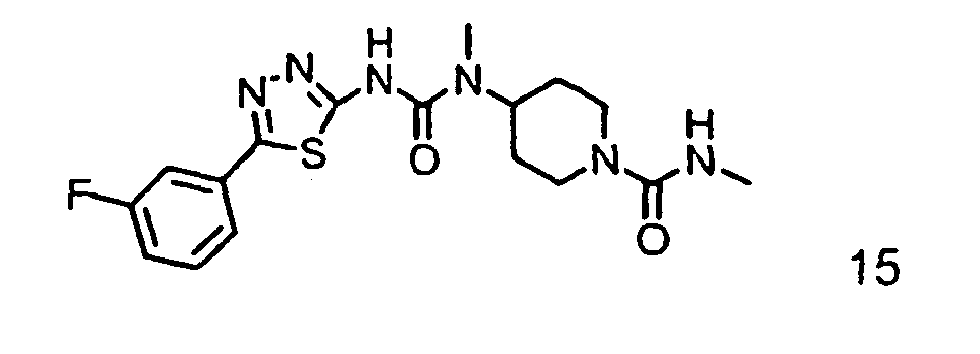
- To an ice-cold solution of the product of Example 13, Step 4 (13-4) (25 mg, 0.074 mmol) in DMF (5 ml) was added methyl isocyanate (1 drop). The reaction mixture was allowed to warm to R.T., stirred for 3 days, then diluted with CH2Cl2 and washed with water, 1N NaOH, and sat'd NaCl. The organic layer was dried (Na2SO4), filtered and evaporated. The residue was subjected to PTLC (10:90 MeOH/CH2Cl2) to give the product (9 mg, 31%). 1H NMR (CDCl3, 400 MHz) δ 10.80 (1H, b), 7.64 (2H, m), 7.45 (1H, m), 7.19 (1H, m), 4.48 (1H, m), 4.10 (2H, m), 3.10 (3H, s), 2.90 (3H, s), 2.85 (2H, m), 1.78 (4H, m). MS m/e 393 (M+H)+.
-

- Reaction of 12-4 with methyl isocyanate by essentially the same procedure gave the product. 1H NMR (CDCl3, 400 MHz) δ 7.48 (1H, s), 7.28 (3H, m), 7.03 (1H, d, J = 4 Hz), 6.87 (1H, m), 6.50 (1H, d, J = 4 Hz), 4.56 (1H, m), 4.44 (1H, m), 4.03 (2H, m), 2.87 (2H, m), 2.86 (3H, s), 2.80 (3H, s), 2.04 - 1.54 (4H, m). MS m/e 392 (M+H)+.
-

-

- To a solution of the product of Example 1, Step 2 (1-2) (250 mg, 1.21 mmol) in toluene (8 ml) was added iPr2NEt (1.1 ml, 6.0 mmol) and triphosgene (145 mg, 0.49 mmol). The reaction mixture was heated to 110 °C for 4 hr, cooled, and Preparation 13 (250 mg, 1.47 mmol) was added. The reaction mixture was stirred for 16 hr, then partitioned between CH2Cl2 (100 ml) and 1N NaOH (25 ml). The organic layer was washed with sat. NH4Cl (25 ml) and sat'd NaCl (25 ml), dried (MgSO4), filtered and concentrated. The residue was dissolved in THF (20 ml) to which 5N HCl (5 ml) was added. After 3.5 hr, the reaction mixture was cooled in an ice bath, basified to pH 12 and partitioned between CH2Cl2 (100 ml) and water (25 ml). The organic layer was dried (MgSO4), filtered and concentrated. Subjection of the residue to PTLC (3:2 EtOAc/hexane) gave the product (130 mg, 30%). MS m/e 360 (M+H)+.
- To a solution of the product of Step 1 (60 mg, 0.17 mmol) in EtOH (2.5 ml) was added NaOAc (0.27 g, 3.3 mmol) and hydroxylamine hydrochloride (0.23 g, 3.34 mmol). The reaction mixture was stirred for 16 hr, then partitioned between CH2Cl2 (75 ml) and water (50 ml). The organic layer was dried (MgSO4), filtered and concentrated. The residue was subjected to PTLC (3:97 MeOH/CH2Cl2) to give the product (52 mg, 83%). 1H NMR (CD3OD, 400 MHz) δ 8.69 (1H, m), 8.00 (1H, m), 7.80 (1H, m), 7.55 (4H, m), 6.94 (1H, m), 4.40 (1H, m), 3.45 (1H, m), 2.91 (3H, s), 2.50 (1H, m), 2.30 (1H, m), 1.90 (3H, m), 1.70 (2H, m). MS m/e 375 (M+H)+.
-

- Reaction of the amine 1-2, N,N'-disuccinimidyl carbonate, and Preparation 12 by essentially the procedure of Example 2, Step 3 gave the product. 1H NMR (DMSO, 400 MHz) δ 8.76 (1H, s), 8.66 (1H, s), 7.96 (2H, m), 7.73 (2H, d), 7.21 (1H, m), 6.77 (2H, s), 4.09 (1H, m), 3.55 (2H, m), 2.85 (3H, s), 2.61 (2H, m), 1.76 (2H, m), 1.64 (2H, m). MS m/e 426 (M+H)+.
-

-

- To a suspension of 2-amino-5-nitropyrimidine (2.70 g, 19.3 mmol) and LiCl (20 g) in 4M HCl (95 ml) at -10 °C was added NaNO2 (2.70 g, 39.1 mmol) in portions. The suspension was stirred at ice-bath temperature for 1 hr, then allowed to warm to R.T. and stirred for 1.5 hr. The reaction mixture was cooled in an ice-bath, CH2Cl2 (50 ml) was added and aqueous layer was brought to pH 9 by addition of sat'd Na2CO3. The whole was filtered and the filtrate was extracted with CH2Cl2. The organic layer was dried (MgSO4), filtered and evaporated to give a solid (1.05 g, 34%). 1H NMR (CDCl3, 400 MHz) δ 9.39 (s).
-
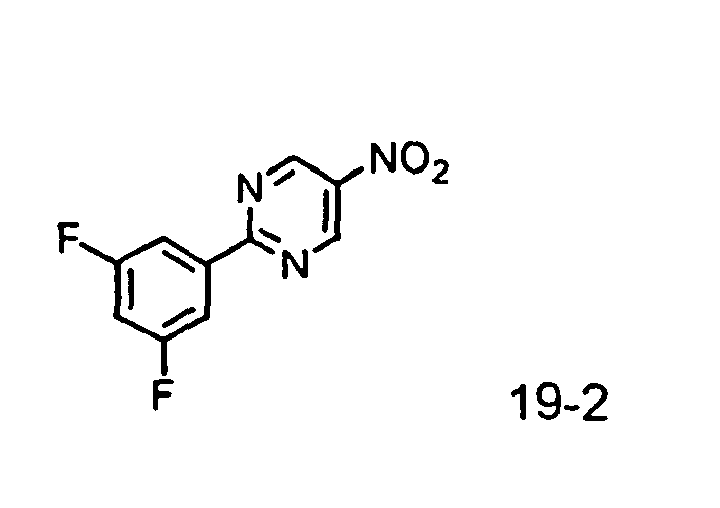
- To an N2-purged mixture of the product of Step 1 (230 mg, 1.44 mmol), 3,5-difluorophenylboronic acid (655 mg, 2.08 mmol), CsCO3 (502 mg, 1.54 mmol), H2O (0.05 ml), and toluene (3 ml) was added Pd(dppf)Cl2•CH2Cl2 (82 mg, 0.10 mmol). The reaction mixture was heated at 110 °C for 1.5 hr, then allowed to cool. EtOAc (20 ml) and H2O (20 ml) was added, and the organic layer was dried (MgSO4), filtered and evaporated. Flash chromatography of the residue (1:99 EtOAc/hexanes) gave the product (110 mg, 32%). 1H NMR (CDCl3, 400 MHz) δ 9.54 (2H, s), 8.08 (2H, m), 7.03 (1H, m).
-

- To an ice-cold suspension of the product of Step 2 (110 mg, 0.46 mmol) and NiCl2•6H2O (240 mg, 1.01 mmol) in MeOH (4 ml) was added NaBH4 (57 mg, 1.51 mmol). The reaction mixture was stirred for 10 min., then H2O (2 ml) was added and the mixture was concentrated. To the residue were added H2O (20 ml) and CH2Cl2 (30 ml), and the whole was filtered. The organic layer of the filtrate was dried (Na2SO4), filtered and evaporated to give a solid (72 mg, 75%). MS (m/e) 208 (M+H)+.
- Reaction of the product of Step 3 (70 mg, 0.34 mmol) with Preparation 11 (98 mg, 0.51 mmol) by the procedure of Example 2, Step 3 gave the product (90 mg, 62%). 1H NMR (CDCl3, 400 MHz) δ 8.91 (2H, s), 7.90 (2H, m), 6.86 (1H, m), 6.64 (1H, s), 4.42 (1H, m), 3.91 (2H, m), 2.95 (3H, s), 2.80 (5H, m), 1.81 (4H, m). MS (m/e) 426 (M+H)+.
- Use of the appropriate procedures afforded the following compounds:
STRUCTURE 1H NMR MS (M+H)+ 
(CDCl3) δ 8.92 (s, 2H), 7.90 (m, 2H), 6.87 (m, 1 H), 6.52 (s, 1H), 4.43 (m, 1H), 4.22 (m, 2H), 2.95 (s, 3H), 2.82 (m, 2H), 1.78-1.52 (m, 4H), 1.47 (s, 9H). 448 
(CDCl3) δ 8.92 (s, 2H), 7.90 (m, 2H), 6.86 (m, 1H), 6.52 (s, 1H), 4.46 (m, 1H), 3.93 (m, 2H), 2.95 (m, 7H), 1.81 (m, 4H), 1.36 (t, 3H). 440 
(CD3OD) δ 8.99 (s, 2H), 7.91 (m, 2H), 7.04 (m, 1H), 4.28 (m, 1H), 3,86 (m, 2H), 2.95 (m, 7H), 1.84 (m, 6H), 1.07 (t, 3H). 454 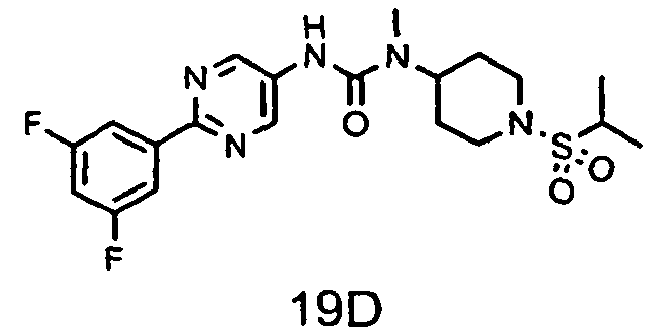
(CDCl3) δ 8.92 (s, 2H), 7.90 (m, 2H), 6.86 (m, 1H), 6.49 (s, 1H), 4.48 (m, 1 H), 3.96 (m, 2H), 3.21 (m, 1H), 2.95 (m, 5H), 1.77 (m, 4H), 1.36 (m, 6H). 454 
(CDCl3) δ 8.92 (s, 2H), 7.91 (m, 2H), 6.87 (m, 1H), 6.63 (s, 1H), 4.44 (m, 1H), 3.90 (m, 2H), 2.95 (m, 5H), 2.28 (m, 1H), 1.82 (m, 4H), 1.15 (m, 2H), 1.00 (m, 2H). 452 
(CDCl3) δ 8.92 (s, 2H), 7.90 (m, 2H), 6.87 (m, 1H), 6.77 (s, 1H), 4.78 (m, 1H), 4.52 (m, 1H), 3.92 (m, 1 H), 3.18 (m, 1 H), 2.94 (s, 3H), 2.61 (m, 1H), 2.11 (s, 3H), 1.82-1.57 (m, 4H). 390 
(CDCl3) δ 8.92 (s, 2H), 7.90 (m, 2H), 6.87 (m, 1H), 6.74 (s, 1H), 4.78 (m, 1H), 4.52 (m, 1H), 3.95 (m, 1H), 3.12 (m, 1 H), 2.93 (s, 3H), 2.61 (m, 1 H), 2.38 (m, 2H), 1.82-1.55 (m, 4H), 1.35 (t, 3H). 404 
(CDCl3) δ 8.92 (s, 2H), 7.90 (m, 2H), 6.87 (m, 1H), 6.64 (s, 1H), 4.80 (m, 1H), 4.55 (m, 1H), 4.06 (m, 1 H), 3.16 (m, 1 H), 2.93 (s, 3H), 2.62 (m, 1H), 1.79- 1.57 (m, 5H), 0.98 (m, 2H), 0.78 (m, 2H). 416 
(CDCl3) δ 8.92 (s, 2H), 7.90 (m, 2H), 6.87 (m, 1H), 6.64 (s, 1H), 4.81 (m, 1 H), 4.53 (m, 1 H), 4.06 (m, 1 H), 3.16 (m, 1 H), 2.94 (s, 3H), 2.80 (m, 1 H), 2.59 (s, 1 H), 1.79 (m, 2H), 1.57 (m, 2H), 1.14 (m, 6H). 418 
(CD3OD) δ 9.04 (s, 2H), 7.90 (m, 2H), 7.08 (m, 1 H), 4.69 (m, 1 H), 4.40 (m, 1H), 4.11 (m, 1 H), 3.22 (m, 1 H), 2.95 (s, 3H), 2.72 (m, 1H), 2.42 (t, 2H), 1.78- 1.62 (m, 6H), 1.00 (t, 3H). 418 
(CDCl3) δ 8.92 (s, 2H), 8.69 (s, 2H), 7.91 (d, J = 6.8 Hz, 2H), 7.79 (s, J = 7.6 Hz, 1 H), 7.40 (m, 1 H), 6.87 (m, 1 H), 6.56 (s, 1 H), 4.87 (m, 1 H), 4.60 (m, 1 H), 3.87 (m, 1H), 3.24 (m, 1 H), 2.98 (m, 4H), 1.95-1.48 (m, 4H). 453 
(CDCl3) δ 8.92 (s, 2H), 8.59 (m, 1 H), 7.90 (m, 2H), 7.80 (m, 1 H), 7.62 (d, J = 7.2 Hz, 1 H), 7.36 (m, 1 H), 6.87 (m, 1 H), 6.70 (s, 1H), 4.89 (m, 1 H), 4.60 (m, 1 H), 4.09 (m, 1H), 3.16 (m, 1H), 2.96 (s, 3H), 2.88 (m, 1H), 1.84-1.72 (m, 4H). 453 
(CDCl3) δ 8.94 (s, 2H), 8.90 (s, 1 H), 8.07 (s, 1 H), 7.90 (m, 2H), 6.87 (m, 1 H), 6.59 (s, 1 H), 4.80-4.20 (m, 3H), 3.30-2.80 (m, 5H), 1.86-1.69 (m, 4H). 459 -

-

- To an ice-cold suspension of (methoxymethyl)triphenylphosphonium chloride (30.4 g, 89 mmol) in Et2O (250 ml) was added 1.8 M phenyllithium (49.3 ml, 89 mmol) dropwise under N2. After the addition was complete, the reaction mixture was stirred at 0 °C for 0.25 hr, then at R.T. for 0.5 hr. The reaction mixture was cooled to -10 °C and 3-fluorobenzaldehyde (10 g, 81 mmol) was added dropwise. The reaction mixture was stirred at R.T. overnight, then sat'd NH4Cl was added. The aqueous layer was extracted with Et2O (2x), and the combined organic layers were dried (Na2SO4), filtered, and concentrated. Flash chromatography (hexane) of the residue afforded the product (8.67 g, 70%) as a mixture of isomers. 1H NMR (CDCl3, 400 MHz, major isomer) δ 7.36 (1H, m), 7.32 (1H, m), 7.07 (1H, d, J = 17 Hz), 6.96 (1H, m), 6.93 (1H, m), 5.77 (1H, d, J = 17 Hz), 3.70 (3H, s).
-

- To an ice-cold solution of the product of Step 1 (8.67, 57 mmol) in MeOH (200 ml) was added N-bromosuccinimide (10.14 g, 57 mmol), and the reaction mixture was stirred at R.T. for 16 hr. The reaction mixture was concentrated, taken up in EtOAc, washed with 1 M HCl and sat'd NaCl, then dried (Na2SO4), filtered and concentrated. Subjection of the residue to flash chromatography (90:10 hexane/EtOAc) gave the product (11.8 g, 80%). 1H NMR (CDCl3, 400 MHz) δ 7.32 (1 H, m), 7.16 (2H, m), 6.99 (1H, m), 4.90 (1H, d, J = 9 Hz), 4.70 (1H, d, J = 9 Hz), 3.49 (3H, s), 3.31 (3H, s).
-

- A mixture of the product of Step 2 (11.5 g, 43.7 mmol), thiourea (6.0 g, 79 mmol) and 48% HBr (0.1 ml) was stirred at 100 °C for 3 hr. The reaction mixture was allowed to cool to R.T., acidified with 6N HCl, and washed with CH2Cl2. The aqueous layer was brought to pH 9 by addition of aqueous NH4OH and the resultant precipitate was collected. Subjection of the dried precipitate to flash chromatography (2:98 then 5:95 MeOH/CH2Cl2) gave the product (1.61 g, 19%). 1H NMR (CDCl3, 400 MHz) δ 7.30 (2H, m), 7.18 (1H, m), 7.11 (1H, m), 6.93 (1H, m), 5.07 (2H, b).
-

- To a stirred suspension of NaH (103 mg, 2.6 mmol, 60% dispersion) in THF (30 ml) under N2 was added the product of Step 3 (500 mg, 2.6 mmol). After 1 hr, the reaction mixture was cooled in an ice bath, and phenyl chloroformate (0.32 ml, 2.6 mmol) in THF (20 ml) was added dropwise. The reaction mixture was stirred for 16 hr, during which time it attained R.T. The reaction mixture was diluted with EtOAc, washed with sat'd NH4Cl solution, dried (Na2SO4), filtered and concentrated. Subjection of the residue to flash chromatography (CH2Cl2) afforded the product (0.39 g, 48%). 1H NMR (CDCl3, 400 MHz) δ 7.65 (1H, s), 7.48 (2H, m), 7.38 - 7.20 (6H, m), 7.00 (1H, m), 2.9 (1H, b). MS (m/e) 315 (M+H)+.
-

- A mixture of the product of Step 4 (390 mg, 1.24 mmol), Preparation 1 (266 mg, 1.24 mmol) and Et3N (0.5 ml, 3.6 mmol) in THF (25 ml) was refluxed for 3 hr. The reaction mixture was allowed to cool, diluted with EtOAc, washed with sat'd NH4Cl solution, dried (Na2SO4), filtered and concentrated. Subjection of the residue to flash chromatography (2:98 MeOH/CH2Cl2) afforded the product (537 mg, 100%). 1H NMR (CDCl3, 400 MHz) δ 9.54 (1H, b), 7.51 (1H, s), 7.29 (3H, m), 6.96 (1H, m), 4.39 (1H, m), 4.21 (2H, b), 2.88 (3H, s), 2.78 (2H, m), 1.63 (4H, m), 1.45 (9H, s). MS (m/e) 435 (M+H)+.
-

- Reaction of the product of Step 5 with HCl by essentially the procedure of Example 6, Step 4 gave the product. 1H NMR (CD3OD, 400 MHz) δ 8.00 (1H, s), 7.58 - 7.41 (3H, m), 7.19 (1 H, m), 4.42 (1 H, m), 3.54 (2H, m); 3.20 (2H, m), 3.07 (3H, s), 2.15 (2H, m), 2.01 (2H, m). MS (m/e) 335 (M+H)+.
- Reaction of the product of Step 6 (20 mg, 0.05 mmol) with methyl isocyanate (1 drop) by essentially the procedure of Example 15 followed by PTLC (10:90 MeOH/CH2Cl2) gave the product (7 mg, 36%). MS m/e 392 (M+H)+.
-
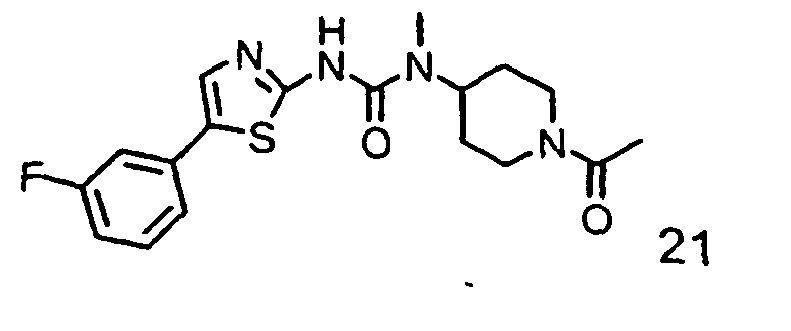
- Reaction of 20-6 with acetyl chloride essentially the procedure of Example 4 gave the product. MS m/e 377 (M+H)+.
-

- Reaction of 20-6 with methanesulfonyl chloride by the procedure of Example 3, Step 3 gave the product. 1H NMR (CDCl3, 400 MHz) δ 7.52 (1H, s), 7.34 (1H, m), 7.22 (1H, m), 7.21 (1H, m), 6.97 (1H, m), 4.40 (1 H, m), 3.92 (2H, m), 2.91 (3H, s), 2.79 (3H, s), 2.75 (2H, m), 1.83 (4H, m). MS m/e 413 (M+H)+.
-

-

- To a solution of 2-bromo-5-nitrothiazole (0.784 g, 3.75 mmol) and 0.5 M 3,5-difluorophenylzinc bromide in THF (5.0 ml, 12.5 mmol) was added Pd(PPh3)4 (0.173 g, 0.15 mmol) under argon. The reaction mixture was stirred at R.T. for 30 min. then poured into water (25 ml). The whole was extracted with CH2Cl2 (3x50 ml) dried (Na2SO4), filtered, and evaporated. The residue was subjected to PTLC (1:10 EtOAc/hexane) to give the product (0.49 g, 81%). 1H NMR (CDCl3) δ 8.59 (s, 1 H), 7.52 (m, 2H), 7.01 (m, 1H). MS m/e 243 (M+H)+.
-

- To a solution of the product of Step 1 (0.300 g, 1.24 mmol) in MeOH (20 ml) was added nickel chloride hexahydrate (0.589 g, 2.48 mmol) and sodium borohydride (0.187 g, 4.95 mmol) at 0 °C. The reaction mixture was stirred at R.T. for 10 min. and quenched with water (10 ml). The mixture was filtered via celite. The celite was washed with CH2Cl2 (100 ml). The filtrate was extracted with CH2Cl2 (3x50 ml), and the combined organic layers were dried (Na2SO4), filtered, and evaporated. The residue was subjected to PTLC (1:2 EtOAc/hexane) to give the product (0.060 g, 23%). 1H NMR (CDCl3) δ 7.30 (m, 2H), 7.1 (s, 1H), 5.77 (m, 1H), 3,90 (bs, 2H) MS m/e 213 (M+H)+.
-
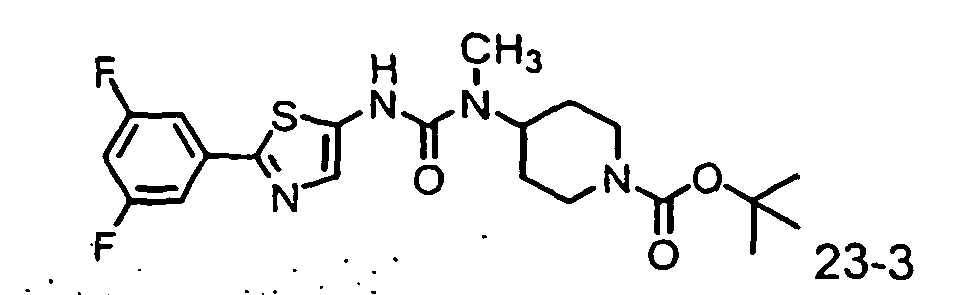
- To a solution of the product of Step 2 (0.080 g, 0.377 mmol) in anhydrous pyridine (3.0 ml) was added phenyl chloroformate (0.071 ml, 0.566 mmol) slowly. The reaction mixture was stirred at R.T. overnight and evaporated. To a solution of the residue in chloroform (5 ml) and was added Preparation 1 (0.122 g, 0.567 mmol) and Et3N (0.16 ml, 1.13 mmol). The reaction mixture was refluxed for 21 hr, allowed to cool and poured into water (25 ml). The whole was extracted with CH2Cl2 (3x50 ml), dried (Na2SO4), filtered and evaporated (1:20 MeOH/CH2Cl2) to give the product (0.087g, 51 %) as a solid. 1H NMR (CDCl3) δ 7.78 (s, 1 H), 7.43 (s, 1 H), 7.36 (m, 2H), 6.78 (m, 1H), 4.4 (bs, 1H), 4.2 (bs, 1H), 3.82 (bs, 1H), 2.89 (s, 3H), 2.78 (m, b, 2H), 1.8 - 1.5 (m, 4H), 1.45 (s, 9H). MS m/e 453 (M+H)+.
- Subjection of the product of Step 3 to the procedures of Example 3, Steps 2 and 3 gave the product. 1H NMR (CDCl3) δ 8.04 (s, 1H), 7.54 (s, 1H), 7.38 (m, 2H), 6.78 (m, 1H), 4.78 (m, 1H), 4.51 (m, 1H), 3.95 (m, 1H), 3.20 (m, 1H), 2.92 (m, 3H), 2.61 (m, 1H), 2.11 (s, 3H), 1.75 (m, 2H), 1.59 (m, 2H). MS m/e 395 (M+H)+.
- Use of the appropriate reagents and procedures afforded the following compounds:
STRUCTURE 1H NMR MS (M+H)+ 
(CDCl3) δ 7.52 (s, 1H), 7.40 (m, 3H), 6.80 (m, 1H), 4.22 (m, 1H), 3.93 (m, 2H), 2.94 (s, 3H), 2.77 (m, 5H), 1.82 (m, 4H). 431 
(CDCl3) δ 7.51 (s, 1 H), 7.41 (m, 3H), 6.80 (m, 1H), 4.80 (m, 1H), 4.50 (m, 1 H), 3.95 (m, 1 H), 3.15 (m, 1H), 2.91 (s, 3H), 2.60 (m, 1H), 2.32 (m, 2H), 1.80-1.50 (m, 6H), 0.98 (t, 3H). 423 
(CDCl3) δ 7.52 (s, 1 H), 7.46 (s, 1 H), 7.40 (m, 2H), 6.79 (m, 1 H), 4.80 (m, 1H), 4.50 (m, 1H), 4.15 (m, 1H), 3.15 (m, 1 H), 2.89 (s, 3H), 2.70 (m, 1H), 2.60 (m, 1H), 1.9-1.5 (m, 12H). 449 
(CDCl3) δ 7.62 (s, 1 H), 7.47 (s, 1 H), 7.40 (m, 2H), 6.80 (m, 1 H), 4.78 (m, 1 H), 4.50 (m, 1 H), 4.32 (m, 1H), 3.20 (m, 1H), 2.91 (s, 3H), 2.62 (m, 1H), 1.80-1.60 (m, 5H), 0.99 (m, 2H), 0.80 (m, 2H). 421 
(CDCl3) δ 7.73 (s, 1 H), 7.46 (s, 1 H), 7.38 (m, 2H), 6.80 (m, 1 H), 4.80 (m, 1H), 4.50 (m, 1H), 4.03 (m, 1H), 3.14 (m, 1H), 2.91 (s, 3H), 2.82 (m, 1H), 2.59 (m, 1H), 1.95-1.62 (m, 2H), 1.57 (m, 2H), 1.16 (m, 6H). 423 
(CDCl3) δ 7.49 (s, 1 H), 7.45 (s, 1 H), 7.40 (m, 2H), 6.79 (m, 1 H), 4.80 (m, 1H), 4.50 (m, 1 H), 3.95 (m, 1H), 3.18 (m, 1H), 2.91 (s, 3H), 2.60 (m, 1 H), 2.37 (q, 2H), 1.80-1.50 (m, 4H), 1.16 (t, 3H). 409 -

-
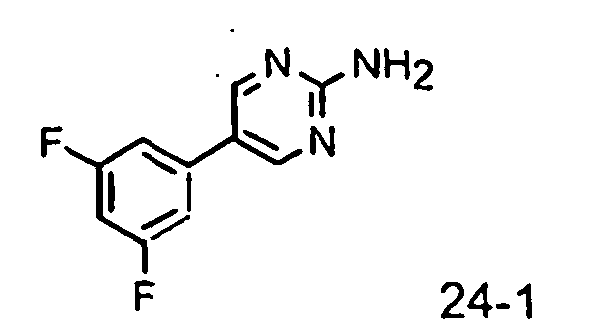
- A flask charged with 3,5-difluorophenylboronic acid (4.40 g, 27.9 mmol), 2-amino-5-bromopyrimidine (4.00 g, 23 mmol), toluene (40 ml), water (7 ml) and cesium carbonate (8.20 g, 25.2 mmol) was purged with N2. PdCl2(dppf)2·CH2Cl2 (0.94 g, 1.15 mmol) was added and the reaction mixture was refluxed for 2.5 hr. The reaction mixture was allowed to cool then poured into water (100 ml). The whole was extracted with EtOAc (3x150 ml), dried (Na2SO4), filtered and concentrated. Subjection of the residue to flash chromatography (gradient 1:5 to 1:1 acetone/hexane) gave the product (2.30 g, 48%). 1H NMR (CDCl3) δ 8.29 (s, 2H), 6.84 (m, 2H), 6.62 (m, 1H), 4.18 (s, 2H). MS m/e 208 (M+H)+.
-

- To a solution of the product of Step 1 (0.500 g, 2.42 mmol) in anhydrous pyridine (6 ml) was added phenyl chloroformate (0.33 ml, 2.62 mmol) dropwise. The reaction mixture was stirred for 16 hr, then evaporated. The residue was subjected to PTLC (1:30 CH3OH/CH2Cl2) to give the product (0.30 g, 38%). 1HNMR (CDCl3) δ 8.84 (m, 3H), 7.42 (m, 2H), 7.26 (m, 3H), 7.06 (m, 2H), 6.89 (m, 1H). MS m/e 328 (M+H)+.
-

- To a solution of the product of Step 2 (0.145 g, 0.44 mmol) in chloroform (5 ml) was added Preparation 1 (0.095 g, 0.44 mmol) and Et3N (0.19 ml, 1.33 mmol). The reaction mixture was refluxed for 3 hr, allowed to cool and poured into water (15 ml). The whole was extracted with EtOAc (3x), and the combined organic layers were dried (Na2SO4), filtered and evaporated. The residue was subjected to PTLC (1:30 CH3OH/CH2Cl2) to give the product (0.205 g, 100%). 1H NMR (CDCl3) δ 8.71 (s, 2H), 7.70 (s, b, 1H), 7.01 (m, 2H), 6.83 (m, 1H), 4.36 (m, 1H), 4.21 (m, 2H), 2.92 (s, 3H), 2.78 (m, 2H), 1.74 (m, 2H), 1.63 (m, 2H), 1.45 (s, 9H). MS m/e 448 (M+H)+.
- Subjection of the product of Step 3 to the procedures of Example 10, Steps 3 and 4 gave the product. 1H NMR (CDCl3) δ 8.71 (s, 2H), 7.62 (s, b, 1H), 7.02 (m, 2H), 6.84 (m, 1H), 4.78 (m, 1H), 4.43 (m, 1H), 3.90 (m, 1H), 3.18 (m, 1H), 2.92 (s, 3H), 2.60 (m, 1H), 2.09 (s, 3H), 1.82 (m, 2H), 1.60 (m, 2H). MS m/e 390 (M+H)+.
- Use of the appropriate reagents and procedures afforded the following compounds.
STRUCTURE 1H NMR MS (M+H)+ 
(CDCl3) δ 8.74 (s, 2H), 7.42 (s, b, 1 H), 7.04 (m, 2H), 6.83 (m, 1 H), 4.43 (m, 1 H), 3.95 (m, 2H), 2.97 (s, 3H), 2.80 (m, 5H), 1.88 (m, 4H). 426 
(CDCl3) δ 8.73 (s, b, 2H), 7.59 (s, b, 1 H), 7.03 (m, 2H), 6.83 (m, 1H), 4.79 (m, 1H), 4.47 (m, 1H), 3.94 (m, 1 H), 3.09 (m, 1 H), 2.92 (s, 3H), 2.59 (m, 1H), 2.35 (m, 2H), 1.82 (m, 2H), 1.61 (m, 2H), 1.15 (m, 3H). 404 -

-

- A mixture of 3,6-dichloropyridazine (7.5 g) and NH3 (9 g) in EtOH (100 ml) was heated at 130 °C in stainless steel bomb for 16 hr. After the reaction mixture had cooled to R.T., it was concentrated, and the residue was subjected to Soxhlet extraction (EtOAc). The residue obtained from the EtOAc extract was recrystallized from EtOAc to give the product (3.81 g).
-

- A suspension of the product of Step 1 (200 mg, 1.54 mmol), 3-fluorophenylboronic acid (260 mg, 1.86 mmol), and 2M K2CO3 (1.6 ml, 3.2 mmol) in EtOH (3 ml) and toluene (10 ml) was purged with N2. Pd(PPh3)4 (90 mg, 0.08 mmol) was added, and the mixture was heated at 110 °C for 24 hr. The cooled reaction mixture was concentrated and partitioned between water and EtOAc. The organic layer was washed with water, dried (Na2SO4), filtered and evaporated. Subjection of the residue to PTLC (7:93 MeOH/CH2Cl2) gave the product (168 mg, 58%).
-

- Reaction of the product of Step 2 by essentially the procedure of Example 20, Step 4 gave the product. 1H NMR (CDCl3, 400 MHz) δ 8.75 (1 H, b), 8.43 (1 H, m), 7.95 (1H, m), 7.82 - 7.78 (2H, m), 7.52 - 7.18 (7H, m). MS m/e 310 (M+H)+.
-

- Reaction of the product of Step 3 with Preparation 1 by essentially the procedure of Example 20, Step 5 gave the product. 1H NMR (CDCl3, 400 MHz) δ 8.6 (1H, b), 8.36 (1 H, m), 7.80 (1H, m), 7.73 (2H, m), 7.44 (1H, m), 7.12 (1H, m), 4.41 (1 H, m), 4.21 (2H, m), 2.99 (3H, s), 2.80 (2H, m), 1.79 - 1.60 (4H, m), 1.43 (9H, s). MS m/e 430 (M+H)+.
- Subjection of the product of Step 4 by the procedure of Example 20, Steps 6 and 7 gave the product. 1H NMR (CDCl3, 400 MHz) δ 8.40 (1H, m), 8.20 (1H, b), 7.82 (1H, m), 7.50 (2H, m), 7.42 (1H, m), 7.15 (1H, m), 4.54 (1H, m), 4.44 (1H, m), 4.09 (2H, m), 2.98 (3H, s), 2.90 (2H, m), 2.79 (3H, s), 1.75 - 1.64 (4H, m). MS m/e 387 (M+H)+.
- Use of the appropriate procedures afforded the following compounds:
-

-

Claims (31)
- A compound of Formula I:

wherein
=A-B= is =C(R4)-C(R5)= and -X=Y- is -C(R6)=N-, -N=C(R7)-, -N=N- or -S-, or
=A-B= is =N-C(R5)= and -X=Y- is -N=C(R7)-, -C(R6)=N-, -S- or -O-, or
=A-B = is =C(R4)-N= and -X=Y- is -C(R6)=N-, -S- or -O-, or
=A-B= is =N-N= and -X=Y- is -S- or -O-, or
=A-B= is =C(R4)- and -X=Y- is -S-N=, -N(R10)-N=, or
=A-B= is -C(R4)= and -X=Y- is =N-S-, or =N-N(R10)-;
Z is
R2 is H, -(C1-C6)alkyl. -(C3-C7)cycloalkyl or -(C1-C6)alkyl(C3-C7)cycloalkyl;
R3 is


j is 1 or 2;
k is 0, 1 or 2;
l is 0, 1 or 2;
m is 0, 1 or 2;
R4, R5, R6 and R7 may be the same or different, and are independently selected from the group consisting of H, -OH, halogen, polyhaloalkyl, -(C1-C6)alkyl, -(C3-C7)cycloalkyl, -(C1-C6)alkyl(C3-C7)cycloalkyl, -CN, NR10R11, NR13R14, -O(C1-C6)alkyl, -O(C3-C7)cycloalkyl, -O(C1-C6)alkyl(C3-C7)cycolalkyl, -S(C1-C6)alkyl, -S(C3-C7)cycloalkyl or -S(C1-C6)alkyl(C3-C7)cycloalkyl;
R8 is 1 to 3 substituents, which may be the same or different, and are independently selected from the group consisting of H, halogen, -OH, polyhaloalkyl, polyhaloalkoxy, -CN, -NO2, -(C1-C6)alkyl, -(C3-C7)cycloalkyl,-(C1-C6)alkyl(C3-C7)cycloalkyl, NR10R11, NR13R14, -O(C1-C6)alkyl, -O(C3-C7)cycloalkyl, -O(C1-C6)alkyl(C3-C7)cycloalkyl or-CONR13R14;
R9 is -SO2(C1-C6)alkyl, -SO2(C3-C7)cycloalkyl, -SO2(C1-C6)alkyl(C3-C7)cycloalkyl, -SO2(C1-C6)polyhaloalkyl, -SO2[hydroxy(C2-C6)alkyl], -SO2[amino(C2-C6)alkyl], -SO2[alkoxy(C2-C6)alkyl], -SO2[alkylamino(C2-C6)alkyl],-SO2[dialkylamino(C2-C6)alkyl], -SO2(aryl), -SO2(heteroaryl), -SO2[aryl(C1-C6) alkyl], -SO2NR13R14, -CO(C1-C6)alkyl. -CO(C3-C7)cycloalkyl, -CO(C1-C6)alkyl(C3-C7)cycloalkyl, CO(C1-C6)polyhaloalkyl, -C(O)aryl, -C(O)heteroaryl, -CONR13R14,-C(S)NR13R14, aryl, heteroaryl, -(CH2)CONR13R14, -C(=NCN)alkylthio,-C(=NCN)NR13R14, -(C1-C6)alkyl, -(C3-C7)cycloalkyl, -(C1-C6)alkyl(C3-C7)cycloalkyl, -(C1-C6)alkylaryl, -(C1-C6)alkylheterearyl or -COOR12;
R10 is H or alkyl;
R11 is H, -(C1-C6)alkyl, -(C3-C7)cycloalkyl, -(C1-C6)alkyl(C3-C7)cycloalkyl, aryl, heteroaryl, -SO2(C1-C6)alkyl, -SO2(C3-C7)cycloalkyl, -SO2(C1-C6)alkyl(C3-C7)cycloalkyl, -SO2(C1-C6)polyhaloalkyl, -SO2(aryl), -SO2(heteroaryl), -CO(C1-C6)alkyl, -CO(C3-C7)cycloalkyl, -CO(C1-C6)alkyl(C3-C7)cycloalkyl, -C(O)aryl, -C(O)heteroaryl, -CONR13R14 or -COOR12 ;
R12 is (C1-C6)alkyl, (C3-C7)cycloalkyl, (C1-C6)alkyl(C3-C7)cycloalkyl, -(C1-C6)alkylaryl, -(C1-C6)alkylheteroaryl, aryl or heteroaryl;
R13 and R14 may be the same or different and are independently selected from H, -(C1-C6)alkyl, -(C3-C7)cycloalkyl, -(C1-C6)alkyl(C3-C7)cycloalkyl, -(C1-C6)alkylaryl, aryl or heteroaryl; and,
R15 is one or two substituents, which may be the same or different, and are independently selected from H, -(C1-C6)alkyl, -(C3-C7)cycloalkyl, -(C1-C6)alkyl(C3-C7)cycloalkyl, aryl, heteroaryl, -CN, -CONR13R14, -COOR13,-OH, -O(C1-C6)alkyl, -O(C3-C7)cycloalkyl, -O(C1-C6)alkyl(C3-C7)cycloalkyl, -NR10R11, -NR13R14, or a -(C1-C6)alkyl group substituted by an aryl, heteroaryl, hydroxy, alkoxy, -NR10R11, -NR13R14, -CONR13R14, or-COOR13 group, provided that a chemically stable compound results from substitution by R15.
and wherein aryl refers to a mono- or bicyclic ring system having one or two aromatic rings and which may be unsubstituted or substituted with one, two, or three substituents independently selected from lower alkyl, halo, cyano, nitro, haloalkyl, hydroxy, alkoxy, carboxy, carboxamide, mercapto, sulfhydryl, amino, alkylamino and dialkylamino,
Heteroaryl refers to 5- to 10-membered single or benzofused aromatic rings consisting of 1 to 3 heteroatoms independently selected from the group concisting of -O-, -S-, and -N=, provided that the rings do not possess adjacent oxygen and sulfur atoms and which may be unsubstituted or substituted with one, two, or three substituents independently selected from lower alkyl, halo, cyano, nitro, haloalkyl, hydroxy, alkoxy, carboxy, carboxamide, mercapto, sulfhydryl, amino, alkylamino, dialkylamino. - A compound as defined in Claim 1 wherein the heterocyclic group attached to Z is

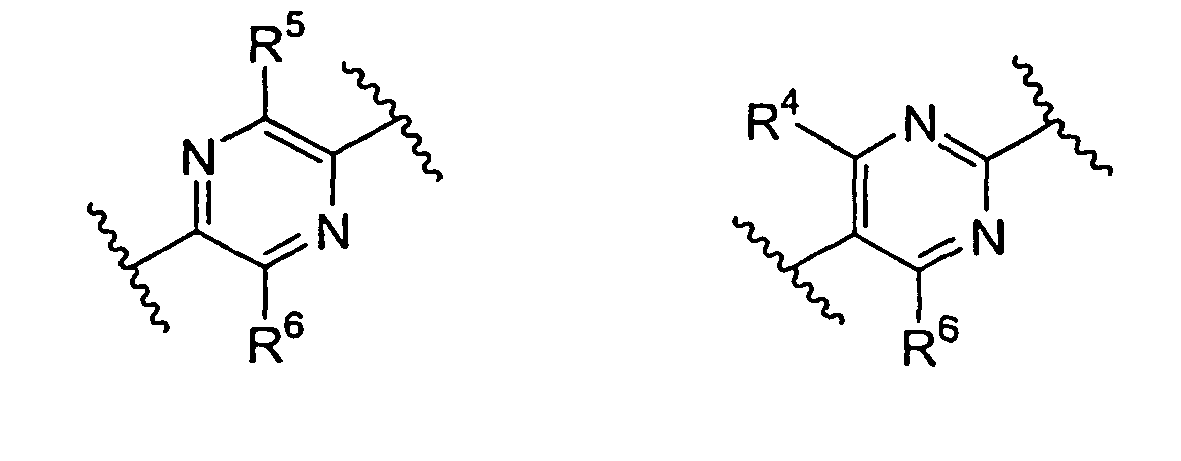


- A compound as defined in Claim 2 wherein
R1 is hydrogen,
R2 is hydrogen or (C1-C6)alkyl,
R4, R5, R6 and R7 are hydrogen or halogen,
R8 is 1 to 3 substituents, which may be the same or different, and are independently selected from the group consisting of H, halogen, -O(C1-C6)alkyl, -OH, polyhaloalkyl and polyhaloalkoxy,
R9 is -SO2(C1-C6)alkyl, -SO2(C3-C7)cycloalkyl, -SO2(C1-C6)alkyl(C3-C7)cycloalkyl, -SO2aryl, -SO2heteroaryl, -SO2NR13R14, -CO(C1-C6)alkyl, -CO(C3-C7)cycloalkyl, -CO(C1-C6)alkyl(C3-C7)cycloalkyl, -C(O)aryl, -C(O)heteroaryl, aryl, heteroaryl,
R10 is H or -(C1-C6)alkyl,
R11 is -SO2(C1-C6)alkyl, Q is -OR13 or -NR13R14;
R13 and R14 may be the same or different, and are independently selected from H or -(C1-C6)alkyl;
the sum of j and k is 2 or 3; and,
the sum of I and m is 2 or 3. - A compound as defined in Claim 3 wherein
R3 is
the sum of j and k is 2 or 3. - The compound as defined in Claim 1 of the formula

wherein R9 is as shown in the table below:Example R9 1 
3 -SO2CH3 4 
1G 
1H 
1I 
3E 
3F 
3G 
3H 
4B 
4C 
4D 
4E 
4F 
4G 
4H 
4I 
4J 
4K 
4L 
4M 
4N 
4O 
4P 
- The compound as defined in Claim 1 of the formula

wherein R9 is as shown in the table below:Example R9 3I -SO2CH3 3J 
3K 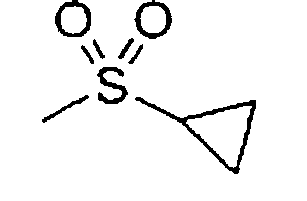
3L 
4Z 
4AA 
4BB 
4CC 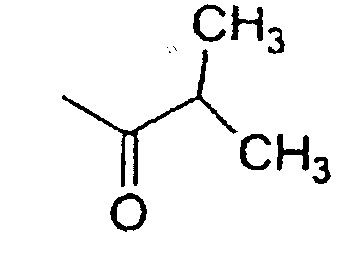
4DD 
4EE 
4FF 
- The compound as defined in Claim 1 of the formula

wherein R9 is as shown in the table below:Example R9 3N -SO2CH3 3O 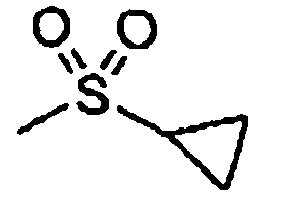
- The compound as defined in Claim 1 of the formula

wherein R9 is as shown in the table below:Example R9 5 
5A -SO2CH3 5B 
5C 
5D 
5E 
5F 
5G 
5H 
5I 
5J 
5K 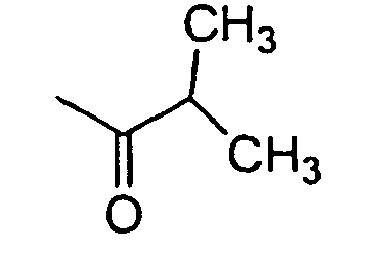
- The compound as defined in Claim 3 of the formula

wherein R9 is as shown in the table below:Example R9 5M -SO2CH3 5N 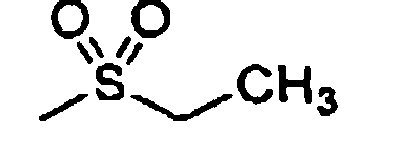
5O 
5P 
5Q 
- The compound as defined in Claim 1 of the formula
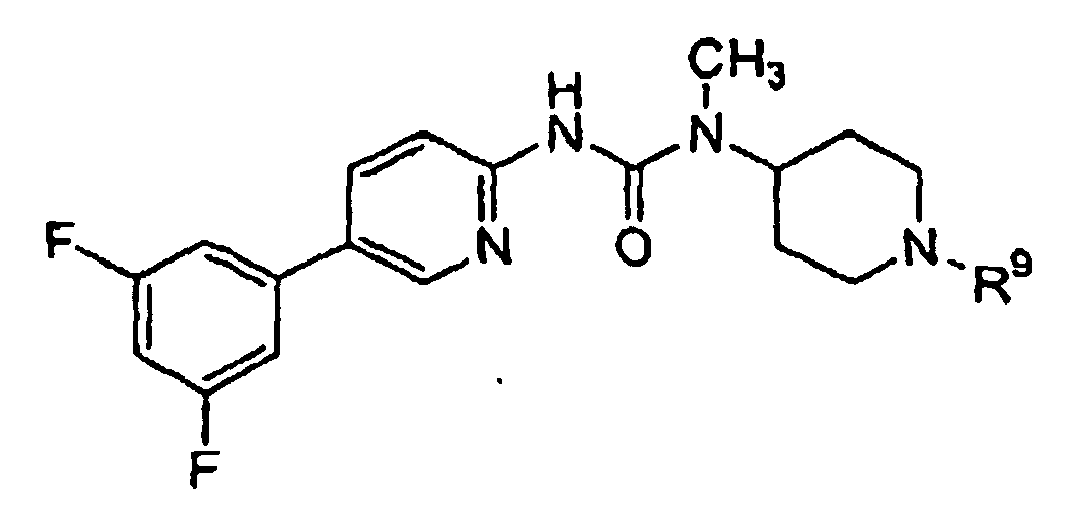
wherein R9 is as shown in the table below:Example R9 6 
6B -SO2CH3 6C 
6D 
- The compound as defined in Claim 1 of the formula

wherein Z and R9 are as shown in the table below:Example Z R9 7 

7B 
-SO2CH3 7C 

7D 

7E 

7F 
-SO2CH3 7G 

- The compound as defined in Claim 1 of the formula

wherein R9 is as shown in the table below:Example R9 10 
10A 
10B 
10C 
10D 
10E 
10F 
10G 
10H 
10I 
10J 
10K 
10L 
10M 
10N 
10O 
10P 
10Q 
10W -SO2CH3 - The compound as defined in Claim 1 of the formula

wherein R9 is as shown in the table below:Example R9 10S -SO2CH3 10T 
10U 
10V 
- The compound as defined in Claim 1 of the formula

wherein Z and R9 are as shown in the table below:Example Z R9 10X 
-SO2CH3 10Y 

10Z 

10AA 

10BB 

10CC 

10DD 

10EE 

10FF 

10GG 

10HH 

10II 

10JJ 

10KK 

10LL 

10MM 
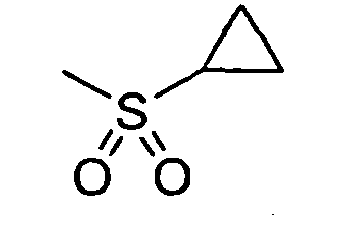
10NN 

10OO 

10PP 

10QQ 

10RR 

11 
-SO2CH3 11A 
-SO2CH3 11B 
-SO2CH3 11C 
-SO2CH3 11D 
-SO2CH3 11E 
-SO2CH3 - The compound as defined in Claim 1 of the formula

wherein R9 is as shown in the table below:Example R9 19 -SO2CH3 19A 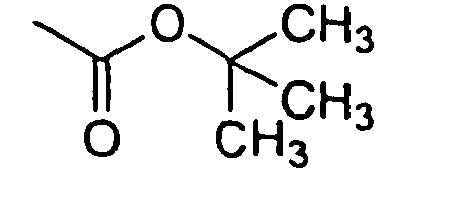
19B 
19C 
19D 
19E 
19F 
19G 
19H 
191 
19J 
19K 
19L 
19M. 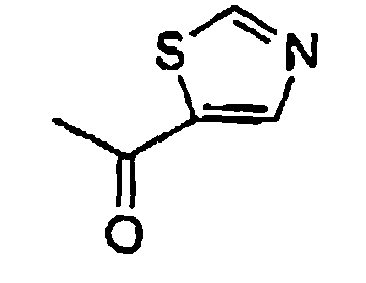
- The compound as defined in Claim 1 of the formula

wherein R9 is as shown in the table below:Example R9 24 
24A -SO2CH3 24B 
- The compound as defined in Claim 1 of the formula

wherein R9 is as shown in the table below:Example R9 25 
26 
27 -SO2CH3 - The compound as defined in Claim 1 of the formula

wherein Z and R9 are as shown in the table below:Example Z R9 12 
-SO2CH3 12A 
-SO2CH3 12B 

12C 

12D 

12E 

12F 
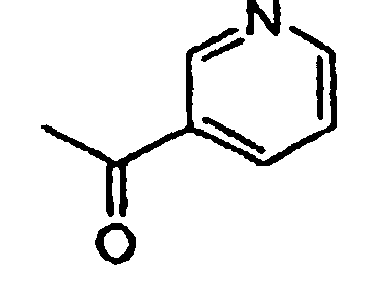
12G 

12H 

12I 

12J 

12K 

12L 

12M 

12N 

16 

- The compound as defined in Claim 1 of the formula

wherein Z and R9 are as shown in the table below:Example Z R9 20 

21 

22 
-SO2CH3 - The compound as defined in Claim 1 of the formula

wherein Z and R9 are as shown in the table below:Example Z R9 23 

23A 
-SO2CH3 23B 

23C 

23D 

23E 

23F 

- A pharmaceutical composition which comprises an effective amount of a compound as defined in Claim 1 and a pharmaceutically acceptable carrier therefor.
- A compound according to any preceding claim for use in treating eating and metabolic disorders.
- The compound according to Claim 22 wherein the eating disorder is hyperphagia.
- The compound according to Claim 22 wherein the eating disorder is obesity.
- A compound according to any of Claims 1 to 21 for use in treating disorders associated with obesity.
- The compound according to Claim 25 wherein said disorders associated with obesity are type II diabetes, insulin resistance, hyperlipidemia and hypertension.
- A pharmaceutical composition which comprises a therapeutically effective amount of a composition comprising
a first compound, said first compound being a compound of claim 1, or a pharmaceutically acceptable salt of said compound;
a second compound, said second compound being a β3 agonist, a thryomimetic agent, an eating behavior modifying agent or an NPY antagonist; and
a pharmaceutically acceptable carrier therefor. - A compound according to any of Claims 1 to 21 for use in treating
an eating disorder by a treatment comprising administering
an amount of a first compound, said first compound being a compound of claim 1, or a pharmaceutically acceptable salt of said compound;
an amount of a second compound, said second compound being a β3 agonist, a thryomimetic agent, an eating behavior modifying agent or an NPY antagonist;
wherein the amounts of the first and second compounds result in a therapeutic effect. - A pharmaceutical composition which comprises a therapeutically effective amount of a composition comprising
a first compound, said first compound being a compound of claim 1, or a pharmaceutically acceptable salt of said compound;
a second compound, said second compound being an aldose reductase inhibitor, a glycogen phosphorylase inhibitor, a sorbitol dehydrogenase inhibitor, insulin, metformin, acarbose, a thiazolidinedione such as troglitazone or rezulin; a glitazone such as rosaglitazone or pioglitazone; a sulfonylurea, glipazide, glyburide, or chlorpropamide; and
a pharmaceutically acceptable carrier therefor. - A pharmaceutical composition made by combining the compound of Claim 1 and a pharmaceutically acceptable carrier therefor.
- A process for making a pharmaceutical composition comprising combining a compound of Claim 1 and a pharmaceutically acceptable carrier.
Applications Claiming Priority (3)
| Application Number | Priority Date | Filing Date | Title |
|---|---|---|---|
| US25730800P | 2000-12-21 | 2000-12-21 | |
| US257308P | 2000-12-21 | ||
| PCT/US2001/049302 WO2002049648A1 (en) | 2000-12-21 | 2001-12-17 | Heteroaryl urea neuropeptide y y5 receptor antagonists |
Publications (3)
| Publication Number | Publication Date |
|---|---|
| EP1343503A1 EP1343503A1 (en) | 2003-09-17 |
| EP1343503A4 EP1343503A4 (en) | 2004-03-17 |
| EP1343503B1 true EP1343503B1 (en) | 2008-11-12 |
Family
ID=22975741
Family Applications (1)
| Application Number | Title | Priority Date | Filing Date |
|---|---|---|---|
| EP01985069A Expired - Lifetime EP1343503B1 (en) | 2000-12-21 | 2001-12-17 | Heteroaryl urea neuropeptide y y5 receptor antagonists |
Country Status (22)
| Country | Link |
|---|---|
| US (1) | US6982267B2 (en) |
| EP (1) | EP1343503B1 (en) |
| JP (1) | JP4226326B2 (en) |
| KR (1) | KR20030061458A (en) |
| CN (2) | CN1807426A (en) |
| AR (1) | AR035520A1 (en) |
| AT (1) | ATE413880T1 (en) |
| AU (2) | AU3405602A (en) |
| BR (1) | BR0116379A (en) |
| CA (1) | CA2432809C (en) |
| DE (1) | DE60136562D1 (en) |
| ES (1) | ES2316486T3 (en) |
| HK (1) | HK1054333A1 (en) |
| HU (1) | HUP0303339A3 (en) |
| IL (1) | IL156157A0 (en) |
| MX (1) | MXPA03005745A (en) |
| NO (1) | NO20032861L (en) |
| NZ (1) | NZ526174A (en) |
| PE (1) | PE20020761A1 (en) |
| SG (1) | SG138463A1 (en) |
| WO (1) | WO2002049648A1 (en) |
| ZA (1) | ZA200304348B (en) |
Families Citing this family (80)
| Publication number | Priority date | Publication date | Assignee | Title |
|---|---|---|---|---|
| US6946476B2 (en) * | 2000-12-21 | 2005-09-20 | Schering Corporation | Heteroaryl urea neuropeptide Y Y5 receptor antagonists |
| WO2003015717A2 (en) * | 2001-08-17 | 2003-02-27 | Merck & Co., Inc. | Tyrosine kinase inhibitors |
| US6673829B2 (en) | 2001-09-14 | 2004-01-06 | Novo Nordisk A/S | Aminoazetidine,-pyrrolidine and -piperidine derivatives |
| EP1430027B1 (en) * | 2001-09-14 | 2010-09-01 | High Point Pharmaceuticals, LLC | Novel aminoazetidine, -pyrrolidine and -piperidine derivatives |
| ATE486842T1 (en) | 2002-03-12 | 2010-11-15 | Merck Sharp & Dohme | SUBSTITUTED AMIDES |
| US7105526B2 (en) | 2002-06-28 | 2006-09-12 | Banyu Pharmaceuticals Co., Ltd. | Benzimidazole derivatives |
| CA2490470A1 (en) * | 2002-07-02 | 2004-01-15 | Schering Corporation | Pyrazole urea neuropeptide y y5 receptor antagonists |
| AU2003267728A1 (en) * | 2002-10-18 | 2004-05-04 | Pfizer Products Inc. | Cannabinoid receptor ligands and uses thereof |
| US7772188B2 (en) | 2003-01-28 | 2010-08-10 | Ironwood Pharmaceuticals, Inc. | Methods and compositions for the treatment of gastrointestinal disorders |
| JP4765627B2 (en) | 2003-09-22 | 2011-09-07 | Msd株式会社 | Novel piperidine derivatives |
| JPWO2005040135A1 (en) * | 2003-10-24 | 2007-03-08 | 小野薬品工業株式会社 | Anti-stress drugs and their medicinal uses |
| US7291744B2 (en) | 2003-11-13 | 2007-11-06 | Bristol-Myers Squibb Company | N-ureidoalkyl-amino compounds as modulators of chemokine receptor activity |
| US20080125403A1 (en) | 2004-04-02 | 2008-05-29 | Merck & Co., Inc. | Method of Treating Men with Metabolic and Anthropometric Disorders |
| TW200630337A (en) | 2004-10-14 | 2006-09-01 | Euro Celtique Sa | Piperidinyl compounds and the use thereof |
| ES2325773T5 (en) | 2004-11-01 | 2014-02-24 | Amylin Pharmaceuticals, Llc. | Treatment of obesity and related disorders |
| WO2006060461A1 (en) | 2004-12-03 | 2006-06-08 | Schering Corporation | Substituted piperazines as cb1 antagonists |
| US7737155B2 (en) | 2005-05-17 | 2010-06-15 | Schering Corporation | Nitrogen-containing heterocyclic compounds and methods of use thereof |
| US8138206B2 (en) | 2005-05-30 | 2012-03-20 | Msd. K.K. | Piperidine derivative |
| CA2618112A1 (en) | 2005-08-10 | 2007-02-15 | Banyu Pharmaceutical Co., Ltd. | Pyridone compound |
| BRPI0614649A2 (en) | 2005-08-11 | 2011-04-12 | Amylin Pharmaceuticals Inc | hybrid polypeptides with selectable properties |
| AU2006279680B2 (en) | 2005-08-11 | 2012-12-06 | Amylin Pharmaceuticals, Llc | Hybrid polypeptides with selectable properties |
| WO2007024004A1 (en) | 2005-08-24 | 2007-03-01 | Banyu Pharmaceutical Co., Ltd. | Phenylpyridone derivative |
| AU2006288153A1 (en) | 2005-09-07 | 2007-03-15 | Msd K.K. | Bicyclic aromatic substituted pyridone derivative |
| KR20080048502A (en) | 2005-09-29 | 2008-06-02 | 머크 앤드 캄파니 인코포레이티드 | Acylated spiropiperidine derivatives as melanocortin-4 receptor modulators |
| RU2008119687A (en) | 2005-10-21 | 2009-11-27 | Новартис АГ (CH) | COMBINATIONS OF ORGANIC COMPOUNDS |
| CA2627139A1 (en) | 2005-10-27 | 2007-05-03 | Banyu Pharmaceutical Co., Ltd. | Novel benzoxathiin derivative |
| ES2381205T3 (en) | 2005-11-10 | 2012-05-24 | Msd K.K. | Aza-substituted spiro derivative |
| BRPI0706623A2 (en) | 2006-01-18 | 2011-04-12 | Schering Corp | cannabinoid receptor modulators |
| US8247442B2 (en) | 2006-03-29 | 2012-08-21 | Purdue Pharma L.P. | Benzenesulfonamide compounds and their use |
| TW200812963A (en) | 2006-04-13 | 2008-03-16 | Euro Celtique Sa | Benzenesulfonamide compounds and the use thereof |
| TW200815353A (en) | 2006-04-13 | 2008-04-01 | Euro Celtique Sa | Benzenesulfonamide compounds and their use |
| CA2661371A1 (en) * | 2006-08-30 | 2008-03-06 | Biovitrum Ab (Publ) | Pyrimidine compounds for treating gpr119 related disorders |
| WO2008026564A1 (en) * | 2006-08-30 | 2008-03-06 | Shionogi & Co., Ltd. | Urea derivative |
| US8173629B2 (en) | 2006-09-22 | 2012-05-08 | Merck Sharp & Dohme Corp. | Method of treatment using fatty acid synthesis inhibitors |
| WO2008047544A1 (en) | 2006-09-28 | 2008-04-24 | Banyu Pharmaceutical Co., Ltd. | Diaryl ketimine derivative |
| CN101657471B (en) * | 2006-12-06 | 2013-07-03 | 史密丝克莱恩比彻姆公司 | Bicyclic compounds and their use as antidiabetic agents |
| JP5319518B2 (en) | 2007-04-02 | 2013-10-16 | Msd株式会社 | Indoledione derivative |
| US8399486B2 (en) | 2007-04-09 | 2013-03-19 | Purdue Pharma L.P. | Benzenesulfonyl compounds and the use thereof |
| US20100197564A1 (en) * | 2007-04-19 | 2010-08-05 | Schering Corporation | Diaryl morpholines as cb1 modulators |
| US8969514B2 (en) | 2007-06-04 | 2015-03-03 | Synergy Pharmaceuticals, Inc. | Agonists of guanylate cyclase useful for the treatment of hypercholesterolemia, atherosclerosis, coronary heart disease, gallstone, obesity and other cardiovascular diseases |
| MX2009013293A (en) | 2007-06-04 | 2010-02-15 | Synergy Pharmaceuticals Inc | Agonists of guanylate cyclase useful for the treatment of gastrointestinal disorders, inflammation, cancer and other disorders. |
| EP2548874A3 (en) * | 2007-06-28 | 2013-05-15 | Intervet International B.V. | Substituted piperazines as CB1 antagonists |
| US20100286160A1 (en) * | 2007-06-28 | 2010-11-11 | Intervet Inc. | Substituted piperazines as cb1 antagonists |
| US8765736B2 (en) | 2007-09-28 | 2014-07-01 | Purdue Pharma L.P. | Benzenesulfonamide compounds and the use thereof |
| JPWO2009110510A1 (en) | 2008-03-06 | 2011-07-14 | Msd株式会社 | Alkylaminopyridine derivatives |
| US20110015198A1 (en) | 2008-03-28 | 2011-01-20 | Banyu Pharmaceutical Co., Inc. | Diarylmethylamide derivative having melanin-concentrating hormone receptor antagonism |
| EP2146210A1 (en) | 2008-04-07 | 2010-01-20 | Arena Pharmaceuticals, Inc. | Methods of using A G protein-coupled receptor to identify peptide YY (PYY) secretagogues and compounds useful in the treatment of conditions modulated by PYY |
| EP2810951B1 (en) | 2008-06-04 | 2017-03-15 | Synergy Pharmaceuticals Inc. | Agonists of guanylate cyclase useful for the treatment of gastrointestinal disorders, inflammation, cancer and other disorders |
| JPWO2009154132A1 (en) | 2008-06-19 | 2011-12-01 | Msd株式会社 | Spirodiamine-diarylketoxime derivatives |
| CA2730603C (en) | 2008-07-16 | 2019-09-24 | Synergy Pharmaceuticals Inc. | Agonists of guanylate cyclase useful for the treatment of gastrointestinal disorders, inflammation, cancer and other disorders |
| JPWO2010013595A1 (en) | 2008-07-30 | 2012-01-12 | Msd株式会社 | 5-membered or 5-membered or 6-membered condensed cycloalkylamine derivative |
| EP2348857B1 (en) | 2008-10-22 | 2016-02-24 | Merck Sharp & Dohme Corp. | Novel cyclic benzimidazole derivatives useful anti-diabetic agents |
| EP2350010B1 (en) | 2008-10-30 | 2014-03-26 | Merck Sharp & Dohme Corp. | Isonicotinamide orexin receptor antagonists |
| JP5557845B2 (en) | 2008-10-31 | 2014-07-23 | メルク・シャープ・アンド・ドーム・コーポレーション | Novel cyclic benzimidazole derivatives useful as antidiabetic agents |
| US20110243940A1 (en) | 2008-12-16 | 2011-10-06 | Schering Corporation | Bicyclic pyranone derivatives and methods of use thereof |
| US20110245209A1 (en) | 2008-12-16 | 2011-10-06 | Schering Corporation | Pyridopyrimidine derivatives and methods of use thereof |
| AU2011218830B2 (en) | 2010-02-25 | 2014-07-24 | Merck Sharp & Dohme Corp. | Novel cyclic benzimidazole derivatives useful anti-diabetic agents |
| US9616097B2 (en) | 2010-09-15 | 2017-04-11 | Synergy Pharmaceuticals, Inc. | Formulations of guanylate cyclase C agonists and methods of use |
| MX348131B (en) | 2011-02-25 | 2017-05-26 | Merck Sharp & Dohme | Novel cyclic azabenzimidazole derivatives useful as anti-diabetic agents. |
| CN102718703B (en) * | 2011-03-31 | 2016-09-14 | 中国医学科学院药物研究所 | GK and PPAR double excitation activity containing dimethylated aryl urea derivant |
| AR088352A1 (en) | 2011-10-19 | 2014-05-28 | Merck Sharp & Dohme | ANTAGONISTS OF THE RECEIVER OF 2-PIRIDILOXI-4-NITRILE OREXINE |
| WO2014022528A1 (en) | 2012-08-02 | 2014-02-06 | Merck Sharp & Dohme Corp. | Antidiabetic tricyclic compounds |
| CN103910694B (en) * | 2012-12-29 | 2016-08-24 | 广东东阳光药业有限公司 | A kind of preparation method of 2-aryl nitrile thiazole |
| WO2014130608A1 (en) | 2013-02-22 | 2014-08-28 | Merck Sharp & Dohme Corp. | Antidiabetic bicyclic compounds |
| WO2014139388A1 (en) | 2013-03-14 | 2014-09-18 | Merck Sharp & Dohme Corp. | Novel indole derivatives useful as anti-diabetic agents |
| JP2016514671A (en) | 2013-03-15 | 2016-05-23 | シナジー ファーマシューティカルズ インコーポレイテッド | Guanylate cyclase agonists and uses thereof |
| JP2016514670A (en) | 2013-03-15 | 2016-05-23 | シナジー ファーマシューティカルズ インコーポレイテッド | Guanylate cyclase receptor agonists in combination with other drugs |
| EA201592263A1 (en) | 2013-06-05 | 2016-05-31 | Синерджи Фармасьютикалз, Инк. | ULTRASCULAR AGONISTS OF GUANYLACYCLASE C, METHOD OF THEIR RECEIVING AND USING |
| WO2015051496A1 (en) | 2013-10-08 | 2015-04-16 | Merck Sharp & Dohme Corp. | Antidiabetic tricyclic compounds |
| EP3186242B1 (en) | 2014-08-29 | 2021-10-06 | Tes Pharma S.r.l. | Inhibitors of alpha-amino-beta-carboxymuconic acid semialdehyde decarboxylase |
| WO2017114377A1 (en) * | 2015-12-29 | 2017-07-06 | 四川海思科制药有限公司 | Benzyl heterocyclic compound derivative and pharmaceutical application thereof |
| AU2017342083A1 (en) | 2016-10-14 | 2019-04-11 | Tes Pharma S.R.L. | Inhibitors of alpha-amino-beta-carboxymuconic acid semialdehyde decarboxylase |
| US11072602B2 (en) | 2016-12-06 | 2021-07-27 | Merck Sharp & Dohme Corp. | Antidiabetic heterocyclic compounds |
| EP3558298B1 (en) | 2016-12-20 | 2026-03-11 | Merck Sharp & Dohme LLC | Antidiabetic spirochroman compounds |
| EP3793552B1 (en) * | 2018-05-15 | 2023-07-12 | The Scripps Research Institute | Abhd12 inhibitors and methods of making and using same |
| AR117122A1 (en) | 2018-11-20 | 2021-07-14 | Tes Pharma S R L | A-AMINO-b-CARBOXIMUCONIC ACID INHIBITORS SEMIALDEHYDE DECARBOXYLASE |
| TW202045476A (en) | 2019-02-13 | 2020-12-16 | 美商默沙東藥廠 | 5-alkyl pyrrolidine orexin receptor agonists |
| EP3923933A4 (en) | 2019-02-13 | 2022-08-17 | Merck Sharp & Dohme Corp. | PYRROLIDINE-LIKE OREXIN RECEPTOR AGONISTS |
| WO2021026047A1 (en) | 2019-08-08 | 2021-02-11 | Merck Sharp & Dohme Corp. | Heteroaryl pyrrolidine and piperidine orexin receptor agonists |
| MX2023001840A (en) | 2020-08-18 | 2023-03-13 | Merck Sharp & Dohme Llc | Bicycloheptane pyrrolidine orexin receptor agonists. |
Family Cites Families (10)
| Publication number | Priority date | Publication date | Assignee | Title |
|---|---|---|---|---|
| DE2928485A1 (en) * | 1979-07-14 | 1981-01-29 | Bayer Ag | USE OF UREA DERIVATIVES AS A MEDICINAL PRODUCT IN THE TREATMENT OF FATTY METABOLISM DISORDERS |
| US4623662A (en) * | 1985-05-23 | 1986-11-18 | American Cyanamid Company | Antiatherosclerotic ureas and thioureas |
| US5602024A (en) | 1994-12-02 | 1997-02-11 | Synaptic Pharmaceutical Corporation | DNA encoding a hypothalamic atypical neuropeptide Y/peptide YY receptor (Y5) and uses thereof |
| US6043246A (en) * | 1996-12-03 | 2000-03-28 | Banyu Pharmaceutical Co., Ltd. | Urea derivatives |
| AR016817A1 (en) * | 1997-08-14 | 2001-08-01 | Smithkline Beecham Plc | DERIVATIVES OF FENILUREA OR FENILTIOUREA, PROCEDURE FOR PREPARATION, COLLECTION OF COMPOUNDS, INTERMEDIARY COMPOUNDS, PHARMACEUTICAL COMPOSITION, METHOD OF TREATMENT AND USE OF SUCH COMPOUNDS FOR THE MANUFACTURE OF A MEDICINAL PRODUCT |
| ES2154253T3 (en) * | 1997-12-22 | 2012-01-27 | Bayer Healthcare Llc | INHIBITION OF THE ACTIVITY OF P38 CINASA USING REPLACED HETEROCYCLIC UREAS. |
| WO2000027845A1 (en) | 1998-11-10 | 2000-05-18 | Merck & Co., Inc. | Spiro-indolines as y5 receptor antagonists |
| WO2000063171A1 (en) * | 1999-04-20 | 2000-10-26 | Meiji Seika Kaisha, Ltd. | Tricyclic compounds |
| TWI279402B (en) | 1999-08-20 | 2007-04-21 | Banyu Pharma Co Ltd | Spiro compounds having NPY antagonistic activities and agents containing the same |
| WO2001037826A1 (en) | 1999-11-26 | 2001-05-31 | Shionogi & Co., Ltd. | Npyy5 antagonists |
-
2001
- 2001-12-17 DE DE60136562T patent/DE60136562D1/en not_active Expired - Lifetime
- 2001-12-17 SG SG200503925-0A patent/SG138463A1/en unknown
- 2001-12-17 ES ES01985069T patent/ES2316486T3/en not_active Expired - Lifetime
- 2001-12-17 BR BR0116379-5A patent/BR0116379A/en not_active Application Discontinuation
- 2001-12-17 MX MXPA03005745A patent/MXPA03005745A/en active IP Right Grant
- 2001-12-17 JP JP2002550988A patent/JP4226326B2/en not_active Expired - Fee Related
- 2001-12-17 IL IL15615701A patent/IL156157A0/en unknown
- 2001-12-17 AU AU3405602A patent/AU3405602A/en active Pending
- 2001-12-17 KR KR10-2003-7008229A patent/KR20030061458A/en not_active Ceased
- 2001-12-17 NZ NZ526174A patent/NZ526174A/en unknown
- 2001-12-17 WO PCT/US2001/049302 patent/WO2002049648A1/en not_active Ceased
- 2001-12-17 CN CNA2006100050504A patent/CN1807426A/en active Pending
- 2001-12-17 AU AU2002234056A patent/AU2002234056B2/en not_active Ceased
- 2001-12-17 EP EP01985069A patent/EP1343503B1/en not_active Expired - Lifetime
- 2001-12-17 CA CA2432809A patent/CA2432809C/en not_active Expired - Fee Related
- 2001-12-17 HU HU0303339A patent/HUP0303339A3/en unknown
- 2001-12-17 CN CNA018211720A patent/CN1482912A/en active Pending
- 2001-12-17 HK HK03106723.8A patent/HK1054333A1/en unknown
- 2001-12-17 AR ARP010105841A patent/AR035520A1/en not_active Application Discontinuation
- 2001-12-17 AT AT01985069T patent/ATE413880T1/en not_active IP Right Cessation
- 2001-12-18 PE PE2001001267A patent/PE20020761A1/en not_active Application Discontinuation
- 2001-12-18 US US10/026,651 patent/US6982267B2/en not_active Expired - Lifetime
-
2003
- 2003-06-03 ZA ZA200304348A patent/ZA200304348B/en unknown
- 2003-06-20 NO NO20032861A patent/NO20032861L/en unknown
Also Published As
| Publication number | Publication date |
|---|---|
| CN1807426A (en) | 2006-07-26 |
| ATE413880T1 (en) | 2008-11-15 |
| WO2002049648A1 (en) | 2002-06-27 |
| AR035520A1 (en) | 2004-06-02 |
| CA2432809C (en) | 2010-11-30 |
| NZ526174A (en) | 2004-12-24 |
| HUP0303339A2 (en) | 2004-01-28 |
| DE60136562D1 (en) | 2008-12-24 |
| US6982267B2 (en) | 2006-01-03 |
| JP4226326B2 (en) | 2009-02-18 |
| KR20030061458A (en) | 2003-07-18 |
| JP2004516267A (en) | 2004-06-03 |
| HK1054333A1 (en) | 2003-11-28 |
| SG138463A1 (en) | 2008-01-28 |
| EP1343503A4 (en) | 2004-03-17 |
| CN1482912A (en) | 2004-03-17 |
| BR0116379A (en) | 2003-09-30 |
| MXPA03005745A (en) | 2003-09-05 |
| ES2316486T3 (en) | 2009-04-16 |
| HUP0303339A3 (en) | 2004-04-28 |
| IL156157A0 (en) | 2003-12-23 |
| PE20020761A1 (en) | 2002-08-22 |
| US20030055062A1 (en) | 2003-03-20 |
| EP1343503A1 (en) | 2003-09-17 |
| AU3405602A (en) | 2002-07-01 |
| NO20032861D0 (en) | 2003-06-20 |
| NO20032861L (en) | 2003-08-21 |
| CA2432809A1 (en) | 2002-06-27 |
| ZA200304348B (en) | 2004-09-09 |
| AU2002234056B2 (en) | 2005-04-07 |
Similar Documents
| Publication | Publication Date | Title |
|---|---|---|
| US20030055062A1 (en) | Heteroaryl urea neuropeptide Y Y5 receptor antagonists | |
| US20020165223A1 (en) | Substituted urea neuropeptide Y Y5 receptor antagonists | |
| EP1668002B1 (en) | 2,4-dioxo-3-quinazolinylaryl sulfonylureas | |
| JP2002506859A (en) | Benzenesulfonamide derivatives and their use as drugs | |
| US6894063B2 (en) | Substituted urea neuropeptide Y Y5 Receptor antagonists | |
| RU2529468C2 (en) | 1, 2-dihydrocyclobutanedione derivatives as nicotinamide phosphoribosyltransferase inhibitors | |
| EP2964617B1 (en) | Substituted bicyclic dihydropyrimidinones and their use as inhibitors of neutrophil elastase activity | |
| US20100029687A1 (en) | Piperidine derivative or salt thereof | |
| US7157472B2 (en) | Neuropeptide Y Y5 receptor antagonists | |
| US7309704B2 (en) | Heteroaryl urea neuropeptide Y Y5 receptor antagonists | |
| TW200400946A (en) | Heterocyclic compounds which inhibit leukocyte adhesion mediated by α 4 integrins | |
| CN109476632A (en) | Tetraline valeramide integrin antagonists | |
| US20030176390A1 (en) | Methods of treating insulin resistance syndrome and diabetes | |
| RU2648242C2 (en) | Imidazopyridine derivative used in treatment of diabetes | |
| TW201006799A (en) | Novel compounds active as muscarinic receptor antagonists | |
| JP2003508514A (en) | Chemical compound | |
| AU2005202987A1 (en) | Heteroaryl urea neuropeptide Y Y5 receptor antagonists | |
| JP2022509764A (en) | 6-Hydroxy-8-oxatricyclo [3.2.1.02,4] octane-2-carboxamide derivative for inducing cartilage formation to treat joint injury | |
| AU2002342317A1 (en) | Adenosine analogues for the treatment of the insulin resistance syndrome and diabetes |
Legal Events
| Date | Code | Title | Description |
|---|---|---|---|
| PUAI | Public reference made under article 153(3) epc to a published international application that has entered the european phase |
Free format text: ORIGINAL CODE: 0009012 |
|
| 17P | Request for examination filed |
Effective date: 20030603 |
|
| AK | Designated contracting states |
Kind code of ref document: A1 Designated state(s): AT BE CH CY DE DK ES FI FR GB GR IE IT LI LU MC NL PT SE TR |
|
| AX | Request for extension of the european patent |
Extension state: AL LT LV MK RO SI |
|
| A4 | Supplementary search report drawn up and despatched |
Effective date: 20040130 |
|
| RIC1 | Information provided on ipc code assigned before grant |
Ipc: 7A 61K 31/4523 A Ipc: 7C 07D 417/12 B Ipc: 7A 61P 3/00 B |
|
| 17Q | First examination report despatched |
Effective date: 20050628 |
|
| 17Q | First examination report despatched |
Effective date: 20050628 |
|
| RIN1 | Information on inventor provided before grant (corrected) |
Inventor name: DONG, YOUHAO Inventor name: MC COMBIE, STUART, W. Inventor name: STAMFORD, ANDREW, W. Inventor name: WU, YUSHENG |
|
| GRAP | Despatch of communication of intention to grant a patent |
Free format text: ORIGINAL CODE: EPIDOSNIGR1 |
|
| GRAS | Grant fee paid |
Free format text: ORIGINAL CODE: EPIDOSNIGR3 |
|
| GRAA | (expected) grant |
Free format text: ORIGINAL CODE: 0009210 |
|
| AK | Designated contracting states |
Kind code of ref document: B1 Designated state(s): AT BE CH CY DE DK ES FI FR GB GR IE IT LI LU MC NL PT SE TR |
|
| AX | Request for extension of the european patent |
Extension state: AL LT LV MK RO SI |
|
| REG | Reference to a national code |
Ref country code: GB Ref legal event code: FG4D |
|
| REG | Reference to a national code |
Ref country code: CH Ref legal event code: EP |
|
| REG | Reference to a national code |
Ref country code: IE Ref legal event code: FG4D |
|
| REF | Corresponds to: |
Ref document number: 60136562 Country of ref document: DE Date of ref document: 20081224 Kind code of ref document: P |
|
| REG | Reference to a national code |
Ref country code: ES Ref legal event code: FG2A Ref document number: 2316486 Country of ref document: ES Kind code of ref document: T3 |
|
| PG25 | Lapsed in a contracting state [announced via postgrant information from national office to epo] |
Ref country code: AT Free format text: LAPSE BECAUSE OF FAILURE TO SUBMIT A TRANSLATION OF THE DESCRIPTION OR TO PAY THE FEE WITHIN THE PRESCRIBED TIME-LIMIT Effective date: 20081112 |
|
| NLV1 | Nl: lapsed or annulled due to failure to fulfill the requirements of art. 29p and 29m of the patents act | ||
| PG25 | Lapsed in a contracting state [announced via postgrant information from national office to epo] |
Ref country code: NL Free format text: LAPSE BECAUSE OF FAILURE TO SUBMIT A TRANSLATION OF THE DESCRIPTION OR TO PAY THE FEE WITHIN THE PRESCRIBED TIME-LIMIT Effective date: 20081112 Ref country code: FI Free format text: LAPSE BECAUSE OF FAILURE TO SUBMIT A TRANSLATION OF THE DESCRIPTION OR TO PAY THE FEE WITHIN THE PRESCRIBED TIME-LIMIT Effective date: 20081112 |
|
| REG | Reference to a national code |
Ref country code: HK Ref legal event code: WD Ref document number: 1054333 Country of ref document: HK |
|
| PG25 | Lapsed in a contracting state [announced via postgrant information from national office to epo] |
Ref country code: BE Free format text: LAPSE BECAUSE OF FAILURE TO SUBMIT A TRANSLATION OF THE DESCRIPTION OR TO PAY THE FEE WITHIN THE PRESCRIBED TIME-LIMIT Effective date: 20081112 Ref country code: MC Free format text: LAPSE BECAUSE OF NON-PAYMENT OF DUE FEES Effective date: 20081231 Ref country code: DK Free format text: LAPSE BECAUSE OF FAILURE TO SUBMIT A TRANSLATION OF THE DESCRIPTION OR TO PAY THE FEE WITHIN THE PRESCRIBED TIME-LIMIT Effective date: 20081112 |
|
| REG | Reference to a national code |
Ref country code: CH Ref legal event code: PL |
|
| PG25 | Lapsed in a contracting state [announced via postgrant information from national office to epo] |
Ref country code: SE Free format text: LAPSE BECAUSE OF FAILURE TO SUBMIT A TRANSLATION OF THE DESCRIPTION OR TO PAY THE FEE WITHIN THE PRESCRIBED TIME-LIMIT Effective date: 20090212 Ref country code: PT Free format text: LAPSE BECAUSE OF FAILURE TO SUBMIT A TRANSLATION OF THE DESCRIPTION OR TO PAY THE FEE WITHIN THE PRESCRIBED TIME-LIMIT Effective date: 20090413 |
|
| PLBE | No opposition filed within time limit |
Free format text: ORIGINAL CODE: 0009261 |
|
| STAA | Information on the status of an ep patent application or granted ep patent |
Free format text: STATUS: NO OPPOSITION FILED WITHIN TIME LIMIT |
|
| REG | Reference to a national code |
Ref country code: IE Ref legal event code: MM4A |
|
| 26N | No opposition filed |
Effective date: 20090813 |
|
| PG25 | Lapsed in a contracting state [announced via postgrant information from national office to epo] |
Ref country code: CH Free format text: LAPSE BECAUSE OF NON-PAYMENT OF DUE FEES Effective date: 20081231 Ref country code: LI Free format text: LAPSE BECAUSE OF NON-PAYMENT OF DUE FEES Effective date: 20081231 Ref country code: IE Free format text: LAPSE BECAUSE OF NON-PAYMENT OF DUE FEES Effective date: 20081217 |
|
| PG25 | Lapsed in a contracting state [announced via postgrant information from national office to epo] |
Ref country code: LU Free format text: LAPSE BECAUSE OF NON-PAYMENT OF DUE FEES Effective date: 20081217 Ref country code: CY Free format text: LAPSE BECAUSE OF FAILURE TO SUBMIT A TRANSLATION OF THE DESCRIPTION OR TO PAY THE FEE WITHIN THE PRESCRIBED TIME-LIMIT Effective date: 20081112 |
|
| PG25 | Lapsed in a contracting state [announced via postgrant information from national office to epo] |
Ref country code: TR Free format text: LAPSE BECAUSE OF FAILURE TO SUBMIT A TRANSLATION OF THE DESCRIPTION OR TO PAY THE FEE WITHIN THE PRESCRIBED TIME-LIMIT Effective date: 20081112 |
|
| PG25 | Lapsed in a contracting state [announced via postgrant information from national office to epo] |
Ref country code: GR Free format text: LAPSE BECAUSE OF FAILURE TO SUBMIT A TRANSLATION OF THE DESCRIPTION OR TO PAY THE FEE WITHIN THE PRESCRIBED TIME-LIMIT Effective date: 20090213 |
|
| PGFP | Annual fee paid to national office [announced via postgrant information from national office to epo] |
Ref country code: FR Payment date: 20101203 Year of fee payment: 10 |
|
| PGFP | Annual fee paid to national office [announced via postgrant information from national office to epo] |
Ref country code: IT Payment date: 20101211 Year of fee payment: 10 Ref country code: GB Payment date: 20101123 Year of fee payment: 10 |
|
| PGFP | Annual fee paid to national office [announced via postgrant information from national office to epo] |
Ref country code: DE Payment date: 20101230 Year of fee payment: 10 |
|
| PGFP | Annual fee paid to national office [announced via postgrant information from national office to epo] |
Ref country code: ES Payment date: 20101220 Year of fee payment: 10 |
|
| GBPC | Gb: european patent ceased through non-payment of renewal fee |
Effective date: 20111217 |
|
| REG | Reference to a national code |
Ref country code: FR Ref legal event code: ST Effective date: 20120831 |
|
| REG | Reference to a national code |
Ref country code: DE Ref legal event code: R119 Ref document number: 60136562 Country of ref document: DE Effective date: 20120703 |
|
| PG25 | Lapsed in a contracting state [announced via postgrant information from national office to epo] |
Ref country code: DE Free format text: LAPSE BECAUSE OF NON-PAYMENT OF DUE FEES Effective date: 20120703 Ref country code: GB Free format text: LAPSE BECAUSE OF NON-PAYMENT OF DUE FEES Effective date: 20111217 |
|
| PG25 | Lapsed in a contracting state [announced via postgrant information from national office to epo] |
Ref country code: IT Free format text: LAPSE BECAUSE OF NON-PAYMENT OF DUE FEES Effective date: 20111217 |
|
| PG25 | Lapsed in a contracting state [announced via postgrant information from national office to epo] |
Ref country code: FR Free format text: LAPSE BECAUSE OF NON-PAYMENT OF DUE FEES Effective date: 20120102 |
|
| REG | Reference to a national code |
Ref country code: ES Ref legal event code: FD2A Effective date: 20130704 |
|
| PG25 | Lapsed in a contracting state [announced via postgrant information from national office to epo] |
Ref country code: ES Free format text: LAPSE BECAUSE OF NON-PAYMENT OF DUE FEES Effective date: 20111218 |