EP1342728A1 - Radiosensitivity enhancers in radiotherapy for cancer and nucleic acids and proteins enhancing radiosensitivity - Google Patents
Radiosensitivity enhancers in radiotherapy for cancer and nucleic acids and proteins enhancing radiosensitivity Download PDFInfo
- Publication number
- EP1342728A1 EP1342728A1 EP01983810A EP01983810A EP1342728A1 EP 1342728 A1 EP1342728 A1 EP 1342728A1 EP 01983810 A EP01983810 A EP 01983810A EP 01983810 A EP01983810 A EP 01983810A EP 1342728 A1 EP1342728 A1 EP 1342728A1
- Authority
- EP
- European Patent Office
- Prior art keywords
- seq
- nucleic acid
- set forth
- radiosensitivity
- sequence set
- Prior art date
- Legal status (The legal status is an assumption and is not a legal conclusion. Google has not performed a legal analysis and makes no representation as to the accuracy of the status listed.)
- Withdrawn
Links
- 150000007523 nucleic acids Chemical class 0.000 title claims abstract description 110
- 102000039446 nucleic acids Human genes 0.000 title claims abstract description 108
- 108020004707 nucleic acids Proteins 0.000 title claims abstract description 108
- 102000004169 proteins and genes Human genes 0.000 title claims abstract description 84
- 238000001959 radiotherapy Methods 0.000 title claims abstract description 37
- 239000003623 enhancer Substances 0.000 title claims abstract description 31
- 206010028980 Neoplasm Diseases 0.000 title abstract description 23
- 201000011510 cancer Diseases 0.000 title abstract description 20
- 230000002708 enhancing effect Effects 0.000 title description 11
- 108091005461 Nucleic proteins Proteins 0.000 title description 7
- 108090000623 proteins and genes Proteins 0.000 claims abstract description 127
- 125000003275 alpha amino acid group Chemical group 0.000 claims abstract description 39
- 239000004615 ingredient Substances 0.000 claims abstract description 17
- 241000282414 Homo sapiens Species 0.000 claims description 41
- 206010029260 Neuroblastoma Diseases 0.000 claims description 41
- 230000014509 gene expression Effects 0.000 claims description 39
- 238000000034 method Methods 0.000 claims description 28
- 150000003839 salts Chemical class 0.000 claims description 18
- 230000000692 anti-sense effect Effects 0.000 claims description 17
- 239000012634 fragment Substances 0.000 claims description 13
- 230000000295 complement effect Effects 0.000 claims description 12
- 108090000765 processed proteins & peptides Proteins 0.000 claims description 10
- 230000036961 partial effect Effects 0.000 claims description 9
- 239000003223 protective agent Substances 0.000 claims description 6
- 108020004711 Nucleic Acid Probes Proteins 0.000 claims description 4
- 239000002853 nucleic acid probe Substances 0.000 claims description 4
- 239000013603 viral vector Substances 0.000 claims description 4
- 230000035945 sensitivity Effects 0.000 claims description 3
- 230000001105 regulatory effect Effects 0.000 claims description 2
- 230000000694 effects Effects 0.000 abstract description 16
- 210000004881 tumor cell Anatomy 0.000 abstract description 12
- 230000005855 radiation Effects 0.000 abstract description 7
- 206010070834 Sensitisation Diseases 0.000 abstract description 2
- 230000008313 sensitization Effects 0.000 abstract description 2
- 235000018102 proteins Nutrition 0.000 description 74
- 210000004027 cell Anatomy 0.000 description 61
- 101000809046 Homo sapiens Ubiquitin conjugation factor E4 B Proteins 0.000 description 47
- 102100038487 Ubiquitin conjugation factor E4 B Human genes 0.000 description 43
- 101000808654 Homo sapiens Ubiquitin conjugation factor E4 A Proteins 0.000 description 41
- 239000013598 vector Substances 0.000 description 22
- 239000002299 complementary DNA Substances 0.000 description 20
- 101000600178 Homo sapiens Peroxisomal membrane protein PEX14 Proteins 0.000 description 17
- 108020004414 DNA Proteins 0.000 description 15
- 239000008194 pharmaceutical composition Substances 0.000 description 15
- 102100037476 Peroxisomal membrane protein PEX14 Human genes 0.000 description 14
- 241000700605 Viruses Species 0.000 description 14
- 238000012217 deletion Methods 0.000 description 10
- 230000037430 deletion Effects 0.000 description 10
- 239000000203 mixture Substances 0.000 description 10
- 108091032973 (ribonucleotides)n+m Proteins 0.000 description 9
- 101100483665 Saccharomyces cerevisiae (strain ATCC 204508 / S288c) UFD2 gene Proteins 0.000 description 8
- 101150076922 UFD2 gene Proteins 0.000 description 8
- 102000044159 Ubiquitin Human genes 0.000 description 8
- 108090000848 Ubiquitin Proteins 0.000 description 8
- 239000008177 pharmaceutical agent Substances 0.000 description 8
- 239000000523 sample Substances 0.000 description 8
- 108020004999 messenger RNA Proteins 0.000 description 7
- 239000000243 solution Substances 0.000 description 7
- 210000001519 tissue Anatomy 0.000 description 7
- 235000001014 amino acid Nutrition 0.000 description 6
- 150000001413 amino acids Chemical class 0.000 description 6
- 230000007246 mechanism Effects 0.000 description 6
- 230000001225 therapeutic effect Effects 0.000 description 6
- 108091028043 Nucleic acid sequence Proteins 0.000 description 5
- 108060008682 Tumor Necrosis Factor Proteins 0.000 description 5
- 108010083111 Ubiquitin-Protein Ligases Proteins 0.000 description 5
- 102000006275 Ubiquitin-Protein Ligases Human genes 0.000 description 5
- 238000006243 chemical reaction Methods 0.000 description 5
- 238000003018 immunoassay Methods 0.000 description 5
- 238000003780 insertion Methods 0.000 description 5
- 230000037431 insertion Effects 0.000 description 5
- 230000004083 survival effect Effects 0.000 description 5
- 102000003390 tumor necrosis factor Human genes 0.000 description 5
- 102000004190 Enzymes Human genes 0.000 description 4
- 108090000790 Enzymes Proteins 0.000 description 4
- 241000588724 Escherichia coli Species 0.000 description 4
- WSFSSNUMVMOOMR-UHFFFAOYSA-N Formaldehyde Chemical compound O=C WSFSSNUMVMOOMR-UHFFFAOYSA-N 0.000 description 4
- 108091034117 Oligonucleotide Proteins 0.000 description 4
- 208000019155 Radiation injury Diseases 0.000 description 4
- 238000003556 assay Methods 0.000 description 4
- 238000003745 diagnosis Methods 0.000 description 4
- 238000009472 formulation Methods 0.000 description 4
- 230000006870 function Effects 0.000 description 4
- 230000002068 genetic effect Effects 0.000 description 4
- 238000005259 measurement Methods 0.000 description 4
- 239000012528 membrane Substances 0.000 description 4
- QTBSBXVTEAMEQO-UHFFFAOYSA-N Acetic acid Chemical compound CC(O)=O QTBSBXVTEAMEQO-UHFFFAOYSA-N 0.000 description 3
- 108020004705 Codon Proteins 0.000 description 3
- 102100031918 E3 ubiquitin-protein ligase NEDD4 Human genes 0.000 description 3
- 101000636713 Homo sapiens E3 ubiquitin-protein ligase NEDD4 Proteins 0.000 description 3
- 241000725303 Human immunodeficiency virus Species 0.000 description 3
- 206010021143 Hypoxia Diseases 0.000 description 3
- 102100021524 Kinesin-like protein KIF1B Human genes 0.000 description 3
- MUBZPKHOEPUJKR-UHFFFAOYSA-N Oxalic acid Chemical compound OC(=O)C(O)=O MUBZPKHOEPUJKR-UHFFFAOYSA-N 0.000 description 3
- 240000004808 Saccharomyces cerevisiae Species 0.000 description 3
- ZMANZCXQSJIPKH-UHFFFAOYSA-N Triethylamine Chemical compound CCN(CC)CC ZMANZCXQSJIPKH-UHFFFAOYSA-N 0.000 description 3
- 230000009471 action Effects 0.000 description 3
- 239000002671 adjuvant Substances 0.000 description 3
- QVGXLLKOCUKJST-UHFFFAOYSA-N atomic oxygen Chemical compound [O] QVGXLLKOCUKJST-UHFFFAOYSA-N 0.000 description 3
- 210000004556 brain Anatomy 0.000 description 3
- 238000007796 conventional method Methods 0.000 description 3
- 238000001514 detection method Methods 0.000 description 3
- 102000053869 human PEX14 Human genes 0.000 description 3
- 102000044987 human UBE4B Human genes 0.000 description 3
- 238000009396 hybridization Methods 0.000 description 3
- 230000001146 hypoxic effect Effects 0.000 description 3
- 239000002502 liposome Substances 0.000 description 3
- 229910052760 oxygen Inorganic materials 0.000 description 3
- 239000001301 oxygen Substances 0.000 description 3
- 239000002534 radiation-sensitizing agent Substances 0.000 description 3
- 238000003757 reverse transcription PCR Methods 0.000 description 3
- 239000007787 solid Substances 0.000 description 3
- 238000013518 transcription Methods 0.000 description 3
- 230000035897 transcription Effects 0.000 description 3
- 238000012546 transfer Methods 0.000 description 3
- 238000011144 upstream manufacturing Methods 0.000 description 3
- 238000005406 washing Methods 0.000 description 3
- XLYOFNOQVPJJNP-UHFFFAOYSA-N water Substances O XLYOFNOQVPJJNP-UHFFFAOYSA-N 0.000 description 3
- 206010000830 Acute leukaemia Diseases 0.000 description 2
- 102000009027 Albumins Human genes 0.000 description 2
- 108010088751 Albumins Proteins 0.000 description 2
- 101710132601 Capsid protein Proteins 0.000 description 2
- CURLTUGMZLYLDI-UHFFFAOYSA-N Carbon dioxide Chemical compound O=C=O CURLTUGMZLYLDI-UHFFFAOYSA-N 0.000 description 2
- 108090000994 Catalytic RNA Proteins 0.000 description 2
- 102000053642 Catalytic RNA Human genes 0.000 description 2
- 101710094648 Coat protein Proteins 0.000 description 2
- 102100030851 Cortistatin Human genes 0.000 description 2
- 102000053602 DNA Human genes 0.000 description 2
- 102100031181 Glyceraldehyde-3-phosphate dehydrogenase Human genes 0.000 description 2
- 102100021181 Golgi phosphoprotein 3 Human genes 0.000 description 2
- 101000971697 Homo sapiens Kinesin-like protein KIF1B Proteins 0.000 description 2
- VEXZGXHMUGYJMC-UHFFFAOYSA-N Hydrochloric acid Chemical compound Cl VEXZGXHMUGYJMC-UHFFFAOYSA-N 0.000 description 2
- 206010025323 Lymphomas Diseases 0.000 description 2
- TWRXJAOTZQYOKJ-UHFFFAOYSA-L Magnesium chloride Chemical compound [Mg+2].[Cl-].[Cl-] TWRXJAOTZQYOKJ-UHFFFAOYSA-L 0.000 description 2
- 101710125418 Major capsid protein Proteins 0.000 description 2
- 241000711408 Murine respirovirus Species 0.000 description 2
- 238000000636 Northern blotting Methods 0.000 description 2
- 101710141454 Nucleoprotein Proteins 0.000 description 2
- NBIIXXVUZAFLBC-UHFFFAOYSA-N Phosphoric acid Chemical compound OP(O)(O)=O NBIIXXVUZAFLBC-UHFFFAOYSA-N 0.000 description 2
- 101710083689 Probable capsid protein Proteins 0.000 description 2
- 102000004245 Proteasome Endopeptidase Complex Human genes 0.000 description 2
- 108090000708 Proteasome Endopeptidase Complex Proteins 0.000 description 2
- FAPWRFPIFSIZLT-UHFFFAOYSA-M Sodium chloride Chemical compound [Na+].[Cl-] FAPWRFPIFSIZLT-UHFFFAOYSA-M 0.000 description 2
- 108010006785 Taq Polymerase Proteins 0.000 description 2
- 208000033781 Thyroid carcinoma Diseases 0.000 description 2
- 208000024770 Thyroid neoplasm Diseases 0.000 description 2
- 241000711975 Vesicular stomatitis virus Species 0.000 description 2
- 208000008383 Wilms tumor Diseases 0.000 description 2
- RJURFGZVJUQBHK-UHFFFAOYSA-N actinomycin D Natural products CC1OC(=O)C(C(C)C)N(C)C(=O)CN(C)C(=O)C2CCCN2C(=O)C(C(C)C)NC(=O)C1NC(=O)C1=C(N)C(=O)C(C)=C2OC(C(C)=CC=C3C(=O)NC4C(=O)NC(C(N5CCCC5C(=O)N(C)CC(=O)N(C)C(C(C)C)C(=O)OC4C)=O)C(C)C)=C3N=C21 RJURFGZVJUQBHK-UHFFFAOYSA-N 0.000 description 2
- 239000011543 agarose gel Substances 0.000 description 2
- 230000003321 amplification Effects 0.000 description 2
- 230000015572 biosynthetic process Effects 0.000 description 2
- 239000007853 buffer solution Substances 0.000 description 2
- -1 cationic lipid Chemical class 0.000 description 2
- 239000003795 chemical substances by application Substances 0.000 description 2
- 238000002512 chemotherapy Methods 0.000 description 2
- 238000010367 cloning Methods 0.000 description 2
- 230000002860 competitive effect Effects 0.000 description 2
- 150000001875 compounds Chemical class 0.000 description 2
- 238000010276 construction Methods 0.000 description 2
- 230000001276 controlling effect Effects 0.000 description 2
- 230000003247 decreasing effect Effects 0.000 description 2
- 230000001419 dependent effect Effects 0.000 description 2
- 238000011161 development Methods 0.000 description 2
- 230000018109 developmental process Effects 0.000 description 2
- 238000001962 electrophoresis Methods 0.000 description 2
- 108020004445 glyceraldehyde-3-phosphate dehydrogenase Proteins 0.000 description 2
- 238000000338 in vitro Methods 0.000 description 2
- 238000011534 incubation Methods 0.000 description 2
- 239000003112 inhibitor Substances 0.000 description 2
- 239000007924 injection Substances 0.000 description 2
- 238000002347 injection Methods 0.000 description 2
- 208000032839 leukemia Diseases 0.000 description 2
- 201000008026 nephroblastoma Diseases 0.000 description 2
- 210000005036 nerve Anatomy 0.000 description 2
- 230000003472 neutralizing effect Effects 0.000 description 2
- 238000003199 nucleic acid amplification method Methods 0.000 description 2
- 238000004806 packaging method and process Methods 0.000 description 2
- 210000002824 peroxisome Anatomy 0.000 description 2
- 101150040807 pex14 gene Proteins 0.000 description 2
- 239000002504 physiological saline solution Substances 0.000 description 2
- 210000002826 placenta Anatomy 0.000 description 2
- 239000013612 plasmid Substances 0.000 description 2
- 239000013641 positive control Substances 0.000 description 2
- 230000008569 process Effects 0.000 description 2
- 102000004196 processed proteins & peptides Human genes 0.000 description 2
- 108091008146 restriction endonucleases Proteins 0.000 description 2
- 210000001525 retina Anatomy 0.000 description 2
- 230000001177 retroviral effect Effects 0.000 description 2
- 108091092562 ribozyme Proteins 0.000 description 2
- FSYKKLYZXJSNPZ-UHFFFAOYSA-N sarcosine Chemical compound C[NH2+]CC([O-])=O FSYKKLYZXJSNPZ-UHFFFAOYSA-N 0.000 description 2
- 239000002904 solvent Substances 0.000 description 2
- 239000000758 substrate Substances 0.000 description 2
- 238000012360 testing method Methods 0.000 description 2
- 238000002560 therapeutic procedure Methods 0.000 description 2
- 201000002510 thyroid cancer Diseases 0.000 description 2
- 208000013077 thyroid gland carcinoma Diseases 0.000 description 2
- 231100000419 toxicity Toxicity 0.000 description 2
- 230000001988 toxicity Effects 0.000 description 2
- 238000001890 transfection Methods 0.000 description 2
- 230000014616 translation Effects 0.000 description 2
- 241000701161 unidentified adenovirus Species 0.000 description 2
- 230000003612 virological effect Effects 0.000 description 2
- MIJDSYMOBYNHOT-UHFFFAOYSA-N 2-(ethylamino)ethanol Chemical compound CCNCCO MIJDSYMOBYNHOT-UHFFFAOYSA-N 0.000 description 1
- FWMNVWWHGCHHJJ-SKKKGAJSSA-N 4-amino-1-[(2r)-6-amino-2-[[(2r)-2-[[(2r)-2-[[(2r)-2-amino-3-phenylpropanoyl]amino]-3-phenylpropanoyl]amino]-4-methylpentanoyl]amino]hexanoyl]piperidine-4-carboxylic acid Chemical compound C([C@H](C(=O)N[C@H](CC(C)C)C(=O)N[C@H](CCCCN)C(=O)N1CCC(N)(CC1)C(O)=O)NC(=O)[C@H](N)CC=1C=CC=CC=1)C1=CC=CC=C1 FWMNVWWHGCHHJJ-SKKKGAJSSA-N 0.000 description 1
- 239000013607 AAV vector Substances 0.000 description 1
- QGZKDVFQNNGYKY-UHFFFAOYSA-O Ammonium Chemical compound [NH4+] QGZKDVFQNNGYKY-UHFFFAOYSA-O 0.000 description 1
- 108020004491 Antisense DNA Proteins 0.000 description 1
- 108020005544 Antisense RNA Proteins 0.000 description 1
- 206010006187 Breast cancer Diseases 0.000 description 1
- 208000026310 Breast neoplasm Diseases 0.000 description 1
- OYPRJOBELJOOCE-UHFFFAOYSA-N Calcium Chemical compound [Ca] OYPRJOBELJOOCE-UHFFFAOYSA-N 0.000 description 1
- 208000017897 Carcinoma of esophagus Diseases 0.000 description 1
- 102000008186 Collagen Human genes 0.000 description 1
- 108010035532 Collagen Proteins 0.000 description 1
- 206010009944 Colon cancer Diseases 0.000 description 1
- 108020004635 Complementary DNA Proteins 0.000 description 1
- MFYSYFVPBJMHGN-UHFFFAOYSA-N Cortisone Natural products O=C1CCC2(C)C3C(=O)CC(C)(C(CC4)(O)C(=O)CO)C4C3CCC2=C1 MFYSYFVPBJMHGN-UHFFFAOYSA-N 0.000 description 1
- 241000701022 Cytomegalovirus Species 0.000 description 1
- HMFHBZSHGGEWLO-SOOFDHNKSA-N D-ribofuranose Chemical compound OC[C@H]1OC(O)[C@H](O)[C@@H]1O HMFHBZSHGGEWLO-SOOFDHNKSA-N 0.000 description 1
- 108010017826 DNA Polymerase I Proteins 0.000 description 1
- 102000004594 DNA Polymerase I Human genes 0.000 description 1
- 108010092160 Dactinomycin Proteins 0.000 description 1
- FEWJPZIEWOKRBE-JCYAYHJZSA-N Dextrotartaric acid Chemical compound OC(=O)[C@H](O)[C@@H](O)C(O)=O FEWJPZIEWOKRBE-JCYAYHJZSA-N 0.000 description 1
- 238000002965 ELISA Methods 0.000 description 1
- 241000991587 Enterovirus C Species 0.000 description 1
- 241000620209 Escherichia coli DH5[alpha] Species 0.000 description 1
- 208000006168 Ewing Sarcoma Diseases 0.000 description 1
- 102100027285 Fanconi anemia group B protein Human genes 0.000 description 1
- GHASVSINZRGABV-UHFFFAOYSA-N Fluorouracil Chemical compound FC1=CNC(=O)NC1=O GHASVSINZRGABV-UHFFFAOYSA-N 0.000 description 1
- 208000032612 Glial tumor Diseases 0.000 description 1
- 206010018338 Glioma Diseases 0.000 description 1
- WQZGKKKJIJFFOK-GASJEMHNSA-N Glucose Natural products OC[C@H]1OC(O)[C@H](O)[C@@H](O)[C@@H]1O WQZGKKKJIJFFOK-GASJEMHNSA-N 0.000 description 1
- 102000002812 Heat-Shock Proteins Human genes 0.000 description 1
- 108010004889 Heat-Shock Proteins Proteins 0.000 description 1
- 241000711549 Hepacivirus C Species 0.000 description 1
- 241000700721 Hepatitis B virus Species 0.000 description 1
- 241000709721 Hepatovirus A Species 0.000 description 1
- 208000017604 Hodgkin disease Diseases 0.000 description 1
- 208000010747 Hodgkins lymphoma Diseases 0.000 description 1
- 101000761737 Homo sapiens Ubiquitin-conjugating enzyme E2 L3 Proteins 0.000 description 1
- 101000777646 Homo sapiens Uncharacterized protein encoded by LINC01587 Proteins 0.000 description 1
- 241000702617 Human parvovirus B19 Species 0.000 description 1
- DGAQECJNVWCQMB-PUAWFVPOSA-M Ilexoside XXIX Chemical compound C[C@@H]1CC[C@@]2(CC[C@@]3(C(=CC[C@H]4[C@]3(CC[C@@H]5[C@@]4(CC[C@@H](C5(C)C)OS(=O)(=O)[O-])C)C)[C@@H]2[C@]1(C)O)C)C(=O)O[C@H]6[C@@H]([C@H]([C@@H]([C@H](O6)CO)O)O)O.[Na+] DGAQECJNVWCQMB-PUAWFVPOSA-M 0.000 description 1
- 102000001706 Immunoglobulin Fab Fragments Human genes 0.000 description 1
- 108010054477 Immunoglobulin Fab Fragments Proteins 0.000 description 1
- 206010061218 Inflammation Diseases 0.000 description 1
- 102100034353 Integrase Human genes 0.000 description 1
- 208000005016 Intestinal Neoplasms Diseases 0.000 description 1
- 241000701460 JC polyomavirus Species 0.000 description 1
- 241000710842 Japanese encephalitis virus Species 0.000 description 1
- 101710134362 Kinesin-like protein KIF1B Proteins 0.000 description 1
- HNDVDQJCIGZPNO-YFKPBYRVSA-N L-histidine Chemical compound OC(=O)[C@@H](N)CC1=CN=CN1 HNDVDQJCIGZPNO-YFKPBYRVSA-N 0.000 description 1
- 206010023825 Laryngeal cancer Diseases 0.000 description 1
- 206010058467 Lung neoplasm malignant Diseases 0.000 description 1
- 238000000134 MTT assay Methods 0.000 description 1
- 231100000002 MTT assay Toxicity 0.000 description 1
- 241000829100 Macaca mulatta polyomavirus 1 Species 0.000 description 1
- 241000124008 Mammalia Species 0.000 description 1
- 208000000172 Medulloblastoma Diseases 0.000 description 1
- 241001465754 Metazoa Species 0.000 description 1
- 241000713869 Moloney murine leukemia virus Species 0.000 description 1
- 208000034578 Multiple myelomas Diseases 0.000 description 1
- 241001529936 Murinae Species 0.000 description 1
- 241000699666 Mus <mouse, genus> Species 0.000 description 1
- 206010028570 Myelopathy Diseases 0.000 description 1
- 229930193140 Neomycin Natural products 0.000 description 1
- 239000004677 Nylon Substances 0.000 description 1
- 206010033128 Ovarian cancer Diseases 0.000 description 1
- 241001631646 Papillomaviridae Species 0.000 description 1
- 102000002508 Peptide Elongation Factors Human genes 0.000 description 1
- 108010068204 Peptide Elongation Factors Proteins 0.000 description 1
- 206010035226 Plasma cell myeloma Diseases 0.000 description 1
- 208000007452 Plasmacytoma Diseases 0.000 description 1
- 239000002202 Polyethylene glycol Substances 0.000 description 1
- 108010068086 Polyubiquitin Proteins 0.000 description 1
- 102100037935 Polyubiquitin-C Human genes 0.000 description 1
- ZLMJMSJWJFRBEC-UHFFFAOYSA-N Potassium Chemical compound [K] ZLMJMSJWJFRBEC-UHFFFAOYSA-N 0.000 description 1
- 108010076504 Protein Sorting Signals Proteins 0.000 description 1
- 206010037764 Radiation myelopathy Diseases 0.000 description 1
- 206010037765 Radiation pneumonitis Diseases 0.000 description 1
- 208000006265 Renal cell carcinoma Diseases 0.000 description 1
- 201000000582 Retinoblastoma Diseases 0.000 description 1
- PYMYPHUHKUWMLA-LMVFSUKVSA-N Ribose Natural products OC[C@@H](O)[C@@H](O)[C@@H](O)C=O PYMYPHUHKUWMLA-LMVFSUKVSA-N 0.000 description 1
- 241000714474 Rous sarcoma virus Species 0.000 description 1
- 108010077895 Sarcosine Proteins 0.000 description 1
- 108091081021 Sense strand Proteins 0.000 description 1
- 241000700584 Simplexvirus Species 0.000 description 1
- 241000710960 Sindbis virus Species 0.000 description 1
- 108020004682 Single-Stranded DNA Proteins 0.000 description 1
- 238000002105 Southern blotting Methods 0.000 description 1
- 108091081024 Start codon Proteins 0.000 description 1
- 208000005718 Stomach Neoplasms Diseases 0.000 description 1
- 208000000389 T-cell leukemia Diseases 0.000 description 1
- 208000028530 T-cell lymphoblastic leukemia/lymphoma Diseases 0.000 description 1
- FEWJPZIEWOKRBE-UHFFFAOYSA-N Tartaric acid Natural products [H+].[H+].[O-]C(=O)C(O)C(O)C([O-])=O FEWJPZIEWOKRBE-UHFFFAOYSA-N 0.000 description 1
- 206010043276 Teratoma Diseases 0.000 description 1
- 239000004098 Tetracycline Substances 0.000 description 1
- 108700019146 Transgenes Proteins 0.000 description 1
- 239000007983 Tris buffer Substances 0.000 description 1
- 101710189288 Ubiquitin conjugation factor E4 B Proteins 0.000 description 1
- 102000018478 Ubiquitin-Activating Enzymes Human genes 0.000 description 1
- 108010091546 Ubiquitin-Activating Enzymes Proteins 0.000 description 1
- 102100024861 Ubiquitin-conjugating enzyme E2 L3 Human genes 0.000 description 1
- 208000025865 Ulcer Diseases 0.000 description 1
- 102100031590 Uncharacterized protein encoded by LINC01587 Human genes 0.000 description 1
- 108700005077 Viral Genes Proteins 0.000 description 1
- JLCPHMBAVCMARE-UHFFFAOYSA-N [3-[[3-[[3-[[3-[[3-[[3-[[3-[[3-[[3-[[3-[[3-[[5-(2-amino-6-oxo-1H-purin-9-yl)-3-[[3-[[3-[[3-[[3-[[3-[[5-(2-amino-6-oxo-1H-purin-9-yl)-3-[[5-(2-amino-6-oxo-1H-purin-9-yl)-3-hydroxyoxolan-2-yl]methoxy-hydroxyphosphoryl]oxyoxolan-2-yl]methoxy-hydroxyphosphoryl]oxy-5-(5-methyl-2,4-dioxopyrimidin-1-yl)oxolan-2-yl]methoxy-hydroxyphosphoryl]oxy-5-(6-aminopurin-9-yl)oxolan-2-yl]methoxy-hydroxyphosphoryl]oxy-5-(6-aminopurin-9-yl)oxolan-2-yl]methoxy-hydroxyphosphoryl]oxy-5-(6-aminopurin-9-yl)oxolan-2-yl]methoxy-hydroxyphosphoryl]oxy-5-(6-aminopurin-9-yl)oxolan-2-yl]methoxy-hydroxyphosphoryl]oxyoxolan-2-yl]methoxy-hydroxyphosphoryl]oxy-5-(5-methyl-2,4-dioxopyrimidin-1-yl)oxolan-2-yl]methoxy-hydroxyphosphoryl]oxy-5-(4-amino-2-oxopyrimidin-1-yl)oxolan-2-yl]methoxy-hydroxyphosphoryl]oxy-5-(5-methyl-2,4-dioxopyrimidin-1-yl)oxolan-2-yl]methoxy-hydroxyphosphoryl]oxy-5-(5-methyl-2,4-dioxopyrimidin-1-yl)oxolan-2-yl]methoxy-hydroxyphosphoryl]oxy-5-(6-aminopurin-9-yl)oxolan-2-yl]methoxy-hydroxyphosphoryl]oxy-5-(6-aminopurin-9-yl)oxolan-2-yl]methoxy-hydroxyphosphoryl]oxy-5-(4-amino-2-oxopyrimidin-1-yl)oxolan-2-yl]methoxy-hydroxyphosphoryl]oxy-5-(4-amino-2-oxopyrimidin-1-yl)oxolan-2-yl]methoxy-hydroxyphosphoryl]oxy-5-(4-amino-2-oxopyrimidin-1-yl)oxolan-2-yl]methoxy-hydroxyphosphoryl]oxy-5-(6-aminopurin-9-yl)oxolan-2-yl]methoxy-hydroxyphosphoryl]oxy-5-(4-amino-2-oxopyrimidin-1-yl)oxolan-2-yl]methyl [5-(6-aminopurin-9-yl)-2-(hydroxymethyl)oxolan-3-yl] hydrogen phosphate Polymers Cc1cn(C2CC(OP(O)(=O)OCC3OC(CC3OP(O)(=O)OCC3OC(CC3O)n3cnc4c3nc(N)[nH]c4=O)n3cnc4c3nc(N)[nH]c4=O)C(COP(O)(=O)OC3CC(OC3COP(O)(=O)OC3CC(OC3COP(O)(=O)OC3CC(OC3COP(O)(=O)OC3CC(OC3COP(O)(=O)OC3CC(OC3COP(O)(=O)OC3CC(OC3COP(O)(=O)OC3CC(OC3COP(O)(=O)OC3CC(OC3COP(O)(=O)OC3CC(OC3COP(O)(=O)OC3CC(OC3COP(O)(=O)OC3CC(OC3COP(O)(=O)OC3CC(OC3COP(O)(=O)OC3CC(OC3COP(O)(=O)OC3CC(OC3COP(O)(=O)OC3CC(OC3COP(O)(=O)OC3CC(OC3COP(O)(=O)OC3CC(OC3CO)n3cnc4c(N)ncnc34)n3ccc(N)nc3=O)n3cnc4c(N)ncnc34)n3ccc(N)nc3=O)n3ccc(N)nc3=O)n3ccc(N)nc3=O)n3cnc4c(N)ncnc34)n3cnc4c(N)ncnc34)n3cc(C)c(=O)[nH]c3=O)n3cc(C)c(=O)[nH]c3=O)n3ccc(N)nc3=O)n3cc(C)c(=O)[nH]c3=O)n3cnc4c3nc(N)[nH]c4=O)n3cnc4c(N)ncnc34)n3cnc4c(N)ncnc34)n3cnc4c(N)ncnc34)n3cnc4c(N)ncnc34)O2)c(=O)[nH]c1=O JLCPHMBAVCMARE-UHFFFAOYSA-N 0.000 description 1
- 230000003187 abdominal effect Effects 0.000 description 1
- 238000002835 absorbance Methods 0.000 description 1
- 235000011054 acetic acid Nutrition 0.000 description 1
- RJURFGZVJUQBHK-IIXSONLDSA-N actinomycin D Chemical compound C[C@H]1OC(=O)[C@H](C(C)C)N(C)C(=O)CN(C)C(=O)[C@@H]2CCCN2C(=O)[C@@H](C(C)C)NC(=O)[C@H]1NC(=O)C1=C(N)C(=O)C(C)=C2OC(C(C)=CC=C3C(=O)N[C@@H]4C(=O)N[C@@H](C(N5CCC[C@H]5C(=O)N(C)CC(=O)N(C)[C@@H](C(C)C)C(=O)O[C@@H]4C)=O)C(C)C)=C3N=C21 RJURFGZVJUQBHK-IIXSONLDSA-N 0.000 description 1
- 230000001464 adherent effect Effects 0.000 description 1
- 238000007818 agglutination assay Methods 0.000 description 1
- HMFHBZSHGGEWLO-UHFFFAOYSA-N alpha-D-Furanose-Ribose Natural products OCC1OC(O)C(O)C1O HMFHBZSHGGEWLO-UHFFFAOYSA-N 0.000 description 1
- 229910000147 aluminium phosphate Inorganic materials 0.000 description 1
- 125000003277 amino group Chemical group 0.000 description 1
- 229960000723 ampicillin Drugs 0.000 description 1
- AVKUERGKIZMTKX-NJBDSQKTSA-N ampicillin Chemical compound C1([C@@H](N)C(=O)N[C@H]2[C@H]3SC([C@@H](N3C2=O)C(O)=O)(C)C)=CC=CC=C1 AVKUERGKIZMTKX-NJBDSQKTSA-N 0.000 description 1
- 230000003698 anagen phase Effects 0.000 description 1
- 229940058965 antiprotozoal agent against amoebiasis and other protozoal diseases nitroimidazole derivative Drugs 0.000 description 1
- 239000003816 antisense DNA Substances 0.000 description 1
- WQZGKKKJIJFFOK-VFUOTHLCSA-N beta-D-glucose Chemical compound OC[C@H]1O[C@@H](O)[C@H](O)[C@@H](O)[C@@H]1O WQZGKKKJIJFFOK-VFUOTHLCSA-N 0.000 description 1
- 102000023732 binding proteins Human genes 0.000 description 1
- 108091008324 binding proteins Proteins 0.000 description 1
- 230000000975 bioactive effect Effects 0.000 description 1
- 230000008436 biogenesis Effects 0.000 description 1
- 230000005540 biological transmission Effects 0.000 description 1
- 239000008280 blood Substances 0.000 description 1
- 210000004369 blood Anatomy 0.000 description 1
- 230000037396 body weight Effects 0.000 description 1
- 201000008275 breast carcinoma Diseases 0.000 description 1
- 239000000872 buffer Substances 0.000 description 1
- TVFDJXOCXUVLDH-UHFFFAOYSA-N caesium atom Chemical compound [Cs] TVFDJXOCXUVLDH-UHFFFAOYSA-N 0.000 description 1
- 239000011575 calcium Substances 0.000 description 1
- 229910052791 calcium Inorganic materials 0.000 description 1
- 239000001506 calcium phosphate Substances 0.000 description 1
- 229910000389 calcium phosphate Inorganic materials 0.000 description 1
- 235000011010 calcium phosphates Nutrition 0.000 description 1
- 239000001569 carbon dioxide Substances 0.000 description 1
- 229910002092 carbon dioxide Inorganic materials 0.000 description 1
- 125000003178 carboxy group Chemical group [H]OC(*)=O 0.000 description 1
- 239000000969 carrier Substances 0.000 description 1
- 238000010609 cell counting kit-8 assay Methods 0.000 description 1
- 230000001413 cellular effect Effects 0.000 description 1
- 230000004670 cellular proteolysis Effects 0.000 description 1
- 208000019065 cervical carcinoma Diseases 0.000 description 1
- 210000000349 chromosome Anatomy 0.000 description 1
- 208000024207 chronic leukemia Diseases 0.000 description 1
- 229920001436 collagen Polymers 0.000 description 1
- 238000012875 competitive assay Methods 0.000 description 1
- 239000003184 complementary RNA Substances 0.000 description 1
- 235000018417 cysteine Nutrition 0.000 description 1
- XUJNEKJLAYXESH-UHFFFAOYSA-N cysteine Natural products SCC(N)C(O)=O XUJNEKJLAYXESH-UHFFFAOYSA-N 0.000 description 1
- 229960000640 dactinomycin Drugs 0.000 description 1
- 239000000032 diagnostic agent Substances 0.000 description 1
- 229940039227 diagnostic agent Drugs 0.000 description 1
- 238000010586 diagram Methods 0.000 description 1
- 230000004069 differentiation Effects 0.000 description 1
- 239000003085 diluting agent Substances 0.000 description 1
- 201000010099 disease Diseases 0.000 description 1
- 208000037265 diseases, disorders, signs and symptoms Diseases 0.000 description 1
- 239000006185 dispersion Substances 0.000 description 1
- 239000012153 distilled water Substances 0.000 description 1
- 239000003814 drug Substances 0.000 description 1
- 229940079593 drug Drugs 0.000 description 1
- 239000003937 drug carrier Substances 0.000 description 1
- 238000001035 drying Methods 0.000 description 1
- 241001493065 dsRNA viruses Species 0.000 description 1
- 150000002066 eicosanoids Chemical class 0.000 description 1
- 238000004520 electroporation Methods 0.000 description 1
- 238000005538 encapsulation Methods 0.000 description 1
- 108010078428 env Gene Products Proteins 0.000 description 1
- WCDWBPCFGJXFJZ-UHFFFAOYSA-N etanidazole Chemical compound OCCNC(=O)CN1C=CN=C1[N+]([O-])=O WCDWBPCFGJXFJZ-UHFFFAOYSA-N 0.000 description 1
- 238000002474 experimental method Methods 0.000 description 1
- 230000001605 fetal effect Effects 0.000 description 1
- 210000003754 fetus Anatomy 0.000 description 1
- 239000000945 filler Substances 0.000 description 1
- 239000010419 fine particle Substances 0.000 description 1
- 229960002949 fluorouracil Drugs 0.000 description 1
- 230000037406 food intake Effects 0.000 description 1
- 230000005251 gamma ray Effects 0.000 description 1
- 239000007789 gas Substances 0.000 description 1
- 206010017758 gastric cancer Diseases 0.000 description 1
- 239000000499 gel Substances 0.000 description 1
- 239000008103 glucose Substances 0.000 description 1
- 229910052736 halogen Inorganic materials 0.000 description 1
- 150000002367 halogens Chemical class 0.000 description 1
- 210000003128 head Anatomy 0.000 description 1
- HNDVDQJCIGZPNO-UHFFFAOYSA-N histidine Natural products OC(=O)C(N)CC1=CN=CN1 HNDVDQJCIGZPNO-UHFFFAOYSA-N 0.000 description 1
- 235000011167 hydrochloric acid Nutrition 0.000 description 1
- 230000000951 immunodiffusion Effects 0.000 description 1
- 230000002163 immunogen Effects 0.000 description 1
- 238000001114 immunoprecipitation Methods 0.000 description 1
- 238000009169 immunotherapy Methods 0.000 description 1
- 208000015181 infectious disease Diseases 0.000 description 1
- 230000004054 inflammatory process Effects 0.000 description 1
- 238000001802 infusion Methods 0.000 description 1
- 230000002401 inhibitory effect Effects 0.000 description 1
- 201000002313 intestinal cancer Diseases 0.000 description 1
- 230000007154 intracellular accumulation Effects 0.000 description 1
- 238000001990 intravenous administration Methods 0.000 description 1
- 238000011835 investigation Methods 0.000 description 1
- GKOZUEZYRPOHIO-UHFFFAOYSA-N iridium atom Chemical compound [Ir] GKOZUEZYRPOHIO-UHFFFAOYSA-N 0.000 description 1
- 229910021506 iron(II) hydroxide Inorganic materials 0.000 description 1
- NCNCGGDMXMBVIA-UHFFFAOYSA-L iron(ii) hydroxide Chemical compound [OH-].[OH-].[Fe+2] NCNCGGDMXMBVIA-UHFFFAOYSA-L 0.000 description 1
- JJWLVOIRVHMVIS-UHFFFAOYSA-N isopropylamine Chemical compound CC(C)N JJWLVOIRVHMVIS-UHFFFAOYSA-N 0.000 description 1
- 230000002147 killing effect Effects 0.000 description 1
- 238000002372 labelling Methods 0.000 description 1
- 201000005264 laryngeal carcinoma Diseases 0.000 description 1
- 150000002632 lipids Chemical class 0.000 description 1
- 210000004185 liver Anatomy 0.000 description 1
- 210000004072 lung Anatomy 0.000 description 1
- 201000005296 lung carcinoma Diseases 0.000 description 1
- 210000001165 lymph node Anatomy 0.000 description 1
- 229910001629 magnesium chloride Inorganic materials 0.000 description 1
- 230000003211 malignant effect Effects 0.000 description 1
- 210000001161 mammalian embryo Anatomy 0.000 description 1
- 238000004519 manufacturing process Methods 0.000 description 1
- 238000013507 mapping Methods 0.000 description 1
- 239000003550 marker Substances 0.000 description 1
- 239000000463 material Substances 0.000 description 1
- 230000001404 mediated effect Effects 0.000 description 1
- 201000001441 melanoma Diseases 0.000 description 1
- 239000003094 microcapsule Substances 0.000 description 1
- OBBCSXFCDPPXOL-UHFFFAOYSA-N misonidazole Chemical compound COCC(O)CN1C=CN=C1[N+]([O-])=O OBBCSXFCDPPXOL-UHFFFAOYSA-N 0.000 description 1
- 229950010514 misonidazole Drugs 0.000 description 1
- 239000011259 mixed solution Substances 0.000 description 1
- 238000010369 molecular cloning Methods 0.000 description 1
- 230000035772 mutation Effects 0.000 description 1
- 239000013642 negative control Substances 0.000 description 1
- 229960004927 neomycin Drugs 0.000 description 1
- 238000007857 nested PCR Methods 0.000 description 1
- 150000004957 nitroimidazoles Chemical class 0.000 description 1
- 230000036963 noncompetitive effect Effects 0.000 description 1
- 238000001668 nucleic acid synthesis Methods 0.000 description 1
- 229920001778 nylon Polymers 0.000 description 1
- 210000000056 organ Anatomy 0.000 description 1
- 201000008968 osteosarcoma Diseases 0.000 description 1
- 235000006408 oxalic acid Nutrition 0.000 description 1
- 230000037361 pathway Effects 0.000 description 1
- 230000000858 peroxisomal effect Effects 0.000 description 1
- 239000000546 pharmaceutical excipient Substances 0.000 description 1
- 125000002467 phosphate group Chemical group [H]OP(=O)(O[H])O[*] 0.000 description 1
- 235000011007 phosphoric acid Nutrition 0.000 description 1
- 230000001766 physiological effect Effects 0.000 description 1
- 229920001223 polyethylene glycol Polymers 0.000 description 1
- 229920000642 polymer Polymers 0.000 description 1
- 239000011591 potassium Substances 0.000 description 1
- 229910052700 potassium Inorganic materials 0.000 description 1
- 238000001556 precipitation Methods 0.000 description 1
- 239000002243 precursor Substances 0.000 description 1
- 238000002360 preparation method Methods 0.000 description 1
- 108010045791 preprocortistatin Proteins 0.000 description 1
- MFDFERRIHVXMIY-UHFFFAOYSA-N procaine Chemical compound CCN(CC)CCOC(=O)C1=CC=C(N)C=C1 MFDFERRIHVXMIY-UHFFFAOYSA-N 0.000 description 1
- 229960004919 procaine Drugs 0.000 description 1
- 230000002250 progressing effect Effects 0.000 description 1
- 230000001681 protective effect Effects 0.000 description 1
- 238000000159 protein binding assay Methods 0.000 description 1
- 238000001243 protein synthesis Methods 0.000 description 1
- 230000002285 radioactive effect Effects 0.000 description 1
- 238000003127 radioimmunoassay Methods 0.000 description 1
- 108020003175 receptors Proteins 0.000 description 1
- 102000005962 receptors Human genes 0.000 description 1
- 238000011084 recovery Methods 0.000 description 1
- 230000009467 reduction Effects 0.000 description 1
- 230000002829 reductive effect Effects 0.000 description 1
- 229940043230 sarcosine Drugs 0.000 description 1
- 230000028327 secretion Effects 0.000 description 1
- 238000012163 sequencing technique Methods 0.000 description 1
- 239000011734 sodium Substances 0.000 description 1
- 229910052708 sodium Inorganic materials 0.000 description 1
- 239000011780 sodium chloride Substances 0.000 description 1
- 238000002415 sodium dodecyl sulfate polyacrylamide gel electrophoresis Methods 0.000 description 1
- 206010041823 squamous cell carcinoma Diseases 0.000 description 1
- 239000003381 stabilizer Substances 0.000 description 1
- 150000003431 steroids Chemical class 0.000 description 1
- 201000011549 stomach cancer Diseases 0.000 description 1
- 208000003265 stomatitis Diseases 0.000 description 1
- 238000006467 substitution reaction Methods 0.000 description 1
- 238000001356 surgical procedure Methods 0.000 description 1
- 210000002820 sympathetic nervous system Anatomy 0.000 description 1
- 238000003786 synthesis reaction Methods 0.000 description 1
- 230000009885 systemic effect Effects 0.000 description 1
- 239000011975 tartaric acid Substances 0.000 description 1
- 235000002906 tartaric acid Nutrition 0.000 description 1
- 229960002180 tetracycline Drugs 0.000 description 1
- 229930101283 tetracycline Natural products 0.000 description 1
- 235000019364 tetracycline Nutrition 0.000 description 1
- 150000003522 tetracyclines Chemical class 0.000 description 1
- 230000036962 time dependent Effects 0.000 description 1
- 238000013519 translation Methods 0.000 description 1
- 230000007723 transport mechanism Effects 0.000 description 1
- QORWJWZARLRLPR-UHFFFAOYSA-H tricalcium bis(phosphate) Chemical compound [Ca+2].[Ca+2].[Ca+2].[O-]P([O-])([O-])=O.[O-]P([O-])([O-])=O QORWJWZARLRLPR-UHFFFAOYSA-H 0.000 description 1
- LENZDBCJOHFCAS-UHFFFAOYSA-N tris Chemical compound OCC(N)(CO)CO LENZDBCJOHFCAS-UHFFFAOYSA-N 0.000 description 1
- 231100000397 ulcer Toxicity 0.000 description 1
- 230000036269 ulceration Effects 0.000 description 1
- 241001529453 unidentified herpesvirus Species 0.000 description 1
- 241000712461 unidentified influenza virus Species 0.000 description 1
- 241001430294 unidentified retrovirus Species 0.000 description 1
- 238000001262 western blot Methods 0.000 description 1
Images



Classifications
-
- A—HUMAN NECESSITIES
- A61—MEDICAL OR VETERINARY SCIENCE; HYGIENE
- A61K—PREPARATIONS FOR MEDICAL, DENTAL OR TOILETRY PURPOSES
- A61K41/00—Medicinal preparations obtained by treating materials with wave energy or particle radiation ; Therapies using these preparations
- A61K41/0038—Radiosensitizing, i.e. administration of pharmaceutical agents that enhance the effect of radiotherapy
-
- A—HUMAN NECESSITIES
- A61—MEDICAL OR VETERINARY SCIENCE; HYGIENE
- A61P—SPECIFIC THERAPEUTIC ACTIVITY OF CHEMICAL COMPOUNDS OR MEDICINAL PREPARATIONS
- A61P35/00—Antineoplastic agents
-
- A—HUMAN NECESSITIES
- A61—MEDICAL OR VETERINARY SCIENCE; HYGIENE
- A61P—SPECIFIC THERAPEUTIC ACTIVITY OF CHEMICAL COMPOUNDS OR MEDICINAL PREPARATIONS
- A61P43/00—Drugs for specific purposes, not provided for in groups A61P1/00-A61P41/00
-
- C—CHEMISTRY; METALLURGY
- C07—ORGANIC CHEMISTRY
- C07K—PEPTIDES
- C07K14/00—Peptides having more than 20 amino acids; Gastrins; Somatostatins; Melanotropins; Derivatives thereof
- C07K14/435—Peptides having more than 20 amino acids; Gastrins; Somatostatins; Melanotropins; Derivatives thereof from animals; from humans
- C07K14/46—Peptides having more than 20 amino acids; Gastrins; Somatostatins; Melanotropins; Derivatives thereof from animals; from humans from vertebrates
- C07K14/47—Peptides having more than 20 amino acids; Gastrins; Somatostatins; Melanotropins; Derivatives thereof from animals; from humans from vertebrates from mammals
-
- C—CHEMISTRY; METALLURGY
- C12—BIOCHEMISTRY; BEER; SPIRITS; WINE; VINEGAR; MICROBIOLOGY; ENZYMOLOGY; MUTATION OR GENETIC ENGINEERING
- C12Q—MEASURING OR TESTING PROCESSES INVOLVING ENZYMES, NUCLEIC ACIDS OR MICROORGANISMS; COMPOSITIONS OR TEST PAPERS THEREFOR; PROCESSES OF PREPARING SUCH COMPOSITIONS; CONDITION-RESPONSIVE CONTROL IN MICROBIOLOGICAL OR ENZYMOLOGICAL PROCESSES
- C12Q1/00—Measuring or testing processes involving enzymes, nucleic acids or microorganisms; Compositions therefor; Processes of preparing such compositions
- C12Q1/68—Measuring or testing processes involving enzymes, nucleic acids or microorganisms; Compositions therefor; Processes of preparing such compositions involving nucleic acids
- C12Q1/6876—Nucleic acid products used in the analysis of nucleic acids, e.g. primers or probes
- C12Q1/6883—Nucleic acid products used in the analysis of nucleic acids, e.g. primers or probes for diseases caused by alterations of genetic material
-
- A—HUMAN NECESSITIES
- A61—MEDICAL OR VETERINARY SCIENCE; HYGIENE
- A61K—PREPARATIONS FOR MEDICAL, DENTAL OR TOILETRY PURPOSES
- A61K48/00—Medicinal preparations containing genetic material which is inserted into cells of the living body to treat genetic diseases; Gene therapy
-
- C—CHEMISTRY; METALLURGY
- C12—BIOCHEMISTRY; BEER; SPIRITS; WINE; VINEGAR; MICROBIOLOGY; ENZYMOLOGY; MUTATION OR GENETIC ENGINEERING
- C12Q—MEASURING OR TESTING PROCESSES INVOLVING ENZYMES, NUCLEIC ACIDS OR MICROORGANISMS; COMPOSITIONS OR TEST PAPERS THEREFOR; PROCESSES OF PREPARING SUCH COMPOSITIONS; CONDITION-RESPONSIVE CONTROL IN MICROBIOLOGICAL OR ENZYMOLOGICAL PROCESSES
- C12Q2600/00—Oligonucleotides characterized by their use
- C12Q2600/158—Expression markers
Definitions
- This invention relates to radiosensitivity enhancers, as well as to radiosensitivity-enhancing nucleic acids and proteins in cancer radiotherapy. More particularly, it relates to nucleic acid information of genes in the homozygous deletion region that may be commonly present at position 36 on the short arm of chromosome 1 (hereafter referred to as "1p36") of human neuroblastoma, as well as to the therapeutic or diagnostic utility of the nucleic acids and proteins encoded by said nucleic acids (especially, enhancement of the radiosensitivity of cancer cells in the cancer radiotherapy).
- 1p36 chromosome 1
- therapy against cancer has been conducted, including surgical treatment, chemotherapy, immunotherapy, hiperthermia treatment, and radiotherapy.
- the radiotherapy can be employed alone or in combination with other treatment methods, and the therapy is an effective treatment method since it shows a high local controlling rate in many malignant tumors.
- the radiosensitivity of tumor cells is known to decrease with lowering oxygen concentration.
- tumor cells are greater than normal cells in the region to be treated.
- a hypoxic cell radiation sensitizer One example of such pharmaceutical agents is referred to as "a hypoxic cell radiation sensitizer"; and it displays no enhancement of the radiosensitivity of peroxic cells (normal cells), but has enhancing effect only on hypoxic cells (tumor cells).
- Nitroimidazole derivatives are recognized to be the radiation sensitizers, and compounds such as misonidazole and ethanidazole have been developed.
- inhibitors of nucleic acid or protein synthesis such as actinomycin D, methotrexete, and hyromycin and halogen derivatives of nucleic acid base such as 5-fluorouracil are effective in enhancing radiosensitivity regardless of the presence of oxygen. These, however, exert their effectiveness by suppressing the normal function of the cells.
- TNF tumor necrosis factor
- Hallahan et al. showed that addition of TNF to SCC-61 tumor cells 4-8 hours prior to irradiation could enhance killing power on the tumor cells in vitro . See, Hallahan et al., Important Advances in Oncology, pp. 75-76 (1993).
- pretreatment with TNF can enhance the radiosensitivity of the human leukemia cell lines, HL-60, K562 and U937. Wong et al., Eicosanoids and Other Bioactive Lipids in Cancer, Inflammation and Radiation Injury, S. Nigam, ed. (1993), Ch. 70 pp. 353-357.
- the mechanism remains unknown, including whether or not TNF after all enhances the radiosensitivity of a specific tumor cell.
- a pharmaceutical agent "radiation-protecting agent” is also contemplated, which possesses the action opposite to “the radiosensitivity enhancer.”
- This is a pharmaceutical agent that aims at neutralizing free radicals generated by radiation and at accelerating the recovery of tissue from radiation injury.
- a group of compounds having a SH group such as cysteine are being screened.
- the radiation-protecting agent lowers the radiosensitivity and substantially increases tolerable doses.
- Human neuroblastoma (also referred to as simply "neuroblastoma” hereafter) is a malignant tumor originating from precursor cells of the fetal sympathetic nervous system, and is most frequently seen among the pediatric solid cancers.
- the treatment for this tumor is basically surgical excision, but in advanced cases chemotherapy or radiotherapy may be selected.
- neuroblastoma is a tumor that has high radiosensitivity, reduction in the radiosensitivity will be observed as the treatment progresses.
- the mechanism of radiosensitivity has hardly been elucidated, and no solution has been found where the radiotherapy meets a difficulty.
- An object of the invention is to elucidate the mechanism on how the radiosensitivity of a malignant tumor is lowered in radiotherapy and to prevent the radiosensitivity from being lowered based on the elucidation. Further, another object is to reveal the information on genes involved in the mechanism, to enhance the radiosensitivity of malignant tumor cells based on the information, and to provide a radiosensitivity enhancer for improving the therapeutic rate of the radiotherapy.
- the present inventors repeated studies diligently, and consequently, discovered that the radiosensitivity of certain human neuroblastoma strains is extremely low as compared to other strains. Further, they identified a group of genes lacking in the former strains and confirmed that the deletion of these genes lowered the radiosensitivity and oppositely the insertion of the genes enhanced the radiosensitivity.
- the group of genes was found to at least contain PEX14 gene and a gene encoding a novel UFD2 associated protein (referred to as "HDNB-1/UFD2" hereafter).
- the cDNA sequence (base sequence) of HDNB-1/UFD2 and the amino acid sequence encoded by the gene are, respectively, set forth in SEQ ID NO:1 and SEQ NO:2.
- the cDNA sequence (base sequence) of PEX14 and the amino acid sequence encoded by the gene are, respectively, set forth in SEQ ID NO:3 and SEQ NO:4.
- the present inventors made it possible to control the radiosensitivity of the malignant cells, and completed this invention.
- this invention provides the therapeutic or diagnostic use of the nucleic acids and proteins (including partial peptides thereof) or their pharmaceutically acceptable salts described in 1-16 below.
- protein having the amino acid sequence set forth in SEQ ID NO:2 may refer not only to a protein encoded by the nucleic acid set forth in SEQ ID NO:1, but also to any protein having substantially the same amino acid sequence as that set forth in SEQ ID NO:2 with substantially equivalent activity (which enhances radiosensitivity) to said protein.
- the substantially same amino acid sequence is, for example, an amino acid sequence derivable by the substitution or the deletion of one or more amino acids in the amino acid sequence set forth in SEQ ID NO:2, or by the addition of one or more amino acids to the amino acid sequence set forth in SEQ ID NO:2.
- protein having the amino acid sequence set forth in SEQ ID NO:4 has an exactly corresponding meaning, and may refer not only to a protein encoded by the nucleic acid having the base sequence set forth in SEQ ID NO:3, but also to any protein with substantially equivalent activity (which enhances radiosensitivity).
- nucleic acid having the base sequence set forth in SEQ ID NO:1 may also refer to nucleic acid having substantially the same base sequence as that set forth in SEQ ID NO:1 with substantially equivalent activity (which enhances radiosensitivity) to said nucleic acid.
- the substantially same base sequence is, for example, nucleic acid encoding the above-mentioned variant protein.
- nucleic acid having the base sequence set forth in SEQ ID NO:3 has an exactly corresponding meaning, and may also refer to nucleic acid having substantially the same base sequence as that set forth in SEQ ID NO:3 with substantially equivalent activity to said nucleic acid.
- Such nucleic acids and protein variants may be prepared according to techniques known to one skilled in the art such as site-specific mutation, based on the base sequence information of the above-mentioned nucleic acids.
- base sequence encoding a protein is an expression in consideration of degeneracy and it may refer to a base sequence different from the base sequence represented by cDNA corresponding to said protein.
- plural base sequences codons
- the base sequence encoding a protein comprising the amino acid sequence set forth in SEQ ID NO:2 is not singular and it is not limited to the base sequence set forth in SEQ ID NO:1.
- the term encompasses base sequences encoding a protein comprising the amino acid sequence set forth in SEQ ID NO:2 other than the base sequence set forth in SEQ ID NO:1.
- nucleic acid refers to DNA or RNA which encodes a protein as defined above or a partial peptide as a functionally effective fragment of the protein, which is complementary to a nucleic acid encoding such a protein or partial peptide, or which hybridizes to such nucleic acid under "stringent” conditions.
- the forms of such DNAs include genomic DNA, cDNA and mRNA.
- nucleic acid means DNA, it is typically represented by a single-stranded DNA (sense strand) as shown by the sequence identification numbers described above, but the definition of “nucleic acid” also includes a single-strand complementary to the sequence (antisense strand) and double-stranded DNA comprising both strands.
- hybridize under stringent conditions as described above are described by Sambrook, J. et al. in “Expression of cloned genes in E . coli ", Molecular Cloning: A Laboratory Manual (1989), Cold Spring Harbor Laboratory Press, New York, USA, 9.47-9.62 and 11.45-11.61. More specifically, they refer to hybridization at approximately 45°C, 6.0 x SSC, followed by washing at 50°C, 2.0 x SSC.
- the stringency may be selected by choosing a salt concentration in the washing step from approximately 2.0 x SSC, 50°C as low stringency to approximately 0.2 x SSC, 50°C as high stringency. Also, the temperature in the washing step may be increased from room temperature, or approximately 22°C as low stringency conditions, to approximately 65°C as high stringency conditions.
- radiosensitivity means the degree of tumor cells being killed by radiation.
- the "radiosensitivity enhancer” refers to a pharmaceutical agent capable of enhancing (or improving) radiosensitivity (which may also be referred to as “radiosensitiser”) regardless of the mechanism of its action: it is not restricted to a radiosensitiser against hypoxic cells.
- the "radiation-protecting agent” refers to a pharmaceutical agent capable of lowering radiosensitivity regardless of the mechanism of its action.
- PAC clones were used to construct contings for the purpose of acquiring genetic information which includes sequencing for the common deletion region, the detail of which is disclosed in International Patent Publication PCT/JP00/05930. Further, several primer sets used for the construction of the contings were employed as keywords to search the gene mapping database ( http://www.ncbi.nlm.nih.gov/genemap99/ ) and BLAST ( http://www.ncbi.nlm.nih.gov/BLAST ), when a number of known genes were hit and these were confirmed to be present in the common deletion region.
- the base sequence information for the genes is summarized in Table 1. Table 1 Base Sequence Information for the Deletion Region GENE NAME OR ACCESSION No.
- the present inventors took note of PEX14 and UFD2 in this gene group of genes and investigated their functions in the neuroblastoma cells. During the process of investigation, a finding was obtained that the genes encoding these two types of proteins having completely different physiological activities are both deeply involved in the radiosensitivity of the cells. This invention is then based on the finding.
- HsPEX14 Human PEX14
- HsPeX14p human peroxisome binding protein
- human PEX14p The complete cDNA sequence of human PEX14 and the putative amino acid sequence of HsPex14p have both been reported in G. K. Will et al., Molecular and Cellular Biology 19, 2265-2277 (1999).
- the identical sequences have been registered with GenBank at NCBI ( http://www.ncbi.nlm.nih.gov .) as Accession No. NM004565.
- UFD2 is a protein that is isolated from yeast and that participates in the ubiquitin pathway, but its function has not fully been elucidated. Recently, it has been shown that UFD2 is identical to the ubiquitinzation factor E4 which cooperates with the ubiquitin-activating enzyme E1, the ubiquitin-binding enzyme E2 and the ubiquitin-ligating enzyme E3 in the ubiquitin-ligating system (Koegl et al., Cell, 96, 635-644 (1999)). UDF2 (E4) is responsible for elongating the polyubiquitin chain when the target protein is subjected to ubiquitinzation by the aforementioned enzyme group. The polyubiquinated protein is then decomposed by proteasome.
- KIAA0684 protein that had been registered by Nagase et al. (GenBank ( http://www.ncbi.nlm.nih.gov ) Accession No. AB014584) was identified as a human homolog to yeast UDF2 (Koegl et al., loc. cit.). The full amino acid sequence of human UDF2 which is longer in chain and cDNA sequence encoding it has been registered with GenBank ( http://www.ncbi.nlm.nih.gov ) as Accession No. AF043117 (by B. Lubyova et al.).
- the gene of which the expression was confirmed in several neuroblastoma strains by the present inventors lacked in a portion of the sequence registered as AF043117, and thus, was shorter than said sequence by 387 bp.
- the gene sequence showed complete identity with the aforementioned registered sequence except for this deleted region. Therefore, this gene was designated HDNB-1/UFD2.
- the expression of UDF2 by Lubyova et al. had not been observed in the neuroblastoma cell lines tested (CHP134, GOTO/P3, SKN-SH, and TGW) at all but only the expression of HDNB-1/UFD2 had been observed.
- the gist of this invention is to use HDNB-1/UFD2 (SEQ ID NO:2), PEX14 (SEQ ID NO:4) (where both proteins do not need to be distinguished from each other, they will be individually or collectively referred to as “protein(s) of this invention” hereafter), or nucleic acids of the genes encoding the respective proteins (where both nucleic acids do not need to be distinguished from each other, they will be individually or collectively referred to as “nucleic acid(s) of this invention” hereafter) as radiosensitivity enhancers in cancer radiotherapy.
- the proteins according to this invention including partial peptides which are their effective fragments
- the nucleic acids according to this invention including their fragments
- antisense nucleic acids to said nucleic acids can be used for the diagnosis of neuroblastoma and other cancers as well as in radiotherapy.
- the proteins, nucleic acids and antibodies for the proteins are provided with usefulness for diagnosis as described below.
- these molecules may be used for determination of the radiosensitivity of a neuroblastoma strain by measuring the level of their expression in the neuroblastoma strain through various assays.
- a nucleic acid according to the invention When a nucleic acid according to the invention is to be used in diagnosis, it may be used as a hybridization probe or as a PCR primer to examine the expression level of the gene (i.e., the gene according to the invention) in a neuroblastoma cell sample, which will enable the radiosensitivity of said cell to be determined.
- the presence of enhancement in gene expression can be examined, for example, by any conceivable method using as the probe a base sequence which hybridizes to any desired sequence of the nucleic acid according to the invention.
- a radioactive isotope-labeled probe is used for assay by Southern or Northern blotting.
- RNA may be, for example, extracted from the sample (cells) to be assayed and the gene expression may be semi-quantitatively measured by RT-PCR.
- the nucleic acids and proteins according to the invention are radiosensitivity enhancers; therefore, they are provided with usefulness as adjuvants in cancer radiotherapy (particularly, against neuroblastoma).
- a pharmaceutical composition comprising a nucleic acid or a protein according to the invention may be administered to such a patient in need of treatment in an effective amount (i.e., appropriate dose) prior to radiotherapy.
- the nucleic acid having the base sequence set forth in SEQ ID NO:1 and the nucleic acid having the base sequence set forth in SEQ ID NO:3 may individually be included in the pharmaceutically composition and may be administered separately. Alternatively, they may be both included in the pharmaceutical composition and may be administered as a combined agent of the two.
- the protein having the amino acid sequence set forth in SEQ ID NO:2 or a pharmaceutically acceptable salt thereof and the protein having the amino acid sequence set forth in SEQ ID NO:4 or a pharmaceutically acceptable salt thereof may individually be included in the pharmaceutically composition and may be administered separately; or alternatively, they may be both included in the pharmaceutical composition and may be administered as a combined agent of the two.
- a pharmaceutical composition comprising an antisense nucleic acid, neutralizing antibodies or a competitive inhibitor for said protein may be administered; thus, it will be possible to either suppress the expression level or inhibit the function of the protein. As a result, the patient administered with such a pharmaceutical composition will experience lowered radiosensitivity.
- nucleic acid of the invention when used as a radiosensitivity enhancer for the purpose described above, the nucleic acid may be inserted into a vector used for gene transfer and the gene is allowed for expression as a transgene in the body of the patient under any desired expression promoter, followed by radiotherapy.
- the nucleic acid having the base sequence set forth in SEQ ID NO:1 and the nucleic acid having the base sequence set forth in SEQ ID NO:3 may individually be inserted into the vector, or alternatively they may be inserted concurrently.
- the vector for insertion of the nucleic acid is preferably constructed based on a DNA or RNA virus.
- virus vectors There are no particular limitations on the type of virus vectors, and there may be used an MoMLV vector, herpes virus vector, adenovirus vector, AAV vector, HIV vector, SIV vector, Sendai virus vector and the like.
- a pseudotyped virus vector wherein one or more of the constitutive proteins of the virus vector is replaced with a constitutive protein of a different type of virus, or wherein a portion of the nucleic acid sequence of the genetic information is replaced with a nucleic acid sequence of another type of virus.
- a pseudotyped virus vector wherein Env protein, the coat protein of HIV, is replaced with VSV-G protein, the coat protein of Vesicular Stomatitis Virus (VSV) (Naldini L. et al., Science 272:263- (1996)).
- Non-virus-derived vectors may also be used, including calcium phosphate/nucleic acid complexes, liposomes, cationic lipid complexes, Sendai virus liposomes, and polymer carriers with polycationic backbone. Further, electroporation, a gene gun, or the like may be used as the gene transfer system.
- An expression cassette provided with an expression promoter is preferably used to insert the nucleic acid of the invention inserted into the aforementioned vector for gene expression.
- the expression cassette used may be of any type that allows gene expression in target cells, with no particular limitations.
- One skilled in the art can easily select such an expression cassette, which is preferably an expression cassette allowing gene expression in animal-derived cells, more preferably an expression cassette allowing gene expression in mammal-derived cells and even more preferably an expression cassette allowing gene expression in human-derived cells.
- the expression cassette may include, in addition to the nucleic acid of the invention, various sequences such as a promoter or enhancer for the gene transcription, a polyA signal, a marker gene for labeling and/or selecting the gene-inserted cells, a viral gene sequence for efficient insertion of the gene into the genomic DNA sequence of the cell, and a signal sequence for extracellular secretion and/or local intracellular accumulation of the proteins produced by the gene expression.
- various sequences such as a promoter or enhancer for the gene transcription, a polyA signal, a marker gene for labeling and/or selecting the gene-inserted cells, a viral gene sequence for efficient insertion of the gene into the genomic DNA sequence of the cell, and a signal sequence for extracellular secretion and/or local intracellular accumulation of the proteins produced by the gene expression.
- promoters to be used in the expression cassette there may be mentioned promoters derived from such viruses as adenovirus, cytomegalovirus, human immunodeficiency virus, simian virus 40, Rous sarcoma virus, herpes simplex virus, mouse leukemia virus, Sindbis virus, hepatitis A virus, hepatitis B virus, hepatitis C virus, papillomavirus, human T cell leukemia virus, influenza virus, Japanese encephalitis virus, JC virus, parvovirus B19 and poliovirus, mammalian promoters such as albumin, SR ⁇ , heat shock protein and elongation factor promoters, chimeric promoters such as CAG promoter, and promoters whose activity is induced by tetracycline, steroids and the like.
- viruses as adenovirus, cytomegalovirus, human immunodeficiency virus, simian virus 40, Rous sarcoma virus, herpes simplex virus
- nucleic acids and proteins of this invention are provided for radiotherapy in the form of appropriate pharmaceutical compositions.
- the nucleic acids or the like are prepared into formulation according to the formulation method described below, the preferred route of administration is established, and the dosage is determined so as to achieve the desired enhancing effect of radiosensitivity.
- the pharmaceutical composition comprising a nucleic acid or a protein according to the invention is not particularly limited, and a drug may be constructed by encapsulation in liposomes, fine particles or microcapsules, expression in recombinant cells, receptor-mediated ingestion, or as a retrovirus or a portion of another type of vector.
- a recombinant virus vector comprising the nucleic acid of the invention may be dissolved in an appropriate solvent such as water, physiological saline or an isotonized buffer solution to prepare a composition containing the nucleic acid of the invention.
- the protein of the invention may be dissolved in an appropriate solvent such as water, physiological saline or an isotonized buffer solution to prepare a composition containing the protein of the invention.
- Polyethylene glycol, glucose, various amino acids, collagen, albumin or the like may be then added as protective materials for the preparation.
- the aforementioned pharmaceutical composition may contain pharmaceutically acceptable carriers, diluents, fillers, or stabilizers, if desired and this is often preferable.
- pharmaceutically acceptable carriers diluents, fillers, or stabilizers, if desired and this is often preferable.
- these excipients in formulation they are fully described in Remington's Pharmaceutical Sciences, Mack Publisher, 16 (1980).
- the protein of the invention may be formulated into a pharmaceutical composition as the form of a pharmaceutically acceptable salt.
- Pharmaceutically acceptable salts include those formed with the free amino group of a protein or peptide, such as those derived from hydrochloric acid, phosphoric acid, acetic acid, oxalic acid, tartaric acid or the like, and those formed with the free carboxyl group of a protein or peptide, such as those derived from sodium, potassium, ammonium, calcium, iron (II) hydroxide, isopropylamine, triethylamine, 2-ethylaminoethanol, histidine, procaine or the like.
- the pharmaceutical composition according to this invention results in desired radiosensitivity-enhancing effect when an appropriate route of administration for the composition is set and it is administered to a patient.
- administering the pharmaceutical composition to the body there are no particular limitations on the method of administration. Nevertheless, it may be preferably carried out by injection intradermally, intramuscularly, intraperitoneally, intravenously, hypodermically or intranasally. Other administration methods such as infusion that allows continuous administration to the blood stream are also preferred.
- the particularly preferred mode of administration is intravenous administration.
- the dosage of the pharmaceutical composition of the invention will depend on the route of administration and the condition, age, body weight, gender, etc. of the patient receiving administration, and the optimum dosage for the patient may be determined by the practicing physician. In the case of injection, for example, the dosage is preferably about 0.1 ⁇ g/kg to 1000 mg/kg per day, and more preferably about 1 ⁇ g/kg to 100 mg/kg per day.
- the radiotherapy contemplated by this invention is generally used in the field of art to which the invention pertains and may be carried out according to the protocol known to one skilled in the art.
- the radiotherapy includes cesium-, iridium-, iodine- or cobalt-irradiation.
- the radiotherapy may be systemic irradiation (for acute leukemia, malignant lymphoma, certain solid cancers), but is preferably by way of local irradiation to the site or the tissue of tumor (the abdominal part, lung, liver, lymph nodes, or head against solid cancer).
- the radiotherapy is carried out for two to three minutes daily in 25 to 30 installments (approximately five to six weeks).
- the pharmaceutical composition of this invention is administered to the patient prior to the radiotherapy.
- the administration can be continuous as well.
- the radiosensitivity enhancer of the invention may be used as an adjuvant in combination with the radiotherapy against a malignant tumor with inherently low radiosensitivity or a malignant tumor having acquired radiation resistance as a result of the radiotherapy.
- the radiosensitivity enhancer of the invention can also lower the dose to be therapeutically applied by enhancing the radiosensitivity of a tumor cell and can extend the treatment period (exposure time) over the period prescribed by the ordinary protocol. Furthermore, it alleviates side effects due to radiation injuries (such as stomatitis, myelopathy, radiation ulcer, and radiation pneumonitis) necessarily accompanying the radiotherapy.
- radiation injuries such as stomatitis, myelopathy, radiation ulcer, and radiation pneumonitis
- radiosensitivity enhancer of this invention there are no particular limitations on the targeted cancers against which the radiosensitivity enhancer of this invention may be used as an adjuvant to radiotherapy, so long as the conventional radiotherapy can be conducted on the cancers.
- the radiosensitivity enhancer of this invention is particularly suited to the cancers the radiosensitivity of which is said to be high; but even in the cases of cancers the radiosensitivity of which is said to be low, the radiosensitivity enhancer can be expected to improve the therapeutic effect of radiotherapy since it can enhance radiosensitivity.
- Malignant tumors as targets of treatment by the radiosensitivity enhancer of this invention include the following representatives: specifically, there may be mentioned acute leukemia, chronic leukemia, medulloblastoma, retinoblastoma, neuroblastoma, Wilms tumor, lymphoma, Hodgkins disease, multiple myeloma, plasmacytoma, thyroid carcinoma, basalioma, squamous cell carcinoma (cervical carcinoma), breast carcinoma, Ewing tumor, lung carcinoma, esophagus carcinoma, larynx carcinoma, thyroid carcinoma, ovarian carcinoma, sialadenoncus, teratoma, melanoma, glioma, stomach cancer, intestinal cancer, colon carcinoma, renal cell carcinoma, osteosarcoma, among others.
- antisense nucleic acid is used, which suppresses the expression of a gene according to the invention, thus achieving a therapeutic effect.
- antisense nucleic acid refers to a nucleic acid that can hybridize to a portion of RNA (preferably mRNA) of a gene according to the invention due to a certain degree of sequence complementarity.
- the antisense nucleic acid may be used in any form of RNA and DNA (encoding the RNA) oligonucleotides, whether a double-stranded or single-stranded, triple strand-forming oligonucleotide, or a chimeric mixture of the foregoing.
- the antisense nucleic acid is not particularly limited, and may consist of an oligonucleotide of preferably 5-200 bases.
- the oligonucleotide may also be modified in its base portion, ribose portion or phosphate backbone.
- the antisense nucleic acid may be used in the form of a catalytic RNA, ribozyme, or a chimeric RNA-DNA analog.
- the antisense nucleic acids may be synthesized by a method known to one skilled in the art using, for example, an automated DNA synthesizer.
- antisense DNA has a DNA sequence that is complementary to at least a part of the base sequence set forth in SEQ ID NO:1 or SEQ ID NO:3.
- antisense RNA has an RNA sequence that is complementary to at least a part of RNA encoded by DNA comprising the base sequence set forth in SEQ ID NO:1 or SEQ ID NO:3.
- the antisense nucleic acid according to the invention hybridizes to the DNA or the RNA that carries genetic information during the process of production of the protein according to this invention from the gene according to the invention (transcription, translation and etc.), and affects the normal flow of transmission of the genetic information, thus inhibiting the biosynthesis of said protein. Therefore, the cell where the gene according to the invention is present experiences lowered radiosensitivity by the introduction of the antisense nucleic acid.
- the antisense nucleic acid When used as a radiation-protecting agent for the purpose of treatment, it may be administered to a patient as a pharmaceutical composition in the same manner described above for other nucleic acids, but most preferably, it is directly administered to specific cells.
- Cells may also be transformed with a vector comprising DNA encoding RNA antisense nucleic acid, or transfected, to produce the antisense nucleic acid in the cells by transcription.
- antibodies against a protein according to the invention, or fragments thereof including the binding domains may be used as a diagnostic agent as described above.
- the antibodies may be used in various types of immunoassays for the detection and measurement of the protein according to the invention.
- the antibodies may be prepared using the protein according to the invention, or its fragment, analog or derivative, as an immunogen by methods known to one skilled in the art.
- antibodies there may be mentioned polyclonal antibodies, monoclonal antibodies, chimeric antibodies, single-stranded antibodies, Fab fragments, or antibodies derived from an FAB expression library.
- Two types of primers 5'-GTGTTGGAGGCCAAATGTG-3' and 5'-TTGACCGTGTTTGTCACTTAAA-3', were designed based on the sequence of SGC30343 which was a STS maker obtained from a database; and a human fetus brain cDNA library was used as the template to carry out PCR.
- the obtained PCR product was used as a probe to screen the cDNA library and SGC30343 (clone 31) was cloned.
- RACE primers of 24mer toward the 5'-direction were prepared from the sequence of SGC30343 (clone 31; 3803 bp).
- Primers were designed at the T7 side of the cloning site in pBluescript which was a vector for the neuroblastoma cDNA library.
- the race primers and the T7 primers were used to carry out nested PCR. Specifically, in the first amplification the template DNA (neuroblastoma cDNA library), the primers (vector-T7, 5'racel), dNTP, TaqDNA polymerase and others were used to carry out PCR according to a conventional method.
- the template DNA (the first amplified product diluted to 1/100 for use), the primers (vector-T7, 5'race2), dNTP, TaqDNA polymerase and others were used to carry out PCR according to the conventional method in a similar manner.
- the base sequence HDNB-1/UFD2, including 5'-non-tranlational region is set forth in SEQ ID NO:1; the amino acid sequence of the translated protein is set forth in SEQ ID NO: 2, respectively.
- the base sequence set forth in SEQ ID NO:1 was registered with DDBJ, GenBank and EMBL (Accession No. AB028839).
- the base sequence set forth in SEQ ID NO:1 is shorter than the published sequence of human UFD2 (AF043117, loc. cit.) by 387 bp.
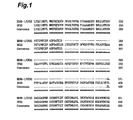
- human UFD2 129 amino acids have been inserted in-frame after the 270th codon of HDNB-1/UFD2.
- Fig. 1 shows a comparison by alignment of the amino acid sequences between the two in the region.
- the base sequence set forth in SEQ ID NO:1 shows homology of 97.4% with the base sequence registered for murine UFD2.
- a portion of the HDNB-1/UFD2 gene obtained in Example 1 was used to prepare appropriate PCR primers.
- the mRNA was reverse-transcribed to cDNA according to a conventional method.
- PCR was carried out with rTaq (Takara Shuzo Co. Ltd.) under the conditions described in the following: specifically, 2 ⁇ l cDNA, 5 ⁇ l sterilized distilled water, 1 ⁇ l 10xrTaq buffer, 1 ⁇ l of 2mM dNTPs, each 0.5 ⁇ l synthesized primer set, and 0.5 ⁇ l rTaq were mixed.
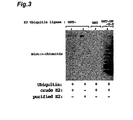
- the ubiquitin ligase activity of HDNB-1/UFD2 was tested in in vitro ubiquitin addition reconstruction system. Specifically, ATP, a cell extract of E. coli (substitute substrate, crude E2), E. coli -derived E2 (UbcH7 purified form), E1 extracted from yeast, ubiquitin (purified protein), and E3 (ubiquitin ligase) were incubated in a tube at 37 °c for 2 hours. The reaction system contained in addition to ubiquitin enzyme, 25 mM Tris (pH 7.5), 50 mM NaCl, 10 mM MgCl 2 , 10 mM DTT, and 10 mM ATP.
- Lane 2 also represents the results obtained with the use of NEDD4, where incubation was carried out exclusive of the E. coli extract as the substitute substrate. A smear-like band was detected.
- Lane 3 represents the results obtained with the use of GST protein only (negative control), where no smear-like band was detected.
- Lane 4 represents the results obtained with HDNB-1/UFD2, where smear-like bands were detected across the entire lane. These results have revealed strong ubiquitin ligase activity of HDNB-1/UFD2.
- E4 is known to show the same activity as in the ubiquitin synthesis system in the absence of E3 (Fig. 3 in Koegl et al., loc. cit.), which is consistent with the results described above.
- the respective viral vectors were transfected into ecotrophic packaging cells ⁇ 2, which had been cultured to be subconfluent in a 6-cm dish using GibcoBRL fungene 6.
- Amphotrophic packaging cells were infected with the ⁇ 2 viral cells that had been selected with G418 (400 ⁇ g/ml) for 2 weeks and high titer viral solutions were produced.
- C201 cell line was infected with the viruses and a plural number of neomycin resistant clones were obtained after selection with G418. The obtained clones were designated C201(PEX14) and C201(HDNB-1/UFD2), respectively.
- the cultured solutions of C201(PEX14) and C201(HDNB-1/UFD2) as obtained in Example 4 were irradiated with 60 Gy ⁇ -ray.
- the irradiation conditions were as follows: with Mebatron KDZII, an output of 10 MV, Dmax25 mm and irradiation field of 40x40 cm.
- the culture solutions from other neuroblastoma cell lines (GOTO, CHP134, and SYSY) and cell line C201(neo) obtained from the virus cells infected only with the retroviral vector were prepared and irradiated under the same conditions as those described above.
- the numbers of live cells were determined in each of the test culture and the control culture using the MTT method which utilized coloration of water-soluble formalin. Specifically, adherent cells in logarithmic growth phase were dispersed such that the count had been adjusted to 5x10 4 /ml. Cell dispersion was seeded into each well of a 96-well microtiter plate at 100 ⁇ l. The plate was incubated in a carbon dioxide gas incubator overnight. Cell counting kit-8 (Dojindo Laboratories) solution, 10 ⁇ l, was added to each well and incubation was carried out in the incubator for 2 hours. A microplate reader was used to measure absorbance at 450 nm (reference wavelength: 595 nm). The measurement was made three times and average values and standard deviations were plotted in graphs.
- MTT method utilized coloration of water-soluble formalin.
- Fig. 4 is a plot of the measurement results as cell survival rate against the number of elapsed days post-irradiation. As is clearly shown in Fig. 4, almost all cells dyed within two days after irradiation in the tested neuroblastoma cell lines except C201. By contrast, about 60% cells survived even after one week post-irradiation in cell line C201(neo).
- the radiosensitivity was compared and examined between plural C201(HDNB-1/UFD2) clones and the control C201(neo)(also in a plural number). Specifically, the number of live cells was determined in each of the clones after irradiation similarly to the above, using the MTT method. Fig. 5 shows the results of measurement. The cell survival rate for C201(HDNB-1/UFD2) was evidently decreased relative to the control. This indicates that the radiosensitivity was improved in any of the tested C201 cell lines (HDNB-1/UFD2) and was increased significantly relative to the control. In addition, the cell survival rate decreased with the almost same pattern. Therefore, it has been demonstrated that regardless of cell lines, the enhancement of radiosensitivity occurred universally in C201(HDNB-1/UFD2) as a result of insertion of HDNB-1/UFD2 gene and that this gene or its expression brought about the enhancement.
- HDNB-1/UFD2 one of the nucleic acids of this invention, is an UFD2 associated protein expressed in neuroblastoma; therefore, the invention has elucidated the base sequence information for one of the UFD2 associated genes.
- nucleic acids of this invention or their fragments may be used as probes or primers for various types of hybridization or PCR, and it will be possible to determine the sensitivity of a human neuroblastoma strain to radiotherapy by detecting in the strain, a gene of which part is formed by the nucleic acid.
- the gene according to the invention (PEX14 or HDNB-1/UFD2) is inserted into a human neuroblastoma strain with lowered radiosensitivity, the radiosensitivity will be markedly enhanced.
- a patient suffering from such neuroblastoma is administered with the aforementioned gene or the protein encoded by the gene and then radiotherapy is conducted on the patient, resulting in improved therapeutic effect.
Landscapes
- Health & Medical Sciences (AREA)
- Chemical & Material Sciences (AREA)
- Life Sciences & Earth Sciences (AREA)
- Organic Chemistry (AREA)
- General Health & Medical Sciences (AREA)
- Proteomics, Peptides & Aminoacids (AREA)
- Medicinal Chemistry (AREA)
- Zoology (AREA)
- Genetics & Genomics (AREA)
- Engineering & Computer Science (AREA)
- Public Health (AREA)
- Biophysics (AREA)
- Veterinary Medicine (AREA)
- Animal Behavior & Ethology (AREA)
- Molecular Biology (AREA)
- Analytical Chemistry (AREA)
- Pharmacology & Pharmacy (AREA)
- Wood Science & Technology (AREA)
- Biochemistry (AREA)
- Bioinformatics & Cheminformatics (AREA)
- Gastroenterology & Hepatology (AREA)
- Biotechnology (AREA)
- Epidemiology (AREA)
- Nuclear Medicine, Radiotherapy & Molecular Imaging (AREA)
- Pathology (AREA)
- General Chemical & Material Sciences (AREA)
- Physics & Mathematics (AREA)
- Toxicology (AREA)
- Immunology (AREA)
- Microbiology (AREA)
- Chemical Kinetics & Catalysis (AREA)
- General Engineering & Computer Science (AREA)
- Medicines That Contain Protein Lipid Enzymes And Other Medicines (AREA)
- Pharmaceuticals Containing Other Organic And Inorganic Compounds (AREA)
- Enzymes And Modification Thereof (AREA)
- Measuring Or Testing Involving Enzymes Or Micro-Organisms (AREA)
Abstract
Description
- This invention relates to radiosensitivity enhancers, as well as to radiosensitivity-enhancing nucleic acids and proteins in cancer radiotherapy. More particularly, it relates to nucleic acid information of genes in the homozygous deletion region that may be commonly present at position 36 on the short arm of chromosome 1 (hereafter referred to as "1p36") of human neuroblastoma, as well as to the therapeutic or diagnostic utility of the nucleic acids and proteins encoded by said nucleic acids (especially, enhancement of the radiosensitivity of cancer cells in the cancer radiotherapy).
- Conventionally, therapy against cancer (malignant tumor) has been conducted, including surgical treatment, chemotherapy, immunotherapy, hiperthermia treatment, and radiotherapy. The radiotherapy can be employed alone or in combination with other treatment methods, and the therapy is an effective treatment method since it shows a high local controlling rate in many malignant tumors.
- The radiosensitivity of tumor cells is known to decrease with lowering oxygen concentration. In order for the radiotherapy to be effective, it is assumed that with respect to radiosensitivity, tumor cells are greater than normal cells in the region to be treated. Thus, the development of pharmaceutical agents for enhancing the radiosensitivity of the tumor cells in place of oxygen is progressing. One example of such pharmaceutical agents is referred to as "a hypoxic cell radiation sensitizer"; and it displays no enhancement of the radiosensitivity of peroxic cells (normal cells), but has enhancing effect only on hypoxic cells (tumor cells). Nitroimidazole derivatives are recognized to be the radiation sensitizers, and compounds such as misonidazole and ethanidazole have been developed. However, they have not resulted in the practical use because their nerve toxicity is too strong at the doses providing sensitization activity. Although the combined use of the pharmaceutical agent for enhancing radiosensitivity is desired in the treatment of a radiation resistant tumor, many of the radiosensitivity enhancers (such as radiation sensitizers) experience a problem in their development because of nerve toxicity.
- It is recognized that inhibitors of nucleic acid or protein synthesis such as actinomycin D, methotrexete, and hyromycin and halogen derivatives of nucleic acid base such as 5-fluorouracil are effective in enhancing radiosensitivity regardless of the presence of oxygen. These, however, exert their effectiveness by suppressing the normal function of the cells.
- Furthermore, it has been reported that TNF (tumor necrosis factor) can enhance the radiosensitivity of a certain tumor cell under particular conditions. Hallahan et al. showed that addition of TNF to SCC-61 tumor cells 4-8 hours prior to irradiation could enhance killing power on the tumor cells in vitro. See, Hallahan et al., Important Advances in Oncology, pp. 75-76 (1993). There is also a report that pretreatment with TNF can enhance the radiosensitivity of the human leukemia cell lines, HL-60, K562 and U937. Wong et al., Eicosanoids and Other Bioactive Lipids in Cancer, Inflammation and Radiation Injury, S. Nigam, ed. (1993), Ch. 70 pp. 353-357. However, the mechanism remains unknown, including whether or not TNF after all enhances the radiosensitivity of a specific tumor cell.
- In contrast, a pharmaceutical agent, "radiation-protecting agent" is also contemplated, which possesses the action opposite to "the radiosensitivity enhancer." This is a pharmaceutical agent that aims at neutralizing free radicals generated by radiation and at accelerating the recovery of tissue from radiation injury. Specifically, a group of compounds having a SH group such as cysteine are being screened. The radiation-protecting agent lowers the radiosensitivity and substantially increases tolerable doses. These pharmaceutical agents, therefore, have the possibility that they will be useful for the treatment of radiation injuries such as internal radiation exposure or myelopathy.
- Human neuroblastoma (also referred to as simply "neuroblastoma" hereafter) is a malignant tumor originating from precursor cells of the fetal sympathetic nervous system, and is most frequently seen among the pediatric solid cancers. The treatment for this tumor is basically surgical excision, but in advanced cases chemotherapy or radiotherapy may be selected. Although neuroblastoma is a tumor that has high radiosensitivity, reduction in the radiosensitivity will be observed as the treatment progresses. However, with respect to neuroblastoma the mechanism of radiosensitivity has hardly been elucidated, and no solution has been found where the radiotherapy meets a difficulty.
- This invention has been accomplished in light of the circumstances described above. An object of the invention is to elucidate the mechanism on how the radiosensitivity of a malignant tumor is lowered in radiotherapy and to prevent the radiosensitivity from being lowered based on the elucidation. Further, another object is to reveal the information on genes involved in the mechanism, to enhance the radiosensitivity of malignant tumor cells based on the information, and to provide a radiosensitivity enhancer for improving the therapeutic rate of the radiotherapy.
- In accordance with the above-stated objects, the present inventors repeated studies diligently, and consequently, discovered that the radiosensitivity of certain human neuroblastoma strains is extremely low as compared to other strains. Further, they identified a group of genes lacking in the former strains and confirmed that the deletion of these genes lowered the radiosensitivity and oppositely the insertion of the genes enhanced the radiosensitivity. In this connection, the group of genes was found to at least contain PEX14 gene and a gene encoding a novel UFD2 associated protein (referred to as "HDNB-1/UFD2" hereafter). The cDNA sequence (base sequence) of HDNB-1/UFD2 and the amino acid sequence encoded by the gene are, respectively, set forth in SEQ ID NO:1 and SEQ NO:2. The cDNA sequence (base sequence) of PEX14 and the amino acid sequence encoded by the gene are, respectively, set forth in SEQ ID NO:3 and SEQ NO:4.
- From such findings, the present inventors made it possible to control the radiosensitivity of the malignant cells, and completed this invention.
- In summary, this invention provides the therapeutic or diagnostic use of the nucleic acids and proteins (including partial peptides thereof) or their pharmaceutically acceptable salts described in 1-16 below.
- 1. A nucleic acid having the base sequence set forth in SEQ ID NO:1 in the Sequence Listing.
- 2. A nucleic acid encoding a protein comprising the amino acid sequence set forth in SEQ ID NO:2 in the Sequence Listing.
- 3. A protein having the amino acid sequence set forth in SEQ ID NO:2 in the Sequence Listing.
- 4. A radiosensitivity enhancer comprising as the effective ingredient, a nucleic acid having the base sequence set forth in SEQ ID NO:1 in the Sequence Listing.
- 5. A radiosensitivity enhancer comprising as the effective ingredient, a nucleic acid encoding a protein comprising the amino acid sequence set forth in SEQ ID NO:2 in the Sequence Listing.
- 6. A radiosensitivity enhancer comprising as the effective ingredient, a nucleic acid having the base sequence set forth in SEQ ID NO:3 in the Sequence Listing.
- 7. A radiosensitivity enhancer comprising as the effective ingredient, a protein having the amino acid sequence set forth in SEQ ID NO:2 in the Sequence Listing or a pharmaceutically acceptable salt thereof.
- 8. A radiosensitivity enhancer comprising as the effective ingredient, a partial peptide which is a functionally effective fragment of the protein having the amino acid sequence set forth in SEQ ID NO:2 in the Sequence Listing or a pharmaceutically acceptable salt thereof.
- 9. A radiosensitivity enhancer comprising as the effective ingredient, a protein having the amino acid sequence set forth in SEQ ID NO:4 in the Sequence Listing or a pharmaceutically acceptable salt thereof.
- 10. A radiosensitivity enhancer comprising as the effective ingredient, a partial peptide which is a functionally effective fragment of the protein having the amino acid sequence set forth in SEQ ID NO:4 in the Sequence Listing or a pharmaceutically acceptable salt thereof.
- 11. A recombinant viral vector comprising a nucleic acid having the base sequence set forth in SEQ ID NO:1 or SEQ ID NO:3 in the Sequence Listing alone, or in combination with an appropriate regulatory and expression control element operably linked thereto.
- 12. A nucleic acid probe comprising the following nucleic acid (a) or (b):
- (a) Nucleic acid having a portion of the base sequence set forth in SEQ ID NO:1 in the Sequence Listing, or a base sequence complementary thereto;
- (b) Nucleic acid which hybridizes to nucleic acid having the base sequence set forth in SEQ ID NO:1 in the Sequence Listing under stringent conditions, or a base sequence complementary thereto.
- 13. A nucleic acid probe comprising the following nucleic acid (a) or (b):
- (a) Nucleic acid having a portion of the base sequence set forth in SEQ ID NO:3 in the Sequence Listing, or a base sequence complementary thereto;
- (b) Nucleic acid which hybridizes to nucleic acid having the base sequence set forth in SEQ ID NO:3 in the Sequence Listing under stringent conditions, or a base sequence complementary thereto.
- 14. A method for determining the sensitivity of a clinically isolated human neuroblastoma strain to radiotherapy, the method comprising detecting a nucleic acid having the base sequence set forth in SEQ ID NO:1 or SEQ ID NO:3 or a fragment thereof in the human neuroblastoma strain.
- 15. A radiation-protecting agent comprising as the effective ingredient, an antisense nucleic acid to the nucleic acid having the base sequence set forth in SEQ ID NO:1 or SEQ ID NO:3 in the Sequence Listing.
- 16. A method for enhancing the radiosensitivity of human neuroblastoma in the radiotherapy of a patient in need of such treatment for the human neuroblastoma, the method comprising administering to the patient, an effective amount of a nucleic acid having the base sequence set forth in SEQ ID NO:1 or a protein having the amino acid sequence set forth in SEQ ID NO:2, or a pharmaceutically acceptable salt thereof.
- 17. A method for enhancing the radiosensitivity of human neuroblastoma in the radiotherapy of a patient in need of such treatment for the human neuroblastoma, the method comprising administering to the patient, an effective amount of a nucleic acid having the base sequence set forth in SEQ ID NO:3 or a protein having the amino acid sequence set forth in SEQ ID NO:4, or a pharmaceutically acceptable salt thereof.
- 18. A method for enhancing the radiosensitivity of human neuroblastoma in the radiotherapy of a patient in need of such treatment for the human neuroblastoma, the method comprising coadministering to the patient, an effective amount of a nucleic acid having the base sequence set forth in SEQ ID NO:1 and a nucleic acid having the base sequence set forth in SEQ ID NO:3, or alternatively a protein having the amino acid sequence set forth in SEQ ID NO:2, or a pharmaceutically acceptable salt thereof and a protein having the amino acid sequence set forth in SEQ ID NO:2, or a pharmaceutically acceptable salt thereof.
-
- Fig. 1 is an alignment diagram comparing the putative amino acid sequence for HDNB-1/UFD2 which is a gene according to this invention and the putative amino acid sequence for human UFD2 (AF043117) which has been registered in a database.
- Fig. 2 is a representation of electropherogram showing the results of expression of HDNB-1/UFD2 gene in normal human tissue as detected by semi-quantitative RT-PCR.
- Fig. 3 is a representation of electropherogram showing the ubiquitin activity of HDNB-1/UFD2.
- Fig. 4 is a plot of the cell survival rate of each strain against the number of elapsed days post-irradiation when neuroblastoma strain C201 or other neuroblastoma strains having PEX14 and HDNB-1/UFD2 genes introduced were irradiated.
- Fig. 5 is a bar graph comparing the respective radiosensitivities when plural C201(HDNB-1/UFD2) strains and the control C201(neo) strain have been irradiated and the time-dependent changes in the cell survival rates of the respective strains are plotted.
- The phrase, "protein having the amino acid sequence set forth in SEQ ID NO:2" as used in the present specification may refer not only to a protein encoded by the nucleic acid set forth in SEQ ID NO:1, but also to any protein having substantially the same amino acid sequence as that set forth in SEQ ID NO:2 with substantially equivalent activity (which enhances radiosensitivity) to said protein. The substantially same amino acid sequence is, for example, an amino acid sequence derivable by the substitution or the deletion of one or more amino acids in the amino acid sequence set forth in SEQ ID NO:2, or by the addition of one or more amino acids to the amino acid sequence set forth in SEQ ID NO:2. Also, the phrase "protein having the amino acid sequence set forth in SEQ ID NO:4" has an exactly corresponding meaning, and may refer not only to a protein encoded by the nucleic acid having the base sequence set forth in SEQ ID NO:3, but also to any protein with substantially equivalent activity (which enhances radiosensitivity).
- The phrase, "nucleic acid having the base sequence set forth in SEQ ID NO:1" as used in the present specification may also refer to nucleic acid having substantially the same base sequence as that set forth in SEQ ID NO:1 with substantially equivalent activity (which enhances radiosensitivity) to said nucleic acid. The substantially same base sequence is, for example, nucleic acid encoding the above-mentioned variant protein. The phrase "nucleic acid having the base sequence set forth in SEQ ID NO:3" has an exactly corresponding meaning, and may also refer to nucleic acid having substantially the same base sequence as that set forth in SEQ ID NO:3 with substantially equivalent activity to said nucleic acid. Such nucleic acids and protein variants may be prepared according to techniques known to one skilled in the art such as site-specific mutation, based on the base sequence information of the above-mentioned nucleic acids.
- The term, "base sequence encoding a protein" as used in the present specification is an expression in consideration of degeneracy and it may refer to a base sequence different from the base sequence represented by cDNA corresponding to said protein. In other words, plural base sequences (codons) exist that encode one amino acid; therefore, the base sequence encoding a protein comprising the amino acid sequence set forth in SEQ ID NO:2 is not singular and it is not limited to the base sequence set forth in SEQ ID NO:1. Thus, the term encompasses base sequences encoding a protein comprising the amino acid sequence set forth in SEQ ID NO:2 other than the base sequence set forth in SEQ ID NO:1.
- The term "nucleic acid" as used in the present specification refers to DNA or RNA which encodes a protein as defined above or a partial peptide as a functionally effective fragment of the protein, which is complementary to a nucleic acid encoding such a protein or partial peptide, or which hybridizes to such nucleic acid under "stringent" conditions. The forms of such DNAs include genomic DNA, cDNA and mRNA. When the "nucleic acid" means DNA, it is typically represented by a single-stranded DNA (sense strand) as shown by the sequence identification numbers described above, but the definition of "nucleic acid" also includes a single-strand complementary to the sequence (antisense strand) and double-stranded DNA comprising both strands.
- The "hybridize under stringent" conditions as described above are described by Sambrook, J. et al. in "Expression of cloned genes in E. coli", Molecular Cloning: A Laboratory Manual (1989), Cold Spring Harbor Laboratory Press, New York, USA, 9.47-9.62 and 11.45-11.61. More specifically, they refer to hybridization at approximately 45°C, 6.0 x SSC, followed by washing at 50°C, 2.0 x SSC. The stringency may be selected by choosing a salt concentration in the washing step from approximately 2.0 x SSC, 50°C as low stringency to approximately 0.2 x SSC, 50°C as high stringency. Also, the temperature in the washing step may be increased from room temperature, or approximately 22°C as low stringency conditions, to approximately 65°C as high stringency conditions.
- As used in the present specification, "radiosensitivity" means the degree of tumor cells being killed by radiation. The "radiosensitivity enhancer" refers to a pharmaceutical agent capable of enhancing (or improving) radiosensitivity (which may also be referred to as "radiosensitiser") regardless of the mechanism of its action: it is not restricted to a radiosensitiser against hypoxic cells. The "radiation-protecting agent" refers to a pharmaceutical agent capable of lowering radiosensitivity regardless of the mechanism of its action.
- The construction and preferred embodiments of this invention will be described in detail hereinafter.
- In neuroblastoma the deletion of 1p36 occurs in high frequency, and it has been predicted that cancer-controlling genes may be present in this 1p36 region. The present inventors analyzed approximately 400 cases of neuroblastoma for LOH (Loss of Heterozygosity) in lp36. Consequently, a common deletion region (about 8 to 10 Mb) was found. In addition, when genomic DNA was extracted from numerous neuroblastoma-derived cell lines and screened, Loss of Homozygosity was discovered in the common deletion region with respect to two cell lines, NB1 and MASS-NB-SCH-1. Thus, it was thought that critical genes for controlling the tumorgenesis and biological characteristics of neuroblastoma are present in this common region.
- PAC clones were used to construct contings for the purpose of acquiring genetic information which includes sequencing for the common deletion region, the detail of which is disclosed in International Patent Publication PCT/JP00/05930. Further, several primer sets used for the construction of the contings were employed as keywords to search the gene mapping database (http://www.ncbi.nlm.nih.gov/genemap99/) and BLAST (http://www.ncbi.nlm.nih.gov/BLAST), when a number of known genes were hit and these were confirmed to be present in the common deletion region. The base sequence information for the genes is summarized in Table 1.
Table 1 Base Sequence Information for the Deletion Region GENE NAME OR ACCESSION No. DEFINITION AND CHARACTERISTICS ORF(bp) 1 UFD2(AF043117) ubiquitin- fusion degradation protein 23909 2 KIF1Bβ kinesin- like protein KIF1B 3 CORT(NM001302) preprocortistatin 318 4 PEX-14(NM004565) peroxisomal biogenesis factor 14mRNA 1908 5 KIAA0684(AB014584) Homo sapiens clone 686 protein(KIAA0684) mRNA 3281 6 KIAA0591(AB011163) Homo sapiens mRNA for KIAA0591 protein, partial cds. 5368 7 AI080353(EST) ox80f04.s1 Soares_NhHMPu_S1 Homo sapiens CDNA clone 422 8 D79099(EST) HUM531D06B Human placenta polyA+(TFujiwara) Homo sapiens cDNA clone 320 9 AA059029(EST) Zf63h02.s1 Soares retina N2b4HR Homo sapiens cDNA clone 446 10 AA628589(EST) af39g05.s1 Soares_total_fetus_Nb2HF8_9w Homo sapiens CDNA clone 443 11 AA728950(EST) nw02c08.s1 NCI_CGAP_Pr16 Homo sapiens cDNA clone 437 12 AA328945(EST) EST32514 Embryo, 12 week|Homo sapiens cDNA 5'end, mRNA sequence 302 13 R89689(EST) ym99c01.r1 Soares adult brain N2b4HB55Y Homo sapiens cDNA clone 450 14 AA018367(EST) Ze41e05.r1 Soares retina N2b4HR Homo sapiens cDNA clone 504 15 Z19845(EST) HSAAAAUKT H, Human adult Brain Cortex tissue Homo sapiens CDNA 281 16 AI050021(EST) an22d04.x1 Gessler Wilms tumor Homo sapiens cDNA clone 434 17 R67760(EST) yi28f03.r1 Soares placenta Nb2HP Homo sapiens cDNA clone 496 - The present inventors took note of PEX14 and UFD2 in this gene group of genes and investigated their functions in the neuroblastoma cells. During the process of investigation, a finding was obtained that the genes encoding these two types of proteins having completely different physiological activities are both deeply involved in the radiosensitivity of the cells. This invention is then based on the finding.
- Human PEX14 (HsPEX14) is a gene encoding human peroxisome binding protein (HsPeX14p) and the protein is known to be the central protein involved in the transport mechanism for peroxisome proteins. Further, human PEX14 is believed to be a candidate gene for diseases associated with peroxisome-biogenesis. The complete cDNA sequence of human PEX14 and the putative amino acid sequence of HsPex14p have both been reported in G. K. Will et al., Molecular and
Cellular Biology 19, 2265-2277 (1999). In addition, the identical sequences have been registered with GenBank at NCBI (http://www.ncbi.nlm.nih.gov.) as Accession No. NM004565. - UFD2 is a protein that is isolated from yeast and that participates in the ubiquitin pathway, but its function has not fully been elucidated. Recently, it has been shown that UFD2 is identical to the ubiquitinzation factor E4 which cooperates with the ubiquitin-activating enzyme E1, the ubiquitin-binding enzyme E2 and the ubiquitin-ligating enzyme E3 in the ubiquitin-ligating system (Koegl et al., Cell, 96, 635-644 (1999)). UDF2 (E4) is responsible for elongating the polyubiquitin chain when the target protein is subjected to ubiquitinzation by the aforementioned enzyme group. The polyubiquinated protein is then decomposed by proteasome. Thus, the ubiquitin/proteasome system plays a central role in the cellular proteolysis. KIAA0684 protein that had been registered by Nagase et al. (GenBank (http://www.ncbi.nlm.nih.gov) Accession No. AB014584) was identified as a human homolog to yeast UDF2 (Koegl et al., loc. cit.). The full amino acid sequence of human UDF2 which is longer in chain and cDNA sequence encoding it has been registered with GenBank (http://www.ncbi.nlm.nih.gov) as Accession No. AF043117 (by B. Lubyova et al.).
- However, the gene of which the expression was confirmed in several neuroblastoma strains by the present inventors lacked in a portion of the sequence registered as AF043117, and thus, was shorter than said sequence by 387 bp. In addition, the gene sequence showed complete identity with the aforementioned registered sequence except for this deleted region. Therefore, this gene was designated HDNB-1/UFD2. Of note was that the expression of UDF2 by Lubyova et al. had not been observed in the neuroblastoma cell lines tested (CHP134, GOTO/P3, SKN-SH, and TGW) at all but only the expression of HDNB-1/UFD2 had been observed.
- The gist of this invention is to use HDNB-1/UFD2 (SEQ ID NO:2), PEX14 (SEQ ID NO:4) (where both proteins do not need to be distinguished from each other, they will be individually or collectively referred to as "protein(s) of this invention" hereafter), or nucleic acids of the genes encoding the respective proteins (where both nucleic acids do not need to be distinguished from each other, they will be individually or collectively referred to as "nucleic acid(s) of this invention" hereafter) as radiosensitivity enhancers in cancer radiotherapy.
- Further, it was discovered that when either or both of the genes according to this invention were lacking in the lp36 homozygosity deletion region of neuroblastoma cell lines, the radiosensitivity of such neuroblastoma cell lines was low.
- Accordingly, the proteins according to this invention (including partial peptides which are their effective fragments), the nucleic acids according to this invention (including their fragments) and antisense nucleic acids to said nucleic acids can be used for the diagnosis of neuroblastoma and other cancers as well as in radiotherapy.
- In accordance with this invention, the proteins, nucleic acids and antibodies for the proteins are provided with usefulness for diagnosis as described below.
- Specifically, these molecules may be used for determination of the radiosensitivity of a neuroblastoma strain by measuring the level of their expression in the neuroblastoma strain through various assays.
- There are no particular limitations on the methods of immunoassay using antibodies for the proteins according the invention, and there may be mentioned various competitive and non-competitive assays using such techniques as Western blotting, radioimmunoassay, ELISA, "sandwich" immunoassay, immunoprecipitation, precipitin reaction, gel differentiation precipitation reaction, immunodiffusion assay, agglutination assay, complement-binding assay, immunoradiometric assay, fluorescent immunoassay and protein A immunoassay.
- When a nucleic acid according to the invention is to be used in diagnosis, it may be used as a hybridization probe or as a PCR primer to examine the expression level of the gene (i.e., the gene according to the invention) in a neuroblastoma cell sample, which will enable the radiosensitivity of said cell to be determined. The presence of enhancement in gene expression can be examined, for example, by any conceivable method using as the probe a base sequence which hybridizes to any desired sequence of the nucleic acid according to the invention. Preferably, a radioactive isotope-labeled probe is used for assay by Southern or Northern blotting. When the nucleic acid is used as a primer for PCR, RNA may be, for example, extracted from the sample (cells) to be assayed and the gene expression may be semi-quantitatively measured by RT-PCR.
- The nucleic acids and proteins according to the invention are radiosensitivity enhancers; therefore, they are provided with usefulness as adjuvants in cancer radiotherapy (particularly, against neuroblastoma).
- Typically, a pharmaceutical composition comprising a nucleic acid or a protein according to the invention may be administered to such a patient in need of treatment in an effective amount (i.e., appropriate dose) prior to radiotherapy. The nucleic acid having the base sequence set forth in SEQ ID NO:1 and the nucleic acid having the base sequence set forth in SEQ ID NO:3 may individually be included in the pharmaceutically composition and may be administered separately. Alternatively, they may be both included in the pharmaceutical composition and may be administered as a combined agent of the two. In a similar manner, the protein having the amino acid sequence set forth in SEQ ID NO:2 or a pharmaceutically acceptable salt thereof and the protein having the amino acid sequence set forth in SEQ ID NO:4 or a pharmaceutically acceptable salt thereof may individually be included in the pharmaceutically composition and may be administered separately; or alternatively, they may be both included in the pharmaceutical composition and may be administered as a combined agent of the two.
- Where the expression level of the protein according to the invention is increased, a pharmaceutical composition comprising an antisense nucleic acid, neutralizing antibodies or a competitive inhibitor for said protein may be administered; thus, it will be possible to either suppress the expression level or inhibit the function of the protein. As a result, the patient administered with such a pharmaceutical composition will experience lowered radiosensitivity.
- Particularly when a nucleic acid of the invention is used as a radiosensitivity enhancer for the purpose described above, the nucleic acid may be inserted into a vector used for gene transfer and the gene is allowed for expression as a transgene in the body of the patient under any desired expression promoter, followed by radiotherapy. The nucleic acid having the base sequence set forth in SEQ ID NO:1 and the nucleic acid having the base sequence set forth in SEQ ID NO:3 may individually be inserted into the vector, or alternatively they may be inserted concurrently.
- The vector for insertion of the nucleic acid is preferably constructed based on a DNA or RNA virus. There are no particular limitations on the type of virus vectors, and there may be used an MoMLV vector, herpes virus vector, adenovirus vector, AAV vector, HIV vector, SIV vector, Sendai virus vector and the like.
- There may be used, alternatively, a pseudotyped virus vector wherein one or more of the constitutive proteins of the virus vector is replaced with a constitutive protein of a different type of virus, or wherein a portion of the nucleic acid sequence of the genetic information is replaced with a nucleic acid sequence of another type of virus. As an example, there may be mentioned a pseudotyped virus vector wherein Env protein, the coat protein of HIV, is replaced with VSV-G protein, the coat protein of Vesicular Stomatitis Virus (VSV) (Naldini L. et al., Science 272:263- (1996)).
- So long as the virus is capable of gene transfer, it may be used as a virus vector even if its host range is other than human. Non-virus-derived vectors may also be used, including calcium phosphate/nucleic acid complexes, liposomes, cationic lipid complexes, Sendai virus liposomes, and polymer carriers with polycationic backbone. Further, electroporation, a gene gun, or the like may be used as the gene transfer system.
- An expression cassette provided with an expression promoter is preferably used to insert the nucleic acid of the invention inserted into the aforementioned vector for gene expression.
- The expression cassette used may be of any type that allows gene expression in target cells, with no particular limitations. One skilled in the art can easily select such an expression cassette, which is preferably an expression cassette allowing gene expression in animal-derived cells, more preferably an expression cassette allowing gene expression in mammal-derived cells and even more preferably an expression cassette allowing gene expression in human-derived cells.
- The expression cassette may include, in addition to the nucleic acid of the invention, various sequences such as a promoter or enhancer for the gene transcription, a polyA signal, a marker gene for labeling and/or selecting the gene-inserted cells, a viral gene sequence for efficient insertion of the gene into the genomic DNA sequence of the cell, and a signal sequence for extracellular secretion and/or local intracellular accumulation of the proteins produced by the gene expression.
- For promoters to be used in the expression cassette, there may be mentioned promoters derived from such viruses as adenovirus, cytomegalovirus, human immunodeficiency virus, simian virus 40, Rous sarcoma virus, herpes simplex virus, mouse leukemia virus, sindbis virus, hepatitis A virus, hepatitis B virus, hepatitis C virus, papillomavirus, human T cell leukemia virus, influenza virus, Japanese encephalitis virus, JC virus, parvovirus B19 and poliovirus, mammalian promoters such as albumin, SRα, heat shock protein and elongation factor promoters, chimeric promoters such as CAG promoter, and promoters whose activity is induced by tetracycline, steroids and the like.
- The nucleic acids and proteins of this invention are provided for radiotherapy in the form of appropriate pharmaceutical compositions. For this purpose, the nucleic acids or the like are prepared into formulation according to the formulation method described below, the preferred route of administration is established, and the dosage is determined so as to achieve the desired enhancing effect of radiosensitivity.
- The pharmaceutical composition comprising a nucleic acid or a protein according to the invention is not particularly limited, and a drug may be constructed by encapsulation in liposomes, fine particles or microcapsules, expression in recombinant cells, receptor-mediated ingestion, or as a retrovirus or a portion of another type of vector.
- More specifically, a recombinant virus vector comprising the nucleic acid of the invention may be dissolved in an appropriate solvent such as water, physiological saline or an isotonized buffer solution to prepare a composition containing the nucleic acid of the invention. Alternatively, the protein of the invention may be dissolved in an appropriate solvent such as water, physiological saline or an isotonized buffer solution to prepare a composition containing the protein of the invention. Polyethylene glycol, glucose, various amino acids, collagen, albumin or the like may be then added as protective materials for the preparation.
- The aforementioned pharmaceutical composition may contain pharmaceutically acceptable carriers, diluents, fillers, or stabilizers, if desired and this is often preferable. As to these excipients in formulation, they are fully described in Remington's Pharmaceutical Sciences, Mack Publisher, 16 (1980).
- The protein of the invention may be formulated into a pharmaceutical composition as the form of a pharmaceutically acceptable salt. Pharmaceutically acceptable salts include those formed with the free amino group of a protein or peptide, such as those derived from hydrochloric acid, phosphoric acid, acetic acid, oxalic acid, tartaric acid or the like, and those formed with the free carboxyl group of a protein or peptide, such as those derived from sodium, potassium, ammonium, calcium, iron (II) hydroxide, isopropylamine, triethylamine, 2-ethylaminoethanol, histidine, procaine or the like.
- The pharmaceutical composition according to this invention results in desired radiosensitivity-enhancing effect when an appropriate route of administration for the composition is set and it is administered to a patient. In administering the pharmaceutical composition to the body, there are no particular limitations on the method of administration. Nevertheless, it may be preferably carried out by injection intradermally, intramuscularly, intraperitoneally, intravenously, hypodermically or intranasally. Other administration methods such as infusion that allows continuous administration to the blood stream are also preferred. The particularly preferred mode of administration is intravenous administration. The dosage of the pharmaceutical composition of the invention will depend on the route of administration and the condition, age, body weight, gender, etc. of the patient receiving administration, and the optimum dosage for the patient may be determined by the practicing physician. In the case of injection, for example, the dosage is preferably about 0.1 µg/kg to 1000 mg/kg per day, and more preferably about 1 µg/kg to 100 mg/kg per day.
- The radiotherapy contemplated by this invention is generally used in the field of art to which the invention pertains and may be carried out according to the protocol known to one skilled in the art. For example, the radiotherapy includes cesium-, iridium-, iodine- or cobalt-irradiation. The radiotherapy may be systemic irradiation (for acute leukemia, malignant lymphoma, certain solid cancers), but is preferably by way of local irradiation to the site or the tissue of tumor (the abdominal part, lung, liver, lymph nodes, or head against solid cancer). Typically, the radiotherapy is carried out for two to three minutes daily in 25 to 30 installments (approximately five to six weeks).
- According to a preferred embodiment of the invention, the pharmaceutical composition of this invention is administered to the patient prior to the radiotherapy. When the radiotherapy is to be continuously conducted, the administration can be continuous as well.
- The radiosensitivity enhancer of the invention may be used as an adjuvant in combination with the radiotherapy against a malignant tumor with inherently low radiosensitivity or a malignant tumor having acquired radiation resistance as a result of the radiotherapy.
- The radiosensitivity enhancer of the invention can also lower the dose to be therapeutically applied by enhancing the radiosensitivity of a tumor cell and can extend the treatment period (exposure time) over the period prescribed by the ordinary protocol. Furthermore, it alleviates side effects due to radiation injuries (such as stomatitis, myelopathy, radiation ulcer, and radiation pneumonitis) necessarily accompanying the radiotherapy.
- There are no particular limitations on the targeted cancers against which the radiosensitivity enhancer of this invention may be used as an adjuvant to radiotherapy, so long as the conventional radiotherapy can be conducted on the cancers. The radiosensitivity enhancer of this invention is particularly suited to the cancers the radiosensitivity of which is said to be high; but even in the cases of cancers the radiosensitivity of which is said to be low, the radiosensitivity enhancer can be expected to improve the therapeutic effect of radiotherapy since it can enhance radiosensitivity.
- Malignant tumors as targets of treatment by the radiosensitivity enhancer of this invention include the following representatives: specifically, there may be mentioned acute leukemia, chronic leukemia, medulloblastoma, retinoblastoma, neuroblastoma, Wilms tumor, lymphoma, Hodgkins disease, multiple myeloma, plasmacytoma, thyroid carcinoma, basalioma, squamous cell carcinoma (cervical carcinoma), breast carcinoma, Ewing tumor, lung carcinoma, esophagus carcinoma, larynx carcinoma, thyroid carcinoma, ovarian carcinoma, sialadenoncus, teratoma, melanoma, glioma, stomach cancer, intestinal cancer, colon carcinoma, renal cell carcinoma, osteosarcoma, among others.
- According to another embodiment of this invention, antisense nucleic acid is used, which suppresses the expression of a gene according to the invention, thus achieving a therapeutic effect. Here, "antisense nucleic acid" refers to a nucleic acid that can hybridize to a portion of RNA (preferably mRNA) of a gene according to the invention due to a certain degree of sequence complementarity.
- The antisense nucleic acid may be used in any form of RNA and DNA (encoding the RNA) oligonucleotides, whether a double-stranded or single-stranded, triple strand-forming oligonucleotide, or a chimeric mixture of the foregoing. The antisense nucleic acid is not particularly limited, and may consist of an oligonucleotide of preferably 5-200 bases. The oligonucleotide may also be modified in its base portion, ribose portion or phosphate backbone.
- As a specific embodiment, the antisense nucleic acid may be used in the form of a catalytic RNA, ribozyme, or a chimeric RNA-DNA analog.
- The antisense nucleic acids may be synthesized by a method known to one skilled in the art using, for example, an automated DNA synthesizer.
- Specifically, such antisense DNA has a DNA sequence that is complementary to at least a part of the base sequence set forth in SEQ ID NO:1 or SEQ ID NO:3. Such antisense RNA has an RNA sequence that is complementary to at least a part of RNA encoded by DNA comprising the base sequence set forth in SEQ ID NO:1 or SEQ ID NO:3.
- The antisense nucleic acid according to the invention hybridizes to the DNA or the RNA that carries genetic information during the process of production of the protein according to this invention from the gene according to the invention (transcription, translation and etc.), and affects the normal flow of transmission of the genetic information, thus inhibiting the biosynthesis of said protein. Therefore, the cell where the gene according to the invention is present experiences lowered radiosensitivity by the introduction of the antisense nucleic acid.
- When the antisense nucleic acid is used as a radiation-protecting agent for the purpose of treatment, it may be administered to a patient as a pharmaceutical composition in the same manner described above for other nucleic acids, but most preferably, it is directly administered to specific cells. Cells may also be transformed with a vector comprising DNA encoding RNA antisense nucleic acid, or transfected, to produce the antisense nucleic acid in the cells by transcription.
- According to yet another embodiment of this invention, antibodies against a protein according to the invention, or fragments thereof including the binding domains, may be used as a diagnostic agent as described above. Specifically, the antibodies may be used in various types of immunoassays for the detection and measurement of the protein according to the invention.
- The antibodies may be prepared using the protein according to the invention, or its fragment, analog or derivative, as an immunogen by methods known to one skilled in the art. For such antibodies, there may be mentioned polyclonal antibodies, monoclonal antibodies, chimeric antibodies, single-stranded antibodies, Fab fragments, or antibodies derived from an FAB expression library.
- The invention will be described in greater detail by way of examples hereafter; however, these examples are in no way limitative on the invention.
- Two types of primers, 5'-GTGTTGGAGGCCAAATGTG-3' and 5'-TTGACCGTGTTTGTCACTTAAA-3', were designed based on the sequence of SGC30343 which was a STS maker obtained from a database; and a human fetus brain cDNA library was used as the template to carry out PCR. The obtained PCR product was used as a probe to screen the cDNA library and SGC30343 (clone 31) was cloned.
- Two RACE primers of 24mer toward the 5'-direction (5'race1(n.t.124) and 5'race2 (n.t.60)) were prepared from the sequence of SGC30343 (clone 31; 3803 bp). Primers were designed at the T7 side of the cloning site in pBluescript which was a vector for the neuroblastoma cDNA library. The race primers and the T7 primers were used to carry out nested PCR. Specifically, in the first amplification the template DNA (neuroblastoma cDNA library), the primers (vector-T7, 5'racel), dNTP, TaqDNA polymerase and others were used to carry out PCR according to a conventional method. In the second amplification, the template DNA (the first amplified product diluted to 1/100 for use), the primers (vector-T7, 5'race2), dNTP, TaqDNA polymerase and others were used to carry out PCR according to the conventional method in a similar manner.
- Out of the five obtained PCR products, one contained the putative 5'-upstream (of the race primer) region of SGC30343. Thus, an 840 bp (5'-upstream) was isolated. An in-frame stop codon (135 bp upstream Met) was found in the amino acid sequence. Consequently, SGC30343 was found to be 4636 bp (1173 amino acids). This PCR product was digested with a restriction enzyme to produce a fragment containing a start codon, and it was ligated to clone 31, from which the full-length HDNB-1/UFD2 was obtained. The base sequence HDNB-1/UFD2, including 5'-non-tranlational region is set forth in SEQ ID NO:1; the amino acid sequence of the translated protein is set forth in SEQ ID NO: 2, respectively. The base sequence set forth in SEQ ID NO:1 was registered with DDBJ, GenBank and EMBL (Accession No. AB028839). The base sequence set forth in SEQ ID NO:1 is shorter than the published sequence of human UFD2 (AF043117, loc. cit.) by 387 bp. In human UFD2 129 amino acids have been inserted in-frame after the 270th codon of HDNB-1/UFD2. Fig. 1 shows a comparison by alignment of the amino acid sequences between the two in the region. The base sequence set forth in SEQ ID NO:1 shows homology of 97.4% with the base sequence registered for murine UFD2.
- Tissue-dependent expression of HDNB-1/UFD2 gene in normal human tissue mRNA (Clontech Laboratories. Inc.) was studied according to the semi-quantitative RT-PCR method.
- First, a portion of the HDNB-1/UFD2 gene obtained in Example 1 was used to prepare appropriate PCR primers. Separately, the mRNA was reverse-transcribed to cDNA according to a conventional method. PCR was carried out with rTaq (Takara Shuzo Co. Ltd.) under the conditions described in the following: specifically, 2 µl cDNA, 5 µl sterilized distilled water, 1 µl 10xrTaq buffer, 1 µl of 2mM dNTPs, each 0.5 µl synthesized primer set, and 0.5 µl rTaq were mixed. After this mixed solution was denatured at 95 °c for 2 minutes, 35 cycles were repeated, one cycle of which consisted of 95 °c (15 seconds), 58 °c (15 seconds), and 72 °c (20 seconds), and the solution was allowed to stand at 72 °c for 20 minutes. GAPDH was used as a positive control and similar PCR was carried out. These reaction solutions were electrophoresed on a 2.5% agarose gel. Results are shown in Fig. 2. In the figure the upper part represents the detection results of HDNB-1/UFD2 gene, while the lower part represents the detection results of control GAPDH. The expression of HDNB-1/UFD2 gene displays no particular tissue-dependence and appeared in almost all human organs.
- The ubiquitin ligase activity of HDNB-1/UFD2 was tested in in vitro ubiquitin addition reconstruction system. Specifically, ATP, a cell extract of E. coli (substitute substrate, crude E2), E. coli-derived E2 (UbcH7 purified form), E1 extracted from yeast, ubiquitin (purified protein), and E3 (ubiquitin ligase) were incubated in a tube at 37 °c for 2 hours. The reaction system contained in addition to ubiquitin enzyme, 25 mM Tris (pH 7.5), 50 mM NaCl, 10 mM MgCl2, 10 mM DTT, and 10 mM ATP. The reaction was separated on SDS-PAGE under reductive conditions and blotted with anti-ubiquitin antibodies. When E3 activity was noted, a smear band would be detected from the low molecular weight region to the high molecular weight region. In E3, NEDD4 and HDNB-1/UFD2, which were known to have comparatively strong ubiquitin ligase activity, were used as positive controls in the forms of GST-fused proteins. The U-box region locating at the C-terminus of HDNB-1/UFD2 was formed into the GST-fused protein in the latter. Results are shown in Fig. 3. In the figure,
Lane 1 represents the results obtained with the use of NEDD4, where the smear-like band was detected.Lane 2 also represents the results obtained with the use of NEDD4, where incubation was carried out exclusive of the E. coli extract as the substitute substrate. A smear-like band was detected.Lane 3 represents the results obtained with the use of GST protein only (negative control), where no smear-like band was detected.Lane 4 represents the results obtained with HDNB-1/UFD2, where smear-like bands were detected across the entire lane. These results have revealed strong ubiquitin ligase activity of HDNB-1/UFD2. E4 is known to show the same activity as in the ubiquitin synthesis system in the absence of E3 (Fig. 3 in Koegl et al., loc. cit.), which is consistent with the results described above. - The full-length ORFs' of PEX14 (obtained from professor Yukio Fujiki at Department of Biology, Faculty of Science, Kyushu University and sequenced) and HDNB-1/UFD2 (Example 1) were made blunt-ended with Klenow fragment, and then were respectively incorporated into the HpaI site of retroviral vector pLXN using a Takara Ligation kit ver2. Similarly, PEX14 or HDNB-1/UDF2 was transformed into E. coli DH5α and plasmid was extracted from the colonies that had expressed the ampicillin resistant gene. After the direction of the inserted gene was confirmed by restriction enzymes, the plasmid was subjected to the experiments described below.
- The respective viral vectors were transfected into ecotrophic packaging cells Ψ2, which had been cultured to be subconfluent in a 6-cm dish using
GibcoBRL fungene 6. - Amphotrophic packaging cells (PA317) were infected with the Ψ2 viral cells that had been selected with G418 (400 µg/ml) for 2 weeks and high titer viral solutions were produced. C201 cell line was infected with the viruses and a plural number of neomycin resistant clones were obtained after selection with G418. The obtained clones were designated C201(PEX14) and C201(HDNB-1/UFD2), respectively.
- Total RNA was extracted from the clones obtained above (C201(PEX14) and C201(HDNB-1/UFD2)), and 30 µg was electrophoresed on an agarose gel containing 1% formalin. Subsequently, it was transferred to a nylon membrane. cDNAs of PEX14 and HDNB-1/UFD2 were labeled with 32P to prepare probes, and these were hybridized to the membrane at 65 °c. The membrane was washed with SSC/Sarcosine at 50 °c. After drying, the membrane was exposed to a film at -70 °c, when the expression of the objective genes (PEX14 and HDNB-1/UFD2) was confirmed.
- The cultured solutions of C201(PEX14) and C201(HDNB-1/UFD2) as obtained in Example 4 were irradiated with 60 Gy γ -ray. The irradiation conditions were as follows: with Mebatron KDZII, an output of 10 MV, Dmax25 mm and irradiation field of 40x40 cm. As a control, the culture solutions from other neuroblastoma cell lines (GOTO, CHP134, and SYSY) and cell line C201(neo) obtained from the virus cells infected only with the retroviral vector were prepared and irradiated under the same conditions as those described above.
- After irradiation, the numbers of live cells were determined in each of the test culture and the control culture using the MTT method which utilized coloration of water-soluble formalin. Specifically, adherent cells in logarithmic growth phase were dispersed such that the count had been adjusted to 5x10⁴/ml. Cell dispersion was seeded into each well of a 96-well microtiter plate at 100 µl. The plate was incubated in a carbon dioxide gas incubator overnight. Cell counting kit-8 (Dojindo Laboratories) solution, 10 µl, was added to each well and incubation was carried out in the incubator for 2 hours. A microplate reader was used to measure absorbance at 450 nm (reference wavelength: 595 nm). The measurement was made three times and average values and standard deviations were plotted in graphs.
- Fig. 4 is a plot of the measurement results as cell survival rate against the number of elapsed days post-irradiation. As is clearly shown in Fig. 4, almost all cells dyed within two days after irradiation in the tested neuroblastoma cell lines except C201. By contrast, about 60% cells survived even after one week post-irradiation in cell line C201(neo).
- However, about 80% cells dyed on the 6th day post-irradiation in C201(PEX14) and C201(HDNB-1/UFD2) cells, where PEX14 or HDNB-1/UFD2 genes were inserted into C201 cells through transfection. It was thus found that the radiosensitivity of the gene-transferred C201 cells was significantly increased as compared to C201(neo) as the control.
- To further validate the significant difference in radiosensitivity, the radiosensitivity was compared and examined between plural C201(HDNB-1/UFD2) clones and the control C201(neo)(also in a plural number). Specifically, the number of live cells was determined in each of the clones after irradiation similarly to the above, using the MTT method. Fig. 5 shows the results of measurement. The cell survival rate for C201(HDNB-1/UFD2) was evidently decreased relative to the control. This indicates that the radiosensitivity was improved in any of the tested C201 cell lines (HDNB-1/UFD2) and was increased significantly relative to the control. In addition, the cell survival rate decreased with the almost same pattern. Therefore, it has been demonstrated that regardless of cell lines, the enhancement of radiosensitivity occurred universally in C201(HDNB-1/UFD2) as a result of insertion of HDNB-1/UFD2 gene and that this gene or its expression brought about the enhancement.
- HDNB-1/UFD2, one of the nucleic acids of this invention, is an UFD2 associated protein expressed in neuroblastoma; therefore, the invention has elucidated the base sequence information for one of the UFD2 associated genes.
- The nucleic acids of this invention or their fragments may be used as probes or primers for various types of hybridization or PCR, and it will be possible to determine the sensitivity of a human neuroblastoma strain to radiotherapy by detecting in the strain, a gene of which part is formed by the nucleic acid.
- When the gene according to the invention (PEX14 or HDNB-1/UFD2) is inserted into a human neuroblastoma strain with lowered radiosensitivity, the radiosensitivity will be markedly enhanced. Thus, a patient suffering from such neuroblastoma is administered with the aforementioned gene or the protein encoded by the gene and then radiotherapy is conducted on the patient, resulting in improved therapeutic effect.


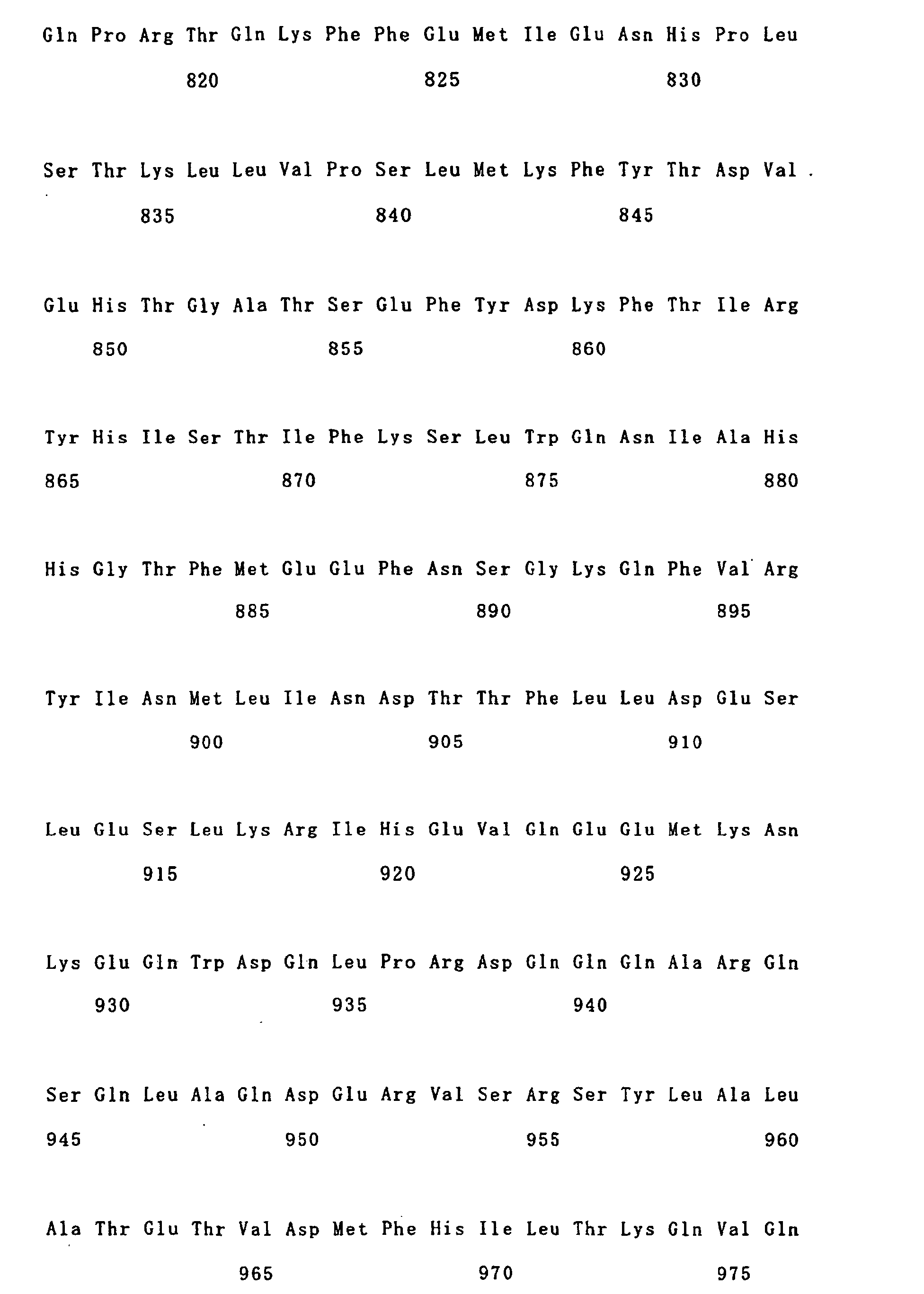


Claims (15)
- A nucleic acid having the base sequence set forth in SEQ ID NO:1 in the Sequence Listing.
- A nucleic acid encoding a protein comprising the amino acid sequence set forth in SEQ ID NO:2 in the Sequence Listing.
- A protein having the amino acid sequence set forth in SEQ ID NO:2 in the Sequence Listing.
- A radiosensitivity enhancer comprising as the effective ingredient, a nucleic acid having the base sequence set forth in SEQ ID NO:1 in the Sequence Listing.
- A radiosensitivity enhancer comprising as the effective ingredient, a nucleic acid encoding a protein comprising the amino acid sequence set forth in SEQ ID NO:2 in the Sequence Listing.
- A radiosensitivity enhancer comprising as the effective ingredient, a nucleic acid having the base sequence set forth in SEQ ID NO:3 in the Sequence Listing.
- A radiosensitivity enhancer comprising as the effective ingredient, a protein having the amino acid sequence set forth in SEQ ID NO:2 in the Sequence Listing or a pharmaceutically acceptable salt thereof.
- A radiosensitivity enhancer comprising as the effective ingredient, a partial peptide which is a functionally effective fragment of the protein having the amino acid sequence set forth in SEQ ID NO:2 in the Sequence Listing or a pharmaceutically acceptable salt thereof.
- A radiosensitivity enhancer comprising as the effective ingredient, a protein having the amino acid sequence set forth in SEQ ID NO:4 in the Sequence Listing or a pharmaceutically acceptable salt thereof.
- A radiosensitivity enhancer comprising as the effective ingredient, a partial peptide which is a functionally effective fragment of the protein having the amino acid sequence set forth in SEQ ID NO:4 in the Sequence Listing or a pharmaceutically acceptable salt thereof.
- A recombinant viral vector comprising a nucleic acid having the base sequence set forth in SEQ ID NO:1 or SEQ ID NO:3 in the Sequence Listing alone, or in combination with an appropriate regulatory and expression control element operably linked thereto.
- A nucleic acid probe comprising the following nucleic acid (a) or (b):(a) Nucleic acid having a portion of the base sequence set forth in SEQ ID NO:1 in the Sequence Listing, or a base sequence complementary thereto;(b) Nucleic acid which hybridizes to nucleic acid having the base sequence set forth in SEQ ID NO:1 in the Sequence Listing under stringent conditions, or a base sequence complementary thereto.
- A nucleic acid probe comprising the following nucleic acid (a) or (b):(a) Nucleic acid having a portion of the base sequence set forth in SEQ ID NO:3 in the Sequence Listing, or a base sequence complementary thereto;(b) Nucleic acid which hybridizes to nucleic acid having the base sequence set forth in SEQ ID NO:3 in the Sequence Listing under stringent conditions, .
- A method for determining the sensitivity of a clinically isolated human neuroblastoma strain to radiotherapy, the method comprising detecting a nucleic acid having a base sequence set forth in SEQ ID NO:1 or SEQ ID NO:3 or a fragment thereof in the human neuroblastoma strain.
- A radiation-protecting agent comprising as the effective ingredient, an antisense nucleic acid to the nucleic acid having the base sequence set forth in SEQ ID NO:1 or SEQ ID NO:3 in the Sequence Listing.
Applications Claiming Priority (3)
| Application Number | Priority Date | Filing Date | Title |
|---|---|---|---|
| JP2000351630 | 2000-11-17 | ||
| JP2000351630 | 2000-11-17 | ||
| PCT/JP2001/010036 WO2002040533A1 (en) | 2000-11-17 | 2001-11-16 | Radiosensitivity enhancers in radiotherapy for cancer and nucleic acids and proteins enhancing radiosensitivity |
Publications (2)
| Publication Number | Publication Date |
|---|---|
| EP1342728A1 true EP1342728A1 (en) | 2003-09-10 |
| EP1342728A4 EP1342728A4 (en) | 2005-01-19 |
Family
ID=18824653
Family Applications (1)
| Application Number | Title | Priority Date | Filing Date |
|---|---|---|---|
| EP01983810A Withdrawn EP1342728A4 (en) | 2000-11-17 | 2001-11-16 | RADIOSENSITIVITY ACTIVATOR FOR RADIOTHERAPY OF CANCER; NUCLEIC ACIDS AND PROTEINS ENHANCING RADIOSENSITIVITY |
Country Status (6)
| Country | Link |
|---|---|
| US (1) | US20040115129A1 (en) |
| EP (1) | EP1342728A4 (en) |
| JP (1) | JP3979939B2 (en) |
| AU (1) | AU2002215219A1 (en) |
| CA (1) | CA2429147A1 (en) |
| WO (1) | WO2002040533A1 (en) |
Families Citing this family (1)
| Publication number | Priority date | Publication date | Assignee | Title |
|---|---|---|---|---|
| DE102007061224A1 (en) | 2007-01-10 | 2008-07-17 | Basf Se | Reducing adhesiveness of molded body from polymer, comprises contacting polar solvents on the surface of polymer, where the polar solvent is hydroxylgroup containing compound, and/or carbonylgroup containing compound; and gluing |
-
2001
- 2001-11-16 WO PCT/JP2001/010036 patent/WO2002040533A1/en not_active Ceased
- 2001-11-16 US US10/416,933 patent/US20040115129A1/en not_active Abandoned
- 2001-11-16 EP EP01983810A patent/EP1342728A4/en not_active Withdrawn
- 2001-11-16 CA CA002429147A patent/CA2429147A1/en not_active Abandoned
- 2001-11-16 JP JP2002543541A patent/JP3979939B2/en not_active Expired - Lifetime
- 2001-11-16 AU AU2002215219A patent/AU2002215219A1/en not_active Abandoned
Non-Patent Citations (4)
| Title |
|---|
| DATABASE EMBL [Online] 6 January 1999 (1999-01-06), "Homo sapiens ubiquitin-fusion degradation protein 2 (UFD2) mRNA, complete cds." XP002307005 retrieved from EBI accession no. EM_PRO:AF043117 Database accession no. AF043117 * |
| FRANSEN M ET AL: "IDENTIFICATION OF A HUMAN PTS1 RECEPTOR DOCKING PROTEIN DIRECTLY REQUIRED FOR PEROXISOMAL PROTEIN IMPORT" PROCEEDINGS OF THE NATIONAL ACADEMY OF SCIENCES OF USA, NATIONAL ACADEMY OF SCIENCE. WASHINGTON, US, vol. 95, no. 14, July 1998 (1998-07), pages 8087-8092, XP000857422 ISSN: 0027-8424 * |
| See also references of WO0240533A1 * |
| SHIMIZU NOBUHIRO ET AL: "The peroxin Pex14p: cDNA cloning by functional complementation on a Chinese hamster ovary cell mutant, characterization, and functional analysis" JOURNAL OF BIOLOGICAL CHEMISTRY, vol. 274, no. 18, 30 April 1999 (1999-04-30), pages 12593-12604, XP002307004 ISSN: 0021-9258 * |
Also Published As
| Publication number | Publication date |
|---|---|
| JP3979939B2 (en) | 2007-09-19 |
| AU2002215219A1 (en) | 2002-05-27 |
| WO2002040533A1 (en) | 2002-05-23 |
| US20040115129A1 (en) | 2004-06-17 |
| JPWO2002040533A1 (en) | 2004-03-25 |
| CA2429147A1 (en) | 2003-05-15 |
| EP1342728A4 (en) | 2005-01-19 |
Similar Documents
| Publication | Publication Date | Title |
|---|---|---|
| US7655778B2 (en) | SISP-1, a novel p53 target gene and use thereof | |
| US7060811B2 (en) | WWOX: a tumor suppressor gene mutated in multiple cancers | |
| US20080220455A1 (en) | p53-DEPENDENT APOPTOSIS-INDUCING PROTEIN AND METHOD OF SCREENING FOR APOPTOSIS REGULATOR | |
| US12220446B2 (en) | Use of upstream open reading frame 45aa-uORF nucleotide sequence of PTEN gene and polypeptide coded by 45aa-uORF | |
| WO1999016790A1 (en) | Use of the tumour suppressor gene p33ing1 for modulation of p53 activity and in tumour diagnosis | |
| WO2012076694A1 (en) | Cancer gene therapy using nucleic acids encoding us28 and g-protein | |
| EP1234877B1 (en) | Cell proliferation inhibitory protein, polynucleotide, antisense polynucleotide to the polynucleotide, and cell proliferation inhibitors, cancer diagnostics, cancer remedies and compositions for gene therapy by using the same | |
| US7138512B2 (en) | Gene SHINC-2 and diagnostic and therapeutic uses thereof | |
| US7105656B2 (en) | Compositions and methods for treating hematologic malignancies and multiple drug resistance | |
| US20030053995A1 (en) | Methods and compositions for inhibiting EGF receptor activity | |
| US6191269B1 (en) | Selective induction of cell death by delivery of amino-terminal interleukin-1-α pro-piece polypeptide | |
| US8088893B2 (en) | Hypoxia inducing factors and uses thereof for inducing angiogenesis and improving muscular functions | |
| US8030015B2 (en) | Tumor-inhibiting protein and the use thereof | |
| EP1342728A1 (en) | Radiosensitivity enhancers in radiotherapy for cancer and nucleic acids and proteins enhancing radiosensitivity | |
| CA2558813A1 (en) | Pharmaceutical composition comprising cxcr3 inhibitor | |
| US20050220781A1 (en) | IFIX, a novel HIN-200 protein, for cancer therapy | |
| US20030083482A1 (en) | Compositions and methods for p53-mediated repression of gene expression | |
| US7569351B2 (en) | P53 dependent apoptosis-associated gene and protein | |
| US11666596B2 (en) | Nucleotide, polypeptide and applications thereof | |
| US7176179B1 (en) | Selective induction of cell death by delivery of amino-terminal interleukin-1-α pro-piece polypeptide | |
| JPWO2002012496A1 (en) | p53-dependent novel apoptosis-related protein and method for screening apoptosis regulators | |
| JP2018529362A (en) | Prevention, diagnosis and treatment of cancers that overexpress GPR160 | |
| US20060089493A1 (en) | Novel gene targets and ligands that bind thereto for treatment and diagnosis of colon carcinomas | |
| CA2371828A1 (en) | Isolated nucleic acids of the p-hyde family, p-hyde proteins, and methods of inducing susceptibility to induction of cell death in cancer | |
| CN101161283A (en) | New applications of CMTM1-v17 and its antagonists |
Legal Events
| Date | Code | Title | Description |
|---|---|---|---|
| PUAI | Public reference made under article 153(3) epc to a published international application that has entered the european phase |
Free format text: ORIGINAL CODE: 0009012 |
|
| 17P | Request for examination filed |
Effective date: 20030613 |
|
| AK | Designated contracting states |
Kind code of ref document: A1 Designated state(s): AT BE CH CY DE DK ES FI FR GB GR IE IT LI LU MC NL PT SE TR |
|
| AX | Request for extension of the european patent |
Extension state: AL LT LV MK RO SI |
|
| RBV | Designated contracting states (corrected) |
Designated state(s): DE FR GB IT |
|
| A4 | Supplementary search report drawn up and despatched |
Effective date: 20041207 |
|
| 17Q | First examination report despatched |
Effective date: 20050317 |
|
| 17Q | First examination report despatched |
Effective date: 20050317 |
|
| STAA | Information on the status of an ep patent application or granted ep patent |
Free format text: STATUS: THE APPLICATION IS DEEMED TO BE WITHDRAWN |
|
| 18D | Application deemed to be withdrawn |
Effective date: 20071219 |