EP1340768A2 - LHRH analogues for the treatment of osteoporosis - Google Patents
LHRH analogues for the treatment of osteoporosis Download PDFInfo
- Publication number
- EP1340768A2 EP1340768A2 EP03075482A EP03075482A EP1340768A2 EP 1340768 A2 EP1340768 A2 EP 1340768A2 EP 03075482 A EP03075482 A EP 03075482A EP 03075482 A EP03075482 A EP 03075482A EP 1340768 A2 EP1340768 A2 EP 1340768A2
- Authority
- EP
- European Patent Office
- Prior art keywords
- bone
- osteoporosis
- xaa
- cells
- gnrh
- Prior art date
- Legal status (The legal status is an assumption and is not a legal conclusion. Google has not performed a legal analysis and makes no representation as to the accuracy of the status listed.)
- Withdrawn
Links
Images

Classifications
-
- C—CHEMISTRY; METALLURGY
- C07—ORGANIC CHEMISTRY
- C07K—PEPTIDES
- C07K7/00—Peptides having 5 to 20 amino acids in a fully defined sequence; Derivatives thereof
- C07K7/04—Linear peptides containing only normal peptide links
- C07K7/23—Luteinising hormone-releasing hormone [LHRH]; Related peptides
-
- A—HUMAN NECESSITIES
- A61—MEDICAL OR VETERINARY SCIENCE; HYGIENE
- A61P—SPECIFIC THERAPEUTIC ACTIVITY OF CHEMICAL COMPOUNDS OR MEDICINAL PREPARATIONS
- A61P19/00—Drugs for skeletal disorders
- A61P19/08—Drugs for skeletal disorders for bone diseases, e.g. rachitism, Paget's disease
-
- A—HUMAN NECESSITIES
- A61—MEDICAL OR VETERINARY SCIENCE; HYGIENE
- A61P—SPECIFIC THERAPEUTIC ACTIVITY OF CHEMICAL COMPOUNDS OR MEDICINAL PREPARATIONS
- A61P19/00—Drugs for skeletal disorders
- A61P19/08—Drugs for skeletal disorders for bone diseases, e.g. rachitism, Paget's disease
- A61P19/10—Drugs for skeletal disorders for bone diseases, e.g. rachitism, Paget's disease for osteoporosis
-
- A—HUMAN NECESSITIES
- A61—MEDICAL OR VETERINARY SCIENCE; HYGIENE
- A61K—PREPARATIONS FOR MEDICAL, DENTAL OR TOILETRY PURPOSES
- A61K38/00—Medicinal preparations containing peptides
Definitions
- the present invention relates to pharmaceutical compositions for the treatment of osteoporosis and other disorders of bone metabolism.
- Osteoporosis is a disease that affects many elderly people. Post-menopausal osteoporosis associated with oestrogen deficiency is the most common bone disease in the western world (Melton, J. Bone Miner. Res. 10 174-177, 1995). The basic mechanism underlying osteoporosis is when bone resorption exceeds bone formation resulting in net bone loss and an increase in the incidence of fractures. The dynamic processes that control bone morphogenesis take place in bone and bone marrow. Bone is a hard calcified connective tissue consisting of osteoprogenitor cells, osteoblasts, osteocytes and osteoclasts. Bone marrow is composed of haematopoietic stem cells and mesenchymal cells.
- osteoprogenitors include osteoprogenitors, chondrocytes, adipocytes, fibroblasts and reticular cells. Bone metabolism and remodelling is dependent on a balance between two processes; bone resorption is dependent on osteoclast activity and bone formation is dependent on osteoblast activity. Osteoblast precursors are fibroblast-like, proliferating progenitor cells, which differentiate into osteoblasts that synthesise and deposit matrix to become new bone. Osteoclasts are a tissue specific subtype of macrophages responsible for resorption of bone. Mononuclear phagocytes from bone marrow fuse to form the large multinucleatedosteoclasts.
- Osteoclastogenesis is a complex phenomenon that is facilitated by the interaction of bone marrow stromal cells with haematopoietic osteoclast precursors (Suda et al ., Endocr. Rev. 13 66-80, 1992).
- PTH Parathyroid hormone
- IGF-I and IGF-II insulin-like growth factors
- oFGF and aFGF fibroblast growth factors
- Identification of locally produced agents that influence the process of bone formation and bone resorption may provide alternatives to current treatments for osteoporosis which include salmon calcitonin and hormone (oestrogen and progesterone) replacement therapy (Lindsay et al ., Lancet 341 801-805, 1993).
- GnRH gonadotropin releasing hormone
- LHRH gonadotropin releasing hormone
- FSH luteinizing hormone releasing hormone
- GnRH-II a peptide related toGnRH, first in chickens (Miyamato, US Patent No. 4,540,513) and subsequently in humans (White et al ., Proc. Natl. Acad. Sci. USA 95 305-309, 1998). This peptide has been called GnRH-II. The sequences of the two peptides are compared below.
- GnRH-II is capable of modulating the differentiation of bone precursor cells and inducing the expansion of osteoblast populations. Accordingly, it is an object of the present invention to provide a pharmaceutical composition for the treatment of osteoporosis, which composition is characterised by the inclusion of GnRH-II or an analogue thereof. More specifically, the composition includes a peptide according to the sequence wherein
- Figure 1 shows the effect of increasing doses of GnRH-II on serum calcium concentrations in ovariectomised rats.
- amino acids have their conventional meanings and indicate the natural L-isomer (except for the achiral amino acid glycine).
- the invention as disclosed herein comprises a pharmaceutical composition for increasing bone mass or bone density, or for accelerating bone growth or repair.
- the invention as disclosed herein comprises a pharmaceutical composition for the treatment of osteoporosis (including age-related osteoporosis and osteoporosis associated with post-menopausal hormone status, primary and secondary hyperparathyroidism, disuse osteoporosis, diabetes-related osteoporosis, and glucocorticoid-related osteoporosis).
- osteoporosis including age-related osteoporosis and osteoporosis associated with post-menopausal hormone status, primary and secondary hyperparathyroidism, disuse osteoporosis, diabetes-related osteoporosis, and glucocorticoid-related osteoporosis.
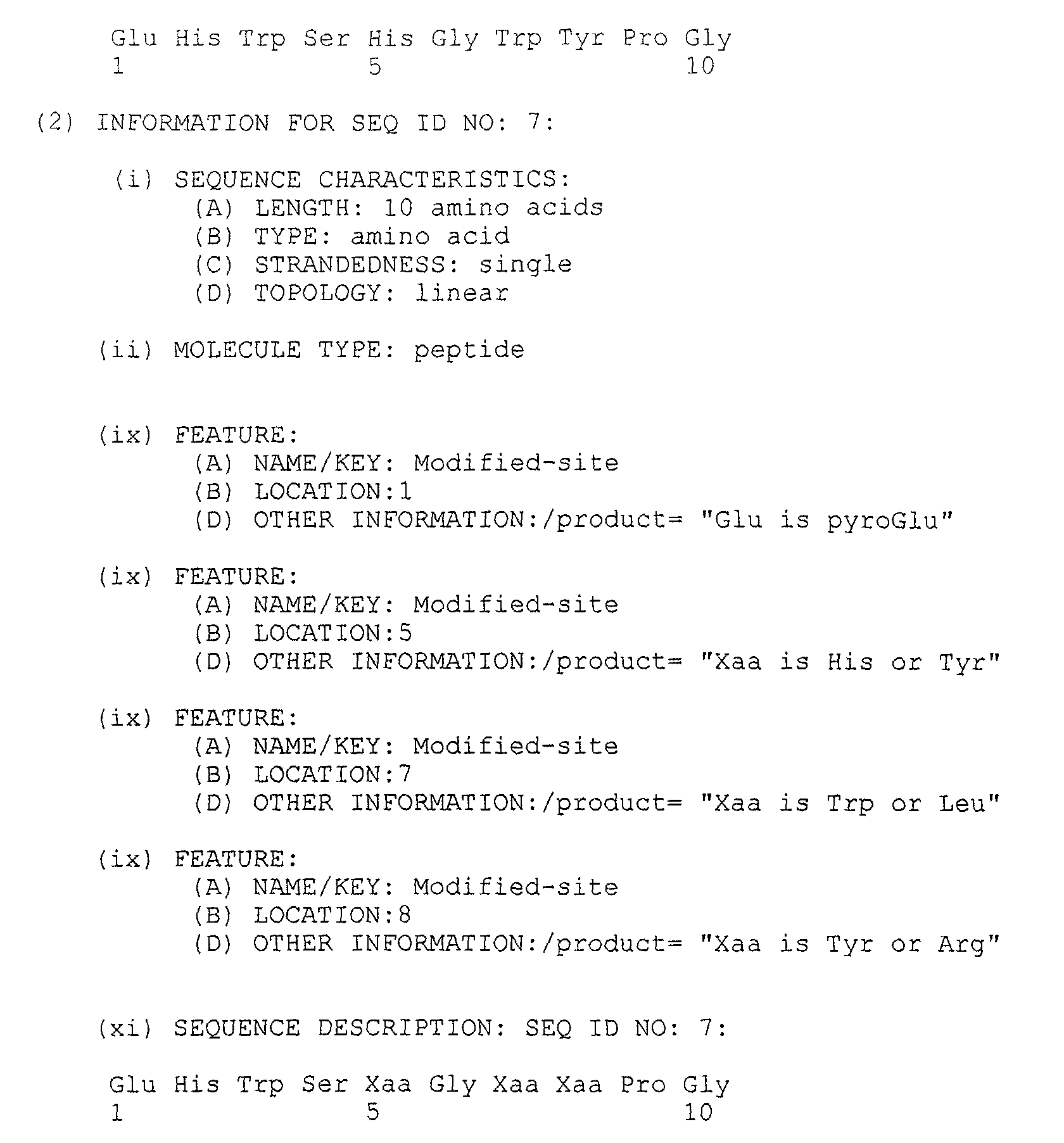
- composition is characterised in that it includes as an active principal a peptide according to the sequence wherein Xaa 1 is either His or Tyr, Xaa 2 is either Trp or Leu, and Xaa 3 is either Tyr or Arg, provided that when Xaa 1 is Tyr and Xaa 2 is Leu, then Xaa 3 is not Arg.
- Xaa 1 is His
- Xaa 2 is Trp
- Xaa 3 is Tyr.
- acids for example, acetic acid, trifluoroacetic acid, benzoic acid, hydrochloric acid, phosphoric acid and the like.
- the composition will also comprise one or more excipients, such as diluents, carriers, preservatives, and the like.
- the composition may be a solid or liquid formulation, and will be appropriate for the intended route of administration.
- the composition might be formulated as a tablet or capsule for oral administration, or as a suppository for rectal or vaginal use.
- the composition might be formulated as a solution, for example in isotonic saline, for intravenous administration.
- the composition may also be presented as a kit for formulation immediately prior to administration, for example as a freeze-dried powder in a sealed ampoule supplied with a second ampoule containing a solvent such as saline.
- the composition may be used in clinical situations other than for the treatment of osteoporosis, where bone mass or bone density are reduced, or where bone growth or repair needs to be accelerated.
- Such situations include (but are not limited to) the treatment of osteogenesis imperfecta and osteomalacia, the prevention of bone loss when an individual is immobilised for an extended period, bone segmental defects, periodontal disease, metastatic bone disease, osteolytic bone disease, other conditions requiring healing or regeneration of cartilage defects or injury, facial reconstruction procedures, and the facilitation of healing following a fracture.
- the compounds of the present invention may also be used in conjunction with agents that affect bone resorption, for example antiresorptive agents, such as estrogen, bisphosphonates and calcitonin.
- the compounds of the present invention may modulate calcium metabolism, cell proliferation and/or differentiation of normal or aberrant cells or tissues involved in bone physiology.
- the invention disclosed herein comprises a method for the preparation of a pharmaceutical composition for the treatment of osteoporosis (including age-related osteoporosis and osteoporosis associated with post-menopausal hormone status, primary and secondary hyperparathyroidism, disuse osteoporosis, diabetes-related osteoporosis, and glucocorticoid-related osteoporosis) or another disorder, which method comprises the mixing of a peptide according to the sequence wherein Xaa 1 , Xaa 2 and Xaa 3 are as defined above, with one or more pharmaceutically acceptable excipients.
- mixing is taken to include the blending together of solids, the dissolution of one or more solids in a liquid, and the dispersion of a solid in a liquid.
- the method may also include such processes as freeze-drying and microencapsulation necessary to obtain the formulation to be presented. Such processes as are known in the art are included within the scope of the present invention.
- the invention as disclosed herein comprises a method for the treatment of an individual suffering from osteoporosis (including age-related osteoporosis and osteoporosis associated with post-menopausal hormone status, primary and secondary hyperparathyroidism, disuse osteoporosis, diabetes-related osteoporosis, and glucocorticoid-related osteoporosis) or another bone disorder, or considered to be at risk of so suffering.
- This method of treatment comprises the administration to said individual of a therapeutically effective amount of a composition containing, as an active principal, a peptide according to the sequence wherein Xaa 1 , Xaa 2 and Xaa 3 are as defined above.
- the method of treatment may comprise a single administration of the composition, but is more likely to comprise a course of repeated administrations.
- the frequency of the administrations may be from once per month to four times per day.
- the amount of active peptide in each dose will depend on the dosing schedule and the route of administration. Generally, it will be between one microgram (1 ⁇ g) and one hundred milligrams (100mg). Doses in the range 1-100 ⁇ g are preferred when the composition is administered by intravenous injection. Doses in the range 10 ⁇ g - 10mg are preferred when the composition is administered as slow-release depots. Doses in the range 1-100mg are preferred when the composition is administered orally. Furthermore, high doses and frequent administration will be preferred when the desired outcome is to increase bone mass while lower doses and less frequent administration are more suited to the maintenance of bone mass.
- the peptides that comprise the active agents of the compositions of the present invention can be prepared by the methods generally known in the art.
- the peptides may be prepared by solid-phase synthesis. This involves the sequential addition of amino acid residues to a resin-bound intermediate according to the following strategy.
- a protected amino acid is reacted with a functionalised resin.
- the protecting group (PG) is most commonly tert -butyloxycarbonyl (Boc) or 9-fluorenylmethyloxycarbonyl (Fmoc).
- the functional group on the resin (FG) is commonly a chloroalkyl group, a hydroxyl group or an amine group.
- the linker group (L) is an oxygen atom (-O-).
- FG is an amine group
- L is -NH-.
- step two the protecting group (PG) is removed from the ⁇ -amino group.
- PG is Boc
- this can be accomplished by treating the resin with acids such astrifluoroacetic acid or hydrogen chloride in dichloromethane.
- PG is Fmoc
- the deprotection can be accomplished by treating the resin with bases such as piperidine.
- step three the peptide chain is extended by one amino acid residue.
- a protected amino acid is coupled to the amine group liberated in step two.
- Many reagents are known in the art for achieving this conversion.
- One combination is dicyclohexylcarbodiimide (DCC) and hydroxybenzotriazole (HOBt).
- DCC dicyclohexylcarbodiimide
- HOBt hydroxybenzotriazole
- a base will also be necessary. Suitable bases include triethylamine and N,N-diisopropylethylamine.
- the solvent will generally be dichloromethane, dimethylformamide, or a mixture of these.
- the side chains of the amino acids contain reactive groups (for example amino groups, carboxylic acid groups, hydroxyl groups) then these will need protecting.
- the protecting groups chosen for the side chains are generally those that are stable under the conditions required to remove the protecting group (PG) from the ⁇ -amino group. If PG is Fmoc, then the side chain protecting groups can conveniently be based on tert-butyl chemistry. On the other hand, if PG is Boc, then the side chain protecting groups can be based on fluorenylmethyl chemistry. Other protecting groups known in the art can also be used.
- step four the deprotection/chain extension cycle is repeated until the desired peptide sequence has been constructed.
- step five the completed peptide is liberated from the resin.
- Protecting groups are removed from the side chains either before or after the cleavage.
- L is -NH-
- the peptide liberated is in the form of the C-terminal amide.
- L is -O-
- the peptide liberated is often the C-terminal free acid and a second step is required to form the C-terminal amide.
- the peptides may also be prepared by solution-phase synthesis, and this may be more convenient when large quantities of material are needed.
- This peptide was prepared using standard solid-phase methods starting from Boc-Gly-esterified Merrifield resin (60 g, 1 mmol/g). The synthesis was performed in a manual synthesizer, with a total solvent and reagent volume of 300 mL for each operation.
- the standard deprotection/wash/coupling protocol is summarised in Table 1. Step Reagent Time (min) Number of operations Deprotection of Boc HCI / DCM 60 1 Washing DCM 2 - 4 3 Neutralisation 10% DIPEA / DCM 4 2 Washing DCM 2 - 4 1 Coupling Activated ester 60 - 120 1 - 2 Washing DCM 2 - 4 3
- Benzotriazolyl esters were used as the activated esters throughout the synthesis. These were prepared from the corresponding protected amino acids by reaction with 1-hydroxybenzotriazole (1eq.) and dicyclohexylcarbodiimide (1eq.). The quantities used (in relation to the resin substitution capacity) are listed in Table 2. Cycle no.
- Example 1A The peptidoresin prepared in Example 1A was placed in a linen bag in a pressure vessel. The vessel was then charged with gaseous ammonia to a final pressure of 4atm. After 72h the excess ammonia was vented and the resin was extracted with acetic acid (3 ⁇ 100mL) and ethanol (3 ⁇ 100mL). The combined extracts were degassed with nitrogen, 10% palladium-on-carbon was added, and the mixture was stirred under an atmosphere of hydrogen. When the reaction was complete (as judged by HPLC), the mixture was filtered and the filtrate was evaporated. The residue was purified by reverse-phase HPLC to give the title compound.
- Example 2 Analysis of the effects of GnRH-II and analogues on Osteogenic cell populations in vitro .
- the peptides of the invention caused significant effects at concentrations below 100 ⁇ M.
- the peptides of the invention caused significant effects at concentrations below 100 ⁇ M.
- Example 6 Cellular localisation of GnRH-II in paraffin sections of normal rat bone and human bone.
- GnRH-II Staining for GnRH-II was observed in platelets, megakaryocytes at the growth plate (especially proliferating chondrocytes). Some staining was also seen in the bone-forming cells particularly in active osetoblasts as well as new osteoid.
- GnRH-II has a role in bone growth and calcium metabolism. Accordingly, it is useful as a therapeutic agent in diseases that are related to inadequate bone growth or loss of bone tissue.
Landscapes
- Health & Medical Sciences (AREA)
- Physical Education & Sports Medicine (AREA)
- Chemical & Material Sciences (AREA)
- Organic Chemistry (AREA)
- Medicinal Chemistry (AREA)
- Orthopedic Medicine & Surgery (AREA)
- Rheumatology (AREA)
- General Health & Medical Sciences (AREA)
- Life Sciences & Earth Sciences (AREA)
- Public Health (AREA)
- Nuclear Medicine, Radiotherapy & Molecular Imaging (AREA)
- General Chemical & Material Sciences (AREA)
- Pharmacology & Pharmacy (AREA)
- Chemical Kinetics & Catalysis (AREA)
- Animal Behavior & Ethology (AREA)
- Bioinformatics & Cheminformatics (AREA)
- Engineering & Computer Science (AREA)
- Veterinary Medicine (AREA)
- Biophysics (AREA)
- Endocrinology (AREA)
- Genetics & Genomics (AREA)
- Molecular Biology (AREA)
- Proteomics, Peptides & Aminoacids (AREA)
- Biochemistry (AREA)
- Medicines That Contain Protein Lipid Enzymes And Other Medicines (AREA)
- Pharmaceuticals Containing Other Organic And Inorganic Compounds (AREA)
- Medicines Containing Material From Animals Or Micro-Organisms (AREA)
- Medicines Containing Plant Substances (AREA)
- Peptides Or Proteins (AREA)
- Dental Preparations (AREA)
- Superconductors And Manufacturing Methods Therefor (AREA)
- Luminescent Compositions (AREA)
Abstract

Description







| Step | Reagent | Time (min) | Number of operations |
| Deprotection of Boc | HCI / DCM | 60 | 1 |
| Washing | DCM | 2 - 4 | 3 |
| Neutralisation | 10% DIPEA / DCM | 4 | 2 |
| Washing | DCM | 2 - 4 | 1 |
| Coupling | Activated ester | 60 - 120 | 1 - 2 |
| Washing | DCM | 2 - 4 | 3 |
| Cycle no. | Amino acid | Molar excess | |
| 1 | Boc-Pro-OH | 1.8 | |
| 2 | Boc-Tyr(Bzl)-OH | 1.8 | |
| 3 | Boc-Trp(CHO)-OH | 1.8 | |
| 4 | Boc-Gly-OH | 1.8 | |
| 5 | Boc-His(Bom)-OH | 1.8 | |
| 6 | Boc-Ser(Bzl)-OH | 2.0 | |
| 7 | Boc-Trp(CHO)-OH | 2.0 | |
| 8 | Boc- His(Bom)-OH | 2.0 | |
| 9 | pyroGlu-OH | 2.0 |



Claims (2)
- A pharmaceutical composition for the treatment of osteoporosis - including age-related osteoporosis, osteoporosis associated with post-menopausal hormone status, primary or secondary hyperparathyroidism, disuse osteoporosis, diabetes-related osteoporosis, or glucocorticoid-related osteoporosis - or and other disorders of bone metabolism, or for accelerating bone growth or repair, which composition is characterised by the inclusion at an amount per dose of between 10µg and 100mg of a peptide according to the sequenceor a salt thereof

whereinprovided that when Xaa1 is Tyr and Xaa2 is Leu, then Xaa3 is not Arg.Xaa1 is His or Tyr,Xaa2 is Trp or Leu, andXaa3 is Tyr or Arg, - The pharmaceutical composition according to claim 1 wherein the peptide sequence is

Applications Claiming Priority (3)
| Application Number | Priority Date | Filing Date | Title |
|---|---|---|---|
| GB9823515A GB2343182A (en) | 1998-10-27 | 1998-10-27 | Use of GnRH-II and analogues thereof for the treatment of osteoporosis |
| GB9823515 | 1999-10-27 | ||
| EP99951005A EP1124847B1 (en) | 1998-10-27 | 1999-10-27 | Lhrh analogues for the treatment of osteoporosis |
Related Parent Applications (1)
| Application Number | Title | Priority Date | Filing Date |
|---|---|---|---|
| EP99951005A Division EP1124847B1 (en) | 1998-10-27 | 1999-10-27 | Lhrh analogues for the treatment of osteoporosis |
Publications (2)
| Publication Number | Publication Date |
|---|---|
| EP1340768A2 true EP1340768A2 (en) | 2003-09-03 |
| EP1340768A3 EP1340768A3 (en) | 2004-02-04 |
Family
ID=10841385
Family Applications (2)
| Application Number | Title | Priority Date | Filing Date |
|---|---|---|---|
| EP99951005A Expired - Lifetime EP1124847B1 (en) | 1998-10-27 | 1999-10-27 | Lhrh analogues for the treatment of osteoporosis |
| EP03075482A Withdrawn EP1340768A3 (en) | 1998-10-27 | 1999-10-27 | LHRH analogues for the treatment of osteoporosis |
Family Applications Before (1)
| Application Number | Title | Priority Date | Filing Date |
|---|---|---|---|
| EP99951005A Expired - Lifetime EP1124847B1 (en) | 1998-10-27 | 1999-10-27 | Lhrh analogues for the treatment of osteoporosis |
Country Status (7)
| Country | Link |
|---|---|
| EP (2) | EP1124847B1 (en) |
| AT (1) | ATE262538T1 (en) |
| AU (1) | AU6358499A (en) |
| DE (1) | DE69915852T2 (en) |
| DK (1) | DK1124847T3 (en) |
| GB (1) | GB2343182A (en) |
| WO (1) | WO2000024764A1 (en) |
Cited By (1)
| Publication number | Priority date | Publication date | Assignee | Title |
|---|---|---|---|---|
| EP2161037A2 (en) | 2003-04-22 | 2010-03-10 | Ipsen Pharma | Camptothecin-Somatostatin conjugates |
Families Citing this family (2)
| Publication number | Priority date | Publication date | Assignee | Title |
|---|---|---|---|---|
| GB2344287A (en) * | 1998-12-03 | 2000-06-07 | Ferring Bv | Controlled release pharmaceutical formulation |
| GB0616111D0 (en) | 2006-06-16 | 2006-09-20 | Ardana Bioscience Ltd | Agents, methods and uses |
Family Cites Families (4)
| Publication number | Priority date | Publication date | Assignee | Title |
|---|---|---|---|---|
| US4540513A (en) * | 1984-09-25 | 1985-09-10 | Kanegafuchi Kagaku Kogyo Kabushiki Kaisha | Decapeptide having gonadotropin releasing activity |
| US5003011A (en) * | 1985-04-09 | 1991-03-26 | The Administrators Of The Tulane Educational Fund | Therapeutic decapeptides |
| US4721775A (en) * | 1985-08-26 | 1988-01-26 | Board Of Regents, The University Of Texas System | Effective peptides related to the luteinizing hormone releasing hormone from L-amino acids |
| DE3634435A1 (en) * | 1986-10-09 | 1988-04-14 | Hoechst Ag | ANALOGA OF GONADOLIBERIN WITH IMPROVED SOLUBILITY, METHOD FOR THE PRODUCTION THEREOF, THE CONTAINERS THEREOF AND THEIR USE |
-
1998
- 1998-10-27 GB GB9823515A patent/GB2343182A/en not_active Withdrawn
-
1999
- 1999-10-27 AT AT99951005T patent/ATE262538T1/en not_active IP Right Cessation
- 1999-10-27 DK DK99951005T patent/DK1124847T3/en active
- 1999-10-27 EP EP99951005A patent/EP1124847B1/en not_active Expired - Lifetime
- 1999-10-27 WO PCT/GB1999/003553 patent/WO2000024764A1/en not_active Ceased
- 1999-10-27 DE DE69915852T patent/DE69915852T2/en not_active Expired - Fee Related
- 1999-10-27 AU AU63584/99A patent/AU6358499A/en not_active Abandoned
- 1999-10-27 EP EP03075482A patent/EP1340768A3/en not_active Withdrawn
Cited By (2)
| Publication number | Priority date | Publication date | Assignee | Title |
|---|---|---|---|---|
| EP2161037A2 (en) | 2003-04-22 | 2010-03-10 | Ipsen Pharma | Camptothecin-Somatostatin conjugates |
| EP2662087A1 (en) | 2003-04-22 | 2013-11-13 | Ipsen Pharma | Somatostatin vectors |
Also Published As
| Publication number | Publication date |
|---|---|
| WO2000024764A1 (en) | 2000-05-04 |
| ATE262538T1 (en) | 2004-04-15 |
| DK1124847T3 (en) | 2004-07-26 |
| GB2343182A (en) | 2000-05-03 |
| EP1124847A1 (en) | 2001-08-22 |
| AU6358499A (en) | 2000-05-15 |
| DE69915852T2 (en) | 2005-01-05 |
| EP1124847B1 (en) | 2004-03-24 |
| DE69915852D1 (en) | 2004-04-29 |
| EP1340768A3 (en) | 2004-02-04 |
| GB9823515D0 (en) | 1998-12-23 |
Similar Documents
| Publication | Publication Date | Title |
|---|---|---|
| AU770676B2 (en) | Controlled release formulation comprising GnRH-II | |
| KR930008095B1 (en) | Nonapeptide and Decapeptide Homologs of LHRH Useful as LHRH Antagonists | |
| AU756785B2 (en) | Methods for accelerating bone and cartilage growth and repair | |
| US5084555A (en) | An octapeptide bombesin analog | |
| EP0309297B1 (en) | Therapeutic peptides | |
| US4481190A (en) | Nonapeptide and decapeptide analogs of LHRH useful as LHRH antagonists | |
| EP0438519B1 (en) | Therapeutic peptides | |
| EP0559756B1 (en) | Nonapeptide bombesin antagonists | |
| US6916783B2 (en) | Methods for accelerating bone and cartilage growth and repair | |
| EP1124847B1 (en) | Lhrh analogues for the treatment of osteoporosis | |
| EP0301850A2 (en) | LHRH antagonist analogs and 19-nor-progestational steroids for therapy |
Legal Events
| Date | Code | Title | Description |
|---|---|---|---|
| PUAI | Public reference made under article 153(3) epc to a published international application that has entered the european phase |
Free format text: ORIGINAL CODE: 0009012 |
|
| AC | Divisional application: reference to earlier application |
Ref document number: 1124847 Country of ref document: EP Kind code of ref document: P |
|
| AK | Designated contracting states |
Kind code of ref document: A2 Designated state(s): AT BE CH CY DE DK ES FI FR GB GR IE IT LI LU MC NL PT SE |
|
| PUAL | Search report despatched |
Free format text: ORIGINAL CODE: 0009013 |
|
| AK | Designated contracting states |
Kind code of ref document: A3 Designated state(s): AT BE CH CY DE DK ES FI FR GB GR IE IT LI LU MC NL PT SE |
|
| RIC1 | Information provided on ipc code assigned before grant |
Ipc: 7A 61K 38/09 B Ipc: 7C 07K 7/23 A Ipc: 7A 61P 19/10 B |
|
| 17P | Request for examination filed |
Effective date: 20040802 |
|
| AKX | Designation fees paid |
Designated state(s): AT BE CH CY DE DK ES FI FR GB GR IE IT LI LU MC NL PT SE |
|
| STAA | Information on the status of an ep patent application or granted ep patent |
Free format text: STATUS: THE APPLICATION HAS BEEN WITHDRAWN |
|
| 18W | Application withdrawn |
Effective date: 20050527 |