EP1338274A1 - Process for preparing a particulate composition - Google Patents
Process for preparing a particulate composition Download PDFInfo
- Publication number
- EP1338274A1 EP1338274A1 EP03076016A EP03076016A EP1338274A1 EP 1338274 A1 EP1338274 A1 EP 1338274A1 EP 03076016 A EP03076016 A EP 03076016A EP 03076016 A EP03076016 A EP 03076016A EP 1338274 A1 EP1338274 A1 EP 1338274A1
- Authority
- EP
- European Patent Office
- Prior art keywords
- alkyl
- hydrogen
- process according
- alkoxy
- beads
- Prior art date
- Legal status (The legal status is an assumption and is not a legal conclusion. Google has not performed a legal analysis and makes no representation as to the accuracy of the status listed.)
- Withdrawn
Links
- 239000000203 mixture Substances 0.000 title claims abstract description 65
- 238000004519 manufacturing process Methods 0.000 title claims description 6
- 150000001875 compounds Chemical class 0.000 claims abstract description 46
- 239000002245 particle Substances 0.000 claims abstract description 33
- 239000008194 pharmaceutical composition Substances 0.000 claims abstract description 4
- 239000011324 bead Substances 0.000 claims description 41
- 239000001257 hydrogen Substances 0.000 claims description 40
- 229910052739 hydrogen Inorganic materials 0.000 claims description 40
- 238000000034 method Methods 0.000 claims description 40
- 125000004435 hydrogen atom Chemical group [H]* 0.000 claims description 36
- 238000003801 milling Methods 0.000 claims description 34
- 125000004169 (C1-C6) alkyl group Chemical class 0.000 claims description 33
- 239000000725 suspension Substances 0.000 claims description 30
- -1 aminosulphinyl Chemical group 0.000 claims description 26
- 125000004093 cyano group Chemical group *C#N 0.000 claims description 16
- 125000004178 (C1-C4) alkyl group Chemical group 0.000 claims description 14
- 125000004191 (C1-C6) alkoxy group Chemical group 0.000 claims description 14
- 125000000217 alkyl group Chemical group 0.000 claims description 13
- 125000000449 nitro group Chemical group [O-][N+](*)=O 0.000 claims description 12
- 239000006185 dispersion Substances 0.000 claims description 11
- MCMNRKCIXSYSNV-UHFFFAOYSA-N Zirconium dioxide Chemical compound O=[Zr]=O MCMNRKCIXSYSNV-UHFFFAOYSA-N 0.000 claims description 10
- 125000005196 alkyl carbonyloxy group Chemical group 0.000 claims description 10
- 125000003118 aryl group Chemical group 0.000 claims description 10
- QVGXLLKOCUKJST-UHFFFAOYSA-N atomic oxygen Chemical compound [O] QVGXLLKOCUKJST-UHFFFAOYSA-N 0.000 claims description 10
- 239000001301 oxygen Substances 0.000 claims description 10
- 229910052760 oxygen Inorganic materials 0.000 claims description 10
- 239000000546 pharmaceutical excipient Substances 0.000 claims description 9
- 125000004916 (C1-C6) alkylcarbonyl group Chemical group 0.000 claims description 8
- FBPFZTCFMRRESA-KVTDHHQDSA-N D-Mannitol Chemical compound OC[C@@H](O)[C@@H](O)[C@H](O)[C@H](O)CO FBPFZTCFMRRESA-KVTDHHQDSA-N 0.000 claims description 8
- 229930195725 Mannitol Natural products 0.000 claims description 8
- 125000003917 carbamoyl group Chemical group [H]N([H])C(*)=O 0.000 claims description 8
- 125000001072 heteroaryl group Chemical group 0.000 claims description 8
- 239000000594 mannitol Substances 0.000 claims description 8
- 235000010355 mannitol Nutrition 0.000 claims description 8
- 125000002924 primary amino group Chemical group [H]N([H])* 0.000 claims description 8
- 238000001694 spray drying Methods 0.000 claims description 8
- 125000002023 trifluoromethyl group Chemical group FC(F)(F)* 0.000 claims description 8
- 238000001238 wet grinding Methods 0.000 claims description 8
- 239000008186 active pharmaceutical agent Substances 0.000 claims description 6
- 125000004390 alkyl sulfonyl group Chemical group 0.000 claims description 6
- 125000001589 carboacyl group Chemical group 0.000 claims description 6
- 229940088679 drug related substance Drugs 0.000 claims description 6
- 125000002485 formyl group Chemical group [H]C(*)=O 0.000 claims description 6
- 235000019333 sodium laurylsulphate Nutrition 0.000 claims description 6
- 239000004094 surface-active agent Substances 0.000 claims description 6
- 125000000876 trifluoromethoxy group Chemical group FC(F)(F)O* 0.000 claims description 6
- DBMJMQXJHONAFJ-UHFFFAOYSA-M Sodium laurylsulphate Chemical group [Na+].CCCCCCCCCCCCOS([O-])(=O)=O DBMJMQXJHONAFJ-UHFFFAOYSA-M 0.000 claims description 5
- 239000004141 Sodium laurylsulphate Substances 0.000 claims description 5
- 239000003006 anti-agglomeration agent Substances 0.000 claims description 5
- 125000000229 (C1-C4)alkoxy group Chemical group 0.000 claims description 4
- 125000004454 (C1-C6) alkoxycarbonyl group Chemical group 0.000 claims description 4
- 125000006624 (C1-C6) alkoxycarbonylamino group Chemical group 0.000 claims description 4
- 125000006552 (C3-C8) cycloalkyl group Chemical class 0.000 claims description 4
- UFHFLCQGNIYNRP-UHFFFAOYSA-N Hydrogen Chemical compound [H][H] UFHFLCQGNIYNRP-UHFFFAOYSA-N 0.000 claims description 4
- 239000004677 Nylon Substances 0.000 claims description 4
- 229910004679 ONO2 Inorganic materials 0.000 claims description 4
- 125000004685 alkoxythiocarbonyl group Chemical group 0.000 claims description 4
- 125000003806 alkyl carbonyl amino group Chemical group 0.000 claims description 4
- 125000004448 alkyl carbonyl group Chemical group 0.000 claims description 4
- 125000004644 alkyl sulfinyl group Chemical group 0.000 claims description 4
- 125000004656 alkyl sulfonylamino group Chemical group 0.000 claims description 4
- 125000004691 alkyl thio carbonyl group Chemical group 0.000 claims description 4
- 125000005129 aryl carbonyl group Chemical group 0.000 claims description 4
- 125000004391 aryl sulfonyl group Chemical group 0.000 claims description 4
- 125000001231 benzoyloxy group Chemical group C(C1=CC=CC=C1)(=O)O* 0.000 claims description 4
- 239000000919 ceramic Substances 0.000 claims description 4
- 125000005469 ethylenyl group Chemical group 0.000 claims description 4
- 125000005843 halogen group Chemical group 0.000 claims description 4
- 125000005223 heteroarylcarbonyl group Chemical group 0.000 claims description 4
- 125000000956 methoxy group Chemical group [H]C([H])([H])O* 0.000 claims description 4
- 125000001893 nitrooxy group Chemical group [O-][N+](=O)O* 0.000 claims description 4
- 229920001778 nylon Polymers 0.000 claims description 4
- GUBGYTABKSRVRQ-XLOQQCSPSA-N Alpha-Lactose Chemical compound O[C@@H]1[C@@H](O)[C@@H](O)[C@@H](CO)O[C@H]1O[C@@H]1[C@@H](CO)O[C@H](O)[C@H](O)[C@H]1O GUBGYTABKSRVRQ-XLOQQCSPSA-N 0.000 claims description 3
- FBPFZTCFMRRESA-FSIIMWSLSA-N D-Glucitol Natural products OC[C@H](O)[C@H](O)[C@@H](O)[C@H](O)CO FBPFZTCFMRRESA-FSIIMWSLSA-N 0.000 claims description 3
- 239000004354 Hydroxyethyl cellulose Substances 0.000 claims description 3
- GUBGYTABKSRVRQ-QKKXKWKRSA-N Lactose Natural products OC[C@H]1O[C@@H](O[C@H]2[C@H](O)[C@@H](O)C(O)O[C@@H]2CO)[C@H](O)[C@@H](O)[C@H]1O GUBGYTABKSRVRQ-QKKXKWKRSA-N 0.000 claims description 3
- 229920002472 Starch Polymers 0.000 claims description 3
- 238000005299 abrasion Methods 0.000 claims description 3
- 235000019447 hydroxyethyl cellulose Nutrition 0.000 claims description 3
- 239000008101 lactose Substances 0.000 claims description 3
- 229920000609 methyl cellulose Polymers 0.000 claims description 3
- 239000001923 methylcellulose Substances 0.000 claims description 3
- 235000010981 methylcellulose Nutrition 0.000 claims description 3
- 239000002861 polymer material Substances 0.000 claims description 3
- 239000000600 sorbitol Substances 0.000 claims description 3
- 235000010356 sorbitol Nutrition 0.000 claims description 3
- 239000008107 starch Substances 0.000 claims description 3
- 235000019698 starch Nutrition 0.000 claims description 3
- 125000004890 (C1-C6) alkylamino group Chemical group 0.000 claims description 2
- FBPFZTCFMRRESA-JGWLITMVSA-N D-glucitol Chemical compound OC[C@H](O)[C@@H](O)[C@H](O)[C@H](O)CO FBPFZTCFMRRESA-JGWLITMVSA-N 0.000 claims description 2
- NINIDFKCEFEMDL-UHFFFAOYSA-N Sulfur Chemical compound [S] NINIDFKCEFEMDL-UHFFFAOYSA-N 0.000 claims description 2
- 239000005864 Sulphur Substances 0.000 claims description 2
- TVXBFESIOXBWNM-UHFFFAOYSA-N Xylitol Natural products OCCC(O)C(O)C(O)CCO TVXBFESIOXBWNM-UHFFFAOYSA-N 0.000 claims description 2
- 125000004453 alkoxycarbonyl group Chemical group 0.000 claims description 2
- 125000006620 amino-(C1-C6) alkyl group Chemical group 0.000 claims description 2
- 125000003435 aroyl group Chemical group 0.000 claims description 2
- 125000005199 aryl carbonyloxy group Chemical group 0.000 claims description 2
- 125000004429 atom Chemical group 0.000 claims description 2
- 125000000852 azido group Chemical group *N=[N+]=[N-] 0.000 claims description 2
- 125000006297 carbonyl amino group Chemical group [H]N([*:2])C([*:1])=O 0.000 claims description 2
- 125000001153 fluoro group Chemical group F* 0.000 claims description 2
- 125000001207 fluorophenyl group Chemical group 0.000 claims description 2
- 125000005204 heteroarylcarbonyloxy group Chemical group 0.000 claims description 2
- HEBKCHPVOIAQTA-UHFFFAOYSA-N meso ribitol Natural products OCC(O)C(O)C(O)CO HEBKCHPVOIAQTA-UHFFFAOYSA-N 0.000 claims description 2
- 125000000325 methylidene group Chemical group [H]C([H])=* 0.000 claims description 2
- WCPAKWJPBJAGKN-UHFFFAOYSA-N oxadiazole Chemical class C1=CON=N1 WCPAKWJPBJAGKN-UHFFFAOYSA-N 0.000 claims description 2
- 125000001997 phenyl group Chemical group [H]C1=C([H])C([H])=C(*)C([H])=C1[H] 0.000 claims description 2
- 125000001476 phosphono group Chemical group [H]OP(*)(=O)O[H] 0.000 claims description 2
- 229910001404 rare earth metal oxide Inorganic materials 0.000 claims description 2
- 150000003852 triazoles Chemical class 0.000 claims description 2
- 239000000811 xylitol Substances 0.000 claims description 2
- 235000010447 xylitol Nutrition 0.000 claims description 2
- 229960002675 xylitol Drugs 0.000 claims description 2
- HEBKCHPVOIAQTA-SCDXWVJYSA-N xylitol Chemical compound OC[C@H](O)[C@@H](O)[C@H](O)CO HEBKCHPVOIAQTA-SCDXWVJYSA-N 0.000 claims description 2
- 125000004356 hydroxy functional group Chemical group O* 0.000 claims 5
- 229920001479 Hydroxyethyl methyl cellulose Polymers 0.000 claims 1
- 238000009826 distribution Methods 0.000 abstract description 8
- 238000009472 formulation Methods 0.000 description 32
- 239000003826 tablet Substances 0.000 description 16
- 239000003814 drug Substances 0.000 description 15
- 239000000843 powder Substances 0.000 description 15
- 239000007921 spray Substances 0.000 description 14
- 238000006243 chemical reaction Methods 0.000 description 13
- 229940125904 compound 1 Drugs 0.000 description 13
- 208000037265 diseases, disorders, signs and symptoms Diseases 0.000 description 11
- 238000002360 preparation method Methods 0.000 description 11
- 229940079593 drug Drugs 0.000 description 10
- XLYOFNOQVPJJNP-UHFFFAOYSA-N water Substances O XLYOFNOQVPJJNP-UHFFFAOYSA-N 0.000 description 10
- 230000000694 effects Effects 0.000 description 9
- 208000035475 disorder Diseases 0.000 description 8
- 239000001866 hydroxypropyl methyl cellulose Substances 0.000 description 7
- 235000010979 hydroxypropyl methyl cellulose Nutrition 0.000 description 7
- 229920003088 hydroxypropyl methyl cellulose Polymers 0.000 description 7
- UFVKGYZPFZQRLF-UHFFFAOYSA-N hydroxypropyl methyl cellulose Chemical compound OC1C(O)C(OC)OC(CO)C1OC1C(O)C(O)C(OC2C(C(O)C(OC3C(C(O)C(O)C(CO)O3)O)C(CO)O2)O)C(CO)O1 UFVKGYZPFZQRLF-UHFFFAOYSA-N 0.000 description 7
- 208000004296 neuralgia Diseases 0.000 description 7
- 238000012360 testing method Methods 0.000 description 7
- 238000011282 treatment Methods 0.000 description 7
- 206010010904 Convulsion Diseases 0.000 description 6
- 208000021384 Obsessive-Compulsive disease Diseases 0.000 description 6
- 206010002026 amyotrophic lateral sclerosis Diseases 0.000 description 6
- ZPUCINDJVBIVPJ-LJISPDSOSA-N cocaine Chemical compound O([C@H]1C[C@@H]2CC[C@@H](N2C)[C@H]1C(=O)OC)C(=O)C1=CC=CC=C1 ZPUCINDJVBIVPJ-LJISPDSOSA-N 0.000 description 6
- 201000006417 multiple sclerosis Diseases 0.000 description 6
- 230000001537 neural effect Effects 0.000 description 6
- 239000003981 vehicle Substances 0.000 description 6
- LFQSCWFLJHTTHZ-UHFFFAOYSA-N Ethanol Chemical compound CCO LFQSCWFLJHTTHZ-UHFFFAOYSA-N 0.000 description 5
- 239000012736 aqueous medium Substances 0.000 description 5
- 125000002887 hydroxy group Chemical group [H]O* 0.000 description 5
- 239000000463 material Substances 0.000 description 5
- 238000002156 mixing Methods 0.000 description 5
- 238000012545 processing Methods 0.000 description 5
- 239000001961 anticonvulsive agent Substances 0.000 description 4
- 239000002775 capsule Substances 0.000 description 4
- 235000019441 ethanol Nutrition 0.000 description 4
- 238000011068 loading method Methods 0.000 description 4
- HQKMJHAJHXVSDF-UHFFFAOYSA-L magnesium stearate Chemical compound [Mg+2].CCCCCCCCCCCCCCCCCC([O-])=O.CCCCCCCCCCCCCCCCCC([O-])=O HQKMJHAJHXVSDF-UHFFFAOYSA-L 0.000 description 4
- 208000021722 neuropathic pain Diseases 0.000 description 4
- 230000002685 pulmonary effect Effects 0.000 description 4
- 239000008213 purified water Substances 0.000 description 4
- 230000035939 shock Effects 0.000 description 4
- 239000000126 substance Substances 0.000 description 4
- SNICXCGAKADSCV-JTQLQIEISA-N (-)-Nicotine Chemical compound CN1CCC[C@H]1C1=CC=CN=C1 SNICXCGAKADSCV-JTQLQIEISA-N 0.000 description 3
- 208000030507 AIDS Diseases 0.000 description 3
- 208000024827 Alzheimer disease Diseases 0.000 description 3
- 208000019901 Anxiety disease Diseases 0.000 description 3
- 206010003591 Ataxia Diseases 0.000 description 3
- 206010058019 Cancer Pain Diseases 0.000 description 3
- 206010008120 Cerebral ischaemia Diseases 0.000 description 3
- 206010008748 Chorea Diseases 0.000 description 3
- 208000017164 Chronobiology disease Diseases 0.000 description 3
- 206010026749 Mania Diseases 0.000 description 3
- 208000019695 Migraine disease Diseases 0.000 description 3
- 208000026072 Motor neurone disease Diseases 0.000 description 3
- 208000002740 Muscle Rigidity Diseases 0.000 description 3
- 208000008238 Muscle Spasticity Diseases 0.000 description 3
- 208000002193 Pain Diseases 0.000 description 3
- 208000018737 Parkinson disease Diseases 0.000 description 3
- 206010036312 Post-traumatic epilepsy Diseases 0.000 description 3
- DNIAPMSPPWPWGF-UHFFFAOYSA-N Propylene glycol Chemical compound CC(O)CO DNIAPMSPPWPWGF-UHFFFAOYSA-N 0.000 description 3
- 208000028017 Psychotic disease Diseases 0.000 description 3
- 241000700159 Rattus Species 0.000 description 3
- 208000013738 Sleep Initiation and Maintenance disease Diseases 0.000 description 3
- 208000032851 Subarachnoid Hemorrhage Diseases 0.000 description 3
- 206010043220 Temporomandibular joint syndrome Diseases 0.000 description 3
- 208000009205 Tinnitus Diseases 0.000 description 3
- 208000000323 Tourette Syndrome Diseases 0.000 description 3
- 208000016620 Tourette disease Diseases 0.000 description 3
- 208000030886 Traumatic Brain injury Diseases 0.000 description 3
- 230000016571 aggressive behavior Effects 0.000 description 3
- 230000001773 anti-convulsant effect Effects 0.000 description 3
- 230000036506 anxiety Effects 0.000 description 3
- 238000010296 bead milling Methods 0.000 description 3
- 229940049706 benzodiazepine Drugs 0.000 description 3
- 150000001557 benzodiazepines Chemical class 0.000 description 3
- 150000001562 benzopyrans Chemical class 0.000 description 3
- 208000012601 choreatic disease Diseases 0.000 description 3
- 229960003920 cocaine Drugs 0.000 description 3
- 229940125782 compound 2 Drugs 0.000 description 3
- 206010012601 diabetes mellitus Diseases 0.000 description 3
- 201000010099 disease Diseases 0.000 description 3
- 239000007884 disintegrant Substances 0.000 description 3
- 238000001035 drying Methods 0.000 description 3
- 206010015037 epilepsy Diseases 0.000 description 3
- 239000000945 filler Substances 0.000 description 3
- 206010022437 insomnia Diseases 0.000 description 3
- 239000007788 liquid Substances 0.000 description 3
- 238000005259 measurement Methods 0.000 description 3
- 206010027599 migraine Diseases 0.000 description 3
- 201000003631 narcolepsy Diseases 0.000 description 3
- 208000015122 neurodegenerative disease Diseases 0.000 description 3
- 230000007971 neurological deficit Effects 0.000 description 3
- 229960002715 nicotine Drugs 0.000 description 3
- SNICXCGAKADSCV-UHFFFAOYSA-N nicotine Natural products CN1CCCC1C1=CC=CN=C1 SNICXCGAKADSCV-UHFFFAOYSA-N 0.000 description 3
- 208000019906 panic disease Diseases 0.000 description 3
- 230000036470 plasma concentration Effects 0.000 description 3
- 238000011321 prophylaxis Methods 0.000 description 3
- 201000000980 schizophrenia Diseases 0.000 description 3
- 208000019116 sleep disease Diseases 0.000 description 3
- 239000002002 slurry Substances 0.000 description 3
- 208000018198 spasticity Diseases 0.000 description 3
- 231100000886 tinnitus Toxicity 0.000 description 3
- 230000009529 traumatic brain injury Effects 0.000 description 3
- 206010044652 trigeminal neuralgia Diseases 0.000 description 3
- FEAVXMPFTQROEI-UHFFFAOYSA-N 2h-pyrano[3,2-b]pyridine Chemical class C1=CN=C2C=CCOC2=C1 FEAVXMPFTQROEI-UHFFFAOYSA-N 0.000 description 2
- PEDCQBHIVMGVHV-UHFFFAOYSA-N Glycerine Chemical compound OCC(O)CO PEDCQBHIVMGVHV-UHFFFAOYSA-N 0.000 description 2
- DGAQECJNVWCQMB-PUAWFVPOSA-M Ilexoside XXIX Chemical compound C[C@@H]1CC[C@@]2(CC[C@@]3(C(=CC[C@H]4[C@]3(CC[C@@H]5[C@@]4(CC[C@@H](C5(C)C)OS(=O)(=O)[O-])C)C)[C@@H]2[C@]1(C)O)C)C(=O)O[C@H]6[C@@H]([C@H]([C@@H]([C@H](O6)CO)O)O)O.[Na+] DGAQECJNVWCQMB-PUAWFVPOSA-M 0.000 description 2
- XEEYBQQBJWHFJM-UHFFFAOYSA-N Iron Chemical compound [Fe] XEEYBQQBJWHFJM-UHFFFAOYSA-N 0.000 description 2
- 241000124008 Mammalia Species 0.000 description 2
- QCWXUUIWCKQGHC-UHFFFAOYSA-N Zirconium Chemical compound [Zr] QCWXUUIWCKQGHC-UHFFFAOYSA-N 0.000 description 2
- 239000007900 aqueous suspension Substances 0.000 description 2
- 239000003795 chemical substances by application Substances 0.000 description 2
- 238000011109 contamination Methods 0.000 description 2
- 238000013461 design Methods 0.000 description 2
- 238000007907 direct compression Methods 0.000 description 2
- MOTZDAYCYVMXPC-UHFFFAOYSA-N dodecyl hydrogen sulfate Chemical compound CCCCCCCCCCCCOS(O)(=O)=O MOTZDAYCYVMXPC-UHFFFAOYSA-N 0.000 description 2
- 150000002148 esters Chemical class 0.000 description 2
- 239000000796 flavoring agent Substances 0.000 description 2
- 239000012530 fluid Substances 0.000 description 2
- 239000000499 gel Substances 0.000 description 2
- 239000008187 granular material Substances 0.000 description 2
- 210000003141 lower extremity Anatomy 0.000 description 2
- 239000000314 lubricant Substances 0.000 description 2
- 235000019359 magnesium stearate Nutrition 0.000 description 2
- 239000001267 polyvinylpyrrolidone Substances 0.000 description 2
- 229920000036 polyvinylpyrrolidone Polymers 0.000 description 2
- 235000013855 polyvinylpyrrolidone Nutrition 0.000 description 2
- 239000011734 sodium Substances 0.000 description 2
- 229910052708 sodium Inorganic materials 0.000 description 2
- 229940080313 sodium starch Drugs 0.000 description 2
- 239000007787 solid Substances 0.000 description 2
- 229940032147 starch Drugs 0.000 description 2
- 239000006188 syrup Substances 0.000 description 2
- 235000020357 syrup Nutrition 0.000 description 2
- 239000007916 tablet composition Substances 0.000 description 2
- 230000001225 therapeutic effect Effects 0.000 description 2
- 238000002560 therapeutic procedure Methods 0.000 description 2
- 239000000080 wetting agent Substances 0.000 description 2
- 229910052727 yttrium Inorganic materials 0.000 description 2
- VWQVUPCCIRVNHF-UHFFFAOYSA-N yttrium atom Chemical compound [Y] VWQVUPCCIRVNHF-UHFFFAOYSA-N 0.000 description 2
- 229910052726 zirconium Inorganic materials 0.000 description 2
- ZORQXIQZAOLNGE-UHFFFAOYSA-N 1,1-difluorocyclohexane Chemical compound FC1(F)CCCCC1 ZORQXIQZAOLNGE-UHFFFAOYSA-N 0.000 description 1
- IIZPXYDJLKNOIY-JXPKJXOSSA-N 1-palmitoyl-2-arachidonoyl-sn-glycero-3-phosphocholine Chemical compound CCCCCCCCCCCCCCCC(=O)OC[C@H](COP([O-])(=O)OCC[N+](C)(C)C)OC(=O)CCC\C=C/C\C=C/C\C=C/C\C=C/CCCCC IIZPXYDJLKNOIY-JXPKJXOSSA-N 0.000 description 1
- RFRMMZAKBNXNHE-UHFFFAOYSA-N 6-[4,6-dihydroxy-5-(2-hydroxyethoxy)-2-(hydroxymethyl)oxan-3-yl]oxy-2-(hydroxymethyl)-5-(2-hydroxypropoxy)oxane-3,4-diol Chemical compound CC(O)COC1C(O)C(O)C(CO)OC1OC1C(O)C(OCCO)C(O)OC1CO RFRMMZAKBNXNHE-UHFFFAOYSA-N 0.000 description 1
- 235000019489 Almond oil Nutrition 0.000 description 1
- WSVLPVUVIUVCRA-KPKNDVKVSA-N Alpha-lactose monohydrate Chemical compound O.O[C@@H]1[C@@H](O)[C@@H](O)[C@@H](CO)O[C@H]1O[C@@H]1[C@@H](CO)O[C@H](O)[C@H](O)[C@H]1O WSVLPVUVIUVCRA-KPKNDVKVSA-N 0.000 description 1
- KYNSBQPICQTCGU-UHFFFAOYSA-N Benzopyrane Chemical compound C1=CC=C2C=CCOC2=C1 KYNSBQPICQTCGU-UHFFFAOYSA-N 0.000 description 1
- 229920002134 Carboxymethyl cellulose Polymers 0.000 description 1
- 239000004150 EU approved colour Substances 0.000 description 1
- IAYPIBMASNFSPL-UHFFFAOYSA-N Ethylene oxide Chemical compound C1CO1 IAYPIBMASNFSPL-UHFFFAOYSA-N 0.000 description 1
- 108010010803 Gelatin Proteins 0.000 description 1
- 101000828738 Homo sapiens Selenide, water dikinase 2 Proteins 0.000 description 1
- 229920000663 Hydroxyethyl cellulose Polymers 0.000 description 1
- 235000010643 Leucaena leucocephala Nutrition 0.000 description 1
- 240000007472 Leucaena leucocephala Species 0.000 description 1
- 241001465754 Metazoa Species 0.000 description 1
- 229920003094 Methocel™ K4M Polymers 0.000 description 1
- 229920000168 Microcrystalline cellulose Polymers 0.000 description 1
- 229920000881 Modified starch Polymers 0.000 description 1
- 101100257626 Oryza sativa subsp. japonica SPS5 gene Proteins 0.000 description 1
- 101100237162 Rattus norvegicus Mest gene Proteins 0.000 description 1
- 102100023522 Selenide, water dikinase 2 Human genes 0.000 description 1
- 239000013543 active substance Substances 0.000 description 1
- 239000000654 additive Substances 0.000 description 1
- 239000008168 almond oil Substances 0.000 description 1
- CEGOLXSVJUTHNZ-UHFFFAOYSA-K aluminium tristearate Chemical compound [Al+3].CCCCCCCCCCCCCCCCCC([O-])=O.CCCCCCCCCCCCCCCCCC([O-])=O.CCCCCCCCCCCCCCCCCC([O-])=O CEGOLXSVJUTHNZ-UHFFFAOYSA-K 0.000 description 1
- 238000004458 analytical method Methods 0.000 description 1
- 230000003276 anti-hypertensive effect Effects 0.000 description 1
- 229960003965 antiepileptics Drugs 0.000 description 1
- 239000002249 anxiolytic agent Substances 0.000 description 1
- 230000000949 anxiolytic effect Effects 0.000 description 1
- 239000008365 aqueous carrier Substances 0.000 description 1
- 230000001580 bacterial effect Effects 0.000 description 1
- 239000011230 binding agent Substances 0.000 description 1
- 230000015572 biosynthetic process Effects 0.000 description 1
- 230000036765 blood level Effects 0.000 description 1
- 235000021152 breakfast Nutrition 0.000 description 1
- 235000014633 carbohydrates Nutrition 0.000 description 1
- 150000001720 carbohydrates Chemical class 0.000 description 1
- 239000001768 carboxy methyl cellulose Substances 0.000 description 1
- 235000010948 carboxy methyl cellulose Nutrition 0.000 description 1
- 239000008112 carboxymethyl-cellulose Substances 0.000 description 1
- 229920002678 cellulose Polymers 0.000 description 1
- 239000001913 cellulose Substances 0.000 description 1
- 235000010980 cellulose Nutrition 0.000 description 1
- 239000003240 coconut oil Substances 0.000 description 1
- 235000019864 coconut oil Nutrition 0.000 description 1
- 239000003086 colorant Substances 0.000 description 1
- 238000007906 compression Methods 0.000 description 1
- 230000006835 compression Effects 0.000 description 1
- 238000013270 controlled release Methods 0.000 description 1
- 238000007796 conventional method Methods 0.000 description 1
- 238000001816 cooling Methods 0.000 description 1
- 239000003085 diluting agent Substances 0.000 description 1
- 239000008157 edible vegetable oil Substances 0.000 description 1
- 239000003995 emulsifying agent Substances 0.000 description 1
- 230000001804 emulsifying effect Effects 0.000 description 1
- 239000000839 emulsion Substances 0.000 description 1
- 239000002702 enteric coating Substances 0.000 description 1
- 238000009505 enteric coating Methods 0.000 description 1
- BEFDCLMNVWHSGT-UHFFFAOYSA-N ethenylcyclopentane Chemical compound C=CC1CCCC1 BEFDCLMNVWHSGT-UHFFFAOYSA-N 0.000 description 1
- 238000002474 experimental method Methods 0.000 description 1
- 239000003925 fat Substances 0.000 description 1
- 235000019197 fats Nutrition 0.000 description 1
- 238000011049 filling Methods 0.000 description 1
- 238000003304 gavage Methods 0.000 description 1
- 239000008273 gelatin Substances 0.000 description 1
- 229920000159 gelatin Polymers 0.000 description 1
- 235000019322 gelatine Nutrition 0.000 description 1
- 235000011852 gelatine desserts Nutrition 0.000 description 1
- 235000011187 glycerol Nutrition 0.000 description 1
- 238000005469 granulation Methods 0.000 description 1
- 230000003179 granulation Effects 0.000 description 1
- 150000004677 hydrates Chemical class 0.000 description 1
- 238000010348 incorporation Methods 0.000 description 1
- 238000009616 inductively coupled plasma Methods 0.000 description 1
- 230000036512 infertility Effects 0.000 description 1
- 238000001990 intravenous administration Methods 0.000 description 1
- 229910052742 iron Inorganic materials 0.000 description 1
- 238000010902 jet-milling Methods 0.000 description 1
- 239000000832 lactitol Substances 0.000 description 1
- 235000010448 lactitol Nutrition 0.000 description 1
- 229960003451 lactitol Drugs 0.000 description 1
- VQHSOMBJVWLPSR-JVCRWLNRSA-N lactitol Chemical compound OC[C@H](O)[C@@H](O)[C@@H]([C@H](O)CO)O[C@@H]1O[C@H](CO)[C@H](O)[C@H](O)[C@H]1O VQHSOMBJVWLPSR-JVCRWLNRSA-N 0.000 description 1
- 229960001375 lactose Drugs 0.000 description 1
- 235000010445 lecithin Nutrition 0.000 description 1
- 239000000787 lecithin Substances 0.000 description 1
- 229940067606 lecithin Drugs 0.000 description 1
- 239000007937 lozenge Substances 0.000 description 1
- 239000002609 medium Substances 0.000 description 1
- 239000012528 membrane Substances 0.000 description 1
- 125000002496 methyl group Chemical group [H]C([H])([H])* 0.000 description 1
- 235000010270 methyl p-hydroxybenzoate Nutrition 0.000 description 1
- 239000004292 methyl p-hydroxybenzoate Substances 0.000 description 1
- 229940016286 microcrystalline cellulose Drugs 0.000 description 1
- 235000019813 microcrystalline cellulose Nutrition 0.000 description 1
- 239000008108 microcrystalline cellulose Substances 0.000 description 1
- 235000019426 modified starch Nutrition 0.000 description 1
- 239000003607 modifier Substances 0.000 description 1
- 239000002687 nonaqueous vehicle Substances 0.000 description 1
- 229940006093 opthalmologic coloring agent diagnostic Drugs 0.000 description 1
- AICOOMRHRUFYCM-ZRRPKQBOSA-N oxazine, 1 Chemical compound C([C@@H]1[C@H](C(C[C@]2(C)[C@@H]([C@H](C)N(C)C)[C@H](O)C[C@]21C)=O)CC1=CC2)C[C@H]1[C@@]1(C)[C@H]2N=C(C(C)C)OC1 AICOOMRHRUFYCM-ZRRPKQBOSA-N 0.000 description 1
- 238000007911 parenteral administration Methods 0.000 description 1
- 238000003921 particle size analysis Methods 0.000 description 1
- 238000010951 particle size reduction Methods 0.000 description 1
- 229920000642 polymer Polymers 0.000 description 1
- 239000003755 preservative agent Substances 0.000 description 1
- 230000000069 prophylactic effect Effects 0.000 description 1
- 235000010232 propyl p-hydroxybenzoate Nutrition 0.000 description 1
- 239000004405 propyl p-hydroxybenzoate Substances 0.000 description 1
- 235000013772 propylene glycol Nutrition 0.000 description 1
- QELSKZZBTMNZEB-UHFFFAOYSA-N propylparaben Chemical compound CCCOC(=O)C1=CC=C(O)C=C1 QELSKZZBTMNZEB-UHFFFAOYSA-N 0.000 description 1
- 230000005855 radiation Effects 0.000 description 1
- 238000001953 recrystallisation Methods 0.000 description 1
- 238000010008 shearing Methods 0.000 description 1
- 239000000243 solution Substances 0.000 description 1
- 239000012453 solvate Substances 0.000 description 1
- 235000010199 sorbic acid Nutrition 0.000 description 1
- 239000004334 sorbic acid Substances 0.000 description 1
- 229940075582 sorbic acid Drugs 0.000 description 1
- 239000001593 sorbitan monooleate Substances 0.000 description 1
- 235000011069 sorbitan monooleate Nutrition 0.000 description 1
- 229940035049 sorbitan monooleate Drugs 0.000 description 1
- 229960002920 sorbitol Drugs 0.000 description 1
- 238000012453 sprague-dawley rat model Methods 0.000 description 1
- 239000007858 starting material Substances 0.000 description 1
- 230000001954 sterilising effect Effects 0.000 description 1
- 125000001424 substituent group Chemical group 0.000 description 1
- 238000006467 substitution reaction Methods 0.000 description 1
- 239000000829 suppository Substances 0.000 description 1
- 239000000375 suspending agent Substances 0.000 description 1
- 229940124597 therapeutic agent Drugs 0.000 description 1
- 239000002562 thickening agent Substances 0.000 description 1
- 238000004448 titration Methods 0.000 description 1
- 230000001256 tonic effect Effects 0.000 description 1
- 230000000699 topical effect Effects 0.000 description 1
- 238000012546 transfer Methods 0.000 description 1
- 238000009827 uniform distribution Methods 0.000 description 1
- 229910001233 yttria-stabilized zirconia Inorganic materials 0.000 description 1
Classifications
-
- B—PERFORMING OPERATIONS; TRANSPORTING
- B02—CRUSHING, PULVERISING, OR DISINTEGRATING; PREPARATORY TREATMENT OF GRAIN FOR MILLING
- B02C—CRUSHING, PULVERISING, OR DISINTEGRATING IN GENERAL; MILLING GRAIN
- B02C17/00—Disintegrating by tumbling mills, i.e. mills having a container charged with the material to be disintegrated with or without special disintegrating members such as pebbles or balls
- B02C17/04—Disintegrating by tumbling mills, i.e. mills having a container charged with the material to be disintegrated with or without special disintegrating members such as pebbles or balls with unperforated container
- B02C17/06—Disintegrating by tumbling mills, i.e. mills having a container charged with the material to be disintegrated with or without special disintegrating members such as pebbles or balls with unperforated container with several compartments
-
- A—HUMAN NECESSITIES
- A61—MEDICAL OR VETERINARY SCIENCE; HYGIENE
- A61K—PREPARATIONS FOR MEDICAL, DENTAL OR TOILETRY PURPOSES
- A61K31/00—Medicinal preparations containing organic active ingredients
- A61K31/33—Heterocyclic compounds
- A61K31/335—Heterocyclic compounds having oxygen as the only ring hetero atom, e.g. fungichromin
- A61K31/35—Heterocyclic compounds having oxygen as the only ring hetero atom, e.g. fungichromin having six-membered rings with one oxygen as the only ring hetero atom
-
- A—HUMAN NECESSITIES
- A61—MEDICAL OR VETERINARY SCIENCE; HYGIENE
- A61K—PREPARATIONS FOR MEDICAL, DENTAL OR TOILETRY PURPOSES
- A61K31/00—Medicinal preparations containing organic active ingredients
- A61K31/33—Heterocyclic compounds
- A61K31/395—Heterocyclic compounds having nitrogen as a ring hetero atom, e.g. guanethidine or rifamycins
- A61K31/435—Heterocyclic compounds having nitrogen as a ring hetero atom, e.g. guanethidine or rifamycins having six-membered rings with one nitrogen as the only ring hetero atom
-
- A—HUMAN NECESSITIES
- A61—MEDICAL OR VETERINARY SCIENCE; HYGIENE
- A61K—PREPARATIONS FOR MEDICAL, DENTAL OR TOILETRY PURPOSES
- A61K9/00—Medicinal preparations characterised by special physical form
- A61K9/14—Particulate form, e.g. powders, Processes for size reducing of pure drugs or the resulting products, Pure drug nanoparticles
-
- A—HUMAN NECESSITIES
- A61—MEDICAL OR VETERINARY SCIENCE; HYGIENE
- A61K—PREPARATIONS FOR MEDICAL, DENTAL OR TOILETRY PURPOSES
- A61K9/00—Medicinal preparations characterised by special physical form
- A61K9/14—Particulate form, e.g. powders, Processes for size reducing of pure drugs or the resulting products, Pure drug nanoparticles
- A61K9/141—Intimate drug-carrier mixtures characterised by the carrier, e.g. ordered mixtures, adsorbates, solid solutions, eutectica, co-dried, co-solubilised, co-kneaded, co-milled, co-ground products, co-precipitates, co-evaporates, co-extrudates, co-melts; Drug nanoparticles with adsorbed surface modifiers
- A61K9/145—Intimate drug-carrier mixtures characterised by the carrier, e.g. ordered mixtures, adsorbates, solid solutions, eutectica, co-dried, co-solubilised, co-kneaded, co-milled, co-ground products, co-precipitates, co-evaporates, co-extrudates, co-melts; Drug nanoparticles with adsorbed surface modifiers with organic compounds
-
- A—HUMAN NECESSITIES
- A61—MEDICAL OR VETERINARY SCIENCE; HYGIENE
- A61K—PREPARATIONS FOR MEDICAL, DENTAL OR TOILETRY PURPOSES
- A61K9/00—Medicinal preparations characterised by special physical form
- A61K9/14—Particulate form, e.g. powders, Processes for size reducing of pure drugs or the resulting products, Pure drug nanoparticles
- A61K9/141—Intimate drug-carrier mixtures characterised by the carrier, e.g. ordered mixtures, adsorbates, solid solutions, eutectica, co-dried, co-solubilised, co-kneaded, co-milled, co-ground products, co-precipitates, co-evaporates, co-extrudates, co-melts; Drug nanoparticles with adsorbed surface modifiers
- A61K9/146—Intimate drug-carrier mixtures characterised by the carrier, e.g. ordered mixtures, adsorbates, solid solutions, eutectica, co-dried, co-solubilised, co-kneaded, co-milled, co-ground products, co-precipitates, co-evaporates, co-extrudates, co-melts; Drug nanoparticles with adsorbed surface modifiers with organic macromolecular compounds
-
- A—HUMAN NECESSITIES
- A61—MEDICAL OR VETERINARY SCIENCE; HYGIENE
- A61P—SPECIFIC THERAPEUTIC ACTIVITY OF CHEMICAL COMPOUNDS OR MEDICINAL PREPARATIONS
- A61P21/00—Drugs for disorders of the muscular or neuromuscular system
-
- A—HUMAN NECESSITIES
- A61—MEDICAL OR VETERINARY SCIENCE; HYGIENE
- A61P—SPECIFIC THERAPEUTIC ACTIVITY OF CHEMICAL COMPOUNDS OR MEDICINAL PREPARATIONS
- A61P25/00—Drugs for disorders of the nervous system
-
- A—HUMAN NECESSITIES
- A61—MEDICAL OR VETERINARY SCIENCE; HYGIENE
- A61P—SPECIFIC THERAPEUTIC ACTIVITY OF CHEMICAL COMPOUNDS OR MEDICINAL PREPARATIONS
- A61P25/00—Drugs for disorders of the nervous system
- A61P25/06—Antimigraine agents
-
- A—HUMAN NECESSITIES
- A61—MEDICAL OR VETERINARY SCIENCE; HYGIENE
- A61P—SPECIFIC THERAPEUTIC ACTIVITY OF CHEMICAL COMPOUNDS OR MEDICINAL PREPARATIONS
- A61P25/00—Drugs for disorders of the nervous system
- A61P25/14—Drugs for disorders of the nervous system for treating abnormal movements, e.g. chorea, dyskinesia
-
- A—HUMAN NECESSITIES
- A61—MEDICAL OR VETERINARY SCIENCE; HYGIENE
- A61P—SPECIFIC THERAPEUTIC ACTIVITY OF CHEMICAL COMPOUNDS OR MEDICINAL PREPARATIONS
- A61P25/00—Drugs for disorders of the nervous system
- A61P25/14—Drugs for disorders of the nervous system for treating abnormal movements, e.g. chorea, dyskinesia
- A61P25/16—Anti-Parkinson drugs
-
- A—HUMAN NECESSITIES
- A61—MEDICAL OR VETERINARY SCIENCE; HYGIENE
- A61P—SPECIFIC THERAPEUTIC ACTIVITY OF CHEMICAL COMPOUNDS OR MEDICINAL PREPARATIONS
- A61P25/00—Drugs for disorders of the nervous system
- A61P25/18—Antipsychotics, i.e. neuroleptics; Drugs for mania or schizophrenia
-
- A—HUMAN NECESSITIES
- A61—MEDICAL OR VETERINARY SCIENCE; HYGIENE
- A61P—SPECIFIC THERAPEUTIC ACTIVITY OF CHEMICAL COMPOUNDS OR MEDICINAL PREPARATIONS
- A61P25/00—Drugs for disorders of the nervous system
- A61P25/20—Hypnotics; Sedatives
-
- A—HUMAN NECESSITIES
- A61—MEDICAL OR VETERINARY SCIENCE; HYGIENE
- A61P—SPECIFIC THERAPEUTIC ACTIVITY OF CHEMICAL COMPOUNDS OR MEDICINAL PREPARATIONS
- A61P25/00—Drugs for disorders of the nervous system
- A61P25/22—Anxiolytics
-
- A—HUMAN NECESSITIES
- A61—MEDICAL OR VETERINARY SCIENCE; HYGIENE
- A61P—SPECIFIC THERAPEUTIC ACTIVITY OF CHEMICAL COMPOUNDS OR MEDICINAL PREPARATIONS
- A61P25/00—Drugs for disorders of the nervous system
- A61P25/24—Antidepressants
-
- A—HUMAN NECESSITIES
- A61—MEDICAL OR VETERINARY SCIENCE; HYGIENE
- A61P—SPECIFIC THERAPEUTIC ACTIVITY OF CHEMICAL COMPOUNDS OR MEDICINAL PREPARATIONS
- A61P25/00—Drugs for disorders of the nervous system
- A61P25/28—Drugs for disorders of the nervous system for treating neurodegenerative disorders of the central nervous system, e.g. nootropic agents, cognition enhancers, drugs for treating Alzheimer's disease or other forms of dementia
-
- A—HUMAN NECESSITIES
- A61—MEDICAL OR VETERINARY SCIENCE; HYGIENE
- A61P—SPECIFIC THERAPEUTIC ACTIVITY OF CHEMICAL COMPOUNDS OR MEDICINAL PREPARATIONS
- A61P25/00—Drugs for disorders of the nervous system
- A61P25/30—Drugs for disorders of the nervous system for treating abuse or dependence
-
- A—HUMAN NECESSITIES
- A61—MEDICAL OR VETERINARY SCIENCE; HYGIENE
- A61P—SPECIFIC THERAPEUTIC ACTIVITY OF CHEMICAL COMPOUNDS OR MEDICINAL PREPARATIONS
- A61P3/00—Drugs for disorders of the metabolism
- A61P3/08—Drugs for disorders of the metabolism for glucose homeostasis
- A61P3/10—Drugs for disorders of the metabolism for glucose homeostasis for hyperglycaemia, e.g. antidiabetics
-
- A—HUMAN NECESSITIES
- A61—MEDICAL OR VETERINARY SCIENCE; HYGIENE
- A61P—SPECIFIC THERAPEUTIC ACTIVITY OF CHEMICAL COMPOUNDS OR MEDICINAL PREPARATIONS
- A61P9/00—Drugs for disorders of the cardiovascular system
- A61P9/10—Drugs for disorders of the cardiovascular system for treating ischaemic or atherosclerotic diseases, e.g. antianginal drugs, coronary vasodilators, drugs for myocardial infarction, retinopathy, cerebrovascula insufficiency, renal arteriosclerosis
-
- B—PERFORMING OPERATIONS; TRANSPORTING
- B02—CRUSHING, PULVERISING, OR DISINTEGRATING; PREPARATORY TREATMENT OF GRAIN FOR MILLING
- B02C—CRUSHING, PULVERISING, OR DISINTEGRATING IN GENERAL; MILLING GRAIN
- B02C17/00—Disintegrating by tumbling mills, i.e. mills having a container charged with the material to be disintegrated with or without special disintegrating members such as pebbles or balls
- B02C17/18—Details
- B02C17/20—Disintegrating members
-
- B—PERFORMING OPERATIONS; TRANSPORTING
- B02—CRUSHING, PULVERISING, OR DISINTEGRATING; PREPARATORY TREATMENT OF GRAIN FOR MILLING
- B02C—CRUSHING, PULVERISING, OR DISINTEGRATING IN GENERAL; MILLING GRAIN
- B02C17/00—Disintegrating by tumbling mills, i.e. mills having a container charged with the material to be disintegrated with or without special disintegrating members such as pebbles or balls
- B02C17/18—Details
- B02C17/22—Lining for containers
-
- A—HUMAN NECESSITIES
- A61—MEDICAL OR VETERINARY SCIENCE; HYGIENE
- A61K—PREPARATIONS FOR MEDICAL, DENTAL OR TOILETRY PURPOSES
- A61K9/00—Medicinal preparations characterised by special physical form
- A61K9/14—Particulate form, e.g. powders, Processes for size reducing of pure drugs or the resulting products, Pure drug nanoparticles
- A61K9/16—Agglomerates; Granulates; Microbeadlets ; Microspheres; Pellets; Solid products obtained by spray drying, spray freeze drying, spray congealing,(multiple) emulsion solvent evaporation or extraction
- A61K9/1605—Excipients; Inactive ingredients
- A61K9/1617—Organic compounds, e.g. phospholipids, fats
-
- A—HUMAN NECESSITIES
- A61—MEDICAL OR VETERINARY SCIENCE; HYGIENE
- A61K—PREPARATIONS FOR MEDICAL, DENTAL OR TOILETRY PURPOSES
- A61K9/00—Medicinal preparations characterised by special physical form
- A61K9/14—Particulate form, e.g. powders, Processes for size reducing of pure drugs or the resulting products, Pure drug nanoparticles
- A61K9/16—Agglomerates; Granulates; Microbeadlets ; Microspheres; Pellets; Solid products obtained by spray drying, spray freeze drying, spray congealing,(multiple) emulsion solvent evaporation or extraction
- A61K9/1605—Excipients; Inactive ingredients
- A61K9/1617—Organic compounds, e.g. phospholipids, fats
- A61K9/1623—Sugars or sugar alcohols, e.g. lactose; Derivatives thereof; Homeopathic globules
-
- A—HUMAN NECESSITIES
- A61—MEDICAL OR VETERINARY SCIENCE; HYGIENE
- A61K—PREPARATIONS FOR MEDICAL, DENTAL OR TOILETRY PURPOSES
- A61K9/00—Medicinal preparations characterised by special physical form
- A61K9/14—Particulate form, e.g. powders, Processes for size reducing of pure drugs or the resulting products, Pure drug nanoparticles
- A61K9/16—Agglomerates; Granulates; Microbeadlets ; Microspheres; Pellets; Solid products obtained by spray drying, spray freeze drying, spray congealing,(multiple) emulsion solvent evaporation or extraction
- A61K9/1605—Excipients; Inactive ingredients
- A61K9/1629—Organic macromolecular compounds
- A61K9/1652—Polysaccharides, e.g. alginate, cellulose derivatives; Cyclodextrin
-
- Y—GENERAL TAGGING OF NEW TECHNOLOGICAL DEVELOPMENTS; GENERAL TAGGING OF CROSS-SECTIONAL TECHNOLOGIES SPANNING OVER SEVERAL SECTIONS OF THE IPC; TECHNICAL SUBJECTS COVERED BY FORMER USPC CROSS-REFERENCE ART COLLECTIONS [XRACs] AND DIGESTS
- Y02—TECHNOLOGIES OR APPLICATIONS FOR MITIGATION OR ADAPTATION AGAINST CLIMATE CHANGE
- Y02A—TECHNOLOGIES FOR ADAPTATION TO CLIMATE CHANGE
- Y02A50/00—TECHNOLOGIES FOR ADAPTATION TO CLIMATE CHANGE in human health protection, e.g. against extreme weather
- Y02A50/30—Against vector-borne diseases, e.g. mosquito-borne, fly-borne, tick-borne or waterborne diseases whose impact is exacerbated by climate change
Definitions
- This invention is concerned with novel compositions of compounds having therapeutic activity in particulate form, especially particulate compositions of sparingly water soluble compounds, with enhanced bio-availability; and to the use of such compositions in therapy.
- EP-A-0 126 311 and EP-A-0 139 992 disclose benzopyran derivatives which have anti-hypertensive activity.
- WO 92/22293, WO 94/13657 and WO 95/34545 disclose that the benzopyran compounds also have anxiolytic and anticonvulsant activity and disclose further benzopyran derivatives and related pyridopyran derivatives having similar activities.
- Unpublished International Patent Application No PCT/EP97/05168 discloses additional utilities for these compounds, including the treatment of neuropathic pain.
- the present invention is based on the finding that the benzopyran and pyridopyran compounds mentioned above have enhanced bio-availability in certain compositions of controlled particle size. This invention also provides a method of producing such compositions in a reproducible manner.
- composition comprising a compound of Formula I or Formula II below in particulate form, having a particle size distribution such that the median value of the volume mean diameter is within the range of from 350 to 700 nm.
- a composition of this invention may be in the form of an aqueous dispersion of the particles of a compound of Formula I or Formula II; typically the product of a wet milling operation.
- a composition of this invention may also be a powder comprising particles of a compound of Formula I or Formula II; typically the product of a spray drying or spray granulation procedure.
- Preferred compounds for use in this invention are trans -6-acetyl-4S-(4-fluorobenzoylamino)-3,4-dihydro-2,2-dimethyl-2H-1-benzopyran-3R-ol hereinafter Compound 1 (for preparation see Example 20 of WO 92/22293); and cis -6-acetyl-4S-(3-chloro-4-fluorobenzoylamino)-3,4-dihydro-2,2-dimethyl-2H-1-benzopyran-3S-ol hereinafter Compound 2 (for preparation see Example 17 of WO95/34545); and trans -6-acetyl-4S-(3,5-difluorobenzoylamino)-3,4-dihydro-2,2-dimethyl-2H-1-benzopyran-3R-ol (for preparation see Example 4 of WO95/34545).
- the compounds used in this invention have a very low solubility in water.
- Compound 1 has an aqueous solubility of 0.008 mg/ml, which is "virtually insoluble" under the USP classification.
- the above-listed compounds may be used in the form of pharmaceutically acceptable solvates, especially hydrates. Before milling they may be in crystalline or amorphous form.
- compositions of this invention are most suitably prepared by wet milling compounds of Formula I and Formula II as an aqueous dispersion.
- wet milling is preferably carried out using a two chamber bead mill with circulation of product between the chambers.
- the milling medium is preferably ceramic beads of rare earth oxides and is carried out in chambers lined with or constructed from an abrasion-resistant polymer material such as nylon.
- the beads in one chamber are of a smaller diameter than the beads in the other chamber; effective results are obtainable with beads of 1.25 mm in one chamber and beads of 0.4 mm in the other chamber.
- the milling beads are preferably zirconia beads, especially beads made from yttria-stabilized zirconia powder.
- a 5 chamber bead mill can be utilised.
- the product is processed in one pass through one, two, three, four or all five of the mills.
- the beads in the first chamber are between 0.65mm and 1.25mm. Beads in subsequent chaembers are smaller than or of a similar size to the previous mill
- the wet milling of compounds of Formula I and Formula II preferably takes place in an aqueous medium including one or more excipients such as a soluble carrier suitable for spray drying, a surfactant to maintain the particles in suspension, and an anti-agglomeration agent effective after administration of a pharmaceutical formulation to a patient.
- excipients such as a soluble carrier suitable for spray drying, a surfactant to maintain the particles in suspension, and an anti-agglomeration agent effective after administration of a pharmaceutical formulation to a patient.
- excipient for spray-drying is mannitol but other carbohydrates such as sorbitol, lactose, lactitol and xylitol and starch may be used as carrier.
- sodium lauryl sulphate is used as surfactant, and cellulosic thickening agents such as hydroxypropyl methyl cellulose or hydroxyethyl cellulose may be used as anti-agglomeration agents.
- the compound of Formula I or II may be present from about 10 to about 30% w/w. At 30% w/w and above there may be difficulties in maintaining a suspension of the compound of Formula I or II during milling. In practice, 20% w/w provides an effective compromise between the desire for a high throughput and short milling times.
- the amount of the soluble carrier may vary from about 4 to about 15% w/w of the composition to be milled. Preferably the amount of the soluble carrier does not exceed 50% by weight of the amount of compound of Formula I or II to be processed. For a compound loading of about 20% w/w, an amount of soluble carrier from about 4 to 10% has been found to be effective and an amount of about 5% w/w is preferred.
- the amount of surfactant may be varied from about 0.1 to about 0.4% w/w of the aqueous medium. Preferably it is present at about 1% by weight of the compound to be processed.
- the amount of the anti-agglomeration agent is typically from about 1% w/w to about 2% w/w of the aqueous medium. An amount of about 1.5% w/w is preferred.
- the particles of the compounds of Formula I and Formula II are preferably present as a monomodal distribution, typically with no more than 10% of the particles having a volume diameter of 280 nm or below, and no less than 90% of the particles having a volume diameter of 2000 nm or below.
- the median volume diameter is in the range of 400 to 600 nm, especially 450 to 550 nm. In this median range, effective compositions are obtained when 10% of particles have a volume diameter of 260 nm or below and 90% of particles have a volume diameter of 1450 nm or below.
- a composition having the preferred particle size distribution may be obtained surprisingly quickly, for example after milling for about 30 minutes on a small scale mill using product recirculation.
- Increasing the milling time for example to about 1 hour, enables the largest particles to be reduced so that at least 90% of particles have a volume diameter of less than 1000 nm.
- the effect on the median value is marginal so longer milling times are not cost effective.
- batch sizes of up_to 200Kg for a compound loading of about 20% w/w can be processed surprisingly quickly, with the preferred particle size distribution obtained after one pass of product over a 70 minute period.
- the aqueous dispersion obtained from the milling process may be used directly as a therapeutic agent if prepared under conditions of appropriate hygiene. Using water and other components which meet Ph Eur standards, compositions can be obtained which can be stored for up to one month at 5°C without bacterial growth being detected. However, for the preparation of formulations for use in human therapy, it is preferred that the aqueous dispersion is converted to a dried powder. This is carried out most suitably by spray drying, typically collecting the product from the dryer using a cyclone separator.
- a powder composition containing the particulate compounds of Formula I and Formula II is obtainable as a composition which has good flowability and is suitable for incorporation into a tablet formulation or a powder formulation for capsules.
- Compounds of Formula I and II have hitherto been formed into tablets by first micronising the drug substance and then wet granulating the micronised drug with the tablet excipients.
- the spray dried powder produced in this invention can be formed into tablets by direct compression. Surprisingly it has been found that the milling time to achieve the desired particle size distribution is substantially the same whether the starting material is micronised or unmicronised.
- the ability to commence the bead milling with unmicronised drug substance as obtained from the primary manufacturing process makes the present milling process especially cost-effective.
- the wet cake from manufacture is washed and tray dried and is then ready for bead milling. Alternatively, for certain compounds it may be possible for the wet cake to be washed and resuspended ready for bead milling, thus eliminating an expensive drying stage.
- the compounds of Formula I and II are believed to be useful in the treatment and/or prophylaxis of anxiety, mania, depression, panic disorders and/or aggression, disorders associated with a subarachnoid haemorrhage or neural shock, the effects associated with withdrawal from substances of abuse such as cocaine, nicotine, alcohol and benzodiazepines, disorders treatable and/or preventable with anti-convulsive agents, such as epilepsy including post-traumatic epilepsy, Parkinson's disease, psychosis, migraine, cerebral ischaemia, Alzheimer's disease and other degenerative diseases such as Huntingdon's chorea, schizophrenia, obsessive compulsive disorders (OCD), neurological deficits associated with AIDS, sleep disorders (including circadian rhythm disorders, insomnia & narcolepsy), tics (e.g.
- Giles de la Tourette's syndrome traumatic brain injury, tinnitus, neuralgia, especially trigeminal neuralgia, neuropathic pain, dental pain, cancer pain, inappropriate neuronal activity resulting in neurodysthesias in diseases such as diabetes, multiple sclerosis (MS) and motor neurone disease, ataxias, muscular rigidity (spasticity), temporomandibular joint dysfunction and/or amyotrophic lateral sclerosis (ALS).
- MS multiple sclerosis
- ALS amyotrophic lateral sclerosis
- the administration of such compounds in particulate form to a mammal may be by way of oral, parenteral, sub-lingual, nasal, pulmonary, rectal or transdermal administration.
- a unit dose will normally contain 1 to 1000 mg, suitably 1 to 500 mg, for example an amount in the range of from 2 to 400 mg such as 2, 5, 10, 20, 30, 40, 50, 100, 200, 300 and 400 mg of the active compound.
- Unit doses will normally be administered once or more than once per day, for example 1, 2, 3, 4, 5 or 6 times a day, more usually 1 to 4 times a day, such that the total daily dose is normally in the range, for a 70 kg adult of 1 to 1000 mg, for example 5 to 500 mg, that is in the range of approximately 0.01 to 15 mg/kg/day, more usually 0.1 to 6 mg/kg/day, for example 1 to 6 mg/kg/day.
- the compound of Formula I is administered in the form of a unit-dose composition, such as a unit dose oral, including sub-lingual, nasal, pulmonary, rectal, topical or parenteral (especially intravenous) composition.
- a unit dose oral including sub-lingual, nasal, pulmonary, rectal, topical or parenteral (especially intravenous) composition.
- compositions are prepared by admixture and are suitably adapted for oral, parenteral or pulmonary administration, and as such may be in the form of tablets, capsules, oral liquid preparations, powders, granules, lozenges, reconstitutable powders, injectable and infusable solutions or suspensions or respirable powders or powder suspensions or suppositories.
- Suitable apparatus for use in administration via the pulmonary route are described for example in US Patents Nos 5,363,842, 5,392,768, 5,394,866, 5,404,871, 5,497,763, 5,509,404, 5,544,646, and 5,608,647.
- Orally administrable compositions are preferred, in particular shaped oral compositions, since they are more convenient for general use.
- Tablets and capsules for oral administration are usually presented in a unit dose, and contain conventional excipients such as binding agents, fillers, diluents, tabletting agents (compression aids), lubricants, disintegrants, colorants, flavourings, and wetting agents.
- excipients such as binding agents, fillers, diluents, tabletting agents (compression aids), lubricants, disintegrants, colorants, flavourings, and wetting agents.
- the tablets may be coated according to well known methods in the art.
- Suitable fillers for use include cellulose, mannitol, lactose and other similar agents.
- Suitable disintegrants include starch, cross linked polyvinylpyrrolidone and other super disintegrants and starch derivatives such as sodium starch glycollate.
- Suitable lubricants include, for example, magnesium stearate.
- solid oral compositions may be prepared by conventional methods of blending, filling, tabletting or the like. Repeated blending operations may be used to distribute the active agent throughout those compositions employing large quantities of fillers. Such operations are, of course, conventional in the art.
- Oral liquid preparations may be in the form of, for example, aqueous or oily suspensions, solutions, emulsions, syrups, or elixirs, or may be presented as a dry product for reconstitution with water or other suitable vehicle before use.
- Such liquid preparations may contain conventional additives such as suspending agents, for example sorbitol, syrup, methyl cellulose, gelatin, hydroxyethylcellulose, carboxymethyl cellulose, aluminium stearate gel or hydrogenated edible fats, emulsifying agents, for example lecithin, sorbitan monooleate, or acacia; non-aqueous vehicles (which may include edible oils), for example, almond oil, fractionated coconut oil, oily esters such as esters of glycerine, propylene glycol, or ethyl alcohol; preservatives, for example methyl or propyl p -hydroxybenzoate or sorbic acid, and if desired conventional flavouring or colouring agents.
- suspending agents for example sorbitol, syrup, methyl cellulose, gelatin, hydroxyethylcellulose, carboxymethyl cellulose, aluminium stearate gel or hydrogenated edible fats, emulsifying agents, for example lecithin, sorbitan monoole
- Oral formulations also include conventional controlled release formulations, such as tablets or granules having an enteric coating or otherwise modified to control the release of the active compound for example by the inclusion of gel forming polymers such as Methocel K4M.
- fluid unit dose forms are prepared containing the compound and a sterile vehicle.
- Parenteral suspensions are normally prepared by suspending the compound in a sterile vehicle, having first sterilized the compound by exposure to ethylene oxide, gamma irradiation or other sterilising process before suspending in the sterile vehicle.
- the entire process from the recrystallisation of the active compound, the solution of which has previously been sterile filtered, for example through a 0.22 micron membrane filter can be conducted under aseptic conditions to ensure sterility.
- a surfactant or wetting agent is included in the composition to facilitate uniform distribution of the compound of the invention.
- compositions will usually be accompanied by written or printed directions for use in the medical treatment concerned.
- the present invention also provides a method of treatment and/or prophylaxis of anxiety, mania, depression, panic disorders and/or aggression, disorders associated with a subarachnoid haemorrhage or neural shock, the effects associated with withdrawal from substances of abuse such as cocaine, nicotine, alcohol and benzodiazepines, disorders treatable and/or preventable with anti-convulsive agents, such as epilepsy including post-traumatic epilepsy, Parkinson's disease, psychosis, migraine, cerebral ischaemia, Alzheimer's disease and other degenerative diseases such as Huntingdon's chorea, schizophrenia, obsessive compulsive disorders (OCD), neurological deficits associated with AIDS, sleep disorders (including circadian rhythm disorders, insomnia & narcolepsy), tics (e.g.
- epilepsy including post-traumatic epilepsy, Parkinson's disease, psychosis, migraine, cerebral ischaemia, Alzheimer's disease and other degenerative diseases such as Huntingdon's chorea, schizophrenia, obsessive compulsive disorders (OC
- Giles de la Tourette's syndrome traumatic brain injury, tinnitus, neuralgia, especially trigeminal neuralgia, neuropathic pain, dental pain, cancer pain, inappropriate neuronal activity resulting in neurodysthesias in diseases such as diabetes, multiple sclerosis (MS) and motor neurone disease, ataxias, muscular rigidity (spasticity), temporomandibular joint dysfunction and/or amyotrophic lateral sclerosis (ALS), comprising administering to the sufferer in need thereof an effective or prophylactic amount of a composition of this invention.
- MS multiple sclerosis
- ALS amyotrophic lateral sclerosis
- the invention provides the use of a composition of this invention for the manufacture of a medicament for the treatment and/or prophylaxis of anxiety, mania, depression, panic disorders and/or aggression, disorders associated with a subarachnoid haemorrhage or neural shock, the effects associated with withdrawal from substances of abuse such as cocaine, nicotine, alcohol and benzodiazepines, disorders treatable and/or preventable with anti-convulsive agents, such as epilepsy including post-traumatic epilepsy, Parkinson's disease, psychosis, migraine, cerebral ischaemia, Alzheimer's disease and other degenerative diseases such as Huntingdon's chorea, schizophrenia, obsessive compulsive disorders (OCD), neurological deficits associated with AIDS, sleep disorders (including circadian rhythm disorders, insomnia & narcolepsy), tics (e.g.
- Giles de la Tourette's syndrome traumatic brain injury, tinnitus, neuralgia, especially trigeminal neuralgia, neuropathic pain, dental pain, cancer pain, inappropriate neuronal activity resulting in neurodysthesias in diseases such as diabetes, multiple sclerosis (MS) and motor neurone disease, ataxias, muscular rigidity (spasticity), temporomandibular joint dysfunction and/or amyotrophic lateral sclerosis (ALS).
- MS multiple sclerosis
- ALS amyotrophic lateral sclerosis
- a preferred procedure for making a small scale particulate composition of this invention can be carried out using a two chamber bead mill,such as a laboratory scale machine, sold under the trade name DENA Mill by Dena Systems BK Ltd, Mapplewell, Barnsley, S75 6DT, with a milling capacity of 2 litres.
- the mill comprises two reaction chambers SPS 1, SPS 2, and three different reactors D3, S1 SS.
- the mill can be operated in three different modes, "process one", "process two" and "process one and two combined”.
- Process one uses the SPS 1 reaction chamber, which contains 1.25 mm beads.
- Process two uses the SPS 2 reaction chamber, which contains 0.4 mm beads.
- the reaction chambers SPS 1 and SPS2 contain rotating paddles and both the reaction chambers and paddles are manufactured from hard wearing, inert nylon.
- the inside of the discharge end of the reaction chambers are covered by a sieve of suitable size to stop the beads and any unmilled material leaving the chamber.
- the rotation speed of the paddles is constant.
- the reactors D3, S1 and SS carry out different processes.
- the reactor D3 is a deagglomerating reactor; it is designed mainly to de-agglomerate the substance being milled prior to entering the SPS 1 reaction chamber.
- the reactor S1 is a shearing and emulsifying reactor; it ensures a uniform suspension is produced at the end of the milling process.
- the SS reactor is designed to homogenise materials and emulsify where appropriate the suspension prior to exiting the mill. Suitable reactors for mixing and homogenizing solid suspensions are described in UK Patent No 2 268 090 B.
- each reactor is a honeycomb baffle structure, arranged to produce angles of flow within the reactor dictated by the function of the reactor.
- the mill also has two heat exchangers; one for cooling the output of each reaction chamber.
- the mill When using this mill in the procedures of the present invention, the mill was operated in accordance with the manufacturer's instructions for "process one and process two combined", so that the compound to be milled was circulated between the two reaction chambers.
- the mill chambers were loaded with YTZ® ceramic beads manufactured from yttria-stabilized, high purity zirconia powder (manufactured by Nikkato Corporation, Japan) as follows. Chamber Beads SPS 1 Diameter 1.25mm + /- 0.15 mm Density 6.07 g/cm 3 Hardness 12.6Gpa. Weight 830 g SPS 2 Diameter 0.4 mm + 0.1 mm / -0.05mm Density 6.07 g/cm 3 Hardness 12.5Gpa. Weight 830 g
- the milled suspension was spray dried using a Mobile Minor Spray Dryer, manufactured by Niro Ltd, Denmark.
- a Mobile Minor Spray Dryer manufactured by Niro Ltd, Denmark.
- the aqueous suspension from the mill is fed by pump into a drying chamber as an atomised spray.
- the dried powder passes into a cyclone separator from which powdered product is removed.
- the Mobile Minor was operated in accordance with the manufacturers instructions at the following settings. Machine Settings Atomiser Speed about 25,000 rpm Exhaust Fan/Heater Setting II Pump Speed 40 rpm Inlet Temperature 140°C Outlet Temperature 70°C
- Suspensions were prepared by dispersing hydroxypropylmethylcellulose (HPMC) in purified water, using a suitable mixer. The mannitol was added to the hydroxypropyl methylcellulose dispersion, followed by the sodium lauryl sulphate. Then, while mixing at a high speed, the drug under test was dispersed and mixing continued until no drug agglomerates remained.
- HPMC hydroxypropylmethylcellulose
- D(0.1), D(0.5), and D(0.9) represent the size (as volume diameter) below which 10% of the particles lie
- D(0.5) is the size below which 50% of the particles lie, also known as the median
- D(0.9) is the measurement below which 90% of the particles lie.
- the particle size distribution was measured using a Malvern Mastersizer S laser diffraction unit from Malvern Instruments Ltd., Malvern, England.
- Time (Minutes) Formulation 1 D(0.1) ⁇ m D(0.5) ⁇ m D(0.9) ⁇ m 0 ND ND ND (Unmicronised Drug) 60 0.24 0.40 0.71 120 0.27 0.39 0.56 ND - Not determined Time (Minutes) Formulation 2 D(0.1) ⁇ m D(0.5) ⁇ m D(0.9) ⁇ m 0 0.53 10.21 73.06 (Micronised Drug) 60 0.25 0.40 0.68 120 0.27 0.40 0.57 Time (Minutes) Formulation 3 D(0.1) ⁇ m D(0.5) ⁇ m D(0.9) ⁇ m 0 35.59 112.12 417.34 (Unmicronised) 60 0.25 0.41 0.77 120 0.25 0.39 0.60
- a preferred procedure for making a commercial scale particulate composition of this invention may be carried out using a five chamber bead mill such as a commercial scale machine, sold under the trade name DENA DS-1P5 Mill by Dena Systems BK Ltd, Mapplewell, Barnsley, S75 6DT, with a milling capacity of 2 to 3 litres per minute.
- the mill comprises five reaction chambers SPS 1 to SPS 5, and seven different reactors (type D, S and SS).
- the mill is operated in one mode by passing product once through each of the mill chambers. Depending on the product, between one and five mill chambers can be used.
- reaction chambers SPS 1 to SPS5 and the reactors are of similar design to the small scale mill referred to above
- the mill chambers were loaded with YTZ® ceramic beads manufactured from yttria-stabilized, high purity zirconia powder (manufactured by Nikkato Corporation, Japan) as follows. Bead sizes range between 0.3mm and 1.25mm in diameter. Bead loadings in each chamber vary from 6250 cc to 6750cc
- the milled suspension was spray dried using a Niro Spray Dryer, manufactured by Niro Ltd, Denmark.
- the aqueous suspension from the mill is fed by pump into a drying chamber as an atomised spray.
- the dried powder passes into a cyclone separator from which powdered product is removed.
- the spray drier was operated in accordance with the manufacturers instructions at the following settings.
- Machine Settings Atomiser Speed 21,000 to about 25,000 rpm Pump Speed rpm Inlet Temperature 140°C Outlet Temperature 70°C
- D(0.1), D(0.5), and D(0.9) represent the size (as volume diameter) below which 10% of the particles lie
- D(0.5) is the size below which 50% of the particles lie, also known as the median
- D(0.9) is the measurement below which 90% of the particles lie.
- the particle size distribution was measured using a Malvern Mastersizer S laser diffraction unit from Malvern Instruments Ltd., Malvern, England.
- Mill chamber Formulation 1 D(0.1) ⁇ m D(0.5) ⁇ m D(0.9) ⁇ m 0 36 112 417 (Unmicronised Drug) 1 0.25 to 0.46 2.4 to 4.2 10.3 to 18 2 0.32 to 0.34 1.1 to 1.3 5.0 to 6.5 3 0.29 to 0.30 0.71 to 0.87 2.8 to 4.5 4 0.25 to 0.30 0.54 to 0.81 1.4 to 2.1 5 0.25 to 0.28 0.48 to 0.52 1.0 to 1.3
- the levels of yttrium and zirconium in all milled suspensions were assayed using inductively coupled plasma analysis and found to be at low and acceptable levels. The iron levels were also low. An acceptable level for zirconium was set at ⁇ 200ppm Zr, and yttrium 20ppm in the spray dried powder. The results show that the beads are not breaking down during the milling process and the nylon mill chambers are not being damaged by the beads or the suspension.
- the study design comprised an open, randomised, four part crossover. Each subject was to receive, randomly, on separate days, a single oral 400 mg dose of each of the four different formulations of Compound 1.Compound 1 was administered orally in tablet or capsule form. On each of the four dosing days subjects were to receive a single oral dose of Compound 1, with a washout of at least 6 days between doses. For each subject the four formulations were randomly allocated to each study session. Doses were administered orally with 200 mL water, following a standard breakfast. The spray dried product from the suspension of Formulation 4 was compressed into tablets by direct compression.
- a control tablet formulation was as follows: Excipient mg/tablet Compound 1 (micronised) 400.00 Sodium starch glycollate 24.00 Microcrystalline cellulose Ph.Eur. 23.28 Polyvinylpyrrolidone USP 9.60 Sodium lauryl sulphate BP 2.40 Lactose (monohydrate) Ph.Eur. 18.48 Magnesium stearate Ph.Eur. 2.40 Purified water Ph.Eur. q.s. (removed during processing) Total tablet weight 480.16
- the threshold for electroshock-induced tonic hindlimb extensor seizures in male rats was determined using a Hugo Sachs Elektronic stimulator which delivered a constant current (0.3 s duration, 50 Hz, sinewave form, fully adjustable between 1-300 mA) via corneal electrodes.
- the stimulus intensity was varied (from the typical baseline current of 25 mA) by an "up-and-down" method of shock titration using current steps of 5-20 mA.
- Hindlimb extension was scored as absent or present.
- the data generated from treatment groups of 10-14 rats were used to calculate the CC 50 value (current producing maximal seizures of 50% of animals) ⁇ s.e.m.
- Test drugs were administered orally by gavage using a dose volume of 1 ml/kg.
- Anticonvulsant Effect of Different Formulations of Compound 2 (5 mg/kg p.o.) in the Rat MEST Test Pre-Test Time (mins) % Increase in Seizure Threshold 1% methyl cellulose micronised a wet-milled b + SLS wet-milled c formulation 4 d 15 76 114 181 182 184 30 202 231 369 335 410 60 194 369 444 424 492 90 - 549 557 410 580 120 576 798 526 839 893 15 min/2hr 11% 14% 34% 22% 21%
- b , c & d have faster rate of onset than a
Landscapes
- Health & Medical Sciences (AREA)
- Engineering & Computer Science (AREA)
- Bioinformatics & Cheminformatics (AREA)
- Pharmacology & Pharmacy (AREA)
- Animal Behavior & Ethology (AREA)
- Veterinary Medicine (AREA)
- Public Health (AREA)
- Chemical & Material Sciences (AREA)
- General Health & Medical Sciences (AREA)
- Life Sciences & Earth Sciences (AREA)
- Medicinal Chemistry (AREA)
- Chemical Kinetics & Catalysis (AREA)
- Organic Chemistry (AREA)
- Nuclear Medicine, Radiotherapy & Molecular Imaging (AREA)
- General Chemical & Material Sciences (AREA)
- Neurology (AREA)
- Biomedical Technology (AREA)
- Neurosurgery (AREA)
- Epidemiology (AREA)
- Psychiatry (AREA)
- Food Science & Technology (AREA)
- Diabetes (AREA)
- Psychology (AREA)
- Pain & Pain Management (AREA)
- Hematology (AREA)
- Orthopedic Medicine & Surgery (AREA)
- Hospice & Palliative Care (AREA)
- Anesthesiology (AREA)
- Vascular Medicine (AREA)
- Emergency Medicine (AREA)
- Endocrinology (AREA)
- Urology & Nephrology (AREA)
- Obesity (AREA)
- Addiction (AREA)
- Physical Education & Sports Medicine (AREA)
- Heart & Thoracic Surgery (AREA)
- Cardiology (AREA)
- Pharmaceuticals Containing Other Organic And Inorganic Compounds (AREA)
- Nitrogen Condensed Heterocyclic Rings (AREA)
- Medicinal Preparation (AREA)
Abstract
Description
- This invention is concerned with novel compositions of compounds having therapeutic activity in particulate form, especially particulate compositions of sparingly water soluble compounds, with enhanced bio-availability; and to the use of such compositions in therapy.
- EP-A-0 126 311 and EP-A-0 139 992 disclose benzopyran derivatives which have anti-hypertensive activity. WO 92/22293, WO 94/13657 and WO 95/34545 disclose that the benzopyran compounds also have anxiolytic and anticonvulsant activity and disclose further benzopyran derivatives and related pyridopyran derivatives having similar activities. Unpublished International Patent Application No PCT/EP97/05168 discloses additional utilities for these compounds, including the treatment of neuropathic pain.
- It is known to subject pharmaceutically active compounds to milling procedures to obtain a particle size appropriate for tablet formation and for other formulation types. Air jet milling and fluid energy milling (micronising) have been favoured because of the reduced risk from introducing contamination from mill materials. However, wet milling processes have been proposed for preparation of finely divided particles for pharmaceutical use, for example US-A-4 540 602 and EP-A-0 499 299. The latter discloses a wet milling procedure to produce particles of a crystalline drug substance having a surface modifier adsorbed on the surface thereof in an amount sufficient to maintain an effective average particle size of less than about 400 nm. This particulate composition is said to provide improved bioavailability for poorly water soluble compounds.
- The present invention is based on the finding that the benzopyran and pyridopyran compounds mentioned above have enhanced bio-availability in certain compositions of controlled particle size. This invention also provides a method of producing such compositions in a reproducible manner.
- According to the present invention there is provided a composition comprising a compound of Formula I or Formula II below in particulate form, having a particle size distribution such that the median value of the volume mean diameter is within the range of from 350 to 700 nm.
- A composition of this invention may be in the form of an aqueous dispersion of the particles of a compound of Formula I or Formula II; typically the product of a wet milling operation. A composition of this invention may also be a powder comprising particles of a compound of Formula I or Formula II; typically the product of a spray drying or spray granulation procedure.
- Compounds used in this invention are as follows:wherein:

either Y is N and R2 is hydrogen, or Y is C-R1
where: - either one of R1 and R2 is hydrogen and the other is selected from the class of hydrogen, C3-8 cycloalkyl, C1-6 alkyl optionally interrupted by oxygen or substituted by hydroxy, C1-6 alkoxy or substituted aminocarbonyl, C1-6 alkylcarbonyl, C1-6 alkoxycarbonyl, C1-6 alkylcarbonyloxy, C1-6 alkoxy, nitro, cyano, halo, trifluoromethyl, CF3S, or a group CF3-A-, where A is -CF2-, -CO-, -CH2- or CH(OH), trifluoromethoxy, C1-6 alkylsulphinyl, C1-6 alkylsulphonyl, C1-6 alkoxysulphinyl, C1-6 alkoxysulphonyl, aryl, heteroaryl, arylcarbonyl, heteroarylcarbonyl, arylsulphinyl, heteroarylsulphinyl, arylsulphonyl, heteroarylsulphonyl in which any aromatic moiety is optionally substituted, C1-6 alkylcarbonylamino, C1-6 alkoxycarbonylamino, C1-6 alkyl-thiocarbonyl, C1-6 alkoxy-thiocarbonyl, C1-6 alkyl-thiocarbonyloxy, 1-mercapto C2-7 alkyl, formyl, or aminosulphinyl, aminosulphonyl or aminocarbonyl, any amino moiety being optionally substituted by one or two C1-6 alkyl groups, or C1-6 alkylsulphinylamino, C1-6 alkylsulphonylamino,C 1-6 alkoxysulphinylamino or C 1-6 alkoxysulphonylamino, or ethylenyl terminally substituted by C 1-6 alkylcarbonyl, nitro or cyano, or -C(C1-6 alkyl)NOH or -C(C1-6 alkyl)NNH2, or one of R1 and R2 is nitro, cyano or C1-3 alkylcarbonyl and the other is methoxy or amino optionally substituted by one or two C1-6 alkyl or by C2-7 alkanoyl;
- one of R3 and R4 is hydrogen or C1-4 alkyl and the other is C1-4 alkyl or R3 and R4 together are C2-5 polymethylene;
- R5 is C1-6 alkylcarbonyloxy, benzoyloxy, ONO2, benzyloxy, phenyloxy or C1-6 alkoxy and R6 and R9 are hydrogen or R5 is hydroxy and R6 is hydrogen or C 1-2 alkyl and R9 is hydrogen;
- R7 is fluorophenyl;
- R8 is hydrogen or C1-6 alkyl;
- the R8-N-CO-R7 group being trans to the R5 group;
- and X is oxygen or NR10 where R10 is hydrogen or C1-6 alkyl; and
- either one of R1 and R2 is hydrogen and the other is selected from the class of hydrogen, C3-8 cycloalkyl, C1-6 alkyl optionally interrupted by oxygen or substituted by hydroxy, C1-6 alkoxy or substituted aminocarbonyl, C1-6 alkylcarbonyl, C1-6 alkoxycarbonyl, C1-6 alkylcarbonyloxy, C1-6 alkoxy, nitro, cyano, halo, trifluoromethyl, CF3S, or a group CF3-A-, where A is -CF2-, -CO-, -CH2-, CH(OH), SO2, SO, CH2-O, or CONH, or a group CF2H-A'- where A' is oxygen, sulphur, SO, SO2, CF2 or CFH; trifluoromethoxy, C1-6 alkylsulphinyl, perfluoro C2-6 alkylsulphonyl, C1-6 alkylsulphonyl, C1-6 alkoxysulphinyl, C1-6 alkoxysulphonyl, aryl, heteroaryl, arylcarbonyl, heteroarylcarbonyl, phosphono, arylcarbonyloxy, heteroarylcarbonyloxy, arylsulphinyl, heteroarylsulphinyl, arylsulphonyl, heteroarylsulphonyl in which any aromatic moiety is optionally substituted, C1-6 alkylcarbonylamino, C1-6 alkoxycarbonylamino, C1-6 alkyl-thiocarbonyl, C1-6 alkoxy-thiocarbonyl, C1-6 alkyl-thiocarbonyloxy, 1-mercapto C2-7 alkyl, formyl, or aminosulphinyl, aminosulphonyl or aminocarbonyl, any amino moiety being optionally substituted by one or two C1-6 alkyl groups, or C 1-6 alkylsulphinylamino, C1-6 alkylsulphonylamino,C1-6 alkoxysulphinylamino or C1-6 alkoxysulphonylamino, or ethylenyl terminally substituted by C 1-6 alkylcarbonyl, nitro or cyano, or -C(C1-6 alkyl)NOH or -C(C1-6 alkyl)NNH2, or one of R1 and R2 is nitro, cyano or C1-3 alkylcarbonyl and the other is methoxy or amino optionally substituted by one or two C1-6 alkyl or by C2-7 alkanoyl; or R1 and R2 together are-(CH2)4- or -CH = CH-CH = CH-, or form an optionally substituted triazole or oxadiazole ring;
- one of R3 and R4 is hydrogen or C 1-4 alkyl and the other is C 1-4 alkyl, CF3 or CH2 Xa where Xa is fluoro, chloro, bromo, iodo, C1-4 alkoxy, hydroxy, C1-4 alkylcarbonyloxy, -S-C1-4 alkyl, nitro, amino optionally substituted by one or two C1- 4 alkyl groups; cyano or C 1-4 alkoxycarbonyl or R3 and R4 together are C2-5 polymethylene optionally substituted by C 1-4 alkyl;
- R5 is C1-6 alkylcarbonyloxy, benzoyloxy, ONO2, benzyloxy, phenyloxy or C1-6 alkoxy and R6 and R9 are hydrogen or R5 is hydroxy and R6 is hydrogen or C1-2 alkyl and R9 is hydrogen;
- R7 is heteroaryl or phenyl; both of which are optionally substituted one or more times independently with a group or atom selected from chloro, fluoro, bromo, iodo, nitro, amino optionally substituted once or twice by C 1-4 alkyl, cyano, azido, C1-4 alkyl, C1-4 alkoxy, trifluoromethoxy and trifluoromethyl;
- R8 is hydrogen; C1-6 alkyl, OR9 or NHCOR10 wherein R9 is hydrogen, C1-6 alkyl, formyl, C1-6 alkanoyl, aroyl or aryl-C1-6 alkyl and R10 is hydrogen, C1-6 alkyl, C1-6 alkoxy, mono or di C1-6 alkyl amino, amino, amino-C1-6 alkyl, hydroxy-C1-6 alkyl, halo-C1-6 alkyl, C1-6 acyloxy-C1-6 alkyl, C1-6 alkoxycarbonyl-C1-6-alkyl, aryl or heteroaryl;
- the R8-N-CO-R7 group being cis to the R5 group;
- and X is oxygen or NR10 where R10 is hydrogen or C1-6 alkyl.
-
- Compounds within the scope of Formula I and II are disclosed in EP-A-0 139 992, EP-A-0 126 311, WO 92/22293, WO 94/13657 and WO 95/34545. Reference is directed to these publications for information on the preparation and use of these compounds, on preferred substituents and substitution patterns, and on suitable individual compounds and their preparation.
- Preferred compounds for use in this invention are trans-6-acetyl-4S-(4-fluorobenzoylamino)-3,4-dihydro-2,2-dimethyl-2H-1-benzopyran-3R-ol hereinafter Compound 1 (for preparation see Example 20 of WO 92/22293); and cis-6-acetyl-4S-(3-chloro-4-fluorobenzoylamino)-3,4-dihydro-2,2-dimethyl-2H-1-benzopyran-3S-ol hereinafter Compound 2 (for preparation see Example 17 of WO95/34545); and trans-6-acetyl-4S-(3,5-difluorobenzoylamino)-3,4-dihydro-2,2-dimethyl-2H-1-benzopyran-3R-ol (for preparation see Example 4 of WO95/34545).
- The compounds used in this invention have a very low solubility in water. For example, Compound 1 has an aqueous solubility of 0.008 mg/ml, which is "virtually insoluble" under the USP classification.
- The above-listed compounds may be used in the form of pharmaceutically acceptable solvates, especially hydrates. Before milling they may be in crystalline or amorphous form.
- The compositions of this invention are most suitably prepared by wet milling compounds of Formula I and Formula II as an aqueous dispersion. For small scale processing the wet milling is preferably carried out using a two chamber bead mill with circulation of product between the chambers. To reduce contamination from mill materials, the milling medium is preferably ceramic beads of rare earth oxides and is carried out in chambers lined with or constructed from an abrasion-resistant polymer material such as nylon. For effective milling, the beads in one chamber are of a smaller diameter than the beads in the other chamber; effective results are obtainable with beads of 1.25 mm in one chamber and beads of 0.4 mm in the other chamber. The milling beads are preferably zirconia beads, especially beads made from yttria-stabilized zirconia powder. For larger scale processing a 5 chamber bead mill can be utilised. The product is processed in one pass through one, two, three, four or all five of the mills. For effective milling, the beads in the first chamber are between 0.65mm and 1.25mm. Beads in subsequent chaembers are smaller than or of a similar size to the previous mill
- To assist in further processing, that is preparation of pharmaceutical formulations for therapeutic use, such as tablets, injectable dispersions, etc., the wet milling of compounds of Formula I and Formula II preferably takes place in an aqueous medium including one or more excipients such as a soluble carrier suitable for spray drying, a surfactant to maintain the particles in suspension, and an anti-agglomeration agent effective after administration of a pharmaceutical formulation to a patient. An especially suitable excipient for spray-drying is mannitol but other carbohydrates such as sorbitol, lactose, lactitol and xylitol and starch may be used as carrier. Preferably sodium lauryl sulphate is used as surfactant, and cellulosic thickening agents such as hydroxypropyl methyl cellulose or hydroxyethyl cellulose may be used as anti-agglomeration agents.
- In the aqueous medium to be subjected to the milling, the compound of Formula I or II may be present from about 10 to about 30% w/w. At 30% w/w and above there may be difficulties in maintaining a suspension of the compound of Formula I or II during milling. In practice, 20% w/w provides an effective compromise between the desire for a high throughput and short milling times.
- The amount of the soluble carrier may vary from about 4 to about 15% w/w of the composition to be milled. Preferably the amount of the soluble carrier does not exceed 50% by weight of the amount of compound of Formula I or II to be processed. For a compound loading of about 20% w/w, an amount of soluble carrier from about 4 to 10% has been found to be effective and an amount of about 5% w/w is preferred.
- The amount of surfactant may be varied from about 0.1 to about 0.4% w/w of the aqueous medium. Preferably it is present at about 1% by weight of the compound to be processed.
- The amount of the anti-agglomeration agent is typically from about 1% w/w to about 2% w/w of the aqueous medium. An amount of about 1.5% w/w is preferred.
- The particles of the compounds of Formula I and Formula II are preferably present as a monomodal distribution, typically with no more than 10% of the particles having a volume diameter of 280 nm or below, and no less than 90% of the particles having a volume diameter of 2000 nm or below.
- In a preferred embodiment of the invention, the median volume diameter is in the range of 400 to 600 nm, especially 450 to 550 nm. In this median range, effective compositions are obtained when 10% of particles have a volume diameter of 260 nm or below and 90% of particles have a volume diameter of 1450 nm or below.
- Using the milling beads and aqueous carrier system described above, a composition having the preferred particle size distribution may be obtained surprisingly quickly, for example after milling for about 30 minutes on a small scale mill using product recirculation. Increasing the milling time, for example to about 1 hour, enables the largest particles to be reduced so that at least 90% of particles have a volume diameter of less than 1000 nm. However, the effect on the median value is marginal so longer milling times are not cost effective. Similarly, for large scale processing, batch sizes of up_to 200Kg for a compound loading of about 20% w/w, can be processed surprisingly quickly, with the preferred particle size distribution obtained after one pass of product over a 70 minute period.
- The aqueous dispersion obtained from the milling process may be used directly as a therapeutic agent if prepared under conditions of appropriate hygiene. Using water and other components which meet Ph Eur standards, compositions can be obtained which can be stored for up to one month at 5°C without bacterial growth being detected. However, for the preparation of formulations for use in human therapy, it is preferred that the aqueous dispersion is converted to a dried powder. This is carried out most suitably by spray drying, typically collecting the product from the dryer using a cyclone separator. By including the excipients mentioned above in the aqueous medium for milling, a powder composition containing the particulate compounds of Formula I and Formula II is obtainable as a composition which has good flowability and is suitable for incorporation into a tablet formulation or a powder formulation for capsules.
- Compounds of Formula I and II have hitherto been formed into tablets by first micronising the drug substance and then wet granulating the micronised drug with the tablet excipients. The spray dried powder produced in this invention can be formed into tablets by direct compression. Surprisingly it has been found that the milling time to achieve the desired particle size distribution is substantially the same whether the starting material is micronised or unmicronised. The ability to commence the bead milling with unmicronised drug substance as obtained from the primary manufacturing process makes the present milling process especially cost-effective. The wet cake from manufacture is washed and tray dried and is then ready for bead milling. Alternatively, for certain compounds it may be possible for the wet cake to be washed and resuspended ready for bead milling, thus eliminating an expensive drying stage.
- The compounds of Formula I and II are believed to be useful in the treatment and/or prophylaxis of anxiety, mania, depression, panic disorders and/or aggression, disorders associated with a subarachnoid haemorrhage or neural shock, the effects associated with withdrawal from substances of abuse such as cocaine, nicotine, alcohol and benzodiazepines, disorders treatable and/or preventable with anti-convulsive agents, such as epilepsy including post-traumatic epilepsy, Parkinson's disease, psychosis, migraine, cerebral ischaemia, Alzheimer's disease and other degenerative diseases such as Huntingdon's chorea, schizophrenia, obsessive compulsive disorders (OCD), neurological deficits associated with AIDS, sleep disorders (including circadian rhythm disorders, insomnia & narcolepsy), tics (e.g. Giles de la Tourette's syndrome), traumatic brain injury, tinnitus, neuralgia, especially trigeminal neuralgia, neuropathic pain, dental pain, cancer pain, inappropriate neuronal activity resulting in neurodysthesias in diseases such as diabetes, multiple sclerosis (MS) and motor neurone disease, ataxias, muscular rigidity (spasticity), temporomandibular joint dysfunction and/or amyotrophic lateral sclerosis (ALS). The administration of such compounds in particulate form to a mammal may be by way of oral, parenteral, sub-lingual, nasal, pulmonary, rectal or transdermal administration.
- An amount effective to treat the disorders hereinbefore described depends on the usual factors such as the nature and severity of the disorders being treated and the weight of the mammal. However, a unit dose will normally contain 1 to 1000 mg, suitably 1 to 500 mg, for example an amount in the range of from 2 to 400 mg such as 2, 5, 10, 20, 30, 40, 50, 100, 200, 300 and 400 mg of the active compound. Unit doses will normally be administered once or more than once per day, for example 1, 2, 3, 4, 5 or 6 times a day, more usually 1 to 4 times a day, such that the total daily dose is normally in the range, for a 70 kg adult of 1 to 1000 mg, for example 5 to 500 mg, that is in the range of approximately 0.01 to 15 mg/kg/day, more usually 0.1 to 6 mg/kg/day, for example 1 to 6 mg/kg/day.
- It is greatly preferred that the compound of Formula I is administered in the form of a unit-dose composition, such as a unit dose oral, including sub-lingual, nasal, pulmonary, rectal, topical or parenteral (especially intravenous) composition.
- Such compositions are prepared by admixture and are suitably adapted for oral, parenteral or pulmonary administration, and as such may be in the form of tablets, capsules, oral liquid preparations, powders, granules, lozenges, reconstitutable powders, injectable and infusable solutions or suspensions or respirable powders or powder suspensions or suppositories. Suitable apparatus for use in administration via the pulmonary route are described for example in US Patents Nos 5,363,842, 5,392,768, 5,394,866, 5,404,871, 5,497,763, 5,509,404, 5,544,646, and 5,608,647. Orally administrable compositions are preferred, in particular shaped oral compositions, since they are more convenient for general use.
- Tablets and capsules for oral administration are usually presented in a unit dose, and contain conventional excipients such as binding agents, fillers, diluents, tabletting agents (compression aids), lubricants, disintegrants, colorants, flavourings, and wetting agents. The tablets may be coated according to well known methods in the art.
- Suitable fillers for use include cellulose, mannitol, lactose and other similar agents. Suitable disintegrants include starch, cross linked polyvinylpyrrolidone and other super disintegrants and starch derivatives such as sodium starch glycollate. Suitable lubricants include, for example, magnesium stearate.
- These solid oral compositions may be prepared by conventional methods of blending, filling, tabletting or the like. Repeated blending operations may be used to distribute the active agent throughout those compositions employing large quantities of fillers. Such operations are, of course, conventional in the art.
- Oral liquid preparations may be in the form of, for example, aqueous or oily suspensions, solutions, emulsions, syrups, or elixirs, or may be presented as a dry product for reconstitution with water or other suitable vehicle before use. Such liquid preparations may contain conventional additives such as suspending agents, for example sorbitol, syrup, methyl cellulose, gelatin, hydroxyethylcellulose, carboxymethyl cellulose, aluminium stearate gel or hydrogenated edible fats, emulsifying agents, for example lecithin, sorbitan monooleate, or acacia; non-aqueous vehicles (which may include edible oils), for example, almond oil, fractionated coconut oil, oily esters such as esters of glycerine, propylene glycol, or ethyl alcohol; preservatives, for example methyl or propyl p-hydroxybenzoate or sorbic acid, and if desired conventional flavouring or colouring agents.
- Oral formulations also include conventional controlled release formulations, such as tablets or granules having an enteric coating or otherwise modified to control the release of the active compound for example by the inclusion of gel forming polymers such as Methocel K4M.
- For parenteral administration, fluid unit dose forms are prepared containing the compound and a sterile vehicle. Parenteral suspensions are normally prepared by suspending the compound in a sterile vehicle, having first sterilized the compound by exposure to ethylene oxide, gamma irradiation or other sterilising process before suspending in the sterile vehicle. Alternatively, the entire process from the recrystallisation of the active compound, the solution of which has previously been sterile filtered, for example through a 0.22 micron membrane filter, can be conducted under aseptic conditions to ensure sterility. Advantageously, a surfactant or wetting agent is included in the composition to facilitate uniform distribution of the compound of the invention.
- As is common practice, the compositions will usually be accompanied by written or printed directions for use in the medical treatment concerned.
- Accordingly the present invention also provides a method of treatment and/or prophylaxis of anxiety, mania, depression, panic disorders and/or aggression, disorders associated with a subarachnoid haemorrhage or neural shock, the effects associated with withdrawal from substances of abuse such as cocaine, nicotine, alcohol and benzodiazepines, disorders treatable and/or preventable with anti-convulsive agents, such as epilepsy including post-traumatic epilepsy, Parkinson's disease, psychosis, migraine, cerebral ischaemia, Alzheimer's disease and other degenerative diseases such as Huntingdon's chorea, schizophrenia, obsessive compulsive disorders (OCD), neurological deficits associated with AIDS, sleep disorders (including circadian rhythm disorders, insomnia & narcolepsy), tics (e.g. Giles de la Tourette's syndrome), traumatic brain injury, tinnitus, neuralgia, especially trigeminal neuralgia, neuropathic pain, dental pain, cancer pain, inappropriate neuronal activity resulting in neurodysthesias in diseases such as diabetes, multiple sclerosis (MS) and motor neurone disease, ataxias, muscular rigidity (spasticity), temporomandibular joint dysfunction and/or amyotrophic lateral sclerosis (ALS), comprising administering to the sufferer in need thereof an effective or prophylactic amount of a composition of this invention.
- In a further aspect the invention provides the use of a composition of this invention for the manufacture of a medicament for the treatment and/or prophylaxis of anxiety, mania, depression, panic disorders and/or aggression, disorders associated with a subarachnoid haemorrhage or neural shock, the effects associated with withdrawal from substances of abuse such as cocaine, nicotine, alcohol and benzodiazepines, disorders treatable and/or preventable with anti-convulsive agents, such as epilepsy including post-traumatic epilepsy, Parkinson's disease, psychosis, migraine, cerebral ischaemia, Alzheimer's disease and other degenerative diseases such as Huntingdon's chorea, schizophrenia, obsessive compulsive disorders (OCD), neurological deficits associated with AIDS, sleep disorders (including circadian rhythm disorders, insomnia & narcolepsy), tics (e.g. Giles de la Tourette's syndrome), traumatic brain injury, tinnitus, neuralgia, especially trigeminal neuralgia, neuropathic pain, dental pain, cancer pain, inappropriate neuronal activity resulting in neurodysthesias in diseases such as diabetes, multiple sclerosis (MS) and motor neurone disease, ataxias, muscular rigidity (spasticity), temporomandibular joint dysfunction and/or amyotrophic lateral sclerosis (ALS).
- A preferred procedure for making a small scale particulate composition of this invention can be carried out using a two chamber bead mill,such as a laboratory scale machine, sold under the trade name DENA Mill by Dena Systems BK Ltd, Mapplewell, Barnsley, S75 6DT, with a milling capacity of 2 litres. The mill comprises two reaction chambers SPS 1, SPS 2, and three different reactors D3, S1 SS. The mill can be operated in three different modes, "process one", "process two" and "process one and two combined". Process one uses the SPS 1 reaction chamber, which contains 1.25 mm beads. Process two uses the SPS 2 reaction chamber, which contains 0.4 mm beads. When the mill is run using process one and two combined the suspension of product to be milled passes through both reaction chambers.
- The reaction chambers SPS 1 and SPS2 contain rotating paddles and both the reaction chambers and paddles are manufactured from hard wearing, inert nylon. The inside of the discharge end of the reaction chambers are covered by a sieve of suitable size to stop the beads and any unmilled material leaving the chamber. The rotation speed of the paddles is constant.
- The reactors D3, S1 and SS carry out different processes. The reactor D3 is a deagglomerating reactor; it is designed mainly to de-agglomerate the substance being milled prior to entering the SPS 1 reaction chamber. The reactor S1 is a shearing and emulsifying reactor; it ensures a uniform suspension is produced at the end of the milling process. The SS reactor is designed to homogenise materials and emulsify where appropriate the suspension prior to exiting the mill. Suitable reactors for mixing and homogenizing solid suspensions are described in UK Patent No 2 268 090 B.
- The interior of each reactor is a honeycomb baffle structure, arranged to produce angles of flow within the reactor dictated by the function of the reactor. The mill also has two heat exchangers; one for cooling the output of each reaction chamber.
- When using this mill in the procedures of the present invention, the mill was operated in accordance with the manufacturer's instructions for "process one and process two combined", so that the compound to be milled was circulated between the two reaction chambers.
- The mill chambers were loaded with YTZ® ceramic beads manufactured from yttria-stabilized, high purity zirconia powder (manufactured by Nikkato Corporation, Japan) as follows.
Chamber Beads SPS 1 Diameter 1.25mm+/- 0.15 mm Density 6.07 g/cm3 Hardness 12.6Gpa. Weight 830 g SPS 2 Diameter 0.4 mm + 0.1 mm / -0.05mm Density 6.07 g/cm3 Hardness 12.5Gpa. Weight 830 g - The milled suspension was spray dried using a Mobile Minor Spray Dryer, manufactured by Niro Ltd, Denmark. In this apparatus, the aqueous suspension from the mill is fed by pump into a drying chamber as an atomised spray. The dried powder passes into a cyclone separator from which powdered product is removed.
- The Mobile Minor was operated in accordance with the manufacturers instructions at the following settings.
Machine Settings Atomiser Speed about 25,000 rpm Exhaust Fan/Heater Setting II Pump Speed 40 rpm Inlet Temperature 140°C Outlet Temperature 70°C - Suspensions for milling using the apparatus described above were prepared from:
Compound 1 SB Pharmaceuticals (in unmilled form, particle size typically 1mm) Compound 2 As above Mannitol from Roquette UK Ltd Hydroxypropyl Methylcellulose from Stancourt Sons and Muir Sodium Lauryl Sulphate from Henkel Organics - The proportions of the compounds were varied as detailed below.
- Suspensions were prepared by dispersing hydroxypropylmethylcellulose (HPMC) in purified water, using a suitable mixer. The mannitol was added to the hydroxypropyl methylcellulose dispersion, followed by the sodium lauryl sulphate. Then, while mixing at a high speed, the drug under test was dispersed and mixing continued until no drug agglomerates remained.
- The following formulations of suspension were investigated.
Component Specification Proportion % w/w Formulation Number > 1 2 3 4 5 6 Compound 1 SB Pharmaceuticals Specification 20 15 10 20 30 40 Mannitol Ph Eur 10 7.5 5 5 5 5 HPMC Ph Eur 1.5 1.5 1.5 1.5 1.5 1.5 Sodium Ph Eur 0.2 0.2 0.1 0.2 0.3 0.4 Lauryl Sulphate Purified Water Ph Eur to to to to to to 100 100 100 100 100 100 - After milling the suspensions of Formulations 1 - 6, the results are reported as D(0.1), D(0.5), and D(0.9). D(0.1) represents the size (as volume diameter) below which 10% of the particles lie, D(0.5) is the size below which 50% of the particles lie, also known as the median. D(0.9) is the measurement below which 90% of the particles lie.
- The particle size distribution was measured using a Malvern Mastersizer S laser diffraction unit from Malvern Instruments Ltd., Malvern, England.
- Suspensions containing 10% w/w Compound 1, 15% w/w Compound 1, 20% w/w Compound 1 (Formulations 3, 2, 1) were milled successfully, reaching suitable product parameters within 60 minutes (see Tables 1, 2, 3). It was found that a 30% w/w suspension (Formulation 5) could be manufactured as a slurry but the bead mill could only process the slurry for a few minutes before the second reaction chamber, SPS 2 (0.4mm beads), became blocked. A 40% w/w slurry (Formulation 6) could not be milled, as it would not suspend long enough for transfer to the mill reservoir.
Time (Minutes) Formulation 1 D(0.1)µm D(0.5) µm D(0.9) µm 0 ND ND ND (Unmicronised Drug) 60 0.24 0.40 0.71 120 0.27 0.39 0.56 ND - Not determined Time (Minutes) Formulation 2 D(0.1) µm D(0.5) µm D(0.9) µm 0 0.53 10.21 73.06 (Micronised Drug) 60 0.25 0.40 0.68 120 0.27 0.40 0.57 Time (Minutes) Formulation 3 D(0.1) µm D(0.5) µm D(0.9) µm 0 35.59 112.12 417.34 (Unmicronised) 60 0.25 0.41 0.77 120 0.25 0.39 0.60 - Milling of Formulation 1 was repeated with testing at shorter intervals, as shown in Table 4. Comparison with Table 1 shows that the desirable parameters are reached between 45 and 60 minutes of milling.
Time (Minutes) Formulation 1 D(0.1) µm D(0.5) µm D(0.9) µm 15 0.33 1.40 7.38 25 0.28 0.68 2.52 35 0.28 0.62 1.99 45 0.27 0.60 1.93 - The suspension of Formulation 4 was milled for 70 minutes and samples analysed for particle size at 10 minute intervals (Table 5). It can be seen that a desirable particle size was achieved in 30 minutes milling time. After 30 minutes milling no more significant particle size reduction was achieved.
Time (Minutes) Formulation 4 D(0.1) µm D(0.5) µm D(0.9) µm 0 27.27 85.96 343.72 (Unmicronised) 10 0.27 0.58 1.66 20 0.27 0.54 1.54 30 0.26 0.53 1.45 50 0.26 0.48 1.26 60 0.26 0.45 0.95 70 0.25 0.44 0.93 - For all suspensions with a mannitol level of 5% to 10% spray drying was successful, as was the redispersion of the spray dried material.
- To demonstrate that the process is reproducible, six batches (A - F) of 20kg of the suspension of Formulation 4 were milled in sub-lots of 2kg. Sixty lots were milled, and particle size analysis was carried out on a sample of the 20kg bulk. For all the six 20kg lots the desirable particle size was achieved (Table 6) after 30 minutes milling time. The standard deviation for the three measurement areas is very low, showing no batch to batch variation. (D(0.1) 4 x 10⁻³, D(0.5) 5.5 x 10⁻³, D(0.9) 6 x 10⁻³.
Formulation D(0.1) µm D(0.5) µm D(0.9) µm 4 A 0.27 0.49 1.03 4 B 0.26 0.49 1.16 4 C 0.26 0.50 1.23 4 D 0.26 0.50 1.18 4 E 0.26 0.50 1.21 4 F 0.26 0.49 1.16 - A preferred procedure for making a commercial scale particulate composition of this invention may be carried out using a five chamber bead mill such as a commercial scale machine, sold under the trade name DENA DS-1P5 Mill by Dena Systems BK Ltd, Mapplewell, Barnsley, S75 6DT, with a milling capacity of 2 to 3 litres per minute. The mill comprises five reaction chambers SPS 1 to SPS 5, and seven different reactors (type D, S and SS). The mill is operated in one mode by passing product once through each of the mill chambers. Depending on the product, between one and five mill chambers can be used.
- The reaction chambers SPS 1 to SPS5 and the reactors are of similar design to the small scale mill referred to above
- The mill chambers were loaded with YTZ® ceramic beads manufactured from yttria-stabilized, high purity zirconia powder (manufactured by Nikkato Corporation, Japan) as follows. Bead sizes range between 0.3mm and 1.25mm in diameter. Bead loadings in each chamber vary from 6250 cc to 6750cc
- The milled suspension was spray dried using a Niro Spray Dryer, manufactured by Niro Ltd, Denmark. In this apparatus, the aqueous suspension from the mill is fed by pump into a drying chamber as an atomised spray. The dried powder passes into a cyclone separator from which powdered product is removed.
- The spray drier was operated in accordance with the manufacturers instructions at the following settings.
Machine Settings Atomiser Speed 21,000 to about 25,000 rpm Pump Speed rpm Inlet Temperature 140°C Outlet Temperature 70°C - Suspensions for milling using the apparatus described above were prepared from identical excipients and active as outlined above for the small scale milling experiments:
- The following formulations of suspension were investigated.
Component Specification Formulation Number > Proportion % w/w 1 Compound 1 SB Pharmaceuticals Specification 20 Mannitol Ph Eur 10 HPMC Ph Eur 1.5 Sodium Ph Eur 0.2 Lauryl Sulphate Purified Water Ph Eur to 100 - After milling the suspensions of Formulation 1 using different mill chamber bead loadings and alternative bead sizes, the range of results are reported in Table 7 as D(0.1), D(0.5), and D(0.9). D(0.1) represents the size (as volume diameter) below which 10% of the particles lie, D(0.5) is the size below which 50% of the particles lie, also known as the median. D(0.9) is the measurement below which 90% of the particles lie.
- The particle size distribution was measured using a Malvern Mastersizer S laser diffraction unit from Malvern Instruments Ltd., Malvern, England.
-
Mill chamber Formulation 1 D(0.1)µm D(0.5) µm D(0.9) µm 0 36 112 417 (Unmicronised Drug) 1 0.25 to 0.46 2.4 to 4.2 10.3 to 18 2 0.32 to 0.34 1.1 to 1.3 5.0 to 6.5 3 0.29 to 0.30 0.71 to 0.87 2.8 to 4.5 4 0.25 to 0.30 0.54 to 0.81 1.4 to 2.1 5 0.25 to 0.28 0.48 to 0.52 1.0 to 1.3 - The levels of yttrium and zirconium in all milled suspensions were assayed using inductively coupled plasma analysis and found to be at low and acceptable levels. The iron levels were also low. An acceptable level for zirconium was set at < 200ppm Zr, and yttrium 20ppm in the spray dried powder. The results show that the beads are not breaking down during the milling process and the nylon mill chambers are not being damaged by the beads or the suspension.
- A bio-equivalence study to determine the relative bioavailability of four oral formulations of Compound 1 in healthy volunteers was perfomed . The study design comprised an open, randomised, four part crossover. Each subject was to receive, randomly, on separate days, a single oral 400 mg dose of each of the four different formulations of Compound 1.Compound 1 was administered orally in tablet or capsule form. On each of the four dosing days subjects were to receive a single oral dose of Compound 1, with a washout of at least 6 days between doses. For each subject the four formulations were randomly allocated to each study session. Doses were administered orally with 200 mL water, following a standard breakfast. The spray dried product from the suspension of Formulation 4 was compressed into tablets by direct compression.
- A control tablet formulation was as follows:
Excipient mg/tablet Compound 1 (micronised) 400.00 Sodium starch glycollate 24.00 Microcrystalline cellulose Ph.Eur. 23.28 Polyvinylpyrrolidone USP 9.60 Sodium lauryl sulphate BP 2.40 Lactose (monohydrate) Ph.Eur. 18.48 Magnesium stearate Ph.Eur. 2.40 Purified water Ph.Eur. q.s. (removed during processing) Total tablet weight 480.16 - The test conditions were the same for both formulations. The results (Tables 10 and 11) show an increase in blood levels of Compound 1 by approximately 3-fold when dosing with tablets of Formulation 4 when compared to the tablet sourced from micronised drug substance.
Control Tablet Wet Milled Spray Dried Tablet AUC (mg.hr/ml) 11.8 31.5 C MAX. (mg/ml) 1.07 3.03 tmax/hr 3.8 3.3 AUC - Area under the curve
C MAX - Maximum plasma concentration
tmax - Time to maximum plasma levelResults for Bio-equivalence study Time (Hours) Control Tablet Wet Milled Spray Dried Tablet (plasma concentration µg/ml) 0 0.00 0.00 0.48 0.20 0.20 1.0 0.35 0.65 1.5 0.50 1.30 2.0 0.70 2.40 3.0 1.00 2.75 4.0 0.95 3.00 6.0 0.90 2.30 8.0 0.69 1.75 10.0 0.65 1.50 12.0 0.60 1.30 24.0 0.50 0.80 - The threshold for electroshock-induced tonic hindlimb extensor seizures in male rats (Sprague Dawley strain, 70-130g) was determined using a Hugo Sachs Elektronic stimulator which delivered a constant current (0.3 s duration, 50 Hz, sinewave form, fully adjustable between 1-300 mA) via corneal electrodes. The stimulus intensity was varied (from the typical baseline current of 25 mA) by an "up-and-down" method of shock titration using current steps of 5-20 mA. Hindlimb extension was scored as absent or present. The data generated from treatment groups of 10-14 rats were used to calculate the CC50 value (current producing maximal seizures of 50% of animals) ± s.e.m. according to the method of Kimball et al (1957, Radiation Res. 7, 1-12). The effects of the various drug treatments were expressed as the % change in CC50 values compared to vehicle-treated control levels. An increase in seizure threshold is indicative of an anticonvulsant effect. Significant effects (P < 0.05) of drugs on the threshold for maximal electroshock seizures were determined by comparison of the potency ratios of the CC50 values of the drug and vehicle-treated groups by the method of Litchfield and Wilcoxan (1949, J. Pharmacol. Exp. Ther. 96, 99-113).
- Test drugs were administered orally by gavage using a dose volume of 1 ml/kg.
Anticonvulsant Effect of Different Formulations of Compound 2 (5 mg/kg p.o.) in the Rat MEST Test Pre-Test Time (mins) % Increase in Seizure Threshold 1% methyl cellulose micronised a wet-milled b + SLS wet-milled c formulation 4 d 15 76 114 181 182 184 30 202 231 369 335 410 60 194 369 444 424 492 90 - 549 557 410 580 120 576 798 526 839 893 15 min/2hr 11% 14% 34% 22% 21% Conclusions: 1. c and d have better overall effect than a
2. b, c & d have faster rate of onset than a
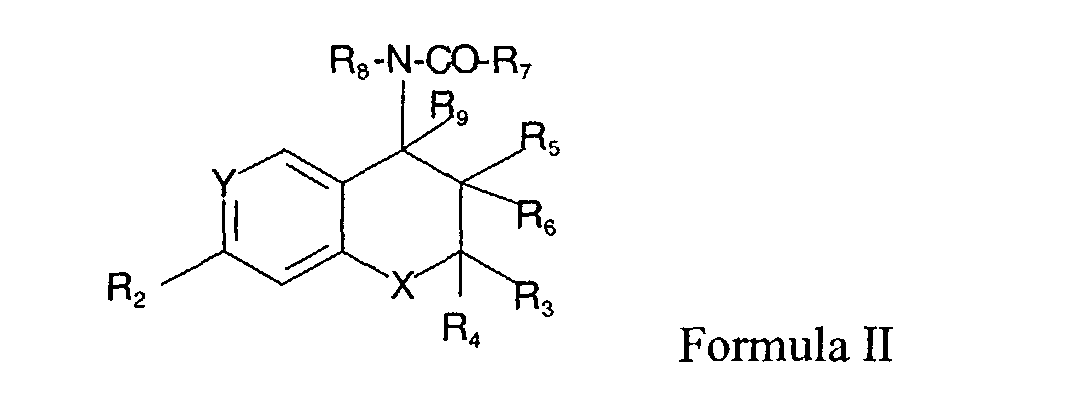
either Y is N and R2 is hydrogen, or Y is C-R1
where:
Claims (16)
- A process for preparing a particulate composition, which comprises wet milling a compound as a dispersion in a mill having at least one mill chamber, wherein said chamber is lined with or constructed from an abrasion-resistant polymer material.
- A process according to claim 1, wherein the abrasion-resistant polymer material is nylon.
- A process according to claims 1 or 2, wherein the milling is carried out using ceramic beads of rare earth oxides.
- A process according to claim 3, wherein the beads are zirconia beads.
- A process according to claim 4, wherein the beads are yttria-stabilised zirconia beads.
- A process according to claims 1 to 5, wherein the mill comprises two or more chambers.
- A process according to claim 6, wherein the beads in one of said chambers are smaller than or of similar diameter to beads employed in another chamber.
- A process according to claim 6 or 7, wherein the beads in the first chamber of the mill are between 0.65mm and 1.25mm in diameter.
- A process according to any one of claims 6 to 8, wherein the mill is a two chamber bead mill and the beads in one chamber are of 1.25mm diameter and the beads in the other chamber are of 0.4mm diameter.
- A process according to any of the preceding claims, wherein the compound milled is a compound of formula (I) or formula (II).wherein:

either Y is N and R2 is hydrogen, or Y is C-R1
where:andeither one of R1 and R2 is hydrogen and the other is selected from the class of hydrogen, C3-8 cycloalkyl, C1-6 alkyl optionally interupted by oxygen or substituted by hydroxy, C1-6 alkoxy or substituted aminocarbonyl, C1-6 alkylcarbonyl, C1-6 alkoxycarbonyl, C1-6 alkylcarbonyloxy, C1-6 alkoxy, nitro, cyano, halo, trifluoromethyl, CF3S, or a group CF3-A-, where A is -CF2-, -CO-,-CH2- or CH(OH), trifluoromethoxy, C1-6 alkylsulphinyl, C1-6 alkylsulphonyl, C1-6 alkoxysulphinyl, C1-6 alkoxysulphonyl, aryl, heteroaryl, arylcarbonyl, heteroarylcarbonyl, arylsulphinyl, heteroarylsulphinyl, arylsulphonyl, heteroarylsulphonyl in which any aromatic moiety is optionally substituted, C1-6 alkylcarbonylamino, C1-6 alkoxycarbonylamino, C1-6 alkyl-thiocarbonyl, C1-6 alkoxy-thiocarbonyl, C1-6 alkyl-thiocarbonyloxy, 1-mercapto C2-7 alkyl, formyl, or aminosulphinyl, aminosulphonyl or aminocarbonyl, any amino moiety being optionally substituted by one or two C1-6 alkyl groups, or C1-6 alkylsulphinylamino, C1-6 alkylsulphonylamino,C1-6 alkoxysulphinylamino or C1-6 alkoxysulphonylamino, or ethylenyl terminally substituted by C1-6 alkylcarbonyl, nitro or cyano, or -C(C1-6 alkyl)NOH or -C(C1-6 alkyl)NNH2, or one of R1 and R2 is nitro, cyano or C1-3 alkylcarbonyl and the other is methoxy or amino optionally substituted by one or two C1-6 alkyl or by C2-7 alkanoyl; one of R3 and R4 is hydrogen or C1-4 alkyl and the other is C1-4 alkyl or R3 andR4 together are C2-5 polymethylene;R5 is C1-6 alkylcarbonyloxy, benzoyloxy, ONO2, benzyloxy, phenyloxy or C1-6 alkoxy and R6 and R9 are hydrogen or R5 is hydroxy and R6 is hydrogen or C1-2 alkyl and R9 is hydrogen;R7 is fluorophenyl;R8 is hydrogen or C 1-6 alkyl;the R8-N-CO-R7 group being trans to the R5 group;and X is oxygen or NR10 where R10 is hydrogen or C1-6 alkyl;wherein: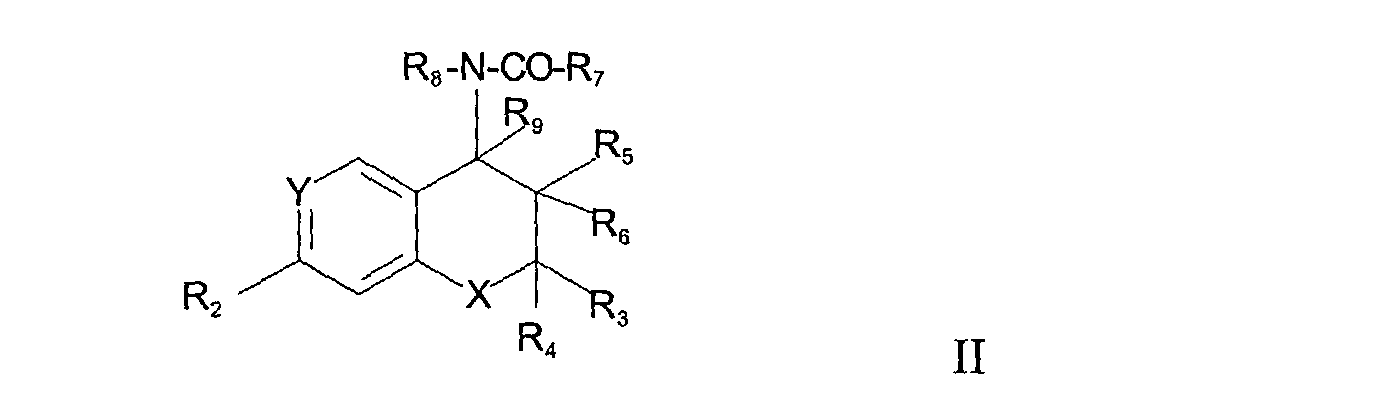
either Y is N and R2 is hydrogen, or Y is C-R1
where:either one of R1 and R2 is hydrogen and the other is selected from the class of hydrogen, C3-8 cycloalkyl, C1-6 alkyl optionally interrupted by oxygen or substituted by hydroxy, C1-6 alkoxy or substituted aminocarbonyl, C1-6 alkylcarbonyl, C1-6 alkoxycarbonyl, C1-6 alkylcarbonyloxy, C1-6 alkoxy, nitro, cyano, halo, trifluoromethyl, CF3S, or a group CF3-A-, where A is -CF2-, -CO-,-CH2-, CH(OH), SO2, SO, CH2-O, or CONH, or a group CF2H-A'- where A' is oxygen, sulphur, SO, SO2, CF2 or CFH; trifluoromethoxy, C1-6 alkylsulphinyl, perfluoro C2-6 alkylsulphonyl, C1-6 alkylsulphonyl, C1-6 alkoxysulphinyl, C1-6 alkoxysulphonyl, aryl, heteroaryl, arylcarbonyl, heteroarylcarbonyl, phosphono, arylcarbonyloxy, heteroarylcarbonyloxy, arylsulphinyl, heteroarylsulphinyl, arylsulphonyl, heteroarylsulphonyl in which any aromatic moiety is optionally substituted, C1-6 alkylcarbonylamino, C1-6 alkoxycarbonylamino, C1-6 alkyl-thiocarbonyl, C1-6 alkoxy-thiocarbonyl, C1-6 alkyl-thiocarbonyloxy, 1-mercapto C2-7 alkyl, formyl, or aminosulphinyl, aminosulphonyl or aminocarbonyl, any amino moiety being optionally substituted by one or two C1- 6 alkyl groups, or C1-6 alkylsulphinylamino, C1-6 alkylsulphonylamino,C1-6 alkoxysulphinylamino or C1-6 alkoxysulphonylamino, or ethylenyl terminally substituted by C1-6 alkylcarbonyl, nitro or cyano, or -C(C1-6 alkyl)NOH or -C(C1-6 alkyl)NNH2, or one of R1 and R2 is nitro, cyano or C1-3 alkylcarbonyl and the other is methoxy or amino optionally substituted by one or two C1-6 alkyl or by C2-7 alkanoyl; or R1 and R2 together are -(CH2)4- or -CH = CH-CH = CH-, or form an optionally substituted triazole or oxadiazole ring;one of R3 and R4 is hydrogen or C1-4 alkyl and the other is C1-4 alkyl, CF3 or CH2 Xa where Xa is fluoro, chloro, bromo, iodo, C1-4 alkoxy, hydroxy, C1-4 alkylcarbonyloxy, -S-C1-4 alkyl, nitro, amino optionally substituted by one or two C1-4 alkyl groups; cyano or C1-4 alkoxycarbonyl or R3 and R4 together are C2-5 polymethylene optionally substituted by C1-4 alkyl;R5 is C1-6 alkylcarbonyloxy, benzoyloxy, ONO2, benzyloxy, phenyloxy or C1-6 alkoxy and R6 and R9 are hydrogen or R5 is hydroxy and R6 is hydrogen or C1-2 alkyl and R9 is hydrogen;R7 is heteroaryl or phenyl; both of which are optionally substituted one or more times independently with a group or atom selected from chloro, fluoro, bromo, iodo, nitro, amino optionally substituted once or twice by C1-4 alkyl, cyano, azido, C1-4 alkyl, C1-4 alkoxy, trifluoromethoxy and trifluoromethyl;R8 is hydrogen; C1-6 alkyl, OR9 or NHCOR10 wherein R9 is hydrogen, C1-6 alkyl, formyl, C1-6 alkanoyl, aroyl or aryl-C1-6 alkyl and R10 is hydrogen, C1-6 alkyl, C1-6 alkoxy, mono or di C1-6 alkyl amino, amino, amino-C1-6 alkyl, hydroxy-C1-6 alkyl, halo-C1-6 alkyl, C1-6 acyloxy-C1-6 alkyl, C1-6 alkoxycarbonyl-C1-6-alkyl, aryl or heteroaryl;the R8-N-CO-R7 group being cis to the R5 group;and X is oxygen or NR10 where R10 is hydrogen or C1-6 alkyl. - A process according to any of the preceding claims, wherein the compound milled is a one of the following compounds:trans-6-acetyl-4S-(4-fluorobenzoylamino)-3,4-dihydro-2,2-dimethyl-2H-1-benzopyran-3R-ol;cis-6-acetyl-4S-(3-chloro-4-fluorobenzoylamino)-3,4-dihydro-2,2-dimethyl-2H-1-benzopyran-3S-ol; ortrans-6-acetyl-4S-(3,5-difluorobenzoylamino)-3,4-dihydro-2,2-dimethyl-2H-1-benzopyran-3R-ol.
- A process according to any of the preceding claims, wherein the compound is milled as an aqueous dispersion.
- A process for preparing a particulate composition of a sparingly water-soluble drug substance which comprises wet milling the drug substance as an aqueous dispersion in a multi-chamber bead mill with circulation of product between the chambers, the aqueous dispersion including a soluble carrier suitable as an excipient for spray drying, a surfactant to maintain the particles in suspension on resuspension, and an anti-agglomeration agent effective after administration of a pharmaceutical formulation to a patient, and spray drying the aqueous dispersion after milling.
- A process according to claim 1, wherein the soluble carrier suitable as an excipient for spray-drying is selected from mannitol, sorbitol, lactose, xylitol or starch.
- A process according to claims 1 or 2, wherein the surfactant is sodium lauryl sulphate.
- A process according to claims 1 to 3, wherein the anti-agglomeration agent is methyl cellulose or hydroxyethyl cellulose.
Applications Claiming Priority (3)
| Application Number | Priority Date | Filing Date | Title |
|---|---|---|---|
| GB9726543 | 1997-12-16 | ||
| GBGB9726543.3A GB9726543D0 (en) | 1997-12-16 | 1997-12-16 | Novel compositions |
| EP98966322A EP1037612B1 (en) | 1997-12-16 | 1998-12-14 | Pharmaceutical compositions containing micronized bicyclic drugs |
Related Parent Applications (1)
| Application Number | Title | Priority Date | Filing Date |
|---|---|---|---|
| EP98966322A Division EP1037612B1 (en) | 1997-12-16 | 1998-12-14 | Pharmaceutical compositions containing micronized bicyclic drugs |
Publications (1)
| Publication Number | Publication Date |
|---|---|
| EP1338274A1 true EP1338274A1 (en) | 2003-08-27 |
Family
ID=10823680
Family Applications (2)
| Application Number | Title | Priority Date | Filing Date |
|---|---|---|---|
| EP98966322A Expired - Lifetime EP1037612B1 (en) | 1997-12-16 | 1998-12-14 | Pharmaceutical compositions containing micronized bicyclic drugs |
| EP03076016A Withdrawn EP1338274A1 (en) | 1997-12-16 | 1998-12-14 | Process for preparing a particulate composition |
Family Applications Before (1)
| Application Number | Title | Priority Date | Filing Date |
|---|---|---|---|
| EP98966322A Expired - Lifetime EP1037612B1 (en) | 1997-12-16 | 1998-12-14 | Pharmaceutical compositions containing micronized bicyclic drugs |
Country Status (32)
| Country | Link |
|---|---|
| EP (2) | EP1037612B1 (en) |
| JP (1) | JP2002508310A (en) |
| KR (1) | KR20010033149A (en) |
| CN (2) | CN1475206A (en) |
| AP (1) | AP2000001837A0 (en) |
| AR (1) | AR017212A1 (en) |
| AT (1) | ATE260094T1 (en) |
| AU (1) | AU743155B2 (en) |
| BG (1) | BG104596A (en) |
| BR (1) | BR9813602A (en) |
| CA (1) | CA2314968A1 (en) |
| DE (1) | DE69821978T2 (en) |
| DZ (1) | DZ2677A1 (en) |
| EA (1) | EA003732B1 (en) |
| ES (1) | ES2216350T3 (en) |
| GB (1) | GB9726543D0 (en) |
| HU (1) | HUP0100384A3 (en) |
| ID (1) | ID24930A (en) |
| IL (1) | IL136664A0 (en) |
| MA (1) | MA24721A1 (en) |
| MY (1) | MY132978A (en) |
| NO (1) | NO20003073L (en) |
| NZ (1) | NZ504991A (en) |
| OA (1) | OA11429A (en) |
| PE (1) | PE20000114A1 (en) |
| PL (1) | PL341339A1 (en) |
| SK (1) | SK9132000A3 (en) |
| TR (1) | TR200001792T2 (en) |
| TW (1) | TW200305442A (en) |
| UY (1) | UY25307A1 (en) |
| WO (1) | WO1999030687A1 (en) |
| ZA (1) | ZA9811502B (en) |
Cited By (1)
| Publication number | Priority date | Publication date | Assignee | Title |
|---|---|---|---|---|
| EP2471513A1 (en) * | 2010-12-28 | 2012-07-04 | LEK Pharmaceuticals d.d. | Process for producing an active pharmaceutical ingredient (API) preparation in the form of beads |
Families Citing this family (11)
| Publication number | Priority date | Publication date | Assignee | Title |
|---|---|---|---|---|
| WO1996025918A1 (en) | 1995-02-24 | 1996-08-29 | Nanosystems L.L.C. | Aerosols containing nanoparticle dispersions |
| US7521068B2 (en) | 1998-11-12 | 2009-04-21 | Elan Pharma International Ltd. | Dry powder aerosols of nanoparticulate drugs |
| KR100786927B1 (en) * | 2000-06-28 | 2007-12-17 | 스미스클라인비이참피이엘시이 | Wet Grinding Method |
| GB0112497D0 (en) * | 2001-05-22 | 2001-07-11 | Smithkline Beecham Plc | Formulation |
| GB0127805D0 (en) | 2001-11-20 | 2002-01-09 | Smithkline Beecham Plc | Pharmaceutical composition |
| WO2007111698A2 (en) | 2005-11-10 | 2007-10-04 | The Lubrizol Corporation | Process for preparing dispersions |
| US20110319482A1 (en) * | 2008-06-05 | 2011-12-29 | Peter Blower | Novel treatments |
| US20130281524A1 (en) * | 2008-06-05 | 2013-10-24 | Peter Blower | Novel treatments |
| AU2010325755A1 (en) * | 2009-12-03 | 2012-06-21 | Proximagen Ltd | Treatment of infectious diseases |
| WO2011067608A1 (en) * | 2009-12-03 | 2011-06-09 | Minster Research Ltd | Treatment of allodynia and hyperalgesia |
| WO2016157061A1 (en) * | 2015-03-31 | 2016-10-06 | Wockhardt Limited | Aseptic wet milling process for paliperidone palmitate |
Citations (5)
| Publication number | Priority date | Publication date | Assignee | Title |
|---|---|---|---|---|
| US5065946A (en) * | 1988-07-21 | 1991-11-19 | Matsushita Electric Industrial Co., Ltd. | Media agitating mill and method for milling ceramic powder |
| EP0600528A1 (en) * | 1992-11-25 | 1994-06-08 | NanoSystems L.L.C. | Method of grinding pharmaceutical substances |
| WO1994013657A1 (en) * | 1992-12-11 | 1994-06-23 | Smithkline Beecham Plc | Pharmaceutical composition containing bicyclic type compounds |
| WO1995034545A1 (en) * | 1994-06-10 | 1995-12-21 | Smithkline Beecham Plc | Benzopyrans and their use as therapeutic agents |
| DE19614295A1 (en) * | 1995-04-21 | 1996-10-24 | Friedrich Dr Ing Vock | Method and device for wet grinding and dispersing solid particles in liquids |
Family Cites Families (3)
| Publication number | Priority date | Publication date | Assignee | Title |
|---|---|---|---|---|
| US5145684A (en) * | 1991-01-25 | 1992-09-08 | Sterling Drug Inc. | Surface modified drug nanoparticles |
| US5534270A (en) * | 1995-02-09 | 1996-07-09 | Nanosystems Llc | Method of preparing stable drug nanoparticles |
| US5518738A (en) * | 1995-02-09 | 1996-05-21 | Nanosystem L.L.C. | Nanoparticulate nsaid compositions |
-
1997
- 1997-12-16 GB GBGB9726543.3A patent/GB9726543D0/en not_active Ceased
-
1998
- 1998-11-22 TW TW092109280A patent/TW200305442A/en unknown
- 1998-12-14 EP EP98966322A patent/EP1037612B1/en not_active Expired - Lifetime
- 1998-12-14 TR TR2000/01792T patent/TR200001792T2/en unknown
- 1998-12-14 AP APAP/P/2000/001837A patent/AP2000001837A0/en unknown
- 1998-12-14 MA MA25390A patent/MA24721A1/en unknown
- 1998-12-14 WO PCT/EP1998/008156 patent/WO1999030687A1/en not_active Ceased
- 1998-12-14 NZ NZ504991A patent/NZ504991A/en unknown
- 1998-12-14 ID IDW20001124A patent/ID24930A/en unknown
- 1998-12-14 AT AT98966322T patent/ATE260094T1/en not_active IP Right Cessation
- 1998-12-14 SK SK913-2000A patent/SK9132000A3/en unknown
- 1998-12-14 AU AU22724/99A patent/AU743155B2/en not_active Ceased
- 1998-12-14 HU HU0100384A patent/HUP0100384A3/en unknown
- 1998-12-14 EP EP03076016A patent/EP1338274A1/en not_active Withdrawn
- 1998-12-14 CA CA002314968A patent/CA2314968A1/en not_active Abandoned
- 1998-12-14 CN CNA031787088A patent/CN1475206A/en active Pending
- 1998-12-14 KR KR1020007006525A patent/KR20010033149A/en not_active Ceased
- 1998-12-14 ES ES98966322T patent/ES2216350T3/en not_active Expired - Lifetime
- 1998-12-14 PL PL98341339A patent/PL341339A1/en unknown
- 1998-12-14 BR BR9813602-0A patent/BR9813602A/en not_active IP Right Cessation
- 1998-12-14 EA EA200000664A patent/EA003732B1/en not_active IP Right Cessation
- 1998-12-14 IL IL13666498A patent/IL136664A0/en unknown
- 1998-12-14 DE DE69821978T patent/DE69821978T2/en not_active Expired - Fee Related
- 1998-12-14 JP JP2000538670A patent/JP2002508310A/en active Pending
- 1998-12-14 CN CN98813568A patent/CN1284865A/en active Pending
- 1998-12-15 ZA ZA9811502A patent/ZA9811502B/en unknown
- 1998-12-15 AR ARP980106367A patent/AR017212A1/en not_active Application Discontinuation
- 1998-12-15 MY MYPI98005667A patent/MY132978A/en unknown
- 1998-12-15 UY UY25307A patent/UY25307A1/en not_active Application Discontinuation
- 1998-12-15 DZ DZ980287A patent/DZ2677A1/en active
- 1998-12-16 PE PE1998001230A patent/PE20000114A1/en not_active Application Discontinuation
-
2000
- 2000-06-15 NO NO20003073A patent/NO20003073L/en not_active Application Discontinuation
- 2000-06-16 OA OA1200000176A patent/OA11429A/en unknown
- 2000-07-11 BG BG104596A patent/BG104596A/en unknown
Patent Citations (5)
| Publication number | Priority date | Publication date | Assignee | Title |
|---|---|---|---|---|
| US5065946A (en) * | 1988-07-21 | 1991-11-19 | Matsushita Electric Industrial Co., Ltd. | Media agitating mill and method for milling ceramic powder |
| EP0600528A1 (en) * | 1992-11-25 | 1994-06-08 | NanoSystems L.L.C. | Method of grinding pharmaceutical substances |
| WO1994013657A1 (en) * | 1992-12-11 | 1994-06-23 | Smithkline Beecham Plc | Pharmaceutical composition containing bicyclic type compounds |
| WO1995034545A1 (en) * | 1994-06-10 | 1995-12-21 | Smithkline Beecham Plc | Benzopyrans and their use as therapeutic agents |
| DE19614295A1 (en) * | 1995-04-21 | 1996-10-24 | Friedrich Dr Ing Vock | Method and device for wet grinding and dispersing solid particles in liquids |
Cited By (1)
| Publication number | Priority date | Publication date | Assignee | Title |
|---|---|---|---|---|
| EP2471513A1 (en) * | 2010-12-28 | 2012-07-04 | LEK Pharmaceuticals d.d. | Process for producing an active pharmaceutical ingredient (API) preparation in the form of beads |
Also Published As
Similar Documents
| Publication | Publication Date | Title |
|---|---|---|
| EP1037612B1 (en) | Pharmaceutical compositions containing micronized bicyclic drugs | |
| CA2408245C (en) | Media milling | |
| AU2002215608B2 (en) | Wet milling process | |
| AU2002215608A1 (en) | Wet milling process | |
| EP1815849A1 (en) | Oxcarbazepine pharmaceutical formulation and its method of preparation, wherein oxcarbazepine has a broad and multi-modal particle size distribution | |
| KR20010041796A (en) | Novel Compositions of Eprosartan | |
| US20030165570A1 (en) | Pharmaceutical compositions containing micronized bicyclic drugs | |
| HK1059211A (en) | Process for preparing a particulate composition | |
| NZ518798A (en) | Preparation of particulate compositions by wet milling a sparingly water-soluble drug substance as an aqueous dispersion in a multi-chamber bead mill, where the aqueous dispersion also comprises a soluble carrier, a surfactant and an anti-agglomeration agent | |
| AU3438102A (en) | Pharmaceutical compositions containing micronized bicyclic drugs | |
| CZ20002207A3 (en) | Pharmaceutical compositions comprising micronized bicyclic drugs | |
| WO2009044380A2 (en) | Formulations containing orlistat particles having controlled particle size | |
| US20080275082A1 (en) | Pharmaceutical Composition | |
| JP2003507409A (en) | Pharmaceutical composition comprising nabumetone | |
| US20080255193A1 (en) | Pharmaceutical Composition | |
| EP1729734B1 (en) | Spray dried pharmaceutical compositions | |
| WO2002094223A2 (en) | Formulation containing halofantrine hydrochloride | |
| WO2006113309A1 (en) | Lacidipine particles | |
| HK1099213B (en) | Spray dried pharmaceutical compositions | |
| HK1107017A (en) | Oxcarbazepine pharmaceutical formulation and its method of preparation, wherein oxcarbazepine has a broad and multi-modal particle size distribution | |
| TH51051A (en) | New mixtures | |
| MXPA06010860A (en) | Spray dried pharmaceutical compositions |
Legal Events
| Date | Code | Title | Description |
|---|---|---|---|
| PUAI | Public reference made under article 153(3) epc to a published international application that has entered the european phase |
Free format text: ORIGINAL CODE: 0009012 |
|
| 17P | Request for examination filed |
Effective date: 20030407 |
|
| AC | Divisional application: reference to earlier application |
Ref document number: 1037612 Country of ref document: EP Kind code of ref document: P |
|
| AK | Designated contracting states |
Designated state(s): AT BE CH CY DE DK ES FI FR GB GR IE IT LI LU MC NL PT SE |
|
| AX | Request for extension of the european patent |
Extension state: RO SI |
|
| AKX | Designation fees paid |
Designated state(s): AT BE CH CY DE DK ES FI FR GB GR IE IT LI LU MC NL PT SE |
|
| AXX | Extension fees paid |
Extension state: SI Payment date: 20030407 Extension state: RO Payment date: 20030407 |
|
| REG | Reference to a national code |
Ref country code: HK Ref legal event code: DE Ref document number: 1059211 Country of ref document: HK |
|
| 17Q | First examination report despatched |
Effective date: 20040802 |
|
| STAA | Information on the status of an ep patent application or granted ep patent |
Free format text: STATUS: THE APPLICATION IS DEEMED TO BE WITHDRAWN |
|
| 18D | Application deemed to be withdrawn |
Effective date: 20041214 |
|
| REG | Reference to a national code |
Ref country code: HK Ref legal event code: WD Ref document number: 1059211 Country of ref document: HK |