EP1336655A1 - Method of identifying protein CAMS (constitutively active mutants) - Google Patents
Method of identifying protein CAMS (constitutively active mutants) Download PDFInfo
- Publication number
- EP1336655A1 EP1336655A1 EP02000733A EP02000733A EP1336655A1 EP 1336655 A1 EP1336655 A1 EP 1336655A1 EP 02000733 A EP02000733 A EP 02000733A EP 02000733 A EP02000733 A EP 02000733A EP 1336655 A1 EP1336655 A1 EP 1336655A1
- Authority
- EP
- European Patent Office
- Prior art keywords
- protein
- receptor
- yeast
- cams
- activity
- Prior art date
- Legal status (The legal status is an assumption and is not a legal conclusion. Google has not performed a legal analysis and makes no representation as to the accuracy of the status listed.)
- Withdrawn
Links
- 108090000623 proteins and genes Proteins 0.000 title claims abstract description 47
- 102000004169 proteins and genes Human genes 0.000 title claims abstract description 44
- 238000000034 method Methods 0.000 title claims abstract description 36
- 210000005253 yeast cell Anatomy 0.000 claims abstract description 18
- 239000000556 agonist Substances 0.000 claims abstract description 12
- 230000000694 effects Effects 0.000 claims description 30
- 102000003688 G-Protein-Coupled Receptors Human genes 0.000 claims description 28
- 108090000045 G-Protein-Coupled Receptors Proteins 0.000 claims description 28
- 239000013612 plasmid Substances 0.000 claims description 15
- 230000008439 repair process Effects 0.000 claims description 10
- 239000013604 expression vector Substances 0.000 claims description 6
- 102000004190 Enzymes Human genes 0.000 claims description 4
- 108090000790 Enzymes Proteins 0.000 claims description 4
- 102000004310 Ion Channels Human genes 0.000 claims description 3
- 108090000862 Ion Channels Proteins 0.000 claims description 3
- 108091000080 Phosphotransferase Proteins 0.000 claims 1
- 102000020233 phosphotransferase Human genes 0.000 claims 1
- 102000005962 receptors Human genes 0.000 description 35
- 108020003175 receptors Proteins 0.000 description 35
- 240000004808 Saccharomyces cerevisiae Species 0.000 description 32
- 235000014680 Saccharomyces cerevisiae Nutrition 0.000 description 32
- 230000035772 mutation Effects 0.000 description 20
- 239000003446 ligand Substances 0.000 description 15
- 238000003556 assay Methods 0.000 description 14
- 210000004027 cell Anatomy 0.000 description 14
- WQZGKKKJIJFFOK-GASJEMHNSA-N Glucose Natural products OC[C@H]1OC(O)[C@H](O)[C@@H](O)[C@@H]1O WQZGKKKJIJFFOK-GASJEMHNSA-N 0.000 description 12
- 239000008103 glucose Substances 0.000 description 12
- 230000012010 growth Effects 0.000 description 11
- 102100026189 Beta-galactosidase Human genes 0.000 description 9
- 108010005774 beta-Galactosidase Proteins 0.000 description 9
- 230000037011 constitutive activity Effects 0.000 description 9
- 238000001727 in vivo Methods 0.000 description 8
- 238000002708 random mutagenesis Methods 0.000 description 8
- OPIFSICVWOWJMJ-AEOCFKNESA-N 5-bromo-4-chloro-3-indolyl beta-D-galactoside Chemical compound O[C@@H]1[C@@H](O)[C@@H](O)[C@@H](CO)O[C@H]1OC1=CNC2=CC=C(Br)C(Cl)=C12 OPIFSICVWOWJMJ-AEOCFKNESA-N 0.000 description 7
- 210000004962 mammalian cell Anatomy 0.000 description 7
- 238000012216 screening Methods 0.000 description 7
- 239000006152 selective media Substances 0.000 description 7
- 239000005089 Luciferase Substances 0.000 description 6
- 230000003213 activating effect Effects 0.000 description 6
- 230000003834 intracellular effect Effects 0.000 description 6
- 239000002609 medium Substances 0.000 description 6
- 230000008569 process Effects 0.000 description 6
- 102220044273 rs587777537 Human genes 0.000 description 6
- 238000010367 cloning Methods 0.000 description 5
- 238000011534 incubation Methods 0.000 description 5
- 239000007788 liquid Substances 0.000 description 5
- 230000013011 mating Effects 0.000 description 5
- 102220285557 rs767157505 Human genes 0.000 description 5
- DUYSYHSSBDVJSM-KRWOKUGFSA-N sphingosine 1-phosphate Chemical compound CCCCCCCCCCCCC\C=C\[C@@H](O)[C@@H](N)COP(O)(O)=O DUYSYHSSBDVJSM-KRWOKUGFSA-N 0.000 description 5
- 230000009466 transformation Effects 0.000 description 5
- 108091026890 Coding region Proteins 0.000 description 4
- 108060001084 Luciferase Proteins 0.000 description 4
- 238000004458 analytical method Methods 0.000 description 4
- 239000002773 nucleotide Substances 0.000 description 4
- 125000003729 nucleotide group Chemical group 0.000 description 4
- 238000002741 site-directed mutagenesis Methods 0.000 description 4
- 230000000638 stimulation Effects 0.000 description 4
- UCSJYZPVAKXKNQ-HZYVHMACSA-N streptomycin Chemical compound CN[C@H]1[C@H](O)[C@@H](O)[C@H](CO)O[C@H]1O[C@@H]1[C@](C=O)(O)[C@H](C)O[C@H]1O[C@@H]1[C@@H](NC(N)=N)[C@H](O)[C@@H](NC(N)=N)[C@H](O)[C@H]1O UCSJYZPVAKXKNQ-HZYVHMACSA-N 0.000 description 4
- 239000000758 substrate Substances 0.000 description 4
- UYYRDZGZGNYVBA-VPXCCNNISA-N (2s,3r,4s,5r,6r)-2-[2-chloro-4-[3-(3-chloro-4-hydroxyphenyl)-1,1-dioxo-2,1$l^{6}-benzoxathiol-3-yl]phenoxy]-6-(hydroxymethyl)oxane-3,4,5-triol Chemical compound O[C@@H]1[C@@H](O)[C@@H](O)[C@@H](CO)O[C@H]1OC1=CC=C(C2(C3=CC=CC=C3S(=O)(=O)O2)C=2C=C(Cl)C(O)=CC=2)C=C1Cl UYYRDZGZGNYVBA-VPXCCNNISA-N 0.000 description 3
- 108020004414 DNA Proteins 0.000 description 3
- 101150102561 GPA1 gene Proteins 0.000 description 3
- 102220532982 Guanine nucleotide-binding protein subunit alpha-12_F242L_mutation Human genes 0.000 description 3
- 101001061518 Homo sapiens RNA-binding protein FUS Proteins 0.000 description 3
- 101000659267 Homo sapiens Tumor suppressor candidate 2 Proteins 0.000 description 3
- 108700026244 Open Reading Frames Proteins 0.000 description 3
- 102000016978 Orphan receptors Human genes 0.000 description 3
- 108070000031 Orphan receptors Proteins 0.000 description 3
- 102100028469 RNA-binding protein FUS Human genes 0.000 description 3
- 101150006985 STE2 gene Proteins 0.000 description 3
- 102000011011 Sphingosine 1-phosphate receptors Human genes 0.000 description 3
- 108050001083 Sphingosine 1-phosphate receptors Proteins 0.000 description 3
- 150000001413 amino acids Chemical class 0.000 description 3
- 238000004113 cell culture Methods 0.000 description 3
- 238000006243 chemical reaction Methods 0.000 description 3
- 230000006552 constitutive activation Effects 0.000 description 3
- 238000002474 experimental method Methods 0.000 description 3
- 238000010353 genetic engineering Methods 0.000 description 3
- 102000034345 heterotrimeric G proteins Human genes 0.000 description 3
- 108091006093 heterotrimeric G proteins Proteins 0.000 description 3
- 238000002744 homologous recombination Methods 0.000 description 3
- 230000006801 homologous recombination Effects 0.000 description 3
- 229940125425 inverse agonist Drugs 0.000 description 3
- 239000000203 mixture Substances 0.000 description 3
- 230000006798 recombination Effects 0.000 description 3
- 238000005215 recombination Methods 0.000 description 3
- 230000004044 response Effects 0.000 description 3
- 238000013207 serial dilution Methods 0.000 description 3
- 238000002764 solid phase assay Methods 0.000 description 3
- 230000009897 systematic effect Effects 0.000 description 3
- CUKWUWBLQQDQAC-VEQWQPCFSA-N (3s)-3-amino-4-[[(2s)-1-[[(2s)-1-[[(2s)-1-[[(2s,3s)-1-[[(2s)-1-[(2s)-2-[[(1s)-1-carboxyethyl]carbamoyl]pyrrolidin-1-yl]-3-(1h-imidazol-5-yl)-1-oxopropan-2-yl]amino]-3-methyl-1-oxopentan-2-yl]amino]-3-(4-hydroxyphenyl)-1-oxopropan-2-yl]amino]-3-methyl-1-ox Chemical compound C([C@@H](C(=O)N[C@@H]([C@@H](C)CC)C(=O)N[C@@H](CC=1NC=NC=1)C(=O)N1[C@@H](CCC1)C(=O)N[C@@H](C)C(O)=O)NC(=O)[C@@H](NC(=O)[C@H](CCCN=C(N)N)NC(=O)[C@@H](N)CC(O)=O)C(C)C)C1=CC=C(O)C=C1 CUKWUWBLQQDQAC-VEQWQPCFSA-N 0.000 description 2
- 102000005862 Angiotensin II Human genes 0.000 description 2
- 101800000733 Angiotensin-2 Proteins 0.000 description 2
- 108091003079 Bovine Serum Albumin Proteins 0.000 description 2
- 102000013830 Calcium-Sensing Receptors Human genes 0.000 description 2
- 108010050543 Calcium-Sensing Receptors Proteins 0.000 description 2
- LFQSCWFLJHTTHZ-UHFFFAOYSA-N Ethanol Chemical compound CCO LFQSCWFLJHTTHZ-UHFFFAOYSA-N 0.000 description 2
- 108091006027 G proteins Proteins 0.000 description 2
- 102000030782 GTP binding Human genes 0.000 description 2
- 108091000058 GTP-Binding Proteins 0.000 description 2
- 101150009006 HIS3 gene Proteins 0.000 description 2
- 102000043136 MAP kinase family Human genes 0.000 description 2
- 108091054455 MAP kinase family Proteins 0.000 description 2
- TWRXJAOTZQYOKJ-UHFFFAOYSA-L Magnesium chloride Chemical compound [Mg+2].[Cl-].[Cl-] TWRXJAOTZQYOKJ-UHFFFAOYSA-L 0.000 description 2
- 101100018717 Mus musculus Il1rl1 gene Proteins 0.000 description 2
- 239000012124 Opti-MEM Substances 0.000 description 2
- 238000012408 PCR amplification Methods 0.000 description 2
- 229930182555 Penicillin Natural products 0.000 description 2
- JGSARLDLIJGVTE-MBNYWOFBSA-N Penicillin G Chemical compound N([C@H]1[C@H]2SC([C@@H](N2C1=O)C(O)=O)(C)C)C(=O)CC1=CC=CC=C1 JGSARLDLIJGVTE-MBNYWOFBSA-N 0.000 description 2
- 108700008625 Reporter Genes Proteins 0.000 description 2
- 108091023040 Transcription factor Proteins 0.000 description 2
- 102000040945 Transcription factor Human genes 0.000 description 2
- 102000004136 Vasopressin Receptors Human genes 0.000 description 2
- 108090000643 Vasopressin Receptors Proteins 0.000 description 2
- 238000002835 absorbance Methods 0.000 description 2
- 230000004913 activation Effects 0.000 description 2
- 229950006323 angiotensin ii Drugs 0.000 description 2
- 238000013459 approach Methods 0.000 description 2
- 230000008901 benefit Effects 0.000 description 2
- 239000003153 chemical reaction reagent Substances 0.000 description 2
- 238000007398 colorimetric assay Methods 0.000 description 2
- 238000012790 confirmation Methods 0.000 description 2
- 238000004925 denaturation Methods 0.000 description 2
- 230000036425 denaturation Effects 0.000 description 2
- 238000000586 desensitisation Methods 0.000 description 2
- 238000001514 detection method Methods 0.000 description 2
- 230000029087 digestion Effects 0.000 description 2
- 230000003828 downregulation Effects 0.000 description 2
- 238000005516 engineering process Methods 0.000 description 2
- 239000012091 fetal bovine serum Substances 0.000 description 2
- 230000010354 integration Effects 0.000 description 2
- 238000005259 measurement Methods 0.000 description 2
- 231100000350 mutagenesis Toxicity 0.000 description 2
- 230000000869 mutational effect Effects 0.000 description 2
- 238000006384 oligomerization reaction Methods 0.000 description 2
- 229940049954 penicillin Drugs 0.000 description 2
- 238000003752 polymerase chain reaction Methods 0.000 description 2
- 230000001105 regulatory effect Effects 0.000 description 2
- 102200046825 rs1060501415 Human genes 0.000 description 2
- 229960005322 streptomycin Drugs 0.000 description 2
- 238000006467 substitution reaction Methods 0.000 description 2
- 238000010361 transduction Methods 0.000 description 2
- 230000026683 transduction Effects 0.000 description 2
- 238000001890 transfection Methods 0.000 description 2
- XLYOFNOQVPJJNP-UHFFFAOYSA-N water Chemical compound O XLYOFNOQVPJJNP-UHFFFAOYSA-N 0.000 description 2
- DNXIKVLOVZVMQF-UHFFFAOYSA-N (3beta,16beta,17alpha,18beta,20alpha)-17-hydroxy-11-methoxy-18-[(3,4,5-trimethoxybenzoyl)oxy]-yohimban-16-carboxylic acid, methyl ester Natural products C1C2CN3CCC(C4=CC=C(OC)C=C4N4)=C4C3CC2C(C(=O)OC)C(O)C1OC(=O)C1=CC(OC)=C(OC)C(OC)=C1 DNXIKVLOVZVMQF-UHFFFAOYSA-N 0.000 description 1
- 229920001817 Agar Polymers 0.000 description 1
- 102000008081 Arrestins Human genes 0.000 description 1
- 108010074613 Arrestins Proteins 0.000 description 1
- 101100064720 Borrelia burgdorferi (strain ATCC 35210 / B31 / CIP 102532 / DSM 4680) fusA gene Proteins 0.000 description 1
- 101100275473 Caenorhabditis elegans ctc-3 gene Proteins 0.000 description 1
- OYPRJOBELJOOCE-UHFFFAOYSA-N Calcium Chemical compound [Ca] OYPRJOBELJOOCE-UHFFFAOYSA-N 0.000 description 1
- 241000222122 Candida albicans Species 0.000 description 1
- 108020004705 Codon Proteins 0.000 description 1
- 108010029704 Constitutive Androstane Receptor Proteins 0.000 description 1
- 230000007023 DNA restriction-modification system Effects 0.000 description 1
- 108091007263 EDG receptors Proteins 0.000 description 1
- 102000036530 EDG receptors Human genes 0.000 description 1
- 241000588724 Escherichia coli Species 0.000 description 1
- 241000620209 Escherichia coli DH5[alpha] Species 0.000 description 1
- 101150106375 Far1 gene Proteins 0.000 description 1
- 108010033128 Glucan Endo-1,3-beta-D-Glucosidase Proteins 0.000 description 1
- 101000887490 Homo sapiens Guanine nucleotide-binding protein G(z) subunit alpha Proteins 0.000 description 1
- 101000693262 Homo sapiens Sphingosine 1-phosphate receptor 2 Proteins 0.000 description 1
- 108090000144 Human Proteins Proteins 0.000 description 1
- 102000003839 Human Proteins Human genes 0.000 description 1
- 208000026350 Inborn Genetic disease Diseases 0.000 description 1
- 102000023108 LH Receptors Human genes 0.000 description 1
- 108010011942 LH Receptors Proteins 0.000 description 1
- FYYHWMGAXLPEAU-UHFFFAOYSA-N Magnesium Chemical compound [Mg] FYYHWMGAXLPEAU-UHFFFAOYSA-N 0.000 description 1
- 108010024777 Mating Factor Receptors Proteins 0.000 description 1
- 208000024556 Mendelian disease Diseases 0.000 description 1
- 108090000189 Neuropeptides Proteins 0.000 description 1
- 101100437735 Nocardia farcinica (strain IFM 10152) bla gene Proteins 0.000 description 1
- 108091034117 Oligonucleotide Proteins 0.000 description 1
- 229910019142 PO4 Inorganic materials 0.000 description 1
- 108091005804 Peptidases Proteins 0.000 description 1
- 102000035195 Peptidases Human genes 0.000 description 1
- 239000004365 Protease Substances 0.000 description 1
- 102000001253 Protein Kinase Human genes 0.000 description 1
- 108010001267 Protein Subunits Proteins 0.000 description 1
- 102000002067 Protein Subunits Human genes 0.000 description 1
- 238000012181 QIAquick gel extraction kit Methods 0.000 description 1
- 241000700159 Rattus Species 0.000 description 1
- 230000010799 Receptor Interactions Effects 0.000 description 1
- LCQMZZCPPSWADO-UHFFFAOYSA-N Reserpilin Natural products COC(=O)C1COCC2CN3CCc4c([nH]c5cc(OC)c(OC)cc45)C3CC12 LCQMZZCPPSWADO-UHFFFAOYSA-N 0.000 description 1
- QEVHRUUCFGRFIF-SFWBKIHZSA-N Reserpine Natural products O=C(OC)[C@@H]1[C@H](OC)[C@H](OC(=O)c2cc(OC)c(OC)c(OC)c2)C[C@H]2[C@@H]1C[C@H]1N(C2)CCc2c3c([nH]c12)cc(OC)cc3 QEVHRUUCFGRFIF-SFWBKIHZSA-N 0.000 description 1
- 101100394989 Rhodopseudomonas palustris (strain ATCC BAA-98 / CGA009) hisI gene Proteins 0.000 description 1
- 241000235347 Schizosaccharomyces pombe Species 0.000 description 1
- 201000004283 Shwachman-Diamond syndrome Diseases 0.000 description 1
- 108010006785 Taq Polymerase Proteins 0.000 description 1
- 102000003911 Thyrotropin Receptors Human genes 0.000 description 1
- 108090000253 Thyrotropin Receptors Proteins 0.000 description 1
- 108091007498 Transmembrane domain 2 Proteins 0.000 description 1
- JLCPHMBAVCMARE-UHFFFAOYSA-N [3-[[3-[[3-[[3-[[3-[[3-[[3-[[3-[[3-[[3-[[3-[[5-(2-amino-6-oxo-1H-purin-9-yl)-3-[[3-[[3-[[3-[[3-[[3-[[5-(2-amino-6-oxo-1H-purin-9-yl)-3-[[5-(2-amino-6-oxo-1H-purin-9-yl)-3-hydroxyoxolan-2-yl]methoxy-hydroxyphosphoryl]oxyoxolan-2-yl]methoxy-hydroxyphosphoryl]oxy-5-(5-methyl-2,4-dioxopyrimidin-1-yl)oxolan-2-yl]methoxy-hydroxyphosphoryl]oxy-5-(6-aminopurin-9-yl)oxolan-2-yl]methoxy-hydroxyphosphoryl]oxy-5-(6-aminopurin-9-yl)oxolan-2-yl]methoxy-hydroxyphosphoryl]oxy-5-(6-aminopurin-9-yl)oxolan-2-yl]methoxy-hydroxyphosphoryl]oxy-5-(6-aminopurin-9-yl)oxolan-2-yl]methoxy-hydroxyphosphoryl]oxyoxolan-2-yl]methoxy-hydroxyphosphoryl]oxy-5-(5-methyl-2,4-dioxopyrimidin-1-yl)oxolan-2-yl]methoxy-hydroxyphosphoryl]oxy-5-(4-amino-2-oxopyrimidin-1-yl)oxolan-2-yl]methoxy-hydroxyphosphoryl]oxy-5-(5-methyl-2,4-dioxopyrimidin-1-yl)oxolan-2-yl]methoxy-hydroxyphosphoryl]oxy-5-(5-methyl-2,4-dioxopyrimidin-1-yl)oxolan-2-yl]methoxy-hydroxyphosphoryl]oxy-5-(6-aminopurin-9-yl)oxolan-2-yl]methoxy-hydroxyphosphoryl]oxy-5-(6-aminopurin-9-yl)oxolan-2-yl]methoxy-hydroxyphosphoryl]oxy-5-(4-amino-2-oxopyrimidin-1-yl)oxolan-2-yl]methoxy-hydroxyphosphoryl]oxy-5-(4-amino-2-oxopyrimidin-1-yl)oxolan-2-yl]methoxy-hydroxyphosphoryl]oxy-5-(4-amino-2-oxopyrimidin-1-yl)oxolan-2-yl]methoxy-hydroxyphosphoryl]oxy-5-(6-aminopurin-9-yl)oxolan-2-yl]methoxy-hydroxyphosphoryl]oxy-5-(4-amino-2-oxopyrimidin-1-yl)oxolan-2-yl]methyl [5-(6-aminopurin-9-yl)-2-(hydroxymethyl)oxolan-3-yl] hydrogen phosphate Polymers Cc1cn(C2CC(OP(O)(=O)OCC3OC(CC3OP(O)(=O)OCC3OC(CC3O)n3cnc4c3nc(N)[nH]c4=O)n3cnc4c3nc(N)[nH]c4=O)C(COP(O)(=O)OC3CC(OC3COP(O)(=O)OC3CC(OC3COP(O)(=O)OC3CC(OC3COP(O)(=O)OC3CC(OC3COP(O)(=O)OC3CC(OC3COP(O)(=O)OC3CC(OC3COP(O)(=O)OC3CC(OC3COP(O)(=O)OC3CC(OC3COP(O)(=O)OC3CC(OC3COP(O)(=O)OC3CC(OC3COP(O)(=O)OC3CC(OC3COP(O)(=O)OC3CC(OC3COP(O)(=O)OC3CC(OC3COP(O)(=O)OC3CC(OC3COP(O)(=O)OC3CC(OC3COP(O)(=O)OC3CC(OC3COP(O)(=O)OC3CC(OC3CO)n3cnc4c(N)ncnc34)n3ccc(N)nc3=O)n3cnc4c(N)ncnc34)n3ccc(N)nc3=O)n3ccc(N)nc3=O)n3ccc(N)nc3=O)n3cnc4c(N)ncnc34)n3cnc4c(N)ncnc34)n3cc(C)c(=O)[nH]c3=O)n3cc(C)c(=O)[nH]c3=O)n3ccc(N)nc3=O)n3cc(C)c(=O)[nH]c3=O)n3cnc4c3nc(N)[nH]c4=O)n3cnc4c(N)ncnc34)n3cnc4c(N)ncnc34)n3cnc4c(N)ncnc34)n3cnc4c(N)ncnc34)O2)c(=O)[nH]c1=O JLCPHMBAVCMARE-UHFFFAOYSA-N 0.000 description 1
- 230000001594 aberrant effect Effects 0.000 description 1
- 230000009471 action Effects 0.000 description 1
- 230000001464 adherent effect Effects 0.000 description 1
- 239000008272 agar Substances 0.000 description 1
- 230000008860 allosteric change Effects 0.000 description 1
- 150000001412 amines Chemical class 0.000 description 1
- 125000000539 amino acid group Chemical group 0.000 description 1
- 238000000137 annealing Methods 0.000 description 1
- YZXBAPSDXZZRGB-DOFZRALJSA-N arachidonic acid Chemical class CCCCC\C=C/C\C=C/C\C=C/C\C=C/CCCC(O)=O YZXBAPSDXZZRGB-DOFZRALJSA-N 0.000 description 1
- 230000001580 bacterial effect Effects 0.000 description 1
- 239000002876 beta blocker Substances 0.000 description 1
- 230000000975 bioactive effect Effects 0.000 description 1
- 238000004166 bioassay Methods 0.000 description 1
- 230000015572 biosynthetic process Effects 0.000 description 1
- 210000004899 c-terminal region Anatomy 0.000 description 1
- 229910052791 calcium Inorganic materials 0.000 description 1
- 239000011575 calcium Substances 0.000 description 1
- 229940095731 candida albicans Drugs 0.000 description 1
- 125000003178 carboxy group Chemical group [H]OC(*)=O 0.000 description 1
- 239000006285 cell suspension Substances 0.000 description 1
- 230000008859 change Effects 0.000 description 1
- 239000013599 cloning vector Substances 0.000 description 1
- 230000001332 colony forming effect Effects 0.000 description 1
- 150000001875 compounds Chemical class 0.000 description 1
- 238000010276 construction Methods 0.000 description 1
- 230000002596 correlated effect Effects 0.000 description 1
- 230000000875 corresponding effect Effects 0.000 description 1
- 230000008878 coupling Effects 0.000 description 1
- 230000001808 coupling effect Effects 0.000 description 1
- 238000010168 coupling process Methods 0.000 description 1
- 238000005859 coupling reaction Methods 0.000 description 1
- 230000003247 decreasing effect Effects 0.000 description 1
- 230000001419 dependent effect Effects 0.000 description 1
- 201000010099 disease Diseases 0.000 description 1
- 208000037265 diseases, disorders, signs and symptoms Diseases 0.000 description 1
- 229940079593 drug Drugs 0.000 description 1
- 239000003814 drug Substances 0.000 description 1
- 239000012636 effector Substances 0.000 description 1
- 238000001962 electrophoresis Methods 0.000 description 1
- 238000010828 elution Methods 0.000 description 1
- 239000006274 endogenous ligand Substances 0.000 description 1
- 230000007613 environmental effect Effects 0.000 description 1
- 210000003527 eukaryotic cell Anatomy 0.000 description 1
- 239000013613 expression plasmid Substances 0.000 description 1
- 239000000796 flavoring agent Substances 0.000 description 1
- 235000019634 flavors Nutrition 0.000 description 1
- 239000012634 fragment Substances 0.000 description 1
- 239000003205 fragrance Substances 0.000 description 1
- 239000000499 gel Substances 0.000 description 1
- 230000014509 gene expression Effects 0.000 description 1
- 239000001963 growth medium Substances 0.000 description 1
- 101150032598 hisG gene Proteins 0.000 description 1
- HNDVDQJCIGZPNO-UHFFFAOYSA-N histidine Natural products OC(=O)C(N)CC1=CN=CN1 HNDVDQJCIGZPNO-UHFFFAOYSA-N 0.000 description 1
- 239000005556 hormone Substances 0.000 description 1
- 229940088597 hormone Drugs 0.000 description 1
- 102000052301 human GNAZ Human genes 0.000 description 1
- 230000006872 improvement Effects 0.000 description 1
- 238000012750 in vivo screening Methods 0.000 description 1
- 230000000415 inactivating effect Effects 0.000 description 1
- 230000000977 initiatory effect Effects 0.000 description 1
- 230000003993 interaction Effects 0.000 description 1
- 230000008863 intramolecular interaction Effects 0.000 description 1
- 238000011835 investigation Methods 0.000 description 1
- 101150066555 lacZ gene Proteins 0.000 description 1
- XIXADJRWDQXREU-UHFFFAOYSA-M lithium acetate Chemical class [Li+].CC([O-])=O XIXADJRWDQXREU-UHFFFAOYSA-M 0.000 description 1
- 238000003468 luciferase reporter gene assay Methods 0.000 description 1
- 239000012139 lysis buffer Substances 0.000 description 1
- 229910052749 magnesium Inorganic materials 0.000 description 1
- 239000011777 magnesium Substances 0.000 description 1
- 229910001629 magnesium chloride Inorganic materials 0.000 description 1
- SQQMAOCOWKFBNP-UHFFFAOYSA-L manganese(II) sulfate Chemical compound [Mn+2].[O-]S([O-])(=O)=O SQQMAOCOWKFBNP-UHFFFAOYSA-L 0.000 description 1
- 229910000357 manganese(II) sulfate Inorganic materials 0.000 description 1
- 239000003550 marker Substances 0.000 description 1
- 230000007246 mechanism Effects 0.000 description 1
- 239000012528 membrane Substances 0.000 description 1
- 102000006240 membrane receptors Human genes 0.000 description 1
- 108020004084 membrane receptors Proteins 0.000 description 1
- 239000002207 metabolite Substances 0.000 description 1
- 244000005700 microbiome Species 0.000 description 1
- 238000002703 mutagenesis Methods 0.000 description 1
- 108091008880 orphan GPCRs Proteins 0.000 description 1
- 230000002018 overexpression Effects 0.000 description 1
- 230000007170 pathology Effects 0.000 description 1
- 102000014187 peptide receptors Human genes 0.000 description 1
- 108010011903 peptide receptors Proteins 0.000 description 1
- 239000003016 pheromone Substances 0.000 description 1
- 230000010422 pheromone response pathway Effects 0.000 description 1
- 239000010452 phosphate Substances 0.000 description 1
- 239000008363 phosphate buffer Substances 0.000 description 1
- 230000026731 phosphorylation Effects 0.000 description 1
- 238000006366 phosphorylation reaction Methods 0.000 description 1
- PHUTUTUABXHXLW-UHFFFAOYSA-N pindolol Chemical compound CC(C)NCC(O)COC1=CC=CC2=NC=C[C]12 PHUTUTUABXHXLW-UHFFFAOYSA-N 0.000 description 1
- 229960002508 pindolol Drugs 0.000 description 1
- 238000013492 plasmid preparation Methods 0.000 description 1
- 125000002924 primary amino group Chemical group [H]N([H])* 0.000 description 1
- 108090000765 processed proteins & peptides Proteins 0.000 description 1
- 230000004853 protein function Effects 0.000 description 1
- 108060006633 protein kinase Proteins 0.000 description 1
- 238000000746 purification Methods 0.000 description 1
- 150000003212 purines Chemical class 0.000 description 1
- 238000004451 qualitative analysis Methods 0.000 description 1
- 238000011002 quantification Methods 0.000 description 1
- 238000004445 quantitative analysis Methods 0.000 description 1
- 230000005855 radiation Effects 0.000 description 1
- 239000011535 reaction buffer Substances 0.000 description 1
- 239000002464 receptor antagonist Substances 0.000 description 1
- 229940044551 receptor antagonist Drugs 0.000 description 1
- 238000011084 recovery Methods 0.000 description 1
- 238000011160 research Methods 0.000 description 1
- BJOIZNZVOZKDIG-MDEJGZGSSA-N reserpine Chemical compound O([C@H]1[C@@H]([C@H]([C@H]2C[C@@H]3C4=C([C]5C=CC(OC)=CC5=N4)CCN3C[C@H]2C1)C(=O)OC)OC)C(=O)C1=CC(OC)=C(OC)C(OC)=C1 BJOIZNZVOZKDIG-MDEJGZGSSA-N 0.000 description 1
- 229960003147 reserpine Drugs 0.000 description 1
- MDMGHDFNKNZPAU-UHFFFAOYSA-N roserpine Natural products C1C2CN3CCC(C4=CC=C(OC)C=C4N4)=C4C3CC2C(OC(C)=O)C(OC)C1OC(=O)C1=CC(OC)=C(OC)C(OC)=C1 MDMGHDFNKNZPAU-UHFFFAOYSA-N 0.000 description 1
- 102200151096 rs112109182 Human genes 0.000 description 1
- 102220244870 rs1553238545 Human genes 0.000 description 1
- 101150079914 s1pr2 gene Proteins 0.000 description 1
- 230000009919 sequestration Effects 0.000 description 1
- 210000002966 serum Anatomy 0.000 description 1
- 230000019491 signal transduction Effects 0.000 description 1
- 230000020837 signal transduction in absence of ligand Effects 0.000 description 1
- 230000011664 signaling Effects 0.000 description 1
- 230000007781 signaling event Effects 0.000 description 1
- 230000037432 silent mutation Effects 0.000 description 1
- 238000001228 spectrum Methods 0.000 description 1
- 230000008925 spontaneous activity Effects 0.000 description 1
- 230000002269 spontaneous effect Effects 0.000 description 1
- 230000000087 stabilizing effect Effects 0.000 description 1
- 239000008223 sterile water Substances 0.000 description 1
- 239000000126 substance Substances 0.000 description 1
- 230000004083 survival effect Effects 0.000 description 1
- 238000003786 synthesis reaction Methods 0.000 description 1
- 238000012360 testing method Methods 0.000 description 1
- 230000001225 therapeutic effect Effects 0.000 description 1
- 238000013518 transcription Methods 0.000 description 1
- 230000035897 transcription Effects 0.000 description 1
- 230000017105 transposition Effects 0.000 description 1
- MPSUGQWRVNRJEE-UHFFFAOYSA-N triazol-1-amine Chemical compound NN1C=CN=N1 MPSUGQWRVNRJEE-UHFFFAOYSA-N 0.000 description 1
- 239000001226 triphosphate Substances 0.000 description 1
- 235000011178 triphosphate Nutrition 0.000 description 1
- UNXRWKVEANCORM-UHFFFAOYSA-N triphosphoric acid Chemical compound OP(O)(=O)OP(O)(=O)OP(O)(O)=O UNXRWKVEANCORM-UHFFFAOYSA-N 0.000 description 1
- 239000013598 vector Substances 0.000 description 1
Images




Classifications
-
- C—CHEMISTRY; METALLURGY
- C12—BIOCHEMISTRY; BEER; SPIRITS; WINE; VINEGAR; MICROBIOLOGY; ENZYMOLOGY; MUTATION OR GENETIC ENGINEERING
- C12N—MICROORGANISMS OR ENZYMES; COMPOSITIONS THEREOF; PROPAGATING, PRESERVING, OR MAINTAINING MICROORGANISMS; MUTATION OR GENETIC ENGINEERING; CULTURE MEDIA
- C12N15/00—Mutation or genetic engineering; DNA or RNA concerning genetic engineering, vectors, e.g. plasmids, or their isolation, preparation or purification; Use of hosts therefor
- C12N15/09—Recombinant DNA-technology
- C12N15/10—Processes for the isolation, preparation or purification of DNA or RNA
- C12N15/1034—Isolating an individual clone by screening libraries
- C12N15/1058—Directional evolution of libraries, e.g. evolution of libraries is achieved by mutagenesis and screening or selection of mixed population of organisms
-
- C—CHEMISTRY; METALLURGY
- C12—BIOCHEMISTRY; BEER; SPIRITS; WINE; VINEGAR; MICROBIOLOGY; ENZYMOLOGY; MUTATION OR GENETIC ENGINEERING
- C12N—MICROORGANISMS OR ENZYMES; COMPOSITIONS THEREOF; PROPAGATING, PRESERVING, OR MAINTAINING MICROORGANISMS; MUTATION OR GENETIC ENGINEERING; CULTURE MEDIA
- C12N15/00—Mutation or genetic engineering; DNA or RNA concerning genetic engineering, vectors, e.g. plasmids, or their isolation, preparation or purification; Use of hosts therefor
- C12N15/09—Recombinant DNA-technology
- C12N15/63—Introduction of foreign genetic material using vectors; Vectors; Use of hosts therefor; Regulation of expression
- C12N15/66—General methods for inserting a gene into a vector to form a recombinant vector using cleavage and ligation; Use of non-functional linkers or adaptors, e.g. linkers containing the sequence for a restriction endonuclease
-
- G—PHYSICS
- G01—MEASURING; TESTING
- G01N—INVESTIGATING OR ANALYSING MATERIALS BY DETERMINING THEIR CHEMICAL OR PHYSICAL PROPERTIES
- G01N33/00—Investigating or analysing materials by specific methods not covered by groups G01N1/00 - G01N31/00
- G01N33/48—Biological material, e.g. blood, urine; Haemocytometers
- G01N33/50—Chemical analysis of biological material, e.g. blood, urine; Testing involving biospecific ligand binding methods; Immunological testing
- G01N33/74—Chemical analysis of biological material, e.g. blood, urine; Testing involving biospecific ligand binding methods; Immunological testing involving hormones or other non-cytokine intercellular protein regulatory factors such as growth factors, including receptors to hormones and growth factors
-
- G—PHYSICS
- G01—MEASURING; TESTING
- G01N—INVESTIGATING OR ANALYSING MATERIALS BY DETERMINING THEIR CHEMICAL OR PHYSICAL PROPERTIES
- G01N33/00—Investigating or analysing materials by specific methods not covered by groups G01N1/00 - G01N31/00
- G01N33/48—Biological material, e.g. blood, urine; Haemocytometers
- G01N33/50—Chemical analysis of biological material, e.g. blood, urine; Testing involving biospecific ligand binding methods; Immunological testing
- G01N33/74—Chemical analysis of biological material, e.g. blood, urine; Testing involving biospecific ligand binding methods; Immunological testing involving hormones or other non-cytokine intercellular protein regulatory factors such as growth factors, including receptors to hormones and growth factors
- G01N33/76—Human chorionic gonadotropin including luteinising hormone, follicle stimulating hormone, thyroid stimulating hormone or their receptors
-
- G—PHYSICS
- G01—MEASURING; TESTING
- G01N—INVESTIGATING OR ANALYSING MATERIALS BY DETERMINING THEIR CHEMICAL OR PHYSICAL PROPERTIES
- G01N2500/00—Screening for compounds of potential therapeutic value
- G01N2500/04—Screening involving studying the effect of compounds C directly on molecule A (e.g. C are potential ligands for a receptor A, or potential substrates for an enzyme A)
Definitions
- the present invention relates to a method of identifying protein CAMs and the use thereof.
- GPCRs The G protein-coupled receptors (GPCRs) constitute the largest family of membrane receptors with a common evolutionary origin. They include receptors which respond to environmental ligands (odorants, flavors) or radiations (light of various wavelengths) and to innumerable internal signals (hormones, bioactive amines, neuropeptides, arachidonic acid metabolites, purines, etc). This extreme diversity contrasts with their stereotyped structure (seven transmembrane alpha helices, three extracellular loops, three intracellular loops, amino terminus outside and carboxyl terminus inside the cell) and with the limited number of downstream regulatory cascades they control.
- the GPCR interacts with an intracellular heterotrimeric G protein consisting of ⁇ subunits.
- the ⁇ -subunit Upon binding of the receptor's ligand, the ⁇ -subunit dissociates from the ⁇ -and ⁇ -subunits, and hydrolyses GTP to GDP. Both G ⁇ and C ⁇ can then activate downstream transduction effectors or regulate other receptors (Zwick et al ., 1999). In haploid Saccharomyces cerevisiae cells, GPCRs are regulating the mating process.
- the receptor (Ste2 or Ste3) detects the presence of cells of the opposite mating type (through binding of peptide mating pheromones), and activates intracellular heterotrimeric G proteins, thus initiating the mating process.
- Gpa1 ( ⁇ subunit) dissociates from the ⁇ (Ste4-Ste18) complex which activates downstream elements of the pheromone response pathway which includes a well-characterized mitogen-activated protein kinase (MAP kinase) cascade.
- MAP kinase mitogen-activated protein kinase
- the transcription factor Ste12 can then initiate the transcription of several mating factor-inducible genes such as FUS1 .
- Reports of mammalian GPCRs expressed in yeast indicate that these heterologous proteins can be reliably expressed in yeast and properly inserted into yeast membranes (Tate and Grisshammer, 1996). Reports, e.g. (Price et al ., 1995), demonstrate that a large number of heterologous GPCRs interact with the yeast heterotrimeric G protein with sufficient efficacy to induce a growth-promoting signal.
- the GPCR under investigation does not couple to Gpa1, it is co-expressed together with a chimera where the C-terminal part of Gpa1 is replaced by the corresponding amino acids of a given human G ⁇ subunit (Brown et al., 2000).
- a reporter construct (such as pFUS1-HIS3 or pFUS1-lacZ) is then expected to produce a detectable response upon receptor activation.
- endogenous receptors and in particular those of the G protein-coupled receptor family, may possess some level of constitutive activity even in the absence of activating mutation.
- a potentially important physiological ramification of the constitutive activity of such receptors is that the ability of different receptor subtypes (for the same ligand) to spontaneously isomerize to the active state might well differ.
- Such receptor subtypes would vary substantially in their properties, thus best suiting them for one or another physiological context (Lefkowitz et al ., 1993).
- inverse agonists upregulate heptahelical receptors by decreasing spontaneous downregulation (Daeffler and Landry, 2000), offering new approaches to tolerance and dependence to drugs.
- Amino acid residues can be mutated and lead to ligand-independent activation of the receptor and constitutive activation of signaling pathway (Lefkowitz et al ., 1993) (Rao and Oprian, 1996) (Sommers et al ., 2000) (Konopka et al ., 1996) (Alewijnse et al ., 2000).
- WO 00/12705 discloses methods for improving the function of heterologous G protein-coupled receptors.
- Random mutagenesis on a human GPCR functionally studied in yeast cells in particular coupling properties study of V2 vasopressin receptor, oligonucleotide-directed random mutagenesis of the intracellular loop 2 (228 bp), including Gap repair were described by (Erlenbach et al ., 2001)).
- CAMs and methods of using them are also disclosed in WO 00/21987.
- WO 00/06597 discloses endogenous constitutively activated G protein-coupled orphan receptors.
- WO 00/22129 and WO 00/22131 disclose non-endogenous constitutively activated human G protein-coupled orphan receptors (site directed mutagenesis of GPCRs to generate constitutively activated mutants) and WO 97/21731 an assay for and uses of peptide hormone receptor ligands.
- CAMs constitutively activated mutants
- the present invention provides a method for identifying protein CAMs (constitutively active mutants), wherein
- proteins for which CAMs can be identified are GPCRs, ion-channels, enzymes, e.g. kinases, proteases, transcription factors.
- protein CAMs of mammalian proteins are identified, e.g. CAMs of human proteins.
- the present invention provides a method of identifying protein CAMs (constitutively active mutants) wherein
- the present invention provides a method of identifying protein CAMs (constitutively active mutants) wherein
- low fidelity PCR is applied on a full length sequences of a particular protein, e.g. a GPCR, preferably a mammalian protein sequence.
- the PCR products were co-transformed with a linearized expression vector (e.g. containing at each end short sequences homologous to the end of the PCR product) into an engineered yeast strain.
- the transformed yeast cells were first selected for the repair of the plasmid (e.g. selection by colony forming on a selective medium).
- the colonies previously selected were replicated an another medium, selective for the activity of the protein, e.g. the receptor (e.g. by the use of a survival reporter gene expressed only upon receptor signaling).
- three or more identical and independent experiments were done to avoid the PCR's bias.
- the protein CAMs (“mutants") have an increased basal signaling activity and the same maximum of stimulation than the wild type protein.
- a yeast based in vivo discovery of random active mutants can be applied to the entire coding sequence of a protein, e.g. a human receptor. This was done by screening for constitutive mutations of the human sphingosine 1-phosphate receptor EDG5 (Endothelial Differentiation Gene 5) (An et al ., 2000) (Hla, 2001).
- EDG5 Endothelial Differentiation Gene 5
- the PCR protocol was optimized to induce an average of less than one point mutation per copy of the gene. Indeed, the high throughput potential of an in vivo subcloning/screening strategy allows us to increase the size of the library without consuming more time/money.
- the present invention relates to engineered yeast cells comprising a library of mutants (e.g. GPCR CAMs) and the use of such engineered yeast cells.
- a library of mutants e.g. GPCR CAMs
- Saccharomyces cerevisiae Schizosaccharomyces pombe and Candida albicans cells can be used.
- yeast is a powerful tool for the study of mammalian GPCRs and their transduction characteristics because of the high homology between these eukaryotic cells (Price et al., 1995;Hadcock and Pausch, 1999;Botstein et al ., 1997); Yeast has a high rate of homologous recombination and the genetic manipulations of yeast are easy (Ma et al ., 1987;Oldenburg et al ., 1997); Yeast allows in vivo selection of a receptor's activity (Chambers et al., 2000); In vivo screen allows the direct recovery of the plasmid carrying the mutant of interest (CAM) from the micro-organism.
- CAM mutant of interest
- Yeast is cheaper to cultivate and engineer than mammalian cells.
- the technology used to sub-clone and detect the mutants' activity in mammalian cells is far more expensive and qualitative selection and quantification of the mutants' activity can both be done in the same yeast system.
- the present method of identifying protein CAMs presents a low cost, fast and powerful method to systematically identify activating mutations along the whole coding sequence of a protein.
- the cloning step is simplified to a simple transformation in yeast and the selection of active mutants is not more than picking growing colonies.
- the transposition of the method into mammalian cells confirmed very well the constitutive activity of the mutants screened and selected in yeast. This proves that the method is a suitable alternative to mutant screening in mammalian systems.
- Another big advantage of the method is that it immediately discriminates between a moderately active and a highly active mutant (a too high basal activity would not be suitable for agonist discovery, but appropriate for inverse-agonist screening).
- the growth speed of the colonies on agar selective medium is well correlated to the different "intensities" of constitutive activity observed in a liquid reporter assay.
- De-orphaning can also be achieved with this method, e.g. the method can be applied to orphan GPCRs. Therefore, a low fidelity PCR product was co-transfected with the linearized vector into a panel of yeast strains expressing different humanized G ⁇ protein subunits. On selective medium, mutants were selected only from the yeast strain expressing the G ⁇ specific for its coupling. ⁇ -Galactosidase detection after growth in a selective medium showed an increased basal activity of the receptor mutant (i.e. an increased expression level of lacZ, controlled by a FUS1 promoter).
- the method of identifying protein CAMs can be used for:
- Figure 1 summarizes the whole process of the method. Random mutagenesis of the EDG5 gene was conducted using the yeast CEN expression plasmid p416GPD-Edg5 carrying an URA3 marker ( Figure 2).
- a Nhel restriction site was created at position 157 bp of the coding sequence of EDG5. Three nucleotides where exchanged by site directed mutagenesis to create the site. This was necessary to conserve, after linearization of the plasmid, only the first 157 bp and the last 101 bp of the open reading frame for homologous recombination.
- the p416GPD-Edg5 was linearized by double digestion Nhel-Xmal before co-transformation with the low-fidelity PCR amplification product.
- ⁇ -Galactosidase activity was measured in a colorimetric assay by adding the substrate CPRG, incubating 2 hours and measuring the absorbance at 574nm.
- Luciferase activity measured in triplicates after 24 hours of stimulation by a serial dilution of Sphingosine 1-Phosphate.
- a modified PCR protocol (Svetlov and Cooper, 1998) was used: initial denaturation at 95°C for 3 min, 30 cycles of denaturation at 95°C for 5 s, annealing at 50°C for 5 s, and primer extension at 72°C for 5 s, and final extension at 72°C for 5 min, performed on the Cycler PTC-200 (MJ-Research).
- the reaction was carried out with 2.5 U of Taq polymerase (Promega) using standard reaction buffer (10 mM Tris-HCI, pH 8.3, 1.5 mM MgCl 2 , 50 mM KCI) supplemented with 0.5 mM MnSO 4 .
- An equimolar mix of dNTPs (Amersham Pharmacia Biotech Inc) was used to provide 500 ⁇ M of each nucleotide triphosphate in a 100 ⁇ l reaction volume. 10 ng of the p416GPD-Edg5 plasmid were used as template.
- the following oligonucleotides (30 pmol of each) were used as primers for the PCR amplification: EDG5 fwd CAR (SEQ ID NO.
- EDG5 rev CAR SEQ ID NO. 2: 5'-TCA GAA CAC CGT GTT GCC CTC-3'. They correspond exactly to the first 22 and last 21 nucleotides of the receptor's sequence, thus the PCR amplifies exactly the open reading frame.
- the PCR product (about 5 ⁇ g) was purified by electrophoresis through a 1% agarose-TBE gel followed by elution into 40 ⁇ l sterile water (QIAquick Gel Extraction Kit, Qiagen). The DNA final concentration was about 0.1 ⁇ g/ ⁇ l.
- the remaining volume of purified PCR product (3-5 ⁇ g in 38 ⁇ l) was co-transformed with 1 ⁇ g of p416GPD-Edg5 (linearized by double digestion with Nhel-Xmal) into about 10 9 cells of the yeast strain (W303 MATa far1::hisG, sst2::ura3 FOA , fus1::HIS3, ⁇ Ste2::Kan R , mfa2-fus1-lacZ::ura3 FOA ) according to a modified Lithium acetate method (Ito et al ., 1983).
- the transformed yeast cells were plated on 10 plates SC/Glucose -Ura medium to select for the cells with a "repaired plasmid" (about 10 8 yeast cells per plate).
- transformation plates were replica-plated onto selective medium: SC/Glucose -Ura-His, pH 6.8, containing 2 mM 3-Aminotriazol (3-AT).
- the plasmid from each selected clone was recovered by a Zymolase /SDS treatment protocol adapted from H. Ma & al. (Ma et al., 1987).
- each plasmid was transformed into E. coli DH5 ⁇ electro-competent cells. Individual bacterial transformants, one for each mutant, were grown in mini culture for plasmid preparation (QIAprep Spin Miniprep Kit, Qiagen).
- the purified DNA was then transformed again into the same yeast strain and each mutant assayed.
- the two first plates were analyzed after 48 hours of growth at 30°C; the third one was kept for 2 or 3 additional days at 4°C to develop the blue coloration due to ⁇ -Galactosidase activity.
- Example 5 Liquid assay in 96 well format
- the same 16 hours culture was diluted 200 times in selective medium (SC/Glucose -Ura -His, pH 6.8, containing 2 mM 3-AT) and 90 ⁇ l were dispensed into the 8 wells of a microtiter plate column already containing 10 ⁇ l of a serial dilution of the ligand Spingosine 1-Phosphate (Matreya) (solubilized and diluted in water from 10 -3 to 10 -9 M).
- selective medium SC/Glucose -Ura -His, pH 6.8, containing 2 mM 3-AT
- the wild type Edg5 receptor and 3 of the 22 CAMs were sub-cloned into the mammalian expression vector pcDNA3.1(+) to be tested in cell culture ( Figure 3).
- a HEK 293 cell line stably transfected with the reporter construct 6SRE-Luciferase was utilized for the assay.
- This adherent cell line was grown under normal conditions (37°C, 5% CO 2 , humid atmosphere) in DMEM-Glutamax (Gibco BRL) + 1% Penicillin/Streptomycin + 10% Fetal Bovine Serum.
- Opti-MEM Gibco BRL
- Opti-MEM Gibco BRL
- a transfection mix containing: 0.5 ⁇ g receptor plasmid + 0.25 ⁇ g CMV- ⁇ Gal (Promega) + 1.2 ⁇ l Lipofectamine (Life Technologies) in Opti-MEM.
- ⁇ -Galactosidase activity was measured, from the same plate, after 5 minutes incubation with 25 ⁇ l of Gal-Screen Reagent (Tropix), 5 seconds integration of the signal. The luciferase numbers were then divided by the ⁇ -Galactosidase numbers.
- the solid phase assay gives a confirmation of the first selection done after replicaplating the gap repair plates on selection plates. After being grown again on selective plate as patches (for confirmation), the plasmid DNA carrying the active mutant was purified, amplified in E . coli and re-transformed into the same yeast strain.
- mutants 1 (contains two mutations, Ala82Val and Ile197Thr) and 7 (Ala82Val only) look the most active (i.e. fast growth on selective plate and blue coloration on X-Gal plate).
- Mutants 2 (Thr196lle), 3 (Ser159Pro), 5 (Phe242Leu) and 8 (Ser159Pro and Val215Met) were also selected (at least two of the three clones grew), but appear less active (i.e. the blue coloration is not so obvious).
- Clone 4 had the same activating Phe242Leu mutation but only one of the three colonies grew.
- Clone 6 had no activating mutation.
- Figure 5 shows that even in the absence of ligand, mutant Ala82Val is hyper-active (which correlates very well with the observations made in the plate assay), while others have a basal activity intermediate between the Ala82Val mutant and the wild type receptor (Ser159Pro and Val238Glu).
- a Serum Responsive Element (SRE) - Luciferase reporter assay in HEK 293 was chosen to verify in mammalian cells the activity of the CAMs selected with the yeast system.
- a stable HEK 293 cell line carrying the 6SRE-Luciferase construct was transfected with the wild type Edg5 or the mutants Ala82Val, Ser159Pro and Val238Glu. After 24 hours of stimulation, the measurement of Luciferase reflected the receptor's activity.
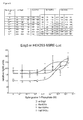
- This assay shows an increased basal activity (i.e. in absence of agonist) of the three mutants compared to the wild type, although the maximum response of all four receptors (wild type and mutants) was not changed.
- the whole process must be repeated in the same conditions.
- the PCR principle can create an important bias introducing an activating (i.e. the Ala 82 -> Val mutation found 68 times in the third screen) or inactivating mutation in an early stage of the reaction. This mutation is then present in a high percentage of clones and can mask other interesting point mutations. This has to be circumvented. The best and fastest way would be doing at least three low-fidelity PCRs at the time and all the following steps in parallel.
Landscapes
- Health & Medical Sciences (AREA)
- Life Sciences & Earth Sciences (AREA)
- Engineering & Computer Science (AREA)
- Chemical & Material Sciences (AREA)
- Molecular Biology (AREA)
- Genetics & Genomics (AREA)
- Biomedical Technology (AREA)
- Biotechnology (AREA)
- Immunology (AREA)
- Hematology (AREA)
- General Engineering & Computer Science (AREA)
- Microbiology (AREA)
- Urology & Nephrology (AREA)
- Organic Chemistry (AREA)
- Zoology (AREA)
- Wood Science & Technology (AREA)
- Physics & Mathematics (AREA)
- Bioinformatics & Cheminformatics (AREA)
- Biochemistry (AREA)
- General Health & Medical Sciences (AREA)
- Endocrinology (AREA)
- Cell Biology (AREA)
- Plant Pathology (AREA)
- Food Science & Technology (AREA)
- Medicinal Chemistry (AREA)
- Biophysics (AREA)
- Pathology (AREA)
- General Physics & Mathematics (AREA)
- Analytical Chemistry (AREA)
- Bioinformatics & Computational Biology (AREA)
- Crystallography & Structural Chemistry (AREA)
- Ecology (AREA)
- Reproductive Health (AREA)
- Micro-Organisms Or Cultivation Processes Thereof (AREA)
- Peptides Or Proteins (AREA)
Abstract
The invention relates to a method of identifying protein CAMs (constitutively active
mutants) wherein a library of mutated sequences of a protein is generated, yeast cells
are transformed with such a library, and the respective protein CAM is identified.
Moreover the invention relates to the use of such a method for identifying agonists or
inverse agonists.
Description
- The present invention relates to a method of identifying protein CAMs and the use thereof.
- The G protein-coupled receptors (GPCRs) constitute the largest family of membrane receptors with a common evolutionary origin. They include receptors which respond to environmental ligands (odorants, flavors) or radiations (light of various wavelengths) and to innumerable internal signals (hormones, bioactive amines, neuropeptides, arachidonic acid metabolites, purines, etc...). This extreme diversity contrasts with their stereotyped structure (seven transmembrane alpha helices, three extracellular loops, three intracellular loops, amino terminus outside and carboxyl terminus inside the cell) and with the limited number of downstream regulatory cascades they control.
The GPCR interacts with an intracellular heterotrimeric G protein consisting of αβγ subunits. Upon binding of the receptor's ligand, the α-subunit dissociates from the β-and γ-subunits, and hydrolyses GTP to GDP. Both Gα and Cβγ can then activate downstream transduction effectors or regulate other receptors (Zwick et al., 1999). In haploid Saccharomyces cerevisiae cells, GPCRs are regulating the mating process. The receptor (Ste2 or Ste3) detects the presence of cells of the opposite mating type (through binding of peptide mating pheromones), and activates intracellular heterotrimeric G proteins, thus initiating the mating process. Gpa1 (α subunit) dissociates from the βγ (Ste4-Ste18) complex which activates downstream elements of the pheromone response pathway which includes a well-characterized mitogen-activated protein kinase (MAP kinase) cascade. The transcription factor Ste12 can then initiate the transcription of several mating factor-inducible genes such as FUS1. - Reports of mammalian GPCRs expressed in yeast indicate that these heterologous proteins can be reliably expressed in yeast and properly inserted into yeast membranes (Tate and Grisshammer, 1996). Reports, e.g. (Price et al., 1995), demonstrate that a large number of heterologous GPCRs interact with the yeast heterotrimeric G protein with sufficient efficacy to induce a growth-promoting signal. In case the GPCR under investigation does not couple to Gpa1, it is co-expressed together with a chimera where the C-terminal part of Gpa1 is replaced by the corresponding amino acids of a given human Gα subunit (Brown et al., 2000). A reporter construct (such as pFUS1-HIS3 or pFUS1-lacZ) is then expected to produce a detectable response upon receptor activation.
- Increasingly, it is being appreciated that endogenous receptors, and in particular those of the G protein-coupled receptor family, may possess some level of constitutive activity even in the absence of activating mutation. A potentially important physiological ramification of the constitutive activity of such receptors is that the ability of different receptor subtypes (for the same ligand) to spontaneously isomerize to the active state might well differ. Such receptor subtypes would vary substantially in their properties, thus best suiting them for one or another physiological context (Lefkowitz et al., 1993).
- The discovery of constitutive GPCR activity presents a theoretical approach to the identification of ligands for orphan receptors. The basic premise for this idea is that different tertiary conformations (i.e. different allosteric change states) of the receptor protein will display different binding domains for ligands, or different binding affinities for the same ligand. Since the mutation of a receptor sequence can only affect the physico-chemical properties of the receptor, but not those of ligands, a change of affinity of a ligand for a receptor ought to be of a similar magnitude for all ligands and not proportional to the ligand's efficacy (Lefkowitz et al., 1993).
- The notion that constitutive activation of G protein-coupled receptors could be responsible for hereditary diseases came first from the study of patients suffering of retinis pigmentosa (Robinson et al., 1992). Since then, several other human pathologies have been linked to constitutive activity or aberrant receptors (Dhanasekaran et al., 1995) (Rao and Oprian, 1996) (Duprez et al., 1997) (Jensen et al., 2000). It has now been recognized that very valuable information relevant to treatment of diseases caused by constitutively active receptors (for instance TSH and LH receptors (Spiegel, 1996)) can be directly obtained by identifying compounds which act as inverse agonists to constitutively activated forms of the receptor.
- Additionally, some of the therapeutic effects of presently used receptor antagonists may be related to their inverse agonist properties. Recent results (Varma et al., 1999) show that almost all β-adrenergic antagonists (with the exception of pindolol) have inverse agonist properties in the heart of reserpine treated rats.
- Down regulation and desensitization of GPCRs is elicited by agonists or as a consequence of spontaneous activity. Thus, inverse agonists upregulate heptahelical receptors by decreasing spontaneous downregulation (Daeffler and Landry, 2000), offering new approaches to tolerance and dependence to drugs.
Amino acid residues can be mutated and lead to ligand-independent activation of the receptor and constitutive activation of signaling pathway (Lefkowitz et al., 1993) (Rao and Oprian, 1996) (Sommers et al., 2000) (Konopka et al., 1996) (Alewijnse et al., 2000). - Several techniques have been applied to the discovery or the study of constitutively active receptors. For instance, manipulation of the stoichiometry of receptors and G proteins (mainly over-expression of the receptor) can create a constitutive active receptor system (Chen et al., 2000) (Samama et al., 1997) or site directed mutagenesis on residues such as the highly conserved DRY motif were found to be involved in stabilizing intramolecular interactions (Alewijnse et al., 2000).
To date, random mutagenesis has been used in many works to identify CAMs : in a random saturation mutagenesis of a critical region of the Calcium-sensing receptor (Jensen et al., 2000) or in a systematic screening in a mammalian cell based bioassay of a random mutant library of the angiotensin II AT1A receptor (Parnot et al., 2000).
The ease of genetic manipulation of yeast and the availability of an assay that allows detection of a signaling activity made it possible to search through large random mutational libraries to study the spectrum of mutations capable of causing constitutive activation. Ma & al. (Ma et al., 1987) described a fast and reliable method for plasmid construction (Gap Repair) that is based on the efficient repair of a linearized plasmid by recombination with a homologous DNA restriction fragment during yeast transformation.
Additionally, S. cerevisiae does not show such a rapid desensitization process comparable to the ligand-dependent phosphorylation of receptors followed by receptor interaction with arrestins, disruption of the interaction receptor-G protein, and in some case sequestration (Tsao et al., 2001). This makes the identification of a constitutive activity much easier. - Previously, a random mutagenesis strategy combined with a yeast based in vivo sub-cloning/screening has been applied successfully on the amino-terminal and transmembrane regions (approximately the first 300 out of 431 residues) of the yeast Ste2 G protein-coupled receptor (Sommers et al., 2000) and on the second intracellular loop of the V2 Vasopressin receptor (Erlenbach et al., 2001). In contrast, the present method allows the systematic identification of activating mutations over the whole open reading frame, without the need of focusing on some regions. Although people usually choose to mutagenise only a part of the coding sequence because they believe that only this region is involved in the mechanism studied (Erlenbach et al., 2001), no doubt would persist and sometimes new prospects on structure-activity would appear.
- WO 00/12705 discloses methods for improving the function of heterologous G protein-coupled receptors.
- Random mutagenesis on human GPCRs and functionally studied in mammalian cells, were described by (Parnot et al., 2000)) (CAM discovery of Angiotensin II 1A receptor, full length) and (Jensen et al., 2000) (Functional Importance of the Ala116-Pro136 Region in the Calcium-sensing Receptor).
- Random mutagenesis of a yeast GPCR and functionally studied in yeast cells, in particular CAM discovery of Ste2 (α-factor receptor), random mutagenesis of amino-terminal and transmembrane regions, including Gap Repair were described by (Sommers et al., 2000) and (Sommers and Dumont, 1997)).
- Random mutagenesis on a human GPCR functionally studied in yeast cells, in particular coupling properties study of V2 vasopressin receptor, oligonucleotide-directed random mutagenesis of the intracellular loop 2 (228 bp), including Gap repair were described by (Erlenbach et al., 2001)).
- CAMs and methods of using them are also disclosed in WO 00/21987. WO 00/06597 discloses endogenous constitutively activated G protein-coupled orphan receptors. WO 00/22129 and WO 00/22131 disclose non-endogenous constitutively activated human G protein-coupled orphan receptors (site directed mutagenesis of GPCRs to generate constitutively activated mutants) and WO 97/21731 an assay for and uses of peptide hormone receptor ligands.
- The discovery of constitutively activated mutants (CAMs) is usually the result of a long process of genetic manipulations and assays in mammalian cell culture. Researchers usually choose site directed mutagenesis because of its more straight forward and fast principle (Egan et al., 1998;Alewijnse et al., 2000).
- It was a task of the present invention to provide an easy and fast method for identifying CAMs of proteins, e.g. for GPCRs, ion-channel, enzymes.
- The present invention provides a method for identifying protein CAMs (constitutively active mutants), wherein
- a) a library of mutated sequences of a protein is generated,
- b) yeast cells are transformed with such library and
- c) the respective protein CAM is identified.
-
- Examples for proteins for which CAMs can be identified are GPCRs, ion-channels, enzymes, e.g. kinases, proteases, transcription factors.
- Preferably, protein CAMs of mammalian proteins are identified, e.g. CAMs of human proteins.
- The present invention provides a method of identifying protein CAMs (constitutively active mutants) wherein
- a) a library of mutated sequences of a protein is generated,
- b) yeast cells are co-transformed with the library and a linearized expression vector,
- c) the transformed yeast cells are selected for the repair of the plasmid, and
- d) protein CAMs are identified by determining the activity of the respective protein mutant.
-
- The present invention provides a method of identifying protein CAMs (constitutively active mutants) wherein
- a) a library of mutated sequences of a protein is generated,
- b) yeast cells are co-transformed with such library and a linearized expression vector,
- c) the transformed yeast cells are selected for the repair of the plasmid, and
- d) the previously selected yeast colonies are transferred on a second selective plate where they are screened for the activity of the respective protein mutant.
-
- In a special embodiment of the invention low fidelity PCR is applied on a full length sequences of a particular protein, e.g. a GPCR, preferably a mammalian protein sequence. The PCR products were co-transformed with a linearized expression vector (e.g. containing at each end short sequences homologous to the end of the PCR product) into an engineered yeast strain. The transformed yeast cells were first selected for the repair of the plasmid (e.g. selection by colony forming on a selective medium). The colonies previously selected were replicated an another medium, selective for the activity of the protein, e.g. the receptor (e.g. by the use of a survival reporter gene expressed only upon receptor signaling). Preferably, three or more identical and independent experiments were done to avoid the PCR's bias. The protein CAMs ("mutants") have an increased basal signaling activity and the same maximum of stimulation than the wild type protein.
- A yeast based in vivo discovery of random active mutants can be applied to the entire coding sequence of a protein, e.g. a human receptor. This was done by screening for constitutive mutations of the human sphingosine 1-phosphate receptor EDG5 (Endothelial Differentiation Gene 5) (An et al., 2000) (Hla, 2001).
- To obtain a whole set of single point mutants directly (and also to avoid excessive secondary sub-cloning work to find out the activity conferred by each single point mutation), the PCR protocol was optimized to induce an average of less than one point mutation per copy of the gene. Indeed, the high throughput potential of an in vivo subcloning/screening strategy allows us to increase the size of the library without consuming more time/money.
- In another embodiment the present invention relates to engineered yeast cells comprising a library of mutants (e.g. GPCR CAMs) and the use of such engineered yeast cells.
- For such engineering for example Saccharomyces cerevisiae, Schizosaccharomyces pombe and Candida albicans cells can be used.
- The use of such an engineered yeast cell should bring three major improvements at the same time:
- screening of a whole library of mutants generated by low fidelity polymerase chain reaction (PCR)
- in vivo sub-cloning of each mutated sequences into the expression vector by homologous recombination
- in vivo selection of the active mutants using reporter genes All three in the same engineered yeast cell.
- Further advantages are, that the yeast is a powerful tool for the study of mammalian GPCRs and their transduction characteristics because of the high homology between these eukaryotic cells (Price et al., 1995;Hadcock and Pausch, 1999;Botstein et al., 1997); Yeast has a high rate of homologous recombination and the genetic manipulations of yeast are easy (Ma et al., 1987;Oldenburg et al., 1997); Yeast allows in vivo selection of a receptor's activity (Chambers et al., 2000); In vivo screen allows the direct recovery of the plasmid carrying the mutant of interest (CAM) from the micro-organism. Yeast is cheaper to cultivate and engineer than mammalian cells. The technology used to sub-clone and detect the mutants' activity in mammalian cells is far more expensive and qualitative selection and quantification of the mutants' activity can both be done in the same yeast system.
- The present method of identifying protein CAMs presents a low cost, fast and powerful method to systematically identify activating mutations along the whole coding sequence of a protein. In contrast to previous work (Parnot et al., 2000), the cloning step is simplified to a simple transformation in yeast and the selection of active mutants is not more than picking growing colonies.
- The transposition of the method into mammalian cells confirmed very well the constitutive activity of the mutants screened and selected in yeast. This proves that the method is a suitable alternative to mutant screening in mammalian systems.
- Another big advantage of the method is that it immediately discriminates between a moderately active and a highly active mutant (a too high basal activity would not be suitable for agonist discovery, but appropriate for inverse-agonist screening). The growth speed of the colonies on agar selective medium is well correlated to the different "intensities" of constitutive activity observed in a liquid reporter assay.
- De-orphaning can also be achieved with this method, e.g. the method can be applied to orphan GPCRs. Therefore, a low fidelity PCR product was co-transfected with the linearized vector into a panel of yeast strains expressing different humanized Gα protein subunits. On selective medium, mutants were selected only from the yeast strain expressing the Gα specific for its coupling. β-Galactosidase detection after growth in a selective medium showed an increased basal activity of the receptor mutant (i.e. an increased expression level of lacZ, controlled by a FUS1 promoter).
- The method of identifying protein CAMs, of e.g. GPCR CAMs can be used for:
- Identifying agonists; such use is based on the fact that the affinity of a protein CAM, e.g. GPCR CAM for his agonist is increased (Lefkowitz et al., 1993) (MacEwan and Milligan, 1996) (Alewijnse et al., 2000);
- Identifying inverse agonists (Chen et al., 2000);
- Studying proteins oligomerization, e.g. GPCR oligomerization, depending on their state of activity;
- Crystallizing protein, e.g. GPCRs in different tertiary conformations;
- De-orphaning: modulators of protein action can be identified with no prior knowledge of the endogenous ligand or protein function.
- Figure 1 summarizes the whole process of the method.
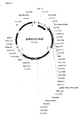
Random mutagenesis of the EDG5 gene was conducted using the yeast CEN expression plasmid p416GPD-Edg5 carrying an URA3 marker (Figure 2). - A Nhel restriction site was created at
position 157 bp of the coding sequence of EDG5. Three nucleotides where exchanged by site directed mutagenesis to create the site. This was necessary to conserve, after linearization of the plasmid, only the first 157 bp and the last 101 bp of the open reading frame for homologous recombination. - To allow in vivo recombination, the p416GPD-Edg5 was linearized by double digestion Nhel-Xmal before co-transformation with the low-fidelity PCR amplification product.
- Three colonies of each yeast transformation were tested for the growth and for the β-Galactosidease activity on selective plate:
- the first plate (SC Glucose -Ura) shows the normal growth of the colonies;
- the second plate (SC Glucose -Ura -His containing 2mM 3-AT, pH 6.8) shows the growth of the colonies expressing a constitutively activated mutant;
- the third plate (SC Glucose -Ura, X-Gal, pH 7) is testing the β-Galactosidase
activity (its substrate X-Gal is transformed in a blue metabolite) of the mutants:
- the frame shows the colored colonies which correspond to the most active clones
- and correlates with the observations from the second plate.
- After 24 hours of growth of the different mutants in selective liquid medium, in the presence of an increasing concentration of Sphingosine 1-Phosphate, β-Galactosidase activity was measured in a colorimetric assay by adding the substrate CPRG, incubating 2 hours and measuring the absorbance at 574nm.
- Luciferase activity measured in triplicates after 24 hours of stimulation by a serial dilution of Sphingosine 1-Phosphate.
- A modified PCR protocol (Svetlov and Cooper, 1998) was used: initial denaturation at 95°C for 3 min, 30 cycles of denaturation at 95°C for 5 s, annealing at 50°C for 5 s, and primer extension at 72°C for 5 s, and final extension at 72°C for 5 min, performed on the Cycler PTC-200 (MJ-Research).
- The reaction was carried out with 2.5 U of Taq polymerase (Promega) using standard reaction buffer (10 mM Tris-HCI, pH 8.3, 1.5 mM MgCl2, 50 mM KCI) supplemented with 0.5 mM MnSO4. An equimolar mix of dNTPs (Amersham Pharmacia Biotech Inc) was used to provide 500 µM of each nucleotide triphosphate in a 100 µl reaction volume. 10 ng of the p416GPD-Edg5 plasmid were used as template. The following oligonucleotides (30 pmol of each) were used as primers for the PCR amplification: EDG5 fwd CAR (SEQ ID NO. 1: 5'-ATG GGC AGC TTG TAC TCG GAG T-3') and EDG5 rev CAR (SEQ ID NO. 2: 5'-TCA GAA CAC CGT GTT GCC CTC-3'). They correspond exactly to the first 22 and last 21 nucleotides of the receptor's sequence, thus the PCR amplifies exactly the open reading frame.
- The PCR product (about 5 µg) was purified by electrophoresis through a 1% agarose-TBE gel followed by elution into 40 µl sterile water (QIAquick Gel Extraction Kit, Qiagen). The DNA final concentration was about 0.1 µg/µl.
- 2 µl of the PCR product were cloned into the TA Topo Cloning Vector (Invitrogen) for further qualitative and quantitative analysis of the randomly induced mutations.
- The remaining volume of purified PCR product (3-5 µg in 38 µl) was co-transformed with 1 µg of p416GPD-Edg5 (linearized by double digestion with Nhel-Xmal) into about 109 cells of the yeast strain (W303 MATa far1::hisG, sst2::ura3FOA, fus1::HIS3, ΔSte2::KanR, mfa2-fus1-lacZ::ura3FOA) according to a modified Lithium acetate method (Ito et al., 1983).
- The transformed yeast cells were plated on 10 plates SC/Glucose -Ura medium to select for the cells with a "repaired plasmid" (about 108 yeast cells per plate).
- After 36 hours incubation at 30°C (when very small colonies were visible), the transformation plates were replica-plated onto selective medium: SC/Glucose -Ura-His, pH 6.8, containing 2 mM 3-Aminotriazol (3-AT).
- After 48 hours incubation at 30°C, the colonies still growing were picked and restreaked as patches on a new selective plate (SC/Glucose -Ura -His, pH 6.8, containing 2 mM of 3-AT).
- To eliminate false positive mutants (plasmid independent activity), the following steps were performed:
- The plasmid from each selected clone was recovered by a Zymolase /SDS treatment protocol adapted from H. Ma & al. (Ma et al., 1987).
- After ethanol purification, each plasmid was transformed into E. coli DH5α electro-competent cells. Individual bacterial transformants, one for each mutant, were grown in mini culture for plasmid preparation (QIAprep Spin Miniprep Kit, Qiagen).
- The purified DNA was then transformed again into the same yeast strain and each mutant assayed.
- From a 16 hours culture in SC/glucose -Ura medium, about 3x10⁵ cells of each mutant (in triplicates) were spotted onto three different plates:
- SC/Glucose -Ura as a control (to make sure that every spot contains roughly the same number of cells);
- SC/Glucose -Ura -His, pH 6.8, containing 2 mM 3-AT;
- SC/Glucose -Ura,
pH 7, containing 100 µg/ml X-Gal (5-Bromo-4-chloro-3-indolyl β-D-galactopyranoside). -
- The two first plates were analyzed after 48 hours of growth at 30°C; the third one was kept for 2 or 3 additional days at 4°C to develop the blue coloration due to β-Galactosidase activity.
- We selected the clones which grew on selective medium (SC/Glucose -Ura -His, pH 6.8, containing 2 mM 3-AT) and gave rise to a blue colored patch on X-Gal medium (SD -Ura,
pH 7, containing 100 µg/ml X-Gal). These were candidates for constitutive activity (Figure 4). - The same 16 hours culture was diluted 200 times in selective medium (SC/Glucose -Ura -His, pH 6.8, containing 2 mM 3-AT) and 90 µl were dispensed into the 8 wells of a microtiter plate column already containing 10 µl of a serial dilution of the ligand Spingosine 1-Phosphate (Matreya) (solubilized and diluted in water from 10-3 to 10-9 M).
- After 18 to 24 hours of stimulation/growth in a shaking incubator (700 rpm, 30°C), the β-Galactosidase activity was detected with the substrate Chlorophenolred-β-D-galactopyranoside (CPRG, Boehringer).
- The wild type Edg5 receptor and 3 of the 22 CAMs were sub-cloned into the mammalian expression vector pcDNA3.1(+) to be tested in cell culture (Figure 3). A HEK 293 cell line stably transfected with the reporter construct 6SRE-Luciferase was utilized for the assay.
This adherent cell line was grown under normal conditions (37°C, 5% CO2, humid atmosphere) in DMEM-Glutamax (Gibco BRL) + 1% Penicillin/Streptomycin + 10% Fetal Bovine Serum. - Day 1- 40.000 cells/well were plated in a white 96-well plate
- Day 2- the cells were rinsed with 200µl Opti-MEM (Gibco BRL) and each well received 100µl of a transfection mix containing: 0.5 µg receptor plasmid + 0.25 µg CMV-β Gal (Promega) + 1.2 µl Lipofectamine (Life Technologies) in Opti-MEM.
- After 5 hours of incubation with this mix, the wells were emptied and received 180 µl of the normal culture medium (DMEM-
Glutamax + 1% Penicillin/Streptomycin) containing only 0.5% of Fetal Bovine Serum. - Day 3- 20 µl of a 10-fold concentrated serial dilution of Sphingosine 1-Phosphate (from 10-4 to 10-10 M) was added to each well.
- Day 4- the wells were emptied, rinsed with 200 µl phosphate buffer (without calcium and magnesium) and received 50 µl of Glo Lysis Buffer (Promega), after 5 minutes at room temperature, they received 50 µl of Steady-Glo Luciferase Reagent, and the measurement was achieved 5 minutes later in a Luminoskan (Labsystem), 15 seconds integration of the signal.
- To normalize the results of the assay, β-Galactosidase activity was measured, from the same plate, after 5 minutes incubation with 25 µl of Gal-Screen Reagent (Tropix), 5 seconds integration of the signal. The luciferase numbers were then divided by the β-Galactosidase numbers.
- The analysis of 38 randomly sequenced clones revealed 28 nucleotide mutations: 5 silent mutations, 1 STOP codon and 22 amino acid substitutions. These results suggest that under the experimental conditions the probability for an amino acid substitution to occur in the 354 residues of the wild-type sequence is 0.61.
- The solid phase assay gives a confirmation of the first selection done after replicaplating the gap repair plates on selection plates. After being grown again on selective plate as patches (for confirmation), the plasmid DNA carrying the active mutant was purified, amplified in E. coli and re-transformed into the same yeast strain.
- Three colonies of each yeast transformation were tested for growth and for β-Galactosidase activity on selective plates. The Figure 4 illustrates the clear response from the different mutants obtained in this assay. Here, mutants 1 (contains two mutations, Ala82Val and Ile197Thr) and 7 (Ala82Val only) look the most active (i.e. fast growth on selective plate and blue coloration on X-Gal plate). Mutants 2 (Thr196lle), 3 (Ser159Pro), 5 (Phe242Leu) and 8 (Ser159Pro and Val215Met) were also selected (at least two of the three clones grew), but appear less active (i.e. the blue coloration is not so obvious).
Clone 4 had the same activating Phe242Leu mutation but only one of the three colonies grew.Clone 6 had no activating mutation. - To further characterize the mutants, their activity was tested in a liquid assay. Triplicates of each mutant (re-transformed in yeast) were grown to saturation in a pre-culture. These cell suspensions were diluted 200 times into a medium lacking histidine, permitting the growth of only activated receptors (HIS3 gene under the control of the FUS1 promoter) and distributed in a 96-well microtiterplate together with an increasing concentration of Sphingosine 1-Phosphate. After 24 hours of incubation and shaking at 30°C, the presence of β-Galactosidase activity was measured in a colorimetric assay by adding the substrate CPRG, incubating 2 hours at 30°C and measuring the absorbance at 574nm.
- Figure 5 shows that even in the absence of ligand, mutant Ala82Val is hyper-active (which correlates very well with the observations made in the plate assay), while others have a basal activity intermediate between the Ala82Val mutant and the wild type receptor (Ser159Pro and Val238Glu).
- Out of three independent screens, 22 mutations have been found to confer constitutive activity to the Edg5 receptor (increased basal activity and the ability to be further stimulated by Sphingosine 1-Phosphate) (Table 1). Interestingly, the mutation Ser159Pro was isolated in each of the three screens, and the mutations Ala82Val and Phe242Leu were isolated in two of the three screens.
- A Serum Responsive Element (SRE) - Luciferase reporter assay in HEK 293 was chosen to verify in mammalian cells the activity of the CAMs selected with the yeast system. A stable HEK 293 cell line carrying the 6SRE-Luciferase construct was transfected with the wild type Edg5 or the mutants Ala82Val, Ser159Pro and Val238Glu. After 24 hours of stimulation, the measurement of Luciferase reflected the receptor's activity.
- This assay (figure 6) shows an increased basal activity (i.e. in absence of agonist) of the three mutants compared to the wild type, although the maximum response of all four receptors (wild type and mutants) was not changed.
- To validate a screen, the whole process must be repeated in the same conditions. Indeed, the PCR principle can create an important bias introducing an activating (i.e. the Ala 82 -> Val mutation found 68 times in the third screen) or inactivating mutation in an early stage of the reaction. This mutation is then present in a high percentage of clones and can mask other interesting point mutations. This has to be circumvented. The best and fastest way would be doing at least three low-fidelity PCRs at the time and all the following steps in parallel.
Selected mutants analysis Out of three independent experiments, 22 mutations have been found to confer constitutive activity to the Edg5 receptor: First screen (4 active mutants) Second screen (3 active mutants) Third screen (118 active mutants) Location Leu 70 -> Pro 2 Transmembrane domain 2Phe 71 -> Leu 7 '' Ala 82 -> Val 2 68 '' Val 87 -> Ala 1 '' Ser 113 -> Le Transmembrane domain 3 Leu 139 -> Pro 2 Intracellular loop 2Ser 155 -> Pro 1 Transmembrane domain 4Ser 159 -> Pro 1 1 25 '' Val 183 -> Ala 2 Extracellular loop 2Ala 187 -> Thr 1 '' Lys 188 -> Arg 1 '' Thr 196 -> Ile 1 Transmembrane domain 5lie 205 -> Phe 3 '' Leu 229 -> Pro 1 Transmembrane domain 6Leu 232 -> Arg 3 '' Thr 234 -> Ala 4 '' Val 235 -> lie 4 '' Thr 236 -> lie 1 '' Val 238 -> Glu 2 '' Val 238 -> Ala 3 '' Phe 242 -> Leu 2 1 '' Phe 250 -> Tyr 2 '' 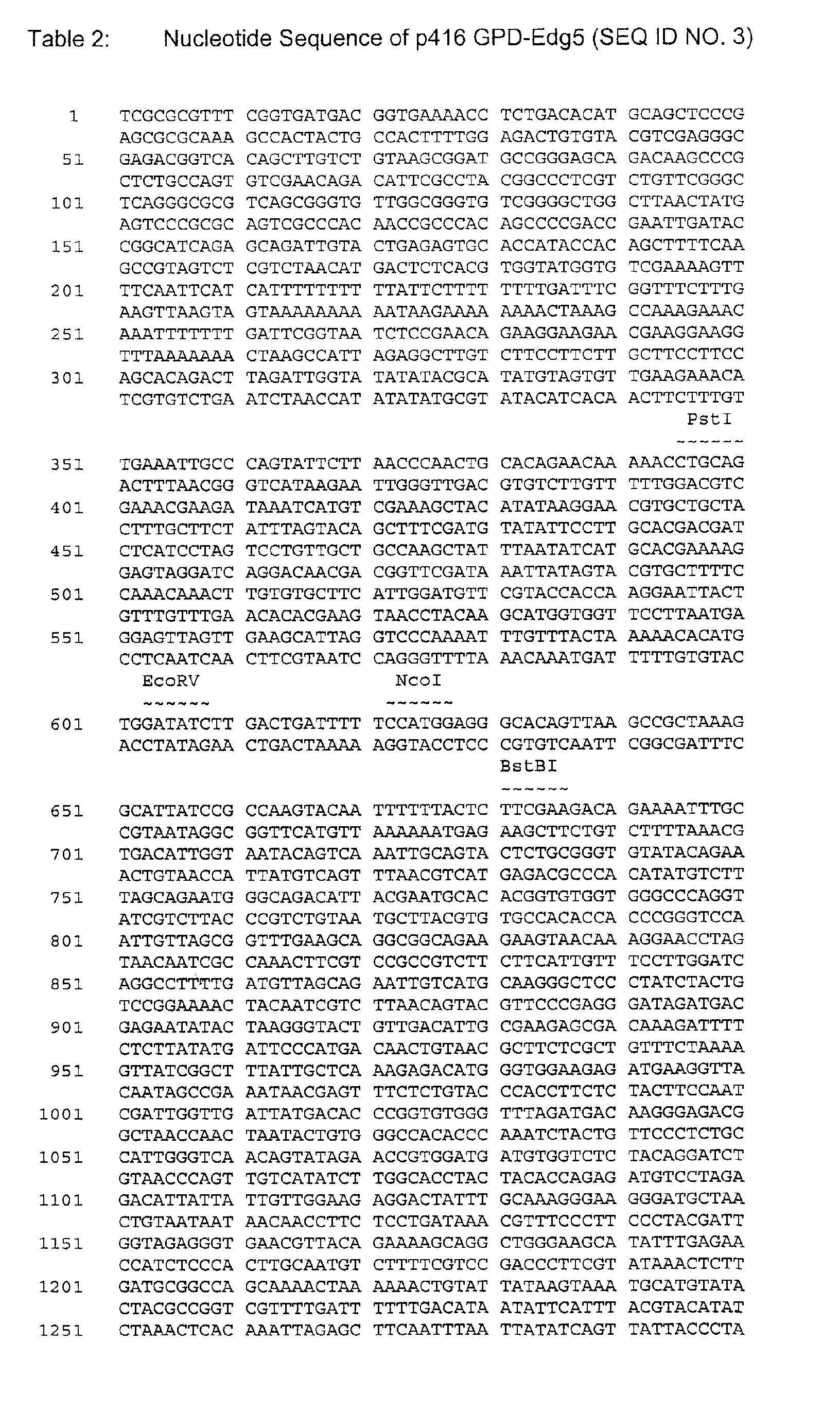
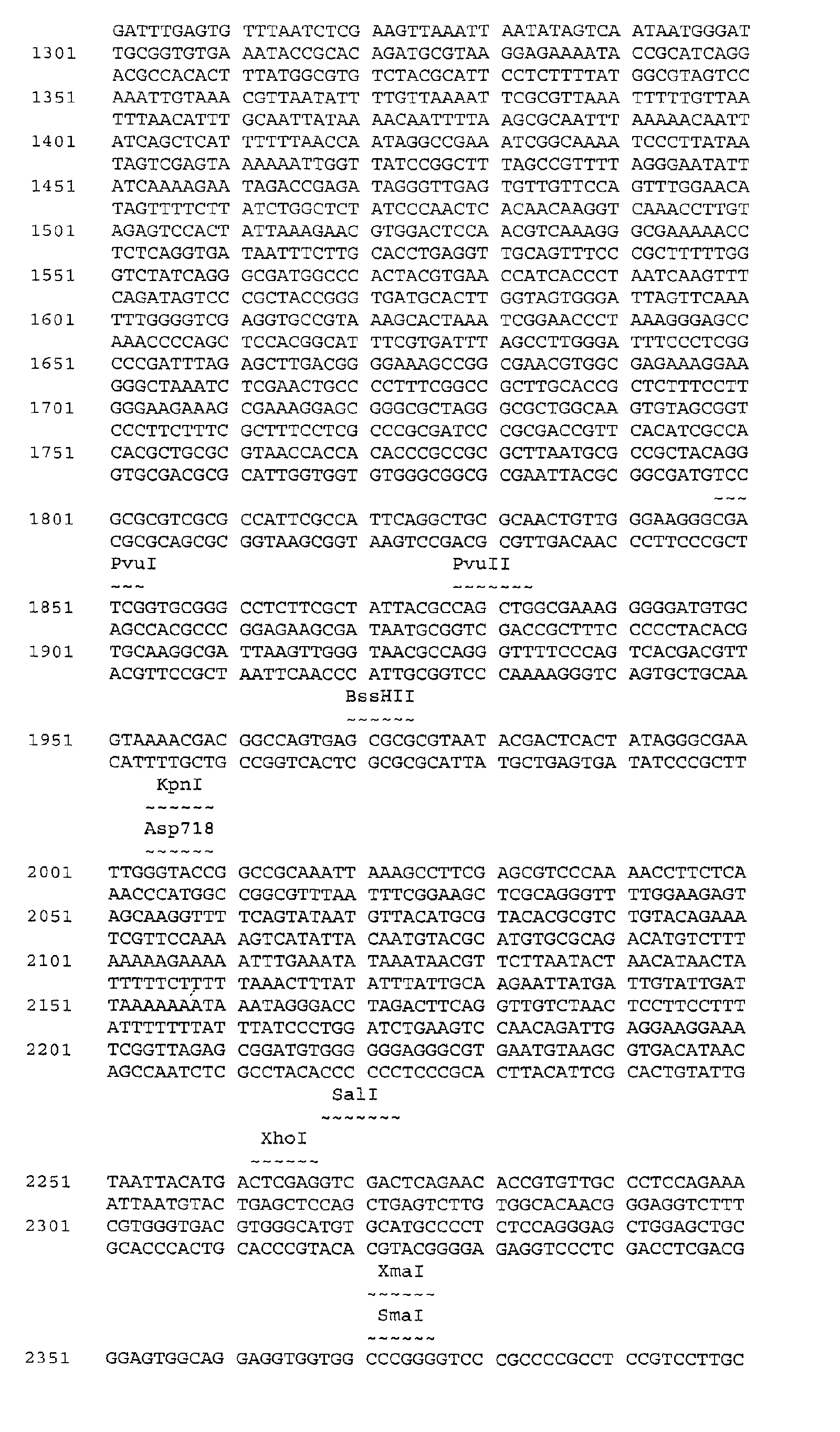



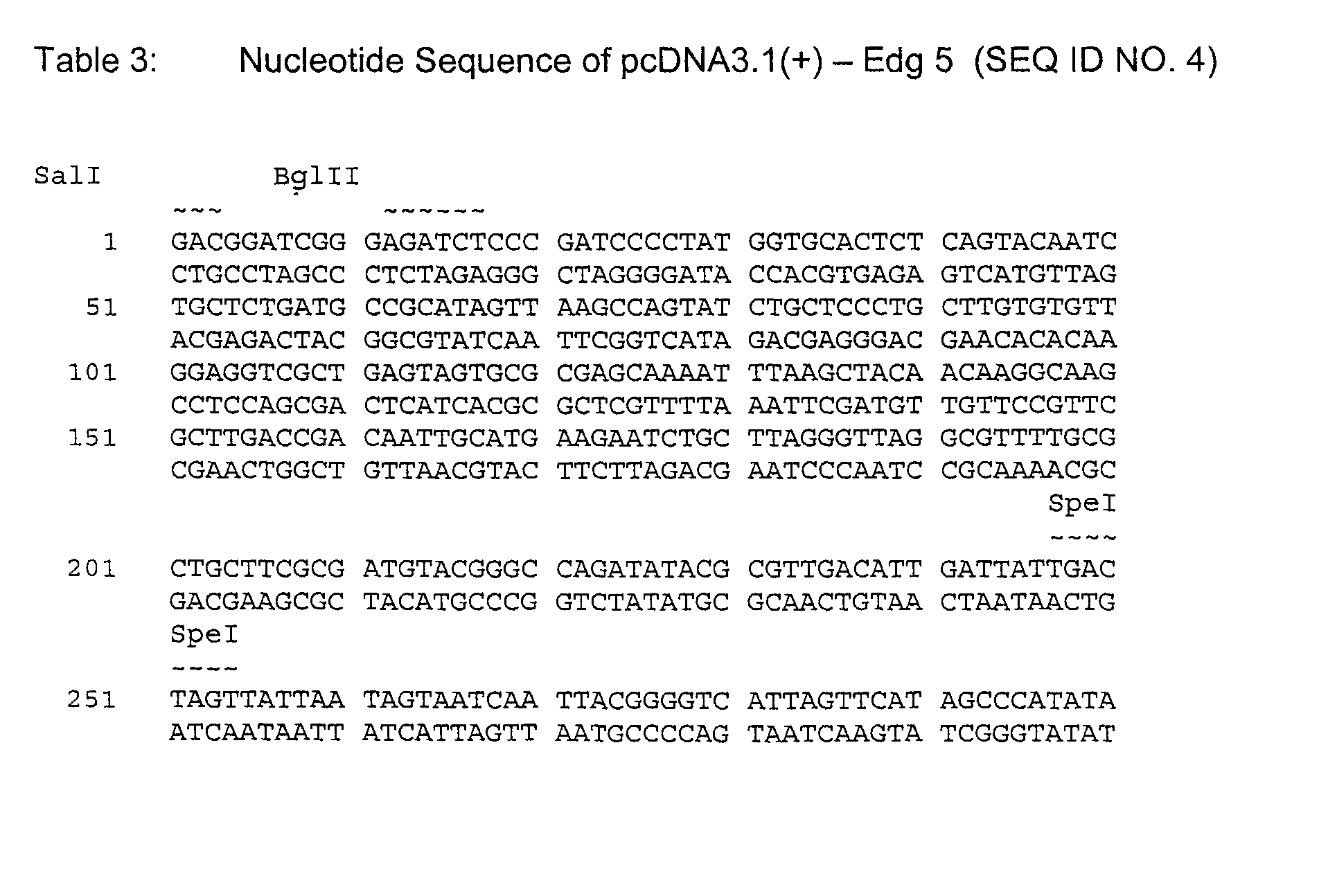
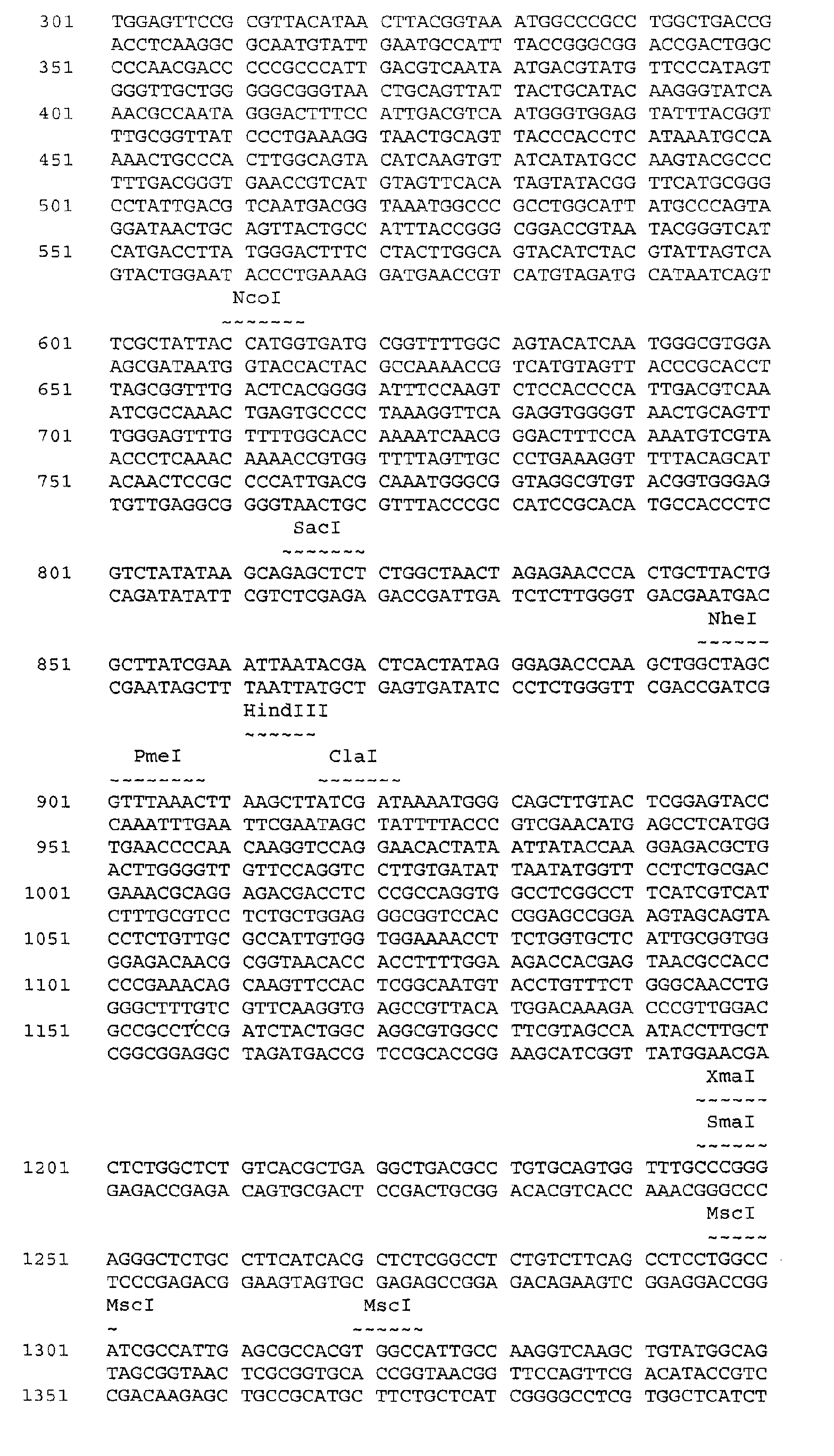


- Alewijnse AE, Timmerman H, Jacobs E H, Smit M J, Roovers E, Cotecchia S and Leurs R (2000) The Effect of Mutations in the DRY Motif on the Constitutive Activity and Structural Instability of the Histamine H2 Receptor. Mol Pharmacol 57: pp 890-898.
- An S, Zheng Y and Bleu T (2000) Sphingosine 1-Phosphate-Induced Cell Proliferation, Survival, and Related Signaling Events Mediated by G Protein-Coupled Receptors Edg3 and Edg5. J Biol Chem 275: pp 288-296.
- Botstein D, Chervitz S A and Cherry J M (1997) Yeast As a Model Organism. Science 277: pp 1259-1260.
- Brown AJ, Dyos S L, Whiteway M S, White J H, Watson M A, Marzioch M, Clare J J, Cousens D J, Paddon C, Plumpton C, Romanos M A and Dowell S J (2000) Functional Coupling of Mammalian Receptors to the Yeast Mating Pathway Using Novel Yeast/Mammalian G Protein α-Subunit Chimeras. Yeast 16: pp 11-22.
- Chambers JK, Macdonald L E, Sarau H M, Ames R S, Freeman K, Foley J J, Zhu Y, McLaughlin M M, Murdock P, McMillan L, Trill J, Swift A, Aiyar N, Taylor P, Vawter L, Naheed S, Szekeres P, Hervieu G, Scott C, Watson J M, Murphy A J, Duzic E, Klein C, Bergsma D J, Wilson S and Livi G P (2000) A G Protein-Coupled Receptor for UDP-Glucose. J Biol Chem 275: pp 10767-10771.
- Chen G, Way J, Armour S, Watson C, Queen K, Jayawickreme C K, Chen W J and Kenakin T (2000) Use of Constitutive G Protein-Coupled Receptor Activity for Drug Discovery. Mol Pharmacol 57: pp 125-134.
- Daeffler L and Landry Y (2000) Inverse Agonism at Heptahelical Receptors: Concept, Experimental Approach and Therapeutic Potential. Fundam Clin Pharmacol 14: pp 73-87.
- Dhanasekaran N, Heasley L E and Johnson G L (1995) G Protein-Coupled Receptor Systems Involved in Cell Growth and Oncogenesis. Endocr Rev 16: pp 259-270.
- Duprez L, Parma J, Costagliola S, Hermans J, Van Sande J, Dumont J E and Vassart G (1997) Constitutive Activation of the TSH Receptor by Spontaneous Mutations Affecting the N-Terminal Extracellular Domain. FEES Lett 409: pp 469-474.
- Egan CT, Herrick-Davis K and Teitler M (1998) Creation of a Constitutively Activated State of the 5-Hydroxytryptamine2A Receptor by Site-Directed Mutagenesis: Inverse Agonist Activity of Antipsychotic Drugs. J Pharmacol Exp Ther 286: pp 85-90.
- Erlenbach I, Kostenis E, Schmidt C, Serradeil-Le Gal C, Raufaste D, Dumont M E, Pausch M H and Wess J (2001) Single Amino Acid Substitutions and Deletions That Alter the G Protein Coupling Properties of the V2 Vasopressin Receptor Identified In Yeast by Receptor Random Mutagenesis. J Biol Chem pp M103203200.
- Hadcock JR and Pausch M (1999) Ligand screening of G protein-coupled receptors in yeast, in G Protein-Coupled Receptors (Haga T and Berstein G eds) pp 49-69, CRC Press LLC, Boca Raton, Florida.
- Hla T (2001) Sphingosine 1-Phosphate Receptors. Prostaglandins & Other Lipid Mediators 64: pp 135-142.
- Ito H, Fukuda Y, Murata K and Kimura A (1983) Transformation of Intact Yeast Cells Treated With Alkali Cations. J Bacteriol 153: pp 163-168.
- Jensen AA, Spalding T A, Burstein E S, Sheppard P O, O'Hara P J, Brann M R, Krogsgaard-Larsen P and Bräuner-Osborne H (2000) Functional Importance of the Ala116-Pro136 Region in the Calcium-Sensing Receptor. J Biol Chem 275: pp 29547-29555.
- Konopka JB, Margarit S M and Dube P (1996) Mutation of Pro-258 in
Transmembrane Domain 6 Constitutively Activates the G Protein-Coupled α-Factor Receptor. Proc Natl Acad Sci U S A 93: pp 6764-6769. - Lefkowitz RJ, Cotecchia S, Samama P and Costa T (1993) Constitutive Activity of Receptors Coupled to Guanine Nucleotide Regulatory Proteins. Trends Pharmacol Sci 14: pp 303-307.
- Ma H, Kunes S, Schatz P J and Botstein D (1987) Plasmid Construction by Homologous Recombination in Yeast. Gene 58: pp 201-216.
- MacEwan DJ and Milligan G (1996) Inverse Agonist-Induced Up-Regulation of the Human B2-Adrenoceptor in Transfected Neuroblastoma X Glioma Hybrid Cells. Mol Pharmacol 50: pp 1479-1486.
- Oldenburg KR, Vo K T, Michaelis S and Paddon C (1997) Recombination-Mediated PCR-Directed Plasmid Construction in Vivo in Yeast. Nucleic Acids Res 25: pp 451-452.
- Parnot C, Bardin S, Miserey-Lenkei S, Guedin D, Corvol P and Clauser E (2000) Systematic Identification of Mutations That Constitutively Activate the Angiotensin II Type 1A Receptor by Screening a Randomly Mutated CDNA Library With an Original Pharmacological Bioassay. Proc Natl Acad Sci U S A 97: pp 7615-7620.
- Price LA, Kajkowski E M, Hadcock J R, Ozenberger B A and Pausch M H (1995) Functional Coupling of a Mammalian Somatostatin Receptor to the Yeast Pheromone Response Pathway. Mol Cell Biol 15: pp 6188-6195.
- Rao VR and Oprian D D (1996) Activating Mutations of Rhodopsin and Other G Protein-Coupled Receptors. Annu Rev Biophys Biomol Struct 25: pp 287-314.
- Robinson PR, Cohen G B, Zhukovsky E A and Oprian D D (1992) Constitutively Active Mutants of Rhodopsin. Neuron 9: pp 719-725.
- Samama P, Bond R A, Rockman H A, Milano C A and Lefkowitz R J (1997) Ligand-Induced Overexpression of a Constitutively Active B2-Adrenergic Receptor:
- Pharmacological Creation of a Phenotype in Transgenic Mice. Proc Natl Acad Sci U S A 94: pp 137-141.
- Sommers CM and Dumont M E (1997) Genetic Interactions Among the Transmembrane Segments of the G Protein Coupled Receptor Encoded by the Yeast STE2 Gene. J Mol Biol 266: pp 559-575.
- Sommers CM, Martin N P, Akal-Strader A, Becker J M, Naider F and Dumont M E (2000) A Limited Spectrum of Mutations Causes Constitutive Activation of the Yeast Alpha-Factor Receptor [In Process Citation]. Biochemistry 39: pp 6898-6909.
- Spiegel AM (1996) Mutations in G Proteins and G Protein-Coupled Receptors in Endocrine Disease. J Clin Endocrinol Metab 81: pp 2434-2442.
- Svetlov V and Cooper T G (1998) Efficient PCR-Based Random Mutagenesis of Sub-Genic (100 Bp) DNA Fragments. Yeast 14: pp 89-91.
- Tate CG and Grisshammer R (1996) Heterologous Expression of G-Protein-Coupled Receptors. Trends Biotechnol 14: pp 426-430.
- Tsao P, Cao T and von Zastrow M (2001) Role of Endocytosis in Mediating Downregulation of G-Protein-Coupled Receptors. Trends Pharmacol Sci 22: pp 91-96.
- Varma DR, Shen H, Deng X F, Peri K G, Chemtob S and Mulay S (1999) Inverse Agonist Activities of B-Adrenoceptor Antagonists in Rat Myocardium. Br J Pharmacol 127: pp 895-902.
- Zwick E, Hackel P O, Prenzel N and Ullrich A (1999) The EGF Receptor As Central Transducer of Heterologous Signalling Systems. Trends Pharmacol Sci 20: pp 408-412.
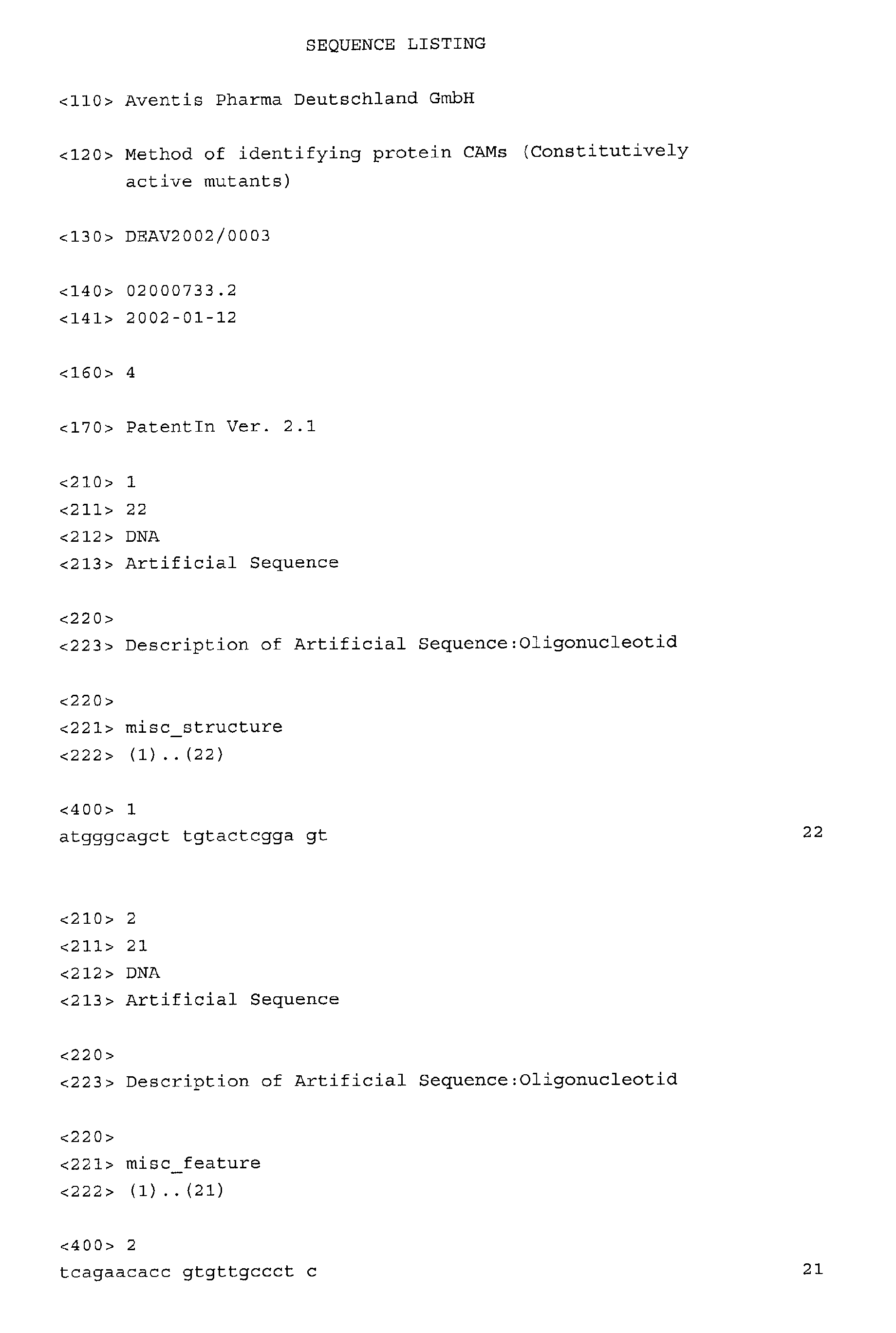




Claims (6)
- Method of identifying protein CAMs (constitutively active mutants) whereina) a library of mutated sequences of a protein is generated,b) yeast cells are transformed with such library, andc) the respective protein CAM is identified.
- Method of identifying protein CAMs (constitutively active mutants) whereind) a library of mutated sequences of a protein is generated,e) yeast cells are co-transformed with the library and a linearized expression vector,f) the transformed yeast cells are selected for the repair of the plasmid, andg) protein CAMs are identified by determining the activity of the respective protein mutant.
- Method as claimed in claim 1 or 2, wherein the protein is a GPCR (G-Protein coupled receptor), an ion-channel or an enzyme.
- Method as claimed in claim 3, wherein the enzyme is a kinase.
- Method as claimed in one of the foregoing claims, wherein the protein is a mammalian protein.
- Use of the method as claimed in claims 1 to 5, for identifying agonists or inverse agonists.
Priority Applications (6)
| Application Number | Priority Date | Filing Date | Title |
|---|---|---|---|
| EP02000733A EP1336655A1 (en) | 2002-01-12 | 2002-01-12 | Method of identifying protein CAMS (constitutively active mutants) |
| AU2003205572A AU2003205572A1 (en) | 2002-01-12 | 2003-01-07 | METHOD OF IDENTIFYING PROTEINS CAMs (CONSTITUTIVELY ACTIVE MUTANTS) |
| PCT/EP2003/000070 WO2003057882A1 (en) | 2002-01-12 | 2003-01-07 | METHOD OF IDENTIFYING PROTEINS CAMs (CONSTITUTIVELY ACTIVE MUTANTS) |
| DE10393660T DE10393660B4 (en) | 2002-01-12 | 2003-01-07 | Method for identifying protein CAMs (constitutively active mutants) |
| US10/340,447 US20040002115A1 (en) | 2002-01-12 | 2003-01-10 | Method of identifying protein CAMs (constitutively active mutants) |
| US11/684,459 US20080166748A1 (en) | 2002-01-12 | 2007-03-09 | Method of Identifying Protein CAMs (Constitutively active mutants) |
Applications Claiming Priority (1)
| Application Number | Priority Date | Filing Date | Title |
|---|---|---|---|
| EP02000733A EP1336655A1 (en) | 2002-01-12 | 2002-01-12 | Method of identifying protein CAMS (constitutively active mutants) |
Publications (1)
| Publication Number | Publication Date |
|---|---|
| EP1336655A1 true EP1336655A1 (en) | 2003-08-20 |
Family
ID=8185241
Family Applications (1)
| Application Number | Title | Priority Date | Filing Date |
|---|---|---|---|
| EP02000733A Withdrawn EP1336655A1 (en) | 2002-01-12 | 2002-01-12 | Method of identifying protein CAMS (constitutively active mutants) |
Country Status (4)
| Country | Link |
|---|---|
| EP (1) | EP1336655A1 (en) |
| AU (1) | AU2003205572A1 (en) |
| DE (1) | DE10393660B4 (en) |
| WO (1) | WO2003057882A1 (en) |
Citations (3)
| Publication number | Priority date | Publication date | Assignee | Title |
|---|---|---|---|---|
| WO2000012704A2 (en) * | 1998-09-01 | 2000-03-09 | Basf Aktiengesellschaft | Enhanced functional expression of g protein-coupled receptors |
| WO2000021987A2 (en) * | 1998-10-13 | 2000-04-20 | Arena Pharmaceuticals, Inc. | A method of identifying modulators of cell surface membrane receptors useful in the treatment of disease |
| WO2002018590A2 (en) * | 2000-08-30 | 2002-03-07 | John Hopkins University School Of Medicine | Identification of activated receptors and ion channels |
-
2002
- 2002-01-12 EP EP02000733A patent/EP1336655A1/en not_active Withdrawn
-
2003
- 2003-01-07 AU AU2003205572A patent/AU2003205572A1/en not_active Abandoned
- 2003-01-07 DE DE10393660T patent/DE10393660B4/en not_active Expired - Fee Related
- 2003-01-07 WO PCT/EP2003/000070 patent/WO2003057882A1/en not_active Ceased
Patent Citations (3)
| Publication number | Priority date | Publication date | Assignee | Title |
|---|---|---|---|---|
| WO2000012704A2 (en) * | 1998-09-01 | 2000-03-09 | Basf Aktiengesellschaft | Enhanced functional expression of g protein-coupled receptors |
| WO2000021987A2 (en) * | 1998-10-13 | 2000-04-20 | Arena Pharmaceuticals, Inc. | A method of identifying modulators of cell surface membrane receptors useful in the treatment of disease |
| WO2002018590A2 (en) * | 2000-08-30 | 2002-03-07 | John Hopkins University School Of Medicine | Identification of activated receptors and ion channels |
Non-Patent Citations (2)
| Title |
|---|
| PARNOT CHARLES ET AL: "Systematic identification of mutations that constitutively activate the angiotensin II type 1A receptor by screening a randomly mutated cDNA library with an original pharmacological bioassay.", PROCEEDINGS OF THE NATIONAL ACADEMY OF SCIENCES OF THE UNITED STATES, vol. 97, no. 13, 30 June 2000 (2000-06-30), June 30, 2000, pages 7615 - 7620, XP002201081, ISSN: 0027-8424 * |
| SOMMERS CHRISTINE M ET AL: "A limited spectrum of mutations causes constitutive activation of the yeast alpha-factor receptor.", BIOCHEMISTRY, vol. 39, no. 23, 13 June 2000 (2000-06-13), pages 6898 - 6909, XP002201080, ISSN: 0006-2960 * |
Also Published As
| Publication number | Publication date |
|---|---|
| AU2003205572A1 (en) | 2003-07-24 |
| DE10393660B4 (en) | 2011-11-17 |
| DE10393660T5 (en) | 2006-01-26 |
| WO2003057882A1 (en) | 2003-07-17 |
Similar Documents
| Publication | Publication Date | Title |
|---|---|---|
| Pausch | G-protein-coupled receptors in Saccharomyces cerevisiae: high-throughput screening assays for drug discovery | |
| Brown et al. | Functional coupling of mammalian receptors to the yeast mating pathway using novel yeast/mammalian G protein α‐subunit chimeras | |
| Olesnicky et al. | A constitutively active G‐protein‐coupled receptor causes mating self‐compatibility in the mushroom Coprinus | |
| CA2266543C (en) | Methods and compositions for identifying receptor effectors | |
| Stefan et al. | The third cytoplasmic loop of a yeast G-protein-coupled receptor controls pathway activation, ligand discrimination, and receptor internalization | |
| JP2009143932A (en) | Yeast cells expressing modified g protein and method of use thereof | |
| US7319009B2 (en) | Methods and compositions for identifying receptor effectors | |
| Erlenbach et al. | Single amino acid substitutions and deletions that alter the G protein coupling properties of the V2 vasopressin receptor identified in yeast by receptor random mutagenesis | |
| US20080268475A1 (en) | Yeast cells expressing modified g proteins and methods of use therefor | |
| WO2001058923A9 (en) | Improved systems for sensitive detection of g-protein coupled receptor and orphan receptor function using reporter enzyme mutant complementation | |
| Morioka et al. | Effect of sterol composition on the activity of the yeast G-protein-coupled receptor Ste2 | |
| WO2002018590A2 (en) | Identification of activated receptors and ion channels | |
| WO2002046369A2 (en) | Yeast-based assays involving gpcrs | |
| WO1997035985A1 (en) | Host cells expressing mutants of a natural g-protein coupled receptor (gpcr); saccharomyces cerevisiae ste2 gene, and their use as biosensors | |
| Strickfaden et al. | Distinct roles for two Gα–Gβ interfaces in cell polarity control by a yeast heterotrimeric G protein | |
| Zhang et al. | (−) U50, 488H [(trans)-3, 4-Dichloro-N-methyl-N-[2-(1-pyrrolidinyl)-cyclohexyl] benzeneacetamide] induces internalization and down-regulation of the human, but not the rat, κ-opioid receptor: structural basis for the differential regulation | |
| US20050196743A1 (en) | Cell surface proteins and use thereof as indicators of activation of cellular signal transduction pathways | |
| US20080280303A1 (en) | G-protein coupled receptors high-throughput functional assay | |
| Hadcock et al. | Ligand screening of G protein-coupled receptors in yeast | |
| NO330684B1 (en) | In vitro method for identification of GPRCR modulators. | |
| US7273747B2 (en) | Cell having amplified signal transduction pathway responses and uses therefor | |
| Shi et al. | N‐terminal residues of the yeast pheromone receptor, Ste2p, mediate mating events independently of G1‐arrest signaling | |
| US20030009022A1 (en) | Methods and compositions for identifying receptor effectors | |
| Thampipilai | Developing G-Protein Coupled Receptor Coupled Signaling System in Yeast with Improved Sensitivity for the Selection of Functional Modulators of Heterologous G-Protein Coupled Receptors | |
| DE10393660B4 (en) | Method for identifying protein CAMs (constitutively active mutants) |
Legal Events
| Date | Code | Title | Description |
|---|---|---|---|
| PUAI | Public reference made under article 153(3) epc to a published international application that has entered the european phase |
Free format text: ORIGINAL CODE: 0009012 |
|
| AK | Designated contracting states |
Designated state(s): AT BE CH CY DE DK ES FI FR GB GR IE IT LI LU MC NL PT SE TR |
|
| AX | Request for extension of the european patent |
Extension state: AL LT LV MK RO SI |
|
| AKX | Designation fees paid | ||
| REG | Reference to a national code |
Ref country code: DE Ref legal event code: 8566 |
|
| STAA | Information on the status of an ep patent application or granted ep patent |
Free format text: STATUS: THE APPLICATION IS DEEMED TO BE WITHDRAWN |
|
| 18D | Application deemed to be withdrawn |
Effective date: 20040221 |