EP1336407A1 - Medicinal compositions - Google Patents
Medicinal compositions Download PDFInfo
- Publication number
- EP1336407A1 EP1336407A1 EP01982846A EP01982846A EP1336407A1 EP 1336407 A1 EP1336407 A1 EP 1336407A1 EP 01982846 A EP01982846 A EP 01982846A EP 01982846 A EP01982846 A EP 01982846A EP 1336407 A1 EP1336407 A1 EP 1336407A1
- Authority
- EP
- European Patent Office
- Prior art keywords
- pharmaceutical composition
- compound
- pharmacologically acceptable
- receptor antagonist
- angiotensin
- Prior art date
- Legal status (The legal status is an assumption and is not a legal conclusion. Google has not performed a legal analysis and makes no representation as to the accuracy of the status listed.)
- Granted
Links
- 0 CN(C1N)C(N)=C(*)N=C1Cl Chemical compound CN(C1N)C(N)=C(*)N=C1Cl 0.000 description 2
- VTRAEEWXHOVJFV-UHFFFAOYSA-N CCCc1nc(C(C)(C)O)c(C(O)=O)[n]1Cc(cc1)ccc1-c(cccc1)c1-c1nnn[nH]1 Chemical compound CCCc1nc(C(C)(C)O)c(C(O)=O)[n]1Cc(cc1)ccc1-c(cccc1)c1-c1nnn[nH]1 VTRAEEWXHOVJFV-UHFFFAOYSA-N 0.000 description 1
Classifications
-
- A—HUMAN NECESSITIES
- A61—MEDICAL OR VETERINARY SCIENCE; HYGIENE
- A61K—PREPARATIONS FOR MEDICAL, DENTAL OR TOILETRY PURPOSES
- A61K45/00—Medicinal preparations containing active ingredients not provided for in groups A61K31/00 - A61K41/00
- A61K45/06—Mixtures of active ingredients without chemical characterisation, e.g. antiphlogistics and cardiaca
-
- A—HUMAN NECESSITIES
- A61—MEDICAL OR VETERINARY SCIENCE; HYGIENE
- A61K—PREPARATIONS FOR MEDICAL, DENTAL OR TOILETRY PURPOSES
- A61K31/00—Medicinal preparations containing organic active ingredients
- A61K31/33—Heterocyclic compounds
- A61K31/395—Heterocyclic compounds having nitrogen as a ring hetero atom, e.g. guanethidine or rifamycins
- A61K31/41—Heterocyclic compounds having nitrogen as a ring hetero atom, e.g. guanethidine or rifamycins having five-membered rings with two or more ring hetero atoms, at least one of which being nitrogen, e.g. tetrazole
- A61K31/4164—1,3-Diazoles
- A61K31/4178—1,3-Diazoles not condensed 1,3-diazoles and containing further heterocyclic rings, e.g. pilocarpine, nitrofurantoin
-
- A—HUMAN NECESSITIES
- A61—MEDICAL OR VETERINARY SCIENCE; HYGIENE
- A61K—PREPARATIONS FOR MEDICAL, DENTAL OR TOILETRY PURPOSES
- A61K31/00—Medicinal preparations containing organic active ingredients
- A61K31/33—Heterocyclic compounds
- A61K31/395—Heterocyclic compounds having nitrogen as a ring hetero atom, e.g. guanethidine or rifamycins
- A61K31/54—Heterocyclic compounds having nitrogen as a ring hetero atom, e.g. guanethidine or rifamycins having six-membered rings with at least one nitrogen and one sulfur as the ring hetero atoms, e.g. sulthiame
-
- A—HUMAN NECESSITIES
- A61—MEDICAL OR VETERINARY SCIENCE; HYGIENE
- A61P—SPECIFIC THERAPEUTIC ACTIVITY OF CHEMICAL COMPOUNDS OR MEDICINAL PREPARATIONS
- A61P43/00—Drugs for specific purposes, not provided for in groups A61P1/00-A61P41/00
-
- A—HUMAN NECESSITIES
- A61—MEDICAL OR VETERINARY SCIENCE; HYGIENE
- A61P—SPECIFIC THERAPEUTIC ACTIVITY OF CHEMICAL COMPOUNDS OR MEDICINAL PREPARATIONS
- A61P9/00—Drugs for disorders of the cardiovascular system
- A61P9/12—Antihypertensives
Definitions
- the present invention relates to a pharmaceutical composition containing a specific angiotensin II receptor antagonist and one or more diuretics as the active ingredients (particularly a pharmaceutical composition for preventing or treating hypertension), the use of a specific angiotensin II receptor antagonist and one or more diuretics for manufacturing the pharmaceutical composition (particularly a pharmaceutical composition for preventing or treating hypertension), and a method for preventing or treating (particularly treating) diseases (particularly hypertension) by the administration of a pharmaceutical composition to warm-blooded animals (particularly humans) comprising effective doses of a specific angiotensin II receptor antagonist and one or more diuretics.
- a pharmaceutical composition containing a specific angiotensin II receptor antagonist, such as CS-866, and one or more diuretics exerts excellent anti-hypertensive effects and hence may be useful as a preventative and/or therapeutic agent for hypertension.
- the present invention provides a pharmaceutical composition containing a specific angiotensin II receptor antagonist and one or more diuretics as the active ingredients (particularly pharmaceutical compositions for preventing or treating hypertension), the use of a specific angiotensin II receptor antagonist and one or more diuretics for manufacturing the pharmaceutical compositions (particularly pharmaceutical compositions for preventing or treating hypertension), a method for preventing or treating (particularly treating) diseases (particularly hypertension) by the administration of a specific angiotensin II receptor antagonist and one or more diuretics to warm-blooded animals (particularly humans) at effective doses, and a pharmaceutical composition for administering simultaneously or sequentially a specific angiotensin II receptor antagonist and one or more diuretics for preventing or treating hypertension.
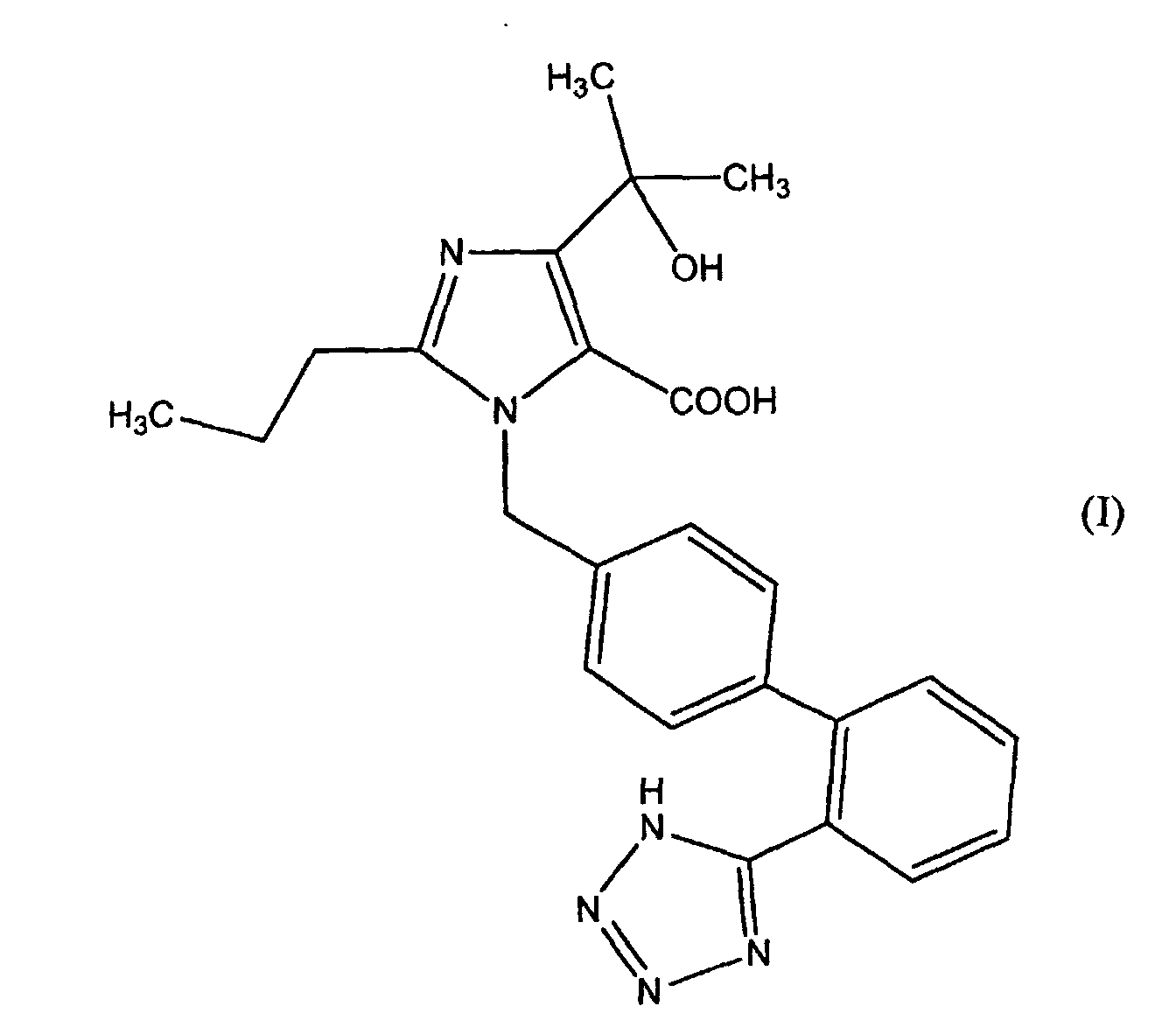
- the active ingredients of the pharmaceutical composition of this invention include an angiotensin II acceptor antagonist selected from the group consisting of a compound having the following formula (I), pharmacologically acceptable salts thereof, pharmacologically acceptable esters thereof and pharmacologically acceptable salts of said esters; and one or more diuretics.
- an angiotensin II acceptor antagonist selected from the group consisting of a compound having the following formula (I), pharmacologically acceptable salts thereof, pharmacologically acceptable esters thereof and pharmacologically acceptable salts of said esters; and one or more diuretics.
- the compound of formula (I), a salt thereof and the like are known compounds, for example, described in the specification of Japanese Patent Application Kokai No. Hei 5-78328 etc. and the chemical name of the compound of formula (I) is 4-(1-hydroxy-1-methylethyl)-2-propyl-1-[2'-(1H-tetrazol-5-yl)biphenyl-4-ylmethyl]imidazol-5-carboxylic acid.
- the "pharmacologically acceptable salt" of the compound of formula (I), which is an active ingredient of this invention includes an alkali metal salt such as sodium salt, potassium salt or lithium salt; an alkaline earth metal salt such as calcium salt or magnesium salt; a metal salt such as aluminum salt, iron salt, zinc salt, copper salt, nickel salt or cobalt salt; or an amine salt such as ammonium salt, t-octylamine salt, dibenzylamine salt, morpholine salt, glucosamine salt, phenylglycine alkyl ester salt, ethylenediamine salt, N-methylglucamine salt, guanidine salt, diethylamine salt, triethylamine salt, dicyclohexylamine salt, N,N'-dibenzylethylenediamine salt, chloroprocaine salt, procaine salt, diethanolamine salt, N-benzylphenethylamine salt, piperazine salt, tetramethylammonium salt or tris(hydroxymethyl)
- the "pharmacologically acceptable ester" of the compound of formula (I), which is an active ingredient of this invention, is a compound esterified at the carboxyl moiety of the compound of formula (I).
- a group forming said ester is a group which can be cleaved by a biological process such as hydrolysis in vivo.
- Such groups include, for example, a (C 1 -C 4 )alkoxy-(C 1 -C 4 )alkyl group such as methoxymethyl, 1-ethoxyethyl, 1-methyl-1-methoxyethyl, 1-(isopropoxy)ethyl, 2-methoxyethyl, 2-ethoxyethyl, 1,1-dimethyl-1-methoxymethyl, ethoxymethyl, propoxymethyl, isopropoxymethyl, butoxymethyl or t-butoxymethyl; a (C 1 -C 4 )alkoxylated (C 1 -C 4 )alkoxy-(C 1 -C 4 )alkyl group such as 2-methoxyethoxymethyl; a (C 6 -C 10 )aryloxy-(C 1 -C 4 )alkyl group such as phenoxymethyl; a halogenated (C 1 -C 4 )alkoxy-(C 1 -C 4 )alkyl group such
- Preferred ester groups are a pivaloyloxymethyl group, phthalidyl group or (5-methyl-2-oxo-1,3-dioxolen-4-yl)methyl group and the more preferred ester group is a (5-methyl-2-oxo-1,3-dioxolen-4-yl)methyl group.
- the "pharmacologically acceptable salt of the pharmacologically acceptable ester" of the compound of formula (I), which is an active ingredient of this invention includes a pharmacologically acceptable salt of the "pharmacologically acceptable ester" described above, for example, a hydrohalogenic acid salt such as hydrofluoride, hydrochloride, hydrobromide or hydroiodide; nitrate; perchlorate; sulfate; phosphate; a C 1 -C 4 alkanesulfonic acid salt, which may be optionally substituted with a halogen atom(s) such as methanesulfonate, trifluoromethanesulfonate or ethanesulfonate; a C 6 -C 10 arylsulfonic acid salt, which may be optionally substituted with a C 1 -C 4 alkyl group(s), such as benzenesulfonate or p-toluenesulfonate; a C 1 -
- the angiotensin II acceptor antagonist which is an active ingredient of this invention, is preferably the compound of formula (I) or a pharmacologically acceptable ester thereof, more preferably a pharmacologically acceptable ester of the compound of formula (I), and still more preferably the pivaloyloxymethyl, phthalidyl or (5-methyl-2-oxo-1,3-dioxolen-4-yl)methyl ester of compound of formula (I).
- the most preferred compound is (5-methyl-2-oxo-1,3-dioxolen-4-yl)methyl 4-(1-hydroxy-1-methylethyl)-2-propyl-1-[2'-(1H-tetrazol-5-yl)biphenyl-4-ylmethyl]imidazol-5-carboxylate (CS-866).
- the compound of formula (I), which is an active ingredient of this invention, may absorb water or an organic solvent to form a hydrate or a solvate and the present invention encompasses such hydrates and solvates.
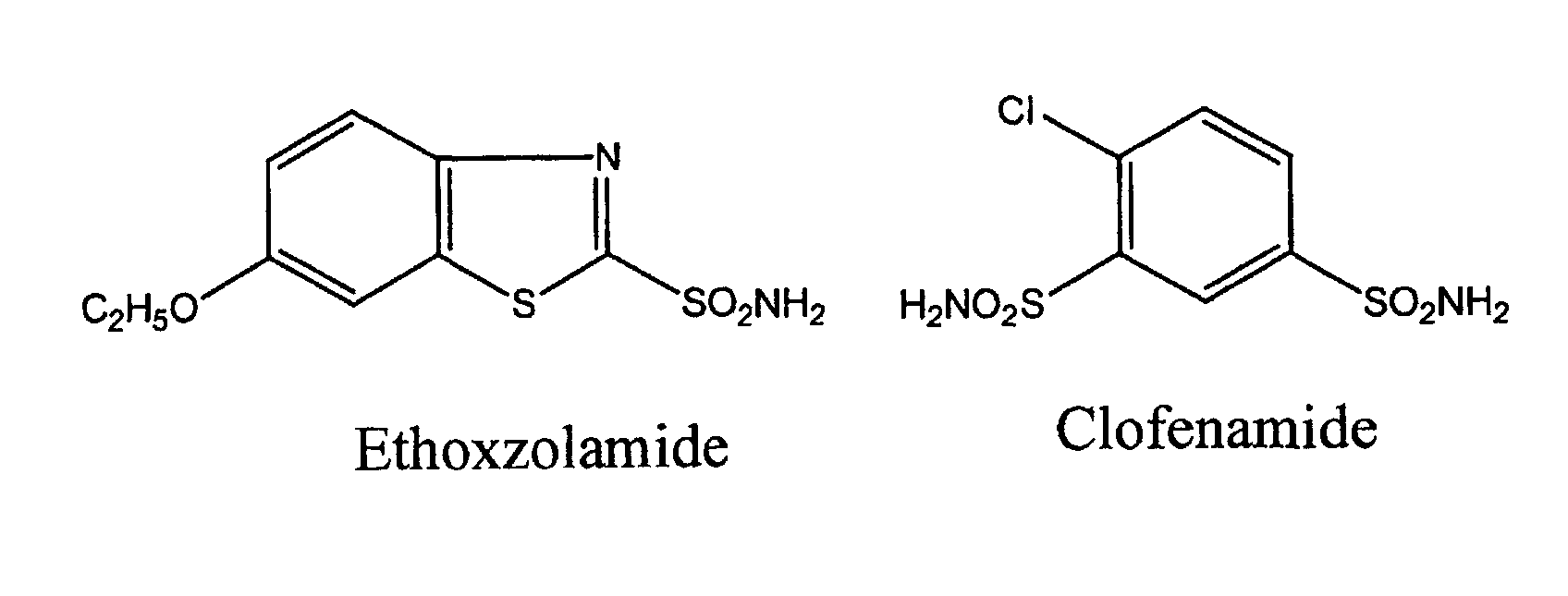
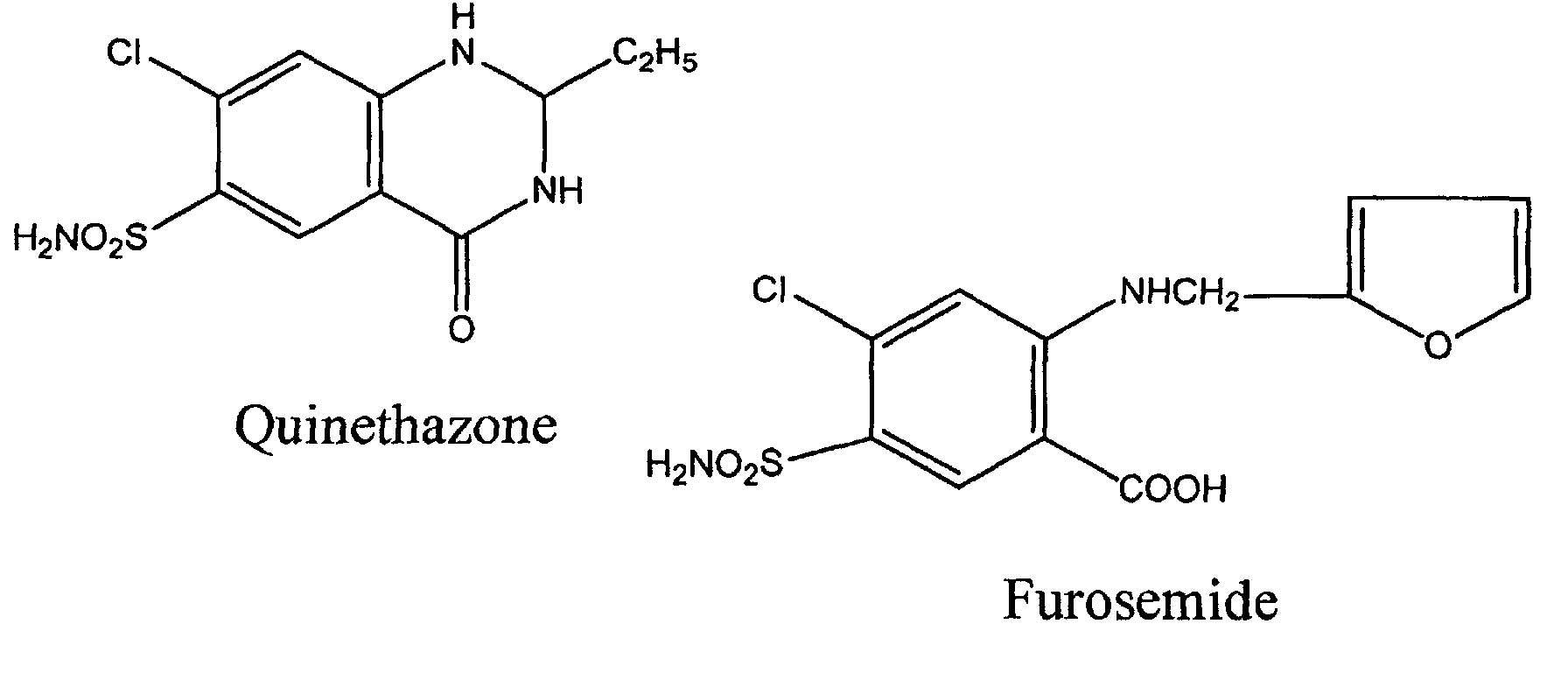
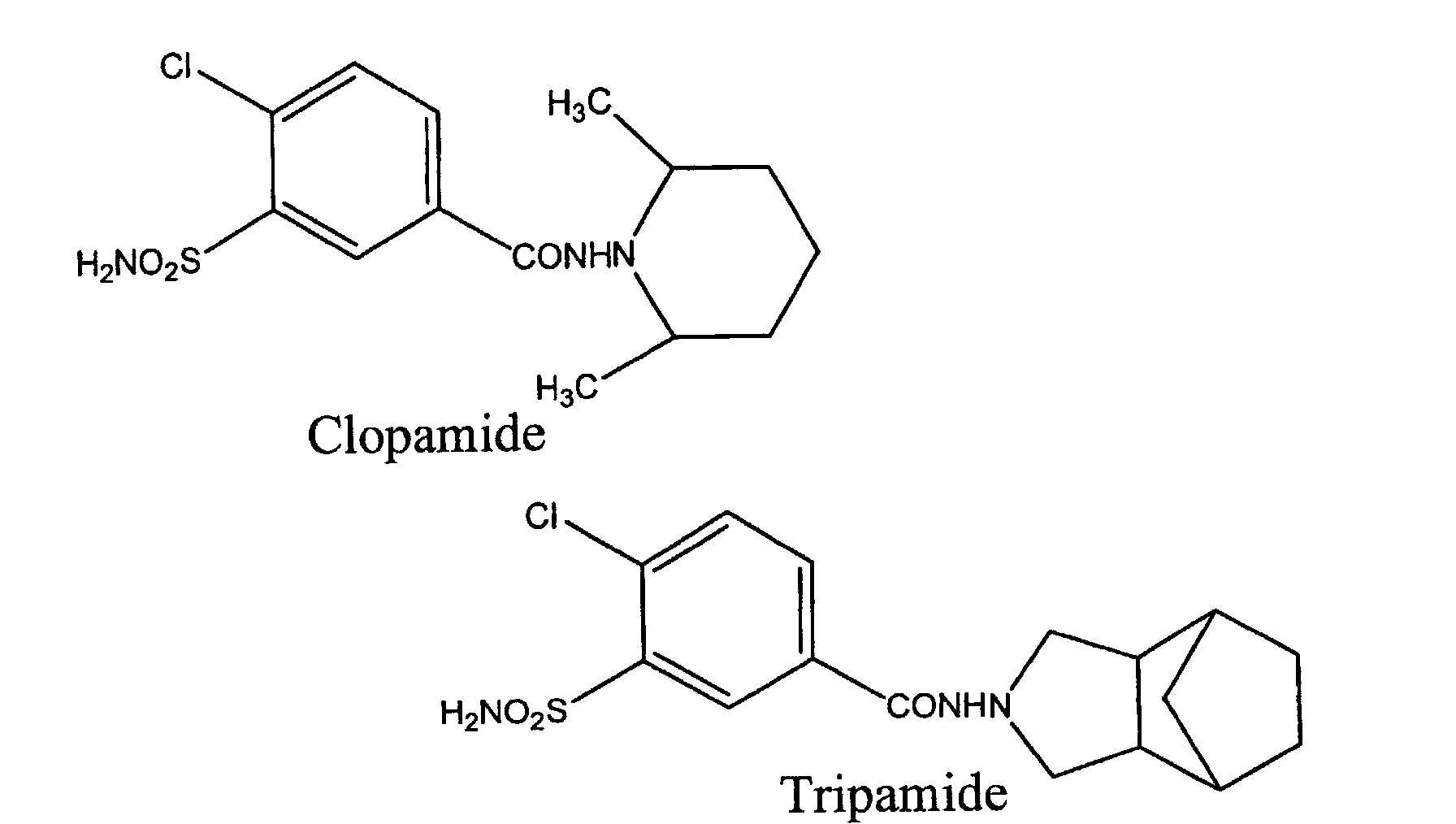
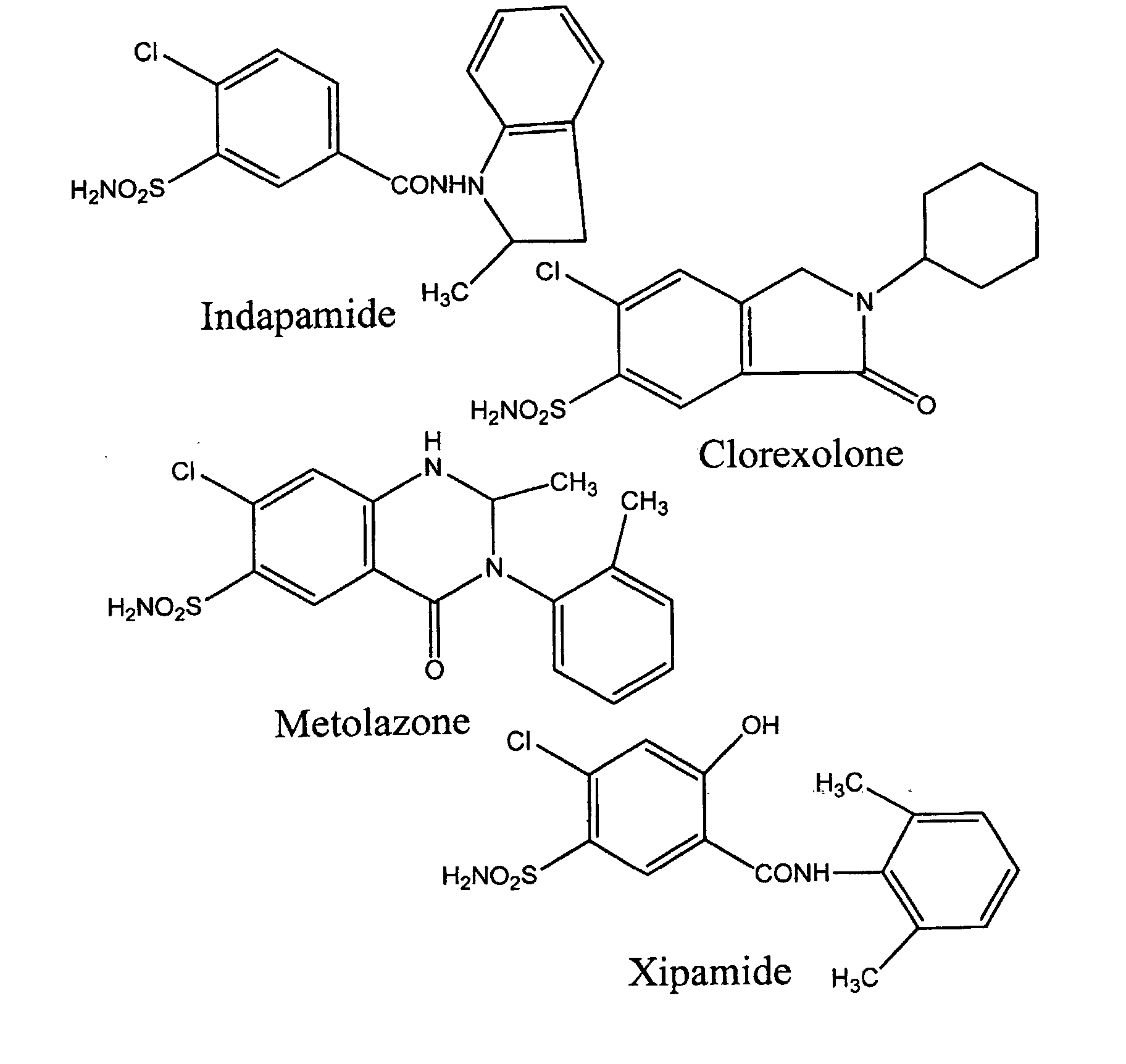
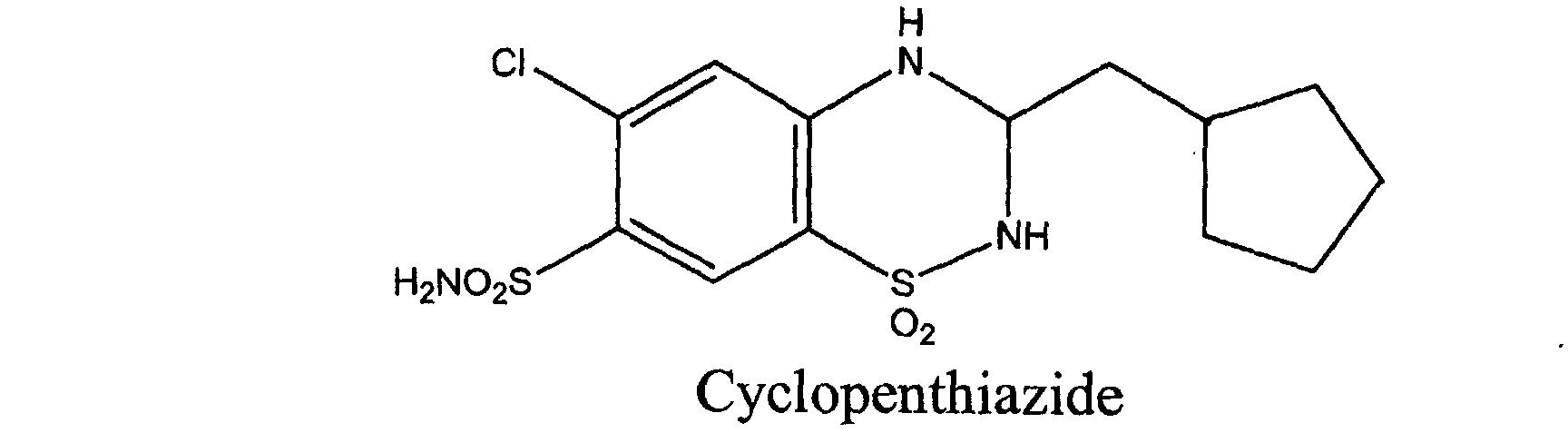
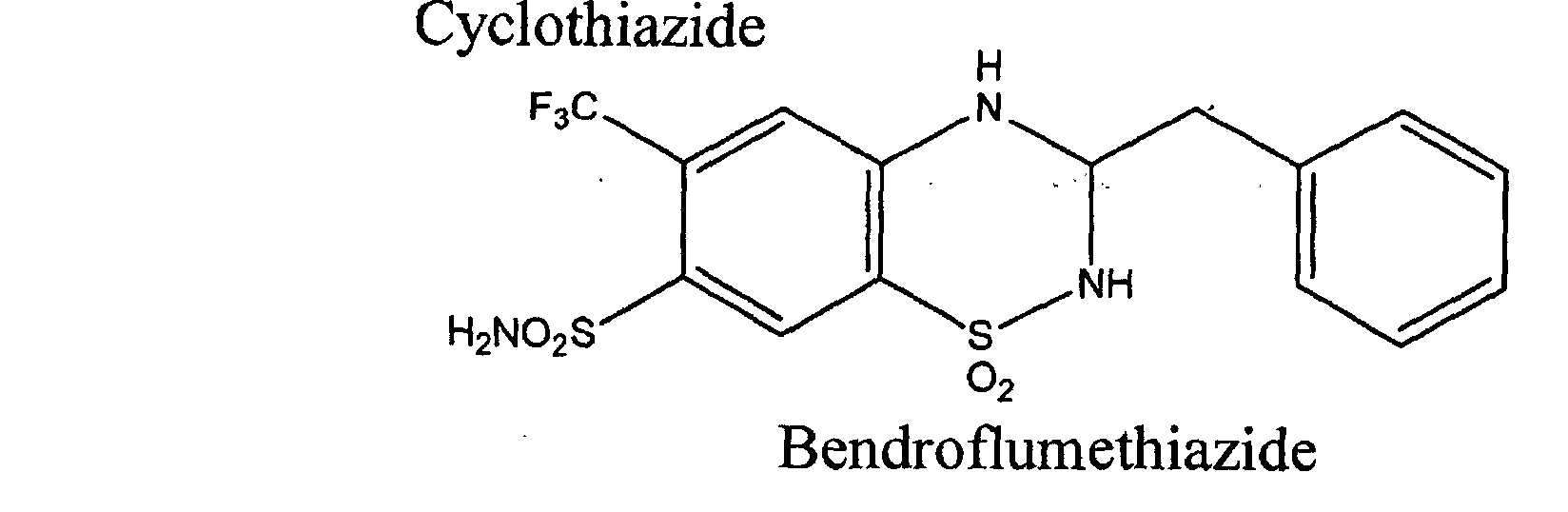
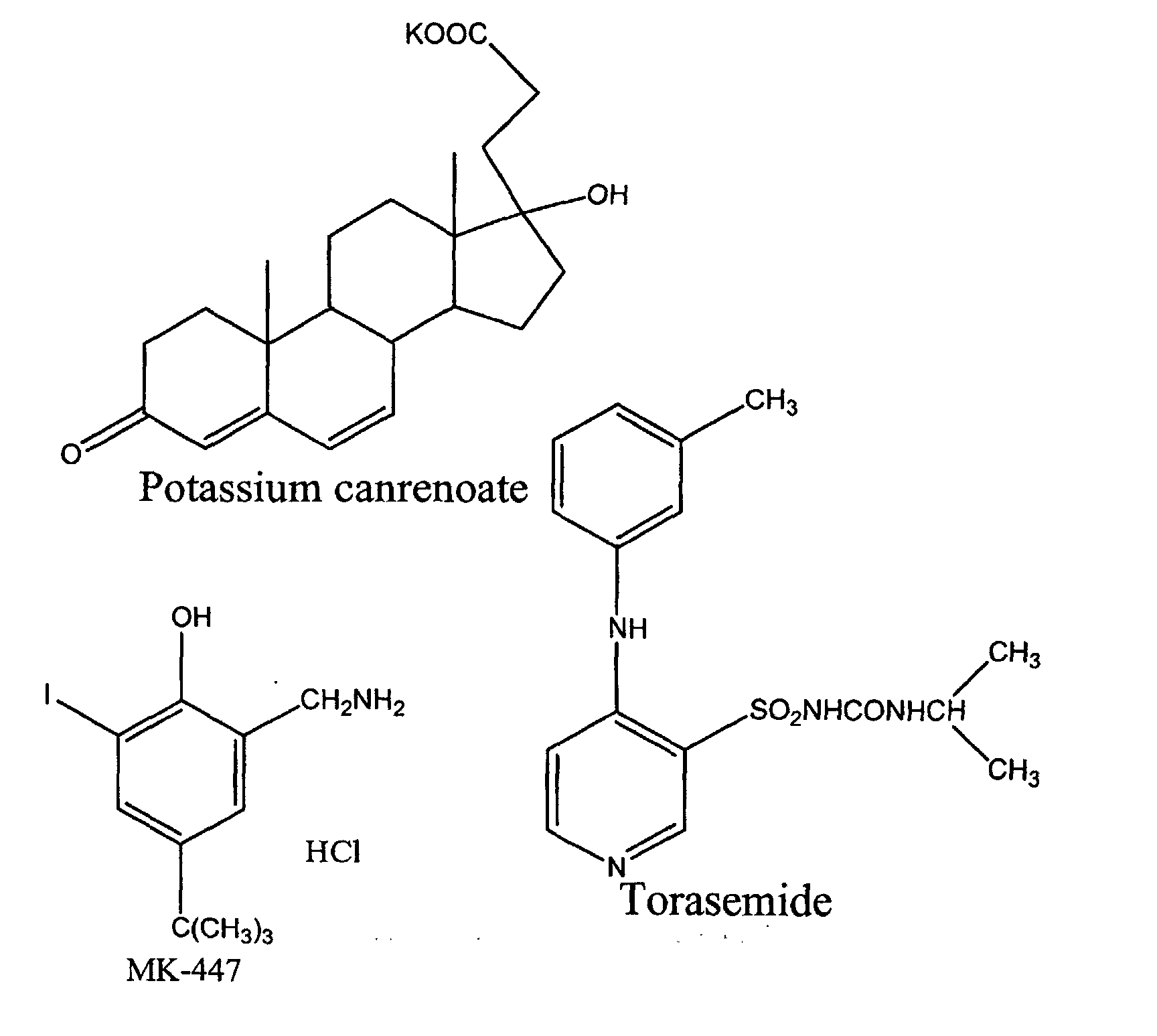
- the diuretics which are another active ingredient of this invention, are known compounds, and for example, include sulfonamide compounds such as acetazolamide, methazolamide, ethoxzolamide, clofenamide, dichlorphenamide, disulfamide, mefruside, chlorthalidone, quinethazone, furosemide, clopamide, tripamide, indapamide, chlorexolone, metolazone, xipamide, bumetanide, piretanide and X-54; thiazide compounds such as hydrochlorothiazide, methylclothiazide, benzylhydrochlorothiazide, trichloromethiazide, cyclopenthiazide, polythiazide, ethiazide, cyclothiazide, bendroflumethiazide, and hydroflumethiazide; phenoxyacetic acid compounds such as ethacrynic acid, t
- the preferred diuretic is a thiazide compound and the more preferred one is hydrochlorothiazide.
- hydrochlorothiazide 6-chloro-3,4-dihydro-2H-1,2,4,-benzothiadiazin-7-sulfonamide 1,1-dioxide.
- the hydrochlorothiazide of this invention includes pharmacologically acceptable salts thereof, for example, a hydrohalogenic acid salt such as hydrofluoride, hydrochloride, hydrobromide or hydroiodide; nitrate; perchlorate; sulfate; phosphate; a C 1 -C 4 alkanesulfonic acid salt, which may be optionally substituted with a halogen atom(s) such as methanesulfonate, trifluoromethanesulfonate or ethanesulfonate; a C 6 -C 10 arylsulfonic acid salt, which may be optionally substituted with a C 1 -C 4 alkyl group(s), such as benzenesulfonate or p-tol
- the present invention encompasses individual optical isomers and mixtures thereof.
- the present invention also encompasses hydrates of the compound described hereinbefore.
- the diuretic of this invention is selected from one or more compounds described hereinbefore and preferably one diuretic agent is selected, which is used in combination with an angiotensin II receptor antagonist such as CS-866.
- Preferred pharmaceutical compositions of this invention are:
- the pharmaceutical compositions are useful as remedies [preferably preventative or therapeutic agents for hypertension, heart diseases (angina pectoris, cardiac failure, cardiac hypertrophy), vascular disorders (arteriosclerosis, post-PTCA restenosis, peripheral vascular disorders), renal diseases (diabetic nephropathy, glomerular nephritis, nephrosclerosis); more preferably preventative and/or therapeutic agents (particularly therapeutic agents) for hypertension or heart diseases; and most preferably preventative or therapeutic agents (particularly therapeutic agents) for hypertension].
- the remedies described above are preferably applied to warm-blooded animals, especially to humans.
- the specific angiotensin II receptor antagonist such as CS-866 and diuretics exert better therapeutic efficacy by combined administration rather than when used separately.
- these agents exert excellent efficacy when administered to the same organism at different times.
- the 2 groups of compounds employed in the present invention are absorbed in organisms, they switch on the signals at their respective receptors to cause their pharmacological actions.
- the switches located at their receptors have already been turned on and so the preventative or therapeutic effects on hypertension caused by the first drug are seen.
- the effects of the compound that is administered later are superimposed on those of the former drug.
- the actions of these 2 agents are additive and excellent effects can be observed.
- the specific angiotensin II receptor antagonist such as CS-866
- the diuretics can be administered at the same time as a single pharmaceutical composition.
- each compound may be separately administered at the same time.
- the compounds may be administered at appropriate intervals. The maximum acceptable time interval to administer these 2 groups of compounds to obtain excellent treatment or preventative efficacy can be confirmed clinically or preclinically.
- the administration route of specific angiotensin II receptor antagonists, such as CS-866, and diuretics is generally oral.
- these 2 groups of compounds can be prepared as separate single formulations of each or as a single formulation by physically mixing these 2 groups of compounds.
- Administration formulations are, for instance, powder, granules, tablets, capsules, etc.
- the free compounds or pharmacologically acceptable salts or esters thereof are mixed with constituents, diluents, etc., and prepared according to conventional preparation techniques as described below.
- preparations as described above are manufactured by conventionally known methods using additive agents such as diluents (for instance, organic diluents including sugar derivatives such as lactose, sucrose, glucose, mannitol, sorbitol; starch derivatives such as cornstarch, potatostarch, ⁇ -starch, and dextrin; cellulose derivatives such as crystalline cellulose; gum arabic; dextran; pullulan; and inorganic diluents including silicate derivatives such as light anhydrous silicic acid, synthetic aluminum silicate, calcium silicate, magnesium aluminometasilicate; phosphate derivatives such as calcium hydrogenphosphate; carbonates such as calcium carbonate; and sulfate derivatives such as calcium sulfate), lubricants (for instance, metallic salts of stearic acid such as stearic acid, calcium stearate, magnesium stearate; talc; waxes such as beeswax, spermace
- the dose and rate of administration of the specific angiotensin II receptor antagonist, such as CS-866, and diuretics depend upon various factors such as the drugs' activities, symptoms, age, and body weight of the patients. However, generally speaking, the adult dosage (mg dose/time) of the specific angiotensin II receptor antagonist and diuretics is 0.5 to 1,000 mg (preferably 1 to 100 mg) and approximately 0.05 to 1,500 mg (preferably 5 to 300 mg), respectively. Compounds are administered once or several times per day, depending upon the symptoms of the patients.
- Dosing ratios of the drugs in the 2 categories may also be varied. However, generally speaking, the rates of the specific angiotensin II receptor antagonist, such as CS-866, and diuretics are 1:200 to 200:1 as their weight ratios.
- the specific angiotensin II receptor antagonist such as CS-866, and diuretics are simultaneously administered, or separately or sequentially administered at the doses described above.
- SHRs Twenty-eight male spontaneously hypertensive rats aged 20 weeks (SHRs, SPF grade, purchased from Hoshino Laboratory Animals) were used. A transmitter of a telemeter (TA11PA-C40, DATA SCIENCES Inc.) was implanted in each SHR for recording blood pressure. After recovery from the surgical operations, blood pressure was monitored in the rats from the age of 24 weeks. The rats were orally given 0.5% carboxymethylcellulose solution (CMC, 2 ml/kg) for 7 successive days (once daily) by gavage. They were divided into 4 groups (7 SHRs per group) so as give equally averaged blood pressure levels in the groups based on the blood pressure recorded on the 5th and 6th days after the CMC solution was initiated.
- CMC carboxymethylcellulose solution
- the rats were orally treated with 0.5% CMC solution (2 ml/kg, control group) or test substance suspended in 0.5% CMC solution (2 ml/kg) for 14 successive days (once daily). Blood pressure was monitored 1 day prior to the drug administration and on the 7th and 14th days after the drug was initiated.
- the group composition, test substances, doses and blood pressure (the 24 hr mean blood pressure ⁇ standard error on the respective monitoring days) are summarized in Tables 1 and 2.
- test substances were hydrochlorothiazide (HCTZ), CS-866, and HCTZ and CS-866.
- HCTZ was prepared so as to be 10 mg/2 ml of final concentration with 0.5% CMC solution.
- CS-866 was suspended in 0.5% CMC solution so as to be at a final concentration of 1 mg/2 ml.
- CS-866 and HCTZ solution was prepared so as to be at a final concentration of [10mg (HCTZ)+ 1 mg (CS-866)]/2 ml with 0.5% CMC solution.
- Group composition and administration of the test substance Group 1 Control 0.5% CMC solution
- Blood pressure levels Group 1 Group 2 Group 3 Group 4 1 day before administration 167 ⁇ 6 165 ⁇ 6 167 ⁇ 6 165 ⁇ 4 7th day after administration 163 ⁇ 6 152 ⁇ 6 147 ⁇ 4 132 ⁇ 4 14th day after administration 166 ⁇ 7 156 ⁇ 6 148 ⁇ 4 134 ⁇ 4
- the powders described above are mixed well, and tableted with a tableting machine to prepare a tablet containing 350 mg.
- the tablets can be sugar coated if desired.
Landscapes
- Health & Medical Sciences (AREA)
- Chemical & Material Sciences (AREA)
- Medicinal Chemistry (AREA)
- Pharmacology & Pharmacy (AREA)
- Life Sciences & Earth Sciences (AREA)
- Animal Behavior & Ethology (AREA)
- General Health & Medical Sciences (AREA)
- Public Health (AREA)
- Veterinary Medicine (AREA)
- Epidemiology (AREA)
- Engineering & Computer Science (AREA)
- Bioinformatics & Cheminformatics (AREA)
- Chemical Kinetics & Catalysis (AREA)
- General Chemical & Material Sciences (AREA)
- Nuclear Medicine, Radiotherapy & Molecular Imaging (AREA)
- Organic Chemistry (AREA)
- Cardiology (AREA)
- Heart & Thoracic Surgery (AREA)
- Pharmaceuticals Containing Other Organic And Inorganic Compounds (AREA)
- Medicines That Contain Protein Lipid Enzymes And Other Medicines (AREA)
- Materials For Medical Uses (AREA)
Abstract

Description










| Group composition and administration of the test substance | ||
| Group 1 | Control | 0.5% CMC solution |
| Group 2 | HCTZ | HCTZ (10 mg/kg) |
| Group 3 | CS-866 | CS-866 (1 mg/kg) |
| Group 4 | HCTZ and CS-866 | HCTZ (10 mg/kg)+CS-866 (1 mg/kg) |
| Blood pressure levels | ||||
| Group 1 | Group 2 | Group 3 | Group 4 | |
| 1 day before administration | 167±6 | 165±6 | 167±6 | 165±4 |
| 7th day after administration | 163±6 | 152±6 | 147±4 | 132±4 |
| 14th day after administration | 166±7 | 156±6 | 148±4 | 134±4 |
| CS-866 | 10.0 mg |
| Hydrochlorothiazide | 12.5 mg |
| Lactose | 275.5 mg |
| Cornstarch | 50.0 mg |
| Magnesium stearate | 2.0 mg |
| Total | 350 mg |
Claims (22)
- A pharmaceutical composition containing an angiotensin II receptor antagonist selected from the group consisting of a compound having a general formula (I),pharmacologically acceptable salts thereof, pharmacologically acceptable esters thereof and pharmacologically acceptable salts of said esters thereof, and one or more diuretics as effective components.
- A pharmaceutical composition according to claim 1 wherein the angiotensin II receptor antagonist is the compound having a general formula (I) or a pharmacologically acceptable ester thereof.
- A pharmaceutical composition according to claim 1 wherein the angiotensin II receptor antagonist is a pharmacologically acceptable ester of the compound having a general formula (I).
- A pharmaceutical composition according to claim 1 wherein the angiotensin II receptor antagonist is pivaloyloxymethyl ester, phthalidyl ester, or (5-methyl-2-oxo-1,3-dioxolen-4-yl)methyl ester of the compound having a general formula (I).
- A pharmaceutical composition according to claim 1 wherein the angiotensin II receptor antagonist is the (5-methyl-2-oxo-1,3-dioxolen-4-yl)methyl ester of the compound having a general formula (I).
- A pharmaceutical composition according to claims 1 to 5 wherein the diuretic is a sulfonamide derivative, a phenoxyacetic acid derivative, or a thiazide derivative.
- A pharmaceutical composition according to claims 1 to 5 wherein the diuretic is a thiazide derivative.
- A pharmaceutical composition according to claims 1 to 5 wherein the diuretic is hydrochlorothiazide, methylclothiazide, benzylhydrochlorothiazide, trichlormethiazide, cyclopenthiazide, polythiazide, ethiazide, cyclothiazide, bendroflumethiazide, or hydroflumethiazide.
- A pharmaceutical composition according to claims 1 to 5 wherein the diuretic is hydrochlorothiazide.
- A pharmaceutical composition according to claims 1 to 9 wherein the composition is to prevent or to treat hypertension.
- A pharmaceutical composition according to claims 1 to 9 wherein the composition is to prevent or to treat hypertension in warm-blooded animals.
- A pharmaceutical composition according to claims 1 to 9 wherein the composition is to prevent or to treat hypertension in humans.
- A method for preventing or treating hypertension by administration of a composition containing an angiotensin II receptor antagonist selected from the group consisting of a compound having a general formula (I),pharmacologically acceptable salts thereof, pharmacologically acceptable esters thereof and pharmacologically acceptable salts of said esters, and one or more diuretics at effective doses to warm-blooded animals.

- The method of claim 13 wherein the angiotensin II receptor antagonist is the compound having the general formula (I) or its pharmacologically acceptable ester.
- The method of claim 13 wherein the angiotensin II receptor antagonist is a pharmacologically acceptable ester of the compound having a general formula (I).
- The method of claim 13 wherein the angiotensin II receptor antagonist is the pivaloyloxymethyl ester, phthalidyl ester or (5-methyl-2-oxo-1,3-dioxolen-4-yl)methyl ester of the compound having a general formula (I).
- The method of claim 13 wherein the angiotensin II receptor antagonist is the (5-methyl-2-oxo-1,3-dioxolen-4-yl)methyl ester of the compound having a general formula (I).
- The method of any one of claims 13 to 17 wherein the diuretic is a sulfonamide derivative, a phenoxyacetic acid derivative, or a thiazide derivative.
- The method of any one of claim 13 to 17 wherein the diuretic is a thiazide derivative.
- The method of any one of claims 13 to 17 wherein the diuretic is hydrochlorothiazide, methylclothiazide, benzylhydrochlorothiazide, trichlormethiazide, cyclopenthiazide, polythiazide, ethiazide, cyclothiazide, bendroflumethiazide, or hydroflumethiazide.
- The method of any one of claims 13 to 17 wherein the diuretic is hydrochlorothiazide.
- The method of any one of claims 13 to 17 wherein said administration is to humans among said warm-blooded animals.
Priority Applications (1)
| Application Number | Priority Date | Filing Date | Title |
|---|---|---|---|
| EP05008297A EP1595540A1 (en) | 2000-11-21 | 2001-11-19 | Composition containing an angiotensin II receptor antagonist and a diuretic and its use for the treatment of hypertension |
Applications Claiming Priority (5)
| Application Number | Priority Date | Filing Date | Title |
|---|---|---|---|
| JP2000354327 | 2000-11-21 | ||
| JP2000354327 | 2000-11-21 | ||
| JP2001164009 | 2001-05-31 | ||
| JP2001164009 | 2001-05-31 | ||
| PCT/JP2001/010095 WO2002041890A1 (en) | 2000-11-21 | 2001-11-19 | Medicinal compositions |
Related Child Applications (1)
| Application Number | Title | Priority Date | Filing Date |
|---|---|---|---|
| EP05008297A Division EP1595540A1 (en) | 2000-11-21 | 2001-11-19 | Composition containing an angiotensin II receptor antagonist and a diuretic and its use for the treatment of hypertension |
Publications (3)
| Publication Number | Publication Date |
|---|---|
| EP1336407A1 true EP1336407A1 (en) | 2003-08-20 |
| EP1336407A4 EP1336407A4 (en) | 2004-07-14 |
| EP1336407B1 EP1336407B1 (en) | 2006-05-03 |
Family
ID=26604360
Family Applications (2)
| Application Number | Title | Priority Date | Filing Date |
|---|---|---|---|
| EP05008297A Withdrawn EP1595540A1 (en) | 2000-11-21 | 2001-11-19 | Composition containing an angiotensin II receptor antagonist and a diuretic and its use for the treatment of hypertension |
| EP01982846A Revoked EP1336407B1 (en) | 2000-11-21 | 2001-11-19 | Composition containing an angiotensin ii receptor antagonist and a diuretic and its use for the treatment of hypertension |
Family Applications Before (1)
| Application Number | Title | Priority Date | Filing Date |
|---|---|---|---|
| EP05008297A Withdrawn EP1595540A1 (en) | 2000-11-21 | 2001-11-19 | Composition containing an angiotensin II receptor antagonist and a diuretic and its use for the treatment of hypertension |
Country Status (23)
| Country | Link |
|---|---|
| US (2) | US6878703B2 (en) |
| EP (2) | EP1595540A1 (en) |
| KR (1) | KR100656716B1 (en) |
| CN (1) | CN1265788C (en) |
| AT (1) | ATE324890T1 (en) |
| AU (2) | AU2002214324B2 (en) |
| BR (1) | BR0115516A (en) |
| CA (1) | CA2429260A1 (en) |
| CY (1) | CY1106134T1 (en) |
| CZ (1) | CZ20031367A3 (en) |
| DE (1) | DE60119368T2 (en) |
| DK (1) | DK1336407T3 (en) |
| ES (1) | ES2262689T3 (en) |
| HU (1) | HUP0400553A3 (en) |
| IL (2) | IL155965A0 (en) |
| MX (1) | MXPA03004463A (en) |
| NO (1) | NO332938B1 (en) |
| NZ (1) | NZ525913A (en) |
| PL (1) | PL207252B1 (en) |
| PT (1) | PT1336407E (en) |
| SK (1) | SK5992003A3 (en) |
| TW (1) | TWI262076B (en) |
| WO (1) | WO2002041890A1 (en) |
Cited By (5)
| Publication number | Priority date | Publication date | Assignee | Title |
|---|---|---|---|---|
| EP1604664A4 (en) * | 2003-01-31 | 2006-12-27 | Sankyo Co | MEDICINE FOR THE PREVENTION AND TREATMENT OF ARTERIOSCLEROSIS AND HYPERTENSION |
| CN101180052B (en) * | 2005-05-20 | 2010-11-17 | 第一三共株式会社 | Film-coated formulations containing dextrose |
| CN101171006B (en) * | 2005-05-20 | 2010-12-01 | 第一三共株式会社 | Film coated preparation |
| WO2011141431A1 (en) | 2010-05-10 | 2011-11-17 | Menarini International Operations Luxembourg S.A. | Association of xanthine oxidase inhibitors and angiotensin ii receptor antagonists and use thereof |
| US9993432B2 (en) | 2008-11-27 | 2018-06-12 | Bayer Intellectual Property Gmbh | Pharmaceutical dosage form comprising nifedipine or nisoldipine and an angiotensin II antagonist and/or a diuretic |
Families Citing this family (14)
| Publication number | Priority date | Publication date | Assignee | Title |
|---|---|---|---|---|
| US20040198789A1 (en) * | 2003-02-28 | 2004-10-07 | Recordati Ireland Limited | Lercanidipine/ARB/diuretic therapeutic combinations |
| AU2004270161A1 (en) | 2003-08-28 | 2005-03-17 | Nicox S.A. | Nitrosated and nitrosylated cardiovascular compounds, compositions and methods of use |
| KR20090102883A (en) * | 2004-09-02 | 2009-09-30 | 테바 파마슈티컬 인더스트리즈 리미티드 | Purification of olmesartan medoxomil |
| US20070054948A1 (en) * | 2004-09-02 | 2007-03-08 | Lilach Hedvati | Purification of olmesartan medoxomil |
| WO2006029056A1 (en) * | 2004-09-02 | 2006-03-16 | Teva Pharmaceutical Industries Ltd. | Preparation of olmesartan medoxomil |
| EP1855688A4 (en) | 2005-02-24 | 2011-09-14 | Nicox Sa | Nitric oxide enhancing diuretic compounds, compositions and methods of use |
| WO2007047838A2 (en) * | 2005-10-20 | 2007-04-26 | Dr. Reddy's Laboratories Ltd. | Process for preparing olmesartan medoxomil |
| US8077769B2 (en) * | 2006-03-28 | 2011-12-13 | Sony Corporation | Method of reducing computations in transform and scaling processes in a digital video encoder using a threshold-based approach |
| SI1891952T1 (en) * | 2006-05-04 | 2012-02-29 | Lek Pharmaceuticals, D.D. | Pharmaceutical composition of olmesartan medoxomil |
| WO2008054121A1 (en) * | 2006-10-30 | 2008-05-08 | Hanall Pharmaceutical Company. Ltd | Controlled release pharmaceutical composition containing thiazides and angiotensin-ii-receptor blockers |
| ES2510866T3 (en) | 2008-03-13 | 2014-10-21 | Daiichi Sankyo Company, Limited | Improvement of the solubility of a preparation containing olmesartan medoxomil |
| US20100008956A1 (en) * | 2008-07-08 | 2010-01-14 | Jie Du | Composition and combinations of carboxylic acid losartan in dosage forms |
| WO2010075347A2 (en) | 2008-12-23 | 2010-07-01 | Takeda Pharmaceutical Company Limited | Methods of treating hypertension with at least one angiotensin ii receptor blocker and chlorthalidone |
| CA3103599A1 (en) | 2018-06-14 | 2019-12-19 | Astrazeneca Uk Limited | Methods for treatment of hypertension with an angiotensin ii receptor blocker pharmaceutical composition |
Family Cites Families (32)
| Publication number | Priority date | Publication date | Assignee | Title |
|---|---|---|---|---|
| US3009911A (en) | 1961-11-21 | Derivatives of j | ||
| US2976289A (en) | 1961-03-21 | X-tetrahydro - | ||
| US2783241A (en) | 1957-02-26 | S-acylimino-x-substituted-az-i | ||
| US3025292A (en) | 1962-03-13 | Reduction of i | ||
| US3108097A (en) | 1963-10-22 | Ehnojs | ||
| US3254076A (en) | 1966-05-31 | Sulfamyl hydro | ||
| US2554816A (en) | 1950-04-04 | 1951-05-29 | American Cyanamid Co | Heterocyclic sulfonamides and methods of preparation thereof |
| GB795174A (en) | 1954-10-13 | 1958-05-21 | Upjohn Co | Heterocyclic sulphonamides |
| US2835702A (en) | 1956-05-02 | 1958-05-20 | Merck & Co Inc | Benzene 1, 3 disulfonamides possessing diuretic properties |
| US2980679A (en) | 1957-04-04 | 1961-04-18 | Omikron Gagliardi Societa Di F | Process for preparing heterocyclic sulfonamides |
| US3055904A (en) | 1957-11-04 | 1962-09-25 | Geigy Chem Corp | New isoindoline derivatives |
| GB851287A (en) | 1958-07-10 | 1960-10-12 | British Drug Houses Ltd | 5-chlorotoluene-2:4-disulphonamide and alkali metal salts thereof |
| US3058882A (en) | 1959-12-28 | 1962-10-16 | Hoechst Ag | N'-substituted-3-carboxy-6-halo-sulfanilamide and derivatives thereof |
| US3255241A (en) | 1961-01-19 | 1966-06-07 | Merck & Co Inc | (2-alkylidene acyl)phenoxy-and (2-alkylidene acyl)phenylmercaptocarboxylic acids |
| GB979994A (en) | 1961-07-28 | 1965-01-06 | May & Baker Ltd | Isoindolinone derivatives |
| US3265573A (en) | 1962-07-27 | 1966-08-09 | Squibb & Sons Inc | Benzothiadiazinesulfonamide-1, 1-dioxide composition |
| NL299931A (en) | 1962-10-30 | |||
| DE1278443C2 (en) | 1963-11-30 | 1975-07-24 | Bayer Ag, 5090 Leverkusen | PROCESS FOR THE PREPARATION OF 2,4-DISULFONAMIDE-1-CHLOROBENZENE |
| US3163645A (en) | 1964-09-25 | 1964-12-29 | Ciba Geigy Corp | Derivatives of 3, 4-dihydro-2-h-[1, 2, 4]-benzothiadiazine-1, 1-dioxides |
| DE1270544B (en) | 1965-06-19 | 1968-06-20 | Beiersdorf Ag | 4-chloro-5-sulfamylsalicylic acid (2 ', 6'-dimethyl) anilide and its alkali or ammonium salts and processes for their preparation |
| US3360518A (en) | 1966-01-03 | 1967-12-26 | Wallace & Tiernan Inc | Tetrahydro-halo-sulfamyl quinazolinones |
| US3634583A (en) | 1969-07-24 | 1972-01-11 | Leo Pharm Prod Ltd | Pharmaceutical composition for the treatment of oedematous conditions and hypertension |
| BE757001A (en) | 1969-10-10 | 1971-03-16 | Cerpha | HETEROCYCLIC DERIVATIVES OF PHENOXY ACETIC ACIDS AND THEIR PREPARATION |
| US5138069A (en) | 1986-07-11 | 1992-08-11 | E. I. Du Pont De Nemours And Company | Angiotensin II receptor blocking imidazoles |
| CA1338238C (en) * | 1988-01-07 | 1996-04-09 | David John Carini | Angiotensin ii receptor blocking imidazoles and combinations thereof with diuretics and nsaids |
| EP0733366B1 (en) * | 1988-01-07 | 1998-04-01 | E.I. Du Pont De Nemours And Company | Pharmaceutical compositions comprising angiotensin II receptor blocking imidazoles and diuretics |
| EP0400835A1 (en) * | 1989-05-15 | 1990-12-05 | Merck & Co. Inc. | Substituted benzimidazoles as angiotensin II antagonists |
| US5656650A (en) * | 1990-12-14 | 1997-08-12 | Smithkline Beecham Corp. | Angiotensin II receptor blocking compositions |
| CA2229000C (en) * | 1991-02-21 | 2002-04-09 | Sankyo Company, Limited | 1-biphenylimidazole derivatives, their preparation and their therapeutic use |
| US5616599A (en) * | 1991-02-21 | 1997-04-01 | Sankyo Company, Limited | Angiotensin II antagosist 1-biphenylmethylimidazole compounds and their therapeutic use |
| US5310928A (en) | 1991-11-18 | 1994-05-10 | E. I. Du Pont De Nemours And Company | Process for preparing biphenyltetrazole compounds |
| US5264447A (en) * | 1992-09-01 | 1993-11-23 | Merck & Co., Inc. | Angiotensin II antagonist |
-
2001
- 2001-11-19 EP EP05008297A patent/EP1595540A1/en not_active Withdrawn
- 2001-11-19 ES ES01982846T patent/ES2262689T3/en not_active Expired - Lifetime
- 2001-11-19 PT PT01982846T patent/PT1336407E/en unknown
- 2001-11-19 BR BR0115516-4A patent/BR0115516A/en not_active Application Discontinuation
- 2001-11-19 NZ NZ525913A patent/NZ525913A/en not_active IP Right Cessation
- 2001-11-19 SK SK599-2003A patent/SK5992003A3/en not_active Application Discontinuation
- 2001-11-19 AT AT01982846T patent/ATE324890T1/en active
- 2001-11-19 DE DE60119368T patent/DE60119368T2/en not_active Expired - Lifetime
- 2001-11-19 AU AU2002214324A patent/AU2002214324B2/en not_active Expired
- 2001-11-19 CZ CZ20031367A patent/CZ20031367A3/en unknown
- 2001-11-19 HU HU0400553A patent/HUP0400553A3/en unknown
- 2001-11-19 CA CA002429260A patent/CA2429260A1/en not_active Abandoned
- 2001-11-19 EP EP01982846A patent/EP1336407B1/en not_active Revoked
- 2001-11-19 PL PL361093A patent/PL207252B1/en unknown
- 2001-11-19 WO PCT/JP2001/010095 patent/WO2002041890A1/en not_active Ceased
- 2001-11-19 CN CNB018221130A patent/CN1265788C/en not_active Expired - Lifetime
- 2001-11-19 KR KR1020037006752A patent/KR100656716B1/en not_active Ceased
- 2001-11-19 AU AU1432402A patent/AU1432402A/en active Pending
- 2001-11-19 IL IL15596501A patent/IL155965A0/en unknown
- 2001-11-19 MX MXPA03004463A patent/MXPA03004463A/en active IP Right Grant
- 2001-11-19 DK DK01982846T patent/DK1336407T3/en active
- 2001-11-21 TW TW090128798A patent/TWI262076B/en not_active IP Right Cessation
-
2003
- 2003-05-18 IL IL155965A patent/IL155965A/en unknown
- 2003-05-20 NO NO20032261A patent/NO332938B1/en not_active IP Right Cessation
- 2003-05-20 US US10/442,874 patent/US6878703B2/en not_active Expired - Fee Related
-
2004
- 2004-12-23 US US11/020,624 patent/US20050113367A1/en not_active Abandoned
-
2006
- 2006-07-31 CY CY20061101069T patent/CY1106134T1/en unknown
Cited By (6)
| Publication number | Priority date | Publication date | Assignee | Title |
|---|---|---|---|---|
| EP1604664A4 (en) * | 2003-01-31 | 2006-12-27 | Sankyo Co | MEDICINE FOR THE PREVENTION AND TREATMENT OF ARTERIOSCLEROSIS AND HYPERTENSION |
| EP3045174A1 (en) * | 2003-01-31 | 2016-07-20 | Daiichi Sankyo Company, Limited | Medicine for prevention of and treatment for arteriosclerosis and hypertension |
| CN101180052B (en) * | 2005-05-20 | 2010-11-17 | 第一三共株式会社 | Film-coated formulations containing dextrose |
| CN101171006B (en) * | 2005-05-20 | 2010-12-01 | 第一三共株式会社 | Film coated preparation |
| US9993432B2 (en) | 2008-11-27 | 2018-06-12 | Bayer Intellectual Property Gmbh | Pharmaceutical dosage form comprising nifedipine or nisoldipine and an angiotensin II antagonist and/or a diuretic |
| WO2011141431A1 (en) | 2010-05-10 | 2011-11-17 | Menarini International Operations Luxembourg S.A. | Association of xanthine oxidase inhibitors and angiotensin ii receptor antagonists and use thereof |
Also Published As
Similar Documents
| Publication | Publication Date | Title |
|---|---|---|
| US6878703B2 (en) | Pharmaceutical composition | |
| EP1898951B1 (en) | Pharmaceutical preparation containing an angiotensin ii receptor antagonist and a calcium channel blocker | |
| HRP20050754A2 (en) | Medicine for prevention of and treatment for arteriosclerosis and hypertension | |
| JP4107831B2 (en) | Pharmaceutical composition | |
| US20120046327A1 (en) | Method for inhibiting the induction and formation of osteoclasts | |
| CA2522318C (en) | Drug for preventing or treating angiogenic eye diseases | |
| WO2009145358A2 (en) | Medicament for the prophylaxis or treatment of hypertension | |
| US20120302614A1 (en) | Method for improving cerebral circulation or treating a cerebral blood flow disorder | |
| HK1077017A (en) | Composition containing an angiotensin ii receptor antagonist and a diuretic and its use for the treatment of hypertension | |
| RU2261708C2 (en) | Pharmaceutical composition | |
| HK1054692B (en) | Composition containing an angiotensin ii receptor antagonist and a diuretic and its use for the treatment of hypertension | |
| HK1114557B (en) | Pharmaceutical preparation containing an angiotensin ii receptor antagonist and a calcium channel blocker | |
| HK1080753A (en) | Drug for preventing or treating angiogenic eye diseases |
Legal Events
| Date | Code | Title | Description |
|---|---|---|---|
| PUAI | Public reference made under article 153(3) epc to a published international application that has entered the european phase |
Free format text: ORIGINAL CODE: 0009012 |
|
| 17P | Request for examination filed |
Effective date: 20030509 |
|
| AK | Designated contracting states |
Designated state(s): AT BE CH CY DE DK ES FI FR GB GR IE IT LI LU MC NL PT SE TR |
|
| A4 | Supplementary search report drawn up and despatched |
Effective date: 20040602 |
|
| RIC1 | Information provided on ipc code assigned before grant |
Ipc: 7A 61K 31/4178 A Ipc: 7A 61K 45/00 B Ipc: 7A 61K 31/549 B Ipc: 7A 61K 31/5415 B Ipc: 7A 61P 9/12 B Ipc: 7A 61P 43/00 B Ipc: 7A 61K 31/54 B |
|
| GRAP | Despatch of communication of intention to grant a patent |
Free format text: ORIGINAL CODE: EPIDOSNIGR1 |
|
| RIC1 | Information provided on ipc code assigned before grant |
Ipc: 7A 61K 31/54 B Ipc: 7A 61P 9/12 B Ipc: 7A 61K 31/4178 A |
|
| RTI1 | Title (correction) |
Free format text: COMPOSITION CONTAINING AN ANGIOTENSIN II RECEPTOR ANTAGONIST AND A DIURETIC AND ITS USE FOR THE TREATMENT OF HYPERTENSION |
|
| GRAS | Grant fee paid |
Free format text: ORIGINAL CODE: EPIDOSNIGR3 |
|
| GRAA | (expected) grant |
Free format text: ORIGINAL CODE: 0009210 |
|
| AK | Designated contracting states |
Kind code of ref document: B1 Designated state(s): AT BE CH CY DE DK ES FI FR GB GR IE IT LI LU MC NL PT SE TR |
|
| PG25 | Lapsed in a contracting state [announced via postgrant information from national office to epo] |
Ref country code: IT Free format text: LAPSE BECAUSE OF FAILURE TO SUBMIT A TRANSLATION OF THE DESCRIPTION OR TO PAY THE FEE WITHIN THE PRESCRIBED TIME-LIMIT;WARNING: LAPSES OF ITALIAN PATENTS WITH EFFECTIVE DATE BEFORE 2007 MAY HAVE OCCURRED AT ANY TIME BEFORE 2007. THE CORRECT EFFECTIVE DATE MAY BE DIFFERENT FROM THE ONE RECORDED. Effective date: 20060503 |
|
| REG | Reference to a national code |
Ref country code: GB Ref legal event code: FG4D |
|
| REG | Reference to a national code |
Ref country code: CH Ref legal event code: EP |
|
| REG | Reference to a national code |
Ref country code: CH Ref legal event code: NV Representative=s name: A. BRAUN, BRAUN, HERITIER, ESCHMANN AG PATENTANWAE |
|
| REF | Corresponds to: |
Ref document number: 60119368 Country of ref document: DE Date of ref document: 20060608 Kind code of ref document: P |
|
| REG | Reference to a national code |
Ref country code: SE Ref legal event code: TRGR |
|
| REG | Reference to a national code |
Ref country code: IE Ref legal event code: FG4D |
|
| REG | Reference to a national code |
Ref country code: GR Ref legal event code: EP Ref document number: 20060401617 Country of ref document: GR |
|
| REG | Reference to a national code |
Ref country code: PT Ref legal event code: SC4A Effective date: 20060518 |
|
| REG | Reference to a national code |
Ref country code: DK Ref legal event code: T3 |
|
| ET | Fr: translation filed | ||
| REG | Reference to a national code |
Ref country code: HK Ref legal event code: GR Ref document number: 1054692 Country of ref document: HK |
|
| REG | Reference to a national code |
Ref country code: ES Ref legal event code: FG2A Ref document number: 2262689 Country of ref document: ES Kind code of ref document: T3 |
|
| PLBI | Opposition filed |
Free format text: ORIGINAL CODE: 0009260 |
|
| PLBI | Opposition filed |
Free format text: ORIGINAL CODE: 0009260 |
|
| 26 | Opposition filed |
Opponent name: TEVA PHARMACEUTICAL INDUSTRIES LTD. Effective date: 20070131 |
|
| PLAX | Notice of opposition and request to file observation + time limit sent |
Free format text: ORIGINAL CODE: EPIDOSNOBS2 |
|
| PLAF | Information modified related to communication of a notice of opposition and request to file observations + time limit |
Free format text: ORIGINAL CODE: EPIDOSCOBS2 |
|
| 26 | Opposition filed |
Opponent name: TEVA PHARMACEUTICAL INDUSTRIES LTD. Effective date: 20070131 Opponent name: ACTAVIS GROUP HF. Effective date: 20070202 |
|
| NLR1 | Nl: opposition has been filed with the epo |
Opponent name: TEVA PHARMACEUTICAL INDUSTRIES LTD. Opponent name: ACTAVIS GROUP HF. |
|
| PLBB | Reply of patent proprietor to notice(s) of opposition received |
Free format text: ORIGINAL CODE: EPIDOSNOBS3 |
|
| REG | Reference to a national code |
Ref country code: CH Ref legal event code: NV Representative=s name: RITSCHER & PARTNER AG Ref country code: CH Ref legal event code: PUE Owner name: DAIICHI SANKYO COMPANY, LIMITED Free format text: SANKYO COMPANY, LIMITED#5-1, NIHONBASHI HONCHO 3-CHOME, CHUO-KU#TOKYO 103-8426 (JP) -TRANSFER TO- DAIICHI SANKYO COMPANY, LIMITED#3-5-1, NIHONBASHI HONCHO CHUO-KU#TOKYO (JP) |
|
| NLS | Nl: assignments of ep-patents |
Owner name: DAIICHI SANKYO COMPANY LIMITED Effective date: 20070807 |
|
| REG | Reference to a national code |
Ref country code: FR Ref legal event code: TP |
|
| BECA | Be: change of holder's address |
Owner name: *DAIICHI SANKYO CY LTD3-5-1, NIHONBASHI HONCHO CHU Effective date: 20060503 |
|
| BECH | Be: change of holder |
Owner name: *DAIICHI SANKYO CY LTD Effective date: 20060503 |
|
| REG | Reference to a national code |
Ref country code: GB Ref legal event code: 732E |
|
| REG | Reference to a national code |
Ref country code: PT Ref legal event code: PC4A Owner name: DAIICHI SANKYO COMPANY, LIMITED, JP Effective date: 20080206 |
|
| REG | Reference to a national code |
Ref country code: CH Ref legal event code: PCAR Free format text: RITSCHER & PARTNER AG;RESIRAIN 1;8125 ZOLLIKERBERG (CH) |
|
| RDAF | Communication despatched that patent is revoked |
Free format text: ORIGINAL CODE: EPIDOSNREV1 |
|
| APBM | Appeal reference recorded |
Free format text: ORIGINAL CODE: EPIDOSNREFNO |
|
| APBP | Date of receipt of notice of appeal recorded |
Free format text: ORIGINAL CODE: EPIDOSNNOA2O |
|
| APAH | Appeal reference modified |
Free format text: ORIGINAL CODE: EPIDOSCREFNO |
|
| RAP2 | Party data changed (patent owner data changed or rights of a patent transferred) |
Owner name: DAIICHI SANKYO COMPANY, LIMITED |
|
| APBQ | Date of receipt of statement of grounds of appeal recorded |
Free format text: ORIGINAL CODE: EPIDOSNNOA3O |
|
| NLT2 | Nl: modifications (of names), taken from the european patent patent bulletin |
Owner name: DAIICHI SANKYO COMPANY, LIMITED Effective date: 20090401 |
|
| PGFP | Annual fee paid to national office [announced via postgrant information from national office to epo] |
Ref country code: TR Payment date: 20121018 Year of fee payment: 12 |
|
| REG | Reference to a national code |
Ref country code: CH Ref legal event code: PFA Owner name: DAIICHI SANKYO COMPANY, LIMITED, JP Free format text: FORMER OWNER: DAIICHI SANKYO COMPANY, LIMITED, JP |
|
| REG | Reference to a national code |
Ref country code: DE Ref legal event code: R064 Ref document number: 60119368 Country of ref document: DE Ref country code: DE Ref legal event code: R103 Ref document number: 60119368 Country of ref document: DE |
|
| APBU | Appeal procedure closed |
Free format text: ORIGINAL CODE: EPIDOSNNOA9O |
|
| PGFP | Annual fee paid to national office [announced via postgrant information from national office to epo] |
Ref country code: DK Payment date: 20141111 Year of fee payment: 14 |
|
| PGFP | Annual fee paid to national office [announced via postgrant information from national office to epo] |
Ref country code: MC Payment date: 20141009 Year of fee payment: 14 Ref country code: FR Payment date: 20141110 Year of fee payment: 14 Ref country code: CH Payment date: 20141112 Year of fee payment: 14 Ref country code: FI Payment date: 20141110 Year of fee payment: 14 Ref country code: SE Payment date: 20141111 Year of fee payment: 14 Ref country code: DE Payment date: 20141111 Year of fee payment: 14 Ref country code: GB Payment date: 20141119 Year of fee payment: 14 Ref country code: LU Payment date: 20141202 Year of fee payment: 14 Ref country code: GR Payment date: 20141014 Year of fee payment: 14 Ref country code: ES Payment date: 20141013 Year of fee payment: 14 |
|
| PLAB | Opposition data, opponent's data or that of the opponent's representative modified |
Free format text: ORIGINAL CODE: 0009299OPPO |
|
| PGFP | Annual fee paid to national office [announced via postgrant information from national office to epo] |
Ref country code: AT Payment date: 20141027 Year of fee payment: 14 Ref country code: NL Payment date: 20141010 Year of fee payment: 14 Ref country code: CY Payment date: 20141022 Year of fee payment: 14 Ref country code: PT Payment date: 20141118 Year of fee payment: 14 |
|
| R26 | Opposition filed (corrected) |
Opponent name: ACTAVIS GROUP HF. Effective date: 20070202 |
|
| PGFP | Annual fee paid to national office [announced via postgrant information from national office to epo] |
Ref country code: IT Payment date: 20141106 Year of fee payment: 14 |
|
| PGFP | Annual fee paid to national office [announced via postgrant information from national office to epo] |
Ref country code: BE Payment date: 20141111 Year of fee payment: 14 Ref country code: IE Payment date: 20150122 Year of fee payment: 14 |
|
| PLAB | Opposition data, opponent's data or that of the opponent's representative modified |
Free format text: ORIGINAL CODE: 0009299OPPO |
|
| RDAG | Patent revoked |
Free format text: ORIGINAL CODE: 0009271 |
|
| STAA | Information on the status of an ep patent application or granted ep patent |
Free format text: STATUS: PATENT REVOKED |
|
| REG | Reference to a national code |
Ref country code: CH Ref legal event code: PLX |
|
| R26 | Opposition filed (corrected) |
Opponent name: TEVA PHARMACEUTICAL INDUSTRIES LTD. Effective date: 20070131 |
|
| 27W | Patent revoked |
Effective date: 20140918 |
|
| GBPR | Gb: patent revoked under art. 102 of the ep convention designating the uk as contracting state |
Effective date: 20140918 |
|
| REG | Reference to a national code |
Ref country code: PT Ref legal event code: MP4A Effective date: 20150930 |
|
| PG25 | Lapsed in a contracting state [announced via postgrant information from national office to epo] |
Ref country code: LI Free format text: LAPSE BECAUSE OF THE APPLICANT RENOUNCES Effective date: 20060503 Ref country code: CH Free format text: LAPSE BECAUSE OF THE APPLICANT RENOUNCES Effective date: 20060503 |
|
| REG | Reference to a national code |
Ref country code: DE Ref legal event code: R107 Ref document number: 60119368 Country of ref document: DE |
|
| REG | Reference to a national code |
Ref country code: AT Ref legal event code: MA03 Ref document number: 324890 Country of ref document: AT Kind code of ref document: T Effective date: 20140918 |
|
| REG | Reference to a national code |
Ref country code: GR Ref legal event code: ML Ref document number: 20060401617 Country of ref document: GR Effective date: 20160602 |
|
| REG | Reference to a national code |
Ref country code: SE Ref legal event code: ECNC |