EP1335525A2 - Method for probing the peer-to-peer quality of service (QOS) - Google Patents
Method for probing the peer-to-peer quality of service (QOS) Download PDFInfo
- Publication number
- EP1335525A2 EP1335525A2 EP03000583A EP03000583A EP1335525A2 EP 1335525 A2 EP1335525 A2 EP 1335525A2 EP 03000583 A EP03000583 A EP 03000583A EP 03000583 A EP03000583 A EP 03000583A EP 1335525 A2 EP1335525 A2 EP 1335525A2
- Authority
- EP
- European Patent Office
- Prior art keywords
- packet
- peer
- probing
- timestamp
- network
- Prior art date
- Legal status (The legal status is an assumption and is not a legal conclusion. Google has not performed a legal analysis and makes no representation as to the accuracy of the status listed.)
- Granted
Links
Images



Classifications
-
- H—ELECTRICITY
- H04—ELECTRIC COMMUNICATION TECHNIQUE
- H04L—TRANSMISSION OF DIGITAL INFORMATION, e.g. TELEGRAPHIC COMMUNICATION
- H04L61/00—Network arrangements, protocols or services for addressing or naming
- H04L61/09—Mapping addresses
- H04L61/25—Mapping addresses of the same type
- H04L61/2503—Translation of Internet protocol [IP] addresses
- H04L61/256—NAT traversal
- H04L61/2567—NAT traversal for reachability, e.g. inquiring the address of a correspondent behind a NAT server
-
- H—ELECTRICITY
- H04—ELECTRIC COMMUNICATION TECHNIQUE
- H04L—TRANSMISSION OF DIGITAL INFORMATION, e.g. TELEGRAPHIC COMMUNICATION
- H04L43/00—Arrangements for monitoring or testing data switching networks
- H04L43/08—Monitoring or testing based on specific metrics, e.g. QoS, energy consumption or environmental parameters
- H04L43/0852—Delays
-
- H—ELECTRICITY
- H04—ELECTRIC COMMUNICATION TECHNIQUE
- H04L—TRANSMISSION OF DIGITAL INFORMATION, e.g. TELEGRAPHIC COMMUNICATION
- H04L43/00—Arrangements for monitoring or testing data switching networks
- H04L43/50—Testing arrangements
-
- H—ELECTRICITY
- H04—ELECTRIC COMMUNICATION TECHNIQUE
- H04L—TRANSMISSION OF DIGITAL INFORMATION, e.g. TELEGRAPHIC COMMUNICATION
- H04L47/00—Traffic control in data switching networks
- H04L47/10—Flow control; Congestion control
Definitions
- This invention relates generally to quality of service (QoS) probing and network analysis systems and methods and, more particularly, to peer-to-peer QoS probing and analysis systems and methods for on-line gaming applications.
- QoS quality of service
- this performance information may be used by many Internet services and systems to enable the creation of robust overlays for peer-to-peer systems or application-level multicast trees, by users to enable the selection of a server among multiple server mirrors, and by service providers to determine the placement of server replicas to improve the performance of content distribution networks.
- this information may be used to determine where to deploy additional connection servers, and by content providers to deploy additional game servers.
- connection decision i.e. to which of the available peers and peers serving as game servers should a player connect, requires that the network performance or quality of service (QoS) between the player and the game server or peer be known.
- QoS quality of service
- ISPs internet service providers
- ICMP Internet Control Message Protocol
- NAT Network Address Translator
- the instant invention presents a new and improved system and method of managing latency between peers in a network.
- the system and method of the instant invention provides a better gaming experience by managing the network latency and allowing a user to establish gaming sessions with peers and/or game servers that provide the best network performance.
- the system and method of the instant invention provides a user with a number of peers or game servers that meet acceptable performance criteria. The number of choices provided and the time in which this number is determined are also managed in the system and method of the instant invention.
- connection servers servers
- CS connection servers
- GS game servers
- the system and method of the present invention utilize what may be thought of as two phases of operation, to wit a QoS probing and monitoring phase, and a QoS analysis and prediction phase.
- a UDP-based tool is utilized for probing the QoS parameters required to make the connection decisions within the network.
- This UDP-based tool enables the QoS probing of peers which are either connected to the network from behind a NAT or directly.
- network latency is the most important QoS parameter, although other parameters such as end-to-end delay, bandwidth, packet loss ratio, etc. may also be calculated.
- ISPs Internet service providers
- the tool of the present invention preferably provides application-level measurements.
- the system and method of the present invention measures QoS in the network in four stages.
- the login stage a connection is established between the peer and the connection server.
- the latency between the peer and its NAT, and that between the peer and the CS are both measured by the peer and stored in the CS.
- the data analysis and pre-selection stage the peer is provided with a list of potential candidates that meet the peer's requirements. This list is generated by the CS from an analysis of prior and current data stored in the CS from prior probes conducted by peers.
- the probe and measurement stage the peer will probe, preferably in parallel, the peers or servers returned to it in the second stage.
- the QoS measurements obtained by the peer are returned to the CS for use in the second phase (the QoS analysis and prediction phase).
- protocols for communication between the peer and the CS, between the CSs, and between the peers are defined, along with a unified packet format for use therewith.
- the UDP-based probing tool (referred to as uProbe herein) is used for peer-to-peer probing.
- the tool preferably utilizes a modified packet-pair probing scheme. This allows the determination of the end-to-end latency, an estimation of the bottleneck bandwidth, and the packet loss ratio.
- a statistical model is then selected that represents the probed QoS results, and they are returned to the CS for use therein in the QoS analysis and prediction phase.
- the peer When the peer faces anomaly probing results, e.g. extremely large round trip times (RTT), destination unreachable, etc., the peer will then perform a hop-by-hop diagnosis for each peer for which such results are returned.
- This hop-by-hop analysis utilizes a packet train to probe the hop-by-hop path characteristics. Differential destination measurement (DDM) is used to allow the inference of the link characteristics from the cooperation among the packet train packets. Filtering and statistical definition are used to estimate the link characteristic before the results are sent to the CS for use therein in the QoS analysis and prediction phase.
- DDM Differential destination measurement
- the CS utilizes the QoS information collected by and sent to it from the peers in the first phase.
- the CS groups related information from various peers, obtains discriminative features which can characterize the critical path QoS parameters, and extracts useful temporal information from the data. This information is then combined to obtain the statistical model of the network. This information is used once a request is received from a peer to return a list of suitable peers for connection thereto. Different statistical models may be used based on various parameters, and the models are updated once the peer performs the QoS probing in the first phase.
- Figure 1 is a simplified network block diagram illustrating a peer-to-peer infrastructure in which the system and methods of the present invention find particular relevance;
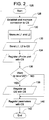
- Figure 2 is a simplified flow diagram illustrating a login stage of operation in accordance with an embodiment of the present invention
- Figure 3 is a simplified flow diagram illustrating a data analysis and pre-selection stage of operation in accordance with an embodiment of the present invention
- Figure 4 is a simplified flow diagram illustrating a probe and measurement stage of operation in accordance with an embodiment of the present invention
- Figure 5 is a simplified flow diagram illustrating a log and feedback stage of operation in accordance with an embodiment of the present invention
- Figure 6 is a data structure diagram illustrating a unified packet format employed during the operating stages of Figures 2-5;
- Figure 7 is a simplified message format diagram illustrating a message format used to report successful probing results in an embodiment of the present invention
- Figure 8 is a simplified message format diagram illustrating a message format used to report hop-by-hop probing results in an embodiment of the present invention
- Figure 9 is a simplified communication flow diagram illustrating a modified packet pair probing scheme employed in an embodiment of the present invention.
- Figure 10 is a data structure diagram illustrating a probing packet format used during peer-to-peer probing in an embodiment of the present invention
- Figure 11 is a simplified communication flow diagram illustrating a hop-by-hop packet train probing scheme employed in an embodiment of the present invention.
- Figure 12 is a simplified functional block diagram illustrating the off-line data analysis and on-line data prediction performed by the connection server in an embodiment of the present invention.
- program modules include routines, programs, objects, components, data structures, etc. that perform particular tasks or implement particular abstract data types.
- program modules include routines, programs, objects, components, data structures, etc. that perform particular tasks or implement particular abstract data types.
- program modules may be practiced with other computer system configurations, including hand-held devices, multi-processor systems, microprocessor based or programmable consumer electronics, network PCs, minicomputers, mainframe computers, video game boxes, and the like.
- the invention may also be practiced in distributed computing environments where tasks are performed by remote processing devices that are linked through a communications network.
- program modules may be located in both local and remote memory storage devices.
- P2P peer-to-peer
- NAT Network Address Translator
- CSs connections servers 120-124 will maintain an open connection through the NATs 112-118 to the game boxes 100-108 with which they are in contact. In this way, peering and probing relationships may be established between game boxes on the network.
- each game box (peer) 100-108 may be behind a NAT 112-118.
- a connection between those peers must be established. While methods are known that open peer-to-peer UDP connections, it is hard to build a TCP connection for two peers that both connect through a NAT. As such, a preferred embodiment of the present invention utilizes a UDP-based tool resident at the peer for probing the QoS parameters within the network of the present invention.
- the system of the present invention looks at the whole picture rather than focusing on one particular parameter on which to base the connection decisions. Indeed, the system of the present invention preferably trades off these parameters based on the requirement of the application that is running over the network. For gaming applications, latency is typically the most important parameter for QoS selection. However, with the deployment of a broadband network, more and more games are utilizing multimedia technology to improve its representation ability. In recognition of this, an embodiment of the present invention also considers bandwidth and other QoS components as will be discussed more fully below.
- Typical QoS monitoring techniques use low level packets as the probing packets.
- some ISPs today use traffic filtering techniques within their networks that may, for example, block ICMP echo packets, etc. As a result, measurements using such packets can only achieve a rather low accuracy. Recognizing this, the system of the present invention instead attempts to measure the actual performance of the networked applications. Application-level measurements are needed for a clear view of overall application performance, which cannot easily be synthesized from low level data.
- N the number of peers which are to be probed by a peer to determine the best candidate with which to establish a peering relationship. In one embodiment of the present invention, this number N is set to 50. Also assume that O equals the number of outgoing probes for each peer. This number affects the accuracy of probe result, so it should be given a suitable limitation. In preferred embodiments of the present invention this number varies from 30 to 50.
- the letter P equals the length of the outgoing probe packets. Packets with different sizes, e.g.
- the letter I equals the interval of two continuous outgoing probes for the same peer. More accurate probing results are achieved when the interval between successive probing packets satisfies the Poisson process. In one embodiment, for simplicity, I is set to 100 ms to obtain the rough overhead analysis. Another element of the overhead is S, the loss rate for the outgoing packets. When a packet is lost in the network, the system of the present invention sends it again, which increases the load on the network. For this analysis, two values, 0 or 0.001, are used.
- T the time used in the peer-selection stage
- T the time used in the peer-selection stage
- the latency between two peers in the gaming environment is assumed to be less than or equal to 100 ms or 200 ms or 500 ms, depending on different game genres. From this information an estimate for the bytes to be sent, and thus the added overhead, in the selection stage is illustrated in Table 1.
- a peer e.g. an XBox
- a NAT When it maintains an outgoing connection, it will also have a NAT IP address and NAT port.
- XB 1.LIP and XB 1.LP To refer to the NAT address and port of that peer, the designation XB1.NIP and XB1.NP will be used.
- CS stands for a connection server
- GS for a game server, which may be a peer that indicates that it want to act as a game server.
- a CS or any other server will never be behind a NAT. As such, there is no local versus external addressing potential confusion.
- IP address and port of a server the discussion will refer to, e.g., CS1.IP and CS1.P.
- L1 will refer to the latency between a peer and its NAT.
- L2 will refer to the latency between a peer and its CS.
- L3 will refer to the latency between a peer and the destination peer.
- L4 will refer to the latency between a peer and its GS.
- B 1 will refer to the bandwidth between a peer and the destination peer.
- This phase may best be understood as being divided into 4 stages of operation. These stages include a login stage, a data analysis and pre-selection stage, a probe and measurement stage, and a log and feedback stage. Each stage will be discussed in detail below as they apply to the application of the system of the present invention to the gaming network for the Microsoft XBox, recognizing that the system and method of the present invention may be applied with equal force to other peer-to-peer networks as well.
- the Peer 106 finds a CS 120 in the region and establishes 128 the connection for the periodic "Keep-Alive" packets that the CS 120 will provide.
- the Peer 106 measures L1 and L2 by any conventional technique at step 130. These values are then sent 132 to the CS 120 and stored therein.
- the Peer 106 if 136 the Peer 106 wants to act as a Game Server, the Peer 106 will tell 138 its CS 120 that it wants to act as a Game Server for the "Hub and Spokes" game type.
- a UDP port is registered 134 for the use for the of measurement process discussed below in the third stage.
- the Peer 106 may also register 140 other parameters with the CS 120 before this stage ends 142.
- the CS 120 receives 146 a request from a Peer 106 for a list of Peers and/or GSs to probe.
- the Peer 106 sends a XnetRetrieveXBoxList command to its CS120.
- the purpose of the probes is to allow the Peer 106 to find the fastest or closest game session or game server for it to join.
- the CS 120 will analyze 148 the previous and current QoS data that it has received from that or other Peers or other network probe entities stored in its database 150.
- the CS 120 will send 160 a request to the other CSs 122, 124 for additional data, which is then stored 162 in the database 150. From the data in the database 150, the CS 120 determines a suitable Peer list (GS list is a special Peer set in which each item claims in the login stage that it wants to act as "Hub” for "Hub and Spoke” game type). The CS 120 will then make and sort 154 a corresponding list to be sent 156 to the requesting Peer 106 before this stage ends 158.
- GS list is a special Peer set in which each item claims in the login stage that it wants to act as "Hub" for "Hub and Spoke” game type.
- the CS 120 will then make and sort 154 a corresponding list to be sent 156 to the requesting Peer 106 before this stage ends 158.
- the list that the CS 120 derives and returns to the requesting Peer 106 preferably meets a number of requirements.
- the parameter is the maximum number of outgoing probes. It may be a static number, such as 1000, or a number assigned by the Peer 106 or CS 120. It should not be very large.
- All the Peers in the list should be active currently.
- all of the Peers included in the list must permit more incoming probes. Considering the Peer performance and denial of service (DoS) attacks, a peer should not permit unlimited incoming probes. Therefore, each Peer will register its maximum and current number of incoming probes with its CS during step 140 of Figure 2.
- DoS denial of service
- the CS can choose to include only those "hungry" Peers.
- the latency between the source Peer and the Peer in the list should be expected to be less than the parameter assigned by the source Peer depending on different game genre and user experience.
- the CS will sort 154 the latency, and will reply 156 to the source Peer with the best results. In one embodiment, some items included on the list will be marked as unqualified.
- the GS list only those Peers that claimed in the login stage that they want to act game servers will be included.
- the Peer106 will perform a large number of network probes in parallel within a predetermined period of time beginning at step 168. Preferably, this time is set to less than 3-5 seconds to prevent undue delay from detracting from the user experience. These probes should not adversely affect the normal network performance, so the system of the present invention performs these probes in such a way as to allow the analysis of multiple QoS parameters through one probe request. If the initial peer-to-peer probing, which is preferably performed in parallel, is successful 170, the results are analyzed and filtered 172 to derive the required QoS parameters.
- the uProbe will initiate 174 a hop-by-hop probing process.
- the results from this process are then analyzed and filtered 176 to derive the QoS parameters. This information is used by the Peer to select 178 the best Peer with which to establish a session. This stage then ends 180.
- the system of the present invention uses an UDP-based, NAT-friendly measurement tool, referred to herein as uProbe.
- uProbe UDP-based, NAT-friendly measurement tool
- the Peer registers its UDP port to its CS in the login stage as discussed above.
- a static well-known port is defined just for the use of the QoS measurement.
- the uProbe measurement tool in each Peer will also respond immediately 186 to each incoming probe from another Peer when received 184 so that the QoS can be measured more accurately as will be discussed below with respect to Figure 5. This is ensured by raising the process priority of this QoS process in the Peer system.
- the Peer After probing, the Peer will deliver the QoS measurement results to its CS in the log and feedback stage illustrated in Figure 5. Once started 182, if 190 the QoS parameters are complete, the Peer will send 192 these to its CS. These measurement results will be important source data for the CS as will be discussed hereinbelow. Additionally, when 184 a peer receives an incoming probe packet from another Peer, it will send 188 an XnetRegisterIncomingProbes command to its CS. This feedback information is used by the CS to limit the number of probes that will be sent to that Peer when this number reaches its limitation. This is accomplished by simply not including that Peer in future lists that are sent in response to the XnetRetrieveXBoxList command discussed above.
- the Command Type field 196 contains an enumerable variable that may have the following types in one embodiment: CT_KeepAlive; CT_XboxList; CT_uProbePort; CT_IncomingProbe; CT_DataForCS; CT_QosProbe; and so on.
- the Payload Length field 198 designates the length of the payload in 32 bits (4 bytes).
- the Offset field 200 indicates the offset in the payload when one packet cannot carry the entire command.
- the Sequence Number filed 202 is used to meet specific goals such as avoiding duplication, acknowledgement, and sequence.
- the Source / Destination Entity fields 204, 206 contains the identifier of the source/destination entity of the packet.
- the Payload Data field 208 contains any payload data that may be required for the specific type of packet, as will be discussed below. All these protocols are "Request-Response" UDP-based protocols. As such, the entity that receives the request packet will reply to the request with the same kind of packet.
- the protocol for communication between the CS 120 and the Peer 106 primarily needs to keep the connection to the Peer 106 alive, especially where the Peer 106 connects through a NAT 116. Therefore, the CT_KeetAlive packet needs to be sent and received periodically. Since this packet is used primarily to keep the connection to the Peer alive, the payload 208 of the packet may be zero. This protocol is also used for the request and reply for the pre-selection list discussed above. As discussed, the Peer 106 will ask for the list from the CS 120 when it wants to start a game session. The CT_XBoxList packet may be used for this function. The protocol between the Peer 106 and its CS 120 is also used to register the UDP port for QoS measurement tool.
- the Peer 106 will report this UDP port to CS 120 with the CT_uProbePort packet.
- the Peer 106 will also register the number of incoming probes that it will allow for use by the CS 120 in generating the Peer list. When the number of current incoming probes changes, the Peer 106 will report this change to its CS 120 with the CT_IncomingProbe packet. Finally, once the Peer 106 has completed its probes, it delivers the QoS results to its CS 120 by using the CT_DataForCS packet.
- the protocol between any two CSs is used primarily to update the QoS database.
- This protocol also includes the request and reply for the pre-selection list when another CS can is contacted to supply additional peers for the peer list.
- this CS to CS communication is accomplished when the local CS does not have information on Peers that meet the request of one of its Peers, and the CS needs to request additional information from other CSs to complete the Peer list.
- This protocol makes use of two kinds of packets, the CT_DataForCS and the CT_XBoxList.
- the Peer to Peer protocol is implemented in the uProbe tool discussed more fully below to fetch the QoS of the link between the two Peers in communication. This is accomplished, generally, by sending and receiving CT_QosProbe packets by the uProbe tool.
- stage 1 peer-to-peer probing in parallel 168, the Peer will generate a large number of network probes in parallel within less than the predetermined time, e.g. 5 seconds. As discussed above, these probes should not affect the normal network performance.
- the uProbe tool in the probed Peers will respond to each incoming probe immediately to enhance the accuracy of the measurement of the QoS.
- Stage 2 successful probing result feedback 172, the Peer will select a proper statistical model to represent the probed QoS results. The Peer will then deliver them to its CS. As mentioned above, this information will be an important source of data for the further data analysis that will be performed in the CS.
- hop-by-hop probing 174 is performed for any anomaly results that are detected in Stage 1. Facing anomaly probing results, e.g., extremely large RTT, destination unreachable, etc., the Peer will perform a detailed hop-by-hop diagnosis for each of them. In this process, discussed in detail below, the weighted QoS metric will be measured between the Peer and each intermediate node between the source and the destination Peer.
- Stage 4 the anomaly probing result feedback stage 176, is similar to Stage 2. That is, after the hop-by-hop probing has been performed, the Peer will select a proper statistical model to represent the probed QoS results. They are then delivered to the CS and will serve as important source data for the further data analysis and candidate selection performed in the CS.
- the interaction message format for transporting the successful probing results to the CS is illustrated in Figure 7.
- This interaction message includes the ID for the current Peer. This address comprises the NAT:IP address (4 bytes) and the port number (2 bytes). The message also includes an indication of the number of peers that were successfully probed (1 byte). QoS metric information for each probed Peer is also included. This information includes the ID for the probed Peer (6 byte), the RTT (2 bytes), the bottleneck bandwidth (2 bytes), and the packet loss ratio (1 byte).
- the interaction message format for transporting the anomaly probing results to the CS is illustrated in Figure 8.
- This interaction message includes the ID for the current Peer, which comprises the NAT:IP address (4 bytes) and the port number (2 bytes).
- the message also includes an indication of the number of peers that were successfully probed by the hop-by-hop method (1 byte).
- QoS metric information for each probed Peer is also included. This information includes the ID for the probed Peers (6 bytes), the RTT (2 bytes), the bottleneck bandwidth (2 bytes), and the packet loss ratio (1 byte).
- the rate at which the packets pass the bottleneck 218 of the path between routers 220, 222 will determine the spacing of the packets 212', 214' after the bottleneck 218.
- the probed Peer 216 adds these arrival timestamps in the probing packets 212", 214" and re-sends them to the probing Peer 210 back-to-back at the probed Peer side 216.
- a timestamp that indicates the moment these packets leave the probed Peer 216 ( T Pr obedLeave ) is recorded in each out-going probing packet 212", 214".
- the packet loss ratio in the forward path can be calculated.
- the packet loss ratio in the return path can be calculated.
- l n 1] . Note that if the number of transmitted packets is quite small, e.g., smaller than 20, it will not make much sense to calculate the packet loss ratio.
- T Pr obedPairArrived 1 - T Pr obedPairArrived 2 in Equations (2) and (3) above is a factor of the clock resolution and other timing issues introduced by the hardware, device drivers, and context switches.
- the resolution is about 0.8 microseconds.
- the packet size in this embodiment is chosen as 200 Bytes. If operating on the system kernel level with a higher clock resolution, a smaller packet size may be chosen so as to generate more probing packets in the lower access connection embodiment.
- N is the number of Peers to be probed, e.g. 50 in one embodiment.
- P is the length of the outgoing probe packet, which is selected as 200 Bytes in one embodiment, and T is the time used in the QoS probing stage.
- the uProbe tool of the present invention uses a Poisson distribution to describe the interval between each packet-pair of a certain peer, recognizing that different peers may have different arrival rates.
- the interval which follows a Poisson process is decided. This is done by computing the minimum bandwidth, UpBW min that is required for sending out enough probing packets ( Npair max ) as UpBW min ⁇ T N ⁇ P ⁇ 2 ⁇ NPair max , i.e., UpBW min ⁇ NPair max ⁇ N ⁇ P ⁇ 2 T .
- NPair max is set as 20, N as 50, P as 200Byte, T as 5s, then the UpBW min should be larger than 640kb/s.
- the steps include generating E 1 and waiting E 1 , performing probing measurement (sending first packet-pair), and calculating the measurement duration M 1 .
- generating E 2 and waiting E 2 -M 1 performing probing measurement (sending next packet-pair), and calculate the measurement duration M 2 , and so on.
- the format of the probing packet itself is illustrated Figure 10.
- the PacketType field 224 indicates the packet types, which can be, e.g., a data packet, a forward probing packet, a return probing packet, etc.
- the PairNo field 226 indicates the number of the probing packet pair
- the PairOffset field 228 indicates the offset of the current packet in this probing packet pair.
- the Return Pair Number field 230 indicates the number of pairs needed to be sent back on the probed Peer side upon receiving a forward packet pair.
- the Interlaced Packet Number field 231 indicates the number of packets that interlaced between the forward probing packet pair. It is set by the receivers.
- T ProbingLeave , 232, 232', T ProbedPairArrived1 , 234, 234' T ProbedPairArrived2 , 236, 236' and T ProbedLeave 238, 238' fields store the corresponding timestamps as discussed above.
- the present invention derives as many QoS metrics as possible using limited probing packets. Any packet in the forward path that can be received in the probed Peer, will result in that probed Peer generating a packet pair for return path bandwidth estimation and round trip time measurement. This mechanism also provides low overhead to the probed Peer since it must only add the timestamp. As such, it needs only a small buffer to store the first packet of the probing pair.
- the system of the present invention performs a statistical analysis of the probing results. Once it is understood what network metrics exist and how to measure them, it must be decided how to represent the results. Care is required for choosing a suitable statistic for different network metrics. In particular, statistics that make assumptions about the process generating the data being summarized should be avoided. Based on the probing algorithm and the characteristics of different network metrics, different kinds of statistical techniques are utilized for end-to-end delay and bottleneck bandwidth measurements.
- median is used to represent the measured RTT.
- Median is a robust statistic that estimates the central tendency of a dataset without regard to knowing a priori distribution.
- the median can be thought of as the center point of a set of data, or the 50th percentile. If data points are sorted in ascending order, half of all data points are above the median and half are below the median. The median is determined by the middle data point for an odd number of data points, and by the average of the two middle data points for an even number of data points. For most purposes, the median (50th percentile) is a good choice, since it is not affected a great deal by a few outlier data values.
- the system of the present invention also includes filtering and a statistical definition for bottleneck bandwidth. That is, it is known that the main problem with the basic packet pair algorithm is how to filter out the noise caused by time compressed and extended packets. Therefore, at a first instance the system of the present invention will filter out those packet pairs which were interlaced with other packets. For those concatenated pairs, the system uses a kernel density estimator to overcome the time compression and extension problems. That is, the system defines a kernel function K(t) with the property Then the density at any point x is defined as where h is the kernel width, n is the number of points within h of x , and xi is the i th point.
- K(t) the kernel function
- This function has the desirable properties that it gives greater weight to samples closer to the point at which the system wants to estimate density, and it is simple and fast to compute.
- the kernel density estimator algorithm is known to be statistically valid, and most importantly, it makes no assumptions about the distribution it operates on, and therefore should be just as accurate as other data sets.
- the kernel width is set as the whole range of the bottleneck bandwidth, i.e., x max -x min . In that case, the density at any point x can be simplified as
- the accuracy of the QoS probing will be decreased.
- One way to preclude this is to extend the probing period so as to increase the probability of occurring concatenated pairs.
- Another way is to estimate the "bottleneck spacing interval" based on the downlink access bandwidth, the number of packets in the middle of a packet pair, and the separating time interval between the two packets in this pair.
- a linear regression method is used for estimating the bottleneck bandwidth in one embodiment. After the estimated bottleneck bandwidth is calculated, the kernel density estimator algorithm is preferably still used to calculate the final bottleneck bandwidth.
- anomaly results may be in the form, e.g., of extremely long RTTs, destination unreachable, etc.
- the following discussion will first describe the probing procedure, then present the probing algorithm in detail, and finally discuss the derivation of the results obtained using a statistical analysis approach.
- the hop-by-hop probing scheme of the present invention aims to obtain the link capacity measurements while avoiding at least some of the limiting factors that are present in single packet techniques.
- the basic measurement technique is illustrated in Figure 11.
- a probing peer 240 generates a packet train containing four packets 242-248. Unlike traditional packet train techniques, these four packets 242-248 are composed of two packet pairs. There is a short delay, delay 1, between those two pairs. The two packets in each packet pair are sent out back-to-back.
- the first packet 248 is a small packet with its packet size varying from 40 bytes.
- the second packet 246 is much larger than the first one, and takes MTU (1500 bytes) as its packet size in one embodiment.
- the large packet 242 in the first pair is set to expire (using the incremental TTL from 1 to destination) at the link being measured (the k th router 250).
- the large packet 246 in the second pair is set to expire (using the incremental TTL from 2 to destination) at the next hop (the (k+1) th router 252) after the link being measured 250.
- the small packets 244, 248 in both pairs will be delivered to the destination, the probed Peer 254. During the transmission, the small packets 244, 248 will keep "catching up" to those two large packets 242, 246. This is because the transmission delay of the larger packets is larger than that of the smaller one.
- the following smaller packet 244 will be "released" from the delays caused by being behind the bigger packets. Meanwhile, two ICMP time-exceed error messages 256, 258 will return to the probing host side 240. The latency experienced by the smaller packet will change if the link on which the larger packets are set to expire changes.
- the scheme of the present invention uses these packets 256, 258 only for identifying routers 250, 252 and does not rely on their timely delivery. Additionally, even if the intermediate routers delay the ICMP error messages and handle the different-sized packets differently, it will not affect the results in direction-2 measurement because only the time-difference is used in the bandwidth estimation.
- the characteristics of each link can be measured.
- the system of the invention captures link-specific characteristics by causing queuing of packets at a particular link.
- the probing host sends the packet train with four packets.
- the two large packets with a time-to-live (TTL) set to expire at that and the consecutive links are followed by two very small packets that will queue continuously behind the large packets until the link where the large packets expire.
- TTL time-to-live
- the link characteristics may then be inferred from the relation between the 2 nd , the 3 rd , and the 4 th packets in a probing train using differential destination measurement (DDM) discussed below.
- DDM differential destination measurement
- the system of the present invention sends the largest possible non-fragmented packet, packet ( k 1 -1 ) 242, with an IP Time-to-Live (TTL) field of i .
- This packet 242 is immediately followed by the smallest possible packet, packet k 1 244.
- the smaller packet 244 almost always has a lower transmission delay than the larger packet's transmission delay on the next link. This causes the smaller packet (packet k 1 244) to queue continuously after the larger packet (packet k 1 -1 242).
- delay1 another largest possible non-fragmented packet, packet k 2 -1 246, is sent with an IP Time-to-Live (TTL) field of i+1 .
- packet k 2 248 This is immediately followed by the smallest possible packet, packet k 2 248. Similarly, this also causes the smaller packet (packet k 2 248) to queue continuously after the larger packet (packet k 2 -1 246).
- the TTL for packet k 1 -1 242 will cause it to be dropped at link i 250. This will allow the packet k 1 244 to continue without queuing to the destination 254.
- the TTL for packet k 2 -1 246 will cause it to be dropped at link i+1 252 allowing the packet k 2 248 to continue without queuing to the destination 254.
- the probed Peer 254 will receive packet k1 244 and packet k2 248 consecutively, with a time interval of delay2 .
- packet k 1 244 will not be queued at link i 250 while the packet k 2 will still be queued at link i 250 due to the continued existence of the large packet k 2 -1 246 at this link.
- the system of the present invention then infers the characteristic of link i by utilizing this difference.
- the time packet k1 takes to arrive at the destination link n (with variables defined in Table 2) is:
- n links hop length of the path d 1 sec. latency of link l d 1 sec. sum of latencies up and including link l b 1 bits/see. bandwidth of link. l s k bits size of packet k t k 1 sec. time when packet k fully arrives at link l q k 1 sec. amount , of time packet k is queued at link l l bn link number the bottleneck link
- bandwidth of a link at which queuing occurs ( b 1 q +1 ) can be calculated from the sizes of the two packets ( s k 1 , s k 2 -1 ), the time variation between packet k 1 and k 2 ( delay2-delay1 ), and the bandwidth of the previous link ( b 1 q ). Note that, although the timer between sender and receiver may be different, it is of no effect to the calculation of the difference.
- a kernel density estimator is used to filter the estimation noise.
- the value with maximum density is selected as the link bandwidth.
- the system of the invention first defines a kernel function K ( t ) with the property Then the density at any point x is defined as where h is the kernel width, n is the number of points within h of x , and xi is the i th point.
- the kernel function is
- the kernel width is set as the whole range of the bottleneck bandwidth, i.e., x max -x min .
- the density at any point x can be simplified as
- the system of the present invention focuses both on QoS probing and monitoring and on QoS analysis and prediction to ensure that the appropriate game candidates are found. Having now completed the discussion of the QoS probing and monitoring phase, attention is now turned to the second phase, to wit the QoS analysis and prediction phase.
- the CS 260 stores various network probe results from prior probes in a network condition database 264. In this way, the CS 260 can return satisfactory results in a timely fashion.
- off-line data analysis and on-line data predication are iteratively performed in CS 260.
- the Background Data Analyzer module 262 utilizes feature extraction and data combination.
- the functionalities of the feature extraction include grouping of the related information of different Peers, obtaining discriminative features which it can characterize the critical path QoS parameters, and extracting useful temporal information from the data.
- the combination function will combine all the information to obtain the statistical model.
- the network probe results that are determined in the QoS probing and monitoring phase include L1, L2, L3, L4 and B1 and are received by the active probing results module 266.
- L1 and L2 can be measured at the login stage, and L3/L4 and B1/B2 can be determined in the probing stage.
- L3/L4 and B1/B2 After filtering 268 L1 and L2 will be stored together with each Peer connection record in the CS 260. This information will tell whether that Peer is active.
- L3/L4 and B1/B2 are preferably stored in a separate record together with the corresponding XB.NAT.IP and timestamp.
- the evaluator 270 can analyze these records and other network probe results from the network condition database 264 to derive a more precise estimation from the predictor 272 for the current link. For example, when an XB1 wants to search for the fastest peers from its CS, the CS 260 analyzes its database 264 and selects XB2, which has the best QoS for the link between XB2.NAT.IP and XB1.NAT.IP. Furthermore, the CS 260 will also retrieve records with the best QoS for the link between XB1.NAT.ISP and XB2.NAT.ISP.
- the CS 260 Upon receiving the request from the individual Peer, the CS 260 performs the on-line data prediction function. Depending on the parameter needed to be measured and the off-line analysis result, different predictive models 274can be used by the predictor 272.
- the possible model candidates include a weighted moving average model, an autoregressive integrated moving average model, an autoregressive fractionally integrated moving average model, etc.
- the CS After the measurement results are fed back from the Peer, the CS will re-fit the predictive model. Meanwhile, based on time-of-day, network status, and other information, the CS will adjust the predictive model accordingly.
- the on-line data analysis and off-line data prediction improves the probe efficiency because when a Peer completes its probing, the other Peers located in the same source and destination NAT/ISP domain can use these probing results for candidate pre-selection.
- the data analysis and prediction function also uses this information to refine the CS's database.
- the uProbe tool and its algorithms can measure several QoS metrics, such as end-to-end delay, bottleneck bandwidth, packet loss ratio, simultaneously.
- QoS metrics such as end-to-end delay, bottleneck bandwidth, packet loss ratio
- asymmetric network conditions for uplink and downlink can be measured separately using an embodiment of the peer-to-peer QoS probing scheme.
- the RTT of the network has a long range dependent characteristic, and therefore the distribution of the RTT changes slowly. In other words, the RTT variance in a short period is small.
- the density estimator scheme is used to represent the bottleneck bandwidth measurement result. As such, when the number of probing packet pairs is very small, i.e., equal to 1 or 2, the measurement result is randomly distributed.
- the final bottleneck bandwidth value is the measured bandwidth with the highest density.
- a threshold i.e. the value which can tolerate the network congestion level
- an alternate embodiment of the present invention improves the communication efficiency between two Peers that are behind the same NAT by recording the information about the local IP and local port in the login stage. The system then tries to set up the connection between them through the local IP and port.
Landscapes
- Engineering & Computer Science (AREA)
- Computer Networks & Wireless Communication (AREA)
- Signal Processing (AREA)
- Environmental & Geological Engineering (AREA)
- Data Exchanges In Wide-Area Networks (AREA)
- Computer And Data Communications (AREA)
- Mobile Radio Communication Systems (AREA)
- Detection And Prevention Of Errors In Transmission (AREA)
Abstract
Description
| N | O | S | P | Bytes to be sent | Bps needed |
| 50 | 50 | 0.001 | 100 | 250250 | 50.05K |
| 50 | 30 | 0 | 500 | 750000 | 150K |


| Variable Definitions. | |
| n links | hop length of the path |
| d 1 sec. | latency of link l |
| d 1 sec. | sum of latencies up and including link l |
| b 1 bits/see. | bandwidth of link.l |
| s k bits | size of packet k |
| t k 1 sec. | time when packet k fully arrives at link l |
| q k 1 sec. | amount , of time packet k is queued at link l |
| l bn link number | the bottleneck link |


Claims (67)
- A method of probing quality of service parameters in a peer-to-peer network between at least a first peer and a second peer, comprising the steps of:generating by the first peer a first and a second probing packet, each probing packet including a first timestamp;sending the first probing packet and the second probing packet to the second peer, the first timestamp of each probing packet indicating a time at which that probing packet is sent;receiving from the second peer a first acknowledgement packet and a second acknowledgement packet corresponding to the first probing packet and the second probing packet, each of said acknowledgement packets including the first timestamp of the probing packet to which the acknowledgement packet corresponds, a second timestamp indicating a time at which the corresponding probing packet arrived at the second peer, and a third timestamp indicating a time at which the acknowledgement packet was sent by the second peer; andcalculating quality of service parameters for the network as a function of the first timestamp, the second timestamp, and the third timestamp of both the first acknowledgement packet and the second acknowledgement packet.
- The method of claim 1, wherein the step of generating the first probing packet and the second probing packet comprises the steps of generating the first probing packet of a first size, generating the second probing packet of a second size, and wherein the first size and the second size are equal.
- The method of claim 2, wherein the step of calculating quality of service parameters for the network comprises the step of calculating bottleneck bandwidth for a first path from the first peer to the second peer as a function of the first size divided by the difference between the second timestamp of the first acknowledgement packet and the second timestamp of the second acknowledgement packet.
- The method of claim 3, wherein the steps of generating, sending, receiving, and calculating bottleneck bandwidth are repeated approximately 20 times, further comprising the step of filtering out pairs of acknowledgement packets that are interlaced with other packets.
- The method of claim 4, further comprising the step of overcoming time compression and extension of the acknowledgement packets by utilizing a kernel density estimator over a whole range of the bottleneck bandwidth results.
- The method of claim 2, wherein the step of receiving the first acknowledgement packet and the second acknowledgement packet comprises the step of receiving the first acknowledgement packet having a third size and the second acknowledgement packet having a fourth size, and wherein the third size and the fourth size are equal.
- The method of claim 2, further comprising the step of recording a fourth timestamp indicating a time when the first acknowledge packet is received and a fifth timestamp indicating a time when the second acknowledge packet is received, and wherein the step of calculating quality of service parameters for the network comprises the step of calculating bottleneck bandwidth for a second path from the second peer to the first peer as a function of the third size divided by the difference between the fourth timestamp and the fifth timestamp.
- The method of claim 7, wherein the steps of generating, sending, receiving, and calculating bottleneck bandwidth are repeated approximately 20 times, further comprising the step of filtering out pairs of acknowledgement packets that are interlaced with other packets.
- The method of claim 8, further comprising the step of overcoming time compression and extension of the acknowledgement packets by utilizing a kernel density estimator over a whole range of the bottleneck bandwidth results.
- The method of claim 1, further comprising the step of recording a fourth timestamp indicating a time when the first acknowledge packet is received and a fifth timestamp indicating a time when the second acknowledge packet is received, and wherein the step of calculating quality of service parameters for the network comprises the step of calculating a first end-to-end delay between the first peer to the second peer as a function of the first timestamp of the first acknowledgement packet, the second timestamp of the first acknowledgement packet, the third timestamp of the first acknowledgement packet, and the fourth timestamp.
- The method of claim 10, wherein the step of calculating quality of service parameters for the network comprises the step of calculating a second end-to-end delay between the first peer to the second peer as a function of the first timestamp of the second acknowledgement packet, the second timestamp of the second acknowledgement packet, the third timestamp of the second acknowledgement packet, and the fifth timestamp.
- The method of claim 1, further comprising the step of recording a fourth timestamp indicating a time when the first acknowledge packet is received, and wherein the step of calculating quality of service parameters for the network comprises the step of calculating a first round trip time between the first peer and the second peer as a difference between the first timestamp and the fourth timestamp, less a difference between the third timestamp and the second timestamp, all of the first acknowledgement packet.
- The method of claim 12, wherein the steps of generating, sending, receiving, and calculating a first round trip time are repeated approximately 20 times, further comprising the step of determining a median of the 20 first round trip times to represent a first measured round trip time.
- The method of claim 12, further comprising the step of recording a fifth timestamp indicating a time when the second acknowledge packet is received, and wherein the step of calculating quality of service parameters for the network comprises the step of calculating a second round trip time between the first peer and the second peer as a difference between the first timestamp and the fifth timestamp, less a difference between the third timestamp and the second timestamp, all of the second acknowledgement packet.
- The method of claim 14, wherein the steps of generating, sending, receiving, and calculating a second round trip time are repeated approximately 20 times, further comprising the step of determining a median of the 20 second round trip times to represent a second measured round trip time.
- The method of claim 1, wherein the step of sending the first probing packet and the second probing packet to the second peer comprises the step of sending the first probing packet and the second probing packet back to back.
- The method of claim 1, wherein the step of sending the first probing packet and the second probing packet to the second peer comprises the step of sending the first probing packet and the second probing packet as a probing packet pair.
- The method of claim 1, wherein the step of generating the first probing packet and the second probing packet comprises the step of generating the first probing packet and the second probing packet of a size approximately equal to 200 bytes. The size of probing packet can be reduced, if this measurement procedure operates on the system kernel level with a higher clock resolution.
- The method of claim 1, wherein the step of sending probing packet pairs comprises the step of determining the interval between the probing packet pairs when the access bandwidth is large enough. A Poisson distribution is used to describe the interval between each packet-pair of a certain peer, recognizing that different peers may have different arrival rates.
- The method of claim 1 wherein the second peer connects to the network through a network address translator, and wherein the step of generating comprises generating a first UDP-based probing packet and a second UDP-based probing packet.
- The method of claim 1, wherein the network includes at least one connection server, the connection server having contact information for at least the second peer, the method further comprising the steps of:establishing a connection to the connection server;requesting peer contact list information from the connection server;receiving the peer contact list information; andmaintaining the connection open to the connection server.
- The method of claim 21, further comprising the steps of measuring a first latency between the first peer and the connection server, and transmitting information of the first latency to the connection server.
- The method of claim 22, wherein the first peer connects to the network through a network address translator, the method further comprising the steps of measuring a second latency between the first peer and the network address translator, and transmitting information of the second latency to the connection server.
- The method of claim 21, further comprising the step of registering a port for quality of service probing with the connection server.
- The method of claim 21, further comprising the step of transmitting the quality of service parameters to the connection server.
- The method of claim 1, further comprising the step of receiving a probing packet from a peer, and immediately responding to the probing packet.
- The method of claim 26, wherein the step of immediately responding to the probing packet comprises the steps of recording a sixth timestamp corresponding to a time of receipt of the probing packet, forming an acknowledgement packet including the sixth timestamp and a seventh timestamp therein, sending the acknowledgement packet to the peer, the seventh timestamp corresponding to a time the acknowledgement packet is sent.
- The method of claim 26 wherein the network contains at least one connection server, further comprising the step of registering receipt of the probing packet from the peer with the connection server.
- The method of claim 1, wherein at least one of the step of receiving fails and the step of calculating provides anomaly results, the method further comprising the step of generating a packet train having four packets therein, the four packets including a first large packet having a time to live set to (1, ..., n-1) followed by a first small packet followed by a first delay followed by a second large packet having a time to live set to (2, ..., n) followed by a second small packet, transmitting the packet train to the second peer, receiving ICMP time-exceeded error messages from intermediate nodes in a path to the second peer, and inferring link characteristics based on differential destination measurements (DDM).
- The method of claim 29, wherein the first and second large packets are sized to be as large as possible without fragmenting, and wherein the first and second small packets are set to be as small as possible.
- The method of claim 29, wherein the first and second large packets are sized to be approximately 1500 bytes, and wherein the first and second small packets are sized to be approximately 40 bytes.
- The method of claim 29, wherein the steps of generating and transmitting the packet train are repeated for each link in a path from the first peer to the second peer, and wherein the step of inferring link characteristics comprises the step of inferring link bandwidth for each link along the path from the first peer to the second peer.
- A method of establishing a network session with one of a plurality of peers which provides the best quality of service, the network including at least one connection server, comprising the steps of:establishing a connection to the connection server;requesting peer contact information from the connection server;receiving the peer contact information from the connection server, the peer contact information containing contact information for a plurality of peers;probing the plurality of peers;determining quality of service parameters for each of the plurality of peers;selecting one of the peers which has the best quality of service; andestablishing a peering session with the one of the peers.
- The method of claim 33, further comprising the step of transmitting the quality of service parameters for each of the plurality of peer to the connection server.
- The method of claim 33, further comprising the steps of measuring a first latency to the connection server, and transmitting the first latency to the connection server.
- The method of claim 35, wherein the step of establishing a connection to the connection server comprises the step of establishing a connection to the connection server through a network address translator, further comprising the steps of measuring a second latency to the network address translator, and transmitting the second latency to the connection server.
- The method of claim 33, further comprising the step of registering a port for quality of service probing with the connection server.
- The method of claim 33, further comprising the step of communicating to the connection server a desire to be a game server.
- The method of claim 33, further comprising the step of receiving a probing request from a peer, and immediately responding to the probing request.
- The method of claim 39, wherein the step of immediately responding to the probing request comprises the steps of recording a first timestamp corresponding to a time of receipt of the probing request, forming an acknowledgement packet including the first timestamp and a second timestamp therein, sending the acknowledgement packet to the peer, the second timestamp corresponding to a time the acknowledgement packet is sent to the peer.
- The method of claim 39, further comprising the step of registering receipt of the probing request from the peer with the connection server.
- The method of claim 33, wherein the step of probing the plurality of peers comprises the steps of:generating a probing packet pair;transmitting the probing packet pair to each of the peers in parallel; andrecording a first and a second timestamp corresponding to a time when each packet in the probing packet pair were transmitted.
- The method of claim 42, wherein the step of determining the quality of service parameters comprises the steps of:receiving a probing acknowledgement pair from at least one of the peers, the probing acknowledgement pair including a third and a fourth timestamp corresponding to a time of receipt of each of the packets in the probing packet pair, and a fifth and a sixth timestamp corresponding to a time of transmission of each of the packets in the probing acknowledgement pair;recording a seventh and an eighth timestamp corresponding to a time of receipt of each of the packets in the probing acknowledgement pair; andcalculating the quality of service parameters as a function of a size of the packets in the probing packet pair and in the probing acknowledgement pair and of the first, second, third, fourth, fifth, sixth, seventh, and eighth timestamps.
- The method of claim 43, wherein the step of calculating the quality of service parameters as a function of the size of the packets in the probing packet pair and in the probing acknowledgement pair and of the first, second, third, fourth, fifth, sixth, seventh, and eighth timestamps comprises the steps of calculating a forward bottleneck bandwidth as a function of the size of the packets in the probing pair divided by the difference between the third and fourth timestamps, and calculating a reverse bottleneck bandwidth as a function of the size of the packets in the probing acknowledge pair divided by the difference between the seventh and eighth timestamps.
- The method of claim 44, wherein the step of probing, and calculating the forward bottleneck bandwidth, and calculating the reverse bottleneck bandwidth are repeated a plurality of times, further comprising the step of filtering out probing acknowledgement pairs that are interlaced with other packets.
- The method of claim 45, further comprising the step of overcoming time compression and extension of the packets in the probing acknowledgement pairs by utilizing a kernel density estimator over a whole range of the bottleneck bandwidth results.
- The method of claim 43, wherein the step of calculating the quality of service parameters as a function of the size of the packets in the probing packet pair and in the probing acknowledgement pair and of the first, second, third, fourth, fifth, sixth, seventh, and eighth timestamps comprises the steps of calculating a first round trip time time (RTT) as a function of a difference between the second and the eighth timestamps less a difference between the fourth and the sixth timestamps.
- The method of claim 47, wherein the step of probing, calculating the first RTT, and calculating the second RTT are repeated a plurality of times, further comprising the step of determining a median of the plurality of first and second RTTs to represent a measured RTT of the network.
- The method of claim 42, wherein the step of generating the probing packet pair comprises the step of generating a first UDP-based packet and a second UDP-based packet to form the probing packet pair.
- The method of claim 42, wherein the step of transmitting probing packet pairs comprises the step of determining the interval between the probing packet pairs utilizing a Poisson distribution to describe the interval between each packet-pair of a certain peer, recognizing that different peers may have different arrival rates.
- The method of claim 33, wherein the step of probing the plurality of peers is unsuccessful for at least one peer, further comprising the step of analyzing hop-by-hop characteristics for a path to the at least one peer for which the step of probing is unsuccessful.
- The method of claim 51, wherein the step of analyzing hop-by-hop characteristics comprises the steps of generating a UDP-based probing packet train for each link in the path, each probing packet train having a first largest possible non-fragmented packet followed by a first smallest possible packet followed by a first delay followed by a second largest possible non-fragmented packet followed by a second smallest possible packet, transmitting each probing packet train to the at least one peer, and inferring link characteristics for each hop in the path by differential destination measurement (DDM).
- A computer-readable medium having computer-executable instructions for performing steps comprising:generating a first and a second probing packet, each probing packet including a first timestamp;sending the first probing packet and the second probing packet to a peer, the first timestamp of each probing packet indicating a time at which that probing packet is sent;receiving from the peer a first acknowledgement packet and a second acknowledgement packet corresponding to the first probing packet and the second probing packet, each of said acknowledgement packets including the first timestamp of the probing packet to which the acknowledgement packet corresponds, a second timestamp indicating a time at which the corresponding probing packet arrived at the peer, and a third timestamp indicating a time at which the acknowledgement packet was sent by the peer; andcalculating quality of service parameters for the network as a function of the first timestamp, the second timestamp, and the third timestamp of both the first acknowledgement packet and the second acknowledgement packet.
- A computer-readable medium having computer-executable instructions for performing steps comprising:establishing a connection to a connection server;requesting peer contact information from the connection server;receiving the peer contact information from the connection server, the peer contact information containing contact information for a plurality of peers;probing the plurality of peers;determining quality of service parameters for each of the plurality of peers;selecting one of the peers which has the best quality of service; andestablishing a peering session with the one of the peers.
- A method of enabling establishment of a peering session having a high quality of service in a network, comprising the steps of:receiving a request for contact information for peers currently available on the network, the request originating from a first peer having IP address information associated therewith;analyzing stored data records of peers on the network to identify those peers on the network which could satisfy the request;sorting the identified data records of the peers on the network that could satisfy the request by stored quality of service information relative to the IP address information of the first peer to form a peer contact list;transmitting the peer contact list to the first peer.
- The method of claim 55, wherein the step of analyzing does not result in identification of peers on the network which could satisfy the request, further comprising the steps of contacting at least one connection server, requesting additional data records of peers on the network which could satisfy the request, receiving the additional data records, and storing the addition data records.
- The method of claim 55, wherein the IP address information includes XB1.NAT.IP and XB1.NAT.ISP information, and wherein the step of sorting sorts the data records by the quality of service provided between XB1.NAT.IP and XB.NAT.IP, and between XB1.NAT.ISP and XB.NAT.ISP.
- The method of claim 55, wherein the step of analyzing stored data records of peers includes the step of analyzing a connection record for each peer currently on the network, the connection record including latency information between the peer and its network address translator and latency information between the peer and its connection server.
- The method of claim 55, further comprising the steps of receiving network quality of service parameters for the peers on the peer contact list, and storing the network quality of service parameters in the data records for the peers.
- The method of claim 55, wherein the step of analyzing comprises the step of analyzing the data records in accordance with a predictive model.
- The method of claim 60, further comprising the step of selecting the predictive model based on the request from the first peer.
- The method of claim 60, further comprising the step of adjusting the predictive model based on time of day and network status.
- The method of claim 60, further comprising the steps of receiving network quality of service parameters for the peers on the peer contact list, storing the network quality of service parameters in the data records for the peers, and refitting the predictive model based on the received network quality of service parameters for the peers on the peer contact list.
- A computer-readable medium having computer-executable instructions for performing steps comprising:receiving a request for contact information for peers currently available on the network, the request originating from a first peer having IP address information associated therewith;analyzing stored data records of peers on the network to identify those peers on the network which could satisfy the request;sorting the identified data records of the peers on the network that could satisfy the request by stored quality of service information relative to the IP address information of the first peer to form a peer contact list;transmitting the peer contact list to the first peer.
- An UDP-based packet, comprising:a first field containing a command type;a second field containing a payload length;a third field containing offset information for a payload when one packet cannot carry an entire command;a fourth field containing a sequence number;a fifth field containing a first identifier of a source entity;a sixth field containing a second identifier of a destination entity; anda seventh field containing payload data.
- An UDP-based probing packet, comprising:a first field containing a packet type;a second field containing a probing peer identification;a third field containing a probed peer identification;a fourth field containing a probing pair number;a fifth field containing a pair offset;a sixth field containing a number of pairs needed to be sent back from the probed peer; anda seventh field containing timestamp information relating to when the UDP-based probing packet is sent from a probing peer.
- The UDP-based probing packet of claim 66, further comprising:an eighth field containing an interlaced packet number;a ninth field containing timestamp information relating to when a first packet in a probing packet pair is received at a probed peer;a tenth field containing timestamp information relating to when a second packet in a probing packet pair is received at the probed peer; andan eleventh field containing timestamp information relating to when the UDP-based probing packet is sent from the probed peer.
Priority Applications (1)
| Application Number | Priority Date | Filing Date | Title |
|---|---|---|---|
| EP07020834A EP1876758B1 (en) | 2002-02-01 | 2003-01-13 | Method for probing the peer-to-peer quality of service (QOS) |
Applications Claiming Priority (2)
| Application Number | Priority Date | Filing Date | Title |
|---|---|---|---|
| US61462 | 1993-05-18 | ||
| US10/061,462 US7133368B2 (en) | 2002-02-01 | 2002-02-01 | Peer-to-peer method of quality of service (QoS) probing and analysis and infrastructure employing same |
Related Child Applications (1)
| Application Number | Title | Priority Date | Filing Date |
|---|---|---|---|
| EP07020834A Division EP1876758B1 (en) | 2002-02-01 | 2003-01-13 | Method for probing the peer-to-peer quality of service (QOS) |
Publications (3)
| Publication Number | Publication Date |
|---|---|
| EP1335525A2 true EP1335525A2 (en) | 2003-08-13 |
| EP1335525A3 EP1335525A3 (en) | 2005-07-27 |
| EP1335525B1 EP1335525B1 (en) | 2007-11-21 |
Family
ID=27610149
Family Applications (2)
| Application Number | Title | Priority Date | Filing Date |
|---|---|---|---|
| EP07020834A Expired - Lifetime EP1876758B1 (en) | 2002-02-01 | 2003-01-13 | Method for probing the peer-to-peer quality of service (QOS) |
| EP03000583A Expired - Lifetime EP1335525B1 (en) | 2002-02-01 | 2003-01-13 | Method for probing the peer-to-peer quality of service (QOS) |
Family Applications Before (1)
| Application Number | Title | Priority Date | Filing Date |
|---|---|---|---|
| EP07020834A Expired - Lifetime EP1876758B1 (en) | 2002-02-01 | 2003-01-13 | Method for probing the peer-to-peer quality of service (QOS) |
Country Status (5)
| Country | Link |
|---|---|
| US (2) | US7133368B2 (en) |
| EP (2) | EP1876758B1 (en) |
| JP (1) | JP4233884B2 (en) |
| AT (1) | ATE499776T1 (en) |
| DE (2) | DE60336180D1 (en) |
Cited By (14)
| Publication number | Priority date | Publication date | Assignee | Title |
|---|---|---|---|---|
| DE10338495A1 (en) * | 2003-08-21 | 2005-03-24 | Siemens Ag | Data transmission in a communication network for an automation system |
| EP1705834A1 (en) | 2005-03-23 | 2006-09-27 | Microsoft Corporation | Available bandwidth estimation |
| US7154858B1 (en) | 1999-06-30 | 2006-12-26 | Cisco Technology, Inc. | System and method for measuring latency of a selected path of a computer network |
| WO2008010918A2 (en) | 2006-07-20 | 2008-01-24 | Cisco Technology, Inc. | Methods and apparatus for improved determination of network metrics |
| GB2440774A (en) * | 2006-08-11 | 2008-02-13 | Cachelogic Ltd | Monitoring QoS and adjusting rates for delivery of data in Peer to Peer networks. |
| WO2008025260A1 (en) * | 2006-08-20 | 2008-03-06 | Huawei Technologies Co., Ltd. | A random access method and the terminal thereof |
| CN100463422C (en) * | 2006-09-08 | 2009-02-18 | 中山大学 | A method for measuring link, path and network available bandwidth |
| EP2033420A4 (en) * | 2006-05-26 | 2009-12-23 | Whaleback Systems Corp | Call quality monitoring |
| US7675856B2 (en) | 2005-03-24 | 2010-03-09 | Microsoft Corporation | Bandwidth estimation in broadband access networks |
| EP2200232A1 (en) * | 2008-12-18 | 2010-06-23 | Vodafone Group PLC | Method of bandwidth management in packet networks |
| WO2014043001A1 (en) * | 2012-09-11 | 2014-03-20 | Cisco Technology, Inc. | Bandwidth probing messages |
| WO2014030072A3 (en) * | 2012-08-24 | 2015-01-08 | Ascom Network Testing Ab | Systems and methods for measuring available bandwidth in mobile telecommunications networks |
| WO2015091022A1 (en) * | 2013-12-19 | 2015-06-25 | Koninklijke Kpn N.V. | Probing a network |
| US10097612B2 (en) | 2006-05-26 | 2018-10-09 | Fuze, Inc. | Selecting routes through a network |
Families Citing this family (317)
| Publication number | Priority date | Publication date | Assignee | Title |
|---|---|---|---|---|
| US7339595B2 (en) | 1998-10-19 | 2008-03-04 | Lightsurf Technologies, Inc. | Method and system for improved internet color |
| US20020126135A1 (en) * | 1998-10-19 | 2002-09-12 | Keith Ball | Image sharing for instant messaging |
| US7664864B2 (en) * | 1998-11-13 | 2010-02-16 | Verisign, Inc. | Meta content distribution network |
| GB2362482A (en) * | 2000-05-15 | 2001-11-21 | Ridgeway Systems & Software Lt | Direct slave addressing to indirect slave addressing |
| GB2365256A (en) | 2000-07-28 | 2002-02-13 | Ridgeway Systems & Software Lt | Audio-video telephony with port address translation |
| GB2369746A (en) * | 2000-11-30 | 2002-06-05 | Ridgeway Systems & Software Lt | Communications system with network address translation |
| US7277950B1 (en) | 2000-12-29 | 2007-10-02 | Swarmcast, Inc. | Packet transfer mechanism over a peer to peer network |
| US7275102B2 (en) * | 2001-01-22 | 2007-09-25 | Sun Microsystems, Inc. | Trust mechanisms for a peer-to-peer network computing platform |
| US8458754B2 (en) | 2001-01-22 | 2013-06-04 | Sony Computer Entertainment Inc. | Method and system for providing instant start multimedia content |
| EP1248431B1 (en) * | 2001-03-27 | 2007-10-31 | Sony Deutschland GmbH | Method for achieving end-to-end quality of service negotiation for distributed multimedia applications |
| US7308496B2 (en) * | 2001-07-31 | 2007-12-11 | Sun Microsystems, Inc. | Representing trust in distributed peer-to-peer networks |
| US7203753B2 (en) * | 2001-07-31 | 2007-04-10 | Sun Microsystems, Inc. | Propagating and updating trust relationships in distributed peer-to-peer networks |
| US7222187B2 (en) * | 2001-07-31 | 2007-05-22 | Sun Microsystems, Inc. | Distributed trust mechanism for decentralized networks |
| US7127613B2 (en) * | 2002-02-25 | 2006-10-24 | Sun Microsystems, Inc. | Secured peer-to-peer network data exchange |
| DE60227289D1 (en) * | 2002-03-04 | 2008-08-07 | Operax Ab | PROCESS FOR PROVIDING TOPOLOGY AWARENESS INFORMATION IN AN IP NETWORK |
| US20030204602A1 (en) * | 2002-04-26 | 2003-10-30 | Hudson Michael D. | Mediated multi-source peer content delivery network architecture |
| US7676579B2 (en) * | 2002-05-13 | 2010-03-09 | Sony Computer Entertainment America Inc. | Peer to peer network communication |
| US7937471B2 (en) * | 2002-06-03 | 2011-05-03 | Inpro Network Facility, Llc | Creating a public identity for an entity on a network |
| US7525923B2 (en) * | 2002-06-28 | 2009-04-28 | Ntt Docomo, Inc. | Catprobe |
| US7729268B2 (en) * | 2002-06-28 | 2010-06-01 | Ntt Docomo, Inc. | Method and apparatus for quality of service determination |
| US20040003090A1 (en) * | 2002-06-28 | 2004-01-01 | Douglas Deeds | Peer-to-peer media sharing |
| US8224985B2 (en) | 2005-10-04 | 2012-07-17 | Sony Computer Entertainment Inc. | Peer-to-peer communication traversing symmetric network address translators |
| US8060626B2 (en) | 2008-09-22 | 2011-11-15 | Sony Computer Entertainment America Llc. | Method for host selection based on discovered NAT type |
| US8234358B2 (en) * | 2002-08-30 | 2012-07-31 | Inpro Network Facility, Llc | Communicating with an entity inside a private network using an existing connection to initiate communication |
| US7254608B2 (en) * | 2002-10-31 | 2007-08-07 | Sun Microsystems, Inc. | Managing distribution of content using mobile agents in peer-topeer networks |
| US7328243B2 (en) * | 2002-10-31 | 2008-02-05 | Sun Microsystems, Inc. | Collaborative content coherence using mobile agents in peer-to-peer networks |
| US8037202B2 (en) * | 2002-10-31 | 2011-10-11 | Oracle America, Inc. | Presence detection using mobile agents in peer-to-peer networks |
| US7213047B2 (en) * | 2002-10-31 | 2007-05-01 | Sun Microsystems, Inc. | Peer trust evaluation using mobile agents in peer-to-peer networks |
| US8108455B2 (en) | 2002-10-31 | 2012-01-31 | Oracle America, Inc. | Mobile agents in peer-to-peer networks |
| FR2848042B1 (en) * | 2002-11-28 | 2005-02-25 | Cit Alcatel | DEVICE FOR END-TO-END MEASUREMENTS OF NETWORK INFORMATION |
| WO2004064310A2 (en) * | 2003-01-11 | 2004-07-29 | Omnivergent Communications Corporation | Cognitive network |
| US7555559B2 (en) * | 2003-02-28 | 2009-06-30 | Onion Networks, KK | Parallel data transfer over multiple channels with data order prioritization |
| FR2852762B1 (en) * | 2003-03-19 | 2005-06-17 | Acterna Ipms | METHOD FOR EVALUATING THE BANDWIDTH OF A DIGITAL LINK |
| US7949785B2 (en) * | 2003-03-31 | 2011-05-24 | Inpro Network Facility, Llc | Secure virtual community network system |
| US7403487B1 (en) * | 2003-04-10 | 2008-07-22 | At&T Corporation | Method and system for dynamically adjusting QOS |
| US8291062B2 (en) | 2003-08-20 | 2012-10-16 | Aol Inc. | Managing access to digital content sources |
| WO2005022397A1 (en) * | 2003-08-28 | 2005-03-10 | Trihedron Co., Ltd. | Method of data synchronization in multiplayer network games |
| US20050080858A1 (en) * | 2003-10-10 | 2005-04-14 | Microsoft Corporation | System and method for searching a peer-to-peer network |
| US7685301B2 (en) * | 2003-10-20 | 2010-03-23 | Sony Computer Entertainment America Inc. | Redundancy lists in a peer-to-peer relay network |
| US7660889B2 (en) * | 2003-11-18 | 2010-02-09 | Cisco Technology, Inc. | Initialization and acquisition of peers in a peers' list in a peer-to-peer network |
| US8239446B2 (en) * | 2003-11-19 | 2012-08-07 | Sony Computer Entertainment America Llc | Content distribution architecture |
| US7409447B1 (en) | 2003-11-20 | 2008-08-05 | Juniper Networks, Inc. | Policy analyzer |
| WO2005050496A1 (en) * | 2003-11-24 | 2005-06-02 | River Dynamics Pty Ltd | Service expectation monitoring |
| US7975035B2 (en) * | 2003-12-01 | 2011-07-05 | International Business Machines Corporation | Method and apparatus to support application and network awareness of collaborative applications using multi-attribute clustering |
| AU2005209770A1 (en) * | 2004-02-06 | 2005-08-18 | Apparent Networks, Inc. | Method and apparatus for characterizing an end-to-end path of a packet-based network |
| US20080259813A1 (en) * | 2004-03-09 | 2008-10-23 | Johnny Mikhael Matta | Method and apparatus for quality of service determination |
| US20050243729A1 (en) * | 2004-04-16 | 2005-11-03 | Apparent Networks, Inc. | Method and apparatus for automating and scaling active probing-based IP network performance monitoring and diagnosis |
| JP3835462B2 (en) * | 2004-05-07 | 2006-10-18 | 松下電器産業株式会社 | Information processing apparatus and bubble packet transmission method |
| KR100496172B1 (en) * | 2004-05-29 | 2005-06-17 | 주식회사 티나루 | Dual web service system using host server in p2p web server configuration |
| US7616575B2 (en) * | 2004-06-23 | 2009-11-10 | Microsoft Corporation | System and method for link quality routing using a weighted cumulative expected transmission time metric |
| US8316088B2 (en) * | 2004-07-06 | 2012-11-20 | Nokia Corporation | Peer-to-peer engine for object sharing in communication devices |
| US9549043B1 (en) | 2004-07-20 | 2017-01-17 | Conviva Inc. | Allocating resources in a content delivery environment |
| US10862994B1 (en) | 2006-11-15 | 2020-12-08 | Conviva Inc. | Facilitating client decisions |
| US20060023646A1 (en) * | 2004-07-30 | 2006-02-02 | George David A | Method and apparatus for anonymous data transfers |
| US20060023727A1 (en) * | 2004-07-30 | 2006-02-02 | George David A | Method and apparatus for anonymous data transfers |
| US8307026B2 (en) * | 2004-08-19 | 2012-11-06 | International Business Machines Corporation | On-demand peer-to-peer storage virtualization infrastructure |
| JP2006072432A (en) * | 2004-08-31 | 2006-03-16 | Onkyo Corp | Peer-to-peer content distribution system |
| US20060056403A1 (en) * | 2004-09-13 | 2006-03-16 | Pleasant Daniel L | System and method for robust communication via a non-reliable protocol |
| US8930579B2 (en) * | 2004-09-13 | 2015-01-06 | Keysight Technologies, Inc. | System and method for synchronizing operations of a plurality of devices via messages over a communication network |
| JP4440056B2 (en) * | 2004-09-27 | 2010-03-24 | パナソニック株式会社 | Information processing apparatus, communication processing apparatus, information processing system, information processing method, and communication processing method |
| JP4592392B2 (en) * | 2004-11-10 | 2010-12-01 | 株式会社エヌ・ティ・ティ・ドコモ | Control device, mobile terminal, and mobile communication method |
| US7529196B2 (en) * | 2004-12-07 | 2009-05-05 | Hewlett-Packard Development Company, L.P. | Routing a service query in an overlay network |
| KR100807817B1 (en) * | 2004-12-17 | 2008-02-27 | 엔에이치엔(주) | How to load balance between subsystems in a bus network system |
| CA2591933C (en) * | 2004-12-21 | 2014-01-21 | Qualcomm Incorporated | Client assisted firewall configuration |
| KR100636805B1 (en) * | 2005-01-17 | 2006-10-23 | 조지 매이슨 인털렉춸 프로퍼티즈, 인코퍼레이티드 | Ad hoc network that can set routing path considering mobility and its routing path setting method |
| US20060176836A1 (en) * | 2005-02-04 | 2006-08-10 | Jennings Raymond B Iii | Method and apparatus for reducing leeches on a P2P network |
| US7599308B2 (en) | 2005-02-04 | 2009-10-06 | Fluke Corporation | Methods and apparatus for identifying chronic performance problems on data networks |
| JP4244940B2 (en) * | 2005-02-24 | 2009-03-25 | 日本電気株式会社 | Network quality degradation location estimation apparatus, quality degradation location estimation method, and quality degradation location estimation program |
| US7523273B2 (en) * | 2005-05-05 | 2009-04-21 | International Business Machines Corporation | Autonomic storage provisioning to enhance storage virtualization infrastructure availability |
| US20060256772A1 (en) * | 2005-05-12 | 2006-11-16 | Yahoo! Inc. | Selecting a network for routing real-time audio |
| US20060259632A1 (en) * | 2005-05-13 | 2006-11-16 | Yahoo! Inc. | Redirection and invitation for accessing an online service |
| US7587502B2 (en) * | 2005-05-13 | 2009-09-08 | Yahoo! Inc. | Enabling rent/buy redirection in invitation to an online service |
| US20060258461A1 (en) * | 2005-05-13 | 2006-11-16 | Yahoo! Inc. | Detecting interaction with an online service |
| US8038535B2 (en) | 2005-05-17 | 2011-10-18 | Electronic Arts Inc. | Collaborative online gaming system and method |
| KR100843073B1 (en) | 2005-06-10 | 2008-07-03 | 삼성전자주식회사 | Method for controlling transmission rate by using error correction packet and communication apparatus using the same |
| US20090109858A1 (en) * | 2005-07-15 | 2009-04-30 | Nec Corporation | Communication Quality Determining Apparatus, Communication Quality Determining Method and Its Program |
| JP4715388B2 (en) * | 2005-08-24 | 2011-07-06 | ブラザー工業株式会社 | Information distribution system, information distribution method, node apparatus included in information distribution system, and information processing program |
| US7778179B2 (en) * | 2005-11-23 | 2010-08-17 | Telefonaktiebolaget L M Ericsson (Publ) | Using filtering and active probing to evaluate a data transfer path |
| US7643430B2 (en) * | 2005-11-30 | 2010-01-05 | Cisco Technology, Inc. | Methods and apparatus for determining reverse path delay |
| US8146157B2 (en) | 2005-12-19 | 2012-03-27 | Rockstar Bidco, LP | Method and apparatus for secure transport and storage of surveillance video |
| US9232537B2 (en) * | 2006-02-07 | 2016-01-05 | Qualcomm Incorporated | Apparatus and method for fast access in a wireless communication system |
| US8788706B2 (en) * | 2006-02-27 | 2014-07-22 | Vudu, Inc. | Method and system for managing data transmission between devices behind network address translators (NATs) |
| JP4723669B2 (en) * | 2006-03-30 | 2011-07-13 | シーメンス アクチエンゲゼルシヤフト | Control and communication systems including engineering units |
| GB0607294D0 (en) * | 2006-04-11 | 2006-05-24 | Nokia Corp | A node |
| US8712883B1 (en) * | 2006-06-12 | 2014-04-29 | Roxbeam Media Network Corporation | System and method for dynamic quality-of-service-based billing in a peer-to-peer network |
| EP2033086B1 (en) * | 2006-06-13 | 2010-02-24 | BRITISH TELECOMMUNICATIONS public limited company | Peer to peer reporting system on reputation of quality for service |
| WO2007144567A2 (en) * | 2006-06-13 | 2007-12-21 | British Telecommunications Public Limited Company | Quality based service selection in a peer to peer network |
| US8131971B2 (en) * | 2006-06-20 | 2012-03-06 | Patentvc Ltd. | Methods and systems for push-to-storage |
| JP2009543439A (en) * | 2006-06-27 | 2009-12-03 | トムソン ライセンシング | Support for interactive playback devices for performance-aware peer-to-peer content-on-demand services |
| US8717911B2 (en) | 2006-06-30 | 2014-05-06 | Centurylink Intellectual Property Llc | System and method for collecting network performance information |
| US8289965B2 (en) | 2006-10-19 | 2012-10-16 | Embarq Holdings Company, Llc | System and method for establishing a communications session with an end-user based on the state of a network connection |
| US8000318B2 (en) | 2006-06-30 | 2011-08-16 | Embarq Holdings Company, Llc | System and method for call routing based on transmission performance of a packet network |
| US9094257B2 (en) | 2006-06-30 | 2015-07-28 | Centurylink Intellectual Property Llc | System and method for selecting a content delivery network |
| US8488447B2 (en) | 2006-06-30 | 2013-07-16 | Centurylink Intellectual Property Llc | System and method for adjusting code speed in a transmission path during call set-up due to reduced transmission performance |
| US8194643B2 (en) | 2006-10-19 | 2012-06-05 | Embarq Holdings Company, Llc | System and method for monitoring the connection of an end-user to a remote network |
| US7948909B2 (en) | 2006-06-30 | 2011-05-24 | Embarq Holdings Company, Llc | System and method for resetting counters counting network performance information at network communications devices on a packet network |
| US8184549B2 (en) | 2006-06-30 | 2012-05-22 | Embarq Holdings Company, LLP | System and method for selecting network egress |
| EP1885083A1 (en) * | 2006-08-03 | 2008-02-06 | Acterna, LLC | Triple play services tester |
| US8888592B1 (en) | 2009-06-01 | 2014-11-18 | Sony Computer Entertainment America Llc | Voice overlay |
| US8224255B2 (en) | 2006-08-22 | 2012-07-17 | Embarq Holdings Company, Llc | System and method for managing radio frequency windows |
| US8549405B2 (en) | 2006-08-22 | 2013-10-01 | Centurylink Intellectual Property Llc | System and method for displaying a graphical representation of a network to identify nodes and node segments on the network that are not operating normally |
| US8307065B2 (en) | 2006-08-22 | 2012-11-06 | Centurylink Intellectual Property Llc | System and method for remotely controlling network operators |
| US9479341B2 (en) | 2006-08-22 | 2016-10-25 | Centurylink Intellectual Property Llc | System and method for initiating diagnostics on a packet network node |
| US8576722B2 (en) | 2006-08-22 | 2013-11-05 | Centurylink Intellectual Property Llc | System and method for modifying connectivity fault management packets |
| US8750158B2 (en) | 2006-08-22 | 2014-06-10 | Centurylink Intellectual Property Llc | System and method for differentiated billing |
| US7940735B2 (en) | 2006-08-22 | 2011-05-10 | Embarq Holdings Company, Llc | System and method for selecting an access point |
| US8194555B2 (en) | 2006-08-22 | 2012-06-05 | Embarq Holdings Company, Llc | System and method for using distributed network performance information tables to manage network communications |
| US7684332B2 (en) | 2006-08-22 | 2010-03-23 | Embarq Holdings Company, Llc | System and method for adjusting the window size of a TCP packet through network elements |
| US8407765B2 (en) | 2006-08-22 | 2013-03-26 | Centurylink Intellectual Property Llc | System and method for restricting access to network performance information tables |
| US8064391B2 (en) | 2006-08-22 | 2011-11-22 | Embarq Holdings Company, Llc | System and method for monitoring and optimizing network performance to a wireless device |
| US8743703B2 (en) | 2006-08-22 | 2014-06-03 | Centurylink Intellectual Property Llc | System and method for tracking application resource usage |
| US8537695B2 (en) | 2006-08-22 | 2013-09-17 | Centurylink Intellectual Property Llc | System and method for establishing a call being received by a trunk on a packet network |
| US8125897B2 (en) * | 2006-08-22 | 2012-02-28 | Embarq Holdings Company Lp | System and method for monitoring and optimizing network performance with user datagram protocol network performance information packets |
| US8015294B2 (en) | 2006-08-22 | 2011-09-06 | Embarq Holdings Company, LP | Pin-hole firewall for communicating data packets on a packet network |
| US8102770B2 (en) | 2006-08-22 | 2012-01-24 | Embarq Holdings Company, LP | System and method for monitoring and optimizing network performance with vector performance tables and engines |
| US8274905B2 (en) | 2006-08-22 | 2012-09-25 | Embarq Holdings Company, Llc | System and method for displaying a graph representative of network performance over a time period |
| US8531954B2 (en) | 2006-08-22 | 2013-09-10 | Centurylink Intellectual Property Llc | System and method for handling reservation requests with a connection admission control engine |
| US8107366B2 (en) | 2006-08-22 | 2012-01-31 | Embarq Holdings Company, LP | System and method for using centralized network performance tables to manage network communications |
| US8189468B2 (en) | 2006-10-25 | 2012-05-29 | Embarq Holdings, Company, LLC | System and method for regulating messages between networks |
| US8144586B2 (en) | 2006-08-22 | 2012-03-27 | Embarq Holdings Company, Llc | System and method for controlling network bandwidth with a connection admission control engine |
| US8130793B2 (en) | 2006-08-22 | 2012-03-06 | Embarq Holdings Company, Llc | System and method for enabling reciprocal billing for different types of communications over a packet network |
| US8223655B2 (en) | 2006-08-22 | 2012-07-17 | Embarq Holdings Company, Llc | System and method for provisioning resources of a packet network based on collected network performance information |
| US8199653B2 (en) | 2006-08-22 | 2012-06-12 | Embarq Holdings Company, Llc | System and method for communicating network performance information over a packet network |
| US7843831B2 (en) | 2006-08-22 | 2010-11-30 | Embarq Holdings Company Llc | System and method for routing data on a packet network |
| US8238253B2 (en) | 2006-08-22 | 2012-08-07 | Embarq Holdings Company, Llc | System and method for monitoring interlayer devices and optimizing network performance |
| US8144587B2 (en) | 2006-08-22 | 2012-03-27 | Embarq Holdings Company, Llc | System and method for load balancing network resources using a connection admission control engine |
| US8040811B2 (en) | 2006-08-22 | 2011-10-18 | Embarq Holdings Company, Llc | System and method for collecting and managing network performance information |
| US8619600B2 (en) | 2006-08-22 | 2013-12-31 | Centurylink Intellectual Property Llc | System and method for establishing calls over a call path having best path metrics |
| US8098579B2 (en) | 2006-08-22 | 2012-01-17 | Embarq Holdings Company, LP | System and method for adjusting the window size of a TCP packet through remote network elements |
| US8228791B2 (en) | 2006-08-22 | 2012-07-24 | Embarq Holdings Company, Llc | System and method for routing communications between packet networks based on intercarrier agreements |
| US8751605B1 (en) | 2006-11-15 | 2014-06-10 | Conviva Inc. | Accounting for network traffic |
| US8566436B1 (en) | 2006-11-15 | 2013-10-22 | Conviva Inc. | Data client |
| US9264780B1 (en) | 2006-11-15 | 2016-02-16 | Conviva Inc. | Managing synchronized data requests in a content delivery network |
| US8874725B1 (en) | 2006-11-15 | 2014-10-28 | Conviva Inc. | Monitoring the performance of a content player |
| US8259720B2 (en) | 2007-02-02 | 2012-09-04 | Cisco Technology, Inc. | Triple-tier anycast addressing |
| US8169957B2 (en) * | 2007-02-05 | 2012-05-01 | Qualcomm Incorporated | Flexible DTX and DRX in a wireless communication system |
| US8018862B2 (en) * | 2007-03-16 | 2011-09-13 | Cisco Technology, Inc. | Probes for predictive determination of congestion based on remarking/downgrading of packets |
| US8135018B1 (en) | 2007-03-29 | 2012-03-13 | Qurio Holdings, Inc. | Message propagation in a distributed virtual world |
| US8116323B1 (en) * | 2007-04-12 | 2012-02-14 | Qurio Holdings, Inc. | Methods for providing peer negotiation in a distributed virtual environment and related systems and computer program products |
| US8000328B1 (en) | 2007-05-22 | 2011-08-16 | Qurio Holdings, Inc. | Filtering messages in a distributed virtual world based on virtual space properties |
| US7995478B2 (en) | 2007-05-30 | 2011-08-09 | Sony Computer Entertainment Inc. | Network communication with path MTU size discovery |
| US8111692B2 (en) | 2007-05-31 | 2012-02-07 | Embarq Holdings Company Llc | System and method for modifying network traffic |
| US7778283B2 (en) * | 2007-06-04 | 2010-08-17 | Agilent Technologies, Inc. | Timing bridge device |
| US20080304421A1 (en) * | 2007-06-07 | 2008-12-11 | Microsoft Corporation | Internet Latencies Through Prediction Trees |
| US8433656B1 (en) | 2007-06-13 | 2013-04-30 | Qurio Holdings, Inc. | Group licenses for virtual objects in a distributed virtual world |
| US8238237B2 (en) * | 2007-06-18 | 2012-08-07 | Sony Computer Entertainment Inc. | Load balancing distribution of data to multiple recipients on a peer-to-peer network |
| US7814154B1 (en) | 2007-06-26 | 2010-10-12 | Qurio Holdings, Inc. | Message transformations in a distributed virtual world |
| US8149710B2 (en) | 2007-07-05 | 2012-04-03 | Cisco Technology, Inc. | Flexible and hierarchical dynamic buffer allocation |
| US8203960B2 (en) * | 2007-07-09 | 2012-06-19 | Qualcomm Incorporated | Methods for sending small packets in a peer-to-peer (P2P) network |
| US7933273B2 (en) * | 2007-07-27 | 2011-04-26 | Sony Computer Entertainment Inc. | Cooperative NAT behavior discovery |
| US8332375B2 (en) * | 2007-08-29 | 2012-12-11 | Nirvanix, Inc. | Method and system for moving requested files from one storage location to another |
| EP2191624A1 (en) * | 2007-09-20 | 2010-06-02 | Hewlett-Packard Development Company, L.P. | Determining link costs |
| US9483405B2 (en) | 2007-09-20 | 2016-11-01 | Sony Interactive Entertainment Inc. | Simplified run-time program translation for emulating complex processor pipelines |
| JP2009088676A (en) * | 2007-09-27 | 2009-04-23 | Fujitsu Ltd | Management Agent, Integrated Management Server, Management Server, Management Target Device, and Management Target Recognition Method |
| US20090100152A1 (en) * | 2007-10-11 | 2009-04-16 | At&T Knowledge Ventures, L.P. | System for selecting a network element |
| WO2009054907A2 (en) | 2007-10-19 | 2009-04-30 | Swarmcast, Inc. | Media playback point seeking using data range requests |
| US7856501B2 (en) | 2007-12-04 | 2010-12-21 | Sony Computer Entertainment Inc. | Network traffic prioritization |
| US8543720B2 (en) | 2007-12-05 | 2013-09-24 | Google Inc. | Dynamic bit rate scaling |
| US20090147698A1 (en) * | 2007-12-06 | 2009-06-11 | Telefonaktiebolaget Lm Ericsson (Publ) | Network automatic discovery method and system |
| KR100942139B1 (en) | 2007-12-14 | 2010-02-16 | 한국전자통신연구원 | Server, terminal and control method capable of predicting channel capacity in high speed downlink packet access network |
| US8968087B1 (en) | 2009-06-01 | 2015-03-03 | Sony Computer Entertainment America Llc | Video game overlay |
| US8613673B2 (en) | 2008-12-15 | 2013-12-24 | Sony Computer Entertainment America Llc | Intelligent game loading |
| US8147339B1 (en) | 2007-12-15 | 2012-04-03 | Gaikai Inc. | Systems and methods of serving game video |
| US9165254B2 (en) * | 2008-01-14 | 2015-10-20 | Aptima, Inc. | Method and system to predict the likelihood of topics |
| US20090182834A1 (en) * | 2008-01-15 | 2009-07-16 | Thomas Zettler | Device and Method for Providing Data |
| US9277004B2 (en) * | 2008-02-19 | 2016-03-01 | Microsoft Technology Licensing, Llc | Prediction of network path quality among peer networking devices |
| US7856506B2 (en) * | 2008-03-05 | 2010-12-21 | Sony Computer Entertainment Inc. | Traversal of symmetric network address translator for multiple simultaneous connections |
| US20100016081A1 (en) * | 2008-03-20 | 2010-01-21 | Gdi Game Domain International Plc | Game server |
| US8068425B2 (en) | 2008-04-09 | 2011-11-29 | Embarq Holdings Company, Llc | System and method for using network performance information to determine improved measures of path states |
| US8073945B2 (en) * | 2008-04-25 | 2011-12-06 | At&T Intellectual Property I, L.P. | Method and apparatus for providing a measurement of performance for a network |
| WO2009140208A2 (en) * | 2008-05-12 | 2009-11-19 | Swarmcast, Inc. | Live media delivery over a packet-based computer network |
| US8266284B2 (en) * | 2008-05-16 | 2012-09-11 | Microsoft Corporation | System from reputation shaping a peer-to-peer network |
| US8352594B2 (en) * | 2008-06-12 | 2013-01-08 | Panasonic Corporation | Network monitoring device, bus system monitoring device, method and program |
| US8150992B2 (en) * | 2008-06-18 | 2012-04-03 | Google Inc. | Dynamic media bit rates based on enterprise data transfer policies |
| US9700791B2 (en) * | 2008-08-14 | 2017-07-11 | Valve Corporation | Overlaying interactive video game play with real-time chat sessions with game switching |
| KR101065972B1 (en) * | 2008-08-26 | 2011-09-19 | 에스케이 텔레콤주식회사 | Transmission Bandwidth Measurement System and Method for Media Streaming |
| GB2463329B (en) | 2008-09-10 | 2013-02-20 | Echostar Advanced Technologies L L C | Set-top box emulation system |
| BRPI0918044A2 (en) | 2008-09-18 | 2015-12-01 | Thomson Licensing | methods and apparatus for video image removal |
| KR100990041B1 (en) * | 2008-09-23 | 2010-10-29 | 한국전자통신연구원 | Device and method for predicting channel capacity between terminals |
| US8619585B2 (en) * | 2008-09-26 | 2013-12-31 | Hewlett-Packard Development Company, L.P. | Determining link costs |
| US8117306B1 (en) | 2008-09-29 | 2012-02-14 | Amazon Technologies, Inc. | Optimizing content management |
| US8286176B1 (en) | 2008-09-29 | 2012-10-09 | Amazon Technologies, Inc. | Optimizing resource configurations |
| US7865594B1 (en) | 2008-09-29 | 2011-01-04 | Amazon Technologies, Inc. | Managing resources consolidation configurations |
| US7930393B1 (en) | 2008-09-29 | 2011-04-19 | Amazon Technologies, Inc. | Monitoring domain allocation performance |
| US8051166B1 (en) | 2008-09-29 | 2011-11-01 | Amazon Technologies, Inc. | Service provider optimization of content management |
| US8122124B1 (en) | 2008-09-29 | 2012-02-21 | Amazon Technologies, Inc. | Monitoring performance and operation of data exchanges |
| US8316124B1 (en) | 2008-09-29 | 2012-11-20 | Amazon Technologies, Inc. | Managing network data display |
| US20100088520A1 (en) * | 2008-10-02 | 2010-04-08 | Microsoft Corporation | Protocol for determining availability of peers in a peer-to-peer storage system |
| US8260873B1 (en) * | 2008-10-22 | 2012-09-04 | Qurio Holdings, Inc. | Method and system for grouping user devices based on dual proximity |
| US8122098B1 (en) | 2008-11-17 | 2012-02-21 | Amazon Technologies, Inc. | Managing content delivery network service providers by a content broker |
| WO2010063104A1 (en) * | 2008-12-02 | 2010-06-10 | Apparent Networks, Inc. | Method and apparatus for measuring ip network performance characteristics |
| US8610673B2 (en) | 2008-12-03 | 2013-12-17 | Microsoft Corporation | Manipulation of list on a multi-touch display |
| US8375140B2 (en) * | 2008-12-04 | 2013-02-12 | Google Inc. | Adaptive playback rate with look-ahead |
| US8926435B2 (en) | 2008-12-15 | 2015-01-06 | Sony Computer Entertainment America Llc | Dual-mode program execution |
| US8924460B2 (en) * | 2008-12-19 | 2014-12-30 | International Business Machines Corporation | Method and system of administrating a peer-to-peer file sharing network |
| US8126985B1 (en) | 2008-12-31 | 2012-02-28 | Qurio Holdings, Inc. | Prioritizing virtual object downloads in a distributed virtual environment |
| US8908540B2 (en) * | 2009-02-13 | 2014-12-09 | Toshiba America Research, Inc. | Efficient and loss tolerant method and mechanism for measuring available bandwidth |
| CN101505237B (en) * | 2009-03-11 | 2012-01-04 | 华为技术有限公司 | Network quality determination method, apparatus and communication system |
| US8019862B2 (en) | 2009-03-17 | 2011-09-13 | Microsoft Corporation | Collaborative speed determination in distributed systems |
| US8402494B1 (en) | 2009-03-23 | 2013-03-19 | Conviva Inc. | Switching content |
| US7917618B1 (en) | 2009-03-24 | 2011-03-29 | Amazon Technologies, Inc. | Monitoring web site content |
| US8521851B1 (en) | 2009-03-27 | 2013-08-27 | Amazon Technologies, Inc. | DNS query processing using resource identifiers specifying an application broker |
| US8032641B2 (en) * | 2009-04-30 | 2011-10-04 | Blue Coat Systems, Inc. | Assymmetric traffic flow detection |
| US9497039B2 (en) | 2009-05-28 | 2016-11-15 | Microsoft Technology Licensing, Llc | Agile data center network architecture |
| WO2010141460A1 (en) * | 2009-06-01 | 2010-12-09 | Swarmcast, Inc. | Data retrieval based on bandwidth cost and delay |
| US9723319B1 (en) | 2009-06-01 | 2017-08-01 | Sony Interactive Entertainment America Llc | Differentiation for achieving buffered decoding and bufferless decoding |
| US9203913B1 (en) | 2009-07-20 | 2015-12-01 | Conviva Inc. | Monitoring the performance of a content player |
| US8126987B2 (en) | 2009-11-16 | 2012-02-28 | Sony Computer Entertainment Inc. | Mediation of content-related services |
| US8531952B2 (en) * | 2009-11-30 | 2013-09-10 | The Hong Kong Polytechnic University | Method for measurement of network path capacity with minimum delay difference |
| GB2476077A (en) * | 2009-12-10 | 2011-06-15 | Skype Ltd | Estimating VoIP call Quality before a call is set up |
| US8325730B2 (en) * | 2009-12-17 | 2012-12-04 | Amazon Technologies, Inc. | Distributed routing architecture |
| US8331370B2 (en) * | 2009-12-17 | 2012-12-11 | Amazon Technologies, Inc. | Distributed routing architecture |
| US8331371B2 (en) * | 2009-12-17 | 2012-12-11 | Amazon Technologies, Inc. | Distributed routing architecture |
| US9021101B2 (en) * | 2010-03-17 | 2015-04-28 | Apple Inc. | Using a property of a received signal to determine a device for forming a network connection |
| US9391716B2 (en) | 2010-04-05 | 2016-07-12 | Microsoft Technology Licensing, Llc | Data center using wireless communication |
| US8433759B2 (en) | 2010-05-24 | 2013-04-30 | Sony Computer Entertainment America Llc | Direction-conscious information sharing |
| EP2583435A1 (en) * | 2010-06-17 | 2013-04-24 | Nokia Siemens Networks OY | Improved peer-to-peer system |
| US8560331B1 (en) | 2010-08-02 | 2013-10-15 | Sony Computer Entertainment America Llc | Audio acceleration |
| US10039978B2 (en) | 2010-09-13 | 2018-08-07 | Sony Interactive Entertainment America Llc | Add-on management systems |
| KR20170129296A (en) | 2010-09-13 | 2017-11-24 | 소니 인터랙티브 엔터테인먼트 아메리카 엘엘씨 | A method and system of providing a computer game at a computer game system including a video server and a game server |
| US8976655B2 (en) * | 2010-09-16 | 2015-03-10 | Vasona Networks Inc. | Evaluating a capacity of a cell of a radio access network |
| US20120096144A1 (en) * | 2010-10-18 | 2012-04-19 | Nokia Corporation | Method and apparatus for fetching data based on network conditions |
| US8774010B2 (en) | 2010-11-02 | 2014-07-08 | Cisco Technology, Inc. | System and method for providing proactive fault monitoring in a network environment |
| US8559341B2 (en) | 2010-11-08 | 2013-10-15 | Cisco Technology, Inc. | System and method for providing a loop free topology in a network environment |
| US8706865B1 (en) * | 2011-01-06 | 2014-04-22 | Israel L'Heureux | Enhanced network communications using diagnostic information |
| US8806049B2 (en) | 2011-02-15 | 2014-08-12 | Peerialism AB | P2P-engine |
| US8982733B2 (en) | 2011-03-04 | 2015-03-17 | Cisco Technology, Inc. | System and method for managing topology changes in a network environment |
| CN103444231B (en) * | 2011-03-30 | 2016-09-07 | 国际商业机器公司 | Method and system for discovering a set of nodes in a network |
| US8670326B1 (en) | 2011-03-31 | 2014-03-11 | Cisco Technology, Inc. | System and method for probing multiple paths in a network environment |
| CN102215144B (en) * | 2011-05-17 | 2016-06-29 | 中兴通讯股份有限公司 | The measuring method of packet loss and system |
| US8724517B1 (en) | 2011-06-02 | 2014-05-13 | Cisco Technology, Inc. | System and method for managing network traffic disruption |
| US8830875B1 (en) | 2011-06-15 | 2014-09-09 | Cisco Technology, Inc. | System and method for providing a loop free topology in a network environment |
| US8898327B2 (en) * | 2011-10-05 | 2014-11-25 | Peerialism AB | Method and device for arranging peers in a live streaming P2P network |
| US9516524B2 (en) * | 2011-10-25 | 2016-12-06 | Mediatek, Inc. | Transmitter assisted quality of service measurement |
| US8713194B2 (en) | 2011-11-18 | 2014-04-29 | Peerialism AB | Method and device for peer arrangement in single substream upload P2P overlay networks |
| US8799498B2 (en) | 2011-11-18 | 2014-08-05 | Peerialism AB | Method and device for peer arrangement in streaming-constrained P2P overlay networks |
| US9954718B1 (en) | 2012-01-11 | 2018-04-24 | Amazon Technologies, Inc. | Remote execution of applications over a dispersed network |
| US8924515B1 (en) * | 2012-02-29 | 2014-12-30 | Amazon Technologies, Inc. | Distribution of applications over a dispersed network |
| US10148716B1 (en) | 2012-04-09 | 2018-12-04 | Conviva Inc. | Dynamic generation of video manifest files |
| US9439100B2 (en) * | 2012-06-27 | 2016-09-06 | Aruba Networks, Inc. | System and method for dynamic rate adaptation based on real-time call quality metrics |
| US10182096B1 (en) | 2012-09-05 | 2019-01-15 | Conviva Inc. | Virtual resource locator |
| US9246965B1 (en) | 2012-09-05 | 2016-01-26 | Conviva Inc. | Source assignment based on network partitioning |
| US9392475B2 (en) | 2012-09-06 | 2016-07-12 | New Jersey Institute Of Technology | Determination of download throughput of wireless connection with compound probes |
| US20140089384A1 (en) * | 2012-09-27 | 2014-03-27 | International Business Machines Corporation | Server resource selection on a network for a mobile client |
| US9450846B1 (en) | 2012-10-17 | 2016-09-20 | Cisco Technology, Inc. | System and method for tracking packets in a network environment |
| US9118557B2 (en) | 2012-10-30 | 2015-08-25 | New Jersey Institute Of Technology | Measurement of packet processing time of end hosts through estimation of end link capacity |
| US9219782B2 (en) | 2012-12-11 | 2015-12-22 | Microsoft Technology Licensing, Llc | Identifying seed computing devices using estimates in peer-to-peer networks |
| US9413846B2 (en) | 2012-12-14 | 2016-08-09 | Microsoft Technology Licensing, Llc | Content-acquisition source selection and management |
| US9716749B2 (en) | 2012-12-14 | 2017-07-25 | Microsoft Technology Licensing, Llc | Centralized management of a P2P network |
| US10391387B2 (en) | 2012-12-14 | 2019-08-27 | Microsoft Technology Licensing, Llc | Presenting digital content item with tiered functionality |
| US10205698B1 (en) | 2012-12-19 | 2019-02-12 | Amazon Technologies, Inc. | Source-dependent address resolution |
| US9319458B2 (en) * | 2013-01-07 | 2016-04-19 | Netflix, Inc. | Site-based server selection |
| JP5928370B2 (en) * | 2013-02-22 | 2016-06-01 | 富士ゼロックス株式会社 | Communication information measuring apparatus and program |
| US8699335B1 (en) * | 2013-03-15 | 2014-04-15 | Metropcs Wireless, Inc. | System and method for determining data service quality index for a wireless data connection |
| WO2015016919A1 (en) | 2013-07-31 | 2015-02-05 | Adaptive Spectrum And Signal Alignment, Inc. | Method and apparatus for continuous access network monitoring and packet loss estimation |
| US9407602B2 (en) * | 2013-11-07 | 2016-08-02 | Attivo Networks, Inc. | Methods and apparatus for redirecting attacks on a network |
| US9776091B1 (en) | 2014-05-16 | 2017-10-03 | Electronic Arts Inc. | Systems and methods for hardware-based matchmaking |
| US11507663B2 (en) | 2014-08-11 | 2022-11-22 | Sentinel Labs Israel Ltd. | Method of remediating operations performed by a program and system thereof |
| US9710648B2 (en) | 2014-08-11 | 2017-07-18 | Sentinel Labs Israel Ltd. | Method of malware detection and system thereof |
| EP3224789B1 (en) * | 2014-09-07 | 2026-02-11 | Codrut Radu Radulescu | Relative fractional timing system |
| US10305955B1 (en) | 2014-12-08 | 2019-05-28 | Conviva Inc. | Streaming decision in the cloud |
| US10178043B1 (en) | 2014-12-08 | 2019-01-08 | Conviva Inc. | Dynamic bitrate range selection in the cloud for optimized video streaming |
| US9769248B1 (en) * | 2014-12-16 | 2017-09-19 | Amazon Technologies, Inc. | Performance-based content delivery |
| US10027739B1 (en) | 2014-12-16 | 2018-07-17 | Amazon Technologies, Inc. | Performance-based content delivery |
| US9788234B2 (en) | 2014-12-17 | 2017-10-10 | Trading Technologies International, Inc. | Shared communication links in an electronic trading system |
| US10311372B1 (en) | 2014-12-19 | 2019-06-04 | Amazon Technologies, Inc. | Machine learning based content delivery |
| US10311371B1 (en) | 2014-12-19 | 2019-06-04 | Amazon Technologies, Inc. | Machine learning based content delivery |
| US10225365B1 (en) | 2014-12-19 | 2019-03-05 | Amazon Technologies, Inc. | Machine learning based content delivery |
| US10225326B1 (en) | 2015-03-23 | 2019-03-05 | Amazon Technologies, Inc. | Point of presence based data uploading |
| EP3073702B1 (en) * | 2015-03-27 | 2017-09-06 | Axis AB | Method and devices for negotiating bandwidth in a peer-to-peer network |
| US11102273B2 (en) * | 2015-05-13 | 2021-08-24 | Cisco Technology, Inc. | Uplink performance management |
| US9342617B1 (en) | 2015-05-19 | 2016-05-17 | Parrable, Inc. | Unique identifiers for browsers |
| US9648098B2 (en) | 2015-05-28 | 2017-05-09 | Microsoft Technology Licensing, Llc | Predictive peer determination for peer-to-peer digital content download |
| US9954751B2 (en) | 2015-05-29 | 2018-04-24 | Microsoft Technology Licensing, Llc | Measuring performance of a network using mirrored probe packets |
| US10616179B1 (en) | 2015-06-25 | 2020-04-07 | Amazon Technologies, Inc. | Selective routing of domain name system (DNS) requests |
| HK1244072A1 (en) * | 2015-07-16 | 2018-07-27 | Canfield Raymond | Cyber security system and method using intelligent agents |
| TWI568225B (en) * | 2015-08-31 | 2017-01-21 | 國立屏東科技大學 | Method of streaming packet transmission |
| GB201515496D0 (en) | 2015-09-01 | 2015-10-14 | Microsoft Technology Licensing Llc | Packet transmissions |
| US11799713B2 (en) | 2015-09-22 | 2023-10-24 | Parrable Inc. | Timestamp-based association of identifiers |
| US10715413B2 (en) | 2017-03-24 | 2020-07-14 | Parrable Inc. | Timestamp-based session association |
| US10374936B2 (en) * | 2015-12-30 | 2019-08-06 | Juniper Networks, Inc. | Reducing false alarms when using network keep-alive messages |
| US9993735B2 (en) | 2016-03-08 | 2018-06-12 | Electronic Arts Inc. | Multiplayer video game matchmaking optimization |
| US10729975B1 (en) * | 2016-03-30 | 2020-08-04 | Electronic Arts Inc. | Network connection selection processing system |
| US10397085B1 (en) | 2016-06-30 | 2019-08-27 | Juniper Networks, Inc. | Offloading heartbeat responses message processing to a kernel of a network device |
| US10286327B2 (en) | 2016-10-21 | 2019-05-14 | Electronic Arts Inc. | Multiplayer video game matchmaking system and methods |
| US10284730B2 (en) | 2016-11-01 | 2019-05-07 | At&T Intellectual Property I, L.P. | Method and apparatus for adaptive charging and performance in a software defined network |
| US10454836B2 (en) * | 2016-11-01 | 2019-10-22 | At&T Intellectual Property I, L.P. | Method and apparatus for dynamically adapting a software defined network |
| US10469376B2 (en) | 2016-11-15 | 2019-11-05 | At&T Intellectual Property I, L.P. | Method and apparatus for dynamic network routing in a software defined network |
| US10039006B2 (en) | 2016-12-05 | 2018-07-31 | At&T Intellectual Property I, L.P. | Method and system providing local data breakout within mobility networks |
| US11695800B2 (en) | 2016-12-19 | 2023-07-04 | SentinelOne, Inc. | Deceiving attackers accessing network data |
| US11616812B2 (en) | 2016-12-19 | 2023-03-28 | Attivo Networks Inc. | Deceiving attackers accessing active directory data |
| US10264075B2 (en) * | 2017-02-27 | 2019-04-16 | At&T Intellectual Property I, L.P. | Methods, systems, and devices for multiplexing service information from sensor data |
| US10469286B2 (en) | 2017-03-06 | 2019-11-05 | At&T Intellectual Property I, L.P. | Methods, systems, and devices for managing client devices using a virtual anchor manager |
| US10212289B2 (en) | 2017-04-27 | 2019-02-19 | At&T Intellectual Property I, L.P. | Method and apparatus for managing resources in a software defined network |
| CN107317728B (en) * | 2017-07-04 | 2021-03-02 | 西安万像电子科技有限公司 | Bandwidth measurement method and device |
| US10462171B2 (en) | 2017-08-08 | 2019-10-29 | Sentinel Labs Israel Ltd. | Methods, systems, and devices for dynamically modeling and grouping endpoints for edge networking |
| US11909593B2 (en) * | 2017-08-22 | 2024-02-20 | Dejero Labs Inc. | System and method for assessing communication resources |
| CN108011763B (en) * | 2017-12-07 | 2020-08-11 | 国家电网公司 | Evaluation method for investment and construction of communication data network |
| US11470115B2 (en) | 2018-02-09 | 2022-10-11 | Attivo Networks, Inc. | Implementing decoys in a network environment |
| WO2020060334A1 (en) * | 2018-09-20 | 2020-03-26 | Lg Electronics Inc. | Method and apparatus for performing qos prediction in nr v2x |
| US11336954B1 (en) | 2018-12-12 | 2022-05-17 | Amazon Technologies, Inc. | Method to determine the FPS on a client without instrumenting rendering layer |
| US11356326B2 (en) | 2018-12-13 | 2022-06-07 | Amazon Technologies, Inc. | Continuously calibrated network system |
| US11252097B2 (en) * | 2018-12-13 | 2022-02-15 | Amazon Technologies, Inc. | Continuous calibration of network metrics |
| US11368400B2 (en) | 2018-12-13 | 2022-06-21 | Amazon Technologies, Inc. | Continuously calibrated network system |
| CN111478821B (en) * | 2019-01-24 | 2022-02-22 | 中国信息通信研究院 | Network performance test method and system |
| CA3092141C (en) * | 2019-02-11 | 2021-02-23 | Technologies Edgegap Inc. | Method and site selection controller for selecting a serving site for a session |
| US11245772B1 (en) | 2019-03-29 | 2022-02-08 | Amazon Technologies, Inc. | Dynamic representation of remote computing environment |
| US11461168B1 (en) | 2019-03-29 | 2022-10-04 | Amazon Technologies, Inc. | Data loss protection with continuity |
| US10762200B1 (en) | 2019-05-20 | 2020-09-01 | Sentinel Labs Israel Ltd. | Systems and methods for executable code detection, automatic feature extraction and position independent code detection |
| CN111163190A (en) * | 2020-01-14 | 2020-05-15 | 上海曼恒数字技术股份有限公司 | Method and system for acquiring server IP (Internet protocol) from cross-network segment |
| WO2021188847A1 (en) * | 2020-03-18 | 2021-09-23 | Parallel Wireless, Inc. | Backhaul Estimation Scheduling |
| CN112511454A (en) * | 2020-10-14 | 2021-03-16 | 网宿科技股份有限公司 | Method, system and device for detecting network quality |
| US11579857B2 (en) | 2020-12-16 | 2023-02-14 | Sentinel Labs Israel Ltd. | Systems, methods and devices for device fingerprinting and automatic deployment of software in a computing network using a peer-to-peer approach |
| US11899782B1 (en) | 2021-07-13 | 2024-02-13 | SentinelOne, Inc. | Preserving DLL hooks |
| US12168182B2 (en) | 2021-08-13 | 2024-12-17 | Electronic Arts Inc. | Interaction based skill measurement for players of a video game |
| US12452273B2 (en) | 2022-03-30 | 2025-10-21 | SentinelOne, Inc | Systems, methods, and devices for preventing credential passing attacks |
| WO2024152041A1 (en) | 2023-01-13 | 2024-07-18 | SentinelOne, Inc. | Classifying cybersecurity threats using machine learning on non-euclidean data |
Family Cites Families (41)
| Publication number | Priority date | Publication date | Assignee | Title |
|---|---|---|---|---|
| US16568A (en) * | 1857-02-03 | Improvement in accelerating fire-arms | ||
| US83338A (en) * | 1868-10-20 | Daniel | ||
| US129014A (en) * | 1872-07-16 | Improvement in the processes of refining oil from the acid residuum of oil-works | ||
| US101064A (en) * | 1870-03-22 | Improvement in stair-rods | ||
| JPH06177889A (en) | 1992-12-10 | 1994-06-24 | Hitachi Ltd | Hash circuit failure detection method and failure detection device |
| JPH07249058A (en) | 1994-03-14 | 1995-09-26 | Toshiba Corp | Integrated circuit design equipment |
| US5584110A (en) * | 1994-09-12 | 1996-12-17 | Mordoch; David | Garbage disposal installation tool |
| US6003030A (en) * | 1995-06-07 | 1999-12-14 | Intervu, Inc. | System and method for optimized storage and retrieval of data on a distributed computer network |
| US5831975A (en) | 1996-04-04 | 1998-11-03 | Lucent Technologies Inc. | System and method for hierarchical multicast routing in ATM networks |
| US5704032A (en) * | 1996-04-30 | 1997-12-30 | International Business Machines Corporation | Method for group leader recovery in a distributed computing environment |
| US6754181B1 (en) * | 1996-11-18 | 2004-06-22 | Mci Communications Corporation | System and method for a directory service supporting a hybrid communication system architecture |
| JP3063721B2 (en) * | 1997-04-30 | 2000-07-12 | 日本電気株式会社 | Topology information exchange device and machine-readable recording medium recording program |
| US5987376A (en) * | 1997-07-16 | 1999-11-16 | Microsoft Corporation | System and method for the distribution and synchronization of data and state information between clients in a distributed processing system |
| US5878032A (en) * | 1997-11-07 | 1999-03-02 | Northern Telecom Limited | Delay monitoring of telecommunication networks |
| JPH11231077A (en) | 1998-02-09 | 1999-08-27 | Hitachi Telecom Technol Ltd | Clock information control method |
| EP1018240A1 (en) | 1998-06-30 | 2000-07-12 | Sun Microsystems, Inc. | Dynamic optimization in reliable multicast protocol |
| DE69840809D1 (en) * | 1998-09-05 | 2009-06-18 | Ibm | Method for generating the optimal complex PNNI node representations with respect to limited costs |
| US6545979B1 (en) * | 1998-11-27 | 2003-04-08 | Alcatel Canada Inc. | Round trip delay measurement |
| JP4051794B2 (en) * | 1999-01-13 | 2008-02-27 | 富士通株式会社 | Voice gateway device and route selection method thereof |
| JP2000209205A (en) | 1999-01-20 | 2000-07-28 | Fujitsu I-Network Systems Ltd | Instrument for measuring in-network delay time |
| US6507863B2 (en) * | 1999-01-27 | 2003-01-14 | International Business Machines Corporation | Dynamic multicast routing facility for a distributed computing environment |
| US6532237B1 (en) * | 1999-02-16 | 2003-03-11 | 3Com Corporation | Apparatus for and method of testing a hierarchical PNNI based ATM network |
| US7296091B1 (en) | 1999-06-18 | 2007-11-13 | The Trustees Of Columbia University In The City Of New York | System and method for receiving over a network a broadcast from a broadcast source |
| JP2001198363A (en) | 1999-09-14 | 2001-07-24 | Sega Corp | Data processing method |
| JP3391316B2 (en) | 1999-10-22 | 2003-03-31 | 日本電気株式会社 | Network system |
| JP3777279B2 (en) | 1999-12-20 | 2006-05-24 | 富士通株式会社 | Data communication system, data receiving terminal and data transmitting terminal |
| JP3994614B2 (en) * | 2000-03-13 | 2007-10-24 | 株式会社日立製作所 | Packet switch, network monitoring system, and network monitoring method |
| US6785237B1 (en) * | 2000-03-31 | 2004-08-31 | Networks Associates Technology, Inc. | Method and system for passive quality of service monitoring of a network |
| US6732182B1 (en) | 2000-05-17 | 2004-05-04 | Worldcom, Inc. | Method for generating packet loss report by a data coordinator in a multicast data transmission network utilizing a group shortest path tree |
| AU6419401A (en) | 2000-05-30 | 2001-12-11 | Emikolo Networks Inc. | Dynamic peer-to-peer network content-serving |
| US7146636B2 (en) | 2000-07-24 | 2006-12-05 | Bluesocket, Inc. | Method and system for enabling centralized control of wireless local area networks |
| US6507883B1 (en) * | 2000-10-23 | 2003-01-14 | International Business Machines Corporation | Recalling logical volumes to cache from physical media volumes for redundant storage in automated data storage libraries |
| JP4328459B2 (en) * | 2000-10-27 | 2009-09-09 | Necエンジニアリング株式会社 | Network service quality measurement system and method |
| US6839752B1 (en) * | 2000-10-27 | 2005-01-04 | International Business Machines Corporation | Group data sharing during membership change in clustered computer system |
| US7139242B2 (en) * | 2001-03-28 | 2006-11-21 | Proficient Networks, Inc. | Methods, apparatuses and systems facilitating deployment, support and configuration of network routing policies |
| US20030048780A1 (en) * | 2001-09-10 | 2003-03-13 | Phomsopha Bounthavivone K. | Supporting real-time multimedia applications via a network address translator |
| CA2411294C (en) * | 2001-11-06 | 2011-01-04 | Everyware Solutions Inc. | A method and system for access to automatically synchronized remote files |
| US7355981B2 (en) | 2001-11-23 | 2008-04-08 | Apparent Networks, Inc. | Signature matching methods and apparatus for performing network diagnostics |
| US20030107990A1 (en) * | 2001-12-12 | 2003-06-12 | Garrette Herschleb | System and method for determining a quality of service |
| US7127508B2 (en) * | 2001-12-19 | 2006-10-24 | Tropic Networks Inc. | Method and system of measuring latency and packet loss in a network by using probe packets |
| EP1751745B1 (en) * | 2003-11-14 | 2019-07-10 | Western Digital Technologies, Inc. | Managed peer-to-peer applications, systems and methods for distributed data access and storage |
-
2002
- 2002-02-01 US US10/061,462 patent/US7133368B2/en not_active Expired - Fee Related
-
2003
- 2003-01-13 EP EP07020834A patent/EP1876758B1/en not_active Expired - Lifetime
- 2003-01-13 DE DE60336180T patent/DE60336180D1/en not_active Expired - Lifetime
- 2003-01-13 AT AT07020834T patent/ATE499776T1/en not_active IP Right Cessation
- 2003-01-13 DE DE60317588T patent/DE60317588T2/en not_active Expired - Lifetime
- 2003-01-13 EP EP03000583A patent/EP1335525B1/en not_active Expired - Lifetime
- 2003-02-03 JP JP2003026442A patent/JP4233884B2/en not_active Expired - Fee Related
-
2006
- 2006-06-02 US US11/421,991 patent/US7698460B2/en not_active Expired - Fee Related
Cited By (30)
| Publication number | Priority date | Publication date | Assignee | Title |
|---|---|---|---|---|
| US7154858B1 (en) | 1999-06-30 | 2006-12-26 | Cisco Technology, Inc. | System and method for measuring latency of a selected path of a computer network |
| US7787404B2 (en) | 1999-06-30 | 2010-08-31 | Cisco Technology, Inc. | Method and apparatus for measuring latency of a computer network |
| EP1508996A3 (en) * | 2003-08-21 | 2007-01-31 | Siemens Aktiengesellschaft | Data transmission in a communications network for an automation system |
| DE10338495A1 (en) * | 2003-08-21 | 2005-03-24 | Siemens Ag | Data transmission in a communication network for an automation system |
| US7436772B2 (en) | 2005-03-23 | 2008-10-14 | Microsoft Corporation | Available bandwidth estimation |
| EP1705834A1 (en) | 2005-03-23 | 2006-09-27 | Microsoft Corporation | Available bandwidth estimation |
| US7675856B2 (en) | 2005-03-24 | 2010-03-09 | Microsoft Corporation | Bandwidth estimation in broadband access networks |
| US10097612B2 (en) | 2006-05-26 | 2018-10-09 | Fuze, Inc. | Selecting routes through a network |
| EP2033420A4 (en) * | 2006-05-26 | 2009-12-23 | Whaleback Systems Corp | Call quality monitoring |
| US10554720B1 (en) | 2006-05-26 | 2020-02-04 | Fuze, Inc. | Selecting routes through a network |
| US8913506B2 (en) | 2006-05-26 | 2014-12-16 | Thinking Phone Networks, Inc. | Call quality monitoring |
| US11070606B1 (en) | 2006-05-26 | 2021-07-20 | Fuze, Inc. | Selecting routes through a network |
| US8457000B2 (en) | 2006-05-26 | 2013-06-04 | Communications Acquistions, LLC | Call quality monitoring |
| US8208389B2 (en) | 2006-07-20 | 2012-06-26 | Cisco Technology, Inc. | Methods and apparatus for improved determination of network metrics |
| WO2008010918A2 (en) | 2006-07-20 | 2008-01-24 | Cisco Technology, Inc. | Methods and apparatus for improved determination of network metrics |
| EP2044514A4 (en) * | 2006-07-20 | 2011-10-19 | Cisco Tech Inc | Methods and apparatus for improved determination of network metrics |
| US7995473B2 (en) | 2006-08-11 | 2011-08-09 | Velocix Ltd. | Content delivery system for digital object |
| GB2440774A (en) * | 2006-08-11 | 2008-02-13 | Cachelogic Ltd | Monitoring QoS and adjusting rates for delivery of data in Peer to Peer networks. |
| GB2440774B (en) * | 2006-08-11 | 2011-07-27 | Cachelogic Ltd | Content Delivery System For Digital Object |
| WO2008025260A1 (en) * | 2006-08-20 | 2008-03-06 | Huawei Technologies Co., Ltd. | A random access method and the terminal thereof |
| CN100463422C (en) * | 2006-09-08 | 2009-02-18 | 中山大学 | A method for measuring link, path and network available bandwidth |
| EP2200232A1 (en) * | 2008-12-18 | 2010-06-23 | Vodafone Group PLC | Method of bandwidth management in packet networks |
| WO2014030072A3 (en) * | 2012-08-24 | 2015-01-08 | Ascom Network Testing Ab | Systems and methods for measuring available bandwidth in mobile telecommunications networks |
| US9167445B2 (en) | 2012-08-24 | 2015-10-20 | Ascom Network Testing Ab | Systems and methods for measuring available bandwidth in mobile telecommunications networks |
| US9185578B2 (en) | 2012-08-24 | 2015-11-10 | Ascom Network Testing Ab | Systems and methods for measuring available bandwidth in mobile telecommunications networks |
| US9185579B2 (en) | 2012-08-24 | 2015-11-10 | Ascom Network Testing Ab | Systems and methods for measuring available bandwidth in mobile telecommunications networks |
| US9049122B2 (en) | 2012-09-11 | 2015-06-02 | Cisco Technology, Inc. | Bandwidth probing messages |
| WO2014043001A1 (en) * | 2012-09-11 | 2014-03-20 | Cisco Technology, Inc. | Bandwidth probing messages |
| WO2015091022A1 (en) * | 2013-12-19 | 2015-06-25 | Koninklijke Kpn N.V. | Probing a network |
| US10462032B2 (en) | 2013-12-19 | 2019-10-29 | Koninklijke Kpn N.V. | Probing a network |
Also Published As
| Publication number | Publication date |
|---|---|
| US7133368B2 (en) | 2006-11-07 |
| DE60317588T2 (en) | 2008-10-23 |
| DE60317588D1 (en) | 2008-01-03 |
| JP2003249960A (en) | 2003-09-05 |
| EP1335525A3 (en) | 2005-07-27 |
| US20060209701A1 (en) | 2006-09-21 |
| DE60336180D1 (en) | 2011-04-07 |
| US20030152034A1 (en) | 2003-08-14 |
| ATE499776T1 (en) | 2011-03-15 |
| EP1335525B1 (en) | 2007-11-21 |
| US7698460B2 (en) | 2010-04-13 |
| JP4233884B2 (en) | 2009-03-04 |
| EP1876758B1 (en) | 2011-02-23 |
| EP1876758A2 (en) | 2008-01-09 |
| EP1876758A3 (en) | 2008-02-06 |
Similar Documents
| Publication | Publication Date | Title |
|---|---|---|
| US7133368B2 (en) | Peer-to-peer method of quality of service (QoS) probing and analysis and infrastructure employing same | |
| US11611498B2 (en) | Round-trip time evaluation system, method, and apparatus | |
| US8189489B2 (en) | Characterization of network path quality for network applications and services | |
| US7269157B2 (en) | System and method to assure network service levels with intelligent routing | |
| US7292533B2 (en) | System and method for controlling data transmission adapted for grid computing and computer readable recording medium of recording process thereof | |
| WO2018085765A1 (en) | Application characterization using transport protocol analysis | |
| US9124528B2 (en) | Method and arrangement for data clustering | |
| CN114338120B (en) | Method, device, medium and electronic equipment for detecting sweep attack | |
| WO2010118255A2 (en) | Methods, systems, and computer program products for network server performance anomaly detection | |
| WO2008104221A1 (en) | Method and apparatus for use in multiplayer server-based gaming | |
| US20060002425A1 (en) | Determining available bandwidth in a network | |
| Gong et al. | Inspector Gadget: A Framework for Inferring TCP Congestion Control Algorithms and Protocol Configurations. | |
| US20230231810A1 (en) | System and method for adapting transmission rate computation by a content transmitter | |
| Carmel et al. | Dragonfly: In-flight CCA identification | |
| US8055759B2 (en) | Determination of link qualities between an access point and a plurality of clients | |
| Le Thanh Man et al. | A new available bandwidth measurement technique for service overlay networks | |
| Bujlow et al. | A method for assessing quality of service in broadband networks | |
| Khudhair et al. | Recent tools of software-defined networking traffic generation and data collection | |
| Exarchakos et al. | Network analysis on Skype end-to-end video quality | |
| Adibi | Traffic Classification œ Packet-, Flow-, and Application-based Approaches | |
| Mahmud et al. | How BBR improves the quality of live TV streaming experience | |
| Cheng et al. | Explaining BGP slow table transfers | |
| Su et al. | RTT estimation with sampled flow data | |
| Matoba et al. | Capacity dimensioning based on traffic measurement in the Internet | |
| Gellman | Quality of service routing for real-time traffic |
Legal Events
| Date | Code | Title | Description |
|---|---|---|---|
| PUAI | Public reference made under article 153(3) epc to a published international application that has entered the european phase |
Free format text: ORIGINAL CODE: 0009012 |
|
| AK | Designated contracting states |
Designated state(s): AT BE BG CH CY CZ DE DK EE ES FI FR GB GR HU IE IT LI LU MC NL PT SE SI SK TR |
|
| AX | Request for extension of the european patent |
Extension state: AL LT LV MK RO |
|
| PUAL | Search report despatched |
Free format text: ORIGINAL CODE: 0009013 |
|
| RIC1 | Information provided on ipc code assigned before grant |
Ipc: 7H 04L 12/24 B Ipc: 7G 06F 17/30 B Ipc: 7H 04L 29/08 B Ipc: 7H 04L 12/26 A |
|
| AK | Designated contracting states |
Kind code of ref document: A3 Designated state(s): AT BE BG CH CY CZ DE DK EE ES FI FR GB GR HU IE IT LI LU MC NL PT SE SI SK TR |
|
| AX | Request for extension of the european patent |
Extension state: AL LT LV MK RO |
|
| 17P | Request for examination filed |
Effective date: 20051125 |
|
| AKX | Designation fees paid |
Designated state(s): AT BE BG CH CY CZ DE DK EE ES FI FR GB GR HU IE IT LI LU MC NL PT SE SI SK TR |
|
| 17Q | First examination report despatched |
Effective date: 20060118 |
|
| GRAP | Despatch of communication of intention to grant a patent |
Free format text: ORIGINAL CODE: EPIDOSNIGR1 |
|
| GRAS | Grant fee paid |
Free format text: ORIGINAL CODE: EPIDOSNIGR3 |
|
| GRAA | (expected) grant |
Free format text: ORIGINAL CODE: 0009210 |
|
| AK | Designated contracting states |
Kind code of ref document: B1 Designated state(s): AT BE BG CH CY CZ DE DK EE ES FI FR GB GR HU IE IT LI LU MC NL PT SE SI SK TR |
|
| REG | Reference to a national code |
Ref country code: GB Ref legal event code: FG4D |
|
| RIN1 | Information on inventor provided before grant (corrected) |
Inventor name: ZHU, WENWU Inventor name: ZHANG, XIN YAN Inventor name: ZHANG, QIAN,THE COAL OFFICE OF HUBEI PROVINCE Inventor name: XIONG, YONGQIANG |
|
| REG | Reference to a national code |
Ref country code: IE Ref legal event code: FG4D |
|
| REG | Reference to a national code |
Ref country code: CH Ref legal event code: EP |
|
| REF | Corresponds to: |
Ref document number: 60317588 Country of ref document: DE Date of ref document: 20080103 Kind code of ref document: P |
|
| PG25 | Lapsed in a contracting state [announced via postgrant information from national office to epo] |
Ref country code: NL Free format text: LAPSE BECAUSE OF FAILURE TO SUBMIT A TRANSLATION OF THE DESCRIPTION OR TO PAY THE FEE WITHIN THE PRESCRIBED TIME-LIMIT Effective date: 20071121 Ref country code: CH Free format text: LAPSE BECAUSE OF FAILURE TO SUBMIT A TRANSLATION OF THE DESCRIPTION OR TO PAY THE FEE WITHIN THE PRESCRIBED TIME-LIMIT Effective date: 20071121 Ref country code: SE Free format text: LAPSE BECAUSE OF FAILURE TO SUBMIT A TRANSLATION OF THE DESCRIPTION OR TO PAY THE FEE WITHIN THE PRESCRIBED TIME-LIMIT Effective date: 20080221 Ref country code: ES Free format text: LAPSE BECAUSE OF FAILURE TO SUBMIT A TRANSLATION OF THE DESCRIPTION OR TO PAY THE FEE WITHIN THE PRESCRIBED TIME-LIMIT Effective date: 20080304 Ref country code: LI Free format text: LAPSE BECAUSE OF FAILURE TO SUBMIT A TRANSLATION OF THE DESCRIPTION OR TO PAY THE FEE WITHIN THE PRESCRIBED TIME-LIMIT Effective date: 20071121 |
|
| NLV1 | Nl: lapsed or annulled due to failure to fulfill the requirements of art. 29p and 29m of the patents act | ||
| PG25 | Lapsed in a contracting state [announced via postgrant information from national office to epo] |
Ref country code: SI Free format text: LAPSE BECAUSE OF FAILURE TO SUBMIT A TRANSLATION OF THE DESCRIPTION OR TO PAY THE FEE WITHIN THE PRESCRIBED TIME-LIMIT Effective date: 20071121 Ref country code: BG Free format text: LAPSE BECAUSE OF FAILURE TO SUBMIT A TRANSLATION OF THE DESCRIPTION OR TO PAY THE FEE WITHIN THE PRESCRIBED TIME-LIMIT Effective date: 20080221 Ref country code: FI Free format text: LAPSE BECAUSE OF FAILURE TO SUBMIT A TRANSLATION OF THE DESCRIPTION OR TO PAY THE FEE WITHIN THE PRESCRIBED TIME-LIMIT Effective date: 20071121 |
|
| REG | Reference to a national code |
Ref country code: CH Ref legal event code: PL |
|
| PG25 | Lapsed in a contracting state [announced via postgrant information from national office to epo] |
Ref country code: AT Free format text: LAPSE BECAUSE OF FAILURE TO SUBMIT A TRANSLATION OF THE DESCRIPTION OR TO PAY THE FEE WITHIN THE PRESCRIBED TIME-LIMIT Effective date: 20071121 |
|
| ET | Fr: translation filed | ||
| PG25 | Lapsed in a contracting state [announced via postgrant information from national office to epo] |
Ref country code: CZ Free format text: LAPSE BECAUSE OF FAILURE TO SUBMIT A TRANSLATION OF THE DESCRIPTION OR TO PAY THE FEE WITHIN THE PRESCRIBED TIME-LIMIT Effective date: 20071121 Ref country code: DK Free format text: LAPSE BECAUSE OF FAILURE TO SUBMIT A TRANSLATION OF THE DESCRIPTION OR TO PAY THE FEE WITHIN THE PRESCRIBED TIME-LIMIT Effective date: 20071121 |
|
| PG25 | Lapsed in a contracting state [announced via postgrant information from national office to epo] |
Ref country code: BE Free format text: LAPSE BECAUSE OF FAILURE TO SUBMIT A TRANSLATION OF THE DESCRIPTION OR TO PAY THE FEE WITHIN THE PRESCRIBED TIME-LIMIT Effective date: 20071121 Ref country code: SK Free format text: LAPSE BECAUSE OF FAILURE TO SUBMIT A TRANSLATION OF THE DESCRIPTION OR TO PAY THE FEE WITHIN THE PRESCRIBED TIME-LIMIT Effective date: 20071121 |
|
| PLBE | No opposition filed within time limit |
Free format text: ORIGINAL CODE: 0009261 |
|
| STAA | Information on the status of an ep patent application or granted ep patent |
Free format text: STATUS: NO OPPOSITION FILED WITHIN TIME LIMIT |
|
| PG25 | Lapsed in a contracting state [announced via postgrant information from national office to epo] |
Ref country code: PT Free format text: LAPSE BECAUSE OF FAILURE TO SUBMIT A TRANSLATION OF THE DESCRIPTION OR TO PAY THE FEE WITHIN THE PRESCRIBED TIME-LIMIT Effective date: 20080421 |
|
| 26N | No opposition filed |
Effective date: 20080822 |
|
| PGFP | Annual fee paid to national office [announced via postgrant information from national office to epo] |
Ref country code: LU Payment date: 20080717 Year of fee payment: 6 |
|
| PGFP | Annual fee paid to national office [announced via postgrant information from national office to epo] |
Ref country code: IE Payment date: 20080714 Year of fee payment: 6 Ref country code: MC Payment date: 20080718 Year of fee payment: 6 |
|
| PG25 | Lapsed in a contracting state [announced via postgrant information from national office to epo] |
Ref country code: GR Free format text: LAPSE BECAUSE OF FAILURE TO SUBMIT A TRANSLATION OF THE DESCRIPTION OR TO PAY THE FEE WITHIN THE PRESCRIBED TIME-LIMIT Effective date: 20080222 Ref country code: EE Free format text: LAPSE BECAUSE OF FAILURE TO SUBMIT A TRANSLATION OF THE DESCRIPTION OR TO PAY THE FEE WITHIN THE PRESCRIBED TIME-LIMIT Effective date: 20071121 |
|
| PG25 | Lapsed in a contracting state [announced via postgrant information from national office to epo] |
Ref country code: CY Free format text: LAPSE BECAUSE OF FAILURE TO SUBMIT A TRANSLATION OF THE DESCRIPTION OR TO PAY THE FEE WITHIN THE PRESCRIBED TIME-LIMIT Effective date: 20071121 |
|
| PG25 | Lapsed in a contracting state [announced via postgrant information from national office to epo] |
Ref country code: MC Free format text: LAPSE BECAUSE OF NON-PAYMENT OF DUE FEES Effective date: 20090131 |
|
| PG25 | Lapsed in a contracting state [announced via postgrant information from national office to epo] |
Ref country code: IE Free format text: LAPSE BECAUSE OF NON-PAYMENT OF DUE FEES Effective date: 20090113 |
|
| PG25 | Lapsed in a contracting state [announced via postgrant information from national office to epo] |
Ref country code: HU Free format text: LAPSE BECAUSE OF FAILURE TO SUBMIT A TRANSLATION OF THE DESCRIPTION OR TO PAY THE FEE WITHIN THE PRESCRIBED TIME-LIMIT Effective date: 20080522 |
|
| PG25 | Lapsed in a contracting state [announced via postgrant information from national office to epo] |
Ref country code: TR Free format text: LAPSE BECAUSE OF FAILURE TO SUBMIT A TRANSLATION OF THE DESCRIPTION OR TO PAY THE FEE WITHIN THE PRESCRIBED TIME-LIMIT Effective date: 20071121 |
|
| PG25 | Lapsed in a contracting state [announced via postgrant information from national office to epo] |
Ref country code: LU Free format text: LAPSE BECAUSE OF NON-PAYMENT OF DUE FEES Effective date: 20090113 |
|
| PGFP | Annual fee paid to national office [announced via postgrant information from national office to epo] |
Ref country code: IT Payment date: 20120118 Year of fee payment: 10 |
|
| PG25 | Lapsed in a contracting state [announced via postgrant information from national office to epo] |
Ref country code: IT Free format text: LAPSE BECAUSE OF NON-PAYMENT OF DUE FEES Effective date: 20130113 |
|
| REG | Reference to a national code |
Ref country code: DE Ref legal event code: R082 Ref document number: 60317588 Country of ref document: DE Representative=s name: GRUENECKER, KINKELDEY, STOCKMAIR & SCHWANHAEUS, DE |
|
| REG | Reference to a national code |
Ref country code: GB Ref legal event code: 732E Free format text: REGISTERED BETWEEN 20150108 AND 20150114 |
|
| REG | Reference to a national code |
Ref country code: DE Ref legal event code: R082 Ref document number: 60317588 Country of ref document: DE Representative=s name: GRUENECKER, KINKELDEY, STOCKMAIR & SCHWANHAEUS, DE Effective date: 20150126 Ref country code: DE Ref legal event code: R081 Ref document number: 60317588 Country of ref document: DE Owner name: MICROSOFT TECHNOLOGY LICENSING, LLC, REDMOND, US Free format text: FORMER OWNER: MICROSOFT CORP., REDMOND, WASH., US Effective date: 20150126 Ref country code: DE Ref legal event code: R082 Ref document number: 60317588 Country of ref document: DE Representative=s name: GRUENECKER PATENT- UND RECHTSANWAELTE PARTG MB, DE Effective date: 20150126 |
|
| REG | Reference to a national code |
Ref country code: FR Ref legal event code: TP Owner name: MICROSOFT TECHNOLOGY LICENSING, LLC, US Effective date: 20150724 |
|
| REG | Reference to a national code |
Ref country code: FR Ref legal event code: PLFP Year of fee payment: 14 |
|
| REG | Reference to a national code |
Ref country code: FR Ref legal event code: PLFP Year of fee payment: 15 |
|
| PGFP | Annual fee paid to national office [announced via postgrant information from national office to epo] |
Ref country code: FR Payment date: 20161215 Year of fee payment: 15 |
|
| PGFP | Annual fee paid to national office [announced via postgrant information from national office to epo] |
Ref country code: DE Payment date: 20170110 Year of fee payment: 15 |
|
| PGFP | Annual fee paid to national office [announced via postgrant information from national office to epo] |
Ref country code: GB Payment date: 20170111 Year of fee payment: 15 |
|
| REG | Reference to a national code |
Ref country code: DE Ref legal event code: R119 Ref document number: 60317588 Country of ref document: DE |
|
| GBPC | Gb: european patent ceased through non-payment of renewal fee |
Effective date: 20180113 |
|
| PG25 | Lapsed in a contracting state [announced via postgrant information from national office to epo] |
Ref country code: DE Free format text: LAPSE BECAUSE OF NON-PAYMENT OF DUE FEES Effective date: 20180801 Ref country code: FR Free format text: LAPSE BECAUSE OF NON-PAYMENT OF DUE FEES Effective date: 20180131 |
|
| REG | Reference to a national code |
Ref country code: FR Ref legal event code: ST Effective date: 20180928 |
|
| PG25 | Lapsed in a contracting state [announced via postgrant information from national office to epo] |
Ref country code: GB Free format text: LAPSE BECAUSE OF NON-PAYMENT OF DUE FEES Effective date: 20180113 |