EP1334419B1 - System and method for verifying the integrity of stored information within an electronic device - Google Patents
System and method for verifying the integrity of stored information within an electronic device Download PDFInfo
- Publication number
- EP1334419B1 EP1334419B1 EP01975521A EP01975521A EP1334419B1 EP 1334419 B1 EP1334419 B1 EP 1334419B1 EP 01975521 A EP01975521 A EP 01975521A EP 01975521 A EP01975521 A EP 01975521A EP 1334419 B1 EP1334419 B1 EP 1334419B1
- Authority
- EP
- European Patent Office
- Prior art keywords
- image
- relocation
- digitally signed
- memory component
- hash value
- Prior art date
- Legal status (The legal status is an assumption and is not a legal conclusion. Google has not performed a legal analysis and makes no representation as to the accuracy of the status listed.)
- Expired - Lifetime
Links
Images




Classifications
-
- G—PHYSICS
- G06—COMPUTING OR CALCULATING; COUNTING
- G06F—ELECTRIC DIGITAL DATA PROCESSING
- G06F21/00—Security arrangements for protecting computers, components thereof, programs or data against unauthorised activity
- G06F21/50—Monitoring users, programs or devices to maintain the integrity of platforms, e.g. of processors, firmware or operating systems
- G06F21/51—Monitoring users, programs or devices to maintain the integrity of platforms, e.g. of processors, firmware or operating systems at application loading time, e.g. accepting, rejecting, starting or inhibiting executable software based on integrity or source reliability
-
- G—PHYSICS
- G06—COMPUTING OR CALCULATING; COUNTING
- G06F—ELECTRIC DIGITAL DATA PROCESSING
- G06F21/00—Security arrangements for protecting computers, components thereof, programs or data against unauthorised activity
- G06F21/50—Monitoring users, programs or devices to maintain the integrity of platforms, e.g. of processors, firmware or operating systems
- G06F21/57—Certifying or maintaining trusted computer platforms, e.g. secure boots or power-downs, version controls, system software checks, secure updates or assessing vulnerabilities
-
- G—PHYSICS
- G06—COMPUTING OR CALCULATING; COUNTING
- G06F—ELECTRIC DIGITAL DATA PROCESSING
- G06F21/00—Security arrangements for protecting computers, components thereof, programs or data against unauthorised activity
- G06F21/70—Protecting specific internal or peripheral components, in which the protection of a component leads to protection of the entire computer
- G06F21/78—Protecting specific internal or peripheral components, in which the protection of a component leads to protection of the entire computer to assure secure storage of data
- G06F21/79—Protecting specific internal or peripheral components, in which the protection of a component leads to protection of the entire computer to assure secure storage of data in semiconductor storage media, e.g. directly-addressable memories
Definitions
- the present invention relates to the field of data security. More particularly, this invention relates to a scheme for verifying the integrity of stored information loaded within an electronic device.
- BIOS basic input/output system
- the BIOS Being executed by a processor of the computer, the BIOS is coded to perform various functions. For example, during a pre-boot cycle at power-up, the BIOS controls the initialization of the computer as well as the initialization of various hardware peripherals. Normally provided by a single vendor, the BIOS is loaded into pre-boot space of a non-volatile memory such as a read-only memory (ROM) component or a flash memory component during manufacture of the computer.
- ROM read-only memory
- an image of the BIOS code may be digitally signed to produce a digital signature. Prior to execution of the BIOS, the digital signature may be used to determine whether the BIOS has been modified. This provides much needed virus protection.
- a digital signature is digital data signed using a private key of its signatory. Similar to encryption, the "signing process” may be accomplished using any of a number of software algorithms such as a Rivert Shamir and Adleman (RSA) algorithm or the Digital Signature Algorithm (DSA) as set forth in a Federal Information Processing Standards publication 186 entitled “Digital Signature Standard” (May 19, 1994).
- RSA Rivert Shamir and Adleman
- DSA Digital Signature Algorithm
- the digital data is placed in an encoded form (referred to as the "hash value”), achieved by performing a one-way hash operation on the original digital data, prior to signing the hash value.
- the term "one-way” indicates that there does not readily exist an inverse operation or function to recover any discernible portion of the digital data from the hash value.
- BIOS As a collection of software modules produced by different vendors rather than a piece of monolithic code produced by a single vendor. It is likely that the code of the BIOS modules would be configured as "execute-in-place" modules because this code would be executed before the availability of system random access memory (RAM). Also, it is likely that relocation would be used to properly load the BIOS modules within the non-volatile memory because it would be too difficult for all of the BIOS vendors to agree on the specific addressing scheme beforehand.
- RAM system random access memory
- BIOS module As commonly known in the industry, "relocation” is a process by which addresses within each BIOS module are adjusted based on the particular address location in memory allotted for the BIOS module (referred to as the "base address").
- base address the particular address location in memory allotted for the BIOS module.
- software routines within a BIOS module are usually coded with relative offsets from a base address that has not yet been assigned.
- the addresses of various software routines within the BIOS module would be adjusted by adding the base address to each of the relative offsets.
- BIOS when BIOS is developed as a collection of digitally signed BIOS modules produced by different vendors, in certain situations, it may be desirable to dynamically link these digitally signed modules.
- one BIOS module may be configured to make a call for a function coded in another BIOS module.
- the original digital signatures would not be effective to identifying unauthorized modification of the module.
- an integrity verification mechanism that overcomes this problem would be desirable.
- EP 0902364 discloses a method for loading or executing a program even if a system involved does not have a memory resource sufficient enough to map a relative address format file in the memory using a loader for relocating a relative address format file which reads the whole of a file, maps the file on a memory, and converts the file into an absolute address format file.
- US 5,643,086 discloses an electronic casino gaming system which greatly expands casino game play capability and enhances security and authentication capabilities. More particularly, the invention comprises an electronic casino gaming system and method having greatly expanded mass storage capability for storing a multiplicity of high resolution, high sound quality casino type games, and provides enhanced authentication of the stored game program information with a high security factor.
- a casino game data set and a unique signature are stored in a mass storage device, which may comprise a read only unit or a read/write unit and which may be physically located either within the casino game console or remotely located and linked to the casino game console over a suitable network.
- WO 00/33196 discloses a programmable controller, including a readable and writable storage means to hold a program during its execution by the programmable controller, and program authentication means comprising digital signature verification means which verifies a digital signature associated with the program and prevents execution of the program if the digital signature is not valid.
- an electronic device as claimed in claim 8.
- the stored information may include, for example, a digitally signed image that includes a post-relocation image of a software module or is dynamically linked with another digitally signed image.
- a "software module” comprises a set of instructions that perform a particular function.
- the software module may feature instructions that are executed during a pre-boot cycle in order to initialize an electronic device.
- a replication of a binary representation of the instructions associated with the software module is referred to as an "image".
- Different types of images can be used to represent different formatting stages. For instance, a "pre-relocation image” is a binary representation of the software module prior to conducting a relocation operation thereon.
- a “post-relocation image” is a binary representation of the module after relocation.
- an "electronic device” is a combination of electronic hardware and software that collectively operates to perform one or more specific functions.
- Examples of an electronic device include a computer (e.g., a laptop, desktop, hand-held, server, mainframe, etc.), a component of the computer (e.g., a serial port), a cellular telephone, a set-top box (cable box, network computer, satellite television receiver, etc.), a network appliance and the like.
- a "link” is broadly defined as one or more information-carrying mediums to establish a communication pathway, including physical medium (e.g., electrical wire, optical fiber; cable, bus traces, etc.) or wireless medium (e.g., air in combination with wireless signaling technology).
- one integrity verification mechanism involves the configuration of a digitally signed image to include relocation information, a post-relocation image and a digital signature.
- the "relocation information” is a series of relative offsets from a base address. These offsets are generated after the stored information (e.g., an image of a software module) is compiled and placed into an executable format such as an MS-DOS® "EXE” format (MS-DOS is a registered trademark of Microsoft Corporation of Redmond, Washington).
- MS-DOS® "EXE” format MS-DOS is a registered trademark of Microsoft Corporation of Redmond, Washington.
- the offsets are converted to appropriate addresses during relocation when the base address, namely the storing address at which the image of the software module is stored and retrieved for execution, is determined.
- the post-relocation image differs from a pre-relocation image.
- the digital signature is based on the pre-relocation image.
- Another second integrity verification mechanism involves the inclusion of an import table and an export table within each digitally signed image. These tables allow functions within different digitally signed images to be dynamically bound together via a Bound & Relocated Import Table (BRIT).
- BRIT Bound & Relocated Import Table
- Both of the integrity verification mechanisms may be performed by hardware or a software program embedded in a processor (described below) or simply executable by the processor.
- each software module 110 N (N ⁇ 1) includes a header 120 N and an image 130 N for a particular software segment of the firmware 100.
- each image 130 N Prior to loading the software modules as firmware into a non-volatile memory as described below, each image 130 N is digitally signed by a signatory to produce a digital signature 140 N .
- the signatories may differ between each module or multiple modules may share the same signatory.
- a "signatory" may include any person or entity in a position of trust to guarantee or sponsor the digital signature (e.g., a bank, governmental entity, trade association, original equipment manufacturer, vendor, etc.).
- the electronic device 200 comprises a chipset 210 coupled to a processor 220 and a memory 230 through a first bus 240 and a second bus 250, respectively.
- chipset 210 is coupled to a third bus 260 that provides a pathway to one or more system resources 270.
- the third bus 260 is represented as an input/output (I/O) bus (e.g., Peripheral Component Interconnect "PCI" bus); however, any other type of bus architecture may be used, including such bus architectures as Industry Standard Architecture (ISA), Extended ISA (EISA), Universal Serial Bus (USB) and the like.
- the third bus 260 is shown as a single bus, but it is contemplated that the third bus 260 may include multiple buses coupled together through bridge circuitry.
- the system resources 270 would be coupled to at least one of the multiple buses.
- the system resources 270 comprise a communication device 280 and a non-volatile memory component 290.
- Communication device 280 is configured to establish communications with another electronic device over a communication link 285.
- Examples of communication device 280 include a network interface card, a modem card or an external modem.
- the non-volatile memory component 290 includes firmware that features digitally signed images of one or more software modules. In one embodiment, one or more of these software modules may form a Basic Input/Output System (BIOS) code of the electronic device 200.
- BIOS Basic Input/Output System
- non-volatile memory component 290 examples include a programmable, non-volatile memory such as flash memory, battery-backed random access memory (RAM), read only memory (ROM), erasable programmable ROM (EPROM), electrically erasable PROM (EEPROM), or any other type of memory appropriate for storing the module(s).
- a programmable, non-volatile memory such as flash memory, battery-backed random access memory (RAM), read only memory (ROM), erasable programmable ROM (EPROM), electrically erasable PROM (EEPROM), or any other type of memory appropriate for storing the module(s).
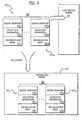
- FIG. 3 a block diagram of a first illustrative embodiment of the loading and storage contents of the non-volatile memory component 290 of Figure 2 is shown.
- the non-volatile memory component 290 is loaded with one or more digitally signed images 300, which collectively act as firmware.
- a digitally signed image 300 includes relocation information 310, a pre-relocation image 320 and a digital signature 330. The positioning of the elements forming any image is a design choice.
- the relocation information 310 includes relative offsets 315 for certain routines within the pre-relocation image 310. Normally, the offsets 315 are generated when the software module associated with the digitally signed image is compiled. The offsets 315 are used for properly addressing segments of information within the software module during relocation once the starting location of the image 300, referred to as base address "B_ADDR," is determined.
- the relocation is conducted by a symmetrical relocation function that allows the relocated information to be undone for data integrity verification using the digital signature 330.
- the pre-relocation image 320 is converted (relocated) to a post-relocation image 340 is based on the pre-relocation image 320 of the image 300 during loading. Namely, the pre-relocation image 320 is relocated for retrieval from the base address (B_ADDR) allotted to the image 300. In essence, the relocation operation adds B_ADDR to the offsets 315 contained within the relocation information 310. This modifies the binary image such as the post-relocation image 340 stored in the non-volatile memory component now differs from the pre-relocation image 320 coded by the vendor.
- the digital signature 330 includes at least a hash value of the pre-relocation image 320, which is digitally signed with a private key (PRK) of a signatory.
- PRK private key
- the post-relocation image 340 now resides in the non-volatile memory component after relocation, it is appreciated that the digital signature 330 is based on the pre-relocated image 320 which is the binary form as originally produced before loading into the non-volatile memory component.
- the non-volatile memory component 290 contains multiple digitally signed images 410 1 -410 M ("M" being a positive whole number) forming the firmware 400 (e.g., the BIOS).
- M being a positive whole number
- each digitally signed image 410 1 -410 M is formed with a pre-relocation image 420 1 -420 M , relocation information 430 1 -430 M and a digital signature 440 1 -440 M.
- Each digital signature 400 1 -400 M is based on at least a hash value of its corresponding pre-relocation image 420 1 -420 M and is digitally signed with a private key (PRK) of one or more signatories.
- PRK private key
- the non-volatile memory component 290 undergoes a relocation operation which modifies the stored images from the pre-relocation images 420 1 -420 M to a post-relocation images 450 1 -450 M , respectively.
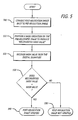
- the post-relocation image of a digitally signed image is reconverted to a pre-relocation image (block 500). This is accomplished using the relocation information contained in the digitally signed image. In particular, one or more arithmetic operations are performed on each offset; namely, as an example, the base address associated with memory of the non-volatile memory component is subtracted from each offset set forth in the relocation information. Thereafter, in block 510, a hash operation is performed on the reconverted, pre-relocation image to produce a hash value (referred to as the "reconverted hash value").
- the digital signature of the digitally signed image is accessed and the hash value of the digital signature is recovered (block 520). This may be accomplished by running the digitally signed image through the digital signature algorithm being provided with a public key of the signatory for decode purposes. Thereafter, the recovered hash value is compared to the reconverted hash value (block 530). If a match is determined, the post-relocation image has been verified (block 540). Otherwise, the post-relocation image has not been verified, indicating that the image has been modified beyond such modification caused by relocation (block 550).
- FIG. 6 is a block diagram of a second illustrative embodiment of the present invention in which a plurality (M) of digitally signed images 600 1 -600 M are dynamically linked together through one or more Bound & Relocated Import Tables (BRITs). Each BRIT corresponds to only one digitally signed image. It is contemplated that each digitally signed image 600 1 -600 M may include a BRIT or only a subset of the digital signed images 600 1 -600 M may be provided BRITs.
- BRITs Bound & Relocated Import Tables
- the digitally signed image 600 1 includes a BRIT 610 1 , an import table 620 1 , an export table 630 1 , an image 640 1 based on selected information (e.g., a software module) and a digital signature 650 1 .
- the digital signature 650 1 is generated by conducting a one-way hash operation on the import table 620 1 , the export table 630 1 and the image 640 1 to produce a resultant hash value.
- the resultant hash value is digitally signed by a signatory using its private key.
- the import table 620 1 is listing of stored information located in another digitally signed image (e.g., image 640 M ) that need to be accessed for proper execution of the image 640 1 .
- the import table 620 1 comprises a plurality of entries 625 of which at least one entry (e.g., entry 626) of the import table 620 comprises an identifier 627 and a first offset 628.
- the identifier 627 indicates what segment(s) of information (e.g., a function, routine, code, data, etc.) not contained within the digitally signed image 600 1 , is required by the image 640 1 during execution.
- the identifier 627 may be represented as an alphanumeric name or a guaranteed unique identification (e.g., a sixteen-byte value).
- the first offset 628 is an offset pointer to an entry of the BRIT 610 that corresponds to entry 626.
- the export table 630 is a listing of information contained in a digitally signed image that are available for other digitally signed images to retrieve. Entries of the export table 630 M, for example, include an identifier 635 for each segment of information included in the image 640 M and a second offset 636.
- the second offset 636 is equivalent to an offset from an address location of the digitally signed image 600 M to the address location of the segment of information required by image 640 1 of the digitally signed image 600 1 .
- the BRIT 610 1 is associated with the digitally signed image 600 1 .
- Each entry of the BRIT 610 1 includes the identifier 627 and an address pointer 611 of the location of the segment of information.
- the address pointer 611 is an arithmetic combination of the starting address of the image 640 M and the second offset 636.
- a request for a segment of information referenced by the identifier 627 is routed via the BRIT 610 1 to a location within the image 640 M as represented by dashed line 660. This enables the segment of information at that location to be accessed without modification of the image 640 M .
- the digital signatures 650 1 and 650 M can still be used to monitor modification of the import tables 620 1 and 620 M , export tables 630 1 and 630 M , and/or images 640 1 and 640 M .
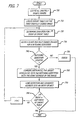
- FIG. 7 a flowchart of the operations for generating a Bound and Relocated Import Table (BRIT) of the first digitally signed image 600, of Figure 6 is shown.
- all digitally signed images within the non-volatile memory component are located (block 700).
- an import table of the first digitally signed image is located (block 710).
- the identifier is determined and a search is conducted for a matching identifier in an export table of another digitally signed images, namely any other digitally signed image besides the first digitally signed image (blocks 720 and 730).
- the matching identifier is not located, an error is reported (blocks 740 and 750). If the matching identifier is located within a second digitally signed image, for example, the offset in the export table that corresponds to the matching identifier and resides in second digitally signed image is arithmetically combined with the starting address of the second digitally signed image (blocks 740 and 760). The combined address is loaded into an entry of the BRIT along with the identifier associated with the import table (block 770). This process continues until all entries in the import table have corresponding entries in the BRIT (block 780).
- a flowchart of the operations for verifying the Bound and Relocated Import Table (BRIT) of Figure 7 is shown.
- a list of all digitally signed images is generated (block 800).
- verify the integrity of these digitally signed images by confirming that its corresponding import table, export table and image have not been modified (block 810).
- For a first digitally signed image for example, this can be accomplished by performing a hash operation on the import table, export table and image of the first digitally signed image. This produces a resultant hash value.
- the resultant hash value is compared with a hash value uncovered from the digital signature associated with the first digitally signed image. If the resultant hash value matches the recovered hash value, the import table, export table and image for the first digitally signed image have not been modified. This operation is continued for all of the remaining digitally signed images.
- an error is reported (block 820). Otherwise, for the first digitally signed image, a determination is made whether the identifier in its import table matches an identifier in an export table of another digitally signed image (block 830). If no match is located, an error is reported (see block 820). If a match is located, a determination is made whether the BRIT entry corresponding to the identifier of the import table points to an address defined by the matching identifier of the export table of another digitally signed image (block 840). Since the BRIT can only point to an address defined by an export table that is contained in a digitally signed image, it can only point to trusted information. If the BRIT entry corresponding to the identifier of the import table points to an address defined by the matching identifier of the export table of another digitally signed image, the BRIT is verified (block 850). Otherwise, the BRIT is not verified (block 860).
Landscapes
- Engineering & Computer Science (AREA)
- Computer Security & Cryptography (AREA)
- Theoretical Computer Science (AREA)
- Computer Hardware Design (AREA)
- Software Systems (AREA)
- General Engineering & Computer Science (AREA)
- Physics & Mathematics (AREA)
- General Physics & Mathematics (AREA)
- Storage Device Security (AREA)
- Radar Systems Or Details Thereof (AREA)
- Collating Specific Patterns (AREA)
Abstract
Description
- The present invention relates to the field of data security. More particularly, this invention relates to a scheme for verifying the integrity of stored information loaded within an electronic device.
- Many electronic devices include a set of semi-permanently stored instructions referred to as firmware. For instance, computers include a type of firmware referred to as the basic input/output system (BIOS). Being executed by a processor of the computer, the BIOS is coded to perform various functions. For example, during a pre-boot cycle at power-up, the BIOS controls the initialization of the computer as well as the initialization of various hardware peripherals. Normally provided by a single vendor, the BIOS is loaded into pre-boot space of a non-volatile memory such as a read-only memory (ROM) component or a flash memory component during manufacture of the computer.
- Recently, however, it has become desirable to store more sophisticated routines and data in the pre-boot space of the non-volatile memory. As an example, in recent efforts to protect against software viruses and malicious corruption of the BIOS, an image of the BIOS code may be digitally signed to produce a digital signature. Prior to execution of the BIOS, the digital signature may be used to determine whether the BIOS has been modified. This provides much needed virus protection.
- Well known in the art, a digital signature is digital data signed using a private key of its signatory. Similar to encryption, the "signing process" may be accomplished using any of a number of software algorithms such as a Rivert Shamir and Adleman (RSA) algorithm or the Digital Signature Algorithm (DSA) as set forth in a Federal Information Processing Standards publication 186 entitled "Digital Signature Standard" (May 19, 1994). Normally, the digital data is placed in an encoded form (referred to as the "hash value"), achieved by performing a one-way hash operation on the original digital data, prior to signing the hash value. The term "one-way" indicates that there does not readily exist an inverse operation or function to recover any discernible portion of the digital data from the hash value.
- Recently, the computer industry has made efforts to develop BIOS as a collection of software modules produced by different vendors rather than a piece of monolithic code produced by a single vendor. It is likely that the code of the BIOS modules would be configured as "execute-in-place" modules because this code would be executed before the availability of system random access memory (RAM). Also, it is likely that relocation would be used to properly load the BIOS modules within the non-volatile memory because it would be too difficult for all of the BIOS vendors to agree on the specific addressing scheme beforehand.
- As commonly known in the industry, "relocation" is a process by which addresses within each BIOS module are adjusted based on the particular address location in memory allotted for the BIOS module (referred to as the "base address"). Thus, software routines within a BIOS module are usually coded with relative offsets from a base address that has not yet been assigned. During relocation, the addresses of various software routines within the BIOS module would be adjusted by adding the base address to each of the relative offsets.
- Unfortunately, if relocation is performed on the execute-in-place BIOS modules, any digital signatures associated with the images of the BIOS modules would be ineffective because any data integrity analysis using the digital signatures would indicate that the BIOS module has been modified. Hence, it is virtually impossible to determine whether modification of the BIOS module was unauthorized or merely due to the relocation operation. Thus, it would be desirable to develop an integrity verification mechanism that improves the effectiveness of digital signatures in detecting unauthorized modifications to the BIOS module while still allowing the image to undergo relocation.
- Moreover, when BIOS is developed as a collection of digitally signed BIOS modules produced by different vendors, in certain situations, it may be desirable to dynamically link these digitally signed modules. In particular, one BIOS module may be configured to make a call for a function coded in another BIOS module. However, in order to dynamically link the BIOS modules together, it would require modification of at least one BIOS module, which would invalidate any digital signature associated with the image of that BIOS module. Thus, the original digital signatures would not be effective to identifying unauthorized modification of the module. Thus, an integrity verification mechanism that overcomes this problem would be desirable.
-
EP 0902364 discloses a method for loading or executing a program even if a system involved does not have a memory resource sufficient enough to map a relative address format file in the memory using a loader for relocating a relative address format file which reads the whole of a file, maps the file on a memory, and converts the file into an absolute address format file. -
US 5,643,086 discloses an electronic casino gaming system which greatly expands casino game play capability and enhances security and authentication capabilities. More particularly, the invention comprises an electronic casino gaming system and method having greatly expanded mass storage capability for storing a multiplicity of high resolution, high sound quality casino type games, and provides enhanced authentication of the stored game program information with a high security factor. A casino game data set and a unique signature are stored in a mass storage device, which may comprise a read only unit or a read/write unit and which may be physically located either within the casino game console or remotely located and linked to the casino game console over a suitable network. -
WO 00/33196 - According to a first aspect of the invention, there is provided a memory component with a digitally signed image embodied therein, as claimed in
claim 1. - According to a second aspect of the invention, there is provided a computer-implemented method, as claimed in claim 5.
- According to a second aspect of the invention, there is provided an electronic device, as claimed in claim 8.
- Further embodiments of the invention are included in the dependent claims.
- The features and advantages of the present invention will become apparent from the following detailed description of the present invention in which:
-
Figure 1 is an illustrative block diagram of a collection of software modules for loading as firmware into an electronic device. -
Figure 2 is an illustrative block diagram of an embodiment of an electronic device utilizing the present invention. -
Figure 3 is a block diagram of a first illustrative embodiment of the contents of the non-volatile memory component ofFigure 2 that are collectively used to verify the integrity of relocated, post-relocation images using digital signatures. -
Figure 4 is a block diagram of a second illustrative embodiment of the contents of the non-volatile memory component ofFigure 2 . -
Figure 5 is a flowchart of the operations for verifying the integrity of stored information, such as a post-relocation image shown inFigures 3 and4 . -
Figure 6 is a block diagram of a second illustrative embodiment of the present invention featuring a plurality of digitally signed images are dynamically linked together through one or more Bound & Relocated Import Tables (BRITs). -
Figure 7 is a flowchart of the operations for generating a Bound and Relocated Import Table (BRIT). -
Figure 8 is a flowchart of the operations for verifying the Bound and Relocated Import Table (BRIT) ofFigure 7 . - Herein, certain embodiments of the invention are described for verifying the integrity of information that is stored within an electronic device during pre-boot operations. In general, the stored information may include, for example, a digitally signed image that includes a post-relocation image of a software module or is dynamically linked with another digitally signed image.
- In the following description, certain terminology is used to discuss features of the present invention. A "software module" comprises a set of instructions that perform a particular function. For example, the software module may feature instructions that are executed during a pre-boot cycle in order to initialize an electronic device. A replication of a binary representation of the instructions associated with the software module is referred to as an "image". Different types of images can be used to represent different formatting stages. For instance, a "pre-relocation image" is a binary representation of the software module prior to conducting a relocation operation thereon. A "post-relocation image" is a binary representation of the module after relocation.
- Furthermore, an "electronic device" is a combination of electronic hardware and software that collectively operates to perform one or more specific functions. Examples of an electronic device include a computer (e.g., a laptop, desktop, hand-held, server, mainframe, etc.), a component of the computer (e.g., a serial port), a cellular telephone, a set-top box (cable box, network computer, satellite television receiver, etc.), a network appliance and the like. A "link" is broadly defined as one or more information-carrying mediums to establish a communication pathway, including physical medium (e.g., electrical wire, optical fiber; cable, bus traces, etc.) or wireless medium (e.g., air in combination with wireless signaling technology).
- Briefly, one integrity verification mechanism involves the configuration of a digitally signed image to include relocation information, a post-relocation image and a digital signature. The "relocation information" is a series of relative offsets from a base address. These offsets are generated after the stored information (e.g., an image of a software module) is compiled and placed into an executable format such as an MS-DOS® "EXE" format (MS-DOS is a registered trademark of Microsoft Corporation of Redmond, Washington). The offsets are converted to appropriate addresses during relocation when the base address, namely the storing address at which the image of the software module is stored and retrieved for execution, is determined. Thus, the post-relocation image differs from a pre-relocation image. The digital signature, however, is based on the pre-relocation image.
- Another second integrity verification mechanism involves the inclusion of an import table and an export table within each digitally signed image. These tables allow functions within different digitally signed images to be dynamically bound together via a Bound & Relocated Import Table (BRIT). The BRIT resides outside the digitally signed image. Both of the integrity verification mechanisms may be performed by hardware or a software program embedded in a processor (described below) or simply executable by the processor.
- Referring to
Figure 1 , an illustrative block diagram of a collection of "N" software modules ready for loading asfirmware 100 into an electronic device is shown. Herein, each software module 110N (N≥1) includes a header 120N and an image 130N for a particular software segment of thefirmware 100. Prior to loading the software modules as firmware into a non-volatile memory as described below, each image 130N is digitally signed by a signatory to produce a digital signature 140N. The signatories may differ between each module or multiple modules may share the same signatory. A "signatory" may include any person or entity in a position of trust to guarantee or sponsor the digital signature (e.g., a bank, governmental entity, trade association, original equipment manufacturer, vendor, etc.). - Referring now to
Figure 2 , an illustrative block diagram of an embodiment of an electronic device is shown. For this embodiment, theelectronic device 200 comprises achipset 210 coupled to aprocessor 220 and amemory 230 through afirst bus 240 and asecond bus 250, respectively. In addition,chipset 210 is coupled to athird bus 260 that provides a pathway to one ormore system resources 270. Herein, thethird bus 260 is represented as an input/output (I/O) bus (e.g., Peripheral Component Interconnect "PCI" bus); however, any other type of bus architecture may be used, including such bus architectures as Industry Standard Architecture (ISA), Extended ISA (EISA), Universal Serial Bus (USB) and the like. Herein, thethird bus 260 is shown as a single bus, but it is contemplated that thethird bus 260 may include multiple buses coupled together through bridge circuitry. - As shown, the
system resources 270 would be coupled to at least one of the multiple buses. Thesystem resources 270 comprise acommunication device 280 and anon-volatile memory component 290.Communication device 280 is configured to establish communications with another electronic device over acommunication link 285. Examples ofcommunication device 280 include a network interface card, a modem card or an external modem. Thenon-volatile memory component 290 includes firmware that features digitally signed images of one or more software modules. In one embodiment, one or more of these software modules may form a Basic Input/Output System (BIOS) code of theelectronic device 200. Examples of thenon-volatile memory component 290 include a programmable, non-volatile memory such as flash memory, battery-backed random access memory (RAM), read only memory (ROM), erasable programmable ROM (EPROM), electrically erasable PROM (EEPROM), or any other type of memory appropriate for storing the module(s). - Referring to
Figure 3 , a block diagram of a first illustrative embodiment of the loading and storage contents of thenon-volatile memory component 290 ofFigure 2 is shown. Thenon-volatile memory component 290 is loaded with one or more digitally signedimages 300, which collectively act as firmware. With respect to this embodiment, a digitally signedimage 300 includesrelocation information 310, apre-relocation image 320 and adigital signature 330. The positioning of the elements forming any image is a design choice. - The
relocation information 310 includesrelative offsets 315 for certain routines within thepre-relocation image 310. Normally, theoffsets 315 are generated when the software module associated with the digitally signed image is compiled. Theoffsets 315 are used for properly addressing segments of information within the software module during relocation once the starting location of theimage 300, referred to as base address "B_ADDR," is determined. The relocation is conducted by a symmetrical relocation function that allows the relocated information to be undone for data integrity verification using thedigital signature 330. - Herein, during relocation, the
pre-relocation image 320 is converted (relocated) to apost-relocation image 340 is based on thepre-relocation image 320 of theimage 300 during loading. Namely, thepre-relocation image 320 is relocated for retrieval from the base address (B_ADDR) allotted to theimage 300. In essence, the relocation operation adds B_ADDR to theoffsets 315 contained within therelocation information 310. This modifies the binary image such as thepost-relocation image 340 stored in the non-volatile memory component now differs from thepre-relocation image 320 coded by the vendor. - The
digital signature 330 includes at least a hash value of thepre-relocation image 320, which is digitally signed with a private key (PRK) of a signatory. Although thepost-relocation image 340 now resides in the non-volatile memory component after relocation, it is appreciated that thedigital signature 330 is based on thepre-relocated image 320 which is the binary form as originally produced before loading into the non-volatile memory component. - Referring to
Figure 4 , a block diagram of a second illustrative embodiment of the contents of thenon-volatile memory component 290 is shown. Thenon-volatile memory component 290 contains multiple digitally signed images 4101-410M ("M" being a positive whole number) forming the firmware 400 (e.g., the BIOS). For instance, as an illustrative example, each digitally signed image 4101-410M is formed with a pre-relocation image 4201-420M, relocation information 4301-430M and a digital signature 4401-440M. Each digital signature 4001-400M is based on at least a hash value of its corresponding pre-relocation image 4201-420M and is digitally signed with a private key (PRK) of one or more signatories. Upon being loaded with the digitally signed images 4101-410M, thenon-volatile memory component 290 undergoes a relocation operation which modifies the stored images from the pre-relocation images 4201-420M to a post-relocation images 4501-450M, respectively. - Referring now to
Figure 5 , a flowchart of the operations for verifying the integrity of stored information, such as a post-relocation image ofFigures 3 and4 , is shown. For integrity verification, the post-relocation image of a digitally signed image is reconverted to a pre-relocation image (block 500). This is accomplished using the relocation information contained in the digitally signed image. In particular, one or more arithmetic operations are performed on each offset; namely, as an example, the base address associated with memory of the non-volatile memory component is subtracted from each offset set forth in the relocation information. Thereafter, inblock 510, a hash operation is performed on the reconverted, pre-relocation image to produce a hash value (referred to as the "reconverted hash value"). - The digital signature of the digitally signed image is accessed and the hash value of the digital signature is recovered (block 520). This may be accomplished by running the digitally signed image through the digital signature algorithm being provided with a public key of the signatory for decode purposes. Thereafter, the recovered hash value is compared to the reconverted hash value (block 530). If a match is determined, the post-relocation image has been verified (block 540). Otherwise, the post-relocation image has not been verified, indicating that the image has been modified beyond such modification caused by relocation (block 550).
-
Figure 6 is a block diagram of a second illustrative embodiment of the present invention in which a plurality (M) of digitally signed images 6001-600M are dynamically linked together through one or more Bound & Relocated Import Tables (BRITs). Each BRIT corresponds to only one digitally signed image. It is contemplated that each digitally signed image 6001-600M may include a BRIT or only a subset of the digital signed images 6001-600M may be provided BRITs. - In this embodiment, a dynamic linking of two digitally signed images 6001 and 600M is shown. Herein, the digitally signed image 6001 includes a BRIT 6101, an import table 6201, an export table 6301, an
image 6401 based on selected information (e.g., a software module) and adigital signature 6501. Thedigital signature 6501 is generated by conducting a one-way hash operation on the import table 6201, the export table 6301 and theimage 6401 to produce a resultant hash value. The resultant hash value is digitally signed by a signatory using its private key. - In general, the import table 6201 is listing of stored information located in another digitally signed image (e.g., image 640M) that need to be accessed for proper execution of the
image 6401. The import table 6201 comprises a plurality ofentries 625 of which at least one entry (e.g., entry 626) of the import table 620 comprises anidentifier 627 and a first offset 628. Generated either internally within the electronic device or remotely by a centralized authority, theidentifier 627 indicates what segment(s) of information (e.g., a function, routine, code, data, etc.) not contained within the digitally signed image 6001, is required by theimage 6401 during execution. Theidentifier 627 may be represented as an alphanumeric name or a guaranteed unique identification (e.g., a sixteen-byte value). The first offset 628 is an offset pointer to an entry of the BRIT 610 that corresponds toentry 626. - The export table 630 is a listing of information contained in a digitally signed image that are available for other digitally signed images to retrieve. Entries of the export table 630M, for example, include an
identifier 635 for each segment of information included in theimage 640M and a second offset 636. The second offset 636 is equivalent to an offset from an address location of the digitally signed image 600M to the address location of the segment of information required byimage 6401 of the digitally signed image 6001. - As shown, the BRIT 6101 is associated with the digitally signed image 6001. Each entry of the BRIT 6101 includes the
identifier 627 and anaddress pointer 611 of the location of the segment of information. Theaddress pointer 611 is an arithmetic combination of the starting address of theimage 640M and the second offset 636. Thus, during execution of image 6001, a request for a segment of information referenced by theidentifier 627 is routed via the BRIT 6101 to a location within theimage 640M as represented by dashedline 660. This enables the segment of information at that location to be accessed without modification of theimage 640M. Thus, thedigital signatures images - Referring now to
Figure 7 , a flowchart of the operations for generating a Bound and Relocated Import Table (BRIT) of the first digitally signed image 600, ofFigure 6 is shown. Initially, all digitally signed images within the non-volatile memory component are located (block 700). Thereafter, an import table of the first digitally signed image is located (block 710). For an initial entry of the import table, the identifier is determined and a search is conducted for a matching identifier in an export table of another digitally signed images, namely any other digitally signed image besides the first digitally signed image (blocks 720 and 730). - If the matching identifier is not located, an error is reported (
blocks 740 and 750). If the matching identifier is located within a second digitally signed image, for example, the offset in the export table that corresponds to the matching identifier and resides in second digitally signed image is arithmetically combined with the starting address of the second digitally signed image (blocks 740 and 760). The combined address is loaded into an entry of the BRIT along with the identifier associated with the import table (block 770). This process continues until all entries in the import table have corresponding entries in the BRIT (block 780). - Referring to
Figure 8 , a flowchart of the operations for verifying the Bound and Relocated Import Table (BRIT) ofFigure 7 is shown. In this embodiment, a list of all digitally signed images is generated (block 800). For each digitally signed image, verify the integrity of these digitally signed images by confirming that its corresponding import table, export table and image have not been modified (block 810). For a first digitally signed image, for example, this can be accomplished by performing a hash operation on the import table, export table and image of the first digitally signed image. This produces a resultant hash value. The resultant hash value is compared with a hash value uncovered from the digital signature associated with the first digitally signed image. If the resultant hash value matches the recovered hash value, the import table, export table and image for the first digitally signed image have not been modified. This operation is continued for all of the remaining digitally signed images. - If the integrity of the digitally signed images cannot be verified, an error is reported (block 820). Otherwise, for the first digitally signed image, a determination is made whether the identifier in its import table matches an identifier in an export table of another digitally signed image (block 830). If no match is located, an error is reported (see block 820). If a match is located, a determination is made whether the BRIT entry corresponding to the identifier of the import table points to an address defined by the matching identifier of the export table of another digitally signed image (block 840). Since the BRIT can only point to an address defined by an export table that is contained in a digitally signed image, it can only point to trusted information. If the BRIT entry corresponding to the identifier of the import table points to an address defined by the matching identifier of the export table of another digitally signed image, the BRIT is verified (block 850). Otherwise, the BRIT is not verified (block 860).
- While certain exemplary embodiments have been described and shown in the accompanying drawings, it is to be understood that such embodiments are merely illustrative of and not restrictive on the broad invention, and that this invention not be limited to the specific constructions and arrangements shown and described, since various other modifications may occur to those ordinarily skilled in the art.
Claims (10)
- A memory component (290) with a digitally signed image (300) embodied therein, the digitally signed image characterized by:a post-relocation image (340) being an image (320) of a software module altered by a symmetrical relocation function upon loading of the image into the memory component; anda digital signature (330) based on the image.
- A memory component as claimed in claim 1, wherein the digital signature (330) is a hash value of the image digitally signed by a private key of a selected signatory.
- A memory component as claimed in claim 1, further comprising information (310) for use by the symmetrical relocation function to convert the image (320) into the post-relocation image (340).
- A memory component as claimed in claim 3, wherein the information includes offsets (315) for routines within the software module and wherein the offsets are generated when the software module is compiled.
- A computer-implemented method comprising:reconverting (500) a post-relocation image (340) of a digitally signed image back to a pre-relocation image (320), the pre-relocation image being an image of a software module prior to be altered by a symmetrical relocation function;conducting (510) a hash operation on the reconverted, pre-relocation image to produce a reconverted hash value;recovering (520) a hash value from a digital signature (330) contained in the digitally signed image, the hash value is based on the image of the software module; andcomparing (530) the hash value to the reconverted hash value.
- The method of claim 5 further comprising:determining (540) that an integrity of the post-relocation image remains intact if the hash value matches the reconverted hash value.
- The method of claim 5 further comprising:determining (550) that the post-relocation image has been modified beyond any modification caused by relocation when the hash value fails to match the reconverted hash value.
- An electronic device (200) comprising:a processor (220); anda non-volatile memory component (290) in communication with the processor, the non-volatile memory component characterized by:a post-relocation image (340) being an image (320) of a software module altered by a symmetrical relocation function upon loading of the image into the memory component, anda digital signature (330) based on the image.
- The electronic device of claim 8, wherein the non-volatile memory component (290) further includes information (310) for use by the symmetrical relocation function to convert the image into the post-relocation image.
- The electronic device of claim 9, wherein the information placed within the non-volatile memory component (290) includes offsets (315) from a starting address of the image of the software module to a segment of information within the software module.
Applications Claiming Priority (3)
| Application Number | Priority Date | Filing Date | Title |
|---|---|---|---|
| US675113 | 1984-11-27 | ||
| US09/675,113 US6928548B1 (en) | 2000-09-29 | 2000-09-29 | System and method for verifying the integrity of stored information within an electronic device |
| PCT/US2001/030356 WO2002027444A2 (en) | 2000-09-29 | 2001-09-27 | System and method for verifying the integrity of stored information within an electronic device |
Publications (2)
| Publication Number | Publication Date |
|---|---|
| EP1334419A2 EP1334419A2 (en) | 2003-08-13 |
| EP1334419B1 true EP1334419B1 (en) | 2010-06-23 |
Family
ID=24709114
Family Applications (1)
| Application Number | Title | Priority Date | Filing Date |
|---|---|---|---|
| EP01975521A Expired - Lifetime EP1334419B1 (en) | 2000-09-29 | 2001-09-27 | System and method for verifying the integrity of stored information within an electronic device |
Country Status (8)
| Country | Link |
|---|---|
| US (1) | US6928548B1 (en) |
| EP (1) | EP1334419B1 (en) |
| CN (1) | CN1322384C (en) |
| AT (1) | ATE472129T1 (en) |
| AU (1) | AU2001294839A1 (en) |
| DE (1) | DE60142442D1 (en) |
| TW (1) | TW559695B (en) |
| WO (1) | WO2002027444A2 (en) |
Families Citing this family (23)
| Publication number | Priority date | Publication date | Assignee | Title |
|---|---|---|---|---|
| EP1338939A1 (en) * | 2002-02-22 | 2003-08-27 | Hewlett-Packard Company | State validation device for a computer |
| US7039796B2 (en) * | 2002-06-04 | 2006-05-02 | Hewlett-Packard Development Company, L.P. | Method and system of locating a position in memory at which to store incoming firmware image |
| US7370206B1 (en) | 2003-09-04 | 2008-05-06 | Adobe Systems Incorporated | Self-signing electronic documents |
| US7475061B2 (en) * | 2004-01-15 | 2009-01-06 | Microsoft Corporation | Image-based document indexing and retrieval |
| US7729538B2 (en) * | 2004-08-26 | 2010-06-01 | Microsoft Corporation | Spatial recognition and grouping of text and graphics |
| US7574048B2 (en) * | 2004-09-03 | 2009-08-11 | Microsoft Corporation | Freeform digital ink annotation recognition |
| US7570816B2 (en) * | 2005-03-31 | 2009-08-04 | Microsoft Corporation | Systems and methods for detecting text |
| US20060236122A1 (en) * | 2005-04-15 | 2006-10-19 | Microsoft Corporation | Secure boot |
| US7526129B2 (en) * | 2005-06-23 | 2009-04-28 | Microsoft Corporation | Lifting ink annotations from paper |
| US7380049B2 (en) * | 2005-09-06 | 2008-05-27 | Intel Corporation | Memory protection within a virtual partition |
| US20080077801A1 (en) * | 2006-09-25 | 2008-03-27 | Nokia Corporation | Protecting interfaces on processor architectures |
| US8528102B2 (en) * | 2006-10-06 | 2013-09-03 | Broadcom Corporation | Method and system for protection of customer secrets in a secure reprogrammable system |
| JP4455571B2 (en) * | 2006-11-21 | 2010-04-21 | キヤノン株式会社 | Document verification device |
| US8190869B2 (en) * | 2007-04-17 | 2012-05-29 | Lexmark International, Inc. | Dual boot strategy to authenticate firmware in a computing device |
| US8068614B2 (en) * | 2007-09-28 | 2011-11-29 | Intel Corporation | Methods and apparatus for batch bound authentication |
| US9058491B1 (en) | 2009-03-26 | 2015-06-16 | Micron Technology, Inc. | Enabling a secure boot from non-volatile memory |
| US8464249B1 (en) | 2009-09-17 | 2013-06-11 | Adobe Systems Incorporated | Software installation package with digital signatures |
| US9336410B2 (en) * | 2009-12-15 | 2016-05-10 | Micron Technology, Inc. | Nonvolatile memory internal signature generation |
| TWI486808B (en) * | 2013-06-26 | 2015-06-01 | Taiwan Ca Inc | System for validating electronic insurance policy with certificate and method thereof |
| WO2017131621A1 (en) * | 2016-01-25 | 2017-08-03 | Hewlett-Packard Development Company, L.P. | Protecting basic input/output (bios) code |
| EP3660715A1 (en) | 2018-11-30 | 2020-06-03 | Conax AS | Protecting sensitive data in a software program |
| US10951790B1 (en) * | 2019-11-22 | 2021-03-16 | Verizon Patent And Licensing Inc. | Systems and methods for authenticating an image |
| US11689354B2 (en) * | 2020-10-07 | 2023-06-27 | Oracle International Corporation | Efficient and scalable mechanism to protect integrity and authenticity of large data sets in cloud logging environments |
Family Cites Families (11)
| Publication number | Priority date | Publication date | Assignee | Title |
|---|---|---|---|---|
| US4558176A (en) * | 1982-09-20 | 1985-12-10 | Arnold Mark G | Computer systems to inhibit unauthorized copying, unauthorized usage, and automated cracking of protected software |
| US4562305A (en) * | 1982-12-22 | 1985-12-31 | International Business Machines Corporation | Software cryptographic apparatus and method |
| US4796181A (en) * | 1986-10-24 | 1989-01-03 | Wiedemer John D | Billing system for computer software |
| US5421006A (en) * | 1992-05-07 | 1995-05-30 | Compaq Computer Corp. | Method and apparatus for assessing integrity of computer system software |
| CA2143488C (en) * | 1995-02-27 | 2000-01-11 | Robert Paul Duncan | Dynamic link libraries without linker or loader support |
| US5643086A (en) | 1995-06-29 | 1997-07-01 | Silicon Gaming, Inc. | Electronic casino gaming apparatus with improved play capacity, authentication and security |
| US5802592A (en) * | 1996-05-31 | 1998-09-01 | International Business Machines Corporation | System and method for protecting integrity of alterable ROM using digital signatures |
| US5844986A (en) * | 1996-09-30 | 1998-12-01 | Intel Corporation | Secure BIOS |
| JPH1185526A (en) | 1997-09-12 | 1999-03-30 | Hitachi Ltd | Program loading method |
| US6401208B2 (en) * | 1998-07-17 | 2002-06-04 | Intel Corporation | Method for BIOS authentication prior to BIOS execution |
| AUPP734298A0 (en) | 1998-11-26 | 1998-12-24 | Aristocrat Leisure Industries Pty Ltd | Electronic casino gaming with authentication and improved security |
-
2000
- 2000-09-29 US US09/675,113 patent/US6928548B1/en not_active Expired - Fee Related
-
2001
- 2001-09-27 EP EP01975521A patent/EP1334419B1/en not_active Expired - Lifetime
- 2001-09-27 CN CNB018193021A patent/CN1322384C/en not_active Expired - Fee Related
- 2001-09-27 WO PCT/US2001/030356 patent/WO2002027444A2/en not_active Ceased
- 2001-09-27 DE DE60142442T patent/DE60142442D1/en not_active Expired - Lifetime
- 2001-09-27 AU AU2001294839A patent/AU2001294839A1/en not_active Abandoned
- 2001-09-27 AT AT01975521T patent/ATE472129T1/en not_active IP Right Cessation
- 2001-09-28 TW TW090124138A patent/TW559695B/en not_active IP Right Cessation
Also Published As
| Publication number | Publication date |
|---|---|
| EP1334419A2 (en) | 2003-08-13 |
| DE60142442D1 (en) | 2010-08-05 |
| US6928548B1 (en) | 2005-08-09 |
| TW559695B (en) | 2003-11-01 |
| CN1322384C (en) | 2007-06-20 |
| AU2001294839A1 (en) | 2002-04-08 |
| WO2002027444A3 (en) | 2003-05-30 |
| CN1636176A (en) | 2005-07-06 |
| ATE472129T1 (en) | 2010-07-15 |
| WO2002027444A2 (en) | 2002-04-04 |
| HK1055487A1 (en) | 2004-01-09 |
Similar Documents
| Publication | Publication Date | Title |
|---|---|---|
| US6928548B1 (en) | System and method for verifying the integrity of stored information within an electronic device | |
| US11126710B2 (en) | Method and device for verifying the integrity of platform software of an electronic device | |
| JP3293760B2 (en) | Computer system with tamper detection function | |
| EP0849657B1 (en) | Secure data processing method and system | |
| US6263431B1 (en) | Operating system bootstrap security mechanism | |
| CN112613011B (en) | USB flash disk system authentication method and device, electronic equipment and storage medium | |
| US8171275B2 (en) | ROM BIOS based trusted encrypted operating system | |
| US5844986A (en) | Secure BIOS | |
| US9111097B2 (en) | Secure execution architecture | |
| US7739516B2 (en) | Import address table verification | |
| AU2008200225B2 (en) | ROM bios based trusted encrypted operating system | |
| JP2006518499A (en) | Ordering program data for loading into the device | |
| CN109561085A (en) | A kind of auth method based on EIC equipment identification code, server and medium | |
| JP2009070408A (en) | Information processing device | |
| CN106529218B (en) | Application verification method and device | |
| CN113761595A (en) | Code signature verification method based on computer memory forensics technology | |
| KR20230082388A (en) | Apparatus for verifying bootloader of ecu and method thereof | |
| CN113971297A (en) | Linux-based ELF file data integrity protection method | |
| US8127144B2 (en) | Program loader operable to verify if load-destination information has been tampered with, processor including the program loader, data processing device including the processor, promgram loading method, and integrated circuit | |
| CN117610083A (en) | File verification method and device, electronic equipment and computer storage medium | |
| JP2006517043A (en) | Signature of program data payload when loading program | |
| CN114791834A (en) | Application program starting method and device, electronic equipment and storage medium | |
| CN120353489A (en) | Firmware updating method, device and storage medium | |
| JP2002014871A (en) | Content checking method, content updating method, and processing device | |
| CN119026153A (en) | A firmware encryption method, device, equipment and readable storage medium |
Legal Events
| Date | Code | Title | Description |
|---|---|---|---|
| PUAI | Public reference made under article 153(3) epc to a published international application that has entered the european phase |
Free format text: ORIGINAL CODE: 0009012 |
|
| 17P | Request for examination filed |
Effective date: 20030416 |
|
| AK | Designated contracting states |
Designated state(s): AT BE CH CY DE DK ES FI FR GB GR IE IT LI LU MC NL PT SE TR |
|
| AX | Request for extension of the european patent |
Extension state: AL LT LV MK RO SI |
|
| 17Q | First examination report despatched |
Effective date: 20070403 |
|
| GRAP | Despatch of communication of intention to grant a patent |
Free format text: ORIGINAL CODE: EPIDOSNIGR1 |
|
| GRAS | Grant fee paid |
Free format text: ORIGINAL CODE: EPIDOSNIGR3 |
|
| GRAA | (expected) grant |
Free format text: ORIGINAL CODE: 0009210 |
|
| AK | Designated contracting states |
Kind code of ref document: B1 Designated state(s): AT BE CH CY DE DK ES FI FR GB GR IE IT LI LU MC NL PT SE TR |
|
| REG | Reference to a national code |
Ref country code: CH Ref legal event code: EP |
|
| REG | Reference to a national code |
Ref country code: IE Ref legal event code: FG4D |
|
| REF | Corresponds to: |
Ref document number: 60142442 Country of ref document: DE Date of ref document: 20100805 Kind code of ref document: P |
|
| REG | Reference to a national code |
Ref country code: HK Ref legal event code: GR Ref document number: 1055487 Country of ref document: HK |
|
| REG | Reference to a national code |
Ref country code: NL Ref legal event code: VDEP Effective date: 20100623 |
|
| PG25 | Lapsed in a contracting state [announced via postgrant information from national office to epo] |
Ref country code: SE Free format text: LAPSE BECAUSE OF FAILURE TO SUBMIT A TRANSLATION OF THE DESCRIPTION OR TO PAY THE FEE WITHIN THE PRESCRIBED TIME-LIMIT Effective date: 20100623 |
|
| PG25 | Lapsed in a contracting state [announced via postgrant information from national office to epo] |
Ref country code: AT Free format text: LAPSE BECAUSE OF FAILURE TO SUBMIT A TRANSLATION OF THE DESCRIPTION OR TO PAY THE FEE WITHIN THE PRESCRIBED TIME-LIMIT Effective date: 20100623 Ref country code: FI Free format text: LAPSE BECAUSE OF FAILURE TO SUBMIT A TRANSLATION OF THE DESCRIPTION OR TO PAY THE FEE WITHIN THE PRESCRIBED TIME-LIMIT Effective date: 20100623 |
|
| PG25 | Lapsed in a contracting state [announced via postgrant information from national office to epo] |
Ref country code: GR Free format text: LAPSE BECAUSE OF FAILURE TO SUBMIT A TRANSLATION OF THE DESCRIPTION OR TO PAY THE FEE WITHIN THE PRESCRIBED TIME-LIMIT Effective date: 20100924 |
|
| PG25 | Lapsed in a contracting state [announced via postgrant information from national office to epo] |
Ref country code: NL Free format text: LAPSE BECAUSE OF FAILURE TO SUBMIT A TRANSLATION OF THE DESCRIPTION OR TO PAY THE FEE WITHIN THE PRESCRIBED TIME-LIMIT Effective date: 20100623 |
|
| PG25 | Lapsed in a contracting state [announced via postgrant information from national office to epo] |
Ref country code: PT Free format text: LAPSE BECAUSE OF FAILURE TO SUBMIT A TRANSLATION OF THE DESCRIPTION OR TO PAY THE FEE WITHIN THE PRESCRIBED TIME-LIMIT Effective date: 20101025 Ref country code: BE Free format text: LAPSE BECAUSE OF FAILURE TO SUBMIT A TRANSLATION OF THE DESCRIPTION OR TO PAY THE FEE WITHIN THE PRESCRIBED TIME-LIMIT Effective date: 20100623 Ref country code: CY Free format text: LAPSE BECAUSE OF FAILURE TO SUBMIT A TRANSLATION OF THE DESCRIPTION OR TO PAY THE FEE WITHIN THE PRESCRIBED TIME-LIMIT Effective date: 20100623 |
|
| PG25 | Lapsed in a contracting state [announced via postgrant information from national office to epo] |
Ref country code: IT Free format text: LAPSE BECAUSE OF FAILURE TO SUBMIT A TRANSLATION OF THE DESCRIPTION OR TO PAY THE FEE WITHIN THE PRESCRIBED TIME-LIMIT Effective date: 20100623 |
|
| PG25 | Lapsed in a contracting state [announced via postgrant information from national office to epo] |
Ref country code: MC Free format text: LAPSE BECAUSE OF NON-PAYMENT OF DUE FEES Effective date: 20100930 Ref country code: DK Free format text: LAPSE BECAUSE OF FAILURE TO SUBMIT A TRANSLATION OF THE DESCRIPTION OR TO PAY THE FEE WITHIN THE PRESCRIBED TIME-LIMIT Effective date: 20100623 |
|
| PLBE | No opposition filed within time limit |
Free format text: ORIGINAL CODE: 0009261 |
|
| REG | Reference to a national code |
Ref country code: CH Ref legal event code: PL |
|
| STAA | Information on the status of an ep patent application or granted ep patent |
Free format text: STATUS: NO OPPOSITION FILED WITHIN TIME LIMIT |
|
| 26N | No opposition filed |
Effective date: 20110324 |
|
| REG | Reference to a national code |
Ref country code: FR Ref legal event code: ST Effective date: 20110531 |
|
| REG | Reference to a national code |
Ref country code: DE Ref legal event code: R097 Ref document number: 60142442 Country of ref document: DE Effective date: 20110323 |
|
| PG25 | Lapsed in a contracting state [announced via postgrant information from national office to epo] |
Ref country code: IE Free format text: LAPSE BECAUSE OF NON-PAYMENT OF DUE FEES Effective date: 20100927 Ref country code: FR Free format text: LAPSE BECAUSE OF NON-PAYMENT OF DUE FEES Effective date: 20100930 Ref country code: LI Free format text: LAPSE BECAUSE OF NON-PAYMENT OF DUE FEES Effective date: 20100930 Ref country code: CH Free format text: LAPSE BECAUSE OF NON-PAYMENT OF DUE FEES Effective date: 20100930 |
|
| PG25 | Lapsed in a contracting state [announced via postgrant information from national office to epo] |
Ref country code: LU Free format text: LAPSE BECAUSE OF NON-PAYMENT OF DUE FEES Effective date: 20100927 |
|
| PG25 | Lapsed in a contracting state [announced via postgrant information from national office to epo] |
Ref country code: TR Free format text: LAPSE BECAUSE OF FAILURE TO SUBMIT A TRANSLATION OF THE DESCRIPTION OR TO PAY THE FEE WITHIN THE PRESCRIBED TIME-LIMIT Effective date: 20100623 |
|
| PG25 | Lapsed in a contracting state [announced via postgrant information from national office to epo] |
Ref country code: ES Free format text: LAPSE BECAUSE OF FAILURE TO SUBMIT A TRANSLATION OF THE DESCRIPTION OR TO PAY THE FEE WITHIN THE PRESCRIBED TIME-LIMIT Effective date: 20101004 |
|
| PGFP | Annual fee paid to national office [announced via postgrant information from national office to epo] |
Ref country code: DE Payment date: 20170920 Year of fee payment: 17 Ref country code: GB Payment date: 20170927 Year of fee payment: 17 |
|
| REG | Reference to a national code |
Ref country code: DE Ref legal event code: R082 Ref document number: 60142442 Country of ref document: DE Representative=s name: HWP INTELLECTUAL PROPERTY, DE |
|
| REG | Reference to a national code |
Ref country code: DE Ref legal event code: R119 Ref document number: 60142442 Country of ref document: DE |
|
| GBPC | Gb: european patent ceased through non-payment of renewal fee |
Effective date: 20180927 |
|
| PG25 | Lapsed in a contracting state [announced via postgrant information from national office to epo] |
Ref country code: DE Free format text: LAPSE BECAUSE OF NON-PAYMENT OF DUE FEES Effective date: 20190402 |
|
| PG25 | Lapsed in a contracting state [announced via postgrant information from national office to epo] |
Ref country code: GB Free format text: LAPSE BECAUSE OF NON-PAYMENT OF DUE FEES Effective date: 20180927 |