EP1334302B1 - Sleeve with integral fasteners - Google Patents
Sleeve with integral fasteners Download PDFInfo
- Publication number
- EP1334302B1 EP1334302B1 EP01973420A EP01973420A EP1334302B1 EP 1334302 B1 EP1334302 B1 EP 1334302B1 EP 01973420 A EP01973420 A EP 01973420A EP 01973420 A EP01973420 A EP 01973420A EP 1334302 B1 EP1334302 B1 EP 1334302B1
- Authority
- EP
- European Patent Office
- Prior art keywords
- monofilaments
- yarn
- sleeve
- hooks
- supplemental
- Prior art date
- Legal status (The legal status is an assumption and is not a legal conclusion. Google has not performed a legal analysis and makes no representation as to the accuracy of the status listed.)
- Expired - Lifetime
Links
Images


Classifications
-
- D—TEXTILES; PAPER
- D03—WEAVING
- D03D—WOVEN FABRICS; METHODS OF WEAVING; LOOMS
- D03D19/00—Gauze or leno-woven fabrics
-
- D—TEXTILES; PAPER
- D03—WEAVING
- D03D—WOVEN FABRICS; METHODS OF WEAVING; LOOMS
- D03D1/00—Woven fabrics designed to make specified articles
- D03D1/0035—Protective fabrics
- D03D1/0043—Protective fabrics for elongated members, i.e. sleeves
-
- D—TEXTILES; PAPER
- D03—WEAVING
- D03D—WOVEN FABRICS; METHODS OF WEAVING; LOOMS
- D03D13/00—Woven fabrics characterised by the special disposition of the warp or weft threads, e.g. with curved weft threads, with discontinuous warp threads, with diagonal warp or weft
- D03D13/006—With additional leno yarn
-
- D—TEXTILES; PAPER
- D03—WEAVING
- D03D—WOVEN FABRICS; METHODS OF WEAVING; LOOMS
- D03D13/00—Woven fabrics characterised by the special disposition of the warp or weft threads, e.g. with curved weft threads, with discontinuous warp threads, with diagonal warp or weft
- D03D13/008—Woven fabrics characterised by the special disposition of the warp or weft threads, e.g. with curved weft threads, with discontinuous warp threads, with diagonal warp or weft characterised by weave density or surface weight
-
- F—MECHANICAL ENGINEERING; LIGHTING; HEATING; WEAPONS; BLASTING
- F16—ENGINEERING ELEMENTS AND UNITS; GENERAL MEASURES FOR PRODUCING AND MAINTAINING EFFECTIVE FUNCTIONING OF MACHINES OR INSTALLATIONS; THERMAL INSULATION IN GENERAL
- F16L—PIPES; JOINTS OR FITTINGS FOR PIPES; SUPPORTS FOR PIPES, CABLES OR PROTECTIVE TUBING; MEANS FOR THERMAL INSULATION IN GENERAL
- F16L7/00—Supporting pipes or cables inside other pipes or sleeves, e.g. for enabling pipes or cables to be inserted or withdrawn from under roads or railways without interruption of traffic
-
- H—ELECTRICITY
- H02—GENERATION; CONVERSION OR DISTRIBUTION OF ELECTRIC POWER
- H02G—INSTALLATION OF ELECTRIC CABLES OR LINES, OR OF COMBINED OPTICAL AND ELECTRIC CABLES OR LINES
- H02G3/00—Installations of electric cables or lines or protective tubing therefor in or on buildings, equivalent structures or vehicles
- H02G3/02—Details
- H02G3/04—Protective tubing or conduits, e.g. cable ladders or cable troughs
- H02G3/0462—Tubings, i.e. having a closed section
- H02G3/0481—Tubings, i.e. having a closed section with a circular cross-section
-
- Y—GENERAL TAGGING OF NEW TECHNOLOGICAL DEVELOPMENTS; GENERAL TAGGING OF CROSS-SECTIONAL TECHNOLOGIES SPANNING OVER SEVERAL SECTIONS OF THE IPC; TECHNICAL SUBJECTS COVERED BY FORMER USPC CROSS-REFERENCE ART COLLECTIONS [XRACs] AND DIGESTS
- Y10—TECHNICAL SUBJECTS COVERED BY FORMER USPC
- Y10S—TECHNICAL SUBJECTS COVERED BY FORMER USPC CROSS-REFERENCE ART COLLECTIONS [XRACs] AND DIGESTS
- Y10S2/00—Apparel
- Y10S2/912—Garment having a hook-loop type fastener
- Y10S2/917—Hand or wrist covering
-
- Y—GENERAL TAGGING OF NEW TECHNOLOGICAL DEVELOPMENTS; GENERAL TAGGING OF CROSS-SECTIONAL TECHNOLOGIES SPANNING OVER SEVERAL SECTIONS OF THE IPC; TECHNICAL SUBJECTS COVERED BY FORMER USPC CROSS-REFERENCE ART COLLECTIONS [XRACs] AND DIGESTS
- Y10—TECHNICAL SUBJECTS COVERED BY FORMER USPC
- Y10T—TECHNICAL SUBJECTS COVERED BY FORMER US CLASSIFICATION
- Y10T428/00—Stock material or miscellaneous articles
- Y10T428/13—Hollow or container type article [e.g., tube, vase, etc.]
- Y10T428/1352—Polymer or resin containing [i.e., natural or synthetic]
- Y10T428/1362—Textile, fabric, cloth, or pile containing [e.g., web, net, woven, knitted, mesh, nonwoven, matted, etc.]
-
- Y—GENERAL TAGGING OF NEW TECHNOLOGICAL DEVELOPMENTS; GENERAL TAGGING OF CROSS-SECTIONAL TECHNOLOGIES SPANNING OVER SEVERAL SECTIONS OF THE IPC; TECHNICAL SUBJECTS COVERED BY FORMER USPC CROSS-REFERENCE ART COLLECTIONS [XRACs] AND DIGESTS
- Y10—TECHNICAL SUBJECTS COVERED BY FORMER USPC
- Y10T—TECHNICAL SUBJECTS COVERED BY FORMER US CLASSIFICATION
- Y10T428/00—Stock material or miscellaneous articles
- Y10T428/24—Structurally defined web or sheet [e.g., overall dimension, etc.]
- Y10T428/24008—Structurally defined web or sheet [e.g., overall dimension, etc.] including fastener for attaching to external surface
- Y10T428/24017—Hook or barb
-
- Y—GENERAL TAGGING OF NEW TECHNOLOGICAL DEVELOPMENTS; GENERAL TAGGING OF CROSS-SECTIONAL TECHNOLOGIES SPANNING OVER SEVERAL SECTIONS OF THE IPC; TECHNICAL SUBJECTS COVERED BY FORMER USPC CROSS-REFERENCE ART COLLECTIONS [XRACs] AND DIGESTS
- Y10—TECHNICAL SUBJECTS COVERED BY FORMER USPC
- Y10T—TECHNICAL SUBJECTS COVERED BY FORMER US CLASSIFICATION
- Y10T428/00—Stock material or miscellaneous articles
- Y10T428/24—Structurally defined web or sheet [e.g., overall dimension, etc.]
- Y10T428/24777—Edge feature
- Y10T428/24785—Edge feature including layer embodying mechanically interengaged strands, strand portions or strand-like strips [e.g., weave, knit, etc.]
Definitions
- This invention relates to woven fabric and, while not limited thereto, is particularly directed to sleeving for the protection of elongated items, such as pipes, tubes and electrical conductors.
- the invention is especially directed to sleeves using weaving techniques for the integral incorporation of fastening means of the hook-and-loop type.
- the hook-type fasteners are formed on woven fabric tapes which are adhesively secured or stitched to the flexible webbing constituting a sleeve.
- the loop material may also be provided in tape form or may constitute a bulky multifilament fill yarn which has loop-like portions exposed in bands.
- the filaments of the yarn can be interengaged with the hooks to effect a closure of the sleeve.
- a woven web of sleeving material is comprised of monofilament warps and bulky high denier yarns or other highly compliant yarns as the fill yarns.
- the sleeve is woven with a band or zone comprising a multiplicity of rows of supplemental warps.
- Each supplemental warp is woven in a leno weave with an adjacent warp.
- Periodic loops are formed which project from the surface of the web. These are severed and formed into hooks.
- the end portions of the supplemental warps are captured and locked in place between the ground warps and the highly compliant fill yarns. To maximize the holding force applied to the hooks, the density of the warps within the zone is quite high.
- the ground warps and supplemental warps are packed so that they touch each other in the zones.
- a plain weave which is significantly less dense than the weave in the zones may be used for the remainder of the sleeve. This is accomplished by use of fewer warps per inch outside of any zone having integral hooks.
- a preferred embodiment comprises the use of bulk yarns, especially bulky multifilament yarns as the fill yarns.
- Such yarns are considered to be as defined in ASTM "Standards on Textile Materials", Part 33, page 14, 1979 under the general heading "Bulk Yarn” and may include the yarns specifically defined therein as bulky yarn and textured yarn.
- An important aspect of the use of compliant yarns is that they yield sufficiently to cradle the supplemental warp yarns, forming pockets which capture them in position at the points of crossing with the ground warps.
- the arrangement has the advantage of providing integrally woven hooks while eliminating any need for the application of an adhesive binder to secure them in place.
- the construction has the added advantage of elimination of a tendency of the woven web to curl in the lengthwise direction of the woven web as sometimes occurs when the hooks are bound in place.
- the multifilaments When bulky yarn is used as the compliant fill yarn, the multifilaments may be exposed in bands which preferably extend in lengthwise zones along the opposite marginal edge of the sleeve or in bands at other locations extending lengthwise of the fabric.
- the filaments of the exposed yarn are preferably separated as by napping, so as to form loops of fiber which interlock with the hooks when the web is wrapped around the elongated substrates to be protected and the hooks are pressed into the mass of separated filaments.
- the hooks are confined to a multiplicity of rows in one or more zones extending lengthwise of the woven web.
- the hooks extend along one marginal edge of the web with the loops along the opposite marginal edge.
- longitudinally extending zones with integral hooks may be spaced inwardly from a marginal edge.
- multifilament yarns exposed to provide engageable loops in one or more zones spaced inwardly from the opposite marginal edge may be provided. Either arrangement provides adjustably by providing for snug fitting of the sleeve around bundles of substrates of various numbers or sizes.
- the supplemental warp monofilaments should be of large diameter.
- the diameter of the warp and the supplemental warp monofilament is in the range of between about .008 and about .012 inches.
- the compliant yarn is a bulky multifilament yarn, it should have a denier of between about 700 and about 1300.
- the woven product should have a pick density of between about 11 and 19 picks per inch.
- supplemental warp monofilaments and bulky multifilament fill yarns within the ranges above specified has the advantage that the supplemental monofilaments are more readily and tightly captured between the warp monofilaments and the fill yarns.
- the compliant fill yarn compresses, at its point of contact with the supplemental monofilaments, filling any space surrounding them and preventing slippage when the hooks and loops are pulled apart. Equal or greater closure strength is achieved as compared with commercially available hook-and-loop tape products, even though the density of the hooks is materially lower.
- This advantage is achieved without the need for an application of a binder to bind the hook elements to the woven web, thereby eliminating a costly and time-consuming step in the process of making the product.
- the use of warp monofilaments and compliant fill yarns achieves an important objective of the invention, namely, a sleeve having integral hook-and-loop closure means with superior closure strength.
- Woven webs having the properties necessary for carrying out the objectives of the invention typically are woven in a plain weave pattern utilizing monofilaments in the warp direction and compliant yarns in the fill.
- the compliant yarns may be bulk yarns, as defined above and may include bi-component yarns.
- Bi-component yarns include DREF-spun yarns which may comprise a wire or heat settable monofilament core with a sheath comprised of glass fibers or other compliant fibrous material.
- Warp monofilaments may be wire or selected from polymeric materials within the category known as "engineered plastics materials" or a combination of the two.
- Bi-component monofilaments having a core of relatively stiff polymeric material and a sheath of a material, such as nylon, polyester or the like, are particularly preferred.
- a conventional loom 10 is shown for weaving a web 12 used in the manufacture of sleeves of the present invention.
- the web is preferably comprised of monofilament warps 14 having a diameter of about .010 inches and a compliant yarn which, for purposes of the manufacture of products illustrated, is a bulky monofilament yarn 16 formed of nylon.
- a suitable bulky filament polyester yarn is a 900 denier Ansotex yarn, 970-136-00-IR-IR79 manufactured by Honeywell of Orlando, Virginia.
- the loom 10 is equipped with conventional leno heddles 18 which are positionable with respect to the fabric in the region where the rows of hooks are to be formed. As illustrated, the leno heddles 18 are located at one side of the loom along one marginal edge of fabric web 12.
- the loom 10 further includes a reed 20 having a separate section 21 with dents 22 spaced to receive lancets 24 positioned over the plane of the fabric of sleeve 12.
- the dents 22 of section 21 are each made wide enough to receive two lancets 24 and provide clearance for eight ground warps and two supplemental warps.
- the lancets 24 extend behind the dents 22 between the leno heddles 18.
- Each leno heddle 18 guides a supplemental warp 17 through a thread guide, not shown.
- the leno heddles 18 raise the supplemental warps, shift them laterally to cross a ground warp and a lancet 24 before moving downwardly and returning to the starting position, thus, forming a loop 17a over the lancet.
- the leno heddles are set up to form a loop over every second or third fill yarn. The positioning of a lancet 24 relative to the fabric sleeve being formed is schematically shown in Figure 2 with the loops shown at 17a.
- a portion of the fabric containing integral hooks is shown schematically in plan view in Figures 3 and 4 .
- the loops in the supplemental monofilaments are subsequently set by the application of heat and cut to form projecting hooks as shown at 17b in Figure 4 .
- the hooks are formed at opposite ends of adjacent loops 17a.
- the supplemental monofilaments are, thus, separated into segments each having a middle portion captured between a compliant fill yarn 16 and the adjacent ground warps 14 with the hooks of each segment preferably facing in opposite directions.
- a number of spaced zones each containing a multiplicity of rows of hooks may be integrated into the fabric by adding additional supplemental warps and leno heddles at the fabric positions where hooks are desired. It is generally preferred, although not necessary to the invention, that at least one band or zone having rows of hooks be spaced along a marginal edge of the sleeve.
- a density of about 16 picks per inch of bulky yarn of a denier of 900 was used in the illustrative product and has been found to produce excellent results.
- about 80 warp yarns per inch each having a diameter of about .008 inches were employed in a zone in which the hooks are formed.
- Hook monofilaments having a diameter of about .008 to about .012 inches may be formed in side-by-side rows, although an alternating pattern whereby the hooks in a first row are offset by one pick from the hooks in the second row will maximize the interengagement of the hooks with the bulky fill yarn.
- the balance of sleeve 12 is woven with the supplemental monofilaments omitted. About 1 ⁇ 2 the number of warp monofilaments are preferably provided in this section, imparting flexibility and a relatively open construction.
- bulky monofilament yarn is exposed along an edge of the sleeve opposite to the edge having the band of hooks.
- the bulky monofilament yarn may be napped or otherwise treated to effect a separation of the filaments and draw them out into loops which are engageable any interlock with the hooks running along the opposite fabric edge when the hooks and loops are pressed together. Additional zones of exposure of the bulky fill yarn may be created inwardly from the edge by eliminating warp yarns as required to effect the exposure in such zones.
- a sleeve formed in accordance with the invention having exposed multifilaments along one edge and integral hooks along the other edge is shown in Figure 5 .
- the inner surface of the bulky yarns may be utilized to effect a closure with the integral hooks so that the sleeve assumes a tear-drop cross-sectional appearance if desired.
- the techniques described herein may also have utility in the manufacture of sleeving of the types shown in U.S. Patent Nos. 5,413,149 and 6,045,884 .
- resiliently settable fill monofilaments are employed and are resiliently set.
- the resiliently settable filaments bias a split sleeve to the closed position.
- the resiliently set filaments additionally impart kink-resistance to a sleeve.
- the compliant yarn may be a bi-component yarn having an inner core of a heat settable monofilament material with an outer layer of compliant material.
- Such yarns having either a wire core or a resiliently settable polymeric core with a compliant filamentary sheath are available in the art.
- the yarns may be DREF process yarns in which a filamentary sheath imparts the necessary compliance to achieve a locking of the supplemental monofilaments between the filamentary sheath of the DREF process yarns and the warp monofilaments.
- Bi-component yarns having a thermoplastic monofilament core with a compliant outer polymeric sheath of polyester or other resilient material are available from Johns Manville Corporation of Spartanburg, South Carolina.
- biasing to the closed position may be achieved in such products by the incorporation of resiliently settable monofilaments in the fill together with the bulky multifilament or other compliant yarns.
- a tubular sleeve was woven which incorporated integral hooks in a zone in which the hooks project outwardly from the surface of the fabric.
- the hooks may be used to locate the sleeve in a fixed position, for example, on a surface in the engine compartment of a vehicle, by interengagement with loop tape of conventional form or with a tape comprised of exposed sections of napped bulky multifilament yarn affixed, for example, to the fire wall of the engine compartment or to an interior surface of a door panel.
- integral fastening hooks are formed in woven fabric materials useful, for example, as sleeving for bundling cables or tubing in automobiles, aircraft or other types of machinery.
- the integral hooks are locked in place within the fabric structure by the use of compliant fill yarns which yield and cradle a section of the hook monofilament and effect an interlocking of it with the adjacent warp monofilaments.
- the invention eliminates the need for processing steps such as stitching hook-type tape material to the fabric and/or the use of adhesive coatings to prevent separation of the segments of hook material from the fabric.
- the principles of the invention may be used for the closure of split-type tubular sleeves, as well as the attachment of sleeving to fixed surfaces, thereby reducing the danger of abrasion caused by contact with moving machinery parts and also reducing noise caused by vibration.
Landscapes
- Engineering & Computer Science (AREA)
- Textile Engineering (AREA)
- General Engineering & Computer Science (AREA)
- Mechanical Engineering (AREA)
- Structural Engineering (AREA)
- Civil Engineering (AREA)
- Architecture (AREA)
- Woven Fabrics (AREA)
- Dowels (AREA)
- Slide Fasteners, Snap Fasteners, And Hook Fasteners (AREA)
- Supports For Pipes And Cables (AREA)
- Installation Of Indoor Wiring (AREA)
- Paper (AREA)
Abstract
Description
- This invention relates to woven fabric and, while not limited thereto, is particularly directed to sleeving for the protection of elongated items, such as pipes, tubes and electrical conductors. The invention is especially directed to sleeves using weaving techniques for the integral incorporation of fastening means of the hook-and-loop type.
- The use of flexible sleeves in the form of woven, braided or knitted webs comprised of monofilament and multifilament yarns for the protection of cables, hoses and the like has become well known in the art (see for example
EP 0 620 873 B ). In a typical form of sleeve of this kind, lengthwise extending regions of the sleeving material are provided with interengagable fasteners which are joined together for the purpose of holding the sleeve in its wrap-around configuration. Sleeves manufactured by the Federal-Mogul Systems Protection Group, Inc. are known, which are provided with a multiplicity of hook-and-loop fastener elements arranged in bands which are typically positioned along opposed marginal edges. The hook-type fasteners are formed on woven fabric tapes which are adhesively secured or stitched to the flexible webbing constituting a sleeve. The loop material may also be provided in tape form or may constitute a bulky multifilament fill yarn which has loop-like portions exposed in bands. The filaments of the yarn can be interengaged with the hooks to effect a closure of the sleeve. These sleeves have gained wide acceptance in the art due to their convenience of use, their relatively low cost and because they conveniently allow for cable breakouts at points where an encased cable is required to be connected to a selected instrument or to an item of equipment in a vehicle. - Despite the wide acceptance of the currently available sleeving, a need exists for the application of durable, interengagable hook-and-loop closures in a manner which decreases manufacturing costs and has an equal or superior closure strength as compared to the prior art, having the capability of resisting separation in the absence of the deliberate application of a relatively high separation force.
- This aim is achieved with a sleeve according to claim 1.
- According to the invention, a woven web of sleeving material is comprised of monofilament warps and bulky high denier yarns or other highly compliant yarns as the fill yarns. The sleeve is woven with a band or zone comprising a multiplicity of rows of supplemental warps. Each supplemental warp is woven in a leno weave with an adjacent warp. Periodic loops are formed which project from the surface of the web. These are severed and formed into hooks. The end portions of the supplemental warps are captured and locked in place between the ground warps and the highly compliant fill yarns. To maximize the holding force applied to the hooks, the density of the warps within the zone is quite high. Preferably, the ground warps and supplemental warps are packed so that they touch each other in the zones. To maximize flexibility, a plain weave which is significantly less dense than the weave in the zones may be used for the remainder of the sleeve. This is accomplished by use of fewer warps per inch outside of any zone having integral hooks.
- Although bi-component or other compliant yarns may be employed in the fill, a preferred embodiment comprises the use of bulk yarns, especially bulky multifilament yarns as the fill yarns. Such yarns are considered to be as defined in ASTM "Standards on Textile Materials", Part 33,
page 14, 1979 under the general heading "Bulk Yarn" and may include the yarns specifically defined therein as bulky yarn and textured yarn. An important aspect of the use of compliant yarns is that they yield sufficiently to cradle the supplemental warp yarns, forming pockets which capture them in position at the points of crossing with the ground warps. The arrangement has the advantage of providing integrally woven hooks while eliminating any need for the application of an adhesive binder to secure them in place. The construction has the added advantage of elimination of a tendency of the woven web to curl in the lengthwise direction of the woven web as sometimes occurs when the hooks are bound in place. - When bulky yarn is used as the compliant fill yarn, the multifilaments may be exposed in bands which preferably extend in lengthwise zones along the opposite marginal edge of the sleeve or in bands at other locations extending lengthwise of the fabric. The filaments of the exposed yarn are preferably separated as by napping, so as to form loops of fiber which interlock with the hooks when the web is wrapped around the elongated substrates to be protected and the hooks are pressed into the mass of separated filaments.
- The hooks are confined to a multiplicity of rows in one or more zones extending lengthwise of the woven web. In a preferred embodiment, the hooks extend along one marginal edge of the web with the loops along the opposite marginal edge. Optionally or additionally, longitudinally extending zones with integral hooks may be spaced inwardly from a marginal edge. Similarly, multifilament yarns exposed to provide engageable loops in one or more zones spaced inwardly from the opposite marginal edge may be provided. Either arrangement provides adjustably by providing for snug fitting of the sleeve around bundles of substrates of various numbers or sizes.
- In preferred forms of the invention, it has been found that the supplemental warp monofilaments should be of large diameter. Preferably, the diameter of the warp and the supplemental warp monofilament is in the range of between about .008 and about .012 inches. Furthermore, it is preferred that where the compliant yarn is a bulky multifilament yarn, it should have a denier of between about 700 and about 1300. The woven product should have a pick density of between about 11 and 19 picks per inch.
- Selection of supplemental warp monofilaments and bulky multifilament fill yarns within the ranges above specified has the advantage that the supplemental monofilaments are more readily and tightly captured between the warp monofilaments and the fill yarns. The compliant fill yarn compresses, at its point of contact with the supplemental monofilaments, filling any space surrounding them and preventing slippage when the hooks and loops are pulled apart. Equal or greater closure strength is achieved as compared with commercially available hook-and-loop tape products, even though the density of the hooks is materially lower. This advantage is achieved without the need for an application of a binder to bind the hook elements to the woven web, thereby eliminating a costly and time-consuming step in the process of making the product. When taken together, the use of warp monofilaments and compliant fill yarns achieves an important objective of the invention, namely, a sleeve having integral hook-and-loop closure means with superior closure strength.
- The foregoing and as well as other inherent objects and advantages of the invention will become apparent from the following detailed description of the illustrative embodiment of the invention.
- Woven webs having the properties necessary for carrying out the objectives of the invention typically are woven in a plain weave pattern utilizing monofilaments in the warp direction and compliant yarns in the fill. The compliant yarns may be bulk yarns, as defined above and may include bi-component yarns. Bi-component yarns include DREF-spun yarns which may comprise a wire or heat settable monofilament core with a sheath comprised of glass fibers or other compliant fibrous material. Warp monofilaments may be wire or selected from polymeric materials within the category known as "engineered plastics materials" or a combination of the two. Bi-component monofilaments having a core of relatively stiff polymeric material and a sheath of a material, such as nylon, polyester or the like, are particularly preferred.
-
-
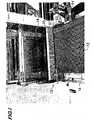
Figure 1 is a scanned image of a standard loom modified to produce products according to the invention; -
Figure 2 is a schematic view illustrating a step in the formation of the integrally formed hooks; -
Figures 3 and4 are schematic fragmentary plan and sectional views of a fabric illustrating the incorporation of integrally formed hooks; and -
Figure 5 is a schematic view of a sleeve incorporating the principles of the present invention. - With reference first to
Figure 1 , aconventional loom 10 is shown for weaving aweb 12 used in the manufacture of sleeves of the present invention. The web is preferably comprised ofmonofilament warps 14 having a diameter of about .010 inches and a compliant yarn which, for purposes of the manufacture of products illustrated, is abulky monofilament yarn 16 formed of nylon. A suitable bulky filament polyester yarn is a 900 denier Ansotex yarn, 970-136-00-IR-IR79 manufactured by Honeywell of Petersburg, Virginia. - The
loom 10 is equipped withconventional leno heddles 18 which are positionable with respect to the fabric in the region where the rows of hooks are to be formed. As illustrated, theleno heddles 18 are located at one side of the loom along one marginal edge offabric web 12. Theloom 10 further includes areed 20 having aseparate section 21 withdents 22 spaced to receivelancets 24 positioned over the plane of the fabric ofsleeve 12. - In the illustrative embodiment of the invention, the
dents 22 ofsection 21 are each made wide enough to receive twolancets 24 and provide clearance for eight ground warps and two supplemental warps. Thelancets 24 extend behind thedents 22 between theleno heddles 18. - Each
leno heddle 18 guides asupplemental warp 17 through a thread guide, not shown. As is understood by those skilled in the art, during the weaving process, the leno heddles 18 raise the supplemental warps, shift them laterally to cross a ground warp and alancet 24 before moving downwardly and returning to the starting position, thus, forming aloop 17a over the lancet. In forming the fabric according to the invention, the leno heddles are set up to form a loop over every second or third fill yarn. The positioning of alancet 24 relative to the fabric sleeve being formed is schematically shown inFigure 2 with the loops shown at 17a. - A portion of the fabric containing integral hooks is shown schematically in plan view in
Figures 3 and4 . The loops in the supplemental monofilaments are subsequently set by the application of heat and cut to form projecting hooks as shown at 17b inFigure 4 . Preferably, the hooks are formed at opposite ends ofadjacent loops 17a. The supplemental monofilaments are, thus, separated into segments each having a middle portion captured between acompliant fill yarn 16 and the adjacent ground warps 14 with the hooks of each segment preferably facing in opposite directions. If desired, a number of spaced zones each containing a multiplicity of rows of hooks may be integrated into the fabric by adding additional supplemental warps and leno heddles at the fabric positions where hooks are desired. It is generally preferred, although not necessary to the invention, that at least one band or zone having rows of hooks be spaced along a marginal edge of the sleeve. - In forming a sleeve having integral hooks according to the invention, in order to lock the hooks into the fabric between the compliant fill yarns and the monofilaments, it is important that the fabric be relatively tightly woven in regions where the hooks are to be incorporated. For this purpose, it has been found that compliant fill yarns having a denier of 700 to 1300 are woven with a pick density of about 11 to 19 picks per inch, although for some products, the pick count may be increased to as much as 28 without departure from the scope of the invention. A few field trials will generally determine the selection of a compliant yarn having sufficient compliance for a particular product application. A density of about 16 picks per inch of bulky yarn of a denier of 900 was used in the illustrative product and has been found to produce excellent results. In the sleeve of this example, about 80 warp yarns per inch each having a diameter of about .008 inches were employed in a zone in which the hooks are formed. Hook monofilaments having a diameter of about .008 to about .012 inches may be formed in side-by-side rows, although an alternating pattern whereby the hooks in a first row are offset by one pick from the hooks in the second row will maximize the interengagement of the hooks with the bulky fill yarn.
- The balance of
sleeve 12 is woven with the supplemental monofilaments omitted. About ½ the number of warp monofilaments are preferably provided in this section, imparting flexibility and a relatively open construction. - As shown in
Figures 1 and5 , bulky monofilament yarn is exposed along an edge of the sleeve opposite to the edge having the band of hooks. If desired, the bulky monofilament yarn may be napped or otherwise treated to effect a separation of the filaments and draw them out into loops which are engageable any interlock with the hooks running along the opposite fabric edge when the hooks and loops are pressed together. Additional zones of exposure of the bulky fill yarn may be created inwardly from the edge by eliminating warp yarns as required to effect the exposure in such zones. A sleeve formed in accordance with the invention having exposed multifilaments along one edge and integral hooks along the other edge is shown inFigure 5 . In addition to the overlapping form of closure shown inFigure 5 , the inner surface of the bulky yarns may be utilized to effect a closure with the integral hooks so that the sleeve assumes a tear-drop cross-sectional appearance if desired. - The techniques described herein may also have utility in the manufacture of sleeving of the types shown in
U.S. Patent Nos. 5,413,149 and6,045,884 . In the manufacture of products according to these patents, resiliently settable fill monofilaments are employed and are resiliently set. The resiliently settable filaments bias a split sleeve to the closed position. According to the '149 patent, the resiliently set filaments additionally impart kink-resistance to a sleeve. In a modification of such sleeves to provide for integral hooks, the compliant yarn may be a bi-component yarn having an inner core of a heat settable monofilament material with an outer layer of compliant material. Such yarns having either a wire core or a resiliently settable polymeric core with a compliant filamentary sheath are available in the art. The yarns may be DREF process yarns in which a filamentary sheath imparts the necessary compliance to achieve a locking of the supplemental monofilaments between the filamentary sheath of the DREF process yarns and the warp monofilaments. Bi-component yarns having a thermoplastic monofilament core with a compliant outer polymeric sheath of polyester or other resilient material are available from Johns Manville Corporation of Spartanburg, South Carolina. In addition, biasing to the closed position may be achieved in such products by the incorporation of resiliently settable monofilaments in the fill together with the bulky multifilament or other compliant yarns. - In a further embodiment of the invention, a tubular sleeve was woven which incorporated integral hooks in a zone in which the hooks project outwardly from the surface of the fabric. In this example, the hooks may be used to locate the sleeve in a fixed position, for example, on a surface in the engine compartment of a vehicle, by interengagement with loop tape of conventional form or with a tape comprised of exposed sections of napped bulky multifilament yarn affixed, for example, to the fire wall of the engine compartment or to an interior surface of a door panel.
- In summary, in each of the embodiments of the invention, integral fastening hooks are formed in woven fabric materials useful, for example, as sleeving for bundling cables or tubing in automobiles, aircraft or other types of machinery. The integral hooks are locked in place within the fabric structure by the use of compliant fill yarns which yield and cradle a section of the hook monofilament and effect an interlocking of it with the adjacent warp monofilaments. The invention eliminates the need for processing steps such as stitching hook-type tape material to the fabric and/or the use of adhesive coatings to prevent separation of the segments of hook material from the fabric. The principles of the invention may be used for the closure of split-type tubular sleeves, as well as the attachment of sleeving to fixed surfaces, thereby reducing the danger of abrasion caused by contact with moving machinery parts and also reducing noise caused by vibration.
Claims (10)
- A woven sleeve (12) for bundling elongated substrates, said sleeve comprising a fabric of interwoven monofilaments (14) and yarns (16) comprised of compliant material; characterised by
a plurality of rows of supplemental monofilaments (17) disposed in a first zone extending lengthwise of said sleeve;each said supplemental monofilament (17) being divided into a plurality of separated segments disposed in each row, each having a section cradled in the compliant material and locked in said cradled position by at least one of said interwoven monofilaments (14) and yarns (16), each said segment having an end section projecting outwardly from said sleeve fabric and terminating in a bent over hook shaped portion (17b). - A woven sleeve according to claim 1, wherein said interwoven monofilaments (14) and said supplemental monofilaments (17) extend in the warp direction and said yarn comprised of compliant material is the fill yarn (16).
- A woven sleeve according to claim 2, wherein said fill yarn (16) is exposed in a second zone spaced from and substantially parallel to said first zone, the compliant material being comprised of fiber loops interengagable with said hooks to effect a closure of said sleeve around said elongated substrates.
- A woven sleeve according to claim 2 or claim 3, wherein said supplemental monofilaments (17) have a diameter of between about 0.02cms and about 0.03cms (about 0.008 and about 0.012 inches).
- A woven sleeve according to any one of claims 2 to 4, wherein said supplemental monofilaments (17) are comprised of resilient metal wire.
- A woven sleeve according to any one of claims 2 to 5, wherein said monofilament warps (14) comprise bi-component monofilaments comprised of a compliant sheath and a relatively stiff core.
- A woven sleeve according to any one of claims 2 to 6, wherein said fill yarn (16) is a bulky yarn having a denier of about 700 to about 1300.
- A woven sleeve according to claim 7 wherein, the fill yarn (16) has a density of about 4,3 to 7,5 picks per cm (11 to 19 picks per inch).
- A woven sleeve according to any one of claims 2 to 6, wherein said fill yarn (16) is comprised of a bi-component yarn having a resiliently settable core material and a compliant sheath, wherein said core material is set to form resilient hoops.
- A woven sleeve according to any one of claims 2 to 9, wherein said fill yarn (16) further comprises resiliently settable monofilaments.
Applications Claiming Priority (3)
| Application Number | Priority Date | Filing Date | Title |
|---|---|---|---|
| US671430 | 1996-06-27 | ||
| US09/671,430 US6328080B1 (en) | 2000-09-27 | 2000-09-27 | Woven sleeve with integral monofilament fasteners |
| PCT/US2001/029766 WO2002027229A1 (en) | 2000-09-27 | 2001-09-24 | Sleeve with integral fasteners |
Publications (3)
| Publication Number | Publication Date |
|---|---|
| EP1334302A1 EP1334302A1 (en) | 2003-08-13 |
| EP1334302A4 EP1334302A4 (en) | 2006-02-22 |
| EP1334302B1 true EP1334302B1 (en) | 2008-11-26 |
Family
ID=24694476
Family Applications (1)
| Application Number | Title | Priority Date | Filing Date |
|---|---|---|---|
| EP01973420A Expired - Lifetime EP1334302B1 (en) | 2000-09-27 | 2001-09-24 | Sleeve with integral fasteners |
Country Status (12)
| Country | Link |
|---|---|
| US (1) | US6328080B1 (en) |
| EP (1) | EP1334302B1 (en) |
| JP (1) | JP2005506492A (en) |
| CN (1) | CN1213243C (en) |
| AT (1) | ATE415586T1 (en) |
| AU (1) | AU2001292999A1 (en) |
| BR (1) | BR0114266A (en) |
| DE (1) | DE60136733D1 (en) |
| ES (1) | ES2317936T3 (en) |
| MX (1) | MXPA03002693A (en) |
| PL (1) | PL360394A1 (en) |
| WO (1) | WO2002027229A1 (en) |
Families Citing this family (44)
| Publication number | Priority date | Publication date | Assignee | Title |
|---|---|---|---|---|
| US6639148B2 (en) * | 2001-06-20 | 2003-10-28 | Federal-Mogul Systems Protection Group, Inc. | Extendible drain members for grounding RFI/EMI shielding |
| WO2003014591A2 (en) * | 2001-08-09 | 2003-02-20 | Federal-Mogul Powertrain, Inc. | Vibration damping corrugated flexible sleeving |
| US20030059562A1 (en) * | 2001-08-31 | 2003-03-27 | Lien Gerald T. | Sleeve with attachment flange |
| US20030232163A1 (en) * | 2002-06-17 | 2003-12-18 | Graham Craig Jay | Wire loom |
| FR2850117B1 (en) * | 2003-01-21 | 2005-07-29 | Chomarat Composites | REINFORCING TAPE |
| US7014479B2 (en) * | 2003-03-24 | 2006-03-21 | Che-Yu Li | Electrical contact and connector and method of manufacture |
| US7040902B2 (en) * | 2003-03-24 | 2006-05-09 | Che-Yu Li & Company, Llc | Electrical contact |
| US7029288B2 (en) | 2003-03-24 | 2006-04-18 | Che-Yu Li | Electrical contact and connector and method of manufacture |
| US20050124249A1 (en) * | 2003-12-09 | 2005-06-09 | Uribarri Peter V. | Abrasion-resistant sleeve for wiring and the like |
| US8387749B2 (en) * | 2004-03-01 | 2013-03-05 | Ykk Corporation Of America | Shock absorbing fabric structures |
| US7395680B2 (en) * | 2004-07-20 | 2008-07-08 | Federal Mogul Worldwide, Inc. | Self-curling knitted sleeve and method of fabrication |
| TW200624617A (en) * | 2004-07-20 | 2006-07-16 | Federal Mogul World Wide Inc | Self-curling sleeve |
| EP1861530A2 (en) * | 2005-03-24 | 2007-12-05 | Federal-Mogul Corporation | Substrate incorporating non-woven elements |
| US8273429B2 (en) * | 2006-01-19 | 2012-09-25 | Federal-Mogul World Wide, Inc. | Fabric for end fray resistance and protective sleeves formed therewith and methods of construction |
| US7600539B2 (en) * | 2006-03-03 | 2009-10-13 | Federal-Mogul World Wide, Inc | Low profile textile wire bundler sleeve |
| EP1834543B1 (en) * | 2006-03-09 | 2009-07-08 | Arc'Teryx Equipment Inc. | Load bearing system |
| US8283563B2 (en) * | 2006-03-29 | 2012-10-09 | Federal-Mogul Powertrain, Inc. | Protective sleeve fabricated with hybrid yard, hybrid yarn, and methods of construction thereof |
| US7576286B2 (en) * | 2006-03-29 | 2009-08-18 | Federal-Mogul World Wide, Inc. | Protective sleeve fabricated with hybrid yarn having wire filaments and methods of construction |
| US8017213B2 (en) * | 2006-04-21 | 2011-09-13 | The Boeing Company | Temperature tolerant hooks for hook and loop attachment |
| US8152380B2 (en) * | 2006-07-07 | 2012-04-10 | Federal-Mogul World Wide, Inc. | Sleeve bearing assembly and method of construction |
| US8021051B2 (en) | 2006-07-07 | 2011-09-20 | Federal-Mogul World Wide, Inc. | Sleeve bearing assembly and method of construction |
| US20080128099A1 (en) * | 2006-12-05 | 2008-06-05 | Amrani Aviv Ltd. | Fabric for use as a lining material |
| US20080135119A1 (en) * | 2006-12-07 | 2008-06-12 | Takashi Tonooka | Protective sleeve assembly having a support member and method of construction |
| US8047560B2 (en) * | 2007-07-03 | 2011-11-01 | Avery Dennison Corporation | Retention cover for an inflatable object |
| US8701716B2 (en) * | 2008-02-29 | 2014-04-22 | Federal-Mogul Corporation | Protective textile sleeve having high edge abrasion resistance and method of construction |
| CN102912510A (en) * | 2008-05-28 | 2013-02-06 | 瑟尔瑞株式会社 | Electrically conductive pad and a production method thereof |
| US8925592B2 (en) | 2009-06-11 | 2015-01-06 | Federal-Mogul Powertrain, Inc. | Flexible, abrasion resistant textile sleeve and method of construction thereof |
| JP6279832B2 (en) * | 2009-06-11 | 2018-02-14 | フェデラル−モーグル・パワートレイン・リミテッド・ライアビリティ・カンパニーFederal−Mogul Powertrain Llc | Flexible, abrasion-resistant textile sleeve and its construction method |
| CA2778167C (en) * | 2009-11-25 | 2017-07-04 | Federal-Mogul Powertrain, Inc. | Wrappable textile sleeve with integral attachment and closure device |
| WO2012017121A1 (en) * | 2010-08-02 | 2012-02-09 | Relats, S.A. | Protective tube |
| EP2647749A4 (en) * | 2010-11-29 | 2014-04-30 | Toray Industries | Fabric and covering material for electrical wiring using same |
| US8468853B2 (en) * | 2011-02-07 | 2013-06-25 | Southern Weaving Company | Knitted velcro sleeve |
| KR20160124128A (en) | 2014-02-20 | 2016-10-26 | 페더럴-모걸 파워트레인 엘엘씨 | Nonkinking wrappable knit sleeve and method of construction thereof |
| CN104455793B (en) * | 2014-12-01 | 2017-01-04 | 广东宝通玻璃钢有限公司 | Continuous knitting is compound pulls around glass reinforced plastic pipe and production method thereof |
| CN106435923A (en) * | 2015-08-05 | 2017-02-22 | 东丽纤维研究所(中国)有限公司 | Self-lubricating fabric and production method and use of same |
| JP2017147776A (en) * | 2016-02-15 | 2017-08-24 | 株式会社オートネットワーク技術研究所 | Protective member, wire with the same, and method of manufacturing protective member |
| US10993355B2 (en) * | 2016-12-14 | 2021-04-27 | Federal-Mogul Powertrain Llc | Ground strap and method of grounding a plurality of electrically conductive members therewith |
| US10538866B2 (en) * | 2017-02-01 | 2020-01-21 | Federal-Mogul Powertrain Llc | Woven sleeve with integral attachment loops and method of construction thereof |
| CN113383120A (en) * | 2019-02-03 | 2021-09-10 | 洛希亚有限公司 | Open mesh leno fabric, bag made therefrom and method of making leno fabric |
| CN114375353B (en) * | 2019-09-10 | 2023-08-11 | 费德罗-莫格尔动力系公司 | Corrugated woven sleeve and method of making same |
| US12119628B2 (en) | 2019-09-17 | 2024-10-15 | Federal-Mogul Powertrain Llc | Flexible, water repellant, high temperature resistant, wrappable sleeve and method of construction thereof |
| US11643758B2 (en) | 2020-03-13 | 2023-05-09 | Shenzhen Jdd Tech New Material Co., Ltd. | Protective tube |
| CN113985544A (en) * | 2021-09-29 | 2022-01-28 | 杭州富通通信技术股份有限公司 | Metal braided fabric for layer stranded optical cable |
| WO2023229661A1 (en) | 2022-05-27 | 2023-11-30 | Applied Materials, Inc. | Grounding techniques for esd polymeric fluid lines |
Family Cites Families (13)
| Publication number | Priority date | Publication date | Assignee | Title |
|---|---|---|---|---|
| US3461513A (en) | 1967-02-20 | 1969-08-19 | American Velcro Inc | Separable fastening device |
| US3413406A (en) | 1967-04-10 | 1968-11-26 | Walter A. Plummer | Shielded gasketing and seamed jacketing utilizing the same |
| US4281211A (en) | 1979-04-13 | 1981-07-28 | Southern Weaving Company | Woven cover for electrical transmission cable |
| ES263042Y (en) | 1979-07-27 | 1983-04-16 | MATERIAL INTENDED TO BE COILED AROUND A TUBE, CABLE OR SIMILAR ITEM. | |
| US4891256A (en) | 1983-04-26 | 1990-01-02 | The Bentley-Harris Manufacturing Co. | Wraparound closure device and a method of making same |
| US4684762A (en) | 1985-05-17 | 1987-08-04 | Raychem Corp. | Shielding fabric |
| US4652263A (en) * | 1985-06-20 | 1987-03-24 | Atrium Medical Corporation | Elasticization of microporous woven tubes |
| EP0246051A3 (en) | 1986-05-12 | 1989-01-11 | The Bentley-Harris Manufacturing Co. | Wraparound sleeve |
| US4791236A (en) * | 1987-07-10 | 1988-12-13 | The Zippertubing Co. | Releasable flexible conductive jacket |
| JPH059782Y2 (en) * | 1987-12-04 | 1993-03-10 | ||
| US5178923A (en) * | 1992-01-09 | 1993-01-12 | Textilver S.A. | Wraparound closure device |
| US5300337A (en) * | 1992-01-09 | 1994-04-05 | The Bentley-Harris Manufacturing Company | Wraparound closure device |
| US5901756A (en) * | 1997-09-03 | 1999-05-11 | Goodrich; John J. | Flexible wear sleeve |
-
2000
- 2000-09-27 US US09/671,430 patent/US6328080B1/en not_active Expired - Fee Related
-
2001
- 2001-09-24 DE DE60136733T patent/DE60136733D1/en not_active Expired - Fee Related
- 2001-09-24 AU AU2001292999A patent/AU2001292999A1/en not_active Abandoned
- 2001-09-24 CN CNB018162193A patent/CN1213243C/en not_active Expired - Fee Related
- 2001-09-24 MX MXPA03002693A patent/MXPA03002693A/en unknown
- 2001-09-24 EP EP01973420A patent/EP1334302B1/en not_active Expired - Lifetime
- 2001-09-24 WO PCT/US2001/029766 patent/WO2002027229A1/en not_active Ceased
- 2001-09-24 PL PL01360394A patent/PL360394A1/en not_active IP Right Cessation
- 2001-09-24 AT AT01973420T patent/ATE415586T1/en not_active IP Right Cessation
- 2001-09-24 JP JP2002530569A patent/JP2005506492A/en active Pending
- 2001-09-24 ES ES01973420T patent/ES2317936T3/en not_active Expired - Lifetime
- 2001-09-24 BR BR0114266-6A patent/BR0114266A/en active Search and Examination
Also Published As
| Publication number | Publication date |
|---|---|
| MXPA03002693A (en) | 2004-12-03 |
| PL360394A1 (en) | 2004-09-06 |
| CN1213243C (en) | 2005-08-03 |
| WO2002027229A1 (en) | 2002-04-04 |
| ES2317936T3 (en) | 2009-05-01 |
| JP2005506492A (en) | 2005-03-03 |
| EP1334302A1 (en) | 2003-08-13 |
| AU2001292999A1 (en) | 2002-04-08 |
| CN1466667A (en) | 2004-01-07 |
| ATE415586T1 (en) | 2008-12-15 |
| US6328080B1 (en) | 2001-12-11 |
| DE60136733D1 (en) | 2009-01-08 |
| EP1334302A4 (en) | 2006-02-22 |
| BR0114266A (en) | 2004-01-06 |
Similar Documents
| Publication | Publication Date | Title |
|---|---|---|
| US6328080B1 (en) | Woven sleeve with integral monofilament fasteners | |
| EP0620873B1 (en) | Wraparound closure device | |
| US5178923A (en) | Wraparound closure device | |
| KR101486178B1 (en) | Woven textile fabric and innerduct having multiple-inserted filling yarns | |
| EP1977488B1 (en) | Self-curling knitted sleeve and method of fabrication | |
| US20120315419A1 (en) | Fabric for end fray resistance and protective sleeves formed therewith and methods of construction | |
| EP3380659B1 (en) | Partial float weave fabric | |
| CA2570143A1 (en) | Self-curling sleeve | |
| CA2647615A1 (en) | Protective sleeve fabricated with hybrid yarn having wire filaments and methods of construction | |
| AU2019204914B2 (en) | Multiple chamber innerduct structure | |
| CN213279010U (en) | Flexible innerduct structure and conduit comprising same | |
| US20200161844A1 (en) | Innerduct having multiple sized chambers | |
| JP4567263B2 (en) | Acoustic absorption protection sleeve | |
| HK40029442A (en) | Multiple chamber folded innerduct structure | |
| AU2011337226B2 (en) | Woven textile fabric and innerduct having multiple-inserted filling yarns | |
| HK40029443A (en) | Multiple chamber innerduct structure | |
| WO1997034034A1 (en) | Textile fabric | |
| HK1171251B (en) | Woven textile fabric and innerduct having multiple-inserted filling yarns | |
| MXPA06009514A (en) | Low-friction pull tape |
Legal Events
| Date | Code | Title | Description |
|---|---|---|---|
| PUAI | Public reference made under article 153(3) epc to a published international application that has entered the european phase |
Free format text: ORIGINAL CODE: 0009012 |
|
| 17P | Request for examination filed |
Effective date: 20030422 |
|
| AK | Designated contracting states |
Designated state(s): AT BE CH CY DE DK ES FI FR GB GR IE IT LI LU MC NL PT SE TR |
|
| AX | Request for extension of the european patent |
Extension state: AL LT LV MK RO SI |
|
| RBV | Designated contracting states (corrected) |
Designated state(s): AT DE ES FR GB IT |
|
| REG | Reference to a national code |
Ref country code: HK Ref legal event code: DE Ref document number: 1059640 Country of ref document: HK |
|
| A4 | Supplementary search report drawn up and despatched |
Effective date: 20060105 |
|
| RAP1 | Party data changed (applicant data changed or rights of an application transferred) |
Owner name: FEDERAL-MOGUL POWERTRAIN, INC. |
|
| GRAP | Despatch of communication of intention to grant a patent |
Free format text: ORIGINAL CODE: EPIDOSNIGR1 |
|
| GRAS | Grant fee paid |
Free format text: ORIGINAL CODE: EPIDOSNIGR3 |
|
| GRAA | (expected) grant |
Free format text: ORIGINAL CODE: 0009210 |
|
| AK | Designated contracting states |
Kind code of ref document: B1 Designated state(s): AT DE ES FR GB IT |
|
| REG | Reference to a national code |
Ref country code: GB Ref legal event code: FG4D |
|
| REF | Corresponds to: |
Ref document number: 60136733 Country of ref document: DE Date of ref document: 20090108 Kind code of ref document: P |
|
| PG25 | Lapsed in a contracting state [announced via postgrant information from national office to epo] |
Ref country code: AT Free format text: LAPSE BECAUSE OF FAILURE TO SUBMIT A TRANSLATION OF THE DESCRIPTION OR TO PAY THE FEE WITHIN THE PRESCRIBED TIME-LIMIT Effective date: 20081126 |
|
| REG | Reference to a national code |
Ref country code: ES Ref legal event code: FG2A Ref document number: 2317936 Country of ref document: ES Kind code of ref document: T3 |
|
| PLBI | Opposition filed |
Free format text: ORIGINAL CODE: 0009260 |
|
| PLAX | Notice of opposition and request to file observation + time limit sent |
Free format text: ORIGINAL CODE: EPIDOSNOBS2 |
|
| 26 | Opposition filed |
Opponent name: IPROTEX GMBH & CO. KG Effective date: 20090821 |
|
| REG | Reference to a national code |
Ref country code: HK Ref legal event code: WD Ref document number: 1059640 Country of ref document: HK |
|
| GBPC | Gb: european patent ceased through non-payment of renewal fee |
Effective date: 20090924 |
|
| REG | Reference to a national code |
Ref country code: FR Ref legal event code: ST Effective date: 20100531 |
|
| PG25 | Lapsed in a contracting state [announced via postgrant information from national office to epo] |
Ref country code: DE Free format text: LAPSE BECAUSE OF NON-PAYMENT OF DUE FEES Effective date: 20100401 Ref country code: FR Free format text: LAPSE BECAUSE OF NON-PAYMENT OF DUE FEES Effective date: 20090930 |
|
| PG25 | Lapsed in a contracting state [announced via postgrant information from national office to epo] |
Ref country code: GB Free format text: LAPSE BECAUSE OF NON-PAYMENT OF DUE FEES Effective date: 20090924 |
|
| PG25 | Lapsed in a contracting state [announced via postgrant information from national office to epo] |
Ref country code: IT Free format text: LAPSE BECAUSE OF NON-PAYMENT OF DUE FEES Effective date: 20090924 |
|
| REG | Reference to a national code |
Ref country code: ES Ref legal event code: FD2A Effective date: 20110712 |
|
| PG25 | Lapsed in a contracting state [announced via postgrant information from national office to epo] |
Ref country code: ES Free format text: LAPSE BECAUSE OF NON-PAYMENT OF DUE FEES Effective date: 20110630 |
|
| PG25 | Lapsed in a contracting state [announced via postgrant information from national office to epo] |
Ref country code: ES Free format text: LAPSE BECAUSE OF NON-PAYMENT OF DUE FEES Effective date: 20090925 |
|
| PLBD | Termination of opposition procedure: decision despatched |
Free format text: ORIGINAL CODE: EPIDOSNOPC1 |
|
| PLBM | Termination of opposition procedure: date of legal effect published |
Free format text: ORIGINAL CODE: 0009276 |
|
| STAA | Information on the status of an ep patent application or granted ep patent |
Free format text: STATUS: OPPOSITION PROCEDURE CLOSED |
|
| 27C | Opposition proceedings terminated |
Effective date: 20111222 |