EP1333609A1 - Data discard method for selective repeat protocols - Google Patents
Data discard method for selective repeat protocols Download PDFInfo
- Publication number
- EP1333609A1 EP1333609A1 EP03001977A EP03001977A EP1333609A1 EP 1333609 A1 EP1333609 A1 EP 1333609A1 EP 03001977 A EP03001977 A EP 03001977A EP 03001977 A EP03001977 A EP 03001977A EP 1333609 A1 EP1333609 A1 EP 1333609A1
- Authority
- EP
- European Patent Office
- Prior art keywords
- mrw
- status
- length
- discard
- sdu
- Prior art date
- Legal status (The legal status is an assumption and is not a legal conclusion. Google has not performed a legal analysis and makes no representation as to the accuracy of the status listed.)
- Granted
Links
- 238000000034 method Methods 0.000 title claims abstract description 79
- 230000011664 signaling Effects 0.000 claims abstract description 54
- 230000005540 biological transmission Effects 0.000 abstract description 28
- 238000004891 communication Methods 0.000 abstract description 3
- 101100476985 Schizosaccharomyces pombe (strain 972 / ATCC 24843) sdu1 gene Proteins 0.000 description 3
- 239000002699 waste material Substances 0.000 description 3
- 238000012986 modification Methods 0.000 description 2
- 230000004048 modification Effects 0.000 description 2
- 230000015556 catabolic process Effects 0.000 description 1
- 238000007796 conventional method Methods 0.000 description 1
- 238000006731 degradation reaction Methods 0.000 description 1
- 238000010586 diagram Methods 0.000 description 1
Images


Classifications
-
- H—ELECTRICITY
- H04—ELECTRIC COMMUNICATION TECHNIQUE
- H04L—TRANSMISSION OF DIGITAL INFORMATION, e.g. TELEGRAPHIC COMMUNICATION
- H04L1/00—Arrangements for detecting or preventing errors in the information received
- H04L1/12—Arrangements for detecting or preventing errors in the information received by using return channel
- H04L1/16—Arrangements for detecting or preventing errors in the information received by using return channel in which the return channel carries supervisory signals, e.g. repetition request signals
- H04L1/18—Automatic repetition systems, e.g. Van Duuren systems
- H04L1/1809—Selective-repeat protocols
-
- H—ELECTRICITY
- H04—ELECTRIC COMMUNICATION TECHNIQUE
- H04L—TRANSMISSION OF DIGITAL INFORMATION, e.g. TELEGRAPHIC COMMUNICATION
- H04L9/00—Cryptographic mechanisms or cryptographic arrangements for secret or secure communications; Network security protocols
- H04L9/40—Network security protocols
-
- H—ELECTRICITY
- H04—ELECTRIC COMMUNICATION TECHNIQUE
- H04L—TRANSMISSION OF DIGITAL INFORMATION, e.g. TELEGRAPHIC COMMUNICATION
- H04L1/00—Arrangements for detecting or preventing errors in the information received
- H04L1/12—Arrangements for detecting or preventing errors in the information received by using return channel
- H04L1/16—Arrangements for detecting or preventing errors in the information received by using return channel in which the return channel carries supervisory signals, e.g. repetition request signals
- H04L1/1607—Details of the supervisory signal
- H04L1/1664—Details of the supervisory signal the supervisory signal being transmitted together with payload signals; piggybacking
-
- H—ELECTRICITY
- H04—ELECTRIC COMMUNICATION TECHNIQUE
- H04L—TRANSMISSION OF DIGITAL INFORMATION, e.g. TELEGRAPHIC COMMUNICATION
- H04L1/00—Arrangements for detecting or preventing errors in the information received
- H04L1/12—Arrangements for detecting or preventing errors in the information received by using return channel
- H04L1/16—Arrangements for detecting or preventing errors in the information received by using return channel in which the return channel carries supervisory signals, e.g. repetition request signals
- H04L1/18—Automatic repetition systems, e.g. Van Duuren systems
- H04L1/1829—Arrangements specially adapted for the receiver end
- H04L1/1832—Details of sliding window management
-
- H—ELECTRICITY
- H04—ELECTRIC COMMUNICATION TECHNIQUE
- H04L—TRANSMISSION OF DIGITAL INFORMATION, e.g. TELEGRAPHIC COMMUNICATION
- H04L1/00—Arrangements for detecting or preventing errors in the information received
- H04L1/12—Arrangements for detecting or preventing errors in the information received by using return channel
- H04L1/16—Arrangements for detecting or preventing errors in the information received by using return channel in which the return channel carries supervisory signals, e.g. repetition request signals
- H04L1/18—Automatic repetition systems, e.g. Van Duuren systems
- H04L1/1867—Arrangements specially adapted for the transmitter end
- H04L1/187—Details of sliding window management
-
- H—ELECTRICITY
- H04—ELECTRIC COMMUNICATION TECHNIQUE
- H04L—TRANSMISSION OF DIGITAL INFORMATION, e.g. TELEGRAPHIC COMMUNICATION
- H04L1/00—Arrangements for detecting or preventing errors in the information received
- H04L1/12—Arrangements for detecting or preventing errors in the information received by using return channel
- H04L1/16—Arrangements for detecting or preventing errors in the information received by using return channel in which the return channel carries supervisory signals, e.g. repetition request signals
- H04L1/18—Automatic repetition systems, e.g. Van Duuren systems
- H04L1/1867—Arrangements specially adapted for the transmitter end
- H04L1/1874—Buffer management
- H04L1/1877—Buffer management for semi-reliable protocols, e.g. for less sensitive applications like streaming video
-
- H—ELECTRICITY
- H04—ELECTRIC COMMUNICATION TECHNIQUE
- H04L—TRANSMISSION OF DIGITAL INFORMATION, e.g. TELEGRAPHIC COMMUNICATION
- H04L1/00—Arrangements for detecting or preventing errors in the information received
- H04L1/12—Arrangements for detecting or preventing errors in the information received by using return channel
- H04L1/16—Arrangements for detecting or preventing errors in the information received by using return channel in which the return channel carries supervisory signals, e.g. repetition request signals
- H04L1/18—Automatic repetition systems, e.g. Van Duuren systems
- H04L1/1867—Arrangements specially adapted for the transmitter end
- H04L1/188—Time-out mechanisms
Definitions
- the present invention relates to a wireless communications protocol. More specifically, the present invention discloses a data discard signalling procedure.
- a protocol data unit which contains a segment of a service data unit (SDU) may be transmitted and retransmitted for a maximum number of transmissions without positive acknowledgement from the peer receiver.
- a state variable VT(A) is defined to be the sequence number (SN) following the SN of the last in-sequence acknowledged PDU.
- a state variable VR(R) is defined to be the SN following the SN of the last in-sequence PDU received.
- Another state variable, VR(H) is defined to be the SN following the highest SN of any received PDU.
- a data may be transmitted and retransmitted within a predefined duration of time. After a time out period or after the number of transmissions has reached a maximum number, the SDU is deemed out-of-date and is discarded by the transmitter.
- AM acknowledged mode
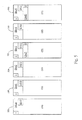
- the transmitter needs to signal the receiver of the discard of the SDU so that the receiver can move its reception window accordingly. This signalling procedure is called an SDU discard with explicit signalling procedure. Refer to Figure 1 which illustrates the procedure.
- a move receiving window (MRW) super-field 120 is utilized to request the receiver 110 to move its reception window and optionally to indicate the set of discarded Radio Link Control (RLC) SDUs, as a result of an RLC SDU discard in the Sender 100.
- the receiver 110 responds with an acknowledge signal 130.
- the SDU discard with explicit signalling procedure will not be terminated.
- the receiver 110 has moved its reception window to a position which is exactly what the sender 100 wanted to signal to the receiver 110. If the procedure is not terminated when this criterion is fulfilled, the sender 100 must retransmit MRW SUFI 120 when an MRW timer expires. This will waste radio resources and slow down the transmission throughput.
- the present invention provides a data discard signalling procedure which efficiently improves transmission throughput and performance.
- a move receiving window super-field (MRW SUFI) is used to request the receiver to move its reception window and optionally to indicate the set of discarded RLC SDUs, as a result of an RLC SDU discard in the sender.
- a length field of 4 bits indicates the number of SN_MRW i fields in the super-field of type MRW.
- the values "0001” through “1111 indicate SN_MRW i 1 through 15 respectively.
- the value "0000” indicates that one SN_MRW i field is present and that the RLC SDU to be discarded in the receiver extends above the configured transmission window in the Sender.
- the SN_MRW i fields are 12 bits each. When "Send MRW” is configured, an SN_MRW i shall be used to indicate the end of each discarded RLC SDU, i.e. the number of SN_MRW i fields shall equal the number of RLC SDUs discarded by that MRW SUFI. When "Send MRW” is not configured, an SN_MRW i field shall be used to indicate the end of the last RLC SDU to be discarded in the Receiver and additional ones may optionally be used to indicate the end of other discarded RLC SDUs.
- the order of the SN_MRW i shall be in the same sequential order as the RLC SDUs that they refer to.
- SN_MRW LENGTH requests the receiver to discard all PDUs with a sequence number less than SN_MRW LENGTH , and to move the reception window accordingly.
- the receiver has to discard the first N LENGTH length indicators and the corresponding data octets in the PDU with sequence number SN_MRW LENGTH .
- N LENGTH is 4 bits and is used together with SN_MRW LENGTH to indicate the end of the last RLC SDU to be discarded in the receiver.
- N LENGTH indicates which length indicator in the PDU with sequence number SN_MRW LENGTH corresponds to the last RLC SDU to be discarded in the receiver.
- N LENGTH equal to 0 indicates that the last RLC SDU ended in the PDU with sequence number SN_MRW LENGTH minus 1 and that the first data octet in the PDU with sequence number SN_MRW LENGTH is the first data octet to be reassembled next.
- a move receiving window acknowledgement (MRW_ACK) super-field acknowledges the reception of an MRW SUFI.
- the N field is 4 bits and is set equal to the N LENGTH field in the received MRW SUFI if the SN_ACK field is equal to the SN_MRW LENGTH field. Otherwise N shall be set to 0.
- the SN_ACK field is 12 bits and indicates the updated value of VR(R) after the reception of the MRW SUFI. With the aid of this field in combination with the N field, it can be determined if the MRW_ACK corresponds to a previously transmitted MRW SUFI.
- the acknowledgement super-field (ACK SUFI) consists of a type identifier field (ACK) and a sequence number (LSN).
- the LSN field is 12 bits and acknowledges the reception of all PDUs with sequence number less than last sequence number (LSN) that are not indicated to be erroneous in earlier parts of the STATUS PDU. This means that if the LSN is set to a value greater than VR(R), all erroneous PDUs shall be included in the same STATUS PDU and if the LSN is set to VR(R), the erroneous PDUs can be split into several STATUS PDUs. At the sender or transmitter, if the value of the LSN is less than or equal to the value of the first error indicated in the STATUS PDU, VT(A) will be updated according to the LSN.
- VT(A) will be updated according to the first error indicated in the STATUS PDU.
- VT(A) is only updated based on STATUS PDUs where ACK SUFI (or MRW_ACK SUFI) is included.
- the LSN shall not be set to a value greater than VR(H) or less than VR(R).
- the sender terminates the SDU discard with explicit signalling procedure if various criteria are fulfilled. However, in certain situations, the SDU discard with explicit signalling procedure will not be terminated.
- the receiver has moved its reception window to a position beginning from SN_MRW LENGTH , which is exactly what the transmitter wanted to signal to the receiver. If the procedure is not terminated when this criterion is fulfilled, the transmitter must retransmit MRW SUFI when Timer_MRW expires. This will waste radio resources and slow down the transmission throughput.
- the present invention provides a data discard signalling procedure wherein the MWR SUFI is shortened for cases where "Send MRW" is not configured and the sender shall efficiently terminate the SDU discard with explicit signalling procedure if certain criteria are fulfilled.
- a move receiving window super-field is used to request the receiver to move its reception window and optionally to indicate the set of discarded RLC SDUs, as a result of an RLC SDU discard in the sender.
- FIG 2 which illustrates a format for the move receiving window super-field (MRW SUFI).
- the length field 220 is 4 bits. It indicates the number of SN_MRW i fields 230 in the super-field of type MRW 200.
- the values "0001” through “1111” indicate that the number of SN_MRW i fields contained in the MRW SUFI is 1 through 15 respectively.
- the value "0000” indicates that one SN_MRW i field 230 is present and that the RLC SDU to be discarded in the receiver extends above the configured transmission window in the sender.
- the SN_MRW i fields 230 are 12 bits each. When "Send MRW” is configured, an SN_MRW i 230 shall be used to indicate the end of each discarded RLC SDU, i.e. the number of SN_MRW i fields 230 shall equal the number of RLC SDUs discarded by that MRW SUFI. When "Send MRW” is not configured, an SN_MRW i field 230 shall be used to indicate the end of the last RLC SDU to be discarded in the receiver and additional ones may optionally be used to indicate the end of other discarded RLC SDUs.
- the order of the SN_MRW i shall be in the same sequential order as the RLC SDUs that they refer to.
- SN_MRW LENGTH 240 requests the receiver to discard all PDUs with a sequence number less than SN_MRW LENGTH 240, and to move the reception window accordingly.
- N LENGTH 250 is greater than 0, the receiver has to discard the first N LENGTH length indicators and the corresponding data octets in the PDU with sequence number SN_MRW LENGTH 240.
- N LENGTH 250 is 4 bits and is used together with SN_MRW LENGTH 240 to indicate the end of the last RLC SDU to be discarded in the receiver.
- N LENGTH 250 indicates which length indicator in the PDU with sequence number SN_MRW LENGTH 240 corresponds to the last RLC SDU to be discarded in the receiver.
- N LENGTH 250 equals 0 indicates that the last RLC SDU ended in the PDU with sequence number SN_MRW LENGTH 240 minus 1 and that the first data octet in the PDU with sequence number SN_MRW LENGTH 240 is the first data octet to be reassembled next.
- a move receiving window acknowledgement super-field acknowledges the reception of a MRW SUFI.
- Figure 3 illustrates the format of the MRW_ACK 300.
- the N field 320 is 4 bits and is set equal to the N LENGTH field in the received MRW SUFI if the SN_ACK field is equal to the SN_MRW LENGTH field. Otherwise N 320 shall be set to 0.
- the SN_ACK field 330 is 12 bits and indicates the updated value of VR(R) after the reception of the MRW SUFI. With the aid of this field in combination with the N field 320, it can be determined if the MRW_ACK 300 corresponds to a previously transmitted MRW SUFI.
- the sender terminates the SDU discard with explicit signalling procedure if one of the following criteria is fulfilled:
- the acknowledgement super-field (ACK SUFI) 400 consists of a type identifier field (ACK) 410 and a sequence number (LSN) 420.
- the LSN field 420 is 12 bits and acknowledges the reception of all PDUs with sequence number less than LSN and not indicated to be erroneous in earlier parts of the STATUS PDU. This means that if the LSN 420 is set to a value greater than VR(R), all erroneous PDUs shall be included in the same STATUS PDU and if the LSN 420 is set to VR(R), the erroneous PDUs can be split into several STATUS PDUs. At the sender or transmitter, if the value of the LSN 420 is less than or equal to the value of the first error indicated in the STATUS PDU, VT(A) will be updated according to the LSN 420.
- VT(A) will be updated according to the first error indicated in the STATUS PDU.
- VT(A) is only updated based on STATUS PDUs where ACK SUFI (or MRW_ACK SUFI) is included.
- the LSN 420 shall not be set to a value greater than VR(H) or less than VR(R).
- the third terminating criterion shown above can also be recognized as:
- SDU1 is discarded by the sender so that a SDU discard with explicit signalling procedure is initiated.
- an SN_MRW i field 230 shall be used to indicate the end of the last RLC SDU to be discarded in the receiver".
- SN_MRW LENGTH 240 must be set to equal to 1 plus the sequence number of the PDU which contains the length indicator of the last discarded SDU. Only fourteen SN_MRW i fields 230 are left to indicate the end of each discarded SDUs.
- the SDU discard with explicit signalling procedure will not be terminated.
- the following criterion will not terminate the SDU discard with explicit signalling procedure:
- the receiver has moved its reception window to a position beginning from SN_MRW LENGTH , which is exactly what the transmitter wanted to signal to the receiver. If the procedure is not terminated when this criterion is fulfilled, the transmitter must retransmit MRW SUFI when Timer_MRW expires. This will waste radio resources and slow down the transmission throughput.
- an embodiment of the present invention provides that the sender shall terminate the SDU discard with explicit signalling procedure if the following criterion is fulfilled:
- the sender shall terminate the SDU discard with explicit signalling procedure if the following criterion is fulfilled:
- the sender shall terminate the SDU discard with explicit signalling procedure if the following criterion is fulfilled:
- the SDU discard with explicit signalling procedure can be efficiently terminated resulting in increased transmission throughput.
- transmission throughput is increased and the transmission performance is improved.
Landscapes
- Engineering & Computer Science (AREA)
- Computer Networks & Wireless Communication (AREA)
- Signal Processing (AREA)
- Computer Security & Cryptography (AREA)
- Multimedia (AREA)
- Communication Control (AREA)
- Mobile Radio Communication Systems (AREA)
- Data Exchanges In Wide-Area Networks (AREA)
Abstract
Description
- a STATUS PDU/piggybacked STATUS PDU containing an MRW_ACK SUFI is received, and the SN_ACK field in the received MRW_ACK SUFI is greater than the SN_MRWLENGTH field in the transmitted MRW_SUFI, and the N field in the received MRW_ACK SUFI is set equal to "0000";
- a STATUS PDU/piggybacked STATUS PDU containing an MRW_ACK SUFI is received, and the SN_ACK field in the received MRW_ACK SUFI is equal to the SN_MRWLENGTH field in the transmitted MRW_SUFI, and the N field in the received MRW_ACK SUFI is set equal to the NLENGTH field in the transmitted MRW SUFI;
- a STATUS PDU/piggybacked STATUS PDU containing an ACK SUFI is received, and the LSN field in the received ACK SUFI is greater than the SN_MRW LENGTH field in the transmitted MRW SUFI.
- a STATUS PDU/piggybacked STATUS PDU containing ACK SUFI is received, and this STATUS PDU/piggybacked STATUS PDU acknowledges all PDUs up to and including the PDU with sequence number equal to the SN_MRWLENGTH field in the transmitted MRW SUFI.
- a STATUS PDU/piggybacked STATUS PDU containing ACK SUFI is received, VT(A) to be updated by this STATUS PDU/piggybacked STATUS PDU is greater than the SN_MRWLENGTH field in the transmitted MRW SUFI.
- On the reception of a STATUS PDU which contains an ACK SUFI indicating VR(R) is greater than SN_MRWLENGTH
- LENGTH =0001 if SN_MRWLENGTH is within the configured transmission window; or
- LENGTH =0000 if SN_MRWLENGTH is above the configured transmission window.
- a STATUS PDU/piggybacked STATUS PDU containing ACK SUFI is received, VT(A) to be updated by this STATUS PDU/piggybacked STATUS PDU is equal to the SN_MRWLENGTH field in the transmitted MRW SUFI.
- a STATUS PDU/piggybacked STATUS PDU containing ACK SUFI is received, VT(A) to be updated by this STATUS PDU/piggybacked STATUS PDU is greater than or equal to the SN_MRWLENGTH field in the transmitted MRW SUFI.
- a STATUS PDU/piggybacked STATUS PDU containing ACK SUFI is received, and this STATUS PDU/piggybacked STATUS PDU acknowledges all PDUs up to and including the PDU with sequence number equal to the SN_MRWLENGTH field in the transmitted MRW SUFI minus one.
- On the reception of a STATUS PDU which contains an ACK SUFI indicating VR( R) is greater than or equal to SN_MRWLENGTH
Claims (18)
- A method for terminating a service data unit (SDU) discard with explicit signalling procedure comprising:wherein the MRW SUFI comprises at least a sequence number field (SN_MRWLENGTH);transmitting a first status protocol data unit (STATUS PDU1) comprising a move receiving window super-field (MRW SUFI) by a sender to a receiver;
receiving a second status protocol data unit (STATUS PDU2) comprising an acknowledgement super-field (ACK SUFI) by the sender from the receiver;
wherein, if VT(A) to be updated by STATUS PDU2 is greater than or equal to SN_MRWLENGTH in MRW SUFI, the SDU discard with explicit signalling procedure is terminated. - The method for terminating the SDU discard with explicit signalling procedure of claim 1, wherein STATUS PDU1 is a piggybacked STATUS PDU.
- The method for terminating the SDU discard with explicit signalling procedure of claim 1, wherein STATUS PDU2 is a piggybacked STATUS PDU.
- A method for terminating the SDU discard with explicit signalling procedure of claim 1,
wherein, if STATUS PDU2 acknowledges all protocol data units up to and including a protocol data unit with a sequence number equal to SN_MRWLENGTH minus one, the SDU discard with explicit signalling procedure is terminated. - The method for terminating the SDU discard with explicit signalling procedure of claim 4, wherein STATUS PDU1 is a piggybacked STATUS PDU.
- The method for terminating the SDU discard with explicit signalling procedure of claim 4, wherein STATUS PDU2 is a piggybacked STATUS PDU.
- A method for terminating the SDU discard with explicit signalling procedure of claim 1,
wherein, if STATUS PDU2 indicates a state variable VR(R) is greater than or equal to SN_MRWLENGTH, the SDU discard with explicit signalling procedure is terminated. - The method for terminating the SDU discard with explicit signalling procedure of claim 7, wherein STATUS PDU1 is a piggybacked STATUS PDU.
- The method for terminating the SDU discard with explicit signalling procedure of claim 7, wherein STATUS PDU2 is a piggybacked STATUS PDU.
- A method for a service data unit (SDU) discard with explicit signalling procedure comprising:wherein the MRW SUFI comprises at least a sequence number field (SN_MRWLENGTH) indicating the receiver to discard all PDUs with sequence number < SN_MRWLENGTH and to move a reception window accordingly.discarding more than 15 SDUs;transmitting a first status protocol data unit (STATUS PDU1) comprising a move receiving window super-field (MRW SUFI) by a sender to a receiver;
- The method for the SDU discard with explicit signalling procedure of claim 10, wherein the MRW SUFI comprises an NLENGTH field indicating which length indicator in a PDU with sequence number SN_MRWLENGTH corresponds to a last RLC SDU to be discarded in the receiver.
- The method for the SDU discard with explicit signalling procedure of claim 11, wherein NLENGTH equals 0 indicates that a last RLC SDU ended in the PDU with sequence number SN_MRWLENGTH minus 1 and that a first data octet in the PDU with sequence number SN_MRWLENGTH is a first data octet to be reassembled next.
- The method for the SDU discard with explicit signalling procedure of claim 10, wherein STATUS PDU1 is a piggybacked STATUS PDU.
- A method for terminating a service data unit (SDU) discard with explicit signalling procedure comprising:wherein the MRW SUFI comprises at least a sequence number field (SN_MRWLENGTH);transmitting a first status protocol data unit (STATUS PDU1) comprising a move receiving window super-field (MRW SUFI) by a sender to a receiver;
receiving a second status protocol data unit (STATUS PDU2) comprising an acknowledgement super-field (ACK SUFI) by the sender from the receiver;
wherein, if VT(A) to be updated by STATUS PDU2 is greater than or equal to SN_MRWLENGTH in MRW SUFI, the SDU discard with explicit signalling procedure is terminated;
wherein, if STATUS PDU2 acknowledges all protocol data units up to and including a protocol data unit with a sequence number equal to SN_MRWLENGTH minus one, the SDU discard with explicit signalling procedure is terminated; and
wherein, if STATUS PDU2 indicates a state variable VR(R) is greater than or equal to SN_MRWLENGTH, the SDU discard with explicit signalling procedure is terminated. - The method for terminating the SDU discard with explicit signalling procedure of claim 14, wherein STATUS PDU1 is a piggybacked STATUS PDU.
- The method for terminating the SDU discard with explicit signalling procedure of claim 14, wherein STATUS PDU2 is a piggybacked STATUS PDU.
- A method for a service data unit (SDU) discard with explicit signalling procedure comprising:wherein the MRW SUFI comprises an NLENGTH field indicating which length indicator in a PDU with sequence number SN_MRWLENGTH corresponds to a last RLC SDU to be discarded in the receiver;discarding more than 15 SDUs; andtransmitting a first status protocol data unit (STATUS PDU1) comprising a move receiving window super-field (MRW SUFI) by a sender to a receiver;
wherein the MRW SUFI comprises at least a sequence number field (SN_MRWLENGTH) indicating the receiver to discard all PDUs with sequence number < SN_MRWLENGTH and to move a reception window accordingly; and
wherein NLENGTH equals 0 indicates that a last RLC SDU ended in the PDU with sequence number SN_MRWLENGTH minus 1 and that a first data octet in the PDU with sequence number SN_MRWLENGTH is a first data octet to be reassembled next. - The method for the SDU discard with explicit signalling procedure of claim 17, wherein STATUS PDU1 is a piggybacked STATUS PDU.
Priority Applications (1)
| Application Number | Priority Date | Filing Date | Title |
|---|---|---|---|
| EP05016778A EP1598976B1 (en) | 2002-02-04 | 2003-01-30 | Data discard method for selective repeat protocols |
Applications Claiming Priority (2)
| Application Number | Priority Date | Filing Date | Title |
|---|---|---|---|
| US35320702P | 2002-02-04 | 2002-02-04 | |
| US353207P | 2002-02-04 |
Related Child Applications (1)
| Application Number | Title | Priority Date | Filing Date |
|---|---|---|---|
| EP05016778A Division EP1598976B1 (en) | 2002-02-04 | 2003-01-30 | Data discard method for selective repeat protocols |
Publications (2)
| Publication Number | Publication Date |
|---|---|
| EP1333609A1 true EP1333609A1 (en) | 2003-08-06 |
| EP1333609B1 EP1333609B1 (en) | 2006-04-12 |
Family
ID=23388174
Family Applications (1)
| Application Number | Title | Priority Date | Filing Date |
|---|---|---|---|
| EP03001977A Expired - Lifetime EP1333609B1 (en) | 2002-02-04 | 2003-01-30 | Data discard method for selective repeat protocols |
Country Status (7)
| Country | Link |
|---|---|
| US (1) | US7203196B2 (en) |
| EP (1) | EP1333609B1 (en) |
| JP (1) | JP3744908B2 (en) |
| KR (2) | KR100541015B1 (en) |
| CN (1) | CN1190057C (en) |
| DE (2) | DE60304495T2 (en) |
| TW (1) | TW595179B (en) |
Cited By (11)
| Publication number | Priority date | Publication date | Assignee | Title |
|---|---|---|---|---|
| WO2004107776A1 (en) * | 2003-05-30 | 2004-12-09 | Zte Corporation | The adjusting method for the transmitting window of the radio link layer |
| WO2005017641A2 (en) | 2003-08-18 | 2005-02-24 | Asustek Computer Inc. | Method to avoid potential deadlocks in a sdu discard function |
| EP1641169A1 (en) * | 2004-09-24 | 2006-03-29 | ASUSTeK Computer Inc. | Enhanced SDU discard procedure for a special data segmentation in a wireless communication system |
| CN100353701C (en) * | 2003-09-14 | 2007-12-05 | 创新音速有限公司 | Status report missing detection in a communication system |
| WO2007144041A1 (en) * | 2006-06-16 | 2007-12-21 | Panasonic Corporation | Avoidance of retransmission requests in a packet retransmission scheme |
| WO2008024282A3 (en) * | 2006-08-21 | 2008-10-02 | Interdigital Tech Corp | Method and apparatus for controlling arq and harq transmissions and retranmissions in a wireless communication system |
| EP1988657A2 (en) | 2007-05-02 | 2008-11-05 | Innovative Sonic Limited | Method and related apparatus for handling packet discard in a wireless communication system |
| WO2009088348A1 (en) * | 2008-01-09 | 2009-07-16 | Telefonaktiebolaget L M Ericsson (Publ) | Method and transmitting unit for reducing a risk of transmission stalling |
| CN107070607A (en) * | 2008-01-04 | 2017-08-18 | 交互数字专利控股公司 | It is a kind of by the WTRU methods implemented and the WTRU |
| WO2018071554A3 (en) * | 2016-10-12 | 2018-06-14 | Qualcomm Incorporated | Streamlined user plane headers for high data rates |
| WO2018200078A1 (en) * | 2017-04-27 | 2018-11-01 | Qualcomm Incorporated | Radio link control/packet data convergence protocol window advance with holes |
Families Citing this family (23)
| Publication number | Priority date | Publication date | Assignee | Title |
|---|---|---|---|---|
| KR100747464B1 (en) * | 2002-01-05 | 2007-08-09 | 엘지전자 주식회사 | Deadlock avoidance method using timer for high speed downlink packet connection (HSDPA) system |
| KR100802619B1 (en) | 2002-11-07 | 2008-02-13 | 엘지전자 주식회사 | Method of processing RLC data reception window in receiver according to radio link control protocol |
| US7539220B2 (en) * | 2003-02-03 | 2009-05-26 | Asustek Computer Inc. | Data discard signalling procedure in a wireless communication system |
| KR100635012B1 (en) * | 2003-12-29 | 2006-10-16 | 한국전자통신연구원 | Method for creating feedback message for ARQ in mobile communication system |
| KR20050118591A (en) * | 2004-06-14 | 2005-12-19 | 엘지전자 주식회사 | Method for handling radio link control date in mobile communication system |
| CN100356758C (en) * | 2004-06-30 | 2007-12-19 | 大唐移动通信设备有限公司 | Method for preventing send buffer overflow of radio link control layer |
| KR100703503B1 (en) * | 2004-11-30 | 2007-04-03 | 삼성전자주식회사 | Apparatus and method for retransmitting data in communication system |
| KR101208520B1 (en) | 2005-03-12 | 2012-12-05 | 엘지전자 주식회사 | Method for Communicating Feedback Information |
| CN1848720B (en) * | 2005-04-05 | 2013-03-27 | 创新音速有限公司 | Method and system for detecting an erroneous sequence number in a status report unit |
| KR101084135B1 (en) * | 2005-05-04 | 2011-11-17 | 엘지전자 주식회사 | Status PD Transmitting and Receiving Method in Transceiver of Wireless Communication System |
| JP4934666B2 (en) | 2005-05-04 | 2012-05-16 | エルジー エレクトロニクス インコーポレイティド | Method for transmitting control information in wireless communication system and method for updating transmission window using the same |
| TWI310911B (en) * | 2005-09-29 | 2009-06-11 | Innovative Sonic Ltd | Method and apparatus for initiating a storage window in a periodic packet retransmission wireless communications system operated in unacknowledged mode |
| JP4562694B2 (en) | 2006-06-20 | 2010-10-13 | 富士通株式会社 | Retransmission control method and apparatus |
| US7715444B2 (en) * | 2007-02-02 | 2010-05-11 | Palm, Inc | Resuming a previously interrupted peer-to-peer synchronization operation |
| KR101435832B1 (en) | 2007-03-19 | 2014-08-29 | 엘지전자 주식회사 | Wireless protocol processing method and mobile communication transmitter in mobile communication system |
| US8274939B2 (en) * | 2007-04-30 | 2012-09-25 | Lg Electronics Inc. | Method of transmitting data block in wireless communication system |
| US20090129315A1 (en) * | 2007-11-21 | 2009-05-21 | Qualcomm Incorporated | Data discard for radio link control in wireless networks |
| EP2136501B1 (en) * | 2008-06-20 | 2019-12-04 | LG Electronics Inc. | Method of delivering a PDCP data unit to an upper layer |
| US8443247B2 (en) * | 2008-12-12 | 2013-05-14 | Qualcomm Incorporated | Methods and systems using window start update for wireless communication HARQ connection |
| CN101699898B (en) | 2009-11-03 | 2012-11-28 | 中兴通讯股份有限公司 | Method for transmitting grouped data in grouping service domain and system thereof |
| US20130039192A1 (en) | 2011-08-08 | 2013-02-14 | Renesas Mobile Corporation | Methods, Apparatus and Wireless Device for Transmitting and Receiving Data Blocks |
| GB2484772B (en) * | 2011-08-08 | 2013-09-18 | Renesas Mobile Corp | Methods and processing systems for transmitting and receiving data blocks |
| WO2025006291A1 (en) * | 2023-06-26 | 2025-01-02 | Google Llc | Methods and apparatuses for processing data unit discard reports |
Citations (2)
| Publication number | Priority date | Publication date | Assignee | Title |
|---|---|---|---|---|
| WO2001059979A2 (en) * | 2000-02-14 | 2001-08-16 | Thomson Licensing S.A. | Method for transmission of packetized messages with emitter timeout |
| US20010030965A1 (en) * | 2000-02-14 | 2001-10-18 | Nokia Mobile Phones Ltd. | Data packet numbering in packet-switched data transmission |
Family Cites Families (2)
| Publication number | Priority date | Publication date | Assignee | Title |
|---|---|---|---|---|
| US6862450B2 (en) * | 2001-02-07 | 2005-03-01 | Nokia Mobile Phones Ltd. | Resetting signaling link upon SRNS relocation procedure |
| EP1465369A1 (en) * | 2003-03-31 | 2004-10-06 | Matsushita Electric Industrial Co., Ltd. | Reset synchronisation method for a retransmission protocol |
-
2003
- 2003-01-28 KR KR1020030005615A patent/KR100541015B1/en not_active Expired - Lifetime
- 2003-01-29 TW TW092101929A patent/TW595179B/en not_active IP Right Cessation
- 2003-01-30 DE DE60304495T patent/DE60304495T2/en not_active Expired - Lifetime
- 2003-01-30 DE DE60313507T patent/DE60313507T2/en not_active Expired - Lifetime
- 2003-01-30 JP JP2003022047A patent/JP3744908B2/en not_active Expired - Lifetime
- 2003-01-30 EP EP03001977A patent/EP1333609B1/en not_active Expired - Lifetime
- 2003-01-31 CN CNB031043437A patent/CN1190057C/en not_active Expired - Lifetime
- 2003-02-03 US US10/356,563 patent/US7203196B2/en not_active Expired - Lifetime
-
2005
- 2005-07-08 KR KR1020050061851A patent/KR100563115B1/en not_active Expired - Lifetime
Patent Citations (2)
| Publication number | Priority date | Publication date | Assignee | Title |
|---|---|---|---|---|
| WO2001059979A2 (en) * | 2000-02-14 | 2001-08-16 | Thomson Licensing S.A. | Method for transmission of packetized messages with emitter timeout |
| US20010030965A1 (en) * | 2000-02-14 | 2001-10-18 | Nokia Mobile Phones Ltd. | Data packet numbering in packet-switched data transmission |
Non-Patent Citations (2)
| Title |
|---|
| "UNIVERSAL MOBILE TELECOMMUNICATIONS SYSTEM (UMTS);RADIO LINK CONTROL (RLC) PROTOCOL SPECIFICATION (3GPP TS 25.322 VERSION 4.3.0 RELEASE R)", ETSI TS 125 322 V4.3.0, XX, XX, December 2001 (2001-12-01), pages 51 - 70, XP002902277 * |
| BYUNG-GON CHUN ET AL: "Auxiliary timeout and selective packet discard schemes to improve TCP performance in PCN environment", COMMUNICATIONS, 1997. ICC '97 MONTREAL, TOWARDS THE KNOWLEDGE MILLENNIUM. 1997 IEEE INTERNATIONAL CONFERENCE ON MONTREAL, QUE., CANADA 8-12 JUNE 1997, NEW YORK, NY, USA,IEEE, US, 8 June 1997 (1997-06-08), pages 381 - 385, XP010227150, ISBN: 0-7803-3925-8 * |
Cited By (26)
| Publication number | Priority date | Publication date | Assignee | Title |
|---|---|---|---|---|
| WO2004107776A1 (en) * | 2003-05-30 | 2004-12-09 | Zte Corporation | The adjusting method for the transmitting window of the radio link layer |
| KR100697567B1 (en) | 2003-08-18 | 2007-03-21 | 이노베이티브 소닉 리미티드 | Method to avoid potential deadlocks in SDB discard function |
| WO2005017641A3 (en) * | 2003-08-18 | 2005-04-21 | Asustek Comp Inc | Method to avoid potential deadlocks in a sdu discard function |
| US7801142B2 (en) | 2003-08-18 | 2010-09-21 | Innovative Sonic Limited | Method to avoid potential deadlocks in a SDU discard function |
| WO2005017641A2 (en) | 2003-08-18 | 2005-02-24 | Asustek Computer Inc. | Method to avoid potential deadlocks in a sdu discard function |
| EP1656739A4 (en) * | 2003-08-18 | 2008-04-02 | Innovative Sonic Ltd | Method to avoid potential deadlocks in a sdu discard function |
| CN100353701C (en) * | 2003-09-14 | 2007-12-05 | 创新音速有限公司 | Status report missing detection in a communication system |
| KR100712036B1 (en) * | 2004-09-24 | 2007-04-27 | 아스텍 컴퓨터 인코퍼레이티드 | Enhanced SDU discard procedure for a special data segmentation in a wireless communications system |
| US7411979B2 (en) | 2004-09-24 | 2008-08-12 | Innovative Sonic Limited | Enhanced SDU discard procedure for a special data segmentation in a wireless communications system |
| EP1641169A1 (en) * | 2004-09-24 | 2006-03-29 | ASUSTeK Computer Inc. | Enhanced SDU discard procedure for a special data segmentation in a wireless communication system |
| WO2007144041A1 (en) * | 2006-06-16 | 2007-12-21 | Panasonic Corporation | Avoidance of retransmission requests in a packet retransmission scheme |
| WO2008024282A3 (en) * | 2006-08-21 | 2008-10-02 | Interdigital Tech Corp | Method and apparatus for controlling arq and harq transmissions and retranmissions in a wireless communication system |
| EP1988657A2 (en) | 2007-05-02 | 2008-11-05 | Innovative Sonic Limited | Method and related apparatus for handling packet discard in a wireless communication system |
| EP1988657A3 (en) * | 2007-05-02 | 2010-01-27 | Innovative Sonic Limited | Method and related apparatus for handling packet discard in a wireless communication system |
| US8073012B2 (en) | 2007-05-02 | 2011-12-06 | Innovative Sonic Limited | Method and related apparatus for handling packet discard in a wireless communications system |
| CN107070607A (en) * | 2008-01-04 | 2017-08-18 | 交互数字专利控股公司 | It is a kind of by the WTRU methods implemented and the WTRU |
| WO2009088348A1 (en) * | 2008-01-09 | 2009-07-16 | Telefonaktiebolaget L M Ericsson (Publ) | Method and transmitting unit for reducing a risk of transmission stalling |
| RU2481713C2 (en) * | 2008-01-09 | 2013-05-10 | Телефонактиеболагет Лм Эрикссон (Пабл) | Method and transmitting unit for reducing transmission loss risk |
| US8493861B2 (en) | 2008-01-09 | 2013-07-23 | Telefonaktiebolaget Lm Ericsson (Publ) | Method and transmitting unit for reducing a risk of transmission stalling |
| US9025460B2 (en) | 2008-01-09 | 2015-05-05 | Telefonaktiebolaget L M Ericsson (Publ) | Method and transmitting unit for reducing a risk of transmission stalling |
| EP2410690A1 (en) * | 2008-01-09 | 2012-01-25 | Telefonaktiebolaget L M Ericsson AB (Publ) | Method and transmitting unit for reducing a risk of transmission stalling |
| WO2018071554A3 (en) * | 2016-10-12 | 2018-06-14 | Qualcomm Incorporated | Streamlined user plane headers for high data rates |
| US10841833B2 (en) | 2016-10-12 | 2020-11-17 | Qualcomm Incorporated | Streamlined user plane headers for high data rates |
| EP4311199A3 (en) * | 2016-10-12 | 2024-04-10 | QUALCOMM Incorporated | Streamlined user plane headers for high data rates |
| WO2018200078A1 (en) * | 2017-04-27 | 2018-11-01 | Qualcomm Incorporated | Radio link control/packet data convergence protocol window advance with holes |
| US10750520B2 (en) | 2017-04-27 | 2020-08-18 | Qualcomm Incorporated | Radio link control/packet data convergence protocol window advance with holes |
Also Published As
| Publication number | Publication date |
|---|---|
| US7203196B2 (en) | 2007-04-10 |
| KR20030066356A (en) | 2003-08-09 |
| CN1437369A (en) | 2003-08-20 |
| TW595179B (en) | 2004-06-21 |
| DE60313507T2 (en) | 2008-01-03 |
| US20030147396A1 (en) | 2003-08-07 |
| KR20050077044A (en) | 2005-07-29 |
| KR100541015B1 (en) | 2006-01-10 |
| KR100563115B1 (en) | 2006-03-27 |
| EP1333609B1 (en) | 2006-04-12 |
| JP2003249974A (en) | 2003-09-05 |
| DE60304495D1 (en) | 2006-05-24 |
| CN1190057C (en) | 2005-02-16 |
| TW200303132A (en) | 2003-08-16 |
| JP3744908B2 (en) | 2006-02-15 |
| DE60313507D1 (en) | 2007-06-06 |
| DE60304495T2 (en) | 2006-11-23 |
Similar Documents
| Publication | Publication Date | Title |
|---|---|---|
| US7203196B2 (en) | Data discard signalling procedure in a wireless communication system | |
| US6947394B1 (en) | Flexible radio link control protocol | |
| EP1349329B1 (en) | Window based stall avoidance mechanism for high speed wireless communication system | |
| US7269760B2 (en) | Scheme to discard an erroneous PDU received in a wireless communication system | |
| US7801142B2 (en) | Method to avoid potential deadlocks in a SDU discard function | |
| DK2410690T3 (en) | Method and transmission device for reducing the risk of transmission blocking | |
| EP2016503A2 (en) | Method and apparatus for reduced data block transmission in an automatic repeat request system | |
| WO2006093979A2 (en) | Method of repeating data transmission between network devices | |
| US20100122136A1 (en) | Method and apparatus for reduced data block transmission in an automatic repeat request system | |
| EP1641190B1 (en) | Radio link control protocol | |
| EP1052798B1 (en) | Efficent automatic repeat request method using variable length sequence numbers | |
| US20040160937A1 (en) | Enhanced SDU discard signaling procedure in wireless communication systems | |
| US7539220B2 (en) | Data discard signalling procedure in a wireless communication system | |
| EP1796301B1 (en) | Method and apparatus for RLC protocol error handling | |
| EP1598976B1 (en) | Data discard method for selective repeat protocols | |
| KR100344979B1 (en) | Discard procedure for service data unit in radio link control | |
| KR100378987B1 (en) | Discard procedure for service data unit in radio link control | |
| KR100842651B1 (en) | Data block transmission and reception method for wireless link control in general packet radio service system |
Legal Events
| Date | Code | Title | Description |
|---|---|---|---|
| PUAI | Public reference made under article 153(3) epc to a published international application that has entered the european phase |
Free format text: ORIGINAL CODE: 0009012 |
|
| AK | Designated contracting states |
Designated state(s): AT BE BG CH CY CZ DE DK EE ES FI FR GB GR HU IE IT LI LU MC NL PT SE SI SK TR |
|
| AX | Request for extension of the european patent |
Extension state: AL LT LV MK RO |
|
| 17P | Request for examination filed |
Effective date: 20031001 |
|
| 17Q | First examination report despatched |
Effective date: 20031211 |
|
| AKX | Designation fees paid |
Designated state(s): DE FI FR GB SE |
|
| GRAP | Despatch of communication of intention to grant a patent |
Free format text: ORIGINAL CODE: EPIDOSNIGR1 |
|
| GRAS | Grant fee paid |
Free format text: ORIGINAL CODE: EPIDOSNIGR3 |
|
| GRAA | (expected) grant |
Free format text: ORIGINAL CODE: 0009210 |
|
| AK | Designated contracting states |
Kind code of ref document: B1 Designated state(s): DE FI FR GB SE |
|
| REG | Reference to a national code |
Ref country code: GB Ref legal event code: FG4D |
|
| REF | Corresponds to: |
Ref document number: 60304495 Country of ref document: DE Date of ref document: 20060524 Kind code of ref document: P |
|
| REG | Reference to a national code |
Ref country code: SE Ref legal event code: TRGR |
|
| ET | Fr: translation filed | ||
| PLBE | No opposition filed within time limit |
Free format text: ORIGINAL CODE: 0009261 |
|
| STAA | Information on the status of an ep patent application or granted ep patent |
Free format text: STATUS: NO OPPOSITION FILED WITHIN TIME LIMIT |
|
| 26N | No opposition filed |
Effective date: 20070115 |
|
| REG | Reference to a national code |
Ref country code: FR Ref legal event code: PLFP Year of fee payment: 14 |
|
| REG | Reference to a national code |
Ref country code: FR Ref legal event code: PLFP Year of fee payment: 15 |
|
| REG | Reference to a national code |
Ref country code: FR Ref legal event code: PLFP Year of fee payment: 16 |
|
| PGFP | Annual fee paid to national office [announced via postgrant information from national office to epo] |
Ref country code: FI Payment date: 20211101 Year of fee payment: 20 Ref country code: GB Payment date: 20211101 Year of fee payment: 20 Ref country code: SE Payment date: 20211019 Year of fee payment: 20 |
|
| PGFP | Annual fee paid to national office [announced via postgrant information from national office to epo] |
Ref country code: FR Payment date: 20211021 Year of fee payment: 20 |
|
| PGFP | Annual fee paid to national office [announced via postgrant information from national office to epo] |
Ref country code: DE Payment date: 20211029 Year of fee payment: 20 |
|
| REG | Reference to a national code |
Ref country code: DE Ref legal event code: R071 Ref document number: 60304495 Country of ref document: DE |
|
| REG | Reference to a national code |
Ref country code: GB Ref legal event code: PE20 Expiry date: 20230129 |
|
| REG | Reference to a national code |
Ref country code: SE Ref legal event code: EUG |
|
| PG25 | Lapsed in a contracting state [announced via postgrant information from national office to epo] |
Ref country code: GB Free format text: LAPSE BECAUSE OF EXPIRATION OF PROTECTION Effective date: 20230129 |