EP1331746A1 - Data transmission apparatus and data transmission method - Google Patents
Data transmission apparatus and data transmission method Download PDFInfo
- Publication number
- EP1331746A1 EP1331746A1 EP02749319A EP02749319A EP1331746A1 EP 1331746 A1 EP1331746 A1 EP 1331746A1 EP 02749319 A EP02749319 A EP 02749319A EP 02749319 A EP02749319 A EP 02749319A EP 1331746 A1 EP1331746 A1 EP 1331746A1
- Authority
- EP
- European Patent Office
- Prior art keywords
- rounding
- section
- control amount
- reception timing
- time alignment
- Prior art date
- Legal status (The legal status is an assumption and is not a legal conclusion. Google has not performed a legal analysis and makes no representation as to the accuracy of the status listed.)
- Withdrawn
Links
Images
Classifications
-
- H—ELECTRICITY
- H04—ELECTRIC COMMUNICATION TECHNIQUE
- H04W—WIRELESS COMMUNICATION NETWORKS
- H04W56/00—Synchronisation arrangements
- H04W56/003—Arrangements to increase tolerance to errors in transmission or reception timing
-
- H—ELECTRICITY
- H04—ELECTRIC COMMUNICATION TECHNIQUE
- H04B—TRANSMISSION
- H04B7/00—Radio transmission systems, i.e. using radiation field
- H04B7/24—Radio transmission systems, i.e. using radiation field for communication between two or more posts
- H04B7/26—Radio transmission systems, i.e. using radiation field for communication between two or more posts at least one of which is mobile
- H04B7/2662—Arrangements for Wireless System Synchronisation
- H04B7/2671—Arrangements for Wireless Time-Division Multiple Access [TDMA] System Synchronisation
- H04B7/2678—Time synchronisation
- H04B7/2681—Synchronisation of a mobile station with one base station
Definitions
- the present invention relates to a data transmission apparatus, for example, in a TDMA (Time Division Multiple Access) communication system, and more particularly, to a data transmission apparatus that performs time alignment control.
- TDMA Time Division Multiple Access
- TA time alignment
- a base station that performs TDMA communications receives time slots on which respective channel signals of communication terminal stations are multiplexed through transmission paths.
- the base station specifies a slot position of each of the communication terminal stations, using a preamble signal added to a data signal of each of the communication terminal stations.
- a delay (hereinafter referred to as "propagation delay") occurs until the channel signals reach the base station, and burst signals may collide.
- the base station detects propagation delays for each channel, and using the detected propagation delays, controls transmission timings in communication terminal stations, thus performing time alignment control.
- the base station sets transmission timings for each of the communication terminal stations based on the detected propagation delays for each of the communication terminal stations, and broadcasts set respective transmission timings to the terminal stations as a time alignment control amount, and each of the terminal stations transmits signals according to the time alignment control amount broadcast from the base station.
- the base station is capable of suppressing amounts of departure from reception timings caused by different distances between the base station and the communication terminal stations and of preventing burst signals from colliding with one another, and thereby the reception quality is improved.
- the base station since each of the communication terminal stations adjusts the transmission timing according to the time alignment control amount, the base station is capable of predicting the reception timing from the time alignment control amount. Accordingly, even when the base station fails to detect a slot position, the station is capable of receiving the slot.
- the object is achieved by in a data transmission apparatus, in reception timing generation, performing time alignment control using a time alignment control amount expressed by the predetermined number of significant digits in rounding, while correcting the reception timing using a rounding error amount in the rounding.
- the inventor of the present invention noted a rounding error amount caused by rounding of the time alignment control amount.
- the calculated time alignment control amount is expressed by the predetermined number of significant digits, and digits to the right of the significant digits are abandoned as a rounding error amount, thereby reducing an information amount of the time alignment control amount.
- the inventor of the present invention found out that using the rounding error amount as significant information to correct reception timing, the accuracy in reception timing generation is improved in the data transmission apparatus, and thus reached the present invention.
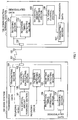
- FIG.1 is diagram illustrating a configuration of a TDMA communication system according to the first embodiment of the present invention.
- the communication system illustrated in FIG.1 includes base station 100 that is a data transmission apparatus and communication terminal station 150.
- base station 100 that is a data transmission apparatus
- communication terminal station 150 is illustrated as a communicating party of base station 100, but in an actual system, base station 100 communicates with a plurality of communication terminal stations.
- a burst transmitted from communication terminal station 150 is received in antenna 101 in base station 100.
- the received burst received in antenna 101 is output to reception timing detecting section 103 and receiving section 104 through duplexer 102.
- Reception timing detecting section 103 detects the reception timing using a preamble signal contained in the received burst.
- Reception timing correcting section 109 corrects the reception timing detected in reception timing detecting section 103, based on a rounding error amount output from TA control amount rounding section 107 described later. In other words, reception timing correcting section 109 delays the reception timing by a timing adjustment amount indicated by the rounding error amount.
- Receiving section 104 demodulates a data signal contained in the received burst at the reception timing corrected in reception timing correcting section 109, and obtains demodulated data.
- TA error detecting section 105 detects an error between the reception timing detected in reception timing detecting section 103 and known reference timing. Based on the error between the reception timing and the reference timing detected in TA error detecting section 105, TA control amount calculating section 106 calculates a time alignment control amount (herein after referred to as "TA control amount") indicative of an adjustment amount of transmission timing in communication terminal station 105, and outputs the calculated TA control amount to TA control amount rounding section 107.
- TA control amount a time alignment control amount
- TA control amount rounding section 107 performs rounding on the TA control amount calculated in TA control amount calculating section 106, expresses the TA control amount by the predetermined number of significant digits, and outputs the TA control amount expressed by the predetermined number of significant digits to transmitting section 108. Further, TA control amount rounding section 107 outputs a rounding error amount caused by the rounding (i.e., an amount expressed by digits to the right of the significant digits) to reception timing correcting section 109.
- TA control amount calculated in TA control amount calculating section 106 is "123"... and the number of significant digits in rounding is one, "100" is transmitted to communication terminal station 150, and "23" is used in correcting the reception timing in reception timing correcting section 109.
- Transmitting section 108 modulates the rounding-processed TA control amount (i.e., TA control amount expressed by the number of significant digits) and transmission data according to a predetermined modulation scheme to generate a transmission burst, and transmits radio signals of the burst at the predetermined transmission timing from antenna 101 through duplexer 102.
- TA control amount i.e., TA control amount expressed by the number of significant digits
- the burst transmitted from base station 101 is received in antenna 151 in communication terminal station 150.
- the received burst received in antenna 151 is output to reception timing detecting section 153 and receiving section 154 through duplexer 152.
- Reception timing detecting section 153 detects the reception timing using a preamble signal contained in the received burst.
- Receiving section 154 demodulates the received burst at the reception timing detected in reception timing detecting section 153, and obtains demodulated data.
- the demodulated data is subjected to decoding in sections (not shown) subsequent to receiving section 154, while being output to TA control amount extracting section 155.
- TA control amount extracting section 155 extracts the TA control amount (rounding-processed TA control amount) from the demodulated data, and outputs the extracted TA control amount to TA timing control section 156.
- TA timing control section 156 controls the transmission timing according to the TA control amount extracted in TA control amount extracting section 155. In other words, TA timing control section 156 controls the transmission timing to be earlier by an adjustment amount of transmission timing indicated by the extracted TA control amount.
- Transmitting section 157 performs predetermined modulation on transmission data to generate a burst, and outputs the generated burst to duplexer 152 at the transmission timing according to the control of TA timing control section 156. Radio signals of the burst output from transmitting section 157 are transmitted from antenna 151 through duplexer 152.
- An uplink burst transmitted from communication terminal station 150 is received in antenna 101 in base station 100.
- the received burst is output to reception timing detecting section 103 through duplexer 102, and reception timing detecting section 103 detects the reception timing.
- Reception timing correcting section 109 corrects the reception timing, using a rounding error amount obtained in TA control amount rounding section 107.
- the rounding-processed TA control amount is transmitted to communication terminal station 150, and based on the rounding-processed TA control amount, communication terminal station 150 adjusts the transmissiontiming. Accordingly, it is considered that the accuracy in transmission timing adjustment deteriorates corresponding to a TA control amount (i.e., rounding error amount) deleted in the rounding.
- reception timing correcting section 109 corrects the reception timing that communication terminal station 150 cannot adjust, using the rounding error amount obtained in TA control amount rounding section 107.
- Receiving section 104 demodulates the received burst at the corrected reception timing, and obtains the demodulated data.
- TA error detecting section 105 detects an error between the reception timing and reference timing, and based on the error, TA control amount calculating section 106 calculates a TA control amount.
- TA control amount rounding section 107 performs rounding on the TA control amount, and obtains a TA control amount expressed by the predetermined number of significant digits.
- the TA control amount (rounding-processed TA control amount) expressed by the predetermined number of significant digits is output to transmitting section 108, and a TA control amount (rounding error amount) of digits to the right of the significant digits is output to reception timing correcting section 109.
- the rounding-processed TA control amount is subjected to the predetermined modulation in transmitting section 108, and resultant radio signals are transmitted from antenna 101 at the predetermined transmission timing.
- Radio signals of a downlink burst transmitted from antenna 101 is received in antenna 151 in communication terminal station 150.
- the received burst is output to reception timing detecting section 153 and receiving section 154 through duplexer 152.
- Receiving section 154 demodulates the received burst at the reception timing detected in reception timing detecting section 153, and obtains the demodulated data.
- the demodulated data is used in subsequent processing such as decoding, while being output to TA control amount extracting section 155.
- TA control amount extracting section 155 extracts the TA control amount form the demodulated data. According to the extracted TA control amount, TA timing control section 156 controls the transmission timing in transmitting section 157. Transmitting section 157 modulates the transmission data according to a predetermined modulation scheme to generate a burst, and outputs the generated burst at the timing earlier than the predetermined transmission timing by an adjustment amount indicated by the TA control amount, according to the control of TA timing control section 156. Radio signals of the burst are transmitted from antenna 151 through duplexer 152.
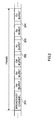
- FIG.2 is a diagram illustrating a configuration of a channel for communications.
- FIG.2 illustrates a communication channel in the case where three communication terminal stations (assumed to be communication terminals A, B and C) communicate with a base station.
- the communication channel shown in FIG.2 is comprised of broadcast channel 201 used in broadcasting control information such as TA control amount to communication terminal stations and three-channel-data transmission channel.
- the broadcast channel is configured at the beginning of each frame and is followed by downlink bursts Ad to Cd respectively to communication terminal stations A to C, and the downlink bursts are followed by uplink bursts Au to Cu transmitted respectively from communication terminal stations A to C.
- FIG.2 illustrates the communication channel provided with three data transmission channels, it may be possible to provide an arbitrary number of data transmission channels corresponding to the system setting.
- guard intervals 202 to 204 are provided between uplink bursts to prevent adjacent bursts from colliding with one another.
- the duration of the guard interval is determined beforehand in the system in consideration of factors such as a distance between base station 100 and communication terminal station 150. In other words, since a propagation delay increases as the distance between base station 100 and communication terminal station 150 increases, the duration of the guard interval is set to be large to prevent collisions of bursts when the distance between base station 100 and communication terminal station 150 is large.
- the rounding in TA control amount rounding section 107 will be described below.
- the rounding is processing for deleting digits to the right of the predetermined significant digits in order to express target data by the predetermined number of significant digits.
- an amount deleted in the rounding in the target data is referred to as a rounding error amount, and therefore, such an amount is expressed by digits lower than the predetermined number of significant digits.
- TA control amount rounding 107 performs the rounding on the TA control amount calculated in the TA control amount calculating section.
- the rounding-processed TA control amount is expressed by the predetermined number of significant digits, and is smaller in information amount than the TA control amount prior to the rounding by the rounding error amount. Accordingly, by transmitting the TA control amount of the number of significant digits decreased in the rounding to communication terminal station 150, since it is possible to increase a ratio of the information transmission channel to the communication channel, data transmission efficiency can be improved than transmitting the calculated TA control amount given no processing to communication terminal station 150.
- the accuracy in time alignment control is improved as the number of significant digits is increased.
- the guard time see FIG.2 provided between bursts (channels). Therefore, as the number of significant digits is increased in the rounding, it is possible to use a frame more efficiently.
- the number of significant digits in the rounding in TA control amount rounding section 107 is determined in consideration of the data transmission efficiency desired in the system and the frame utility efficiency also desired in the system. Thus, it is possible to implement the transmission efficiency and frame utility efficiency preferable in the system.
- base station 100 broadcasts the rounding-processed TA control amount obtained in TA control amount rounding section 107 to communication terminal station 150, whereby it is possible to improve the frame utility efficiency as compared to the case of not performing the rounding. Further, since base station 100 corrects the reception timing in reception timing correcting section 109 using a rounding error amount of the TA control amount, it is possible to generate the reception timing with accuracy equal to that in the case of broadcasting a calculated TA control amount not subjected to the rounding to communication terminal station 150.
- base station 100 broadcasts the rounding-processed time alignment control amount to communication terminal station 150 so as to control the transmission timing in communication terminal station 150, while correcting the reception timing in the base station using the rounding error amount in the rounding, and thereby is capable of enhancing the data transmission efficiency without degrading the accuracy in reception timing generation.
- the present invention is not limited to such a case.
- the present invention is applicable widely to other communication systems such as, for example, CDMA/TDD (Code Division Multiple Access/Time Division Duplex) communication system, in controlling transmission timing.
- CDMA/TDD Code Division Multiple Access/Time Division Duplex
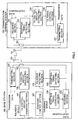
- FIG.3 is a diagram illustrating a TDMA communication system according to the second embodiment of the present invention.
- the same sections as in FIG.1 are assigned the same reference numerals to omit specific descriptions thereof.
- rounding control section 301 adaptably controls the number of significant digits in the rounding performed in TA control amount rounding section 107.
- the control of the number of significant digits is determined in consideration of relationships between the number of significant digits and data transmission efficiency, and between the number of significant digits and frame utility efficiency. For example, when specifications in the system are changed, rounding control section 301 sets the number of significant digits at the most suitable one for the system with the changed specifications, and thus it is possible to implement the transmission efficiency and frame utility efficiency suitable for the system with the change even when any change occurs in the system.
- rounding control section 301 controls the number of significant digits in rounding to be variable, it is possible to perform rounding suit able for the system readily. Particularly, when specifications of the system are changed, by setting the number of significant digits suitable for the changed specification, it is possible to implement the transmission efficiency and frame utility efficiency suitable for the system with the change even when there is any change in the system.
- the present invention is capable of being carried into practice using a commercially available general digital computer and microprocessor with an incorporated program for operating techniques as described in aforementioned embodiments. Further, as is apparent to those skilled in the art, the present invention includes computer programs created by those skilled in the art based on the techniques as described in the embodiments.
- the present invention includes in its scope computer program produces that are computer readable storage media in which programs for operating the techniques as described in the embodiments are stored.
- the storage media include disks such as a flexible disk, optical disk, CDROM and magnetic disk, ROM (Read Only Memory), RAM (Random Access Memory), EPROM (Erasable Programmable Read-Only Memory), EEPROM (Electrically Erasable Programmable Read-Only Memory), magnetic optical card, memory card and DVD (Digital Versatile Disc), but are not limited to the foregoing.
- the present invention is not limited to the aforementioned embodiments.
- the present invention is capable of being carried into practice in a combination of the embodiments as appropriate.
- the present invention by correcting the reception timing using a rounding error amount in time alignment control amount, it is possible for an apparatus of the invention to adjust timing corresponding to a rounding error amount in the apparatus, without broadcasting a time alignment control amount corresponding to the rounding error amount, whereby it is possible to enhance the data transmission efficiency without degrading the accuracy in reception timing generation.
- the present invention is not limited to such a case.
- the present invention is applicable widely to other communication systems such as CDMA/TDD (Code Division Multiple Access/Time Division Duplex) communication system, in controlling transmission timing.
- CDMA/TDD Code Division Multiple Access/Time Division Duplex
- a data transmission apparatus of the present invention has a configuration provided with a calculating section that calculates a time alignment control amount for controlling transmission timing in a communicating party apparatus, based on a signal received from the communicating party apparatus, a rounding section that performs rounding on the time alignment control amount to obtain a time aliment control amount of the predetermined number of significant digits and a rounding error amount, a detecting section which receives a signal transmitted at transmission timing corresponding to a rounding-processed time alignment control amount from the communicating party apparatus, and based on the signal received, detecting reception timing, a correcting section that corrects the reception timing detected in the detecting section, using the rounding error amount obtained in the rounding, and a receiving section that obtains demodulated data from a received signal at reception timing corrected in the correcting section.
- the apparatus by correcting the reception timing using a rounding error amount in time alignment control amount, it is possible for the apparatus (data transmission apparatus) to adjust timing corresponding to the rounding error amount in the apparatus, without broadcasting to another apparatus on transmitting side a time alignment control amount corresponding to the rounding error amount. Accordingly, the data transmission apparatus is capable of enhancing the data transmission efficiency without degrading the accuracy in reception timing generation.
- a data transmission apparatus of the present invention has a configuration where the number of significant digits in the rounding in the rounding section is made variable in the configuration of the above data transmission apparatus.
- a base station apparatus of the present invention has a configuration provided with the above-mentioned data transmission apparatus.
- a base station apparatus of the present invention in the above-mentioned base station apparatus has a configuration where the rounding section determines the number of significant digits in the rounding corresponding to a radius of a cell of the base station apparatus.
- a data transmission program of the present invention has a structure for making a computer function as a calculating section that calculates a time alignment control amount based on a received signal, a rounding section that performs rounding on the time alignment control amount, a correcting section that corrects reception timing using a rounding error amount obtained in the rounding, and a receiving section that obtains demodulated data from the received signal at reception timing corrected in the correcting section.
- a data transmission method of the present invention has a step of calculating a time alignment control amount based on a received signal, a rounding step of performing rounding on the time alignment control amount, a correcting step of correcting reception timing using a rounding error amount obtained in the rounding, and a receiving step of obtaining demodulated data from the received signal at reception timing corrected in the correcting step.
- the method it is possible for an apparatus to adjust timing corresponding to a rounding error amount in the apparatus, without broadcasting to another apparatus on transmitting side a time alignment control amount corresponding to the rounding error amount, whereby it is possible to enhance the data transmission efficiency without degrading the accuracy in reception timing generation.
- the present invention is suitable for use in a base station apparatus in a TDMA communication system, for example.
Landscapes
- Engineering & Computer Science (AREA)
- Computer Networks & Wireless Communication (AREA)
- Signal Processing (AREA)
- Time-Division Multiplex Systems (AREA)
- Mobile Radio Communication Systems (AREA)
- Synchronisation In Digital Transmission Systems (AREA)
Abstract
Description
Claims (8)
- A data transmission apparatus comprising:a calculating section that calculates a time alignment control amount for controlling transmission timing in a communicating party apparatus, based on a signal received from the communicating party apparatus;a rounding section that performs rounding on the time alignment control amount to obtain a time aliment control amount of the predetermined number of significant digits and a rounding error amount;a detecting section which receives a signal transmitted at transmission timing corresponding to a rounding-processed time alignment control amount from the communicating party apparatus, and based on the signal received, detecting reception timing;a correcting section that corrects the reception timing detected in the detecting section, using the rounding error amount obtained in the rounding; anda receiving section that obtains demodulated data from a received signal at the reception timing corrected in the correcting section.
- The data transmission apparatus according to claim 1, wherein the number of significant digits in the rounding in the rounding section is made variable.
- A base station apparatus comprising the data transmission apparatus according to claim 1.
- A base station apparatus comprising the data transmission apparatus according to claim 2.
- The base station apparatus according to claim 3, wherein the rounding section determines the number of significant digits in the rounding corresponding to a radius of a cell of the base station apparatus.
- The base station apparatus according to claim 4, wherein the rounding section determines the number of significant digits in the rounding corresponding to a radius of a cell of the base station apparatus.
- A data transmission program for making a computer function as:a calculating section that calculates a time alignment control amount based on a received signal;a rounding section that performs rounding on the time alignment control amount;a correcting section that corrects reception timing using a rounding error amount obtained in the rounding; anda receiving section that obtains demodulated data from the received signal at the reception timing corrected in the correcting section.
- A data transmission method comprising:a step of calculating a time alignment control amount based on a received signal;a rounding step of performing rounding on the time alignment control amount;a correcting step of correcting reception timing using a rounding error amount obtained in the rounding; anda receiving step of obtaining demodulated data from the received signal at the reception timing corrected in the correcting section.
Applications Claiming Priority (3)
| Application Number | Priority Date | Filing Date | Title |
|---|---|---|---|
| JP2001218717 | 2001-07-18 | ||
| JP2001218717 | 2001-07-18 | ||
| PCT/JP2002/007286 WO2003009503A1 (en) | 2001-07-18 | 2002-07-18 | Data transmission apparatus and data transmission method |
Publications (2)
| Publication Number | Publication Date |
|---|---|
| EP1331746A1 true EP1331746A1 (en) | 2003-07-30 |
| EP1331746A4 EP1331746A4 (en) | 2009-04-15 |
Family
ID=19052861
Family Applications (1)
| Application Number | Title | Priority Date | Filing Date |
|---|---|---|---|
| EP02749319A Withdrawn EP1331746A4 (en) | 2001-07-18 | 2002-07-18 | APPARATUS AND METHOD FOR DATA TRANSMISSION |
Country Status (5)
| Country | Link |
|---|---|
| US (1) | US7415000B2 (en) |
| EP (1) | EP1331746A4 (en) |
| JP (1) | JP3799039B2 (en) |
| CN (1) | CN1290278C (en) |
| WO (1) | WO2003009503A1 (en) |
Families Citing this family (8)
| Publication number | Priority date | Publication date | Assignee | Title |
|---|---|---|---|---|
| US8189533B2 (en) * | 2006-06-19 | 2012-05-29 | Telefonaktiebolaget L M Ericsson (Publ) | Calculation of a destination time alignment value to be used by a user equipment in a destination cell after a handover |
| KR100867990B1 (en) * | 2006-12-07 | 2008-11-10 | 한국전자통신연구원 | Beacon scheduling system and method for preventing beacon collision |
| CA2710305C (en) | 2007-12-20 | 2013-09-17 | Research In Motion Limited | Equipments and methods for uplink timing synchronization |
| JP5153395B2 (en) * | 2008-03-17 | 2013-02-27 | 株式会社日立製作所 | Base station and mobile station of cellular radio communication system |
| JP6152663B2 (en) * | 2013-03-07 | 2017-06-28 | セイコーエプソン株式会社 | Method for controlling position calculation apparatus and position calculation apparatus |
| US9131509B2 (en) * | 2013-04-05 | 2015-09-08 | Cambium Networks Limited | Mechanism for group polling without precise timing |
| JP2017063269A (en) * | 2015-09-24 | 2017-03-30 | Necネットワーク・センサ株式会社 | Communication system, master station apparatus, slave station apparatus, and communication method |
| KR20170058726A (en) * | 2015-11-19 | 2017-05-29 | 삼성전자주식회사 | Broadcast receiving system including broadcast receiving apparatus and controlling method thereof |
Family Cites Families (15)
| Publication number | Priority date | Publication date | Assignee | Title |
|---|---|---|---|---|
| FR2629608B1 (en) * | 1988-03-31 | 1992-01-10 | Peugeot | METHOD AND DEVICE FOR RECEIVING SYNCHRONIZATION OF A LOCAL CLOCK OF A STATION OF A COMMUNICATION NETWORK, IN PARTICULAR OF A MOTOR VEHICLE |
| JPH0821918B2 (en) * | 1989-03-14 | 1996-03-04 | 国際電信電話株式会社 | Transmission timing acquisition method |
| SE466123B (en) * | 1989-04-25 | 1991-12-16 | Kvaser Consultant Ab | DEVICE FOR SYNCONIZING DATA IN A COMPUTER SYSTEM INCLUDING A COMMON SERIAL DATA COMMUNICATION CHANNEL |
| US5355515A (en) * | 1991-06-12 | 1994-10-11 | Telefonaktiebolaget L M Ericsson | Method and apparatus for estimating initial time alignment in a cellular communications network |
| JPH07283773A (en) * | 1994-04-06 | 1995-10-27 | Fujitsu Ltd | Mobile station device and base station device |
| GB9418749D0 (en) * | 1994-09-16 | 1994-11-02 | Ionica L3 Limited | Digital telephony |
| JP2798123B2 (en) | 1995-11-17 | 1998-09-17 | 日本電気株式会社 | Viterbi decoding device |
| JPH11275038A (en) | 1998-03-23 | 1999-10-08 | Nec Mobile Commun Ltd | Tdma mobile communication system |
| JP2000013867A (en) * | 1998-06-22 | 2000-01-14 | Kyocera Corp | Mobile station transmission timing correction method |
| US6121816A (en) * | 1999-04-23 | 2000-09-19 | Semtech Corporation | Slave clock generation system and method for synchronous telecommunications networks |
| JP3777564B2 (en) * | 1999-08-16 | 2006-05-24 | 富士通株式会社 | Mobile communication terminal equipment |
| US6988236B2 (en) * | 2000-04-07 | 2006-01-17 | Broadcom Corporation | Method for selecting frame encoding parameters in a frame-based communications network |
| JP2001358638A (en) | 2000-06-13 | 2001-12-26 | Ntt Docomo Inc | Time alignment control method, time alignment control device, wireless base station device, mobile station device, and wireless communication system |
| US6657988B2 (en) * | 2001-01-12 | 2003-12-02 | Nokia Mobile Phones Ltd. | Method and apparatus for timing adjustment for uplink synchronous transmission in wide code division multiple access |
| US7042909B2 (en) * | 2001-06-27 | 2006-05-09 | Freescale Semiconductor, Inc. | Method and apparatus for controlling the timing of a communication device |
-
2002
- 2002-07-18 WO PCT/JP2002/007286 patent/WO2003009503A1/en not_active Ceased
- 2002-07-18 CN CNB02802687XA patent/CN1290278C/en not_active Expired - Fee Related
- 2002-07-18 US US10/380,506 patent/US7415000B2/en not_active Expired - Lifetime
- 2002-07-18 EP EP02749319A patent/EP1331746A4/en not_active Withdrawn
- 2002-07-18 JP JP2003514724A patent/JP3799039B2/en not_active Expired - Fee Related
Also Published As
| Publication number | Publication date |
|---|---|
| JPWO2003009503A1 (en) | 2004-11-11 |
| JP3799039B2 (en) | 2006-07-19 |
| CN1466828A (en) | 2004-01-07 |
| US7415000B2 (en) | 2008-08-19 |
| WO2003009503A1 (en) | 2003-01-30 |
| CN1290278C (en) | 2006-12-13 |
| US20040042431A1 (en) | 2004-03-04 |
| EP1331746A4 (en) | 2009-04-15 |
Similar Documents
| Publication | Publication Date | Title |
|---|---|---|
| US11683766B2 (en) | Apparatus and method for synchronizing and obtaining system information in wireless communication system | |
| US6393303B1 (en) | Method and apparatus for directional radio communication | |
| US6321082B1 (en) | Method and apparatus for directional radio communication | |
| US5390166A (en) | Method for recovering a data signal using diversity in a radio frequency, time division multiple access communication system | |
| EP1436912B1 (en) | Method and apparatus for multi-channel reverse link outer-loop power control | |
| US7573838B2 (en) | Mobile communication system | |
| EP0955735A2 (en) | Base station apparatus and transmission power control method | |
| US7876716B2 (en) | Base station apparatus and radio communication method | |
| WO1998036599A1 (en) | Method and apparatus for directional radio communication | |
| CN1384989A (en) | Method for jcalibrating electronically phase-controlled group antenna in radio-communications systems | |
| US7069041B2 (en) | Radio terminal apparatus and its reception control program | |
| US7415000B2 (en) | Data transmission apparatus and data transmission method | |
| EP1039657A1 (en) | Method for pilot signal power control in a CDMA mobile radio system, as well as base station and mobile station for such a system | |
| US8717954B2 (en) | Base station and signal processing method | |
| US8064822B2 (en) | Link synchronization method using received power in RF repeater | |
| JP2001007754A (en) | Wireless communication system and wireless base station | |
| JPS62260436A (en) | Mobile communication system | |
| EP2009817B1 (en) | Wireless communication system, base station, and wireless communication method | |
| EP1197013B1 (en) | Method for increasing the coverage area of a base station | |
| KR100531359B1 (en) | The Timing Alignment Bit transmission method for uplink synchronous transmission scheme systems of ansynchronous scheme | |
| US20170222841A1 (en) | Method and Apparatus of Iterative Channel Tracking for MIMO-OFDM System | |
| EP1241825A2 (en) | Synchronization of digital data decoders | |
| US20090088196A1 (en) | Communication System, Communication Device, and Transmission Power Control Method | |
| KR20070073339A (en) | Apparatus and Method for Transmitting Power in Wireless Communication System |
Legal Events
| Date | Code | Title | Description |
|---|---|---|---|
| PUAI | Public reference made under article 153(3) epc to a published international application that has entered the european phase |
Free format text: ORIGINAL CODE: 0009012 |
|
| 17P | Request for examination filed |
Effective date: 20030318 |
|
| AK | Designated contracting states |
Designated state(s): AT BE BG CH CY CZ DE DK EE ES FI FR GB GR IE IT LI LU MC NL PT |
|
| AX | Request for extension of the european patent |
Extension state: AL LT LV MK RO SI |
|
| RBV | Designated contracting states (corrected) |
Designated state(s): AT BE BG CH CY CZ DE DK EE ES FI FR GB GR IE IT LI LU MC NL PT SE SK TR |
|
| RAP1 | Party data changed (applicant data changed or rights of an application transferred) |
Owner name: PANASONIC CORPORATION |
|
| A4 | Supplementary search report drawn up and despatched |
Effective date: 20090312 |
|
| 17Q | First examination report despatched |
Effective date: 20090609 |
|
| STAA | Information on the status of an ep patent application or granted ep patent |
Free format text: STATUS: THE APPLICATION HAS BEEN WITHDRAWN |
|
| 18W | Application withdrawn |
Effective date: 20120511 |