TECHNICAL FIELD
The present invention relates to a management technology of a
storage device, particularly to a technology of managing creation and
deletion of a partition of a hard disk device.
BACKGROUND ART
In a storage device, particularly in a hard disk, setting partitions
makes it possible to use physically one hard disk as if it were separate
hard disks. It is therefore actual practice to divide a hard disk having a
large capacity into a plurality of partitions, for facilitating management of
the disk or enabling booting of a plurality of OSs by switching one OS to
another. Further, the partitions are also used for the purpose of
preventing a decrease in a processing speed, which is caused by an
occurrence of so-called fragmentation, by recording files to be frequently
opened for reading and writing and system files and the like to be altered
to a less degree in separate partitions.
When a user conducts partition alteration, conventionally, the
user uses a utility program or the like to manually add or delete
partition(s). That is, when the user adds a partition, the user takes
account of a necessary partition size and a securable region in a hard disk
to determine the position of partition to be created.
DISCLOSURE OF THE INVENTION
Meanwhile, the partition alteration has not been performed so
frequently. The alteration has been limited, for example, to the case of
adding a hard disk, the case of changing operation systems, and the like.
However, there are generated demands for adding and deleting a
partition as required thanks to enlargement of a hard disk capacity,
diversification of operation systems, a necessity to handle files having
various properties.
In such a case, when the addition and deletion of the partitions are
disorderedly repeated, the hard disk is fragmented into minute partitions,
which may lower the utilization efficiency of a hard disk device.
It is an object of the present invention to provide a technology for
improving the utilization efficiency of a storage device.
For achieving the above subject, a partition creating method of
creating a partition in a storage device, provided by the present invention,
comprises limiting the size of a partition to be created to a size of m to the
n-th power where m and n are natural numbers, and disposing the
partition to be created in a position aligned by the size of the partition.
BRIEF DESCRIPTION OF THE DRAWINGS
Fig. 1 is a block diagram showing a constitution of one
embodiment of the partition management system according to the present
invention.
Fig. 2 is a view for explaining partitions as divisional regions of a
hard disk in this embodiment.
Fig. 3 is a view showing one example of a structure of a partition
management table 103.
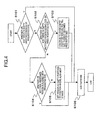
Fig. 4 is a flowchart for explaining processing in creating the
partition.
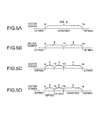
Figs. 5A to 5D are views for explaining a processing example in
creating the partition.
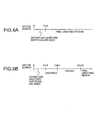
Figs. 6A and 6B are views for explaining processing in creating the
partition in a final undefined region.
Fig. 7 is a flowchart for explaining processing in deleting the
partition.
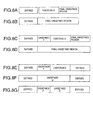
Figs. 8A to 8G are views for explaining a processing example in
deleting the partition.
BEST MODE FOR EMBODYING THE INVENTION
Embodiments of the present invention will be explained in detail
with reference to the drawings.
Fig. 1 is a block diagram showing a constitution of one
embodiment of a partition management system according to the present
invention. In this drawing, a partition management system 100 includes:
an interface unit 101 for receiving a program under execution, a request
for adding a partition and a request for deleting a partition from an
operator or the like and sending results of processing the same back
thereto; a partition management execution unit 102 for executing addition
and deletion of a partition in a mounted storage device and performing
creation and renewal of a partition management table; and a partition
management table 103. In this embodiment, a hard disk 110 as one
example of the storage device is mounted in the partition management
system.
The partition management system 100 includes: a central
processing unit (CPU), a main storage device, a reading device for
reading data from a portable storage medium such as a CD-ROM or
DVD-ROM, an input device such as a keyboard, a mouse and a controller,
a display device such as a display, and an interface for controlling
transmission and reception of data among the above-described
constituent components. The partition management system 100 can be
constituted on a generally configured information processing apparatus
capable of internally or externally mounting the storage device such as a
hard disk, for example, a personal computer, a server computer or an
entertainment apparatus.
Further, a program for allowing the information processing
apparatus to execute the processing of the partition management system
100 can be included, for example, as part of utility software, a hard disk
driver, a library for development, or the like. Such a program can be
recorded in a storage medium such as a CD-ROM and a DVD-ROM and
distributed. Alternatively, The program can be distributed through a
communication line.
In this embodiment, for specifying a sector as a unit of a recording
region in the hard disk, it is determined that a logical block address
(LBA) starting from 0 is used. This address makes it possible to identify
any sector on the hard disk. Naturally, the present invention is not
limited thereto, and there may be employed a constitution in which any
sector on the hard disk is specified by designating, for example, a
cylinder number, a head number and a sector number. The logical block
address will be referred to as a sector number for convenience.
Fig. 2 is a view for explaining partitions as divisional regions of
the hard disk in this embodiment.
In the present invention, a partition created by the operator, the
program under execution, or the like so that it permits reading/writing of
data is referred to as a defined region (partition), and a storage region in
which no partition is created yet or a partition created once is deleted is
referred to as an undefined region. The above undefined region will be
sometimes referred to as an undefined partition for convenience.
In this drawing, four regions (110a, 110b, 110c and 110d) are
formed on the hard disk 110. Of these, the regions 110a and 110c are
defined partitions that permit reading/writing of data. The region 110b
present between the regions 110a and 110c is an undefined region. The
region 110d following the region 110c is an undefined region, which is
assumed to continue to the end of the hard disk 110. That is, this
drawing shows a state where the partition 110a and the partition 110c are
created on the hard disk in an initial state.
Of the above undefined regions, an undefined region followed by
a defined region or another undefined region like the region 110b is
referred to as an "empty undefined region", and an undefined region that
is the last region of the hard disk like the region 110d is referred to as a
"final undefined region".
Each region has a header portion having a predetermined size on
a head thereof. Each header portion is to pre-record, for example,
information to the effect that it is a head of the partition, a flag for
identifying whether the partition (region) is already defined or undefined,
and a size of the partition. The size of the partition can be represented,
for example, by the number of sectors and the number of bytes.
Alternatively, an ending sector number may be recorded to indirectly
represent the size of the partition.
However, the information recorded in the header portion is not
limited to the above-described ones. For example, the information to the
effect that the header is the head of the partition may be replaced with a
leading sector number of the partition. Further, an identifier for
identifying the partition, for example, a partition number may be
recorded in the header portion. Furthermore, when the partition is, for
example, undefined, the partition size may be set at 0 without using the
above flag as the information for identifying whether the partition is
already defined or undefined.
An operation of the partition management system 100 in this
embodiment will be explained below. The operation of the partition
management system 100 is divided into processing of creating the
partition management table 103, processing of adding a partition and
processing of deleting the partition.
First, the processing of creating the partition management table
103 will be explained.
The partition management table 103 is a table that is created on a
main storage device, or the like, by the partition management execution
unit 102 for managing information concerning the partitions on the hard
disk. Fig. 3 is a view showing one example of structure of the partition
management table 103.
In this drawing, the partition management table 103 has
identifiers 1031, starting sector numbers 1032, sizes 1033 and statuses
1034.
The identifiers 1031 are used for identifying the partitions, and
this example uses numbers in a descending order. The statuses 1034 are
information for identifying whether the respective regions are already
defined or undefined.
The partition management execution unit 102 creates the partition
management table 103 when the partition management system 100 is
activated, when the hard disk device is mounted on the storage device, or
the like.
Specifically, the partition management execution unit 102 refers to
the header portions recorded in the hard disk 110, acquires the leading
sectors, the sizes and the information for identifying whether the region
is defined or undefined with regard to each partition (including the
undefined regions), and records the same in the partition management
table 103.
The above management table may be created on the hard disk, for
example, a managing region of the hard disk in advance. In this case,
the partition management execution unit 102 can manage the partitions
by referring to this region.
The processing in adding the partitions will be explained below.
In this embodiment, the size of the partition to be added is
assumed to be 2 to n-th power times as large as a base unit. The base
unit has an arbitrary size, and can be determined to be 1 sector (typically
512 bytes), 1 cluster, 1 kilobyte, 1 megabyte, 100 megabytes, 1 gigabyte
and the like. However, this embodiment will be explained on the
assumption that the base unit is one sector.
The size of the partition to be added will be any one of 1, 2, 4, 8,
16, 32, ..., 1024, ... sectors, which are 2 to the n-th power times as large as
one sector. Where no particular confusion occurs in the following
explanation, sizes are represented without the unit "sector". Further,
the size of the partition to be added is not limited to the size that is 2 to
the n-th power times as large, and can be a size that is any natural
number to the n-th power times as large, for example, 3 to the n-th power,
4 to the n-th power times as large.
Even when a substantially necessary partition size is, for example,
3, therefore, the partition size which this system is requested to add is 4,
which is 2 to the second power (21<3≤22). Similarly, when 1000 is
necessary, 1024 (210) becomes a size to be added by request. Naturally,
this judgment may be made with a program or the like making such a
request, while there may be employed a constitution in which the
interface unit 101 is imparted with a judgment function, and for example,
when the interface unit 101 receives a request to add a partition having a
size of 5, a partition having a size of 8 as a minimum additional size
sufficient for satisfying the request is added. For simplicity, this
embodiment will be explained on the assumption that the size 2 to the
n-th power times as large is requested of this system.
In this embodiment, further, a position where the partition can be
located when created, that is, the position that can be set as a starting
position of the partition is limited to a position (sector number) where the
partition size is aligned.
Specifically, if a requested partition has a size of 256 (28) sectors,
the location where this partition can be located is limited to regions with
sector numbers 0, 256, 512, 768... (m times 256) as starting positions,
where the partition size is aligned. Further, when the size of a partition
is, for example, 1 as 2 to 0-th power, the partition can be positioned at any
sector number.
On the premise of the above regulations, the interface unit 101
requests the partition management execution unit 102 to execute the
addition of the partition upon receipt of a request to add the partition
and the size of the partition to be added. The processing of the partition
management execution unit 102 having received this request will be
explained with reference to the flowchart of Fig. 4.
First, the partition management execution unit 102 refers to the
partition management table 103, and checks whether or not an empty
undefined region equal to the requested size exists (S101).
As a result, when the empty region exists, the partition
management execution unit 102 creates a partition at the requested size in
the empty region (S106), and reports the creation of the partition to a
requester through the interface unit 101. Further, the partition
management execution unit 102 updates the partition management table
103 on the basis of the location and the size of the created partition, and
creates a header portion of the partition of the hard disk 110.
Since the empty undefined region having the requested size is
always aligned with the requested size by processing to be described later,
it is possible to dispose a partition having the concerned size in this
empty region.
When no empty region exists as a result of checking whether or
not there is an empty undefined region having the requested size, the
partition management execution unit 102 checks whether or not there is
an empty undefined region having a size 2m times (2, 4, 6, 8...) the
requested size (S102).
As a result, when the empty undefined region having the size 2m
times the requested size exists, the partition management execution unit
102 continues to divide the empty undefined region into halves till the
empty undefined region has the requested size, and creates new regions
(S103). And when a region having the requested size is created, the
partition management execution unit 102 creates a partition in the region
(S106). Meanwhile, the partition management execution unit 102
updates the partition management table 103 with other newly created
region as empty undefined regions, and creates a header portion.
Fig. 5 is a view for explaining one example of the above
processing. This drawing shows an example of the case where the
creation of a partition having a size 2 is requested in a state where a
sector number 8 has an empty undefined region having a size 8 (Fig. 5A).
Since the empty undefined region having the size 8, which starts
from the sector number 8, is 4 times as large as the requested size 2, this
region meets the condition of 2m times. First, this region is divided into
halves. Then, two empty undefined regions having a size 4 each are
created (Fig. 5B). And, an empty undefined region having a lower sector
number is further divided into halves. Then, two empty undefined
regions having a size 2 each are created (Fig. 5C).
Since these empty undefined regions have a size equal to the
requested size, the partition is created in an empty undefined region
having the size 2 and having a lower sector number. And, the partition
management execution unit 102 updates the partition management table
103 with other newly created regions as empty undefined regions, and
creates and updates a header (Fig. 5D).
When there is not an empty undefined region having a size 2m
times as large as the requested size as a result of checking whether or not
there is an empty undefined region 2m times as large, the partition
management execution unit 102 checks whether or not the final undefined
region is aligned with the requested size (S104).
As a result, when the final undefined region is aligned with the
requested size, the partition management execution unit 102 creates the
partition at the requested size from a starting position of the final
undefined region (S106). And, the partition management execution unit
102 sets a remaining region as a final undefined region.
When the final undefined region is not aligned with the requested
size, the partition management execution unit 102 creates an empty
undefined region to a position where alignment is made (S105), and
creates the partition at the requested size therein (S106).
Fig. 6 is a view for explaining one example of the above
processing. This example is an example of the case where a partition
with a size 1024 is requested when the final undefined region starts from
a sector number 512 (Fig. 6A). Since the size 1024 is not aligned with the
sector number 512 as a starting position of the final defined region, the
partition management execution unit 102 sets a region from the sector
number 512 to the sector number 1023 as an empty undefined region, and
creates the partition with the size 1024 at the sector number 1024.
Furthermore, the partition management execution unit 102 sets, as a final
undefined region, a region of a sector number 2048 and thereafter which
region is a remaining region (Fig. 6B). And, the partition management
execution unit 102 updates the partition management table 103, and
creates and updates a header portion.
The partitions are created as described above, so that the
partitions can be disposed in the positions aligned with the requested
sizes.
The processing of deleting a partition will be explained with
reference to a flowchart of Fig. 7.
The interface unit 101 of the partition management system 100
requests the partition management execution unit 102 to execute deletion
of a partition upon receipt of a deletion request designating a specified
partition from an operator, the program under execution, or the like.
The method of designating a partition to be deleted can be a
method of designating an identifier such as a starting sector number, a
partition number, or the like, of the partition. Naturally, the present
invention is not limited to such a method, and the partition to be deleted
can be specified by information to which the partition management
execution unit 102 can refer and which permits designation of the
partition to be deleted.
First, the partition management execution unit 102 deletes the
designated partition, and sets a region thereof as an undefined region
(S201).
Then, the partition management execution unit 102 judges
whether or not the deleted partition is the last one of the defined
partitions, that is, whether or not a region immediately after the deleted
partition has been the final undefined region (S202).
As a result, when the deleted partition has been the last partition,
the partition management execution unit 102 incorporates the undefined
region caused by such deletion into the final undefined region (S203).
Further, the partition management execution unit 102 judges whether or
not a region immediately before the deleted partition has been an empty
undefined region (S204), and when the region is the empty undefined
region, the partition management execution unit 102 also incorporates the
region into the final undefined region (S205).
On the other hand, when the deleted partition is not the last
partition, the partition management execution unit 102 judges whether or
not a region immediately before the region that has been set as an
undefined region is an empty undefined region (S206). Then, when the
region is an empty undefined region, the partition management execution
unit 102 judges whether or not the region is aligned when the two
undefined regions are combined (S207), and when the region can be
aligned, the two undefined regions are combined and set as one
undefined region (S208).
Further, the partition management execution unit 102 judges
whether or not a region immediately after the empty undefined region
caused by the deletion or the empty undefined region caused by such
combination is an empty undefined region (S209). Then, when the
region is an empty undefined region, the partition management execution
unit 102 judges whether or not the region can be aligned when the two
undefined regions are combined (S210), and when the region can be
aligned, the two undefined regions are combined and set as one
undefined region (S211).
Then, the partition management execution unit 102 reports the
deletion of the partition to the requester through the interface unit 101.
Further, the partition management execution unit 102 updates the header
portion of each partition and the partition management table 103, and
terminates the processing of deleting the partition.
Fig. 8 is a view for explaining one example of the above
processing. When a partition D is deleted in Fig. 8A, a region
immediately after the region from which the partition D is deleted is the
final undefined region, so that the region from which the partition D has
been deleted is added to the final undefined region as shown in Fig. 8B
(S203).
When a partition D is deleted in Fig. 8C, the region from which
the partition D is deleted is added to the final undefined region. In this
case, a region immediately before that region is an undefined region F, so
that the undefined region F is also added to the final undefined region as
shown in Fig. 8D (S205).
When a partition D is deleted in Fig. 8E, if the total size of a
region from which the partition D is deleted and an undefined region F
immediately before that region can be aligned, these two partitions are
combined to be set as one undefined region G as shown in Fig. 8F (S208).
On the other hand, if the total size is cannot be aligned, two undefined
regions that are an undefined region D as a result of deleting the partition
D and an undefined region F are generated as shown in Fig. 8G.
When the partition size is limited to 2 to the n-th power,
simulation results about utilization efficiencies of the hard disk will be
shown with regard to a case (A) where the partition is disposed only at
the position aligned with the partition size and a case (B) where the
partition is disposed at an arbitrary position below.
As a simulation method, 50 partitions having eight sizes of 8
megabytes, 16 megabytes, 32 megabytes, 64 megabytes, 128 megabytes,
256 megabytes, 512 megabytes and 1 gigabyte are pre-created on the hard
disk at random, processings (1) to (3) shown below are iterated 1000 times
while changing types of random numbers, and then, states of the hard
disk are compared.
As a result, the total numbers of sectors to the last partition (total
number of sectors) and percentages of empty regions included in the total
sectors to the last partition (empty/total) were as shown in Table 1 below.
| | A | B |
| Total Number of Sectors | 35,287,040 | 33,820,672 |
| Empty/Total | 25.95% | 21.78% |
The above simulation results show that the present invention
improves the utilization efficiency of the hard disk.
As described above, the utilization efficiency of the storage device
can be improved according to the present invention.