EP1331235A1 - Process for production of aromatic polycarbonates - Google Patents
Process for production of aromatic polycarbonates Download PDFInfo
- Publication number
- EP1331235A1 EP1331235A1 EP01967731A EP01967731A EP1331235A1 EP 1331235 A1 EP1331235 A1 EP 1331235A1 EP 01967731 A EP01967731 A EP 01967731A EP 01967731 A EP01967731 A EP 01967731A EP 1331235 A1 EP1331235 A1 EP 1331235A1
- Authority
- EP
- European Patent Office
- Prior art keywords
- bisphenol
- phenol
- aromatic polycarbonate
- producing
- polycarbonate
- Prior art date
- Legal status (The legal status is an assumption and is not a legal conclusion. Google has not performed a legal analysis and makes no representation as to the accuracy of the status listed.)
- Withdrawn
Links
- 239000004417 polycarbonate Substances 0.000 title claims abstract description 92
- 229920000515 polycarbonate Polymers 0.000 title claims abstract description 92
- 238000000034 method Methods 0.000 title claims abstract description 67
- 125000003118 aryl group Chemical group 0.000 title claims abstract description 45
- 238000004519 manufacturing process Methods 0.000 title claims abstract description 24
- IISBACLAFKSPIT-UHFFFAOYSA-N bisphenol A Chemical compound C=1C=C(O)C=CC=1C(C)(C)C1=CC=C(O)C=C1 IISBACLAFKSPIT-UHFFFAOYSA-N 0.000 claims abstract description 294
- ISWSIDIOOBJBQZ-UHFFFAOYSA-N Phenol Chemical compound OC1=CC=CC=C1 ISWSIDIOOBJBQZ-UHFFFAOYSA-N 0.000 claims abstract description 96
- 239000000203 mixture Substances 0.000 claims abstract description 69
- 239000000463 material Substances 0.000 claims abstract description 50
- CSCPPACGZOOCGX-UHFFFAOYSA-N Acetone Chemical compound CC(C)=O CSCPPACGZOOCGX-UHFFFAOYSA-N 0.000 claims abstract description 24
- 239000007788 liquid Substances 0.000 claims abstract description 18
- BVKZGUZCCUSVTD-UHFFFAOYSA-L Carbonate Chemical compound [O-]C([O-])=O BVKZGUZCCUSVTD-UHFFFAOYSA-L 0.000 claims abstract description 17
- 239000003377 acid catalyst Substances 0.000 claims abstract 2
- 238000006116 polymerization reaction Methods 0.000 claims description 28
- YGYAWVDWMABLBF-UHFFFAOYSA-N Phosgene Chemical compound ClC(Cl)=O YGYAWVDWMABLBF-UHFFFAOYSA-N 0.000 claims description 26
- 150000004650 carbonic acid diesters Chemical class 0.000 claims description 18
- ROORDVPLFPIABK-UHFFFAOYSA-N diphenyl carbonate Chemical compound C=1C=CC=CC=1OC(=O)OC1=CC=CC=C1 ROORDVPLFPIABK-UHFFFAOYSA-N 0.000 claims description 18
- 150000001875 compounds Chemical class 0.000 claims description 16
- JAGRUUPXPPLSRX-UHFFFAOYSA-N 4-prop-1-en-2-ylphenol Chemical compound CC(=C)C1=CC=C(O)C=C1 JAGRUUPXPPLSRX-UHFFFAOYSA-N 0.000 claims description 15
- 239000006227 byproduct Substances 0.000 claims description 8
- 230000000704 physical effect Effects 0.000 abstract description 6
- 238000006243 chemical reaction Methods 0.000 description 32
- YMWUJEATGCHHMB-UHFFFAOYSA-N Dichloromethane Chemical compound ClCCl YMWUJEATGCHHMB-UHFFFAOYSA-N 0.000 description 30
- HEMHJVSKTPXQMS-UHFFFAOYSA-M Sodium hydroxide Chemical compound [OH-].[Na+] HEMHJVSKTPXQMS-UHFFFAOYSA-M 0.000 description 24
- 239000012074 organic phase Substances 0.000 description 23
- 239000008346 aqueous phase Substances 0.000 description 21
- 238000004821 distillation Methods 0.000 description 21
- 239000000155 melt Substances 0.000 description 17
- 239000003054 catalyst Substances 0.000 description 14
- 239000000243 solution Substances 0.000 description 14
- 238000006068 polycondensation reaction Methods 0.000 description 13
- 238000002360 preparation method Methods 0.000 description 13
- XLYOFNOQVPJJNP-UHFFFAOYSA-N water Substances O XLYOFNOQVPJJNP-UHFFFAOYSA-N 0.000 description 13
- ZMANZCXQSJIPKH-UHFFFAOYSA-N Triethylamine Chemical compound CCN(CC)CC ZMANZCXQSJIPKH-UHFFFAOYSA-N 0.000 description 12
- IJGRMHOSHXDMSA-UHFFFAOYSA-N Atomic nitrogen Chemical compound N#N IJGRMHOSHXDMSA-UHFFFAOYSA-N 0.000 description 11
- 239000000047 product Substances 0.000 description 11
- 239000000126 substance Substances 0.000 description 11
- 238000005809 transesterification reaction Methods 0.000 description 11
- 238000003756 stirring Methods 0.000 description 10
- 230000008018 melting Effects 0.000 description 9
- 238000002844 melting Methods 0.000 description 9
- -1 phosphorus compound Chemical class 0.000 description 9
- 239000000843 powder Substances 0.000 description 9
- 238000000746 purification Methods 0.000 description 9
- MVPPADPHJFYWMZ-UHFFFAOYSA-N chlorobenzene Chemical compound ClC1=CC=CC=C1 MVPPADPHJFYWMZ-UHFFFAOYSA-N 0.000 description 8
- 238000009833 condensation Methods 0.000 description 8
- 230000005494 condensation Effects 0.000 description 8
- 229910052783 alkali metal Inorganic materials 0.000 description 7
- 238000009835 boiling Methods 0.000 description 7
- 239000000839 emulsion Substances 0.000 description 7
- 239000011541 reaction mixture Substances 0.000 description 7
- 229930185605 Bisphenol Natural products 0.000 description 6
- KWYUFKZDYYNOTN-UHFFFAOYSA-M Potassium hydroxide Chemical compound [OH-].[K+] KWYUFKZDYYNOTN-UHFFFAOYSA-M 0.000 description 6
- YXFVVABEGXRONW-UHFFFAOYSA-N Toluene Chemical compound CC1=CC=CC=C1 YXFVVABEGXRONW-UHFFFAOYSA-N 0.000 description 6
- 239000003960 organic solvent Substances 0.000 description 6
- 238000010992 reflux Methods 0.000 description 6
- 239000003513 alkali Substances 0.000 description 5
- 239000012298 atmosphere Substances 0.000 description 5
- 239000013078 crystal Substances 0.000 description 5
- 238000002425 crystallisation Methods 0.000 description 5
- 230000008025 crystallization Effects 0.000 description 5
- 230000007423 decrease Effects 0.000 description 5
- 238000010438 heat treatment Methods 0.000 description 5
- 239000012535 impurity Substances 0.000 description 5
- 238000006384 oligomerization reaction Methods 0.000 description 5
- 239000002904 solvent Substances 0.000 description 5
- OKTJSMMVPCPJKN-UHFFFAOYSA-N Carbon Chemical compound [C] OKTJSMMVPCPJKN-UHFFFAOYSA-N 0.000 description 4
- JUJWROOIHBZHMG-UHFFFAOYSA-N Pyridine Chemical compound C1=CC=NC=C1 JUJWROOIHBZHMG-UHFFFAOYSA-N 0.000 description 4
- 239000007864 aqueous solution Substances 0.000 description 4
- QVGXLLKOCUKJST-UHFFFAOYSA-N atomic oxygen Chemical compound [O] QVGXLLKOCUKJST-UHFFFAOYSA-N 0.000 description 4
- UHOVQNZJYSORNB-UHFFFAOYSA-N benzene Substances C1=CC=CC=C1 UHOVQNZJYSORNB-UHFFFAOYSA-N 0.000 description 4
- 239000006085 branching agent Substances 0.000 description 4
- 230000000052 comparative effect Effects 0.000 description 4
- 238000005520 cutting process Methods 0.000 description 4
- 229910001873 dinitrogen Inorganic materials 0.000 description 4
- 238000001704 evaporation Methods 0.000 description 4
- 230000008020 evaporation Effects 0.000 description 4
- 230000002349 favourable effect Effects 0.000 description 4
- XLYOFNOQVPJJNP-UHFFFAOYSA-M hydroxide Chemical compound [OH-] XLYOFNOQVPJJNP-UHFFFAOYSA-M 0.000 description 4
- 230000001771 impaired effect Effects 0.000 description 4
- 229910052757 nitrogen Inorganic materials 0.000 description 4
- 239000001301 oxygen Substances 0.000 description 4
- 229910052760 oxygen Inorganic materials 0.000 description 4
- QHPQWRBYOIRBIT-UHFFFAOYSA-N 4-tert-butylphenol Chemical compound CC(C)(C)C1=CC=C(O)C=C1 QHPQWRBYOIRBIT-UHFFFAOYSA-N 0.000 description 3
- WMFOQBRAJBCJND-UHFFFAOYSA-M Lithium hydroxide Chemical compound [Li+].[OH-] WMFOQBRAJBCJND-UHFFFAOYSA-M 0.000 description 3
- IMNFDUFMRHMDMM-UHFFFAOYSA-N N-Heptane Chemical compound CCCCCCC IMNFDUFMRHMDMM-UHFFFAOYSA-N 0.000 description 3
- 230000002378 acidificating effect Effects 0.000 description 3
- 150000001339 alkali metal compounds Chemical class 0.000 description 3
- 150000008044 alkali metal hydroxides Chemical class 0.000 description 3
- 150000001340 alkali metals Chemical class 0.000 description 3
- 150000001341 alkaline earth metal compounds Chemical class 0.000 description 3
- 150000004945 aromatic hydrocarbons Chemical class 0.000 description 3
- 230000015572 biosynthetic process Effects 0.000 description 3
- VTYYLEPIZMXCLO-UHFFFAOYSA-L calcium carbonate Substances [Ca+2].[O-]C([O-])=O VTYYLEPIZMXCLO-UHFFFAOYSA-L 0.000 description 3
- VZWXIQHBIQLMPN-UHFFFAOYSA-N chromane Chemical compound C1=CC=C2CCCOC2=C1 VZWXIQHBIQLMPN-UHFFFAOYSA-N 0.000 description 3
- 238000004040 coloring Methods 0.000 description 3
- 238000001816 cooling Methods 0.000 description 3
- 125000000524 functional group Chemical group 0.000 description 3
- RAXXELZNTBOGNW-UHFFFAOYSA-N imidazole Natural products C1=CNC=N1 RAXXELZNTBOGNW-UHFFFAOYSA-N 0.000 description 3
- 238000000465 moulding Methods 0.000 description 3
- VLKZOEOYAKHREP-UHFFFAOYSA-N n-Hexane Chemical compound CCCCCC VLKZOEOYAKHREP-UHFFFAOYSA-N 0.000 description 3
- 230000003287 optical effect Effects 0.000 description 3
- 150000002894 organic compounds Chemical class 0.000 description 3
- 239000008188 pellet Substances 0.000 description 3
- 239000012071 phase Substances 0.000 description 3
- 239000002002 slurry Substances 0.000 description 3
- 239000011734 sodium Substances 0.000 description 3
- 238000001179 sorption measurement Methods 0.000 description 3
- 239000010409 thin film Substances 0.000 description 3
- 238000005406 washing Methods 0.000 description 3
- QPFMBZIOSGYJDE-UHFFFAOYSA-N 1,1,2,2-tetrachloroethane Chemical compound ClC(Cl)C(Cl)Cl QPFMBZIOSGYJDE-UHFFFAOYSA-N 0.000 description 2
- NWUYHJFMYQTDRP-UHFFFAOYSA-N 1,2-bis(ethenyl)benzene;1-ethenyl-2-ethylbenzene;styrene Chemical compound C=CC1=CC=CC=C1.CCC1=CC=CC=C1C=C.C=CC1=CC=CC=C1C=C NWUYHJFMYQTDRP-UHFFFAOYSA-N 0.000 description 2
- RFFLAFLAYFXFSW-UHFFFAOYSA-N 1,2-dichlorobenzene Chemical compound ClC1=CC=CC=C1Cl RFFLAFLAYFXFSW-UHFFFAOYSA-N 0.000 description 2
- BSWWXRFVMJHFBN-UHFFFAOYSA-N 2,4,6-tribromophenol Chemical compound OC1=C(Br)C=C(Br)C=C1Br BSWWXRFVMJHFBN-UHFFFAOYSA-N 0.000 description 2
- UIAFKZKHHVMJGS-UHFFFAOYSA-N 2,4-dihydroxybenzoic acid Chemical compound OC(=O)C1=CC=C(O)C=C1O UIAFKZKHHVMJGS-UHFFFAOYSA-N 0.000 description 2
- CJWNFAKWHDOUKL-UHFFFAOYSA-N 2-(2-phenylpropan-2-yl)phenol Chemical compound C=1C=CC=C(O)C=1C(C)(C)C1=CC=CC=C1 CJWNFAKWHDOUKL-UHFFFAOYSA-N 0.000 description 2
- NFAOATPOYUWEHM-UHFFFAOYSA-N 2-(6-methylheptyl)phenol Chemical compound CC(C)CCCCCC1=CC=CC=C1O NFAOATPOYUWEHM-UHFFFAOYSA-N 0.000 description 2
- ICSNLGPSRYBMBD-UHFFFAOYSA-N 2-aminopyridine Chemical compound NC1=CC=CC=N1 ICSNLGPSRYBMBD-UHFFFAOYSA-N 0.000 description 2
- KWOLFJPFCHCOCG-UHFFFAOYSA-N Acetophenone Chemical compound CC(=O)C1=CC=CC=C1 KWOLFJPFCHCOCG-UHFFFAOYSA-N 0.000 description 2
- HEDRZPFGACZZDS-UHFFFAOYSA-N Chloroform Chemical compound ClC(Cl)Cl HEDRZPFGACZZDS-UHFFFAOYSA-N 0.000 description 2
- VEXZGXHMUGYJMC-UHFFFAOYSA-N Hydrochloric acid Chemical compound Cl VEXZGXHMUGYJMC-UHFFFAOYSA-N 0.000 description 2
- HTLZVHNRZJPSMI-UHFFFAOYSA-N N-ethylpiperidine Chemical compound CCN1CCCCC1 HTLZVHNRZJPSMI-UHFFFAOYSA-N 0.000 description 2
- ZLMJMSJWJFRBEC-UHFFFAOYSA-N Potassium Chemical compound [K] ZLMJMSJWJFRBEC-UHFFFAOYSA-N 0.000 description 2
- CDBYLPFSWZWCQE-UHFFFAOYSA-L Sodium Carbonate Chemical compound [Na+].[Na+].[O-]C([O-])=O CDBYLPFSWZWCQE-UHFFFAOYSA-L 0.000 description 2
- UIIMBOGNXHQVGW-UHFFFAOYSA-M Sodium bicarbonate Chemical compound [Na+].OC([O-])=O UIIMBOGNXHQVGW-UHFFFAOYSA-M 0.000 description 2
- 150000001338 aliphatic hydrocarbons Chemical class 0.000 description 2
- 150000001412 amines Chemical class 0.000 description 2
- 150000003868 ammonium compounds Chemical class 0.000 description 2
- QMKYBPDZANOJGF-UHFFFAOYSA-N benzene-1,3,5-tricarboxylic acid Chemical compound OC(=O)C1=CC(C(O)=O)=CC(C(O)=O)=C1 QMKYBPDZANOJGF-UHFFFAOYSA-N 0.000 description 2
- 230000000903 blocking effect Effects 0.000 description 2
- 150000001639 boron compounds Chemical class 0.000 description 2
- 229910052792 caesium Inorganic materials 0.000 description 2
- TVFDJXOCXUVLDH-UHFFFAOYSA-N caesium atom Chemical compound [Cs] TVFDJXOCXUVLDH-UHFFFAOYSA-N 0.000 description 2
- 235000010216 calcium carbonate Nutrition 0.000 description 2
- 230000003197 catalytic effect Effects 0.000 description 2
- 239000003795 chemical substances by application Substances 0.000 description 2
- 238000001944 continuous distillation Methods 0.000 description 2
- GRWZHXKQBITJKP-UHFFFAOYSA-L dithionite(2-) Chemical compound [O-]S(=O)S([O-])=O GRWZHXKQBITJKP-UHFFFAOYSA-L 0.000 description 2
- 239000011521 glass Substances 0.000 description 2
- 125000002887 hydroxy group Chemical group [H]O* 0.000 description 2
- HQKMJHAJHXVSDF-UHFFFAOYSA-L magnesium stearate Chemical compound [Mg+2].CCCCCCCCCCCCCCCCCC([O-])=O.CCCCCCCCCCCCCCCCCC([O-])=O HQKMJHAJHXVSDF-UHFFFAOYSA-L 0.000 description 2
- 238000005259 measurement Methods 0.000 description 2
- LQNUZADURLCDLV-UHFFFAOYSA-N nitrobenzene Chemical compound [O-][N+](=O)C1=CC=CC=C1 LQNUZADURLCDLV-UHFFFAOYSA-N 0.000 description 2
- IWDCLRJOBJJRNH-UHFFFAOYSA-N p-cresol Chemical compound CC1=CC=C(O)C=C1 IWDCLRJOBJJRNH-UHFFFAOYSA-N 0.000 description 2
- 229910052698 phosphorus Inorganic materials 0.000 description 2
- 239000011574 phosphorus Substances 0.000 description 2
- 229920000642 polymer Polymers 0.000 description 2
- 229910052700 potassium Inorganic materials 0.000 description 2
- 239000011591 potassium Substances 0.000 description 2
- 229960003975 potassium Drugs 0.000 description 2
- SCVFZCLFOSHCOH-UHFFFAOYSA-M potassium acetate Chemical compound [K+].CC([O-])=O SCVFZCLFOSHCOH-UHFFFAOYSA-M 0.000 description 2
- BWHMMNNQKKPAPP-UHFFFAOYSA-L potassium carbonate Chemical compound [K+].[K+].[O-]C([O-])=O BWHMMNNQKKPAPP-UHFFFAOYSA-L 0.000 description 2
- AOJFQRQNPXYVLM-UHFFFAOYSA-N pyridin-1-ium;chloride Chemical compound [Cl-].C1=CC=[NH+]C=C1 AOJFQRQNPXYVLM-UHFFFAOYSA-N 0.000 description 2
- UBQKCCHYAOITMY-UHFFFAOYSA-N pyridin-2-ol Chemical compound OC1=CC=CC=N1 UBQKCCHYAOITMY-UHFFFAOYSA-N 0.000 description 2
- UMJSCPRVCHMLSP-UHFFFAOYSA-N pyridine Natural products COC1=CC=CN=C1 UMJSCPRVCHMLSP-UHFFFAOYSA-N 0.000 description 2
- 150000003839 salts Chemical class 0.000 description 2
- 238000000926 separation method Methods 0.000 description 2
- 238000007711 solidification Methods 0.000 description 2
- 230000008023 solidification Effects 0.000 description 2
- VDZOOKBUILJEDG-UHFFFAOYSA-M tetrabutylammonium hydroxide Chemical compound [OH-].CCCC[N+](CCCC)(CCCC)CCCC VDZOOKBUILJEDG-UHFFFAOYSA-M 0.000 description 2
- VZGDMQKNWNREIO-UHFFFAOYSA-N tetrachloromethane Chemical compound ClC(Cl)(Cl)Cl VZGDMQKNWNREIO-UHFFFAOYSA-N 0.000 description 2
- WGTYBPLFGIVFAS-UHFFFAOYSA-M tetramethylammonium hydroxide Chemical compound [OH-].C[N+](C)(C)C WGTYBPLFGIVFAS-UHFFFAOYSA-M 0.000 description 2
- TUQOTMZNTHZOKS-UHFFFAOYSA-N tributylphosphine Chemical compound CCCCP(CCCC)CCCC TUQOTMZNTHZOKS-UHFFFAOYSA-N 0.000 description 2
- RIOQSEWOXXDEQQ-UHFFFAOYSA-N triphenylphosphine Chemical compound C1=CC=CC=C1P(C=1C=CC=CC=1)C1=CC=CC=C1 RIOQSEWOXXDEQQ-UHFFFAOYSA-N 0.000 description 2
- VLCQYXZALXDPEV-UHFFFAOYSA-N (2,3,4-triethylphenyl)boron Chemical compound [B]C1=CC=C(CC)C(CC)=C1CC VLCQYXZALXDPEV-UHFFFAOYSA-N 0.000 description 1
- PJAWEFMLSSLAIM-UHFFFAOYSA-N (2,3,4-trimethylphenyl)boron Chemical compound [B]C1=CC=C(C)C(C)=C1C PJAWEFMLSSLAIM-UHFFFAOYSA-N 0.000 description 1
- IHPFDBSMYWRYHQ-UHFFFAOYSA-N (2-benzylphenyl)-diphenylborane Chemical compound C=1C=CC=C(B(C=2C=CC=CC=2)C=2C=CC=CC=2)C=1CC1=CC=CC=C1 IHPFDBSMYWRYHQ-UHFFFAOYSA-N 0.000 description 1
- GCLVVFYKIZYIIL-UHFFFAOYSA-N (2-butylphenyl)-diphenylborane Chemical compound CCCCC1=CC=CC=C1B(C=1C=CC=CC=1)C1=CC=CC=C1 GCLVVFYKIZYIIL-UHFFFAOYSA-N 0.000 description 1
- KBIWOGUYLGWUTF-UHFFFAOYSA-N (2-methylphenyl)-diphenylborane Chemical compound CC1=CC=CC=C1B(C=1C=CC=CC=1)C1=CC=CC=C1 KBIWOGUYLGWUTF-UHFFFAOYSA-N 0.000 description 1
- ROFMCPHQNWGXGE-SFHVURJKSA-N (3s)-n-[2-[2-(dimethylamino)ethoxy]-4-(1h-pyrazol-4-yl)phenyl]-6-methoxy-3,4-dihydro-2h-chromene-3-carboxamide Chemical compound O=C([C@@H]1COC2=CC=C(C=C2C1)OC)NC(C(=C1)OCCN(C)C)=CC=C1C=1C=NNC=1 ROFMCPHQNWGXGE-SFHVURJKSA-N 0.000 description 1
- UKDOTCFNLHHKOF-FGRDZWBJSA-N (z)-1-chloroprop-1-ene;(z)-1,2-dichloroethene Chemical group C\C=C/Cl.Cl\C=C/Cl UKDOTCFNLHHKOF-FGRDZWBJSA-N 0.000 description 1
- UOCLXMDMGBRAIB-UHFFFAOYSA-N 1,1,1-trichloroethane Chemical compound CC(Cl)(Cl)Cl UOCLXMDMGBRAIB-UHFFFAOYSA-N 0.000 description 1
- SCYULBFZEHDVBN-UHFFFAOYSA-N 1,1-Dichloroethane Chemical compound CC(Cl)Cl SCYULBFZEHDVBN-UHFFFAOYSA-N 0.000 description 1
- KNKRKFALVUDBJE-UHFFFAOYSA-N 1,2-dichloropropane Chemical compound CC(Cl)CCl KNKRKFALVUDBJE-UHFFFAOYSA-N 0.000 description 1
- OXFSTTJBVAAALW-UHFFFAOYSA-N 1,3-dihydroimidazole-2-thione Chemical compound SC1=NC=CN1 OXFSTTJBVAAALW-UHFFFAOYSA-N 0.000 description 1
- HSNJERRVXUNQLS-UHFFFAOYSA-N 1-(4-tert-butylphenyl)propan-2-one Chemical compound CC(=O)CC1=CC=C(C(C)(C)C)C=C1 HSNJERRVXUNQLS-UHFFFAOYSA-N 0.000 description 1
- ZFPGARUNNKGOBB-UHFFFAOYSA-N 1-Ethyl-2-pyrrolidinone Chemical compound CCN1CCCC1=O ZFPGARUNNKGOBB-UHFFFAOYSA-N 0.000 description 1
- KXIXHISTUVHOCY-UHFFFAOYSA-N 1-propan-2-ylpiperidine Chemical compound CC(C)N1CCCCC1 KXIXHISTUVHOCY-UHFFFAOYSA-N 0.000 description 1
- XGVZPMZEBYEFAD-UHFFFAOYSA-N 2,2-dimethylpropylboron Chemical compound [B]CC(C)(C)C XGVZPMZEBYEFAD-UHFFFAOYSA-N 0.000 description 1
- VPVTXVHUJHGOCM-UHFFFAOYSA-N 2,4-bis[2-(4-hydroxyphenyl)propan-2-yl]phenol Chemical compound C=1C=C(O)C(C(C)(C)C=2C=CC(O)=CC=2)=CC=1C(C)(C)C1=CC=C(O)C=C1 VPVTXVHUJHGOCM-UHFFFAOYSA-N 0.000 description 1
- MAQOZOILPAMFSW-UHFFFAOYSA-N 2,6-bis[(2-hydroxy-5-methylphenyl)methyl]-4-methylphenol Chemical compound CC1=CC=C(O)C(CC=2C(=C(CC=3C(=CC=C(C)C=3)O)C=C(C)C=2)O)=C1 MAQOZOILPAMFSW-UHFFFAOYSA-N 0.000 description 1
- QUMMIJOYXPIWKT-UHFFFAOYSA-N 2-(2-methylphenyl)propan-2-ylboron Chemical compound [B]C(C)(C)C1=CC=CC=C1C QUMMIJOYXPIWKT-UHFFFAOYSA-N 0.000 description 1
- MFGOFGRYDNHJTA-UHFFFAOYSA-N 2-amino-1-(2-fluorophenyl)ethanol Chemical compound NCC(O)C1=CC=CC=C1F MFGOFGRYDNHJTA-UHFFFAOYSA-N 0.000 description 1
- YQSPOXMPYQYCSI-UHFFFAOYSA-N 2-methoxy-1h-imidazole Chemical compound COC1=NC=CN1 YQSPOXMPYQYCSI-UHFFFAOYSA-N 0.000 description 1
- IWTFOFMTUOBLHG-UHFFFAOYSA-N 2-methoxypyridine Chemical compound COC1=CC=CC=N1 IWTFOFMTUOBLHG-UHFFFAOYSA-N 0.000 description 1
- LXBGSDVWAMZHDD-UHFFFAOYSA-N 2-methyl-1h-imidazole Chemical compound CC1=NC=CN1 LXBGSDVWAMZHDD-UHFFFAOYSA-N 0.000 description 1
- ZEKCYPANSOJWDH-UHFFFAOYSA-N 3,3-bis(4-hydroxy-3-methylphenyl)-1H-indol-2-one Chemical compound C1=C(O)C(C)=CC(C2(C3=CC=CC=C3NC2=O)C=2C=C(C)C(O)=CC=2)=C1 ZEKCYPANSOJWDH-UHFFFAOYSA-N 0.000 description 1
- CCZFANLSRKSNMX-UHFFFAOYSA-N 3-(2-ethylphenyl)pentan-3-ylboron Chemical compound CCC([B])(CC)C1=CC=CC=C1CC CCZFANLSRKSNMX-UHFFFAOYSA-N 0.000 description 1
- PQXOTHUSZUHPBK-UHFFFAOYSA-N 3-ethylpentan-3-ylboron Chemical compound CCC([B])(CC)CC PQXOTHUSZUHPBK-UHFFFAOYSA-N 0.000 description 1
- VHYFNPMBLIVWCW-UHFFFAOYSA-N 4-Dimethylaminopyridine Chemical compound CN(C)C1=CC=NC=C1 VHYFNPMBLIVWCW-UHFFFAOYSA-N 0.000 description 1
- NUKYPUAOHBNCPY-UHFFFAOYSA-N 4-aminopyridine Chemical compound NC1=CC=NC=C1 NUKYPUAOHBNCPY-UHFFFAOYSA-N 0.000 description 1
- WXNZTHHGJRFXKQ-UHFFFAOYSA-N 4-chlorophenol Chemical compound OC1=CC=C(Cl)C=C1 WXNZTHHGJRFXKQ-UHFFFAOYSA-N 0.000 description 1
- HVCNXQOWACZAFN-UHFFFAOYSA-N 4-ethylmorpholine Chemical compound CCN1CCOCC1 HVCNXQOWACZAFN-UHFFFAOYSA-N 0.000 description 1
- 125000004203 4-hydroxyphenyl group Chemical group [H]OC1=C([H])C([H])=C(*)C([H])=C1[H] 0.000 description 1
- XQABVLBGNWBWIV-UHFFFAOYSA-N 4-methoxypyridine Chemical compound COC1=CC=NC=C1 XQABVLBGNWBWIV-UHFFFAOYSA-N 0.000 description 1
- XLZMWNWNBXSZKF-UHFFFAOYSA-N 4-propan-2-ylmorpholine Chemical compound CC(C)N1CCOCC1 XLZMWNWNBXSZKF-UHFFFAOYSA-N 0.000 description 1
- ZYCAMUBEOQEPES-UHFFFAOYSA-N C1(=CC=CC=C1)[B].[K] Chemical compound C1(=CC=CC=C1)[B].[K] ZYCAMUBEOQEPES-UHFFFAOYSA-N 0.000 description 1
- WDQLFLIUEDVQKH-UHFFFAOYSA-N C1(=CC=CC=C1)[B].[Na] Chemical compound C1(=CC=CC=C1)[B].[Na] WDQLFLIUEDVQKH-UHFFFAOYSA-N 0.000 description 1
- VEXZGXHMUGYJMC-UHFFFAOYSA-M Chloride anion Chemical compound [Cl-] VEXZGXHMUGYJMC-UHFFFAOYSA-M 0.000 description 1
- OIFBSDVPJOWBCH-UHFFFAOYSA-N Diethyl carbonate Chemical compound CCOC(=O)OCC OIFBSDVPJOWBCH-UHFFFAOYSA-N 0.000 description 1
- QXNVGIXVLWOKEQ-UHFFFAOYSA-N Disodium Chemical class [Na][Na] QXNVGIXVLWOKEQ-UHFFFAOYSA-N 0.000 description 1
- DGAQECJNVWCQMB-PUAWFVPOSA-M Ilexoside XXIX Chemical compound C[C@@H]1CC[C@@]2(CC[C@@]3(C(=CC[C@H]4[C@]3(CC[C@@H]5[C@@]4(CC[C@@H](C5(C)C)OS(=O)(=O)[O-])C)C)[C@@H]2[C@]1(C)O)C)C(=O)O[C@H]6[C@@H]([C@H]([C@@H]([C@H](O6)CO)O)O)O.[Na+] DGAQECJNVWCQMB-PUAWFVPOSA-M 0.000 description 1
- 238000012696 Interfacial polycondensation Methods 0.000 description 1
- WHXSMMKQMYFTQS-UHFFFAOYSA-N Lithium Chemical compound [Li] WHXSMMKQMYFTQS-UHFFFAOYSA-N 0.000 description 1
- 239000012448 Lithium borohydride Substances 0.000 description 1
- CTQNGGLPUBDAKN-UHFFFAOYSA-N O-Xylene Chemical compound CC1=CC=CC=C1C CTQNGGLPUBDAKN-UHFFFAOYSA-N 0.000 description 1
- 239000004743 Polypropylene Substances 0.000 description 1
- VMHLLURERBWHNL-UHFFFAOYSA-M Sodium acetate Chemical compound [Na+].CC([O-])=O VMHLLURERBWHNL-UHFFFAOYSA-M 0.000 description 1
- 229910000831 Steel Inorganic materials 0.000 description 1
- 239000004809 Teflon Substances 0.000 description 1
- 229920006362 Teflon® Polymers 0.000 description 1
- MGONUNJWACERJR-UHFFFAOYSA-L [Cs+].[Cs+].[O-]P([O-])(=O)OC1=CC=CC=C1 Chemical compound [Cs+].[Cs+].[O-]P([O-])(=O)OC1=CC=CC=C1 MGONUNJWACERJR-UHFFFAOYSA-L 0.000 description 1
- GXERLYOYGTZPKE-UHFFFAOYSA-N [Cs].C1(=CC=CC=C1)[B] Chemical compound [Cs].C1(=CC=CC=C1)[B] GXERLYOYGTZPKE-UHFFFAOYSA-N 0.000 description 1
- PXYGSQBWHKDZIW-UHFFFAOYSA-N [Li].C1(=CC=CC=C1)[B] Chemical compound [Li].C1(=CC=CC=C1)[B] PXYGSQBWHKDZIW-UHFFFAOYSA-N 0.000 description 1
- 239000002253 acid Substances 0.000 description 1
- 239000000654 additive Substances 0.000 description 1
- 125000001931 aliphatic group Chemical group 0.000 description 1
- 229910052784 alkaline earth metal Inorganic materials 0.000 description 1
- 150000001342 alkaline earth metals Chemical class 0.000 description 1
- 150000001336 alkenes Chemical class 0.000 description 1
- 150000005010 aminoquinolines Chemical class 0.000 description 1
- 239000002216 antistatic agent Substances 0.000 description 1
- 125000006615 aromatic heterocyclic group Chemical group 0.000 description 1
- 229910001566 austenite Inorganic materials 0.000 description 1
- ITHZDDVSAWDQPZ-UHFFFAOYSA-L barium acetate Chemical compound [Ba+2].CC([O-])=O.CC([O-])=O ITHZDDVSAWDQPZ-UHFFFAOYSA-L 0.000 description 1
- 229940112016 barium acetate Drugs 0.000 description 1
- RQPZNWPYLFFXCP-UHFFFAOYSA-L barium dihydroxide Chemical compound [OH-].[OH-].[Ba+2] RQPZNWPYLFFXCP-UHFFFAOYSA-L 0.000 description 1
- 229910001863 barium hydroxide Inorganic materials 0.000 description 1
- UCVMQZHZWWEPRC-UHFFFAOYSA-L barium(2+);hydrogen carbonate Chemical compound [Ba+2].OC([O-])=O.OC([O-])=O UCVMQZHZWWEPRC-UHFFFAOYSA-L 0.000 description 1
- AGXUVMPSUKZYDT-UHFFFAOYSA-L barium(2+);octadecanoate Chemical compound [Ba+2].CCCCCCCCCCCCCCCCCC([O-])=O.CCCCCCCCCCCCCCCCCC([O-])=O AGXUVMPSUKZYDT-UHFFFAOYSA-L 0.000 description 1
- AYJRCSIUFZENHW-DEQYMQKBSA-L barium(2+);oxomethanediolate Chemical compound [Ba+2].[O-][14C]([O-])=O AYJRCSIUFZENHW-DEQYMQKBSA-L 0.000 description 1
- 239000002585 base Substances 0.000 description 1
- 150000007514 bases Chemical class 0.000 description 1
- KCXMKQUNVWSEMD-UHFFFAOYSA-N benzyl chloride Chemical compound ClCC1=CC=CC=C1 KCXMKQUNVWSEMD-UHFFFAOYSA-N 0.000 description 1
- QSRFYFHZPSGRQX-UHFFFAOYSA-N benzyl(tributyl)azanium Chemical compound CCCC[N+](CCCC)(CCCC)CC1=CC=CC=C1 QSRFYFHZPSGRQX-UHFFFAOYSA-N 0.000 description 1
- FKPSBYZGRQJIMO-UHFFFAOYSA-M benzyl(triethyl)azanium;hydroxide Chemical compound [OH-].CC[N+](CC)(CC)CC1=CC=CC=C1 FKPSBYZGRQJIMO-UHFFFAOYSA-M 0.000 description 1
- QCRBMEFNXGBPLL-UHFFFAOYSA-M benzyl(triphenyl)azanium;hydroxide Chemical compound [OH-].C=1C=CC=CC=1[N+](C=1C=CC=CC=1)(C=1C=CC=CC=1)CC1=CC=CC=C1 QCRBMEFNXGBPLL-UHFFFAOYSA-M 0.000 description 1
- NDKBVBUGCNGSJJ-UHFFFAOYSA-M benzyltrimethylammonium hydroxide Chemical compound [OH-].C[N+](C)(C)CC1=CC=CC=C1 NDKBVBUGCNGSJJ-UHFFFAOYSA-M 0.000 description 1
- 229940114055 beta-resorcylic acid Drugs 0.000 description 1
- 239000011230 binding agent Substances 0.000 description 1
- 238000007664 blowing Methods 0.000 description 1
- 239000004067 bulking agent Substances 0.000 description 1
- SXVFRTBMWHHATP-UHFFFAOYSA-M butyl(triphenyl)azanium;hydroxide Chemical compound [OH-].C=1C=CC=CC=1[N+](C=1C=CC=CC=1)(CCCC)C1=CC=CC=C1 SXVFRTBMWHHATP-UHFFFAOYSA-M 0.000 description 1
- ZOAIGCHJWKDIPJ-UHFFFAOYSA-M caesium acetate Chemical compound [Cs+].CC([O-])=O ZOAIGCHJWKDIPJ-UHFFFAOYSA-M 0.000 description 1
- ZMCUDHNSHCRDBT-UHFFFAOYSA-M caesium bicarbonate Chemical compound [Cs+].OC([O-])=O ZMCUDHNSHCRDBT-UHFFFAOYSA-M 0.000 description 1
- FJDQFPXHSGXQBY-UHFFFAOYSA-L caesium carbonate Chemical compound [Cs+].[Cs+].[O-]C([O-])=O FJDQFPXHSGXQBY-UHFFFAOYSA-L 0.000 description 1
- 229910000024 caesium carbonate Inorganic materials 0.000 description 1
- HUCVOHYBFXVBRW-UHFFFAOYSA-M caesium hydroxide Inorganic materials [OH-].[Cs+] HUCVOHYBFXVBRW-UHFFFAOYSA-M 0.000 description 1
- VSGNNIFQASZAOI-UHFFFAOYSA-L calcium acetate Chemical compound [Ca+2].CC([O-])=O.CC([O-])=O VSGNNIFQASZAOI-UHFFFAOYSA-L 0.000 description 1
- 239000001639 calcium acetate Substances 0.000 description 1
- 235000011092 calcium acetate Nutrition 0.000 description 1
- 229960005147 calcium acetate Drugs 0.000 description 1
- NKWPZUCBCARRDP-UHFFFAOYSA-L calcium bicarbonate Chemical compound [Ca+2].OC([O-])=O.OC([O-])=O NKWPZUCBCARRDP-UHFFFAOYSA-L 0.000 description 1
- 229910000020 calcium bicarbonate Inorganic materials 0.000 description 1
- 229910000019 calcium carbonate Inorganic materials 0.000 description 1
- AXCZMVOFGPJBDE-UHFFFAOYSA-L calcium dihydroxide Chemical compound [OH-].[OH-].[Ca+2] AXCZMVOFGPJBDE-UHFFFAOYSA-L 0.000 description 1
- 239000000920 calcium hydroxide Substances 0.000 description 1
- 229910001861 calcium hydroxide Inorganic materials 0.000 description 1
- CJZGTCYPCWQAJB-UHFFFAOYSA-L calcium stearate Chemical compound [Ca+2].CCCCCCCCCCCCCCCCCC([O-])=O.CCCCCCCCCCCCCCCCCC([O-])=O CJZGTCYPCWQAJB-UHFFFAOYSA-L 0.000 description 1
- 235000013539 calcium stearate Nutrition 0.000 description 1
- 239000008116 calcium stearate Substances 0.000 description 1
- ULSJTMWWIWWXIW-UHFFFAOYSA-N carbonic acid;phenol Chemical compound OC(O)=O.OC1=CC=CC=C1.OC1=CC=CC=C1 ULSJTMWWIWWXIW-UHFFFAOYSA-N 0.000 description 1
- 239000003729 cation exchange resin Substances 0.000 description 1
- BLUMOBPWAAOPOY-UHFFFAOYSA-M cesium;benzoate Chemical compound [Cs+].[O-]C(=O)C1=CC=CC=C1 BLUMOBPWAAOPOY-UHFFFAOYSA-M 0.000 description 1
- WLZGEDNSZCPRCJ-UHFFFAOYSA-M cesium;octadecanoate Chemical compound [Cs+].CCCCCCCCCCCCCCCCCC([O-])=O WLZGEDNSZCPRCJ-UHFFFAOYSA-M 0.000 description 1
- 239000007795 chemical reaction product Substances 0.000 description 1
- 239000003638 chemical reducing agent Substances 0.000 description 1
- 150000008280 chlorinated hydrocarbons Chemical class 0.000 description 1
- FZFAMSAMCHXGEF-UHFFFAOYSA-N chloro formate Chemical compound ClOC=O FZFAMSAMCHXGEF-UHFFFAOYSA-N 0.000 description 1
- AOGYCOYQMAVAFD-UHFFFAOYSA-N chlorocarbonic acid Chemical group OC(Cl)=O AOGYCOYQMAVAFD-UHFFFAOYSA-N 0.000 description 1
- 238000007796 conventional method Methods 0.000 description 1
- MGNCLNQXLYJVJD-UHFFFAOYSA-N cyanuric chloride Chemical compound ClC1=NC(Cl)=NC(Cl)=N1 MGNCLNQXLYJVJD-UHFFFAOYSA-N 0.000 description 1
- 230000003247 decreasing effect Effects 0.000 description 1
- 230000006866 deterioration Effects 0.000 description 1
- GFAUEQXLYWIWRU-UHFFFAOYSA-L dicesium hydrogen phosphate Chemical compound [Cs+].[Cs+].OP([O-])([O-])=O GFAUEQXLYWIWRU-UHFFFAOYSA-L 0.000 description 1
- SMBQBQBNOXIFSF-UHFFFAOYSA-N dilithium Chemical class [Li][Li] SMBQBQBNOXIFSF-UHFFFAOYSA-N 0.000 description 1
- REKWWOFUJAJBCL-UHFFFAOYSA-L dilithium;hydrogen phosphate Chemical compound [Li+].[Li+].OP([O-])([O-])=O REKWWOFUJAJBCL-UHFFFAOYSA-L 0.000 description 1
- YZHWSGFHCJNITE-UHFFFAOYSA-L dilithium;phenyl phosphate Chemical compound [Li+].[Li+].[O-]P([O-])(=O)OC1=CC=CC=C1 YZHWSGFHCJNITE-UHFFFAOYSA-L 0.000 description 1
- 238000010790 dilution Methods 0.000 description 1
- 239000012895 dilution Substances 0.000 description 1
- IEJIGPNLZYLLBP-UHFFFAOYSA-N dimethyl carbonate Chemical compound COC(=O)OC IEJIGPNLZYLLBP-UHFFFAOYSA-N 0.000 description 1
- ZPWVASYFFYYZEW-UHFFFAOYSA-L dipotassium hydrogen phosphate Chemical compound [K+].[K+].OP([O-])([O-])=O ZPWVASYFFYYZEW-UHFFFAOYSA-L 0.000 description 1
- KCIDZIIHRGYJAE-YGFYJFDDSA-L dipotassium;[(2r,3r,4s,5r,6r)-3,4,5-trihydroxy-6-(hydroxymethyl)oxan-2-yl] phosphate Chemical class [K+].[K+].OC[C@H]1O[C@H](OP([O-])([O-])=O)[C@H](O)[C@@H](O)[C@H]1O KCIDZIIHRGYJAE-YGFYJFDDSA-L 0.000 description 1
- DVXOPOCXFDGNKS-UHFFFAOYSA-L dipotassium;phenyl phosphate Chemical compound [K+].[K+].[O-]P([O-])(=O)OC1=CC=CC=C1 DVXOPOCXFDGNKS-UHFFFAOYSA-L 0.000 description 1
- BNIILDVGGAEEIG-UHFFFAOYSA-L disodium hydrogen phosphate Chemical compound [Na+].[Na+].OP([O-])([O-])=O BNIILDVGGAEEIG-UHFFFAOYSA-L 0.000 description 1
- WGMBWDBRVAKMOO-UHFFFAOYSA-L disodium;4-[2-(4-oxidophenyl)propan-2-yl]phenolate Chemical compound [Na+].[Na+].C=1C=C([O-])C=CC=1C(C)(C)C1=CC=C([O-])C=C1 WGMBWDBRVAKMOO-UHFFFAOYSA-L 0.000 description 1
- TYJOJLOWRIQYQM-UHFFFAOYSA-L disodium;phenyl phosphate Chemical compound [Na+].[Na+].[O-]P([O-])(=O)OC1=CC=CC=C1 TYJOJLOWRIQYQM-UHFFFAOYSA-L 0.000 description 1
- 238000004090 dissolution Methods 0.000 description 1
- ODCCJTMPMUFERV-UHFFFAOYSA-N ditert-butyl carbonate Chemical compound CC(C)(C)OC(=O)OC(C)(C)C ODCCJTMPMUFERV-UHFFFAOYSA-N 0.000 description 1
- 238000001035 drying Methods 0.000 description 1
- 239000000428 dust Substances 0.000 description 1
- 239000003792 electrolyte Substances 0.000 description 1
- KVFVBPYVNUCWJX-UHFFFAOYSA-M ethyl(trimethyl)azanium;hydroxide Chemical compound [OH-].CC[N+](C)(C)C KVFVBPYVNUCWJX-UHFFFAOYSA-M 0.000 description 1
- 238000001125 extrusion Methods 0.000 description 1
- 239000004744 fabric Substances 0.000 description 1
- 229960004979 fampridine Drugs 0.000 description 1
- 239000000835 fiber Substances 0.000 description 1
- 239000010408 film Substances 0.000 description 1
- 238000001914 filtration Methods 0.000 description 1
- 238000004128 high performance liquid chromatography Methods 0.000 description 1
- 150000004679 hydroxides Chemical class 0.000 description 1
- BDAGIHXWWSANSR-NJFSPNSNSA-N hydroxyformaldehyde Chemical compound O[14CH]=O BDAGIHXWWSANSR-NJFSPNSNSA-N 0.000 description 1
- 239000011261 inert gas Substances 0.000 description 1
- 238000002347 injection Methods 0.000 description 1
- 239000007924 injection Substances 0.000 description 1
- 238000001746 injection moulding Methods 0.000 description 1
- 239000003456 ion exchange resin Substances 0.000 description 1
- 229920003303 ion-exchange polymer Polymers 0.000 description 1
- 229910052744 lithium Inorganic materials 0.000 description 1
- XIXADJRWDQXREU-UHFFFAOYSA-M lithium acetate Chemical compound [Li+].CC([O-])=O XIXADJRWDQXREU-UHFFFAOYSA-M 0.000 description 1
- 229940031993 lithium benzoate Drugs 0.000 description 1
- XGZVUEUWXADBQD-UHFFFAOYSA-L lithium carbonate Chemical compound [Li+].[Li+].[O-]C([O-])=O XGZVUEUWXADBQD-UHFFFAOYSA-L 0.000 description 1
- 229910052808 lithium carbonate Inorganic materials 0.000 description 1
- 229910000032 lithium hydrogen carbonate Inorganic materials 0.000 description 1
- HGPXWXLYXNVULB-UHFFFAOYSA-M lithium stearate Chemical compound [Li+].CCCCCCCCCCCCCCCCCC([O-])=O HGPXWXLYXNVULB-UHFFFAOYSA-M 0.000 description 1
- LDJNSLOKTFFLSL-UHFFFAOYSA-M lithium;benzoate Chemical compound [Li+].[O-]C(=O)C1=CC=CC=C1 LDJNSLOKTFFLSL-UHFFFAOYSA-M 0.000 description 1
- HQRPHMAXFVUBJX-UHFFFAOYSA-M lithium;hydrogen carbonate Chemical compound [Li+].OC([O-])=O HQRPHMAXFVUBJX-UHFFFAOYSA-M 0.000 description 1
- UEGPKNKPLBYCNK-UHFFFAOYSA-L magnesium acetate Chemical compound [Mg+2].CC([O-])=O.CC([O-])=O UEGPKNKPLBYCNK-UHFFFAOYSA-L 0.000 description 1
- 239000011654 magnesium acetate Substances 0.000 description 1
- 235000011285 magnesium acetate Nutrition 0.000 description 1
- 229940069446 magnesium acetate Drugs 0.000 description 1
- QWDJLDTYWNBUKE-UHFFFAOYSA-L magnesium bicarbonate Chemical compound [Mg+2].OC([O-])=O.OC([O-])=O QWDJLDTYWNBUKE-UHFFFAOYSA-L 0.000 description 1
- 229910000022 magnesium bicarbonate Inorganic materials 0.000 description 1
- 239000002370 magnesium bicarbonate Substances 0.000 description 1
- 235000014824 magnesium bicarbonate Nutrition 0.000 description 1
- ZLNQQNXFFQJAID-UHFFFAOYSA-L magnesium carbonate Chemical compound [Mg+2].[O-]C([O-])=O ZLNQQNXFFQJAID-UHFFFAOYSA-L 0.000 description 1
- 239000001095 magnesium carbonate Substances 0.000 description 1
- 229910000021 magnesium carbonate Inorganic materials 0.000 description 1
- VTHJTEIRLNZDEV-UHFFFAOYSA-L magnesium dihydroxide Chemical compound [OH-].[OH-].[Mg+2] VTHJTEIRLNZDEV-UHFFFAOYSA-L 0.000 description 1
- 239000000347 magnesium hydroxide Substances 0.000 description 1
- 229910001862 magnesium hydroxide Inorganic materials 0.000 description 1
- 235000019359 magnesium stearate Nutrition 0.000 description 1
- KPTPYMHWVGAEGG-UHFFFAOYSA-M methyl(triphenyl)azanium;hydroxide Chemical compound [OH-].C=1C=CC=CC=1[N+](C=1C=CC=CC=1)(C)C1=CC=CC=C1 KPTPYMHWVGAEGG-UHFFFAOYSA-M 0.000 description 1
- 239000003607 modifier Substances 0.000 description 1
- 239000012452 mother liquor Substances 0.000 description 1
- ODKLEQPZOCJQMT-UHFFFAOYSA-N n,n-diethylpyridin-4-amine Chemical compound CCN(CC)C1=CC=NC=C1 ODKLEQPZOCJQMT-UHFFFAOYSA-N 0.000 description 1
- WLFOHIVICZSIKG-UHFFFAOYSA-N n,n-dimethyl-1h-imidazol-2-amine Chemical compound CN(C)C1=NC=CN1 WLFOHIVICZSIKG-UHFFFAOYSA-N 0.000 description 1
- 239000012299 nitrogen atmosphere Substances 0.000 description 1
- 229910017464 nitrogen compound Inorganic materials 0.000 description 1
- 150000002830 nitrogen compounds Chemical class 0.000 description 1
- QJGQUHMNIGDVPM-UHFFFAOYSA-N nitrogen group Chemical group [N] QJGQUHMNIGDVPM-UHFFFAOYSA-N 0.000 description 1
- JRZJOMJEPLMPRA-UHFFFAOYSA-N olefin Natural products CCCCCCCC=C JRZJOMJEPLMPRA-UHFFFAOYSA-N 0.000 description 1
- 230000003647 oxidation Effects 0.000 description 1
- 238000007254 oxidation reaction Methods 0.000 description 1
- 238000012856 packing Methods 0.000 description 1
- 239000002245 particle Substances 0.000 description 1
- 150000002989 phenols Chemical class 0.000 description 1
- AHWALFGBDFAJAI-UHFFFAOYSA-N phenyl carbonochloridate Chemical compound ClC(=O)OC1=CC=CC=C1 AHWALFGBDFAJAI-UHFFFAOYSA-N 0.000 description 1
- 150000004714 phosphonium salts Chemical group 0.000 description 1
- 230000037048 polymerization activity Effects 0.000 description 1
- 229920001155 polypropylene Polymers 0.000 description 1
- 239000011148 porous material Substances 0.000 description 1
- 235000011056 potassium acetate Nutrition 0.000 description 1
- XAEFZNCEHLXOMS-UHFFFAOYSA-M potassium benzoate Chemical compound [K+].[O-]C(=O)C1=CC=CC=C1 XAEFZNCEHLXOMS-UHFFFAOYSA-M 0.000 description 1
- 239000004300 potassium benzoate Substances 0.000 description 1
- 235000010235 potassium benzoate Nutrition 0.000 description 1
- 229940103091 potassium benzoate Drugs 0.000 description 1
- 229910000028 potassium bicarbonate Inorganic materials 0.000 description 1
- 235000015497 potassium bicarbonate Nutrition 0.000 description 1
- 239000011736 potassium bicarbonate Substances 0.000 description 1
- 229910000027 potassium carbonate Inorganic materials 0.000 description 1
- 235000011181 potassium carbonates Nutrition 0.000 description 1
- TYJJADVDDVDEDZ-UHFFFAOYSA-M potassium hydrogencarbonate Chemical compound [K+].OC([O-])=O TYJJADVDDVDEDZ-UHFFFAOYSA-M 0.000 description 1
- 229940086066 potassium hydrogencarbonate Drugs 0.000 description 1
- 229940114930 potassium stearate Drugs 0.000 description 1
- ANBFRLKBEIFNQU-UHFFFAOYSA-M potassium;octadecanoate Chemical compound [K+].CCCCCCCCCCCCCCCCCC([O-])=O ANBFRLKBEIFNQU-UHFFFAOYSA-M 0.000 description 1
- 238000012545 processing Methods 0.000 description 1
- 239000001294 propane Substances 0.000 description 1
- 238000004445 quantitative analysis Methods 0.000 description 1
- 238000003303 reheating Methods 0.000 description 1
- 238000007789 sealing Methods 0.000 description 1
- 238000007086 side reaction Methods 0.000 description 1
- 229910052708 sodium Inorganic materials 0.000 description 1
- 239000001632 sodium acetate Substances 0.000 description 1
- 235000017281 sodium acetate Nutrition 0.000 description 1
- WXMKPNITSTVMEF-UHFFFAOYSA-M sodium benzoate Chemical compound [Na+].[O-]C(=O)C1=CC=CC=C1 WXMKPNITSTVMEF-UHFFFAOYSA-M 0.000 description 1
- 239000004299 sodium benzoate Substances 0.000 description 1
- 235000010234 sodium benzoate Nutrition 0.000 description 1
- 229960003885 sodium benzoate Drugs 0.000 description 1
- 229910000030 sodium bicarbonate Inorganic materials 0.000 description 1
- 235000017557 sodium bicarbonate Nutrition 0.000 description 1
- 229910000033 sodium borohydride Inorganic materials 0.000 description 1
- 239000012279 sodium borohydride Substances 0.000 description 1
- 229910000029 sodium carbonate Inorganic materials 0.000 description 1
- RYYKJJJTJZKILX-UHFFFAOYSA-M sodium octadecanoate Chemical compound [Na+].CCCCCCCCCCCCCCCCCC([O-])=O RYYKJJJTJZKILX-UHFFFAOYSA-M 0.000 description 1
- 239000007921 spray Substances 0.000 description 1
- 239000003381 stabilizer Substances 0.000 description 1
- 238000001256 steam distillation Methods 0.000 description 1
- 239000010959 steel Substances 0.000 description 1
- 229910000018 strontium carbonate Inorganic materials 0.000 description 1
- UUCCCPNEFXQJEL-UHFFFAOYSA-L strontium dihydroxide Chemical compound [OH-].[OH-].[Sr+2] UUCCCPNEFXQJEL-UHFFFAOYSA-L 0.000 description 1
- 229910001866 strontium hydroxide Inorganic materials 0.000 description 1
- WJMMDJOFTZAHHS-UHFFFAOYSA-L strontium;carbonic acid;carbonate Chemical compound [Sr+2].OC([O-])=O.OC([O-])=O WJMMDJOFTZAHHS-UHFFFAOYSA-L 0.000 description 1
- RXSHXLOMRZJCLB-UHFFFAOYSA-L strontium;diacetate Chemical compound [Sr+2].CC([O-])=O.CC([O-])=O RXSHXLOMRZJCLB-UHFFFAOYSA-L 0.000 description 1
- FRKHZXHEZFADLA-UHFFFAOYSA-L strontium;octadecanoate Chemical compound [Sr+2].CCCCCCCCCCCCCCCCCC([O-])=O.CCCCCCCCCCCCCCCCCC([O-])=O FRKHZXHEZFADLA-UHFFFAOYSA-L 0.000 description 1
- 229940073455 tetraethylammonium hydroxide Drugs 0.000 description 1
- LRGJRHZIDJQFCL-UHFFFAOYSA-M tetraethylazanium;hydroxide Chemical compound [OH-].CC[N+](CC)(CC)CC LRGJRHZIDJQFCL-UHFFFAOYSA-M 0.000 description 1
- ZJKOMXZUJBYOOK-UHFFFAOYSA-M tetraphenylazanium;hydroxide Chemical compound [OH-].C1=CC=CC=C1[N+](C=1C=CC=CC=1)(C=1C=CC=CC=1)C1=CC=CC=C1 ZJKOMXZUJBYOOK-UHFFFAOYSA-M 0.000 description 1
- LPSKDVINWQNWFE-UHFFFAOYSA-M tetrapropylazanium;hydroxide Chemical compound [OH-].CCC[N+](CCC)(CCC)CCC LPSKDVINWQNWFE-UHFFFAOYSA-M 0.000 description 1
- 238000005979 thermal decomposition reaction Methods 0.000 description 1
- 238000012546 transfer Methods 0.000 description 1
- 125000005270 trialkylamine group Chemical group 0.000 description 1
- RXJKFRMDXUJTEX-UHFFFAOYSA-N triethylphosphine Chemical compound CCP(CC)CC RXJKFRMDXUJTEX-UHFFFAOYSA-N 0.000 description 1
- IGNTWNVBGLNYDV-UHFFFAOYSA-N triisopropylphosphine Chemical compound CC(C)P(C(C)C)C(C)C IGNTWNVBGLNYDV-UHFFFAOYSA-N 0.000 description 1
- HADKRTWCOYPCPH-UHFFFAOYSA-M trimethylphenylammonium hydroxide Chemical compound [OH-].C[N+](C)(C)C1=CC=CC=C1 HADKRTWCOYPCPH-UHFFFAOYSA-M 0.000 description 1
- KCTAHLRCZMOTKM-UHFFFAOYSA-N tripropylphosphane Chemical compound CCCP(CCC)CCC KCTAHLRCZMOTKM-UHFFFAOYSA-N 0.000 description 1
- 238000005292 vacuum distillation Methods 0.000 description 1
- 239000003643 water by type Substances 0.000 description 1
- 239000008096 xylene Substances 0.000 description 1
Classifications
-
- C—CHEMISTRY; METALLURGY
- C07—ORGANIC CHEMISTRY
- C07C—ACYCLIC OR CARBOCYCLIC COMPOUNDS
- C07C37/00—Preparation of compounds having hydroxy or O-metal groups bound to a carbon atom of a six-membered aromatic ring
- C07C37/11—Preparation of compounds having hydroxy or O-metal groups bound to a carbon atom of a six-membered aromatic ring by reactions increasing the number of carbon atoms
- C07C37/20—Preparation of compounds having hydroxy or O-metal groups bound to a carbon atom of a six-membered aromatic ring by reactions increasing the number of carbon atoms using aldehydes or ketones
-
- C—CHEMISTRY; METALLURGY
- C08—ORGANIC MACROMOLECULAR COMPOUNDS; THEIR PREPARATION OR CHEMICAL WORKING-UP; COMPOSITIONS BASED THEREON
- C08G—MACROMOLECULAR COMPOUNDS OBTAINED OTHERWISE THAN BY REACTIONS ONLY INVOLVING UNSATURATED CARBON-TO-CARBON BONDS
- C08G64/00—Macromolecular compounds obtained by reactions forming a carbonic ester link in the main chain of the macromolecule
- C08G64/20—General preparatory processes
-
- C—CHEMISTRY; METALLURGY
- C08—ORGANIC MACROMOLECULAR COMPOUNDS; THEIR PREPARATION OR CHEMICAL WORKING-UP; COMPOSITIONS BASED THEREON
- C08G—MACROMOLECULAR COMPOUNDS OBTAINED OTHERWISE THAN BY REACTIONS ONLY INVOLVING UNSATURATED CARBON-TO-CARBON BONDS
- C08G64/00—Macromolecular compounds obtained by reactions forming a carbonic ester link in the main chain of the macromolecule
- C08G64/20—General preparatory processes
- C08G64/22—General preparatory processes using carbonyl halides
- C08G64/24—General preparatory processes using carbonyl halides and phenols
-
- C—CHEMISTRY; METALLURGY
- C08—ORGANIC MACROMOLECULAR COMPOUNDS; THEIR PREPARATION OR CHEMICAL WORKING-UP; COMPOSITIONS BASED THEREON
- C08G—MACROMOLECULAR COMPOUNDS OBTAINED OTHERWISE THAN BY REACTIONS ONLY INVOLVING UNSATURATED CARBON-TO-CARBON BONDS
- C08G64/00—Macromolecular compounds obtained by reactions forming a carbonic ester link in the main chain of the macromolecule
- C08G64/20—General preparatory processes
- C08G64/30—General preparatory processes using carbonates
- C08G64/307—General preparatory processes using carbonates and phenols
Definitions
- the present invention relates to a production process to obtain an aromatic polycarbonate having an excellent quality more efficiently. More particularly, the present invention relates to a process for producing an aromatic polycarbonate capable of forming a molded product having not only physical properties characteristic to an aromatic polycarbonate but also improved hue, wherein a step of purification of its material bisphenol A is simplified.
- an aromatic polycarbonate (hereinafter sometimes referred to simply as a polycarbonate) employing bisphenol A as a material
- a higher temperature has to be employed so as to hold a molten state.
- the material bisphenol A is held in a molten state at a high temperature for several hours, it starts being colored, and if it is used as the material of the polycarbonate, the color tone of the obtained product tends to be impaired, and the product cannot be used as an ordinary polycarbonate product. Accordingly, the bisphenol A has conventionally been held as a solidified powder as a single substance.
- the solidified bisphenol A has to be handled as a powder, and various influences have been found such that the powder tends to easily block e.g. a piping of an apparatus, or dissolution in e.g. an aqueous alkali solution may be impaired, depending upon the property. Accordingly, it has been variously devised to maintain a prill shape which is less likely to cause blocking and which is easily dissolved. Even though, it is difficult to continue a continuous operation for one year, and the operation has to be stopped every few months for washing the apparatus such as a conveyer, thus leading to a considerable production loss.
- the best means to solve the problem is to subject the bisphenol A to polymerization while holding it in a molten state without solidifying it, however, as mentioned above, the bisphenol A single substance has a high melting point, and a higher temperature has to be employed so as to hold it in a molten state.
- 4-isopropenyl phenol compound of the following formula (1)
- the material bisphenol A starts being colored, and a polycarbonate produced employing it as a material has an impaired color tone and does not satisfy essentialities as a product. Accordingly, improvement of heat stability of the bisphenol A as a polycarbonate material has strongly been desired.
- Another object of the present invention is to provide a process for producing a polycarbonate, which makes it possible to reduce the energy required for conventional cooling for solidification and heating for melting of bisphenol, over the entire process of from production of bisphenol A to production of the polycarbonate.
- the present inventors have conducted extensive studies to lower the melting point of the bisphenol A, and as a result, they have found that the composition comprising bisphenol A and phenol has a lower melting temperature than that of bisphenol A single substance, for example, an adduct crystal (hereinafter sometimes referred to simply as "adduct") comprising bisphenol A and phenol in a weight ratio of 7/3 has a melting temperature of 120°C.
- adduct crystal hereinafter sometimes referred to simply as "adduct"
- the bisphenol A when the bisphenol A is held in a molten state as a composition with phenol, it may be held as a melt for several days, and when the bisphenol A thus held in a molten state is used for production of a polycarbonate, a product comparable to a polycarbonate employing a new bisphenol A without being held can be obtained.
- the present invention resides in a process for producing an aromatic polycarbonate, which comprises the following steps (1) to (3):
- the process for producing an aromatic polycarbonate of the present invention comprises at least (1) a step for producing bisphenol A (2,2-bis(4-hydroxyphenyl)propane), (2) a step of holding the bisphenol A/phenol composition in a molten state, and (3) a step for producing an aromatic polycarbonate.
- any known process for producing an aromatic polycarbonate from a bisphenol such as a melt method by means of transesterification of material carbonic acid diester with a bisphenol (transesterification method) or an interfacial method by means of a reaction of a bisphenol with phosgene (phosgene method) may be employed.
- the step for producing the bisphenol A as the above step (1) of the present invention is not particularly limited, however, the bisphenol A is produced by reacting phenol with acetone in the presence of an acidic catalyst such as a strongly acidic cation exchange resin, followed by purification, and is obtained as a bisphenol A/phenol composition.
- an acidic catalyst such as a strongly acidic cation exchange resin
- the ratio (molar ratio) of phenol to acetone in the reaction for production of the bisphenol A is usually from 8:1 to 20:1, preferably from 10:1 to 18:1.
- the reaction temperature is usually from 50 to 90°C.
- the reaction mixture usually contains bisphenol A, phenol, acetone and water as a by-product.
- the bisphenol A/phenol composition is obtained from the above reaction mixture containing bisphenol A by purification with a proper method.
- a purification method for example, a low boiling point substance such as unreacted acetone or water as a by-product is removed, followed by cooling to precipitate an adduct of bisphenol A and phenol in a molar ratio of 1:1 (hereinafter sometimes referred to simply as an adduct), and the crystal is separated from the mother liquor and purified.
- bisphenol A/phenol is within a range of from 95/5 to 5/95 (weight ratio).
- bisphenol A/phenol is at most 90/10, more preferably at most 70/30, particularly preferably at most 65/35. Further, it is preferably at least 10/90, more preferably at least 40/60, particularly preferably at least 50/50.
- the purity of the bisphenol A to be recovered greatly depends on the purity of its adduct, and a process for producing a high purity adduct is required. Accordingly, a treatment method by means of a series of crystallization steps, comprising plural stages of crystallization steps combined by means of a step of separating the adduct and a step of redissolving it with a high purity phenol between the crystallization steps, has been known.
- the bisphenol A used in the present invention one produced by the above method may be used, and it may optionally be subjected to a crystallization step, and the bisphenol A is not particularly limited.
- Impurities derived from the material contained in the bisphenol A or derived from the bisphenol A include bisphenol A derivatives, bisphenol A isomers, chroman type organic compounds and trisphenols, and as typical compounds, compounds of the following Formulae (2) to (5) may be mentioned.
- As the total content of such impurities they are usually contained in an amount of from about several hundreds ppm to about 1000 ppm. Needless to say, the lower the content, the better, however, the quality of the polycarbonate as a normal product can be maintained with a content at a level of several hundreds ppm, in view of the balance between the purification degree and yield.
- the total content of the bisphenol A derivatives, bisphenol isomers, chroman type organic compounds and trisphenols as impurities contained in the bisphenol A can be decreased by purification.
- the impurities one having an unsaturated functional group such as 4-isopropenyl phenol of the above Formula (1) has a great impact on the color tone of the product polycarbonate, and is likely to cause coloring, and accordingly it is preferred to decrease the content as far as possible.
- the compound forms also in a stage where the bisphenol A single substance after purification is held in a molten state, and accordingly the holding conditions of the bisphenol A single substance are extremely important, and attention has to be paid.
- the content of 4-isopropenyl phenol is preferably as low as possible, however, if the composition is held in a molten state, it is difficult to make the content zero, and accordingly the content is at most 1000 ppm, preferably at most 500 ppm, furthermore preferably at most about 200 ppm, in such an extent that it does not influence as a monophenol over the molecular weight of the formed polycarbonate, and it does not relate to the side reaction as an olefin.
- the step of holding the bisphenol A/phenol composition in a molten state as the above step (2) of the present invention refers to a part of or the entire step from a point where after the above-described bisphenol A is produced, the composition having bisphenol A and phenol adjusted to an appropriate proportion is obtained and is held in a molten state in a liquid form, to a point where said composition is supplied to a polymerization step employing the bisphenol A as a material (step for producing a polycarbonate) in the form of a liquid molten composition.
- the bisphenol A in order to obtain bisphenol A having a low content of 4-isopropenyl phenol, it is important that the bisphenol A is held in a molten state under specific conditions, i.e., it is held as a composition constituted in a specific compositional ratio with phenol at a predetermined temperature.
- bisphenol A/phenol 95/5 to 5/95
- the holding temperature at that time is from 160°C to 40°C
- the more stable composition is from 70/30 to 40/60
- the holding temperature at that time is from 130 to 100°C
- the furthermore stable composition is from 65/35 to 50/50
- the holding temperature at that time is from 120°C to 105°C.
- the most preferred composition of bisphenol A/phenol is from 65/35 to 55/45, which is favorable for simplifying the step, and the holding temperature at that time is from 120°C to 105°C.
- the holding temperature is preferably short, since the deterioration reaction rate of the bisphenol A is a function of the temperature and the time. However, a residence of from several hours to several tens hours is inevitable industrially, and it is essential that there is no influence in a time to such an extent. More specifically, when the holding time is from 120°C to 105°C, it is preferably at most 72 hours, more preferably at most 48 hours, when the holding temperature is from 130°C to 105°C, it is preferably at most 48 hours, more preferably at most 36 hours, and when the holding temperature is from 160°C to 105°C, it is preferably at most 36 hours, more preferably at most 24 hours.
- the bisphenol A/phenol composition in a molten state is supplied to the succeeding polymerization step by e.g. piping or tanker, as in the form of a liquid without being solidified.
- the molten composition may directly be supplied to a polymerization reaction apparatus, or it may be supplied to a material preparation tank provided at a stage prior to the polymerization reaction apparatus, preliminarily mixed with e.g. the carbonate material and/or solvent, and supplied to the succeeding polymerization reaction apparatus.
- composition may be used for polymerization as it is, it is preferred to remove phenol by an operation such as distillation under reduced pressure immediately before the polymerization to obtain a melt, most part of which comprises bisphenol A, preferably a melt, at least 99% of which comprises bisphenol A, and to transfer the bisphenol A in a molten state to the material preparation tank to carry out the polymerization step.
- the melt temperature increases as the content of the bisphenol A increases, and it is necessary to increase the temperature so as to hold the composition as a melt, and 4-isopropenyl phenol is likely to form at this stage, and accordingly the time for which the bisphenol A is held in a molten state as a single substance is preferably as short as possible, and it is preferably at most 12 hours, more preferably at most 6 hours, particularly preferably at most 4 hours.
- an environment under an inert gas such as nitrogen is preferred.
- an atmosphere with an oxygen concentration of as low as possible is preferred, and usually use of an atmosphere with an oxygen concentration of at most 0.005 vol%, preferably at most 0.001 vol% is advantageous.
- a material at a level of a common austenite type stainless is preferred.
- the present invention does not exclude a case where, in the step of holding the bisphenol A/phenol composition in a molten state, the composition is temporarily solidified during the step.
- the composition is temporarily solidified during the step.
- part of the composition is solidified during transportation by e.g. a tanker, it may be re-melted by heating at a point where it is supplied from the tanker to the succeeding polymerization step.
- reheating after solidification takes energy and time, and accordingly it is preferred that the composition is held in a molten state over substantially entire step of holding the composition in a molten state.
- Preferred embodiment of the step for producing a polycarbonate is such that phenol is distilled off from the bisphenol A/phenol composition supplied in a molten state by e.g. distillation under reduced pressure to obtain a melt consisting essentially of bisphenol A, which is subjected to a polymerization reaction.
- the phenol content remaining in the bisphenol A is preferably as low as possible, however, it is not particularly required to decrease it to a level of ppm order as in the case where the bisphenol A is solidified to obtain a powder, and it is usually at most several %, preferably at most several thousands ppm, more preferably at most about several hundreds ppm, as a level of not affecting production conditions of the polycarbonate as described hereinafter, and as a level of not affecting the molecular weight of the formed polycarbonate as a monophenol and not affecting the supply ratio with the carbonate material.
- the evaporation apparatus e.g. a distillation column, a stripping apparatus, a packed tower or a thin-film evaporator may be used, and it is preferred to apply a treatment to remove oxygen from the surface of the apparatus prior to its use.
- the evaporation apparatus may be used in one stage or in multiple stages.
- conditions with a temperature of from 150 to 220°C, preferably from 170 to 200°C, a pressure of at most 100 Torr, preferably at most 40 Torr, and an oxygen concentration in the atmosphere of at most 0.005 vol%, preferably at most 0.001 vol%, are employed. Further, it is also effective to spray steam from the lower part of the evaporator to carry out steam distillation (steam stripping).
- the bisphenol A melt obtained by distillation of phenol from said bisphenol A/phenol molten composition is successively mixed with a carbonic acid diester such as diphenyl carbonate (melt method) or mixed with an aqueous alkali solution and phosgene, depending upon the polymerization method to be employed, so as to carry out the following polymerization step.
- a carbonic acid diester such as diphenyl carbonate (melt method)
- aqueous alkali solution and phosgene depending upon the polymerization method to be employed, so as to carry out the following polymerization step.
- the distilled phenol after purified as the case requires may be recycled as the material for production of bisphenol A or may be reused as a material for production of a carbonic acid diester particularly diphenyl carbonate.
- melt method melting method
- interfacial method phosgene method
- a carbonic acid diester is used as the carbonate material.
- the carbonic acid diester used in the present invention is represented by the following Formula (6). wherein each of A and A' is a C 1 -C 18 aliphatic group which may be substituted or an aromatic group, provided that A and A' may be the same or different.
- the carbonic acid diester of the above Formula (6) may, for example, be a dialkyl carbonate such as dimethyl carbonate, diethyl carbonate or di-t-butylcarbonate, or a substituted diphenyl carbonate such as diphenyl carbonate or ditolyl carbonate, and it is preferably diphenyl carbonate or a substituted diphenyl carbonate, particularly preferably diphenyl carbonate.
- a dialkyl carbonate such as dimethyl carbonate, diethyl carbonate or di-t-butylcarbonate
- a substituted diphenyl carbonate such as diphenyl carbonate or ditolyl carbonate
- a phase interfacial phosgenation reaction of a monohydroxy compound in an aqueous alkali solution a phosgenation reaction of a monohydroxy compound in the presence of an aromatic heterocyclic basic nitrogen compound or its salt in a catalytic amount, or a transesterification reaction of a dialkyl carbonate and an aromatic monohydroxy compound, may be employed.
- bisphenol A and a carbonic acid diester such as diphenyl carbonate are used, and the diphenyl carbonate is used preferably in an amount of from 1.01 to 1.30 mol, preferably from 1.02 to 1.20 mol, per 1 mol of the bisphenol A.
- the bisphenol A in the form of a melt and diphenyl carbonate in this ratio are charged in a material preparation tank and mixed.
- Such a composition is sufficient to decrease the melting point of the bisphenol A, and it is found that such a composition to be subjected to polymerization decreases the melting point to about 120°C. Accordingly, holding such a mixture in a molten state is considered to be much more superior to holding a single substance.
- transesterification catalyst When an aromatic polycarbonate is produced by the melt method (transesterification method), usually a transesterification catalyst is used.
- a transesterification catalyst used in the present invention an alkali metal compound and/or an alkaline earth metal compound are mainly used, and a basic compound such as a basic boron compound, a basic phosphorus compound, a basic ammonium compound or an amine type compound may be subsidiary used together.
- These catalysts may be used alone or in combination as a mixture of at least two.
- the catalytic amount it is used in an amount of from 1 ⁇ 10 -9 to 1 ⁇ 10 -3 mol per 1 mol of the bisphenol A, and the alkali metal compound and/or alkaline earth metal compound which are favorable in view of physical properties and handling, are used in an amount of from 1 ⁇ 10 -8 to 1 ⁇ 10 -5 mol, preferably from 2 ⁇ 10 -8 to 8 ⁇ 10 -6 mol, per 1 mol of the bisphenol A. If the amount is smaller than this, no polymerization activity required for production of a polycarbonate having predetermined molecular weight and terminal hydroxyl group amount can be obtained, and if it is larger than this, the polymer hue tends to be impaired, and the polymer tends to be more branched.
- the alkali metal compound may, for example, be sodium hydroxide, potassium hydroxide, lithium hydroxide, cesium hydroxide, sodium hydrogen carbonate, potassium hydrogen carbonate, lithium hydrogen carbonate, cesium hydrogen carbonate, sodium carbonate, potassium carbonate, lithium carbonate, cesium carbonate, sodium acetate, potassium acetate, lithium acetate, cesium acetate, sodium stearate, potassium stearate, lithium stearate, cesium stearate, sodium borohydride, potassium borohydride, lithium borohydride, cesium borohydride, sodium phenylboron, potassium phenylboron, lithium phenylboron, cesium phenylboron, sodium benzoate, potassium benzoate, lithium benzoate, cesium benzoate, disodium hydrogen phosphate, dipotassium hydrogen phosphate, dilithium hydrogen phosphate, dicesium hydrogen phosphate, disodium phenyl phosphate, dipotassium phenyl phosphate, dilith
- the alkaline earth metal compound may, for example, be calcium hydroxide, barium hydroxide, magnesium hydroxide, strontium hydroxide, calcium hydrogen carbonate, barium hydrogen carbonate, magnesium hydrogen carbonate, strontium hydrogen carbonate, calcium carbonate, barium carbonate, magnesium carbonate, strontium carbonate, calcium acetate, barium acetate, magnesium acetate, strontium acetate, calcium stearate, barium stearate, magnesium stearate or strontium stearate.
- the basic boron compound include hydroxides of e.g. tetramethylboron, tetraethylboron, tetrapropylboron, tetrabutylboron, trimethylethylboron, trimethylbenzylboron, trimethylphenylboron, triethylmethylboron, triethylbenzylboron, triethylphenylboron, tributylbenzylboron, tributylphenylboron, tetraphenylboron, benzyltriphenylboron, methyltriphenylboron and butyltriphenylboron.
- the basic phosphorus compound may, for example, be triethylphosphine, tri-n-propylphosphine, triisopropylphosphine, tri-n-butylphosphine, triphenylphosphine, tributylphosphine or a quaternary phosphonium salt.
- the basic ammonium compound may, for example, be tetramethylammonium hydroxide, tetraethylammonium hydroxide, tetrapropylammonium hydroxide, tetrabutylammonium hydroxide, trimethylethylammonium hydroxide, trimethylbenzylammonium hydroxide, trimethylphenylammonium hydroxide, triethylmethylammonium hydroxide, triethylbenzylammonium hydroxide, triethylphenylammoniuim hydroxide, tributylbenzylammonium hydroxide, tributylphenylammonium hydroxide, tetraphenylammonium hydroxide, benzyltriphenylammonium hydroxide, methyltriphenylammonium hydroxide or butyltriphenylammonium hydroxide.
- the amine type compound may, for example, be 4-aminopyridine, 2-aminopyridine, N,N-dimethyl-4-aminopyridine, 4-diethylaminopyridine, 2-hydroxypyridine, 2-methoxypyridine, 4-methoxypyridine, 2-dimethylaminoimidazole, 2-methoxyimidazole, imidazole, 2-mercaptoimidazole, 2-methylimidazole or aminoquinoline.
- the transesterification reaction is carried out usually in a multistage step of at least'two stages. Specifically, the first stage reaction is carried out under reduced pressure at a temperature of from 120 to 260°C, preferably from 180 to 240°C for from 0.1 to 5 hours, preferably from 0.1 to 3 hours. Then, the reaction temperature is increased while increasing the degree of pressure reduction in the reaction system, and finally a polycondensation reaction under a reduced pressure of at most 1 mmHg at a temperature of from 240 to 320°C is carried out.
- the style of the reaction may be any reaction of a batch type, a continuous type or a combination of batch type and continuous type, and the apparatus to be used may be any type of a tank type, a tube type or a tower type.
- the viscosity-average molecular weight (Mv) of the polycarbonate to be obtained after the polycondensation reaction is usually from about 10,000 to about 100,000.
- the monohydroxy compound formed as a by-product in the transesterification reaction after purified by e.g. distillation as the case requires, may be reused as the material for production of the above carbonic acid diester.
- the carbonic acid diester used is diphenyl carbonate
- the monohydroxy compound formed as a by-product in the polymerization is phenol, and it may be recycled, after purified by e.g. distillation as the case requires, as a material for production of the carbonic acid diester and as the material for production of bisphenol A as well, for the above step 1).
- phosgene method phosgene is used as the carbonate material.
- the interfacial method is usually to react bisphenol A with phosgene in the presence of an inert organic solvent which is a solvent of an acid binding agent such as a hydroxide of an alkali metal or an alkaline earth metal and a polycarbonate formed by the reaction, i.e. in the presence of a condensation catalyst in short.
- an inert organic solvent which is a solvent of an acid binding agent such as a hydroxide of an alkali metal or an alkaline earth metal and a polycarbonate formed by the reaction, i.e. in the presence of a condensation catalyst in short.
- an optional chain terminator and/or a branching agent may be added for the reaction.
- chain terminator As a suitable chain terminator, various monophenols, for example, normal phenol, C 1 -C 14 alkyl phenols such as cumyl phenol, isooctylphenol, p-t-butyl phenol and p-cresol, and halogenated phenols such as p-chlorophenol and 2,4,6-tribromophenol may be mentioned. Particularly, phenol, cumyl phenol, isooctylphenol and p-t-butyl phenol are suitable chain terminators.
- the amount of the chain terminator varies depending upon the molecular weight of the aimed polycarbonate, but, it is used in an amount of usually from 0.5 to 10 wt% based on the amount of the bisphenol in the aqueous phase.
- the branching agent used may be selected from various compounds having three or more functional groups.
- a suitable branching agent may, for example, be a compound having three or more phenolic hydroxyl groups such as 2,4-bis- (4-hydroxyphenyl-isopropyl) -phenol, 2,6-bis-(2'-hydroxy-5'-methylbenzyl)-4-methylphenol, 2- (4-hydroxyphenyl)-2-(2,4-hydroxyphenyl)-propane or 1,4-bis-(4,4'-dihydroxytriphenylmethyl)-benzene.
- the compound having three functional groups may, for example, be 2,4-dihydroxybenzoic acid, trimesic acid, cyanuric chloride, bis- (4-hydroxyphenyl)-2-oxo-2,3-dihydroxyindole or 3,3-bis-(4-hydroxy-3-methylphenyl)-2-oxo-2,3-dihydroindole.
- a compound having three or more phenolic hydroxy groups is suitable.
- the amount of the branching agent varies depending upon the aimed degree of branching, but it is used in an amount of usually from 0.05 to 2 mol%, based on the amount of the bisphenol A in the aqueous phase.
- the organic phase in the process of the present invention is required to contain an optional inert organic solvent in which phosgene and reaction products such as a carbonate oligomer (hereinafter referred to simply as oligomer) and the polycarbonate are dissolved, but which has no compatibility with water, that is, which does not form a solution with water, at a reaction temperature under a reaction pressure.
- oligomer carbonate oligomer
- a typical inert organic solvent may, for example, be an aliphatic hydrocarbon such as hexane or n-heptane, a chlorinated aliphatic hydrocarbon such as methylene chloride, chloroform, carbon tetrachloride, dichloroethane, trichloroethane, tetrachloroethane, dichloropropane or 1,2-dichloroethylene, an aromatic hydrocarbon such as benzene, toluene or xylene, a chlorinated aromatic hydrocarbon such as chlorobenzene, o-dichlorobenzene or chlorotoluene, or a substituted aromatic hydrocarbon such as nitrobenzene or acetophenone.
- a chlorinated hydrocarbon such as methylene chloride or chlorobenzene is particularly preferably used.
- inert organic solvents may be used alone or as a mixture with another solvent.
- a high operation temperature has to be employed at the time of reaction and washing.
- a preferred combination of solvents in production of an industrially important polycarbonate comprising bisphenol A as the base is a mixture of methylene chloride with toluene, and it may be used in the process of the present invention as the case requires.
- the aqueous phase in the process of the present invention is required to contain at least three components of water, bisphenol A and an alkali metal hydroxide.
- the bisphenol A reacts with an alkali metal hydroxide such as sodium hydroxide or potassium hydroxide to form a water soluble alkali metal salt.
- the bisphenol A melt is gradually charged to a preliminarily prepared aqueous solution of an alkali metal to form an alkali metal salt.
- the molar ratio of the bisphenol A to the alkali metal in the aqueous phase is usually preferably from 1:1.8 to 1:3.5, more preferably from 1:2.0 to 1:3.2.
- a temperature of at least 20°C, preferably from 30 to 40°C it is preferred to employ a temperature of at least 20°C, preferably from 30 to 40°C, however, if it is too high, oxidation of the bisphenol A may take place, and accordingly it is preferred that the preparation is carried out at a minimum temperature required in a nitrogen atmosphere, or a small amount of a reducing agent such as hydrosulfite is added.
- a condensation catalyst is supplied when the aqueous phase and the organic phase are contacted with each other, prior to contact with phosgene, however, the condensation catalyst may be supplied at the time of contact with phosgene.
- the condensation catalyst may optionally be selected from various polycondensation catalysts used for two phase interfacial condensation.
- a suitable polycondensation catalyst may, for example, be trialkylamine, N-ethylpyrrolidone, N-ethylpiperidine, N-ethylmorpholine, N-isopropylpiperidine or N-isopropylmorpholine, and particularly preferred is triethylamine or N-ethylpiperidine.
- the phosgene is used in a liquid state or in a gaseous state.
- the Cl 2 concentration in the material phosgene is at most 10 ppm, preferably at most 5 ppm, more preferably at most 1 ppm.
- the method of removing Cl 2 in the material phosgene may, for example, be Cl 2 adsorption removal with e.g. activated carbon or separation removal by means of distillation employing the difference in boiling point, and Cl 2 may be removed by either method.
- Cl 2 adsorption removal with e.g. activated carbon or separation removal by means of distillation employing the difference in boiling point
- Cl 2 may be removed by either method.
- considerable distillation stages are required since the removal order is extremely low, such being disadvantageous, and the adsorption removal is considered to be more advantageous.
- the phosgene is preferably in a liquid state, and particularly in the case of adsorption removal, the liquid state is advantageous, and when the phosgene is introduced to the reaction in a liquid state, a reaction pressure under which it can be in a liquid state is selected at each reaction temperature.
- the preferred amount of the phosgene varies depending upon the reaction conditions, particularly the reaction temperature and the concentration of the bisphenol A alkali metal salt in the aqueous phase, however, the number of mols of the phosgene based on 1 mol of the bisphenol A is usually from 1 to 2, preferably from 1.05 to 1.5. If the ratio is too high, unreacted phosgene tends to increase, and economical efficiency will be extremely poor. On the other hand, if it is too low, CO groups tend to run short, and no appropriate molecular weight elongation will take place, such being unfavorable.
- the concentration of the oligomer in the organic phase may be such a range that the obtained oligomer is soluble, and specifically, it is at a level of from 10 to 40 wt%.
- the proportion of the organic phase is preferably from 0.2 to 1.0 (volume ratio) based on the aqueous solution of the alkali metal salt of bisphenol A i.e. the aqueous phase.
- the viscosity-average molecular weight (Mv) of the oligomer obtained under such condensation conditions is usually from about 500 to about 10,000, preferably from 1,600 to 4,500, but is not limited to such a molecular weight.
- the oligomer thus obtained is formed into a high molecular weight polycarbonate under precondensation conditions in accordance with a conventional method.
- the polycondensation reaction to make the oligomer have a high molecular weight is carried out preferably by the following embodiment.
- the organic phase in which the oligomer is dissolved is separated from the aqueous phase, and as the case requires, the above-described inert organic solvent is added thereto to adjust the concentration of said oligomer. Namely, the amount of the solvent is adjusted so that the concentration of the polycarbonate in the organic phase obtained after the polycondensation reaction will be from 5 to 30 wt%.
- an aqueous phase comprising water and an alkali metal hydroxide is newly added, and preferably the above-described condensation catalyst is added thereto so as to adjust the polycondensation conditions, and a predetermined polycondensation is completed in accordance with the two phase interfacial condensation method.
- the proportion of the organic phase to the aqueous phase at the time of polycondensation is preferably such that the organic phase : aqueous phase is at a level of from 1 : 0.2 to 1 by the volume ratio.
- the organic phase After completion of the polycondensation, the organic phase is subjected to a washing treatment with an alkali such as NaOH until the remaining chloroformate group is at most 0.01 ⁇ eq/g. Then, the organic phase is further washed until the electrolyte disappears, and finally the inert organic solvent is optionally removed from the organic phase to separate the polycarbonate.
- the viscosity-average molecular weight (Mv) of the polycarbonate thus obtained is usually from about 10,000 to about 100,000.
- the viscosity-average molecular weight (Mv) is a value calculated from the following formulae from the relative viscosity ( ⁇ sp) measured by means of a Ubbellohde viscometer at a temperature of 20°C using a methylene chloride solution having a concentration (C) of the oligomer or polycarbonate of 0.6 g/dl.
- various additives such as a stabilizer, a releasing agent, a delayer, an antistatic agent, a bulking agent, fibers and an impact strength modifying agent in their effective amounts may be added during separation of the aromatic polycarbonate from the reactor, before processing it or during the process.
- the high quality aromatic polycarbonate obtained by the process of the present invention usually has a viscosity-average molecular weight (Mv) of from 10,000 to 100,000 and having remarkably improved heat stability in a high temperature molding, and accordingly its molded product not only has excellent physical properties characteristic to the polycarbonate but also excellent characteristics with less coloring. Accordingly, the polycarbonate of the present invention has such an advantage that the range of its application can significantly be increased as compared with a conventional one.
- Mv viscosity-average molecular weight
- the aromatic polycarbonate of the present invention may be formed, due to its excellent characteristics, into various molded products such as a film, a thread and a plate, by e.g. injection molding or extrusion. Further, it may be used in various technical fields such as electrical components and building industry, and as a material for lighting equipment and a material for optical apparatus, particularly as a housing of light, an optical lens, an optical disk, an audio disk, etc.
- Polycarbonate pellets obtained in Examples were plasticized at 360°C by using an injection machine (manufactured by Japan Steel Works, Ltd., trade name JSW J75EII), and then made to stay in a cylinder for 180 seconds to prepare sample plates of 60 mm square with a thickness of 3.2 mm. YI of each of the sample plate at each of the first shot and the tenth shot in the molding was measured, and the difference ( ⁇ YI) was taken as the scale of the thermal stability.
- JSW J75EII trade name
- the color tone (YI value) was measured by using a color difference meter (manufactured by Minolta Co., Ltd., trade name CM-3700D).
- a small YI value at the first shot indicates that the color tone at the time of stationary molding is favorable
- a small difference in the YI value ( ⁇ YI) between at the first shot and at the tenth shot means that the heat stability at a high temperature is favorable.
- Measurement was carried out by means of high performance liquid chromatography using as a column ⁇ -Bondasphere manufactured by Waters.
- the degree of branching of the polycarbonate was calculated from the ratio of MI (260°C) at a load of 21.6 kg to MI (260°C) at a load of 2.16 kg.
- MIR [MI (260/21.6)/MI (260/2.16)]
- Phenol and acetone were passed through a column type reactor in which an ion exchange resin having a sulfonic group packed, in a molar ratio of phenol/acetone of 13, and a reaction solution of bisphenol A was obtained with 95% of conversion of acetone by a reaction at an inlet temperature of 55°C and an outlet temperature of 75°C. Then, the above reaction solution was subjected to distillation to remove low boiling point substances such as unreacted acetone and water as a by-product, followed by crystallization at 50°C by means of external intercooling to obtain a slurry containing an adduct crystal (adduct) comprising bisphenol A and phenol.
- adduct crystal adduct
- the crystal adduct slurry was subjected to filtration under reduced pressure by means of a filter having a filter cloth with an aperture of 106 ⁇ m set thereto, while keeping the slurry temperature at 50°C, and the obtained crystal adduct cake was washed with refined phenol.
- MIR value degree of branching
- a polycarbonate was produced in the same manner as in Example 1 except that regarding the composition of bisphenol A and phenol (60/40: weight ratio) adjusted in the same manner as in the above Example 1, the bisphenol A/phenol in a constant proportion as identified in Table 1 was held with different holding temperature and time. The results are shown in Table 1.
- a polycarbonate was produced in the same manner as in Example 1 except that regarding the composition of bisphenol A and phenol, a composition having a proportion of bisphenol A/phenol as identified in Table 1, obtained by controlling the composition adjusting conditions (such as addition or distillation of phenol) as shown in the above Example 1, was held in a constant holding time at a different holding temperature. The results are shown in Table 1.
- the phenol obtained by distillation at the time of polymerization in the above Example 1 was continuously distilled off under the following conditions to obtain purified phenol.
- Second stage distillation (high-boiling cutting): 25 Torr, reflux ratio: 0.3, number of theoretical plates: 4
- diphenyl carbonate was produced under the following conditions.
- the drawn out organic phase was put in the jacketed glass reactor connected to an oil circulating type external heating apparatus again, and heated to 85°C. 300g of demineralized water heated at 85°C was added thereto, followed by stirring for 5 minutes, and after the mixture was left to stand for 5 minutes, the aqueous phase and the organic phase were separately drawn out.
- the separated organic phase was purified by distillation by means of a vacuum distillation column made of SUS304, having 15 Sumitomo/Throuzer lab packings (manufactured by Sumitomo Heavy Industries, Ltd.) packed therein.
- free pyridine and phenol were distilled off under distillation conditions with a degree of vacuum of from 10 to 20 Torr, at a reboiler temperature of about 180°C with a reflux ratio of 1, and then 750g of purified diphenyl carbonate was obtained under distillation conditions with a degree of vacuum of 10 Torr, at a reboiler temperature of about 180°C in a reflux ratio of 0.5.
- Example 1 The same operation as in Example 1 was carried out except that the diphenyl carbonate obtained by the above procedure was used instead of the diphenyl carbonate used in Example 1 to produce an aromatic polycarbonate.
- the quality of the obtained polycarbonate was comparable to that of Example 1.
- the phenol obtained by distillation at the time of polymerization in the above Example 1 was continuously distilled off under the following conditions to obtain purified phenol.
- Second stage distillation (high-boiling cutting): 25 Torr, reflux ratio: 0.3, number of theoretical plates: 4
- a mixture of the composition (bisphenol A/phenol 50/50:weight ratio) obtained in Example 1 after held in a molten state, with a purpose of subjecting it to polymerization, was subjected to continuous distillation under reduced pressure (190°C, the degree of pressure reduction was set so that the final residual phenol would be at most 100 ppm) by using three centrifugal thin-film evaporators to remove phenol until its content became at most 100 ppm, whereby a bisphenol A melt was obtained, and feeding to a material preparation tank at 16.31 kg/hr was immediately started.
- the emulsion of the aqueous solution (aqueous phase) of bisphenol A sodium salt (hereinafter sometimes referred to as "BPA-Na”) and methylene chloride (organic phase) thus obtained was drawn out by a piping having an inner diameter of 6 mm and an outer diameter of 8 mm, branched from the homomixer, and in a Teflon pipe reactor having an inner diameter of 6 mm and a length of 34m, connected to the piping, the emulsion was contacted with a liquid phosgene in an amount of 7.38 kg/hr supplied from a pipe cooled at 0°C, which was separately introduced to the reactor.
- BPA-Na bisphenol A sodium salt
- organic phase methylene chloride
- activated carbon Yamacoal S, manufactured by Taihei Kagaku K.K.
- the above emulsion was subjected to phosgenation and oligomerization while it was passed through the pipe reactor at a linear velocity of 1.7 m/sec for 20 seconds with phosgene. At this time, the reaction temperature was adjusted to be 60°C in each reaction, and external intercooling to 35°C was carried out before the emulsion was put in the successive oligomerization tank.
- the oligomerized emulsion obtained from the pipe reactor was further introduced to a reaction tank having an internal capacity of 50l equipped with a stirrer, and stirred in an atmosphere of nitrogen gas at 30°C for oligomerization so that unreacted BPA-Na present in the aqueous phase was completely consumed, and then the aqueous phase and the organic phase were separated by leaving the emulsion to stand, whereby a methylene chloride solution of the oligomer was obtained.
- each of 0.005 kg/hr of catalyst triethylamine and 0.65 kg/hr of p-t-butyl phenol as a molecular weight modifier was introduced to the oligomerization tank to obtain an oligomer having a chloroformate concentration of 0.36N.
- the obtained purified polycarbonate solution was powdered by a kneader, followed by drying to obtain a granular powder (flakes).
- a polycarbonate was produced in the same manner as in Example 1 except that bisphenol A single substance was used instead of the bisphenol A/phenol composition, and the holding temperature and the holding time were changed. The results are shown in Table 1.
- Example 13 The same operation as in Example 13 was carried out except that the bisphenol A held in a molten state under the conditions of Comparative Example 1 was used to produced a polycarbonate.
- a polycarbonate can be obtained from a high purity material bisphenol A, and its molded product has excellent physical properties characteristic to a polycarbonate and is also excellent in hue, and accordingly it can be applied to a wide range of applications. Further, in the process for producing an aromatic polycarbonate of the present invention, the step of purification of the material bisphenol A can be simplified, and accordingly the process is a production process excellent in economical efficiency, and is industrially advantageous.
Landscapes
- Chemical & Material Sciences (AREA)
- Organic Chemistry (AREA)
- Chemical Kinetics & Catalysis (AREA)
- Health & Medical Sciences (AREA)
- Medicinal Chemistry (AREA)
- Polymers & Plastics (AREA)
- Polyesters Or Polycarbonates (AREA)
Abstract
Description

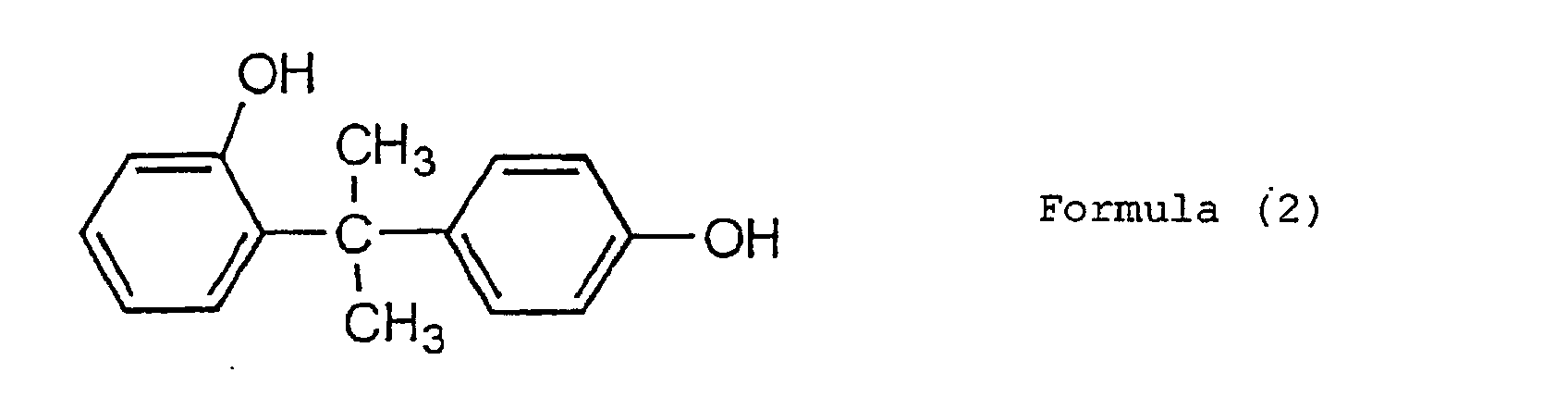


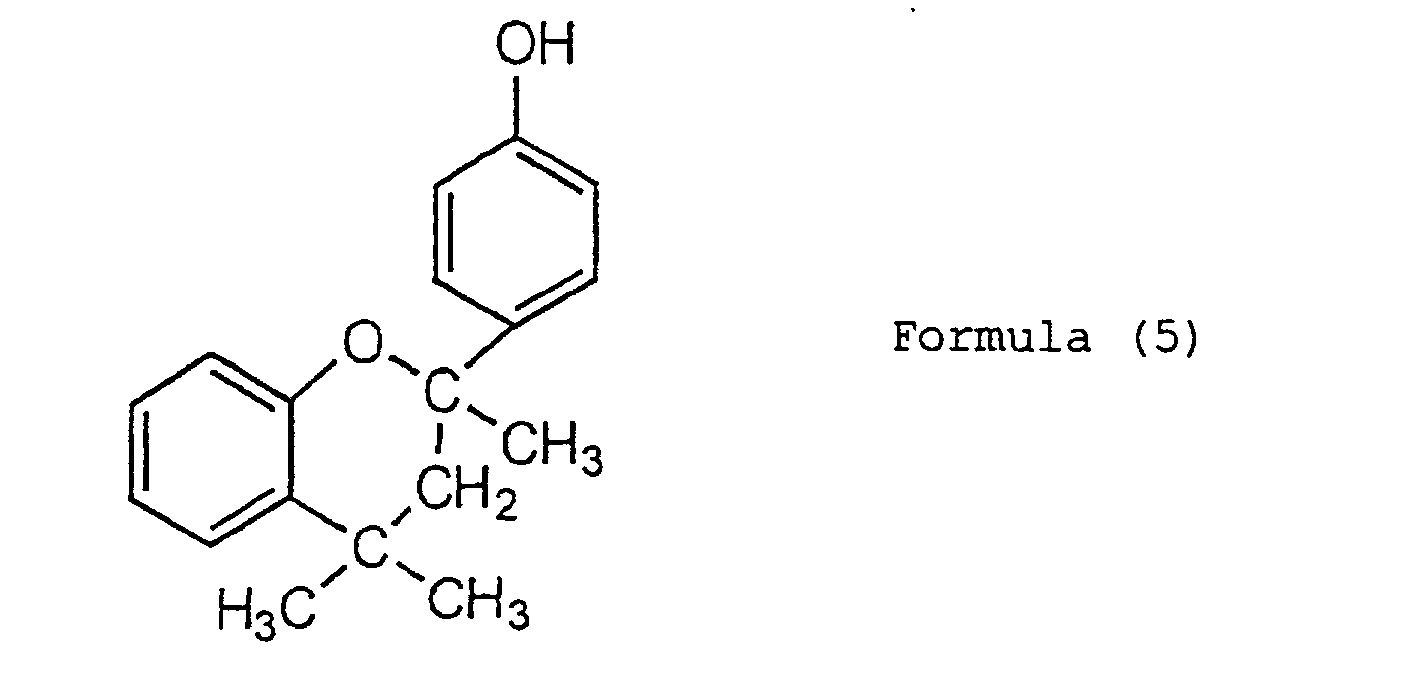
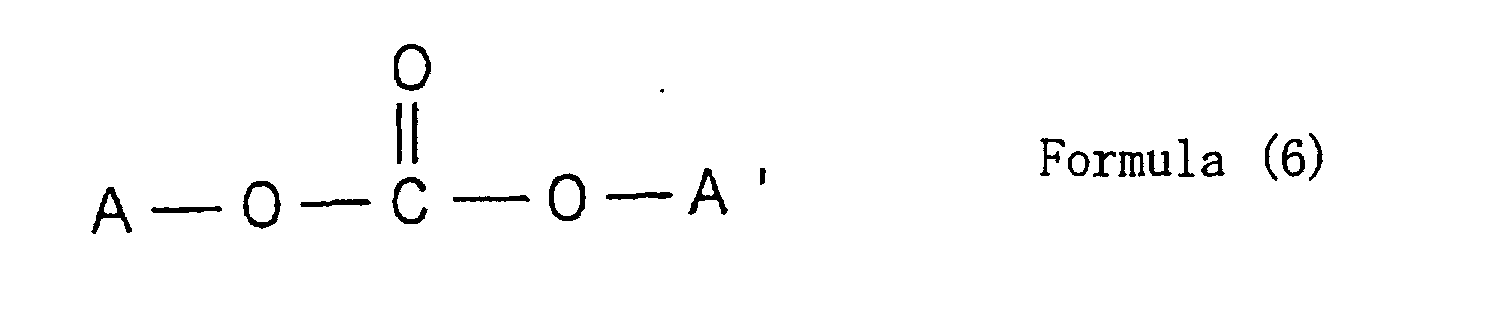

Claims (11)
- A process for producing an aromatic polycarbonate, which comprises the following steps (1) to (3):(1) a step of reacting phenol with acetone in the presence of an acid catalyst to convert part of the phenol into bisphenol A, to obtain a bisphenol A/phenol composition,(2) a step of supplying the bisphenol A/phenol composition held in a molten state in a liquid form to an aromatic polycarbonate production step, and(3) a step of subjecting the bisphenol A and a carbonate material to polymerization to produce an aromatic polycarbonate.
- The process for producing an aromatic polycarbonate according to Claim 1, wherein the carbonate material is a carbonic acid diester or phosgene.
- The process for producing an aromatic polycarbonate according to Claim 2, wherein a monohydroxy compound formed as a by-product when the carbonic acid diester and the bisphenol A are subjected to polymerization to produce an aromatic polycarbonate, is reused as a material for production of the carbonic acid diester.
- The process for producing an aromatic polycarbonate according to Claim 1 or 2, wherein diphenyl carbonate is used as the carbonic acid diester as the carbonate material, and phenol formed as a by-product in the above step (3) of subjecting the carbonate material and the bisphenol A to polymerization to produce an aromatic polycarbonate, is recycled for the above step (1) as a material for production of the bisphenol A.
- The process for producing an aromatic polycarbonate according to any one of Claims 1 to 4, wherein the bisphenol A/phenol composition held in a molten state in a liquid form has a proportion of bisphenol A/phenol of from 95/5 to 5/95 (weight ratio).
- The process for producing an aromatic polycarbonate according to any one of Claims 1 to 5, wherein phenol is removed from the bisphenol A/phenol composition held in a molten state in a liquid form to isolate the bisphenol A, and then the bisphenol A and the carbonate material are subjected to polymerization.
- The process for producing an aromatic polycarbonate according to any one of Claims 1 to 6, wherein the 4-isopropenyl phenol content in the bisphenol A to be subjected to polymerization is less than 1000 ppm.
- The process for producing an aromatic polycarbonate according to any one of Claims 1 to 7, wherein the bisphenol A/phenol composition is held in a molten state in a liquid form at 160°C or below.
- The process for producing an aromatic polycarbonate according to Claim 8, wherein the bisphenol A/phenol composition is held in a molten state in a liquid form at 40°C or above.
- The process for producing an aromatic polycarbonate according to Claim 1, wherein the carbonate material is a carbonic acid diester, and the polymerization of the bisphenol A and the carbonic acid diester is carried out by a molten method.
- The process for producing an aromatic polycarbonate according to Claim 1, wherein the carbonate material is phosgene, and the polymerization of the bisphenol A and the phosgene is carried out by an interfacial method.
Applications Claiming Priority (5)
| Application Number | Priority Date | Filing Date | Title |
|---|---|---|---|
| JP2000292470 | 2000-09-26 | ||
| JP2000292470 | 2000-09-26 | ||
| JP2001227560A JP4080710B2 (en) | 2000-09-26 | 2001-07-27 | Method for producing aromatic polycarbonate |
| JP2001227560 | 2001-07-27 | ||
| PCT/JP2001/008149 WO2002026863A1 (en) | 2000-09-26 | 2001-09-19 | Process for production of aromatic polycarbonates |
Publications (2)
| Publication Number | Publication Date |
|---|---|
| EP1331235A1 true EP1331235A1 (en) | 2003-07-30 |
| EP1331235A4 EP1331235A4 (en) | 2006-07-05 |
Family
ID=26600751
Family Applications (1)
| Application Number | Title | Priority Date | Filing Date |
|---|---|---|---|
| EP01967731A Withdrawn EP1331235A4 (en) | 2000-09-26 | 2001-09-19 | PROCESS FOR THE PRODUCTION OF AROMATIC POLYCARBONATES |
Country Status (6)
| Country | Link |
|---|---|
| US (1) | US6750314B2 (en) |
| EP (1) | EP1331235A4 (en) |
| JP (1) | JP4080710B2 (en) |
| CN (1) | CN1261483C (en) |
| AU (1) | AU2001288066A1 (en) |
| WO (1) | WO2002026863A1 (en) |
Cited By (3)
| Publication number | Priority date | Publication date | Assignee | Title |
|---|---|---|---|---|
| WO2009010486A1 (en) * | 2007-07-18 | 2009-01-22 | Shell Internationale Research Maatschappij B.V. | Method for storage and/or transport of bisphenolacetone and method for producing aromatic polycarbonate |
| KR20160127738A (en) * | 2014-02-28 | 2016-11-04 | 이데미쓰 고산 가부시키가이샤 | Polycarbonate resin, and polycarbonate resin composition |
| EP3112390A4 (en) * | 2014-02-28 | 2017-10-18 | Idemitsu Kosan Co., Ltd | Polycarbonate resin, and polycarbonate resin composition |
Families Citing this family (26)
| Publication number | Priority date | Publication date | Assignee | Title |
|---|---|---|---|---|
| EP2143750B1 (en) * | 2002-04-22 | 2012-06-27 | Mitsubishi Chemical Corporation | Aromatic polycarbonate composition, process for producing the same, and hollow container therefrom |
| CN100374480C (en) * | 2003-08-21 | 2008-03-12 | 三菱化学株式会社 | Method for producing aromatic polycarbonate |
| DE102004005726A1 (en) * | 2004-02-05 | 2005-08-25 | Bayer Materialscience Ag | Drainage of circulatory streams in the production of bisphenol A |
| CN100577710C (en) * | 2004-04-20 | 2010-01-06 | 沙伯基础创新塑料知识产权有限公司 | Process for the preparation of polycarbonate oligomer mixtures at low temperatures for the manufacture of polycarbonates |
| US7919644B2 (en) * | 2004-06-17 | 2011-04-05 | Asahi Kasei Chemicals Corporation | Process for producing an aromatic carbonate |
| DE102004053047A1 (en) * | 2004-11-03 | 2006-05-04 | Bayer Materialscience Ag | Branched polycarbonates |
| JP2006335850A (en) * | 2005-06-01 | 2006-12-14 | Mitsubishi Chemicals Corp | Method for producing aromatic polycarbonate |
| JP5303847B2 (en) * | 2007-03-23 | 2013-10-02 | 三菱化学株式会社 | Method for purifying carbonic acid diester and method for producing polycarbonate resin |
| US9175135B2 (en) * | 2010-03-30 | 2015-11-03 | Bayer Materialscience Ag | Process for preparing diaryl carbonates and polycarbonates |
| ES2643234T3 (en) * | 2010-03-30 | 2017-11-21 | Covestro Deutschland Ag | Procedure for the preparation of diaryl carbonates and polycarbonates |
| JP5464166B2 (en) * | 2011-03-30 | 2014-04-09 | 三菱化学株式会社 | Method for purifying carbonic acid diester and method for producing polycarbonate resin |
| JP6167570B2 (en) * | 2012-03-30 | 2017-07-26 | 三菱ケミカル株式会社 | Method and equipment for producing aromatic polycarbonate |
| WO2015094571A1 (en) * | 2013-12-20 | 2015-06-25 | Exxonmobil Chemical Patents Inc. | Phenol composition |
| KR20160127002A (en) | 2014-02-28 | 2016-11-02 | 이데미쓰 고산 가부시키가이샤 | Bisphenol a production method |
| TWI693244B (en) * | 2015-01-20 | 2020-05-11 | 德商科思創德意志股份有限公司 | Preparation of highly heat-resistant (co) polycarbonates by the transesterification method |
| KR101809818B1 (en) | 2016-02-16 | 2017-12-18 | 부경대학교 산학협력단 | Display apparatus for icerink |
| KR101787237B1 (en) | 2016-02-16 | 2017-10-19 | 부경대학교 산학협력단 | Display apparatus for icerink |
| BR112018070938A2 (en) * | 2016-05-10 | 2019-01-29 | Huntsman Int Llc | processes for the manufacture of isocyanates and for the preparation of polycarbonate compounds. |
| JP6922575B2 (en) | 2016-09-14 | 2021-08-18 | 三菱ケミカル株式会社 | Multivalent phenol compound and its manufacturing method |
| WO2018134734A1 (en) * | 2017-01-17 | 2018-07-26 | Sabic Global Technologies B.V. | Reduced color polycarbonate compositions, methods of manufacture, and articles thereof |
| KR200487196Y1 (en) * | 2018-02-20 | 2018-08-21 | (주)알앤알스포츠 | An appratus of light source for ice surface, and a icing sports facility incluing it |
| EP3891209B1 (en) | 2018-12-05 | 2022-05-25 | SABIC Global Technologies B.V. | Polycarbonate compositions with improved oxidation stability and methods of manufacturing the same |
| JP2024507888A (en) * | 2021-02-23 | 2024-02-21 | コベストロ、ドイチュラント、アクチエンゲゼルシャフト | Process for making bisphenol A (BPA) in the presence of α-methylstyrene |
| EP4298079A1 (en) * | 2021-02-23 | 2024-01-03 | Covestro Deutschland AG | Process for preparing bisphenol a (bpa) in the presence of benzene |
| EP4201987A1 (en) * | 2021-12-22 | 2023-06-28 | Covestro Deutschland AG | Pyrolysis of polycarbonate-containing material in combination with phosphorus-containing organic compound for recovery of raw materials |
| CN116178691A (en) * | 2023-02-21 | 2023-05-30 | 浙江石油化工有限公司 | A low color polycarbonate |
Family Cites Families (9)
| Publication number | Priority date | Publication date | Assignee | Title |
|---|---|---|---|---|
| US3320211A (en) * | 1965-09-17 | 1967-05-16 | Pittsburgh Plate Glass Co | Polycarbonates of hydroxy ethyl ethers |
| US5382708A (en) * | 1993-10-29 | 1995-01-17 | General Electric Company | Process for inhibiting dihydric phenol degradation and color formation and composition thereof |
| JP3973239B2 (en) * | 1995-04-06 | 2007-09-12 | 日本ジーイープラスチックス株式会社 | Dihydroxy compound mixtures and polymers |
| AU3616697A (en) * | 1996-07-30 | 1998-02-20 | Governors Of The University Of Alberta, The | Process for the production of a polymerized material and the product produced thereby |
| US6166167A (en) | 1997-07-29 | 2000-12-26 | Mitsubishi Chemical Corporation | Polycarbonate resin for substrate of optical recording medium |
| JP3946845B2 (en) * | 1997-12-24 | 2007-07-18 | 日本ジーイープラスチックス株式会社 | Method for producing bisphenols and method for producing polycarbonate |
| EP0969031B1 (en) | 1998-01-19 | 2004-08-04 | Mitsubishi Chemical Corporation | Polycarbonate resin, optical-information recording medium substrate made of the same, and optical-information recording medium |
| JP3967009B2 (en) * | 1998-08-05 | 2007-08-29 | 旭化成ケミカルズ株式会社 | Method for producing aromatic polycarbonate |
| EP1112997B1 (en) | 1999-12-28 | 2009-05-13 | Mitsubishi Chemical Corporation | Process for producing diaryl carbonate |
-
2001
- 2001-07-27 JP JP2001227560A patent/JP4080710B2/en not_active Expired - Fee Related
- 2001-09-19 EP EP01967731A patent/EP1331235A4/en not_active Withdrawn
- 2001-09-19 AU AU2001288066A patent/AU2001288066A1/en not_active Abandoned
- 2001-09-19 CN CNB018162045A patent/CN1261483C/en not_active Expired - Lifetime
- 2001-09-19 WO PCT/JP2001/008149 patent/WO2002026863A1/en not_active Ceased
-
2003
- 2003-03-26 US US10/396,408 patent/US6750314B2/en not_active Expired - Fee Related
Cited By (5)
| Publication number | Priority date | Publication date | Assignee | Title |
|---|---|---|---|---|
| WO2009010486A1 (en) * | 2007-07-18 | 2009-01-22 | Shell Internationale Research Maatschappij B.V. | Method for storage and/or transport of bisphenolacetone and method for producing aromatic polycarbonate |
| KR20160127738A (en) * | 2014-02-28 | 2016-11-04 | 이데미쓰 고산 가부시키가이샤 | Polycarbonate resin, and polycarbonate resin composition |
| EP3112391A4 (en) * | 2014-02-28 | 2017-10-18 | Idemitsu Kosan Co., Ltd | Polycarbonate resin, and polycarbonate resin composition |
| EP3112390A4 (en) * | 2014-02-28 | 2017-10-18 | Idemitsu Kosan Co., Ltd | Polycarbonate resin, and polycarbonate resin composition |
| US10975194B2 (en) | 2014-02-28 | 2021-04-13 | Idemitsu Kosan Co., Ltd. | Polycarbonate resin, and polycarbonate resin composition |
Also Published As
| Publication number | Publication date |
|---|---|
| WO2002026863A1 (en) | 2002-04-04 |
| EP1331235A4 (en) | 2006-07-05 |
| US6750314B2 (en) | 2004-06-15 |
| CN1261483C (en) | 2006-06-28 |
| JP4080710B2 (en) | 2008-04-23 |
| US20030166826A1 (en) | 2003-09-04 |
| AU2001288066A1 (en) | 2002-04-08 |
| CN1466605A (en) | 2004-01-07 |
| JP2002173530A (en) | 2002-06-21 |
Similar Documents
| Publication | Publication Date | Title |
|---|---|---|
| US6750314B2 (en) | Process for producing an aromatic polycarbonate | |
| US4737573A (en) | Method for polymerizing aromatic bischloroformate composition to polycarbonate | |
| US7847051B2 (en) | Phase boundary processes for preparing polycarbonates | |
| US6680400B2 (en) | Continuous process for the production of carboxylic acid diaryl esters | |
| KR101615756B1 (en) | Process for the preparation of polycarbonates and diaryl carbonates | |
| HK1048301A1 (en) | Continuous process for producing carbonic acid diaryl ester | |
| EP0601602A2 (en) | Process for producing (co)polycarbonate | |
| US6462165B1 (en) | Polycarbonate and optical material | |
| US6835797B2 (en) | Process for producing oligocarbonates | |
| JP2009132756A (en) | Method for producing polycarbonate resin | |
| US5011967A (en) | Method for preparing aromatic bischloroformate compositions | |
| EP3632954B1 (en) | Aromatic polycarbonate oligomer solid | |
| US7705107B2 (en) | Process for the preparation of polycarbonates | |
| JP3219921B2 (en) | Production method of polycarbonate | |
| JP3403176B2 (en) | Batch production of polycarbonate by interfacial polymerization. | |
| US5986037A (en) | Polycarbonate resin with a reduced volatile chlorine content and process for producing the same | |
| US9771451B2 (en) | Method for producing polycarbonate according to the phase interface method | |
| US5508375A (en) | Process for the preparation of polycarbonates | |
| EP3388466B1 (en) | Aromatic polycarbonate oligomer solid | |
| JPH10226724A (en) | Polycarbonate resin with low volatile chlorine and method for producing the same | |
| JP2007321160A (en) | Process for producing aromatic polycarbonate | |
| JPH07324127A (en) | Production of polycarbonate | |
| CN113614148A (en) | Method for producing polycarbonates-point of addition of chain terminators | |
| JPH05170893A (en) | Process for producing aromatic polycarbonate | |
| HK1138300A (en) | Phase boundary processes for preparing polycarbonates |
Legal Events
| Date | Code | Title | Description |
|---|---|---|---|
| PUAI | Public reference made under article 153(3) epc to a published international application that has entered the european phase |
Free format text: ORIGINAL CODE: 0009012 |
|
| 17P | Request for examination filed |
Effective date: 20030228 |
|
| AK | Designated contracting states |
Designated state(s): AT BE CH CY DE DK ES FI FR GB GR IE IT LI LU MC NL PT SE TR |
|
| AX | Request for extension of the european patent |
Extension state: AL LT LV MK RO SI |
|
| RBV | Designated contracting states (corrected) |
Designated state(s): AT BE DE ES |
|
| RAP1 | Party data changed (applicant data changed or rights of an application transferred) |
Owner name: MITSUBISHI CHEMICAL CORPORATION |
|
| A4 | Supplementary search report drawn up and despatched |
Effective date: 20060607 |
|
| RAP1 | Party data changed (applicant data changed or rights of an application transferred) |
Owner name: MITSUBISHI CHEMICAL CORPORATION |
|
| 17Q | First examination report despatched |
Effective date: 20070131 |
|
| STAA | Information on the status of an ep patent application or granted ep patent |
Free format text: STATUS: THE APPLICATION IS DEEMED TO BE WITHDRAWN |
|
| 18D | Application deemed to be withdrawn |
Effective date: 20110802 |