EP1330127A2 - Method and apparatus for creating data carousels - Google Patents
Method and apparatus for creating data carousels Download PDFInfo
- Publication number
- EP1330127A2 EP1330127A2 EP02258652A EP02258652A EP1330127A2 EP 1330127 A2 EP1330127 A2 EP 1330127A2 EP 02258652 A EP02258652 A EP 02258652A EP 02258652 A EP02258652 A EP 02258652A EP 1330127 A2 EP1330127 A2 EP 1330127A2
- Authority
- EP
- European Patent Office
- Prior art keywords
- carousel
- data
- data format
- representation
- structured data
- Prior art date
- Legal status (The legal status is an assumption and is not a legal conclusion. Google has not performed a legal analysis and makes no representation as to the accuracy of the status listed.)
- Withdrawn
Links
Images



Classifications
-
- H—ELECTRICITY
- H04—ELECTRIC COMMUNICATION TECHNIQUE
- H04N—PICTORIAL COMMUNICATION, e.g. TELEVISION
- H04N21/00—Selective content distribution, e.g. interactive television or video on demand [VOD]
- H04N21/80—Generation or processing of content or additional data by content creator independently of the distribution process; Content per se
- H04N21/85—Assembly of content; Generation of multimedia applications
- H04N21/854—Content authoring
- H04N21/8543—Content authoring using a description language, e.g. Multimedia and Hypermedia information coding Expert Group [MHEG], eXtensible Markup Language [XML]
-
- H—ELECTRICITY
- H04—ELECTRIC COMMUNICATION TECHNIQUE
- H04N—PICTORIAL COMMUNICATION, e.g. TELEVISION
- H04N21/00—Selective content distribution, e.g. interactive television or video on demand [VOD]
- H04N21/60—Network structure or processes for video distribution between server and client or between remote clients; Control signalling between clients, server and network components; Transmission of management data between server and client, e.g. sending from server to client commands for recording incoming content stream; Communication details between server and client
- H04N21/63—Control signaling related to video distribution between client, server and network components; Network processes for video distribution between server and clients or between remote clients, e.g. transmitting basic layer and enhancement layers over different transmission paths, setting up a peer-to-peer communication via Internet between remote STB's; Communication protocols; Addressing
- H04N21/643—Communication protocols
Definitions
- the present invention relates to a method and apparatus for creating data carousels, in particular providing a user who has a particular file structure in mind with an easy mechanism by which to create and optimise appropriate data carousels.
- a data carousel may be created by developing new data or editing existing data.
- an information server for broadcasting any form of data, such as MHEG5 applications, HTML pages, Java applications, IRD software upgrades and other data services in the form of DSMCC objects on data carousels.
- An IRD is an Integrated Receiver Decoder and this term is used in standards documents to describe devices capable of receiving and decoding digital streams, eg. set top boxes and integrated digital TV sets.
- Raw data may be divided into appropriate DSI (Download Server Initiate), DII (Download Information Indication) or DDB (Download Data Block) sections for insertion into MPEG transport stream packets as a data carousel.
- DSI Download Server Initiate
- DII Download Information Indication
- DDB Download Data Block
- DSI, DII and DDB are “messages” but "DSI section” is used to describe a MPEG section carrying a DSI message. Sections are split into packets, the lowest level structure in the stream.
- a data carousel is the collection of DSI, DII and DDB messages.
- a user may determine a desired file structure for an object carousel consisting of files, directories and other object types.
- object carousel consisting of files, directories and other object types.
- object carousel there are five object types in an object carousel, namely Files, Directories, a Service Gateway, Streams and StreamEvents. These can all exist in the hierarchical structure that is like a filesystem. It is then a non trivial matter to rearrange the data of the object carousel into DSI, DII and DDB sections in an optimised manner for broadcast as a data carousel.
- data carousel structures that can represent a given object carousel.
- a method of creating data carousels including:
- an apparatus for creating data carousels including:
- the required object carousel as a structured data format representation
- the structured data format representation allows a user relatively easily to understand the structure of the data carousel. This allows the user to edit the resulting data carousel and to optimise it with regard to its use in providing an output byte stream suitable for broadcast.
- the two structured data format representations should follow predetermined formats.
- respective data format definitions may be defined for the structured data format representing object carousels and the structured data format representing data carousels.
- a user may construct a desired data structure in the structured data format for the object carousel. This may then be converted automatically to structured data conforming to the data format definition for the structured data format representing data carousels. With the data format definition for structured data representing data carousels, the user may then edit the structured data representation of the data carousel so as to optimise it.
- the apparatus may be provided with a GUI allowing a user to edit the structured data format representation of the data carousel so as to optimise the arrangement of the data for use as part of a carousel.
- an output stream may be provided to a carousel.
- the apparatus preferably includes an output processor for providing data to a carousel according to the structured data format representation of the data carousel.
- ISO publish the MPEG-2 family of standards of which part 1 (Systems) defines transport streams, packets, sections and multiplexing and part 6 (DSM-CC) defines underlying object and data carousel structures.
- the technical standards include appropriate standards for carousels and broadcast systems.
- they include DSM-CC standards and relevant standards for broadcast systems.
- the structured data format is XML such that the data format definitions are XML schemas.
- conversion from the XML representation of the object carousel to the XML representation of the data carousel can be conducted in any appropriate manner as a data transformation.
- the XSLT language allows convenient interpretation and manipulation of data in XML format.
- the sizes of the files of the object carousel are determined and provided in XML as a look-up table such that the XSLT algorithm uses the look up table when creating the XML representation of the data carousel.
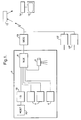
- Figure 1 illustrates a broadcasting system, such as a DVB system, in which an information server is incorporated for providing various types of data file on a carousel.
- a play-out section 2 incorporates a number of video/audio sources 4 as well as live sources 6. Data from these sources, for instance in the form of MPEG-2 transport stream packets, is fed to a multiplexer 8 and output from the play-out section 2.
- the multiplexed stream of data is fed to a modulator 10 for transmission, in this example, from a satellite 12.
- the signal is then received by an IRD such as set top box 14 of television 16. Signals from a number of other modulators 10', 10", etc may be fed together and transmitted to the satellite 12.
- an information server 18 Just like the video/audio sources 4,6, the information server 18 provides data, for instance in the form of MPEG transport stream packets to the multiplexer 8 for insertion into the data stream for transmission.
- the information server may be used to broadcast any form of data, but, in particular, MHEG5 applications, HTML pages, Java applications, IRD software upgrades and other data services in the form of DSM-CC objects on data carousels.
- the information server may be controlled by a host computer 20.
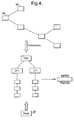
- Figure 2 illustrates how one host computer may be used to control any number of information servers, each producing a number of streams.
- Transport stream data is constructed appropriately for transmitting in rotation a series of files, directories and other objects.
- each page as illustrated in Figure 3 might comprise MHEG or HTML files or Java applications.
- the stream produced includes each of those pages in turn.
- sub carousels such that on each rotation of the main carousel of pages, a particular page itself rotates through a series of sub pages.
- the output stream is arranged in a predetermined manner.
- appropriate DSI, DII or DDB sections are arranged and assembled in MPEG transport stream packets.
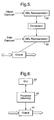
- the DSI/DII/DDB sections may be constructed using raw data 28. Often, however, a user prepares files 30 and determines a required file structure for an object carousel. This must then be converted to the appropriate DSI/DII/DDB sections.
- XML Extensible Mark-up Language
- a GUI Graphic User Interface 40 interacts with a processor 42, for instance including a memory, to enable a user to create the desired object carousel and XML representation 50.
- the processor 42 then conducts a predetermined conversion so as to produce an XML representation 52 of an equivalent data carousel.
- the processor 42 may be used to control an output processor 44 to create the required data stream on the basis of the data carousel defined by the XML representation.
- the output processor 44 derives the required raw data, for instance from some storage means and arranges this into appropriate sections as defined by the XML representation of the data carousel.
- the XML representation of the data carousel may be relatively easily understood by the user, particularly as compared to bit/byte representations of data carousels.
- the GUI 40 By means of the GUI 40, the user is then able to modify the generated data carousel as required by modifying the XML representation 52. In comparison, making equivalent modifications of a bit/byte data carousel would be extremely difficult if not impossible for most users.
- the transformation or conversion process preferably includes the following steps.
- the object carousel root directory, file, directory and other object declarations are mapped directly into the data carousel document, since the declaration format is identical for object and data carousels.
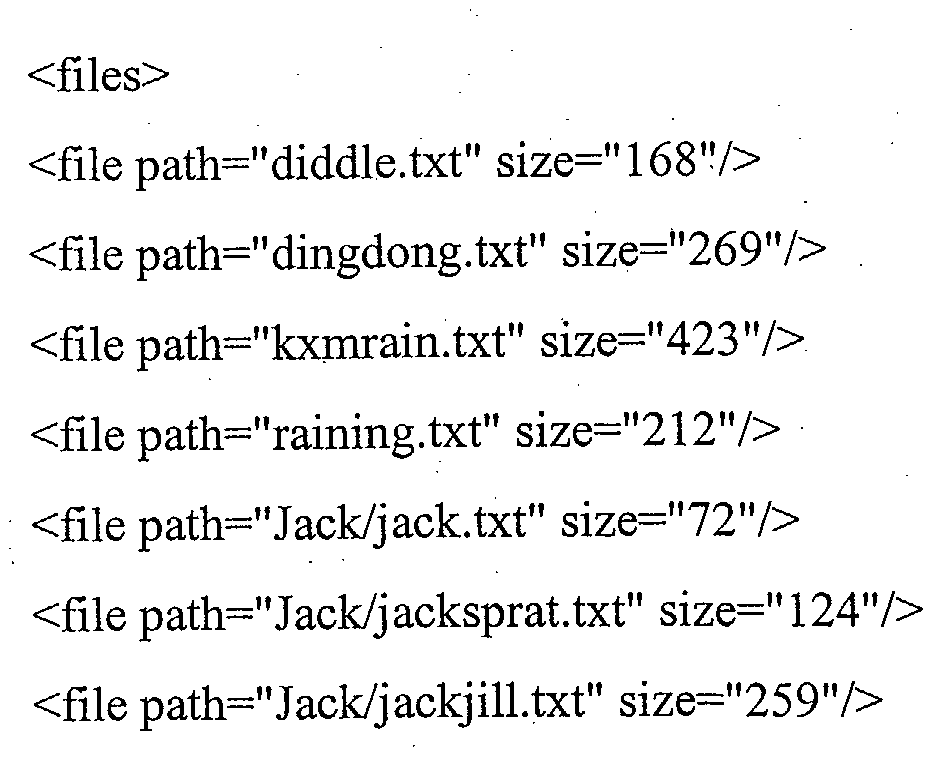
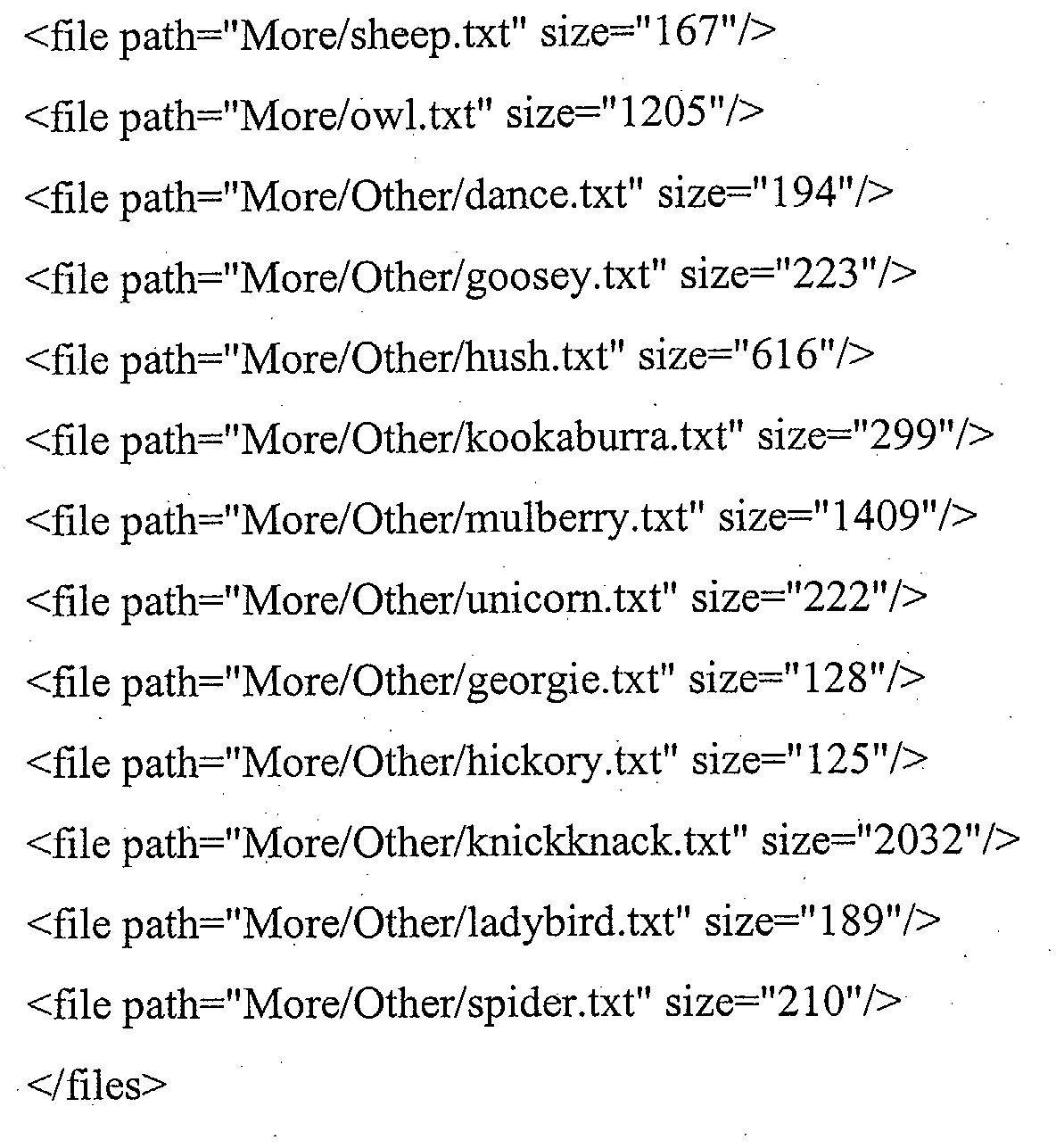
- the object carousel contains a sequence that lists the files, directories and other objects that are to appear in the carousel.
- a list of modules is defined by working sequentially through the object carousel sequence.
- a module is "packed" with each object in order up to the point where adding another object would make the cumulative value of the object sizes exceed the module size limit defined in the DSM-CC specification or other standards for broadcast systems as appropriate.
- a new module is then created until the sequence is fully completed. This algorithm makes a simple fit that can be further optimised by hand later.
- a message sequence is defined with the DSI and DII messages at the beginning referring to the modules in a simple linear sequence.
- the transformation algorithm is representative of methods used by DSM-CC carousel servers to generate a transport stream.
- the object to data carousel mechanism allows a user to fine-tune the resulting data carousel before generation of a transport stream to ensure better performance based on the rough hints from the transformed object carousel.
- the object-data carousel transformation mechanism also allows algorithm designers to create alternative mappings to form the basis of later hand optimisation. As a tool, the translation mechanism provides an effort saving measure that can yield considerable benefits.
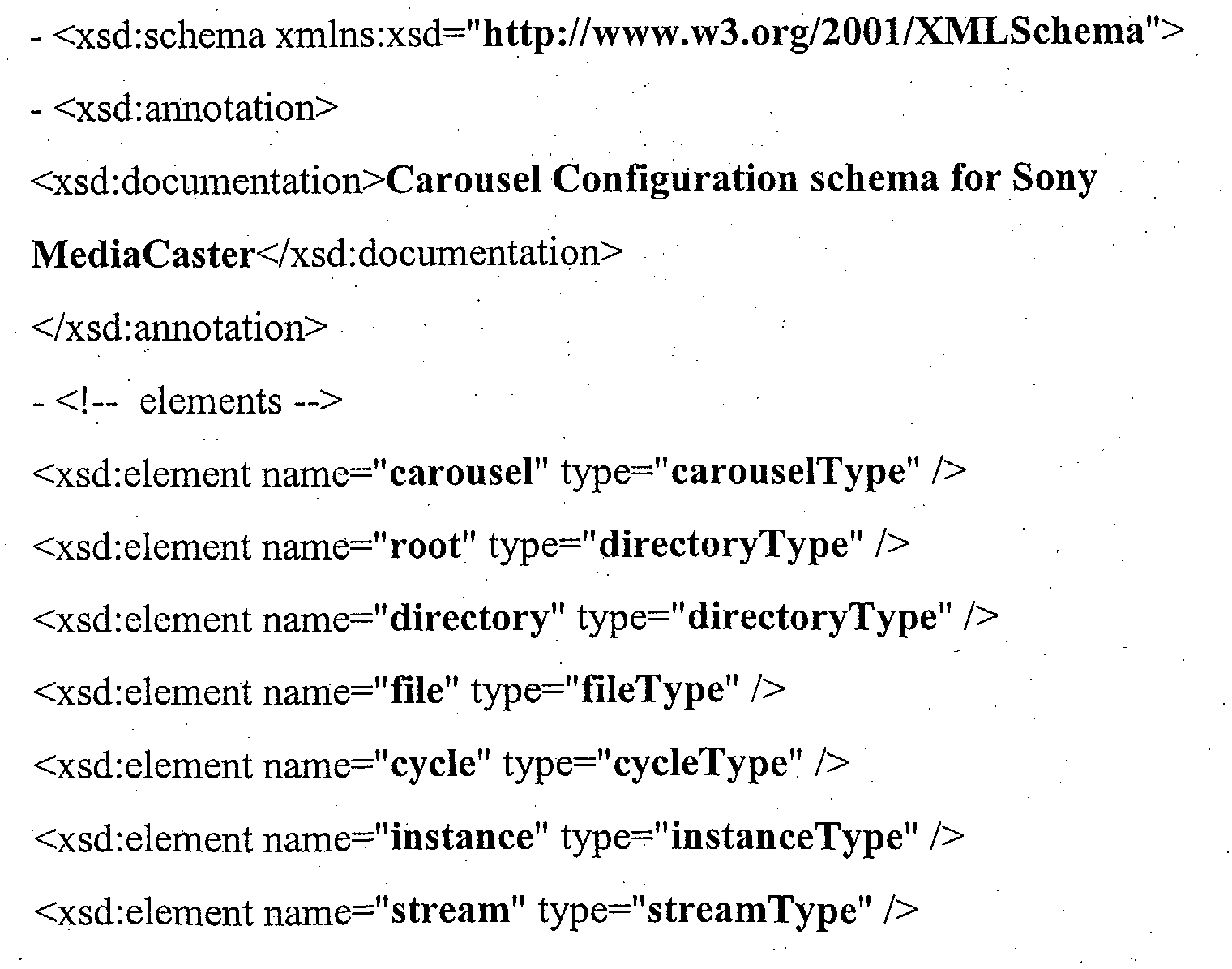
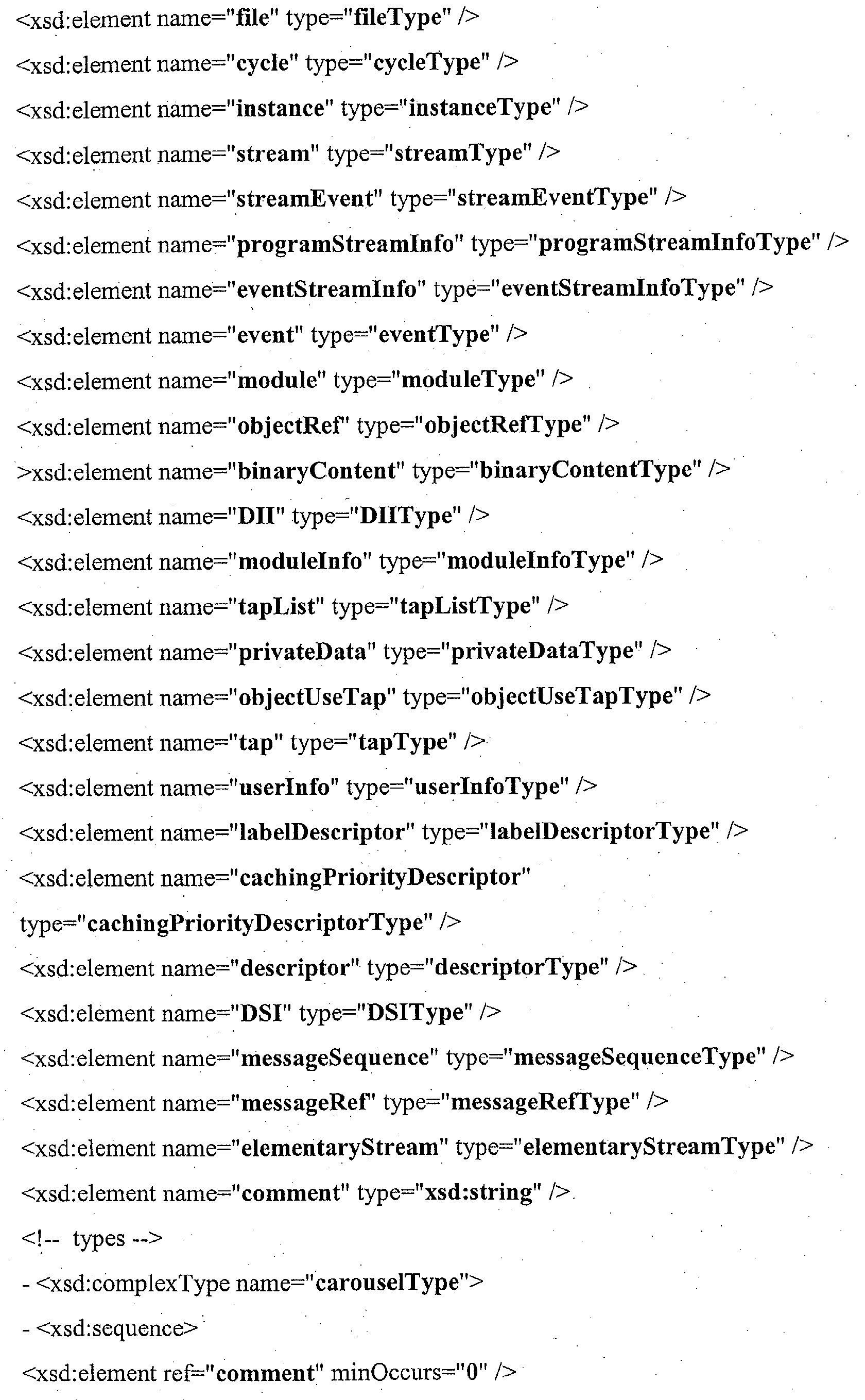
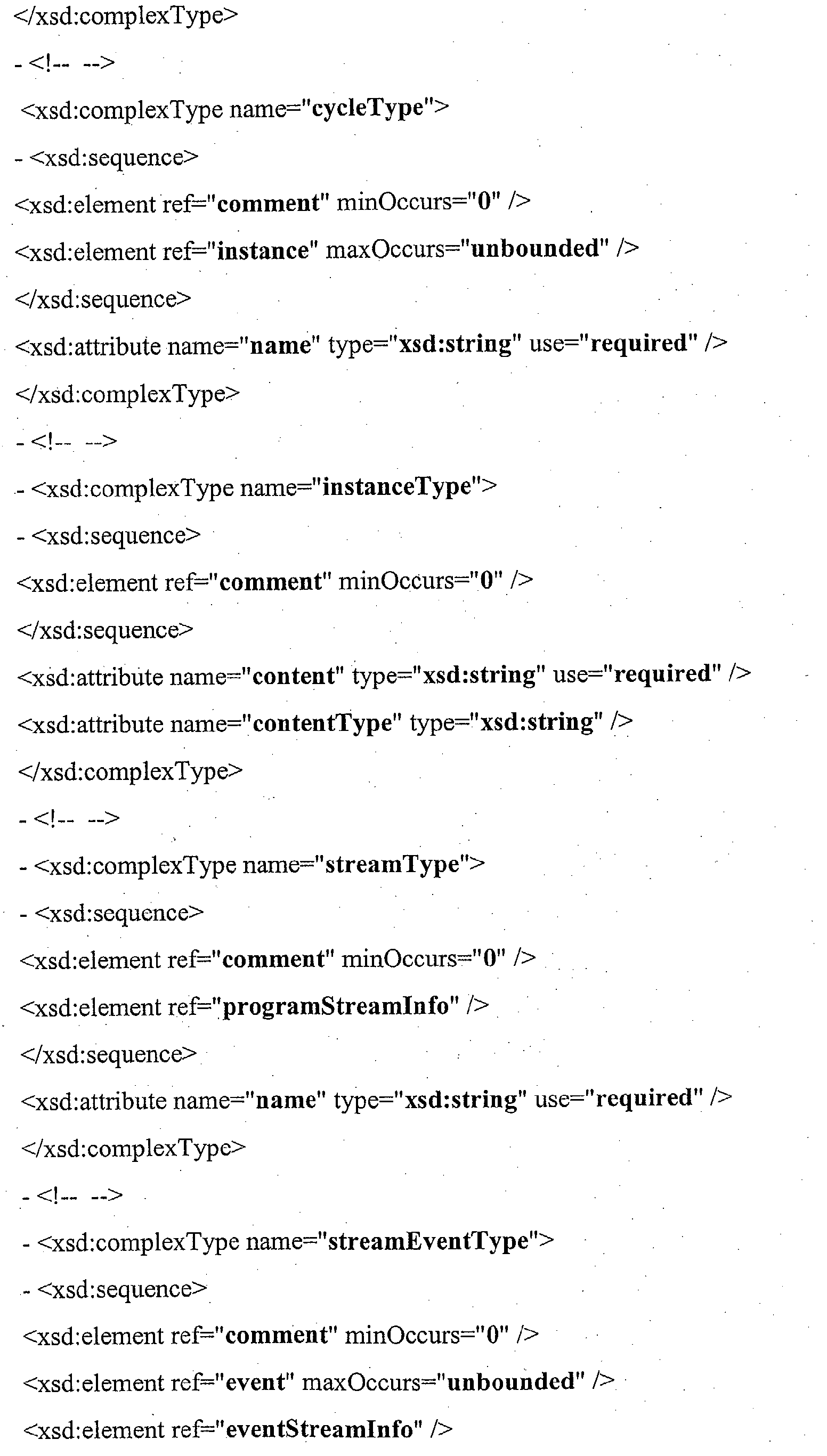
- the formats of the XML representations for the object and data carousels are predetermined. This may be achieved by appropriate respective XML schemas.
- a preferred schema allows concise declaration of the hierarchical structure of files, directories and other objects in an object carousel, together with hints about the order in which they should appear in a data carousel.
- a preferred schema provides a readable description of the detailed structure of a data carousel. It specifies the grouping of objects into modules, the parameters associated with modules and the order and relative frequency of DSI, DII and DDB sections in the output stream. These are all factors that can affect the performance of the broadcast at the receiving equipment and it is desirable to allow easy experimentation with these parameters in order to maximise performance.
- Conversion may be achieved with any appropriate algorithm defined using any desired language, such as C++.
- Figure 7 illustrates schematically a conversion process using an XSLT algorithm 54.
- XSLT stands for Extensible Stylesheet Language Transformation and is a language and processor that allows relatively easy development of transformations between different formats of XML. It is particularly well suited to converting XML, because the language has built-in features for interpreting and transforming XML.
- the XSLT algorithm needs to know the sizes of the files of the object carousel in order to create the appropriate data carousel XML representation.
- the XSLT algorithm itself is unable to determine the sizes. Therefore, an additional algorithm 56 is provided to analyse the object carousel so as to determine the size of files and provide this information as an XML look-up table 58.
- the XSLT conversion algorithm analyses the XML representation of the object carousel and uses information regarding file size from the XML look-up table to create the XML representation of the data carousel.
- the stylesheet implements a simple module packing algorithm to transform an XML object carousel structure into a detailed XML data carousel structure.
- Implementation in XSLT allows convenient interpretation of the incoming XML structure and also allows flexibility about where in the system the algorithm is executed.
- the look-up table algorithm for object carousel file sizes may be implemented as a UNIX shell script. An example is given below.
- This script generates an XML look-up table that maps file names used by an object carousel to the sizes of the files. References to files are extracted from an XML object carousel description and each file is examined in turn to produce a list of XML elements, each containing the name of a file and its size in bytes.
- the present invention is not constrained to television systems but could be applied to any data broadcast system, based, for instance, on MPEG streams, such as DAB (Digital Audio Broadcasting) digital radio or custom broadcast applications.
- MPEG streams such as DAB (Digital Audio Broadcasting) digital radio or custom broadcast applications.
Landscapes
- Engineering & Computer Science (AREA)
- Multimedia (AREA)
- Signal Processing (AREA)
- Computer Security & Cryptography (AREA)
- Two-Way Televisions, Distribution Of Moving Picture Or The Like (AREA)
- Circuits Of Receivers In General (AREA)
Abstract
Description





Claims (18)
- A method of creating data carousels including:representing an object carousel in a structured data format;analysing the structured data format representation of the object carousel for compatibility with at least one predetermined technical standard;creating a representation of a data carousel in the structured data format based on the step of analysing; andproviding output data to a carousel according to the structured data format representation of the data carousel.
- A method according to claim 1 wherein the technical standards include DSM-CC standards and appropriate standards for broadcast systems.
- A method according to claim 1 or 2 further including:editing the structured data format representation of the data carousel before providing the data to the carousel so as to optimise the arrangement of data in the carousel.
- A method according to claim 1, 2 or 3 further including:defining a data format definition for representing object carousels in the structured data format.
- A method according to any preceding claim further including:defining a data format definition for representing data carousels in the structured data format.
- A method according to any preceding claim wherein the structured data format is XML.
- A method according to claim 6 wherein the steps of analysing and creating are conducted as part of a predefined XSLT algorithm.
- A method according to claim 7 wherein the step of analysing further includes determining the sizes of the files of the object carousel and providing in a structured data format the sizes as a look-up table, whereby the XSLT algorithm uses the look up table in the steps of analysing and creating.
- An apparatus for creating data carousels, including:a memory containing a data format definition for representing object carousels in a structured data format;a memory containing a data format definition for representing data carousels in the structured data format;a GUI by which a user may create a representation of an object carousel in the structured data format;a processor for analysing the structured data format representation of the object carousel for compatibility with at least one predetermined technical standard and for creating, on the basis of the analysis, a representation in the structured data format of a data carousel according to the data format definition for the structured data format representing data carousels.
- An apparatus according to claim 9, wherein the standards include DSM-CC standards and appropriate standards for broadcast systems.
- An apparatus according to claim 9 or 10, wherein the GUI allows a user to edit the structured data format representation of the data carousel so as to optimise the arrangement of the data for use as part of a carousel.
- An apparatus according to claim 9, 10 or 11 further including:an output processor for providing data to a carousel according to the structured data format representation of the data carousel.
- An apparatus according to any one of claims 9 to 12 wherein the structured data format is XML.
- An apparatus according to claim 13 wherein the processor analyses the XML representation of an object carousel and creates the XML representation of a data carousel using a predefined XSLT algorithm.
- An apparatus according to claim 14 wherein the processor determines the sizes of the files of the object carousel and provides in XML the sizes as a look-up table whereby the XSLT algorithm uses the look-up table.
- A broadcast system including an apparatus according to any one of claims 9 to 15.
- A computer readable storage medium having recorded thereon code components that, when loaded on a computer and executed, will cause that computer to operate according to any one of the preceding claims.
- A computer program having code components that, when loaded on a computer and executed, will cause that computer to operate according to any one of claims 1 to 16.
Applications Claiming Priority (2)
| Application Number | Priority Date | Filing Date | Title |
|---|---|---|---|
| GB0130495 | 2001-12-20 | ||
| GB0130495A GB2383488A (en) | 2001-12-20 | 2001-12-20 | Method and apparatus for creating data carousels |
Publications (2)
| Publication Number | Publication Date |
|---|---|
| EP1330127A2 true EP1330127A2 (en) | 2003-07-23 |
| EP1330127A3 EP1330127A3 (en) | 2003-07-30 |
Family
ID=9928041
Family Applications (1)
| Application Number | Title | Priority Date | Filing Date |
|---|---|---|---|
| EP02258652A Withdrawn EP1330127A3 (en) | 2001-12-20 | 2002-12-16 | Method and apparatus for creating data carousels |
Country Status (3)
| Country | Link |
|---|---|
| US (1) | US7921134B2 (en) |
| EP (1) | EP1330127A3 (en) |
| GB (1) | GB2383488A (en) |
Families Citing this family (6)
| Publication number | Priority date | Publication date | Assignee | Title |
|---|---|---|---|---|
| US8347230B2 (en) * | 2008-09-30 | 2013-01-01 | Apple Inc. | Visual presentation of multiple internet pages |
| US20100125879A1 (en) * | 2008-11-14 | 2010-05-20 | General Instrument Corporation | Method and apparatus for purchasing a soundtrack when viewing a movie or other program delivered by a content delivery system |
| BRPI0904431A2 (en) * | 2009-11-13 | 2011-07-05 | Tqtvd Software Ltda | test manager device and test process |
| JP5031069B2 (en) * | 2010-06-07 | 2012-09-19 | シャープ株式会社 | Image processing apparatus, image forming system, computer program, and image display method |
| US9753609B2 (en) * | 2010-12-03 | 2017-09-05 | Facebook, Inc. | User interface with media wheel facilitating viewing of media objects |
| KR102148180B1 (en) * | 2014-02-28 | 2020-08-26 | 삼성전자주식회사 | Method and apparatus for transmitting/receiving signalling information in a digital broadcastin system |
Family Cites Families (48)
| Publication number | Priority date | Publication date | Assignee | Title |
|---|---|---|---|---|
| WO1998026528A2 (en) * | 1996-12-09 | 1998-06-18 | Scientific-Atlanta, Inc. | Using a hierarchical file system for indexing data broadcast to a client from a network of servers |
| US6317885B1 (en) * | 1997-06-26 | 2001-11-13 | Microsoft Corporation | Interactive entertainment and information system using television set-top box |
| US6459427B1 (en) * | 1998-04-01 | 2002-10-01 | Liberate Technologies | Apparatus and method for web-casting over digital broadcast TV network |
| CN1118772C (en) * | 1998-05-06 | 2003-08-20 | 松下电器产业株式会社 | Digital data transmission and reception system and method thereof |
| KR100653561B1 (en) * | 1998-07-15 | 2006-12-05 | 소니 가부시끼 가이샤 | Information receiving apparatus, download method , method for displaying a download proceeding situation, and method for selecting an apparatus |
| US6675385B1 (en) * | 1998-10-21 | 2004-01-06 | Liberate Technologies | HTML electronic program guide for an MPEG digital TV system |
| EP1022901B1 (en) * | 1999-01-21 | 2007-11-21 | Sony Service Centre (Europe) N.V. | Information server |
| KR100565577B1 (en) * | 1999-03-05 | 2006-03-29 | 엘지전자 주식회사 | Apparatus for generating broadcast interprotocol message and method for generating broadcast interprotocol message using same |
| US6826597B1 (en) * | 1999-03-17 | 2004-11-30 | Oracle International Corporation | Providing clients with services that retrieve data from data sources that do not necessarily support the format required by the clients |
| CN100367244C (en) * | 1999-06-07 | 2008-02-06 | 松下电器产业株式会社 | Data transceiving system and method thereof |
| EP1063796A3 (en) * | 1999-06-11 | 2005-07-13 | Matsushita Electric Industrial Co., Ltd. | Digital broadcasting apparatus for the transmission of additional information with a digital broadcast with adjustment of the bitrates of additional information data items |
| JP2001007840A (en) * | 1999-06-21 | 2001-01-12 | Sony Corp | Data distribution method and device, and data receiving method and device |
| JP4438129B2 (en) * | 1999-07-02 | 2010-03-24 | ソニー株式会社 | Content receiving system and content receiving method |
| KR100837580B1 (en) * | 1999-08-19 | 2008-06-13 | 소니 가부시끼 가이샤 | Transmission method, transmission system and receiving device |
| JP4081934B2 (en) * | 1999-09-17 | 2008-04-30 | ソニー株式会社 | Data distribution method and apparatus, and data reception method and apparatus |
| JP3630037B2 (en) * | 1999-10-06 | 2005-03-16 | 日本電気株式会社 | DSM-CC carousel receiving apparatus, receiving method used therefor, and recording medium recording the control program thereof |
| WO2001031815A1 (en) * | 1999-10-26 | 2001-05-03 | Matsushita Electric Industrial Co., Ltd | Storage-type broadcast system, transmitter and receiver |
| US6970641B1 (en) * | 2000-09-15 | 2005-11-29 | Opentv, Inc. | Playback of interactive programs |
| BR0015152A (en) * | 1999-10-29 | 2002-07-16 | Opentv Corp | System and method for recording pushed data |
| GB2357922A (en) * | 1999-12-07 | 2001-07-04 | Sony Service Ct | Optimising a data carousel |
| US6983482B2 (en) * | 2000-02-29 | 2006-01-03 | Matsushita Electric Industrial Co., Ltd. | Data broadcast content generation system |
| IT1317243B1 (en) * | 2000-04-13 | 2003-05-27 | Txt E Solutions S P A | PLATFORM FOR THE MANAGEMENT OF DIGITAL CONTENT COMING FROM SOURCES |
| US7013479B2 (en) * | 2000-04-14 | 2006-03-14 | Matsushita Electric Industrial Co., Ltd. | Broadcasting apparatus and method for pre-transmitting data carousel and receiving apparatus for receiving data carousel |
| US7702995B2 (en) * | 2000-04-24 | 2010-04-20 | TVWorks, LLC. | Method and system for transforming content for execution on multiple platforms |
| US7284239B1 (en) * | 2000-06-06 | 2007-10-16 | Adobe Systems Incorporated | Transforming server-side processing grammars |
| WO2001098948A2 (en) * | 2000-06-16 | 2001-12-27 | Olive Software Inc. | System and method for data publication through web pages |
| US6804708B1 (en) * | 2000-06-29 | 2004-10-12 | Scientific-Atlanta, Inc. | Media-on-demand flexible and adaptive architecture |
| GB0016061D0 (en) * | 2000-06-30 | 2000-08-23 | Koninkl Philips Electronics Nv | Efficient recording of object carousels |
| US20020062287A1 (en) * | 2000-09-26 | 2002-05-23 | Katz James S. | Peripheral device detection and notification |
| JP4018332B2 (en) * | 2000-11-17 | 2007-12-05 | キヤノン株式会社 | Data broadcast receiving apparatus and print processing method for data broadcast receiving apparatus |
| US20020108115A1 (en) * | 2000-12-11 | 2002-08-08 | The Associated Press | News and other information delivery system and method |
| US20030023970A1 (en) * | 2000-12-11 | 2003-01-30 | Ruston Panabaker | Interactive television schema |
| US6943845B2 (en) * | 2000-12-15 | 2005-09-13 | Canon Kabushiki Kaisha | Apparatus and method for data processing, and storage medium |
| US7017175B2 (en) * | 2001-02-02 | 2006-03-21 | Opentv, Inc. | Digital television application protocol for interactive television |
| US7669212B2 (en) * | 2001-02-02 | 2010-02-23 | Opentv, Inc. | Service platform suite management system |
| WO2002069121A1 (en) * | 2001-02-26 | 2002-09-06 | Ip Planet Networks Ltd. | Modular interactive application generation system |
| US7028331B2 (en) * | 2001-02-28 | 2006-04-11 | Sharp Laboratories, Inc. | Content proxy method and apparatus for digital television environment |
| US6819344B2 (en) * | 2001-03-12 | 2004-11-16 | Microsoft Corporation | Visualization of multi-dimensional data having an unbounded dimension |
| US7269840B2 (en) * | 2001-06-29 | 2007-09-11 | Intel Corporation | Method of measuring goodness of a module schedule for a carousel |
| US7406705B2 (en) * | 2001-06-29 | 2008-07-29 | Intel Corporation | Carousel exhibiting multiple occurrences of a module |
| JP2003037623A (en) * | 2001-07-23 | 2003-02-07 | Philips Japan Ltd | Direct rtp delivery method and system over mpeg network |
| US7512955B2 (en) * | 2001-08-07 | 2009-03-31 | Sharp Laboratories Of America, Inc. | Method and system for accessing and implementing declarative applications used within digital multi-media broadcast |
| US8365230B2 (en) * | 2001-09-19 | 2013-01-29 | Tvworks, Llc | Interactive user interface for television applications |
| US7657917B2 (en) * | 2002-05-23 | 2010-02-02 | Microsoft Corporation | Interactivity emulator for broadcast communication |
| US7360233B2 (en) * | 2002-09-05 | 2008-04-15 | Scientific-Atlanta, Inc. | Broadcast carousel system access for remote home communication terminal |
| KR100570824B1 (en) * | 2004-02-03 | 2006-04-12 | 삼성전자주식회사 | Application data processing system and method in data broadcasting |
| US20060041924A1 (en) * | 2004-08-20 | 2006-02-23 | Matsushita Electric Industrial Co., Ltd. | Digital television middleware service for home networking domains |
| US20080126471A1 (en) * | 2006-09-19 | 2008-05-29 | Samsung Electronics Co., Ltd. | Method and apparatus for generating plurality of applications, and method and apparatus for processing application suitable for broadcasting receiving apparatus |
-
2001
- 2001-12-20 GB GB0130495A patent/GB2383488A/en not_active Withdrawn
-
2002
- 2002-12-16 EP EP02258652A patent/EP1330127A3/en not_active Withdrawn
- 2002-12-19 US US10/323,071 patent/US7921134B2/en not_active Expired - Fee Related
Also Published As
| Publication number | Publication date |
|---|---|
| EP1330127A3 (en) | 2003-07-30 |
| GB2383488A (en) | 2003-06-25 |
| US20030154203A1 (en) | 2003-08-14 |
| US7921134B2 (en) | 2011-04-05 |
| GB0130495D0 (en) | 2002-02-06 |
Similar Documents
| Publication | Publication Date | Title |
|---|---|---|
| JP4197320B2 (en) | Method and apparatus for encoding / decoding structured text, especially XML text | |
| US6671882B1 (en) | System for distributing and handling electronic program guide information using CORBA-wrapped objects | |
| US20080126373A1 (en) | Structured data receiving apparatus, receiving method, reviving program, transmitting apparatus, and transmitting method | |
| US9979781B2 (en) | Receiving device, receiving method, transmission device, transmission method, and program | |
| KR20110129477A (en) | Apparatus and method for syndication of video on demand | |
| EP1276327A2 (en) | Method for processing structured metadata | |
| US7053958B2 (en) | Method and apparatus for providing binary digital TV data from a structured data format | |
| JP2003518662A (en) | Method and system for operating intelligent devices connected to a home digital network using extensible markup language (XML) for information exchange | |
| EP2720473B1 (en) | Reception device, reception method, transmission device, transmission method, and program | |
| JP5414792B2 (en) | Method and apparatus for providing rich media service | |
| US7921134B2 (en) | Method and apparatus for creating data carousels | |
| JP3932123B2 (en) | Structured data receiving program, structured data receiving apparatus, and structured data receiving method | |
| JP3932122B2 (en) | Structured data receiving program, structured data receiving apparatus, and structured data receiving method | |
| JP2004318193A (en) | Program for receiving structured data | |
| JP2004318195A (en) | Program for receiving structured data | |
| JP2004318192A (en) | Program for receiving structured data | |
| JP2004318190A (en) | Program for receiving structured data | |
| JP2004318194A (en) | Program for receiving structured data | |
| JP2004318778A (en) | Receiver of structured data | |
| JP2004318772A (en) | Receiver of structured data | |
| JP2004318197A (en) | Program for receiving structured data | |
| JP2004318771A (en) | Receiver of structured data | |
| JP2004318774A (en) | Receiver of structured data | |
| JP2004318191A (en) | Program for receiving structured data | |
| JP2004318777A (en) | Receiver of structured data |
Legal Events
| Date | Code | Title | Description |
|---|---|---|---|
| PUAI | Public reference made under article 153(3) epc to a published international application that has entered the european phase |
Free format text: ORIGINAL CODE: 0009012 |
|
| PUAL | Search report despatched |
Free format text: ORIGINAL CODE: 0009013 |
|
| AK | Designated contracting states |
Designated state(s): AT BE BG CH CY CZ DE DK EE ES FI FR GB GR IE IT LI LU MC NL PT SE SI SK TR |
|
| AX | Request for extension of the european patent |
Extension state: AL LT LV MK RO |
|
| AK | Designated contracting states |
Designated state(s): AT BE BG CH CY CZ DE DK EE ES FI FR GB GR IE IT LI LU MC NL PT SE SI SK TR |
|
| AX | Request for extension of the european patent |
Extension state: AL LT LV MK RO |
|
| 17P | Request for examination filed |
Effective date: 20040108 |
|
| AKX | Designation fees paid |
Designated state(s): DE FR GB |
|
| 17Q | First examination report despatched |
Effective date: 20060914 |
|
| STAA | Information on the status of an ep patent application or granted ep patent |
Free format text: STATUS: THE APPLICATION IS DEEMED TO BE WITHDRAWN |
|
| 18D | Application deemed to be withdrawn |
Effective date: 20140701 |